

Submitted:
09 May 2025
Posted:
12 May 2025
You are already at the latest version
Abstract
Occupational exposure to respirable crystalline silica (RCS) remains a significant health concern in metal and nonmetal (MNM) mining operations, contributing to the development of silicosis, lung cancer, and other chronic respiratory con-ditions. This review examines the prevalence and effects of RCS exposure in MNM mining environments, the toxicity of silica dust, and the effectiveness of regulatory interventions aimed to control exposure and mitigate health hazards. Key factors influencing RCS concentrations, including mine type, size, and geographic location, are analyzed, with particu-lar focus on the impact of recent regulatory updates from the Mine Safety and Health Administration (MSHA). Ad-vanced characterization techniques, including X-ray diffraction (XRD), Fourier-transform infrared spectroscopy (FTIR), scanning electron microscopy (SEM), and energy-dispersive spectroscopy (EDS), are critically assessed for their applica-tion in dust monitoring and composition analysis. Our analysis of nearly 60,000 samples collected between 2000 and 2023 revealed that RCS concentrations frequently exceed permissible exposure limits, particularly in large surface mines and facilities located in the western United States. Surface mines exhibited higher dust concentrations than under-ground mines, and metal and nonmetal mines showed greater silica hazards compared to sand & gravel, and stone op-erations. Statistical analysis confirmed significant differences in RCS exposure levels based on mine type, size, and geo-graphic location.. While regulatory initiatives, including MSHA's new action-level plan, represent a step forward, their success hinges on rigorous enforcement and the adoption of comprehensive dust control strategies. This review high-lights the urgent need for an integrated approach, combining advanced monitoring technologies, effective dust suppres-sion methods, and targeted worker training programs, to mitigate RCS exposure and improve occupational health out-comes in the mining industry.
Keywords:
Respirable Crystalline Silica (RCS)
; Metal and Nonmetal Mines
; Permissible Exposure Limit (PEL)
; Occupational Health
; Dust Characterization
1. Introduction
Workers in the mining industry face exposure to a range of occupational hazards, including physical hazards (such as high temperatures and excessive noise), chemical and toxic agents, and airborne pollutants like diesel particulate matter, and harmful fumes [1]. Among these, respirable dust generated during activities such as drilling, blasting, loading, haulage, and comminution poses a particularly serious health risk [2,3]. The problem is especially severe in underground mines, where confined spaces and limited ventilation often lead to higher concentrations of airborne dust.
A primary source of respiratory health concerns in mining environments is exposure to naturally occurring silica and silicate minerals, which are among the most abundant constituents of the Earth’s crust [4,5]. Dust containing respirable crystalline silica (RCS), a form of crystalline silicon dioxide, has been strongly associated with a range of adverse health outcomes, including pneumoconiosis, silicosis, lung cancer, and other non-malignant respiratory disorders [6]. These silica-related diseases remain a major occupational health concern across both surface and underground metal and nonmetal (MNM) mining operations [7,8].
Silicosis is one of the most well-documented and serious health outcomes resulting from occupational exposure to RCS [9,10]. It is a progressive and potentially fatal pulmonary disease characterized by inflammation and scarring of lung tissue caused by RCS inhalation [11,12,13]. Furthermore, exposure to silica has been linked to a range of other health complications, including chronic silicosis, tuberculosis, mycobacterial, fungal and bacterial lung infections, arthritis, and kidney disorders [6,14].
Effective control of respirable crystalline silica (RCS) exposure in metal and nonmetal (MNM) mines depends on continuous monitoring, systematic sampling, and regulatory enforcement. Regular monitoring and assessment of silica dust concentrations are crucial in preventing respiratory diseases and identifying hazardous exposure levels in the workplace [15]. Surveillance programs play a critical role in establishing the casual link between silica exposure and respiratory diseases like silicosis. Data collected from these programs can identify high-risk jobs and specific areas within mines that may require additional monitoring and control measures [16].
The importance of continuous exposure monitoring in mining environments has been highlighted by the Mine Safety and Health Administration's (MSHA) new dust rule, which mandates regular monitoring, mitigation strategies, and medical surveillance for mine workers. Regular exposure measurements for individual workers provide valuable insights into exposure variability, temporal trends, and a more accurate estimation of cumulative exposure risk. These insights help more precise identification of jobs and mine locations with a higher likelihood of disease, and support the implementation of engineering controls, administrative practices, and health surveillance aimed at reducing silica-related disease burdens [15].
The wide-ranging health impacts of RCS exposures, along with recent updates to MSHA’s silica regulations, highlight the complex concerns related to RCS dust exposure in the mining industry. In response, this comprehensive review explores the following key questions:
- What analytical techniques are currently employed to characterize silica dust in MNM mines?
- How does the toxicity of silica dust correlate with the prevalence of lung diseases among MNM mine workers?
- How effective have past regulatory measures been in reducing silica exposure, and what potential impact might the revised MSHA standards have on future occupational health outcomes?
By integrating perspectives from epidemiology, toxicology, occupational medicine, and engineering, this review aims to advance understanding of silica-related health risks and inform strategies that enhance worker protection and promote sustainable mining practices
2. The Laws in Effect in Metal and Nonmetal Mines
2.1. A Brief History of Silica Regulations in the United States
The Federal Mine Safety and Health Act of 1977 created a unified set of safety rules for all miners, regulated by the Department of Labor. It requires the Secretary to inspect mines when specific safety complaints are filed, sets standards for training mine workers in health and safety, and authorizes the Director of the Office of Management and Budget to manage the transfer of enforcement and administrative responsibilities. The Act also covered how interest on civil penalties is calculated and enforces health and safety regulations for surface mining projects[17].
Historically, however, regulatory focus was predominantly directed toward coal mining, leaving MNM mines comparatively under-regulated. Between 1961 and 1977, the Mine Safety Board implemented inspection criteria for MNM mines. These standards included safety protection measures that these mines were required to provide for their personnel during the operations. A more structured regulatory approach emerged in 1999, when MSHA implemented formal safety and health standards for MNM mines in response to inspection findings. These included mandatory annual inspections for underground MNM mines, authority for federal inspectors to issue violations and removal orders and expanded state-level enforcement authority under state plan systems. In addition, education and training programs were strengthened to improve compliance and awareness among mine workers [18].
2.2. Monitoring and Assessment of Respirable Dust Exposure
Two principal approaches are used to monitor the risks associated with respirable particle exposure in mining environments. The first approach involves on-site personal airborne sampling, which captures activity from distinct stages of mining operations. The collected samples are subsequently analyzed to determine their elemental composition and metal concentrations, using techniques such as inductively coupled plasma-atomic emission spectroscopy (ICP-AES) [19]. Respirable crystalline silica analysis for MNM samples, is typically conducted using X-ray diffraction (XRD) techniques in accordance with established protocols, including MSHA P-2, NIOSH 7500, and OSHA ID-142. Each of these protocols can identify and quantify the three polymorphs of silica [15].
The second monitoring approach, which is not mandated by law, involves biological monitoring. This method assesses the presence of metallic substances or their metabolites in miners' biological samples to determine the level of damage, physical consequences, and levels of absorption. On-the-spot biological sampling offers valuable information about inhalation exposure, can complement airborne measurements. It is also important to consider additional exposure pathways, such as ingestion, which can pose further health risks beyond inhalation.
The American Conference of Governmental Industrial Hygienists (ACGIH) has developed Biological Exposure Indices (BEIs) to assist in interpreting biomonitoring results, while the Occupational Safety and Health Administration (OSHA) has set the action limits for various metals. BEI values are typically reported in micrograms per deciliter (µg/dL) of creatinine in urine samples [20]. Current exposure regulations in the United States are based on Threshold Limit Values (TLVs) for chemical substances in workplace air, as originally adopted by ACGIH in 1973 [16].
2.3. The Permissible Exposure Limits (PEL) for Respirable Crystalline Silica in MNM Mines
Permissible Exposure Limits (PELs) are critical tools in the mining industry for regulating and monitoring occupational exposure to airborne pollutants. Mining companies employ various strategies to maintain pollutant concentrations below these limits, thereby protecting workers’ health. Historically, the PEL for respirable dust containing crystalline silica was determined using the formula derived from the 1973 TLV established by ACGIH[21,22]. According to this method, the permissible concentration of respirable dust decreased as the percentage of crystalline silica in respirable dust increased. Specifically, the sample-specific PEL for quartz-containing dust was determined using the equation:
When rare polymorphs of silica, such as cristobalite or tridymite, were present, the calculated PEL was further reduced by 50% [16].
In addition to MSHA's standards for the mining sector, the Occupational Safety and Health Administration (OSHA) established a PEL for RCS of 50 µg/m3 for general industry, construction, and maritime sectors in 2016, and an action level of 25 µg/m3 time-weighted average during an 8-hour work shift [15].
Internationally, PELs for silica vary, although many countries have adopted similar standards (Table 1). For example, Canada, Britain, and the European Union maintain a PEL of 0.1 mg/m3, while Australia and the United States set stricter limits at 0.05 mg/m3. India’s exposure threshold is 3 mg/m3 for respirable dust with less than 5% silica content, but stricter limits apply for higher silica percentages [23]. In China, PEL vary between 0.07 mg/m3 and 0.35 mg/m3 depending on the silica content [24].
In April 2024, MSHA implemented updated regulations for MNM mines, aligning the silica exposure standards with those adopted in other industries. The new rule establishes a PEL for respirable crystalline silica at 50 µg/m3 (0.05 mg/m3) and an action level of 25 µg/m3, both based on an 8-hour TWA for all mining operations. The PEL defines the maximum allowable exposure, whereas the action level serves as a proactive measure to prompt preventive steps before reaching dangerous levels [15].
- To enforce compliance with the new PEL, MSHA has outlined a standardized procedure for sampling and analyzing respirable dust in MNM mines: Sample Collection and Preparation: Respirable dust sample collection is performed by MSHA inspectors at the mine. They select certain miners and a specific working area for sampling. The task is performed by using gravimetric samplers, which collect air from both the breathing zone of the miners and that of the specific work area selected for the entire shift.
- Quartz Content Analysis: Samples that are damaged, ripped, or appear wet, based on visual inspection, are disposed of. The accepted mine samples are weighed and validated for sufficient mass gain. Samples exceeding the minimum mass threshold are analyzed for RCS. In MNM mines, analysis is conducted using XRD techniques, following protocols such as MSHA P-2, NIOSH 7500, and OSHA ID-142. In contrast, samples from coal mines are analyzed using Fourier transform infrared spectroscopy (FTIR). Silica content in MNM mine samples is measured by comparing the mass of quartz or cristobalite obtained through XRD to the total respirable dust mass. Exposure calculations for MNM and coal miners are based on an 8-hour time-weighted average (TWA) for standard shifts. However, for shifts exceeding eight hours, the calculation methods differ: in coal mines, exposures are assessed based on the actual shift length, whereas in MNM mines, the assessment remains anchored to an 8-hour TWA regardless of shift duration. This procedural distinction reflects the regulatory frameworks established for each sector.. Table 2 compares MSHA procedures for RCS analysis in MNM mines and coal mines [15].
3. Respirable Crystalline Silica Concentrations in U.S. MNM Mines from 2000 to 2023
The data for this study were obtained from the MSHA Mine Data Retrieval system, specifically the databases containing personal health samples and mine information. The personal health samples were filtered in SQL Server Management Studio using a contaminant code 523, which specifically identifies respirable quartz dust with a quartz content of over one percent. After merging datasets based on mine ID and filtering for metal and nonmetal (MNM) mines, a total of 65,621 records were imported into Excel for further analysis.
Permissible Exposure Limits (PELs) were computed based on the 1973 ACGIH TLV® formula[16], which defined a variable PEL ranging from 0.1 to 3.33 mg/m3 depending on quartz content. Out of the 65,624 dust samples examined using the MSHA method, 6,054 samples fell outside the specified lower and upper limits. Additionally, three samples with respirable dust concentrations of 0 mg/m3 were removed due to measurement errors. Seventeen samples were also excluded because their back-calculated RCS concentrations were below the MSHA P-2 method detection limit of 5 µg/m3. Finally, three incorrectly coded samples labeled "Quartz >1% respirable fraction" but confirmed to contain less than 1% quartz were discarded. After these exclusions, a total of 59,547 valid samples collected between 2000 and September 2023 were included for analysis. The data were analyzed based on annual distribution of RCS concentrations, mine type, geographical location, mine size, and canvas code (metal, non-metal, sand & gravel, and stone).
Annual Distribution of RCS Concentrations: Figure 1 shows the annual distribution of RCS sample concentrations using a box-and-whisker plot. Outliers above 500 µg/m3 were excluded from visualization for better clarity. The majority of the samples fell within the permissible exposure limit (PEL) of 50 µg/m3. However, more than half of the samples collected each year exceeded the action level of 25 µg/m3, highlighting the necessity for preventive dust control strategies. A comparison between the annual mean and median concentrations underscores the influence of outliers on the mean values, reinforcing the need to focus on the number of samples exceeding regulatory thresholds for a more accurate assessment.
Mine Type: Samples were categorized into surface mines, underground mines, and facilities within mines. Among the 57,547 entries, 51,642 were associated with surface mines, 3,477 with underground mines, and 4,428 with mine facilities. Figure 2 and Figure 3 illustrate the average RCS concentration per year and the number of samples exceeding the PEL of 50 µg/m3 per year respectively in different MNM mine types.
As evident in Figure 2 and Figure 3, the RCS concentration and the number of samples exceeding PEL in surface mines and facilities are higher than in underground mines. This may result from inadequate dust control measures, extensive material handling activities, the proximity of workers to crushers and loading equipment, and the challenges associated with dust management in open-air environments. Underground mines, by contrast, often employ targeted ventilation systems that more effectively capture and redirect dust away from workers. Nevertheless, the number of samples exceeding the PEL under the new regulations is significant in all three cases, requiring the immediate implementation of effective control programs in mines.
Mine Size: Based on MSHA classification, mines employing fewer than 20 workers are categorized as small mines, while those with 20 or more workers are considered large mines. Of the 59,547 samples, 43,624 was collected from small mines and 15,923 from large mines. Figure 4 and Figure 5 illustrate the average RCS concentration per year and the number of samples exceeding the PEL of 50 µg/m3 per year, respectively, in different MNM mine sizes.
The results indicate that large mines tend to have higher RCS concentrations and a greater number of samples exceeding the PEL. This can be attributed to the larger scale of operations, more intensive material processing, and higher dust generation rates associated with the use of heavy machinery in large mines.
Canvas code: MNM mines were further categorized based on their primary or secondary canvass codes into metal, nonmetal, sand and gravel, and stone mines. After accounting for mines classified under multiple categories, the final dataset contained 60,881 records. Figure 6 illustrates the annual average concentration of RCS, while Figure 7 shows the yearly count of samples that exceed the acceptable PEL of 50 µg/m3 for various canvas codes in MNM mines.
Metal and nonmetal mines exhibited slightly higher RCS concentrations and a greater number of exceedances compared to sand and gravel or stone mines. This trend likely reflects the higher silica content of ores in metal and nonmetal mines, the more aggressive miner equipment and drilling and blasting methods employed, and the extensive ore processing, as well as the larger volume and scale typical in these operations.
Geographical location: Mines were grouped into three geographical regions: Western, Central, and Eastern United States. The dataset included 15,841 samples from the Western region, 22,940 from the Central region, and 20,766 from the Eastern region. Figure 8 exhibits the yearly mean levels of RCS for different mine locations, whereas Figure 9 depicts the proportion of samples beyond the PEL of 50 µg/m3 each year for distinct mining locations.
Western region mines exhibited slightly higher RCS concentrations and a greater number of samples exceeding the PEL compared to the Central and Eastern regions. This may be attributed to the higher concentration of large-scale MNM mining operations in the Western United States.
Statistical Analysis: Because the datasets were non-normally distributed with unequal variances across groups, non-parametric tests were applied. Mann–Whitney U and Kruskal–Wallis H tests were conducted using Minitab software to evaluate differences in RCS concentrations among groups based on mine type, mine size, canvas code, and geographical location.
The Mann–Whitney U test was employed for comparisons between two groups (e.g., small vs. large mines), while the Kruskal–Wallis H test was used for comparisons across more than two groups (e.g., mine types, canvas codes, regions). These tests are non-parametric alternatives to the independent t-test and One-way ANOVA, respectively, and are suitable for analyzing ordinal or non-normally distributed data [29].
For each comparison, the null hypothesis (H₀) stated that all group medians are equal, while the alternative hypothesis (H₁) stated that at least one group median differs. Tables S1–S4 in supplemental information summarize the statistical results. Given that all P-values were below the conventional significance threshold (p < 0.05), the null hypothesis was rejected in each case. This indicates that significant differences in RCS concentrations exist among different mine types, mine sizes, canvas codes, and geographical locations in U.S. MNM mining operations.
4. Characterization Techniques in Effect in MNM Mines
Understanding the methods of dust analysis in MNM mines recognized by regulatory bodies for control and monitoring of dust levels is essential in determining the effectiveness of risk management. One practical and regulated approach is the use of predictive environmental indicators, which are the parameters or values derived from these parameters that offer quantitative insights into environmental risks associated with mining operations. A deeper understanding of these risks and potential liabilities is crucial for the sustainable development and effective management of mine sites [30].
Mineral dust generated during mining activities poses significant threats to both human health and the environment. Understanding the size distribution of dust particles is essential for evaluating their impact on the environment, occupational health, and human physiology. Dust particles, typically ranging from 0.001 to 60 μm in diameter, are typically categorized into nuisance dust, fugitive dust, inhalable dust, thoracic dust, and respirable dust. Noble et al. examined several key aspects of mineral dust associated with mining metalliferous ores, including dust sources, control measures, monitoring techniques, and methods for characterizing dust in terms of particle concentration, size, morphology, and chemical composition. Predicting the physical and mineralogical properties of dust is critical for effective dust management. However, current testing procedures fall short in accurately predicting the chemical and mineralogical characteristics of dust generated during mining operations. Further research is needed to better understand how minerals are distributed across different particle size fractions and to develop a rapid testing method for predicting dust composition [30].
The primary techniques used for the characterization of respirable mineral dust in MNM mines include the following:
- Particle Size Distribution Analysis: Particle size distribution analysis provides insights into the depth and site of particle deposition within the human respiratory tract. Measurements are typically conducted by analyzing particle suspensions and measuring impedance changes as particles pass through an aperture, which generates a signal proportional to the particle volume [30,32,33].
- Scanning Electron Microscopy (SEM): SEM offers detailed information on the physical and chemical properties of dust particles, including morphology, size, surface characteristics [34,35,36,37]. Although SEM provides extensive characterization capabilities, it is important to remember that SEM provides less accurate characterization in elements with low atomic masses [30,38].
- Transmission Electron Microscopy (TEM): TEM enables high-resolution analysis of individual particles, providing detailed information about particle structure and composition. Although phase identification through diffraction patterns is time-consuming, TEM is particularly valuable for selective analysis of submicron particles [30,39].
- Geochemical Assessment: The assessment involves analyzing the elemental composition of dust to identify the presence of metals and metalloids associated with health risks. Such analyses are crucial for understanding environmental contamination and occupational exposure in MNM mining environments [30,39,41].
MSHA employs a standardized approach for the collection and analysis of respirable dust samples at MNM mines, focusing primarily on the quartz and, occasionally, cristobalite content. A review of global studies that characterize respirable dust and silica exposure in mining environments is summarized in Table 3.
5. Toxicity of Dust in MNM Mines
Dust toxicity studies on MNM mines are limited compared to those on coal mines. However, existing literature highlights numerous proven health issues associated with MNM dust exposure. The release of RCS dust into the environment during mining or milling processes creates an airborne hazard, which is extremely toxic and causes severe health hazards. A significant proportion of the particles have the potential to cause or intensify disease processes because they are insoluble and resistant to being converted into less harmful compounds through metabolism. The size and surface features of respirable crystalline silica significantly impact its toxicity. Exposure to some compounds activates inflammation pathways, leading to various negative outcomes, such as lung fibrosis. This process involves a repetitive cycle of cell destruction, the production of oxidants, inflammation, scarring, and fibrosis. Exposure to a pathogen can trigger an immune response that may cause consequences outside of the lungs, including an increase in the levels of antibodies in the blood (hypergammaglobulinemia) and damage to the kidneys due to immune reactions. In addition, the suggested mechanisms for carcinogenesis include direct DNA damage, suppression of tumor suppressor genes, disruption of cell cycle regulation, activation of growth factors, and production of oncogenes. Gaining a comprehensive understanding of these intricate systems is essential for effectively reducing the harmful health effects linked to exposure to respirable crystalline silica [15,80,81,82,83].
Expanding on the mechanisms of toxicity, the angularity of RCS dust causes lung tissue damage and inflammatory responses via various pathways. First, the sharp-edged, angular structure of RCS particles, as shown in Figure 10 allows them to penetrate deep into the alveoli, producing micro-injuries to the epithelial cells that line these air sacs, resulting in cellular damage [84,85]. Second, this physical damage triggers an immunological response in which macrophages attempt to absorb and digest silica particles via phagocytosis. However, the insoluble and long-lasting nature of silica frequently causes macrophage rupture, resulting in the release of inflammatory cytokines and chemokines, which exacerbate inflammation by attracting more immune cells [86,87,88,89]. Over time, this continuous inflammatory response causes fibrosis, as fibroblasts create excess collagen to heal the damage, resulting in silicotic nodules. These hardened, fibrotic regions diminish lung elasticity and respiratory efficiency, emphasizing the harmful effect of angular RCS particles on lung function [87,90,91].
A comprehensive review of global studies on respirable dust and silica exposure in MNM mining environments reveals significant health risks and the varied effectiveness of exposure control measures [43,48,65,69,72]. All process areas, particularly at primary-secondary crushers, consistently exhibit high levels of inhalable dust, highlighting areas of significant respiratory risk [45]. Furthermore, ultrafine particles pose systemic risks that could lead to severe lung pathologies [44,45]. Effective ventilation management is crucial for reducing dust exposure, especially in challenging environments where worker rotation and wet drilling have been shown to be beneficial [46,48,54,69]. Tailings dust has also shown in vitro toxicity to human airway cells, stressing the need for stringent dust management practices [47]. Additionally, the mean exposure levels to respirable silica often exceed the safety limits set by regulatory bodies, underscoring the challenge in managing silica exposure [65,66,68,71]. The studies also reveal a stark variance in dust and quartz concentrations across different mining locations and processes, emphasizing the need for tailored interventions [54,61]. Effective dust control measures, including enhanced ventilation and regulated work rotations, are critical in mitigating these health risks [48,54,69]. In some mining sectors, the geometric mean of RCS exposure has significantly exceeded recommended levels. This means that there needs to be immediate implementation of comprehensive monitoring and control strategies to protect miners from the long-term health effects of silica dust exposure.
Chen et al., in 2006, studied silica exposure in Chinese tin mines from 1972 to 1974. Their analysis showed that mortality rates from all causes closely matched the national averages. However, a significant percentage of death causes were attributed to diseases such as malignant neoplasms, cerebrovascular disease, and cardiovascular diseases (68.6%). This relationship has been found to be quite significant in their discovery: cumulative dust exposure related to mortality in lung cancer, and some arsenic particles and crystalline silica were identified as the cause of lung cancer death [92].
NIOSH, through the centers for disease control and prevention (CDC), has conducted research to prevent workplace illnesses and injuries, including identifying priority areas through surveillance of occupational diseases and injuries. However, there is limited data on the current health status of MNM miners in the U.S., primarily due to the absence of targeted health surveillance programs for this population. Existing studies have linked longer underground work and greater exposure to radon and diesel exhaust with higher rates of lung cancer among MNM miners. Additional research suggests that exposure to radon, silica, or diesel emissions may increase lung cancer risk. One major challenge in studying these associations is the difficulty of accurately measuring past exposures. Nonetheless, findings highlight the need to investigate the combined effects of radon and silica exposure, along with specific mined commodities, on the development of lung cancer and other respiratory diseases [93].
6. Results and Discussion
This review article consolidated multiple studies to provide an overview of the various effects of exposure to RCS in MNM mines. Information shows that RCS is a common risk in different mining settings and is often connected to serious health issues like silicosis and lung cancer. These studies show that the link between RCS exposure and lung problems varies by location, which affects how common these diseases are. Evaluations conducted by scientific, technological, and legislative authorities indicate that there is evidence of progress in surveillance and reducing exposure. However, it is important to note that the existing protections in place are not enough to eliminate all related dangers. This review highlights the practicality and significance of implementing surveillance and protective laws to prevent exposure. However, it emphasizes that these restrictions should be strictly enforced and regularly revised to adapt to the advancements in mining techniques and health standards.
Many intriguing findings emerged from the analysis of data on RCS concentration monitoring in U.S. MNM mines between 2000 and 2023. There is a noticeable upward trend in the average RCS concentrations and the number of samples beyond the PEL, particularly in the past five years, across various types of mines (underground, surface, and facilities). When comparing, it mostly refers to the alarming increase in the number of samples that exceed the PEL and indicates a significantly higher level of concern over safety and workers' exposure.
An analysis of the data on mine size reveals that larger mines tend to have slightly higher RCS compared to smaller ones. This finding is consistent with more samples from large mines exceeding the PEL. Consequently, the majority of the acquired samples indicate that workers in large operations are more likely to be exposed to RCS. This might be ascribed to the operational scale, the equipment utilized, and the sophisticated ventilation systems implemented in huge mines. In terms of mine type, surface mines and facilities have greater RCS concentrations and more samples that exceed PEL than underground mines. We blame this discrepancy on the greater scope of surface operations, workers' close proximity to dust-producing activities, and insufficient ventilation. Surface mines function in open spaces where dust spreads easily, making control difficult, in contrast to underground mines with specialized ventilation systems. Workers frequently work close to loaders and crushers, and the widespread use of large machinery exacerbates the creation of dust.
When classified according to the Canvas Code (metal, non-metal, sand & gravel, and stone), it was found that metal mines and non-metal mines had higher concentrations of RCS compared to sand & gravel mines and stone mines. Therefore, the type of material being mined may be a contributing factor to the degree of respirable silica dust. The differences may result from the greater silica content in material composition, stronger rock fragmentation and drilling techniques, significant ore processing, and the large size and scale of operations typical in metal mines and non-metal mines. This analysis, geographically, places the mines of the western part of the US with marginally higher instances of RCS samples exceeding the PEL than those of the central and eastern. This disparity may result from the concentration of huge MNM mines in the western region of the country.
A comprehensive summary of global studies on the characterization of respirable dust and silica exposure in mining environments shows that high dust levels are a common concern in different mining operations. Crushers and tailings often have high levels of inhalable and respirable dust, which may greatly raise the risk of workers being exposed to excessive amounts of dust and suffering from respiratory problems. Furthermore, the concentration of silica in fine dust particles differs significantly among various types of mines, and in some cases, the levels of quartz in mines exceed the PEL. The presence of a significant amount of silica is associated with severe health hazards, such as silicosis and other respiratory illnesses, highlighting the immediate requirement for more efficient methods of dust control.
Health assessments, such as epidemiological and toxicological studies, often prioritize the investigation of the effects of dust exposure on respiratory health. These evaluations frequently result in suggestions for more stringent restrictions, periodic health examinations for employees, and the use of personal protective equipment. Implementing dust control strategies, such as wet drilling, improved ventilation, and rotating workers in high-exposure zones, has shown success in certain cases by reducing dust levels and lowering the incidence of respiratory illnesses. Advanced sampling and analysis techniques, such as SEM, EDS, FTIR spectrometry, and XRD, offer important information about the size, shape, mineral composition, and chemical properties of dust particles. These details are essential for evaluating the health hazards linked to dust exposure in mining environments.
7. Conclusions
This review paper offers a thorough examination of the properties, toxicity, and regulatory frameworks of RCS exposure in MNM mines. The findings emphasize the considerable health hazards linked to RCS exposure, especially the rise of silicosis and lung cancer, and reinforce the necessity for ongoing initiatives to alleviate these risks by enhanced monitoring, characterization methods, and regulatory compliance.
1) Contemporary Methods for Characterizing Silica Dust in MNM Mines
The study of silica dust in MNM mines uses several advanced methods, including XRD, FTIR, SEM, and EDS. These approaches are crucial for assessing dust particles' dimensions, morphology, mineralogy, and chemical characteristics. XRD and FTIR are particularly adept at estimating crystalline silica concentration, whilst SEM and EDS offer comprehensive insights into particle form and elemental composition. Moreover, studies on particle size distributionand geochemical evaluations are employed to analyze the potential health effects of dust exposure. The integration of these methodologies with ongoing monitoring and sampling is essential for pinpointing high-risk regions and executing tailored dust control strategies.
2) Toxicity of Silica Dust and Its Association with Pulmonary Diseases
The toxic effects of silica dust are extensively documented, as its angular and intractable characteristics inflict considerable harm on pulmonary tissue. Upon inhalation, RCS particles get into the alveoli, resulting in micro-injuries, inflammation, and fibrosis. Silica exposure induces an immunological response that frequently leads to macrophage lysis, resulting in the release of inflammatory cytokines and chemokines that worsen lung injury. This results in the development of silicotic nodules, diminished lung elasticity, and compromised respiratory performance. Epidemiological studies have consistently shown a strong connection between RCS exposure and the occurrence of lung diseases, especially silicosis and lung cancer, in MNM mine workers. The severity of these health consequences is affected by factors including the duration and intensity of exposure, particle size, and the presence of additional hazardous compounds in the dust.
3) Efficacy of Regulatory Measures and the New MSHA Regulations
Previous rules, like the PEL set by OSHA and MSHA, have been somewhat effective in reducing dust exposure in MNM mines. However, the data reviewed in this analysis show that RCS levels often exceed safety guidelines, particularly in large mines and those with high silica content in their materials. The newly enacted MSHA regulations, effective April 2024, establish a PEL for RCS at 50 µg/m3 and adopt an action level of 25 µg/m3, reflecting a proactive strategy to reduce occupational health hazards. The action level functions as a preliminary alert, urging businesses to adopt supplementary dust management strategies prior to exposure reaching hazardous levels. Although these restrictions represent progress, their efficacy hinges on rigorous enforcement, consistent monitoring, and the use of sophisticated dust control devices.
Progressing Ahead
A comprehensive strategy is essential to tackle the persistent issues of RCS exposure in MNM mines. This encompasses:
- Enhanced Monitoring and Surveillance: Ongoing assessment of dust concentrations, along with systematic health surveillance initiatives, will facilitate the identification of high-risk zones and personnel, allowing for prompt responses.
- Enhanced Dust Control Strategies: The implementation of engineering controls, including ventilation systems, wet drilling, and dust suppression technologies, can markedly decrease dust levels in mining settings.
- Worker Education and Training: Instructing miners on the hazards of respirable crystalline silica (RCS) exposure and the significance of utilizing personal protective equipment (PPE) can mitigate exposure and enhance overall safety.
- Research and Development: Additional investigation is required to enhance comprehension of the health risks associated with RCS exposure, especially the synergistic implications of silica in conjunction with other deleterious compounds, including radon and diesel exhaust. Establishing swift and precise testing methodologies for dust characterization will be essential for efficient risk management.
In conclusion, although considerable advancements have been achieved in comprehending and alleviating the health hazards linked to RCS exposure in MNM mines, substantial efforts are still required. The new MSHA standards establish a robust framework for minimizing exposure; nonetheless, their efficacy will rely on stringent enforcement, the ongoing enhancement of dust management strategies, and a dedication to safeguarding the health and safety of miners. Employing a multidisciplinary strategy that integrates advanced characterization methods, robust regulatory frameworks, and proactive health monitoring can establish a safer and healthier workplace for MNM mine workers.
Funding
This research was funded by National Institute for Occupational Safety and Health (NIOSH), grant numbers #75D30119C06390 and #75D30121C12182. The views, opinions, and recommendations expressed here are solely those of the authors and do not necessarily reflect the views of NIOSH. Mention of trade names, commercial products, or organizations does not imply endorsement by the authors or the funding organization.
References
- Shumate, A.M. , et al., Morbidity and health risk factors among New Mexico miners: a comparison across mining sectors. J. Occup. Environ. Med. 2017, 59, 789–794. [Google Scholar] [CrossRef] [PubMed]
- Utembe, W.; Faustman, E.; Matatiele, P.; Gulumian, M. Hazards identified and the need for health risk assessment in the South African mining industry. Hum. Exp. Toxicol. 2015, 34, 1212–1221. [Google Scholar] [CrossRef] [PubMed]
- Cohen, R.A.; Petsonk, E.L.; Rose, C.; Young, B.; Regier, M.; Najmuddin, A.; Abraham, J.L.; Churg, A.; Green, F.H.Y. Lung Pathology in U.S. Coal Workers with Rapidly Progressive Pneumoconiosis Implicates Silica and Silicates. Am. J. Respir. Crit. Care Med. 2016, 193, 673–680. [Google Scholar] [CrossRef]
- Singh, S.K. , et al., Concentration, sources and health effects of silica in ambient respirable dust of Jharia Coalfields Region, India. Environmental Sciences Europe, 2022. 34, p. 68.
- Poinen-Rughooputh, S.; Rughooputh, M.S.; Guo, Y.; Rong, Y.; Chen, W. Occupational exposure to silica dust and risk of lung cancer: an updated meta-analysis of epidemiological studies. BMC Public Health 2016, 16, 1–17. [Google Scholar] [CrossRef]
- Leung, C.C. T.S. Yu, and W. Chen, Silicosis. The Lancet, 2012. 379, p. 2008-2018.
- Cecala, A.B. , et al., Lower respirable dust and noise exposure with an open structure. 2006.
- Myshchenko, I.; Pawlaczyk-Luszczynska, M.; Dudarewicz, A.; Bortkiewicz, A. Health Risks Due to Co-Exposure to Noise and Respirable Crystalline Silica Among Workers in the Open-Pit Mining Industry—Results of a Preliminary Study. Toxics 2024, 12, 781. [Google Scholar] [CrossRef]
- Ehrlich, R.; Akugizibwe, P.; Siegfried, N.; Rees, D. The association between silica exposure, silicosis and tuberculosis: a systematic review and meta-analysis. BMC Public Heal. 2021, 21, 1–18. [Google Scholar] [CrossRef]
- Langwana, V.; Khoza, N.; Rathebe, P.C.; Mbonane, T.P.; Masekameni, M.D. Knowledge, Attitudes, and Practices on Occupation Health and Safety Amongst Mine Workers Exposed to Crystalline Silica Dust in a Low-Income Country: A Case Study from Lesotho. Safety 2024, 10, 76. [Google Scholar] [CrossRef]
- Napierska, D.; Thomassen, L.C.J.; Lison, D.; Martens, J.A.; Hoet, P.H. The nanosilica hazard: another variable entity. Part. Fibre Toxicol. 2010, 7, 39. [Google Scholar] [CrossRef]
- Barnes, H. , et al., Silica-associated lung disease: an old-world exposure in modern industries. Respirology, 2019. 24, p. 1165-1175.
- Marques Da Silva, V. , et al., Pulmonary toxicity of silica linked to its micro-or nanometric particle size and crystal structure: A review. Nanomaterials, 2022. 12, p. 2392.
- Vupputuri, S.; Parks, C.G.; Nylander-French, L.A.; Owen-Smith, A.; Hogan, S.L.; Sandler, D.P. Occupational Silica Exposure and Chronic Kidney Disease. Ren. Fail. 2012, 34, 40–46. [Google Scholar] [CrossRef]
- MSHA, Lowering Miners’ Exposure to Respirable Crystalline Silica and Improving Respiratory Protection. 2024, Mine Safety and Health Administration. p. 28218-28228.
- Misra, S.; Sussell, A.L.; Wilson, S.E.; Poplin, G.S. Occupational exposure to respirable crystalline silica among US metal and nonmetal miners, 2000–2019. Am. J. Ind. Med. 2023, 66, 199–212. [Google Scholar] [CrossRef]
- McAteer, J.D. , The Federal Mine Safety and Health Act of 1977: Preserving a Law that Works. W. Va. L. Rev., 1995. 98: p. 1105.
- Karmis, M. , Mine health and safety management. 2001: SME.
- Kasongo, J.; Alleman, L.Y.; Kanda, J.-M.; Kaniki, A.; Riffault, V. Metal-bearing airborne particles from mining activities: A review on their characteristics, impacts and research perspectives. Sci. Total. Environ. 2024, 951, 175426. [Google Scholar] [CrossRef] [PubMed]
- MANUAL, S. , Measurement of Hazardous Substances. 2023.
- Ali, L. , Analysis of the Efficacy of the Msha Respirable Dust Sampling Program in Surface Metal/Nonmetal Mining Industry. 2017: The Pennsylvania State University.
- Watts Jr, W.F. B. Huynh, and G. Ramachandran, Quartz concentration trends in metal and nonmetal mining. Journal of occupational and environmental hygiene, 2012. 9, p. 720-732.
- Paluchamy, B. P. Mishra, and D.C. Panigrahi, Airborne respirable dust in fully mechanised underground metalliferous mines–Generation, health impacts and control measures for cleaner production. Journal of Cleaner Production, 2021. 296: p. 126524.
- Wang, D. , et al., Comparison of risk of silicosis in metal mines and pottery factories: a 44-year cohort study. Chest, 2020. 158, p. 1050-1059.
- Nabiwa, L.; Masekameni; Hayumbu, P. ; Sifanu, M.; Mmereki, D.; Linde, S. A systematic review of respirable dust and respirable crystalline silica dust concentrations in copper mines: guiding Zambia’s development of an airborne dust monitoring programme. Occup. Heal. South. Afr. 2024, 30, 21–28. [Google Scholar] [CrossRef]
- Rupani, M.P. Challenges and opportunities for silicosis prevention and control: need for a national health program on silicosis in India. J. Occup. Med. Toxicol. 2023, 18, 1–12. [Google Scholar] [CrossRef] [PubMed]
- Rumchev, K.; Van Hoang, D.; Lee, A. Case Report: Exposure to Respirable Crystalline Silica and Respiratory Health Among Australian Mine Workers. Front. Public Heal. 2022, 10, 798472. [Google Scholar] [CrossRef]
- Brouwer, D.H. and D. Rees, Can the South African milestones for reducing exposure to respirable crystalline silica and silicosis be achieved and reliably monitored? Frontiers in Public Health, 2020. 8: p. 107.
- Okoye, K. and S. Hosseini, Mann–Whitney U Test and Kruskal–Wallis H Test Statistics in R, in R programming: Statistical data analysis in research. 2024, Springer. p. 225-246.
- Noble, T.L. , et al., Mineral dust emissions at metalliferous mine sites. Environ. Indic. Met. Min. 2017, 281–306. [Google Scholar]
- Ferg, E.E.; Loyson, P.; Gromer, G. The Influence of Particle Size and Composition on the Quantification of Airborne Quartz Analysis on Filter Paper. Ind. Heal. 2008, 46, 144–151. [Google Scholar] [CrossRef]
- Noble, T.L., et al., Prediction of mineral dust properties at mine sites. Environ. Indic. Met. Min. 2017, 343-354.
- McTainsh, G., A. Lynch, and R. Hales, Particle-size analysis of aeolian dusts, soils and sediments in very small quantities using a Coulter Multisizer. Earth Surface Processes and Landforms, 1997. 22, p. 1207-1216.
- Jones, T.; Blackmore, P.; Leach, M.; Bérubé, K.; Sexton, K.; Richards, R. Characterisation of Airborne Particles Collected Within and Proximal to an Opencast Coalmine: South Wales, U.K. Environ. Monit. Assess. 2002, 75, 293–312. [Google Scholar] [CrossRef]
- Reynolds, L.; Jones, T.P.; Beérubeé, K.A.; Wise, H.; Richards, R. Toxicity of airborne dust generated by opencast coal mining. Miner. Mag. 2003, 67, 141–152. [Google Scholar] [CrossRef]
- Vassilev, S.V.; Vassileva, C.G. Methods for Characterization of Composition of Fly Ashes from Coal-Fired Power Stations: A Critical Overview. Energy Fuels 2005, 19, 1084–1098. [Google Scholar] [CrossRef]
- Casuccio, G.S.; Schlaegle, S.F.; Lersch, T.L.; Huffman, G.P.; Chen, Y.; Shah, N. Measurement of fine particulate matter using electron microscopy techniques. Fuel Process. Technol. 2004, 85, 763–779. [Google Scholar] [CrossRef]
- Choël, M.; Deboudt, K.; Osán, J.; Flament, P.; Van Grieken, R. Quantitative Determination of Low-ZElements in Single Atmospheric Particles on Boron Substrates by Automated Scanning Electron Microscopy−Energy-Dispersive X-ray Spectrometry. Anal. Chem. 2005, 77, 5686–5692. [Google Scholar] [CrossRef] [PubMed]
- Lottermoser, B. Predictive environmental indicators in metal mining. Environ. Indic. Met. Min. 2017, 3–12. [Google Scholar]
- Laskina, O.; Young, M.A.; Kleiber, P.D.; Grassian, V.H. Infrared extinction spectroscopy and micro-Raman spectroscopy of select components of mineral dust mixed with organic compounds. J. Geophys. Res. Atmos. 2013, 118, 6593–6606. [Google Scholar] [CrossRef]
- Parra, S.; Bravo, M.A.; Quiroz, W.; Moreno, T.; Karanasiou, A.; Font, O.; Vidal, V.; Cereceda, F. Distribution of trace elements in particle size fractions for contaminated soils by a copper smelting from different zones of the Puchuncaví Valley (Chile). Chemosphere 2014, 111, 513–521. [Google Scholar] [CrossRef]
- Rautenbach, J. , Classification of PM10 and fall out dust sampling in the iron ore mining industry, Northern Cape province of South Africa. 2019.
- Entwistle, J.A.; Hursthouse, A.S.; Reis, P.A.M.; Stewart, A.G. Metalliferous Mine Dust: Human Health Impacts and the Potential Determinants of Disease in Mining Communities. Curr. Pollut. Rep. 2019, 5, 67–83. [Google Scholar] [CrossRef]
- Keast, D.; Sheppard, N.P.; Papadimitriou, J. Some biological properties of respirable iron ore dust. Environ. Res. 1987, 42, 455–468. [Google Scholar] [CrossRef]
- Badenhorst, R. , Characterisation of airborne dust in a South African opencast iron ore mine: a pilot study. 2013.
- Paluchamy, B.; Mishra, D.P. Dust pollution hazard and harmful airborne dust exposure assessment for remote LHD operator in underground lead–zinc ore mine open stope. Environ. Sci. Pollut. Res. 2022, 29, 89585–89596. [Google Scholar] [CrossRef]
- Andraos, C. , In Vitro Toxicity Assessment of Dust Emissions from Six South African Gold Mine Tailings Sites. 2019, University of the Witwatersrand, Faculty of Health Sciences.
- Bandopadhyay, A.K. and S. Kumari, Quartz in respirable airborne dust in workplaces in selected coal and metal mines in India, in Silica and Associated Respirable Mineral Particles. 2013, ASTM International.
- Arrandale, V.H.; Kalenge, S.; Demers, P.A. Silica exposure in a mining exploration operation. Arch. Environ. Occup. Heal. 2017, 73, 351–354. [Google Scholar] [CrossRef]
- Hart, J.F.; Autenrieth, D.A.; Cauda, E.; Chubb, L.; Spear, T.M.; Wock, S.; Rosenthal, S. A comparison of respirable crystalline silica concentration measurements using a direct-on-filter Fourier transform infrared (FT-IR) transmission method vs. a traditional laboratory X-ray diffraction method. J. Occup. Environ. Hyg. 2018, 15, 743–754. [Google Scholar] [CrossRef]
- Slouka, S.; Brune, J.; Rostami, J.; Tsai, C.; Sidrow, E. Characterization of Respirable Dust Generated from Full Scale Cutting Tests in Limestone with Conical Picks at Three Stages of Wear. Minerals 2022, 12, 930. [Google Scholar] [CrossRef]
- Stach, R.; Barone, T.; Cauda, E.; Krebs, P.; Pejcic, B.; Daboss, S.; Mizaikoff, B. Direct infrared spectroscopy for the size-independent identification and quantification of respirable particles relative mass in mine dusts. Anal. Bioanal. Chem. 2020, 412, 3499–3508. [Google Scholar] [CrossRef] [PubMed]
- Jaggard, H.N. , Mineralogical characterization of tailings and respirable dust from lead-rich mine waste and its control on bioaccessibility. 2012: Queen's University (Canada).
- Kumari, S.; Kumar, R.; Mishra, K.K.; Pandey, J.K.; Udayabhanu, G.N.; Bandopadhyay, A.K. Determination of Quartz and Its Abundance in Respirable Airborne Dust in Both Coal and Metal Mines in India. Procedia Eng. 2011, 26, 1810–1819. [Google Scholar] [CrossRef]
- Verma, D.K.; Rajhans, G.S.; Malik, O.P.; Tombe, K.D. Respirable Dust and Respirable Silica Exposure in Ontario Gold Mines. J. Occup. Environ. Hyg. 2014, 11, 111–116. [Google Scholar] [CrossRef]
- Meza-Figueroa, D.; Maier, R.M.; de la O-Villanueva, M.; Gómez-Alvarez, A.; Moreno-Zazueta, A.; Rivera, J.; Campillo, A.; Grandlic, C.J.; Anaya, R.; Palafox-Reyes, J. The impact of unconfined mine tailings in residential areas from a mining town in a semi-arid environment: Nacozari, Sonora, Mexico. Chemosphere 2009, 77, 140–147. [Google Scholar] [CrossRef]
- Moreno, T. , et al., Size fractionation in mercury-bearing airborne particles (HgPM10) at Almadén, Spain: implications for inhalation hazards around old mines. Atmospheric Environment, 2005. 39, p. 6409-6419.
- Saarikoski, S. , et al., Particulate matter characteristics, dynamics, and sources in an underground mine. Aerosol Science and Technology, 2018. 52, p. 114-122.
- Chubb, L.G.; Cauda, E.G. Characterizing Particle Size Distributions of Crystalline Silica in Gold Mine Dust. Aerosol Air Qual. Res. 2017, 17, 24–33. [Google Scholar] [CrossRef]
- Mala, H.; Tomasek, L.; Rulik, P.; Beckova, V.; Hulka, J. Size distribution of aerosol particles produced during mining and processing uranium ore. J. Environ. Radioact. 2016, 157, 97–101. [Google Scholar] [CrossRef]
- Walker, R.L.T.; Cauda, E.; Chubb, L.; Krebs, P.; Stach, R.; Mizaikoff, B.; Johnston, C. Complexity of Respirable Dust Found in Mining Operations as Characterized by X-ray Diffraction and FTIR Analysis. Minerals 2021, 11, 383. [Google Scholar] [CrossRef]
- Bello, A.; Mugford, C.; Murray, A.; Shepherd, S.; Woskie, S.R. Characterization of Occupational Exposures to Respirable Silica and Dust in Demolition, Crushing, and Chipping Activities. Ann. Work. Expo. Heal. 2019, 63, 34–44. [Google Scholar] [CrossRef]
- Si, S.; Carey, R.N.; Reid, A.; Driscoll, T.; Glass, D.C.; Peters, S.; Benke, G.; Darcey, E.; Fritschi, L. The Australian Work Exposures Study: Prevalence of Occupational Exposure to Respirable Crystalline Silica. Ann. Occup. Hyg. 2016, 60, 631–637. [Google Scholar] [CrossRef]
- Chanvirat, K., N. Chaiear, and T. Choosong, Determinants of respirable crystalline silica exposure among sand-stone workers. Am J Public Health Res, 2018. 6, p. 44-50.
- Mbuya, A.W.; Mboya, I.B.; Semvua, H.H.; E Msuya, S.; Howlett, P.J.; Mamuya, S.H. Concentrations of respirable crystalline silica and radon among tanzanite mining communities in Mererani, Tanzania. Ann. Work. Expo. Heal. 2024, 68, 48–57. [Google Scholar] [CrossRef] [PubMed]
- Poormohammadi, A.; Moeini, E.S.M.; Assari, M.J.; Khazaei, S.; Bashirian, S.; Abdulahi, M.; Azarian, G.; Mehri, F. Risk assessment of workers exposed to respirable crystalline silica in silica crushing units in Azandarian Industrial Zone, Hamadan, Iran. J. Air Pollut. Heal. 2022. [Google Scholar] [CrossRef]
- Margan, A.; Verlak, D.; Roj, G.; Fikfak, M.D. Occupational exposure to silica dust in Slovenia is grossly underestimated. Arch. Ind. Hyg. Toxicol. 2022, 73, 297–302. [Google Scholar] [CrossRef] [PubMed]
- Doney, B.C.; Miller, W.E.; Hale, J.M.; Syamlal, G. Estimation of the number of workers exposed to respirable crystalline silica by industry: Analysis of OSHA compliance data (1979-2015). Am. J. Ind. Med. 2020, 63, 465–477. [Google Scholar] [CrossRef]
- Howlett, P.; Mousa, H.; Said, B.; Mbuya, A.; Kon, O.M.; Mpagama, S.; Feary, J. Silicosis, tuberculosis and silica exposure among artisanal and small-scale miners: A systematic review and modelling paper. PLOS Glob. Public Heal. 2023, 3, e0002085. [Google Scholar] [CrossRef]
- Wiebert, P.; Andersson, T.; Feychting, M.; Sjögren, B.; Plato, N.; Gustavsson, P. Occupational exposure to respirable crystalline silica and acute myocardial infarction among men and women in Sweden. Occup. Environ. Med. 2023, 80, 21–26. [Google Scholar] [CrossRef]
- Prajapati, S.S.; Nandi, S.S.; Deshmukh, A.; Dhatrak, S.V. Exposure profile of respirable crystalline silica in stone mines in India. J. Occup. Environ. Hyg. 2020, 17, 531–537. [Google Scholar] [CrossRef]
- Dhatrak, S.; Nandi, S. Assessment of silica dust exposure profile in relation to prevalence of silicosis among Indian sandstone mine workers: Need for review of standards. Am. J. Ind. Med. 2020, 63, 277–281. [Google Scholar] [CrossRef]
- Bang, K.M.; Attfield, M.D.; Wood, J.M.; Syamlal, G. National trends in silicosis mortality in the United States, 1981–2004. Am. J. Ind. Med. 2008, 51, 633–639. [Google Scholar] [CrossRef]
- Harrison, J.; Chen, J.-Q.; Miller, W.; Chen, W.; Hnizdo, E.; Lu, J.; Chisholm, W.; Keane, M.; Gao, P.; Wallace, W. Risk of silicosis in cohorts of Chinese tin and tungsten miners and pottery workers (II): Workplace-specific silica particle surface composition. Am. J. Ind. Med. 2005, 48, 10–15. [Google Scholar] [CrossRef]
- Hnizdo, E. Risk of silicosis: Comparison of South African and Canadian miners. Am. J. Ind. Med. 1995, 27, 619–622. [Google Scholar] [CrossRef]
- Bailey, A.S. , Characterization of arsenic-hosting solid phases in Giant mine tailings and tailings dust. 2017, Queen's University (Canada).
- Steenland, K.; Brown, D. Silicosis among gold miners: exposure--response analyses and risk assessment. . Am. J. Public Heal. 1995, 85, 1372–1377. [Google Scholar] [CrossRef] [PubMed]
- Gao, P. , et al., Estimating factors to convert Chinese ‘total dust’measurements to ACGIH respirable concentrations in metal mines and pottery industries. Annals of occupational hygiene, 2000. 44, p. 251-257.
- Tsai, C.S.-J.; Shin, N.; Brune, J. Evaluation of Sub-micrometer-Sized Particles Generated from a Diesel Locomotive and Jackleg Drilling in an Underground Metal Mine. Ann. Work. Expo. Heal. 2020, 64, 876–889. [Google Scholar] [CrossRef] [PubMed]
- Knaapen, A.M.; Albrecht, C.; Becker, A.; Höhr, D.; Winzer, A.; Haenen, G.R.; Borm, P.J.; Schins, R.P. DNA damage in lung epithelial cells isolated from rats exposed to quartz: role of surface reactivity and neutrophilic inflammation. Carcinog. 2002, 23, 1111–1120. [Google Scholar] [CrossRef]
- Wang, L. , et al., Essential role of p53 in silica-induced apoptosis. American Journal of Physiology-Lung Cellular and Molecular Physiology, 2005. 288, p. L488-L496.
- Lalmanach, G.; Diot, E.; Godat, E.; Lecaille, F.; Hervé-Grépinet, V. Cysteine cathepsins and caspases in silicosis. Biol. Chem. 2006, 387, 863–870. [Google Scholar] [CrossRef]
- Wilson, K.S. , Validation of biomarkers for improved assessment of exposure and early effect from exposure to crystalline silica. 2015, University of the Witwatersrand, Faculty of Health Sciences.
- Puyo, C.A. , et al., Endotracheal intubation results in acute tracheal damage induced by mtDNA/TLR9/NF-κB activity. Journal of Leukocyte Biology, 2019. 105, p. 577-587.
- Li, B.; Mu, M.; Sun, Q.; Cao, H.; Liu, Q.; Liu, J.; Zhang, J.; Xu, K.; Hu, D.; Tao, X.; et al. A suitable silicosis mouse model was constructed by repeated inhalation of silica dust via nose. Toxicol. Lett. 2021, 353, 1–12. [Google Scholar] [CrossRef]
- Rabolli, V.; Badissi, A.A.; Devosse, R.; Uwambayinema, F.; Yakoub, Y.; Palmai-Pallag, M.; Lebrun, A.; De Gussem, V.; Couillin, I.; Ryffel, B.; et al. The alarmin IL-1α is a master cytokine in acute lung inflammation induced by silica micro- and nanoparticles. Part. Fibre Toxicol. 2014, 11, 1–15. [Google Scholar] [CrossRef]
- Long, L.; Dai, X.; Yao, T.; Zhang, X.; Jiang, G.; Cheng, X.; Jiang, M.; He, Y.; Peng, Z.; Hu, G.; et al. Mefunidone alleviates silica-induced inflammation and fibrosis by inhibiting the TLR4-NF-κB/MAPK pathway and attenuating pyroptosis in murine macrophages. Biomed. Pharmacother. 2024, 178, 117216. [Google Scholar] [CrossRef]
- Yuan, H.; He, Y.; Zhang, Y.; Min, H.; Chen, J.; Li, C. Crystalline silica-induced endoplasmic reticulum stress promotes the pathogenesis of silicosis by augmenting proinflammatory interstitial pulmonary macrophages. Sci. Total. Environ. 2024, 946, 174299. [Google Scholar] [CrossRef]
- Thakur, S.A.; Beamer, C.A.; Migliaccio, C.T.; Holian, A. Critical Role of MARCO in Crystalline Silica–Induced Pulmonary Inflammation. Toxicol. Sci. 2009, 108, 462–471. [Google Scholar] [CrossRef]
- Du, S.-L.; Zhou, Y.-T.; Hu, H.-J.; Lin, L.; Zhang, Z.-Q. Silica-induced ROS in alveolar macrophages and its role on the formation of pulmonary fibrosis via polarizing macrophages into M2 phenotype: a review. Toxicol. Mech. Methods 2024, 35, 89–100. [Google Scholar] [CrossRef] [PubMed]
- Galli, G. , et al., Crystalline silica on the lung–environment interface: Impact on immunity, epithelial cells, and therapeutic perspectives for autoimmunity. Autoimmunity Reviews, 2024: p. 103730.
- Chen, W.; Yang, J.; Chen, J.; Bruch, J. Exposures to silica mixed dust and cohort mortality study in tin mines: Exposure-response analysis and risk assessment of lung cancer. Am. J. Ind. Med. 2006, 49, 67–76. [Google Scholar] [CrossRef] [PubMed]
- Yeoman, K.M.; Halldin, C.N.; Wood, J.; Storey, E.; Johns, D.; Laney, A.S. Current knowledge of US metal and nonmetal miner health: Current and potential data sources for analysis of miner health status. Arch. Environ. Occup. Heal. 2016, 71, 119–126. [Google Scholar] [CrossRef]
Figure 1.
Distribution of RCS sample concentration per year.
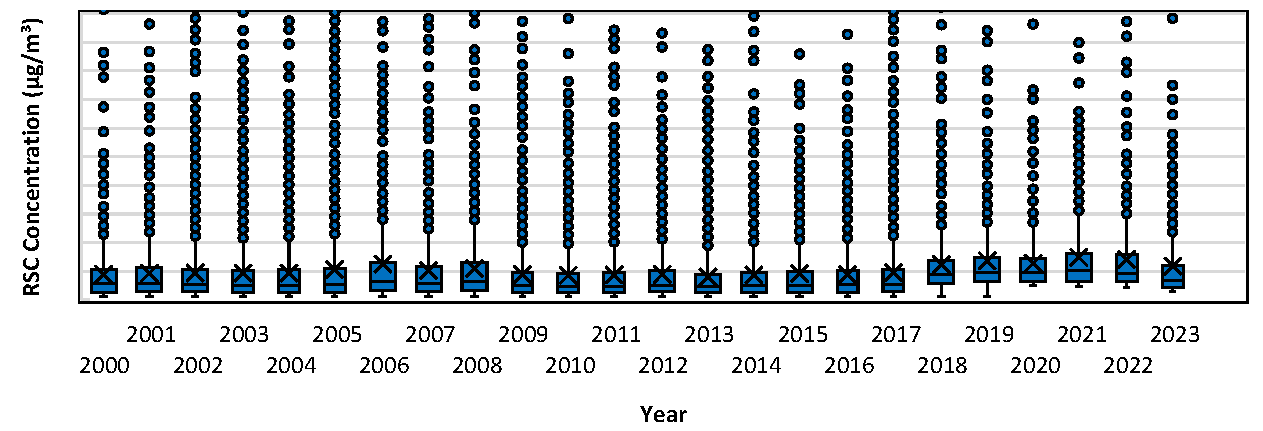
Figure 2.
Average RCS concentration per year in different MNM mine types.
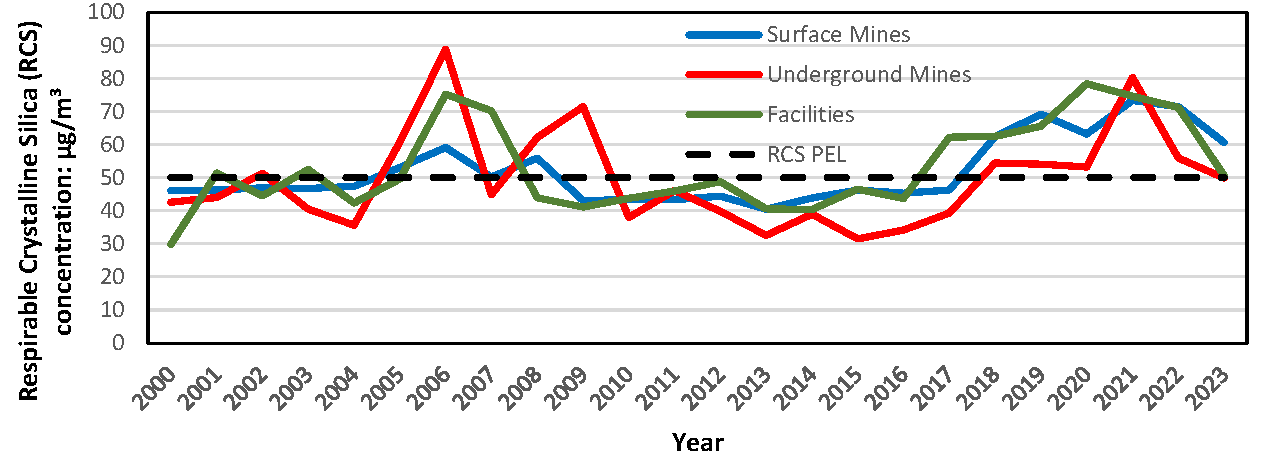
Figure 3.
Percentage number of RCS samples exceeding new PEL in different mine types for MNM mines per year.
Figure 3.
Percentage number of RCS samples exceeding new PEL in different mine types for MNM mines per year.
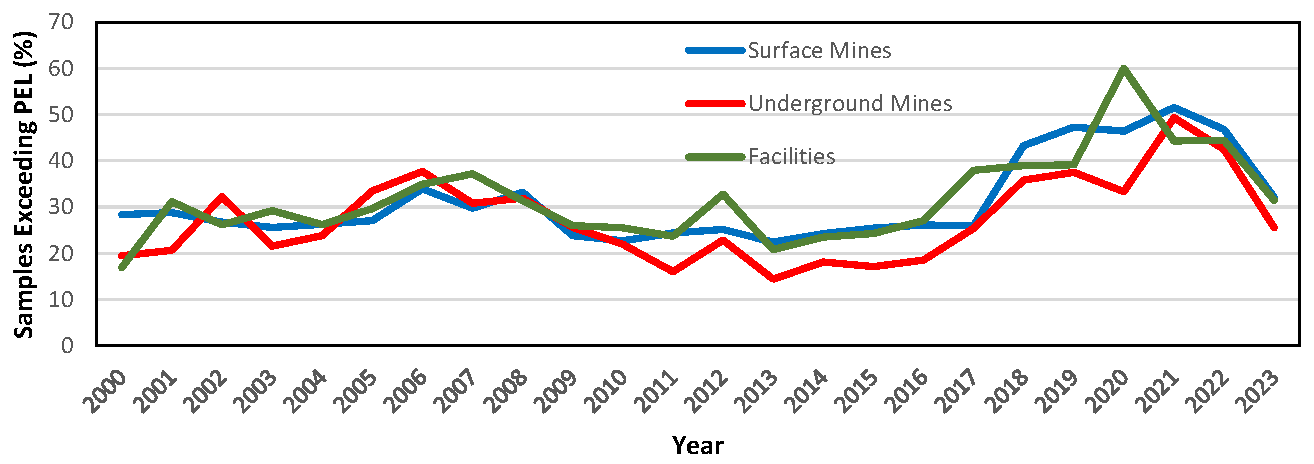
Figure 4.
Average RCS concentration per year in different MNM mine sizes.
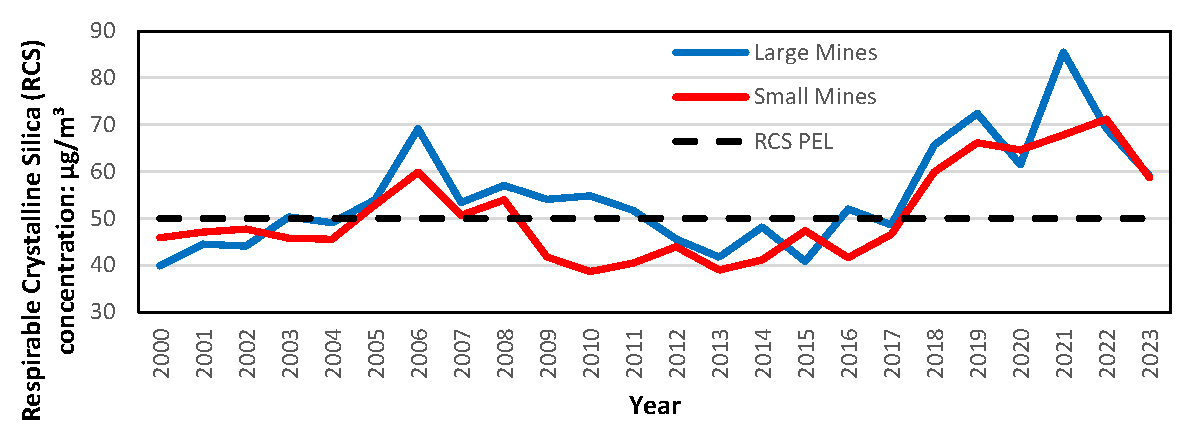
Figure 5.
Percentage number of RCS samples exceeding new PEL in different mine sizes for MNM mines per year.
Figure 5.
Percentage number of RCS samples exceeding new PEL in different mine sizes for MNM mines per year.
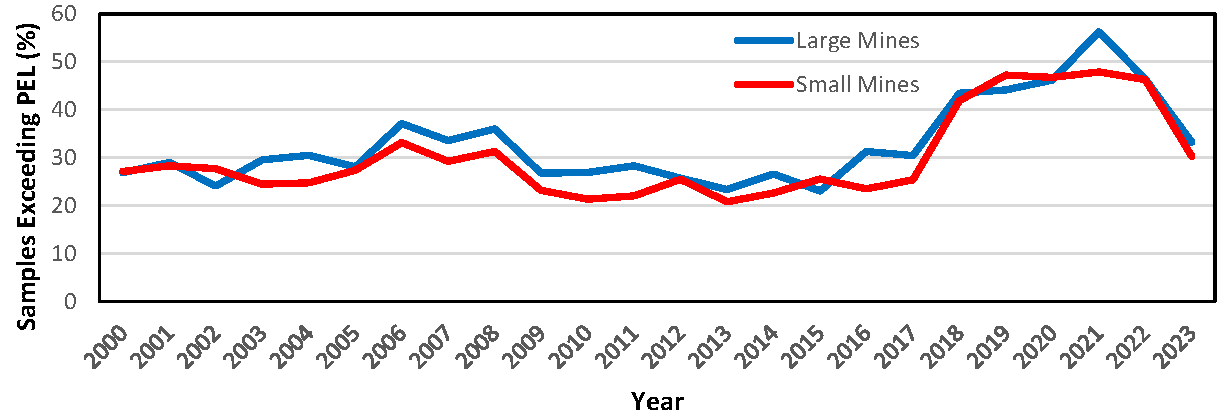
Figure 6.
Average RCS concentration per year for different canvas codes in MNM mines.
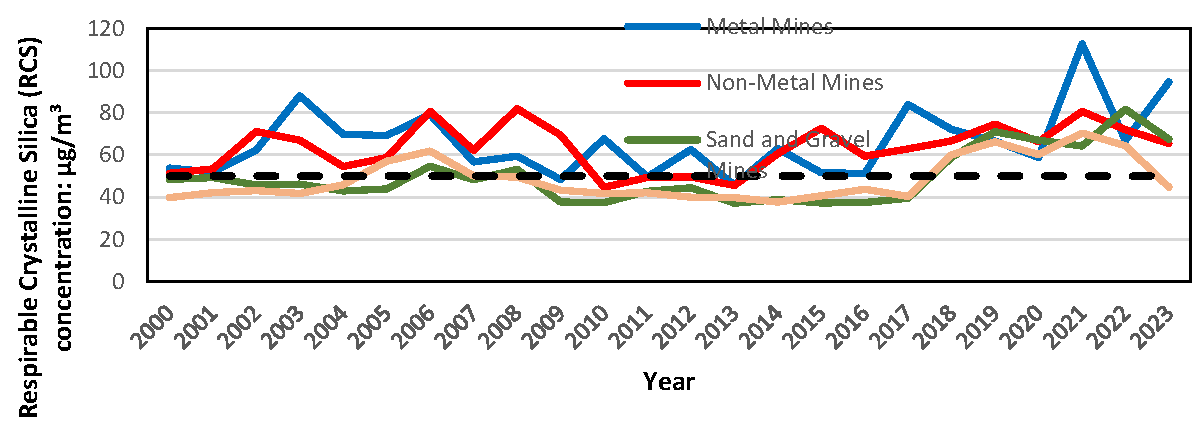
Figure 7.
Percentage number of RCS samples exceeding new PEL per year for different canvas codes in MNM mines.
Figure 7.
Percentage number of RCS samples exceeding new PEL per year for different canvas codes in MNM mines.
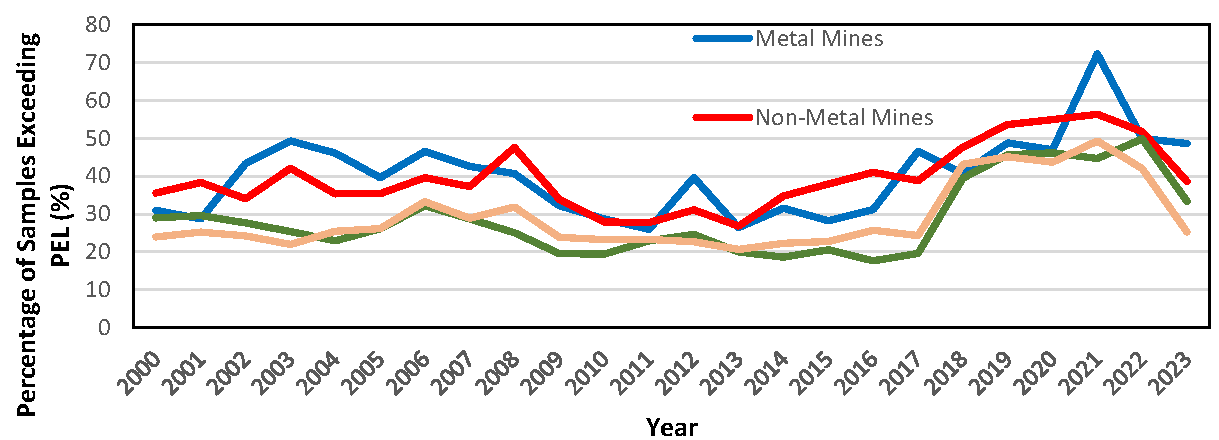
Figure 8.
Average RCS concentration per year for different geographical locations in MNM mines.
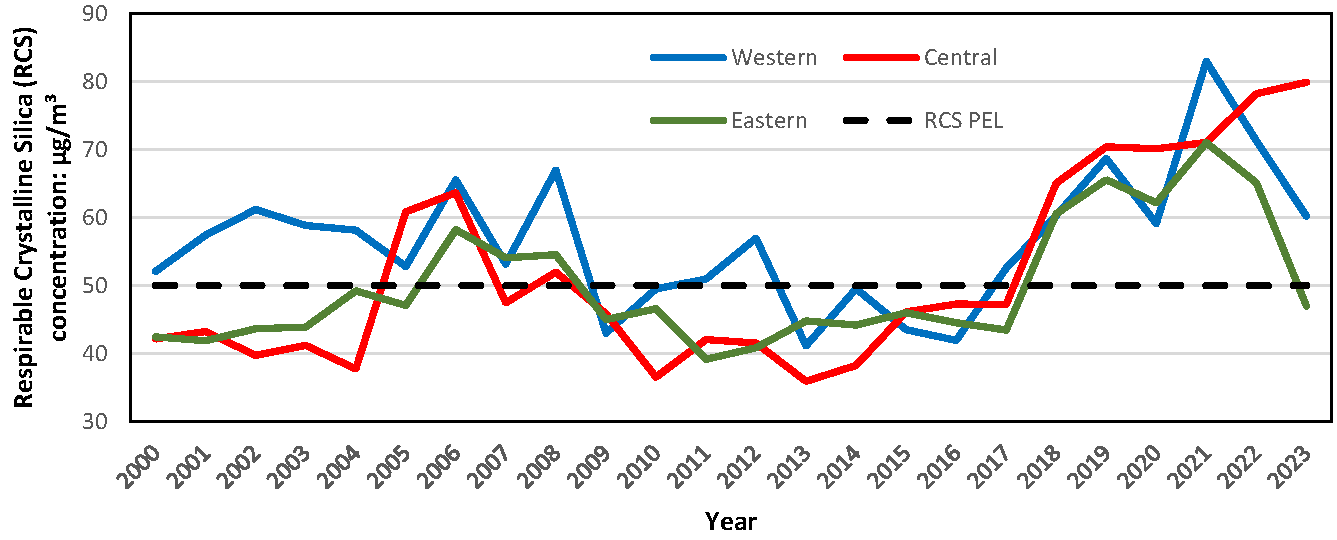
Figure 9.
Percentage number of RCS samples exceeding new PEL per year for different geographical locations in MNM mines.
Figure 9.
Percentage number of RCS samples exceeding new PEL per year for different geographical locations in MNM mines.
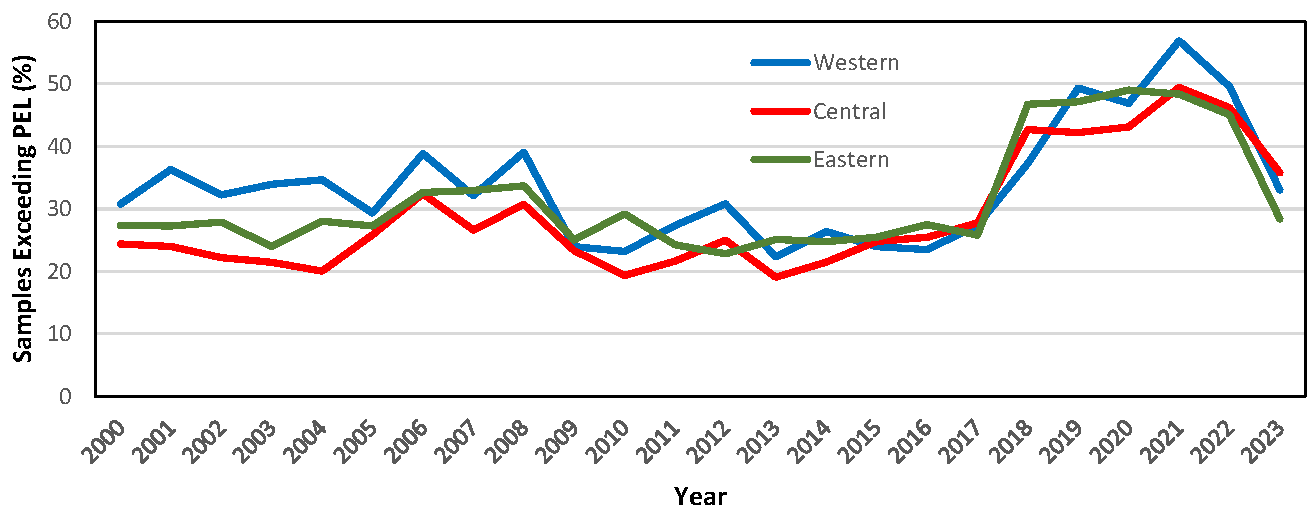
Figure 10.
SEM images of RCS dust particles.
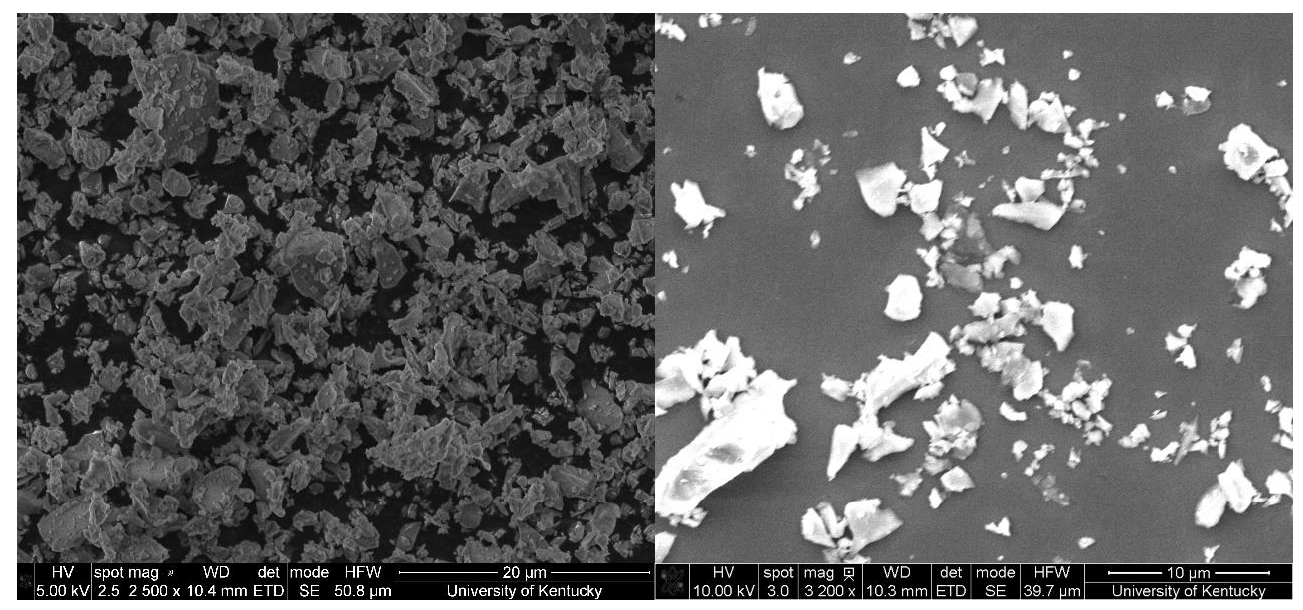

Table 1.
Permissible exposure limit for respirable silica dust in different countries.
| Country/Region | Respirable Silica PEL (mg/m3) |
|---|---|
| USA | 0.05 [15] |
| Canada | 0.1 [24] |
| European Union | 0.1 [25] |
| India | 0.15 [26] |
| Australia | 0.05 [27] |
| Britain | 0.1 [24] |
| South Africa | 0.1 [25,28] |
| Italy | 0.1 [24] |
| France | 0.1 [24] |
| China | 0.07 to 0.35 (varies with silica content) [24] |
Table 2.
MSHA Procedures for RCS Analysis in MNM Mines and Coal Mines.
| MNM Mines | Coal Mines | |
|---|---|---|
| Sample Collection | Full-shift sampling using gravimetric samplers in breathing zones | Similar full-shift sampling approach |
| Exposure Calculation | 8—hours TWA regardless of shift length | Adjusted based on actual shift length |
| Analytical Methods | X-ray diffraction (XRD) | Fourier Transform Infrared Spectroscopy (FTIR) |
| Control Measures | Engineering controls like ventilation, additional sampling for verification | Engineering/environmental controls, monitoring compliance with dust limits |
Table 3.
A comprehensive summary of global studies on the characterization of respirable dust and silica exposure in mining environments.
Table 3.
A comprehensive summary of global studies on the characterization of respirable dust and silica exposure in mining environments.
| Study | Sampling Locations (Sites) | No. of Samples |
Instrument | Characteristic Technique | Results |
|---|---|---|---|---|---|
| Rautenbach, J. J. (2019) [42] | Iron ore mining environment | Single dust bucket (SDB): 8 monitoring points; Multi-directional dust bucket (MDB): 4 monitoring points; PM10: 3 monitoring points | Single dust bucket (SDB), Multi-directional dust bucket (MDB) | Chemical analysis of dust for 42 elements; PM10 analysis | - The average dust levels in SDB and MDB were below the residential limit of 600 mg/m2/day - PM10 levels remained within limits - Copper and iron concentrations surpassed exposure limits - Wind direction minimally affected dust measurement methods, but wind speed influenced PM10 levels at specific locations - Recommended revising the multi-directional bucket system and enforcing legislation for dust chemical monitoring |
| Entwistle, Jane A., et al. (2019) [43] | Metalliferous mines worldwide, with specific reference to impacts from arsenic, cadmium, chromium, cobalt, copper, lead, mercury, nickel, uranium, and zinc | Not specified | Not specified (General discussion on monitoring and analysis methods) | Chemical analysis for potentially toxic elements (PTEs,) in vitro and in vivo studies, epidemiological and toxicological assessments | - Mining-related dust contains PTEs, posing risks to human health and ecosystems - A review of epidemiological studies on Pb, As, and Cd exposure shows synergistic neurodevelopmental toxicity from combined mixtures, emphasizing the need for updated toxicological models - Fine particulates (≤2.5 μm) from smelting deposit in alveoli, with oral breathing during exertion increasing exposure- In vivo studies suggest that Fe-rich particles in mine dust contribute to oxidative stress by generating reactive oxygen species (ROS), leading to DNA damage and chronic inflammation |
| Keast, D., et al. (1987) [44] |
North-west of Western Australia | 91 samples of respirable fraction | Casella Hextlett sampler with an elutriator | Scanning Electron Microscopy (SEM) and Energy-Dispersive X-ray Spectroscopy ( EDS) analysis for physical and chemical properties, Ames test for mutagenicity, Gamma emission spectra for radioactivity assessment, Animal exposure and intrapleural implantation studies were conducted to evaluate dust inhalation effects | - Approximately 5% of dust particles measured >1 μm, with an average length of 2.5 μm and some reaching 6.5 μm - Fibrous particles were predominantly aluminosilicate or iron-rich, with low silica or alumina levels, none classified as asbestos - Silica content ranged from 1.5% to 11.1%, with most (<61%) samples containing <3.5% silica - All samples tested negative for mutagenicity in the Ames test - Small amounts of 59Fe and 54Mn were detected (<2 pCu/10 g) - Animal exposure and intrapleural implantation of respirable iron ore dust caused interstitial pneumonia, lung damage (e.g., fibrosis, emphysema), and increased tumor rates in rats and mice, but did not induce mesothelioma. |
| Badenhorst, R. (2013) [45] | Opencast iron ore mine: primary-secondary crusher, tertiary crusher, quaternary crusher, and sifting house | Not specified | Static inhalable and respirable samplers, optical particle counters (OPC), condensation particle counters (CPC) | SEM and EDS for physical and chemical characterization | - Inhalable dust levels were high across all process areas, with notable spikes at the primary-secondary crusher - Particle analysis showed a prevalence of 0.3 µm particles, with significant ultrafine particles (<0.3 µm), notably at specific crushers - SEM findings revealed particle agglomeration and splinters - EDS analysis identified predominant elemental compositions, varying across the beneficiation process - Warned of respiratory overexposure and systemic risks from ultrafine particles, potentially leading to lung pathologies |
| Paluchamy, B., & Mishra, D. P. (2022) [46] | Kayad Lead-Zinc Ore Mine (KLZM), Rajasthan, India | Not explicitly mentioned, but data recorded over 10 Load-Haul-Dump (LHD) mucking trips | Grimm Aerosol Spectrometers (Model 1.108) | Size distribution analysis and airflow simulation using Ventsim software | - Remote LHD operator site had high total airborne dust (TAD) levels, mainly ≤10 μm (PM10) - Downcast airflow led to greater dust exposure than upcast airflow - Empirical models estimated alveolic, thoracic, and inhalable dust from total airborne dust (TAD) - Emphasized ventilation management to reduce worker dust exposure |
| Andraos, C. (2019) [47] | Tailings storage facilities (TSFs) | Not specified; multiple bulk samples analyzed | AS200 Jet Sieve Shaker, Electrostatic Classifier Model 3080, condensation particle counter (CPC) Model 3772, Aerodynamic Particle Sizer (APS) Model 3321, Small-Scale Powder Disperser (SSPD) Model 3433, electron spin resonance (ESR) Spectroscopy | Size fractionation, size distribution analysis, surface area and porosity determination, shape, and elemental composition analysis, mineral composition via X-ray diffraction (XRD), elemental composition via inductively coupled plasma atomic emission spectroscopy (ICP-AES), surface activity measurement | - Tailings dusts exhibited in vitro toxicity to human airway cells, indicating potential health risks - Min-U-Sil 5 silica showed the highest toxicity, with tailings dust samples varying in activity and toxicity levels - High levels of Fe in ERGO dust correlated with increased toxicity - Elemental composition, including Cu and Cr, varied among samples, affecting toxicity - Quartz content and surface area influenced toxicity, but were not sole determinants |
| Bandopadhyay, A. K., & Kumari, S. (2013) [48] | Coal and metal (zinc and manganese) mines | Not specified; samples collected from various mine locations | Fourier Transform Infrared (FTIR) Spectrometer | Direct-on-filter method for quartz determination | - Coal mine dust: Quartz content <1%, except in some cases - Metal mines: Quartz >5% in many areas - Effective in metal mines: Wet drilling, ventilation - Suggested worker rotation in challenging dust suppression areas |
| Arrandale et al. (2018) [49] | Core processing facility operated by a gold mining company in Northern Ontario, Canada | 19 personal and 10 area samples; 16 personal and 9 area samples analyzed after exclusions | SKC aluminum cyclones, pre-weighed 37mm Polyvinyl Chloride (PVC) filters, sampling pumps | Gravimetry (NIOSH method 0600), FTIR (NIOSH method 7602) for respirable dust and silica analysis | - Personal respirable dust concentration mean: 0.46 mg/m3; stationary: 0.41 mg/m3 - Core saw rooms had highest levels: 0.63 mg/m3 - Silica: 69% of personal and 67% area samples were below the limit of detection (LOD) - Three samples exceeded ACGIH TLV for respirable crystalline silica |
| Hart et al. (2018) [50] | Three Northwestern U.S. metal/nonmetal mines | 75 dust samples | FTIR spectrometry and XRD | Direct-on-filter RCS evaluation using FTIR and comparison with XRD | - Strong positive correlations between FT-IR and XRD respirable crystalline silica (RCS) concentrations were observed, with Spearman correlation coefficients ranging from 0.84 to 0.97 across the three mines - FTIR showed lower mean RCS concentrations than XRD - Mean differences ranged from -4 to -133 µg/m3, with percent errors from 12% to 28% - Significant improvement post-calibration at two mines, with mean differences of -0.03 and -0.02 on a log scale |
| Slouka et al. (2022) [51] | Laboratory setting simulating limestone cutting | Multiple samples from three pick wear stages (new, moderately worn, worn) | Nylon Dorr-Oliver cyclones, Tsai Diffusion Sampler (TDS), vacuum for deposited particles, SEM for imaging | Collection of airborne and deposited particles for concentration, mineralogy, shape, and size distribution analysis | - Airborne dust rises with worn picks, indicating increased generation- All picks emit dust with hazardous silica minerals- Particle shape analysis found no significant differences- Particle size distribution varied, with worn picks generating smaller airborne particles and the opposite for deposited particles |
| Stach et al. (2020) [52] | Three limestone mines in the USA. One sandstone sample from Berlin, Germany. |
A total of 9 synthetic calibration mixtures were created. 4 natural samples were used for validation: D4, D9, D10 (limestone samples from the USA). SSB (sandstone sample from Berlin). |
- For FTIR Measurements: Portable Bruker Alpha FTIR spectrometer equipped with Diffuse Reflectance Infrared Fourier Transform Spectroscopy (DRIFTS) and a transmission assembly- For SEM/EDX Measurements: Quanta 3D FEG FIB-SEM dual-column system | - Particle Size Characterization: Agate mortar grinding for inhalable (>5 μm) and respirable (≤4 μm) particles - attenuated total reflection (ATR) Transmission, and DRIFTS Measurements: Analyzing samples without dilution and with KBr dilution for DRIFTS - Energy Dispersive X-ray Spectroscopy (EDX) Verification: Ensuring mineral purity and identifying impurities |
- Particle size decrease maximized IR spectrum signals, nearing respirable range- Strong correlations between FTIR measurements and particle sizes found during calibration and validation with real-world samples - Combined DRIFTS and transmission IR model allowed mineral quantification and particle size classification, facilitating rapid field dust exposure assessment |
| Jaggard, H. (2012) [53] | New Calumet Mine, Quebec, Canada; former Pb-Zn mine | Not specified; airborne dust and near-surface tailings samples | (Proton Induced X-ray Emission Spectroscopy) PIXE Cascade Impactor, environmental scanning electron microscope (ESEM), synchrotron techniques (microXRD, micro X-ray Fluorescence (XRF)) | Bioaccessibility tests, total metal content, grain size distribution, Pb speciation | - Galena identified as the most abundant Pb-bearing phase in pH-neutral tailings, with cerussite and hydrocerussite forming alteration rims on galena grains - Bioaccessibility tests showed 0-0.05% bioaccessible Pb in lung fluid and 23-69% bioaccessible Pb in gastric fluid |
| Kumari et al. (2011) [54] | Zinc mines in Rajasthan and Orissa, Manganese mines in Maharashtra and Madhya Pradesh, India | Locations vary; 30 for zinc mines, 52 for manganese mines | AFC-123 (Casella London) personal sampler, FTIR (Model 1760X, Perkin-Elmer) for direct on-filter analysis | Sampling on pre-weighed GLA-5000 PVC membrane filters, FTIR for quartz content analysis | - Dust and quartz concentrations varied across mine types and locations - Health risk assessments spanned from Low to Very High based on maximum exposure limit (MEL) in India and the USA - Some mining and crusher sites exhibited high quartz content and dust despite preventive measures - Effective dust control observed in some areas via wet drilling and ventilation, while others need additional measures like worker rotation - Calls for international consensus on MEL standards for comparable health risk assessments |
| Verma et al. (2014) [55] | 8 operating gold mines in Ontario, Canada | 288 long-term personal respirable dust air samples | DuPont personal sampling pump, BCIRA metal cyclone, XRD method | - Personal long-term air sampling covering full shifts (7–8 hrs.), measurement of respirable dust and silica | - Mean respirable dust: 1 mg/m3 - Mean respirable silica: 0.08 mg/m3 - Mean % silica in respirable dust: 7.5% - Potential feasibility of replacing konimeter assessment with gravimetric sampling indicated by data |
| Meza-Figueroa et al. (2009) [56] | , Nacozari mining town in Sonora, northern Mexico | 70 mine tailings, 7 efflorescence salts, Soils (S1–S6), Residential soils (C1–C21), Road dust (RD1–RD3) | Innov-XXT400 portable X-ray fluorescence (XRF) analyzer, Perkin-Elmer 4200 DV ICP for ICP-AES analysis, X-ray powder diffraction (XRD) | - Collection and analysis of tailings, soils, and dust for metal content, statistical analysis including principal component analysis (PCA) and cluster analysis to assess data | - Mine tailings generally contained low levels of certain metals but higher concentrations of Ag, Cu, and Hg - Efflorescence salts indicated significant metal accumulation - Urban soils and road dust showed evidence of metal dispersion from mine tailings, especially Cu and As - Statistical analysis confirmed mine tailings as the metal source and identified spatial clusters linked to wind dispersion. - Climate likely influenced metal mobility and dispersion mechanisms |
| Moreno et al. (2005) [57] | Las Cuevas mine waste dumps, Almadén, Spain | Not specified | SEM, (Inductively Coupled Plasma Mass Spectrometry) ICP-MS, XRD | SEM for particle analysis, ICP-MS for chemical analysis, XRD for mineralogical composition | - High levels of mercury contamination, especially in PM10- Presence of cinnabar, native mercury, and chlorine-bearing compounds |
| Saarikoski et al. (2018) [58] | Underground chrome mine, Kemi, Northern Finland | Not specified | Online instruments with high time-resolution, offline particulate sampling for elemental and ionic analyses | High time-resolution monitoring, elemental and ionic analyses | - PM1 mainly from diesel engine emissions - Sub-micrometer particles also from explosives combustion (nitrate, ammonium) - PM1 composition: 62% organic matter, 30% black carbon, 8% major inorganic species - Elements like Al, Si, Fe, and Ca peaked above 1 µm, indicating a mineral dust origin from mechanical activities such as crushing and tunnel excavation. - Average particle number concentration: (2.3 ± 1.4)*104 #/cm3 - Particle size distribution peaked between 30 and 200 nm, with a distinct mode <30 nm - Origin of nano-size particles required further investigation |
| Chubb, L., & Cauda, E. (2017) [59] | Alaska, Nevada, South Africa gold mines | Not specified | TSI 3321 APS, TSI scanning mobility particle sizer (SMPS), MOUDI-110R, 10-mm nylon cyclones, ICP-MS, SEM, XRD | Aerodynamic and electromobility size distribution measurement, mineral composition analysis, silica quantification by IR and XRD | - Dusts primarily quartz silica, with varied mineral compositions - The count median particle diameter (CMD) and mass median diameter (MMD) ranged from 498 nm (Nevada) to 1680 nm (Alaska) - Silica content varied by size fraction - Silica quantified using both IR and XRD to address potential biases - Particle mass size distributions for total dust and silica component showed slight differences |
| Malá et al. (2016) [60] | Czech Republic, specifically in the Rožná I uranium mine | 13 | Cascade Impactors (Sierra Andersen SA 236 model), Gamma Spectrometry Analysis (HPGe detectors) | Aerosol Particle Size Distribution, Activity Concentration of 226Ra, Log-normal Distribution Characterization | - 226Ra concentrations: 5.2×10⁻³ to 5.1×10⁻² Bq/m3 - activity median aerodynamic diameter (AMAD): 2.0 μm to 14.2 μm, geometric standard deviation (GSDs): 2.8 to 12.5 - Highest activity in coarse particles (>10 μm) - 13-22% activity in aerosol aerodynamic diameters (ADs) <0.39 μm - AMADs: 4.2 μm (F, EOC), 9.8 μm (CP) - Radon emanation coefficient: 0.39, no significant AD variations |
| Walker et al. (2021) [61] | 56 sites in the USA, with additional sites in Canada, South Africa, Chile, and Australia, Included mining commodities such as gold, copper, limestone, granite, iron, sand & gravel, and other metals | 130 mine dust samples analyzed | GK2.69 sampler and AirTouch pump | XRD and FTIR analysis | - Most samples exhibited approximately 5 mineral phases including α-Quartz, Muscovite, Plagioclase, K-feldspar, and Chlorite - FTIR accurately predicted the correct mineral phase 77% of the time, showcasing its potential for on-site monitoring of respirable dust mineralogy |
| Bello et al. (2019) [62] | several sites in Massachusetts, USA, across several construction-related activities | 51 personal breathing zone samples from workers and 33 area samples at the perimeter of demolition and crushing sites | 37 mm diameter PVC filters, two-piece cassettes housed in BGI 4 respirable cyclones, GilAir 3 sampling pumps | Gravimetric analysis, FTIR Spectro photometry | - Personal 8-hour Time-Weighted Average (TWA) RCS exposures surpassed the OSHA PEL - Emphasized the difficulty in managing crystalline silica exposures to meet the new OSHA PEL |
| Si et al. (2016) [63] | Across Australia | 4,993 | Did not directly use air sampling instruments. | - The assessment relied on workers' self-reported tasks and the implementation of control measures at their workplace.- The evaluation was conducted using OccIDEAS, an application designed for assessing job-related exposures. | - Miners and construction workers were most prone to experiencing high-level RCS exposure. - In 2012, 6.4% of respondents were identified as being exposed to RCS at work |
| Chanvirat et al. (2018) [64] | Northeastern Thailand, sandstone processing | 88 | Gravimetric method (NIOSH 600) for respirable dust (RD) and NIOSH 7601 spectrophotometer for RCS | Personal air sampling from the breathing zone of workers throughout the 8-hour working day, analyzed according to the NIOSH Manual of Analytical Methods | - Geometric mean (GM) of RCS exposure was 0.10 mg/m3, with the highest levels observed among stone cutters in mines at 0.14 mg/m3, followed by stone carvers at 0.10 mg/m3 |
| Mbuya et al. (2024) [65] | Mererani Mines, Northern Tanzania | 66 | Personal dust samples (PDS) | Infrared absorption Spectrophotometry technique | - Median TWA concentration of RCS in mining pits was 1.23 mg/m3 - 65 out of 66 analyzed PDS samples from mining pits showed RCS concentrations exceeding the OSHA PEL of 0.05 mg/m3 |
| Poormohammadi et al. (2021) [66] | Hamadan, Iran (silica stone crushing units) | Not specified | Average-flow personal sampling pump (Gilian- LFS 113DC), PVC filter (37-mm, 5-µm), FTIR (Elmer Perkin/Tow Spectrum device) | FTIR | - - Average exposure to RCS ranged from 0.14 to 1.70 mg/m3, with the highest exposure observed in stamping machine operator |
| Margan et al. (2022) [67] | Slovenia (targeting industries with a high risk of RCS exposure, including mining, and natural stone processing) | 18,064 | Online questionnaire | Lung radiographs | - Lung radiograph reviews revealed that about one-third of exposed workers exhibited lung changes associated with silicosis - A significant underestimation of RCS exposure was observed, with only 8.3% of companies conducting dust concentration measurements and 1.81% measuring silica concentration |
| Doney et al. (2020) [68] | United States (various industries) | 27,700 RCS air samples | OSHA compliance inspection sampling data | Not specified | - The construction industry was identified with the highest levels of RCS exposure, with around 100,000 workers exposed above the RCS recommended exposure limit (REL) |
| Howlett et al. (2023) [69] | 10 countries (Artisanal and small-scale mining) | 18 studies involving 29,562 miners | gravimetric analysis and NIOSH method 7500 | Logistic and Poisson regression models were used to estimate silicosis prevalence and tuberculosis incidence at different distributions of cumulative silica exposure. | - RCS intensity was notably high, ranging from 0.19 to 89.5 mg/m3, with respiratory symptoms commonly reported - Simple interventions like wet drilling or improved ventilation can reduce dust exposure by up to 80%, offering substantial health benefits at low cost. |
| Wiebert et al. (2023) [70] | Sweden (workers in various industries known for RCS exposure) | 1,085,853 individuals | Job-exposure matrix (JEM) | RCS was linked to job titles using the JEM, and health outcomes acute myocardial infarction (AMI) were determined from nationwide registers; cox regression was used to estimate HRs and 95% CIs, adjusted for demographic factors | - The risk of AMI increased with cumulative exposure, especially notable in the highest quartile of exposure - Among manual workers exposed to RCS, women exhibited a significantly higher adjusted risk of Acute Myocardial Infarction (AMI) with a Hazard Ratio (HR) of 1.29, compared to men with HR 1.02 |
| Prajapati et al. (2020) [71] | Stone mines in India | 71 personal dust samples | Sidekick-51MTX dust samplers, PVC filters and plastic cyclones | FTIR, gravimetric analysis | - Mean RCS concentrations: Sandstone mines: 0.12 mg/m3 Masonry and granite stone mines: 0.17 mg/m3 - RCS concentrations in granite and masonry mines surpassed the Directorate General of Mine Safety in India limit of 0.15 mg/m3, indicating a necessity for standard adjustments to align with international standards |
| Dhatrak and Nandi (2020) [72] | Sandstone mines in India | 26 personal dust samples | Personal dust sampler Side Kick Model no. MTX 51, PVC 37 mm filter paper, FTIR (Bruker make Alpha T model) | Free silica content was estimated FTIR following NIOSH-7602 methodology | - Radiographs compatible with silicosis were seen in 12.3% of workers, the mean concentration was found to be 0.12 mg/m3, with 70% of the samples falling below India's prescribed safety standard of 0.15 mg/m3 |
| Bang et al. (2008) [73] | United States, with a focus on industries such as mining and quarrying, metal and mineral processing, and occupations associated with high risk of silicosis mortality | Analysis of 6,326 deaths with silicosis from 1981 to 2004 | Analyzed mortality data rather than directly measuring air samples | Trends and associations with occupation and industry were identified through analysis of death certificates and proportionate mortality ratios (PMRs) based on National Occupational Respiratory Mortality Surveillance (NORMS) data | - Silicosis mortality rates declined from 2.4 per million in 1981 to 0.7 per million in 2004 - Industries with significantly elevated PMRs included mining and quarrying - Occupations with elevated PMRs were linked to metal and mineral processing |
| Harrison et al. (2005) [74] | Chinese tin and tungsten mines and pottery workplaces | 47 respirable dust samples were collected from 13 worksites | NIOSH cyclone separator, PVC filter collector for respirable dust, multiple-voltage scanning electron microscopy–energy dispersive X-ray spectroscopy (MVSEM-EDS) | Comparing silicon-to-aluminum ratios at different electron beam voltages to distinguish between clay-coated silica particles and those with homogeneous aluminum contamination | - Pottery workplaces had the highest average of alumino-silicate occlusion on silica particles (45%), followed by tin mines (18%) and tungsten mines (13%) |
| Hnizdo (1995) [75] | South African gold miners and Canadian hard rock miners | Not specified | Standard thermal precipitator | The analysis involved converting historical respirable surface area measurements to gravimetric units (mg/m3) and approximating the average concentration of quartz in respirable dust | - The risk of silicosis is comparable at certain levels of cumulative dust exposure but emphasizing differences in exposure levels, fibrogenicity of silica dust, and the proportion of quartz in respirable dust |
| Bailey (2017) [76] | Abandoned gold mine in Canada, specifically focusing on tailings impoundments and airborne tailings dust | Material sampled from three tailings impoundments | Total suspended particulate (TSP) high volume air sampler, ICP-OES and ICP-MS for bulk chemical data SEM, Electron Microprobe Analysis (EMPA), µXRD, µXRF for mineralogical data; X-ray Absorption Near Edge Structure (XANES) for oxidation state data of arsenic |
Combination of ICP methods for chemical analysis, scanning electron microscopy and electron microprobe analysis for mineralogical identification, and synchrotron-based techniques for detailed mineral phase analysis | - Dust primarily contained Fe-oxides as the As host, with very little arsenic trioxide found in tailings and none in dust samples - The findings suggest that nearby soils might present a higher risk to human health due to historic emissions, given the low arsenic trioxide levels in tailings and dust |
| Steenland and Brown (1995) [77] | Gold miners in the United States | 3,330 gold miners | The analysis was based on historical exposure data, applying a job-exposure matrix to estimate cumulative exposures for each job category in the mine | Silicosis cases were identified through death certificates and from two cross-sectional radiographic surveys in 1960 and 1976, using International Labor Organization (ILO) categories for x-ray confirmed cases | - Found a significant exposure-response relationship between cumulative silica exposure and the risk of silicosis, with the risk increasing with cumulative exposure |
| Gao et al. (2000) [78] | Metal mines and pottery industries in China | 100+ | 10 mm nylon cyclones, multi-stage 'cassette' impactors, Chinese total dust samplers for airborne dust sampling | Comparison of respirable dust concentrations to 'total dust' concentration, conversion factors developed to estimate respirable dust concentrations from historical Chinese 'total dust' measurements |
- Conversion factors varied across industries, with the lowest in the pottery industry |
| Tsai et al. (2020) [79] | Edgar Experimental Mine, which is operated by the Colorado School of Mines | Multiple samples collected over 4 hours | Sioutas cascade impactor, respirable cyclone sampler, and a Tsai diffusion sampler (TDS) for airborne particle collection, real-time instruments (NanoScan SMPS and ptical Particle Sizer (OPS)) for particle number concentrations measurement, TEM and SEM for particle morphology and elemental composition | Combined use of gravimetric analysis for mass concentration and number metrics for particle count; utilized a unique sampler designed for nanoparticles and respirable particle characterization | - Drilling produced sub-micrometer particles peaking at ~50 nm, with concentrations >1.7 × 10⁶ particles/cm3 Diesel exhaust showed peak particle sizes at ~30 nm, averaging 5.4 × 10⁵ particles/cm3 Mass concentrations were low (<0.6 mg/m3) but high particle counts indicated substantial exposure risk Particles included elements like Cu, Fe, Si, Al, and Mg, suggesting metallic and mineral dust origin |
Disclaimer/Publisher’s Note: The statements, opinions and data contained in all publications are solely those of the individual author(s) and contributor(s) and not of MDPI and/or the editor(s). MDPI and/or the editor(s) disclaim responsibility for any injury to people or property resulting from any ideas, methods, instructions or products referred to in the content. |
© 2025 by the authors. Licensee MDPI, Basel, Switzerland. This article is an open access article distributed under the terms and conditions of the Creative Commons Attribution (CC BY) license (http://creativecommons.org/licenses/by/4.0/).
Copyright: This open access article is published under a Creative Commons CC BY 4.0 license, which permit the free download, distribution, and reuse, provided that the author and preprint are cited in any reuse.


