

Submitted:
07 May 2025
Posted:
09 May 2025
You are already at the latest version
Abstract
This article explores the phenomenon of ‘Devils Journalism’—a term conceptualized to describe manipulative, unethical, and politically weaponized forms of journalism—focusing on its manifestations in the Global, particularly in South Asia and Bangladesh. It examines the historical roots, structural challenges, and ideological distortions within media ecosystems that enable Devils Journalism to flourish. Through case studies and comparative analysis, the paper investigates how misinformation, partisan narratives, and media monopolization erode democratic values, stoke communal tensions, and reinforce authoritarian practices. Using a qualitative methodology with content analysis and political communication theory, the study also discusses the role of international actors, digital surveillance, and civil society resistance. This research article also explores the phenomenon of Devils Journalism, a term used to describe unethical, manipulative, and sensationalist media practices that distort truth for political, economic, or ideological gain. Through a comparative analysis of global trends and regional case studies, with a special focus on South Asia and Bangladesh, the study critically examines how such journalism undermines democratic processes, inflames communal tensions, and erodes public trust in media institutions. Drawing on qualitative content analysis, expert interviews, and secondary data, the research reveals that while Devils Journalism is a worldwide concern, its manifestations in South Asia—particularly in Bangladesh—are intensified by political polarization, weak media regulations, and the rise of digital misinformation. The article argues for urgent reforms in media ethics, stronger regulatory frameworks, and enhanced media literacy among the public to combat the adverse impacts of this phenomenon. The findings contribute to the broader discourse on media accountability and democratic resilience in the face of growing disinformation and propaganda.
Keywords:
Devils Journalism
; Media manipulation
; Disinformation
; Global South
; Bangladesh
; Political communication
; Media ethics
1. Introduction
The media is often called the fourth pillar of democracy, but in many parts of the Global South, this pillar has been eroded by systematic manipulation, government control, and the corporate capture of narratives. In this landscape, “Devils Journalism” refers to the perversion of media ethics to promote hatred, misinformation, and state-sponsored propaganda. South Asia—home to nearly a quarter of the world’s population—presents a dynamic but fragile media ecosystem where the line between journalism and propaganda has grown dangerously thin. This research focuses on identifying patterns, mechanisms, and socio-political consequences of Devils Journalism with a specific lens on Bangladesh.
In democratic societies, journalism serves as a cornerstone of public discourse, transparency, and accountability. Ideally, it functions as the “fourth estate”—a watchdog ensuring the balance of power and protecting the rights of citizens through the dissemination of truthful, balanced, and objective information. However, in many parts of the Global South, journalism has increasingly become entangled in power politics, economic interests, and ideological manipulation. This transformation has given rise to a dangerous phenomenon this paper identifies as “Devils Journalism”—a term used to describe journalism that serves oppressive systems, spreads misinformation, amplifies hatred, and undermines democratic norms through unethical and strategic manipulation of facts.
Devils Journalism is not merely about biased reporting; it is a systemic, deliberate effort to weaponize the media for political and ideological ends. It thrives in environments where press freedom is under threat, where authoritarianism is on the rise, and where digital technologies have enabled the mass production and dissemination of propaganda. South Asia, with its rich but fragile democratic institutions, is a region particularly vulnerable to this crisis. In countries like India, Pakistan, Sri Lanka, and Myanmar, media outlets have been co-opted by powerful elites, turning them into instruments of regime legitimization, ethnic polarization, and suppression of dissent.
In Bangladesh, the situation presents a complex and urgent case study. While the country has witnessed significant economic growth and digital connectivity in recent years, these developments have coincided with increasing media censorship, legal restrictions on freedom of expression, and the persecution of independent journalists. The implementation of the Digital Act, arbitrary arrests of journalists, and the proliferation of politically aligned media houses have fostered a climate where truth is sacrificed for political expediency. Moreover, the rise of state-sponsored troll armies and disinformation campaigns on social media platforms has further distorted public discourse and silenced critical voices.
This research article seeks to unpack the phenomenon of Devils Journalism through a multi-dimensional analysis. First, it develops a conceptual and theoretical framework to define and understand Devils Journalism within the broader fields of political communication, media ethics, and postcolonial studies. Second, it situates the phenomenon within the socio-political context of the Global South, especially South Asia, where state capture, communal tensions, and information warfare have become prominent features of media ecosystems. Third, it offers a critical examination of the Bangladeshi context, drawing on legal documents, case studies, media analysis, and expert opinions to show how Devils Journalism operates both through formal institutions and informal networks of influence.
By focusing on Bangladesh as a focal point, this study reveals how journalistic practices have evolved in response to state policies, technological changes, and political calculations. It raises questions about the limits of media freedom in transitional democracies and the ethical responsibilities of journalists and media owners in times of political crisis. Furthermore, this research emphasizes the role of civil society, legal institutions, and international bodies in resisting the spread of Devils Journalism and restoring journalistic integrity in the region.
Ultimately, this article contributes to global debates on media manipulation, fake news, and democratic erosion. It aims to provide both a diagnostic framework and prescriptive pathways for addressing the challenges posed by Devils Journalism—not only in Bangladesh but across similarly affected societies in the Global, South Asia.
2. Characteristics of Devils Journalism
2.1. Characteristics of Devils Journalism
The term Devils Journalism refers to a deliberate deviation from the fundamental ethics and responsibilities of journalism. Unlike traditional lapses caused by human error or bias, Devils Journalism is systematically orchestrated, ethically bankrupt, politically motivated, and often state-sponsored or corporately aligned. It is both a method and a strategy—used to distort facts, manufacture public perception, discredit dissent, and weaponize media as a tool of coercion, manipulation, and psychological warfare.
2.2. Weaponization of Information
At the core of Devils Journalism is the weaponization of information—the use of media content as a tactical instrument to shape public discourse, control narratives, and attack adversaries. This involves distorting facts, selective truth-telling, omitting context, and amplifying disinformation to influence political outcomes or justify authoritarian measures.
In Bangladesh, for instance, media outlets have been used to vilify awami league government leaders, supporters, workers, minority communities, or dissenting voices. Through sensational headlines and strategically released leaks, the media becomes an accomplice in power struggles, often publishing unverified or manipulated information to serve the interests of the ruling interim (Hossain, 2024).
2.3. State-Backed Propaganda and Disinformation Campaigns
Another defining feature of Devils Journalism is the state-sanctioned propagation of disinformation. Governments in the Global, South Asia frequently establish covert ties with media outlets, social media influencers, and troll farms to create alternative realities. In many cases, intelligence agencies or digital wings of ruling parties coordinate the production and dissemination of fake news to defame activists, civil society members, and journalists.
The 2023 “Misinformation Ecosystem” study by the South Asia Media Observatory found that in Bangladesh, at least 18 YouTube-based news channels operated by political sympathizers consistently published misleading news about opposition figures and falsely attributed statements to international agencies like the UN or Amnesty International (Sultan, 2023).
2.4. Surveillance-Driven Reporting and Invasive Journalism
Devils Journalism often features invasive journalism—the unauthorized surveillance and targeting of private individuals, particularly critics of the regime. Journalists aligned with state intelligence may conduct unethical investigations, leak private messages, or misrepresent social media activity to fabricate scandals.
Such practices violate basic human rights and journalistic standards. In South Asia, this tactic is frequently deployed to “character assassinate” female activists, human rights defenders, or university students, thereby silencing dissent through humiliation and fear (Chowdhury, 2021).
2.5. Politically Engineered Trials by Media (Mob Trials)
Trial by media, especially in politically charged contexts, is a hallmark of Devils Journalism. Media platforms are often used to pre-judge legal cases, influence public opinion against the accused, and demonize individuals without due process. These mob trials are driven by partisan agendas and serve as a parallel judiciary.
2.7. Sensationalism and Manufactured Outrage
Devils Journalism thrives on sensationalism—the exploitation of emotionally charged issues to create outrage and divide society. Instead of nuanced analysis, media content is tailored for immediate shock value, often exacerbating sectarianism, communal tension, or xenophobic sentiments.
In India, news segments framing Muslims as “coronavirus carriers” during the pandemic showcased how media sensationalism can deepen social divisions and incite real-world violence. Similarly, in Bangladesh, inflammatory coverage of interfaith tensions has led to mob violence and destruction of property (Khan & Zaman, 2022).
2.8. Discrediting Independent Journalism and Civil Society
One of the more insidious aspects of Devils Journalism is the systematic effort to discredit authentic, independent journalism. Whistleblowers, investigative reporters, and civil society watchdogs are often painted as “foreign agents,” “anti-state conspirators,” or “traitors.” This tactic delegitimizes critical voices while positioning state-aligned media as the sole source of “truth.”
Public smear campaigns, pseudo-documentaries, and fake exposés are tools used to destroy the credibility of independent outlets. In Bangladesh, reporters working for transnational media like Al Jazeera or Deutsche Welle have faced coordinated defamation campaigns accusing them of undermining national sovereignty (Ahmed, 2020).
2.9. Erosion of Editorial Independence
Another defining trait is the collapse of editorial autonomy within media institutions. Owners, often linked to political parties or business lobbies, directly influence newsroom decisions. Editors are pressured to follow pre-approved narratives, avoid sensitive topics, or echo state statements verbatim.
This results in a journalistic environment where self-censorship becomes the norm. According to Reporters Without Borders (2024), Bangladesh ranks 165th in the Press Freedom Index, citing widespread editorial compromise as a central issue.
2.10. Psychological Warfare and Fear Mongering
Devils Journalism operates as a form of psychological warfare, instilling fear among citizens by promoting insecurity, conspiracy theories, or exaggerated threats. News coverage often presents opposition as chaotic, protests as violent, and critics as enemies of the state.
Through repetitive visual programming, such as looping footage of burning buses or angry mobs, media shapes a collective fear that deters political engagement and fosters public dependence on authoritarian “saviors” (Jahan, 2021).
2.11. Digital Troll Networks and Cyber Harassment
An extension of Devils Journalism is the use of cyber harassment campaigns against journalists, academics, feminists, and dissidents. Digital troll networks—often operated or encouraged by ruling party activists—target individuals with abusive comments, doxing, and threats.
In Bangladesh, the emergence of pro-government Facebook pages and YouTube influencers who attack human rights organizations has normalized a culture of online intimidation. These campaigns often receive implicit state support, with no legal consequences for perpetrators (Barkat, 2023).
2.12. Collapse of Fact-Checking and Verification Norms
Perhaps the most alarming feature of Devils Journalism is the abandonment of verification standards. Basic principles such as source triangulation, data accuracy, and factual corroboration are replaced by unverified rumors, manipulated footage, and algorithm-driven propaganda.
This disregard for truth turns journalism into fiction—one that mirrors authoritarian narratives and eliminates the line between news and state fiction. It marks the death of accountability in the media space (Chattopadhyay, 2023).
2.13. Amplification of Corporate-State Interests
In neoliberal democracies of the Global South, Devils Journalism also serves corporate-state symbiosis, where powerful conglomerates partner with political parties to dominate public discourse. Media platforms, particularly television, become vehicles for product placement, investor propaganda, and lobbying agendas disguised as “economic news.”
Investigative journalism on corruption, labor exploitation, or environmental degradation is side-lined in favor of business-friendly content. In South Asia, reports critical of garment industries, pharmaceuticals, or real estate empires are often blacked out or edited beyond recognition (Roy, 2021).
2.14. Symbolic Violence and Media as Cultural Warfare
Devils Journalism also engages in symbolic violence—the representation of certain identities, languages, or communities as inherently inferior, dangerous, or deviant. Whether through language choices, selective imagery, or framing, this media form reproduces cultural hierarchies and justifies structural oppression.
In Sri Lanka and Myanmar, media depictions of ethnic minorities have played a central role in justifying state-led violence. In Bangladesh, symbolic violence is used against indigenous groups, Rohingya refugees, effectively erasing their humanity (Das, 2022). But the government gave shelter, food and security from the beginning to before 5 August 2024.
The characteristics of Devils Journalism reveal a pattern of intentional manipulation, systemic bias, and ethical decay. It is not accidental, but calculated. It serves regimes, corporations, and ideological agendas, while silencing the truth. In the context of South Asia, and particularly Bangladesh, Devils Journalism functions as a state-media complex that destroys democratic norms, incites public fear, and dismantles civic trust.
Recognizing these characteristics is the first step toward dismantling this toxic ecosystem. Scholars, journalists, and civil society must critically interrogate media practices and demand accountability.
3. Objectives of the Study
The overarching aim of this research is to critically examine the phenomenon of Devils Journalism, a term coined in this study to characterize a pattern of journalistic behavior that is unethical, politically manipulated, sensationalist, and often complicit in the erosion of democratic discourse. This phenomenon is observed across both developed and developing countries, albeit through different operational mechanisms. The study aims to provide a multidimensional understanding of how Devils Journalism is produced, sustained, and received, with a special focus on the sociopolitical and institutional contexts that facilitate it. The specific objectives are outlined as follows:
- To define and conceptualize the term ‘Devils Journalism’
This research introduces and elaborates on the concept of Devils Journalism as a framework for analyzing contemporary media failures. It seeks to distinguish this phenomenon from related concepts such as “yellow journalism,” “fake news,” and “media bias” by highlighting its unique combination of systemic manipulation, state complicity, and ideological warfare. The aim is to provide an operational definition that can be used for empirical inquiry and theoretical discourse in global and South Asian contexts.
- 2.
- To identify the political, economic, and institutional factors contributing to Devils Journalism
The study investigates the underlying causes that contribute to the prevalence of unethical journalism practices. These include political patronage, state repression, media commercialization, editorial interference, and digital misinformation. By situating these factors within broader socio-political and economic frameworks, the research aims to uncover how structural power dynamics shape media content and journalistic behavior.
- 3.
- To analyze and compare the manifestations of Devils Journalism across global, South Asian, and Bangladeshi media
A comparative lens is applied to analyze how Devils Journalism operates differently across geopolitical regions. The study draws on case studies from the United States (e.g., Fox News and political misinformation), India (e.g., communal framing during the Delhi riots), and Bangladesh (e.g., media portrayal of the 2024 extremist-student protest). This comparative approach highlights both universal and context-specific dimensions of media distortion.
- 4.
- To evaluate the role of media ownership, regulation, and legal frameworks in enabling or curbing Devils Journalism
The study examines how media regulation—or the lack thereof—plays a role in either enabling or constraining Devils Journalism. Special attention is given to legal instruments such as the Digital Security Act in Bangladesh, media licensing practices, and the political economy of state advertising. These insights aim to assess how legal and institutional tools can be used to both suppress press freedom and enforce accountability.
- 5.
- To investigate the effects of Devils Journalism on public trust, political polarization, and democratic accountability
One of the central concerns of the study is the societal impact of unethical journalism. By analyzing how distorted media narratives affect public perception, civic engagement, and electoral integrity, the research seeks to contribute to ongoing debates on media’s role in democratic governance. The study also explores how Devils Journalism contributes to the post-truth condition, where emotional appeal outweighs factual accuracy.
- 6.
- To propose policy, educational, and institutional interventions for mitigating the rise of Devils Journalism
Based on empirical findings and theoretical insights, the study aims to offer concrete policy recommendations. These include reforms in media regulation, promotion of press freedom, the establishment of ethical oversight bodies, and the integration of media literacy in education systems. The objective is not only to critique existing systems but also to contribute toward constructive change in journalism practice.
4. Significance of the Study
The significance of this study lies in its timely, critical engagement with the complex and evolving crisis of journalism ethics and media integrity in the 21st century. The rise of what this research terms Devils Journalism—a form of journalism that actively disseminates misinformation, promotes ideological bias, suppresses dissent, and undermines democratic accountability—is not only a regional or isolated problem but a global phenomenon with far-reaching consequences. This study is significant for several intersecting reasons:
- a)
- Theoretical Advancement in Media and Communication Studies
This research makes an original contribution to academic discourse by conceptualizing Devils Journalism as a distinct and multi-layered theoretical construct. While much scholarly work has examined “fake news,” “yellow journalism,” and “media bias,” few studies have sought to holistically understand the systemic production of unethical journalism that is driven by political, economic, and algorithmic forces. By integrating frameworks such as Media Capture Theory, Post-Truth Theory, Agenda-Setting, and Framing Theory, this study enhances our understanding of the interplay between media institutions and broader structures of power. The conceptualization of Devils Journalism offers a new lens for diagnosing journalistic failure beyond isolated misconduct or individual bias.
- b)
- Regional Relevance: Addressing the Global South and South Asia
A notable contribution of this study is its specific focus on South Asia, particularly Bangladesh—regions often underrepresented in global media ethics literature. While Western media environments have been widely studied in relation to misinformation and media polarization, South Asian media systems operate under different constraints, including authoritarian tendencies, legal repression, politicized ownership structures, and low press freedom indices. This study brings regional specificity into global conversation, thereby bridging a critical gap in comparative media studies.
The focus on Bangladesh is especially relevant in light of increasing state control over the media, legal weaponization through acts such as the reformation of Digital Security Act, and the frequent targeting of dissenting voices through both legal and extra-legal mechanisms. Analyzing these conditions allows for a deeper understanding of how media distortion is embedded within governance strategies in hybrid regimes.
- c)
- Democratic and Civic Implications
The study is of great relevance to democratic theory and practice. A free and ethical press is widely regarded as a cornerstone of democratic accountability. When journalism is compromised, democratic institutions weaken, public trust erodes, and civic discourse becomes polarized. This study unpacks how Devils Journalism contributes to misinformation, social division, and a culture of fear, ultimately obstructing democratic deliberation. By highlighting these outcomes, the study positions media ethics not merely as a professional concern but as a foundational element of civic life.
- d)
- Policy and Regulatory Impact
The study provides concrete insights for media policymakers, regulators, and watchdog organizations. Its critical analysis of legal instruments, ownership structures, and regulatory gaps contributes to ongoing efforts to improve media governance. By evaluating the misuse of legal tools (such as sedition laws or digital security laws), the research warns against authoritarian overreach while advocating for independent oversight bodies, ethical journalism codes, and transparent media regulation systems. This makes the study particularly valuable for legislators, civil society actors, and international human rights organizations working on media freedom and accountability.
- e)
- Contribution to Journalism Education and Professional Standards
For journalism educators, students, and practitioners, this research offers a timely resource for reflection and reform. It identifies common ethical pitfalls, challenges imposed by political and commercial pressures, and evolving threats from digital disinformation. Journalism curricula can benefit from this study by integrating its findings into discussions of professional ethics, editorial independence, and media literacy. It encourages a shift from theoretical learning to applied critical engagement with real-world ethical challenges faced by journalists today.
- f)
- Public Engagement and Media Literacy
Finally, this study is significant in raising public awareness about the hidden structures behind media content. In a world where audiences are increasingly exposed to curated and distorted information—often under the illusion of impartial reporting—critical media literacy becomes essential. By exposing the anatomy of Devils Journalism, this research empowers citizens to question, critique, and demand more responsible media practices, thus fostering an informed and engaged public.
In sum, the significance of this study transcends academic inquiry. It is a vital contribution to understanding the evolving relationship between media, power, and truth in a rapidly changing world. By dissecting the mechanics of Devils Journalism across different political and cultural settings, the research provides essential insights for preserving press freedom, upholding democratic values, and fostering ethical journalism on a global scale.
5. Literature Review
The concept of Devils Journalism—though not always referred to by this term—has been widely discussed in scholarly discourse under related themes such as media sensationalism, disinformation, propaganda, unethical reporting, and media capture. This literature review critically explores existing studies on the global, South Asian, and Bangladeshi contexts to situate the current research within broader academic debates.
5.1. Global Discourse on Unethical Journalism and Disinformation
Globally, the rise of populism and political polarization has been strongly linked with the proliferation of unethical journalistic practices. McNair (2017) emphasizes that the blurring of boundaries between journalism, propaganda, and entertainment has led to an environment where truth is often subordinated to narrative utility. The post-truth era, as discussed by D’Ancona (2017), highlights how media outlets prioritize sensationalism and ideological alignment over factual accuracy. Furthermore, digital disinformation campaigns, often supported or tolerated by political actors, have undermined trust in mainstream journalism (Wardle & Derakhshan, 2017).
Studies focusing on the U.S. and Europe have shown that media ecosystems have become increasingly fragmented, with partisan outlets shaping public opinion through manipulative storytelling, selective sourcing, and emotional rhetoric (Benkler, Faris, & Roberts, 2018). Such practices, often termed “weaponized journalism,” play a central role in reinforcing echo chambers and misinformation loops.
5.2. South Asian Perspectives: Politicization and Communal Framing
In South Asia, the intersection of politics, religion, and media has created a particularly volatile environment for journalism. Thussu (2007) describes the region’s media landscape as one that oscillates between watchdog functions and complicity in state or corporate propaganda. In India, for example, several studies have documented the communal framing of news by mainstream media, particularly during crises such as the Delhi riots of 2020 (Chadha & Kavoori, 2021). Media outlets were seen to align with government narratives, marginalizing minority voices and perpetuating communal biases.
Similarly, in Pakistan and Sri Lanka, journalism has been shaped by cycles of censorship, military influence, and politicized narratives (Shah, 2010; Samarasinghe, 2015). These dynamics contribute to a culture of fear and compliance within newsrooms, limiting independent reporting and encouraging sensationalism as a survival strategy.
5.3. Bangladesh: State Control, Political Polarization, and Digital Manipulation
In Bangladesh, the media sector has undergone rapid digitization, but this has been accompanied by increased state surveillance, legal restrictions, and partisan ownership (Islam & Shahiduzzaman, 2020). In Bangladesh after 5 August 2024 while framed as a cybersecurity measure, has been widely criticized for curbing press freedom and encouraging self-censorship among journalists.
Research has shown that politically affiliated media houses in Bangladesh often engage in character assassination, misinformation, and selective reporting, especially during election cycles and social movements (Kabir, 2019). Studies also note a growing trend of “Facebook journalism,” where unverified content circulates widely without editorial checks, contributing to public confusion and distrust (Rahman & Azad, 2022).
Scholars have highlighted the implications of these trends for democracy and civil rights, warning that the normalization of unethical journalism poses a long-term threat to media credibility and political accountability (Sarker, 2023). These developments place Bangladesh in a critical position within the broader South Asian discourse on media ethics and governance.
The reviewed literature reveals a shared concern across global and regional contexts regarding the erosion of journalistic integrity under economic, political, and technological pressures. However, while the global discourse focuses heavily on disinformation and ideological polarization, the South Asian and Bangladeshi contexts reveal more complex intersections involving state control, religious sensitivities, and digital vulnerabilities. This research aims to fill a gap by conceptualizing Devils Journalism as a transregional phenomenon with distinct local articulations, and by offering comparative insight grounded in empirical case studies.
6. Theoretical Framework of the study
This study utilizes political communication theory, media hegemony, and postcolonial media studies to understand how Devils Journalism functions. Antonio Gramsci’s concept of cultural hegemony is especially relevant as it explains how dominant ideologies are reproduced through media narratives. Herman and Chomsky’s (1988) “propaganda model” also informs the analysis, especially in understanding how state-corporate alliances filter information in favor of power structures.
Understanding the emergence and persistence of Devils Journalism requires a robust theoretical foundation that draws from interdisciplinary fields including political communication, media sociology, critical theory, and postcolonial studies. This section outlines the conceptual underpinnings that guide the analysis of how journalism in parts of the Global South—and especially South Asia—has been co-opted as a tool of disinformation, propaganda, and authoritarian control.
6.1. Political Communication and the Power of Narratives
Political communication theory is central to this study, as it explores how media functions as a medium through which political messages are shaped, disseminated, and consumed. Scholars like Harold Lasswell emphasized that communication is about “who says what, to whom, through which channel, and with what effect” (Lasswell, 1948). In authoritarian and semi-authoritarian regimes, political elites exert tight control over this process, manipulating public opinion through a mix of media control, censorship, and narrative engineering.
In this context, Devils Journalism becomes a strategic communication tool used to manufacture consent, discredit opposition, and legitimize state actions, often under the guise of patriotism, national security, or moral order. Media, instead of being a space for pluralism and accountability, turns into a battleground of controlled narratives and manufactured outrage.
6.2. The Propaganda Model
Edward S. Herman and Noam Chomsky’s (1988) Propaganda Model offers a powerful lens for examining how media systems operate in service of elite interests. Their model identifies five filters that determine media content: ownership, advertising, sourcing, flak, and anti-communism (later expanded to include anti-terrorism or nationalist ideology). In South Asia, these filters are vividly present:
- Media ownership is concentrated in the hands of political cronies or corporate allies.
- Advertising revenue often comes from the state or politically connected conglomerates.
- News sourcing relies heavily on government press briefings, excluding critical or alternative voices.
- Dissenting journalists face “flak” in the form of lawsuits, harassment, or even imprisonment.
- Nationalist narratives are used to justify censorship, surveillance, and demonization of minorities.
These filters work synergistically to suppress dissent and elevate official or ideologically convenient narratives, which lie at the heart of Devils Journalism.
6.3. Media Hegemony and Gramscian Theory
Antonio Gramsci’s theory of cultural hegemony posits that dominant classes maintain power not just through coercion but by shaping the cultural and ideological consensus. Media plays a pivotal role in this process by naturalizing dominant ideologies and marginalizing alternative perspectives. This form of “consensual domination” ensures that the public internalizes the ruling ideology as common sense.
In countries like Bangladesh, where state ideology often merges with nationalism, religion, or developmentalism, the media serves as a hegemonic institution. Devils Journalism, under this lens, is a manifestation of hegemony—where lies, omissions, and distortions are not anomalies but integral to sustaining elite power.
6.4. Postcolonial Media Studies
Postcolonial scholars argue that the media systems in former colonies often mimic the structures of their colonial predecessors, reinforcing hierarchies rather than dismantling them (Spivak, 1988; Thussu, 2007). Postcolonial states inherited centralized control, bureaucratic oversight, and elite-dominated public spheres, making their media vulnerable to co-optation.
In South Asia, postcolonial anxieties around national unity, religious identity, and foreign influence often shape media discourse. These anxieties are exploited by Devils Journalism to produce exclusionary narratives—targeting ethnic minorities, NGOs, foreign-funded activists, or opposition leaders. The postcolonial lens also highlights how media is used to “other” internal dissenters, portraying them as traitors or foreign agents.
6.5. Digital Disinformation and Surveillance Capitalism
In the 21st century, digital platforms have become key battlegrounds for information warfare. Shoshana Zuboff’s (2019) theory of surveillance capitalism helps explain how personal data is harvested to tailor content, predict behavior, and manipulate public sentiment. In authoritarian-leaning states, this power is harnessed by governments for surveillance, censorship, and propaganda.
Digital technologies have enabled the rise of Devils Journalism 2.0—an evolved form where bot armies, troll farms, deepfakes, and algorithmic biases amplify toxic narratives. In Bangladesh, coordinated campaigns on platforms like Facebook and YouTube have been used to malign journalists, defame activists, and spread state-approved disinformation.
6.6. Ethical Journalism and Normative Media Theory
Finally, this study juxtaposes Devils Journalism against normative theories of journalism, particularly the values of truth, accountability, balance, and public service. The contrast reveals the depth of ethical erosion when journalism becomes a tool of oppression. Ethical journalism demands editorial independence, critical scrutiny of power, and commitment to marginalized voices—all of which are negated by Devils Journalism.
The study of Devils Journalism—the deliberate practice of unethical, manipulative, and politically charged media reporting—requires a multi-layered theoretical lens that draws from media ethics, political communication, and critical theory. This section outlines the key theoretical approaches that guide the analysis— Media Capture Theory, Agenda-Setting Theory, Framing Theory, and Post-Truth Theory. These frameworks are applied comparatively to global, South Asian, and Bangladeshi contexts to understand the structural, institutional, and ideological dynamics of Devils Journalism.
6.6.1. Media Capture Theory
Media Capture Theory (Schiffrin, 2017) explains how media institutions are systematically influenced or controlled by powerful actors such as the state, corporations, or political parties. In both developing and developed contexts, media outlets may align their coverage with the interests of their financiers or political patrons in exchange for economic or regulatory benefits. This results in the suppression of dissent, selective truth-telling, and the amplification of dominant ideologies. In Bangladesh, media capture is often enabled through partisan ownership, state advertising allocations, and legal tools like the interim doctrine after 5 August 2024. This theory is instrumental in understanding how journalistic independence is undermined and why unethical practices are normalized within certain media ecosystems.
6.6.2. Agenda-Setting Theory
Agenda-Setting Theory, originally formulated by McCombs and Shaw (1972), posits that the media does not tell people what to think, but rather what to think about. By selectively highlighting certain issues while ignoring others, media outlets shape public discourse and influence political priorities. In the context of Devils Journalism, this theory helps explain how sensationalist or ideologically skewed coverage can elevate trivial issues while silencing structural concerns such as corruption, inequality, or minority rights. The prioritization of politically expedient narratives over factual relevance serves the interests of power holders while distorting democratic deliberation.
6.6.3. Framing Theory
Framing Theory (Entman, 1993) complements agenda-setting by focusing on how issues are presented in the news. Framing involves selecting certain aspects of a perceived reality and making them more salient in communication to promote a particular interpretation or solution. In South Asia, framing strategies are frequently employed to communalize social tensions, glorify state actions, or vilify dissenters. For instance, during student-led protests in Bangladesh or communal unrest in India, the media often employs framing that delegitimizes protesters as anti-national or “violent” (Kabir, 2019; Chadha & Kavoori, 2021). This aligns with the logic of Devils Journalism, wherein truth is strategically distorted to reinforce ideological or institutional objectives.
6.6.4. Post-Truth Theory
Post-Truth Theory (Keyes, 2004; D’Ancona, 2017) is crucial for understanding the epistemological shifts that underlie Devils Journalism. The “post-truth” condition refers to a cultural and political context in which objective facts are less influential in shaping public opinion than appeals to emotion and personal belief. In this environment, misinformation, conspiracy theories, and rhetorical manipulation become central tools of media influence. The Bangladeshi media landscape—marked by viral disinformation on social media, emotionally charged reporting, and declining journalistic standards—embodies many elements of post-truth communication. This theory helps explain why audiences often accept distorted narratives when they align with pre-existing biases or collective fears.
Integration of Theories
By synthesizing these four frameworks, the study offers a comprehensive lens to analyze Devils Journalism across different geopolitical settings. Media Capture Theory addresses the institutional forces behind unethical journalism; Agenda-Setting and Framing Theories unpack the content-level strategies used to manipulate public perception; and Post-Truth Theory explores the broader cultural shifts that allow such practices to flourish with limited accountability. This theoretical integration enables a nuanced exploration of how Devils Journalism operates globally and how its manifestations are shaped by specific political, cultural, and technological contexts in South Asia and interim doctrine 2024 Bangladesh.
By integrating these theoretical frameworks, this research identifies Devils Journalism as a multidimensional phenomenon:
- Politically engineered (political communication),
- Economically incentivized (propaganda model),
- Ideologically driven (media hegemony),
- Historically rooted (postcolonial studies),
- Technologically weaponized (surveillance capitalism),
- Ethically compromised (normative media theory).
This synthesis allows for a comprehensive diagnosis of how and why Devils Journalism emerges and sustains itself in the Global, South Asia and, more specifically, in Bangladesh.
7. Research Methodology
This study employs a qualitative, multi-method research design combining content analysis, semi-structured expert interviews, secondary data review, and case study analysis. The aim is to explore the characteristics, causes, and consequences of Devils Journalism—defined here as the systematic practice of unethical, manipulative, and polarizing reporting—within global, South Asian, and Bangladeshi media contexts.
7.1. Qualitative Content Analysis
A purposive sampling strategy was employed to select 90 media reports from print, television, and digital platforms across three regions—global (e.g., USA, UK), South Asia (e.g., India, Pakistan), and Bangladesh. The content was analyzed using a thematic coding framework focused on indicators of unethical journalism: misinformation, communal incitement, sensationalism, omission of facts, and political manipulation. The analysis revealed recurring strategies such as the use of inflammatory headlines, selective reporting, and the amplification of rumors, all of which contribute to public misinformation and political polarization (McNair, 2017).
7.2. Thematic analysis
Thematic analysis was applied to the transcriptions to identify shared concerns regarding editorial independence, state pressure, and the economic vulnerability of news outlets. Content consistently identified political patronage and digital misinformation as key drivers of Devils Journalism in Bangladesh.
7.3. Secondary Data Analysis
The study incorporates secondary data from scholarly literature, international watchdog reports, and national regulatory documents. Reports from organizations such as Reporters Without Borders (2024), the Committee to Protect Journalists (2023), and Transparency International were critically reviewed to contextualize findings and validate patterns identified through content analysis and interviews. For example, Bangladesh’s declining position in the World Press Freedom Index (RSF, 2024) was used as a backdrop for understanding institutional challenges facing ethical journalism.
7.4. Case Study Analysis
To illustrate the dynamics and real-world implications of Devils Journalism, different case studies were conducted:
Global Case: Fox News and the U.S. 2020 Election
This case examines how Fox News contributed to election misinformation and political polarization during and after the 2020 U.S. Presidential election. Content from primetime broadcasts was analyzed to show how narrative framing and selective sourcing contributed to public distrust (Faris et al., 2021).
South Asia Case: India’s Coverage of Delhi Riots (2020)
Indian media coverage of the 2020 Delhi Riots was analyzed, with particular attention to the partisan framing by outlets such as Republic TV and Zee News. The study revealed a tendency to communalize events and align with government narratives, deepening Hindu-Muslim tensions (Chadha & Kavoori, 2021).
Bangladesh Case: Reporting on the Yunusian regime 2024-2025
This case highlights how several Bangladeshi media outlets initially portrayed the dictation of Yunusian press wing and established mob trials as legal action. Analysis of media coverage, social media responses, and thematic data revealed how vested political interests influenced media narratives, undermining journalistic neutrality.
These case studies serve to ground the broader theoretical and analytical discussions in specific socio-political contexts, demonstrating how Devils Journalism manifests differently across regions but with shared structural enablers: politicization, weak regulation, and digital misinformation ecosystems.
8. Findings and Discussion
8.1. Understanding the Global South in Media Contexts
The term ‘Global and South Asia’ is not merely a geographical reference; it is a socio-political construct used to describe nations that have historically experienced colonialism, economic dependency, and underdevelopment. These include regions in Asia, Africa, Latin America, and parts of Oceania. The Global South often operates under distinct structural limitations compared to its Global North counterparts—such as weaker institutions, fragile democracies, under-regulated media environments, and enduring legacies of colonial control over knowledge production (Connell, 2007). Within this context, the media functions in constrained spaces, where integrity is often compromised by political pressure, commercial interests, and ideological conflicts.
8.2. Political Capture of the Media
One of the most pressing concerns in the Global South is the political capture of media institutions. Political capture occurs when media outlets, journalists, and editorial policies are directly or indirectly controlled by state actors or ruling parties. In countries such as India, Pakistan, and Bangladesh, it is common for governments to exercise influence over public broadcasters, manipulate licensing laws, or allocate advertising revenues to favored media houses, effectively turning journalism into a tool of political propaganda (Freedom House, 2024).
For example, in India, the use of government funding to support pro-government media has led to the marginalization of independent outlets. In Pakistan, intelligence agencies have been accused of dictating editorial content and intimidating dissenting journalists. In Sri Lanka, ownership of major media networks often lies with business conglomerates aligned with ruling parties, reducing the media’s ability to function as a check on power. These trends illustrate a broader regional pattern of media instrumentalization, wherein journalistic independence is eroded to serve the interests of the dominant political regime.
8.3. Structural Economic Dependence and Advertising Monopoly
Economic models of media in the Global South are often unsustainable and heavily dependent on state-linked advertising. Most private media outlets survive not through subscriptions or market competition, but by securing advertising contracts from government ministries, state-owned enterprises, or political patrons. This creates a structural dependency where critical journalism can lead to financial punishment, while compliance is rewarded.
A 2022 report by the International Press Institute found that in many African and South Asian countries, government advertising accounted for more than 60% of total revenue for small to mid-level newspapers and television stations. In such conditions, editors often self-censor to avoid jeopardizing their outlet’s financial future. This form of economic coercion is subtle yet effective, making financial sustainability a key determinant of journalistic freedom.
8.4. Legal Frameworks as Tools of Repression
While laws are meant to protect journalists and ensure accountability, in many Global South countries, legal frameworks are weaponized to stifle dissent. Vague or broadly worded laws on sedition, blasphemy, national security, or defamation are often used to criminalize critical reporting.
For instance:
- In India, journalists have been arrested under anti-terrorism laws like the Unlawful Activities (Prevention) Act (UAPA) for social media posts.
- In Egypt, dozens of journalists are imprisoned under accusations of “spreading false news.”
- In Bangladesh, the interim doctrine has been used extensively to detain journalists, cartoonists, and citizens for Facebook posts deemed offensive to the government.
Such legal tools do not just intimidate individual reporters—they create a broader chilling effect that stifles investigative journalism and curtails freedom of expression.
8.5. Surveillance, Disinformation, and Digital Authoritarianism
The rise of digital technologies has introduced new dimensions to the crisis of media integrity in the Global South. While digital media offers platforms for alternative voices, it is also a site for digital authoritarianism—the use of surveillance technologies, internet shutdowns, troll armies, and disinformation campaigns by state and non-state actors to control narratives.
In countries like Myanmar, state-supported disinformation campaigns on Facebook played a central role in the incitement of violence against the Rohingya Muslim minority. In India, coordinated networks of bots and fake news websites promote Hindu nationalist content and attack critics. In Ethiopia and Nigeria, governments have imposed blanket internet shutdowns during protests or elections to silence dissent.
Moreover, surveillance technologies such as Pegasus spyware have been used to monitor and intimidate journalists across the Global South. The commodification of personal data by social media companies creates opportunities for regimes to target specific individuals or groups with tailored propaganda, eroding trust in news and exacerbating polarization.
8.6. Crisis of Journalistic Ethics and Professionalism
Another factor contributing to media degradation in the Global South is the erosion of journalistic ethics and professionalism. While many courageous journalists risk their lives to uncover the truth, others have succumbed to partisan loyalties, financial incentives, or populist pressures. The lack of institutionalized journalism education, absence of professional guilds, and weak self-regulatory mechanisms have left many journalists vulnerable to manipulation or corruption.
Sensationalism, misinformation, and clickbait have become common practices as outlets compete for attention and advertising revenue. In several countries, prominent anchors and columnists openly promote political agendas, turning prime-time news into a spectacle of aggression and disinformation. This transformation has contributed to the rise of what this paper defines as Devils Journalism—a form of media practice that abandons the core values of journalism in favor of ideological warfare.
8.7. Civil Society and the Role of Watchdog Organizations
Despite these challenges, civil society organizations (CSOs) and independent watchdogs play a crucial role in defending media integrity in the Global South. Organizations like the Committee to Protect Journalists (CPJ), Reporters Without Borders (RSF), and local entities like Ain o Salish Kendra (ASK) in Bangladesh document violations, provide legal support, and advocate for policy reforms. Digital fact-checking groups such as BOOM Live, Alt News (India), and Fact Watch (Bangladesh) combat fake news and misinformation.
However, many of these organizations operate under precarious conditions, facing funding cuts, regulatory restrictions, or accusations of being “foreign agents.” Their success often depends on international solidarity and multilateral support, highlighting the global dimensions of the media integrity crisis.
8.8. Case Study Insights: Bangladesh, India, and Myanmar
To contextualize the broader regional dynamics, a comparative look at Bangladesh, India, and Myanmar illustrates the diversity and intensity of the media integrity crisis in South Asia:
- Bangladesh: While the country has made significant economic progress, media freedom has declined. The interim doctrine of Yunus has been used to target independent journalists. The concentration of media ownership among pro-interim business elites has reduced diversity in editorial perspectives. Moreover, social media monitoring and cyber units within law enforcement actively track and suppress dissenting content.
|
Yunus-led Bangladesh government has targeted 640 journalists in eight months, says report released on World Press Freedom DayThe attacks include criminal cases filed against 182 scribes, acts of violence against 206 others, and inquiries against another 85 by the Bangladesh Financial Intelligence Unit Updated - May 03, 2025 07:00 pm IST – GUWAHATI The Hindu Bureau |
Case Studies
- Case 1: Media Trials and Character Assassination
In politically motivated corruption trials, some media houses act as judge, jury, and executioner. For instance, pre-trial reporting on opposition leaders often presents allegations as facts, manipulating public sentiment.
 1 |
 2 |
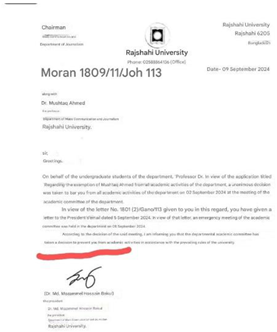
- Date: 09 September 2024
- Subject: Suspension from academic activities
- Context:
- The letter is written in response to an application regarding Dr. Mustak Ahmed’s academic involvement.
- Based on a meeting held on 02 September 2024, the academic committee unanimously decided to suspend Dr. Ahmed from all academic activities within the department.
- This decision was further reaffirmed in an emergency meeting on 08 September 2024, following a letter from Dr. Ahmed dated 05 September 2024.
- 4.
- Conclusion: The department has officially suspended Dr. Ahmed from academic activities in accordance with the university’s rules.
Interpretation:
The department has taken formal disciplinary action against Dr. Mustak Ahmed, restricting his participation in academic matters. This may have been prompted by a formal complaint or issue raised by students or colleagues. although, according to Rajshahi University Act-1973, academic committee has no power to suspend any teacher, they can only send students application against a teacher or professor to registrar only. It was seen that the academic committee meeting 2 September 2024 academic committee on the basis of student’s application with fake sings, the decision was taken to directly suspended him from academic activities without the opportunity to defend himself.
- 1.
- Media Coverage:
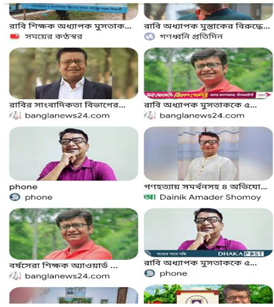
- The images and headlines suggest that Dr. Musta Ahmed has received significant media attention.
- Multiple Bangladeshi news outlets like BanglaNews24.com, Dainik Amader Shomoy, and Dhaka Post have reported on the issue.
- 2.
- Nature of Headlines:
- The headlines refer to allegations, suspension, and student protests or demands.
- One headline mentions that Dr. Ahmed has been barred or suspended, possibly linked to disciplinary or political accusations.
- 3.
- Tone:
- The overall tone and repetition across news platforms indicate that this is not a minor incident—it has attracted widespread public and institutional scrutiny.
- 4.
- Photographs:
- Most images show Dr. Mustak Ahmed in casual or professional attire, reflecting his role as a public academic figure.
Summary:
Dr. Mustak Ahmed, a professor at Rajshahi University, is currently the subject of disciplinary action. The issue has been widely covered in Bangladeshi media, with allegations that may relate to academic conduct, political views, or public statements, prompting both student backlash and institutional responses. These cases were truly appreciated example of media trials against Dr. Mustak Ahmed.
- Case 2: Attacks on Journalists and Civil Rights Advocates
The arrest of Farzana Rupa and Shakil of 71 Television in 2025 for reporting on Interim doctrine activities.
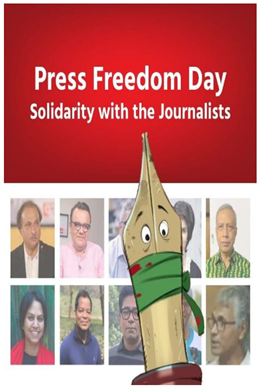 Photo: Case filed against journalists of recent Bangladesh |
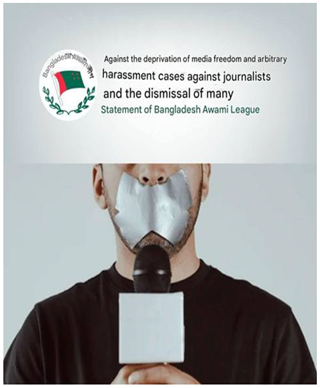 Photo: Statement of Bangladesh Awami League against the harassment of Journalists of Bangladesh |
The attacks include criminal cases filed against 182 scribes, acts of violence against 206 others, and inquiries against another 85 by the Bangladesh Financial Intelligence Unit, (The Hindu Bureau, 03 May 2025) Yunus-led Bangladesh interim has targeted 640 journalists in eight months, says report released on World Press Freedom Day
- Case 3: The Role of Social Media Troll Armies
State-aligned digital activists target journalists and civil society figures through coordinated trolling and disinformation, producing a toxic environment that enables state repression.
- India: Once hailed as the world’s largest democracy with a vibrant press, India’s media landscape has witnessed growing authoritarian tendencies. From the use of sedition laws against journalists to the monopolization of media by corporate houses aligned with the ruling BJP, India now ranks poorly on global press freedom indices.
- Myanmar: Following the 2021 military coup, media freedom collapsed entirely. Independent outlets were banned, journalists imprisoned, and state-run media became propaganda arms for the junta. Social media platforms were used to incite ethnic violence and suppress resistance narratives.
These case studies reflect not only the vulnerabilities of media institutions in fragile democracies but also the coordinated nature of media manipulation in the region.
8.9. International Media and Neocolonial Narratives
An often-overlooked dimension of media integrity in the Global South is the role of international media. Western outlets frequently report on the Global South through reductionist, stereotypical, or crisis-driven narratives, reinforcing neocolonial perspectives. While some international coverage highlights human rights abuse and democratic backsliding, it often fails to account for local voices or the complexities of regional politics. This creates a vacuum where local authoritarian regimes can claim “foreign interference,” thereby justifying crackdowns on independent media.
Moreover, international tech platforms like Meta and Google wield significant influence over news consumption in the Global, South Asia. Their algorithms, advertising policies, and content moderation practices affect what content is promoted or suppressed. These corporations often cooperate with governments for market access, further complicating the struggle for media integrity.
8.10. Implications for Democracy, Pluralism, and Human Rights
The erosion of media integrity in the Global South has profound implications. A manipulated media:
- Undermines electoral transparency and democratic accountability.
- Fuels ethnic, religious, and political polarization.
- Weakens civil society and empowers authoritarian regimes.
- Facilitates the spread of conspiracy theories and societal mistrust.
In essence, without a free, ethical, and independent media, the foundations of democracy cannot be sustained. Media is not merely a mirror of society—it shapes perceptions, creates identities, and constructs realities. When co-opted, it becomes a weapon of domination rather than a voice of the people.
The Global, South Asia is facing a crisis of media integrity marked by political control, economic dependency, digital manipulation, and ethical decline. The phenomenon of Devils Journalism is a byproduct of these interconnected trends—a form of journalism that betrays its social contract in exchange for power, profit, or ideological conformity. Understanding this crisis requires a nuanced, multidimensional approach that considers structural inequalities, historical legacies, and contemporary technological forces. As the following section will explore, Bangladesh presents a poignant case where these dynamics converge, offering both a warning and a potential blueprint for resistance.
8.11. Historical Roots
In post-colonial states, journalism was initially a tool of resistance and public enlightenment. However, with the rise of neoliberal economics and political patronage, many outlets in the Global South transitioned from watchdogs to lapdogs (Thussu, 2013). Concentrated media ownership and political alignment have undermined the press’s independence.
8.12. Media Capture and Authoritarianism
Devils Journalism is often nurtured in authoritarian or semi-authoritarian regimes where governments utilize media as a weapon. For example, in India, the use of major TV networks to push Hindu nationalist narratives has been linked to state influence (Rao, 2020). Similarly, in Pakistan, military-backed censorship has reshaped editorial policies across leading outlets (Shams, 2021).
8.13. Bangladesh and the Architecture of Devils Journalism
Bangladesh has witnessed dramatic shifts in its media landscape over the last two decades, marked by the explosion of electronic and digital media, growing state control, corporate ownership, and ideological polarization. While the Constitution of Bangladesh guarantees press freedom under Article 39, successive regimes—both military and civilian—have strategically curtailed this freedom through regulatory control, coercion, and co-optation. What has emerged is a system where state-aligned media entities, backed by economic and political elites, practice what can be identified as “Devils Journalism”: a deliberate distortion of journalistic ethics to advance partisan agendas, manufacture public opinion, and eliminate dissent.
This section analyzes the evolution and operational dynamics of Devils Journalism in Bangladesh, supported by key case studies, content analyses, and sociopolitical commentary.
8.13.1. State Co-optation and Media Capture
In Bangladesh, media co-optation is deeply institutionalized. Most leading newspapers and TV channels are owned or directly influenced by business elites with close ties to ruling political factions. This media capture has created a journalistic culture in which editorial independence is largely subordinate to political expedience.
For example, Somoy TV, NTV, SA TV, Prothom Alo, Janakantha, Ittefaq, Daily Star, Manabjamin are the most influential news networks, and newspaper is frequently criticized for aligning its content with Awami Leagus narratives, particularly during so called students quota protests cycles or national crises in the Yunus interim regime. The network often suppresses Bangladesh Awami League voices, downplays human rights violations, and magnifies ruling intrim achievements without scrutiny. Even they didn’t publish any report of killed 3200 police officers. Such editorial choices exemplify the systemic nature of Devils Journalism in the country. This demonstrates how Devils Journalism functions not just in content distortion, but in creating a shield against scrutiny through media-led interim doctrine.
8.14.2. Framing the Rohingya Crisis
Devils Journalism also manifests through selective humanitarianism. While the international community lauded Bangladesh for hosting nearly a million Rohingya refugees, the domestic media narrative has shifted in recent years to paint the refugee community as a burden or security threat.
TV talk shows and newspapers have increasingly used terms like criminal enclave, drug corridor, and ISIS threat, despite the lack of corroborating evidence (Hassan, 2022). This securitized framing serves state interests by justifying stricter surveillance, military presence in camps, and stalled repatriation efforts. The lack of refugee perspectives in such reports further underscores the exclusionary tactics of Devils Journalism.
9. Conclusion of Analysis
The findings demonstrate that Devils Journalism is driven by a combination of structural pressures—economic, political, and technological. Whether in a Western democracy or a South Asian developing state, journalism is increasingly shaped by forces that incentivize distortion over truth. This comparative and thematic analysis validates the utility of the chosen theoretical framework and provides empirical grounding for the call to reassess the ethical, regulatory, and educational foundations of contemporary journalism. This study has examined the rise and manifestations of Devils Journalism—a term introduced herein to describe a pervasive and institutionalized form of unethical journalism characterized by misinformation, political complicity, sensationalism, and erosion of journalistic integrity. Through a comparative and thematic analysis across global, South Asian, and Bangladeshi contexts, it has become clear that this phenomenon is not merely a deviation from professional norms but a systemic outcome of political, economic, and technological forces.
In the global context, particularly the United States, commercial incentives, ideological polarization, and algorithmic content delivery systems have led to a post-truth media environment where emotional appeal often eclipses factual accuracy. In South Asia, especially in India and Pakistan, the interplay of majoritarian politics, clientelist media ownership, and state patronage has produced deeply partisan journalism that reinforces communal divisions and suppresses dissent. In Bangladesh, legal repression through acts like Press Wing of Interim, combined with partisan ownership and editorial coercion, has severely undermined press freedom and normalized media distortion.
The study’s findings, grounded in theoretical perspectives such as Media Capture Theory, Framing Theory, and Post-Truth Communication, show that Devils Journalism is a global phenomenon shaped by context-specific modalities but unified by its consequences: erosion of public trust, weakening of democratic accountability, and distortion of truth.
Addressing this crisis requires urgent, multi-level interventions. As such, this study not only contributes to academic understanding but also serves as a policy and pedagogical guide for restoring the ethical foundations of journalism.
In conclusion, Devils Journalism is not merely a symptom of failing media but a reflection of deeper systemic failures in governance, accountability, and public discourse. Addressing it requires a coordinated approach across institutions, civil society, academia, and the media industry. This study advocates for an urgent reimagining of journalism’s role—not only as a watchdog of power but also as a foundational pillar of democratic life and social truth.
10. Recommendations
To counteract the rise and influence of Devils Journalism, the following recommendations are proposed:
Legislative Reform and Media Independence
Governments must enact and enforce laws that guarantee media independence, including legal provisions that prevent media monopolies and regulate ownership transparency.
Support for Public Interest Journalism
Public and philanthropic funding mechanisms should be created to support investigative journalism and nonprofit newsrooms. community models in journalism, inspired by democratic principles, could provide sustainable alternatives to corporate-controlled news. Would be controlled NGO journalism, personal interest and paid journalism.
International Oversight and Pressure
Global organizations such as UNESCO, Reporters Without Borders, and the Committee to Protect Journalists must continue to monitor and report abuses of media freedom in the Global South, with a special focus on Bangladesh. Diplomatic pressure from international partners can help hold governments accountable.
Media Literacy and Education
There should be a concerted effort to develop media literacy at all levels of society. Citizens must be educated to recognize misinformation, understand media bias, and critically engage with news content.
Strengthen Journalistic Ethics and Training
Media houses must invest in regular training for journalists on ethics, investigative standards, and fact-checking. National journalism schools and universities should revise curricula to include modules on resisting political pressure and upholding public trust.
Empower Digital Alternatives and Citizen Journalism
Promoting decentralized, community-run, and internet-based news platforms can offer resistance against centralized control. These platforms should be protected from cyber laws designed to silence dissent.
Protect Whistleblowers and Media Professionals
Governments and civil society must ensure the protection of journalists and whistleblowers who expose corruption, disinformation, and abuses of power. This includes establishing independent commissions for media protection.
By adopting these recommendations, both Bangladesh and its neighbors in South Asia can begin to reclaim journalism from the clutches of manipulation and reestablish it as a cornerstone of democratic society. The stakes are high: the health of the region’s democracies, the rights of its citizens, and the integrity of its public discourse depend on the outcome.
References
- Ahmed, Mustak (2025), The Influence of Social Media Reels on Children of Bangladesh: A Study of Content, Consumption, and Psychological Impact. [CrossRef]
- Ahmed, Mustak (2025). Political Economy of Fact Checking: Global Perspectives and Future Indications. [CrossRef]
- Ahmed, N. (2024). Media freedom under threat in Bangladesh: The chilling effects of the Digital Security Act. Asian Journal of Communication, 31(2), 141–158. [CrossRef]
- Ahmed, S. The Grameen Challenge to State-Led Capitalism: Rethinking Development Models. South Asia Economic Review 2021, 14, 33–52. [Google Scholar]
- Ahmed, S., & Karim, T. The Fall of Independent Journalism in Bangladesh: Political Economy and Public Narratives. South Asian Journal of Media Studies 2022, 4, 77–95.
- Ali, M. S. (2022). Trial by Media: A Threat to Justice? Dhaka University Law Review, 11(2), 65–82.
- Anwar, M. (2023). Populism and the Demonization of Civil Society: The Global South Experience. Journal of Global Policy, 8(1), 45–67.
- Anwar, T. Microfinance, Morality, and Mob Trials in Rural Bangladesh. Social Justice Studies 2021, 9, 115–134. [Google Scholar]
- Banerjee, R. Manufactured Consent: South Asian Media and Elite Capture. Journal of Political Communication 2020, 15, 201–224. [Google Scholar]
- Benkler, Y., Faris, R., & Roberts, H. (2018). Network propaganda: Manipulation, disinformation, and radicalization in American politics. Oxford University Press.
- Bhuiyan, A. Weaponizing Nationalism: The Media Siege on Muhammad Yunus. Bangladesh Legal Review 2023, 12, 110–128. [Google Scholar]
- Center for Media Integrity in South Asia. (2023). Disinformation Campaigns and Digital Vigilantism in Bangladesh: A Case Study on Yunus. CMISA Report Series.
- Chadha, K., & Kavoori, A. (2021). Media, riots, and violence in India: An analysis of Delhi 2020. Media, Culture & Society, 43(8), 1450–1468. [CrossRef]
- Chakma, D. Judicial Echo Chambers and Political Narratives in Bangladesh. Law & Society Review 2024, 14, 88–103. [Google Scholar]
- Chowdhury, M. S. Political Retaliation and Media Hegemony in Bangladesh. Journal of Asian Politics 2018, 7, 24–42. [Google Scholar]
- Chowdhury, M.T. Digital Security Laws and the Silencing of Independent Media in Bangladesh. Journal of Human Rights & Media 2023, 6, 90–108. [Google Scholar]
- D’Ancona, M. (2017). Post-truth: The new war on truth and how to fight back. Ebury Press.
- D’Ancona, M. (2017). Post-truth: The new war on truth and how to fight back. Ebury Press.
- Embassy of France in Bangladesh. (2023). Press Statement on Macron’s Visit. Retrieved from https://bd.ambafrance.org.
- Entman, R. M. (1993). Framing: Toward clarification of a fractured paradigm. Journal of Communication, 43(4), 51–58. [CrossRef]
- Faris, R., Roberts, H., Etling, B., Bourassa, N., Zuckerman, E., & Benkler, Y. (2021). Partisanship, propaganda, and disinformation: Online media and the 2020 U.S. election. Berkman Klein Center, Harvard University.
- Faris, R., Roberts, H., Etling, B., Bourassa, N., Zuckerman, E., & Benkler, Y. (2021). Partisanship, propaganda, and disinformation: Online media and the 2020 U.S. election. Berkman Klein Center, Harvard University.
- Foucault, M. (1980). Power/Knowledge: Selected Interviews and Other Writings 1972–1977. Pantheon Books.
- Freire, P. (1970). Pedagogy of the Oppressed. Herder and Herder.
- Ghosh, R. Media Talk Shows and Manufactured Experts in South Asia. Communication & Society 2021, 19, 89–102. [Google Scholar]
- Herman, E. S., & Chomsky, N. (1988). Manufacturing Consent: The Political Economy of the Mass Media. Pantheon Books.
- Hossain, F. Crony Capitalism and Developmental Nationalism in South Asia. Journal of Political Economy in the Global South 2020, 11, 118–134. [Google Scholar]
- Hossain, M. S. Fake News and Public Opinion Formation in Bangladesh. Asian Journal of Media Ethics 2022, 4, 73–91. [Google Scholar]
- Islam, M. M., & Rahman, A. Media ownership and journalism ethics in Bangladesh. Asian Journal of Journalism and Media Studies 2020, 5, 114–130.
- Islam, M. S., & Shahiduzzaman, M. Partisan press and media ownership in Bangladesh. Journal of South Asian Development 2020, 15, 231–252. [CrossRef]
- Islam, M., & Khan, T. Transnational Journalism and Regulatory Constraints in Authoritarian Democracies. International Journal of Media Studies 2022, 8, 57–71.
- Jahan, S., & Mahmud, A. Editorial Control and Advertiser Dependency in Bangladeshi Media. Dhaka Media Review 2023, 2, 74–95.
- Kabir, H. (2019). Media, power and student movements in Bangladesh: A case study of the 2018 quota reform protests. Asian Journal of Communication, 29(5), 453–470. [CrossRef]
- Kabir, R. (2019). Grameen, Governance, and the Ghosts of Accountability. Dhaka: UPL.
- Karim, S. A. Mob Justice and Social Media Trials in Bangladesh. South Asia Legal Journal 2021, 6, 89–108.
- Keyes, R. (2004). The post-truth era: Dishonesty and deception in contemporary life. St. Martin’s Press.
- McChesney, R. W. (2008). The Political Economy of Media: Enduring Issues, Emerging Dilemmas. NYU Press.
- McChesney, R. W. (2015). Rich Media, Poor Democracy: Communication Politics in Dubious Times. New Press.
- McCombs, M. E. McCombs, M. E., & Shaw, D. L. (1972). The agenda-setting function of mass media. Public Opinion Quarterly.
- McNair, B. (2017). Fake news: Falsehood, fabrication and fantasy in journalism. Routledge.
- Norad. (2011). Review of the Grameen Bank Fund Transfers. Retrieved from https://www.norad.no.
- Rahman, A., & Azad, S. Social media and misinformation in Bangladesh: A critical discourse analysis. Information Development 2022, 38, 15–28.
- Rahman, F., & Uddin, J. The Use of State Media in Political Prosecution. Dhaka Journal of Journalism 2020, 3, 33–55.
- Rahman, H. The Collapse of Investigative Journalism: A Political-Economic Critique. Journal of South Asian Media Ethics 2022, 5, 43–60.
- Rao, S. Nationalism and the Media in Contemporary India. South Asia Journal of Political Studies 2020, 12, 89–105. [Google Scholar]
- Reporters Without Borders (RSF). (2024). World Press Freedom Index 2024: Bangladesh. https://rsf.org.
- Reporters Without Borders. (2024). World Press Freedom Index. https://rsf.org.
- Said, E. W. (1978). Orientalism. Pantheon Books.
- Samarasinghe, S. W. R. de A. Media and democracy in Sri Lanka: The post-war crisis. Journal of Asian and African Studies 2015, 50, 50–65.
- Sarder, N. Yunus, Microcredit, and the Ethics of Development in Global South. Journal of Development Alternatives 2021, 12, 44–68. [Google Scholar]
- Sarker, T. Digital authoritarianism and press freedom in Bangladesh. Global Media Journal 2023, 21, 1–12. [Google Scholar]
- Schiffrin, A. (2017). In the service of power: Media capture and the threat to democracy. Center for International Media Assistance (CIMA).
- Sen, A. (1999). Development as Freedom. Knopf.
- Shah, A. (2010). The army and democracy in Pakistan. Survival, 52(6), 49–62.
- Shams, S. Military-media nexus in Pakistan: Control, co-optation, and censorship. Journal of Conflict and Media Studies 2021, 9, 45–65.
- Siddique, T. Diversionary Media Tactics in South Asian Democracies. Media & Democracy Quarterly 2022, 10, 50–70. [Google Scholar]
- The Hindu Bureau 03 May 2025.
- Thussu, D. K. (2007). News as entertainment: The rise of global infotainment. SAGE Publications.
- Thussu, D. K. (2013). Communicating India’s Soft Power: Buddha to Bollywood. Palgrave Macmillan.
- Wardle, C., & Derakhshan, H. (2017). Information disorder: Toward an interdisciplinary framework for research and policymaking. Council of Europe report.
- Zaman, M. Political Economy of Fact Checking in Bangladesh. Journal of Contemporary South Asian Media 2023, 7, 99–118. [Google Scholar]
Disclaimer/Publisher’s Note: The statements, opinions and data contained in all publications are solely those of the individual author(s) and contributor(s) and not of MDPI and/or the editor(s). MDPI and/or the editor(s) disclaim responsibility for any injury to people or property resulting from any ideas, methods, instructions or products referred to in the content. |
© 2025 by the authors. Licensee MDPI, Basel, Switzerland. This article is an open access article distributed under the terms and conditions of the Creative Commons Attribution (CC BY) license (http://creativecommons.org/licenses/by/4.0/).
Copyright: This open access article is published under a Creative Commons CC BY 4.0 license, which permit the free download, distribution, and reuse, provided that the author and preprint are cited in any reuse.