
Submitted:
09 May 2025
Posted:
09 May 2025
You are already at the latest version
Abstract
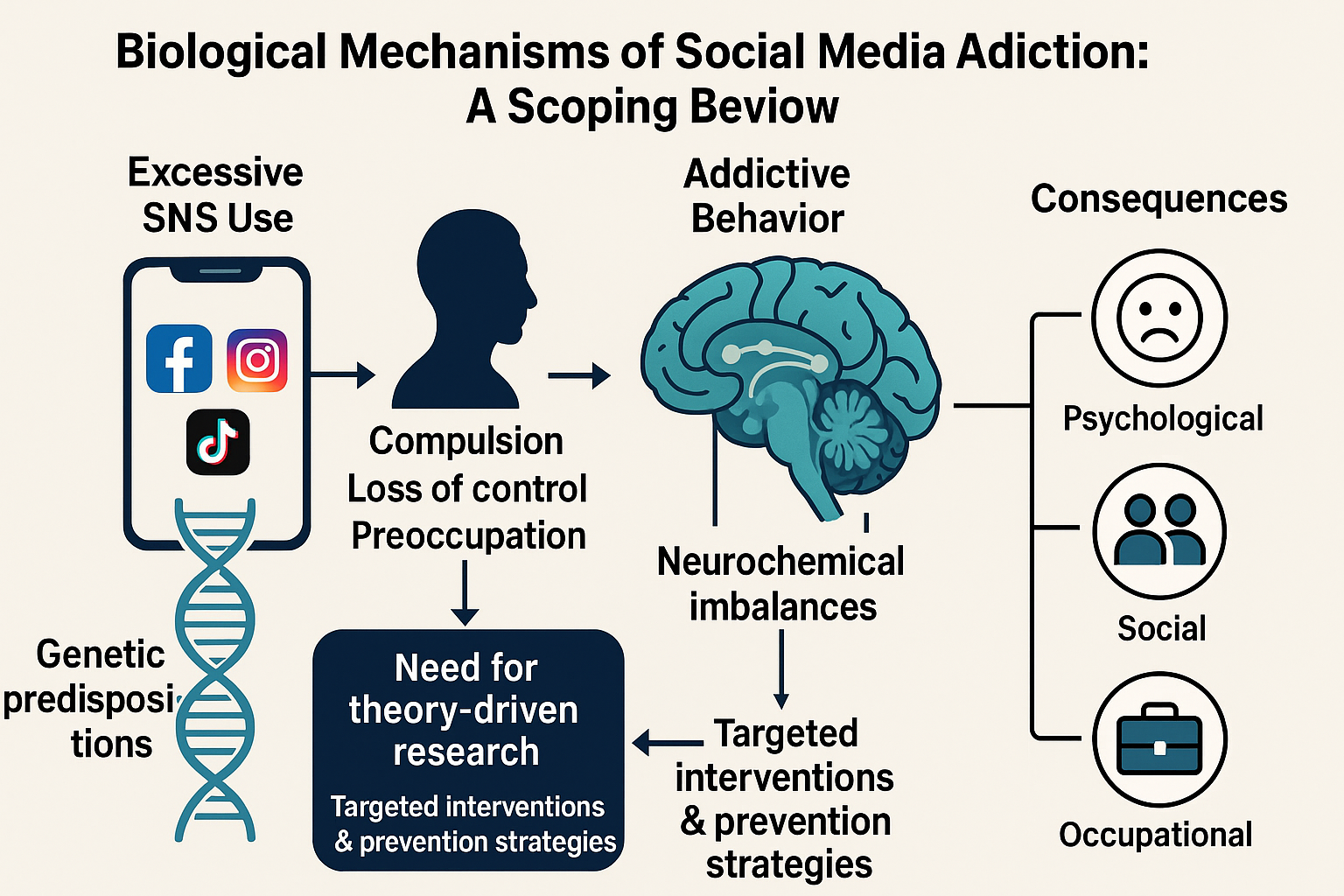
Social media addiction has surfaced as a prominent concern in the digital age, characterized by excessive engagement and dependence on social media platforms, leading to adverse psychological, social, and occupational consequences (Kuss & Griffiths, 2011). This scoping review aims to synthesize existing literature on the genetics interplay and neurobiological pathways in the development and maintenance of social media addiction. By analysing the relationships between genetic factors, neural networks, and neurotransmitter systems, this review aims to offer a comprehensive understanding of the biological mechanisms underlying social media addiction identifying potential targets for intervention and prevention strategies. The review examines genetic predispositions, brain structure and function, and neurochemical imbalances associated with social media use and addiction. The escalating use of social networking sites has triggered concerns about their addictive potential, yet the concept of SNS addiction remains contentious, highlighting the necessity for theory-driven research to elucidate the mechanisms driving excessive and compulsive SNS (evolving digital connectivity) use and to facilitate the creation of targeted interventions for users at risk (Ihssen & Wadsley, 2020).
Keywords:
genetics
; social media addiction
; neurobiological pathways
; brain studies
1. Introduction
Social media addiction is an increasingly prevalent concern, significantly impacting individuals' social lives and overall well-being (Ji et al., 2023). The pervasive nature of social media platforms has led to widespread adoption, particularly among younger demographics, raising concerns about potential adverse effects (Schønning et al., 2020). Characterized by excessive and compulsive usage, social media addiction manifests as an overwhelming need to constantly check for updates, leading to anxiety and distress when offline, and ultimately disrupting daily routines and responsibilities (Amirthalingam & Khera, 2024). While the precise mechanisms that drive social media addiction remain under investigation, several factors appear to contribute to its development. These include psychological vulnerabilities, such as social interaction anxiety, which can drive individuals to seek validation and connection through online platforms, potentially leading to compulsive use (Ali et al., 2021). Furthermore, the design of social media platforms, which often incorporates features such as notifications, likes, and comments, can trigger reward pathways in the brain, reinforcing addictive behaviours (Popescu et al., 2021). The addictive nature of social media platforms is further exacerbated by their ability to provide a sense of belonging and social connection, particularly for individuals who may struggle with social isolation in the offline world (Kuss & Griffiths, 2011).
2. Theoretical Frameworks for Understanding Social Media Addiction
The rise of social media has ushered in an era of unprecedented connectivity, yet it has also cast a long shadow, revealing the potential for disordered use and its detrimental effects on mental and physical well-being, as well as impacts on work, education, and family dynamics (Tang et al., 2021). Understanding the multifaceted nature of social media addiction requires a comprehensive approach that integrates psychological, social, and neurobiological perspectives (Meshi et al., 2015). Social media addiction, characterized by excessive engagement and a compulsive need to use social media platforms, shares commonalities with other forms of addiction, exhibiting behaviours such as withdrawal symptoms, tolerance, and negative consequences (Gao et al., 2025). From a psychological standpoint, several theories offer valuable insights into the mechanisms driving social media addiction, with cognitive behavioural models emphasizing the role of maladaptive thoughts and behaviours in perpetuating addictive cycles. Social learning theory suggests that individuals may acquire addictive behaviours through observation and reinforcement, particularly within the social context of online interactions. Reward-based approaches, drawing parallels with drug addiction literature, posit that social media platforms exploit incentive processes, leading to compulsive checking and engagement (Ihssen & Wadsley, 2020). The dopamine-mesolimbic pathway, a key component of the brain's reward system, is heavily implicated in the development and maintenance of addictive behaviours, with social media engagement triggering dopamine release, leading to feelings of pleasure and reinforcement (Popescu et al., 2021).
Simultaneously, personality traits also play a significant role in predisposing individuals to social media addiction, with traits such as dispositional envy increasing sensitivity to social comparison and negative emotions when encountering others' successes on social media, which leads to heightened anxiety and compulsive use (Pellegrino et al., 2022). Furthermore, deficient self-regulation is also linked to social media dependence (Wang et al., 2014). Cognitive-affective-behavioural modelling explains that maladaptive cognition and affect tend to distort habit into psychological dependence (Wang et al., 2014). In cognitive dimensions, the dual-process theory can be applied to explain short video addiction (Liao, 2024). The neurobiological underpinnings of social media addiction involve complex interactions between various brain regions and neurotransmitter systems, which are vital to understand the factors causing addiction. The motivational dimension can be explained by the Social Shaping of Technology theory, where technology is shaped by social factors, including political and economic factors (Liao, 2024). Psychological mechanisms of short video addiction can be deeply explored from cognition, emotion, motivation, and social factors, aiming to provide a systematic understanding of this issue (Liao, 2024).
3. Methodology
This scoping review aims to provide a comprehensive overview of the existing literature on the role of genetics and neurobiological pathways in social media addiction. To achieve this objective, a systematic search of electronic databases, including PubMed, Scopus, Web of Science, and PsycINFO, was conducted using relevant keywords and search terms, such as "social media addiction," "internet addiction," "genetics," "neurobiology," "dopamine," "reward system," and "brain imaging." The search strategy was refined iteratively to ensure that all relevant articles are captured.
Inclusion and Exclusion Criteria
Studies published in English was considered, and there were no restrictions on publication date to capture the breadth of research in this evolving field. Data extraction was performed using a standardized PRISMA-ScR guidelines to collect relevant information from each study, including study design, sample characteristics, genetic markers investigated, neuroimaging techniques used, and key findings related to the role of genetics and neurobiological pathways in social media addiction. The extracted data was synthesized and summarized narratively to provide greater understanding of relevant terminology, core concepts, and key items. All other research articles specified otherwise were excluded from the study.
Genetics and Neurobiological pathways in Addiction
Addiction is a complex phenomenon with genetic traits behind its development, with internal, behaviour and external factors not to be underestimated (Popescu et al., 2021). Heritability accounts for 40–60% of the variability in developing an addiction, highlighting the significant role of genetics (Popescu et al., 2021). Genetic factors may increase the risk of alcoholism (Popescu et al., 2021). Although methamphetamine is a highly addictive drug, its addiction mechanisms are less studied (Popescu et al., 2021). Studies have aimed to ascertain whether METH addiction can be caused by epigenetically induced alterations in gene expression known to play a role in cognitive functions and synaptic plasticity (Popescu et al., 2021). Genome-wide studies of addiction are likely to generate a vast amount of data aimed at elucidating the molecular mechanisms of addiction (Jacobs et al., 2003). Similarly, dopamine and other neurotransmitters are implicated in addictions, which have been linked to an addiction's reward circuitry (Probst & Eimeren, 2013). The dopaminergic system is essential for survival because it reinforces behaviors, ensuring that these are repeated. Social media addiction has been linked to changes in brain structure and function, particularly in areas associated with reward processing, cognitive control, and emotional regulation (Gao et al., 2025). Additionally, neuroimaging studies have revealed alterations in grey matter volume and functional connectivity in individuals with short video addiction, which can be associated with psychological distress (Gao et al., 2025). It is essential to develop theories and models that enable us to understand addiction’s genesis and maintenance, providing a theoretical and empirical framework for designing more effective interventions (Ferrer-Pérez et al., 2024). The cerebellum integrates input from sensory systems (Gao et al., 2025).
Brain Circuits and Social Media Addiction
Addiction emerges as an imbalance in information processing and integration among various brain circuits and functions (Volkow et al., 2010). Brain imaging technologies have allowed neuroscientists to map out the neural landscape of addiction in the human brain and to understand how drugs modify it (Volkow et al., 2013). Specifically, addictive substances can induce changes in synaptic plasticity, leading to a dysregulation of critical brain circuits and, ultimately, the manifestation of compulsive drug-seeking behavior (O’Brien, 2009). Furthermore, drug addiction is a chronically relapsing disorder, and the brain circuits that mediate relapse have become a major focus of preclinical and clinical research (Nestler & Lüscher, 2019). These findings suggest that addiction affects circuits related to reward, memory, motivation, executive function, mood, and interoception (Volkow et al., 2011). Addictive drugs remodel the brain's reward circuitry, the mesocorticolimbic dopamine system, by inducing widespread adaptations of glutamatergic synapses (Huijstee & Mansvelder, 2015). Decreases in dopaminergic function have been identified as a key common element of addiction (Koob & Simon, 2009). Dysfunctional modulation within the brain's intricate reward circuitry, most notably involving the nucleus accumbens as a critical hub, appears to be a central feature in the establishment and perpetuation of addictive behaviors, underscoring the importance of this region in driving motivation and reinforcement (He et al., 2017; Wise, 1996). Beyond its established role in motor coordination, the cerebellum is now recognized as a critical player in mediating social cognition and affective functions (Gao et al., 2025).
The neurobiological theories of addiction propose a multifactorial causation in which both biological and environmental factors interact, accentuating or causing neurobiological dysfunction in structures and brain circuits involved in behaviours and motivation (Ferrer-Pérez et al., 2024). The influence of social media on the brain involves various regions, including the prefrontal cortex, amygdala, striatum, and insula (Liao, 2024). The prefrontal cortex is involved in cognitive control and decision-making (Gao et al., 2025).
The orbitofrontal cortex has been identified as a critical hub contributing to the onset and maintenance of addictive behaviors (Gao et al., 2025). Alterations in impulse control and decision-making, also mediated by the orbitofrontal cortex and anterior cingulate, are evident (Adinoff, 2004). The nucleus accumbens, prefrontal cortex, amygdala, and hippocampus are the main cerebral structure in inducing addiction (Popescu et al., 2021). Furthermore, the dorsal hippocampus and nucleus accumbens shell play a significant role in contextual reinstatement of drug-seeking behavior (Feltenstein & See, 2008). The prefrontal cortex, striatum, and thalamus constitute the primary circuitry involved in motivations and behaviors, including addictions (Potenza, 2013). In essence, addiction results from an imbalance in the brain circuits that govern incentive motivation and drive. Addiction activates the brain's reward pathway (Liao, 2024). Specifically, the mesocorticolimbic dopamine pathway, which includes dopamine neurons originating in the ventral tegmental area and projecting to the striatum and limbic regions such as the prefrontal cortex, amygdala, and hippocampus, mediates the acute rewarding and reinforcing effects of drugs of abuse. Activation of this pathway reinforces drug-seeking behavior, contributing to the development of addiction.
Reward Deficiency and Genetic Predisposition
Reward deficiency, the underlying mechanism behind all addictions, involves a complex interplay of genetic predispositions, epigenetic modifications, and environmental influences that collectively shape an individual's vulnerability to developing addictive behaviors. Social media addiction, like other behavioral addictions, is thought to involve similar reward pathways in the brain as substance addictions, with dopamine playing a central role (Roberts & Koob, 1997). Variations in genes related to dopamine function can affect how people experience pleasure and reinforcement from social media use, potentially making some individuals more susceptible to addiction. Genetic variations influencing the function of dopamine and opioid receptors in the brain may predispose individuals to seek out rewarding stimuli, increasing their vulnerability to social media addiction (Popescu et al., 2021). Genetic factors are implicated in the development of addictive behaviors, including variations in genes related to neurotransmitter systems, such as dopamine and serotonin (Popescu et al., 2021).
Reward deficiency, viewed as a core mechanism underlying various forms of addiction, including social media addiction, arises from a multifaceted interaction between an individual's genetic makeup, epigenetic modifications, and environmental factors, all of which collectively influence their susceptibility to developing addictive behaviors. Individuals with fewer D2 receptors are less sensitive to subtle rewards and more prone to anxiety, anger, and dysphoria, which leaves them vulnerable to overindulging in rewarding behaviors in an effort to alleviate negative emotions (Barry & Petry, 2009). It is essential to consider the cumulative impact of multiple genetic variants and environmental risk factors in determining an individual's overall vulnerability to social media addiction. The mesolimbic dopamine system is the leading system in the development of addiction because of its role in encoding motivation and reward (Popescu et al., 2021).
4. Current Research on Genetic and Neurobiological Factors in Social Media Addiction
Existing research highlights the structural and functional changes that can occur in the brain as a result of social media addiction, which may include alterations in gray matter volume, white matter integrity, and functional connectivity in regions associated with reward processing, executive function, and emotional regulation. Activation in the ventral tegmental area and amygdala is heightened when users view personalized short video content, further emphasizing the role of reward circuitry (Gao et al., 2025). Moreover, increased synchronization in the posterior cingulate cortex may reflect a tendency toward constant self-evaluation and comparison with others, reinforcing content consumption in search of validation (Gao et al., 2025). The anterior cingulate cortex, responsible for conflict monitoring and error detection, exhibits altered activity patterns in individuals with social media addiction, which suggests impaired cognitive control and decision-making abilities. Epigenetic modifications, which can alter gene expression without changing the underlying DNA sequence, may also contribute to the development of social media addiction by influencing the expression of genes involved in reward pathways, stress response, and cognitive function.
Genetic predispositions can influence an individual's vulnerability to addiction, with variations in genes related to dopamine signaling, serotonin transport, and glutamate neurotransmission potentially increasing susceptibility to social media addiction. The analysis of sources showed that the vast majority of neurobiological research was focused on the study of computer games addiction and generalized Internet addiction (Tereshchenko, 2023). While a certain number of neuroimaging studies have been conducted for problematic social media use, there is practically no research on neuropeptide and genetic associations. This fact points to the extremely high relevance of such studies. Further research is necessary to elucidate the complex interplay between genetic factors, neurobiological mechanisms, and environmental influences in the development and maintenance of social media addiction, which would provide crucial insights into the biological processes that contribute to structural and functional brain profiles underlying specific addictive behaviors (Gao et al., 2025).
5. Gaps and Future Directions in the Literature
While current research provides valuable insights into the neurobiological aspects of social media addiction, several gaps remain that warrant further investigation. Firstly, the precise genetic underpinnings of social media addiction are not yet fully understood, and future studies should aim to identify specific genes and genetic variants associated with increased susceptibility to this condition (Tereshchenko & Каспарoв, 2019). Secondly, longitudinal studies are needed to examine the long-term effects of social media use on brain structure and function, and to determine whether these changes are reversible with intervention strategies.
Furthermore, research should investigate the potential for personalized interventions based on an individual's genetic and neurobiological profile, which may involve tailoring treatment approaches to target specific neurotransmitter systems or brain regions implicated in their addiction (De et al., 2025). Given the dynamic biological, psychological, and behavioral changes that occur during adolescence, this developmental period may represent a critical window for susceptibility to social media addiction, highlighting the importance of early intervention and prevention efforts. Future research should focus on detailed examinations of specific activities and addictive behaviors related to social media to determine causal relationships between variables (Demirdöğen et al., 2024).
Therefore, further studies integrating biological and environmental factors are required to fully elucidate the development of these disorders. (Cataldo et al., 2021). By analyzing the neural mechanisms underlying user attention, emotion, and reward systems through neuroimaging techniques, researchers can uncover the neural basis of addiction to short videos (Liao, 2024). Longitudinal studies are also needed to track changes in brain structure and function over time in relation to social media use, which can help establish causal relationships and identify potential biomarkers for addiction risk.
Identifying teenagers at risk for addiction and its consequences may be possible by understanding the neurobiologic basis of addiction. Effective treatment and prevention strategies can be developed by understanding the neurobiologic basis of addiction in adolescence (Hammond et al., 2014). Moreover, future investigations should also consider the potential role of the gut microbiome, which has been shown to influence brain function and behavior, in the development of social media addiction (Tereshchenko, 2023). Ultimately, unraveling the complex interplay between genetic factors, neurobiological mechanisms, and environmental influences is crucial for developing effective prevention and treatment strategies to address the growing problem of social media addiction in today's digital age (Ravinder et al., 2016).
Therefore, considering the potential for negative influences in short videos, such as misinformation, cyberbullying, and exposure to unrealistic social comparisons, it is imperative to approach the subject with caution (Liao, 2024). Understanding problematic social media use has much in common with addiction, and interventions that are beneficial to combat other forms of addiction could also be promising to target problematic social media use (Dekkers & Hoorn, 2022). It is essential to clarify the role of reward pathways in the transition from regular social media use to addictive behaviors and to identify differences in brain structure or function that predispose certain individuals to addiction (Gao et al., 2025). A more precise understanding of these processes can facilitate the development of early intervention strategies and therapies to prevent the progression of social media addiction.
Individuals who are highly sensitive to immediate gratification, often stimulated by the personalized audio-visual content found on platforms like TikTok, may be more prone to developing addictive behaviors, which can alter brain morphology (Gao et al., 2025). Furthermore, the algorithms that drive content delivery on social media platforms are designed to maximize user engagement by leveraging psychological principles such as variable rewards, social comparison, and fear of missing out, which can further exacerbate addictive tendencies (Qin et al., 2022). There is a need to understand the role of individual differences in impulsivity, reward sensitivity, and cognitive control in moderating the relationship between social media use and addiction.
Additionally, a comprehensive approach should consider the impact of social factors, such as peer influence and social norms, on social media usage patterns and addictive behaviors (Amirthalingam & Khera, 2024). Perceived stress can promote social communication motivation and further lead to short-form video application addiction, but shy individuals tend to have lower cognitive flexibility and a higher risk of cognitive failure, which may lead to the exaggeration of negative social effects and negative emotions brought about by stress (Liao, 2024).
6. Conclusions
Social media addiction is a growing concern in today's digital age, with potentially profound impacts on mental health and well-being; while behavioural manifestations are well-documented, the underlying genetic and neurobiological mechanisms require further elucidation. This scoping review has highlighted the complex interplay between genetic predispositions, neurobiological pathways, and environmental influences in the development and maintenance of social media addiction, emphasizing the need for a comprehensive and multidisciplinary approach to address this issue. (Volkow & Li, 2005)
It is important to acknowledge the inherent limitations of social media addiction research, which includes challenges in accurately measuring and defining addiction, the potential for confounding variables, and the rapidly evolving nature of social media platforms and their impact on users; despite these limitations, research in this field is essential for informing effective prevention and intervention strategies. By addressing the gaps in current knowledge and pursuing future research directions, we can gain a deeper understanding of the neurobiological basis of social media addiction and develop targeted interventions to mitigate its harmful effects on individuals and society.
Future research should focus on detailed examinations of specific activities and addictive behaviours related to social media to determine causal relationships between variables (Liao, 2024). Additionally, integrating both biological and environmental factors is required to fully elucidate the development of these disorders (Gao et al., 2025). Given the significant negative consequences of social media addiction, such as neglecting personal and professional responsibilities and experiencing distress when unable to access social media platforms, the need for effective prevention and intervention strategies is clear (Amirthalingam & Khera, 2024; Liao, 2024).
Similarly, the activation of the brain's reward system is a critical component of addiction, reinforcing addictive behaviours to the point where they interfere with normal activities (Li et al., 2021). Furthermore, future investigations should also consider the potential role of the gut microbiome, which has been shown to influence brain function and behaviour, in the development of social media addiction.
Understanding the neurobiological basis of addiction in adolescence may allow the identification of teenagers at risk for addiction and its consequences. Furthermore, there is a range of prevalence rates of social media addiction among teenagers ranging from 5% to 20% (Amirthalingam & Khera, 2024). Addressing short video addiction requires reflection on technology, social development, and user needs. The ease and usefulness of social media platforms contribute to user adoption and engagement, with positive feedback and interactions fostering a flow experience that can lead to addiction (Fauzi et al., 2020). Therefore, to minimize the negative impacts of social media addiction, recommendations can be made from both theoretical research and practical applications (Cheng et al., 2021; Liao, 2024).
Moreover, habitual social media use may lead to addiction and negatively affect adolescents' school performance, social behaviour, and interpersonal relationships (Pellegrino et al., 2022). Personalized recommendation algorithms are one of the key factors from the perspective of short videos (Liao, 2024). Short videos provide personalized content tailored to individual preferences, which can increase user engagement and immersion. However, algorithms bring convenience to people, the risks and challenges they pose have also raised concerns in various fields (Liao, 2024). Displaced behaviour theory suggests that individuals may engage in social media to seek instant gratification when faced with stressful situations (Khalaf et al., 2023).
7. Discussion
While social media addiction is not yet formally recognized in diagnostic manuals such as the DSM or ICD, there exists a critical need to foster continued, high-quality research into the etiology, presentation, and effective treatments for social media addiction and related technological overuse syndromes (Sherer & Levounis, 2024). Increased activation in certain brain regions may serve as potential biomarkers for social media addiction (Gao et al., 2025).
A study found that individuals with heightened spontaneous activity in brain regions such as the frontal cortex, posterior cingulate cortex, cerebellum, and temporal pole showed greater severity of short video addiction, while transcriptomic and cellular analyses identified specific genes linked to gray matter volume in brain regions associated with addiction (Wang et al., 2023; Xie et al., 2023; Ye et al., 2022; & Liao, 2024). It has been estimated that as much as 10% of the United States population may have a social media addiction, but due to the prevalence of social media usage, this figure may be higher (Andreassen et al., 2016).
The impact of specific internet addictions, including short-form video addiction, warrants closer examination due to the technological design of short-form videos, which can be prone to excessive use and addiction, especially for students and adolescents (Xie et al., 2023). The design of social media platforms, characterized by instant gratification and personalized content, can create a pleasurable and stimulating experience, thus fostering a flow experience which contributes to dependency (Liao, 2024). It has been shown that an individual's immersion during social media use is one of the key driving factors of addiction. The abundance of content, which is a defining characteristic of the internet in general, is amplified in short-video platforms, making them intensely appealing to users (Liao, 2024).
Lastly, recommendations and suggestions for health professionals, policy makers, stakeholders, parents and academia: Since excessive social media usage is associated with poorer mental health outcomes, it is imperative to encourage healthier digital habits among individuals of all ages (Szczygieł & Podwalski, 2020; Yeşi̇ltepe et al., 2023). Parents should teach their children self-control strategies and limit their screen time to protect them from potential negative impacts (Costanza et al., 2023). It is critical to promote awareness regarding the signs and consequences of excessive social media use, while encouraging individuals to seek support from mental health professionals if needed.
Given that excessive use of technology can result in a range of adverse effects, including anxiety, depression, sleep disturbances, and conflicts with family members (Zara & Monteiro, 2021), it is important to develop strategies to mitigate these negative impacts. Also, strategies should be implemented to promote awareness and responsible use of social media and technology. Additionally, the design of social media platforms should prioritize user well-being by incorporating features that encourage mindful usage and discourage addictive behaviours.
Additionally, perceived stress can promote social cognitive motivation and further lead to short-form video application addiction (Liu et al., 2021). College students are at high risk, with the underlying mechanism still being unclear (Liu et al., 2021). Short-form video applications provide entertainment and relaxation, which may alleviate negative emotions caused by stress, but this coping style can also lead to short-form video application addiction (Liu et al., 2021). Individuals who lack adequate resources to effectively manage challenging situations may experience heightened perceived stress, which can subsequently orient their attention towards more immediate gratification and short-term rewards (Liu et al., 2021). Community-based interventions for children, adolescents and older adults include digital literacy training, and programs focused on stress management and development of coping strategies. Most important balanced exercise for optimum brain development and function can significantly reducing ones chance of developing social media addiction (Angwaomaodoko, 2024).
Conflict of Interest: None to declare.
Author Contributions
Literature review, Conceptualization of the study, writing, drafting, and editing, Review of the articles; Supervision (K.S, K.S & D.L)
Funding
No funding is associated with this review
References
- Adinoff, B. 2004. Neurobiologic Processes in Drug Reward and Addiction. Harvard Review of Psychiatry 12, 6: 305. [Google Scholar] [CrossRef] [PubMed]
- Ali, F., A. Ali, A. Iqbal, and A. U. Zafar. 2021. How socially anxious people become compulsive social media users: The role of fear of negative evaluation and rejection. Telematics and Informatics 63: 101658. [Google Scholar] [CrossRef]
- Amirthalingam, J., and A. Khera. 2024. Understanding Social Media Addiction: A Deep Dive [Review of Understanding Social Media Addiction: A Deep Dive]. Cureus. Cureus, Inc. [Google Scholar] [CrossRef] [PubMed]
- Andreassen, C. S., S. Pallesen, and M. D. Griffiths. 2016. The relationship between addictive use of social media, narcissism, and self-esteem: Findings from a large national survey. Addictive Behaviors 64: 287. [Google Scholar] [CrossRef] [PubMed]
- Angwaomaodoko, E. A. 2024. The Impact of Social Media on Youth Education and Well-being. Path of Science 10, 4: 1010. [Google Scholar] [CrossRef]
- Barry, D., and N. M. Petry. 2009. Obesity and Psychiatric Disorders. Psychiatric Times 26, 12. Available online: https://www.psychiatrictimes.com/anxiety/obesity-and-psychiatric-disorders.
- Cataldo, I., B. Lepri, M. J. Y. Neoh, and G. Esposito. 2021. Social Media Usage and Development of Psychiatric Disorders in Childhood and Adolescence: A Review. Frontiers in Psychiatry 11. [Google Scholar] [CrossRef]
- Cheng, C., Y.-C. Lau, L. Chan, and J. W. Luk. 2021. Prevalence of social media addiction across 32 nations: Meta-analysis with subgroup analysis of classification schemes and cultural values. In Addictive Behaviors 117. Elsevier BV: p. 106845. [Google Scholar] [CrossRef]
- Costanza, C., L. Vetri, M. Carotenuto, and M. Roccella. 2023. Use and Abuse of Digital Devices: Influencing Factors of Child and Adolescent Neuropsychology. In Clinics and Practice. PAGEPress (Italy): vol. 13, 6. [Google Scholar] [CrossRef]
- De, D., J. M. A. Alsharef, E. Aydemir, and A. Khera. 2025. Social Media Algorithms and Teen Addiction: Neurophysiological Impact and Ethical Considerations. Cureus. Cureus, Inc. [Google Scholar] [CrossRef]
- Dekkers, T. J., and J. van. Hoorn. 2022. Understanding Problematic Social Media Use in Adolescents with Attention-Deficit/Hyperactivity Disorder (ADHD): A Narrative Review and Clinical Recommendations. Brain Sciences 12, 12: 1625. [Google Scholar] [CrossRef]
- Demirdöğen, E. Y., M. A. Akıncı, A. Bozkurt, B. Bayraktutan, B. Turan, S. Aydoğdu, İ. Ucuz, E. Abanoz, G. Y. Tonkaz, A. Çakır, and H. Ferahkaya. 2024. Social media addiction, escapism and coping strategies are associated with the problematic internet use of adolescents in Türkiye: a multi-center study. Frontiers in Psychiatry 15. [Google Scholar] [CrossRef]
- Fauzi, M. A., N. S. Sulaiman, N. M. Kasim, and S. A. Harun. 2020. Digital Addiction among Young Adolescent: Mitigating the Impact of Media Technological Adversity. Journal of Physics Conference Series 1529, 5: 52088. [Google Scholar] [CrossRef]
- Feltenstein, M. W., and R. E. See. 2008. The neurocircuitry of addiction: an overview Review of The neurocircuitry of addiction: an overview. British Journal of Pharmacology 154, 2: 261. [Google Scholar] [CrossRef] [PubMed]
- Ferrer-Pérez, C., S. Montagud-Romero, and M. C. Blanco-Gandía. 2024. Neurobiological Theories of Addiction: A Comprehensive Review. Psychoactives 3, 1: 35. [Google Scholar] [CrossRef]
- Gao, Y., Y. Hu, J. Wang, C. Liu, H. Im, W. Jin, W. Zhu, W. Ge, G. Zhao, Q. Yao, P. Wang, M. Zhang, X. Niu, Q. He, and Q. Wang. 2025. Neuroanatomical and functional substrates of the short video addiction and its association with brain transcriptomic and cellular architecture. NeuroImage 307: 121029. [Google Scholar] [CrossRef] [PubMed]
- Hammond, C. J., L. C. Mayes, and M. N. Potenza. 2014. Neurobiology of adolescent substance use and addictive behaviors: treatment implications. PubMed 25, 1: 15. Available online: https://pubmed.ncbi.nlm.nih.gov/25022184.
- He, Q., O. Turel, and A. Bechara. 2017. Brain anatomy alterations associated with Social Networking Site (SNS) addiction. Scientific Reports 7, 1. [Google Scholar] [CrossRef] [PubMed]
- Huijstee, van A. N., and H. D. Mansvelder. 2015. Glutamatergic synaptic plasticity in the mesocorticolimbic system in addiction. Frontiers in Cellular Neuroscience 8. [Google Scholar] [CrossRef]
- Ihssen, N., and M. Wadsley. 2020. A reward and incentive-sensitization perspective on compulsive use of social networking sites–Wanting but not liking predicts checking frequency and problematic use behavior. Addictive Behaviors 116: 106808. [Google Scholar] [CrossRef] [PubMed]
- Jacobs, E. H., A. B. Smit, T. J. D. Vries, and A. N. M. Schoffelmeer. 2003. Neuroadaptive effects of active versus passive drug administration in addiction research. Trends in Pharmacological Sciences 24, 11: 566. [Google Scholar] [CrossRef]
- Ji, Y., S. Liu, H. Xu, and B. Zhang. 2023. The Causes, Effects, and Interventions of Social Media Addiction. Journal of Education Humanities and Social Sciences 8: 897. [Google Scholar] [CrossRef]
- Khalaf, A. M., A. A. Alubied, A. Khalaf, and A. A. Rifaey. 2023. The Impact of Social Media on the Mental Health of Adolescents and Young Adults: A Systematic Review. Cureus Cureus, Inc. [Google Scholar] [CrossRef]
- Koob, G. F., and E. J. Simon. 2009. The Neurobiology of Addiction: Where We Have Been and Where We Are Going. Journal of Drug Issues 39, 1: 115. [Google Scholar] [CrossRef]
- Kuss, D. J., and M. D. Griffiths. 2011. Online Social Networking and Addiction—A Review of the Psychological Literature. International Journal of Environmental Research and Public Health 8, 9: 3528. [Google Scholar] [CrossRef] [PubMed]
- Li, W., X. Lin, J. Wu, W. Xue, and J. Zhang. 2021. Impacts Social Media Have on Young Generation and Older Adults. Advances in Social Science, Education and Humanities Research. [Google Scholar] [CrossRef]
- Liao, M. 2024. Analysis of the causes, psychological mechanisms, and coping strategies of short video addiction in China. In Frontiers in Psychology 15. Frontiers Media. [Google Scholar] [CrossRef]
- Liu, Y., X. Ni, and G. Niu. 2021. Perceived Stress and Short-Form Video Application Addiction: A Moderated Mediation Model. Frontiers in Psychology 12. [Google Scholar] [CrossRef]
- Meshi, D., D. Tamir, and H. R. Heekeren. 2015. The Emerging Neuroscience of Social Media. Trends in Cognitive Sciences 19, 12: 771. [Google Scholar] [CrossRef]
- Nestler, E. J., and C. Lüscher. 2019. The Molecular Basis of Drug Addiction: Linking Epigenetic to Synaptic and Circuit Mechanisms. Neuron 102, 1: 48. [Google Scholar] [CrossRef]
- O’Brien, C. P. 2009. Neuroplasticity in addictive disorders. PubMed: Available online: https://pubmed.ncbi.nlm.nih.gov/19877501.
- Pellegrino, A., A. Stasi, and V. Bhatiasevi. 2022. Research trends in social media addiction and problematic social media use: A bibliometric analysis. In Frontiers in Psychiatry 13. Frontiers Media. [Google Scholar] [CrossRef]
- Popescu, A., M. Marian, A. M. Drăgoi, and R. Costea. 2021. Understanding the genetics and neurobiological pathways behind addiction (Review). In Experimental and Therapeutic Medicine. Spandidos Publishing: vol. 21, 5. [Google Scholar] [CrossRef]
- Potenza, M. N. 2013. Biological Contributions to Addictions in Adolescents and Adults: Prevention, Treatment, and Policy Implications. In Journal of Adolescent Health. Elsevier BV: vol. 52, 2. [Google Scholar] [CrossRef]
- Probst, C. C., and T. van Eimeren. 2013. The Functional Anatomy of Impulse Control Disorders. Neurology and Neuroscience Reports 13, 10. [Google Scholar] [CrossRef]
- Qin, Y., B. Omar, and A. Musetti. 2022. The addiction behavior of short-form video app TikTok: The information quality and system quality perspective. Frontiers in Psychology 13. [Google Scholar] [CrossRef]
- Ravinder, S., E. A. Donckels, J. S. B. Ramirez, D. Christakis, J. Ramirez, and S. M. Ferguson. 2016. Excessive Sensory Stimulation during Development Alters Neural Plasticity and Vulnerability to Cocaine in Mice. eNeuro 3, 4. [Google Scholar] [CrossRef]
- Roberts, A. J., and G. F. Koob. 1997. The neurobiology of addiction: an overview. In PubMed. National Institutes of Health: vol. 21, 2, p. 101. Available online: https://pubmed.ncbi.nlm.nih.gov/15704343.
- Schønning, V., G. J. Hjetland, L. E. Aarø, and J. C. Skogen. 2020. Social Media Use and Mental Health and Well-Being Among Adolescents–A Scoping Review. In Frontiers in Psychology 11. Frontiers Media. [Google Scholar] [CrossRef]
- Sherer, J., and P. Levounis. 2024. Special Report: Is Social Media Misuse A Bad Habit or Harmful Addiction? Psychiatric News 59, 4. [Google Scholar] [CrossRef]
- Szczygieł, K., and P. Podwalski. 2020. Comorbidity of social media addiction and other mental disorders–an overview. Archives of Psychiatry and Psychotherapy 22, 4: 7. [Google Scholar] [CrossRef]
- Tang, W. Y., F. Reer, and T. Quandt. 2021. The interplay of the Dark Triad and social media use motives to social media disorder. Personality and Individual Differences 187: 111402. [Google Scholar] [CrossRef]
- Tereshchenko, S. 2023. Neurobiological risk factors for problematic social media use as a specific form of Internet addiction: A narrative review. World Journal of Psychiatry 13, 5: 160. [Google Scholar] [CrossRef] [PubMed]
- Tereshchenko, S. 2019. В Neurobiological Risk Factors for the Development of Internet Addiction in Adolescents. In Behavioral Sciences. Multidisciplinary Digital Publishing Institute: vol. 9, 6. [Google Scholar] [CrossRef]
- Volkow, N. D., and T. Li. 2005. Drugs and alcohol: Treating and preventing abuse, addiction and their medical consequences. Pharmacology & Therapeutics 108, 1: 3. [Google Scholar] [CrossRef]
- Volkow, N. D., G. Wang, J. S. Fowler, and D. Tomasi. 2011. Addiction Circuitry in the Human Brain. In The Annual Review of Pharmacology and Toxicology. Annual Reviews: vol. 52, 1, p. 321. [Google Scholar] [CrossRef]
- Volkow, N. D., G. Wang, J. S. Fowler, D. Tomasi, F. Telang, and R. Baler. 2010. Addiction: Decreased reward sensitivity and increased expectation sensitivity conspire to overwhelm the brain’s control circuit. BioEssays 32, 9: 748. [Google Scholar] [CrossRef]
- Volkow, N. D., G.-J. Wang, D. Tomasi, and R. Baler. 2013. Unbalanced neuronal circuits in addiction. Current Opinion in Neurobiology 23, 4: 639. [Google Scholar] [CrossRef]
- Wang, C., M. Lee, and Z. Hua. 2014. A theory of social media dependence: Evidence from microblog users. Decision Support Systems 69: 40. [Google Scholar] [CrossRef]
- Wang, L., H. Wanyu, Y. Li, Q. Huimin, Z. Li, J. Qinchen, T. Wang, F. Wang, P. Minghao, and W. Zhu. 2023. Research on the mechanism of short video information interaction behavior of college students with psychological disorders based on grounded theory. BMC Public Health 23, 1. [Google Scholar] [CrossRef]
- Wise, R. A. 1996. Neurobiology of addiction. Current Opinion in Neurobiology 6, 2: 243. [Google Scholar] [CrossRef]
- Xie, J., X. Xu, Y. Zhang, Y. Tan, D. Wu, M. Shi, and H. Huang. 2023. The effect of short-form video addiction on undergraduates’ academic procrastination: a moderated mediation model. Frontiers in Psychology 14. [Google Scholar] [CrossRef]
- Ye, J., Y.-T. Wu, Y.-F. Wu, M. Chen, and J.-N. Ye. 2022. Effects of Short Video Addiction on the Motivation and Well-Being of Chinese Vocational College Students. Frontiers in Public Health 10. [Google Scholar] [CrossRef]
- 2023. Social Media Addiction Among Nursing Students and Its Related Factors. Makara Journal of Health Research. [CrossRef]
- Zara, M. C., and L. H. A. Monteiro. 2021. The negative impact of technological advancements on mental health: An epidemiological approach. Applied Mathematics and Computation 396: 125905. [Google Scholar] [CrossRef]
Disclaimer/Publisher’s Note: The statements, opinions and data contained in all publications are solely those of the individual author(s) and contributor(s) and not of MDPI and/or the editor(s). MDPI and/or the editor(s) disclaim responsibility for any injury to people or property resulting from any ideas, methods, instructions or products referred to in the content. |
© 2025 by the authors. Licensee MDPI, Basel, Switzerland. This article is an open access article distributed under the terms and conditions of the Creative Commons Attribution (CC BY) license (http://creativecommons.org/licenses/by/4.0/).
Copyright: This open access article is published under a Creative Commons CC BY 4.0 license, which permit the free download, distribution, and reuse, provided that the author and preprint are cited in any reuse.


