

Submitted:
04 May 2025
Posted:
07 May 2025
You are already at the latest version
Abstract
Cecropia peltata L., commonly known as "yagruma," is one of the most renowned plants in Cuba for its traditional uses. This study aimed to evaluate the impact of drying and extraction methods on the chemical composition and antioxidant activity of yagruma leaves. Two drying methods, traditional drying and advanced multifunctional solar dryers, were employed. Aqueous extracts (LOYT001 and LOYC002) were prepared by infusion from each dried sample, while hydroalcoholic extracts (LOYT001_H and LOYC002_H) were obtained through maceration. The crude extracts were analyzed for chlorogenic acid (CA) and isoorientin content using UHPLC, and their antioxidant activity was assessed via DPPH and FRAP assays. LOYC002 and LOYC002_H exhibited higher concentrations of CA and isoorientin compared to their counterparts (LOYT001 and LOYT001_H). Isoorientin levels were highest in hydroalcoholic extracts, while aqueous extracts contained more CA. Among the extracts, LOYC002 demonstrated the strongest antioxidant activity, with the highest DPPH scavenging ability (IC50 = 39.72 ± 3.9 µg/mL) and Fe3+ reducing power. These findings suggest that aqueous infusions of yagruma leaves dried using CONA technology may serve as a potent natural antioxidant due to their enriched metabolite profile.
Keywords:
cecropia peltate
; Yagruma leaves
; drying methods
; multifunctional solar dryers
; chlorogenic acid
; Isoorientin
; antioxidant activity
; UHPLC analysis
1. Introduction
Cecropia peltata L. (locally known as yagruma) is a widely recognized medicinal plant species in Cuba and across Latin America, traditionally used for treating respiratory ailments and metabolic disorders. Ethnopharmacological studies have reported its hypoglycemic, antioxidant, and anti-inflammatory effects, including the prevention of glucose intolerance and hepatic steatosis in animal models fed high-fat diets [1,2,3]. These activities have been linked to its high content of phenolic compounds such as chlorogenic acid and isoorientin, which are sensitive to post-harvest processing conditions. [4]
Maintaining oxidative balance is essential for cellular homeostasis. When endogenous antioxidant defenses are overwhelmed, supplementation with exogenous antioxidants becomes crucial [5]. The leaves of C. peltata are rich in phenolic compounds, particularly chlorogenic acid (CA) and isoorientin, which exhibit significant antioxidant activity. These compounds serve as key biomarkers for evaluating the quality of drying methods and the overall effectiveness of the plant's use as a natural antioxidant [6]
Drying medicinal plants is a critical step to reduce moisture content, extend shelf life, and ensure their availability for consumers. However, the choice of drying method can substantially impact the chemical composition and, consequently, the therapeutic properties of the plant [7]. For this reason, numerous studies have explored how drying techniques affect the concentration of bioactive compounds in various plant materials.
Multifunctional Solar Dryers (MSD) offer an innovative and energy-efficient approach to drying medicinal plants. These systems, powered by solar panels, provide uniform, rapid drying with minimal electricity consumption while preserving bioactive compounds [8,9]. This study aims to determine the influence of drying methods (traditional vs. MSD technology) and extraction techniques on the chemical composition and antioxidant activity of C. peltata leaves. Chlorogenic acid and isoorientin are used as primary biomarkers among other phenolic compounds to evaluate the quality of the drying processes. By employing advanced quantification methods such as UHPLC and in vitro antioxidant assays, this work presents, for the first time, a comparative analysis of the chemical composition and antioxidant potential of C. peltata extracts obtained using traditional drying methods versus MSD technology.
2. Materials and Methods
2.1. Plant Material
C. peltata L. (yagruma) leaves were collected in October 2021 in the province of Cienfuegos, Cuba. The plant's correct identification was confirmed by comparison with a specimen from the reference collection (Bisse & Meyer HFC 26565) at the "Johannes Bisse" Herbarium (HAJB) of the National Botanical Garden of Cuba. The leaves were then delivered to the Center for Natural Products Research (CEPN) at the Faculty of Chemistry, University of Havana, in December 2021, where the chemical composition and antioxidant activity were analyzed.
2.2. Determination of Percentages of Residual Moisture
The determination of the moisture content of the dry leaf samples of C. peltata was carried out by the gravimetric method described in the NRSP309 standards for crude drugs [10] . For both samples the experiment was carried out in triplicate and the moisture content was determined from the formula:
where,
Hg: loss in weight by desiccation (%)
M2: mass of the capsule with the test sample (g)
M1: mass of the capsule with the dried test sample (g)
M: mass of the empty capsule (g)
2.3. Preparation of Extracts
Two types of extracts—aqueous and hydroalcoholic—were prepared from C. peltata leaves dried by the traditional method and by Multifunctional Solar Dryers (MSD). Aqueous Extracts: ten grams of dried plant material were heated in 300 mL of distilled water for 10 minutes until boiling. The mixture was filtered under reduced pressure and lyophilized using an Edwards freeze-dryer (Bristol, UK). The semi-quantitative yield was calculated as a percentage of the starting material's dry weight. Aqueous extracts from leaves dried traditionally and via MSD were designated as LOYT001 and LOYC002, respectively. Hydroalcoholic Extracts: For hydroalcoholic extraction, 10 g of dried material were macerated in 300 mL of 70% ethanol for 72 hours at room temperature. The mixture was filtered under reduced pressure, concentrated to dryness using a Büchi rotary evaporator (Switzerland) at 40°C, and the yield was calculated. Hydroalcoholic extracts from traditional and MSD-dried leaves were labeled LOYT001_H and LOYC002_H, respectively.
2.4. Quantification of Polyphenols by Folin–Ciocalteu Method
The total polyphenol content (TPC) was quantified using the Folin–Ciocalteu colorimetric method, as outlined in the British Pharmacopoeia (2010). This assay is based on the reduction of the Folin–Ciocalteu reagent (PANREAC, Spain) under alkaline conditions, resulting in the formation of a blue-colored complex composed of reduced molybdenum and tungsten oxides, which correlates with the presence of phenolic compounds (Pharmacopoeia and Commission, 2010).
To perform the assay, 100 µL of each aqueous extract was mixed with 1.5 mL of distilled water, followed by the addition of 100 µL of Folin–Ciocalteu reagent. After 5 minutes, 300 µL of 20% sodium carbonate (Na₂CO₃) was added to the mixture. Gallic acid (Sigma-Aldrich, USA) was used as the calibration standard to construct the standard curve. The reaction mixtures were incubated at room temperature (22–25 °C) for 30 minutes in the dark to prevent photo-degradation of reactive intermediates. Absorbance was measured at 760 nm using a Shimadzu UV-1201 spectrophotometer (China). Results were expressed as milligrams of gallic acid equivalents per gram of dry extract (mg GAE/g DE)
2.5. Determination of Total Flavonoid Content
The total flavonoid content (TFC) was estimated using the aluminum chloride colorimetric method described by Woisky and Salatino (1998), with slight modifications. In this assay, flavonoids form a stable complex with aluminum chloride (AlCl₃), resulting in an absorbance peak at 415 nm, which is proportional to the flavonoid concentration.
For each reaction, 200 µL of the total aqueous extract was mixed with 600 µL of 95% ethanol, 40 µL of 10% aluminum chloride solution, 40 µL of 1 M potassium acetate, and 1,120 µL of distilled water. The reaction mixtures were incubated for 30 minutes at 30 °C in the dark. Absorbance was recorded at 415 nm. Quercetin (Sigma-Aldrich, USA) served as the reference standard, and TFC was expressed as milligrams of quercetin equivalents per gram of dry extract (mg QE/g DE).
2.6. Quantitative Analysis of Bioactive Compounds
Both hydroalcoholic and aqueous samples were dissolved in MeOH/H2O (8:2, v/v) at 3 mg/mL. Solid-liquid extraction was performed using RP18 cartridges and elution with MeOH/H2O (8:2, v/v). The eluate was dried, weighed, and redissolved to the same concentration. For aqueous samples, Milli-Q water was used as the solvent.
2.6.1. Chlorogenic Acid and Isoorientin Quantification
Analysis was performed using a Dionex Ultimate 3000 UHPLC system with a Kinetex C18 column (100 x 2.1 mm, 2.6 µm; Phenomenex, Italy) at 30°C. Mobile phases consisted of water (A) and acetonitrile (B), both with 0.1% formic acid, applied in a gradient program. UV detection was conducted at 254 nm for chlorogenic acid and 330 nm for isoorientin. Chlorogenic acid was quantified using its standard calibration curve, while isoorientin was expressed as luteolin equivalents.
2.7. Antioxidant Activity Assessment
2.7.1. DPPH Radical Scavenging Assay
The DPPH assay, adapted from the Brand-Williams method, measured the extracts' ability to scavenge free radicals [9]. Various extract concentrations were mixed with 750 µL of a 10⁻⁴ M ethanolic DPPH solution (Sigma-Aldrich, India), achieving final concentrations of 0.01–1.0 mg/mL. After 30 minutes in the dark, absorbance was measured at 517 nm using a VS-850 spectrophotometer (Tecnosuma, Cuba). The percentage inhibition was calculated using the following formula:
where,
Abs control: absorbance values of the ethanol + DPPH
Abs sample: absorbance values of the extract + DPPH
The determination of the mean inhibitory concentration (IC50) was performed using the statistical program GraphPad Prism, version 5.0.
2.7.2. Fe³⁺ Ion Reducing Ability (FRAP) Assay
The antioxidant capacity of the extracts was evaluated by their ability to reduce ferric iron (Fe³⁺) to ferrous iron (Fe²⁺) in a complex with 2,4,6-tri(2-pyridyl)-s-triazine (TPTZ) (Sigma-Aldrich, Switzerland). The reduction was measured at 540 nm, with a maximum absorbance at 590-595 nm [11]. The assay was performed in an acetic acid-sodium acetate buffer (pH 3.4) with TPTZ and FeCl₃ (Merck, Germany). The reaction mixture consisted of 90 µL of solution, 30 µL of sample, and 30 µL of distilled water. After 10 minutes of reaction, absorbance was measured at 540 nm. The results were compared to a standard curve obtained using ascorbic acid (Merck, Germany), and the activity was expressed as µM ascorbic acid equivalents [12].
2.8. Multifunctional Solar Dryer
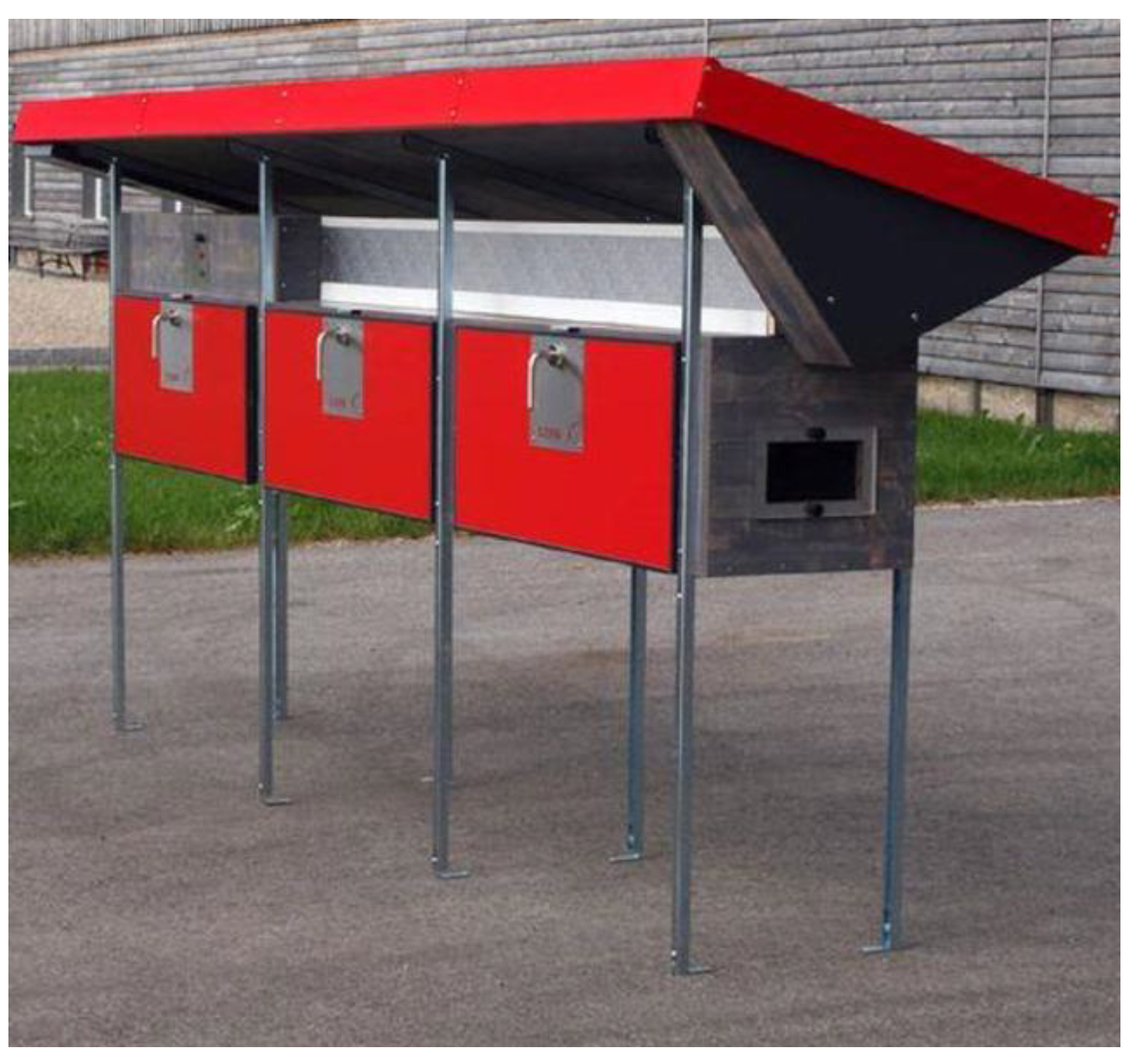
The Multifunctional Solar Dryers (CONA, Entwicklungs & Handelsgesellschaft m.b.H., Voitsdorf, Austria) are advanced systems designed for the efficient and hygienic drying of herbs and medicinal plants. These dryers operate using horizontal airflow within light-protected stainless-steel chambers, effectively preserving the color, aroma, and bioactive compounds of plant materials while minimizing contamination risks. Powered primarily by solar energy, they ensure energy-efficient operation, reduced environmental impact, and low operational costs. The uniform airflow eliminates the need to redistribute material during drying, making the system compliant with food industry standards [12]. In this study, drying was carried out at approximately 40 °C using the CONA system. The plants were not exposed to direct sunlight, which helps retain thermolabile compounds and essential oils. A similar semi-industrial setup has been successfully employed in Cuba for Moringa oleifera processing, featuring a 60 m² solar collector area and a thermal capacity of approximately 43 kW (CONA, 2021) [13] (Figure 1).
2.9. Statistical Analysis
Statistical analysis was performed using GraphPad Prism, version 5.0 (USA). Results are presented as means ± standard deviation (SD). The normality of the data was assessed using the Kolmogorov-Smirnov test. One-way ANOVA followed by the Bonferroni post-hoc test or the nonparametric Mann-Whitney U test was used to compare means, as appropriate. A significance level of *p < 0.05 was considered statistically significant. All assays were performed in triplicate.
Figure 1.
CONA Multifunctional Solar Dryers used for processing Cecropia peltata leaves.
3. Results
3.1. Moisture Content
The plant material dried using the Multifunctional Solar Dryers (MSD) exhibited a lower moisture content (10 ± 0.14%) compared to the leaves dried by the traditional method (14 ± 0.19%)
3.2. Semi-Quantitative Yields of Extracts
The semi-quantitative yield of the aqueous and hydroalcoholic extracts from yagruma leaves dried using the traditional method was higher than those from the MSD-dried leaves, as shown in Table 1. This indicates that the drying method affects the quantitative composition of the extracts.
Values are expressed in mg of dry extract and as percentage yield relative to initial dry leaf mass and represent means ± standard deviation (SD) of three independent replicates (n = 3).
3.3. Quantification of Chlorogenic Acid and Isoorientin
Chlorogenic acid and isoorientin are key phenolic compounds that contribute to the antioxidant properties of Cecropia species. Our UHPLC analysis showed that the drying method significantly influences the concentration of these metabolites, with higher levels found in the extracts from leaves dried using the CONA technology (Table 2).
Overall, chlorogenic acid levels were higher in aqueous extracts, whereas isoorientin content was greater in hydroalcoholic extracts, particularly those dried using the CONA method. Isoorientin (expressed as luteolin equivalents) consistently exceeded chlorogenic acid concentrations, except in the hydroalcoholic extract from the traditional method (LOYT001_H), where neither compound was detected.
Figure 2. shows the area under the curve (AUC) for chlorogenic acid and luteolin, which were used to calculate the concentrations of these compounds in the extracts.
3.4. Quantification of Polyphenols and Flavonoids
The aqueous extract from C. peltata leaves dried using the CONA solar dryer (LOYC002) exhibited a significantly higher polyphenol content compared to the traditionally dried extract (LOYT001). However, the traditionally dried sample had a slightly higher flavonoid content. Quantitative results are summarized in Table 3.
3.5. Antioxidant activity
All crude extracts evaluated using the DPPH and FRAP assays demonstrated concentration-dependent antioxidant activity. This indicates their ability to trap free radicals and reduce metal ions, both of which are key mechanisms in the endogenous antioxidant defense system. In the DPPH assay, the reaction mixture transitioned from purple (indicative of the DPPH radical) to yellow, signaling radical scavenging. Similarly, in the FRAP assay, the reduction of the TPTZ-Fe3+ complex was visually evident, with the solution turning blue, intensifying with higher extract concentrations. These results suggest that the extracts possess anti-radical properties, capable of reducing DPPH• and altering the solution color, depending on the extract concentration (Figure 3).
In the FRAP assay, the reduction of Fe3+ to Fe2+ was evident through color change. The antioxidant capacity of aqueous and hydroalcoholic extracts from yagruma leaves dried by the Multifunctional Solar Dryers (CONA) was superior to those dried by the traditional method. The extracts from the MSD method demonstrated greater ferric-reducing activity, expressed as ascorbic acid equivalents. The aqueous extracts had higher antioxidant activity in both DPPH and FRAP assays, with the LOYC002 extract showing the best overall performance, with the lowest IC50 values and highest ascorbic acid equivalents. (Table 4).
The aqueous and hydroalcoholic extracts of yagruma leaves dried with Multifunctional Solar Dryers demonstrated superior antioxidant activity compared to those dried by the traditional method. This suggests that the drying method affects the antioxidant potential of C. peltata. Aqueous extracts exhibited better performance than hydroalcoholic extracts in both DPPH and FRAP assays, showing higher inhibition rates and ascorbic acid equivalents. Among all extracts, LOYC002 showed the strongest antioxidant activity, with an IC50 of 39.72 ± 3.9 µg/mL in the DPPH assay and the highest ascorbic acid equivalents in the FRAP assay.
4. Discussion
Medicinal plants are often dried as part of their preservation process, and the drying method must be carefully selected based on the intended use, plant characteristics, and desired product specifications. The goal of drying is to reduce moisture content quickly without damaging or reducing the biologically active compounds present in the plant material. In this study, we compared the moisture content, chemical composition, and antioxidant activity of Cecropia peltata leaves dried using two distinct methods: traditional drying and MDS, CONA solar drying technology.
Excess moisture in dried plant materials can promote microbial growth, fungal infestations, and spoilage. It also leads to the hydrolysis of active compounds, which diminishes the plant's medicinal value. According to the Cuban Pharmacopoeia, dried plant drugs should have a moisture content within the range of 8-14% (13). In our study, both drying methods produced C. peltata leaves with moisture content that fell within this range. However, the leaves dried using MSD technology exhibited a lower moisture content compared to the traditional method, suggesting that MSD is a more efficient dehydration technology. This lower moisture content implies that CONA-dried leaves are less susceptible to microbial contamination and the hydrolysis of active principles. Such results indicate that plant materials dried with MSD technology may have a longer shelf life and be better preserved over time.
As noted by Banchero et al. (2008) [14], solar dryers are generally more efficient in dehydrating plant materials than traditional methods, which are heavily influenced by environmental conditions like temperature and humidity. Solar dryers, such as the CONA system used in this study, harness solar thermal energy to generate heat, achieving temperatures of up to 60ºC inside the drying chamber. This makes the dehydration process more controlled and efficient compared to traditional drying methods like sun drying or air drying, which are less predictable and may lead to inconsistent results. The results from this research support the superiority of CONA drying in maintaining the quality of plant materials, as demonstrated by the lower moisture content and superior chemical composition of the dried leaves.
The drying method not only impacts the efficiency of water removal but also influences the chemical composition of the plant material. Our study revealed differences in the semi-quantitative yield and the content of chlorogenic acid and isoorientin, two key bioactive compounds, in extracts from both drying methods. Although the crude aqueous and hydroalcoholic extracts from traditionally dried leaves yielded higher semi-quantitative yields, the CONA-dried leaves produced extracts with higher concentrations of chlorogenic acid and isoorientin. These compounds are known for their potent antioxidant and anti-inflammatory properties, making them important markers of the plant's medicinal value.
Interestingly, our quantitative analysis could not detect chlorogenic acid or isoorientin in the hydroalcoholic extract of the leaves dried by the traditional method (LOYT001_H). This could be due to interference in the absorption of radiation or the presence of contaminants in the extract. Additionally, the concentrations of these compounds in the CONA-dried extracts were lower than those reported in a study by Medrano et al. (2023) [15], which found higher levels of chlorogenic acid and isoorientin in Cecropia spp. This discrepancy might arise from differences in the collection locations, extraction methods, or plant varieties used in the respective studies. Medrano et al. (2023) reported that hydroalcoholic extracts of C. peltata collected from a swampy area in Mexico contained higher levels of these phenolic compounds, specifically chlorogenic acid (39.8 ± 2.3 mg/g) and isoorientin (51.5 ± 2.9 mg/g). Our study's lower levels may be attributed to variations in plant origin, collection time, and drying conditions.
Despite the lower concentrations of chlorogenic acid and isoorientin in the CONA-dried extracts, the overall antioxidant activity of these extracts was superior to those obtained through traditional drying methods. This supports the findings of Branisa et al. (2017), [9] who emphasized the importance of optimizing drying methods for each plant species individually. The choice of extraction solvent and method can further influence the extraction of bioactive compounds, which is crucial for assessing antioxidant activity. In our study, the aqueous extracts of leaves dried using CONA exhibited the highest antioxidant activity as determined by both the DPPH and FRAP assays. These results align with the quantitative analysis, which showed higher concentrations of chlorogenic acid and isoorientin in the aqueous extracts.
Traditionally, the aqueous extract of C. peltata leaves is consumed as an infusion, which is believed to have various health benefits. Our findings suggest that the aqueous extracts of leaves dried using CONA technology possess superior antioxidant potential, making them an ideal candidate for medicinal use. Although the concentration of isoorientin was lower in the CONA-dried hydroalcoholic extract compared to the traditional drying method, the overall concentration of chlorogenic acid and isoorientin was higher in the aqueous extracts, particularly those dried with CONA. This highlights the enhanced bioactive compound extraction efficiency of the CONA drying method.
This is the first study to evaluate the antioxidant activity of C. peltata leaves dried with CONA solar drying technology, marking a significant advancement in the field. Previous studies, such as the one by Daniel et al. (2023) [16], assessed the antioxidant potential of ethanolic and ethyl acetate extracts of C. peltata leaves collected from Guyana, South America. Their study reported antioxidant activities in line with those observed in our hydroalcoholic extracts, with IC50 values of 124 ± 2.6 µg/mL for the ethanolic extract, which is comparable to the 160.4 ± 4.9 µg/mL found in our LOYC002_H hydroalcoholic extract. The differences in IC50 values could be attributed to variations in geographical location, plant collection time, drying methods, and the polarity of the solvents used for extraction.
In summary, our results demonstrate that using CONA multifunctional solar dryers enhances the antioxidant activity of C. peltata leaves. This innovative drying technology not only improves the preservation of active compounds but also optimizes the plant’s medicinal properties, making it an efficient and reliable method for drying medicinal plant materials [17],. Given the growing interest in C. peltata for its therapeutic properties, this research paves the way for further studies to refine and standardize drying techniques to maximize the plant's health benefits. Moreover, the differences observed in antioxidant activities among the extracts emphasize the need for further investigation into the role of drying and extraction methods in shaping the pharmacological potential of medicinal plants.
5. Conclusions
This study presents the first comparative analysis of the chemical composition and antioxidant activity of Cecropia peltata leaf extracts obtained from leaves dried using the traditional method and the CONA solar drying technology, as well as the first report of the antioxidant activity of C. peltata using DPPH and FRAP assays. The results highlight that aqueous extracts prepared by infusion from CONA-dried leaves exhibit promising potential as natural antioxidants. The drying and extraction methods significantly influence the chemical profile and biological activity of plant materials. In this work, CONA solar dryers demonstrated superior performance in dehydration efficiency compared to the traditional drying method, reducing moisture content to 10% versus 14% for traditionally dried leaves. This reduced moisture content indicates better preservation of the plant material, extending its shelf life and reducing susceptibility to microbial contamination or degradation of active components. Quantitative analysis revealed higher concentrations of chlorogenic acid (CA) and isoorientin (expressed as luteolin equivalents) in the extracts from CONA-dried leaves. Notably, aqueous extracts, in general, contained higher levels of these phenolic metabolites, with LOYC002 showing a 12-fold higher CA concentration compared to the hydroalcoholic extract of the same sample. All tested extracts exhibited antioxidant activity in vitro by both DPPH and FRAP methods. However, the aqueous extract obtained from CONA-dried leaves (LOYC002) demonstrated the highest antioxidant activity, correlating with its elevated phenolic compound content. This study emphasizes the potential of CONA technology to improve the preservation of bioactive compounds, thereby enhancing the antioxidant properties of medicinal plants like C. peltata.
These findings underline the importance of optimizing drying and extraction methods for the effective utilization of natural antioxidants.
Author Contributions
Conceptualization, K.Z. and I.S.; methodology, K.Z., G.H., Y.L., Y.C., I.R., I.H., I.C. M.D.E., I.S..; software, K.Z., G.H., Y.L., Y.C.; validation, K.Z., M.D.E., I.S.; formal analysis, K.Z., G.H., Y.L., Y.C., I.R., I.H., I.C. M.D.E.; investigation, K.Z., G.H., Y.L., Y.C., I.R., I.H., I.C. M.D.E., I.S.; resources, M.D.E. and I.S.; data curation, K.Z., M.D.E., and I.S.; writing—original draft preparation, K.Z., M.D.E., and I.S; writing—review and editing, K.Z., M.D.E., and I.S; visualization, I.S..; supervision, I.S; project administration, M.D.E. and I.S.
Funding
This research was funded by the project “National Products as a source of agents for the treatment of diseases caused by oxidative stress” financed by the Cuban National Basic Sciences Program with grant number PN223LH010. Research also funded under the National Recovery and Resilience Plan (NRRP), Mission 4 Component 2 Investment 1.4—Call for tender No. 3138 of December 16, 2021, rectified by Decree n. 3175 of 18 December 2021 of Italian Ministry of University and Research funded by the European Union—NextGenerationEU; Award Number: Project code CN_00000033, Concession Decree No. 1034 of 17 June 2022 adopted by the Italian Ministry of University and Research, CUP: D43C22001260001, Project title “National Biodiversity Future Center—NBFC”.
Acknowledgments
The authors thanks to Rodolfo Arencibia and Yisniel Troche for their contribution in this research.
Conflicts of Interest
The authors declare no conflicts of interest.
References
- del Pilar Nicasio-Torres, M., Erazo-Gómez, J. C., & Cruz-Sosa, F. (2009). In vitro propagation of two antidiabetic species known as guarumbo: Cecropia obtusifolia and Cecropia peltata. Acta Physiologiae Plantarum, 31, 905-914. [CrossRef]
- 2. Duarte-Alonso, A., Cu-Cañetas, T. E., Avila-Nava, A., Sansores-España, D., Acevedo-Fernández, J. J., Sandoval-Peraza, M., ... & Torre-Villalvazo, I. (2020). A Cecropia peltata ethanolic extract reduces insulin resistance and hepatic steatosis in rats fed a high-fat diet. Journal of ethnopharmacology, 261, 113087. [CrossRef]
- Nayak, B. S. (2006). Cecropia peltata L (Cecropiaceae) has wound-healing potential: a preclinical study in a Sprague Dawley rat model. The international journal of lower extremity wounds, 5(1), 20-26. [CrossRef]
- 4. Mora Izquierdo, A., Nicasio Torres, M. D. P., Sepúlveda Jiménez, G., & Cruz Sosa, F. (2011). Changes in biomass allocation and phenolic compounds accumulation due to the effect of light and nitrate supply in Cecropia peltata plants. Acta Physiologiae Plantarum, 33, 2135-2147. [CrossRef]
- Basyal, D., Lee, S., & Kim, H. J. (2024). Antioxidants and mechanistic insights for managing dry age-related macular degeneration. Antioxidants, 13(5), 568. [CrossRef]
- Rivera-Mondragón, A., Ortíz, O. O., Bijttebier, S., Vlietinck, A., Apers, S., Pieters, L., & Caballero-George, C. (2017). Selection of chemical markers for the quality control of medicinal plants of the genus Cecropia. Pharmaceutical Biology, 55(1), 1500-1512. [CrossRef]
- Belwal, T., Cravotto, C., Prieto, M. A., Venskutonis, P. R., Daglia, M., Devkota, H. P., ... & Cravotto, G. (2022). Effects of different drying techniques on the quality and bioactive compounds of plant-based products: A critical review on current trends. Drying Technology, 40(8), 1539-1561. [CrossRef]
- Amer, A., Ibrahim, A., Shahin, A., Elsebaee, I., Saad, R., Hassan, M. F., & Hassan, Z. (2024). Performance evaluation of an automated hybrid solar system dryer for drying some aromatic herbs. Drying Technology, 42(4), 728-747. [CrossRef]
- Branisa, J., Jomova, K., Porubska, M., Kollar, V., Simunkova, M., & Valko, M. (2017). Effect of drying methods on the content of natural pigments and antioxidant capacity in extracts from medicinal plants: a spectroscopic study. Chemical Papers, 71, 1993-2002. [CrossRef]
- Mauer, L. J. (2024). Moisture and total solids analysis. In Nielsen's Food Analysis (pp. 233-260). Cham: Springer International Publishing.
- Benzie I.F.; Strain J.J. The ferric reducing ability of plasma (FRAP) as a measure of «antioxidant power»: the FRAP assay. Anal Biochem. 1996;239(1):70-6.
- Brand-Williams, W., Cuvelier, M. E., & Berset, C. L. W. T. (1995). Use of a free radical method to evaluate antioxidant activity. LWT-Food science and Technology, 28(1),. [CrossRef]
- CONA Solar Dryers. Semiindustrial solar drying plant SF400 for moringa herb drying in Cuba. Available online: https://www.conasolar.com/en/herb-drying (accessed May 2025).
- Banchero L., Carballo S., Telesca J. (2007). Manual de secado solar de especies medicinales y aromáticas para predios familiares.
- Medrano-Sánchez, E. J., Bravata-Silván, S. J., Lobato-García, C. E., Gómez-Rivera, A., López-Rodríguez, R., Gallegos-García, A. J., ... & Zamilpa, A. (2025). Perfil químico del extracto hidroalcohólico de Cecropia spp y su actividad antimicrobiana. Journal of Basic Sciences, 11(30), 84-92.
- Daniel, R., Ansari, A., & Dharmaraj, V. (2023). Assessment of antioxidant, antimicrobial and anti-inflammatory potential of ethyl acetate and ethanolic extracts of Cecropia peltata L. leaf extracts. Int. J. Biol. Pharm. Allied Sci, 12, 247-257.
- Okeyode, A. I., & Okuyelu, O. M. (2023). Design and Fabrication of a Multi-functional Electric-solar Driven Dryer: Performance Evaluation Using Cassava and Red Pepper. Journal of Materials Science Research and Reviews, 6(4), 890-901.
Figure 2.
Plots of Area under the curve of the chromatogram (AUC) vs. Concentration (µg/mg) from which the content of chlorogenic acid (CA) and isoorientin in the extracts was determined. (a) Calibration curve of the corresponding CA standards; (b) Calibration curve of the corresponding luteolin standards. Isoorientin was quantified as luteolin equivalents.
Figure 2.
Plots of Area under the curve of the chromatogram (AUC) vs. Concentration (µg/mg) from which the content of chlorogenic acid (CA) and isoorientin in the extracts was determined. (a) Calibration curve of the corresponding CA standards; (b) Calibration curve of the corresponding luteolin standards. Isoorientin was quantified as luteolin equivalents.
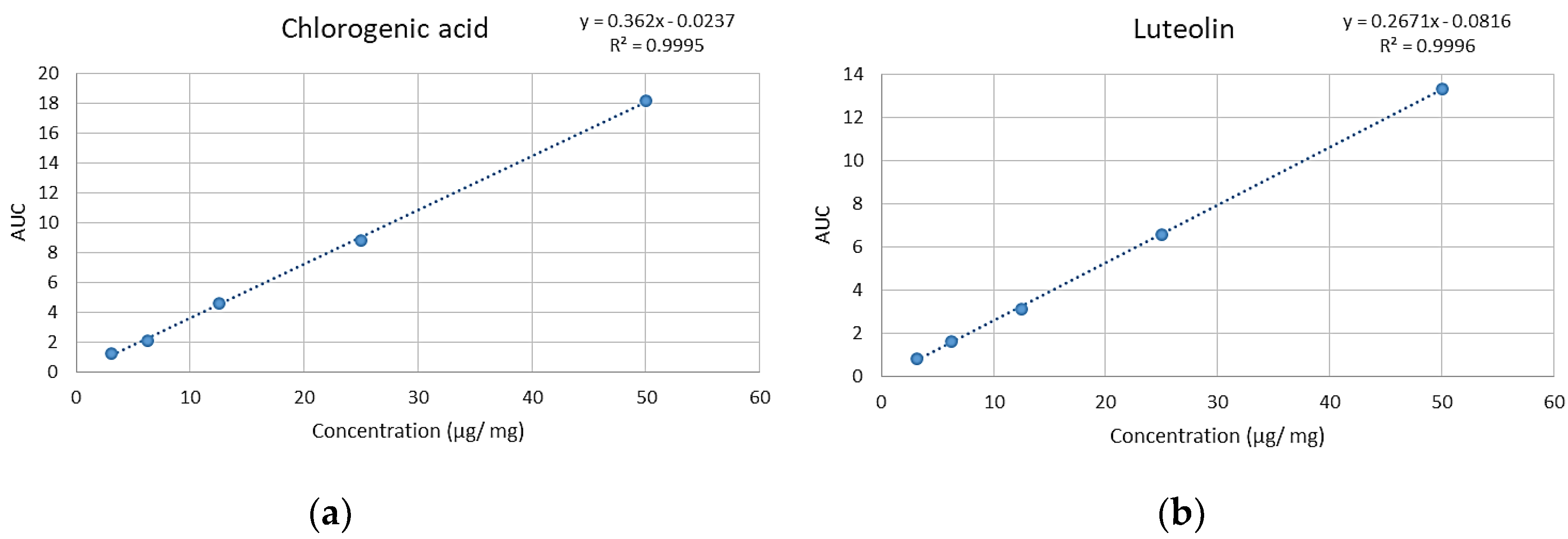
Figure 3.
Concentration-response curves of DPPH radical scavenging capacity for aqueous and hydroalcoholic extracts of leaves dried by the traditional method ™ (A, B) and extracts of leaves dried by the MSD (C, D). A: Aqueous extract of traditional dry leaves, B: Hydroalcoholic extract of traditional dry leaves, C: Aqueous extract of MSD dry leaves, and D: Hydroalcoholic extract of MSD dry leaves. The results represent mean ± SD values.
Figure 3.
Concentration-response curves of DPPH radical scavenging capacity for aqueous and hydroalcoholic extracts of leaves dried by the traditional method ™ (A, B) and extracts of leaves dried by the MSD (C, D). A: Aqueous extract of traditional dry leaves, B: Hydroalcoholic extract of traditional dry leaves, C: Aqueous extract of MSD dry leaves, and D: Hydroalcoholic extract of MSD dry leaves. The results represent mean ± SD values.
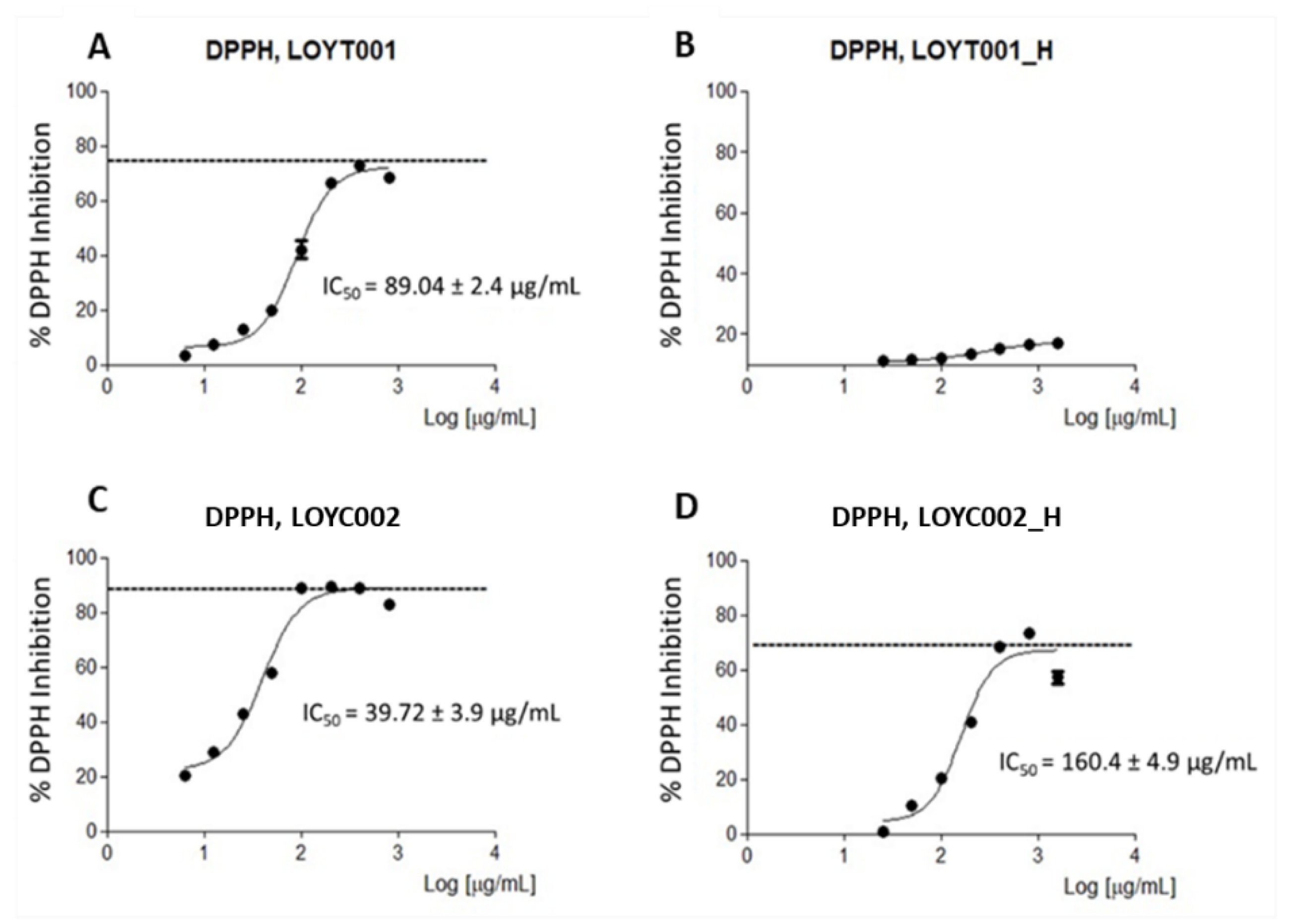

Table 1.
Semi-quantitative yield (mean ± SD) of aqueous and hydroalcoholic extracts from Cecropia peltata leaves dried by traditional and CONA solar methods.
Table 1.
Semi-quantitative yield (mean ± SD) of aqueous and hydroalcoholic extracts from Cecropia peltata leaves dried by traditional and CONA solar methods.
| Extract Type | Yield (mg) TM |
Yield (mg) MSD |
Yield (%) TM |
Yield (%) MSD |
|---|---|---|---|---|
| Hydroalcoholic (70% EtOH) | 312.4 ± 6.2 | 266.3 ± 5.3 | 3.1 ± 0.06 | 2.7 ± 0.05 |
| Aqueous | 571.8 ± 11.4 | 135.0 ± 2.7 | 5.7 ± 0.11 | 1.4 ± 0.03 |
Table 2.
Quantification of chlorogenic acid and isoorientin (µg/mg dry extract) in aqueous and hydroalcoholic extracts of Cecropia peltata leaves dried by traditional and CONA methods.
Table 2.
Quantification of chlorogenic acid and isoorientin (µg/mg dry extract) in aqueous and hydroalcoholic extracts of Cecropia peltata leaves dried by traditional and CONA methods.
| Extract Type | Compound | LOYT001 / LOYT001_H TM |
LOYC002 / LOYC002_H MSD |
|---|---|---|---|
| Hydroalcoholic Extract | Chlorogenic Acid | n.d. | 0.12 ± 0.004 |
| Isoorientin | n.d. | 4.33 ± 0.13 | |
| Aqueous Extract | Chlorogenic Acid | 0.17 ± 0.005 | 1.48 ± 0.04 |
| Isoorientin | 0.57 ± 0.02 | 3.00 ± 0.09 |
Values are expressed as mean ± standard deviation (SD) in µg/mg dry extract, based on triplicate measurements (n = 3). n.d. indicates compound not detected.
Table 3.
Total polyphenol and flavonoid content (mean ± SD) in aqueous extracts of Cecropia peltata leaves dried by traditional (LOYT001) and CONA (LOYC002) methods.
Table 3.
Total polyphenol and flavonoid content (mean ± SD) in aqueous extracts of Cecropia peltata leaves dried by traditional (LOYT001) and CONA (LOYC002) methods.
| Extract | Polyphenols (mg GAE/g DE) | Flavonoids (mg QE/g DE) |
|---|---|---|
| LOYT001 | 21.33 ± 0.43 | 3.97 ± 0.08 |
| LOYC002 | 49.41 ± 0.99 | 3.07 ± 0.06 |
Note: Values represent means ± standard deviation (SD) based on three independent replicates (n = 3). GAE = gallic acid equivalents; QE = quercetin equivalents; DE = dry extract.
Table 4.
Ferric reducing antioxidant power (FRAP) of aqueous and hydroalcoholic extracts of Cecropia peltata leaves dried by traditional (LOYT001, LOYT001_H) and MSD (LOYC002, LOYC002_H) methods, expressed as µM ascorbic acid equivalents.
Table 4.
Ferric reducing antioxidant power (FRAP) of aqueous and hydroalcoholic extracts of Cecropia peltata leaves dried by traditional (LOYT001, LOYT001_H) and MSD (LOYC002, LOYC002_H) methods, expressed as µM ascorbic acid equivalents.
| Concentration (µg/mL) | LOYT001 (Aqueous) | LOYT001_H (Hydroalc.) | LOYC002 (Aqueous) | LOYC002_H (Hydroalc.) |
|---|---|---|---|---|
| 800 | 883.19 ± 13.05ᵃ | 242.81 ± 34.00ᵇ | 1008.77 ± 0.00ᶜ | 938.00 ± 14.14ᵈ |
| 400 | 533.58 ± 21.21ᵃ | 80.50 ± 3.54ᵇ | 963.58 ± 2.45ᶜ | 559.35 ± 17.13ᵃ |
| 200 | 283.77 ± 12.78ᵃ | 32.04 ± 5.71ᵇ | 868.38 ± 13.60ᶜ | 309.35 ± 31.82ᵃ |
| 100 | 145.12 ± 4.90ᵃ | n.d | 597.04 ± 24.75ᵇ | 133.38 ± 2.18ᵃ |
| 50 | 61.27 ± 2.72ᵃ | n.d | 325.88 ± 5.17ᵇ | 49.15 ± 2.72ᶜ |
Note: Data represent mean ± standard deviation (SD) from three independent experiments (n = 3). Different letters indicate statistically significant differences between extracts at the same concentration (*p < 0.05, Mann–Whitney test). The ability to reduce Fe³⁺ to Fe²⁺ is expressed as µM ascorbic acid equivalents. n.d. not detected.
Disclaimer/Publisher’s Note: The statements, opinions and data contained in all publications are solely those of the individual author(s) and contributor(s) and not of MDPI and/or the editor(s). MDPI and/or the editor(s) disclaim responsibility for any injury to people or property resulting from any ideas, methods, instructions or products referred to in the content. |
© 2025 by the authors. Licensee MDPI, Basel, Switzerland. This article is an open access article distributed under the terms and conditions of the Creative Commons Attribution (CC BY) license (http://creativecommons.org/licenses/by/4.0/).
Copyright: This open access article is published under a Creative Commons CC BY 4.0 license, which permit the free download, distribution, and reuse, provided that the author and preprint are cited in any reuse.