

Submitted:
04 May 2025
Posted:
07 May 2025
You are already at the latest version
Abstract
This study investigates the impact of the Imaginary Romantic Partner phenomenon on brand value creation within the BL (Boys' Love) fan communities in Thailand, which have become prominent in the digital era. The research aims to analyze how Imaginary Romantic Partners influence brand perception and value through targeted marketing strategies. A purposive sample of 385 Thai consumers, selected using Cochran's Formula, were surveyed. Data were analyzed using Structural Equation Modeling (SEM) to validate the model's fit. The findings reveal that "Acceptance of Imaginary Romantic Partners" strongly influences "Response to the Brand" (path coefficient 0.962), and this acceptance positively affects "Brand Perception" (0.699). Furthermore, "Response to the Brand" significantly impacts "Purchase Decision" (0.547), indicating that favorable attitudes toward Imaginary Romantic Partners and related brands enhance both brand loyalty and purchasing behavior.
Keywords:
Imaginary Romantic Partners
; Brand Value Creation
; Brand Perception
; Consumer Behavior
; Structural Equation Modeling
1. Introduction
The e-commerce sector is experiencing significant growth driven by technological progress, shifting consumer behaviors, and the ongoing impact of the COVID-19 pandemic. By 2023, the worldwide e-commerce market has exceeded $4.9 trillion, with online retail sales accounting for 21.8% of total retail sales and showing a growth rate of 14.7% (Statista, 2023). This shift towards online purchasing is particularly significant in Asia, where the digital economy is forecasted to surpass $1 trillion by 2030 (Baijal et al., 2021). This growth is driven by increased access to technology, the internet, and the rising middle class—the intensification of competition results from easier market entry and the rapid delivery capabilities of new businesses. In 2023, 63% of global consumers had embraced online shopping, a trend greatly influenced by the pandemic (Statista, 2023). The e-commerce market in Thailand exemplifies this shift, with a remarkable surge from 384 billion baht in 2021 to 430 billion baht in 2022. Furthermore, online retail sales accounted for 13% of total retail sales in 2023 (Electronic Transactions Development Agency [ETDA], 2023). To succeed, businesses must adapt by enhancing customer experience, leveraging technology, differentiating themselves, and embracing digital marketing. The e-commerce market is anticipated to expand, driven by technological advancements and evolving consumer behavior—necessitating businesses to continuously refine their strategies to remain competitive.
Internet celebrities (ICs) have recently gained significant prominence as a marketing strategy. Utilizing the influence of online personalities to endorse products has proven to be an effective strategy for reaching target audiences, building brand credibility, influencing purchase decisions, and improving brand image (Zhang, 2020). In recent years, an exciting development in this approach has been the inclusion of "Imaginary Romantic Partners" (referred to as "KUJIN" or "ships" in Thai) as central figures. The term "Imaginary Romantic Partners" describes a phenomenon commonly seen in the media, especially involving celebrities or public figures who receive significant support and admiration from their followers. These pairings are often portrayed as idealized and harmonious, capturing the imagination of their fans (Amornsriwong & Sawanyavisuth, 2019)
Integrating " Imaginary Romantic Partners " into marketing strategies is instrumental in cultivating connections between consumers and brands. Well-established "imaginary couples" can substantially boost fan engagement and promote a positive brand image (Chen et al., 2022). These fictitious relationships enable brands to connect emotionally with consumers and notably enhance brand loyalty. Particularly in Thailand, "Imaginary Romantic Partners" profoundly impacts consumer behavior and brand perception among teenagers and young adults, a demographic known for its significant purchasing power and brand loyalty (Zhang et al., 2023)
The emergence of " Imaginary Romantic Partners " or "KUJIN" is closely linked to the rise of Boys' Love (BL) media, a genre featuring romantic relationships between male characters. The term "Y" in Thai is an abbreviation of the Japanese word "Yaoi," which refers to manga or anime depicting such relationships. BL Media fosters collective imagination within fan communities, both online and offline. Fans often project "KUJIN" dynamics onto their favorite artists or actors, enhancing viewer engagement by adding intrigue and emotional connection (Nair, 2023). The BL industry has seen significant growth, with a substantial increase in the number of BL series and films released in recent years (Parinyaporn, 2023).
Research has shown that including Imaginary Romantic Partners (KUJIN) in marketing significantly influences brand perception and consumer purchase decisions, especially among female BL fans who actively support their preferred pairings (Liu, 2022). Cultivating a positive image for Imaginary Romantic Partners can improve its brand image and encourage brand loyalty among these consumers. Studies have found that using Imaginary Romantic Partners as a marketing strategy in Thailand effectively increases product or service reach and awareness, particularly in the fashion and lifestyle sectors, generating considerable interest and engagement among followers (Knoll et al., 2018). Statistical data from 2023 reveals that Imaginary Romantic Partners-related content received 1.237 billion engagements and 4 million mentions on social media platforms. X is the primary channel, accounting for 641 million mentions and over 3 million conversations (Tortermvasana et al., 2023). The top three industries utilizing Imaginary Romantic Partners, as ranked by engagement, are cosmetics and beauty (15 million engagements), e-commerce platforms (10 million engagements), and delivery and logistics (9 million engagements) (Tortermvasana et al., 2023). The intense competition in the Thai e-commerce industry has led businesses to utilize Imaginary Romantic Partners to attract and keep customers. Despite this strategy's growing popularity, empirical evidence is still needed to link Imaginary Romantic Partners to sustained brand value creation directly (Chen et al.,2024). This research gap has led to the current study using a quantitative methodology to examine the influence of Imaginary Romantic Partners on brand perception and brand value creation in the Thai market. The objective is to offer practical insights for businesses looking to utilize this strategy for future competitive advantage.
Research Objective
To examine the influence of Imaginary Romantic Partners on brand perception and brand value creation in the Thai market.
2. Theoretical Model and Hypothesis
2.1. Personal Acceptance
Personal Acceptance, as defined by Neff (2011), is a vital concept in psychology. It refers to an individual's Acceptance and appreciation of themselves, including both positive and negative aspects, such as their abilities, thoughts, and feelings. This self-acceptance forms the foundation for good mental health and well-being. It affects various dimensions of a person's life, including interpersonal trust (Mikulincer & Shaver, 2012), self-confidence, the ability to face challenges, and resilience in coping with failures (Luszczynska et al., 2005). Moreover, self-acceptance influences one's ability to influence others (Owens et al., 2015) and their communication and public relations skills (Leary, 2015). In marketing, brand perception (Keller, 2013) refers to consumers' thoughts, feelings, and beliefs about a brand. It is shaped by consumers' direct and indirect experiences with the Brand and information received from various media. Brand perception significantly influences consumer behavior and purchasing decisions.
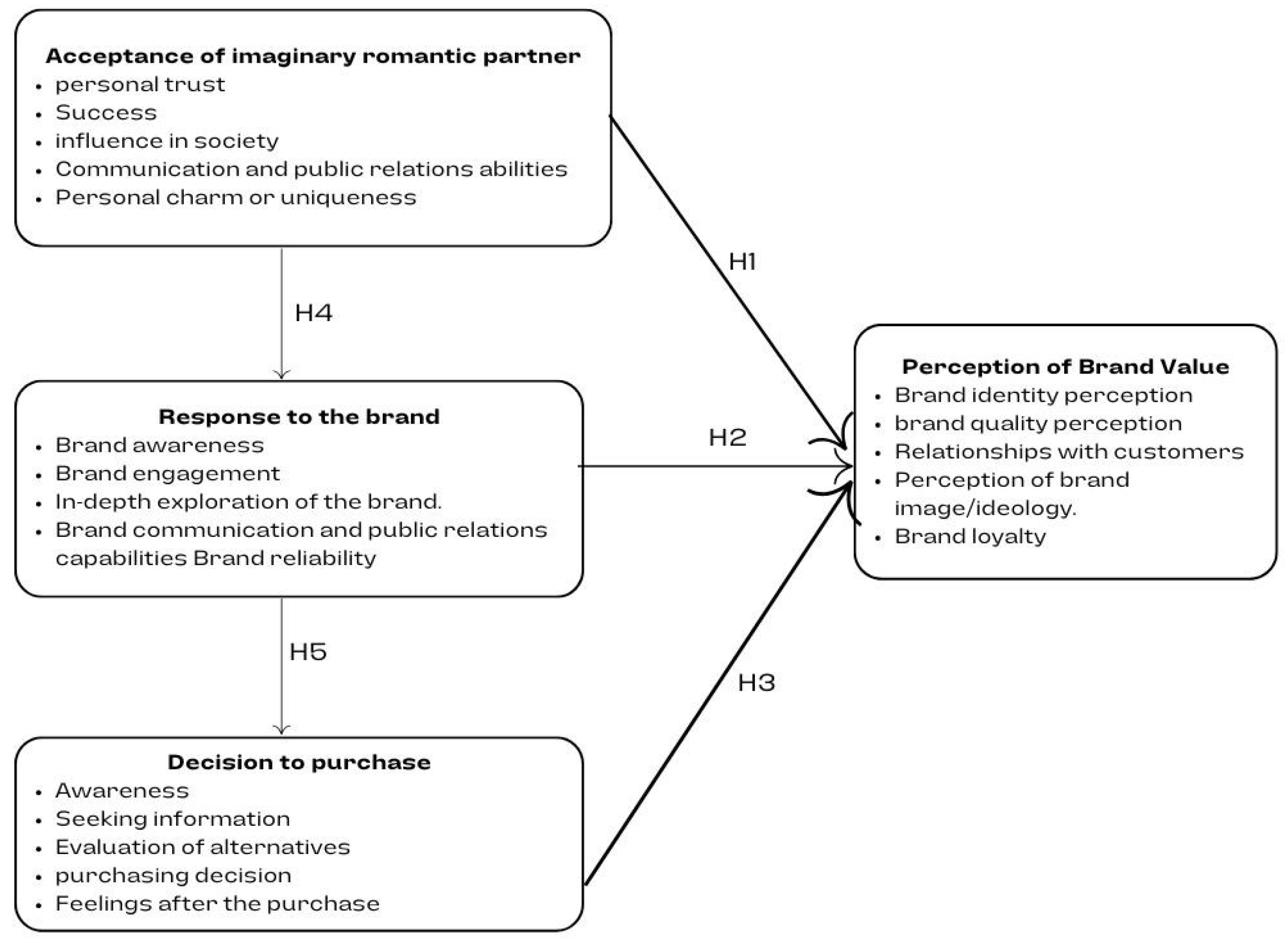
H1: Acceptance of an imaginary romantic partner has a positive influence on brand perception
This hypothesis suggests that accepting an imaginary romantic partner can enhance positive feelings towards the Brand by allowing it to convey emotional values associated with the relationship. Carroll and Ahuvia (2006) further support this notion, indicating that "Brand Love" arises from emotional connections and attachments, which can foster long-term imaginative relationships between consumers and the Brand (Carroll & Ahuvia, 2006)
Regarding Response to the Brand (RE), which includes both cognitive and emotional reactions to marketing communications, the Acceptance of an imaginary romantic partner may lead to more positive attitudes and greater engagement with the Brand. Shimp and Madden (1988) suggest that consumers can emotionally connect with a brand by engaging in a relationship akin to an imaginary romantic partner (Shimp & Madden, 1988).
H4: Acceptance of an imaginary romantic partner influences Response to the brand.
Brand response encompasses consumer perceptions and purchasing behavior, influenced by consumers' feelings and attitudes toward the Brand. The connection between an imaginary romantic partner and the Brand strengthens this emotional bond. Therefore, as proposed in this hypothesis, the Acceptance of an imaginary romantic partner can enhance positive emotional responses and attitudes toward the Brand.
2.2. Response to the Brand
The Response to the brand theory is a conceptual framework that explains consumers' reactions to brands, encompassing both positive and negative aspects. Previous research has emphasized the importance of various factors influencing brand perception and indicated that these factors play a crucial role in establishing positive relationships between consumers and brands. For instance, Keller (2013) found that brand awareness positively correlates with consumers' purchase intention, aligning with Aaker's (1991) assertion that brand awareness is a fundamental pillar of brand equity. Additionally, Greve (2016) highlighted the significance of brand engagement in social media, demonstrating its positive impact on brand loyalty. This is consistent with Brodie et al.'s (2011) findings that social media engagement can foster more profound and lasting relationships between consumers and brands. In communication and public relations, Keller (2020) revealed that effective brand communication can significantly enhance brand equity, supporting Keller's (2013) emphasis on communication's role in building brand equity.
Similarly, Chen et al. (2024) indicated that positive public relations in social media can contribute to a favorable brand reputation. Furthermore, brand reliability is a critical factor influencing brand perception. Nguyen and Leblanc (2014) and Chaudhuri and Holbrook (2001) found a positive correlation between brand credibility, consumer trust, and purchase intention, highlighting the importance of brand reliability in shaping positive brand perception.H2: Response to the brand has a positive influence on brand perception
Based on the literature review, it can be hypothesized that various aspects of brand response (brand awareness, brand engagement, brand communication and public relations, and brand reliability) will positively influence brand perception. In other words, the more consumers are aware of, engaged with, well-communicated with, and trusted a brand, the more positive their perception of it will be.
Consumer decision-making is closely tied to their emotional and cognitive responses to brands. Shimp and Madden (1988) note that emotional responses to brands, such as feelings of trust or connection, heavily influence purchasing decisions. In this context, the Response to the Brand refers to how consumers react to brand communications, advertisements, and other promotional activities, affecting their decision-making processes. Nguyen and Leblanc (2014) also argue that brand reliability and trust can lead to more favorable purchasing decisions.
H5: Response to the brand has a positive influence on Decision
Research indicates that when consumers perceive a brand as communicating effectively and being in line with their values, they are more inclined to choose that Brand over its competitors. This hypothesis proposes that a positive brand response, characterized by trust, engagement, and effective communication, directly influences favorable consumer decisions.
2.3. Decision Concept
Consumer decision-making plays a crucial role in shaping and altering brand perception. Over the past decade, empirical research has provided evidence supporting the link between various dimensions of consumer decision-making and brand perception. Starting with brand awareness, the initial stage of the decision-making process, research by Carroll and Ahuvia (2006) found that solid brand awareness increases the likelihood of a brand being considered during purchase decisions. Once consumers are aware of a brand, they seek information. Sharma et al. (2014) indicate that the information acquired during this stage influences perceptions of quality, credibility, and brand value. In the evaluation of alternatives stage, pre-existing brand awareness exerts significant influence, with consumers rating familiar brands and those with positive attitudes more favorably (Chaudhuri et al., 2001). Purchasing decisions and post-purchase satisfaction are subsequent outcomes of the evaluation process. Strong brand awareness can stimulate purchase decisions (Keller, 2013), and post-purchase satisfaction affects long-term brand perception and repurchase likelihood (Zeithaml et al., 2020).
H3: Decision has a positive influence on brand perception
Based on the literature review, we hypothesize that each stage of the consumer decision-making process is positively associated with brand perception. Specifically, brand awareness, information seeking, and post-purchase satisfaction are positively related to purchase decisions and long-term brand perception.
Based on the literature review, the researcher developed the research framework and established the research hypotheses as follows.
Figure 1.
Research conceptual framework.
3. Research Methodology
Geographic Scope: This research was conducted in Thailand, focusing on a population of followers of imaginary romantic partners within the country. These individuals have made purchases based on promotions from fictional romantic partners across various marketing channels.
Population and Sample: The population for this study comprised individuals in Thailand who follow imaginary romantic partners (a phenomenon wherein followers emotionally invest in fictional or idealized romantic relationships) and have previously purchased products promoted by these figures through their marketing channels. The sample was determined using purposive sampling, specifically targeting followers with experience purchasing products endorsed by imaginary romantic partners through personalized promotional activities. The sampling process involved the researchers embedding themselves in exclusive social media groups dedicated to fans of various imaginary romantic partners. The researcher created polls within these groups to gather information about members' purchasing experiences with products promoted by their chosen figures. From the poll results, respondents with prior purchasing experience were selected and invited to participate in the research survey.
For the sample size, 385 respondents were chosen, and the results were calculated using Cochran's formula (Cochran, 1977) for an unknown population size. Hair et al. (2010) suggest that studies involving structural equation modeling should aim for a sample size of approximately 10-20 times the number of observed variables. This study, 20 observed variables were identified, thus justifying the total sample size of 385 respondents with a 5% margin of error.
Data Collection: The data were collected through an online questionnaire divided into four sections. The first section gathered general respondent information, while the second explored factors influencing brand value creation through the imaginary romantic partner strategy. The third section allowed respondents to provide suggestions on improving the strategy, and the final section collected demographic data to enable analysis based on age, gender, and other relevant factors.
The researcher conducted a pre-test of the questionnaire using a different sample group, specifically individuals who follow influencers (excluding imaginary romantic partners) and had experience purchasing products promoted by these influencers. The pre-test involved 40 respondents, and the internal consistency of the questionnaire was tested using Cronbach's Alpha. According to Nunnally (1978), a reliability coefficient of 0.70 or higher is generally considered acceptable. The pre-test yielded a Cronbach's Alpha score of 0.882, indicating the high reliability of the research instrument for the actual data collection process.
Data Analysis: The general data analysis included variables such as gender, marital status, age, education, occupation, monthly income, and the levels of influence of the imaginary romantic partner strategy on brand value creation. Data was collected using a Likert scale and analyzed through statistical methods, including mean, percentage, maximum and minimum values, and standard deviation. The normality of the data distribution was assessed by measuring skewness, which must fall between -3 and +3, and kurtosis, which should be between -7 and +7 (Kline, 2015).
For the analysis of factors influencing brand value creation through the imaginary romantic partner strategy, Structural Equation Modeling (SEM) was employed. Once the preliminary data had been collected, the research was analyzed using SEM with the AMOS software. The hypothesis was tested using Maximum Likelihood Estimation (MLE). The analysis consisted of two main steps:
1) Confirmatory Factor Analysis (CFA): This was used to assess the validity of the indicators. For an indicator to be considered valid, the standard factor loading of each observed variable must exceed 0.50 (Hair et al., 2010).
2) Path Analysis of Latent Variables: This was conducted to test the fit of the structural model. The following criteria were used to evaluate the model’s fit: Chi-square (X²/df) less than 2, Root Mean Square Error of Approximation (RMSEA) less than 0.05, and Standardized Root Mean Square Residual (SRMR) below 0.05 (Schumacker & Lomax, 2010). Additionally, the Comparative Fit Index (CFI) should be 0.90 or higher (Schumacker & Lomax, 2010).
Research Result
Most of the respondents in this study were female, totaling 212 individuals, which accounts for 55.06% of the sample, while the male respondents numbered 173, making up 44.94%. The largest age group was those between 41-50 years, comprising 122 participants or 31.69% of the sample. Regarding marital status, the majority were single, with 163 participants or 42.33%. Most respondents held a bachelor's degree, with 111 individuals or 28.83%. The primary occupation was private sector employees, with 182 respondents (47.27%), and the majority of participants reported a monthly income between 20,001-30,000 baht, with 149 individuals (38.70%).
Influence of the Imaginary Romantic Partner Strategy on Brand Value Creation
The results indicate the degree of influence that the imaginary romantic partner strategy had on brand value creation, as measured using a Likert Scale. These findings are discussed in Table 1, with further analysis provided below.
From Table 1, when examining the level of influence of the use of the imaginary romantic partner strategy on brand value creation, the findings reveal the following:
Acceptance of the imaginary romantic partner: Personal charm or uniqueness has the greatest influence on brand value creation, followed by success, with mean scores of 4.23 and 4.07, respectively.
Response to the Brand: Brand knowledge and understanding are the most influential factors in creating brand value, followed by the Brand's communication and public relations capabilities, with mean scores of 4.27 and 4.11, respectively.
Purchase decision: The factors with the highest influence on brand value creation are post-purchase satisfaction and purchase decision, with mean scores of 3.75 and 3.74, respectively.
When examining the influence of brand value perception from the use of the imaginary romantic partner strategy, as shown in Table 2, the findings indicate that the factors with the most significant impact on brand value perception are brand image/ideology perception and brand identity perception, both with an equal mean score of 4.06.
Results of the Structural Equation Modeling Analysis of Factors Influenced by the Use of the Imaginary Romantic Partner Strategy on Brand Value Creation
As shown in , the results present the skewness and kurtosis values for the 20 observed variables analyzed within the structural equation model. The skewness of all variables ranged between -3 and +3, and kurtosis values fell between -7 and +7. This indicates that all variables are normally distributed, making them suitable for parameter estimation in the structural analysis.
The Confirmatory Factor Analysis (CFA), which was used to test the structural validity of the latent variables, indicated that all latent variable indices demonstrated good fit across the model, as shown in Table 3.
When the results of the structural validity examination of the latent variable measures demonstrated consistency across all latent variables, these variables were then analyzed using structural equation modeling (SEM). The parameter estimation was conducted using the Maximum Likelihood Method, which involves analyzing data from the sample to estimate the model's parameters. The researcher then tested the model by evaluating the statistical fit indices that met the established criteria, ensuring the confirmatory factor analysis (CFA) elements were aligned. The standard criteria, test results, and interpretations are shown accordingly. In the initial analysis, the structural equation model (SEM) based on the research framework did not align with the empirical data. Consequently, the model was adjusted according to the recommendations from the software, undergoing eight iterations to achieve a model that met the statistical fit standards. Model adjustment is necessary when the original model does not fit the empirical data. In this process, the researcher modifies the model to re-estimate the parameters by relaxing certain initial assumptions, such as allowing the internal variable errors to correlate. This iterative process continues until the revised model aligns with the empirical data. After achieving a satisfactory model fit, the data analysis results were interpreted (Schumacher & Lomax, 2010), as shown in
Table 4 explains that the results met the standard criteria, indicating that the model is valid. Following this, the researcher ran the structural equation model (SEM) to analyze the factors influenced by the imaginary romantic partner strategy on brand value creation. This analysis allowed for estimating factor loadings by examining the causal relationships between the variables through path analysis. The results of this research are illustrated in Figure 2.
The analysis of the structural equation model (SEM) for the factors influenced by the imaginary romantic partner strategy on brand value creation. Upon reviewing the statistics of the observed variables related to each latent variable, the factor loadings of the causal relationships were examined. These factor loadings were then used to calculate the multiple correlation coefficients (R²), which indicate the strength of the relationship between the confirmatory factors. The results of this analysis were subsequently used to discuss the findings, with the path coefficients, factor loadings, and prediction coefficients presented accordingly.

Table 5.
Path coefficients from external latent variables to internal latent variables.
| Hypothesis | เส้นทาง | β | P-value | Result | ||
| H1 | Acceptance (AC) | → | Perception of Brand (PE) | 0.699 | < 0.001 | Accepted |
| H2 | Response to the brand (RE) | → | Perception of Brand (PE) | 0.228 | 0.319 | Rejected |
| H3 | Decision (DE) | → | Perception of Brand (PE) | 0.170 | < 0.001 | Accepted |
| H4 | Acceptance (AC) | → | Response to the brand (RE) | 0.962 | < 0.001 | Accepted |
| H5 | Response to the brand (RE) | → | Decision (DE) | 0.547 | 0.019 | Accepted |
Source: Data processing. Composite Reliability (CR) = 0.715 Average Variance Extracted (AVE) = 0.514.
Based on the test results, it is evident that in nearly all the research hypotheses, the path coefficients from external latent variables to internal latent variables are statistically significant, and all paths exhibit positive correlations. This indicates a causal relationship between the external and internal latent variables that move in a positive direction. The path from Acceptance to Response to the Brand has the highest path coefficient, measuring 0.962, followed by the path from Acceptance to Perception of the Brand, with a coefficient of 0.699. The path from Response to the Brand to Decision has a coefficient of 0.547, while the path from Decision to Perception of the Brand has a coefficient of 0.170. However, the analysis of Hypothesis 2 reveals that the path from Response to the Brand (RE) to Perception of Brand (PE) is not statistically significant, leading to the rejection of this hypothesis. In other words, Response to the Brand (RE) does not directly influence the Perception of the Brand (PE). This lack of statistical significance suggests that while brand response may occur in various forms, it does not directly impact consumers' brand perception in measurable terms within the context of this study.
When considering the indirect effects from external latent variables to internal latent variables, several latent variables exert indirect influence within the model. Specifically, the indirect influence of Acceptance (AC), mediated through Response to the Brand (RE) and Decision (DE), was found to have an indirect path coefficient of 0.616. Meanwhile, the indirect influence of Response to the Brand (RE), mediated through Decision (DE), was found to have an indirect path coefficient of 0.093.
In consideration of Figure 2, which presents the structural equation model (SEM) analysis of factors affecting Perception of Brand, the statistics of the observed variables related to each latent variable were examined. This was done by analyzing the factor loadings of the causal relationships. The factor loadings were then used to calculate the prediction coefficient (R²), which indicates the level of relationship between the confirmatory factors. These research findings can be discussed, and the path coefficients, factor loadings, and prediction coefficients are presented, as shown in Table 6.
In Table 6, a detailed analysis of the factor loadings and prediction coefficients shows that all components are statistically significant at a level of less than 0.001. This indicates that the relationships between the observed variables and their respective latent variables are highly significant and contribute meaningfully to the model.
In terms of Acceptance of the imaginary romantic partner, personal trust emerges as the most influential factor, with a prediction coefficient of 0.477, followed by personal charm or uniqueness, which has a coefficient of 0.282. This suggests that trust in the imaginary romantic partner is crucial in shaping the consumer's perception and emotional connection to the brand.
For the Response to the Brand, brand awareness holds the highest predictive power with a coefficient of 0.504, indicating that consumers' awareness of the brand is a critical driver in their response. The next most influential factor is the brand's communication and public relations capabilities, with a coefficient of 0.346, highlighting the importance of effective brand communication in fostering positive consumer responses.
When considering a Decision, the evaluation of alternatives shows the most decisive influence, with a prediction coefficient of 0.592, followed by seeking information, which has a coefficient of 0.456. This indicates that consumers' decision-making processes are heavily influenced by their ability to compare alternatives and access relevant information about the products or services the brand offers.
Finally, in terms of Perception of Brand Value, perception of brand image/ideology stands out as the most significant factor, with a prediction coefficient of 0.481, underscoring the importance of the brand's image and ideology in shaping consumer perceptions. The relationship with customers also plays a significant role, with a coefficient of 0.407, suggesting that solid customer relationships contribute to the perceived value of the brand.
This comprehensive analysis highlights the various factors that significantly influence brand perception, response, decision-making, and overall brand value, emphasizing the crucial role of trust, communication, and customer relationships in shaping consumer behavior regarding the imaginary romantic partner strategy.
4. Discussion
The findings from the analysis of the influence of the imaginary romantic partner strategy on brand value creation, using a Likert Scale, can be compared to prior research across various dimensions, particularly in terms of factors such as personal charm, brand knowledge, and post-purchase experience, which are critical components in the process of brand value creation. The unique qualities and personal charm of individuals play a pivotal role in fostering emotional bonds between consumers and brands, closely aligning with the concept of brand love. As Sarkar (2011) explains, the emotional connections that form between consumers and brands can develop into deeper attachments, akin to personal relationships, which can significantly contribute to building brand loyalty (Sarkar, 2011, p. 82). Thus, when brands incorporate the distinct characteristics of an imaginary romantic partner into their marketing strategies, they are effectively positioning themselves to cultivate enduring relationships with consumers. Furthermore, the response of consumers to a brand, coupled with their knowledge and understanding of the brand, are essential factors that influence the overall creation of brand value. Rahman et al. (2021) emphasized the importance of brand satisfaction and personal experience in developing Brand Love, which positively influences consumer behavior, such as increased loyalty and willingness to pay (Rahman et al., 2021, p. 610). This finding is consistent with the idea that consumers with solid brand knowledge are likelier to develop loyalty and trust in the Brand. Lastly, post-purchase experience, which has a profound impact on purchase decisions, is a critical factor validated by Hermanus et al. (2016). Their research demonstrated that building brand value perception through social media could significantly stimulate purchase decisions, particularly when consumers have a positive post-purchase experience. This reinforces that a positive post-purchase experience is vital for brands to establish long-term consumer relationships and loyalty.
The hypothesis testing results demonstrate a positive correlation between the external and internal latent variables, indicating the significant impact of Acceptance on Response to the Brand, with the highest path coefficient of 0.962. This finding highlights the crucial role of the imaginary romantic partner strategy in fostering emotional attachment between consumers and brands. This result aligns with Sarkar's (2011) concept, which emphasizes that emotional bonds and feelings of closeness with a brand are critical drivers in building Brand Love. This connection can lead to brand loyalty and enhance the Brand's long-term value (Sarkar, 2011, p. 82). Regarding Response to the Brand, the study shows that the relationship between Acceptance and Perception of the Brand has a path coefficient of 0.699, indicating that consumers who embrace the imaginary romantic partner strategy tend to develop a more positive view of the Brand. The study supports Rahman et al.'s (2021) research, which shows that brand satisfaction and personal connection significantly contribute to the development of Brand Love. This emotional attachment leads to positive consumer behaviors, such as long-term brand support (Rahman et al., 2021, p. 610). However, when testing Hypothesis 2, it was found that the path from Response to the Brand (RE) to Perception of the Brand (PE) was not statistically significant. This suggests that although consumers may have a positive response to the brand, this response does not directly measurably influence their perception of the brand.Rahman et al. (2021) highlighted that factors influencing Brand Love often stem from deeper elements, such as the personal connection with the Brand and individual experiences, which play a more critical role in building strong emotional bonds with the Brand (Rahman et al., 2021, p. 610).
When examining the indirect effects of hidden variables within the structural model, particularly in situations where Acceptance (AC) impacts Response to the Brand (RE) and Decision (DE), the results show the significant role of the imaginary romantic partner strategy in strengthening the connection between consumers and brands. This aligns with Rahman et al. (2021), who stressed that Brand Love stems from various emotional factors linked to consumer-brand relationships. This significantly impacts brand value and nurtures long-term loyalty (Rahman et al., 2021). Additionally, the transmission of Acceptance through Response and Decision further underscores the significance of these variables in influencing consumer decision-making and cultivating a positive attitude toward the brand. Sarkar (2011) also observed similar patterns, emphasizing that strong consumer-brand relationships, established through romantic strategies, lead to increased brand loyalty (Sarkar, 2011).
The analysis of factor loadings and prediction coefficients from the research shows that Acceptance of the imaginary romantic partner and brand perception are important in building brand value. Specifically, the variable "Acceptance of imaginary romantic partner personal trust" has the highest prediction coefficient. This suggests that consumers' trust in the imaginary romantic partner reflects their trust in the brand. This aligns with the findings of Rahman et al. (2021), who demonstrated that brand trust and positive emotions from the consumer-brand relationship can lead to emotional attachment and long-term loyalty. In terms of Response to the Brand, the study reveals that brand awareness has the highest prediction coefficient of 0.504, indicating its significant influence on consumer response. This finding is consistent with the research by Priyankara et al. (2017), which emphasized the importance of a brand's presence on social media in enhancing brand recognition and creating a positive brand image.
Additionally, the variable Decision, particularly regarding evaluating alternatives, had the highest prediction coefficient of 0.592. This outcome emphasizes the importance of considering alternatives in consumers' purchasing decisions. This can be compared to the findings of Nadanyiova et al. (2020), which pointed out that engaging content and communication between brands and consumers can effectively stimulate consumer decision-making (Nadanyiova et al., 2020).
5. Conclusion
Using a structural model analysis, this study focused on exploring the imaginary romantic partner phenomenon and its impact on creating brand value across various product contexts. The critical variable tested was the Acceptance of the imaginary romantic partner, identified as a critical factor in strengthening the emotional connection and bond between consumers and brands. The findings support the theory that Accepting an imaginary romantic partner leads to a positive response to the Brand, which influences brand perception and fosters favorable consumer attitudes toward the Brand. This Acceptance is a critical mechanism that fosters consumer trust and emotional attachment to the Brand. The study also highlights the importance of employing the imaginary romantic partner strategy to enhance brand awareness, mainly through social media communication. This strategy helps brands generate positive emotions and increase consumer loyalty. The findings suggest that consumers who accept and respond positively to a brand are more likely to develop brand love, establishing a more profound and long-term relationship with the Brand. The Response to the Brand contributes to positive brand perception and directly impacts purchase decisions, as consumers' favorable attitudes and experiences with the Brand influence their choices. Furthermore, purchasing decisions are shaped by how effectively the Brand communicates and builds trust through various marketing strategies. When analyzed through the structural model, Acceptance emerges as a critical factor influencing both Responses to the Brand and decision-making. The study reveals that consumers who accept the imaginary romantic partner exhibit a stronger emotional connection with the Brand, which drives their Decision to purchase based on positive feelings toward the Brand. Moreover, the research underscores the importance of emotional factors such as trust and emotional closeness in fostering brand loyalty and increasing the likelihood that consumers will support the Brand over the long term.
In conclusion, the study demonstrates that building brand love through the imaginary romantic partner strategy is effective in fostering sustained loyalty and emotional engagement between consumers and brands. This strategy enables brands to create a sense of closeness and emotional attachment, significantly enhancing consumers' responses to the Brand. Acceptance of an imaginary romantic partner is a key factor linked to positive brand perception and leads to purchase decisions driven by a strong emotional connection with the Brand.
6. Recommendation
Based on the findings of this study on the imaginary romantic partner phenomenon and its impact on brand value creation, it is recommended that brands seeking to build emotional connections with consumers should consider employing the imaginary romantic partner strategy in their marketing efforts. This strategy has the potential to foster brand love and significantly enhance brand loyalty in the long term. Particularly in the realm of social media, which offers a powerful platform for deep engagement and communication with consumers, effectively using this strategy can heighten brand awareness, shape a positive brand image, and build trust and emotional bonds between consumers and the Brand. Furthermore, emphasis on the post-purchase experience is essential, as it directly influences consumer responses to the Brand and can be a critical factor in driving repeat purchases or generating word-of-mouth recommendations. A positive post-purchase experience will enable brands to maintain long-lasting and favorable consumer relationships.
For future research, it would be beneficial to conduct comparative studies to examine the effects of the imaginary romantic partner strategy across different consumer segments, such as variations in gender, age, or cultural backgrounds. Such comparative studies help better understand how this strategy influences brand value creation among diverse target groups, allowing brands to tailor their marketing strategies more effectively to a broader range of consumers. Additionally, further investigation should be conducted into the indirect effects of Acceptance of the imaginary romantic partner, mainly through its influence on brand response and purchase decisions. These indirect effects could provide critical insights into the mechanisms that strengthen consumer trust and emotional attachment to the Brand. A deeper understanding of these dynamics would help clarify and enhance the practical implementation of the imaginary romantic partner strategy in marketing.
References
- Aaker, D.A. Managing brand equity: Capitalizing on the value of a brand name; Free Press, 1991. [Google Scholar]
- Amornsriwong, P.; Sawanyavisuth, B. The study of attitudes and behaviors in media consumption of Y girls. Rangsit Graduate Research Journal in Business and Social Sciences 2019, 5, 34–48. [Google Scholar]
- Baijal, A.; Cannarsi, A.; Hoppe, F.; Chang, W.; Davis, S.; Sipahimalani, R. economy SEA 2021: The digital decade: Southeast Asia's internet economy resurgence is fueling growth across the region. Bain & Company. 2021. Available online: https://www.bain.com/insights/e-conomy-sea-2021/.
- Bentler, P.M.; Bonett, D.G. Significance tests and goodness of fit in the analysis of covariance structures. Psychological Bulletin 1980, 88, 588–606. [Google Scholar] [CrossRef]
- Brodie, R.J.; Ilic, A.; Juric, B.; Hollebeek, L. Consumer engagement in a virtual brand community: An exploratory analysis. Journal of Business Research 2011, 66, 105–114. [Google Scholar]
- Byrne, B.M. Structural equation modeling with AMOS: Basic concepts, applications, and programming (3rd ed.). Routledge. 2016.
- Carroll, B.; Ahuvia, A.C. Some antecedents and outcomes of brand love. Marketing Letters 2006, 17, 79–89. [Google Scholar] [CrossRef]
- Chaudhuri, A.; Holbrook, M.B. The chain of effects from brand trust and Brand affect on brand performance: The role of brand loyalty. Journal of Marketing 2001, 65, 81–93. [Google Scholar]
- Chen, L.; Ma, S.; Wang, S. Idol worship: How does it influence fan consumers’ brand loyalty? Frontiers in Psychology 2022, 13, 850670. [Google Scholar]
- Chen, Y.; Qin, Z.; Yan, Y.; Huang, Y. The power of influencers: How does influencer marketing shape consumers’ purchase intentions? Sustainability 2024, 16, 5471. [Google Scholar] [CrossRef]
- Chiu, W.; Lin, H.; Sun, P.C. Repurchase intention based on brand awareness, brand image, and perceived quality: An empirical study of online group buying in Taiwan. Asia Pacific Management Review 2016, 21, 242–251. [Google Scholar]
- Cochran, W.G. Sampling techniques (3rd ed.). Wiley. 1977.
- Electronic Transactions Development Agency (ETDA). etda-ecs-64-01: E-commerce value in Thailand 2021. 2023. https://www.etda.or.th/th/Our-Service/Standard-(1)/Law.
- George, D.; Mallery, P. SPSS for Windows step by step: A simple guide and reference (18th ed.). Routledge. 2016.
- Greve, G. The moderating effect of customer engagement on the brand image – brand loyalty relationship. Procedia - Social and Behavioral Sciences 2014, 148, 203–210. [Google Scholar] [CrossRef]
- Hair, J.F.; Black, W.C.; Babin, B.J.; Anderson, R.E. Multivariate data analysis (7th ed.). Pearson Education. 2010.
- Hermanus, A.E.; Margaretha, S.; Indarini., *!!! REPLACE !!!*. The impact of social media marketing on brand loyalty: The mediation effect of brand-value consciousness towards Adidas brand in Indonesia. Journal of Management and Business 2016, 15, 24–25. [Google Scholar]
- Hooper, D.; Coughlan, J.; Mullen, M.R. Structural equation modeling: Guidelines for determining model fit. Electronic Journal of Business Research Methods 2008, 6, 53–60. [Google Scholar]
- Keller, K.L. Strategic brand management: Building, measuring, and managing brand equity (4th ed.). Pearson Education. 2013.
- Keller, K.L. Consumer research insights on brands and branding: A JCR curation. Journal of Consumer Research 2020, 46, 995–1001. [Google Scholar] [CrossRef]
- Kline, R.B. Principles and practice of structural equation modeling (4th ed.). Guilford Press. 2015.
- Komsan Tortermvasana, Suchit Leesa-nguansuk, & Dusida Worrachaddejchai. Asia falls in love with Thai Boys Love. Bangkok Post. 2022. Available online: https://www.bangkokpost.com/business/general/2305042/asia-falls-in-love-with-thai-boys-love.
- Leary, M.R. Self-presentation: Impression management and interpersonal behavior (2nd ed.). Routledge. 2015.
- Liu, J. The impact of parasocial relationships on consumer behavior in the context of Boys' Love media in Thailand [Published master's thesis]. Chulalongkorn University. 2022.
- Luszczynska, A.; Gutiérrez-Doña, B.; Schwarzer, R. General self-efficacy in various domains of human functioning: Evidence from five countries. International Journal of Psychology 2005, 40, 80–89. [Google Scholar] [CrossRef]
- Mikulincer, M.; Shaver, P.R. An attachment perspective on psychopathology. World Psychiatry 2012, 11, 11–15. [Google Scholar] [CrossRef]
- Nadanyiova, M.; Gajanova, L.; Majerova, J.; Lizbetinova, L. Influencer marketing and its impact on consumer lifestyles. Forum Scientiae Oeconomia 2020, 8, 109–120. [Google Scholar]
- Nair, S. A guide to the Boys’ Love (BL) genre: How Thailand became the reigning king of Yaoi. AsiaOne. 2023. Available online: https://www.asiaone.com/entertainment/guide-boys-love-bl-genre-how-thailand-became-reigning-king-yaoi.
- Neff, K.D. Self-compassion, self-esteem, and well-being. Social and Personality Psychology Compass 2011, 5, 1–12. [Google Scholar] [CrossRef]
- Nguyen, N.; Leblanc, G. Corporate image and corporate reputation in customers' retention decisions in services. Journal of Retailing and Consumer Services 2014, 21, 545–554. [Google Scholar] [CrossRef]
- Nunnally, J.C. Psychometric theory (2nd ed.). McGraw-Hill. 1978.
- Owens, B.P.; Wallace, A.S.; Beu, D.S. Leader narcissism and follower outcomes: The counterbalancing effect of leader humility. Journal of Applied Psychology 2015, 1203–1213. [Google Scholar] [CrossRef]
- Parinyaporn, P. Riding the BL wave: Why is Thailand the capital of Boys' Love content? Thai Enquirer. 2023. Available online: https://time.com/6208817/thailand-bl-dramas-popularity/.
- Priyankara, R.; Weerasiri, S.; Dissanayaka, R.; Jinadasa, M. Celebrity endorsement and consumer buying intention with relation to the television advertisement for perfumes. Management Studies 2017, 5, 128–148. [Google Scholar] [CrossRef]
- Rahman, R.; Langner, T.; Temme, D. Brand love: Conceptual and empirical investigation of a holistic causal model. Journal of Brand Management 2021, 28, 609–642. [Google Scholar] [CrossRef]
- Rattanapong, S. The influence of perceived realism on parasocial relationships and purchase intention of Boys' Love media fans in Thailand [Published master's thesis]. Thammasat University. 2021.
- Sarkar, A. Romancing with a brand: A conceptual analysis of romantic consumer-brand relationship. Management & Marketing 2011, 6, 79–94. [Google Scholar]
- Schumacker, R.E.; Lomax, R.G. A beginner's guide to structural equation modeling (3rd ed.). Routledge. 2010.
- Schumacker, R.E.; Lomax, R.G. A beginner's guide to structural equation modeling (4th ed.). Routledge. 2016.
- Sharma, S.; Singh, G.; Pratt, S. Does Consumers’ Intention to Purchase Travel Online Differ Across Generations? : Empirical Evidence from Australia. Australasian Journal of Information Systems 2020, 24. [Google Scholar] [CrossRef]
- Shimp, T.A.; Madden, T.J. Consumer-object relations: A conceptual framework based analogously on Sternberg's triangular theory of love. Advances in Consumer Research 1988, pp. 15, 163–168. [Google Scholar]
- Statista. Retail e-commerce sales worldwide from 2014 to 2027. Statista. 2023. Available online: https://www.statista.com/statistics/379046/worldwide-retail-e-commerce-sales/.
- Sternberg, R.J. A triangular theory of love. Psychological Review 1986, 93, 119–135. [Google Scholar]
- Thompson, B. Exploratory and confirmatory factor analysis: Understanding concepts and applications. American Psychological Association. 2004.
- Zeithaml, V.A.; Bitner, M.J.; Gremler, D.D. Services marketing: Integrating customer focus across the firm. McGraw-Hill Education. 2020.
- Zhang, S.; Peng, M.Y.-P.; Peng, Y.; Zhang, Y.; Ren, G.; Chen, C.-C. Expressive brand relationship, brand love, and brand loyalty for tablet PCs: Building a sustainable brand. Frontiers in Psychology 2020, 11, 231. [Google Scholar] [CrossRef]
Figure 2.
The structural equation model of factors influenced by the imaginary romantic partner strategy on brand value creation.
Figure 2.
The structural equation model of factors influenced by the imaginary romantic partner strategy on brand value creation.
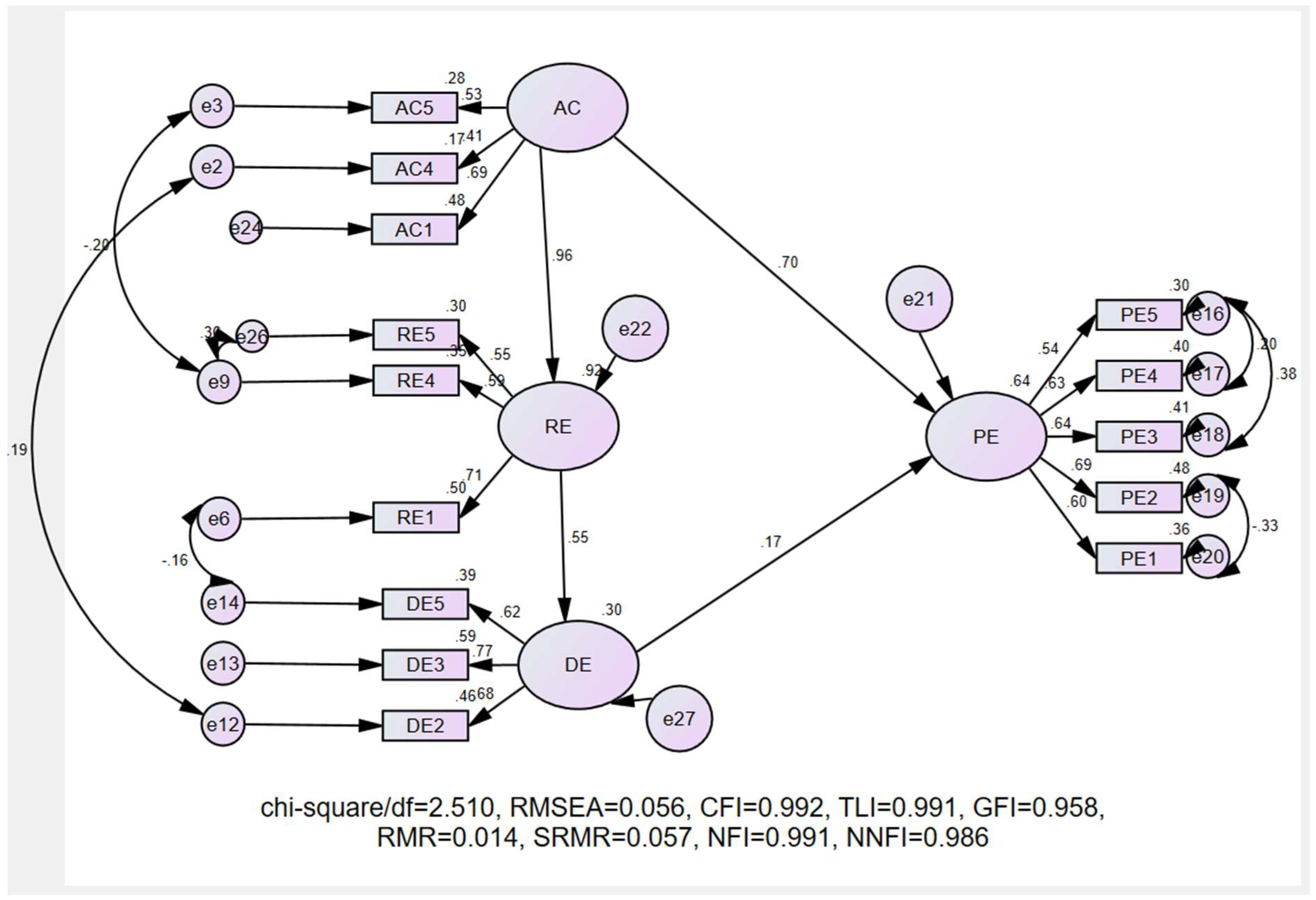
Figure 3.
SEM result of hypotheses model.
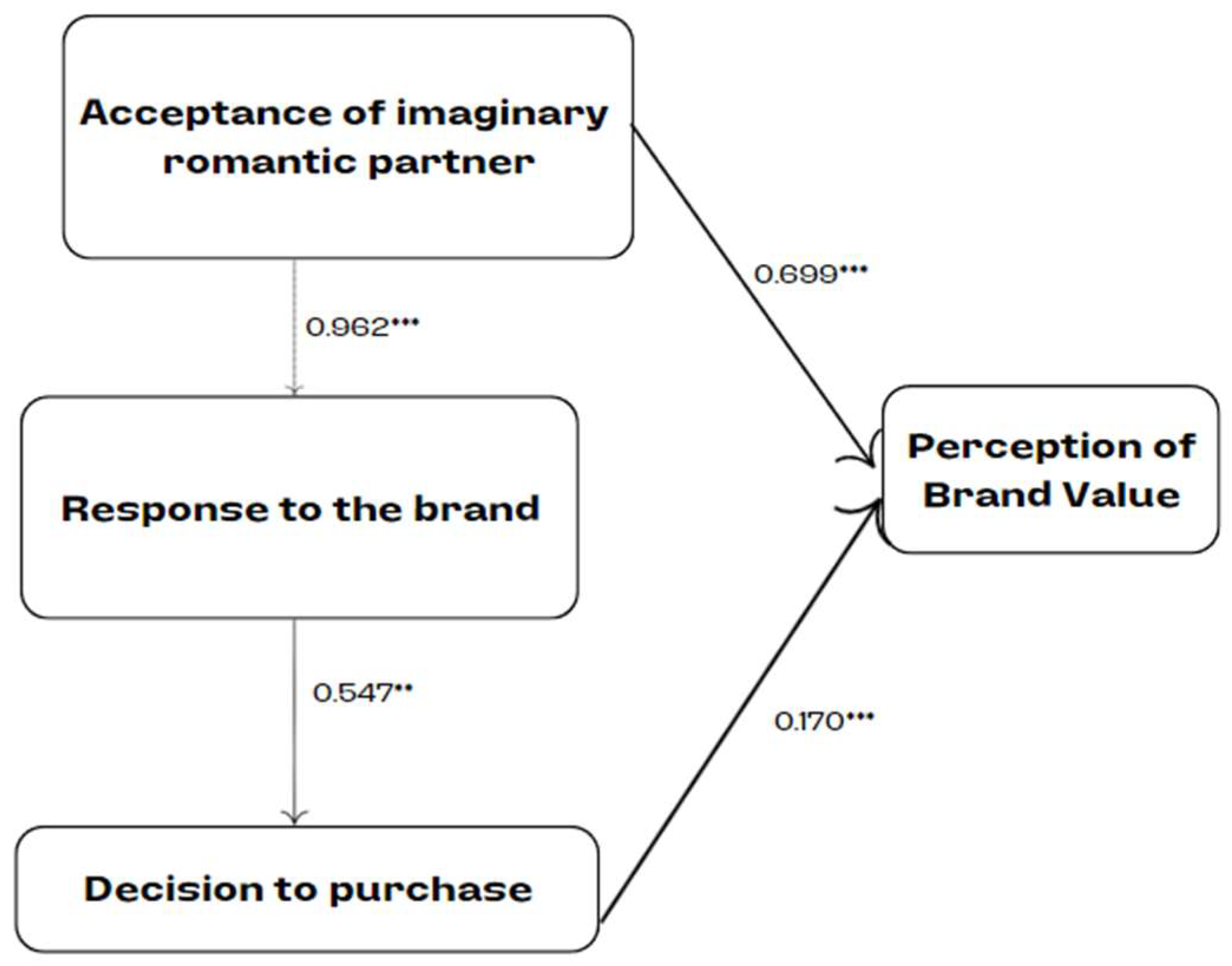
Table 1.
Level of influence from using the partner strategy on brand value creation.
| Factor | S.D. | Skewness | Kurtosis | average | Interpretation |
| Acceptance of imaginary romantic partner (AC) | |||||
| personal trust (AC1) | 1.04 | -0.863 | 0.511 | 3.85 | Important |
| success (AC2) | 0.971 | -1.070 | 0.994 | 4.07 | Important |
| Influence in society (AC3) | 1.07 | -0.940 | 0.518 | 3.83 | Important |
| Communication and public relations abilities (AC4) | 0.974 | -0.875 | 0.573 | 3.99 | Important |
| Personal charm or uniqueness (AC5) | 0.898 | -0.886 | 0.698 | 4.23 | Very Important |
| Response to the brand (RE) | |||||
| Brand awareness (RE1) | 0.903 | -1.02 | 0.813 | 4.27 | Important |
| Brand engagement (RE2) | 0.922 | -0.910 | 0.843 | 4.04 | Important |
| An in-depth exploration of the brand. (RE3) | 0.956 | -0.981 | 0.922 | 3.99 | Important |
| Brand communication and public relations capabilities (RE4) | 0.909 | -0.919 | 0.600 | 4.11 | Very Important |
| Brand reliability (RE5) | 0.884 | -0.918 | 0.928 | 4.09 | Important |
| Decision (DE) | |||||
| Awareness (DE1) | 1.140 | -0.443 | -0.559 | 3.13 | Moderately Important |
| Seeking information (DE2) | 1.220 | -0.415 | -0.789 | 3.46 | Important |
| Evaluation of alternatives (DE3) | 1.100 | -0.494 | -0.457 | 3.59 | Important |
| Purchasing decision (DE4) | 1.030 | -0.692 | 0.234 | 3.74 | Important |
| Feelings after the purchase (DE5) | 0.922 | -0.521 | 0.297 | 3.75 | Important |
Table 2.
Level of influence of brand value perception from using the partner strategy.
| Factor | S.D. | Skewness | Kurtosis | average | Interpretation |
| Perception of Brand Value (PE) | |||||
| Brand identity perception (PE1) | 0.880 | -1.07 | 1.60 | 4.06 | Important |
| Brand quality perception (PE2) | 0.993 | -0.918 | 0.714 | 3.91 | Important |
| Relationships with customers (PE3) | 1.200 | -0.852 | -0.044 | 3.16 | Moderately Important |
| Perception of brand image/ideology. (PE4) | 0.915 | -0.867 | 0.590 | 4.06 | Important |
| Brand loyalty (PE5) | 1.040 | -0.787 | 0.285 | 3.82 | Important |
Source: Data processing.
Table 3.
Results of the Structural Validity Examination of Latent Variable Measures Using CFA.
| Statistical Measure Used for Evaluation | Standard Criteria | Test Results | Reference for Standard Criteria |
| < 3 | 2.510 | Thompson (2004) | |
| Root Mean Square Error of Approximation: RMSEA | < 0.07 | 0.022 | Hair et al. (2010) |
| GFI (Goodness of Fit Index) | > 0.90 | 0.958 | |
| Tucker-Lewis Index (TLI) | > 0.94 | 0.991 | Hair et al. (2010) |
| Comparative Fit Index : CFI | > 0.94 | 0.990 | Byrne (2005) |
| RMR (Root Mean Square Residual) | < 0.05 | 0.014 | |
| Standardized root mean square residual: SRMR | < 0.08 | 0.057 | Hair et al. (2010) |
| Bentler-Bonett Normed Fit Index: NFI | > 0.95 | 0.933 | Hair et al. (2010) |
Source: Data processing.
Table 4.
Model validation.
| Statistical Measure Used for Evaluation | Standard Criteria | Test Results | Reference for Standard Criteria |
| Chi-Square/df | < 3 | 2.510 | Thompson (2004) |
| Root Mean Square Error of Approximation: RMSEA | < 0.07 | 0.056 | Hair et al. (2010) |
| GFI (Goodness of Fit Index) | > 0.90 | 0.958 | Schumacker & Lomax (2016) |
| Tucker-Lewis Index (TLI) | > 0.94 | 0.991 | Hair et al. (2010) |
| Comparative Fit Index : CFI | > 0.94 | 0.992 | Byrne (2005) |
| RMR (Root Mean Square Residual) | < 0.05 | 0.014 | Hooper et al. (2008) |
| Standardized root mean square residual: SRMR | < 0.08 | 0.057 | Hair et al. (2010) |
| Bentler-Bonett Normed Fit Index: NFI | > 0.95 | 0.991 | Hair et al. (2010) |
| Bentler-Bonett Non-normed Fit Index: NNFI | >0.95 | 0.986 | Byrne (2005) |
Source: Data processing.
Table 6.
Factor Loadings and Prediction Coefficient.
| Factor | Factor Loadings | Prediction Coefficient (r2) | P-Value |
| Acceptance of imaginary romantic partner (AC) | |||
| personal trust (AC1) | 0.691 | 0.477 | < 0.001 |
| Communication and public relations abilities (AC4) | 0.408 | 0.166 | < 0.001 |
| Personal charm or uniqueness (AC5) | 0.531 | 0.282 | < 0.001 |
| Response to the brand (RE) | |||
| Brand awareness (RE1) | 0.711 | 0.504 | < 0.001 |
| Brand communication and public relations capabilities (RE4) | 0.589 | 0.346 | < 0.001 |
| Brand reliability (RE5) | 0.546 | 0.298 | < 0.001 |
| Decision (DE) | |||
| Seeking information (DE2) | 0.676 | 0.456 | < 0.001 |
| Evaluation of alternatives (DE3) | 0.77 | 0.592 | < 0.001 |
| Feelings after the purchase (DE5) | 0.621 | 0.385 | < 0.001 |
| Perception of Brand Value (PE) | |||
| Brand identity perception (PE1) | 0.596 | 0.355 | < 0.001 |
| Brand quality perception (PE2) | 0.694 | 0.481 | < 0.001 |
| Relationships with customers (PE3) | 0.638 | 0.407 | < 0.001 |
| Perception of brand image/ideology (PE4) | 0.63 | 0.396 | < 0.001 |
| Brand loyalty (PE5) | 0.544 | 0.295 | < 0.001 |
Source: Data processing.
Disclaimer/Publisher’s Note: The statements, opinions and data contained in all publications are solely those of the individual author(s) and contributor(s) and not of MDPI and/or the editor(s). MDPI and/or the editor(s) disclaim responsibility for any injury to people or property resulting from any ideas, methods, instructions or products referred to in the content. |
© 2025 by the authors. Licensee MDPI, Basel, Switzerland. This article is an open access article distributed under the terms and conditions of the Creative Commons Attribution (CC BY) license (http://creativecommons.org/licenses/by/4.0/).
Copyright: This open access article is published under a Creative Commons CC BY 4.0 license, which permit the free download, distribution, and reuse, provided that the author and preprint are cited in any reuse.


