

Submitted:
28 April 2025
Posted:
29 April 2025
You are already at the latest version
Abstract
The purpose of this study is to identify and evaluate essential design features, strengths, and limitations of a Virtual Reality (VR) application developed to effectively train the international sales force of a premium global wine brand, emphasizing stakeholder-driven iterative development and systematic evaluation. The research adopted a case study methodology centered on a VR training application developed for the Marchesi Antinori, employing the Scrum framework to facilitate iterative stake-holder collaboration. A qualitative evaluation using focus groups comprising market-ing, communication, and sales representatives was conducted. Natural Language Pro-cessing (NLP) embedding techniques and recursive clustering analyses (UMAP, k-means clustering) were systematically applied to interpret stakeholder feedback.
Findings demonstrate that iterative stakeholder-driven processes significantly en-hanced the VR application's effectiveness by clearly structuring immersive storytelling around terroir characteristics, vineyard operations, and cellar practices. Stakeholders recognized VR's powerful educational advantages for B2B sales training but high-lighted notable limitations, such as user discomfort, authenticity concerns, and varying market receptivity. Alternative immersive technologies, including augmented reality and immersive multimedia environments, emerged as valuable complementary ap-proaches.
This research fills a significant gap in literature by examining the application of VR technology specifically for B2B sales training in the premium wine industry, integrat-ing iterative Scrum methodology with advanced NLP analytical techniques to derive nuanced, context-rich insights..
Keywords:
Virtual Reality
; B2B sales training
; wine industry
; Scrum methodology
; stakeholder-driven development
; NLP embedding
; qualitative analysis
; international markets
1. Introduction
In today’s rapidly evolving global wine market, the performance of a brand often hinges on the competence and adaptability of its salesforce. As wine companies expand their reach to diverse cultural and economic contexts, sales professionals are expected to communicate not only the sensory qualities of a product but also its heritage, sustainability practices, terroir influences, and brand narrative. This multifaceted role demands continuous, specialized training to build deep expertise and ensure effective market engagement [1,2,3].
In particular, premium wine brands face the challenge of conveying intricate details regarding viticulture and enology, heritage and tradition, and the broader story behind each label. Traditionally, this knowledge transfer is accomplished through on-site visits to vineyards, cellars, and historical estates, offering immersive educational experiences that encapsulate the terroir and reinforce brand authenticity. However, maintaining a global training model built on in-person experiences becomes increasingly difficult, as logistical expenses and scheduling complexities rise with the expansion of international operations [4].
1.1. Literature Review
1.1.1. Emerging Trends in Sales Force Training
Sales capabilities are a crucial determinant of business success in the wine industry, yet research on the training and development of wine sales professionals remains limited. Existing literature highlights the importance of specialized sales skills in the wine sector, given the complexity of wine distribution channels and the diverse nature of customers, ranging from retail managers to sommeliers and distributors [4]. Sales personnel must possess not only general sales expertise but also deep knowledge of viticulture, enology, and brand heritage to effectively communicate value to international markets. Mattiacci and Bruni [4] identified four key trends in sales capability development within the wine industry: (1) capabilities enrichment, referring to the need for continuous learning; (2) capabilities balance, highlighting the integration of technical and interpersonal skills; (3) capabilities specialization, reflecting the growing demand for niche expertise; and (4) capabilities acquisition process, which underscores the importance of structured training programs. Despite the recognition of these evolving needs, there remains a lack of structured, scalable training methods capable of addressing these competencies efficiently in a globalized market.
Effective sales training is recognized as a key factor in enhancing performance in the wine industry. Studies on wine-service training in hospitality contexts have shown that structured education programs significantly improve the ability of sales personnel to engage customers and convey the quality attributes of wine products [5]. However, much of the existing research focuses on on-the-job training within restaurants and hospitality settings, rather than on formalized salesforce education for B2B contexts. This gap suggests a need for more innovative and scalable approaches to training international wine sales teams.
A notable gap in the literature is the application of VR in the training of international salesforces within the wine industry. As identified by [4], the evolving needs of wine sales professionals require interactive and scalable learning tools that can deliver high-impact knowledge transfer while reducing logistical constraints. VR presents a unique opportunity to bridge this gap by allowing sales personnel to engage with digital reconstructions of vineyards, winemaking processes, and brand heritage stories in a controlled and repeatable training environment.
Beyond individual training methodologies, the effectiveness of wine sales education is also influenced by the role of professional networks and relationships. Benson-Rea [6] examined how firms in the New Zealand wine industry leveraged business relationships to enhance strategic competencies. This research highlights that training programs should not only focus on individual learning but also facilitate collaboration and knowledge exchange among sales teams, distributors, and industry stakeholders. The integration of VR-based training within a broader networking framework may further enhance its effectiveness by enabling remote collaboration and experiential learning among geographically dispersed sales teams.
Beverland [1] further explored the relational nature of wine sales, emphasizing that strong relationships between salespeople and distributors or clients are crucial for long-term success. His study on the New Zealand wine industry found that a relational approach to sales fosters trust and brand loyalty, essential factors in premium wine positioning. This suggests that any training program, including VR-based solutions, should incorporate relationship-building strategies to maximize effectiveness.
Virtual Reality (VR) has gained increasing attention in the business-to-business (B2B) sector, particularly as a tool for enhancing marketing strategies and salesforce training. While its application in consumer marketing is well documented, VR’s potential to improve B2B sales training remains an emerging research area. [2] highlight the transformative impact of VR on buyer-supplier coordination, allowing firms to enhance knowledge transfer, reduce training costs, and create immersive experiences that strengthen customer relationships.
Recent studies emphasize that VR can significantly improve knowledge retention and engagement in corporate training settings. Baceviciute et al. [7] demonstrated that VR-based training leads to higher conceptual and spatial knowledge acquisition compared to traditional training methods. Their study in the biotech industry showed that VR improves self-efficacy, perceived learning, and training enjoyment, all critical factors in salesforce development.
1.1.2. The Impact of Virtual Reality on B2B Customer Experience and Sales Training
Beyond internal training, VR has also been identified as a powerful tool for enhancing customer experiences in B2B relationships. Wieland et al. [8] discuss how VR is increasingly used in B2B customer experience management, particularly for remote demonstrations, interactive sales presentations, and relationship building. Their research suggests that VR contributes to more engaging interactions by providing virtual site visits and product demonstrations, which can be particularly useful in industries where physical access is limited.
Similarly, Klico [9] emphasizes that B2B companies are rapidly adapting to digital transformations, with VR playing a key role in modifying sales and marketing processes. His study highlights that VR-driven sales presentations enable potential buyers to experience products in a more immersive way, leading to improved decision-making and stronger buyer-supplier relationships.
The growing body of research suggests that VR training is more effective than traditional methods in several key areas. Bamberger et al. [10] explore how immersive learning environments in the industrial metaverse enhance engagement and knowledge retention. They argue that VR facilitates experiential learning, making complex technical concepts easier to understand for sales professionals dealing with high-value, knowledge-intensive products.
Furthermore, Freina and Ott [11]reviewed the role of immersive VR in education and training, concluding that VR fosters higher levels of interaction and immersion, which translate to better learning outcomes compared to passive training formats. Their findings are particularly relevant to B2B sales training, where deep product knowledge and persuasive communication skills are crucial.
Wilson [12] explores how advanced digital technologies, including VR, enhance salesforce efficiency and customer relationship management (CRM). His study highlights how VR, when integrated with CRM systems, provides real-time insights, facilitates remote collaboration, and improves customer engagement by creating more interactive and visually compelling sales experiences. These findings suggest that VR can be leveraged beyond training, as a tool for streamlining problem-solving and decision-making processes within sales operations.
1.1.3. The Impact of Virtual Reality on B2B Customer Experience and Sales Training
Virtual Reality (VR) has gained increasing recognition as a transformative tool in consumer wine education, particularly in sensory learning and immersive brand engagement. Research has demonstrated that VR enhances consumer experiences by replicating real-world environments, making it particularly effective in contexts where experiential knowledge is critical. Torrico et al. [13] found that VR-based wine tasting environments influenced consumer perceptions of aroma, taste, and overall acceptability, suggesting that digital immersion can significantly shape sensory preferences and enjoyment.
Studies in the field of wine tourism and marketing highlight how VR contributes to creating deeper emotional connections between consumers and wine brands. Sousa et al. [14] examined the impact of VR on wine tourism engagement, demonstrating that virtual experiences positively influence consumers’ desire to visit vineyards and participate in wine-related activities. These findings suggest that VR can enhance consumer wine education by allowing users to virtually explore vineyards, experience winemaking processes, and engage with brand stories in a highly immersive and interactive manner.
Moonen et al. [15] investigated VR’s effectiveness in sommelier training, emphasizing how immersive experiences and social presence contribute to enhanced learning outcomes, which could be leveraged to educate wine consumers. Their study revealed that VR simulations enhance users’ ability to recall detailed product knowledge and appreciate the complexities of wine tasting.
Deng et al. [16] explored the role of social presence in VR-based wine tourism experiences, showing that virtual social interactions can positively impact consumer engagement and brand loyalty. These findings suggest that VR could be used as an experiential marketing tool, strengthening the emotional and sensory appeal of wine brands.
VR has been identified as a powerful tool for creating memorable and immersive consumer experiences. Wen and Leung [17] demonstrated that VR wine tours and tastings create heightened levels of presence and sensory engagement, influencing consumer purchase decisions and brand affinity. Similarly, Sousa et al. [14] found that VR-based promotional experiences enhance consumer trust and satisfaction, leading to stronger emotional connections with wine brands.
Despite the emergence of numerous studies demonstrating the effectiveness of virtual reality (VR) in wine education and consumer engagement, there remains a significant research gap regarding the use of VR in training premium wine sales staff in an international context. In particular, current literature focuses mainly on B2C applications related to wine tourism or immersive tasting, almost completely neglecting the specific needs of sales teams operating in global markets and requiring a deep knowledge of the territory (in terms of terroir, culture and tradition) and of oenological processes in the cellar (vinification, ageing, etc.). This aspect is crucial in high-end products, where the narrative element linked to history and quality becomes an essential competitive advantage. Furthermore, there is a lack of studies examining structured teaching strategies—for example, VR training modules that digitally reconstruct vineyards and wineries—aimed at fostering the development of specialized skills such as food and wine pairing, understanding climatic variables or managing customers who require advanced details on the production process.
1.2. Aim of the Research and Research Questions
Virtual Reality (VR) has emerged as a compelling alternative, enabling immersive, realistic simulations of remote locations and winemaking processes. Existing studies underscore VR’s potency in consumer-facing contexts, notably by augmenting wine marketing with interactive and memorable experiences [12]. Nevertheless, the role of VR in business-to-business (B2B) sales training—particularly in equipping international sales teams with the technical, cultural, and experiential knowledge of premium wine brands—remains underexplored. By allowing geographically dispersed personnel to traverse virtual vineyards, witness production methods, and experience the historical ambiance of estates, VR holds promise for overcoming cost and accessibility barriers.
This paper seeks to address this gap by examining the design and implementation of a collaborative VR application developed for the international salesforce of the renowned Marchesi Antinori winery. Specifically, our research focuses on identifying the core features that enhance VR’s efficacy in professional wine training, as well as the methodological approaches needed to rigorously evaluate both its benefits and limitations. The analysis not only contributes to the literature on immersive technologies in the wine sector but also offers practical insights for companies striving to maintain authenticity and a strong brand narrative while embracing innovative, cost-effective training solutions in a competitive global market.
To address these insights, we pose the following research question.
RQ1: What are the essential design features and characteristics required of a Virtual Reality application developed through iterative, stakeholder-driven processes to effectively train the international sales force of a global wine brand?
RQ2: How can objective and flexible evaluation methods be used to assess the advantages and disadvantages of employing a Virtual Reality application within the training strategy of an international wine brand?
RQ3: What are the perceived opportunities, limitations, and practical implications of integrating Virtual Reality technology into B2B training scenarios within the international wine industry?
2. Materials and Methods
2.1. Case Study Overview
This paper presents a study on a Virtual Reality (VR) application specifically developed for Marchesi Antinori, an internationally renowned Italian fine wine producer with a history spanning over six centuries and 27 generations of uninterrupted family ownership.
This study focused specifically on three historical Antinori estates located in Tuscany: Tignanello (165 hectares), Badia a Passignano (65 hectares), and Pèppoli (140 hectares). These estates showcase both historical and modern architectures, from the 10th-century cellar at Badia di Passignano and the historic Tenuta Tignanello estate, to the innovative contemporary winery “Antinori nel Chianti Classico.” Each of these distinctive “wine locations,” although geographically close, offers unique terroirs that enhance specific nuances, resulting in wines with pronounced character and exceptional recognizability. Key wines produced from these estates include: Badia a Passignano Chianti Classico D.O.C.G. Gran Selezione, Marchese Antinori Chianti Classico D.O.C.G. Riserva, and Pèppoli Chianti Classico D.O.C.G.
This winery was selected because it directly addresses the core objectives underlying our research questions on implementing immersive VR for B2B training within the wine industry. Its centuries-long history and established global presence—demonstrated by a significant percentage of sales in international markets—make it particularly suitable for examining how VR can enhance knowledge transfer, storytelling, and engagement in a traditional yet globally competitive sector. Moreover, its ranking among the top Italian wine producers underscore its representative nature for large-scale operations. By studying a company that balances heritage with innovation, we can more accurately assess how immersive technologies can add value to brand communication, salesforce development, and overall market performance.
2.2. The Scrum Framework
This research applied the Scrum framework (Figure 1), a widely recognized agile project management methodology characterized by iterative processes, adaptability to evolving requirements, and intensive stakeholder collaboration [18,19]. Scrum promotes adaptive planning, evolutionary development, early and incremental delivery, and continuous improvement, making it particularly effective for technology-driven projects that benefit from frequent feedback, flexibility, and swift responsiveness to change [22].
Scrum was deliberately selected for the development of the Virtual Reality application analyzed in this study due to its inherent flexibility, iterative nature, and structured feedback mechanisms, making it particularly effective for innovative and user-centered software solutions [19]. Alternative approaches such as Waterfall, Kanban, or Spiral present certain limitations when applied to complex interactive applications requiring continuous user involvement. The Waterfall model, characterized by sequential phases and predetermined requirements, typically restricts adaptability and responsiveness to evolving stakeholder feedback [20,21]. Conversely, Scrum enables continuous refinement through iterative cycles and regular Sprint Reviews, ensuring that user needs are progressively clarified and fulfilled [22,23]. Compared to Kanban, which primarily emphasizes continuous workflow optimization without formalized iteration cycles, Scrum’s timeboxed iterations (Sprints) ensure systematic, incremental delivery of functional prototypes aligned with user expectations and clearly articulated through user stories [24,25]. Furthermore, the explicit focus of Scrum on maintaining a shared Vision between stakeholders throughout the development process enhances strategic alignment, fosters clear communication, and supports consistent goal-oriented decisions [26]. Therefore, adopting Scrum facilitated structured collaboration among Product Owner, Scrum Master, and Development Team, while systematically incorporating continuous stakeholder feedback, ultimately resulting in a robust, contextually relevant VR application tailored for training the international wine salesforce.
Central to Scrum’s effectiveness is the explicit definition of the Vision (Figure 1), a high-level, strategic statement that describes the overall goals, target audience, and anticipated impact of the project. The Vision serves as a cohesive foundation that guides all activities, decision-making processes, and prioritizations throughout the project lifecycle [27]. By clearly defining the Vision, Scrum ensures alignment and shared understanding among all participants, fostering coherent and goal-oriented product development.
Within the Scrum framework, three clearly defined roles support the realization of the project Vision: the Product Owner, the Scrum Master, and the Development Team [27] The Product Owner holds responsibility for managing and clearly communicating the Vision, gathering stakeholder requirements, defining priorities, and maintaining an updated and appropriately prioritized Product Backlog. The Scrum Master acts as a facilitator and coach, guiding the team in adhering to Scrum practices, removing impediments, ensuring effective collaboration, and protecting the Development Team from external disruptions. The Development Team comprises multidisciplinary professionals who work collectively and iteratively to produce increments of usable product features aligned with the Vision, taking shared accountability for quality and delivery [29].
A core artifact in the Scrum process is the Product Backlog (Figure 1), an evolving, prioritized list of functionalities, improvements, bug fixes, and other work items essential to achieving the Vision. The Product Backlog typically includes hierarchical elements organized as Epics, Users, and User Stories. Epics represent broad strategic themes or major components of functionality that articulate high-level requirements [30]. These Epics are further divided into specific Users or personas, which guide the development of detailed, user-centric narratives known as User Stories. User Stories are short, precise statements describing a functionality from the perspective of the end-user, which clearly communicate expected outcomes and acceptance criteria [22,30].
The Sprint Backlog is subsequently derived from the Product Backlog during the Sprint Planning meeting. This selection of prioritized User Stories represents the work committed by the Development Team to be completed within a short, defined development period, or Sprint, typically lasting from one to four weeks [22,28]. During Sprint Planning, the Product Owner collaborates closely with the Development Team to discuss, estimate, and agree upon feasible objectives aligned with both immediate priorities and the overarching Vision. This activity is followed by the Sprint Design phase, where the Development Team details the selected User Stories into specific, actionable tasks, ensuring clarity of purpose, technical feasibility, and efficient resource allocation [22].
Throughout each Sprint, brief, structured coordination meetings known as Daily Scrums are conducted to facilitate continuous team synchronization, track progress towards Sprint objectives, identify and swiftly address impediments, and make necessary adjustments to maintain productivity and alignment with the Sprint’s goals [18,22]. The Daily Scrum, typically limited to 15 minutes, promotes transparency and accountability within the team.
At the conclusion of each Sprint, a Sprint Review session is organized to assess and validate the product increment produced during the Sprint. This review session involves the Product Owner, Scrum Master, Development Team, and key stakeholders, providing a formal opportunity to gather direct feedback, demonstrate completed features, and verify that the increment aligns with the project Vision and the original requirements [27,29]. Insights from the Sprint Review inform continuous improvements, contribute to refining the Product Backlog, and support iterative alignment with stakeholder expectations.
The implementation of Scrum within this research provided a structured yet flexible methodological framework. It allowed the team to adapt dynamically to emerging requirements, integrate user feedback efficiently, and remain consistently oriented towards achieving the established Vision. Through iterative cycles of planning, execution, review, and continuous learning, the Scrum approach ultimately facilitated the successful development of a high-quality, immersive virtual reality training solution.
2.3. App Evaluation
2.3.1. Focus Group Methodology
To effectively assess the usability and impact of the VR application developed for training an international sales force in the wine industry, we selected the focus group method due to its capability to capture detailed, context-specific insights that standardized usability questionnaires might overlook.
The choice of the focus group methodology for evaluating the virtual reality (VR) application designed for international sales training in the wine industry was driven by the need to capture detailed, context-specific insights that standardized usability questionnaires might overlook. While traditional usability questionnaires offer structured and quantifiable measures of user satisfaction, efficiency, and ease-of-use [31,32], they often fail to fully capture the depth of user perceptions, especially regarding emotional engagement, cultural acceptance, and the immersive aspects essential to VR-based training solutions [33]. Moreover, even in larger wine companies, the size of the international sales force typically remains limited, making it challenging to obtain statistically significant results from traditional questionnaire-based methods, unless questionnaires with a very small number of items are used. However, reducing items limits the scope and depth of information gathered. By contrast, the interactive and conversational nature of focus groups enables participants from diverse professional backgrounds—such as marketing, communication, and international sales—to articulate their individual and collective experiences, revealing subtle perceptions, concerns, and opportunities related specifically to brand storytelling, heritage communication, and the authenticity of the wine experience within a VR context [34,35]. Furthermore, in the context of international markets, where cultural nuances and differing attitudes toward technological innovation can significantly influence user acceptance, focus groups effectively highlight critical factors that might affect the successful adoption and practical use of the VR application [36]. Therefore, focus groups were deemed most suitable for thoroughly evaluating the VR training tool, enabling nuanced and actionable insights to guide strategic enhancements tailored to the unique needs of a global wine brand.
The focus group was conducted following established qualitative research guidelines to ensure methodological rigor and reliability of the data collected. It involved one moderator, trained in facilitating qualitative discussions, and six company representatives, specifically selected to provide diverse perspectives relevant to the VR application’s use context: two from the marketing department, two from the communication department, and two representing the international sales force. To minimize potential biases and ensure neutrality, none of the participants held roles within the Scrum development team. Prior to participation, all members provided informed consent after reviewing and accepting the privacy policy outlining how their data and responses would be managed confidentially [35]. The moderator followed a structured yet flexible discussion guide containing open-ended questions to stimulate interactive dialogue and encourage participants to freely express their views, attitudes, and perceptions related to the usability, effectiveness, and overall impact of the VR application [34,36]. The discussion was recorded and subsequently transcribed verbatim to ensure accurate documentation and facilitate detailed qualitative analysis. Moreover, the focus group took place in a neutral, comfortable setting conducive to candid interaction, thereby fostering an open and constructive atmosphere critical for generating authentic insights [34]. The collected data was then systematically analyzed to identify key themes, patterns, and consensus points regarding user experience, opportunities, and limitations of the VR application.
2.3.2. Identifying Focus Group Themes Using NLP Embeddings and UMAP Clustering
The analytical procedure employed in this study integrates sophisticated techniques from Natural Language Processing (NLP), embedding methodologies, dimensionality reduction, and cluster analysis to systematically uncover and interpret meaningful thematic patterns from qualitative textual data.
The decision to adopt an embedding-based approach instead of traditional topic modeling techniques such as Latent Dirichlet Allocation (LDA)[37]; is grounded in several theoretical and methodological advantages. While LDA is a widely employed probabilistic method that identifies latent topics within large textual corpora based on statistical distributions of words, it inherently assumes a bag-of-words structure, thus disregarding contextual semantics and word order. Conversely, embedding-based methods retain contextual and semantic richness by considering the relationships among words and their positioning within sentences, thereby offering greater interpretative depth and semantic accuracy []38. Consequently, embedding-based NLP analysis provides a more nuanced and detailed representation of complex thematic structures, particularly beneficial in analyzing qualitative data, where subtle meanings and semantic relationships significantly influence interpretative accuracy.
Initially, the textual corpus T was segmented into sentences S={s1,s2,...,sn}, enabling granular semantic analysis [39].
Subsequently, each sentence was converted into numerical vector ei ∈ ℝd representations using embedding algorithms provided by OpenAI’s “text-embedding-ada-002” model, with d = 1536. Formally, this process can be expressed as:
The concept of embeddings originates from NLP, where words, sentences, or entire documents are mapped into high-dimensional numerical vector spaces, preserving semantic relationships and contextual nuances present within the text [38,40]. Embeddings are generated by deep learning models trained on large-scale textual datasets, enabling the capture of rich semantic and syntactic information through the positional relationships between vectors. In other words, sentences that share similar meanings tend to have embedding vectors positioned close together in the vector space, while semantically distant sentences occupy separate regions.
The decision to adopt OpenAI’s embedding model (“text-embedding-ada-002”) rather than other well-established language models like BERT [38], Word2Vec [40], GloVe [41], or FastText [42] is supported by specific methodological considerations. While models such as Word2Vec, GloVe, and FastText effectively capture semantic relationships among individual words through static embeddings, they generally lack deep contextual sensitivity and cannot fully represent sentence-level semantics. BERT and similar transformer-based models provide context-sensitive embeddings capable of capturing rich linguistic nuances; however, these models can become computationally expensive and challenging to fine-tune without substantial domain-specific data [38].
Due to the high dimensionality of embedding vectors, the Uniform Manifold Approximation and Projection (UMAP) technique was applied for dimensionality reduction, condensing embeddings into lower-dimensional representations ui while preserving their intrinsic semantic relationships (McInnes et al., 2018).
UMAP effectively maintains the original data structure, enabling a meaningful interpretation of clustered thematic patterns. While traditional methods such as Principal Component Analysis (PCA) rely on linear transformations and assume that data structures can be effectively represented in a linear, orthogonal subspace [43], textual embeddings typically embody complex, non-linear semantic relationships (McInnes et al., 2018). PCA’s linear assumptions may inadequately capture these intricate data patterns, resulting in potential information loss and oversimplification of the data’s semantic structure. Therefore, Uniform Manifold Approximation and Projection (UMAP) was preferred for its capability to model the nonlinear and high-dimensional structure of textual embeddings more effectively. UMAP achieves dimensionality reduction by constructing a high-dimensional graph representation of data and optimizing it into a lower-dimensional manifold that preserves both local and global data structures, thus offering improved semantic interpretability compared to PCA [44]. Consequently, employing UMAP in this study allowed for a richer and more nuanced representation of sentence embeddings, enhancing the clustering accuracy and interpretability of resulting thematic clusters.
After dimensionality reduction, unsupervised machine learning—specifically, the k-means clustering algorithm—was employed to identify naturally occurring thematic groupings. K-means partitions the data into k clusters C={C1,C2,...,Ck} minimizing the within-cluster variance:
where μj denotes the centroid of cluster Cj.
The optimal number of clusters k∗ was determined through multiple validation metrics, including Within-Cluster Sum of Squares (WSS), Davies-Bouldin Index (DBI), and Calinski-Harabasz Index (CHI).
WSS measuring internal cluster cohesion, computed as:
The DBI measures compactness and separation between clusters [45]:
CHI evaluates clustering quality by assessing the ratio of between-cluster variance to within-cluster variance [46]:
The silhouette method further assessed cluster cohesion and separation, thus providing robust validation of the cluster structure [47]:
with a(i) being the average intra-cluster distance and b(i) the minimum average distance to points in other clusters
Additionally, the analysis was enriched through a recursive clustering approach, allowing primary clusters to undergo further clustering iterations and revealing finer thematic nuances. Representative sentences, selected by their proximity to cluster centroids, provided clarity and facilitated precise thematic interpretation [39].
After determining the optimal clustering, the procedure was recursively applied to each primary cluster to uncover more detailed thematic structures:
Finally, the representative sentences for each cluster were identified by measuring distances between each embedding vector ui and cluster centroids μj:
Hence, the embedding-based analytical procedure implemented in this research combines the theoretical strengths of deep semantic representation from advanced NLP techniques with rigorous statistical clustering methods. It provides a more contextually informed and semantically nuanced analysis compared to traditional topic modelling methods, enabling richer interpretative insights from qualitative textual data.
2.3.3. Software and Hardware
The virtual reality application presented in this study was developed using the Unity 3D engine (version 2022), an advanced cross-platform real-time development framework widely employed for immersive simulations and interactive experiences. To implement multi-user interactivity, the Photon Fusion networking asset was integrated into Unity, enabling real-time synchronization and collaboration among geographically dispersed participants. Avatar management and locomotion systems were specifically designed and optimized for the Meta Quest VR headset, leveraging its built-in SDK for smooth navigation and realistic user interactions within the virtual environment. The Fusion, Meta Avatar and Meta Interaction SDKs have been integrated using the Multiplayer Meta Avatars VR Template asset.
The immersive multimedia content utilized in the application was captured using advanced panoramic cameras. Ground-based 360-degree filming was performed using the Insta360 RS2 and the Insta360 Pro 2 cameras, which provide high-resolution spherical imagery and seamless stitching capabilities. Aerial 360-degree footage was acquired through the DJI Mavic 3 Pro drone, offering high-quality stabilized imagery from aerial perspectives, critical for representing expansive vineyard landscapes and facility overviews.
For the subsequent analysis of qualitative data derived from the user evaluation process, the R programming environment (CRAN-R) was employed. The analytical pipeline included a combination of specialized statistical and machine learning libraries: umap was utilized for dimensionality reduction, while clustering validation and assessment were performed using FactoMineR, factoextra, clusterSim (for Davies-Bouldin Index), and fpc (for Calinski-Harabasz Index). Additionally, the R libraries jsonlite and httr were integrated into the pipeline to manage API interactions, particularly for interfacing with OpenAI’s ChatGPT APIs to obtain advanced textual embeddings critical for semantic analysis and clustering.
This carefully selected combination of software platforms, imaging hardware, and analytical tools ensured both high-quality immersive experiences and robust, scientifically validated qualitative analyses.
3. Results
3.1. Scrum Results
3.1.1. Roles
The initial phases of the Scrum methodology applied to the VR application development were structured by clearly defining roles and responsibilities within the Scrum team (Figure 2). The Product Owner role was assigned to a marketing and communication expert appointed by the brand administrator, whose primary responsibility was to articulate the product vision, communicate stakeholder requirements, and ensure the development alignment with strategic brand objectives. The Scrum Master role was fulfilled by a senior programmer from the VR PercLab laboratory at the University of Florence, tasked with facilitating agile practices, removing obstacles, and ensuring optimal collaboration among team members.
The Development Team comprised specialized professionals from the VR PercLab laboratory, each with defined expertise to ensure comprehensive development coverage. Specifically, the team included a Software Engineer, responsible for managing and executing programming tasks within the Unity 3D engine environment, ensuring robust and efficient software architecture. A 3D Artist and UI Designer was appointed to oversee the development and integration of 3D models and intuitive graphical interfaces, enhancing the user experience through aesthetic coherence and usability. Additionally, a specialized VR Developer managed the acquisition and post-production of immersive 360-degree videos, capturing authentic virtual representations of the winery’s production sites. Finally, the team included a dedicated Data Analyst, responsible for structuring and performing qualitative data analysis and evaluation of user feedback, applying advanced statistical and semantic embedding techniques.
This clearly defined role-based structure facilitated efficient workflow management, effective communication, and rapid iteration cycles typical of Scrum methodologies. By fostering close collaboration and clearly delineating responsibilities, the Scrum approach enabled the agile and iterative development of a highly engaging and contextually accurate VR training application.
3.1.2. Vision and Product Backlog
The Scrum implementation commenced with defining a clear and compelling Vision for the project, formulated by the Product Owner in collaboration with brand stakeholders. The Vision articulated the overarching goal (Figure 2): developing an immersive virtual reality (VR) training application designed explicitly for the brand’s sales force, with a particular emphasis on conveying the distinctive terroir characteristics of the Chianti Classico region. This Vision served as the guiding framework for subsequent development activities, ensuring alignment and coherence across the entire project lifecycle.
Based on this defined Vision, the Product Backlog was developed collaboratively. This backlog outlined the primary functionalities, structured in terms of high-level Epics and detailed User Stories. The backlog was prioritized to reflect both strategic business needs and practical implementation considerations.
The first Epic, labeled “Effectiveness of Training,” encompassed User Stories focusing on maximizing the educational impact of the VR training experience. A representative user story (User Story 1.1) emphasized that as a sales trainer, the training sessions should occur through dynamic interaction between participants and an expert guide representing the brand. The guide’s role was defined to integrate the brand’s historical traditions and detailed explanations regarding agronomic, pedological, and oenological aspects essential to the quality of the products. Additionally, real-time interactivity was highlighted as a fundamental requirement, enabling participants to actively engage with the expert guide and deepen their understanding.
The second Epic, called ‘Terroir’, specifically aimed to convey the distinctive environmental and agricultural conditions of the Chianti Classico wine region through immersive experiences. Several detailed user stories were identified: User Story 2.1 defined an interactive element in which virtual reality participants, using a headset, could interact directly with an interactive virtual map of the Chianti Classico region, independently accessing infographics relating to the environmental and oenological characteristics of the different terroirs. User Story 2.2 outlined the need for participants to perceive the wine-growing landscape through immersive panoramic viewpoints, thus emphasising spatial understanding of the terroir. User Story 2.3 required the development of immersive ground-level content that would allow participants to virtually engage in vineyard cultivation operations. In addition, User Story 2.4 similarly required immersive video content of cellar operations, allowing users to observe winemaking processes up close, providing contextualised learning on how wine producers and workers operate. Finally, User Story 2.5 ended the training with an interactive illustration of the characteristics of the wines.
The third Epic, “Evaluation,” addressed the qualitative and methodological assessment of the VR training application. User Story 3.1 stipulated the need for systematic collection of qualitative feedback from relevant stakeholders in marketing, communication, and international sales departments. This was achieved through structured focus group discussions involving representative members of each department. User Story 3.2 introduced the requirement for an objective, data-driven methodology for the systematic analysis of focus group transcripts. This analytical procedure aimed to clearly identify strengths and weaknesses of the VR training approach, guiding future development through empirically supported insights.
This carefully structured and prioritized Product Backlog, anchored in a clear Vision, facilitated focused and iterative development cycles. By continually revisiting and refining the backlog during successive Scrum sprints, the development team efficiently delivered a VR solution that effectively met training objectives and highlighted the unique terroir characteristics, achieving alignment with both stakeholder expectations and user requirements.
3.1.3. Sprint Planning
The Scrum implementation continued with the Sprint Planning phase, in which the entire team—including the Development Team, Scrum Master, and Product Owner—collaboratively selected the specific User Stories and tasks from the Product Backlog to address during each Sprint (Figure 3). The selection was driven by the priorities identified in the Product Backlog, strategic importance to the Vision, and the Development Team’s established velocity.
The Scrum methodology included detailed sprint planning sessions involving the Product Owner, Scrum Master, and Development Team. User stories and corresponding tasks were selected from the Product Backlog based on their priority, contribution to the project’s overall vision, and estimated velocity of the team.
In Sprint 1, the team focused on developing an entry space for the Immersive Collaborative Virtual Reality (ICVR) environment, a 3D interactive digital space accessible through virtual reality devices that provides a high degree of sensory immersion. This multiplayer environment allowed synchronous interactions between multiple users, each represented by individual avatars. In this environment, the user was able to select their customised avatar from a selection of 32 different avatars (Figure 4).
Sprint 2 involved the creation of an interactive 3D virtual scene depicting the ‘Saletta Sospesa’ tasting room inside the architecturally prestigious ‘Antinori nel Chianti Classico’ winery. The environment included the possibility of ‘switching on’ two 3D virtual maps at two different scales. At the largest scale (Figure 5a), the virtual map represented the Chianti Classico area, with the UGAs. The map highlighted representative geographical reference points. The map at a greater detail (Figure 5b) represented the boundaries of the Pèppoli, Badia a Passignano and Tignanello estates and the location of the relevant wine cellars. Users could access concise infographics showing estate-specific data such as altitude, exposure and vineyard area. In addition, the interactive map allowed users to virtually extract geological core samples (Figure 5c) from each estate, illustrating the link between geology and terroir characteristics.
Given that the virtual reality application is structured around three distinct wine-producing estates, the immersive multimedia content was carefully developed following a clear thematic organization based on these estates. Each estate—Pèppoli, Tignanello, and Badia a Passignano—was addressed through three consecutive development sprints, each sprint capturing specific aspects of terroir characterization, vineyard management, and cellar operations.
Pèppoli Estate
In Sprint 3, the Development Team employed a DJI Mavic 3 Pro drone to produce high-quality 360° aerial videos, capturing panoramic views from strategically selected vantage points, thus allowing users to appreciate the vineyard’s geographical context and landscape configuration (Figure 6a). This aerial footage provides a comprehensive perspective of vineyard distribution, surrounding topography, and critical landscape features. During Sprint 4, ground-level immersive 360° footage was recorded to illustrate key vineyard operations, notably leaf-thinning activities carried out by vineyard workers (Figure 6b). Finally, in Sprint 5, immersive content from the cellar was captured, showcasing topping-up operations on large wooden vats located at approximately four meters height, thus offering detailed insights into cellar management practices central to wine production (Figure 6c).
Tignanello Estate
For the Tignanello Estate, the team began in Sprint 3 by capturing aerial 360° panoramic footage (Figure 6d), utilizing a drone to showcase the vineyards landscape, the estate’s main buildings, and notable vineyard parcels such as Marchese, Solaia, and Tignanello. In Sprint 4, further ground-level filming highlighted agronomic activities, specifically including the agronomist’s grape tasting and inspection routines, illustrating critical practices in vineyard quality control (Figure 6e). Subsequently, in Sprint 5, cellar operations were documented through immersive VR content, focusing on the barrel management (Figure 6f).
Badia a Passignano Estate
During Sprint 3, the estate’s panoramic views were captured through drone-based 360° video recordings, prominently featuring the historical Badia monastery and surrounding vineyards, thus emphasizing both agricultural and cultural heritage (Figure 6g). In the subsequent Sprint 4, detailed ground-level videos were produced, focusing specifically on the grape harvesting process and effectively communicating the manual labor practices involved (Figure 6h). Finally, Sprint 5 involved the acquisition of immersive barrique tasting video by the estate’s winemaker in the historic cellar spaces (Figure 5k).
The VR experience ends (Figure 5d) with Sprint 6 in the scene of the 3D model ‘Saletta sospesa’ (Suspended Room) furnished with a luxury table on which there are 3D models of the wine bottles produced by each estate and canvases with the oenological characteristics. The user can select the different sets of bottles for each estate and interact with the bottle.
Organizing the development process around individual estates ensured that each site’s unique attributes and characteristics were effectively communicated through sequentially designed immersive experiences. This approach enhanced the coherence of the educational narrative within the VR application, clearly presenting the integral relationship between each estate’s distinct terroir, vineyard management practices, and cellar operations, thus aligning comprehensively with the overall project Vision.
Sprint Execution
Each Sprint, with a typical duration between two to four weeks, consisted of structured phases involving design, implementation, testing, and user feedback analysis.
During the design and implementation phases, the Development Team meticulously planned and executed filming missions in the vineyards and cellars, capturing high-resolution 360° footage using both drone-based and ground-based cameras. Subsequently, these video assets were edited, stitched, and seamlessly integrated into the VR application. Additionally, the team created and refined an interactive 3D virtual model of the tasting room, incorporating scientifically validated components illustrating environmental and pedological features. User interface (UI) elements were configured, ensuring intuitive navigation and straightforward access to immersive experiences.
The testing and quality control phase involved systematic validation procedures. Quality assurance tasks included rigorous testing of 360° video playback fidelity, verification of interactive elements within the 3D environment, and ensuring accurate data visualization of critical terroir attributes such as location-based climatic statistics and soil types. Comprehensive tests of the multiplayer VR environment ensured robust functionality, reliability of avatar synchronization, and consistent user interactions across multiple participants.
3.2. Focus Group Results
Subsequently, the focus group realization phase encompassed careful preparation, involving the strategic selection of six representative participants from marketing, communication, and sales departments. During the focus groups, participants extensively utilized the VR application, providing immediate, detailed feedback on usability, alignment with brand identity, effectiveness of training methodologies, and overall user experience.
3.2.1. First-Level Recursive Clustering Results
Qualitative data collected through structured focus groups were systematically analyzed using advanced natural language processing (NLP) embedding techniques and hierarchical clustering to objectively identify emergent themes. Sentence-level embeddings were generated from focus group transcripts using OpenAI’s “text-embedding-ada-002” model, converting qualitative textual feedback into semantic vectors. Dimensionality reduction was then performed using Uniform Manifold Approximation and Projection (UMAP), enabling clear visualization and facilitating subsequent clustering. Optimal cluster determination was guided by standard validation metrics, including Within-Cluster Sum of Squares (WSS), Davies-Bouldin Index (DBI), and Calinski-Harabasz Index (CHI), alongside silhouette scores to assess cluster quality, cohesion, and separation (Figure 7).
The initial application of UMAP and k-means clustering yielded two prominent thematic clusters with an overall silhouette score of approximately 0.50 (Figure 8), signifying moderate but clear thematic differentiation in participant feedback.
Cluster 1—The Role of Virtual Reality in the Wine Sector and Communication
The first thematic cluster aggregated participant responses primarily centered around the strategic and innovative potential of virtual reality (VR) technology in the wine industry. Discussions within this cluster extensively explored how VR can be leveraged effectively within the wine sector, particularly highlighting distinctions between its educational role in business-to-business (B2B) contexts and its potential applications oriented towards end consumers. Participants acknowledged the significant advantages of VR in B2B training scenarios, emphasizing its unique capacity to convey complex technical and cultural information through interactive and immersive storytelling approaches. Particularly valued was VR’s potential to enhance comprehension of terroir characteristics, production methods, and brand heritage, thereby empowering international sales representatives and enhancing the depth and effectiveness of training programs.
Additionally, participants discussed opportunities and challenges associated with integrating VR into broader wine-related communication and tourism initiatives. While VR was recognized as a powerful tool to attract and educate customers through enriched virtual experiences, some participants noted potential drawbacks, such as the risk of excessive technological mediation potentially diluting authentic brand experiences and traditional storytelling methods integral to wine marketing and tourism.
Cluster 2—Limitations and Alternatives to Virtual Reality
The second thematic cluster focused extensively on the perceived limitations, challenges, and considerations regarding broader adoption of VR technology within wine education and communication. A recurring topic among participants was the consensus that VR, despite its many advantages, cannot fully replace the authenticity and sensory richness inherent in real-life vineyard visits or cellar experiences. Participants expressed concerns regarding the physical discomfort and cognitive strain that prolonged headset use might impose, thus limiting widespread acceptance among certain user demographics.
The analysis further revealed insights regarding the differing global market reactions toward VR technology adoption. Participants noted substantial variation across international markets, observing stronger receptivity and enthusiasm toward VR in regions like the United States and Asia, while identifying a more conservative stance prevalent among European wine consumers and professionals. These insights indicated the importance of region-specific VR strategies rather than a uniform, global approach.
Lastly, within this cluster, participants proposed and debated viable alternatives or complements to immersive VR. Prominent among these were augmented reality (AR), immersive rooms equipped with high-definition projection technologies, and high-quality traditional video media. These alternatives were suggested as potentially less isolating and more inclusive solutions, capable of preserving traditional elements of wine tasting events and educational interactions without fully relying on immersive virtual headsets.
The delineation of these two distinct thematic clusters underscored the nuanced perspectives of stakeholders concerning VR implementation. The analysis clearly highlighted both promising potential and significant constraints, providing valuable guidance for strategic decisions on future developments and integration approaches within wine sector training and communications. Subsequent recursive clustering analyses at deeper levels were performed to further dissect these initial clusters, revealing additional nuanced sub-themes relevant to refining the VR application and its educational effectiveness.
Second-level Recursive Clustering Results
he second-level recursive clustering refined the analysis further, identifying distinct sub-themes within each main cluster. Figure 9 and Figure 10 shows the subclusters derived through UMAP dimensionality reduction and k-means clustering. The silhouette scores for Cluster 1 (0.33) and Cluster 2 (0.367) indicate satisfactory clustering performance, especially considering the high-dimensional embedding vectors employed. Such silhouette scores are acceptable in text clustering applications with complex embeddings, given the inherently high-dimensional nature of textual data and the nuances captured by advanced NLP models like the one used in this study [48].
Figure 9 compares standard clustering metrics—Calinski-Harabasz, Davies-Bouldin, and WSS—to identify the optimal number of subclusters within each primary cluster. Metrics indicated stable solutions at 6 and 9 subclusters respectively, ensuring thematic interpretability while maintaining statistical rigor.
The second-level clustering produced clearly defined thematic groupings, significantly enhancing the interpretability of qualitative insights derived from the focus group.
Cluster 1—Role of Virtual Reality in the Wine Sector and Communication was further divided into six clearly interpretable subthemes:
Subcluster 1.1—Informational Enrichment through VR: Participants emphasized VR’s potential for delivering engaging communication of complex geological, climatic, and viticultural information. VR was highlighted as a superior alternative to static maps, with notable potential in B2B contexts for educating distributors, sommeliers, and sales representatives.
Subcluster 1.2—VR as an Immersive Consumer Tool: Discussions highlighted the emotional impact of VR, underscoring its effectiveness in recreating historical settings or virtually transporting consumers into wineries and vineyards. Participants referenced existing successful implementations, such as immersive VR presentations used in Switzerland to showcase Amarone wines.
Subcluster 1.3—Historical Identity and Authenticity: Concerns were expressed regarding VR’s potential to dilute or normalize the historical authenticity and prestige of heritage wine brands. Participants stressed the critical balance required between innovative VR approaches and preserving the integrity of traditional wine narratives.
Subcluster 1.4—Innovation vs. Audience Perception: Stakeholders indicated that some traditional wineries might perceive VR as misaligned with their established identity. Recommendations included cautious and selective deployment of VR in controlled scenarios, avoiding its overuse or replacement of authentic vineyard experiences.
Subcluster 1.5—Interactive Educational Experiences: Participants suggested immersive VR scenarios akin to interactive simulations (e.g., “Jurassic Park” style), as effective educational tools to engage B2B audiences, thereby enriching distributor training programs and enhancing learning outcomes.
Subcluster 1.6—Global Markets and Diverse Perceptions: Discussions revealed significant market-dependent variability, noting a stronger acceptance of VR in the United States and China compared to more conservative European markets. Concerns were raised about possible negative perceptions among certain traditional consumers who may view extensive VR use as detrimental to brand authenticity.
Cluster 2—Limitations and Alternatives to Virtual Reality was further segmented into nine distinct subthemes:
Subcluster 2.1—Effects on User Perception: Participants acknowledged VR’s capacity for focused learning due to the immersive headset experience, although highlighting potential discomfort, thus recommending careful user consideration, particularly for geographically distant markets.
Subcluster 2.2—Physical and Cognitive Limitations: Issues were identified related to headset discomfort, complexity, and cognitive overload, creating barriers between the user and authentic experiences, thereby limiting VR’s usability and adoption.
Subcluster 2.3—Augmented Reality vs. Virtual Reality: Augmented Reality (AR) emerged as a preferred alternative due to its ability to maintain user interaction with real-world contexts, enhancing rather than isolating from reality.
Subcluster 2.4—Technology and Market Perception: Participants expressed concerns that VR might appear overly technical, impersonal, or emotionally distant compared to traditional educational methods, thus better suited for B2B rather than consumer-oriented experiences.
Subcluster 2.5—Information Overload Risks: Discussions highlighted the potential for excessive technology use to overwhelm and confuse users, emphasizing the importance of clearly defining target audiences before investing extensively in immersive technologies.
Subcluster 2.6—Complementary Role of VR: It was strongly recommended that VR should complement rather than replace real-life experiences, particularly beneficial in B2B educational contexts, corporate events, or targeted market presentations.
Subcluster 2.7—Contexts of VR Utility: The utility of VR was primarily recognized within training contexts for importers, distributors, and sales agents, rather than for broad public applications, strengthening wine knowledge through interactive learning tools.
Subcluster 2.8—Current Technological Limitations: High visual expectations were identified as challenges for VR technology, as current graphical capabilities often fall short of users’ expectations compared to high-definition videos or immersive projection environments, thus prompting the consideration of alternative technologies.
Subcluster 2.9—VR Cannot Replace Authentic Experiences: Participants emphasized the fundamental limitation of VR in fully substituting real-world experiences, concluding that VR is effective as a tool for deepening educational content but fails if perceived as an experiential replacement.
Detailed results of the recursive clustering procedure—including all focus group sentences, their respective cluster assignments, and distances from second-level cluster centroids—are provided as supplementary material accompanying this paper.
3.2.3. Conclusions from Second-Level Clustering
The detailed analysis through second-level clustering clearly highlighted nuanced perspectives within each major thematic domain. The first primary cluster demonstrated VR’s considerable potential as an educational and communicative tool in B2B wine training, underscored by careful consideration of brand authenticity and market-specific perceptions. Conversely, the second primary cluster reinforced VR’s inherent limitations, recommending complementary alternatives such as augmented reality, immersive video technology, and traditional sensory-rich approaches as more appropriate tools for consumer engagement and experience authenticity.
These findings offer critical insights for strategic planning in deploying immersive technologies effectively within the wine industry, balancing innovation with tradition, technological sophistication with user acceptance, and ultimately enhancing wine education without compromising brand authenticity and heritage.
4. Discussion
The results presented in this study demonstrate the effectiveness of an iterative, stakeholder-driven approach in identifying and refining essential design features of a Virtual Reality (VR) application specifically tailored for training an international B2B sales force within the wine sector. The structured methodology enabled the development of immersive, interactive storytelling frameworks that clearly communicated complex concepts of terroir, tradition, and product authenticity. Furthermore, the detailed qualitative analysis from stakeholder focus groups highlighted both significant opportunities and critical limitations associated with adopting VR technology for wine education. These findings provide valuable insights into best practices for implementing immersive technologies within targeted business contexts, balancing innovation with brand heritage and practical training effectiveness.
4.1. Research Questions Answers
In response to RQ1, The results highlight how the iterative, stakeholder-driven approach effectively identified and refined key design features essential for a Virtual Reality (VR) application specifically aimed at training the international B2B sales force of a global wine brand. The systematic application of the Scrum framework—encompassing Vision formulation, Product Backlog development, Sprint Planning, iterative Sprint execution, and regular stakeholder reviews—enabled continuous alignment of technical development with the specific training needs of sales representatives engaged in global markets.
From the initial phase of Vision and Product Backlog definition, stakeholders—including marketing experts, communication specialists, and international sales personnel—explicitly articulated the core training needs of the sales force. This collaborative approach identified the necessity of communicating complex terroir information, historical heritage, and product differentiation clearly and engagingly. Essential features identified included structured immersive storytelling, interactive digital maps highlighting geographical and pedological characteristics, and realistic depictions of viticultural and cellar processes. By grounding the development in these targeted educational objectives, the resulting VR application directly addresses critical knowledge gaps commonly experienced by B2B sales representatives operating in diverse international contexts. During the subsequent phases of Sprint Planning and Sprint Execution, iterative development allowed the team to incrementally implement and refine these core features based on continuous stakeholder feedback. For example, detailed Sprint Planning sessions facilitated prioritization of specific training scenarios such as vineyard management activities, cellar operations, and interactive 3D visualizations of the estates. Regular stakeholder interactions during these sprints ensured that the VR scenarios remained educationally relevant and directly applicable to the practical tasks required of sales representatives in their market interactions. Incremental development provided stakeholders frequent opportunities to validate realism, interactivity, and content accuracy, all essential for effective training outcomes.
A distinctive outcome of the iterative Scrum process was the structured, consequential storytelling within the VR application, effectively communicating brand values, tradition, and technical information essential for sales force education. By systematically presenting distinct terroir attributes and the unique features of each estate (Pèppoli, Tignanello, and Badia a Passignano), the VR training tool directly addresses the B2B sales representatives’ need to articulate product differentiation convincingly to international buyers. Regular stakeholder feedback underscored the significance of these structured narratives for improving both understanding and retention of critical sales arguments in international markets.
Finally, the Sprint Review and systematic qualitative evaluation through structured Focus Groups validated the educational effectiveness of the VR solution. Feedback from sales and marketing stakeholders clearly indicated the potential of the application to significantly enhance the quality and effectiveness of training for international B2B markets. The application was perceived as particularly beneficial for educating distributors, importers, and sales agents, enabling them to more effectively communicate brand heritage, product authenticity, and detailed terroir-driven characteristics to diverse international clientele.
In conclusion, employing the iterative Scrum methodology allowed the development team to identify, prioritize, and continuously refine essential VR application features explicitly targeted toward enhancing B2B sales force education. This approach not only facilitated the effective transfer of complex educational content but also enhanced sales representatives’ ability to clearly articulate brand identity and differentiate product offerings in the competitive international wine market.
The second research question (RQ2) aimed to identify and systematically analyze stakeholders’ perceptions regarding the strengths, limitations, and potential alternatives to using VR for international B2B training within the wine industry. Results obtained from the structured qualitative evaluation—conducted through focus groups involving marketing, communication, and international sales representatives and analyzed using NLP embedding vectors and recursive clustering—provided detailed insights into these dimensions.
The first primary thematic cluster revealed significant acknowledgment of VR’s strengths and opportunities within the wine industry, especially for its capacity to deliver compelling, interactive, and highly informative training experiences. Stakeholders underlined VR’s unique potential to communicate complex, technical content, such as geological, pedological, climatic, and viticultural characteristics of terroir, more effectively than traditional static presentations. The interactive and immersive features were particularly valued in the context of distributor, importer, and sales force training, where engagement and retention of detailed technical knowledge are critical. Moreover, stakeholders pointed out that VR offers clear advantages in providing consistent, accurate educational content globally, crucial for standardized training across international markets.
Conversely, analysis of the second thematic cluster clearly identified key perceived limitations and boundaries in adopting VR widely across various contexts. Stakeholders consistently stressed the inherent limitations of virtual experiences compared to authentic vineyard or cellar visits. The physical discomfort of prolonged headset use, potential cognitive fatigue, and the possible emotional disconnection from traditional wine experiences were recurrently identified. Additionally, stakeholders emphasized significant market-dependent variability, highlighting that consumer acceptance and business perceptions of VR vary notably across global markets. European audiences, in particular, were described as more conservative, raising concerns about authenticity and brand integrity when traditional sensory-rich experiences are replaced with technologically mediated experiences.
Importantly, stakeholders proposed and evaluated potential complementary or alternative technologies that may overcome some limitations of fully immersive VR experiences. Notable among these alternatives were augmented reality (AR) solutions, immersive projection rooms (“immersive rooms”), and high-definition multimedia experiences featuring large screens or advanced audiovisual effects. Such technologies were seen as offering comparable educational effectiveness, potentially reducing discomfort and enhancing overall acceptance among different user groups.
In summary, the analytical results underscore VR’s potential as a powerful educational tool in international B2B contexts, highlighting its strengths in immersive, interactive, and globally consistent training experiences. Simultaneously, stakeholders have clearly outlined practical limitations and market-specific acceptance challenges, emphasizing that successful deployment requires complementary, rather than substitutive, strategies. This nuanced understanding supports informed strategic choices, balancing innovative technological integration with traditional wine experiences to maximize effectiveness and acceptance in diverse international contexts.
The third research question (RQ3) examined the effectiveness of the NLP-based analytical methodology applied in this study for systematically identifying and interpreting thematic insights from stakeholder feedback, particularly aiming at continuous improvement of the VR training application. The advanced analytical approach—which combined NLP embeddings generated through OpenAI’s “text-embedding-ada-002” model, dimensionality reduction via UMAP, and hierarchical recursive k-means clustering—proved highly effective for transforming qualitative data into structured and interpretable themes.
The embedding-based NLP methodology demonstrated significant advantages over traditional qualitative analysis approaches (e.g., manual coding or classic topic modeling), notably in capturing the nuanced, contextually rich, and semantically accurate dimensions of stakeholder perceptions. By translating textual data into semantic vector representations, the method retained critical context and meaning, enabling deeper thematic granularity and more accurate interpretation of complex stakeholder feedback. Furthermore, dimensionality reduction through UMAP facilitated clear visualization of semantic groupings, thereby enhancing the interpretability of thematic clusters.
The recursive clustering approach further reinforced the effectiveness of this analytical methodology. Through iterative clustering, the analysis successfully delineated both broad thematic domains and detailed subthemes. For example, the initial clusters clearly separated general attitudes toward VR adoption into supportive and critical dimensions, while subsequent recursive clustering revealed nuanced perceptions, such as specific educational strengths of VR, concerns related to brand authenticity, and market-specific acceptance issues. Such detailed thematic insights would be challenging to identify with conventional qualitative methodologies alone, underscoring the value of the NLP-based approach.
Additionally, the methodology proved valuable for rapidly and systematically integrating stakeholder feedback into actionable insights for iterative product development. By objectively quantifying semantic patterns in qualitative feedback, the method effectively supported the Scrum-based iterative process, guiding developers to prioritize relevant enhancements and strategically refine training content based on validated stakeholder perspectives.
Overall, the results confirmed that the NLP-based analytical approach employed in this study provides a powerful, objective, and effective method for systematically extracting thematic insights from stakeholder feedback. Its capability to identify detailed semantic nuances supports data-driven decision-making, continuous improvement, and strategic refinement of VR-based training solutions in complex international B2B sales contexts.
4.2. Limits of the Work and Future Researches
Despite its contributions, this study presents several limitations that should be considered when interpreting its findings. First, the choice of Marchesi Antinori as a case study—characterized by its substantial size, deep historical heritage, and emphasis on tradition—may limit the generalizability of results to the broader wine industry. Antinori’s strong reliance on tradition and authenticity uniquely positions it among large-scale, heritage-driven wine enterprises. Consequently, stakeholder skepticism identified towards VR adoption for direct consumer interactions (B2C) may reflect particular organizational and cultural contexts rather than universally applicable perceptions. Indeed, prior literature provides evidence that immersive VR experiences can be positively received by consumers in various wine tourism contexts, especially when enhanced by elements of social presence and environmental realism (Deng et al., 2024).
Secondly, the qualitative evaluation conducted via the focus group involved only internal stakeholders (marketing, communication, and international sales representatives). To achieve broader validity, future research could include diverse external stakeholders, such as international distributors, importers, sommeliers, and end consumers, providing a more comprehensive evaluation and validating findings beyond organizational boundaries.
Additionally, the study did not include a formal usability evaluation of the VR application, thus limiting insights regarding interface intuitiveness, user-friendliness, and overall ease of use. Future research should incorporate structured usability assessments—such as usability testing protocols or standardized usability scales—to ensure the effectiveness and practicality of the training application from the user perspective.
Furthermore, although the NLP-based analytical approach offered significant advantages for systematically extracting thematic insights from stakeholder feedback, the results inherently depend on specific computational choices and embedding models. Comparative studies employing alternative embedding techniques, advanced transformer-based models, or supervised analytical methods could further validate and potentially enhance thematic accuracy and interpretability.
Moreover, due to the relatively brief evaluation period, the long-term impact of the VR training application, including sustained user engagement, knowledge retention, and effectiveness in real-world sales contexts, remains unclear. Future longitudinal research is therefore necessary to provide comprehensive insights into long-term training outcomes and market impacts.
Lastly, stakeholder feedback highlighted interest in exploring complementary technologies, such as augmented reality (AR), immersive projection environments, and high-definition interactive videos. Comparative studies examining these alternative technologies could provide valuable insights into their relative effectiveness, acceptance, and potential integration within international B2B sales training programs.
Addressing these limitations through broader stakeholder engagement, formal usability evaluation, comparative technology analyses, and longitudinal assessments would substantially enhance the robustness and generalizability of future research findings, ultimately guiding more effective implementation of immersive training solutions across diverse wine industry contexts.
4.3. Pratical Implications
This research provides several practical implications for practitioners and managers in the wine industry, particularly regarding the effective implementation of immersive Virtual Reality (VR) technologies in international B2B sales force training. First, the structured, iterative development process demonstrated here—guided by active stakeholder participation and iterative refinement—represents a practical and effective framework for ensuring alignment between technological innovations and educational objectives. Companies aiming to enhance their sales force training programs through immersive technologies should adopt similar iterative methodologies, ensuring continual stakeholder involvement and feedback integration to optimize content relevance, usability, and overall training effectiveness.
Secondly, the detailed findings regarding VR’s strengths and limitations offer concrete guidance for strategically deploying immersive technologies. Practitioners should recognize that VR can effectively communicate complex technical information, heritage storytelling, and terroir-specific details, especially within structured educational contexts for distributors, importers, and sales representatives. However, they should also consider the identified limitations, notably user discomfort and the potential perception of VR as overly technical or impersonal. Accordingly, VR applications should be carefully targeted toward specific educational goals and clearly defined market segments, avoiding wholesale substitution of traditional experiential practices.
Furthermore, this study underscores the importance of tailoring immersive technological solutions to diverse international markets. Practical insights gained from stakeholder feedback suggest that VR acceptance varies considerably across geographic regions, with higher receptivity in markets like the United States and China, and more conservative attitudes prevalent in Europe. Managers should therefore strategically adapt immersive solutions and content delivery to the cultural preferences, acceptance levels, and specific expectations of their targeted markets.
Finally, the demonstrated analytical approach based on NLP embedding techniques provides practitioners with a robust, objective method to systematically analyze qualitative feedback from stakeholders. Companies seeking continuous improvement and data-driven decision-making in product development and training programs could adopt similar NLP-based analytical methods. Such approaches enable organizations to rapidly and objectively identify user insights, strengths, limitations, and areas requiring improvement, thus enhancing responsiveness and strategic decision-making.
5. Conclusions
This study contributes original insights into the emerging field of immersive technology for international B2B sales force training, focusing specifically on the premium wine industry context. By adopting a distinctive iterative, stakeholder-driven development methodology, this research effectively identified and validated key design features necessary for clearly communicating brand heritage, detailed terroir-specific attributes, and differentiated product knowledge through Virtual Reality (VR). A notable aspect of originality lies in the integration of advanced NLP embedding techniques combined with recursive clustering analyses, which systematically transformed qualitative stakeholder feedback into actionable insights for continuous improvement. Moreover, by openly acknowledging VR’s strengths and critically evaluating its limitations, this study highlights the need for complementary technological solutions, thereby providing robust and nuanced guidance for industry practitioners. Ultimately, the methodological and analytical frameworks proposed offer substantial practical value, equipping wine businesses with effective, data-driven strategies for optimizing immersive technologies within international market training initiatives.
Supplementary Materials
The following supporting information can be downloaded at the website of this paper posted on Preprints.org. Detailed results of the recursive clustering procedure—including all focus group sentences, their respective cluster assignments, and distances from second-level cluster centroids
Author Contributions
Conceptualization, I.C. and I.B.; methodology, I.B..; software, I.C..; validation, S.R., D.B. and I.B.; data curation, I.B. and T.B.; writing—original draft preparation, I.B.; writing—review and editing, I.B. and I.C..; visualization, T.B.; supervision, I.B.; project administration, I.B.; funding acquisition, I.B. All authors have read and agreed to the published version of the manuscript.
Funding
This research was funded by UNICESV—University of Florence.
Data Availability Statement
Data is contained within the Supplementary Material.
Conflicts of Interest
The authors declare no conflicts of interest.
Abbreviations
The following abbreviations are used in this manuscript:
| B2B | Business to Business |
| VR | Virtula Reality |
| LDA | Latent Dirichlet Allocation |
| NLP | Natural Language Processing |
| UMAP | Uniform Manifold Approximation and Projection |
References
- Beverland, M. Are Salespeople Relationship Oriented? (And Do They Need To Be?) A Study Based on the New Zealand Wine Industry. Int. J. Wine Mark. 1999, 11, 47–64. [Google Scholar] [CrossRef]
- Boyd, D.E.; & Koles, B.; Koles, B. Virtual reality and its impact on B2B marketing: A value-in-use per-spective. Journal of Business Research 2019, 100, 590–598. [Google Scholar] [CrossRef]
- Gilinsky Jr, A.; Newton, S.; & Eyler, R.; Eyler, R. Are strategic orientations and managerial characteristics drivers of performance in the US wine industry? International Journal of Wine Business Research 2018, 30, 42–57. [Google Scholar] [CrossRef]
- Mattiacci, A.; Bruni, A.; Magno, F.; Cassia, F. Sales capabilities in the wine industry: an analysis of the current scenario and emerging trends. Br. Food J. 2019, 121, 3380–3395. [Google Scholar] [CrossRef]
- Gultek, M.M.; Dodd, T.H.; Guydosh, R.M. Attitudes towards wine-service training and its influence on restaurant wine sales. Int. J. Hosp. Manag. 2006, 25, 432–446. [Google Scholar] [CrossRef]
- Benson-Rea, M.; Woodfield, P.; Brodie, R.J.; Lewis, N. Sustainability in strategy: main-taining a premium position for New Zealand wine. In Proceedings of the 6th AWBR international conference, Bordeaux; 2011. [Google Scholar]
- Baceviciute, S.; Cordoba, A.L.; Wismer, P.; Jensen, T.V.; Klausen, M.; Makransky, G. Investigating the value of immersive virtual reality tools for organizational training: An applied international study in the biotech industry. J. Comput. Assist. Learn. 2021, 38, 470–487. [Google Scholar] [CrossRef]
- Wieland, D.A.; Ivens, B.S.; Kutschma, E.; Rauschnabel, P.A. Augmented and virtual reality in managing B2B customer experiences. Ind. Mark. Manag. 2024, 119, 193–205. [Google Scholar] [CrossRef]
- Klico, A. How using virtual reality can improve B2B marketing. BH Èkon. Forum 2022, 17, 27–40. [Google Scholar] [CrossRef]
- Bamberger, B.; Reinartz, W.; Ulaga, W. Navigating the future of B2B marketing: The trans-formative impact of the industrial metaverse. Journal of Business Research 2025, 188, 115057. [Google Scholar] [CrossRef]
- Freina, L.; Ott, M. A literature review on immersive virtual reality in education: State of the art and perspectives. In Proceedings of the International Scientific Conference eLearning and Software for Education (eLSE), Bucharest, Romania, 23–24 April 2015. [Google Scholar] [CrossRef]
- Wilson, A. Utilizing Advanced Technology in Salesforce to Enhance CRM and Problem Solving. MANAGEMENT (IJCRM) 2024, 3. [Google Scholar]
- Torrico, D.D.; Han, Y.; Sharma, C.; Fuentes, S.; Viejo, C.G.; Dunshea, F.R. Effects of Context and Virtual Reality Environments on the Wine Tasting Experience, Acceptability, and Emotional Responses of Consumers. Foods 2020, 9, 191. [Google Scholar] [CrossRef]
- Sousa, N.; Alén, E.; Losada, N.; Melo, M. Virtual reality in wine tourism: Immersive experiences for promoting travel destinations. J. Vacat. Mark. 2024. [Google Scholar] [CrossRef]
- Moonen, N.; Heller, J.; Hilken, T.; Han, D.-I.D.; Mahr, D. Immersion or social presence? Investigating the effect of virtual reality immersive environments on sommelier learning experiences. J. Wine Res. 2024, 35, 101–118. [Google Scholar] [CrossRef]
- Deng, D.S.; Seo, S.; Harrington, R.J.; Martin, D. When virtual others are with me: exploring the influence of social presence in virtual reality wine tourism experiences. Int. J. Wine Bus. Res. 2024, 36, 548–571. [Google Scholar] [CrossRef]
- Wen, H.; Leung, X.Y. Virtual wine tours and wine tasting: The influence of offline and online embodiment integration on wine purchase decisions. Tour. Manag. 2021, 83. [Google Scholar] [CrossRef]
- Schwaber, K.; Beedle, M. Agile Software Development with Scrum. Prentice Hall, 2002. [Google Scholar]
- Schwaber, K.; Sutherland, J. (2020). The Scrum Guide: The Definitive Guide to Scrum: The Rules of the Game. Scrum.org.
- Royce, W.W. Managing the Development of Large Software Systems. Proceedings of IEEE WESCON 1970, 26, 328–338. [Google Scholar]
- Petersen, K.; Wohlin, C.; Baca, D. The waterfall model in large-scale development. In Prod-uct-Focused Software Process Improvement; Springer: Berlin, Heidelberg, 2009; pp. 386–400. [Google Scholar]
- Rubin, K.S. (2012). Essential Scrum: A Practical Guide to the Most Popular Agile Process. Addi-son-Wesley.
- Moe, N.B.; Dingsøyr, T.; Dybå, T. A teamwork model for understanding an agile team: A case study of a Scrum project. Inf. Softw. Technol. 2010, 52, 480–491. [Google Scholar] [CrossRef]
- Lei, H.; Ganjeizadeh, F.; Jayachandran, P.K.; Ozcan, P. A statistical analysis of the effects of Scrum and Kanban on software development projects. Robot. Comput. Manuf. 2017, 43, 59–67. [Google Scholar] [CrossRef]
- Ahmad, M.O.; Markkula, J.; Oivo, M. Kanban in software development: A systematic literature review. 2013 39th Euromicro Conference on Software Engineering and Advanced Applications 2013, 9–16. [Google Scholar]
- Highsmith, J. (2009). Agile Project Management: Creating Innovative Products. Addison-Wesley Pro-fessional.
- Pichler, R. (2010). Agile Product Management with Scrum: Creating Products that Customers Love. Addison-Wesley.
- Schwaber, K. Agile Project Management with Scrum. Microsoft Press, 2004. [Google Scholar]
- Sutherland, J.; & Schwaber, K. (2013). The Scrum Guide: The Definitive Guide to Scrum: The Rules of the Game. Scrum.org.
- Cohn, M. (2004). User Stories Applied: For Agile Software Development. Addison-Wesley.
- Brooke, J. SUS: A quick and dirty usability scale. In Usability evaluation in industry; Jordan, P.W., Thomas, B., Weerdmeester, B.A., McClelland, I.L., Eds.; Taylor & Francis, 1996; pp. 189–194. [Google Scholar]
- Lewis, J.R. IBM computer usability satisfaction questionnaires: Psychometric evaluation and instructions for use. Int. J. Human–Computer Interact. 1995, 7, 57–78. [Google Scholar] [CrossRef]
- Jerald, J. The VR Book: Human-Centered Design for Virtual Reality. Morgan & Claypool Pub-lishers, 2015. [Google Scholar]
- Morgan, D.L. Focus Groups as Qualitative Research, 2nd ed.; Sage Publications, 1997. [Google Scholar]
- Krueger, R.A.; Casey, M.A. Focus Groups: A Practical Guide for Applied Research, 5th ed.; Sage Publications, 2015. [Google Scholar]
- Stewart, D.W.; Shamdasani, P.N. Focus Groups: Theory and Practice, 3rd ed.; Sage Publications, 2014. [Google Scholar]
- Blei, D.M.; Ng, A.Y.; & Jordan, M.I. Latent Dirichlet Allocation. Journal of Machine Learning Research 2003, 3, 993–1022. [Google Scholar]
- Devlin, J.; Chang, M.W.; Lee, K.; Toutanova, K. BERT: Pre-training of Deep Bidirectional Trans-formers for Language Understanding. 2019, arXiv:1810.04805. [Google Scholar]
- Silge, J.; Robinson, D. Text Mining with R: A Tidy Approach; O’Reilly Media, Inc., 2017. [Google Scholar]
- Mikolov, T.; Chen, K.; Corrado, G.; & Dean, J. Efficient estimation of word representations in vector space. 2013, arXiv:1301.3781. [Google Scholar]
- Pennington, J.; Socher, R.; & Manning, C.D. GloVe: Global Vectors for Word Representation. Pro-ceedings of the 2014 Conference on Empirical Methods in Natural Language Processing (EMNLP); 2014; pp. 1532–1543. [Google Scholar]
- Joulin, A.; Grave, E.; Bojanowski, P.; Mikolov, T. Bag of tricks for efficient text classification. arXiv 2016, arXiv:1607.01759. [Google Scholar]
- Jolliffe, I.T.; Cadima, J. Principal component analysis: a review and recent developments. Philosophical Transactions of the Royal Society A: Mathematical, Physical and Engineering Sciences 2016, 374, 20150202. [Google Scholar] [CrossRef] [PubMed]
- McInnes, L.; Healy, J.; Melville, J. UMAP: Uniform Manifold Approximation and Projection for Dimension Reduction. arXiv arXiv:1802.03426, 2018.
- Davies, D.L.; Bouldin, D.W. A cluster separation measure. IEEE Transactions on Pattern Analysis and Machine Intelligence 1979, 1, 224–227. [Google Scholar] [CrossRef]
- Calinski, T.; Harabasz, J. A dendrite method for cluster analysis. Communications in Statistics 1974, 3, 1–27. [Google Scholar]
- Rousseeuw, P.J. Silhouettes: A graphical aid to the interpretation and validation of cluster analysis. J. Comput. Appl. Math. 1987, 20, 53–65. [Google Scholar] [CrossRef]
- Petukhova, A.; Matos-Carvalho, J.P.; Fachada, N. Text clustering with large language model embeddings. International Journal of Cognitive Computing in Engineering 2025, 6, 100–108. [Google Scholar] [CrossRef]
Figure 1.
Scrum framework.
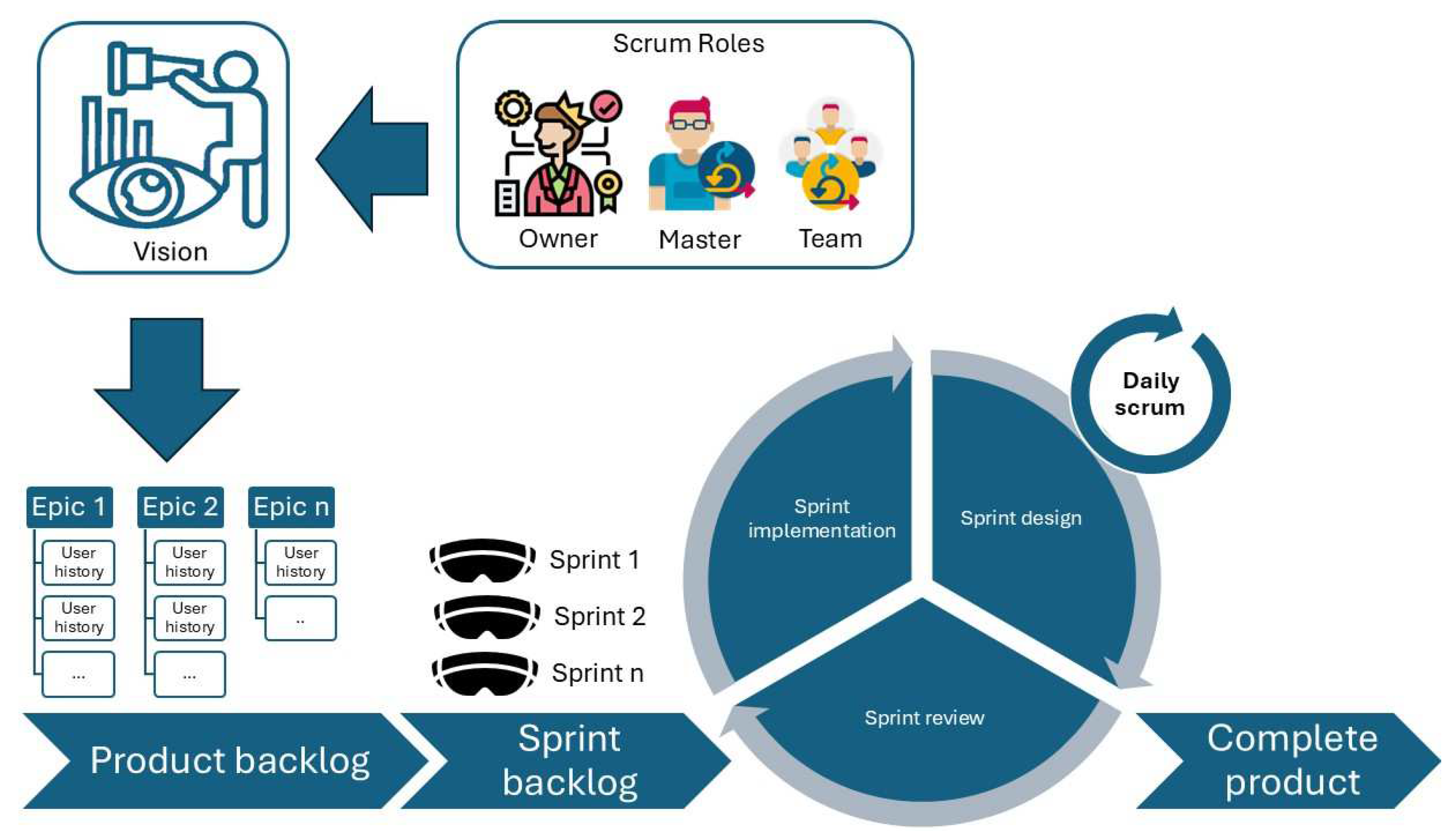
Figure 2.
Roles Vision and Product Backlog.
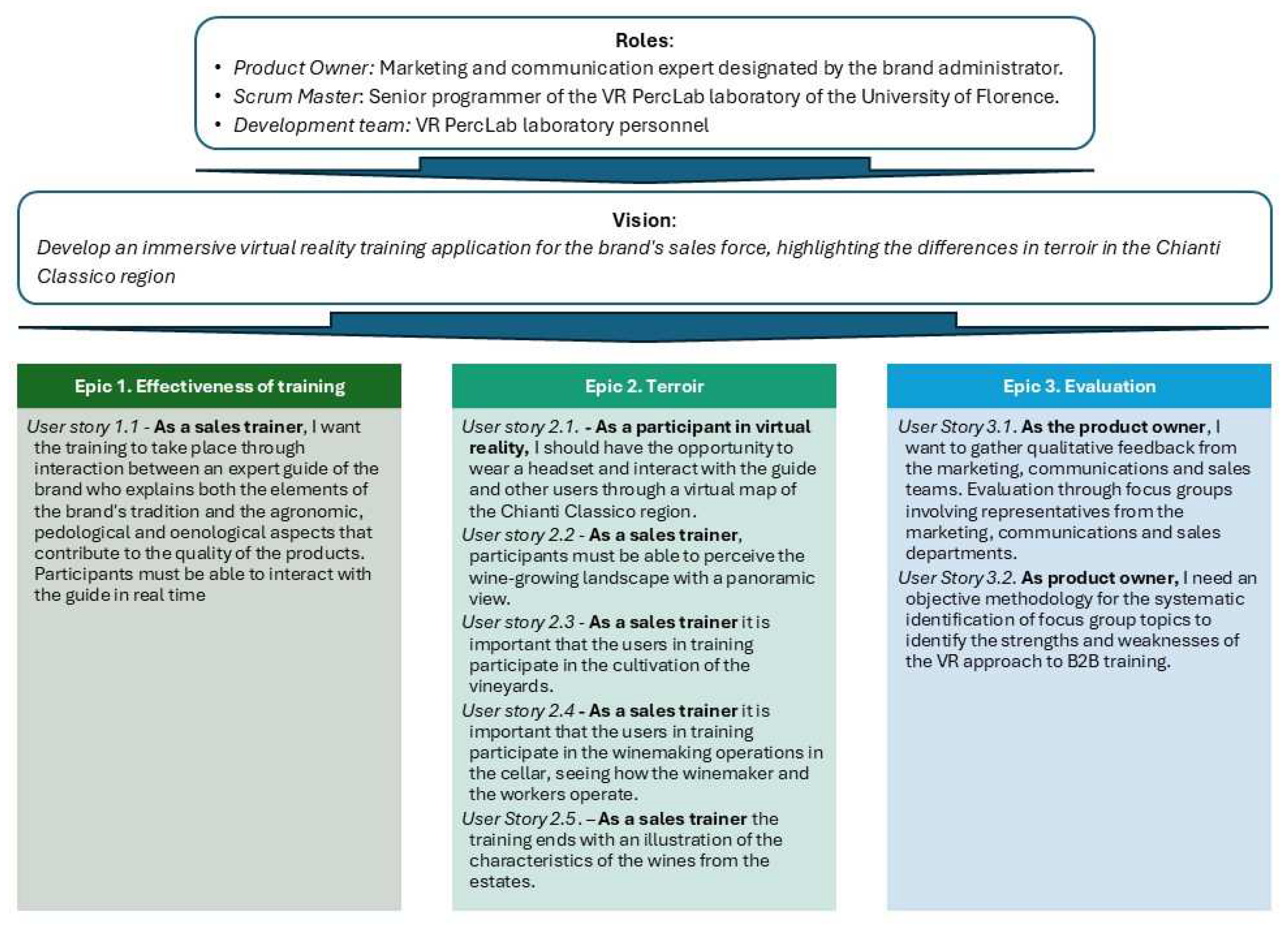
Figure 3.
Relation between Epic, User Stories and Sprints.
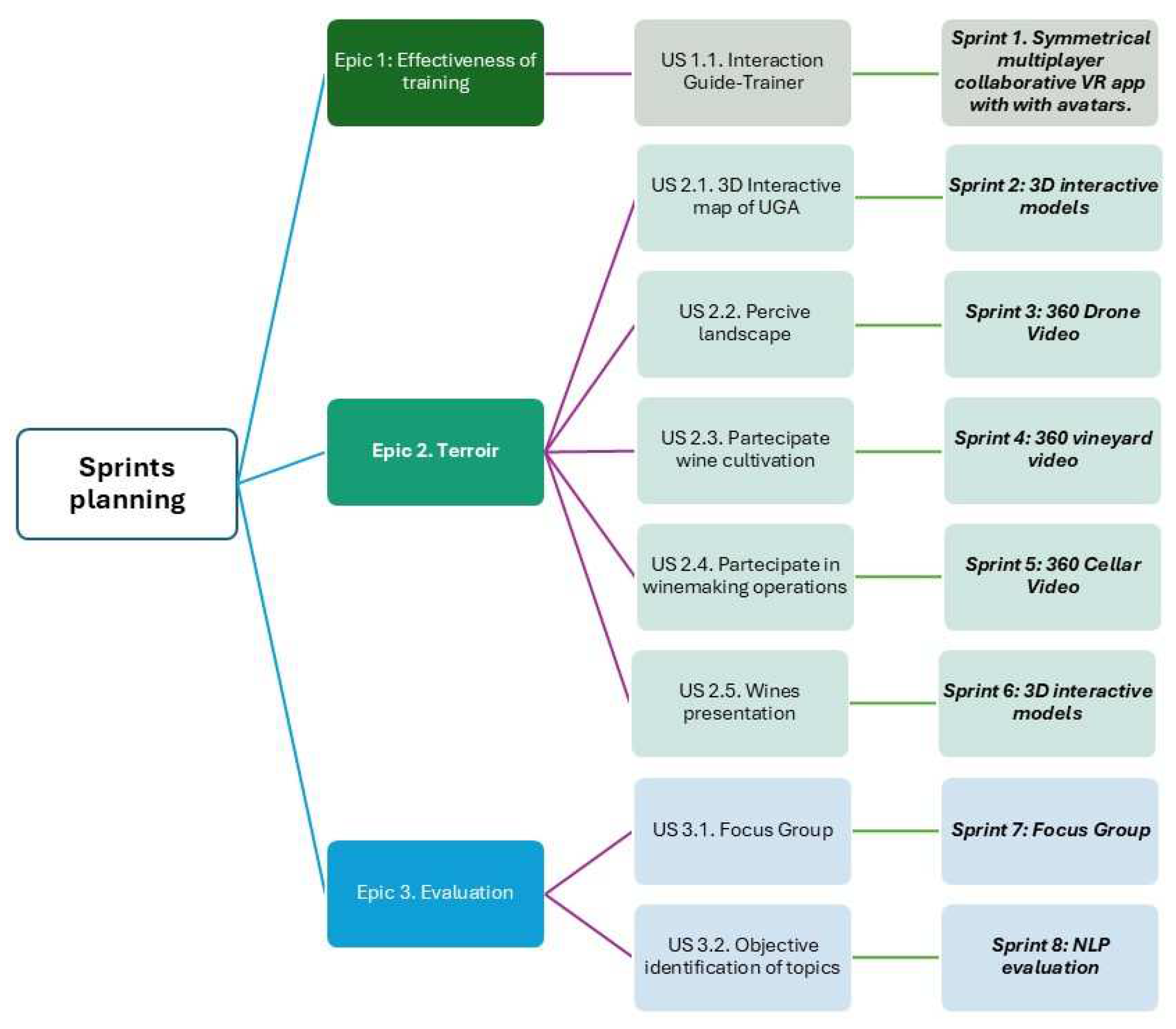
Figure 4.
Avatar selection.
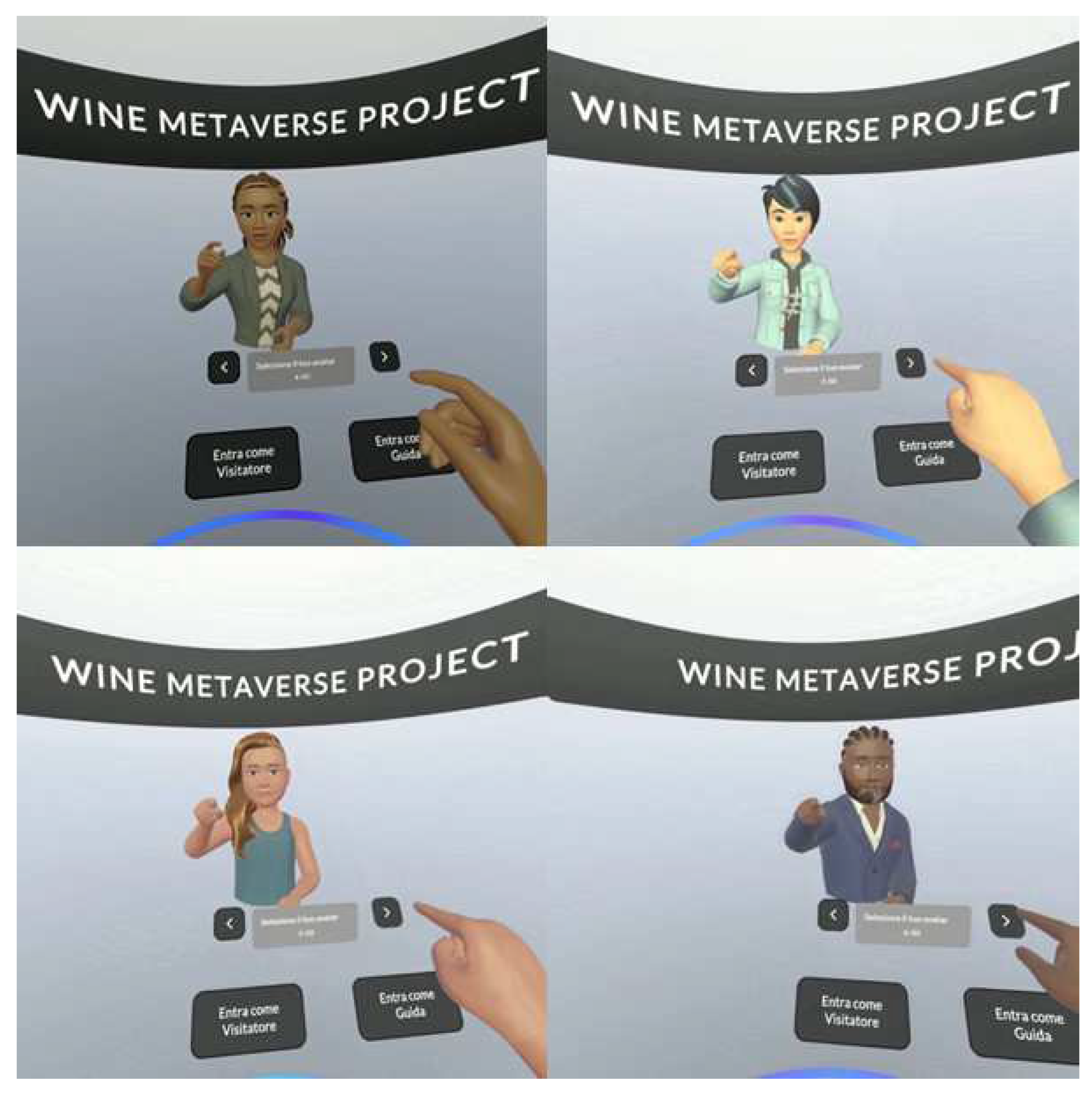
Figure 5.
(a) “Saletta Sospesa” tasting room with UGA; (b) “Saletta Sospesa” with Estate; (c) “Saletta Sospesa” with a geological section samples; (d) 3D models of the wine bottles.
Figure 5.
(a) “Saletta Sospesa” tasting room with UGA; (b) “Saletta Sospesa” with Estate; (c) “Saletta Sospesa” with a geological section samples; (d) 3D models of the wine bottles.
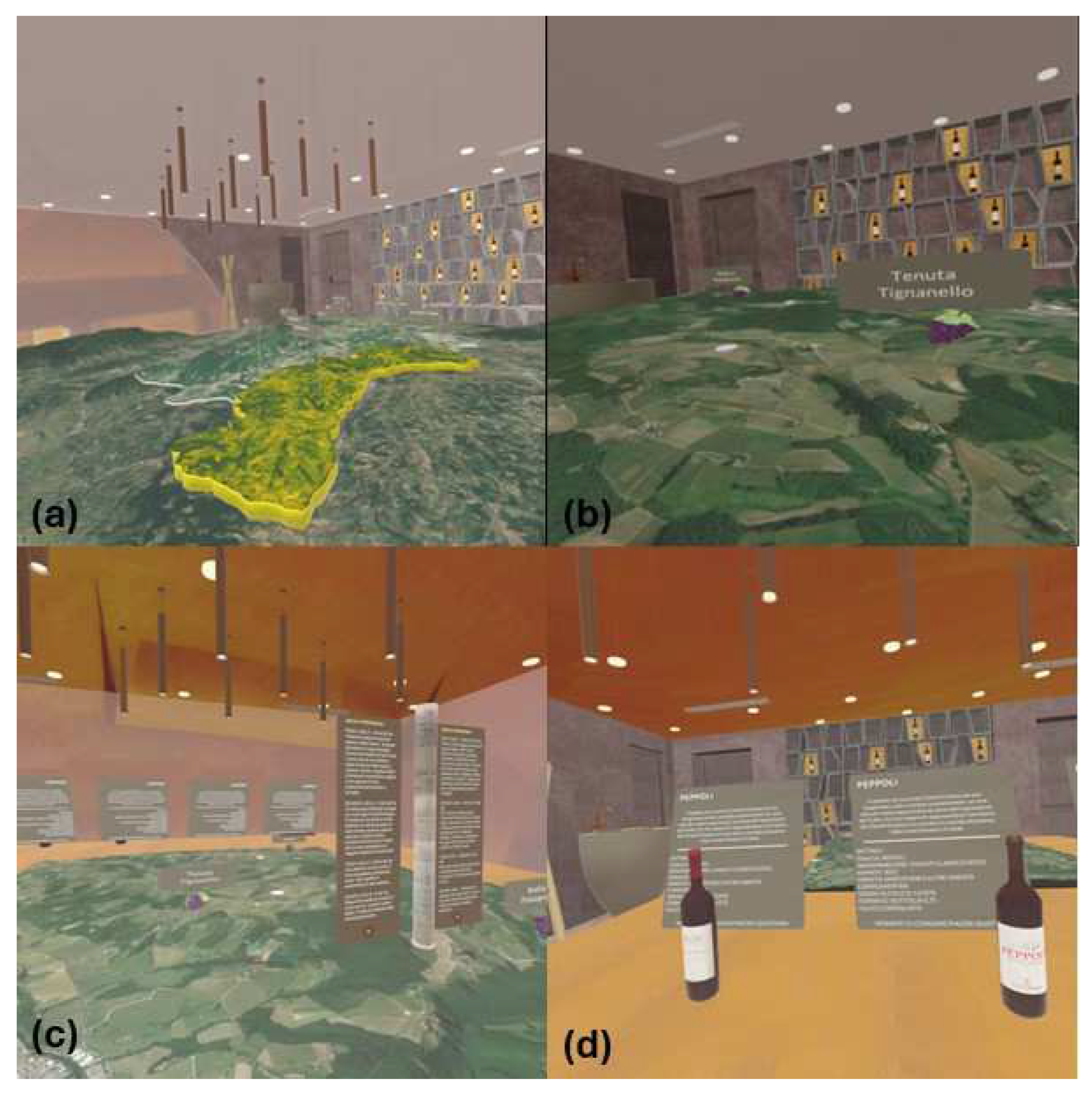
Figure 6.
Samples from 360 video. (a) Peppoli Sprint 1; (b) Peppoli Sprint 2; (c) Peppoli Sprint 3; (d) Tignanello Sprint 1; (e) Tignanello Sprint 2; (f) Tignanello Sprint 3; (g) Badia a Passignano Sprint 1; (h) Badia a Passignano Sprint 2; (k) Badia a Passignano Sprint 3.
Figure 6.
Samples from 360 video. (a) Peppoli Sprint 1; (b) Peppoli Sprint 2; (c) Peppoli Sprint 3; (d) Tignanello Sprint 1; (e) Tignanello Sprint 2; (f) Tignanello Sprint 3; (g) Badia a Passignano Sprint 1; (h) Badia a Passignano Sprint 2; (k) Badia a Passignano Sprint 3.
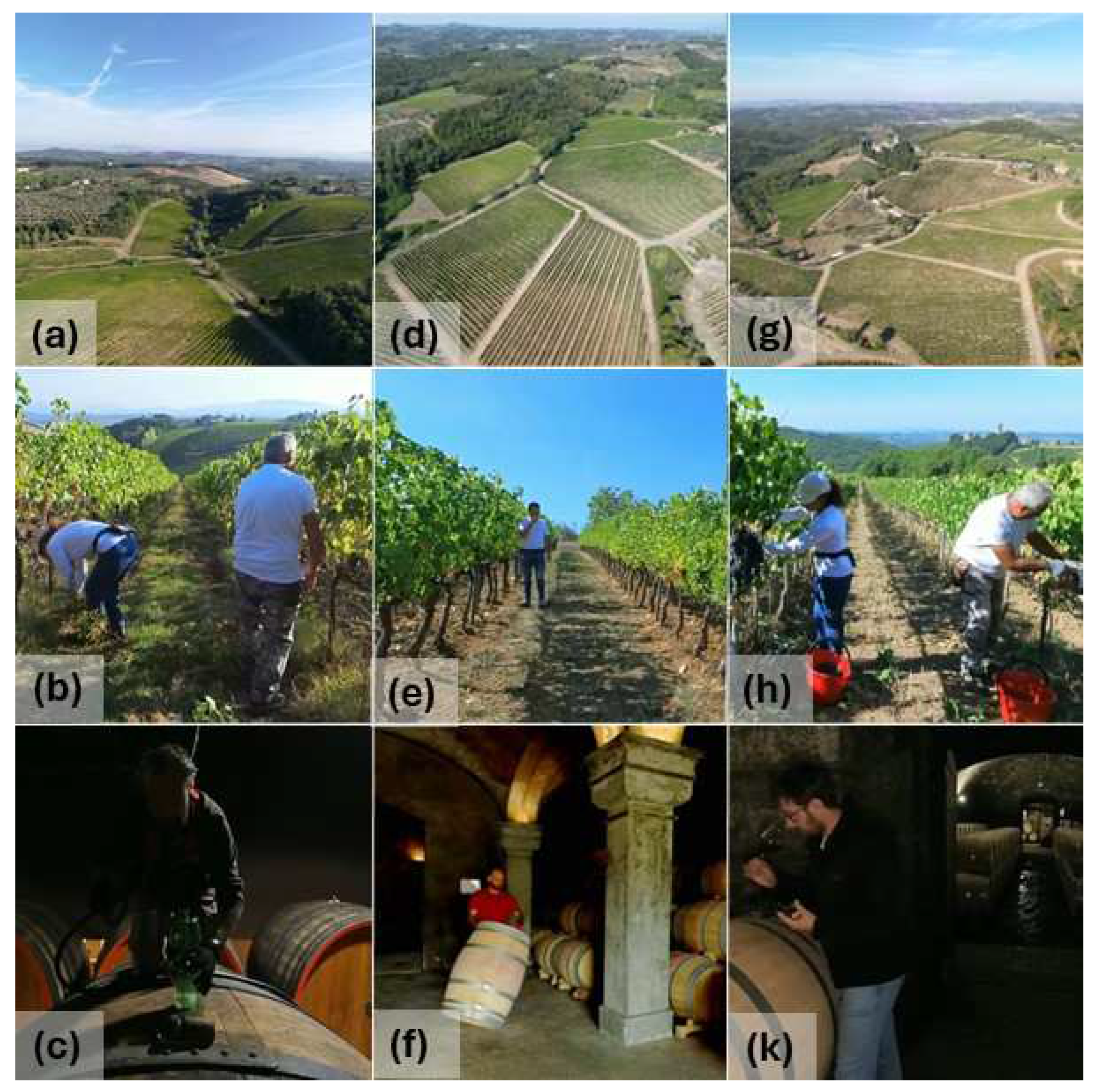
Figure 7.
First level of Clustering evaluation metrics (WSS, DBI, CHI) used to determine the optimal number of clusters.
Figure 7.
First level of Clustering evaluation metrics (WSS, DBI, CHI) used to determine the optimal number of clusters.
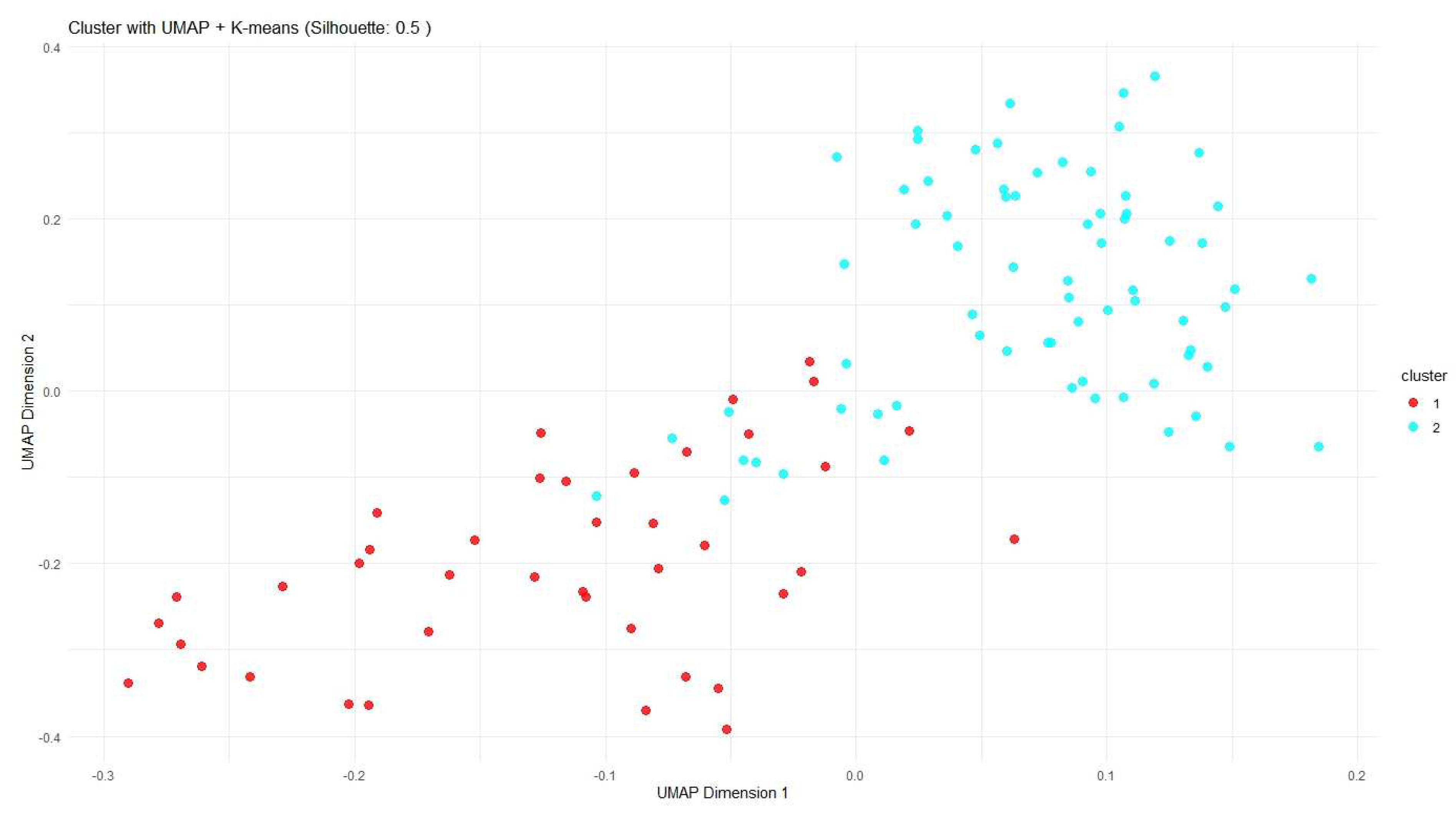
Figure 8.
UMAP visualization of first-level thematic clusters from focus group data.
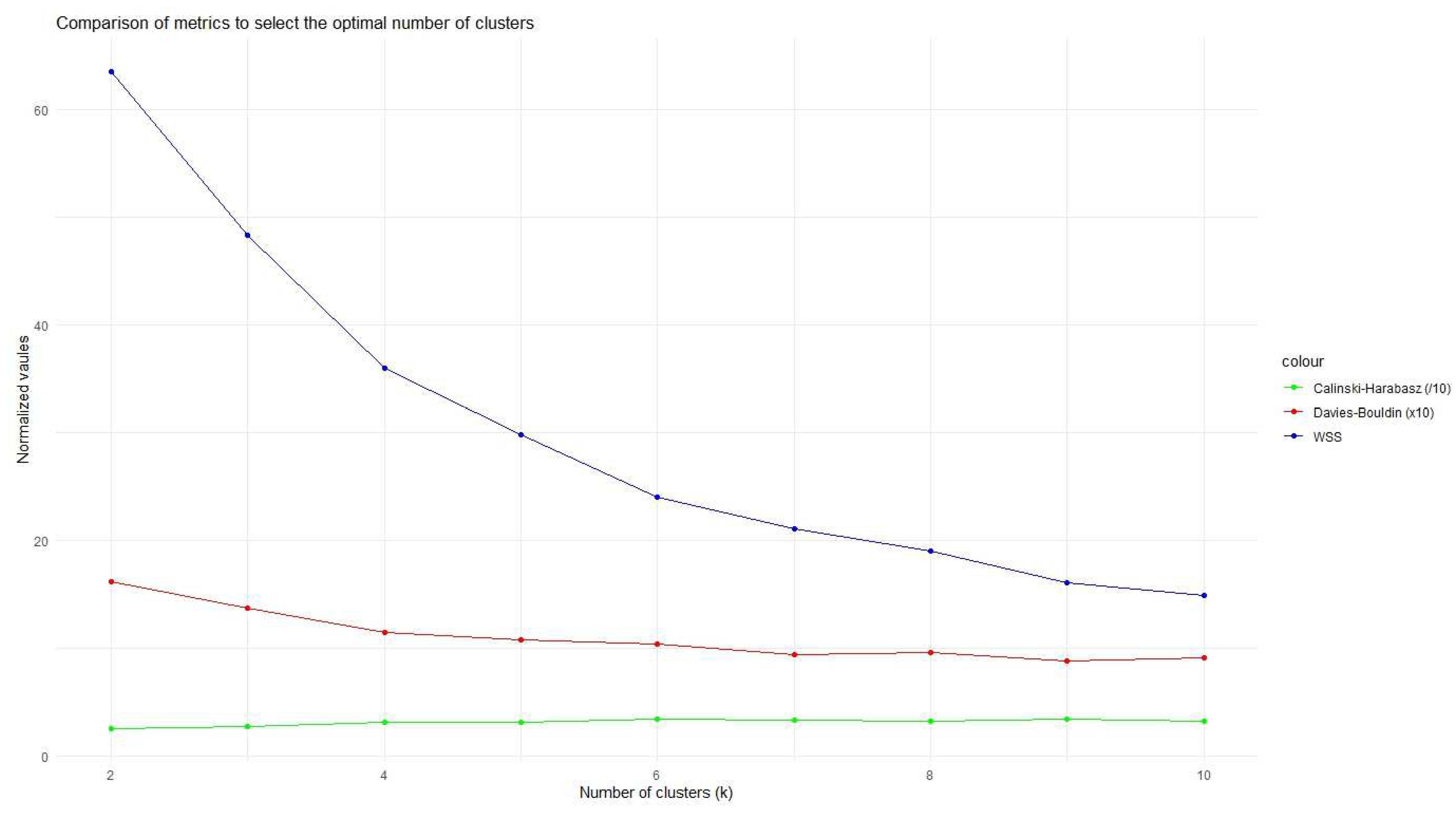
Figure 9.
Comparison of metrics for subclusters.
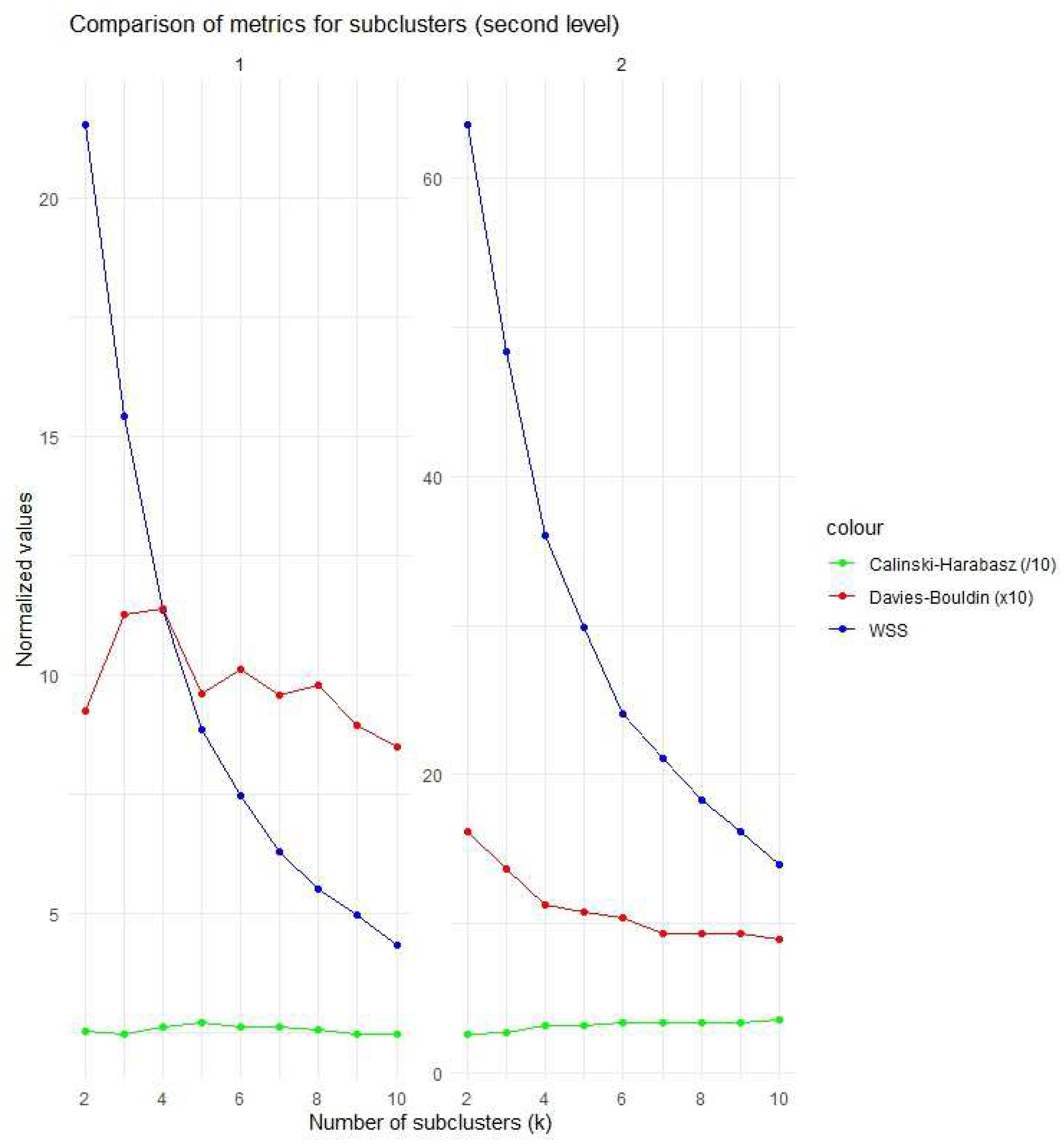
Figure 10.
Recursive Subclusters with K-means and silhouette scores.
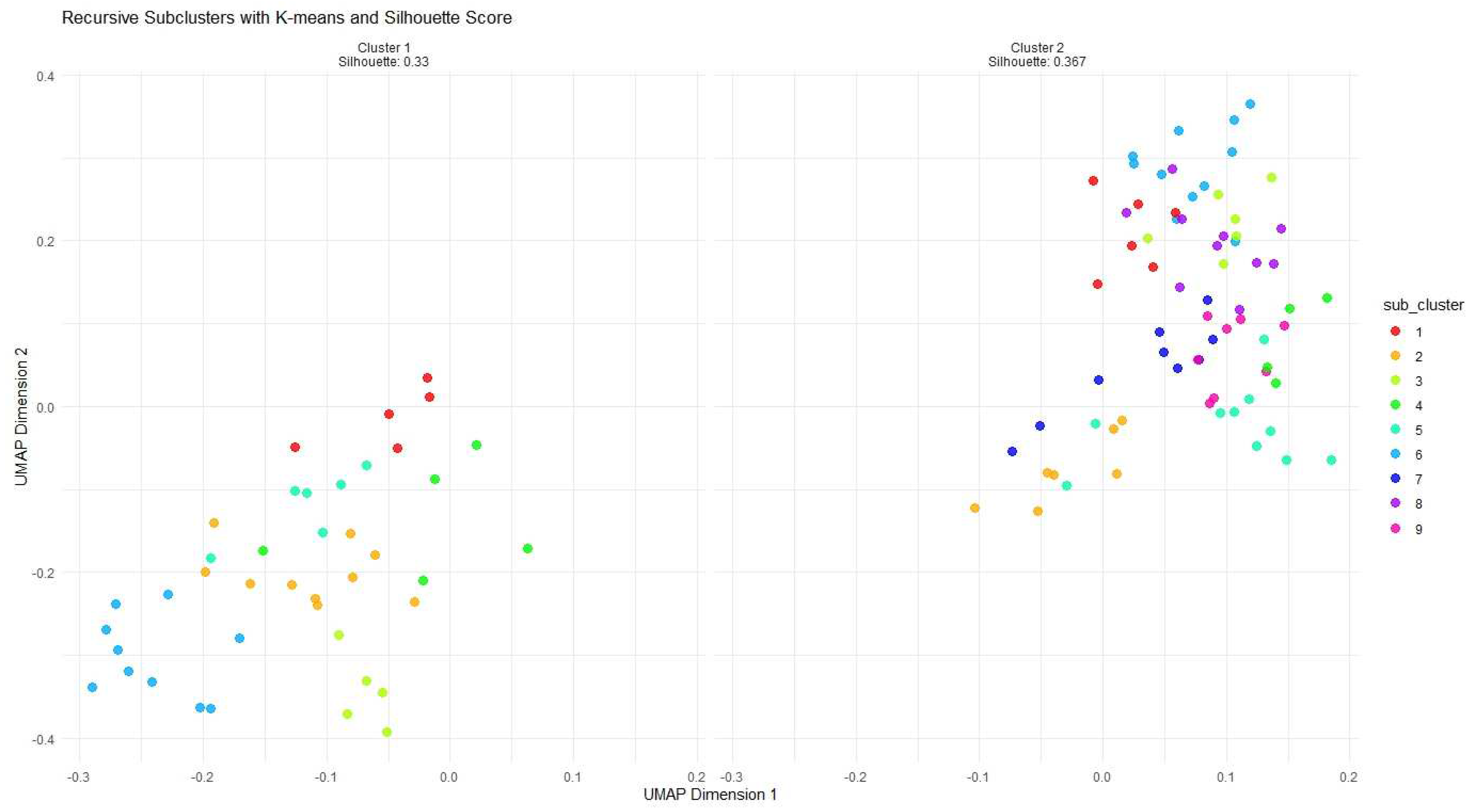
Disclaimer/Publisher’s Note: The statements, opinions and data contained in all publications are solely those of the individual author(s) and contributor(s) and not of MDPI and/or the editor(s). MDPI and/or the editor(s) disclaim responsibility for any injury to people or property resulting from any ideas, methods, instructions or products referred to in the content. |
© 2025 by the authors. Licensee MDPI, Basel, Switzerland. This article is an open access article distributed under the terms and conditions of the Creative Commons Attribution (CC BY) license (http://creativecommons.org/licenses/by/4.0/).
Copyright: This open access article is published under a Creative Commons CC BY 4.0 license, which permit the free download, distribution, and reuse, provided that the author and preprint are cited in any reuse.


