

Submitted:
27 April 2025
Posted:
29 April 2025
You are already at the latest version
Abstract
Under the guidance of the carbon peak and carbon neutrality goals, China's photovoltaic (PV) industry is flourishing. As a globally strategic emerging industry, the commercialization of patents in the PV sector is a core aspect of technological innovation. However, the industry currently faces multiple challenges in patent commercialization: mismatch between technological maturity and market demand, lack of and quality issues with core technology patents, insufficient awareness and investment in commercialization, and imperfect mechanisms and policies. To address these challenges, the successful experiences of many enterprises in the PV industry provide solutions: keeping pace with technological evolution and market trends, balancing technological complexity and reliability; strengthening patent protection to promote commercialization; closely monitoring changes in the market environment and flexibly adjusting patent commercialization strategies. Based on this, the following countermeasures are proposed: improving patent protection and incentive mechanisms, enhancing policy guidance and support, and promoting deep integration of industry, academia, research, and application. These measures will provide strong support for the sustainable and healthy development of China's PV industry.
Keywords:
photovoltaic industry
; patent commercialization
; countermeasures and recommendations
1. Introduction
Photovoltaic energy plays a vital role in the clean energy sector and holds substantial strategic importance. Recognizing this, China has made the development of its photovoltaic industry a national priority. At the 75th United Nations General Assembly, President Xi Jinping declared China’s commitment to peak carbon emissions before 2030 and to achieve carbon neutrality by 2060. As a key emerging industry, the growth of photovoltaics is crucial to reaching these goals. It can help optimize the national energy structure, support sustainable economic growth, and promote ecological advancement. Additionally, it reduces reliance on specific energy sources and enhances national energy security (He, 2022). In recent years, China’s photovoltaic sector has experienced rapid growth, largely fueled by favorable government policies. The “2024 Energy Work Guidelines” issued by the National Energy Administration emphasize the strategic role of new energy development and the need to advance high-quality growth in both wind and solar power (National Energy Administration, 2024). These directives reinforce China’s strong support for the photovoltaic industry and provide a roadmap for its continued progress. However, the global landscape remains complex, posing a series of challenges for China. Notably, gaps in technological innovation persist, particularly in strategic emerging industries. The development of a modern industrial system is often constrained by Western dominance over key technologies (Zhou and Xu, 2023). As a leading and influential strategic industry, photovoltaics offer valuable insights into navigating these challenges. Studying its achievements and shortcomings in technology and industrial innovation can play a vital role in propelling the industry—and China’s broader energy ambitions—forward.
Chinese scholars have primarily focused their research on photovoltaic patents in three key areas. The first is policy analysis and its impact. Some researchers have conducted empirical studies on 227 photovoltaic-related policies in China to assess how policy coordination influences overall effectiveness (Guo et al., 2018). These investigations emphasize how different policies interact and jointly shape the industry’s development. Other studies explore the rationale behind local photovoltaic policy implementation, while a quantitative assessment of policies from 2012 to 2022 has provided crucial context for understanding policy evolution (Tan et al., 2024). Additionally, some scholars have examined the role of policy tools in promoting growth within the photovoltaic sector, offering strategic insights for decision-makers (Song and Xiao, 2022). The second area of focus is the photovoltaic industry chain and market analysis. From a supply chain perspective, researchers have examined global photovoltaic trade patterns, shedding light on shifting market dynamics (Ding et al., 2024). Others have explored corporate strategy and management practices within the industry, presenting ways for businesses to strengthen their competitiveness in a challenging environment (Wu, 2023). Scholars have also assessed the opportunities, obstacles, and policy strategies for market expansion during China’s 14th Five-Year Plan, contributing meaningful guidance for future development (Zhang and Zou, 2021). The third research area revolves around knowledge innovation and development strategies. Scholars have analyzed domestic and international trends in photovoltaic innovation, offering theoretical support for advancing technological progress and protecting intellectual property (Zheng, 2022). Others have examined the current state and strategic direction of China’s photovoltaic industry, providing valuable input for long-term planning (Xu et al., 2022). In addition, some researchers have studied the U.S. photovoltaic market, offering key insights into global trends and their implications for China (Lv, 2018).
Foreign researchers studying photovoltaic patents generally concentrate on three major areas. The first is global competitiveness and patent strategies. In light of the global shift toward renewable energy and the restructuring of energy systems, many nations have prioritized the growth of their photovoltaic sectors. For instance, comparative research examining solar photovoltaic products from China, Japan, and South Korea within the RCEP framework reveals that China continues to strengthen its position, Japan is experiencing a decline, and South Korea is gradually advancing (Guo et al., 2023). These trends underscore how national strategies around patents and technology influence global standing. The second focus is on international patent collaboration networks. Through patent data analysis, scholars uncover patterns of cooperation between countries in the development of photovoltaic technologies. Notably, the United States, China, Spain, and South Korea are central to distinct collaborative clusters, often working together in areas such as solar energy conversion devices, solar cell assembly, and monocrystalline silicon technologies (de Paulo et al., 2018). These cooperative networks reveal the balance between competition and collaboration and are crucial for establishing effective international partnerships and strategic positioning. The third area involves the global diffusion of patents and the factors influencing it. The international spread of photovoltaic patents depends on several variables, including patent quality, relevance, the economic and production potential of the target market, and its vulnerability to imitation. These elements play a central role in shaping the global landscape of technological innovation and industry development (Gao and Zhang, 2022). They also directly impact international economic cooperation and competition. As a result, formulating successful patent strategies in the photovoltaic industry requires a nuanced understanding of global market trends, technological evolution, and regulatory environments in leading countries.
However, from a comparative research perspective, the challenges and potential solutions surrounding patent conversion in the photovoltaic industry remain insufficiently explored. As photovoltaic technology advances rapidly and global market competition intensifies, patent conversion has emerged as a vital mechanism—not only enabling Chinese photovoltaic enterprises to reduce infringement risks and safeguard independent innovation on the international stage but also acting as a catalyst for ongoing technological advancement and product innovation. Against this backdrop, this study provides a comprehensive analysis of the current landscape of patent transformation in the photovoltaic field, identifying key barriers and unresolved issues. It aims to propose a forward-looking transformation strategy tailored to China’s specific national context. Ultimately, the study aspires to chart a new course by introducing innovative ideas and approaches for enhancing patent commercialization in the photovoltaic sector, offering both theoretical insight and practical recommendations to support the industry’s sustainable, long-term development.
2. Results and Analysis
2.1. Significant Advantages in Both Patent Application Volume and Active Patent Holdings
Using the Himmpat patent database, a search was conducted with the keywords “photovoltaic OR solar energy” and filtered by the classification code “H02S/ic/cpc,” yielding a total of 254,764 patent applications from both domestic and international sources, as shown in Figure 1. Chinese applicants accounted for 151,079 of these filings, representing approximately 68.85% of the total. The United States submitted 24,453 applications, followed by South Korea with 19,823, Japan with 14,151, and Germany with 10,823. Collectively, these five countries contributed over 88% of all patent filings, underscoring their dominant role in the global photovoltaic landscape. Figure 2 shows that China leads in active patents, holding 81,605, while South Korea, the U.S., Japan, and Germany follow with 10,035, 9,594, 5,248, and 2,378, respectively. These figures reflect China’s strong position in both patent filings and active holdings within the photovoltaic sector.
2.2. Disadvantage in the Number of Core Patents
A total of 9,589 patents have been sustained for over ten years, using this extended maintenance period as a key indicator for identifying core patents. The United States holds the largest share with 2,701 such patents, followed by South Korea with 1,790, China with 1,600, Japan with 1,453, and Germany with 1,091. As depicted in Figure 3, the remaining countries collectively account for 954 long-maintained patents. This distribution highlights the concentration of core patent ownership within a small group of nations. Although China ranks high in both patent filings and active patents, it holds only about 14% of the core patents, exposing a notable disparity between quantity and quality.
2.3. An Upward Trend in the Number of Patent Conversions
Closing the gap between research and development and practical implementation is a crucial stage in the lifecycle of patented technology, commonly referred to as patent conversion. This process involves applying patent outcomes through avenues such as industrialization, commercialization, and capitalization to maximize their value and impact (Yang et al., 2023). Traditionally, patent conversion has taken the form of self-use, transfer, and licensing (Wang and Chen, 2023). However, with continued economic and social progress, newer methods have emerged, including capitalization, securitization, and patent-based financing (Zhang and Wu, 2023). Among these, patent assignment is one of the most frequently adopted approaches worldwide. Moreover, patent assignment records are comprehensively maintained in global bibliographic databases, making them easily accessible for verification. As such, patent assignment serves as a useful preliminary indicator for analyzing patent conversion trends. To illustrate this, a statistical comparison was conducted using assignment data from granted invention patents in China and the United States. According to Figure 4, China’s photovoltaic industry began recording patent assignments in 2008, and up to 2018, the yearly totals remained less than half of the U.S. figures. From 2019 to 2023, however, China experienced a notable increase in patent assignments, gradually closing the gap with the U.S. and suggesting the potential to exceed it. Despite having nearly eight times more active patents in the photovoltaic field than the U.S., China’s rate of invention patent transfers continues to lag significantly behind.
2.4. Issues in Patent Conversion within China’s Photovoltaic Industry
A key issue in the patent conversion of China’s photovoltaic industry is its significantly lower conversion rate compared to other countries, particularly the United States. This overarching challenge can be further broken down into the following four specific aspects:
2.4.1. The Mismatch Between Technological Maturity and Market Demand Hinders Patent Conversion
Despite rapid advancements in photovoltaic technology, market adoption frequently fails to keep pace, leaving many cutting-edge innovations without a clear path to commercialization. For example, while next-generation solar cells achieve significantly higher efficiencies, their real-world deployment is hindered by unresolved stability and cost challenges—key signs of technological immaturity. Meanwhile, rising demand for renewable energy is creating increasingly specialized market needs, yet R&D cycles struggle to adapt quickly enough. This persistent mismatch between technological readiness and market viability presents a major obstacle to successful patent commercialization.
2.4.2. Deficiencies in Core Technology Patents and Quality Concerns Undermine Transfer Potential
Although China contributes significantly to the global volume of photovoltaic (PV) patent filings, only a small proportion represent foundational technological innovations. As shown in Figure 5, patent activity in China’s PV industry began to rise notably around 2005, while prior to that, the United States held a near-monopoly on PV patent ownership. From 2006 onward, China experienced a rapid expansion in PV-related patent applications. This upward trend continued over the next decade, enabling China to claim an increasingly substantial share of global PV patents. However, Figure 4 reveals a low frequency of patent transfers, which contrasts sharply with the high number of patent holdings shown in Figure 5—highlighting persistent concerns regarding the overall quality of these patents. A clear example is photovoltaic inverters, which are vital to PV systems; yet China holds relatively few core patents in this area and still depends on imports for many advanced products. Additionally, the generally short maintenance periods of domestic patents suggest that some may lack significant technological merit or reflect poor drafting practices. For example, patents covering the production processes of certain PV materials often fall short in clarity or supporting data, reducing their practical utility and limiting their potential for commercialization.
2.4.3. Limited Awareness and Investment in Patent Commercialization Hinder Market Deployment
In the photovoltaic sector, there is a general lack of awareness among both companies and individuals regarding the value of patent commercialization, accompanied by limited investment in its advancement. This challenge is evident in two key ways: firstly, skepticism about the market viability of patented technologies causes investors to proceed cautiously; secondly, the commercialization process demands considerable inputs—such as labor, materials, and capital—yet often produces minimal short-term financial returns. For example, one photovoltaic firm possesses a patent for a novel solar panel material, but due to inadequate funding and poor market promotion, the technology has yet to reach commercial application, ultimately leading to wasted resources.
2.4.4. Deficiencies in Mechanisms and Policies Constrain Patent Commercialization
Analysis of granted invention patent data reveals that technological advancement in China’s photovoltaic industry is largely led by enterprises, with universities and research institutions playing a complementary role. As illustrated in Figure 6, enterprises also dominate the commercialization of patented technologies, primarily through self-implementation. However, Intellectual Property News reports that although Chinese universities generate tens of thousands of patents each year, most remain inactive (Dong, 2021). To address this disconnect, further research is required to improve institutional frameworks that facilitate collaboration between academia and industry in both technological innovation and patent commercialization. Additionally, significant challenges remain—such as developing an integrated commercialization chain that effectively connects stages like technology evaluation, market research, and financing, and enhancing policy support, since measures such as tax incentives and financial assistance are still not widely leveraged.
3. Successful Strategies for Photovoltaic Patent Commercialization
As a leading force among China’s strategic emerging industries, the photovoltaic sector holds considerable global influence. Despite ongoing difficulties in patent commercialization, a number of Chinese companies have made significant strides, emerging as frontrunners in vital technological areas and market segments. Their achievements offer important insights into how the industry might overcome the challenges tied to patent commercialization.
3.1. Keeping Pace with Technological Advancements and Market Trends in the Photovoltaic Industry
The rapid development of photovoltaic technology is remarkable. Ongoing innovations in materials, manufacturing techniques, and equipment have greatly improved both the efficiency and affordability of photovoltaic products. At the same time, the direction and speed of technological progress have had a profound influence on market trends and the competitive landscape. On one side, technological breakthroughs have created substantial opportunities for patent commercialization in the photovoltaic sector. The steady stream of new technologies and materials continues to expand possibilities for innovation across research, development, and application. Conversely, the pace and direction of innovation play a crucial role in shaping industry trends. For example, as high-efficiency, cost-effective photovoltaic technologies become more mature and widely adopted, the industry is gradually shifting from a model driven by policy to one guided by market forces. As such, successful patent commercialization requires close attention to technological trends and timely adjustments to technical strategies and product development plans. Simultaneously, enhancing R&D and innovation capabilities remains vital to support the ongoing evolution of photovoltaic technologies and to align with changing market needs.
3.2. Managing the Relationship Between Technological Complexity and Reliability
Photovoltaic technology is inherently complex, not only because of its interdisciplinary nature but also due to the involvement of numerous specialized domains and cutting-edge advancements. From the perspective of materials science, photovoltaic materials must exhibit high conversion efficiency, strong stability, and environmental friendliness. Meeting these standards requires R&D teams to conduct deep, innovative research into material selection and fabrication methods. In electronic engineering, the focus lies on effectively converting solar energy into electricity, including areas like circuit design and battery management. Meanwhile, chemistry plays a vital role in synthesizing, purifying, and modifying photovoltaic materials using advanced techniques. This complexity poses significant challenges to patent commercialization in the photovoltaic sector. While technological advancement is vital to maintaining competitiveness, practical feasibility is equally important—only technologies that can be successfully applied in production and real-world settings can generate commercial value. The Huawei example in Table 1 illustrates this balance well: by independently developing core technologies and launching string inverter products, the company has secured a leading position through improved efficiency and reliability. As such, successful patent commercialization requires R&D teams to pursue rigorous, systematic technological development to ensure the robustness of patented solutions. Additionally, cross-disciplinary collaboration and knowledge sharing are crucial to sustaining innovation and growth within the photovoltaic industry.
3.3. Strengthening Patent Protection to Facilitate Photovoltaic Industry Commercialization
In the photovoltaic industry, robust patent protection is essential for securing technological advancements, enabling lawful implementation, and driving successful market adoption. This protection extends across multiple areas—from materials and production methods to specialized equipment—demanding careful consideration of both coverage strength and enforceability during the patent filing process. The value of such protection is particularly pronounced during commercialization, where legal certainty and patent validity are prerequisites for defending holders’rights. A case in point is State Grid Jiangsu’s Xuzhou branch (Table 1), which enhanced patent creation and commercialization through systematic management frameworks and collaboration with the Xuzhou Intellectual Property Protection and Assistance Center. To mitigate infringement risks, patent owners must prioritize rigorous enforcement and administrative oversight. Equally vital is fostering strategic partnerships; clearly articulated agreements that specify rights, responsibilities, and fair profit-sharing mechanisms are indispensable for compliant technology use and accelerated PV sector growth.
3.4. Monitoring Global Market Dynamics to Guide PV Patent Commercialization
The commercialization of photovoltaic patents is heavily influenced by evolving market dynamics. Global energy system transformations and the advancement of renewable energy policies are key drivers behind the growing demand for photovoltaic solutions. However, shifting market conditions—particularly policy changes and cost fluctuations—introduce significant uncertainty, increasing both the complexity and risks associated with patent commercialization. These challenges call for comprehensive strategies in managing and transforming photovoltaic intellectual property. LONGi Green Energy Technology has effectively responded to market demands by leveraging innovative monocrystalline silicon technologies that enhance energy conversion efficiency. Its strategic approach to patent management has not only boosted product competitiveness but also supported sustained business growth, reinforcing its leadership in the industry. To navigate this complex landscape, a systematic analysis of market conditions is essential. This includes closely monitoring policy developments, regulatory changes, and demand trends. Product development and market positioning should be aligned with these shifts, ensuring that features, pricing, and other product aspects are tailored to diverse customer needs. Enhancing market research and forecasting capabilities is equally important for identifying emerging opportunities. Moreover, patent protection strategies must adapt to evolving legal frameworks. Updating patent application and enforcement practices in line with current laws helps safeguard patent validity and legal integrity. Robust patent management and enforcement are also vital to prevent infringement. Protecting intellectual property requires collaboration with legal experts and partners to uphold the rights of patent holders. Finally, advancing research and innovation capabilities is crucial to keep up with technological progress. Continuous innovation not only improves photovoltaic product performance and reduces costs but also strengthens market competitiveness. These advancements further support the effective commercialization of patents by providing solid technical backing and protection.
4. Discussions and Future Direction
Patent commercialization plays a pivotal role in driving technological progress within the photovoltaic sector, allowing for the effective incorporation of emerging technologies into manufacturing to boost both efficiency and quality. Implementing innovative processes, equipment, and materials contributes to cost savings, improved energy utilization, and heightened competitiveness in the marketplace. This, in turn, empowers businesses to innovate, create unique products, upgrade industrial operations, broaden market reach, and increase profitability. By supporting an innovation-centered ecosystem, patent commercialization also invigorates enterprise innovation, draws investment and talent, and injects significant momentum into the industry’s evolution, propelling it toward a phase of high-quality development. As a leader in the renewable energy field, the photovoltaic industry continues to push the boundaries of clean energy through ongoing technological advancement. Streamlining the commercialization of patents ensures the swift adoption of advanced technologies in production, thereby enhancing operational efficiency and product quality. Ultimately, this process not only accelerates the industry’s transformation and modernization but also fuels broader economic development focused on quality and sustainability.
4.1. Improving Patent Protection and Incentive Mechanisms
In the current knowledge-based economy, it is essential to enhance patent protection and improve incentive systems. A comprehensive and effective framework for protection and motivation is key to encouraging companies to pursue cutting-edge research and development, particularly in high-tech and strategically important sectors. Investment in R&D forms the bedrock of corporate innovation. To accelerate the growth of the photovoltaic industry and support carbon neutrality efforts, governments should expand financial assistance and introduce incentive policies that stimulate greater corporate investment in technological innovation. Patents provide a vital legal safeguard for technological progress, making it imperative to reinforce enforcement efforts and apply stringent penalties for violations to ensure that intellectual property is properly acknowledged and protected. Furthermore, establishing a fair and efficient reward system is critical to inspiring innovation among businesses and researchers, ensuring that innovators can truly benefit from their work and promoting a self-sustaining cycle of innovation.
4.2. Enhance Policy Support and Guidance to Improve the Patent Commercialization Process
Strategic policy guidance and support play a crucial role in advancing emerging industries and fostering new, innovative business models. To incentivize the use of patented technologies in these areas, governments should implement favorable measures—such as tax breaks and financial assistance—to mitigate development risks and improve the competitive edge of businesses. Enhancing policy communication and providing specialized training can further increase enterprise awareness and engagement with these initiatives. For the photovoltaic industry, such supportive policies serve as key drivers of momentum and stability (National Energy Administration, 2022). Additionally, patent commercialization acts as a vital connector between technological progress and industrial growth. Streamlining this process is fundamental to boosting innovation capabilities and strengthening industry-wide competitiveness. An effective approach begins with the development of a structured patent commercialization system, which should include stages like evaluation, selection, promotion, and feedback to ensure targeted and efficient implementation. Furthermore, commercialization efforts must align with market trends and business needs. By utilizing market insights and data analysis, it’s possible to pinpoint patents with strong industrial potential and promote their integration into real-world applications. Simultaneously, building a robust patent database and constructing a unified ’demand–research–supply’ supply chain will provide consistent intellectual property support for innovation. This database should be managed using an open, dynamic, and continuously adaptive model to maximize the utility and relevance of patent resources over time.
4.3. Promote the Seamless Integration of Patent Commercialization with Industry, Academia, and Research Applications
Successful patent commercialization in the photovoltaic sector depends on robust industry-academia-research collaboration. This tripartite partnership is essential for transforming technological breakthroughs into market-ready solutions that drive industrial progress and meet consumer needs. Photovoltaic technology advancement serves as both a catalyst for quality development and a tangible measure of innovation success (Liu, 2024). By combining academia’s research expertise with industry’s market knowledge and institutional resources, stakeholders can create powerful synergies that accelerate technology transfer (Xi, 2024). The commercialization process requires dual focus: maintaining rigorous technical standards while ensuring market viability. This demands continuous alignment between R&D efforts and real-world requirements, coupled with stringent selection mechanisms to identify and promote only the most promising innovations. Through deeper integration of research, development, and application, the photovoltaic sector can achieve more efficient innovation translation and sustainable industrial growth.
4.4. Advancing Efficiency in Total Factor Productivity
Patent commercialization plays a crucial role in enhancing total factor productivity within the photovoltaic industry. By improving the allocation of production inputs and increasing the efficiency of resource utilization, it directly supports productivity gains (Department, 2024). China’s photovoltaic sector has experienced rapid growth, fueled by dynamic innovation efforts, and now leads the world in both patent applications and granted invention patents. Establishing effective mechanisms for commercializing patents helps stimulate technological progress and ensures the efficient deployment of intellectual property, thereby accelerating the development of new productive capacities and fostering economic growth. Achieving these goals relies heavily on sound patent management and successful technology transfer. Enhancing capabilities in patent protection, application, commercialization, and oversight strengthens the intellectual property ecosystem and encourages coordinated advancement throughout the industrial value chain (Fu, 2024). Furthermore, progress in patent strategies and innovation performance among photovoltaic companies significantly reinforces the overall competitiveness of the industry and supports the formation of regional innovation ecosystems (Zhao et al., 2022). Ultimately, building efficient pathways for patent commercialization in the photovoltaic field not only enhances total factor productivity but also promotes the rise of China’s new quality productive forces, contributing to the nation’s high-quality economic development.
5. Conclusions
Our comprehensive analysis highlights the pivotal role of patent commercialization in the photovoltaic industry as a bridge between innovation and industrial upgrading, significantly contributing to the advancement of China’s new energy sector. In response to the challenges hindering effective patent commercialization—such as mismatches between technological maturity and market needs, a shortage of high-quality core patents, insufficient commercialization awareness and investment, and underdeveloped supporting mechanisms—we examined successful industry examples to propose practical, targeted strategies. These best practices illustrate the importance of aligning with technological and market trends, managing the trade-off between complexity and reliability, reinforcing patent protection to support commercialization, and staying attuned to market dynamics to ensure agile strategic adjustments. Drawing on this analysis, we recommend a series of development strategies: enhancing patent protection and incentives to stimulate innovation; strengthening policy support to streamline commercialization and reduce barriers; deepening collaboration across industry, academia, research, and application to accelerate the conversion of scientific achievements into productive forces; and boosting total factor productivity to promote the high-quality growth of the photovoltaic sector. Ultimately, patent commercialization not only drives technological progress and industrial transformation but also serves as a foundation for maintaining China’s leadership in the global new energy arena. We hope that the findings and recommendations in this study will offer valuable guidance for advancing patent commercialization and supporting the long-term, sustainable development of China’s photovoltaic industry.
Author Contributions
Conceptualization, L.L., Y.M. and Z.H.; Software, L.L. and Y.M.; Formal analysis, L.L., Y.M. and Z.H.; Investigation, L.L. and Y.M.; Writing – original draft, L.L., Y.M. and Z.H.; Writing – review & editing, L.L., Y.M. and Z.H..; Supervision, L.L. and Z.H.; Funding acquisition, L.L.; All authors have read and agreed to the published version of the manuscript.
Funding
This research was funded by the National Social Science Posting Fund of China, grant number 24FFXB056; the Major Project of National Office for Philosophy and Social Sciences of China, grant number 22&ZD154.
Conflicts of Interest
The authors declare no conflicts of interest.
References
- de Paulo, A.F., Saidel Ribeiro, E.M., Porto, G.S. Mapping countries cooperation networks in photovoltaic technology development based on patent analysis. Scientometrics 2018,117 (2), 667-686. [CrossRef]
- Department, E. Seeking new drivers of growth from new quality productive forces [N]. Economic Daily. 2024, 1, 1-3.
- Ding, J., Kong, D., Xiao, C., Hao, L. Study on the evolutionary characteristics of global photovoltaic industry trade patterns from the perspective of the industrial chain. World Regional Studies 2024, 7,1-19. [CrossRef]
- Revitalizing dormant university patents. Available online: https://www.cnipa.gov.cn/art/2021/10/27/art_410_174133.html (accessed on 4 May 2024).
- Report indicates China ranks first globally in total number of effective invention patents across the entire photovoltaic industry chain. Available online: https://www.chinanews.com/cj/2024/01-30/10155663.shtml (accessed on 4 May 2024).
- Gao, X., Zhang, Y. What is behind the globalization of technology? exploring the interplay of multi-level drivers of international patent extension in the solar photovoltaic industry. Renewable and Sustainable Energy Reviews 2022,163, 112510. [CrossRef]
- Guo, B., Li, J., Zhang, X. The impact of policy synergy on policy effectiveness: An empirical study based on 227 photovoltaic industry policies in China. Studies in Science of Science 2018,36 (5), 10.
- Guo, Q., Wen, J., Chen, G. Comprehensive evaluation of the international competitiveness of solar photovoltaic products in China, Japan, and Korea under RCEP background. Environmental Science and Pollution Research 2023,30 (56), 118440-118455. [CrossRef]
- He, C. Research on China’s industrial transformation path under the carbon peak constraint. People’s Forum · Academic Frontier 2022,19, 63-71.
- Liu, W., 2024. Theoretical innovation and practical requirements of new quality productive forces.
- Lv, X. Research on the U.S. photovoltaic market and its prospects. Journal of Luminescence 2018,39 (4), 595–599.
- National Energy Administration. Action plan for the innovative development of the smart photovoltaic industry (2021–2025). Available online: https://www.ncsti.gov.cn/zcfg/zcwj/202201/t20220105_55224.html (accessed on 4 May 2024).
- National Energy Administration. Notice of the national energy administration on issuing the guiding opinions on energy work in 2024. Available online: http://zfxxgk.nea.gov.cn/2024-03/18/c_1310768578.htm (accessed on 4 May 2024).
- Song, W., Xiao, R. Evolution path of policy instruments in China’s photovoltaic industry and its implications. Journal of Information 2022,41 (1), 177-184.
- Tan, L., Luo, Z., Xian, W., Xie, M., Tan, N. Quantitative evaluation of photovoltaic policy texts based on the policy modeling consistency (PMC) index model: a case study of qinghai province. Science and Technology Management Research 2024,44 (18), 70-79.
- Wang, K., Chen, Y. Early identification of disruptive technologies based on heterogeneous patents. Studies in Science of Science 2023,41 (8), 1364-1375.
- Wu, J. Research on the operation management and development strategy of photovoltaic enterprises. Enterprise Reform and Management 2023, 7, 168-170.
- Xi, J. Developing new quality productive forces is an inherent requirement and a key focus for promoting high-quality development. Environment and Sustainable Development 2024,49 (4), 4-6.
- Xu, X., Huang, J., Wen, K. The punctuated equilibrium of China’s photovoltaic industry policy changes: based on policy process theory. Science and Technology Management Research 2022, 42 (20), 48-56.
- Yang, X., Ye, X., Liu, Y., Wang, X. A study on the dynamic evolutionary game of tacit knowledge sharing in patent commercialization. Science Research Management 2023,44 (6), 154-164.
- Zhang, F., Zou, J. Prospects, challenges, and pathways for market development of China’s photovoltaic industry during the 14th five-year plan period. Journal of Hubei University of Economics (Humanities and Social Sciences Edition) 2021,18 (3), 4.
- Zhang, Y., Wu, X. Research on technology internationalization in emerging economies and technology spillover in developed economies: an analysis based on international patent data. Science & Technology Progress and Policy 2023,40 (21), 23-33.
- Zhao, P., Lin, W., Jiang, T., Ma, T. Identification and evolution of core technologies in China’s solar photovoltaic sector based on patent analysis. Science and Technology Management Research 2022, 42 (2), 184-191.
- Zheng, D. Research on photovoltaic innovation knowledge at home and abroad. Modern Marketing 2022,1, 86-88.
- Zhou, W., Xu, L. On New quality productive forces: connotations, characteristics, and key focus areas. Reform 2023, 10, 1-3.
Figure 1.
The top five countries in the world in terms of patent applications in the photovoltaic field.
Figure 1.
The top five countries in the world in terms of patent applications in the photovoltaic field.
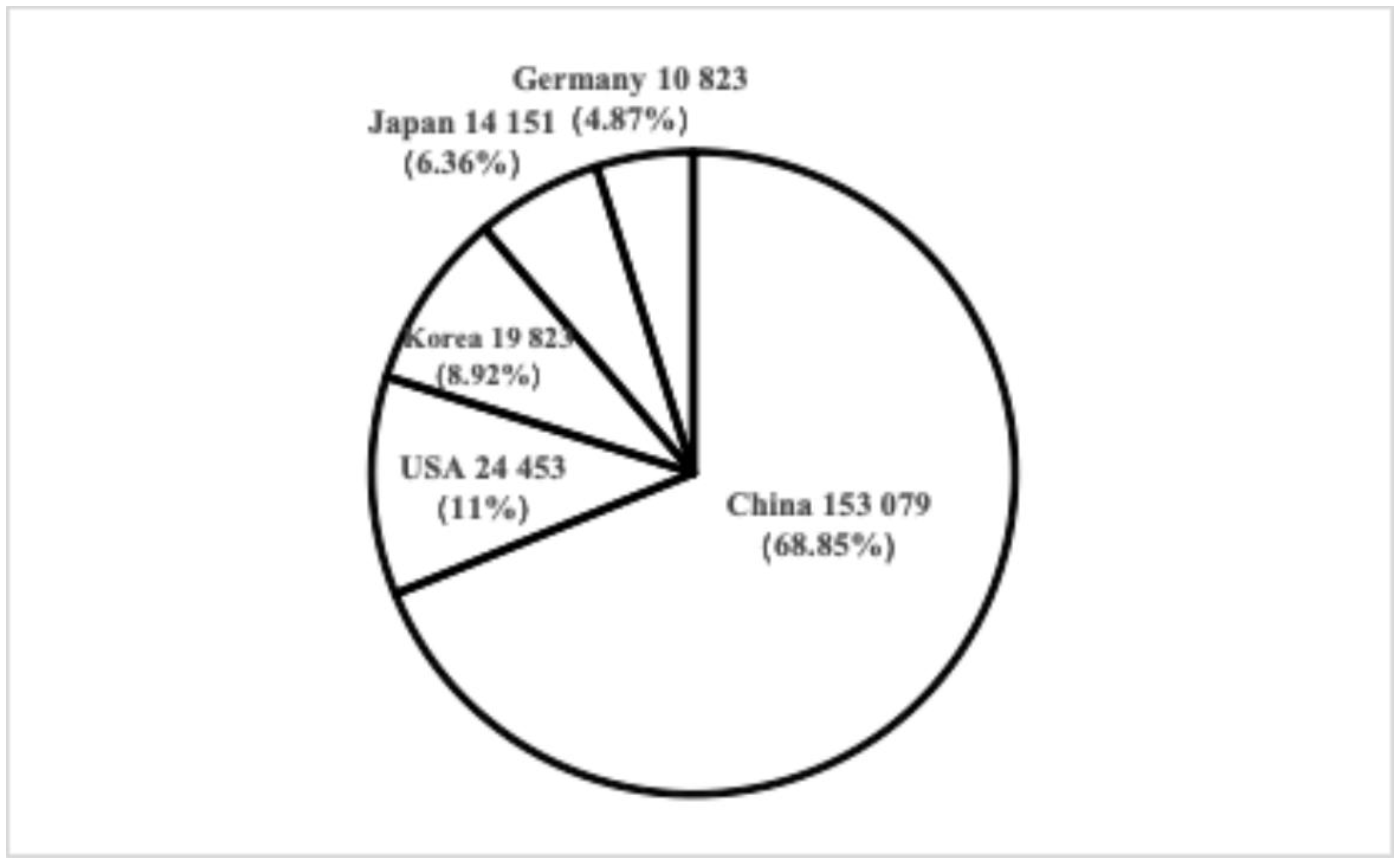
Figure 2.
The top five countries in the world in terms of existing active patents in the photovoltaic field.
Figure 2.
The top five countries in the world in terms of existing active patents in the photovoltaic field.
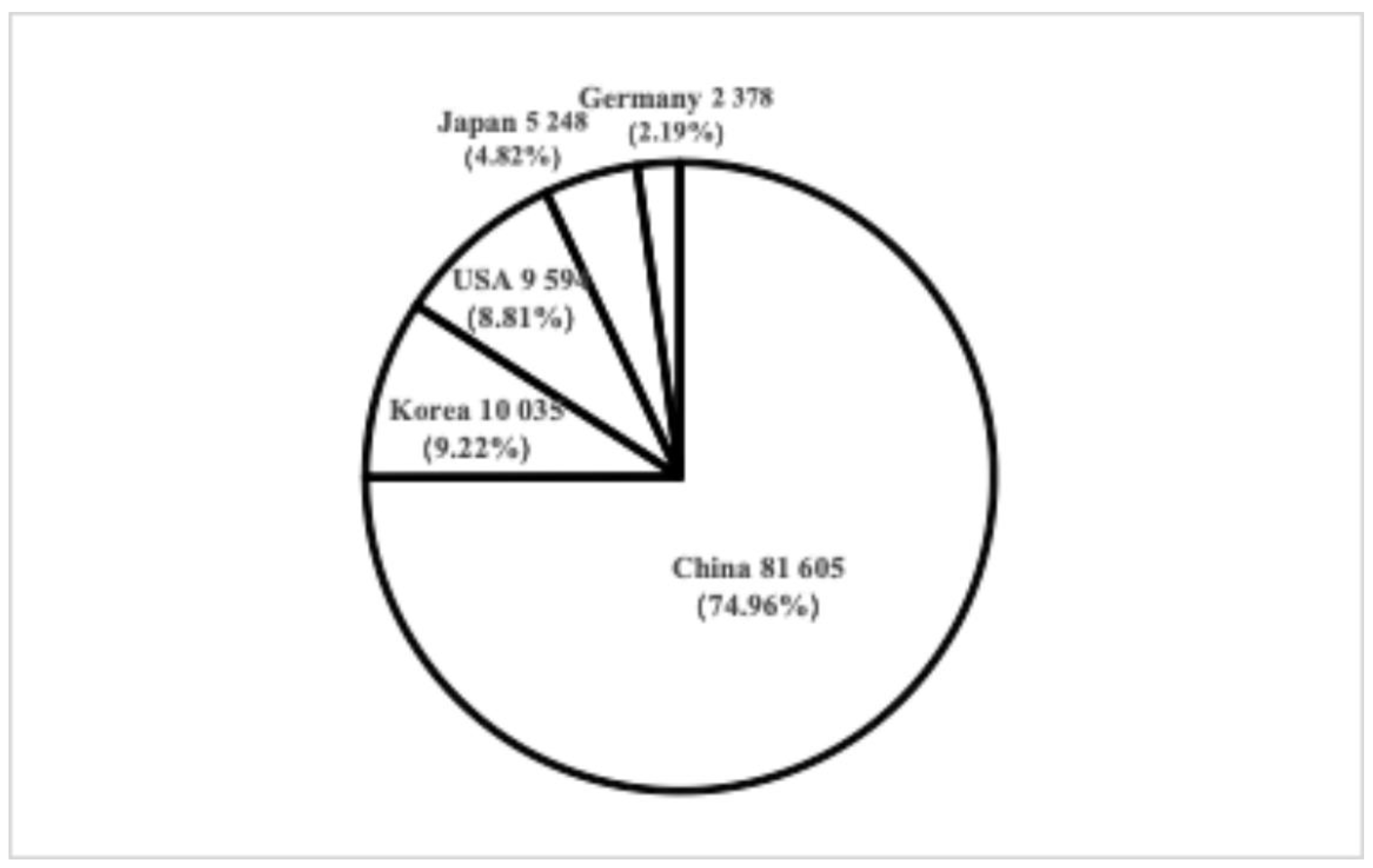
Figure 3.
Global share of high-value patents in the photovoltaic field lasting more than 10 years.
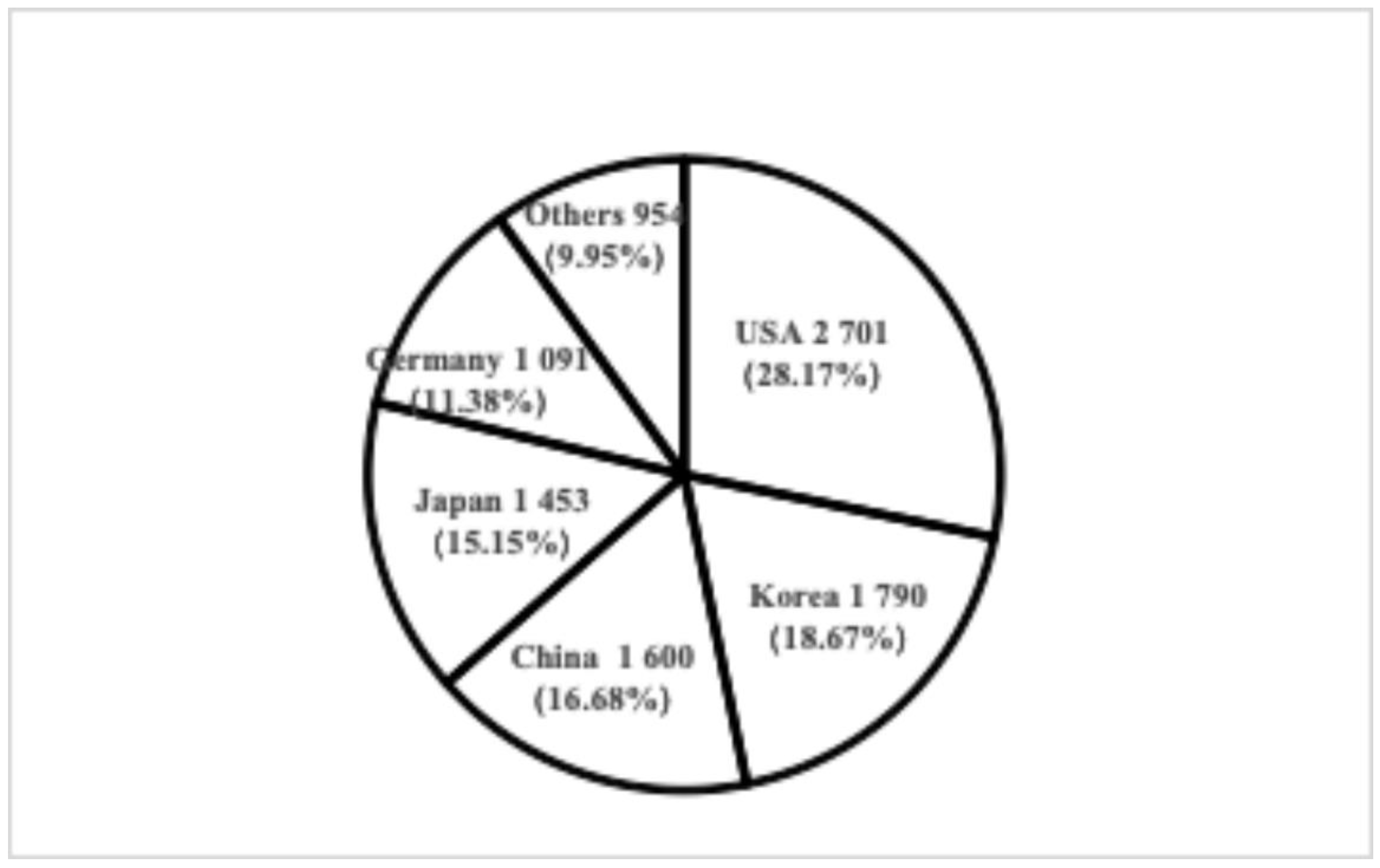
Figure 4.
Comparison of the number of photovoltaic patent transfers between the United States and China.
Figure 4.
Comparison of the number of photovoltaic patent transfers between the United States and China.
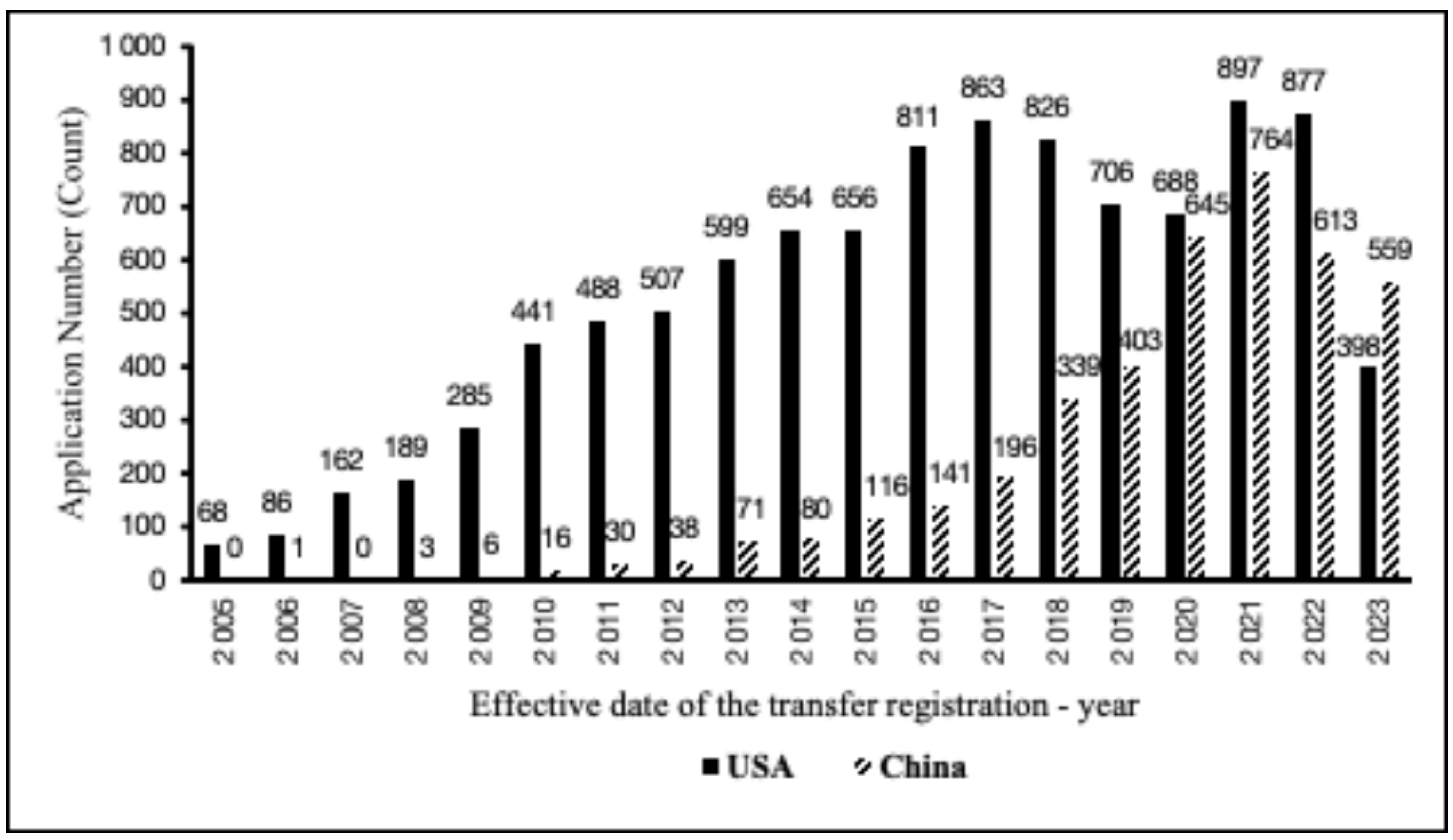
Figure 5.
The trend of photovoltaic patent applications in China, the United States and South Korea over time.
Figure 5.
The trend of photovoltaic patent applications in China, the United States and South Korea over time.
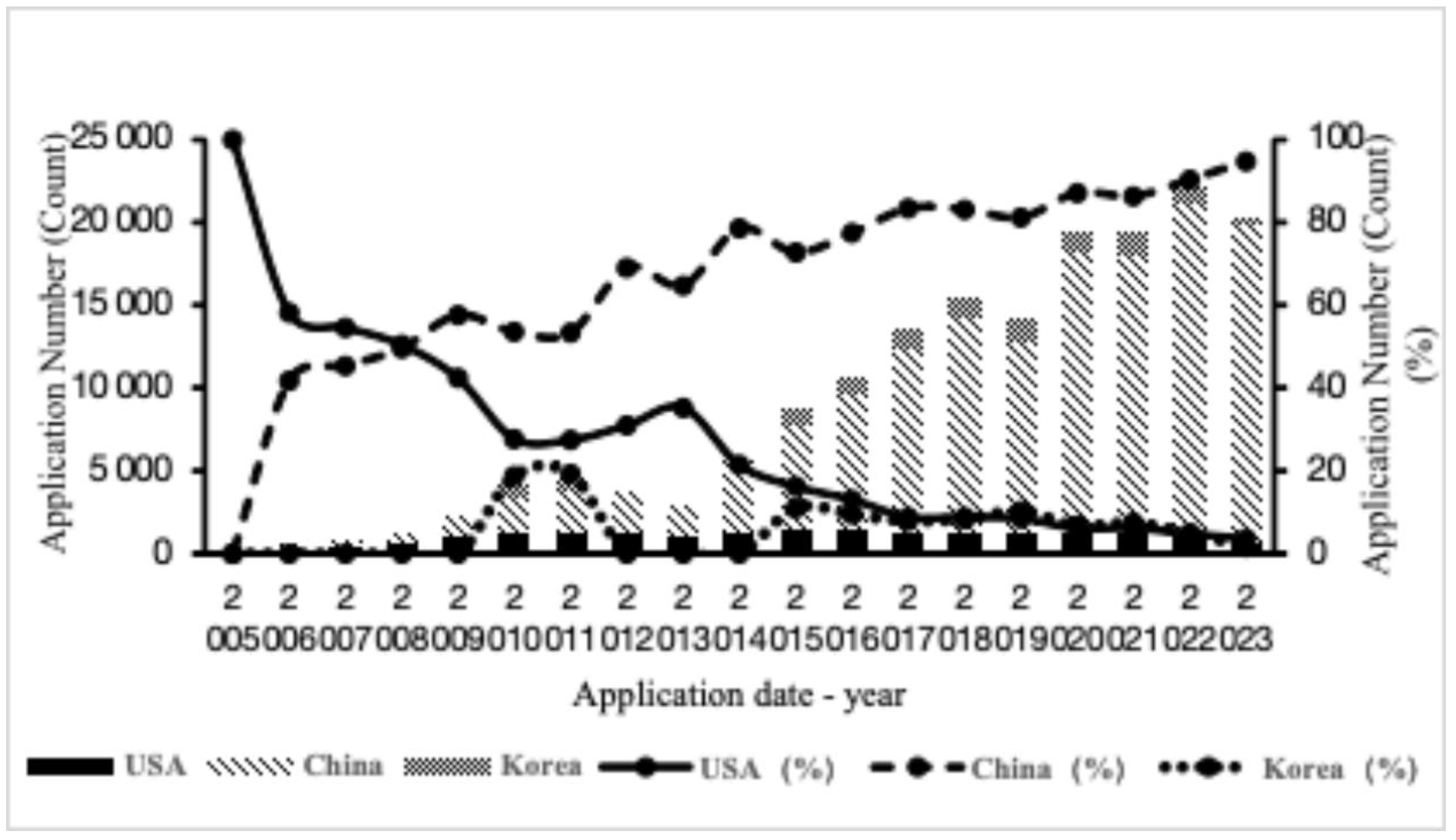
Figure 6.
The proportion of photovoltaic patent applicants by type in China.
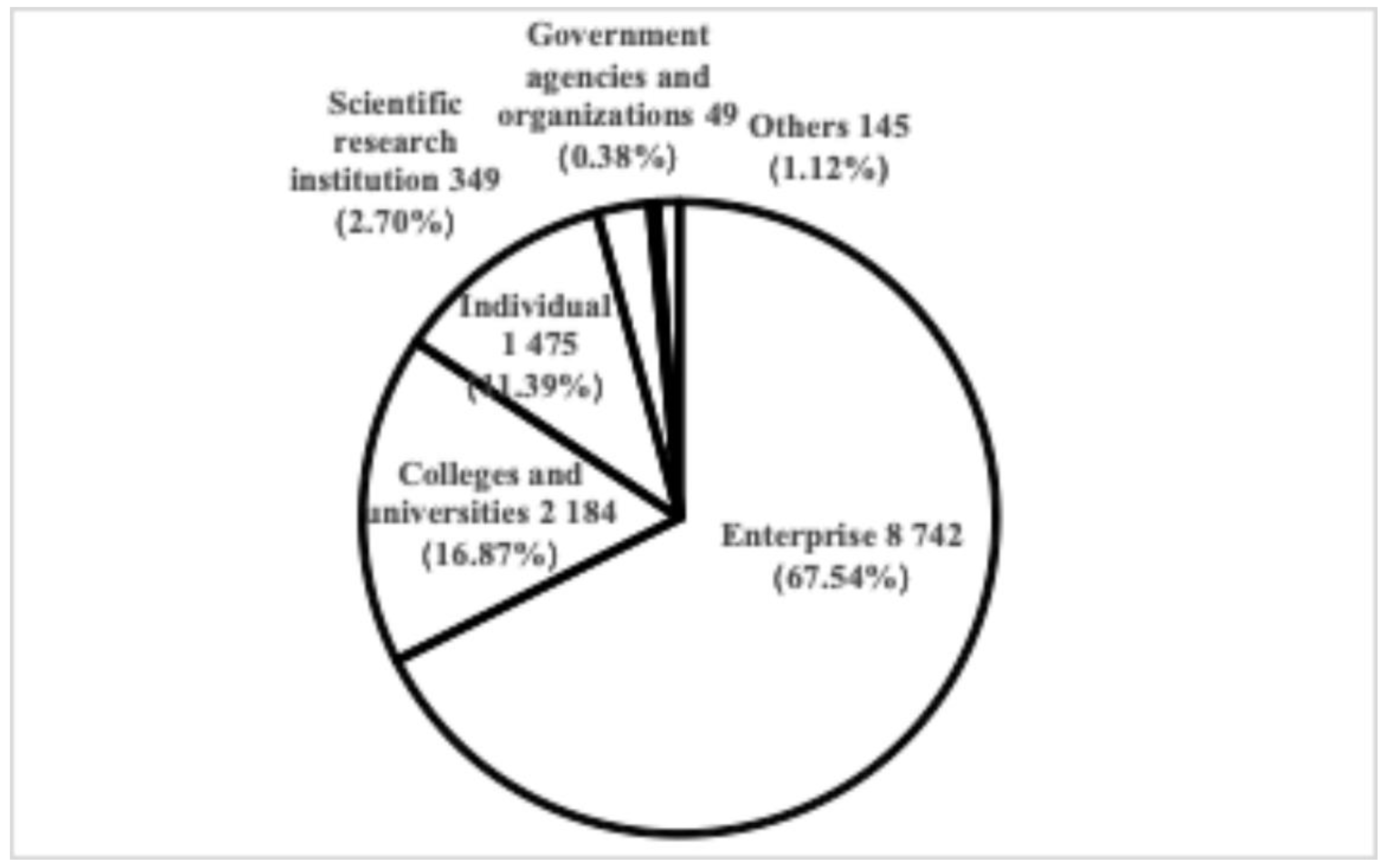

Table 1.
Successful cases of patent conversion in the photovoltaic field.
| No. | Patent Name and Patent Number | Case Overview | Conversion Status | Impact of Outcomes |
|---|---|---|---|---|
| 1 | Solar Photovoltaic Tunneling Oxide Passivated Contact (TOPCon) Core Patent Technology Conversion and Application CN109786476B;CN109786476B |
The TOPCon technology developed by the Ningbo Institute of Materials Technology and Engineering, Chinese Academy of Sciences (hereinafter called "Ningbo Institute"), achieved a leap from laboratory to mass production, enhancing photovoltaic cell efficiency and driving industrial output growth. By 2024, the output value is projected to reach ¥200 billion, making it one of Zhejiang’s top ten patent conversion cases. | The Ningbo Institute adopted an "Alliance + Fund + Incubation" model to establish a TOPCon patent pool, enabling technology diffusion and free licensing. Over 60 enterprises have accessed advanced technology. The CAS Mother Fund invested ¥20 million to promote industrialization and market expansion. The patent pool also incubated a solar equipment listed company, attracting significant industry and social capital investment. | By effectively managing the industrial patent pool and fostering integration of innovation, industry, and capital chains, the Ningbo Institute achieved both economic and social benefits, driving advancements in the photovoltaic sector. |
| 2 | "Unified Power Control Method for Photovoltaic Microgrid System DC-DC Conversion Circuit" Patent Conversion CN104022526B |
In 2014, Zhongtian Photovoltaic Technology Co., Ltd. and Nanjing University of Aeronautics and Astronautics jointly developed this patented technology, covering MPPT and power-limiting control to optimize grid-connected/off-grid operations. The technology has become a core intellectual property, supporting new energy microgrid projects selected for China’s "863 Program" and enabling three microgrid demonstration systems in Jiangsu. | Zhongtian Technology focused on patent transfers, licensing, equity financing, and partnerships. It collaborated with Zhejiang University to establish a submarine observation network and founded Zhongtian Ocean Systems Co., Ltd. The company strengthened R&D in crystalline silicon solar technology, improving module efficiency by 1%-2% and enhancing competitiveness. | A strategic joint venture with Jiangsu Donghe Group aims to advance regional energy transition and develop a green demonstration city, accelerating the implementation of China’s "14th Five-Year Plan" for photovoltaic energy. |
| 3 | The Rise of Longi Green Energy as A-Share Solar Leader CN106531829B;CN111584670B;CN108470800B |
Longi Green Energy Technology Co., Ltd. pioneered high-efficiency monocrystalline silicon PERC technology, significantly improving photoelectric conversion rates. Its patent strategy solidified industry leadership and drove market growth. After resolving patent disputes with Hanwha, Longi continued to lead in N-type cell technology, achieving record efficiencies of 25.21% and 25.26%. | Longi leveraged technological advantages to grow rapidly despite subsidy reductions. By 2021, its market share exceeded 80%, dominating monocrystalline silicon cell shipments. | Longi’s innovations reduced LCOE (levelized cost of electricity) and established it as a global photovoltaic leader, with domestic monocrystalline panel shipments surpassing polycrystalline for the first time in 2017. |
| 4 | Huawei’s Photovoltaic Inverter Patent Conversion Drives Market Leadership CN102355124B;CN102791077B;CN103023364B;CN105247776B;CN104348347B;CN103683998B;CN103701150B;CN104682757B and so on |
Huawei’s string inverters, renowned for high efficiency and reliability, dominated global sales from 2015 onward. The company’s R&D breakthroughs in core inverter technologies and customer-centric strategies secured its top position in Europe, Asia-Pacific, Latin America, the Middle East, and Africa. | Huawei’s open collaboration approach and innovation enabled projects like Saudi Arabia’s Red Sea NEOM energy storage initiative, advancing global photovoltaic technology. | Huawei solidified its leadership in renewable energy, driving industry progress and setting benchmarks for smart, stable inverter solutions. |
| 5 | Patent Conversion for Robust Voltage Control in Active Distribution Networks with Uncertain Photovoltaic Output CN107732920B |
According to a report by the China Energy Research Society (CERS), State Grid Jiangsu Xuzhou Branch developed this patented method to enhance grid stability, reduce fault rates, and lower costs. The technology minimizes data requirements by 60%, improves computational efficiency, and limits voltage deviations to within 5% in high/low-voltage grids. | Through partnerships with intellectual property centers and strategic patent pool development, the company strengthened R&D investment and IP protection. | The method promoted socio-economic benefits, advanced photovoltaic technology, and established a competitive edge in robust grid management. |
| 6 | "N-type TOPCon Double-Glass Module for Offshore Photovoltaic Applications" Patent Conversion CN220964814U;CN209087882U;CN112838823B;CN106449822B |
Sunshine Energy’s N-type TOPCon double-glass modules, designed for harsh marine environments, passed salt spray corrosion testing (Level 8) and demonstrated high load capacity (6,000Pa front, 4,000Pa back). | Sunshine Energy adopted a "reserve-batch, mass-produce-batch" strategy, accumulated over 300 patents, and collaborated globally to maintain technological leadership. | In H1 2023, Sunshine Energy reported revenue of ¥3.473 billion (+46.96% YoY) and net profit of nearly ¥100 million (+47.44% YoY), underscoring its growth in the specialized component sector. |
Disclaimer/Publisher’s Note: The statements, opinions and data contained in all publications are solely those of the individual author(s) and contributor(s) and not of MDPI and/or the editor(s). MDPI and/or the editor(s) disclaim responsibility for any injury to people or property resulting from any ideas, methods, instructions or products referred to in the content. |
© 2025 by the authors. Licensee MDPI, Basel, Switzerland. This article is an open access article distributed under the terms and conditions of the Creative Commons Attribution (CC BY) license (http://creativecommons.org/licenses/by/4.0/).
Copyright: This open access article is published under a Creative Commons CC BY 4.0 license, which permit the free download, distribution, and reuse, provided that the author and preprint are cited in any reuse.


