

Submitted:
24 September 2025
Posted:
25 September 2025
You are already at the latest version
Abstract
Aim: This observational study aims to explore a potential correlation between chanting Nam-Myoho-Renge-Kyo according to Nichiren Shoshu Liturgy and subtle changes in detected natural radioactivity, proposing a novel link to psychoneuroimmunological pathways. The study hypothesizes that the focused psycho-physiological state induced by chanting could modulate the immune system, with fluctuations in natural radiation serving as a measurable physical correlate of this biological process. Methods: Measurements of natural radioactivity were continuously conducted over multiple sessions using a RadiaCode 10X instrument in Mesa, Arizona, to record Counts Per Second (CPS), ambient dose equivalent rate (µSv/h), and energy spectrum during chanting and control periods. The analysis focused on variations in CPS and spectral data, with a single-subject, observational design. Results: The cumulative spectrum showed a prominent low-energy peak, consistent with background radiation. Quantitative analysis revealed subtle but consistent differences; a representative session showed higher total CPS during chanting (498,432) compared to the control period (471,680), a pattern observed across other sessions. Visual inspection also suggested a correlation between chanting and increased CPS variability. Conclusions: These findings suggest a link between a focused psycho-physiological state and subtle alterations in detected radiation patterns. While the mechanism remains speculative, this work proposes that the observed physical changes may be an external manifestation of an internal biological process capable of influencing the immune system. Further investigation is warranted to explore this potential connection, contributing to a deeper understanding of how the mind and environment interact to affect health. It acknowledges the spiritual depth of the Buddhist practice extends beyond scientific explanation, yet offers this as "actual proof."
Keywords:
Immune system
; psychoneuroimmunology
; Nichiren Shoshu
; Buddhism
; radioactivity
; mind matter interactions
; Arizona
Introduction
The human immune system, a highly complex and dynamic network, constantly interacts with a wide range of physical, biological, and psychological factors. Among these, the subtle effects of environmental phenomena and focused mental states are increasingly recognized as contributors to overall health and resilience. This paper explores a novel aspect of this interaction, investigating whether a specific religious practice correlates with changes in natural radiation, a foundational environmental element.
Natural radioactivity is an intrinsic and unavoidable component of the Earth's environment, resulting from the spontaneous decay of unstable atomic nuclei found in naturally occurring elements [1]. This fundamental physical process involves the emission of ionizing radiation in the form of particles and electromagnetic waves. Consequently, low levels of natural radioactivity are constantly present in the Earth's crust, the atmosphere, and within all living organisms, contributing to the continuous background radiation exposure experienced by human populations [1].
The sources of this natural background radiation are diverse and include terrestrial radiation, cosmic radiation, and radon gas. Terrestrial radiation originates from primordial radionuclides such as isotopes of uranium, thorium, and potassium, and their decay series, which are naturally distributed in rocks and soil [2]. The geological composition of a region significantly influences the levels of terrestrial radiation. Cosmic radiation, consisting of high-energy particles from outer space, interacts with the atmosphere to produce secondary radiation that reaches the surface; its intensity varies with altitude and latitude [2]. Radon, a radioactive gas produced by the decay of uranium and radium in the ground, can accumulate indoors and is a major contributor to inhaled radiation dose [3,4].
Considering the specific context of Arizona, the state's geological makeup includes naturally occurring deposits of radioactive elements like uranium and thorium, which contribute to the regional terrestrial background radiation [5]. While elevated levels have been noted in localized areas, particularly associated with historical mining activities, the presence of these elements means that trace amounts are naturally present throughout the state's geology, contributing to the basal background radiation in areas like Mesa [5,6]. Cosmic radiation also contributes to the background levels in Arizona, with the intensity being lower in areas of lower elevation like Mesa compared to higher regions such as Flagstaff, due to greater atmospheric shielding [2,7].
Radon gas is a recognized natural radiation source in Arizona [8]. The Arizona Geological Survey has identified areas with higher potential for elevated indoor radon, although Mesa is not specifically highlighted as a high-radon "hot spot" [8]. Maricopa County, where Mesa is located, is designated by the EPA as Zone 2, indicating a moderate potential for indoor radon levels [9,10]. Furthermore, analyses of Mesa's drinking water have detected the presence of naturally occurring radioactive elements, including uranium and radon, although these typically represent a minor contribution to overall exposure compared to radon from soil gas [11,12].
To quantify and assess these levels of natural radioactivity, various measurement units are employed. While units like Becquerel and Curie describe the rate of radioactive decay, and Sievert and Roentgen relate to dose and exposure, practical monitoring often uses Counts Per Minute (CPM) and Counts Per Second (CPS) [13,14]. These units indicate the number of radiation detection events registered by an instrument per unit of time and are dependent on the instrument's characteristics and efficiency [13,15]. For the purpose of this study, which involves monitoring potential subtle variations in detected radiation events, reporting measurements in Counts Per Second (CPS) is a relevant and practical approach.
Understanding the typical baseline levels and inherent variability of natural radioactivity in Mesa, Arizona, is essential for investigating whether external factors, such as focused human activity, might have a measurable influence on these natural processes. Based on analysis of EPA's RadNet data from a nearby Phoenix monitoring station, the Gamma Gross Count Rate ranged from approximately 1500 to 1700 CPM on December 2, 2024, converting to an estimated range of 25 to 28.3 CPS for the gamma radiation component of natural background radiation in the air for the broader metropolitan area, likely representative of Mesa as well
The notion that human consciousness might subtly influence physical systems, often termed mind-matter interaction or psychokinesis, has been a subject of scientific investigation for many decades. Early explorations, though limited by methodology, hinted at potential biases in the outcomes of macroscopic random events like dice throws [16]. The development of electronic random number generators (RNGs) provided a more controlled and precise tool to study subtle potential influences of consciousness on inherently random physical processes [16].
Research in this area, including prominent efforts like the Princeton Engineering Anomalies Research (PEAR) project and the Global Consciousness Project (GCP), has explored whether individual or collective intention correlates with deviations from randomness in RNG output [16]. While much of this research has focused on shifts in the mean output of RNGs, some findings suggest that consciousness might also influence the statistical variance or variability of random processes. This implies that focused mental states could potentially lead to a wider spread of outcomes in a random system, rather than just a shift towards a higher or lower average.
Evidence suggesting this influence on variance comes from several studies. The Global Consciousness Project, for instance, observed notable patterns in the variance of its global network of RNGs during significant global events, such as the September 11th terrorist attacks. Analysis of the data around this period indicated a deviation in the variance of the RNG output, with a period of increased variability followed by a decrease, suggesting that moments of intense, widespread human emotion might correlate with fluctuations in the randomness of these physical systems [17].
Further supporting this idea, research by Nelson et al. indicated that group meditations might be associated with changes not only in the mean but also in the variance of true RNG outputs [18]. This work suggests that coherent collective mental states cultivated during meditation could potentially lead to a wider range of random outcomes generated by these devices. A study specifically predicting the effects of a global meditation hypothesized that the output variance of various random event generators would increase during the meditation period, and the results were reported to support this hypothesis, indicating a correlation between the meditation and a change in RNG performance potentially related to increased variability [19].
While these examples often involve group settings or reactions to major global events, the underlying principle that focused or coherent consciousness can affect the statistical properties of random systems, including their variability, could potentially be relevant to the study of highly experienced individuals engaged in specific mental disciplines. The ability of a skilled meditator or practitioner of focused intention to achieve deep and sustained states of mental focus might, hypothetically, lead to observable increases in the range of outcomes generated by an RNG. This potential influence on the variance of random processes, in addition to any potential effect on the mean, adds another dimension to the investigation of consciousness-matter interactions.
Building upon the background of natural radioactivity and the intriguing, albeit debated, research into the potential influence of consciousness on random physical systems, this paper presents an observational study conducted in Mesa, Arizona. This study investigates whether the practice of chanting Nam-Myoho-Renge-Kyo by a single, long-time practitioner of Nichiren Shoshu Buddhism correlates with variations in detected natural radioactivity levels.
This research diverges from the previously discussed studies in several key aspects. Unlike large-scale collaborations such as the Global Consciousness Project or extensive laboratory programs like PEAR, this study focuses on a single subject, allowing for an in-depth examination of potential effects associated with an individual's specific spiritual practice. Furthermore, the subject is a practitioner of Nichiren Shoshu Buddhism, and the study examines the effects related to chanting Nam-Myoho-Renge-Kyo, a practice distinct from the meditation techniques or purported psychic abilities explored in much of the existing literature on consciousness and randomness. To the author’s knowledge, this is the first study to investigate potential correlations between the practice of Nichiren Shoshu Buddhism and variations in natural radioactivity, representing a novel area of inquiry within this broader field. The study is observational in nature, collecting data on natural radioactivity levels during the course of the practitioner's regular chanting activities in his environment in Mesa, Arizona.
To provide context for the specific practice examined in this study, it is necessary to introduce Nichiren Shoshu Buddhism. This school of Buddhism was established in Japan over 750 years ago by Nichiren Daishonin, and its teachings and practices are centered on the Lotus Sutra, considered the ultimate teaching of Shakyamuni Buddha [20]. A core belief is the inherent potential for all individuals to attain enlightenment, or Buddhahood, in their present lifetime through the practice revealed by Nichiren Daishonin [20]. This potential is fundamentally linked to Myoho-Renge-Kyo, understood as the ultimate Law and essence of all life [20]. Nichiren Daishonin is revered as the True Buddha who appeared in the Latter Day of the Law to illuminate this universal path to enlightenment, which is accessible regardless of age, background, or social standing [20]. The overarching goals are individual enlightenment and the realization of a peaceful world [20].
The central object of worship in Nichiren Shoshu is the Gohonzon, regarded as the embodiment of Nichiren Daishonin's enlightened life [20]. The daily practice, known as Gongyo, involves reciting portions of the Lotus Sutra and chanting Nam-Myoho-Renge-Kyo while directing one's focus towards the Gohonzon [20]. The chanting of Nam-Myoho-Renge-Kyo is considered the fundamental practice that enables individuals to connect with their inherent Buddhahood and transform their lives [21].
Nichiren Daishonin's advent is viewed as pivotal, as he revealed Myoho-Renge-Kyo as the fundamental Law of life and established a practice universally effective for actualizing the potential for enlightenment [21]. The foundation of Nichiren Shoshu is traced to his declaration of Nam-Myoho-Renge-Kyo on April 28, 1253, and the inscription of the Dai-Gohonzon on October 12, 1279, which serves as the fundamental object of worship [21]. Before his passing, Nichiren Daishonin designated Nikko Shonin as his successor, ensuring the transmission of the Law [21]. This emphasis on Nichiren Daishonin as the "True Buddha" and the specific lineage distinguishes Nichiren Shoshu within the broader Buddhist landscape, positioning it as the orthodox tradition for the current age [21].
The daily liturgical practice, Gongyo, is highly structured, involving specific excerpts from the Lotus Sutra (chapters 2 and 16) and the chanting of Nam-Myoho-Renge-Kyo [22]. Practitioners typically perform Gongyo twice daily, in the morning and evening, with prescribed procedures and a focus on the Gohonzon [22]. This practice is understood as a means of fusing one's life with the enlightened life of the Buddha and transforming one's karma [22,23]. The Silent Prayers offered during Gongyo reflect a hierarchy of reverence and aspiration, directed towards protective functions, the Dai-Gohonzon, the lineage of teachers, and ultimately encompassing the broader community and the deceased [22].
In the context of the present study, the focus is specifically on the potential influence of the focused mental and vocal activity involved in chanting Nam-Myoho-Renge-Kyo as practiced within Nichiren Shoshu Buddhism. This practice, deeply rooted in the belief of activating inherent life potential and connecting with a universal law, provides a unique subject for exploring potential correlations with subtle variations in natural radioactivity, distinct from the meditation or general intention practices examined in previous research on consciousness and randomness.
Building upon the established understanding of natural radioactivity in the study location and the findings from research exploring potential correlations between consciousness and random physical systems, this observational study investigates a specific question: Does the practice of chanting Nam-Myoho-Renge-Kyo by a long-time practitioner in Mesa, Arizona, correlate with measurable variations in local natural radioactivity levels?
Specifically, drawing from the concept that focused consciousness might influence the statistical properties of random systems, including their variance [17,18,19], this study explores whether the intense and focused mental and vocal activity involved in this unique religious practice is associated with deviations from the expected random fluctuations in detected radiation events.
A finding of such a correlation, if observed and rigorously analyzed, could have significant implications. It would not only contribute to the limited body of research exploring potential interactions between specific spiritual practices and physical phenomena but could also provide a novel perspective on the subtle ways in which focused human consciousness might interact with the fundamental randomness inherent in natural processes like radioactive decay. While acknowledging the extraordinary nature of such a claim, this study seeks to provide empirical data to explore this frontier question.
A key hypothesis of this work, therefore, is that the psychophysiological state induced by chanting may directly influence the body's internal systems, and that the observed changes in natural radiation could represent a measurable external correlate of this psychoneuroimmunological process. By exploring these intricate connections, this research aims to provide a new framework for understanding the profound link between spiritual practice, environmental factors, and human health.
Materials and Methods
Study Location
The observational study was conducted at a specific indoor location within a residential setting in Mesa, Arizona, USA. Mesa is situated in Maricopa County, Arizona, at an elevation of approximately 378 meters (1,240 feet) above sea level. The precise coordinates of the study location are withheld to maintain the privacy of the participant. The measurement environment was a typical indoor room, and efforts were made to ensure consistency in the immediate surroundings throughout the data collection period. Details regarding the specific building materials of the residence are not available, but it is representative of standard residential construction in the area. There were no known significant local sources of artificial radiation in the immediate vicinity of the measurement site. The room where the chanting and observations were performed does not have a basement beneath it; the pavement lays directly on the ground, which minimizes the potential for elevated indoor radon levels seeping from the soil.
Radioactivity Measurement
Natural radioactivity levels were monitored using a calibrated, portable radiation detection instrument designed for continuous measurement of ambient gamma and X-ray radiation. The instrument used was a RadiaCode 10X series. This device employs a sensitive CsI(Tl) scintillation crystal coupled with a silicon photomultiplier, enabling efficient detection of gamma and X-ray photons across a broad energy range. The RadiaCode 10X series is capable of measuring both the count rate of detected events (in Counts Per Second, CPS) and the ambient dose equivalent rate (e.g., in µSv/h). For the purpose of this study, the primary data recorded and analyzed was the instantaneous count rate in CPS, which provides a direct measure of the number of detected decay events per unit of time. The instrument features internal calibration and is designed for stable, continuous operation, logging data automatically at regular intervals. The instrument was calibrated according to the manufacturer's specifications prior to the study.
The instrument was positioned at a fixed height of approximately 10 cm above the floor and remained in this consistent location throughout the entire data collection period. Specifically, the RadiaCode was placed at the bottom of the altar where the Gohonzon is enshrined, positioned in a manner that rendered it not visible to the practitioner during chanting, thereby avoiding potential distraction. Measurements were recorded continuously, providing a measure of the instantaneous count rate of detected radiation events. The primary unit of measurement recorded was Counts Per Second (CPS), representing the number of detected radiation events per second along with the ambient dose equivalent rate in microSievert per hour (µSv/h) and the recorded energy spectrum.
Ambient temperature was monitored concurrently with the radioactivity measurements using the internal sensor of the RadiaCode 10X series instrument. While other environmental factors such as humidity and atmospheric pressure were not independently monitored, temperature data was collected alongside radiation readings. Data collection was performed over a continuous period spanning April 15, 2025 to April 24, 2025, encompassing periods both with and without the chanting practice.
Chanting Practice
The subject of this observational study is the author, a long-term Buddhist practitioner, member of the Hokkekō, the mainstream lay organization affiliated with Nichiren Shoshu. Informed consent to publish the results here reported is implicit in the authorship. The practice involved chanting Nam-Myoho-Renge-Kyo in front of the Gohonzon, with the RadiaCode instrument positioned out of sight at the bottom of the altar. The RadiaCode instrument was placed in the room approximately one hour prior to the start of the chanting session to allow for stabilization of readings. The chanting was performed in the same manner, i.e., at the same pace and voice volume, maintaining the traditional kneeling position called seiza. Breath frequency was approximately 3 respiratory cycles per minute (0.05 Hz) with rapid inspiration and prolonged exhalation. To control for environmental variables, chanting was always performed in the afternoon, in the author's usual practice room, under consistent lighting, and temperature conditions. The author chanted Nam-Myoho-Renge-Kyo for about 20 min at a steady pace corresponding to approximately 1,000 repetitions [24].
Data Collection and Handling
The RadiaCode 10X series instrument automatically logged the instantaneous Counts Per Second (CPS) data at regular intervals. The recorded data, along with the corresponding timestamps and ambient temperature readings, were stored internally on the device. At the conclusion of the data collection period, the logged data was transferred from the RadiaCode instrument to a computer.
Experimental Design and Data Segmentation
This study employed an observational design, where natural radioactivity data was collected continuously during periods that included the participant's regular chanting practice. The chanting sessions, as described in the "Chanting Practice" section, occurred at specific times each afternoon as indicated in the Figures. To analyze the potential influence of chanting, the continuous radioactivity data was segmented into distinct periods:
Chanting Periods: Defined as the approximately 20-minute intervals during which the participant was actively chanting Nam-Myoho-Renge-Kyo. The precise start times of each chanting session were recorded by the participant and are indicated in the Figures.
Control Periods: Defined as periods of equal duration (20 minutes) immediately preceding each chanting session. These pre-chanting periods served as a baseline measurement of natural radioactivity levels in the same environment under similar ambient conditions but without the chanting activity.
Data from multiple chanting sessions and their corresponding control periods were analyzed to assess for consistent patterns or deviations.
Results
Figure 1 shows a representative energy spectrum of the natural radioactivity detected by the RadiaCode 10X series instrument in the study location in Mesa, Arizona. This spectrum represents the cumulative data collected across all measurement periods, encompassing both chanting practice sessions and control periods. The spectrum is presented with energy on a logarithmic scale on the X-axis and the detected count rate (in Counts Per Second, CPS) on a linear scale on the Y-axis.
The most prominent feature of the spectrum is a single, sharp peak observed at a low energy level, located between 2 keV and 617 keV, with the peak positioned closer to the 2 keV end of this range. The height of this peak is slightly above 0.132 CPS. This low-energy peak is not characteristic of the primary gamma-ray emissions from the major naturally occurring radioactive isotopes commonly found in the environment, such as isotopes from the uranium and thorium decay series or Potassium-40, which typically produce distinct peaks at significantly higher energies. The presence of this relatively narrow and distinct peak within the broader natural background radiation provides a more defined spectral feature that may be particularly useful for investigating subtle variations or influences compared to analyzing the total, more broadly distributed count rate alone.
The presence of a sharp peak at such a low energy strongly suggests the detection of X-rays rather than typical natural background gamma radiation. While low-energy photons are part of the natural radiation environment, a defined peak at this specific low energy indicates a concentrated detection of photons within a narrow energy band. This peak represents a small fraction of the total detected radiation events, which, based on broader area monitoring, is estimated to be in the range of 25 to 28.3 CPS, encompassing contributions from all detected energies including terrestrial gamma radiation, cosmic rays, and other potential sources. The analysis of this spectrum provides insight into the specific energy distribution of the radiation being measured in the study environment.
Interpreting the source of this low-energy peak requires consideration of potential origins of low-energy photons in an indoor residential setting. While natural processes like the decay of certain isotopes can produce low-energy X-rays, a sharp, prominent peak at a very low energy could potentially be associated with characteristic X-rays emitted by elements present in building materials, household items, or even the detector itself interacting with other radiation. For instance, fluorescence X-rays can be produced when higher-energy photons interact with materials, causing the emission of lower-energy X-rays characteristic of the elements in that material. Without further analysis or calibration specific to identifying low-energy X-ray emitters, definitively identifying the precise source based solely on this spectrum is challenging. However, its distinct nature suggests a specific component of the radiation environment that is separate from the broader, higher-energy gamma background. Further investigation, potentially involving spectral analysis calibration and consideration of materials in the immediate vicinity of the detector, would be necessary to precisely identify the origin of this low-energy radiation.
It is important to distinguish the detected radiation from other forms of energy emission from living organisms, such as biophotons [25]. Biophotons are weak light emissions typically in the visible and near-ultraviolet range of the electromagnetic spectrum, with photon energies in the range of a few electronvolts (eV). The RadiaCode 10X series instrument, utilizing a CsI(Tl) scintillation crystal, is designed to detect gamma and X-ray photons, which have energies in the kiloelectronvolt (keV) to megaelectronvolt (MeV) range. Given that 1 keV is equal to 1000 eV, the energy levels of biophotons are orders of magnitude lower than the detection threshold of the RadiaCode 10X. Therefore, biophotons emitted by the body of the practitioner would not be detected by this instrument and are not contributing to the observed spectrum, including the low-energy peak. Nevertheless, one could speculate, as a frontier hypothesis, whether subtle quantum interference or effects related to biological energy fields might, in principle, influence the observed spectrum, even if the direct energy emissions are below the detection threshold.
Figure 2 presents a spectrogram illustrating the temporal distribution of detected radiation events across different energy levels during a single representative chanting session. Unlike Figure 1, which shows the cumulative energy spectrum across all measurement periods, Figure 2 provides a dynamic view of how the radiation profile changes over the course of a specific session.
In Figure 2, the X-axis represents the energy of the detected photons, similar to the energy spectrum in Figure 1. The Y-axis represents time, with the start of the recording session located at the bottom of the axis and time progressing upwards. The spectrogram is segmented into two distinct periods: the initial portion represents the control period during which no chanting occurred, and the subsequent portion, indicated by an arrow in the figure, corresponds to the period of chanting practice. The intensity or color at any given point on the spectrogram indicates the rate of detected counts (CPS) at a specific energy and time. This visualization allows for the identification of temporal variations in the count rate at different energy bands throughout the session.
Upon visual inspection of Figure 2, there is no immediately apparent or striking difference in the pattern or intensity distribution of detected radiation events across the energy spectrum when comparing the control period to the chanting period. The overall spectral profile and the rate of counts at various energy levels appear qualitatively similar throughout the duration of this representative session.
However, further analysis of the spectrogram image using a dedicated software, ImageJ, allows for a more quantitative assessment thus establishing that subtle changes exist that are not visible upon visual inspection. Quantitative analysis of the spectrogram segments using ImageJ yielded the histograms presented in Figure 3. The histogram on the left summarizes the pixel intensity distribution for the control period, and the histogram on the right shows the distribution for the chanting period. Comparing the total integrated pixel counts (representing accumulated detection events) from these analyses, a significant difference was observed: the control period registered 471,680 counts, whereas the chanting period recorded 498,432 counts, demonstrating a higher total count during the chanting session. This finding is representative of at least five other sessions that yielded qualitatively superimposable results, and the session presented here is shown as a notable example.
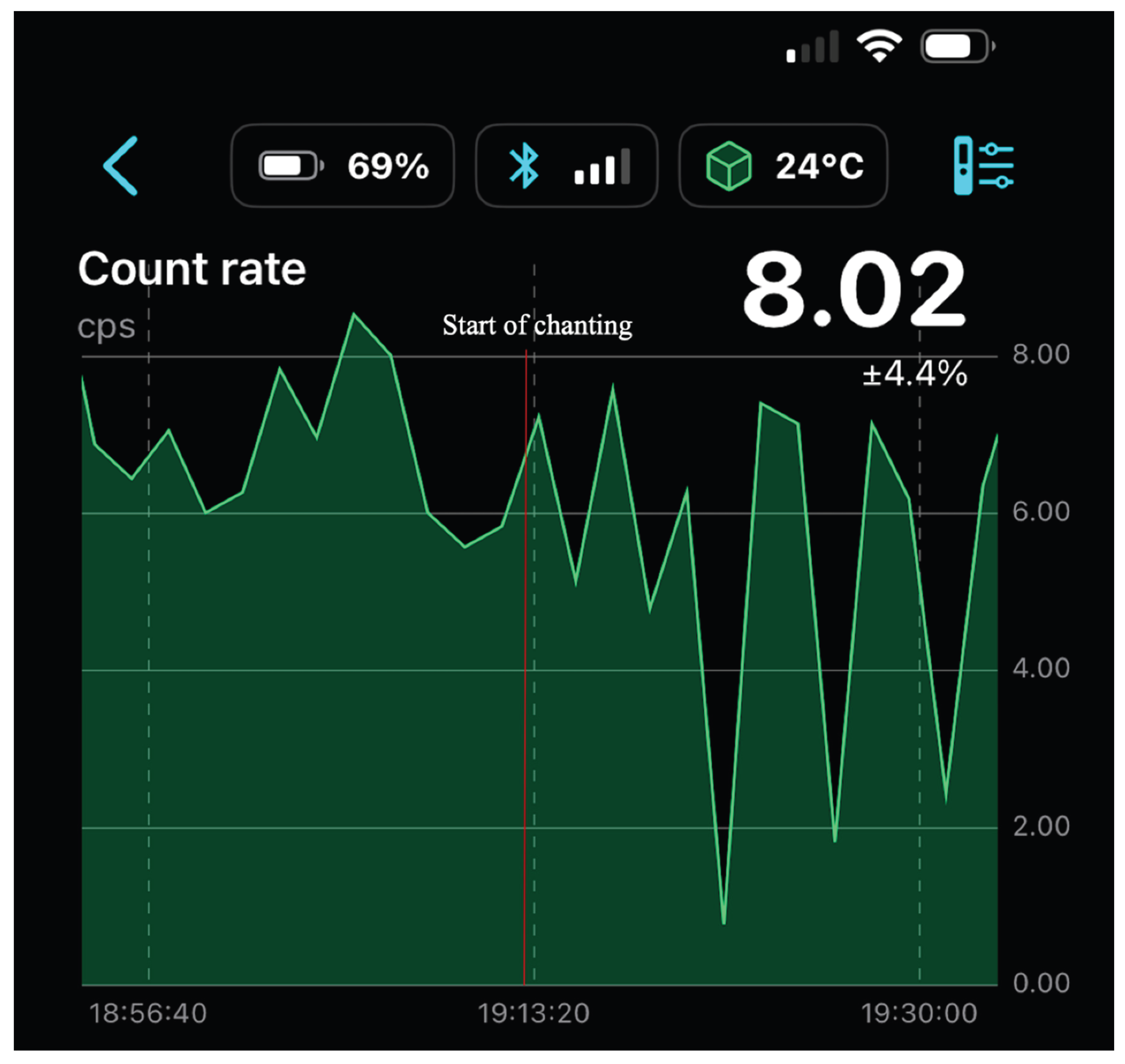
Figure 4 illustrates the temporal fluctuations in the detected natural radioactivity count rate (CPS) during representative control and chanting periods. Visual inspection reveals that the amplitude of these fluctuations, representing the variability in the count rate, appears notably higher during the chanting period compared to the control period, with more pronounced deviations from the mean in both positive and negative directions.
Figure 5 presents the same CPS data as shown in Figure 4, but with a magnified Y-axis to highlight the details of the fluctuations. This enlarged view makes the differences in the amplitude of the peaks more evident. Of particular interest is the observation of instances during the chanting period where the count rate appears to approach or reach zero for brief intervals, an occurrence not readily apparent or consistently observed in the control period. This suggests that during these specific time intervals within the chanting period, the instrument did not register any radioactive decay events.
Discussion
The results of this study, which indicate a quantitative increase and greater variability in natural radioactivity associated with chanting, compel us to explore speculative domains at the intersection of biology, physics, and consciousness. In addition to relying on theoretical frameworks such as direct consciousness-matter interaction, these data offer a unique opportunity to formulate a frontier hypothesis in the field of psychoneuroimmunology.
Psychoneuroimmunology studies the complex interactions between the mind, brain, behavior, and the immune system. In this context, the intense psychophysiological state achieved during the chanting of Nam-Myoho-Renge-Kyo may not only directly influence neuroendocrine pathways and the immune system but also create a subtle, measurable environmental perturbation. In other words, the variations in detected radioactivity may not be a physical anomaly, but rather an external correlate of profound internal biological changes, with potential implications for the body's health and resilience. Although the mechanisms remain unclear and are beyond our current understanding, this interpretation offers an additional biological lens to analyze the observed data.
While current mainstream scientific paradigms do not offer a clear mechanism for biological energy fields or conscious intention to directly influence radioactive decay or the detection of high-energy photons, some theoretical frameworks in frontier science consider the potential for subtle interactions between consciousness, biological systems, and the quantum vacuum or other fundamental fields. These hypotheses often involve concepts like entangled states, resonant interactions, or the influence of organized biological energy fields on physical processes. However, it is crucial to emphasize that these remain theoretical and are not supported by the established and experimentally verified principles of physics governing radioactive decay and energy detection. The observed spectrum is most likely a result of conventional environmental radiation sources and detector response characteristics. Any potential influence of consciousness or biological fields on such a spectrum would represent a phenomenon far beyond our current understanding. This discussion is presented solely for the sake of exploring theoretical possibilities at the furthest edges of current scientific thought.
To explore potential correlates for these observed subtle changes in detected radiation, it is relevant to consider the physiological and neurological processes occurring in the practitioner during the chanting practice, as described in previous work [24]. Chanting Nam-Myoho-Renge-Kyo generates specific sound frequencies, notably a reproducible peak around 8 Hz, which aligns with the first Schumann resonance (approximately 7.83 Hz). This resonance is hypothesized to influence human biology through resonant coupling with physiological rhythms, and studies suggest synchronization between autonomic nervous system activity and Schumann resonances [24]. Another prominent frequency generated is 116 Hz, previously termed the fundamental sound of life, which has been shown to reduce chloride ion concentration in seawater. Given the crucial role of chloride ions in maintaining electrical potential, regulating cell volume, and influencing cell function, particularly within the central nervous system, modulation of chloride ion concentration could hypothetically influence brain function and other systemic processes. Furthermore, the chanting generates specific frequencies known as solfeggio frequencies. Research on frequencies like 528 Hz suggests potential stress-reducing effects, positive impacts on brain cell viability, modulation of hormone production, and reduction of reactive oxygen species in both human and animal models. These findings suggest that the specific sound frequencies generated during chanting may induce measurable physiological and cellular changes [24].
Simultaneously, studies of brain activity during chanting Nam-Myoho-Renge-Kyo indicate significant changes in the prefrontal cortex, with a modest increase during chanting compared to a larger increase before and a very large increase immediately after. This pattern, including a relative decrease during chanting, is hypothesized to relate to a state of focused attention and a potential shift towards slower brainwaves like theta waves. These changes in brain activity are integrated with physiological changes in brain water content and blood flow. Chanting, characterized by rapid inspiration and prolonged exhalation, is associated with increased combined thickness of the meninges and cerebral cortex and greater water content in the cortex during exhalation. Increased blood flow during brain activity further augments brain water content. Consequently, during chanting, sound waves are hypothesized to travel through the brain with greater speed and energy due to the increased water content and the properties of myelin. These enhanced sound waves within the brain are speculated to modulate gene expression and contribute to beneficial effects on brain health, independent of auditory perception, via bone conduction through the skull bones [24].
In confirmation and extension of these findings, a recent study has demonstrated that audible-range acoustic waves act as genuine cellular stimulators, directly influencing gene expression [26]. Using a direct sound emission system to transmit acoustic waves at various frequencies, researchers identified differentially expressed genes after just 2 and 24 hours of exposure. The work specifically highlighted that the activation of important genes, such as Ptgs2/Cox-2, is mediated by the activation of specific cellular pathways. These results, which show a direct and quantifiable cellular response to sound, support the previous hypothesis that the frequencies generated by chanting could modulate gene expression and have significant biological effects independent of auditory perception [24,27]. This work, therefore, provides a crucial empirical basis for the thesis that chanting can induce changes at the cellular level, paving the way for a new understanding of the mechanisms through which sound impacts health at a fundamental level.
Connecting these diverse physiological and neurological observations to the subtle increase in detected radiation counts during chanting requires a highly speculative leap beyond established scientific principles. However, within the framework of frontier hypotheses exploring consciousness-matter interactions, one could theoretically propose that the coherent and focused psycho-physiological state achieved during intense chanting, potentially amplified by the specific resonant frequencies generated and the altered brain state, might create a subtle, detectable perturbation in the local environment. This perturbation, perhaps in the form of a subtle electromagnetic field generated by the synchronized brain activity or altered ion dynamics, or even a more direct, but currently unknown, interaction with the quantum vacuum or fundamental fields, could hypothetically influence the probability of interaction between ambient radiation and the detector's scintillation crystal, or, in a far more speculative vein, subtly influence the quantum processes governing nuclear decay rates themselves. The observed increase in detected counts could, within this highly speculative context, be interpreted as a manifestation of this subtle influence. This remains a highly speculative idea, far outside the realm of established physics and biology, but is presented here as a possible, albeit unproven, framework for considering such unexpected observations in the context of consciousness-related research at the furthest edges of current scientific thought.
The findings from this preliminary observational study, particularly the quantitative analysis of the spectrograms indicating a higher total count during chanting periods and the visual observation of increased variability in CPS fluctuations (as shown in Figure 3, Figure 4, and Figure 5), warrant consideration in the context of existing research into consciousness-matter interactions. Efforts by projects such as the Princeton Engineering Anomalies Research (PEAR) laboratory explored the potential for focused human intention to influence the output of random number generators (RNGs), with some findings suggesting effects on both the mean and variance of random processes. Similarly, the Global Consciousness Project (GCP) has reported correlations between periods of heightened collective consciousness during significant global events and deviations in the variance of a network of RNGs. While the present study examines natural radioactivity rather than engineered random systems, and involves a specific religious practice rather than general intention or reaction to global events, the observed pattern of potentially increased activity (higher counts) and notably increased variability/fluctuations during the chanting period aligns conceptually with the type of subtle influences on random systems that have been hypothesized and explored in this frontier research area. These results, therefore, tentatively suggest a possible correlation between the focused psycho-physiological state achieved during chanting and subtle alterations in the pattern of detected natural radiation events, echoing, in principle, the findings related to consciousness influencing the statistical properties of random physical processes observed in the PEAR and GCP studies.
In this regard, a further fascinating perspective to consider concerns the very nature of the immune system. As explored in our previous work [27], the immune system can be viewed not just as a defense mechanism, but as an entity possessing its own consciousness and intelligence. This hypothesis suggests that the immune system is capable of learning, memory, and interacting with the surrounding world in a way that is not necessarily mediated by the brain, bypassing cognitive bottlenecks.
Within this framework, the variations in natural radioactivity observed in the present study could represent an external correlate of a direct interaction between chanting and the immune system's intrinsic intelligence. This model, while highly speculative, would offer a radically new explanation for why a psychophysiological practice like chanting Nam-Myoho-Renge-Kyo is associated with a physical phenomenon outside the body, proposing the immune system as the true point of contact between the practice and the environment. In this way, the present work positions itself as pioneering research at the intersection of psychoneuroimmunology, physics, and consciousness, suggesting that the effects on well-being may be far more profound than previously hypothesized.
Furthermore, within highly speculative frontier frameworks such as the Orchestrated Objective Reduction (Orch-OR) theory, which postulates that consciousness is deeply embedded in the fundamental structure of the universe, one might theoretically consider how a profoundly focused state of consciousness achieved during chanting could, at a foundational level, interact with or influence physical processes like radioactive decay or the detection of radiation, although this remains far beyond established scientific understanding.
The cumulative energy spectrum analysis revealed a prominent low-energy peak, likely attributable to X-rays from environmental sources, which constitutes a small fraction of the total detected natural background radiation. While the instrument is not designed to detect biophotons, and direct influence of biological energy fields on the detected spectrum is not supported by conventional physics, the present study acknowledges the speculative frontier hypothesis regarding potential subtle interactions.
It is important to consider the limitations of this study, including the single-subject design, the observational nature of the data collection, and the inherent variability of natural background radiation. While the study explored a novel area concerning a specific spiritual practice, the results should be interpreted with caution.
Future research could build upon this preliminary investigation by employing a larger sample size of practitioners, utilizing controlled experimental designs, incorporating simultaneous monitoring of a wider range of environmental variables, and potentially employing more sensitive or specialized detection equipment. Further analysis of the energy spectra during chanting versus control periods could also provide additional insights.
As a final remark, it is crucial to recognize that this study, while exploring potential physical correlates, only touches upon one facet of the profound religious practice of Nichiren Shoshu Buddhism - the power of practice. The full religious and spiritual experience of chanting Nam-Myoho-Renge-Kyo transcends purely neurophysiological or biophysical mechanisms, encompassing a mystic dimension that, while not necessarily in contradiction with scientific principles, cannot be fully explained by science alone. Nevertheless, in the spirit of Nichiren Daishonin's emphasis on reason and "actual proof," this study, despite its inherent limitations, is offered as a contribution to the empirical exploration of potential phenomena associated with this practice.
Funding
The author did not receive any funding for this study.
Author’s contribution
The sole author was responsible for the conceptualization, methodology, investigation, formal analysis, and data curation, as well as the preparation, visualization, and editing of the original manuscript.
Ethics
This article is original and contains material that has not been submitted or published in any scientific journal. A preprint version of this article is published in Preprints https://www.preprints.org/manuscript/202504.2249/v1
Ethical approval
Not applicable.
Consent to participate
Not applicable.
Advisory
No information in this paper is intended or implied to be a substitute for professional medical advice, diagnosis or treatment.
Acknowledgements
The author acknowledges the great work of Dr. Aldo Ruggiero, MD (1923-2006), pioneer of radiology in Prato, Italy, founder of the Studio Radiologico Ruggiero, source of boundless inspiration for this and many other scientific articles.
Conflicts of interest
The author declares no conflict of interest in regard to the specific topics treated in this study.
References
- Natural radioactive materials - Arizona Department of Health Services, accessed April 18, 2025, https://directorsblog.health.azdhs.gov/tag/natural-radioactive-materials/.
- Radiation Sources and Doses | US EPA, accessed April 18, 2025, https://www.epa.gov/radiation/radiation-sources-and-doses.
- Radon Hazards, Detection, and Mitigation - National Park Service, accessed April 18, 2025, https://www.nps.gov/pefo/learn/nature/radon-hazards-detection-and-mitigation.htm.
- Radon Testing Mesa AZ - Test My Home, accessed April 18, 2025, https://testmyhome.com/radon-testing-mesa-az/.
- Technologically Enhanced Naturally Occurring Radioactive Materials in the Southwestern Copper Belt of Arizona - Environmental Protection Agency (EPA), accessed April 18, 2025, https://www.epa.gov/sites/default/files/2015-05/documents/402-r-99-002.pdf.
- UNM METALS Research Center, accessed April 18, 2025, http://www.sric.org/uranium/docs/METALS_Monograph1_Final_040814a.pdf.
- What's Cosmic Radiation Anyway? - Arizona Department of Health Services, accessed April 18, 2025, https://directorsblog.health.azdhs.gov/whats-cosmic-radiation-anywhere/.
- Radon | AZGS - The University of Arizona, accessed April 18, 2025, https://azgs.arizona.edu/center-natural-hazards/radon.
- ARIZONA - EPA Map of Radon Zones, accessed April 18, 2025, https://www.epa.gov/sites/default/files/2014-08/documents/arizona.pdf.
- EPA Map of Radon Zones | US EPA - Environmental Protection Agency (EPA), accessed April 18, 2025, https://www.epa.gov/radon/epa-map-radon-zones-0.
- City of Mesa // 2017 Water Quality Consumer Confidence Report ..., accessed April 18, 2025, https://apps.mesaaz.gov/CCR/.
- CITY OF CERES CONSUMER CONFIDENCE, accessed April 18, 2025, https://www.ceres.gov/Archive.aspx?ADID=85.
- Counts per minute - Wikipedia, accessed April 18, 2025, https://en.wikipedia.org/wiki/Counts_per_minute.
- Explained: rad, rem, sieverts, becquerels | MIT News | Massachusetts Institute of Technology, accessed April 18, 2025, https://news.mit.edu/2011/explained-radioactivity-0328.
- What Is CPM in Radiation? | SOEKS USA, accessed April 18, 2025, https://soeks-usa.com/blogs/radiation/blog-what-is-cpm-in-radiation/.
- The Effects of Meditation and Visualization on the Direct Mental Influence of Random Event Generators, accessed April 18, 2025, https://emmind.net/openpapers_repos/Nonlocality_Fields/Nonlocal_Mind/Various/2021_The_Effects_of_Meditation_and_Visualization_on_the_Direct_Mental_Influence_of_Random_Event_Generators.pdf.
- Global Consciousness Project: Formal Specification, accessed April 18, 2025, https://noosphere.princeton.edu/911formal.html.
- Exploratory study: The random number generator and group meditation, accessed April 18, 2025, https://www.researchgate.net/publication/228712565_Exploratory_study_The_random_number_generator_and_group_meditation.
- Exploratory study: The random number generator and group meditation, accessed April 18, 2025, https://www.researchgate.net/publication/228712565_Exploratory_study_The_random_number_generator_and_group_meditation.
- Introduction to Nichiren Shoshu Buddhism, accessed April 18, 2025, https://www.nichirenshoshu.org/buddhism/introduction/.
- Historical Development of Nichiren Shoshu, accessed April 18, 2025, https://www.nichirenshoshu.org/buddhism/history/.
- Liturgy and Religious Practices, accessed April 18, 2025, https://www.nichirenshoshu.org/buddhism/practice/.
- Core Teachings and Principles, accessed April 18, 2025, https://www.nichirenshoshu.org/buddhism/teachings/.
- Ruggiero M. Chanting of Nam-Myoho-Renge-Kyo in the context of the Buddhist liturgy of Nichiren Shoshu: study of sound frequencies, brain activity, and microbial metabolism. J Neurol Stroke. 2024;14(4):103‒109. https://medcraveonline.com/JNSK/JNSK-14-00592.pdf.
- Van Wijk EP, Ackerman J, Van Wijk R. Effect of meditation on ultraweak photon emission from hands and forehead. Forsch Komplementarmed Klass Naturheilkd. 2005 Apr;12(2):107-12. PMID: 16086532. https://pubmed.ncbi.nlm.nih.gov/16086532/. [CrossRef]
- Kumeta M, Otani M, Toyoda M, Yoshimura SH. Acoustic modulation of mechanosensitive genes and adipocyte differentiation. Commun Biol. 2025 Apr 16;8(1):595. PMID: 40240542; PMCID: PMC12003795. https://pubmed.ncbi.nlm.nih.gov/40240542/. [CrossRef]
- Ruggiero, M. & Hiratsuka, A. (2024). On the Natural Intelligence and Consciousness of the Immune System and its Relationship with the Brain. American Journal of Immunology, 19(1), 11-23. [CrossRef]
Figure 1.
Cumulative energy spectrum of natural radioactivity detected by the RadiaCode 10X series instrument in Mesa, Arizona, across all measurement periods.
Figure 1.
Cumulative energy spectrum of natural radioactivity detected by the RadiaCode 10X series instrument in Mesa, Arizona, across all measurement periods.
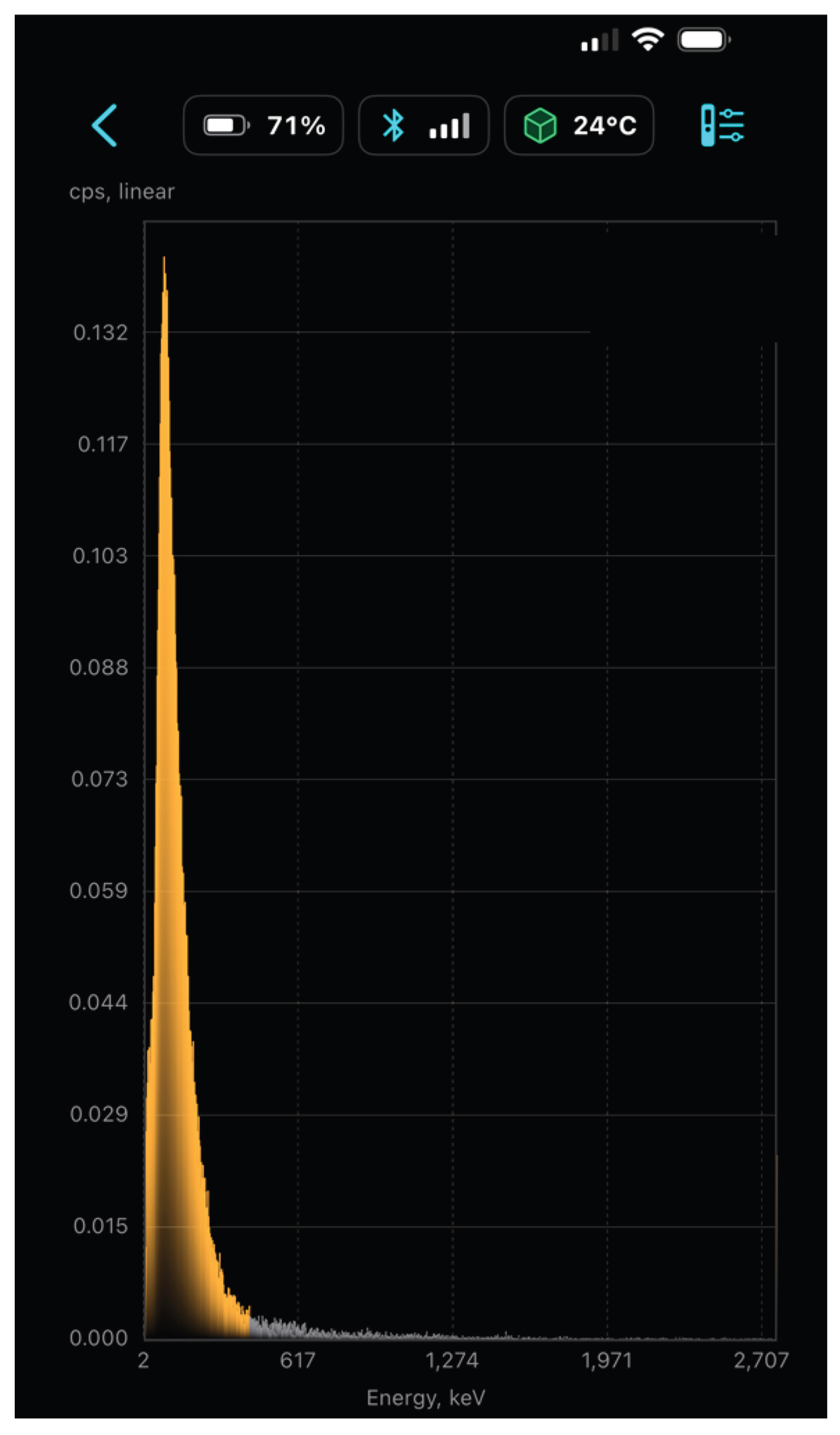
Figure 2.
Representative spectrogram illustrating the temporal distribution of detected radiation events across different energy levels during a single chanting session. The X-axis represents energy (logarithmic scale), and the Y-axis represents time, with the start of the recording at the bottom. The spectrogram is segmented into a control period (initial portion) and a chanting period (subsequent portion).
Figure 2.
Representative spectrogram illustrating the temporal distribution of detected radiation events across different energy levels during a single chanting session. The X-axis represents energy (logarithmic scale), and the Y-axis represents time, with the start of the recording at the bottom. The spectrogram is segmented into a control period (initial portion) and a chanting period (subsequent portion).
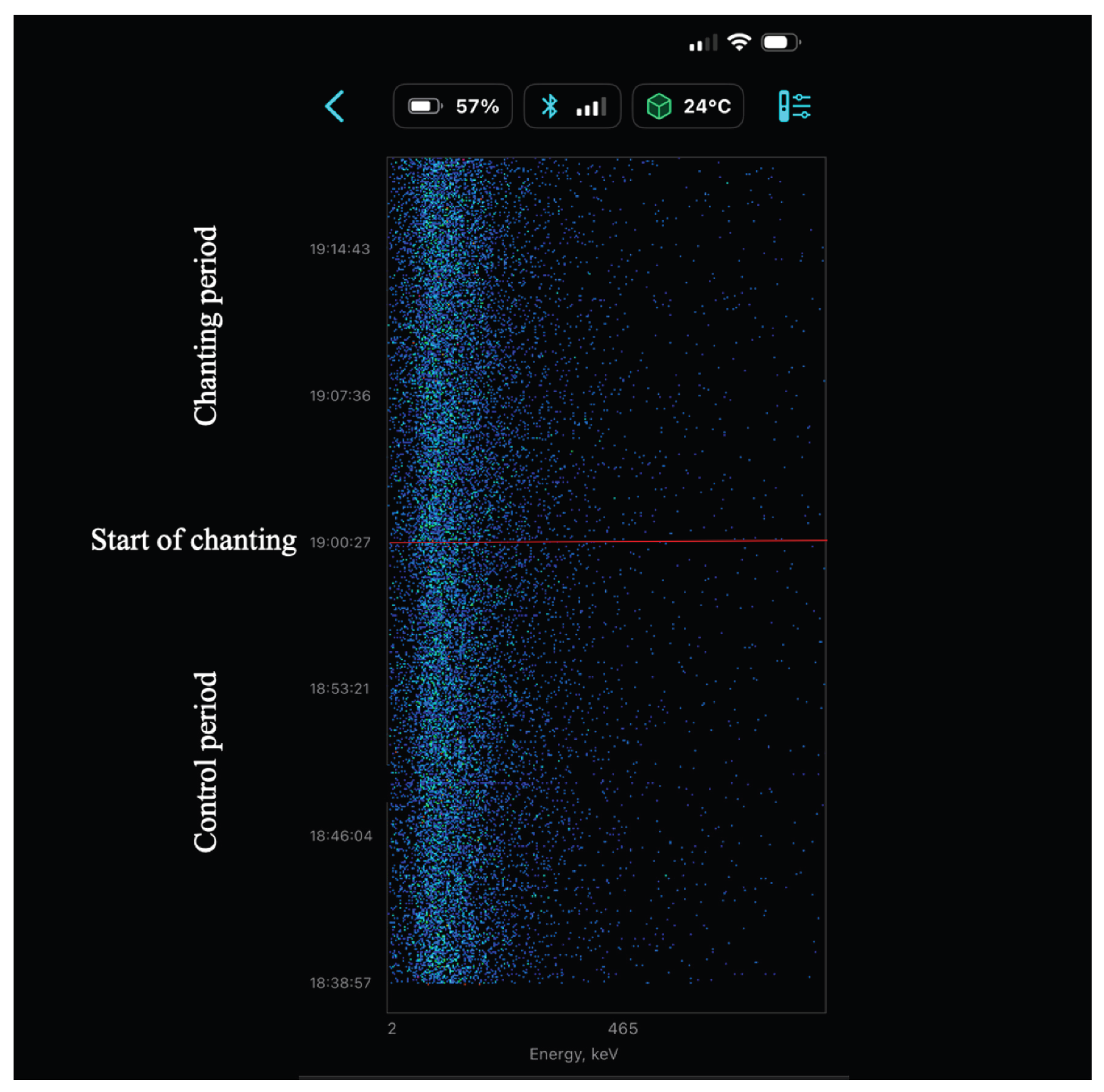
Figure 3.
Histogram analysis of the spectrogram segments (Figure 2) performed using ImageJ software. The left histogram shows the pixel intensity distribution for the control period, and the right histogram shows the distribution for the chanting period. The total integrated counts for each period are indicated, representing the accumulated detection events.
Figure 3.
Histogram analysis of the spectrogram segments (Figure 2) performed using ImageJ software. The left histogram shows the pixel intensity distribution for the control period, and the right histogram shows the distribution for the chanting period. The total integrated counts for each period are indicated, representing the accumulated detection events.
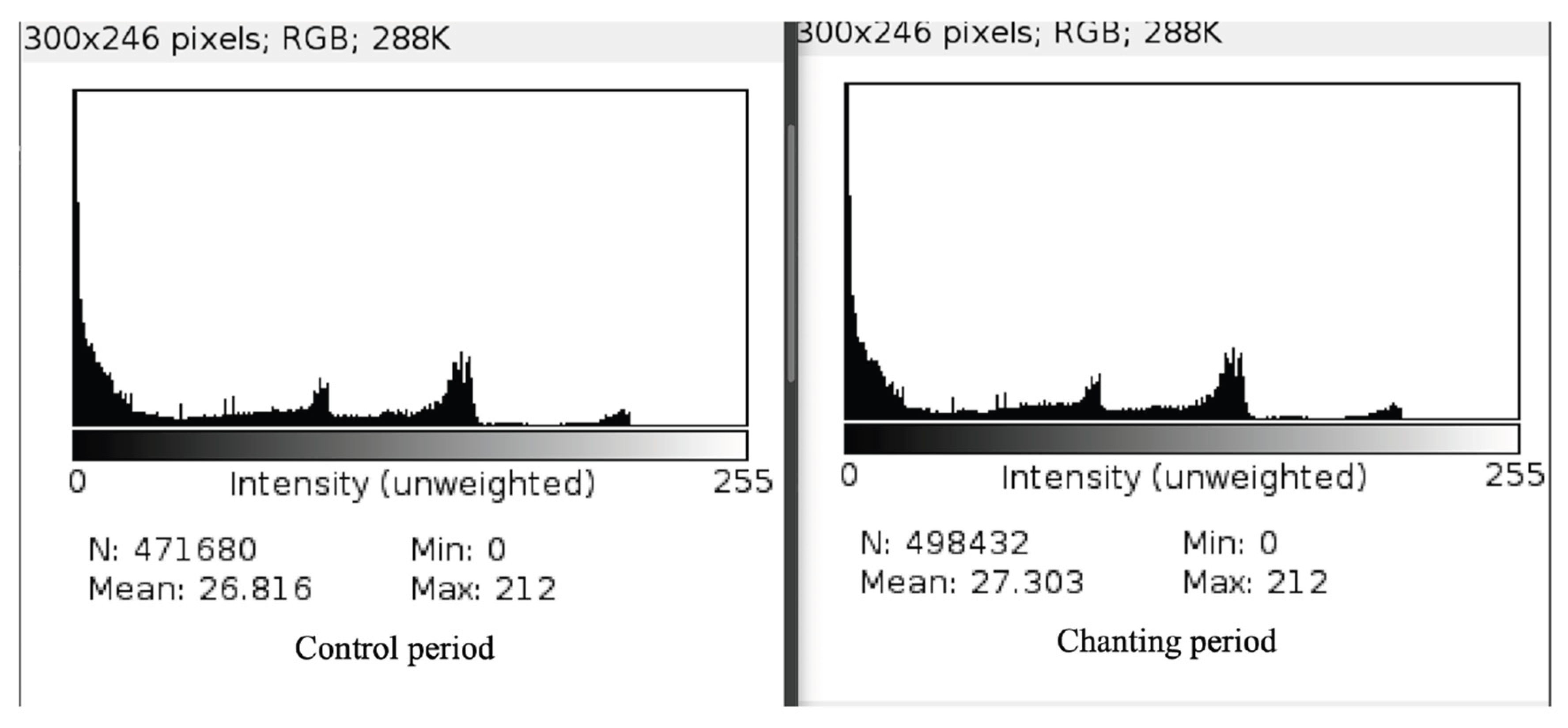
Figure 4.
Temporal fluctuations of the detected natural radioactivity count rate (CPS) during representative control and chanting periods. The figure illustrates the difference in the amplitude of fluctuations between the two periods.
Figure 4.
Temporal fluctuations of the detected natural radioactivity count rate (CPS) during representative control and chanting periods. The figure illustrates the difference in the amplitude of fluctuations between the two periods.
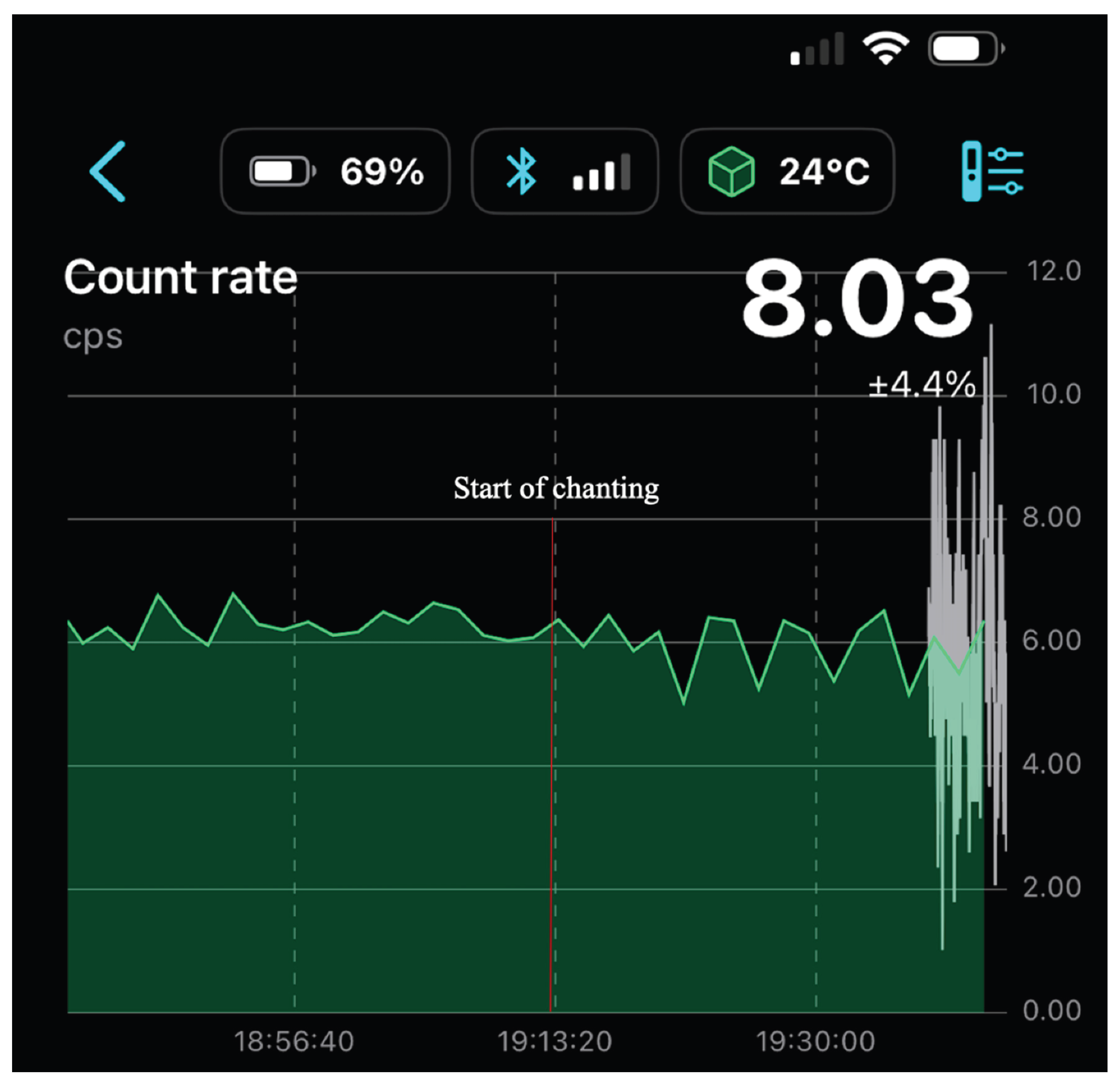
Figure 5.
Temporal fluctuations of the detected natural radioactivity count rate (CPS) during representative control and chanting periods, with a magnified Y-axis (same data as Figure 4). This enlarged view highlights the differences in the amplitude of fluctuations and shows instances of near-zero counts during the chanting period.
Figure 5.
Temporal fluctuations of the detected natural radioactivity count rate (CPS) during representative control and chanting periods, with a magnified Y-axis (same data as Figure 4). This enlarged view highlights the differences in the amplitude of fluctuations and shows instances of near-zero counts during the chanting period.
Disclaimer/Publisher’s Note: The statements, opinions and data contained in all publications are solely those of the individual author(s) and contributor(s) and not of MDPI and/or the editor(s). MDPI and/or the editor(s) disclaim responsibility for any injury to people or property resulting from any ideas, methods, instructions or products referred to in the content. |
© 2025 by the authors. Licensee MDPI, Basel, Switzerland. This article is an open access article distributed under the terms and conditions of the Creative Commons Attribution (CC BY) license (http://creativecommons.org/licenses/by/4.0/).
Copyright: This open access article is published under a Creative Commons CC BY 4.0 license, which permit the free download, distribution, and reuse, provided that the author and preprint are cited in any reuse.