

Submitted:
27 April 2025
Posted:
28 April 2025
You are already at the latest version
Abstract
Some pharmacological properties of the methanolic extract of Justicia secunda Vahl leaves (Acanthaceae) were evaluated in Streptozotocin (STZ)-treated albino mice to confirm whether it could be considered an alternative candidate to treat diabetes. Using qualitative phytochemistry, alkaloids, flavonoids, and tannins were detected. High concentrations of the extract in the DPPH antioxidant activity test conducted in vitro presented more than 90% inhibition of the radical during the first minutes of the reaction. The extract presented a slight genoprotective effect in the last days of the micronucleus test in mouse peripheral blood. Oral administration of the extract at high dose every two days for 6 weeks caused a hypoglycemic effect in STZ-treated mice, protection against weight loss, and decreased blood triglyceride levels from the week 3 of treatment. These effects could be mediated by the antioxidant activity of the detected metabolites and perhaps by an inhibitory effect on intestinal α-glucosidase, which renders J. secunda a good candidate for the long-term alternative treatment of diabetes without abandoning allopathic therapy.
Keywords:
Diabetes
; mice
; Justicia secunda
; antioxidant
; hypoglycemic
; genoprotective effect
1. Introduction
The use of medicinal plants is widespread in Mexico and other Latin-American countries, where many sectors of the population, particularly the poorest, use it as an alternative treatment for various chronic—degenerative diseases such as diabetes [1,2]. For this, different parts of the plants can be used, such as the leaves, flowers, bark, or roots, or even the entire plant [3]. For this, different parts of the plants can be used, such as the leaves, flowers, bark, or roots, or even the entire plant [3]. The use of plants is also increasing in developed countries, in that on the European continent, around 100 million people utilize Traditional Medicine, and an equal or greater amount is estimated for other regions of the world. For example, it was estimated that in 2008, the United States (U.S.) spent $14.8 million dollars on products made from Traditional Medicine, which has contributed to increasingly more countries recruiting people into clinical sectors that employ Traditional Medicine, such as physiotherapists, chiropractors, homeopaths, among others [4,5].
Worldwide, approximately 70,000 species of plants are used in Traditional Medicine, and in this context, during the period from 1991–2003, Mexico was in 4th place among the exporting countries of medicinal and aromatic plants with 37,600 tons of these, and it was estimated that in 2022 it ranked 2nd in this area [6,7,8]. For example, in a study it was found that the most used plant species in areas such as the Guadalajara City metropolitan zone (Mexico) were Arnica (Heterotheca inoloides), Cuachalalate (Amphypterigium adstringens), Tila (Tila Mexicana), Gordolobo (Gnaphalium spp.), Salvia (Salvia officinalis), and Cola de caballo (Equisetum hyemale); in addition, 534/1,000 inhabitants use nopal (Opuntia ficus-indica), chaya (Cnidoscolus aconitifolius), and matarique (Psacalium peltatum) [9]. All of these can have an explanation based on the fact of the meaning that medicinal plants possess for people from the point of view of health, financial resources, cultural identity, and the perception of security in their lives [10,11,12]. As previously mentioned, many of these species are employed for the treatment of chronic—degenerative diseases such as diabetes, and in Mexico, there are several entities where the use for this purpose of various species is already reported [7,13,14], such as cow’s hoof (Bahuinia forficata) [15,16], Mexican oregano (Lippia graveolens) with antioxidant properties [17], nopal (Opuntia spp.) [18,19], Neem (Azadirachta indica) [20,21], and many more.
During the COVID-19 pandemic and in the years since then, the comorbidity of the coronavirus (COVID-19) with various pathologies such as diabetes was revealed. The incidence of the latter is increasing throughout the world and, of course, in Mexico [22,23,24]; for example, recent studies have found that during the period from 2003—2014, diabetes in Mexico increased 2.6 times in people under 50 years of age and 1.9 times in persons over 50 years of age [25], and both type 1 and type 2 diabetes exhibited a great increase in 2019 and in 2020 [26]. All of this leads to an urgent need to broaden the perspective for implementing alternative treatments for diabetes in developing countries.
However, many remedies prepared with medicinal plants, such as infusions or teas, are administered without the supervision of medical experts, and in many cases, there is not sufficient scientific data to support the use and therapeutic effectiveness of these infusions for the condition they are intended to treat. In this sense, there are few studies focused on elucidating the adverse effects of medicinal preparations used to treat various pathologies, In the majority of the works, the authors mention that, at the doses used (50 mg—2,000 mg) in rat, mouse, or rabbit models, no toxic effects are presented [27,28,29]. Only certain works have emphasized that some medicinal plants do entail side effects, for example in the liver [30,31].
A species of plant that can flourish in humid, tropical, and temperate climates (Central America and South America) is Justicia secunda Vahl (Acanthaceae) [31,32,33,34]; in Mexico there are regions in the central and southern parts of the country where the use of this plant (in addition to others) for the alternative treatment (herbal) of diabetes is becoming very common, and there is scarce scientific literature that supports its therapeutic benefit against that disease, except in a few studies. The ethnomedical use of this plant has been reported in the Huasteca Potosina region and in the Yucatan Peninsula [35], as well as that of Justicia spicigera Schltdl in the Mexican states of Michoacán, Tabasco, Nayarit, Jalisco, Chiapas, Morelos, Tlaxcala, Veracruz, and Yucatán, where infusions are prepared to treat inflammation, anemia, leukemia, tuberculosis, diarrhea, hemorrhoids, rheumatism, parasitosis, arthritis, and bone and eye diseases; additionally, evidence of the anticonvulsant, antidepressant, anxiolytic, antinociceptive, and antidiabetic properties of some of its active metabolites is already beginning to emerge [36,37]; still other works report its use in women’s reproductive health [38]. It should be again emphasized here that those previous studies did not report toxic effects with the use of this plant, and only two examples were found where abortive effects were mentioned in rabbits and mice [39,40], making it clear that there remains the need for much research to be conducted in order to establish the therapeutic benefit of this species in the treatment of diabetes. In this respect, the aim of the present research work was to establish whether the methanolic extract of Justicia secunda Vahl, administered in a chemical model of diabetes in mice, exerted antioxidant, genoprotective, and hypoglycemic effects, to provide scientific data in favor of its use as part of a possible alternative therapy against diabetes.
2. Results
2.1. Qualitative Phytochemical Analysis
According to the methodology described in the corresponding section, the fresh Justicia secunda leaves were subjected to around 30 chemical reactions divided into acid, ethanolic, and aqueous extracts. Table 1 lists the secondary metabolites that were detected with the battery of chemical reactions used for this purpose.
2.2. Spectroscopic Analysis
Figure 1 depicts the spectrum of J. secunda leaves extract obtained by means of Infrared analysis with Fourier transform (FTIR) analysis. For a wavelength 600–1000 cm-1, a vibration of =C-H bonds was located; at the wavelength close to 1,100 cm-1, the carbonyl functional group was located. At the wavelength 1,375 cm-1 methyl groups were located, and at the wavelength 1,460 cm-1 methylene groups were located. Also, -C-C-H bonds around 2900 cm-1 were found, and at 3300 cm-1 hydroxyl bonds were detected.
2.3. Evaluation of In-Vitro Antioxidant Activity
Figure 3 summarizes the antioxidant activity of the four concentrations of Justicia secunda tested by the in-vitro method of DPPH, where the percentage of inhibition of the presence of DPPH by the extract was evaluated. Ascorbic acid (2%) was employed as reference standard, and it reached its maximal inhibition in the presence of DPPH (90.84%) when 10 min of the reaction had elapsed.
The concentrations of 50 mg/mL and 25 mg/mL of the extract reached maximal percentage of inhibition of the presence of the DPPH radical greater than 91% during the reaction, highlighting the fact that both concentrations exceeded 90% inhibition of the presence of DPPH minutes prior to when the ascorbic acid reached it. On the other hand, the concentration of 12.5 mg/mL exhibited a delayed and lower inhibitory capacity of the presence of DPPH than the previous concentrations, because it only reached 50% inhibition of the DPPH radical until 30 min had elapsed after the start of the reaction. And last, the concentration of 6.25 mg/mL did not demonstrate good inhibitory activity of the presence of the DPPH radical, in that its value at the end of the reaction was 47.2%.
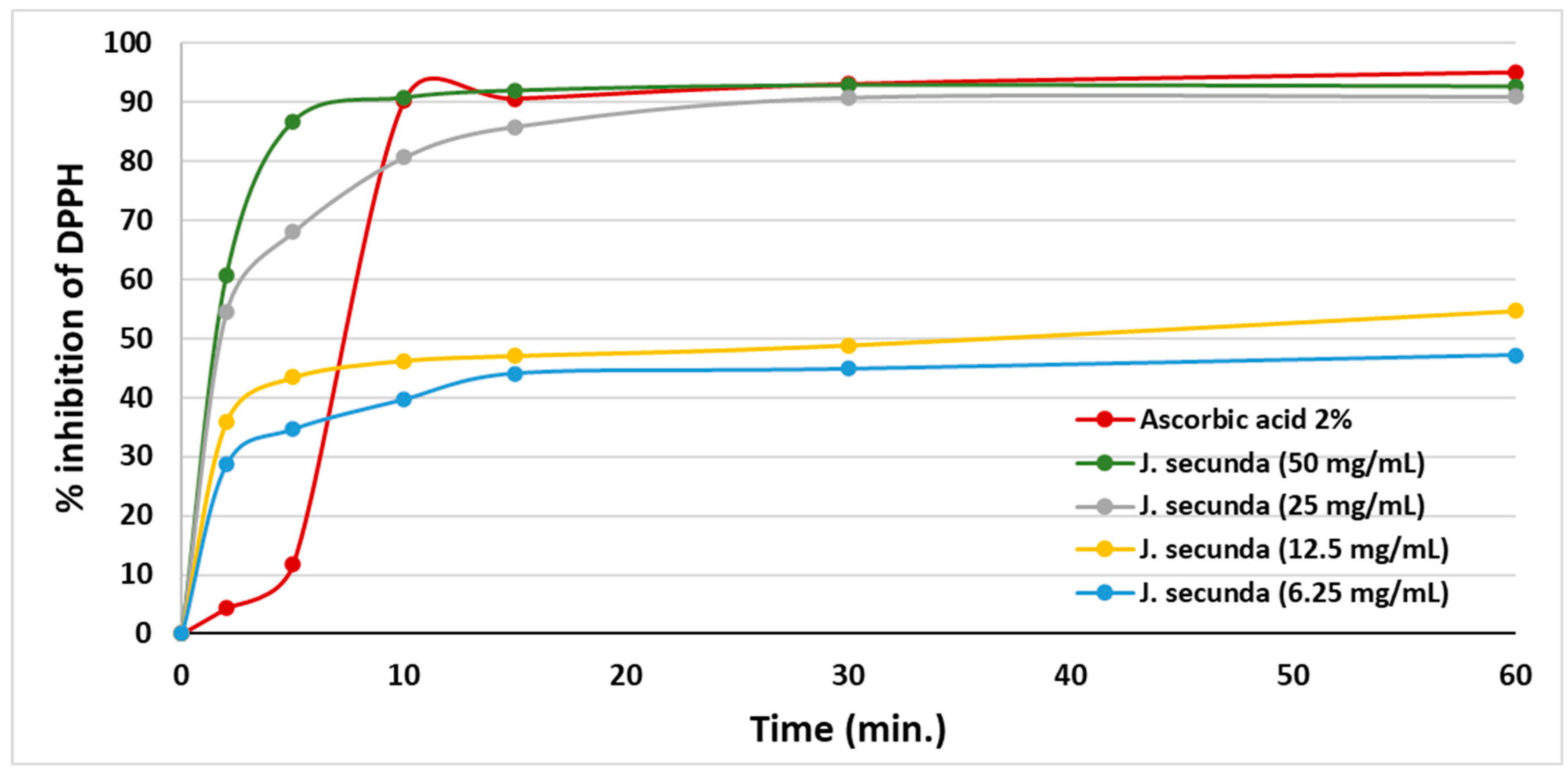
Figure 3.
Percentage of inhibition of the presence of DPPH of four concentrations of J. secunda during 90 min of the reaction. Each point represents the average of two absorbance measurements (517 nm) substituted in Equation (1), as described in Methodology.
Figure 3.
Percentage of inhibition of the presence of DPPH of four concentrations of J. secunda during 90 min of the reaction. Each point represents the average of two absorbance measurements (517 nm) substituted in Equation (1), as described in Methodology.
2.4. Assessment of Genoprotective Activity
The number of micronuclei in mouse peripheral blood during 1 week of treatment with anthracene (10 mg/kg) and the methanolic extract of J. secunda leaves (500 mg/kg) and during the following week without treatment are presented in Figure 4. The group of mice treated with anthracene demonstrated a greater number of erythrocytes with micronuclei compared to the control group, and this value increased during the last 2 days, when anthracene was no longer administered. On the other hand, the group of mice treated with the J. secunda extract exhibited a number of micronuclei similar to that of the group treated with anthracene, and the presence of micronuclei significantly decreased only during the last 2 days of week 2, the group being already without the administration of the treatments (p <0.05; Two-way repeated measures ANOVA).
2.5. Assessment of Hypoglycemic Activity
When a person suffers from some type of diabetes, it is common to observe a loss in body weight; for this reason, in this work the body weight of the mice was also measured during the 36 days that the experiment lasted. Figure 5 presents changes in the body weight of mice under different treatments. Mice of the control group revealed a significant increase in body weight during the last 2 weeks of treatment (p <0.05; two-way repeated measures ANOVA). Hyperglycemic (diabetic) mice demonstrated a tendency to lose weight from week 1 of treatment and a significant decrease in body weight from week 3 of treatment compared with the other groups (p <0.05; Two-way repeated measures ANOVA and Student—Newman—Keuls multiple comparisons test). On the other hand, in the groups with the administration of methanolic extract of J. secunda leaves and with the same extract plus the reference drug acarbose, body weight maintained constant levels throughout the treatment (± 30 g).
Figure 6 depicts changes in the blood glucose values of mice under different treatments. Statistical analysis found significant differences among treatments (p <0.001; Two-way repeated measures ANOVA) between weeks and measurement (p <0.001), as well as a significant interaction between treatment factor and weeks of measurement (p <0.001). The group of diabetic mice presented high glucose values from week 1 of the start of the experiment, reaching values of 500 mg/dL in week 6 of treatment, while the control group exhibited blood glucose levels oscillating at 100 mg/dL throughout the experiment. On the other hand, mice from the diabetic group treated with the methanolic extract of J. secunda leaves presented a significant decrease in blood glucose values from week 3 of administration (p <0.05; post-hoc Student–Newman–Keuls multiple comparisons test). It is noteworthy that during week 3 of treatment, the animals’ glucose levels were equal to those of the control group during weeks 3 and 5, but these increased in week 6 of treatment, though the levels remained below the levels of the group of diabetic mice. Finally, the co-administration of the methanolic extract of J. secunda leaves plus the drug acarbose demonstrated a significant protective effect against the effects of Streptozotocin (hyperglycemia) from week 4 of treatment; however, these values were above the blood glucose values of the mice in the diabetic group treated with the J. secunda extract. Finally, the co-administration of the methanolic extract of J. secunda leaves plus the drug acarbose demonstrated a significant protective effect against the effects of Streptozotocin (hyperglycemia) from week 4 of treatment; however, these values were above the blood glucose values of the mice in the diabetic group treated with the J. secunda extract.
2.6. Evaluation of Effect on Blood Triglycerides
Figure 7 reveals the changes in the blood triglyceride (TG) levels of mice subjected to different treatments for 36 days (6 weeks). Statistical analysis found significant differences among treatments (p <0.001; Two-way repeated measures ANOVA) between weeks and measurement (p <0.001), as well as a significant interaction between treatment factor and weeks of measurement (p <0.001). The group of control mice presented oscillating values of blood TG, with a tendency to decrease in week 5 of treatment with respect to its values exhibited in the baseline measurement (week 0). In the group treated with Streptozotocin (diabetic), elevated TG values were found from week 1 to a maximal value (212.4 mg/dL) in week 6 of treatment, while in the diabetic mice group in which the methanolic extract of J. secunda was administered, it was observed that the extract exerted a protective effect against the elevation of TG levels caused by STZ throughout the treatment, and even maintained TG levels below the values found in the control group during weeks 2, 3, and 6 of treatment (p <0.05; post-hoc multiple comparisons test of Student–Newman–Keuls). Finally, although co-administration of the extract plus acarbose in diabetic mice caused a decrease in blood TG levels, these levels remained on average above those found in the extract only in diabetic mice.
3. Discussion
The use of medicinal plants is widespread in Mexico and other Latin-American countries, where many sectors of the population utilize this resource due to ease of acquisition, but these persons lack knowledge of the scientific information that supports the therapeutic benefits. It is estimated that in Mexico, 3,352 plant species are used [41] of a total of 25,000—30,000 species [42,43], which perhaps represents 12.7% of the world’s plant species. For these reasons, this work focused on evaluating the different pharmacological properties of Justicia secunda Vahl in a chemical model of diabetes in mice.
With the qualitative phytochemical tests carried out on the methanolic extract of J. secunda, alkaloids, tannins, flavonoids, and sterols were detected. Plant secondary metabolites normally form part of the defense mechanisms against predators, but it has been found that several of these compounds possess various pharmacological and therapeutic properties in humans; for example, regarding alkaloids, evidence has been found of their effects in the treatment of diabetes through different mechanisms, such as the 1) inhibition of digestive enzymes as alpha amylases [44], 2) inhibition of aldose reductase and protein tyrosine phosphatase, 3) increased insulin secretion, 4) inhibition of advanced glycation end-products, 5) increase in glucose uptake by extrahepatic tissues [45,46], and 6) phosphodiesterase inhibition [47].
Regarding antioxidant activity, this property was studied with the in-vitro DPPH test. The methanolic extract of the J. secunda leaves (50 mg/mL and 25 mg/mL) demonstrated a total antioxidant activity similar to that of the reference chemical compound (2% ascorbic acid), with maximal activity occurring in even less time than that of ascorbic acid and maintaining this activity for 90 min of reaction time. However, concentrations of 12.5 mg/mL and 6.25 mg/mL exhibited low inhibitory activity in the presence of DPPH, which may be related to the presence of the metabolites found in the phytochemistry test, because only four secondary metabolites were detected despite having carried out more than 30 chemical reactions. Although this test was qualitative, perhaps the amount of some of these metabolites was low, and they were only able to exhibit antioxidant activity when prepared at the highest concentrations of the extract. In fact, it is known that the other three secondary metabolites detected in this work are considered highly antioxidant agents; for example, flavonoids that structurally consist of a 15-carbon skeleton and two aromatic rings (A and B) connected by a three-carbon chain (C ring) are oxidized by interacting with free radicals, and their OH groups stabilize these radicals. These characteristics are associated with their cardioprotective, anticancer, and useful effects for the treatment of obesity and diabetes [48].
Another of the metabolites detected in the extract of J. secunda and that possesses antioxidant activity corresponded to tannins, which are a group of polyphenolic compounds characterized by macromolecules and polymers of high-molecular-weight (500–2000Da), which prevent the production of free radicals and lipid peroxidation due to the great number of OH groups present in its structure [49]. In several studies, these are attributed properties, such as bitter taste, astringent, antiparkinson, anti-Alzheimer, antidepressant, anti-inflammatory, antibacterial, anti-apoptotic, and anti-aging [50,51]. The last qualitatively detected secondary metabolite corresponded to the group of sterols, whose basic structure is that of 1,2-cyclopentaneperhydrophenantrene, and whose molecule is derived from isopentenyl pyrophosphate, which is normally part of cell membranes, aiding in the maintenance of their fluidity, integrity, and permeability [52]. They are not synthesized in humans and are not absorbed in the gastrointestinal tract, which gives rise to a decrease in the intestinal absorption of compounds such as cholesterol when they are consumed in the plant diet [53].
Considering that the crude extract of J. secunda leaves was obtained in a polar solvent (methanol), we assume that it could have contained traces of some non-polar sterol-type metabolites such sterols that could have contributed to the antioxidant activity found at the highest concentrations tested in the in-vitro DPPH test, something that has also been noted in other works reporting that the sterols prevents the redox imbalance that occurs intracellularly by decreasing the production of Reactive oxygen species (ROS) [54]. Although in this work antioxidant activity was determined in vitro, the confirmation of this effect coincides with that reported in vivo in rats administered a relatively high dose of the Justicia tranquebariensis leaf extract (400 mg/kg) [55].
In relation to the genoprotective effect evaluated using the micronucleus technique in mouse peripheral blood, we were unable to find any work conducted directly with the Justicia genus, although there are very extensive works that report many properties of this plant and related species of the family Acanthaceae [56]. In this method, we observed the presence of micronuclei in mature erythrocytes obtained from the peripheral blood of mice administered the mutagenic agent anthracene plus the dry extract of J. secunda leaves, and a weak genoprotective effect was found at the end of the experiment. Although the J. secunda extract did not prevent the appearance of micronuclei, it prevented their number from increasing in mice treated with the extract compared to those treated only with anthracene.
As noted previously, antioxidant activity in vitro was only observed at high concentrations of the extract, whereas in the genoprotective activity test, which was performed in vivo, mice were administered a relatively high dose of the crude extract and a weak genoprotective effect was observed. Anthracene is a polycyclic aromatic hydrocarbon that does not possess great potency as a carcinogen and that exhibits weak mutagenic and genotoxic activity [57]; however, this compound was chosen for its relative safety in terms of handling by humans; thus, although the dose was 10 mg/kg in the mice, it was not capable of inflicting mortality in the experimental batches. Another reason for employing anthracene in this in-vivo experiment was to compare with the effect of administering the J. secunda extract in mice that were diabetized using streptozocin; this compound has several proven mechanisms of action, including causing mutation in the genetic material of cells by methylating DNA [58,59,60]. We think that the dry extract of J. secunda prevented the action methylating of anthracene in DNA of erythrocytes from the peripheral blood of mice, especially in week 2 of the experiment, although the effect was weak, precisely due to the time of exposure to anthracene and to the extract (2 weeks), but sufficient to prevent that number of micronuclei in the erythrocytes of mice treated with the extract, to was as high as in those treated with anthracene alone. Although we did not determine in-vivo antioxidant activity along with genoprotective activity, there is evidence that much of the genoprotective activity or of the inhibition of clastogenicity caused by mutagen agents is linked to the antioxidant effect of secondary metabolites from plants [61,62,63], suggesting the possibility that free radicals such as superoxide are linked to genotoxicity [64].
The methanolic extract of J. secunda was administered chronically orally for 6 weeks in groups of albino mice treated with streptozocin, as described in the Methodology section of this paper. One of the most notable aspects in this model was that the hyperglycemic mice lost weight significantly from week 3 of treatment, which is a sign that usually occurs in diabetes in humans. Streptozocin (STZ) is a compound of the glucosamine-nitrosurea type that is isolated from the Gram-positive bacterium Streptomyces achromogenes, employed for the treatment of different types of cancers [65]; however, due to its structural resemblance to glucose and the fact that it is recognized by the GLUT 2 transporters of pancreatic β-cells, it is currently one of the methods utilized to create chemical models of diabetes in animals. Once it enters the β-cells, STZ exerts several effects, including acting as a producer of free radicals and causing DNA methylation; this gives rise to the necrosis of the pancreatic β-cells. In addition, it has been found that a protein called Signal transducer and an activator of transcription 3(STAT3) are involved in the death of β-cells and in the subsequent hyperglycemia caused by the administration of STZ in mice and rats [59,66].
The body-weight loss observed in mice treated with STZ has already been reported in other studies and as already mentioned, this may be due to the mechanism of action of STZ in causing DNA methylation. However, the latter can also be caused by the effect that STZ exerts on various organs, in that it was found that STZ administered to albino rats at a dose of 45 mg/kg, in addition to causing the loss of body weight, also gave rise to an increase in the relative weight of the liver and kidney of the animals, without an apparent effect on the weight of the pancreas [67]; we think that these effects would be the result of the need generated by the requirement of energy sources of these organs, as they are not receiving energy from glucose when the β-cells of the endocrine pancreas die. In these studies, various plant extracts were also administered that caused an improvement in the body weight of STZ-treated animals, including one in which the methanolic extract of Justicia adhatoda leaves was administered to BALB/c male mice, and results similar to those presented in this study were reported: the extract prevented the weight loss caused by STZ; moreover, in this work the authors administered different doses of the extract (up to 400 mg/kg), while our team administered 500 mg/kg without finding toxicity in the mice. It is worth noting that in that study, among other metabolites, sterols such as β-sitosterol were also detected [68].
We found that the methanolic extract of J. secunda leaves exerted a hypoglycemic and hypotriglyceridemic effect in mice treated with diabetes from week 3 of treatment. As mentioned in previous sections, there are few studies on the Justicia plant, although at least one study has already been mentioned with results like those reported herein [e.g., 68]. In the bibliographic search carried out on the study of this plant, although around 400—600 species of Justicia have been identified worldwide [69], only certain works were found in which the different effects and activities of some species of the genus Justicia are reported. There are reports of its activity on the central nervous system of some species of Justicia; for example, anxiolytic effects of J. gendarussa have been described [70], and also for Justicia spicigera [71], and anticonvulsant activity in Justicia extensa [72], as well as activity in peripheral organs and tissues, such as the cytotoxic activity of the species Justicia betonica, and Justicia vahlii [73,74], anti-inflammatory effects in Justicia adhatoda [75] and, of course, antioxidant activity in several species including J. adhatoda, J. gendarussa, and J. secunda [76,77,78,79]. In previous paragraphs it was mentioned that there are few reports on the toxicity of the J. secunda plant, and that some works found that the LD50 was above 3,800—5,000 mg/kg in rats [80,81]. Therefore, we think that the effects found on the glucose and triglyceride levels are in fact due to the secondary metabolites present in this species. These effects could be explained considering the antioxidant, antigenotoxic, and protective contribution against weight loss of all of the metabolites contained in the dry extract of J. secunda, and by means of that, these avoided the hyperglycemic effect caused by the mechanism of action of STZ. The latter would also be added the contribution of some non-polar metabolites of the steroid type, such as metabolites of a non-polar nature, such as sterols, that could contribute to these properties. In fact, studies are being carried out in our laboratory with non-polar extracts of J. secunda to try to verify this, because this metabolites could add to the effects described here and also contribute to the properties promoting the decrease in blood triglycerides through the modulation of processes such as hepatic lipid metabolism, the presence of proinflammatory markers, and oxidative stress [82,83].
It is noteworthy that the methanolic extract of J. secunda, in addition to the hypoglycemic effect exhibited, also exerted a marked hypotriglyceridemic effect. This could be related to the hepatoprotective activity of this species, which has been reported in other works, and it could contribute to better lipid use by the liver of hyperglycemic mice [84,85]. But in this sense, it should be noted that during several weeks of treatment, the TG levels were found to be even below the levels of those of the control group of mice, something that in the long term might not be so beneficial for individuals and that still needs to be analyzed in more detail. On the other hand, in addition to the antioxidant and genoprotective properties of the administered extract, we sought to explore some possible mechanism of action by which this species promoted these effects, in that there are some reports that several plants used in the treatment of diabetes possess additional mechanisms of action to those already mentioned in this work: for example, inhibition of the activity of intestinal brush-border enzymes such as α-glucosidase, which ultimately would promote a delay in the absorption of glucose ingested in food into the intestine and would contribute to preventing blood glucose levels from rising and stimulate glucose uptake in the target tissues of insulin, in addition to the liver [30,86]. We administered acarbose plus J. secunda extract to another group of mice previously treated with STZ with the idea that if the secondary metabolites contained in the methanolic extract of Justicia secunda can also inhibit intestinal α-glucosidase, then a synergistic effect would be seen by the extract plus the effect of this reference drug and blood glucose levels (and perhaps those of triglyceride) would decrease more than in the group of hyperglycemic mice treated only with the extract. However, although a decrease in glucose and triglyceride levels was observed in this group, this decrease was not similar to that caused by the extract alone, that is, we confirm what has been found in other works [87], but perhaps the dose of acarbose administered (300 mg/kg) was not sufficient to express the expected synergy.
Finally, in addition to the effects that we found for the methanolic extract of J. secunda leaves, this work is relevant because herein we explored the effects of chronic oral administration with a relatively high dose (500 mg/kg) during 6 weeks on the physiological parameters that are affected during diabetes, while in several works acute evaluations were only carried out with durations ranging from 2 h to 1 week of administration. This is important if we consider that in Mexican communities where these species are consumed in the form of infusions, intake take place on a daily basis while the patient remains fasting. That is, the consumption scheme of many of these plants in herbal Traditional Medicine was imitated and no toxic effects were found in the mice. All of this could encourage the inhabitants of these low-income communities to choose to attempt to cultivate this species not only for ethnomedical use, as has already been pointed out in other works that have utilized Justicia as an object-of-study [88,89,90].
4. Materials and Methods
4.1. Acquisition of the Plant Species and Processing in the Laboratory
Justicia secunda Vahl leaves were obtained at an accredited commercial establishment located in Cuemánco in the Xochimilco municipality of Mexico City, and these were taken to the Hormones and Behavior Laboratory of the Department of Physiology of the National School of Biological Sciences to complete their environmental drying for 1 week. The material was then crushed and macerated in methanol for 1 week. The macerate was subjected to reduced pressure distillation (Rotavaporator Prendo© Model 1750; Prendo, Puebla, México) to remove the methanol; the distillate was left to air-dry for 1 week to obtain the dry, crude combined extract of the leaves and stems.
Solubility tests were performed to select the solvent to produce a stock suspension of this crude extract at 50 mg/mL, and it was found that the best solvent for resuspending the crude extract for intragastric administration in mice was distilled water.
4.2. Chemicals Used in the Experiments
The chemicals 2,2-Diphenyl-1-picrylhydrazyl (DPPH) and Streptozocin (STZ) were purchased from Sigma-Aldrich (Massachusettes, USA). Giemsa dye was purchased from Hycel (México City, México). Methanol was purchased from Golden Bell Co. (Mexico City, Mexico).
4.3. Animals in Laboratory Settings
Male Swiss albino mice (weighing 25–30 g each) of the NIH strain were used. They were obtained from the official supplier of the National School of Biological Sciences (ENCB) of the National Polytechnic Institute (IPN) and housed in the animal chamber of the ENCB Department of Physiology, Zacatenco Campus, for acclimatization in communal acrylic cages (48 cm long x 22 cm wide x 20 cm high), with water and food ad libitum and a light—dark cycle of 12:00 (lights on at 08:00), as well as a room temperature of 22 ± 2°C and under standard humidity conditions. The animals were handled and subjected to experimentation according to Mexican standards (NOM-033-ZOO-1995, NOM-062-ZOO-1999, and NOM-087-ECOL-1995). In addition, all experiments were approved by the Research Ethics Committee of the National School of Biological Sciences (ZOO-005-2022).
4.4. Qualitative Phytochemical Analysis
Samples of the crude extract of the leaves of J. secunda were taken and subjected to the various qualitative chemical reactions, as described in other works [91] to determine secondary metabolites, mainly of a polar nature, which were identified by changes in coloration, the formation of precipitates, foaming, etc.
4.5. Spectroscopic Analysis
Fractions of the dry extract of J. secunda were taken and stored in vials for a series of general spectroscopic analyses. The samples were analyzed at the Center of Nanosciences and Micro and Nanotechnologies of the National Polytechnic Institute (Mexico City, México), and the Fourier transform infrared analysis (FT-IR) technique was applied, with an Espertoi Lambda Series 5000 device and with a wavelength between 500 and 4500 nm was used.
4.6. Evaluation of In Vitro Antioxidant Activity
Four concentrations of the crude extract of J. secunda (50, 25, 21.5, and 6.25 mg/mL) were prepared in methanol to determine its antioxidant activity utilizing the in-vitro method of DPPH (2,2-Diphenyl-1-picrylhydrazyl) as described in other works [92,93]. A solution of 0.01 g of DPPH in 25 mL of methanol was prepared. This method was performed on a UV-VIS spectrophotometer (Velab©, VE-5100UV; Velaquin, Mexico City, Mexico); quartz cells containing 1,850 μL of methanol, 140 μL of DPPH free radical, and 10 μL of some of the concentrations of the crude extract diluted in methanol were prepared, and the absorbance of each solution was measured at 517 nm. The absorbance value was recorded at 0 (without extract sample) and at 1, 5, 15, 20, 30, and 60 min. These readings were taken in duplicate for each time, and the average value of each absorbance was substituted in Equation (1) to calculate the % of inhibition in the presence of DPPH as follows:
where: Absmt = 0 = sample absorbance at zero time (without extract). Absmt = n = sample absorbance at “n” time (with extract).
%DPPH inhibition = (Absmt=0 – Absmt =n / Absmt=0) x 100
The percentage data were plotted for each concentration of the extract and compared against the % of inhibition in the presence of DPPH obtained for a reference solution (2% ascorbic acid).
4.7. Assessment of Genoprotective Activity
Three groups of male Swiss albino mice were formed and housed in three cages (35 cm long x 25 cm wide x 12 cm high), each containing six mice. Each group received one of the following treatments: (i) Control: administration of vehicle (mineral oil intragastrically [i.g.]) every other day for 1 week, taking a blood smear every other day for 2 weeks; (ii) anthracene (10 mg/kg, i.g.), administration of anthracene dissolved in mineral oil, every other day for 1 week, and with a blood smear every other day for 2 weeks, and (iii) anthracene + J. secunda (500 mg/kg, i.g.), administration of anthracene plus J. secunda extract every other day for 1 week and with a blood smear every other day for 2 weeks. All blood smears were fixed in methanol (6 min) and colored with Giemsa (40 min) to be evaluated using the micronucleus detection technique in mouse peripheral blood [43] and to be analyzed under the optical microscope (VE-M5; VELAB©, México City, México) with 100X magnification (immersion).
4.8. Assessment of Hypoglycemic Activity
Four groups of male Swiss albino mice were formed and housed in four cages (35 cm long x 25 cm wide x 12 cm high), each containing six mice. Each group received one of the following treatments: (i) Control mice were administered i.g. with the plant extract dissolution vehicle every other day (saline, 0.9%; vol = weight/1,000); each week, blood glucose was measured with a commercial device (Optium FreeStyle©; Abbott, Boston, MA, USA), making a small cut in the distal part of the mouse’s tail to drain one drop of blood (prior fasting <12 h), during 36 days; (ii) Diabetic mice were administered a single intraperitoneal dose (i.p.) of Streptozotocin (STZ; 120 mg/kg, dissolved in citrate buffer). After 1 week of administration, blood glucose was measured with a commercial device (Optium FreeStyle©). A mouse was considered diabetic (hyperglycemic) when its blood glucose levels reached 150 mg/dL or higher. These animals were administered i.g. every other day with a vehicle and with a weekly measurement of glucose (prior fasting <12 h), during 36 days; (iii) Diabetic + J. secunda extract (500 mg/kg, i.g.), mice administered i.g. every other day with the methanolic extract of Justicia secunda (500 mg/kg) and with a weekly glucose measurement (prior fasting <12 h), during for 36 days, and (iv) Diabetic + J. secunda (500 mg/kg) + acarbose (300 mg/kg), mice administered i.g. every other day with the methanolic extract of Justicia secunda (500 mg/kg) plus the drug acarbose (300 mg/kg) and with a weekly glucose measurement (prior fasting <12 h), during for 36 days. Additionally, each week, body weight was measured using a granatary balance, as were triglyceride levels (with a commercial device (Accutrent; Roche Laboratory).
4.9. Statistical Analyisis
The data obtained in the experiments of genoprotective activity, body weight, hypoglycemic effect, and triglyceride levels were analyzed with SigmaStat ver. 12.0 statistical software, utilizing the repeated measures Two-way ANOVA and the Student–Newman–Keuls post-hoc tests to determine significant differences among the different groups. In all cases, a level of α = 0.05 was employed as the criterion for establishing statistically significant differences.
5. Conclusions
This work focused on the study of a plant, Justicia secunda Vahl, which is used frequently in many Latin-American countries including Mexico, emphasizing the chronic and long-term administration of a high oral dose (500 mg/kg) without finding toxic effects. Therapeutic properties such as antioxidant activity, protection against weight loss, a hypotriglyceridemic effect, and hypoglycemic activity were found in diabetic mice. All of these properties could be mediated by the presence of the secondary metabolites detected in the fractions of the methanolic extract. The alkaloids, flavonoids, and tannins provided the extract with the ability to reduce the DPPH radical and act as an antioxidant chemical cocktail that, could confer the therapeutic properties detected to oppose the diabetogenic mechanism of action of Streptozotocin. Furthermore, a mechanism of action similar to that of the inhibition of intestinal α-glucosidases, could also be participating in these therapeutic actions.
We propose that Justicia secunda continues to be a good candidate for the alternative treatment of diabetes, without relegating conventional allopathic treatment to one side.
Author Contributions
Tomás Fregoso-Aguilar and Ángel Morales- González, José Antonio Morales-Gonzalez conceived the idea and planned the experiments; Perla Escamilla-Ramirez, Dulce Estefanía Nicolás-Álvarez, Jorge Alberto Mendoza-Perez performed parts of the experiments, the description of the results and part of the figures and tables; Eduardo Osiris Madrigal-Santillán, Judith Margarita Tirado-Lule, Elda Victoria Rodriguez-Negrete, Eduardo Madrigal-Bujaidar, Isela Álvarez-González, Gabriela Ibañez-Cervantes performed part of the experiments, the statistical analysis and part of the figures. Tomás Fregoso-Aguilar and Ángel Morales- González, José Antonio Morales-Gonzalez wrote the article. All authors approved the final version of the manuscript.
Funding
Thy study was partially funded by the Research and Postgraduate secretariat with research project SIP20240774 of the Escuela Nacional de Ciencias Biológicas, of Instituto Politécnico Nacional, and SIP 20240267 ESM-IPN; SIP20241869 ESCOM-IPN.
Data Availability Statement
Not applicable.
Acknowledgments
In this section, you can acknowledge any support given which is not covered by the author contribution or funding sections. This may include administrative and technical support, or donations in kind (e.g., materials used for experiments).
Conflicts of Interest
The authors declare no conflicts of interest.
References
- Martínez, M. Las plantas medicinales de México. 3rd edition. Botas, México, 1944, 630 pages.
- Hersch, P. De hierbas y herbolarios en el México actual. Antropol. Méx. 1999, 7, 60-65.
- Guzmán-Maldonado, S.H.; Díaz-Huacuz, R.S.; González-Chavira, M.M. Plantas medicinales: la realidad de una tradición ancestral. INIFAP, 2017, 1, 1-36.
- WHO. Traditional medicine strategy 2014 – 2023. World Health Organization, 2013, Geneva. 78 pages.
- WHO. Global strategies and plants of action that are scheduled to expire within one year. WHO traditional medicine strategy: 2014–2023. Executive Board, 2022, 6 pages.
- Lange, D. International trade in medicinal and aromatic planst. Actors, volumes and commodities. In: Bogers, R.J.; Craker, L.E.; Lange, D. (eds.), Medicinal and Aromatic Plants. Frontis, 2006, 11: 155-170.
- Cruz-Pérez, A.L.; Barrera-Ramos, J.; Bernal-Ramírez, L.A.; Bravo-Avilez, D. Rendón-Aguilar, D. Actualized inventory of medicinal plants used in traditional medicine in Oaxaca, México. J. Ethnobiol. Ethnomed. 2021, 17 (7): 1-15.
- INIFAP. México, segundo lugar mundial en registro de plantas medicinales. www.gob.mx/agricultura/prensa/mexico-segundo-lugar-mundial-en-registro-de-plantas-medicinales (accessed on 6 February 2022).
- García de Alba-García, J.E.; Ramírez-Hernández, B.C.; Robles-Arellano, G.; Zañudo.Hernández, J.; Salcedo-Rocha, A.L.; García de Alba-Verduzco, J.E. Conocimiento y uso de las plantas medicinales en la zona metropolitana de Guadalajara. Desacatos, 2012, 39: 29-44. [CrossRef]
- Hamilton, A.C. Medicinal plants, conservation and livelihoods. Biodivers. Conserv. 2004, 13: 1477-1517.
- He, J.; Yang, B.; Dong, M.; Wang, Y. Crossing the roof of the world: Trade in medicinal plants from Nepal to China. J. Ethnopharmacol. 2018, 224: 100-110. [CrossRef]
- Eshete, M.A.; Molla, E.L. Cultural significance of medicinal plants in healing human ailments among Guji semi-pastoralist people, Suro Barguda District, Ethiopia. J. Ethnobiol. Ethnomed. 2021, 17: 61 doi.org/10.1186/s13002-021-00487-4. [CrossRef]
- Acosta-Recalde, P.; Lugo; G.; Vera, Z.; Morinigo, M.; Maidana, G.M.; Samaniego, L. Uso de plantas medicinales y fitoterápicos en pacientes con Diabetes Mellitus tipo 2. Mem. Inst. Investig. Cienc. Salud. 2018, 16(2): 6-11. [CrossRef]
- Geck, M.S.; Reyes-García, A.J.; Casu, L.; Leonti, M. Acculturation and ethnomedicine: a regional comparison of medicinal plant knowledge among the zoque of southern México. J. Ethnopharmacol. 2016, 187: 146-159. [CrossRef]
- Andrade-Cetto, A.; Heinrich, M. Mexican plants with hypoglycaemic effect used in the treatment of diabetes. J. Ethnopharmacol. 2005, 99, 325–348. [CrossRef]
- Chávez-Bustos, E.A.; Morales-González, A.M.; Liliana Anguiano-Robledo, L.; Madrigal-Santillán, E.O.; Valadez-Vega, C.; Lugo-Magaña, O.; Mendoza-Pérez, J.A.; Fregoso-Aguilar, T.A. Bauhinia forficata Link, Antioxidant, genoprotective, and hypoglycemic activity in a murine model. Plants. 2022, 11(22): 3052. [CrossRef]
- Bautista-Hernández, I.; Aguilar, C.N.; Martínez-Ávila, G.C.; Torres-León, C.; Ilina, A.; Flores-Gallegos; A.A.; Verma, D.K.; Chávez-González, M.L. Mexican Oregano (Lippia graveolens Kunth) as Source of Bioactive Compounds: A Review. Molecules, 2021, 26: 5156. doi.org/10.3390/molecules26175156.
- Andrade-Cetto, A.; Wiedenfeld, H. Anti-hyperglycemic effect of Opuntia streptacantha Lem. J. Ethnopharmacol. 2011, 133, 940–943. [CrossRef]
- Santos-Díaz, M.S.; Barba-de la Rosa, A.P.; Héliès-Toussaint, C.; Guéraud, F.; Nègre-Salvayr, A. Opuntia spp.: Characterization and benefits in chronic diseases. Oxidative Med. Cell. Longev. 2017, 8634249. [CrossRef]
- Pingali, U.; Abid-Ali, M.; Gundagani, S.; Nutalapati, C. Evaluation of the effect of an aqueous extract of Azadirachta indica (Neem) leaves and twigs on Glycemic control, endothelial dysfunction and systemic inflammation in subjects with type 2 diabetes mellitus: A randomized, double-blind, placebo-controlled clinical study. Diabetes Metab. Syndr. Obes. Targets Ther. 2020, 13, 4401–4412. [CrossRef]
- Patil, S.M.; Shirahatti, P.S.; Ramith Ramu, R. Azadirachta indica A. Juss (neem) against diabetes mellitus: A critical review on its phytochemistry, pharmacology, and toxicology. J. Pharm. Pharmacol. 2022, 74, 681–710.
- IDF Diabetes Atlas. International Diabetes Federatión. 10th Edition 2021. Available online: www.diabetesatlas.org (accessed on 20 July 2022).
- ENSANUT. Encuesta Nacional de Salud y Nutrición 2018. Presentación de Resultados (insp.mx). Available online: https://ensanut.insp.mx/encuestas/ensanut2018/doctos/informes/ensanut_2018presentaciónresultados.pdf. (accessed on 24 June 2022).
- Avilés-Santa, M.L.; Monroig-Rivera, A.; Soto-Soto, A.; Lindberg, N.M. Current state of diabetes mellitus prevalence, awareness, treatment, and control in Latin America: Challenges and innovative solutions to improve health outcomes across the continent. Curr. Diab. Rep. 2020, 20: 62. doi.org/10.1007/s11892-020-01341-9.
- López Sánchez, G.F.; López-Bueno, R.; Villaseñor-Mora, C.; Pardhan, S. Comparison of diabetes mellitus risk factors in México in 2003 and 2014. Front. Nutr. 2022, 9, 894904. [CrossRef]
- Bello-Chavolla, O.Y.; Antonio-Villa, N.E.; Fermín-Martínez, C.A.; Fernández-Chirino, L.; Vargas-Vázquez, A.; Ramírez-García, D.; Basile-Alvarez, M.R.; Hoyos-Lázaro, A.E.; Carrillo-Larco, R.M.; Wexler, D.J.; Manne-Goehler, J.; Seiglie, J.A. Diabetes-related excess mortality in Mexico: A comparative analysis of national death registries between 2017–2019 and 2020. Diab. Care. 2022, 45, 2957–2966. [CrossRef]
- Roman-Ramos, R.; Flores-Saenz, J.L.; Alarcon-Aguilar, F.J. Anti-hyperglycemic effect of some edible plants. J. Ethnopharmacol. 1995. 48: 25-32. [CrossRef]
- Chattopadhyay, R.R. A comparative evaluation of some blood sugar lowering agents of plant origin. J. Ethnopharmacol. 1999, 67: 367-372. [CrossRef]
- Ovalle-Magallanes, B.; Déciga-Campos, M.; Mata, R. Antinociceptive and hypoglycaemic evaluation of Conyza filaginoides (D.C.) Hieron Asteraceae. J. Pharmacy Pharmacol. 2015, 67: 1733-1743. [CrossRef]
- Ahangarpour, A.; Heidari, H.; Oroojan, A.A.; Mirzavandi, F.; Esfehani, K.N.; Mohammadi, Z.D. Antidiabetic, hypolipidemic and hepatoprotective effects of Arctium lappa root’s hydro-alcoholic extract on nicotinamide-streptozotocin induced type 2 model of diabetes in male mice. Avicenna J. Phytomed. 2017, 7(2): 169-179.
- Valdivia-Correa, B.; Gómez-Gutiérrez, C.; Uribe, M.; Méndez-Sánchez, N. Herbal medicine in Mexico: A cause of hepatotoxicity. A critical review. Int. J. Mol. Sci. 2016, 17: 235. [CrossRef]
- Zambrano-Mora, P.; Bustamante-Pesantes, K.E. Caracterización y studio fitoquímico de Justicia secunda Vahl (sanguinaria, chingamochila, insulina). Rev. Cub. Plant. Med. 2017, 22(1): 1-8. [CrossRef]
- Domínguez, I. Justicia secunda vahl, especie utilizada en ma medicina indígena Colombiana. Universidad de Sevilla. Colombia. 2019, Available online: www.idus.us.es/bitstream/handle/11441/103953/DOMINGUEZ%20ARAGON%20ISABEL.pdf?sequence=l&isAllowed. (accessed on 14 August 2022).
- Raz, L.; Agudelo, Justicia secunda Vahl. Catálogo de plantas y líquenes de Colombia. Universidad Nacional de Colombia. 2023, Available online: www.gbif.org/es/dataset/5cO61470-8884-4914-ae76-70a7c81d6d08 (accessed on 10 October 2023).
- Ortíz-Andrade, R.; Cabañas-Wuan, A.; Arana-Argáez, V.E.; Alonso-Castro, A.J.; Zapata-Bustos, R.; Salazar-Olivo, L.A.; Domínguez, F.; Chávez, M.; Carranza-Álvarez, C.; García-Carranca, A. Antidiabetic effects of Justicia spicigera Schltdl (Acanthaceae). J. Ethnopharmacol. 2012, 143: 455-462.
- González-Trujano, M.E.; Domínguez, F.; Pérez-Ortega, G.; Aguillón, M.; Martínez-Vargas, D.; Almazán-Alvarado, S.; Martínez, A. Justicia spicigera Schltdl. and kaempferitrin as potential anticonvulsant natural products. Biomed. Pharmacother. 2017, 92: 240-248. [CrossRef]
- Quiñonez-Bastidas, G.N.; Navarrete, A. Mexican plants and derivates compounds as alternative for inflammatory and neuropathic pain treatment. A review. Plants. 2021, 10: 865. doi.org/10.3390/plants10050865.
- Cabada-Aguirre, P.; López-López, A.M.; Ostos-Mendoza, K.C.; Garay-Buenrostro, K.D.; Luna-Vital, D.A.; Mahady, G.B. Mexican traditional medicines for women’s reproductive health. Scientific Rep. 2023, 13: 2807. [CrossRef]
- WHO. Monographs on selected medicinal plants. World Health Organization. Geneva, 2002, 2: 1-358. [CrossRef]
- EFSA. Compendium of botanicals reported to contain naturally occurring substances of possible concern for human health when used in food and food supplements. European Food Safety Authority. J. EFSA. Parma, Italy. 2012, 10(5): 2663. [CrossRef]
- Bye, R. La intervención del hombre en la diversificación de las plantas en México. In: Diversidad biológica de Mexico: Orígenes y distribución. Ramamoorthy, T.P.; Bye, R.; Lot, A.; Fa, J. Eds. 1a. ed. Instituto de Biología, UNAM. 1994. pages 689-714.
- Aguilar, A.; Camacho, J.R.; Chino, S.; Jácquez, P.; López, M.E. Herbario Medicinal del Instituto Mexicano del Seguro Social: Información Etnobotánica. 1ª ed. Instituto Mexicano del Seguro Social, México. 1994. 253 pages.
- Toledo, V.M.; Ordoñez, M.J. El panorama de la biodiversidad de México: una revision de los hábitats terrestres. In: Diversidad biologica de Mexico: Orígenes y distribución. Ramamoorthy, T.P.; Bye, R.; Lot, A.; Fa, J. Eds 1a. ed. Instituto de Biología, UNAM, México. 1998. pages 739-757.
- Gao, H.; Huang, Y.N.; Gao, B.; Li, P.; Inagaki, C.; Kawabata, J. Inhibitory Effect on α-Glucosidase by Adhatoda Vasica Nees. Food Chem. 2008. 108: 965–972.
- Wang, F.W.; Zhu, N.; Zhou, F.; Lin, D.X. Natural aporphine alkaloids with potential to impact metabolic syndrome. Molecules. 2021. 26: 6117. doi.org/10.3390/molecules26206117.
- Behl, T.; Gupta, A.; Albratty, M.; Najmi, A.; Meraya, A.M.; Alhazmi, H.A.; Anwer, K.; Bhatia, S.; Bungau, S.G. Alkaloidal phytoconstituents for diabetes management: Exploring the unrevealed potential. Molecules. 2022. 27: 5851. doi.org/10.3390/molecules27185851.
- Bhambhani, S.; Kondhare, K.R.; Giri, A.P. Diversity in chemical structures and biological properties of plant alkaloids. Molecules. 2021. 26: 3374. doi.org/10.3390/molecules26113374.
- Al-Ishaq, R.K.; Abotaleb, M.; Kubatka, P.; Kajo, K.; Büsselberg, D. Flavonoids and their anti-diabetic effects: cellular mechanisms and effects to improve blood sugar levels. Biomolecules. 2019. 9: 430; [CrossRef]
- Watrelot, A.A.; Norton, E.L. Chemistry and reactivity of tannins in Vitis spp.: A review. Molecules. 2020. 25: 2110; [CrossRef]
- Hussain, G.; Huang, J.; Rasul, A.; Anwar, H.; Imran, A.; Maqbool, J.; Razzaq, A.; Aziz, N.; Makhdoom, E.uH.; Konuk, M.; Sun, T. Putative roles of plant-derived tannins in neurodegenerative and neuropsychiatry disorders: An updated review. Molecules. 2019. 24: 213. [CrossRef]
- Soares, S.; Brandão, E.; Guerreiro, C.; Soares, S.; Mateus, N.; de Freitas, V. Tannins in food: Insights into the molecular perception of astringency and bitter Taste. Molecules. 2020. 25: 2590. [CrossRef]
- Kopylov, A.T.; Malsagova, K.A.; Stepanov, A.A.; Kaysheva, A.L. Diversity of plant sterols metabolism: The impact on human health, sport, and accumulation of contaminating sterols. Nutrients. 2021. 13: 1623. doi.org/10.3390/nu13051623.
- Barrea, L.; Vetrani, C.; Verde, L.; Frias-Toral, E.; Ceriani, F.; Cernea, S.; Docimo, A.; Graziadio; C.; Tripathy, D.; Savastano, S.; Colao, A.; Muscogiuri, G. Comprehensive approach to medical nutrition therapy in patients with type 2 diabetes mellitus: From diet to bioactive compounds. Antioxidants. 2023. 12: 904. doi.org/10.3390/antiox12040904.
- Pramanik, P.K.; Chakraborti, S.; Bagchi, A.; Chakraborti, T. Bioassay-based Corchorus capsularis L. leaf-derived β-sitosterol exerts antileishmanial effects against Leishmania donovani by targeting trypanothione reductase. Sci. Rep. 2020. 10:20440. doi.org/10.1038/s41598-020-77066-2.
- Sukalingam, K.; Ganesan, K.; Xu, B. Protective effect of aqueous extract from the leaves of Justicia tranquebariesis against thioacetamide-induced oxidative stress and hepatic fibrosis in rats. Antioxidants. 2018. 7: 78. [CrossRef]
- Khandelwal, P.; Wadhwani, B.D.; Rao, R.S.; Mali, D.; Vyas, P.; Kumar, T.; Nair, R. Exploring the pharmacological and chemical aspects of pyrrolo-quinazoline derivatives in Adhatoda vasica. Heliyon. 2024. 10: e25727. doi.org/10.1016/j.heliyon.2024.e25727.
- Mastandrea, C.; Chichizola, C.; Ludueña, B.; Sánchez, S.; Álvarez, H.; Gutiérrez, A. Hidrocarburos aromáticos policíclicos. Riesgos para la salud y marcadores biológicos. Acta Bioquím. Clín. Latinoam. 2005. 39 (1): 27 – 36. [CrossRef]
- Szkudelski, T. The Mechanism of alloxan and streptozotocin action in B cells of the rat pancreas. Physiol. Res. 2001. 50: 536 – 546.
- Lenzen, S. The mechanisms of alloxan- and streptozotocin-induced diabetes. Diabetologia. 2008. 51: 216 – 226. [CrossRef]
- King, A.; Bowe, J. Animal models for diabetes: Understanding the pathogenesis and finding new treatments. Biochem. Pharmacol. 2016. 99: 1 – 10. doi.org/10.1016/j.bcp.2015.08.108.
- Madrigal-Santillán, E.; Fragoso-Antonio, S.; Valadez-Vega, C.; Solano-Solano, G.; Zúñiga-Pérez, C.; Sánchez-Gutiérrez, M.; Izquierdo-Vega, J.A.; Gutiérrez-Salinas, J.; Esquivel-Soto, J.; Esquivel-Chirino, C.; Sumaya-Martínez, T.; Fregoso-Aguilar, T.; Mendoza-Pérez, J.; Morales-González, J.A. Investigation on the protective effects of cranberry against the DNA damage induced by Benzo[a]pyrene. Molecules. 2012. 17: 4435 – 4451. [CrossRef]
- Ho, C.K.; Siu-wai, C.; Siu, P.M.; Benzie, I.F. Genoprotection and genotoxicity of green tea (Camellia sinensis): Are they two sides of the same redox coin?. Redox Rep. 2013. 18: 4. [CrossRef]
- Adil., M.; Dastagir, G.; Quddoos, A.; Naseer, M.; Filimban, F.Z. HPLC analysis, genotoxic and antioxidant potential of Achillea millefolium L. and Chaerophyllum villosum Wall ex. Dc. BMC Complementary Med.Ther. 2024. 24: 91. doi.org/10.1186/s12906-024-04344-1.
- Uribe-Hernández, R.; Pérez-Zapata, A.J. Inducción de la fragmentación del DNA por Antraceno y Benzo(a)Pireno en leucocitos polimorfonucleares humanos in vitro. INCI. 2005. 30(7): 419 – 423. [CrossRef]
- Komoto, I.; Kokudo, N.; Aoki, T.; Morizane, C.; Ito, T.; Hashimoto, T.; Kimura, W.; Inoue, N.; Hasegawa, K.; Kondo, S.; Ueno, H.; Igarashi, H.; Oono, T.; Makuuchi, M.; Takamoto, T.; Hirai, I.; Takeshita, A.; Imamura, M. Phase I/II study of streptozocin monotherapy in Japanese patients with unresectable or metastatic gastroentero pancreatic neuroendocrine tumors. Japanese J. Clin. Oncol. 2022. 52(7): 716 – 724. doi.org/10.1093/jjco/hyac048.
- Weng, Q.; Zhao, M.; Zheng, J.; Yang, L.; Xu1, Z.; Zhang, Z.; Wang, J.; Wang, J.; Yang, B.; Lu, Q.B.; Ying, M.; He, Q. STAT3 dictates β-cell apoptosis by modulating PTEN in streptozocin-induced hyperglycemia. Cell Death & Differentiation. 2020. 27: 130–145. doi.org/10.1038/s41418-019-0344-3.
- Zafar, M.; Naqvi, N.U.H. Effects of STZ-induced diabetes on the relative weights of kidney, liver and pancreas in albino rats: A comparative study. Int. J. Morphol. 2010. 28(1): 135 – 142. [CrossRef]
- Ameer, M.R.; Khalid, Z.M.; Shinwari, M.I.; Ali, H. Correlation among antidiabetic potential, biochemical parameters and GC-MS analysis of the crude extracts of Justicia adhatoda L. Pak. J. Bot. 2021. 53(6): 2111 – 2125. doi.org/10.30848/PJB2021-6(30).
- Carneiro, M.R.B.; Sallum, L.O.; Martins, J.L.R.; Peixoto, J.d.C.; Napolitano, H.B.; Rosseto, L.P. Overview of the Justicia genus: Insights into its chemical diversity and biological potential. Molecules. 2023. 28: 1190. doi.org/10.3390/molecules28031190.
- Subramanian, N.; Jothimanivannan, C.; Kumar, R.S.; Kameshwaran, S. Evaluation of anti-anxiety activity of Justicia gendarussa Burm. Pharmacoligia. 2013. 4(5): 404 – 407. doi:105567/pharmacologia.2013.404.407.
- García-Ríos, R.I.; Mora-Pérez, A.; González-Torres, D.; Carpio-Reyes, R.J.; Soria-Fregozo, C. Anxiolytic-like effect of the aqueous extract of Justicia spicigera leaves on female rats: A comparison to diazepam. Phytomedicine. 2019. 55: 9 – 13. doi.org/10.1016/j.phymed.2018.07.007.
- Sowemimo, A.A.; Adio, O.; Fageyinbo, S. Anticonvulsant activity of the methanolic extract of Justicia extensa T. Anders. J. Ethnopharmacol. 2011. 138: 697– 699. [CrossRef]
- Naik, S.K.; Manjula, B.L.; Balaji, M.V.; Marndi, S.; Kumar, S.; Devi, R.S. Antibacterial activity of Justicia betonica Linn. Asian Pac. J. Health Sci. 2022. 9(4): 227 - 230. [CrossRef]
- Basit, A.; Ahmad, S.; Khan, K.U.R.; Naeem, A.; Usman, M.; Ahmed, I.; Shahzad, M.N. Chemical profiling of Justicia vahlii Roth. (Acanthaceae) using UPLC-QTOF-MS and GC-MS analysis and evaluation of acute oral toxicity, antineuropathic and antioxidant activities. J. Ethnopharmacol. 2022. 6(287): 114942. [CrossRef]
- Basit, A.; Shutian, T.; Khan, A.; Khan, S.M.; Shahzad, R.; Khan, A.; Khan, S.; Khan, M. Anti-inflammatory and analgesic potential of leaf extract of Justicia adhatoda L. (Acanthaceae) in Carrageenan and Formalin-induced models by targeting oxidative stress. Biomed. Pharmacother. 2022. 153: 113322. [CrossRef]
- Kaur, A.; Katoch, D.; Singh, B.; Arora, S. Seclusion of vacicine: An quinazoline alkaloid from bioactive fraction of Justicia adhatoda and its antioxidant, antimutagenic and anticancerous activities. J. Global Biosci. 2016. 5(4): 3836 – 3850. [CrossRef]
- Zhang, H.X.; Xia, Z.; Xu, T.Q.; Chen, Y.M.; Zhou, G.X. New compounds from the aerial parts of Justicia gendarussa Burm.f. and their antioxidant and anti-inflammatory activities. Nat. Prod. Res. 2021. 35(20): 3478 - 3486. [CrossRef]
- Sukalingam, K.; Ganesan, K.; Xu, B. Protective effect of aqueous extract from the leaves of Justicia tranquebariesis against thioacetamide-induced oxidative stress and hepatic fibrosis in rats. Antioxidants. 2018. 7(7): 78. [CrossRef]
- Świątek, Ł.; Sieniawska, E.; Sinan, K.I.; Zengin, G.; Boguszewska, A.; Hryć, B.; Bene, K.; Polz-Dacewicz, M.; Dall’Acqua, S. Chemical characterization of different extracts of Justicia secunda Vahl and determination of their anti-oxidant, anti-enzymatic, anti-viral, and cytotoxic properties. Antioxidants. 2023. 12(2): 509. [CrossRef]
- Onochie, A.U.; Oli1, A.H.; Oli, A.N.; Ezeigwe, O.C.; Nwaka, A.C.; Okani, C.O.; Okam, P.C.; Ihekwereme, C.P.; Okoyeh, J.N. The pharmacobiochemical effects of ethanol extract of Justicia secunda. Vahl Leaves in Rattus norvegicus. J. Exp. Pharmacol. 2020. 12: 423 - 437. eCollection 2020. [CrossRef]
- Akintimehin, E.S.; Karigidi, K.O.; Omogunwa, T.S.; Adetuyi, F.O. Safety assessment of oral administration of ethanol extract of Justicia carnea leaf in healthy wistar rats: hematology, antioxidative and histology studies. Clin. Phytosci. 2021. 7: 2. doi.org/10.1186/s40816-020-00234-4.
- Abo-Zaid, O.A.R.; Moawed, F.S.M.; Ismail, E.S.; Farrag, M.A. β-sitosterol attenuates high-fat diet-induced hepatic steatosis in rats by modulating lipid metabolism, inflammation and ER stress pathway. BMC. Pharmacol. Toxicol. 2023. 24: 31. doi.org/10.1186/s40360-023-00671-0.
- Feng, S.; Dai1, Z.; Liu, A.B.; Huang, J.; Narsipur, N.; Guo, G.; Kong, B.; Reuhl, K.; Lu, W.; Luo, Z.; Yang, C.S. Intake of stigmasterol and β-sitosterol alters lipid metabolism and alleviates NAFLD in mice fed a high-fat western-style diet. Biochim. Biophys. Acta Mol. Cell Biol. Lipids. 2018. 1863(10): 1274 – 1284. [CrossRef]
- Mondal, M.; Hossain, M.; Rahman, M.A.; Saha, S.; Uddin, N.; Hasan, R.; Kader, A.; Wahed, T.B.; Kundu, S.K.; Islam, M.T.; Mubarak, M.S. Hepatoprotective and antioxidant activities of Justicia gendarussa leaf extract in carbofuran-induced hepatic damage in rats. Chem. Res. Toxicol. 2019. 32(12): 2499 – 2508. doi.org/10.1021/acs.chemrestox.9b00345.
- Anyasor, G.N.; Moses, N. Kale, O. Hepatoprotective and hematological effects of Justicia secunda Vahl leaves on carbon tetrachloride induced toxicity in rats. Biotech. Histochem. 2020. 95(5): 349 – 359. doi.org/10.1080/10520295.2019.1700430.
- Theiler, B.A.; Istvanits, S.; Zehl, M.; Marcourt, L.; Urban, E.; Caisad, L.O.E.; Glasl, S. HPTLC bioautography guided isolation of α-Glucosidase inhibiting compounds from Justicia secunda Vahl (Acanthaceae). Phytochem. Anal. 2017. 28: 87 – 92. [CrossRef]
- Escandón-Rivera, S.M.; Mata, R.; Andrade-Cetto, A. Molecules isolated from Mexican hypoglycemic plants: A review. Molecules. 2020. 25: 4145. [CrossRef]
- Arogbodo, J.O. Evaluation of the phytochemical, proximate and elemental constituents of Justicia secunda M. Vahl leaf. Int. J. Innovative Sci. Res. Technol. 2020. 5(5): 1262 – 1268. www.researchgate.net/publication/342525145.
- Ajuru, M.G.; Kpekot, K.A.; Robinson, G.E.; Amutadi, M.C. Proximate and phytochemical analysis of the laeaves of Justicia carnea Lindi. and Justicia secunda Vahl and its taxonomic implications. J. Biomed. Biosensors. 2021. 2(1): 1 – 12.
- Alatorre-Cruz; J.M.; Carreño-López, R.; Alatorre-Cruz, Paredes-Esquivel, L.J.; Santiago-Saenz, Y.O.; Adriana Nieva-Vázquez, A. Traditional Mexican food: Phenolic content and public health relationship. Foods. 2023. 12: 1233. doi.org/10.3390/foods12061233.
- Shafodino, F.S.; Lusilao, J. M.; Mwapagha, L.M. Phytochemical characterization and antimicrobial activity of Nigella sativa seeds. PLoS ONE. 2022. 17 (8): e0272457. doi.org/10.1371/journal.pone.0272457.
- Blois, M.S. Antioxidant determinations by the use of a stable free radical. Nature. 1958, 181: 1199–200.
- Da Silva-Mendoça, J.; Avellaneda-Guimarães, R.D.; Zorgetto-Pinheiro, V.A.; Di Pietro-Fernandes, C.; Marcelino, G.; Bogo, D.; De Cássia-Freitas, K.; Aiko-Hiane, P.; Silva- De-Pádua-Melo, E.; Brandão-Vilela, M.L.; Aragão-Do-Nascimento, V. Natural antioxidant evaluation: A review of detection methods. Molecules. 2022, 27: 3563. doi.org/10.3390/molecules27113563.
Figure 1.
Spectrum obtained with Infrared analysis with Fourier transform (FTIR) of the methanolic extract of Justicia secunda leaves.
Figure 1.
Spectrum obtained with Infrared analysis with Fourier transform (FTIR) of the methanolic extract of Justicia secunda leaves.
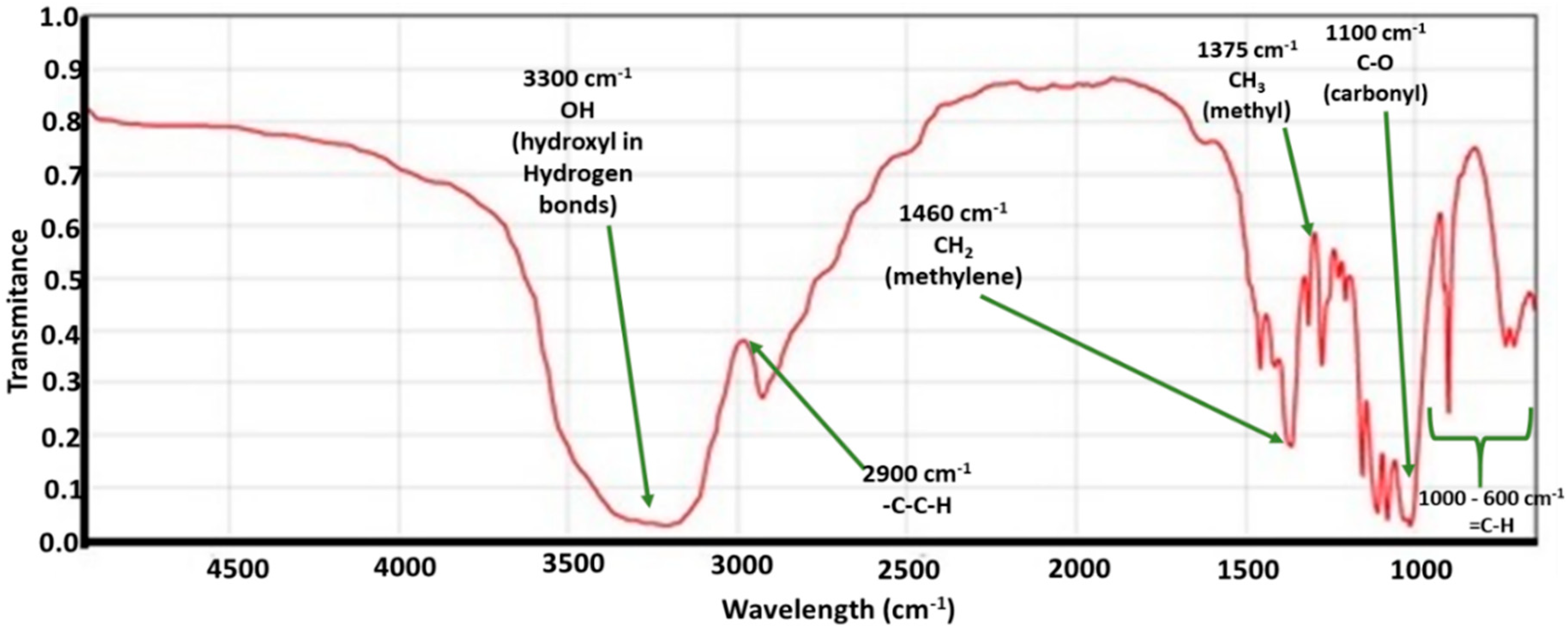
Figure 4.
Genoprotective activity measured as number of micronuclei in peripheral mouse blood. Data expressed as mean ± Standard error of the mean (SEM). *p <0.05; comparison of anthracene + J. secunda vs. anthracene. Two-way repeated measures ANOVA.
Figure 4.
Genoprotective activity measured as number of micronuclei in peripheral mouse blood. Data expressed as mean ± Standard error of the mean (SEM). *p <0.05; comparison of anthracene + J. secunda vs. anthracene. Two-way repeated measures ANOVA.
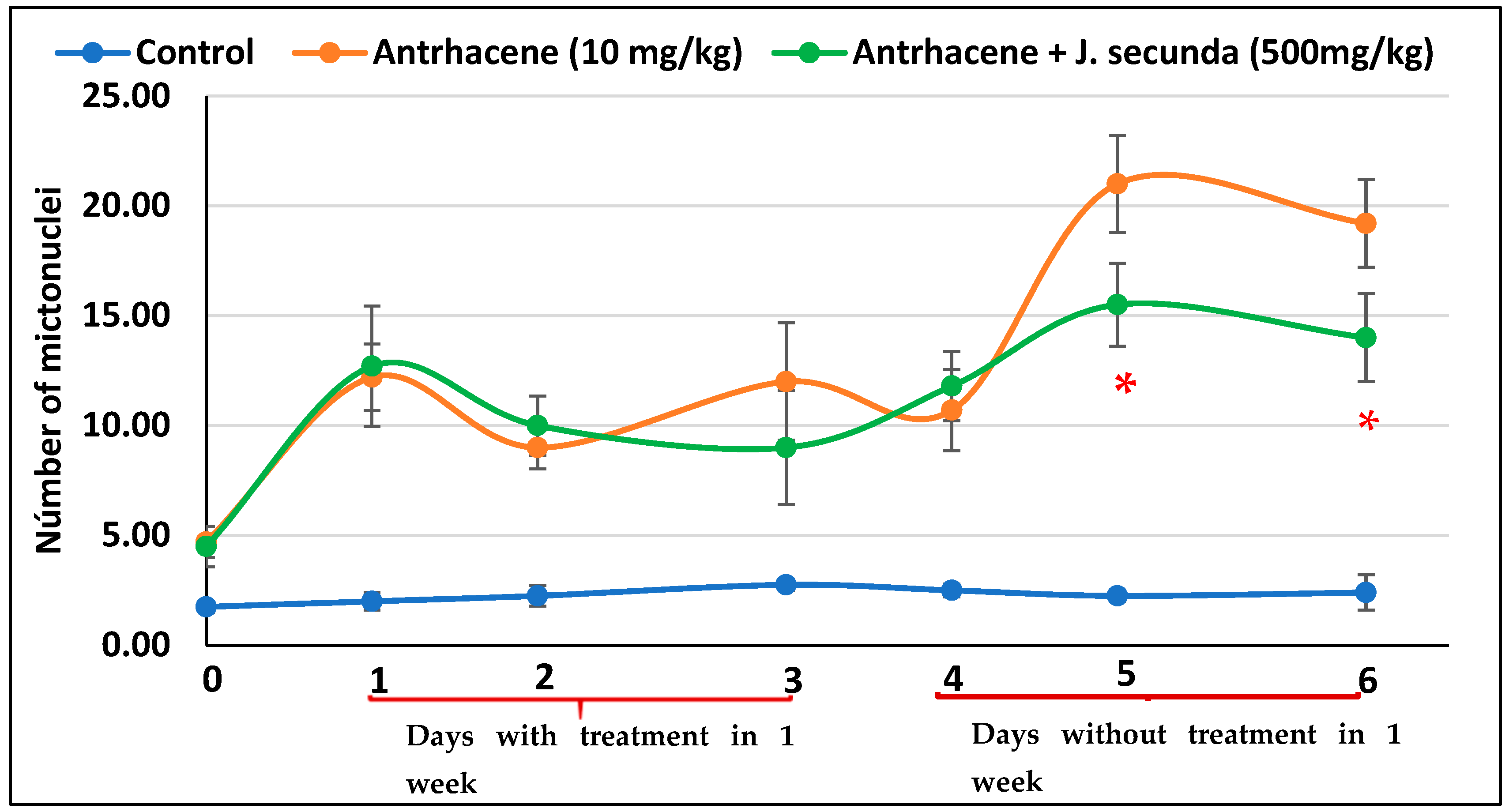
Figure 5.
Changes in the body weight of the mice under different treatments for 36 days (6 weeks). Data are expressed as mean ± Standard Error of the Mean (SEM). * Denotes a p <0.05; comparison of diabetic vs. all groups; t denotes a p <0.05, comparison vs. all groups (Two-way repeated measures ANOVA and Student—Newman—Keuls tests).
Figure 5.
Changes in the body weight of the mice under different treatments for 36 days (6 weeks). Data are expressed as mean ± Standard Error of the Mean (SEM). * Denotes a p <0.05; comparison of diabetic vs. all groups; t denotes a p <0.05, comparison vs. all groups (Two-way repeated measures ANOVA and Student—Newman—Keuls tests).
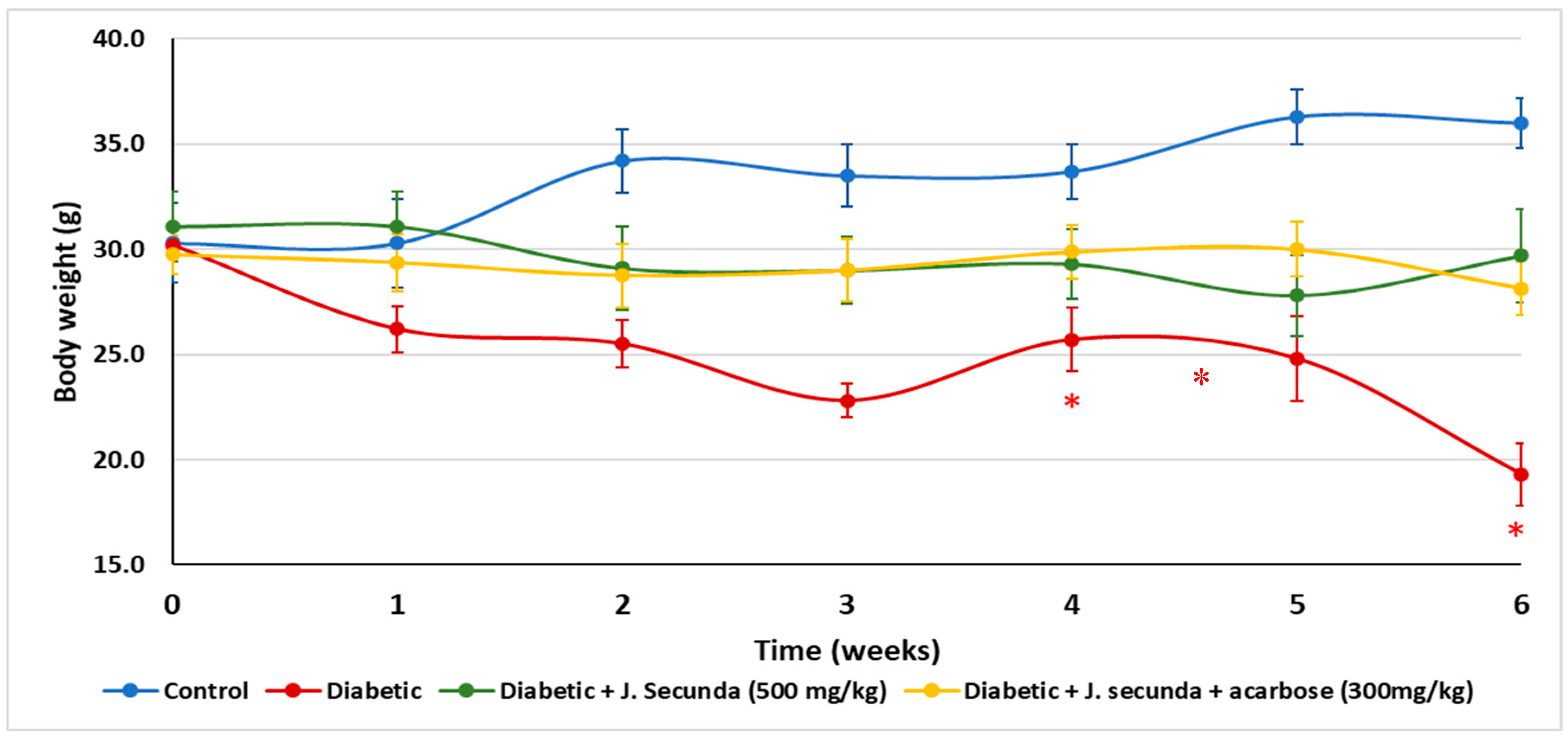
Figure 6.
Glucose levels recorded in mice under different treatments for 36 days (6 weeks). Data is expressed as mean ± Standard error of the mean (SEM). * denotes a p <0.05; comparison of Diabetic + J. secunda vs. diabetic. t denotes a p <0.05; comparison of Diabetic + J. secunda + acarbose vs. Diabetic and diabetic + J. secunda. (Two-way repeated measures ANOVA and Student—Newman—Keuls tests).
Figure 6.
Glucose levels recorded in mice under different treatments for 36 days (6 weeks). Data is expressed as mean ± Standard error of the mean (SEM). * denotes a p <0.05; comparison of Diabetic + J. secunda vs. diabetic. t denotes a p <0.05; comparison of Diabetic + J. secunda + acarbose vs. Diabetic and diabetic + J. secunda. (Two-way repeated measures ANOVA and Student—Newman—Keuls tests).
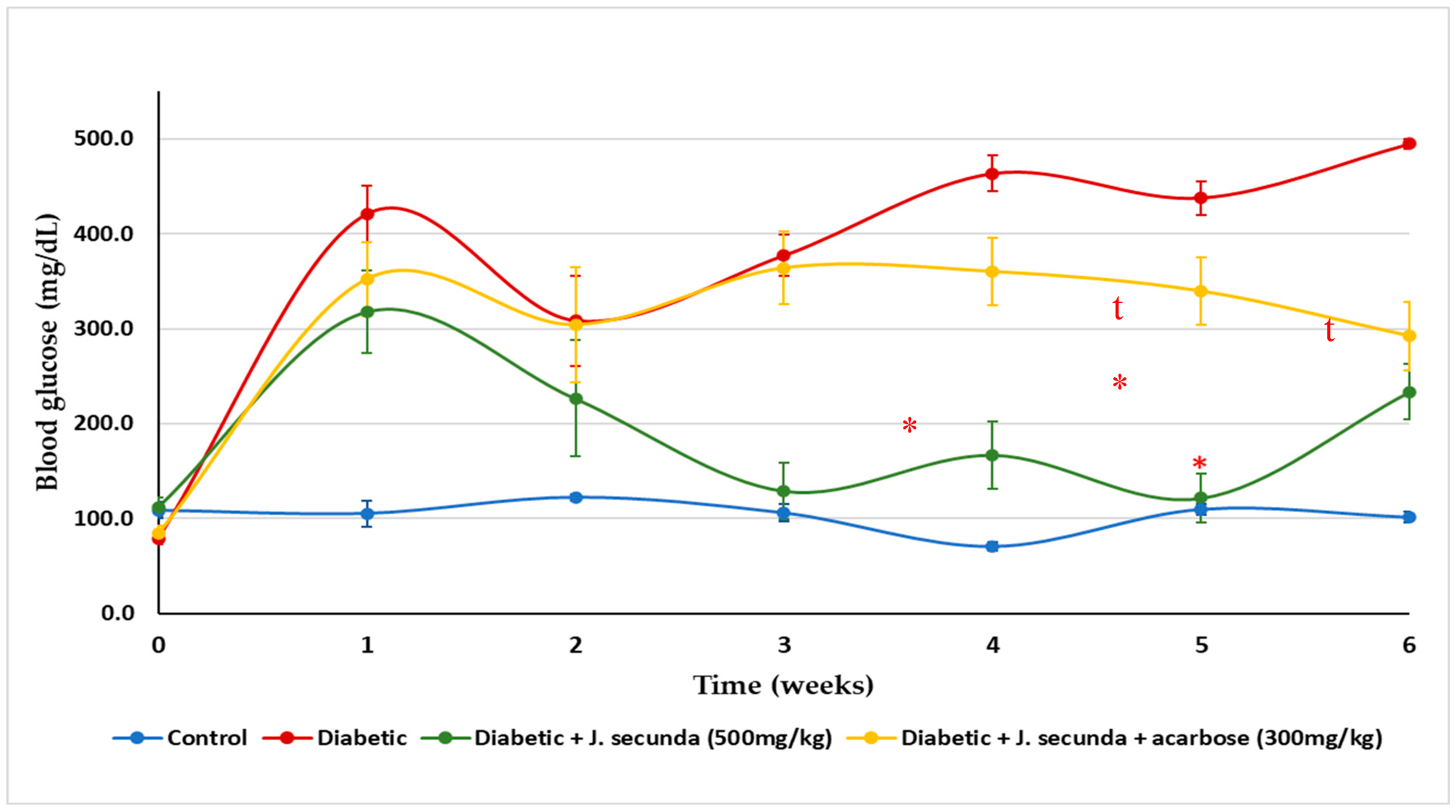
Figure 7.
Triglyceride (TG) levels recorded in mice under different treatments for 36 days (6 weeks). Data is expressed as mean ± Standard error of the mean (SEM). * denotes a p <0.05; comparison of Diabetic + J. secunda vs. control. t denotes a p <0.05; comparison of Diabetic vs. all treatments from week 2 of administration (Two-way repeated measures ANOVA and Student—Newman—Keuls tests).
Figure 7.
Triglyceride (TG) levels recorded in mice under different treatments for 36 days (6 weeks). Data is expressed as mean ± Standard error of the mean (SEM). * denotes a p <0.05; comparison of Diabetic + J. secunda vs. control. t denotes a p <0.05; comparison of Diabetic vs. all treatments from week 2 of administration (Two-way repeated measures ANOVA and Student—Newman—Keuls tests).


Table 1.
Secondary metabolites detected by qualitative phytochemistry in the fresh leaves of Justicia secunda Vahl.
Table 1.
Secondary metabolites detected by qualitative phytochemistry in the fresh leaves of Justicia secunda Vahl.
|
Secundary Metabolite |
Reaction | Acid extract | Etanolic extract | aqueous extract |
| Alkaloids | Dragendorff Mayer |
+ + |
||
| Flavonoids | Shinoda (flavones) 10% NaOH (flavonols) |
+ + |
||
| Sterols | Liebermann Buchard | + | ||
| Tannins | Gelatin reagent 1% FeCl3 (phenolic compounds) |
+ + |
+Presence.
Disclaimer/Publisher’s Note: The statements, opinions and data contained in all publications are solely those of the individual author(s) and contributor(s) and not of MDPI and/or the editor(s). MDPI and/or the editor(s) disclaim responsibility for any injury to people or property resulting from any ideas, methods, instructions or products referred to in the content. |
© 2025 by the authors. Licensee MDPI, Basel, Switzerland. This article is an open access article distributed under the terms and conditions of the Creative Commons Attribution (CC BY) license (http://creativecommons.org/licenses/by/4.0/).
Copyright: This open access article is published under a Creative Commons CC BY 4.0 license, which permit the free download, distribution, and reuse, provided that the author and preprint are cited in any reuse.


