

Submitted:
20 May 2024
Posted:
21 May 2024
You are already at the latest version
Abstract
The prevalence of diabetes mellitus (DM) continues to rise globally, posing significant health challenges and burdens. This metabolic disorder, characterized by elevated blood glucose levels, contributes to various complications including cardiovascular diseases, kidney failure, and stroke. While conventional diabetic drugs exist, they often come with adverse side effects, necessitating the exploration of safer and more cost-effective alternatives, particularly from natural sources like medicinal plants. This study investigates the potential of Neocarya macrophylla (Nm) Ethyl acetate leaf fraction in managing DM. Utilizing a high-fat diet/streptozotocin-induced diabetic rat model, the study explores several key aspects including effective dose determination, biological activity, impact on body mass index (BMI), and complete blood count. Statistical analysis was conducted using GraphPad Prism version 9.1. The determination of the minimum effective dose reveals that 120mg/kg of Ethyl acetate fraction of Nm reduced the blood glucose by 28.9% after 4 hours. In addition, ethyl acetate fraction (120 mg/kg) possessed the most hypoglycemic activity compared to the other fractions of Nm. The Ethyl acetate fraction of Nm at 120mg/kg significantly reduced fasting blood glucose levels compared to the diabetic control(p=0.001) and slightly decreased BMI. Furthermore, the fraction demonstrated significant improvement in the parameters of some of the blood count indices such as red blood cells (p<0.001), total white cells (p<0.01) and platelet (p<0.001) compared to the diabetic control. These findings underscore the potential of Nm as a holistic therapeutic option for managing DM and its haematological complications. In conclusion, this study sheds light on the hypoglycemic potential of Nm Ethyl acetate leaf fraction, offering valuable insights into its effectiveness, safety, and broader physiological impacts. Further research into the mechanisms underlying its therapeutic effects is warranted to fully harness its therapeutic potential in diabetes management.
Keywords:
Neocarya macrophylla
; Ethyl acetate fraction
; Streptozotocin
; High fat Diet
; Body mass index
1. Introduction
Diabetes mellitus (DM) is a metabolic disorder characterized by abnormally high levels of blood glucose [1]. Although not contagious, this disease is regarded as one of the leading causes of death besides causing other health complications such as heart disease, high blood pressure, stroke and kidney failure [2,3]. Diabetes facts and figures show that there is a growing global diabetes burden for individuals, families, and countries. The International Diabetes Federation (IDF) reports that 10.5% of the adult population aged (20-79 years) has diabetes, with almost half unaware that they are living with the condition. By 2045, IDF projections show that 1 in 8 adults, i.e approximately 783 million, will be living with diabetes, an increase of 46% [4]. In Sub-Saharan Africa (SSA), diabetes is projected to rise to 40.7 million by 2045, with over two-thirds undiagnosed, exacerbating the burden [5]. It poses a "double burden," increasing risks of cardiovascular, renal, and communicable diseases like pneumonia and tuberculosis. Poor quality of care, weak management frameworks, and fragmented health systems contribute to high complication rates [6]. Conventional anti-diabetics have side effects such as hypoglycemia, lactic acidosis, flatulence, diarrhoea, hepatic disease, heart failure and pancreatitis to name a few [7,8]. Looking at the burden of diabetes in low-income countries, the available conventional drugs are not cost-effective. As concerns rise regarding the side effects linked to conventional diabetic medications, demand grows for safer, cost-effective alternatives, particularly plant-based solutions. This shift aims to minimize the adverse effects of pharmaceutical drugs, driving interest in herbal and dietary supplements [9,10]. Plant-based remedies align with holistic healthcare trends, perceived as gentler on the body. Individuals seek alternatives addressing both blood sugar control and underlying causes of diabetes and complications. By leveraging plant bioactive compounds like flavonoids and polyphenols, people aim for more natural, sustainable diabetes management [11]. Medicinal plants present a promising avenue for anti-diabetic agents in SSA, given their hypoglycemic properties. Integrating effective plant-based treatments into comprehensive health strategies could significantly improve diabetes care in the region, addressing its substantial burden effectively [12,13,14].
Neocarya macrophylla belongs to the Chrysobalanaceae family, it is a plant thought to have powerful ethno-medicinal properties. This plant can be found in abundance in Africa's tropical regions. The plant has been widely used in Northern Nigeria to treat a variety of diseases such as asthma, dysentery, inflammations, pulmonary problems, skin infections, eye and ear infections, and wounds [15]. Previous phytochemical screening of the Nm plant indicates the presence of a variety of secondary metabolites such as carbohydrates, alkaloids, flavonoids, anthraquinones, saponins, tannins, glycosides, steroids, and triterpenes, all of which may account for the plant's potent pharmacological activities [16]. Nm, is rich in flavonoids and polyphenols, making it a potential antidiabetic agent. These metabolites target various pathways involved in diabetes, offering antioxidant and anti-inflammatory benefits [17,18]. Scientific evidence supports their efficacy, suggesting flavonoids and polyphenols as promising candidates for natural and eco-friendly diabetes management [19,20]. Furthermore, given the rising global prevalence of type 2 DM and the need for novel therapeutic options with fewer side effects, exploring natural sources like N. macrophylla presents a valuable opportunity for the development of new, effective, and potentially safer treatments for this metabolic disorder. The findings of this study provided valuable insight into the effective minimum dose of the fraction, and the effect of the fraction on Blood Glucose, Body Mass Index, lipid profile and Blood Count.
2. Material and Method
2.1. Materials
Materials include; Wistar rats, oral cannula, dissecting kits, sample bottles, conical flask, office pins, animal feed, ethanol, formaldehyde, xylene, Centrifuge machine, formalin, methanol, burette, cotton wool, Glucometer (Accu check), Measuring cylinder, Distilled water, High-fat diet, Distilled water, stopwatch, anaesthetizing chamber, Sensitive weighing scale, Phosphate buffered saline, Streptozotocin (STZ; Sigma), Metformin 500mg (Actavis Chennai, India) 1-ml syringes 23- and 25-G needles.
2.1.1. Plant Collection and Preparation
Plant materials were collected from Jega Local Government Area, Kebbi State, in October 2015. Subsequently, these specimens were taxonomically identified at Ahmadu Bello University's Herbarium, Department of Biological Sciences, by Namadi Sanusi with a voucher specimen (No. 3197). The plant leaves were then sorted, dried in the shade, pulverized, labelled, and preserved at room temperature. The powdered leaves (1961 g) were extracted using a maceration method with 90% methanol for 6 days. After evaporation, a green residue (288 g) known as the crude methanol leaf extract (MEL) was obtained. A portion of MEL (200 g) was suspended in distilled water, filtered, and sequentially partitioned with n-hexane (1 L), chloroform (1 L), ethyl acetate (2.5 L), and n-butanol (2.5 L) to obtain respective fractions and the residual aqueous fraction. Acute toxicity tests in mice were conducted using Lorke’s method and the LD50 of the extract/fractions was determined: 565 mg/kg for n-hexane, chloroform, and ethyl acetate, and 141 mg/kg for n-butanol. Subsequent studies used 30% of LD50 values [21].
2.1.2. Experimental Animals
Thirty-six male Wistar rats aged 4 weeks, weighing 80-120g were obtained from the Animal Breeding Unit, Department of Human Physiology, Ahmadu Bello University Zaria. The rats were kept in plastic cages and maintained at room temperature of 25°C ± 2°C with a 12 h light-dark cycle, all rats had free access to feed and water during the study period. The rats were allowed to acclimatize for two weeks before the experiment in the animal house, Faculty of Pharmaceutical Sciences, Usmanu Danfodiyo University Sokoto. Ethical approval was obtained from the Research Ethics Committee of the Usmanu Danfodiyo University, Sokoto (UDUS) with reference number NHREC/UDUTH-HREC/30/03/202. Similarly, all rules and regulations guiding animal research were strictly adhered to throughout the study.
2.1.3. Preparation of the Neocarya macrophylla (Nm) Fractions
Corn oil was employed as a solvent to dissolve n-hexane. At the same time, a mixture of 0.1% dimethyl sulfoxide (DMSO) and distilled water was used to dissolve chloroform, ethyl acetate, and n-butanol fractions. Specifically, a stock solution of 24 mg/mL was prepared for the n-hexane, chloroform, and ethyl acetate fractions. In contrast, a stock solution of 9 mg/mL was prepared for the n-butanol fraction. This approach was taken to ensure the solubility and stability of the fractions before their administration to the experimental rats.
2.1.4. Preparation of High Fat Diet
The 60% high-fat diet was prepared based on the study conducted by Gheibi [22]. In this case, a normal animal feed of 10kg consisting of carbohydrate (59.40%), protein (20.0%), fat (4.8%), crude fibre (1.8%), acid detergent fibre (7.6%), neutral detergent fibre (6.4%) was used to prepare a 60% high-fat diet by adding pig oil and groundnut at a ratio of 3:2. Therefore 3.6kg (2.5 L) of pig oil and 2.4kg were mixed with 10kg of normal pellet diet which gives 60% fat with the calories of 540cal.
2.2. Methods
2.2.1. Induction of High Fat Diet/Streptozotocin (HFD/STZ) Diabetes
After a two-week acclimatization period, the Wistar rats were fed with a high-fat diet comprising 60% fat content for four weeks. On the 29th day of the regimen, the rats underwent an 8-hour fasting period from 7:00 a.m. to 3:00 p.m., following which they were administered STZ treatment. This involved injecting each rat with 40 mg/kg body weight of STZ dissolved in 0.1 M citrate buffer (PH 4.5) intraperitoneally. The rats had access to 5% glucose to prevent hypoglycemia. Three days post-STZ administration, rats underwent another 8-hour fasting period (from 7:00 a.m. to 3:00 p.m.), following which their fasting blood glucose levels were measured twice using a glucometer (Accu check) to determine those who were diabetic. After 10 days, the rats were fasted again to confirm the induction of diabetes. Rats with fasting blood glucose levels ≥ 180 mg/dl were classified as diabetic and included in the experimental cohort.
Measurements of animal weights and heights (from the tip of the nose to the base of the tail) were recorded before the commencement of the high-fat diet, and again before STZ induction to determine the precise dose. Subsequently, the measurements were taken weekly for four weeks using a digital beam balance [23].
2.3. Determination of Minimum Effective Dose
The hypoglycaemic activity of Nm fractions (n-hexane, chloroform, ethyl acetate and n-butanol) was evaluated to determine the minimum dose of each fraction to be administered for the pilot study. Diabetic rats were divided into groups for 60 mg/kg (G60), 120 mg/kg (G120), and 180 mg/kg (G180) for n-hexane, chloroform and ethyl acetate while 15 mg/kg (G15), 30 mg/kg (G30) and 45 mg/kg (G45) and diabetic control (DC) for n-butanol comprising of three rats each. The rats in group DC served as diabetic untreated control. The groups G60, G120, and G180, each for the n-hexane, chloroform, and ethyl acetate fractions, were administered their respective fractions at single doses of 60, 120, and 180 mg/kg. Meanwhile, the n-butanol group received doses of 15, 30, and 45 mg/kg via oral administration. Percentage change in blood glucose was estimated at 0, 1, 2, and 4 hrs calculated for each group using the following formula:
where Go and Gt were the values of initial blood glucose (0 hours) and blood glucose at 1, 2 and 4 hours respectively. The blood glucose levels at different time intervals of different groups were compared. The fraction dose that lowered the glucose level by 25% at 4 hours was considered the minimum hypoglycaemic dosage [24,25].
2.4. Determination of Neocarya macrophylla Fraction with Most Hypoglycemic Activity
The Nm fraction with the most hypoglycemic fraction was determined following the determination of the minimum effective dose. The Nm fractions that reduced blood glucose by at least 25% were included in this preliminary study. Therefore, Wistar rats were grouped into chloroform, ethyl acetate and n-butanol fractions groups consisting of 3 rats per group. The rats were treated daily via the oral route for seven days and fasting blood glucose was measured on day 1, day 3, day 5 and day 7.
2.5. Experimental Design
After inducing diabetes through a combination of a 60% high-fat diet (HFD) and 40 mg/kg body weight (BW) of Streptozotocin (STZ) as well as the preliminary studies, the rats were carefully selected and divided randomly into groups, each comprising six rats. The experiment spanned 4 weeks, during which various treatments were administered using the oral route of administration to different groups:
Group 1: This served as the normal control, consisting of rats fed with a regular diet and provided with distilled water throughout the experiment.
Group 2: Representing the diabetic control, rats were fed a HFD/STZ and given distilled water (Diabetic non-treated group).
Group 3: The HFD/STZ-induced diabetic rats in this group were treated with a fraction of Nm for 4 weeks.
Group 4: The HFD/STZ-induced diabetic rats received the standard drug treatment, Metformin, at a dosage of 200mg/kg, for 4 weeks serving as a comparative reference group.
2.6. Determination of Fasting Blood Glucose
Following 8 hours of fasting (7:00 am-3:00 pm), the fasting blood sugar was determined using an Accu check glucometer, blood samples were collected via a slight incision on the lateral tail vein using a scalpel blade. The measurements were taken in duplicates to ensure consistency in the glucometer readings. This practice was repeatedly done to confirm the induction of diabetes and was weekly repeated for a period of four weeks.
2.7. Body Mass Index Measurement (BMI)
Following random selection and grouping of the rats. The weight and height (from the tip of the nose to the base of the tail) were taken immediately and calculated as follows;
BMI = weight (g)/ height2(cm2)
Subsequently, the BMI was taken weekly for four weeks.
2.8. Basic Biochemical Analysis
At the end of the experiment, all the experimental rats were anaesthetized with ketamine (100 mg/kg) + xylazine (10 mg/kg) by intramuscular injection followed by euthanasia of the rats via heart puncture. Blood samples were collected via cardiac puncture in EDTA and plain tubes and transported in ice packs to the Hematology and Clinical Biochemistry laboratories of Usmanu Danfodiyo University Laboratories for analysis of complete blood count (RBCs, Hb concentration, PCV, MCV, MCH, MCHC, WBCs, platelets, lymphocytes, monocyte, neutrophil, and eosinophil), using an automated haematology analyzer (Cell Dyn® 3700, Abbott Diagnostics, USA).
2.9. Statistical Analysis
All analyses in this study were conducted using GraphPad Prism (GraphPad Prism software, Inc. Version 9.01, San Diego, California, USA), where p<0.05 is considered significant. The data were presented as the mean ± standard error of the mean (SEM). Data obtained from Fasting Blood Glucose and Body Mass Index were analyzed using repeated measured ANOVA whereas data from lipid profile were analysed using one-way ANOVA followed by Tukey’s post hoc test
3. Results
3.1. Determination of Minimum Effective Dose and the Most Active Fraction from Neocarya macrophylla (Nm) Leaves
The impact of different fractions of Nm on blood glucose levels post-administration of graded doses based on their respective 30% LD50 values as shown in Table 1. Following a 4-hour blood glucose assessment, n-hexane could not achieve the minimum effective dose (25% reduction), while the highest doses of chloroform (180 mg/kg) and n-butanol (45 mg/kg) attained the minimum effective doses. Notably, the ethyl acetate fraction demonstrated the minimum effective dose at 120 mg/kg. Furthermore, the hypoglycemic effects of Nm fractions achieving at least a 25% reduction in blood glucose were evaluated. The findings highlighted the ethyl acetate fraction (120 mg/kg) as the most potent, reducing fasting blood glucose levels by nearly 50%, followed by the n-butanol fraction (45 mg/kg) with a 32% reduction after 7 days of treatment (Figure 1).
3.2. Determination of Fasting Blood Glucose Level after 4 Weeks of Treatment
Fasting blood glucose levels (mg/dl) across four groups over four weeks. Group 2 (Diabetic Control) consistently presented the highest levels of fasting blood glucose, while Group 3 (Diabetic rat fed with 200 mg/kg of Metformin) and 4 (Diabetic rat fed with 120 mg/kg of Ethyl acetate) showed a constant reduction in fasting blood glucose as shown in Figure 2. The repeated measured ANOVA and Tukey posthoc indicated a significant association between the Ethyl acetate leaf fraction of Nm and Normal control (p <0.001) as well as diabetic control (p = 0.01).
3.3. Effect of Ethyl Acetate fraction of Neocarya macrophylla (120 mg/kg) on Body Mass Index (g/cm2)
The BMI of all diabetic rats is significantly higher than those of the normal control group (Table 2). While the rats in both the diabetic control and metformin-treated groups gained weight over the four-week study period. The repeated measured ANOVA indicates that ethyl acetate leaf fraction treatment varied significantly with the normal control group (p <0.001) on Body Mass Index (BMI). No significant variation was observed with the diabetic control or Metformin-treated groups. However, a slight decrease in BMI was observed among those treated with Ethyl acetate leaf fraction, although not statistically significant when compared with the diabetic control group.
3.4. Effect of Ethyl Acetate Leaf Fraction of Nm Fraction on Complete Blood Count
The effect of Nm ethyl acetate leaf fraction on blood cell indices in normal, diabetic, and Metformin-treated rats is shown in Table 3. The results indicated that the diabetic control group had significantly lower RBC, Hb, and PCV values compared to the normal control group (p< 0.001). Treatment with ethyl acetate leaf fraction significantly increased RBC (p< 0.001), Hb (p<0.001) and PCV (p= 0.01) values compared to the diabetic control group. The MCV, MCH, and MCHC values were not significantly different when comparing the treatment group with the diabetic control group. Furthermore, the Diabetic controls showed lower WBC counts, while Metformin and Nm fraction groups had higher counts. Nm fraction altered neutrophil (p= 0.003), monocyte (p= 0.03) and lymphocyte (p<0.001) percentages significantly when compared with the diabetic control group. Platelet counts were significantly increased in diabetic control compared to the normal control (p= 0.0036) and ethyl acetate fraction group (p< 0.001).
4. Discussion
The study investigated the hypoglycemic activity of ethyl acetate leaf fractions of Neocarya macrophylla (Nm) in high-fat diet/ Streptozotocin-induced diabetic Wistar rats. The preliminary studies evaluated the effective minimum dose of various fractions of Nm and the fraction with the most anti-hyperglycemic activity. The hypoglycemic effect of Nm as well as its effect on body mass index and haematological indices.
The application of percentage glycaemic variability in determining the minimum effective dose involves assessing how blood glucose levels fluctuate over time in response to different doses of a substance. By analysing the percentage reduction in blood glucose levels at specific time points, researchers can evaluate the effectiveness of various doses in managing glycemic control. This method allows for a detailed understanding of how blood glucose levels respond to treatment, aiding in the identification of the optimal dose that produces a significant reduction in blood glucose levels. The application of percentage glycemic variability in determining the minimum effective dose involves assessing how blood glucose levels fluctuate over time in response to different doses of a substance [26]. By analyzing the percentage reduction in blood glucose levels at specific time points using different fractions, it is possible to evaluate the effectiveness of various fractions in managing glycemic control. This method allows for a detailed understanding of how effective are different fractions, thereby aiding in the identification of the most effective fraction and the optimal dose needed to control blood glucose [27,28]. Monitoring percentage glycemic variability provides valuable insights into the impact of different doses on glycemic control, helping healthcare providers tailor treatment regimens to achieve optimal blood glucose management and reduce the risk of diabetes-related complications [27,29]. The study revealed Ethyl acetate fraction (120 mg/kg) as the minimum dose as well as the most effective of the Nm fractions. Therefore, the Ethyl acetate (120 mg/kg) fraction was used in this study. This finding is consistent with the report of 25% reduction criteria previously suggested [24,25].
Various studies especially in Sub-Saharan Africa have explored the potential of natural products in managing diabetes [30,31]. For example, a study on Smilax glabra demonstrated its hypoglycemic activity in type 2 diabetic mouse models, highlighting its ability to reduce blood glucose levels and improve insulin sensitivity [32]. Similarly, Tectona grandis leaves have shown antidiabetic properties through modulation of glucose absorption and uptake, leading to reduced hyperglycemia in diabetic rats [33]. Other plants like Costus speciosus, Coccinia grandis, and several African medicinal plants have been identified for their oral hypoglycemic properties and potential to manage diabetes [34,35,36]. Nm one of the plants found within Sub-Saharan Africa that exhibits a promising hypoglycemic effect. This was reported when the aqueous stem back of the extract was used to treat diabetes in alloxan-induced diabetic Wistar rats [34]. In this study, Ethyl acetate fraction of Nm demonstrated a remarkable anti-hyperglycemic potential after 28 days of treatment in high-fat diet/Streptozotocin-induced Wistar rats. A remarkable reduction in fasting blood glucose was first seen initially after 2 weeks of treatment and by 4 weeks of treatment, the fasting blood glucose was reduced to near-normal value. These results suggested that this plant fraction could be valuable in developing alternative or complementary treatments for diabetic management.
The effect of medicinal antidiabetic agents on body mass index (BMI) has been a subject of research interest, particularly concerning mortality rates and obesity paradox in patients with type 2 diabetes mellitus and acute coronary syndrome (ACS). Studies have shown that the relationship between BMI and mortality rates in these patients is U-shaped, with class I obesity being protective against mortality compared to normal-weight individuals. However, this protective effect of obesity is influenced by insulin therapy, as it abolishes the survival benefit of obesity in patients receiving insulin treatment [34,35]. Moreover, the use of antidiabetic drugs like Tirzepatide has shown effectiveness in weight loss for individuals who are overweight or obese, even without diabetes. Clinical trials have demonstrated that Tirzepatide, a dual agonist combining glucose-dependent insulinotropic polypeptide (GIP) and glucagon-like peptide-1 (GLP-1) receptor agonism, can lead to significant weight reduction when combined with lifestyle changes, highlighting its potential in managing obesity-related complications [37]. However, this study could not provide a significant variation in BMI between those treated with Ethyl acetate fraction of Nm and the diabetic control. However, a slight reduction in BMI was observed, this calls for more studies involving more weeks of treatment and higher doses to check for the potential effect of this fraction on BMI.
The current study examined the impact of Nm ethyl acetate leaf fraction on complete blood count variables across different groups. In the Diabetic Control group, significant deviations from normal values were observed, indicating anaemia and inflammation. Treatment with Metformin partially improved haematological parameters but remained lower than the Normal Control group. Notably, treatment with Nm ethyl acetate leaf fraction showed significant improvements in RBC parameters compared to both Diabetic Control and Metformin-treated groups, suggesting potential therapeutic effects. Moreover, Nm treatment exhibited a substantial reduction in WBC count, indicative of anti-inflammatory properties. Neutrophil and lymphocyte percentages, which are markers of inflammation and immune response, were notably normalized by Nm treatment. These findings imply that Nm ethyl acetate leaf fraction could mitigate diabetic-induced haematological abnormalities [38], potentially through anti-inflammatory and erythropoietic mechanisms, warranting further investigation for clinical application [39].
In addition, studies on Artemisia afra, Ocimum gratissimum, Allium sativum, Zingiber officinale, and Allium saralicum have provided valuable insights into the effects of these plants on haematological parameters in the context of treatment of diabetes. Artemisia afra and Ocimum gratissimum have demonstrated hypoglycemic activity and hepatoprotective abilities by restoring abnormal haematological parameters in diabetic conditions. These plants have shown the potential to improve RBCs, haemoglobin (Hb), and packed cell volume (PCV) [40,41]. This indicates their ability to impact red cell indices and white blood cell differentials positively. Furthermore, the combined spice extract of Allium sativum and Zingiber officinale, along with Metformin, has shown improvements in platelet counts, suggesting the plant extract's influence on platelet function [42]. Similarly, the ethanolic fraction of Allium saralicum has been associated with improvements in red blood cell count and related parameters [43,44].
5. Conclusions
The study explored the hypoglycemic potential of Neocarya macrophylla (Nm) Ethyl acetate leaf fraction in diabetic rats, focusing on various aspects such as effective dose determination, biological activity, impact on body mass index (BMI), and complete blood count. Evaluation of percentage glycemic variability aided in determining the minimum effective dose, with 120mg/kg showing a 25% blood glucose reduction. Nm Ethyl acetate demonstrated promising anti-hyperglycemic effects, aligning with previous findings on Nm's antidiabetic potential. Furthermore, it exhibited notable effects on hematological parameters, indicative of its hematoprotective properties. While the fraction showed a slight BMI reduction, further investigations are warranted for a clearer understanding.
Conflict of Interest:
No conflict of interest declared among the authors.
References
- June CC, Wen LH, Sani HA, Latip J, Gansau JA, Chin LP, et al. Hypoglycemic effects of Gynura procumbens fractions on streptozotocin-induced diabetic rats involved phosphorylation of GSK3β (Ser-9) in liver. Sains Malays. 2012;41(8):969–75.
- Banday MZ, Sameer AS, Nissar S. Pathophysiology of diabetes: An overview. Avicenna J Med [Internet]. 2020 Oct 4;10(04):174–88. Available from: http://www.thieme-connect.de/DOI/DOI?10.4103/ajm.ajm_53_20.
- Nain P, Saini V, Sharma S, Nain J. Antidiabetic and antioxidant potential of Emblica officinalis Gaertn. leaves extract in streptozotocin-induced type-2 diabetes mellitus (T2DM) rats. J Ethnopharmacol. 2012 Jun;142(1):65–71.
- IDF. International Diabetes Federation. Vol. 102, Diabetes Research and Clinical Practice. 2022.
- Mercer T, Chang AC, Fischer L, Gardner A, Kerubo I, Tran DN, et al. Mitigating the Burden of Diabetes in Sub-Saharan Africa through an Integrated Diagonal Health Systems Approach. Diabetes Metab Syndr Obes. 2019 Oct;Volume 12:2261–72.
- Pastakia S, Pekny C, Manyara S, Fischer L. Diabetes in sub-Saharan Africa – from policy to practice to progress: targeting the existing gaps for future diabetes care. Diabetes Metab Syndr Obes. 2017 Jun;Volume 10:247–63.
- Abu-Odeh AM, Talib WH. Middle East Medicinal Plants in the Treatment of Diabetes: A Review. Molecules [Internet]. 2021 Jan 31;26(3):742. Available from: https://www.mdpi.com/1420-3049/26/3/742.
- Babiker A, Dubayee M. Anti-diabetic medications: How to make a choice? Sudan J Paediatr [Internet]. 2017;11–20. Available from: https://www.ejmanager.com/fulltextpdf.php?mno=287497.
- Cefalu WT, Stephens JM, Ribnicky DM. Diabetes and Herbal (Botanical) Medicine [Internet]. 2011. Available from: https://www.ncbi.nlm.nih.gov/books/NBK92755/?report=printable.
- Aloke C, Egwu CO, Adelusi OA, Chinaka N, Kanu SC, Ogbodo PN, et al. Medicinal plants: A promising source of anti-diabetic agents in sub-Sahara Africa. Current Issues in Pharmacy and Medical Sciences. 2023 Jun 1;36(2):65–76.
- Salehi, Ata, V. Anil Kumar, Sharopov, Ramírez-Alarcón, Ruiz-Ortega, et al. Antidiabetic Potential of Medicinal Plants and Their Active Components. Biomolecules. 2019 Sep 30;9(10):551.
- Mohammed, A. Hypoglycemic Potential of African Medicinal Plants in Diabetic and Non-Diabetic Human Subjects: A Review. Clinical Complementary Medicine and Pharmacology. 2023 Jun;3(2):100081.
- Aloke C, Egwu CO, Adelusi OA, Chinaka N, Kanu SC, Ogbodo PN, et al. Medicinal plants: A promising source of anti-diabetic agents in sub-Sahara Africa. Current Issues in Pharmacy and Medical Sciences. 2023 Jun 1;36(2):65–76.
- Aloke C, Egwu CO, Adelusi OA, Chinaka N, Kanu SC, Ogbodo PN, et al. Medicinal plants: A promising source of anti-diabetic agents in sub-Sahara Africa. Current Issues in Pharmacy and Medical Sciences. 2023 Jun 1;36(2):65–76.
- Haruna A, A M, M A, Z I, M H, Odiba O, et al. Phytochemical and antimicrobial evaluations of the methanol stem bark extract of Neocarya macropylla. J Chem Pharm Res. 2015;7(1):477–48.
- Halilu M, JO A, NL A, M A. Phytochemical screening and mineral element analysis of the root bark of Parinari macrophylla Sabine (Chrysobalanaceae) and its effect on microorganisms. Cont J Biol Sci. 2010; 3:46–50.
- Shehadeh MB, Suaifan GARY, Abu-Odeh AM. Plants Secondary Metabolites as Blood Glucose-Lowering Molecules. Molecules. 2021 Jul 17;26(14):4333.
- Rahman MdA, Chowdhury JMKH, Aklima J, Azadi MA. Leea macrophylla Roxb. leaf extract potentially helps normalize islets of β-cells damaged in STZ-induced albino rats. Food Sci Nutr. 2018 Jun 30;6(4):943–52.
- Muhammad S, Umar KJ, Sani NA, Muhammad S. Evaluation of nutritional and anti-nutritional profiles of gingerbread plum (Neocarya Macrophylla) seed kernel from Sokoto State, Nigeria. International Journal of Science and Technology. 2015; 4:361-367.
- Audu OT, Oyewale AO, Amupitan JO. The biological activities of secondary metabolites of Parinari macrophylla Sabine. ChemClass Journal. 2005;19–21.
- Jega Yusuf A, Ismail Abdullahi M, Alhaji Muhammad A, Ghandi Ibrahim K. Neocarya macrophylla (Sabine) Prance: Review on taxonomy, ethnobotany, phytochemistry and biological activities. 2021; Available from: www.preprints.
- Gheibi S, Kashfi K, Ghasemi A. A practical guide for induction of type-2 diabetes in the rat: Incorporating a high-fat diet and streptozotocin. Biomedicine & Pharmacotherapy. 2017 Nov; 95:605–13.
- Mebratie W, Tekuar S, Alemayehu K, Dessie T. Body weight and linear body measurements of indigenous goat population in Awi Zone, Amhara region, Ethiopia. Acta Agric Scanda Anim Sci. 2022 Oct 2;71(1–4):89–97.
- Okoduwa S, Umar I, James D, Inuwa H. Anti-Diabetic Potential of Ocimum gratissimum Leaf Fractions in Fortified Diet-Fed Streptozotocin Treated Rat Model of Type-2 Diabetes. Medicines. 2017 Oct 11;4(4):73.
- Oguanobi NI, Ghasi S, Chijioke CP. Anti-diabetic effect of crude leaf extracts of Ocimum gratissimum in neonatal streptozotocin-induced type-2 model diabetic rats. Int J Pharm Pharm Sci. 2012; 4:77–88.
- Ramdath DD, Renwick S, Hawke A, Ramdath DG, Wolever TMS. Minimal Effective Dose of Beans Required to Elicit a Significantly Lower Glycemic Response Than Commonly Consumed Starchy Foods: Predictions Based on In Vitro Digestion and Carbohydrate Analysis. Nutrients. 2023 Oct 24;15(21):4495.
- Sanni O, Nkomozepi P, Islam MdS. Ethyl Acetate Fractions of Tectona Grandis Crude Extract Modulate Glucose Absorption and Uptake as Well as Antihyperglycemic Potential in Fructose–Streptozotocin-Induced Diabetic Rats. Int J Mol Sci. 2023 Dec 19;25(1):28.
- Nevoret C, Gervaise N, Delemer B, Bekka S, Detournay B, Benkhelil A, et al. The Effectiveness of an App (Insulia) in Recommending Basal Insulin Doses for French Patients with Type 2 Diabetes Mellitus: Longitudinal Observational Study. JMIR Diabetes. 2023 Mar 1;8: e44277.
- Martinez M, Santamarina J, Pavesi A, Musso C, Umpierrez GE. Glycemic variability and cardiovascular disease in patients with type 2 diabetes. BMJ Open Diabetes Res Care. 2021 Mar 24;9(1): e002032.
- Marcela Aragon Novoa D, Regina Mena Barreto Silva F. The Role of Natural Products on Diabetes Mellitus Treatment.
- Ríos J, Francini F, Schinella G. Natural Products for the Treatment of Type 2 Diabetes Mellitus. Planta Med. 2015 Jul 1;81(12/13):975–94.
- Nguyen PTM, Ngo Q Van, Nguyen MTH, Quach LT, Pyne SG. Hypoglycemic activity of the ethyl acetate extract from Smilax glabra Roxb in mice: Biochemical and histopathological studies. Iran J Basic Med Sci. 2020 Dec;23(12):1558–64.
- Nevoret C, Gervaise N, Delemer B, Bekka S, Detournay B, Benkhelil A, et al. The Effectiveness of an App (Insulia) in Recommending Basal Insulin Doses for French Patients with Type 2 Diabetes Mellitus: Longitudinal Observational Study. JMIR Diabetes. 2023 Mar 1;8: e44277.
- Ibrahim AA, Abdussalami MS, Appah J, Umar AH, Ibrahim AA, Dauda KD. Antidiabetic effect of aqueous stem bark extract of Parinari macrophylla in alloxan-induced diabetic Wistar rats. Futur J Pharm Sci. 2021;7(1).
- Muhammad S, Umar KJ, Sani NA, Sokoto MA. Analysis of Nutrients, Total Polyphenols and Antioxidant Activity of Gingerbread Plum (Neocarya Macrophylla ) Fruits from Sokoto. 2015;29(1):20–5.
- Almustapha N, Achor M, ME H, Abah JO. Phytochemical screening and mineral element analysis of the root bark of Parinari macrophylla Sabine (Chrysobalanaceae) and its effect on microorganisms. Cont J Biol Sci. 2010; 3:46–50.
- Melissa Rohman. https://news.feinberg.northwestern.edu/2023/11/08/study-finds-antidiabetic-drug-effective-for-weight-loss/. 2023. Study Finds Antidiabetic Drug Effective for Weight-Loss.
- Elebiyo TC, Oluba OM, Adeyemi OS. Anti-malarial and haematological evaluation of the ethanolic, ethyl acetate and aqueous fractions of Chromolaena odorata. BMC Complement Med Ther. 2023 Dec 1;23(1).
- Ujah FO, Y. Mohammad Y, E. Audu-War V. Effect of Ethyl Acetate Fraction of P. amarus Leaf on Hematological and Biochemical Parameters in Albino Rat with Arsenic Induced Toxicity. Asian Journal of Pharmaceutical Research and Development. 2021 Jun 15;9(3):11–5.
- Ofem O, Ani E, Eno A. Effect of aqueous leaves extract of Ocimum gratissimum on hematological parameters in rats. Int J Appl Basic Med Res. 2012;2(1):38.
- Sunmonu TO, Afolayan AJ. Evaluation of Antidiabetic Activity and Associated Toxicity of Artemisia afra Aqueous Extract in Wistar Rats. Evidence-Based Complementary and Alternative Medicine. 2013; 2013:1–8.
- Otunola GA, Afolayan AJ. Antidiabetic effect of combined spices of Allium sativum, Zingiber officinale and Capsicum frutescens in alloxan-induced diabetic rats. Front Life Sci. 2015 Oct 2;8(4):314–23.
- Taiwo IA, Oboh BolaO, Francis-Garuba PenielN. Haematological Properties of Aqueous Extracts of Phyllantus amarus (Schum and Thonn.) and Xylopia aethiopica (Dunal) A. Rich in Albino Rats. Studies on Ethno-Medicine. 2009 Jul 2;3(2):99–103.
- Fazelipour S, Hadipour Jahromy M, Tootian Z, Goodarzi N. Antidiabetic effects of the ethanolic extract of Allium saralicum R.M. Fritsch on streptozotocin-induced diabetes in a mice model. Food Sci Nutr. 2021 Sep 18;9(9):4815–26.
Figure 1.
Hypoglycemic effect of Neocrya macrophylla fractions. Data were presented as Mean SEM of 3 rats per group. SEM: Standard Error of Mean.
Figure 1.
Hypoglycemic effect of Neocrya macrophylla fractions. Data were presented as Mean SEM of 3 rats per group. SEM: Standard Error of Mean.
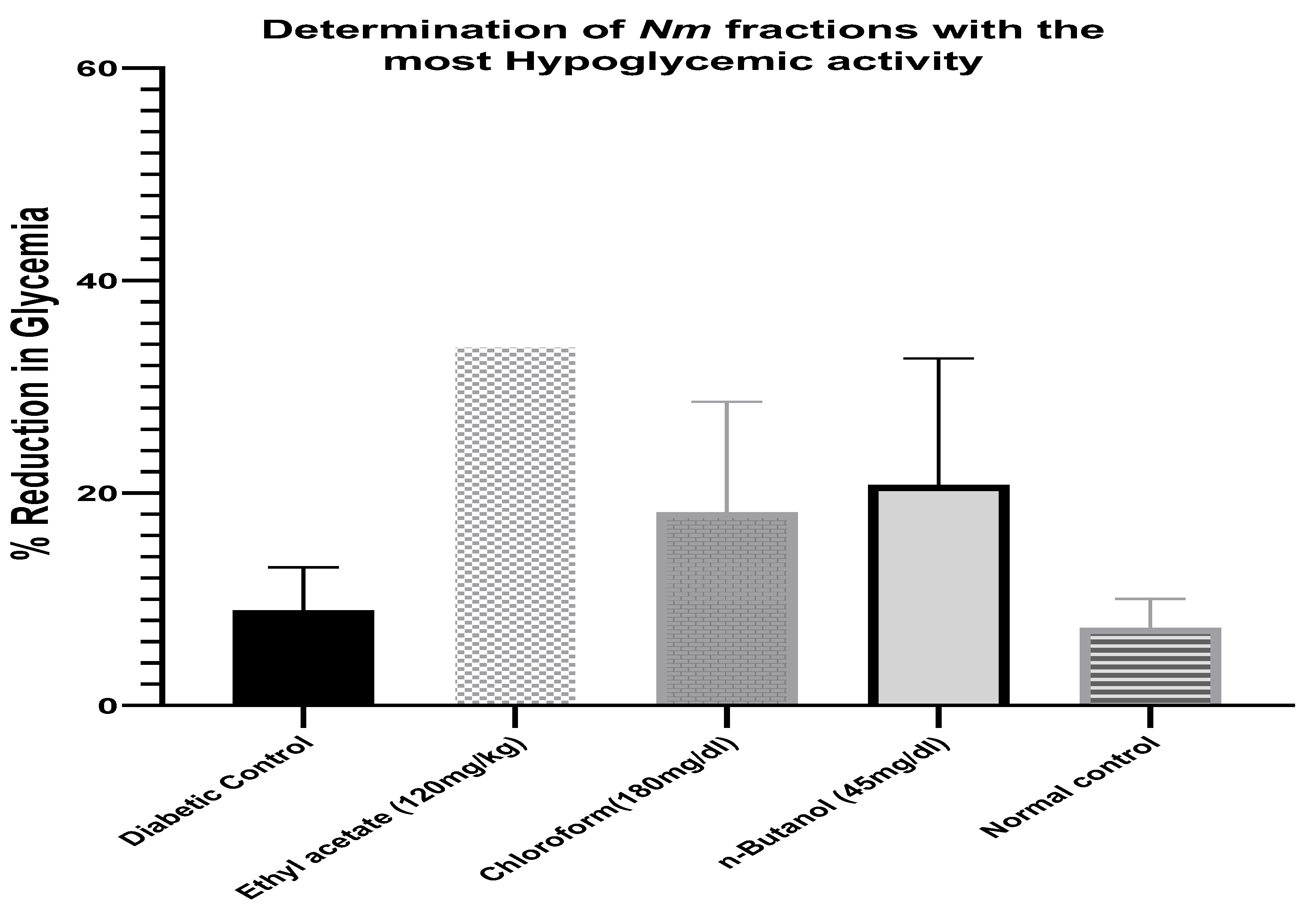
Figure 2.
Distribution of Fasting blood glucose over four weeks. Data were presented as Mean SEM of 6 rats per group. ‘a’: p< 0.001 vs Normal Control. ‘b’: p= 0.01 vs Diabetic Control. SEM: Standard Error of Mean.
Figure 2.
Distribution of Fasting blood glucose over four weeks. Data were presented as Mean SEM of 6 rats per group. ‘a’: p< 0.001 vs Normal Control. ‘b’: p= 0.01 vs Diabetic Control. SEM: Standard Error of Mean.
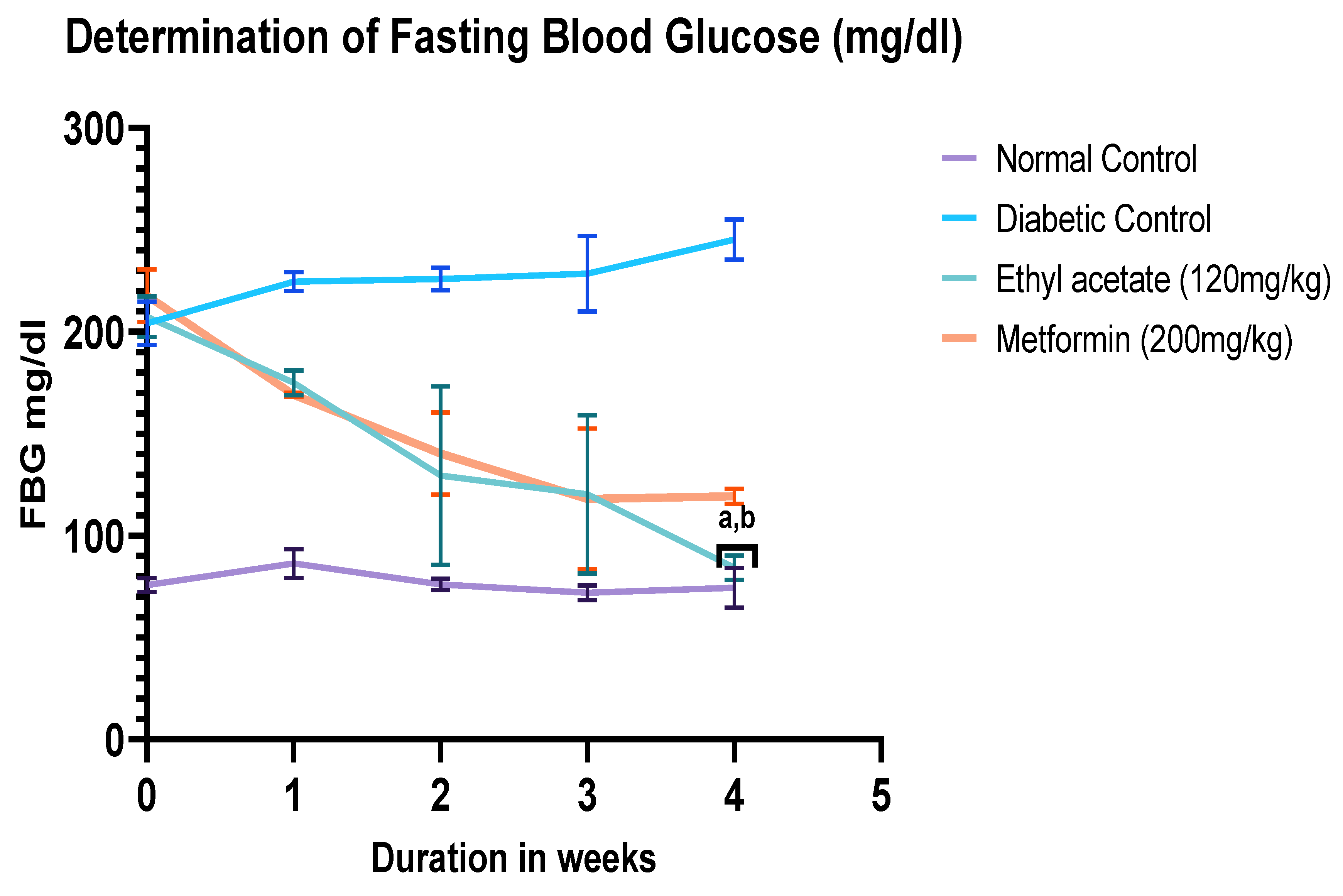

Table 1.
Determination of Effective Minimum Dose of fractions of Nm leaf.
| Fractions of Nm (mg/kg) |
Blood Glucose Level (mg/dL) | |||
|---|---|---|---|---|
| 0 hour | 1 hour | 2 hours | 4 hours | |
| Mean±SEM | Mean±SEM (%) | Mean±SEM (%) | Mean±SEM (%) | |
| HXG60 | 236 | 2323.3 (1.7) | 235 (0.4) | 225(4.7) |
| HXG120 | 248 | 245(1.2) | 240(3.2) | 230(7.3) |
| HXG180 | 250 | 240(4.0) | 236(5.6) | 230(8.0) |
| CLG60 | 254±4.8 | 249±6.6(2.1) | 243±6.2(4.5) | 239±5.3(5.9) |
| CLG120 | 249±3.6 | 243±3.6(2.4) | 237±4.3(4.8) | 231±4.6(7.2) |
| CLG180 | 225±8.6 | 208±10.4(7.7) | 193±20.4(23.2) | 166± 12.2(34.7) |
| ETG60 | 249 | 237 (4.8) | 239 | |
| ETG120 | 234 | 199 | 180 | 166 |
| ETG180 | 270 | 249 | 194 | 159 |
| BTG15 | 250 | 241(3.6) | 239(4.2) | 236(5.1) |
| BTG30 | 235 | 228(3.8) | 225(4.2) | 216(8.5) |
| BTG45 | 242 | 238(5.0) | 2061.3(14.1) | 180(25.0) |
| DC | 247 | 242 | 239 | 236 |
Table 2.
Effect of Nm Ethyl acetate leaf fraction (120 mg/kg) on Body Mass Index (BMI).
| Body Mass Index (g/cm2) | Normal control | Diabetic control |
Ethyl acetate (120 mg/kg) |
Metformin (200 mg/kg) |
|---|---|---|---|---|
| Duration(weeks) | Mean ±SEM | Mean ±SEM | Mean ±SEM | Mean ±SEM |
| Week 0 | 24.89±0.53 | 61.21±1.45 | 61.71±2.06 | 57.01±2.04 |
| Week 1 | 28.39±0.64 | 62.59±1.61 | 59.62±2.66 | 57.64±1.59 |
| Week 2 | 27.06±0.77 | 63.83±1.72 | 59.14±2.38 | 60.29±2.77 |
| Week 3 | 28.51±0.48 | 65.43±1.82 | 56.46±2.81 | 57.94±1.56 |
| Week 4 | 29.01±0.81 | 67.28±1.86 | 55.56±1.89a | 61.82±2.24 |
Table 3.
Effect of Nm Ethyl acetate leaf fraction on Complete Blood Count.
| Variables | Normal Control | Diabetic Control |
Metformin (200 mg/kg) |
Ethyl acetate (120 mg/kg) |
|---|---|---|---|---|
| SEM | SEM | SEM | SEM | |
| RBC (1012/L) | 5.41 ± 0.2 | 2.95 ± 0.1 | 4.62 ± 0.1 | 3.32 ± 1.4 a**,b***,c** |
| Hb (g/dl) | 9.85 ± 0.2 | 5.62 ± 0.6 | 8.71 ± 0.5 | 8.32± 1.5a**,b*** |
| PCV (%) | 31.35 ± 1.4 | 17.24 ± 1.4 | 24.23 ± 0.5 | 20.72 ± 0.6 a,***b** |
| MCV (fL) | 53.50 ± 0.7 | 52.51 ± 0.7 | 51.16 ± 1.4 | 51.23 ± 1.4 |
| MCH (pg) | 20.24 ± 1.4 | 18.25 ± 0.2 | 19.26 ± 0.9 | 18.21 ± 0.3 |
| MCHC(g/L) | 32.52 ± 0.7 | 34.15 ± 0.2 | 34.51 ± 0.7 | 33.52 ± 0.6 |
| WBC (109/L) | 6.12 ± 0.2 | 9.24 ± 0.1 | 7.81 ± 0.9 | 5.22 ± 0.1 b**,c* |
| Neutrophil (%) | 4.72 ± 0.4 | 10.61 ± 2.7 | 7.53 ± 1.5 | 9.82 ± 2.2 a***,b*** |
| Monocyte (%) | 2.15 ± 0.4 | 5.51 ± 3.4 | 3.52 ± 1.9 | 3.32 ± 1.9 b* |
| Lymphocyte (%) | 55.23 ± 1.3 | 75.15 ± 2.6 | 66.15 ± 0.7 | 66.24 ± 0.8 a***,b*** |
| Eosinophil (%) | - | - | 1.52 ± 1.6 | 1.14 ± 0.3 |
| Platelet (109/L) | 39.21 ± 2.1 | 41.24 ± 0.3 | 36.52 ± 0.7 | 34.75±0.4 a**,b*** |
Disclaimer/Publisher’s Note: The statements, opinions and data contained in all publications are solely those of the individual author(s) and contributor(s) and not of MDPI and/or the editor(s). MDPI and/or the editor(s) disclaim responsibility for any injury to people or property resulting from any ideas, methods, instructions or products referred to in the content. |
© 2024 by the authors. Licensee MDPI, Basel, Switzerland. This article is an open access article distributed under the terms and conditions of the Creative Commons Attribution (CC BY) license (http://creativecommons.org/licenses/by/4.0/).
Copyright: This open access article is published under a Creative Commons CC BY 4.0 license, which permit the free download, distribution, and reuse, provided that the author and preprint are cited in any reuse.


