

Submitted:
24 April 2025
Posted:
24 April 2025
You are already at the latest version
Abstract
This study evaluates the pollutant removal efficiency of two decentralized wastewater treatment plants (WWTPs), Acchayacu and Churuguzo, located in the southern Andes of Ecuador. Until 2021, Acchayacu worked with an upflow anaerobic filter (UAF), after which it transitioned to vertical subsurface flow constructed wetlands (VSSF-CW). In contrast, Churuguzo employs surface flow constructed wetlands (SF-CW). Key parameters such as five-day biochemical oxygen demand (BOD5), chemical oxygen demand (COD), total phosphorus, organic nitrogen, ammonia nitrogen, total solids, fecal coliforms (TTC) and total coliforms (TC) were analyzed from 2015 to 2024, divided into two subperiods to account for the technology change in Acchayacu. Statistical analysis was conducted to determine whether significant differences exist between the treatment efficiencies of these technologies. Results indicate that Churuguzo achieved higher removal efficiency for BOD5, COD, TTC and TC than Acchayacu. Although the transition to VSSF-CW improved Acchayacu performance relative to its previous UAF system, SF-CW demonstrated superior efficiency. This difference is likely attributed to longer hydraulic retention time, lower surface loading rate and vegetation type used. The findings highlight the environmental implications of treatment technology selection in WWTPs, particularly concerning the quality of receiving water bodies and their potential applications.
Keywords:
Constructed wetlands
; Wastewater treatment
; High-altitude regions
; Efficient removal
; Sustainable water management
1. Introduction
Water is a vital natural resource for life, the growing demand for water due to continuous human development makes it a valuable resource with intrinsic, cultural, social and environmental value [1].
From a generation source perspective, wastewater is a combination of liquid waste from different origins, including residential, industrial and public institutions, to which rainwater, surface subterraneous water can eventually be aggregated [2]. According to Hanjra et al. [3], wastewater can pose environmental challenges but also serve as a resource in drought seasons for irrigation, replacing fertilizers and energy derived from the recycling of nutrients.
Wastewater treatment plays an important role in the sustainability of water resources, particularly in high-altitude regions where climatic, geographical and social factors can significantly influence wastewater treatment systems efficiency. Wastewater composition varies depending on socioeconomic situation and local customs [4].
The appropriate treatment and disposal of wastewaters requires knowledge of its physical, chemical and biological characteristics, as well as its impact on the receiving water bodies [5], [6]. In this context, decentralized wastewater treatment systems present a viable and cost-effective alternative, particularly for dispersed communities or those in remote and hard-to-reach areas [7].
Constructed wetlands are shown to be a promising solution to address these challenges, offering cost-effectiveness, adaptability, and sustainability for domestic wastewater treatment. Inspired by nature, these systems replicate the water purification capabilities of natural wetlands. The use of this technology has been documented since 1912 [8].
Unlike traditional treatment systems, constructed wetlands utilize the natural purification capacity of aquatic macrophytes, microorganisms, and the substrate, which acts as a medium for microbial growth. These increasingly advanced and environmentally friendly systems provide an effective, economical, and ecological solutions for treating wastewater from agricultural, industrial, and municipal sources [9].
Constructed wetlands are effective in wastewater treatment because they utilize aquatic plant roots for filtration, in addition to the substrate acting as a filter for solids and supporting the growth of bacteria, which aids in contaminant removal [10]. These systems remove contaminants through different processes, including sedimentation, microbial degradation, absorption, and plant uptake. They integrate microbial activity, oxygen fixed by plants, and a bed composed of gravel, sand, or other inert materials, which function as both a filter and structural support for the roots [11]. However, their performance can vary depending on factors such as design configuration, vegetation type, climatic conditions, and the operational conditions of wastewater treatment plants (WWTPs).
The chemical compositions of domestic wastewater tend to be diverse due to the different uses that are given to it, ranging from simple compounds to complex polymers. Identifying these substances is crucial for evaluation existing treatments methods and selecting the most appropriate facilities [12]. In addition to assessing water quality at a given moment, this analysis provides insights into its potential reuse after purification in constructed wetlands. Its uses cover different aspects such as environmental quality improvement, ecological niche creation and restoration, landscape enhancement, flood mitigation, and irrigation reuse. It also offers advantages for recreational and economic activities [13]. Aspects that are visualized in the study carried out by Diaz & Paredes [14], cultivating specific plant species in constructed wetlands can create opportunities for production and marketing of products. An example is the production of biofuels.
Constructed wetlands are defined as systems for pollution control and liquid waste management, with two basic types: free-area wetlands and subsurface flow wetlands [15]. These nature-based solutions have proven to be effective in reducing energy consumption while efficiently removing organic matter and microbiological contaminants, making them both economically and energetically sustainable [16].
In Ecuador, according to Córdova et al. [17], while 84.85% of the population has access to safe water and 90.7% to sewers systems and septic tanks, proper wastewater management is not always ensured, particularly in rural areas where the treatment is either on-site or nonexistent. The panorama of wastewater treatment in Ecuador indicates that, of the total water distributed nationwide, only 26.3% enters treatment plants, of this percentage the Ecuadorian highlands represent 22.8% [18].
Since 1984, the municipal company of water supply and wastewater management, ETAPA-EP, has been working to optimize environmental sanitation of the area of its jurisdiction, as well as improving the water quality of the rivers flowing through Cuenca City. As part of this effort, several centralized and decentralized wastewater treatment projects have been implemented [19]. Among these, decentralized systems were established with the construction of the Acchayacu and Churuguzo wastewater treatment plants (WWTPs) in 2015 and 2014, respectively.
The Acchayacu and Churuguzo WWTPs share a similar configuration, which includes constructed wetlands. Until 2021, Acchayacu operated with an upflow anaerobic filter reactor (UAF), but its wastewater treatment technology was later upgraded to vertical subsurface flow constructed wetlands (VSSF-CW) with its vegetation formed by páramo straw ("Calamagrostis intermedia"). In contrast, the Churuguzo WWTP was originally designed with two surface flow constructed wetlands (SF-CW-CW) with vegetation commonly used in these systems such as the case of the totora ("Scirpus californicus"). These differences provide a valuable opportunity to compare their treatment efficiencies under similar climatic conditions.
This study aims to evaluate the performance of the Acchayacu and Churuguzo WWTPs by analyzing their efficiency in removing various parameters, including five-day biochemical oxygen demand (BOD5), chemical oxygen demand (COD), total phosphorus (Pt), ammonia nitrogen (N_amo), organic nitrogen (N_orgAm), suspended solids (SS), total solids (TS), total coliforms (TC) and fecal coliforms (TTC). Additionally, it assesses the impact of technology changes and differences in system configurations. This investigation seeks to provide valuable insights into the effectiveness of constructed wetlands in high-altitude environments, promoting the adequate and sustainable management of water resources in decentralized wastewater treatment systems.
2. Materials and Methods.
2.1. Ubications of the WWTPs.
The study was conducted at two wastewater treatment plants (WWTPs): Acchayacu and Churuguzo, located in the parishes of Tarqui Victoria of Portete, respectively, in the Azuay province of the southern Ecuadorian Andes (Figure 1). The WWTPs are approximately 14 km apart, with Acchayacu is situated at 2 689 meter above sea level (m.a.s.l.) and Churuguzo at 2 628 m.a.s.l., both experiencing similar climatic conditions. The effluents from both WWTPs discharge into brooks that flow into the Irquis River, a tributary of the Tarqui River. This water resource plays a vital role in the agricultural and livestock activities of local communities.
2.2. Climate Analysis of the Study Areas
In studies such as that of Operacz et al. [20] demonstrated how climatic variability significantly affects the efficiency of constructed wetlands, an increase in temperatures can enhance the removal of parameters such as BOD5, and COD by promoting microbial activity. However, precipitation can cause the dilution of nitrogen and phosphorus concentrations. To account for these climatic influences, temperature and precipitation data were obtained from the "Morascalle" station located in the Tarqui parish and precipitation data from the "Portete" station located in Victoria Portete parish. These stations are part of the meteorological network of the Water and Soil Management Program (PROMAS) at the University of Cuenca. The aforementioned stations are illustrated in Figure 2.
To compare the precipitation data of the Morascalle and Portete stations, a statistical analysis based on hypothesis tests was conducted. At first, a descriptive and graphical exploration was performed using box diagrams and a precipitation value graph for each station to assess differences between the two locations.
Subsequently, the Shapiro-Wilk test was applied to assess the normality of the data. If the data followed a normal distribution, a t-test was applied; otherwise, the Wilcoxon’s non-parametric test was used. This approach allowed for determining whether there was a significant difference in precipitation between the two sectors.
2.3. Analysis of Operating Parameters in Constructed Wetlands
An important factor in constructed wetland performance is hydraulics, which directly influences its treatment capacity. In particular, the hydraulic retention time (HRT), and the surface loading rate (SLR) play a fundamental role in optimizing treatment efficiency.
The SLR is a key factor in the design and operation of constructed wetlands. It represents the relationship between the influent flow rate and the available treatment surface area, allowing for an assessment of the system’s hydraulic capacity and treatment efficiency. The SLR can be calculated using the following formula (Formula 1)
Where:
SLR = Surface loading rate (m3/m2*day)
Q = design flow or average daily flow(m3/day)
A = Effective surface area of the system (m2)
An adequate HRT (Formula 2) is crucial to prevent system overloading and ensure optimal treatment performance. Different types of constructed wetlands have characteristic HRT values. For instance, horizontal subsurface flow constructed wetlands operate within a range of 4 to 5 days, while vertical flow subsurface constructed wetlands have shorter retention times, ranging from 2 to 6 hours [21].
Where:
HRT = Hydraulic retention time.
Q = design flow or average daily flow (m3/day)
V: Wetland volume (m3)
2.4. Sampling and Analyzed Parameters
The staff of the ETAPA EP enterprise conducted the sampling and subsequent characterization of wastewater from the Acchayacu and Churuguzo WWTPs, whose data from 2015 to 2024 are those used in this study. These samplings were collected on different dates to ensure that the results are representative and reliable.
The wastewater samples were analyzed at ETAPA EP's accredited water laboratory for the following parameters: electrical conductivity (Cond), five-day biochemical oxygen demand (BOD5), chemical oxygen demand (COD), total phosphorus (Pt), nitrogen ammonia (N_amo), organic nitrogen (N_org), dissolved oxygen (OD), hydrogen potential (pH), suspended solids (SS), total solids (ST), total coliforms (TC) and fecal coliforms (TTC).
2.5. Comparison of Pollutant Removals Between WWTPs
The data were analyzed using the R-Studio [22] software, beginning with data depuration followed by a statistical analysis of each variable. To determine statistical differences, t-tests were applied for normally distributed data, while Wilcoxon tests were used for non-normal distributions. This analysis aimed to evaluate which of the wastewater treatment technologies implemented at the Acchayacu and Churuguzo WWTPs demonstrated a better pollutant removal efficiency.
Efficiency was determined for each analyzed parameter (Formula 3) by comparing the influent and effluent concentrations in both WWTPs, as well as between the technologies evaluated.
Where:
E = Parameter removal efficiency in the System (mg/L)
CE = Parameter Influent Concentration Analyzed
CS: Parameter Effluent Concentration
In WWTP studies, data often deviate from normal distribution due to several factors. According to Cantelmo & Ferreira [23] climatic variations in temperature and precipitation significantly affect the measurements. Additionally, biases may arise from outliers, fluctuations in pollutant loads, and the timing of sample collection. For this reason, the Shapiro - Wilk test was applied, which evaluates whether the dataset follows a normal distribution or not [24]. When normality was not met, the Wilcoxon test was used, particularly for comparing related samples to evaluate differences between data groups [25].
Finally, line graphs were used to illustrate the distribution and trends in the removal efficiency for both WWTPs, and the analyzed technologies. These visualizations allowed for a comparative assessment of the results, identifying patterns and evaluating the effectiveness between VSSF-CW with paramo straw, the SF-CW with totora, and the upflow anaerobic filter (UAF).
3. Results
The study compared the efficiency of the depuration of the Acchayacu and Churuguzo WWTPs, both located in high-altitude regions of the Ecuadorian Andes. The analysis included different wastewater treatment technologies: two types of constructed wetlands and an upflow anaerobic filter (UAF). The results of this analysis are presented in the following sections.
3.1. Analysis of meteorological parameters.
The average precipitation recorded at the Morascalle (737.98 mm/year) and Portete (532.18 mm/year) stations does not show a statistically significant difference, according to the results of the t-test (p = 0.085) and the non-parametric Mann-Whitney test (p = 0.296). Although the mean precipitation at Portete is higher, the confidence intervals for the difference in means include zero values, indicating that the null hypothesis of equality between both stations cannot be rejected. Furthermore, the data distributions of both stations are similar (Figure 3 and Figure 4), suggesting that the observed variations could be due to chance. However, it is important to note that the presence of missing data (10 from Morascalle and 50 from Portete) may have influenced the results.
The climatic conditions in the study area were evaluated using data from the Morascalle station, which presents an average daily temperature of 12.6°C, with maximum and minimum averages of 22.83°C and 3.16°C, respectively. During the analyzed period (2015 to 2024), extreme temperatures of 26.7°C (maximum) and -4.1°C (minimum) were recorded. The lowest temperatures typically occur in June, July, and August, fluctuating between -1.4 and 8.2°C, with July typically being the coldest month. Conversely, the highest temperatures are observed from January to March, fluctuating between 19.3 and 26.7°C. In 2024, the highest recorded temperature (26.7°C) occurred in October.
3.2. Comparison of Removal Efficiency Between Treatment Technologies
The results of this analysis reveal a significant difference in the removal capacity of physical, chemical and biological pollutants between two treatment plants, which are described below.
3.2.1. Efficiency Comparison of the Upflow Anaerobic filter (UAF) at the Acchayacu WWTP and the Surface Flow Constructed Wetland (SF-CW) at the Churuguzo WWTP During the Period 2015 – 2020.
The statistical analysis of the WWTPs from 2015 to 2020 enables a comparison to be made between removal efficiency of different parameters of the UAF reactor of the Acchayacu WWTP and the SF-CW at the WWTP Churuguzo. The results show that SF-CW at Churuguzo demonstrated higher efficiency, achieving superiority removal rates for most of the analyzed parameters (Figure 5). The hydraulic retention time (HRT) of the UAF at Acchayacu ranged from 2.13 to 6.4 hours, with an average of 3.19 hours, whereas the SF-CW at Churuguzo it was 7.7 hours. Additionally, the calculated surface loading rate (SLR) was 1.37 m3/m2/day for SF-CW, while the UAF reactor recorded a SLR of 5.25 m3/m2/day.
Regarding organic matter removal, the BOD5 shows that Churuguzo WWTP achieved an average efficiency of 74.30%, surpassing Acchayacu, which recorded 60.20%. Similarly, COD removal efficiencies were 68.44% and 48.91% for Churuguzo and Acchayacu, respectively. For SS, the UAF reactors at Achayacu showed a removal of 71.79%, compared with 83.46% obtained in the Churuguzo WWTP. For microbiological pollutants, the SF-CW at Churuguzo exhibited higher efficiency in total coliforms (TC) (85.24%) and fecal coliforms (TTC) (92.85%), compared to the UAF reactor at Acchayacu, which recorded values of 58.65% and 53.18%, respectively. Statistical analysis comparing the UAF reactor and the SF-CW for BOD5, COD, TC and TTC parameters, revealed a significant difference, as indicated the p-values of the Wilcoxon test of 0.024, 0.028, 0.0006 and 5.92e-05, respectively.
In contrast to the previously mentioned parameters, suspended solids (SS) and total phosphorus (Pt) showed smaller differences between the two WWTPs. However, the SF-CW at Churuguzo still demonstrated better overall performance, as shown in Table 1. According to the Wilcoxon test results, there is insufficient statistical evidence to confirm that the removal efficiencies for these parameters are significantly different.
At the Acchayacu WWTP, the UAF reactor presented an ammonia nitrogen removal efficiency of 20.43%, whereas the SF-CW at Churguzo demonstrated a higher average efficiency of 33.17%. A similar trend was observed for organic nitrogen (N_org), with Acchayacu attaining an average removal efficiency of 57.16%, while Churuguzo achieved 68.86%.
The pH results indicate a slight decrease in the influent values compared to the effluent values in Acchayacu, with an average of 6.98, remaining within the neutral range of 6.5 to 8.5 (Figure A 1). In contrast, Churuguzo shows a more pronounced pH decline, reaching a minimum of 5.41 (Figure A 2). Regarding dissolved oxygen (DO), the Acchayacu WWTP recorded an average influent DO concentration of 4.32 mg/L, with peaks of 7.27 mg/L. However, the effluent data show a slight decrease, with an average of 4.94 mg/L, reflecting oxygen consumption due to the aerobic degradation of organic matter (Figure A 3). Conversely, Churuguzo exhibits a notable increase in DO levels, with an average influent value of 2.26 mg/L and an effluent average of 4.52 mg/L, reaching a maximum of 6.1 mg/L. This suggests greater oxygenation in the horizontal subsurface flow wetland (Figure A 4).
3.2.2. Efficiency Comparison of Two Constructed Wetlands Types at the Acchayacu and Churuguzo Wwtps During the Period 2021 - 2024.
Before analyzing the removal efficiency of the wetland technologies implemented in the two WWTPs, the corresponding operational parameters - namely surface loading rate (SLR) and hydraulic retention time (HRT) - are presented. Thus, the calculated SLR of the VSSF-CW at Acchayacu was 3.08 m³/m²/day, and 1.37 m³/m²/day for the SF-CW at Churuguzo. Regarding HRT, each wetland unit in Acchayacu exhibited an HRT of 0.32 days (7.7 hours), compared 0.73 days (17.5 hours) in Churuguzo.
The transition from UAF to VSSF-CW reactor technology in the Acchayacu WWTP resulted in improved pollutant removal efficiency. However, the SF-CW in Churuguzo maintain a superior performance in pollutants removal (Figure 6). Both wetland systems achieved high removal efficiency for parameters such as SS, with values exceeding 95% (Table 2). Although both systems are effective in treating wastewater, the results suggest that the Churuguzo SF-CW is more efficient in removing organic matter and microorganisms.
The SF-CW in Churuguzo showed higher efficiency in key parameters such as TC and TTC, with removal rates of 94.71% and 96.33%, respectively, compared to 69.18% and 75.06% achieved by the VSSF-CW in Acchayacu. In terms of organic matter, Churuguzo also outperformed Acchayacu reaching removal efficiencies of 95.56% for BOD5, and 89.41% in COD, exceeding the 83.90% and 82.81% recorded in Acchayacu, respectively. These differences were confirmed by the Wilcoxon test, which showed that the p-values for BOD5 and COD indicated statistically significant differences between the two WWTPs, suggesting a variation in the removal efficiency. Likewise, microbiological parameters, such as TC and TTC, also revealed significant differences between both treatment plants.
Regarding SS and TS, although the differences were minor, the SF-CW in Churuguzo showed slightly better performance. However, the differences were not statistically significant, with p-values of 0.063 and 0.015, respectively. In terms of nutrients removal, specifically organic nitrogen and Pt, both systems showed moderate efficiencies, but the SF-CW Churuguzo achieved better results as shown in Table 2. The statistical analysis of removal efficiency for organic nitrogen (N_org), ammoniacal nitrogen (N_amo), and total phosphorus (Pt) between the two WWTPs, indicated not statistically significant differences, with p-values of 0.566, 0.0607, and 0.482, respectively, suggesting comparable performance between the wetland technologies studied.
The pH in Acchayacu remains within a normal range, with no significant difference between influent and effluent values (7.1 – 7.4), showing only a slight decrease at the effluent (Figure A 5). In contrast, Churuguzo exhibits a more noticeable decrease in pH, reaching a minimum effluent value of 5.73; however, this still falls within acceptable limits (Figure A 6). As for dissolved oxygen, Acchayacu shows an increase from 3.00 mg/L at the inlet to 4.74 mg/L at the effluent, suggesting moderate oxygenation (Figure A 7). In comparison, in Churuguzo, the influent oxygen levels were low, but it reached a maximum of 6.9 mg/L, indicating a higher degree of oxygenation within the wetland system (Figure A 8).
3.2.3. Comparison Between Different Treatment Technologies of the WWTP of Acchayacu.
The change of treatment system at the Acchayacu WWTP from upflow anaerobic filter (UAF) to vertical subsurface flow constructed wetlands (VSSF-CW) in 2021, resulted in a notable improvement in effluent quality. The removal efficiency of parameters such as BOD5, increased from an average of 60.2% with the UAF reactor to 83.9% with the implementation of the three VSSF-CW wetlands. Similarly, DO removal improved from 48.91% with the UAF to 82.8% with the VSSF-CW system (Table 3). Moreover, the removal of microbiological parameters such as TTC and TC showed significant improvements, reducing microbiological contamination of the treated wastewater. However, parameters like Pt, N_amo and N_org continued to show only moderate removal efficiencies (Figure 7). Notably, N_amo exceeded the permissible discharge limits on one occasion, which was attributed to an increase influent concentration recorded at that time ( Figure 8). The statistical comparison between the two treatment technologies used in Acchayacu showed significant difference for BOD5 (p = 6.07e-05), COD (p = 7.41e-06), SS (p = 5.38e-07), and TCC (p = 0.026). In contrast, no statistical difference was observed for TC (p = 0.111) and Pt (p = 0.093).
Following the change from the UAF reactor to the VSSF-CW, no significant differences DO and pH levels were initially observed (Figure A 9 and Figure A 10) between the influent and effluent, likely due to the start-up phase of the new system. However, once the VSSF-CW stabilized, an improvement in treatment efficiency became evidenced. Despite this, pH levels exhibited only minimal variations, which may be attributed to the adaptation of microorganisms and the planted macrophytes ("Calamagrostis intermedia").
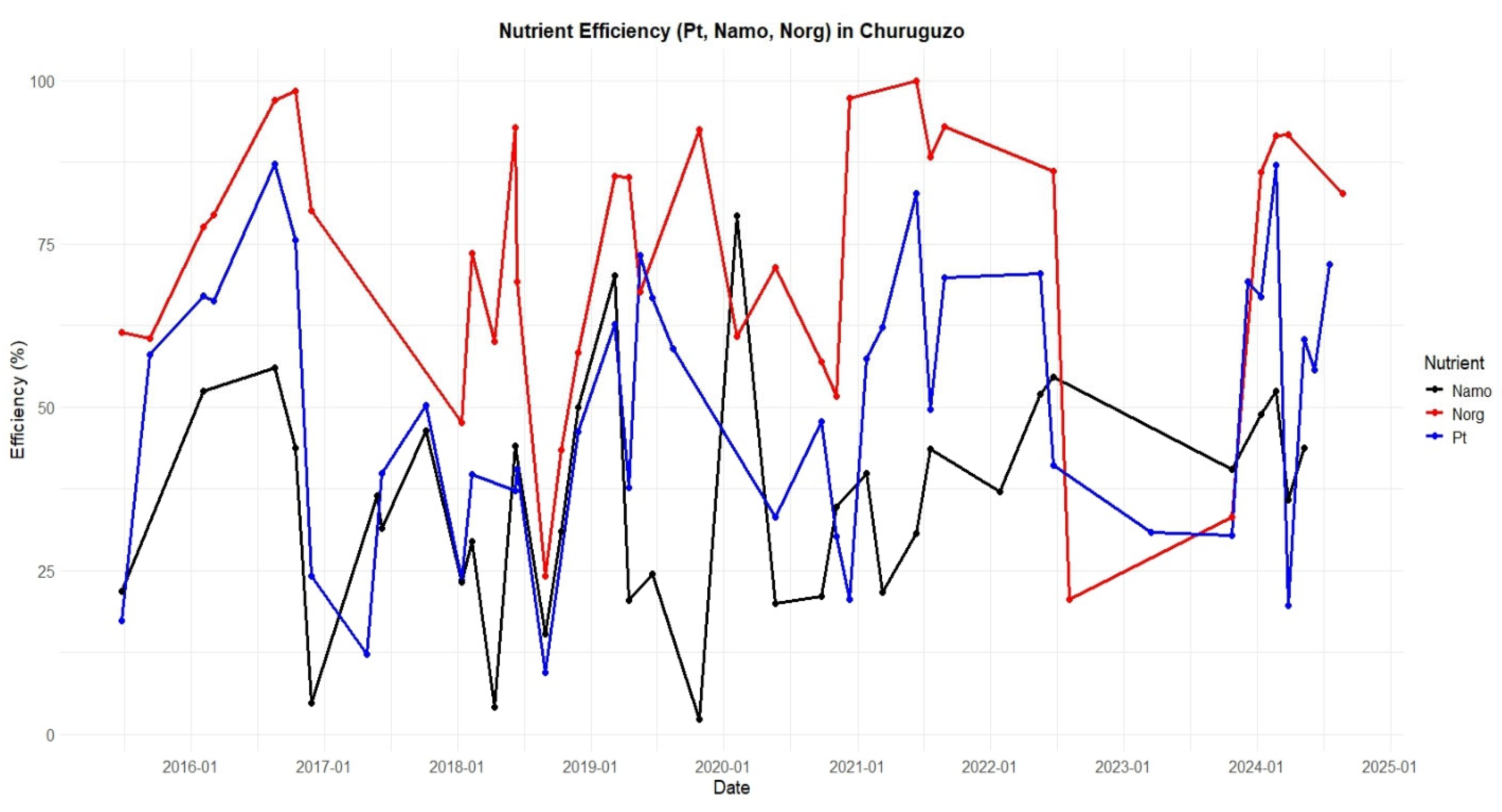
The data show high removal efficiency for BOD5 and COD, with significantly lower concentrations observed at the effluent (), indicating superior performance compared to Acchayacu (Figure A 11). In contrast, the removal efficiency for Pt, N_amo, and N_org is more variable, with some instances showing lower removal rates. Nonetheless, it is important to highlight that overall, these parameters demonstrated greater effectiveness in comparison to Acchayacu (Figure A 12).
An analysis was conducted to compare the overall removal efficiency of both WWTPs in the period of all the data obtained. This comparison focused on the treatment performance of each plant as a whole, without distinguishing between the specific technologies used. However, as illustrate in Figure 7, a noticeable improvement in removal efficiency is observed following the technology upgrade in Acchayacu.
4. Discussion
The results of this study highlight both the effectiveness and the limitations of the technologies implemented in the Acchayacu and Churuguzo WWTPs, specifically in the context of treating wastewater from small populations using decentralized systems under conditions with a high pollutant load. The comparison between both WWTPs reveals significant differences in several key parameters, underscoring the influence of the wetland design and the characteristics of the influent water on treatment performance.
- Analysis of meteorological parameters
The temperature data used in this study were obtained exclusively from the Morascalle weather station, as the Portete station could not be considered due to the unavailable of records. Based on the geographical location of the two WWTPs, it is evident that both are situated in the same temperate Andean region, which is characterized by temperate to cold temperatures and a marked seasonal variability. The Morascalle station is located approximately 3.3 km from the WWTP Acchayacu and 9.2 km from the Churuguzo WWTP, which makes it possible to determine that both plants are in relatively close proximity. As such, no significant climatic variability between the two sites is expected.
Temperature is a key factor influencing the efficiency of biological processes used in wastewater treatment. In particular, low temperatures can directly affect biological activity. In this case study, the average temperature ranges between 11 and 14°C, which may impact treatment performance. In addition, in research such as that carried out by De La Mora-Orozco et al. [26], it was shown that the capacity for the pollutant removal, in the specific case of ammoniacal nitrogen (NH4+-N), decreased at temperatures below 16°C. In contrast, water temperatures above 17°C promote more vigorous and accelerated plant growth, enhancing treatment efficiency. These findings support the conclusion that lower temperature can lead to reduce nutrient removal efficiency as observed in the Acchayacu and Churuguzo WWTPs. However, during warmer months such as from January to March, when temperatures exceed 19°C, an improvement in pollutant removal efficiency can be expected due to enhanced biological activity.
Precipitations data were analyzed using records from the Morascalle meteorological station and the Portete rainwater station. Although both stations are located within the same watershed and at similar altitudes, differences were observed in the recorded precipitation values. As noted by Buytaert et al. [27], such variations are common in mountainous regions due to factors like exposure to prevailing winds, slope orientation and topographic barriers. However, the differences between the stations studied were not statistically significant, suggesting that the observed variation may be primarily attributed to gaps in the available data from both stations. Therefore, this similarity in precipitation distributions shows very similar precipitation conditions in both studied areas that are 17 km away from one of the other.
- Analysis of hydraulic parameters
Hydraulic retention time (HRT) plays an important role in the removal efficiency of various wastewater treatment technologies. In general, a longer HRT enhance contaminant removal due to greater interaction between the wastewater and the microbial communities, thereby improving the system’s ability to eliminate organic matter and nutrients. This relationship is supported by the findings of Navarro et al. [28], who shows that higher efficiency is associated with increased HRT values.
The results obtained in this research show that the Churuguzo WWTP exhibits higher removal efficiency, which could be attributable to its longer HRT, while also acknowledging the influence of vegetation, system configuration, and wetland technology. According to the research conducted by the US EPA [29], an optimal HRT for SF-CW is approximately three days in order to prevent algae blooms, a value that exceeds that recorded in the SF-CW of Churuguzo. Conversely, in the case of VSSF-CWs, extensive HRT (greater than 10 days) is recommended for nutrient removal [30], a value much higher than that determined in the Acchayacu VSSF-CWs, which could explain their comparatively lower performance in nutrient reduction.
For upflow anaerobic filter (UAF), the HRT suitable for operation is estimated to be between 4 and 10 hours. When operating at low temperatures (10–20°C), the efficiency of UAF systems tends to decrease due to slower reaction rates, which would require a longer HRT to maintain performance [31]. In a previous study conducted by González & Narváez [32], the UAF reactor at Acchayacu would operate at an average HRT below than the recommended range, an aspect that could have influenced the removal efficiency of this technology.
- Comparative analysis of removal efficiency between SF-CW and VSSF-CW.
The following section presents an analysis of the performance and comparison between the two wetland technologies: the SF-CW used at the Churguzo WWTP and the VSSF-CWs implemented at the Acchuyaco WWTP.
According to Quintero García et al. [33], a constructed wetland can be considered to function adequately for the treatment of domestic wastewater when the elimination of bioindicators of fecal contamination, presence of nitrifying and denitrifying bacteria responsible for the nitrification and denitrification processes for nitrogen removal occurs.
In general, the analysis of data obtained from both wetland systems confirms that the Churuguzo WWTP demonstrated superior performance in the removal of most of the parameters analyzed, particularly in the elimination of organic matter (BOD5 and COD) and microbiological contaminants (Total and Fecal Coliforms). This higher efficiency may be attributed to the enhanced pollutant removal capacity of SF-CW from pollutants, as reported in studies by Bedoya et al. [34]. The average BOD5 removal efficiency in the SF-CW at Churuguzo was higher than that obtained in the VSSF-CW at Acchayacu, supporting the hypothesis that wetlands with a longer HRT and denser vegetation promote more effective wastewater treatment. The difference in surface loading rates (SLR) between both WWTPs suggests that although Acchayacu has a lower flow rate, its proportionally smaller wetland area limits the interaction time between the wastewater and the treatment system. Furthermore, it should be noted that Churuguzo's SF-CW technologies allow greater interaction with the atmosphere, enhancing oxygenation and plant development, which in turn contributes to more efficient pollutant removal. These findings highlight Churuguzo's greater capacity to treat domestic wastewater with high organic and microbiological loads, possibly attributable to its longer HRT. In addition, microbiological parameters such as TC and TTC exhibited significant differences between the two WWTPs, underscoring the effectiveness of the Churuguzo SF-CW in mitigating microbiological risks, which is crucial for protecting both public health and environmental quality.
When comparing the nutrient removal capacity, such as nitrogen, phosphorus, and suspended solids (SS), between the VSSF-CW at Acchayacu, which uses the plant speciesparamo straw (Calamagrostis intermedia), and the SF-CW in Churuguzo, the latter demonstrates higher efficiency. However, these differences were not statistically significant. The variation in performance may be attributed to several factors, including differences in wetland technology, SLR, HRT, and type of vegetation. This observation is corroborated by Romero-Aguilar et al.[35], who found that higher HRT in surface flow constructed wetlands enhances sedimentation of suspended solids and promotes nutrient uptake by vegetation. Additionally, Zahraeifard & Deng [36] reported prolonged HRT in subsurface flow wetlands, such as the VSSF-CW at Acchayacu, favors processes like nitrification and organic matter removal, by allowing more time for microbial activity within the filter media. The extended contact between the wastewater, filter media and microorganisms optimize key biological processes, including nitrification and denitrification. Conversely, in systems like the Acchayacu VSSF-CW, where the HRT is shorter, lower removal efficiencies for organic matter and nutrients are observed due to the limited contact time for treatment process. This reduced retention time increases the risk of diminished performance in biological treatment processes [37]. Regarding vegetation, constructed wetlands can have a greater capacity to remove pollutants such as nutrients (N and P) and organic matter, when larger macrophytes such as reeds (Typha) are used. This species improves system oxygenation by transporting oxygen through its roots, which in turn stimulates microbial activity within the wetland substrate [38], [39]. This effect can be enhanced by a longer hydraulic retention time (HRT), as observed in the SF-CW at the Churuguzo WWTP.
Considering that the páramo straw is a smaller macrophyte species compared to totora, the latter requires more nutrients to sustain its growth. Additionally, the surface loading rate of the SF-CW at the Churuguzo WWTP is lower, which results in a larger treatment area. This expanded surface area promotes greater microbiological development, enhancing the breakdown and removal of organic matter.
This effect could be enhanced with a longer hydraulic retention time (HRT), as observed in the SF-CW at the Churuguzo WWTP. Considering that paramo straw is a smaller macrophyte species compared to Totora, the latter requires a higher nutrients input to sustain its growth. Moreover, the lower surface loading rate in the SF-CW at the Churuguzo WWTP results in a larger treatment area, which supports more extensive microbial development responsible for the degradation of organic matter. However, neither of the two wetland systems analyzed achieved complete removal of ammoniacal nitrogen, suggesting the potential need to complement the treatment process with additional systems specifically targeting nutrient removal. These findings are consistent with the previous study conducted by Abdelhakeem et al. [40], which emphasizes the efficiency of subsurface wetlands in enhancing aerobic processes and improving nutrients removal from wastewater.
- Influence of technological change
Up flow anaerobic filters (UAFs) have been widely used in wastewater treatment system as they use a biofilm fixed on a substrate for the removal primarily of organic matter under anaerobic conditions [41]. However, these systems present limitations in removal of nutrients and pathogenic microorganisms, which may require further treatment.
In this study, the UAF lower removal efficiency compared to the other technologies evaluated (SF-CW and VSSF-CW), particularly in the elimination of ammoniacal nitrogen and fecal coliforms. Furthermore, the variability in treatment performance may be influenced by several factors, including hydraulic load, stability of anaerobic biomass and site-specific temperature conditions.
In this comparative analysis, it is necessary to evaluate the period prior to the change of technology at the Acchayacu WWTP – specifically, from 2015 to 2020 - when the plant operated using an UAF reactor. The transition in 2021 from the UAF to vertical subsurface flow constructed wetlands (VSSF-CW) appears to have led to notable improvements, as reflected in increased removal efficiency for parameters such as BOD5, COD, SS, TTC, when compared to the previous system. However, the performance of the Acchayacu VSSF-CW still falls short of the removal efficiencies achieved by the SF-CW in Churuguzo, particularly for key parameters such as BOD5, COD, TTC and TC. This highlights the critical role of wetland design, vegetation selection, adaptation to local environmental conditions, and especially hydraulic retention time (HRT). A longer HRT not only enhance the removal of organic matter and nutrients but also contributes to the elimination of pathogens by allowing the wastewater extended contact with the environment and vegetation, thereby facilitating microbial action in the removal process.
A notable decrease in pollutant concentrations, along with an increase in the removal efficiency for several parameters, can be observed following the transition from UAF reactor technology to VSSF-CW systems. For instance, in the removal of SS, BOD5, and COD, a peak can be observed, which could be interpreted as an initial decline following the transition from UAF reactor technology to VSSF-CW systems. However, it is important to consider the influence of the wetland’s startup or commissioning phase. As stated by Mosquera [42], in the case of BOD5, whose removal occurs typically rapidly, treatment efficiency tends to be lower during the first months of the startup process. This phenomenon is closely linked to the development and stabilization of microbial consortia within the system.
The removal of ammoniacal nitrogen (N_amo) across the two evaluated periods shows improvement following the technology at the Acchayacu WWTP. However, its efficiency remains lower compared to than of the Churuguzo WWTP. In contrast, the removal of organic nitrogen (N_org) and N_amo across different technologies and time periods does not exhibit significant variability. Nonetheless, both parameters consistently demonstrate low removal efficiencies. This limited performance may be attributed to several factors, including temperature—an aspect that has been analyzed in previous studies such as that of Zhang et al. [43]. Their study indicates that the removal of these contaminants can fluctuate significantly depending on temperature and seasonal variations, a pattern also observed in both Acchayacu and Churuguzo.
These temperature variations can also have a significant impact on the efficiency of both constructed wetlands and the UAF reactor, as higher temperatures tend to enhance microbial activity, while lower temperatures can hinder biological processes, thereby reducing overall treatment performance.
Although the change in technology has enhanced the performance of Acchayacu WWTP compared to the former UAF system, HRT may act as a limiting factor, restricting the system from reaching its maximum potential efficiency.
- Implications and limitations
This analysis highlights the positive impacts of integrating nature-based wastewater treatment systems, which offer sustainable and effective solutions, particularly in high-altitude regions. These systems also present strong potential for implementation in areas where the construction of sewer networks and centralized treatment facilities is limited by geographic, economic, or technical constraints. However, several critical factors must be considered when designing and operating constructed wetland-based treatment systems, including the configuration of the WWTP. It is important to note that no wetland treatment system is entirely maintenance-free. One of the most significant operational challenges in horizontal subsurface flow wetlands (HSSF-CW) is clogging, which occurs when solids accumulate and block the pore spaces in the media [44]. This reduces treatment efficiency and compromises system performance. Regular maintenance is therefore essential to ensure the proper functioning of constructed wetlands. For example, vegetation, such as Totora (Scirpus californicus), must be pruned periodically, possibly annually or every two years, depending on management objectives [45].
Vertical subsurface flow constructed wetlands (VSSF-CW) have been widely studied for their effectiveness in contaminant removal, comparable to other wetland types. However, their distinct structural design presents both advantages and limitations. While their primary advantage lies in restoring aerobic conditions during dry periods, they are limited by their dependence on substrate aeration and their susceptibility to clogging. To mitigate these challenges, VSSF-CWs are typically operated with intermittent loading and controlled organic matter input to prevent system overload [46].
Free Water Surface Constructed Wetlands (SF-CW) offer a viable alternative for wastewater treatment, particularly in decentralized systems, as demonstrated in this study. However, their treatment efficiency is closely linked to hydraulic retention time (HRT). In this study, the Acchayacu system, with an HRT of 0.32 days, exhibited lower removal rates compared to the Churuguzo system, which operated with a longer HRT of 0.73 days. This observation is consistent with findings from previous studies, such as that of Guerra et al.[47], which indicates that longer HRT can enhance nitrification and sedimentation processes.
A notable limitation of SF-CW is their requirement for more frequent maintenance compared to Horizontal Flow Wetlands (HSSF-CW). This includes regular pruning of vegetation and periodic removal of accumulated substrate material, which can result in higher operational and maintenance costs [48].
For both the Churuguzo and Acchayacu WWTPs, maintenance activities are managed by ETAPA EP, which generally conducts vegetation pruning every six months. However, this schedule may vary or not always consistently followed. As such, it is essential to further strengthen the analysis presented in this study by incorporating data related to pruning frequency and timing. This would allow for the identification of potential variations in wastewater treatment performance associated with maintenance practices.
An important aspect to consider is that both WWTPs discharge into the Irquis River, which serves as the receiving body for the treated effluent. While preliminary results indicate improvements in effluent quality, further adjustments may be required to fully comply with discharge standards, particularly in terms of nutrient concentrations. The water quality of the Irquis River holds not only environmental significance but also social implications, as local communities rely on this resource for agriculture, domestic use, and other essential activities.
5. Conclusions
The technological shift at the Acchayacu WWTP from an upflow anaerobic filter (UAF) to vertical subsurface flow constructed wetlands (VSSF-CW) led to a significant enhancement in pollutant removal, especially for organic matter (BOD5, COD) and microbiological parameters (TC, TTC). Nonetheless, the removal efficiency for nutrients such as phosphorus and ammonia nitrogen remain an area for improvement.
The comparative analysis between the surface flow constructed wetlands (SF-CW) at the Churuguzo WWTP and the VSSF-CW at the Acchayacu WWTP reveals significant differences in the removal efficiency of various contaminants. These differences are likely due to the distinct design characteristics and configurations of each system. The SF-CW at Churuguzo, with a longer hydraulic retention time (HRT) and a lower surface loading rate (SLR), demonstrated greater efficiency in removing organic matter (BOD5, COD) as well as in microbiological parameters (fecal and total coliforms). This improved performance could be attributed to the greater interaction between water, filter media, and planted vegetation, with totora (Scirpus californicus) in the SF-CW and páramo grass (Calamagrostis intermedia) in the VSSF-CW. Additionally, the SF-CW design enhances oxygenation and microbial activity, further contributing to its higher treatment efficiency.
The findings of this study highlight the significance of the design and configuration in wastewater treatment systems that utilize nature-based technologies in high-altitude regions. The results demonstrated that factors such as hydraulic retention time (HRT), surface loading rate (SLR), and vegetation type play a crucial role in contaminant removal efficiency. These insights are essential to planning and optimizing more effective and sustainable sanitation strategies. Improving effluent quality has direct implications for enhancing the environmental quality of receiving water bodies, particularly the Tarqui and Irquis rivers and their tributaries, as well as for protecting public health. These insights are valuable for guiding future designs of sustainable wastewater treatment strategies in high-altitude and decentralized systems.
Author Contributions
Ruben Jerves-Cobo contributed to sampling preparation, assisted with field sampling, analyzed the data, and wrote the manuscript. Edwin Maldonado coordinated and conducted the sampling campaign, contributed to sampling preparation and fieldwork, and also participated in data analysis and manuscript writing. The contribution of Juan Fernando Hidalgo-Cordero, Diego Mora-Serrano and Hernan García-Erazo contributed to the writing of the manuscript.
Funding
This research was funded by the Vice-Rectorate for Research at the University of Cuenca.
Acknowledgments
The authors would also like to express their sincere gratitude to the municipal water supply and wastewater management company, ETAPA – EP, for providing access to field data collected between 2015 and 2024 at both the Acchayacu and Churuguzo wastewater treatment plants (WWTPs).
Appendix A
Figure A1.
Dissolved Oxygen - Acchayacu Influent or Effluent 2015 -2020.
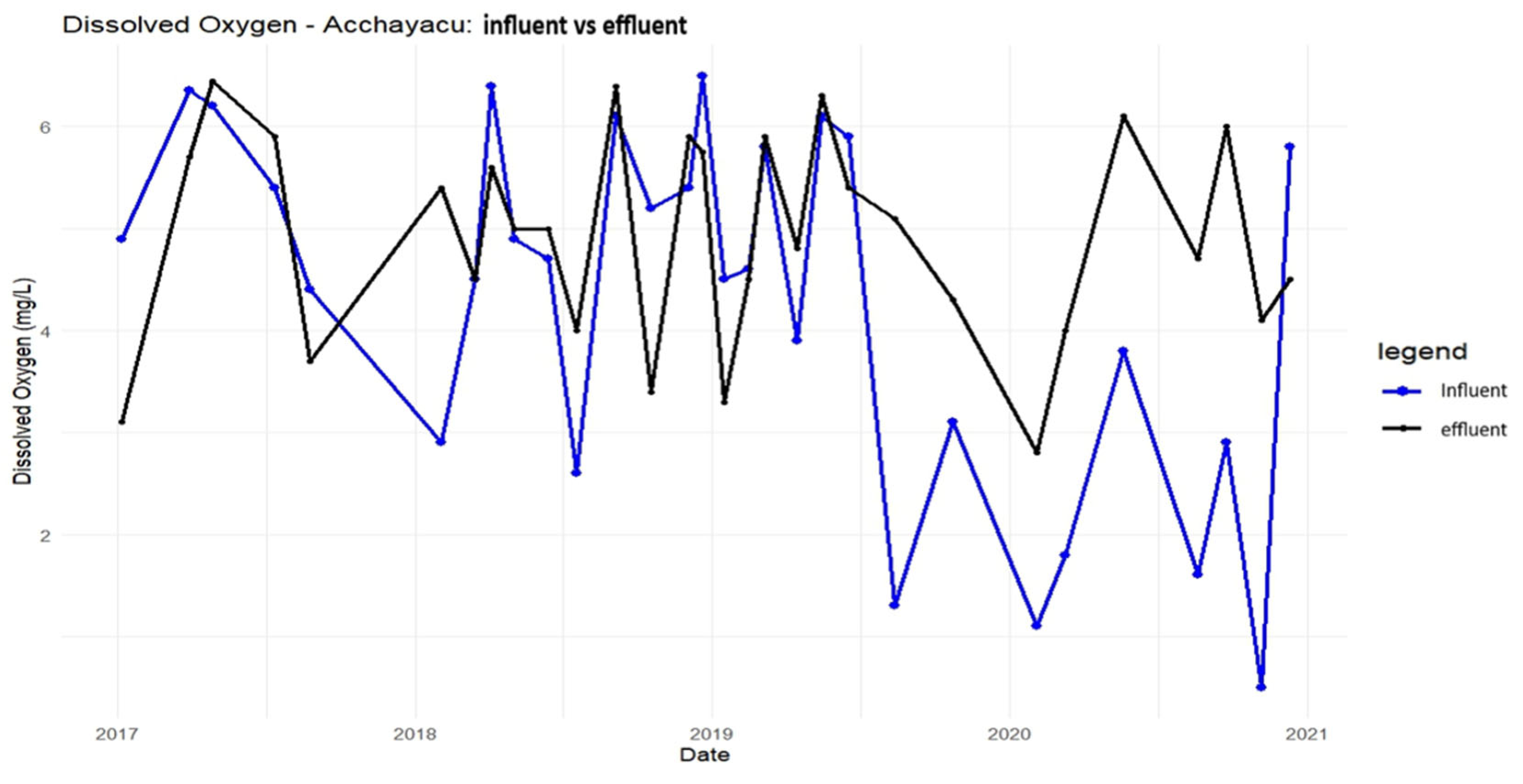
Figure A2.
Dissolved Oxygen - Churuguzo Influent or Effluent 2015 -2020.
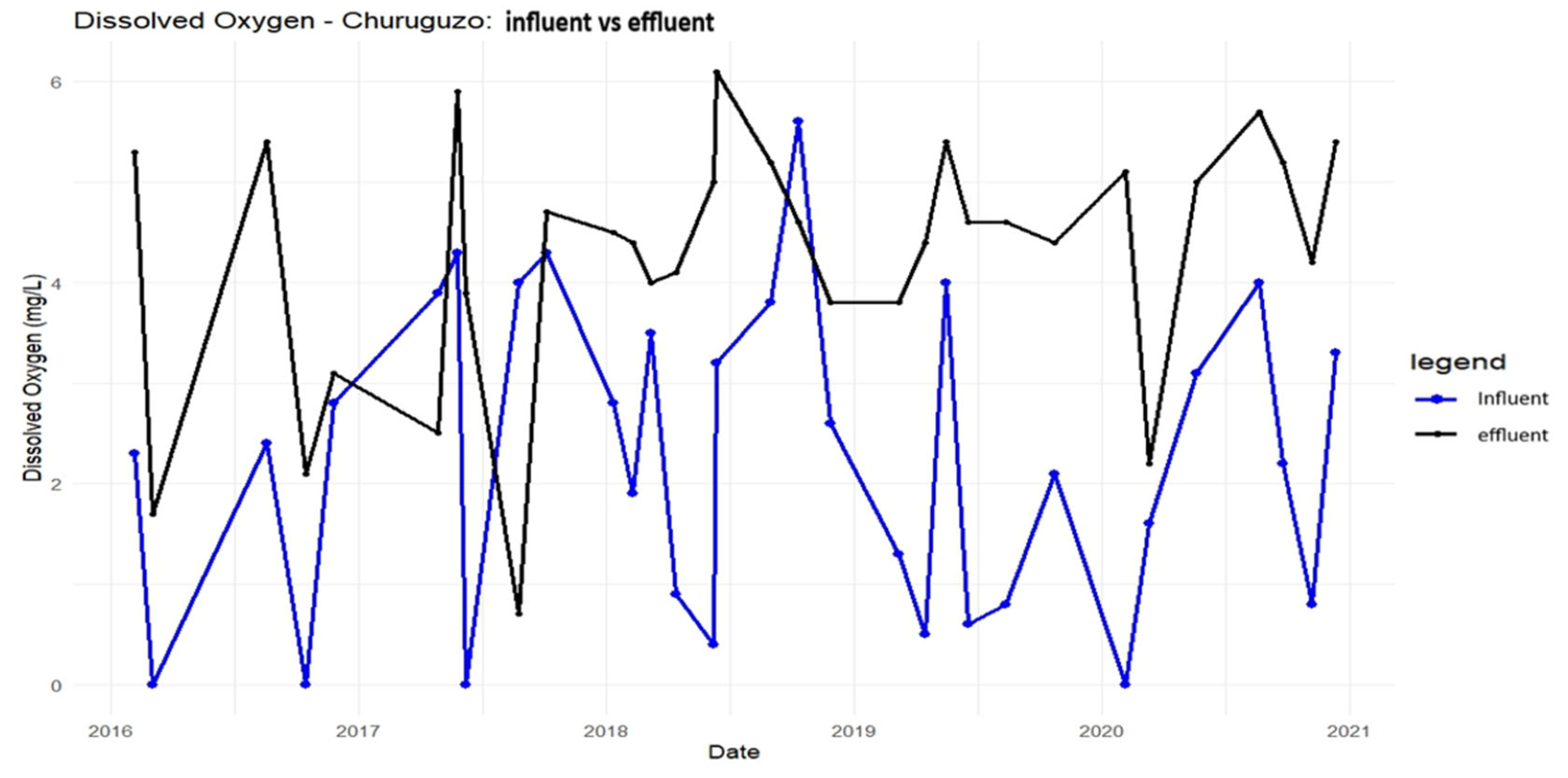
Figure A3.
pH - Acchayacu Influent or Effluent 2015 -2020.
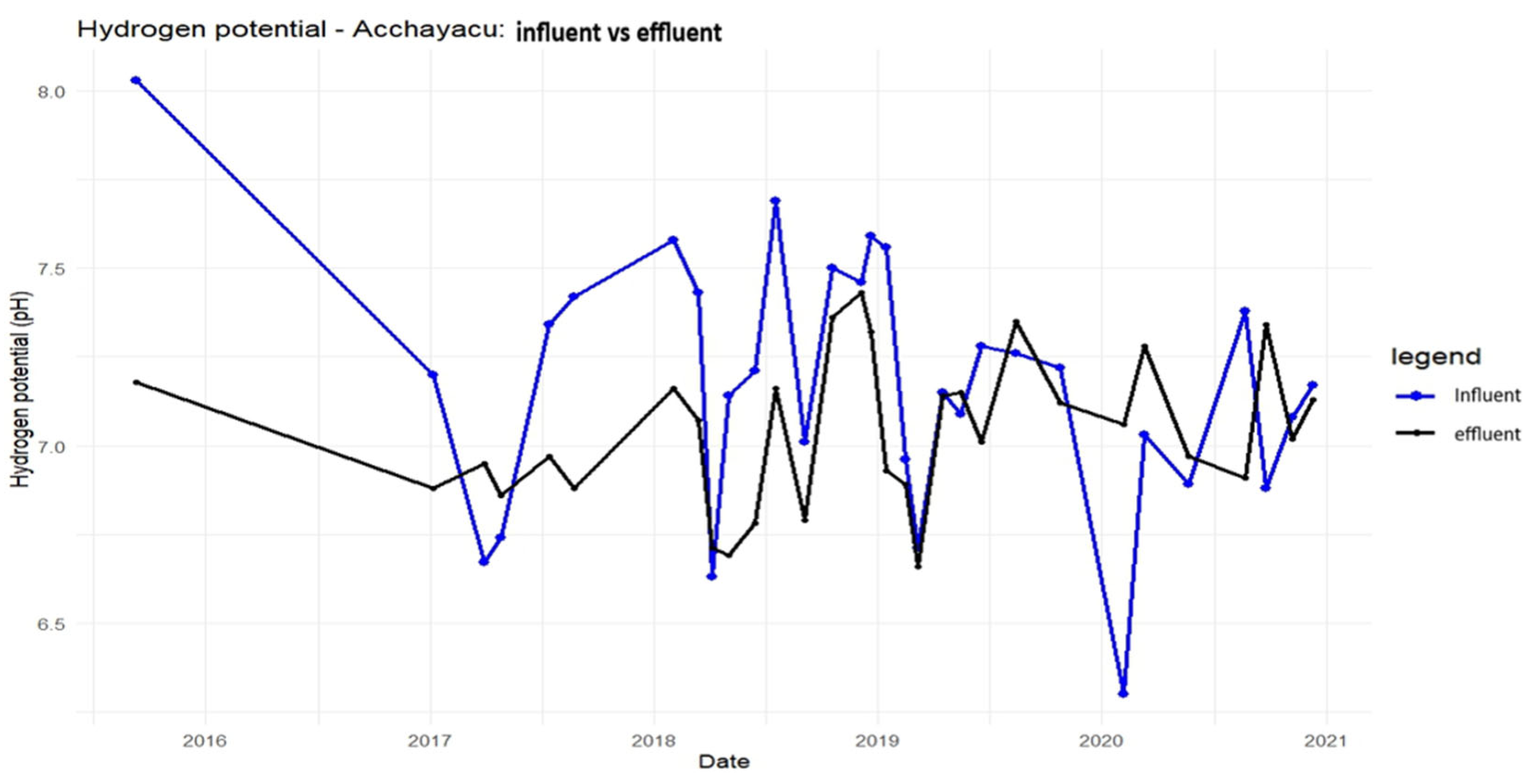
Figure A4.
pH - Churuguzo Influent or Effluent 2015 -2020.
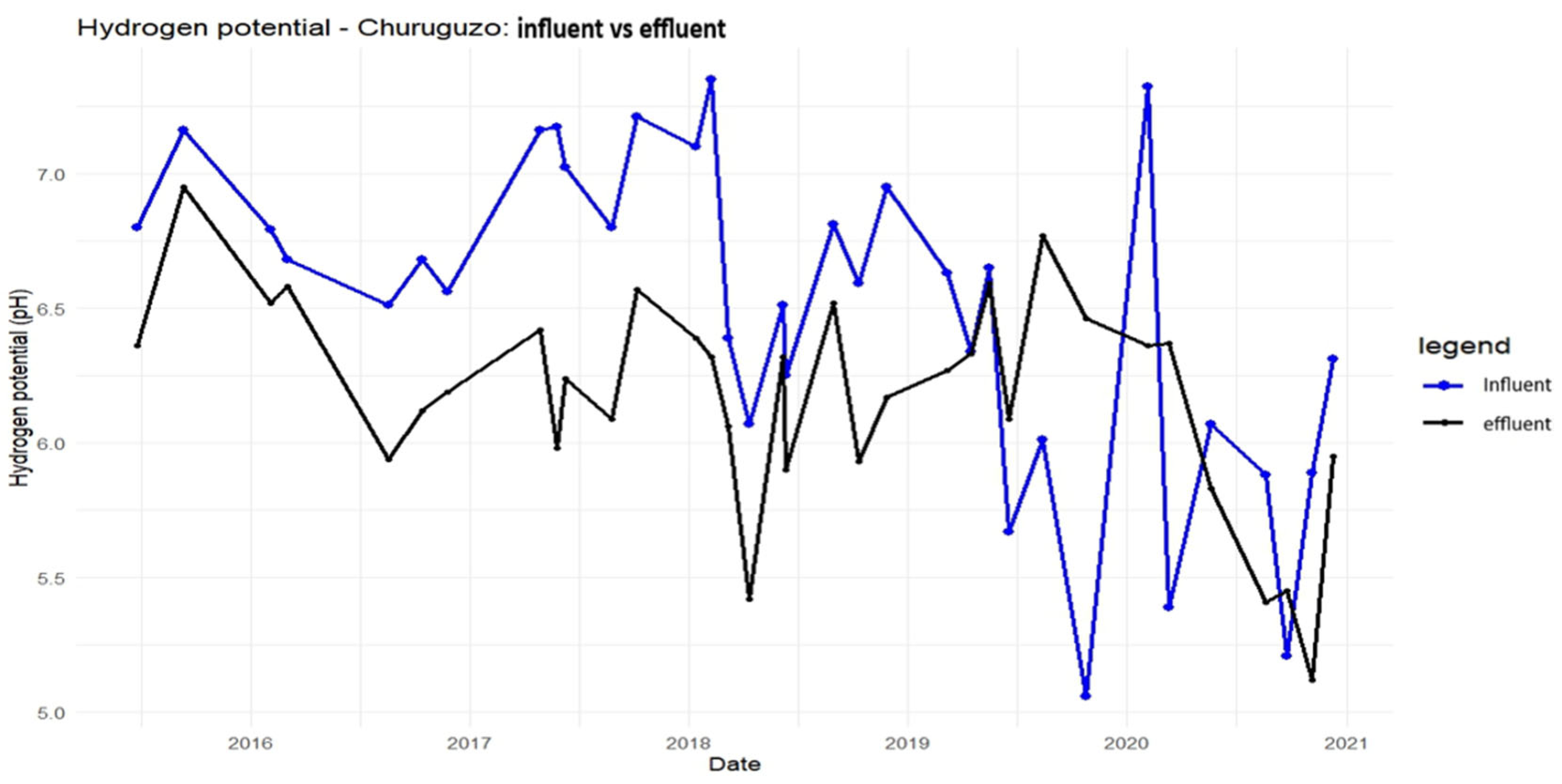
Figure A5.
Dissolved Oxygen - Acchayacu Influent or Effluent 2021 -2024.
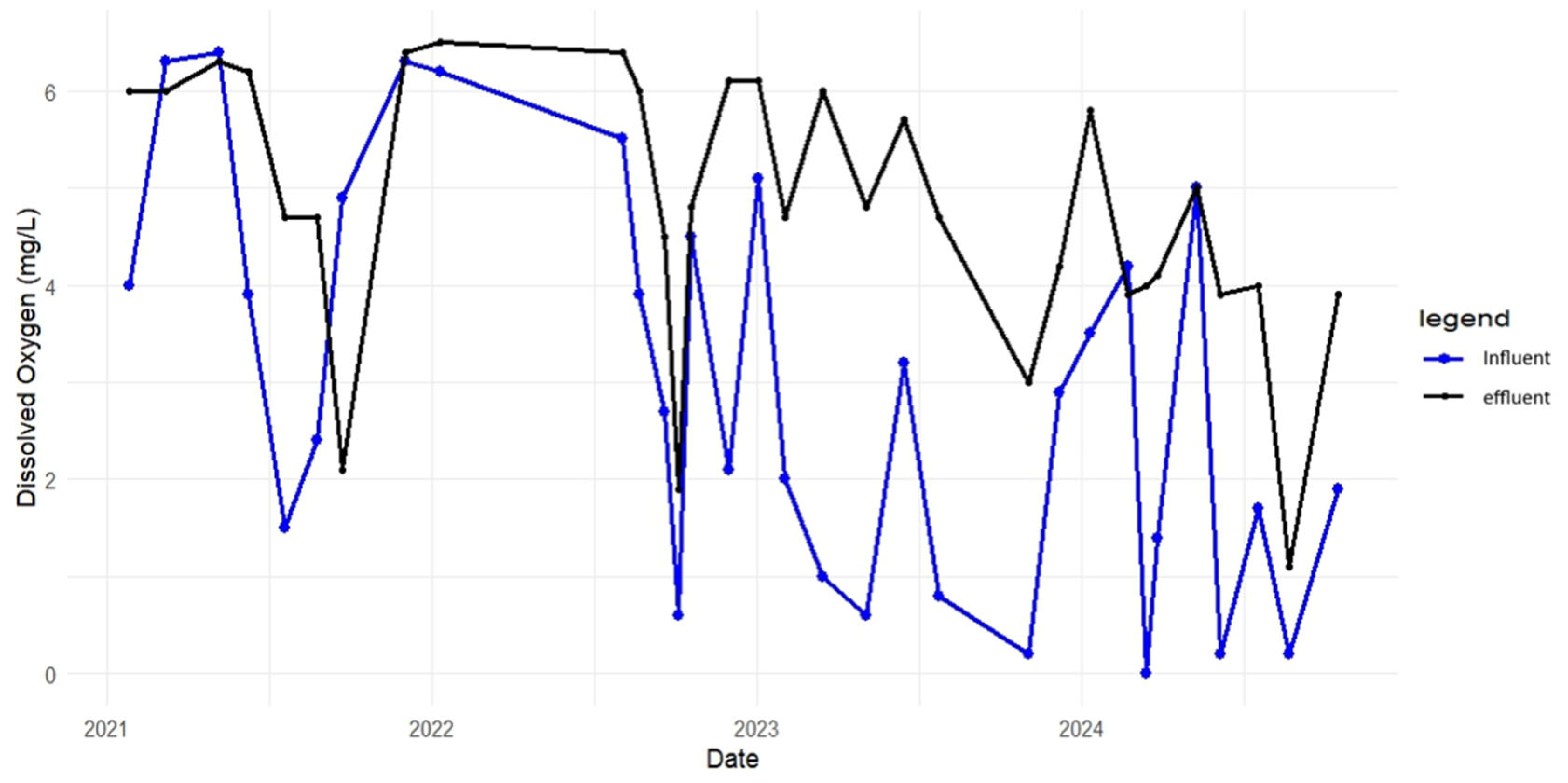
Figure A6.
Dissolved Oxygen - Churuguzo Influent or Effluent 2021 -2024.
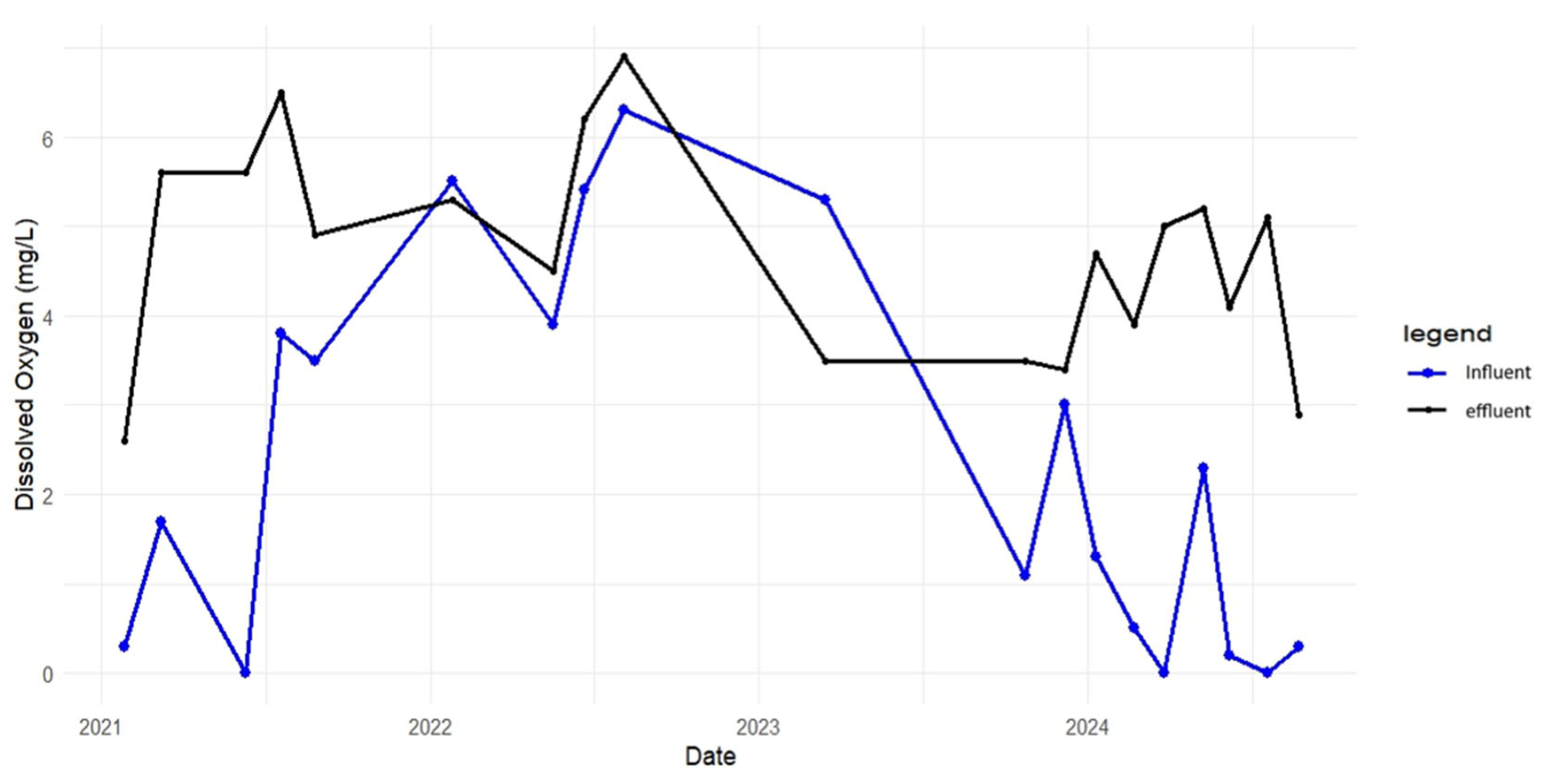
Figure A7.
pH - Acchayacu Influent or Effluent 2021 -2024.
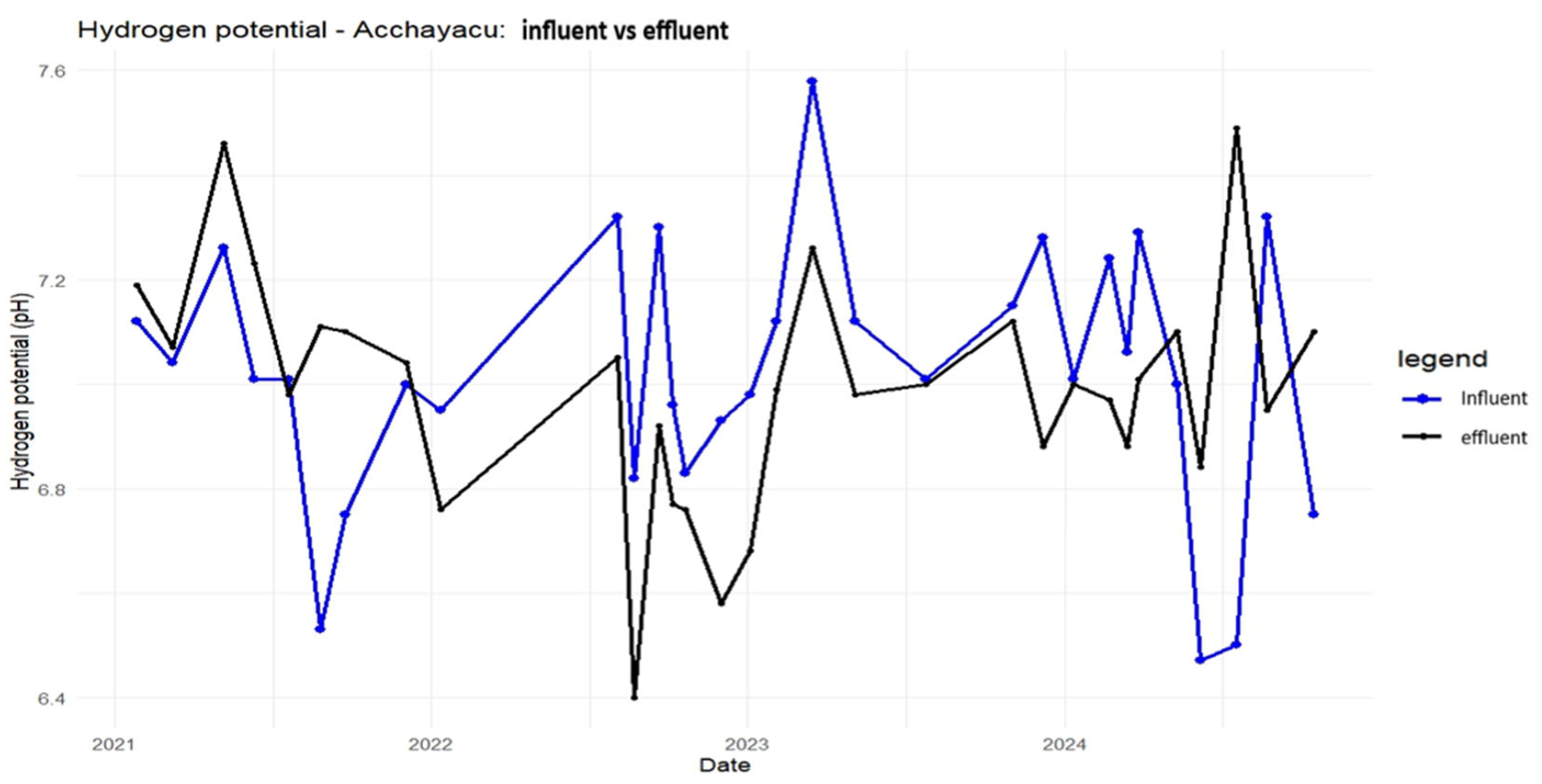
Figure A8.
pH - Churuguzo Influent or Effluent 2021 -2024.
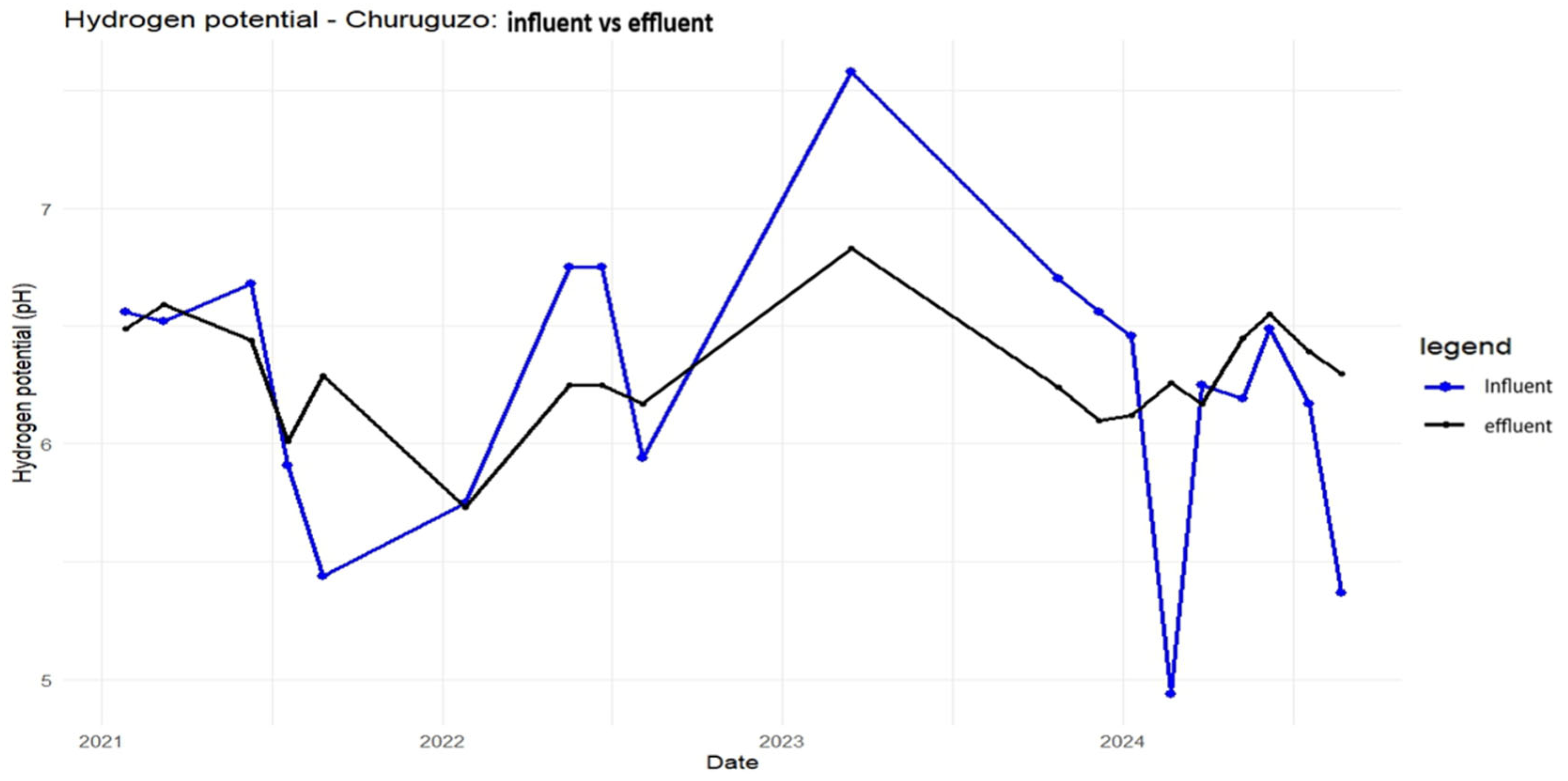
Figure A9.
Dissolved Oxygen - Acchayacu.
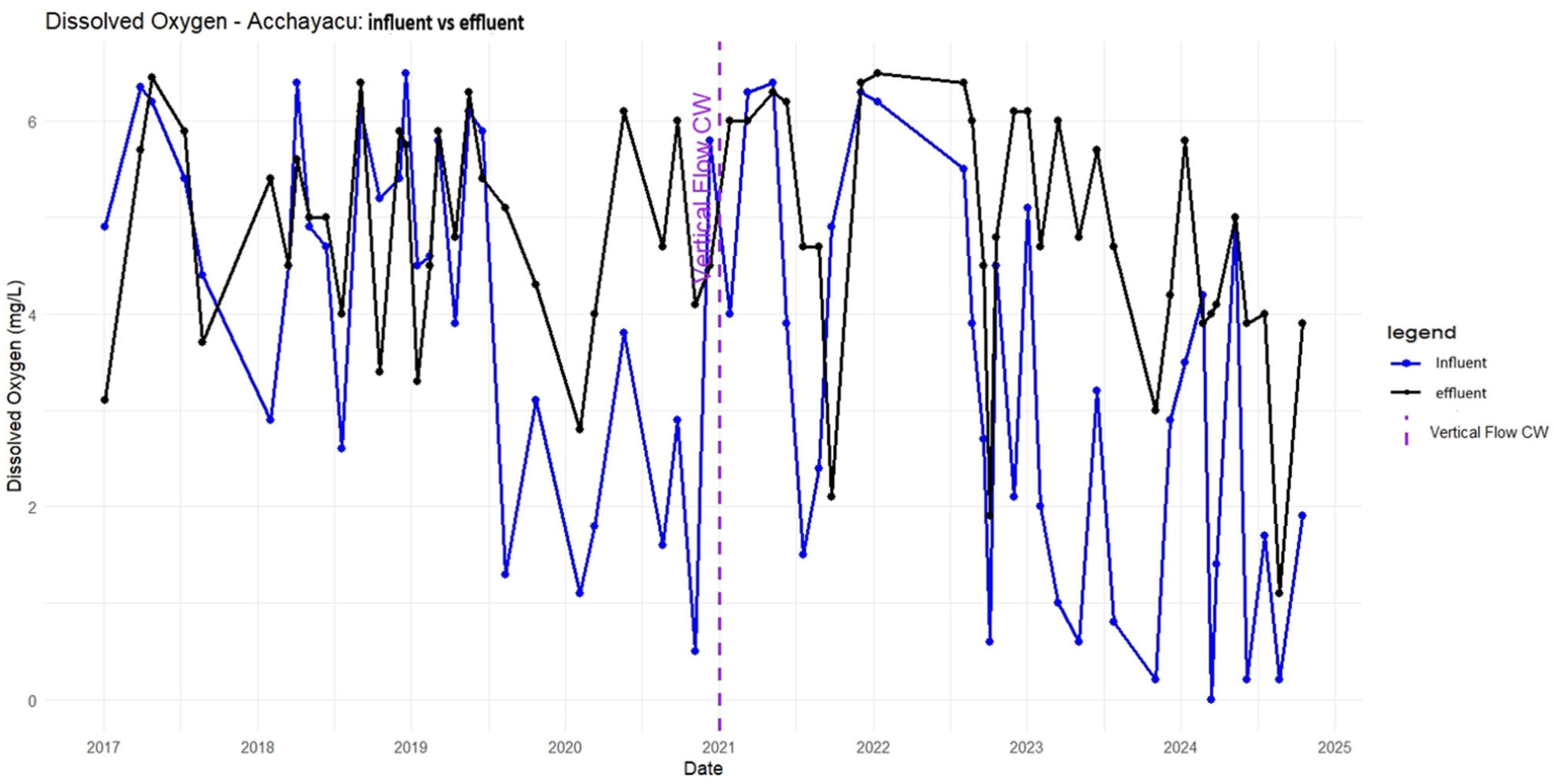
Figure A10.
Hydrogen potential (pH) - Acchayacu.
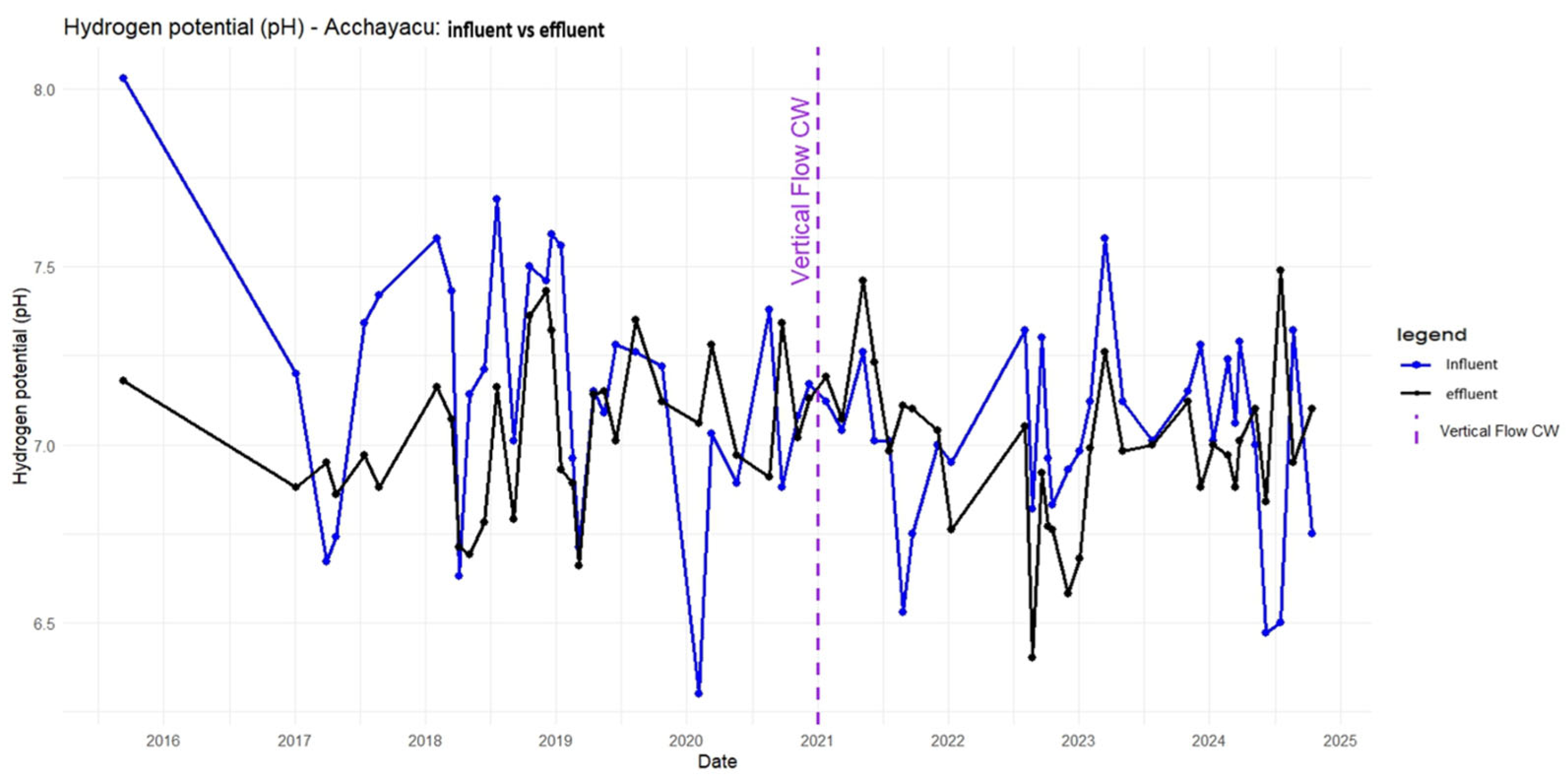
Figure A11.
Concentrations of influent vs effluent of WWTP Churuguzo: (A) BOD5. (B) COD. (C) N ammonia (D) N Organic, (E) Pt.
Figure A11.
Concentrations of influent vs effluent of WWTP Churuguzo: (A) BOD5. (B) COD. (C) N ammonia (D) N Organic, (E) Pt.
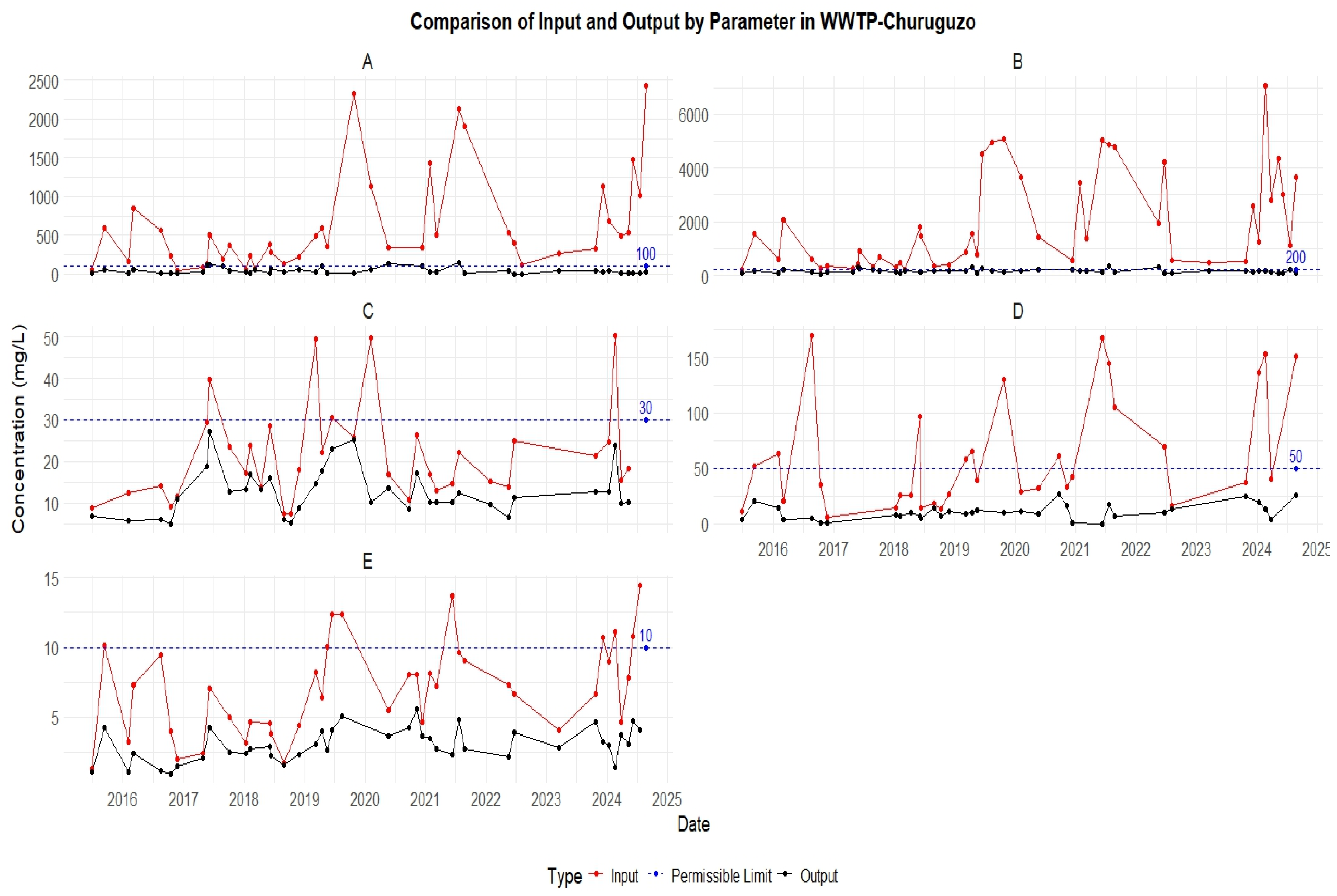
Figure A12.
Removal efficiency, parameters: Ammonia nitrogen (N_amo), Organic nitrogen (N_org) and Total Phosphorus (Pt) - WWTP Churuguzo.
Figure A12.
Removal efficiency, parameters: Ammonia nitrogen (N_amo), Organic nitrogen (N_org) and Total Phosphorus (Pt) - WWTP Churuguzo.
References
- Coello, E.; Burbano, I.; Molina, A. , “Factores contaminantes del río San Pablo de la ciudad de Babahoyo, Ecuador,” Estudios del Desarrollo Social: Cuba y América Latina, vol. 11, pp. 20–26, 2023.
- Metcalf & Eddy, INC. Ingeniería de Aguas Residuales. Tratamiento, Vertido y Reutilización, 3rd ed., vol. 1. Madrid: Impresos y Revistas, S. A. (IMPRESA), 1995.
- Hanjra, M.A.; Blackwell, J.; Carr, G.; Zhang, F.; Jackson, T.M. , “Wastewater irrigation and environmental health: Implications for water governance and public policy,” Int J Hyg Environ Health, vol. 215, no. 3, pp. 255–269, Apr. 2012. [CrossRef]
- Humanante, J.; Moreno, L.; Grijalva, A.; Saldoya, R.; Suárez, J. , “Removal Efficiency and impact of wastewater treatment system in the urban and rural sector of the Santa Elena Province,” Manglar, vol. 19, no. 2, pp. 177–187, Jun. 2022. [CrossRef]
- Rojas, J.A.R. , Tratamiento de aguas residuales. Teoría y principios de diseño, 3rd ed., vol. 1. Bogotá: Nuevas Ediciones S.A, 2000.
- Jerves-Cobo, R.; et al. , “Biological water quality in tropical rivers during dry and rainy seasons: A model-based analysis,” Ecol Indic, vol. 108, p. 105769, Jan. 2020. [CrossRef]
- Chung, G.; et al. , “A general water supply planning model: Evaluation of decentralized treatment,” Environmental Modelling & Software, vol. 23, no. 7, pp. 893–905, Jul. 2008. . https://doi.org/. [CrossRef]
- Llagas, W.; Gómez, E.G. , “Diseño de humedales artificiales para el tratamiento de aguas residuales en la UNMSM,” Revista del Instituto de Investigaciones FIGMMG, vol. 15, pp. 85–96, 2006.
- Anil, A.; et al. , “Constructed Wetland for Low- Cost Waste Water Treatment,” Int J Sci Res Sci Eng Technol, pp. 328–334, Apr. 2023. [CrossRef]
- Rizaldi, M.A.; Limantara, L.M. , “Wetland as revitalization pond at urban area based on the eco hydrology concept,” International Journal of Engineering & Technology, vol. 7, no. 3.29, p. 143, Aug. 2018. . https://doi.org/. [CrossRef]
- Delgadillo, O.; Camacho, A.; Pérez, L.F.; Andrade, M. , Depuración de aguas residuales por medio de humedales artificiales, Nelson Antequera. Cochabamba – Bolivia: Centro Andino para la Gestión y Uso del Agua (Centro AGUA), 2010.
- Wijaya, I.M.W.; Soedjono, E.S. , “Physicochemical Characteristic of Municipal Wastewater in Tropical Area: Case Study of Surabaya City, Indonesia,” IOP Conf Ser Earth Environ Sci, vol. 135, p. 012018, Mar. 2018. [CrossRef]
- Isaza, C.A.A. , “ Humedales Artificiales Para el Tratamiento de Aguas Residuales.,” Revista Científica General José María Córdova, vol. 3, pp. 40–44, 2005, Accessed: Dec. 31, 2024. [Online]. Available: https://www.redalyc.org/articulo.oa? 4762. [Google Scholar]
- Díaz, A.J.D.-G.; Paredes, P.M.P.-R. , “Aprovechamiento de aguas residuales domésticas tratadas mediante el uso de un humedal artificial de piñón y girasol,” Polo del Conocimiento, vol. 7, pp. 1478– 1495, 2022, Accessed: Dec 31, 2024 [Online] Available: https://polodelconocimientocom/ojs/indexphp/es/article/view/3556. [Google Scholar]
- EPA, “Subsurface Flow Constructed Wetlands For WasteWater Treatment A Technology Assessment,” 1993.
- Aguado, R.; Parra, O.; García, L.; Manso, M.; Urkijo, L.; Mijangos, F. , “Modelling and simulation of subsurface horizontal flow constructed wetlands,” Journal of Water Process Engineering, vol. 47, p. 102676, Jun. 2022. [CrossRef]
- Córdova, M.; Paz, D.; Santelices, M. , Gobernanza para monitorear el acceso al saneamiento en Ecuador. FLACSO Ecuador, 2023. [CrossRef]
- Terán, C.; Argüello, J.; Cando, C. , “Boletín Técnico Estadística de Información Ambiental Económica en Gobiernos Autónomos Descentralizados Municipales, Gestión de Agua Potable y Saneamiento 2022,” Dec. 2023, Dirección de Estadísticas Agropecuarias y Ambientales - DEAGA, Quito.
- Jerves-Cobo, R.; et al. , “Integrated ecological modelling for evidence-based determination of water management interventions in urbanized river basins: Case study in the Cuenca River basin (Ecuador),” Science of The Total Environment, vol. 709, p. 136067, Mar. 2020. [CrossRef]
- Operacz, A.; Jóźwiakowski, K.; Rodziewicz, J.; Janczukowicz, W.; Bugajski, P. , “Impact of Climate Conditions on Pollutant Concentrations in the Effluent from a One-Stage Constructed Wetland: A Case Study,” Sustainability, vol. 15, no. 17, p. 13173, Sep. 2023. [CrossRef]
- Ramírez, J.S.; Loaiza, D.C.R.; Asprilla, W.J. , “Humedales artificiales subsuperficiales: comparación de metodologías de diseño para el cálculo del area superficial basado en la remoción de la materia organica,” Ingenierías USBMed, vol. 11, no. 1, pp. 65–73, Oct. 2022. [CrossRef]
- R Core Team, “R: A Language and Environment for Statistical Computing,” Nov. 2024, R Foundation for Statistical Computing, Vienna, Austria: 4.4.2.
- Cantelmo, N.F.; Ferreira, D.F. , “Desempenho de testes de normalidade multivariados avaliado por simulação Monte Carlo,” Ciência e Agrotecnologia, vol. 31, no. 6, pp. 1630–1636, Dec. 2007. [CrossRef]
- Khan, R.A.; Ahmad, F. , “Power Comparison of Various Normality Tests,” Pakistan Journal of Statistics and Operation Research, vol. 11, no. 3, Oct. 2017. [CrossRef]
- Saculinggan, M.; Balase, E.A. , “Empirical Power Comparison Of Goodness of Fit Tests for Normality In The Presence of Outliers,” J Phys Conf Ser, vol. 435, p. 012041, Apr. 2013. [CrossRef]
- De La Mora-Orozco, C.; Saucedo-Terán, R.A.; González-Acuña, I.J.; Gómez-Rosales, S.; Flores-López, H.E. , “Efecto de la temperatura del agua sobre la constante de velocidad de reacción de los contaminantes en un humedal construido para el tratamiento de aguas residuales porcícolas,” Rev Mex Cienc Pecu, vol. 11, pp. 1–17, Mar. 2020. [CrossRef]
- Buytaert, W.; Celleri, R.; Willems, P.; De Bièvre, B.; Wyseure, G. , “Spatial and temporal rainfall variability in mountainous areas: A case study from the south Ecuadorian Andes,” J Hydrol (Amst), vol. 329, no. 3–4, pp. 413–421, Oct. 2006. [CrossRef]
- Navarro, L.; Torres, J.; Carlos, R. , “Revisión de los impactos en la calidad del agua subterránea generados por humedales artificiales en zonas rurales,” Desarrollo e Innovación en Ingeniería, vol. 2, pp. 10–24, 2021.
- EPA, “Wastewater technology fact sheet: Free water surface wetlands,” U.S. Environmental Protection Agency. (EPA 832-F-00-024), 2000.
- EPA, “Folleto informativo de tecnología de aguas residuales Humedales de flujo subsuperficial,” U.S. Environmental Protection Agency (EPA 832-R-00-023.), 2000.
- CONAGUA, Diseño de Plantas de Tratamiento de Aguas Residuales Municipales: Humedales Artificiales. Manual de Agua Potable, Alcantarillado y Saneamiento (MAPAS), libro 30. México D.F. (México): Comisión Nacional del Agua (CONAGUA), 2015.
- González, T.C.R.; Narváez, T.A.C. , “Evaluación y rediseño de la planta de tratamiento de aguas residuales Acchayacu, parroquia Tarqui, del cantón Cuenca, Ecuador,” Universidad de Cuenca, Cuenca, 2018.
- García, K.L.Q.; Zúñiga, D.P.R.; Duque, M.E.G.; Rojas, J.A.A. , “Evaluación de la remoción de nitrógeno y materia orgánica a través de humedales artificiales de flujo subsuperficial, acoplados a reactores de lecho fijo con microalgas en la Institución Universitaria Colegio Mayor de Antioquia,” Ingeniería y Región, vol. 25, pp. 82–94, 21. . https://doi.org/, 20 May. [CrossRef]
- Bedoya, J.C.; Ardila, A.N.; Reyes, J. , “Evaluación De Un Humedal Artificial De Flujo Subsuperficial En El Tratamiento De Las Aguas Residuales Generadas En La Institución Universitaria Colegio Mayor De Antioquia, Colombia.,” Revista Internacional De Contaminación Ambiental, vol. 3, pp. 275–283, 2014.
- Romero-Aguilar, M.; Colin-Cruz, A.; Sanchez-Salinas, E.; Ortiz-Hernandez, M.L. , “Tratamiento de aguas residuales por un sistema piloto de humedales artificiales: evaluación de la remoción de la carga orgánica.,” Rev. Int. Contam. Ambient, vol. 25, pp. 157–167, 2009.
- Zahraeifard, V.; Deng, Z. , “Hydraulic residence time computation for constructed wetland design,” Ecol Eng, vol. 37, no. 12, pp. 2087–2091, Dec. 2011. [CrossRef]
- Rodríguez-Miranda, J.P.; Gómez, E.; Garavito, L.; López, F. , “Estudio de comparación del tratamiento de aguas residuales domésticas utilizando lentejas y buchón de agua en humedales artificiales.,” Tecnología y ciencias del agua, vol. 1, pp. 59–68, 2010.
- Brix, H. , “Do macrophytes play a role in constructed treatment wetlands?,” Water Science and Technology, vol. 35, no. 5, pp. 11–17, Mar. 1997. [CrossRef]
- Wang, Q.; Hu, Y.; Xie, H.; Yang, Z. , “Constructed Wetlands: A Review on the Role of Radial Oxygen Loss in the Rhizosphere by Macrophytes,” Water (Basel), vol. 10, no. 6, p. 678, 18. . https://doi.org/, 20 May. [CrossRef]
- Abdelhakeem, S.G.; Aboulroos, S.A.; Kamel, M.M. , “Performance of a vertical subsurface flow constructed wetland under different operational conditions,” J Adv Res, vol. 7, no. 5, pp. 803–814, Sep. 2016. [CrossRef]
- Carrillo-Anchundia, B.; Vera-Loor, J.; Loor-Vélez, J. , “Diseño de un filtro anaerobio de flujo ascendente para el tratamiento de aguas residuales,” ‘‘INGENIAR”: Ingeniería, Tecnología e Investigación, vol. 5, pp. 2–16, 2022.
- Mosquera, Y. , “Tratamiento de lixiviados mediante humedales artificiales,” Tumbaga, vol. 1, pp. 73–99, 2012.
- Zhang, D.Q.; Jinadasa, K.B.S.N.; Gersberg, R.M.; Liu, Y.; Ng, W.J.; Tan, S.K. , “Application of constructed wetlands for wastewater treatment in developing countries – A review of recent developments (2000–2013),” J Environ Manage, vol. 141, pp. 116–131, Aug. 2014. [CrossRef]
- Dotro, G.; et al. , Humedales para tratamiento, vol. 7. UK: IWA Publishing, Alliance House, 12 Caxton Street, London SW1H 0QS, UK, 2017.
- Keyport, S.; et al. , “Effects of experimental harvesting of an invasive hybrid cattail on wetland structure and function,” Restor Ecol, vol. 27, no. 2, pp. 389–398, Mar. 2019. [CrossRef]
- Arteaga-Cortez, V.M.; Quevedo-Nolasco, A.; del Valle-Paniagua, D.H.; Castro-Popoca, M.; Bravo-Vinaja, Á.; Ramírez-Zierold, J.A. , “Estado del arte: una revisión actual a los mecanismos que realizan los humedales artificiales para la remoción de nitrógeno y fósforo,” Tecnología y ciencias del agua, vol. 10, no. 5, pp. 319–342, Sep. 2019. [CrossRef]
- Guerra, J.D.T.; Vargas, J.S.M.; Aguirre, R.R.P.; Huaranga, M.A.C. , “Evaluación de la eficiencia en el tratamiento de aguas residuales para riego mediante humedales Artificiales de flujo libre superficial (FLS) con las especies Cyperus Papyrus y Phragmites Australis, en Carapongo-Lurigancho,” Revista de Investigación Ciencia, Tecnología y Desarrollo, vol. 3, no. 2, Feb. 2018. [CrossRef]
- Lahora, A. , “Depuración de aguas residuales mediante humedales artificiales: la Edarde los Gallardos (Almería,” Ecología, manejo y conservación de los humedales, vol. 49, pp. 99–112, 2003.
Figure 1.
Location of the Acchayacu and Churuguzo Wastewater Treatment Plants (WWTPs).
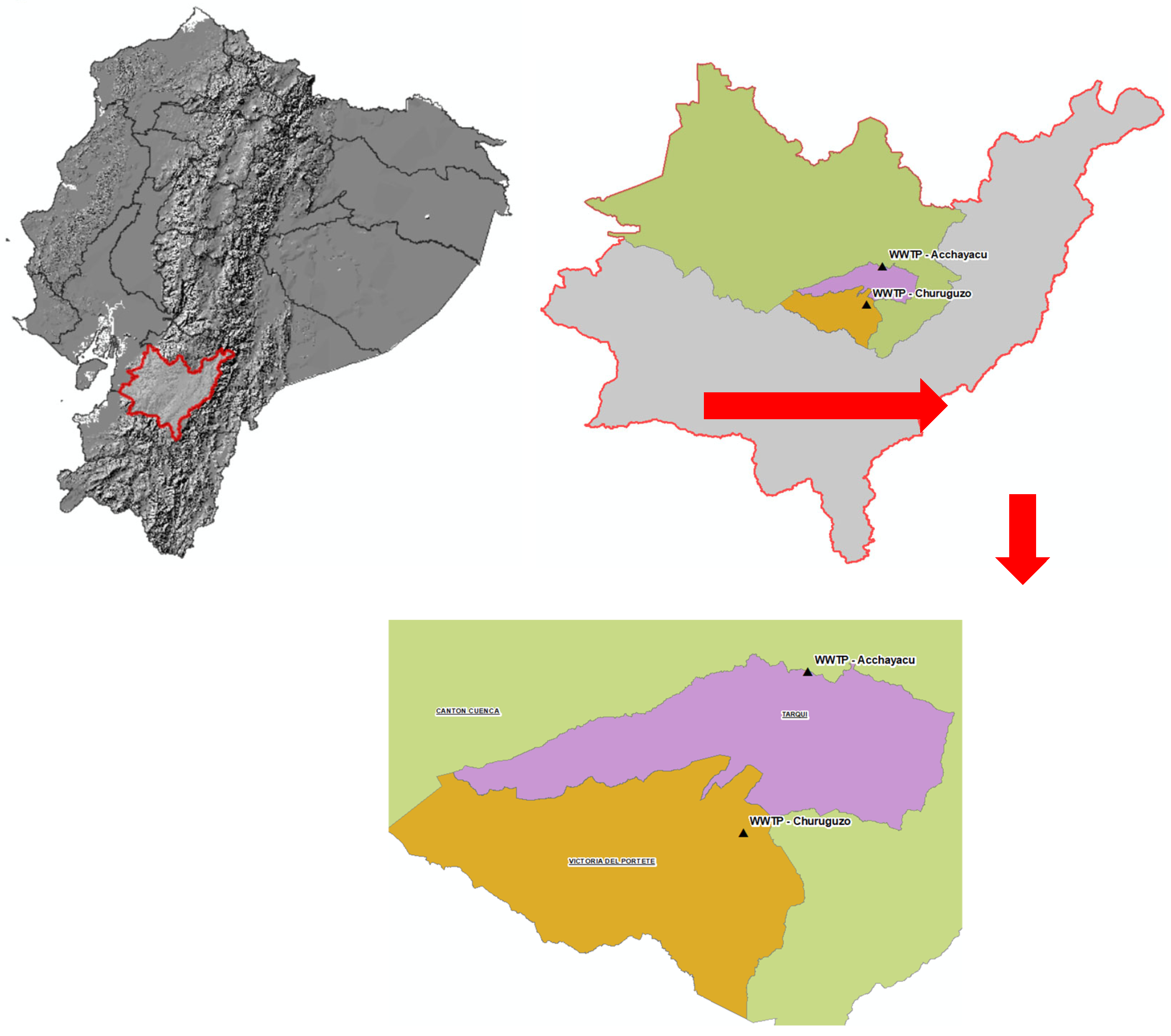
Figure 2.
Location of Morascalle weather station and Portete rainfall station.
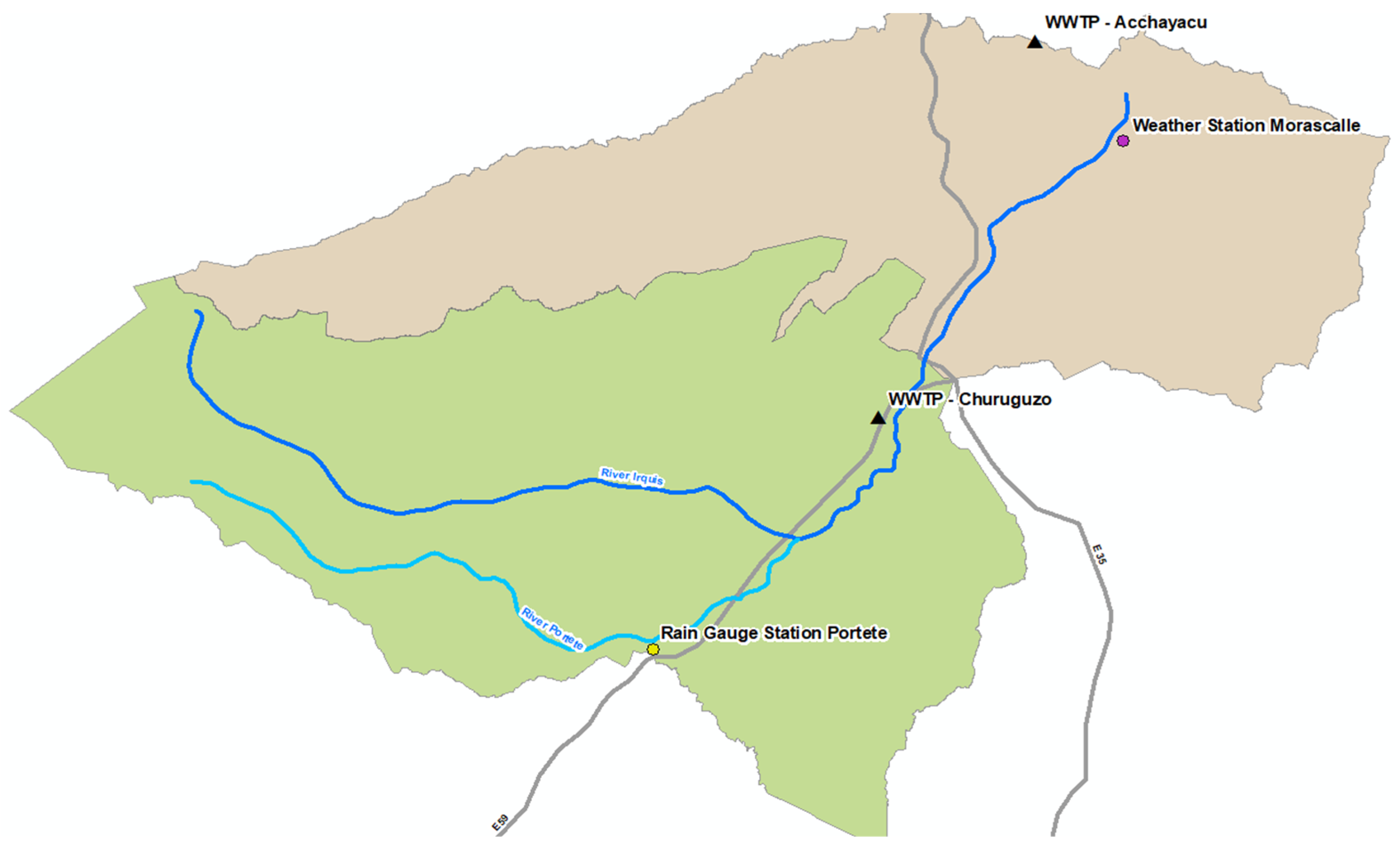
Figure 3.
Comparison of rainfall data from Acchayacu and Churuguzo stations.
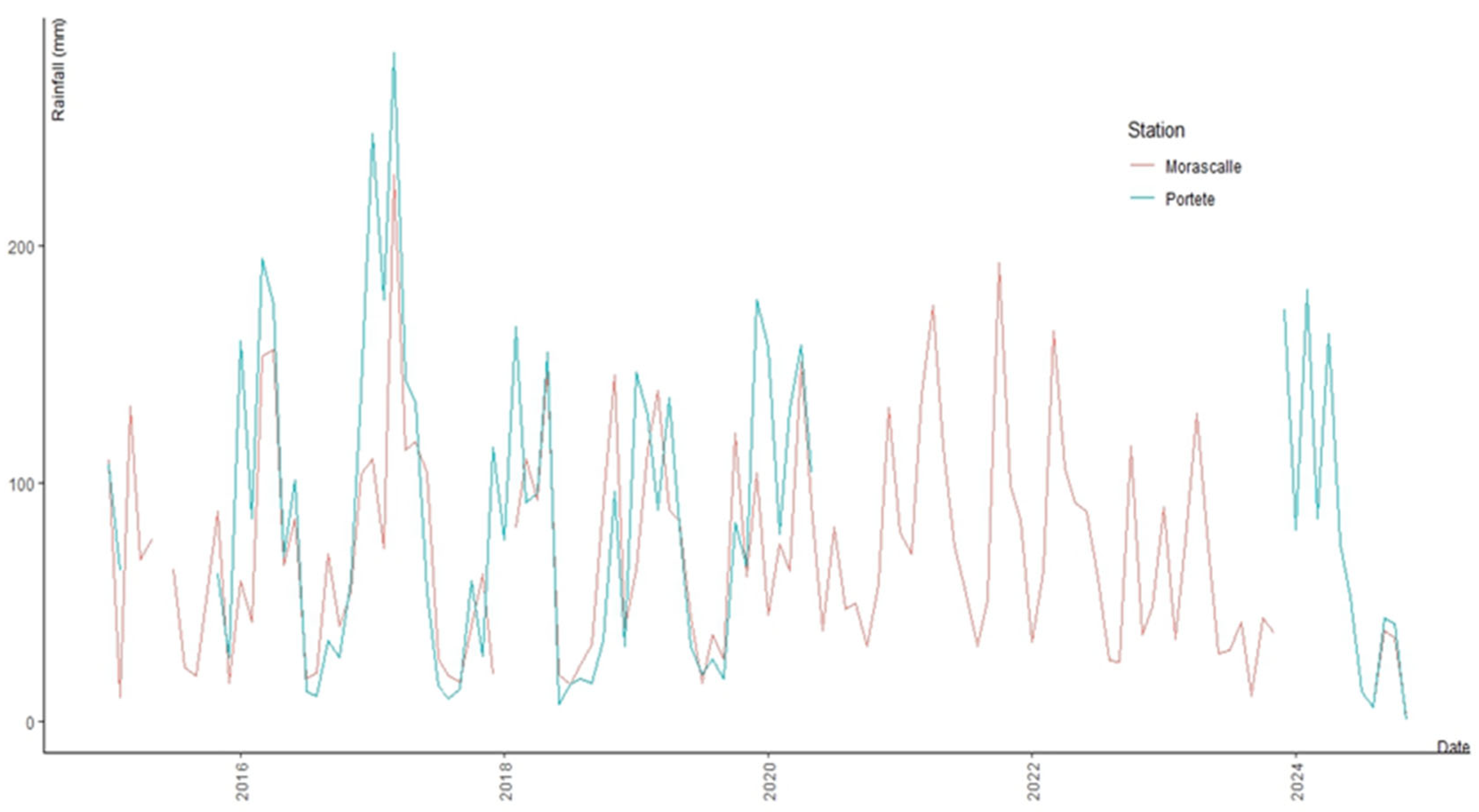
Figure 4.
Precipitation distribution analysis.
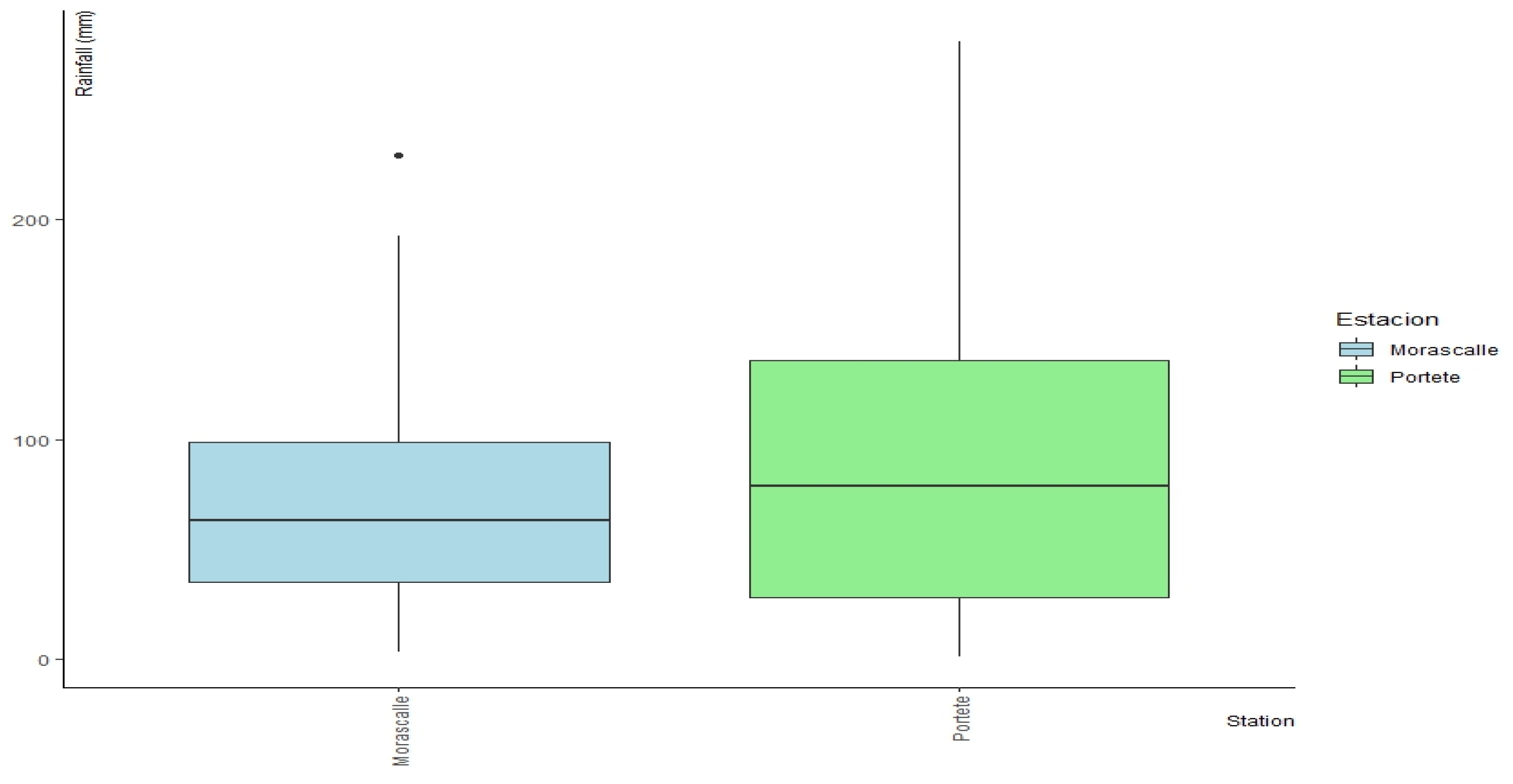
Figure 5.
Efficiency comparison between Acchayacu and Churuguzo WWTPs during the period 2015 - 2020: (A) Total coliforms (TC), (B) Fecal coliforms (TTC), (C) Biochemical oxygen demand (BOD₅), (D) Chemical oxygen demand (COD).
Figure 5.
Efficiency comparison between Acchayacu and Churuguzo WWTPs during the period 2015 - 2020: (A) Total coliforms (TC), (B) Fecal coliforms (TTC), (C) Biochemical oxygen demand (BOD₅), (D) Chemical oxygen demand (COD).
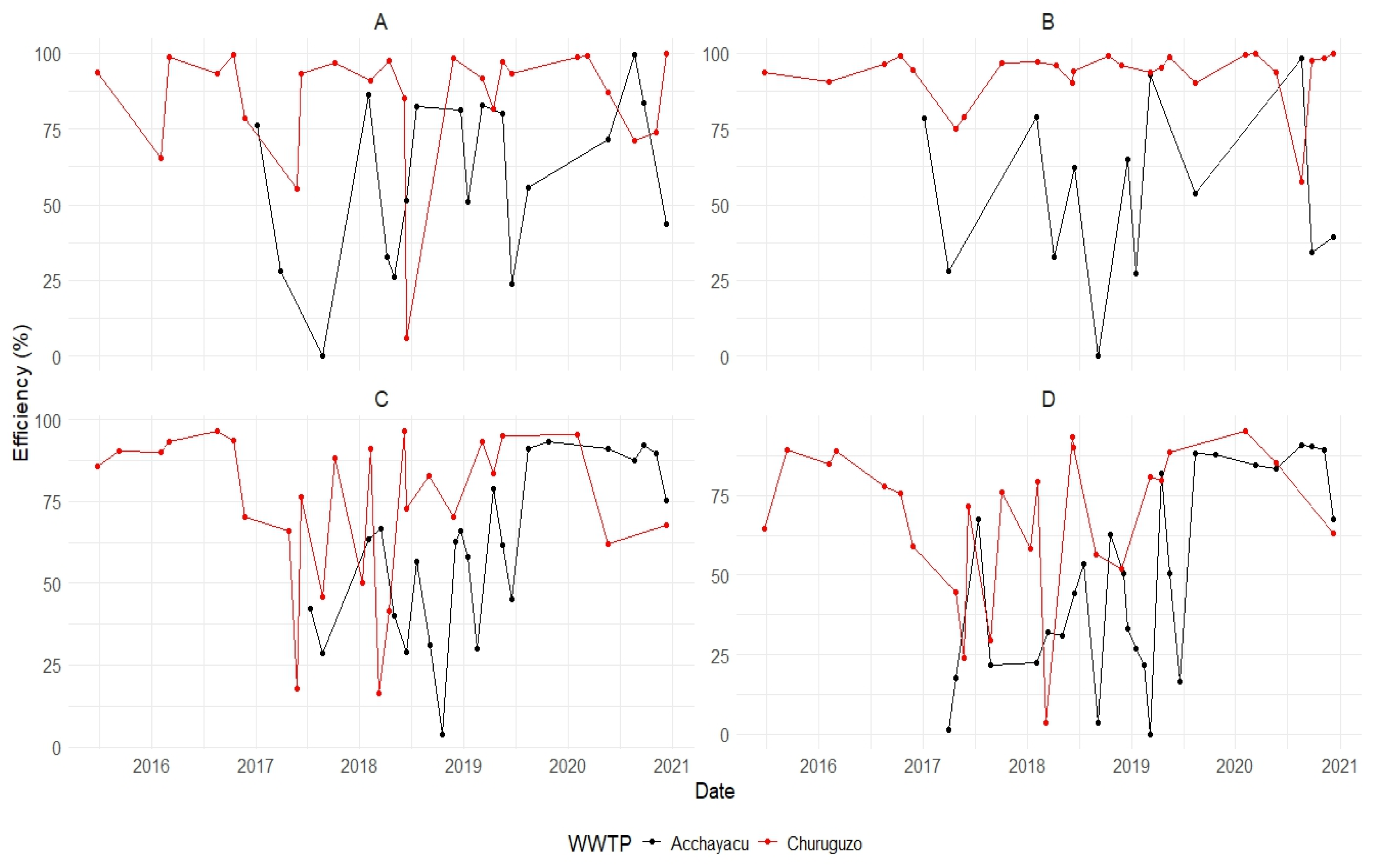
Figure 6.
Comparison of removal efficiency between the VSSF-CW at the Acchayacu WWTP and the SF-CW at the Churuguzo WWTP (2021- 2024): (A) TC, (B) TTC, (C) BOD5, (D) COD.
Figure 6.
Comparison of removal efficiency between the VSSF-CW at the Acchayacu WWTP and the SF-CW at the Churuguzo WWTP (2021- 2024): (A) TC, (B) TTC, (C) BOD5, (D) COD.
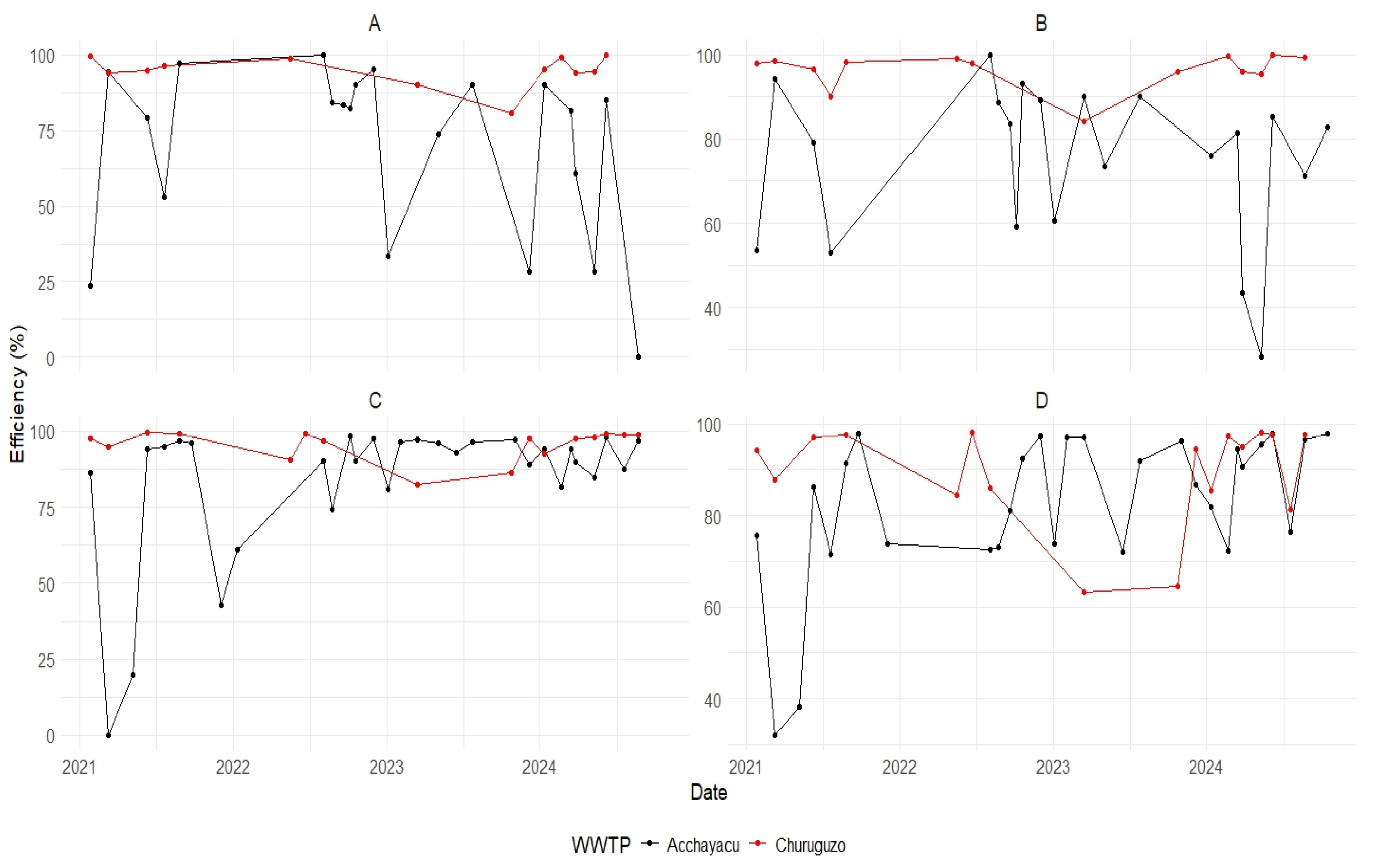
Figure 7.
Removal efficiency of: Ammonia nitrogen (N_amo), Organic nitrogen (Norg) and Total Phosphorus (Pt) at the Acchayacu WWTP.
Figure 7.
Removal efficiency of: Ammonia nitrogen (N_amo), Organic nitrogen (Norg) and Total Phosphorus (Pt) at the Acchayacu WWTP.
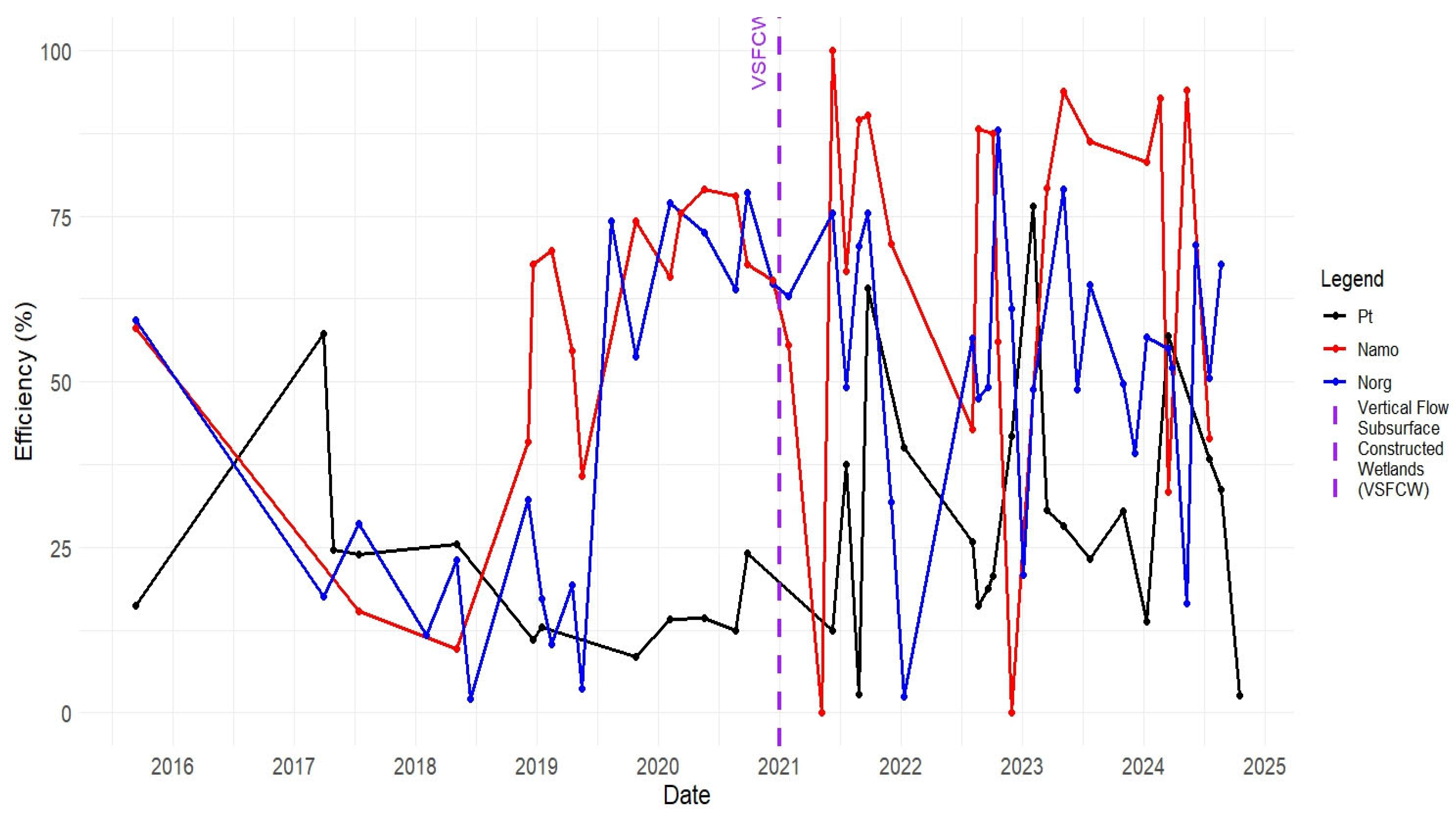
Figure 8.
Concentrations of influent vs effluent at the Acchayacu WWTP: (A) BOD5. (B) COD. (C) N ammonia (D) N Organic, (E) Pt.
Figure 8.
Concentrations of influent vs effluent at the Acchayacu WWTP: (A) BOD5. (B) COD. (C) N ammonia (D) N Organic, (E) Pt.
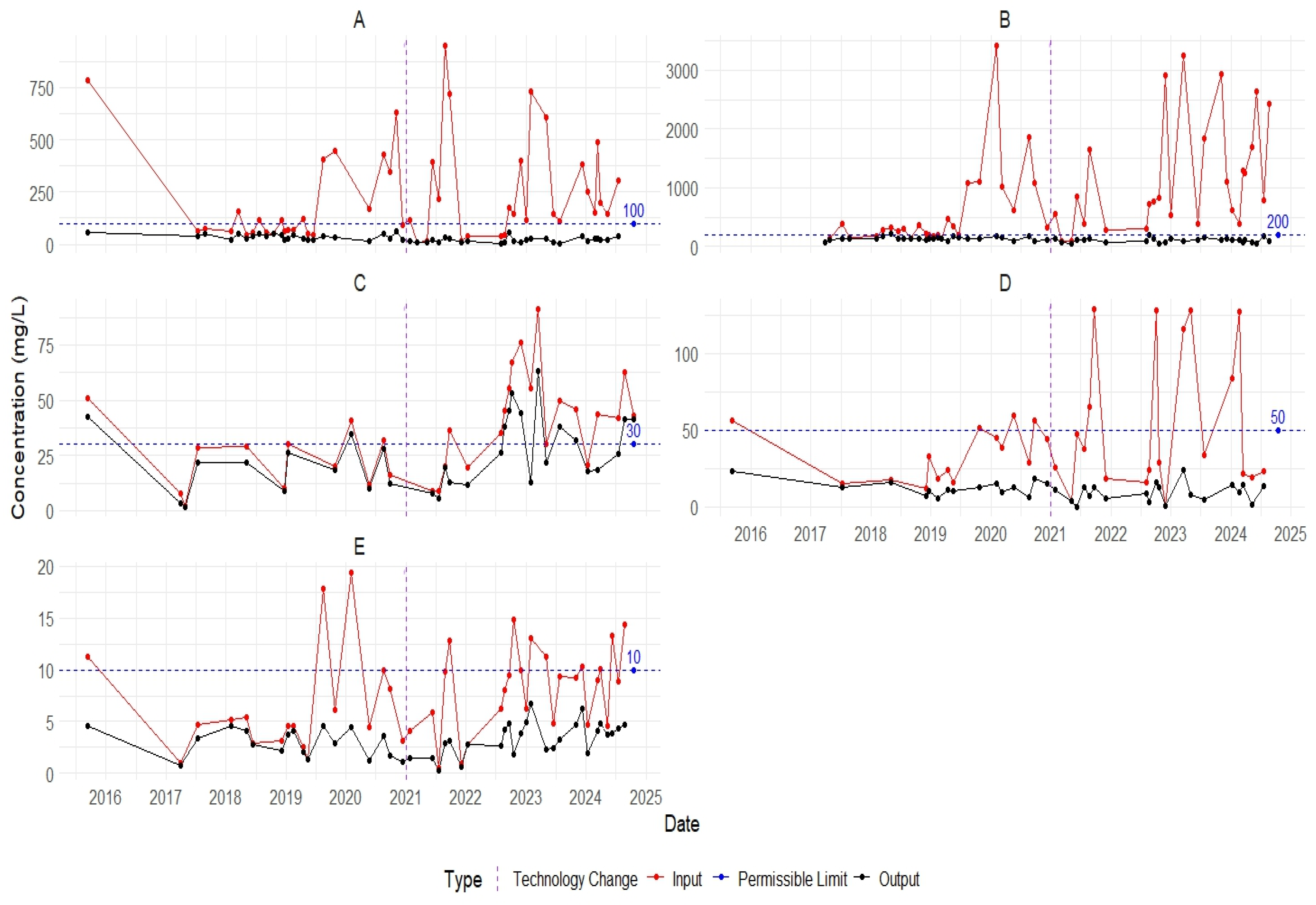

Table 1.
General comparison of treatment efficiency between the Acchayacu and Churuguzo WWTPs during the period 2015 – 2020.
Table 1.
General comparison of treatment efficiency between the Acchayacu and Churuguzo WWTPs during the period 2015 – 2020.
| Parameter | Acchayacu UAF |
Churuguzo SF-CW |
|---|---|---|
| SS | 71.79 | 83.46 |
| ST | 47.73 | 63.71 |
| BOD5 | 60.20 | 74.30 |
| COD | 48.91 | 68.44 |
| Pt | 37.23 | 45.04 |
| N_amo | 20.43 | 33.17 |
| N_org | 57.16 | 68.86 |
| TC | 58.65 | 85.24 |
| TTC | 53.18 | 92.85 |
Table 2.
Comparison of treatment efficiency between WWTP after technology change (Vertical Sub-superficial Flow Wetlands and Superficial Flow Wetlands), period 2021- 2024.
Table 2.
Comparison of treatment efficiency between WWTP after technology change (Vertical Sub-superficial Flow Wetlands and Superficial Flow Wetlands), period 2021- 2024.
| Parameter | Acchayacu VSSF-CW |
Churuguzo SF-CW |
|---|---|---|
| SS | 95.66 | 95.88 |
| ST | 75.20 | 83.57 |
| BOD5 | 83.90 | 95.56 |
| COD | 82.80 | 89.40 |
| Pt | 53.45 | 57.82 |
| N_amo | 30.74 | 40.77 |
| N_org | 65.87 | 71.82 |
| TC | 69.18 | 94.70 |
| TTC | 75.05 | 96.32 |
Table 3.
Comparison of treatment efficiency at the Acchayacu WWTP before and after the transition from UAF to VSSF-CW technology.
Table 3.
Comparison of treatment efficiency at the Acchayacu WWTP before and after the transition from UAF to VSSF-CW technology.
| Parameter | Acchayacu | Acchayacu |
|---|---|---|
| UAF | VSSF-CW | |
| SS | 71.79 | 95.66 |
| ST | 47.73 | 75.2 |
| BOD5 | 60.2 | 83.9 |
| COD | 48.91 | 82.8 |
| Pt | 37.23 | 53.45 |
| N_amo | 20.43 | 30.74 |
| N_org | 57.16 | 65.87 |
| TC | 58.65 | 69.18 |
| TTC | 53.18 | 75.05 |
Disclaimer/Publisher’s Note: The statements, opinions and data contained in all publications are solely those of the individual author(s) and contributor(s) and not of MDPI and/or the editor(s). MDPI and/or the editor(s) disclaim responsibility for any injury to people or property resulting from any ideas, methods, instructions or products referred to in the content. |
© 2025 by the authors. Licensee MDPI, Basel, Switzerland. This article is an open access article distributed under the terms and conditions of the Creative Commons Attribution (CC BY) license (http://creativecommons.org/licenses/by/4.0/).
Copyright: This open access article is published under a Creative Commons CC BY 4.0 license, which permit the free download, distribution, and reuse, provided that the author and preprint are cited in any reuse.


