

Submitted:
20 April 2025
Posted:
21 April 2025
You are already at the latest version
Abstract
As cloud computing continues to transform the landscape of information and communication technologies (ICT), it also introduces a complex array of cybersecurity challenges that threaten data integrity, confidentiality, and availability. This paper provides a comprehensive analysis of the evolving threat landscape in cloud-based ICT systems, identifying critical vulnerabilities such as data breaches, misconfigurations, inadequate identity and access controls, and insider threats. Emerging risks from AI-driven attacks, quantum computing, and complex multi-cloud environments are also explored. Through detailed case studies, the paper illustrates real-world incidents and their consequences. It further evaluates contemporary strategies including Zero Trust Architecture, encryption practices, DevSecOps, and AI-powered threat detection. By aligning these solutions with international standards and organizational objectives, the paper presents actionable recommendations for enhancing cloud security resilience. The findings underscore the importance of adopting a holistic, proactive, and adaptive approach to cybersecurity in the cloud era.
Keywords:
Cloud Security
; Cybersecurity Challenges
; ICT Systems
; Zero Trust Architecture
; DevSecOps
; Data Breach
; Encryption
; Quantum Computing
; Identity and Access Management
; AI in Cybersecurity
1. Introduction
1.1. Background of Cloud-Based ICT Systems
Cloud computing has become a foundational component of modern Information and Communication Technology (ICT) systems. It enables organizations to store, process, and manage data over the internet using virtualized resources. Cloud-based ICT systems offer flexibility, scalability, cost-efficiency, and ease of access, making them essential across various sectors such as healthcare, education, finance, and government services.
1.2. Importance of Cybersecurity in Cloud Environments
As organizations increasingly rely on cloud infrastructure, ensuring the security of data and services becomes critical. Cloud environments introduce unique security concerns due to their distributed nature, shared responsibility models, and third-party dependencies. The increasing volume and complexity of cyber threats—ranging from data breaches and DDoS attacks to advanced persistent threats (APTs)—require robust cybersecurity frameworks.
1.3. Purpose and Scope of the Study
This study aims to explore the major cybersecurity challenges that threaten cloud-based ICT systems and evaluate the effectiveness of current mitigation strategies. The paper also seeks to identify emerging threats and propose innovative approaches to strengthen cloud security.
1.4. Research Questions
- What are the most prevalent cybersecurity threats in cloud-based ICT systems?
- How do cloud architectures contribute to specific security vulnerabilities?
- What are the most effective strategies and technologies currently used to address these challenges?
- What emerging trends and threats are likely to shape the future of cloud cybersecurity?
1.5. Structure of the Paper
The paper is organized as follows:
- Introduction – provides context and outlines the study’s focus.
- Literature Review – examines previous research on cloud cybersecurity.
- Methodology – outlines research design and data collection approaches.
- Cybersecurity Challenges – analyzes current threats.
- Emerging Threats – explores future vulnerabilities.
- Strategies and Solutions – evaluates mitigation techniques.
- Case Studies – provides real-world insights.
- Discussion – reflects on findings and implications.
- Conclusion and Recommendations – summarizes and suggests next steps.
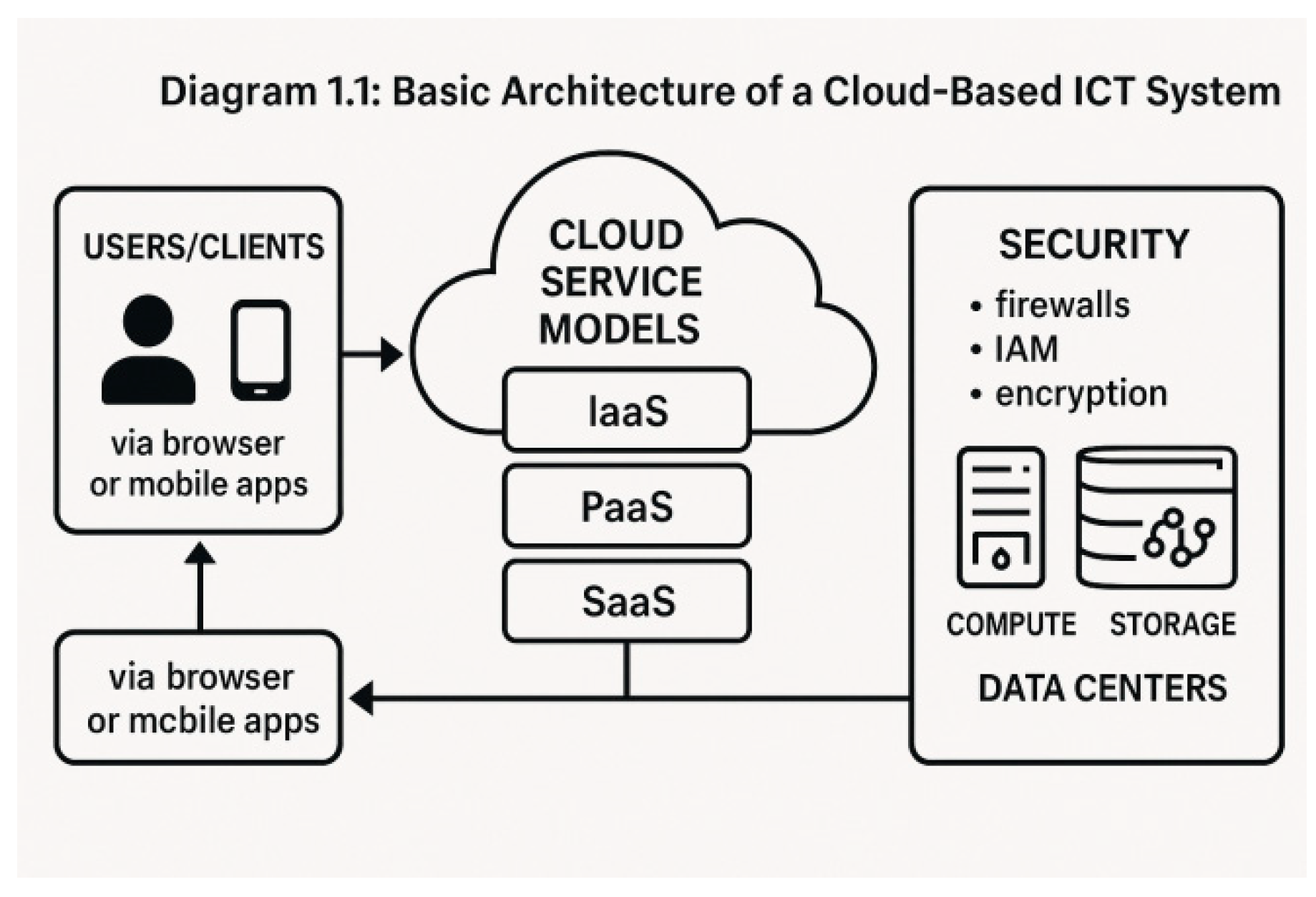
2. Literature Review
2.1. Overview of Cloud Computing Models (IaaS, PaaS, SaaS)
Cloud services are generally delivered through three primary models:
- Infrastructure as a Service (IaaS): Provides virtualized computing resources over the internet. Users manage operating systems and applications but rely on the provider for hardware and networking infrastructure.
- Platform as a Service (PaaS): Offers a platform allowing customers to develop, run, and manage applications without dealing with underlying infrastructure.
- Software as a Service (SaaS): Delivers software applications via the internet, with the provider handling everything from infrastructure to data management.
Each model has different security implications and responsibility boundaries between provider and customer.

Table 2.
1: Comparison of Cloud Service Models and Their Security Concerns.
| Model | Description | Customer Responsibility | Security Concerns |
| IaaS | Virtual machines, storage, and networking | OS, applications, data | Misconfigurations, insecure VM instances |
| PaaS | App development and deployment platform | Application logic, data | Application-level vulnerabilities |
| SaaS | Complete software solutions | User access, data handling | Data leakage, identity theft |
Diagram 1.1: Basic Architecture of a Cloud-Based ICT System.
2.2. Security Architecture in Cloud-Based ICT Systems
Cloud security architecture typically includes a layered approach involving:
- Network Security (e.g., firewalls, VPNs)
- Data Security (e.g., encryption, tokenization)
- Identity & Access Management (IAM)
- Monitoring & Logging Tools
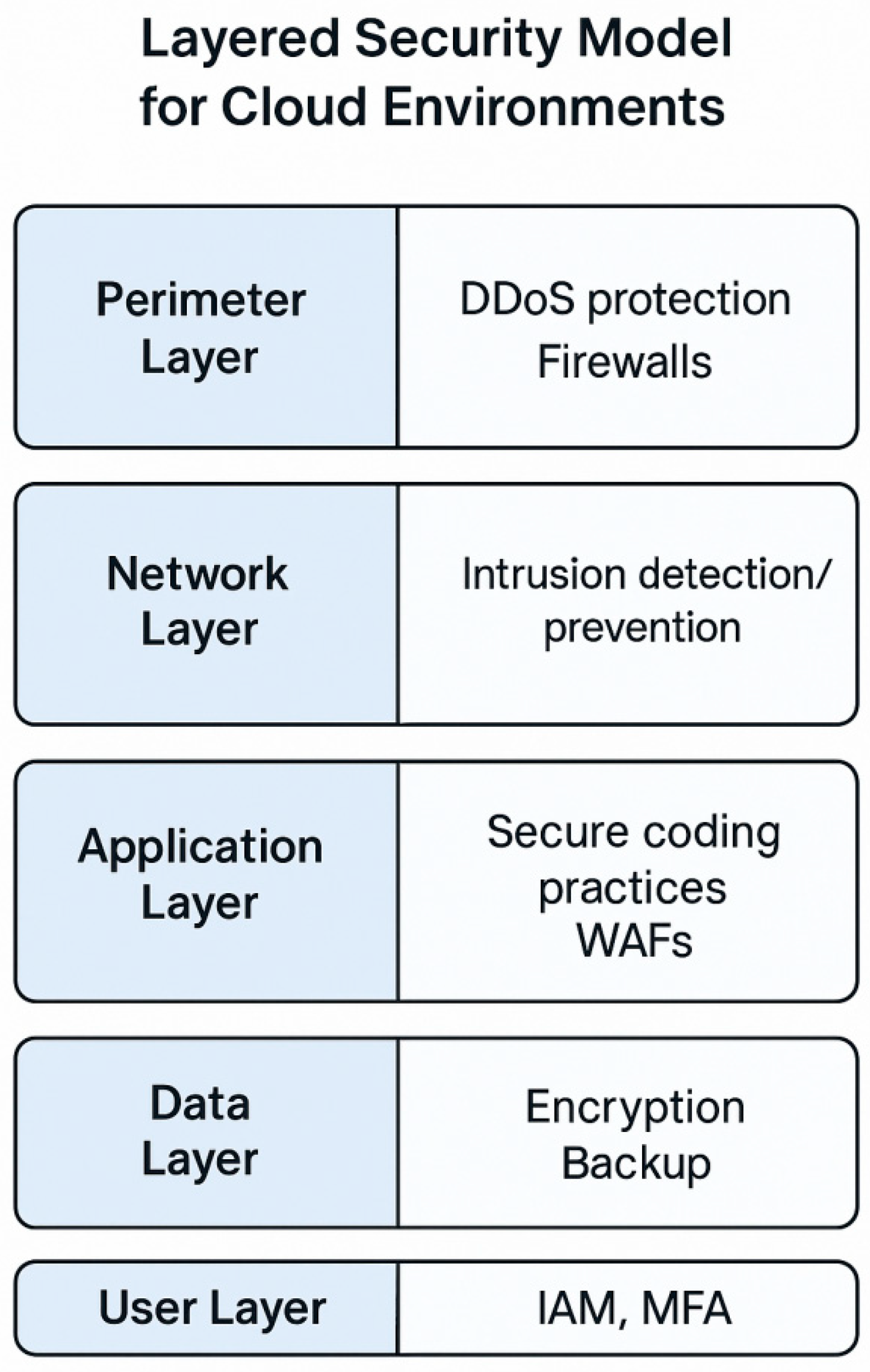
Diagram 2.2: Layered Security Model for Application Layer: Secure coding practices, WAFs
2.3. Previous Studies on Cloud Cybersecurity Challenges
A broad body of research identifies key risks in cloud systems.
- Subashini and Kavitha (2011) emphasized the lack of strong SLAs (Service-Level Agreements) as a threat to security assurance.
- Zissis and Lekkas (2012) explored the implications of cloud multitenancy and virtualization for data integrity and confidentiality.
- Hashizume et al. (2013) created a taxonomy of cloud vulnerabilities, noting that APIs and insider threats are major concerns.
2.4. Gaps in Existing Research
While existing literature outlines threats and solutions, gaps remain in areas such as:
- Security challenges in hybrid/multi-cloud environments.
- Automation and AI-based defense mechanisms.
- The role of regulatory compliance in cross-border cloud services.
- Integration of IoT and edge devices into cloud ecosystems.
3. Methodology
3.1. Research Design
This study adopts a qualitative research design to explore cybersecurity challenges in cloud-based ICT systems. The research combines:
- Descriptive analysis of current threats and vulnerabilities.
- Exploratory case studies of cloud security incidents.
- Comparative analysis of security frameworks and practices.
The focus is on gathering rich, detailed data from various secondary sources such as journal articles, technical reports, white papers, and cybersecurity advisories.
3.2. Data Collection Methods
The research relies on secondary data collection methods, including:
- Literature survey of academic databases (IEEE, ACM, ScienceDirect, Springer).
- Industry reports from organizations like NIST, ENISA, CSA, and Gartner.
- Case studies of past cloud-related security breaches.
- Framework documentation from major providers (e.g., AWS, Azure, Google Cloud).
Table 3.
1: Summary of Methods Used in Previous Research.
| Author(s) | Method Used | Focus Area | Limitation |
| Subashini & Kavitha (2011) | Literature Review | SaaS security issues | Lacked case analysis |
| Hashizume et al. (2013) | Threat Taxonomy | General cloud vulnerabilities | No specific mitigation strategies |
| Khan et al. (2020) | Survey + Framework Study | Multi-cloud security practices | Limited geographic scope |
3.3. Data Analysis Techniques
Thematic analysis is used to identify patterns and group challenges into categories such as:
- Infrastructure vulnerabilities
- Data security concerns
- Access management issues
- Emerging threat vectors
Comparative tables and visual representations are employed to summarize findings and contrast strategies.
3.4. Limitations and Ethical Considerations
-
Limitations:
- ○
- No access to proprietary data from cloud service providers.
- ○
- Limited to publicly reported incidents and frameworks.
- ○
- Focused mainly on qualitative synthesis over empirical testing.
-
Ethical Considerations:
- ○
- All sources are properly cited and referenced.
- ○
- No personal or sensitive data is collected.
- ○
- The research adheres to academic integrity and publishing guidelines.
4. Cybersecurity Challenges in Cloud-Based ICT Systems
Cloud computing introduces a complex landscape of cybersecurity challenges that differ from traditional IT infrastructures. These challenges arise due to the dynamic, distributed, and multi-tenant nature of cloud environments.
4.1. Data Breaches and Data Loss
One of the most severe threats in cloud computing is unauthorized access to sensitive data. Data breaches can occur due to:
- Misconfigured cloud storage (e.g., publicly accessible S3 buckets)
- Lack of encryption at rest or in transit
- Vulnerabilities in shared resources
Example: The 2019 Capital One breach, where data from over 100 million users was exposed due to a firewall misconfiguration.
4.2. Insider Threats and Human Error
Employees, contractors, or cloud service provider staff may accidentally or maliciously compromise data.
- Insider threats are difficult to detect and often go unnoticed until after damage is done.
- Human error, such as weak passwords or misconfigured security groups, is a leading cause of breaches.
4.3. Insecure Interfaces and APIs
APIs are essential for cloud services but can become attack vectors if:
- Poorly documented or updated
- Lacking authentication or rate limiting
- Not protected from injection or cross-site scripting (XSS)
4.4. Account Hijacking and Identity Management Issues
If an attacker gains access to user credentials:
- They may exploit resources for malicious purposes (e.g., cryptojacking)
- Users may experience data theft, service interruptions, or reputational damage
- Poor identity and access management (IAM) controls make this risk more significant
4.5. Compliance and Regulatory Challenges
Cloud environments span multiple jurisdictions, making compliance with standards like GDPR, HIPAA, or ISO/IEC 27001 challenging.
- Data sovereignty laws may conflict across borders
- Cloud providers must provide auditability and transparency
4.6. Advanced Persistent Threats (APTs)
APTs are stealthy and sophisticated cyberattacks often linked to state actors or organized groups. In cloud systems:
- They can reside undetected for months
- Exploit cloud-native tools to avoid detection
- Target government or high-value enterprise data
Table 4.
1: Common Cybersecurity Threats in Cloud ICT Systems and Their Impact.
| Threat | Description | Potential Impact | Example |
| Data Breach | Unauthorized data access | Financial loss, legal penalties | Capital One (2019) |
| Insider Threats | Malicious or negligent insiders | Data theft, system compromise | Tesla Employee Case |
| Insecure APIs | Poorly secured endpoints | Exploits, unauthorized access | Facebook Graph API Leak |
| Account Hijacking | Stolen credentials | Privilege abuse, resource misuse | GitHub Token Leaks |
| Regulatory Non-Compliance | Violations of data laws | Fines, sanctions, reputational damage | GDPR Violations |
| Advanced Persistent Threats | Covert, targeted cyberattacks | Long-term espionage, data exfiltration | SolarWinds Attack (2020) |
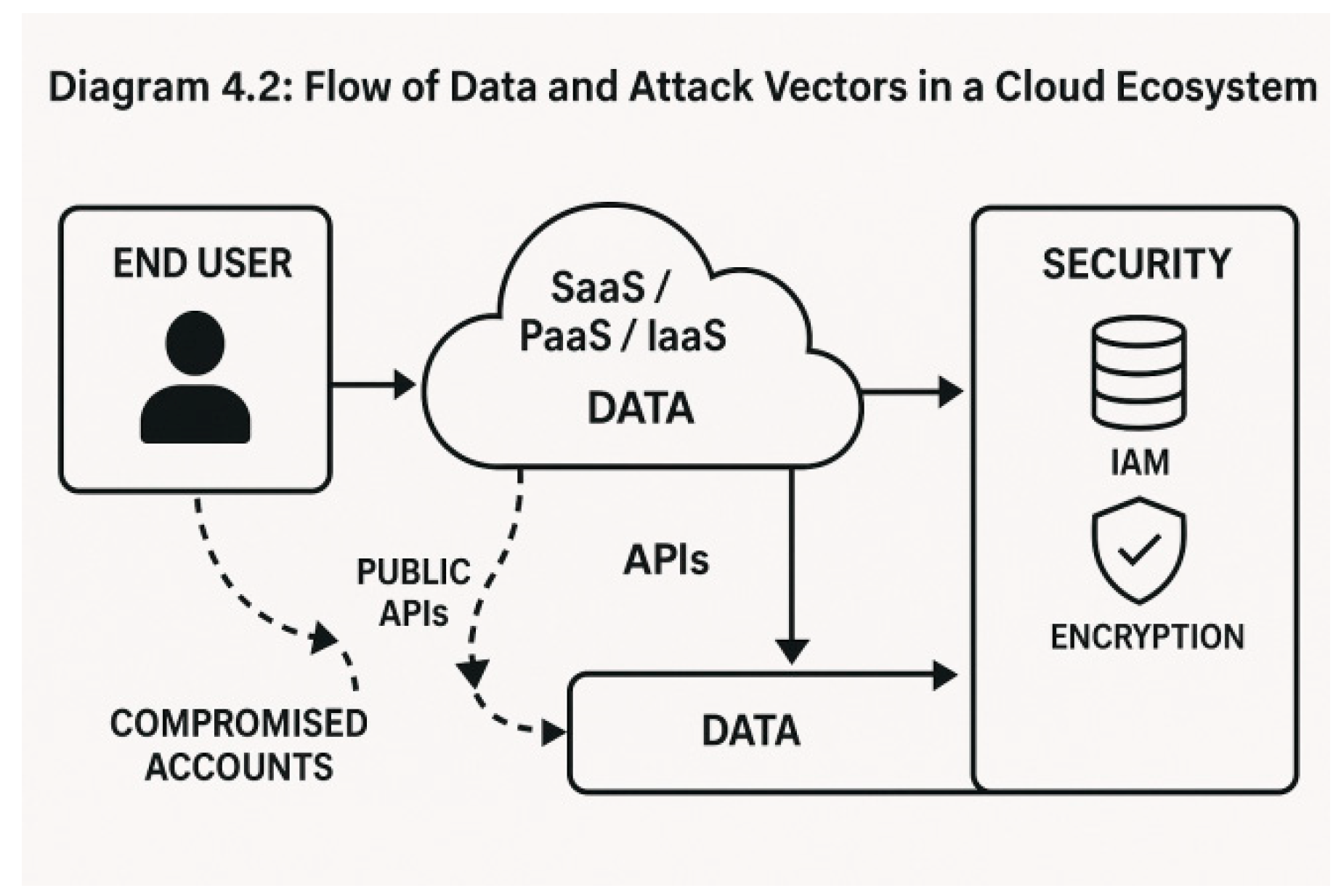
Diagram 4.2: Flow of Data and Attack Vectors in a Cloud Ecosystem
5. Emerging Threats and Vulnerabilities
As cloud computing evolves, so do the techniques and tools used by malicious actors. The complexity of hybrid and multi-cloud architectures, the rise of AI, and the proliferation of connected devices have introduced a new generation of cyber risks.
5.1. Threats from Artificial Intelligence and Machine Learning
Artificial Intelligence (AI) and Machine Learning (ML) are now used both defensively and offensively:
- AI-powered attacks can adapt in real time, evade detection systems, and exploit zero-day vulnerabilities.
- Attackers may use ML algorithms to identify patterns in system behaviors and predict defense strategies.
Example: AI-driven spear phishing campaigns that dynamically generate personalized messages based on scraped user data.
5.2. Vulnerabilities in Multi-Cloud and Hybrid Environments
Many enterprises use multi-cloud strategies to avoid vendor lock-in and hybrid models to retain sensitive workloads on-premises.
- These systems increase complexity and reduce visibility across environments.
- Lack of centralized security governance can lead to inconsistent policies and misconfigurations.
5.3. Quantum Computing Threats (Future Risk)
Quantum computing could one day break widely used cryptographic algorithms like RSA and ECC.
- This post-quantum vulnerability could render current encryption schemes obsolete.
- Cloud services must prepare by adopting quantum-safe cryptographic standards.
5.4. Cloud Supply Chain Attacks
These occur when third-party software or services integrated into the cloud environment are compromised.
- Attackers may inject malicious code into widely used libraries or DevOps pipelines.
- Such threats are hard to detect and can cause widespread damage.
Example: The SolarWinds breach—an attacker inserted a backdoor into a routine software update affecting government and corporate networks worldwide.
5.5. Zero Trust Architecture (ZTA) Adoption Challenges
The Zero Trust model is increasingly advocated for cloud security, but it has challenges:
- Requires identity verification at every step.
- Implementation in legacy systems or multi-cloud settings can be costly and complex.
- Organizational resistance and lack of technical maturity slow adoption.
Table 5.
1: Summary of Emerging Threats and Their Implications.
| Emerging Threat | Description | Potential Impact | Current Mitigation |
| AI-Driven Attacks | Adaptive, stealthy cyberattacks | Faster breaches, hard-to-detect threats | AI-enabled defense tools |
| Multi-Cloud Complexity | Poor integration across platforms | Misconfigurations, inconsistent policies | Unified security orchestration |
| Quantum Vulnerability | Breaking encryption with quantum computing | Data exposure, compromised privacy | Post-quantum cryptography |
| Supply Chain Infiltration | Attack via third-party tools/services | Widespread breaches | Software bill of materials (SBOM), code audits |
| Zero Trust Implementation | Enforcing least privilege and constant auth | Deployment and scaling challenges | ZTA toolkits, IAM refinement |
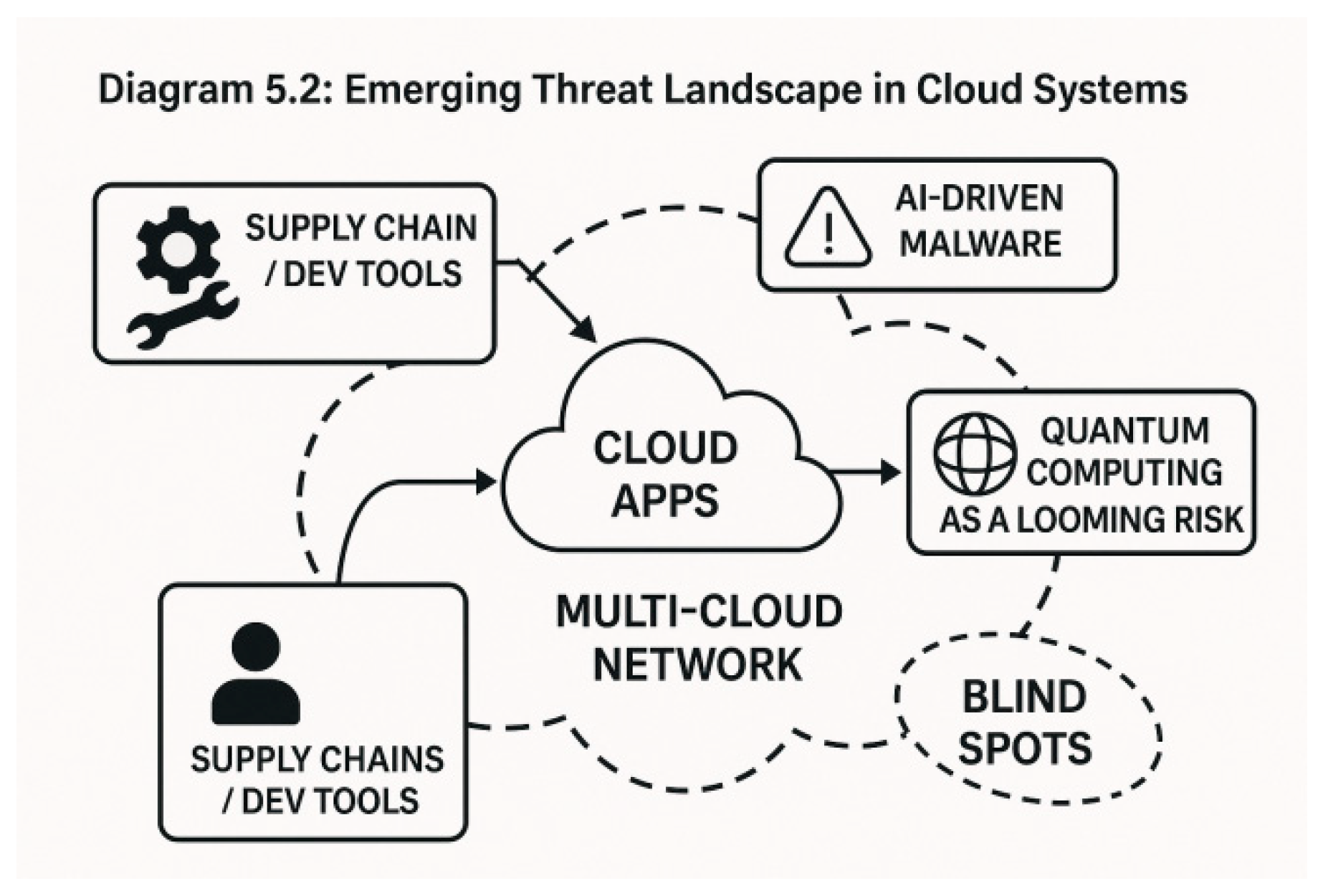
Diagram 5.2: Emerging Threat Landscape in Cloud Systems
6. Strategies and Solutions for Mitigating Cybersecurity Challenges
Addressing the cybersecurity risks in cloud-based ICT systems requires a multi-layered, proactive approach. Solutions must cover technical safeguards, policy controls, continuous monitoring, and user behavior management.
6.1. Encryption and Data Protection Measures
Encryption is a fundamental strategy for ensuring data confidentiality:
- At rest: Data is encrypted in storage using AES-256 or similar algorithms.
- In transit: Secure protocols like HTTPS, SSL/TLS are used to protect data movement.
- In use: Emerging technologies like homomorphic encryption and confidential computing are gaining traction.
Key Point: Encryption must be paired with robust key management systems (KMS).
6.2. Identity and Access Management (IAM)
IAM frameworks ensure that only authorized users have access to cloud resources:
- Use of multi-factor authentication (MFA)
- Role-Based Access Control (RBAC) and Attribute-Based Access Control (ABAC)
- Regular audits of access privileges
6.3. Zero Trust Architecture (ZTA) Implementation
ZTA is a security model based on the principle of "never trust, always verify":
- Enforces continuous authentication and authorization
- Applies least-privilege access across all network layers
- Uses micro-segmentation to isolate workloads
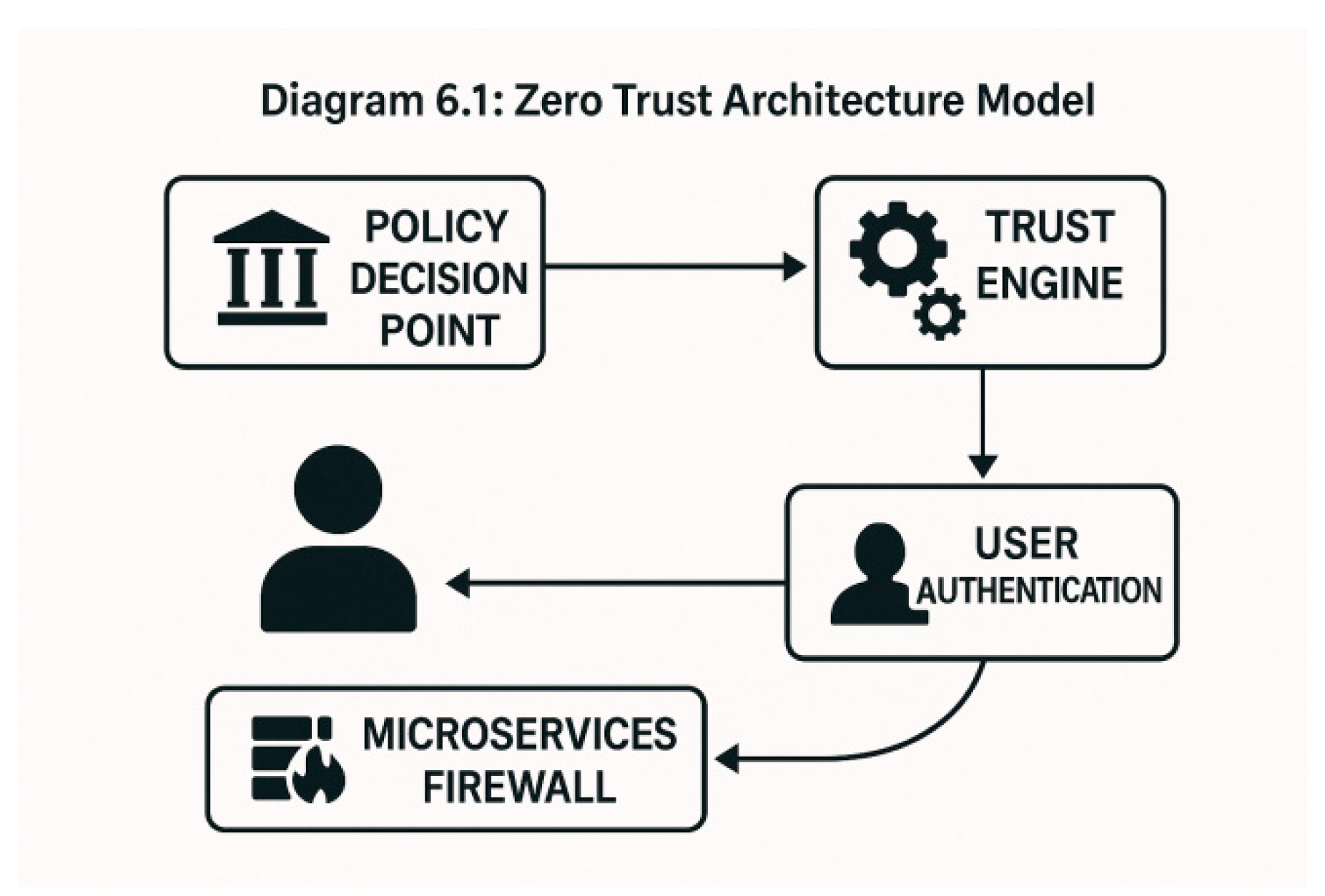
Diagram 6.1: Zero Trust Architecture Model
6.4. AI and Automation for Threat Detection
Artificial Intelligence and Machine Learning enhance real-time threat detection:
- Behavioral analytics can detect anomalies
- Automated incident response systems reduce time-to-mitigation
- Tools like SIEM (Security Information and Event Management) are evolving to include AI modules
Example Tools: CrowdStrike, IBM QRadar, Microsoft Defender for Cloud
6.5. Regulatory Compliance and Risk Management Frameworks
Adherence to global standards ensures legal compliance and enhances trust:
- NIST Cybersecurity Framework
- ISO/IEC 27001
- GDPR, HIPAA, SOC 2 for specific sectors
Table 6.
1: Regulatory Standards and Their Focus Areas.
| Framework/Standard | Scope | Industry Focus | Key Requirements |
| NIST CSF | Cybersecurity lifecycle | Government, general | Identify, Protect, Detect, Respond, Recover |
| ISO/IEC 27001 | ISMS and information security | All industries | Risk assessment, continuous improvement |
| GDPR | Data privacy and protection | EU, global data flows | Consent, access rights, breach notification |
| HIPAA | Health data protection | Healthcare | Data integrity, access controls, audit trails |
| SOC 2 | Service organization controls | Cloud, SaaS | Security, availability, confidentiality |
6.6. DevSecOps Integration
DevSecOps incorporates security into every phase of the software development lifecycle:
- Automates security testing (SAST/DAST)
- Uses CI/CD pipelines to enforce compliance
- Promotes "shift-left" security practices
7. Case Studies
This section presents real-world examples to demonstrate the practical implications of cybersecurity challenges and how different strategies were employed in response.
7.1. Case Study 1: Capital One Data Breach (2019)
Overview:
Capital One, a major U.S. financial institution, suffered a breach affecting over 100 million customer records.
Root Cause:
A misconfigured AWS web application firewall (WAF) allowed a former employee of Amazon Web Services to exploit a vulnerability and access sensitive data.
Impact:
- Exposure of customer names, addresses, social security numbers
- $80 million regulatory fine
- Reputational damage
Lessons Learned:
- Need for regular configuration audits
- Importance of IAM policies and monitoring
- Value of real-time threat detection tools
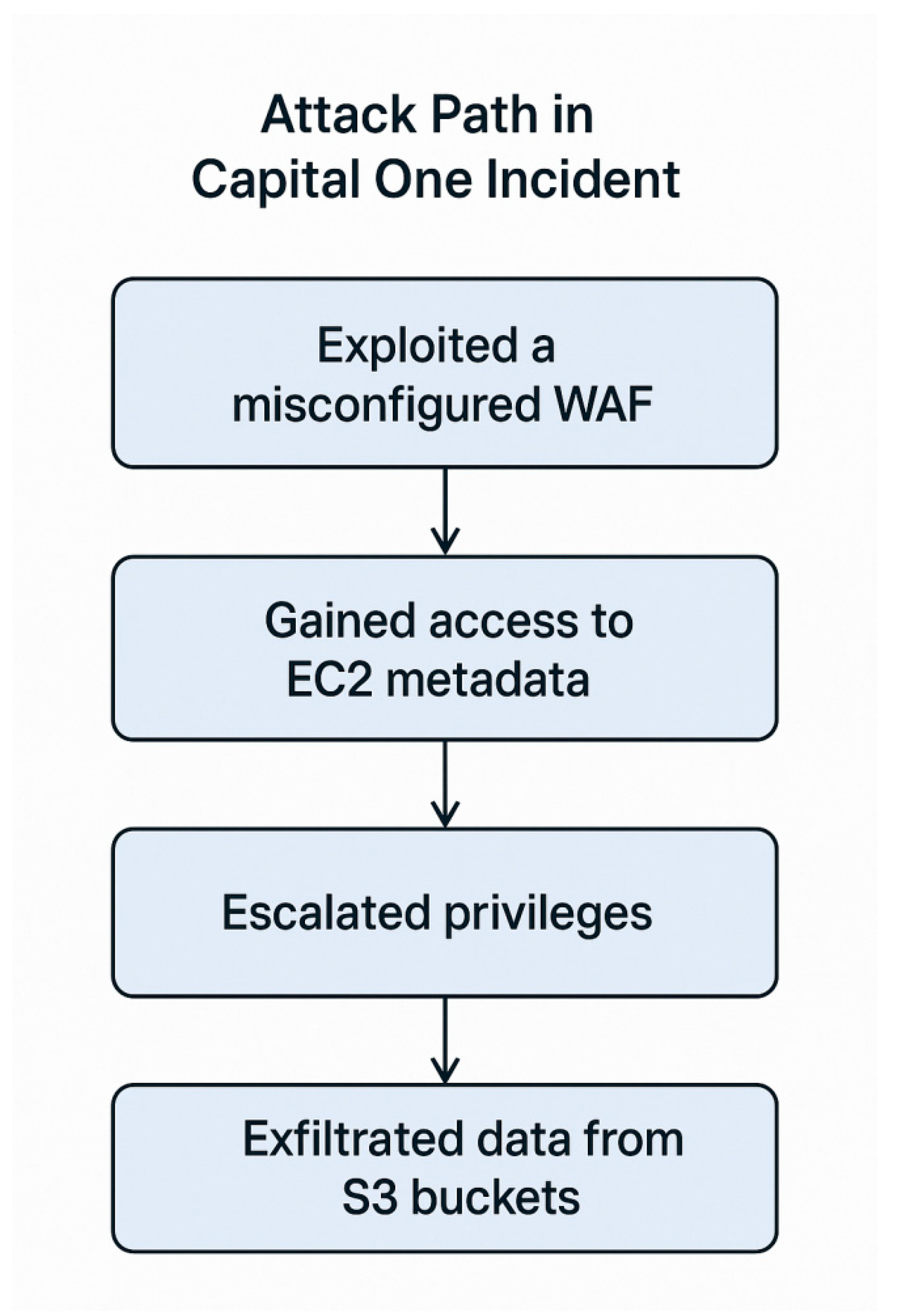
Diagram 7.1: Attack Path in Capital One Incident
7.2. Case Study 2: SolarWinds Supply Chain Attack (2020)
Overview:
A sophisticated state-sponsored attack compromised SolarWinds’ Orion software, affecting over 18,000 customers, including U.S. federal agencies.
Root Cause:
Attackers inserted a malicious backdoor (SUNBURST) into a routine software update.
Impact:
- Widespread data exfiltration and espionage
- Months-long undetected presence in victim networks
- Highlighted weaknesses in third-party software trust models
Lessons Learned:
- Need for software bill of materials (SBOMs)
- Importance of securing CI/CD pipelines
- Detection of anomalous behavior across environments
7.3. Case Study 3: Dropbox Credential Theft (2022)
Overview:
Dropbox employees fell victim to a phishing campaign that impersonated CircleCI and led to credential theft.
Root Cause:
- Compromised GitHub tokens due to social engineering
- Lack of strict MFA enforcement at the time
Impact:
- Exposure of developer credentials
- Temporary disruption to internal projects
Lessons Learned:
- Importance of employee training
- Enforcing token scope and expiry
- Deployment of MFA for all access points
Table 7.
1: Comparative Summary of Cloud Security Incidents.
| Case Study | Breach Vector | Data Affected | Key Weakness | Mitigation Action |
| Capital One (2019) | Misconfigured firewall | Personal and financial records | IAM mismanagement, misconfig | AWS GuardDuty, Config audits |
| SolarWinds (2020) | Compromised update | Network-wide system access | Supply chain, software integrity | SBOMs, ZTA, threat hunting |
| Dropbox (2022) | Phishing + GitHub | Developer access credentials | Human error, weak MFA | Training, OAuth token policies |
8. Discussion
This section provides a critical analysis of the challenges and strategies previously outlined, reflecting on the evolving nature of cloud cybersecurity, the gaps in current practices, and the need for proactive, scalable defense mechanisms.
8.1. Interplay Between Cloud Innovation and Security Risks
Cloud computing offers unparalleled scalability, flexibility, and cost-efficiency. However, the rapid adoption of cloud services often outpaces the implementation of robust cybersecurity practices.Key observations:
- Innovation vs. Security Lag – Businesses prioritize rapid deployment over secure architecture.
- Complexity of Cloud Environments – Multi-cloud and hybrid setups introduce overlapping controls and visibility challenges.
Insight: Organizations must integrate security early in the cloud adoption lifecycle rather than treat it as an afterthought.
8.2. Common Gaps in Security Implementation
Despite available tools and frameworks, several common gaps persist:
- Inconsistent access controls across platforms
- Weak cloud governance policies
- Neglected monitoring and logging practices
- Over-reliance on cloud providers for security
These gaps often stem from:
- Lack of expertise
- Budget constraints
- Misconceptions about shared responsibility models
8.3. Shared Responsibility Model Misunderstanding
Many breaches occur due to confusion over what the cloud provider secures vs. what the customer must secure.
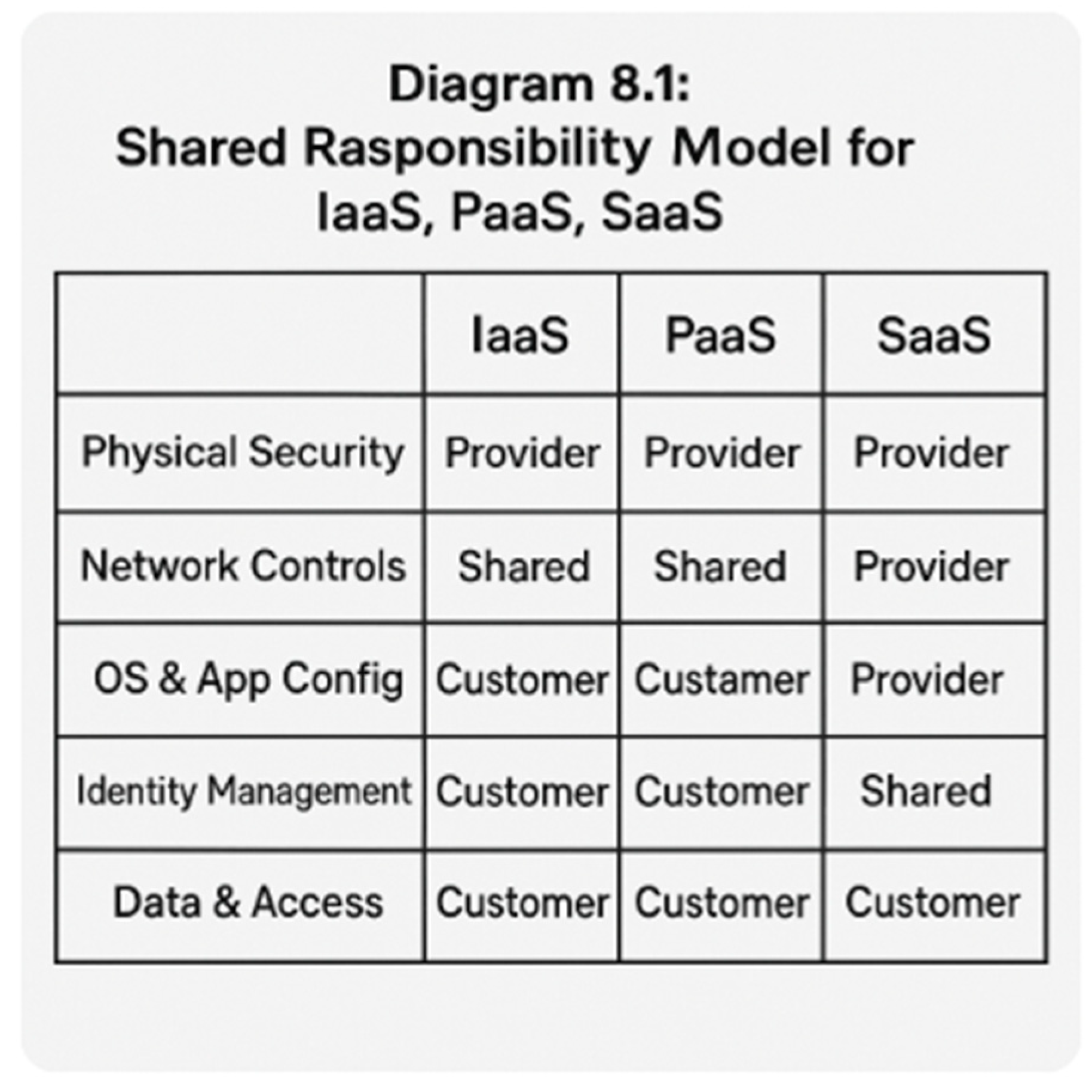
Diagram 8.1: Shared Responsibility Model for IaaS, PaaS, SaaS
8.4. Importance of Culture and Training
Even the best technology cannot prevent breaches caused by human error or insider threats. A culture of security awareness is essential.
Key steps include:
- Regular training on phishing and social engineering
- Simulated attack exercises
- Clear incident response procedures
Quote: “Cybersecurity is as much about people and processes as it is about technology.”
8.5. Strategic Alignment of Security with Business Goals
For long-term sustainability, cloud security efforts must align with organizational goals:
- ROI must be clear for security investments
- Compliance must be integrated with operations
- Risk appetite should guide security architecture
Table 8.
1: Security Strategy Alignment with Business Objectives.
| Business Objective | Corresponding Security Strategy |
| Operational Continuity | Incident response, data backup & recovery |
| Customer Trust | Data protection, transparency, compliance |
| Innovation Speed | DevSecOps, secure CI/CD pipelines |
| Cost Optimization | Cloud-native security tools, automation |
9. Conclusion and Recommendations
9.1. Conclusion
Cloud-based ICT systems have revolutionized digital infrastructure by enabling agility, scalability, and cost efficiency. However, they also introduce a new and complex threat landscape. This paper has explored the multifaceted cybersecurity challenges inherent in cloud environments, including data breaches, access management issues, insider threats, and emerging risks like AI-driven attacks and quantum vulnerabilities.
Key takeaways:
- Security is a shared responsibility between cloud service providers and users.
- Human factors, such as misconfigurations and lack of training, are leading contributors to cloud security incidents.
- Emerging technologies both threaten and enhance cloud security; organizations must adapt quickly.
- Proactive strategies such as Zero Trust Architecture, AI-powered threat detection, and DevSecOps are essential for future-proofing cloud ecosystems.
9.2. Recommendations
Based on the findings and case studies, the following recommendations are proposed:
1. Implement Zero Trust Architecture (ZTA)
- Enforce identity verification for all users and devices
- Apply least-privilege principles
- Segment network resources using microservices and access control policies
2. Adopt AI and Automation
- Integrate AI-powered Security Information and Event Management (SIEM)
- Use behavioral analytics for real-time threat detection
- Automate incident response to reduce mitigation times
3. Regularly Audit and Test Security Configurations
- Perform penetration testing, vulnerability scanning, and red team exercises
- Monitor for misconfigurations and enforce configuration baselines
4. Enhance Employee Training and Awareness
- Train staff on phishing, credential hygiene, and social engineering
- Conduct regular simulated attack drills
- Promote a culture of cybersecurity ownership
5. Prepare for Post-Quantum Threats
- Begin transitioning to quantum-resistant encryption standards
- Stay updated with NIST recommendations and cryptographic best practices
6. Establish Strong Governance and Compliance Practices
- Align cloud operations with NIST, ISO/IEC 27001, and sector-specific standards
- Maintain an updated software bill of materials (SBOM)
- Implement clear data classification and handling policies
9.3. Future Work
Future research should explore:
- AI-driven defense systems that autonomously adapt to advanced persistent threats (APTs)
- Standardized frameworks for cloud supply chain risk management
- The development of universal quantum-safe cryptographic libraries
- Ethical and privacy implications of advanced cloud surveillance tools
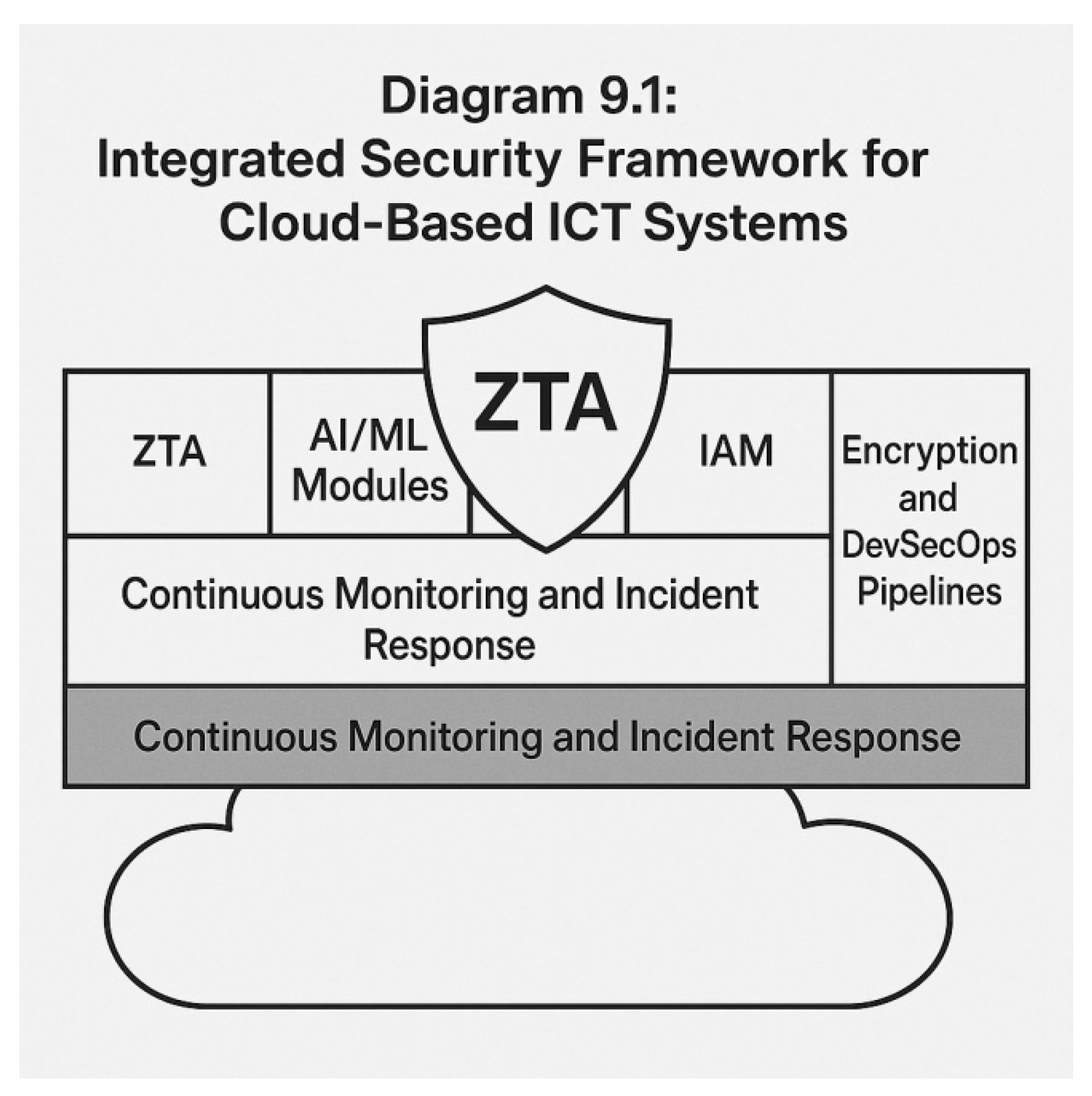
Diagram 9.1: Integrated Security Framework for Cloud-Based ICT Systems
References
- Alasmary, Waleed, Fahad Alhaidari, Rawan Alhaidari, and Tareq Alhaidari. Cloud Computing Security Challenges and Solutions: A Systematic Review. Computers, Materials & Continua 2022, 70, 1809–1826. [Google Scholar] [CrossRef]
- Chouhan, Manisha, and Vikram Sharma. Chouhan, Manisha, and Vikram Sharma. Enhancing Cybersecurity in Cloud Computing Using Artificial Intelligence Techniques. Journal of King Saud University – Computer and Information Sciences 2021. [Google Scholar] [CrossRef]
- Fernandes, D. A. B., L. F. B. Soares, J. V. Gomes, M. M. Freire, and P. R. Inácio. Security Issues in Cloud Environments: A Survey. International Journal of Information Security 2014, 13, 113–170. [Google Scholar] [CrossRef]
- Hashem, Ibrahim A. T., Ibrar Yaqoob, Nor Badrul Anuar, Saleh Mokhtar, Abdullah Gani, and Samee U. Khan. The Rise of ‘Big Data’ on Cloud Computing: Review and Open Research Issues. Information Systems 2015, 47, 98–115. [Google Scholar] [CrossRef]
- KPMG. 2021. “Cybersecurity Considerations 2021: Cloud Security.” https://home.kpmg/xx/en/home/insights/2021/06/cloud-security-cyber-considerations.html.
- Microsoft. 2020. “The Shared Responsibility Model in Cloud Computing.” Microsoft Azure. https://azure.microsoft.com/en-us/resources/shared-responsibility-model/.
- Mollah, Md Barkatullah, Md Abul Kalam Azad, and Athanasios V. Vasilakos. Security and Privacy Challenges in Mobile Cloud Computing: Survey and Way Ahead. Journal of Network and Computer Applications 2017, 84, 38–54. [Google Scholar] [CrossRef]
- National Institute of Standards and Technology (NIST). 2020. Framework for Improving Critical Infrastructure Cybersecurity, Version 1.1. https://www.nist.gov/cyberframework.
- Shaghaghi, Abdollah, and Christopher Fidge. Preventing Insider Threats in Cloud Computing Systems: A Review and Research Agenda. ACM Computing Surveys 2021, 54, 1–36. [Google Scholar] [CrossRef]
- Sood, Aditya K. , and Richard J. Enbody. Targeted Cyberattacks: A Superset of Advanced Persistent Threats. IEEE Security & Privacy 2013, 11, 54–61. [Google Scholar] [CrossRef]
- Al Wahid, Sk Ayub, Nur Mohammad, Rakibul Islam, Md Habibullah Faisal, and Md Sohel Rana. Evaluation of Information Technology Implementation for Business Goal Improvement under Process Functionality in Economic Development. Journal of Data Analysis and Information Processing 2024, 12, 304–317.
- Ahmed, Khandakar Rabbi, Rakibul Islam, Md Ariful Alam, Mir Araf Hossain Rivin, Mahfuz Alam, and Md Shafiqur Rahman. A Management Information Systems Framework for Sustainable Cloud-Based Smart E-Healthcare Research Information Systems in Bangladesh. In 2024 Asian Conference on Intelligent Technologies (ACOIT), pp. 1-5. IEEE, 2024.
Disclaimer/Publisher’s Note: The statements, opinions and data contained in all publications are solely those of the individual author(s) and contributor(s) and not of MDPI and/or the editor(s). MDPI and/or the editor(s) disclaim responsibility for any injury to people or property resulting from any ideas, methods, instructions or products referred to in the content. |
© 2025 by the authors. Licensee MDPI, Basel, Switzerland. This article is an open access article distributed under the terms and conditions of the Creative Commons Attribution (CC BY) license (http://creativecommons.org/licenses/by/4.0/).
Copyright: This open access article is published under a Creative Commons CC BY 4.0 license, which permit the free download, distribution, and reuse, provided that the author and preprint are cited in any reuse.


