
Submitted:
16 April 2025
Posted:
17 April 2025
You are already at the latest version
Abstract
The Mindong-Changchunling region is situated in the central portion of the Songliao Basin within China. The principal target stratum in this area is the Fuyu oil layer from the lower Cretaceous Quan 4th member. The reservoir is distinguished by its exceptionally fine lithology, predominantly comprising fine sandstone and siltstone, with minor intercalations of medium sandstone. The distribution of high-quality reservoirs in the Mindong-Changchunling area is constrained by significant differences in provenance, sedimentation, diagenesis, and other factors. The sand body distribution in the Changchunling area is influenced by the eastern near-source provenance. The reservoir properties of these sand bodies are impacted by the poor sorting and high mud content typical of near-source delta sand bodies. Nonetheless, the reservoir properties are enhanced by late uplift and surface water dissolution eluviation. In contrast, the distribution of sand bodies in the Mindong area is governed by the southwestern far-source provenance. Far-source delta sand bodies are characterized by better sorting and high mud content, but their reservoir properties are primarily diminished by carbonate cementation. During the early middle diagenetic stage, the dissolution of feldspar by organic acids improves the reservoir properties of the sand bodies. Three advantageous reservoir zones with distinct genetic types have emerged in the Mindong-Changchunling area due to variations in sedimentation and diagenesis. These zones include the Chang107-Chang104-Chang52 well area, the Fu155-Fu161-Fu157 well area, and the Min103-Min31 well area.
Keywords:
Songliao Basin
; Fuyu Oil Layer
; Sedimentation
; Diagenesis
; Reservoir Properties
; Advantageous Reservoir Zone
1. Introduction
The Mindong-Changchunling region is situated on a slope between the Fuyu palaeouplift and the Sanzhao depression within the Songliao Basin, encompassing the northern portion of the Fuxin uplift and the Changchunling anticline belt (Figure 1). It borders the Xinmin oil field to the west and extends to the southeast uplift in the east, covering an approximate area of 400 square kilometers.
This region is characterized by the development of faults, comprising four distinct fault-intensive zones. The first fault-intensive zone is oriented in a south-north direction, the second follows a northwest-southeast trajectory, the third extends northeast-southwest, and the Xinmin boundary fault zone also runs northeast-southwest. The Mindong area spans from the west of the first fault-intensive zone to the Xinmin oil field, while the Changchunling area is situated to the east of this zone.
The study area encompasses 96 exploratory wells, among which 27 are classified as industrial wells (including Min 9, Min 16, Chang 110, Chang 106, Fu 154, Fu 158, He 3, He 4, among others), and 69 are oil and gas show wells (including Min 69, Min 26, Chang 113, Chang 114, Tan 25, Tan 26, among others). The sand bodies flanking the slope belt within the dominant migration channel (fault zone) are considered favorable locations for hydrocarbon accumulation (Vail P R, 1987). While the area exhibits a rich presence of oil-gas shows, the productivity varies among the wells.
The Fuyu oil layer within the lower Cretaceous Quan 4th member is the principal hydrocarbon-bearing target zone in the Mindong-Changchunling area (Cross T A, 1988; Wheeler, 1964; Wang Yougong et al). The crude oil is notably lighter, with a 0.5% to 1.5% lower kerogen carbon isotope ratio compared to the source rocks (Seifert et al., 1980), and originates from the Qing 1st member source rocks in the northern Sanzhao depression. Through the analysis of overpressure, fluid potential, and translocating systems, it has been established that oil and gas were concentrated in the Quan 4th member through overpressure and backflowing from the Qing 1st member source rocks in the Sanzhao depression (Zhao et al., 1999; Chen, 2011; Wang, 2012; Huang et al., 2012; Wang, 2014; Shi et al., 2014).
The Quan 4th member in the Mindong-Changchunling area features a developed delta depositional system (Liu et al., 1993; Zhang et al., 2009; Cheng et al., 2009; Feng et al., 2010; Zhao et al., 2013). Specifically, a river-dominated delta depositional system is present in the southern Songliao Basin, whereas the delta plain-delta front subfacies are predominantly found in the Mindong-Changchunling area (Zeng, 2013; Li et al.,2015; Zhu, et al.,2017; Wei, et al., 2017). This is primarily due to the composition of the delta depositional system's skeletal sand bodies (C. Page Chamberlain, 2013; Chen et al., 2011), with the main components being massive, dense, narrow strips, and continuously distributed (underwater) distributary channel sand bodies (Feng et al., 2014). The delta depositional system is characterized by its extremely fine lithology, predominantly fine sandstone, siltstone, with occasional interbeds of medium sandstone (Pan, 2011; Sun et al., 2012; Li et al., 2015; Feng et al., 2015). Furthermore, through comprehensive analysis of testing, drilling, outcrop data, and other methods, it has been determined that an inherited eastern provenance developed from the Quantou Formation to the Nenjiang Formation, known as the Yulin depositional system (Pan, 2011; Li et al., 2015).
As indicated in Table 1, there exists a significant variation in the production of individual wells, which may be attributed to tectonic factors. Regrettably, even within the same tectonic region, the output of each oil well exhibits considerable variability. For example, there is a substantial disparity in oil production between Min 117 well and Min 35 well, both located within the Xinmin boundary fault. The porosity of Min 117 well is 11.6%, its permeability is 0.08×10^-3 µm^3, and its daily oil production amounts to only 0.9 tons. Conversely, Min 35 well has a porosity of 13.90%, a permeability of 10.60×10^-3 µm^3, and a daily oil production of up to 16.9 tons. The factors that govern the heterogeneities of sandstone reservoirs also influence reservoir quality to a certain extent. These elements primarily encompass depositional facies (Lima and De Ros, 2002; Zhang et al., 2008; El-Ghali et al., 2009a) and diagenesis (Schmid et al., 2004; Dutton and Loucks, 2010; Morad et al., 2010; Feng et al., 2013). It is evident that the productivity of individual wells is predominantly influenced by sedimentation and diagenesis, with variations in provenance, depositional systems, and late diagenetic processes contributing to the disparities in well productivity. Consequently, evaluating the quality of high-grade reservoirs based on diagenetic differences within the reservoir, encompassing sedimentary background and petrological characteristics (Wang, 2003; Shu, 2007), is of paramount importance. (J.M. Ajdukiewicz, et al., 2011; S.M.C. Anjos, et al., 2003; M.W. French, et al., 2012; S. Bloch et al., 2002; X.Q. Ding et al., 2016).
2. Method
Ninety-five samples were meticulously collected from ten key wells (Min117, Min35, Min57, Min52, Fu215, Fu235, Chang107, Chang107-1, Chang107-2, Chang122-1) within the Quan 4th member reservoir. Subsequent identification and analysis were conducted on these samples using thin sections, cast, fluorescence, and cathodoluminescence techniques.
Microscopic identification stands as a pivotal method for determining the origin of rocks and minerals, allowing for a comprehensive investigation into the aggregate assemblage and the sequence of formation of diagenetic minerals.
Upon summarizing the transverse and longitudinal variation patterns of the Quan 4th member, forty-six samples from the main layer 1 and 2 sand groups were selected from each well for detailed analysis, comparison, and statistical evaluation. Building upon this, eleven representative samples were subjected to further clarification of the diagenetic evolution sequence through the application of scanning electron microscopy, cathodoluminescence analysis, and X-ray diffraction methods.
3. Sedimentary Characteristics
3.1. Characteristics of Shallow Water Delta
The shallow-water delta facies predominantly developed in the Mingdong-Changchunling region, where the principal reservoir sand body constitutes the underwater distributary channel sand body. Each sand body of the same stage can be distinctly delineated through core analysis, well logging, sedimentary structures, and other methodologies.
3.1.1. Characteristics of the Underwater Distributary Channel Sand Body are Exhibited by Sedimentary Structures
The sedimentary structures primarily encompass scour features (indicative of traction currents) and various bedding types in the Mingdong-Changchunling area. Parallel-bedding and cross-bedding are prevalent, with the presence of bottom mud conglomerate and scour surfaces indicating robust hydrodynamic conditions during the depositional phase. The Quan 4th member sand body is characterized by multi-stage channel superposition, with occasional mixed structures, boulder clay, and carbonaceous bands observed in the upper coring interval, suggesting a deep and unstable water body.
As depicted in Figure 2, the cumulative grain-size distribution curves exhibit a two-segment nature (comprising saltation and suspension population components), indicating that the sand body is governed by traction currents.
In the Mingdong area, the saltation population content varies between 10% and 25%, while the suspension population ranges from 60% to 80%. The overall inclination of the saltation and suspension populations typically falls between 40º and 60º, with moderate sorting. The fine intercept point between the saltation and suspension populations exhibits significant variability, primarily concentrated between 2.5 Φ and 3 Φ.
The saltation population content within the Changchunling area varies between 15% and 40%, while the suspension population ranges from 40% to 60%. The general inclination of both the saltation and suspension populations predominantly falls within the 20º to 30º range, exhibiting medium sorting. The fine intercept point between the saltation and suspension populations exhibits significant variation, primarily concentrated between 1.5 Φ and 2 Φ. Additionally, the cumulative grain-size distribution curve indicates that the overall grain size of the Mindong area is finer than that of the Changchun area.
3.1.2. Frequent Fluctuations in Shallow Water Bodies and Lacustrine Environments
During the Quaternary 4th member deposition period, sedimentary evolution was characterized by a flood plain stage of equilibrium and replenishment. This period was marked by reduced tectonic activity and a hot, dry climate. Shallow-water deltas typically formed in platform and epicontinental sea environments, where the water body was shallow and the tectonic setting was stable (Donaldson, 1974; Horne et al., 1976). The Songliao Basin's characteristics indicated a shallow-water lacustrine basin. In contrast to typical deltas, the water body in which the shallow-water delta formed was notably shallow (Zhu et al., 2012), and deep lacustrine facies were not developed during this period. The sedimentary facies rapidly changed, resulting in gray siltstone transforming into dark red, gray green, and variegated mudstone. The Quaternary 4th member developed three such sedimentary cyclothems. Ostracoda, trace fossils, and other fossils were discovered in cores. A limited number of fossil species and a small quantity indicate that the water body was shallow and the lacustrine environment experienced frequent fluctuations.
3.1.3. The Vertical Development Characteristics of (Underwater) Distributary Channel in one Stage
Each phase of the underwater distributary channel sand body was formed by eroding the underwater split bay, which rests upon mudstone. The mudstone predominantly exhibits dark red and celadon hues, displaying striations and containing clusters of muddy debris and ostracods. The alternating colors of the mudstone emerge intermittently and sometimes display abrupt contacts, collectively indicating that the sedimentary environment of the Quaternary 4th member is characterized by semi-oxidation and semi-reduction. The lower section primarily consists of celadon and off-white siltstone, featuring tabular and wedge-shaped cross-bedding. Scour surfaces are present at the base of the underwater distributary channel's sand body from one phase. The middle to upper section comprises celadon and dark-red mudstone, as well as celadon silty mudstone, which also exhibit striations. The uppermost section is composed of dark-red mudstone that includes ashen siltstone. (Figure 3).
3.2. Two Provenance Systems
In the Mindong-Changchunling region, two distinct provenance systems that dictate the evolution of sedimentary sand bodies have been identified. These systems are discerned through the analysis of heavy mineral assemblages, sedimentary single factor maps, sedimentary grain size, and additional relevant factors (refer to Figure 4).
3.2.1. Heavy Mineral Assemblage
Upon examination of the compositions and content of heavy minerals, it is evident that these minerals predominantly originate from zircon (with acid magmatic rock as the primary parent rock) and garnet (with metamorphic rock as the parent rock). The magnetite content within the major heavy minerals from neutral and basic magmatic rocks is notably low. Authigenic minerals are primarily composed of pyrite, barite, and leucosphenite, among others. Statistical analysis of 83 terrigenous heavy mineral samples from 17 wells reveals the presence of two distinct categories of heavy mineral assemblages during the Quaternary 4th sedimentary period in the Mindong-Changchunling area. The characteristics of these assemblages are delineated as follows:
- Category A Heavy Mineral Assemblage
This category of heavy mineral assemblage is primarily characterized by the presence of zircon, garnet, leucoxene, and allochite. The average content of these heavy minerals is as follows: zircon at 70.3%, garnet at 16.22%, and tourmaline and other heavy minerals at less than 10%. Representative wells include Min 50, Tan 25, and Tan 26, among others.
- Category B Heavy Mineral Assemblage
This category of heavy mineral assemblage is predominantly characterized by the presence of zircon, garnet, tourmaline, and allochite. The average content of these heavy minerals is as follows: zircon at 51.9%, garnet at 42%, and tourmaline and other heavy minerals at less than 7%. Representative wells include Chang 118 and Chang 107.
3.2.2. Maps of Sedimentary Single Factors
Upon examination of the sandstone thickness isoline and the sandstone percentage content map, it becomes evident that both the thickness and the percentage content diminish progressively from the southwestern regions encompassing wells Tan 25 and Tan 26 towards the northeastern areas of wells Min 61 and Min 27, as well as from the eastern zones of wells Chang 108 and Chang 112-1 towards the western zones of wells Chang 34 and Yuan 4. This observation aligns precisely with the outcomes of heavy mineral analysis. Furthermore, grain size analysis data exhibits a comparable pattern. It is therefore deduced that the study area is under the influence of the southwestern Changchun-Huaide depositional system and the eastern Yulin depositional system.
3.3. Characteristics of Sedimentary sand Body
As depicted in Figure 5 and Figure 6, the distribution of the sand body within the Changchunling region is influenced by an eastern provenance, indicative of a near-source condition. Conversely, the sand body distribution in the Mindong area is governed by a southwest provenance, suggesting a far-source influence.
The sand bodies that extend in a southwest-northeast orientation exhibit distributary channel development within specific well areas, such as Min10, Min117, Fu155, Tan26, and others. Similarly, the underwater distributary channel sand bodies are observed in wells such as Fu159 and M119. Sand bodies aligned in an east-west direction also display distributary channel development in well areas including Chang40 and Fu224, with underwater distributary channels identified in Chang 30, Chang 101, and Chang 29. These underwater distributary channel sand bodies are characterized by dendritic structures, possess a thickness ranging from 2 to 5 meters, and have channel widths varying between 300 and 500 meters. The development of the front channel mouth bar in the Fu160-Fu154-Min61 well area is commonly attributed to the combined influence of eastern and southwest provenances.
4. Petrologic and Reservoir Characteristics
4.1. Petrologic Characteristics
The lithological composition, grain size distribution, interstitial materials, and other characteristics exhibit significant variations between the Mindong and Changchunling regions. The Mindong region predominantly consists of fine sandstone and siltstone, with the former constituting 40 to 60 percent of the total, and the latter contributing 20 to 30 percent. The majority of the sandstones are medium-sorted and medium-subrounded, with the finer detrital grains displaying semi-angular and semi-round shapes. Grain-to-grain contact is predominantly point contact. The lithological assemblage primarily comprises feldspathic lithic and lithic arkose (Figure 7a), with an average framework composition of 34.3 percent quartz, 30.5 percent feldspar, and 35.2 percent rock fragments, the latter predominantly of volcanic origin. The average reservoir sandstone compositional maturity parameter Q/F+R is 0.52. The interstitial material content in most samples is relatively low, ranging from 5 to 10 percent, predominantly filling pores in matrix and cement forms, with the mud content (1 to 5 percent) primarily being a result of carbonate cementation.
The Changchunling region predominantly consists of fine sandstone, with lesser amounts of medium sandstone and siltstone. The fine sandstone content ranges from 60% to 90%. The majority of the sandstones exhibit medium to good sorting, medium subangular to subrounded grain shapes, and the finer detrital grains are primarily semi-angular and semi-round. Grain-to-grain contact is predominantly point contact. The primary rock types are feldspathic lithic and lithic arkose (Figure 7b), with an average framework composition of 31.87% quartz, 34.22% feldspar, and 33.9% rock fragments, the latter being predominantly volcanic in origin. The average reservoir sandstone compositional maturity parameter Q/F+R is 0.46. The interstitial material content in most samples is relatively low, with an average of 13.55%. The matrix and cement predominantly fill the pores, with clayey interstitial material content reaching up to 10% (Table 2).
4.2. Reservoir Characteristics
The reservoir characteristics exhibit significant disparities between the Changchunling and Mindong regions. Specifically, the Fuyu oil layer in the Mindong area possesses superior properties, characterized predominantly by medium-to-low porosity reservoirs with porosity values primarily ranging from 12% to 18%. The reservoirs are predominantly of low permeability, with a wide distribution of permeability values, where approximately 25% fall below 0.1×10^-3 µm^3, within the range of less than 0.1×10^-3 µm^3 to 500×10^-3 µm^3. It is thus concluded that the Fuyu oil layer of the Mindong area Quan 4th member is characterized as a medium-to-low porosity and low permeability reservoir type.
In contrast, the Changchunling area's porosity predominantly exists within a range of 15% to 35%, with a significant proportion of high porosity (15-25%) reservoirs. The sample distribution across various porosity categories—low and extra-low porosity (<10%), medium porosity (10-15%), high porosity (15-25%), and extra high porosity (>30%)—amounts to 2.8%, 31.5%, 45.5%, and 20.3%, respectively, out of a total of 941 samples. The findings indicate substantial variability in permeability within the Changchunling area, with a predominance of medium permeability (50-500×10^-3 µm^3) reservoirs. The sample distribution across permeability categories—ultra-low (0.1-10×10^-3 µm^3), extra-low (1-10×10^-3 µm^3), low (10-50×10^-3 µm^3), medium (50-500×10^-3 µm^3), and high (500-2000×10^-3 µm^3)—is 12.8%, 19.7%, 54.3%, 13.1%, respectively, out of the same 941 samples (Figure 8).
The cross plot indicates a strong correlation between reservoir porosity and permeability in the Mindong-Changchunling region. It is evident that permeability experiences a rapid increase when porosity exceeds 25%. Conversely, permeability remains at a lower level when porosity is below 25%. The primary reason for this phenomenon is that the amount of interstitial material significantly affects porosity, and correspondingly, it is the main determinant of permeability (Figure 9). The plot reveals that when porosity is relatively high, there is a scarcity of argillaceous fillings or carbonate cementation as interstitial materials. The absence of these pore-filling substances results in a notably improved permeability.
5. Impact of Sedimentary and Diagenesis on Reservoir Quality
5.1. Control of Sedimentary Environment on Reservoir Quality
The grain size of the reservoir in the Mindong-Changchunling region is marginally fine, predominantly consisting of fine sandstone and siltstone, with medium sandstone being relatively scarce. The distributary channel and underwater distributary channel sand bodies primarily comprise fine sandstone and siltstone, with minor occurrences of siltstone and medium sandstone. This indicates that medium sandstone exhibits the optimal reservoir characteristics; however, drilling data reveals a scarcity of this type in the region. Fine sandstone constitutes the principal layer and demonstrates superior reservoir properties. The grain size of the distributary channel reservoir is marginally coarser, and its reservoir properties are superior to those of the underwater distributary channel facies (refer to Table 3). Mudstone predominantly exists within the interchannel facies, with a minor development of siltstone that possesses inferior reservoir properties. Regrettably, the reservoir properties of the interchannel facies are superior to those of the distributary channel facies. The morphology and scale of the reservoir are dictated by the high sand-body thickness ratio regions of the distributary channel and underwater distributary channel. Nevertheless, the slightly finer grain size of the reservoir in this area results in suboptimal reservoir properties for the mouth bar sand-body.
5.2. Influence of Diagenesis on Reservoir
The diagenetic processes of the depositional system and subsequent structural evolution exhibit distinct characteristics in the Changchunling area. The reservoirs in this region predominantly fall within the early to middle stages of diagenesis. Despite the reservoirs being buried at depths ranging from 100 to 300 meters, they are primarily characterized by porous cementation and point-to-point grain contacts, suggesting a relatively early diagenetic phase. However, Scanning Electron Microscopy (SEM) data reveals the presence of quartz grains exhibiting secondary enlargement of II-III grade, and in some samples, point-line grain contacts are observed, indicating a progression into the middle stage of early diagenesis. Furthermore, the structural history indicates that the reservoirs in Changchunling have undergone deep burial, as evidenced by the Fuyu oil layer, which reached a maximum depth of over 1500 meters. The area subsequently experienced significant erosion during the late stage of basin evolution, with the Mingshui formation sedimentary period witnessing an erosion of over 1000 meters (Lefebvre et al., 2011; Kelai Xi et al., 2015).
At the termination of the Minshui formation's depositional phase, fluid compartment boundaries were established by the lower boundary of the Pacific plate and rapid subduction (Engebretson D C et al., 1985; Maruyama S et al., 1986). Analysis of the Qingshankou 1st member mudstone organic matter in the region indicates a vitrinite reflection (R0) of 0.5-0.69% and a pyrolysis peak temperature (max) of 424-456℃, suggesting that the organic evolution has entered a low maturity stage. This suggests that the diagenetic stage of the Changchunling reservoir is within the middle phase of diagenesis (Li et al., 2013). Reservoir depths in the Mindong area range from 600 to 1200 meters, characterized by strong cementation, indicating a medium phase of the middle diagenetic stage.
The high mud content in Changchunling is influenced by proximity to the source, yet the reservoir properties are favorable due to shallow burial depth, minimal compaction, and subsequent dissolution by surface waters. Reservoirs related to burial dissolution are predominantly located in areas with structural fractures, fault zones, and hydrocarbon migration pathways (Feng et al., 2013), resulting in the formation of high-quality reservoirs in this region. In contrast, the Mindong area experiences strong compaction due to the greater depth of burial, but the reservoir properties remain favorable due to the lower mud content resulting from a more distant source and organic acid dissolution, leading to the development of another type of high-quality reservoir.
5.2.1. Compaction
Extensive thin section observations indicate that the sandstones in the Mindong-Changchunling area are primarily characterized by point contacts and exhibit weak compaction. The reservoirs in Changchunling are buried at depths ranging from 100 to 300 meters, while those in Mindong are buried at depths ranging from 600 to 1200 meters. Samples from Changchunling are relatively loose, with the reservoir space dominated by primary intergranular pores and a few secondary dissolution pores, displaying good connectivity. A clear trend is observed in the relationship between porosity and depth, where the porosity of the deeper buried areas is significantly lower than that of the Changchunling area. This indicates that compaction is a primary factor contributing to the reduction in porosity.
Compaction induces the reorganization of particles and the densification of the reservoir (Houseknecht D W, 1987). The compaction of the reservoir causes the distance between clastic particles to diminish progressively, thereby increasing the density of the reservoir. This process leads to the emergence of line contacts between some particles, which adversely affects the physical properties of the reservoir. The findings of these studies indicate that the size of the pore-throat is a critical factor that influences both the flow characteristics and storage potential of the rock (Wimmers and Koehrer, 2014). The Mindong area is characterized by high contents of feldspar and lithic materials, which are prone to compaction and result in the narrowing of pore throats, leading to a rapid decline in permeability relative to porosity. This phenomenon accounts for the low permeability observed in the Mindong area. However, the rate at which porosity decreases with depth is relatively slow, suggesting that the changes in porosity are influenced by additional diagenetic processes (Figure 10).
5.2.2. Cementation
The primary forms of cementation in the Mindong area include carbonate cementation, clay mineral cementation, and quartz secondary enlargement. Carbonate cementation is prevalent in this region, with an average content of approximately 10%. Core data analysis reveals a negative correlation between porosity and permeability and the content of carbonate cements. This suggests that carbonate cements are detrimental to the development of pore spaces. Clay minerals, predominantly illite, chlorite, and illite/montmorillonite mixed-layer varieties, are present in low concentrations. These clay minerals occur in two primary modes within clastic grains: as pore-lining and pore-filling. The presence of clay minerals significantly impacts the porosity and permeability of the reservoir, with illite in particular markedly reducing reservoir permeability. The secondary enlargement of grade I-II quartz in the Mindong area diminishes the pore volume and reduces reservoir permeability. Statistics indicate that siliceous cementation can reduce the initial porosity by approximately 2%.
The primary cements in the Changchunling region comprise clay mineral cementation, carbonate cementation, and quartz secondary enlargement. The illite/montmorillonite mixed-layer content is notably high, constituting an average of 5.2%, while chlorite comprises an average of 3.4%. Conversely, the content of kaolinite and illite is significantly low. There exists a negative correlation between clay mineral content and porosity (refer to Figure 11). The carbonate content is also low, with an average of approximately 4%, leading to a reduction in porosity to a certain extent. The secondary enlargement of quartz grades I-III in the Changchunling area can diminish the initial porosity by approximately 5%.
Scanning electron micrographs of sandstones depicting:
(a) Chang 107-1 well, at a depth of 223.18 meters, where the carbonate cement is predominantly calcite; (b) Chang 107-2 well, within the depth range of 267.55-267.69 meters, exhibiting chlorite on the surface of particles; (c) Chang 107-2 well, within the depth range of 267.55-267.69 meters, showing illite on the surface of particles; (d) Chang 107-2 well, within the depth range of 267.55-267.69 meters, featuring an illite/smectite combination; (e) Min 52 well, at a depth of 1010.36-1010.47 meters, where the feldspar is corroded along the joint, and the quartz is enlarged; (f) Min 52 well, at a depth of 1010.36-1010.47 meters, displaying cellular pore kaolinite, illite clay, and dissolution pores; (g) Chang 122-1 well, within the depth range of 237.95-238.11 meters, indicating feldspar eluviation; (h) Chang 107-1 well, at a depth of 230.86 meters, showing Kaolinite, illite clay, and dissolution pores.
5.2.3. Dissolution
Feldspar dissolution predominates in the Mindong area, which is likely associated with the expulsion of substantial organic acids influenced by deep burial. On one hand, hydrocarbon influx preserves the primary pores to the greatest extent by inhibiting various original inorganic diagenetic reactions within the sandstone pores, such as quartz overgrowth, the formation of authigenic clay minerals, and sedimentation of carbonate cementation, among others. On the other hand, the feldspar and other minerals undergo dissolution due to changes in the geochemical environment of the pore water. The acid released from the transformation of hydrocarbon-generating minerals can dissolve feldspar (Schmidt V, 1979; Surdam RC, 1984), resulting in the extensive development of secondary pores.
Conversely, the primary dissolution in the Changchunling area is attributed to feldspar and carbonate dissolution
6. Advantageous Reservoir
Three advantageous reservoir zones with distinct origins, namely the Chang107-Chang104-Chang52 well area, the Fu155-Fu161-Fu157 well area, and the Min103-Min31 well area, have been formed due to variations in sedimentation and diagenesis in the Mindong-Changchunling area (Figure 13).
6.1. Chang107-Chang104-Chang 52 Well Area
The Chang107-Chang104-Chang52 well area is controlled by the eastern provenance, characterized by coarse lithology and good reservoir properties. The average porosity is 26.4%, ranging from 19.4% to 30.8%, and the average permeability is 63.7×10^-3 µm^3, ranging from 3.5×10^-3 µm^3 to 122.1×10^-3 µm^3.
In this area, the types of advantageous diagenetic facies include weakly compacted facies, weak carbonate cementation facies, and strong dissolution facies. In contrast, the disadvantageous diagenetic facies are predominantly strong clay cement facies. Due to proximity to the second and third fault intensive zones, the advantageous reservoirs are formed by the eluviation of feldspar and carbonate cements by groundwater.
6.2. Fu155-Fu161-Fu157 Well Area
The Fu155-Fu161-Fu157 well area is controlled by the southwestern Changchun-Huaide depositional system, characterized by fine lithology. The average porosity is 18.6%, ranging from 6% to 22.3%, and the average permeability is 24.9×10^-3 µm^3, ranging from 0.1×10^-3 µm^3 to 116×10^-3 µm^3.
In this area, the types of advantageous diagenetic facies include weak clay cementation and strong dissolution facies. Conversely, the types of disadvantageous diagenetic facies include relatively strong compaction facies and relatively strong carbonate cementation. Due to proximity to the first fault intensive zones and the migration of organic acids along these zones, the advantageous reservoir has been formed, largely through the dissolution of feldspar (Faerseth, 1996).
6.3. Min103-Min31 Well Area
The Min103-Min31 well area is controlled by the southwestern Changchun-Huaide depositional system. The average porosity value is 15.7%, ranging from 13.3% to 23.9%, while the average permeability value is 18.1×10^-3 µm^3, ranging from 1×10^-3 µm^3 to 30.1×10^-3 µm^3.
In this area, the types of advantageous diagenetic facies include weak clay cementation and strong dissolution facies. Conversely, the types of disadvantageous diagenetic facies include relatively strong compaction facies and relatively strong carbonate cementation. Due to its proximity to the Sanzhao depression and the migration of organic acid along fault-intensive zones, fluids rich in organic acid may be responsible for feldspar alteration and subsequent kaolinite precipitation (Goodchild and Whitaker, 1986), leading to the formation of an advantageous reservoir characterized by extensive feldspar dissolution.
7. Conclusions
The Mindong-Changchunling area is primarily developed in shallow water delta facies. The underwater distributary channel sand body serves as the main reservoir. Two primary depositional systems have been developed: the Southwestern Changchun-Huaide depositional system and the eastern provenance Yulin depositional system. The distribution of the sand body in the Changchunling area is controlled by the eastern provenance (near-source), while the distribution of the sand body in the Mindong area is influenced by the southwestern provenance (far-source).
The Mindong area predominantly consists of fine sandstone and siltstone, with rock types mainly comprising feldspathic lithic and lithic arkose. The average reservoir sandstone compositional maturity parameter Q/F+R is 0.52. In contrast, the Changchunling area is primarily composed of fine sandstone, with similar rock types including feldspathic lithic and lithic arkose. The average reservoir sandstone compositional maturity parameter Q/F+R is 0.46, which is lower than that of the Mindong area.
The distribution of high-quality reservoirs is limited due to the significant differences in provenance, sedimentation, diagenesis, and other factors in the Mindong-Changchunling area. The distribution of the sand body in the Changchunling area is controlled by the eastern provenance (near-source). The reservoir properties of the sand body are affected by the poor sorting and high mud content of the near-source delta sand body. However, the reservoir properties of the sand body are enhanced by late uplift and the dissolution eluviations of surface water. The distribution of the sand body in the Mindong area is controlled by the southwestern provenance (far-source). Additionally, the far-source delta sand body is characterized by good sorting and high mud content, which primarily decreases the reservoir properties of the sand body due to carbonate cementation. In the early to middle diagenetic stage, the feldspar is dissolved by organic acid, which improves the reservoir properties of the sand body.
Three advantageous reservoir zones with distinct genetic characteristics have been formed due to differences in sedimentation and diagenesis in the Mindong-Changchunling area: the Chang107-Chang104-Chang52 well area, the Fu155-Fu161-Fu157 well area, and the Min103-Min31 well area.
Funding
The research in this thesis is supported by the National Natural Science Foundation Project (grants 41262006 and 41662010). The PetroChina Jilin Oilfield Company, represented by its extensive data on Oil and Geology.
Acknowledgements
I extend my deepest gratitude to General Geologist Tang Zhenxing and Director Song Libin from the Exploration and Development Research Institute of PetroChina Jilin Oilfield Company for providing valuable suggestions for this study.
References
- C. Page Chamberlain, Xiaoqiao Wan, Stephan. Graham, Alan R. Carroll, Amalia C. Doebbert, Bradley B. Sageman, Peter Blisniuk, Malinda L. Kent-Corson, Zhou Wang, Wang Chengshan, 2013. Stable isotopic evidence for climate and basin evolution of the Late Cretaceous Songliao basin, China, Palaeogeography, Palaeoclimatology, Palaeoecology 385, 106-124. [CrossRef]
- Chen, Fangwen, Lu, Shuangfang, Liu, Haiying, Huang, Wenbiao, Xu, Yunting, Wu, Zaiyu, 2011. A Discuss on Hydrocarbon Accumulation in Changchunling Anticline Belt, Northern Songliao Basin, Geological Review. May. 57(3), 379-386 (In Chinese with English abstract).
- Chen, Fangwen, Lu, Shuangfang, Liu, Haiying, Huang, Wenbiao, Xu, Yunting, Wu, Zaiyu, 2011. A Discuss on Hydrocarbon Accumulation in Changchunling Anticline Belt, Northern Songliao Basin, Geological Review. May. 57(3), 379-386 (In Chinese with English abstract).
- Cheng, R., Wang, G., Wang, P., Gao, Y., 2009. Uppermost Cretaceous sediments: Sedimentary microfacies and sedimentary environment evolution of Sifangtai Formation and Mingshui Formation in SKIn. Earth Science Frontiers 16 (6), 85-95 (in Chinese with English abstract).
- Dutton, S.P., Loucks, R.G., 2010. Diagenetic controls on evolution of porosity and permeability in lower Tertiary Wilcox sandstones from shallow to ultradeep (200-6700 m) burial, Gulf of Mexico Basin, U.S.A. Mar. Pet. Geol. 27, 69-81.
- Donaldson, A.C.,1974. Pennsylvanian sedimentation of central Appalachians, special papers. Geol. Soc. Am. 148, 47-48.
- El-Ghali, M.A.K., Morad, S., Mansurbeg, H., Caja, M.A., Ajdanlijsky, G., Ogle, N., AlAasm, I., Sirat, M., 2009a. Distribution of diagenetic alterations within depositional facies and sequence stratigraphic framework of fluvial sandstones: evidence from the Petrohan Terrigenous Group, Lower Triassic, NW Bulgaria. Mar.Pet. Geol. 26, 1212-1227. [CrossRef]
- Engebretson D C,Cox A, Gordan R G. Relative motions betweeen oceanic and continental Society of America Special Paper, 1985, 206: 1-60.
- Faerseth, R. B. (1996). Interaction of Permo-Triassic and Jurassic extensional fault-blocks during the development of the northern North Sea. Journal of the Geological Society of London, 153, 931-944. [CrossRef]
- Feng Congjun, Bao Zhidong, Yang Ling, Si Xiong, Xu Guibin, Han Xiong, 2014. Reservoir architecture and remaining oil distribution of deltaic front underwater distributary channel, Petroleum Exploration and Development. Jun. 41(3), 323-330 (In Chinese with English abstract).
- Feng, J.L., Cao, J., Hu, K., Peng, X.Q., Chen, Y., Wang, Y.F., Wang, M., 2013. Dissolution and its impacts on reservoir formation in moderately to deeply buried strata of mixed siliciclastic-carbonate sediments, northwestern Qaidam Basin, northwest China. Mar. Pet. Geol. 39, 124-137.
- Feng, Z.Q., Jia, C.Z., Xie, X.N., Zhang, S., Feng, Z.H., Timothy, A.C., 2010. Tectonostratigraphic units and stratigraphic sequences of the nonmarine Songliao Basin, northeast China. Basin Research 22, 79-95.
- Feng, Congjun, Bao, Zhijun, Dai, Chunming, Zhang, Zhaoqian, 2015. Superimposition patterns of underwater distributary channel sands in deltaic front and its control on remaining oil distribution: a case study from K1q4 in J19 block,Fuyu oilfield, Oil&Gas Geology. Feb. 36(1), 128-135 (In Chinese with English abstract).
- Goodchild, M.W., Whitaker, J.C.M., 1986. A petrographic study on the Rotliegendes sandstone reservoir (Lower Permian) in the Rough gas field. Clay Minerals 21, 459-477. [CrossRef]
- Houseknecht D W.Assessing the relative importance of compaction processes and cementation to reduction of porosity in sandstones[J]. AAPG Bulletin,1987,71(6):633-642.
- Huang, Wei, Wu, Haibo, Shi, Lizhi, Wang, Shibo, Wang, Zhuozhuo, 2012. Oil and gas source and reservoir characteristic of Fuyu Reservoir of Chaochang area in north Songliao Basin, Journal of Central South University (Science and Technology). Jan. 43(1), 238-248 (In Chinese with English abstract).
- Horne, J.C., Ferm, J.C., Caruccio, F.T., Baganz, B.P., 1976. Depositional models in coal exploration and mine planning in appalachian region. AAPG Bull. 62 (12), 2379-2411.
- Jinlai Feng, Jian Cao, Kai Hu, Xiaoqun Peng, Yan Chen, Yanfei Wang, Mu Wang, 2013. Dissolution and its impacts on reservoir formation in moderately to deeply buried strata of mixed siliciclasticecarbonate sediments, northwestern Qaidam Basin, northwest China, Marine and Petroleum Geology 39, 124-137.
- Jingzhe Li, Shasha Liu, Jinliang Zhang, Zhongli Fan, Zhongqiang Sun, Ming Zhang, Yong Yuan, Penghui Zhang, 2015. Architecture and facies model in a non-marine to shallow-marine setting with continuous base-level rise: An example from the Cretaceous Denglouku Formation in the Changling Depression, Songliao Basin, China, Marine and Petroleum Geology 68, 381-393. [CrossRef]
- J.M. Ajdukiewicz, R. Larese, How clay grain coats inhibit quartz cement and preserve porosity in deeply buried sandstones: observations and experiments, AAPG Bull. 96 (11) (2011) 2091-2119. [CrossRef]
- Kelai Xi, Yingchang Cao, Jens Jahren Rukai Zhu, Knut Bjørlykke, Beyene Girma Haile Lijing Zheng, Helge Hellevang, 2015. Diagenesis and reservoir quality of the Lower Cretaceous Quantou Formation tight sandstones in the southern Songliao Basin, China, Sedimentary Geology 330, 90-107. [CrossRef]
- Lefebvre, C., Barnhoorn, A., van Hinsbergen, D.J.J., Kaymakci, N., Vissers, R.L.M., 2011. Late Cretaceous extensional denudation along a marble detachment fault zone in the Kirşehir massif near Kaman, central Turkey. Journal of Structural Geology 33, 1220-1236.
- Li, D., Dong, C., Lin, C., Ren, L., Jiang, T., Tang, Z., 2013. Control factors on tight sandstone reservoirs below source rocks in the Rangzijing slope zone of southern Songliao Basin, East China. Pet. Explor. Dev. 40, 692-700. [CrossRef]
- Liu, Z.J., Wang, D.P., Liu, L., Liu, W.S., Wang, P.J., Du, X.D., Yang, G., 1993. Sedimentary Characteristics of the Cretaceous Songliao Basin. Acta Geologica Sinica (English Edition) 6 (2), 167-180. Li Dan, Dong Chunmei, Lin Chengyan, Ren Lihua, Jiang Tao, Tang Zhenxing, 2013. Control factors on tight sandstone reservoirs below source rocks in the Rangzijing slope zone of southern Songliao Basin, East China, Petrol. Explor. Develop, 40(6): 742-750.
- Lima, R.D., De Ros, L.F., 2002. The role of depositional setting and diagenesis on the reservoir quality of Late Devonian sandstones from the Solimoes Basin, Bra- ~zilian Amazonia. Mar. Pet. Geol. 19, 1047-1071.
- Li, Z.D., Wang, D.J., Zhang, H.X., Yin,Y.L., Zhao, F.Q., Xu, L., Cheng,P., Liu, Y., 2015. Sedimentary characteristics of typical fluvial facies in the Cretaceous Quantou Formation in southeast uplift of southern Songliao Basin, Oil&Gas Geology. Aug. 36(4), 621-629 (In Chinese with English abstract).
- Morad, S., Al-Ramadan, K., Ketzer, J.M., De Ros, L.F., 2010. The impact of diagenesis on the heterogeneity of sandstone reservoirs: a review of the role of depositional facies and sequence stratigraphy. AAPG Bull. 94, 1267-1309. [CrossRef]
- Maruyama S, Tetsuzo S. Orogeny and relative plate motions; example of the Japanese islands [J]. Tectonophysics, 1986, 127(3-4): 305-329.
- M.W. French, R.H. Worden, E. Mariani, Microcrystalline quartz generation and the preservation of porosity in sandstones: evidence from the Upper Cretaceous of the Subhercynian basin, Germany, J. Sediment. Res. 82 (6) (2012) 422-434. [CrossRef]
- Pan, S.X., Wei, P.S., Wang, T.Q., Liang, S.J., Zhao, Z.K., Zhao, Z.Y., Tang, Z.X., Cui, H.N., 2011. Discovery of Easter Provenance in Songliao Basic and Its Implications on Petroleum Geology, Natural Gas Geoscience. Dec. 22(6), 1021-1027 (In Chinese with English abstract).
- Shi, Lizhi, Ma, Chuyu, Wang, Zhuozhuo, Zhang, Yongsheng, 2014. Oil and gas accumulating conditions and its main controlling factors of Fuyu reservoirs in ChaoChang area, Petroleum Geology and Oilfield Development in Daqing. Jun. 33(3), 1-6 (In Chinese with English abstract).
- Sun, Yu, Ma, Shizhong, Cong, Lin, Zhao, Hui, Yu, Limin, Fu, Xiandi, 2012. Study on Depositional Characteristics and Model of Fuyu Oil Layer in the Southern Fuxin Uplift of Songliao Basin, Acta Sedimentologica Sinica. Aug. 30(4), 706-715 (In Chinese with English abstract).
- Schmid, S., Worden, R.H., Fisher, Q.J., 2004. Diagenesis and reservoir quality of the Sherwood Sandstone (Triassic), Corrib field, Slyne Basin, west of Ireland. Mar. Pet. Geol. 21, 299-315.
- Schmidt V,Mc Donald D A. The role of secondary porosity in the course of sandstone diagenesis[J]. SEPM Special Publication 1979,(26):175-207.
- Seifert W K, Moldowan J M, Jones R W. 1980. Application of biological marker chemistry to petroleum exploration. In: Proceedings of the Tenth World Petroleum Congress. Philadelphia, PA: Heyden& Son, Inc., 425-440.
- Shu Ping, Ding Rixin, Qu Yanming, Ji Xueyan. Lithologic and lithofacies patterns of volcanic reservoirs in Xushen Gas Field. Nat Gas Ind 2007;27(8):23-8.
- S.M.C. Anjos, L. DeRos, C.M.A. Silva, Chlorite authigenesis and porosity preservation in the Upper Cretaceous marine sandstones of the Santos Basin, offshore eastern Brazil, Int. Assoc. Sedimentology 34 (2) (2003) 291-316.
- S. Bloch, R.H. Lander, L. Bonnell, Anomalously high porosity and permeability in deeply buried sandstone reservoirs: origin and predictability, AAPG Bull. 86 (2) (2002) 301-328. [CrossRef]
- urdam R C, Boese S W, Crossey L J. The chemistry of secondary porosity[G]. AAPG Memoir 37, 1984: 127-149.
- Vail P R.Stratigraphy Interpretation Using Sequence Stratigraph.Partl: Stratigraphy Interpretation Procedure. In Bally AW ed, Aalas of Seismic Stratigrphy [J]. AAPG, Studies in Seology. 1987. 27:1-10.
- Wang Yougong, Yan Meng, Lang Yue, Fu Guang, Li Xin, 2015. Re-determining source faults of the Upper Cretaceous Putaohua oil layer in Sanzhao sag of Songliao Basin, NE China, PETROL. EXPLOR. DEVELOP, 42(6): 802-809.
- Wheel. Baselevel Transitcycle.D.E Merriam. Symposium. on Cyclic Sedimentation [J].Kansas: Kansas Geological Survey Bulletin, 1964, 169: 623-630.
- Wang Pujun, Chi Yuanlin, Liu Wanzhu, Cheng Rihui, Shan Xuanlong, Ren Yanguang. Volcanic facies of the Songliao Basin: classification, characteristics and reservoir significance. J Jilin Univ Earth Sci Ed 2003; 33(4):449-56.
- Wang, Lili, 2012. Characteristics of Hydrocarbon Accumulation of Fuyu Reservoir in Chaoyanggou-Changchunling Area, Xinjiang Petroleum Geology. Aug. 33(4), 456-458 (In Chinese with English abstract).
- Wang, Yuzhen, 2014. Formation and distributon of the abnormal pressures in 3Chaoyanggou terrace-Changchunling anticlinal belts, Petroleum Geology and Oilfield Development in Daqing. Aug. 33(4), 29-35 (In Chinese with English abstract).
- Wimmers, K., Koehrer, B., 2014. Integration of sedimentology, petrophysics and rock typing as key to understanding a tight gas reservoir. Oil Gas Eur. Mag. 40, 196-200.
- Wei Wei, Chenchen Zhang, Shun Zhang, Chaodong Wu, Kexin Yang, 2017. Study on the Cretaceous turbidite and reservoir features in the Qingshankou Formation in northern Songliao Basin, NE China, Marine and Petroleum Geology 78 (2016) 797-806. [CrossRef]
- Xiaomin Zhu , Hongliu Zeng , Shunli Li , Yanlei Dong, Shifa Zhu, Dongna Zhao, Wei Huang, 2017. Sedimentary characteristics and seismic geomorphologic responses of a shallow-water delta in the Qingshankou Formation from the Songliao Basin, China, Marine and Petroleum Geology 79, 131-148. [CrossRef]
- X.Q. Ding, P. Yang, M.M. Han, et al., Characteristics of gas accumulation in a less efficient tight-gas reservoir, He 8 interval, Sulige gas field, Ordos Basin, China, Russ. Geol. Geophys. 57 (7) (2016) 1064-1077. [CrossRef]
- Zeng Hongliu, Zhu Xiaomin, Zhu Rukai, Zhang Qingshi, 2013. Seismic prediction of sandstone diagenetic facies: Applied to Cretaceous Qingshankou Formation in Qijia Depression, Songliao Basin, East China Petrol explore develop, 40(3): 287-295.
- Zhang, J.L., Qin, L.J., Zhang, Z.J., 2008. Depositional facies, diagenesis and their impact on the reservoir quality of Silurian sandstones from Tazhong area in central Tarim Basin, western China. J. Asian Earth Sci. 33, 42-60. [CrossRef]
- Zhao, B., Wang, C.S., Wang, X.F., 2013. Late Cretaceous (Campanian) Provenance change in the Songliao Basin, NE China: Evidence from detrital zircon U-Pb ages from the Yaojia and Nenjiang Formations. Palaeogeography, Palaeoclimatology, Palaeoecology 385, 83-94.
- Zou, C., Jia, C., Zhao, W., Tao, S., Gu, Z., Hou, J., 2005. Accumulation dynamics and distribution of litho stratigraphic reservoirs in South Songliao Basin. Pet. Explor. Dev. 32, 125-130.
- Zhang, L., Wang, Y.M., Li, S.Q., Han, J.H., Zhang, X.T., Zhu, Y.H., Wang, G.Y., Yang, T., 2009. High-resolution sequence stratigraphic characteristic and favorable hydrocarbon accumulation prediction of Sifangtai to Mingshui formation in the north of Songliao Basin. Journal of Central South University (Science and Technology) 40 (6), 1679-1688.
- Zhu, X.M., Liu, Y., Fang, Q., Li, Y., Liu, Y.Y., Wang, R., Song, J., Liu, S.Q., Cao, H.T., Liu, X.N., 2012. Formation and sedimentary model of shallow delta in largescale lake.example from cretaceous Quantou Formation in Sanzhao Sag, Songliao Basin. Earth Sci. Front. 19 (1), 89-99 (In Chinese with English abstract).
Figure 1.
Tectonic framework and location of Mindong-Changchunling area.

Figure 2.
Cumulative grain-size distribution curve of main reservoir stratum in Mindong-Changchunling area.
Figure 2.
Cumulative grain-size distribution curve of main reservoir stratum in Mindong-Changchunling area.
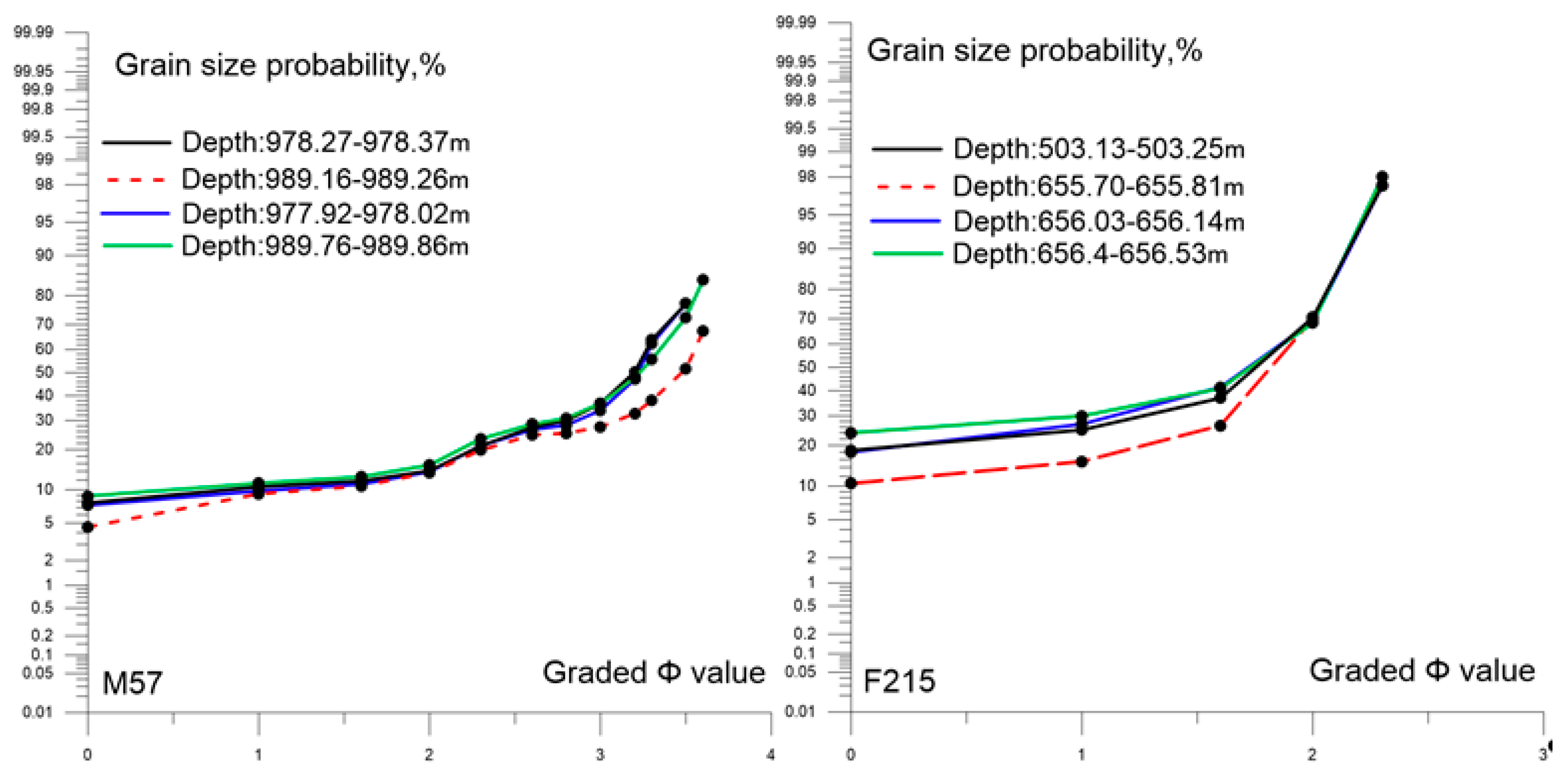
Figure 3.
Sedimentary succession of well Fu 235.
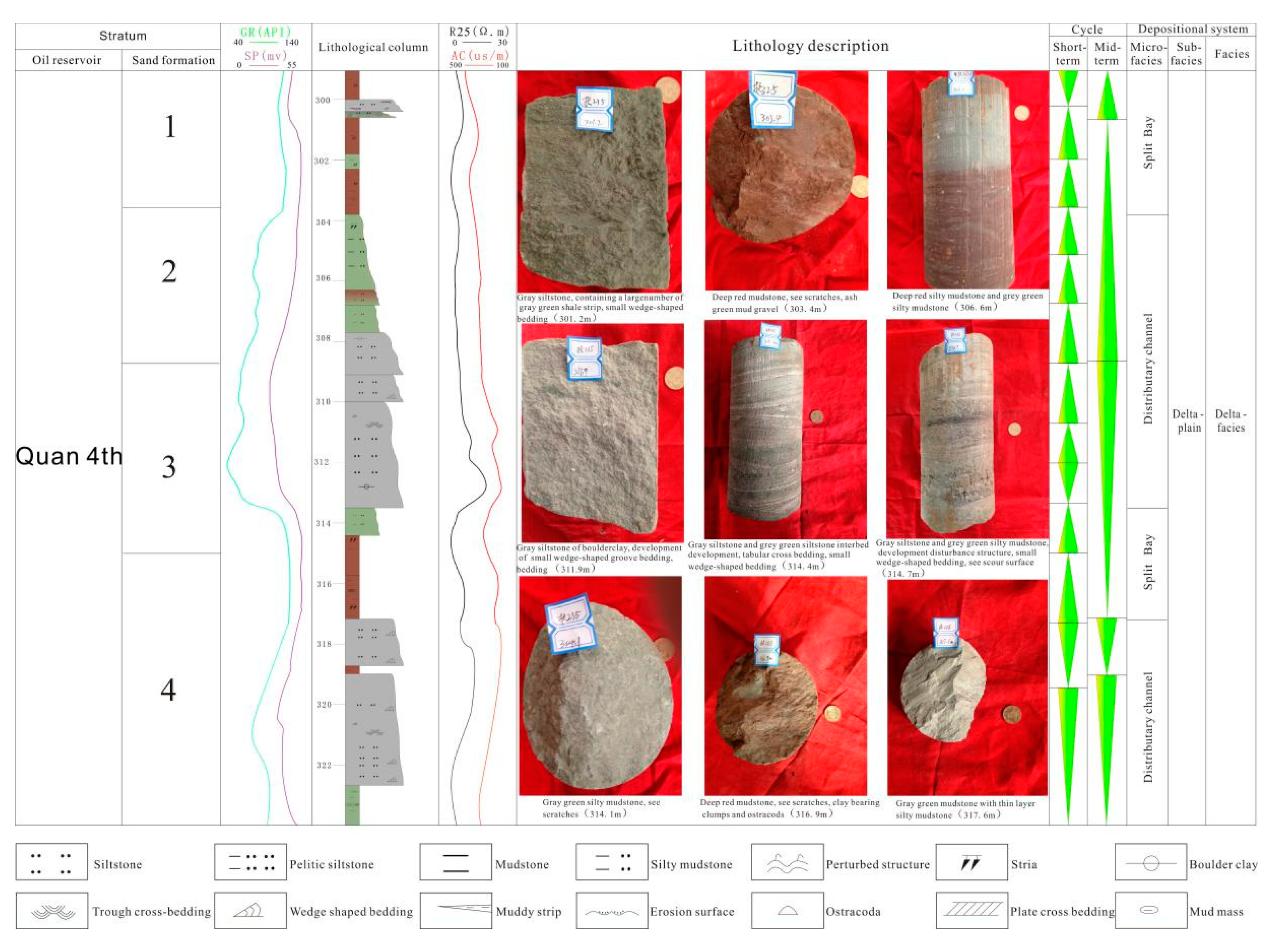
Figure 4.
Heavy mineral distribution of the Quan 4th member in Mindong-Changchunling area.
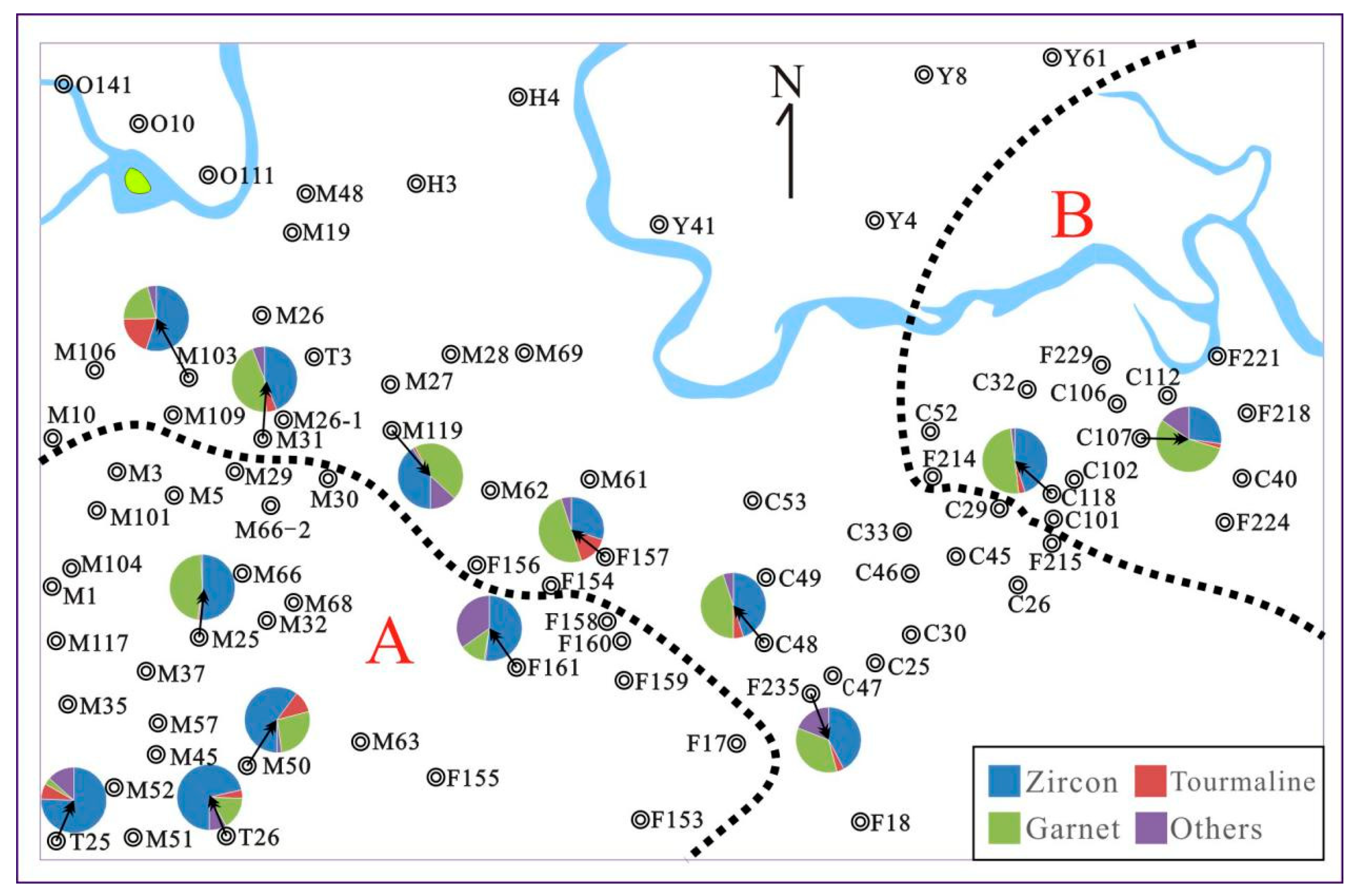
Figure 5.
Quan 4th member strata summary of Mindong-Changchunling area (location see Figure 1 ).
Figure 5.
Quan 4th member strata summary of Mindong-Changchunling area (location see Figure 1 ).
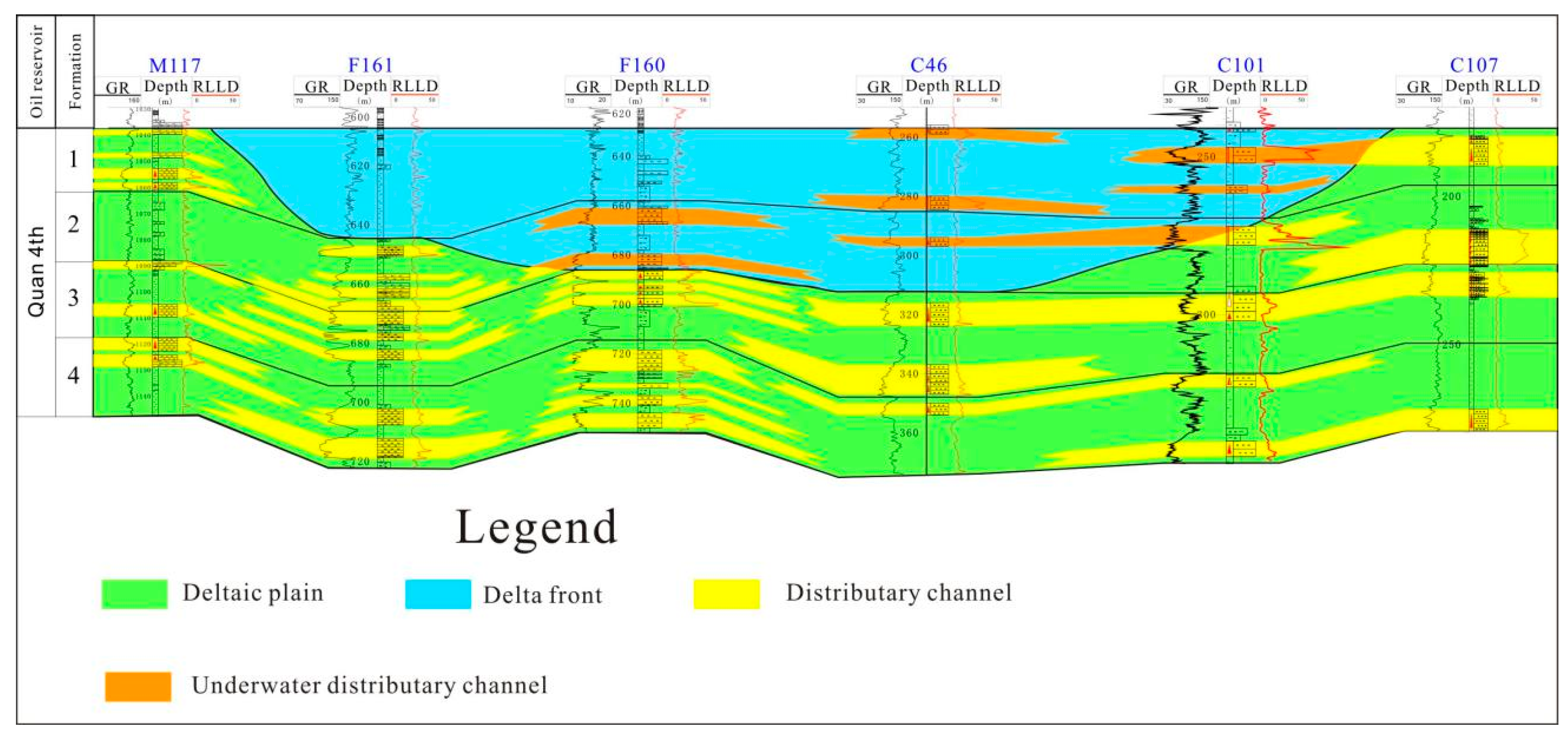
Figure 6.
Sand body distribution (Sand formation 1) in Mindong-Changchunling area.
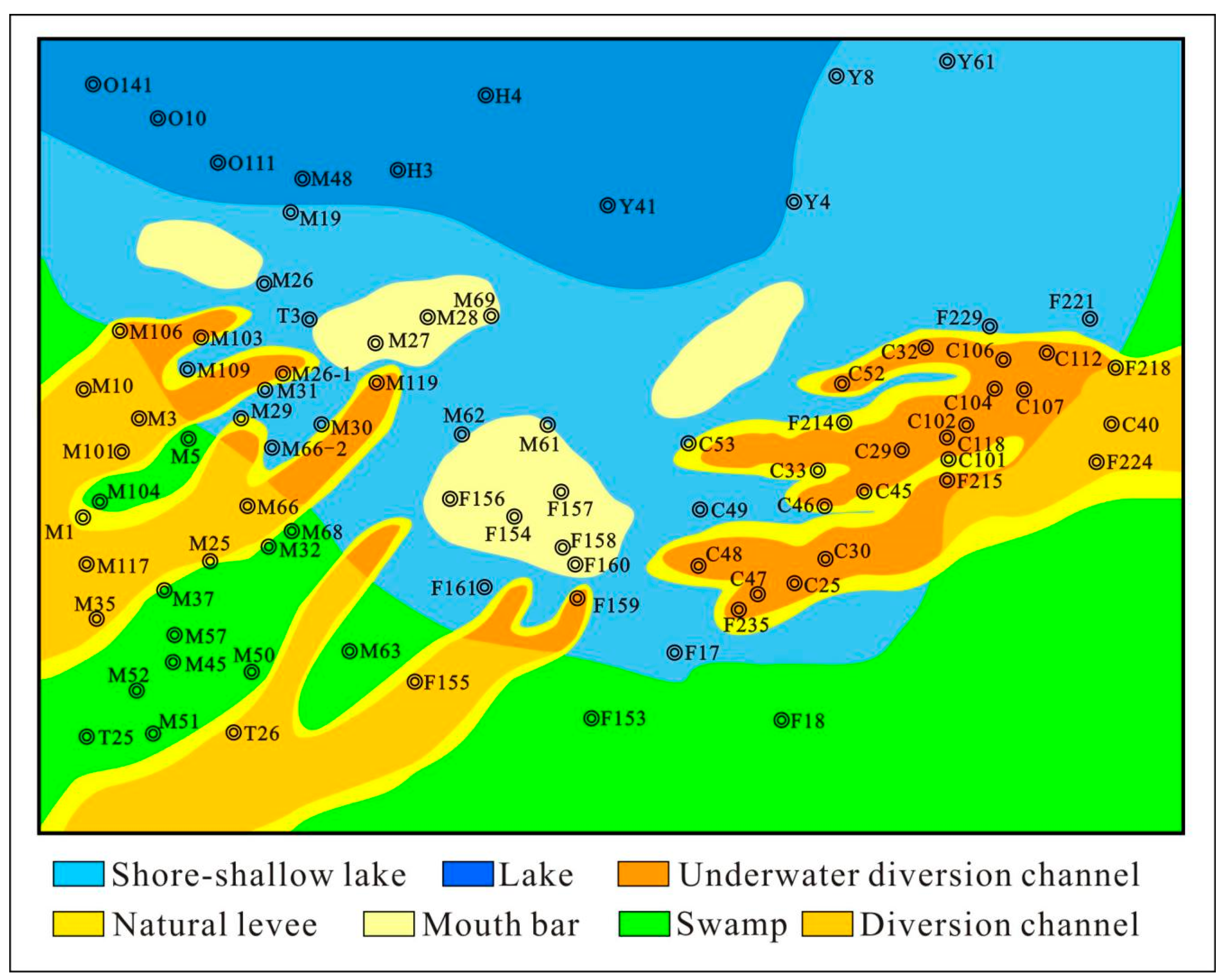
Figure 7.
Detrital composition of sandstones in Mindong area (a) and Changchunling area (b).
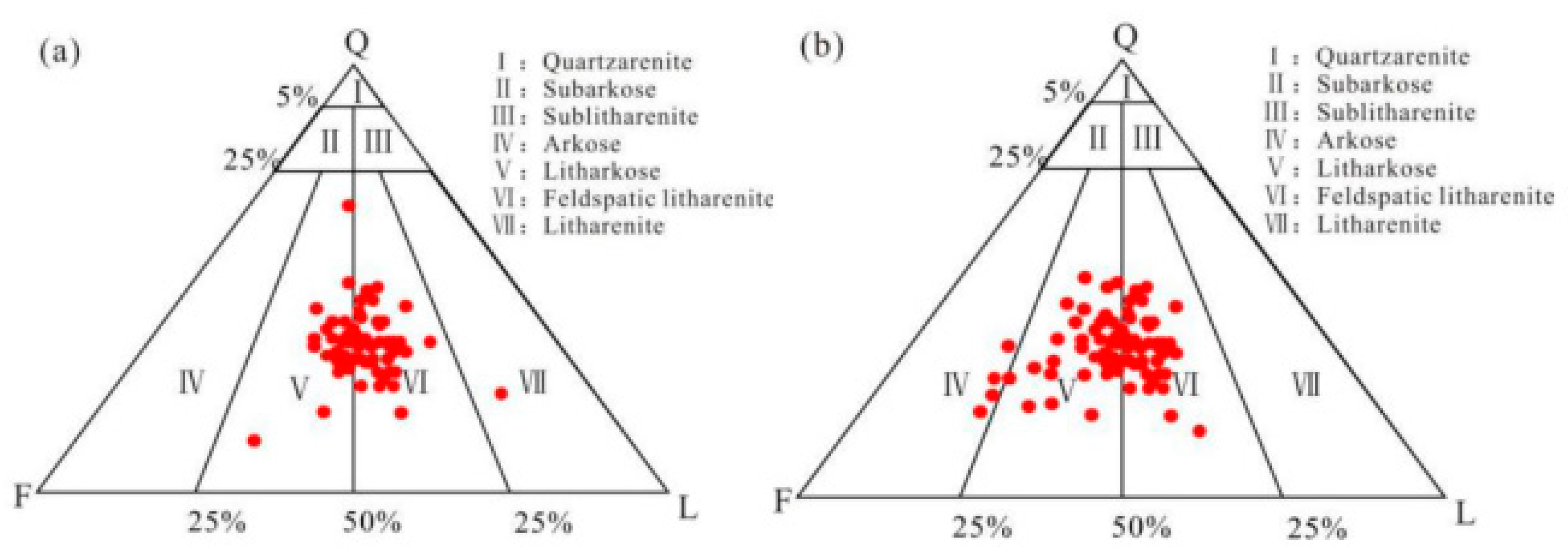
Figure 8.
Porosity, Permeability frequency histogram in Mindong-Changchunling area.
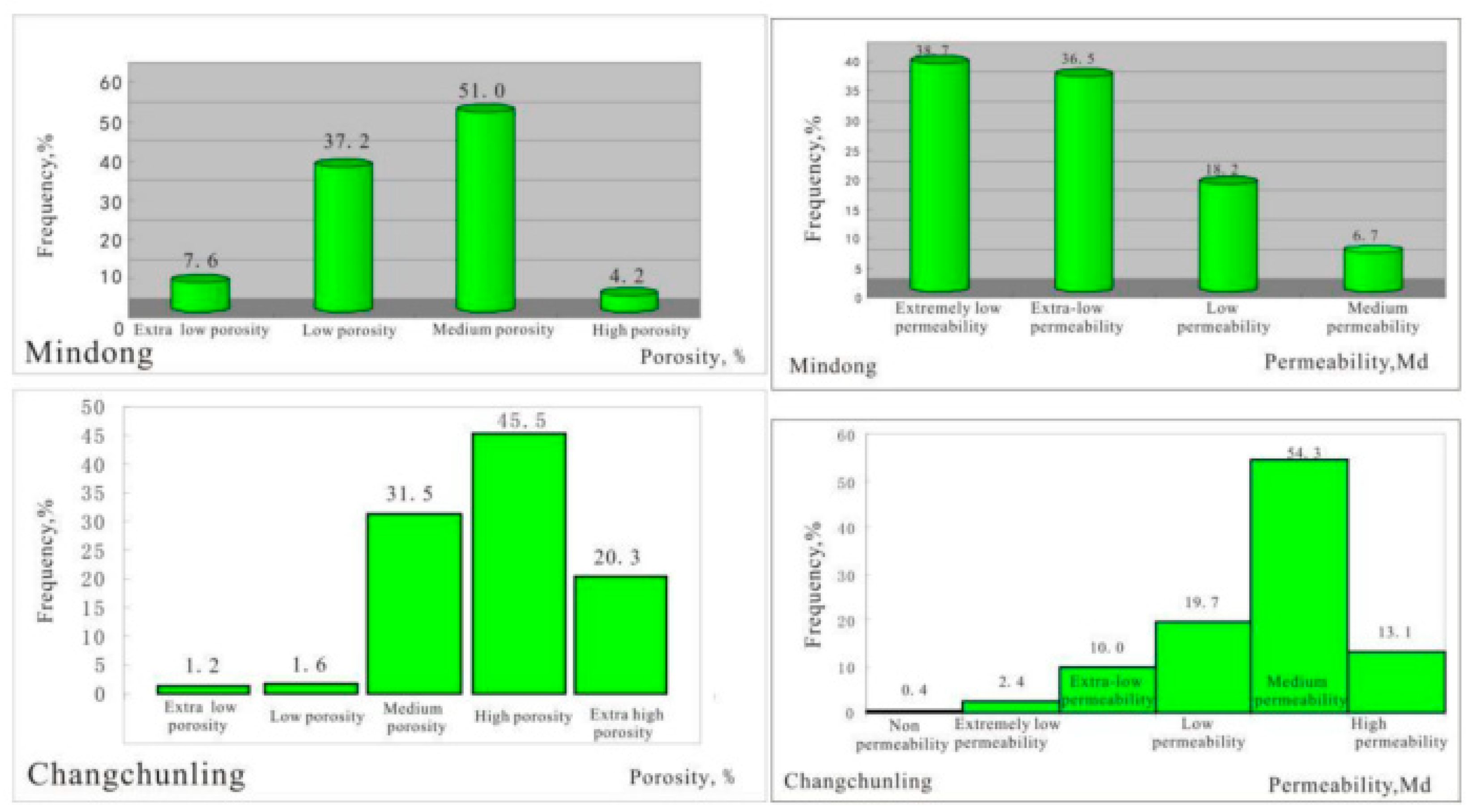
Figure 9.
Relationship between porosity and permeability of Quan 4th in Mingdong-Changchunling area.
Figure 9.
Relationship between porosity and permeability of Quan 4th in Mingdong-Changchunling area.
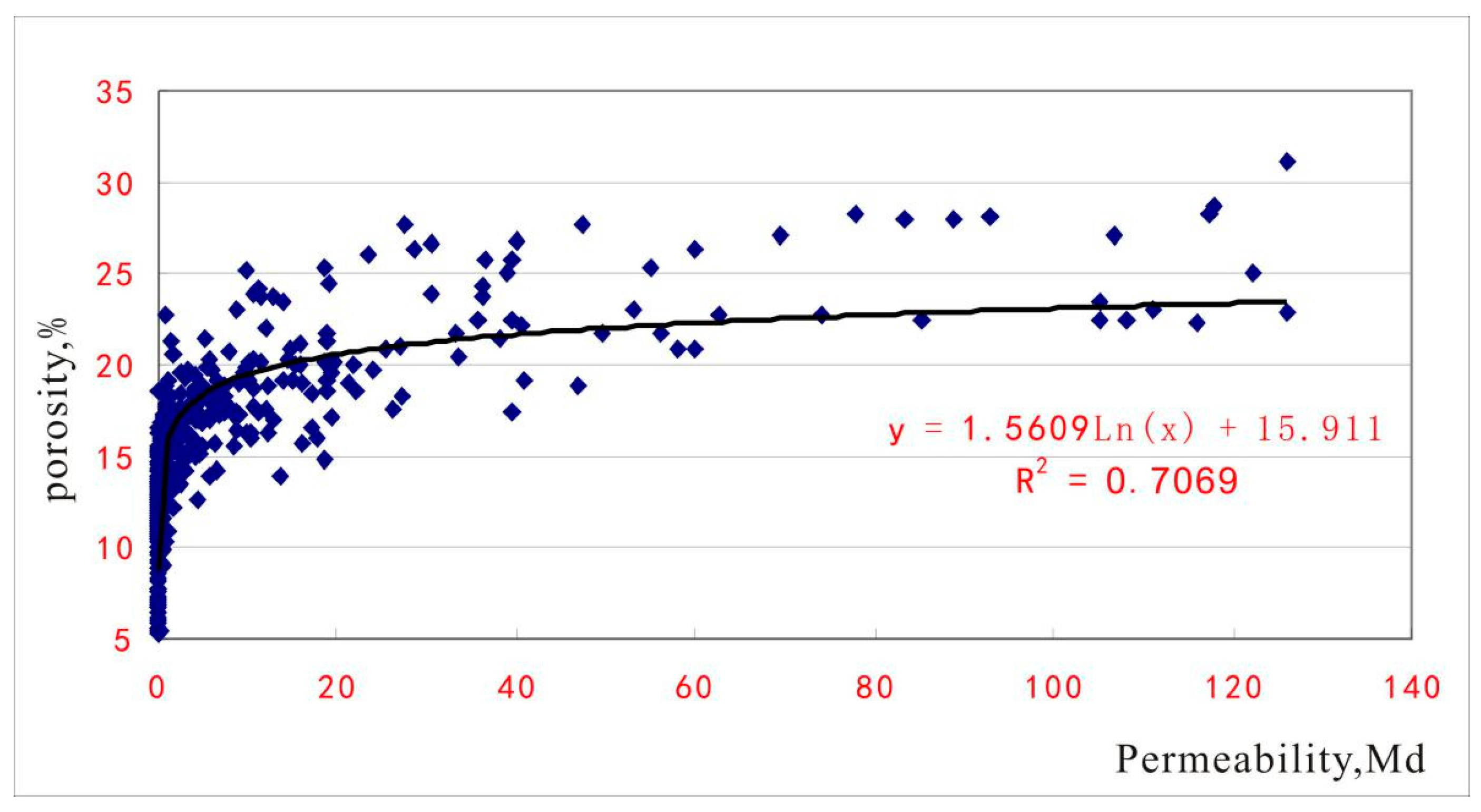
Figure 10.
The relation between porosity and depth in Mindong-Changchunling area.
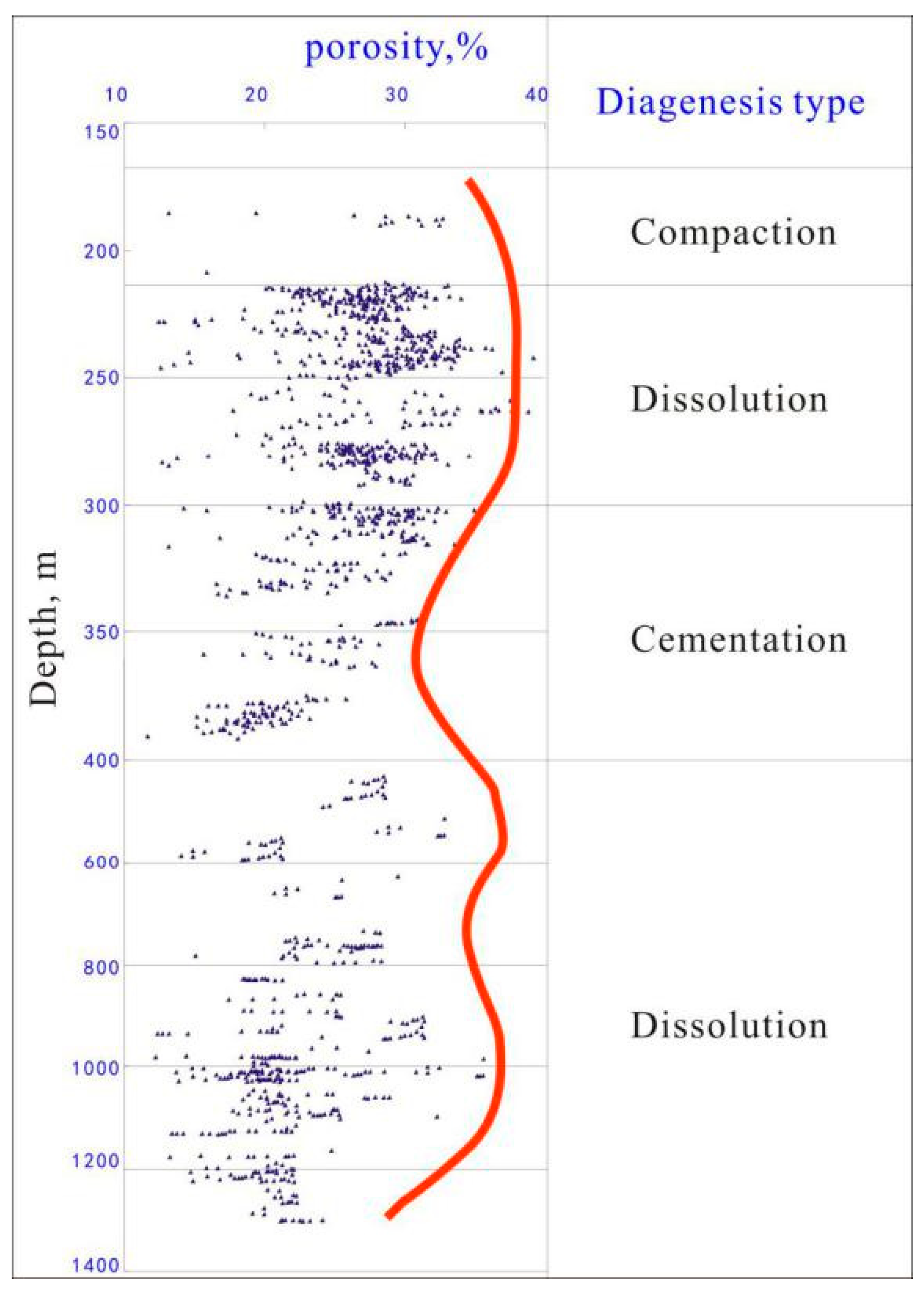
Figure 11.
Relation between mud content and porosity in Mindong-Changchunling area.
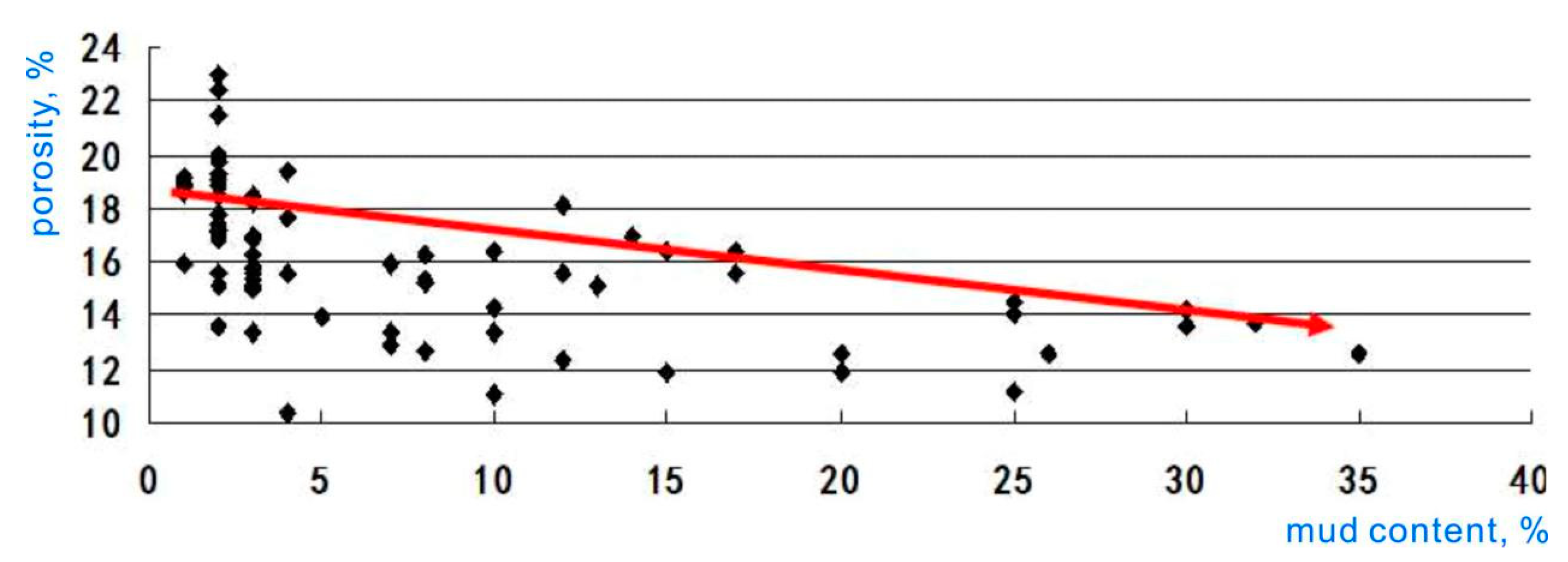
Figure 12.
Characteristics of scanning electron microscope in Mindong-Changchunling area.
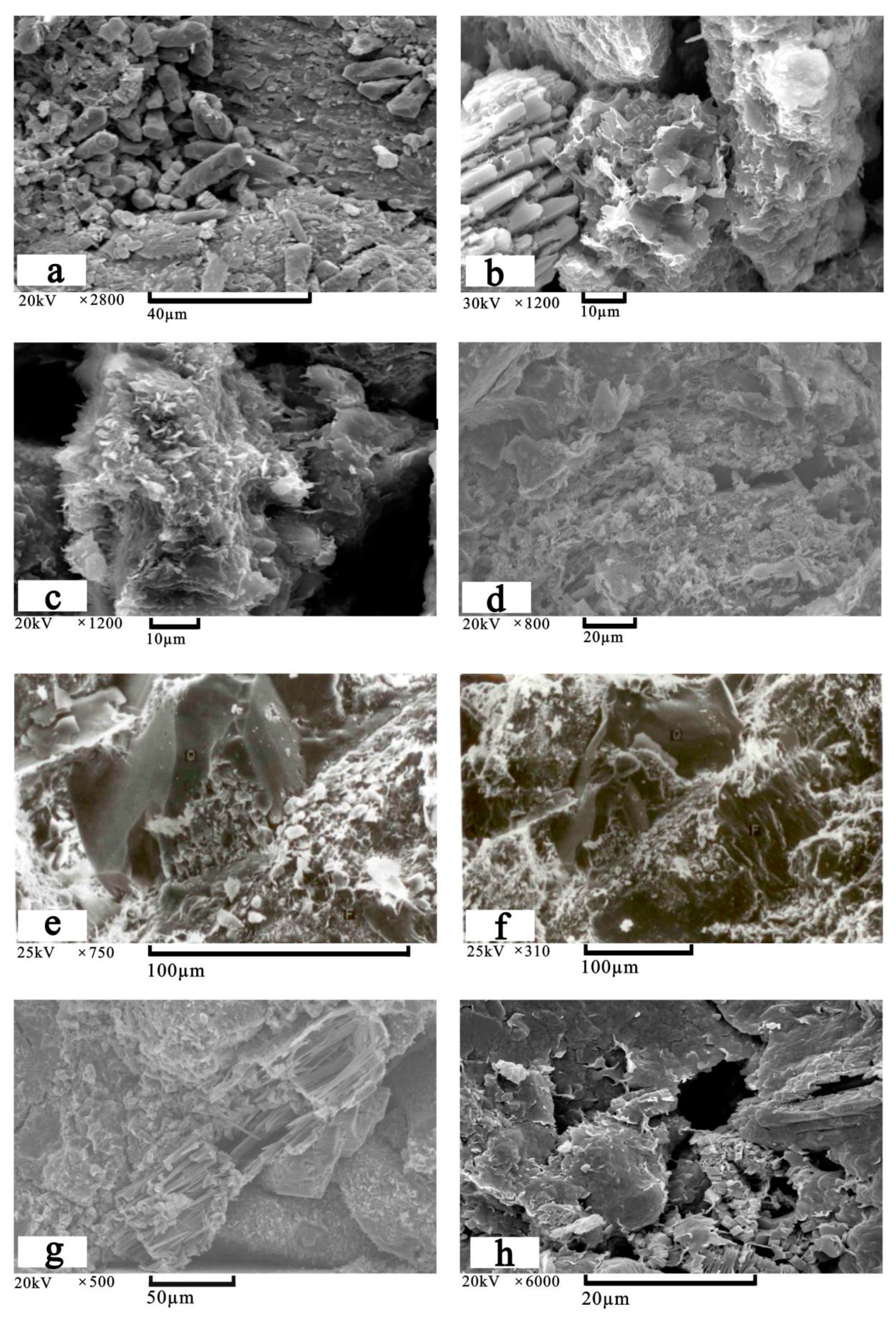
Figure 13.
advantageous reservoir in Mindong-Changchunling area.
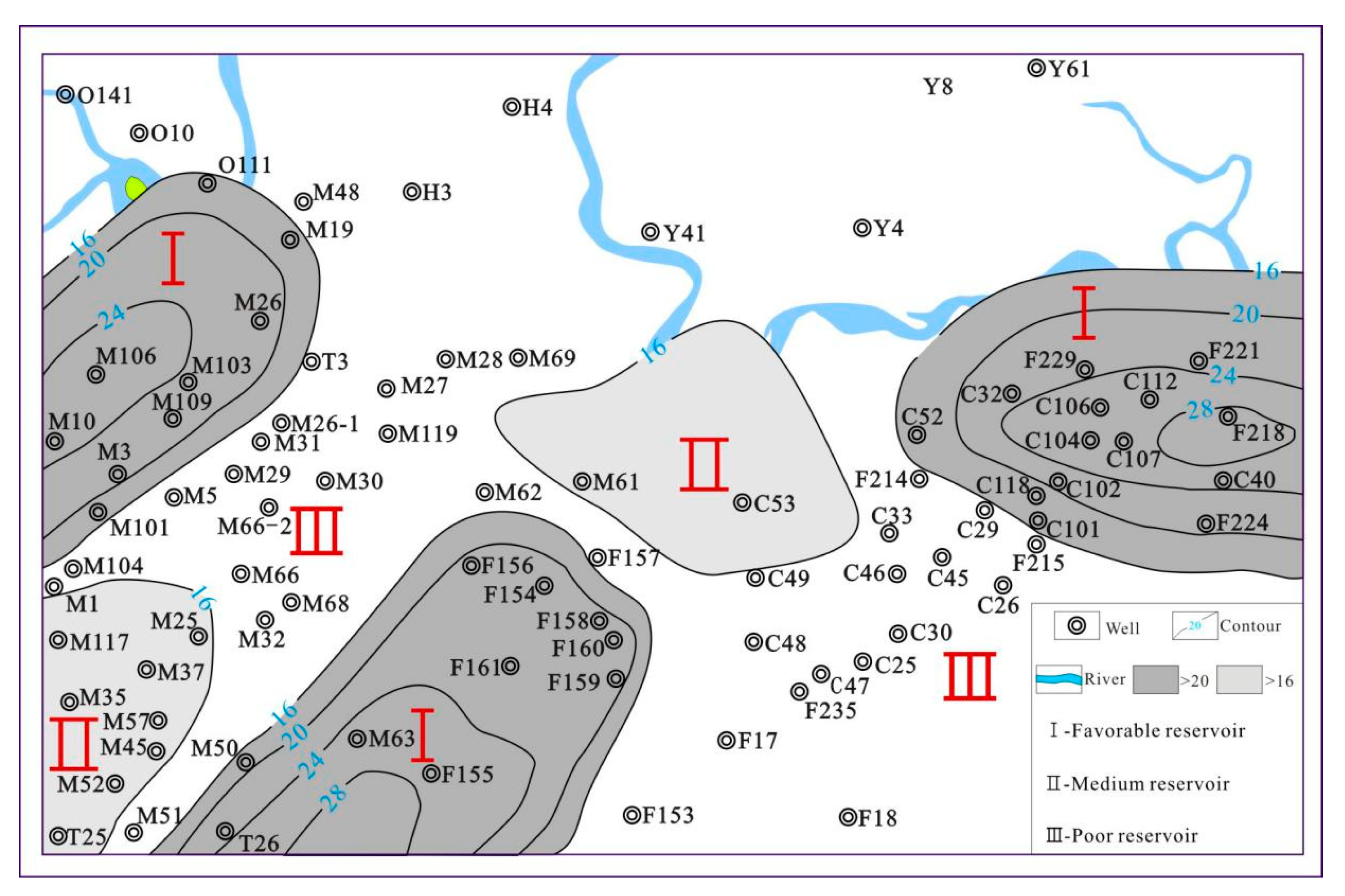

Table 1.
Statistical table of daily oil production of industrial well and show well in Mindong-Changchunling area.
Table 1.
Statistical table of daily oil production of industrial well and show well in Mindong-Changchunling area.
| well | M19 | M69 | M103 | M26 | M29 | M68 | M117 | M25 | M1 |
| Production t/d | 17.10 | 0.80 | 0.40 | 17.40 | 0.50 | 0.10 | 0.90 | 1.80 | 0.10 |
| Porosity(%) | 20.21 | 4.80 | 9.10 | 19.70 | 13.30 | 5.20 | 11.60 | 16.30 | 7.20 |
| Permeability(×10-3µm3) | 18.60 | 0.10 | 0.24 | 23.90 | 0.28 | 0.49 | 0.08 | 1.20 | 0.03 |
| well | M37 | M35 | M51 | C110 | C106 | C112 | C113 | C114 | H3 |
| production t/d | 8.20 | 16.90 | 0.10 | 13.30 | 6.30 | 2.70 | 0.30 | 0.10 | 2.10 |
| Porosity(%) | 18.80 | 13.90 | 0.06 | 33.50 | 21.01 | 12.60 | 15.30 | 13.20 | 19.70 |
| Permeability(×10-3µm3) | 5.20 | 10.60 | 5.30 | 165.10 | 16.97 | 2.31 | 0.65 | 0.27 | 6.10 |
| well | C107 | C104 | C102 | C101 | F154 | F158 | T25 | T26 | H4 |
| production t/d | 8.20 | 0.90 | 1.40 | 6.30 | 6.60 | 6.60 | 0.10 | 0.40 | 1.90 |
| Porosity(%) | 26.40 | 20.30 | 21.70 | 30.80 | 20.90 | 22.20 | 8.20 | 9.70 | 18.40 |
| Permeability(×10-3µm3) | 96.20 | 2.94 | 4.45 | 88.81 | 59.90 | 40.60 | 0.02 | 0.08 | 2.50 |
Table 2.
Statistical summary of the petrologic parameters of the Quan 4th member sandstones.
| Well name | Location | Sample No. | Depth(m) | Detrital component /% | Cements(%) | Porosity(%) | Permeability(Md) | ||||||||
| Quartz | Feldspar | Rock fragments | Carbonate | Mud | Grey | Quartz increase | |||||||||
| Potash | Plagioclase | Igneous | Metamorphic | Sedimentary | |||||||||||
| M19 | Mindong | S3 | 1171.16 | 31 | 16 | 15 | 31 | 3 | 4 | 6 | 2 | 0 | 0 | 19 | 8.9 |
| M19 | Mindong | S18 | 1176.05 | 36 | 16 | 17 | 25 | 3 | 3 | 3.4 | 1 | 2 | 0 | 19.1 | 14 |
| M19 | Mindong | S20 | 1178.13 | 36 | 18 | 20 | 18 | 3 | 5 | 7.9 | 8 | 11 | 1 | 12.7 | 0.81 |
| M103 | Mindong | S1 | 749.68 | 37 | 15 | 16 | 24 | 2 | 5 | 1.4 | 0 | 27 | 0 | 22.8 | 0.82 |
| M26 | Mindong | S7 | 1129.65 | 29 | 15 | 20 | 30 | 2 | 0 | 0.9 | 3 | 0 | 2 | 18.5 | 0.13 |
| M26 | Mindong | S26 | 1135.13 | 38 | 8 | 23 | 25 | 2 | 0 | 2.2 | 3 | 1 | 2 | 16.3 | 0.85 |
| M26 | Mindong | S34 | 1143.07 | 37 | 12 | 19 | 25 | 2 | 0 | 10.7 | 4 | 1 | 0 | 10.4 | 0.17 |
| M117 | Mindong | 3 | 1089.93 | 32 | 18 | 20 | 2 | 0 | 0 | 15 | 1 | 0 | 2 | 9.3 | 0.2 |
| M35 | Mindong | 20 | 1062.71 | 30 | 12 | 15 | 37 | 3 | 3 | 0 | 0 | 0 | 2 | 17.3 | 0.99 |
| M35 | Mindong | S17 | 1063.67 | 30 | 15 | 15 | 30 | 2 | 8 | 0 | 0 | 0 | 3 | 18.2 | 3.8 |
| M57 | Mindong | 6 | 989.26 | 35 | 14 | 13 | 35 | 3 | 0 | 0.2 | 2 | 1 | 3 | 17.8 | 0.81 |
| M57 | Mindong | 8 | 989.86 | 35 | 15 | 13 | 30 | 5 | 2 | 4.4 | 0 | 4 | 3 | 16.2 | 9.81 |
| M51 | Mindong | 30 | 899.46 | 49 | 26 | 0 | 0 | 0 | 25 | 16.4 | 0 | 32 | 0 | 10.9 | 0.03 |
| F161 | Mindong | 25 | 649.65 | 30 | 14 | 18 | 38 | 0 | 0 | 1.5 | 2 | 1 | 0 | 21.5 | 38 |
| F235 | Changchunling | 11 | 308.85 | 36 | 22 | 16 | 24 | 2 | 0 | 2.9 | 0 | 0 | 0 | 28.1 | 92.81 |
| F235 | Changchunling | 31 | 311.85 | 30 | 23 | 10 | 35 | 2 | 0 | 5.4 | 2 | 1 | 0 | 25 | 38.97 |
| F223 | Changchunling | s2 | 238.98 | 38 | 20 | 1 | 41 | 0 | 0 | 4.8 | 18 | 3 | 2 | 27.4 | 50.4 |
| F223 | Changchunling | 6 | 269.96 | 30 | 24 | 2 | 44 | 0 | 0 | 2.9 | 15 | 0 | 2 | 25.1 | 27.3 |
| F223 | Changchunling | s10 | 275.56 | 32 | 25 | 3 | 40 | 0 | 0 | 1.7 | 21 | 1 | 0 | 25.2 | 29.5 |
| F223 | Changchunling | s20 | 280.31 | 32 | 25 | 2 | 42 | 0 | 0 | 4.7 | 27 | 2 | 1 | 25.8 | 0 |
| F223 | Changchunling | s23 | 287.46 | 31 | 24 | 1 | 45 | 0 | 0 | 9.7 | 5 | 0 | 2 | 22.2 | 80.6 |
| F223 | Changchunling | s30 | 292.74 | 31 | 22 | 3 | 43 | 0 | 0 | 3.6 | 5 | 1 | 2 | 24.2 | 57.8 |
| F215 | Changchunling | 10 | 310.34 | 29 | 24 | 2 | 0 | 0 | 0 | 5.1 | 27 | 1 | 0 | 24.7 | 52.2 |
| F215 | Changchunling | 18 | 333.84 | 29 | 23 | 3 | 0 | 0 | 0 | 0.1 | 13 | 1 | 0 | 27.8 | 135.3 |
| F215 | Changchunling | 22 | 337.93 | 26 | 23 | 3 | 0 | 0 | 0 | 0.4 | 12 | 1 | 0 | 28.8 | 332.3 |
| F215 | Changchunling | 25 | 339.86 | 27 | 24 | 2 | 0 | 0 | 0 | 2.1 | 13 | 2 | 0 | 27.4 | 152.1 |
| C107 | Changchunling | 6 | 188.97 | 28 | 23 | 12 | 31 | 3 | 3 | 0.31 | 2 | 1 | 0 | 29.1 | 500.26 |
| C107 | Changchunling | 11 | 212.87 | 28 | 23 | 12 | 32 | 2 | 4 | 1.88 | 3 | 1 | 0 | 28.6 | 507.21 |
| C107 | Changchunling | 18 | 216.47 | 26 | 24 | 12 | 33 | 3 | 2 | 1.88 | 2 | 1 | 0 | 30.8 | 871.19 |
| C107 | Changchunling | 21 | 218.27 | 26 | 24 | 12 | 33 | 3 | 2 | 3.13 | 2 | 1 | 0 | 33.2 | 507.21 |
| C107 | Changchunling | 23 | 220.17 | 26 | 24 | 12 | 33 | 3 | 2 | 4.85 | 2 | 3 | 0 | 25.2 | 203.95 |
| C107 | Changchunling | s27 | 223.32 | 26 | 24 | 12 | 33 | 3 | 2 | 3.44 | 2 | 3 | 0 | 25.1 | 290.68 |
Table 3.
Different microfacies reservoir property characteristics in Mindong-Changchunling area.
| Mindong/Changchunling physical property | Distributary channel | (underwater) distributary channel | Split Bay | Sheet sand | Mouth bar |
| Mindong porosity(%) | 20-30 | 16-25 | 10-18 | 12-20 | 14-22 |
| Mindong permeability(Md) | 60-100 | 20-120 | 0.1-1 | 0.5-2 | 2-10 |
| Changchunling porosity(%) | 22-32 | 18-30 | 12-25 | 12-20 | 14-22 |
| Changchunling permeability(Md) | 80-120 | 40-140 | 0.1-1 | 0.5-2 | 2-10 |
Disclaimer/Publisher’s Note: The statements, opinions and data contained in all publications are solely those of the individual author(s) and contributor(s) and not of MDPI and/or the editor(s). MDPI and/or the editor(s) disclaim responsibility for any injury to people or property resulting from any ideas, methods, instructions or products referred to in the content. |
© 2025 by the authors. Licensee MDPI, Basel, Switzerland. This article is an open access article distributed under the terms and conditions of the Creative Commons Attribution (CC BY) license (http://creativecommons.org/licenses/by/4.0/).
Copyright: This open access article is published under a Creative Commons CC BY 4.0 license, which permit the free download, distribution, and reuse, provided that the author and preprint are cited in any reuse.


