

Submitted:
14 April 2025
Posted:
14 April 2025
You are already at the latest version
Abstract
Sensitized radiation-induced polymerization of indene monomer was achieved at a dose rate of 3 kGy/h. The sensitizer (1,1,2,2-tetrachloroethane or TCE) leads to higher polyindene yields and faster polymerization kinetics with respect to bulk radiation-induced polymerization of indene. The radiation chemical yield Gp was found to increase with dose in sensitized polymerization of indene following a power law, while an opposite trend was detected in the absence of the sensitizer. The sensitizer enhances the cationic polymerization mechanism in parallel to the free radical mechanism, as shown with both electronic absorption spectroscopy and FT-IR analysis of the polyindenes. Despite the enhancement of the polymer yield and the faster polymerization kinetics offered by the presence of TCE the molecular weight of the resulting polyindene was found rather low either by end group analysis by X-ray fluorescence and from the glass transition temperature determination with respect to the polyindenes produced with γ radiation without sensitizer or with pure cationic mechanism.
Keywords:
Indene
; radiation-induced polymerization
; sensitizer
; 1
; 2
; 2-tetrachloroethane
; polyindene
; kinetics
; mechanism
; molecular weight
; gamma radiation
1. Introduction
Our current works on radiation-induced polymerization of indene [1,2], are due to the recent and intriguing discovery of indene and cyanoindene in space, in the Taurus Molecular Cloud (TMC-1) [3,4,5]. These discoveries have also stimulated our researches on the reaction products of indene with fullerene [6,7], while other authors focused on the reactivity of indene with ice mantle in the interstellar medium under the action of high energy photons [8]. In the above astrochemical perspective, it is interesting to know how indene behaves toward high energy radiation fields present in the interstellar medium and represented by cosmic rays, γ-rays, X-rays and UV photons. In the previous work, we have shown that indene is prone to polymerize in bulk to polyindene when subjected to γ irradiation at different dose rates [1]. This implies that also polymeric indene may be present in the interstellar medium [1]. Furthermore, the chemical structure of radiation-polymerized indene was studied in comparison to the structure of polyindene produced by chemical initiation [2]. In future, it will be interesting also to combine our experimental results with the use of the new techniques of machine learning to simulate the destiny of indene in a harsh space environment [9].
It was shown that the γ-rays induced polymerization of indene in bulk involves a mixed free radical and ionic mechanism, with the neat prevalence of the former over the latter [1]. In the present work, indene was irradiated in presence of a chlorinated solvent i.e. 1,1′,2,2′-tetrachloroethane which should act as a sensitized affecting the polymerization mechanism and moreover the polymer yield. The kinetics, mechanism and final structure of the resulting polyindene in this sensitized radiation-induced polymerization is the object of the present study.
2. Materials and Methods
Materials and Equipment
Indene was supplied by Merck (Germany) and distilled immediately prior to use, removing the phenolic stabilizer and leaving away the tail as distillation residue. All the other solvents and reagents were obtained from Merck and used as received.
The spectrophotometric analysis of the irradiated indene solutions was made with a Shimadzu UV2450. The thermogravimetric analysis (TGA) with simultaneous Differential Scanning Calorimetric analysis (DSC) was made by a Mettler-Toledo TGA/DSC-3+ Star System using alumina crucibles and N2 flow. The DSC analysis was performed on Mettler DSC-1 using aluminium crucibles with punched caps under N2 flow. The FT-IR spectra were collected on a Nicolet iS50 spectrometer from Thermo-Fisher Scientific.
The irradiation tests were carried out at the Calliope γ irradiation facility (ENEA Casaccia Research Center, Rome) [10], using a dose rate of 3.0 kGy/h and absorbed doses up to 1000 kGy.
Irradiation Experiments
The freshly distilled indene (47.88 g) was mixed in a flask with 3.69 g of 1,1,2,2-tetrachloroethane (TCE), to produce a stock solution containing 95% by mol of indene and 5% by mol of TCE. The stock solution was then used to fill a series of Wheaton glass vials having an internal volume of 8.5 ml each. The stock solution contained in each vial was nitrogen flushed for at least two minutes with a capillary submerged into the flask, before proceeding with the sealing step using a black bakelite solid top cap with white styrene-butadiene rubber liner inside.
The flasks were then transferred into a glove bag (Aldrich AtmosBag type), kept under nitrogen, and subjected to γ irradiation from a 60Co source at a dose rate of 3.0 kGy/h. Six vials were irradiated respectively at 50, 100, 200, 400, 700 and 1000 kGy. After irradiation, all the samples were stored in the cold [10] and analyzed just a few days after the irradiation exposure.
Determination of Eolymer Yield by Thermogravimetric Analysis (TGA-DTG)
A weighed amount of the selected radiolyzed indene solution at a given dose, was placed into an alumina crucible and subjected to thermogravimetric analysis at a heating rate of 20°C/min. The analysis was performed from 25°C to 600°C under nitrogen flow and above 600°C to 900°C the gas was switched into oxygen flow. The polyindene yield as well as the indene dimer/trimer yield, where applicable, was determined by the combined analysis of the TGA and DTG curve, a method already successfully applied in the previous study [1].
Determination of Polymer Yield by Polymer Precipitation and Gravimetry
The selected vial after irradiation at a given dose, was opened and its content weighed (typical weight 7.5 to 7.8 g) and the content was poured into a flask containing 100 ml of anhydrous ethanol and magnetically stirred vigorously at ambient temperature. Stirring was prolonged until all the polymer is separated in whitish-orange flakes from the liquid phase. At this point stirring was stopped and the polymer settled at the bottom of the flask. It was easily collected by decantation. The polymer was then washed (by stirring) other 50 ml of anhydrous ethanol. The resulting slurry was quickly filtered in a Buchner filter and washed further with ethanol before being collected and left to dry in air first and then in a desiccator till constant weight. It was noticed that the indene solutions radiolyzed at 1000 and at 700 kGy appeared initially orange-reddish in color and released the polymer slowly. Thus, long stirring time was necessary to isolate the polyindene. Furthermore, the orange color was quite persistent although it gradually faded into yellow. On the other hand, all the other indene solutions radiolyzed at lower dose than 700 kGy appeared yellow in color since the beginning and release quite promptly the polymer as a whitish solid precipitate. The presence of free hydrochloric acid produced by the radiolysis of the indene-TCE mixture was detected with the indicator paper either in the washing ethanolic solutions and in the precipitated polyindene.
3. Results and Discussion
3.1. Polymer Yield and Polymerization Kinetics
3.1.1. Polyindene Yield Determination by Thermogravimetric and Gravimetric Analysis
In a previous work [1], it was shown that it is possible to determine the amount of polyindene produced by γ irradiation by a straight thermogravimetric analysis of the irradiated monomer containing dissolved the polymer.in fact, the irradiation of indene causes the polyindene formation which is soluble in the monomer [1]. In the present study, a sensitizer, i.e. 1,1,2,2-tetrachloroethane (TCE) was added to the monomer as detailed in the experimental section. TCE is also a solvent of polyindene. Thus, after irradiation at different doses, the homogeneous solutions were subjected to thermogravimetric analysis (TGA) as shown in Figure 1. The latter figure should be interpreted in conjunction with the corresponding DTG curves (first derivative of TGA) of Figure 2 and shows that the indene monomer and TCE are evaporated almost completely at about 155°–165°C, leaving a polymer residue which decomposes at about 400°C and the residual char is burned with oxygen above 600°C. From Figure 1 it is immediately evident at first glance that the polyindene yield is dependent from the dose and is maximum at 1000 kGy, as expected. By combining the TGA and DTG data (Figure 1 and Figure 2) the polyindene yield was determined and shown in Figure 3 in comparison with the polyindene yield as determined by precipitation (see next section).
3.1.2. Polyindene Yield Precipitation and Gravimetry
An alternative and traditional way to determine the polymer yield, involves the precipitation of the polymer from its radiolyzed solution using a non-solvent. As detailed in the experimental section, the irradiated indene solutions were treated with a large excess of anhydrous ethanol to cause the polyindene precipitation, collection by filtration and its gravimetric determination after washing and drying.
In Figure 3 are compared the polyindene yields determined by precipitation and gravimetry with the polymer yields measured by TGA. The accord between the two method appears linear and satisfactory:
(Polyindene yield by TGA) = 0.905 (Polyindene yield by precipitation) +4.51
However, the above correlation equation suggests that the TGA method gives an overestimation of the yield as truly determined by the precipitation method.
The offset of the intercept at 4.5%, confirms that especially at low conversions (low absorbed dose) the TGA overestimation of the polyindene yield is larger, becoming smaller at higher conversions and dose.
3.1.3. Kinetics of Indene Polymerization in Presence of TCE Sensitizer
In a previous work [1], indene monomer was irradiated in bulk at different dose rates. At 2 kGy/h the indene polymerization kinetics rate constant was found at 3.68 x 10⁻⁷ mol L-1 s-1, while at 4 kGy/h the kinetics rate constant was found at 5.38 x 10⁻⁷ mol L-1 s-1. These two rate constants were averaged at 4.53 x 10⁻⁷ mol L-1 s-1 in Figure 4 to be compared with the kinetic rate constant measured on indene polymerization at 3 kGy/h sensitized by the presence of TCE (5% mol). As expected, the presence of TCE enhances the polymerization rate constant of indene by an order of magnitude, i.e. kp = 3.11 x 10⁻⁶ mol L-1 s-1 if the gravimetric data of polyindene yields are used (see Figure 4). As explained in the previous section, the TGA analysis of the irradiated indene solutions gives an overestimation of the polyindene yield. Thus, using the TGA data the rate constant of indene conversion appears enhanced by 1.03 factor leading to a kp value of 3.20x10⁻⁶ mol L-1 s-1. At the end, the deviation in the polymerization rate constant introduced by the TGA measurements is rather small. As reviewed by Ivanov [11], the addition of a sensitizer (under the form of a chlorinated hydrocarbon) to a monomer leads to an enhancement of the polymerization rate and to a significant increase in the polymer yield. The latter point can be deeper examined in the next section through the radiation chemical yield Gp tool.
3.2. Radiation Chemical Yield in Sensitized Radiation-Induced Polymerization and Polymerization Mechanisms
From the polyindene yield results measured with the precipitation method at different doses, the radiation chemical yield of polymerization Gp can be determined using [11]:
where Gp is monomer molecules/100 eV transformed into polymer and Q is the polymer yield expressed in g, q is the mass of the irradiated monomer (in g), U is the dose in kGy and m the monomer molecular weight (i.e. 116.16 Dalton for indene).
Gp = 9.648 x 10⁶ Q (q U m)-1
As shown in Figure 5 the radiation chemical yield experimental data can be fitted by a power law having the form of:
when the indene monomer is polymerized in bulk, using the experimental data of the previous work [1]. At 2 kGy/h the factor A = 166.4 and the exponent ϕ = 0.486, while at 4 kGy/h A = 1200 and ϕ = 0.757. The meaning of eq. 2 could be interpreted in terms of energy efficiency. At a given dose rate, the radiation chemical yield is maximum at low dose and vanishingly small at very high doses. Indeed, this means that the high energy radiation absorbed by the monomer is better transformed in chemical yield at lower doses.
Gp = A U-ϕ
It is noteworthy that the eq. (3) has the same form of the equation linking the Gp with the dose rate Ů, with K including different constants [11,12,13]:
Gp = K Ů -0.5
In other words, the radiation chemical yield for the polymer formation is inversely proportional to the square root of the dose rate (eq. 4) and in our study with eq. 3 we have found that this type of power law applies also to the total dose, although the exponent ϕ deviates from the 0.5 value.
The experimental data relative to the radiation-induced polymerization of indene sensitized by TCE can be either fitted by a power law (Figure 5). However, this time the exponent of the dose U is positive:
with A = 1.947 and the exponent ϕ = 0.443. In the sensitized indene polymerization the trend of Gp is just opposite to that observed in bulk and unsensitized polymerization.
Gp = A U+ϕ
It is evident that the presence of a sensitizer like TCE enhances the overall energetic efficiency of the process, especially at high dose.
The sensitizer acts essentially as energy transfer agent, absorbing the high energy radiation in a better way than the monomer and transferring then the energy to the monomer. To exhert this effect the sensitizer in general is characterized by a higher sensitivity to high energy radiation with GR (radiation chemical yield of radicals) values much higher with respect to the GR(M). For instance, Ivanov [11] reports GR = 25, 37 and 44 radicals/100 eV respectively for CCl4, CHCl3 and CHBr3 used as sensitizers. These values should be compared with GR(M) = 0.69 radicals/100 eV measured on pure styrene [14,15], a monomer similar to the chemical structure of indene [2]. TCE with its structure Cl2CH-CHCl2 recalls especially the chemical structure of CHCl3 and should show similar GR values as chloroform. Furthermore, the sensitization effect is not only a matter of higher concentration of free radicals and hence easier polymerization initiation, but the sensitizer could address also a parallel mechanism involving cationic polymerization because the radiolysis of haloalkanes used as sensitizers generate certain species which are able to promote also the cationic mechanism in parallel to the free radical, as already noticed by earlier investigators [14]. The overall effect of the sensitizer is translated in practice into a better utilization of the high energy radiation, leading to higher polymer yields especially at higher doses, while at lower dose the effect in Gp values appears less evident as can be observed in Figure 5.
Regarding the cationic mechanism which should be active in parallel to the free radical mechanism, and which contributes either to the enhancement of the polymerization kinetics and the polymer yield, it is necessary to make some considerations starting from the radiolysis of pure halocarbons first. While the radiolysis of CCl4 yelds Cl2 (G = 0.75), other products but no HCl, the radiolysis of CHCl3, CH2Cl2, n-C3H6-Cl and Cl2C=CHCl produces HCl with G ≈ 5 molecules/100 eV, other products but no Cl2 [15]. Similar radiation chemical yield values for HCl production were recently observed in the radiolysis of 10 different chloroalkanes [16]. According to Milinchuk and Tupikov data [15], TCE represents an unicum with an intermediate behaviour between CCl4 and the other chloroalkanes considered here, yielding simultaneously HCl (G = 7.2) and Cl2 (G = 2.7). Since HCl is considered a catalyst in cationic polymerization [2], it is immediately evident that the in situ formation of HCl is a powerful source in promoting the cationic mechanism of indene polymerization, in parallel with the free radical mechanism.
Furthermore, studies on the radiolysis of TCE in hydrocarbons, like for instance cyclohexane [17], have revealed that the radiation chemical yield of HCl is dramatically enhanced G = 21.6 with formation of trichloroethane G = 118, trichloroethyl radicals and numerous other chlorinated hydrocarbons which can be generically represented as R-Cl.
According to Mehnert [12], in the irradiation of alkyl chlorides, the electron produced in in the primary ion pair is converted to unreactive chloride ion by dissociative electron capture leading to a radical:
while the alkyl chloride cation transfers its charge to the monomer M, initiating the cationic polymerization:
R-Cl → R-Cl+ + es-
es- + R-Cl → Cl- + R•
R-Cl+ + M → M+
M+ + M → MM+
The cationic polymerization is further sustained by the presence of HCl, the relatively high dielectric constant of TCE (ε = 8.50 and μ = 1.32 Debye [18]) while indene ε ≈ 2.5. Thus, the above scheme proposed by Mehnert [12] explains the simultaneous free radical and cationic mechanism initiation.
As deeply discussed in a previous work [2], the experimental evidences of the cationic polymerization of indene can be detected visually and spectrophotometrically. The polyindenyl cation gives a blood-red color to the solution and such color is quite stable for a long time. Furthermore, the polyindenyl cation is characterized by an absorption band at 521 nm [2]. The solutions irradiated at 400, 700 and 1000 kGy are characterized by such blood-red color and the polyindenes, once precipitated with ethanol excess from the irradiated solutions present a reddish color which persists even after drying. The KBr pellets of these polyindenes examined with the spectrophotometer show a broad but distinctive peak at 521 nm. Thus, the cationic polymerization mechanism was certainly in action in parallel with the free radical mechanism during the irradiation of the indene solutions in presence of TCE.
3.3. Molecular Weight and Chemical Structure of Polyindene Obtained in Sensitized Radiation-Induced Polymerization
It is well known that the radiation-induced polymerization in presence of sensitizers represented by chlorinated hydrocarbons is characterized by high initiation rates but also by high termination rates, because of the high concentration of free radicals [11,12,13]. This condition leads to high polymer yields characterized by low molecular weight. Such a process is also known as telomerization [11,12,13].
The polyindenes samples isolated with the precipitation method, were subjected to the X-ray fluorescence (XRF) analysis for the determination of the chlorine content. From these data the elemental composition of the samples produced at the selected doses were determined with the basic and plausible assumption that the end groups of the polyindene chains are composed by chlorine atoms. This assumption is made on the basis of the radiolysis products of TCE which involve mainly HCl and Cl2 (when radiolyzed as pure liquid) [15].
The XRF analysis shows that the chlorine content in polyindene increases linearly with the dose and this fact is reasonable since at higher doses there is more polymer yield but with shorter chains, as indeed it is shown in Table 1.
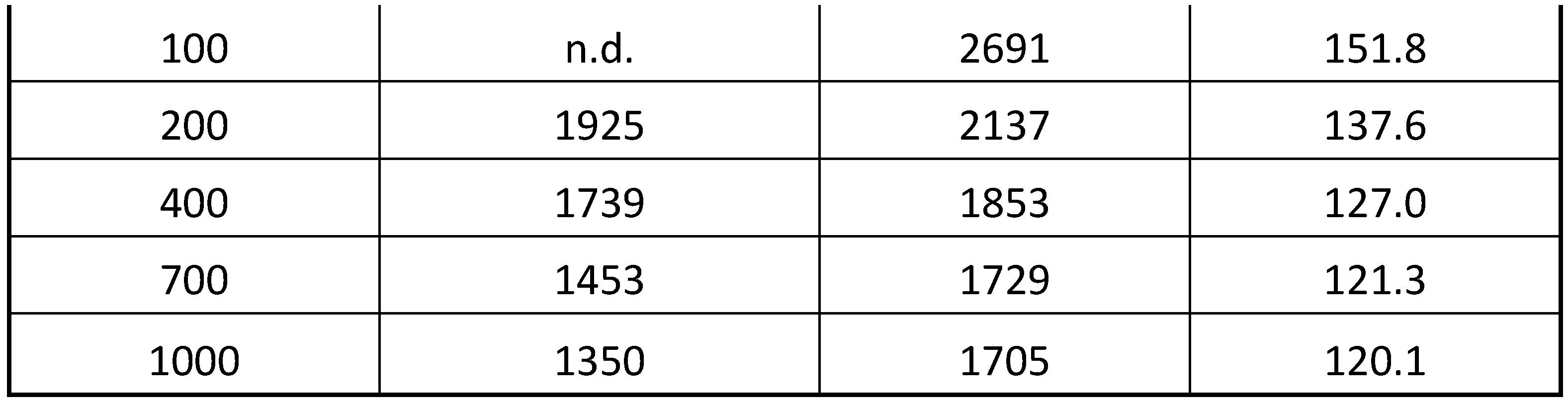
An alternative and indirect way to estimate the molecular weight (Mn) of polyindene is through the determination of the glass transition (Tg) as shown in a previous work [2]. Using the equation proposed by Hahn and Hillmyer:
the Tg of the polyindene samples was determined by DSC at a heating rate of 10°C/min under N2 flow. Table 2 shows a summary of the Tg results and the corresponding molecular weight calculated with eq. 10. Indeed, these polyindene samples obtained by radiolysis in presence of the TCE sensitizer the Tg was found at considerably lower temperatures than in the case of polyindenes synthesized by bulk radiolysis or by chemical initiations [2].
Mn = -1.4747x10⁵ (Tg -206.6)-1
For instance, polyindene produced by radiolysis in bulk shows Tg = 176.5°C and Mn ≈ 5000 Da, while polyindene produced by cationic polymerization has a Tg = 205°C and Mn ≈ 90000 Da. Table 2 shows that all polyindenes produced in presence of TCE are characterized by Tg values comprised between 152°C and 120°C, with the lowest Tg values at the higher doses. This fact, is translated into a confirmation of lower molecular weight for the polyindenes obtained in presence of the sensitizer and a good correlation with the molecular weight measured from the chlorine content.
Particularly interesting is the fact that the lowest molecular weight values are found on the samples prepared at higher doses. This is fully in line with the theory which predicts lower molecular weight of polymers at high doses, despite the higher mass yield.
Despite the molecular weights derived from chlorine content (XRF analysis) and those estimated from the Tg (DSC analysis) are not numerically coincident, they follow exactly the same trend as shown in Figure 6 and the experimental values can be fitted by very similar power law equations with good R2 values.
Thus, fitting the molecular weight data with dose in the case of the Tg derived values:
while for the Mn derived from XRF and chlorine end groups:
Mn(Tg) = 6348 U-0.197
Mn(Cl) = 6581 U-0.228
The latter two equations are very similar and the most reliable should be considered eq. 12 which is linked to the direct measurement of the chlorine end groups and hence the true molecular weight. The other equation (eq.11) obtained through a completely different approach and based on the Tg of the polyindenes represents a confirmation of the validity of equation 12.
Based on these results, it appears immediately evident that the telomerization phenomenon [11] generated by the presence of the TCE sensitizer with high initiation and termination rate and high chain transfer reactions leads to polyindenes with relatively low molecular weight in the range of 1350-2000 Da to be compared with 5000 Da measured on polyindene radiation-polymerized in bulk without additives [1,2]. Furthermore, an interesting property of the polyindenes produced in presence of TCE regards the fact that at higher polymer yields (achieved at higher doses) correspond the lowest molecular weight and viceversa.
3.4. FT-IR Spectroscopy of the Polyindenes Obtained by Sensitized Radiation-Induced Polymerization
The FT-IR spectra of polyindenes obtained either with γ irradiation of the indene monomer or with cationic or thermal initiations were already discussed in the previous works [1,2]. As shown in Figure 7 the polyindene FT-IR spectrum is dominated by a very strong absorption band at 746 cm-1 due to the out of plane wagging of four adjacent aromatic C-H groups of indene aromatic ring [1,2]. This band is accompanied by another band at 718 cm-1 due to the indene CH2 rocking [1,2]. It was noticed that the latter band is better defined and well resolved in the polyindene obtained by radiation induced polymerization of indene monomer in bulk and interpreted in terms of high regularity of the resulting chemical structure of the polymer [1]. On the other hand, for the polyindene synthesized through a pure cationic mechanism, the band at 718 cm-1 appears poorly resolved and at the limit even appears as a simple shoulder on the main band at 746 cm-1. Figure 7 shows that this is the case also for all polyindenes synthesized in the present work using TCE as sensitizer: the band at 718 cm-1 is indeed poorly resolved. This experimental fact, sustains the idea that the presence of TCE has favored the cationic mechanism (in parallel with the unavoidable free radical mechanism), leading to polyindene samples with chemical structures which report the signature of such a mechanism also on the infrared spectra. After all, it is well known that the chlorinated sensitizers are indeed favoring also the cationic mechanism in the radiation-induced polymerization [11,12,13,14].
The infrared spectrum of 1,1,2,2-tetrachloroethane is shown in Figure 5 and is dominated by the C-Cl stretching bands at 795, 740, 716, 649 and 551 cm-1 [20,21]. It is a quite unfortunate situation that two of these main TCE infrared bands result nearly coincident with the 746 and 718 cm-1 main bands of polyindene. This precludes any possible attempt to detect the end groups of the polyindene samples obtained in presence of the TCE sensitizer. In fact, apart these two bands that if present are certainly buried by the polyindene vibrations, all the other C-Cl bands of TCE are not detectable at all in the polyindene spectra of the present work.
4. Conclusions
From the polyindene yield measured either with TGA or with polymer precipitation (gravimetry), the kinetic rate constant of TCE sensitized radiation-induced polymerization of indene was found at 3.11x10⁻⁶ mol L-1s-1 at a dose rate of 3 kGy/h, about one order of magnitude higher than the rate constant of radiation polymerized indene in bulk, without any additive.
In terms of radiation chemical yield Gp determined according to eq. 2, the experimental data can be fitted with power laws. In TCE sensitized radiation induced polymerization Gp grows with the dose, while in the absence of the sensitizer Gp drops with the dose. This means that the sensitizer permits a higher efficiency in the utilization of the high energy radiation in conducting the polymerization with respect to the condition in the absence of a sensitizer.
Furthermore, the sensitizer is able to initiate the monomer polymerization according either with the free radical and with the cationic mechanism. Indeed, the radiolyzed indene solutions show the presence of the polyindenyl cation at 521 nm in the electronic absorption spectra and evidences of the cationic polymerization in the final chemical structure of the polyindene (see section 3.4 for a discussion).
The presence of TCE sensitizer implies high initiation rate for the indene monomer, but also high chain transfer and termination rate. Thus, the molecular weight of polyindene produced by the sensitized radiation induced polymerization was found at 1300-2000 Da, considerably lower than the polyindene molecular weight obtained with radiation polymerization in bulk (5000 Da). The lowest molecular weight was determined on the polyindene sample produced at 1000 kGy in coincidence with the maximum polymer yield in terms of polymer mass recovered after the polymerization.
Author Contributions
Investigation, writing—review and editing, Barzaga, R; validation, formal analysis, data curation, writing—review and editing, project administration, funding acquisition, García-Hernández, D.A.; validation, formal analysis, data curation, writing—review and editing, project administration, funding acquisition, Manchado, A.; investigation, resources, methodology, writing—review and editing, Di Sarcina, I.; resources, methodology, writing—review and editing, supervision, Cemmi, A.; conceptualization, investigation, methodology, resources, data curation, writing—original draft preparation, supervision, Cataldo, F.
Funding
This research was funded by the State Research Agency (AEI) of the Ministry of Science, Innovation and Universities (MICIU) of the Government of Spain, and the European Regional Development Fund (ERDF), under grants PID2020-115758GB-I00/AEI/10.13039/501100011033 and PID2023-147325NB-I00/AEI/10.13039/501100011033. This publication is based upon work from COST Action CA21126—Carbon molecular nanostructures in space (NanoSpace), supported by COST (European Cooperation in Science and Technology).
Data Availability Statement
This work will be available on the Researchgate website at the authors’ page. Further inquiries can be directed to the corresponding author.
Conflicts of Interest
The authors declare no conflicts of interest.
References
- Barzaga, R.; García-Hernández, D.A.; Manchado, A.; Di Sarcina, I.; Cemmi, A.; Cataldo, F. On the radiation-induced polymerization of indene: from laboratory study to astrochemical implications. J. Radioanal. Nucl. Chem. 2024, 333, 865–876. [Google Scholar] [CrossRef]
- Cataldo, F.; Barzaga, R.; García-Hernández, D.A.; Manchado, A. A study on poly(indene). J. Macromol. Sci. Part A 2024, 61, 454–464. [Google Scholar] [CrossRef]
- Burkhardt, A.M.; Lee, K.L.K.; Changala, P.B.; Shingledecker, C.N.; Cooke, I.R.; Loomis, R.A.; Wei, H.; Charnley, S.B.; Herbst, E.; McCarthy, B.A. Discovery of the pure polycyclic aromatic hydrocarbon indene (c-C9H8) with GOTHAM observations of TMC-1. Astrophys. J. Lett. 2021, 913, L18. [Google Scholar] [CrossRef]
- Cernicharo, J.; Agúndez, M.; Cabezas, C.; Tercero, B.; Marcelino, N.; Pardo, J.R.; De Vicente, P. Pure hydrocarbon cycles in TMC-1: Discovery of ethynyl cyclopropenylidene, cyclopentadiene, and indene. Astron. Astrophys. 2021, 649, L15. [Google Scholar] [CrossRef] [PubMed]
- Sita, M.L.; Changala, P.B.; Xue, C.; Burkhardt, A.M.; Shingledecker, C.N.; Lee, K.L.K.; Loomis, R.A.; Momjan, E.; Siebert, M.A.; McGuire, B.A. Discovery of interstellar 2-cyanoindene (2-C9H7CN) in GOTHAM observations of TMC-1. Astrophys. J. Lett. 2022, 938, L12. [Google Scholar] [CrossRef]
- García-Hernández, D.A.; Barzaga, R.; Manchado, A.; Cataldo, F. Fullerene-indene adducts (ICMA & ICBA) in an astrochemical perspective part 1: chemical thermodynamics, stability and electronic absorption spectroscopy. Fullerenes Nanot. Carbon Nanostruct. 2023, 31, 897–905. [Google Scholar]
- García-Hernández, D.A.; Barzaga, R.; Manchado, A.; Cataldo, F. Fullerene-indene adducts (ICMA & ICBA) in an astrochemical perspective. Part 2: FT-IR spectroscopy from− 180° C to+ 250° C. Fullerenes Nanot. Carbon Nanostruct. 2023, 31, 989–998. [Google Scholar]
- Maté, B.; Tanarro, I.; Peláez, R.J.; Cernicharo, J.; Herrero, V.J. Indene energetic processing in ice mantles in the interstellar medium. Astron. Astrophys. 2024, 682, A158. [Google Scholar] [CrossRef]
- Ibragimova, R.; Kuklin, M.S.; Zarrouk, T.; Caro, M.A. Unifying the description of hydrocarbons and hydrogenated carbon materials with a chemically reactive machine learning interatomic potential. Chem. Mater. 2025, 37, 1094–1110. [Google Scholar] [CrossRef]
- Baccaro, S.; Cemmi, A.; Di Sarcina, I.; Ferrara, G. Gamma irradiation Calliope facility at ENEA—Casaccia Research Centre (Rome, Italy). ENEA Technical Report, 2019, RT/2019/4/ENEA.
- Ivanov, V.S. Radiation Chemistry of Polymers. CRC Press, Taylor & Francis group, Boca Raton, FL, USA, 2023; pp.43-121.
- Mehnert, R. (1993) In: Elvers, B. et al. (eds) Ullmann’s Encyclopedia of Industrial Chemistry. VCH, Weinheim, Germany, 1993; vol. A22, pp. 471–476.
- Wojnarovits, L. In: Vertes, A., Nagy, S., Klencsar, Z., Lovas, R.G., Rosch, F. (eds) Handbook of Nuclear Chemistry. Springer, Berlin, Germany, 2011; Vol. 3, pp. 1301–1310.
- Chapiro, A. Radiation induced polymerization. Radiat. Phys. Chem. 1979, 14, 101–116. [Google Scholar] [CrossRef]
- Milinchuk, V.K.; Tupikov, V.I. Organic Radiation Chemistry Handbook; Ellis Harwood: Chichester, UK, 1989. [Google Scholar]
- Truszkowski, S. , Shostenko, A.G. Radiolysis of chloroalkanes. High Energy Chem. 2008, 42, 89–91. [Google Scholar] [CrossRef]
- Aloni, R.; Katz, M.G.; Rajbenbach, L.A. Radiation-induced dehalogenation of 1, 1, 1, 2 tetrachloroethane and 1, 1, 2 trichloro-1 bromoethane reactions of 1, 1, 2 trichloroethyl radicals. Internat. J. Chem. Kinetics 1975, 7, 699–712. [Google Scholar] [CrossRef]
- Dean, J.A. (Ed.) Lange’s Handbook of Chemistry, 15th ed.; McGraw-Hill, New York, USA, 1999.
- Hahn, S.F.; Hillmyer, M.A. High glass transition temperature polyolefins obtained by the catalytic hydrogenation of polyindene. Macromolecules, 2003, 36, 71–76. [Google Scholar] [CrossRef]
- Naito, K.; Nakagawa, I.; Kuratani, K.; Ichishima, I.; Mizushima, S.I. Infrared and Raman Spectra of 1, 1, 2, 2-Tetrachloroethane; Calculation of Normal Vibrations. J. Chem. Phys. 1955, 23, 1907–1910. [Google Scholar] [CrossRef]
- Chantry, G.W.; Gebbie, H.A.; Griffiths, P.R.; Lake, R.F. Far infra-red spectra and the rotational isomerism of symmetrical tetrachloro-and tetrabromo-ethane. Spectrochim. Acta 1966, 22, 125–129. [Google Scholar] [CrossRef]
Figure 1.
Thermogravimetric analysis (TGA) of radiolyzed indene solutions respectively at 10 (violet), 700 (green), 400 (blue), 100 (red) and 50 (black) kGy absorbed dose. The analysis was made at a heating rate of 20°C/m from 25°C to 600°C under N2 flow and then to 900°C under O2 flow.
Figure 1.
Thermogravimetric analysis (TGA) of radiolyzed indene solutions respectively at 10 (violet), 700 (green), 400 (blue), 100 (red) and 50 (black) kGy absorbed dose. The analysis was made at a heating rate of 20°C/m from 25°C to 600°C under N2 flow and then to 900°C under O2 flow.
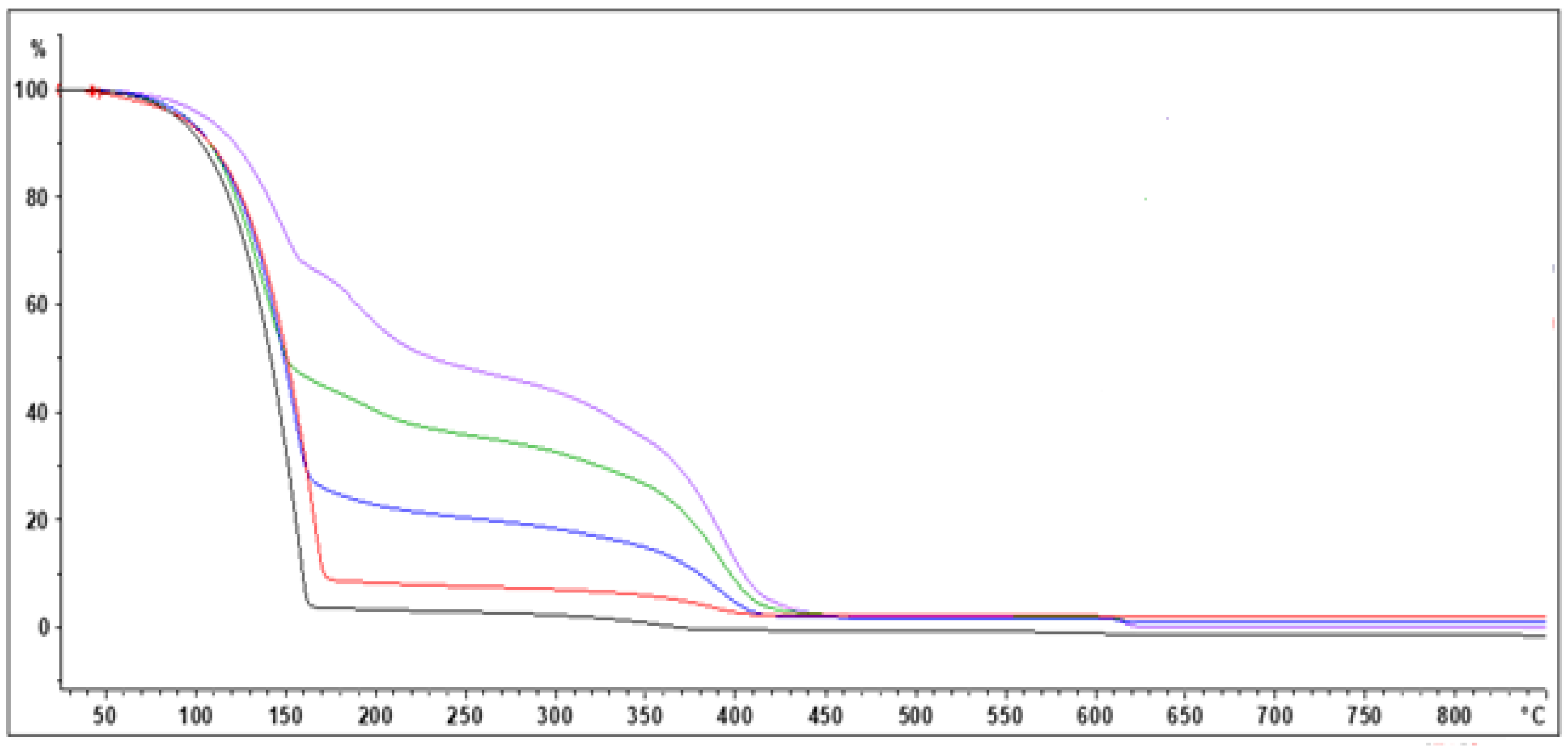
Figure 2.
DTG (first derivative of the TGA shown in Figure 1) on radiolyzed indene solutions. The peaks at about 155°–165°C are due to the vaporization of the monomer and TCE; the peak at about 390°-400°C is due to polyindene. At 600°C there is the buring step of the small amount of char formed during polyndene thermal decomposition.
Figure 2.
DTG (first derivative of the TGA shown in Figure 1) on radiolyzed indene solutions. The peaks at about 155°–165°C are due to the vaporization of the monomer and TCE; the peak at about 390°-400°C is due to polyindene. At 600°C there is the buring step of the small amount of char formed during polyndene thermal decomposition.
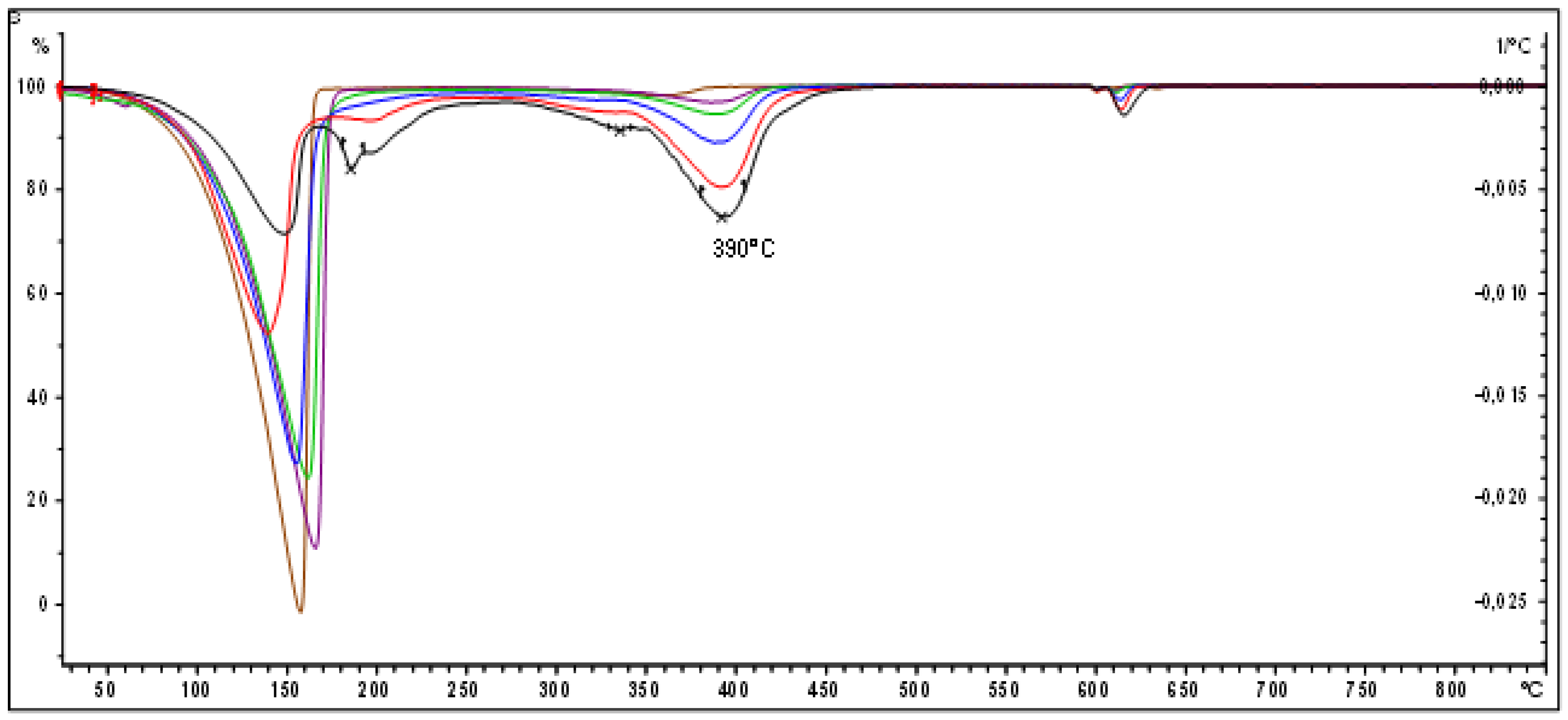
Figure 3.
Comparison of polymer yield as determined by precipitation method versus the TGA method (see text for more details).
Figure 3.
Comparison of polymer yield as determined by precipitation method versus the TGA method (see text for more details).
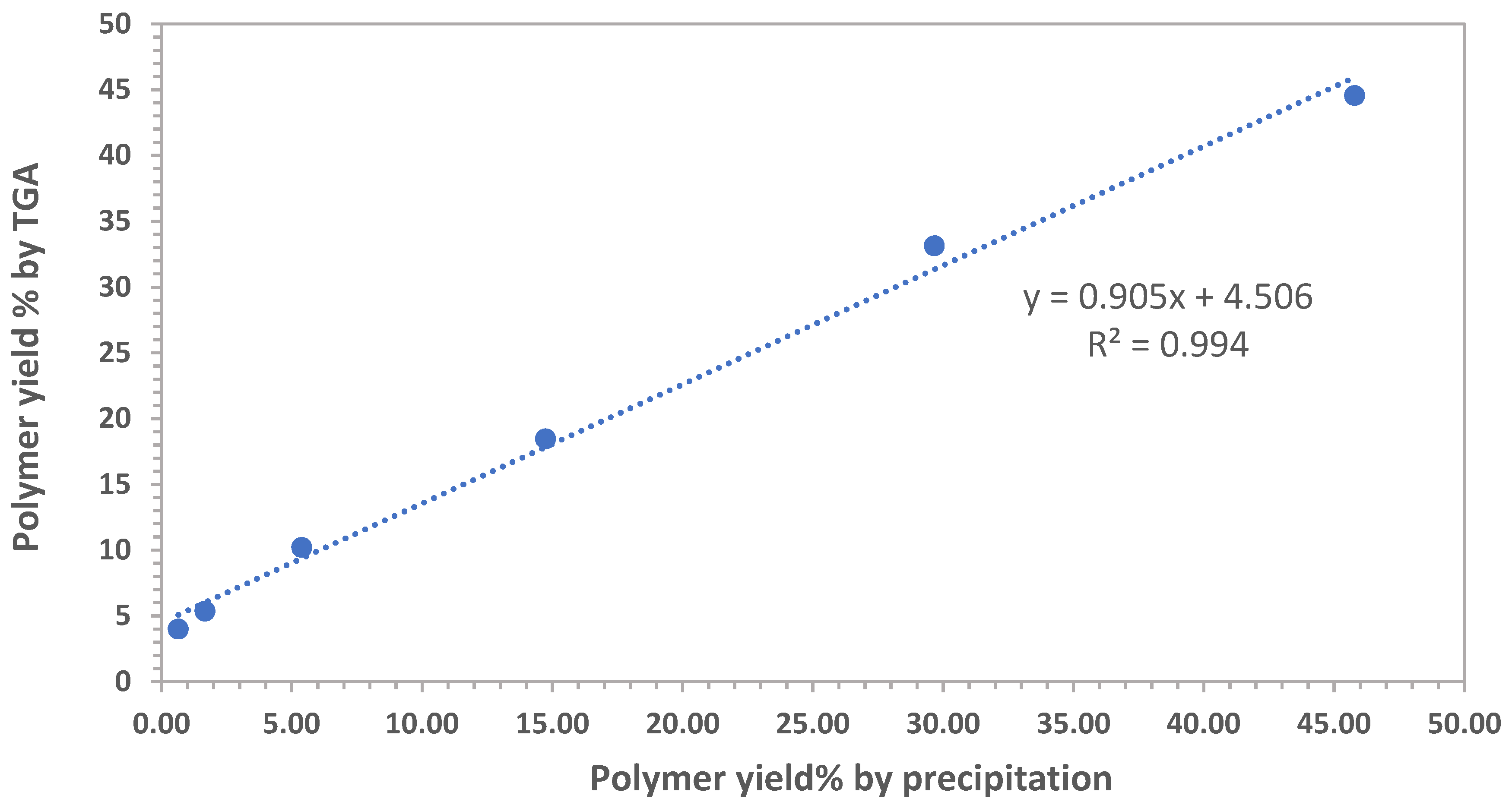
Figure 4.
The rate constant of indene polymerization at 3 kGy/h in presence of 5% mol of TCE sensitizer is found at 3.11x10⁻⁶ mol L-1 s-1 using the gravimetric data of polyindene precipitation; the TGA data suggest an indene conversion rate constant of 3.20x10⁻⁶ mol L-1 s-1; the averaged rate constant of bulk indene without sensitizers is shown at 4.53 x 10⁻⁷ mol L-1 s-1 (for a dose rate of 3 kGy/h).
Figure 4.
The rate constant of indene polymerization at 3 kGy/h in presence of 5% mol of TCE sensitizer is found at 3.11x10⁻⁶ mol L-1 s-1 using the gravimetric data of polyindene precipitation; the TGA data suggest an indene conversion rate constant of 3.20x10⁻⁶ mol L-1 s-1; the averaged rate constant of bulk indene without sensitizers is shown at 4.53 x 10⁻⁷ mol L-1 s-1 (for a dose rate of 3 kGy/h).
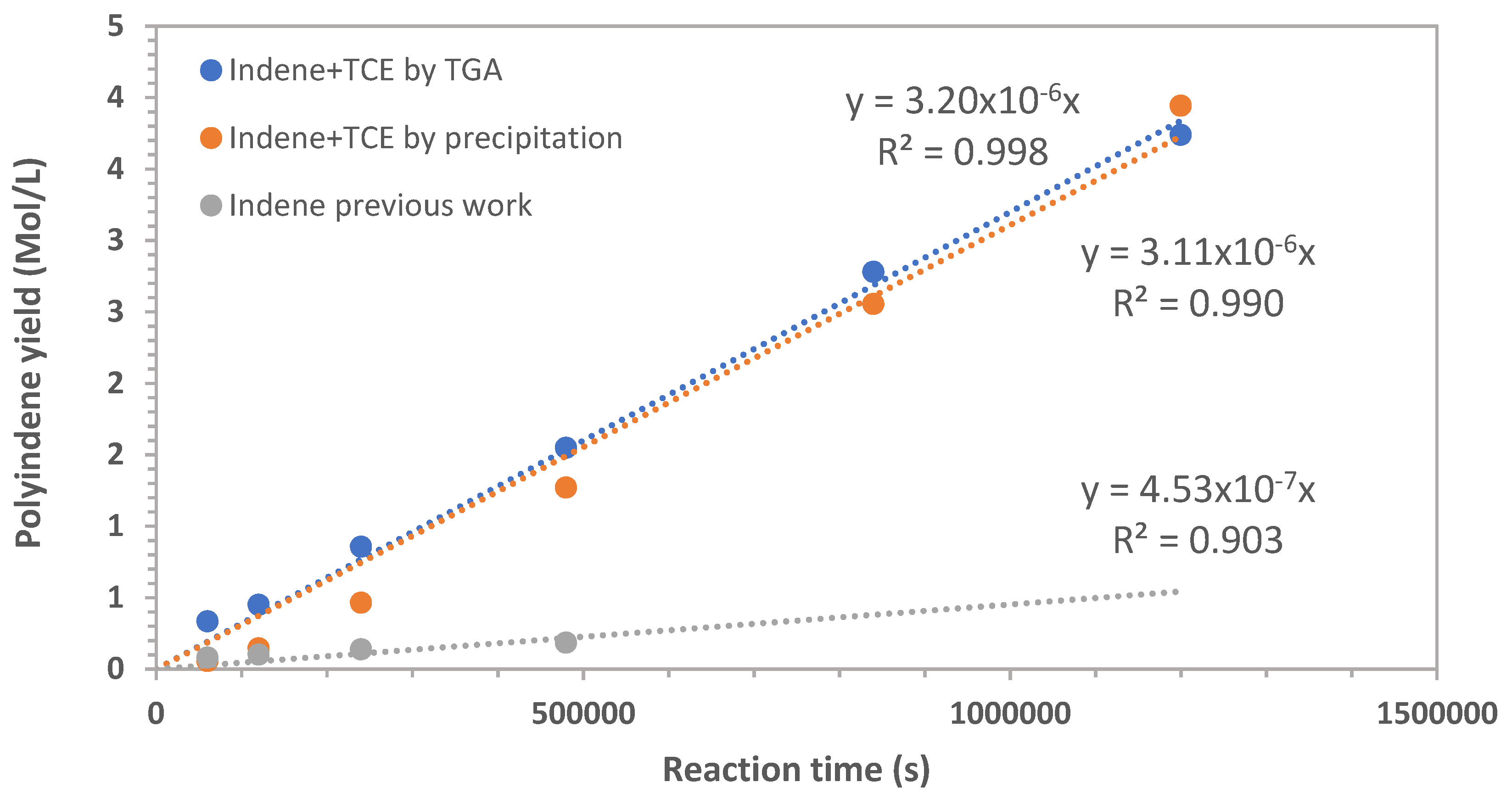
Figure 5.
The radiation chemical yield Gp of indene polymerization sensitized with TCE follows a power law with positive exponent. In non-sensitized bulk polymerization of indene the data can be fitted with a power law with negative exponent.
Figure 5.
The radiation chemical yield Gp of indene polymerization sensitized with TCE follows a power law with positive exponent. In non-sensitized bulk polymerization of indene the data can be fitted with a power law with negative exponent.
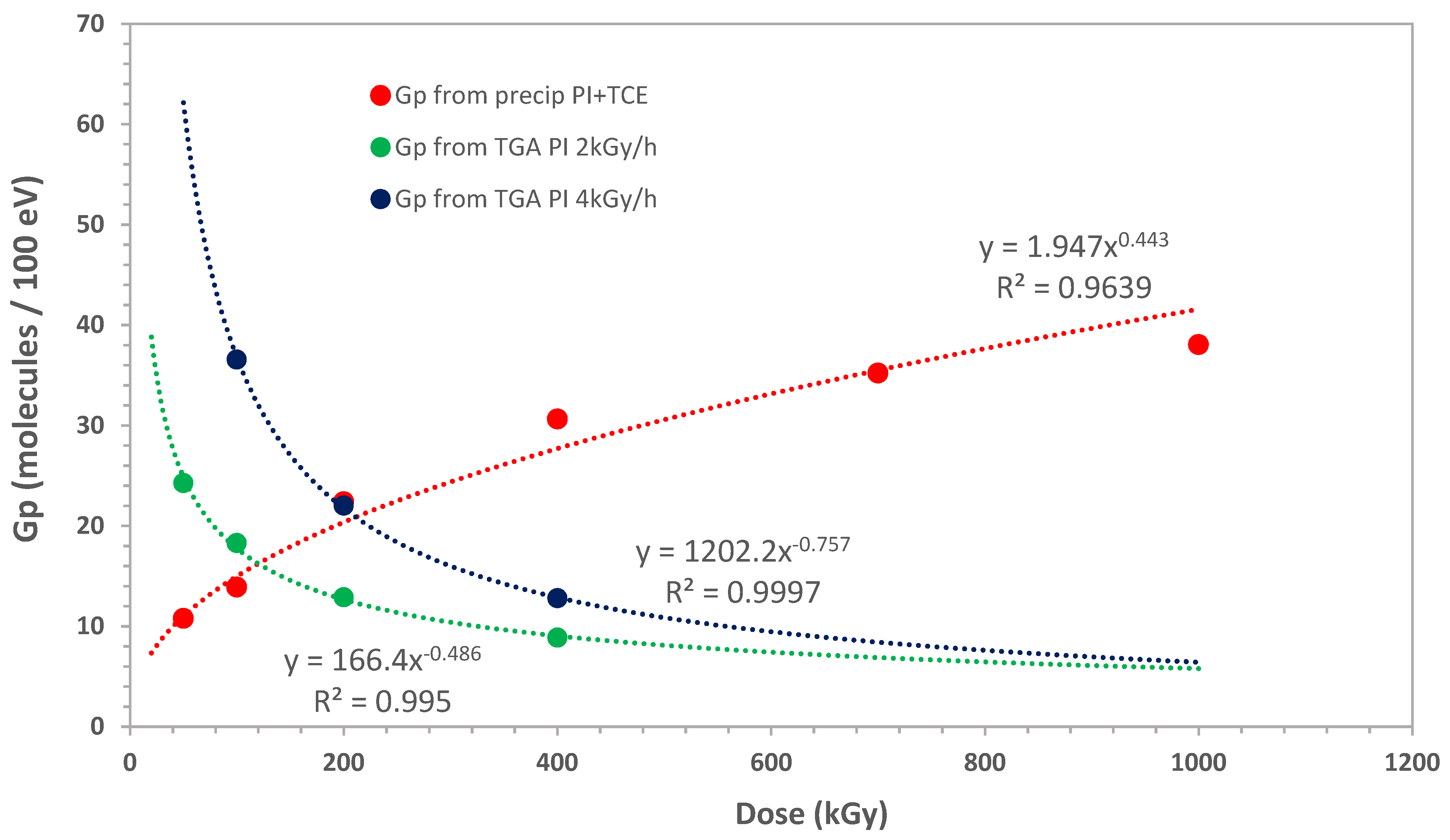
Figure 6.
Molecular weight (Mn) of the polyindene samples as determined from the chlorine content (XRF analysis) or from the Tg (glass transition by DSC analysis).
Figure 6.
Molecular weight (Mn) of the polyindene samples as determined from the chlorine content (XRF analysis) or from the Tg (glass transition by DSC analysis).
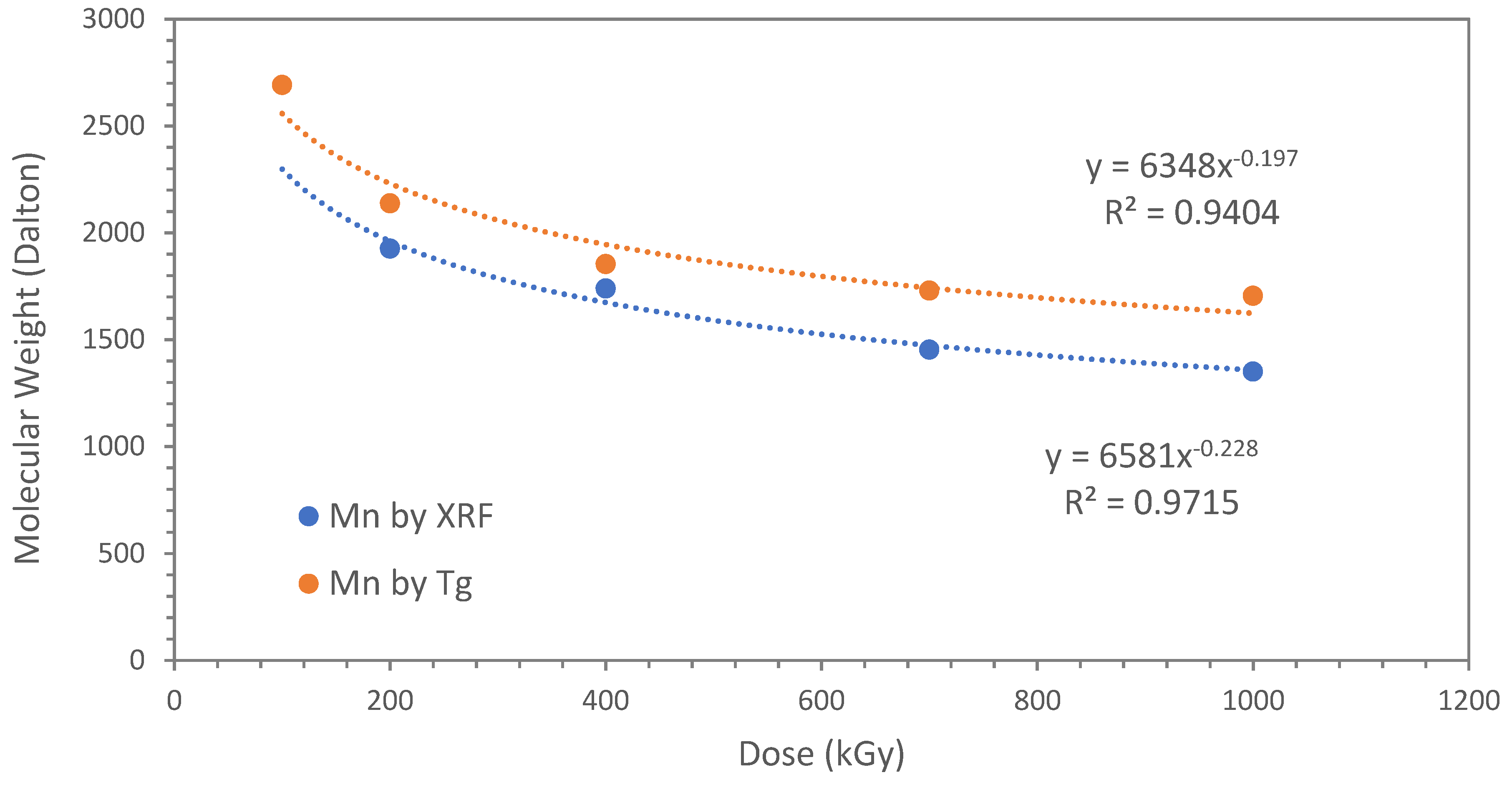
Figure 7.
FT-IR spectra from top to bottom: TCE sensitizer, polyindene obtained at 1000, 700, 400, 200 and 100 kGy respectively.
Figure 7.
FT-IR spectra from top to bottom: TCE sensitizer, polyindene obtained at 1000, 700, 400, 200 and 100 kGy respectively.
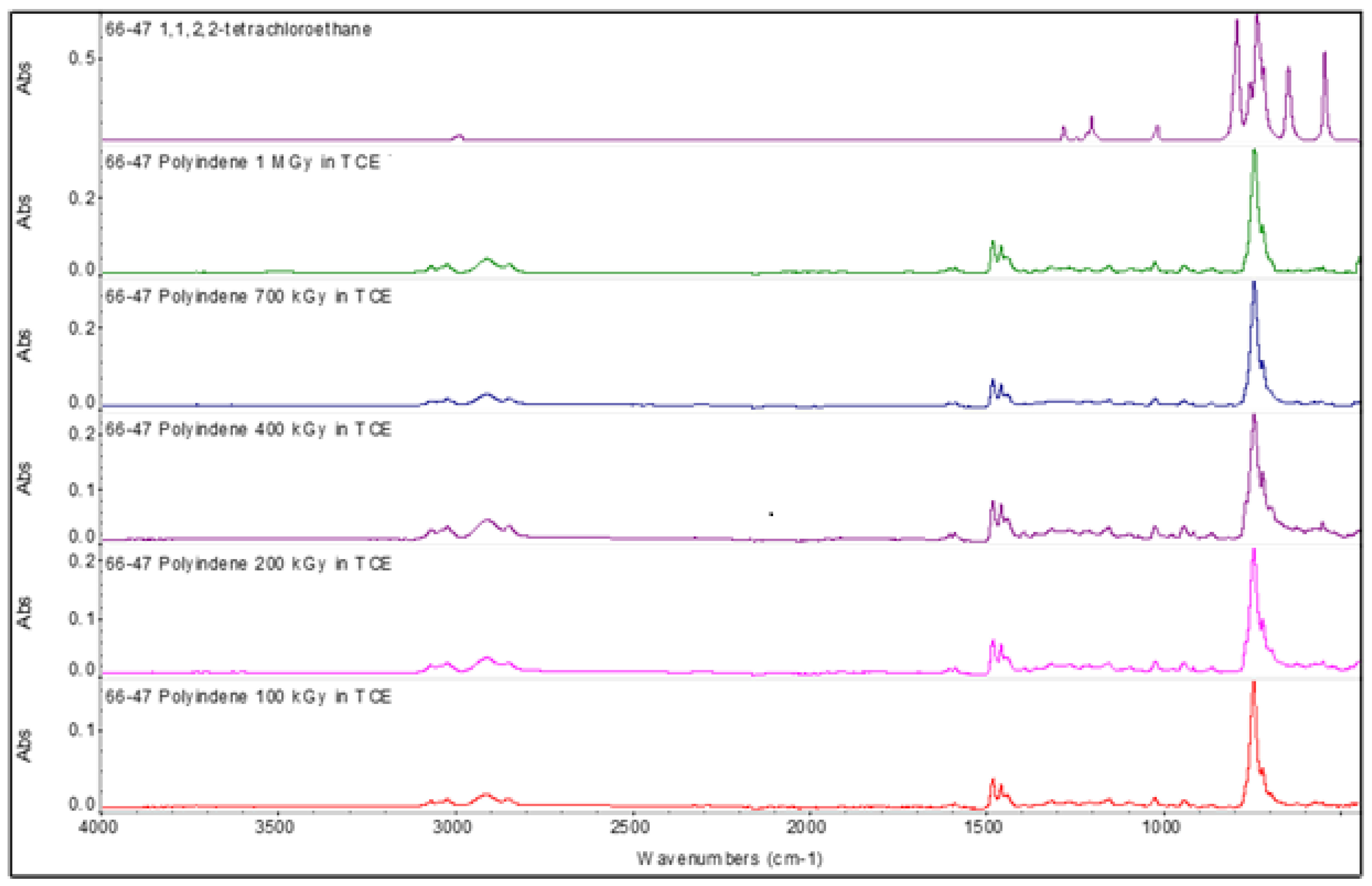

Table 1.
Chlorine content of polyindene samples obtained in presence of TCE with the resulting molecular weight
Table 1.
Chlorine content of polyindene samples obtained in presence of TCE with the resulting molecular weight
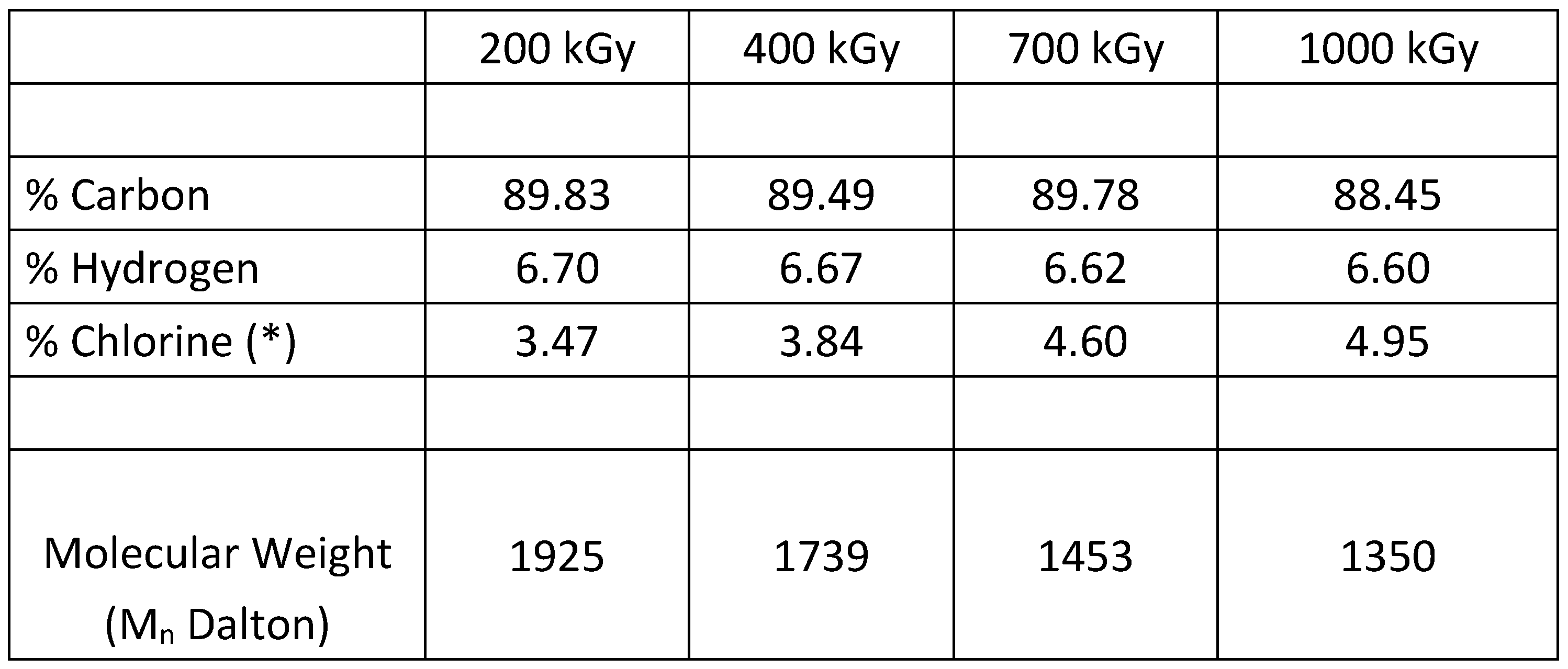
(*) Chlorine was determined by XRF, carbon and hydrogen knowing that indane is the repeating unit; Mn calculated assuming chlorine atoms as end groups.
Table 2.
Comparison of polyindenes molecular weight by XRF and by Tg

Disclaimer/Publisher’s Note: The statements, opinions and data contained in all publications are solely those of the individual author(s) and contributor(s) and not of MDPI and/or the editor(s). MDPI and/or the editor(s) disclaim responsibility for any injury to people or property resulting from any ideas, methods, instructions or products referred to in the content. |
© 2025 by the authors. Licensee MDPI, Basel, Switzerland. This article is an open access article distributed under the terms and conditions of the Creative Commons Attribution (CC BY) license (http://creativecommons.org/licenses/by/4.0/).
Copyright: This open access article is published under a Creative Commons CC BY 4.0 license, which permit the free download, distribution, and reuse, provided that the author and preprint are cited in any reuse.


