

Submitted:
08 April 2025
Posted:
09 April 2025
You are already at the latest version
Abstract
The plateau region is frequently characterized by descriptors such as "pristine" and "mysterious" in ecological discourse. Developing effective brand narratives for plateau ecological agricultural products constitutes a critical determinant of brand equity enhancement. Through two controlled experiments, this study systematically examined the dual-path mechanism through which brand storytelling approaches (natural stories vs. humanistic stories) influence consumer brand attitudes. The results revealed that for brands with a short history, natural stories outperform humanistic stories in stimulating consumers' perceived functional value. Conversely, brands with a long history benefit more significantly from humanistic stories in elevating perceived emotional value. Furthermore, agricultural products types moderate these effects: natural stories demonstrate stronger efficacy for primary agricultural products in functional value perception, whereas humanistic stories prove more effective for processed products in emotional value cultivation. Mechanistically, perceived functional value and emotional value operate as distinct mediating pathways, explaining how brand story projects interact with brand history and agricultural product types to influence brand attitudes. These findings offer actionable insights for agricultural enterprises to strategically align narrative content with brand heritage and product characteristics in marketing communications.
Keywords:
plateau ecological agricultural products
; brand story project
; perceived value
; brand history
; agricultural products types
1. Introduction
In the context of social media proliferation, strategic branding assumes critical significance for the sustainable development of plateau ecological agriculture (Zheng & Yan, 2017) and serves as a pivotal differentiation mechanism for agribusinesses. Compared with conventional agricultural products, plateau ecological agricultural products inherently possess augmented capacity to communicate attributes of environmental sustainability, nutritional superiority, and health safety (Kong, 2013), thereby securing competitive advantages in markets prioritizing premium quality and ecological consciousness. Nevertheless, systemic constraints including logistical inefficiencies and scarcity of marketing expertise substantially impede brand recognition development, consequently limiting these products' market penetration beyond their native regions and constraining economic value realization.
Existing scholarship established that brand stories facilitate affective consumer-brand connections, enhancing corporate brand equity through improved influence, recognition, credibility, and reputation— essential prerequisites for effective content marketing strategies (Zhou & Chen, 2013). This evidence underscored the imperative to investigate narrative-driven brand value construction mechanisms specific to plateau ecological agricultural products.
Within agricultural branding research, brand stories are conventionally dichotomized into natural stories and humanistic stories based on thematic orientation (Tong et al., 2020). Natural stories emphasize geographical determinants of product quality, including unique ecological conditions, topographical features, and climatic characteristics. Conversely, humanistic stories articulate cultural heritage elements such as historical legacy, artisanal traditions, agrarian practices, and regional customs developed through brand evolution. Illustrative cases include Yiliang Xiaocaoba Tianma's "Source of Authenticity: Chun Zhen Zhi Ma" campaign that highlighted growth environment attributes, versus Kweichow Moutai's centennial stories "From Guizhou Liquor to National Icon" that chronicled its technological and cultural odyssey.
Empirical studies consistently demonstrated that brand stories could shape consumer behavior through multiple pathways: enhancing brand attitudes (Yang et al., 2023; Hong et al., 2022), stimulating purchase intentions (Fernandes et al., 2022; Mengchuan, 2020), and fostering brand loyalty (Yin & Wang, 2020; Granitz & Forman, 2015; Ebert & Meyvis, 2015). Despite extensive applications in agricultural branding research— particularly regarding developmental significance (Zhang, 2017) and consumer perception mechanisms (Huang, 2010), critical knowledge gaps persist concerning how brand stories projects (natural stories vs. humanistic stories) differentially influence brand value formation in plateau ecological contexts, along with relevant boundary conditions.
To address these theoretical gaps, this research employed a dual-experiment design to elucidate the impact pathways of brand stories projects on consumer brand attitudes toward plateau ecological agricultural products. Experiment 1 examined the interaction between brand story projects (natural stories vs. humanistic stories) and brand history (long vs. short) on brand attitude formation. Experiment 2 further investigated how product types (primary agricultural products vs. processed agricultural products) moderated narrative effectiveness. The findings provide actionable insights for optimizing brand communication strategies in plateau ecological agriculture, ultimately contributing to enhanced market competitiveness and sustainable regional development.
2. Literature Review
2.1. Research Overview of Plateau Ecological Agricultural Products
Brand equity constitutes the core determinant of commodity competitiveness. While plateau agricultural products possess inherent geographical advantages, their marketing development faces persistent challenges, including insufficient brand awareness and fragmented strategic focus (Wang, 2023). The escalating material living standards and evolving consumption paradigms have amplified consumer preference for healthier, eco-friendly, and nutrient-rich ecological agricultural products (Huicheng, 2022; Zhang, 2013). Scholars have systematically conceptualized ecological agricultural products, as summarized in Table 1.
Synthesizing prior conceptualizations, this study defined ecological agricultural products as agricultural commodities produced within specific unpolluted ecosystems, characterized by elevated nutritional value and compliance with green/organic certification standards. Representative examples included "Three Certifications One Standard" products, "Inner Mongolia Snowflake Mutton," "Tibetan Highland Barley Flour" and Zhaotong Tianma (Li & Huang, 2020).
Existing research predominantly examined the developmental status (Gu, 2023) and value realization mechanisms (Qi et al., 2023) of ecological agricultural products, while investigations into brand dynamics and consumer behavior remain underdeveloped. Current consumer behavior studies primarily focus on green and organic agricultural products. For instance, Jiang et al. (2021) empirically demonstrated that green agricultural product consumption is significantly influenced by product display mechanisms and reputation incentive systems. In contrast, Gong et al. (2022) experimentally established that brand green positioning differentially affected consumer perceptions and brand attitudes. Furthermore, Lu and Li (2015) identified significant correlations between consumers' emotional/cognitive attitudes and organic product purchasing behaviors through field studies in Beijing and Nanchang. Grounded in consumer behavior theory, this investigation comprehensively examined influencing factors through dual lenses: internal personal determinants (e.g., perceived value, consumption habits) and external environmental variables (e.g., brand history, agricultural product types).
2.2. Research Related to Brand Story Projects
Brand stories fundamentally expressed corporate brand identity and positioning (Heerden & Puth, 1995). These structured storytelling frameworks communicate brand philosophy (Granitz & Forman, 2015), cultivate emotional resonance, and effectively disseminate cultural values, operational ethos, and corporate vision (Zhao & Jia, 2016), ultimately enhancing product/service promotion efficacy. As Cui (2023) posited, "Stories animate brand essence."
Scholarly consensus identified four core story elements: plot, characters, subject, and aesthetics (Vincent, 2002). The story project served as the foundational element that determines emotional tonality and articulates brand core attributes (Bai & Su, 2020). Scholars have categorized brand stories from multiple perspectives: Wu et al. (2015) differentiated weak stories and strong stories based on rhetorical style; Guo et al. (2020) distinguished consumer experience stories from cultural-emotional stories; Liu and Xie (2022) categorized brand stories into three typologies: corporate stories, consumer stories, and product stories. Corporate stories chronicle a brand's origin, developmental trajectory, founding narratives, and strategic aspirations including vision and mission statements. Consumer stories document experiential interactions between customers and brands, emphasizing consumption journeys and emotional connections. Product stories delineate production genesis through technical specifications of raw materials, artisanal techniques, and design-to-manufacturing processes. Building upon narrative thematic frameworks, this study advanced a dichotomous classification: natural stories emphasizing "di-mai" (geographical lineage) characteristics such as regional topography, microclimate, and ecological contexts, and humanistic stories highlighting "wen-mai" (cultural heritage) elements including traditional craftsmanship, agrarian practices, and localized customs (Tong et al., 2020).
Previous research has extensively analyzed story components including typology (Liu & Xie, 2022; Hopkinson & Hogarth-Scott, 2001), narrative archetypes (Lin & Chen, 2015), character configurations (Dessart, 2018), the linguistic or visual presentation form of the story (Lien & Chen, 2013), and thematic orientations (Wang, 2021). Concurrently, substantial empirical evidence has documented brand stories' behavioral impacts on consumers. Yang et al. (2023) demonstrated through experimental studies that real brand stories significantly reduce psychological distance and enhance brand attitudes compared to virtual brand stories. Grounded in pleasant and meaningful theoretical frameworks, Shen et al. (2021) established that meaning-oriented stories outperform pleasure-focused stories in improving consumer evaluations. Furthermore, He (2022) identified critical interaction effects between product involvement levels and story typologies, revealing that corporate stories paired with high-involvement products and product stories with low-involvement items optimally stimulate flow experiences, thereby elevating consumer satisfaction .
Notably, no prior studies have systematically examined differential effects of natural and humanistic story projects on consumer behavior. This research therefore investigated boundary conditions and comparative efficacy of these story types within the plateau ecological agricultural product context.
3. Research Hypothesis
3.1. The Moderating Role of Brand History
Brand history, as a central element of brand equity, was defined as the cultural capital and market recognition accumulated during a brand's historical evolution (Ma et al., 2016). Its essence lay in constructing a differentiated brand identity through a temporal dimension, forming unique cognitive schemas in consumers' minds (Crosno et al., 2019). This diachronic characteristic played a pivotal role in establishing consumer trust mechanisms. Existing research indicated that the explicit manifestation of brand history was primarily reflected in the longitudinal span of its establishment (Chang & Tseng, 2013). Century-old heritage brands were often perceived as industry pioneers, with their profound cultural heritage and traditional craftsmanship evoking consumers' nostalgic sentiment and cultural identity (Aaker et. al., 2010; Xu & Fan, 2022). In contrast, emerging brands leveraged their innovative DNA and adaptability to contemporary trends to meet postmodern consumers' demands for differentiation and experience-driven economies (Co-founder et. al., 2019). Such historical differentiation directly shaped consumers' evaluative benchmarks for brand value systems, thereby influencing the formation mechanisms of their perceived value (Zeithaml, 1998).
Within the theoretical framework of brand narrative, Yuan et al. (2016) demonstrated that brand stories, as cultural decoding tools, significantly enhanced consumers' cognitive depth toward brand value propositions. Wu et al. (2022), through empirical investigations into pastry brands, further revealed that brand history exerted a moderating effect between narrative typologies and brand attitudes, confirming the interactive mechanism between story types and historical legacy. These findings provided critical insights for ecological agricultural brand development: aligning brand narratives with historical longevity could stimulate the reconstruction of consumers' cognitive frameworks, thereby amplifying the communicative efficacy of value perception (Aaker et. al., 2010).
Building on Sheth's (1991) consumption value theory—which categorized consumer-perceived value into five dimensions (functional, conditional, social, emotional, and epistemic) applicable to all consumption contexts —this study deconstructed perceived value in the ecological agricultural domain into dual dimensions: functional and emotional. Perceived functional value encompassed consumers' evaluations of product quality, safety, and utility, reflecting comprehensive assessments of functional gains versus sacrifices tied to objective product attributes (Chang & Tseng, 2013). Perceived emotional value pertained to evaluations of psychological, emotional, and social outcomes derived from consumption experiences, rooted in subjective product associations (Fan & Luo, 2003). Research suggested that long-established brands (with extensive histories) capitalized on temporal advantages to activate consumers' cultural memory schemas (Wu et al., 2022); when paired with humanistic narratives, they amplified the transmission of traditional value symbols, elevating emotional value perceptions. Conversely, emerging brands (with shorter histories) leveraged creativity and novelty; integrating natural narratives accentuated ecological attributes and innovative traits, fostering differentiated cognitive advantages in functional value dimensions (Yang et al., 2018; Ke & Wang, 2021). Collectively, this study posited that brand story projects and brand history interacted to shape consumer-perceived value. Consequently, this study posited:
H1: Brand history moderates the effect of brand story projects on consumers' perceived value.
H1a: When brand history of the ecological agricultural products is short, the project of natural stories is more able to stimulate consumers' perceived functional value than the promotion of humanistic story projects.
H1b: When brand history of the ecological agricultural products is long, the project of humanistic stories is more able to stimulate consumers' perceived emotional value than the promotion of natural story projects.
3.2. The Moderating Role of Agricultural Products Types
Agricultural products are formally defined as "primary outputs derived from agricultural activities, encompassing crops, livestock, aquatic products, and forestry yields obtainable through direct or indirect cultivation" (Baidu Encyclopedia, n.d.). Following established taxonomy, these products was dichotomized into primary agricultural products (unprocessed) and processed agricultural products based on manufacturing complexity (Tong et al., 2020). Primary products operationally denoted unrefined yields from planting, husbandry, and fishery sectors, typified by fruits and vegetables (Shao et al., 2020). This classification aligned with Zhu et. al.'s (2006) framework distinguishing plant/animal derivatives as primary products versus value-added commodities like wines and edible oils as processed goods. Sylvander et al. (2006) and Shang et al. (2011) further specified geographical determinism: primary products (e.g., "Zhaotong Apples") originated from designated regions without industrial processing, whereas processed products (e.g., "Xuanwei Ham") underwent region-specific artisanal transformation.
Empirical evidence substantiated dual influence mechanisms: natural determinants (ecological conditions) and humanistic factors (production techniques) jointly shape purchase intentions (Zhu & Wang, 2022). Advertising efficacy intensified when promotional content aligned with product attributes (Huang et al., 2018). Zhu et al. (2017) demonstrated through food product analysis that natural attributes (environmental quality) dominated evaluations for primary products, while humanistic elements (production heritage) prevailed for processed goods. Complementary findings revealed geographical factors (soil, climate) primarily influenced functional value perceptions (health, nutrition) for primary products, whereas traditional craftsmanship predominantly affected emotional value associations (cultural significance) for processed items (Wang, 2015; Tong et al., 2020).
This theoretical framework necessitates strategic narrative alignment: natural stories emphasizing ecological advantages optimize functional value perception for primary products, whereas humanistic stories highlighting artisanal legacy enhance emotional value for processed goods. Consequently, this study posited:
H2: Ecological agricultural products types moderates the effect of brand story project on consumers' perceived value.
H2a: For primary ecological agricultural products, the project of natural stories is more able to stimulate consumers' perceived functional value than the promotion of humanistic story projects.
H2b: For processed ecological agricultural products, the project of humanistic stories is more able to stimulate consumers' perceived emotional value than the promotion of natural stories projects.
3.3. The Mediating Role of Perceived Value
Perceived value was conceptualized as consumers' holistic evaluation of products or services, functioning as a core cognitive mechanism in decision-making and inherently constituting a dynamic value appraisal system (Zeithaml, 1998). It reflected the gap between consumers' purchase intentions/value expectations and the actual performance/outcomes of products, exhibiting high individualization and distinct orientation (Huang & Wang , 2013; Cui & Li, 2013) . This heterogeneity originated from the differential allocation of consumer capital endowments (economic, cultural, and social capital), which led to the construction of pluralistic value frameworks for the same product across diverse cognitive schemas, ultimately shaping differentiated consumption behavioral patterns (Zhao, 2020).
Empirical studies confirmed that perceived value and its dimensions served dual roles as both driving variables and mediating conduits in consumer decision-making chains. Sun (2014) constructed a mediation effect model demonstrating that functional and emotional values played critical mediating roles in translating customer personality traits into loyalty. Zhao et al. (2021) expanded this theoretical boundary, verifying that both value dimensions similarly mediated the influence of streamer characteristics on purchase intentions in live-streaming e-commerce contexts. Brand stories, as symbolic tools for value construction, altered consumer value perception pathways through cognitive framework reconstruction. This occurred because brand stories often provided customers with emotional experiences transcending consumption itself, which enhanced brand associations and fostered brand identification, thereby influencing brand perception (Huang, 2010). Tong et al. (2022), in their between-group experiments, demonstrated that brand narratives activated specific value dimensions through differentiated appeal strategies: "di-mai" (geographical lineage) appeals reinforced perceived naturalness via ecological imagery, while "wen-mai" (cultural heritage) appeals enhanced perceived heritage through cultural symbolism, each guiding consumers to assign distinct value weights. This selective activation mechanism of value dimensions was further validated by Liu et al. (2022) as a chained mediation model—"brand narrative type → perceived value → brand attitude".
Building on this theoretical foundation, the present study positioned perceived functional and emotional values as mediating variables. Integrating hypotheses H1 (H1a, H1b) and H2 (H2a, H2b), the following dual mediation pathways were hypothesized: For short-history ecological agricultural brands, natural stories (vs. humanistic stories) were more effective in activating consumers' perceived functional value, thereby fostering favorable brand attitudes. For long-history ecological agricultural brands, humanistic stories (vs. natural stories) were more effective in activating consumers' perceived emotional value, thereby fostering favorable brand attitudes. For primary agricultural products, natural stories (vs. humanistic stories) were more effective in activating perceived functional value, thereby fostering favorable brand attitudes. For processed agricultural products, humanistic stories (vs. natural stories) were more effective in activating perceived emotional value, thereby fostering favorable brand attitudes.These mechanisms culminate in enhanced brand attitude formation across product categories. Consequently, this study posited:
H3: Perceived functional value plays a mediating role in the effects of the interaction between brand story project and brand history on consumers' brand attitude.
H4: Perceived emotional value plays a mediating role in the effects of the interaction between brand story project and brand history on consumers' brand attitude.
H5: Perceived functional value plays a mediating role in the effects of the interaction between brand story project and agricultural product type on consumers' brand attitude.
H6: Perceived emotional value plays a mediating role in the effects of the interaction between brand story project and agricultural product type on consumers' brand attitude.
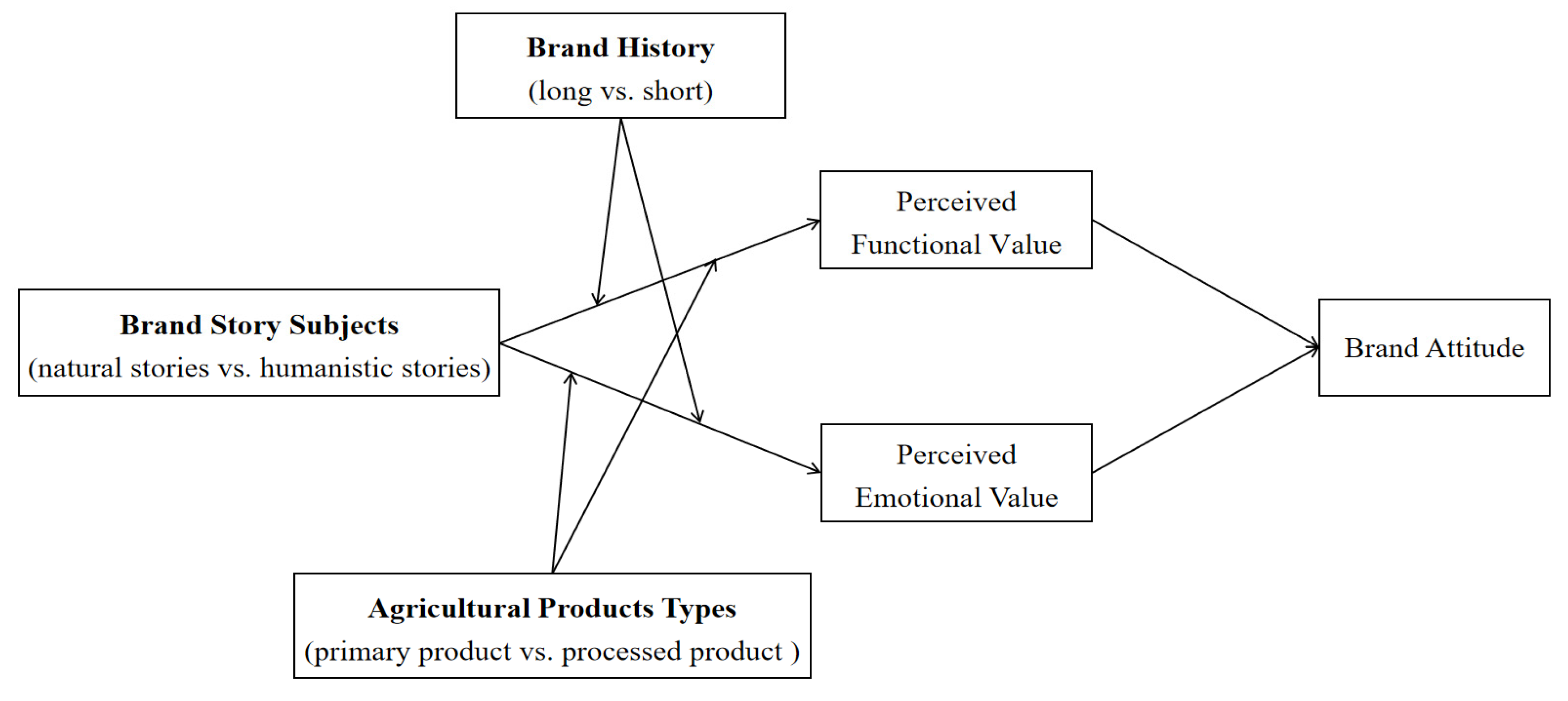
Based on this, this study constructed the following research model:
Figure 1.
Theoretical model.
4. Research Methods and Processes
4.1. Experiment 1: The Effect of Brand History on the Relationship Between Brand Story Projects and Brand Attitudes
Experiment 1 aimed to examine how brand history (long vs. short) moderates the effect of brand story projects (natural vs. humanistic) on consumer brand attitudes. It further tested whether this moderation occurs through perceived value (perceived functional value and perceived emotional value), thereby validating H1 (H1a and H1b), H3, and H4. A fictitious Brand A product (ecological tea) was used as the stimulus, with text advertisements based on real brand stories to minimize interference from participants' prior knowledge and enhance experimental validity.
(1) Pretest experiment
To validate the experimental materials, a pretest assessed participants' understanding of the brand story descriptions. The pretest focused on natural and humanistic story projects for plateau ecological ecological tea brand, referencing materials from Tong et. al. (2020). Natural stories emphasized ecological environments (e.g., terrain, climate), while humanistic stories highlighted cultural heritage (e.g., craftsmanship, traditions). Three versions of each story type were evaluated.
A questionnaire was distributed online to 80 participants (56.3% female; 66.3% with bachelor's degrees; 43.8% aged 26-40; 60.0% earning ≥¥5,000 monthly). Participants ranked the relevance of the story descriptions. The option with the lowest mean rank (most relevant) was selected for the main experiment (Table 2).
(2) Formal experiments
Experiment 1 adopted 2 (brand story project: natural story vs. humanistic story) ×2 (brand history: long vs. short) two-factor inter-group experimental design, ecological tea (cooked tea) was selected as the experimental stimulus, the text material of the story project was derived from the pre-test experiment, the brand history was manipulated by the difference of the brand founding year, and other contents including brand name and product category were maintained. Participants (N= 185; 50.8% female; 72.4% with bachelor's degrees; 57.3% aged 26-40; 59.4% earning ≥¥5,000 monthly) were randomly assigned to four scenarios:
"Natural Story + Short history" describes: Brand A is an ecological tea (cooked tea) brand that was just put into production last year and has been certified as green food. The tea comes from the northwestern area of Yunnan-Guizhou Plateau with an average altitude of 1700 meters, with subtropical monsoon climate, abundant rainfall and sunshine, foggy mornings and evenings, frost-free period, suitable for the growth of tea trees.
"Natural story + Long history" describes: A brand ecological tea (cooked tea) has a long history, dating back to 1700 years ago, and has been certified as green food. The tea comes from the northwestern area of Yunnan-Guizhou Plateau at an average altitude of 1700 meters, with subtropical monsoon climate, abundant rainfall and sunshine, foggy mornings and evenings, frost-free period, suitable for the growth of tea trees.
"Humanistic story + short history" describes: Brand A is an ecological tea (cooked tea) brand that was just put into production last year and has been certified as green food. The brand adheres to the heritage of ancient technology, adhering to the principle of "fine tea refining, coarse tea fine making, fine extraction and net extraction", known as the "king of tea", and enjoys the reputation of "treasure in tea, three treasures in Yunnan".
"Humanistic story + long history" describes: A brand ecological tea (cooked tea) has a long history, dating back to 1700 years ago, and has been certified as green food. The brand adheres to the heritage of ancient technology, adhering to the principle of "fine tea refining, coarse tea fine making, fine extraction and net extraction", known as the "king of tea", and enjoys the reputation of "treasure in tea, three treasures in Yunnan".
After reviewing the assigned scenario, participants first completed manipulation checks by answering two questions: "Does the brand story in Brand A's advertisement belong to a natural story or a humanistic story?" and "Is Brand A's history long or short?" These questions served to reinforce participants' comprehension of the experimental stimuli and validate the effectiveness of the manipulations. Subsequently, participants responded to validated scales measuring perceived functional value, perceived emotional value, and brand attitude, followed by demographic questions (gender, age, education level, and monthly income). Perceived Functional Value was assessed using a 3-item scale adapted from Sheth et al. (1991), comprising: "Brand A's ecological agricultural products have higher nutritional value","Brand A's ecological agricultural products are green and natural","The quality of Brand A's products meets acceptable standards". Perceived Emotional Value was measured with a 3-item scale derived from Sweeney et al. (2001), including: "Brand A's ecological agricultural products make me feel happy","Brand A's products give me a great sense of satisfaction","Brand A's products fill me with positive expectations". Brand Attitude was evaluated using a 3-item scale synthesized from Chung (1995) and Gillespie (2012), with items such as:"Brand A's products are excellent", "I believe Brand A's product quality surpasses that of competing brands", "I would willingly recommend Brand A's products to others".All items were rated on a 7-point Likert scale (1 = strongly disagree; 7 = strongly agree).
(3) Experimental results
Use SPSS25.0 to analyze all questionnaire data.
①Manipulation test
The brand story projects and brand history in the experimental scenario were manipulated and tested. Chi-square tests confirmed successful manipulations for story projects (p< 0.01) and brand history (p< 0.01) (Table 3 and Table 4).
②Interaction effect test
In this study, brand story projects was transformed into a dummy variable, where "0" represents natural stories and "1" represents humanities stories. Using brand attitude as the dependent variable, ANOVA revealed significant interaction effects between story projects and brand history on brand attitude (F=10.759, p<0.01). When brand history was short, natural stories elicited higher brand attitudes (M natural=6.087, M humanistic =5.763, F=6.630, p<0.05). Conversely, humanistic stories enhanced brand attitudes for long-history brands(M natural =5.739, M humanistic =6.087, F=5.314, p<0.05) (Figure 2, Table 5).
For perceived functional value, a significant interaction emerged (F=10.590, p<0.01). Natural stories outperformed humanistic stories for short-history brands (M natural=6.206, M humanistic=5.772, F=15.356, p<0.001), but no difference existed for long-history brands (M natural=5.982, M humanistic=6.087, F=0.798, p>0.1).
For perceived emotional value, there also had a significant interaction emerged. Humanistic stories elicited higher scores for long-history brands (M natural=5.564, M humanistic=6.073, F=12.811, p<0.01), while no difference occurred for short-history brands (M natural=5.929, M humanistic=5.737, F=2.000, p>0.1).
To sum up, H1, H1a and H1b were assumed to be valid, and the results are shown in Table 5, Figure 3 and Figure 4.
③Mediating effect test
In summary, H3 and H4 are verified. Under the condition of short brand history, the perceived functional value stimulated by natural stories (vs. humanistic stories) is stronger, which in turn leads to better consumer brand attitudes. Under the condition of long brand history, humanistic stories (vs. natural stories) arouse stronger perceived emotional value, and thus form better consumer brand attitudes.
Consistent with the proposed hypotheses, this study posited that perceived functional value and perceived emotional value mediate the interactive effect of brand story projects and brand history on brand attitude. To test this moderated mediation, we employed Hayes' (2013) and Zhao et al.'s (2010) bootstrap method using SPSS 25.0 (PROCESS macro, Model 7). Specifically, brand story projects (natural vs. humanistic) was operationalized as the independent variable, perceived functional/emotional value as parallel mediators, brand attitude as the dependent variable, and brand history (long vs. short) as the moderating variable. The analysis utilized 5,000 bootstrap resamples with a 95% confidence interval (CI). The results showed that the indirect effect of perceived functional value was significant (index=0.2650, 95%CI, LLCI=0.1017, ULCI=0.4735). For short-history brands, natural stories (vs. humanistic stories) significantly enhanced brand attitudes through higher perceived functional value (effect=-0.2135, 95%CI, LLCI=-0.3566, ULCI=-0.0981, excluding zero). For long-history brands, the indirect effect was nonsignificant (effect=0.0515, 95%CI, LLCI=-0.0597, ULCI=0.1775, including zero). The moderated mediation effect of perceived emotional value was also significant (index=0.2764, 95%CI, LLCI=0.1032, ULCI=0.5014). For long-history brands, humanistic stories (vs. natural stories) strengthened brand attitudes via heightened perceived emotional value (effect=0.2009, 95%CI, LLCI=0.0747, ULCI=0.3619, excluding zero). For short-history brands, the indirect effect was nonsignificant (effect=-0.0756, 95%CI, LLCI=-0.2005, ULCI=0.0253, including zero).
These results confirm H3 and H4 (see Table 6). Specifically: for Short brand history, natural stories (vs. humanistic stories) elicited stronger perceived functional value, leading to more favorable brand attitudes; for Long brand history, humanistic stories (vs. natural stories) enhanced perceived emotional value, which subsequently improved brand attitudes.
Experiment 1, grounded in firm-level factors, identified brand history as a boundary condition shaping the impact of brand story themes on consumer attitudes toward highland ecological agricultural products. Building on these findings, Experiment 2 extends the investigation to the product level, probing whether agricultural product type (e.g., primary vs. processed) moderates the relationship between brand story themes and brand attitudes. Concurrently, it further validates the mediating mechanisms of perceived functional value and perceived emotional value, thereby constructing a dual-perspective framework to elucidate how brand narratives interact with both firm-level (brand history) and product-level (agricultural type) factors to drive consumer evaluations.
4.2. Experiment 2: The Effect of Agricultural Product Type on the Relationship Between Brand Story Projects and Brand Attitudes
Experiment 2 investigated how agricultural product types (primary vs. processed) moderate the effect of brand story projects (natural vs. humanistic) on consumer brand attitudes in the context of plateau ecological agricultural products. It further validated the mediating roles of perceived functional value and perceived emotional value, thereby testing H2 (H2a and H2b), H5, and H6. Two stimuli—ecological highland barley wine (processed) and ecological apples (primary)—were used.
(1)Pre-study
①Experimental design
A pilot study examined the interaction between brand story projects and agricultural product types by assessing perceived fit. A 2 (story project: natural vs. humanistic) × 2 (product type: primary vs. processed) between-subjects design was implemented, creating four experimental conditions. Participants read scenario-based advertisements where the same product (e.g., fruit or wine) was paired with either a natural or humanistic story. Data were collected via an online platform, yielding 188 valid responses (67.6% female; 78.2% bachelor's degree holders; 82.4% aged 18-25; 45.2% earning ¥1,000-3,000 monthly).
Participants first answered manipulation check questions: "Does the brand story in Brand A's advertisement belong to a natural or humanistic story?" and "Is Brand A's product a primary or processed agricultural product?" They then rated perceived fit using a 3-item scale (adapted from Wei & Yuan, 2013), including: "The product type aligns well with the brand story theme","The product type logically matches the brand story theme","The product type is highly compatible with the brand story theme". Responses were recorded on a 7-point Likert scale (1 =strongly disagree; 7 =strongly agree). Demographic information (gender, age, education, income) was collected at the end.
②Data processing
First of all, the brand story project and agricultural product type in the experimental scenario were manipulated to test the subjects' understanding of the experimental scenario. Chi-square tests confirmed successful manipulations for story project (p<0.01) and agricultural product type (p<0.01).
Then, the interaction term between brand story project and agricultural product type was taken as independent variable, and the perceived matching was taken as dependent variable for ANOVA. The results revealed a significant interaction between story projects and product types on perceived fit (F=26.874, P<0.001). Further simple effect analysis confirmed that: for primary products, natural stories elicited higher perceived fit than humanistic stories (M natural =5.396, SD=1.062; M humanistic =4.883, SD=1.025; F=6.051, p=0.015<0.05); for processed products, humanistic stories outperformed natural stories (M natural =4.241, SD=1.391; M humanistic =5.488, SD=1.080; F=20.132, p=0.000<0.001) (see Figure 5).
The findings demonstrated that natural stories enhance perceived fit for primary products, while humanistic stories better align with processed products. This confirmed the moderating role of agricultural product types in shaping consumer responses to brand narratives, providing a robust foundation for the main experiment.
(2) Pre-test experiment
Following the methodology of Experiment 1, a pretest was conducted to validate the experimental materials and ensure the accuracy of brand story descriptions. This pretest focused on highland ecological agricultural products (barley wine and apples) to identify the most contextually appropriate natural and humanistic story themes for each product.
A questionnaire was distributed online via a data collection platform, recruiting 80 participants (57.5% female; 62.5% with bachelor's degrees; 47.5% aged 26-40; 71.3% earning ≥¥5,000 monthly). Participants evaluated three natural and three humanistic story descriptions for barley wine and apples, respectively. The descriptions were ranked by relevance, and the option with the lowest mean rank (highest relevance) was selected for the main experiment (Table 7).
(3)Formal experiments
Building on the pretest findings, a 2 (story project: natural vs. humanistic) × 2 (product type: primary vs. processed) between-subjects design was adopted. In experiment 2, virtual brand A was still used to explore the effect of brand story project on perceived value and brand attitude. Participants (N= 229; 65.1% female; 69.9% with bachelor's degrees; 56.8% aged 26-40; 37.1% earning ¥5,000-10,000 monthly) were randomly assigned to one of four scenarios. The specific experimental scenarios were shown in Table 7.
After reading the assigned materials, participants were asked to answer "Does Brand A's story belong to a natural or humanistic project?" and "Is Brand A's product primary or processed?" to deepen the memory of subjects and manipulate the experiment. Then answered the scale of perceived functional value, perceived emotional value, brand attitude, and demographic information (e.g., gender, age, education, income). Among them, the measurement of perceived functional value, perceived emotional value and brand attitude were consistent with experiment 1. All items used a 7-point Likert scale (1 =strongly disagree; 7 =strongly agree).
(4) Experimental results
Using SPSS25.0 to analyze all questionnaire data.
①Manipulation test
A manipulation test was conducted on the brand story project and the type of ecological agricultural products in the experimental scenario. Chi-square tests confirmed successful manipulations for story project (p<0.01) and agricultural product type (p<0.01)(Table 8 and Table 9).
②Interaction effect test
Similarly, turning the brand story project into a dumb variable, where "0" represents a natural story and "1" represents a humanistic story. Using brand attitude as the dependent variable, ANOVA showed that: for primary agricultural products, natural stories elicited higher attitudes (vs. humanistic stories)(M natural =6.115, M humanistic =5.886, F=6.487, p<0.05); for processed agricultural products, humanistic stories were superior (vs. natural stories)(M natural =5.854, M humanistic =6.113, F=4.026, p<0.05). Namely, the type of agricultural products moderated the effect of brand story project on brand attitude, as shown in Table 10 and Figure 6.
Taking the perceived functional value as the dependent variable, ANOVA revealed a significant interaction between brand story themes and agricultural product type on perceived functional value(F=10.110, p<0.01). For primary agricultural products, natural stories elicited significantly higher perceived functional value than humanistic stories (M natural =6.228, M humanistic =5.943, F=9.690, p<0.01). Conversely, for processed agricultural products, no significant difference emerged between natural and humanistic stories (M natural =5.813, M humanistic =5.983, F=2.279, p>0.05).
Similarly, taking the perceived emotional value as the dependent variable, the interaction effect on perceived emotional value was significant (F=8.069, p<0.01). For processed agricultural products, humanistic stories generated higher perceived emotional value than natural stories (M natural =6.017, M humanistic =5.764, F=4.536, p<0.05). However, for primary agricultural products, no significant difference was observed(M natural =5.980, M humanistic =5.772, F=3.532, p>0.05).
These results collectively confirmed H2, H2a, and H2b, as illustrated in Table 10 and Figure 7 and Figure 8.
③Mediating effect test
To test the mediating roles of perceived functional and emotional value in the interaction between brand story projects and product types, we employed Hayes' (2013) bootstrap method (Model 7, 5,000 resamples, 95% CI). The results of data analysis showed that the mediated effect analysis using perceived functional value as the mediating variable was significant (index=0.1838, 95%CI, LLCI=0.0535, ULCI=0.3725). For primary agricultural products, perceived functional value mediated the interaction effect on brand attitude (effect=-0.1149, 95%CI, LLCI=-0.2174, ULCI=-0.0352, excluding zero). However, for processed agricultural products, the indirect effect was nonsignificant (effect=0.0689, 95%CI, LLCI=-0.0153, ULCI=0.1935, including zero). Similarly, the mediating effect of perceived emotional value was also significant (index=0.1194, 95%CI, LLCI=0.0224, ULCI=0.2716). For processed agricultural products, perceived emotional value mediated the interaction effect (effect=0.0656, 95%CI, LLCI=0.0053, ULCI=0.1585, excluding zero). However, for primary agricultural products, the indirect effect was nonsignificant (effect=-0.0538, 95%CI, LLCI=-0.1412, ULCI=0.0065, including zero). These findings support H5 and H6, as summarized in Table 11.
5. Research Conclusions and Inspiration
5.1. Research Conclusions
Prior studies predominantly examined consumption behaviors of ecological agricultural products through value realization mechanisms and consumer characteristics (Qi et. al., 2023), with limited exploration of plateau ecological agricultural products through brand storytelling frameworks. This study employed scenario-based experiments to elucidate the dual-path influence mechanism of brand story projects (natural vs. humanistic) on consumer brand attitudes. Key findings demonstrated that brand story projects differentially activate perceived value dimensions under the moderating effects of brand history (long vs. short) and product typology (primary vs. processed). Perceived functional and emotional values mediated the interactive effects of these moderators on brand attitude formation.
Experiment 1 revealed that natural stories significantly enhance perceived functional value for brands with short history, whereas humanistic stories amplify emotional value for brands with long history. Both value dimensions mediated the interaction between brand story projects and historicity. Experiment 2 further established natural stories' superiority in stimulating functional value for primary products, contrasted with humanistic stories' efficacy in evoking emotional value for processed goods. The mediating roles of perceived values were consistently validated across product categories.
5.2. Theoretical Contributions
This study advances brand storytelling theory in three dimensions. First, it extends narrative marketing research into understudied agricultural contexts, complementing existing literature focused on luxury goods and consumer durables (Yang et al., 2023; Shen et al., 2021). The differentiation between natural and humanistic narratives enriches theoretical understanding of story typology applications. Second, it delineates boundary conditions through product-brand interactions, moving beyond conventional direct-effect paradigms. By integrating brand historicity and product typology as contextual moderators, the research framework provides novel perspectives for examining narrative effectiveness. Third, it verifies perceived value theory's applicability in plateau ecological contexts, bridging theoretical domains between tourism and agricultural marketing (He et. al., 2022; Han et. al., 2018). The dual mediation mechanism substantiates value perception's pivotal role in sustainable consumption decisions.
5.3. Managerial Implications
Strategic narrative alignment emerges as critical for marketing optimization. Natural stories emphasizing functional attributes (health, eco-friendliness) prove optimal for primary products and emerging brands, while humanistic narratives highlighting cultural legacy maximize emotional engagement for processed goods and established brands. Enterprises should calibrate storytelling strategies to brand history: time-honored brands benefit from heritage-focused narratives, whereas nascent brands require ecology-centric messaging. Product categorization further dictates narrative selection - primary agricultural products necessitate geographical authenticity emphasis, whereas processed agricultural products demand craftsmanship storytelling.
5.4. Limitations and Future Directions
Three methodological constraints warrant acknowledgment. First, exclusive reliance on scenario experiments limits ecological validity, suggesting future complementation with field studies or archival data. Second, the analysis focused on story typology without examining narrative depth or linguistic features, indicating need for multilevel textual analysis frameworks. Third, the model omitted potential interactions with pricing, packaging, and consumer heterogeneity, proposing expanded investigations into multivariate moderating effects. Subsequent research could integrate neuromarketing methods to decode narrative processing mechanisms at neural levels.
References
- Zheng B. H., &Yan L.. Promote the rapid development of modern agriculture with plateau characteristics with the construction of agricultural landmark brand. Social Sciences in Yunnan,2017(03):80-86.
- Kong C. Z.. Developing Plateau characteristic agriculture and building a strong province of green economy-- Practice and thinking of developing agricultural characteristic industry in Yunnan province. Social Sciences in Yunnan, 2013(01):5-11.
- Zhou Y. J., &Chen J. H.. Content marketing in the social media age: Definition analysis and research prospects. Foreign Economics &management, 2013,35(06):61-72.
- Tong H. F., Li Y. J., &Huang Q. J.. The effects of the interaction between root appeals and product types on consumers' willingness to buy products with origin label. Research of Agricultural Modernization, 2020, 41(2): 361-368. [CrossRef]
- Yang Z. H., Wang D. S., &Li T. T.. Influence of brand story authenticity on consumer' brand attitude. Research on Economics and Management, 2023, 44(06):132-144.
- Hong J.,Yang J., &Wooldridge B. R.. Sharing consumers' brand storytelling: Influence of consumers' storytelling on brand attitude via emotions and cognitions. Journal of Product & Brand Management, 2022, 31(2):265-278. [CrossRef]
- Fernandes C. C., Gaspar A. F., &Moita R. C.. The influence of storytelling on the consumer--brand relationship experience. Journal of Marketing Analytics, 2022,11(1). [CrossRef]
- Mengchuan T.. Storytelling advertising investment profits in marketing: From the perspective of consumers' purchase intention. Mathematics, 2020,8(10):1704. [CrossRef]
- Yin J. P., &Wang Z. P.. Research on the Relationship of Sentimentalism Marketing, Brand Identity and Brand Loyalty. China Business and Market, 2020,34(09):109-118.
- Granitz N., &Forman H.. Building self-brand connections: Exploring brand stories through a transmed perspective. Journal of Brand Management, 2015,22(1):38-59. [CrossRef]
- Ebert J. E. J., &Meyvis T.. Reading fictional stories and winning delayed prizes: The surprising emotional impact of distant events. Journal of Consumer Research, 2015,41(3):794-809. [CrossRef]
- Zhang Z. H.. Tell a good brand story, casting county characteristic agricultural brand. Renming Luntan, 2017(S1):84-85.
- Huang W. Y.. Brand story and perceived brand image evidence from taiwan. Journal of Family & Economic Issues, 2010,31(3):307-317. [CrossRef]
- Wang J.. Development strategy of ecological agricultural products marketing in the new period. Academic Journal of Business & Management, 2023,5(2). [CrossRef]
- Hui cheng H. et al. Study on the influencing factors and willingness to pay of consumers purchasing ecological agricultural products. Journal of environmental and public health, 2022, 2022:8469996-8469996. [CrossRef]
- Zhang X. J.. Research on the effects of agricultural brand communication on consumers purchase intention: The perspective of ecological brand positioning. Journal of China University of Geosciences (Social Sciences Edition), 2013,13(05):56-63+139.
- Li X. Y., Wang B. B., &Huang Y. S.. Research on the realization path of the value of agricultural ecological products based on the perspective of green innovation value chain. Rural Economy,2020(10):54-61.
- Zhang L. B., Yu H. Y., Li D. Q., et. al.. Connotation and value implementation mechanism of ecological products. Transactions of the Chinese Society of Agricultural Machinery, 2019,50 (06): 173-183.
- Li J.. Research on the marketing strategy of ecological Agricultural products based on circular Economy. Agricultural Economy, 2017(06):133-134.
- Zhu W. Y.. Defects and perfection of the certification system of ecological agricultural products in China. Academic Exchanges, 2010(05):57-59.
- Li T. S., &Huang T. L.. Increase the supply of agricultural ecological products: the current situation, obstacles and countermeasures. Academic Journal of Zhongzhou,2020(12):38-43.
- Gu Z. Y.. The development divergence of ecological agriculture and its resolution mechanism. Huxiang Forum, 2023,36(02):87-101+133.
- Qi X. X., Sun J., &Li J. C.. Policy mechanisms for realizing the value of ecological agricultural products: An evolutionary game analysis. Journal of Natural Resources, 2023,38 (07): 1797-1814.
- Jiang Y., Yu H. L., Ding Y. L., et. al.. The impact of e-commerce on green agricultural products price premiums: An analysis based on product display and reputation incentive mechanisms. Chinese Rural Economy, 2021(10):44-63.
- Gong S. Y., Sheng G. H., &Yue B. B.. Mechanism of how brand green image positioning influences consumers' brand attitude--the mediating role of competence perception and warmth perception. Management Review, 2022,34(08):157-167.
- Lu Q., &Li H.. The model construction of consumers' organic agricultural products purchase intention from the perspective of reasoned action theory'. China Business and Market, 2015,29(09):98-107.
- Heerden H. V., &Puth G.. Factors that determine the corporate image of south africanbanking institutions: An exploratory investigation. International Journal of Bank Marketing, 1995, 13(3):12-17. [CrossRef]
- Zhao B., &Jia Y. R.. A Literature Review of Brand Story: Connotation, Constitution and Function. Contemporary Finance &Economics, 2016(12):65-76.
- Cui J. T.. How provincial party media tell the story of china's brands--taking henan radio and television's brand communication practice as an example. Media,2023(18):60-62.
- Vincent L.. Legendary brands: Uleashing the power of storytelling to create a winning market strategy. Chicago:Dear born,2002.
- Bai Z. R., &Su S. M.. Brand narrative and communication orientation of national intangible cultural heritage in the context of new media. Journal of Hubei Minzu University (Philosophy and Social Sciences) ,2020, 38(04):128-135.
- Wu Y. Y., Zhang H., Liu T. J., et. al.. Underdog or top dog: A dual path model of brand biography types on consumers' brand attitudes. Nankai Business Review. https://kns.cnki.net/kcms/detail/12.1288.F.2022 0613.1129.002. html,2022-06-13/2022-06-15.
- Guo R., Ye Y. Q., Luo Y., et. al.. Which kind of stories are more helpful to enhancing the national brand confidence in webcast: Also on the mediating effect of cultural transportation and regulating effect of time anxiety. Journal of East China Normal University (Philosophy and Social Sciences), 2020,52(06): 164-177+182.
- Liu T. J., &Xie C. X.. A study of the effect of brand story types on consumer brand attitudes. Management and Administration, 2022(02):49-54.
- McKee R., & Gerace T.. Storynomics: Story-driven marketing in the post-advertising world. Hachette UK, 2018.
- Hopkinson G. C., & Hogarth-Scott S.. "What happened was..." Broadening the agenda for storied research. Journal of Marketing Management, 2001,17(1-2):27-47. [CrossRef]
- Lin C. H., &Chen M. Y.. "being hooked" By a brand story: A view of regulatory focus. European Journal of Marketing, 2015,49(5-6):692-712. [CrossRef]
- Dessart L.. Do ads that tell a story always perform better? The role of character identification and character type in storytelling ads. International Journal of Research in Marketing, 2018,35(2):289-304. [CrossRef]
- Lien N. H., &Chen Y. L.. Narrative ads: The effect or argument strength and story format. Journal of Business Research, 2013,66(4):516-522.
- Wang D. S., Yang Z. H., &Han J.. The influencing mechanism of time-honored brand story theme on brand attitude. Journal of Central University of Finance & Economics, 2021(09):88-99.
- Shen M. Y., Wei H. Y., &Mao L. J.. Suffering with joyousness? The impact of brand story types on consumer attitudes. Foreign Economics & Management, 2021,43(12):100-117.
- He H. H.. Experience the role of the brand story on consumer satisfaction in the consumer economy. Journal of Commercial Economics, 2022,854(19):67-70.
- Ma X. Y., Ye Y. L., &Bai Y.. New way for brand internationalization of china's domestic brands in view of Brand heritage and national cultural heritage. Journal of Tianjin University (Social Sciences), 2016,18(05):406-411.
- Crosno J. L., Freling T. H., &Skinner S. J.. Does brand social power mean market might?Exploring the influence of brand social power on brand evaluations. Psychology&Marketing, 2009,26:91-121.
- Chang E. C., &Tseng G. Y. F.. Research note: E-store image, perceived value and perceived risk. Journal of Business Research, 2013(7):864-870.
- Aaker J., Vohs G., &Mogilne .C. Nonprofits are seen as warm and for-profits as competent: Firm stereotypes matter. Journal of Consumer Research, 2010,37(2):224-237.
- Xu Y. F., &Fan X. C.. Research on the purchase intention of time-honored brand's extended products: from the integrating perspective of cultural fit and consumer innovativeness. Journal of Beijing Technology and Business University ( Social Sciences), 2022,37(6): 35-46.
- Co-founder C. P. ,et. al.. Helping emerging brands grow. Nation's Restaurant News, 2019,53(1).
- Zeithaml V. A.. Consumer perceptions of price,quality, and value: A means--end model and synthesis of evidence. Journal of Marketing, 1988,52(3):2-22.
- Yuan Y., Liu L., &Du Q. L.. A study of the effect of brand storytelling on consumers' self-brand association. Consumer Economics, 2016,32(06):85-90.
- Sheth J. N., &Newman B. I.. Why we buy what we buy: A theory of consumption values. Journal of Business Research,1911,22(2):158-170. [CrossRef]
- Fan X. C., &Luo H. C.. Study on competitiveness of service firms: A customer perceived value perspective. Nankai Management Review, 2003(06):41-45.
- Yang H. L., Guo G. Q., &Chen F. C.. Impact of corporate brand roots appeal on purchase intention: Mediating effect of perceived authenticity of cluster brand. Management Review, 2018,30(3):102-113.
- Ke J. N., &Wang L. Y.. The differential impacts of cross-category brand extension on time-honored brands and newly-launched brands. Nankai Management Review, 2021,24(2):4-14.
- Shao Y. T., Chen G., &Yang J. H.. Potential safety hazard and regulation equilibrium of primary agricultural products in rural areas. Collected Essays on Finance and Economics, 2020(09):104-112.
- Zhu X. M., Tian X. L., &Wang H. L.. Empirical analysis of the impact of RMB exchange rate changes on china's foreign trade in agricultural products--take the agricultural trade between china and japan as an example. Chinese Rural Economy,2006(9):51-62.
- Sylvander B., Allaire G. and Barjolle D.. Origin and globalization: Overall justifications and national frameworks: The geographical indications case. Canadian Journal of Regional Science, 2006,29(1):43-54.
- Shang X. D., Hao Y. W., &Li B. L.. Analysis of consumer behaviour of geographic indication livestock and meat products in western development. Inquiry Into Economic Issues, 2011(10):143-148.
- Zhu Z. G., &Wang Y.. Impacts of the multidimensional image of GI labels on consumers' online purchase intentions of products with geographical indication--A perceived value perspective. Journal of Jiangsu University (Social Science Edition), 2022,24(02):57-69.
- Huang M. X., Yao S. Y., &Liu M. H.. Self-enhancing or self-deprecating: How can celebrity endorsement enhance the marketing effectiveness of advertisements in social media. Acta Psychologica Sinica, 2018,50(08): 907-919.
- Zhu Z. G., &Li Z. J.. Empirical analysis of country-of-origin image and consumers' products evaluations in the structural decomposition perspective. Journal of Central University of Finance & Economics, 2017(11): 118-128.
- Wang X. B.. The construction of correlation elements and geographical indication method. Chinese Journal of Law, 2015,37(03):82-101.
- Huang F., &Wang J.. Perceived-value based Consumer's Acceptance Behavior Model and the Empirical Study. Commercial Research, 2013(06):19-27.
- Cui D. F., &Li S. M.. The influence of customer perceived value of featured agricultural products on customer purchase behavior--based on multi-group structural equation model. Journal of Agrotechnical Economics, 2018(12):119-129. [CrossRef]
- Zhao B. Y.. Research on the influence of consumer perceived value on consumer behavior intention in mobile e-commerce situation. Contemporary Economic Management, 2020,42(03):34-38.
- Sun J.. The effects of risk aversion and face consciousness on customer loyalty--empirical evidence from the chinese and singaporean insurance industry. Management Review, 2014,26(07):115-124.
- Zhao B. G., &Wang G. Y.. The effect of e-commerce anchor characteristics on consumers' purchase intention. Commercial Research, 2021(01):1-6.
- Sweeney J. C., &Soutar G. N.. Consumer perceived value: The development of a multiple item scale. Journal of Retailing, 2001,77(2):203-220.
- Chung K. K.. Brand popularity and country image in global competition: Managerial implications. Journal of Product & Brand Management, 1995,4(5):21-33.
- Gillespite B., Joireman J., &Muehling D.. The moderating effect of ego depletion on viewer brand recognition and brand attitudes following exposure to subtle versus blatant product placements in television programs. Journal of Advertising, 2012,41(2):55-65.
- Zhao X. S., Lynch J. G., &Chen Q. M.. Reconsidering baron and kenny: Myths and truths about mediation analysis. Journal of Consumer Research, 2010, 37(2):197-206.
- Hayes A. F.. Introduction to mediation, moderation, and conditional process analysis: A regression-based approach. Journal of Educational Measurement, 2013, 51(3):335-337. [CrossRef]
- Wei H., &Yuan Y. D.. The Influence of Endorsement Attractiveness and Perceived Fit on Consumers' Evaluation of Brand Extension. China Business and Market, 2013,27(01):99-105.
- He M., Zhang Z. Y., Li Y. Q., et. al.. A research on the influence of residents' perceived value on the support behavior of wellness tourism: Based on the perspective of emotion appraisal theory. Tourism Science, 2022, 36(04):18-41.
- Han Z., Kuang H. B., Wu C. Y., et. al.. Research on the expression of products ethical attributes based on consumer perception--in the case of online store's agricultural products. Management Review, 2018, 30(04):83-93.
- Xu L., Zhao S. S., Cui N., et. al.. The impact of story design mode on consumers' brand attitude. Management World, 2020,36(10):76-95.
- 77. Yang M., &Qiaowei R. H.. Research on the influence of co-branded product attributes on consumers' purchase intention: Based on the perspective of consumers' perceived value. Technology Economics, 2023,42(05): 201-212.
Figure 2.
Experiment 1: The interaction between brand story projects and brand history on consumer brand attitudes.
Figure 2.
Experiment 1: The interaction between brand story projects and brand history on consumer brand attitudes.
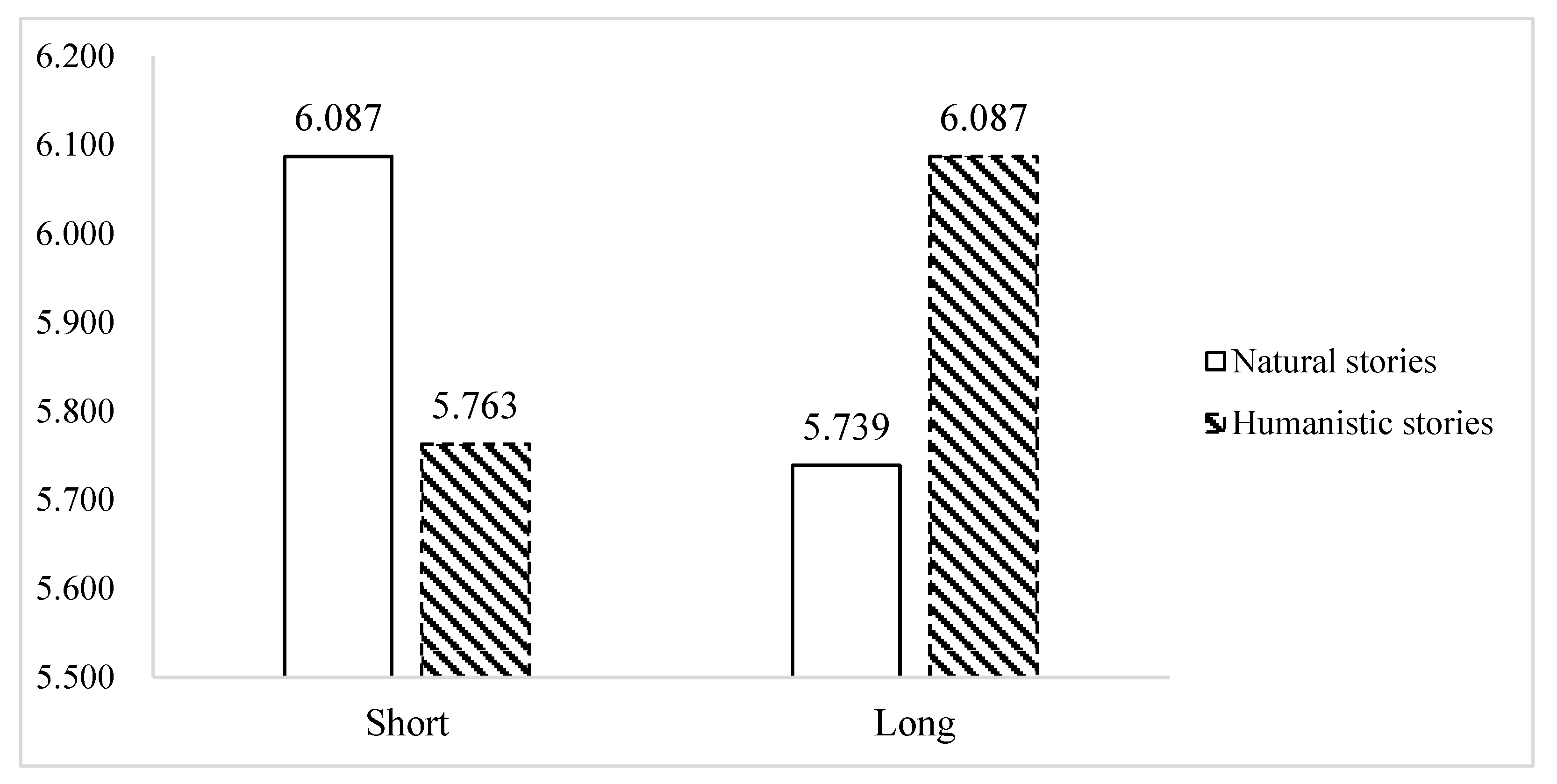
Figure 3.
Moderating role of brand history in the relationship between the effect of brand story projects and perceived functional value.
Figure 3.
Moderating role of brand history in the relationship between the effect of brand story projects and perceived functional value.
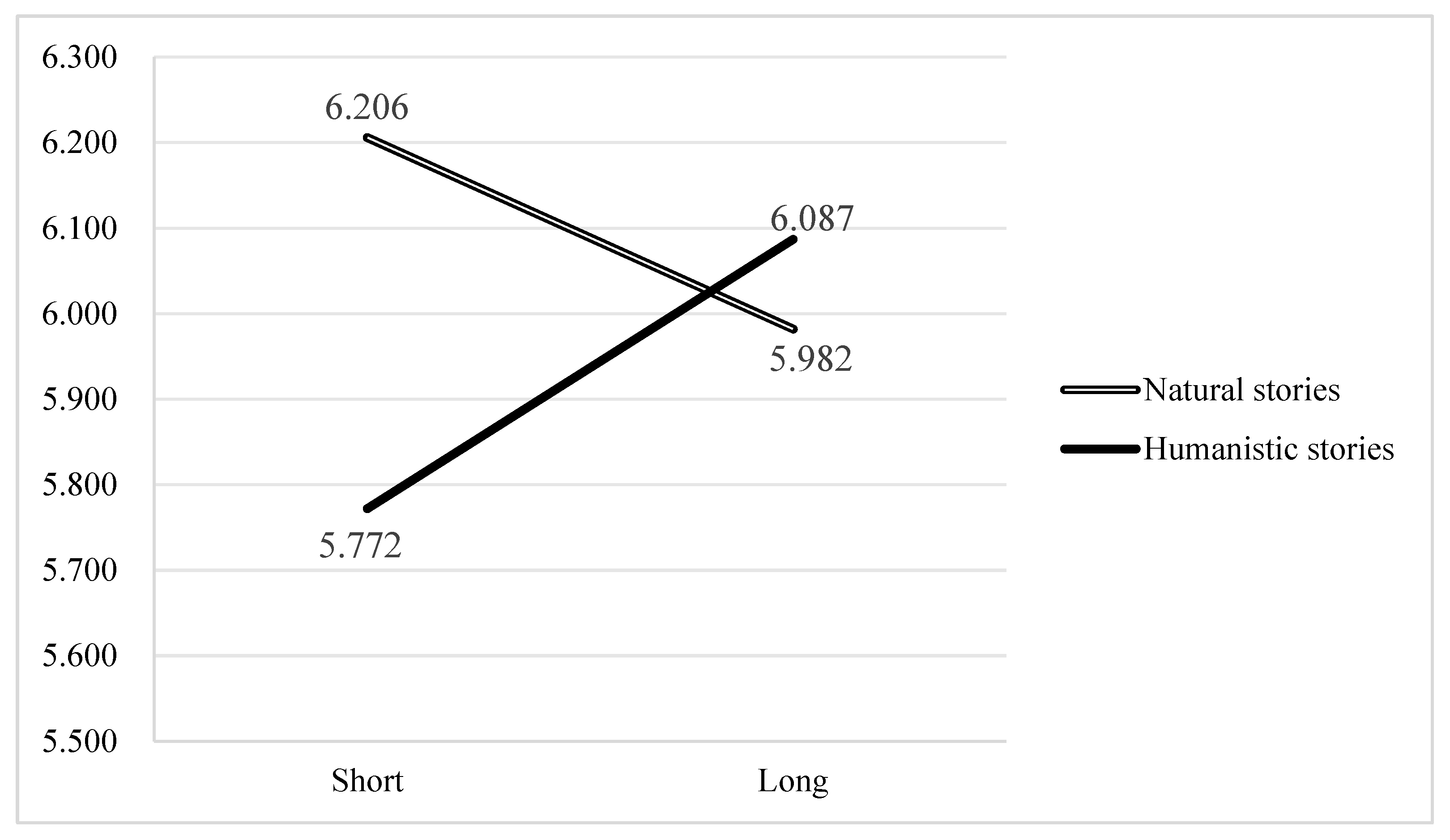
Figure 4.
Moderating role of brand history in the relationship between the effect of brand story projects and perceived emotional value.
Figure 4.
Moderating role of brand history in the relationship between the effect of brand story projects and perceived emotional value.
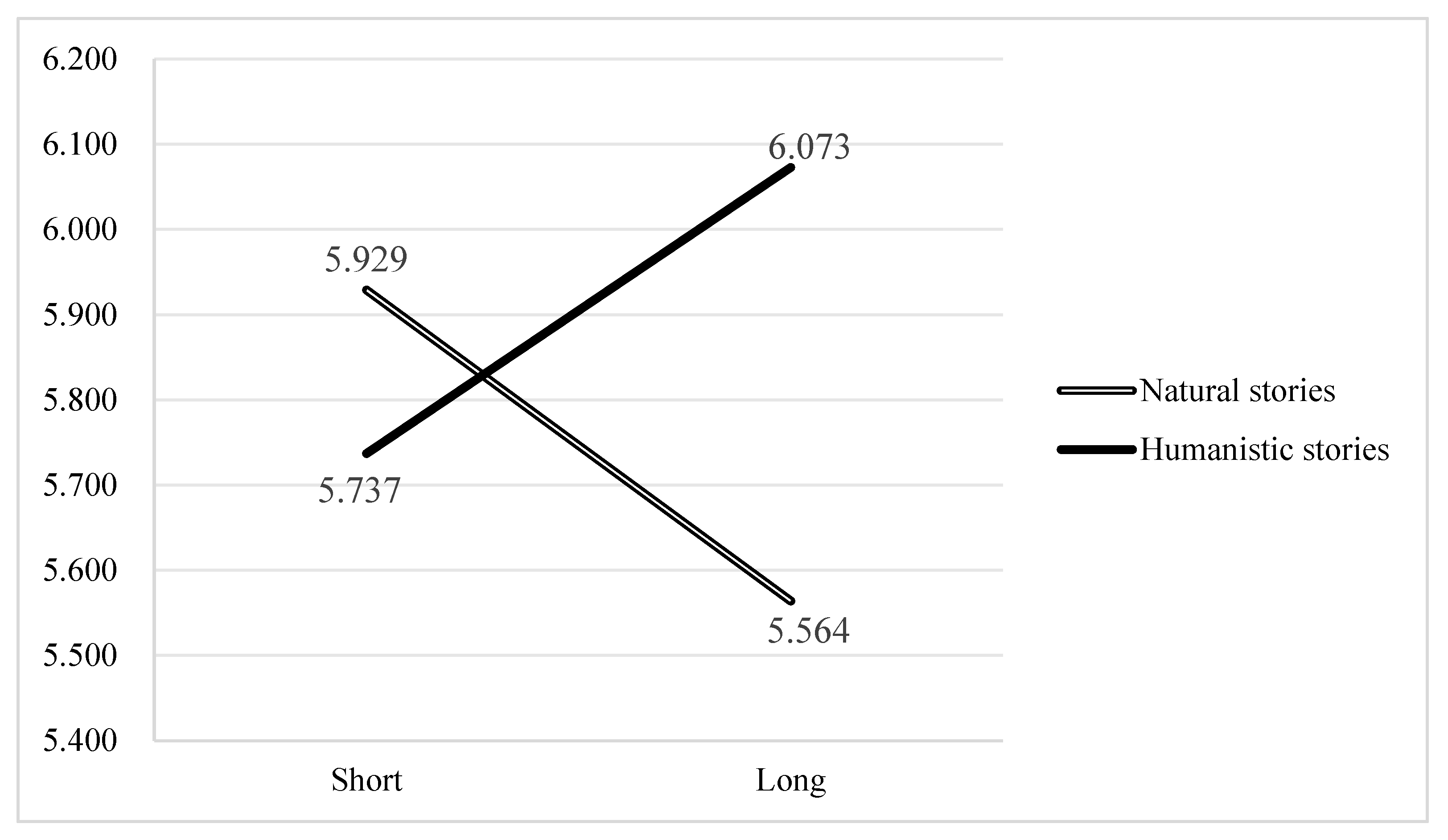
Figure 5.
Experiment 2 pre-study: interaction between brand story project and produce type on perceived fit.
Figure 5.
Experiment 2 pre-study: interaction between brand story project and produce type on perceived fit.
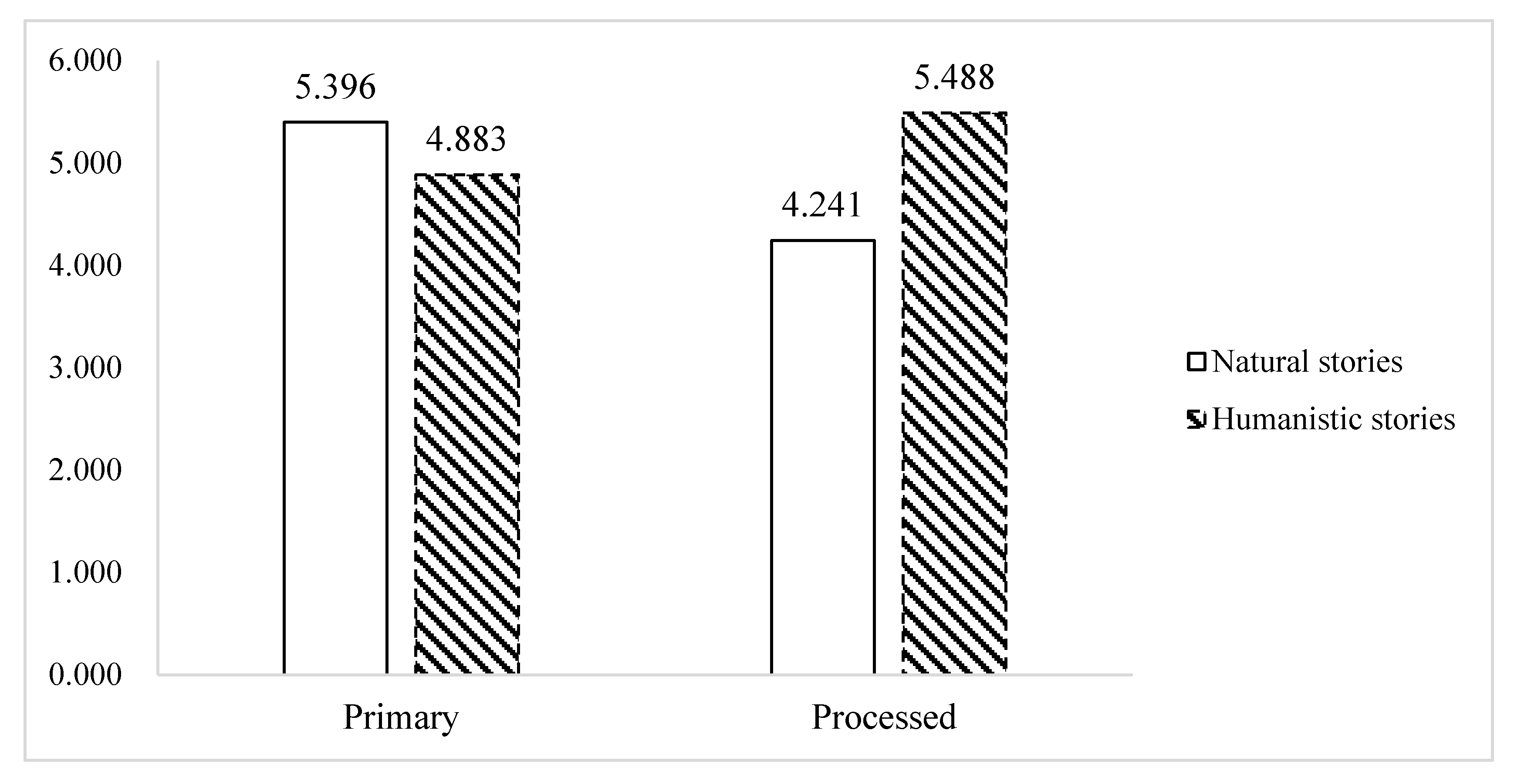
Figure 6.
Experiment 2: The interaction between brand story projects and agricultural products type on consumer brand attitudes.
Figure 6.
Experiment 2: The interaction between brand story projects and agricultural products type on consumer brand attitudes.
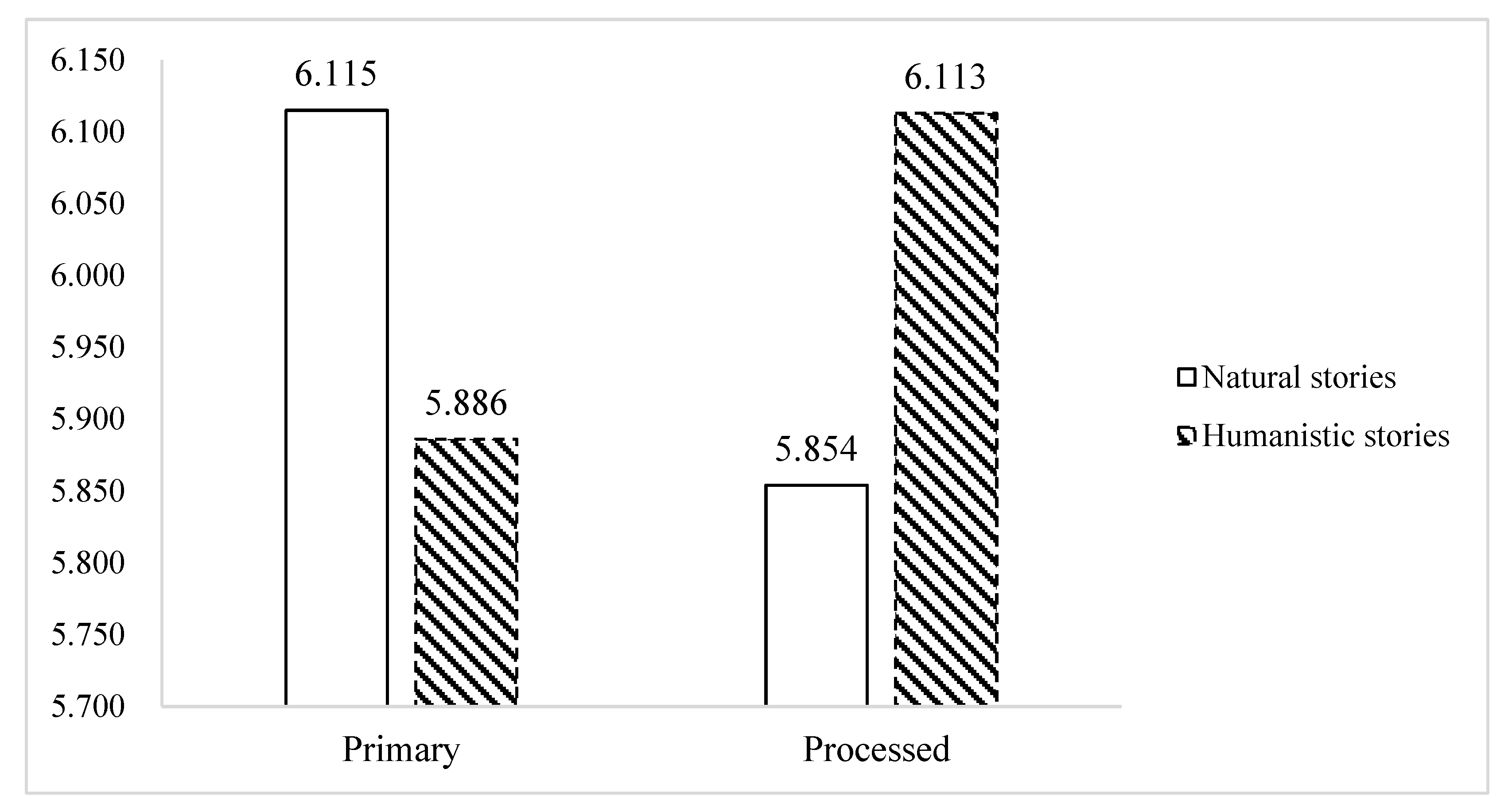
Figure 7.
Moderating role of agricultural products type in the relationship between the effect of brand story projects and perceived functional value.
Figure 7.
Moderating role of agricultural products type in the relationship between the effect of brand story projects and perceived functional value.

Figure 8.
Moderating role of agricultural products type in the relationship between the effect of brand story projects and perceived emotional value.
Figure 8.
Moderating role of agricultural products type in the relationship between the effect of brand story projects and perceived emotional value.
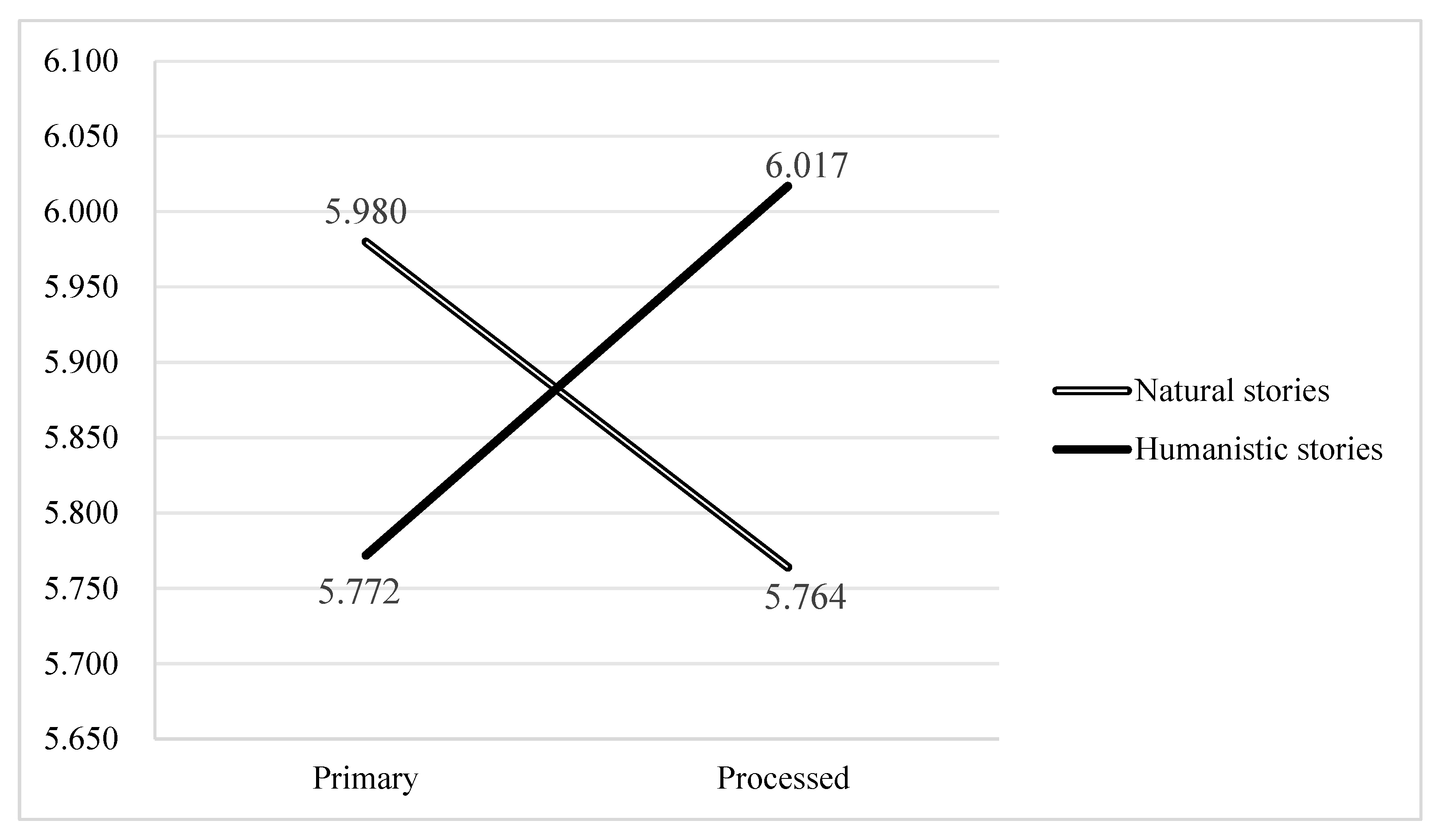

Table 1.
Conceptual Definitions of Ecological Agricultural Products.
| Scholar | definition |
|---|---|
| Li et al.(2020) | Products embodying labor value that satisfy ecological health demands and societal green development needs. |
| Zhang(2019) | Ecological products developed through resource-efficient modern technologies (e.g., clean production, circular systems), encompassing organic foods and green agricultural outputs. |
| Li(2017) | Agricultural commodities cultivated via pollution-free methods on uncontaminated land, including green foods, organic products, and certified pollution-free items in China's market. |
| Zhu(2010) | A tripartite classification system comprising pollution-free products, green foods, and organic foods. |
Table 2.
Experiment 1: Brand Story Themes for Ecological Tea.
| Product | Brand story project | Text description |
|---|---|---|
| Ecological tea (Cooked tea) | Natural story | Brand A is an ecological tea brand and has been certified as green food. The tea comes from the northwestern area of Yunnan-Guizhou Plateau with an average altitude of 1700 meters, with subtropical monsoon climate, abundant rainfall and sunshine, foggy mornings and evenings, frost-free period, which makes it suitable for the growth of tea trees. |
| Humanistic story | Brand A is an ecological tea brand and has been certified as green food. The brand adheres to the heritage of ancient technology, adhering to the principle of "fine tea refining, coarse tea fine making, fine extraction and net extraction", known as the "king of tea", and enjoys the reputation of "treasure in tea, three treasures in Yunnan". |
Table 3.
Experiment 1: Chi-square test of brand story project.
| Answer to the question | Natural story group | Humanities story group | total | |
|---|---|---|---|---|
| Brand story project | Natural story | 93 | 4 | 97 |
| Humanities story | 0 | 88 | 88 | |
| total | 93 | 92 | 185 | |
| value | degree of freedom | p | ||
| Pearson Card-square | 169.659 | 1 | 0.000 |
Table 4.
Experiment 1: Chi-square test of brand history.
| Answer to the question | Historical short group | Historical long group | total | |
|---|---|---|---|---|
| Brand history | Short Brand history | 77 | 3 | 80 |
| Long Brand history | 13 | 92 | 105 | |
| total | 90 | 95 | 185 | |
| value | freedom | p | ||
| Pearson Card-square | 127.846 | 1 | 0.000 |
Table 5.
Experiment1: Analysis of variance results of brand story projects on perceived value and brand attitudes.
Table 5.
Experiment1: Analysis of variance results of brand story projects on perceived value and brand attitudes.
| group | source | dependent variable | Class III sum of squares | freedom | mean square | F | p |
|---|---|---|---|---|---|---|---|
| Brand history * Brand story project | Perceived functional value | 3.293 | 1 | 3.293 | 10.590 | 0.001 | |
| Interactive items | Perceive emotional value | 5.571 | 1 | 5.571 | 12.106 | 0.001 | |
| Brand attitude | 5.105 | 1 | 5.105 | 10.759 | 0.001 | ||
| Historical short group | Brand story project | Perceived functional value | 3.765 | 1 | 3.765 | 15.356 | 0.000 |
| Perceive emotional value | 0.773 | 1 | 0.773 | 2.000 | 0.161 | ||
| Brand attitude | 2.096 | 1 | 2.096 | 6.630 | 0.012 | ||
| Historical long group | Brand story project | Perceived functional value | 0.288 | 1 | 0.288 | 0.798 | 0.374 |
| Perceive emotional value | 6.804 | 1 | 6.804 | 12.811 | 0.001 | ||
| Brand attitude | 3.159 | 1 | 3.159 | 5.314 | 0.023 |
Table 6.
Analysis of the mediating effect of perceived value between the interaction effect of brand story project and brand history and brand attitude.
Table 6.
Analysis of the mediating effect of perceived value between the interaction effect of brand story project and brand history and brand attitude.
| Indirect effects of X on Y (the influence of mediating variables) Perceived functional value | ||||
|---|---|---|---|---|
| Index | Boot SE | Boot LLCI | Boot ULCI | |
| moderating effect(Total) | 0.2650 | 0.0959 | 0.1017 | 0.4735 |
| Historical short group | -0.2135 | 0.0667 | -0.3566 | -0.0981 |
| Historical long group | 0.0515 | 0.0601 | -0.0597 | 0.1775 |
| Perceive emotional value | ||||
| moderating effect(Total) | 0.2764 | 0.1046 | 0.1032 | 0.5014 |
| Historical short group | -0.0756 | 0.0563 | -0.2005 | 0.0253 |
| Historical long group | 0.2009 | 0.0752 | 0.0747 | 0.3619 |
Table 7.
Experiment 2: Textual description of brand story projects.
| product | Brand Story project | Text description |
|---|---|---|
| Ecological barley wine | Natural Stories | Brand A is an ecological barley wine brand, which has been certified as an organic product. Its raw material barley from the altitude of 3000 meters above sea level in the Qinghai-Tibet alpine region, low temperature, low humidity, low cloud cover, and abundant sunshine are conducive to the brewing of barley wine. |
| Humanistic stories | Brand A is an ecological barley wine brand ,which has been certified as an organic product. The brand adheres to the UNESCO-listed "Four-Step Fermentation" traditional craft, renowned as the "Origin of Chinese Barley Wine" and "Pearl of the Plateau." Brand A preserves the UNESCO-listed "Four-Step Fermentation" traditional craft, renowned as the "Origin of Chinese Barley Wine" and "Pearl of the Plateau." |
|
| Ecological Apple | Natural Stories | Brand A is an ecological apple brand , which has been certified as an organic product. The apple comes from the northern area of the Yunnan-Guizhou Plateau, which is about 2600 meters above sea level, mainly in the temperate climate, sufficient light, strong ultraviolet rays, and great temperature difference between day and night, which is conducive to the accumulation of sugar. |
| Humanistic stories | Brand A is an ecological apple brand , which has been certified as an organic product. The brand adopts the international leading dwarfing and dense planting of autogenous rootstock and drip irrigation technology of water and fertilizer integration. Celebrated as the "Apple Capital" and enjoyed the reputation of "A taste of autumn's blush, sweet as first love.". |
Table 8.
Experiment 2: Chi-square test of brand story project.
| Answer to the question | Natural story group | Humanities story group | total | |
|---|---|---|---|---|
| Brand story project | Natural story | 111 | 27 | 138 |
| Humanities story | 0 | 91 | 91 | |
| total | 111 | 118 | 229 | |
| value | degree of freedom | p | ||
| Pearson Card-square | 142.049 | 1 | 0.000 |
Table 9.
Experiment 2: Chi-square test of agricultural products type.
| Answer to the question | primary agricultural products group | processed agricultural products group | total | |
|---|---|---|---|---|
| agricultural products type | primary agricultural products | 106 | 25 | 131 |
| processed agricultural products | 20 | 78 | 98 | |
| total | 126 | 103 | 229 | |
| value | freedom | p | ||
| Pearson Card-square | 92.448 | 1 | 0.000 |
Table 10.
Experiment 2: Analysis of variance results of brand story projects on perceived value and brand attitudes.
Table 10.
Experiment 2: Analysis of variance results of brand story projects on perceived value and brand attitudes.
| group | source | dependent variable | Class III sum of squares | freedom | mean square | F | p |
|---|---|---|---|---|---|---|---|
| Agricultural products type * Brand story project | Perceived functional value | 2.718 | 1 | 2.718 | 10.110 | 0.002 | |
| Interactive items | Perceive emotional value | 2.773 | 1 | 2.773 | 8.069 | 0.005 | |
| Brand attitude | 3.117 | 1 | 3.117 | 10.238 | 0.002 | ||
| Primary agricultural products group | Brand story project | Perceived functional value | 2.283 | 1 | 2.283 | 9.690 | 0.002 |
| Perceive emotional value | 1.210 | 1 | 1.210 | 3.532 | 0.062 | ||
| Brand attitude | 1.472 | 1 | 1.472 | 6.487 | 0.012 | ||
| Processed agricultural products group | Brand story project | Perceived functional value | 0.715 | 1 | 0.715 | 2.279 | 0.134 |
| Perceive emotional value | 1.565 | 1 | 1.565 | 4.536 | 0.036 | ||
| Brand attitude | 1.645 | 1 | 1.645 | 4.026 | 0.048 |
Table 11.
Analysis of the mediating effect of perceived value between the interaction effect of brand story project and agricultural product type and brand attitude.
Table 11.
Analysis of the mediating effect of perceived value between the interaction effect of brand story project and agricultural product type and brand attitude.
| Indirect effects of X on Y (the influence of mediating variables) Perceived functional value | ||||
|---|---|---|---|---|
| Index | Boot SE | Boot LLCI | Boot ULCI | |
| moderating effect(Total) | 0.1838 | 0.0805 | 0.0535 | 0.3725 |
| Primary agricultural products group | -0.1149 | 0.0471 | -0.2174 | -0.0352 |
| Processed agricultural products group | -0.0689 | 0.0526 | -0.0153 | 0.1935 |
| Perceive emotional value | ||||
| moderating effect(Total) | 0.1194 | 0.0632 | 0.0224 | 0.2716 |
| Primary agricultural products group | -0.0538 | 0.0379 | -0.1412 | 0.0065 |
| Processed agricultural products group | 0.0656 | 0.0402 | 0.0053 | 0.1585 |
Disclaimer/Publisher’s Note: The statements, opinions and data contained in all publications are solely those of the individual author(s) and contributor(s) and not of MDPI and/or the editor(s). MDPI and/or the editor(s) disclaim responsibility for any injury to people or property resulting from any ideas, methods, instructions or products referred to in the content. |
© 2025 by the authors. Licensee MDPI, Basel, Switzerland. This article is an open access article distributed under the terms and conditions of the Creative Commons Attribution (CC BY) license (http://creativecommons.org/licenses/by/4.0/).
Copyright: This open access article is published under a Creative Commons CC BY 4.0 license, which permit the free download, distribution, and reuse, provided that the author and preprint are cited in any reuse.


