
Submitted:
04 April 2025
Posted:
09 April 2025
You are already at the latest version
Abstract
Medical students face cognitive overload and disengagement due to the rigorous de-mands of their education. This study evaluates the impact of Medimon Learning Cards, a mnemonic-based trading card game, on engagement, satisfaction, and knowledge retention in a medical immunology course. These cards incorporate visual and linguistic mnemonics, coupled with strategic gameplay, to create an interactive learning experience. The study was conducted with 39 first-year medical students enrolled in an immunology course, divided into experimental and control groups. The experimental group received the Medimon Learning Cards and participated in a structured play session, while both groups received identical in-class instruction. Results from the Situational Interest Survey for Multimedia revealed high engagement and satisfaction among the experimental group, with students expressing enthusiasm for expanding the cards to other topics. However, no significant differences were observed in knowledge retention or exam performance between the groups. These findings suggest that Medimon Learning Cards serve as a valuable supplementary tool to enhance motivation and interest, though their impact on cognitive outcomes requires further investigation. This study highlights the importance of integrating game-based tools like Medimon Learning Cards into medical education to create engaging and interactive learning environments.
Keywords:
Game-Based Learning
; Immunology
; Medical Education
; Trading Card Game
; Engagement
1. Introduction
Medical and health sciences students face significant challenges in their educational journeys, including cognitive overload, mental health issues, and burnout (Bhugra et al., 2024). These challenges are exacerbated by the demanding academic and clinical requirements inherent in medical education (Densen, 2011; Klatt et al., 2011). To address these challenges, innovative teaching methods are essential to enhance engagement and support knowledge retention (Ho et al., 2021). Some such innovative approaches involves the use of games-based learning (GBL) (Xu et al., 2023) and mnemonic-based tools (Mostafa et al., 2017) designed to align with the principles of the Cognitive Theory of Multimedia Learning (CTML), which emphasizes the synergistic combination of words and images (Mayer, 2012).
Game-based learning has emerged as a promising approach in medical education, leveraging the principles of gamification to enhance motivation, engagement, and active learning (Abou Hashish et al., 2024; Khorammakan et al., 2023; Xu et al., 2023). By incorporating game elements such as challenges, rewards, and narrative structures, educational games provide an interactive and immersive experience that fosters deeper understanding and retention of complex concepts (Graafland et al., 2012). Studies have demonstrated that GBL not only improves knowledge acquisition but also develops critical thinking and decision-making skills, essential for clinical practice (R. Wang et al., 2016). This approach is particularly well-suited for medical education, where students must master vast amounts of information while maintaining high levels of engagement and resilience (Gutierrez et al., n.d.; Samarasekera et al., 2018).
Mnemonic-based education is a powerful approach for enhancing learning and retention of complex information, particularly in the context of STEM education (Lubin et al., 2016). Mnemonics are memory aids that facilitate encoding, storage, and retrieval of information by associating new material with previously learned knowledge or mental imagery (Bellezza, 1981). Visual mnemonics, in particular, leverage the brain’s exceptional capacity for processing and retaining visual information (Chang et al., 2022). One of the key advantages of visual mnemonics is the dual coding theory, which posits that information can be encoded and stored in two distinct systems: verbal and non-verbal (Clark et al., 1991). This dual representation enhances the chances of recalling information since it can be retrieved through either system. Empirical evidence supports the effectiveness of visual mnemonics in improving learning outcomes (Scruggs et al., 1990). Mnemonics have long been used in medical education to simplify complex biomedical concepts (O’Hanlon et al., 2019). They act as cognitive aids, enabling students to recall detailed information by linking it to memorable cues (Radović et al., 2019). However, traditional mnemonic techniques often lack the interactivity and engagement required to sustain student interest over time (Putnam, 2015). To address this, we developed Medimon, a game similar to the Pokemon franchise, that utilizes GBL and mnemonic-based characters representing cells, organ systems, and disease (Bland & Guo, 2024). These characters are designed with visual mnemonics to represent and simplify complex biomedical ideas, making them more accessible and memorable for learners. Building on this concept, we applied Medimon’s principles to a prototype trading card game (TCG), incorporating mechanics that encourage active learning, strategic thinking, and social interaction. This approach aims to enhance interactivity and engagement, creating an immersive learning experience while maintaining educational rigor.
Analog games, such as the Medimon Learning Cards, offer distinct advantages in our increasingly digital world. They provide tactile and interpersonal interaction, fostering collaboration and critical thinking in a way that digital tools sometimes lack (Altschul et al., 2020; Kuo et al., 2018). Analog games can be more accessible in resource-limited environments where digital devices or stable internet connections may not be available (Vita-Barrull et al., 2023a). They encourage face-to-face social interaction, which can strengthen communication skills and teamwork among players. These qualities make analog games particularly valuable as educational tools that blend cognitive engagement with social learning, offering a counterbalance to the isolation sometimes associated with digital learning methods (von Steinkeller et al., 2022a).
The primary goal of this research was to evaluate the effectiveness of these Medimon Learning Cards in improving student engagement, satisfaction, and knowledge retention within the context of immune system education. We hypothesized that the Medimon Learning Cards would enhance student engagement and satisfaction and improve long-term knowledge retention compared to traditional instructional methods alone.
2. Materials and Methods
2.1. Participants
The participants included first-year medical students enrolled at the University of Idaho WWAMI Medical Education Program. All students received the same lecture content and exam questions. The class was split into two groups: the experimental group (n=20) received the Medimon Learning Cards as a supplemental learning aid, while the control group (n=19) did not receive these cards. Both groups received identical in-class instruction and examinations throughout the course.
2.2. Intervention
All students were enrolled in a 6-week infections and immunology (I&I) course during which they received instruction related to immune systems cell types and functions. At the beginning of the course, the experimental group received 51 Medimon Learning Cards (Figure 1B, Figure S1). These included cards of the following Medimon:
- Killer Family: Natural Killer Cell, Killer T-Cell, and CAR T-Cell
- Macrophage Family: Monocyte, Dendritic Cell, and Macrophage
- B-Cell Family: B-Cell, Plasma Cell, and Memory B-Cell
- Helper T Family: Helper T-Follicular, Helper T2, and Helper T1
- Granulocyte Family: Mast Cell, Basophil, Eosinophil, and Neutrophil
- Antibodies: IgM, IgA, IgE, IgG
The experimental group participants had three weeks to interact with the cards and encouraged to incorporate them into their study routines. During this time, they were tasked with building their playing deck utilizing 35 of the 50 Medimon cards plus an additional 25 ATP energy cards. The control group did not receive the Medimon Learning Cards but had access to all other standard course materials, including the same lectures, study guides, and assessments as the experimental group. The Medimon and their mnemonics were presented in course lectures during the first three weeks of the course which were presented to both groups (Figure 1A). This ensured that any observed differences in outcomes could be attributed to the intervention rather than discrepancies in instruction or resources.
2.3. Design
The Medimon Learning Cards were designed with elements from the original video game, but featured new artwork tailored to the card format. This redesign aimed to enhance student interest and engagement by creating visually distinct and educationally rich materials, while preserving the mnemonic elements of the original game. Each card included specific features designed to align with the pedagogical objectives and the themes of the immune system. This included a cohesive visual and structural framework that integrated specific icons and linguistic mnemonics that highlight the function of the immune-related entity the Medimon represents (Figure 1).
The top of each card displayed the name of the Medimon, which corresponded to the real-world immune system component it represented. For example, the Eosinophil card featured the name prominently at the top of the card. The major type of each Medimon was indicated by a prominent immune symbol—a shield—to represent the protective nature of the immune system. This prototype focused exclusively on immune-type Medimon. Additionally, the shield featured a split design with two colors to indicate the two branches of the immune system: adaptive and innate. Each card’s minor type—whether healthy or diseased—was also identified near the top. All cards in this set represented healthy Medimon and which included the following families: Granulocyte, B-cell, Killer, Helper T, and Macrophage (Figure S1).
Each Medimon card included a short, thematic quote related to its immune function. For example, the Eosinophil Medimon’s quote, "Parasites, meet your match," reflects its role in combating parasitic infections. These quotes added a layer of personality to the cards, making the content more engaging and memorable for learners.
Each card listed one or two moves that the Medimon could perform in the game. These moves served as both gameplay mechanics and mnemonics for real-world biological functions. For example, Eosinophil’s moves included "Worm Wrestler" (representing its parasitic defense role) and "IgE Activation" (highlighting the ability of IgE to activate eosinophils).
The cards included multiple symbols to represent key gameplay mechanics. Each card featured a set of three bars indicating the stage of the Medimon: baby (one bar filled), adolescent (two bars filled), or adult (three bars filled). These stages corresponded to the developmental progression of each Medimon family. The attack strength of each move was represented by a sword icon containing a numeric value, while a pillow icon with a number indicated the number of turns the Medimon must rest before performing another move, akin to the tapping mechanism in Magic: The Gathering. Additionally, the cards displayed the artist’s name, card number, and rarity. Rarity levels were represented as H (Horses) for common, SH (Striped Horses) for uncommon, and Z (Zebras) for rare. These levels were inspired by Dr. Theodore Woodward’s adage: "When you hear hoofbeats, think horses, not zebras," which advises clinicians to consider common conditions before rare ones. The inclusion of Striped Horses added nuance, symbolizing common diseases that present in atypical ways.
This design approach ensured that the cards were not only visually engaging but also pedagogically effective.
2.4. Game Mechanics
The mechanics of the game were inspired by the trading card game Magic: The Gathering, providing a familiar yet tailored framework for strategic play and resource management (Methods S1). The mechanics of the game were based on a structured framework to ensure clarity, balance, and replayability. Players engaged in multiplayer play, with the objective of reducing opponents’ life counts to zero, starting with a baseline of 20 life points.
Each turn consisted of three phases: the Draw Phase, Play Phase, and Attack Phase. In the Draw Phase, players drew a card from their deck and refreshed their ATP cards (energy resources) by returning them to an upright position. During the Play Phase, players could play one ATP card and as many Medimon cards as their available ATP resources allowed. The ATP costs varied by the stage of the Medimon, with Stage 1 cards requiring one ATP, Stage 2 requiring two, and Stage 3 requiring three. Played Medimon could not attack on the same turn unless specified otherwise.
The Attack Phase allowed players to select their in-play Medimon to attack a single opponent. Players declared their attackers, announced the attacks being used, and paid the attack ATP costs for all attacks. Attacks inflicted damage on opposing Medimon or directly on the opponent if no Medimon were used to defend. Damage was tracked using counters and persisted across turns unless healed. If a Medimon’s damage equaled or exceeded its health points, it was discarded.
The game incorporated elements of resource management and strategic decision-making. ATP cards, essential for performing actions, were drawn and played carefully, as only one could be placed per turn. Players could also choose to retaliate during an opponent’s attack by using defending Medimon to absorb damage and counterattack, provided they had sufficient ATP resources to pay for the retaliation costs. Retaliation added depth to the gameplay by introducing a risk-reward dynamic, as players balanced protecting their life points with preserving their in-play Medimon.
The "Sleep" status, which temporarily rendered a Medimon inactive after performing specific attacks, was akin to the tapping mechanic in Magic: The Gathering. This mechanism was also utilized for in-play ATP cards during use. This required players to plan their strategies around managing Sleep statuses and optimizing their Medimon’s contributions to the game.
The inclusion of multiple symbols on the cards provided players with essential gameplay information at a glance. Symbols indicated attack strength, ATP costs, health points, and sleep durations, while the visual design and thematic quotes reinforced the educational objectives. These mechanics, paired with the mnemonics embedded in the Medimon Learning Cards, created a balanced blend of education and entertainment, appealing to both medical students and gaming enthusiasts.
2.5. Play Session
At the conclusion of the first three weeks of the course, the experimental group participated in a one-hour play session using the Medimon Learning Cards (Figure 2). This session provided an opportunity for hands-on engagement with the material. At the beginning of the course, students received the cards and were introduced to the game rules and mechanics (Methods S1). The authors V.S. (second-year medical student) and T.B. moderated this session.
2.6. Achievement Measurement
To assess knowledge and retention, we conducted a series of tests (Methods S2):
- Pre-test: At the beginning of the course, both groups took a multiple choice question (MCQ) pre-test to establish baseline knowledge.
- Post-test: After three weeks of instruction, both groups were given the same MCQ test as a post-test to measure knowledge retention.
- Post-post-test: Eight weeks after the initial post-test, the same MCQ test was administered again to measure long-term knowledge retention.
The tests were developed using a custom GPT USMLE Step 1 Question Generator and Refiner (ChatGPT - USMLE Step1 Question Generator and Refiner, n.d.) to create questions based on important characteristics or functions of the Medimon cards (Figure 3). This custom GPT utilizes GPT 4o and was developed and refined utilizing the NBME Item Writing Guidelines (NBME Item-Writing Guide | NBME, n.d.) along with a set of Step 1 Sample Test Questions (Step 1 Sample Test Questions | USMLE, n.d.). These questions were then refined by a professional immunologist. Upon completion of the post-post test, participants received a $20 gift card as a thank you for their time and effort.
2.7. Data Collection
After the first three weeks of the course, at the same time as the post-test, students in the experimental group were invited to participate in a survey. All 20 students from the experimental group completed the Situational Interest Survey of Multimedia (SIS-M) which is designed to assess different aspects of situational interest in multimedia learning environments (Dousay, 2016; Dousay et al., 2019). This includes the measurement of triggered situational interest (initial engagement with multimedia), maintained interest, and value interest (perceived usefulness of the content). The SIS-M has recently been applied to medical education research (Bland, 2025; Bland, Guo, et al., 2024), making it a suitable tool for evaluating learner engagement in this study.
The survey included questions that asked students to consent to participate and respond to the 12-item SIS-M about the Medimon Learning Cards (Table S1). The survey includes items to rank on a Likert scale from 1-5 (1=strongly disagree, 5=strongly agree), a question asking “Would you prefer more of your medical education be supported by Medimon Learning Cards?”, and an open-ended question asking, “Why do you think this is your preference.”
Student exam grades were recorded to measure baseline knowledge between the groups.
2.8. Play Session
Researchers utilized Microsoft Excel and GraphPad Prism to analyze the students’ grades and SIS-M survey results. Achievement data were reported as the average score for each group. The SIS-M survey analysis considered multiple dimensions of situational interest: triggered interest (Trig), maintained interest (MT), maintained-feeling (MF), and maintained-value (MV).
For the open-ended question in the SIS-M survey, thematic analysis was conducted using the “reasoning” LLM models ChatGPT o1 and Google Gemini 2.0 Flash Thinking Experimental (Figure 4). This involved generating initial codes and identifying themes (Bland, 2025; Bland, Guo, et al., 2024; Worthley et al., 2025). Prompt engineering techniques used included Persona Prompting (J. Wang et al., 2023; White et al., 2023), Self-Criticism (Huang et al., 2022), and LLM-as-a-Judge (Gu et al., 2024). The workflow involved submitting the responses to each LLM individually. We then had both LLMs act as a “judge” of the others output and ask it to output a new thematic analysis based on its original and its review of the other LLM’s analysis. This was followed by the researcher combining and refining these themes for overlap and relevancy. The workflow and prompts are presented in Figure 4.
2.9. Ethical Considerations
This educational research was approved as exempt by the institutional review board of the University of Idaho (24-151). To ensure the confidentiality of participants, the SIS-M survey was conducted anonymously. No identifying information was collected, allowing students to provide candid feedback without concerns about personal attribution. This approach ensured the integrity of the data while protecting the privacy of all participants. Students whose faces are visible in Figure 2 gave consent to use their photo in this study.
3. Results
3.1. Achievement
Baseline knowledge was assessed by measuring the average exam scores across the entire course, and the results indicated no statistically significant difference between the experimental group and the control group (Figure 5A). This finding confirmed that both groups had similar baseline knowledge levels of immunology and infections throughout the study. To evaluate the impact of the Medimon Learning Cards, knowledge retention was analyzed through a series of tests (Figure 5B,C). A pre-test measured baseline knowledge of the study-specific material, revealing no statistical difference between the experimental and control groups (Control: 34% ± 11%; Experimental: 42% ± 17%). After three weeks, a post-test was conducted, with results showing an increase in scores in both groups but with no significant difference between the two groups (Control: 84% ± 10%; Experimental: 87% ± 7%). Six weeks later, the same test was administered in a post-post-test, and the findings consistently indicated no statistical difference (Control: 84% ± 12%; Experimental: 84% ± 9%). Collectively, these results suggest that the Medimon Learning Cards were noninferior to traditional learning methods in terms of knowledge retention.
3.2. Engagement
The Situational Interest Survey for Multimedia (SIS-M) was used to evaluate student engagement and satisfaction with the Medimon Learning Cards among participants in the experimental group (n=20). The survey assessed four key metrics: triggered situational interest, maintained situational interest, maintained situational feeling, and maintained situational value. Each metric was rated on a Likert scale ranging from 1 (strongly disagree) to 5 (strongly agree), with higher scores indicating greater levels of engagement or satisfaction.
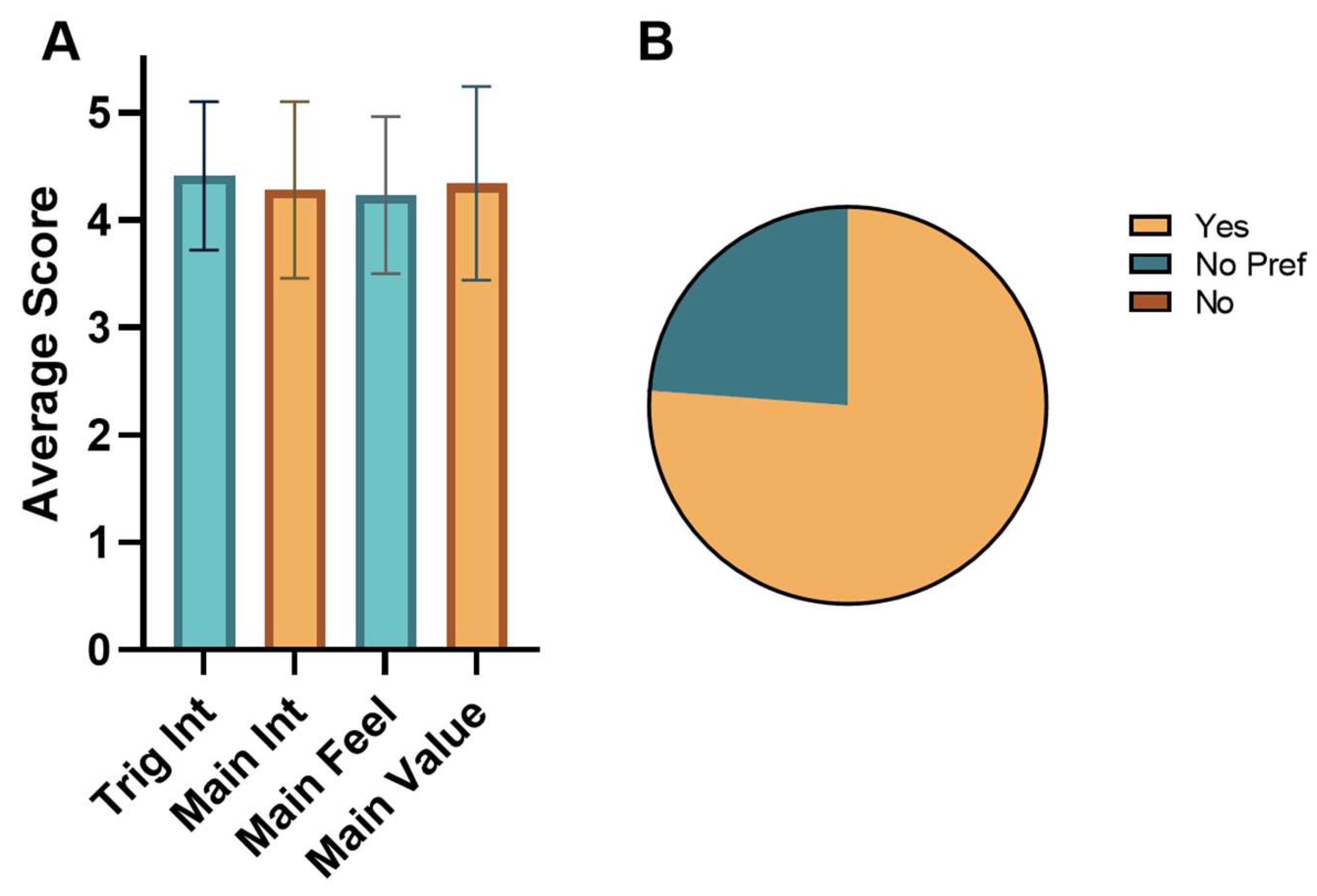
The results of the SIS-M survey demonstrated high levels of engagement across all measured metrics (Figure 6A). The average score for triggered situational interest was 4.41 ± 0.69, suggesting that the Medimon Learning Cards effectively captured the students’ initial interest. Maintained situational interest, which evaluates the sustained engagement over time, scored an average of 4.28 ± 0.82. Similarly, maintained situational feeling, reflecting the emotional connection to the content, yielded an average score of 4.23 ± 0.73. Finally, maintained situational value, which assesses the perceived usefulness and relevance of the Medimon Learning Cards, achieved a mean score of 4.34 ± 0.90. These results indicate that the Medimon Learning Cards were well-received by students, fostering both initial and sustained engagement while being perceived as valuable and emotionally resonant educational tools.
The majority of students in the experimental group expressed a strong preference for the Medimon Learning Cards and indicated enthusiasm for their expansion into other areas of the curriculum. Specifically, 71% of students reported that they would like to see the cards applied to additional topics, 5% indicated no preference, and no students expressed opposition to expanding the use of the cards (Figure 6B).
The open-ended responses reflect a range of opinions on how the Medimon Learning Cards influenced their learning experiences, retention, and overall engagement. The following themes emerged that showed both the benefits and limitations of incorporating the Medimon Learning Cards into students’ study practices.
- Enhanced Memory Retention and Recall: Students found the cards effective in improving long-term memory by associating complex immunological concepts with memorable visuals and mnemonics. This visual approach aided in both encoding and retrieving information.
- Enjoyment, Engagement, and Fun Factor: Students frequently described the cards as enjoyable, entertaining, or "fun," which they felt increased their motivation and engagement with the learning material.
- Visualization and Conceptual Clarity: The visual aspects of the cards were praised for aiding in the clarification of complex immune pathways, cascades, and interactions. Students found it easier to understand abstract concepts when presented visually.
- Social and Collaborative Learning: The group "battle" format of the card game facilitated social interaction and peer learning, allowing students to review material collaboratively in an engaging way.
- Mismatch with Exam Complexity: Some students felt the level of detail and complexity on the cards did not fully align with the demands of exam material.
- Insufficient Instruction and Guidance: A need for clearer explanation and guidance on how to effectively use the cards was expressed.
- Potential Time Constraints/Study Habits: Some students felt the cards, while enjoyable, might not be the most efficient use of their study time or aligned with their preferred study methods.
Overall, the majority of participants who expressed a preference endorsed further integration of Medimon Learning Cards in their medical education. The central positives include improved retention, visual clarity, increased engagement, and social learning advantages. However, some participants remained neutral due to exam complexity mismatches, a lack of structured guidance on using the cards effectively, or personal study preferences.
4. Discussion
This study aimed to evaluate the impact of mnemonic-based Medimon Learning Cards on student engagement, satisfaction, and knowledge retention within a first-year medical immunology course. The findings provide important insights into the role of such tools in medical education. The high levels of engagement and satisfaction observed among students in the experimental group underscore the potential of Medimon Learning Cards to enhance the learning experience. This aligns with prior research showing that interactive and visually engaging tools such as serious games can significantly improve motivation and interest in educational contexts (Graafland et al., 2012; R. Wang et al., 2016). Additionally, many students expressed interest in expanding the Medimon Learning Cards to other topics, indicating their perceived value as a supplementary educational resource. However, the study found no significant differences in knowledge retention or exam performance between the experimental and control groups. This suggests that while Medimon Learning Cards may excel in fostering engagement, they may not directly enhance cognitive outcomes within the constraints of this study’s design. This aligns with previous literature suggesting that engagement alone may not always translate to measurable improvements in knowledge retention (Mayer, 2005).
The Medimon Learning Cards also have the potential to reach younger audiences, particularly adolescents, by leveraging their resemblance to popular trading card games such as Pokémon (Vasquez, 2003). This format could serve as a gateway to not only instill foundational medical knowledge in younger individuals but also inspire them to pursue careers in health sciences (Blotnicky et al., 2018). By engaging adolescents with visually appealing and interactive educational tools, the Medimon Learning Cards may help foster early interest in complex scientific topics, making them more accessible and less intimidating. Such early exposure could play a pivotal role in shaping future generations of healthcare professionals (Berk et al., 2014). Beyond immunology, the card-based format could be adapted to other areas such as pharmacology, anatomy, or pathology, creating a comprehensive suite of educational tools that appeal to both young learners and medical students.
The discussion of analog versus digital game-based learning (GBL) further broadens the potential application of these tools. Analog games, such as the Medimon Learning Cards, provide tactile and interpersonal interaction, which can foster collaboration and critical thinking in group settings (Noda et al., 2019; von Steinkeller et al., 2022b). They are often more accessible in resource-limited environments where digital tools may not be readily available (Vita-Barrull et al., 2023b). Conversely, digital GBL platforms offer dynamic and immersive experiences that can incorporate adaptive learning technologies, real-time feedback, and multimedia elements (Khan et al., 2017). By combining the strengths of both analog and digital formats, hybrid models could maximize the educational impact of Medimon-inspired tools. For instance, a digital platform could supplement the Medimon Learning Cards by providing additional content, interactive quizzes, or virtual gameplay, bridging the gap between traditional and modern educational strategies. This integration could further enhance engagement and make learning more adaptable to individual preferences.
Several factors may explain the absence of measurable differences in cognitive outcomes. One possible explanation is the effectiveness of the baseline curriculum. Both groups received the same high-quality in-class instruction, which may have been sufficient to achieve learning objectives, thereby minimizing the potential additive effects of the Medimon Learning Cards. Additionally, the relatively short duration of the intervention, limited to three weeks, may have been too brief to elicit measurable changes in knowledge retention, especially for long-term outcomes. The focused content scope, restricted to immune system concepts, could have also constrained the intervention’s impact, as broader or more diverse content might reveal different results. Furthermore, individual differences in study habits, learning styles, and prior knowledge may have diluted the group-level effects of the intervention. It could also be that the achievement test did not have a high enough difficulty or length, allowing students to remember the questions between sessions. This may have caused an “overexposure” effect where students in the experimental group potentially gained increased knowledge and retention, but the ease of the achievement tests did not allow them to fully express this enhanced understanding, just as signal is lost in an overexposed image.
4.1. Limitations
This study provides valuable insights into the application of mnemonic-based Medimon Learning Cards in medical education, but several limitations must be acknowledged. The small sample size of 39 students at a single WWAMI site limits the statistical power and generalizability of the findings. Additionally, the three-week intervention may have been too brief to capture the full cognitive benefits of the Medimon Learning Cards, and the achievement tests may not have been sufficiently challenging or comprehensive to reflect potential differences in knowledge retention. The focus on a single topic, immune system content, restricts the evaluation of the cards’ versatility across other areas of medical education, such as pharmacology or anatomy. While the study highlighted strong engagement and satisfaction metrics, deeper cognitive outcomes, such as critical thinking or problem-solving skills, were not directly assessed. Additionally, some students in the experimental group only engaged with the Medimon Learning Cards shortly before the play session rather than using them consistently for study throughout the intervention period. This sporadic use may have limited the potential benefits of the cards, as their effectiveness likely depends on sustained interaction and integration into regular study routines.
The analog format of the Medimon Learning Cards, while fostering interpersonal interaction and accessibility, lacks the adaptive feedback and multimedia capabilities of digital platforms. Student enthusiasm for the novelty of the cards may have influenced engagement scores, and the uniform in-class instruction provided to both groups may have minimized potential additive effects.
4.2. Future Directions
Future research will explore longer-duration interventions, as well as integration of Medimon Learning Cards with other active learning methodologies such as interviews or focus groups. By extending the scope of these tools and examining their impact across diverse medical topics and student populations, we can better understand their full potential. Additionally, multi-site studies with larger cohorts would provide more robust data and enhance the generalizability of findings.
5. Conclusions
This study demonstrated that Medimon Learning Cards significantly enhance student engagement and satisfaction, though their impact on knowledge retention requires further investigation. The findings highlighted the cards’ ability to significantly enhance student engagement and satisfaction, with many students expressing enthusiasm for expanding the cards to other topics. However, the lack of measurable differences in knowledge retention or exam performance suggests that the primary value of the Medimon Learning Cards lies in their ability to complement existing educational practices rather than replace them.
The results underscore the importance of designing interventions that balance engagement with cognitive outcomes. The integration of mnemonic-based tools, like Medimon Learning Cards, with traditional and active learning strategies holds promise for creating a holistic approach to medical education. Additionally, the adaptability of the cards to other medical topics and their potential appeal to younger audiences emphasize their versatility as a learning resource.
Future research should address the limitations of this study, including the short intervention duration and small sample size, to better understand the full impact of such tools. Studies that incorporate longer-term interventions, diverse content areas, and multi-site participation can provide deeper insights into the efficacy and scalability of the Medimon Learning Cards.
While Medimon Learning Cards did not directly enhance cognitive outcomes in this study, their ability to engage and inspire learners highlights their potential as a supplementary educational resource. By leveraging innovative tools like these, educators can foster a more interactive and enjoyable learning environment, ultimately contributing to the development of future healthcare professionals.
Supplementary Materials
The following supporting information can be downloaded at: Preprints.org, Figure S1: Learning cards used in the intervention; Methods S1: Rule book; Methods S2: Pre/posttest.
Author Contributions
Conceptualization, V.S. and T.B.; data curation, T.B.; formal analysis, T.B.; investigation, V.S. and T.B.; methodology, V.S. and T.B.; visualization, C.B., E.F. and T.B.; writing—original draft, V.S. and T.B.; writing—review and editing, T.B; funding acquisition, T.B. All authors have read and agreed to the published version of the manuscript.
Funding
This research was funded by the University of Idaho WWAMI Medical Education Program and the Institutional Development Award (IDeA) from the National Institute of General Medical Sciences of the National Institutes of Health under Grant #P20GM103408.
Institutional Review Board Statement
This study was approved as exempt by the institutional review board of the University of Idaho (24-151).
Informed Consent Statement
Informed consent was obtained from all subjects involved in the study
Data Availability Statement
The datasets presented in this article are not readily available because of the sensitive nature of students’ grades. Requests to access the datasets should be directed to Tyler Bland (tbland@uidaho.edu).
Conflicts of Interest
The authors declare no conflicts of interest.
Abbreviations
The following abbreviations are used in this manuscript:
| GBL | Game-Based Learning |
| STEM | Science, Technology, Engineering, Math |
| TCG | Trading Card Game |
| SIS-M | Situational Interest Survey of Multimedia |
| genAI | Generative Artificial Intelligence |
| Trig | Triggered interest |
| MT | Maintained interest |
| MF | Maintained feeling |
| MV | Maintained value |
| LLM | Large language model |
| MCQ | Multiple-choice question |
| LLM | Large Language Model |
References
- Abou Hashish, E. A., Al Najjar, H., Alharbi, M., Alotaibi, M., & Alqahtany, M. M. (2024). Faculty and students perspectives towards game-based learning in health sciences higher education. Heliyon, 10(12), e32898. [CrossRef]
- Altschul, D. M., & Deary, I. J. (2020). Playing Analog Games Is Associated With Reduced Declines in Cognitive Function: A 68-Year Longitudinal Cohort Study. The Journals of Gerontology: Series B, 75(3), 474–482. [CrossRef]
- Bellezza, F. S. (1981). Mnemonic Devices: Classification, Characteristics, and Criteria. Review of Educational Research, 51(2), 247–275. [CrossRef]
- Berk, L. J., Muret-Wagstaff, S. L., Goyal, R., Joyal, J. A., Gordon, J. A., Faux, R., & Oriol, N. E. (2014). Inspiring careers in STEM and healthcare fields through medical simulation embedded in high school science education. Advances in Physiology Education, 38(3), 210. [CrossRef]
- Bhugra, D., & Molodynski, A. (2024). Well-being and burnout in medical students: challenges and solutions. Irish Journal of Psychological Medicine, 41(2), 175–178. [CrossRef]
- Bland, T. (2025). Enhancing Medical Student Engagement Through Cinematic Clinical Narratives: Multimodal Generative AI–Based Mixed Methods Study. JMIR Med Educ 2025;11:E63865 Https://Mededu.Jmir.Org/2025/1/E63865, 11(1), e63865. [CrossRef]
- Bland, T., & Guo, M. (2024). Visual Mnemonics and Gamification: A New Approach to Teaching Muscle Physiology. Journal of Technology-Integrated Lessons and Teaching, 3(1), 73–82. [CrossRef]
- Bland, T., Guo, M., & Dousay, T. A. (2024). Multimedia design for learner interest and achievement: a visual guide to pharmacology. BMC Medical Education 2024 24:1, 24(1); 1–10. [CrossRef]
- Blotnicky, K. A., Franz-Odendaal, T., French, F., & Joy, P. (2018). A study of the correlation between STEM career knowledge, mathematics self-efficacy, career interests, and career activities on the likelihood of pursuing a STEM career among middle school students. International Journal of STEM Education, 5(1), 1–15.
- Chang, L. Y., Tang, Y. Y., Lee, C. Y., & Chen, H. C. (2022). The Effect of Visual Mnemonics and the Presentation of Character Pairs on Learning Visually Similar Characters for Chinese-As-Second-Language Learners. Frontiers in Psychology, 13, 2031.
- ChatGPT - USMLE Step1 Question Generator and Refiner. (n.d.). https://chatgpt.com/g/g- 7kZBti7XN-usmle-step1-question-generator-and-refiner.
- Clark, J. M., & Paivio, A. (1991). Dual coding theory and education. Educational Psychology Review, 3(3), 149–210. 3, 3, 149–210. [CrossRef]
- Densen, P. (2011). Challenges and Opportunities Facing Medical Education. Transactions of the American Clinical and Climatological Association, 122, 48.
- Dousay, T. A. (2016). Effects of redundancy and modality on the situational interest of adult learners in multimedia learning. Educational Technology Research and Development, 64(6), 1251–1271. 1251.
- Dousay, T. A., & Trujillo, N. P. (2019). An examination of gender and situational interest in multimedia learning environments. British Journal of Educational Technology, 50(2), 876–887. [CrossRef]
- Graafland, M., Schraagen, J. M., & Schijven, M. P. (2012). Systematic review of serious games for medical education and surgical skills training. British Journal of Surgery, 99(10), 1322–1330. [CrossRef]
- Gu, J., Jiang, X., Shi, Z., Tan, H., Zhai, X., Xu, C., Li, W., Shen, Y., Ma, S., Liu, H., Wang, Y., & Guo, J. (2024). A Survey on LLM-as-a-Judge. 1. https://arxiv.org/abs/2411.15594v3.
- Gutierrez, C., Cox, S., medicine, J. D.-T., & 2016, undefined. (n.d.). The Revolution in Medical Education. Europepmc.OrgCM Gutierrez, SM Cox, JL DalrympleTexas Medicine, 2016•europepmc.Org. https://europepmc.org/article/med/26859376.
- Ho, P. A., Girgis, C., Rustad, J., Noordsy, D., & Stern, T. (2021). Advancing Medical Education Through Innovations in Teaching During the COVID-19 Pandemic. The Primary Care Companion for CNS Disorders, 23(1), 25972. [CrossRef]
- Huang, J., Gu, S. S., Hou, L., Wu, Y., Wang, X., Yu, H., & Han, J. (2022). Large Language Models Can Self-Improve. EMNLP 2023 - 2023 Conference on Empirical Methods in Natural Language Processing, Proceedings, 1051–1068. [CrossRef]
- Khan, A., Ahmad, F. H., & Malik, M. M. (2017). Use of digital game based learning and gamification in secondary school science: The effect on student engagement, learning and gender difference. Education and Information Technologies, 22(6), 2767–2804. 2804.
- Khorammakan, R., Omid, A., Mirmohammadsadeghi, M., & Ghadami, A. (2023). Puzzle game-based learning: a new approach to promote learning of principles of coronary artery bypass graft surgery. BMC Medical Education, 23(1), 1–15.
- Klatt, E. C., & Klatt, C. A. (2011). How much is too much reading for medical students? Assigned reading and reading rates at one medical school. Academic Medicine, 86(9), 1079–1083. [CrossRef]
- Kuo, C. Y., Huang, Y. M., & Yeh, Y. Y. (2018). Let’s play cards: Multi-component cognitive training with social engagement enhances executive control in older adults. Frontiers in Psychology, 9(DEC).
- Lubin, J., & Polloway, E. A. (2016). Mnemonic Instruction in Science and Social Studies for Students with Learning Problems: A Review. Learning Disabilities: A Contemporary Journal, 14(2), 207–224.
- Mayer, R. E. (2005). Introduction to Multimedia Learning. The Cambridge Handbook of Multimedia Learning, 1–16. [CrossRef]
- Mayer, R. E. (2012). Cognitive Theory of Multimedia Learning. The Cambridge Handbook of Multimedia Learning, 31–48. [CrossRef]
- Mostafa, E. A., & El Midany, A. A. H. (2017). Review of mnemonic devices and their applications in cardiothoracic surgery. Journal of the Egyptian Society of Cardio-Thoracic Surgery, 25(1), 79–90. [CrossRef]
- NBME Item-Writing Guide | NBME. (n.d.). https://www.nbme.org/educators/item-writing-guide.
- Noda, S., Shirotsuki, K., & Nakao, M. (2019). The effectiveness of intervention with board games: A systematic review. BioPsychoSocial Medicine, 13(1), 1–21.
- O’Hanlon, R., & Laynor, G. (2019). Responding to a new generation of proprietary study resources in medical education. Journal of the Medical Library Association: JMLA, 107(2), 251. [CrossRef]
- Putnam, A. L. (2015). Mnemonics in education: Current research and applications. Translational Issues in Psychological Science, 1(2), 130–139. [CrossRef]
- Radović, T., & Manzey, D. (2019). The Impact of a Mnemonic Acronym on Learning and Performing a Procedural Task and Its Resilience Toward Interruptions. Frontiers in Psychology, 10, 493110.
- Samarasekera, D., Goh, P., Lee, S., teacher, M. G.-M., & 2018, undefined. (2018). The clarion call for a third wave in medical education to optimise healthcare in the twenty-first century. Taylor & FrancisDD Samarasekera, PS Goh, SS Lee, MCE GweeMedical Teacher, 2018•Taylor & Francis, 40(10), 982–985. [CrossRef]
- Scruggs, T. E., & Mastropieri, M. A. (1990). Mnemonic Instruction for Students with Learning Disabilities: What it is and What it Does. Learning Disability Quarterly, 13(4), 271–280. [CrossRef]
- Step 1 Sample Test Questions | USMLE. (n.d.). https://www.usmle.org/exam-resources/step-1-materials/step-1-sample-test-questions.
- Vasquez, V. (2003). What Pokemon Can Teach Us about Learning and Literacy. Language Arts, 81(2), 118–125. [CrossRef]
- Vita-Barrull, N., Estrada-Plana, V., March-Llanes, J., Guzmán, N., Fernández-Muñoz, C., Ayesa, R., & Moya-Higueras, J. (2023a). Board game-based intervention to improve executive functions and academic skills in rural schools: A randomized controlled trial. Trends in Neuroscience and Education, 33. [CrossRef]
- Vita-Barrull, N., Estrada-Plana, V., March-Llanes, J., Guzmán, N., Fernández-Muñoz, C., Ayesa, R., & Moya-Higueras, J. (2023b). Board game-based intervention to improve executive functions and academic skills in rural schools: A randomized controlled trial. Trends in Neuroscience and Education, 33, 100216. [CrossRef]
- von Steinkeller, A., & Grosse, G. (2022a). Children are more social when playing analog games together than digital games. Computers in Human Behavior Reports, 6, 100195. [CrossRef]
- von Steinkeller, A., & Grosse, G. (2022b). Children are more social when playing analog games together than digital games. Computers in Human Behavior Reports, 6, 100195. [CrossRef]
- Wang, J., Liu, Z., Zhao, L., Wu, Z., Ma, C., Yu, S., Dai, H., Yang, Q., Liu, Y., Zhang, S., Shi, E., Pan, Y., Zhang, T., Zhu, D., Li, X., Jiang, X., Ge, B., Yuan, Y., Shen, D., … Zhang, S. (2023). Review of Large Vision Models and Visual Prompt Engineering. Meta-Radiology, 1(3), 100047. [CrossRef]
- Wang, R., DeMaria, S., Goldberg, A., & Katz, D. (2016). A systematic review of serious games in training: Health care professionals. Simulation in Healthcare, 11(1), 41–51. [CrossRef]
- White, J., Fu, Q., Hays, S., Sandborn, M., Olea, C., Gilbert, H., Elnashar, A., Spencer-Smith, J., & Schmidt, D. C. (2023). A Prompt Pattern Catalog to Enhance Prompt Engineering with ChatGPT. https://arxiv.org/abs/2302.11382v1.
- Worthley, B., Guo, M., Sheneman, L., & Bland, T. (2025). Antiparasitic Pharmacology Goes to the Movies: Leveraging Generative AI to Create Educational Short Films. AI 2025, Vol. 6, Page 60, 6(3), 60. [CrossRef]
- Xu, M., Luo, Y., Zhang, Y., Xia, R., Qian, H., & Zou, X. (2023). Game-based learning in medical education. Frontiers in Public Health, 11, 1113682. [CrossRef]
Figure 1.
Eosinophil Medimon. A, The character design of the Eosinophil Medimon (Healthy Granulocyte family). Visual mnemonics expressing functions and characteristics of real-life eosinophils are labeled. B, Eosinophil Medimon Learning Card. Visual and linguistic mnemonics are labeled.
Figure 1.
Eosinophil Medimon. A, The character design of the Eosinophil Medimon (Healthy Granulocyte family). Visual mnemonics expressing functions and characteristics of real-life eosinophils are labeled. B, Eosinophil Medimon Learning Card. Visual and linguistic mnemonics are labeled.

Figure 2.
Play session. Experimental group participants got into groups of 3-4 students per table and played the Medimon Learning Card game.
Figure 2.
Play session. Experimental group participants got into groups of 3-4 students per table and played the Medimon Learning Card game.
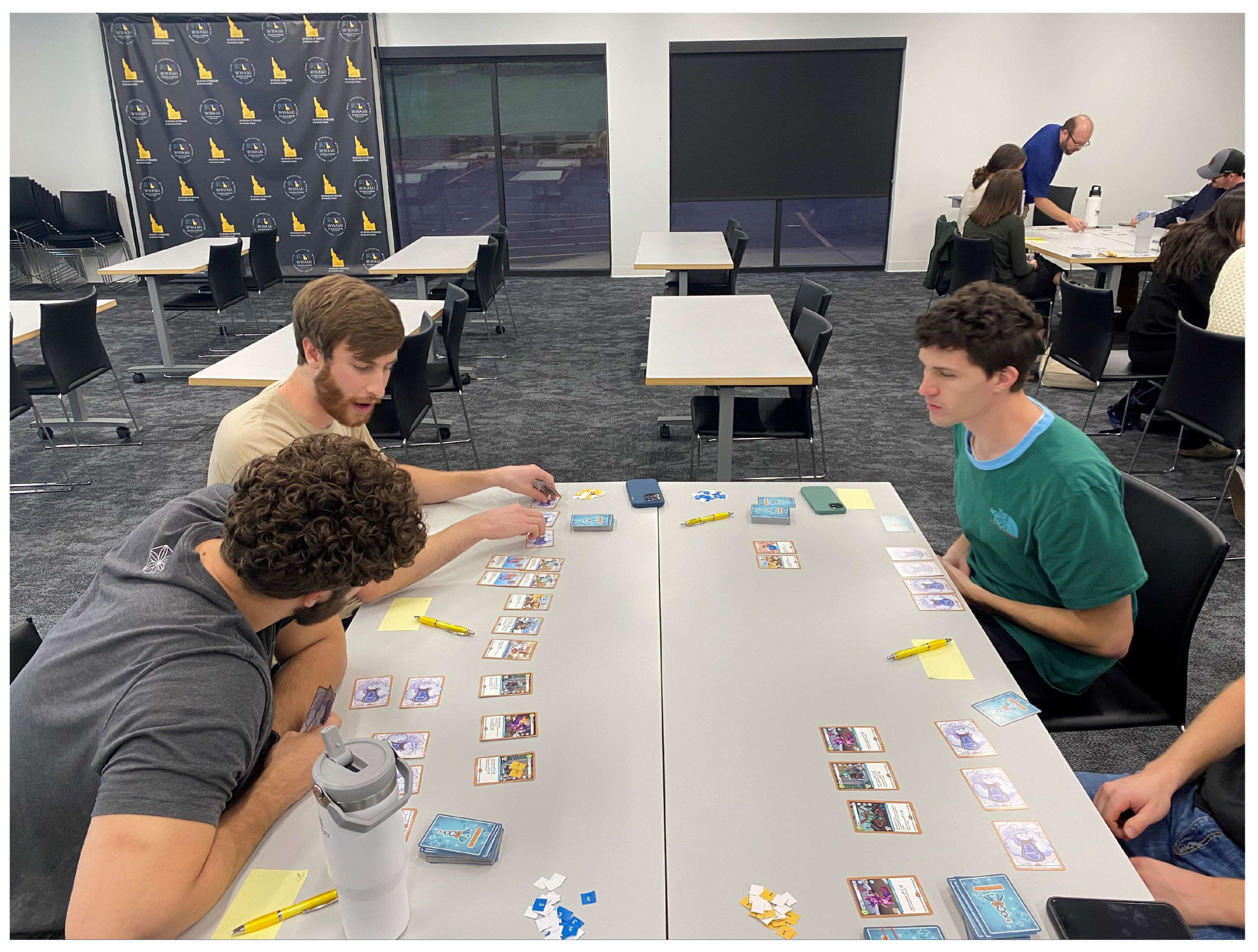
Figure 3.
Question generation. An example prompt utilized to produce the pre/post/post-post test question that tested knowledge related to mast cells.
Figure 3.
Question generation. An example prompt utilized to produce the pre/post/post-post test question that tested knowledge related to mast cells.
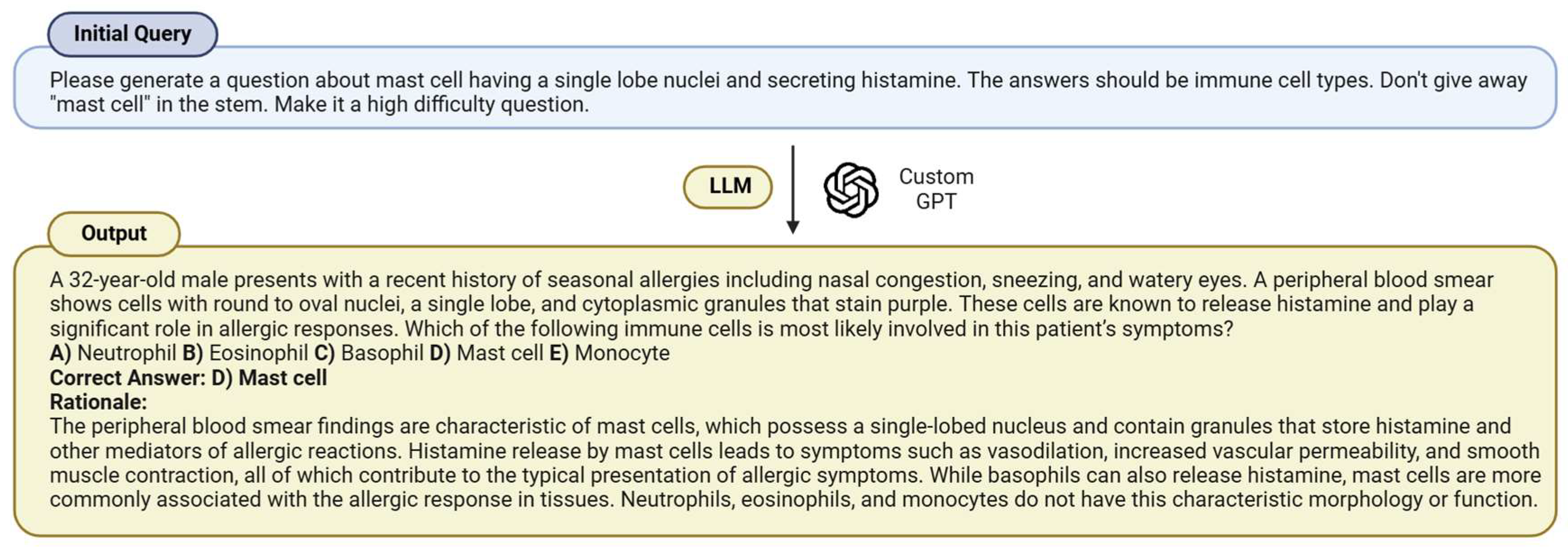
Figure 4.
Thematic analysis. The workflow of performing the thematic analysis on the open-ended survey responses.
Figure 4.
Thematic analysis. The workflow of performing the thematic analysis on the open-ended survey responses.
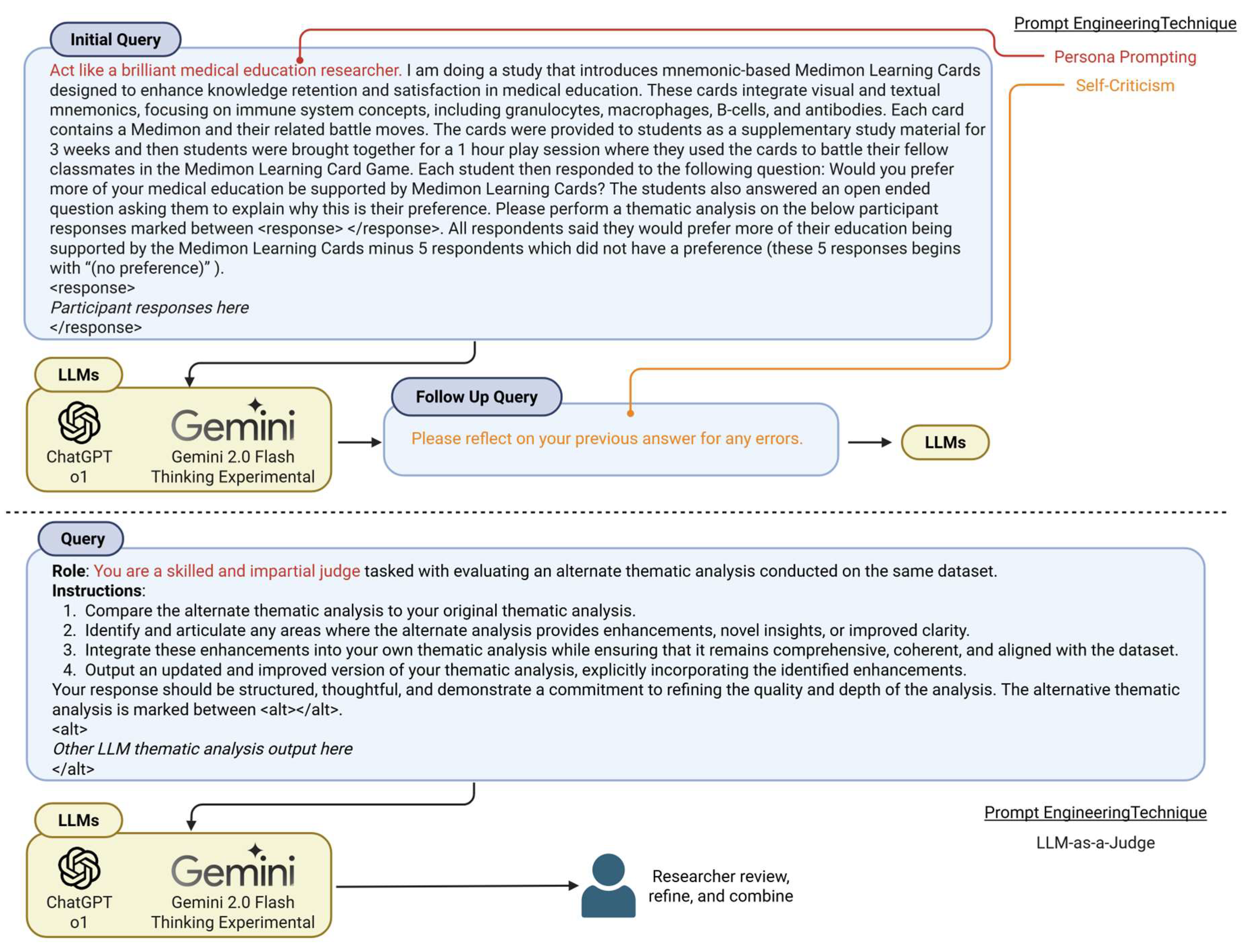
Figure 5.
Achievement analysis. A, The average exam scores for all the exams in the course separated by group. B,C, Average (B) and individual (C) scores on the pre/post/post-post tests separated by group. All data in A and B are represented by the average ± standard deviation.
Figure 5.
Achievement analysis. A, The average exam scores for all the exams in the course separated by group. B,C, Average (B) and individual (C) scores on the pre/post/post-post tests separated by group. All data in A and B are represented by the average ± standard deviation.
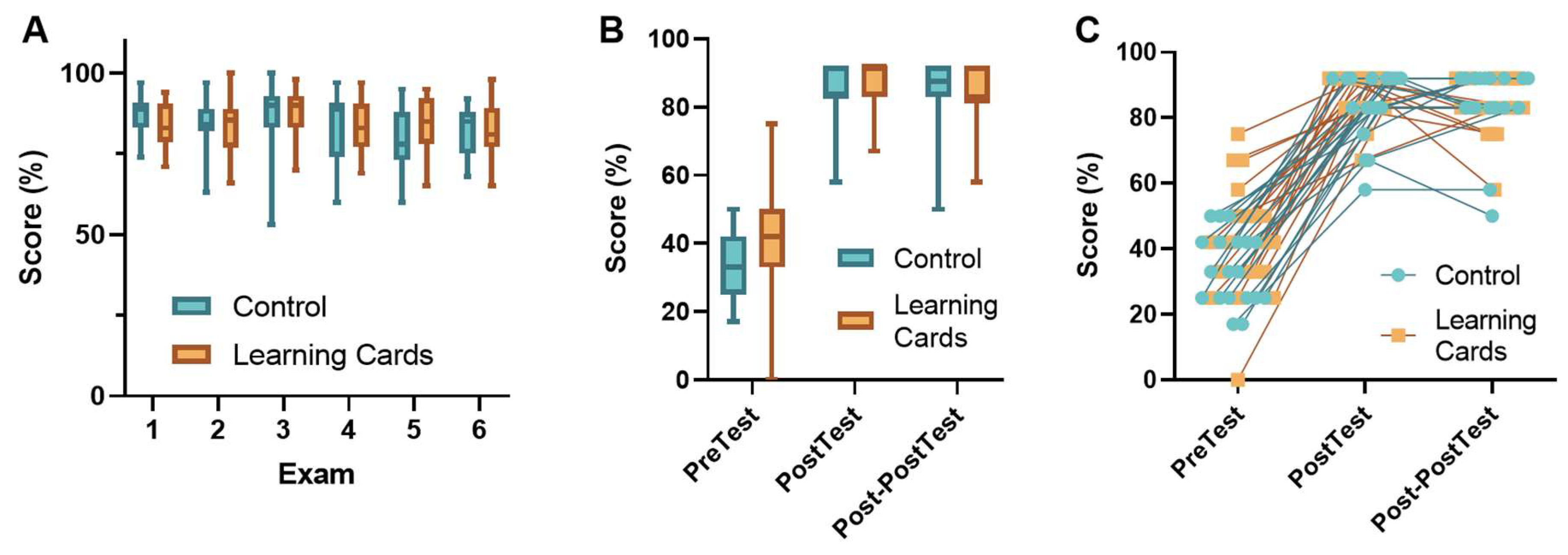
Figure 6.
SIS-M Results. A, Average score on the Likert scale (1=strongly disagree, 5=strongly agree) for the different types of engagement. Data is represented as the average ± standard deviation. B, Responses to the question “Would you prefer more of your medical education be supported by Medimon Learning Cards?” Trig: Triggered, Main: Maintained, Feel: Feeling, Int: Interest.
Figure 6.
SIS-M Results. A, Average score on the Likert scale (1=strongly disagree, 5=strongly agree) for the different types of engagement. Data is represented as the average ± standard deviation. B, Responses to the question “Would you prefer more of your medical education be supported by Medimon Learning Cards?” Trig: Triggered, Main: Maintained, Feel: Feeling, Int: Interest.
Disclaimer/Publisher’s Note: The statements, opinions and data contained in all publications are solely those of the individual author(s) and contributor(s) and not of MDPI and/or the editor(s). MDPI and/or the editor(s) disclaim responsibility for any injury to people or property resulting from any ideas, methods, instructions or products referred to in the content. |
© 2025 by the authors. Licensee MDPI, Basel, Switzerland. This article is an open access article distributed under the terms and conditions of the Creative Commons Attribution (CC BY) license (http://creativecommons.org/licenses/by/4.0/).
Copyright: This open access article is published under a Creative Commons CC BY 4.0 license, which permit the free download, distribution, and reuse, provided that the author and preprint are cited in any reuse.


