

Submitted:
19 May 2025
Posted:
20 May 2025
You are already at the latest version
Abstract
Social media influencers (SMIs) have become pivotal stakeholders in digital marketing. This study examines how SMIs influence consumer decision-making and investigates the role of trust in this process. Drawing on the Theory of Planned Behavior (TPB), we developed a research model with testable hypotheses. Using Partial Least Squares Structural Equation Modeling (PLS-SEM), we analyzed survey data from 232 social media users in Greater London, UK. Our results indicate that SMIs significantly enhance purchase intentions, yet these intentions exhibit only a weak conversion into actual purchasing behavior. Contrary to expectations, trust in SMIs demonstrated a significant negative relationship with purchase intention, suggesting that higher trust may paradoxically diminish purchase likelihood. This counterintuitive finding underscores the complexity of trust dynamics in influencer marketing, where perceived commercialization or consumer skepticism may counteract its positive effects. Furthermore, while SMIs strongly foster trust, our analysis reveals that trust does not mediate the relationship between SMIs and actual purchases. These findings contribute to the literature by elucidating the nuanced role of trust and highlighting the intention-behavior gap in influencer marketing. Future research should explore contextual and psychological moderators to understand these trust effects better.
Keywords:
Social media influencers
; purchase intention
; purchase behavior
; trust
; influencer mar-keting
; PLS-SEM
1. Introduction
Considering the substantial expansion of social media in recent decades, social media influencers (SMIs) are playing an increasingly vital role in how consumers discover, evaluate, and purchase products and services [1,2,3,4]. SMIs are digital content creators who have cultivated substantial, engaged followings through strategic self-presentation and niche expertise, and who monetize their audience through brand partnerships [5,6]. This phenomenon has changed established marketing models by placing SMIs as intermediaries between brands and consumers [7,8]. Consequently, the influencer marketing industry grew to US$21.1 billion in 2023, more than three times its size in 2019 [9]. This high growth in revenue underscores the growing capacity of influencer marketing to deliver strategic marketing outcomes [10].
As content creators with huge followings on social media platforms, SMIs offer brands a strategic opportunity to reach a broad audience [5,11]. A growing body of research on SMIs has emphasized the benefits, including better brand awareness [12], effective consumer engagement [13], and higher sales conversions [2]. The literature also shows that SMIs influence consumer purchase intentions [7,14,15]. While robust evidence from recent meta-analyses found a significant impact of SMIs on purchase intention [13], translating intention into actual sales requires further research. Relatively limited studies assess the conversion of purchase intentions to actual purchases [16,17]. This gap between intention and actual behaviour is a significant challenge. Moreover, research suggests a positive correlation between trust in an SMI and purchase intention [15,18]. However, there are instances where trust in SMIs does not influence purchase intention and actual purchase [19].
To address these gaps, we investigate the following question: To what degree do SMIs drive consumer purchase intentions and purchase behavior, and what is the role of trust? The specific objectives of this study are to assess (1) the effect of SMIs on purchase intention, (2) how SMIs influence purchase behavior, (3) the role of trust in the process. To achieve the study objectives, we developed a conceptual model and hypotheses based on the literature. We then validated model and tested the hypotheses using partial least squares structural equation modeling (PLS-SEM) of survey data from 232 respondents in the UK. The study findings hold implications for brands seeking to optimize their influencer marketing strategies and contribute to the academic discourse in this rapidly developing research field.
The rest of the paper is organized as follows. We first provide a background to the study through a discussion of the prospects and challenges of influencer marketing and the theory of planned behavior (TPB). We then present the research model and hypotheses. Next, we describe the study methodology before we present the study’s findings. We discuss the findings and assess their implications. We conclude after a discussion of the study's limitations, and suggestions for future research are offered.
2. Background
2.1. Influencer Marketing: Prospects and Challenges
A symbiotic relationship exists between SMIs and social media, where SMIs utilize their substantial following to enhance their influence. At the same time, engaging and niche-oriented content created by SMIs enhances the user experience on social media [20]. Thus, SMIs have become invaluable to contemporary marketing, providing brands with opportunities to connect with consumers [21].
The literature stresses the strategic benefits SMIs offer organizations, including better customer engagement, improved brand recognition, and the ability to influence consumer perceptions positively [22]. By fostering trust and building a network, SMIs function as credible third-party endorsers, enabling two-way interaction and strengthening brand loyalty [2,7]. Brand partnerships with SMIs whose values align with a brand can enhance brand relatability and image, thereby driving consumer engagement [23,24]. This synergy has increased sales as SMIs present products or services that resonate with their followers. Furthermore, the strategic engagement of SMIs extends a brand’s market reach by leveraging their follower networks to reach a broader demographic [23]. The efficacy of SMIs transcends mere reach and visibility metrics. Their ability to shape consumer purchasing decisions may be attributable to their authenticity, relatability, and the trust they cultivate within their follower base. These characteristics have an advantage over traditional marketing, which often lacks the personal touch that SMIs possess [10].
However, while influencer marketing offers several benefits, it also presents critical challenges. One significant issue is the variability in content quality across these platforms, which ranges from credible endorsements to misleading or false information [25]. Furthermore, misinformation, unethical practices, and negative psychological impacts demand stronger regulatory frameworks and ethical standards for SMIs [26,27].
2.2. Theory of Planned Behavior, Purchase Intention and Buying Behavior
The theoretical underpinning of the research is TPB, a well-established framework for studying the psychological factors of purchase intention and behavior [28]. This theory provides a valuable perspective on how SMIs affect consumer purchase intention and behavior [29,30]. TPB argues that there are three antecedents of purchase intention: attitudes, subjective norms, and perceived behavioral control. Attitudes measure a consumer's summary evaluation toward a product (either positive or negative). For example, an SMIs endorsement of a product or service is likely to shape consumer attitudes towards purchase intention and actual purchase positively [31,32].
Subjective norms refer to the social pressure on a consumer to conform to the preferences of significant others and social groups. Social media amplifies this pressure through witnessing positive online reactions towards products endorsed by SMIs [33]. Perceived behavioral control is a consumer's perceived ability to purchase a product. Factors related to perceived behavioral control include accessibility, purchase cost and the complexity of purchase. If a product endorsed by an SMI is immediately available to a consumer and comes at a low perceived cost, the consumer will have an easier time translating intentions into purchase [34].
3. Research Model and Hypotheses
We propose a research model grounded in SMI and consumer purchasing behavior studies with four constructs: SMIs, trust in SMIs, purchase intention, and actual purchase. Figure 1 illustrates the research model and the hypothesized relationships.
3.1. Research Model
Extant research supports a significant relationship between SMIs and consumer purchase intentions [14,35,36]. Studies demonstrate that SMIs can positively influence consumer attitudes towards products or services, potentially leading to a desire to emulate the influencer and engage in a positive behavioral outcome, such as a purchase [37]. Furthermore, research suggests that source-consumer similarity and post-quality perceptions can partially mediate the influence of SMIs on purchase intention [38]. The attractiveness and interactivity of SMIs have also been identified as factors that strengthen the connection between consumers and brands, ultimately influencing purchase intentions [39]. Also, SMIs can enhance brand recognition and purchase likelihood[18]. The “fear of missing out” (FOMO) has also been linked to consumers' increased purchase intention towards products endorsed by SMIs [40]. The literature indicates that individuals who regard influencers as credible, exhibit demographic or psychosocial similarities to them, assess their content as high-quality, and establish robust parasocial relationships are more likely to express intentions to consume the products they endorse [41,42]. In contrast, older demographic groups tend to demonstrate reduced intentions toward consumption [43]. Based on the foregoing, we propose the following hypothesis:
H1:
Consumers exposed to SMIs content will demonstrate strong purchase intentions.
SMIs’ impact increases through their variety of content, such as reviews, tutorials, and endorsements, thus creating emotional bonds between them and their followers [44]. Several studies suggest that there is a relationship between SMIs and purchase behavior. For instance, it has been established that fashion influencers have a significant impact on customers’ buying decisions [45]. Also, social identification had a direct impact on young people’s online advertising engagement and purchasing behavior [34]. Finally, purchase intention has a positive impact on purchasing behavior. This suggests that if consumers have already demonstrated purchase intention, they are more likely to actualize their purchase intention into a purchase decision [17]. Therefore, we hypothesize that:
H2:
Purchase intention will positively correlate with actual purchase completion rates among SMI-following consumers.
3.2. The Role of Trust
In the context of SMIs, trust can be defined as readers’ confidence in an influencer’s credibility, dependability, and authenticity. Consumers’ trust in an SMI affects how they respond or interact with an SMI’s recommendations and what they write [15]. For instance, a study found that trust in the SMI mediates the relationship between consumers and their buying intention. In turn, purchasing intentions and purchasing behavior are expressions of the influence of the SMIs’ trustworthiness and the strength of their recommendations [46] . SMIs create trust through their relevant material related to a product or service [47]. Having already established trust with their followers, these followers are more likely to listen to an influencer’s opinions [48].
Some authors argue that consumers value highly the knowledge and expertise of SMIs in certain areas, making them trusted sources of information [14]. Consumers can interact with SMIs using likes, comments, and sharing of content via social media [2]. The interaction between consumers and SMIs has a two-way direction and allows consumers to ask for advice, ask questions, and share experiences [2]. This allows consumers to gain SMI’s recommendations [44]. This can increase consumers' trust in brand recognition and stimulate product sales [49]. Kim and Kim [19] point out that it is crucial to build trust when conducting influencer marketing strategies. Informative SMI content, perceived SMI trustworthiness, and perceived SMI attractiveness can positively affect consumers’ trust, which can be conducive to brand awareness and purchase intentions [50]. Therefore, the following hypotheses are formed based on the literature:
H3:
Content created by SMIs is likely to build strong levels of trust in products among their audience.
H4:
Trust in SMIs correlates positively with consumer purchasing behavior, leading to a substantial increase in purchase intention.
H5:
High trust in SMIs significantly enhances the probability of consumer purchasing behavior regarding products they endorse.
4. Materials and Methods
We employed a positivist quantitative research strategy to validate the proposed research model and its associated hypotheses. The quantitative approach is ideal for this study as it enables systematic collection and analysis of data to examine the relationships among SMIs, purchase intention, and behavior, emphasizing objectivity, measurability, and empirical validation [51].
4.1. Data Collection
We utilized a cross-sectional survey because it allowed us to gain a snapshot of the views of consumers on purchase intention and behavior. It also facilitated the identification of relationships between SMIs and purchase intention and behaviors without requiring longitudinal data [52]. Cross-sectional surveys are valuable in several disciplines due to their use, low cost, and ability to provide timely insights [53].
A principal element of surveys is the design of an appropriate questionnaire[54]. Accordingly, we designed a questionnaire from the literature on SMI, trust purchase intention, and behavior. Table 1 shows the operationalization and definitions of these constructs and their theoretical foundations. The survey instrument consisted of two parts. The first part was used to collect demographic data, including age, gender, education, employment status, and income. The second collected data on social media interactions between individuals and SMIs, trust purchase intentions and behaviors based on SMI recommendations. Respondents responded to the questions on a 7-point Likert scale. The 7-point scale provides finer granularity than a 5-point scale, allowing for better discrimination between neutral and slightly positive or negative responses [55].
We used a convenience sampling method, selecting participants based on their availability and willingness to participate. This approach was chosen for its practicality, cost-effectiveness, and efficient access to the target population. Although convenience sampling is time-saving and easy to implement, it carries the risk of sampling bias, which can potentially limit the generalizability of the results. Despite these limitations of convenience sampling, we considered it appropriate in this case because the study is exploratory [63] and allowed us to gather sufficient data to test the research model and hypotheses.
We distributed the survey link across various social media platforms, primarily Instagram and Facebook. The data collection process spanned a period of two months, specifically from March to May 2024, and resulted in a dataset comprising 232 responses. The participants in this study are residents of the Greater London area of the United Kingdom, providing a diverse representation of perspectives and experiences.
4.2. Data Analysis
We applied PLS-SEM, a variance-based statistical modelling technique, to validate the proposed research model and to test the hypotheses owing to the possibility of latent variables in the measurement model [64]. PLS-SEM's flexibility with non-normal data and small-medium sample sizes makes it ideal for this research. Additionally, it enables simultaneous hypothesis testing, enhancing the rigor of the analysis [65]. We opted for the choice of PLS-SEM because of its robustness in handling complex structural models with multiple latent variables and its more flexible requirement for sample size than covariance-based SEM. Furthermore, this technique facilitated the assessment of relationships among latent constructs and estimates of path coefficients to indicate the strength and direction of the relationships among constructs in our model [66,67]. The data were analyzed using Smart PLS (Version3), an advanced structural equation modeling software. This methodology enabled the exploration of intricate relationships within the dataset, allowing for a nuanced examination of latent constructs and their interrelations [68].
5. Results
The section presents the study findings. Firstly, descriptive analysis of the study sample is provided. Subsequently, the validity and reliability of the measurement model are evaluated. Finally, the structural model is examined, and the hypotheses of the relationships are tested.
5.1. Descriptive Statistics
A summary of the study sample and descriptive statistics is depicted in Table 2. The average age of the sample is 34, with a gender distribution of 48% male and 52% female. A sizable portion of the sample (34%) is aged between 28 and 37, while those in the 18-27 age group account for 31%. Participants aged 38-47 represent 24%, with smaller percentages from the 48-57 (9%) and 58-67 (2%) age groups. Most participants are well-educated, with 52% holding a university degree, 29% pursuing postgraduate studies, 11% with further education qualifications (A-levels or BTECs), 5% having completed secondary education, and 3% with only primary education. The survey also indicates considerable social media engagement among participants, who, on average, use four social media platforms and follow approximately nine SMIs. Half of the sample are full-time employees, and part-time workers make up 15%. Students comprise almost a quarter of the sample (24%). The remaining respondents are either unemployed (2.6%) or self-employed (7.8%). Income levels range from £10,000 to above £60,000. Over 60% of respondents earn below £20,000, while a smaller proportion (4.3%) earn above £60,000.
5.2. Measurement Model Validity Assessment
Convergent and discriminant validity analyses were conducted to evaluate the validity of the measurement model. Convergent validity assesses how well the indicators measure the underlying constructs [69]. The average variance extracted (AVE) values for all the indicators pertaining to each construct were computed. Subsequently, composite reliability (CR) and Cronbach’s alpha coefficients were examined to evaluate internal consistency and reliability of the measurement model. Table 3 summarizes the measurement model assessment results. The results show that the study constructs have a high level of reliability. The Cronbach’s alpha of all the constructs falls within the acceptable range from 0.746 to 0.899. The internal consistency reliability was satisfactory since all the CR values were above 0.7 [70].
The AVE values for all constructs exceed the recommended threshold value of 0.5, ranging from 0.692 to 0.868. This implies that each construct accounts for a significant proportion of the variance in its respective indicators, thereby demonstrating strong convergent validity [71]. Established criteria require that a latent variable should explain at least 50% of the variance in its associated indicators to ensure adequate measurement reliability. The AVE values confirm that all constructs meet this condition, with each explaining over half of the variance. Therefore, the results offer robust evidence for the convergent validity of the constructs, affirming their reliability and accuracy in evaluating the theoretical dimensions [70].
The Heterotrait-Monotrait (HTMT) ratio of correlations is a robust measure of discriminant validity to ensure that the study constructs in the measurement model are distinct. As shown in Table 4, our analysis shows strong evidence of discriminant validity, as all HTMT values fall below the threshold of 0.85 [72]. We observed ratios ranging from a minimum of 0.114 (between trust and SMIs) to a maximum of 0.725 (between purchase intention and actual purchase), further corroborating the discriminant validity of the construct.
5.3. Measurement Model Reliability Assessment
Internal consistency reliability is fundamental for robust PLS-SEM analyses. Evaluating the measurement model through an estimation of indicator reliability is essential to establish the validity and reliability of the constructs under investigation before structural model analysis. Indicator reliability, computed through outer loadings, is the proportion of variance explained by its corresponding latent construct. Following conventional thresholds suggested by Hair et al [70]. Loadings over 0.708 are considered acceptable, as they indicate that the constructs account for at least 0.708 of the indicator’s variance. As presented in Table 5, most indicators had loadings exceeding this threshold. However, a few indicators had loadings from 0.4 to 0.7, although not optimal, and were retained. This is consistent with recommendations by Hair et al [70], who maintain that keeping such indicators can improve model fit and the robustness of subsequent structural analysis, provided the constructs have adequate internal consistency and reliability.
5.4. Structural Model Assessment
The structural model analysis outcomes, which include standardized path coefficients, significance thresholds, and fit indices, are presented in Table 6. These findings elucidate both the predictive validity and explanatory power of the hypothesized relationships within the model.
Bootstrapping analysis provided mixed evidence regarding the proposed pathways. Hypothesis H1, which posits a positive influence of SMIs on consumers’ purchase intentions, received support (β = 0.722, t = 8.434, p < 0.05). This finding aligns with meta-analytic evidence on digital persuasion [10]. Conversely, Hypothesis H2, suggesting that SMIs positively affect actual purchase behaviors, lacked support, indicated by a non-significant path coefficient (β = 0.112; t = 1.233; p > 0.05).
Hypothesis H3, which asserted that SMIS significantly bolster consumer trust, was robustly supported (β = 0.819, t = 23.986, p < 0.05). However, Hypothesis H4, which estimates that perceived trust in SMIs positively impacts consumers’ purchase intentions, was not supported (β = 0.141; t = 0.849; p > 0.05). Intriguingly, Hypothesis H5, which suggested that SMI recommendations drive actual purchases mediated by trust, was also unsupported (β = -0.971; t = 7.108; p < 0.05).
6. Discussion
6.1. Contributions
The results reveal a complex interplay between SMIs, trust, and consumer purchasing decisions, challenging several assumptions in the extant literature. Additionally, this research makes two contributions that address critical gaps in the current body of knowledge regarding the behavioral impacts of SMIs. This is particularly relevant in light of the inconsistencies identified in prior studies [10,16].
First, our confirmation of a significant intention-behaviour gap within SMI contexts warrants attention. Despite strong positive correlations between SMIs and purchase intentions, as supported by earlier research [13,37], these intentions account for only a marginal portion of the variance in actual purchasing behavior. The expressed intentions account for only 2.1% of the variance in actual purchasing behavior (R² = 0.021). This discrepancy challenges a key assumption of the TPB, which suggests that intention is a precursor to actual behavior [28]. It reinforces criticisms against reliance on intention-based measures in influencer studies [16]. Notably, this disparity between intention and action may be explained by contextual variables such as price sensitivity [1], product availability, and promotional activities.
Secondly, the study's most theoretically significant finding pertains to the paradoxical role of trust within influencer marketing dynamics. While prior research has consistently viewed trust as a positive mediator in digital persuasion [1,18], our analysis reveals a counterintuitive negative association between trust and purchase intention (β = -0.971, p < 0.05). This finding contradicts the prevailing consensus in marketing literature and suggests that the relationship between trust and consumer decision-making follows more complex mechanisms than previously imagined. Drawing on persuasion knowledge theory [73], we suggest that this inverse relationship emerges when consumers perceive influencer endorsements as overly commercialised, triggering scepticism that outweighs initial trust. This interpretation is consistent with emerging work on “overtrust” effects in digital contexts [19] and requires a reconsideration of how trust operates within influencer marketing.
The interpretation of our findings should be situated within the broader context of cultural and platform-specific dynamics that influence consumer reactions to SMIs. Our study focused on a Western, English-speaking demographic, yet existing literature highlights significant cross-cultural variances in audience engagement with influencer content. For example, research indicates that collectivist societies may display markedly different trust behaviors in influencer endorsements, owing to heightened group conformity [19]. This suggests that the negative trust effects we identified could either be mitigated or intensified in varying cultural contexts.
Moreover, platform architecture and behavioral norms significantly mediate influencer efficacy in ways our research could not comprehensively address. The inherently visual curation of Instagram's platform ecology may heighten authenticity concerns relative to the perceived spontaneity associated with TikTok content [74]. Consequently, our findings, primarily derived from Facebook and Instagram users, may reflect distinct trust dynamics that would emerge on short-form video platforms or within niche community spaces, where digital relationships are cultivated differently. Also, the intention-behavior gap we observed is likely to vary considerably across platforms, influenced by interface design elements such as integrated shopping features and the friction involved in external purchasing pathways.
6.2. Implications
The implications of these findings are significant for theory and practice. From a theoretical perspective, they necessitate a reevaluation of the dynamics of trust in the influencer context. This suggests a need to move beyond positive-linear models and adopt a more nuanced framework that incorporates varying conditions and the possibility of contradictory effects. Furthermore, these results highlight the critical need for incorporating behavioral metrics in influencer marketing research as opposed to solely relying on intention proxies, which may lead to overestimations of campaign efficacy.
For practitioners, our findings offer strategic recommendations that can inform decision-making and practice. The observed weak correlation between consumer intention and actual behavior implies that brands should enhance conventional engagement metrics, such as likes and shares, by incorporating direct behavioral tracking methods. This approach would enable a more accurate assessment of campaign effectiveness. Secondly, the trust paradox indicates that criteria for influencer selection should prioritize perceived authenticity instead of only focusing on audience size or reported trust metrics. The findings underscore the critical role of contextual factors, suggesting that influencer marketing initiatives be strategically synchronized with pricing strategies and distribution channels. This alignment is essential for optimizing the conversion of consumer intentions into actual purchasing behaviors.
6.3. Limitations and Future Research Directions
The methodological limitations of this study require careful interpretation of its findings. The use of convenience sampling, while pragmatically justified for exploratory research [75], introduces potential selection bias that may compromise the generalizability of our results. The sample’s demographic skew, predominantly comprising young, low-income participants, further limits the applicability of our findings to broader consumer segments. Given the well-documented influence of age and socioeconomic status on responses to SMIs [34], the limited demographic scope of our study raises critical questions regarding the generalizability of our findings to older or higher-income cohorts. This limitation is symptomatic of broader challenges in influencer marketing research, characterized by prevalent reliance on convenience sampling and the predominance of homogenous participant groups. Moreover, although our findings offer valuable insights into consumer segments, they do not adequately illustrate effects at the population level.
The cross-sectional design also imposes constraints on causal inference. While our model identifies significant associations between constructs, longitudinal or experimental designs would better establish changes over time and rule out alternative explanations [52]. Future studies should employ stratified sampling techniques to ensure adequate representation across age groups, income levels, and cultural contexts [52]. Such approaches would address the current overreliance on convenience samples that plagues much of the literature [16].
Our findings highlight the need for more nuanced investigations into the intention-behavior gap in influencer marketing. While we identify a weak translation of purchase intentions into actual behavior, the underlying mechanisms remain underexplored. Subsequent studies should examine contextual moderators such as price sensitivity [1], product availability, and competitive promotions, which may disrupt intention-behavior consistency. Additionally, mediating factors such as perceived authenticity [18] and social validation warrant further research to explain why even trusted SMIs often fail to drive conversions.
The unexpected negative relationship between trust and intention demands particular attention in future work. This finding contradicts prevailing assumptions in the literature [15] and suggests that trust’s role in digital persuasion is more complex than previously theorized. Experimental designs could systematically test boundary conditions, such as varying levels of perceived commercialization, to identify when and why trust backfires. Comparative studies across influencer types (e.g., micro-influencers vs. celebrities) and cultural contexts [76] would further clarify whether this phenomenon is platform-specific or generalizable.
7. Conclusions
We examined SMIs, purchase intention, purchase behavior, and the role of consumer trust. This study makes two contributions. First, the findings affirm the capacity of SMIs to impact consumers' purchase intentions. However, we observed a substantial intention-behavior gap, as our model explained only 2.1% of the variance in actual purchasing behavior. This empirical evidence of weak behavioral translation questions the theoretical assumption of intention-behavior alignment within digital contexts. Second, we discover a negative relationship between trust and intention, which contradicts most of the literature. This paradox implies that highly polished and overtly commercial influencer content may activate persuasion knowledge, converting trust into skepticism. Our findings substantiate growing concerns regarding authenticity deficits in influencer marketing [1], while challenging the universal applicability of trust-based persuasion through SMIs. These contributions call for a paradigm shift from the uncritical adoption of influencer marketing strategies to evidence-based frameworks that recognize: (1) the fragile nature of digital trust, (2) the mediating influence of platform-specific contextual factors, and (3) the essential distinction between engagement, purchase intention and purchase behavior.
These findings suggest that brands should prioritize authenticity in influencer collaborations, align partnerships with pricing and distribution, and focus on sales metrics rather than just engagement. Future research should explore trust’s negative effects, cross-cultural differences in influencer effectiveness, and use longitudinal studies to assess behavioral outcomes over time.
Author Contributions
Conceptualization, G.A., F.F. and L.M.; methodology, G.A.; formal analysis, G.A..; investigation, G.A., F.F. and L.M.; resources, G.A., F.F. and L.M.; data curation, GBA.; writing—original draft preparation, GBA.; writing—review and editing, F.F. and L.M. All authors have read and agreed to the published version of the manuscript.
Funding
This research received no external funding.
Data Availability Statement
Available on request.
Institutional Review Board Statement
Not applicable.
Acknowledgments
Not applicable.
Conflicts of Interest
No conflicts of interest.
References
- Djafarova, E.; Bowes, T. ‘Instagram Made Me Buy It’: Generation Z Impulse Purchases in Fashion Industry. J. Retail. Consum. Serv. 2021, 59, 102345. [Google Scholar] [CrossRef]
- Enke, N.; Borchers, N.S. Social Media Influencers in Strategic Communication: A Conceptual Framework for Strategic Social Media Influencer Communication. In Social Media Influencers in Strategic Communication; Routledge, 2021 ISBN 978-1-00-318128-6.
- Paul, J.; Jagani, K.; Yadav, N. “How I Think, Who I Am”—Role of Social Media Influencers (SMIs) as Change Agents. J. Consum. Behav. 2024, 23, 1900–1916. [Google Scholar] [CrossRef]
- Rachmad, Y.E. The Future of Influencer Marketing: Evolution of Consumer Behavior in the Digital World; PT. Sonpedia Publishing Indonesia, 2024; ISBN 9786238634583.
- Khamis, S.; Ang, L.; Welling, R. Self-Branding, ‘Micro-Celebrity’ and the Rise of Social Media Influencers. Celebr. Stud. 2017. [Google Scholar] [CrossRef]
- Abidin, C. Singaporean Influencers and Covid-19 on Instagram Stories. Celebr. Stud. 2021, 12, 693–698. [Google Scholar] [CrossRef]
- Ki, C.-W. ‘Chloe’; Kim, Y.-K. The Mechanism by Which Social Media Influencers Persuade Consumers: The Role of Consumers’ Desire to Mimic. Psychol. Mark. 2019, 36, 905–922. [Google Scholar] [CrossRef]
- van Driel, L.; Dumitrica, D. Selling Brands While Staying “Authentic”: The Professionalization of Instagram Influencers. Convergence 2021, 27, 66–84. [Google Scholar] [CrossRef]
- Statista Global Influencer Market Size 2024. Available online: https://www.statista.com/statistics/1092819/global-influencer-market-size/ (accessed on 16 April 2024).
- Lee, J.; Walter, N.; Hayes, J.L.; Golan, G.J. Do Influencers Influence? A Meta-Analytic Comparison of Celebrities and Social Media Influencers Effects. Soc. Media Soc. 2024, 10, 20563051241269269. [Google Scholar] [CrossRef]
- Leung, F.F.; Gu, F.F.; Palmatier, R.W. Online Influencer Marketing. J. Acad. Mark. Sci. 2022, 50, 226–251. [Google Scholar] [CrossRef]
- Okonkwo, I.; Namkoisse, E. The Role of Influencer Marketing in Building Authentic Brand Relationships Online. J. Digit. Mark. Commun. 2023, 3, 81–90. [Google Scholar] [CrossRef]
- Ao, L.; Bansal, R.; Pruthi, N.; Khaskheli, M.B. Impact of Social Media Influencers on Customer Engagement and Purchase Intention: A Meta-Analysis. Sustainability 2023, 15, 2744. [Google Scholar] [CrossRef]
- Foroughi, B.; Iranmanesh, M.; Nilashi, M.; Ghobakhloo, M.; Asadi, S.; Khoshkam, M. Determinants of Followers’ Purchase Intentions toward Brands Endorsed by Social Media Influencers: Findings from PLS and fsQCA. J. Consum. Behav. 2024, 23, 888–914. [Google Scholar] [CrossRef]
- Khan, A.; Khan, Z.; Nabi, M.K. “I Think Exactly the Same”—Trust in SMIs and Online Purchase Intention: A Moderation Mediation Analysis Using PLS-SEM. J. Adv. Manag. Res. 2024, 21, 311–330. [Google Scholar] [CrossRef]
- Hughes, C.; Swaminathan, V.; Brooks, G. Driving Brand Engagement Through Online Social Influencers: An Empirical Investigation of Sponsored Blogging Campaigns. J. Mark. 2019, 83, 78–96. [Google Scholar] [CrossRef]
- Indiani, N.L.P.; Fahik, G.A. Conversion of Online Purchase Intention into Actual Purchase: The Moderating Role of Transaction Security and Convenience. Bus. Theory Pract. 2020, 21, 18–29. [Google Scholar] [CrossRef]
- Lou, C.; Yuan, S. Influencer Marketing: How Message Value and Credibility Affect Consumer Trust of Branded Content on Social Media. J. Interact. Advert. 2019. [Google Scholar] [CrossRef]
- Kim, D.Y.; Kim, H.-Y. Trust Me, Trust Me Not: A Nuanced View of Influencer Marketing on Social Media. J. Bus. Res. 2021, 134, 223–232. [Google Scholar] [CrossRef]
- Haenlein, M.; Anadol, E.; Farnsworth, T.; Hugo, H.; Hunichen, J.; Welte, D. Navigating the New Era of Influencer Marketing: How to Be Successful on Instagram, TikTok, & Co. Calif. Manage. Rev. 2020, 63, 5–25. [Google Scholar] [CrossRef]
- Vrontis, D.; Makrides, A.; Christofi, M.; Thrassou, A. Social Media Influencer Marketing: A Systematic Review, Integrative Framework and Future Research Agenda. Int. J. Consum. Stud. 2021, 45, 617–644. [Google Scholar] [CrossRef]
- Dwivedi, Y.K.; Ismagilova, E.; Hughes, D.L.; Carlson, J.; Filieri, R.; Jacobson, J.; Jain, V.; Karjaluoto, H.; Kefi, H.; Krishen, A.S.; et al. Setting the Future of Digital and Social Media Marketing Research: Perspectives and Research Propositions. Int. J. Inf. Manag. 2021, 59, 102168. [Google Scholar] [CrossRef]
- Syed, T.A.; Mehmood, F.; Qaiser, T. Brand–SMI Collaboration in Influencer Marketing Campaigns: A Transaction Cost Economics Perspective. Technol. Forecast. Soc. Change 2023, 192, 122580. [Google Scholar] [CrossRef]
- Ahmed, S.; Islam, T.; Ghaffar, A. Shaping Brand Loyalty through Social Media Influencers: The Mediating Role of Follower Engagement and Social Attractiveness. SAGE Open 2024. [Google Scholar] [CrossRef]
- Dwivedi, Y.K.; Kelly, G.; Janssen, M.; Rana, N.P.; Slade, E.L.; Clement, M. Social Media: The Good, the Bad, and the Ugly. Inf. Syst. Front. 2018, 20, 419–423. [Google Scholar] [CrossRef]
- Abidin, C. Yes Homo: Gay Influencers, Homonormativity, and Queerbaiting on YouTube. Contin. J. Media Cult. Stud. 2019, 33, 614–629. [Google Scholar] [CrossRef]
- Singh, H.; Cascini, G.; McComb, C. Influencers in Design Teams: A Computational Framework to Study Their Impact on Idea Generation. AI EDAM 2021, 35, 332–352. [Google Scholar] [CrossRef]
- Ajzen, I. The Theory of Planned Behavior. Organ. Behav. Hum. Decis. Process. 1991, 50, 179–211. [Google Scholar] [CrossRef]
- Johnstone, L.; Lindh, C. Sustainably Sustaining (Online) Fashion Consumption: Using Influencers to Promote Sustainable (Un)Planned Behaviour in Europe’s Millennials. J. Retail. Consum. Serv. 2022, 64, N.PAG-N.PAG. [Google Scholar] [CrossRef]
- Tiwari, A.; Kumar, A.; Kant, R.; Jaiswal, D. Impact of Fashion Influencers on Consumers’ Purchase Intentions: Theory of Planned Behaviour and Mediation of Attitude. J. Fash. Mark. Manag. Int. J. 2023, 28, 209–225. [Google Scholar] [CrossRef]
- Lim, X.J.; Radzol, A.R. bt M.; Cheah, J.-H.; Wong, M.W. The Impact of Social Media Influencers on Purchase Intention and the Mediation Effect of Customer Attitude. Asian J. Bus. Res. 2017, 7, 19–36. [Google Scholar] [CrossRef]
- Sánchez-Fernández, R.; Jiménez-Castillo, D. How Social Media Influencers Affect Behavioural Intentions towards Recommended Brands: The Role of Emotional Attachment and Information Value. J. Mark. Manag. 2021, 37, 1123–1147. [Google Scholar] [CrossRef]
- Pham, A.D.; Dao ,Trang T. T.; Pham ,Phuong M.; Pham ,Yen H.; Nguyen ,Huong T.; and Pham, L.N. How Does Conformity Shape Influencer Marketing in the Food and Beverage Industry? A Case Study in Vietnam. J. Internet Commer. 2024, 23, 172–203. [CrossRef]
- Croes, E.; Bartels, J. Young Adults’ Motivations for Following Social Influencers and Their Relationship to Identification and Buying Behavior. Comput. Hum. Behav. 2021, 124, 106910. [Google Scholar] [CrossRef]
- Alalwan, A.A. Investigating the Impact of Social Media Advertising Features on Customer Purchase Intention. Int. J. Inf. Manag. 2018, 42, 65–77. [Google Scholar] [CrossRef]
- Liu, X.; Zheng, X. The Persuasive Power of Social Media Influencers in Brand Credibility and Purchase Intention. Humanit. Soc. Sci. Commun. 2024, 11, 1–12. [Google Scholar] [CrossRef]
- Ki, C.-W.‘.; Cuevas, L.M.; Chong, S.M.; Lim, H. Influencer Marketing: Social Media Influencers as Human Brands Attaching to Followers and Yielding Positive Marketing Results by Fulfilling Needs. J. Retail. Consum. Serv. 2020, 55. [CrossRef]
- Onofrei, G.; Filieri, R.; Kennedy, L. Social Media Interactions, Purchase Intention, and Behavioural Engagement: The Mediating Role of Source and Content Factors. J. Bus. Res. 2022, 142, 100–112. [Google Scholar] [CrossRef]
- Li, Y.; Peng, Y. Influencer Marketing: Purchase Intention and Its Antecedents. Mark. Intell. Plan. 2021, 39, 960–978. [Google Scholar] [CrossRef]
- Dinh, T.C.T.; Lee, Y. “I Want to Be as Trendy as Influencers” – How “Fear of Missing out” Leads to Buying Intention for Products Endorsed by Social Media Influencers. J. Res. Interact. Mark. 2021, 16, 346–364. [Google Scholar] [CrossRef]
- Belanche, D.; Flavián, M.; Ibáñez-Sánchez, S. Followers’ Reactions to Influencers’ Instagram Posts. Span. J. Mark. - ESIC 2020, 24, 37–54. [Google Scholar] [CrossRef]
- Gu, C.; Duan, Q. Exploring the Dynamics of Consumer Engagement in Social Media Influencer Marketing: From the Self-Determination Theory Perspective. Humanit. Soc. Sci. Commun. 2024, 11, 1–17. [Google Scholar] [CrossRef]
- Mawad, J.L.J.; Freiha, S.S. The Role of Influencers in Shaping the Economic Decisions of Consumers Using the Logistic Regression Approach—Does the Generation Factor Matter? Sustainability 2024, 16, 9546. [Google Scholar] [CrossRef]
- Brooks, G.; Drenten, J.; Piskorski, M.J. Influencer Celebrification: How Social Media Influencers Acquire Celebrity Capital. J. Advert. 2021, 50, 528–547. [Google Scholar] [CrossRef]
- Javed, S.; Rashidin, Md.S.; Xiao, Y. Investigating the Impact of Digital Influencers on Consumer Decision-Making and Content Outreach: Using Dual AISAS Model. Econ. Res.-Ekon. Istraživanja 2022, 35, 1183–1210. [Google Scholar] [CrossRef]
- Ismagilova, E.; Dwivedi, Y.K.; Slade, E.; Williams, M. Electronic Word of Mouth (eWOM) in the Marketing Context: A State of the Art Analysis and Future Directions; Springer International Publishing, 2017.
- Nafees, L.; Cook, C.M.; Nikolov, A.N.; Stoddard, J.E. Can Social Media Influencer (SMI) Power Influence Consumer Brand Attitudes? The Mediating Role of Perceived SMI Credibility. Digit. Bus. 2021, 1, 100008. [Google Scholar] [CrossRef]
- Balaban, D.C.; Mucundorfeanu, M.; Naderer, B. The Role of Trustworthiness in Social Media Influencer Advertising: Investigating Users’ Appreciation of Advertising Transparency and Its Effects. Communications 2022, 47, 395–421. [Google Scholar] [CrossRef]
- Mammadli, G. The Role Of Brand Trust in The Impact Of Social Media Influencers On Purchase Intention 2021.
- Lou, C.; Tan, S.-S.; Chen, X. Investigating Consumer Engagement with Influencer- vs. Brand-Promoted Ads: The Roles of Source and Disclosure. J. Interact. Advert. 2019, 19, 169–186. [Google Scholar] [CrossRef]
- Creswell, J.W.; Creswell, J.D. Research Design: Qualitative, Quantitative, and Mixed Methods Approaches; 6th ed. edition.; Sage Publications, Inc: Los Angeles London New Delhi Singapore Washington DC Melbourne, 2022; ISBN 978-1-07-181794-0. [Google Scholar]
- Maier, C.; Thatcher, J.B.; Grover, V.; Dwivedi, Y.K. Cross-Sectional Research: A Critical Perspective, Use Cases, and Recommendations for IS Research. Int. J. Inf. Manag. 2023, 70, 102625. [Google Scholar] [CrossRef]
- Bell, E.; Bryman, A.; Harley, B. Business Research Methods; 6th Edition.; Oxford University Press: Oxford, United Kingdom, 2022; ISBN 978-0-19-886944-3. [Google Scholar]
- Clark, T.; Foster, L.; Bryman, A.; Sloan, L. Bryman’s Social Research Methods; Oxford University Press, 2021; ISBN 978-0-19-879605-3.
- McCoach, D.B.; Gable, R.K.; Madura, J.P. Defining, Measuring, and Scaling Affective Constructs. In Instrument Development in the Affective Domain: School and Corporate Applications; McCoach, D.B., Gable, R.K., Madura, J.P., Eds.; Springer: New York, NY, 2013; pp. 33–90. ISBN 978-1-4614-7135-6. [Google Scholar]
- Hudders, L.; Jans, S.D.; Veirman, M.D. The Commercialization of Social Media Stars: A Literature Review and Conceptual Framework on the Strategic Use of Social Media Influencers. In Social Media Influencers in Strategic Communication; Routledge, 2021 ISBN 978-1-00-318128-6.
- Hoffman, D.L.; Novak, T.P.; Peralta, M. Building Consumer Trust Online. Commun. ACM 1999, 42, 80–85. [Google Scholar] [CrossRef]
- Khamitov, M.; Rajavi, K.; Huang, D.-W.; Hong, Y. Consumer Trust: Meta-Analysis of 50 Years of Empirical Research. J. Consum. Res. 2024, 51, 7–18. [Google Scholar] [CrossRef]
- Ajzen, I.; Schmidt, P. Changing Behavior Suing the Theory of Planned Behavior. In The Handbook of Behavior Change; Hagger, M.S., Cameron, L.D., Hamilton, K., Hankonen, N., Lintunen, T., Eds.; Cambridge University Press, 2020 ISBN 978-1-108-75011-0.
- Chetioui, Y.; Benlafqih, H.; Lebdaoui, H. How Fashion Influencers Contribute to Consumers’ Purchase Intention. J. Fash. Mark. Manag. Int. J. 2020, 24, 361–380. [Google Scholar] [CrossRef]
- Peña-García, N.; Gil-Saura, I.; Rodríguez-Orejuela, A.; Siqueira-Junior, J.R. Purchase Intention and Purchase Behavior Online: A Cross-Cultural Approach. Heliyon 2020, 6, e04284. [Google Scholar] [CrossRef]
- Chaudhuri, N.; Gupta, G.; Vamsi, V.; Bose, I. On the Platform but Will They Buy? Predicting Customers’ Purchase Behavior Using Deep Learning. Decis. Support Syst. 2021, 149, 113622. [Google Scholar] [CrossRef]
- Andrade, C. The Inconvenient Truth About Convenience and Purposive Samples. Indian J. Psychol. Med. 2021, 43, 86–88. [Google Scholar] [CrossRef] [PubMed]
- Gefen, D.; Rigdon, E.E.; Straub, D. Editor’s Comments: An Update and Extension to SEM Guidelines for Administrative and Social Science Research. MIS Q. 2011, 35, iii–xiv. [Google Scholar] [CrossRef]
- Hair, J.; Hult, G.T.M.; Ringle, C.; Sarstedt, M. A Primer on Partial Least Squares Structural Equation Modeling (PLS-SEM); Sage Publishing, 2022; ISBN 978-1-5443-9640-8.
- Benitez, J.; Henseler, J.; Castillo, A.; Schuberth, F. How to Perform and Report an Impactful Analysis Using Partial Least Squares: Guidelines for Confirmatory and Explanatory IS Research. Inf. Manage. 2020, 57, 103168. [Google Scholar] [CrossRef]
- Becker, J.-M.; Cheah, J.-H.; Gholamzade, R.; Ringle, C.M.; Sarstedt, M. PLS-SEM’s Most Wanted Guidance. Int. J. Contemp. Hosp. Manag. 2022, 35, 321–346. [Google Scholar] [CrossRef]
- Ghouri, A.M. Quantitative Data Analysis Using PLS-SEM (SmartPLS): Issues and Challenges in Ethical Consideration 2023.
- Cheung, G.W.; Cooper-Thomas, H.D.; Lau, R.S.; Wang, L.C. Reporting Reliability, Convergent and Discriminant Validity with Structural Equation Modeling: A Review and Best-Practice Recommendations. Asia Pac. J. Manag. 2023. [Google Scholar] [CrossRef]
- Hair, J.F.; Risher, J.J.; Sarstedt, M.; Ringle, C.M. When to Use and How to Report the Results of PLS-SEM. Eur. Bus. Rev. 2019, 31, 2–24. [Google Scholar] [CrossRef]
- Fornell, C.; Larcker, D.F. Evaluating Structural Equation Models with Unobservable Variables and Measurement Error. J. Mark. Res. 1981, 18, 39–50. [Google Scholar] [CrossRef]
- Henseler, J.; Ringle, C.M.; Sarstedt, M. A New Criterion for Assessing Discriminant Validity in Variance-Based Structural Equation Modeling. J. Acad. Mark. Sci. 2015, 43, 115–135. [Google Scholar] [CrossRef]
- Friestad, M.; Wright, P. The Persuasion Knowledge Model: How People Cope with Persuasion Attempts. J. Consum. Res. 1994, 21, 1–31. [Google Scholar] [CrossRef]
- Chen, J.; Zhang, Y.; Cai, H.; Liu, L.; Liao, M.; Fang, J. A Comprehensive Overview of Micro-Influencer Marketing: Decoding the Current Landscape, Impacts, and Trends. Behav. Sci. 2024, 14, 243. [Google Scholar] [CrossRef] [PubMed]
- Etikan, I.; Musa, S.A.; Alkassim, R.S. Comparison of Convenience Sampling and Purposive Sampling. Am. J. Theor. Appl. Stat. 2015, 5, 1–4. [Google Scholar] [CrossRef]
- Singh, A.; Jenamani, M.; Thakkar, J.J.; Rana, N.P. Propagation of Online Consumer Perceived Negativity: Quantifying the Effect of Supply Chain Underperformance on Passenger Car Sales. J. Bus. Res. 2021, 132, 102–114. [Google Scholar] [CrossRef]
Figure 1.
The research model.
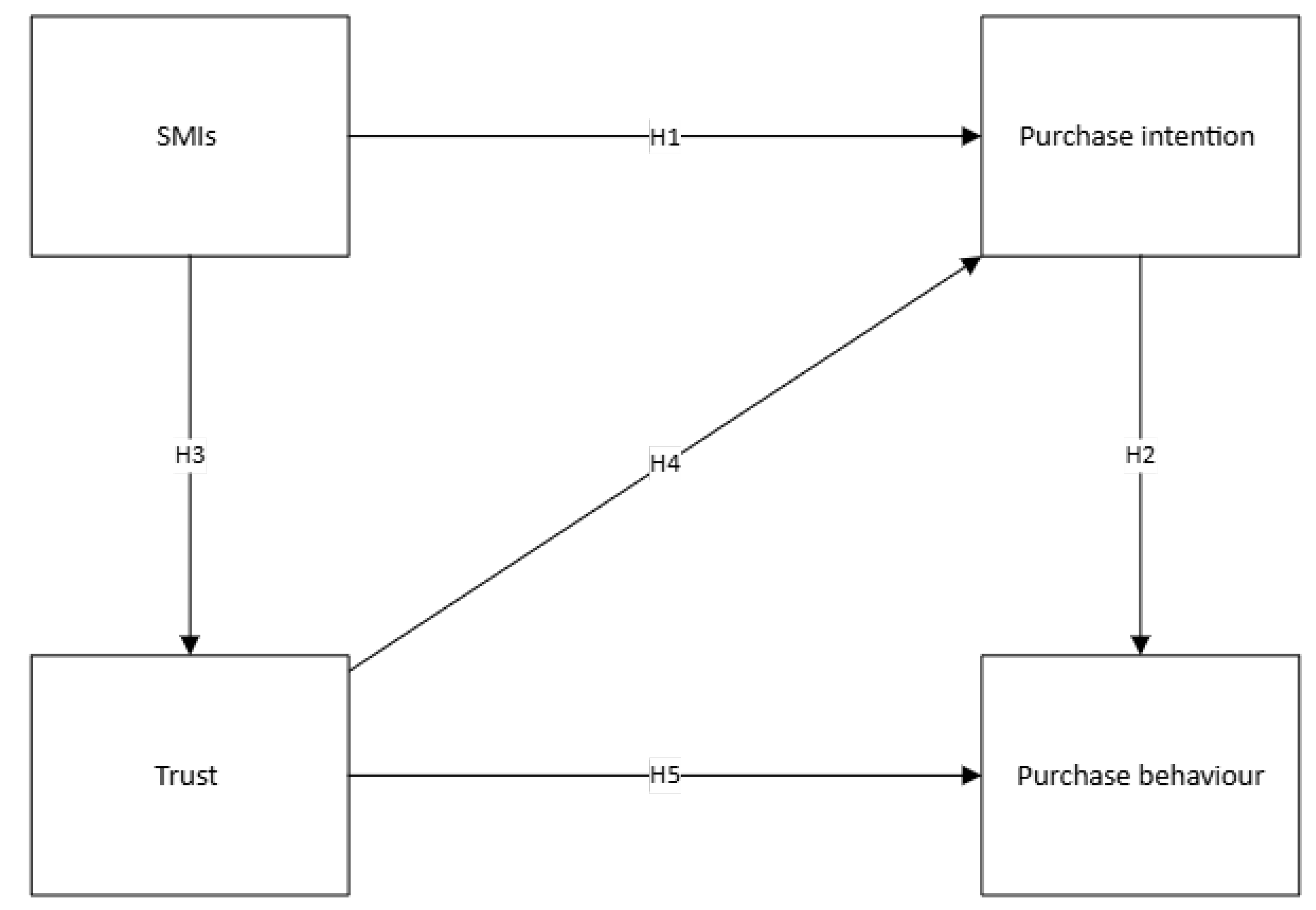

Table 1.
Construct definitions, descriptions, and theoretical underpinnings.
| Construct | Definition/description | Indicator | Measurement | Theoretical grounding/Source(s) |
| Social Media Influencers (SMIs) | Individuals who cultivate monetizable audiences through curated content, perceived expertise, and parasocial engagement. | SMI_1 | The influencer demonstrates expertise in their content niche. | [2,5,6,56] |
| SMI_2 | The influencer’s recommendations appear authentic and trustworthy. | |||
| SMI_3 | The influencer engages consistently with their audience. | |||
| Trust (in SMIs) (TR) | The consumer’s confidence in an influencer’s authenticity, honesty, and reliability. | TR_1 | I trust this influencer’s recommendations. | [1,18,19,57,58] |
| TR_2 | This influencer provides accurate information about products. | |||
| TR_3 | This influencer discloses sponsored content honestly. | |||
| Purchase Intention (PI) | The consumer’s likelihood of purchasing a product based on an SMI’s endorsement. | PI_1 | I would consider buying a product recommended by this influencer. | [2,28,56,59,60,61] |
| PI_2 | I am willing to pay a premium for products endorsed by this influencer. | |||
| PI_3 | I actively seek out products promoted by this influencer. | |||
| Actual Purchase (AP) | The consumer’s actual purchasing actions following exposure to SMI endorsements. | AP _1 | I have purchased a product after seeing an influencer promote it. | [28,59,62] |
| AP_2 | I use promo codes or affiliate links from influencers when shopping. | |||
| AP_3 | I revisit brands introduced to me by influencers. |
Table 2.
Demographic profile of the study sample.
| Age | Frequency | Percentage |
| 18-27 | 71 | 30.6% |
| 28-37 | 79 | 34.1% |
| 38-47 | 56 | 24.1% |
| 48-57 | 21 | 9.1% |
| 58-67 | 5 | 2.2% |
| Gender | ||
| Female | 112 | 48.3% |
| Male | 120 | 51.7% |
| Education | ||
| College or university | 121 | 52.2% |
| Higher or secondary or further education (A-levels, BTEC, etc.) | 25 | 10.8% |
| Postgraduate degree | 68 | 29.3% |
| Primary school | 6 | 2.6% |
| Secondary school up to 16 years | 12 | 5.2% |
| Occupation | ||
| Full-time employment | 116 | 50.0% |
| Part-time employment | 35 | 15.1% |
| Self-employed | 18 | 7.8% |
| Student | 57 | 24.6% |
| Unemployed | 6 | 2.6% |
| Income | ||
| 0 - 10,000 | 93 | 40.1% |
| 10,000 - 20,000 | 47 | 20.3% |
| 21,000 - 30,000 | 40 | 17.2% |
| 31,0,00 - 40,000 | 23 | 9.9% |
Table 3.
Construct reliability.
| Latent constructs | Cronbach’s alpha | Composite reliability (rho_a) | Composite reliability (rho_c) | The average variance extracted (AVE) |
| Actual purchase (AP) | 0.848 | 0.948 | 0.936 | 0.868 |
| Purchase intention (PI) | 0.899 | 0.904 | 0.937 | 0.833 |
| SMIs | 0.746 | 0.746 | 0.887 | 0.798 |
| Trust (TR) | 0.771 | 0.742 | 0.744 | 0.692 |
Table 4.
Results of discriminant validity (HTMT criterion).
| AP | PI | SMIs | TR | |
| AP | ||||
| PI | 0.725 | |||
| SMIs | 0.388 | 0.233 | ||
| TR | 0.126 | 0.054 | 0.114 |
Table 5.
Indicator loadings.
| AP | PI | SMIs | TR | |
| AP_1 | 0.95 | |||
| AP_2 | 0.961 | |||
| AP_3 | 0.815 | |||
| PI_1 | 0.388 | |||
| PI_2 | 0.937 | |||
| PI_3 | 0.439 | |||
| SMI_1 | 0.757 | |||
| SMI_2 | 0.576 | |||
| SMI_3 | 0.666 | |||
| TR_1 | 0.537 | |||
| TR_2 | 0.774 | |||
| TR_3 | 0.656 |
Table 6.
Structural estimates.
| Hypothesis | Paths | Original sample (O) | Sample mean (M) | Standard deviation (STDEV) | T statistics (|O/STDEV|) | P values | Conclusion |
| H1 | SMIs -> PI | 0.722 | 0.707 | 0.086 | 8.434 | 0 | Supported |
| H2 | SMIs -> AP | 0.112 | 0.1 | 0.091 | 1.233 | 0.218 | Rejected |
| H3 | SMIs -> TR | 0.819 | 0.824 | 0.034 | 23.986 | 0 | Supported |
| H4 | PI -> AP | 0.141 | 0.135 | 0.166 | 0.849 | 0.396 | Rejected |
| H5 | TR -> PI | -0.971 | -0.976 | 0.137 | 7.108 | 0 | Supported |
Disclaimer/Publisher’s Note: The statements, opinions and data contained in all publications are solely those of the individual author(s) and contributor(s) and not of MDPI and/or the editor(s). MDPI and/or the editor(s) disclaim responsibility for any injury to people or property resulting from any ideas, methods, instructions or products referred to in the content. |
© 2025 by the authors. Licensee MDPI, Basel, Switzerland. This article is an open access article distributed under the terms and conditions of the Creative Commons Attribution (CC BY) license (http://creativecommons.org/licenses/by/4.0/).
Copyright: This open access article is published under a Creative Commons CC BY 4.0 license, which permit the free download, distribution, and reuse, provided that the author and preprint are cited in any reuse.


