

Submitted:
07 April 2025
Posted:
08 April 2025
You are already at the latest version
Abstract
Rehabilitation of severely resorbed anterior alveolar ridges presents considerable challenges due to compromised esthetics and insufficient bone volume. Conventional implant placement often necessitates extensive bone augmentation procedures, increasing patient morbidity, treatment duration, and overall complexity. Therefore, basal cortical implants have been developed to use basal cortical bone anchorage, offering enhanced initial stability and reducing the need for additional bone grafting. The ARi® Implant System, a novel basal cortical implant, combines a uniquely optimized thread design with a nanostructured, calcium-incorporated XPEED® surface treatment to promote early osteoblastic activity, rapid bone-to-implant integration, and improved biomechanical stability. This report describes two clinical cases involving patients with significant anterior alveolar ridge defects. The ARi® Implant System was used with vascularized interpositional periosteal (VIP) flap techniques, synthetic bone grafting, and collagen membrane coverage to optimize ridge augmentation and soft tissue stability. Both patients showed successful outcomes with stable osseointegration, minimal marginal bone loss, and excellent esthetic integration at 2-year follow-ups. The treatment approach reduced surgical complexity and healing time while enhancing patient satisfaction. The ARi® Implant System demonstrates promising clinical efficacy in anterior ridge augmentation, providing stable, esthetically pleasing outcomes without extensive bone grafting. Further biomechanical and long-term studies are necessary to confirm these findings.
Keywords:
implants
; alveolar resorption
; alveolar ridge
; dental esthetics
1. Introduction
Esthetics and functionality are critical aspects of dental treatment, particularly in the anterior maxillary region, due to prominent visibility and substantial influence on patient self-esteem and social interactions [1]. Tooth loss in this region can significantly impact psychological well-being, emphasizing the importance of meticulous treatment planning and technical precision to satisfy high esthetic expectations compared to posterior restorations [2]. Consequently, restoring anterior teeth presents unique challenges, requiring careful consideration of esthetic harmony and functional recovery [3].
Implant placement has become a well-established and predictable method for rehabilitating missing teeth. However, achieving successful implant outcomes necessitates sufficient alveolar bone volume, defined as at least 13–15 mm in length and 5–7 mm in width [4]. In cases where these criteria are unmet due to severe alveolar ridge resorption, additional surgical procedures such as sinus augmentation, extensive bone grafting, and nerve lateralization may be indicated [5]. Such advanced surgical interventions add complexity to the treatment process and increase patient morbidity, cost, and the overall duration of rehabilitation, potentially limiting patient accessibility to effective care.
Conventional implant treatments, therefore, frequently present clinical challenges, particularly in scenarios involving significant bone atrophy and compromised soft tissue conditions. The need for extensive bone grafting and guided bone regeneration (GBR) procedures in these situations increases the risk of complications, prolongs treatment timelines, and contributes to patient discomfort [5,6,7]. Studies have emphasized that GBR techniques for vertical ridge augmentation generally require prolonged healing, often exceeding six months before implant placement, further complicating the clinical management of severely resorbed alveolar ridges [8,9].
Therefore, basal cortical implants were introduced, specifically designed to achieve stable anchorage in dense basal cortical bone rather than relying on alveolar cancellous bone [10]. Basal cortical bone possesses inherent structural resilience, higher mineral density, and resistance to resorption, providing robust and predictable implant anchorage even in severely compromised alveolar ridge conditions [11]. The basal cortical implant (BCI) system has evolved substantially over several decades, leading to significant enhancements in design and functionality. The first single-piece basal implant was introduced by Dr. Jean-Marc Julliet in 1972, followed by the development of the disk implant system by Dr. Gerard Scortecci in the 1980s [12]. Subsequently, advancements made by Dr. Stefan Ihde further refined basal osseointegrated implants (BOIs), optimizing their ability to efficiently transmit occlusal forces through cortical bone and reduce marginal bone stress [12].
The ARi® Implant System has emerged as an effective basal cortical implant designed to address severe ridge atrophy in esthetically critical regions such as the anterior maxilla and mandible (Figure 1).
The overall structure of the ARi® Implant System consists of two primary components: a threaded implant body, which achieves anchorage in basal cortical bone, and the Magic Cuff®, which facilitates abutment connection. The implant body features sharp, curved threads designed to enhance mechanical stability by achieving anchorage in basal cortical bone. This thread design maximizes initial fixation strength upon insertion, significantly reducing the necessity for extensive bone augmentation procedures in patients with compromised alveolar bone. The ARi® implant surface incorporates a nanostructured, calcium-incorporated surface treatment known as XPEED® [13,14,15]. This advanced coating significantly enhances early osteoblastic activity, accelerates apatite formation, and promotes rapid bone-to-implant bonding. The XPEED® surface demonstrates superior biological responses, including improved osteoblast proliferation, viability, and differentiation, ultimately resulting in enhanced bone-to-implant contact (BIC) and higher implant stability. Moreover, implants treated with the XPEED® coating exhibit higher removal torque values, indicative of superior mechanical integration with the surrounding bone, and promote more homogeneous and densely mineralized bone deposition [13,14]. The ARi® implant also includes the Magic Cuff®, an intermediary connection designed to ensure stable and reliable soft tissue support while minimizing pressure on the alveolar ridge. This slender, cylindrical connection is characterized by a smooth surface analogous to the machined collar of gingival-level implants to enhance peri-implant soft tissue stability and minimize mucosal complications. Consequently, the ARi® Implant System, with its unique basal anchorage capability, optimized thread design, and advanced XPEED® surface treatment, represents an innovative and clinically advantageous solution for anterior and severely resorbed alveolar ridges, combining biomechanical reliability, enhanced osseointegration, and superior esthetic outcomes.
Despite these advantageous structural and biological characteristics, clinical case reports detailing the practical efficacy and clinical outcomes of the ARi® Implant System remain limited. This scarcity of documented clinical cases underscores the necessity for further research to validate and substantiate the clinical effectiveness of the ARi® Implant in various complex clinical scenarios. Therefore, this study aims to evaluate the applicability and efficacy of basal cortical implants through a case report involving restoration in the anterior region. Specifically, it highlights the potential of the newly developed ARi® Implant System as an efficient solution for thin ridge cases, emphasizing its advantages over conventional methods. The findings of this study aim to provide practical guidelines for the future of anterior restorations, particularly in esthetically demanding cases.
2. Case Reports
2.1. Case Report 1
A 58-year-old male patient reported to Mir Dental Hospital at Daegu with missing maxillary central incisors (teeth #11 and #21). The patient was a heavy smoker but had no significant systemic conditions. He revealed that he lost his teeth three months ago due to periodontal disease. Intraoral examination confirmed the absence of teeth #11 and #21. Figures 2a and 2b illustrate the clinical presentation at the initial visit, demonstrating the absence of maxillary central incisors (teeth #11 and #21). The preoperative intraoral view revealed severe alveolar ridge resorption, indicative of substantial bone loss, with distinct U-shaped gingival recession in the affected area. Radiographic evaluations, including cone-beam computed tomography (CBCT) and comprehensive clinical examinations, were conducted to assess the extent of bone loss and optimize treatment planning. A panoramic radiograph revealed generalized poor periodontal health (Figure 2c), with notable horizontal alveolar bone loss and vertical bone defects in the edentulous region. Significant labial alveolar bone loss was observed in the anterior maxilla. In particular, tooth #22 exhibited severe mesial alveolar bone loss (Figure 2d).
The patient requested implant placement for the immediate restoration of missing teeth. Various treatment options were discussed to optimize the esthetic and functional aspects of the anterior region. Based on clinical findings, it was preliminarily determined that an endosteal implant would be placed at the site of tooth #11. Due to significant alveolar bone resorption, extraction of tooth #22 was planned, followed by the placement of an ARi® Implant to achieve stable cortical bone anchorage. The treatment plan included soft tissue management with synthetic bone grafting to compensate for excessive labial bone loss in the anterior region, enhancing structural integrity and esthetic outcomes.
Figures 3a and 3b show the edentulous anterior region on the day of implant placement. This image was taken three months after the initial visit, during which significant soft tissue healing had occurred. Compared to Figures 2a and 12, the gingival condition had improved due to hygiene care over three months. Although implant placement was not particularly challenging, the primary concern was managing papillary recession of the adjacent teeth and the ridge depression between the two central incisors. Figure 3c shows the panoramic radiograph taken three months after establishing the treatment plan. During this period, posterior tooth extractions were performed, and implant placement in the posterior region was planned simultaneously with anterior implant placement. The extracted posterior teeth included #16, #17, #26, #27, #36, #37, #46, and #47. However, this case report focuses exclusively on anterior implant treatment. Figure 3d illustrates the reduced ridge width in the anterior region. To minimize the need for bone grafting, an ARi® Implant was selected for tooth #22 to maximize cortical bone anchorage and reduce the risk of implant exposure. Significant buccal alveolar bone resorption was observed in the anterior region, and the alveolar ridge was notably thin.
At the initial visit, panoramic radiographs and CBCT images revealed extensive mesial bone loss in tooth #22. Before surgery, tooth #22, which exhibited severe mobility, was strategically extracted (Figure 4a). The surgical approach for implant placement comprised bone grafting and the vascularized interpositional periosteal (VIP) flap technique. After intraoral and radiographic examinations, the patient underwent scaling before implant placement. The patient was prescribed an antibiotic prophylaxis regimen consisting of 500 mg of amoxicillin sodium (Augmentin; Ilsung Pharmaceutical, Seoul, Republic of Korea) three times daily, starting one day before surgery and continuing for seven days postoperatively.
Local anesthesia was administered with 2% lidocaine containing 1:100,000 epinephrine (Yuhan, Seoul, Korea). The infraorbital nerve was anesthetized, and an additional nerve block was performed on the superior alveolar nerve. Soft tissue management was performed simultaneously during implant placement at #11 and #22. After extracting tooth #22, the VIP flap procedure was initiated with an incision starting from the maxillary left second premolar. The incision line was placed approximately 3 mm from the marginal gingiva at a depth of about 1 mm. Additionally, an incision was extended palatally in the anterior pontic region. Clinical examination of the extraction socket at #22 revealed extensive mesial bone loss, exposing a significant portion of the underlying bone (Figure 4b).
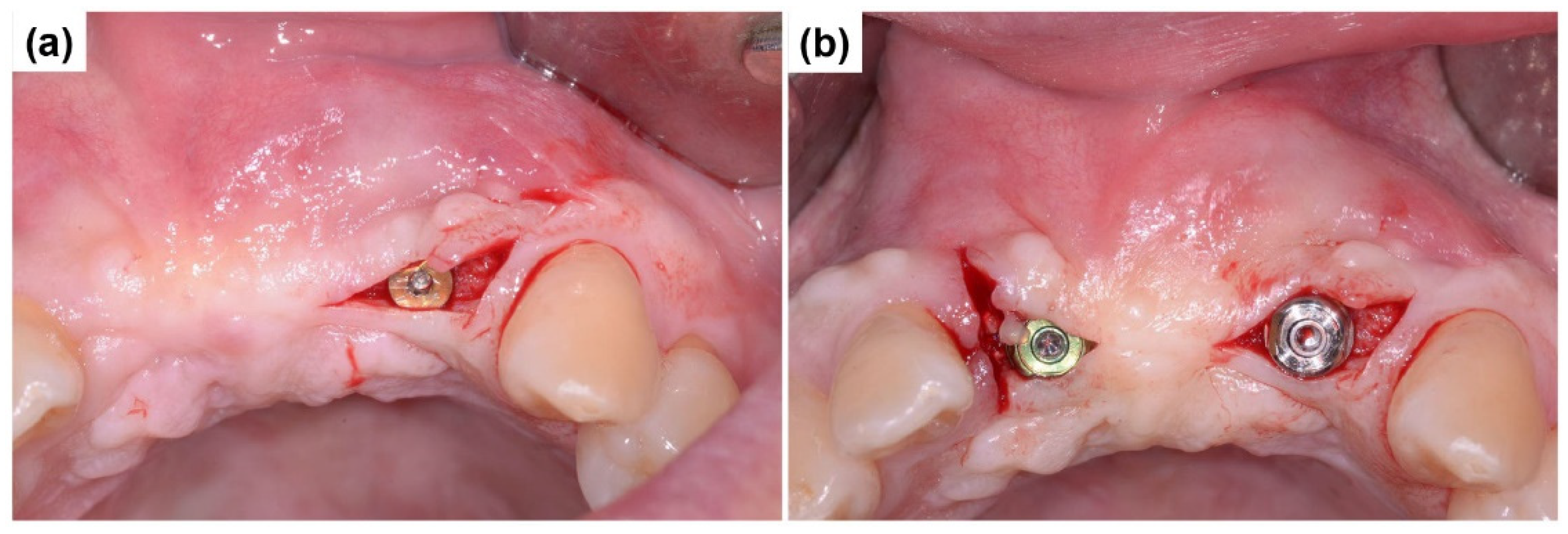
The central incisor (#11) had a fully healed extraction socket, allowing conventional endosteal implant placement using a standard protocol (Figure 5a). In contrast, tooth #22 exhibited a substantial discrepancy between mesial and distal bone levels with a thin labial bone plate. The ARi® Implant System was selected for placement to accommodate potential socket remodeling and enhance primary stability (Figure 5b). There is an increased likelihood of implant thread exposure on the mesial aspect where conventional implant systems are used in patients with significant alveolar bone loss, often necessitating complex guided bone regeneration (GBR) procedures to achieve adequate defect coverage. Previous studies have indicated that achieving complete vertical bone regeneration in similar soft and hard tissue conditions requires a minimum of 5–6 months, accompanied by extensive GBR procedures [16,17]. The ARi® Implant System effectively addresses these concerns using basal cortical bone for enhanced anchorage. A 4.1 × 10.0 mm implant (Blue Diamond implant, MEGAGEN Implant Co., Ltd., Daegu, Republic of Korea) was placed for tooth #11. A 4.0 × 9.0 mm implant (ARi® Implant, MEGAGEN Implant Co., Ltd., Daegu, Republic of Korea) was inserted for tooth #22 (Figure 5c). Both implants exhibited satisfactory primary stability, with an initial fixation torque of 40 N/cm² at the time of placement. Primary closure was achieved in the subsequent phase to optimize healing and soft tissue contour (Figure 5d).
Next, the primary objective was to restore the overall ridge contour. As the remaining anterior soft tissue alone was inadequate for additional ridge augmentation, a vascularized interpositional periosteal (VIP) flap was used by rotating palatal connective tissue. The VIP flap technique is particularly beneficial in cases requiring effective soft tissue augmentation. Figure 6a illustrates the flap design during the VIP flap procedure. The rotational range of the flap was assessed to ensure adequate mobility for proper positioning and fixation. Bone Matrix I grafting was incorporated to enhance the volumetric stability of the ridge, allowing for secure flap positioning with sufficient mobility (Figure 6b). A 3 mm-height healing abutment was connected to the Blue Diamond implant placed at #11, functioning as a vertical soft tissue scaffold to support gingival contour during healing. Next, a biphasic calcium phosphate (BCP) graft (Bone Matrix I, MEGAGEN Implant Co., Ltd., Daegu, Republic of Korea) was applied to establish a smooth ridge crest (Figure 6c). A Lyoplant collagen membrane (Lyoplant, Aesculap AG, Tuttlingen, Germany) was carefully positioned over the grafted area to prevent graft particle displacement and promote stabilization (Figure 6d).
After securing the membrane and placing the bone graft, the flap was repositioned passively to avoid tension. Primary closure was achieved using 4-0 Vicryl sutures (Dafilon; B. Braun Melsungen AG, Melsungen, Germany). Simple interrupted sutures were placed along the incision line on the alveolar ridge and at the interdental papillae adjacent to the surgical site (Figures 7a and 7b). Figure 7c presents a postoperative radiograph of the anterior region following implant placement, demonstrating the final positioning of the implants. Long-term stability and successful osseointegration can be expected with favorable wound healing.
Figure 8a illustrates the soft tissue healing progression three weeks postoperatively. Compared to the mesial aspect of the #23 canine, which maintained healthy proximal tissue, the mesial proximal tissue of the #12 lateral incisor exhibited recession, probably due to prior root contamination from periodontitis. However, the vertical depression in the central incisor region showed successful recovery, resulting in a smooth gingival contour. Figure 8b presents intraoral clinical and radiographic images obtained three months after implant surgery, demonstrating well-stabilized soft tissue healing. The images indicate progressive adaptation of peri-implant tissues, suggesting favorable healing outcomes at three months postoperatively.
During the secondary surgery, a three-corner flap was carefully formed (Figure. 9a) to provide adequate access to the implant sites while preserving peri-implant soft tissues. Following flap elevation, scannable healing abutments were placed (Figure. 9b) to promote optimal soft tissue healing and enable precise digital impression-taking for subsequent prosthetic rehabilitation.
Figure 9.
Three-corner flap formation and placement of scannable healing abutments during secondary surgery. (A) Formation of a three-corner flap to provide adequate access while preserving peri-implant soft tissue during secondary surgery. (B) Following flap elevation, scannable healing abutments were placed to promote soft tissue healing and enable precise digital impression-taking for prosthetic rehabilitation.
Figure 9.
Three-corner flap formation and placement of scannable healing abutments during secondary surgery. (A) Formation of a three-corner flap to provide adequate access while preserving peri-implant soft tissue during secondary surgery. (B) Following flap elevation, scannable healing abutments were placed to promote soft tissue healing and enable precise digital impression-taking for prosthetic rehabilitation.
One month after the secondary surgery, the gingival healing status was evaluated, and customized abutments were fabricated and connected to the implants (Figure 10a). Subsequently, a PMMA (polymethylmethacrylate) temporary crown was fabricated, and the provisional prosthesis was attached to the customized abutments using temporary cement (Figure 10b). Due to incomplete gingival maturation, the final prosthesis placement was postponed to promote optimal soft tissue integration and contour stabilization. Figure 10c shows the final prosthesis placement following the removal of the provisional restoration. Esthetic concerns, specifically mesial papillary recession at the right lateral incisor, were observed, resulting in compromised gingival harmony and papillary contour. Following a discussion with the patient, laminate veneer treatment was proposed to improve papillary esthetics and harmonize the anterior dentition (Figure 10d). Although the crown length of the left lateral incisor appeared slightly shorter, the patient expressed satisfaction with the overall outcome, and a follow-up plan was established. Despite initial concerns regarding gingival contour irregularities and alveolar bone deficiencies, a functionally and esthetically stable outcome was achieved, demonstrating the efficacy of the applied treatment approach.
As part of the patient's ongoing maintenance therapy, follow-up examinations were conducted every six months with routine dental plaque control. When required, additional periodontal treatment was provided during subsequent visits. Annual panoramic radiographs were taken to monitor the long-term prognosis of the implant. At the two-year follow-up, the implant prosthesis remained well-maintained and functionally stable within the oral cavity (Figure 11).
2.2. Case Report 2
A 50-year-old male patient reported to the Mir Dental Hospital at Daegu without tooth #11. The patient stated that tooth #11 was lost to periodontal disease approximately five months before his visit. He was a non-smoker and had no significant systemic conditions. Intraoral examination confirmed the extraction site of tooth #11 (Figure 12a). Clinical inspection revealed severe alveolar bone loss around the apex of the missing tooth #11. The patient expressed concerns regarding the color and morphology of teeth #21 and #22, requesting esthetic improvements. Consequently, the treatment plan was expanded to include new prosthetic restorations for teeth #21 and #22 (Figure 12b). Figure 11c shows the initial panoramic radiograph, illustrating the patient's overall periodontal condition and alveolar bone status.
After intraoral and radiographic examinations, the patient underwent scaling before implant placement. The patient was prescribed an antibiotic prophylaxis regimen consisting of 500 mg of amoxicillin sodium (Augmentin; Ilsung Pharmaceutical, Seoul, Republic of Korea) three times daily, starting one day before surgery and continuing for seven days postoperatively. The surgery was performed under local anesthesia using lignocaine 2% with noradrenaline.
Figure 13a illustrates the elevation of a full-thickness mucoperiosteal flap for implant placement at the #11 site. Vertical releasing incisions were made at the line angles of the adjacent teeth, along with a crevicular incision, while preserving the interdental papilla. A severe socket wall defect was observed in the buccal alveolar bone at the extracted #11 site. Additional debridement was performed using hand instruments to remove granulation tissue, preparing the site for implant placement. Due to substantial labial bone loss, an ARi® Implant was selected to achieve primary stability through basal bone engagement. A 4.1 × 10.0 mm implant (ARi® Implant, MEGAGEN Implant Co., Ltd., Daegu, Republic of Korea) was placed at the site (#11) with the proper initial fixation torque of 40 N/cm2. Figure 13b shows labial bone augmentation using a synthetic bone graft substitute to enhance ridge volume and structural support. A Lyoplant collagen membrane (Lyoplant, Aesculap AG, Tuttlingen, Germany) was carefully positioned over the grafted area to prevent graft particle displacement and promote stabilization (Figure 13c). After thorough saline irrigation, the mucoperiosteal flap was repositioned and primarily closed using interrupted 4-0 nylon sutures (Figure 13d). Figure 13e presents the postoperative radiograph of the anterior region, confirming the final positioning of the implant. Favorable healing was expected, supporting long-term stability and successful osseointegration. After a sufficient healing period of 3 months, it was decided to start the prosthetic treatment procedure.
Three months after the surgery, the gingival healing status was evaluated, and customized abutments were fabricated and connected to the implants (Figure 14a). Subsequently, a PMMA (polymethylmethacrylate) temporary crown was fabricated, and the provisional prosthesis was attached to the customized abutments using temporary cement (Figure 14b).
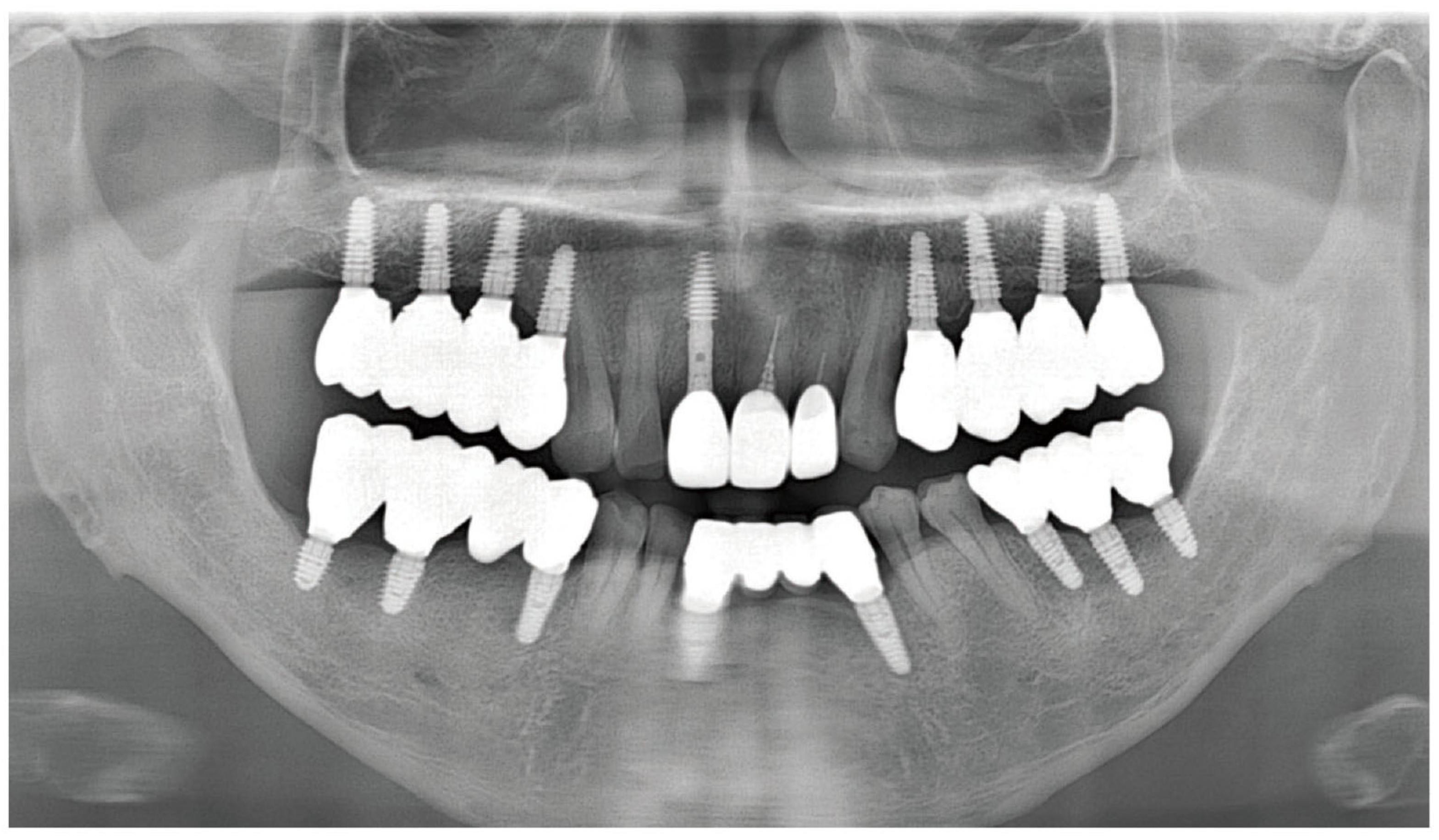
This patient received the same periodontal maintenance protocol as case 1. The 2-year follow-up examination revealed that the implant prosthesis was successfully maintained (Figure 15).
3. Results and Discussion
The present case series highlights the clinical efficacy of the ARi® Implant System as a minimally invasive and predictable alternative for anterior ridge augmentation, especially in severely atrophic alveolar ridge cases. Implant placement in the anterior maxillary region traditionally poses significant challenges, demanding meticulous treatment planning due to stringent esthetic considerations and frequently compromised alveolar bone conditions [16]. Conventional implant treatment modalities often necessitate substantial bone grafting procedures, including guided bone regeneration (GBR), to achieve sufficient alveolar volume, thereby substantially increasing surgical complexity, morbidity, patient discomfort, and overall treatment duration [17,18]. Buser et al. emphasized that GBR procedures for vertical ridge augmentation require extended healing periods, typically exceeding six months, before implant placement [17]. Similarly, Simion et al. reported that severely compromised sites frequently necessitate prolonged treatment times and complex surgical interventions, elevating patient morbidity and potentially compromising overall success rates [18].
Therefore, basal cortical implants were introduced and designed to engage stable basal cortical bone rather than the alveolar cancellous bone. The basal cortical bone exhibits inherent structural resilience and resistance to resorption, offering robust and predictable anchorage, even in severe ridge resorption or compromised bone quality [9,19,20]. In the current case series, the ARi® Implant System successfully used basal cortical bone anchorage, effectively managing complex anatomical challenges, including severe horizontal and vertical bone discrepancies and substantial buccal alveolar bone resorption. By leveraging basal cortical bone engagement, the system significantly minimized the need for extensive bone grafting, reducing surgical complexity and the overall duration of treatment.
Biomechanical advantages inherent to basal cortical implants have been extensively documented. Specifically, basal implants demonstrate an efficient distribution of occlusal forces, effectively mitigating stress concentration at the crestal bone, thereby reducing marginal bone loss and maintaining long-term peri-implant stability [21,22]. Finite element analysis (FEA) and biomechanical studies have consistently shown that basal implants exhibit superior stress distribution characteristics compared to traditional endosteal implants due to their cortical anchorage properties. Such biomechanical advantages directly correlate with improved clinical longevity and predictability, particularly under functional loading conditions where conventional implants may fail to sustain adequate stability without extensive augmentation procedures [23,24]. These findings corroborate previous studies, underscoring the biomechanical benefits inherent to the ARi® Implant’s macro-design, characterized by deep threads tailored for optimal cortical anchorage.
One notable clinical benefit demonstrated in the present study was the reduced necessity for extensive GBR procedures. Traditional implant placement in severely atrophic anterior regions frequently necessitates complex bone augmentation techniques involving autogenous bone grafts, particulate bone graft substitutes, and barrier membranes. These techniques involve prolonged healing durations and elevated risks for complications such as graft infection, membrane exposure, and graft resorption [24,25]. Conversely, the ARi® Implant System minimized these complexities, achieving immediate primary stability through direct cortical anchorage. These findings align with previous studies, including research by Garg et al. [9], which demonstrated high survival rates of basal implants even in severely compromised alveolar bone conditions [24,26]. Furthermore, a study evaluating the successful application of basal implants in traumatic alveolar ridges of the maxilla and mandible involved the placement of 30 implants in 11 patients. This study reported favorable clinical outcomes at the six-month follow-up, demonstrating significant improvements in pain reduction, soft tissue health, and patient satisfaction [27].
The present cases further incorporated the vascularized interpositional periosteal (VIP) flap technique, combined with biphasic calcium phosphate (BCP) grafting and collagen membrane coverage, markedly enhancing the soft tissue contours and ridge profile regeneration. The VIP flap technique provided reliable long-term soft tissue stability and contributed to favorable esthetic outcomes, consistent with previous studies indicating its effectiveness in esthetic zone augmentations [27,28]. However, despite achieving generally favorable esthetic outcomes, managing peri-implant papillary recession remains challenging, underscoring the need for continued research and refinement of soft tissue augmentation protocols. Esthetic considerations were another crucial aspect of this case. The anterior region poses unique challenges due to high esthetic demands, requiring precise management of soft tissue contours [29]. Soft tissue augmentation protocol with a well-adapted prosthetic approach led to a successful functional and esthetic outcome [30]. However, papillary recession in the lateral incisor remained a concern, highlighting the need for further refinement in soft tissue preservation techniques. Future studies should explore the long-term soft tissue behavior around basal implants and potential adjunctive procedures to optimize peri-implant tissue stability [31].
This study had some limitations. First, although the presented cases demonstrated favorable clinical outcomes over a 2-year follow-up period, the small sample size limited the generalizability of the findings. Larger-scale prospective clinical trials are essential to establish the clinical efficacy and long-term predictability of the ARi® Implant System. Moreover, incorporating quantitative biomechanical evaluations, such as finite element analysis (FEA), would enhance our understanding of stress distribution patterns under functional loading conditions, including parameters such as occlusal force magnitude, loading direction, cortical bone thickness, and implant geometry, thus providing deeper insight into long-term implant stability.
In conclusion, the ARi® Implant System provides a clinically promising, minimally invasive approach for rehabilitating severely resorbed anterior ridges, particularly in challenging cases with limited alveolar bone availability. Its unique utilization of basal cortical bone anchorage eliminates the need for extensive GBR, reduces surgical complexity, shortens treatment duration, and provides robust primary implant stability. Coupled with adjunctive techniques, such as the VIP flap procedure and biphasic calcium phosphate (BCP) grafting, the system enhances ridge contour and soft tissue management and delivers predictable functional and esthetic outcomes. Future studies focusing on long-term peri-implant tissue responses, comprehensive biomechanical analyses, and comparative studies against conventional implant techniques are warranted to validate and expand the clinical applicability of this innovative implant approach.
4. Conclusions
The ARi® Implant System represents an effective, minimally invasive solution for rehabilitating severely resorbed anterior alveolar ridges. Its design capitalizes on basal cortical bone anchorage, significantly reducing the necessity for extensive bone augmentation procedures and thus decreasing surgical complexity and treatment duration. Combining the VIP flap and BCP grafting techniques improved soft tissue stability and ridge contour, leading to predictable functional and esthetic outcomes. Despite initial concerns regarding peri-implant papillary recession, stable results were maintained at the two-year follow-up. Future studies with larger sample sizes, long follow-up periods, and comprehensive biomechanical analyses, including finite element analysis, are warranted to confirm the long-term clinical efficacy and broaden the applicability of this innovative implant approach.
Author Contributions
Conceptualization: K.B.P. and M.-H.H.; methodology: K.B.P and H.-W.A.; software: K.O.P. and M.-H.H.; formal analysis: K.B.P and H.-W.A..; investigation: K.O.P. and M.-H.H.; data curation: K.B.P. and H.-W.A.; writing—original draft preparation: K.B.P. and M.-H.H.; writing—review and editing: H.-W.A. and M.-H.H.; supervision: K.O.P. and K.B.P.; funding acquisition: M.-H.H. All authors have read and agreed to the published version of the manuscript.
Funding
This research and the article processing charge (APC) were funded by the Catholic University of Pusan Research Fund (2025).
Institutional Review Board Statement
The study was reviewed and approved by the Institutional Review Board (IRB) of the Catholic University of Pusan (IRB No.: CR-23-016).
Informed Consent Statement
All patients were thoroughly informed about the procedures and signed an informed consent form.
Data Availability Statement
No new data were created or analyzed in this study.
Acknowledgments
The authors acknowledge MegaGen implant Co., Ltd., Daegu, Korea, for their support in delivering this case report and accompanying images used in this study.
Conflicts of Interest
The authors declare no conflict of interest.
References
- Chen, P.; Yu, S.; Zhu, G. The psychosocial impacts of implantation on the dental aesthetics of missing anterior teeth patients. Br. Dent. J. 2012, 213(11). [Google Scholar] [CrossRef] [PubMed]
- Pithon, M.M.; Nascimento, C.C.; Barbosa, G.C.G.; Coqueiro, R.S. Do dental esthetics have any influence on finding a job? Am. J. Orthod. Dentofacial. Orthop. 2014, 146, 423–429. [Google Scholar] [CrossRef] [PubMed]
- Boardman, N.; Darby, I.; Chen, S. A retrospective evaluation of aesthetic outcomes for single-tooth implants in the anterior maxilla. Clin. Oral. Implants. Res. 2016, 27, 443–451. [Google Scholar] [CrossRef]
- Gupta, A.D.; Verma, A.; Dubey, T.; Thakur, S. Basal osseointegrated implants: classification and review. Int. J. Contemp. Med. Res. 2017, 4, 2329–2335. [Google Scholar]
- Patel, K.; Madan, S.; Mehta, D.; Shah, S. P.; Trivedi, V.; Seta, H. Basal implants: An asset for rehabilitation of atrophied resorbed maxillary and mandibular jaw–A prospective study. Ann. Maxillofac. Surg. 2021, 11, 64–69. [Google Scholar]
- Chiapasco, M.; Casentini, P.; Zaniboni, M. Bone augmentation procedures in implant dentistry. Int. J. Oral. Maxillofac Implants. 2009, 24, 237–259. [Google Scholar]
- Titsinides, S.; Agrogiannis, G.; Karatzas, T. Bone grafting materials in dentoalveolar reconstruction: A comprehensive review. Jpn. Dent. Sci. Rev. 2019, 55, 26–32. [Google Scholar] [CrossRef] [PubMed]
- Rispoli, L.; Fontana, F.; Beretta, M.; Poggio, C. E.; Maiorana, C. Surgery guidelines for barrier membranes in guided bone regeneration (GBR). J. Otolaryngol. Rhinol. 2015, 1, 1–8. [Google Scholar]
- Garg, R.; Mishra, N.; Alexander, M.; Gupta, S.K. Implant survival between endo-osseous dental implants in immediate loading, delayed loading, and basal immediate loading dental implants a 3-year follow-up. Ann. Maxillofac. Surg. 2017, 7, 237–244. [Google Scholar] [CrossRef]
- Roccuzzo, M.; Savoini, M.; Dalmasso, P.; Ramieri, G. Long-term outcomes of implants placed after vertical alveolar ridge augmentation in partially edentulous patients: A 10-year prospective clinical study. Clin. Oral. Implants. Res. 2017, 28, 1204–1210. [Google Scholar] [CrossRef]
- Vishnu, V.A.; Sanyal, P.K.; Tewary, S.; Nilesh, K.; Prasad, R.M.S.; Pawashe, K. A split-mouth clinico-radiographic comparative study for evaluation of crestal bone and peri-implant soft tissues in immediately loaded implants with and without platelet-rich plasma bioactivation. J. Dent. Res. Dent. Clin. Dent. Prospects. 2019, 13, 117–122. [Google Scholar] [CrossRef]
- Kumar, K.; Kumar, S.; Singh, R.; Vaibhav, V.; Kedia, N.B.; Singh, A.K. Basal implants-A new era of prosthodontic dentistry. IP. Ann. Prosthodont. Restor. Dent. 2020, 6, 1–3. [Google Scholar] [CrossRef]
- Yang, K.R.; Hong, M.H. Improved biocompatibility and osseointegration of nanostructured calcium-incorporated titanium implant surface treatment (XPEED®). Materials. 2024, 17, 2707. [Google Scholar] [CrossRef]
- Makary, C.; Menhall, A.; Lahoud, P.; Yang, K.R.; Park, K.B.; Razukevicius, D.; Traini, T. Bone-to-implant contact in implants with plasma-treated nanostructured calcium-incorporated surface (XPEEDActive) compared to non-plasma-treated implants (XPEED): a human histologic study at 4 weeks. Materials. 2024, 17, 2331. [Google Scholar] [CrossRef] [PubMed]
- Makary, C.; Menhall, A.; Lahoud, P.; An, H.W.; Park, K.B.; Traini, T. Nanostructured calcium-incorporated surface compared to machined and SLA dental implants—A split-mouth randomized case/double-control histological human study. Nanomaterials. 2023, 13, 357. [Google Scholar] [CrossRef]
- Sanz-Sánchez, I.; Sanz-Martín, I.; Ortiz-Vigón, A.; Molina, A.; Sanz, M. Complications in bone-grafting procedures: classification and management. Periodontol. 2000. 2022, 88, 86–102. [Google Scholar] [CrossRef] [PubMed]
- Buser, D.; Ingimarsson, S.; Dula, K.; Lussi, A.; Hirt, H.P.; Belser, U.C. Long-term stability of osseointegrated implants in augmented bone: a 5-year prospective study in partially edentulous patients. Int. J. Periodontics. Restorative. Dent. 2002, 22, 109–117. [Google Scholar]
- Simion, M.; Fontana, F.; Rasperini, G.; Maiorana, C. Vertical ridge augmentation by expanded-polytetrafluoroethylene membrane and a combination of intraoral autogenous bone graft and deproteinized anorganic bovine bone (Bio Oss). Clin. Oral. Implants. Res. 2007, 18, 620–629. [Google Scholar] [CrossRef]
- Gosai, H.; Anchlia, S.; Patel, K.; Bhatt, U.; Chaudhari, P.; Garg, N. Versatility of basal cortical screw implants with immediate functional loading. Journal of Maxillofacial and Oral Surgery. J. Maxillofac. Oral. Surg. 2022, 21, 824–832. [Google Scholar] [CrossRef] [PubMed]
- Albrektsson, T.; Johansson, C. Osteoinduction, osteoconduction and osseointegration. Eur. Spine. J. 2001, 10 (Suppl 2), S96–S101. [Google Scholar]
- Roy, A.K.; Dixit, N.; Punde, P.; Sinha, K.T.; Jalaluddin, M.; Kumar, A. Stress distribution in cortical bone around the basal implant–A finite element analysis. J. Pharm. Bioallied. Sci. 2021, 13 (Suppl 1), S633–S636. [Google Scholar] [CrossRef] [PubMed]
- Ali, S.M.; Othman, K.S.; Samad, A.A.; Mahmud, P.K. Comparison between basal and conventional implants as a treatment modality in atrophied ridges. J. Dent. Implant. Res. 2019, 38, 48–54. [Google Scholar]
- Chrcanovic, B.R.; Albrektsson, T.; Wennerberg, A. Bone quality and quantity and dental implant failure: A systematic re-view and meta-analysis. Int. J. Prosthodont. 2017, 30, 219–237. [Google Scholar] [CrossRef]
- Beri, A.; Pisulkar, S.G.; Bansod, A.; Shrivastava, A.; Jain, R.; Deshmukh, S. Rapid smile restoration: basal implants for the edentulous mandible with immediate loading. Cureus. 2024, 16, e62655. [Google Scholar] [CrossRef]
- Ghalaut, P.; Shekhawat, H.; Meena, B. Full-mouth rehabilitation with immediate loading basal implants: A case report. Na-tl. J. Maxillofac. Surg 2019, 10, 91–94. [Google Scholar]
- Ali, S.M.; Mahmud, P.K.; Othman, K.S.; Samad, A.A. Single piece dental implant: A remedy for atrophic ridges. Int. J. Otolaryngol. Head. Neck. Surg. 2019, 8, 271–282. [Google Scholar] [CrossRef]
- Mitra, G.V.; Agrawal, N.; Shukla, N.; Aishwarya, K.; Ponnamma, C.C.; Raj, A. An evaluation of the efficacy and acceptabil-ity of basal implants in traumatically deficient ridges of the maxilla and the mandible. Cureus 2023, 15, e43443. [Google Scholar] [CrossRef]
- Agarwal, C.; Deora, S.; Abraham, D.; Gaba, R.; Kumar, B.T.; Kudva, P. Vascularized interpositional periosteal connective tissue flap: A modern approach to augment soft tissue. J. Indian. Soc. Periodontol. 2015, 19, 72–77. [Google Scholar] [CrossRef]
- Ioannou, A.L.; Kotsakis, G.A.; McHale, M.G.; Lareau, D.E.; Hinrichs, J.E.; Romanos, G.E. Soft tissue surgical procedures for optimizing anterior implant esthetics. Int J. Dent. 2015, 2015, 740764. [Google Scholar] [CrossRef]
- Atri, F.; Nokar, K. Prosthetic Soft tissue management in esthetic implant restorations, Part I: Presurgical planning, implant placement, and restoration timing. A narrative review. Clin. Exp. Dent. Res. 2024, 10, e900. [Google Scholar] [CrossRef]
- Uccioli, U.; Fonzar, A.; Lanzuolo, S.; Meloni, S.M.; Lumbau, A.I.; Cicciù, M.; Tallarico, M. Tissue recession around a dental implant in anterior maxilla: How to manage soft tissue when things go wrong? Prosthesis. 2021, 3, 209–220. [Google Scholar] [CrossRef]
Figure 1.
Overall structure of the ARi® Implant. The implant comprises three main components: a threaded body at the lower portion, a cuff in the middle, and a connection at the upper portion. The cuff features a micro-groove designed to facilitate soft tissue stability and integration.
Figure 1.
Overall structure of the ARi® Implant. The implant comprises three main components: a threaded body at the lower portion, a cuff in the middle, and a connection at the upper portion. The cuff features a micro-groove designed to facilitate soft tissue stability and integration.
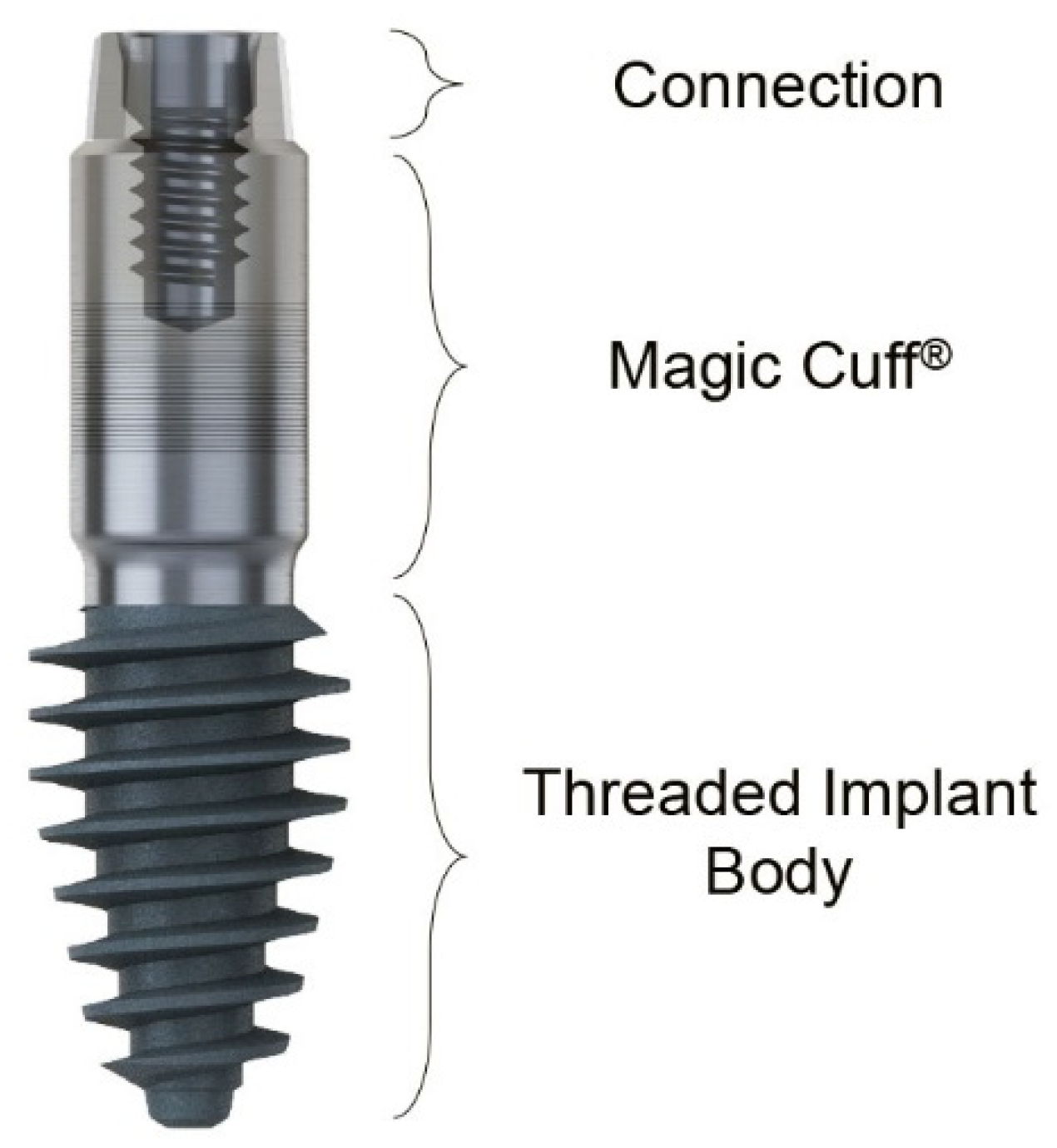
Figure 2.
Preoperative clinical and radiographic evaluation. (a) Labial intraoral view of the anterior edentulous region (at the initial visit) demonstrates the absence of maxillary central incisors (#11 and #21) and significant alveolar ridge resorption. (b) Occlusal intraoral view of the maxillary anterior ridge, severe horizontal ridge atrophy. (c) Initial panoramic radiograph shows the overall periodontal condition and alveolar bone status. (d) Preoperative intraoral periapical radiograph of the maxillary anterior region illustrates alveolar bone loss and root morphology before implant placement.
Figure 2.
Preoperative clinical and radiographic evaluation. (a) Labial intraoral view of the anterior edentulous region (at the initial visit) demonstrates the absence of maxillary central incisors (#11 and #21) and significant alveolar ridge resorption. (b) Occlusal intraoral view of the maxillary anterior ridge, severe horizontal ridge atrophy. (c) Initial panoramic radiograph shows the overall periodontal condition and alveolar bone status. (d) Preoperative intraoral periapical radiograph of the maxillary anterior region illustrates alveolar bone loss and root morphology before implant placement.
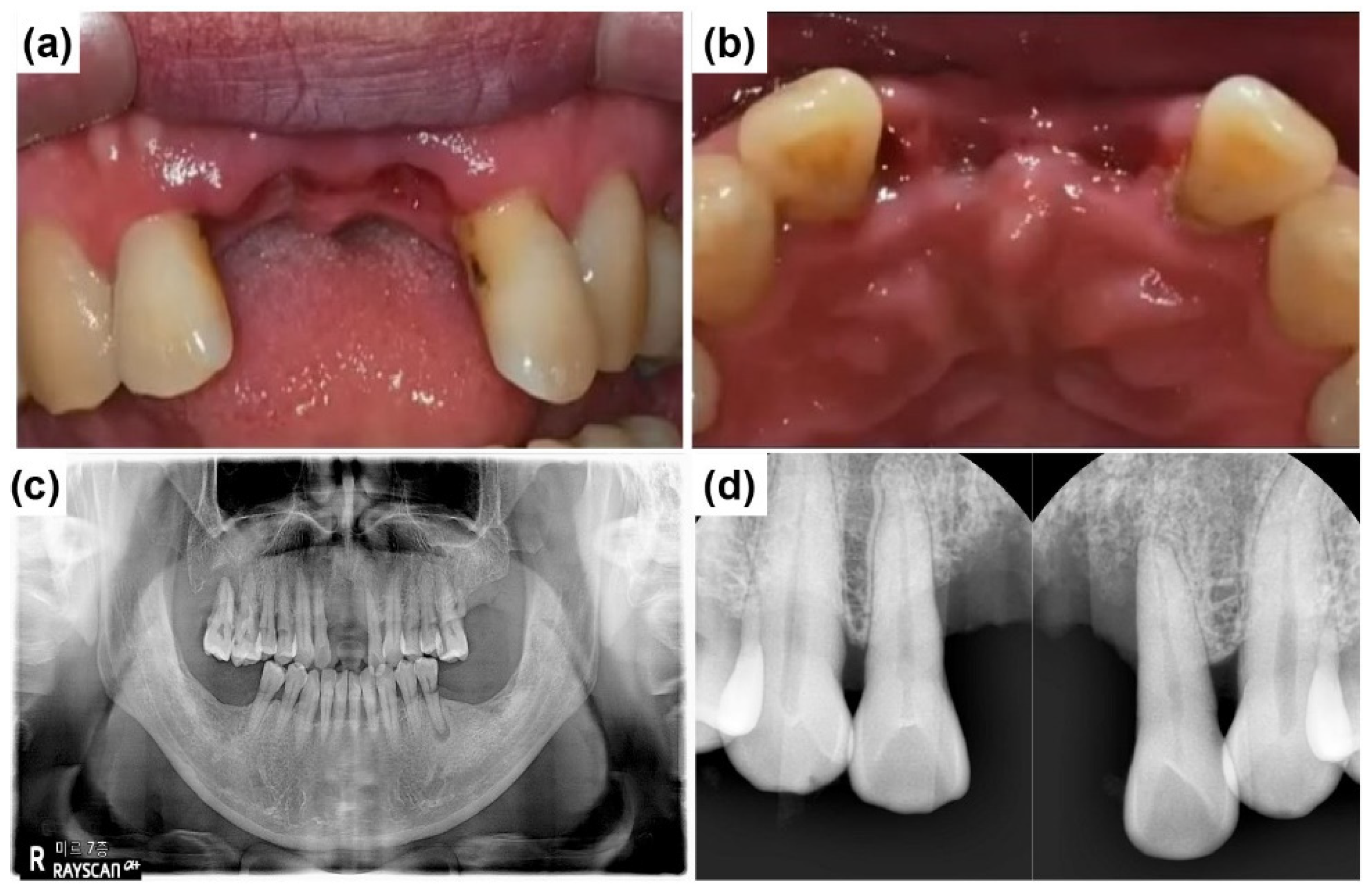
Figure 3.
Preoperative clinical and radiographic evaluation three months after the initial visit. (a) The labial intraoral view shows the anterior edentulous ridge with significant alveolar ridge resorption. (b) The occlusal intraoral view demonstrates horizontal ridge atrophy. (c) The panoramic radiograph, taken three months post-initial examination, indicates overall periodontal condition and alveolar bone status before implant placement. (d) Cone beam computed tomography (CBCT) images illustrate progressive thinning of the anterior alveolar ridge, emphasizing the extent of ridge resorption and its potential impact on implant placement.
Figure 3.
Preoperative clinical and radiographic evaluation three months after the initial visit. (a) The labial intraoral view shows the anterior edentulous ridge with significant alveolar ridge resorption. (b) The occlusal intraoral view demonstrates horizontal ridge atrophy. (c) The panoramic radiograph, taken three months post-initial examination, indicates overall periodontal condition and alveolar bone status before implant placement. (d) Cone beam computed tomography (CBCT) images illustrate progressive thinning of the anterior alveolar ridge, emphasizing the extent of ridge resorption and its potential impact on implant placement.
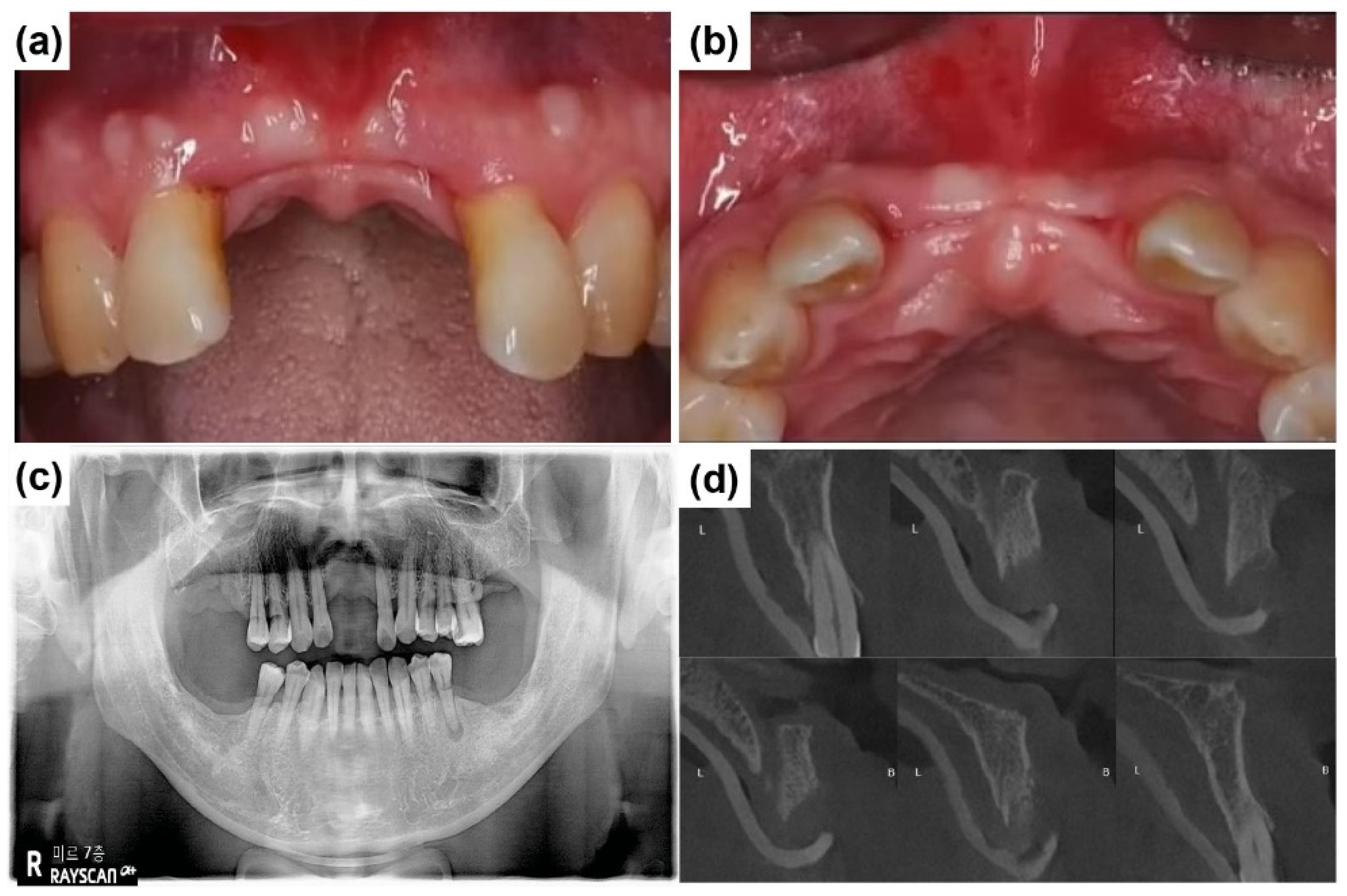
Figure 4.
Surgical procedure for implant placement and VIP flap preparation. (a) The extraction socket of tooth #22 demonstrates extensive mesial alveolar bone loss with significant cortical bone exposure. (b) The initial incision for the VIP flap begins from the maxillary left second premolar. The incision line is placed approximately 3 mm apical to the marginal gingiva with a depth of about 1 mm. An additional incision is extended palatally in the anterior pontic region to facilitate adequate flap mobilization.
Figure 4.
Surgical procedure for implant placement and VIP flap preparation. (a) The extraction socket of tooth #22 demonstrates extensive mesial alveolar bone loss with significant cortical bone exposure. (b) The initial incision for the VIP flap begins from the maxillary left second premolar. The incision line is placed approximately 3 mm apical to the marginal gingiva with a depth of about 1 mm. An additional incision is extended palatally in the anterior pontic region to facilitate adequate flap mobilization.
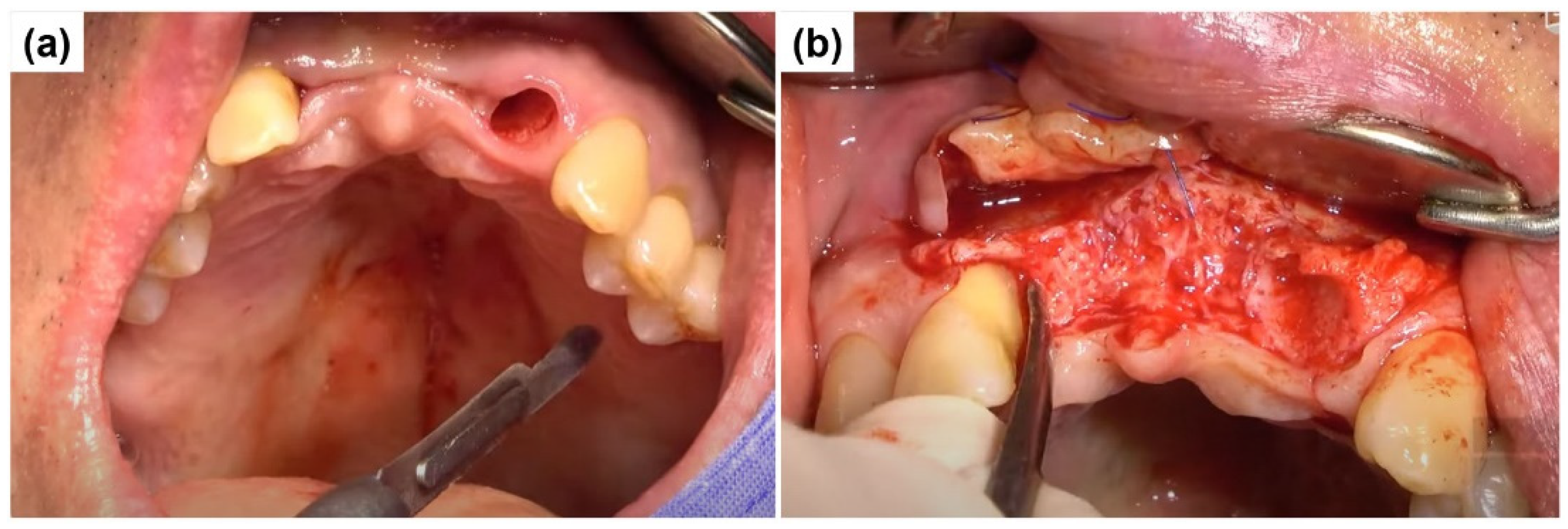
Figure 5.
Implant placement and primary closure. (a) Conventional endosteal implant placement (Blue Diamond implant) in the fully healed extraction socket of tooth #11 using a standard protocol. (b) Placement of an ARi® Implant in tooth #22 to compensate for substantial mesial and distal bone level discrepancies and a thin labial bone plate, enabling enhanced socket remodeling. (c) Final positioning of a 4.1 × 10.0 mm implant in tooth #11 and a 4.0 × 9.0 mm implant in tooth #22, achieving an initial fixation torque of 40 N/cm². (d) Primary closure was obtained to facilitate optimal healing and soft tissue adaptation.
Figure 5.
Implant placement and primary closure. (a) Conventional endosteal implant placement (Blue Diamond implant) in the fully healed extraction socket of tooth #11 using a standard protocol. (b) Placement of an ARi® Implant in tooth #22 to compensate for substantial mesial and distal bone level discrepancies and a thin labial bone plate, enabling enhanced socket remodeling. (c) Final positioning of a 4.1 × 10.0 mm implant in tooth #11 and a 4.0 × 9.0 mm implant in tooth #22, achieving an initial fixation torque of 40 N/cm². (d) Primary closure was obtained to facilitate optimal healing and soft tissue adaptation.
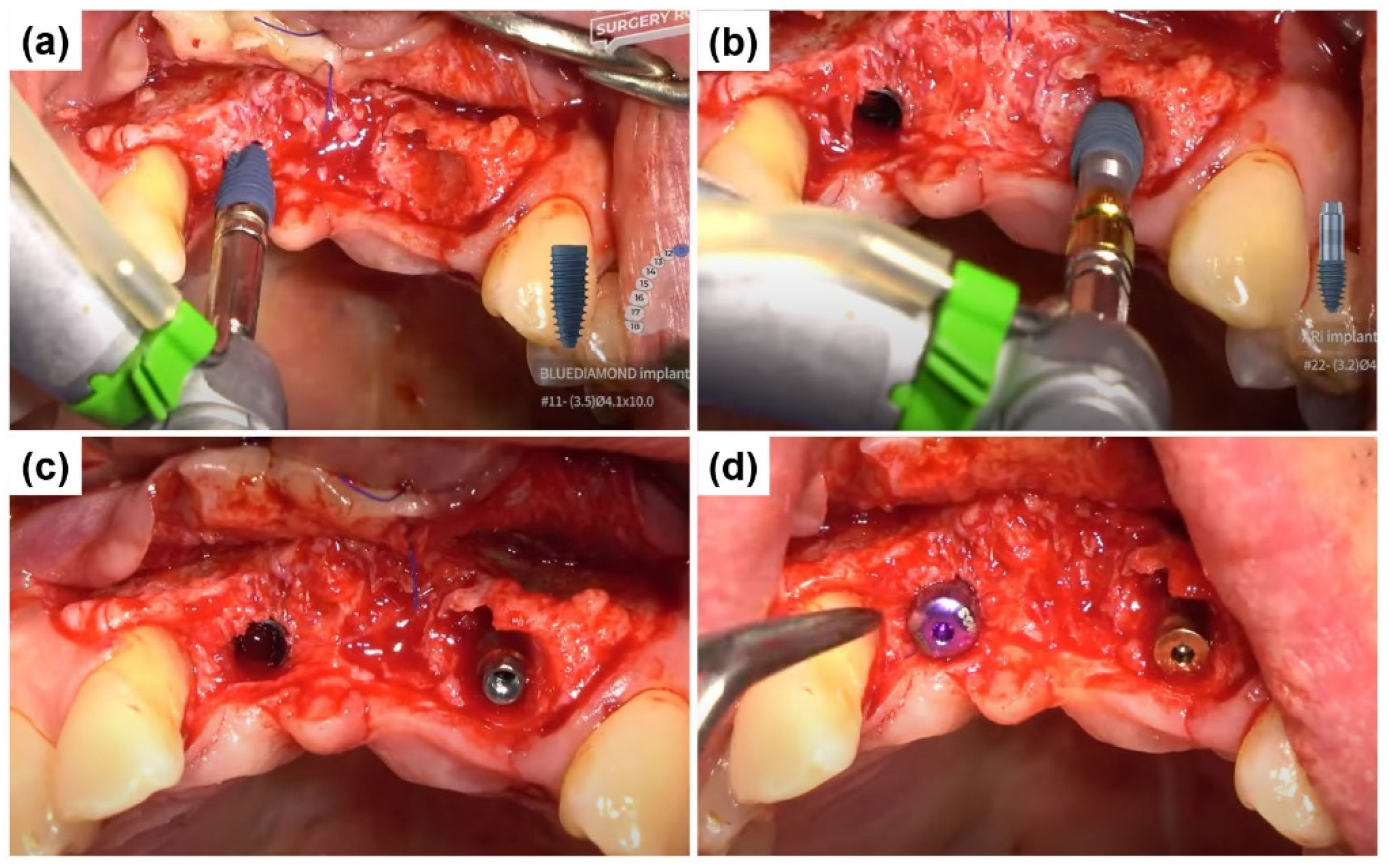
Figure 6.
VIP flap procedure and bone contour augmentation for ridge regeneration. (a) Vascularized interpositional periosteal (VIP) flap, demonstrating its rotational range for optimal soft tissue coverage. (b) Assessment of flap mobility to ensure adequate positioning and fixation for ridge augmentation. (c) Application of biphasic calcium phosphate (BCP) graft to reconstruct the ridge crest and enhance bone volume. (d) Lyoplant collagen membrane placement over the grafted site to prevent particle migration and facilitate stable bone regeneration.
Figure 6.
VIP flap procedure and bone contour augmentation for ridge regeneration. (a) Vascularized interpositional periosteal (VIP) flap, demonstrating its rotational range for optimal soft tissue coverage. (b) Assessment of flap mobility to ensure adequate positioning and fixation for ridge augmentation. (c) Application of biphasic calcium phosphate (BCP) graft to reconstruct the ridge crest and enhance bone volume. (d) Lyoplant collagen membrane placement over the grafted site to prevent particle migration and facilitate stable bone regeneration.
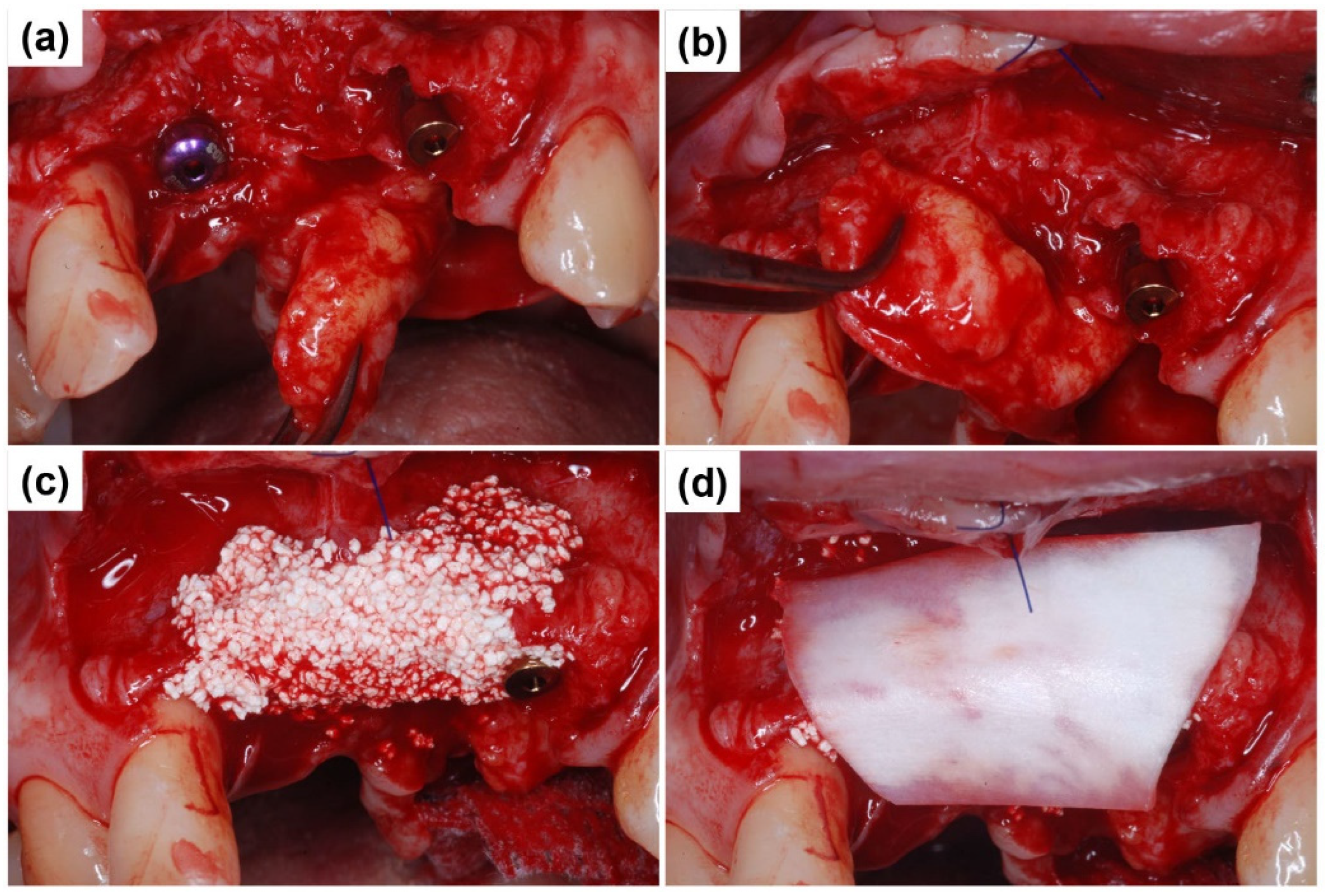
Figure 7.
Primary closure and postoperative radiographic assessment. (a) Labial intraoral view showing flap repositioning and primary closure using 4-0 Vicryl sutures following implant placement. (b) Occlusal intraoral view. (c) Postoperative panoramic radiograph depicting the final placement of implants in the anterior maxillary region.
Figure 7.
Primary closure and postoperative radiographic assessment. (a) Labial intraoral view showing flap repositioning and primary closure using 4-0 Vicryl sutures following implant placement. (b) Occlusal intraoral view. (c) Postoperative panoramic radiograph depicting the final placement of implants in the anterior maxillary region.
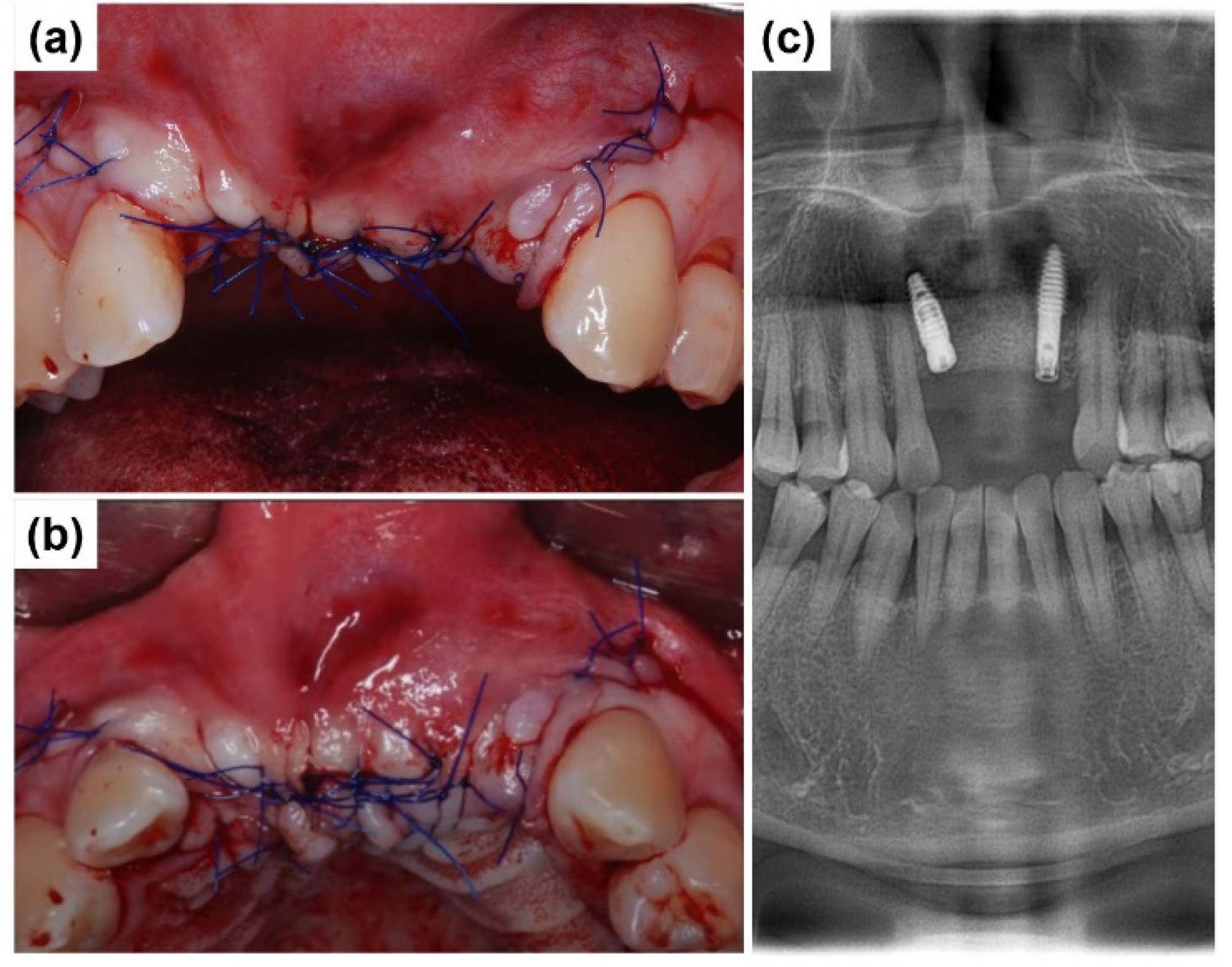
Figure 8.
Soft tissue healing progression following implant surgery. (a) Intraoral clinical view showing soft tissue healing three weeks postoperatively, demonstrating progressive tissue adaptation. (b) Intraoral view at three months postoperatively, illustrating well-stabilized peri-implant soft tissues with improved ridge contour.
Figure 8.
Soft tissue healing progression following implant surgery. (a) Intraoral clinical view showing soft tissue healing three weeks postoperatively, demonstrating progressive tissue adaptation. (b) Intraoral view at three months postoperatively, illustrating well-stabilized peri-implant soft tissues with improved ridge contour.
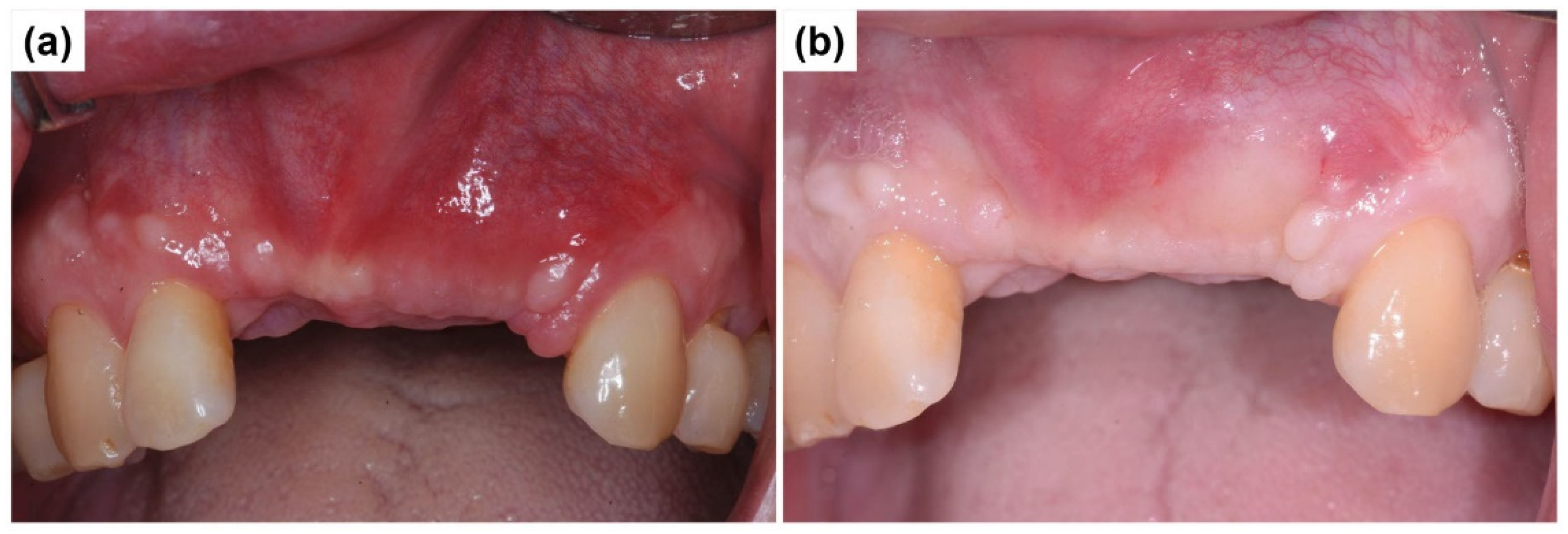
Figure 10.
Connection of customized abutments, provisional prosthesis placement, and final restoration. (a) Fabrication and connection of customized abutments one month after the secondary surgery, following the assessment of gingival healing. (b) Placement of a PMMA temporary bridge using temporary cement on the customized abutments to facilitate continued soft tissue adaptation before final prosthesis placement. (c) Final prosthesis placement. (d) The final esthetic outcome after laminate treatment demonstrates improved anterior esthetics and overall functional integration.
Figure 10.
Connection of customized abutments, provisional prosthesis placement, and final restoration. (a) Fabrication and connection of customized abutments one month after the secondary surgery, following the assessment of gingival healing. (b) Placement of a PMMA temporary bridge using temporary cement on the customized abutments to facilitate continued soft tissue adaptation before final prosthesis placement. (c) Final prosthesis placement. (d) The final esthetic outcome after laminate treatment demonstrates improved anterior esthetics and overall functional integration.
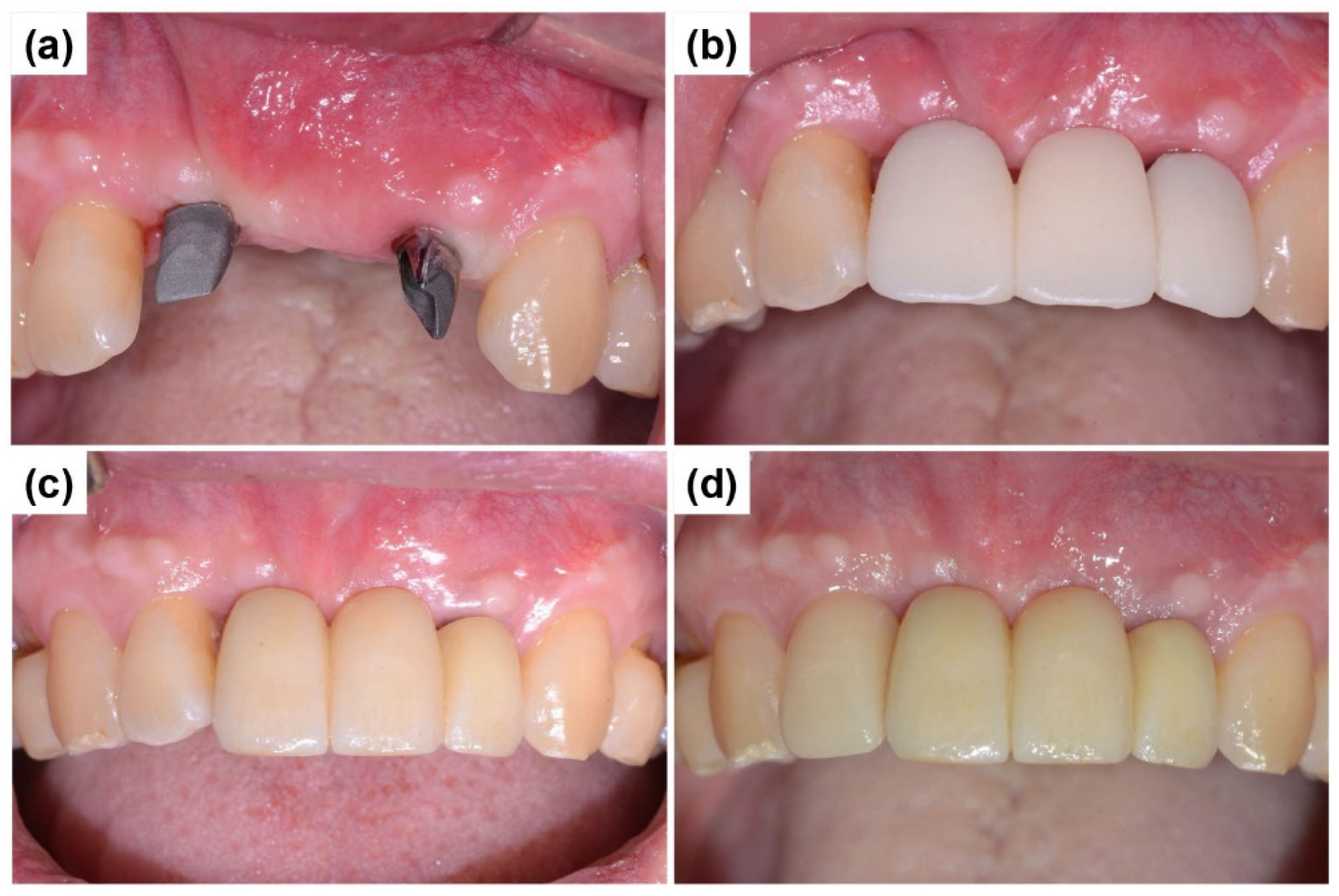
Figure 11.
Panoramic radiograph after 2 years of delivery.
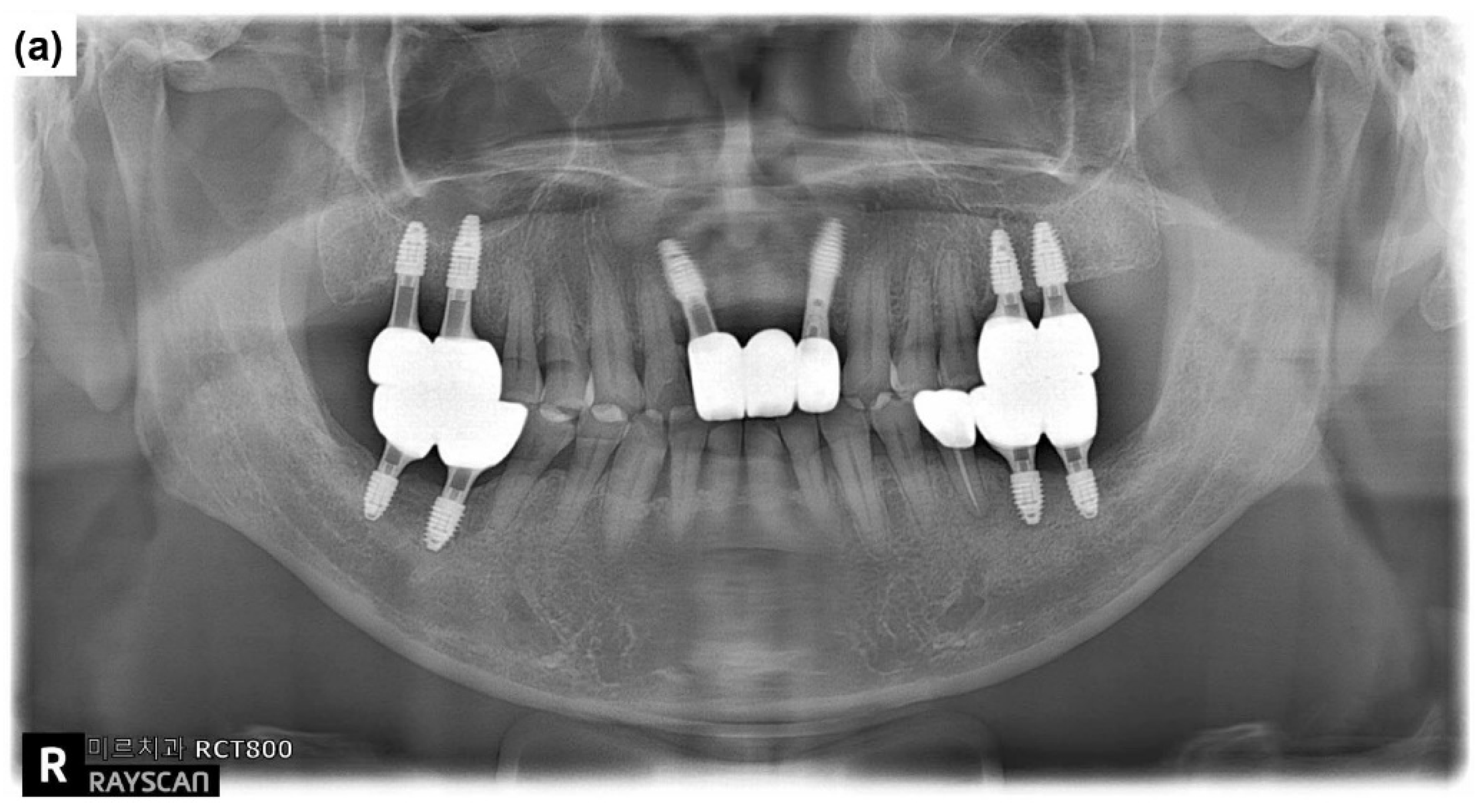
Figure 12.
Preoperative clinical and radiographic evaluation. (a) Missing #11 at the initial visit. (b) Tooth preparation of #21 and #22 for fabricating the new restoration. (c) Initial panoramic radiograph shows overall periodontal condition and alveolar bone status.
Figure 12.
Preoperative clinical and radiographic evaluation. (a) Missing #11 at the initial visit. (b) Tooth preparation of #21 and #22 for fabricating the new restoration. (c) Initial panoramic radiograph shows overall periodontal condition and alveolar bone status.
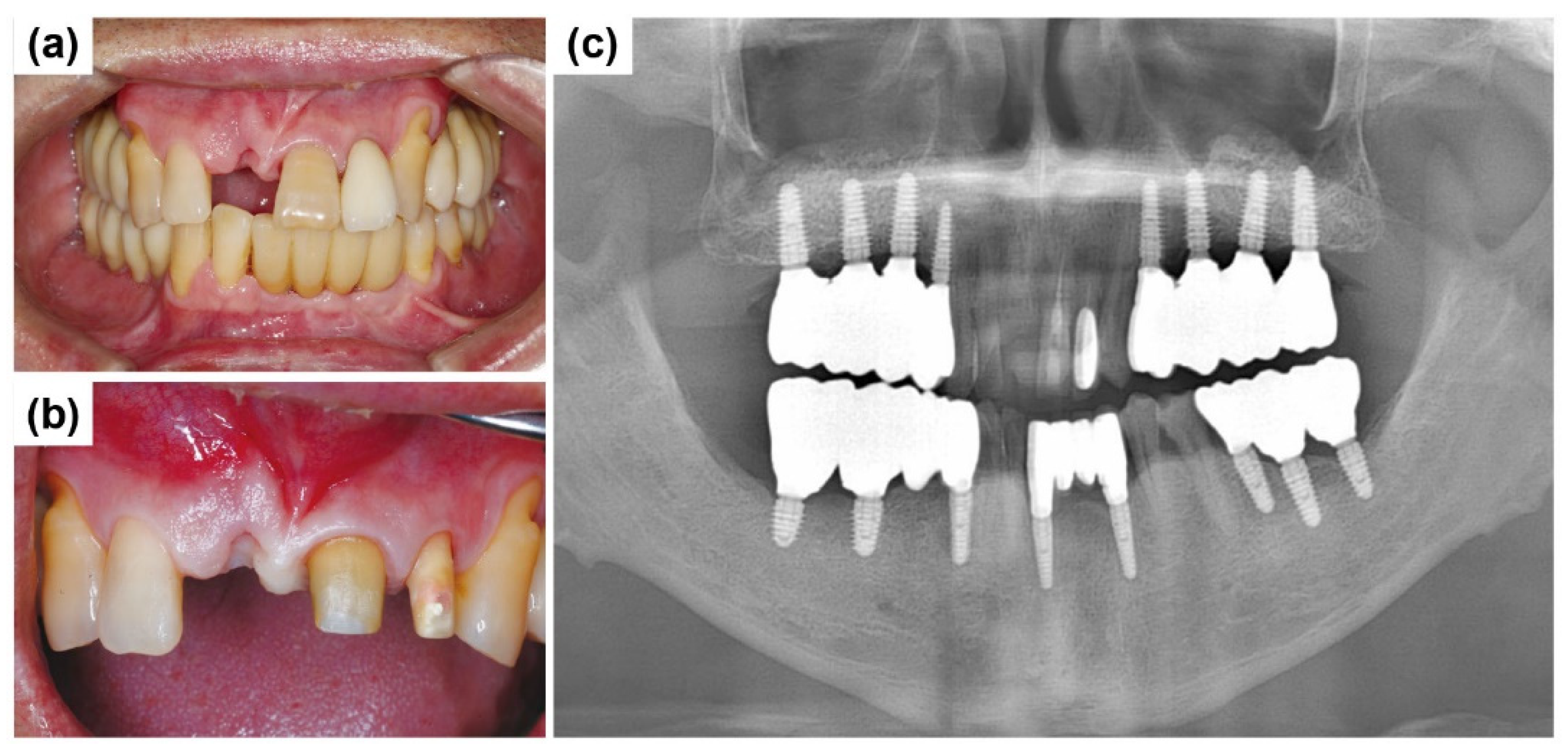
Figure 13.
Intraoperative images and postoperative periapical radiograph. (a) Elevation of a full-thickness mucoperiosteal flap at the implant placement site (#11), showing severe buccal alveolar bone defect. (b) Placement of a 4.1 × 10.0 mm ARi® with synthetic bone graft substitute applied to augment labial bone volume and structural support. (c) Coverage of the grafted area with a Lyoplant collagen membrane to stabilize the graft material and prevent particle dispersion. (d) Primary flap closure achieved with interrupted 4-0 nylon sutures to ensure optimal healing and soft tissue adaptation. (e) Immediate postoperative periapical radiograph demonstrating appropriate implant positioning and initial stability.
Figure 13.
Intraoperative images and postoperative periapical radiograph. (a) Elevation of a full-thickness mucoperiosteal flap at the implant placement site (#11), showing severe buccal alveolar bone defect. (b) Placement of a 4.1 × 10.0 mm ARi® with synthetic bone graft substitute applied to augment labial bone volume and structural support. (c) Coverage of the grafted area with a Lyoplant collagen membrane to stabilize the graft material and prevent particle dispersion. (d) Primary flap closure achieved with interrupted 4-0 nylon sutures to ensure optimal healing and soft tissue adaptation. (e) Immediate postoperative periapical radiograph demonstrating appropriate implant positioning and initial stability.
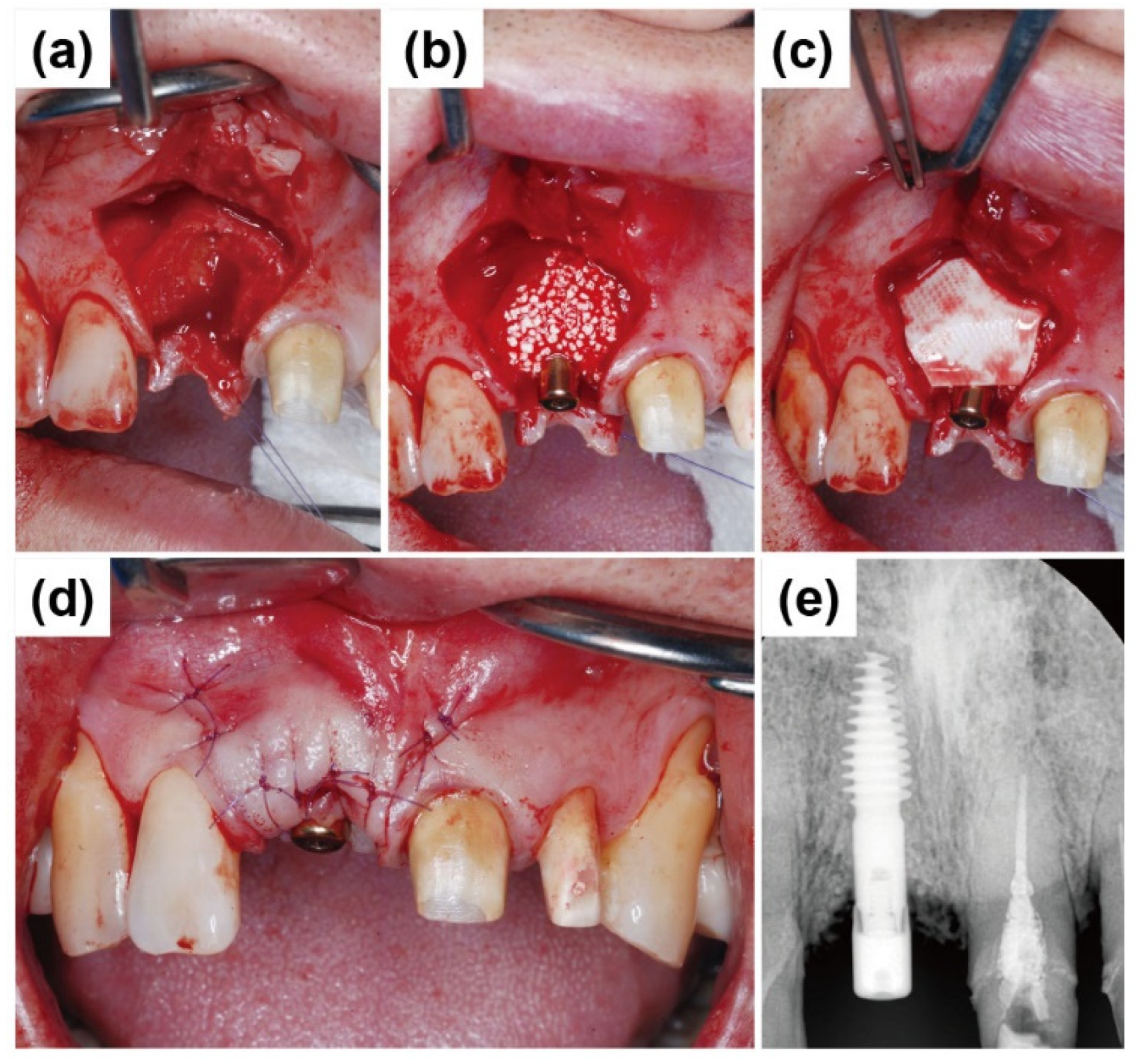
Figure 14.
Connection of customized abutment and provisional prosthesis placement. (a) customized abutment connection. (b) provisional prosthesis.
Figure 14.
Connection of customized abutment and provisional prosthesis placement. (a) customized abutment connection. (b) provisional prosthesis.
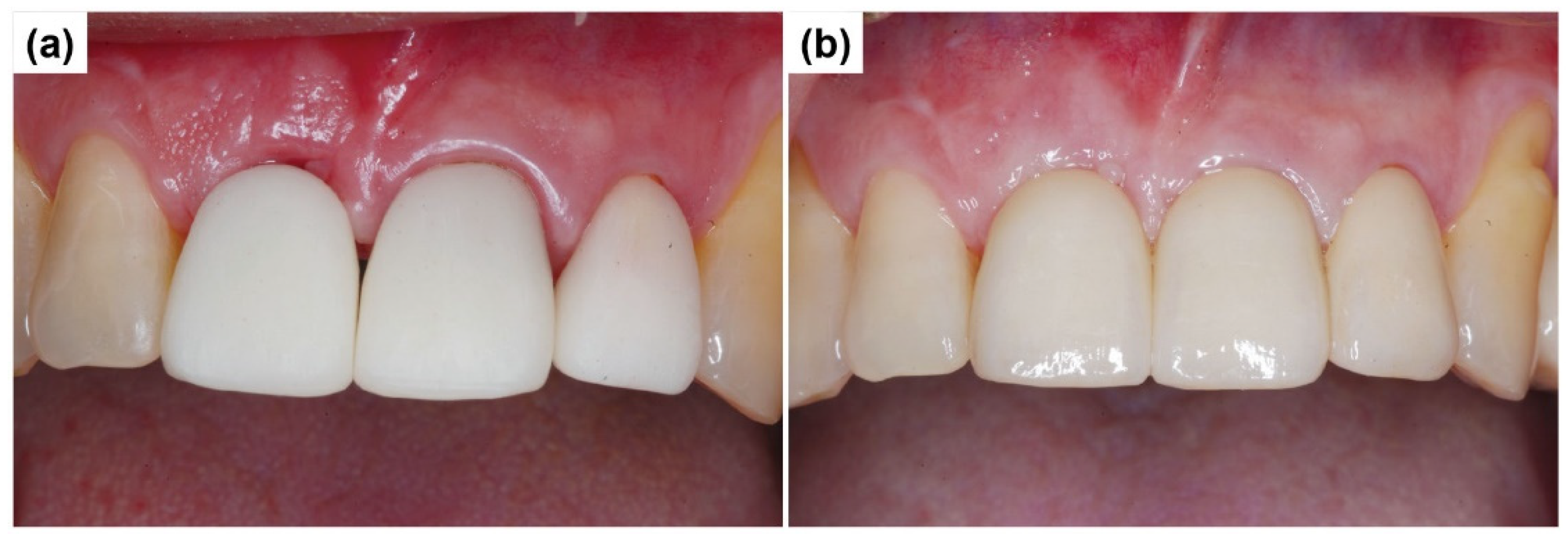
Figure 15.
Panoramic radiograph after 2 years of delivery.
Disclaimer/Publisher’s Note: The statements, opinions and data contained in all publications are solely those of the individual author(s) and contributor(s) and not of MDPI and/or the editor(s). MDPI and/or the editor(s) disclaim responsibility for any injury to people or property resulting from any ideas, methods, instructions or products referred to in the content. |
© 2025 by the authors. Licensee MDPI, Basel, Switzerland. This article is an open access article distributed under the terms and conditions of the Creative Commons Attribution (CC BY) license (http://creativecommons.org/licenses/by/4.0/).
Copyright: This open access article is published under a Creative Commons CC BY 4.0 license, which permit the free download, distribution, and reuse, provided that the author and preprint are cited in any reuse.