

Submitted:
03 April 2025
Posted:
07 April 2025
You are already at the latest version
Abstract
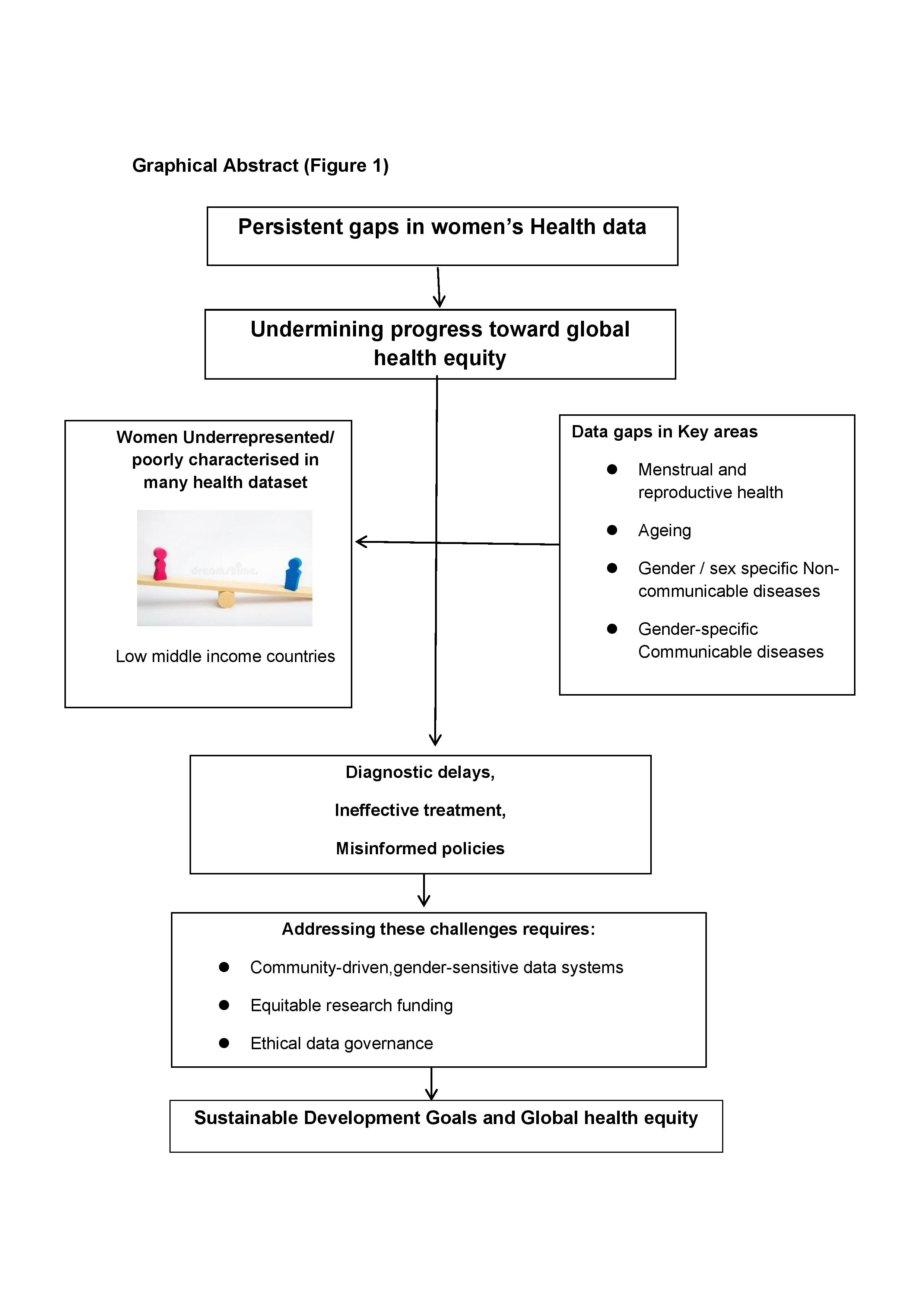
The advancement of global health equality is being hindered by persistent disparities in women's health data. Despite comprising over half of the global population, women remain underrepresented or poorly characterized in many health datasets. According to the Gender Data Outlook (GDO) Index, developed by PARIS21 and UN Women, while progress has been made, systemic barriers continue to obstruct comprehensive gender data collection and dissemination. The index shows that even in high-income countries like Japan and the United Kingdom, strong data production exists, but institutional gaps and coordination issues persist. This issue is further exacerbated in low- and middle-income countries (LMICs).Key areas such as menstrual and reproductive health, aging, and gender-based differences in both non-communicable and communicable diseases are often overlooked or insufficiently disaggregated by sex, gender, age, ethnicity, and geography (Figure 1). This lack of inclusive data leads to diagnostic delays, ineffective treatments, and policies that fail to reflect women’s realities. Bias is further intensified by the underrepresentation of intersectional factors such as gender identity, socio-economic status, and disability, making health systems less responsive to women’s needs, especially in underserved populations.To address these gaps, investments in gender-sensitive, community-driven data systems, equitable research funding, and ethical data governance are essential. Improving women's health data is not only crucial for research but is also a matter of justice, critical to achieving the Sustainable Development Goals (SDGs). Currently, countries lack 44% of the data needed to track 51 gender-related SDG indicators, including SDG-5 on gender equality. Without urgent action, global health initiatives risk exacerbating disparities rather than improving them. As the 2030 deadline for the SDGs approaches rapidly, it is our responsibility to take the necessary actions to close gender data gaps.
Keywords:
Women
; Health Data
; Global Health Equity
Background
Global women’s health is crucial to the well-being of families, communities, and societies. Healthy women contribute significantly to economic productivity, child development, and social stability. However, gendered disparities in health access, research, and care continue to limit women’s potential and perpetuate inequality. Prioritising women’s health improves individual health outcomes and strengthens global development, public health systems and equity across generations.
Globally, women live on average five years longer than men but spend more years in poor health. Over 800 women die every day from preventable causes related to pregnancy and childbirth, with 94% of maternal deaths occurring in LMICs [5]. Cardiovascular disease is the leading cause of death among women worldwide, yet women are less likely than men to be diagnosed or receive appropriate treatment [6]. Conditions like endometriosis affect at least 10% of women and girls of reproductive age globally, often with delayed diagnosis. Nearly 1 in 3 women worldwide have experienced physical or sexual violence—an urgent public health issue [7,8]. Despite these statistics, only a small fraction of global health research funding is directed specifically toward women’s health, limiting the generation of longitudinal data essential to improving outcomes.
Women’s health data is a cornerstone of global health equity, yet it remains incomplete, fragmented, and systemically overlooked. The consequences are profound: misdiagnoses, delayed treatments, and ineffective public health strategies disproportionately impact women (Figure 1). Addressing this inequity demands closing data gaps, adopting intersectional approaches, and embedding women-specific metrics into health frameworks.
The Gender Data Gap: An Unseen Crisis
Historically, biomedical research has defaulted to male subjects, assuming findings were universally applicable. However, every cell has a sex, and biological differences between sexes influence all tissues and organs. This bias has led to poor representation of women in clinical trials, epidemiological research, and health policy evaluations. Even in diseases where women are disproportionately affected, such as cardiovascular disease and autoimmune disorders, gaps in data persist. A notable example is the 1982 Harvard Physicians’ Health Study on aspirin for heart attack prevention, which included only men [11]. Today, women are still less likely to receive aspirin because their symptoms are often atypical—such as jaw pain or nausea—leading to underdiagnosis and delayed care [12,13,14]. Women are often diagnosed seven to ten years later than men, frequently after developing complications.
In HICs, patient dismissal adds to these disparities. In the UK, a government survey reported that 4 in 5 women felt their symptoms were disregarded by GPs, and 1 in 4 felt their pain was not taken seriously [15]. In LMICs, limited access to care and poor data collection hide widespread inequities. High maternal mortality in Sub-Saharan Africa and South Asia remains under-addressed due to poor data systems [17,18,19].
Gender Bias in Specific Medical Specialties
Gender bias spans across multiple disciplines beyond cardiology, including oncology, neurology, pharmacology, and psychiatry [20,21,22]. For instance, women are underrepresented in lung and colorectal cancer trials. Drug studies often exclude women, despite evidence that they experience adverse drug reactions twice as often as men [21]. Between 1997 and 2000, over 80% of drugs withdrawn from the U.S. market posed greater risks to women.
Mental health diagnoses also reflect gender bias. Women are more frequently diagnosed with depression, while men exhibiting similar symptoms are more likely to be diagnosed with substance use disorders [24]. In Alzheimer’s disease, women constitute two-thirds of patients, but most studies focus on men. Oestrogen’s neuroprotective role is often overlooked, and postmenopausal hormone therapy remains under-researched [25,26].
Beyond Reproductive Health: Expanding the Scope of Women’s Health Data
Women’s health research has long focused narrowly on reproduction and maternal care. Yet, women are disproportionately affected by conditions such as osteoporosis, autoimmune disorders, and migraines. For instance, 78% of individuals with autoimmune conditions are women [27]. Diseases like multiple sclerosis and rheumatoid arthritis also affect women more frequently [28,29], but remain underfunded [30,31].
Mental health disparities are also overlooked. Hormonal changes, gender-based violence, and caregiving responsibilities contribute to women’s higher rates of depression and anxiety [32]. Menopause affects over 1.2 billion women globally, by 2030 yet remains under-researched. Untreated symptoms like hot flashes lead to lost productivity and higher healthcare costs [33,34].
The Root Causes of Women’s Health Data Disparities (Figure 1)
1. Challenges in Pre-Data Generation:
- a)
- Lack of Definition for Women’s Health: There is no universally accepted definition of women’s health, and most national systems focus only on reproductive health. This excludes LGBTQI+ individuals and overlooks diverse needs such as higher rates of mental health conditions and substance use [35,36].
- b)
- Gender Bias in Research Studies: The 1977 FDA ban on women in early-phase trials due to pregnancy risks led to long-term exclusion. As a result, many drugs were approved based solely on male physiology [37,38].Women experience more adverse drug reactions, often due to overmedication stemming from male-centric dosing protocols.
- c)
- Lack of Funding: Diseases that predominantly affect women receive less funding. A 2021 NIH study showed that male-dominated diseases are significantly overfunded, while female-dominated diseases are underfunded [30].
2. Challenges in Data Generation:
- a)
- b)
3. Challenges in Data Aggregation and Reporting:
- a)
- Stigma and Cultural Barriers: Topics such as reproductive health, STIs, and mental health are taboo in many cultures. This leads to underreporting and inaccurate prevalence data. For example, WHO estimates the prevalence of endometriosis to be 6–13%, while global disease burden data suggests only 1–2% [42,43].
- b)
- c)
Digital Health Data and Artificial Intelligence: A Double-Edged Sword
Digital health technologies hold immense potential to improve women’s health. Tools like telemedicine and mobile apps enable real-time data collection, improved diagnostics, and greater accessibility—especially in underserved areas. However, these technologies risk reinforcing existing inequalities if implemented without inclusivity [47,48].
For example, in Africa, the cost of internet data and limited infrastructure impede access to telehealth. A 2025 Cherie Blair Foundation report found that 45% of female entrepreneurs in developing countries struggled with reliable internet access [49]. Digital literacy also remains a barrier in LMICs, limiting the reach of online public health interventions [50,51].
Research from sub-Saharan Africa highlights that fragmented health systems and poor data integration hinder the use of AI and remote monitoring tools [52,53]. Yet promising examples exist. ChristianaCare’s “Twistle” app in the U.S. helped reduce postpartum hypertension readmissions by 55%, with a 49% drop among Black women, by using real-time at-home blood pressure monitoring and automated alerts [54,55].
Data Governance and Legal Framework
Strong data governance and privacy protections are essential to harness digital health’s potential for women. Populations should have the ability to control how their health data is used, including whether it is shared for research or education. The NHS App in the UK sets a good example, allowing patients to access medical records and manage their data preferences securely [58,59].
The NHS continues to expand remote consultations using cloud-based platforms, 5G, and AI [60]. LMICs can adapt similar models through SDG-aligned investments. Additionally, synthetic data, when used ethically, can help overcome privacy limitations and improve inclusivity in AI models [61].
AI and Ethical Considerations in Women’s Health
AI has the power to transform care but must be built on representative, inclusive data. Otherwise, it risks perpetuating gender bias. Most current models are trained on male-dominated datasets, leading to misdiagnosis and flawed treatment recommendations for women [62,63,64].
Biases in AI are evident beyond healthcare. A study by Joy Buolamwini at MIT showed that facial recognition systems were less accurate for darker-skinned women [65]. AI voice assistants often reinforce gender roles by defaulting to passive female voices [66].
Wearables like fitness trackers are often calibrated for men, reducing their accuracy for women due to differences in heart rate, metabolism, and hormonal cycles [67]. As Delanerolle et al. noted, many health AI studies lack gender and ethnic diversity, resulting in biased outputs [68]. Companies like Komodo Health are tackling this through platforms that reduce data silos and map real-world data by demographics [69].
The Role of Policy and Global Initiatives
Historically, policy decisions have created the gender health data gap. The NIH only mandated inclusion of women in clinical trials in 1993—and even then, only for NIH-funded research [70]. WHO, UN, and the Gates Foundation now advocate for gender-responsive systems, and WHO has launched the Health Inequality Data Repository [71]. However, implementation remains slow.
Efforts like the European Health Interview Survey (EHIS) and ICH-GCP guidelines support gender inclusion in clinical trials [72,73,74]. Still, LMICs face additional challenges due to underdeveloped data systems. The 2021 World Development Report calls for integrated systems with strong governance, privacy safeguards, and interoperability [75,76,77]. International cooperation and open-access databases are key to building equitable global health systems.
Global Efforts to Address Gender Disparities in Health Data
International organizations such as the World Health Organization (WHO), the United Nations (UN), and the Bill & Melinda Gates Foundation actively advocate for gender-responsive health systems. As part of these efforts, WHO has developed the Health Inequality Data Repository, a global resource of disaggregated health data intended to track disparities across various population groups [71]. However, despite growing awareness, the pace of implementation to address gender disparities in health data remains slow [7].
For instance, it was not until 2016 that the U.S. National Institutes of Health (NIH) mandated that sex as a biological variable be considered in all funded research projects [72]. This delay illustrates how long-standing systemic gaps in data collection and reporting have persisted, even in well-resourced research environments.
At the regional level, some progress has been made. The European Health Interview Survey (EHIS), for example, gathers data on both social determinants of health and gender-specific issues, offering an evidence base to support more inclusive health policies [73].
In addition, the International Council for Harmonisation of Technical Requirements for Pharmaceuticals for Human Use (ICH-GCP) has set globally accepted standards for ethical and scientifically rigorous clinical research. These guidelines are recognized across the European Union, Japan, the United States, Australia, Canada, and the Nordic countries. A core principle of ICH-GCP is the inclusion of diverse populations—especially women—in clinical trials to ensure that findings are representative and generalizable. The framework also encourages the reporting of sex-disaggregated data and supports the inclusion of women in studies involving conditions that affect them uniquely or disproportionately [74].
Challenges in Gender-Specific Data Collection and Sharing
While global efforts are increasing, challenges in collecting and sharing gender-specific health data persist.
Improved data sharing among healthcare providers, researchers, and policymakers is essential for translating gender-disaggregated data into actionable public health strategies. The 2021 World Development Report highlights the need for integrated national data systems that can overcome fragmented data silos. Key recommendations include data standardization, interoperability, equitable access, strong data governance, and cybersecurity—particularly in low- and middle-income countries (LMICs) where the digital divide is most severe [75]. However, many LMICs still lack comprehensive data protection regulations, which discourages participation in health research. Concerns over privacy violations, misuse of personal information, and a general lack of trust in health institutions are common barriers for women considering participation in studies [76].
Furthermore, the absence of standardized data collection and sharing protocols limits the availability of reliable gender-specific data. This not only reinforces health inequalities but also restricts international collaboration. In contrast, high-income countries often face legal constraints on cross-border data exchange due to strict data protection laws like the General Data Protection Regulation (GDPR) in the European Union [77].
To address these issues, stronger international collaboration is needed. Enacting globally consistent legal frameworks and promoting open-access databases for gender-specific data would help establish more equitable health systems—ultimately improving outcomes for all populations.
Key Recommendations (Table 1)
- Mandating Gender-Disaggregated Data Collection: Governments and health institutions must ensure collection across trials, research, and healthcare monitoring [78].
- Expanding Women’s Health Research Funding: Increase investment in non-reproductive health conditions [36].
- Regulating AI and Digital Health Bias: Enact ethical standards to prevent gender-biased machine learning tools [79].
- Strengthening Health Data in LMICs: Focus on context-specific, equitable, evidence-based interventions [17].
Limitations
This paper relies on secondary sources and publicly available data. The absence of primary data or case studies limits real-world analysis. Future work should incorporate patient-centred research and clinical trials. The study also lacks in-depth exploration of intersecting factors such as race, socioeconomic status, and disability, which influence health outcomes. Lastly, policy analysis is limited to HIC and selected LMICs, although studies like Patwardhan et al. offer broader quantitative insight [80].
Conclusion
Women’s health data is not merely a research concern—it is a fundamental human rights issue. The continued exclusion of women from medical research and digital health frameworks sustains systemic health disparities. Achieving health equity requires intentional efforts to close these data gaps, address gender bias, and prioritize women in global health policy. Without inclusive, disaggregated, and context-aware data, true equity will remain out of reach. Closing the women’s health data gap is essential to achieving the Sustainable Development Goals and ensuring just, resilient health systems for all.
Author Contributions
G.D. conceptualised the manuscript and drafted the initial version. S.E., A.S., and M.H. contributed to its development. All authors critically reviewed and revised all versions of the manuscript. All authors approved the final version.
Funding
Not funded.
Ethics Approval
Not applicable.
Consent to Participate
Not applicable, as the paper did not involve human participants.
Consent for Publication
All authors have given consent for publication.
Availability of Data and Material
All data referenced in this manuscript are publicly available.
Code Availability
Not applicable.
Acknowledgments
Not applicable.
Conflicts of Interest
All authors declare no conflicts of interest. The views expressed are those of the authors and do not necessarily reflect those of the NHS, the National Institute for Health Research, the Department of Health and Social Care, or the affiliated academic institutions.
References
- Women’s health research lacks funding – these charts show how [Internet]. [cited 2025 Apr 1]. Available from: https://www.nature.com/immersive/d41586-023-01475-2/index.html.
- FastStats [Internet]. 2024 [cited 2025 Apr 1]. Available from: https://www.cdc.gov/nchs/fastats/womens-health.htm.
- Gregory A, editor AGH. Women’s health being neglected worldwide, says Melinda French Gates. The Guardian [Internet]. 2024 Oct 9 [cited 2025 Apr 1]; Available from: https://www.theguardian.com/society/2024/oct/09/women-health-neglected-worldwide-melinda-french-gates.
- Women’s health [Internet]. [cited 2025 Apr 1]. Available from: https://www.who.int/health-topics/women-s-health.
- Langer, A.; Meleis, A.; Knaul, F.M.; Atun, R.; Aran, M.; Arreola-Ornelas, H. , et al. Women and Health: the key for sustainable development. The Lancet 2015, 386, 1165–210. [Google Scholar] [CrossRef] [PubMed]
- Tarpley, M. Invisible Women: Exposing Data Bias in a World Designed for Men: A Book for All. By Caroline Criado Perez. New York: Abrams Press, 2019. ISBN: 978-1-4197-2907-2 (hardcover). S Afr Med J. 2020, 110, 831. [Google Scholar] [CrossRef]
- World Health Organization. Closing data gaps in gender [Internet]. World Health Organization. 2021 [cited 2025 Mar 4]. Available from: https://www.who.int/activities/closing-data-gaps-in-gender.
- Differences I of M (US) C on U the B of S and G, Wizemann TM, Pardue ML. Every Cell Has a Sex. In: Exploring the Biological Contributions to Human Health: Does Sex Matter? [Internet]. National Academies Press (US); 2001 [cited 2025 Mar 28]. Available from: https://www.ncbi.nlm.nih.gov/books/NBK222291/.
- Plevkova, J.; Brozmanova, M.; Harsanyiova, J.; Sterusky, M.; Honetschlager, J.; Buday, T. Various Aspects of Sex and Gender Bias in Biomedical Research. Physiol Res. 2021, S367–78. [Google Scholar] [CrossRef]
- Holdcroft, A. Gender bias in research: how does it affect evidence based medicine? J R Soc Med. 2007, 100, 2–3. [Google Scholar] [CrossRef]
- Steering Committee of the Physicians’ Health Study Research Group*. Final Report on the Aspirin Component of the Ongoing Physicians’ Health Study. N Engl J Med. 1989, 321, 129–35. [CrossRef]
- Hanna, G.; Andrew, O. Gender differences in cardiovascular disease: Women are less likely to be prescribed certain heart medications - Harvard Health [Internet]. Harvard Health Publishing, Harvard Medical School. 2020 [cited 2025 Mar 28]. Available from: https://www.health.harvard.edu/blog/gender-differences-in-cardiovascular-disease-women-are-less-likely-to-be-prescribed-certain-heart-medications-2020071620553.
- Woodward, M. Cardiovascular Disease and the Female Disadvantage. IJERPH. 2019, 16, 1165. [Google Scholar] [CrossRef]
- Mehta, L.S.; Beckie, T.M.; DeVon, H.A.; Grines, C.L.; Krumholz, H.M.; Johnson, M.N. , et al. Acute Myocardial Infarction in Women: A Scientific Statement From the American Heart Association. Circulation 2016, 133, 916–47. [Google Scholar] [CrossRef]
- Results of the ‘Women’s Health – Let’s talk about it’ survey [Internet]. GOV.UK. [cited 2025 Apr 1]. Available from: https://www.gov.uk/government/calls-for-evidence/womens-health-strategy-call-for-evidence/outcome/3fa4a313-f7a5-429a-b68d-0eb0be15e696.
- Woods, W.A.; Watson, M.; Ranaweera, S.; Tajuria, G.; Sumathipala, A. Under-representation of low and middle income countries (LMIC) in the research literature: Ethical issues arising from a survey of five leading medical journals: have the trends changed? Global Public Health. 2023, 18, 2229890. [Google Scholar] [CrossRef]
- Jylhä, V.; Oikarainen, A.; Perälä, M.L.; Holopainen, A. Facilitating evidence-based practice in nursing and midwifery in the WHO European Region.
- Say, L.; Chou, D.; Gemmill, A.; Tunçalp, Ö.; Moller, A.B.; Daniels, J. , et al. Global causes of maternal death: a WHO systematic analysis. The Lancet Global Health. 2014, 2, e323–33. [Google Scholar] [CrossRef]
- Musarandega, R.; Nyakura, M.; Machekano, R.; Pattinson, R.; Munjanja, S.P. Causes of maternal mortality in Sub-Saharan Africa: A systematic review of studies published from 2015 to 2020. J Glob Health. 2021, 11, 04048. [Google Scholar] [CrossRef]
- Al Hamid, A.; Beckett, R.; Wilson, M.; Jalal, Z.; Cheema, E.; Al-Jumeily Obe, D. , et al. Gender Bias in Diagnosis, Prevention, and Treatment of Cardiovascular Diseases: A Systematic Review. Cureus. 2024, 16, e54264. [Google Scholar] [PubMed]
- Blanchard, D.C.; Griebel, G.; Blanchard, R.J. Gender bias in the preclinical psychopharmacology of anxiety: male models for (predominantly) female disorders. J Psychopharmacol. 1995, 9, 79–82. [Google Scholar] [CrossRef] [PubMed]
- Lee, E.; Wen, P. Gender and sex disparity in cancer trials. ESMO Open 2020, 5, e000773. [Google Scholar] [CrossRef] [PubMed]
- Carey, J.L.; Nader, N.; Chai, P.R.; Carreiro, S.; Griswold, M.K.; Boyle, K.L. Drugs and Medical Devices: Adverse Events and the Impact on Women’s Health. Clinical Therapeutics. 2017, 39, 10–22. [Google Scholar] [CrossRef]
- Eaton, N.R.; Keyes, K.M.; Krueger, R.F.; Balsis, S.; Skodol, A.E.; Markon, K.E. , et al. An invariant dimensional liability model of gender differences in mental disorder prevalence: Evidence from a national sample. Journal of Abnormal Psychology. 2012, 121, 282–8. [Google Scholar] [CrossRef]
- Castro-Aldrete, L.; Moser, M.V.; Putignano, G.; Ferretti, M.T.; Schumacher Dimech, A.; Santuccione Chadha, A. Sex and gender considerations in Alzheimer’s disease: The Women’s Brain Project contribution. Front Aging Neurosci. 2023, 15, 1105620. [Google Scholar] [CrossRef]
- Carter, C.L.; Resnick, E.M.; Mallampalli, M.; Kalbarczyk, A. Sex and Gender Differences in Alzheimer’s Disease: Recommendations for Future Research. Journal of Women’s Health. 2012, 21, 1018–23. [Google Scholar] [CrossRef]
- Angum, F.; Khan, T.; Kaler, J.; Siddiqui, L.; Hussain, A. The Prevalence of Autoimmune Disorders in Women: A Narrative Review. Cureus. 2020, 12, e8094. [Google Scholar] [CrossRef]
- Ross, L.; Ng, H.S.; O’Mahony, J.; Amato, M.P.; Cohen, J.A.; Harnegie, M.P. , et al. Women’s Health in Multiple Sclerosis: A Scoping Review. Front Neurol. 2022, 12, 812147. [Google Scholar] [CrossRef]
- Gerosa, M.; De Angelis, V.; Riboldi, P.; Meroni, P. Rheumatoid Arthritis: A Female Challenge. Womens Health (Lond Engl). 2008, 4, 195–201. [Google Scholar] [CrossRef]
- Mirin, A.A. Gender Disparity in the Funding of Diseases by the U. S. National Institutes of Health. Journal of Women’s Health. 2021, 30, 956–63. [Google Scholar] [CrossRef] [PubMed]
- Steinþórsdóttir, F.S.; Einarsdóttir, Þ.; Pétursdóttir, G.M.; Himmelweit, S. Gendered inequalities in competitive grant funding: an overlooked dimension of gendered power relations in academia. Higher Education Research & Development. 2020, 39, 362–75. [Google Scholar]
- Howard, L.M.; Ehrlich, A.M.; Gamlen, F.; Oram, S. Gender-neutral mental health research is sex and gender biased. The Lancet Psychiatry. 2017, 4, 9–11. [Google Scholar] [CrossRef]
- Delanerolle, G.; Phiri, P.; Elneil, S.; Talaulikar, V.; Eleje, G.U.; Kareem, R. , et al. Menopause: a global health and wellbeing issue that needs urgent attention. The Lancet Global Health. 2025, 13, e196–8. [Google Scholar] [CrossRef]
- Sarrel, P.; Portman, D.; Lefebvre, P.; Lafeuille, M.H.; Grittner, A.M.; Fortier, J. , et al. Incremental direct and indirect costs of untreated vasomotor symptoms. Menopause. 2015, 22, 260–6. [Google Scholar] [CrossRef]
- Closing the women’s health gap | McKinsey [Internet]. [cited 2025 Mar 31]. Available from: https://www.mckinsey.com/mhi/our-insights/closing-the-womens-health-gap-a-1-trillion-dollar-opportunity-to-improve-lives-and-economies.
- Snair, M.R. Overview of research gaps for selected conditions in women’s health research at the National Institutes of Health: proceedings of a workshop--in brief. Washington, DC: National Academies Press; 2024. 1 p. (Proceedings of a workshop--in brief).
- Merkatz, R.B. Inclusion of Women in Clinical Trials: A Historical Overview of Scientific Ethical and Legal Issues. Journal of Obstetric, Gynecologic & Neonatal Nursing. 1998, 27, 78–84. [Google Scholar]
- Zucker, I.; Prendergast, B.J. Sex differences in pharmacokinetics predict adverse drug reactions in women. Biol Sex Differ. 2020, 11, 32. [Google Scholar] [CrossRef]
- Waltz, M.; Lyerly, A.D.; Fisher, J.A. Exclusion of Women from Phase I Trials: Perspectives from Investigators and Research Oversight Officials. Ethics & Human Research. 2023, 45, 19–30. [Google Scholar]
- Salter-Volz, A.E.; Oyasu, A.; Yeh, C.; Muhammad, L.N.; Woitowich, N.C. Sex and Gender Bias in Covid-19 Clinical Case Reports. Front Glob Womens Health 2021, 2, 774033. [Google Scholar] [CrossRef]
- COVID-19 - PAHO/WHO Response, Report 72 (11 March 2022) - PAHO/WHO | Pan American Health Organization [Internet]. [cited 2025 Mar 31]. Available from: https://www.paho.org/en/documents/covid-19-pahowho-response-report-72-11-march-2022.
- Sexual and reproductive health for all: 20 years of the Global Strategy [Internet]. [cited 2025 Mar 31]. Available from: https://www.who.int/news/item/16-05-2024-sexual-and-reproductive-health-for-all-20-years-of-the-global-strategy.
- Rahmioglu, N.; Zondervan, K. Endometriosis: disease mechanisms and health disparities. Bull World Health Organ. 2024, 102, 919–21. [Google Scholar] [CrossRef]
- Shellenberg, K.M.; Moore, A.M.; Bankole, A.; Juarez, F.; Omideyi, A.K.; Palomino, N. , et al. Social stigma and disclosure about induced abortion: Results from an exploratory study. Global Public Health 2011, 6 (sup1), S111–25. [Google Scholar] [CrossRef] [PubMed]
- Norris, A.; Bessett, D.; Steinberg, J.R.; Kavanaugh, M.L.; De Zordo, S.; Becker, D. Abortion Stigma: A Reconceptualization of Constituents, Causes, and Consequences. Women’s Health Issues. 2011, 21, S49–54. [Google Scholar] [CrossRef] [PubMed]
- Harari, L.; Lee, C. Intersectionality in quantitative health disparities research: A systematic review of challenges and limitations in empirical studies. Soc Sci Med. 2021, 277, 113876. [Google Scholar] [CrossRef] [PubMed]
- Ezeamii, V.C.; Okobi, O.E.; Wambai-Sani, H.; Perera, G.S.; Zaynieva, S.; Okonkwo, C.C. , et al. Revolutionizing Healthcare: How Telemedicine Is Improving Patient Outcomes and Expanding Access to Care. Cureus. 2024, 16, e63881. [Google Scholar]
- Babatunde, A.O.; Abdulazeez, A.O.; Adeyemo, E.A.; Uche-Orji, C.I.; Saliyu, A.A. Telemedicine in Low and Middle Income Countries: Closing or Widening the Health Inequalities Gap? EUROPEAN J ENV PUBLI. 2021, 5, em0075. [Google Scholar] [CrossRef]
- Onsongo, S.; Kagotho, E. Telemedicine in Africa: Applications, Opportunities, and Challenges. In: R. Doarn C, F. Heston T, editors. Biomedical Engineering [Internet]. IntechOpen; 2024 [cited 2025 Mar 31]. Available from: https://www.intechopen.com/chapters/1176535.
- Empowered or Undermined? Women Entrepreneurs & the Digital Economy [Internet]. Cherie Blair Foundation for Women. [cited 2025 Mar 31]. Available from: https://cherieblairfoundation.org/what-we-do/research/2024-audit/.
- Van Kessel, R.; Wong, B.L.H.; Clemens, T.; Brand, H. Digital health literacy as a super determinant of health: More than simply the sum of its parts. Internet Interventions 2022, 27, 100500. [Google Scholar] [CrossRef]
- Chuma, K.; Sibiya, P. Digital Health Ecosystem Framework to Address Fragmentation of the Health System in South Africa. AJNM [Internet]. 2022 Nov 10 [cited 2025 Mar 31]; Available from: https://unisapressjournals.co.za/index.php/AJNM/article/view/11547.
- Zharima, C.; Griffiths, F.; Goudge, J. Exploring the barriers and facilitators to implementing electronic health records in a middle-income country: a qualitative study from South Africa. Front Digit Health 2023, 5, 1207602. [Google Scholar] [CrossRef]
- Improving Detection and Management of Postpartum Hypertension [Internet]. [cited 2025 Mar 31]. Available from: https://www.healthcatalyst.com/learn/success-stories/improving-detection-and-management-of-postpartum-hypertension.
- Hirshberg, A.; Downes, K.; Srinivas, S. Comparing standard office-based follow-up with text-based remote monitoring in the management of postpartum hypertension: a randomised clinical trial. BMJ Qual Saf. 2018, 27, 871–7. [Google Scholar] [CrossRef]
- Vudathaneni, V.K.P.; Lanke, R.B.; Mudaliyar, M.C.; Movva, K.V.; Mounika Kalluri, L.; Boyapati, R. The Impact of Telemedicine and Remote Patient Monitoring on Healthcare Delivery: A Comprehensive Evaluation. Cureus [Internet]. 2024 Mar 4 [cited 2025 Mar 31]; Available from: https://www.cureus.com/articles/227384-the-impact-of-telemedicine-and-remote-patient-monitoring-on-healthcare-delivery-a-comprehensive-evaluation.
- Mazaheri Habibi, M.R.; Moghbeli, F.; Langarizadeh, M.; Fatemi Aghda, S.A. Mobile health apps for pregnant women usability and quality rating scales: a systematic review. BMC Pregnancy Childbirth. 2024, 24, 34. [Google Scholar] [CrossRef]
- NHS App [Internet]. NHS England Digital. [cited 2025 Mar 31]. Available from: https://digital.nhs.uk/services/nhs-app.
- Reidy, C.; Papoutsi, C.; Kc, S.; Gudgin, B.; Laverty, A.A.; Greaves, F. , et al. Qualitative evaluation of the implementation and national roll-out of the NHS App in England. BMC Med. 2025, 23, 20. [Google Scholar] [CrossRef]
- England NHS. NHS England » Remote consulting [Internet]. [cited 2025 Mar 31]. Available from: https://www.england.nhs.uk/long-read/remote-consulting/.
- Delanerolle, G.; Phiri, P.; Cavalini, H.; Benfield, D.; Shetty, A.; Bouchareb, Y. , et al. Synthetic data & the future of Women’s Health: A synergistic relationship. International Journal of Medical Informatics 2023, 179, 105238. [Google Scholar] [PubMed]
- Locke, L.G.; Hodgdon, G. Gender bias in visual generative artificial intelligence systems and the socialization of AI. AI & Soc [Internet]. 2024 Nov 25 [cited 2025 Mar 31]; Available from: https://link.springer.com/10.1007/s00146-024-02129-1.
- Cirillo, D.; Catuara-Solarz, S.; Morey, C.; Guney, E.; Subirats, L.; Mellino, S. , et al. Sex and gender differences and biases in artificial intelligence for biomedicine and healthcare. npj Digit Med. 2020, 3, 81. [Google Scholar] [CrossRef] [PubMed]
- Cross, J.L.; Choma, M.A.; Onofrey, J.A. Bias in medical AI: Implications for clinical decision-making. Cheungpasitporn W, editor. PLOS Digit Health. 2024, 3, e0000651. [Google Scholar] [CrossRef] [PubMed]
- Buolamwini, J. Study finds gender and skin-type bias in commercial artificial-intelligence systems [Internet]. MIT Media Lab. [cited 2025 Mar 31]. Available from: https://www.media.mit.edu/articles/study-finds-gender-and-skin-type-bias-in-commercial-artificial-intelligence-systems/.
- UNESCO, EQUALS Skills Coalition. I’d blush if I could: closing gender divides in digital skills through education [Internet]. UNESCO; 2019 Jan [cited 2025 Mar 31]. Available from: https://unesdoc.unesco.org/ark:/48223/pf0000367416.
- Perez, A.J.; Zeadally, S. Recent Advances in Wearable Sensing Technologies. Sensors. 2021, 21, 6828. [Google Scholar] [CrossRef]
- Delanerolle, G.; Yang, X.; Shetty, S.; Raymont, V.; Shetty, A.; Phiri, P. , et al. Artificial intelligence: A rapid case for advancement in the personalization of Gynaecology/Obstetric and Mental Health care. Womens Health (Lond Engl) 2021, 17, 17455065211018111. [Google Scholar] [CrossRef]
- Komodo Health Introduces New No-Code Analytics Application To Visualize Real-World Healthcare Data in Minutes [Internet]. [cited 2025 Mar 31]. Available from: https://www.businesswire.com/news/home/20240319355597/en/Komodo-Health-Introduces-New-No-Code-Analytics-Application-To-Visualize-Real-World-Healthcare-Data-in-Minutes.
- Lego V, di. Uncovering the gender health data gap. Cad Saude Publica. 2023, 39, e00065423. [Google Scholar] [CrossRef]
- Kirkby, K.; Bergen, N.; Baptista, A.; Schlotheuber, A.; Hosseinpoor, A.R. Data Resource Profile: World Health Organization Health Inequality Data Repository. International Journal of Epidemiology. 2023, 52, e253–62. [Google Scholar] [CrossRef]
- Schubert, K.G.; Bird, C.E.; Kozhimmanil, K.; Wood, S.F. To Address Women’s Health Inequity, It Must First Be Measured. Health Equity. 2022, 6, 881–6. [Google Scholar] [CrossRef]
- European health interview survey - methodology [Internet]. [cited 2025 Apr 1]. Available from: https://ec.europa.eu/eurostat/statistics-explained/index.php?title=European_health_interview_survey_-_methodology.
- E6(R2) Good Clinical Practice: Integrated Addendum to ICH E6(R1) | Guidance for Industry.
- World Development Report 2022: FINANCE for an Equitable Recovery [Internet]. World Bank. [cited 2025 Mar 31]. Available from: https://www.worldbank.org/en/publication/wdr2021.
- Kaewkungwal, J.; Adams, P.; Sattabongkot, J.; Lie, R.K.; Wendler, D. Issues and Challenges Associated with Data-Sharing in LMICs: Perspectives of Researchers in Thailand. The American Journal of Tropical Medicine and Hygiene. 2020, 103, 528–36. [Google Scholar] [CrossRef]
- Lieftink, N.; Ribeiro, C.D.S.; Kroon, M.; Haringhuizen, G.B.; Wong, A.; Van De Burgwal, L.H. The potential of federated learning for public health purposes: a qualitative analysis of GDPR compliance, Europe, 2021. Eurosurveillance [Internet]. 2024 Sep 19 [cited 2025 Mar 31];29(38). Available from: https://www.eurosurveillance.org/content/10.2807/1560-7917.ES.2024.29.38.2300695.
- Wenham, C.; Davies, S.E. WHO runs the world – (not) girls: gender neglect during global health emergencies. International Feminist Journal of Politics. 2022, 24, 415–38. [Google Scholar] [CrossRef]
- Palaniappan, K.; Lin, E.Y.T.; Vogel, S. Global Regulatory Frameworks for the Use of Artificial Intelligence (AI) in the Healthcare Services Sector. Healthcare. 2024, 12, 562. [Google Scholar] [CrossRef]
- Patwardhan, V.; Gil, G.F.; Arrieta, A.; Cagney, J.; DeGraw, E.; Herbert, M.E. , et al. Differences across the lifespan between females and males in the top 20 causes of disease burden globally: a systematic analysis of the Global Burden of Disease Study 2021. The Lancet Public Health. 2024, 9, e282–94. [Google Scholar] [CrossRef]
Figure 1.
Key causes for Women's Health Data disparities.
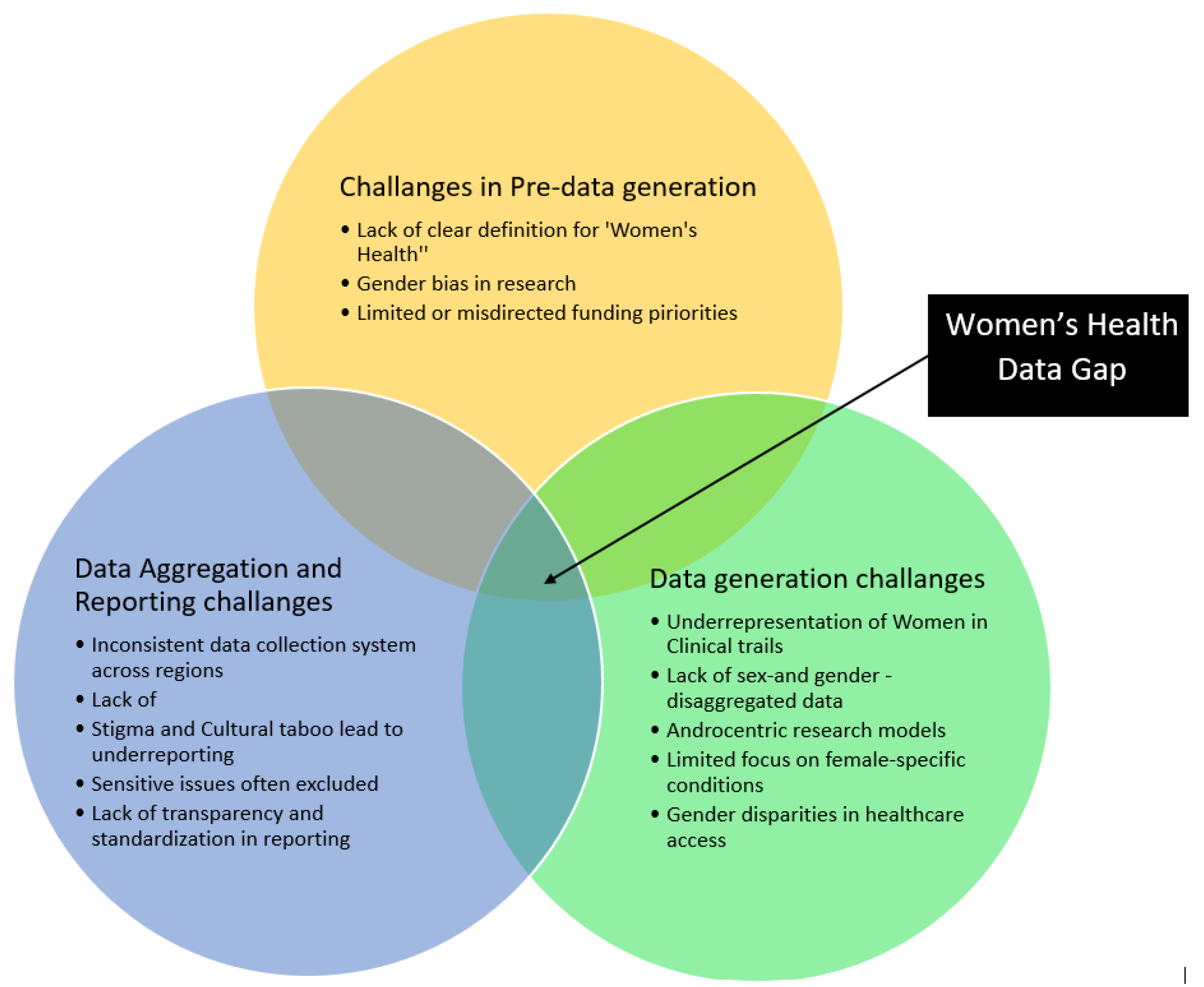

Table 1.
Policy Recommendations for Women's Health Equity.
| Policy Recommendations for Women’s Health Equity | |||
|---|---|---|---|
| Mandating Gender-Disaggregated Data Collection | Expanding Women’s Health Research Funding | Regulating AI and Digital Health Bias | Strengthening Health Data in LMICs |
| Clinical trials | Non-reproductive health conditions | Ethical guidelines for AI in healthcare | Improving women’s health data collection |
| Epidemiological research | Addressing disparities in medical research | Preventing gender bias in machine learning models | Evidence-based interventions |
| Health system monitoring | Ensuring fairness in diagnostic tools | Contextually relevant solutions | |
Disclaimer/Publisher’s Note: The statements, opinions and data contained in all publications are solely those of the individual author(s) and contributor(s) and not of MDPI and/or the editor(s). MDPI and/or the editor(s) disclaim responsibility for any injury to people or property resulting from any ideas, methods, instructions or products referred to in the content. |
© 2025 by the authors. Licensee MDPI, Basel, Switzerland. This article is an open access article distributed under the terms and conditions of the Creative Commons Attribution (CC BY) license (http://creativecommons.org/licenses/by/4.0/).
Copyright: This open access article is published under a Creative Commons CC BY 4.0 license, which permit the free download, distribution, and reuse, provided that the author and preprint are cited in any reuse.


