

Submitted:
01 April 2025
Posted:
03 April 2025
You are already at the latest version
Abstract
Sustainable crop production has been an emphasized goal, especially in the hot and arid regions of the world where the climatic conditions, freshwater resources and arable land are limiting factors. Sustainable crop production aims to safeguard the fragile environment, its biodiversity, and the quality of agricultural crops produced. With the unpredictable changing climatic conditions brought about by global warming and the sharp rise in global population, formulating a sustainable crop production system is crucial to ensure food security for its population. Tomato (Solanum lycopersicum L.) is one of the most important fruit crops widely consumed in this region. Currently, Qatar produces about 30% of its domestic demand, with the shortfall being imported from other regions of the world. Bridging this demand and supply gap requires a multipronged approach in the tomato R&D chain, such as greenhouse technology, automation, crop breeding and indoor plant factories to enhance domestic crop production. This review aims to highlight the current status of tomato production in the country: the current practices, the challenges faced in the production and opportunities being used for enhancing tomato production in the country.
Keywords:
sustainable agriculture
; self-sufficiency
; Qatar’s National Vision 2030
; hot and dry arid climate
; tomato
Introduction
The tomato (Solanum lycopersicum L.) is a perineal herbaceous crop and also one of the largest consumed vegetable in the world. Commercially important varieties vary in size, shape and color [1]. Depending on the geographical location and season, they are cultivated under greenhouses or open-field conditions. In Qatar, local production accounts for about 30% of the total demand of the fruit [2], with the remaining demand being met with imports from various countries such as Iran, Jordan, Morocco, Netherlands, Oman, Spain, India, Syria, Turkey and Tunisia [3]. However, to overcome the shortfall in the domestic production, Qatar has launched many initiatives including the Qatar National Food Security Program, which aims in securing 70% of the countries food needs [2]. This initiative is part of Qatar’s National Vision 2030, which aims to develop Qatar on four different levels including Human Development, Social Development, Economic Development and Environmental Development [4,5], with food security being a national priority [5].
A nation’s food security is an integral part of its security and sovereignty. Qatar, a resource rich country has traditionally depended on imports to meet the food needs of its population. However, in June 2017, a disruption in import, prompted Qatar to rethink its food production strategies [6,7]. Moving forward, a lot of emphasis and investments have been made to boost local production of essential commodities with the aim of becoming self-sufficient [7]. A success story of public-private partnership to boost local production is Baladna, the leading dairy producer in Qatar. Prior to the 2017, Qatar was a net importer of dairy products. By 2018, Qatar attained self-sufficiency in dairy production, thus fulfilling the needs of its population in addition to now being a net exporter of dairy products [8,9]. Further, governmental initiatives are also instrumental in achieving 75% self-sufficiency in poultry production in Qatar [10].
Agricultural crop production is another key focus area, in which Qatar aims to achieve 70% self-sufficiency in vegetable crop production, thus reducing its dependance on imports of fresh produce [2]. It aims to achieve this goal in a sustainable manner using innovative techniques and with minimum impact on the environment and its dwindling fresh water resources. Moreover, the lack of precipitation and overexploitation of its underground aquifers to support agriculture, has led to the depletion and contamination of this vital resource in Qatar [11]. Therefore, for Qatar to be able to achieve its aim of 70% self-sustenance in food crop production without exploiting and exhausting its valuable water resources, innovative water-saving and recovery techniques needs to be adopted.
Given the unfavorable climatic conditions with extreme hot and dry summers in Qatar, open-field cultivation is limited to the cooler months of the year. To overcome these limitations, greenhouse cultivation can be a viable solution for year round crop production in the hot-dry arid regions [12]. These climate-controlled greenhouses support crop production by altering the microclimate ensuring adequate conditions for crop growth [12,13]. Several factors such as the design [14], orientation [15] and material used [16] greatly influences the requirements for the cooling systems and the water use efficiency of the greenhouses. For example, the use of earth-air heat exchangers (EAHE) cooling system could drastically reduce the water required to one-tenth of that of a ventilated fan-pad system [17,18]. The cooling system is one of the most important components for greenhouse crop production under these hot-dry arid regions and utilizes about 65%-85% of the total energy requirement [19] and about 2.6-3.5 times the water required for irrigation of this production system [20]. A wide variety of cooling systems working on different principles have been used for cooling the ambient temperature conducive for crop production in the hot-dry arid regions of the world [21,22,23,24,25,26]. These climate controlled greenhouses are known to be energy-intensive systems, which heavily rely on fossil fuels contributing to greenhouse gas (GHG) emissions [19]. Alternatively, using renewable energy such as wind power [27] and solar power [28] energy have been shown to drastically reduce the dependency on fossil fuels, thereby significantly reducing GHG emission. Integration of solar photovoltaic (PV) systems into the greenhouse infrastructure for energy production has immense potential in these hot-arid regions, where the solar radiation is extremely high during the summer months and the energy demand for cooling the greenhouse are at its peak [29].
An alternative controlled environment cultivation technique for tomato production in the hot arid regions is indoor vertical farming (IVF) using artificial light, which grows crops in stacked layers, thereby enabling more crops to be grown per unit area as compared to conventional farming. Some studies suggest that IVF can be 50 times more water efficient compared to greenhouse cultivation, and uses only 1% of the water used to produce the same amount of crop under open field conditions [30]. IVF mainly relies on soil-less cultivation techniques such as hydroponics and aeroponics for growing crops. A heating, ventilation, air condition and dehumidification (HVACD) system is also required for modulating the ambient temperature conducive for crops grow in this system [30]. Even though the initial set up cost of these indoor vertical plant factories is high, the water use efficacy [31] along with the negligible pesticide usage [32] and year round crop production [30], makes this technology promising for crop production in Qatar. Underground farming is another potential technique that can be adopted for crop production in the hot arid region of Qatar. This technology has been practiced for many years and mainly used for the production of mushroom. The main advantage of this technique is that it is independent from the environmental conditions above ground, therefore modulating the ambient conditions requires less energy as compared to the above ground structure. In addition, the water use efficiency and recovery, negligible pesticide use and year round production capabilities are similar to that seen in vertical farming. These systems are also suitable for automation, thereby drastically reducing the requirement of manpower for. Underground farming mainly relies on abandoned subterranean spaces. However, if these facilities are not present, constructing underground structures for crop production can be an immense task.
The lack of precipitation and fresh water to support crop production is one of the major constrains for scaling up tomato crop production in Qatar. Therefore, the incorporation of desalination units enables the use of saline water in the greenhouse production system. Greenhouse cooling utilizes almost 90% of the water requirement for greenhouse production under hot arid conditions [12]. Therefore, the use of seawater for evaporative cooling can drastically reduce the amount of fresh water required for crop production. Such salt water greenhouses mainly rely on the humidification–dehumidification desalination cycle for recovery of fresh water from seawater evaporative cooling [33,34]. The incorporation of a dehumidification unit into the closed-loop greenhouse would enable efficient water recovery that may be re-used for irrigation and cooling of the greenhouse, thereby significantly reducing water loss [35]. Other desalination techniques that can be integrated into the greenhouse cultivation techniques include solar-driven distillation units or solar stills for the production of fresh water [36,37] and PV powered reverse osmosis (RO) [38,39] units. These can drastically reduce the GHG emission compared to the conventional energy-intensive desalination processes. RO desalination of seawater removes both monovalent ions (Na+ and Cl−), which are detrimental for plant growth and divalent ions (Ca2+,Mg2+,SO42−), which are beneficial for plants. Therefore, these divalent ions need to be reintroduced into the desalinated water through fertilizer introduction. Monovalent selective electrodialysis (MSED) is an alternative desalination technique, which can remove the harmful monovalent ions but retain the beneficial divalent ions in the desalinated seawater using special monovalent selective electrodialysis membranes. The main advantages of this desalination technique are the limited requirement of fertilizer application and a higher water recovery as compared to an RO desalination plant [40,41]. However, this system has a higher energy consumption as compared to RO desalination, albeit this can be negated with the integration of a solar PV system [40].
In addition, the use of solar-driven atmospheric water generators for sustainable agriculture crop production has immense potential in Qatar, where the relative humidity (RH) is relatively high throughout the year [42,43]. Based on the principle of atmospheric water generation, these systems can be further classified into active cooling-condensation and sorption-based solar-driven atmospheric water generators. In active cooling-condensation, the air is compressed and cooled to the dew point to retrieve water vapor from the atmosphere [44]. Whereas in sorption-based solar-driven atmospheric water generators, hygroscopic sorbents are used for capturing moisture from the surrounding environment. Once the sorbents are saturated, the system is sealed and exposed to sunlight to release the captured water [45,46,47].
Automation and robotics integration into greenhouse cultivation has gained a lot of emphasis, as these are an integral part of precision farming. The integration of these smart systems reduce the reliance on labor, human errors and enable accurate early detection of pest and disease outbreak [48,49]. Environmental sensors monitoring different parameters such as temperature [50], humidity [51], pH [52], illumination [51], UV [53], CO2 [54], wind speed [55], solar radiation [56], soil moisture [52,57] among others, play a key role in the greenhouse monitoring and automation system. Integration of camera imaging [58], machine learning [59,60] and artificial intelligence (AI) [61] has further enhanced the automation process. Advancements in the field of Wireless Sensors Network (WSN) [62] has eliminated the shortfalls related to conventional cabled sensors. WSN have been developed based on the Internet of Things (IoT) paradigm by integrating web-based technologies to provide an interface for monitoring and control of different environmental parameters remotely [63].
The prolonged use of plastic film mulch for conserving water and deterring weeds growth under greenhouse and open-field cultivation [64,65], plastic pipes for irrigation [66], shade net [67] and plastic sheets for greenhouse [68] and polytunnel [69] covering has led to the contamination of microplastics in the soil. It is estimated that agriculture soils accumulate about 14% of the total released plastics in the environment [70]. The accumulation of these microplastics in the soil have been shown to significantly increase the release of GHG into the atmosphere, thus impacting the global nitrogen-cycle and carbon-cycle and thereby, contributing to climate change [71,72]. Microplastics have also been shown to alter the microbial content of soils [73] and are a source of contamination of aquifers [74]. It has also been documented that microplastics in the soil hinder plant growth [75] and acts as vectors in the accumulation of heavy metals in the soil [76,77]. Owing to the negative impact of single use plastics in agriculture as a major source of microplastic contamination, the potential use biodegradable and bioplastics as an alternative for sustainable crop production has gained a immense emphasis [78].
Global warming and climate change is another important factor that needs to be taken into consideration for crop production in Qatar. The rising sea levels due to global warming puts at risk about 18.2% of Qatar’s total land area which is less than 5 meter above sea level [79]. This also leads to contamination of the ground water resources, further leading to salinization of the soil and thereby degrading its already limited arable land. To better prepare the country against these unforeseen challenges in the near future, Qatar is investing in cutting edge research and development in various aspects of crop production, particularly climate controlled greenhouses technology and indoor vertical plant factories using artificial light [80].
Qatar has seen a sharp rise in its population, with a five-fold increase in the past two decades [81]. With limited arable land and dwindling fresh water resources, the increasing population puts added pressure on Qatar to produce enough food for sustaining its population. Here, we review the production of tomato, an economically important vegetable crop in the country, by focusing on the current production practices, the challenges faced in the sustainable production and the opportunities available to bridge the gap between domestic supply and demand of tomato in the country.
Materials and Methods
The datasets for this review paper were sourced between December 2024-February 2025. Qatar’s agricultural sector is at a nascent stage, therefore there is a notable gap in scholarly research and peer-reviewed publications focused on the nation’s tomato production system. To address this limitation, our research methodology primarily relied on analyzing raw data compiled from governmental and academic institutes sources within Qatar. We extracted and processed information from annual publications and reports issued by key national entities, including: Ministry of Municipalities, National Planning council, Qatar Research and Development Institute (QRDI) and Ministry of Commerce and Industry. To ensure a comprehensive analysis, we supplemented the latest available local data with insights from the Food and Agriculture Organization of the United Nations and Trade Economy database. This structured approach allowed us to synthesize available information and construct a detailed picture of Qatar’s food crop production, despite the scarcity of traditional academic sources. Our methodology emphasized careful data compilation and cross-referencing across multiple institutional sources to ensure accuracy and reliability in our findings.
For peer review article cited, the Google scholar search engine was used. Various keywords related to the theme and sub-theme of the article were used such as: “greenhouse tomato production”, “greenhouse cooling systems”, “saltwater greenhouse”, “desalination”, “arid agriculture”, “indoor vertical farming”, “water recovery in greenhouse”, “atmospheric water generator”, “agriculture microplastic”, “desert agriculture”, “environment sensors”, “underground farming” etc. for retrieving the articles. Articles published after the year 2000 and original publications written in English (articles, book chapter, review and conference papers) was used as a criteria for selection.
Current Practices
Currently, about 42778.82 ha of land accounting for 3.68% of the country is used for agricultural activity [82] (Figure 1, Table 1). Among the different groups of crops cultivated, green fodder production accounts for 52% of the total arable land use, followed by fruits and dates production (27%), vegetable production (20%) and cereals (1%) (Figure 2) [83]. In recent times, there has been a steady rise in the area utilized (Figure 3A) and in production (Figure 3B) of vegetables in the country, with about 2391.6 ha (77%) being cultivated under open-field conditions and 715 ha (23%) being grown in greenhouses (Figure 3C), producing about 60918.3 ton (56.62%) and 46668.1 ton (43.38%), respectively, of vegetables in Qatar (Figure 3D) [83].
Among the different crops grown under greenhouse condition, cucumber is the most widely grown crop in terms of hectarage, accounting for 224.4 ha (33.38%), followed by tomato with 156.8 ha (21.93%), sweet pepper with 78.3 ha (10.95%), green beans with 61.9 ha (8.66%), eggplant with 59.1 ha (8.27%), melon with 17.4 ha (2.43%), squash with 12.6 ha (1.77%) and other vegetables with 104.5 ha (14.12%)(Figure 4A) [83]. In terms of production under greenhouse cultivation, tomato has the highest yield at 15760.2 ton (33.77%), followed by cucumber at 15645.1 ton (33.52%), eggplant at 4148.4 ton (8.89%) sweet at pepper 4071.5 ton (8.72%), green beans at 1725.3 (3.7%), squash at 586.6 ton (1.26%), melon at 549.2 ton (1.18%) and other vegetables at 4181.8 ton (8.96%)(Figure 4B) [83].
Under open-field conditions, marrow is the most grown crop in terms of hectarage with 396.2 ha (16.57%), followed by tomatoes at 224.9 ha (9.42%), okra at 185.8 ha (7.77%), eggplant at 165.9 ha (6.93%), melon at 148.8 ha (6.22 %), cabbage at 123.9 ha (5.18%), cauliflower at 86.1 ha (3.6%), onion at 85.4 ha (3.57%) and other vegetables at 974.2 ha (40.74%) (Figure 5A) [83]. In terms of production under open-field conditions, tomato is the most produced vegetable at 11922.1 ton (19.57%), followed by at marrow 9112.8 ton (14.96%), eggplant at 6638.5 ton (10.89%), cabbage at 3965.1 ton (6.51%), onion at 2392 ton (3.92%), okra at 2230 ton (3.66%%), cauliflower at 2152.1 ton (3.53%) and other vegetables at 18777.3 ton (30.82%) (Figure 5B) [83]. The current domestic production is 30% tomato, 62% cucumber, 9% pepper, 51% squash, 24% cabbage, 15% cauliflower, 3% onion, 6% lettuce and 47% eggplant of the total vegetable demand for its population [2].
Qatar produces about 15760.2 tons of tomato from 156.8 ha under protective greenhouse condition and about 11922.1 tons of tomato from 224.9 ha under open field cultivation (Figure 6A-B) [83]. The yield of the greenhouse cultivated tomato is 100.551 ton/ha as compared to 52.99 ton/ha under open field production (Figure 6C) [83]. Greenhouse tomato production accounts for 57% of the total tomato production in Qatar, with the remaining 43% produced by open-field cultivation (Figure 6D) [83]. Hence, year-round tomato production is a possibility in Qatar as compared to the open-field cultivation, which is mainly viable during the cooler winter months.
According to data retrieved from the Food and Agriculture Organization Corporate Statistical Database (FAOSTAT 2023), the top three countries with highest average yield (ton/ha) of tomato includes Belgium 452.65 ton/ha, Sweden 437.0 ton/ha and Netherlands 410.16 ton/ha. In comparison, the yield of tomato in the hot-dry arid region of the Middle East are as follows: Kuwait 136.88 ton/ha having the highest yield in the region, followed by Bahrain 112.48 ton/ha, United Arab Emirates 85.19 ton/ha, Oman 79.17 ton/ha, Qatar 72.47 ton/ha and Saudi Arabia 43.61 ton/ha. Although, the yield of this region is higher than the estimated global yield of 35.53 ton/ha [84], there is still potential to improve yield. The production of tomato in Belgium is 6 times more per hectare as compared to that of Qatar. Despite the climate conditions in Belgium not being conducive for growing tomato, particularly in the winters, they are able to achieve the highest yield in the world. This has been mainly attributed to the use of climate controlled high-tech greenhouse for 100% of the tomato production [50].
To meet the growing needs of Qatar’s population, many initiatives and incentives have been provided by the government for the adoption of modern and technology-driven crop production, with the ultimate goal of sustainable year-round production of tomato. The shift from traditional open-field flood irrigation crop production to a more sustainable climate-controlled greenhouse supplemented with drip irrigation has seen a drastic increase in the productivity of the crop in Qatar. Moreover, this is accompanied with an increase in the water use efficiency from 280 litre of water to produce QR 1 (≈USD 0.27) of agriculture GDP in 2016 to 174 litre to produce QR 1 (≈USD 0.27) of agriculture GDP in 2021 [85]. In addition, the promotion of advanced growing technology such as soil-less hydroponic cultivation, grafting of tomato seedlings to elite rootstock varieties etc. has fuelled the increase in production of tomato in Qatar.
Hassad Food, a private investor in the food and agribusiness sector in Qatar, in partnership with the Agriculture Affairs department of the Ministry of Municipality has launched “Mahaseel for Marketing and Agriculture Services Company” for the marketing and cold-storage infrastructure of domestic agriculture products. Currently, the company provides its services to approximately 600 local farms, marketing the domestically produced tomato along with 30 different vegetable crops produced in the country [86]. At present, all of the tomatoes produced in the country are consumed in the fresh form, whereas the tomato processing industry mainly depends on imported tomato paste for their manufacturing process. Therefore, there is immense potential for the enhancement of sustainable tomato production to meet the demands of this sector.
Challenges
One of the major constrain of crop production in Qatar may be attributed to the climatic condition the country faces. The country is classified as having a hot desert climate (BWh) according to Köppen’s classification [87]. With extreme hot dry summers, open-field cultivation is not viable for about half of the year, limiting crop production using energy intensive climate controlled high-tech greenhouses during the summer season between May and September, with traditional open-field agricultural activities being conducted during the cooler winter season between October and April [88]. The average monthly temperature recorded at the Doha International Airport shows that June has the highest mean recorded temperature of 42.1°C, while the lowest mean temperature was recorded in 2023 in the month of January 16.2°C [89](Figure 7).
Another limiting factor of crop production in Qatar is the lack of precipitation. Qatar recorded 145.5 mm of rainfall at the Doha International Airport in 2023 (Figure 8). To overcome the acute shortfall in water availability for crop production, underground aquifers have been exploited which has led to the depletion of these valuable resources. In addition, overexploitation of underground aquifers for agriculture production has also led to their contamination with brackish sea water, which is most prevalent in the coastal region [11,90,91]. Alternatively, energy-intensive desalinated sea water is used for crop irrigation while the use of treated sewage effluent (TSE) for irrigation is only limited to fodder crops [92]. The agriculture sector is the largest consumer of water in Qatar, utilizing about 396.4 million m3 of which 200 million m3 is abstracted groundwater and 196.4 million m3 is treated sewage effluent (TSE). This sector utilizes 92% of the total abstracted groundwater in the country. Of the total 196.4 million m3 of TSE used in this sector, 125.7 million m3 is used for greenspaces and 70.7 million m3 is used for green-fodder production. Owing to the high salt (NaCl) concentration of about 1000 mg/l, TSE has limited use in food crop production [85,93].
Additionally, Qatar has poor soil fertility, with low water holding capacity and lacking organic matter, which is not conducive for agriculture [94]. Furthermore, the rampant eroding of the topsoil [95] and overexploitation of groundwater has led to the detrimental salinization of the arable land [96]. These land are left barren and form about 952851.86 ha of the country [82] (Figure 1, Table 1). Qatar is classified as a rocky desert with scattered oasis depressions formed with the gravitational flow and accumulation of nutrition and organic matter making them suitable for crop production. These depressions are locally known as “rawda” and are the main agricultural soils in the country. The rawda are made up of calcareous loam, sandy loam and sandy clay loam soils, with an accumulated depth ranging from 30 to 150 cm. These areas are scattered all over the country and form about 23326.21 ha [82] (Figure 1, Table 1). Sabkha is another type of land depression, where highly saline soil is accumulated mainly in coastal areas of Qatar and the southern border of the country [97]. Due to the high evaporation rate which occurs in this region, there is hyper accumulation of salts in the soil. The accumulated salts make the land unfit for cultivation leading to the abandonment of the farm [94].
Specifically in the case of tomato cultivation, the high incidence of disease and pest outbreaks has limited its production. Tomato crops are affected by different plant diseases induced by fungal, bacterial, phytoplasma, virus, and viroid pathogens affecting crop growth and yield [98]. The prevailing high relative humidity (RH) (Figure 9) along with moderate temperatures during the growing season in Qatar are favorable for the outbreak of early blight disease caused by a fungus pathogen Alternaria solani. Tomato plants affected by this disease have been shown to have a decline in their yield by up to 80% [99]. Root rot and wilt disease is also common in tomato crops grown in net houses under drip irrigation in Qatar [100]. In addition, insect pest also causes a considerable loss in yield in tomato crop production. The South American tomato pin-worm (Tuta absoluta) has emerged as a major pest in the global tomato production [101]. There have been several reports of crop damage by Tuta absoluta under open-field and controlled environment tomato cultivation in Qatar. Another major pest in the tomato production is the whitefly (Bemisia tabaci), which feeds on the leaves of the tomato plant leading to reduction of the synthetic rate of the infested plants, thereby affecting its growth. Moreover, these pest are also the main vectors in spreading of the tomato yellow leaf curl virus, which devastates the growth of the plants and in turn directly affects the crop yield [102].
One of the major drawbacks in the tomato supply chain in Qatar is the lack of post-harvest treatment of the harvested fruits at the farm level, thereby significantly reducing their shelf life. Efficient temperature management of the harvested fruits can extend shelf life by slowing down metabolic activity of the harvested fruits. It has been estimated that an hour delay between harvesting and cooling leads to a day lost of shelf life [103]. Another potential limitation to scaling up agricultural activity is the lack of skilled workers in the local population. Currently, the agriculture and fisheries sector employs approximately 29,998 individuals and relies entirely on an expatriate workforce for its operations [104]. To scale up production and achieve 70% self-sufficiency in domestic food production, significant emphasis has been placed on robotics, automation, and AI to bridge the gap, alongside hiring more expatriate workers to meet demand.
Opportunities
The Qatar Research, Development and Innovation (QRDI) council has been focused in enhancing the nations resilience and prosperity through research and development that will promote Qatar as a global leader in innovation and scientific research and diversify the country’s economy. One of the priority areas of the council is “Resource Sustainability”, which focuses on supporting the sustainable management of Qatar’s environment, food and water resources. The agriculture sector is at its infancy in the country and there is a considerable gap in the R&D sector, which is evident from the lack of peer-review articles on the production of different crops in the country. Identifying these limitations, QRDI council along with the Ministry of Municipality (MoM) has launched an initiative called the Food Security Call (FSC) funding various R&D projects, which aims to address Qatar’s Food Security Strategy, with localized and sustainable food production being one of its focus areas [105]. The QRDI council and MoM are instrumental in funding various academic institutes and private stakeholders in the tomato chain R&D, aiming to develop effective solutions to the challenges in tomato crop production.
A multipronged approach has been implemented to address the shortcomings faced in domestic crop production and enhance the agriculture sector production to meet the 70% self-sustenance goal in vegetable crops. Controlled environment agriculture is a viable technique with immense water saving potential compared to open-field to improve tomato crop production. Climate controlled greenhouse crop production allows effective and sustainable year-round production in Qatar. However, these climate controlled greenhouses are expensive to construct and require a lot of energy to run. Given the limitations of greenhouses for agricultural crop production, various groups are currently investigating ways to increase their efficiency under the Qatari conditions. Heating and cooling of the greenhouses is a major energy-intensive component. To overcome this limitation, a group from Qatar University in collaboration with Agrico- a leading agriculture company in Qatar, are currently investigating thermal energy storage using phase change materials (PCMs) as a source of heating/cooling of greenhouses for tomato production [106], with a potential of drastically reducing energy requirements [107]. Another group from the University of Doha for Science and Technology (UDST) are currently investigating the use of solar photovoltaic energy for greenhouse temperature control. Additionally, the use of Internet of Things (IOT) sensors combined with microcontrollers can automatically control the irrigation, temperature and humidity of the greenhouse [108]. A group from the Hamad Bin Khalifa University are currently investigating the use of a salt-base endothermic cooling technology for greenhouse cooling, thus enabling the cultivation of various crops including tomato under the hot arid Qatari conditions. In addition, they are also developing a wastewater recovery system, which uses photo-electrodialysis, thus enabling the recycling of valuable nutrients essential for plant growth, such as nitrates, phosphates, and potassium, ultimately reducing fertilizer demand [109]. Another group is currently investigating the use of spectrum splitting mirrors and spectrum-splitting nanofluid filters allowing only photosynthesis-active radiation spectra ranging from 400nm to 700nm to enter the greenhouse, thereby eliminating unwanted solar radiation heating the greenhouse. In addition, the spectrum above 750nm is reflected to vertically aligned solar cells for energy production, which can then be used for other activities in the greenhouse [110]. Advancements in this sector should enhance the productivity of tomatoes, the second most cultivated crop under greenhouse conditions, utilizing approximately 21.93% of all installed greenhouses in the country [83].
The lack of freshwater resources for agriculture is another major limiting factor for scaling-up crop production in Qatar. VFarms, a controlled environment agriculture company located at the Qatar Science and Technology Park (QSTP), is currently validating its high-tech indoor cultivation facility equipped with autonomous water supply generators and solar panels for growing tomato and other crops in Qatar [111]. This technology may significantly reduce the dependency of crop growth on underground aquifers for water. A collaboration between Qatar University and Agrico is also investigating the use of a biodegradable hydrogel as a barrier to conserve water and nutrients under greenhouse conditions enabling plant growth and limiting water loss through evaporation [112]. Developments from such initiatives can enable the switch from open-field farming activities to indoor protective greenhouse farming, to overcome water loss through evaporation and the States poor soil quality [113].
The use of clear glass solar photovoltaic panels in the construction of greenhouse is currently being validated. These panels have the potential to harness solar energy for greenhouse temperature control, lighting, irrigation, etc. [114]. The Ministry of Municipality along with the Korea Trade Investment Promotion Agency (KOTRA) and the Hyundai Research Institute has launched an initiative to develop climate-smart agriculture and indoor farming. The adoption of this technology in the greenhouse construction it would drastically reduce or eliminate microplastic contamination in the soil.
Plant-microbe interaction is indispensable for plant growth and development. Microbes can promote plant growth through nutrition acquisition, hormonal stimulation, as phytostimulators, and as biopesticides [115]. Various reports have indicated that microbes can also promote growth in plants under abiotic and biotic stress conditions such as drought [116], flooding [117], salinity [118] and under biotic stress conditions [119,120]. Owing to their beneficial interactions with plants, various microbial inoculums have been developed for enhancing plant growth and development. Research has been carried out at the Qatar University to isolate and evaluate endemic rhizobacteria in Qatar that are able to enhance growth and protection of tomato plants against pathogens [121].
Early detection of plant diseases is important in limiting loss of crop yield and implementation of protection measures. Research conducted at Qatar University along with collaborating institutes, is investigating the use of computer vision and artificial intelligence (AI) in the detection of tomato diseases. This method may eliminate the laborious and error-prone manual method of plant disease detection [122].
To overcome the poor soil quality lacking organic matter, Qatar has been importing expensive soil amendment components such as peat moss and coir peat. In addition, the indiscriminate use of chemical fertilizers to facilitate crop production has led to contamination of water tables and degradation of the land. Towards this, research has been conducted to explore the use of municipal biosolids class A as a source of biofertilizer in the production of tomato in Qatar. At present, biosolids class A are only used in green infrastructure projects such as parks, open spaces and streetscapes [123].
The use of biochar as a soil amendment component has receive a lot of emphasis in Qatar. The benefits of using biochar in agriculture not only assists in enhancing the soil quality and water holding capacity of the amended soil, but also helps in reducing global warming by quenching CO2, which is stored in the biochar. The use of various feedstock such as date palm biomass [124], food waste [125], vegetable waste biomass [126], poultry litter [127], camel dung [128] etc. for the production of biochar has been investigated in Qatar. Several reports have shown that biochar not only significantly enhances the yield of tomato, but also enhances several qualitative parameters such as total soluble solids (TSS) and vitamin C content of the fruits [129]. Reports have also shown that the use of biochar along with beneficial microorganisms such as Bacillus spp. and Trichoderma spp. significantly reduces the infection rate and the replication of tomato spotted wilt virus (TSWV) and potato spindle tuber viroid (PSTVd) affected plants [130].
Soil salinization has an adverse effect on the growth and yield of the tomato [131]. Salinity affects the uptake of water and ionic imbalance, which further leads to stress in tomato plants [132]. To mitigate the effect of salts on the growth and yield of the crop, several groups in Qatar are investigating various methods to enhance growth of tomato under stress conditions. There have been reports of the use of halotolerant bacteria such as Bacillus cabrialesii, an endemic bacteria isolated from the Qatari desert, which has shown to enhance the growth of germinating tomato seedlings under 5 g/L NaCl treatment [133]. Furthermore, reports have suggested the use of endophytes and halophytes to remediate the salinized soil [134].
The innate resistance of plants to pest and disease can be attributed to its genetic make-up. Thus, taking advantage of this knowledge is important for the selection of cultivars to be used for commercial production. Identification of resistant cultivars is also important for incorporating desired traits in future breeding programs. In Qatar, the screening and identification of Early Blight (Alternaria solani) resistant cultivars under net-house condition has been conducted to identify resistant and moderately resistant cultivars, which can be integrated into the breeding program [99]. The identification of heat tolerant cultivars using quantitative trait loci (QTL) associated single nucleotide polymorphism (SNP) markers has helped identify five cultivars that may be used for commercial production under the arid climatic conditions of Qatar [135].
Cultural practice greatly influences the growth and productivity of tomato under different climatic and growth conditions. Previous reports on organically grown hydroponic tomato under greenhouse conditions have evaluated cultivar selection, grafting and plant density in Qatar. It was found that Velocity and Sigma tomato genotypes show the best performance in terms of yield under the Qatari conditions [136]. Similarly, tomato cultivar Velocity F1 grafted on Maxifort F1 planted at a plant density of 3.5 plants/m2 showed the best performance as compared to the other treatments [137]. A collaboration between the Qatar Fertilizer Company (QAFCO), Agrico and Yara International ASA (Norway) has established a hydroponic trial and demonstration center in Qatar to facilitate the testing of the local greenhouse technology, nutrition management and best horticultural practice best suited for this region [138].
The Ministry of Municipality, Qatar, in collaboration with Mitsui & Co. Ltd. have worked together to improve the vegetable production technology in Qatar. The main aim of the project is to maximize efficiency of water consumption in vegetable production in Qatar. Some objectives of this project include germplasm screening and selection, initiating a breeding and seed production program from the selected varieties, conservation of vegetable germplasms and developing a cultivation system suitable for the deficit water condition prevailing in this region.
A collaboration between the International Atomic Energy Agency (IAEA) and the Ministry of Municipality, Qatar, has been undertaken to develop tomato along with other vegetable varieties that are able to withstand the high temperature and salinity conditions here in Qatar. The project aims to produce and screen mutant tomato lines using nuclear and radiation technology for improved survival and productivity under Qatar’s climatic conditions. Currently, field trials are being conducted at the Ministry of Municipality Agricultural research station on these mutant tomato lines before they can be released to the farmers for commercial production.
A shift from open-field cultivation to climate-controlled greenhouse cultivation will drastically increase the initial set up cost for the farmers, perhaps resulting in hesitancy to adoption of the technology. In anticipation, the Ministry of Municipality launched an initiative to provide 3476 greenhouses, totaling an area of 666 hectares, to local farms along with other aids such as fertilizers, irrigation networks, seeds, training and the know-how, thereby lowering the direct cost to farmers for improved domestic tomato production. Additionally, Qatar Development Bank is financially supporting climate-controlled agriculture project adoptions through its Greenhouse Financing Program, thereby funding greenhouses, irrigation equipment and desalination plants up to QR 1 million (≈USD 274,220) per farm for the adoption of more sustainable year-round cultivation technology. In the future, funding priorities may shift focus on preserving and processing of surplus produce to support the domestic food processing industry. Owing to its mild winters, Qatar also has the potential to be a net exporter of tomato to other parts of the world where winter cultivation is not feasible due to extreme weather conditions.
Conclusions
Tomato production in Qatar’s hot and dry arid region faces significant challenges, including harsh climatic conditions, minimal precipitation, degraded arable land and the lack of germplasm suitable to the local environment. However, Qatar has taken these challenges as opportunities for equipping itself for a resilient and sustainable future. By employing a multipronged approach to address these limitations in tomato crop production, along with generous investments in research and development for collaborative academic and industrial projects, Qatar is paving the way in standardizing best cultural practices and promoting the adoption of advanced technology within its farming community. With these advancing strides, the country is on track to achieve self-sufficiency and sustainable year-round tomato production in the near future.
Funding
This research was funded by the Qatar National Research Fund, and Ministry of Municipality, Qatar, grant #NPRP11S0129-180378.
Acknowledgments
The authors acknowledge the financial and technical support from the Qatar National Research Fund, and Ministry of Municipality.
Authors’ contributions Data curation
Conceptualization and funding acquisition, E.E. and H.S.S; methodology, E.E.; and G.P.J; formal analysis, E.E.; and G.P.J; investigation, E.E.; A.A.K. and G.P.J.; data curation, E.E. and G.P.J.; writing—original draft preparation, G.P.J.; writing—review and editing, E.E. All authors have read and agreed to the published version of the manuscript.
Competing interests
Authors declare no conflict of interest.
References
- Tanksley, S.D. The genetic, developmental, and molecular bases of fruit size and shape variation in tomato. The Plant Cell 2004, 16, S181–S189. [Google Scholar] [CrossRef] [PubMed]
- Qatar National Food Security Strategy 2018-2023. 2020. https://www.mme.gov.qa/pdocs/cview?siteID=2&docID=19772&year=2020.
- Qatar Imports Tomatoes, fresh or chilled | 2023. 2024. https://trendeconomy.com/data/h2/Qatar/0702#:~:text=Where%20does%20Qatar%20import%20Tomatoes,17%25%20(4.2%20million%20US%24).
- Tan, T.; Al-Khalaqi, A.; Al-Khulaifi, N. Qatar national vision 2030. Sustainable development: An appraisal from the Gulf Region 2014, 19, 65–81. [Google Scholar] [CrossRef]
- General Secretariat For Development Planning: Qatar National Vision 2030. 2008. https://www.npc.qa/en/QNV/Documents/QNV2030_English_v2.pdf.
- Hassen, T.B.; El-Bilali, H. In X International Agriculture Symposium, Agrosym 2019, Jahorina, Bosnia and Herzegovina, 3-6 October 2019. Proceedings. 1337-1343.
- Amhamed, A.; et al. Food security strategy to enhance food self-sufficiency and overcome international food supply chain crisis: the state of Qatar as a case study. Green Technology, Resilience, and Sustainability 2023, 3, 3. [Google Scholar] [CrossRef]
- Al-Dobashi, H.; Wright, S. Developing the Desert: How Qatar Achieved Dairy Self-Sufficiency Through Baladna. Sustainability 2024, 16, 11262. [Google Scholar] [CrossRef]
- Ahmed, J.U.; Begum, F.; Ahmed, A.; Talukder, N. A blessing inside a calamity: Baladna food industries in Qatar. International Journal of Management and Enterprise Development 2020, 19, 203–216. [Google Scholar] [CrossRef]
- Harrouz, J.P.; Katramiz, E.; Ghali, K.; Ouahrani, D.; Ghaddar, N. Comparative analysis of sustainable desiccant–Evaporative based ventilation systems for a typical Qatari poultry house. Energy Conversion and Management 2021, 245, 114556. [Google Scholar] [CrossRef]
- Aloui, S.; Zghibi, A.; Mazzoni, A.; Elomri, A.; Triki, C. Groundwater resources in Qatar: A comprehensive review and informative recommendations for research, governance, and management in support of sustainability. Journal of Hydrology: Regional Studies 2023, 50, 101564. [Google Scholar] [CrossRef]
- Goddek, S.; et al. How greenhouse horticulture in arid regions can contribute to climate-resilient and sustainable food security. Global Food Security 2023, 38, 100701. [Google Scholar] [CrossRef]
- Hopwood, W.; et al. Benchmarking techno-economic performance of greenhouses with different technology levels in a hot humid climate. Biosystems Engineering 2024, 244, 177–199. [Google Scholar] [CrossRef]
- Choab, N.; et al. Effect of greenhouse design parameters on the heating and cooling requirement of greenhouses in moroccan climatic conditions. IEEE Access 2020, 9, 2986–3003. [Google Scholar] [CrossRef]
- Stanciu, C.; Stanciu, D.; Dobrovicescu, A. Effect of greenhouse orientation with respect to EW axis on its required heating and cooling loads. Energy Procedia 2016, 85, 498–504. [Google Scholar] [CrossRef]
- Stanghellini, C.; Dai, J.; Kempkes, F. Effect of near-infrared-radiation reflective screen materials on ventilation requirement, crop transpiration and water use efficiency of a greenhouse rose crop. Biosystems Engineering 2011, 110, 261–271. [Google Scholar] [CrossRef]
- Tsafaras, I.; et al. Intelligent greenhouse design decreases water use for evaporative cooling in arid regions. Agricultural Water Management 2021, 250, 106807. [Google Scholar] [CrossRef]
- Hegazy, A.; Farid, M.; Subiantoro, A.; Norris, S. Sustainable cooling strategies to minimize water consumption in a greenhouse in a hot arid region. Agricultural Water Management 2022, 274, 107960. [Google Scholar] [CrossRef]
- Gorjian, S.; et al. A review on opportunities for implementation of solar energy technologies in agricultural greenhouses. Journal of Cleaner Production 2021, 285, 124807. [Google Scholar] [CrossRef]
- Hirich, A.; Choukr-Allah, R. In Water resources in arid areas: The way forward. 481-499 (Springer).
- Soussi, M.; Chaibi, M.T.; Buchholz, M.; Saghrouni, Z. Comprehensive Review on Climate Control and Cooling Systems in Greenhouses under Hot and Arid Conditions. Agronomy 2022, 12, 626. [Google Scholar] [CrossRef]
- Ganguly, A.; Ghosh, S. A review of ventilation and cooling technologies in agricultural greenhouse application. Iranica Journal of Energy & Environment 2011, 2. [Google Scholar]
- Maslak, K.; Nimmermark, S. Thermal energy use for dehumidification of a tomato greenhouse by natural ventilation and a system with an air-to-air heat exchanger. Agricultural and Food Science 2017, 26, 56–66. [Google Scholar] [CrossRef]
- Sethi, V.; Sharma, S. Survey of cooling technologies for worldwide agricultural greenhouse applications. Solar Energy 2007, 81, 1447–1459. [Google Scholar] [CrossRef]
- Tawalbeh, M.; Aljaghoub, H.; Alami, A.H.; Olabi, A.G. Selection criteria of cooling technologies for sustainable greenhouses: A comprehensive review. Thermal Science and Engineering Progress 2023, 38, 101666. [Google Scholar] [CrossRef]
- Baille, A.; Kittas, C.; Katsoulas, N. Influence of whitening on greenhouse microclimate and crop energy partitioning. Agricultural and forest meteorology 2001, 107, 293–306. [Google Scholar] [CrossRef]
- Shahbazi, R.; Kouravand, S.; Hassan-Beygi, R. Analysis of wind turbine usage in greenhouses: wind resource assessment, distributed generation of electricity and environmental protection. Energy Sources, Part A: Recovery, Utilization, and Environmental Effects 2023, 45, 7846–7866. [Google Scholar] [CrossRef]
- Davies, P. A solar cooling system for greenhouse food production in hot climates. Solar energy 2005, 79, 661–668. [Google Scholar] [CrossRef]
- Hassanien, R.H.E.; Li, M.; Dong Lin, W. Advanced applications of solar energy in agricultural greenhouses. Renewable and Sustainable Energy Reviews 2016, 54, 989–1001. [Google Scholar] [CrossRef]
- Ahamed, M.S.; et al. A critical review on efficient thermal environment controls in indoor vertical farming. Journal of Cleaner Production 2023, 425, 138923. [Google Scholar] [CrossRef]
- World Economic Forum: How vertical farming can save water and support food security. 2023. https://www.weforum.org/stories/2023/06/how-vertical-farming-can-save-water-and-support-food-security/.
- Oh, S.; Lu, C. Vertical farming - smart urban agriculture for enhancing resilience and sustainability in food security. The Journal of Horticultural Science and Biotechnology 2022, 98, 1–8. [Google Scholar] [CrossRef]
- Mahmoudi, A.; Valipour, M.S.; Rashidi, S. Performance Enhancement Techniques in Humidification–Dehumidification Desalination Systems: A Detailed Review. Journal of Thermal Analysis and Calorimetry 2024, 1–30. [Google Scholar] [CrossRef]
- Al-Ismaili, A.M.; Jayasuriya, H. Seawater greenhouse in Oman: A sustainable technique for freshwater conservation and production. Renewable and Sustainable Energy Reviews 2016, 54, 653–664. [Google Scholar] [CrossRef]
- Jemai, N.; Soussi, M.; Chaibi, M.T. Opportunities for Implementing Closed Greenhouse Systems in Arid Climate Conditions. Horticulturae 2022, 8, 1102. [Google Scholar] [CrossRef]
- Zou, H.; et al. Next-generation water-saving strategies for greenhouses using a nexus approach with modern technologies. Nature Communications 2025, 16, 2091. [Google Scholar] [CrossRef]
- Mahmood, F.; Al-Ansari, T. Design and analysis of a renewable energy driven greenhouse integrated with a solar still for arid climates. Energy Conversion and Management 2022, 258, 115512. [Google Scholar] [CrossRef]
- Davies, P.A.; Hossain, A.K. Development of an integrated reverse osmosis-greenhouse system driven by solar photovoltaic generators. Desalination and Water Treatment 2010, 22, 161–173. [Google Scholar] [CrossRef]
- Gil, J.D.; González, R.A.; Sánchez-Molina, J.A.; Berenguel, M.; Rodríguez, F. Reverse osmosis desalination for greenhouse irrigation: Experimental characterization and economic evaluation based on energy hubs. Desalination 2024, 574, 117281. [Google Scholar] [CrossRef]
- Ahdab, Y.D.; Schücking, G.; Rehman, D.; Lienhard, J.H. Cost effectiveness of conventionally and solar powered monovalent selective electrodialysis for seawater desalination in greenhouses. Applied Energy 2021, 301, 117425. [Google Scholar] [CrossRef]
- Ahdab, Y.D.; Rehman, D.; Schücking, G.; Barbosa, M.; Lienhard, J.H.V. Treating Irrigation Water Using High-Performance Membranes for Monovalent Selective Electrodialysis. ACS ES&T Water 2021, 1, 117–124. [Google Scholar] [CrossRef]
- Dorzhiev, S.S.; Bazarova, E.G.; Pimenov, S.V.; Dorzhiev, S.S. Application of renewable energy sources for water extraction from atmospheric air. Energy Reports 2021, 7, 343–357. [Google Scholar] [CrossRef]
- Wang, Y.; Danook, S.H.; AL-bonsrulah, H.A.Z.; Veeman, D.; Wang, F. A Recent and Systematic Review on Water Extraction from the Atmosphere for Arid Zones. Energies 2022, 15, 421. [Google Scholar] [CrossRef]
- Feng, A.; et al. Recent Development of Atmospheric Water Harvesting Materials: A Review. ACS Materials Au 2022, 2, 576–595. [Google Scholar] [CrossRef]
- LaPotin, A.; Kim, H.; Rao, S.R.; Wang, E.N. Adsorption-based atmospheric water harvesting: impact of material and component properties on system-level performance. Accounts of chemical research 2019, 52, 1588–1597. [Google Scholar] [CrossRef]
- Yang, K.; et al. A roadmap to sorption-based atmospheric water harvesting: from molecular sorption mechanism to sorbent design and system optimization. Environmental Science & Technology 2021, 55, 6542–6560. [Google Scholar] [CrossRef]
- Yang, K.; et al. A solar-driven atmospheric water extractor for off-grid freshwater generation and irrigation. Nature Communications 2024, 15, 6260. [Google Scholar] [CrossRef]
- Schor, N.; et al. Robotic disease detection in greenhouses: combined detection of powdery mildew and tomato spotted wilt virus. IEEE Robotics and Automation Letters 2016, 1, 354–360. [Google Scholar] [CrossRef]
- Cañadas, J.; Sánchez-Molina, J.A.; Rodríguez, F.; del Águila, I.M. Improving automatic climate control with decision support techniques to minimize disease effects in greenhouse tomatoes. Information Processing in Agriculture 2017, 4, 50–63. [Google Scholar] [CrossRef]
- Šalagovič, J.; et al. Microclimate monitoring in commercial tomato (Solanum Lycopersicum L.) greenhouse production and its effect on plant growth, yield and fruit quality. Frontiers in Horticulture 2024, 3. [Google Scholar] [CrossRef]
- Ahonen, T.; Virrankoski, R.; Elmusrati, M. In 2008 IEEE/ASME International Conference on Mechtronic and Embedded Systems and Applications. 403-408 (IEEE).
- Lavanaya, M.; Parameswari, R. In 2018 Second International Conference on Green Computing and Internet of Things (ICGCIoT). 547-552 (IEEE).
- García-Ruiz, R.A.; López-Martínez, J.; Blanco-Claraco, J.L.; Pérez-Alonso, J.; Callejón-Ferre, Á.J. Ultraviolet Index (UVI) inside an Almería-Type Greenhouse (Southeastern Spain). Agronomy 2020, 10, 145. [Google Scholar] [CrossRef]
- Wang, J.; et al. Mid-infrared absorption-spectroscopy-based carbon dioxide sensor network in greenhouse agriculture: development and deployment. Applied Optics 2016, 55, 7029–7036. [Google Scholar] [CrossRef]
- Rezvani, S.M.-e.; et al. IoT-based sensor data fusion for determining optimality degrees of microclimate parameters in commercial greenhouse production of tomato. Sensors 2020, 20, 6474. [Google Scholar] [CrossRef] [PubMed]
- Siregar, B.; Fadli, F.; Andayani, U.; Harahap, L.; Fahmi, F. In Journal of Physics: Conference Series. 012087 (IOP Publishing).
- Seyar, M.H.; Ahamed, T. Development of an IoT-Based Precision Irrigation System for Tomato Production from Indoor Seedling Germination to Outdoor Field Production. Applied Sciences 2023, 13, 5556. [Google Scholar] [CrossRef]
- Kim, T.; et al. Enhancement for Greenhouse Sustainability Using Tomato Disease Image Classification System Based on Intelligent Complex Controller. Sustainability 2023, 15, 16220. [Google Scholar] [CrossRef]
- Grimberg, R.; Teitel, M.; Ozer, S.; Levi, A.; Levy, A. Estimation of Greenhouse Tomato Foliage Temperature Using DNN and ML Models. Agriculture 2022, 12, 1034. [Google Scholar] [CrossRef]
- Jung, D.-H.; Lee, T.S.; Kim, K.; Park, S.H. A Deep Learning Model to Predict Evapotranspiration and Relative Humidity for Moisture Control in Tomato Greenhouses. Agronomy 2022, 12, 2169. [Google Scholar] [CrossRef]
- Hemming, S.; Zwart, F.d.; Elings, A.; Petropoulou, A.; Righini, I. Cherry Tomato Production in Intelligent Greenhouses—Sensors and AI for Control of Climate, Irrigation, Crop Yield, and Quality. Sensors 2020, 20, 6430. [Google Scholar] [CrossRef]
- Park, D.-H.; et al. A study on greenhouse automatic control system based on wireless sensor network. Wireless Personal Communications 2011, 56, 117–130. [Google Scholar] [CrossRef]
- Benyezza, H.; Bouhedda, M.; Kara, R.; Rebouh, S. Smart platform based on IoT and WSN for monitoring and control of a greenhouse in the context of precision agriculture. Internet of Things 2023, 23, 100830. [Google Scholar] [CrossRef]
- Wang, K.; et al. Accumulation of microplastics in greenhouse soil after long-term plastic film mulching in Beijing, China. Science of The Total Environment 2022, 828, 154544. [Google Scholar] [CrossRef]
- Boonsong, P.; Ussawarujikulchai, A.; Prapagdee, B.; Pansak, W. Contamination of microplastics in greenhouse soil subjected to plastic mulching. Environmental Technology & Innovation 2025, 37, 103991. [Google Scholar] [CrossRef]
- Rahim, H.U.; et al. In Microplastics in Agriculture and Food Science (eds Pasquale Avino, Cristina Di Fiore, & Stefano Farris) 147-156 (Academic Press, 2025).
- Cha, J.; Lee, J.-Y.; Chia, R.W. Microplastics contamination and characteristics of agricultural groundwater in Haean Basin of Korea. Science of The Total Environment 2023, 864, 161027. [Google Scholar] [CrossRef] [PubMed]
- Sorasan, C.; Taladriz-Blanco, P.; Rodriguez-Lorenzo, L.; Espiña, B.; Rosal, R. New versus naturally aged greenhouse cover films: Degradation and micro-nanoplastics characterization under sunlight exposure. Science of The Total Environment 2024, 918, 170662. [Google Scholar] [CrossRef]
- Sharma, U.; et al. Assessment of Microplastics Pollution on Soil Health and Eco-toxicological Risk in Horticulture. Soil Systems 2023, 7, 7. [Google Scholar] [CrossRef]
- Moeck, C.; Davies, G.; Krause, S.; Schneidewind, U. Microplastics and nanoplastics in agriculture—A potential source of soil and groundwater contamination? Grundwasser 2023, 28, 23–35. [Google Scholar] [CrossRef]
- Greenfield, L.M.; et al. Field response of N2O emissions, microbial communities, soil biochemical processes and winter barley growth to the addition of conventional and biodegradable microplastics. Agriculture, Ecosystems & Environment 2022, 336, 108023. [Google Scholar] [CrossRef]
- Su, P.; et al. Stimulated soil CO2 and CH4 emissions by microplastics: A hierarchical perspective. Soil Biology and Biochemistry 2024, 194, 109425. [Google Scholar] [CrossRef]
- Seeley, M.E.; Song, B.; Passie, R.; Hale, R.C. Microplastics affect sedimentary microbial communities and nitrogen cycling. Nature Communications 2020, 11, 2372. [Google Scholar] [CrossRef] [PubMed]
- Viaroli, S.; Lancia, M.; Re, V. Microplastics contamination of groundwater: Current evidence and future perspectives. A review. Science of The Total Environment 2022, 824, 153851. [Google Scholar] [CrossRef]
- Zhang, B.; et al. Microplastics in soils: a review of possible sources, analytical methods and ecological impacts. Journal of Chemical Technology & Biotechnology 2020, 95. [Google Scholar] [CrossRef]
- Zhou, Y.; Liu, X.; Wang, J. Characterization of microplastics and the association of heavy metals with microplastics in suburban soil of central China. Science of The Total Environment 2019, 694, 133798. [Google Scholar] [CrossRef]
- Pathan, S.I.; et al. Soil Pollution from Micro- and Nanoplastic Debris: A Hidden and Unknown Biohazard. Sustainability 2020, 12, 7255. [Google Scholar] [CrossRef]
- Abbate, C.; et al. Soil Bioplastic Mulches for Agroecosystem Sustainability: A Comprehensive Review. Agriculture 2023, 13, 197. [Google Scholar] [CrossRef]
- Maplecroft. Global Risk Portfolio. 2009. https://www.maplecroft.com/global-risk-data/.
- AeroFarms to Establish New Commercial Indoor Vertical Farm in Qatar Free Zones. 2022. https://qfz.gov.qa/aerofarms-joins-qfz/.
- Ajjur, S.B.; Al-Ghamdi, S.G. Towards sustainable energy, water and food security in Qatar under climate change and anthropogenic stresses. Energy Reports 2022, 8, 514–518. [Google Scholar] [CrossRef]
- National Planning Council: Qatar Atlas. 2024. https://gis.psa.gov.qa/QatarAtlas/index.
- National Planning Council: Agriculture. 2024. https://www.npc.qa/en/statistics/Statistical%20Releases/Economic/Agriculture/1_Agricuitural_2022_AE.pdf.
- FAOSTAT 2023. 2023. https://www.fao.org/faostat/en/#data/QCL.
- National Planning Council: Water Statistics. 2022. https://www.npc.qa/en/statistics/Statistical%20Releases/Environmental/Water/Water_Statistics_2021_EN.pdf.
- Hassad Food: Mahaseel For Marketing & Agriculture Services Company. 2018. https://www.hassad.com/marketing-local-produce/.
- Kottek, M.; Grieser, J.; Beck, C.; Rudolf, B.; Rubel, F. World map of the Köppen-Geiger climate classification updated. Meteorologische Zeitschrift 2006, 15, 2559–2263. [Google Scholar] [CrossRef] [PubMed]
- Karanisa, T.; et al. Agricultural production in Qatar’s hot arid climate. Sustainability 2021, 13, 4059. [Google Scholar] [CrossRef]
- National Planning Council: Physical and Climate Features. 2024. https://www.npc.qa/en/statistics/Statistical%20Releases/Environmental/Physical%20and%20Climate%20Features/Physical_Climate_Features_2023_AE.pdf.
- Hussein, H.; Lambert, L.A. A rentier state under blockade: Qatar’s water-energy-food predicament from energy abundance and food insecurity to a silent water crisis. Water 2020, 12, 1051. [Google Scholar] [CrossRef]
- Shomar, B.; Sankaran, R. Groundwater Contamination in Arid Coastal Areas: Qatar as a Case Study. Groundwater 2024. [Google Scholar] [CrossRef]
- Manawi, Y.; Fard, A.K.; Hussien, M.A.; Benamor, A.; Kochkodan, V. Evaluation of the current state and perspective of wastewater treatment and reuse in Qatar. Desalination Water Treat 2017, 71, 1–11. [Google Scholar] [CrossRef]
- National Planning Council: Environmental Statistics. 2024. https://www.npc.qa/en/statistics/Statistical%20Releases/Environmental/Environmental%20Statistics/Environment_11_2023.pdf.
- Patel, S.; Karanisa, T.; Khalek, M.A. Backyard Urban Agriculture in Qatar: Challenges & Recommendations. Environmental Network Journal 2021. http://hdl.handle.net/10576/30946.
- Shomar, B.; Sankaran, R.; Solano, J.R. Mapping of trace elements in topsoil of arid areas and assessment of ecological and human health risks in Qatar. Environmental Research 2023, 225, 115456. [Google Scholar] [CrossRef] [PubMed]
- Darwish, M.A.; Mohtar, R. Qatar water challenges. Desalination and Water Treatment 2013, 51, 75–86. [Google Scholar] [CrossRef]
- FAO. AQUASTAT Country Profile – Qatar. Food and Agriculture Organization of the United Nations (FAO). Rome, Italy. 2008. https://openknowledge.fao.org/server/api/core/bitstreams/6d1c5804-a9b1-497c-99b7-10ad04a1bce1/content.
- Panno, S.; et al. A review of the most common and economically important diseases that undermine the cultivation of tomato crop in the mediterranean basin. Agronomy 2021, 11, 2188. [Google Scholar] [CrossRef]
- Mazen, M.; et al. Evaluation of Tomato Cultivars against Early Leaf Blight (Alternaria solani) in net greenhouse Qatar. Journal of Advances in Agriculture 2023, 14, 31–40. [Google Scholar] [CrossRef]
- Al-marri, M.; et al. Impact of irrigation method on root rot and wilt diseases in tomato under net greenhouse in the state of qatar. Journal of Advances in Agriculture 2018, 8, 1452–1466. [Google Scholar] [CrossRef]
- Desneux, N.; et al. Integrated pest management of Tuta absoluta: practical implementations across different world regions. Journal of Pest Science 2022, 1–23. [Google Scholar] [CrossRef]
- Li, W.H.; et al. Vector Transmission of Tomato Yellow Leaf Curl Thailand Virus by the Whitefly Bemisia tabaci: Circulative or Propagative? Insects 2021, 12. [Google Scholar] [CrossRef]
- Arah, I.K.; Amaglo, H.; Kumah, E.K.; Ofori, H. Preharvest and postharvest factors affecting the quality and shelf life of harvested tomatoes: a mini review. International Journal of Agronomy 2015, 2015, 478041. [Google Scholar] [CrossRef]
- National Planning Council: Labor Force. 2024. https://www.npc.qa/en/statistics/Statistical%20Releases/Social/Labor%20Force/2_Labour_Force_2023_AE.pdf.
- Qatar Reseach, Development and Innovation (QRDI) Council. 2024. https://qrdi.org.qa/en-us/.
- QU’s Center for Advanced Materials (CAM) Leads Groundbreaking Research on Thermal Energy Storage Materials. 2023. https://www.qu.edu.qa/en-us/newsroom/Pages/newsdetails.aspx?newsID=7046.
- Nishad, S.; Krupa, I. Phase change materials for thermal energy storage applications in greenhouses: A review. Sustainable Energy Technologies and Assessments 2022, 52, 102241. [Google Scholar] [CrossRef]
- Al-Naemi, S.; Al-Otoom, A. Smart sustainable greenhouses utilizing microcontroller and IOT in the GCC countries; energy requirements & economical analyses study for a concept model in the state of Qatar. Results in Engineering 2023, 17, 100889. [Google Scholar] [CrossRef]
- Salt-Based Cooling and Wastewater/Brine Reuse by Photo-Electrodialysis for Hydroponic Greenhouses. 2024. https://innolight.qrdi.org.qa/projects/40150.
- Development of novel and sustainable cooling technologies for self-sufficient greenhouses and buildings. 2020. https://innolight.qrdi.org.qa/projects/32080#Publications.
- VFarms. 2025. https://vfarms.qa/.
- Hydrogel Agriculture to Support Food Security in Qatar. 2020. https://connect.qrdi.org.qa/projects?id=34036&query=MME01-0906-190024%09.
- Climate smart agriculture and indoor farming. 2024. https://www.ksp.go.kr/english/pageView/info-eng/985?listCount=30&page=0&srchText=&pjtCd=pjta&nationCd=QA.
- Concept Design and Validation of an Energy-efficient Clear Solar Glass Greenhouse for Higher Food Production in Arid Climate of Qatar. 2024. https://connect.qrdi.org.qa/projects?id=40361&query=MME04-0607-230060.
- Berg, G. Plant–microbe interactions promoting plant growth and health: perspectives for controlled use of microorganisms in agriculture. Applied Microbiology and Biotechnology 2009, 84, 11–18. [Google Scholar] [CrossRef]
- Kim, Y.-C.; Glick, B.R.; Bashan, Y.; Ryu, C.-M. Enhancement of plant drought tolerance by microbes. Plant Responses to Drought Stress 2012, 383–413. [Google Scholar] [CrossRef]
- Tewari, S.; Arora, N. Soybean production under flooding stress and its mitigation using plant growth-promoting microbes. Environmental Stresses in Soybean Production 2016, 23–40. [Google Scholar] [CrossRef]
- Ma, Y.; Dias, M.C.; Freitas, H. Drought and salinity stress responses and microbe-induced tolerance in plants. Frontiers in Plant Science 2020, 11, 591911. [Google Scholar] [CrossRef]
- Zehra, A.; Raytekar, N.A.; Meena, M.; Swapnil, P. Efficiency of microbial bio-agents as elicitors in plant defense mechanism under biotic stress: A review. Current Research in Microbial Sciences 2021, 2, 100054. [Google Scholar] [CrossRef]
- Singh, A.; Sarma, B.K.; Upadhyay, R.S.; Singh, H.B. Compatible rhizosphere microbes mediated alleviation of biotic stress in chickpea through enhanced antioxidant and phenylpropanoid activities. Microbiological Research 2013, 168, 33–40. [Google Scholar] [CrossRef] [PubMed]
- BiBi, A.; Bibi, S.; Al-Ghouti, M.A.; Abu-Dieyeh, M.H. Isolation and evaluation of Qatari soil rhizobacteria for antagonistic potential against phytopathogens and growth promotion in tomato plants. Scientific Reports 2023, 13, 22050. [Google Scholar] [CrossRef]
- Chowdhury, M.E.; et al. Tomato leaf diseases detection using deep learning technique. Technology in Agriculture 2021, 453. [Google Scholar] [CrossRef]
- Ali, M.; Ahmed, T.; Abu-Dieyeh, M.; Al-Ghouti, M.A. Investigating the quality and efficiency of biosolid produced in qatar as a fertilizer in tomato production. Agronomy 2021, 11, 2552. [Google Scholar] [CrossRef]
- Al-Rumaihi, A.; et al. A techno-economic assessment of biochar production from date pits in the MENA region. Computer Aided Chemical Engineering 2022, 51, 805–810. [Google Scholar] [CrossRef]
- Elkhalifa, S.; et al. Simulation of food waste pyrolysis for the production of biochar: A Qatar case study. Computer Aided Chemical Engineering 2019, 46, 901–906. [Google Scholar] [CrossRef]
- Pradhan, S.; et al. Biochar from vegetable wastes: agro-environmental characterization. Biochar 2020, 2, 439–453. [Google Scholar] [CrossRef]
- Parthasarathy, P.; Alherbawi, M.; Pradhan, S.; Al-Ansari, T.; Mckay, G. Estimation of Poultry Litter and Its Biochar Production Potential Through Pyrolysis in Qatar. Chemical Engineering Transactions 2024, 109, 229–234. [Google Scholar] [CrossRef]
- Parthasarathy, P.; et al. Pyrolysis characteristics, kinetic, and thermodynamic analysis of camel dung, date stone, and their blend using thermogravimetric analysis. Biomass Conversion and Biorefinery 2022, 1–18. [Google Scholar] [CrossRef]
- Lei, Y.; et al. Effects of Biochar Application on Tomato Yield and Fruit Quality: A Meta-Analysis. Sustainability 2024, 16, 6397. [Google Scholar] [CrossRef]
- Luigi, M.; et al. Effects of biochar on the growth and development of tomato seedlings and on the response of tomato plants to the infection of systemic viral agents. Frontiers in Microbiology 2022, 13, 862075. [Google Scholar] [CrossRef] [PubMed]
- Zhang, P.; Senge, M.; Dai, Y. Effects of salinity stress on growth, yield, fruit quality and water use efficiency of tomato under hydroponics system. Reviews in Agricultural Science 2016, 4, 46–55. [Google Scholar] [CrossRef]
- Sajyan, T.; et al. In XXX International Horticultural Congress IHC2018: International Symposium on Water and Nutrient Relations and Management of 1253. 33-40.
- Masmoudi, F.; et al. Novel Thermo-Halotolerant Bacteria Bacillus cabrialesii Native to Qatar Desert: Enhancing Seedlings’ Growth, Halotolerance, and Antifungal Defense in Tomato. Journal of Plant Growth Regulation 2024, 1–18. [Google Scholar] [CrossRef]
- Yasseen, B.T.; Al-Thani, R.F. Endophytes and halophytes to remediate industrial wastewater and saline soils: Perspectives from Qatar. Plants 2022, 11, 1497. [Google Scholar] [CrossRef]
- Elazazi, E.; et al. Genotypic Selection Using QTL for Better Productivity under High Temperature Stress in Tomato (Solanum lycopersicum L.). Horticulturae 2024, 10. [Google Scholar] [CrossRef]
- Dash, P.K.; Guo, B.; Leskovar, D.I. Assessing Tomato Genotypes for Organic Hydroponic Production in Stressful Environmental Conditions. HortScience 2024, 59, 188–200. [Google Scholar] [CrossRef]
- Dash, P.K.; Guo, B.; Leskovar, D.I. Optimizing hydroponic management practices for organically grown greenhouse tomato under abiotic stress conditions. HortScience 2023, 58, 1129–1138. [Google Scholar] [CrossRef]
- QAFCO-Agrico-YARA trial station opening. 2019. https://www.qafco.qa/content/qafco-agrico-yara-trial-station-opening.
Figure 1.
Map of Qatar showing land used [82].
Figure 1.
Map of Qatar showing land used [82].
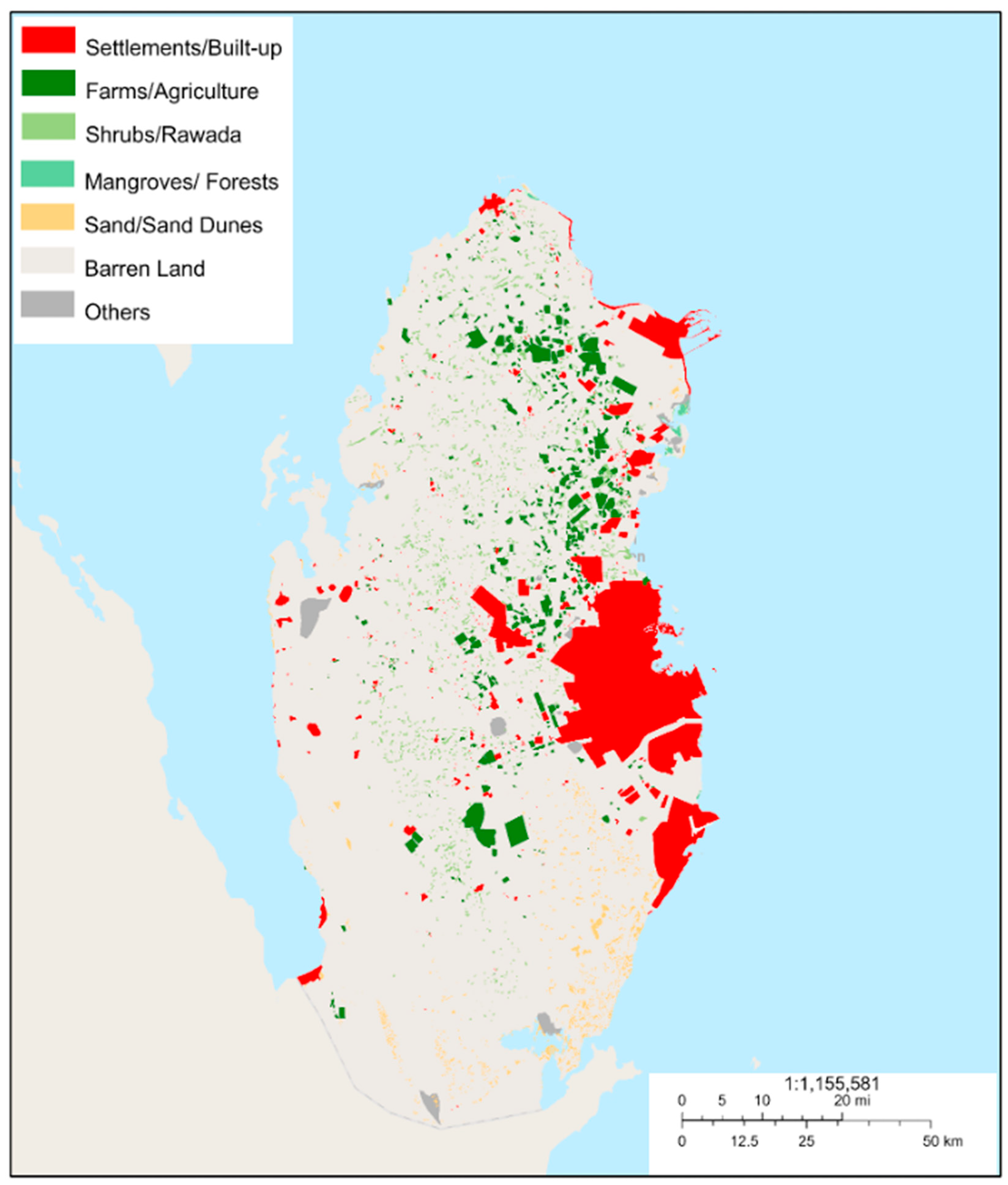
Figure 2.
Percentage of land use for the production of different crop groups [83].
Figure 2.
Percentage of land use for the production of different crop groups [83].
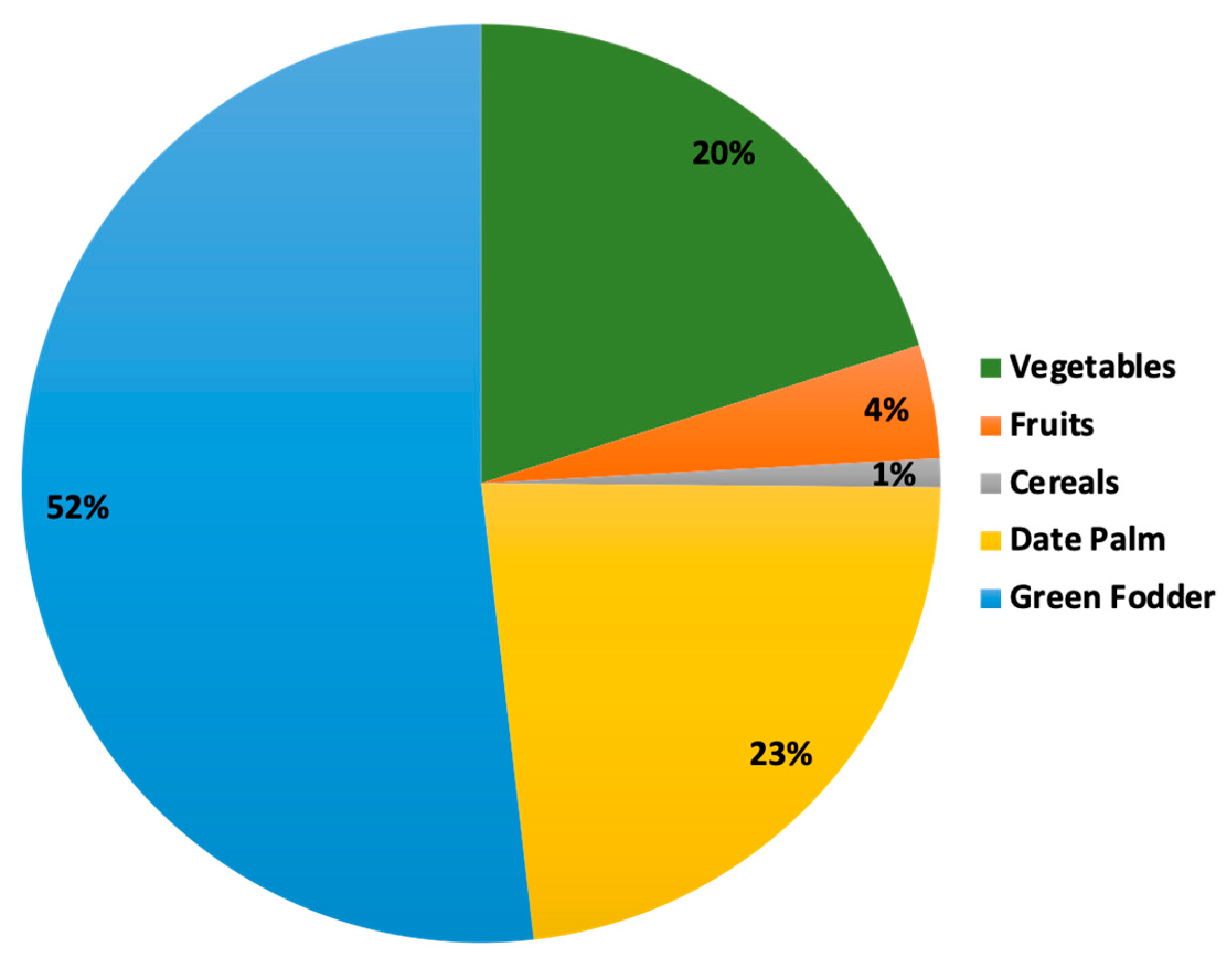
Figure 3.
Vegetable production in Qatar [83]. A: Land utilized for Vegetable production (ha); B: Production of vegetables (ton); C: Area used under Open-field and greenhouse cultivation (ha); B: Production of vegetables under Open-field and greenhouse cultivation (ton) [83].
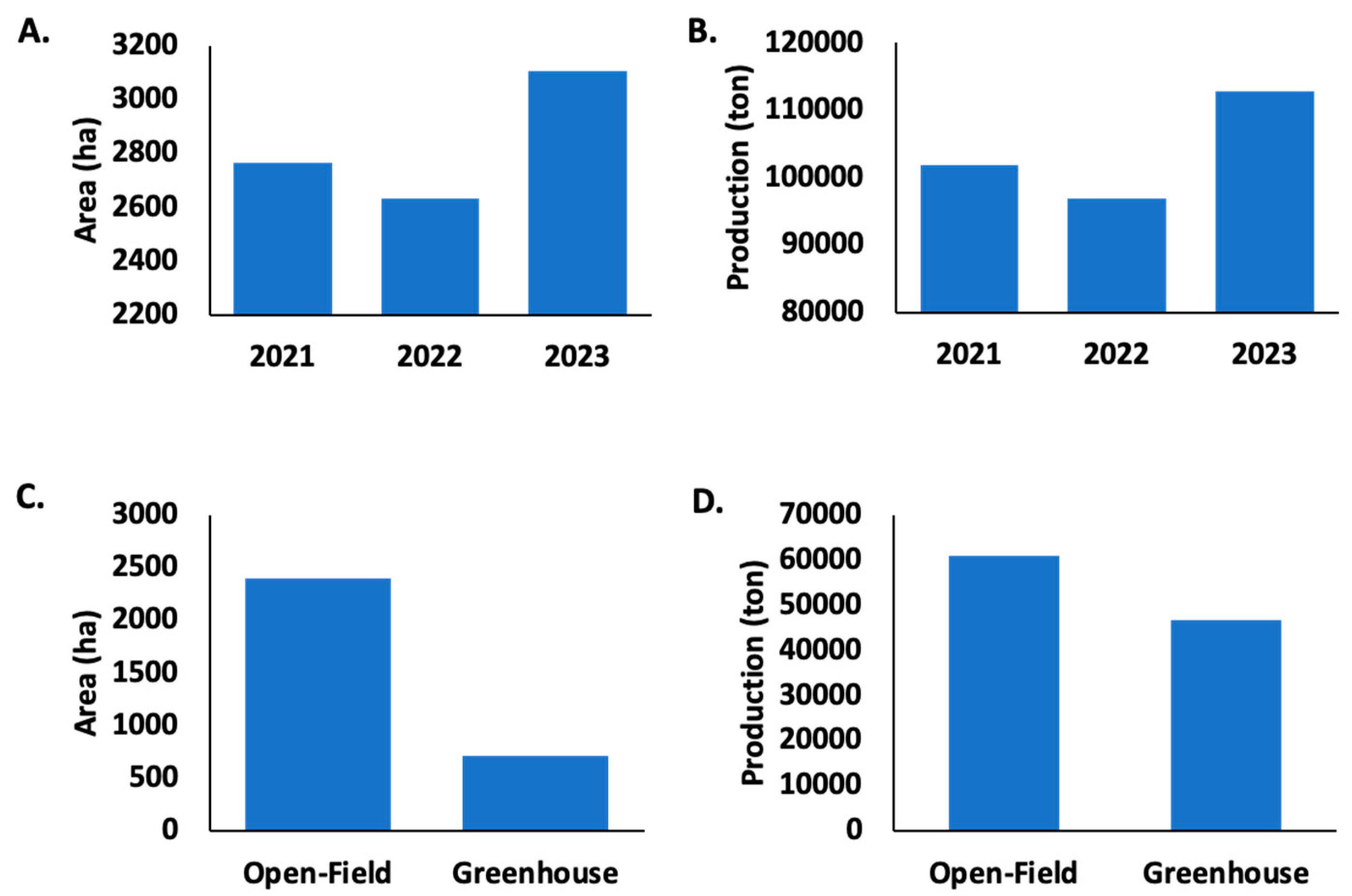
Figure 4.
Crop production under greenhouse production in Qatar. A: Hectarage of the different crops (ha); B: Production of the different crops (ton) [83].
Figure 4.
Crop production under greenhouse production in Qatar. A: Hectarage of the different crops (ha); B: Production of the different crops (ton) [83].
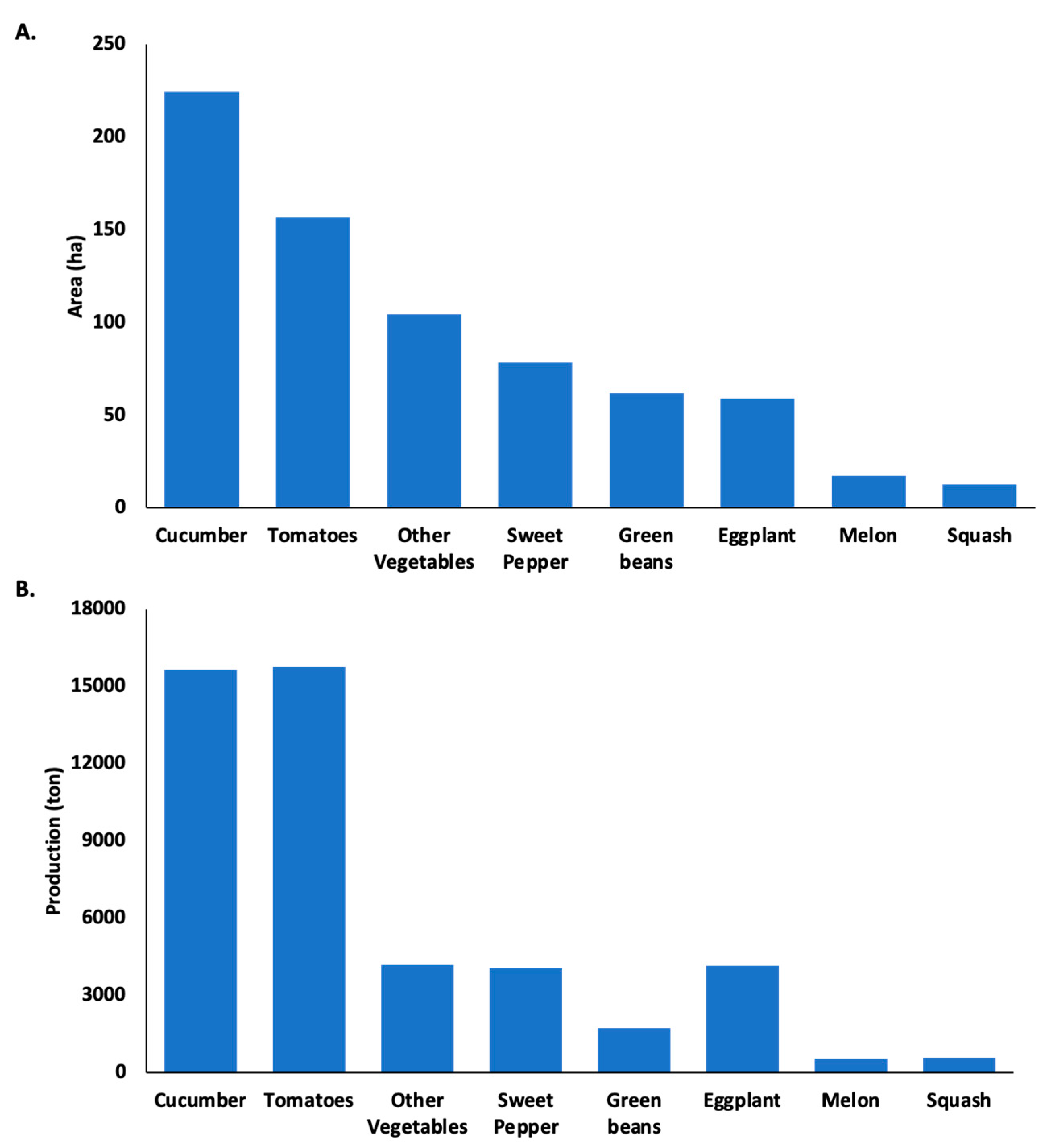
Figure 5.
Crop production under open-field production in Qatar. A: Hectarage of the different crops (ha); B: Production of the different crops (ton) [83].
Figure 5.
Crop production under open-field production in Qatar. A: Hectarage of the different crops (ha); B: Production of the different crops (ton) [83].
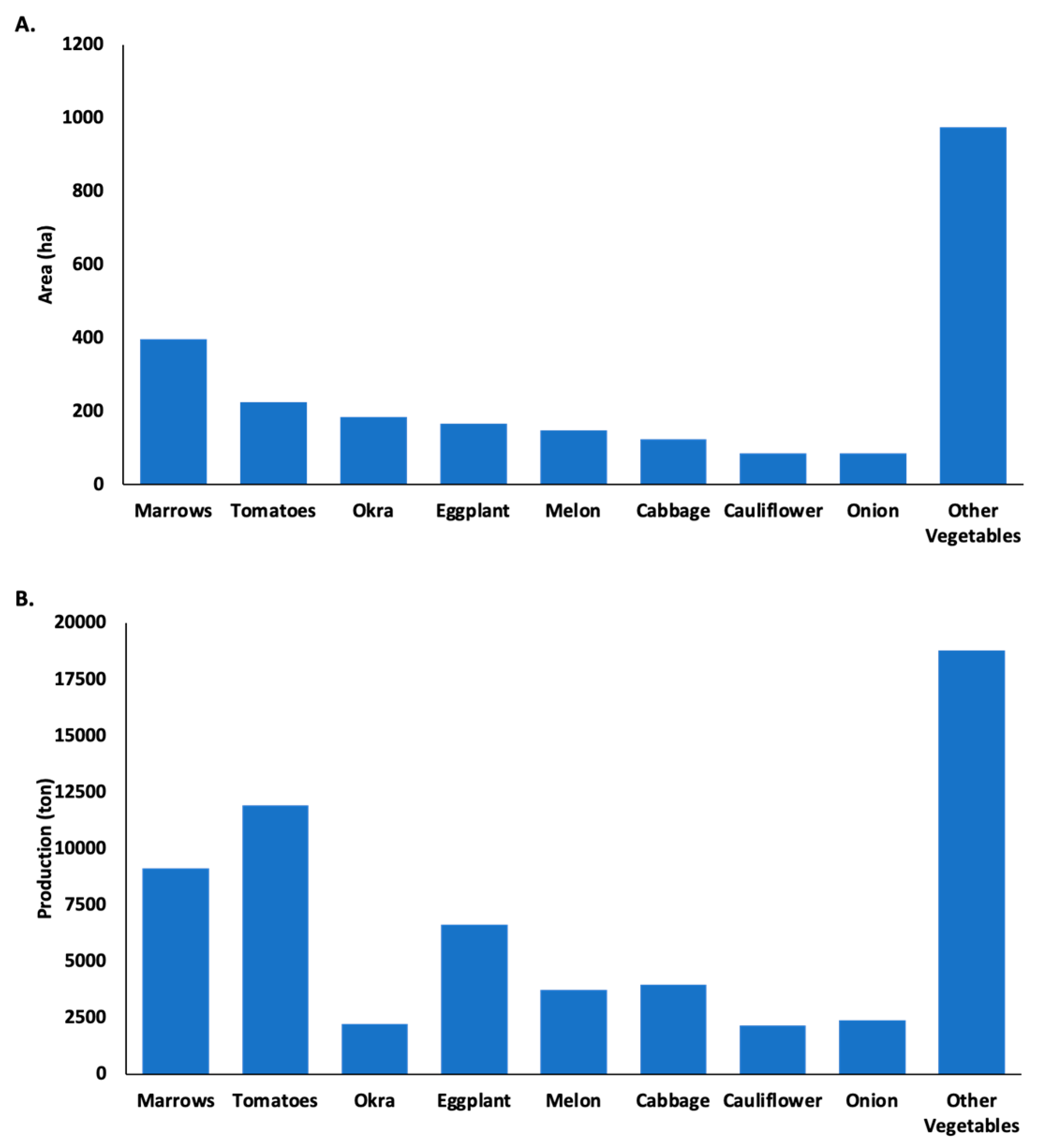
Figure 6.
Tomato production in Qatar. A: Area under tomato cultivation (ha); B: Production of tomato (ton); C: Yield of tomato under different cultivation (ton/ha); D: Share of the total production under different cultivation techniques (%) [83].
Figure 6.
Tomato production in Qatar. A: Area under tomato cultivation (ha); B: Production of tomato (ton); C: Yield of tomato under different cultivation (ton/ha); D: Share of the total production under different cultivation techniques (%) [83].
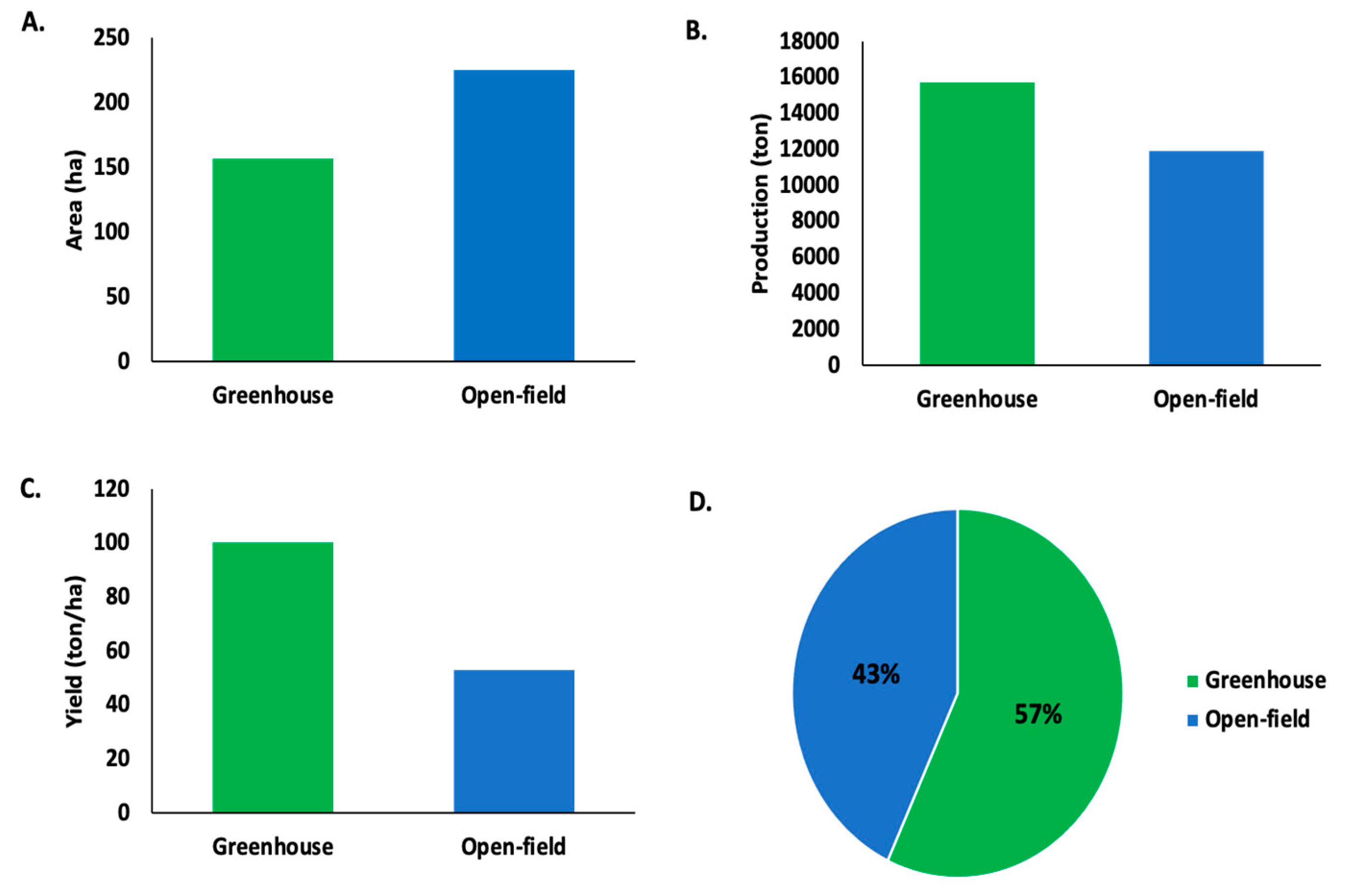
Figure 7.
Average minimum and maximum temperature in the Qatar (°C) [89].
Figure 7.
Average minimum and maximum temperature in the Qatar (°C) [89].
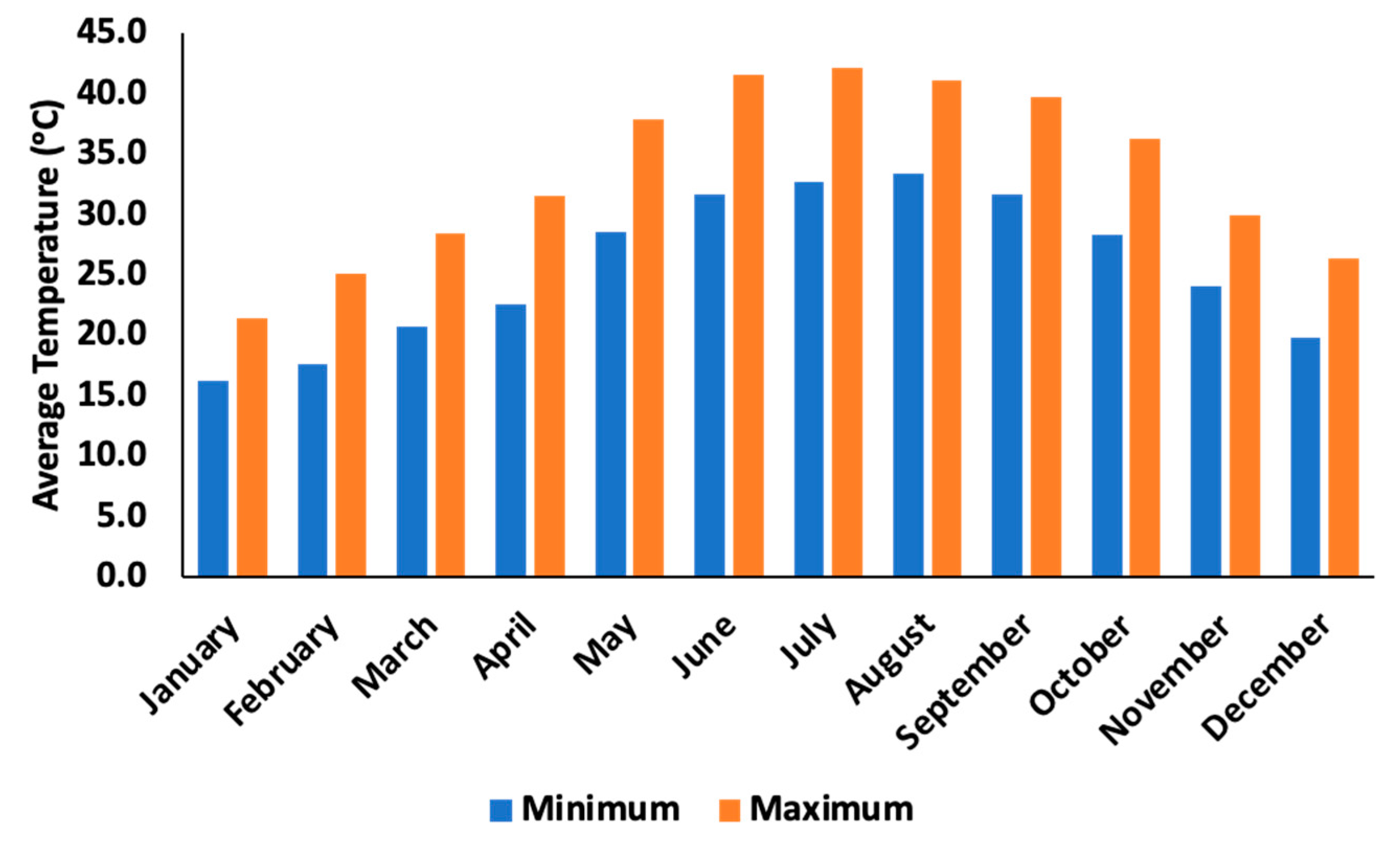
Figure 8.
Average rainfall received in Qatar (mm) [89].
Figure 8.
Average rainfall received in Qatar (mm) [89].
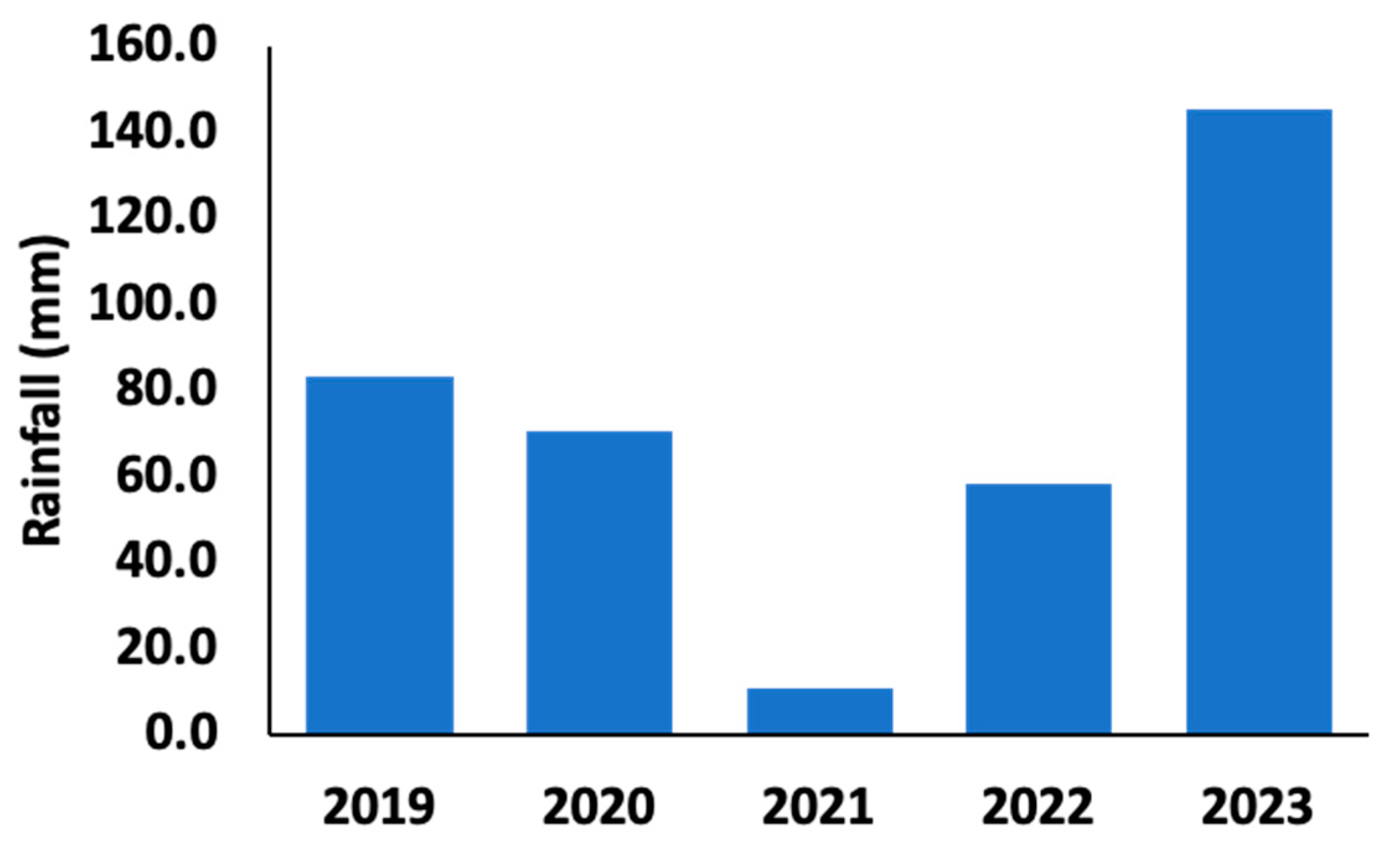
Figure 9.
Average minimum and maximum Relative Humidity in the Qatar (%) [89].
Figure 9.
Average minimum and maximum Relative Humidity in the Qatar (%) [89].
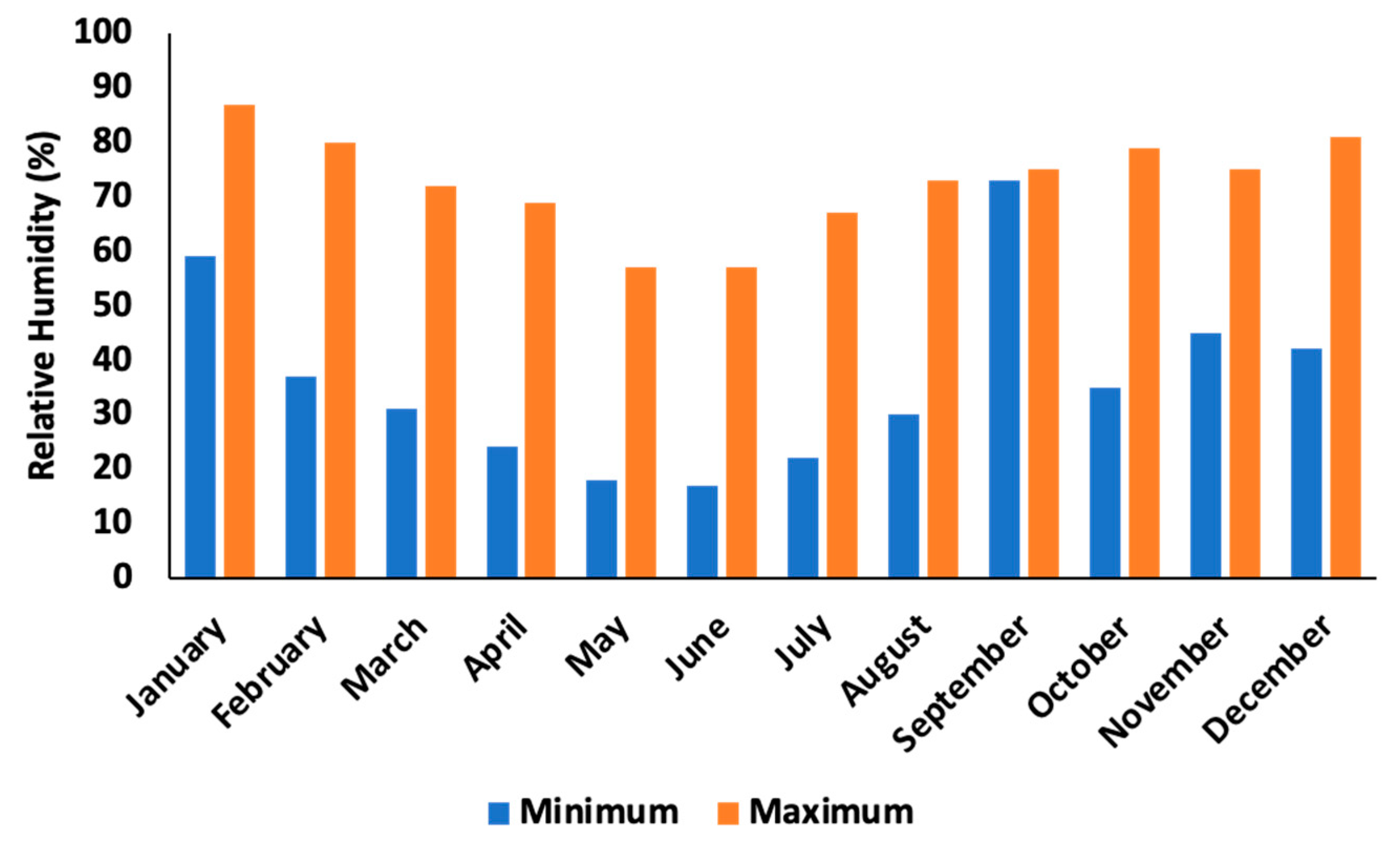

Table 1.
Area of different class of land use [82].
Table 1.
Area of different class of land use [82].
| Class | Area (hectars) |
|---|---|
| Settlements/Built-up | 118194.51 |
| Farms/Agriculture | 42778.82 |
| Shrubs/Rawada | 23326.21 |
| Mangroves/Forests | 968.37 |
| Sand/Sand Dunes | 13407.15 |
| Barren Land | 952851.86 |
| Others (Water Bodies/Exposed Land) | 9410.38 |
Disclaimer/Publisher’s Note: The statements, opinions and data contained in all publications are solely those of the individual author(s) and contributor(s) and not of MDPI and/or the editor(s). MDPI and/or the editor(s) disclaim responsibility for any injury to people or property resulting from any ideas, methods, instructions or products referred to in the content. |
© 2025 by the authors. Licensee MDPI, Basel, Switzerland. This article is an open access article distributed under the terms and conditions of the Creative Commons Attribution (CC BY) license (http://creativecommons.org/licenses/by/4.0/).
Copyright: This open access article is published under a Creative Commons CC BY 4.0 license, which permit the free download, distribution, and reuse, provided that the author and preprint are cited in any reuse.


