

Submitted:
02 April 2025
Posted:
04 April 2025
You are already at the latest version
Abstract
Evaporative cooling system (ECSs) are energy-efficient and eco-friendly air-cooling technology that very effective in dry climates, and the conventional method which uses cellulosic pads is widely used. However, because of the accumulation of dust and salts, these pads have a tendency to degrade quickly. This study aimed to examine the viability of using volcanic stone (Scoria) as an innovative material for evaporative cooling pads. The experiments were conducted in a wind tunnel (0.4 m × 0.6 m) with different pad thicknesses (d = 10 cm and 15 cm), water addition rates (mw =1.6, 2.4, and 4 kg.min-1.m-1), and air speeds (v = 0.75, 1.25, and 1.75 m. s-1). The results show that the 10 cm thick pad consistently performed better than the 15 cm thick pad across all air speeds and water addition rates. The 10-cm-thick pad achieved the highest cooling efficiency of 82% at a water addition rate of 2.4 L.min-1.m-1 and an air speed of 1.75 m. s-1. In contrast, the cooling efficiency for the 15-cm-thick pad was 64%, under the same conditions. The 10 cm thick pad showed higher water consumption, (1.8 to 2.8 kg·h⁻¹ compared to 1.0 and 2.4 kg·h⁻¹ for the 15 cm pad), as the ECS performance directly associated with the amount of water used. Higher airspeed led to a drop in pressure, which impacted fan performance. The pressure drops across the pads were between 10 and 13 Pa for an airspeed of 1.75 m·s⁻¹. These results suggest that volcanic stone (Scoria) pads can give an effective cooling performance similar to commercial cellulosic pads but have added benefits of durability, less maintenance, and biological degradation resistance. The non-evaporative medium, especially the 10 cm thick Scoria pad, could be a more viable medium for evaporative cooling applications in arid areas.
Keywords:
volcanic stone
; pad thickness
; evaporative cooling
; water consumption
; pressure drop
; cooling efficiency
1. Introduction
The limited water resources and unsuitable environmental conditions such as high temperature and low relative humidity, especially in the summer, are among the major challenges facing the agricultural sector in the Kingdom of Saudi Arabia. According to Malhi [1], experts estimate a temperature rise of 1.4 to 5.8 °C by the end of this century. The temperatures in the Riyadh region increase to more than 45°C and the relative humidity is less than 10% in winter [2]. In hot climates during the summer months the temperature of the air inside the agricultural buildings can easily exceed 40 °C [3]. In general, a 4 to 24 °C drop, depending on the existing dry bulb temperature and humidity is achievable [4]. Evaporative cooling systems (ECS) are an adiabatic exchange of sensible heat to latent heat [5]. It is a thermodynamic process in which hot and humid air passes over a wet surface [6], resulting in a reduction in the dry bulb temperature of air and a corresponding increase in the relative humidity. The single stage of ECS is widely used in domestic application, particularly in hot and dry areas for various domestic and industrial applications, such as short and long-term preservation of vegetables, fruits etc., which does not require very low temperature [7,8]. The ECS, on the other hand, are relatively simple, efficient, and cost-effective, making them an attractive alternative to conventional cooling system [7,9]. Thus, evaporative cooling is generally more efficient where air temperature is high and relative humidity low [5,10], and is considered one of the best ways to cool the air inside greenhouses because it maintains an appropriate moisture content around the plants and reduces electricity energy consumption [11]. It is called as sustainable cooling system [7], it has spread due to its lower cost [12] compared to mechanical cooling systems (such as freon, etc.). Although ECS are highly efficient in cooling and humidifying the air, but still is not able to control temperature and humidity accurately because their cooling capacity depends on outside condition of air [6], and the temperature of the air cannot be reduced below the wet bulb temperature of the air [7]. The cooling efficiency of the ECS depends on the pad material used, and an attempt is always made to obtain the highest saturation efficiency by changing the optimal pad material [9]. The traditional ECS with a cellulosic cardboard pad is the most widely used method for controlling environmental conditions inside greenhouses. Despite this, they quickly deteriorate as a result of the accumulation of salts and dust on them, which leads to a loss of much of their efficiency after the first year of use, a decrease in their life span, and an increase in their replacement and maintenance costs [13,14,15]. Many researchers are trying to search or develop new, efficient and sustainable pad materials which is very much required for further enhancing cooling potential of evaporative cooling devices [16]. Therefore, it is important to search for other materials with a long operating life and high efficiency that could be used as pads for ECS. The ideal requirements for evaporative cooling pads are higher wetted water-to-air contact surfaces, minimum pressure drop, easy to clean, assemble and dismantle and maintenance [17]. The pozzolan bricks proved to be as effective as cellulose pads in cooling efficiency and exhibited remarkable durability in saline water and harsh conditions, eliminating the need for replacement [18]. The possibility of using volcanic stone (Scoria) in making evaporative cooling pads has been studied. The Scoria rocks are porous, spongy in appearance, in color (black, gray, brown, red or white) and the proportion of bubbles exceeds 50% of the total volume of the rock. As for its chemical composition, it is similar to that of basalt rocks. The black scoria granules retained water by 46%, while the red scoria granules retained 35% [19]. The success of using these rocks as cooling pads may lead to an increase in the efficiency of the ECS, which leads to reducing stresses on plants in greenhouses and poultry in barns, especially during very hot times of the summer season, and thus contribute to increasing production and its quality. Based on the above, there was an urgent need to search for alternative practical materials that could be used as alternative cooling pads to overcome the problems of traditional pads. Among these materials are pads made of scoria rocks, which are characterized by their high porosity, light weight as well as its availability in large area in the Arabian Peninsula [20,21]. Therefore, the current paper aimed to assess the effectiveness of ECS utilizing volcanic stone (Scoria) cooling pads by analyzing the impact of pad thickness, air velocity, and water addition rate on cooling efficiency, water consumption, and pressure drop across the pads.
2. Materials and Methods
2.1. Evaporative Cooling System and Study Area
The evaporative cooling system with cooling pads was tested in a shaded area outside the General Department of Parks’ North Landscaping Unit building in the Riyadh Municipality during the months of July and August of 2022. The ECS used in the experiments (Figure 1), is made up of a rectangular aluminum frame that is: a height of 0.6 m and a width of 0.4 m. To draw in outside air across the pad, a variable speed fan (220V to 140 W) is installed at the front opening. The ECS is designed for easy insertion and removal of the replacement pad for each experiment. The system has a pipe at the top of the pad which distributes the water by spraying. The water flows downward through the pad, and collects in a water tank. An electric pump (220V - 25W), submerged in the reservoir, pumps the water back through the pipes. To minimize heat gain, the body of the channel is insulated by a layer of 25 mm-thick insulation glass wool.
2.2. Volcanic Stone Cooling Pads
The cooling pad consists of an aluminum frame filled with volcanic stones (1.6 to 2.5 cm diameter, with average bulk density of 2.6 g.cm-3). Volcanic stone is a type of igneous rock that condenses after a volcanic eruption, when magma reaches the surface. It is porous, contains natural holes, is lightweight, highly resistant to erosion, and has a long lifespan. Its surface is uneven or cracked, with a conch-like shape, and lacks any regular internal atomic structure or regular external shape. The volcanic stones are held in place by galvanized metal mesh racks within the frame (porosity mesh is 4500 holes per square meter), which also act as barriers and shelves. The aluminum frame is securely locked with tight galvanized metal wire to prevent the stones from escaping (Figure 2).
2.3. Experiment Planning
The performance of the volcanic stone pad was evaluated by operating the evaporative cooling system (ECS) under three water addition rates (1.6, 2.4, and 4 L·min⁻¹·m⁻¹) and three air speeds (0.75, 1.25, and 1.75 m·s⁻¹). Two pad thicknesses (10 cm and 15 cm) were tested to determine the optimal thickness for maximizing cooling efficiency.
Each experiment lasted one hour, and replicated three times (Experimental factors are 3 × 3 × 2 × 3, and the average readings were taken). The air temperature (T1), and relative humidity (RH1) were measured before entering the pad, and the air temperature (T2) and relative humidity (RH2), were measured after leaving the pad. The pressure drops before and after the pad, and the amount of water consumed by the system was also recorded. Air temperature and relative humidity were logged every 30 seconds using a portable combined sensor data logger (OM-EL-ESB-2-LSD, Omega Inc, US). Air speed through the pad (m.s-1) was measured using a vane anemometer (Model: 850021, Taiwan). The pressure-drop across the cooling pad was determined using a Testo 510 - Digital manometer (differential pressure to 40 in. H2O). Wet bulb effectiveness (η), representing the cooling efficiency of pad (%), was calculated based on the the average temperatures and relative humidity values measured before and after the pad using the following equation [22]:
where:
T1 is the air temperature before entering the pad, T2 the air temperature after leaving the pad, Twb is the wet bulb temperature of the air before it enters the cooler (°C).
The water addition rates were adjusted using a glass beaker marked with a scale (mm) to determine the amount of water added so that the rates of 1.6, 2.4 and 4 L were added to the cooling pads every one minute, and accordingly the water opening stopcock was calibrated with this method. All devices used were calibrated before conducting the experiments.
4. Results and Discussion
4.1. Effect of Pad Thickness on Cooling Efficiency
The statistical analysis of the results (based on analysis of variance (ANOVA), Dunkin’s mean test was applied at , using SAS ver. 9.0, SAS Institute, Cary, NC, USA) [23], showed that pad thickness had a significant effect on the cooling efficiency, with the 10 cm thick pad performing significantly better than the 15 cm thick pad (P < 0.05).
Figure 3 (a, b, and c) show that, at all tested conditions, (air speeds of 0.75, 1.25, 1.75 m·s⁻¹, and water addition rates of 1.6, 2.4, 4 L·min⁻¹·m⁻¹), the 10 cm thick pad had higher cooling efficiency, 82% at an air speed of 1.75 m·s⁻¹ and a water addition rate of 2.4 L·min⁻¹·m⁻¹, compared to the 15 cm thick pad, 64% under the same air speed and water addition rate. The low cooling efficiency of the 15 cm thick pad can be explained by the lack of pores between the stones, which restricts the flow of air and causes water droplets to pass through without sufficient evaporation [24].
Figure 3 (a, b, and c) clearly show that increasing the air speed from 0.75 m·s⁻¹ to 1.75 m·s⁻¹ improved the cooling efficiency for both pad thicknesses. Yet, the 15 cm pad displayed no significant improvement, maintaining low efficiencies compared to the 10 cm pad at the respective air speeds.
The high performance of the 10 cm thick pad in all cases could be due to its lower resistance to airflow. At suitable air speeds, adequate contact occurs between the air and water droplets, promoting effective heat exchange and evaporation without extreme drift. This result in a higher cooling efficiency [25]. Though, the rate of efficiency increase was lower when air speed increased from 1.25 to 1.75 m·s⁻¹ which is likely due to air speeds exceeding 1.5 m·s⁻¹, which can cause the free water droplets to be carried away without evaporating [24]. Moreover, low pressure on both sides of the pad may further decrease the cooling efficiency [26]. The results obtained may depend on the specific conditions of this study and that different granulometric conditions of the stone could lead to different responses to pad thickness.
4.2. Effect of Water Addition Rate on Cooling Efficiency
The water addition rate significantly (P < 0.05) affected the cooling efficiency with the highest efficiency (82%) detected using the 10 cm pad with water addition rate of 2.4 L. min-1 m-1, at 1.75 m·s⁻¹ air speed (Figure 4c).
The results in figure 4 (a, b, and c) illustrate that increasing the water addition rate enhanced the cooling efficiency for both pad thicknesses. However, increasing the water addition rate to 4 L. min⁻¹·m⁻¹ didn’t change the efficiency largely. The 15 cm pad showed no significant improvement, sustaining low cooling efficiencies compared to the 10 cm pad at all water addition rates.
The relationship between water addition and the efficiency is direct at low water addition rates. At higher rates, the efficiency increases are limited by pad saturation. Low water/air mass flow causes high evaporation rates and incomplete pad wetting. The required water addition for complete wetting depends on the pad material, thickness, and dimensions. These findings agree with previous studies by He [26], Jawad [27], Gunhan [28], and Al-Badri and Al-Waaly [29]. He [26] suggested determining the minimum water to keep the pad wet. Ghoname [30] recommended operating at a maximum water flow to reduce blockages. Yan [31] conducted tests on the water addition rates recommended by manufacturers and found that a recommended water flow rate 10 to 30 times the evaporation rate would achieve total wetting and remove sediment from the pads.
4.3. Effect of Pad Thickness on Water Consumption
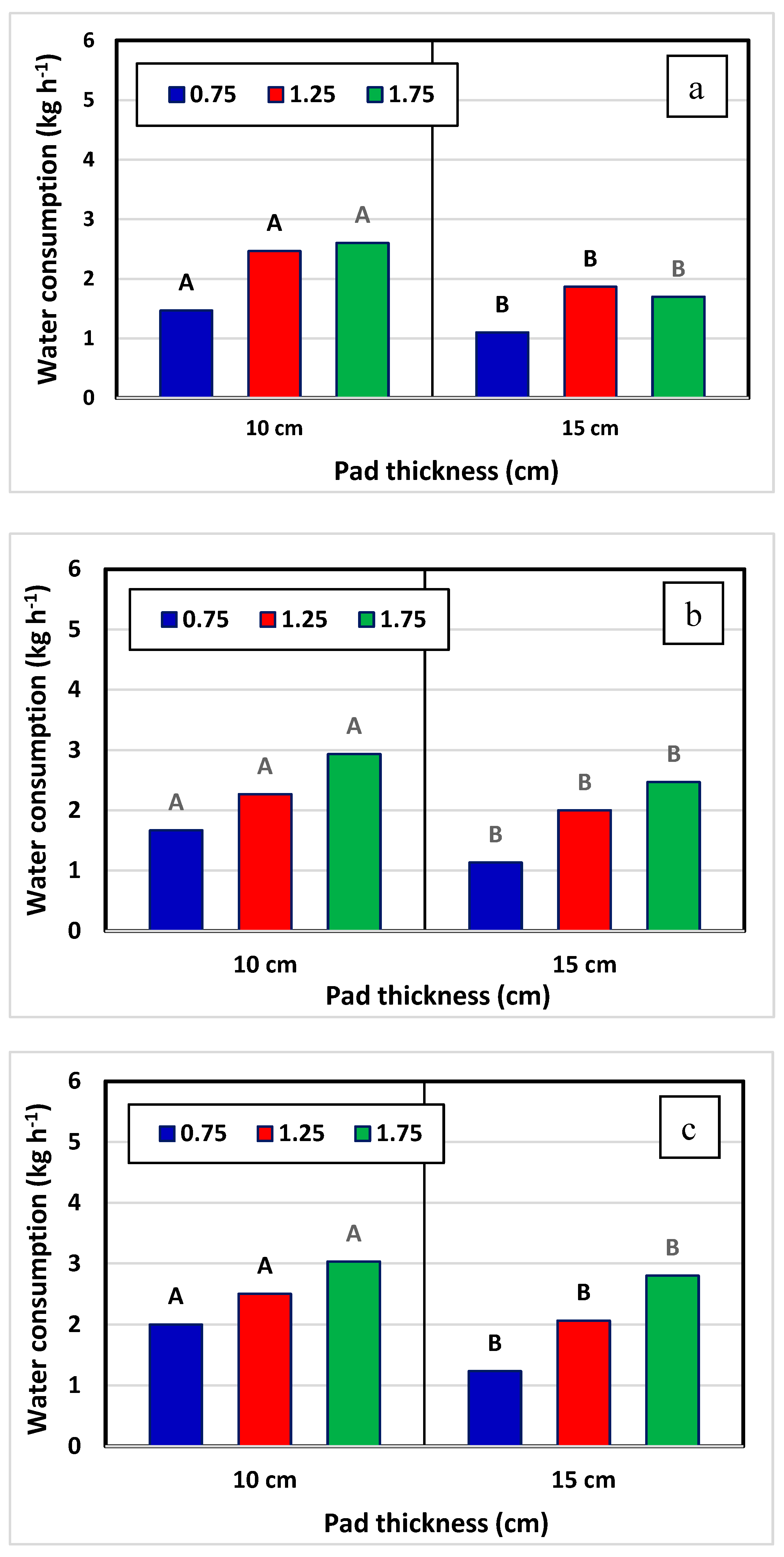
The results in figures 5 (a, b, and c) show that the pad thickness significantly (P < 0.05) influences the water consumption rate, as the thinner pads allow more airflow, leading to higher evaporation and water consumption. The 10 cm pad used more water than the 15 cm pad, with water consumption decreasing as pad thickness increased. The highest amount of water consumption recorded (2.8 kg h-1) was for the 10 cm thick pad at an air speed of 1.75 m s-1, with water addition rate of 4 L. min-1 m-1. In contrast, the amount of water consumed in the 15-cm-thick pad was 2.4 kg h-1 at the same air speed and water rate.
Figure 5.
Effect of pad thickness on water consumption at an addition rate of; (a) 1.6, (b) 2.4, (c) 4 kg min-1 m-1.
Figure 5.
Effect of pad thickness on water consumption at an addition rate of; (a) 1.6, (b) 2.4, (c) 4 kg min-1 m-1.
4.4. Effect of Air Speed on Water Consumption
The statistical analysis shows that the air speed had a significant (P < 0.05) effect on the water consumption rate. The results in Figures 6 (a, b and c) show that, there is a direct relationship between the peed of air and water consumption, the higher the air speed passing through the pad, the greater the amount of water consumed. The highest amount of water consumed (3.1 kg h-1) detected using the 10 cm pad at air speed of 1.75 m·s⁻¹, with water addition rate of 4 L. min-1 m-1 (Figure 6c). In contrast, the 15 cm pad showed a lower water consumption (2.8 kg h-1) at the same conditions. This is in line with a study carried out by Al-Helal and Al-Tuwaijri [32], in which they indicated that, there is a direct relationship between the increase in water consumption and the increase in the speed of the air passing through the cooling process, as a result of the increase in the contact area between the air and the water passing through the cooling pads.
4.5. Effect of Water Addition Rate on Water Consumption
The results in Figure 7 (a, b and c) show that the 10 cm thick pad consumed more water (3 kg h-1), at 4 L. min-1 m-1 water addition rate and 1.75 m. s-1 air speed, compared to the 15 cm thick pad under the same conditions. This may be due to 10 cm pad lower resistance to the flow of air, and allowing more evaporation rates, especially at high air speeds and 4 L. min⁻¹·m⁻¹ water addition rate where excess water drains without evaporating and leading to increasing water consumption. In contrast, the 15 cm pad, shows higher airflow resistance and lower evaporation rates due to its increased surface area. So, it uses less water than the 10 cm pad.
4.6. Effect of Pad Thickness on the Pressure Drop on Both Sides of the Pad
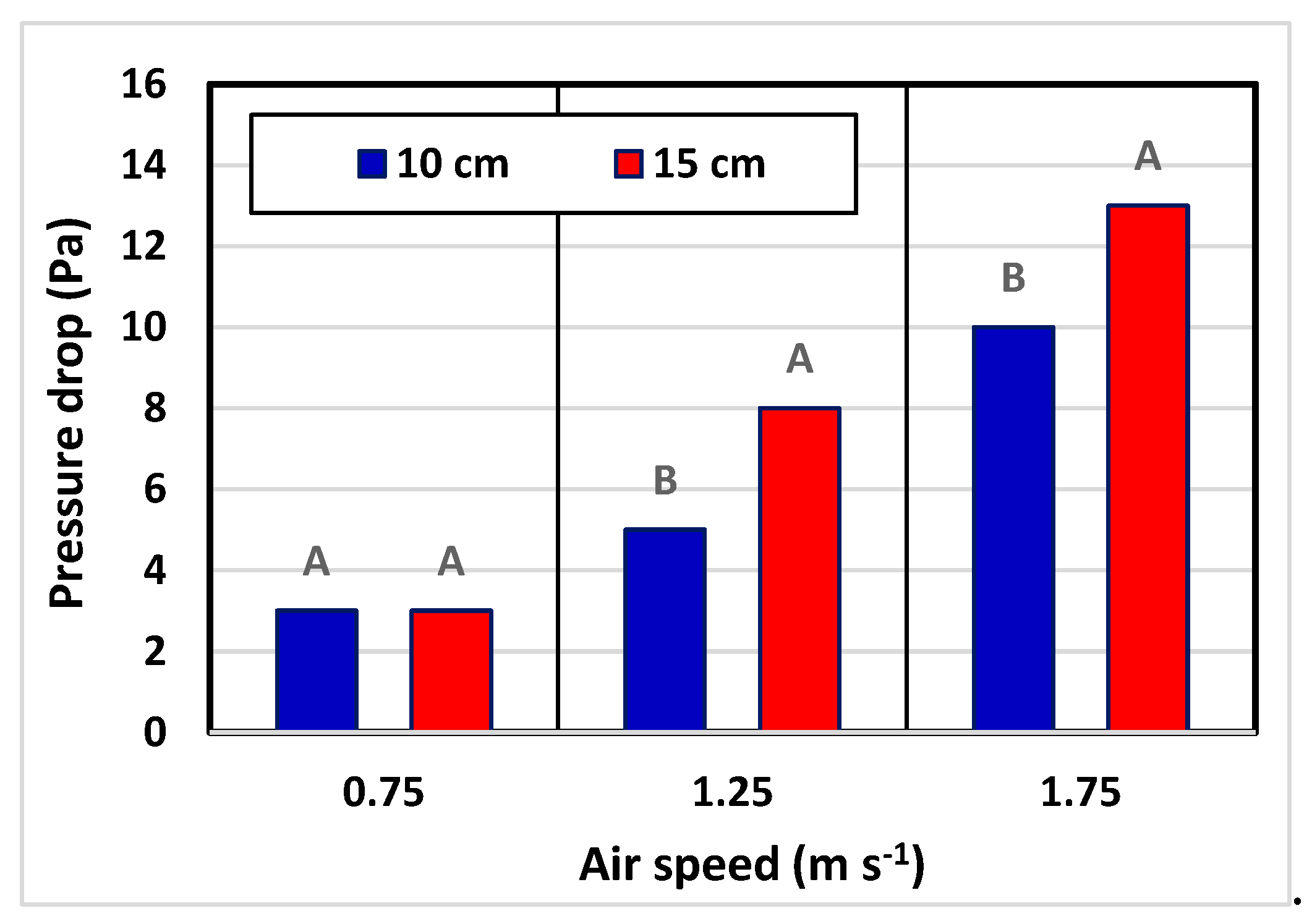
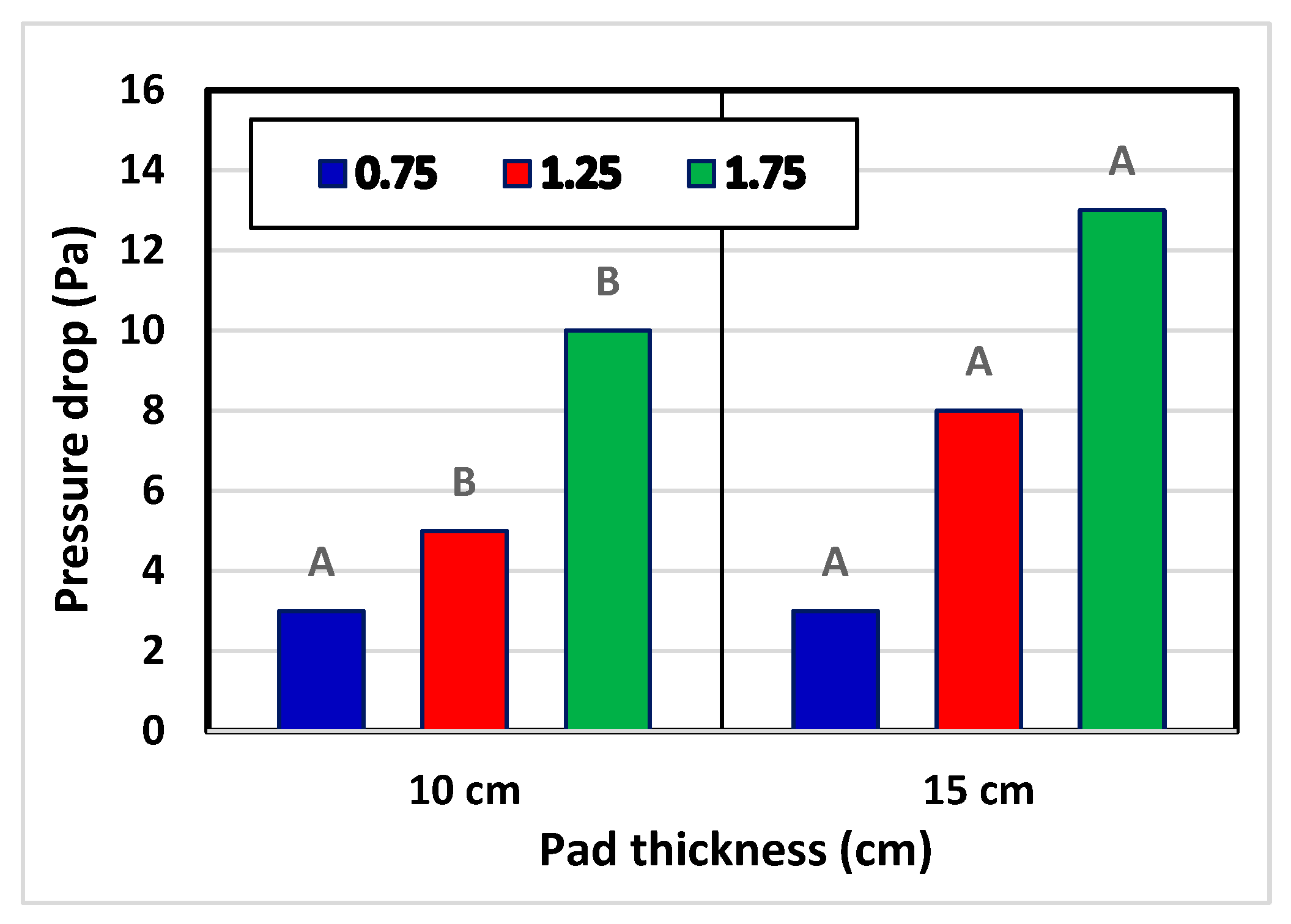
Data analysis indicated that there was no significant effect on the pad thickness on the pressure drop on both side of the pad. At low air speed (0.75 m s-1), the pressure drops on both sides of the pad was not affected by the pad thickness (constant value of -3 Pa), while at medium air speed (1.25 m s-1), the pressure drop decreased to -5 Pa for the 10 cm thick pad, and it decreased to -8 Pa for the 15 cm thick pad. Also, at high speed (1.75 m s-1), the pressure drop decreased from -5 to -10 Pa for the 10 cm thick pad, while, it decreased to -13 Pa for the 15 cm thick pad (Figure 8). Thus, it can be said that the greater the thickness of the cooling pad, the greater the resistance to air flow through it, as the duration of contact with the air passing through the pad increases. This results in a decrease in the rate of water evaporation and thus a decrease in the cooling efficiency of the system [24,25]. It is also noted that the pressure drop values for the pad with a thickness of 10 cm are closer to each other with increasing air speed compared to the pad with a thickness of 15 cm. This result is very similar to the results obtained by Liao and Chiu [14].
4.7. Effect of Air Speed on the Pressure Drop on Both Sides of the Pad
In Figure (9), there is an inverse relationship between air speed and pressure drop on both sides of the pad, as the increase in air speed decreases the pressure drop on both sides of the pad. For the 10 cm thick pad, by increasing the air speed from 0.75 to 1.75 m s-1, the pressure drop decreased from -3 to - 10 Pa. This result is very similar to the results obtained by Liao and Chiu [14] who found a decrease in static pressure on both sides of the pad with increasing air flow whether the pad was made of volcanic rocks or coarse or fine pumice stones. It is also in agreement with Gunhan [28], whose results indicated that the evaporative efficiency of the pads decreases slightly with the increase in air speed from 0.6 to 1.6 m s-1 for lava stone pads, cellulosic pads, and masonry pads. The same thing happened with the 15 cm thick pad, it is noticeable that, the decrease occurred sharply from the beginning of the air speed increase from 0.75 to 1.25 m s-1, as the pressure decreased further from -3 to -8 Pa. By increasing the air speed from 1.25 to 1.75 m s-1 the pressure dropped dramatically again from -8 to -13 Pa. This severe decrease in pressure resulting from an increase in the air fan speed will certainly cause a decrease in the efficiency of the system because an increase in the fan speed to a value higher than 1.5 m s-1 leads to the withdrawal of free water droplets from the airway without evaporation, which leads to a decrease in efficiency [24].
Figure 9.
Effect of air speed on the pressure drop on both sides of the pad.
4.8. Effect of Water Adding Rate on the Pressure Drop on Both Sides of the Pad
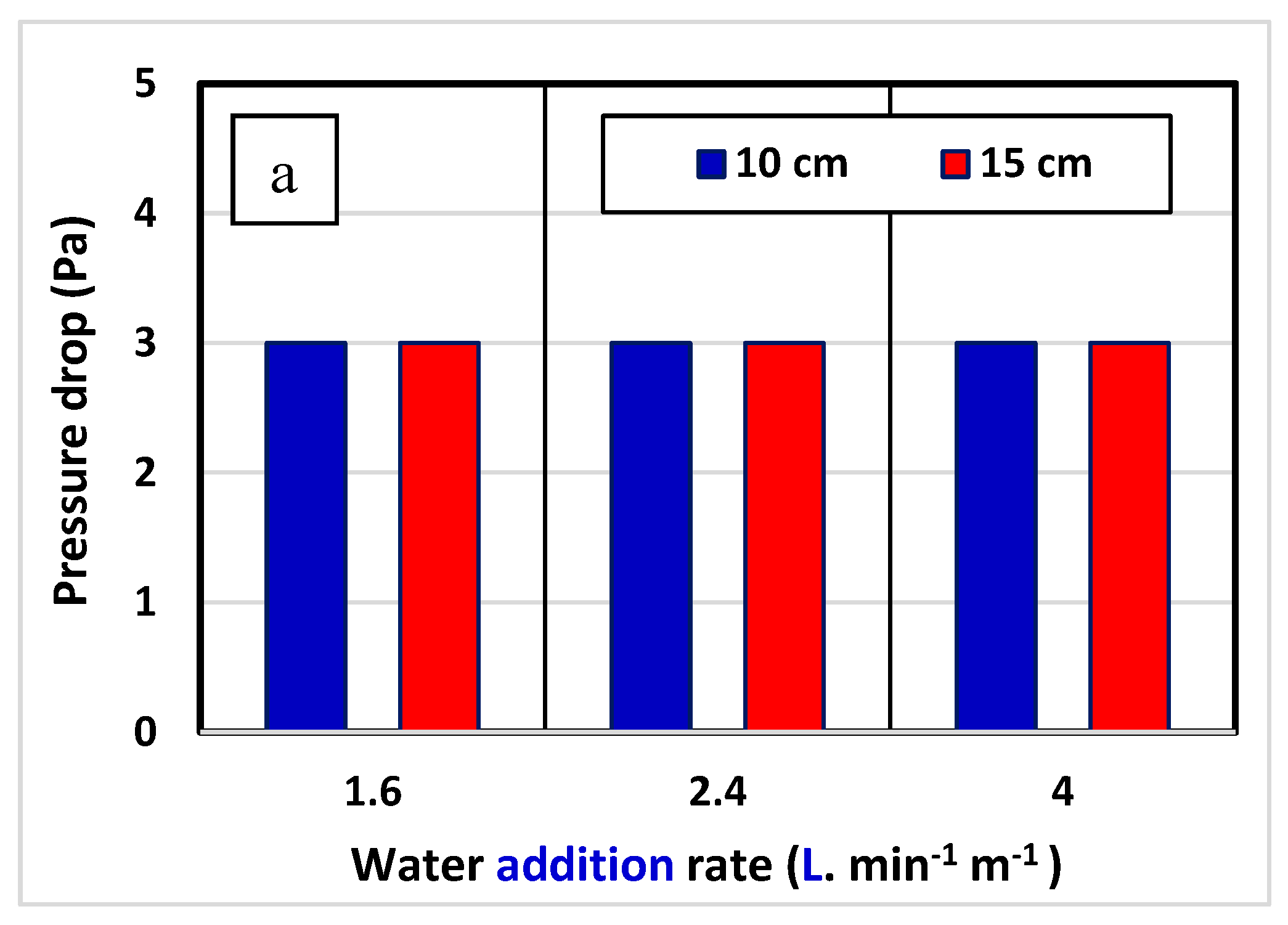
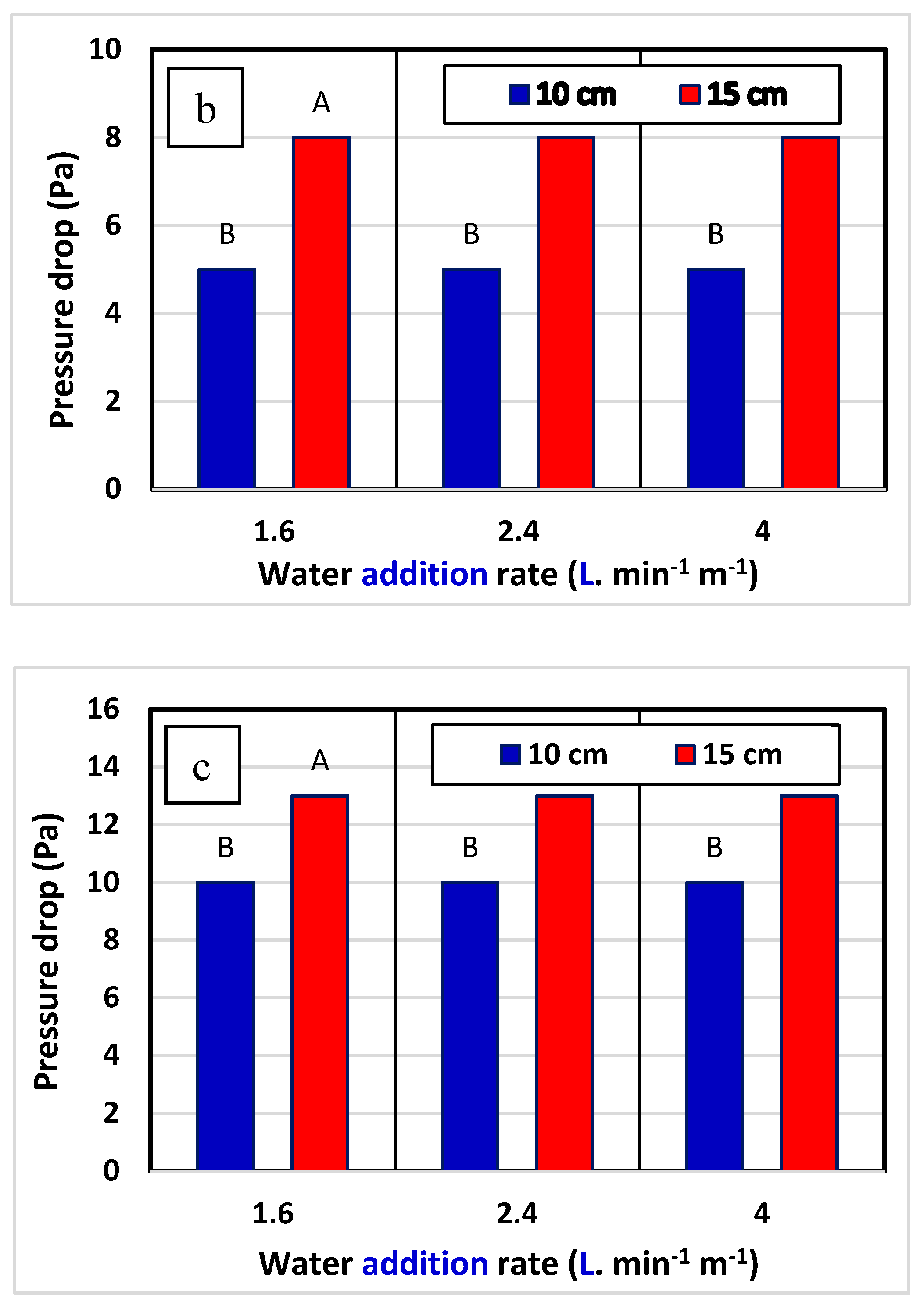
There is no clear relationship between the water addition rate and the pressure drop on both sides of the pad, according to Figures 10 (a, b and c). As the pressure drop was not affected by the increase in the water addition rate at different air speeds. For a pad with a thickness of 10 cm, it was found that the pressure drops on both sides was constant at (-3 Pa) and was not affected by the increase in the water addition rate at a speed of 0.75 m s-1, and decreased to (-5 Pa) with an increase in the speed to 1.25 m s-1, then decreased to (-10 Pa) by increasing the speed to 1.75 m s-1. As for the 15 cm thick pad, it was found that the pressure drops on both sides was also constant (-3 Pa) at a speed of 0.75 m s-1 (Figure 10a), and decreased to (-8 Pa) with an increase in the speed to 1.25 m s-1 (Figure 10b), then decreased to (-13 Pa) by increasing the speed to 1.75 m s-1 (Figure 10c). At low air speed (0.75 m s-1), the pressure drops on both sides of the pad was equal for each of the two-pad thickness 10 and 15 cm. Increasing the water addition rate to the pad did not affect the pressure drop on both sides of the pad in both types, as the pressure drop was constant when the water addition rate was increased from 1.6 to 2.4 kg min-1 m-1, and from 2.4 to 4 kg min-1 m-1. This result is fully consistent with what was found by Tejero-Gonzalez and Franco-Salas [17] that the water addition rate has a very small effect on the pressure drop when compared to the effect of each of the air speed and the thickness of the pad.
Figure 10.
The effect of water addition rate on the pressure drop at an air speed of: (a) 0.75, (b) 1.25, (c) 1.75 m s-1.
Figure 10.
The effect of water addition rate on the pressure drop at an air speed of: (a) 0.75, (b) 1.25, (c) 1.75 m s-1.
4.9. Comparison Between Cooling Efficiency of Volcanic Stone Pads and Commercial Cellulosic Pads
Table (1), shows the cooling efficiency of the volcanic stone pad compared to the cooling efficiency of the cellulosic paper pad as studied by a number of other researchers who worked on it, which is the most common and used in agricultural establishments. The study shows that the cooling efficiency of the volcanic cooling pad (82%) is very close to the cooling efficiency of commercial pad, which ranged between 64.38% and 91% (increasing by 5% or more), and even superior to them in terms of long operating life and not being subject to mold or damage, and low maintenance requirements.

Table 1.
Comparison of the highest cooling efficiency obtained from the current pad with the commercial cellulosic paper pad for a number of researchers.
Table 1.
Comparison of the highest cooling efficiency obtained from the current pad with the commercial cellulosic paper pad for a number of researchers.
| Pad type | Air speed (m s-1) |
Water addition rate (kg min-1 m-1) |
Pad thick. (cm) | Efficiency (%) | Reference |
|---|---|---|---|---|---|
| Volcanic stone | 1.75 | 2.4 | 10 | 82 | Current study |
| Cellulose pad | - | - | 7 | 64.38 | [9] |
| CELdek pad | 0.6 | - | 15 | 78 | [28] |
| CELdek pad | 1 | - | 10 | 68 | [28] |
| Cellulose pad | 1.27 | - | 10 | 70 | [33] |
| Cellulose pad | 1.4 | - | 10 | 75 | [34] |
| Cross – fluted Cellulose pad | 1.25 | 11 | 10 | 77 | [35] |
| Cellulose pad | 1 | 4 | 10 | 91 | [36] |
| Cellulose pad | 1.5 | 4 | 10 | 78 | [36] |
| Cellulose pad | 0.5 | - | 10 | 71 | [37] |
| CELdek pad | 1.3 2.7 |
3.6 | 10 | 67.73 65.57 |
[38] |
| Cellulose pad | 0.5 | - | 10 | 76 | [39] |
| CELdek pad | 1.75 | - | 30 | 75.6 | [40] |
| CELdek pad | 0.5-1.5 | 4 | 10 | 77-92 | [41] |
5. Conclusions
In conclusion, it was clear that the 10 cm thick pad showed much more cooling performance than the 15 cm thick pad where the average cooling efficiency of 78% compared to 55%.
Cooling efficiency was greatly affected by the air speed. For the 10 cm thick pad, the greatest efficiency (81%) was noted at 1.75 m·s⁻¹ airspeed, with 54% maximum (at a corresponding airspeed) for the 15 cm thick pad.
The 10 cm thick pad achieved stable cooling efficiency between 77% and 78% at different water addition rates, indicating that the water addition rate had little effect on cooling efficiency. However, it should be noted that for the 15 cm thick pad, an improvement of efficiency was obtained due to water addition of 1.6 L. min⁻¹·m⁻¹ to 49% and an increase in water addition of 2.4 L. min⁻¹·m⁻¹ achieved from an efficiency of 56%. The addition of water was set to 4 L. min⁻¹·m⁻¹, which did not significantly occult efficiency remained in the range of 60% indicating a sort of saturation effect.
Higher airspeed through the cooling pads produced a drop in pressure, which impacted fan performance. The pressure drops across the pads were between 10 and 13 Pa for an airspeed of 1.75 m·s⁻¹. Neither pad thickness, airspeed, nor water addition rate showed a statistically significant interaction in terms of cooling efficiency or water consumption.
Overall, based on these results and a comparison with commercial cellulosic cooling pads, the volcanic stone (Scoria) pads showed similar cooling efficiency. Scoria pads are a practical substitute for conventional cooling pads, providing myriad advantages - longer life span, no maintenance, and resistance to biological degradation such as rotting.
Author Contributions
M.A.R.: Conceptualization; Writing original draft; Investigation; Supervision; I.M.A.: Conceptualization; Reviewing; Investigation; Supervision; S.M.A.: Methodology; Implementation of experiments; Formal analysis; Validation; Investigation; Data curation. F.N.A. and A.A.F: Review and editing; Visualization. W.A.A.: Methodology; Investigation; Data curation. M.A.R., F.A.A. and S.M.A.: Statistical analysis. M.N.I., R.B.F. and M. R.S.: Assisting in conducting experiments and measurements. All authors have read and agreed to the published version of the manuscript.
Funding
This research did not receive any support.
Data Availability Statement
All data are available within this publication.
Conflicts of Interest
The authors confirm that there are no relevant financial or non-financial competing interests to report.
References
- Malhi, G.S.; Kaur, M.; Kaushik, P. Impact of Climate Change on Agriculture and Its Mitigation Strategies: A Review. Sustainability 2021, 13, 1318. [Google Scholar] [CrossRef]
- Abdel-Ghany, A. M., Al-Helal, I. M., Alzahrani, S. M., Alsadon, A. A., Ali, I. M., and Elleithy, R. M. 2012. Covering materials incorporating radiation-preventing techniques to meet greenhouse-cooling challenges in arid regions: a review. The Scientific World Journal, 2012(1-2): 906360. [CrossRef]
- Bucklin, R. A., J. D. Leary, D. B. McConnell, and E. G. Wilkerson, 2004. Fan and Pad Greenhouse Evaporative Cooling Systems (CIR1135, IFAS Extension, University of Florida) pp. 1-7.
- Bhatia, B. E. 2012. Instructor, PDH online Course M231 (4 PDH), “Principles of Evaporative Cooling System, 2012” pp. 1-56.
- Dzivama A.U., Bindir U. B. Aboaba F.O., 1999. Evaluation of pad materials in construction of active evaporative cooler for storage of fruits and vegetables in arid environments‖. Agricultural Mechanization in Asia, Africa and Latin America, AMA, Vol. 30(3), 51–55.
- Manoj Kumar Chopra, and Rahul Kumar, 2017. Design of New Evaporative Cooler and Usage of Different Cooling Pad Materials for Improved Cooling Efficiency, International Research Journal of Engineering and Technology (IRJET), Vol.04 (09) pp. 503-511.
- Kapilan N., Arun M. Isloor, Shashikantha Karinka. 2023. A comprehensive review on evaporative cooling systems. Results in Engineering, Vol 18, June 2023, 101059. [CrossRef]
- Edward A. Awafoa, Samuel Nketsiah, Mumin Alhassan, Ebenezer Appiah–Kubi, 2020. Design, construction, and performance evaluation of an evaporative cooling system for tomatoes storage, Agric. Eng. 24 (2020) 1–12. [CrossRef]
- Akram, W. and Badholiya, S.K. 2024. Performance Analysis of Direct Evaporative Coolers Using Various Cooling Pad Materials: A Comparative Study. International Journal of Research Publication and Reviews Vol (5 ) Issue ( 6) (2024) Page 5947-5954.
- Bucklin, R. A., Henley, R. W., and McConnell, D. B. 1993. Fan and pad greenhouse evaporative cooling systems. Circular (Florida Cooperative Extension Service) (USA). ISSN 0099-7676.
- Md. Ferdous, A., Ahmad, S., Asif, K., Gowtam, M., Nazmul, A. and Rahman, D. 2017. An Experimental Study on the Design, Performance and Suitability of Evaporative Cooling System using Different Indigenous Materials. 7th BSME International Conference on Thermal Engineering AIP Conf. Proc. 1851, 020075-1–020075-6. [CrossRef]
- Jain, J. K., and D.A. Hindoliya 2012. Development and Testing of Regenerative Evaporative Cooler. International J. of Engineering Trends and Technology, Vol 3 (6) pp. 694-697.
- Tinoco, I. D., Figueiredo, J. L., Santos, R. C., da Silva, J. N., Yanagi, T., de Paula, M. O., and Corderio, M. B. 2001. Comparison of the cooling effect of different materials used in evaporative pads. J. of Modern Manufacturing Systems and Technology, 1(1):61-68. [CrossRef]
- Liao, C. M., and Chiu, K. H. 2002. Wind tunnel modeling the system performance of alternative evaporative cooling pads in Taiwan region. Building and environment, 37(2), pp. 177-187. [CrossRef]
- Al-Sulaiman, F. 2002. Evaluation of the performance of local fibers in evaporative cooling. Energy conversion and management, 43(16), 2267-2273. [CrossRef]
- Kapish, T. D., Dharme M. R. and Gawande K. R. 2017. An Experimental Analysis of Direct evaporative Cooler by Varying materials of Cooling Pad. International J. of Mechanical and Production Engineering Research and Development (IJMPERD), Vol. 7, Issue 6, pp. 585-590.
- Tejero-González, A., and Franco-Salas, A. 2021. Optimal operation of evaporative cooling pads: A review, Renewable and Sustainable Energy Reviews, 151, 111632. [CrossRef]
- Lefers, R., Davies, P.A. and Almadhoun N. 2018. Proof of Concept: Pozzolan Bricks for Saline Water Evaporative Cooling in Controlled Environment Agriculture. Applied Engineering in Agriculture 34(6):929-937. [CrossRef]
- Habib, M. K., Al Turkey, A., and Al Zahrani, A. 2002. Water efficient irrigation method for horticulture in arid region. Water Resources Development and Management. 369-375.
- Fares, G. A. Alhozaimy, A. Al-Negheimish and O. A. Alawad. 2022. Characterization of scoria rock from Arabian lava fields as natural pozzolan for use in concrete, European J. of Environmental and Civil Engineering. 26:1, pp. 39-57. [CrossRef]
- Aldossari, M. S., Fares, G., and Ghrefat, H. A. (2019). Estimation of pozzolanic activity of scoria rocks using ASTER remote sensing. J. of Materials in Civil Engineering, 31(7), 04019100. [CrossRef]
- Arunkumar HS, Madhwesh N, Shankar Shenoy and Shiva Kumar. 2024. Performance evaluation of an indirect-direct evaporative cooler using biomass-based packing material. International J. of Sustainable Eng., 17:1, 1-12. [CrossRef]
- Steel, R. G. D., and J. H. Torrie. 1980. Principles and procedures of statistics: A biometrical approach. 2nd ed. New York: McGraw Hill.
- Wiersma, F and Benham, D. S. 1974. Design criteria for evaporative cooling. ASAE Paper No. 74-4527, ASAE, St. Joseph. MI 49085.
- Watt, John, R. 1953. Investigation Evaporative cooling. Report U.S. Naval civil Engineering Research and Evaluation Laboratory.
- He, S.; Guan, Z.; Gurgenci, H.; Hooman, K.; Alkhedhair, A.M. 2014. Experimental study of heat transfer coefficient and pressure drop of cellulose corrugated media. In Proceedings of the 19th Australasian Fluid Mechanics Conference, Melbourne, Australia; pp. 8–11.
- Jawad, Salah Karim, and Imad Siddig Muhammad 2009. A study of the effect of changing some factors affecting the thermal performance of an evaporative air cooler. Iraqi J. of Mechanics and Engineering Materials. Volume (9) No. (2), pages 249-264.
- Gunhan, T., Demir, V., and Yagcioglu, A. 2007. Evaluation of the suitability of some local materials as cooling pads. Biosystems engineering, 96(3), pp. 369-377. [CrossRef]
- Al-Badri, A. R., and Al-Waaly, A. A. 2017. The influence of chilled water on the performance of direct evaporative cooling. J. of Energy and Buildings, 155, 143-150. [CrossRef]
- Ghoname, M. S., (2020). Effect of pad water flow rate on evaporative cooling system efficiency in laying hen housing. J. of Agricultural Engineering, vol LI: 1051. pp. 209-219. [CrossRef]
- Yan, M., He, S., Li, N., Huang, X., Gao, M., and Xu, M. 2020. Experimental investigation on a novel arrangement of wet medium for evaporative cooling of air. International Journal of Refrig., 2020:1–11. [CrossRef]
- Al-Helal and Al-Tuwaijri, 2001. Evaporative Cooling Efficiency of Palm Leaf Pads and Paper Pads with Cross Grooves under Dry Climate Conditions, Egyptian J. of Agricultural Engineering, 18(2), 469-483.
- Antonio Franco, Diego L. Valera and Araceli Peña. 2014. Energy Efficiency in Greenhouse Evaporative Cooling Techniques: Cooling Boxes versus Cellulose Pads, Energies, 7, 1427-1447. [CrossRef]
- Abdul Sattar, Sarmad Salem and Al-Badri, Samer Badri 2012. Rationalization of water consumption for evaporative cooling pads. Iraqi J. of Agric. Sciences, 43(6): 78-82.
- Al-Helal, M. 2009. A Pilot-Scale Study for Evaluating the Performance of a Fan-Pad Cooling System under Different Climatic Conditions of Saudi Arabia, Misr J. Ag. Eng., 26(1): 514- 533.
- Dağtekin M., Karaca C., Yıldız Y., Başçetinçelik A., Paydak Ö. 2011. The effects of air velocity on the performance of pad evaporative cooling systems. Afr. J. Agric. Res. 6:1813-22.
- Franco, A., Valera, D. L., Madueno, A., and Peña, A. 2010. Influence of water and air flow on the performance of cellulose evaporative cooling pads used in Mediterranean greenhouses. Transactions of the ASABE, 53(2), pp. 565-576. [CrossRef]
- Dhamneya, A. K., S. P. S. Rajput, and A. Singh. 2017. “Experimental Performance Analysis of Alternative Cooling Pad Made byAgricultural Waste for Direct Evaporative Cooling System. International Journal of Mechanical Engineering and Technology. 8: 7.
- Laknizi, A., Ben Abdellah, A., Mahdaoui, M., and Anoune, K. 2021. Application of Taguchi and ANOVA methods in the optimisation of a direct evaporative cooling pad. International Journal of Sustainable Engineering, 14(5), pp. 1218-1228. [CrossRef]
- Egbal Elmsaad, Abda Emam, Abdelnaser Omran. 2023. Effect of Utilization of Different Materials and Thicknesses Evaporative Cooling Pad on Cooling Efficiency in Greenhouses in Hot-Arid Regions. Egyptian Journal of Agronomy, 45(2), pp. 171-187.
- Metin Dağtekin, Cengiz Karaca, Y ilmaz Yildiz, Ali Basçetinçelik and Ömer Paydak. 2020. The effects of air velocity on the performance of pad evaporative cooling systems. African Journal of Agronomy, 8 (11), pp. 001-010.
Figure 1.
Schematic diagram of the evaporative cooling system.
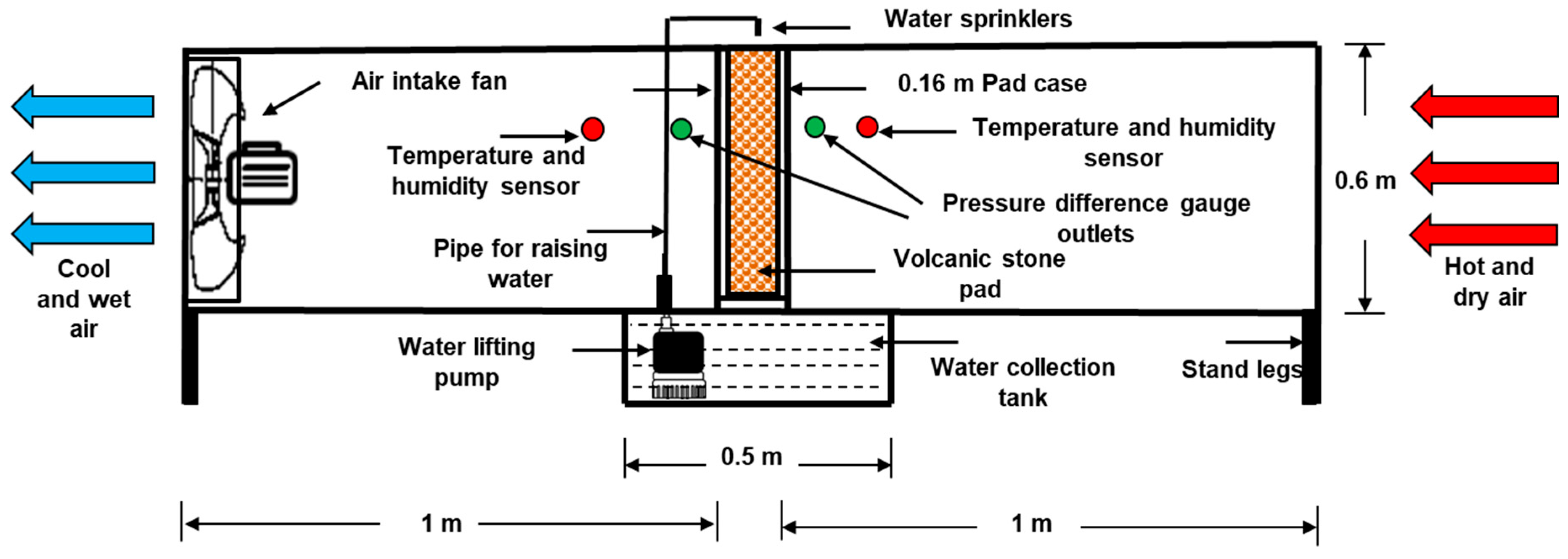
Figure 2.
Volcanic stone cooling pads within the aluminum frame.
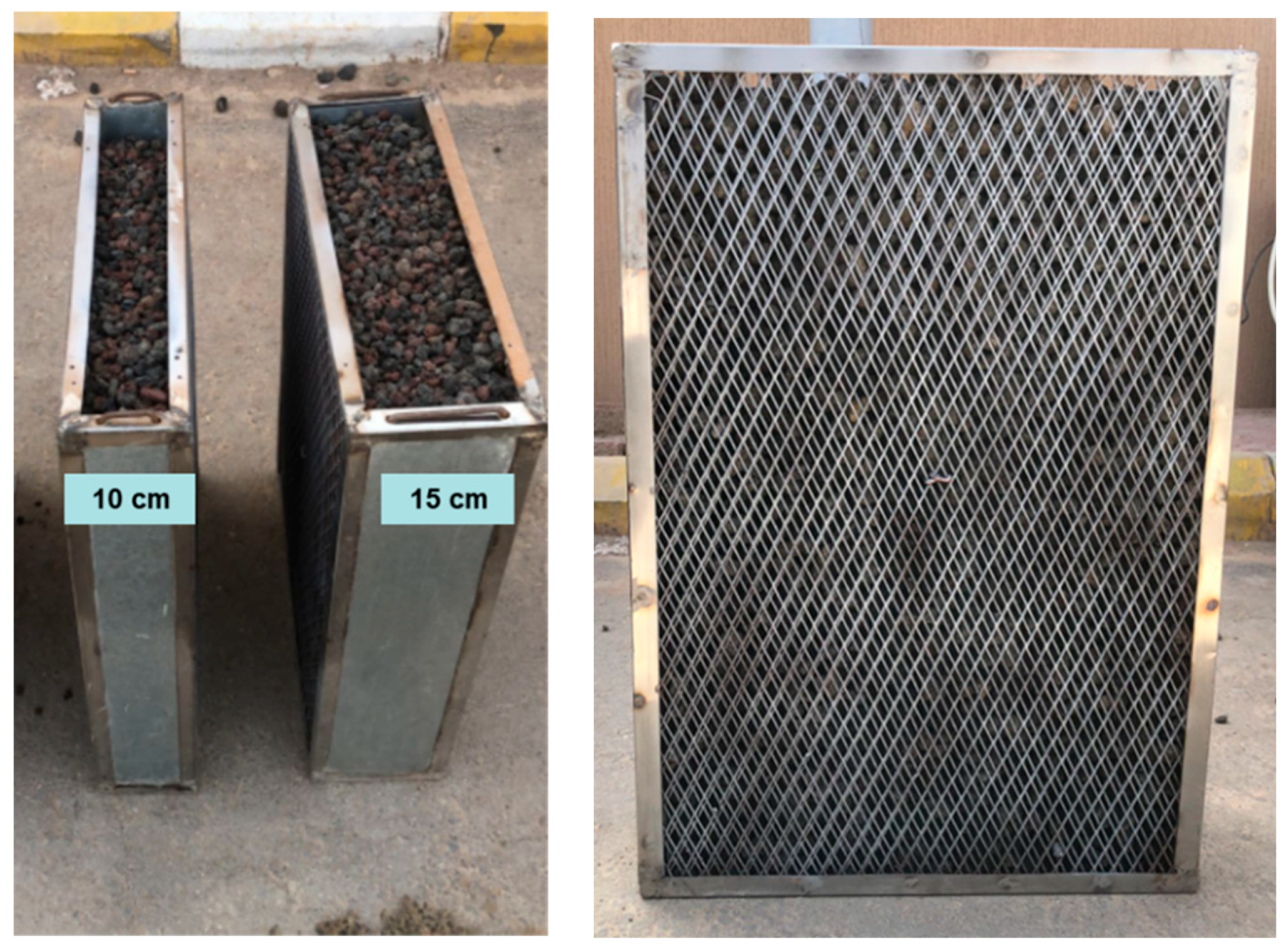
Figure 3.
Effect of pad thickness on cooling efficiency of the system at a water addition rate of: (a) 1.6, (b) 2.4, and (c) 4 L.min-1 m-1.
Figure 3.
Effect of pad thickness on cooling efficiency of the system at a water addition rate of: (a) 1.6, (b) 2.4, and (c) 4 L.min-1 m-1.
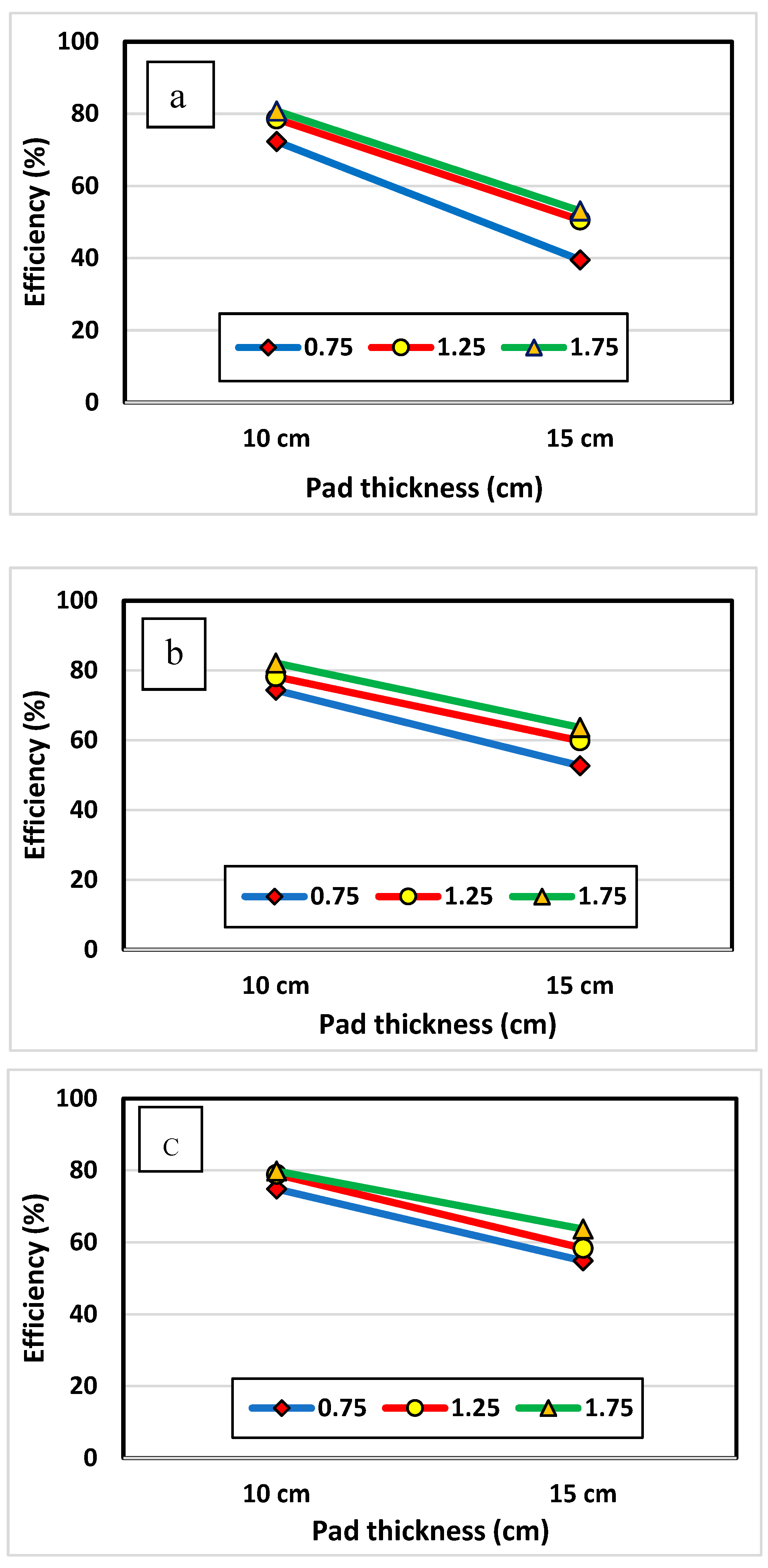
Figure 4.
Effect of water addition rate on cooling efficiency of the system at an air speed of: (a) 0.75, (b) 1.25, (c) 1.75 m. s-1.
Figure 4.
Effect of water addition rate on cooling efficiency of the system at an air speed of: (a) 0.75, (b) 1.25, (c) 1.75 m. s-1.
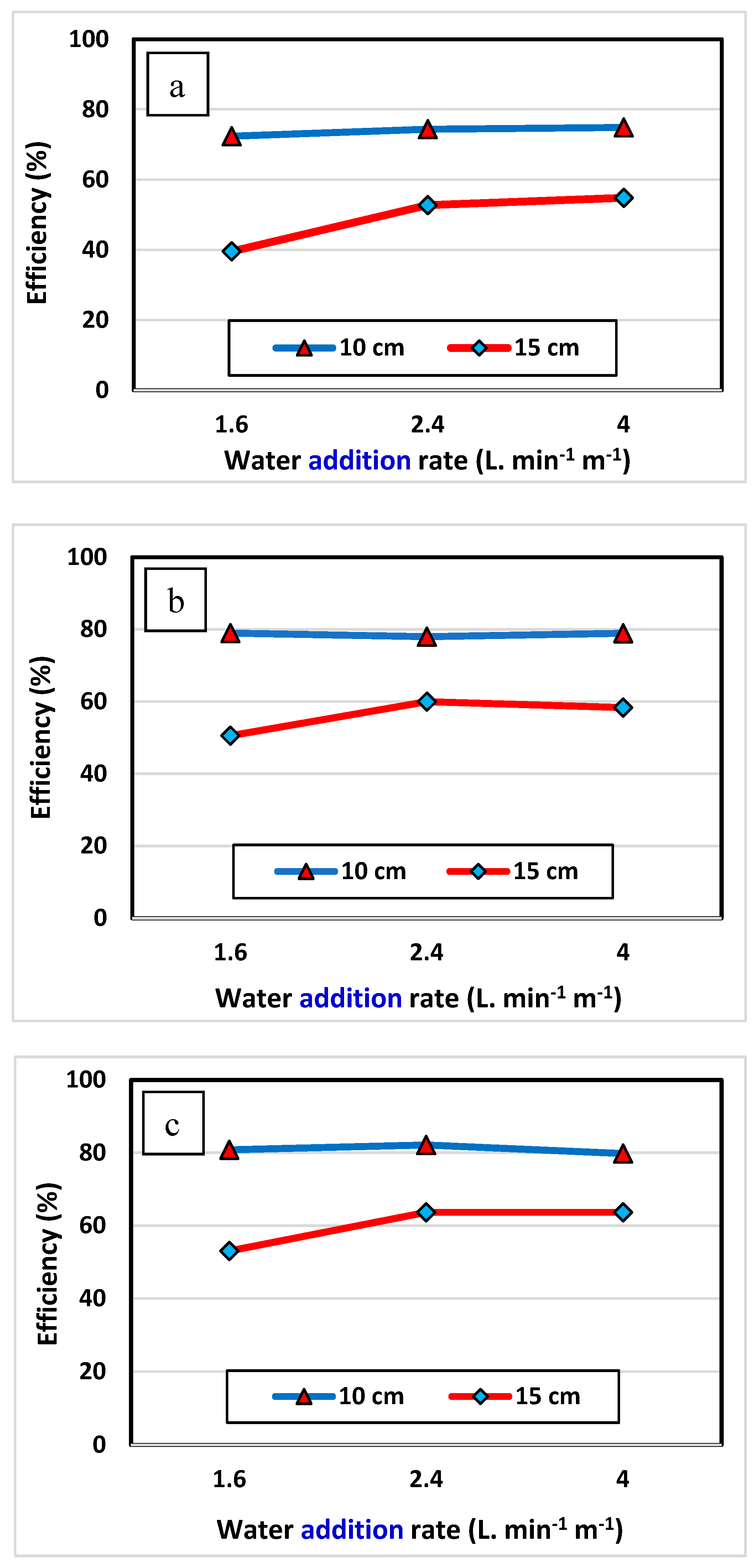
Figure 6.
Effect of air speed passing through the pad on water consumption at water addition rate of: (a) 1.6, (b) 2.4, (c) 4 L. min-1 m-1.
Figure 6.
Effect of air speed passing through the pad on water consumption at water addition rate of: (a) 1.6, (b) 2.4, (c) 4 L. min-1 m-1.
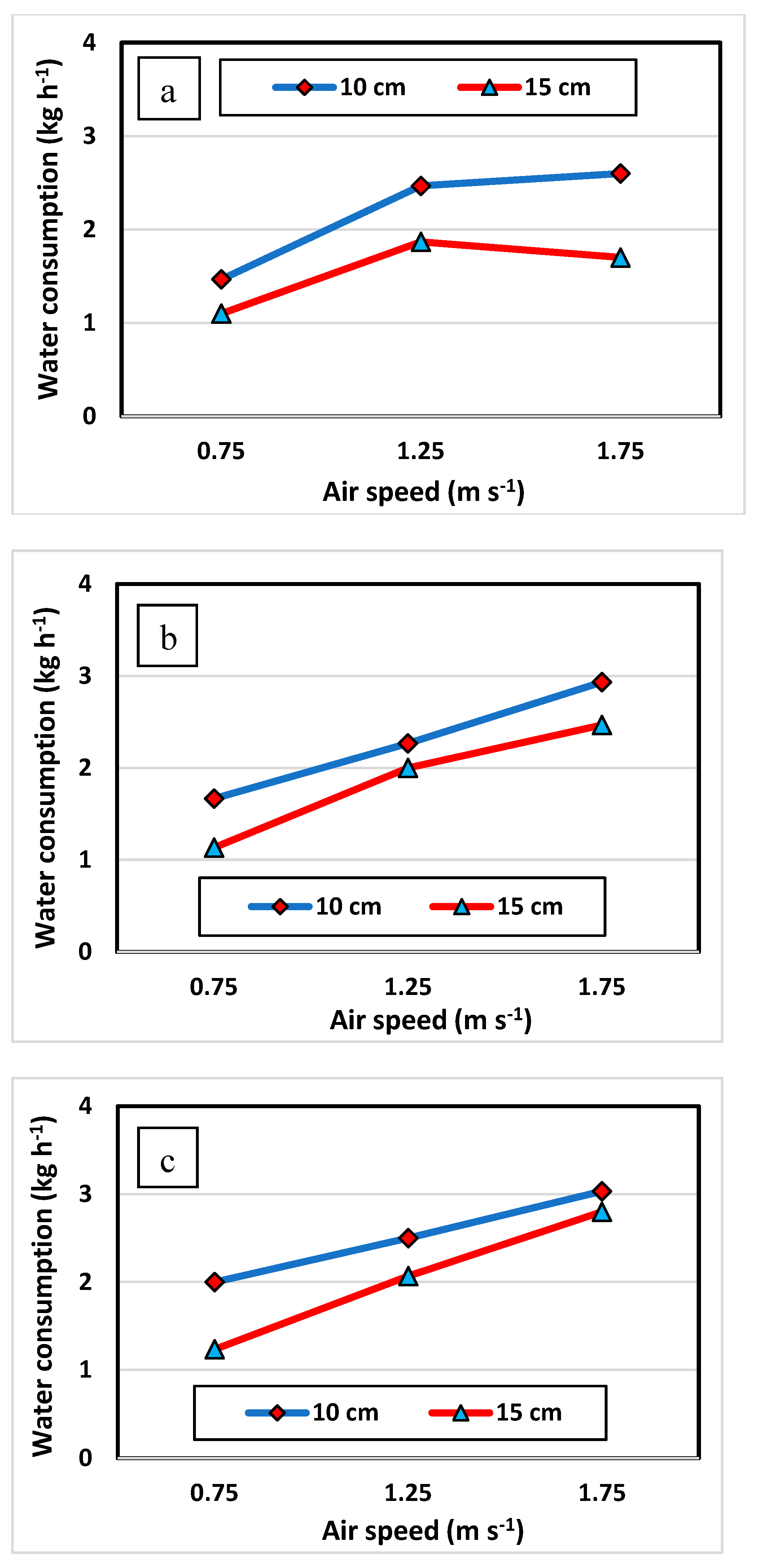
Figure 7.
Effect of water addition rate on the water consumption at an air speed of: (a) 0.75, (b) 1.25, (c) 1.75 m. s-1.
Figure 7.
Effect of water addition rate on the water consumption at an air speed of: (a) 0.75, (b) 1.25, (c) 1.75 m. s-1.
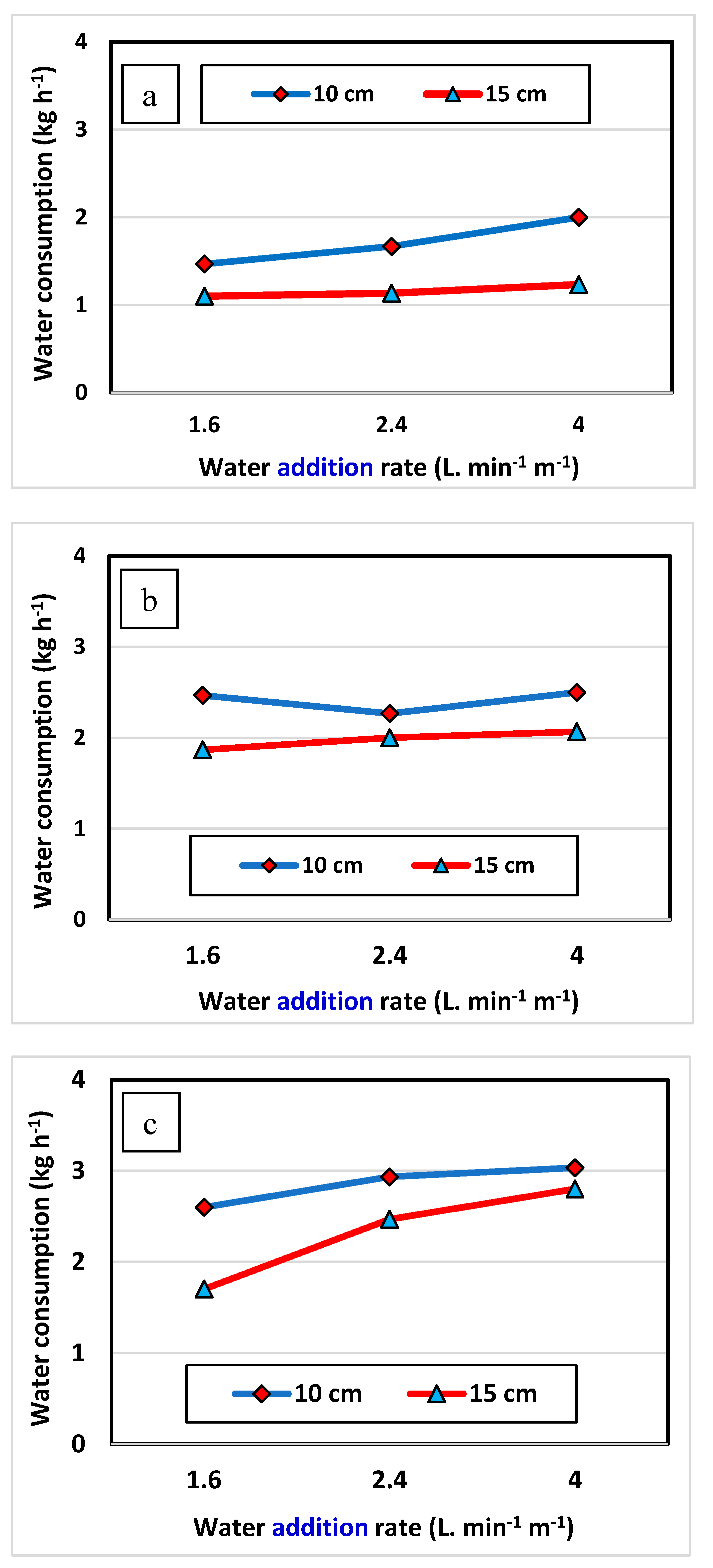
Figure 8.
Effect of pad thickness on the pressure drop on both sides of the pad.
Disclaimer/Publisher’s Note: The statements, opinions and data contained in all publications are solely those of the individual author(s) and contributor(s) and not of MDPI and/or the editor(s). MDPI and/or the editor(s) disclaim responsibility for any injury to people or property resulting from any ideas, methods, instructions or products referred to in the content. |
© 2025 by the authors. Licensee MDPI, Basel, Switzerland. This article is an open access article distributed under the terms and conditions of the Creative Commons Attribution (CC BY) license (http://creativecommons.org/licenses/by/4.0/).
Copyright: This open access article is published under a Creative Commons CC BY 4.0 license, which permit the free download, distribution, and reuse, provided that the author and preprint are cited in any reuse.


