

Submitted:
28 August 2025
Posted:
29 August 2025
You are already at the latest version
Abstract
Ambidexterity is one of the major themes in business administration in recent years, and ambidexterity is being actively studied in small and medium-sized enterprises (SMEs), which are considered difficult to achieve due to lack of resources. However, there have been no consistent results on the impact of ambidexterity on performance such as corporate earnings, making it difficult to argue that ambidexterity should be pursued at any time and in any circumstances. Therefore, this study provides a narrative review of related papers from January 2020 to the present, and confirms that SMEs and open innovation (OI) are involved in ambidexterity, and that their combination may lead to the solution of contemporary issues through green innovation, etc. This suggests that when discussing the pros and cons of ambidexterity in SMEs, the conclusions differ depending on whether one places emphasis on micro, short-term goals such as increasing immediate sales, or macro, long-term goals such as solving national and global issues, and therefore ambidexterity should be treated as an axis for finding a compromise between individual players and the whole. This study shows the legitimacy of the government providing financial or human support for open innovation and digitalization to support ambidexterity in SMEs.
Keywords:
digitalization
; green innovation
; open innovation
; small and medium-sized enterprises
1. Introduction
In business, ambidexterity refers to combining both incremental, efficiency-oriented innovation and radical, novelty-oriented innovation for short-term success and long-term survival [1]. In 1996, Tushman and O’Reilly proposed that organizational ambidexterity—defined as “The ability to simultaneously pursue both incremental and discontinuous innovation…from hosting multiple contradictory structures, processes, and cultures within the same firm” [2: p. 24]. The ambidexterity discussed in this study follows this definition. As companies face increasing global competition, the importance of ambidexterity is increasingly recognized. However, small and medium-sized enterprises (SMEs) generally have scarce resources compared to larger companies [1], are at a disadvantage in terms of managerial expertise and access to capital, talent and resources [3], and lack systems to manage exploration and exploitation [4,5], making ambidexterity more likely to lead to overinvestment beyond their capabilities [6,7]. Therefore, many researchers have argued that SMEs, especially those with limited resources and capabilities, perform better by specializing in either exploitation or exploration [8,9,10,11]. The way they specialize is explained in the context of path dependency. A study of 150 German medium-sized enterprises in the engineering industry showed that to gain competitive advantage, exploration, which creates radically new knowledge, products and services, needs to be prioritized over exploitation [9]. This result may reflect the context of the German engineering industry, which is characterized by intense competition, active research and development, and radical innovation to stay competitive [12]. Relatedly, a study of 180 emerging UK B2B technology companies showed that dependency on key customers has a significant negative impact on firm survival, including reduced motivation to develop products [13]. Similarly, a study of 150 Spanish agribusiness companies (146 of which were SMEs with fewer than 200 employees), known for their high level of competition, found that exploratory innovation has a greater impact on market and financial performance than exploitative innovation [14]. These studies provide a rationale for placing exploration, rather than exploitation, at the core of a firm’s strategy in highly competitive and fast-changing industries. An overview of these studies is provided in Table 1. As these examples show, SMEs may become exploratory in competitive environments, but such conditions are not available for all SMEs, and they do not inform us whether the ambidexterity that arises from competition is desirable from a sustainability perspective.
Meanwhile, Jakhar et al. found that firms with a strong tradition of exploitative innovation tend to implement more short-term oriented sustainability practices in response to stakeholder pressure, whereas firms with a long-standing tradition of exploratory innovation implement more long-term sustainability practices [15]. This means that experiential inertia leads firms to rely heavily on established methods and processes, creating the trap of “path dependency” or “empiricism.” Such dependence limits sensitivity to new technologies and emerging markets, ultimately hindering the development of exploratory innovation. Relatedly, a study based on case studies of green innovation in five multinational manufacturers concludes that the path dependency problems faced by companies hinder strategic ambidexterity, forcing them to choose between a highly uncertain and risky green strategy based only on exploration and a more conservative but non-green strategy based only on exploitation [16].
As a way to break this path dependency, some studies have focused on open innovation and digitalization. A study of 434 managers of 139 hidden champions in China showed that the synergy between value co-creation with stakeholders and digital leadership (high digital literacy leadership) strengthens the relationship between exploration and competitive advantage and weakens the relationship between exploitation and competitive advantage [17]. This suggests that open innovation and digitalization promote exploration. In addition, a recent analysis using regional data from China shows that digitalization and sustainability tend to develop in tandem [18]. This suggests that digitalization contributes to improving sustainability.
Other researchers have provided evidence that SMEs can achieve ambidexterity by integrating the conflicting demands of exploration and exploitation [5,19,20,21]. Of these, a study based on survey findings from five German SMEs found that “traditional” ambidexterity for exploitation and “agile” ambidexterity for exploration are feasible, and recommended context-specific ambidexterity [20]. Meanwhile, a study of 500 Russian SMEs found that exploration improves firm performance but reduces reliability, and exploitation reduces firm performance but increases reliability, during a crisis, and argued for the need to use ambidexterity differently depending on the situation [21]. Such developments in the discussion will have the effect of enriching the debate surrounding ambidexterity. At the same time, the assertion that ambidexterity is situational ironically testifies to the fact that there is no one-size-fits-all approach that works for all companies. At least, the low consistency in the relationship between ambidexterity and performance makes the recommendation of ambidexterity less persuasive. With the current accumulated research, it is no longer possible to claim that ambidexterity is the optimal strategy at any time and in any situation. Should SMEs engage in ambidexterity? If so, what makes ambidexterity possible and what are the benefits of engaging in it? This issue has not yet been adequately addressed or discussed. While long-term and macro-level issues, including global environmental issues, are widely discussed on the policy side, corporate research is dominated by discussions of short-term and micro-level issues, such as how to improve performance. As March once argued that exploitation may contribute to short-term performance and exploration to long-term performance [1], ambidexterity may be a trump card to bridge this gap and simultaneously solve different issues.
In this review, we reflect on how ambidexterity may be related to digitalization, open innovation and green innovation through the following mechanisms: (a) To achieve ambidexterity, resource-starved SMEs need to rely on external resources through open innovation; (b) However, open innovation requires orchestration, which in turn requires cost reduction through digitalization; and (c) Ambidexterity allows firms to simultaneously achieve short-term micro goals by leveraging market performance that leads to survival and long-term macro goals by exploring green innovation that leads to sustainability. We then points out that there is a lack of research integrating green innovation with ambidexterity, digitalization, and open innovation in previous studies, and argue that this needs to be clarified in future research. This study aims to provide current research findings and future directions towards addressing the research gap around ambidexterity in SMEs, namely, developing ways to simultaneously achieve higher performance and green innovation through ambidexterity via open innovation and digitalization. This expands the theory of ambidexterity beyond its traditional role as a means to improve the performance of individual companies, and into a new role as a means to resolve larger societal issues, including sustainability. For that purpose, this study aimed to clarify the relationship between ambidexterity, digitalization, green innovation, and open innovation in SMEs and conducted a narrative review of 106 relevant papers published between January 2020 and May 2025 through the literature search using major literature databases.
2. Method
A narrative literature review on digitalization, open innovation, ambidexterity, and green innovation in SMEs was conducted following the recommendations of Green et al. [22]. A narrative review was adopted because there were few studies that systematically addressed the variables of interest in this review, and a systematic review was considered premature. The literature search in Scopus, PubMed, Web of Science, and Google Scholar databases focused on articles published between January 2020 and May 2025 and aligned with the objectives outlined in the previous section. The period from 2020 onwards was chosen in order to include literature that reflects the digitalization triggered by the COVID-19 pandemic and the recent rise in environmental awareness. The keywords used were “ambidexterity”, “digitalization”, “green innovation”, “eco-innovation”, “ecological innovation”, “environmental innovation”, “open innovation”, and “small and medium-sized enterprises” in various combinations connected with AND and OR, as well as in combination with the words “review” or “meta-analysis”. Following recent systematic reviews [23], in our analysis we treated “green innovation” as synonymous with “eco-innovation,” “ecological innovation,” and “environmental innovation”. Nevertheless, for clarity and readability, we used “green innovation” to represent these in our review. The search was performed in the title and abstract. In other words, this review focused on digitalization, open innovation, ambidexterity, and green innovation in SMEs, as well as on these general reviews. In case multiple reviews or articles on the same topic were identified, the most recent and/or most cited ones were given priority. In addition, the reference sections of the selected papers were examined to check for possible additional research. In principle, the included studies were peer-reviewed articles written in English that matched the above keywords. However, to draw policy implications, books and government reports written in English and Japanese were added to the inclusion criteria. Japanese books and reports were chosen because Japan is distinctive in terms of path dependency. On the other hand, studies that dealt with ambidexterity but did not discuss it from the perspective of digitalization, open innovation, or green innovation, or studies that did not provide any suggestions, were excluded from this review. Similarly, studies that only dealt with digitalization, open innovation, and green innovation individually and did not address ambidexterity were excluded. However, studies that dealt with two or more of digitalization, open innovation, and green innovation were included if they provided suggestions for ambidexterity, even if they did not directly address ambidexterity. Although the review was limited to SMEs, we included empirical studies in which more than 50% of the sample included SMEs. The criterion for SMEs was less than 250 employees, as defined by the European Commission [24]. See Figure 1 for the review process of the current research. After a four-step screening process, 106 articles were selected for the review.
3. SMEs and Ambidexterity
Compared with large enterprises, SMEs often lack adequate coordination mechanisms and resources, such as human and financial capital [25,26]. Therefore, considering the potential risks of ambidextrous innovation, SMEs often must choose between exploitative and explorative innovation [27]. Exploitation generally improves the enterprises’ productivity and efficiency [28,29]. However, because successful exploitation depends on the availability of capabilities, assets, or resources that a firm can control, even if a firm uses all of its available technological and market capabilities, there are limits to how successfully it can exploit [30,31]. On the other hand, exploration helps enterprises adapt to changes with a long-term perspective in a rapidly changing business environment [1]. This is because exploration, which leads to the continuous discovery of new markets and technological capabilities, is very effective in helping enterprises reorganize their own knowledge base, develop new products, and achieve competitive advantages in niches [32,33,34,35].
However, most SMEs are exploitative [36]. This is because exploitation has both irrational and rational aspects. The British study mentioned above showed the paradoxical result that while dependence on key customers is risky, for surviving companies, dependence has a positive effect on the growth of their customer portfolios [13]. This suggests that SMEs that have maintained good relationships with key customers by continuing exploitation for a long time may be able to use that reputation to successfully acquire new customers. This study is highly suggestive in considering why SMEs continue to engage in exploitation that may seem irrational at first glance1. However, relying on a specific technology and specializing in exploitation may make it difficult to adapt to changes in the times and reduce a company’s competitive advantage in an industry driven by innovation and research and development [12]. Today, due to the fragmentation, complexity, and increasing unpredictability of needs caused by the transformation of the industrial structure, it is becoming increasingly important for SMEs to break away from subcontracting structures and utilize information from a wide range of sources beyond their existing networks, as well as to engage in innovation activities that agilely connect technological seeds to new businesses [13,37]. In addition, the wave of ICT in the wake of the COVID-19 pandemic and the growing awareness of the global environment in the wake of the Sustainable Development Goals (SDGs) are forcing corporate managers to make changes, increasing the risk of sticking to traditional methods. Furthermore, from the perspective of risk diversification, i.e., portfolio investment, it is necessary to have a large number of innovation activities within the country [13,37]. In other words, even if ambidexterity is unprofitable and does not directly lead to short-term sales for a single company, it may be rational to pursue from a national or global perspective in some cases.
Moreover, even if ambidexterity is not perceived as beneficial for SMEs in the short term, it may be beneficial in the long term. When exploitation is combined with exploration, SMEs may act outside the box and innovate, not for short-term gains, but for the long term, ultimately achieving positive results [14,36]. This is because ambidexterity plays a key role in integrating the conflicting demands of exploration and exploitation [5]. Ambidextrous SMEs have the ability to manage exploitation and exploration to improve efficiency without losing the ability to develop novel ideas, products, and processes. Moreover, these SMEs can make important decisions quickly and flexibly about their financial structures, for example, to explore new and different markets through internationalization or to launch new products and brands [39,40]. Therefore, ambidextrous SMEs may have a higher resilience, such as more easily identifying opportunities to recover from crises [36]. Identifying how SMEs can achieve ambidexterity may help increase their resilience and reach solutions that are agreeable to SMEs, countries and the world from a macro or long-term perspective. Below, we provide evidence that combining ambidexterity with open innovation, digitalization and green innovation can be beneficial.
4. Ambidexterity and Open Innovation
To overcome scarcity of internal resources and become ambidextrous, SMEs need to rely more on external resources. Innovation leveraging external resources is called open innovation [41]. The objectives of open innovation often differ between large companies and SMEs: large companies adopt open innovation to take advantage of their partners’ assets and capabilities, while SMEs resort to open innovation to offset scarcity of internal assets [42,43,44,45]. SMEs usually suffer from a significant shortage of financial and human capital resources, managerial and technical skills, and know-how, and therefore see networking as a way to broaden their technological capabilities [46,47]. By leveraging external collaboration, SMEs can reduce the costs associated with innovation investments and successfully adapt and reconfigure their innovation processes [46,47]. Collaboration with external organizations, which involves open innovation, is a good approach to expand the portfolio of innovation activities, increase knowledge complementarity and improve productivity, thus positively impacting SMEs’ innovation capabilities [48,49,50,51]. By embracing open innovation, SMEs can benefit financially by leveraging existing capabilities, resources and structures, strengthening an already trusted network of relationships, and by reducing knowledge waste [52,53,54].
Open innovation may be one of the few advantages SMEs have over larger companies that they can easily adopt. In contrast to multinational enterprises that are not interested in a particular region and move around in search of the best location, SMEs are often historically tied to specific locations and local residents for multiple generations [55,56]. For example, SMEs located in BW, Bavaria and North Rhine-Westphalia, home to 70% of the world’s leading German SMEs, are rooted in a specific influential local social capital context and leverage their ties to surrounding communities, companies and universities to effectively enter international markets [57]. Thus, SMEs may have an advantage in that they can conduct open innovation by leveraging their local networks. Findings from a sample of 615 SMEs in Thailand reveal a statistically significant positive relationship between open innovation implementation and ambidextrous innovation practice advances. This relationship suggests that embracing open innovation promotes ambidextrous innovation, thereby facilitating creativity and knowledge exchange with fresh perspectives [58]. Also, results based on 388 SMEs in Ghana show that a high level of openness further enhanced the impact of organizational learning ambidexterity on SMEs’ innovation performance [59].
However, open innovation often involves orchestration [60]. The costs of deploying open innovation are an important consideration, especially for financially constrained SMEs [45,61]. open innovation entails the risk of losing internal assets, as well as agency and transaction costs and the costs of managing partnerships [6,62]. First, to introduce open innovation, SMEs must search for, negotiate with and manage suitable partners, which is costly and time-consuming. Failure to do so may lead to transaction costs and promote opportunistic behavior of partners. Second, SMEs implementing an open innovation strategy are concerned about the loss of relevant knowledge and assets within the company, and therefore engage in a selective disclosure strategy while protecting their internal knowledge. In addition, the information acquired from the external environment is not related to the company’s core capabilities, so they need to invest time and human resources in screening and integrating relevant external assets. In addition, due to the various costs associated with the introduction of open innovation, SMEs need to seek a balance in resource allocation between traditional business projects and open innovation projects when adopting open innovation [62]. Therefore, the results of a study of 377 European SMEs by Costa et al. show that open innovation is a cost to SMEs, at least in the short term [47]. However, it is worth noting that their study revealed that digitalization can help SMEs control costs by reducing external activities and focusing their activities on their core business.
5. Ambidexterity, Green Innovation, and Sustainability
Based on 336 valid questionnaires collected from an industrial sample of Portuguese SMEs, Cancela et al. showed that ambidexterity has a positive impact on sustainability, which in turn has a positive impact on new product success and green product innovation. Moreover, they found that green product innovation increases new product success due to the growing demand for more sustainable products and that the chain of influence between ambidexterity and further product success strengthened when customer pressure increased. The study highlights the need to actively manage exploration and exploitation investments to increase ambidexterity, especially when sustainability and green innovation are the expected outcomes [63]. Similarly, ambidexterity was shown to have a positive impact on economic, environmental and social sustainability in 300 emerging market multinationals headquartered in China [64] when it is followed by sustainability exploration practices which reflect process innovation (e.g., end-of-pipe technological solutions), product innovation (e.g., improvements or entirely new products or services), and sustainability-oriented learning (e.g., developing capabilities and competencies for sustainability-related innovation) [64]. Jakhar et al. [15] in a manufacturing facility in India with over 100 employees demonstrate that exposure to exploitative/exploratory innovative capabilities induces sustainable behaviors in the short and long term. Exploitative innovation seeks to make changes that utilize the same technology and promise benefits with very little uncertainty. These innovations can be achieved under a given infrastructure arrangement without much investment. Exploitative innovation involves improvements to existing processes and products to improve efficiency [15]. Exploratory innovation, on the other hand, delves into different technologies with significantly different and better ways to conceptualize products and processes. Exploratory innovation is uncertain but produces results in the long term. Exploratory innovation involves design improvements and cannot be achieved without introducing significant changes to the company’s infrastructure and therefore requires sufficient investment. An example where exploration and exploitation coexist is a fuel cell system that includes sustainability practices based on fuel cell technology (eco-efficiency) and hybrid technology (eco-design) [15].

Table 2.
Mediation test of digitalization, ambidexterity, and green innovation.
| Country | Subject | N | Direction | Method | Summary | Dependent variable | Independent variable | Mediator | # |
| Portugal | SMEs | 336 | Cross-sectional | Structural equation modeling | Ambidexterity positively influences sustainability, which in turn positively influences new product success and green product innovation. | Green product innovation | Ambidexterity | Sustainability | [63] |
| China | Knowledge-intensive SMEs in Nanjing | 289 | Cross-sectional | Linear regression | Digital innovation mediates the relationship between ambidextrous learning and sustainable competitive ad-vantage. | Sustainable competitive advantage | Ambidextrous learning | Digital innovation | [64] |
| India | Manufacturing facilities with 100+ employees | 1,471 | Cross-sectional | Structural equation modeling | The exposure of manufacturing firms to exploitative/exploratory innovative capabilities induces sustainable behaviors with temporal and enduring focus. | Sustainable behavior | Stakeholder pressure | Ambidexterity | [15] |
6. Ambidexterity and Digitalization
6.1. Knowledge Absorption Under Cost Constraints
To reduce the costs associated with the adoption of open and green innovation, SMEs are seeking cost-reduction strategies. One of the most important ways to achieve this is through digitalization. Digitalization can help SMEs with fewer resources in terms of time, money, and manpower to acquire external knowledge, thereby increasing their knowledge base [65,66].
6.2. Responding to Radical Innovation
Compared to incremental innovation, radical innovation as a higher-level innovation type involves more tacit knowledge and external heterogeneous resources, which may far exceed the firm’s existing knowledge base [67,68]. In this case, digitalization provides SMEs with a valuable opportunity to filter what is available in the market and determine the cutting edge of their industry. This allows SMEs to be more proactive in implementing radical innovation. In addition, sharing dynamic information and knowledge with partners contributes to the generation of new ideas and content, which helps improve the firm’s innovation performance [69,70,71].
6.3. Risk Reduction
In addition, SMEs with limited resources have a low risk tolerance, which creates an incentive to avoid radical innovation, which involves greater uncertainty and risk compared to incremental innovation [72,73]. Digitalization helps companies discover, identify and prevent uncertainties [74] and reduce the degree of risk [75], thus encouraging SMEs to carry out radical innovations [76].
6.4. Empirical Research
The results of related previous studies are summarized in Table 3. Results from a study of 1,474 SMEs across industries in Germany [77] and a study of 204 SME managers in Finland [78] showed that organizational ambidexterity mediates the relationship between digital orientation and growth strategies. These suggest that ambidexterity is more likely to lead to higher performance when accompanied by digitalization. However, the order of digitalization and ambidexterity may be reversed. A study of 366 small SMEs in Istanbul showed that digital transformation partially mediates the relationship between SMEs’ ambidexterity and competitive advantage [79]. Similarly, a study using the 2019 World Bank Business Survey and follow-up surveys conducted in 2020 and 2021 among 8,928 companies in 21 countries indicates that organizational ambidexterity indirectly influences innovation through digital capabilities [80]. These findings suggest that organizational ambidexterity can increase a company’s competitive advantage by enhancing digital capabilities. Thus, previous studies have shown that digital orientation may predict ambidexterity [77,78], and ambidexterity may predict digital transformation and digital capability [79,80]. This may have important implications for when and how ambidextrous organizations should adopt digitalization.
7. Digitalization, Green Innovation, and Sustainability
Furthermore, the use of digital technologies can improve the sustainability of companies. Despite the fact that SMEs account for 60-70% of the world’s industrial pollution, they are less environmentally conscious than larger companies [81,82,83]. This is reflected in their insufficient knowledge of environmental technologies and laws [84,85]. Nevertheless, SMEs often undertake green innovations, driven by stakeholder pressure and growing consumer demand to be more environmentally conscious [86]. Organizations can use digital tools to monitor resource usage in real time, optimizing processes, reducing waste and improving environmental efficiency [87,88]. For example, blockchain is used to prove that recycled raw materials are being used [89]. Digitalization can therefore improve environmental performance by facilitating the optimization of resource use and the implementation of circular economy and sustainable business models [90].
However, SMEs face unique challenges in implementing digital platforms, as they may lack the necessary resources, skills and commitment [91,92]. Therefore, human networks can be a key source of resources and facilitate SMEs’ discovery of valuable opportunities [93,94,95,96]. For example, designing processes that handle production inputs consisting of used, recycled or recovered materials and transform them into customer value requires the involvement of partners, experts and customers who know about the benefits and limitations of materials in terms of the continuous circulation of materials and the reduction and elimination of waste [97,98,99].
8. Digitalization and Human Resources
8.1. Digitalization and Skilled Labor Force
Moreover, highly educated employees with a master’s degree or higher have a complementary effect on radical innovation [100]. Highly educated employees have advanced logical thinking and decision-making abilities. Compared to less educated employees, they tend to be more interested in the long-term development of SMEs than in their short- and medium-term performance [101], they are quicker to adapt to rapid changes [102], and they are able to absorb external knowledge gained through digitalization and integrate it into their internal innovation processes [103,104]. Therefore, by promoting them to key positions for digitalization, it is possible to understand and integrate new knowledge related to digital technologies and enable transformation to develop new products, processes, or other forms of innovation. A study of 1,014 manufacturing companies in Greece (mostly small and medium-sized enterprises) showed that absorptive capacity, including human resources, mediates digital capabilities and innovation performance [105]. In addition, digitalization improves communication both inside and outside the company, giving more educated employees access to the new knowledge and resources they need to innovate at scale [106], and it also makes more educated employees more efficient and productive, giving them more time to innovate [107]. Moreover, as digitalization reduces the workload of routine tasks, highly educated employees are able to take on more non-routine tasks [108]. These non-routine tasks are conducive to radical innovation, as they can stimulate the generation of new ideas and increase divergent thinking.
8.2. Financial Constraints and Management Expertise
The ability to leverage versatile and cost-effective resources such as digital infrastructure is particularly important for SMEs with general resource constraints [109]. However, SMEs tend to face financial constraints, and financial obstacles are a serious problem when investing in innovative activities [110]. In particular, limited funds are one of the main challenges in implementing digitalization [111,112]. Therefore, there is a need for human resources in SMEs who are responsible for financing. By acquiring financial resources, companies can strategically invest in the innovations they need to develop competitive advantages [113]. Specifically, strategies such as having top management team members with strong financial backgrounds build good relationships with financial institutions through relationship networks, increasing access to financial resources and mitigating financial constraints are required [114,115]. A study of 1,303 listed manufacturing SMEs in China found that digitalization in SMEs promotes radical innovation more than incremental innovation, and that the employment of highly educated employees and the financial background of top management team members strengthen this relationship [76].
9. Green Innovation, Sustainability, and Open Innovation
Green innovation may facilitate open innovation. This is because following an environmentally friendly business strategy for SMEs requires collaboration with others who are interested and knowledgeable in such activities. Thus, a study of 543 SMEs in Ecuador showed that environmental protection related to nature, climate change, pollution, biodiversity, etc., and waste reduction of raw materials, water, and energy may improve innovation performance by facilitating open innovation activities such as acquiring knowledge from outside the company (customers, research institutes, external networks, universities, etc.), engaging employees in research and development activities, using patents and royalties, and synergizing and partnering with competitors [116]. On the other hand, a study of Indonesian SMEs showed that open innovation may have a positive impact on green innovation by facilitating innovation through collaboration with various stakeholders [117]. In light of the role of digitalization discussed above, digitalization may contribute to the formation of a positive feedback loop in which green innovation and open innovation enhance each other, thereby promoting the ambidexterity that accompanies contemporary green innovation and sustainability. Figure 2 shows that Green Innovation and Open Innovation have a mutually reinforcing relationship through Digitalization.
10. Combination Effects
10.1. Digitalization, Open Innovation, Green Innovation, and Performance
Digitalization may improve firm performance by bringing about open and green innovation. However, the effect may not be large. A structural equation model of 684 SMEs based in Mexico showed that SMEs’ technological capability significantly influences their open innovation activities, such as information gathering and deployment within the company, and process and product improvements, as well as their green innovation activities, such as designing products with energy-saving and less polluting materials [118]. This result suggests that SMEs on the path to digitalizing their processes are more likely to adopt open and green innovation and become more competitive. The effect size f from technological capability to open innovation was large at 0.377, and from technological capability to green innovation was moderate at 0.262. Meanwhile, the path from technological capability to corporate performance was not significant. Additionally, the effect of open innovation on corporate performance was small at 0.025 and that of green innovation on corporate performance was small at 0.016 [118].
10.2. Digitalization, Ambidexterity, and Performance
A meta-analysis of 113 studies using 115 independent samples and 192,188 observations over the period 1990-2021 shows that Industry 4.0 is associated with innovation ambidexterity, which in turn leads to superior firm performance, consistent with dynamic capabilities theory [119,120,121], which views innovation ambidexterity as a dynamic capability that can be driven by a firm’s Industry 4.0 digital technologies to achieve superior performance [122]. The effect sizes of the direct effect of Industry 4.0 on innovation ambidexterity and firm performance and the correlation between innovation ambidexterity and firm performance were 0.38–0.54, which is small to medium level based on the criteria suggested by Cohen [123], according to which a coefficient size of 0.20 is small; 0.50 is medium, and 0.80 is large. The study also showed through moderation analysis that the positive impact of Industry 4.0 itself on firm performance is less than that of Industry 4.0 and innovation ambidexterity combined, that is, the combination of Industry 4.0 technology and innovation ambidexterity strategy can produce superior firm performance. This result suggests that digitalization alone is not enough to have a significant effect on performance, and that companies can generate financial and non-financial benefits by developing dynamic capabilities such as innovation ambidexterity [122].
10.3. Research Achievements and Challenges
Thus, digitalization may have a greater impact on performance when combined with open innovation or green innovation, or when combined with ambidexterity, than when it is adopted alone. However, the increased impact is small to medium, leaving room for improvement of the model. Furthermore, previous studies have yet to examine the impact of ambidexterity combined with digitalization and open innovation on green innovation, or the impact of the green innovation created by it on performance. This may be because previous studies on ambidexterity have focused on improving corporate performance, which may have led to a narrow perspective and little consideration of the idea that the pursuit of sustainability and performance improvement can be achieved simultaneously. If we expect resource-poor SMEs to contribute to solving environmental problems while surviving, we need to make a major effort to change the role assigned to ambidexterity. Alternatively, such analyses may become more relevant if there is a stronger tendency to view green innovation as an outcome that is as valuable as performance. For example, if more evidence is gathered that exploration (especially full-scale green innovation with design improvements) reduces the environmental burden of economic activity compared to specializing in exploitation, it may be possible to argue for the rationality of ambidexterity from a long-term or global perspective, even if financial performance is inferior to specializing in exploitation.
11. Discussion
11.1. When Should Digitalization Be Adopted?
This study showed that ambidexterity is related to SMEs’ green innovation and sustainability for reducing environmental impact, and that the more long-term or macro perspective is taken, the greater the significance of SMEs adopting ambidexterity. Resource-poor SMEs can achieve ambidexterity through open innovation, which allows them to access external resources. However, open innovation is costly. Therefore, to achieve ambidexterity, SMEs need to promote digitalization and enable open innovation at low cost. To achieve this, support is also needed for human and financial networks that support digitalization. Under such circumstances, ambidexterity may contribute to the development and sustainability of SMEs. However, previous studies have not yet examined the impact of ambidexterity combined with digitalization and open innovation on green innovation, or the impact of the resulting green innovation on business performance.
The digital revolution increasingly requires SMEs to pursue technological innovation and comply with environmental sustainability goals [124]. However, SMEs remain cautious about adopting the solutions offered by digital technologies [124,125], especially the smaller they are [126]. Underdeveloped investments and capabilities in automation, lack of resources, and a perception of uncertainty are the main obstacles for SMEs to enter digital manufacturing at the same pace as larger companies [127]. However, if SMEs can develop capabilities related to digital platforms, the platforms could become a major growth driver [26]. In addition, if digitalization and open innovation are combined to facilitate ambidexterity and demonstrate that green innovation and performance increase simultaneously, digitalization may become more attractive and more adopted by SMEs than it is now.
For example, in Japan, one in four SMEs has received some kind of request from their business partners regarding decarbonization, and 70% of companies are working on decarbonization, mainly focusing on energy conservation. However, even these companies cite challenges such as a lack of human resources and know-how, the measurement and visualization of emissions, and a lack of funds to work on reduction, and their efforts toward decarbonization are insufficient [128]. This suggests that resource-poor SMEs are not fully equipped to foster green innovation. Therefore, through digitalization, there is a lot of room for SMEs to facilitate green innovation and solve sustainability-related issues by increasing the efficiency of their internal resource use and by broadening the scope of their external resource use by reducing the orchestration costs associated with open innovation.
It is difficult to say whether ambidexterity is beneficial for individual SMEs. Therefore, it may not be wise to recommend ambidexterity to disadvantaged SMEs that are on the verge of bankruptcy. However, apart from SMEs that face such imminent risks, ambidexterity is worth pursuing as a forward-looking policy. This becomes even more significant when considered not only on an individual company but also on a national and global scale. Such discussions could greatly expand the existing research stream on ambidexterity. That is, even if it is not necessarily the best for individual companies, ambidexterity may be judged as a recommended approach for SMEs when evaluated from a macro- and long-term perspective. Ambidexterity may be useful as a means for SMEs, the country, and the world to find a compromise on global challenges such as decarbonization. Therefore, further progress in digitalization and its spread to SMEs are essential, and it is considered that top priority support from national, local, and international organizations is required.
11.2. Theoretical Implications
This narrative review showed that digitalization and open innovation can promote ambidexterity in SMEs, and that ambidexterity can lead to green innovation. However, it also showed that implementing these strategies alone or in partial combination may not sufficiently improve SME performance. On the other hand, there are few studies that deal with the relationship between green innovation and ambidexterity, and it is a niche topic [129]. In particular, research has not yet confirmed the relationship between ambidexterity and green innovation achieved by combining digitalization and open innovation, and the relationship between green innovation thus achieved and performance. This is surprising, considering that sustainability has been taken up as a common challenge for humanity and ambidexterity management has become a big boom. This gap may be because researchers have only considered ambidexterity as a strategy to improve the performance of individual companies. However, today, as supply chains are being reconsidered and more economic entities are required to comply with environmental standards, there is an increasing need for SMEs to innovate from a global perspective, beyond the convenience of individual companies. Ambidexterity makes it possible to explore technologies with low environmental impact while utilizing conventional technologies. In other words, it has the potential to balance the realities of SMEs with the ideals for the future of the planet. Further research on green innovation and ambidexterity could enhance the growth potential of SMEs and point the way to global sustainability. This review should be used to advance this research.
11.3. Practical and Policy Implications
Based on this research, national and local governments should use their budgets to promote open innovation and digitalization in SMEs. Furthermore, to curb the excessive costs of open innovation, the government should create opportunities for collaboration between companies, or between companies and specialized institutions such as universities, and promote the development of infrastructure for digitalization. Specifically, subsidies targeted at the introduction of digital platforms by SMEs, tax incentives for green R&D collaboration, subsidies to promote the hiring of highly educated personnel for core positions, and the promotion of knowledge exchange programs between universities and SMEs are recommended. These will lead to open innovation and digitalization, and innovation in line with sustainability and the trends of the times will help SMEs gain global trust and secure profits. Figure 3 is a proposal for a new framework based on this review, and Table 4 summarizes past research and prospects for future research.
12. Limitations and Future Research Directions
This study has three limitations. First, this is a narrative review and may have missed findings that could have been found using other methods, such as a systematic review. Second, limiting the review to English and Japanese literature may have led to important literature written in other languages being overlooked. Finally, some of the findings of this review, such as the lack of research on the relationship between ambidexterity and green innovation, may have been found by using search terms other than ambidexterity. Future research may be able to confirm or extend the findings of this review through a more comprehensive review using more diverse methods.
13. Conclusions
This review examines the relationship between ambidexterity, digitalization, open innovation, and green innovation. Digitalization and open innovation may enable SMEs to overcome resource scarcity issues and achieve ambidexterity. However, the impact of combining digitalization with open innovation and green innovation, and digitalization with ambidexterity on business performance is not large. Furthermore, the impact of combining digitalization with open innovation and ambidexterity on green innovation, or the resulting impact of green innovation on business performance, has not yet been examined. This is surprising given the current situation of increasing interest in the global environment, but it may be because researchers have viewed ambidexterity as a means to improve SMEs’ short-term business performance. Given the long-term domestic and global challenge of sustainability, ambidexterity efforts, which are likely to be related to green innovation, should be promoted to more SMEs. Thus, giving ambidexterity a larger role may make it a more valuable research topic and increase its policy significance. Based on the results of this study, future research should refine and develop an analytical model that combines digitalization, open innovation, ambidexterity, and green innovation, and conduct research aimed at achieving both corporate survival and sustainability. In addition, the government should promote the digitalization of SMEs and provide the necessary human and financial support to enable SMEs to promote open innovation, ambidexterity, and green innovation efforts while keeping costs down.
Funding
This research received no external funding.
Data Availability Statement
No datasets were analyzed in this study.
Acknowledgment
This paper is part of the results of the Research Committee on Ambidextrous Management of Small and Medium-sized Manufacturing Enterprises organized by the Economic Research Institute, Japan Society for the Promotion of Machine Industry, Tokyo, Japan. I would like to thank the members of the committee for their valuable comments.
Conflicts of Interest
The author declares no conflicts of interest.
| 1 | For example, in Japan, large and small enterprises form a keiretsu system, and SMEs have been required to engage in process innovation and incremental innovation to quickly and accurately supply products and parts with the specifications required by large enterprises within the existing supply chain [37]. In such an environment, exploitation by utilizing existing information networks has a greater impact on corporate performance than exploration, which requires new information networks. This keiretsu system is unique to Japan in that it involves cross-shareholding, which promotes trust building and mutual information sharing between companies, reduces transaction costs (e.g., monitoring costs), and acts as a deterrent to betrayal [38]. It is thought that sourcing information from outside the keiretsu and exploring through open innovation and digitalization was costly and not very profitable for SMEs. |
References
- March, J.G. Exploration and exploitation in organizational learning. Organ. Sci. 1991, 2, 71–87. [Google Scholar] [CrossRef]
- Tushman, M.L.; O’Reilly, C.A. The ambidextrous organization: managing evolutionary and revolutionary change. Calif. Manag. Rev. 1996, 38, 1–23. [Google Scholar] [CrossRef]
- Boronat-Navarro, M.; Escribá-Esteve, A.; Navarro-Campos, J. Ambidexterity in micro and small firms: Can competitive intelligence compensate for size constraints? BRQ Bus. Res. Q. 2024, 27, 210–226. [Google Scholar] [CrossRef]
- Thomas, G.H.; Douglas, E.J. Resource reconfiguration by surviving SMEs in a disrupted industry. J. Small Bus. Manag. 2024, 62, 140–174. [Google Scholar] [CrossRef]
- Choi, Y.R.; Ha, S.; Kim, Y. Innovation ambidexterity, resource configuration and firm growth: is smallness a liability or an asset? Small Bus. Econ. 2022, 58, 2183–2209. [Google Scholar] [CrossRef]
- Song, Y. How do Chinese SMEs enhance technological innovation capability? From the perspective of innovation ecosystem. Eur. J. Innov. Manag. 2023, 26, 1235–1254. [Google Scholar] [CrossRef]
- Yang, Y.; Rienda, L.; Andreu, R. The international entrepreneurial intention of SMEs towards China: A network approach. J. Int. Entrep. 2025, printing. [Google Scholar] [CrossRef]
- Liu, G.; Chen, Y.; Ko, W.W. The influence of marketing exploitation and exploration on business-to-business small and medium-sized enterprises’ pioneering orientation. Ind. Mark. Manag. 2024, 117, 131–147. [Google Scholar] [CrossRef]
- Clauss, T.; Kraus, S.; Kallinger, F.L.; Bican, P.M.; Brem, A.; Kailer, N. Organizational ambidexterity and competitive advantage: The role of strategic agility in the exploration-exploitation paradox. J. Innov. Knowl. 2021, 6, 203–213. [Google Scholar] [CrossRef]
- Jansen, J.J.; Van Den Bosch, F.A.; Volberda, H.W. Exploratory innovation, exploitative innovation, and performance: Effects of organizational antecedents and environmental moderators. Manag. Sci. 2006, 52, 1661–1674. [Google Scholar] [CrossRef]
- Wenke, K.; Zapkau, F.B.; Schwens, C. Too small to do it all? A meta-analysis on the relative relationships of exploration, exploitation, and ambidexterity with SME performance. J. Bus. Res. 2021, 132, 653–665. [Google Scholar] [CrossRef]
- Heidenreich, M.; Krauss, G. The Baden-Württemberg production and innovation regime: past successes and new challenges. In Regional innovation systems (pp. 186–213). Routledge, 2024.
- Yli-Renko, H.; Denoo, L.; Janakiraman, R. A knowledge-based view of managing dependence on a key customer: Survival and growth outcomes for young firms. J. Bus. Ventur. 2020, 35, 106045. [Google Scholar] [CrossRef]
- Corchuelo Martínez-Azúa, B.; Dias, A.; Sama-Berrocal, C. Exploring the importance of innovation ambidexterity on performance: insights from NCA and IPMA analysis. Int. J. Innov. Sci. 2024, printing. [Google Scholar] [CrossRef]
- Jakhar, S.K.; Bhattacharya, A.; Rathore, H.; Mangla, S.K. Stakeholder pressure for sustainability: Can ‘innovative capabilities’ explain the idiosyncratic response in the manufacturing firms? Bus. Strateg. Environ. 2020, 29, 2635–2653. [Google Scholar] [CrossRef]
- Peters, K.; Buijs, P. Strategic ambidexterity in green product innovation: Obstacles and implications. Bus. Strateg. Environ. 2022, 31, 173–193. [Google Scholar] [CrossRef]
- Cai, Q.; Wu, J.; Wu, T.; Chang, P.C.; Mardani, A. The impact of digital leadership on hidden champions’ competitive advantage: A moderated mediation model of ambidextrous innovation and value co-creation. J. Bus. Res. 2024, 182, 114819. [Google Scholar] [CrossRef]
- Huang, J.; Lu, H.; Du, M. Coordinated development of digital economy and ecological resilience in China: Spatial–temporal evolution and convergence. Environ. Dev. Sustain. 2025, printing. [Google Scholar] [CrossRef]
- Su, L.; Cui, A.P.; Samiee, S.; Zou, S. Exploration, exploitation, ambidexterity and the performance of international SMEs. Eur. J. Mark. 2022, 56, 1372–1397. [Google Scholar] [CrossRef]
- Reischl, A.; Weber, S.; Fischer, S.; Lang-Koetz, C. Contextual ambidexterity: Tackling the exploitation and exploration dilemma of innovation management in SMEs. Int. J. Innov. Technol. Manag. 2022, 19, 2250006. [Google Scholar] [CrossRef]
- Osiyevskyy, O.; Shirokova, G.; Ritala, P. Exploration and exploitation in crisis environment: Implications for level and variability of firm performance. J. Bus. Res. 2020, 114, 227–239. [Google Scholar] [CrossRef]
- Green, B.N.; Johnson, C.D.; Adams, A. Writing narrative literature reviews for peer-reviewed journals: Secrets of the trade. J. Chiropr. Med. 2006, 5, 101–117. [Google Scholar] [CrossRef]
- Oduro, S.; Maccario, G.; De Nisco, A. Green innovation: a multidomain systematic review. Eur. J. Innov. Manag. 2022, 25, 567–591. [Google Scholar] [CrossRef]
- Europian Commission. SME Definition - user guide 2020. Retrieved from: https://ec.europa. ,: (accessed, 13 July 4292.
- Almeida, F. Causes of failure of open innovation practices in small-and medium-sized enterprises. Adm. Sci. 2024, 14, 50. [Google Scholar] [CrossRef]
- Pilav–Velic, A.; Jahic, H.; Krndzija, L. Firm resilience as a moderating force for SMEs’ innovation performance: Evidence from an emerging economy perspective. Reg. Sci. Policy Pract. 2024, 16, 100033. [Google Scholar] [CrossRef]
- Cenamor, J.; Parida, V.; Wincent, J. How entrepreneurial SMEs compete through digital platforms: The roles of digital platform capability, network capability and ambidexterity. J. Bus. Res. 2019, 100, 196–206. [Google Scholar] [CrossRef]
- Matusek, M. Exploitation, exploration, or ambidextrousness—An analysis of the necessary conditions for the success of digital servitisation. Sustainability 2022, 15, 324. [Google Scholar] [CrossRef]
- Kumkale, İ. Organizational Ambidexterity. In: Organizational Mastery. Accounting, Finance, Sustainability, Governance & Fraud: Theory and Application. Springer, Singapore, 2022. [CrossRef]
- Gastaldi, L.; Lessanibahri, S.; Tedaldi, G.; Miragliotta, G. Companies’ adoption of Smart Technologies to achieve structural ambidexterity: an analysis with SEM. Technol. Forecast. Soc. Change 2022, 174, 121187. [Google Scholar] [CrossRef]
- Shafique, I.; Kalyar, M.N.; Shafique, M.; Kianto, A.; Beh, L.S. Demystifying the link between knowledge management capability and innovation ambidexterity: organizational structure as a moderator. Bus. Process Manag. J. 2022, 28, 1343–1363. [Google Scholar] [CrossRef]
- Weiss, L.; Kanbach, D.K. Toward an integrated framework of corporate venturing for organizational ambidexterity as a dynamic capability. Manag. Rev. Q. 2022, 72, 1129–1170. [Google Scholar] [CrossRef]
- Ahammad, M.F.; Basu, S.; Munjal, S.; Clegg, J.; Shoham, O.B. Strategic agility, environmental uncertainties and international performance: The perspective of Indian firms. J. World Bus. 2021, 56, 101218. [Google Scholar] [CrossRef]
- Lennerts, S.; Schulze, A.; Tomczak, T. The asymmetric effects of exploitation and exploration on radical and incremental innovation performance: an uneven affair, Eur. Manag. J. 2020, 38, 121–134. [Google Scholar] [CrossRef]
- Wang, Y.; Yan, F.; Jia, F.; Chen, L. (2023). Building supply chain resilience through ambidexterity: an information processing perspective. International Journal of Logistics Research and Applications, 26, 172-189. [CrossRef]
- Iborra, M.; Safón, V.; Dolz, C. What explains the resilience of SMEs? Ambidexterity capability and strategic consistency. Long Range Plan. 2020, 53, 101947. [Google Scholar] [CrossRef]
- Small and Medium Enterprise Agency, Summary of the interim report of the Expert Review Committee on the State of Innovation in Small and Medium-sized Enterprises, Expert Review Committee on the State of Innovation in Small and Medium-sized Enterprises, Small and Medium Enterprise Agency, Tokyo, 2023, available at: https://www.chusho.meti.go.jp/koukai/kenkyukai/index.html (accessed ). 1 February.
- Okamoto, N. Financialisation in the context of cross-shareholding in Japan: The performative pursuit of better corporate governance. J. Manag. Gov. 2024, 28, 337–357. [Google Scholar] [CrossRef]
- Bettiol, M.; Capestro, M.; Di Maria, E.; Micelli, S. Ambidextrous strategies in turbulent times: the experience of manufacturing SMEs during the COVID-19 pandemic. Int. J. Phys. Distrib. Logist. Manag. 2023, 53, 248–272. [Google Scholar] [CrossRef]
- Zhou, L.; Peng, M.Y.P.; Shao, L.; Yen, H.Y.; Lin, K.H.; Anser, M.K. Ambidexterity in social capital, dynamic capability, and SMEs’ performance: quadratic effect of dynamic capability and moderating role of market orientation. Front. Psychol. 2021, 11, 584969. [Google Scholar] [CrossRef]
- Chesbrough, H.W. The era of open innovation. MIT Sloan Management Review 2003, 44, 35–41. [Google Scholar]
- Macher, G.; Veledar, O. Balancing exploration and exploitation through open innovation in the automotive domain – Focus on SMEs. In: Yilmaz, M., Clarke, P., Messnarz, R., Reiner, M. (eds) Systems, Software and Services Process Improvement. EuroSPI 2021. Communications in Computer and Information Science, vol 1442. Springer, Cham, 2021. [CrossRef]
- Thomas, G.; Douglas, E. Small firm survival and growth strategies in a disrupted declining industry. J. Small Bus. Strategy. 2021, 31, 22–37. [Google Scholar] [CrossRef]
- Aliasghar, O.; Sadeghi, A.; Rose, E.L. Process innovation in small-and medium-sized enterprises: The critical roles of external knowledge sourcing and absorptive capacity. J. Small Bus. Manag. 2023, 61, 1583–1610. [Google Scholar] [CrossRef]
- Haddoud, M.Y.; Kock, N.; Onjewu, A.K.E.; Jafari-Sadeghi, V.; Jones, P. Technology, innovation and SMEs’ export intensity: Evidence from Morocco. Technol. Forecast. Soc. Change. 2023, 191, 122475. [Google Scholar] [CrossRef]
- Surya, B.; Menne, F.; Sabhan, H.; Suriani, S.; Abubakar, H.; Idris, M. Economic growth, increasing productivity of SMEs, and open innovation. J. Open Innov.: Technol. Mark. Complex. 2021, 7, 20. [Google Scholar] [CrossRef]
- Costa, A.; Crupi, A.; De Marco, C.E.; Di Minin, A. SMEs and open innovation: Challenges and costs of engagement. Technol. Forecast. Soc. Change 2023, 194, 122731. [Google Scholar] [CrossRef]
- Audretsch, D.B.; Belitski, M. The role of R&D and knowledge spillovers in innovation and productivity. Eur. Econ. Rev. 2020, 123, 103391. [Google Scholar] [CrossRef]
- Audretsch, D.B.; Belitski, M.; Caiazza, R. Start-ups, innovation and knowledge spillovers. J. Technol. Transf. 2021, 46, 1995–2016. [Google Scholar] [CrossRef]
- Rumanti, A.A.; Rizana, A.F.; Septiningrum, L.; Reynaldo, R.; Isnaini, M.M.R. Innovation capability and open innovation for small and medium enterprises (SMEs) performance: Response in dealing with the COVID-19 pandemic. Sustainability 2022, 14, 5874. [Google Scholar] [CrossRef]
- Carrasco-Carvajal, O.; García-Pérez-de-Lema, D.; Castillo-Vergara, M. Impact of innovation strategy, absorptive capacity, and open innovation on SME performance: A Chilean case study. J. Open Innov.: Technol. Mark. Complex. 2023, 9, 100065. [Google Scholar] [CrossRef]
- Phonthanukitithaworn, C.; Srisathan, W.A.; Ketkaew, C.; Naruetharadhol, P. Sustainable development towards openness SME innovation: taking advantage of intellectual capital, sustainable initiatives, and open innovation. Sustainability 2023, 15, 2126. [Google Scholar] [CrossRef]
- Al Nuaimi, F.M.S.; Singh, S.K.; Ahmad, S.Z. Open innovation in SMEs: a dynamic capabilities perspective. J. Knowl. Manag. 2024, 28, 484–504. [Google Scholar] [CrossRef]
- Temel, S.; Vanhaverbeke, W. Knowledge risk management during implementation of open innovation. In: Durst, S., Henschel, T. (eds) Knowledge risk management. Management for professionals. Springer, Cham, 2020. [CrossRef]
- Beckmann, M.; Garkisch, M.; Zeyen, A. Together we are strong? A systematic literature review on how SMEs use relation-based collaboration to operate in rural areas. J. Small Bus. Entrep. 2023, 35, 515–549. [Google Scholar] [CrossRef]
- Olmedo, L.; van Twuijver, M.; O’Shaughnessy, M. Rurality as context for innovative responses to social challenges–the role of rural social enterprises. J. Rural Stud. 2023, 99, 272–283. [Google Scholar] [CrossRef]
- Kraus, P.; Stokes, P.; Tarba, S.Y.; Rodgers, P.; Dekel-Dachs, O.; Britzelmaier, B.; Moore, N. The ambidextrous interaction of RBV-KBV and regional social capital and their impact on SME management. J. Bus. Res. 2022, 142, 762–774. [Google Scholar] [CrossRef]
- Srisathan, W.A.; Ketkaew, C.; Naruetharadhol, P. Assessing the effectiveness of open innovation implementation strategies in the promotion of ambidextrous innovation in Thai small and medium-sized enterprises. J. Innov. Knowl. 2023, 8, 100418. [Google Scholar] [CrossRef]
- Tian, H.; Dogbe, C. S.K.; Pomegbe, W.W.K.; Sarsah, S.A.; Otoo, C.O.A. Organizational learning ambidexterity and openness, as determinants of SMEs’ innovation performance. Eur. J. Innov. Manag. 2021, 24, 414–438. [Google Scholar] [CrossRef]
- Hurmelinna-Laukkanen, P. , Stefan, I., Yang, J. What Could Possibly Go Wrong? Reflections on Potential Challenges of Open Innovation. In: Rehn, A., Örtenblad, A. (eds) Debating innovation. Palgrave debates in business and management. Palgrave Macmillan, Cham, 2023. [CrossRef]
- Latifi, M.A.; Nikou, S.; Bouwman, H. Business model innovation and firm performance: Exploring causal mechanisms in SMEs. Technovation 2021, 107, 102274. [Google Scholar] [CrossRef]
- De Marco, C.E.; Martelli, I.; Di Minin, A. European SMEs’ engagement in open innovation When the important thing is to win and not just to participate, what should innovation policy do? Technol. Forecast. Soc. Change 2020, 152, 119843. [Google Scholar] [CrossRef]
- Cancela, B.L.; Coelho, A.; Duarte Neves, M.E. Greening the business: How ambidextrous companies succeed in green innovation through to sustainable development. Bus. Strategy Environ. 2023, 32, 3073–3087. [Google Scholar] [CrossRef]
- Ciasullo, M.V.; Montera, R.; Cucari, N.; Polese, F. How an international ambidexterity strategy can address the paradox perspective on corporate sustainability: Evidence from Chinese emerging market multinationals. Bus. Strategy Environ. 2020, 29, 2110–2129. [Google Scholar] [CrossRef]
- Li, L.; Ye, F.; Zhan, Y.; Kumar, A.; Schiavone, F.; Li, Y. Unraveling the performance puzzle of digitalization: Evidence from manufacturing firms. J. Bus. Res. 2022, 149, 54–64. [Google Scholar] [CrossRef]
- Wu, L.; Sun, L.; Chang, Q.; Zhang, D.; Qi, P. How do digitalization capabilities enable open innovation in manufacturing enterprises? A multiple case study based on resource integration perspective. Technol. Forecast. Soc. Change 2022, 184, 122019. [Google Scholar] [CrossRef]
- Zhao, J.; Xi, X.; Li, B.; Wang, T.; Yin, H. Research on radical innovation implementation through knowledge reuse based on knowledge flow: A case study on academic teams. Inf. Manag. 2020, 57, 103260. [Google Scholar] [CrossRef]
- Liu, B. Matching external search strategies with radical and incremental innovation and the role of knowledge integration capability. Balt. J. Manag. 2021, 16, 765–784. [Google Scholar] [CrossRef]
- He, Q.; Meadows, M.; Angwin, D.; Gomes, E.; Child, J. Strategic alliance research in the era of digital transformation: Perspectives on future research. Br. J. Manag. 2020, 31, 589–617. [Google Scholar] [CrossRef]
- Haefner, N.; Wincent, J.; Parida, V.; Gassmann, O. Artificial intelligence and innovation management: A review, framework, and research agenda. Technol. Forecast. Soc. Change 2021, 162, 120392. [Google Scholar] [CrossRef]
- Bilgram, V.; Laarmann, F. Accelerating innovation with generative AI: AI-augmented digital prototyping and innovation methods. IEEE Eng. Manag. Rev. 2023, 51, 18–25. [Google Scholar] [CrossRef]
- Ovuakporie, O.D.; Pillai, K.G.; Wang, C.; Wei, Y. Differential moderating effects of strategic and operational reconfiguration on the relationship between open innovation practices and innovation performance. Res. Policy 2021, 50, 104146. [Google Scholar] [CrossRef]
- Siregar, O.M.; Marpaung, N.; Nasution, M.D.T.P.; Harahap, R. A Literature Review on Incremental Innovations in Small and Medium-Sized Enterprises: Bridging Knowledge Gaps and Future Research Avenues. In: Alareeni, B., Hamdan, A. (eds) Technology: Toward Business Sustainability. ICBT 2023. Lecture Notes in Networks and Systems, vol 927. Springer, Cham, 2024. [CrossRef]
- Calderon-Monge, E.; Ribeiro-Soriano, D. The role of digitalization in business and management: a systematic literature review. Rev. Manag. Sci. 2024, 18, 449–491. [Google Scholar] [CrossRef]
- Wael AL-khatib, A. Drivers of generative artificial intelligence to fostering exploitative and exploratory innovation: A TOE framework. Technol. Soc. 2023, 75, 102403. [Google Scholar] [CrossRef]
- Yang, Y.; Xiao, Z. Examining the interaction effect of digitalization and highly educated employees on ambidextrous innovation in Chinese publicly listed SMEs: A knowledge-based view. Technol. Soc. 2024, 78, 102656. [Google Scholar] [CrossRef]
- Fengel, F-M.; Kindermann, B.; Strese, S. The dual imperative of digital transformers – The relationship between a firm’s digital orientation and innovation ambidexterity. ECIS 2022 Research Papers, ,: Retrieved from: https://aisel.aisnet.org/ecis2022_rp/95 (Accessed, 13 July 2022.
- Joensuu-Salo, S.; Viljamaa, A. The relationship between digital orientation, organizational ambidexterity, and growth strategies of rural SMEs in time of crisis. Int. J. Entrep. Innov. 2024, 25, 128–141. [Google Scholar] [CrossRef]
- Ürü, F.O.; Gözükara, E.; Ünsal, A.A. Organizational ambidexterity, digital transformation, and strategic agility for gaining competitive advantage in SMEs. Sosyal Mucit Academic Review 2024, 5, 1–23. [Google Scholar] [CrossRef]
- Veiga, P.M.; Ferreira, J.J.; Zhang, J.Z.; Liu, Y. Exploring the connections: ambidexterity, digital capabilities, resilience, and behavioral innovation. J. Comput. Inf. Syst. 2024, 1–13. [Google Scholar] [CrossRef]
- Afolabi, H.; Ram, R.; Hussainey, K.; Nandy, M.; Lodh, S. Exploration of small and medium entities’ actions on sustainability practices and their implications for a greener economy. J. Appl. Account. Res. 2023, 24, 655–681. [Google Scholar] [CrossRef]
- Olekanma, O.; Rodrigo, L.S.; Adu, D.A.; Gahir, B. Small-and medium-sized enterprises’ carbon footprint reduction initiatives as a catalyst for green jobs: A systematic review and comprehensive business strategy agenda. Bus. Strategy Environ. 2024, 33, 6911–6939. [Google Scholar] [CrossRef]
- Purwandani, J.A.; Michaud, G. What are the drivers and barriers for green business practice adoption for SMEs? Environ. Syst. Decis. 2021, 41, 577–593. [Google Scholar] [CrossRef] [PubMed]
- Prashar, A. Eco-efficient production for industrial small and medium-sized enterprises through energy optimisation: framework and evaluation. Prod. Plan. Control 2021, 32, 198–212. [Google Scholar] [CrossRef]
- Joy-Camacho, W.; Thornhill, I. Opportunities and limitations to environmental management system (EMS) implementation in UK small and medium enterprises (SMEs)–A systematic review. J. Environ. Manag. 2024, 367, 121749. [Google Scholar] [CrossRef]
- Song, M.; Wang, S.; Zhang, H. Could environmental regulation and R&D tax incentives affect green product innovation? J. Clean. Prod. 2020, 258, 120849. [Google Scholar] [CrossRef]
- Aqmala, D.; Putra, F.I.F.S.; Eco Cuty. The eco-friendly marketing strategy model for MSME’s economic recovery movement post-covid 19. Calitatea 2023, 24, 304–312. [Google Scholar] [CrossRef]
- Chen, X.; Kurdve, M.; Johansson, B.; Despeisse, M. Enabling the twin transitions: digital technologies support environmental sustainability through lean principles. Sustain. Prod. Consum. 2023, 38, 13–27. [Google Scholar] [CrossRef]
- Chaudhuri, A.; Subramanian, N.; Dora, M. Circular economy and digital capabilities of SMEs for providing value to customers: Combined resource-based view and ambidexterity perspective. J. Bus. Res. 2022, 142, 32–44. [Google Scholar] [CrossRef]
- Mondal, S.; Singh, S.; Gupta, H. Green entrepreneurship and digitalization enabling the circular economy through sustainable waste management-An exploratory study of emerging economy. J. Clean. Prod. 2023, 422, 138433. [Google Scholar] [CrossRef]
- Kahveci, E. Digital Transformation in SMEs: Enablers, Interconnections, and a Framework for Sustainable Competitive Advantage. Adm. Sci. 2025, 15, 107. [Google Scholar] [CrossRef]
- Moreira, L.L.; Pinto, S.S.; Costa, L.; Araújo, N. Evaluating digital transformation in small and medium enterprises using the Alkire-Foster method. Heliyon 2025, 11. [Google Scholar] [CrossRef] [PubMed]
- Park, G.; Kim, K. Impacts of startup founders’ personal and business networks on fundraising success by mediating fundraising opportunities: Moderating role of firm age. J. Open Innov.: Technol. Mark. Complex. 2023, 9, 100063. [Google Scholar] [CrossRef]
- Kandukuri, V. Aligning talent and business: A key for sustainable HRM in SMEs. J. Entrep. Emerg. Econ. 2023, 9, 80–91. [Google Scholar] [CrossRef]
- Sarwar, Z.; Khan, M.A.; Yang, Z.; Khan, A.; Haseeb, M.; Sarwar, A. An investigation of entrepreneurial SMEs’ network capability and social capital to accomplish innovativeness: A dynamic capability perspective. Sage Open 2021, 11, 21582440211036089. [Google Scholar] [CrossRef]
- Nirmala, A.R.; Sukoco, B.M.; Ekowati, D.; Nadia, F.N.D.; Marjan, Y.; Hasanah, U. Strategies to overcome challenges and seize opportunities for born global SMEs: A systematic literature review. Sage Open 2024, 14, 21582440241302869. [Google Scholar] [CrossRef]
- Geissdoerfer, M.; Santa-Maria, T.; Kirchherr, J.; Pelzeter, C. Drivers and barriers for circular business model innovation. Bus. Strategy Environ. 2023, 32, 3814–3832. [Google Scholar] [CrossRef]
- Lüdeke-Freund, F.; Gold, S.; Bocken, N.M. A review and typology of circular economy business model patterns. J. Ind. Ecol. 2019, 23, 36–61. [Google Scholar] [CrossRef]
- Agrawal, R.; Wankhede, V.A.; Kumar, A.; Upadhyay, A.; Garza-Reyes, J.A. Nexus of circular economy and sustainable business performance in the era of digitalization. Int. J. Product. Perform. Manag. 2022, 71, 748–774. [Google Scholar] [CrossRef]
- Saratchandra, M.; Shrestha, A. Is Knowledge Ambidexterity the Answer to Economic Sustainability for SMEs? Lessons Learned from Digitalisation Efforts During the COVID-19 Pandemic. In: Adapa, S., McKeown, T., Lazaris, M., Jurado, T. (eds) Small and Medium-sized Enterprises, and Business Uncertainty. Palgrave Studies in Global Entrepreneurship. Palgrave Macmillan, Singapore, 2023. [CrossRef]
- He, K.; Chen, W.; Zhang, L. Senior management’s academic experience and corporate green innovation. Technol. Forecast. Soc. Change. 2021, 166, 120664. [Google Scholar] [CrossRef]
- Sherringham, K.; Unhelkar, B. (2020). Knowledge Workers and Rapid Changes in Technology. In: Crafting and Shaping Knowledge Worker Services in the Information Economy. Palgrave Macmillan, Singapore. [CrossRef]
- Hock-Doepgen, M.; Clauss, T.; Kraus, S.; Cheng, C.F. Knowledge management capabilities and organizational risk-taking for business model innovation in SMEs. J. Bus. Res. 2021, 130, 683–697. [Google Scholar] [CrossRef]
- Kivijärvi, H. Knowledge as a capability to make decisions: Experiences with a virtual support context. Knowl. Process Manag. 2024, 31, 185–206. [Google Scholar] [CrossRef]
- Kastelli, I.; Dimas, P.; Stamopoulos, D.; Tsakanikas, A. Linking digital capacity to innovation performance: The mediating role of absorptive capacity. J. Knowl. Econ. 2024, 15, 238–272. [Google Scholar] [CrossRef]
- Xu, M.; Zhang, Y.; Sun, H.; Tang, Y.; Li, J. How digital transformation enhances corporate innovation performance: The mediating roles of big data capabilities and organizational agility. Heliyon 2024, 10. [Google Scholar] [CrossRef]
- Gaglio, C.; Kraemer-Mbula, E.; Lorenz, E. The effects of digital transformation on innovation and productivity: Firm-level evidence of South African manufacturing micro and small enterprises. Technol. Forecast. Soc. Change 2022, 182, 121785. [Google Scholar] [CrossRef]
- Yang, C.H. How artificial intelligence technology affects productivity and employment: firm-level evidence from Taiwan. Research Policy 2022, 51, 104536. [Google Scholar] [CrossRef]
- Pergelova, A.; Manolova, T.; Simeonova-Ganeva, R.; Yordanova, D. Democratizing entrepreneurship? Digital technologies and the internationalization of female-led SMEs. J. Small Bus. Manag. 2019, 57, 14–39. [Google Scholar] [CrossRef]
- Bakhtiari, S.; Breunig, R.; Magnani, L.; Zhang, J. Financial constraints and small and medium enterprises: A review. Econ. Rec. 2020, 96, 506–523. [Google Scholar] [CrossRef]
- Proeger, T.; Runst, P. Digitization and knowledge spillover effectiveness—Evidence from the “German Mittelstand”. J. Knowl. Econ. 2020, 11, 1509–1528. [Google Scholar] [CrossRef]
- Dehghani, M.; Kennedy, R.W.; Mashatan, A.; Rese, A.; Karavidas, D. High interest, low adoption. A mixed-method investigation into the factors influencing organisational adoption of blockchain technology. J. Bus. Res. 2022, 149, 393–411. [Google Scholar] [CrossRef]
- Garad, A.; Riyadh, H.A.; Al-Ansi, A.M.; Beshr, B.A.H. Unlocking financial innovation through strategic investments in information management: a systematic review. Discov. Sustain. 2024, 5, 381. [Google Scholar] [CrossRef]
- Yang, W.; Luo, S.; Miller, D.; Lin, H.C. Top management team means-ends diversity and competitive dynamics. Ind. Mark. Manag. 2025, 126, 197–209. [Google Scholar] [CrossRef]
- Yang, Y.; Jiang, Y. The impact of suppliers’ CSR controversies on buyers’ market value: The moderating role of social capital. J. Purch. Supply Manag. 2024, 30, 100904. [Google Scholar] [CrossRef]
- Sarango-Lalangui, P.; Castillo-Vergara, M.; Carrasco-Carvajal, O.; Durendez, A. Impact of environmental sustainability on open innovation in SMEs: An empirical study considering the moderating effect of gender. Heliyon 2023, 9. [Google Scholar] [CrossRef]
- Rumanti, A.A.; Rizaldi, A.S.; Amelia, M. Green Innovation toward Knowledge Sharing and Open Innovation in Indonesian SMIs. In 2024 IEEE International Conference on Industrial Engineering and Engineering Management (IEEM) (pp. 147–151). IEEE, 2024, December. [CrossRef]
- Valdez-Juárez, L.E.; Castillo-Vergara, M. Technological capabilities, open innovation, and eco-innovation: Dynamic capabilities to increase corporate performance of SMEs. J. Open Innov.: Technol. Mark. Complex. 2021, 7, 8. [Google Scholar] [CrossRef]
- Ramadan, M.; Shuqqo, H.; Qtaishat, L.; Asmar, H.; Salah, B. Sustainable competitive advantage driven by big data analytics and innovation. Appl. Sci. 2020, 10, 6784. [Google Scholar] [CrossRef]
- Mubarik, M.S.; Naghavi, N.; Mubarik, M.; Kusi-Sarpong, S; , Khan, S. A.; Zaman, S.I.; Kazmi, S.H. Resilience and cleaner production in industry 4.0: role of supply chain mapping and visibility. J. Clean. Prod. 2021, 292, 126058. [Google Scholar] [CrossRef]
- Müller, J.M.; Buliga, O.; Voigt, K.I. The role of absorptive capacity and innovation strategy in the design of industry 4.0 business Models-A comparison between SMEs and large enterprises. Eur. Manag. J. 2021, 39, 333–343. [Google Scholar] [CrossRef]
- Oduro, S.; De Nisco, A. From Industry 4.0 adoption to innovation ambidexterity to firm performance: A MASEM analysis. Eur. J. Innov. Manag. 3060. [Google Scholar] [CrossRef]
- Cohen, J.E. Statistical power analysis for the behavioral sciences. Hillsdale, NJ: Lawrence Erlbaum Associates, Inc., 1988.
- Meier, A.; Eller, R.; Peters, M. Creating competitiveness in incumbent small-and medium-sized enterprises: A revised perspective on digital transformation. J. Bus. Res. 2025, 186, 115028. [Google Scholar] [CrossRef]
- Mishrif, A.; Khan, A. Technology adoption as survival strategy for small and medium enterprises during COVID-19. J. Innov. Entrep. 2023, 12, 53. [Google Scholar] [CrossRef]
- Parra-Sánchez, D.T.; Talero-Sarmiento, L.H. Digital transformation in small and medium enterprises: a scientometric analysis. Digital Transformation Soci. 2024, 3, 257–276. [Google Scholar] [CrossRef]
- Kallmuenzer, A.; Mikhaylov, A.; Chelaru, M.; Czakon, W. Adoption and performance outcome of digitalization in small and medium-sized enterprises. Rev Manag Sci 2024. [Google Scholar] [CrossRef]
- Tokyo Chamber of Commerce and Industry. Survey on the Actual State of Energy Conservation and Decarbonization in Small and Medium-sized Enterprises, /: Chamber of Commerce and Industry, 2024. available at: https, 1 February 2024.
- Ragazou, K.; Passas, I.; Garefalakis, A.; Dimou, I. Investigating the research trends on strategic ambidexterity, agility, and open innovation in SMEs: Perceptions from bibliometric analysis. J. Open Innov.: Technol. Mark. Complex. 2022, 8, 118. [Google Scholar] [CrossRef]
Figure 1.
Review process of the current research.

Figure 2.
Mutually reinforcing relationship between green innovation and open innovation through digitalization.
Figure 2.
Mutually reinforcing relationship between green innovation and open innovation through digitalization.
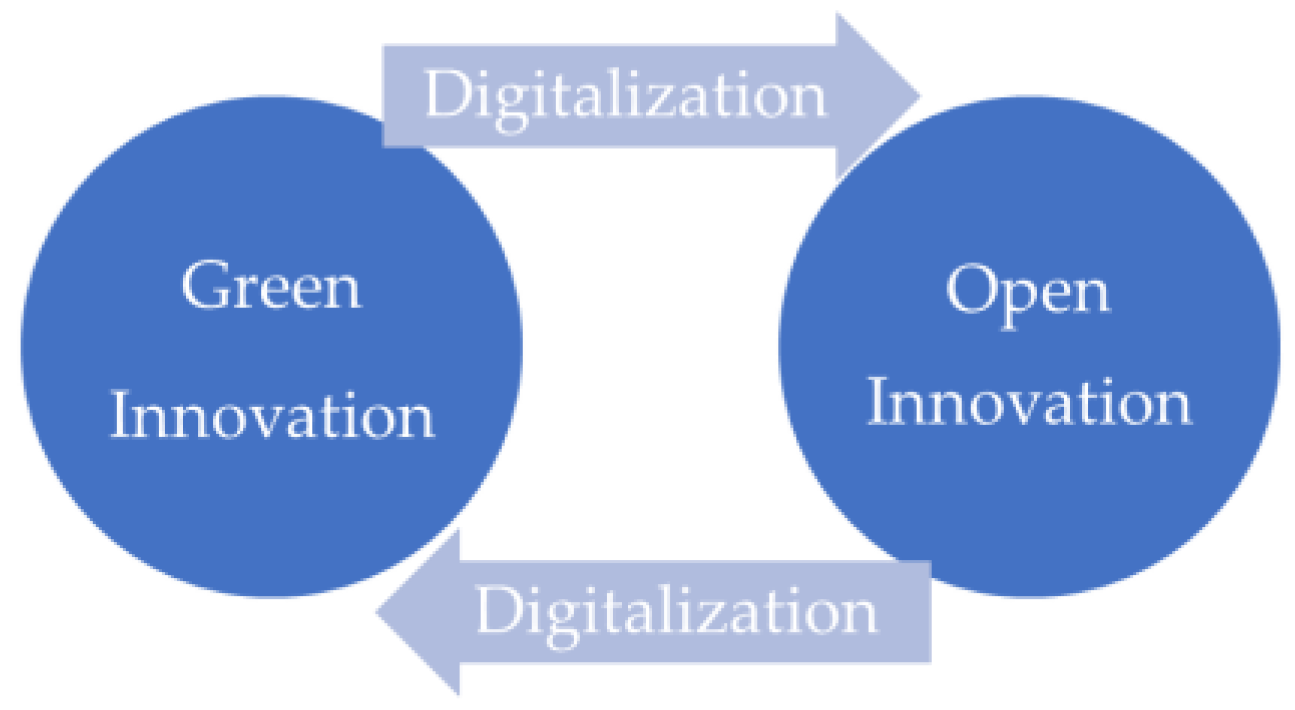
Figure 3.
Proposal of a new framework based on this review.
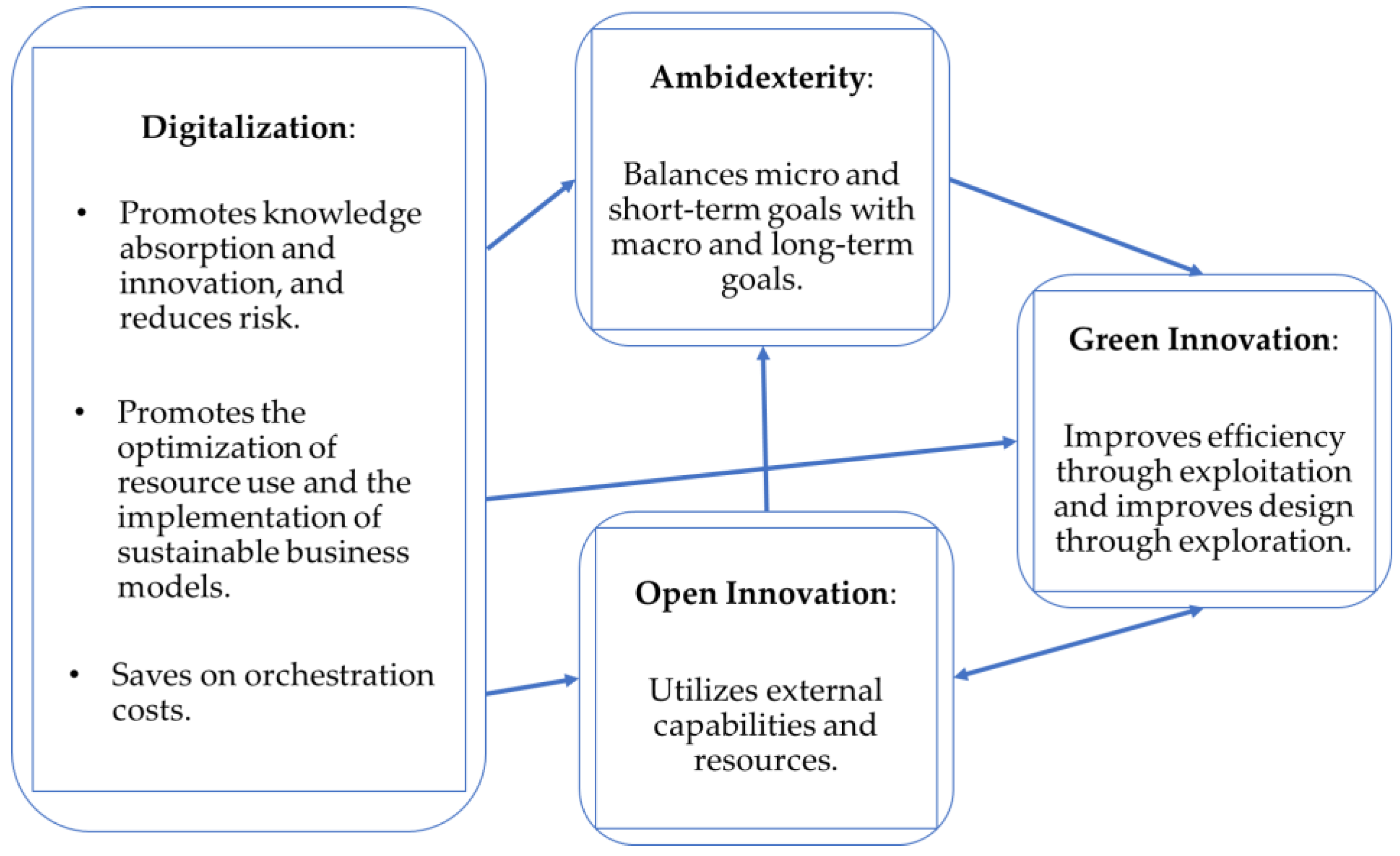
Table 1.
Analysis of the relationship between ambidextrous and performance.
| Country | Subject | N | Direction | Method | Summary | Dependent variable | Independent variable | Effect size(ΔR2) | # |
|---|---|---|---|---|---|---|---|---|---|
| Germany | Medium-sized companies in the engineering industry | 150 | Cross-sectional | Partial Least Square-Structural Equation Modeling (PLS-SEM) | To survive and gain competitive advantage, companies must prioritize exploration over exploitation to create radically new knowledge, products, and services. | Competitive advantage | Exploration orientation | 0.350 | [9] |
| United Kingdom | Young B2B technology company | 180 | Longitudinal | Multinomial logistic regression model | Dependence on key customers has a significant negative impact on a company’s survival. | Corporate survival | Exploitation (dependence on a key customer) | 0.040 | [13] |
| Spain | Agribusiness SMEs | 150 | Cross-sectional | Partial Least Square-Structural Equation Modeling (PLS-SEM) | Innovation ambidexterity affects business performance, with exploratory innovation having a stronger impact on market and financial performance than exploitative innovation. | Financial/market performance | Exploration | 0.425 | [14] |
Table 3.
Mediation test of digitalization, ambidexterity, and performance.
| Country | Subject | N | Direction | Method | Summary | Dependent variable | Independent variable | Mediator | # |
|---|---|---|---|---|---|---|---|---|---|
| Germany | SMEs all industries | 1,474 | Cross-sectional | Hierarchical ordinary least square regression analysis. | Digital orientation facilitate innovation ambidexterity | Innovation ambidexterity | Digital orientation | n.a. | [77] |
| Finland | SMEs in rural areas of Southern Ostrobothnia | 204 | Cross-sectional | Ordinal regression analysis | Organizational ambidexterity mediates the relationship between digital orientation and growth strategies. | Growth strategies | Digital orientation | Organizational ambidexterity | [78] |
| Turkey | SMEs in Wholesale and Retail Trade Sector within the Boundaries of Istanbul Province | 366 | Cross-sectional | Partial Least Square-Structural Equation Modeling (PLS-SEM) | Digital transformation partially mediates the relationship between ambidexterity and competitive advantage in SMEs | Competitive Advantage | Organizational Ambidexterity | Digital Transformation | [79] |
| Multi Country | World Bank Business Survey (Tracking 21 countries) | 8,928 | Longitudinal | Partial least squares structural equation modeling | Organizational ambidexterity indirectly affects innovation through digital capabilities | Innovation | Organizational ambidexterity | Digital capabilities | [80] |
Table 4.
Review of research to date and outlook for future research.
| Variable | What previous research has revealed so far | What future research should address |
| Digitalization | It enhances the competitive advantage of SMEs by combining with organizational ambidexterity to enable knowledge absorption under cost constraints, respond to radical innovation, and reduce risks. Furthermore, it contributes to open innovation, as well as green innovation and sustainability by facilitating orchestration cost savings and resource utilization optimization. | The main obstacles to digitalization among SMEs are a lack of financial and human resources, as well as a lack of understanding about the convenience of digitalization. It is necessary to consider how the government can provide specific support to overcome these obstacles. |
| Open Innovation | Leveraging external capabilities and resources compensates for shortfalls in internal assets and enables ambidexterity. | It is necessary to clarify strategies for reducing costs associated with orchestration, including digitalization. |
| Green Innovation | It is promoted by ambidexterity and has a mutually enhancing relationship with open innovation. | There is a need to understand the effects on performance when combined with digitalization, open innovation, and ambidexterity. |
| Ambidexterity | Although it has been primarily employed in relation to performance, recent research has shown its potential to be driven by digitalization and open innovation, thus stimulating green innovation. | A new framework is needed that positions ambidexterity not just as a micro- or short-term goal of the development of individual companies, but also as part of a strategy for achieving macro- or long-term goals for the sustainability of the planet. |
Disclaimer/Publisher’s Note: The statements, opinions and data contained in all publications are solely those of the individual author(s) and contributor(s) and not of MDPI and/or the editor(s). MDPI and/or the editor(s) disclaim responsibility for any injury to people or property resulting from any ideas, methods, instructions or products referred to in the content. |
© 2025 by the authors. Licensee MDPI, Basel, Switzerland. This article is an open access article distributed under the terms and conditions of the Creative Commons Attribution (CC BY) license (http://creativecommons.org/licenses/by/4.0/).
Copyright: This open access article is published under a Creative Commons CC BY 4.0 license, which permit the free download, distribution, and reuse, provided that the author and preprint are cited in any reuse.


