

Submitted:
27 March 2025
Posted:
28 March 2025
You are already at the latest version
Abstract
Background/Objectives: Uterus transplantation (UTx) is a novel, clinically successful treatment option for patients with absolute uterine factor infertility (AUFI) seeking biolog-ical motherhood. The procedure has been performed over 100 times worldwide in the past decade at 20 centers, but it remains widely unfamiliar, even among healthcare profes-sionals. This study assessed general knowledge of the procedure and identified knowledge gaps to better understand the general population’s perception of UTx in prep-aration for Hungary’s first procedure.
Methods: This prospective study, conducted between December 18, 2024, and January 5, 2025, distributed an online survey to 1500 Hungarian men and women aged 18 to 70 via e-mail. The questionnaire contained 24 questions on their opinions about organ donation, transplantation, infertility, surrogacy, and uterus transplantation.
Results: Most of the participants (77%, 1155/1500) supported UTx (strongly agree: 44%, 660/1500; agree: 33%, 495/1500). Among participants personally affected by fertility prob-lems, 84% (152/181) supported UTx, with 51% (92/181) strongly agreeing that it should be performed. Only 4% of respondents rejected UTx. Notably, only 15% of respondents had heard of UTx being performed abroad.
Conclusions: Our representative online survey demonstrates favorable public attitudes and opinions regarding UTx; increased public awareness is necessary for higher ac-ceptance rates.
Keywords:
uterus transplantation
; public opinion
; survey
; Hungary
1. Introduction
Uterus transplantation (UTx) is a novel method to treat a specific group of women with infertility—those with absolute uterine factor Infertility (AUFI). In this rare condition, the uterus is either anatomically or functionally impaired, leading to infertility [1]. An estimated 150,000 women are affected by AUFI in Europe; extrapolating these data to Hungary, a country with 9,765,000 citizens, AUFI affects approximately 1500–2000 patients. The only options for patients with AUFI seeking motherhood are adoption or surrogacy. In Hungary, adoption is a slow and very bureaucratic process, and all forms of surrogacy are illegal, falling under the legal umbrella of human trafficking. However, UTx may be a valid option [2]. Nearly a decade after the landmark clinical experiment by Brännströmm et al. in 2013, which resulted in the first live birth after live-donor UTx, this procedure became a clinically accepted concept [3]. By 2022, over 80 UTx procedures had been performed at almost 20 centers in Europe, North America, Latin America, and Asia, resulting in over 40 live births [4]. UTx has been incorporated into the national health system in Germany (2020), and it is in the process of implementation in Sweden and the Czech Republic [4,5]. To monitor global activities, the International Uterus Transplantation Society (ISUTx) launched an international quality registry on UTx in 2020 [6]. Despite the global spread of UTx, the procedure is not yet available in Hungary.
To date, only a few studies carried out in the USA, the UK, France, Sweden, and Japan have assessed public opinion on UTx [7,8,9,10,11,12]. These studies demonstrate divergent opinions toward UTx; most of the general population supports UTx as a treatment option for patients with AUFI patients, although concerns arise regarding the ethical aspects of the procedure, including medical and surgical complication risks, and some consider UTx a non-vital organ transplant that does not enhance quality of life [13,14]. However, physicians’ opinions seem to be more critical, and some surveys indicate that fewer than half of respondents believe UTx raises ethical concerns [7,15]. As UTx shifted from the early experimental phase to a well-developed technique and healthcare providers became more aware of the procedure, attitudes became more supportive in general, despite showing regional variation [13].
Our multidisciplinary team is dedicated to implementing UTx in Hungary soon and is willing to provide it to eligible patients with AUFI. In preparation for a clinical trial, we have carried out several animal and cadaver studies [16,17]. This study assessed public attitudes and opinions regarding UTx in Hungary. We hypothesized that in a country characterized by a declining population in which infertility is a major public concern, the public would have a positive, supportive opinion of a novel, innovative treatment option for this special group of women with infertility. We intend to use the results of this study to promote discussion on UTx among medical professionals, politicians, and women with infertility women so that it can be introduced as a treatment for AUFI in Hungary.
2. Materials and Methods
2.1. Survey Development
This prospective cross-sectional study was carried out by the Nezopont Institute, Budapest in collaboration with a focus group of members from the University of Pecs, Department of Obstetrics and Gynecology, Pecs, Hungary. Because survey participation was voluntary, anonymous, without financial compensation and no personal data was collected the University of Pecs Institutional Ethical Review Board considered this study exempt from review. All participants provided written informed consent, by clicking “agree terms and conditions”, before accessing an online survey comprising 24 questions, which was created using the Microsoft Forms platform (Microsoft Corporation, Redmond, Washington, USA); the questions were based on a previously published article that evaluated the perception of UTx among the general population in another country after consultation with medical professionals (BF, KSP, SK, GF). The survey contained a brief introduction to the center conducting the study, the purpose of the study, a brief professional explanation of UTx, eight demographic questions, and sixteen statements about infertility, transplantation, surrogacy, and UTx. Answers were provided as single-choice or Likert-scale responses (S1 and S2 Appendices).
2.2. Survey Distribution
The survey was distributed to 41,000 Hungarian men and women aged 18–70 via email from December 18, 2024, to January 5, 2025. A total of 3114 people clicked the questionnaire link, and 2896 completed the full questionnaire. Of the pool of respondents who participated, a final sample of 1500 people was selected for analysis to ensure that the sample reflected the demographic characteristics (age, gender, education level, family status, and region of inhabitance) of Hungary; thus, the survey was representative of the Hungarian public. The inclusion criteria were Hungarian citizenship, an age of 18–70 years, literacy in Hungarian, and access to the Internet. The University of Pecs Reginal Ethical Review Board considered this study exempt from review. A pilot investigation was performed among a group of medical and non-medical individuals, who reviewed the content and clarity of the survey before distribution.
2.3. Statistical Analysis
Descriptive statistics were compiled, and reference groups were established using the most logical comparison groups or the largest group for nominal predictors and the lower tail for ordinal (numerical) characteristics. Respondents who supported UTx were compared with those who opposed it using log binominal regression adjusted for age and income, and the relative risk (RR) and 95% confidence intervals (CIs) were calculated. All analyses were performed using SPSS software.
3. Results
3.1. Demographic Characteristics
The demographic characteristics of the participants are presented in Table 1. A total of 1500 participants who completed the survey were selected for analysis. The regional distribution of the participants was homogenous; 31% (465/1500) lived in Western Hungary (Vas, Gy-M-S, K-E, Zala, Somogy, Baranya, Tolna, Fejer, and Veszprem Counties), 30% (450/1500) lived in the capital area (Budapest and Pest County), and 39% (585/1500) lived in Eastern Hungary (B-K, B-A-Z, J-N-Sz, Cs-Cs, Heves, Bekes, Sz-Sz-B, H-B, and Nograd Counties). Two-thirds (66%, 990/1500) of the respondents were parents, 34% (336/990) had one child, 43% (426/990) had two children, 17% (168/990) had three children, and 6% (59/990) had four or more children.
A small percentage of the respondents (8%, 120/1500) considered themselves strictly religious (“true believers”), whereas a large percentage (45%, 675/1500) classified themselves as religious in their own way (not practicing religion a daily or weekly basis). Over one-third self-identified as non-religious (34%, 510/1500), and 12% (180/1500) did not answer to the question related to religion.
3.2. Infertility as a Major Concern in Hungary
We found that 12% of participants (180/1500) aged 18 and older had fertility problems or were infertile (to their knowledge), and 43% (645/1500) reported knowing someone who cannot have children naturally.
Regarding sociodemographic characteristics, those with diagnosed and reported fertility problems or infertility were predominately aged 30–39 (17%, 44/260) and women (16%, 123/768). Among respondents who were unable to have children naturally, 84% (152/181) know someone with a known fertility problem.
All of the questions related to having children, Hungarian medical practice, and organ transplantation had a level of agreement above 80%. The overwhelming majority of Hungarians aged 18 and older thought that support should be provided for those who cannot have children naturally (94%, 1410/1500) and that newer technologies and innovative methods should be used in Hungarian medical practice (93%, 1395/1500). Compared with all respondents (75–74%), the proportion of those who fully agreed with these statements was significantly higher among those who knew someone who could not have children naturally (98–97%, p < 0.05) (Figure 1).
3.3. Opinions and Attitudes Regarding Uterine Transplantation
Most participants (77%, 1155/1500) agreed that UTx should be performed (strongly agree 44%, 660/1500; agree 33%, 495/1500). According to the sociodemographic characteristics, the highest proportion of participants in favor of UTx was among those with higher education levels (83%). In the overall sample, most participants strongly agreed with UTx (44%, 660/1500); this proportion was significantly lower among 18–29-year-olds (35%, p < 0.05) (Figure 2).
Agreement that UTx should be performed was higher (84%, 152/181) among those personally affected by fertility problems, with 51% (92/181) strongly agreeing that UTx should be performed. Among respondents who knew someone who could not conceive naturally, 83% (534/648) agreed that UTx should be performed, with most of these respondents strongly agreeing (51%, 330/648). Among respondents who were organ donors or who had friends who were organ donors, 89% (150/168) agreed that UTx should be performed, with 56% (94/168) strongly agreeing. Acceptance of UTx (agree or strongly agree) was particularly high (91%, 206/226) among respondents who were aware that UTx operations have been successfully performed abroad, with 67% (151/226) strongly agreeing (Figure 3).
Over one-third of all respondents (42%, 630/1500) supported UTx using donations from both living and deceased. Respondents with the highest levels of agreement lived in the capital (52%, 140/270) and had higher levels of education (52%, 189/364). However, 17% of all respondents (255/1500) supported only deceased-donor (brain dead) UTx, except residents over the age of 60 years, who showed a support rate of 22% (81/368) (Figure 4).
Most participants supported both living- and deceased-donor UTx (55%, 825/1500), especially those who had heard about UTx procedures performed abroad (53%, 120/226), those who accept UTx in general (53%, 616/1163), and those who knew someone who with fertility problems (47%, 83/181).
Respondents who accepted UTx perceived the benefits of the procedure, as it provides hope for people with infertility (70%, 814/1163). A high proportion (65%, 756/1163) responded that it is favorable that this medical intervention can help people who have been longing to have children (Figure 5,6).
3.4. Figures and Tables
This is example 1 of an equation:
the text following an equation need not be a new paragraph. Please punctuate equations as regular text.
a = 1,
This is example 2 of an equation:
the text following an equation need not be a new paragraph. Please punctuate equations as regular text.
a = b + c + d + e + f + g + h + i + j + k + l + m + n + o + p + q + r + s + t + u + v + w + x + y + z
Theorem-type environments (including propositions, lemmas, corollaries etc.) can be formatted as follows:
Theorem 1.
Example text of a theorem. Theorems, propositions, lemmas, etc. should be numbered sequentially (i.e., Proposition 2 follows Theorem 1). Examples or Remarks use the same formatting, but should be numbered separately, so a document may contain Theorem 1, Remark 1 and Example 1.
The text continues here. Proofs must be formatted as follows:
Proof of Theorem 1.
Text of the proof. Note that the phrase “of Theorem 1” is optional if it is clear which theorem is being referred to. Always finish a proof with the following symbol. □
The text continues here.
4. Discussion
This study is the first to investigate public opinion toward UTx in Hungary. Our study comprised an online assessment of public opinion and was sociodemographically representative of the Hungarian general population; therefore, it is a reliable indicator of Hungarian public opinion on this subject.
One of the main findings was that around 10% of Hungarian adults reported having fertility problems or infertility, and over 40% knew someone with these problems. This aligns with the infertility rates of Western European countries, which range from 10 to 15% [18], as well as global infertility rates of 8–12% [19,20]. Compared with the overall sample, women and individuals aged 30–39 years were more likely to knowingly be affected by these problems themselves or know someone with them.
Because the population in Europe and developed countries is declining, infertility represents a major health challenge. A recent survey revealed that providing support and alternatives for infertile patients is suggested [21]. We found that among Hungarians aged 18 and older, 94–93% agreed that support should be provided to those who cannot have children naturally and that new technologies and innovative methods should be used, following global trends.
The main focus of this investigation was public attitudes toward UTx, which may be the only legal option for biological motherhood for patients with AUFI patients in Hungary and the EU, as all forms of surrogacy are banned by EU Commission directive E-001332/2024 [22]. Notably, only 60% of the respondents knew that surrogacy is not currently allowed in Hungary, even though the Hungarian Superior Court banned all forms of surrogacy in 2020, considering it a form of human trafficking [23].
Although public opinion toward UTx varies between countries, we believe that an introduction to the concept of UTx is needed. Our results demonstrated that nearly 80% of participants accepted UTx, mostly those with higher education levels, those who were aware of previous UTx abroad, those who were organ donors or knew someone who was, and those who were affected by infertility/fertility problems or knew someone who was. The favorable opinion toward UTx aligns with data from the UK demonstrating that 43% of respondents were willing to donate their uterus after death [8]. In the US, 74.4% of women were willing to donate their uterus [24]. Recently published data from Japan showed that 36.5% of women agreed that UTx should be performed, and 31.0% agreed that gestational surrogacy should be legal [11]. In Sweden, UTx was more acceptable than surrogacy (80% vs. 47%) [10]. These studies indicate that overall public opinion worldwide is positive toward UTx, aligning with our results in Hungary.
Although more than a decade has passed since the first baby was born from a transplanted uterus in Sweden, general awareness of UTx is low. In a UK study, 71% of the investigated cohort never heard of UTx, and our results showed that only 15% of respondents had heard of previous transplants abroad [8]. Because the proportion of UTx supporters is high, we believe that more information should be distributed about UTx through both social and printed media and on scientific platforms in the future.
We found that those who accept UTx see the benefits of this medical intervention, primarily the hope it can give to people with infertility who have been longing for a child. However, 4% of the respondents rejected UTx. This could be explained by the ethical concerns that arise from the procedure, including medical and surgical risk, and some regard UTx as a non-life-saving organ transplant that does not enhance quality of life [4]. Other explanations include religious beliefs and attitudes toward organ donation and transplantation, as Hungary is a mostly Christian country (62% of the population identifies as Catholic) [25].
5. Conclusions
In conclusion, UTx—a novel treatment method for a special subpopulation of women with infertility for whom UTx may be the only legal option for biological motherhood—is considered a favorable method in Hungary. However, to achieve wider knowledge about UTx, public awareness about UTx must be increased through the media, scientific publications, and open debates.
Supplementary Materials
The following supporting information can be downloaded at the website of this paper posted on Preprints.org, S1_Appendix and S2 Appendix.
Author Contributions
BF manuscript writing, data collection, KSP data collection, KK manuscript editing, technical support, data collection, SK manuscript design and editing, technical support, JB project design and development, manuscript editing, data collection, GF project design and development, manuscript editing. All authors have read and agreed to the published version of the manuscript
Funding
The research was financed by the Thematic Excellence Program 2020 - Institutional Excellence Sub- programme of the Ministry for Innovation and Technology in Hungary, within the framework of the second thematic programme of the University of Pécs and ELKH-PTE Human Reproduction Scientific Research Group, Pécs, Hungary and National Laboratory for Human Reproduction as part of the “Establishment of National Laboratories 2020” program.
Institutional Review Board Statement
Because survey participation was voluntary, anonymous, without financial compensation and no personal data was collected the University of Pecs Institutional Ethical Review Board considered this study exempt from review.
Informed Consent Statement
Informed consent was obtained from all subjects involved in the study
Data Availability Statement
data is available upon request from the corresponding author.
Acknowledgments
We also thank for the support of the collaborating colleagues who were involved. Finally, we thank Ildiko Bencsik-Peter for her managing assistance and help.
Conflicts of Interest
authors declare no conflicts of interest.
Abbreviations
| UTx | Uterus transplantation |
| AUFI | Absolute Uterine Factor Infertility |
| RR | Relative risk |
| CI | Confidence Interval |
| EU | European Union |
Appendix A
MÉHÁTÜLTETÉS TÁRSADALMI ELFOGADOTTSÁGA KÉRDŐÍV
Kedves Válaszadó! Köszönjük, hogy válaszával segíti a munkánkat, jelenlegi felmérésünk során egészségügyi témában kérdezzük a véleményét.
MINDENKITŐL!
Q1 Az Ön neme:
- Férfi
- Nő
MINDENKITŐL!
- Q2 Mi az Ön születési éve?
- Dátum formátumú legördülő lista
MINDENKITŐL!
Q3 Milyen típusú településen lakik Ön? Kérem, állandó lakhelyének típusát jelölje be!
- főváros
- megyeszékhely
- egyéb város
- község, falu, tanya
- 9999.
- NT/NV
MINDENKITŐL!
Q4 Mi az irányítószáma annak a településnek, ahol Ön él?
- Legördülő lista
MINDENKITŐL!
Q5 Mi az Ön legmagasabb, befejezett iskolai végzettsége?
- 8 általános vagy kevesebb
- szakmunkásképző, szakiskola
- érettségi
- érettségi utáni szakképzés/felsőfokú szakképzés
- felsőfokú (pl. főiskola, egyetem, BA/BSc, MA/MSc, PhD.)
- 9999.
- NT/NV
MINDENKITŐL!
Q6 Mi az Ön jelenlegi családi állapota?
- egyedülálló (hajadon/nőtlen)
- élettársi kapcsolatban él
- házas
- elvált
- özvegy
- 9999.
- NT/NV
MINDENKITŐL!
Q7 Van Önnek gyermeke?
- igen
- nem
FELTÉTEL: HA Q7 = 1
Q8 Hány gyermeke van?
- egy
- kettő
- három
- négy, vagy több
- 9999.
- NT/NV
MINDENKITŐL!
Q9 Ismer-e valakit (pl. testvér, rokon, barát, kolléga), aki termékenységi zavarral, vagy meddőséggel küzd/küzdött?
- igen
- nem
- 9999.
- NT/NV
MINDENKITŐL!
Q10 Meddőséggel vagy termékenységi zavarral Ön érintett-e/érintett volt-e valamilyen formában?
- igen
- nem
- NT/NV
MINDENKITŐL!
Q11 Van-e az Ön környezetében olyan pár (akár Ön is), akik lombikprogramban vettek részt, mert természetes úton nem lehetett gyermekük?
- igen, van
- nincs
- 9999.
- NT/NV
MINDENKITŐL!
Q12 Mennyire fogadja el Ön a lombikprogramot, ami a gyermekvállalást biztosítja a meddő pároknak?
- teljes mértékig elfogadom
- inkább elfogadom
- inkább nem fogadom el
- egyáltalán nem fogadom el
- 9999.
- NT/NV
MINDENKITŐL!
Q13 Hallott-e Ön arról, hogy Magyarországon törvényileg nem engedélyezett a béranyaság/dajkaterhesség, amely a méh elégtelen működésével/hiányával küzdő nőknek nyújthatna segítséget?
- hallottam róla
- nem hallottam róla
- 9999.
- NT/NV
MINDENKITŐL!
Q14 Hallott-e Ön arról, hogy Magyarországon lehetőség van a szervadományozás (elhalálozás, egyenesági rokon esetén) útján kapott donor szerv beültetésére olyan életveszélyben lévő embereknél, akik szerepelnek kórházi transzplantációs váróslistán?
- igen
- nem
- 9999.
- NT/NV
MINDENKITŐL!
Q15 Van-e az Ön környezetében olyan (akár Ön is), aki donor szervet kapott/várólistán van?
- igen, van
- nincs
- 9999.
- NT/NV
MINDENKITŐL!
Q16 Mennyire fogadja el Ön azt, hogy egy életveszélyes állapotban lévő ember életén segítenek az által, hogy donor szervet kap egy másik embertől (egyenesági rokon, vagy agyhalál beálltát követően tiltakozó nyilatkozattal nem rendelkező elhunyt személytől)?
- teljes mértékig elfogadom
- inkább elfogadom
- inkább nem fogadom el
- egyáltalán nem fogadom el
- 9999.
- NT/NV
Q16=3, 4 INKÁBB, VAGY EGYÁLTALÁN NEM ELFOGADÓAK
Q17 Miért nem fogadja el Ön a donor szerv igénybevételének a lehetőségét?
TÖBB VÁLASZ LEHETSÉGES
- úgy tudom/érzem a vallásom ellenzi
- hiszek az eleve elrendeltetettben
- félő, hogy kevésbé mentik meg azt a haldoklót, akinek a szervei jó állapotban vannak
- nem tudom elfogadni egy idegen/halott ember szervének a befogadását
- a listákat manipulálják, nem a hétköznapi emberek kapják meg a donorszerveket
- egyéb, éspedig:…………………..
- 9999.
- NT/NV
MINDENKITŐL
Q18 Ön milyen mértékben ért egyet az alábbi állításokkal? Kérjük, hogy válaszát 1-től 4-ig terjedő skálán értékelje, ahol az 1-es az egyáltalán nem ért egyet, a 4-es pedig a teljes mértékben egyet ért.
SORONKÉNT EGY VÁLASZ LEHETSÉGES
1- 2- 3- 4- 9999- NT/NV
- Támogatni kell azokat, akik nem tudnak természetes úton gyermeket vállalni és szeretnének.
- A magyarországi orvoslásban minél több új technológiát, innovatív módszert kellene alkalmazni.
- Az állam feladata, hogy támogassa, hogy minél több gyermek szülessen akár orvosi támogatással is.
- Ha komoly betegségem lenne nekem, vagy a szeretteimnek, akkor szinte bármilyen orvosi segítséget igénybe vennénk a gyógyulás reményében.
- Jó érzés a magyar orvosi sikerekről hallani.
- Nagyon nehéz élethelyzet, amikor az ember készen áll a gyermekvállalásra, de biológiai akadálya van.
- A szervátültetés egy nemes érzés annak, aki adja, vagy akinek a családja értesül róla, hogy szerettük tudott segíteni egy komoly betegséggel küzdőn.
MINDENKITŐL!
Q19 Hallott-e Ön arról, hogy a külföldön több alkalommal végeztek már méhátültetést embereken?
- igen
- nem
- 9999.
- NT/NV
MINDENKITŐL!
Q20 Mennyire fogadja el Ön azt, hogy méh eltávolításon átesett nők, vagy nem működőképes, vagy anatómiailag terhesség kihordására alkalmatlan méhhel élő nők donor szervet kapjanak egy másik embertől (élő, vagy elhunyt), mely következtében képesek lehetnek teherbe esni?
- teljes mértékig elfogadom
- inkább elfogadom
- inkább nem fogadom el
- egyáltalán nem fogadom el
- 9999.
- NT/NV
MINDENKITŐL!
Q21 A méhátültetés során melyik szervadományozást támogatja Ön?
EGY VÁLASZ LEHETSÉGES
- az élő donort (felajánlás) és a halott donort egyaránt
- csak az élő donort, amikor valaki még életében lemond a méhéről valaki javára
- csak a halott donort, a magyar törvények szerint az agyhalált követően van mód az eltávolításra
- a méhátültetést magát ellenzem
- 9999.
- NT/NV
Q20=1,2 INKÁBB, VAGY TELJES MÉRTÉKBEN ELFOGADJA A MÉHÁTÜLTETÉST
Q22 Milyen előnyei vannak Ön szerint a méhátültetésnek?
TÖBB VÁLASZ LEHETSÉGES
- olyanok vállalhatnak gyermeket, akik nagyon vágytak rá
- segíti a népességszám csökkenését
- ha a tudomány tud segíteni innovációval, akkor én támogatom
- reményt adhat a meddő embereknek
- a gyermek egy áldás
- új technológia révén segíti a kutatás fejlesztést
- kutatók számára fejlődés, siker
- egyéb, éspedig:……………………………….
- 9999.
- NT/NV
Q20=3,4 INKÁBB, VAGY EGYÁLTALÁN NEM FOGADJA EL A MÉHÁTÜLTETÉST
Q23 Miért nem fogadja el Ön a méhátültetés lehetőségét?
1 ……………………………………………….
9999 NT/NV
MINDENKITŐL
Q24 A következő kijelentések közül melyikkel tudná önmagát a leginkább jellemezni?
EGY VÁLASZ LEHETSÉGES!
- vallásos, az egyház tanítását követi
- vallásos a maga módján
- nem tudja megmondani, hogy vallásos-e vagy sem
- nem vagyok vallásos
- a vallást önbecsapásnak tartom, ateista vagyok
- 9999.
- NT/NV
Appendix B
PUBLIC ACCEPTANCE OF UTERUS TRANSPLANTATION QUESTIONNAIRE
Dear Respondent! Thank you for responding to our current survey, which asks for your opinion on health issues.
FROM EVERYONE!
Q1 Your sex:
- Male
- Female
FROM EVERYONE!
Q2 What is your year of birth?
FROM EVERYONE!
Q3 What type of municipality do you live in? Please indicate the type of your permanent residence.
- Capital
- provincial capitol
- other city
- village, rural are
- 9999.
- Not sure/ Not answering
FROM EVERYONE!
Q4 What is the postcode of the municipality where you live?
FROM EVERYONE!
Q5 What is your highest level of completed education?
- 1.
- 8 overall or less
- 2.
- Secondary school
- 5.
- highest education (e.g., college, university, BA/BSc, MA/MSc, PhD.)
- 9999.
- Not sure/ Not answering
FROM EVERYONE!
Q6 What is your current marital status?
- single (single/unmarried)
- in a standard relationship
- married
- Divorced
- widowed
- 9999.
- Not sure/ Not answering
FROM EVERYONE!
Q7 Do you have children?
- yes
- not
CONDITIONS: HA Q7 = 1
Q8 How many children do you have?
- one
- two
- three
- four or more
- 9999.
- Not sure/ Not answering
FROM EVERYONE!
Q9 Do you know someone (e.g., a sibling, relative, friend, colleague) who has/has had a fertility problem or infertility?
- yes
- not
- 9999.
- Not sure/ Not answering
FROM EVERYONE!
Q10 Have you been affected in any way by infertility or fertility problems?
- yes
- not
- 9999.
- Not sure/ Not answering
FROM EVERYONE!
Q11 Are there any couples (including yourself) who you know who have had a baby through a fertility programme because they could not have a baby naturally?
- yes, there is
- none
- 9999.
- Not sure/ Not answering
FROM EVERYONE!
Q12 To what extent do you support the use of a programme that provides childbearing for infertile couples?
- I fully accept
- I prefer to accept
- I prefer not to accept
- I do not accept it at all
- 9999.
- Not sure/ Not answering
FROM EVERYONE!
Q13 Have you heard that surrogacy/childbearing is not legally allowed in Hungary, which could help women with uterine insufficiency/deficiency?
- I heard about it
- I have not heard of it
- 9999.
- Not sure/ Not answering
FROM EVERYONE!
Q14 Have you heard that in Hungary it is possible to transplant an organ obtained through organ donation (in case of death, in the case of a direct relative) to people in danger of dying who are on the waiting list for a hospital transplant?
- yes
- not
- 9999.
- Not sure/ Not answering
FROM EVERYONE!
Q15 Is there anyone (including yourself) in your area who has received a donor organ, or on the waiting list for such?
- yes, there is
- none
- 9999.
- Not sure/ Not answering
FROM EVERYONE!
Q16 To what extent do you accept that a person in a life-threatening condition is helped by receiving a donor organ from another person (a relative or a deceased person who has not declared an objection after brain death)?
- I fully accept
- I prefer to accept
- I prefer not to accept
- I do not accept it at all
- 9999.
- Not sure/ Not answering
Q16=3, 4 MORE OR NOT AT ALL ACCEPTING
Q17 Why do you not accept the possibility of using a donor organ?
MORE ANSWERS POSSIBLE
- I know/feel my religion is against it
- I believe in the predestined
- it is feared that they are less likely to save a dying person whose organs are in good condition
- I cannot accept receiving the organs of a stranger/dead person
- the lists are manipulated, not ordinary people get donated organs
- other, namely:.......................
- 9999.
- Not sure/ Not answering
ABOUT ALL
Q18 To what extent do you agree with the following statements? Please rate your answer on a scale of 1 to 4, where 1 is strongly disagree and 4 is strongly agree.
ONE ANSWER POSSIBLE PER LINE
1- 2- 3- 4- 9999- NT/NV
- Those who cannot have children naturally and want should be supported.
- More new technologies and innovative methods should be used in Hungarian medicine.
- The state’s role is to support the birth of as many children as possible, even with medical support.
- If I or my loved ones had a serious illness, we would seek almost any medical help in the hope of a cure.
- It’s good to hear about Hungarian medical successes.
- It’s a very difficult situation in life when you are ready to have children, but there is a biological barrier.
- Organ transplantation is a noble feeling for those who donate, or whose family learns that a loved one has been able to help someone with a serious illness.
FROM EVERYONE!
Q19 Have you heard of several cases of human transplants abroad?
- yes
- not
- 9999.
- Not sure/ Not answering
FROM EVERYONE!
Q20 To what extent do you accept that women who have had a hysterectomy, or who have a non-functioning or anatomically unsuitable uterus to carry a pregnancy, should receive a donor uterus from another person (living or deceased), which would enable them to become pregnant?
- I fully accept
- I prefer to accept
- I prefer not to accept
- I do not accept it at all
- 9999.
- Not sure/ Not answering
FROM EVERYONE!
Q21 Which organ donation method do you support when you receive a uterus transplant?
ONE ANSWER POSSIBLE
- both the living donor (donation) and the deceased donor
- only the living donor, when someone gives up their womb for someone else in their lifetime
- only the deceased donor, according to Hungarian law removal is possible after brain death
- I am against the transplant itself
- 9999.
- Not sure/ Not answering
Q20=1.2 PREFERS OR FULLY ACCEPTS BEE TRANSPLANTATION
Q22 What do you think are the benefits of a bee transplant?
MORE ANSWERS POSSIBLE
- people who have been longing to have a child can have one
- helps to reduce the population
- if science can help with innovation, I support it
- can give hope to infertile people
- a child is a blessing
- helps research development through new technology
- progress, success for researchers
- other, namely:.....................................
- 9999.
- Not sure/ Not answering
Q20=3.4 WOULD PREFER OR NOT ACCEPT A UTERUS TRANSPLANT
Q23 Why do you not accept the possibility of a bee transplant?
1 ……………………………………………….
9999 Not sure/ Not answering
ABOUT ALL
Q24 Which of the following statements would best describe yourself?
ONE ANSWER IS POSSIBLE!
- religious, following the teachings of the Church
- religious in its own way
- cannot tell whether you are religious or not
- I am not religious
- I consider religion as self-deception, I am an atheist
- 9999.
- Not sure/ Not answering
References
- Sieunarine K, Zakaria FB, Boyle DC, Corless DJ, Noakes DE, Lindsay I, et al. Possibilities for fertility restoration: a new surgical technique. Int Surg. 2005;90(5):249–56.
- Farkas B, Kolumban S, Papp KS, Fazekas G, Kovacs K, Bodis J. Current legal standpoint on surrogacy in Hungary. J Assist Reprod Genet. 2024. doi: 10.1007/s10815-024-03361-w. Online ahead of print. [CrossRef]
- Brännström M, Johannesson L, Bokstrom H, Kvarnstrom N, Molne J, Dahm-Kahler P, Enskog A, Milenkovic M, Ekberg J, Diaz-Garcia C. et al. Livebirth after uterus transplantation. Lancet 2015;385:607–616. [CrossRef]
- Brännström M, Racowsky C, Carbonnel M, Wu J, Gargiulo A, Adashi EY, Ayoubi JM. Uterus transplantation worldwide: clinical activities and outcomes. Hum Reprod Update. 2023;29(5):521–44.
- Brännström M, Tullius SG, Fronek J, Brucker SY.. Meeting report: third International Congress of the International Society of Uterus Transplantation (ISUTx). Transplantation 2022;106:2271–2274. [CrossRef]
- Brännström M, Tullius SG, Brucker S, Dahm-Kahler P, Flyckt R, Kisu I, Andraus W, Wei L, Carmona F, Ayoubi JM. et al. Registry of the International Society of uterus transplantation: first report. Transplantation 2023;107:10–17. [CrossRef]
- Bortoletto P, Hariton E, Farland LV, Goldman RH, Gargiulo AR. Uterine Transplantation: a survey of perceptions and attitudes of American reproductive endocrinologists and gynecologic surgeons. J Minim Invasive Gynecol 2018;25(6):974-979. [CrossRef]
- Vali S, Jones BP, Sheikh S, Saso S, Quiroga I, Smith JR.
- Attitudes, knowledge, and perceptions among women toward uterus transplantation and donation in the United Kingdom. Front Med (Lausanne). 2023 Aug 16;10:1223228.
- Gauthier T, Garnault D, Therme JF, et al. Transplantation utérine: une demande réelle? Gynecol Obstet Fertil. 2015; 43: 133-138.
- Wennberg A-L, Rodriguez-Wallberg KA, Milsom I, Brännström M. Attitudes towards new assisted reproductive technologies in Sweden: a survey in women 30-39 years of age. Acta Obstet Gynecol Scand 2016;95(1):38–44. [CrossRef]
- Nakazawa A, Hirata T, Arakawa T, Nagashima N, Fukuda S, Neriishi K, Harada M, Hirota Y, Koga K, Wada-Hiraike O, Koizumi Y, Fujii T, Irahara M, Osuga Y. A survey of public attitudes toward uterus transplantation, surrogacy, and adoption in Japan. [CrossRef]
- PLoS One. 2019 Oct 30;14(10):e0223571.
- Kisu I, Banno K, Soeda E, Kurihara Y, Okushima M, Yamaguchi A, et al. Survey of attitudes toward uterus transplantation among Japanese women of reproductive age: A cross-sectional study. PloS One 2016;11(5):e0156179. [CrossRef]
- Vyas P, Sader D, Testa G, Du J, Wall A, Johannesson L. Exploring divergent views: a comparative study of uterus transplantation perceptions among transplant and Obstetrics/Gynecology providers. J Clin Med. 2024 29;13(11):3182. [CrossRef]
- Rius M, Camacho M, Tomás N, Díaz-Feijoo B, Castelo-Branco C, Borras A, Tort J, Carmona F. Attitudes toward uterus transplantation. An option for motherhood? [CrossRef]
- Acta Obstet Gynecol Scand. 2024. Online ahead of print.
- Balayla J, Tulandi T. Provider perceptions, opinions, and insights into uterine transplantation in Canada. J Obstet Gynaecol Can. 2019; 41: 428-435. [CrossRef]
- Farkas B, Kovács K, Kolumbán S, Rozanovic M, Hegedűs E, Jancsó G, Bódis J, Fazekas G. The experimental uterus autotransplantation sheep model. Orv Hetil. 2024 14;165(28):1079-1085. - (Article in Hungarian).
- Farkas B, Kovács K, Kolumbán S, Papp KS, Marton Z, Bódis J, Fazekas G. Uterus transplantation, deceased donor graft removal. Orv Hetil. 2025 In press - (Article in Hungarian).
- Kamel, R.M. Management of the infertile couple: An evidence-based protocol. Reprod. Biol. Endocrinol. 2010, 8, 21. [CrossRef]
- Ombelet W, CookeI I, Dyer S,Serour G,Devroey P. Infertility and the provision of infertility medical services in developing countries. Human Reprod. Update 2008;14:605–621. [CrossRef]
- Ombelet W, Devroey P, Gianaroli L, te Velde E. Developing Countries and Infertility. Spec. Issue Human Reprod. 2008;1–117.
- Inhorn MC, Patrizio P. Infertility around the globe: new thinking on gender, reproductive technologies and global movements in the 21st century. Hum Reprod Update 2015;21(4):411-26. [CrossRef]
- https://www.europarl.europa.eu/doceo/document/E-9–2024-001332_EN.html.
- https://jogkodex.hu/doc/1586695.
- Rodrigue JR, Tomich D, Fleishman A, Glazier AK. Vascularized Composite Allograft Donation and Transplantation: A Survey of Public Attitudes in the United States. Am J Transplant. 2017;17(10):2687-2695.
- https://en.wikipedia.org/wiki/Catholic_Church_in_Hungary.
Figure 1.
Incidence of infertility in the sample. Answers are shown for the question ”Q10 Have you been affected/affected in any way by infertility or fertility problems? “(n=1500). Data are shown on a Likert scale. A significantly lower proportion of single people reported that they had experienced infertility or a fertility problem or had a history of such a problem compared to childless married people (6% versus 14%, p<0.05).
Figure 1.
Incidence of infertility in the sample. Answers are shown for the question ”Q10 Have you been affected/affected in any way by infertility or fertility problems? “(n=1500). Data are shown on a Likert scale. A significantly lower proportion of single people reported that they had experienced infertility or a fertility problem or had a history of such a problem compared to childless married people (6% versus 14%, p<0.05).
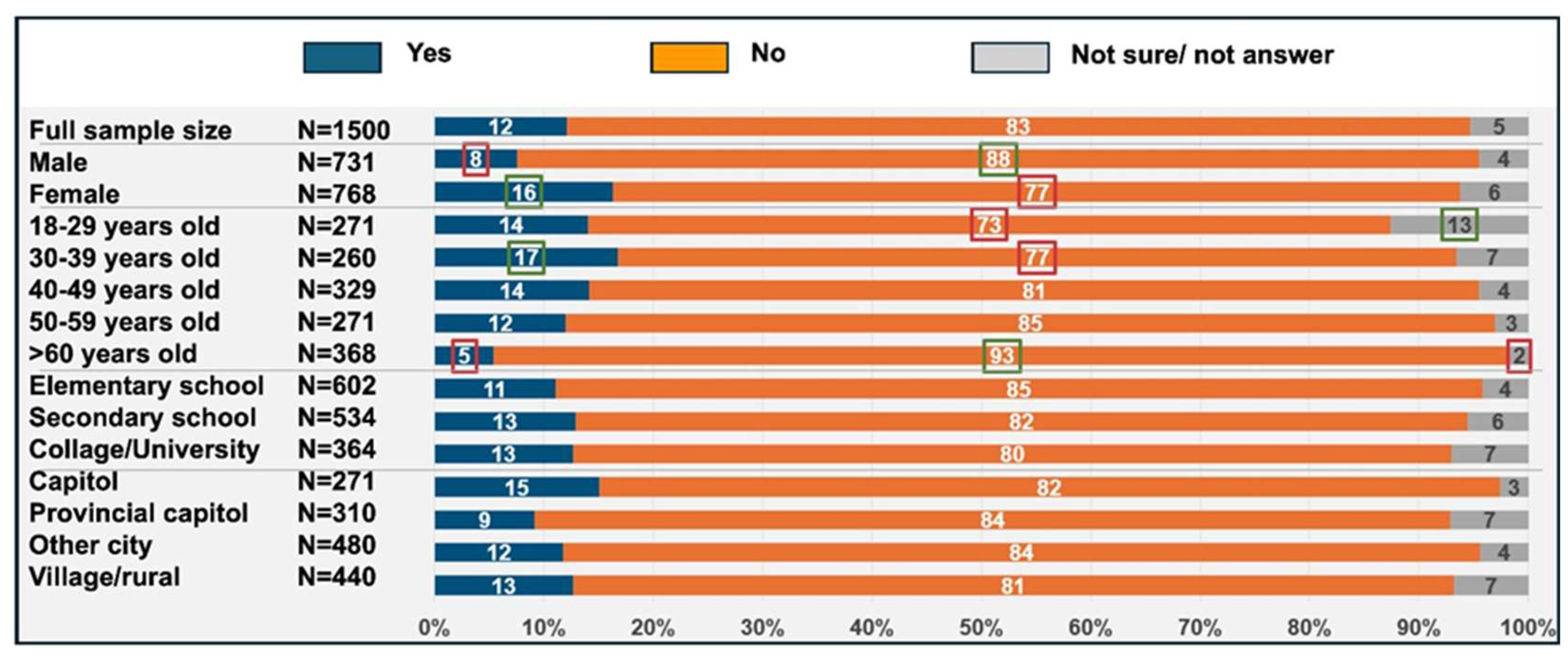
Figure 2.
Acceptance of uterus transplantation. Answers are shown for the question ”Q20 To what extent do you agree with women who have had a removal of the uters (hysterectomy), or who have a non-functioning or anatomically unsuitable uterus to carry a pregnancy, should receive a donor organ from another person (living or deceased), which would enable them to become pregnant? “(n=1500). Data are shown on a Likert scale. Almost eight-tenths of respondents (78%) agree with Utx, 44% strongly agree. Sociodemographic characteristics show that acceptance of uterine transplantation is the highest among those with higher education, with 83% of them considering it a good option for women struggling to conceive and 49% fully accepting this form of medical assistance.
Figure 2.
Acceptance of uterus transplantation. Answers are shown for the question ”Q20 To what extent do you agree with women who have had a removal of the uters (hysterectomy), or who have a non-functioning or anatomically unsuitable uterus to carry a pregnancy, should receive a donor organ from another person (living or deceased), which would enable them to become pregnant? “(n=1500). Data are shown on a Likert scale. Almost eight-tenths of respondents (78%) agree with Utx, 44% strongly agree. Sociodemographic characteristics show that acceptance of uterine transplantation is the highest among those with higher education, with 83% of them considering it a good option for women struggling to conceive and 49% fully accepting this form of medical assistance.
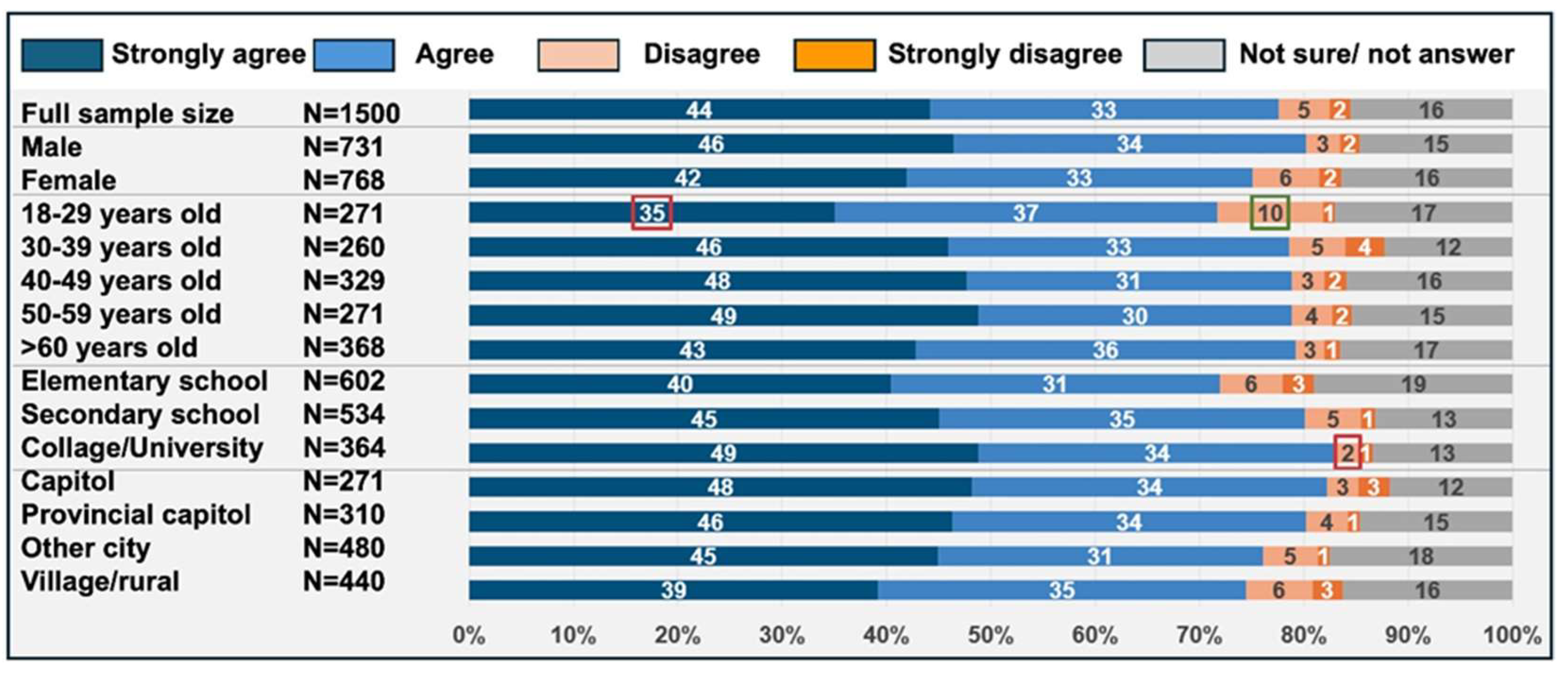
Figure 3.
Detailed analysis of Utx supporters according their socio-demographic status. Answers are shown for the question ”Q20 To what extent do you agree with women who have had a removal of the uters (hysterectomy), or who have a non-functioning or anatomically unsuitable uterus to carry a pregnancy, should receive a donor organ from another person (living or deceased), which would enable them to become pregnant? “(n=1500). Data are shown on a Likert scale. Compared to all Utx supporters a significantly higher proportion of respondents who was aware of Utx abroad (91%, p<0.05) or who know someone who has had a donor organ (89%, p<0.05).
Figure 3.
Detailed analysis of Utx supporters according their socio-demographic status. Answers are shown for the question ”Q20 To what extent do you agree with women who have had a removal of the uters (hysterectomy), or who have a non-functioning or anatomically unsuitable uterus to carry a pregnancy, should receive a donor organ from another person (living or deceased), which would enable them to become pregnant? “(n=1500). Data are shown on a Likert scale. Compared to all Utx supporters a significantly higher proportion of respondents who was aware of Utx abroad (91%, p<0.05) or who know someone who has had a donor organ (89%, p<0.05).
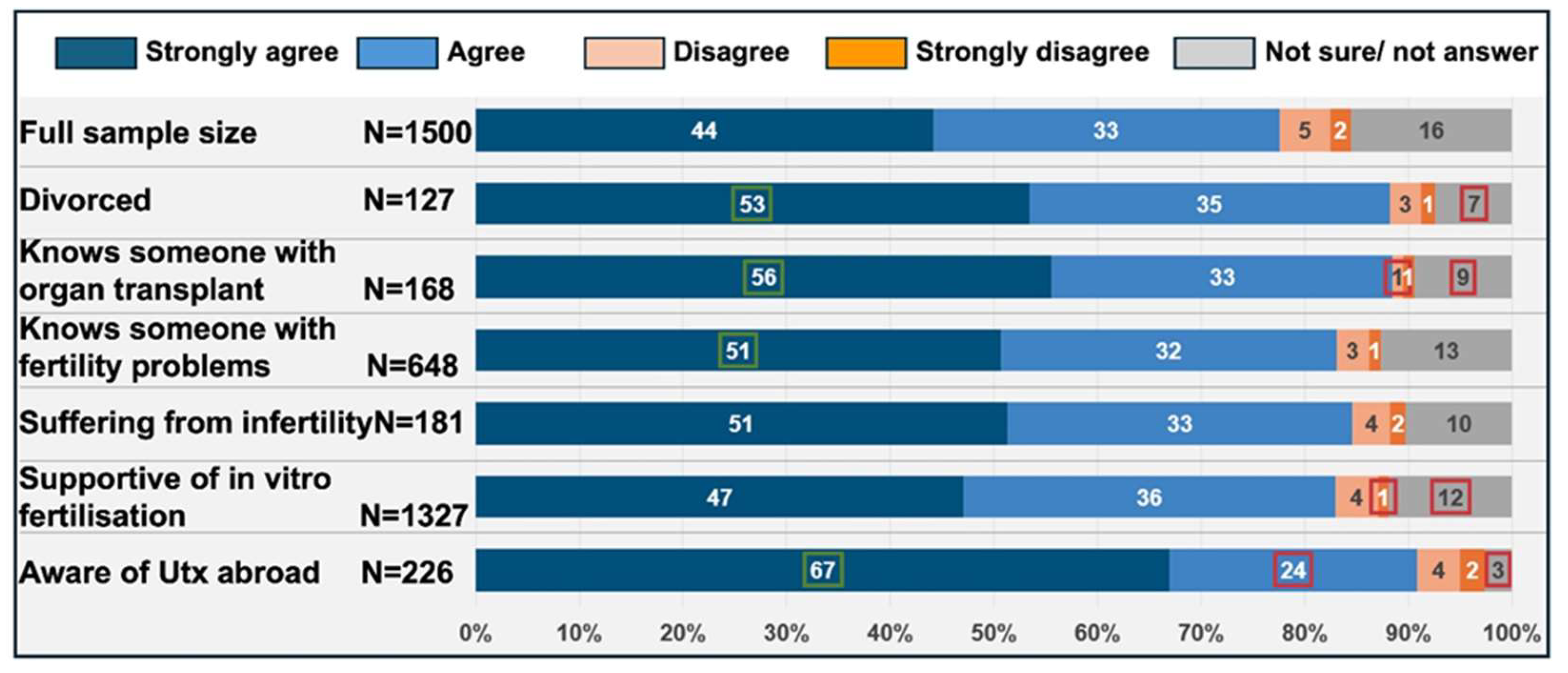
Figure 4.
The support of different forms of Utx. A relative majority of survey respondents (42%) support both LD and DD donation for Utx, with 17% in favour of DD only and 13% in favour of LD only. Only 4% of those surveyed were against Utx themselves. In terms of socio-demographic characteristics, the highest proportions of both LD and DD are those with higher education (52%) and those living in Budapest (52%). Answers are shown for the question ”Q21 Which organ donation do you support if someone receive a uterus transplant?“(n=1500). Data are shown on a Likert scale.
Figure 4.
The support of different forms of Utx. A relative majority of survey respondents (42%) support both LD and DD donation for Utx, with 17% in favour of DD only and 13% in favour of LD only. Only 4% of those surveyed were against Utx themselves. In terms of socio-demographic characteristics, the highest proportions of both LD and DD are those with higher education (52%) and those living in Budapest (52%). Answers are shown for the question ”Q21 Which organ donation do you support if someone receive a uterus transplant?“(n=1500). Data are shown on a Likert scale.
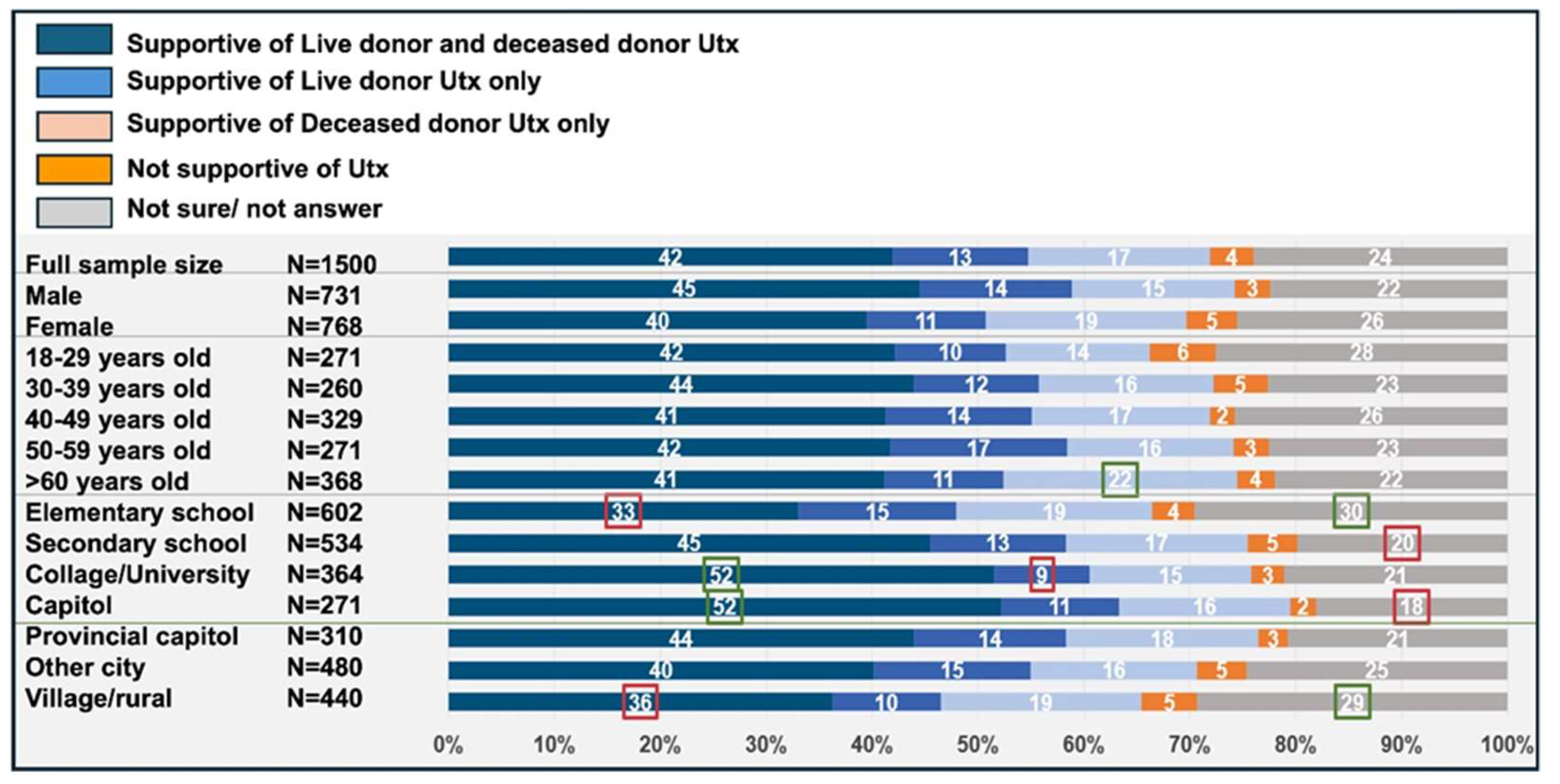
Figure 5.
Distribution of support of support of different forms of Utx. Answers are shown for the question ”Q21 Which organ donation do you support if someone receive a uterus transplant?“(n=1500). Data are shown on a Likert scale.
Figure 5.
Distribution of support of support of different forms of Utx. Answers are shown for the question ”Q21 Which organ donation do you support if someone receive a uterus transplant?“(n=1500). Data are shown on a Likert scale.
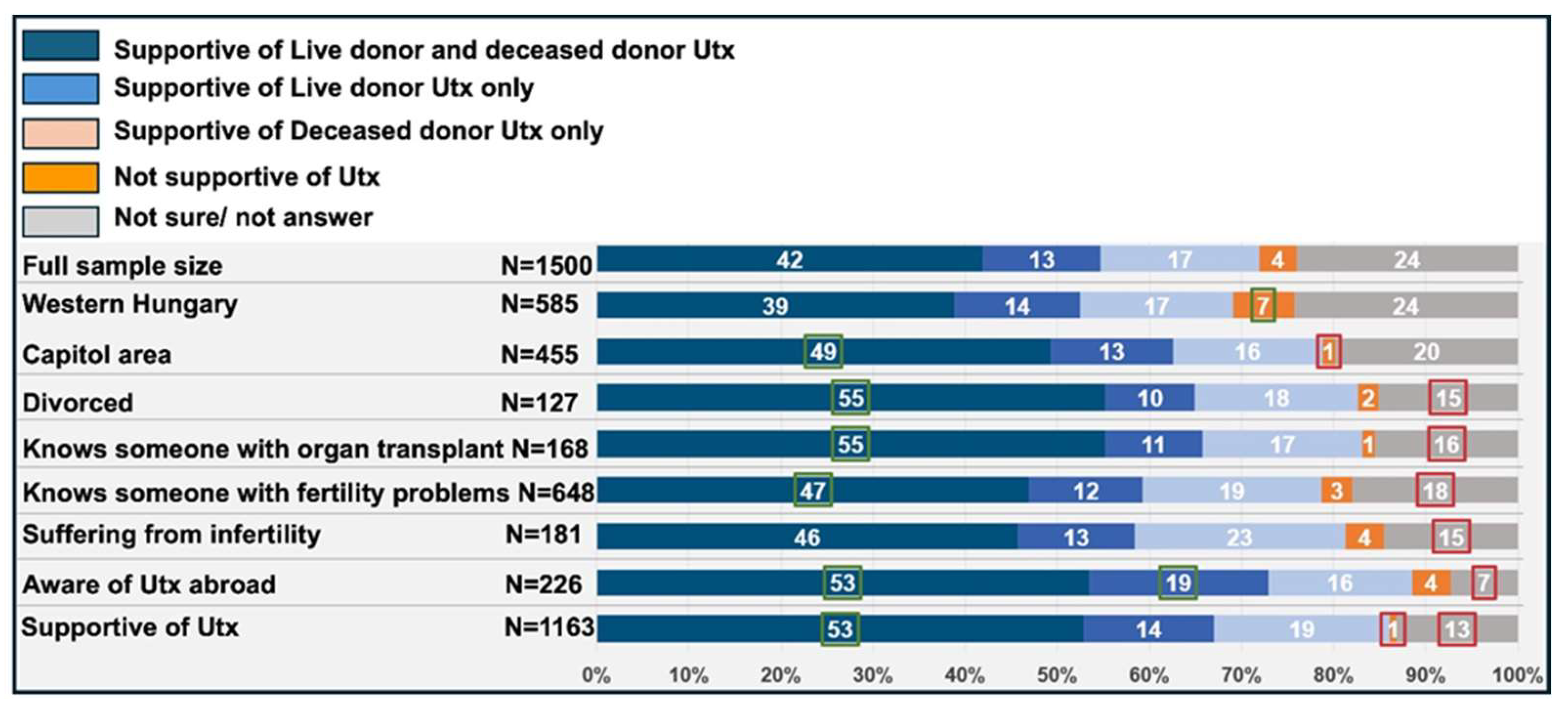
Figure 6.
Opinions about the benefits of Utx. Among the 18-39 year olds the proportion of those who think that Utx is a development or success for researchers (36%) and that it helps to develop research through new technology (37%) was significantly higher (p<0.05) than for the overall population (29-25%). Answers are shown for the question ” Q22 What do you think are the benefits of a bee transplant? “(n=1163). Data are shown on a Likert scale.
Figure 6.
Opinions about the benefits of Utx. Among the 18-39 year olds the proportion of those who think that Utx is a development or success for researchers (36%) and that it helps to develop research through new technology (37%) was significantly higher (p<0.05) than for the overall population (29-25%). Answers are shown for the question ” Q22 What do you think are the benefits of a bee transplant? “(n=1163). Data are shown on a Likert scale.
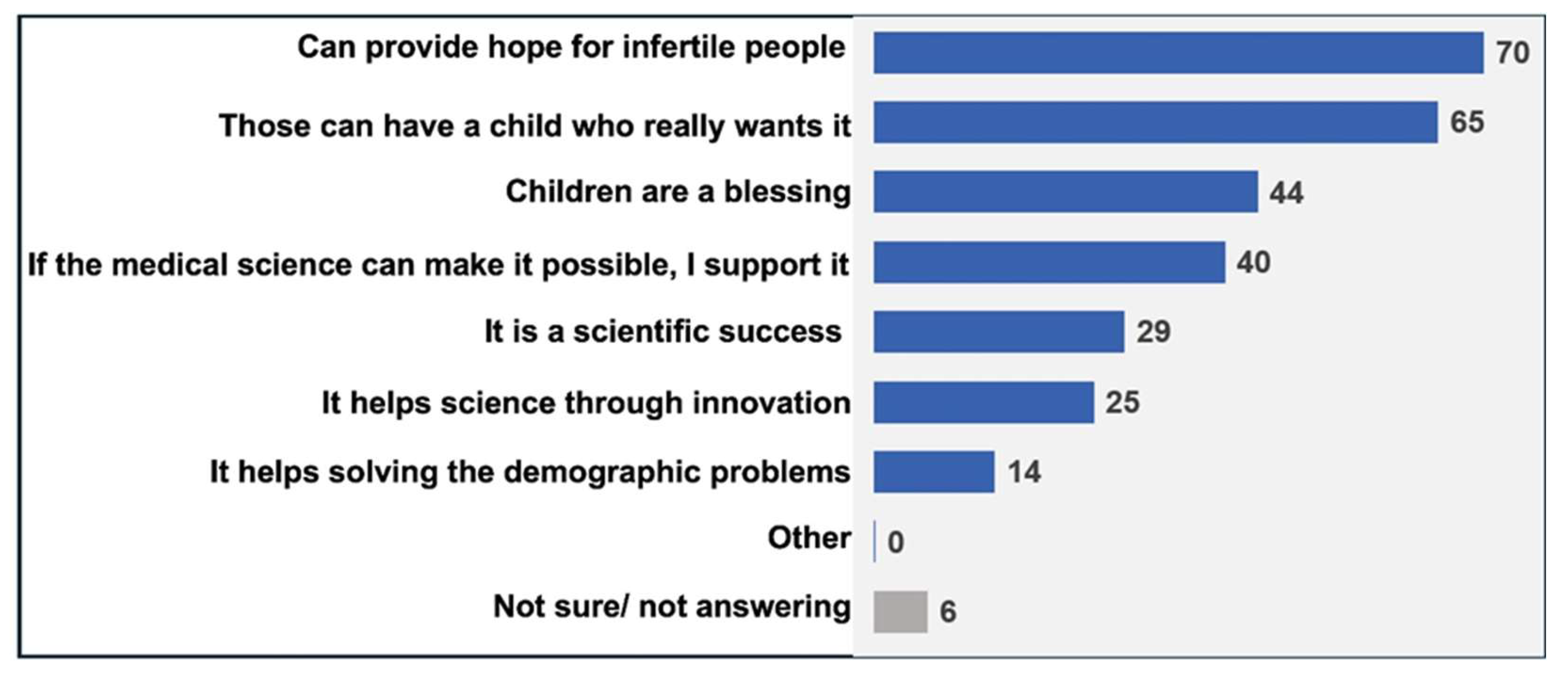

Table 1.
Basic demographic characteristics of the study participants.
| Characteristics | Type | Number of participants (n) | Percentage (%) |
|---|---|---|---|
| Gender | Male | 735 | 49 |
| Female | 765 | 51 | |
| Age | 18-29 | 270 | 18 |
| 30-39 | 255 | 17 | |
| 40-49 | 330 | 22 | |
| 50-59 | 270 | 18 | |
| >60 | 375 | 25 | |
| Highest education | Elementary school | 600 | 40 |
| Secondary school | 540 | 36 | |
| Collage/University | 360 | 24 | |
| Residence | Capitol | 270 | 18 |
| Provincial capitol | 315 | 21 | |
| other city | 480 | 32 | |
| Village/rural area | 435 | 29 | |
| Marital status | Single | 270 | 18 |
| Married/stable relationship >2 years | 1020 | 68 | |
| Divorced | 120 | 8 | |
| Widowed | 60 | 4 |
Disclaimer/Publisher’s Note: The statements, opinions and data contained in all publications are solely those of the individual author(s) and contributor(s) and not of MDPI and/or the editor(s). MDPI and/or the editor(s) disclaim responsibility for any injury to people or property resulting from any ideas, methods, instructions or products referred to in the content. |
© 2025 by the authors. Licensee MDPI, Basel, Switzerland. This article is an open access article distributed under the terms and conditions of the Creative Commons Attribution (CC BY) license (http://creativecommons.org/licenses/by/4.0/).
Copyright: This open access article is published under a Creative Commons CC BY 4.0 license, which permit the free download, distribution, and reuse, provided that the author and preprint are cited in any reuse.


