
Submitted:
26 March 2025
Posted:
27 March 2025
You are already at the latest version
Abstract
This study examines the evolution and challenges of sustainable investing in emerging markets, focusing on the integration of sustainability, social and governance (ESG) principles. Through a systematic review of the literature in Scopus, following the Preferred Elements for Systematic Review Reporting and Meta-Analysis (PRISMA) method, the most relevant research of the last decade is analyzed. The study highlights the exponential increase in scientific production in the field since 2019, underlining its interdisciplinary, collaborative and international nature, driven by the recognition of sustainability as a strategic axis for competitiveness and sustainable development. It highlights that emerging economies still face significant challenges at both the systemic and firm levels. In this regard, it emphasizes the need to update methodologies for evaluating socially responsible investment (SRI), strengthen and homogenize regulatory frameworks, integrate ecological practices into urban planning and the financial sector, strengthen financial education, and the need for a proactive role for public policy makers and other key actors. In addition, it suggests future research on the role of sustainable financial instruments, AI-mediated ESG innovation, and resilient business models with the aim of offering a comprehensive vision that optimizes the effectiveness of sustainable investments and promotes inclusive and environmentally responsible economic development in developing economies.
Keywords:
Sustainable investment
; Economic development
; Emerging economies
; ESG practices
; Sustainable financial instruments
1. Introduction
Sustainable investing has gained increasing attention in recent years, especially in the context of emerging economies (Zhang & Qian, 2023). This investment approach considers environmental, social, and governance (ESG) factors alongside traditional financial criteria when making capital allocation decisions. Sustainable investing seeks to generate attractive financial returns while promoting a positive impact on the environment and society. (Siri & Zhu, 2019).
According to Monzón et al. (2024), sustainable investing refers to the practice of considering environmental, social, and corporate governance (ESG) aspects when making corporate investment decisions, thus promoting sustainable activities in the long term. Its importance lies in the fact that it not only seeks to generate financial benefits, but also to have a positive impact on the environment and society (Meneses et al., 2022). Sustainable investment in emerging markets plays a critical role in promoting economic and social development, while addressing critical environmental challenges. Institutional quality, the adoption of sustainable innovations, and the integration of ESG (environmental, social, and governance) criteria are determining factors for the success of these investments. Despite the risks inherent in these markets, the growth opportunities and potential benefits make sustainable investing an attractive and viable long-term strategy (Onishchuk & Kushnir, 2023).
According to Ararat and Suel (2011), in the last decade several international financial institutions have stressed the importance of promoting the growth of the sustainable investment market in emerging markets. This is achieved by financing improved stock indices and creating green financial instruments, as well as conducting market research targeting emerging stock markets such as Brazil, India, China, Sub-Saharan Africa, the Middle East and North Africa (MENA), and Turkey, among others.
According to the Global Sustainable Investment Alliance (GSIA) report, assets under management under sustainable investment strategies amounted to $35.3 trillion at the beginning of 2020, representing an increase of 15% compared to 2018 (LCR Capital Partners, 2023). This trend reflects investors' growing interest in integrating ESG considerations into their portfolios. About that Aleknevičienė & Bendoraitytė (2023) They state that multiple academic studies have investigated the relationship between financial performance and corporate sustainability, identifying positive links. For example, a 2015 meta-analysis, which reviewed more than 2,000 empirical studies, found a positive correlation between corporate social responsibility and the financial performance of companies in emerging economies. This finding suggests that companies that integrate sustainable and responsible practices not only improve their reputation, but also achieve better financial performance.
In the specific context of emerging economies, sustainable investment becomes even more relevant. These developing regions offer significant growth opportunities, but they also face pressing social and environmental challenges (Makarenko et al., 2023). In that sense, sustainable investing can help address issues such as poverty, inequality, environmental degradation, and corruption, while generating attractive returns for investors. In addition, supply chain diversification and increased foreign direct investment in these emerging markets create new opportunities for sustainable investment in the future (Zairis et al., 2024).
The studies by Xiao et al., (2023); Chipalkatti et al., (2021); Alam et al,. (2019); Ma et al., (2018) and Vives & Wadhwa (2012) converge on the crucial importance of environmental, social, and governance (ESG) factors in sustainable investing within emerging economies. From promoting responsible practices through sustainability indices to adapting international resources to improve business performance in dynamic markets, these studies underscore how ESG not only influences investment decisions, but also plays a critical role in developing capital markets and attracting foreign direct investment. In addition, they highlight the relevance of the institutional environment in innovation and investment in research and development, thus outlining a path towards sustainable and equitable economic growth in emerging contexts.
This article examines how the economic and financial literature has addressed sustainable investing in emerging economies, highlighting how these regions are adopting more responsible and sustainable financial practices. The study investigates the relevance of integrating ESG (environmental, social, and governance) criteria into investment decisions to foster equitable and sustainable economic growth, which not only benefits investors, but also contributes to the social and environmental development of these growing regions (Tamasiga et al., 2022). Next, the second section of this paper addresses the current landscape of research in sustainable investments. The third section details the application of the PRISMA methodology, followed by the presentation of the results in the fourth section, while the fifth section covers the discussion and the sixth, the conclusions of the study.
2. Literature Review
Sustainable investment has gained prominence in emerging economies in recent decades, in response to growing concerns about climate change, environmental degradation, and social inequality (Meneses et al., 2023). Sustainable investing in emerging markets involves the allocation of capital towards projects and companies that seek not only financial returns, but also a positive impact on social and environmental aspects, based on ESG (environmental, social and governance) criteria. This approach aims to foster sustainable and equitable economic development in developing countries, which face unique challenges in mobilizing finance, achieving the Sustainable Development Goals (SDGs), and generating sustainable economic growth (Chipalkatti et al., 2021).
2.1. Theoretical Studies
The theoretical basis of corporate sustainability is based on the idea that companies are complex systems that operate in a dynamic and interconnected social, economic and environmental environment (Bertlanffy, 1968). Freeman (1984) argues in stakeholder theory that a company must take into account the needs and interests of all stakeholders, such as employees, customers, suppliers, communities, and the environment, in order to achieve sustainable success. Barney (1991) argues that firms can achieve a sustainable competitive advantage through their unique resources and capabilities. In this sense, corporate sustainability is based on the idea that companies should be able to identify and leverage their unique resources and capabilities to create long-term value for stakeholders. Subsequently, Elkington (1998) introduces the idea of the triple bottom line, which refers to measuring the performance of a company in terms of its economic, social and environmental impacts. This approach is considered a comprehensive approach to corporate sustainability. Similarly, Hart (1997) argues that companies should take a broader approach to sustainability, including not only reducing environmental impact but also creating long-term social and economic value as an opportunity to create value for low-income consumers in developing countries, while addressing poverty and improving the environment. Finally, Porter (2011) introduced the concept of shared value, which refers to the idea that companies can create economic value while addressing social and environmental challenges. In this sense, companies must look for opportunities to create value for stakeholders, including society and the environment, while creating economic value over time.
2.2. Empirical Studies
2.2.1. Evolution of Corporate Social Responsibility and Sustainable Investments
According to Carroll (1991), initial research on investing in emerging markets underscored that the sole responsibility of corporations was to maximize financial returns for shareholders. However, it was only in the early 1970s, with the creation of the Environmental Protection Agency (EPA), that the importance of corporate responsibility was clearly communicated. From then on, corporate objectives that incorporated sustainability principles began to be defined. As he points out Jensen. (2001), social welfare is maximized when each firm in an economy maximizes its total market value. This perspective is in line with the theory of interest groups (Freeman, 1984), which postulates that managers should make decisions considering the priorities of all the company's stakeholders.
In line with the above, Margolis & Walsh (2003) They highlight the control that classical economics has exercised over the relationship between a firm's social initiatives and its financial performance. However Brammer & Millington, (2008) they state in their study that companies with unusually high corporate social performance (CSP) have a higher financial performance than other companies. In addition, the results of the research of Bollen (2007) indicate that investors derive utility from the socially responsible attribute, especially when returns are positive. Likewise Clark & Hebb (2004)) conclude in their study that corporate engagement offers a long-term vision of the value of corporate, social and environmental standards, in addition to adding shared value by providing joint benefits for society in the future.
On the other hand Haigh & Hazelton (2004) argue that shareholder advocacy and managed investments do not have enough power to generate meaningful corporate change, highlighting the need to reassess or reinvent socially responsible investment (SRI) strategies to make these mechanisms more effective. According to Schueth (2003) SRI has matured to the point that the investment need can be met by designing portfolios that integrate personal values, the institutional mission, and the investor's social priorities. About that Nelling & Webb (2009) indicate that the involvement and good performance of the stock market leads to greater investment in corporate social responsibility (CSR).
2.2.2. Financial Instruments for Sustainability
According to Volodina & Trachenko (2023) The development of the ESG (environmental, social and governance) management approach has led to the development and rapid expansion of financial instruments to invest in sustainable development at a global level. In this way, sustainable financial instruments are playing an increasingly crucial role in mobilizing capital towards projects that promote sustainable development in emerging markets. Among the most prominent are green bonds, social and sustainable bonds, green and sustainable loans, ESG investment funds, renewable energy certificates, and green microfinance (Kapil & Rawal, 2023).
Arjaliès (2010) states that Socially Responsible Investment (SRI) movements have the potential to bring SRI-related concerns to financial institutions. For Vitols (2011), the concept of SRI has gained relevance in various sectors, including European pension funds. In this regard, Nicholls (2010) argues that these funds should not only seek an optimal return on their investments, but also exert their influence on companies to promote social and economic well-being.
Also, the financial literature has focused its attention on innovative instruments and services such as green bonds and green banking, especially in developing countries. The figure of the Green Bank offers benefits for both the environment and the economy. Thi Thanh Tu and Thi Hoang Yen (2015) stress that the implementation of this figure in emerging markets is crucial, as it encourages companies to make green investments, thus creating a demand for green financing that allows the consolidation of sustainable business ecosystems.
Tseng et al. (2017) analysed the financing of clean and renewable energy projects, reaffirming the importance of mobilising green finance investments from the financial sector towards renewable energy projects, especially in developing countries. Chen et al. (2022) highlight the role of multilateral development banks (MDBs) as promoters of sustainable banking standards, as they facilitate green private financing to achieve the SDGs. However, it identifies three key obstacles: uncertainty about the bankability of projects, the lack of transparency in sustainable capital flows and the absence of a universal green investment mechanism.
2.2.3. The Role of Companies and Other Actors in the Sustainability of Emerging Markets
The role of companies and other actors in the sustainability of emerging markets is crucial to promote sustainable practices and improve economic and social performance. For Elg & Melén (2023), multinational enterprises (MNEs) play a key role in promoting sustainability in emerging economies, given that they actively influence market conditions and the conduct of key players, through long-term interactions. in this sense, if MNEs boost their investments in sustainability within their own operations, as well as in the value chain, they can increase the commitment of the different actors involved.
For Golgeci et al. (2021), global supply chains (GVCs) play a crucial role in the dissemination of environmental practices among emerging market companies (EMFs), since they facilitate the transfer of technical knowledge and the necessary support for the development of environmental capacities. In this sense, they highlight that most EMFs lack the resources, capacities, awareness and internal organizational structures necessary to adopt sustainable practices. Therefore, they underscore the importance of effective knowledge transfer activities between MNEs and EMFs to strengthen environmental sustainability in the long term.
On the other hand, Dewi et al. (2023) highlight the importance of promoting financial education among depositors and investors, especially in developing countries with low levels of literacy. In addition to the above, the infrastructure financing gap in cities in developing countries, together with the commitment of external agents to green practices, leads Gorelick and Walmsley (2020) to argue that the most effective way to institutionalize green practices is not through a specific environmental strategy, but through general and holistic measures at the city and country levels. This integrative approach allows green practices to be incorporated into all aspects of urban planning and public administration, facilitating a smoother and more effective transition towards long-term sustainability. In addition, Gorelick and Walmsley (2020) highlight the importance of engaging key state figures at the city level, who can ensure that environmental policies align with financial and operational objectives. This approach not only promotes ecological sustainability, but also ensures the economic viability of green initiatives, thus increasing their acceptance and success. In this way, implementing comprehensive measures at the country level can also help overcome the structural and regulatory barriers that often limit the adoption of green practices in cities. This holistic approach allows for more effective coordination between different levels of government, sectors of the economy and companies, ensuring that green initiatives are not only implemented, but also sustainable and scalable.
2.2.2. Other Factors Related to Sustainable Investing in Emerging Markets
On the other hand, Kouwenberg and Zheng (2023) analyse the impacts of climate change risks on the financial sector and investors' preferences for green investments. Cheng et al. (2023) address similar issues, adding the issue of regional technological innovation in the field of green technology. Zhang and Qian (2023) reiterate the importance of environmental impact, noting that pollution has become a critical issue, and investigate the impact of green finance and financial innovation in developing countries. Babon-Ayeng et al. (2022) examine the socio-political factors influencing the adoption of green bond financing for infrastructure projects. Banani and Sunarko (2022) use the moment method and the random model to demonstrate that green investment, green credit, energy accounting, and creativity are positively correlated with the financial performance of the banking sector in developing countries. For his part, Brühl (2022) analyses whether a minimum taxonomy ratio or a green asset ratio should be met in order to market a financial product as green or sustainable.
Another crucial aspect in the study of sustainable investing is corporate governance and its influence on decision-making. Wang et al. (2018) demonstrate in their results that better corporate governance not only enriches the literature on strategic change, but also improves governance practices in China and other developing countries on their path to sustainability. Mugova (2017) also highlights how good corporate governance practices improve access to bank loans for the financing of sustainable investments.
Previous literature suggests that sustainable investment in emerging markets faces significant challenges, such as the lack of transparency due to the scarcity of reliable information on the environmental, social and governance (ESG) aspects of companies. Likewise, diverse regulatory frameworks also make it difficult to implement common sustainability standards (Monzón et al., 2024). In addition, the priority of economic growth in many of these markets may conflict with short-term sustainability goals, and political risks may destabilize sustainable investments. However, sustainable investments in emerging markets also offer significant opportunities, allowing investors to capitalize on the growth of these markets and promote more sustainable development. In this sense, sustainable investment in these markets is anticipated to continue to grow, driven by increased demand for sustainable products and services, as well as the development of more robust tools and standards to assess ESG performance (Wen et al. 2022). Therefore, as awareness of social and environmental impacts increases, global and local companies that adopt sustainable practices can gain a long-term competitive advantage (Wan Mohammad and Wasiuzzaman, 2021).
3. Materials and Methods
3.1. Identification of Sources of Information
This article develops a systematic review of the literature on sustainable investment in emerging markets, using the PRISMA method to ensure a rigorous and objective methodology, based on the following research questions:
Research Question 1:
How does integrating ESG criteria into investment decisions contribute to sustainable and equitable economic growth in emerging economies?
Research Question 2:
What barriers and opportunities do investors in emerging economies face when integrating ESG criteria into their investment strategies?
Research Question 3:
What is the future agenda for ESG research in emerging economies?
Based on the above, the search was carried out in the Scopus database, using a search strategy based on key terms related to sustainable investment and emerging markets. Studies were selected according to specific inclusion and exclusion criteria (see Table 1), and their quality was assessed using a checklist. The extracted data included information on objectives, methodology, findings, and relevant contributions to the field of study. Subsequently, the synthesis of results was carried out qualitatively, highlighting emerging trends and gaps in the research, with the aim of offering a comprehensive view of the literature and suggesting directions for future research.
3.2. Data Extraction and Search Strategy
A search formula was designed with Boolean operators to identify and capture articles in Scopus that included key topics related to sustainable investing taking into account ESG (Environmental, Social, and Governance) aspects at the emerging market level. The resulting formula was as follows:
"Sustainable finance" OR "responsible investment" OR "green finance" OR "ESG investing" OR "sustainable investor" AND "emerging economy" OR "financial sector" OR "developing countries"
In the first instance, an exhaustive search was carried out in the Scopus database, which yielded a total of 434 potential articles. The inclusion criteria (see Table 1) established that the study should cover articles published between 2014 and 2024, in the areas of economics, econometrics and finance, social sciences, business, accounting and energy. In addition, only articles and reviews in final version, in English or Spanish, that were open access were selected. On the other hand, articles outside these academic areas, documents in languages other than those specified, and those that were not available in open access were excluded. Applying these filters, and following the flowchart proposed by Pesce et al. (2024), the initial set was reduced to 157 relevant articles (see Figure 1), which constitute a solid basis for the analysis and synthesis of the existing literature on sustainable investing in emerging markets.
Once the established search and exclusion criteria were applied, 152 articles that meet the requirements set out in the research were finally identified. These documents will be the basis for continuing with the detailed bibliometric analysis and synthesis of the results.
3.3. Analysis of Bibliographic Data
The analysis of bibliographic data from the 152 selected documents was developed in two steps following the approach proposed by Kouwenberg and Zheng (2023) and Meneses et al. (2024). The first step consists of a descriptive analysis aimed at identifying the basic characteristics of the field of knowledge, including descriptive statistics and the identification of the evolution of studies on sustainable investment in developing economies. In addition, academic productivity was examined by year, country, sources and topic. This descriptive analysis was performed using RStudio's Bibliometrix tool. The second step addressed bibliometric analysis, including co-citation analysis, keyword synergy analysis, and identification of the most cited articles in the field, using the VOSviewer analysis tool version 1.6.20.
4. Results
The results of the bibliometric analysis are presented below. In the first instance, the performance of the literature is detailed in terms of statistical descriptors, scientific productivity per year, most productive and cited authors, the countries with the greatest contribution to the production of articles and the scientific journals with the greatest impact in the field of research on ESG investments in developing economies.
The descriptive statistics of the systematic review on sustainable investing in emerging markets reflect a notable growth in the literature on this topic (see Figure 2). In the observation window from 2014 to 2024, 157 papers were collected from 96 academic sources, with an annual growth rate of 41.86%, demonstrating a growing academic and empirical interest in this field of study. Around 482 authors participated, of which only 18 had individual works, which highlights the collaborative nature of the field. In addition, the high proportion of international co-authors (36.31%) and an average of 3.28 co-authors per article indicate an interdisciplinary and international approach. The literature in this study demonstrates a solid and diverse theoretical basis with approximately 535 keywords used and 10,307 citations made in Scopus. While the average age of the papers is relatively young (1.96 years), the average number of citations for each paper is 18.61, indicating significant academic relevance and influence. These descriptors highlight the broad spectrum of research on sustainable investments in emerging markets and their relevance to driving global growth and sustainable development in these regions.
Figure 3 reveals a growing trend in interest and research on the topic of ESG (Environmental, Social, and Governance) and sustainable investments at the level of emerging economies, especially from 2019 onwards. In particular, there is a notable increase in the number of published documents, which went from only 2 articles in 2015 to 11 in 2020 and to more than 50 documents in 2024. While the numbers fluctuate year after year, there is an overall upward trend in research products. Some factors such as the increasing importance of considering environmental, social, and governance factors in financial evaluation and business decision-making could be driving this increase in research (Ma et al., 2023). Moreover, increasing regulatory pressure and investor demand for greater transparency and corporate accountability are also playing a crucial role in this growth. This analysis, according to Gaviria-Durón et al (2020) reinforces the idea that ESG is emerging as a critical area of study and integration into contemporary business, operational, and financial practices, reflecting a paradigmatic shift in how companies approach sustainability and social responsibility; establishing itself as the great protagonist in the current scenario.
Figure 4 reveals the number of published documents related to ESG (Environmental, Social, and Governance) and sustainable investments by country during the 2014-2024 observation window. China leads the list with 21 documents, suggesting a strong focus on research on this topic in that country. It is followed by the United Kingdom with 12 documents. This is followed by Germany, Italy and France also have a prominent presence, with 8, 7 and 5 documents respectively. These data suggest that there is considerable interest and attention in the intersection between sustainable business practices and financial considerations in these countries. In the same vein, the United States and Japan, with 4 and 3 documents respectively, also contribute to the global picture, although to a lesser extent. In addition, other countries such as Australia, Canada and Spain are beginning to increase their research production in ESG, reflecting an emerging interest in these topics. This suggests that research on ESG and sustainable investments is a relevant topic worldwide and is being addressed from various academic, corporate and regional contexts.
Figure 5 represents the distribution of published documents on sustainable investments by study area. The data highlight a clear multidisciplinarity, with the largest number of papers in Environmental Sciences (20%) and Social Sciences (19%), reflecting a significant emphasis on the environmental impact and social contexts of sustainable investments. Other relevant areas include Economics, Econometrics and Finance (14%), Energy (13%) and Business, Administration and Accounting (10%), which address issues related to financial performance, business strategies and their connection to sustainability. Areas such as Computer Science (8%), Engineering (3%) and Biological and Agricultural Sciences (2%) are underrepresented, focusing on the use of technologies, sustainable infrastructure and sustainable agricultural production. This analysis highlights the interdisciplinary and/or cross-cutting nature of research on sustainable investments, the need to address them from multiple perspectives, and their importance in investment decisions and regulatory policies.
Figure 6 identifies the authors with the highest academic productivity in the field of sustainable investing in emerging markets during the period 2014-2024. The leadership is evident on the part of Chinese researchers, led by Li, Z., who ranks first with four publications. He is followed by Siddik, A., Zhang, X., Zhang, Z., with three documents each. Other prominent scholars include Brühl, V., of Germany and Galeone, G., of Italy, both with two publications in the area each. These authors are essential references for studies on sustainability policies, impacts and practices, underlining their leading role in the development and analysis of sustainable strategies in emerging economies.
Figure 7 shows the leading academic journals in which articles on sustainable investing in emerging markets have been published over the past ten years, underlining their relevance to this field of research. The Swiss-based Journal Sustainability, ranked in Scopus as Q1 and with an H-index of 169, is considered the most prominent source with 26 papers, reflecting its leadership in publishing research related to sustainability and finance. It is followed by smaller but important contributions from journals such as Frontiers in Environmental Science, also from Switzerland, classified in Scopus as Q2 and with an H-index of 77, with 5 papers, Environmental Science Research and Pollution from Germany, classified in Scopus as Q1 and with an H-index of 179, with 4 papers and the International Journal of Energy Economics and Policy (Turkey) classified in Scopus as Q2 and with an H-index of 53, with 4 documents. Other relevant sources include 3 papers each, including journals such as Corporate Social Responsibility and Environmental Management, Economic Research-Ekonomska Estrajivanga, Green Finance, and Journal of Sustainable Finance and Investment.
Figure 8 reveals the academic institutions involved in research on sustainable investments in developing economies. Among the most relevant universities are Henan University, Wuhan University, and The Hong Kong Polytechnic University with 8 articles each, evidencing a strong presence of Asian institutions in the field. These institutions are actively involved in sustainability initiatives and studies applied to finance and emerging markets. They are followed by the University of Bari Aldo Moro (Italy) and Chongqing University (China), both with 7 and 6 published documents respectively. In addition, other European institutions such as the University of Zaragoza (Spain) contribute significantly, as do universities from other regions such as Korea University and Jeonbuk National University (Korea), showing a diversified geographical distribution of leading research centers in this topic. This analysis reveals significant geographic and interdisciplinary diversity, underscoring the need for international cooperation and comprehensive approaches to address global challenges related to environmental, social, governance, and sustainability issues in general. It also highlights how these joint efforts create a solid foundation for fostering responsible investment in developing markets, promoting substantive and comprehensive policies to combat climate change, and promoting sustainable development in various regions and sectors.
Most cited documents
The five most cited articles exploring the relationship between sustainable investing and ESG (Environmental, Social, and Governance) aspects at the emerging economy level, as shown in Table 2, have received 621 citations in total. A summary of these investigations is presented below:
With a cumulative total of 263 citations, "The effect of ESG rating events on corporate green innovation in China: The mediating role of financial constraints and managers' environmental awareness" by Tan & Zhu (2022) It is the most cited article in the period analyzed in this research. This study based on the Green Finance Agency's 2015 ESG rating explores how these ratings affect green innovation based on data related to Chinese companies. In this regard, they identified that the implementation of ESG ratings promotes the transition from "profit-oriented" business processes to "sustainable development", being an important measure to improve the environment and achieve green development. However, the validity of ESG ratings is controversial, with most studies focused on developed countries, highlighting that there is a lack of research in developing countries. This study provides additional theoretical and empirical support for previous studies on the effectiveness of ESG ratings and unifies China's ESG rating system and green innovation into a single framework, proposing ways in which ESG ratings can drive corporate green innovation through the use of internal and external resources.
The second most cited article with a cumulative of 101 citations entitled "The Rise of Socially Responsible Investment Funds: The Paradoxical Role of the Financial Logic" of Yan et al. (2019). The research explores the interaction between the dominant financial logic and the social logic in the foundation of socially responsible investment funds (SRI). It seeks to understand whether financial logic complements or competes with social logic in the context of SRI, using observations and interviews in Asia, the United States and Europe, in addition to an analysis of data from 19 countries from 1970 to 2014. The research finds that the relationship between the dominant financial logic and the social logic of SRI follows an inverted U-shaped curve. As financial logic becomes more prevalent in society, the relationship between the two logics shifts from complementary to competitive. In addition, it examines how certain alternative logics (trade unions, religion, and green political parties) moderate these effects, providing an understanding of the institutional factors at the country level that drive socially responsible investment.
With 95 cumulative citations Zheng et al. (2021) states in the third most cited article "Factors affecting the sustainability performance of financial institutions in Bangladesh: The role of green finance" that despite the growing popularity of green finance and sustainable investment in the field of the Sustainable Development Goals (SDGs), not many studies have focused on investigating the effect of the dimensions of green finance on the sustainable performance of banks, which is why this The study attempts to examine these dimensions, as well as describe the level of adoption of green finance among banks and non-bank financial institutions in the country between 2015 and 2020. The research reveals that the dimensions of green finance (social, economic and environmental) have a strong positive effect on the sustainable performance of banks in emerging countries. In addition, it highlights that private commercial banks are the largest contributors to green financing. The study also shows that approximately 95% of bankers consider green finance as an essential element for the short- and long-term development of banking strategies. These results highlight the importance of integrating green finance into financial policies and practices to promote sustainable economic development and achieve the SDGs in emerging economies.
The fourth most cited paper is entitled "Nexus between green finance, environmental degradation, and sustainable development: Evidence from developing countries" by Hunjra et al. (2023) with a total of 76 citations. This study analyzes the impact of green finance and environmental degradation on sustainable development in developing countries. The results show that green finance has a positive and significant impact on sustainable development, while environmental degradation has a negative and significant impact. The study also makes some policy recommendations, such as taxing CO₂, investing those revenues in renewable technologies, and protecting the most vulnerable sectors through subsidies. Finally, it highlights the importance of a planned transition to renewable energy sources to achieve economic decarbonization and meet global goals such as net-zero emissions by 2050. Overall, this research provides valuable insights for regulators and policymakers interested in promoting sustainable development in developing countries and guiding policymaking related to green finance and investment in these countries.
With a total of 71 citations, the contribution of Khan et al., (2022) entitled "Impediments of Green Finance Adoption System: Linking Economy and Environment" is the fifth most cited document. This study addresses the main barriers to adopting a green finance system in response to different climate challenges in Asia. The research classified the barriers into three hierarchical levels. At a higher level, regulatory barriers such as ignorance about the concept of "green", lack of training and technology, low interest in risks and low profitability stand out. At the meso level, structural factors are identified, such as political and economic instability, lack of government support, and the absence of a regulatory body. At a lower level, the most serious barriers include a lack of pressure from global organizations and a lack of uniform standards for green practices. The study highlights that these barriers are strongly interconnected and require comprehensive strategies to overcome them and facilitate the implementation of effective sustainable financial systems in the context of developing economies.
Figure 9 presents the bibliometric mapping of keywords used in sustainable finance research in emerging markets. The red node revolves around concepts such as "sustainable finance" and "corporate governance," highlighting the importance of market conditions, ethics, and transparency in sustainable financial transactions. The Green nodes focus on "green finance" and "developing countries," drawing attention to the specific challenges emerging economies face in adopting green technologies and controlling emissions. On the other hand, the blue node highlights the relationship between "carbon emissions", "economic growth" and "economic stability", reflecting the interconnection between economic development and environmental sustainability. The yellow node emphasizes the need to balance investment and environmental protection based on the cases of countries such as India and Brazil. Finally, the purple and pink nodes, which include terms such as "greenwashing," "institutional logic," and "project finance," highlight ethical concerns and institutional frameworks that need to be addressed to ensure the health of sustainable projects in developing economies. The word map, overall, reaffirms the multidisciplinary nature of finance, governance, economics, technology, and sustainable environmental impacts, and highlights the need for global cooperation and multidimensional approaches to address the inherent complexities of emerging markets.
Figure 10 presents the network of the most relevant authors in the field of sustainable investments in emerging markets. This network is made up of four main groups that are identified by colors: blue, green, yellow and red.
The red cluster is composed of three items where the works of authors such as Wang and Zhi (2016) (11 citations, binding strength 7), Tang and Zhou (2023) (4 citations, binding strength 5) and Flammer (2021) (4 citations, binding force 1) stand out, who coincide in highlighting the key role of green finance in promoting and financing sustainable projects. especially in areas such as renewable energy and environmental protection, underlining the importance of adequate public policies and financial models to maximize their benefits, although they also identify challenges in their implementation according to geographical inequalities.
In the yellow cluster, there are authors Wang et al. (2021) (8 citations, link force 8) whose work focuses on facilitating a systematic understanding of research on green finance and energy policies, identifying future research opportunities related to green bonds, government subsidies, and carbon dioxide emissions, as well as suggesting additional research integrating new technologies such as Fintech, Big Data and Blockchain.
The red cluster is made up of the works of He et al. (2019) (5 citations, binding force 3) and Hu et al. (2021) (4 citations, binding force 3) whose research has in common the focus on the impact of green financial policies on companies operating in the renewable energy sector and in sectors with high pollution. respectively. Both address how green financial policies influence efficiency and innovation within firms, with an emphasis on the effects of green loans and credits. This research highlights the importance of an adequate financial framework and government policies to optimize the impact of green finance on sustainable development.
Finally, the blue cluster is represented by the work of Migliorelli (2021) (5 citations, link force 2) who develops a proposal to change the term "sustainable finance" to "finance for sustainability" in order to overcome the conceptual heterogeneity that currently characterizes this field. The author argues that this heterogeneity can generate risks that affect the credibility of the market, such as greenwashing and the lack of real impact on sustainability. In this sense, by adopting the term "finance for sustainability", it seeks to more clearly align definitions and implementation standards with key dimensions of sustainability, such as the Sustainable Development Goals and the Paris Agreement, and focus on sectors and activities that contribute positively to these goals.
5. Discussion and Future Research Agenda
The main contribution of this article lies in consolidating a detailed analysis of the evolution of sustainable investment in emerging economies, identifying the main barriers to its incorporation and, mainly, highlighting the growing relevance of incorporating ESG (environmental, social and governance) criteria in investment decisions.
5.1. Integration of ESG Criteria, Financial Performance and Competitive Advantage
It was identified that as awareness of social and environmental impacts increases, companies that adopt sustainable practices can gain a competitive advantage, thus fostering equitable and sustainable economic growth over time (Wan Mohammad & Wasiuzzaman, 2021). In this context, by integrating responsible and sustainable financial practices, companies not only improve their financial performance, but also contribute to the social and environmental development of these regions. These research results are in line with the findings of Gonzaga et al., (2024) who identified that ESG-responsible companies obtain benefits such as greater efficiency, reduced costs and risks, and a better reputation. They also coincide with the findings of Coelho et al. (2022) who found that as companies engage in sustainable and social practices, they generate greater trust and credibility among key stakeholders, such as the community, employees, and customers, which strengthens their financial performance in the long term.
5.2. Barriers and Opportunities for Sustainable Investment in Emerging Markets
This study highlights that emerging economies still face significant challenges at the systemic level such as lack of transparency, varied regulatory frameworks and conflicts between economic growth and sustainability, as well as at the firm level, including lack of support from senior management, concerns about the rate of return on investment, the absence of clear standards to measure ESG performance and inappropriate carbon offsets (Liou et al., 2023).
According to Wang et al. (2025), another barrier to ESG investments in emerging economies is the persistence of greenwashing in industries such as Fintech and the banking sector, a phenomenon driven among other things by stakeholder mistrust, the lack of clear regulations, and reputational risks. These barriers condition the effective adoption of ESG practices and their integration into sustainable business strategies.
Despite the above barriers, ESG investments offer unique opportunities for sustainable growth in developing economies. In this regard, Dai (2024) argues that while there is heterogeneity in the performance of sustainable investments globally, there is a high potential to obtain higher risk-adjusted returns in certain regions, while taking advantage of portfolio diversification. Likewise, according to Zhang (2024), ESG performance positively influences corporate investment by improving corporate reputation, reducing market risks, fostering innovation, and facilitating strategic alignment with stakeholder and investor preferences.
These aspects should be taken into account by policymakers, managers and other stakeholders, who can take advantage of these findings to design more effective regulations and incentives that encourage the reduction of emissions and the incorporation of ESG practices within these corporate structures and at the ecosystem level.
5.3. Future Research Agenda in Sustainable Investments in Emerging Markets
In line with the analysis by Meneses et al. (2023), the integration of ESG criteria into investment decisions is both a political and corporate obligation, in response to the challenges of climate change and international commitments to mitigate its adverse impacts. In this sense, the future agenda in the field of sustainable investment must prioritize a strategic approach that integrates emerging issues, such as mitigation and risk management, with the driving themes of greater centrality and density, such as sustainable development, environmental economics, and economic development (see Figure 11). In particular, risk mitigation and management represent critical aspects to anticipate and reduce the financial impacts associated with climate change and other systemic risks that affect global markets. This can be achieved by implementing advanced risk modeling tools, as well as developing homogeneous metrics to assess ESG impact across different industries. On this topic, Hunjra et al. (2023) propose to invest the funds raised by developing countries through green taxes in renewable energy initiatives and redistribute them to the clean energy industry, to mitigate the negative effects, making the green economy benefit from greater long-term viability and an increase in value creation. For their part, Crona et al. (2021) highlight the urgent need to transform the financial sector to facilitate a transition to a regenerative economy. This change requires the redefinition of standards and practices, the implementation of impact accounting systems, and the incorporation of processes that ensure the allocation of capital to activities aimed at strengthening resilience.
At the same time, driving themes such as economic development underscore the importance of generating resilient business models that balance financial profitability with environmental and social objectives. On this topic, Roshan and Balodi (2024) recommend the design and implementation of sustainable business models (SBMI) that promote active collaboration with key stakeholders, aligning actions with sustainability goals, allowing the development of innovative strategies that overcome existing barriers and encourage the adoption of sustainable practices at the ecosystem level. Likewise, Jonsdottir et al. (2024) highlight that the implementation of sustainable strategies must be based on firm managerial commitment and continuous employee education, while promoting critical thinking and collaboration between managers and policymakers with a view to the long-term horizon. Therefore, the integration of these approaches will not only foster more sustainable economies, but also consolidate investments as a key catalyst for social transformation and global risk mitigation, especially in emerging markets.
Finally, in line with the proposal of Zairis et al. (2024), it is necessary to deepen the study of sustainable financial instruments (carbon credits, green mortgages, ESG portfolios and green investment funds, among others) and sustainable banking practices, as well as the use of innovation through artificial intelligence (AI) to improve efficiency and transparency; a topic that already raises big questions for both researchers and market participants.
5.3. Limitations of the Investigation
Among the limitations of this article are the results conditioned by the search strings, databases and language used in the research. Given that the concept of sustainable investments is relatively recent in emerging economies, relevant studies with significant implications that were outside the observation window may have been overlooked.
6. Conclusions
This research shows a dynamic panorama of the evolution of sustainable investments and the integration of ESG (Environmental, Social, and Governance) criteria in emerging economies. The bibliometric results reflect an exponential growth in scientific production from 2019 onwards, highlighting the interdisciplinary, collaborative and international nature of this field. This boom responds to the growing recognition of sustainability as a strategic axis for competitiveness and sustainable development, supported by growing regulatory pressure and market demands, among other factors. The findings confirm that sustainable investments represent not only a growing trend, but also constitute a crucial tool to improve the financial performance of companies, aligning economic objectives with environmental and social ones. This promotes more responsible policies and practices in developing markets, contributing to more equitable and sustainable development at the global level.
Although emerging economies face significant systemic and signature challenges that limit the adoption of ESG practices, such as lack of transparency, inconsistent regulatory frameworks, lack of management commitment, and concerns about future rates of return, they also present valuable opportunities for sustainable growth through responsible investments. Evidence suggests that ESG investments can not only generate superior risk-adjusted returns, but also improve corporate reputation and foster innovation. To capitalize on these opportunities, it is crucial that policymakers and managers consider these findings when designing regulations and incentives that promote sustainability and the integration of ESG practices into business strategies. In this way, progress can be made towards more sustainable and resilient development in these economies.
The literature suggests that to overcome these challenges, it is crucial to integrate green practices into urban planning, public administration, and the financial sector in a holistic way. In addition, greater financial education and better dissemination of good practices are required to support an effective transition to sustainability. Only through a comprehensive and collaborative approach can the positive impact of sustainable investments be maximized and economic development that is both inclusive and environmentally friendly.
The future research agenda in sustainable finance and investments in emerging markets focuses on several key areas. First, it is essential to review and develop new methodologies to assess the effectiveness of socially responsible investment (SRI) strategies in generating significant corporate change. In addition, the analysis of the political and operational barriers that limit the expansion of green investments should be deepened, and how to integrate green practices into urban planning, public administration, and the financial sector in a holistic manner should be explored. Research should also focus on the effectiveness of financial education programs and the dissemination of good practices to promote responsible investments. It is crucial to develop and evaluate new sustainable financial instruments, as well as to study the impact of corporate governance on the adoption of ESG principles. Finally, exploring innovation in green financing mediated by artificial intelligence and its impact on economic development will make it possible to address current challenges and promote inclusive and environmentally friendly growth.
Thanks: The authors thank the Cooperative University of Colombia and the Autonomous University Corporation of Cauca for the academic and financial support for the development of sustainability research.
Conflicts of Interest
The authors declare that there is no conflict of interest.
References
- Alam, A., Uddin, M., & Yazdifar, H. (2019). Institutional determinants of R&D investment: Evidence from emerging markets. Technological Forecasting and Social Change. [CrossRef]
- Aleknevičienė & Bendoraitytė. (2023). ROLE OF GREEN FINANCE IN GREENING THE ECONOMY: CONCEPTUAL APPROACH. Central European Business Review, 12(2), 105-130. Scopus. [CrossRef]
- Ararat, M., & Suel, E. (2011). The State of Sustainable Investment in Key Emerging Markets. Investment & Social Responsibility eJournal. [CrossRef]
- Arjaliès, D.-L. (2010). A Social Movement Perspective on Finance: How Socially Responsible Investment Mattered. Journal of Business Ethics, 92(1), 57-78. [CrossRef]
- Babon-Ayeng, P., Oduro-Ofori, E., Owusu-Manu, D.-G., Edwards, D. J., Kissi, E., & Kukah, A. S. K. (2022). Socio-political factors underlying the adoption of green bond financing of infrastructure projects: The case of Ghana. Journal of Capital Markets Studies, 6(3), 304-319. Scopus. [CrossRef]
- Barney, J. (1991). Firm resources and sustained competitive advantage. Journal of Management, 17(1), 99-120.
- Banani, A., & Sunarko, B. (2022). Nexus between Green Finance, Creativity, Energy Accounting and Financial Performance: Banks Sustainability Analysis from Developing Country. International Journal of Energy Economics and Policy, 12(6), 447-455. Scopus. [CrossRef]
- Bhatnagar, M., Taneja, S., & Özen, E. (2022). A wave of green start-ups in India—The study of green finance as a support system for sustainable entrepreneurship. Green Finance, 4(2), 253-273. Scopus. [CrossRef]
- Bertalanffy, L. von. (1968). General systems theory as integrating factor in contemporary science. In Akten des XIV. Internationalen Kongresses für Philosophie (Vol. 2, pp. 335-340). [CrossRef]
- Bollen, N. P. B. (2007). Mutual Fund Attributes and Investor Behavior. Journal of Financial and Quantitative Analysis, 42(3), 683-708. [CrossRef]
- Brammer, S., & Millington, A. (2008). Does it pay to be different? An analysis of the relationship between corporate social and financial performance. Strategic Management Journal, 29(12), 1325-1343. [CrossRef]
- Brühl, V. (2022). Green Financial Products in the EU — A Critical Review of the Status Quo. Intereconomics, 57(4), 252-259. Scopus. [CrossRef]
- Carroll, A. B. (1991). The pyramid of corporate social responsibility: Toward the moral management of organizational stakeholders. Business Horizons, 34(4), 39-48. [CrossRef]
- Cheng, P., Wang, X., Choi, B., & Huan, X. (2023). Green Finance, International Technology Spillover and Green Technology Innovation: A New Perspective of Regional Innovation Capability. Sustainability (Switzerland), 15(2). Scopus. [CrossRef]
- Chen, Z., Mirza, N., Huang, L., & Umar, M. (2022). Green Banking—Can Financial Institutions support green recovery?. Economic Analysis and Policy, 75, 389 - 395. [CrossRef]
- Chipalkatti, N., Le, Q., & Rishi, M. (2021). Sustainability and Society: Do Environmental, Social, and Governance Factors Matter for Foreign Direct Investment?. Energies. [CrossRef]
- Clark, G., & Hebb, T. (2004). Pension Fund Corporate Engagement: The Fifth Stage of Capitalism. Industrial Relations/Industrial Relations, 59(1), 142-171. [CrossRef]
- Crona, B., Folke, C., & Galaz, V. (2021). The Anthropocene reality of financial risk. One Earth, 4(5), 618–628. [CrossRef]
- Danila, N. (2022). Random Walk of Socially Responsible Investment in Emerging Market. Sustainability (Switzerland), 14(19). Scopus. [CrossRef]
- Dai, Y. (2024). Sustainable investing in emerging markets: Evidence from the Sustainable Stock Exchanges initiative. International Journal of Finance and Economics. [CrossRef]
- Dewi, V. I., Effendi, N., Anwar, M., Nidar, S. R., Fitrijanti, T., & Tjandrasa, B. (2023). Do Shadow Banking Depositors Discipline the Market? Australasian Accounting, Business and Finance Journal, 17(4), 3-25. Scopus. [CrossRef]
- Elkington, J. (1998). Cannibals with forks: The triple bottom line of 21st century business. Capstone Publishing. https://books.google.com.co/books/about/Cannibals_with_Forks.html?id=dIJAbIM7XNcC&redir_esc=y.
- Flammer, C. (2021). Corporate green bonds. Journal of Financial Economics, 142(2), 499–516. [CrossRef]
- Freeman, R. E. (1984). Strategic management: A stakeholder approach. Pitman Publishing Inc. [CrossRef]
- Gavira-Durón, N., Martínez Peña, D. G., & Espitia Moreno, I. C. (2020). Financial determinants of corporate sustainability of companies listed on the BMV's sustainable CPI. Revista Mexicana de Economía y Finanzas Nueva Época, 15(2), 277-293. [CrossRef]
- Golgeci, I., Makhmadshoev, D., & Demirbag, M. (2021). Global value chains and the environmental sustainability of emerging market firms: A systematic review of literature and research agenda. International Business Review, 30(5), 101857. https://doi.org/10.1016/j.ibusrev.2021.101857.
- Gonzaga, B. R., Klotzle, M. C., Brugni, T. V., Rakos, I.-S., Cioca, I. C., Barbu, C.-M., & Cucerzan, T. (2024). The ESG patterns of emerging-market companies: Are there differences in their sustainable behavior after COVID-19? Sustainability, 16(2), 676. [CrossRef]
- Gorelick, J., & Walmsley, N. (2020). The greening of municipal infrastructure investments: Technical assistance, instruments, and city champions. Green Finance, 2(2), 114-134. Scopus. [CrossRef]
- Győri, Z., Khan, Y., & Szegedi, K. (2021). Business model and principles of a values-based bank—Case study of magnet hungarian community bank. Sustainability (Switzerland), 13(16). Scopus. [CrossRef]
- Haigh, M., & Hazelton, J. (2004). Financial Markets: A Tool for Social Responsibility? Journal of Business Ethics, 52(1), 59-71. [CrossRef]
- Hart, S. L. (1997). Beyond greening: Strategies for a sustainable world. Harvard Business Review, 75(1), 67-76. https://hbsp.harvard.edu/product/97105-PDF-ENG.
- He, L., Liu, R., Zhong, Z., Wang, D., & Xia, Y. (2019). Can green financial development promote renewable energy investment efficiency? A consideration of bank credit. Renewable Energy, 143, 974–984. [CrossRef]
- Hu, G., Wang, X., & Wang, Y. (2021). Can the green credit policy stimulate green innovation in heavily polluting enterprises? Evidence from a quasi-natural experiment in China. Energy Economics, 98, 105134. [CrossRef]
- Hunjra, A. I., Hassan, M. K., Zaied, Y. B., & Managi, S. (2023). Nexus between green finance, environmental degradation, and sustainable development: Evidence from developing countries. Resources Policy, 81, Article 103371. [CrossRef]
- Jensen, M. (2001). Value Maximisation, Stakeholder Theory, and the Corporate Objective Function. European Financial Management, 7(3), 297-317. [CrossRef]
- Jonsdottir, A. T., Johannsdottir, L., & Davidsdottir, B. (2024). Systematic literature review on system dynamic modeling of sustainable business model strategies. Cleaner Environmental Systems, 13, 100200. [CrossRef]
- Kapil, S., & Rawal, V. (2023). Sustainable investment and environmental, social, and governance investing: A bibliometric and systematic literature review. Business Ethics, the Environment & Responsibility. [CrossRef]
- Kouwenberg, R., & Zheng, C. (2023). A Review of the Global Climate Finance Literature. Sustainability (Switzerland), 15(2). Scopus. [CrossRef]
- LCR Capital Partners. (2023, November 27). The rise of sustainable investment. https://www.lcrcapital.com/es/blog/auge-inversion-sostenible/.
- Liou, J. J. H., Liu, P. Y. L., & Huang, S.-W. (2023). Exploring the key barriers to ESG adoption in enterprises. Systems and Soft Computing, 5, 200066. [CrossRef]
- Ma, D., Ullah, F., Khattak, M., & Anwar, M. (2018). Do International Capabilities and Resources Configure Firm's Sustainable Competitive Performance? Research within Pakistani SMEs. Sustainability. [CrossRef]
- Ma, M., Zhu, X., Liu, M., & Huang, X. (2023). Combining the role of green finance and environmental sustainability on green economic growth: Evidence from G-20 economies. Renewable Energy, 207, 128-136. [CrossRef]
- Makarenko, I., Vorontsova, A., Sergiienko, L., Hrabchuk, I., & Gorodysky, M. (2023). Sustainability-related disclosure rules and financial market indicators: Searching for interconnections in developed and developing countries. Investment Management and Financial Innovations, 20(3), 188-199. Scopus. [CrossRef]
- Margolis, J. D., & Walsh, J. P. (2003). Misery Loves Companies: Rethinking Social Initiatives by Business. Administrative Science Quarterly, 48(2), 268-305. [CrossRef]
- Meneses Cerón, L. Ángel ., Orozco Álvarez, J. E., Muñoz Zúñiga, D. F., & Pareja, A. . (2022). ESG practices and their effect on corporate financial performance: empirical analysis in the Brazilian stock market. Opinión Libre, (31: July–December), 93–117. [CrossRef]
- Meneses Cerón, L. Ángel., Orozco Álvarez, J. E. ., Cortés Avirama, C. S. ., & Suns Imbachi, J. F. (2023). Economic performance of Colombian companies and environmental responsibility. Free Opinion, (33: July-December). [CrossRef]
- Meneses Cerón, L. Á., van Klyton, A., Rojas, A., & Muñoz, J. (2024). Climate Risk and Its Impact on the Cost of Capital—A Systematic Literature Review. Sustainability, 16(23), 10727. [CrossRef]
- Migliorelli, M. (2021). What Do We Mean by Sustainable Finance? Assessing Existing Frameworks and Policy Risks. Sustainability, 13(2), 975. [CrossRef]
- Monzón Citalán, R. E., Díaz Tinoco, J., & Morales Castro, A. (2024). Literature Review on ESG Investment Performance: A Bibliometric Study. Revista Mexicana de Economía y Finanzas Nueva Época REMEF, 20(1). [CrossRef]
- Mugova, S. (2017). Trade credit and bank credit as alternative governance structures in South Africa: Evidence from banking sector development. Banks and Bank Systems, 12(3), 204-214. Scopus. [CrossRef]
- Nelling, E., & Webb, E. (2009). Corporate social responsibility and financial performance: The "virtuous circle" revisited. Review of Quantitative Finance and Accounting, 32(2), 197-209. [CrossRef]
- Ngwakwe, C. C., & Netswera, F. G. (2014). The corporate response to the socially responsible investment (SRI) index of the Johannesburg stock exchange (JSE). Corporate Ownership and Control, 12(1 Continued 4), 399-405. Scopus. [CrossRef]
- Nicholls, A. (2010). The Institutionalization of Social Investment: The Interplay of Investment Logics and Investor Rationalities. Journal of Social Entrepreneurship, 1(1), 70-100. [CrossRef]
- Onishchuk, M., & Kushnir, S. (2023). Investment opportunities in emerging markets: risks and prospects. Problems of systemic approach in the economy. [CrossRef]
- Pesce, G., Pedroni, F. V., Chavez, E. S., & Piñeiro, V. (2022). Analysis of the literature on climate risk hedging: a systematic review in international repositories. Revista Mexicana de Economía y Finanzas Nueva Época, 19(4). [CrossRef]
- Porter, M. E., & Kramer, M. R. (2011). Creating shared value. Harvard Business Review, 89(1/2), 62-77.
- Roshan, R., & Balodi, K. C. (2024). Sustainable business model innovation of an emerging country startup: An imprinting theory perspective. Journal of Cleaner Production, 475, 143687. [CrossRef]
- Schueth, S. (2003). Socially Responsible Investing in the United States. Journal of Business Ethics, 43(3), 189-194. [CrossRef]
- Schumacher, K., Chenet, H., & Volz, U. (2020). Sustainable finance in Japan. Journal of Sustainable Finance and Investment, 10(2), 213-246. Scopus. [CrossRef]
- Setiawan, S., Ismalina, P., Nurhidajat, R., Tjahjaprijadi, C., & Munandar, Y. (2021). Green finance in indonesia's low carbon sustainable development. International Journal of Energy Economics and Policy, 11(5), 191-203. Scopus. [CrossRef]
- Shvarts, E., Bunina, J., & Knizhnikov, A. (2015). Voluntary environmental standards in Key Russian industries: A comparative analysis. International Journal of Sustainable Development and Planning, 10(3), 331-346. Scopus. [CrossRef]
- Siri, M., & Zhu, S. (2019). Will the EU Commission successfully integrate sustainability risks and factors in the investor protection regime? A Research Agenda. Sustainability (Switzerland), 11(22). Scopus. [CrossRef]
- Tamasiga, P., Onyeaka, H., & Ouassou, E. H. (2022). Unlocking the Green Economy in African Countries: An Integrated Framework of FinTech as an Enabler of the Transition to Sustainability. Energies, 15(22). Scopus. [CrossRef]
- Tan, Y., & Zhu, Z. (2022). The effect of ESG rating events on corporate green innovation in China: The mediating role of financial constraints and managers' environmental awareness. Technology in Society, 68. Scopus. [CrossRef]
- Tang, X., & Zhou, X. (2023). Impact of green finance on renewable energy development: A spatiotemporal consistency perspective. Renewable Energy, 204, 320–337. [CrossRef]
- Thi Thanh Tu, T., & Thi Hoang Yen, T. (2015). Green bank: International experiences and Vietnam perspectives. Asian Social Science, 11(28), 188-199. Scopus. [CrossRef]
- Tosun, O. K. (2017). Is corporate social responsibility sufficient enough to explain the investment by socially responsible funds? Review of Quantitative Finance and Accounting, 49(3), 697-726. Scopus. [CrossRef]
- Tseng, Y.-C., Lee, Y.-M., & Liao, S.-J. (2017). An integrated assessment framework of offshore wind power projects applying equator principles and social life cycle assessment. Sustainability (Switzerland), 9(10). Scopus. [CrossRef]
- Vitols, S. (2011). European pension funds and socially responsible investment. Transfer: European Review of Labour and Research, 17(1), 29-41. [CrossRef]
- Vives, A., & Wadhwa, B. (2012). Sustainability indices in emerging markets: impact on responsible practices and financial market development. Journal of Sustainable Finance & Investment, 2, 318 - 337. [CrossRef]
- Volodina, A.O., & Trachenko, M.B. (2023). ESG Investment Profitability in Developed and Emerging Markets with Regard to the Time Horizon. Financial Journal. [CrossRef]
- Wang, M., Li, X., & Wang, S. (2021). Discovering research trends and opportunities of green finance and energy policy: A data-driven scientometric analysis. Energy Policy, 153, 112295. [CrossRef]
- Wang, K., Xue, K.-K., Xu, J.-H., Chu, C.-C., Tsai, S.-B., Fan, H.-J., Wang, Z.-Y., & Wang, J. (2018). How does a staggered board provision affect corporate strategic change?-Evidence from China's listed companies. Sustainability (Switzerland), 10(5). Scopus. [CrossRef]
- Wan Mohammad, W & Wasiuzzaman, S. (2021). Environmental, social and governance (ESG) disclosure, competitive advantage and performance of firms in Malaysia. Cleaner Environmental Systems, 2, 100015. [CrossRef]
- Wang, Y., & Zhi, Q. (2016). The role of green finance in environmental protection: Two aspects of market mechanism and policies. Energy Procedia, 104, 311–316. [CrossRef]
- Wang, S., Shen, H., Zhang, H., Asif, M., & Shahzad, M. F. (2025). From greenwashing to genuine sustainability: Insights from FinTech and banking executives in emerging market experience. Journal of Environmental Management, 373, 123690. [CrossRef]
- Wen, H., Ho, K. C., Gao, J., & Yu, L. (2022). The fundamental effects of ESG disclosure quality in boosting the growth of ESG investing. Journal of International Financial Markets, Institutions and Money, 81, 101655. [CrossRef]
- Xiao, R., Deng, J., Zhou, Y., & Chen, M. (2023). Analyzing Contemporary Trends in Sustainable Finance and ESG Investment. Law and Economy. [CrossRef]
- Yan, S., Ferraro, F., & Almandoz, J. (2019). The Rise of Socially Responsible Investment Funds: The Paradoxical Role of the Financial Logic. Administrative Science Quarterly, 64(2), 466-501. Scopus. [CrossRef]
- Zairis, G., Liargovas, P., & Apostolopoulos, N. (2024). Sustainable Finance and ESG Importance: A Systematic Literature Review and Research Agenda. Sustainability (Switzerland), 16(7). Scopus. [CrossRef]
- Zhang, C., Farooq, U., Jamali, D., & Alam, M. M. (2024). The role of ESG performance in the nexus between economic policy, uncertainty and corporate investment. Research in International Business and Finance, 70(Part B), 102358. [CrossRef]
- Zhang, J., & Qian, F. (2023). Digital economy enables common prosperity: Analysis of mediating and moderating effects based on green finance and environmental pollution. Frontiers in Energy Research, 10. Scopus. [CrossRef]
- Zhang, M., Lian, Y., Zhao, H., & Xia-Bauer, C. (2020). Unlocking green financing for building energy retrofit: A survey in the western China. Energy Strategy Reviews, 30. Scopus. [CrossRef]
- Zheng, G.-W., Siddik, A. B., Masukujjaman, M., & Fatema, N. (2021). Factors affecting the sustainability performance of financial institutions in Bangladesh: The role of green finance. Sustainability (Switzerland), 13(18). Scopus. [CrossRef]
- Zou, P., Wang, Q., Xie, J., & Zhou, C. (2020). Does doing good lead to doing better in emerging markets? Stock market responses to the SRI index announcements in Brazil, China, and South Africa. Journal of the Academy of Marketing Science, 48(5), 966-986. Scopus. [CrossRef]
Figure 1.
Prism Flowchart. Source: own elaboration
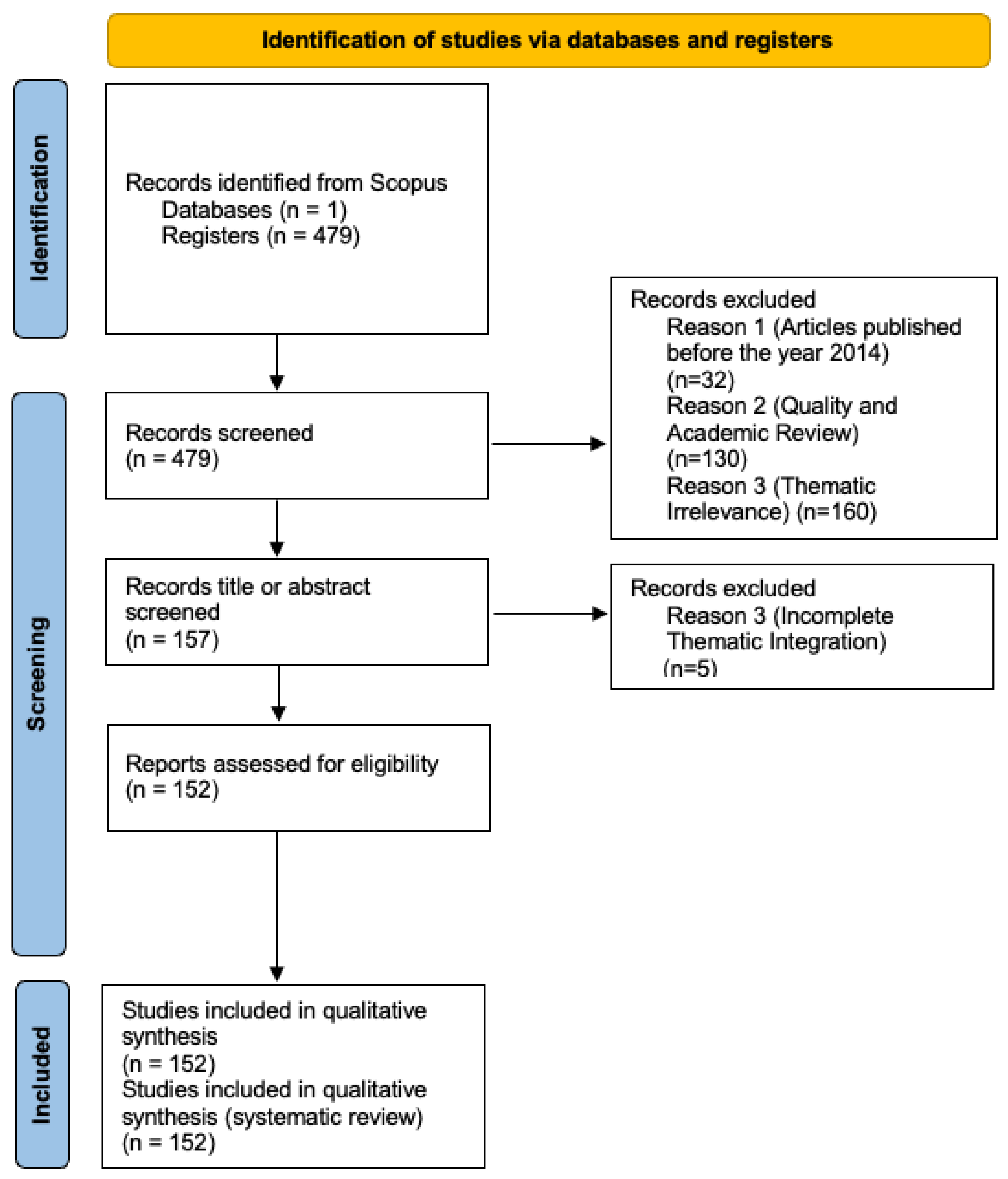
Figure 2.
Statistical descriptors. Source: Authors' elaboration based on Scopus and Bibliometrix.
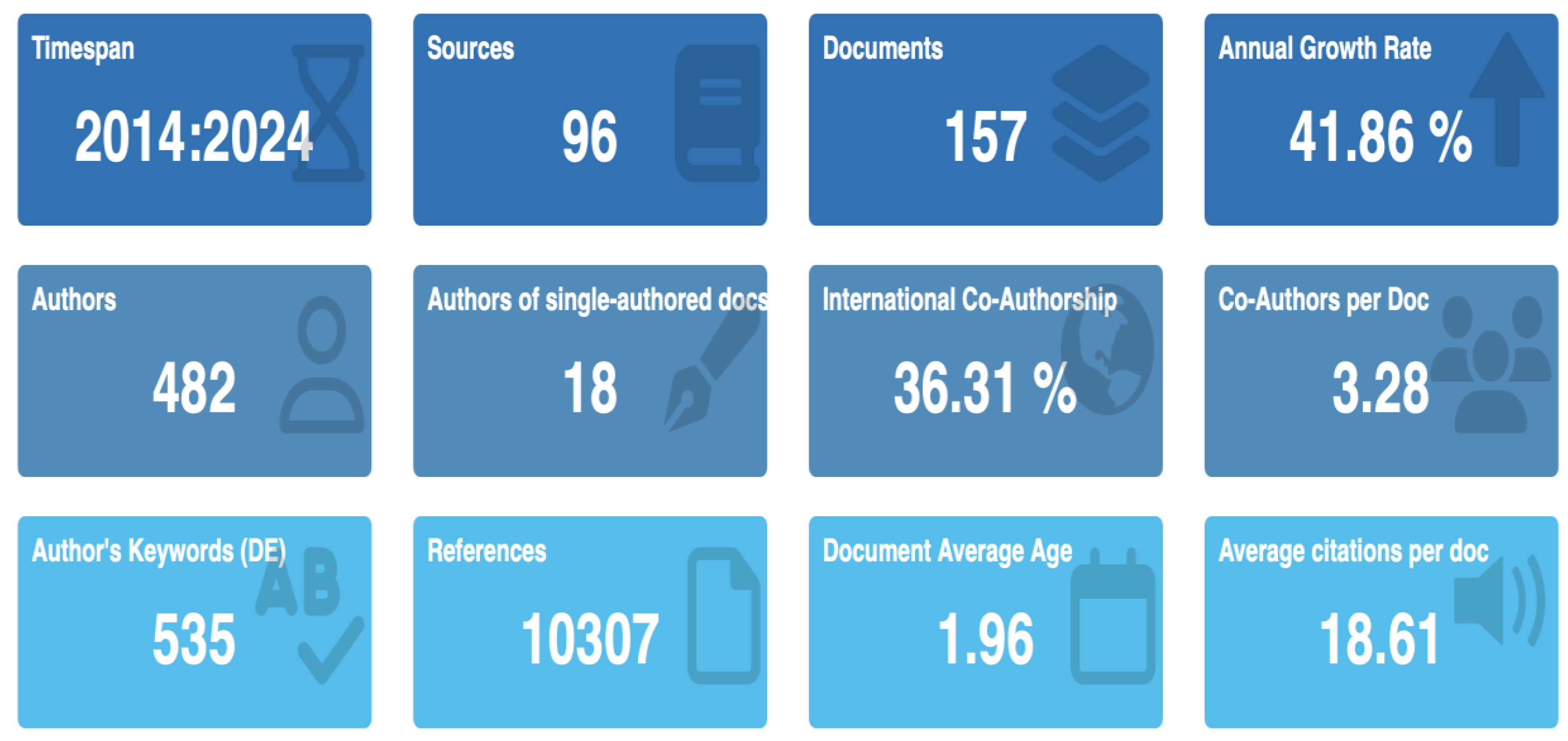
Figure 3.
Articles published by year. Source: Authors' elaboration based on Scopus.
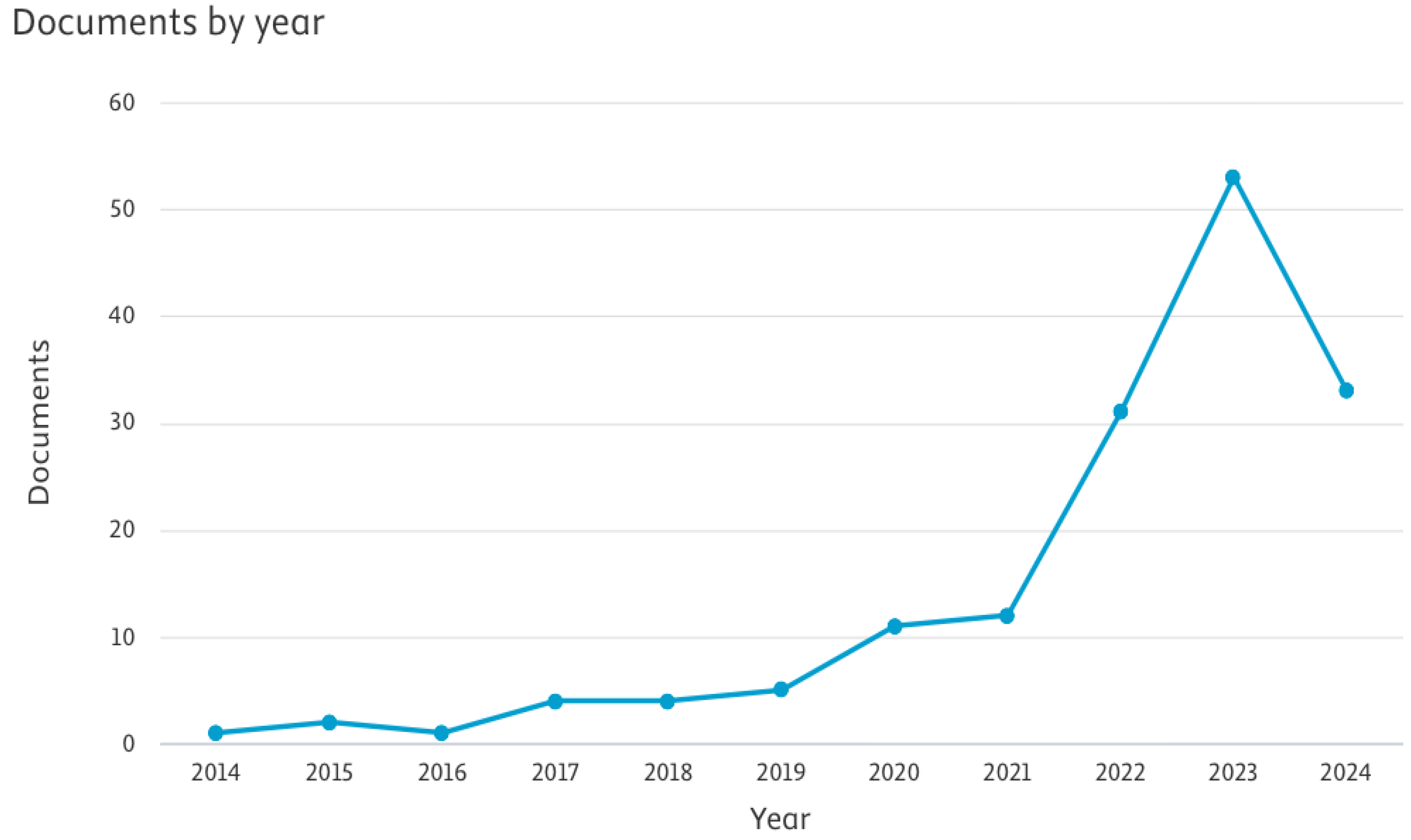
Figure 4.
Articles published by country. Source: Authors' elaboration based on Scopus.
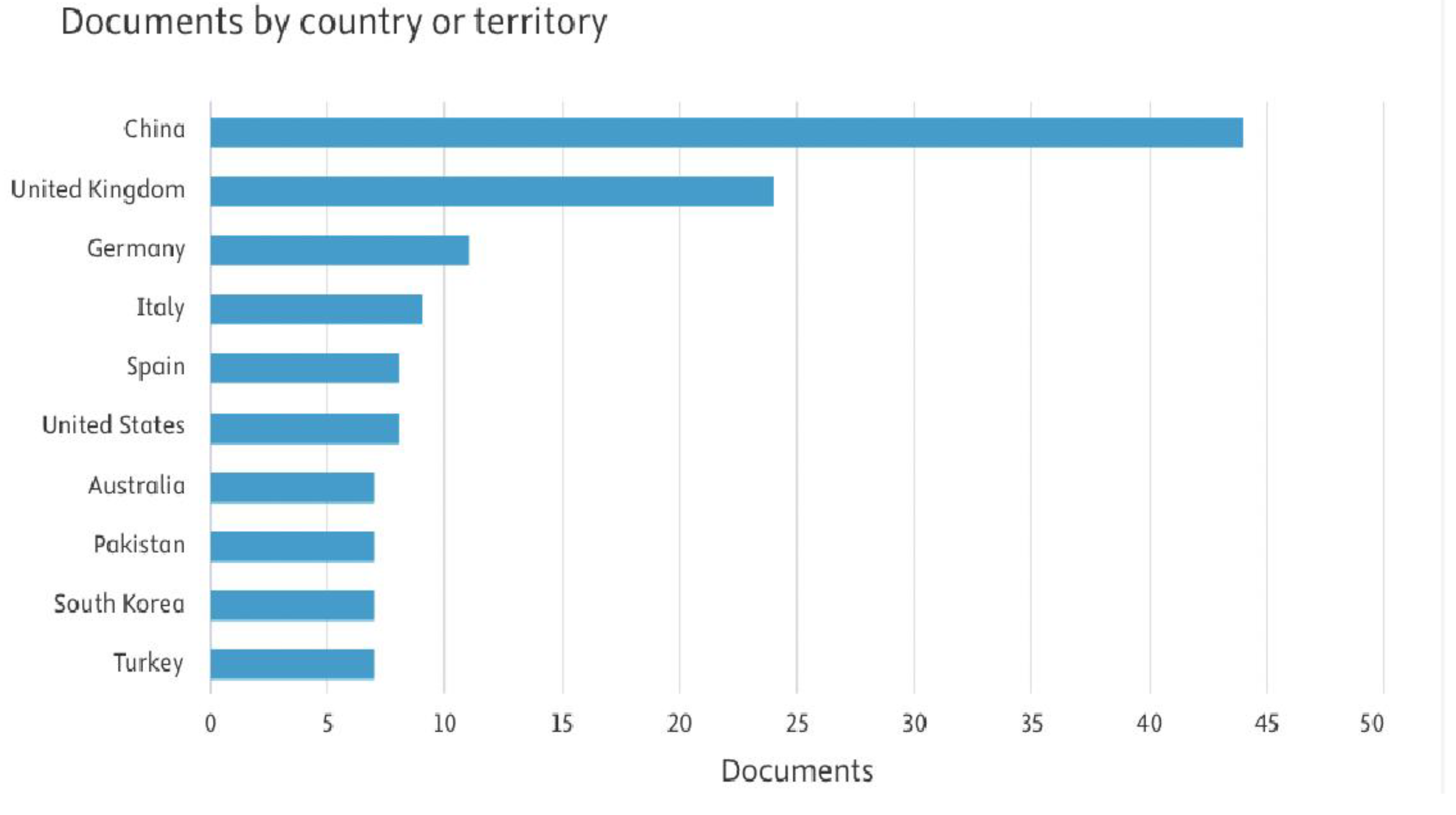
Figure 5.
Articles published by Thematic Area. Source: Authors' elaboration based on Scopus.
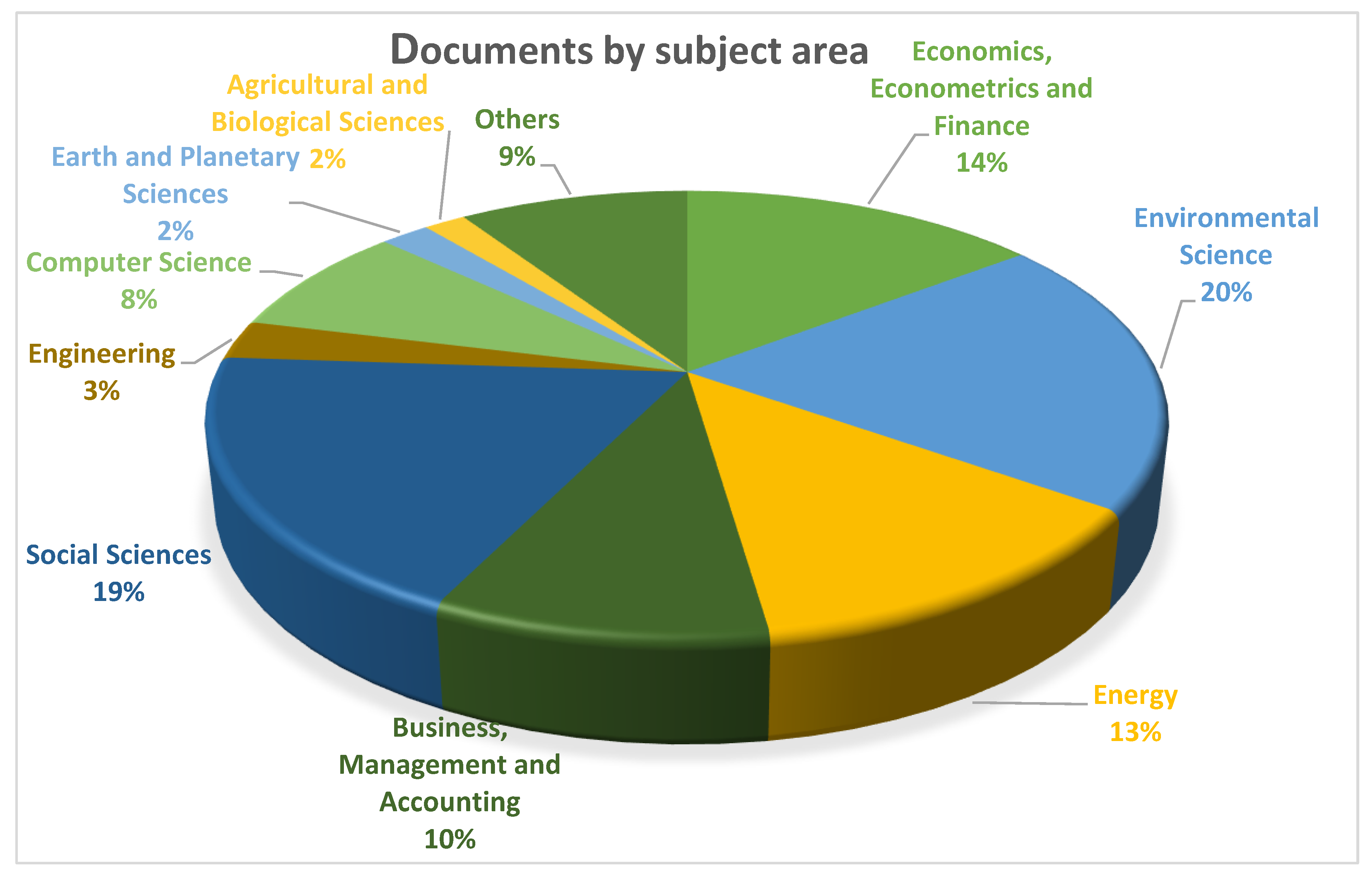
Figure 6.
Documents by Author. Source: Authors' elaboration based on Scopus and Bibliometrix.
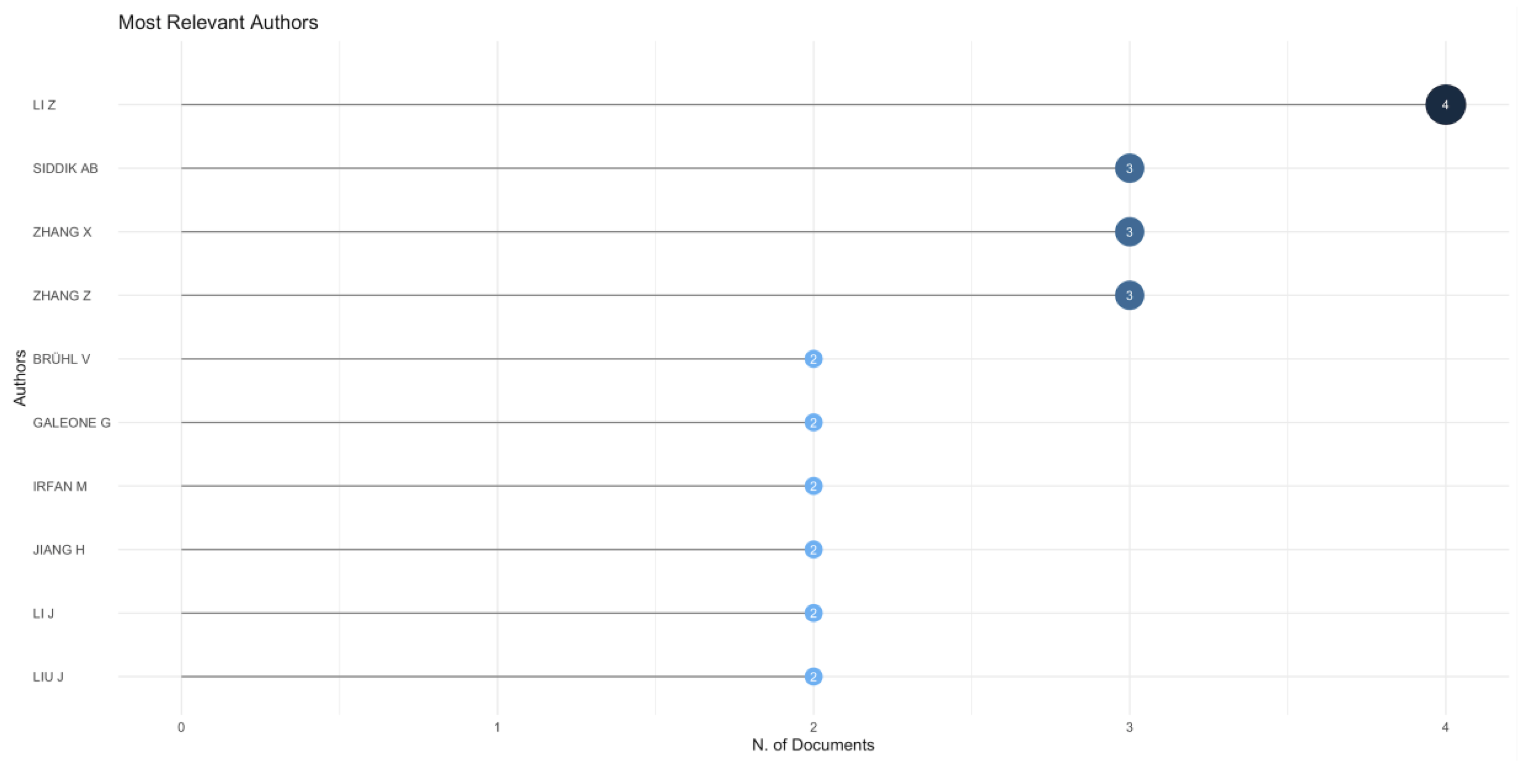
Figure 7.
Articles published by Fuente. Source: Authors' elaboration based on Scopus and Bibliometrix.
Figure 7.
Articles published by Fuente. Source: Authors' elaboration based on Scopus and Bibliometrix.
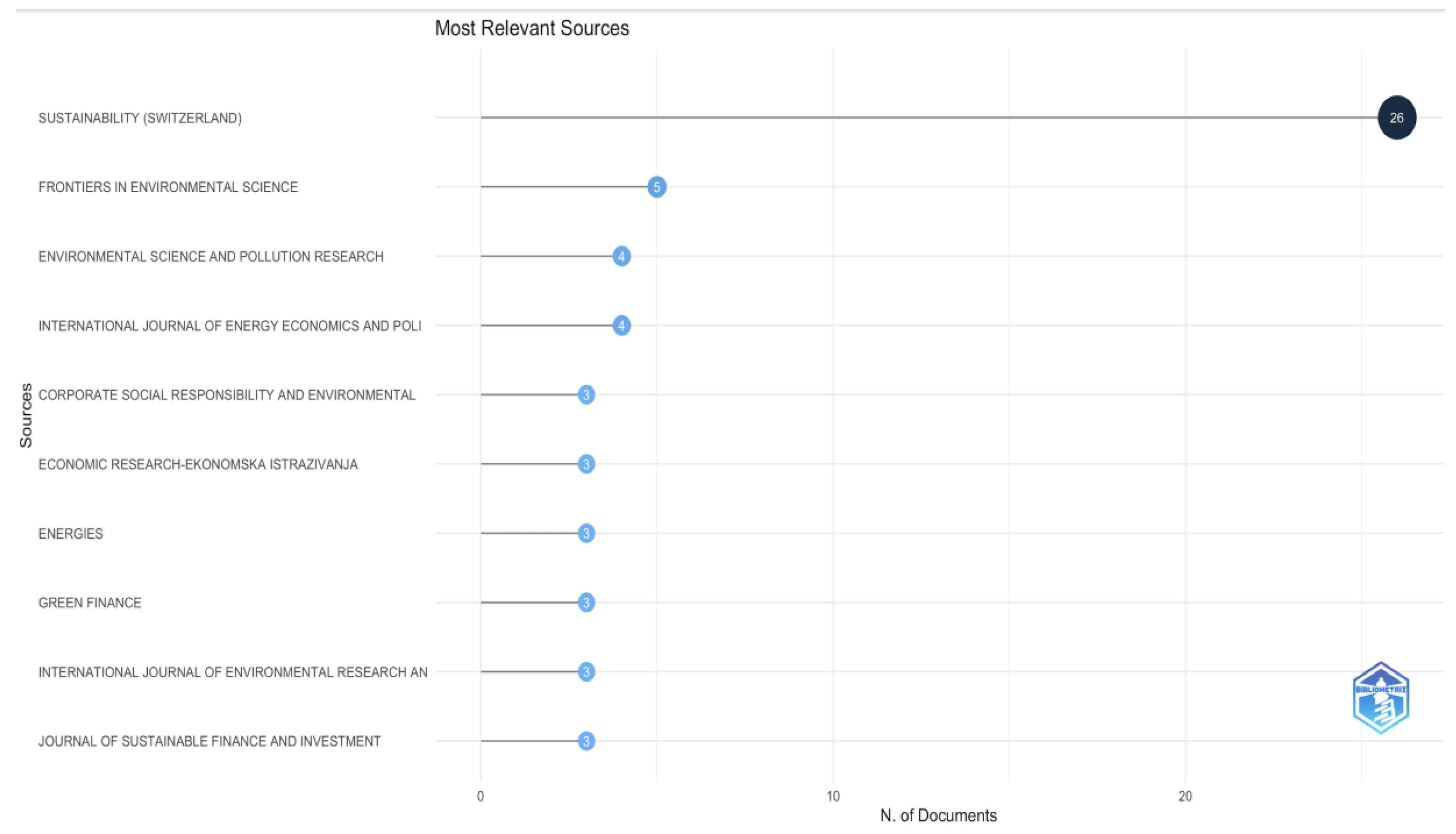
Figure 8.
Articles published by study centers. Source: Authors' elaboration based on Scopus.
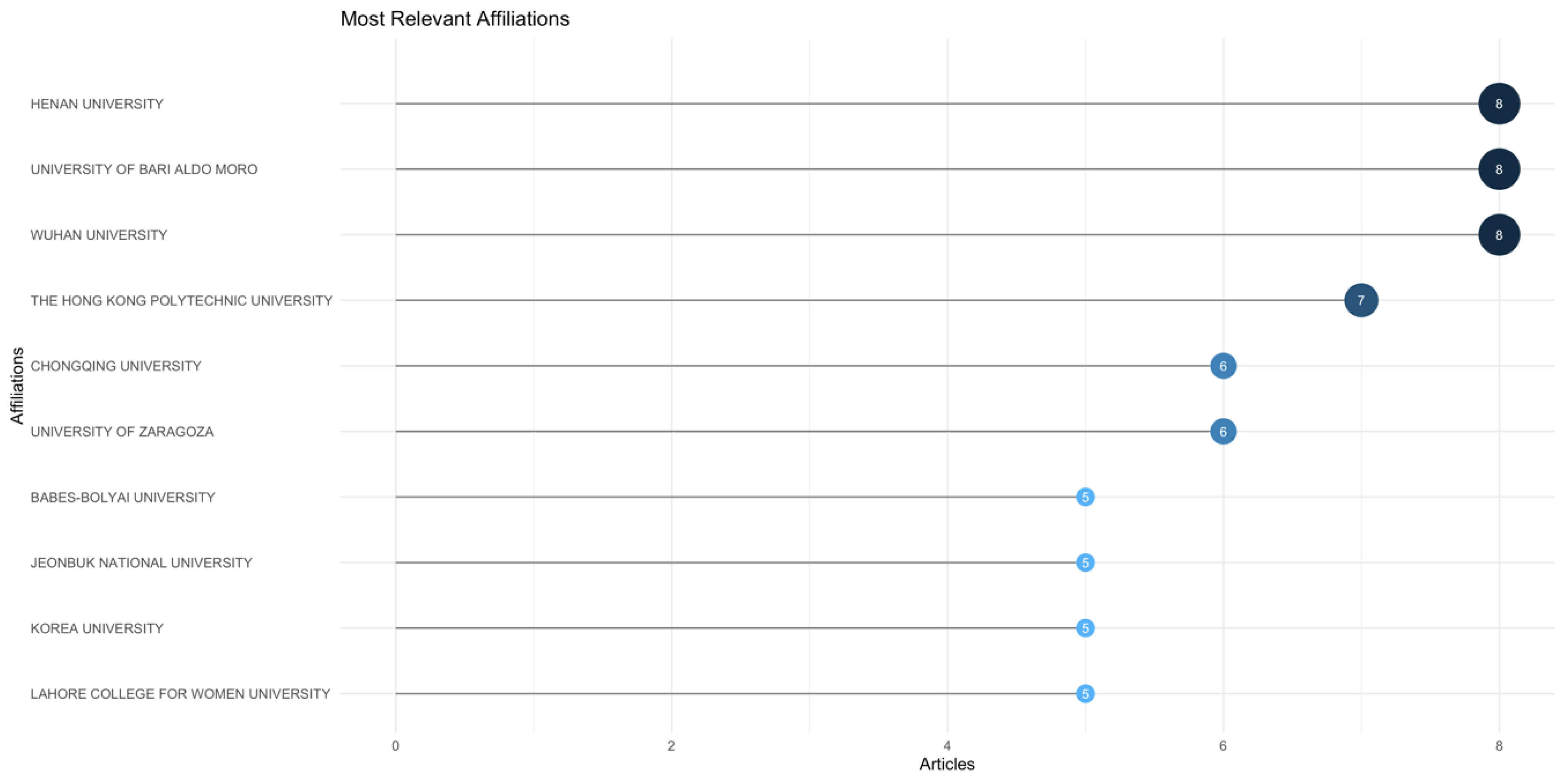
Figure 9.
Keyword Analysis. Source: Authors' elaboration based on Scopus and VOSviewer.
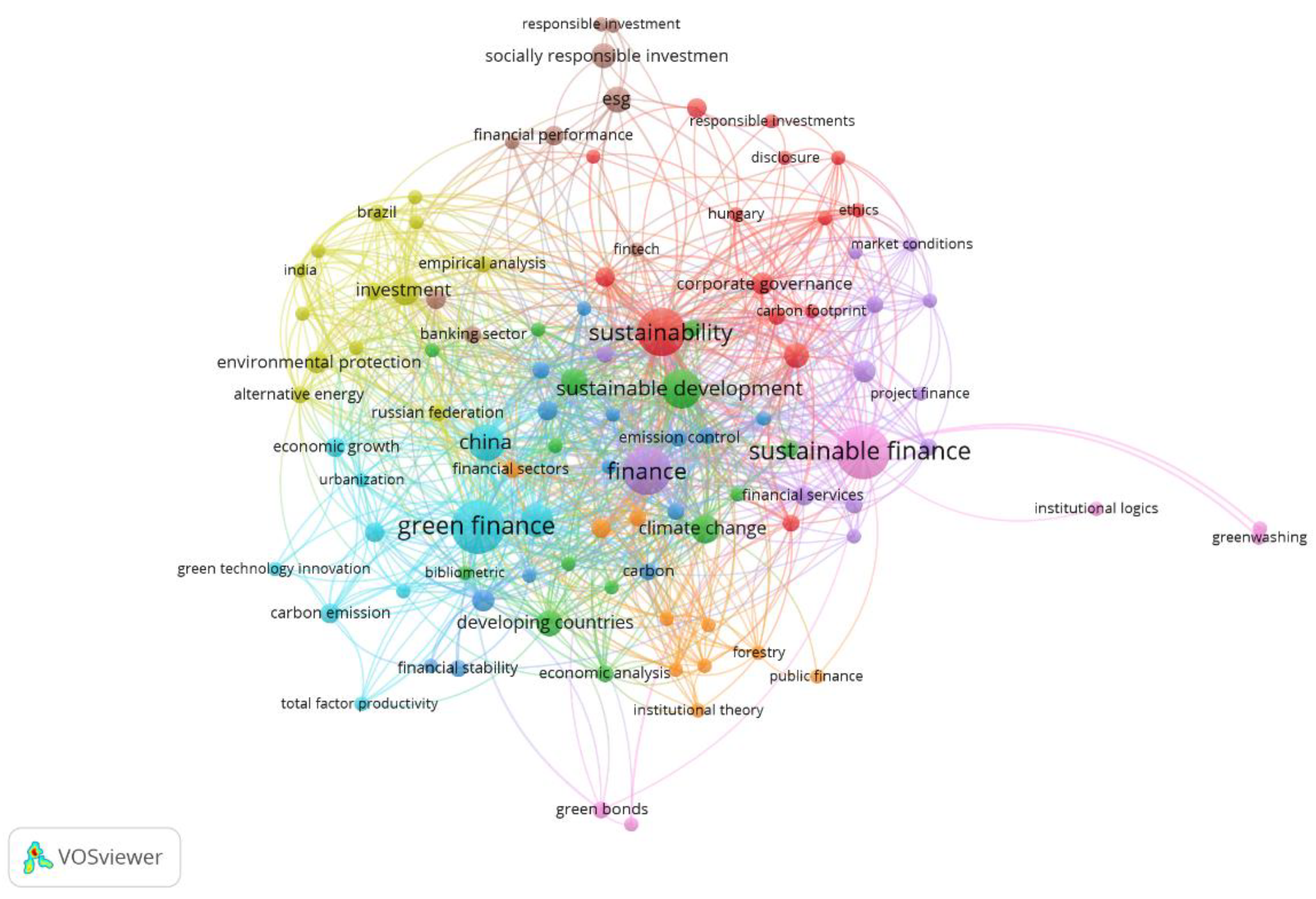
Figure 10.
Citation Analysis. Source: Authors' elaboration based on Scopus and VOSviewer.
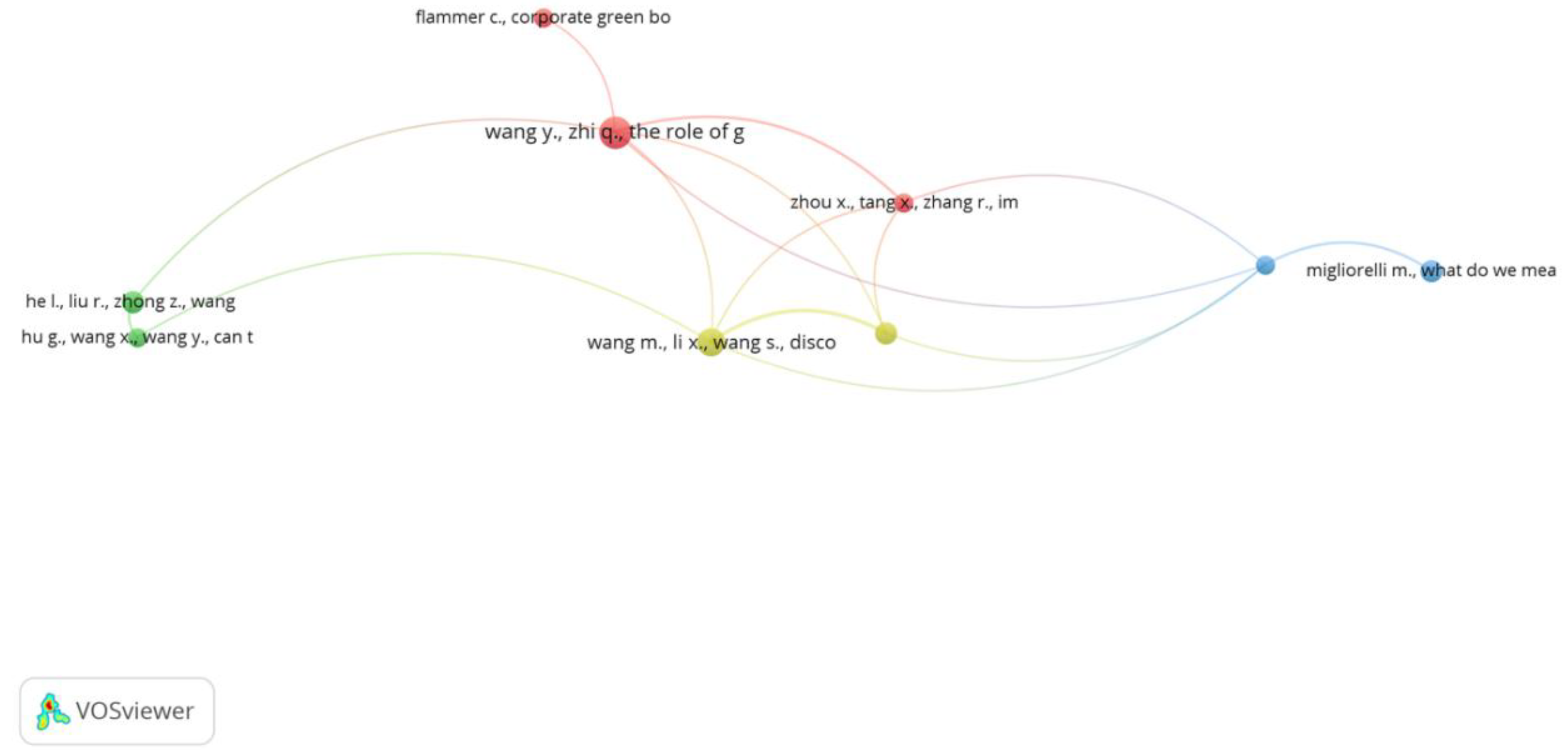
Figure 11.
Future research agenda. Source: Authors' elaboration based on Scopus and Bibliometrix.
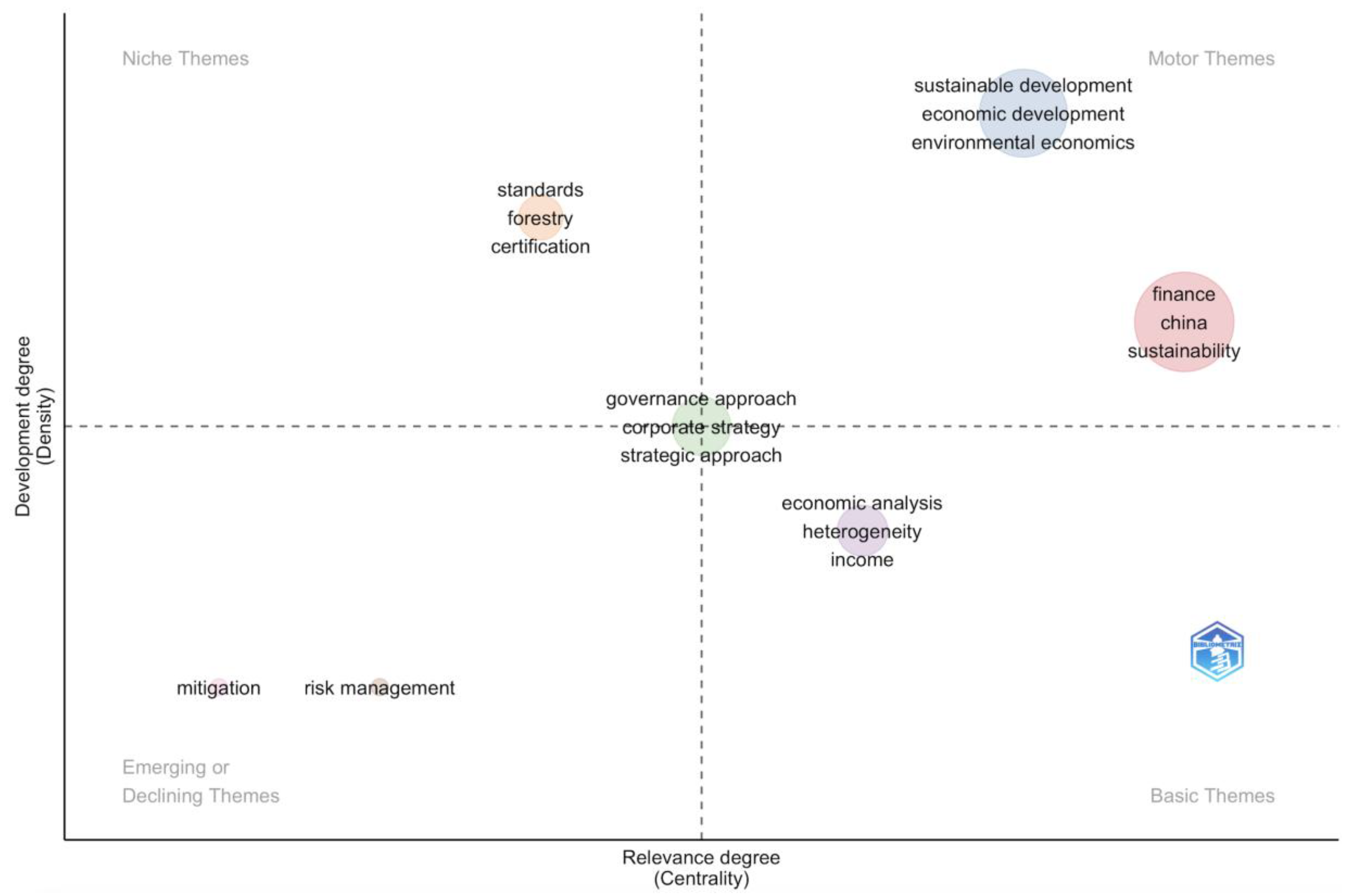

Table 1.
Inclusion and exclusion criteria.
| Criteria | Inclusion | Exclusion |
|---|---|---|
| Publication date | Studies published between 2014 and 2024 to ensure the timeliness and relevance of the information reviewed. | Articles that do not focus on emerging markets or developing economies, or that address developed markets exclusively. |
| Academic areas | Articles that directly address sustainable investing, green finance, or socially responsible investing (SRI) in the context of emerging markets or developing economies. | Studies that do not deal with sustainable investment, green finance or SRI, or that do not consider ESG criteria in their analysis. |
| Language | Documents written in English and Spanish, to ensure uniform accessibility and understanding in review. | Articles written in languages other than English and Spanish, to maintain linguistic consistency and accessibility. |
| Access | Articles available in open access to facilitate consultation and analysis by researchers. | Documents that are not available in open access, which limits their accessibility for comprehensive review. |
| Document Type | Research articles and reviews published in peer-reviewed academic journals, ensuring quality and scientific rigor. | Documents such as technical reports, theses, book chapters, conference proceedings, or others that are not peer-reviewed articles or reviews. |
Source: own elaboration.
Table 2.
Most cited documents.
| # | Authors | Document title | Source | Year | Citation |
|---|---|---|---|---|---|
| 1 | So Y.; Zhu Z. | The effect of ESG rating events on corporate green innovation in China: The mediating role of financial constraints and managers' environmental awareness | Technology in Society | 2022 | 263 |
| 2 | Yan S.; Ferraro, F.; Almandoz, J. | The Rise of Socially Responsible Investment Funds: The Paradoxical Role of the Financial Logic | Administrative Science Quarterly | 2019 | 116 |
| 3 | Zheng G.-W.; Siddik A.B.; Masukujjaman M.; Fatema, N. | Factors affecting the sustainability performance of financial institutions in Bangladesh: The role of green finance | Sustainability (Switzerland) | 2021 | 95 |
| 4 | Hunjra A.I.; Hassan M.K.; Zaied Y.B.; Managi S. | Nexus between green finance, environmental degradation, and sustainable development: Evidence from developing countries | Resources Policy | 2023 | 76 |
| 5 | Khan, K., Mata, M., Martins, J., Correia, A., Saghir, M. | Impediments of green finance adoption system:linking economy and environment | Emerging Science Journal | 2022 | 71 |
| Total | 621 | ||||
Source: Authors' elaboration based on Scopus.
Disclaimer/Publisher’s Note: The statements, opinions and data contained in all publications are solely those of the individual author(s) and contributor(s) and not of MDPI and/or the editor(s). MDPI and/or the editor(s) disclaim responsibility for any injury to people or property resulting from any ideas, methods, instructions or products referred to in the content. |
© 2025 by the authors. Licensee MDPI, Basel, Switzerland. This article is an open access article distributed under the terms and conditions of the Creative Commons Attribution (CC BY) license (https://creativecommons.org/licenses/by/4.0/).
Copyright: This open access article is published under a Creative Commons CC BY 4.0 license, which permit the free download, distribution, and reuse, provided that the author and preprint are cited in any reuse.


