

Submitted:
25 March 2025
Posted:
26 March 2025
You are already at the latest version
Abstract
Persons with disabilities (PWDs) are among the most at-risk groups during disaster situations due to various physical, sensory, cognitive, and systemic challenges that hinder their ability to prepare for, respond to, and recover from crises. Although international legal frameworks stress their inclusion, PWDs often struggle to access essential resources, emergency assistance, and social protections during such events. This study examines both the vulnerabilities and strengths of PWDs in disaster risk management, highlighting the critical need for inclusive policies, enhanced accessibility measures, and stronger community-based support systems. It reviews key international, European, and national legal instruments designed to protect the rights of PWDs in disaster contexts while identifying gaps in their implementation. Furthermore, the research explores the active role PWDs can assume in disaster prevention, preparedness, response, and recovery, advocating for their meaningful participation in decision-making processes. By embedding inclusive disaster risk reduction strategies, societies can bolster resilience, ensure equitable access to emergency services, and promote long-term social inclusion for PWDs. The findings emphasise the importance of multi-stakeholder collaboration, adaptive infrastructure, and targeted policy initiatives to bridge the gap between legal mandates and practical realities in disaster management.
Keywords:
disaster risk management
; disability inclusion
; vulnerability
; resilience
; accessibility
; policy framework
; emergency preparedness
; social protection
1. Introduction
Disasters exert a profound and far-reaching impact on societies, exacerbating existing social inequalities, deepening exclusion, and increasing the vulnerability of marginalised groups (Cvetković, 2024; Cvetković & Milašinović, 2017; Cvetković, Renner, Lukić, & Aleksova, 2024; Gauthier, Smith, García, Garcia, & Thomas, 2020; Kammerbauer & Wamsler, 2017; Kino, Aida, Kondo, & Kawachi, 2023; Llorente-Marrón, Díaz-Fernández, Méndez-Rodríguez, & Arias, 2020; Priest & Elliott, 2023; Smiley, Howell, & Elliott, 2018). Individuals who already face economic and social disadvantages are further pushed to the periphery during crises, leaving them disproportionately affected by disasters’ devastating consequences (Atkinson & Morelli, 2011; Bacigalupe & Escolar-Pujolar, 2014; Marmot, Bloomer, & Goldblatt, 2013; Mendoza, 2011; Rewilak, 2018). These groups often lack representation in decision-making processes, have limited ability to influence policy development, and face significant barriers to accessing opportunities that could improve their quality of life (Baldacci, De Mello, & Inchauste, 2002; Harris, 2024; Mohseni-Cheraghlou, 2016; Reuter, 2023). Consequently, they experience systemic discrimination across multiple sectors, including education, healthcare, and public administration, further marginalising them from mainstream societal structures (Alexander, 2015; Battle, 2015; Crawford et al., 2023; King, Edwards, Watling, & Hair, 2019; Malik, Nisar, & Manhas, 2023).
Among the most vulnerable populations, persons with disabilities emerge as one of the groups at greatest risk during disasters Cvetković & Milašinović, 2017; V. Cvetković & Svrdlin, 2020; Gačić, Jakovljević, & Cvetković, 2014). The European Union (EU) has identified several vulnerable categories, including a) youth, b) migrants, c) low-skilled workers, d) the unemployed, e) the homeless, and f) ethnic minorities such as the Roma population. In addition, certain groups such as a) women, b) children, c) persons with disabilities, d) refugees, e) internally displaced persons (IDPs), and f) LGBTQ+ individuals face compounded vulnerabilities due to intersectional discrimination. For persons with disabilities, specific challenges related to physical, communication, and institutional barriers significantly limit their capacity to prepare for, respond to, and recover from disasters.
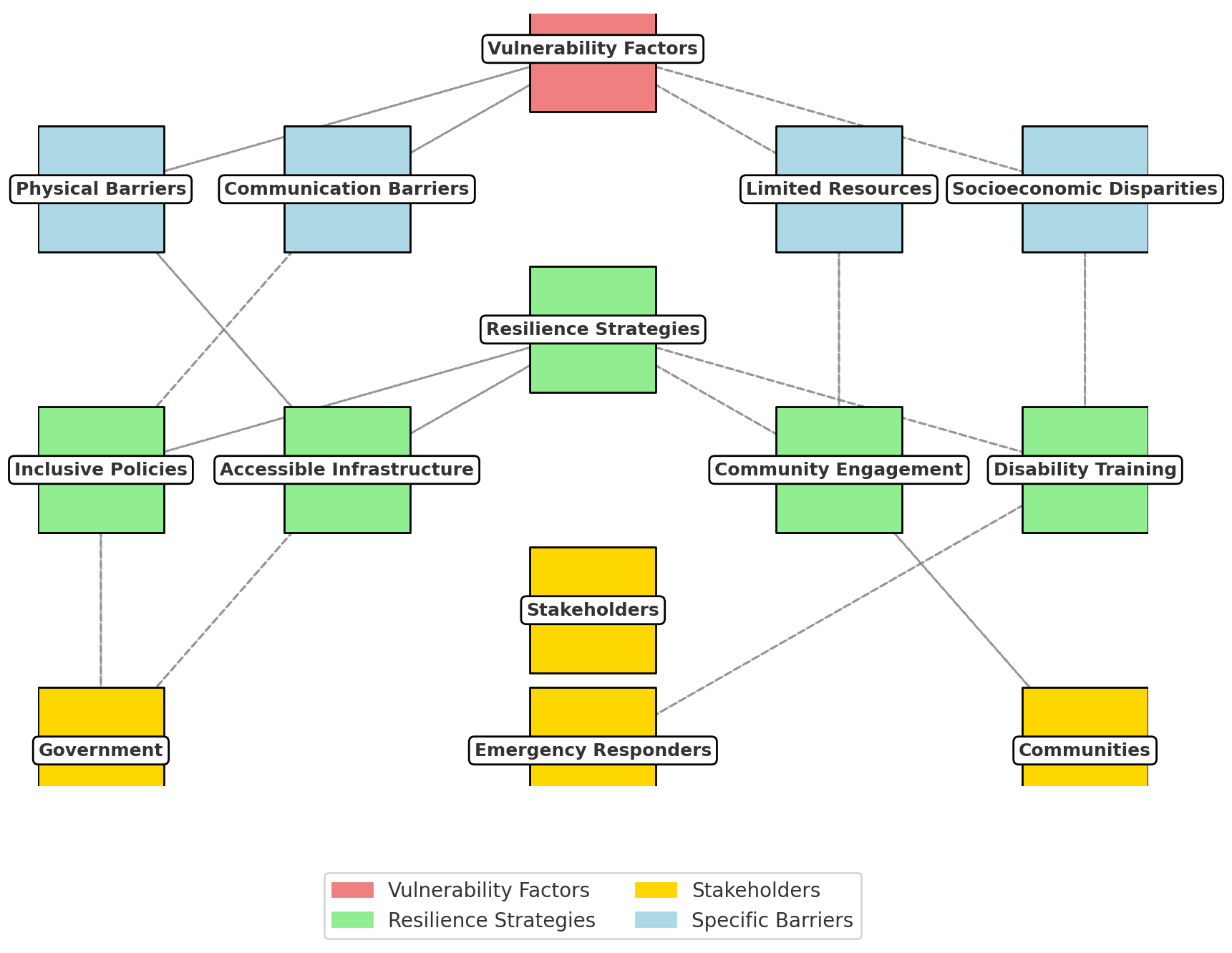
The factors contributing to the heightened vulnerability of persons with disabilities during disasters are numerous (Figure 1). Economic instability, reflected in a) low income, b) poverty, and c) restricted access to education, significantly increases exposure to disaster-related risks (Adams, 2018; Jeong & Yoon, 2018; Karaye & Horney, 2020; Peek & Stough, 2010; Sahar, Nogueira, Ashkenazi, Jemal, Yabroff, & Lichtenfeld, 2020). Additionally, pre-existing health conditions, including a) chronic illnesses, b) physical and cognitive disabilities, and c) limited access to medical services, further diminish their ability to respond effectively to emergencies(Alshehri et al., 2024; Doody, Robertson, Cox, Bogue, Egan, & Sarma, 2021; Ghimire et al., 2022; Han, Hu, Tang, Zheng, Hu, & Li, 2024; Hassani-Mahmooei, Berecki-Gisolf, Hahn, & McClure, 2016; Marshall, Milligan-Saville, Mitchell, Bryant, & Harvey, 2017; Nafar, Aghdam, Derakhshani, Sani’ee, Sharifian, & Goharinezhad, 2021). Social and environmental factors, including a) gender disparities, b) age-related risks (particularly for children and the elderly), c) spatial isolation, and d) systemic discrimination, hinder access to essential services, which reduces individuals’ capacity to withstand disasters (Amjad et al., 2023; Daniel, Bornstein, & Kane, 2018; McCarthy, Zheng, Wilder, Elmi, Li, & Zeger, 2021; Shobichah & Astuti, 2023).
According to the World Health Organization (WHO), persons with disabilities constitute approximately 10% of the global population. Despite this significant demographic presence, they experience disproportionately high rates of a) unemployment, b) limited educational attainment, and c) economic hardship. These inequalities are particularly evident in disaster preparedness, where a lack of inclusive policies and targeted training results in inadequate emergency readiness. Addressing this disparity requires proactive engagement from governments, local authorities, and civil society organisations to develop and implement a) specialised training programs, b) adaptive emergency response measures, and c) accessible infrastructure to ensure their safety (Cvetković, Tanasić, Renner, Rokvić, & Beriša, 2024; Lalonde, 2007; Taylor & Haintz, 2018).
A well-established legal framework at both the international and regional levels seeks to safeguard the rights of persons with disabilities, particularly in disaster contexts. Among the most significant international instruments are a) the International Covenant on Civil and Political Rights (ICCPR), b) the International Covenant on Economic, Social, and Cultural Rights (ICESCR), and c) the UN Convention on the Rights of Persons with Disabilities (CRPD) and its Optional Protocol. The CRPD is particularly important, as it represents the first legally binding international treaty explicitly designed to protect persons with disabilities, obligating signatory states to uphold, promote, and ensure their full enjoyment of rights and freedoms.
Beyond international conventions, the United Nations 2030 Agenda for Sustainable Development integrates disability rights into multiple global policy domains, including a) economic growth, b) poverty eradication, c) gender equality, and d) universal access to education. The Sustainable Development Goals (SDGs) emphasise the importance of including persons with disabilities in a) data collection efforts, b) employment initiatives, and c) long-term disaster risk reduction strategies to create more resilient and equitable societies.
At the regional level, various legal and strategic frameworks guide policies to ensure the protection and inclusion of persons with disabilities. These include a) the European Convention on Human Rights (ECHR) and Protocol No. 12 (2000), which establishes anti-discrimination measures; b) the European Action Plan for Persons with Disabilities (2006-2015), which focuses on fostering social inclusion, and c) the Council of Europe’s Disability Strategy (2017-2023), which prioritizes five key areas: a) equality and non-discrimination, b) awareness-raising, c) accessibility, d) equal recognition before the law, and e) protection from exploitation, violence, and neglect. Further advancing this agenda, the EU Disability Strategy 2010-2020: A Barrier-Free Europe seeks to eliminate structural barriers to full social participation and highlights the necessity of inclusive emergency preparedness frameworks that address the specific needs of persons with disabilities.
Inclusion is not merely a recommendation—it is a fundamental human right. Ensuring all individuals have equal access to safety measures, emergency response services, and legal protections is essential for reducing overall disaster risk (Cvetković & Janković, 2020; Cvetkovic & Martinović, 2020; Ivanov, 2024; Kaur & Singh, 2024; Mano, A, & Rapaport, 2019; Marceta & Jurišic, 2024; Milenković, Cvetković, & Renner, 2024; Molnár, 2024; Ogunleye & Arohunsoro, 2024; Perić & Vladimir, 2019; Vidović, Cvetković, & Beriša, 2024). Structural barriers that exclude persons with disabilities from disaster risk reduction (DRR) strategies must be systematically addressed to foster a more resilient and adaptive society. A resilient community ensures no individual is left behind, empowering persons with disabilities by recognizing their specific needs, unique perspectives, and valuable contributions. By encouraging active participation in disaster risk management, societies can create more robust preparedness frameworks, reducing vulnerability and enhancing overall disaster resilience.
This study aims to provide a structured analysis of the challenges and opportunities for persons with disabilities (PWDs) in disaster risk management. Specifically, it seeks to: a) analyse the barriers PWDs encounter across different phases of disaster management, including preparedness, response, and recovery; b) assess existing legal frameworks at the international, European, and national levels concerning disability-inclusive disaster response; c) identify best practices and inclusive strategies that have been successfully implemented in disaster risk reduction; d) offer practical recommendations to enhance disaster preparedness and response for PWDs. To achieve these objectives, the study addresses the following key research questions:
- What are the primary obstacles that PWDs encounter during disaster situations?
- How effective are current policies and legal frameworks in protecting PWDs during disasters?
- What best practices exist for ensuring inclusive disaster preparedness and response?
- How can governments, emergency responders, and local communities strengthen disaster resilience for PWDs?
By exploring these critical areas, the study aims to bridge the gap between policy and practice, ultimately fostering a more inclusive approach to disaster management.
2. Methods
This study adopts a systematic review approach to analyze existing literature, policies, and case studies on disaster risk management for persons with disabilities (Figure 1). The primary objective is to synthesise academic, institutional, and policy findings, identify key challenges, policy gaps, and best practices to ensure inclusive disaster preparedness, response, and recovery.
2.1. Data Collection and Sources
This study draws from multiple academic and institutional sources to establish a comprehensive, high-quality evidence base. The data collection process involved several key components. First, academic databases such as Google Scholar, Scopus, Web of Science, and ResearchGate were utilized to gather peer-reviewed research articles. Second, institutional reports and policy documents were analyzed, including publications from organizations like the United Nations Office for Disaster Risk Reduction (UNDRR), the World Health Organization (WHO), the Federal Emergency Management Agency (FEMA), the European Commission, and the International Federation of Red Cross and Red Crescent Societies (IFRC). Additionally, government reports and national legislation concerning disaster risk management were examined, with a specific focus on national strategies aligned with the Sendai Framework for Disaster Risk Reduction and the UN Convention on the Rights of Persons with Disabilities (UNCRPD). Finally, case study documentation provided insight into real-world disaster responses affecting persons with disabilities, highlighting practical interventions and lessons learned. This multi-faceted approach ensures a well-rounded perspective on disaster risk management and disability inclusion.
2.2. Inclusion and Exclusion Criteria
Literature and reports were selected based on specific inclusion criteria to ensure relevance and quality. The studies needed to directly address disaster preparedness, response, or recovery for individuals with disabilities. The research included peer-reviewed journal articles, governmental and intergovernmental reports, case studies documenting best practices and failures in inclusive disaster management, and legal and policy documents related to disability rights and disaster risk reduction. At the same time, specific sources were excluded: a) studies focusing on general disaster response without considering disability inclusion were not included. b) outdated literature, non-peer-reviewed studies, or sources lacking empirical evidence were excluded. c) opinion pieces or commentaries without substantial data or analytical depth were not considered relevant for this study.
2.3. Data Analysis and Thematic Framework
A qualitative content analysis was employed to identify key themes related to barriers, policy responses, and best practices in disaster management for persons with disabilities. The thematic framework for this study was based on several critical international instruments. The first is the Sendai Framework for Disaster Risk Reduction (2015–2030), which serves as a global strategy for reducing disaster risk, emphasizing inclusion and resilience-building. The second is the UN Convention on the Rights of Persons with Disabilities (UNCRPD), the primary international treaty ensuring equal rights and protections for persons with disabilities. Furthermore, the study conducted a comparative analysis of international and national disaster response frameworks to assess how different countries implement disability-inclusive strategies in disaster risk reduction. Best practices and case studies were reviewed to examine successful and failed approaches to inclusive disaster response across diverse contexts. The data was analyzed by identifying recurring themes, patterns, and gaps in existing literature. Findings were cross-referenced across multiple sources to ensure accuracy and consistency, allowing for a comprehensive understanding of the intersection between disaster risk management and disability inclusion.
2.4. Limitations of the Study
While this study provides a broad and systematic analysis of disability-inclusive disaster management, it has several limitations. First, it primarily relies on secondary data, meaning that it does not include primary surveys or interviews with persons with disabilities or disaster management practitioners. Second, there are gaps in regional coverage, as research and documentation on this topic remain limited in some geographic regions, particularly in developing nations. Third, variations in policy implementation present a challenge, as many reports outline policies and legal frameworks but lack standardized evaluation metrics to assess how effectively these measures are implemented in practice. Despite these limitations, this study establishes a critical foundation for understanding the intersection of disaster risk management and disability rights. The findings contribute to ongoing discussions on policy development and offer insights for future research to strengthen inclusive disaster preparedness and response.
3. Persons with Disabilities: Definitions, Rights, and Challenges in Disaster Contexts
Various terms are used to define and categorize persons with disabilities, including handicap, impairment, and disability. These terms, although frequently used interchangeably, carry different connotations. Persons with disabilities are individuals with long-term physical, sensory, mental, or intellectual impairments that may impact their daily lives but can often be mitigated through rehabilitation and specialized support within healthcare institutions (Finkelstein & Finkelstein, 2020). They have often been referred to as individuals with special needs. However, this terminology is increasingly seen as discriminatory in contemporary discourse, implying that they require different or additional accommodations beyond fundamental human rights. The prevailing perspective emphasizes that persons with disabilities deserve equal rights and opportunities, just like any other individual. Therefore, “persons with disabilities” is widely regarded as the most appropriate and respectful way to refer to this demographic (Rajić, 2016).
Persons with disabilities constitute a diverse and integral part of society, encompassing individuals with various physical, cognitive, and sensory challenges that may affect their participation in everyday activities and community life. They deserve equal access to all spheres of life, ensuring they are not excluded from social, economic, or political engagement. Some of the most critical aspects related to their inclusion and well-being in society include:
a) Accessibility—A fundamental prerequisite for full participation in social, economic, and political life, accessibility ensures that individuals with disabilities can navigate public spaces, transportation, and digital platforms without barriers.
b) Healthcare and rehabilitation support—Access to specialized medical care, physical therapy, and mental health services is crucial for enhancing their well-being and independence.
c) Education and vocational training—Ensuring that individuals with disabilities have equal access to education and skill development is essential for their social and professional integration.
d) Legal protection and advocacy—Strong legal frameworks are necessary to combat discrimination, enforce equal rights, and guarantee access to justice for persons with disabilities.
e) Emotional and social support – A strong support system from family, friends, and the wider community is invaluable, complemented by professional psychosocial assistance to address emotional well-being (Finkelstein & Finkelstein, 2020, p. 62).
Recognizing the unique needs of persons with disabilities is critical for fostering an inclusive and equitable society. Efforts to remove societal barriers and ensure that their rights are upheld play a vital role in promoting social progress and strengthening communities as a whole. Beyond everyday challenges, however, the position of persons with disabilities in disaster situations demands particular attention. Due to physical, cognitive, and environmental constraints, they are disproportionately vulnerable when disasters strike. Their limited mobility, dependency on medical care, or need for specialized assistance can significantly hinder their ability to respond to emergencies (Rajić, 2016).
To address these challenges, specific strategies must be implemented to ensure the safety and well-being of persons with disabilities in crisis situations. Some of the key areas of focus include:
a) Accessible evacuation and emergency response—Many individuals with disabilities face difficulties evacuating during disasters. Ensuring accessible evacuation routes, emergency assistive technologies, and immediate healthcare services is essential for their safety.
b) Specialized healthcare considerations—People with disabilities often have critical healthcare needs, including continuous medication, mobility aids, and specialized treatment, all of which must be factored into disaster preparedness plans.
c) Effective communication and information dissemination—Individuals with sensory impairments may struggle to receive and process vital emergency warnings. To ensure that they receive timely and accurate information, it is crucial to implement inclusive communication systems, such as visual alerts, sign language interpreters, and text-based updates.
d) Psychosocial support and mental health care – Disasters can be particularly distressing for persons with disabilities, potentially exacerbating pre-existing psychological conditions. Mental health counselling, emotional support networks, and post-trauma care are essential for their well-being.
e) Adapted shelters and post-disaster services—Emergency shelters and relief services must cater to the specific needs of persons with disabilities, ensuring they have access to accessible accommodations, assistive devices, and essential support services (Finkelstein & Finkelstein, 2020, p. 64).
Building an inclusive and resilient disaster response system is not just a matter of policy—it is a fundamental human rights issue. Societies must recognize the vulnerabilities faced by persons with disabilities and implement comprehensive strategies to reduce risks, enhance accessibility, and provide the necessary resources during and after disasters. By ensuring that no one is left behind, disaster risk reduction efforts can become more effective, equitable, and sustainable in the long run.
Disasters frequently have a disproportionately severe impact on individuals with disabilities, as their challenges are further compounded by intersecting social factors, such as gender, age, and socioeconomic status. Key considerations include: a) women with disabilities − they experience a heightened risk of gender-based violence in disaster shelters and are often left out of economic recovery efforts; children with disabilities − these individuals are often neglected in disaster preparedness strategies, resulting in increased mortality rates during emergencies; c) elderly with disabilities − this group typically needs specific medical care and assistive devices, which may be limited or inaccessible in post-disaster settings. Policies must embrace an intersectional approach that accounts for these overlapping vulnerabilities to ensure an equitable and effective disaster response.
4. Types of Disabilities and Corresponding Needs: Ensuring Inclusion and Support
Persons with disabilities represent a broad and diverse category of individuals with varying impairments and health conditions, making them an inclusive social group (Vlašković, 2016). As previously mentioned, disability is often used differently across societies, leading to discrepancies in public discourse and interpretation (Raja & Narasimhan, 2013). In France, for example, the term handicap is commonly used, emphasizing limitations, inequality, and subordination in relation to others. The Convention on the Rights of Persons with Disabilities defines persons with disabilities as individuals with long-term physical, mental, intellectual, or sensory impairments that, when combined with various barriers, may hinder their full and equal participation in society (Radulović, 2022). Globally, it is estimated that persons with disabilities make up approximately 10% of the population, with the majority being women (Marković, 2014).
One of the most significant challenges in meeting the needs of persons with disabilities, particularly in disaster situations, is the lack of accurate data regarding their presence, location, and specific requirements. First responders and authorities often lack sufficient information about how many individuals with disabilities have been affected and where they may be located. This data gap has been highlighted as a significant issue in disaster response, as many persons with disabilities remain hidden within their communities, making it challenging to identify and assist them effectively. However, advancements in information systems and disaster response protocols have improved registration processes in recent years, increasing the likelihood that individuals with disabilities receive timely emergency assistance and essential services. In today’s digital society, people rely heavily on various communication channels to access information about disaster preparedness and ongoing crises. However, when persons with disabilities lack access to these resources, they face a heightened risk, not only to their own safety but also to that of their families and surrounding communities (Raja & Narasimhan, 2013).
The causes of disability vary significantly and can be categorized as genetic, congenital, or acquired. Some individuals are born with disabilities, while others develop them later in life due to war-related injuries, accidents, illnesses, or ageing (Jovanović, 2015). Understanding the nature of disability is essential for ensuring appropriate support systems and intervention strategies.
Disabilities can be broadly classified into several categories. Physical disabilities affect mobility and often require assistive devices such as wheelchairs. Sensory disabilities impact vision and hearing, requiring specialized communication and accessibility tools. Cognitive and learning disabilities include developmental conditions such as intellectual disabilities and autism (Jovanović, 2015a, p. 43).
Beyond these primary classifications, many individuals experience multiple or combined disabilities. For instance, persons with physical impairments may also have neuromuscular disorders, paraplegia, quadriplegia, muscular dystrophy, or cerebral palsy. The degree of assistance required varies based on the individual’s level of independence. Despite these variations, a fundamental principle remains: persons with disabilities are human beings with the same inherent rights and needs as everyone else (Raja & Narasimhan, 2013).
Additional categorizations of disabilities include arthritis, autism, cerebral palsy, Down syndrome, poliomyelitis, dyslexia, muscular dystrophy, mental impairments, multiple sclerosis, spinal cord, hearing, and vision impairments, and Rett syndrome (Stojanović, 2015).
Moreover, disabilities can also be classified based on their broader impact on an individual’s life. Mental or psychological disabilities encompass individuals with intellectual impairments, recurrent psychological disorders, or various mental health conditions. These individuals may require psychological support, therapy, educational programs, and legal protection against discrimination. Chronic health conditions cover individuals with long-term medical conditions, necessitating specialized medical care, continuous medication, and health programs to support their well-being. Developmental disabilities include conditions such as autism and Down syndrome, requiring specialized education, therapy for skill development, and social integration programs (Stojanović, 2015).
Each type of disability presents unique challenges and needs, necessitating tailored approaches to ensure individuals can participate fully and independently in society. Governments, institutions, and communities must work collectively to provide adequate support systems, ensuring that persons with disabilities have equal access to education, healthcare, employment, and emergency assistance. By fostering a society that removes barriers and promotes inclusion, individuals with disabilities can achieve greater independence and contribute meaningfully to their communities.
5. Capacities and Strengths of Persons with Disabilities
Adopting the Sendai Framework marked a significant step forward in global efforts to improve accessibility and inclusion for persons with disabilities. Many countries have since updated their national laws to align with the UN Convention on the Rights of Persons with Disabilities, aiming to create better living conditions and stronger protections. Despite these advancements, persons with disabilities continue to face fundamental challenges, including difficulties in accessing buildings, using public spaces, and obtaining necessary resources. In disaster situations, their vulnerability is further exacerbated, particularly during emergency evacuations where transportation remains a significant obstacle (Maksimović et al., 2020).
To enhance disaster preparedness and response, it is essential to develop the capacities and strengths of persons with disabilities. Key focus areas include establishing a stable communication platform that enables risk awareness and ensures their involvement in discussions on shelter management, training programs, and decision-making processes. Additionally, efforts should be made to assist persons with disabilities in understanding disaster risk maps and emergency planning strategies. Further, mechanisms should be developed to support post-disaster recovery, including lessons learned from past experiences, medical and resource planning, and employment opportunities following disasters (Maksimović et al., 2020, p. 56).
The capacities and strengths of persons with disabilities encompass a wide range of skills, abilities, and resources that enable them to live independently, participate in society, and respond effectively to challenges, including disasters. In the context of emergency preparedness, their adaptability to new environments plays a crucial role, as many individuals with disabilities have experience adjusting to different living conditions. This ability to adapt quickly can be highly beneficial in disaster scenarios requiring immediate action. Their capacity for empathy and teamwork is another strength, as many persons with disabilities develop a strong sense of cooperation and community engagement, which is vital for collective disaster response efforts.
Furthermore, some persons with disabilities possess specific expertise and experience in areas critical to disaster response, such as rehabilitation, specialized medical care, or psychological support. Their firsthand knowledge of their challenges is invaluable in designing effective protection and assistance plans. Recognizing and utilizing these strengths is essential for creating inclusive disaster response strategies that integrate the perspectives of persons with disabilities (Stojanović, 2015).
Many individuals with disabilities develop a high degree of resilience and independence in overcoming daily challenges, including those posed by disasters. Society and institutions must acknowledge and leverage these capacities to support persons with disabilities during emergencies. By incorporating their skills and experiences into disaster preparedness and response plans, communities can enhance their overall resilience and ensure a more inclusive approach to disaster management.
6. Protection of Persons with Disabilities in International and European Legal Frameworks
The international legal framework for protecting persons with disabilities is rooted in fundamental human rights principles. One of the most significant documents in this regard is the Universal Declaration of Human Rights, which laid the foundation for the right to social security and established a basis for the further development of disability rights protection. This declaration ensures that all individuals, including persons with disabilities, have access to healthcare, food, clothing, housing, and other essential social provisions and the right to insurance in cases of disasters, unemployment, and other crises. Furthermore, it guarantees their right to a dignified life and equal opportunities for social participation (Stojanović, 2017a).
In addition to the Universal Declaration, another crucial legal instrument is Convention No. 102 on Social Security, one of the most important conventions of the International Labour Organization (ILO). This convention explicitly recognises persons with disabilities and ensures they receive appropriate social protection during accidents or occupational illnesses (Stojanović, 2017). Furthermore, ILO Convention No. 159 on Vocational Rehabilitation and Employment of Persons with Disabilities establishes international labour standards that mandate equal employment rights for persons with disabilities. Under this convention, employers must provide reasonable workplace accommodations and ensure that individuals with disabilities have equal access to professional opportunities. Additionally, the United Nations Standard Rules on the Equalization of Opportunities for Persons with Disabilities further reinforce equal treatment and protections for this demographic (Stojanović, 2017).
In the Republic of Serbia, these legal instruments have been incorporated into national legislation, signifying a significant step forward in advancing disability rights. The UN Convention on the Rights of Persons with Disabilities (CRPD) is critical in promoting, protecting, and ensuring the full enjoyment of human rights by persons with disabilities. The convention recognizes that individuals with disabilities face long-term physical impairments that may hinder their effective participation in society. Furthermore, it emphasizes their right to employment and professional development, ensuring they are not excluded from the labour market and have career advancement opportunities (Stojanović, 2017).
6.1. Key European and International Disability Rights Instruments
Within the European legal system, the European Social Charter stands as one of the most influential legal instruments concerning social rights. This charter has been key in expanding social protection measures across Europe. The signatory states of the charter have committed to incorporating its principles into their national legal frameworks, thereby ensuring the protection of all citizens’ fundamental social and economic rights, including persons with disabilities (Ministry of Labour and Social Policy, 2008).
A significant revision of the European Social Charter, known as the Revised European Social Charter, significantly enhanced the recognition of the rights of persons with disabilities. This updated version acknowledges the necessity of addressing barriers to career choice and professional advancement, obligating signatory countries to establish or promote vocational guidance, education, and training services that support persons with disabilities in accessing employment and career development (Tatić & Kotević, 2010).
Several key European Union regulations have also contributed to advancing disability rights. Among them, Regulation 883/2004 and Regulation 987/2009 are crucial, as they establish mechanisms for the portability of social security rights across EU member states. The first regulation defines and harmonizes the application of social security systems for individuals moving within the EU, ensuring that their rights are protected across borders. Additionally, it replaces earlier bilateral social security agreements between states with a unified legal framework. The second regulation outlines procedures for implementing national legislation on social security for migrant workers and their families, ensuring that they retain their rights regardless of their country of employment (Stojanović, 2017).
Several fundamental European legal documents have been crucial in shaping disability rights policies. The European Convention on Human Rights (ECHR) and Protocol No. 12 (2000) represent two of the most significant legal instruments. The ECHR explicitly prohibits discrimination against persons with disabilities, while Protocol No. 12 extends anti-discrimination protections to all rights guaranteed under national laws (Tatić & Kotević, 2010).
The European Disability Action Plan (2006-2015) and the Council of Europe Disability Strategy (2017-2023) have provided frameworks for achieving equality, dignity, and inclusion for persons with disabilities. The Council of Europe’s strategy outlines five priority areas (Maksimović et al., 2020, p. 34): a) equality and non-discrimination; b) awareness-raising; c) accessibility; d) equal recognition before the law, and e) freedom from exploitation, abuse, and neglect.
The United Nations (UN) has played the most significant role in advancing disability rights at the international level. The UN has been instrumental in ensuring equal treatment for persons with disabilities by promoting policies that guarantee their full enjoyment of rights and freedoms. One of the key mandates of the UN is to improve the social and economic conditions of persons with disabilities while ensuring their access to healthcare services provided by all medical professionals. The UN Convention on the Rights of Persons with Disabilities conveys that persons with disabilities must be granted equal employment opportunities within the open labour market.
In addition to the UN’s efforts, the Revised European Social Charter has significantly contributed to eliminating employment discrimination against persons with disabilities. Moreover, the International Labour Organization (ILO) has introduced important measures to improve this group’s employment conditions and labour rights (Rajić, 2016).
6.2. National Strategies for the Advancement of Disability Rights
Serbia has also adopted a long-term strategy to improve the social inclusion and quality of life of persons with disabilities. This strategic framework encompasses a comprehensive plan to address systemic barriers and strengthen the institutional response to their needs. A key aspect of this strategy is introducing a social model of individual needs assessment, ensuring services are tailored to each person’s specific requirements.
The strategy is built around several core objectives: a) developing quality standards for social, healthcare, and other essential services while providing programmatic and methodological support for their implementation; b) ensuring accessibility of social, healthcare, and other services within local communities, with a strong focus on deinstitutionalisation and integration into society; c) enhancing service accessibility in terms of architecture, organisational structure, and program design, including mobile service units and flexible working hours to accommodate diverse needs; d) establishing mechanisms for service provision plurality, involving government institutions, agencies, civil society organisations, and private sector actors (Dinkić et al., 2008, p. 36).
The overarching goal of this strategy for the 2020-2024 period is to improve the overall social status of persons with disabilities and ensure their equal participation in society. This is to be achieved through eliminating accessibility barriers, enhancing social participation, ensuring employment opportunities, improving education and training, and strengthening social protection and healthcare systems. These measures collectively contribute to achieving inclusive equality by levelling the opportunities available to persons with disabilities.
7. Persons with Disabilities and the Disaster Management Process
Adopting the Sendai Framework for Disaster Risk Reduction (2015-2030) marked a significant global shift in the approach to disability-inclusive disaster risk reduction. Following its implementation, many countries initiated legal reforms to align their national legislation with the United Nations Convention on the Rights of Persons with Disabilities (UNCRPD), creating a more inclusive environment for disaster preparedness and response.
Persons with disabilities face numerous challenges across all phases of emergencies. One significant obstacle is architectural inaccessibility, including buildings with stairs, manually operated doors, and inadequate evacuation routes, all of which hinder their ability to exit safely during emergencies. Other challenges include limited social networks and family support, inaccessible shelters and emergency warnings, loss or damage to assistive devices such as wheelchairs, and difficulties accessing essential resources (Christensen et al., 2007).
Research has shown that higher vulnerability and mortality rates among persons with disabilities during disasters correlate with low socio-economic status, residence in high-risk areas, lack of pre-disaster response plans, and reluctance to evacuate due to mobility challenges, limited availability of caregivers, and restricted access to transportation (Lee & Chen, 2019, p. 48).
Transportation remains one of the biggest challenges for persons with disabilities during evacuations in disaster scenarios. Various public resources and equity-based transportation strategies have been developed to address this, including disability-inclusive transport networks, vehicle-sharing programs, and accessible housing initiatives. These efforts aim to improve mobility and ensure fair access to emergency services.
However, to further enhance disaster preparedness and response, experts recommend additional measures, such as: a) establishing a stable platform for risk communication, ensuring that persons with disabilities are actively included in disaster preparedness discussions and evacuation planning; b) assisting in understanding disaster risk maps and emergency protocols; c) developing mechanisms and strategies for post-disaster recovery, including learning from past experiences, resource planning, medical assistance, and employment opportunities for persons with disabilities (Stojanović, 2022).
The COVID-19 pandemic further exacerbated existing social isolation among persons with disabilities. Beyond the physical distancing measures, the pandemic led to the closure of essential support services, including disability assistance centres and daycare programs (Tatić, 2022).
As a result, persons with disabilities faced heightened levels of anxiety and uncertainty, particularly those with developmental disorders, who were disproportionately affected by disruptions in routine care and support networks. In Serbia, epidemiological measures were implemented without consulting representatives of disability rights organisations, further marginalising this vulnerable group. Rather than being treated as a humanitarian priority, the challenges faced by persons with disabilities were often politicised, and essential support services were withdrawn during the pandemic (Tatić, 2022).
During the pandemic, there was a missed opportunity to develop long-term solutions to mitigate the disproportionate impact on persons with disabilities. A registry of individuals needing specialised support could have enabled targeted assistance for those most at risk. Additionally, families of persons with disabilities bore the most significant burden, as they were forced to fill the gaps left by the withdrawal of healthcare and social services, often at the expense of their jobs and livelihoods. Consequently, this increased unemployment and financial hardship for caregivers and families (Vujičić, 2020).
No disability-specific financial assistance programs were introduced during the pandemic economic relief measures. While persons with disabilities received the same one-time financial aid as other Serbian citizens, they lacked continuous support services, targeted financial aid, and adequate social and healthcare protections—their greatest needs at the time (Radulović, 2022).
In Serbia, various protective measures and assistance programs are in place to support persons with disabilities affected by disasters. These include:
a) Disaster preparedness and training—People with disabilities are often more vulnerable during disasters due to limited mobility, communication barriers, or lack of access to emergency information. Increasing their preparedness through specialized training is crucial.
b) Accessible evacuation and rescue procedures—Evacuation plans must be tailored to the needs of people with different types of disabilities, including individuals who use wheelchairs, those with hearing or vision impairments, and those with cognitive disabilities.
c) Adapted post-disaster accommodation – After a disaster, it is essential to provide accessible and disability-friendly shelters equipped with assistive devices and specialized healthcare services.
d) Psychosocial support – Many persons with disabilities are at higher risk of psychological distress following disasters. Access to mental health services, counselling, and emotional support networks is critical.
e) Legal protection – It is essential to ensure that the rights of persons with disabilities are upheld even in the aftermath of disasters, preventing discrimination in access to aid, resources, and healthcare services.
f) Collaboration between government agencies, humanitarian organizations, and local communities – A coordinated effort is necessary to ensure that emergency response services adequately address the specific needs of persons with disabilities (Vujičić, 2020).
7. The Role of Persons with Disabilities in Disaster Risk Prevention
The international approach to disaster risk prevention has increasingly emphasized inclusivity and accessibility for persons with disabilities. The United Nations Sendai Framework for Disaster Risk Reduction (2015-2030) explicitly recognizes the need for disability-inclusive disaster risk management by calling for equal participation of persons with disabilities in policy development and decision-making. International frameworks such as the United Nations Convention on the Rights of Persons with Disabilities (UNCRPD) also mandate that disaster risk reduction measures must be accessible and responsive to the needs of persons with disabilities, ensuring their safety, resilience, and active involvement in all phases of disaster preparedness.
Several global initiatives have reinforced these commitments, including the Sustainable Development Goals (SDGs), which stress the importance of reducing inequalities (Goal 10), building inclusive and sustainable cities (Goal 11), and strengthening resilience to climate-related disasters and other emergencies (Goal 13). The International Strategy for Disaster Reduction (ISDR), led by the United Nations Office for Disaster Risk Reduction (UNDRR), also highlights the need for accessible warning systems, inclusive evacuation plans, and adaptive recovery strategies that consider the specific needs of persons with disabilities.
The legal framework for the protection and inclusion of persons with disabilities has significantly evolved in recent years through various legislative measures and policies. At the constitutional level, the Constitution of the Republic of Serbia (RS) serves as the highest legal act, guaranteeing fundamental human rights, dignity, freedoms, and equality for all citizens. It explicitly prohibits all forms of discrimination and ensures the protection of national minorities, promoting equal opportunities for all. Furthermore, the Constitution provides enhanced healthcare and social protection for vulnerable groups, which is reflected in a series of legislative acts across different sectors (Christensen et al., 2007).
A key recommendation in disaster risk reduction is the active participation of persons with disabilities in developing and implementing policies and response plans. This principle extends to women, children, and other marginalized groups, ensuring that the entire community is empowered and that discrimination is eradicated. Special attention must be given to individuals who are disproportionately affected by disasters, particularly the most impoverished citizens.
For disaster risk prevention strategies to be effective, they must incorporate a multidimensional and inclusive approach that acknowledges disability-related needs. Decision-making processes should be data-driven, based on open information exchange and risk analysis, including disability-specific data to ensure effective policy design and implementation (Maksimović et al., 2020).
Continuous investment in disaster risk reduction is essential for strengthening local resilience, particularly for citizens with health conditions and chronic illnesses, who may have additional needs during emergencies. A critical priority is enhancing disaster preparedness efforts during the reconstruction and recovery phases, ensuring that infrastructure and support systems are designed to accommodate persons with disabilities.
A significant aspect of disaster prevention involves empowering women and persons with disabilities to assume leadership roles in promoting gender equality and inclusive disaster response strategies. Achieving this requires strengthening multi-hazard early warning systems, which must be population-centered and focused on risk forecasting, emergency communication mechanisms, and accessible warning strategies (Maksimović et al., 2020).
Disaster prevention systems should be designed to address the diverse needs of all individuals, including their social and cultural requirements, with a particular emphasis on equality and accessibility. International frameworks highlight the critical role of civil society organizations, emphasizing the active involvement of persons with disabilities and other vulnerable groups in disaster risk management processes.
Moreover, persons with disabilities and their representative organizations play an essential role in risk assessment and the design of emergency plans that accommodate their specific needs and challenges. Their participation ensures that disaster preparedness measures are practical, effective, and tailored to diverse requirements (Maksimović et al., 2020, p. 24). For disaster risk reduction efforts to be fully inclusive and effective, it is crucial to integrate persons with disabilities into policy-making and emergency preparedness planning. This includes data-driven decision-making, accessible warning systems, and investments in community resilience. By ensuring that all members of society—especially those with disabilities—have equal opportunities to contribute to and benefit from risk reduction strategies, nations can build safer, more inclusive, and resilient communities in the face of future disasters.
8. Preparedness, Emergency Response, and Recovery: Ensuring the Inclusion of Persons with Disabilities in Disaster Management
Disaster preparedness is a crucial aspect of risk reduction, and training programs must incorporate specialized knowledge and skills for assisting persons with disabilities, who are among the most vulnerable during emergencies. Preparedness measures should address all aspects of communication and evacuation procedures, ensuring that persons with disabilities are fully informed and trained in disaster response.
A key component of preparedness is the organization of evacuation drills and simulations, which should be conducted in accessible environments, including special education institutions, daycare centres for children with developmental disabilities, residential homes, and other facilities tailored to their needs. In addition to hands-on training, guidelines and instructional materials should be developed, adapted, and translated into multiple accessible formats to ensure all persons with disabilities can understand and use them. These formats include: a) printed materials in Serbian and braille for visually impaired individuals; b) audio guides for those with visual impairments; and c) simplified, easy-to-understand content for children and adults with autism and cognitive disabilities.
It is also critical to ensure that these instructional materials are disseminated to vulnerable and at-risk populations in advance, increasing their preparedness (Dimitrijević, 2016).
At the local level, authorities should establish a registry of organizations and associations that assist persons with disabilities, detailing contacts for emergency response and disaster planning. This registry would enable better coordination in disaster response and ensure that persons with disabilities receive timely and appropriate assistance (Maksimović et al., 2020, p. 123).
Furthermore, emergency alert systems must be accessible, aligning with the Convention on the Rights of Persons with Disabilities (CRPD). Unfortunately, traditional alert systems primarily rely on auditory signals, which are ineffective for persons with hearing impairments. To address this, multi-modal early warning systems should be developed, incorporating: a) visual alerts, such as flashing lights and digital signage; b) tactile alerts, including vibration-based notifications; c) audio-visual combinations, tested in collaboration with representatives from disability organizations to ensure effectiveness. since no universal alert system can fully accommodate the needs of all populations, a combination of different warning methods should be utilized for maximum inclusivity (Maksimović et al., 2020).
During and after disasters, persons with disabilities face a higher risk of injury and death due to barriers in evacuation and response efforts. In emergency situations, the lack of timely and accessible assistance significantly increases their vulnerability. Therefore, it is crucial to a) ensure clear, accessible communication with persons with disabilities, b) provide evacuation instructions in formats they can understand, and c) develop specialized emergency response protocols for their safe relocation and care (Ružičić-Novković, 2014).
Authorities responsible for disaster response and evacuation must maintain continuous communication with persons with disabilities, ensuring that their specific needs are addressed. Additionally, emergency plans must include assistive devices and mobility aids required for effective evacuation.
After evacuation, temporary shelters must be adapted to the needs of persons with disabilities. Rather than placing individuals in general collective shelters, authorities should prioritise accommodating them in specialised facilities that adhere to accessibility standards, which include: a) barrier-free entrances, b) accessible restrooms, c) functional lifts, and d) provisions for personal care assistants and medical support. The physical accessibility of emergency shelters is critical, ensuring that persons with disabilities are not placed in facilities that fail to meet their basic needs (Maksimović et al., 2020).
The post-disaster recovery phase is one of the least studied aspects of disaster management, particularly in relation to persons with disabilities. Media coverage focuses on immediate emergency response, while long-term recovery efforts remain largely overlooked. However, governmental agencies play a crucial role in collecting data on available resources, assessing damage, and initiating reconstruction efforts to facilitate rapid recovery for affected populations.
Recovery efforts must prioritize restoring the well-being of affected persons, including those with disabilities, by implementing both short-term and long-term measures. The extent and duration of recovery depend on the severity of the disaster and the level of disruption to communities.
The initial disaster response phase, including search and rescue operations, typically lasts a few days. After this period, affected populations receive medical aid, food, shelter, clothing, and other essential supplies. For individuals with disabilities, it is essential to provide more rehabilitation centres and assistive devices to restore their mobility and independence (Jurešić et al., 2015). After the initial relief phase, recovery transitions into long-term rehabilitation, which aims to: a) repair damaged infrastructure, b) replace destroyed assets, c) rebuild affected communities, and d) enhance disaster resilience and preparedness for future crises.
Recovery can take several months or even years, and a key objective is to enhance community resilience rather than merely restore pre-disaster conditions (Maksimović et al., 2020). Access to information and decision-making platforms remains one of the most significant challenges for persons with disabilities in the recovery phase. Many are excluded from critical discussions and lack access to information about available services, leading to increased social isolation.
To address this, key measures should be implemented to ensure that persons with disabilities are actively involved in recovery and risk communication efforts: a) prioritizing the needs of children and persons with disabilities in all disaster communication strategies; b) adapting communication materials to suit different disabilities, including braille, large print, and easy-to-read formats; c) providing accessible information on psychosocial support services for persons with disabilities; d) advocating for workplace policies that support families caring for persons with disabilities; e) expanding counselling services for disaster-affected individuals; f) considering gender-based and marginalized community needs in recovery efforts; g) facilitating direct feedback mechanisms for persons with disabilities to share their experiences and concerns; h) ensuring information is presented in a simple, clear, and accessible format; i) using multiple communication methods, including sign language interpreters, visual aids, and accessible websites; j) actively involving disability organizations in disaster recovery decision-making (Latinović et al., 2022).
Once the immediate disaster response efforts subside, affected communities strive to return to normalcy, including resettlement, rebuilding homes, and restoring infrastructure. In cases of severe disasters (e.g., earthquakes), this process can take months or even years. Long-term reconstruction efforts must focus on a) ensuring that rebuilt infrastructure is accessible to everyone, b) implementing policies that enhance community resilience, and c) addressing the vulnerabilities of individuals with disabilities in future disaster planning.
Local governments and disaster management agencies must use lessons learned from past disasters to improve response strategies, enhance accessibility, and build a more inclusive society. The ultimate goal should be rebuilding and creating more resilient, accessible, and inclusive communities (Raja & Narasimhan, 2013).
9. Barriers and Solutions for Persons with Disabilities in Disaster Situations
Table 1 offers a comprehensive analysis of the challenges that individuals with disabilities encounter during disasters, along with actionable solutions to improve their safety, accessibility, and inclusion in disaster risk management. It also outlines estimated implementation timelines, feasibility considerations, potential obstacles, and additional measures to enhance disaster preparedness, response, and recovery. By incorporating these strategies, emergency management systems can become more inclusive and resilient, aligning with international standards such as the Sendai Framework for Disaster Risk Reduction and the UN Convention on the Rights of Persons with Disabilities (UNCRPD).
To bridge the gap between policy and practice, several actionable recommendations should be implemented to ensure equal access to disaster preparedness, response, and recovery efforts for people with disabilities. One crucial aspect involves government initiatives. Strengthening the legal enforcement of accessibility standards in disaster risk management is essential. Additionally, establishing national disability registries can assist emergency responders in identifying at-risk populations more effectively. Furthermore, providing funding for inclusive disaster preparedness programmes will enhance accessibility and readiness at all levels.
Emergency responders and disaster agencies also play a crucial role in this effort. To ensure they can effectively assist individuals with disabilities, mandatory disability-inclusive training for all emergency personnel must be conducted. Moreover, developing multi-modal emergency alert systems—incorporating visual, text, and audio formats—will guarantee that emergency warnings reach everyone. Ensuring accessible evacuation centres and transportation services is another vital measure to support persons with disabilities during disasters.
At the community level, encouraging the active participation of persons with disabilities in disaster planning committees is essential. Organising disaster simulation drills that include persons with disabilities will help to identify and address potential barriers in emergency response plans. Additionally, distributing accessible emergency guides in Braille, large print, and easy-to-read formats will enhance the availability of crucial information for all individuals.
Implementing these recommendations can make disaster risk management efforts more inclusive, ensuring that persons with disabilities receive the necessary support and resources before, during, and after emergencies.
6. Conclusions
Disaster management is a highly complex process that must consider all the specific needs of individuals with disabilities. Consequently, their inclusion in such processes is not merely a political and administrative issue but a fundamental matter of respecting and protecting all human rights. This study highlights the significant challenges faced by individuals with disabilities during disasters, including physical barriers, communication difficulties, limited access to emergency response services, and adverse socio-economic conditions. Simultaneously, it underscores the importance of recognising their abilities, resilience, and active participation in disaster preparedness, response, and recovery.
The successful implementation of inclusive disaster risk management necessitates a coordinated approach across multiple levels. In this context, relevant government authorities must adopt, amend, and enforce various legal and regulatory frameworks and allocate financial resources to ensure accessibility in planning for and responding to diverse natural and man-made hazards and disasters. Emergency response personnel, including police and fire rescue units, should undergo specialised training and implement multi-modal warning systems to guarantee timely and effective communication with individuals with disabilities.
Encouraging active participation at the local level through involvement in planning committees, disaster simulation exercises, and the distribution of accessible emergency guides is crucial for empowering individuals and enhancing safety. Finally, disaster risk reduction necessitates a shift in mindset—from perceiving persons with disabilities as passive recipients of aid to recognising them as key players in resilience-building. By implementing inclusive policies, improving infrastructure accessibility, and strengthening collaboration between governments, organisations, and communities, we can bridge the gap between theory and real-world practice. These steps will not only protect the rights and well-being of persons with disabilities during disasters but will also foster greater resilience for society as a whole.
Funding
This research was funded by the Scientific–Professional Society for Disaster Risk Management, Belgrade (https://upravljanje-rizicima.com/, accessed on 10 April 2025) and the International Institute for Disaster Research (https://idr.edu.rs/, accessed on 10 April 2025), Belgrade, Serbia.
Acknowledgements
The authors acknowledge the use of Grammarly Premium and ChatGPT 4.0 in the process of translating and improving the clarity and quality of the English language in this manuscript. The AI tools assisted in language enhancement but were not involved in developing the scientific content. The authors take full responsibility for the manuscript’s originality, validity, and integrity.
Conflicts of Interest
The authors declare no conflicts of interest.
References
- Adams, R. (2018). Disabilities and Disasters: How Social Cognitive and Community Factors Influence Preparedness among People with Disabilities. Retrieved from https://consensus.app/papers/disabilities-and-disasters-how-social-cognitive-and-adams/3201c03ffba6507db9a53fd8c53e8df5/.
- Adger, W. N. (2006). Vulnerability. Global environmental change, 16(3), 268-281.
- Alexander, D. (2015). Disability and Disaster: An Overview. 15-29. [CrossRef]
- Alshehri, A. M., Alanazi, S. B., Alenezi, M. A., Alanazi, F. F., Alanazi, B. F., Alanazi, F. E., . . . Alanazi, A. S. (2024). Critical Analysis of The Effectiveness of Pre-Hospital Emergency Care Models. Journal of Ecohumanism. [CrossRef]
- Amjad, S., Tromburg, C., Adesunkanmi, M., Mawa, J., Mahbub, N., Campbell, S., . . . Ospina, M. (2023). Social Determinants of Health and Pediatric Emergency Department Outcomes: A Systematic Review and Meta-Analysis of Observational Studies. Annals of emergency medicine. [CrossRef]
- Atkinson, A., & Morelli, S. (2011). Economic Crises and Inequality. Microeconomics: Welfare Economics & Collective Decision-Making eJournal. Retrieved from https://consensus.app/papers/economic-crises-and-inequality-atkinson-morelli/11b17eaeb6ca5b0aadffd93296f8c363/.
- Bacigalupe, A., & Escolar-Pujolar, A. (2014). The impact of economic crises on social inequalities in health: what do we know so far? International Journal for Equity in Health, 13, 52-52. [CrossRef]
- Baldacci, E., De Mello, L., & Inchauste, G. (2002). Financial Crises, Poverty, and Income Distribution. [CrossRef]
- Battle, D. (2015). Persons With Communication Disabilities in Natural Disasters, War, and/or Conflict. Communication Disorders Quarterly, 36, 231-240. [CrossRef]
- Christensen, K. M., Blair, M. E., & Holt, J. M. (2007). The built environment, evacuations, and individuals with disabilities: A guiding framework for disaster policy and preparation. Journal of Disability Policy Studies, 17(4), 249-254.
- Crawford, T., Chang, K.-Y. J., Nila, F., Subramaniam, P., Bethune, L., Parkinson, D., & Villeneuve, M. (2023). The Intersectionality of Gender, Sexual Identity, and Disability in Disaster Risk Reduction in OECD Countries: A Rapid Scoping Review. Disabilities. [CrossRef]
- Cvetković, V. (2024). Essential Tactics for Disaster Protection and Resque. Scientific-Professional Society for Disaster Risk Management, Belgrade.
- Cvetković, V., & Janković, B. (2020). Private security preparedness for disasters caused by natural and anthropogenic hazards. International Journal of Disaster Risk Management, 2(1), 23-33. [CrossRef]
- Cvetkovic, V., & Martinović, J. (2020). Innovative solutions for flood risk management. International Journal of Disaster Risk Management, 2(2), 71-100.
- Cvetković, V., & Milašinović, S. (2017). Theory of vulnerability and disaster risk reduction. Kultura Polisa, 33(2), 217-228.
- Cvetković, V., & Svrdlin, M. (2020). Vulnerability of women to the consequences of naturally caused disasters: the Svilajnac case study (Ugroženost žena od posledica prirodno izazvanih katastrofa: studija slučaja Svilajnac). Bezbednost, 62(3), 43-61.
- Cvetković, V., Čvorović, M., & Beriša, H. (2023). The Gender Dimension of Vulnerability in Disaster Caused by the Coronavirus (Covid-19). NBP Journal of Criminalistics and Law, 28(2), 32-54. [CrossRef]
- Cvetković, V. M., Renner, R., Aleksova, B., & Lukić, T. (2024). Geospatial and Temporal Patterns of Natural and Man-Made (Technological) Disasters (1900–2024): Insights from Different Socio-Economic and Demographic Perspectives. Applied Sciences, 14(18), 8129. [CrossRef]
- Cvetković VM, Tanasić J, Renner R, Rokvić V, Beriša H. Comprehensive Risk Analysis of Emergency Medical Response Systems in Serbian Healthcare: Assessing Systemic Vulnerabilities in Disaster Preparedness and Response. Healthcare. 2024; 12(19):1962. [CrossRef]
- Cvetković, V. M., Tanasić, J., Ocal, A., Kešetović, Ž., Nikolić, N., & Dragašević, A. (2021). Capacity Development of Local Self-Governments for Disaster Risk Management. International Journal of Environmental Research and Public Health, 18(19), 10406. [CrossRef]
- Cvetkovic, V. M., & Martinović, J. (2020). Innovative solutions for flood risk management. International Journal of Disaster Risk Management, 2(2), 71-100.
- Cvetkovic, V. M. (2019). Risk Perception of Building Fires in Belgrade. International Journal of Disaster Risk Management, 1(1), 81-91.
- Daniel, H., Bornstein, S., & Kane, G. (2018). Addressing Social Determinants to Improve Patient Care and Promote Health Equity: An American College of Physicians Position Paper. Annals of Internal Medicine, 168, 577-578. [CrossRef]
- Dinkić, M., Ljubinković, B., Ognjenović, K., Rajkov, G., & Milojević, S. (2008). Servisi socijalne zaštite namenjeni osobama sa invaliditetom: usklađivanje politike i prakse [Social protection services for persons with disabilities: aligning policy and practice]. Beograd: Centar za samostalni život invalida Srbije. Preuzeto sa: https://www.cilsrbija.org/pdf/200808110115310.test.pdf.
- Doody, C., Robertson, L., Cox, K., Bogue, J., Egan, J., & Sarma, K. (2021). Pre-deployment programmes for building resilience in military and frontline emergency service personnel. The Cochrane database of systematic reviews, 12. [CrossRef]
- Gačić, J., Jakovljević, V., & Cvetković, V. (2014). Floods in the Republik of Serbia - vulnerability and human security. In Ivica Đorđević, Marina Glamotchak, Svetlana Stanarević, & Jasmina Gačić (Eds.), Twenty Years of Human Security: Theoretical Foundations and Practical Applications (pp. 277-286). Belgrade: University of Belgrade – Faculty of Security Studies.
- Gauthier, G., Smith, J., García, C., Garcia, M., & Thomas, P. (2020). Exacerbating Inequalities: Social Networks, Racial/Ethnic Disparities, and the COVID-19 Pandemic in the United States. The Journals of Gerontology Series B: Psychological Sciences and Social Sciences, 76. [CrossRef]
- Ghimire, S., Shrestha, A., Yadav, U., Mistry, S., Chapadia, B., Yadav, O., . . . Harris, M. (2022). Older adults with pre-existing noncommunicable conditions and their healthcare access amid COVID-19 pandemic: a cross-sectional study in eastern Nepal. BMJ Open, 12. [CrossRef]
- Han, B., Hu, W., Tang, X., Zheng, J., Hu, M., & Li, Z. (2024). Optimization of pre-hospital emergency facility layout in Nanjing: A spatiotemporal analysis using multi-Source big data. Int. J. Appl. Earth Obs. Geoinformation, 133, 104112. [CrossRef]
- Harris, J. (2024). The Relationship between Economics and Social Welfare: A Study of the Impact of the Economic Crisis on Society. International Journal of Social and Human. [CrossRef]
- Hassani-Mahmooei, B., Berecki-Gisolf, J., Hahn, Y., & McClure, R. (2016). The effect of pre-existing health conditions on the cost of recovery from road traffic injury: insights from data linkage of medicare and compensable injury claims in Victoria, Australia. BMC Health Services Research, 16. [CrossRef]
- Ivanov, A. (2024). Disaster Risk Reduction and Disaster Risk Management: State of Play in North Macedonia. International Journal of Disaster Risk Management, 6(2), 201-212. [CrossRef]
- Jeong, S., & Yoon, D. (2018). Examining Vulnerability Factors to Natural Disasters with a Spatial Autoregressive Model: The Case of South Korea. Sustainability, 10, 1651. [CrossRef]
- Jovanović, P. (2015). Zaštita invalida u radnoj sredini [Protection of persons with disabilities in the workplace]. Novi Sad: Pravni fakultet. Preuzeto sa: https://zbornik.pf.uns.ac.rs/wpcontent/uploads/2018/07/doi_10.5937_zrpf ns49-9756.pdf.
- Jovanović, P. (2015a). Posebna ravnopravna zaštita pojedinih kategorija radnika [Special equal protection of certain categories of workers]. Novi Sad: Pravni fakultet.
- Kammerbauer, M., & Wamsler, C. (2017). Social inequality and marginalization in post-disaster recovery: Challenging the consensus? International Journal of Disaster Risk Reduction, 24, 411-418. [CrossRef]
- Karaye, I., & Horney, J. (2020). The Impact of Social Vulnerability on COVID-19 in the U.S.: An Analysis of Spatially Varying Relationships. American journal of preventive medicine, 59, 317-325. [CrossRef]
- Kaur, S., & Singh, K. (2024). Private sectors’ interventions in Disaster Risk Management. International Journal of Disaster Risk Management, 6(2), 105-118. [CrossRef]
- King, J., Edwards, N., Watling, H., & Hair, S. (2019). Barriers to disability-inclusive disaster management in the Solomon Islands: Perspectives of people with disability. International Journal of Disaster Risk Reduction. [CrossRef]
- Kino, S., Aida, J., Kondo, K., & Kawachi, I. (2023). Do disasters exacerbate socioeconomic inequalities in health among older people? International journal of disaster risk reduction: IJDRR, 98. [CrossRef]
- Lalonde, C. (2007). Primary healthcare organizations facing a disaster: the Quebec experience. Disaster Prevention and Management, 16(1), 42-55. [CrossRef]
- Lee, H. C., & Chen, H. (2019). Implementing the Sendai Framework for disaster risk reduction 2015–2030: Disaster governance strategies for persons with disabilities in Taiwan. International Journal of Disaster Risk Reduction, 41, 101284.
- Llorente-Marrón, M., Díaz-Fernández, M., Méndez-Rodríguez, P., & Arias, G. (2020). Social Vulnerability, Gender and Disasters. The Case of Haiti in 2010. Sustainability, 12, 3574. [CrossRef]
- Maksimović, Z., Lakobrija Delić, I., & Matović, M. (2020). Priručnik – osetljive/ranjive kategorije stanovništva pre, u toku i nakon vanredne situacije [Handbook – sensitive/vulnerable population groups before, during, and after an emergency]. Beograd: Stalna konferencija gradova i opština. Preuzeto sa: https://www.skgo.org/storage/app/uploads/public/160/796/917/1607969177_Osetljive%20kategorije_All_NEW_web%20linked.pdf.
- Malik, V., Nisar, I., & Manhas, S. (2023). Disability and Disaster: A challenge to excel. International Journal For Multidisciplinary Research. [CrossRef]
- Mano, R., A, K., & Rapaport, C. (2019). Earthquake preparedness: A Social Media Fit perspective to accessing and disseminating earthquake information. International Journal of Disaster Risk Management, 1(2), 19-31. [CrossRef]
- Marceta, Ž., & Jurišic, D. (2024). Psychological Preparedness of the Rescuers and Volunteers: A Case Study of 2023 Türkiye Earthquake. International Journal of Disaster Risk Management, 6(1), 27-40. [CrossRef]
- Marković, M. (2014). Osobe sa invaliditetom u Srbiji [Persons with disabilities in Serbia]. Beograd: Republički zavod za statistiku. Preuzeto sa: https://pod2.stat.gov.rs/ObjavljenePublikacije/Popis2011/invaliditet.pdf.
- Marmot, M., Bloomer, E., & Goldblatt, P. (2013). The Role of Social Determinants in Tackling Health Objectives in a Context of Economic Crisis. Public Health Reviews, 35, 1-24. [CrossRef]
- Marshall, R., Milligan-Saville, J., Mitchell, P., Bryant, R., & Harvey, S. (2017). A systematic review of the usefulness of pre-employment and pre-duty screening in predicting mental health outcomes amongst emergency workers. Psychiatry Research, 253, 129-137. [CrossRef]
- McCarthy, M., Zheng, Z., Wilder, M., Elmi, A., Li, Y., & Zeger, S. (2021). The Influence of Social Determinants of Health on Emergency Departments Visits in a Medicaid Sample. Annals of emergency medicine. [CrossRef]
- Mendoza, R. (2011). Crises and Inequality: Lessons from the Global Food, Fuel, Financial and Economic Crises of 2008–10. Global Policy, 2, 259-271. [CrossRef]
- Milenković, D., Cvetković, V. M., & Renner, R. (2024). A Systematic Literary Review on Community Resilience Indicators: Adaptation and Application of the BRIC Method for Measuring Disasters Resilience. International Journal of Disaster Risk Management, 6(2), 79-104. [CrossRef]
- Ministarstvo rada i socijalne politike. (2008). Vodič kroz prava osoba sa invaliditetom u Republici Srbiji [Guide through the rights of persons with disabilities in the Republic of Serbia]. Beograd: Sektor za zaštitu osoba sa invaliditetom. Preuzeto sa: http://www.nurdor.org/informacijePics/103/vodic%20kroz%20prava%20invalida.pdf.
- Mohseni-Cheraghlou, A. (2016). The Aftermath of Financial Crises: A Look on Human and Social Wellbeing. World Development, 87, 88-106. [CrossRef]
- Molnár, A. (2024). A Systematic Collaboration of Volunteer and Professional Fire Units in Hungary. International Journal of Disaster Risk Management, 6(1), 1-13. [CrossRef]
- Nafar, H., Aghdam, E. T., Derakhshani, N., Sani’ee, N., Sharifian, S., & Goharinezhad, S. (2021). A systematic mapping review of factors associated with willingness to work under emergency condition. Human Resources for Health, 19. [CrossRef]
- Ogunleye, O. I., & Arohunsoro, S. J. (2024). An Assessment of Socio-Economic Impacts of Rainstorm Disaster on the Livelihood of the Residents of Ikole Local Government Area in Ekiti State, Nigeria. International Journal of Disaster Risk Management, 6(2), 213-222. [CrossRef]
- Peek, L., & Stough, L. (2010). Children with disabilities in the context of disaster: a social vulnerability perspective. Child development, 81 4, 1260-1270. [CrossRef]
- Perić, J., & Vladimir, C. M. (2019). Demographic, socio-economic and phycological perspective of risk perception from disasters caused by floods: case study Belgrade. International Journal of Disaster Risk Management, 1(2), 31-43.
- Priest, A., & Elliott, J. (2023). The multiplicity of impact: how social marginalization compounds climate disasters. Environmental Sociology, 9, 269-283. [CrossRef]
- Radulović, L. (2022). Glas osoba sa invaliditetom u vreme pandemije: antropološki pristup nejednakosti [Voice of persons with disabilities during the pandemic: An anthropological approach to inequality]. Beograd: Univerzitet u Beogradu, Filozofski fakultet. Preuzeto sa: https://reff.f.bg.ac.rs/bitstream/id/15422/bitstream_15422.pdf.
- Raja, D. S., & Narasimhan, N. (2013). Inclusive disaster and emergency management for persons with disabilities. The Centre for Internet & Society.
- Rajić, J. (2016). Problem zapošljavanja lica sa invaliditetom [Problem of employment of persons with disabilities]. Beograd: Pravni fakultet. Preuzeto sa: https://www.researchgate.net/publication/359894961_PROBLEM_ZAPOSLjAVAN-jA_LICA_SA_INVALIDITETOM.
- Reuter, T. (2023). Why Social Justice is the Most Effective Means of Disaster Impact Mitigation: Lessons from the Pandemic. Etnoantropološki problemi / Issues in Ethnology and Anthropology. [CrossRef]
- Rewilak, J. (2018). The Impact of Financial Crises on the Poor. Journal of International Development, 30, 3-19. [CrossRef]
- Sahar, L., Nogueira, L., Ashkenazi, I., Jemal, A., Yabroff, K., & Lichtenfeld, L. (2020). When disaster strikes: The role of disaster planning and management in cancer care delivery. Cancer, 126. [CrossRef]
- Shobichah, S., & Astuti, A. W. (2023). Analysis of Social Factors In Improving Access and Utilization of Healthcare Services In the Community. International Journal of Social Health. [CrossRef]
- Smiley, K., Howell, J., & Elliott, J. (2018). Disasters, local organizations, and poverty in the USA, 1998 to 2015. Population and Environment, 40, 115-135. [CrossRef]
- Stojanović, V. (2015). Socijalni i radnopravni položaj osoba sa invaliditetom [Social and labor law status of persons with disabilities] (Doktorska disertacija). Beograd: Pravni fakultet Univerziteta Union. Preuzeto sa: http://union.edu.rs/wp-content/uploads/2016/04/Doktorska-disertacija-Mr-Vesna-Stojanovi%C4%87.pdf.
- Stojanović, V. (2017). Položaj osoba sa invaliditetom u međunarodnim dokumentima i domaćem zakonodavstvu [Position of persons with disabilities in international documents and domestic legislation]. Beograd: Originalni naučni članak. Preuzeto sa: http://www.prafak.ni.ac.rs/files/zbornik/sadrzaj/zbornici/z76/12z76.pdf.
- Stojanović, V. (2017a). Pravni okvir ekonomske i socijalne sigurnosti osoba sa invaliditetom [Legal framework of economic and social security of persons with disabilities]. Beograd: Udruženje pravnika u privredi Srbije – Časopis za privrednopravnu teoriju i praksu. Preuzeto sa: https://pravoiprivreda.rs/xml/201-/2017c/2017-2c/PiP_2017-4-6-43.pdf.
- Tatić, D. (2022). Uticaj pandemije COVID-19 na položaj osoba sa invaliditetom u Srbiji i preporuke za ostvarivanje i zaštitu prava ovih osoba u situacijama epidemiološkog rizika [Impact of the COVID-19 pandemic on persons with disabilities in Serbia and recommendations for their rights in epidemiological risk situations]. Beograd: Nacionalna organizacija osoba sa invaliditetom Srbije (NOOIS). Preuzeto sa: https://www.osce.org/files/f/documents/d/1/482981.pdf.
- Tatić, D., & Kotević, J. (2010). Pristupačnost: pravni okvir za slobodu kretanja osoba sa invaliditetom [Accessibility: Legal framework for freedom of movement of persons with disabilities]. Beograd: Ministarstvo za rad i socijalnu politiku Republike Srbije, Komitet UN za prava osoba sa invaliditetom. Preuzeto sa: https://anali.rs/xml/201-/2010c/2010-2c/Anali_2010-2_389-399.pdf.
- Taylor, J., & Haintz, G. L. (2018). Influence of the social determinants of health on access to healthcare services among refugees in Australia. Australian journal of primary health, 24 1, 14-28. [CrossRef]
- Vidović, N., Cvetković, V. M., & Beriša, H. (2024). Optimising Disaster Resilience Through Advanced Risk Management and Financial Analysis of Critical Infra-structure in the Serbian Defence Industry. International Journal of Disaster Risk Management, 6(2), 183-200. [CrossRef]
- Vlašković, V. (2016). Osvrt na prava dece sa invaliditetom sa težištem na pristup zdravstvenim uslugama [Review of the rights of children with disabilities with emphasis on access to healthcare services]. Kragujevac: Pravni fakultet. Preuzeto sa: https://scidar.kg.ac.rs/bitstream/123456789/13394/1/569-585.pdf.
Figure 1.
Some barriers for persons with disabilities in disaster.
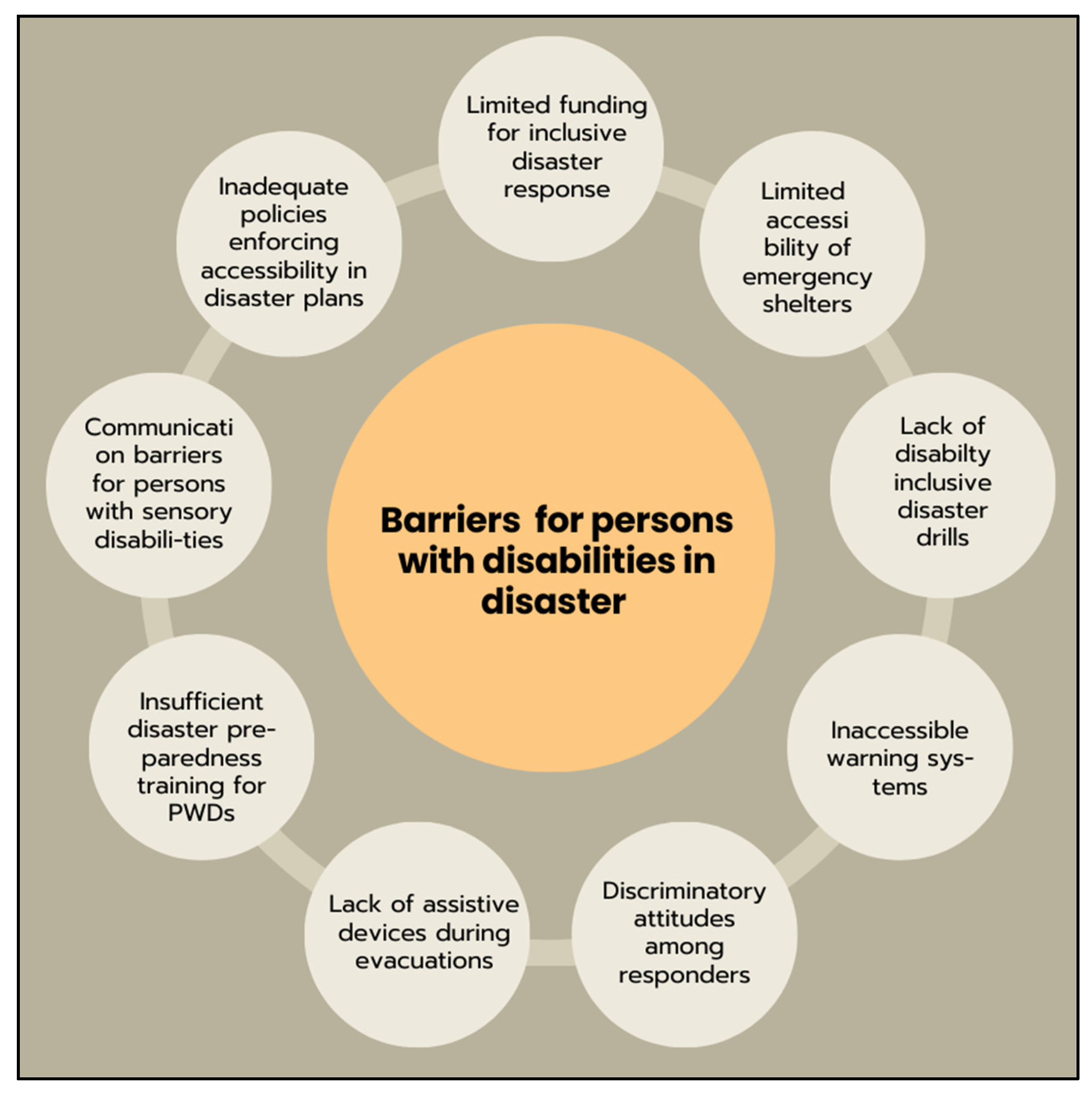
Figure 1.
Framework for Inclusive Disaster Risk Management.
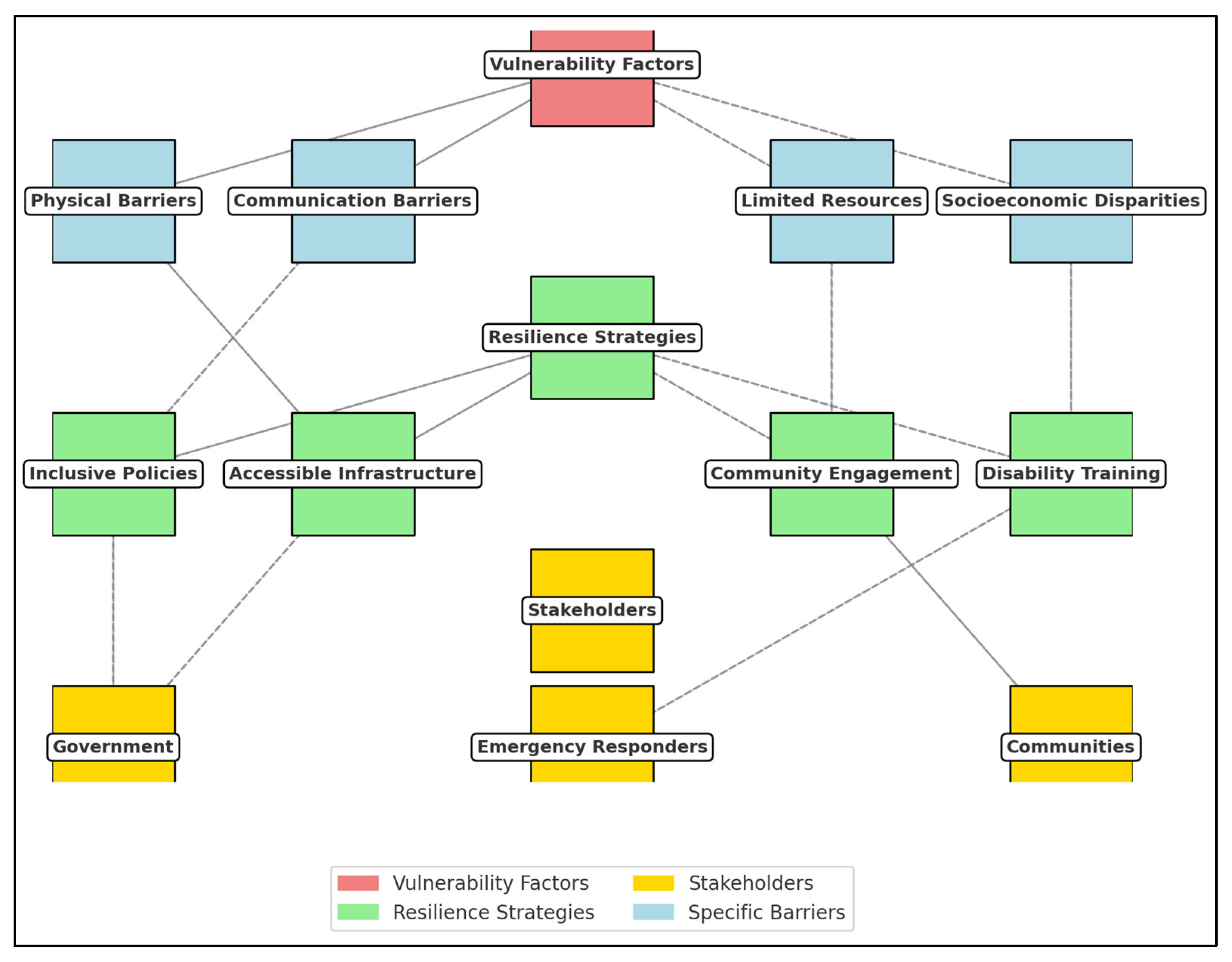

Table 1.
Addressing Challenges in Disability-Inclusive Disaster Management.
| Barrier | Proposed solution | Implementation timeframe | Feasibility | Constraints/challenges | Additional implementation strategies |
|---|---|---|---|---|---|
| Limited accessibility of emergency shelters | Construct shelters with wheelchair access, ramps, and Braille signs. | Short-Term | High | High cost of retrofitting existing shelters | Incentivize the construction of new accessible shelters |
| Lack of disability-inclusive disaster drills | Conduct regular evacuation simulations with disability organizations. | Short-Term | High | Requires cooperation with local disability organizations | Integrate drills into national disaster preparedness programs |
| Inaccessible warning systems | Develop multi-modal alert systems with text, audio, and visual components. | Short-Term | High | Needs integration with existing emergency alert systems | Use AI-based early warning systems to enhance accessibility |
| Discriminatory attitudes among responders | Provide mandatory disability-awareness training for emergency personnel. | Short-Term | Medium | Potential resistance from emergency response personnel | Develop national policies requiring responder training |
| Lack of assistive devices during evacuations | Ensure stockpiling of assistive devices (e.g., wheelchairs, hearing aids) at evacuation centres. | Short-Term | Medium | Logistical difficulties in stocking and distributing assistive devices | Partner with the private sector for supply chain management |
| Insufficient disaster preparedness training for PWDs | Offer targeted disaster preparedness programs tailored for persons with disabilities. | Short-Term | High | Requires funding and specialized trainers | Include disability preparedness in public education campaigns |
| Communication barriers for persons with sensory disabilities | Use sign language interpreters, captioning, and text-based alerts for effective communication. | Short-Term | Medium | Limited accessibility of information in rural areas | Use mobile technology and community networks for outreach |
| Inadequate policies enforcing accessibility in disaster plans | Implement stricter accessibility policies with accountability measures. | Long-Term | Medium | Lack of enforcement mechanisms | Create legal penalties for non-compliance |
| Limited funding for inclusive disaster response | Increase funding for inclusive emergency management programs and resources. | Long-Term | Low | Budget constraints and competing priorities | Encourage international funding and grants for accessibility |
| Lack of representation of PWDs in disaster planning committees | Mandate the inclusion of persons with disabilities in disaster response policy-making. | Long-Term | Medium | Lack of political will or advocacy representation | Form advisory councils of persons with disabilities |
| Difficulties in transportation and evacuation | Develop accessible transportation plans and emergency mobility assistance services. | Short-Term | Medium | Requires additional transportation infrastructure | Implement emergency ride-sharing partnerships |
| Absence of specialized medical care in emergency shelters | Ensure shelters have medical personnel trained in disability-specific care. | Short-Term | Medium | Shortage of medical professionals trained in disability care | Establish mobile medical units for disability-specific care |
| Exclusion of PWDs from economic recovery programs | Integrate PWDs into livelihood restoration and employment support programs. | Long-Term | Low | Discriminatory hiring practices post-disaster | Mandate accessibility requirements in economic recovery plans |
| Limited psychosocial support during and after disasters | Provide trauma-informed mental health services for persons with disabilities. | Short-Term | High | Limited mental health professionals with disability expertise | Create peer-support programs and virtual counselling options |
| Lack of accessible information on disaster preparedness | Distribute disaster preparedness materials in Braille, large print, and easy-to-read formats. | Short-Term | High | Needs adaptation to multiple disability needs | Develop multi-format educational materials on preparedness |
| Failure to provide inclusive recovery housing options | Ensure that post-disaster housing reconstruction includes accessibility considerations. | Long-Term | Medium | High costs for accessible reconstruction | Provide subsidies for accessible home modifications |
| Poor coordination among emergency responders and disability organizations | Establish partnerships between emergency services and disability advocacy groups. | Long-Term | Medium | Coordination issues between agencies and NGOs | Develop inter-agency coordination protocols and emergency response networks |
Disclaimer/Publisher’s Note: The statements, opinions and data contained in all publications are solely those of the individual author(s) and contributor(s) and not of MDPI and/or the editor(s). MDPI and/or the editor(s) disclaim responsibility for any injury to people or property resulting from any ideas, methods, instructions or products referred to in the content. |
© 2025 by the authors. Licensee MDPI, Basel, Switzerland. This article is an open access article distributed under the terms and conditions of the Creative Commons Attribution (CC BY) license (http://creativecommons.org/licenses/by/4.0/).
Copyright: This open access article is published under a Creative Commons CC BY 4.0 license, which permit the free download, distribution, and reuse, provided that the author and preprint are cited in any reuse.


