

Submitted:
21 March 2025
Posted:
26 March 2025
You are already at the latest version
Abstract
The global competition for skilled talent has intensified, posing significant challenges to public sector resilience, especially in regions such as Africa where the phenomenon of brain drain, commonly known as the ‘JAPA Syndrome,’ has reached critical levels. This paper examines how African governments can build resilient public institutions by addressing the root causes of talent flight through enhanced employee motivation strategies. Focusing on both intrinsic and extrinsic motivational factors, the study compares employee retention approaches in African public sectors with successful models from Europe, identifying actionable lessons for African policymakers. It argues that improving salaries, strengthening career progression frameworks, fostering workplace recognition cultures, and offering meaningful professional development opportunities can transform the public sector into an attractive, resilient employer capable of withstanding global migration pressures. This paper contributes to the broader conversation by demonstrating how innovative human resource strategies can help public institutions adapt to disruptive talent flows, while fostering long-term service quality and governance stability. Ultimately, it calls for a reimagined African public sector, one that competes effectively in the global talent marketplace while serving as a cornerstone of national development.
Keywords:
Brain Drain
; Employee Motivation
; Public Sector Resilience
; Africa
; Migration
; Talent Retention
; Global Disruptions
1. Introduction
The mass emigration of skilled professionals, particularly from Africa’s public sector, has become a significant challenge in recent years. This phenomenon, commonly referred to as ‘JAPA Syndrome,’ reflects the growing trend of workers seeking better opportunities in Europe and North America. The effects of this brain drain are most pronounced in critical public sectors such as healthcare, education, and governance, where a loss of skilled labor undermines service quality and overall national development [1]. While previous studies have explored various aspects of brain drain, limited research has focused on how motivation can mitigate talent flight in Africa’s public sector. This study builds on insights from the author’s doctoral research, which examined the relationship between employee motivation and public sector performance in the context of the ‘JAPA Syndrome.[2] Despite various efforts to reverse this trend, such as government-led retention schemes, salary adjustments, and incentive programs, little attention has been given to the role of employee motivation in addressing the underlying causes of emigration. Employee motivation, defined as the intrinsic and extrinsic factors that drive individuals to perform their duties effectively, is a key factor in retention strategies. African public sector employees face multiple challenges, including poor working conditions, inadequate pay, and limited opportunities for professional growth, which collectively result in low levels of motivation [3].
This paper aims to explore how improving employee motivation can help African governments mitigate brain drain, focusing on the public sector. Specifically, this study seeks to answer the following research questions:
1. How does employee motivation affect the retention of skilled public sector workers in Africa?
2. What intrinsic and extrinsic factors contribute to employee motivation in African public sectors?
3. How do European public sector motivation practices compare to African ones, and what lessons can be applied in Africa to mitigate brain drain?
By examining both intrinsic and extrinsic motivational factors and comparing African public sectors to their European counterparts, the study provides insights into potential solutions that can be implemented to retain talent.
2. Materials and Methods
This study employs a mixed-method approach, combining documentary analysis, comparative case studies, and secondary data analysis to examine how employee motivation can mitigate brain drain in Africa’s public sector. The literature on brain drain and employee retention provides a solid foundation for this research. The inclusion of European public sector models provides insight into best practices for mitigating brain drain. This study utilizes primary data collected through surveys and interviews conducted as part of the author’s PhD dissertation titled “A Comparative Study of Employees Motivation & Organizational Performance in The Public Sector (A Look into the Impact of ‘JAPA Syndrome’)” completed in 2024 at the National School of Political and Administrative Studies (SNSPA). The research involved structured interviews with African public sector employees and surveys measuring intrinsic and extrinsic motivational factors affecting retention. The findings from this dataset are used to support the comparative analysis presented in this article.[2] Existing literature was reviewed to understand the complex phenomenon of brain drain, particularly within African public sectors. Studies by [1] and the International Organization for Migration [4] illustrate the increasing trend of skilled professionals migrating from Africa to more developed regions like Europe and North America, seeking better working conditions and career opportunities. This migration, commonly referred to as the ‘JAPA Syndrome,’ has severely affected critical sectors, including healthcare and education, leading to skill shortages and weakened public service delivery. Motivation, as a key factor in employee retention, has been explored by scholars who distinguish between intrinsic and extrinsic motivators. [5] emphasizes that intrinsic motivation, such as job satisfaction, personal fulfillment, and recognition, plays a critical role in retaining employees. Many African public sector employees report feeling undervalued and disconnected from their roles due to a lack of recognition and inadequate working conditions. This lack of intrinsic motivation is a significant factor driving professionals to seek opportunities abroad. On the other hand, extrinsic motivation, which includes financial rewards like competitive salaries, benefits, and clear career advancement paths, is essential for retention, particularly in the public sector. The lack of extrinsic motivators in African public sectors, such as low wages and limited benefits, has made it difficult for these sectors to retain skilled employees. The absence of structured career progression and competitive financial incentives further exacerbates the situation, leaving skilled professionals with little reason to remain in their home countries. The comparative case study component of this research explores the differences between African and European public sector practices. Countries like the United Kingdom and Germany have successfully implemented strategies that balance intrinsic and extrinsic motivators. European public sector employees benefit from a mix of professional development opportunities, work-life balance initiatives, and robust financial incentives. These practices have contributed to higher employee satisfaction and retention rates in European countries, providing a valuable model for African governments to consider. [6]. In contrast, African public sectors, particularly in countries like Nigeria, South Africa, and Somalia, face numerous challenges that undermine both intrinsic and extrinsic motivation. [3] point out that the lack of merit-based promotion systems, political patronage, and poor working conditions demotivate employees, contributing to high turnover rates. This study draws on these findings to offer insights into how African governments can adapt successful European practices to improve employee retention. The study also analyzes secondary data from existing surveys and reports on public sector migration trends and workforce conditions. This data helps to identify key gaps in motivation within African public sectors and provides context for understanding why skilled professionals are leaving.
By combining these methodological approaches with insights from the literature, this research aims to offer actionable recommendations for African policymakers seeking to address brain drain by enhancing employee motivation.
2.1. Case Selection Justification
The study examines public sector motivation strategies in the United Kingdom, Germany, Nigeria, South Africa, and Somalia. These cases were selected based on:
- The severity of brain drain (Nigeria, South Africa, and Somalia have high rates of skilled emigration).
- The presence of established retention strategies (UK and Germany employ structured motivation policies).
- Diversity in governance structures and economic conditions.
The comparative analysis provides a balanced perspective on how motivation affects employee retention in different contexts.
3. Understanding The ’Japa Syndrome’ And Its Effects on Public Sector Employment
The ‘JAPA Syndrome’ has its origins in Nigeria, where the term became synonymous with the mass migration of skilled professionals, particularly from the public sector. This exodus is not limited to Nigeria but is also seen across several African nations, including Somalia and South Africa. According to the International Organization for Migration (IOM), over 27 million Africans were living outside the continent by 2020, marking a significant increase from the 21.8 million recorded in 2010 [7]. Several push factors contribute to this trend. Public sector employees in African nations often work under difficult conditions, including inadequate infrastructure, insufficient resources, and political instability. These factors, combined with low salaries and the absence of career development opportunities, create an environment of demotivation [3]. Furthermore, promotions in many African public sectors are often influenced by political patronage rather than merit, further discouraging employees from pursuing long-term careers in the sector. On the other hand, pull factors from developed nations, including higher wages, better working environments, and opportunities for professional growth, make migration highly attractive. Countries such as the United Kingdom and Germany have long relied on skilled migrants to fill gaps in their healthcare and education sectors, actively recruiting African professionals [8]. The impact of this migration on African public institutions is significant. Nigeria’s healthcare system, for instance, has faced severe shortages in skilled medical professionals, leading to a decline in the quality of healthcare services [7]. Similarly, Somalia’s education sector has been severely affected by the emigration of qualified teachers, which has contributed to falling educational standards. To address this challenge, it is crucial to improve employee motivation in African public sectors, offering professionals compelling reasons to remain in their home countries. Motivation, as explored in this paper, encompasses both intrinsic factors (personal satisfaction, recognition) and extrinsic factors (salary, benefits), both of which need to be addressed to curb the brain drain effectively.
3.1. Conceptual Framework: Employee Motivation as a Resilience Strategy
Employee motivation directly influences public sector resilience by affecting employee retention, performance, and institutional capacity. Motivation is categorized into intrinsic factors (personal satisfaction, recognition, purpose) and extrinsic factors (salary, benefits, career progression). This paper argues that a holistic motivation strategy addressing both dimensions is critical to retaining talent in Africa’s public sector. Motivation can be categorized into two main types: intrinsic motivation, which stems from internal satisfaction and personal fulfillment, and extrinsic motivation, which is influenced by external rewards such as salaries, benefits, and career advancements [5]. In African public sectors, the lack of both intrinsic and extrinsic motivation has significantly contributed to the brain drain crisis.
3.1.1. Intrinsic Motivation in the Public Sector
Intrinsic motivation, which includes factors such as personal achievement, recognition, and a sense of purpose, is often overlooked in public sector management. Many public sector employees in African nations feel disconnected from their roles due to a lack of recognition and appreciation for their contributions. For example, in Nigeria and South Africa, employees report feeling undervalued, which demotivates them and encourages them to seek opportunities elsewhere. Improving recognition and creating a work culture that values employee contributions can increase retention. The conceptual framework Figure 1 visually represents the relationship between employee motivation (intrinsic and extrinsic) and organizational performance in the public sector.
3.1.2. Extrinsic Motivation: Salary, Benefits, and Career Growth
Extrinsic motivation is particularly important in African public sectors, where financial incentives are often insufficient to retain skilled employees. Low wages and the absence of competitive benefits packages make it difficult for public sector institutions to compete with private sector opportunities and international job offers. In countries such as Somalia and South Africa, where public sector wages have stagnated, employees are left with few reasons to remain in their positions [3]. Moreover, the absence of clear pathways for career advancement further demotivates employees. In many cases, promotions are based on political connections rather than merit, leaving skilled workers with little hope for upward mobility. Addressing these extrinsic factors by increasing salaries, offering competitive benefits, and implementing merit-based promotion systems could greatly improve employee retention.
3.1.3. Linking Motivation to Retention
The connection between motivation and retention is well-documented. Motivated employees are more likely to remain committed to their organization, perform better, and resist the temptation to seek employment elsewhere. In the context of Africa’s public sector, addressing both intrinsic and extrinsic motivation could mitigate the brain drain by making public sector roles more attractive to skilled professionals [9]. Additionally, fostering a sense of purpose and aligning employee roles with organizational goals can further increase retention. Figure 2 visually represents this relationship, demonstrating how intrinsic motivation influences work performance and work satisfaction, which in turn drive organizational performance.
4. Comparative Study: African and European Approaches
This section directly answers the research question: How do European public sector practices compare to African ones, and what lessons can be applied in Africa to mitigate brain drain? By comparing employee motivation strategies in countries such as the United Kingdom, Germany, and Romania with African nations like Nigeria, Somalia, and South Africa, we can identify key differences in how public sector talent is managed. European countries, particularly those in Western Europe, have successfully implemented motivation strategies that emphasize both intrinsic and extrinsic factors, making their public sectors more attractive to skilled workers.
4.1. The European Model: High Motivation and Low Turnover
European countries, particularly those in Western Europe, have successfully implemented motivation strategies that emphasize both intrinsic and extrinsic factors. For example, in the United Kingdom, public sector employees benefit from competitive salaries, clear career advancement paths, and a work culture that values professional development.
In addition, many European countries provide robust benefits packages, including health insurance, retirement plans, and work-life balance initiatives, which enhance job satisfaction and retention.[6] In contrast, African public sectors are often unable to provide these incentives, leading to high turnover rates and low employee morale. The differences in organizational performance between European and African public sectors can be partially attributed to these motivational gaps.[10]
4.1.1. African Public Sector Challenges
- Financial Constraints: African governments struggle with budget limitations, limiting their ability to increase salaries and benefits
- Limited Career Growth: Many public institutions lack transparent and structured promotion systems, reducing employee motivation.
- Workplace Recognition Gaps: Recognition of employee contributions is inconsistent, leading to disengagement.
4.1.2. European Best Practices
- Structured Salary Progression: The UK and Germany have competitive salary scales that align with inflation and industry standards.
- Merit-Based Promotion: Career growth opportunities are based on performance evaluations and structured pathways.
- Employee-Centric Work Cultures: Work-life balance initiatives and professional development programs enhance job satisfaction.
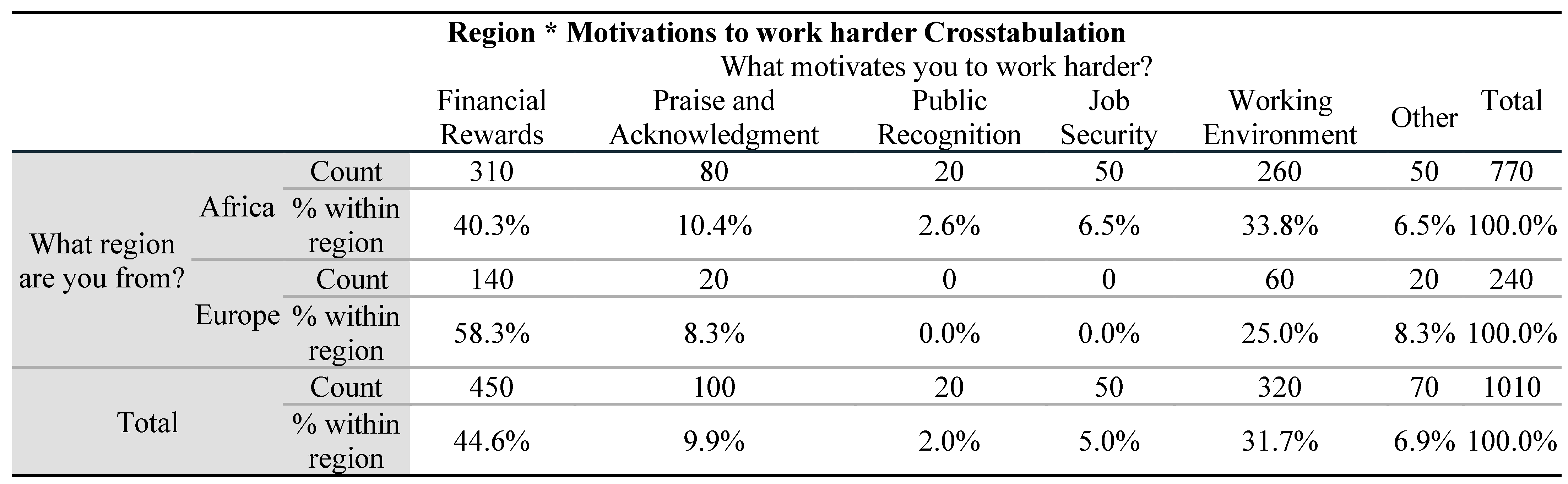
Table 1 Motivations to Work Harder by Region This table compares African and European public sector employees’ motivations to work harder. It shows that financial rewards and working environment are primary motivators for African employees, while European employees are more influenced by financial rewards and job security. This supports the article’s argument that European public sectors offer better job stability and benefits, leading to higher motivation and lower turnover, whereas African public sectors struggle with retention due to insufficient incentives.
Table 2 Preferences for Incentives by Region. This table highlights the preferences of African and European employees regarding financial incentives, career incentives, and health benefits. The results indicate that career incentives are the most preferred across both regions, but African employees place a higher emphasis on financial incentives due to lower wages. The findings reinforce the article’s discussion on the need for transparent promotion systems, competitive salaries, and structured career growth to reduce talent loss in Africa’s public sector. By addressing these motivational gaps, African governments can adopt best practices from European models to enhance employee retention and public sector performance.
4.2. Lessons for Africa
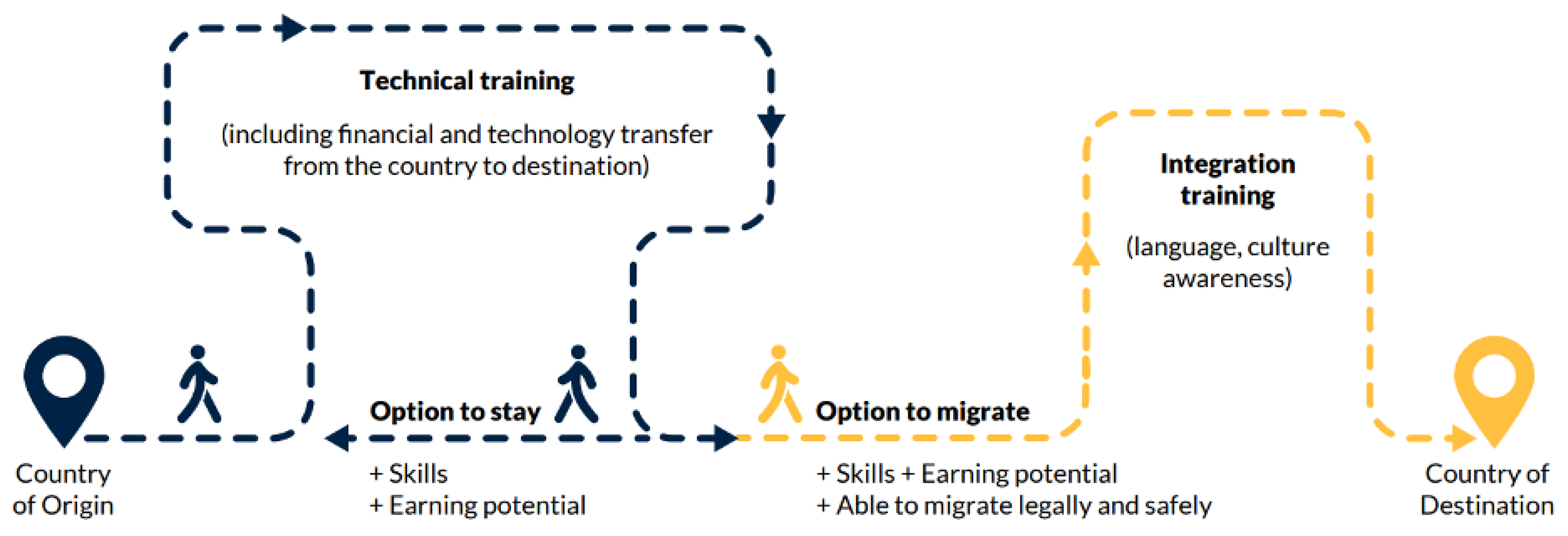
African governments can draw valuable lessons from European public sectors by investing in both intrinsic and extrinsic motivators. In particular, offering competitive salaries and benefits, implementing transparent and merit-based promotion systems, and fostering a positive work culture can significantly improve employee retention. In the context of ’JAPA Syndrome,[2] improving these motivational drivers could reduce the outflow of talent and stabilize public sector performance as seen in Figure 3
5. Policy Recommendations for Building Resilient Public Sectors Based on the Analysis of Employee Motivation in Both African and European Public Sectors
Several key policy recommendations can be adopted to reduce brain drain and retain skilled public sector employees:
1. Increase Salaries and Offer Competitive Benefits: Governments must prioritize increasing public sector salaries to competitive levels. While budgetary are a challenge, salary increases can be phased in over time, starting with critical sectors such as healthcare and education, where the impact of brain drain is most severe. In addition, governments should explore public-private partnerships to offer competitive benefits, including health insurance, housing allowances, and retirement plans.
2. Implement Merit-Based Promotion Systems: To combat political patronage and favoritism, African governments should adopt merit-based promotion systems that reward performance, skill development, and contributions to organizational goals. Transparent evaluation processes, combined with clear career advancement paths, will boost motivation and retention.
3. Foster a Positive Work Environment and Recognition Culture: Governments should prioritize creating a work environment that values recognition and professional development. Regular performance reviews, employee awards, and recognition programs can enhance intrinsic motivation. Additionally, improving workplace conditions by providing the necessary tools and resources will boost job satisfaction and organizational loyalty.
4. Develop Public-Private Partnerships for Professional Development: African public sectors often lag in offering continuous professional development opportunities, which is a critical factor in employee retention. Governments can partner with the private sector, international organizations, and educational institutions to offer training programs, scholarships, and exchange opportunities that enhance employee skills and career growth.
5.1. Challenges to Implementing Employee Motivation Policies
While the proposed policies such as salary increases, structured career growth, and improved work environments are effective in mitigating brain drain, African governments may face several challenges in implementing them. These include:
- Budgetary Constraints – Many African governments operate under tight fiscal policies, making large salary adjustments difficult in the short term.
- Political Resistance – Implementing merit-based promotion systems may face opposition from entrenched interests.
- Institutional Capacity – Weak governance structures may hinder reforms, requiring stronger oversight mechanisms.
- Public-Private Partnerships as a Solution – Collaborating with the private sector can help ease financial burdens while expanding career development opportunities.
Addressing these challenges requires phased policy implementation, starting with critical sectors like healthcare and education before expanding reforms more broadly.
6. Conclusion
Public administration in Africa faces global disruptions that threaten public service resilience. Addressing brain drain through enhanced employee motivation offers a practical path to building stronger, more adaptable public institutions. By adopting lessons from Europe, while adapting solutions to local contexts, African governments can transform the public sector into an employer of choice, contributing to sustainable development and governance stability. African governments need to focus on increasing salaries, offering competitive benefits, and establishing merit-based promotion systems to improve extrinsic motivation. Equally important is fostering a positive work environment where recognition and professional development opportunities enhance intrinsic motivation. These strategies, already successful in Europe, can be adapted to African contexts to improve retention and organizational performance. While challenges such as budgetary limitations and political instability may slow progress, a phased approach starting with critical sectors like healthcare and education can create the foundation for broader reforms. Public-private partnerships can also play a vital role in easing financial burdens and offering development opportunities. In conclusion, by addressing both intrinsic and extrinsic factors of employee motivation, African governments can reduce the brain drain and build a stronger, more resilient public sector, vital for the continent’s long-term growth and stability.
References
- Mom, A.O. Brain drain in Africa: A historical perspective. African Historical Review 2022, 49, 33–45.
- Akerele, O.O. A Comparative Study of Employees Motivation & Organizational Performance in The Public Sector (A Look into the Impact of ‘JAPA Syndrome’). Doctoral dissertation, National School of Political and Administrative Studies (SNSPA), 2024.
- Akerele, O.O. The link between motivation and organizational performance: An exploration of factors influencing employee motivation and its impact on organizational success. International Journal of Business Ethics and Governance 2023, 6.
- International Organization for Migration (IOM). Migration data portal: African emigration statistics, 2021. International Organization for Migration.
- Dobre, O.I. Employee motivation and organizational performance. Review of applied socio-economic research 2013, 5.
- Mekuria, D.; Kassaye, D. Factors Influencing Job Motivation and Performance: Empirical Evidence from the Ethiopian Federal Police. Ethiopian Journal of the Social Sciences and Humanities 2023, 19, 53–77.
- Chuang, J.A. The international organization for migration and new global migration governance. Harv. Int’l LJ 2022, 63, 401.
- Robinson, B.S. Leadership Strategies to Increase Retention Among High-Performing Employees in Local Government: A Qualitative Exploratory Case Study. PhD thesis, University of Phoenix, 2025.
- Essien, E.A.; Mahmood, M.Y.; Adiukwu, F.; Kareem, Y.A.; Hayatudeen, N.; Ojeahere, M.I.; Salihu, M.O.; Sanni, K.A.; Omotoso, A.B.; da Costa, M.P. Workforce migration and brain drain– A nationwide cross-sectional survey of early career psychiatrists in Nigeria. Cambridge Prisms: Global Mental Health 2024, 11, e30.
- Akerele, O.O. Impact of Incentives on Public Sector Performance: Comparing African and European Systems. Marsida Harremi Measuring Customs Revenue Performance: Insights from North Macedonia................... 49 Danijela Miloshoska Aleksandar Trajkov 2024, p. 9.
Figure 1.
Conceptual Framework for the relationship between Employee Motivation and Organizational Performance. Source: The figure created is an adaption by the author from selected sources.
Figure 1.
Conceptual Framework for the relationship between Employee Motivation and Organizational Performance. Source: The figure created is an adaption by the author from selected sources.
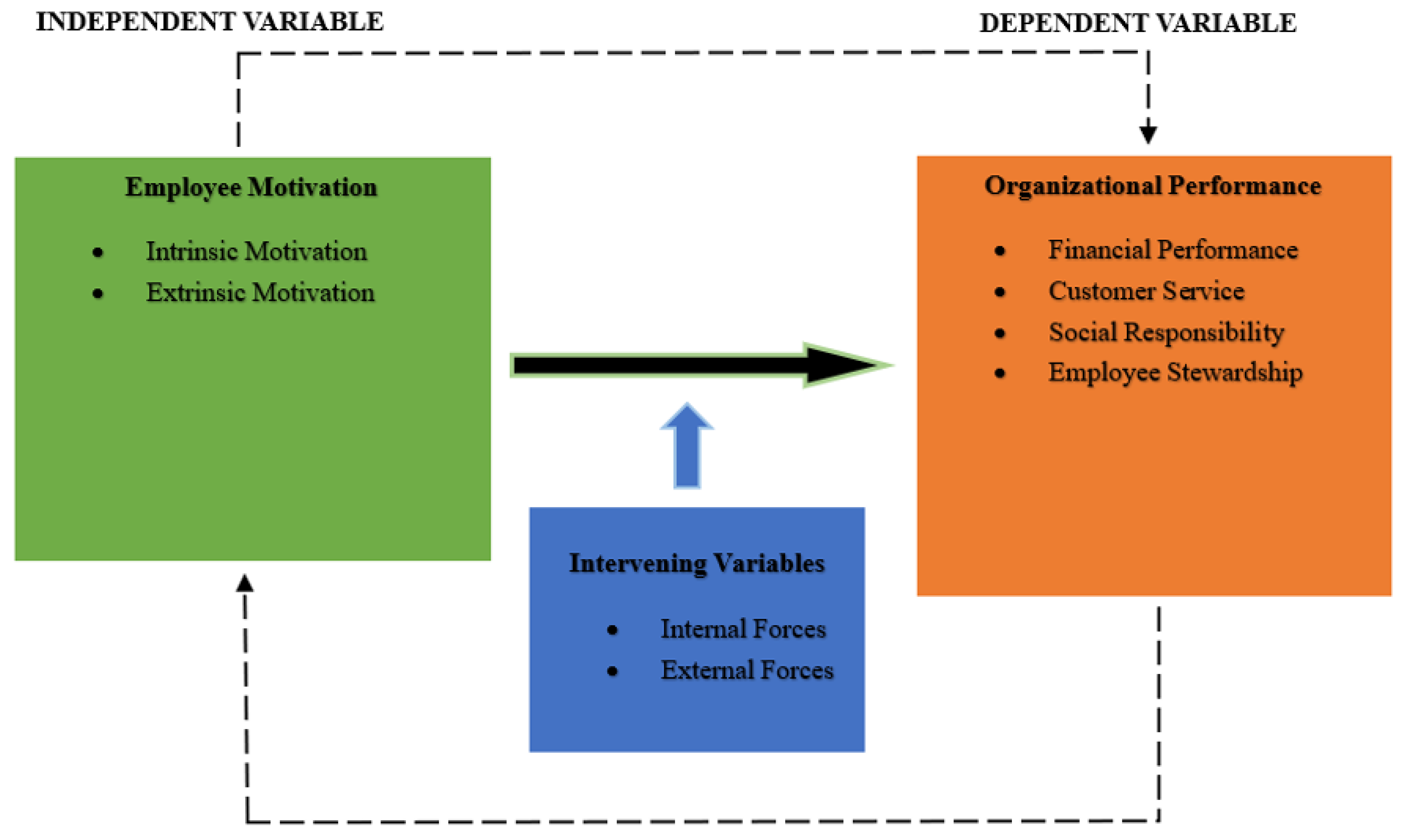
Figure 2.
Correlation between internal motivation and organizational performance. Source: The figure created is an adaption by the author from selected sources
Figure 2.
Correlation between internal motivation and organizational performance. Source: The figure created is an adaption by the author from selected sources
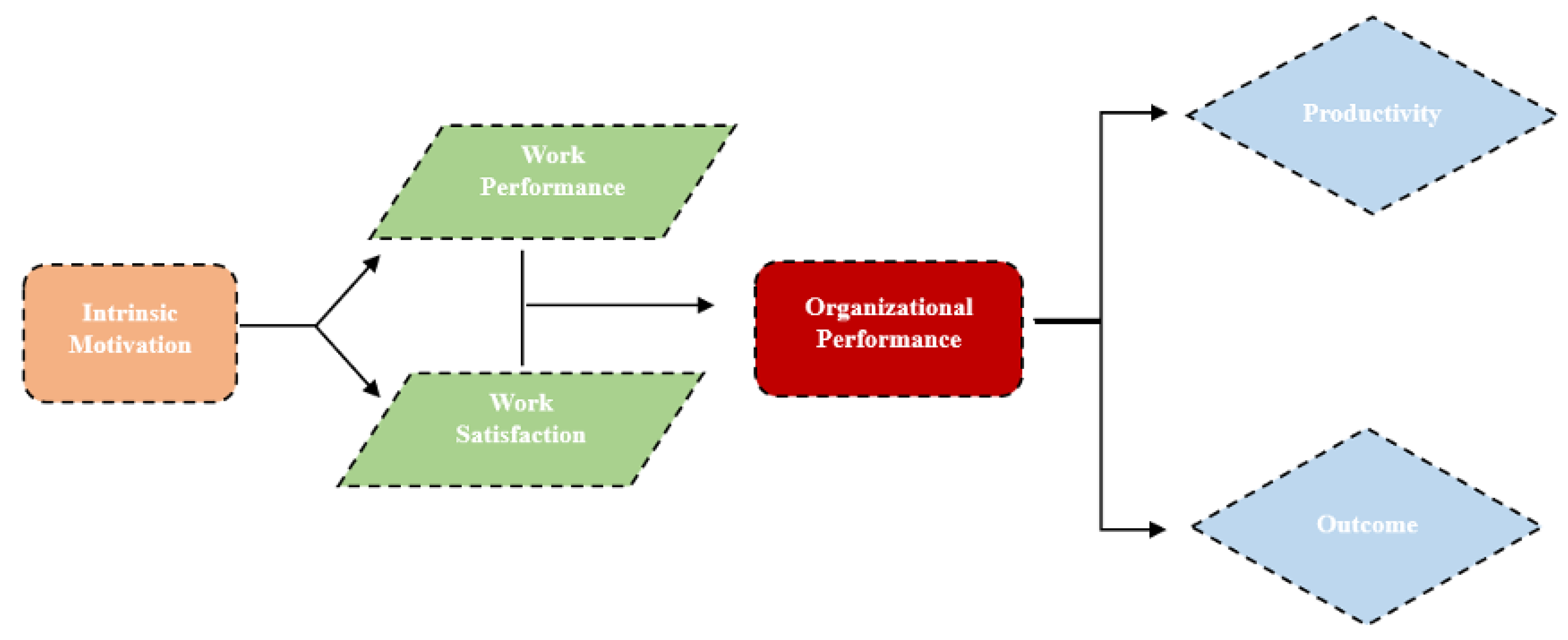
Figure 3.
The figure visually represents the core argument of the article: Addressing brain drain requires a two-pronged strategy improving local work conditions to encourage retention while ensuring that migration occurs through structured, legal pathways. Source: The figure created is an adaption by the author from selected sources
Figure 3.
The figure visually represents the core argument of the article: Addressing brain drain requires a two-pronged strategy improving local work conditions to encourage retention while ensuring that migration occurs through structured, legal pathways. Source: The figure created is an adaption by the author from selected sources



Disclaimer/Publisher’s Note: The statements, opinions and data contained in all publications are solely those of the individual author(s) and contributor(s) and not of MDPI and/or the editor(s). MDPI and/or the editor(s) disclaim responsibility for any injury to people or property resulting from any ideas, methods, instructions or products referred to in the content. |
© 2025 by the authors. Licensee MDPI, Basel, Switzerland. This article is an open access article distributed under the terms and conditions of the Creative Commons Attribution (CC BY) license (http://creativecommons.org/licenses/by/4.0/).
Copyright: This open access article is published under a Creative Commons CC BY 4.0 license, which permit the free download, distribution, and reuse, provided that the author and preprint are cited in any reuse.


