

Submitted:
20 March 2025
Posted:
20 March 2025
You are already at the latest version
Abstract
This study examines the use of analgesic medications among sheep farmers, highlighting both their benefits and significant gaps in their adoption. Our findings indicate that 26.7% of sheep farmers did not utilize any analgesics, a figure that contrasts sharply with high usage rates exceeding among farmers in swine and cattle sectors. Low utilization of NSAIDs and corticosteroids in sheep farming may be attributed to inadequate education and the absence of approved indications for these medications in Greece. Additionally, we found a positive correlation between farm size and the use of NSAIDs, with larger farms using more NSAIDs, especially flunixin. Furthermore, farms using more NSAIDs/larger farms tended to have higher milk yields, suggesting that enhanced management practices are associated with better outcomes. The results underscore the need for targeted educa-tional initiatives to improve the use of analgesics in sheep farming and address welfare concerns. Overall, this research highlights the importance of addressing gaps in pain management practices within the sheep farming sector to promote better animal welfare. However, further studies with larger sample sizes are recommended to expand our un-derstanding of analgesic use and its implications for sheep welfare.
Keywords:
Non-steroidal anti-inflammatory drugs (NSAIDs)
; Corticosteroids (SAIDs)
; Flunixin meglumine
; Meloxicam
; Milk yield
; Pain management
; Welfare assessment
; Sheep
1. Introduction
Sheep are among the most significant livestock species in Europe, ranking third in population size among farmed species, with a particularly strong presence in Mediterranean countries, including Greece [1]. The Greek sheep farming industry comprises approximately 7.3 million sheep across 83,000 farms, with a predominant focus on dairy production [2]. The milk produced is primarily used for feta cheese, a key export product under the Protected Designation of Origin status. However, over the past decade, the number of small and medium-sized farms has declined, leading to an increase in larger operations with over 500 ewes, relying on intensive housing systems and imported concentrate feeds [3,4].
Although farm animal welfare has been the focus of research for decades, much attention has been directed towards intensively farmed species, with less emphasis on sheep. The shift towards more intensive farming systems has raised concerns about animal welfare, as these systems often restrict natural behaviors, leading to stress and potential health issues [5]. Consumers increasingly prioritize high welfare farming practices, placing pressure on the industry to mitigate pain and improve overall conditions for live-stock [6,7].
Pain in sheep may stem from various sources, including diseases such as mastitis and lameness, routine management practices such as tail docking, and environmental factors such as inadequate housing conditions [8]. As prey animals, sheep tend to mask signs of pain, making it challenging for farmers and veterinarians to assess and manage discomfort effectively [9,10,11,12]. Left untreated, pain can lead to behavioral changes, reduced feed intake, and decreased productivity [13,14,15]. Under current EU legislation, farm animals are considered sentient beings [16] and are therefore recognized to suffer and feel pain. Freedom from pain is a key component of welfare [17].
Providing analgesia to food-producing animals presents several challenges, including a limited number of approved medications, regulatory restrictions, frequent need for repeated administration, high costs, and meat and milk withholding periods [18]. Many analgesics also have a delayed onset and short duration of action, requiring multiple doses to ensure effective pain relief. This poses difficulties for producers and veterinarians, as animals may continue to experience pain for several days after a painful procedure, necessitating careful management and repeated handling [19].
Currently, the most effective options for on-farm analgesia include local anesthetics and nonsteroidal anti-inflammatory drugs (NSAIDs) such as flunixin or meloxicam [18]. NSAIDs exert their effects by inhibiting cyclooxygenase (COX) enzymes, which are involved in the biosynthesis of prostaglandins (PGs) and thromboxane (TX). This inhibition reduces prostaglandin production, key mediators of pain and inflammation [20].
By minimizing inflammation, NSAIDs not only improve animal comfort but also accelerate the healing process, reducing recovery time from injuries and disease. Addition-ally, by limiting inflammatory damage, they decrease the likelihood of permanent tissue impairment, allowing animals to regain their pre-inflammation levels of productivity [8]. The use of NSAIDs has been linked to improved production outcomes, but their precise effects on dairy sheep welfare and milk yield remain insufficiently studied. Similarly, corticosteroids, also known as steroidal anti-inflammatory drugs (SAIDs), such as dexamethasone, are used for their anti-inflammatory effects. However, their role in pain relief and their long-term implications for animal health require further investigation [21,22,23]. Ad-dressing pain in livestock is critical not only from an ethical perspective but also from an economic one, as poor welfare conditions can negatively impact production efficiency and product quality [24]. The concept of positive welfare holds significance not only in scientific realms but also in society, particularly among farmers and the general public, who consider both positive and negative welfare aspects when evaluating livestock production systems [25].
In Greece, the lack of NSAID approvals for sheep has led to the off-label use of medications licensed for cattle, posing challenges in dosage standardization and efficacy assessment. The NSAIDs most commonly used by veterinary professionals are flunixin meglumine (FM), meloxicam (MX), and ketoprofen (KP). FM inhibits both COX-1 and COX-2, while MX is known for its selective inhibition of COX-2, specifically targeting inflammatory processes [26]. Although both KP and FM exhibit significant activity on COX-1, the side effects associated with KP are typically minimal due to its shorter circulation time compared to FM [27].
Given the growing emphasis on “welfare-focused livestock management”, it is crucial to evaluate the impact of NSAIDs and corticosteroids on both welfare parameters and milk production in modern sheep farming systems. While increased NSAIDs use may indicate the presence of health challenges within a farm, it can also reflect a proactive management approach that prioritizes effective pain relief and disease control. Additionally, welfare and NSAIDs usage share a bidirectional relationship: poor welfare conditions may necessitate higher NSAIDs usage, but proper analgesic use can, in turn, enhance welfare and prevent long-term tissue damage, allowing animals to return to optimal productivity.
This study investigates the relationship between NSAIDs and corticosteroids use, welfare indicators, and milk yield in Greek dairy sheep farms. By assessing these factors in conjunction with farm management practices, it aims to clarify the role of NSAIDs in balancing animal welfare and productivity. The findings will contribute to evidence-based recommendations for optimizing sheep farm management strategies and promoting better analgesic use in the sector.
2. Materials and Methods
2.1. Study Area, Sampling, and Data Collection
This study was conducted between September 1, 2022, and August 31, 2023, covering a full lactation period in the region of West Thessaly. Thirty randomly selected dairy sheep farms, located near Karditsa (43100) and Trikala (42100), participated in the study. The total population of animals was 5,250, with individual farm sizes ranging from 45 to 700 animals. The distribution of selected farms is presented in Figure 1.
The selection of 30 farms was based on both practical constraints (e.g., logistical and financial limitations) and statistical considerations to ensure a representative sample. Conducting detailed welfare assessments, collecting management data, and monitoring medication usage over an entire milking period posed significant challenges for a larger sample size. A power analysis indicated that with n=30, the study had sufficient power to detect moderate-to-large effect sizes (Cohen’s d ≥ 0.7) at a 95% confidence level.
The sample was randomly selected using simple random sampling from a list of registered dairy sheep farms in the region, ensuring equal probability of selection among farms with similar characteristics. Farms were eligible for inclusion if they adhered to routine vaccination protocols for clostridial diseases and brucellosis and operated under an intensive farming system (i.e., indoor housing, reliance on formulated feed). All the animals belonged to indigenous breeds crossed with Lacaune sheep. Specifically, all selected farms reared crossbred Lacaune sheep under intensive housing systems without access to grazing. The selected farms ranged in size (from 45 to 700 animals) but shared common management practices, providing a representative dataset of intensive dairy sheep farming in West Thessaly.
However, the selection process did not explicitly control for potential confounding factors such as specific feeding regimens, minor genetic variations, or microclimatic differences, which may influence both farm management strategies and animal welfare indicators. Furthermore, as the study was conducted exclusively in West Thessaly, the findings may not be directly generalizable to other regions with different climatic conditions and farming system.
Farm visits were conducted monthly. During each visit, data on milk yield, milk composition (fat and protein), NSAID use (FM and MX), and corticosteroid (DEX) administration were recorded based on veterinarian-issued invoices. NSAID usage was standardized according to the number of vials purchased: for meloxicam (MX), 30 mL vials with a concentration of 20 mg/mL were used, with a recommended dosage of 2.5 mL per 100 kg of body weight for three days; for flunixin meglumine (FM), 100 mL vials with a concentration of 8.5% were used, with a recommended dosage of 2 mL per 45 kg of body weight for three days. Dexamethasone (DEX) usage was recorded based on 50 mL vials with a concentration of 2 mg/mL, with a recommended dosage of 1 mL per 25 kg of body weight for three days. For the classification of farms based on pain management strategies, four distinct groups were established: (1) farms administering only NSAIDs (flunixin meglumine, meloxicam or ketoprofen), (2) farms using only dexamethasone, (3) farms employing a combination of NSAIDs and corticosteroids (mixed use), and (4) farms that did not administer any pharmacological treatment. Given the similarities in their anti-inflammatory and analgesic mechanisms, flunixin meglumine and meloxicam were analyzed as a single category under NSAID use. The Body Condition Score (BCS) was assessed by trained observers using a standardized 1–5 scale [28].
In the first farm visit, we recorded the number of animals on each farm, the farmers' attainment of formal higher education (yes/no), the farmers' age categorized as <35 years, 35-50 years, and >50 years, the number of animals per worker, the use or non-use of estrus synchronization protocols, and the housing conditions. Housing conditions were classified according to EU Regulation 2092/91 [29] and expert assessment, categorized into three levels: 'Suboptimal' (facilities built before 2000 with inadequate space <1.5m²/ewe and lamb), 'Moderate' (adequate space but older infrastructure), and 'Optimal' (modern facilities with sufficient space).
Welfare assessment was conducted by an experienced veterinary researcher using a modified scoring system based on Poulopoulou et al. [30], originally designed for cattle welfare and adapted for sheep (Table 1). The evaluation was performed prior to the assessment of anti-inflammatory drug administration, ensuring that the process was blinded to NSAID and SAID usage. Farms were categorized by the score they achieved in-to four categories: Category “A” for farms scoring 80.1 to 100 points, “B” for farms scoring 60.1 to 80 points, “C” for farms scoring 40.1 to 60 points, and “D” for farms scoring up to 40 points according to Table 1 criteria. The scoring framework was aligned with regulations from the Greek Ministry of Rural Development and Food [31] and Zygogiannis [32]
2.2. Statistical Analysis
The dataset includes information from 30 farms, selected to balance practical constraints with the need for a representative sample. Given the relatively small sample size, multiple statistical approaches were implemented to enhance the robustness of the findings. Propensity Score Matching (PSM) was applied to reduce confounding effects by creating comparable groups of farms with and without NSAID use. Additionally, bootstrap-ping methods were used to estimate parameter variability and generate more reliable confidence intervals.
To assess the impact of NSAIDs on milk production and welfare, Multivariate Analysis of Variance (MANOVA) was conducted in SPSS, ensuring the validity of results through multivariate normality checks. Logistic regression models were employed in both R and SPSS to examine factors associated with NSAID administration and the likelihood of achieving a high welfare score (category A), with independent variables including farm size, housing conditions, and estrous synchronization.
Further methodological controls were implemented to strengthen causal inference. Selection bias in PSM was assessed by comparing pre- and post-matching covariate distributions in R. Additionally, multicollinearity among independent variables was evaluated to prevent model distortion. Univariate analysis identified potential predictors (P ≤ 0.25), which were refined through backward elimination, retaining only statistically significant variables (P < 0.05) in the final models. The goodness-of-fit of logistic regression models was assessed using the Pearson chi-square statistic, confirming model adequacy. All statistical analyses were conducted using R and SPSS [version 29.0.0.0 (241)] [33].
3. Results
3.1. Descriptive Statistics
The descriptive analysis of the study variables revealed substantial variation in herd size, milk yield, and key welfare indicators among the 30 dairy sheep farms. Total milk yield per farm ranged from 5,394 kg to 236,739 kg, with a mean production of 50,589 kg (SD = 49,946 kg). Milk yield per sheep also exhibited variability, ranging from 119.87 kg to 383.81 kg, with an average of 261.26 kg (SD = 67.63 kg). Regarding milk composition, fat percentage varied between 5.51% and 7.01%, with a mean of 6.12% (SD = 0.38%), while protein content ranged from 4.67% to 6.18%, with a mean of 5.61% (SD = 0.30%).
The classification of farms based on pain management strategies showed that 26.7% (n=8) did not administer NSAIDs or corticosteroids, while 73.3% (n=22) implemented some form of pharmacological pain management. Specifically, 30.0% (n=9) of farms used only NSAIDs (flunixin meglumine or meloxicam), 16.7% (n=5) relied exclusively on corticosteroids, and 26.7% (n=8) adopted a mixed approach, combining both NSAIDs and corticosteroids (Figure 2). Overall, NSAIDs were administered in 56.7% of farms, corticosteroids in 43.3%, while combined NSAID and corticosteroid use was less frequent (26.7%). The distribution of treatment categories was skewed, with most farms adhering to a single treatment strategy rather than employing a combined approach.
Farm management characteristics also exhibited considerable variation. The number of animals per worker ranged from 30 to 200, with a mean of 88.06 (SD = 39.28), reflecting substantial differences in labor intensity across farms. Detailed results are presented in Table 2.
The median Body Condition Score (BCS) was 2.00 (IQR: 2.00–3.00), indicating that most animals were within an acceptable body condition range. Housing conditions had a median score of 2.00 (IQR: 2.00–3.00), suggesting that the majority of farms fell into the moderate category in terms of infrastructure and space allocation. Avoidance behavior had a median score of 0.00 (IQR: 0.00–10.00), demonstrating a wide range of responses to human presence. Hoof conformation showed a median of 2.50 (IQR: 0.00–10.00), reflecting variability in hoof care and trimming practices across farms. Lameness prevalence had a median of 5.00 (IQR: 0.00–5.00), while dystocia occurrence had a median of 10.00 (IQR: 5.00–10.00), highlighting differences in reproductive health among the studied farms.
The Total Welfare Score ranged from 45 to 95, with a median of 70.00 (IQR: 55.00–86.25), reflecting the variation in welfare conditions among the sampled farms (Figure 3). More detailed information on the distribution of these variables is presented in Table 3.
The analysis of categorical variables revealed that estrous synchronization protocols were implemented in 22 out of 30 farms (73.3%), while 8 farms (26.7%) did not use them. Regarding education level, 22 farmers (73.3%) had only basic education, whereas 8 (26.7%) had completed tertiary education.
The ANOVA results indicated a statistically significant difference in milk yield per sheep (kg) among the treatment groups [F (3,26) = 3.102, p = 0.044]. However, no significant differences were observed for mean fat percentage [F (3,26) = 1.418, p = 0.260] or mean protein percentage [F (3,26) = 1.407, p = 0.263]. Post-hoc Bonferroni comparisons did not reveal statistically significant differences between specific treatment groups for milk yield per sheep (all p-values > 0.05). Similarly, no significant differences were detected between groups for fat or protein content.
A multiple linear regression model was employed to assess the effects of treatment use, farmer characteristics, and management practices on total milk yield (kg). The model demonstrated strong predictive power, explaining 80% of the variance in total milk yield (R² = 0.800). The ANOVA for the regression model indicated statistical significance [F (7,22) = 12.556, p < 0.001], suggesting that at least one of the independent variables significantly influenced total milk yield.
Examination of regression coefficients (Table 4) revealed that Workers per Animal was a strong positive predictor (B = 610.027, p < 0.001), highlighting the importance of labor availability in milk production efficiency. Farmer's Education (University Degree) was significantly associated with higher total milk yield (B = 37,156.574, p = 0.006), suggesting that more educated farmers implemented improved management strategies. Among pharmacological treatments, Flunixin use had the most pronounced positive effect (B = 42,616.334, p = 0.006), followed by Meloxicam use (B = 28,623.026, p = 0.047), supporting the hypothesis that NSAID administration contributed to enhanced milk yield. Conversely, the effects of Mixed Use (NSAID + corticosteroids) (B = -30,338.408, p = 0.171), Corticosteroid use (B = -3,386.599, p = 0.848), and Farmer’s Age (B = -7,684.890, p = 0.346) did not reach statistical significance, indicating that these factors did not have a consistent impact on total milk yield.
Collinearity diagnostics confirmed no major multicollinearity concerns among predictors, with variance inflation factor (VIF) values ranging from 1.326 to 4.098, ensuring the statistical reliability of the model. Figure 4 presents the estimated regression coefficients (B) for the significant predictors of total milk yield, illustrating the positive associations of education status, Flunixin use, and Meloxicam use with milk yield.
Table 5 summarizes the results of the five logistic regression models implemented in this analysis. Each model is described by its intercept, which represents the baseline log-odds of the dependent variable being 1 (i.e., the occurrence of the event, such as NSAID administration) when all independent variables are set to zero. The point estimate reflects the change in the log-odds of the dependent variable occurring for a one-unit increase in the independent variable. Model 1 examined the association between flunixin meglumine administration and the independent variables. A positive but small association was observed between herd size and flunixin meglumine use, with an odds ratio of 1.01 (95% CI: 1.005–1.025, p < 0.01), indicating that larger herds were more likely to administer this NSAID. Conversely, meloxicam administration was negatively associated with herd size, with an odds ratio of 0.95 (95% CI: 0.88–0.99, p = 0.03), suggesting that smaller herds were more inclined to use meloxicam. However, total milk yield was positively correlated with meloxicam use, with an odds ratio of 1.002 (95% CI: 1.001–1.004, p = 0.025), indicating that herds with higher milk production were more likely to administer meloxicam. Regarding dexamethasone administration, farmers with higher education (university degree) were significantly more likely to use this corticosteroid, with an odds ratio of 6.43 (95% CI: 1.15–52.25, p = 0.04). Finally, NSAID administration overall was positively associated with total milk yield, with an odds ratio of 1.05 (95% CI: 1.018–1.11, p = 0.02), suggesting that farms with greater milk production were more likely to implement NSAID treatments.
Higher total milk yield was positively associated with improved welfare scores, with an odds ratio of 1.04 (95% CI: 1.02–1.08, p = 0.004), indicating that farms with greater milk production were more likely to achieve higher welfare scores.
4. Discussion
Our findings indicate that 26.7% of sheep farmers did not utilize any analgesic medications, a percentage that aligns with previous reports from Northern Ireland [34]. Former study from Greece confirms the limited use of non-steroid analgesic agents among sheep farmers in cases of lameness [35]. In contrast, NSAID and corticosteroid use in other live-stock sectors appears substantially higher, with reported usage exceeding 80% in swine and 85% in cattle [36,37]. This discrepancy suggests that on-farm management practices and farmer education may not sufficiently support the adoption of NSAIDs and corticosteroids for pain management in sheep. Considering that the diagnosis and complications of a disease are regarded as significant factors affecting animal welfare [38], the limited use of these medications, especially when compared to their established role in antimicrobial protocols, highlights potential gaps in awareness and implementation. Addition-ally, the lack of approved NSAID indications for sheep in Greece likely contributes to this trend, restricting veterinarians and farmers from incorporating these treatments into routine management. The considerable proportion of non-users underscores the need for further investigation into the barriers preventing NSAID adoption. Targeted educational initiatives aimed at raising farmer awareness of the benefits of analgesic use could play a crucial role in improving pain management practices in sheep farming systems.
Milk yield is a key determinant of profitability in dairy sheep farming, with Papanikolopoulou et al. [3] identifying milk sales as the primary source of income in sheep production systems. Several factors influence milk yield, including genetics, nutrition, and management practices [39]. Notably, sheep milk has a higher solid content than cow or goat milk, making it particularly valuable for cheese production [40,41]. Our findings indicate that larger farms with a higher worker-to-animal ratio were more likely to administer NSAIDs and achieve higher milk yields per animal. Increased labor availability facilitates more effective health monitoring and timely medical interventions, potentially improving production efficiency. These results align with a previous study in Greece, which demonstrated that NSAID administration—particularly flunixin—combined with improved management practices led to enhanced milk yield and quality in cases of clinical mastitis [42].
The higher milk production observed in larger sheep farms is consistent with previous studies indicating that larger and more intensive operations achieve significantly higher incomes, both from milk and meat production [3,43,44]. These findings suggest that sheep farming is progressively adopting efficiency-driven management strategies, mirroring trends seen in dairy cattle farming, albeit with some delay. Earlier research has highlighted the scale effect in livestock production, where farm expansion and intensification contribute to improved economic outcomes [45,46].
Flunixin and meloxicam are widely recognized as the most effective NSAIDs for managing pain, inflammation, and fever in livestock, either as standalone treatments or in combination with local anesthetics [18]. Our findings indicate that herd size was positively correlated with flunixin use but negatively associated with meloxicam administration, a trend that may reflect the distinct pharmacokinetic properties of these NSAIDs. Meloxicam requires up to 12 hours to reach full effectiveness but provides prolonged action for up to 48 hours, whereas flunixin has a more rapid onset but a shorter duration of action (<24 hours) [18].
Economic and logistical factors may also influence NSAID selection. Flunixin meglumine is marketed in larger 100 mL formulations in Greece, whereas meloxicam is available in smaller 30 mL vials, making the latter more practical for smaller herds. Additionally, farmer perceptions regarding brand-name recognition and product efficacy may contribute to a preference for flunixin among larger, more intensive, and profit-driven operations.
This study identified a positive correlation between improved welfare conditions—including better hygiene, optimal body condition, and higher welfare scores—and increased milk production. However, it is important to note that milk yield alone is not a definitive indicator of welfare status in cattle, as it does not necessarily capture broader aspects of animal well-being [47]. Nevertheless, poor baseline welfare can lead to reduced milk production, with lameness, for instance, being associated with milk yield losses exceeding 60 liters per lactation period [48]. Similarly, suboptimal hygiene standards can negatively impact udder health, increasing the incidence of mastitis and subsequently reducing milk yield [49]. In this study, higher welfare status was associated with greater milk production, yet NSAID administration did not correlate with improved welfare scores. This finding may be attributed to poor welfare conditions increasing disease incidence, thereby leading to a greater need for analgesic intervention. While NSAIDs facilitate recovery from illness and contribute to improved animal welfare [37], our results indicate that their use alone is not a reliable welfare indicator. Although ANOVA indicated a significant effect of treatment use on milk yield per sheep, post-hoc Bonferroni comparisons failed to detect statistically significant differences between specific treatment groups. This discrepancy may be attributed to the relatively small sample size, which could have limited the statistical power needed to identify pairwise differences. Alternatively, treatment effects on milk yield may not be sufficiently pronounced to generate clear distinctions be-tween groups, possibly due to confounding management practices or variations in farm conditions. Future research with larger sample sizes and controlled experimental settings could clarify these associations and determine whether NSAID administration consistently influences milk yield.
There is a notable gap in the literature regarding the relationship between welfare practices in sheep farming and the use of analgesic medications. Our study demonstrated low rates of NSAID and SAID usage among sheep farmers, highlighting potential short-comings in pain management strategies within this sector. Unlike NSAIDs, corticosteroids such as dexamethasone have been widely used for their anti-inflammatory properties in various livestock species, including for analgesia, despite limited clinical evidence sup-porting their efficacy for pain relief and concerns about potential side effects [50,51]. Our findings indicate that farmers with advanced education (university degree) were significantly more likely to administer dexamethasone, suggesting that educational background may influence medication preferences. However, a recent study in Northern Ireland re-ported meloxicam as the most commonly used analgesic in sheep (73%), followed by dexamethasone (16%), flunixin (7%), and ketoprofen (4%) [34]. Although NSAIDs are well-documented in the literature as effective pain-relieving agents that enhance animal welfare [18], our findings suggest that their adoption in sheep farming remains significantly lower than in other livestock sectors, such as swine and cattle, where usage rates exceed 80% [8]. This discrepancy may stem in part from the lack of approved NSAID indications for sheep in Greece, posing regulatory and practical challenges to their wide-spread adoption. While this study provides valuable insights, its relatively small sample size may limit the generalizability of the findings. Future research with a larger and more diverse sample could offer a more comprehensive understanding of analgesic use pat-terns, associated welfare outcomes, and potential interventions to enhance pain management in sheep farming.
Moreover, while NSAIDs are primarily used for their intended purpose of pain relief and inflammation control, corticosteroids such as dexamethasone are often administered for additional therapeutic indications, including the management of pregnancy toxemia in sheep [52]. This broader range of applications introduces a potential confounding factor when assessing the role of SAIDs in farm management and welfare. Future research should consider differentiating corticosteroid use based on its intended purpose to better isolate its effects on welfare outcomes.
As societal and ethical concerns regarding animal welfare continue to grow along-side the advancement of sustainable agrifood systems, the implementation of effective on-farm welfare strategies—particularly in pain management—will be increasingly critical. While addressing this challenge is inherently complex, a multimodal approach that integrates veterinary expertise, knowledge transfer, and farm-level risk assessment is essential for improving livestock health and welfare. The veterinary profession plays a key role in raising awareness, guiding best practices, and identifying tailored solutions to enhance pain management in food-producing animals [42]. One of the primary obstacles to effective pain management is the objective assessment of pain in livestock, which remains challenging and is a key consideration in the regulatory approval of analgesic drugs across different countries. The importance of adequate analgesia is widely recognized and has been embedded in legislation in numerous regions [12]. Among the available analgesic options, NSAIDs are the only class of analgesics approved for food-producing animals in the European Union that provide long-acting pain relief (24–72 hours per dose) [53]. Despite their recognized efficacy, there is a notable lack of NSAID products licensed specifically for sheep. Within the EU, NSAID use in sheep is permitted through 'The Cascade System', which allows veterinarians to prescribe medications authorized for other food-producing species (e.g., cattle) on a case-by-case basis to safeguard animal welfare [54]. While this regulatory mechanism enables pain management in sheep, it also places an increased legal and administrative burden on prescribing veterinarians. In the absence of species-specific pain relief medications, extra-label drug use remains necessary to ad-dress welfare concerns in livestock [18]. However, further research is needed to better characterize the duration of pain in sheep, develop multi-day pain management strategies, and establish cost-effective and practical dosing regimens [18]. These efforts are essential for advancing welfare standards and ensuring sustainable and ethical livestock production
5. Conclusions
This study provides new insights into the complex relationship between NSAID and SAID use, farmer education, animal welfare, and dairy sheep productivity in Greece. The positive correlation between total milk yield and welfare scores underscores the importance of implementing effective welfare practices to enhance productivity. Further-more, the significant association between farmers' education levels and total milk yield highlights the crucial role of education in promoting improved management strategies. However, the notable finding that 26.7% of sheep farmers do not use any analgesic medications reveals a significant gap in pain management practices within the sector. While NSAID administration (e.g., flunixin, meloxicam) was linked to higher milk yields, its lack of correlation with improved welfare scores suggests that poor welfare conditions may in-crease disease prevalence, necessitating greater reliance on analgesics. Our findings emphasize the urgent need for targeted education and awareness programs to promote the judicious use of analgesics and elevate overall welfare standards. Addressing these gaps will enable stakeholders to implement more sustainable management practices that simultaneously improve animal welfare and productivity. Future research should focus on developing effective strategies for integrating analgesic use into routine farming operations, ensuring optimal health and welfare outcomes for sheep while enhancing the economic sustainability of dairy sheep farming.
Author Contributions
Conceptualization, D.G.; N.T.; methodology, N.T.; D.G and V.G.P.; software, E.M.; P.K. and D.G.; validation, P.K.; V.P.; V.G.P. and D.G.; formal analysis, E.M.; P.K. and D.G.; investigation, N.T.; E.M.; and D.G.; resources, V.G.P.; D.G..; data curation, M.A.B.C.; V.G.P. and D.G.; writing—original draft preparation, N.T.; E.M. and C.K.; writing—review and editing, M.A.B.C.; P.K.; V.G.P. and D.G.; visualization, N.T.; K.D., V.G.P. and D.G.; supervision, V.G.P.; D.G.; project administration, V.P.; D.G.; funding acquisition, N.T. All authors have read and agreed to the published version of the manuscript.
Funding
This research received no external funding.
Data Availability Statement
Data supporting the conclusions of this study are available from the authors upon request.
Conflicts of Interest
Nikolaos Tsekouras is employed by MSD Animal Health Greece, which markets medications, including non-steroidal anti-inflammatory drugs (NSAIDs) for use in livestock. This may be perceived as a potential conflict of interest. The views expressed in this paper are those of the author, they are not influenced by his position and do not necessarily reflect the opinions or policies of MSD Animal Health Greece.
Abbreviations
The following abbreviations are used in this manuscript:
| NSAIDs | Nonsteroidal Anti-Inflammatory Drugs |
| COX | Cyclooxygenase |
| PGs | Prostaglandins |
| TX | Thromboxane |
| SAIDs | Steroidal Anti-Inflammatory Drugs |
| FM | Flunixin Meglumine |
| MX | Meloxicam |
| KP | Ketoprofen |
| BCS | Body Condition Score |
| PSM | Propensity Score Matching |
| CI | Confidence Interval |
| DEX | Dexamethasone |
References
- EUROSTAT. 2023. Available online: https://ec.europa.eu/eurostat/web/products-eurostat-news/w/ddn-20240521-2 (accessed on 17 February 2024).
- Pulina, G.; Milán, M.J.; Lavín, M.P.; Theodoridis, A.; Morin, E.; Capote, J.; Thomas, D.L.; Francesconi, A.H.D.; Caja, G. Invited Review: Current Production Trends, Farm Structures, and Economics of the Dairy Sheep and Goat Sectors. J. Dairy Sci. 2018, 101, 6715–6729. [Google Scholar] [CrossRef] [PubMed]
- Papanikolopoulou, V.; Vouraki, S.; Priskas, S.; Theodoridis, A.; Dimitriou, S.; Arsenos, G. Economic Performance of Dairy Sheep Farms in Less-Favoured Areas of Greece: A Comparative Analysis Based on Flock Size and Farming System. Sustainability 2023, 15, 1681. [Google Scholar] [CrossRef]
- Voulgarakis, N.; Gougoulis, D.A.; Psalla, D.; Papakonstantinou, G.I.; Katsoulis, K.; Angelidou-Tsifida, M.; Athanasiou, L.V.; Papatsiros, G.V.; Christodoulopoulos, G. Subacute Rumen Acidosis in Greek Dairy Sheep: Prevalence, Impact and Colorimetry Management. Animals 2024, 14, 2061. [Google Scholar] [CrossRef]
- Dwyer, C.M. Welfare of sheep: Providing for welfare in an extensive environment. Small Rumin. Res. 2009, 86, 14–21. [Google Scholar] [CrossRef]
- Nedeva, I. Primary Factors Influencing Sheep Welfare in Intensive and Extensive Farming Systems – A Review Article. Bulg. J. Agric. Sci. 2020, 26, 97–106. [Google Scholar]
- Gougoulis, D.A.; Kyriazakis, I.; Fthenakis, G.C. Diagnostic significance of behaviour changes of sheep: A selected review, Small Rumin. Res., 2010, 92, 52–56. [Google Scholar] [CrossRef]
- Lizarraga, I.; Chambers, J.P. Use of analgesic drugs for pain management in sheep. N. Z. Vet. J. 2012, 60, 87–94. [Google Scholar] [CrossRef]
- Grandin, T. Cattle vocalizations are associated with handling and equipment problems at beef slaughter plants. Appl. Anim. Behav. Sci. 2001, 71, 191–201. [Google Scholar]
- Zhou, H.; Bennett, G.; Hickford, J.G.H. Variation in Fusobacterium necrophorum Strains Present on the Hooves of Footrot Infected Sheep, Goats and Cattle. Vet. Microbiol. 2009, 135, 363–367. [Google Scholar] [CrossRef]
- Brscic, M.; Gottardo, F.; Tessitore, E.; Guzzo, L.; Ricci, R.; Cozzi, G. Assessment of welfare of finishing beef cattle kept on different types of floor after short-or long-term housing. Animal 2015, 9, 1053–1058. [Google Scholar] [CrossRef]
- McLennan, K.M. Why Pain Is Still a Welfare Issue for Farm Animals, and How Facial Expression Could Be the Answer. Agriculture 2018, 8, 127. [Google Scholar] [CrossRef]
- Guesgen, M.J.; Beausoleil, N.J.; Stewart, M. Effects of early human handling on the pain sensitivity of young lambs. Vet. Anaesth. Analg. 2013, 40, 55–62. [Google Scholar] [CrossRef] [PubMed]
- Futro, A.; Masłowska, K.; Dwyer, C.M. Ewes Direct Most Maternal Attention towards Lambs that Show the Greatest Pain-Related Behavioural Responses. PLoS ONE 2015, 10, e0134024. [Google Scholar] [CrossRef]
- Molony, V.; Kent, J.E.; Robertson, I.S. Behavioural Responses of Lambs of Three Ages in the First Three Hours after Three Methods of Castration and Tail Docking. Res. Vet. Sci. 1993, 55, 236–245. [Google Scholar] [CrossRef]
- European Commission. Special Eurobarometer 442 Report Attitudes of Europeans Towards Animal Welfare. 2016. Available online: https://data.europa.eu/doi/10.2875/17980 (accessed on 17 February 2025).
- Farm Animal Welfare Council. FAWC updates the five freedoms. Vet. Rec. 1992, 131, 357. [Google Scholar]
- Kleinhenz, M.D.; Viscardi, A.V.; Coetzee, J.F. Invited Review: On-farm pain management of food production animals. Appl. Anim. Sci. 2021, 37, 77–87. [Google Scholar] [CrossRef]
- Adcock, S.J.; Cruz, D. M.; Tucker, C.B. Behavioral changes in calves 11 days after cautery disbudding: Effect of local anesthesia. J. Dairy Sci. 2020, 103, 8518–8525. [Google Scholar] [CrossRef]
- Bacchi, S.; Palumbo, P.; Sponta, A.; Coppolino, M.F. Clinical pharmacology of non-steroidal anti-inflammatory drugs: a review. Antiinflamm. Antiallergy Agents Med. Chem. 2012, 11, 52–64. [Google Scholar] [CrossRef]
- Vane, J.R.; Botting, R.M. Mechanism of Action of Anti-Inflammatory Drugs. Scand. J. Rheumatol. Suppl. 1996, 25, 9–21. [Google Scholar] [CrossRef]
- Altuğ, N.; Ağaoğlu, Z.T. Investigation on the relationship between lymphocyte subsets, immunoglobulin levels and adenosine deaminase activities in immunosuppressive dose methylprednisolone treated dogs. Bull. Vet. Inst. Pulawy 2007, 51, 109–115. [Google Scholar]
- Micheal, S.; Cyathia, M.K. Hormonal Therapy. The Merck Veterinary Manual, 10th ed.; Merck and Co., Inc.: White House Station, NJ, USA, 2010; pp. 383–417. [Google Scholar]
- Farm Animal Welfare Council (FAWC). Second Report on Priorities for Research and Development in Farm Animal Welfare. DEFRA; London, UK, 1993.
- Stokes, J.E.; Rowe, E.; Mullan, S.; Pritchard, J.C.; Horler, R.; Haskell, M.J.; Dwyer, C.M.; Main, D.C.J. A ‘Good Life’ for Dairy Cattle: Developing and Piloting a Framework for Assessing Positive Welfare Opportunities Based on Scientific Evidence and Farmer Expertise. Animals 2022, 12, 2540. [Google Scholar] [CrossRef] [PubMed]
- Beretta, C.; Garavaglia, G.; Cavalli, M. COX-1 and COX-2 inhibition in horse blood by phenylbutazone, flunixin, carprofen and meloxicam: An in vitro analysis. Pharmacol. Res. 2005, 52, 302–306. [Google Scholar] [CrossRef]
- Trimboli, F.; Ragusa, M.; Piras, C.; Lopreiato, V.; Britti, D. Outcomes from Experimental Testing of Nonsteroidal Anti-Inflammatory Drug (NSAID) Administration during the Transition Period of Dairy Cows. Animals 2020, 10, 1832. [Google Scholar] [CrossRef]
- Jefferies, B.C. Body condition scoring and its use in management. Tasmanian J. Agr. 1961, 32, 19–21. [Google Scholar]
- Council Regulation (EEC) No 2092/91 of 24 June 1991 on Organic Production of Agricultural Products and Indications Referring Thereto on Agricultural Products and Foodstuffs. Available online: https://eur-lex.europa.eu/eli/reg/1991/2092/oj (accessed on 17 February 2024).
- Poulopoulou, I.; Zanon, T.; Alrhmoun, M.; Katzenberger, K.; Holighaus, L.; Gauly, M. Development of a Benchmarking Tool to Assess the Welfare of Dairy Cattle on Small-Scale Farms. J. Dairy Sci. 2023, 106, 6464–6475. [Google Scholar] [CrossRef] [PubMed]
- Ministerial Decision 306419/2005. Government Gazette 1413B, 12 October 2005.
- Zygogiannis, D. Sheep Husbandry, 3rd ed.; Eds Synchroni Paideia: Thessaloniki, 2014. [Google Scholar]
- R Core Team. R: A Language and Environment for Statistical Computing. R Foundation for Statistical Computing: Vienna, Austria, 2023. https://www.R-project.
- Crawford, P.E.; Hamer, K.; Lovatt, F.; Behnke, M.C.; Robinson, P.A. Improving Analgesia Provision for Sheep: An Analysis of Farm Medicine Records and Attitudes towards Pain Relief on Sheep Farms in Northern Ireland. Vet. Rec Open 2023, 10, e75. [Google Scholar] [CrossRef] [PubMed]
- Katsarou, E.I.; Lianou, D.T.; Michael, C.K.; Petridis, I.G.; Vasileiou, N.G.C.; Fthenakis, G.C. Lameness in Adult Sheep and Goats in Greece: Prevalence, Predictors, Treatment, Importance for Farmers. Animals 2024, 14, 2927. [Google Scholar] [CrossRef]
- Ghidini, S.; Scali, F.; Romeo, C.; Guadagno, F.; Maisano, A.M.; De Luca, S.; Varrà, M.O.; Conter, M.; Ianieri, A.; Zanardi, E.; Alborali, G.L. A Preliminary Study on the Relationship between Gastric Lesions and Anti-Inflammatory Drug Usage in Heavy Pigs. Vet. Sci. 2023, 10, 551. [Google Scholar] [CrossRef]
- Browne, N.; Conneely, M.; Hudson, C. Use of Non-Steroidal Anti-Inflammatory Drugs and Attitudes to Pain in Pasture-Based Dairy Cows: A Comparative Study of Farmers and Veterinarians. Front. Vet. Sci. 2022, 9, 912564. [Google Scholar] [CrossRef]
- Gougoulis, D.; Kyriazakis, I.; Fthenakis, G.C. Diagnostic significance of behaviour changes of sheep: A selected review. Small Rumin.t Res. 2010. [Google Scholar] [CrossRef]
- Rezvannejad, E.; Nanaei, H.A.; Esmailizadeh, A. Detection of Candidate Genes Affecting Milk Production Traits in Sheep Using Whole-Genome Sequencing Analysis. Vet. Med. Sci. 2022, 8, 1197–1204. [Google Scholar] [CrossRef] [PubMed]
- Mohapatra, A.; Shinde, A.K.; Singh, R. Sheep Milk: A Pertinent Functional Food. Small Rumin. Res. 2019, 181, 6–11. [Google Scholar] [CrossRef]
- Balthazar, C.F.; Pimentel, T.C.; Ferrão, L.L.; Almada, C.N.; Santillo, A.; Albenzio, M.; Mollakhalili, N.; Mortazavian, A.M.; Nascimento, J.S.; Silva, M.C.; et al. Sheep Milk: Physicochemical Characteristics and Relevance for Functional Food Development. Compr. Rev. Food Sci. Food Saf. 2017, 16, 247–262. [Google Scholar] [CrossRef]
- Lianou, D.T.; Fthenakis, G.C. Evaluation of the Role of Veterinarians for Outcomes Related to the Health and Production of Dairy Small Ruminants in Greece. Animals 2023, 13, 3371. [Google Scholar] [CrossRef] [PubMed]
- Theodoridis, A.; Ragkos, A.; Roustemis, D.; Arsenos, G.; Abas, Z.; Sinapis, E. Technical Indicators of Economic Performance in Dairy Sheep Farming. Animal 2014, 8, 133–140. [Google Scholar] [CrossRef]
- Theodoridis, A.; Vouraki, S.; Morin, E.; Rupérez, L.R.; Davis, C.; Arsenos, G. Efficiency Analysis as a Tool for Revealing Best Practices and Innovations: The Case of the Sheep Meat Sector in Europe. Animals 2021, 11, 3242. [Google Scholar] [CrossRef]
- Cournut, S.; Chauvat, S.; Correa, P.; Santos Filho, J.C.D.; Diéguez, F.; Hostiou, N.K.; Pham, D.K.; Servière, G.; Sraïri, M.T.; Turlot, A.; Dedieu, B. Analyzing Work Organization on Livestock Farms by the Work Assessment Method. ASD 2018, 38, 58. [Google Scholar] [CrossRef]
- Koutouzidou, G.; Ragkos, A.; Melfou, K. Evolution of the Structure and Economic Management of the Dairy Cow Sector. Sustainability 2022, 14, 11602. [Google Scholar] [CrossRef]
- Coignard, M.; Guatteo, R.; Veissier, I.; Lehébel, A.; Hoogveld, C.; Mounier, L.; Bareille, N. Does Milk Yield Reflect the Level of Welfare in Dairy Herds? Vet. J. 2014, 199, 184–187. [Google Scholar] [CrossRef]
- Gelasakis, A.; Arsenos, G.; Valergakis, G.; Fortomaris, P.; Banos, G. Effect of lameness on milk production in a flock of dairy sheep. Vet. Rec 2010, 167, 533–534. [Google Scholar] [CrossRef]
- Caroprese, M. Sheep Housing and Welfare. Small Rumin. Res 2008, 76, 21–25. [Google Scholar] [CrossRef]
- Papich, M.G. Dexamethasone. Papich Handbook of Veterinary Drugs, 5th ed.; Papich, M.G., Ed.; W.B. Saunders: St. Louis, MO, USA, 2021; pp. 247–249. [Google Scholar]
- Hewitson, K. Drugs for Pain Management in Ruminants. 2018. Available online: https://www.fas.scot/article/drugs-pain-management-ruminants/ (accessed on 25 September 2024).
- Hunt, E.R. Treatment of pregnancy toxaemia in ewes by induction of parturition. Aust. Vet. J. 1976, 52(7), 338–9. [Google Scholar] [CrossRef] [PubMed]
- Hudson, C.; Whay, H.; Huxley, J. Recognition and management of pain in cattle. In Pract 2008, 30, 126–134. [Google Scholar] [CrossRef]
- Veterinary Medicines Directorate. Retail of Veterinary Medicines 2018. Available online: https://www.gov.uk/guidance/retail-of-veterinary-medicines (accessed on 24 July 2024).
Figure 1.
Farms Mapping.
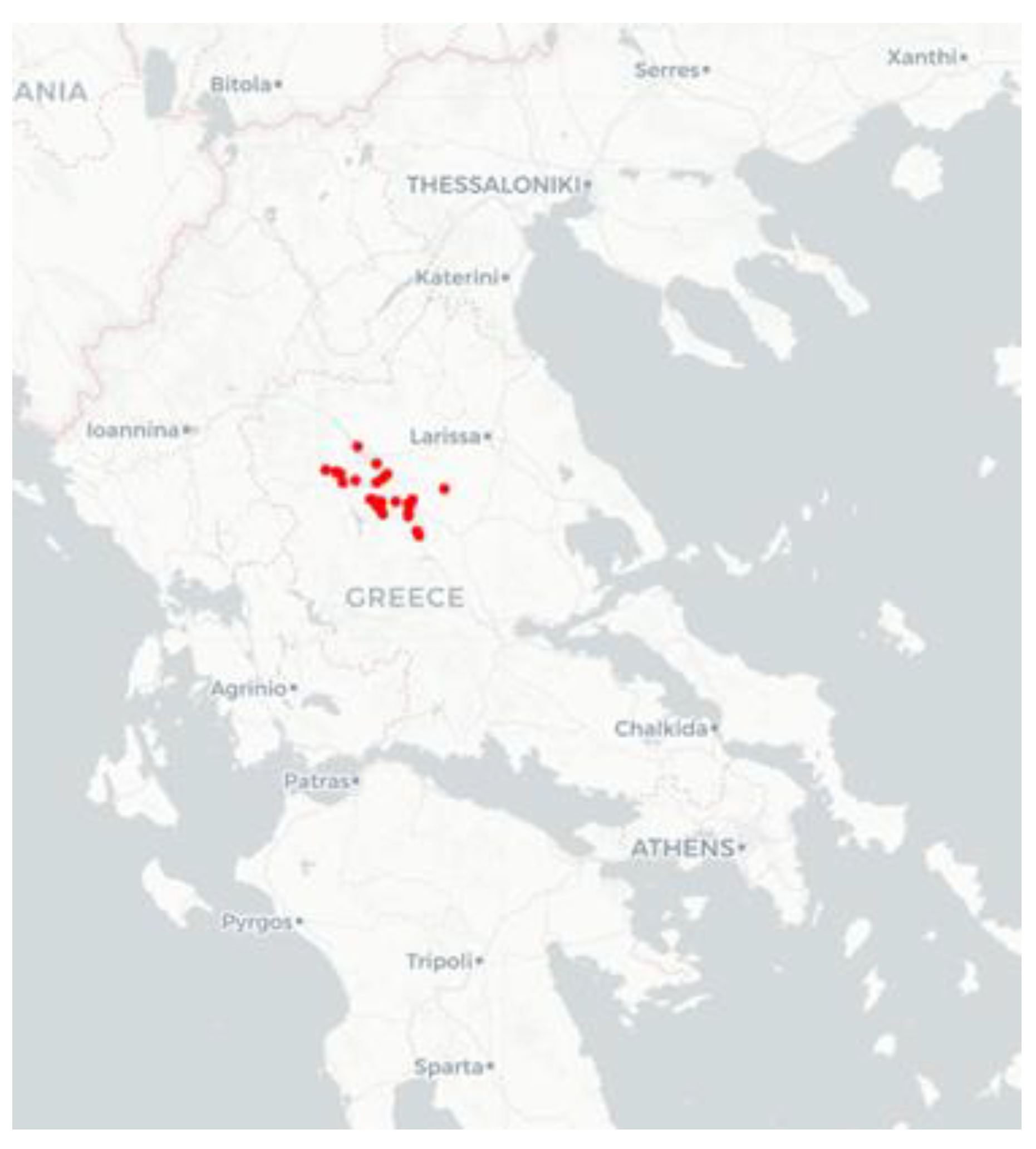
Figure 2.
Distribution of Treatment Strategies Among Dairy Sheep Farms.
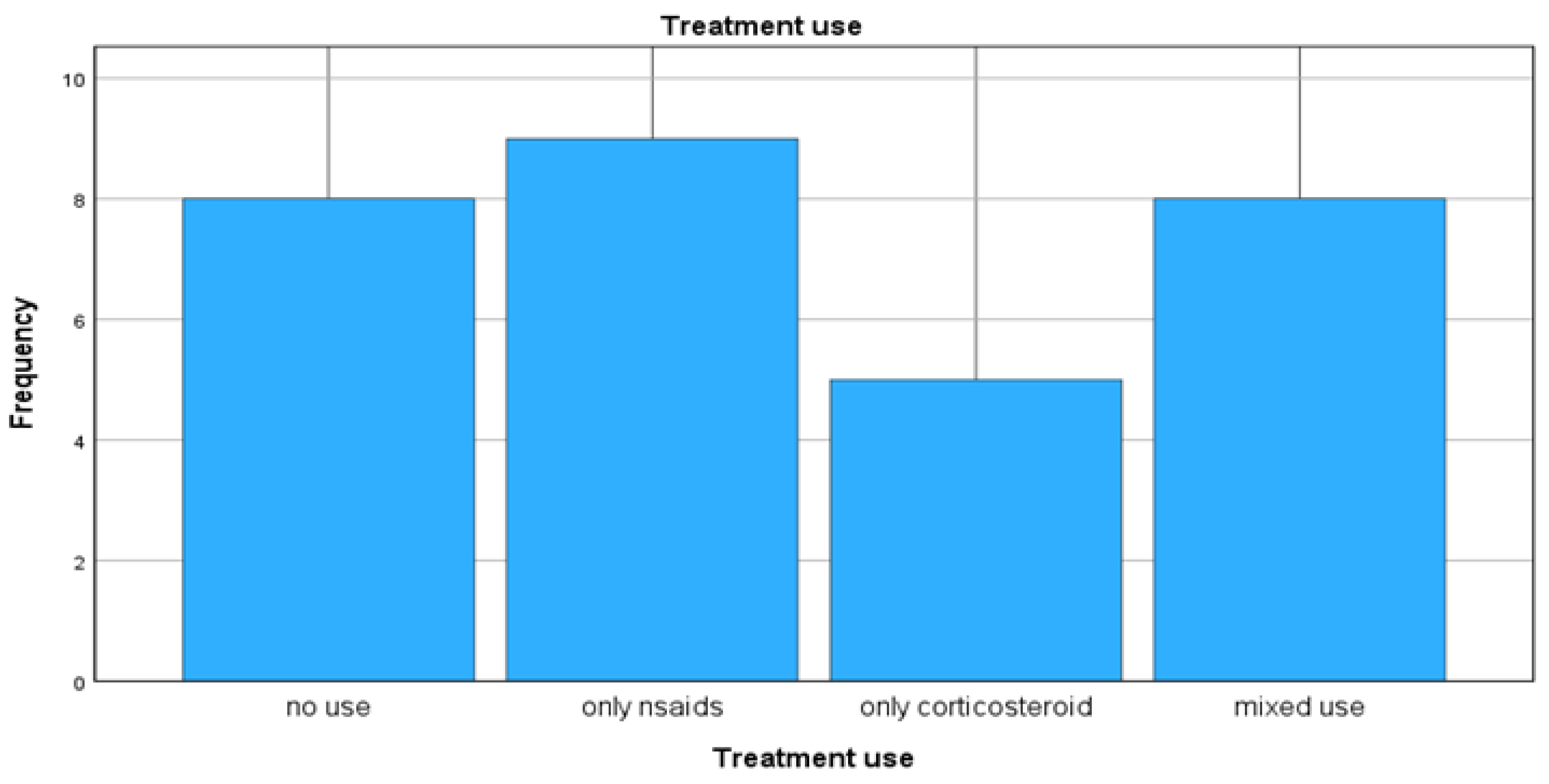
Figure 3.
Distribution of Total Welfare Scores Across Farms.

Figure 4.
Bar Chart of Significant Predictors of Total Milk Yield.
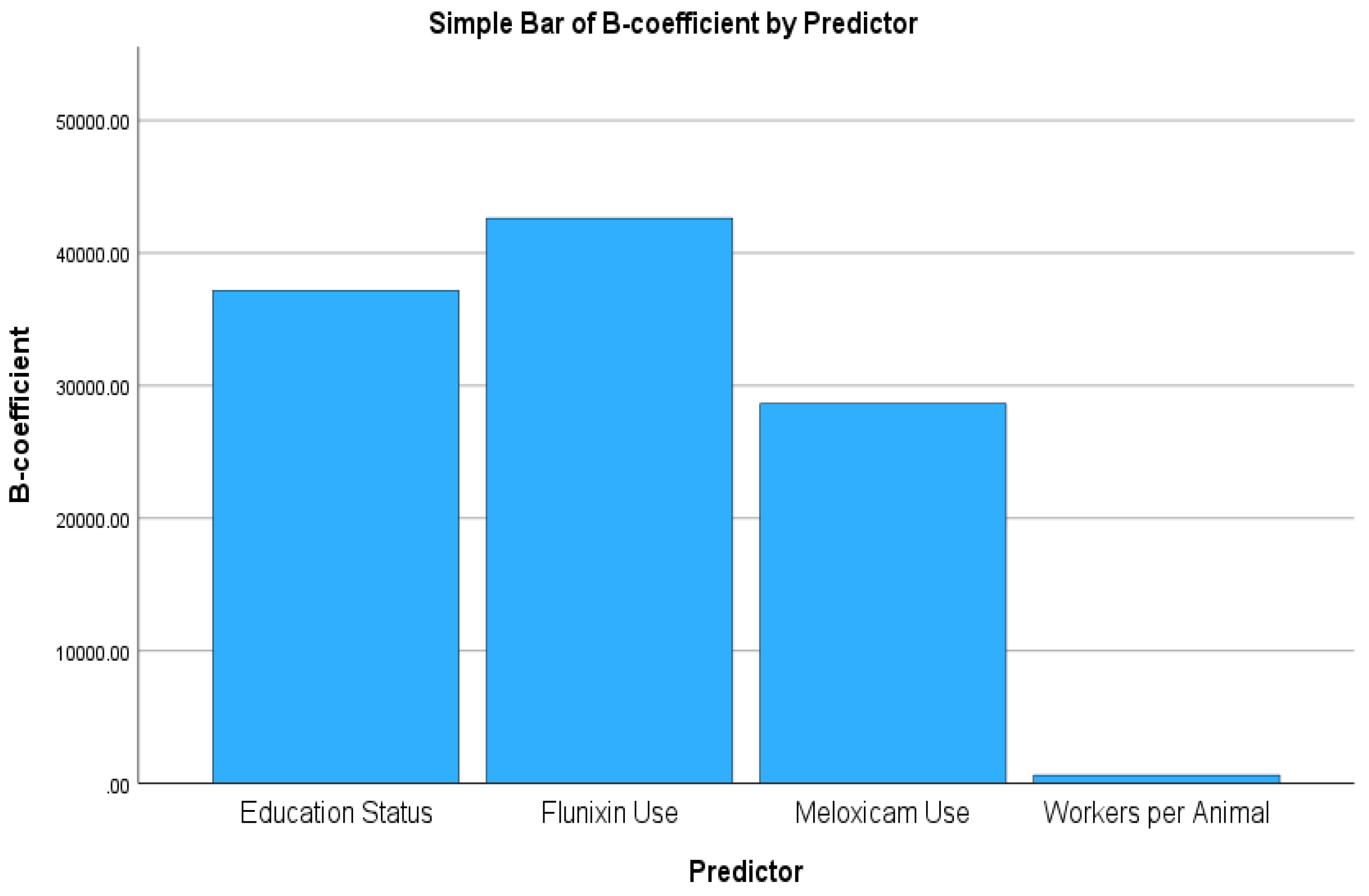

Table 1.
Modified welfare scoring system for sheep based on Poulopoulou et al. [30].
Table 1.
Modified welfare scoring system for sheep based on Poulopoulou et al. [30].
| Indicator | Normal range/requirements in sheep | Score |
|---|---|---|
| Water Supply | Adequate water suppliers (absence of waiting queue) | 10 |
| Inadequate water suppliers (presence of waiting queue) | 0 | |
| Space per Animal | 1,5m2/ewe or more (1,2m2 per ewe and 0,3m2 per lamb) | 10 |
| Less than 1,5m2/ewe | 0 | |
| BCS | BSC of 2-3 in Lactating ewes, 3- 4 in dry period ewes in 5% of randomly picked total herd ewes | 10 |
| Lactating ewes 2, dry period 3 in 5% of randomly picked total herd ewes | 5 | |
| Lactating ewes 1, dry period 1-2 in 5% of randomly picked total herd ewes | 0 | |
| Cleanliness | Clean in the upper body, belly and udder in 5% of total herd randomly picked ewes | 10 |
| Clean only in the upper body in 5% of total herd randomly picked ewes | 0 | |
| Skin alterations | Absence of alterations in 5% of total herd, randomly picked ewes | 10 |
| Hairless spots in 5% of total herd, randomly picked ewes | 5 | |
| Wounds in 5% of total herd, randomly picked ewes | 0 | |
| Avoidance behaviour | 5% of total herd, randomly picked ewes distanced less than 1m | 10 |
| 5% of total herd, randomly picked ewes distanced more than 1m | 0 | |
| Hoof conformation | 1 hoof trimming per year | 10 |
| None hoof trimming the previous year | 0 | |
| Lameness | <5% presence in the flock | 10 |
| 5-10% presence in the flock | 5 | |
| >10% presence in the flock | 0 | |
| Getting-up behaviour | Physiological way of getting up of 5% of total herd, randomly picked ewes | 10 |
| Abnormal way of getting up of 5% of total herd, randomly picked ewes | 0 | |
| Dystocia occurrence | <5% in the flock | 10 |
| 5-10% in the flock | 5 | |
| >10% in the flock | 0 |
Table 2.
Descriptive Statistics of Continuous Variables in the Study.
| Variable | Min | Max | Mean | St Deviation |
|---|---|---|---|---|
| Number of Animals | 45 | 640 | 175.3 | 134.40 |
| Total Milk yield (kg) | 5394 | 236739 | 50589.0 | 49946.4 |
| Milk yield per sheep (kg) | 119.9 | 383.8 | 261.26 | 67.63 |
| Mean Fat % | 5.51 | 7.01 | 6.12 | 0.38 |
| Mean Proteins % | 4.67 | 6.18 | 5.61 | 0.30 |
| Flunixin Meglumin vials | 0.0 | 3.0 | 0.43 | 0.89 |
| Meloxicam vials | 0.0 | 13.0 | 1.43 | 3.17 |
| Dexamethasone vials | 0.00 | 5.00 | 0.87 | 1.36 |
| Animals per Worker (n) | 30.0 | 200.0 | 88.06 | 39.3 |
Table 3.
Descriptive Statistics for Ordinal Welfare and Management Variables.
| Variable | Median | Mode | St. Deviation |
|---|---|---|---|
| Mean Body Condition Score | 2.0 | 2.0 | 0.57 |
| Housing Condition Score1 | 2.0 | 2.0 | 0.73 |
| Farmer’s Age2 | 2.0 | 2.0 | 0.70 |
| Water Supply | 10.0 | 10.0 | 0.0 |
| Space per Animal | 10.0 | 10.0 | 4.66 |
| Body Condition Score | 5.0 | 5.0 | 2.73 |
| Cleanliness | 10.0 | 10.0 | 4.66 |
| Skin alterations | 10.0 | 10.0 | 2.45 |
| Avoidance Behaviour | 0.0 | 0.0 | 4.90 |
| Hoof Conformation | 2.5 | 0.0 | 5.0 |
| Lameness | 5.0 | 5.0 | 3.31 |
| Getting-up behaviour | 10.0 | 10.0 | 0.0 |
| Dystocia occurrence | 10.0 | 10.0 | 2.52 |
| Total Score | 70.0 | 70.0 | 16.92 |
| Welfare Score | 2.0 | 2.0 | 0.81 |
11=Suboptimal, 2=Moderate, 3=Optimal; 21<35 years, 2= 35-50 years, and 3>50 years.
Table 4.
Regression analysis of factors affecting total milk yield (kg)
| Model | Unstandardized Coefficients | Standardized Coefficients | t | Sig. | Collinearity Statistics | ||
|---|---|---|---|---|---|---|---|
| B | Std. Error | Beta | Tolerance | VIF | |||
| (Constant) | -10057.8 | 23138.4 | -.435 | .668 | |||
| Mixed Use | -30338.4 | 21444.9 | -.273 | -1.415 | .171 | .244 | 4.1 |
| Farmer's Education University Degree | 37156.6 | 12196.6 | .335 | 3.046 | .006 | .754 | 1.3 |
| Workers per Animal | 610.0 | 152.4 | .480 | 4.003 | <.001 | .634 | 1.6 |
| Flunixin Use | 42616.3 | 14077.1 | .367 | 3.027 | .006 | .619 | 1.6 |
| Meloxicam Use | 28623.0 | 13621.7 | .291 | 2.101 | .047 | .473 | 2.1 |
| Corticosteroid Use | -3386.6 | 17517.1 | -.034 | -.193 | .848 | .291 | 3.4 |
| Farmer's age | -7684.9 | 7978.9 | -.108 | -.963 | .346 | .723 | 1.3 |
Dependent Variable: Total Milk yield (kg).
Table 5.
Model output: Point Estimates and 95% Confidence interval (CI) of model parameters.
| Model | Dependent Variable | Factor | Point Estimate (95% CI) | P-Value |
|---|---|---|---|---|
| 1 | Flunixin Meglumine | Intercept | 0.02 (0.001 – 0.16) | - |
| Herd Size | 1.01 (1.005 – 1.025) | 0.01 | ||
| 2 | Meloxicam | Intercept | 0.71 (0.11 – 4.6) | - |
| Herd Size | 0.95 (0.88 - 0.99) | 0.03 | ||
| Milk yield Herd (kg) | 1.002 (1.001 – 1.004) | 0.025 | ||
| 3 | Dexamethasone | Intercept | 0.47 (0.18 – 1.11) | - |
| Farmers’ Education | 6.43 (1.15 – 52.25) | 0.04 | ||
| 4 | NSAID | Intercept | 0 (0 – 0.0372) | - |
| Milk yield Herd (kg) | 1.05 (1.018 – 1.11) | 0.02 | ||
| 5 | Welfare | Intercept | 0 (0 – 0.0038) | - |
| Milk yield Herd (kg) | 1.04 (1.02 – 1.08) | 0.004 |
Disclaimer/Publisher’s Note: The statements, opinions and data contained in all publications are solely those of the individual author(s) and contributor(s) and not of MDPI and/or the editor(s). MDPI and/or the editor(s) disclaim responsibility for any injury to people or property resulting from any ideas, methods, instructions or products referred to in the content. |
© 2025 by the authors. Licensee MDPI, Basel, Switzerland. This article is an open access article distributed under the terms and conditions of the Creative Commons Attribution (CC BY) license (http://creativecommons.org/licenses/by/4.0/).
Copyright: This open access article is published under a Creative Commons CC BY 4.0 license, which permit the free download, distribution, and reuse, provided that the author and preprint are cited in any reuse.