

Submitted:
17 March 2025
Posted:
17 March 2025
You are already at the latest version
Abstract
Pharmaceuticals and microplastics are persistent emerging pollutants that pose serious threats to aquatic ecosystems and ecological health. This review provides a thorough and comprehensive examination of their predominant pathways, sources, and distribution, highlighting wastewater disposal, agricultural runoff, and atmospheric deposition. The toxicological effects of these pollutants on aquatic organisms, particularly fish, are discussed, with emphasis on bioaccumulation and biomagnification in the food chain, physiological effects including effects on growth, reproduction, immune system performance and behavioral changes. The ecological consequences, including disruptions to trophic dynamics and ecosystem stability, are also addressed. Although valuable efforts, mitigation and remediation strategies remain inadequate and further research is needed because they do not capture the scale and complexity of these hazards. This review highlights the urgent need to advance treatment technologies, establish comprehensive regulatory frameworks and organize intensive research on long-term ecological impacts to address the environmental threats posed by pharmaceuticals and microplastics.
Keywords:
Pharmaceuticals
; Microplastics
; Physiological Effects
; Reproduction
; Growth
; Fish
; Aquatic Environment
; Ecological Effects
; Ecotoxicology
1. Introduction
Globally, there has been an increase in concern over water quality [1]. The existence of emerging contaminants (ECs) in the environment has drawn more attention and been the subject of extensive recent research [2]. The Federal Water Pollution Act of 1948, which was later renamed the Clean Water Act, required to monitor and control dangerous pollutants in freshwater throughout the United States (33 U.S. A. Code §1251, 1972), although these initiatives have not prevented nutrient pollution, and in recent decades, new contaminants of emerging concern (CECs) have been acknowledged [3,4]. Pharmaceutical and microplastic contamination of aquatic environments is a serious public health and ecological concern [5,6]. These pollutants have been found in human biological samples, seafood, and drinking water, which raises questions about long-term health effects of chronic exposure [7]. Antimicrobial resistance and endocrine disruption are caused by pharmaceuticals like hormones and antibifotics. Alternatively, microplastics can act as carriers of heavy metals and persistent organic pollutants, raising human oxidative stress, inflammation, and cellular toxicity risks, which all escalated into a critical public health issue with far-reaching consequences [8,9].
This review aims to provide a comprehensive overview of the pathways, toxicological effects, and ecological impacts of pharmaceuticals and microplastics in aquatic environments. It also identifies critical research gaps, such as insufficient data on the interaction between pharmaceuticals and microplastics in aquatic systems and the long-term ecological impacts of these contaminants. Furthermore, this review positions itself as an advancement over existing reviews by offering a more integrated approach, in order to reduce risks and preserve water quality for future generations, a more transdisciplinary approach that integrates environmental science (incorporating recent advancements in treatment technologies), public health, and regulatory strategies.
The demand for pharmaceutical products is rising daily nowadays, which has led to an alarming level of waste in river ecosystems from microplastics, pharmaceuticals, and antibiotics [10]. Figure 1 illustrates the global distribution of pharmaceutical contamination in drinking water, tap water, groundwater, and surface water, highlighting the alarming spread of pharmaceutical residues in aquatic systems across different regions worldwide [11]. This is consistent with growing concerns about the influence of drugs on the environment and their pervasiveness in water sources. Pharmaceuticals and microplastics threaten aquatic ecosystems through their presence in the environmental matrices, the potential impact of their residues have been an emerging study field in the last few years as they considered of the foremost contaminants [12,13]. Environmental persistent pharmaceutical pollutants (EPPPs) such as analgesics, hormones and antibiotics are a matter of great concern when ingested by non-target organisms, and their existence tends to slowly degrade and spread in the environment [11]. These Residues of pharmaceuticals have been noticed in surface water and groundwater across the globe [14,15,16]. Conventional wastewater treatment facilities are not made to remove pharmaceuticals from wastewater, and high concentrations of pharmaceutical residues have been discovered downstream of pharmaceutical manufacturing facilities [17]. Furthermore, veterinary pharmaceutical residues from agriculture and aquaculture can enter water bodies without any treatment [18].
Earlier reviews on this topic have primarily focused on isolated aspects, the influences of microplastics on toxicity and transgenerational effects of pharmaceutical [19,20,21] . However, few have comprehensively examined the interplay between these pollutants or addressed the inadequacies in current mitigation strategies. By bridging this gap, this review provides actionable insights into their combined effects and suggests innovative approaches for managing their environmental impact.
Figure 2 shows the numerous pathways from pharmaceutical production to ecosystems, emphasizing how contaminants from industrial, wastewater discharge, and runoff from agricultural practices can enter water bodies and accumulate in the environment. These processes also play a part in the rising concentrations of drug residues in aquatic environments. Similarly, microplastics are common environmental contaminants that are released directly from personal care products and industrial processes, as well as from the fragmentation of larger plastic objects, synthetic fiber shedding, and tire abrasions [22]. Because of its malleability and ease of use, plastic was first widely used after World War II, and its production has only increased since then. From 2 million tons in 1950 to 380 million tons in 2015, the world's production of resin and fiber increased [23] They are present in voluminous different soils, rivers, oceans, and the atmosphere. Although microplastics have some potential advantages, such as their application in industry and medicine, the disadvantages greatly exceed the advantages [22]. The mechanisms of environmental degradation and the pathways of microplastic pollution shown in Figure 3, it depicts the accumulation through numerous processes such as fragmentation of larger plastic items and shedding from synthetic fibers. Similar to pharmaceuticals, which present serious threats and risks to aquatic ecosystems.
The presence of these pollutants pose a significant threat to the aquatic ecosystems worldwide. Veterinary antibiotics in European aquatic environments are leading to long-term ecological risks [24,25,26]. The growing threat of the waste of these compounds to river ecosystems has been critically discussed their detrimental effects on people, animals, and aquatic life, as well as different remediation strategies [10] In addition, several studies have highlighted the threat of their presence. Microplastics in the environment has its challenges and perspectives, for instance the When polymers are being manufactured, chemical additives such as plasticizers, heat stabilizers, antioxidants, and colorants are frequently added to enhance the performance of the final product. When these compounds are in the environment, cause chronic risks [27], significant danger to marine ecosystems [28,29]. Microplastics can accumulate to the human body via different routes comprising inhalation, ingestion, and dermal exposure [29]. Consequetly, this accumulation cause evidencely negative impact on our health, numerous studies indicate that microplastics may cause genotoxicity in human cells [30] , cellular impairment [31], and inflammation [32]. Pharmaceuticals and microplastics have numerous adverse effects on aquatic organisms, particullary fish. Several scientists and researchers have highlighted the effects in detail, the influence of painkillers and hormones on the endocrine system and reproductive cycle of fish [33], long-term toxicity, hormonal imbalances, and alterations in fish behavior (Santos et al., 2010), change in behavior, liver damage and oxidative stress under the effect of combined drugs and microplastics exposed to fish [35], which frequently become exposed by sediment and water. Given the numerous instances of their harmful effects on both human health and the environment, it is now widely acknowledged that contaminants pose a serious cause for concern regardless of the economic status of nation [2]. EC management is incredibly difficult. From the standpoint of policy and regulation, it necessitates modifications to present procedures, such as the creation of ambitious but workable policies to address pollutants that have not yet received sufficient research and contaminants that continue to raise concerns [2].
In addition to addressing technological gaps, fostering international collaboration is essential. This involves not only sharing best practices but also investing in research that focuses on the cumulative and long-term effects of these pollutants on aquatic ecosystems. This review aims to bridge this gap by examining the pathways, bioaccumulation, and toxicological effects of pharmaceuticals and microplastics, with a particular focus on their direct and indirect implications for public health. By integrating scientific evidence and policy recommendations, this study underscores the urgent need for global intervention and transdisciplinary strategies to mitigate these threats and safeguard public health.
2. Sources and Distribution of Pharmaceuticals and Microplastics
A systematic literature search was carried out using databases like Web of Science, Scopus, PubMed, Google Scholar, and ScienceDirect to guarantee a thorough and comprehensive review. Using terms like "pharmaceuticals in aquatic environments," "microplastics pollution," "toxicology," "bioaccumulation," and "ecotoxicology," the search concentrated on pathways, toxicological effects, and mitigation techniques. Articles that were unrelated to aquatic ecosystems or lacked thorough data were excluded, leaving only those published between 2000 and 2024. The rigorous selection procedure was guided by the PRISMA framework, which made sure that only relevant and high-quality studies were included (see Figure 2). Figure 3 was adapted from a study published in Science of The Total Environment.
2.1. Wastewater Discharge
2.1.1. Pharmaceuticals
A variety of domestic, agricultural and industrial sources continuously discharge wastewater, which can leach pharmaceuticals into freshwater ecosystems and lead to drug contamination [36,37]. This contamination is primarily due to human and animal waste [38]. When taking medication, the active ingredients are only partially metabolized; the rest is excreted in the urine or feces [37,39,40]. Toilets and drains are two certainly entry points for these drug residues into the sewer system [41,42]. Veterinary medicines also contaminate aqueous systems including wastewater [43]. Drugs such as hormones, antibiotics and other substances commonly administered to livestock and pets can be excreted and enter the sewer system via manure or direct discharge [44,45]. Combined with the improper disposal of unused prescription medications, chemicals from pharmaceutical manufacturing facilities can also end up in wastewater [43]. If improperly managed or if treatment processes do not function properly, these facilities could release pharmaceutical compounds directly into wastewater. pharmaceuticals end up in wastewater treatment plants (WWTPs) via sewer pipes after being discharged into the sewage system [46,47]. Wastewater is treated in WWTPs using various techniques to remove contaminants before the treated water is discharged into surface waters [48,49], but not all pharmaceutical compounds may be completely eliminated by conventional wastewater treatment methods [50]. Certain medications are not broken down in standard treatment procedures and are physiologically effective even in low concentrations [51]. Consequently, drug residues can be found in wastewater effluents that have been treated and discharged into surface waters. Different classes of pharmaceuticals could be found in the wastewater such as Contrast materials (iohexol, iotalamic acid, iopamidol, iopromide, iomeprol,amidotrizoic acid, diatrizoate), antidepressants (fluoxetin), anti-inflammatories and analgesics (4-aminoantipyrine, antipyrin, codein, diclofenac, ibuprofen, indomethacine, ketoprofen, ketorolac, naproxen) psycho-stimulants (caffeine, paraxanthin) and antibiotics (clarithromycin, ciprofloxacin, doxycyclin, erythromycin, methronidazole, norfloxacin, ofloxacin, roxithromycin, sulfamethoxazole, sulfapyridin, tetracyclin, trim ethoprim) can be found in these wastewaters [52,53,54,55,56,57]
2.1.2. Microplatics
Wastewater discharge is an important contributor to aquatic plastic pollution [58]. Microplastics can enter aquatic ecosystems through the direct discharge of untreated and insufficiently treated wastewater [59]. This includes the microplastics carried by domestic wastewater from washing machines outlets, and showers, as well as basin waters are one of the main sources of MPs in water bodies. Laundry wastewater from washing clothes made of synthetic fibers like polyester releases huge microplastics [60]. Even washing a single dress may release 1900 fibers in a single wash [61]. Household greywaters convey microbeads and MPs coming from personal care products like face washes, toothpaste, and synthetic clothes washing [62]. These MPs get into the sewage and finally pile up in water bodies if not treated.
2.2. WWTP Effluents
2.2.1. Pharmaceuticals
WWTPs play a crucial role in purifying wastewater before discharging it into surface waters [47,48,63]. However, despite these efforts, certain pharmaceutical substances can bypass conventional treatment methods and enter the environment via WWTPs effluent [50]. Human excretion is the main route for pharmaceuticals to reach WWTPs via domestic wastewater [64,65]. These compounds enter the sewage system through drains, sinks and toilets in residential areas, clinics and other facilities [41,42]. In addition, veterinary drugs from pet and livestock farms can also contribute to drug contamination in WWTPs [43]. Farm animals are often given antibiotics, hormones and other drugs, which are excreted and can end up in sewers. Pharmaceutical manufacturing facilities represent another important source of pharmaceuticals in WWTPs, as these compounds can enter sewers directly during the manufacturing process [66] or due to improper disposal practices [50]. Upon entering WWTPs, pharmaceuticals undergo various treatment processes, including chemical, biological and physical steps [67,68,69], to remove contaminants from wastewater. While these treatments effectively remove many pollutants, some pharmaceutical compounds persist and may remain in the treated wastewater [47,70]. Factors such as the chemical composition of drugs [66], the efficiency of treatment processes and the design of WWTPs can influence the persistence of these compounds. Consequently, wastewater discharged from WWTPs into surface waters contain [47,64,70] residues of pharmaceuticals, including hormones, antidepressants, analgesics and antibiotics.
2.2.2. Microplastics
Wastewater treatment plants are not always capable of trapping MPs from wastewater wastewater [71,72]. It is mainly because of their tiny sizes that MPs allow them to get past the filtering devices used in traditional treatment systems [73]. As a result, MPs remain on the effluents even after being treated. These effluents could be a large contributor of MPs to the environment [74]. However, plastic particles could degrade into smaller sizes due to the chemicals used and the mechanical agitation [75]. These MPs can amass and endanger aquatic systems following their release into the water bodies.
2.3. Agricultural Runoff
2.3.1. Pharmaceuticals
Runoff from agricultural fields can introduce pharmaceuticals into freshwater ecosystems, including hormones and antibiotics [76,77,78]. These substances can be sprayed on livestock or crops [43], and they have the ability to seep into the groundwater and soil before emerging as surface waters [45,52,79]. The main way that pharmaceuticals from agricultural runoff get into freshwater ecosystems is through the use of crop protection and veterinary medications [80]. Veterinary antibiotics are being used more and more in many areas to protect animal health and aid in animal treatment; they also tend to increase feed efficiency for aquatic animals, poultry, pets, livestock, silkworms, bees, etc [81,82]. Animal excretion of these medications can release them into the environment through urine and manure. Apart from veterinary medications, agricultural runoff can also introduce pharmaceuticals like herbicides, fungicides, and insecticides that are used in crop production into freshwater ecosystems [83,84]. When crops are irrigated or rain falls, these medications, which are sprayed on them to keep pests and illnesses at bay, may wash off into surface waters [52]. In freshwater ecosystems, pharmaceutical pollution can also result from the use of biosolids nutrient-rich organic materials obtained from sewage sludge as fertilizer in agriculture [37,38,85,86]. Human excretion of pharmaceutical residues may be present in biosolids [87,88]. These residues can seep into the groundwater and soil, eventually making their way to surface waters through runoff [89,90]. Their widespread distribution will occur only after agricultural practices make medicines available in the soil, whereupon runoff and leaching can carry them to surface waters. In terms of pesticides, crop type, soil characteristics, water body characteristics (depth and flow rate), land use, slope, and distance from water bodies, as well as meteorological factors (temperature, rainfall, moisture, and wind), all influence the likelihood of these compounds contaminating surface water [91]. Groundwater is contaminated with pharmaceuticals due to leaching, which happens when water seeps through the soil. Additionally, erosion can carry pharmaceuticals into surface waters. Water erosion and subsequent deposition of soil particles containing pharmaceutical residues into adjacent water bodies can result in pharmaceutical contamination [92,93].
2.3.2. Microplastics
Agricultural Runoff is a major source of aquatic microplastics [94]. Plastic films are used as mulch by farmers to cover soil surfaces to reduce weeds, save moisture, and rasing soil temperature [95]. Many brands of fertilizers and pesticides are packed in plastic-based materials. These release MPs in the soil after improper disposal and disintegration in nature owing to exposure to sunshine, and mechanical, and microbial activities. After rain, storm, flood or irrigation these plastic particles enter into the aquatic environment conveyed by runoff. Additionally, soil erosion is a common phenomenon in agricultural lands, which can transport MPs to the water bodies [96,97]. Furthermore, wind blown over the farmland can also take away plastics to the nearby aquatic bodies through air transport. Moreover, plastics used in livestock husbandry for example, as packaging material for feed bags, additives, or medication items can deteriorate over time and leach into the aquatic systems.
2.4. Aquaculture Operations
2.4.1. Pharmaceuticals
Aquaculture effluents have the potential to release medications used in aquaculture, such as antibiotics and antiparasitic agents, into freshwater environments [98]. Pharmaceutical pollution in aquaculture systems can also result from improper disposal of medicated feed [37]. Pharmaceuticals from aquaculture operations are mainly used in freshwater ecosystems through the use of veterinary medications primarily administered as bath formulation or medicated feed [99]. Antibiotics, antiparasitic drugs, and disinfectants have been widely used in aquaculture facilities to prevent and treat diseases in fish populations [100]. Fish are usually given veterinary medications by injection, bath treatments, or medicated feed [99]. Fish that have received treatment excrete leftover medication, which aquaculture effluents can carry into nearby water bodies [101]. Freshwater ecosystems may become contaminated by pharmaceutical waste if it is not appropriately managed and leaks into the environment, Adopting the so-called "reconciliation ecology" paradigm for freshwater ecosystem management will be necessary [102]. Drugs are widely distributed and can inadvertently find their way into freshwater ecosystems through aquaculture effluents. Pharmaceuticals and their metabolites are not the only mixture of chemicals found in aquaculture facilities' effluents. Other pharmaceutical compounds include disinfectants, diagnostic agents, antibiotics, and antiparasitic agents [103]. Usually, aquaculture effluents are dumped into neighboring bodies of water, like lakes, rivers, or coastal waters. High levels of pharmaceuticals in aquaculture effluents may have an adverse effect on aquatic life and water quality in the receiving environment [43,80,82,98,104].
2.4.2. Microplastics
Aquaculture practices are identified as a significant contributor of MPs into the aquatic systems in a number of ways [105]. There is an extensive use of plastic materials in aquaculture and even mariculture operations at sea continue to be a source of plastic litter [106]. Aquaculture-related plastics have been detected in mariculture areas and the surrounding waters [105]. Commercial feeds, which is a common item used in aquaculture, may contain MPs having ion the raw materials as impurities. Coastal aquaculture could be a major contributor to plastic litter in the coastal waters [106]. Different plastic-based infrastructures and equipment such as nets, buoys, and ropes are frequently used in aquaculture in addition to the packaging and showcasing of the final products in the value chain [107,108]. The intended or accidental disposal of these plastic products could serve as a source of MPs in water.
2.5. Land Application of Biosolids
2.5.1. Pharmaceuticals
Organic materials obtained from sewage sludge, known as biosolids, are frequently utilized as fertilizer in agriculture [46]. Antibiotics used in veterinary care are dispersed as an organic fertilizer onto agricultural land in the form of biosolids [109,110,111] Pharmaceuticals found in biosolids have the potential to seep into soil and groundwater, posing a risk of contaminating surface waters via runoff [112]. Biosolids, nutrient-rich organic materials made from sewage sludge, are applied to land, which allows pharmaceuticals to enter freshwater ecosystems. To increase soil fertility and crop yields, biosolids are frequently spread as fertilizer to agricultural lands [110,111]. In addition to other contaminants from household and industrial sources, biosolids may contain pharmaceutical residues from human excretion [50]. These drug residues may remain in biosolids even after wastewater treatment facilities have finished treating them [76]. Pharmaceutical residues may eventually find their way into surface waters through runoff or infiltration into the soil and groundwater when biosolids are applied to agricultural lands. In freshwater ecosystems, then, one major source of pharmaceutical pollution may come from the use of biosolids as fertilizer. Biosolids have the potential to enter surface waters via leaching and runoff [113]. Additionally, erosion can carry pharmaceuticals into surface waters [92,93]. Water erosion and subsequent deposition of soil particles containing pharmaceutical residues into adjacent water bodies can result in pharmaceutical contamination.
2.5.2. Microplastics
Plastic products are used by humans mostly on terrestrial environment and so for the wastes are piled up primarily on land which seeps into the aquatic systems by runoff during rain, storms, and floods over there and finally gathers into the oceans [114]. According to recent estimates major share of marine plastic litter originates from human actions performed on land [115]. Between 4.8 and 12.7 million metric tons of plastic in the oceans today are believed to be sourced from terrestrial environments. The more worries lie in the fact that this share has a good chance of rising in the coming decades [107,116].
2.6. Atmospheric Deposition
2.6.1. Pharmaceuticals
Precipitation and atmospheric fallout have the ability to carry pharmaceuticals through the atmosphere and deposit them alongside freshwater bodies [55,64]. This procedure may lead to the contamination of distant or pure freshwater environments with pharmaceuticals [50,85,93,117]. Medicinal compounds in the atmosphere can settle on land and in water surfaces through a process known as atmospheric deposition, and this allows pharmaceuticals to find their way into freshwater ecosystems [70,86,103]. Emissions from numerous human activities, such as transportation, agriculture, and industrial processes, are the primary sources of pharmaceuticals in the atmosphere [118]. These actions discharge medicinal substances into the atmosphere, where wind and atmospheric currents is responsible for long-range transport [119,120]. Pharmaceutical residues that have been volatilized from drinking water is another source of pharmaceuticals in the atmosphere [112]. Pharmaceuticals, for instance, that are sprayed on crops or dumped into surface waters may evaporate into the atmosphere and cause atmospheric deposition [121]. The reason for their widespread use is that, once released into the atmosphere, pharmaceuticals can travel great distances and deposit themselves on land and in water through atmospheric wet deposition process. Wet deposition happens when pharmaceuticals are dissolved in rain or snow and then deposited onto surfaces [122].
2.6.2. Microplastics
Once released into the environment from different sources MPs can conveyed in the air for their lightweight and travel to long distances through atmospheric transport. These atmospheric MPs can fallout directly into lakes, rivers, and oceans as a form of both dry and wet depositions [123]. The deposited MPs on land can also finally come to the aquatic systems by runoff. Based on field-based research [124] revealed that atmospheric microplastics were a significant source of marine microplastic pollution. Snowfall was reported to capture a greater diversity of MP sizes and shapes than rainfall [125]. [126] presented quantitative and qualitative compositions of microplastics deposited from the atmosphere in the coastal zone along with the links between MP deposition and meteorological factors.
3. Effects on Freshwater Fish
The topic of pharmaceuticals in the environment has been covered by an excessive number of authors. Approximately 18,000 documents about pharmaceutical use in the environment are available, most of them are published scientific studies [127] Worldwide, about 3000 structurally different pharmaceuticals are regularly used. The majority of the rivers in the world contain many. Exposure to active pharmaceutical ingredients (APIs) in the environment can have detrimental impacts on human and ecological health [128]. Two things were known for certain more than 20 years ago: first, human drugs were definitely present in the aquatic environment, and second, there was a good chance that some of them might be present in quantities that would be harmful to certain aquatic organisms [129]
3.1. The Bioaccumulation and Biomagnification of Pharmaceuticals Within Freshwater Food Chains
According to Meador and Miller et al.'s definition, bioaccumulation refers to the simple uptake of substances from the environment or their gradual accumulation or retention. [130,131]. In other words, when an organism's absorption of a pollutant surpasses its capacity for digestion, bioaccumulation takes place [132]. Over 200 neuroactive pharmaceuticals are currently being used in clinical settings, and a significant portion of these medications (n = 84) have been found to be found in rivers all over the globe [133]. Numerous of these latter substances are expected to bioaccumulate in fish because they are comparatively hydrophobic [134]. Pharmaceuticals can also accumulate in fish tissues and increase in concentration as they move up the food chain, leading to higher levels in predatory fish species. [135]. Fluoroquinolones (FQs) have been found to accumulate more in organisms with higher lipid contents; significant concentrations of FQs have been found in aquatic organisms' tissues, including fish, as well as in surface waters across the globe [136]. The biota-sediment accumulation factor (BSAF) is a useful parameter for understanding the partitioning of pharmaceutical contamination from sediment to benthic organisms. Thus, investigation into the BSAFs of pharmaceuticals in benthic organisms will improve our understanding how pharmaceuticals enter the aquatic food web. The typical method for calculating bioaccumulation factors is to compare the concentration of the compound of interest in the biota sample (plants, animals) to that in the surrounding media (either in the soil or in the water) including BSAF [137]. However, Pharmaceuticals do not currently have access to field-based BSAF data. [138]. It has been observed that pharmaceuticals are pseudo-persistent as a result of their constant discharge into water bodies [138,139] In ecological risk assessments, bioaccumulation and biomagnification are two key ideas that are used to quantify the amount of pollutant transport within food webs [140]. Hence, the term "biomagnification" in relation to a food web refers to the rise in a contaminant's concentration in one organism relative to that of its prey, such as microplastics or pharmaceuticals [141]. A specific biomagnification pattern has been noted, however, for several antibiotics: norfloxacin and enrofloxacin [142], for diclofenac [143], for roxithromycin [144] and ciprofloxacin [145]
According to a recent study, the COVID-19 pandemic has made the issue of pharmaceutical and personal care product (PPCPs) accumulation in the environment more pressing because of the increased use of disinfectants and other products [146]. Pharmaceuticals have been shown to have pseudo-persistent qualities in surface waters that receive effluents discharged from wastewater treatment plants, which has led to their bioaccumulation by non-target organisms like fish [147,148,149] While more and more species from both inland and coastal aquatic systems are being found to contain pharmaceuticals [150]. Drugs don't usually biomagnify, as evidenced by the possibility of trophic transfer from freshwater systems at lower latitudes [144,145,150,151,152] The Eurasian perch (Perca fluviatilis) and the dragonfly larvae (Aeshna grandis), two freshwater predatory species, were found to have higher concentrations of the anxiolytic oxazepam in comparison to their food, according to a study that did not find evidence of trophic transfer of other compounds [153] When Pharmaceuticals bioaccumulate in non-target organisms, such as surface waters, they have the potential to enter the food chain.eg: biota (aquatic and riparian) [154]. According to a recent study, the Arctic food web demonstrates how stimulants and medications behave differently depending on the target compound. Thus, inter-compound variation may occur during the trophic transfer of these compounds [155]. The development of antibiotic resistance, interference with biochemical processes, endocrine system disruption, bioaccumulation of pharmaceuticals in non-target organisms, and other direct and indirect effects are just a few of the risks that pharmaceutical compounds can have [156,157] Nowadays, Pharmaceuticals can now be found in all areas of the environment.
3.2. Bioaccumulation and Biomagnification of Microplastics in Aquatic Food Chain
Microplastics may accumulate in Organisms and multiply along the food chain, causing higher quantities in predatory species [158,159]. The concentration of these contaminants can rise when larger fish and marine mammals eat smaller creatures tainted with microplastics [160]. For example, research has shown that large concentrations of microplastics can build up in the tissues of predatory species, such as swordfish and tuna. Microplastics could also enter the food chain by possibly being integrated into marine aggregates [161]. This transfer can result in increased amounts of microplastics in larger species, a process known as biomagnification. Microplastic biomagnification has the potential to destabilize aquatic ecosystems, impacting population dynamics, species composition, and reproductive success [158]. The stability of the entire ecosystem may be disrupted when important species are impacted.
4. Physiological Effects on Fish, Encompassing Effects on Growth, Reproduction, Immune System Performance, and Behavioral Modifications
4.1. Pharmaceuticals
Numerous tons of chemical and pharmaceutical materials are produced and used annually throughout the world. One significant category of newly discovered environmental micropollutants is pharmaceuticals. However, the majority of these drugs have the potential to degrade either biotically or abiotically, accumulating in the tissues of fish and other aquatic organisms to cause unwanted behavior, histopathology, interference with reproduction, and immunotoxic reactions, among other possible toxicological effects. [162]. that changes in behavior and variation are crucial for individual performance [163,164], species evolution [165] and ecosystem function [166]. Chemicals have been classified as posing dangers to freshwater biodiversity, putting it under greater threat [167]. Any modifications or deviations from the typical operation of an organism's bodily systems or processes are referred to as physiological effects. Any alterations to fish's regular physiological processes such as growth, reproduction, metabolism, immune system performance, and general wellbeing caused by exposure to pharmaceutical substances would be considered physiological effects. Fish behavioral responses have been documented in the past, and examples include how they affect socialization, aggression, reproduction, predator avoidance, and learning and memory [168]. Behavioral responses for aquatic toxicity testing have drawn attention recently. They found studies on development, reproduction, acute lethality, and behavior [169]. Changes in behavioral patterns, histological modifications, biochemical parameter changes, or other physiological markers can all be used to see these effects. The well-discussed effects of these environmental pollutants on human health include their potential to disrupt hormones, influence brain development and function, and have a common effect on human health [170,171].
Numerous studies have shown that common aquaculture practices, such as capturing wild fish to harvest gametes, fostering social interactions at artificial stocking densities, and performing routine husbandry tasks like handling and confinement, are stressful to fish and may have an adverse effect on their ability to reproduce and grow, which in turn compromises their immune system [172], that is why Major worldwide attention has focused on the potential for endocrine-disrupting chemicals (EDCs) to cause reproductive system disruption [173,174,175,176].
Fish reproduction is affected by prolonged contact with pharmaceutical concentrations in the environment; research on the effect on reproductive success and the mechanism of disruption revealed little evidence as predicted; Reduced fecundity and competitive population failure without fertilization following an extended period of exposure were among the effects [177]. Alter their morphology and physiology, leading to numerous gland-related issues, internsexuality being particularly prevalent. [178,179], induction of proteins unique to females in fish males (Tyler et al., 1998b). Imbalanced masculinity relationships, which probably have adverse effects on a community [177,178]. Decreased sperm counts an affect its traits and behavior [181,182]. The estrogenic potency of some EACs has raised concerns about the adverse impact they could have on the breeding and survival of wild animal populations [178]. Steroidal estrogens, such as estrone (E1), estradiol (E2), and synthetic estrogen EE2, play a significant role in controlling sexual differentiation and development. These hormones are potent regulators of both sexual development and reproductive capacity [183,184,185]. At least one human pharmaceuticals, ethinylestradiol (EE2), was also shown to have dramatic negative effects on fish reproduction when it was present in the water at very low concentrations more than 20 years ago [186]. Antidepressants are also a significant concern, as serotonin levels impact both physiology [187] as well as behavior in a variety of creatures, fish included [188,189], and contribute significantly to activity levels, aggression, and reproductive behaviors [189,190]. Fluoxetine has the potential to impact the behavior and physiology of non-target species [181], Changes in anxiety levels may lead to modifications in ecologically significant behaviors like boldness, exploration, and activity. These behaviors are crucial for an individual's fitness and play a role in various essential processes such as dispersal [191,192] , interrupt the process of reproduction [193], Characteristics of sperm in fish [194]. Movement between the lake and the adjoining streams [195]. There are behavioral endpoints for several psychiatric medications in human medicine, which may indicate similar effects in exposed wildlife [196]. A study conducted on perch from a natural population revealed that at low concentration of oxazepam (μg l−1), a benzodiazepine, caused exposure to cause both decreased sociality and increased activity, while high μg l−1 caused increased boldness [197]
The significant impact of prolonged exposure to mixed pharmaceutical substances on stream organisms is often overlooked. Fish behavior may be affected by pharmaceuticals, leading to changes in their activity, feeding habits, reproductive patterns, and social interactions. These alterations in behavior could have far-reaching consequences on the state of each individual organism, population dynamics, and ecosystem function as a whole [198,199]. Fish can experience acute or chronic damage from exposure to pharmaceuticals. Acute damage occurs suddenly and may lead to tissue damage, organ failure, or death, while chronic damage develops over time and can have long-term effects on the health and survival of fish [200,201]. Pharmaceuticals can disrupt the normal growth and division of cells in fish tissues, leading to inhibition of cell proliferation. This disruption can affect tissue maintenance, repair processes, and developmental pathways, ultimately causing structural abnormalities or impaired physiological functions [202].
According to the extensive research conducted by Grzesiuk et al., it has been found that even small amounts (ngL−1) of medication can have a significant impact on aquatic organisms in the long term, This study clearly found that persistent exposure to pharmaceuticals (propranolol, ibuprofen, and fluoxetine) for 30 generations on Acutodesmus obliquus and Nannochloropsis limnetica resulted in decreased cell number, increased carotenoid to chlorophyll ratio, and altered consumer feeding [203]. Changes in behavior have complementary effects on neurotoxicity, making them the early indicators of toxicity [204]. There is significant evidence showing that chemical contaminants can affect the behavior of both wildlife and humans. Studies dating back to the early 1900s have documented changes in swimming patterns in fish when exposed to different chemicals [205,206] With various studies reporting comparable effects having emerged over the past per [169,207]. Incorporating behavioral effects into chemical ecotoxicity testing has garnered significant attention recently [208,209]. Psychoactive drugs, in particular antidepressants, have been shown by numerous scientists to impact different aspects of behavior in a variety of aquatic organisms. This is despite the unquestionably difficult task of first collecting and then interpreting behavioral data [133]. Fish behavior can be affected by pharmaceuticals, which could change their typical patterns of activity, feeding, mating, or social interactions [162]. The functioning of ecosystems and population dynamics may be impacted in a cascade manner by these behavioral changes [198,199] personal health, nourishment, development, and survival [208] and consequently caused changes to demographic variables like the rates of birth, death, and migration [208]. This type of contaminant can have toxic effects on nontarget organisms. The research assessed Tetracycline's acute toxicity on several species of freshwater fish [210]. Identification of histological alterations in the liver and gills, modifications in antioxidant protection levels (including GST, CAT, and lipoperoxidative damage), and assessment of potential neurotoxic effects (such as acetylcholinesterase activity) [210].
Tetracyclines, which are broad-spectrum antibiotics, are frequently and extensively used in veterinary and human medicine. Previous studies have demonstrated the effects of tetracycline on the catalase (CAT) activity of living organisms, in addition to having the capacity to cause oxidative damage [211] and phytotoxicity in creatures like mammals and earthworms. [212,213]. The results indicate a potential causal link between exposure to tetracycline and changes in histology, specifically in gills, as well as enzyme activity in the liver and gills. This suggests that tetracycline may have pro-oxidative effects [210]. Fish may experience disruptions in their reproductive systems when exposed to pharmaceuticals, leading to potential issues in successfully reproducing. These disruptions may present as decreased fertility, compromised egg or sperm quality, changes in spawning behavior, or abnormalities in the development of offspring [162,194,214]. An investigation says the effects of exposure to common drug residues have been noted (carbamazepine (CBZ)) on four generations of zebrafish include decreased reproductive function, courtship behavior, aggression, sperm speed, and morphology [215]. Palace et al. conducted two studies, one in 2006 and the other in 2009. Both studies revealed that all males who were exposed to certain factors exhibited delays in spermatocyte development. Additionally, intersex conditions were found in approximately one-third of the males [216,217] . Adult fathead minnows' sperm parameters decreased when exposed to the human medication clofibric acid, according to Runnalls' research [218]. Fish exposed to pharmaceutical effluent downstream of the Dore River in France showed altered enzyme activity, neurotoxicity, intersex traits, and vitellogenin production, according to in-situ studies by [219]. Another research has demonstrated that specific pharmaceutical contaminants found in the environment can affect the reproduction of fish through the serotonin system [220]
Another study discovered a decline in reproductive performance and success rates in zebrafish exposed to ibuprofen at concentrations commonly found in the environment [221] . A study discovered a notable decrease in reproductive functions in male Astyanax altiparanae fish when exposed to standard levels of common drugs Diclofenac (DCF) and caffeine (CAF), which resulted in lower levels of 17β- Estradiol (E2) and testosterone [222]. Liang et al.'s recent laboratory study revealed that males exposed to environmentally relevant concentrations of 3-(4-Methylbenzylidene) camphor (4-MBC) saw decreased spermatogenesis, decreased plasma 11-ketotestosterone levels, increased reproductive toxicity, and anti-androgenicity in Japanese medaka (Oryzias latipes) [223]. De Lima and colleagues discovered that specific diets aimed at lowering oxidative stress in humans might disrupt reproductive processes and development in female Oreochromis niloticus tilapia (Niloticus) [224]. Studies have shown that pharmaceuticals present in aquatic environments can have adverse effects on the reproductive functions of fish. This is evident through changes in sperm parameters, vitellogenin induction, intersex traits, and enzyme activities in fish exposed to these substances. Another significant change in fish health is the alteration of immune function caused directly by toxic compounds [162] . Milla et al.'s research study of 63 participants revealed the impact of synthetic steroids on fish immune systems, including both androgenic and estrogenic steroids [225]. In a study conducted by Liang et al., it was found that exposure to Norfloxacin nicotinate (NOR-N), an antibacterial fluoroquinolone, led to an increase in abnormality and mortality in the early life stages of zebrafish (Danio rerio), as well as a decrease in hatching rate and body length [226]. A marked decrease in immune system function was noted in harbor seals (Phoca vitulina) reduced lymphocyte transformation and the G0/G1 phase of the cell cycle, as indicated by exposure to a combination of 17α-ethinyl estradiol and 25,000 μg/L naproxen [227], endocrine disruptive and immunomodulation activities [228]
Research has demonstrated that FQs have an impact on aquatic plant growth and development as well as the antioxidant defense system [136]. Researchers have discovered that when young zebrafish (Danio rerio) were exposed to benzotriazole ultraviolet stabilizers for 28 days, they developed immunotoxic reactions that were correlated with liver damage (inflammation, hepatic vacuolization, and nuclei pyknosis) [229]. The experimental findings of Bera showed in catfish exposed to triclosan, Pangasianodon hypophthalmus, triclosan reduced respiratory burst activity (RBA), myeloperoxidase activity (MPO), and phagocytic activity (PA). This suppression of both cell-mediated and humoral immune responses was observed [230]. There is mounting proof that these substances affect fish immunity, these pharmaceutical residues pose a threat to public health and the ecological balance. Because the compounds may have additive and synergistic effects, the ecotoxicity of a single compound is lower than that of a mixture [231]. The factors that influence the bioaccumulation and metabolism patterns of fluorescent queries (FQs) in aquatic organisms, as well as their ecological toxicity [136]. Several pharmaceuticals used in hospitals (e.g. antibiotics and cytostatic medications) give rise to further worries regarding the possible risk that hospital wastewater discharge poses to people and the environment by damaging the DNA of bacteria or eukaryotic cells [232].
4.2. Microplastics
Fish suffer from various physiological disorders brought on by MPs, such as oxidative stress, neurotoxicity, and immunotoxicity [233,234]. Fish species may experience reproductive difficulties due to physiological disturbances, which could affect population sizes [234]. Fish ingesting microplastics may suffer from serious health problems such as inflammation, decreased feeding intensity, digestive tract blockages, impaired gill performance, immunosuppression, and hampered reproduction [233,235]. [236] demonstrated that polylactic acid MPs affected the growth performance, induced considerable changes in body proximate composition, alteration in the blood profile, increased intestinal abnormalities, and fall of mineral content in the muscles of freshwater fish, Cirrhinus mrigala. The harmful effects on fish health are exacerbated by the accumulation of MPs, which also interferes with the liver and kidneys' regular functions [237]. MPs can cause oxidative stress, impair of metabolism, immunological responses, and organ function, which can lead to cellular damage, including the deterioration of lipids, proteins, and DNA [238].
5. Impacts on Fish
5.1. Ecological Effects of Pharmaceuticals on Fish Populations
Fish feeding, mating, and predator avoidance behaviors can change after prolonged exposure to microplastics and pharmaceutical pollution, which may have an effect on population dynamics and community structure [239,240]. The sustainability of resident fish populations may be impacted by fish population declines, and trophic cascades may indirectly alter other taxa [217]. Recently, pharmaceuticals have been found in nine of the fourteen sites where drinking water has been sampled. Under South Florida's subtropical climate, pharmaceutical use and their ecological effects are likewise restricted [241] . Pharmacological effects on behavior are ecologically significant because behavior is closely linked to both individual fitness and population persistence [242,243]. It is true that some behaviors have a direct impact on fitness; however, in addition to these direct effects, modifications in personal fitness may also have indirect ecological effects. Changes in species interactions, like predation or competition, result in these indirect effects [244]. For instance, when personal habits shift, several compromises that alter personal fitness and can cause a change in population size or even local extinction [245]. The remaining community suffers when a species goes extinct, but population size fluctuations can also affect population dynamics or food-web cascades that follow, say, a rise or fall in the feeding efficiency of a pharmaceutically exposed species [196]. Fish have become more feminine as a result of oral contraceptives, and the issue of antimicrobial resistance is made worse by the overuse and accidental release of antibiotics into waterways [246]. Additional indirect ecological effects include alterations in species richness and community composition that follow population size changes (particularly extinctions), as these are known to affect ecosystem functioning [239,247] . These could be particularly likely if various taxa react differently to pharmacological exposure [196]. Numerous pharmaceutical groups have been found to affect a variety of behaviors that are crucial for ecosystem functioning, food-web properties, and fitness [196]. Stressors caused by pollution may also cause changes in fish abundance and distribution, which could have an impact on ecosystem functioning and species composition [248,249]. Antidepressants have been shown to cause starlings to eat less, and contraceptive drugs have been shown to reduce fish populations in lakes. These findings suggest that drugs that are flushed into the environment may be the cause of Wildlife Decline. Pharmaceuticals have the potential to have significant effects on ecosystems and wildlife because they are used in thousands of cases worldwide [250] , Another study found that starlings fed less frequently during the prime foraging periods of sunrise and sunset when exposed to the common antidepressant fluoxetine at the low levels expected in the environment. Crucially, it should be noted that fluoxetine is not the sole antidepressant found in the environment or even the only pharmaceutical [251] Another study revealed that the synthetic oestrogen found in birth control pills severely disturbed the ecosystem as a whole in addition to eradicating fathead minnows from lakes used for experimentation in Ontario. The loss of the minnow and other prey caused the top predator in the lakes, the trout, to drop by 23–42%, while the number of insects increased because the minnows were no longer consuming the insects [252]. In addition to having an indirect negative impact on public health, these residues typically harm both targeted and non-targeted aquatic organisms [253]. Human consumption of these fish may expose people to these residues, which may have negative health effects [246]. The pharmaceuticals used for human health, hormones, antibiotics, analgesics, antidepressants, and anticancer drugs as well as the veterinary pharmaceuticals, hormones, antibiotics, and parasiticides, have been shown to have unfavorable effects on ecosystems, including mortality. These latter categories are of particular concern [246]
5.2. Ecological Effects of Microplastics on Fish Populations
There are worries over the availability and potential hazards to aquatic biota due to the high frequency of microplastics in aquatic habitats. Fish often mistake microplastics for food, altering their foraging behavior and leading to physical blockages, reduced feeding, and nutritional deficiencies [254,255]. The most robust evidence was discovered for increased variability in mucus secretion (intestinal impacts), hatching success (reproduction), food intake, growth, and survival rates [255]. There were repeated reports of markedly lower levels of acetylcholinesterase (AchE) activity and somewhat lower catalase function [255]. Moreover, hazardous substances from the surrounding water, such as heavy metals and persistent organic pollutants, may be drawn to and absorbed by microplastics [256]. Chemicals used in the production of plastic, including additives, and heavy metals, persistent organic pollutants, can seep from microplastics and affect marine life [256]. These poisons can penetrate the fish's system and endanger both their health and that of any predators including humans when consumed [257]. These alterations can influence survival rates and reproductive success, since some research indicates that microplastics might interfere with fish reproduction, resulting in lower fertility rates and developmental abnormalities in progeny [255,258]. In addition to its potential toxin effects on wildlife, microplastics can serve as carriers of pathogens and hazardous substances [259].
6. Impact on Human Health
Pharmaceutical and microplastic contamination represents a significant and multifaceted threat to human health, primarily through exposure routes such as water consumption, dietary intake (especially seafood and fish), and inhalation. Research has consistently identified pharmaceutical residues, including antibiotics, hormones, and painkillers, in drinking water supplies across multiple continents. This widespread contamination exposes populations to chronic low-dose exposure, which may disrupt endocrine systems, weaken immune responses, and contribute to the growing global crisis of antibiotic resistance. For instance, a study by the World Health Organization (WHO) highlighted the presence of antibiotics in water systems, which can accelerate the development of resistant bacterial strains, posing a serious public health challenge [260].
Similarly, microplastics, which are pervasive in marine environments, have been found in seafood consumed by humans. These tiny plastic particles act as carriers for harmful chemicals such as bisphenols, phthalates, and heavy metals, which are known to have endocrine-disrupting and carcinogenic effects. A study published in Environmental Science & Technology revealed that microplastics can adsorb and transport toxic substances, increasing their bioavailability and potential harm to human health [261]. Alarmingly, recent research has detected microplastics in human blood, placental tissue, and lung samples, raising urgent concerns about their role in inflammatory diseases, metabolic disorders, and neurotoxicity. For example, a 2022 study in Environment International documented the presence of microplastics in human blood, suggesting their ability to travel throughout the body and potentially accumulate in vital organs [262].
The combined or synergistic effects of microplastics and pharmaceutical pollutants remain poorly understood, highlighting a critical gap in current research. Preliminary studies suggest that these contaminants may interact in ways that amplify their toxicity, but further investigation is needed to fully understand their combined impact on human health. Without immediate and coordinated intervention, these pollutants will continue to pose a significant risk to public health, particularly in vulnerable populations with limited access to clean water and adequate healthcare. Addressing this issue requires global efforts to reduce pollution at its source, improve water treatment technologies, and implement stricter regulations on plastic and pharmaceutical waste.
7. Conclusion
The biodiversity and health of aquatic ecosystems are under serious threat from the increasing presence of microplastics and pharmaceuticals. Our review highlights the significant influence of these pollutants on fish physiology, behavior, and reproductive health, which can disrupt aquatic food webs and destabilise ecosystems. Despite advancements in monitoring and treatment technologies, many of these pollutants persist, contributing to chronic pollution through atmospheric deposition, agricultural runoff, and wastewater treatment processes. Given their proven capacity for bioaccumulation and biomagnification ''particularly in the case of pharmaceuticals'', further research is critically needed to understand their long-term effects on ecosystems and trophic levels.
Implementing stronger regulations, enhancing wastewater treatment technologies, and developing innovative monitoring tools are essential to mitigating the ecological risks associated with these contaminants.
The growing contamination of water systems with pharmaceuticals and microplastics is a serious and often overlooked threat to public health. These pollutants do not just disappear, they build up in the environment and move through food chains, potentially harming our immune systems, reproductive health, and increasing the risk of long-term illnesses. To tackle this complex issue, we need a united, global effort that brings together experts from environmental science, toxicology, and public health to find effective solutions.
8. Recommendations
Improving Wastewater Treatment Technologies
Develop cutting-edge filtration and biodegradation systems to effectively eliminate pharmaceuticals and microplastics from water supplies.
Introduce stricter regulations on wastewater discharge to minimize the release of harmful contaminants into the environment.
Strengthening Public Health Policies
Implement more rigorous monitoring and risk assessment programs to track pharmaceutical residues in drinking water.
Foster global cooperation to create and adopt universal standards for water safety and quality.
Raising Public Awareness and Education
Launch widespread campaigns to educate the public about proper pharmaceutical disposal and the dangers of plastic pollution.
Encourage individuals to make sustainable choices, such as reducing their reliance on products that contribute to microplastic pollution.
Investing in Research and Innovation
Support long-term studies to better understand the health effects of prolonged exposure to these pollutants.
Develop and promote eco-friendly alternatives to microplastics for use in consumer goods and medical products.
Author Contributions
A.B. wrote the main review text (excluding the microplastics part). M.S.P. wrote the microplastics part. H.M.C. reviewed the draft, supervised the work, suggested references, and provided guidance.
Funding
No funding was received for this study.
Availability of Data and Materials
This manuscript is a review article and does not contain any primary data.
Acknowledgments
The authors would like to express their gratitude to University of Debrecen.
Conflicts of Interest
The authors declare that they have no competing interests.
References
- M. H. Chaudry, “Evaluating non-point source microplastic pollution and its impact Evaluating non-point source microplastic pollution and its impact on biota in the Huron River on biota in the Huron River,” Eastern Michigan University, 2023. [Online]. Available: https://commons.emich.edu/theses.
- R. Naidu, V. A. Arias Espana, Y. Liu, and J. Jit, “Emerging contaminants in the environment: Risk-based analysis for better management,” Chemosphere, vol. 154, pp. 350–357, Jul. 2016. [CrossRef]
- J. Borrull, A. Colom, J. Fabregas, E. Pocurull, and F. Borrull, “A simple, fast method for the analysis of 20 contaminants of emerging concern in river water using large-volume direct injection liquid chromatography-tandem mass spectrometry,” Anal Bioanal Chem, vol. 411, no. 8, pp. 1601–1610, Mar. 2019. [CrossRef]
- M. Česen, M. Ahel, S. Terzić, D. J. Heath, and E. Heath, “The occurrence of contaminants of emerging concern in Slovenian and Croatian wastewaters and receiving Sava river,” Science of The Total Environment, vol. 650, pp. 2446–2453, Feb. 2019. [CrossRef]
- M. S. Fram and K. Belitz, “Occurrence and concentrations of pharmaceutical compounds in groundwater used for public drinking-water supply in California,” Science of The Total Environment, vol. 409, no. 18, pp. 3409–3417, Aug. 2011. [CrossRef]
- Y. Chen et al., “Antidepressants as emerging contaminants: Occurrence in wastewater treatment plants and surface waters in Hangzhou, China,” Front Public Health, vol. 10, p. 963257, Aug. 2022. [CrossRef]
- L. Carvalho et al., “Ciprofloxacin Concentrations in Aquatic Environments Cause Sublethal Effects on Males and Females Rhamdia Quelen after Long-Term Exposure,” 2023. [CrossRef]
- P. Verlicchi, A. Galletti, M. Petrovic, and D. BarcelÓ, “Hospital effluents as a source of emerging pollutants: An overview of micropollutants and sustainable treatment options,” J Hydrol (Amst), vol. 389, no. 3–4, pp. 416–428, Aug. 2010. [CrossRef]
- R. P. Schwarzenbach et al., “The Challenge of Micropollutants in Aquatic Systems,” Science (1979), vol. 313, no. 5790, pp. 1072–1077, Aug. 2006. [CrossRef]
- P. Sharma, L. Rani, A. S. Grewal, and A. L. Srivastav, “Impact of pharmaceuticals and antibiotics waste on the river ecosystem: a growing threat,” Ecological Significance of River Ecosystems: Challenges and Management Strategies, pp. 15–36, Jan. 2022. [CrossRef]
- “Pharmaceutical Residues in Freshwater,” Nov. 2019. [CrossRef]
- M. Shen, Y. Li, B. Song, C. Zhou, J. Gong, and G. Zeng, “Smoked cigarette butts: Unignorable source for environmental microplastic fibers,” Science of The Total Environment, vol. 791, p. 148384, Oct. 2021. [CrossRef]
- J. Fick, H. Söderström, R. H. Lindberg, C. Phan, M. Tysklind, and D. G. J. Larsson, “Contamination of surface, ground, and drinking water from pharmaceutical production,” Environ Toxicol Chem, vol. 28, no. 12, pp. 2522–2527, Dec. 2009. [CrossRef]
- A. D. McEachran, D. Shea, W. Bodnar, and E. G. Nichols, “Pharmaceutical Occurrence in Groundwater and Surface Waters in Forests Land-Applied with Municipal Wastewater,” Environmental toxicology and chemistry / SETAC, vol. 35, no. 4, p. 898, Apr. 2015. [CrossRef]
- R. Hernández-Tenorio, E. González-Juárez, J. L. Guzmán-Mar, L. Hinojosa-Reyes, and A. Hernández-Ramírez, “Review of occurrence of pharmaceuticals worldwide for estimating concentration ranges in aquatic environments at the end of the last decade,” Journal of Hazardous Materials Advances, vol. 8, p. 100172, Nov. 2022. [CrossRef]
- Tim aus der Beek, Frank-Andreas Weber, Axel Bergmann, and Gregor Grüttner, “(PDF) Pharmaceuticals in the environment: Global occurrence and potential cooperative action under the Strategic Approach to International Chemicals Management (SAICM),” vol. 67, pp. 1862–4804, Sep. 2016, Accessed: Oct. 19, 2024. [Online]. Available: https://www.researchgate.net/publication/330934183_Pharmaceuticals_in_the_environment_Global_occurrence_and_potential_cooperative_action_under_the_Strategic_Approach_to_International_Chemicals_Management_SAICM/figures?lo=1&utm_source=google&utm_medium=organic.
- M. Clara, B. Strenn, O. Gans, E. Martinez, N. Kreuzinger, and H. Kroiss, “Removal of selected pharmaceuticals, fragrances and endocrine disrupting compounds in a membrane bioreactor and conventional wastewater treatment plants,” Water Res, vol. 39, no. 19, pp. 4797–4807, Nov. 2005. [CrossRef]
- L. Charuaud et al., “Veterinary pharmaceutical residues in water resources and tap water in an intensive husbandry area in France,” Science of The Total Environment, vol. 664, pp. 605–615, May 2019. [CrossRef]
- R. Zhou, G. Lu, Z. Yan, R. Jiang, X. Bao, and P. Lu, “A review of the influences of microplastics on toxicity and transgenerational effects of pharmaceutical and personal care products in aquatic environment,” Science of The Total Environment, vol. 732, p. 139222, Aug. 2020. [CrossRef]
- J. Du et al., “A review of microplastics in the aquatic environmental: distribution, transport, ecotoxicology, and toxicological mechanisms,” Environmental Science and Pollution Research, vol. 27, no. 11, pp. 11494–11505, Apr. 2020. [CrossRef]
- M. Hejna, D. Kapuścińska, and A. Aksmann, “Pharmaceuticals in the Aquatic Environment: A Review on Eco-Toxicology and the Remediation Potential of Algae,” International Journal of Environmental Research and Public Health 2022, Vol. 19, Page 7717, vol. 19, no. 13, p. 7717, Jun. 2022. [CrossRef]
- R. Jain et al., “Microplastic pollution: Understanding microbial degradation and strategies for pollutant reduction,” Science of The Total Environment, vol. 905, p. 167098, Dec. 2023. [CrossRef]
- R. Geyer, J. R. Jambeck, and K. L. Law, “Production, use, and fate of all plastics ever made,” Sci Adv, vol. 3, no. 7, Jul. 2017. [CrossRef]
- T. Carvalho and L. Santos, “Antibiotics in the aquatic environments: A review of the European scenario,” Environ Int, vol. 94, pp. 736–757, Sep. 2016. [CrossRef]
- L. Albarano et al., “Assessment of ecological risks posed by veterinary antibiotics in European aquatic environments: A comprehensive review and analysis,” Science of The Total Environment, vol. 954, p. 176280, Dec. 2024. [CrossRef]
- M. Isidori, M. Lavorgna, A. Nardelli, L. Pascarella, and A. Parrella, “Toxic and genotoxic evaluation of six antibiotics on non-target organisms,” Science of The Total Environment, vol. 346, no. 1–3, pp. 87–98, Jun. 2005. [CrossRef]
- A. C. Vivekanand, S. Mohapatra, and V. K. Tyagi, “Microplastics in aquatic environment: Challenges and perspectives,” Chemosphere, vol. 282, p. 131151, Nov. 2021. [CrossRef]
- R. S. Yu and S. Singh, “Microplastic Pollution: Threats and Impacts on Global Marine Ecosystems,” Sustainability 2023, Vol. 15, Page 13252, vol. 15, no. 17, p. 13252, Sep. 2023. [CrossRef]
- S. Ghosh, J. K. Sinha, S. Ghosh, K. Vashisth, S. Han, and R. Bhaskar, “Microplastics as an Emerging Threat to the Global Environment and Human Health,” Sustainability 2023, Vol. 15, Page 10821, vol. 15, no. 14, p. 10821, Jul. 2023. [CrossRef]
- M. Roursgaard, M. Hezareh Rothmann, J. Schulte, I. Karadimou, E. Marinelli, and P. Møller, “Genotoxicity of Particles From Grinded Plastic Items in Caco-2 and HepG2 Cells,” Front Public Health, vol. 10, p. 906430, Jul. 2022. [CrossRef]
- S. Palaniappan, C. M. Sadacharan, and B. Rostama, “Polystyrene and Polyethylene Microplastics Decrease Cell Viability and Dysregulate Inflammatory and Oxidative Stress Markers of MDCK and L929 Cells In Vitro,” Expo Health, vol. 14, no. 1, pp. 75–85, Mar. 2022. [CrossRef]
- F. ; ; Diomede et al., “Microplastics Affect the Inflammation Pathway in Human Gingival Fibroblasts: A Study in the Adriatic Sea,” International Journal of Environmental Research and Public Health 2022, Vol. 19, Page 7782, vol. 19, no. 13, p. 7782, Jun. 2022. [CrossRef]
- K. Fent, A. A. Weston, and D. Caminada, “Ecotoxicology of human pharmaceuticals,” Aquat Toxicol, vol. 76, no. 2, pp. 122–159, Feb. 2006. [CrossRef]
- L. H. M. L. M. Santos, A. N. Araújo, A. Fachini, A. Pena, C. Delerue-Matos, and M. C. B. S. M. Montenegro, “Ecotoxicological aspects related to the presence of pharmaceuticals in the aquatic environment,” J Hazard Mater, vol. 175, no. 1–3, pp. 45–95, Mar. 2010. [CrossRef]
- L. G. A. Barboza, L. R. Vieira, and L. Guilhermino, “Single and combined effects of microplastics and mercury on juveniles of the European seabass (Dicentrarchus labrax): Changes in behavioural responses and reduction of swimming velocity and resistance time,” Environ Pollut, vol. 236, pp. 1014–1019, May 2018. [CrossRef]
- D. Álvarez-Muñoz et al., “Occurrence of pharmaceuticals and endocrine disrupting compounds in macroalgaes, bivalves, and fish from coastal areas in Europe,” Environ Res, vol. 143, pp. 56–64, Nov. 2015. [CrossRef]
- K. Samal, S. Mahapatra, and M. Hibzur Ali, “Pharmaceutical wastewater as Emerging Contaminants (EC): Treatment technologies, impact on environment and human health,” Jun. 16, 2022, Elsevier Ltd. [CrossRef]
- A. B. A. Boxall et al., “Pharmaceuticals and personal care products in the environment: What are the big questions?,” 2012, Public Health Services, US Dept of Health and Human Services. [CrossRef]
- J. Kazakova et al., “Monitoring of pharmaceuticals in aquatic biota (Procambarus clarkii) of the Doñana National Park (Spain),” J Environ Manage, vol. 297, Nov. 2021. [CrossRef]
- T. A. Ternes, M. Stumpf, J. Mueller, K. Haberer, R.-D. Wilken, and M. Servos, “Behavior and occurrence of estrogens in municipal sewage treatment plants I. Investigations in Germany, Canada and Brazil,” 1999.
- J. L. Santos, I. Aparicio, and E. Alonso, “Occurrence and risk assessment of pharmaceutically active compounds in wastewater treatment plants. A case study: Seville city (Spain),” Environ Int, vol. 33, no. 4, pp. 596–601, 2007. [CrossRef]
- E. Zuccato, S. Castiglioni, R. Bagnati, M. Melis, and R. Fanelli, “Source, occurrence and fate of antibiotics in the Italian aquatic environment,” J Hazard Mater, vol. 179, no. 1–3, pp. 1042–1048, Jul. 2010. [CrossRef]
- S. Obimakinde, O. Fatoki, B. Opeolu, and O. Olatunji, “Veterinary pharmaceuticals in aqueous systems and associated effects: an update,” Environmental Science and Pollution Research, vol. 24, no. 4, pp. 3274–3297, Feb. 2017. [CrossRef]
- R. Pashaei, R. Dzingelevičienė, S. Abbasi, M. Szultka-Młyńska, and B. Buszewski, “Determination of the pharmaceuticals–nano/microplastics in aquatic systems by analytical and instrumental methods,” Feb. 01, 2022, Springer Science and Business Media Deutschland GmbH. [CrossRef]
- R. Pashaei et al., “Pharmaceutical and Microplastic Pollution before and during the COVID-19 Pandemic in Surface Water, Wastewater, and Groundwater,” Oct. 01, 2022, MDPI. [CrossRef]
- J. Radjenović, M. Petrović, and D. Barceló, “Fate and distribution of pharmaceuticals in wastewater and sewage sludge of the conventional activated sludge (CAS) and advanced membrane bioreactor (MBR) treatment,” Water Res, vol. 43, no. 3, pp. 831–841, 2009. [CrossRef]
- P. Verlicchi, A. Galletti, M. Petrovic, and D. BarcelÓ, “Hospital effluents as a source of emerging pollutants: An overview of micropollutants and sustainable treatment options,” Aug. 2010. [CrossRef]
- D. Mara and N. Horan, “Handbook of Water and Wastewater Microbiology,” 2003. [Online]. Available: https://www.researchgate.net/publication/291139679.
- “82d18bbd088cd47b8eee58569f8f6a36”.
- D. Fatta-Kassinos, S. Meric, and A. Nikolaou, “Pharmaceutical residues in environmental waters and wastewater: Current state of knowledge and future research,” Jan. 2011. [CrossRef]
- L. H. M. L. M. Santos, A. N. Araújo, A. Fachini, A. Pena, C. Delerue-Matos, and M. C. B. S. M. Montenegro, “Ecotoxicological aspects related to the presence of pharmaceuticals in the aquatic environment,” Mar. 15, 2010. [CrossRef]
- Y. Luo et al., “A review on the occurrence of micropollutants in the aquatic environment and their fate and removal during wastewater treatment,” Mar. 01, 2014, Elsevier B.V. [CrossRef]
- A. N. Shaik, T. Bohnert, D. A. Williams, L. L. Gan, and B. W. Leduc, “Mechanism of Drug-Drug Interactions between Warfarin and Statins,” J Pharm Sci, vol. 105, no. 6, pp. 1976–1986, Jun. 2016. [CrossRef]
- A. N. Shaik et al., “Comparison of enzyme kinetics of warfarin analyzed by LC-MS/MS QTrap and differential mobility spectrometry,” J Chromatogr B Analyt Technol Biomed Life Sci, vol. 1008, pp. 164–173, Jan. 2016. [CrossRef]
- T. Deblonde, C. Cossu-Leguille, and P. Hartemann, “Emerging pollutants in wastewater: A review of the literature,” Int J Hyg Environ Health, vol. 214, no. 6, pp. 442–448, Nov. 2011. [CrossRef]
- S. J. S. Basha et al., “Concurrent determination of ezetimibe and its phase-I and II metabolites by HPLC with UV detection: Quantitative application to various in vitro metabolic stability studies and for qualitative estimation in bile,” J Chromatogr B Analyt Technol Biomed Life Sci, vol. 853, no. 1–2, pp. 88–96, Jun. 2007. [CrossRef]
- C. Björkblom et al., “Estrogenic and androgenic effects of municipal wastewater effluent on reproductive endpoint biomarkers in three-spined stickleback (Gasterosteus a culeatus),” Environ Toxicol Chem, vol. 28, no. 5, pp. 1063–1071, May 2009. [CrossRef]
- S. Uddin, S. W. Fowler, and M. Behbehani, “An assessment of microplastic inputs into the aquatic environment from wastewater streams,” Mar Pollut Bull, vol. 160, no. June, p. 111538, 2020. [CrossRef]
- A. Yaseen, I. Assad, M. S. Sofi, M. Z. Hashmi, and S. U. Bhat, “A global review of microplastics in wastewater treatment plants: Understanding their occurrence, fate and impact,” Environ Res, vol. 212, no. PB, p. 113258, 2022. [CrossRef]
- M. Sami, A. Hedström, E. Kvarnström, H. Österlund, K. Nordqvist, and I. Herrmann, “Treatment of greywater and presence of microplastics in on-site systems,” J Environ Manage, vol. 366, no. July, 2024. [CrossRef]
- M. A. Browne et al., “Accumulation of microplastic on shorelines woldwide: Sources and sinks,” Environ Sci Technol, vol. 45, no. 21, pp. 9175–9179, 2011. [CrossRef]
- Y. L. Jang, J. Jeong, S. Eo, S. H. Hong, and W. J. Shim, “Occurrence and characteristics of microplastics in greywater from a research vessel,” Environmental Pollution, vol. 341, no. November 2023, p. 122941, 2024. [CrossRef]
- A. Farmer, “Handbook of Environmental Protection and Enforcement: Principles and Practice,” Handbook of Environmental Protection and Enforcement: Principles and Practice, pp. 1–279, Jan. 2012. [CrossRef]
- T. A. Ternes{, “OCCURRENCE OF DRUGS IN GERMAN SEWAGE TREATMENT PLANTS AND RIVERS*.”.
- T. Ternes et al., “Official partners of the POSEIDON project Associated end-user of the POSEIDON project Scientific Officer of the EU for POSEIDON,” 2001.
- J. Fick et al., “Pharmaceuticals and Personal Care Products in the Environment CONTAMINATION OF SURFACE, GROUND, AND DRINKING WATER FROM PHARMACEUTICAL PRODUCTION”. [CrossRef]
- A. khalidi-idrissi et al., “Recent advances in the biological treatment of wastewater rich in emerging pollutants produced by pharmaceutical industrial discharges,” Oct. 01, 2023, Institute for Ionics. [CrossRef]
- L. F. Angeles et al., “Assessing pharmaceutical removal and reduction in toxicity provided by advanced wastewater treatment systems,” Environ Sci (Camb), vol. 6, no. 1, pp. 62–77, Jan. 2020. [CrossRef]
- N. Taoufik, W. Boumya, M. Achak, M. Sillanpää, and N. Barka, “Comparative overview of advanced oxidation processes and biological approaches for the removal pharmaceuticals,” Jun. 15, 2021, Academic Press. [CrossRef]
- B. Kasprzyk-Hordern, R. M. Dinsdale, and A. J. Guwy, “The occurrence of pharmaceuticals, personal care products, endocrine disruptors and illicit drugs in surface water in South Wales, UK,” Water Res, vol. 42, no. 13, pp. 3498–3518, 2008. [CrossRef]
- K. H. D. Tang and T. Hadibarata, “Microplastics removal through water treatment plants: Its feasibility, efficiency, future prospects and enhancement by proper waste management,” Environmental Challenges, vol. 5, no. August, p. 100264, 2021. [CrossRef]
- P. Kang, B. Ji, Y. Zhao, and T. Wei, “How can we trace microplastics in wastewater treatment plants: A review of the current knowledge on their analysis approaches,” Science of the Total Environment, vol. 745, p. 140943, 2020. [CrossRef]
- J. Sun, X. Dai, Q. Wang, M. C. M. van Loosdrecht, and B. J. Ni, “Microplastics in wastewater treatment plants: Detection, occurrence and removal,” Water Res, vol. 152, pp. 21–37, 2019. [CrossRef]
- F. Murphy, C. Ewins, F. Carbonnier, and B. Quinn, “Wastewater Treatment Works (WwTW) as a Source of Microplastics in the Aquatic Environment,” Environ Sci Technol, vol. 50, no. 11, pp. 5800–5808, 2016. [CrossRef]
- Z. Zhang and Y. Chen, “Effects of microplastics on wastewater and sewage sludge treatment and their removal: A review,” Chemical Engineering Journal, vol. 382, no. July 2019, p. 122955, 2020. [CrossRef]
- J. Hollman, J. A. Dominic, G. Achari, C. H. Langford, and J. H. Tay, “Effect of UV dose on degradation of venlafaxine using UV/H2O2: perspective of augmenting UV units in wastewater treatment,” Environmental Technology (United Kingdom), vol. 41, no. 9, pp. 1107–1116, Apr. 2020. [CrossRef]
- Z. Gojkovic, R. H. Lindberg, M. Tysklind, and C. Funk, “Northern green algae have the capacity to remove active pharmaceutical ingredients,” Ecotoxicol Environ Saf, vol. 170, pp. 644–656, Apr. 2019. [CrossRef]
- B. Feier, I. Ionel, C. Cristea, and R. Sǎndulescu, “Electrochemical behaviour of several penicillins at high potential,” New Journal of Chemistry, vol. 41, no. 21, pp. 12947–12955, 2017. [CrossRef]
- W. C. Li, “Occurrence, sources, and fate of pharmaceuticals in aquatic environment and soil,” Apr. 2014. [CrossRef]
- A. Pal, K. Y. H. Gin, A. Y. C. Lin, and M. Reinhard, “Impacts of emerging organic contaminants on freshwater resources: Review of recent occurrences, sources, fate and effects,” Nov. 15, 2010. [CrossRef]
- B. Aomson, “Antibiotics in sediments and run-off waters from feedlots,” 1984.
- K. Sarmah, M. T. Meyer, and A. B. A. Boxall, “A global perspective on the use, sales, exposure pathways, occurrence, fate and effects of veterinary antibiotics (VAs) in the environment,” Oct. 2006. [CrossRef]
- K. L. Smalling et al., “Environmental fate of fungicides and other current-use pesticides in a central California estuary,” Mar Pollut Bull, vol. 73, no. 1, pp. 144–153, Aug. 2013. [CrossRef]
- D. P. Weston and M. J. Lydy, “Urban and agricultural sources of pyrethroid insecticides to the sacramento-san joaquin delta of California,” Environ Sci Technol, vol. 44, no. 5, pp. 1833–1840, Mar. 2010. [CrossRef]
- L. H. M. L. M. Santos et al., “Contribution of hospital effluents to the load of pharmaceuticals in urban wastewaters: Identification of ecologically relevant pharmaceuticals,” Science of the Total Environment, vol. 461–462, pp. 302–316, Sep. 2013. [CrossRef]
- D. G. J. Larsson, C. de Pedro, and N. Paxeus, “Effluent from drug manufactures contains extremely high levels of pharmaceuticals,” J Hazard Mater, vol. 148, no. 3, pp. 751–755, Sep. 2007. [CrossRef]
- Y. Lan, C. Coetsier, C. Causserand, and K. Groenen Serrano, “An experimental and modelling study of the electrochemical oxidation of pharmaceuticals using a boron-doped diamond anode,” Chemical Engineering Journal, vol. 333, pp. 486–494, Feb. 2018. [CrossRef]
- G. Loos et al., “Electrochemical oxidation of key pharmaceuticals using a boron doped diamond electrode,” Sep Purif Technol, vol. 195, pp. 184–191, Apr. 2018. [CrossRef]
- R. R. Kumar, J. T. Lee, and J. Y. Cho, “Fate, occurrence, and toxicity of veterinary antibiotics in environment,” Dec. 01, 2012, Korean Society for Applied Biological Chemistry. [CrossRef]
- E. Popova, D. A. Bair, K. W. Tate, and S. J. Parikh, “Sorption, Leaching, and Surface Runoff of Beef Cattle Veterinary Pharmaceuticals under Simulated Irrigated Pasture Conditions,” J Environ Qual, vol. 42, no. 4, pp. 1167–1175, Jul. 2013. [CrossRef]
- A. Bermúdez-Couso, D. Fernández-Calviño, M. A. Álvarez-Enjo, J. Simal-Gándara, J. C. Nóvoa-Muñoz, and M. Arias-Estévez, “Pollution of surface waters by metalaxyl and nitrate from non-point sources,” Science of the Total Environment, vol. 461–462, pp. 282–289, Sep. 2013. [CrossRef]
- A. B. A. Boxall, P. Johnson, E. J. Smith, C. J. Sinclair, E. Stutt, and L. S. Levy, “Uptake of veterinary medicines from soils into plants,” J Agric Food Chem, vol. 54, no. 6, pp. 2288–2297, Mar. 2006. [CrossRef]
- W. C. Li, “Occurrence, sources, and fate of pharmaceuticals in aquatic environment and soil,” Apr. 2014. [CrossRef]
- E. S. Okeke et al., “Microplastics in agroecosystems-impacts on ecosystem functions and food chain,” Resour Conserv Recycl, vol. 177, no. September 2021, p. 105961, 2022. [CrossRef]
- F. Shah and W. Wu, Use of plastic mulch in agriculture and strategies to mitigate the associated environmental concerns, 1st ed., vol. 164. Elsevier Inc., 2020. [CrossRef]
- L. M. De Santisteban, J. Casalí, and J. J. López, “Assessing soil erosion rates in cultivated areas of Navarre (Spain),” Earth Surf Process Landf, vol. 31, no. 4, pp. 487–506, 2006. [CrossRef]
- R. Rehm, T. Zeyer, A. Schmidt, and P. Fiener, “Soil erosion as transport pathway of microplastic from agriculture soils to aquatic ecosystems,” Science of the Total Environment, vol. 795, p. 148774, 2021. [CrossRef]
- A. Rico et al., “Use of chemicals and biological products in Asian aquaculture and their potential environmental risks: A critical review,” Rev Aquac, vol. 4, no. 2, pp. 75–93, Jun. 2012. [CrossRef]
- F. Cunningham, J. Elliott, and P. Lees, Eds., Comparative and Veterinary Pharmacology, vol. 199. in Handbook of Experimental Pharmacology, vol. 199. Berlin, Heidelberg: Springer Berlin Heidelberg, 2010. [CrossRef]
- B. Halling-Sorensen, S. N. Nielsen, P. F. Lanzky, F. Ingerslev, H. C. H. Liitzhofl, and S. E. Jorgensen, “Occurrence, Fate and Effects of Pharmaceutical Substances in the Environment-A Review,” 1998.
- M. Aboubakr and A. Soliman, “Pharmacokinetics of danofloxacin in African catfish (Clarias gariepinus) after intravenous and intramuscular administrations,” Acta Vet Hung, vol. 67, no. 4, pp. 602–609, 2019. [CrossRef]
- D. Dudgeon et al., “Freshwater biodiversity: Importance, threats, status and conservation challenges,” May 2006. [CrossRef]
- P. Verlicchi, A. Galletti, M. Petrovic, and D. BarcelÓ, “Hospital effluents as a source of emerging pollutants: An overview of micropollutants and sustainable treatment options,” Aug. 2010. [CrossRef]
- J. S. Diana, “Aquaculture production and biodiversity conservation,” Bioscience, vol. 59, no. 1, pp. 27–38, Jan. 2009. [CrossRef]
- X. Xiong, S. Xie, K. Feng, and Q. Wang, “Occurrence of microplastics in a pond-river-lake connection water system: How does the aquaculture process affect microplastics in natural water bodies,” J Clean Prod, vol. 352, no. April, p. 131632, 2022. [CrossRef]
- M. Skirtun, M. Sandra, W. J. Strietman, S. W. K. van den Burg, F. De Raedemaecker, and L. I. Devriese, “Plastic pollution pathways from marine aquaculture practices and potential solutions for the North-East Atlantic region,” Mar Pollut Bull, vol. 174, p. 113178, 2022. [CrossRef]
- T. Huntington, “Marine Litter and Aquaculture Gear,” White Paper. Report produced by Poseidon Aquatic Resources Management Ltd for the Aquaculture Stewardship Council, no. November, p. 20, 2019.
- M. Sandra et al., “Knowledge wave on marine litter from aquaculture sources,” D2.2 Aqua-Lit project, vol. 2, p. 136, 2020.
- “Editorial Drugs in the environment.”.
- M. S. Díaz-Cruz, M. J. López De Alda, and D. Barceló, “Environmental behavior and analysis of veterinary and human drugs in soils, sediments and sludge,” Jun. 01, 2003, Elsevier. [CrossRef]
- N. Kemper, “Veterinary antibiotics in the aquatic and terrestrial environment,” Jan. 2008. [CrossRef]
- D. J. Lapworth, N. Baran, M. E. Stuart, and R. S. Ward, “Emerging organic contaminants in groundwater: A review of sources, fate and occurrence,” Apr. 2012. [CrossRef]
- J. Martín, D. Camacho-Muñoz, J. L. Santos, I. Aparicio, and E. Alonso, “Occurrence of pharmaceutical compounds in wastewater and sludge from wastewater treatment plants: Removal and ecotoxicological impact of wastewater discharges and sludge disposal,” J Hazard Mater, vol. 239–240, pp. 40–47, Nov. 2012. [CrossRef]
- Md. S. Parvez, H. Ullah, O. Faruk, E. Simon, and H. Czédli, “Role of Microplastics in Global Warming and Climate Change: A Review,” Water Air Soil Pollut, vol. 235, no. 3, p. 201, Mar. 2024. [CrossRef]
- J. Wang et al., “Meta-analysis of the effects of microplastic on fish: Insights into growth, survival, reproduction, oxidative stress, and gut microbiota diversity,” Water Res, vol. 267, p. 122493, Dec. 2024. [CrossRef]
- J. Jambeck et al., “the Ocean : the Ocean :,” Marine pollution, vol. 347, no. 6223, pp. 768-, 2015.
- S. D. Kim, J. Cho, I. S. Kim, B. J. Vanderford, and S. A. Snyder, “Occurrence and removal of pharmaceuticals and endocrine disruptors in South Korean surface, drinking, and waste waters,” Water Res, vol. 41, no. 5, pp. 1013–1021, Mar. 2007. [CrossRef]
- M. L. Ferrey, M. Coreen Hamilton, W. J. Backe, and K. E. Anderson, “Pharmaceuticals and other anthropogenic chemicals in atmospheric particulates and precipitation,” Science of The Total Environment, vol. 612, pp. 1488–1497, Jan. 2018. [CrossRef]
- S. Lafontaine et al., “Relative Influence of Trans-Pacific and Regional Atmospheric Transport of PAHs in the Pacific Northwest, U.S.,” Environ Sci Technol, vol. 49, no. 23, pp. 13807–13816, Jul. 2015. [CrossRef]
- D. Landers et al., “The Western airborne contaminant assessment project (WACAP): An interdisciplinary evaluation of the impacts of airborne contaminants in Western U.S. national parks,” Feb. 01, 2010. [CrossRef]
- K. Thekla Kiffmeyer et al., “Vapour pressures, evaporation behaviour and airborne concentrations of hazardous drugs: implications for occupational safety,” 2002.
- “Mechanisms of atmospheric wet deposition of chemical contaminants | Health & Environmental Research Online (HERO) | US EPA.” Accessed: Apr. 08, 2024. [Online]. Available: https://hero.epa.gov/hero/index.cfm/reference/details/reference_id/2181464.
- Y. Huang, X. Qing, W. Wang, G. Han, and J. Wang, “Mini-review on current studies of airborne microplastics: Analytical methods, occurrence, sources, fate and potential risk to human beings,” TrAC - Trends in Analytical Chemistry, vol. 125, p. 115821, 2020. [CrossRef]
- J. Ding, C. Sun, C. He, L. Zheng, D. Dai, and F. Li, “Atmospheric microplastics in the Northwestern Pacific Ocean: Distribution, source, and deposition,” Science of the Total Environment, vol. 829, p. 154337, 2022. [CrossRef]
- S. Abbasi et al., “Microplastics captured by snowfall: A study in Northern Iran,” Science of the Total Environment, vol. 822, p. 153451, 2022. [CrossRef]
- K. Szewc, B. Graca, and A. Dołęga, “Atmospheric deposition of microplastics in the coastal zone: Characteristics and relationship with meteorological factors,” Science of the Total Environment, vol. 761, 2021. [CrossRef]
- G. Maack et al., “Pharmaceuticals in the Environment: Just One Stressor Among Others or Indicators for the Global Human Influence on Ecosystems?,” Mar. 01, 2022, John Wiley and Sons Inc. [CrossRef]
- J. L. Wilkinson et al., “Pharmaceutical pollution of the world’s rivers,” Proc Natl Acad Sci U S A, vol. 119, no. 8, Feb. 2022. [CrossRef]
- J. P. Sumpter, A. C. Johnson, and T. J. Runnalls, “Pharmaceuticals in the Aquatic Environment: No Answers Yet to the Major Questions,” Environ Toxicol Chem, vol. 43, no. 3, pp. 589–594, Mar. 2024. [CrossRef]
- J. Meador, “Rationale and procedures for using the tissue-residue approach for toxicity assessment and determination of tissue, water, and sediment quality guidelines for aquatic organisms,” Dec. 01, 2006. [CrossRef]
- M. E. Miller, M. Hamann, and F. J. Kroon, “Bioaccumulation and biomagnification of microplastics in marine organisms: A review and meta-analysis of current data,” Oct. 01, 2020, Public Library of Science. [CrossRef]
- J. Wang, Z. Tan, J. Peng, Q. Qiu, and M. Li, “The behaviors of microplastics in the marine environment,” Mar Environ Res, vol. 113, pp. 7–17, Feb. 2016. [CrossRef]
- J. P. Sumpter and L. Margiotta-Casaluci, “Environmental Occurrence and Predicted Pharmacological Risk to Freshwater Fish of over 200 Neuroactive Pharmaceuticals in Widespread Use,” Toxics, vol. 10, no. 5, p. 233, May 2022. [CrossRef]
- G. Daughton and T. A. Ternes, “Pharmaceuticals and personal care products in the environment: agents of subtle change?,” Environ Health Perspect, vol. 107, no. SUPPL. 6, pp. 907–938, 1999. [CrossRef]
- B. W. Brooks et al., “DETERMINATION OF SELECT ANTIDEPRESSANTS IN FISH FROM AN EFFLUENT-DOMINATED STREAM,” 2005.
- M. Shen et al., “Occurrence, Bioaccumulation, Metabolism and Ecotoxicity of Fluoroquinolones in the Aquatic Environment: A Review,” Toxics, vol. 11, no. 12, p. 966, Dec. 2023. [CrossRef]
- M. Shenker, D. Harush, J. Ben-Ari, and B. Chefetz, “Uptake of carbamazepine by cucumber plants - A case study related to irrigation with reclaimed wastewater,” Chemosphere, vol. 82, no. 6, pp. 905–910, Feb. 2011. [CrossRef]
- Z. Xie, G. Lu, Z. Yan, J. Liu, P. Wang, and Y. Wang, “Bioaccumulation and trophic transfer of pharmaceuticals in food webs from a large freshwater lake,” Environmental Pollution, vol. 222, pp. 356–366, 2017. [CrossRef]
- B. W. Brooks, T. M. Riley, and R. D. Taylor, “Water quality of effluent-dominated ecosystems: Ecotoxicological, hydrological, and management considerations,” Feb. 2006. [CrossRef]
- R. S. Boethling and D. Mackay Boethling, “Property Estimation Methods for Chemicals Property Estimation Methods for Chemicals Property Estimation Methods for Chemicals.”.
- A. A. Koelmans, E. Besseling, A. Wegner, and E. M. Foekema, “Plastic as a carrier of POPs to aquatic organisms: A model analysis,” Environ Sci Technol, vol. 47, no. 14, pp. 7812–7820, Jul. 2013. [CrossRef]
- L. Zhang et al., “Bioaccumulation, trophic transfer, and human health risk of quinolones antibiotics in the benthic food web from a macrophyte-dominated shallow lake, North,” ElsevierL Zhang, S Qin, L Shen, S Li, J Cui, Y LiuScience of the total environment, 2020•Elsevier, Accessed: May 16, 2024. [Online]. Available: https://www.sciencedirect.com/science/article/pii/S004896972030067X.
- P. Sathishkumar, R. Meena, … T. P.-S. of the total, and undefined 2020, “Occurrence, interactive effects and ecological risk of diclofenac in environmental compartments and biota-a review,” ElsevierP Sathishkumar, RAA Meena, T Palanisami, V Ashokkumar, T Palvannan, FL GuScience of the total environment, 2020•Elsevier, Accessed: May 16, 2024. [Online]. Available: https://www.sciencedirect.com/science/article/pii/S0048969719340343.
- Z. Xie et al., “Occurrence, bioaccumulation, and trophic magnification of pharmaceutically active compounds in Taihu Lake, China,” ElsevierZ Xie, G Lu, J Liu, Z Yan, B Ma, Z Zhang, W ChenChemosphere, 2015•Elsevier, 2015, Accessed: May 16, 2024. [Online]. Available: https://www.sciencedirect.com/science/article/pii/S0045653515005706.
- Z. Xie et al., “Bioaccumulation and trophic transfer of pharmaceuticals in food webs from a large freshwater lake,” ElsevierZ Xie, G Lu, Z Yan, J Liu, P Wang, Y WangEnvironmental Pollution, 2017•Elsevier, 2017, Accessed: May 16, 2024. [Online]. Available: https://www.sciencedirect.com/science/article/pii/S0269749116310727.
- U. Anand et al., “Occurrence, transformation, bioaccumulation, risk and analysis of pharmaceutical and personal care products from wastewater: a review,” Environmental Chemistry Letters 2022 20:6, vol. 20, no. 6, pp. 3883–3904, Aug. 2022. [CrossRef]
- Muir et al., “Bioaccumulation of pharmaceuticals and personal care product chemicals in fish exposed to wastewater effluent in an urban wetland,” Scientific Reports 2017 7:1, vol. 7, no. 1, pp. 1–11, Dec. 2017. [CrossRef]
- Chen, Z. Gong, and B. C. Kelly, “Bioaccumulation Behavior of Pharmaceuticals and Personal Care Products in Adult Zebrafish (Danio rerio): Influence of Physical-Chemical Properties and Biotransformation,” Environ Sci Technol, vol. 51, no. 19, pp. 11085–11095, Oct. 2017. [CrossRef]
- P. Arnnok, R. R. Singh, R. Burakham, A. Pérez-Fuentetaja, and D. S. Aga, “Selective Uptake and Bioaccumulation of Antidepressants in Fish from Effluent-Impacted Niagara River,” 2017. [CrossRef]
- B. Du et al., “Bioaccumulation and trophic dilution of human pharmaceuticals across trophic positions of an effluent-dependent wadeable stream,” Philosophical Transactions of the Royal Society B: Biological Sciences, vol. 369, no. 1656, Nov. 2014. [CrossRef]
- S. Haddad, A. Luek, W. Scott, … G. S.-J. of hazardous, and undefined 2018, “Spatio-temporal bioaccumulation and trophic transfer of ionizable pharmaceuticals in a semi-arid urban river influenced by snowmelt,” ElsevierSP Haddad, A Luek, WC Scott, GN Saari, SR Burket, LA Kristofco, J CorralesJournal of hazardous materials, 2018•Elsevier, 2018, Accessed: May 16, 2024. [Online]. Available: https://www.sciencedirect.com/science/article/pii/S0304389418305934.
- A. Lagesson, J. Fahlman, T. Brodin, … J. F.-S. of the T., and undefined 2016, “Bioaccumulation of five pharmaceuticals at multiple trophic levels in an aquatic food web-Insights from a field experiment,” ElsevierA Lagesson, J Fahlman, T Brodin, J Fick, M Jonsson, P Byström, J KlaminderScience of the Total Environment, 2016•Elsevier, 2016, Accessed: May 16, 2024. [Online]. Available: https://www.sciencedirect.com/science/article/pii/S0048969716311445.
- M. Heynen, J. Fick, M. Jonsson, J. Klaminder, and T. Brodiny, “Effect of bioconcentration and trophic transfer on realized exposure to oxazepam in 2 predators, the dragonfly larvae (Aeshna grandis) and the Eurasian perch (Perca,” Wiley Online LibraryM Heynen, J Fick, M Jonsson, J Klaminder, T BrodinEnvironmental Toxicology and Chemistry, 2016•Wiley Online Library, vol. 35, no. 4, pp. 930–937, Apr. 2016. [CrossRef]
- K. Richmond et al., “A diverse suite of pharmaceuticals contaminates stream and riparian food webs,” Nature Communications 2018 9:1, vol. 9, no. 1, pp. 1–9, Nov. 2018. [CrossRef]
- A. Sokołowski et al., “Bioaccumulation of pharmaceuticals and stimulants in macrobenthic food web in the European Arctic as determined using stable isotope approach,” Science of The Total Environment, vol. 909, p. 168557, Jan. 2024. [CrossRef]
- M. I. Vasquez, A. Lambrianides, M. Schneider, K. Kümmerer, and D. Fatta-Kassinos, “Environmental side effects of pharmaceutical cocktails: What we know and what we should know,” J Hazard Mater, vol. 279, pp. 169–189, Aug. 2014. [CrossRef]
- O. Frédéric and P. Yves, “Pharmaceuticals in hospital wastewater: Their ecotoxicity and contribution to the environmental hazard of the effluent,” Chemosphere, vol. 115, no. 1, pp. 31–39, Nov. 2014. [CrossRef]
- S. Du et al., “Environmental fate and impacts of microplastics in aquatic ecosystems: A review,” RSC Adv, vol. 11, no. 26, pp. 15762–15784, 2021. [CrossRef]
- S. Gao, S. Zhang, Z. Feng, J. Lu, and G. Fu, “The bio – accumulation and – magnification of microplastics under predator – prey isotopic relationships,” J Hazard Mater, vol. 480, no. July, p. 135896, 2024. [CrossRef]
- M. E. McHale and K. L. Sheehan, “Bioaccumulation, transfer, and impacts of microplastics in aquatic food chains,” Journal of Environmental Exposure Assessment, vol. 3, no. 3, 2024. [CrossRef]
- S. L. Wright, R. C. Thompson, and T. S. Galloway, “The physical impacts of microplastics on marine organisms: a review.,” Environ Pollut, vol. 178, pp. 483–492, 2013. [CrossRef]
- B. Srivastava, P. R.-Int. J. Pharm. Sci. Res, and undefined 2021, “Impacts of human pharmaceuticals on fish health,” researchgate.net, vol. 12, no. 10, p. 5185, 2021. [CrossRef]
- A. Sih, A. M. Bell, J. C. Johnson, and R. E. Ziemba, “Behavioral Syndromes: An Integrative Overview,”, vol. 79, no. 3, pp. 241–277, Sep. 2004. [CrossRef]
- D. Réale and M. Festa-Bianchet, “Predator-induced natural selection on temperament in bighorn ewes,” Anim Behav, vol. 65, no. 3, pp. 463–470, Mar. 2003. [CrossRef]
- B. R. Smith and D. T. Blumstein, “Fitness consequences of personality: a meta-analysis,” Behavioral Ecology, vol. 19, no. 2, pp. 448–455, Mar. 2008. [CrossRef]
- Woodward, “Biodiversity, ecosystem functioning and food webs in fresh waters: assembling the jigsaw puzzle,” Freshw Biol, vol. 54, no. 10, pp. 2171–2187, Oct. 2009. [CrossRef]
- A. J. Reid et al., “Emerging threats and persistent conservation challenges for freshwater biodiversity,” Biological Reviews, vol. 94, no. 3, pp. 849–873, Jun. 2019. [CrossRef]
- R. Scott and K. A. Sloman, “The effects of environmental pollutants on complex fish behaviour: integrating behavioural and physiological indicators of toxicity,” Aquatic Toxicology, vol. 68, no. 4, pp. 369–392, Jul. 2004. [CrossRef]
- S. D. Melvin and S. P. Wilson, “The utility of behavioral studies for aquatic toxicology testing: A meta-analysis,” Chemosphere, vol. 93, no. 10, pp. 2217–2223, Nov. 2013. [CrossRef]
- P. Vaudin, C. Augé, N. Just, S. Mhaouty-Kodja, S. Mortaud, and D. Pillon, “When pharmaceutical drugs become environmental pollutants: Potential neural effects and underlying mechanisms,” Environ Res, vol. 205, p. 112495, Apr. 2022. [CrossRef]
- F. Ohtake et al., “Modulation of oestrogen receptor signalling by association with the activated dioxin receptor,” Nature 2003 423:6939, vol. 423, no. 6939, pp. 545–550, May 2003. [CrossRef]
- A. G. Heath, G. K. Iwama, A. D. Pickering, J. P. Sumpter, and C. B. Schreck, “Fish stress and health in aquaculture,” Estuaries, vol. 21, no. 3, p. 501, Sep. 1998. [CrossRef]
- G. Van Der Kraak, “observations of endocrine effects in wildlife with evidence of their causation,” Pure & Appl. Chem, vol. 70, pp. 1785–1794, 1998.
- D.E. Kime et al., “Use of computer assisted sperm analysis (CASA) for monitoring the effects of pollution on sperm quality of fish; application to the effects of heavy metals,” Aquatic Toxicology, vol. 36, pp. 223–237, 1996.
- C. R. Tyler, S. Jobling, J. P. Sumpter, and C. Tyler, “Endocrine Disruption in Wildlife: A Critical Review of the Evidence,” 1998.
- J. and M. P. G. Louis J. Guillette, “Alterations in development of reproductive and endocrine systems of wildlife populations exposed to endocrine-disrupting contaminants,” Reproduction, vol. 122, pp. 857–864, 2001.
- J. P. Nash et al., “Long-term exposure to environmental concentrations of the pharmaceutical ethynylestradiol causes reproductive failure in fish,” Environ Health Perspect, vol. 112, no. 17, pp. 1725–1733, Dec. 2004. [CrossRef]
- C. A. Grieshaber et al., “Relation of contaminants to fish intersex in riverine sport fishes,” Science of The Total Environment, vol. 643, pp. 73–89, Dec. 2018. [CrossRef]
- A. C. Johnson and R. J. Williams, “A model to estimate influent and effluent concentrations of estradiol, estrone, and ethinylestradiol at sewage treatment works,” Environ Sci Technol, vol. 38, no. 13, pp. 3649–3658, Jul. 2004. [CrossRef]
- C. R. Tyler, S. Jobling, J. P. Sumpter, and C. Tyler, “Endocrine Disruption in Wildlife: A Critical Review of the Evidence,” 1998.
- J. M. Martin et al., “Impact of the widespread pharmaceutical pollutant fluoxetine on behaviour and sperm traits in a freshwater fish,” Science of The Total Environment, vol. 650, pp. 1771–1778, Feb. 2019. [CrossRef]
- E. Haubruge, F. Petit, and M. J. G. Gage, “Reduced sperm counts in guppies (Poecilia reticulata) following exposure to low levels of tributyltin and bisphenol A,” Proc R Soc Lond B Biol Sci, vol. 267, no. 1459, pp. 2333–2337, Nov. 2000. [CrossRef]
- T Colborn, “Chemically Induced Alterations in Sexual and Functional Development: The Wildlife/Human Connection,” Princeton Scientific Publishing, 1992, Accessed: May 09, 2024. [Online]. Available: https://scholar.google.com/scholar?q=Bern+HA+1992.+The+fragile+fetus.+In%3A+Chemically-Induced+Alterations+in+Sexual+and+Functional+Development%3A+The+Wildlife+Human+Connection+%28Colborn+T%2C+Clement+C%2C+eds%29.+Princeton%2C+NJ%3APrinceton+Scientific+Publishing%2C+9%E2%80%9315.
- A. Dawson, “Comparative reproductive physiology of non-mammalian species,” Pure and Applied Chemistry, vol. 70, no. 9, pp. 1657–1669, Sep. 1998. [CrossRef]
- C. A. Strüssmann and M. Nakamura, “Morphology, endocrinology, and environmental modulation of gonadal sex differentiation in teleost fishes,” Fish Physiol Biochem, vol. 26, no. 1, pp. 13–29, 2002. [CrossRef]
- R. Länge et al., “Effects of the synthetic estrogen 17α-ethinylestradiol on the life-cycle of the fathead minnow (Pimephales promelas),” Environ Toxicol Chem, vol. 20, no. 6, pp. 1216–1227, Jun. 2001. [CrossRef]
- C. M. Meston and P. F. Frohlich, “The Neurobiology of Sexual Function,” Arch Gen Psychiatry, vol. 57, no. 11, pp. 1012–1030, Nov. 2000. [CrossRef]
- L. Gunnarsson, A. Jauhiainen, E. Kristiansson, O. Nerman, and D. G. J. Larsson, “Evolutionary conservation of human drug targets in organisms used for environmental risk assessments,” Environ Sci Technol, vol. 42, no. 15, pp. 5807–5813, Aug. 2008. [CrossRef]
- N. Kreke and D. R. Dietrich, “Physiological Endpoints for Potential SSRI Interactions in Fish,” Crit Rev Toxicol, vol. 38, no. 3, pp. 215–247, Mar. 2008. [CrossRef]
- C. Lillesaar, “The serotonergic system in fish,” J Chem Neuroanat, vol. 41, no. 4, pp. 294–308, Jul. 2011. [CrossRef]
- M. Michelangeli, C. R. Smith, B. B. M. Wong, and D. G. Chapple, “Aggression mediates dispersal tendency in an invasive lizard,” Anim Behav, vol. 133, pp. 29–34, Nov. 2017. [CrossRef]
- Cote, S. Fogarty, K. Weinersmith, T. Brodin, and A. Sih, “Personality traits and dispersal tendency in the invasive mosquitofish (Gambusia affinis),” Proceedings of the Royal Society B: Biological Sciences, vol. 277, no. 1687, pp. 1571–1579, May 2010. [CrossRef]
- M. D. McDonald, “An AOP analysis of selective serotonin reuptake inhibitors (SSRIs) for fish,” Comparative Biochemistry and Physiology Part C: Toxicology & Pharmacology, vol. 197, pp. 19–31, Jul. 2017. [CrossRef]
- B. Fursdon, J. M. Martin, M. G. Bertram, T. K. Lehtonen, and B. B. M. Wong, “The pharmaceutical pollutant fluoxetine alters reproductive behaviour in a fish independent of predation risk,” Science of The Total Environment, vol. 650, pp. 642–652, Feb. 2019. [CrossRef]
- B. B. Chapman et al., “To boldly go: Individual differences in boldness influence migratory tendency,” Ecol Lett, vol. 14, no. 9, pp. 871–876, 2011. [CrossRef]
- T. Brodin, S. Piovano, J. Fick, J. Klaminder, M. Heynen, and M. Jonsson, “Ecological effects of pharmaceuticals in aquatic systems—impacts through behavioural alterations,” Philosophical Transactions of the Royal Society B: Biological Sciences, vol. 369, no. 1656, Nov. 2014. [CrossRef]
- T. Brodin, J. Fick, M. Jonsson, and J. Klaminder, “Dilute concentrations of a psychiatric drug alter behavior of fish from natural populations,” Science (1979), vol. 339, no. 6121, pp. 814–815, Feb. 2013. [CrossRef]
- K. Stanley, A. J. Ramirez, C. K. Chambliss, and B. W. Brooks, “Enantiospecific sublethal effects of the antidepressant fluoxetine to a model aquatic vertebrate and invertebrate,” Chemosphere, vol. 69, no. 1, pp. 9–16, Aug. 2007. [CrossRef]
- M. Gaworecki and S. J. Klaine, “Behavioral and biochemical responses of hybrid striped bass during and after fluoxetine exposure,” Aquatic Toxicology, vol. 88, no. 4, pp. 207–213, Jul. 2008. [CrossRef]
- Crane, C. Watts, and T. Boucard, “Chronic aquatic environmental risks from exposure to human pharmaceuticals,” Science of The Total Environment, vol. 367, no. 1, pp. 23–41, Aug. 2006. [CrossRef]
- B. Quinn, F. Gagné, and C. Blaise, “An investigation into the acute and chronic toxicity of eleven pharmaceuticals (and their solvents) found in wastewater effluent on the cnidarian, Hydra attenuata,” Science of The Total Environment, vol. 389, no. 2–3, pp. 306–314, Jan. 2008. [CrossRef]
- F. Pomati et al., “Effects of a complex mixture of therapeutic drugs at environmental levels on human embryonic cells,” Environ Sci Technol, vol. 40, no. 7, pp. 2442–2447, Apr. 2006. [CrossRef]
- Grzesiuk, E. Spijkerman, S. C. Lachmann, and A. Wacker, “Environmental concentrations of pharmaceuticals directly affect phytoplankton and effects propagate through trophic interactions,” Ecotoxicol Environ Saf, vol. 156, pp. 271–278, Jul. 2018. [CrossRef]
- J. B. Legradi et al., “An ecotoxicological view on neurotoxicity assessment,” Environ Sci Eur, vol. 30, no. 1, Dec. 2018. [CrossRef]
- T. Sollmann, “THE EFFECTS OF A SERIES OF POISONS ON ADULT AND EMBRYONIC FUNDULI,”, vol. 16, no. 1, pp. 1–46, May 1906. [CrossRef]
- U. S. A Stephen A Forbes, B. E. Victor Shelford, and P. D. Errata, “An Experimental Study of the Effects of Gas Waste Upon Fishes, with Especial Reference to Stream Pollution,” Illinois Natural History Survey Bulletin, vol. 11, no. 1–10, pp. 381–412, Mar. 1918. [CrossRef]
- M. Saaristo et al., “Direct and indirect effects of chemical contaminants on the behaviour, ecology and evolution of wildlife,” Proceedings of the Royal Society B, vol. 285, no. 1885, 2018. [CrossRef]
- A. T. Ford et al., “The Role of Behavioral Ecotoxicology in Environmental Protection,” Environ Sci Technol, vol. 55, no. 9, pp. 5620–5628, May 2021. [CrossRef]
- M. G. Bertram et al., “Frontiers in quantifying wildlife behavioural responses to chemical pollution,” Biological Reviews, vol. 97, no. 4, pp. 1346–1364, Aug. 2022. [CrossRef]
- B. Nunes et al., “Acute Effects of Tetracycline Exposure in the Freshwater Fish Gambusia holbrooki: Antioxidant Effects, Neurotoxicity and Histological Alterations,” Arch Environ Contam Toxicol, vol. 68, no. 2, pp. 371–381, Jan. 2015. [CrossRef]
- L. Dong, J. Gao, X. Xie, and Q. Zhou, “DNA damage and biochemical toxicity of antibiotics in soil on the earthworm Eisenia fetida,” Chemosphere, vol. 89, no. 1, pp. 44–51, Sep. 2012. [CrossRef]
- S. R. Snavely and G. R. Hodges, “The neurotoxicity of antibacterial agents,” Ann Intern Med, vol. 101, no. 1, pp. 92–104, 1984. [CrossRef]
- R. J. Thomas, “Neurotoxicity of antibacterial therapy.,” South Med J, vol. 87, no. 9, pp. 869–874, Sep. 1994. [CrossRef]
- G. Nentwig, “Effects of pharmaceuticals on aquatic invertebrates. Part II: The antidepressant drug fluoxetine,” Arch Environ Contam Toxicol, vol. 52, no. 2, pp. 163–170, Jan. 2007. [CrossRef]
- S. Fraz et al., “Paternal Exposure to Carbamazepine Impacts Zebrafish Offspring Reproduction over Multiple Generations,” Environ Sci Technol, vol. 53, no. 21, pp. 12734–12743, Nov. 2019. [CrossRef]
- K. W. R. E. P. B. VP Palace, “Biochemical and histopathological effects of ethynylestradiol in pearl dace (Semotilus margarita) exposed to the synthetic estrogen in a whole lake,” 2006, Accessed: May 17, 2024. [Online]. Available: https://scholar.google.com/scholar_lookup?hl=en&volume=25&publication_year=2006&pages=1114-1125&journal=Environ.+Toxicol.+Chem.&author=VP+Palace&title=Biochemical+and+histopathological+effects+of+ethynylestradiol+in+pearl+dace+%28Semotilus+margarita%29+exposed+to+the+synthetic+estrogen+in+a+whole+lake+experiment.
- V. P. Palace et al., “Interspecies differences in biochemical, histopathological, and population responses in four wild fish species exposed to ethynylestradiol added to a whole lake,” Canadian Journal of Fisheries and Aquatic Sciences, vol. 66, no. 11, pp. 1920–1935, Nov. 2009. [CrossRef]
- T. J. Runnalls, D. N. Hala, and J. P. Sumpter, “Preliminary studies into the effects of the human pharmaceutical Clofibric acid on sperm parameters in adult Fathead minnow,” Aquatic Toxicology, vol. 84, no. 1, pp. 111–118, Aug. 2007. [CrossRef]
- W. Sanchez et al., “Adverse effects in wild fish living downstream from pharmaceutical manufacture discharges,” Environ Int, vol. 37, no. 8, pp. 1342–1348, 2011. [CrossRef]
- Prasad, S. Ogawa, and I. S. Parhar, “Role of serotonin in fish reproduction,” Front Neurosci, vol. 9, no. MAY, p. 141586, Jun. 2015. [CrossRef]
- L. A. Constantine, J. W. Green, and S. Z. Schneider, “Ibuprofen: Fish Short-Term Reproduction Assay with Zebrafish (Danio rerio) Based on an Extended OECD 229 Protocol,” Environ Toxicol Chem, vol. 39, no. 8, pp. 1534–1545, Aug. 2020. [CrossRef]
- F. G. A. Godoi et al., “Endocrine disruptive action of diclofenac and caffeine on Astyanax altiparanae males (Teleostei: Characiformes: Characidae),” Comparative Biochemistry and Physiology Part C: Toxicology & Pharmacology, vol. 231, p. 108720, May 2020. [CrossRef]
- X. Liang, F. Wang, K. Li, X. Nie, and H. Fang, “Effects of norfloxacin nicotinate on the early life stage of zebrafish (Danio rerio): Developmental toxicity, oxidative stress and immunotoxicity,” Fish Shellfish Immunol, vol. 96, pp. 262–269, Jan. 2020. [CrossRef]
- S. A. de Lima et al., “Diets containing purified nucleotides reduce oxidative stress, interfere with reproduction, and promote growth in Nile tilapia females,” Aquaculture, vol. 528, p. 735509, Nov. 2020. [CrossRef]
- S. Milla, S. Depiereux, and P. Kestemont, “The effects of estrogenic and androgenic endocrine disruptors on the immune system of fish: a review,” Ecotoxicology 2011 20:2, vol. 20, no. 2, pp. 305–319, Jan. 2011. [CrossRef]
- M. Liang, S. Yan, R. Chen, X. Hong, and J. Zha, “3-(4-Methylbenzylidene) camphor induced reproduction toxicity and antiandrogenicity in Japanese medaka (Oryzias latipes),” Chemosphere, vol. 249, p. 126224, Jun. 2020. [CrossRef]
- C. Kleinert, E. Lacaze, M. Mounier, S. De Guise, and M. Fournier, “Immunotoxic effects of single and combined pharmaceuticals exposure on a harbor seal (Phoca vitulina) B lymphoma cell line,” Mar Pollut Bull, vol. 118, no. 1–2, pp. 237–247, May 2017. [CrossRef]
- K. Rehberger et al., “Long-term exposure to low 17α-ethinylestradiol (EE2) concentrations disrupts both the reproductive and the immune system of juvenile rainbow trout, Oncorhynchus mykiss,” Environ Int, vol. 142, p. 105836, Sep. 2020. [CrossRef]
- Z. Li et al., “Elucidating mechanisms of immunotoxicity by benzotriazole ultraviolet stabilizers in zebrafish (Danio rerio): Implication of the AHR-IL17/IL22 immune pathway,” Environmental Pollution, vol. 262, p. 114291, Jul. 2020. [CrossRef]
- K. K. Bera, S. Kumar, T. Paul, K. P. Prasad, S. P. Shukla, and K. Kumar, “Triclosan induces immunosuppression and reduces survivability of striped catfish Pangasianodon hypophthalmus during the challenge to a fish pathogenic bacterium Edwardsiella tarda,” Environ Res, vol. 186, p. 109575, Jul. 2020. [CrossRef]
- A. H. Khan et al., “Impact, disease outbreak and the eco-hazards associated with pharmaceutical residues: a Critical review,” International Journal of Environmental Science and Technology, vol. 19, no. 1, pp. 677–688, Jan. 2022. [CrossRef]
- Zenker, M. R. Cicero, F. Prestinaci, P. Bottoni, and M. Carere, “Bioaccumulation and biomagnification potential of pharmaceuticals with a focus to the aquatic environment,” J Environ Manage, vol. 133, pp. 378–387, Jan. 2014. [CrossRef]
- Mallik, K. A. M. Xavier, B. C. Naidu, and B. B. Nayak, “Ecotoxicological and physiological risks of microplastics on fish and their possible mitigation measures,” Science of The Total Environment, vol. 779, p. 146433, Jul. 2021. [CrossRef]
- K. M. M. Hasan, M. Hamed, J. Hasan, C. J. Martyniuk, S. Niyogi, and D. P. Chivers, “A review of the neurobehavioural, physiological, and reproductive toxicity of microplastics in fishes,” Ecotoxicol Environ Saf, vol. 282, p. 116712, Sep. 2024. [CrossRef]
- I. Patra et al., “Toxic effects on enzymatic activity, gene expression and histopathological biomarkers in organisms exposed to microplastics and nanoplastics: a review,” Environmental Sciences Europe 2022 34:1, vol. 34, no. 1, pp. 1–17, Sep. 2022. [CrossRef]
- E. Rashid, S. M. Hussain, S. Ali, P. K. Sarker, and M. A. Farah, “Investigating the toxicity of polylactic acid microplastics on the health and physiology of freshwater fish, Cirrhinus mrigala,” Ecotoxicology, vol. 33, no. 10, pp. 1210–1221, Oct. 2024. [CrossRef]
- Ronald Smith MD, “The Impacts of Microplastics on Health,” Protect Henderson Inlet.
- X. Zheng et al., “Growth inhibition, toxin production and oxidative stress caused by three microplastics in Microcystis aeruginosa,” Ecotoxicol Environ Saf, vol. 208, p. 111575, Jan. 2021. [CrossRef]
- K. A. Kidd et al., “Direct and indirect responses of a freshwater food web to a potent synthetic oestrogen,” Philosophical Transactions of the Royal Society B: Biological Sciences, vol. 369, no. 1656, Nov. 2014. [CrossRef]
- L. P. Wright, L. Zhang, I. Cheng, J. Aherne, and G. R. Wentworth, “Impacts and Effects Indicators of Atmospheric Deposition of Major Pollutants to Various Ecosystems - A Review,” Aerosol Air Qual Res, vol. 18, no. 8, pp. 1953–1992, Aug. 2018. [CrossRef]
- M. Bradley et al., “Pilot-scale expanded assessment of inorganic and organic tapwater exposures and predicted effects in Puerto Rico, USA,” Science of The Total Environment, vol. 788, p. 147721, Sep. 2021. [CrossRef]
- L. Fahrig and G. Merriam, “Conservation of Fragmented PopulationsConservación de poblaciones fragmentadas,” Conservation Biology, vol. 8, no. 1, pp. 50–59, Mar. 1994. [CrossRef]
- R. Smith and D. T. Blumstein, “Fitness consequences of personality: a meta-analysis,” Behavioral Ecology, vol. 19, no. 2, pp. 448–455, Mar. 2008. [CrossRef]
- J. L. Brooks and S. I. Dodson, “Predation, body size, and composition of plankton,” Science (1979), vol. 150, no. 3692, pp. 28–35, Oct. 1965. [CrossRef]
- Balvanera et al., “Quantifying the evidence for biodiversity effects on ecosystem functioning and services,” Ecol Lett, vol. 9, no. 10, pp. 1146–1156, Oct. 2006. [CrossRef]
- “Pharmaceutical Residues in Freshwater Hazards and Policy Responses Pharmaceutical Residues in Freshwater Hazards and Policy Responses Contents.”.
- A. Ballinger and P. S. Lake, “Energy and nutrient fluxes from rivers and streams into terrestrial food webs,” Mar Freshw Res, vol. 57, no. 1, pp. 15–28, Jan. 2006. [CrossRef]
- C. Gross, J. L. Ruesink, C. Pruitt, A. C. Trimble, and C. Donoghue, “Temporal variation in intertidal habitat use by nekton at seasonal and diel scales,” J Exp Mar Biol Ecol, vol. 516, pp. 25–34, Jul. 2019. [CrossRef]
- F. Liu et al., “Changes in fish assemblages following the implementation of a complete fishing closure in the Chishui River,” Fish Res, vol. 243, p. 106099, Nov. 2021. [CrossRef]
- K. E. Arnold, A. R. Brown, A. R. Brown, G. T. Ankley, and J. P. Sumpter, “Medicating the environment: Assessing risks of pharmaceuticals to wildlife and ecosystems,” Philosophical Transactions of the Royal Society B: Biological Sciences, vol. 369, no. 1656, Nov. 2014. [CrossRef]
- T. G. Bean, A. B. A. Boxall, J. Lane, K. A. Herborn, S. Pietravalle, and K. E. Arnold, “Behavioural and physiological responses of birds to environmentally relevant concentrations of an antidepressant,” Philosophical Transactions of the Royal Society B: Biological Sciences, vol. 369, no. 1656, Nov. 2014. [CrossRef]
- K. A. Kidd et al., “Direct and indirect responses of a freshwater food web to a potent synthetic oestrogen,” Philosophical Transactions of the Royal Society B: Biological Sciences, vol. 369, no. 1656, Nov. 2014. [CrossRef]
- M. N. O. Ajima and P. K. Pandey, “Effects of Pharmaceutical Waste in Aquatic Life,” Advances in Fisheries Biotechnology, pp. 441–452, Jan. 2021. [CrossRef]
- W. Wang, J. Ge, and X. Yu, “Bioavailability and toxicity of microplastics to fish species: A review,” Ecotoxicol Environ Saf, vol. 189, no. March 2019, p. 109913, 2020. [CrossRef]
- M. A. R. Hossain and J. D. Olden, “Global meta-analysis reveals diverse effects of microplastics on freshwater and marine fishes,” Fish and Fisheries, vol. 23, no. 6, pp. 1439–1454, 2022. [CrossRef]
- A. Lusher, Microplastics in fisheries and aquaculture. Fisheries and Aquaculture Technical Paper 61. 2017.
- N. Khalid et al., “Linking effects of microplastics to ecological impacts in marine environments,” Chemosphere, vol. 264, p. 128541, 2021. [CrossRef]
- K. M. M. Hasan, M. Hamed, J. Hasan, C. J. Martyniuk, S. Niyogi, and D. P. Chivers, “A review of the neurobehavioural, physiological, and reproductive toxicity of microplastics in fishes,” Ecotoxicol Environ Saf, vol. 282, no. July, p. 116712, 2024. [CrossRef]
- X. Dong, X. Liu, Q. Hou, and Z. Wang, “From natural environment to animal tissues: A review of microplastics(nanoplastics) translocation and hazards studies,” Science of the Total Environment, vol. 855, no. August 2022, p. 158686, 2023. [CrossRef]
- “World Health Organization (WHO).” Accessed: Feb. 01, 2025. [Online]. Available: https://www.who.int/.
- M. Smith, D. C. Love, C. M. Rochman, and R. A. Neff, “Microplastics in Seafood and the Implications for Human Health,” Curr Environ Health Rep, vol. 5, no. 3, p. 375, Sep. 2018. [CrossRef]
- H. A. Leslie, M. J. M. van Velzen, S. H. Brandsma, A. D. Vethaak, J. J. Garcia-Vallejo, and M. H. Lamoree, “Discovery and quantification of plastic particle pollution in human blood,” Environ Int, vol. 163, May 2022. [CrossRef]
Figure 1.
Drug Distribution Worldwide detected in Drinking Water, Tap Water, Groundwater, and Surface Water. Map extracted from the Global Chemicals Outlook II (GCO-II), UNEP, 2019. [11].
Figure 1.
Drug Distribution Worldwide detected in Drinking Water, Tap Water, Groundwater, and Surface Water. Map extracted from the Global Chemicals Outlook II (GCO-II), UNEP, 2019. [11].
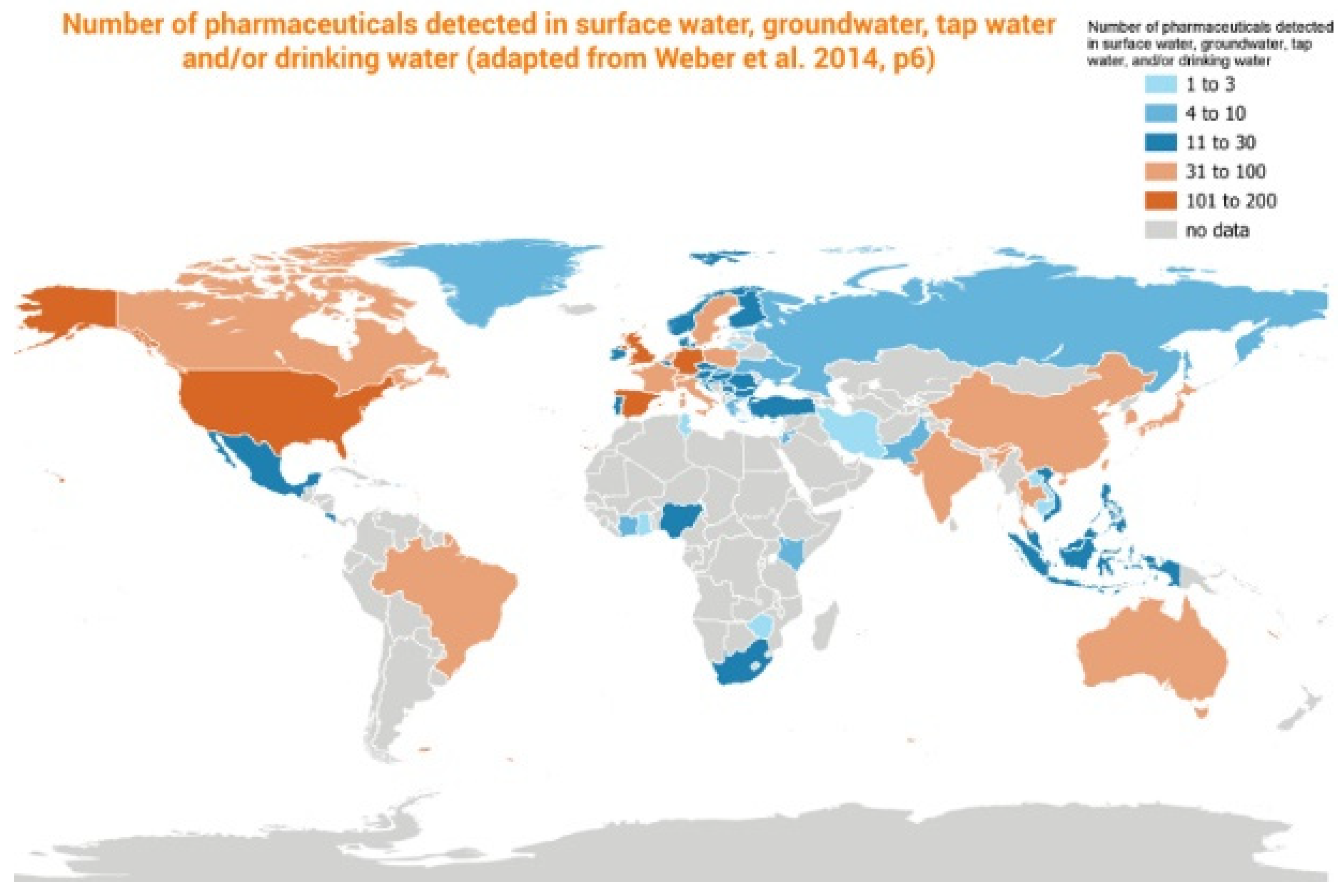
Figure 2.
Routes from Production to Ecosystems for Pharmaceutical Contamination.
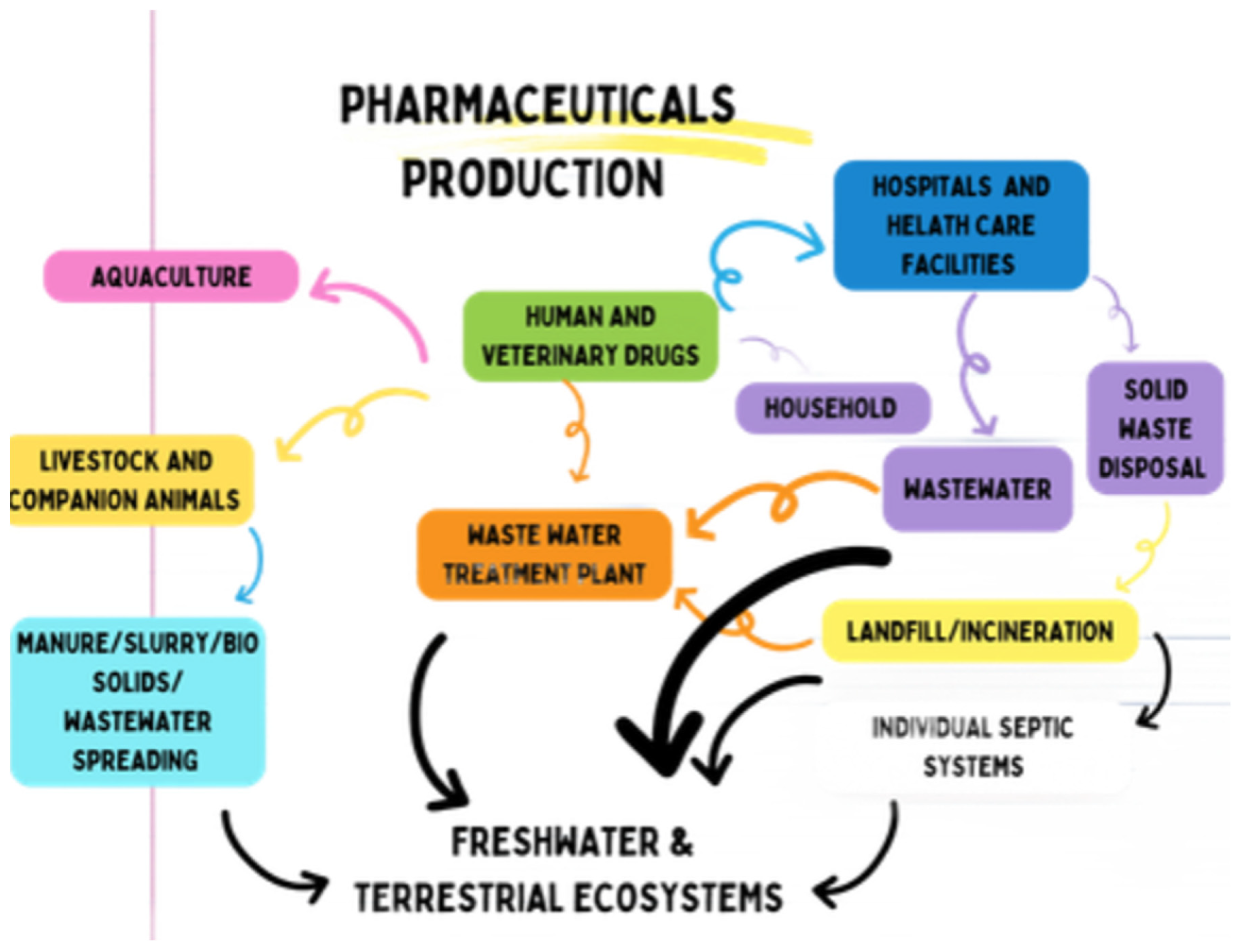
Figure 3.
Mechanisms of environmental degradation and pathways of Microplastic pollution [22].
Figure 3.
Mechanisms of environmental degradation and pathways of Microplastic pollution [22].
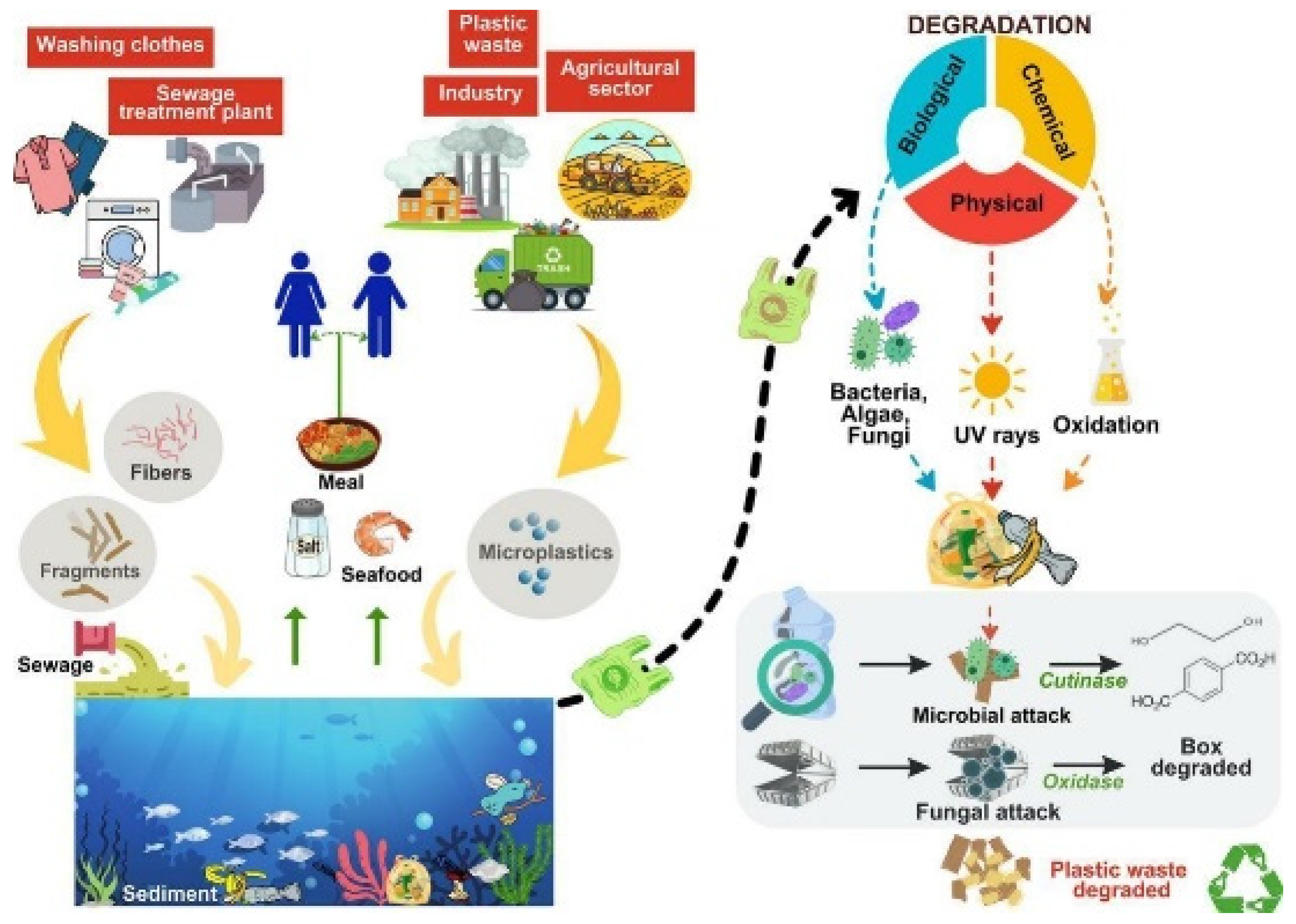
Disclaimer/Publisher’s Note: The statements, opinions and data contained in all publications are solely those of the individual author(s) and contributor(s) and not of MDPI and/or the editor(s). MDPI and/or the editor(s) disclaim responsibility for any injury to people or property resulting from any ideas, methods, instructions or products referred to in the content. |
© 2025 by the authors. Licensee MDPI, Basel, Switzerland. This article is an open access article distributed under the terms and conditions of the Creative Commons Attribution (CC BY) license (http://creativecommons.org/licenses/by/4.0/).
Copyright: This open access article is published under a Creative Commons CC BY 4.0 license, which permit the free download, distribution, and reuse, provided that the author and preprint are cited in any reuse.