

Submitted:
16 March 2025
Posted:
17 March 2025
You are already at the latest version
Abstract
In a world grappling with the rise of populist leaders and the complexities of governance, this article takes a closer look at former Philippine president Rodrigo Duterte, a leader whose paradoxical and oxymoronic leadership style has deeply impacted the Philippines. Blending strength with vulnerability, toughness with compassion, and authority with relatability, Duterte’s presidency mirrors the resilience and struggles of the Filipino people, shaped by a turbulent history. Much like the resonating “Agong” of Mindanao, a traditional Filipino gong symbolizing unity and cultural identity, his leadership echoes through the world, embodying the contradictions of governance in a society balancing its past and future. Through in-depth qualitative content analysis, enriched by observations and interviews to ensure rigor and reliability, this study uncovers how these paradoxes and oxymorons resonate with global public sentiment, fostering both a sense of belonging and empowerment. By exploring these complexities, the findings emphasize the importance of an engaged and informed citizenry—one that actively shapes its political future while honoring the diverse voices within society. Overall, this paper seeks not only to illuminate Duterte’s leadership but also to inspire readers to recognize their vital role in upholding democratic values and fostering collective resilience.
Keywords:
Filipino identity
; Legacy
; Oxymoron
; Paradox
; political governance
; resilience
; Rodrigo Duterte
I. Introduction
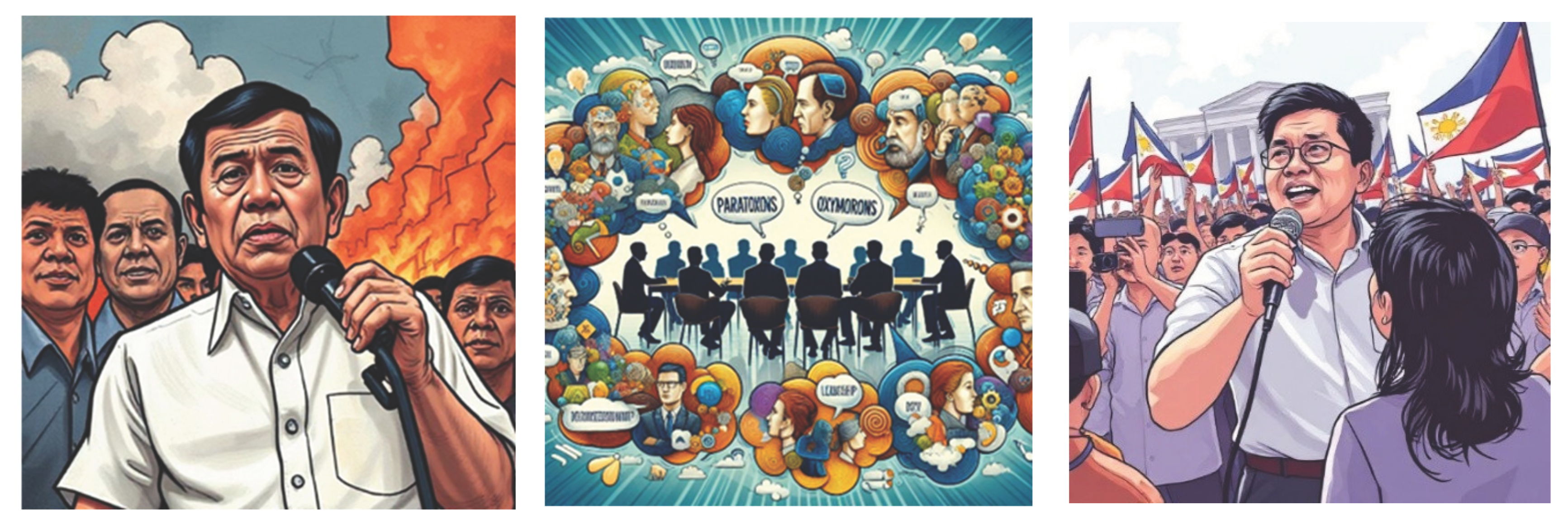
Source: deepai.org/machine-learning-model/text2img.
Former Philippine president Rodrigo Duterte’s presidency, which began in June 2016, represents a pivotal chapter in Philippine history, defined by a leadership style that is both polarizing and paradoxical. Elected during a period of widespread frustration with traditional political elites, Duterte resonated deeply with Filipinos seeking decisive action against crime and corruption. His direct and unfiltered rhetoric endeared him to many, as he prioritized public safety and security, fostering a sense of hope and empowerment among his people (Bolden, Witzel, & Linacre, 2016).
The title of this article draws inspiration from the “Agong,” a revered native musical instrument in Mindanao, Philippines. Traditionally, the Agong is used in formal gatherings for music and to signal important announcements or to summon people for significant events. Similarly, Duterte’s presidency can be seen as a clarion call for change, signaling a shift in the political landscape of the Philippines (Marcos, 2020; Asian Journal Press, 2025). His leadership, much like the resonant sound of the Agong, has been a call to attention, both captivating and contentious, drawing Filipinos into a national conversation about governance, identity, and the future of their country.
Duterte’s leadership is best understood through the lens of paradoxes and oxymorons, which reveal his ability to embody seemingly contradictory qualities (Cunha et al., 2021). On one hand, he adopted a “tough love” approach by aggressively tackling crime; on the other hand, he maintained a relatable demeanor that connected him with ordinary Filipinos. This duality, strength paired with relatability, underscores his unique capacity to navigate the complexities of governance while reflecting Filipino identity (Bernstein, 2020).
While his presidency sparked intense debates, particularly regarding his controversial war on drugs, many supporters viewed his actions as necessary steps to restore order and stability in the country. Critics condemned the extrajudicial killings associated with this campaign, yet proponents argued that his decisive measures addressed long-standing issues ignored by previous administrations. This tension highlights the paradoxical nature of his leadership: Duterte’s methods were seen as both ruthless and protective (Curato, 2017; Talamayan, 2022).
In 2019, Duterte made the bold decision to withdraw the Philippines from the International Criminal Court (ICC) after it began investigating allegations linked to his anti-drug campaign. Despite this withdrawal, his administration remained steadfast in addressing national challenges. Even amid allegations of betrayal by subsequent administrations, Duterte’s actions reflected an enduring commitment to protecting Filipino interests. His arrest on March 11, 2025, following an ICC warrant and subsequent transfer to the Hague, epitomizes the contradictions of his leadership: a leader celebrated for his strength yet held accountable for its excesses (Ubac, 2025; Purog, 2022).
Building on these insights, this article aims to delve into the paradoxes and oxymorons inherent in Duterte’s leadership, examining how these contradictions have shaped his political legacy and influenced the broader political landscape of the Philippines.
Three essential questions guide this exploration:
- How do the paradoxes in Duterte’s leadership—such as his populist appeal and authoritarian governance—reflect and shape Filipino identity and political culture?
- In what ways do the oxymorons in Duterte’s leadership style, like his “tough love” approach, contribute to his enduring popularity despite controversies surrounding his policies?
- What implications do the contradictions in Duterte’s governance have for the future of democratic institutions and political stability in the Philippines?
This article argues that former Philippine president Rodrigo Duterte’s leadership, marked by paradoxes and oxymorons, embodies a complex interplay of populist appeal, authoritarian governance, and cultural resonance. It has profoundly shaped Philippine society by challenging traditional notions of democratic leadership and redefining political engagement through disruption and transformation.
II. Literature Review and Methodology
Rodrigo Duterte’s presidency has been a focal point for academic inquiry due to its polarizing nature and profound impact on Philippine society. Scholars have extensively analyzed his leadership style and policies, particularly his appeal to public sentiment and reforms aimed at addressing crime and corruption. While much research focuses on political science frameworks such as populism and authoritarianism (Luscher, 2018; Cunha et al., 2021), significant room remains for exploration through cultural lenses.
Several studies emphasize Duterte’s paradoxical leadership style. Rivera and Atienza (2020), in Dutertismo: Roots, Outcomes, Trends, examine how Duterte blends authoritarian tendencies with populist rhetoric. Similarly, Miraflores (2021) explores the ’democratic paradox’ of Duterte’s governance—combining democratic engagement with illiberal practices—while Thompson (2020) highlights penal populism as a defining feature of his administration. These works collectively underscore how Duterte’s leadership reflects a complex interplay between strength and relatability. Further, the studies of Au et al. (n.d.) and Dano (2024) were included to provide comparative insights into Duterte’s leadership style, highlighting its distinctiveness within the context of Philippine political history and its polarizing impact on public opinion.
Moreover, there is an opportunity to explore how Duterte’s paradoxical statements reflect broader historical narratives within Filipino culture. The Philippines’ rich postcolonial identity provides a unique backdrop for understanding how his governance resonates with societal aspirations and struggles (Heydarian, 2018). By incorporating concepts like paradoxes alongside theories of leadership and cultural identity (Tripathi & Dixon, 2008), researchers can develop a more nuanced understanding of Duterte’s presidency.
This study employed qualitative content analysis to examine Rodrigo Duterte’s leadership through themes of paradoxes and oxymorons in speeches, policies, and public reception from 2015 to 2025. The analysis aimed to uncover how these contradictions shaped public perception and governance outcomes.
Using Braun & Clarke’s (2013) framework for qualitative research, this study identified recurring themes in Duterte’s rhetoric and policies. Speeches were analyzed for emotional language that revealed contradictions such as “tough love” or “benevolent authoritarianism.” Policies like the war on drugs were examined for their dual impact—strict enforcement paired with promises of protection.
To ensure comprehensive analysis, public statements from 2015–2025 were included for their rich rhetorical content. Key initiatives like the war on drugs were analyzed alongside their legislative texts. Articles from major publications provided insights into public discourse surrounding Duterte’s governance. This multi-source approach, which includes interviews, articles, research, videos, and other written and online sources from the library and scholarly journals, allowed for a holistic understanding of Duterte’s paradoxical leadership within the Philippine cultural context.
In the study of Duterte’s leadership style, apart from conducting in-depth content analysis of published reading materials from the library and online sources, the researcher employed interviews, observations, and other document-related materials to ensure robust triangulation of data. Given the vast scope of the area being covered, some interview data were also extracted from YouTube videos, recorded TV interviews, printed news items from national daily newspapers, and journals, in addition to the actual interviews conducted. Interviews provided direct insights into individual perceptions of his leadership, while observations captured the nuances of his actions and public demeanor that words alone could not convey. Document analysis, on the other hand, offered a historical and contextual lens, allowing findings to be cross-verified and uncover patterns in his rhetoric and policies. Together, these methods presented a comprehensive and credible picture of the complexities in his leadership approach.
The validity and reliability of the data were ensured through best practices in qualitative in-depth content analysis. The study utilized scholarly books and journals from the SMCII library and other reliable online sources. While no participants were involved, the analysis adhered to rigorous qualitative research standards. According to Creswell (2021), ensuring validity in qualitative research involves triangulation—using multiple sources to corroborate findings. This was achieved by analyzing a diverse range of scholarly texts and articles to ensure a comprehensive representation of Duterte’s paradoxical leadership.
Reliability was maintained through systematic coding and interpretation. The study followed established criteria for reliability in content analysis, including stability, reproducibility, and accuracy (Creswell, 2021). By systematically coding Duterte’s speeches and policies using Braun & Clarke’s (2013) thematic framework (Joffe, 2012), the researcher ensured that recurring themes were identified with precision. Expert judgment was implicitly incorporated by relying on peer-reviewed academic sources that underwent rigorous evaluation processes prior to publication. The use of scholarly texts from reliable databases further strengthened the validity of the findings by ensuring relevance and representativeness within the analyzed domain.
Ethical considerations were carefully observed throughout the study. The researcher ensured that all sources of data, whether primary or secondary, were appropriately cited to uphold academic integrity. Content extracted from videos, articles, and public records was used strictly within the boundaries of fair use for academic purposes. Any sensitive or potentially controversial data were handled responsibly, with a focus on maintaining neutrality and objectivity. Additionally, the names of participants in the interviews were withheld to protect their privacy and ensure confidentiality. The study prioritized transparency and rigor, ensuring that all analyses were conducted ethically and respectfully within the context of scholarly research.
As part of the study’s rigor, the writing style intentionally deviated from conventional academic norms to better capture the dynamic and multifaceted nature of Duterte’s leadership. This approach aligns with the perspective of Richardson (2000), who argues that alternative writing styles in qualitative research can enhance the depth and accessibility of findings by breaking away from rigid structures. By adopting a more flexible and engaging style, the researcher aimed to reflect the complexity of the subject matter while making the analysis more relatable and impactful.
This methodological rigor allowed for a nuanced exploration of Rodrigo Duterte’s paradoxical leadership style within its cultural context while maintaining the integrity of qualitative research principles. By adhering to these practices, this study hopes to contribute valuable insights into how contradictions in leadership can shape public perception and governance outcomes.
III. Results
The findings reveal that Rodrigo Duterte’s leadership is defined by striking paradoxes that resonate deeply within Filipino culture. As the researcher delves into the complexities of his presidency, he returns to the essential questions that have guided this exploration: How do the paradoxes in Duterte’s leadership reflect and shape Filipino identity and political culture? How do the oxymorons in his leadership style contribute to his enduring popularity? And what implications do these contradictions have for the future of democratic institutions and political stability in the Philippines? These questions offer a lens through which readers can understand the multifaceted impact of Duterte’s governance of the Philippines.
1. In terms of paradoxes in Duterte’s leadership that reflect and shape Filipino identity and political culture. Duterte’s paradoxical leadership is deeply intertwined with the fabric of Filipino identity and political culture. His populist appeal resonates with Filipinos who have long felt disillusioned by traditional political elites, tapping into a collective yearning for change. By presenting himself as an anti-establishment leader, Duterte connected with marginalized groups who felt excluded by previous administrations. His identity as a Mindanaoan further amplified this connection, symbolizing a break from the historical dominance of “imperial Manila” and giving voice to historically marginalized regions (Laya, 2024).
This blend of populist appeal and authoritarian governance aligns with a cultural preference for strong leaders during times of crisis. Filipino political culture often reflects a tension between valuing democratic ideals and seeking decisive leadership to address systemic issues like crime and corruption. Duterte’s “tough love” approach—marked by his war on drugs and direct communication style—embodies this tension. While critics decry his human rights violations, supporters view his actions as pragmatic solutions to pressing societal problems (Dano, 2024).
In shaping Filipino identity, Duterte’s leadership underscores the resilience and adaptability of the Filipino people. His ability to navigate nationalist rhetoric while engaging global powers reflects a broader cultural negotiation between asserting sovereignty and embracing globalization (Teehankee & Echle, 2023). This duality mirrors the Filipino experience: striving for progress while grappling with historical legacies.
2. In terms of Duterte’s oxymoronic leadership style, such as his “tough love” approach, sustain his popularity amid policy controversies. Duterte’s enduring popularity is rooted in his ability to embody oxymorons that resonate with the lived experiences of ordinary Filipinos. His “tough love” approach combines harsh policies with paternalistic care, creating an image of a leader who is both protector and disciplinarian. Many Filipinos credit his war on drugs with making streets safer and restoring a sense of order, despite its brutal implementation (Hutchcroft, 2016; Dano, 2024). This duality appeals to citizens who prioritize security over abstract democratic principles, particularly those who feel vulnerable to crime and instability (Curato, 2017).
Moreover, Duterte’s populist rhetoric reinforces this dynamic. By portraying himself as a man of the people—despite his humble background—he connects with Filipinos through relatable language and “truth bombs” that challenge institutional elites (Dano, 2024). His willingness to confront powerful entities like oligarchs and foreign powers further solidifies his image as a defender of ordinary citizens. This narrative is bolstered by cultural values that admire courage and resilience in leaders who are perceived as fighting for the greater good (Algera & Lips-Wiersma, 2012).
Duterte’s oxymoronic style also thrives on his ability to blur lines between nationalism and pragmatism. While he champions Filipino sovereignty through anti-US rhetoric and a pivot to China, he simultaneously engages global powers to secure economic benefits (Teehankee et al., 2023). This balancing act reinforces his appeal as a leader capable of navigating complex realities while prioritizing national interests. Despite controversies surrounding his policies—such as human rights violations and attacks on press freedom—his ability to frame these actions within a narrative of necessity allows him to maintain public trust.
3. In terms of implications do the contradictions in Duterte’s governance for the future of democratic institutions and political stability in the Philippines. The contradictions in Duterte’s governance pose both challenges and opportunities for the future of democratic institutions and political stability in the Philippines. On one hand, his authoritarian tendencies—manifested through attacks on media freedom, judicial independence, and human rights—have weakened institutional checks and balances (De Pano, 2021). These actions risk normalizing executive overreach and eroding public trust in democratic processes. For instance, his war on drugs has been criticized for bypassing due process, setting a dangerous precedent for future administrations (Miller, 2018).
However, Duterte’s governance also highlights the adaptability of Philippine democracy. His approval ratings, which remained above 70% for most of his term and peaked at 91% in September and November 2020 (Pulse Asia, 2020), suggest that many Filipinos prioritize tangible outcomes over procedural norms. This sentiment appears rooted in dissatisfaction with the ineffective governance of previous administrations (Dano, 2024). Such a pragmatic outlook could encourage future leaders to adopt hybrid approaches that balance strong leadership with institutional reforms.
Duterte’s contradictions also underscore the importance of cultural context in shaping governance models. His ability to blend populism with authoritarianism reflects a broader trend in postcolonial societies where leaders must navigate historical grievances alongside contemporary challenges (Hutchcroft, 2016). For example, his nationalist rhetoric appeals to collective memories of colonial resistance while addressing modern concerns about globalization (Teehankee & Thompson, 2016). These dynamics suggest that Philippine democracy will continue evolving in response to societal demands for both accountability and effectiveness.
Thematic Analysis
Rodrigo Duterte’s leadership has been a study in contrasts, weaving together paradoxes and oxymorons that both challenge and reflect the Filipino identity. His presidency, marked by a blend of populist appeal, authoritarian tendencies, and pragmatic governance, has left an indelible mark in the Philippines. By exploring the complexities of his leadership style—its strengths, contradictions, and cultural resonance—this study sheds light on how Duterte’s governance has shaped political culture, influenced public opinion, and posed critical questions for the future of democratic institutions. Here are the themes that emerge from this study:

Table 1.
Themes.
| Theme | Explanation |
|---|---|
| Populist Appeal | Duterte’s anti-elite rhetoric resonated with marginalized groups, empowering regions like Mindanao and symbolizing a break from traditional political dominance. |
| “Tough Love” Leadership | His governance combined strict policies with a paternalistic approach, creating an image of a leader who is both protective and decisive, appealing to those seeking security and order. |
| Nationalism and Pragmatism | Duterte balanced nationalist rhetoric with pragmatic foreign policies, asserting sovereignty while fostering economic ties with global powers, reflecting a nuanced leadership style. |
| Cultural Resilience | His leadership highlighted the adaptability of Filipino identity, blending historical legacies with modern challenges, showcasing the nation’s ability to navigate complexities. |
| Polarizing Popularity | Despite controversies, Duterte maintained high approval ratings by addressing systemic issues like crime and corruption, appealing to a pragmatic public seeking tangible results. |
| Institutional Challenges | His leadership raised concerns about weakening democratic institutions, with critics pointing to attacks on media freedom and judicial independence as potential risks to checks and balances. |
| Hybrid Governance | Duterte’s leadership exemplified a hybrid model, blending populism and authoritarianism, which resonated with postcolonial societies balancing historical grievances and modern governance needs. |
| Security vs. Human Rights | Policies like the war on drugs prioritized public safety but sparked debates on the balance between security and human rights, reflecting a complex governance trade-off. |
| Legacy of Contradictions | Duterte’s paradoxical leadership leaves a multifaceted legacy, challenging future leaders to balance strong leadership with democratic principles and institutional reforms. |
| Role of Civil Society | Strengthening civil society and promoting civic education remain vital to counterbalance authoritarian tendencies and foster public engagement with democratic principles. |
Identified Salient Paradoxes
- Tough Love: Duterte enforced strict policies like the war on drugs while presenting himself as a protector of ordinary Filipinos—a duality that fostered both fear and admiration (Miller, 2018).
- Nationalism vs. Globalization: His rhetoric alternated between staunch nationalism and pragmatic globalization—a reflection of broader societal tensions between sovereignty and interdependence.
Identified Salient Oxymorons
- Benevolent Authoritarianism: Combining strict governance with empathetic language positioned Duterte as both an enforcer and a caring leader (Manz et al., 2008).
- Chaotic Order: His unconventional methods disrupted outdated systems while aiming for long-term stability (Stewart et al., 2019).
Cultural Reflections
Rodrigo Duterte’s paradoxical leadership style serves as a mirror to the Filipino spirit, deeply rooted in resilience and adaptability shaped by centuries of colonial history (Apilado, 2008). These cultural underpinnings help explain why many Filipinos perceive him as both relatable and transformative. His presidency exemplifies how contradictions—strength paired with empathy, decisiveness with relatability—can define governance that is both effective and polarizing. Much like the resonating sound of the “Agong”, a traditional Filipino gong that symbolizes unity and cultural identity, Duterte’s leadership reverberates through the nation, embodying the complexities of a society navigating historical legacies and modern aspirations. This duality not only underscores his unique leadership style but also reflects the broader societal dynamics of the Philippines, where strength and vulnerability coexist in shaping the nation’s political and cultural identity (Talamayan, 2022).
IV. Discussion
Examining Rodrigo Duterte’s leadership provides insight into the complex web of contradictions that echo throughout Filipino society. These paradoxes not only shape public opinion but also influence the perceived effectiveness of his governance strategies. To grasp how Duterte’s multifaceted persona resonates with Filipinos, one must consider the cultural implications of his leadership and how they relate to the broader context of governance in the Philippines.
Rodrigo Duterte’s leadership is a fascinating paradox, blending traits that inspire deep admiration and provoke intense criticism. On one hand, he is celebrated as the “Greatest of All Time” (GOAT) by many Filipinos for his perceived transformative impact on the nation. This includes his tough-on-crime policies, populist appeal, economic reforms, infrastructure development under “Build, Build, Build,” and his pursuit of an independent foreign policy (Laya & Marquez, 2024; Dano, 2024). As the first president from Mindanao, he broke barriers and represented marginalized regions, earning a legendary status among supporters (Laya & Marquez, 2024). His landslide victory in the 2016 elections with 16,601,997 votes (38.6% of total votes cast in an 81% voter turnout) further solidifies his status as a leader deeply loved by a significant portion of Filipinos (COMELEC, 2016).
However, Duterte’s leadership also embodies contradictions that define his paradoxical style. While he is seen as a protector of public safety through his war on drugs, this campaign has been widely criticized for human rights violations and democratic backsliding (Brookings Institution, 2022; Dano, 2024). His populist rhetoric connects deeply with ordinary citizens but is often dismissed by critics as manipulative or authoritarian (Dano, 2024). Similarly, his pivot to China and rejection of traditional Western alliances championed national sovereignty but sparked debates about undermining Philippine interests (Philippine News Agency, 2025). These contradictions—being disruptive yet stabilizing, authoritarian yet pragmatic—have allowed him to maintain high approval ratings while polarizing public opinion. This duality underscores why Duterte remains one of the most complex and impactful leaders in Philippine history.
The recent ICC arrest of Duterte highlights the enduring loyalty of his supporters amidst controversy. As he was taken into custody and prepared for extradition to the Hague, followers congregated outside the detention facility waving national flags and chanting “Bring him back!” This outpouring of support underscores the deep emotional connection many Filipinos have with Duterte despite criticisms surrounding his presidency (Holligan, 2025). Furthermore, the arrest has fueled resentment toward President Ferdinand Marcos Jr.’s administration. Many Duterte supporters view the ICC’s actions as politically motivated and orchestrated by Marcos (Holligan, 2025; Wong, 2025; Pedrajas, 2025). This perception has intensified political divisions in the Philippines. While some view Duterte’s arrest as a betrayal by the Marcos administration, others welcome it as a step toward accountability for human rights abuses (Wong, 2025; Regencia, 2025). These dynamics reflect how loyalty to leaders can overshadow legal proceedings and international scrutiny.
Perspectives on sovereignty and justice further complicate this narrative. Anna Malindog-Uy argues that Duterte’s arrest infringes on Philippine sovereignty and questions Marcos’s cooperation with the ICC. She frames this involvement as undermining judicial independence in a country with functioning courts (Malindog-Uy, 2025). Similarly, Krizette Chu emphasizes Duterte’s perceived dedication to liberating Filipinos from systemic poverty and historical constraints. Such views highlight the emotional resonance of Duterte’s leadership among ordinary citizens who see him as a transformative figure committed to their liberation (Morada, 2025).
In sum, Rodrigo Duterte’s presidency represents a paradoxical interplay between populist appeal and authoritarian governance. His ability to inspire enduring loyalty despite controversies demonstrates how deeply embedded cultural narratives shape perceptions of leadership in the Philippines. These complexities offer valuable insights into Filipino political culture and its evolving relationship with governance norms.
Quote and Quote
Moving forward, Rodrigo Duterte’s presidency left an indelible mark on the Philippines, characterized by a leadership style that was both paradoxical and oxymoronic. His governance blended toughness with compassion, controversy with progress, and disruption with reform. These contradictions shaped public opinion and influenced the perceived effectiveness of his policies, creating a complex legacy that continues to evoke strong emotions among Filipinos. To enhance the rigor, validity, and reliability of the data gathered, this study incorporated interviews, amplifying the voices of ordinary citizens and critics alike. Through these perspectives, a rich tapestry of fertile information emerges, reflecting the multifaceted impact of Duterte’s administration.
One of the most striking aspects of Duterte’s leadership is the sense of security he instilled in many Filipinos. A local jeepney driver remarked, “During Duterte’s time, the roads became safer. I can drive even at night without fear of encountering trouble or getting hold-up.” This sentiment underscores the tangible improvements in public safety that many experienced during his administration, particularly as crime rates reportedly declined during his time as president. Similarly, a local fish vendor shared how Duterte’s economic policies benefited small businesses: “Duterte’s programs helped a lot. The markets were prioritized, so now we can have more customers.” These perspectives highlight how Duterte’s governance resonated with ordinary citizens by addressing their immediate needs.
Duterte’s support for law enforcement also left a lasting impression. A police officer reflected: “Duterte’s support gave us the strength to enforce the law. He wasn’t afraid to stand by the police.” This sense of empowerment emboldened law enforcement to carry out their duties more assertively, though it also raised concerns about unchecked authority and human rights violations. Meanwhile, public servants like teachers expressed gratitude for improved welfare under his administration: “Thanks to Duterte, our salaries increased. This has greatly helped my family and our livelihood.” Such reforms boosted morale among government employees and contributed to their economic stability.
The COVID-19 pandemic further tested Duterte’s leadership, revealing both strengths and weaknesses. A local doctor praised his efforts: “During the COVID-19 pandemic, Duterte worked tirelessly to provide vaccines and improve healthcare facilities. His dedication truly helped many Filipinos.” This acknowledgment of his pandemic response reflects how his administration sought to address an unprecedented crisis, despite criticisms over initial delays and strict lockdown measures.
Duterte’s controversial war on drugs remains one of the most polarizing aspects of his presidency. While widely criticized for human rights abuses and extrajudicial killings (Brookings Institution, 2022), some citizens viewed it as a necessary evil. A mother shared a deeply personal story: “Because of Tokhang, my son was able to leave his vices behind. I never expected him to have a better life now, but because of this, he found a new life.” This perspective illustrates how some families perceived the campaign as offering hope for rehabilitation despite its violent implementation.
For a student like one young Filipina, Duterte’s policies brought both fear and relief: “At first, I was terrified of President Duterte because of what I heard about his strict ways. But when an addict tried to harm me, I realized his campaign against drugs was for people like me. Thanks to his leadership, I feel safe walking to school again.” Such accounts reveal how Duterte’s approach to crime prevention resonated with vulnerable groups who felt protected under his rule.
However, these positive narratives are counterbalanced by critical voices that highlight the darker consequences of Duterte’s administration. A businessman lamented: “The accusations against us are baseless and unfair. We have always operated within the bounds of the law and in service of the Filipino people.” This reflects frustrations among business leaders who felt targeted by Duterte’s anti-corruption drive. Another businessman criticized restrictions on press freedom: “This is a blatant attack on press freedom. It’s clear that this administration is retaliating against critical reporting.” These concerns underscore how dissenting voices were often suppressed during Duterte’s tenure.
Politicians also voiced disillusionment with unfulfilled promises. One remarked: “The war on drugs has left a trail of blood and fear, overshadowing the very principles of justice and human rights that our nation stands for.” Another added: “The promises to eradicate corruption were nothing but empty words. Instead, the system remained plagued by the same issues, with no real accountability or transparency under his administration.” These critiques highlight how systemic issues persisted despite Duterte’s rhetoric about reform.
Duterte’s ability to inspire both loyalty and criticism is perhaps best captured in the words of a Catholic bishop: “Duterte’s courage is extraordinary. Even the police, military, and oligarchs were afraid of his policies. But because of this, discipline and change came to our country.” While this acknowledgment praises his boldness in challenging entrenched institutions, it also reflects how such actions polarized society.
The recent International Criminal Court (ICC) arrest warrant against Duterte has reignited debates about his legacy. Supporters rallied outside detention facilities chanting “Bring him back!” as they waved national flags (Holligan, 2025). This emotional display underscores the enduring loyalty many Filipinos feel toward him despite international scrutiny over alleged crimes against humanity during his war on drugs (Wong, 2025). Critics view this as an opportunity for accountability; however, others perceive it as an infringement on Philippine sovereignty (Malindog-Uy, 2025).
Overall, Rodrigo Duterte’s presidency embodies a paradoxical legacy—one that blends progress with controversy and compassion with authoritarianism. Through bold policies and polarizing rhetoric, he reshaped Philippine society in ways that continue to spark debate long after his tenure ended. The voices from ordinary citizens offer valuable insights into how his leadership resonated across diverse sectors while exposing deep divisions within Filipino society.
Further Interpreting the Paradoxes and Oxymorons of Duterte’s Leadership
Former Philippine president Rodrigo Duterte’s leadership exemplifies the dualities that define governance in complex societies. His “tough love” approach, addressing crime and insecurity, offered Filipinos a sense of safety amidst chaos (Hutchcroft, 2016). By framing strict measures as essential for creating a crime-free society, Duterte cultivated an image of a protector, appealing to those yearning for stability. However, this narrative also drew criticism from human rights advocates, highlighting the tension between ensuring safety and upholding individual freedoms (De Pano, 2021). His rhetoric further balanced nationalism with globalization, aligning with the nation’s historical struggle for independence while pragmatically engaging global powers (Eslit, 2025). This dual identity resonated with Filipinos who value both national pride and international cooperation, though his unpredictable foreign policy decisions—such as oscillating between conciliatory gestures toward China and bold territorial assertions—underscored the paradoxical nature of his leadership (Britannica, 2024).
Cultural Implications
Duterte’s paradoxes reflect the broader Filipino identity, shaped by a history of colonization, dictatorship, and resilience. His mix of empathy and assertiveness mirrors the cultural belief that strength emerges through struggle (Algera & Lips-Wiersma, 2012). For many, his tough stance on crime and drugs represented necessary measures to address deep-rooted social issues, echoing a collective aspiration for progress and stability. At the same time, the scars of colonization and authoritarian rule instilled caution regarding potential overreach. This delicate balance captures the essence of the Filipino experience—a push for authority to ensure security tempered by a desire for democratic freedoms (Eslit, 2025). Duterte’s leadership thus became a reflection of societal contradictions: a yearning for discipline alongside wariness of absolute power.
Broader Implications
Duterte’s leadership offers valuable insights into governance in postcolonial societies. His ability to adopt conflicting strategies—combining populist appeal with authoritarian control—demonstrates how leaders can connect with citizens while asserting dominance. This approach underscores the importance of understanding cultural histories when evaluating leadership models in nations shaped by colonial legacies (Hutchcroft, 2016). Moreover, his presidency provokes broader discussions about leadership in an interconnected world, illustrating how effective governance often exists at the intersection of authority and public expectation. As global challenges demand nuanced approaches, Duterte’s tenure highlights the significance of balancing national interests with international realities. For scholars and policymakers, his leadership underscores the importance of cultural context in shaping governance that resonates with diverse populations.
Overall Implications
Duterte’s leadership underscores the profound influence of cultural identity on public perceptions of governance. His “tough love” approach, combining strict policies with paternalistic care, resonates deeply with Filipinos who prioritize safety and stability during uncertain times (Morada, 2025. This governance style reflects a collective yearning for decisive leadership while navigating the tension between nationalism and globalization. By asserting sovereignty and engaging with global powers, Duterte encapsulated the dual aspirations of preserving cultural heritage and embracing modern progress. These dynamics highlight the intricate interplay between governance and cultural identity in shaping public trust and political stability.
Paper’s Limitations
While this study provides a comprehensive view of Duterte’s paradoxical leadership, it does not aim to favor or criticize him. The intent is purely educational, focusing on examining his leadership style and its outcomes. The reliance on qualitative methods—such as content analysis of scholarly works, interviews, videos, and other media—may introduce potential biases in interpreting data. Without quantitative metrics, such as surveys or statistical analyses, the study might not fully capture public sentiment across diverse demographics. Additionally, the political landscape under Duterte’s administration posed challenges in accessing dissenting perspectives due to restrictions on press freedom and the prevalence of misinformation and fake news. These limitations underscore the difficulty of presenting a balanced view of a polarizing leader.
Future research could integrate quantitative methods, such as surveys or longitudinal studies, to provide a more objective assessment of Duterte’s legacy. Examining the long-term consequences of his policies, particularly their impact on marginalized groups, could deepen understanding of his leadership’s broader societal implications. Despite these limitations, this research contributes meaningfully to the discourse on leadership by using the lens of paradoxes and oxymorons and fostering critical thinking about the complexities of Philippine governance that define Duterte’s presidency.
V. Conclusion
This paper has examined former Philippine president Rodrigo Duterte’s leadership, uncovering a paradoxical and oxymoronic blend of strength and vulnerability that deeply resonates with Filipino society. Through qualitative research methods—analyzing books, past studies, interviews, articles, videos, and scholarly publications—it becomes evident that Duterte’s governance fused authority with relatability, embodying the oxymoron of being both feared and admired. Despite facing relentless controversies, he remains, for many, a transformative figure in Philippine politics. Notably, his steadfastness in standing by his words is a distinctive attribute that sets him apart from other leaders to date. These findings highlight the complexities of leadership, demonstrating that effective governance often requires navigating contradictions. Duterte’s leadership, much like the resonating “Agong” of Mindanao, symbolizes the multifaceted nature of leadership shaped by cultural context, historical legacies, and the aspirations of the people. It offers broader insights into the challenges and opportunities faced by leaders in postcolonial Philippines.
Author Contributions
The author is solely responsible for conceiving and designing this article, gathering the data, and writing the entire manuscript.
Funding
This research was conducted without any specific financial support from public, commercial, or non-profit funding agencies.
Acknowledgments
The author extends gratitude to the SMCII Library, Google Scholar, Mendeley, ResearchGate, Academia, Scopus, various AI applications, and Microsoft Copilot for their invaluable contributions in providing illustrations, scholarly insights, and additional information that were instrumental in formulating discussions and completing this research article.
Conflicts of Interest
The author declares no conflict of interest.
References
- AI Image Generator. n.d.Available online: https://deepai.org/machine-learning-model/text2img.
- Algera, P. M., and M. Lips-Wiersma. 2012. Radical authentic leadership: Co-creating the conditions under which all members of the organization can be authentic. The leadership quarterly 23, 1: 118–131. [Google Scholar] [CrossRef]
- Apilado, D. 2008. A history of paradox: Some notes on Philippine public education in the 20th century. In Sixth National Social Science Congress The Paradox of Philippine Education and Education Reform: Social Science Perspectives, May. pp. 7–9. [Google Scholar]
- Asian Journal Press. 2025. Rodrigo Duterte: The rise and fall of the Philippines’ controversial leader. Asian Journal. Retrieved from https://asianjournal.com/philippines/rodrigo-duterte-the-rise-and-fall-of-the-philippines-controversial-leader/. [Google Scholar]
- Au, K., T. J. A. Juntoria, and R. P. Nuestro. n.d. A comparative analysis on the political leadership style of the previous five Philippine presidents to President Rodrigo Roa Duterte. Retrieved from Academia. [Google Scholar]
- Bernstein, R. 2020. The paradox of Rodrigo Duterte. Pulitzer Center. February 23. Available online: https://pulitzercenter.org/stories/paradox-rodrigo-duterte.
- Bolden, R. I., M. Witzel, and N. Linacre. 2016. Leadership paradoxes. Taylor & Francis. [Google Scholar]
- Braun, V., and V. Clarke. 2013. Successful qualitative research: A practical guide for beginners. SAGE Publications. [Google Scholar]
- Brookings Institution. 2022. Democratic expressions amidst fragile institutions: Possibilities for reform in Duterte’s Philippines. Retrieved from brookings.edu. [Google Scholar]
- Commission on Elections, COMELEC. 2016. 2016 National and Local Elections Results. Retrieved March 15, 2025, from https://en.wikipedia.org/wiki/2016_Philippine_presidential_election. [Google Scholar]
- Creswell, J. W. 2021. Research design: Qualitative, quantitative, and mixed methods approaches, 5th ed. SAGE Publications. [Google Scholar]
- Cunha, M. P., S. R. Clegg, A. Rego, and M. Berti. 2021. Paradoxes of power and leadership. Routledge. [Google Scholar]
- Curato, N. 2022. Democracy in a Time of Misery: From Spectacular Tragedies to Duterte’s Philippines. Oxford University Press. [Google Scholar]
- Curato, N., ed. 2017. A Duterte Reader: Critical Essays on Rodrigo Duterte’s Early Presidency. Ateneo de Manila University Press. [Google Scholar]
- Dano, G. 2024. Do Filipinos Truly Dislike Duterte’s Leadership? Indonesian Journal of Education and Social Science. [Google Scholar]
- De Pano, J. C. G. 2021. Source credibility dimensions in Philippine President Duterte’s State of the Nation Addresses. Asia-Pacific Social Science Review 21, 1. Available online: https://animorepository.dlsu.edu.ph/apssr/vol21/. [CrossRef]
- DeepAI. 2023. Discussion on paradoxes and oxymorons. ChatGPT model. Available online: https://www.openai.com/chatgpt.
- Eslit, E. R. 2025. The duality of identity: Exploring postcolonial paradoxes and cultural oxymorons in the Philippines. Humanities Journal 1, 1. Available online: https://10.31893/humanitj.2025009. [CrossRef]
- Heydarian, R. J. 2018. The Rise of Duterte: A Populist Revolt Against Elite Democracy. Palgrave Macmillan. [Google Scholar]
- Holligan, A. 2025. Duterte’s first night in ICC custody is a pivotal moment for the court. BBC News. Available online: https://www.bbc.com/news/articles/cvgw1nklxezo.
- Hutchcroft, P., ed. 2016. Mindanao: The Long Journey to Peace and Prosperity. Ateneo de Manila University Press. [Google Scholar]
- Joffe, H. 2012. Thematic analysis. In Qualitative research methods in mental health and psychotherapy: A guide for students and practitioners. Edited by D. Harper and A.R. Thompson. Wiley-Blackwell: pp. 209–223. [Google Scholar]
- Laya, M. L., and J. N. Marquez. 2024. Epitome of Political Leadership in Rodrigo R. Duterte of Davao City, Philippines. Retrieved from ejournals.ph. [Google Scholar]
- Luscher, L. 2018. Managing leadership paradoxes. Routledge. [Google Scholar]
- Malindog-Uy, A. 2025. Was the ICC weaponized against Duterte? The Manila Times. Retrieved from https://www.manilatimes.net). [Google Scholar]
- Manz, C. C., V. Anand, M. Joshi, and K. P. Manz. 2008. Emerging paradoxes in executive leadership: A theoretical interpretation of the tensions between corruption and virtuous values. The Leadership Quarterly 19, 3: 385–392. [Google Scholar] [CrossRef]
- Marcos, I. 2020. Duterte critics missed SONA’s clarion call - Change now, transform or die! Senate of the Philippines. Retrieved [date you accessed the article], from https://web.senate.gov.ph/press_release/2020/0728_. [Google Scholar]
- Miller, J. 2018. Duterte Harry: Fire and Fury in the Philippines. Scribe Publications. [Google Scholar]
- Miraflores, P. E. C. 2021. The democratic paradox of Duterte: Mapping the cognitive-affective ideological structure of leftist student organizations in Manila and Davao. APCoRE Online Journal of Proceedings, 1(1). Retrieved from PhilArchive. [Google Scholar]
- Morada, N. 2025. Will Rodrigo Duterte be seen as a martyr – or a symbol of justice finally being carried out? The Conversation. Available online: https://theconversation.com/will-rodrigo-duterte-be-seen-as-a-martyr-or-a-symbol-of-justice-finally-being-carried-out-252020.
- Pedrajas, J. 2025. Here’s why solons believe Duterte’s arrest won’t lead to political instability. Manila Bulletin. Available online: https://mb.com.ph/2025/3/13/here-s-why-solons-believe-duterte-s-arrest-won-t-lead-to-political-instability.
- Philippine News Agency. 2025. Timeline of ICC investigation of Duterte. Available online: https://www.pna.gov.ph/articles/1239694.
- Pulse Asia. 2020. September 2020 nationwide survey on the performance and trust ratings of the top Philippine government officials. Pulse Asia Research Inc. October 8. Available online: https://pulseasia.ph/september-2020-nationwide-survey-on-the-performance-and-trust-ratings-of-the-top-philippine-government-officials/.
- Purog, J. 2022. President Rodrigo Duterte’s radical leadership. Social Ethics Society Journal of Applied Philosophy, Special Issue, 13-31. Retrieved from http://ses-journal.com/wp-content/uploads/2022/10/SES-Journal-Article-1-Special-Issue-2-2022.pdf. [Google Scholar]
- Regencia, T. 2025. Why has the Philippines arrested ex-President Duterte on ICC warrant?. Al Jazeera. Available online: https://www.aljazeera.com/news/2025/3/11/why-has-the-philippines-arrested-ex-president-duterte-on-icc-warrant.
- Richardson, L. 2000. Writing: A method of inquiry. In Handbook of qualitative research, 2nd ed. Edited by N. K. Denzin and Y.S. Lincoln. Sage Publications: pp. 923–948. [Google Scholar]
- Rivera, T. C., and M. E. L. Atienza. 2020. Dutertismo: Roots, outcomes, trends. Philippine Political Science Journal 41, 1–2: 1–3. [Google Scholar] [CrossRef]
- Stewart, G. L., S. H. Courtright, and C. C. Manz. 2019. Self-leadership: A paradoxical core of organizational behavior. Annual review of organizational psychology and organizational behavior 6, 1: 47–67. [Google Scholar] [CrossRef]
- Talamayan, F. 2022. The Philippine pivot to China and Russia: Duterte’s foreign policy revisited. Asia Review Retrieved from SSRN. 12, 3: 451–477. [Google Scholar]
- Teehankee, J., and C. Echle. 2023. Rethinking Parties in Democratizing Asia. [Google Scholar] [CrossRef]
- Thompson, M. R. 2020. Explaining Duterte’s rise and rule: “Penal populist” leadership or a structural crisis of oligarchic democracy in the Philippines? Philippine Political Science Journal 41, 1–2: 5–31. [Google Scholar] [CrossRef]
- Tripathi, S., and J. Dixon. 2008. Leadership in a paradoxical public-sector environment: The challenges of ambiguity. International Journal of Leadership in Public Services 4, 3: 4–14. [Google Scholar]
- Ubac, M. L. 2025. Drug war: ‘Widespread and systematic attack’ (1). Philippine Daily Inquirer. Available online: https://opinion.inquirer.net/181606/drug-war-widespread-and-systematic-attack-1.
- Vitug, M. D., and C. Elemia. 2024. Unrequited Love: Duterte’s China Embrace. Ateneo de Manila University Press. [Google Scholar]
- Wong, A. C. 2025. Duterte’s ICC arrest: A day of reckoning. The Interpreter. Available online: https://www.lowyinstitute.org/the-interpreter/duterte-s-icc-arrest-day-reckoning.
Disclaimer/Publisher’s Note: The statements, opinions and data contained in all publications are solely those of the individual author(s) and contributor(s) and not of MDPI and/or the editor(s). MDPI and/or the editor(s) disclaim responsibility for any injury to people or property resulting from any ideas, methods, instructions or products referred to in the content. |
© 2025 by the authors. Licensee MDPI, Basel, Switzerland. This article is an open access article distributed under the terms and conditions of the Creative Commons Attribution (CC BY) license (http://creativecommons.org/licenses/by/4.0/).
Copyright: This open access article is published under a Creative Commons CC BY 4.0 license, which permit the free download, distribution, and reuse, provided that the author and preprint are cited in any reuse.


