
Submitted:
12 March 2025
Posted:
13 March 2025
You are already at the latest version
Abstract
The increasing requirement for efficient, cost-effective, and green transport has led to the implementation of a campus carpool scheme. In this paper, we discuss the process of engineering requirements for developing a carpool system to match university staff and students for daily commute on a shared basis. With the application of formal elicitation techniques, i.e., surveys and interviews, we elicited key user requirements and system constraints. The outcomes enumerate the principal issues of transport inefficiencies, costly commuting, and environmental concerns. Based on data collected, we determine system requirements functional and non-functional to achieve a secure, user-friendly, and efficient carpooling process. The research aids the growth of intelligent campus programs through presenting a scientific framework for deploying intelligent mobility solutions.
Keywords:
requirement engineering
; Carpool System
; real-time tracking
1. Introduction
University campuses today are facing increasing transportation problems, including increased traffic jams, parking shortages, and expensive commuting for employees and students. The lack of an affordable and effective transportation system has a tendency to cause inefficiencies that negatively impact campus accessibility and sustainability programs. Due to these problems, the establishment of a special carpool system within the campus has been proposed to provide an official ride-sharing mechanism [1,2,3,4].
This study employs requirement engineering methodologies to discover, examine, and define functional and non-functional requirements required in an effective carpooling system. Through a process of requirement elicitation in questionnaires and interviews, we analyze user needs, technological constraints, and system interdependencies. Our goal is to deliver a system that maximizes passenger-driver pairing, reduces traffic congestion, lessens commuting costs, and supports campus sustainability.
The study follows a systematic methodology with an introduction to the suggested system and its intention at the beginning. This is followed by discussion of requirement elicitation techniques, goal description, functional requirements, and constraints. The outcomes of this work will offer an enabling platform for the adoption of a smart transport system in the university as part of global sustainability and smart city innovations [5].
2. Literature Review
Carpooling has emerged as a viable solution for sustainable urban transport, offering economic and environmental benefits. Shaheen and Cohen (2021) highlight how carpooling significantly reduces congestion, carbon emissions, and commuting costs in both urban and university settings. However, challenges such as trust issues, scheduling conflicts, and system adoption remain barriers to widespread implementation. To address these concerns, Sommerville (2020) emphasizes the role of requirement engineering in designing intelligent transportation systems. The study underlines the importance of stakeholder involvement, structured elicitation techniques, and requirement validation to ensure the reliability of carpooling systems [6,7,8].
Focusing on university campuses, contrast the functionality of various campus carpooling systems. It is demonstrated that the addition of real-time tracking, fare-splitting frameworks, and gamification elements can significantly improve the overall user experience and ride-matching efficiency. Similarly, the investigate the impact of gamification on carpooling apps, with their study demonstrating rewards-based systems and leaderboards facilitate use. The application of artificial intelligence to optimize ride-sharing routes is explored by [9,10] and they propose AI-driven models [22,23,24,25] using real-time traffic data for minimizing travel time and maximizing the efficiency of rides.
A prominent motivator for adoption of carpooling is trust and safety. The author discusses about the requirements for verification mechanisms, user rating, and social media integration for enabling peer-to-peer trust for ride-sharing services. In another comparable study, author address privacy and security in carpooling systems and suggest the implementation of blockchain and encryption techniques to protect users’ data [26,27,28]. To reduce traffic congestion, the authors offer statistical calculations that efficient carpooling programs have the potential to reduce peak-hour traffic by up to 20%. Their article also suggests the integration of carpooling with public transportation for greater efficiency [11,12,13,14,15].
Understanding user behavior is important in efficient carpooling system design. The authors enumerate economic advantages, environmental concerns, and social networking as primary incentives for carpooling, while scheduling conflicts and safety concerns as key barriers. The author examine carpooling adoption within university settings and conclude that integrating carpool services with student ID checks enhances trust and participation. The author offer multi-criteria decision-making frameworks for optimal carpool matching based on user preference, departure time, and route similarity [16,17,18].
Technological solutions are key to ride-sharing effectiveness. The authors propose an IoT framework through real-time traffic data for improving ride-sharing service. Similarly, predictive analysis of ride-sharing demand is explored by [19], which highlights the efficiency of machine learning algorithms in optimizing resource usage. Economic consequences of ride-sharing are discussed by authors who point to fuel saving impacts of carpooling as well as savings on vehicle maintenance costs. System usability and user experience also influence the adoption of carpooling. The author examines UX/UI concerns in ride-sharing apps and propose design improvements to enhance accessibility. The author examine blockchain-based carpooling systems, with an emphasis on how decentralized technologies facilitate transparency and integrity of data. Prioritizing carpooling around sustainability goals, the author describes how ride-sharing reduces carbon footprints and achieves global environmental targets [27,28,29]. The author provide evidence-based policy recommendations to expand carpooling services through incentives and city design. Finally, author discusses hybrid transport systems, advocating for a seamless coordination of carpooling and public transport, whereas investigate AI-based ride-matching algorithms [30,31,32,33] as the future of smart mobility [20,21].
In conclusion, the literature surveyed identifies the significance of requirement engineering, AI-driven optimization, trust mechanisms, and gamification in the development of an effective campus carpooling system. It was discovered that an AI-driven, blockchain-protected, and easy-to-use ride-sharing system can significantly optimize transportation efficiency, reduce congestion, and improve user adoption in universities.
3. Methodology
This study follows a systematic requirement engineering approach in designing and developing a campus carpool system for enhancing the transportation efficiency of university students and staff. The process comprises several phases such as requirement elicitation, system modeling, functional and non-functional requirement specification, and evaluation. The proposed methodology ensures that the system developed is aligned with user requirements while being reliable, secure, and usable.
3.1. Requirement Elicitation
To know the users’ preference and system needs, the students and employees will be interviewed and questionnaires will be conducted. There will be a structured pre-designed questionnaire to collect data on commuters’ behavior, challenges faced in accessing the campus, and what the users prefer from a carpool system. Multiple-choice questions and Likert-scale questions will be used to study the demand for users, users’ preferred attributes, and user concerns regarding safety and reliability. The target participants are drivers and riders both among students and staff.
Semi-structured interviews will also be conducted with a sub-sample of questionnaire respondents to provide more in-depth information. These will investigate specific user concerns, such as trust in ride-sharing, readiness to use carpooling, and price and system feature expectations.
In order to obtain a full and balanced picture of system requirements, various elicitation techniques will be applied. The application of stakeholder analysis will determine the most applicable stakeholders, i.e., university administrators, students, university employees, and IT personnel responsible for system maintenance. Observation of existing transportation habits, campus parking congestion, and inefficiency of public transport will be utilized to measure if a carpooling solution is needed. A competitive analysis will also look at existing ride-sharing schemes (e.g., Grab, Uber, BlaBlaCar) in an effort to learn best practices and identify areas where the proposed system can bridge gaps.
3.2. System Modeling and Analysis
After the process of requirement elicitation, the information gathered will be processed to define system goals, functionalities, and constraints. An AND/OR model of goals will be developed to represent the super-goals, sub-goals, dependency, and potential conflicts in the system. The objective diagram will focus on several critical attributes, including reducing transportation costs through efficient ride-sharing processes, increasing commuting efficiency through route optimization, optimizing user confidence and safety through driver validation and rating schemes, and promoting ecological sustainability by reducing campus carbon signatures.
System requirements will be split into functional and non-functional requirements. The functional requirements include user authentication and verification, ride-matching algorithm to pair passengers and drivers along routes and schedules, real-time tracking and alerting, a fare-splitting system, and a feedback and rating system to build trust among users. The non-functional requirements include security functionality in terms of data encryption and access control functions, usability features to deliver ease of use, and scalability for future user growth.
3.3. Implementation of the System
The system shall be developed using an iterative approach to software development to offer real-time feedback and enhancement. Implementation shall be divided into four phases:
Phase 1: Designing a ride-matching prototype and real-time tracking.
Phase 2: Incorporation of security measures such as user login and payment encryption.
Phase 3: Introduction of gamification features to facilitate user participation.
Phase 4: Optimization and testing of the system on the basis of feedback from users.
Technology stack would include a Node.js or Django/Python backend, a React Native or Flutter frontend, and a PostgreSQL or Firebase database for storing ride and user data. Integration with the Google Maps API would also be implemented to provide route optimization as well as real-time traffic.
3.4. System Evaluation
For making sure that the carpooling system works effectively, the user acceptance test (UAT) and performance testing would be conducted. The user acceptance testing (UAT) would comprise users who were involved in the requirement elicitation process and invite them to check the prototype. Key usability metrics such as the task completion rate and system efficiency would be considered. The response of the users would be taken in order to enhance system features before full deployment.
The performance testing will verify system reliability, scalability, and security compliance. System reliability will be verified through uptime and failure rates, ensuring high availability. Scalability testing will measure the system’s performance under varying user loads. Security compliance will be finally assured by ensuring appropriate encryption, authentication, and access control mechanisms for user data and transactions. By following this structured process, the carpooling system will be developed as an efficient, safe, and user-friendly solution to campus transportation problems while promoting sustainability and campus community development.
4. Experimental Results
A questionnaire containing 20 questions to understand how often people travel to campus, and by what means. Along with that, we also intend to gather information regarding the advantages and disadvantages they face while traveling to campus and understand ways in which we can dispel those disadvantages.
4.1. Rationale of Choosing this Technique
As we wanted to gather a large data set in order to understand the flaws of the current system, as well as what people want to see in the new system, we opted to using a questionnaire as we can create a number of identical questions and ask a large population to answer the questions, ensuring that we get a large set of data to work with.
Questionnaires also often take up very little time and contain very simple questions. Thus they would work well with the target demographic of this questionnaire, as university students and staff members rarely have any time due to their upcoming assignment deadlines, and other curricular activities.
Finally, due to the current digital landscape, questionnaires have become one of the easiest forms of techniques of requirement elicitation, with a number of different websites offering free services for us to make use of to make the questionnaire.
4.1.1. Objective of the Questionnaire
The objective of the questionnaire was to gather feedback regarding the current Commuter Student Support System. This includes: finding what the weaknesses of the current system are, understanding what needs the target audience has in regards to what they need from the system, and understanding what non- functional requirements are necessary to make for a greater overall experience.
4.1.2. Targeted Audience
The questionnaire is aimed at students and/or staff members who currently make use of public transport to and from campus. This is the target demographic as they will be the ones to make use of the Commuter Student Support System, whether they have previously heard of the system or not. The aim of our questionnaire is only targeting them as we don’t aim to promote our system, but rather to just gather information.
4.1.3. Questionnaire
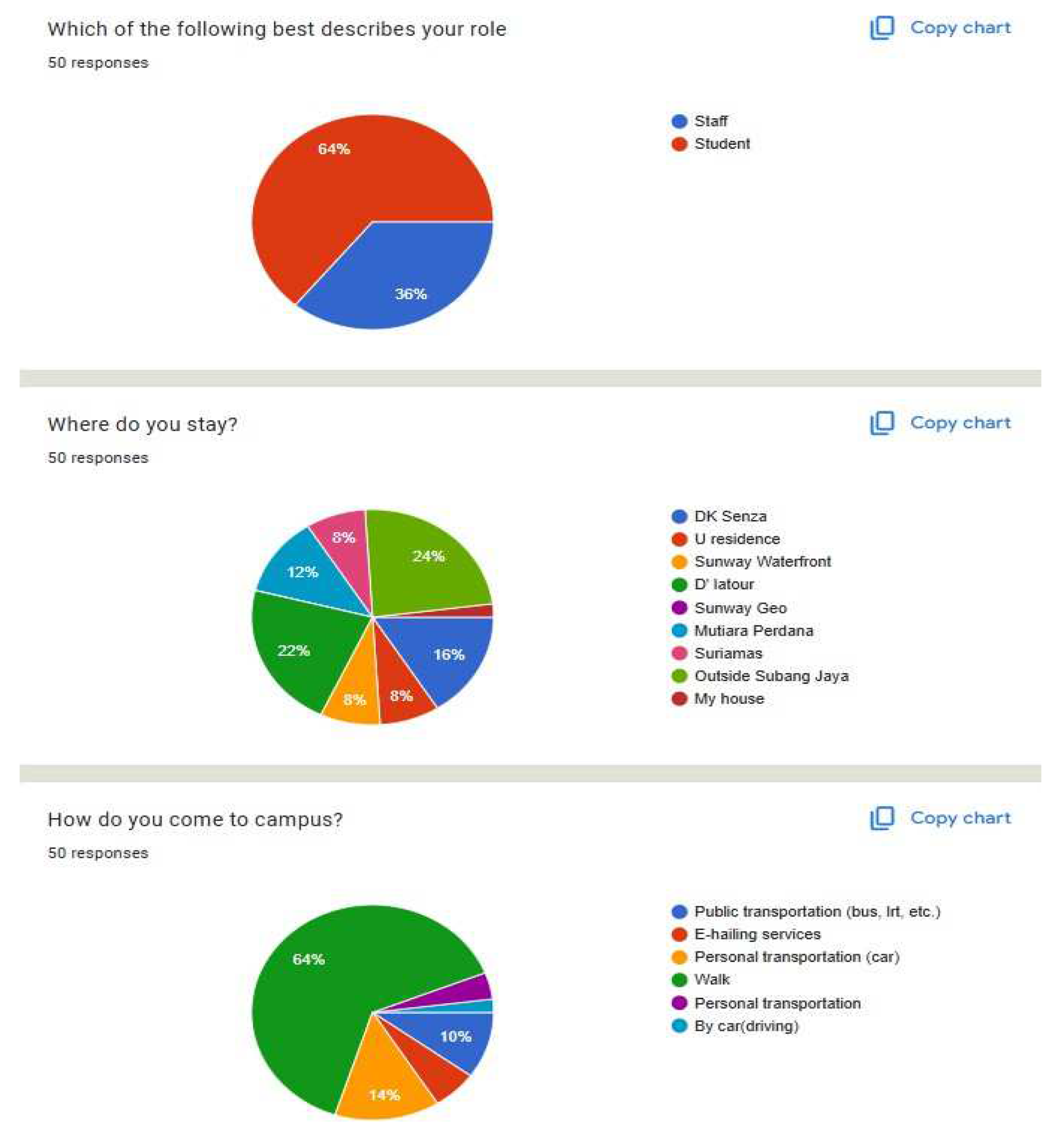
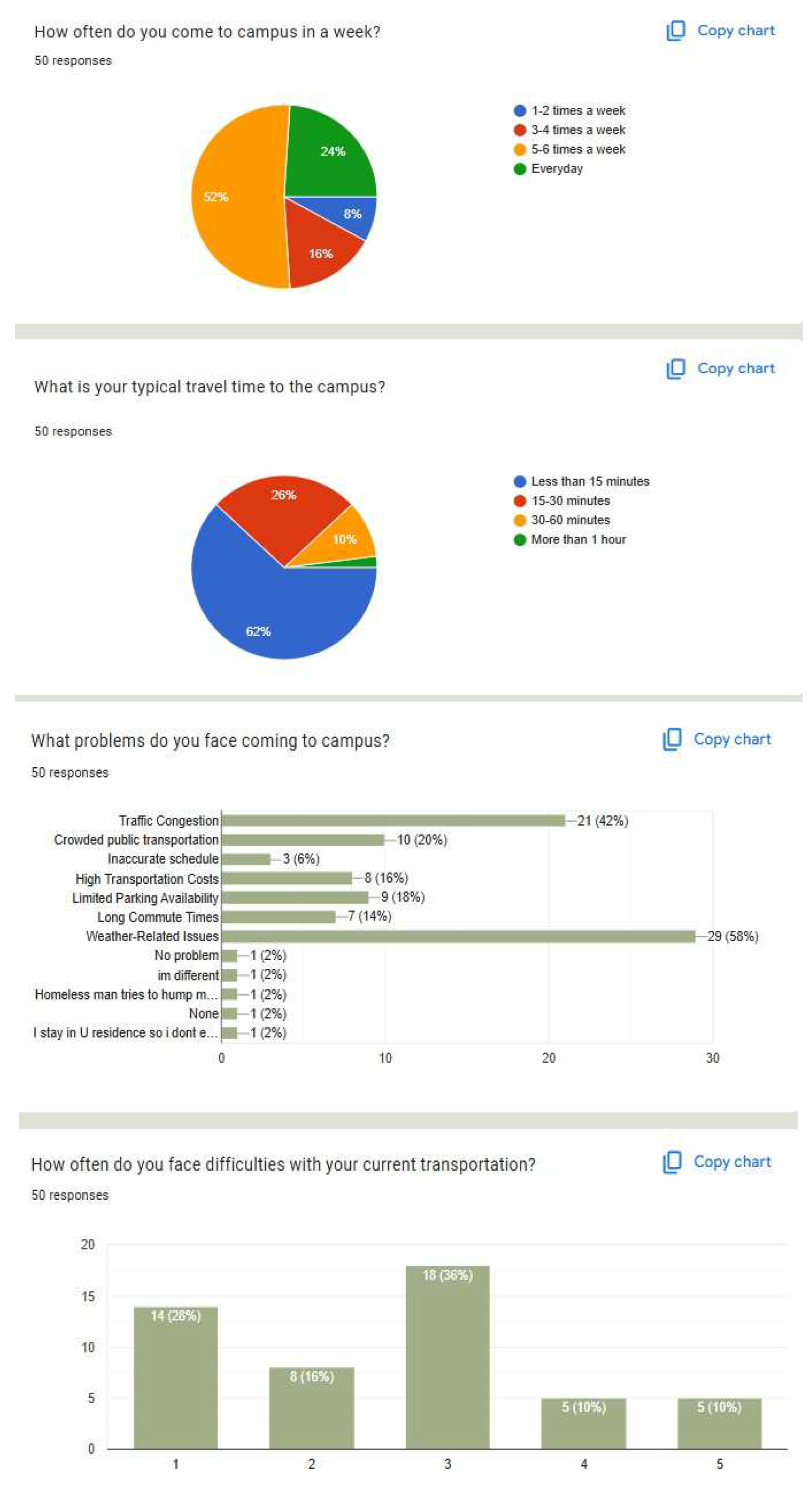
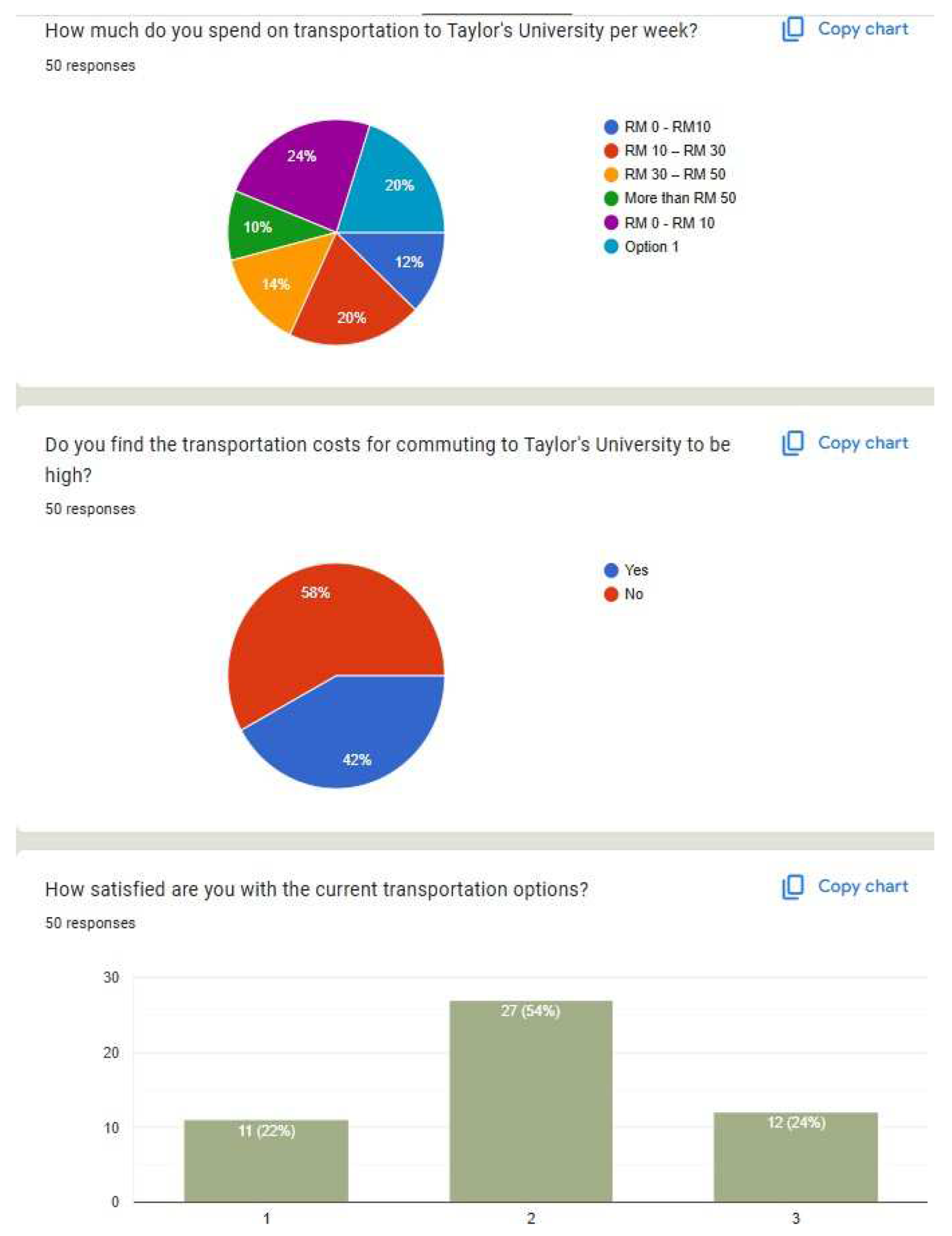
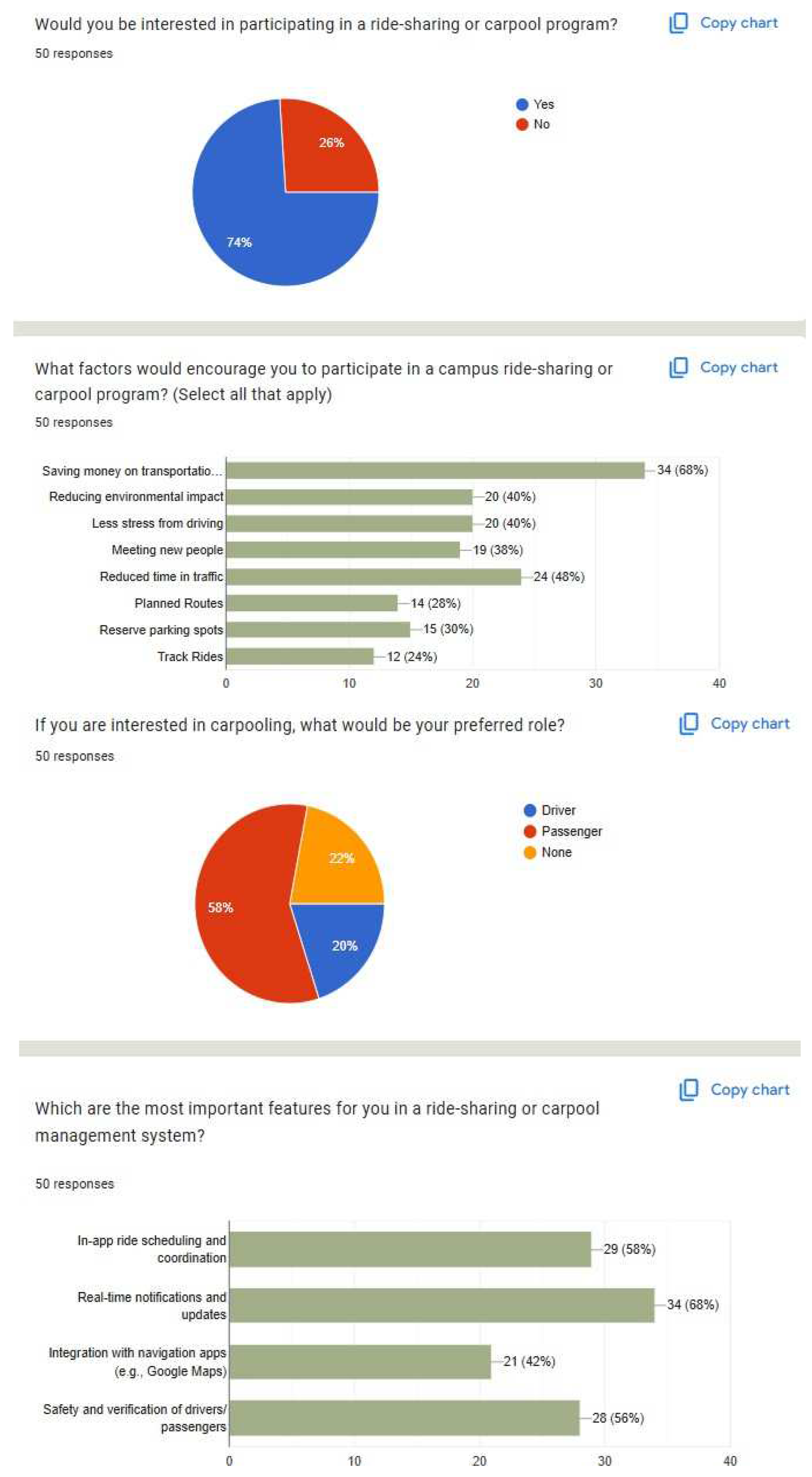
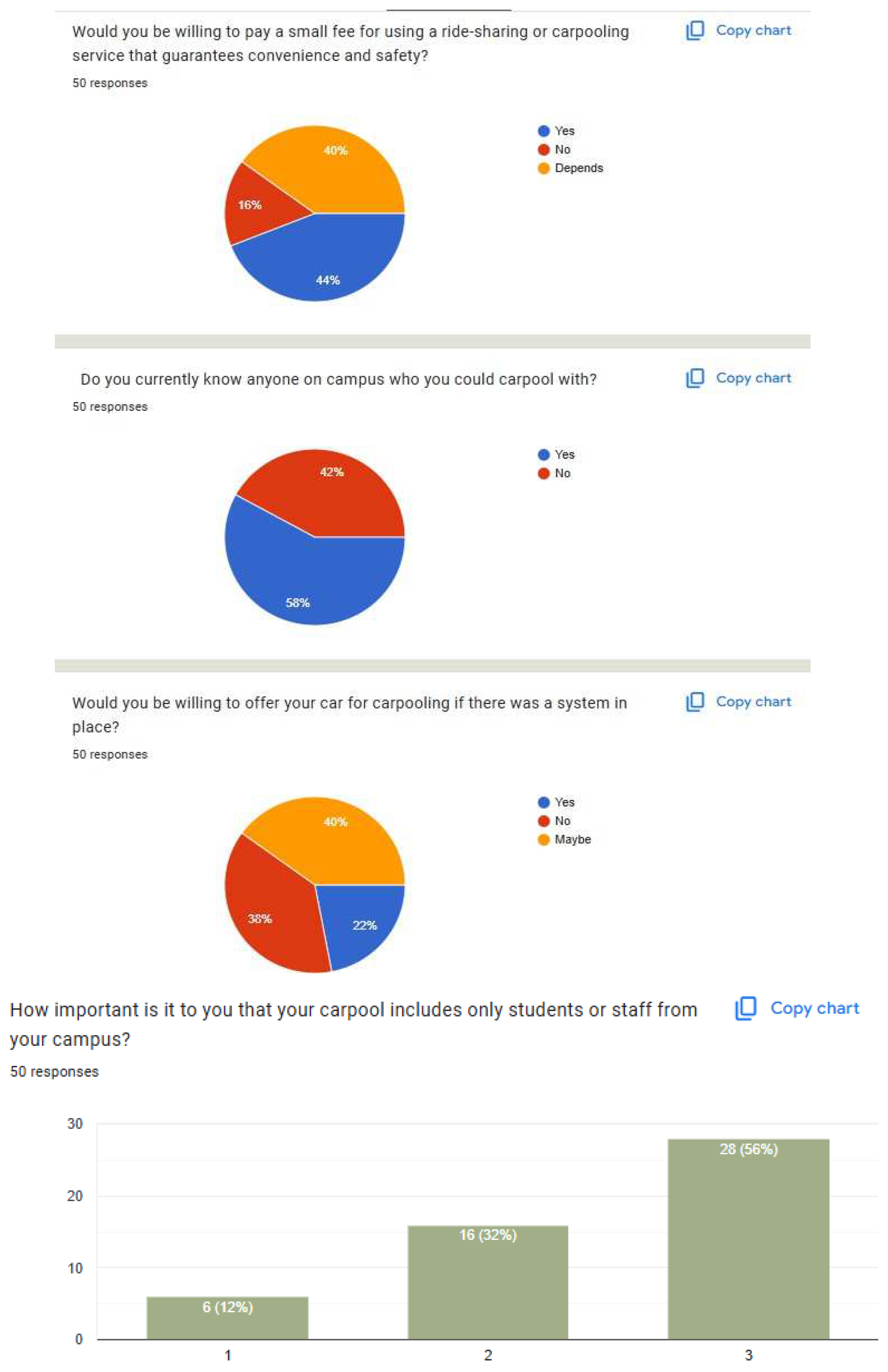
The following are screenshots of questions that were present in the questionnaire:
4.2. Findings/Outcome
The survey findings indicated that a huge majority of the respondents, that is 64%, were students. Out of them, 64% commuted to campus on foot, even though only 25% lived in on-campus accommodation or nearby such as the D’Latour condominium. The remaining commuting modes were e-hailing services like Grab (6%), private vehicles (20%), and public transport (10%). In addition, half of the respondents visited campus more than five times a week. The most frequent grievances regarding commuting included traffic and weather conditions, which on average were stated by the respondents to be 3 out of 5 in terms of frequency. Though the majority of students disliked their current means of transportation very much neither were they entirely content with them, fully 74% of them indicated a desire for a system of ride-sharing. The survey also indicated that the students preferred the carpool system to have real-time notifications, in-app scheduling, and security features to verify drivers and riders. Additionally, some of the students were even willing to pay a nominal charge for the service, provided it was only available to university staff and students.
In an effort to obtain a better understanding of the perceptions of the respondents, a follow-up interview was conducted among some of the questionnaire respondents. The primary reason for conducting interviews was to compensate for the limitations of the questionnaire, which was mainly made up of close-ended questions. The interviews allowed participants to provide more detail regarding their experience in commuting and express their expectations of the proposed system more clearly. The objective of this requirement elicitation activity was to probe the reasoning behind students’ responses and identify some problems they faced with the existing transport facilities. The open-ended approach facilitated a greater understanding of what facilities and improvements they expected from a carpool system. The interview target population was representative of the questionnaire respondents to maintain homogeneity in data collection.
Before the interviews, the research team had prepared relevant questions and waited for the questionnaire to receive a sufficient number of responses. Participants were then contacted and asked to join the interviews, which were conducted in a casual public setting to encourage free flow of conversation. The interviews were recorded with the permission of the respondents for documentation purposes. The interviews were open-ended but guided by seven questions: how did they commute to campus, their origin and travel time, what were the difficulties they faced, their weekly or monthly cost of commuting, what aspects of their commute could be improved, whether they would participate in a carpooling system, and what specific features or incentives would encourage them to participate.
The interview results uncovered more specific data regarding students’ commuting habits and problems. Most of the students employed public transport, supplemented by some walking as part of the daily routine. There were also references to using Kumpool, a car-sharing service enabling users to share rides with strangers going in the same direction. Commuting time was extremely variable, ranging from ten minutes to one hour, depending on where the student was traveling from, with some living in the surrounding areas, such as D’Latour, and others living farther away in Subang Jaya. A chronic issue cited by students who traveled to school by car was too much traffic jamming, which significantly slowed down travel time. When asked what in their opinion would make a change, most of the students proposed changes related to cars, such as enhancing car parking and decreasing congestion. Curiously, with the issues involved, the costs of commuting by most students via public transport were quite low, between RM5 and RM50 per week. For those students driving on to campus, there were added charges, with costs of around RM50 to RM100 per week. These findings stress the need for a well-planned carpool system that decongests traffic, offers cost-effective commuting choices, and enhances overall convenience for students and faculty.AND/OR Goal Diagram.
| SUPER GOAL(S) | SUB-GOAL(S) |
| • Reduce Carbon Footprint | • Reduce traffic flow |
| • Efficiency | • Increase available parking space |
| • Promote Communication | • Reduce number of drivers |
| • Increase Safety Levels | • Streamline route to pick up passengers |
| • Increase Time Efficiency | • Optimize driver route to destination |
| • Increase Cost Efficiency | • Promote Human Connection |
| • Implement User-2-User Communication | • Track driver’s whereabouts |
| • Implement User-2-Communication | • Track driver’s estimated time of arrival (ETA) |
| • Implement Real-Time Updates | • Communicate driver’s ratings to passengers |
| • Increase System Security | • Perform Analytics on User Data |
| • Increase User Safety | • Create a in-app currency system |
| • Incentivize users to use our system | |
| • User Friendly UI | |
| • Give control to users for their role (Driver/Passenger) | |
| • Verify users | |
| • Protect user data from hackers | |
| • Prevent data breachers (with sanitation) | |
| • Exclusive to target audience | |
| • Limiting number of passengers |
4.3. Dependencies of the Goals
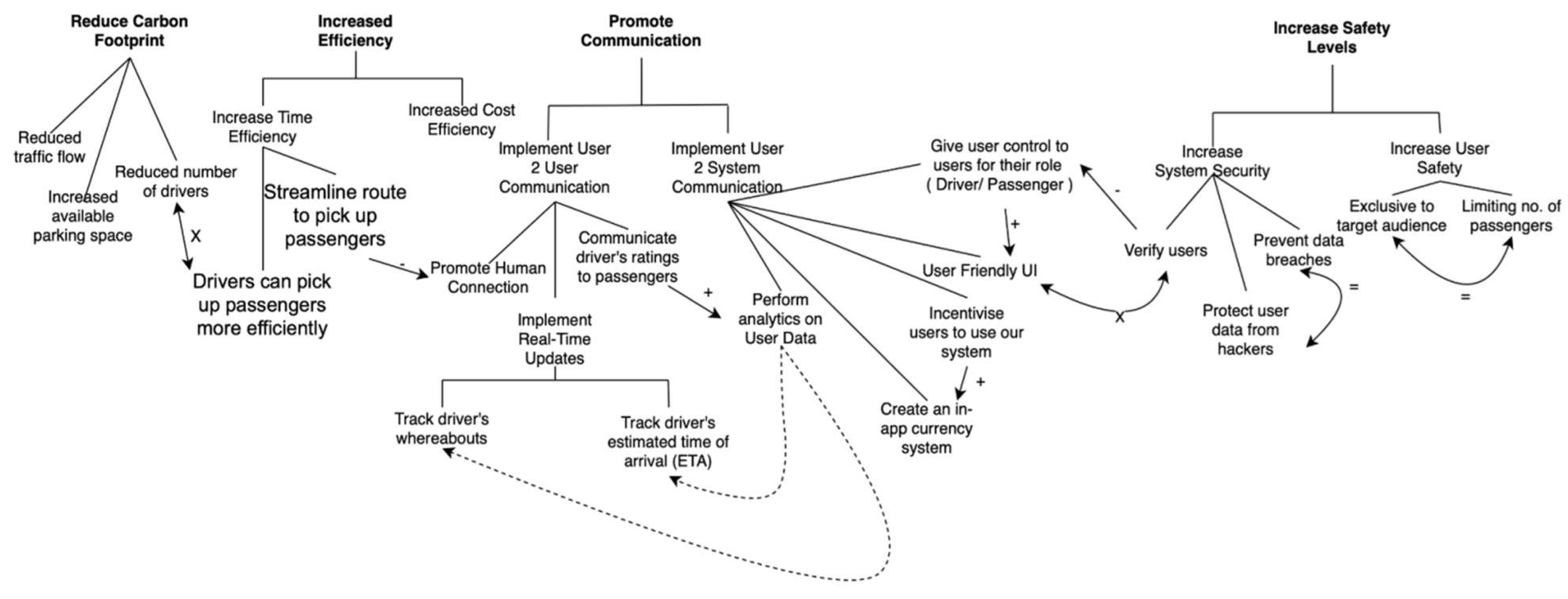
4.3.1. Requires Dependencies
- Track driver’s whereabouts -> Perform Analytics on User Data
- Tracking the location of the driver real time can be used as data, and said data can help in analyzing trends.
- Track driver’s estimated time of arrival (ETA) -> Perform Analytics on User Data
- Taking note of the estimated time of arrivals of the driver to the passenger or the destination can help the system give a more accurate estimations to the end-users, taking account any common traffic jams.
4.3.2. Supporting Dependencies
- ▪
- Incentivise users to use our system -> Create an in-app currency system
- ▪
- The implementation of a point system will make it easier for the system to reinforce incentives onto the user, as the system have full control over the digital point distribution.
- ▪
- Give control to users for their role (Driver/Passenger) -> User Friendly UI
- ▪
- The role selection mechanic will give the users more control as to what roles they want to fulfill at that moment, thus increasing user-friendliness.
- ▪
- Perform analytics on User Data -> Communicate driver’s ratings to passengers
- ▪
- Not only will review and ratings of the users be reflected in their app history, but it will be also can be used as an analytic tool for the system to see which users are not well liked in the community and take action.
- ▪
- Obstructing Dependencies
- ▪
- Streamline route to pick up passengers -> Promote Human Connection
- ▪
- Once driver routes have been optimized, passengers would only spend a minimal amount of time in the car. This minimal time also means that the time between the driver/passenger or passenger/passenger will reduce as well, reducing human connection.
- ▪
- A method to mitigate this problem would be to implement a chatting system for users, so they can interact with one another after they left the car.
- ▪
- Verify Users -> Give control to users for their role (Driver/Passenger)
- ▪
- The process for verification methods can hinder the role selection process as it may make the whole process longer and more cumbersome.
- ▪
- A method to mitigate this issue would be to give users the option to remember them for a period of time (e.g.,: 3 months). That way they don’t have to go through the verification process, as the system would remember them.
4.3.3. Conflicting Dependencies
User Friendly UI <-> Verify User
Similar to user role selection, verification methods will conflict with user-friendly UI as the verification process will take up more of the user’s time to verify themselves, which to some may consider to be annoying. This would be especially the case if they were to forget their verification.
Perhaps simplifying the verification process would reduce the time spent for the users to fill in their verification.
Reduced number of drivers <-> Drivers can pick up passengers more efficiently
A reduced number of drivers will conflict with the goal of picking up passengers because the drivers would need to spread out more to reach certain passengers, increasing time spent.
Perhaps the system can implement a max radius when searching for a nearby passenger, to prevent the driver from wasting too much time.
4.3.4. Goal Equivalent Dependencies
- ▪
- Protect user data from hackers <-> Prevent data breaches
- ▪
- Both of these goals are similar in a way that they both aim to protect the system’s data from outside influences.
- ▪
- Current data still stored within the system will be protected through encryption, while data that is not being used anymore (deprecated) will be thoroughly sanitized to prevent outside forces from getting a way into the system.
- ▪
- Exclusive to target audience <-> Limiting number of passengers
- ▪
- Both these goals are equivalent as they both fulfill the objective of increasing user safety through making the target audience more specific and making it easier to control a small target audience.
- ▪
- Making the app exclusive to our target audience ensures that we can keep track of these end-users much more easily.
- ▪
- Limiting the number of passengers would also give the system a much easier time to control and implement more safety protocols onto the users and also increase the safety of the driver.

Table 1.
Goal Documentation & Mapping.
| No | Goal ID | Goal Name | Goal Description | Super-goal | Sub-goal(s) | Other Goal Dependency |
|---|---|---|---|---|---|---|
| 1 | G1 | Reduced Carbon Footprint | This goal improves campus sustainability by reducing traffic congestion, increasing parking availability, and decreasing the number of vehicles. These actions will lower emissions, enhance air quality, and promote a healthier campus. | None | - Reduced Traffic Flow (G1-1) OR - Increased Available Parking Space (G1-2) OR - Reduced Number of Drivers (G1-3) | None |
| 2 | G1-1 | Reduced Traffic Flow | The goal is to significantly reduce the number of vehicles on campus by encouraging carpooling among students, faculty, and staff. Reducing traffic flow will minimize congestion during peak hours, increase pedestrian safety, and improve overall campus accessibility. | Reduced Carbon Footprint | None | None |
| 3 | G1-2 | Increased Available Parking Space | The goal is to increase the availability of parking spaces on campus to accommodate more vehicles, thereby reducing the stress of finding parking for students, faculty, and staff. | Reduced Carbon Footprint | None | None |
| 4 | G1-3 | Reduced Number of Drivers | The objective is to optimize student and employee commute times through an effective carpooling system. By implementing algorithms to assign passengers to carpools and improving route logistics, the goal is to minimize travel times, make transportation more efficient, and ultimately increase campus satisfaction and productivity. | Reduced Carbon Footprint | None | G1-3 conflicts with G2-1-1 |
| 5 | G2 | Increase Efficiency | The Efficiency goal enhances operational performance by improving time and cost management. | None | - Increase Time Efficiency (G2-1) - Increase Cost Efficiency (G2-2) | None |
| 6 | G2-1 | Increase Time Efficiency | The objective is to optimize student and employee commute times through an effective carpooling system. | Increase Efficiency | - Drivers can pick up passengers more efficiently (G2-1-1) - Streamlined Route to Pick Up Passengers (G2-1-2) | None |
| 7 | G2-1-1 | Drivers can pick up passengers more efficiently | Develop an efficient carpooling algorithm that matches commuters with similar routes and schedules. | Increase Time Efficiency | None | G1-3 conflicts with G2-1-1 |
| 8 | G2-1-2 | Streamlined Route to Pick Up Passengers | Improve ride-sharing route logistics by analyzing traffic patterns and optimizing routes. | Increase Time Efficiency | None | G2-1-2 obstructs G3-1-1 |
| 9 | G2-2 | Increase Cost Efficiency | Reduce commuting costs by promoting carpooling as a cheaper alternative. | Increase Efficiency | None | None |
| 10 | G3 | Promote Communication | Enhance interaction and information exchange within the campus community. | None | - Implement User-to-User Communication (G3-1) - Implement User-to-System Communication (G3-2) | None |
| 11 | G3-1 | Implement User-to-User Communication | Improve communication among users to enhance ride-sharing coordination. | Promote Communication | - Promote Human Connection (G3-1-1) - Implement Real-Time Updates (G3-1-2) - Perform Analytics on User Data (G3-1-3) | None |
| 12 | G3-1-1 | Promote Human Connection | Foster social interaction and trust among users through the ride-sharing platform. | Implement User-To-User Communication | None | G2-1-2 obstructs G3-1-1 |
| 13 | G3-1-2 | Implement Real-Time Updates | Provide users with real-time updates about their rideshare to increase reliability. | Implement User-to-User Communication | -Track Driver’s Whereabouts (G3-1-2a) - Track Driver’s Estimated Time of Arrival (G3-1-2b) | None |
| 14 | G3-1-2a | Track Driver’s Whereabouts | Integrate location tracking functionality into ride-sharing apps. | Real-Time Updates | None | None |
| 15 | G3-1-2b | Track Driver’s Estimated Time of Arrival | Improve campus accessibility through carpooling and seamless transportation options. | Implement Real-Time Updates | None | None |
| 16 | G3-1-3 | Perform Analytics on User Data | Introduce a rating system for rideshare users to ensure accountability and improve service quality. | Implement User-to-User Communication | None | G3-1-3 supports G3-2-1 |
| 17 | G3-2 | Implement User-to-System Communication | Raise awareness about the environmental benefits of carpooling. | Promote Communication | - Perform analytics on User Data (G3-2-1) - Create an In-app Currency System (G3-2-2) - Incentivize Users (G3-2-3) - User-Friendly UI (G3-2-4) - Give Control to Users for Their Role (G3-2-5) | None |
| 18 | G3-2-1 | Perform Analytics on User Data | Increase user engagement through interactive features on our ride-sharing platform. | Implement User-to-System Communication | None | Requires G3-1-2a and G3-1-2b |
| 19 | G3-2-2 | Create an In-app Currency System | Establish a points system to reward users for carpooling. | Implement User-to-System Communication | None | None |
| 20 | G3-2-3 | Incentivize Users to Use Our System | Establish a feedback mechanism within the ride-sharing app. | Implement User-to-System Communication | None | G3-2-3 supports G3-2-2 |
| 21 | G3-2-4 | User-Friendly UI | Organize ride-sharing-themed events to foster community. | Implement User-to-System Communication | None | G3-2-4 conflicts with G4-1-1 |
| 22 | G4 | Increase Safety Levels | Ensure a secure environment for all campus users. | None | - Increase System Security (G4-1) - Increase User Safety (G4-2) | None |
| 23 | G4-1 | Increase System Security | Inform and educate users about carpooling best practices. | Safety | - Verify Users (G4-1-1) - Protect User Data from Hackers (G4-1-2) - Prevent Data Breaches (G4-1-3) | None |
| 24 | G4-2 | Increase User Safety | Enhance protection measures for campus users. | Safety | - Exclusive to Target Audience (G4-2-1) - Limiting Number of Passengers (G4-2-2) | None |
5. Results and Discussion
The findings from the questionnaire and interviews provided valuable information regarding the habits, problems, and preferences of students and staff when it comes to traveling. The findings explain the need for an organized carpooling system to enhance efficiency during transport while addressing significant issues of concern to users, such as traffic congestion, economic expenditure, and security. The survey showed that 64% of the participants were students and walked to campus (64%) despite the fact that only 25% live on-campus or within walking distance in areas such as the D’Latour condominium. This shows that walking could be the mode of transport of choice due to reasons such as proximity, finance, or the lack of convenient transport. Among other modes of travel, 20% used personal vehicles, 10% public transport, and 6% boarded e-hailing services like Grab. In addition, fifty percent of the respondents traveled to the campus more than five times a week, further supporting the need for a strong and reliable mode of travel.
When asked if they would be interested in a ride-sharing system, a whopping 74% of the respondents were positive, indicating a strong demand for an alternative to existing transport. The top features students wished for were real-time ride notifications, in-app scheduling, and a verification system for drivers and riders to ensure it was safer. Some of the respondents also indicated that they would pay a small fee for the service, provided it was restricted to university staff and students.
Congestion in traffic was one of the most pressing problems mentioned, particularly for students who utilized personal vehicles or e-hailing. This problem was substantiated by the interview findings, where numerous students described how heavy congestion around the campus slowed their travel and cut down on parking lots. The research shows that by reducing the number of vehicles utilizing a methodical carpooling system, congestion and traveling inefficiency would be greatly diminished. Another major difficulty was bad weather, which could affect students commuting to school. As most of the students use walking as means of transportation to school, the institution of a ridesharing initiative could provide the students with the ease of choosing an alternative while bad weather strikes, so students can travel securely and on schedule to campus. Though cost was not a concern for users of public transport, whose costs averaged between RM5 and RM50 weekly, students who drove to the campus paid RM50 to RM100 per week. This finding implies that students who drive their own vehicles stand to benefit the most from carpooling because it can save them gas money, parking, and overall commuting expenses.
5.1. Possible Effect of the Intended Carpool System
Based on these findings, a carpool system within a campus can address multiple transport challenges at once. Through organizing a systematic and safe ride-sharing scheme, the system can:
- ▪
- Reduce traffic jams by encouraging shared rides instead of sole vehicle use.
- ▪
- Reduce transportation costs for students who are currently employing e-hailing services or personal vehicles.
- ▪
- Improve convenience and accessibility for students with lengthy journeys or adverse weather conditions.
- ▪
- Enhance security and trust with a verification process so that only university-related users are included in the system.
- ▪
- In addition, the research suggests real-time data, route optimization, and user rating systems will be essential components for driving adoption and ensuring a seamless experience for the user.
5.2. Discussion and Implications
The findings of the research are aligned with current literature on smart transport and campus mobility systems, where ride-sharing has been shown to improve travel efficiency, reduce environmental impact, and reduce user expense. That such a large percentage (74%) of interest in a carpool system exists among the students shows that the students are ready to adopt a strategy of shared mobility provided that safety and convenience can be assured. The success of the system will depend on the adoption by users, reliability, and security measures. With regard to the traffic congestion and availability of rides, an AI-driven ride-matching algorithm can optimize routes and offer minimum wait times. Further, gamification through rewards and loyalty points can motivate usage and ignite a shift towards green commuting behaviors. The results confirm the need for a structured carpool system that is specific to the demands of university students and staff. The implementation of such a system can significantly enhance campus transportation, reduce commuting expenses, and promote a sustainable and connected university environment. Future work needs to be focused on developing a prototype, testing real-world feasibility, and enhancing system features based on feedback from end-users.
6. Conclusions
Overall, this research work established a structured basis for designing a campus carpooling system to address the transportation challenges faced by campus users. Through targeted requirements elicitation activities, including questionnaires and interviews, we gained information about user needs, which helped us define the functional and quality requirements of the system to effectively meet these expectations. The research work objectives, represented in the AND/OR Diagram, serve as a strategic plan for achieving a balance between efficiency, user safety, and environmental impact. Functional requirements, such as ride connectivity and real-time notifications, translate these goals into actionable system features that improve convenience and promote a connected school environment. Quality requirements, such as data security, usability, and reliability, ensure that the system operates correctly, meets user expectations, and maintains user trust over time.
Additionally, constraints such as budget limitations, data privacy compliance, and connectivity requirements guided the system design by highlighting practical limitations that affected the system architecture and implementation. Together, these elements form a holistic approach that allows the research work to deliver a user-centric, efficient, and sustainable solution that is aligned with the needs of the campus and broader sustainability goals. This framework paves the way for a carpooling system that not only makes commuting easier, but also contributes to a more cohesive and environmentally friendly campus.
References
- Hussen, O.S.A.; Hashim, S.J.; Member, N.S.; Alhaddad, S.; Ribbfors, B.Y.; Umeda, M.; Katamine, K. Enhancing Campus Mobility: Simulated Multi-Objective Optimization of Electric Vehicle Sharing Systems Within an Intelligent Transportation System Frameworks. IEEE Open J. Veh. Technol. 2024, 6, 315–331. [Google Scholar] [CrossRef]
- Ashraf Javid, M.; Al-Khayyat, M.A. Factors affecting the student’s intentions to choose car-pooling: A case study in Oman. J. Chin. Inst. Eng. 2021, 44, 332–341. [Google Scholar] [CrossRef]
- Caetano, A. Carpool Matching by Preferences for the CSUSM Community. Doctoral Dissertation, California State University San Marcos, San Marcos, CA, USA, 2022. [Google Scholar]
- Saeed, S. Implementation of donor recognition and selection for bioinformatics blood bank application. In Advanced AI Techniques and Applications in Bioinformatics; CRC Press: 2021; Volume 1, pp. 05-138.
- Saeed, S.; Abdullah, A. Performance analysis of machine learning algorithms for healthcare tools with high-dimension segmentation. Mach. Learn. Healthc. : Handl. Manag. Data 2021, 1, 1–30. [Google Scholar]
- Saeed, S.; Abdullah, A. Statistical analysis of the pre- and post-surgery of healthcare sector using high-dimension segmentation. Mach. Learn. Healthc. : Handl. Manag. Data 2021, 1, 1–25. [Google Scholar]
- Saeed, S.; Haron, H. A systematic mapping study of low-grade tumor of brain cancer and CSF fluid detecting in MRI images. Approaches Appl. Deep. Learn. Virtual Med. Care 2021, 1, 1–25. [Google Scholar]
- Rodriguez-Roman, D.; Chen, P.; Colón, H.C.; Santiago, N.G.; Yang, X.; Tao, R.; Figueroa-Medina, A.M. Carpool-Based Parking Assignment Policy (No. Research Reports. 37). National Institute for Congestion Reduction, 2024.
- AlQuhtani, S. Ridesharing as a Potential Sustainable Transportation Alternative in Suburban Universities: The Case of Najran University, Saudi Arabia. Sustainability 2022, 14, 4392. [Google Scholar] [CrossRef]
- Javid, M.A.; Al-Khayyat, M.A. Analyzing the students’ moral obligation considering their carpooling intentions in Oman. Eng. Appl. Sci. Res. 2024, 51, 618–625. [Google Scholar]
- Crotti, D.; Grechi, D.; Maggi, E. Reducing the carbon footprint in college mobility: The car commuters' perspective in an Italian case study. Environ. Impact Assess. Rev. 2022, 92. [Google Scholar] [CrossRef]
- Alferidah, D. K.; Jhanjhi, N. Z. Cybersecurity impact over big data and IoT growth. In 2020 International Conference on Computational Intelligence (ICCI) (pp. 103-108). IEEE, 2020.
- Jena, K.K.; Bhoi, S.K.; Malik, T.K.; Sahoo, K.S.; Jhanjhi, N.Z.; Bhatia, S.; Amsaad, F. E-Learning Course Recommender System Using Collaborative Filtering Models. Electronics 2022, 12, 157. [Google Scholar] [CrossRef]
- Aherwadi, N.; Mittal, U.; Singla, J.; Jhanjhi, N.Z.; Yassine, A.; Hossain, M.S. Prediction of fruit maturity, quality, and its life using deep learning algorithms. Electronics 2022, 11, 4100. [Google Scholar] [CrossRef]
- Kumar, M.S.; Vimal, S.; Jhanjhi, N.; Dhanabalan, S.S.; Alhumyani, H.A. Blockchain based peer to peer communication in autonomous drone operation. Energy Rep. 2021, 7, 7925–7939. [Google Scholar] [CrossRef]
- Saeed, S.; Haron, H. A systematic mapping study of low-grade tumor of brain cancer and CSF fluid detecting approaches and parameters. Approaches Appl. Deep. Learn. Virtual Med. Care 2021, 1, 1–30. [Google Scholar]
- Saeed, S.; Abdullah, A.; Jhanjhi, N.Z.; Naqvi, M.; Ahmed, S. Effects of cell phone usage on human health and specifically on the brain. In Machine Learning for Healthcare; Chapman and Hall/CRC: 2020; pp. 53-68.
- Saeed, S.; Jhanjhi, N.Z.; Naqvi, M.; Humayun, M.; Ponnusamy, V. Quantitative analysis of COVID-19 patients: A preliminary statistical result of deep learning artificial intelligence framework. In ICT solutions for improving smart communities in Asia; 2021; pp. 218-242.
- Saeed, S.; Jhanjhi, N.Z.; Naqvi SM, R.; Khan, A. Cost optimization of software quality assurance. In Deep Learning in Data Analytics: Recent Techniques, Practices, and Applications; 2022; pp. 241–255.
- Saeed, S.; Jhanjhi, N.Z.; Naqvi, S.M.R.; Khan, A. Analytical approach for security of sensitive business cloud. In Deep Learning in Data Analytics: Recent Techniques, Practices, and Applications; 2020; pp. 257–266.
- Saeed, S.; Jhanjhi, N.Z.; Naqvi, M.; Ponnusamy, V.; Humayun, M. Analysis of climate prediction and climate change in Pakistan using data mining techniques. In Industrial Internet of Things and Cyber-Physical Systems: Transforming the Conventional to Digital; 2020; pp. 321–338.
- Dogra, V.; Singh, A.; Verma, S.; Jhanjhi, N.Z.; Talib, M.N. Analyzing DistilBERT for Sentiment Classification of Banking Financial News. In Intelligent Computing and Innovation on Data Science. Lecture Notes in Networks and Systems; Peng, S.L., Hsieh, S.Y., Gopalakrishnan, S., Duraisamy, B., Eds.; Springer: Singapore, 2021; Volume 248. [Google Scholar] [CrossRef]
- Zaman, N.; Low, T.J.; Alghamdi, T. Energy efficient routing protocol for wireless sensor network. In 16th international conference on advanced communication technology; IEEE, 2014; pp. 808-814.
- Kok, S.H.; Abdullah, A.; Jhanjhi, N.Z.; Supramaniam, M. A review of intrusion detection system using machine learning approach. Int. J. Eng. Res. Technol. 2019, 12, 8–15. [Google Scholar]
- Gopi, R.; Sathiyamoorthi, V.; Selvakumar, S.; Manikandan, R.; Chatterjee, P.; Jhanjhi, N.Z.; Luhach, A.K. Enhanced method of ANN based model for detection of DDoS attacks on multimedia internet of things. Multimedia Tools Appl. 2021, 81, 26739–26757. [Google Scholar] [CrossRef]
- Chesti, I.A.; Humayun, M.; Sama, N.U.; Jhanjhi, N.Z. Evolution, mitigation, and prevention of ransomware. In 2020 2nd International Conference on Computer and Information Sciences (ICCIS); IEEE; 2020; pp. 1-6.
- Alex, S.A.; Jhanjhi, N.; Humayun, M.; Ibrahim, A.O.; Abulfaraj, A.W. Deep LSTM Model for Diabetes Prediction with Class Balancing by SMOTE. Electronics 2022, 11, 2737. [Google Scholar] [CrossRef]
- Alkinani, M.H.; Almazroi, A.A.; Jhanjhi, N.; Khan, N.A. 5G and IoT Based Reporting and Accident Detection (RAD) System to Deliver First Aid Box Using Unmanned Aerial Vehicle. Sensors 2021, 21, 6905. [Google Scholar] [CrossRef]
- Alferidah, D.K.; Jhanjhi, N.Z. Cybersecurity impact over bigdata and iot growth. In 2020 International Conference on Computational Intelligence (ICCI); IEEE; 2020; pp. 103-108.
- Babbar, H.; Rani, S.; Masud, M.; Verma, S.; Anand, D.; Jhanjhi, N. Load Balancing Algorithm for Migrating Switches in Software-defined Vehicular Networks. Comput. Mater. Contin. 2021, 67, 1301–1316. [Google Scholar] [CrossRef]
- Jhanjhi, N.; Humayun, M.; Almuayqil, S.N. Cyber Security and Privacy Issues in Industrial Internet of Things. Comput. Syst. Sci. Eng. 2021, 37, 361–380. [Google Scholar] [CrossRef]
- Gill, S.H.; Razzaq, M.A.; Ahmad, M.; Almansour, F.M.; Haq, I.U.; Jhanjhi, N.; Alam, M.Z.; Masud, M. Security and Privacy Aspects of Cloud Computing: A Smart Campus Case Study. Intell. Autom. Soft Comput. 2022, 31, 117–128. [Google Scholar] [CrossRef]
- Muzafar, S.; Jhanjhi, N.Z. Success stories of ICT implementation in Saudi Arabia. In Employing Recent Technologies for Improved Digital Governance; IGI Global; 2020; pp. 151-163.
Disclaimer/Publisher’s Note: The statements, opinions and data contained in all publications are solely those of the individual author(s) and contributor(s) and not of MDPI and/or the editor(s). MDPI and/or the editor(s) disclaim responsibility for any injury to people or property resulting from any ideas, methods, instructions or products referred to in the content. |
© 2025 by the authors. Licensee MDPI, Basel, Switzerland. This article is an open access article distributed under the terms and conditions of the Creative Commons Attribution (CC BY) license (http://creativecommons.org/licenses/by/4.0/).
Copyright: This open access article is published under a Creative Commons CC BY 4.0 license, which permit the free download, distribution, and reuse, provided that the author and preprint are cited in any reuse.