

Submitted:
11 March 2025
Posted:
12 March 2025
You are already at the latest version
Abstract
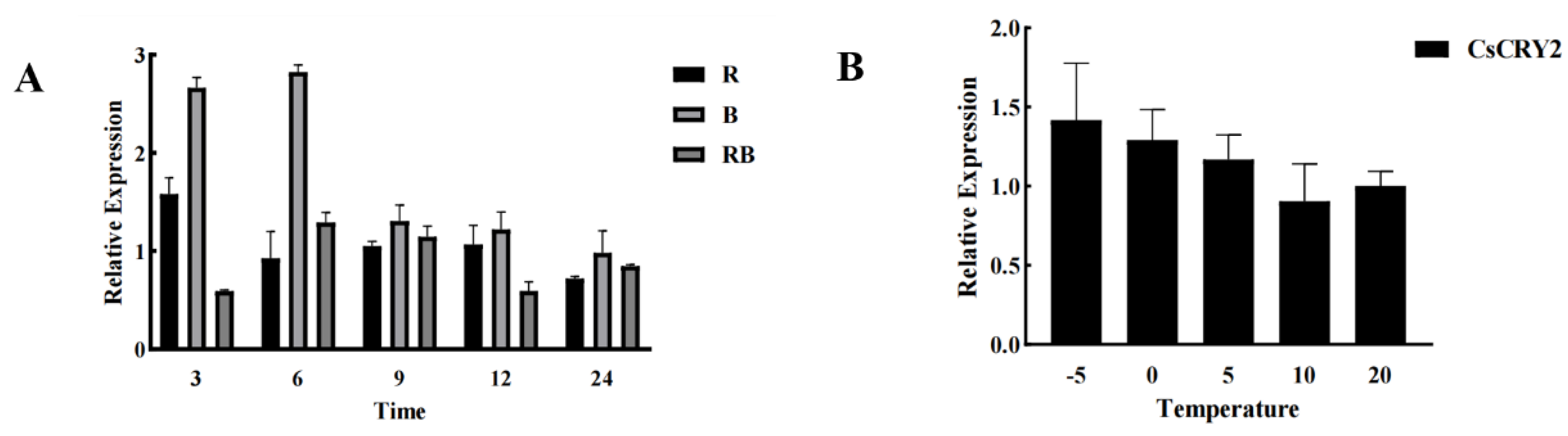
Cryptochrome is an important class of blue light receptors involved in various physiological activities such as photomorphogenesis and abiotic stress regulation in plants. In order to investigate the molecular mechanism of blue light-induced color change in Chimonobambusa sichuanensis, we screened and cloned the gene encoding the blue light receptor Cryptochrome in Chimonobambusa sichuanensis, and analyzed the expression characteristics of Cryptochrome gene in Chimonobambusa sichuanensis under different light intensities, photoplasmas, and temperatures by qRT-PCR. Through homologous cloning, a total of four CsCRY genes were obtained in the Chimonobambusa sichuanensis genome, namely, CsCRY1a, CsCRY1b, CsCRY2, and CsCRY3. Structural domain analyses of the encoded proteins of the four genes revealed that all CsCRYs proteins had the typical photoreceptor structural domain, PRK. Phylogenetic tree analyses revealed that the four genes CsCRY1a, CsCRY1b, CsCRY2, and CsCRY3 could be categorized into three subfamilies, with CsCRY1a and CsCRY1b clustered in subfamily I, CsCRY2 classified in subfamily II, and CsCRY3 belonging to subfamily III. All CsCRYs had no signal peptide and the instability index was higher than 40, among which the isoelectric points of CsCRY1a, CsCRY1b, and CsCRY2 were around 5. qRT-PCR analysis revealed that the expression of all four CsCRYs genes was up-regulated at 75 µmol·m-²·s-1 blue light illumination for 4 h. In addition, under different treatments of light quality, the expression of CsCRY2 genes was significantly higher under blue light than under red light and a mixture of red light and blue light with a light intensity of 1:1; while under different temperature gradients, CsCRY2 genes were highly expressed under low temperature stress at -5 ℃ and 0 ℃. This study provides a basis for further research on blue light-induced color change in Chimonobambusa sichuanensis and expands the scope of Cryptochrome gene research.
Keywords:
1. Materials and Methods
1.1. Screening and Cloning of Chimonobambusa sichuanensis CsCRYs Gene Family
1.2. Selection of Structural Domains and Conserved Motifs Analyzed for the Chimonobambusa Sichuanensis CsCRYs Gene Family
1.3. Phylogenetic Analysis of the CsCRYs Gene Family in Chimonobambusa Sichuanensis
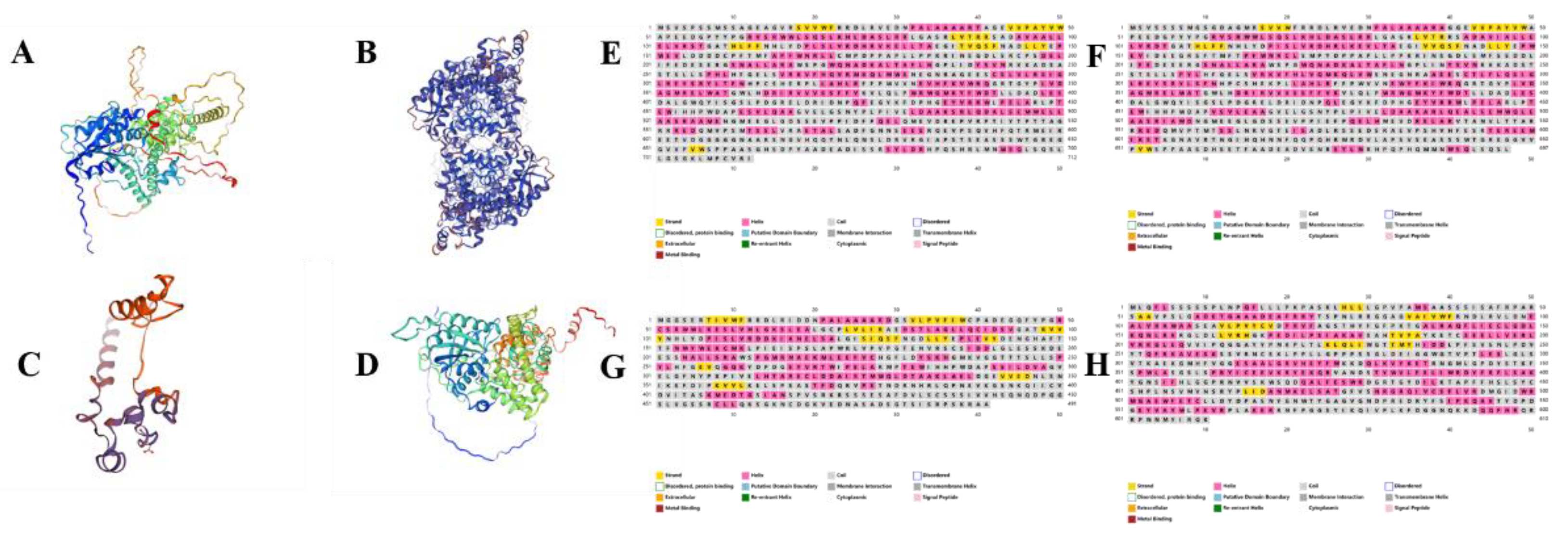
1.4. Secondary Structure, Subcellular Localization, Protein Characterization and Signal Peptide Analysis of Chimonobambusa sichuanensis CsCRYs Gene Family Proteins
1.5. Expression Pattern of Cryptochrome CsCRYs Gene in Chimonobambusa sichuanensis Under Different Environmental Conditions
2. Results and Analysis
2.1. Screening and Cloning of Gene Family Members of Cryptochrome CsCRYs in Chimonobambusa sichuanensis
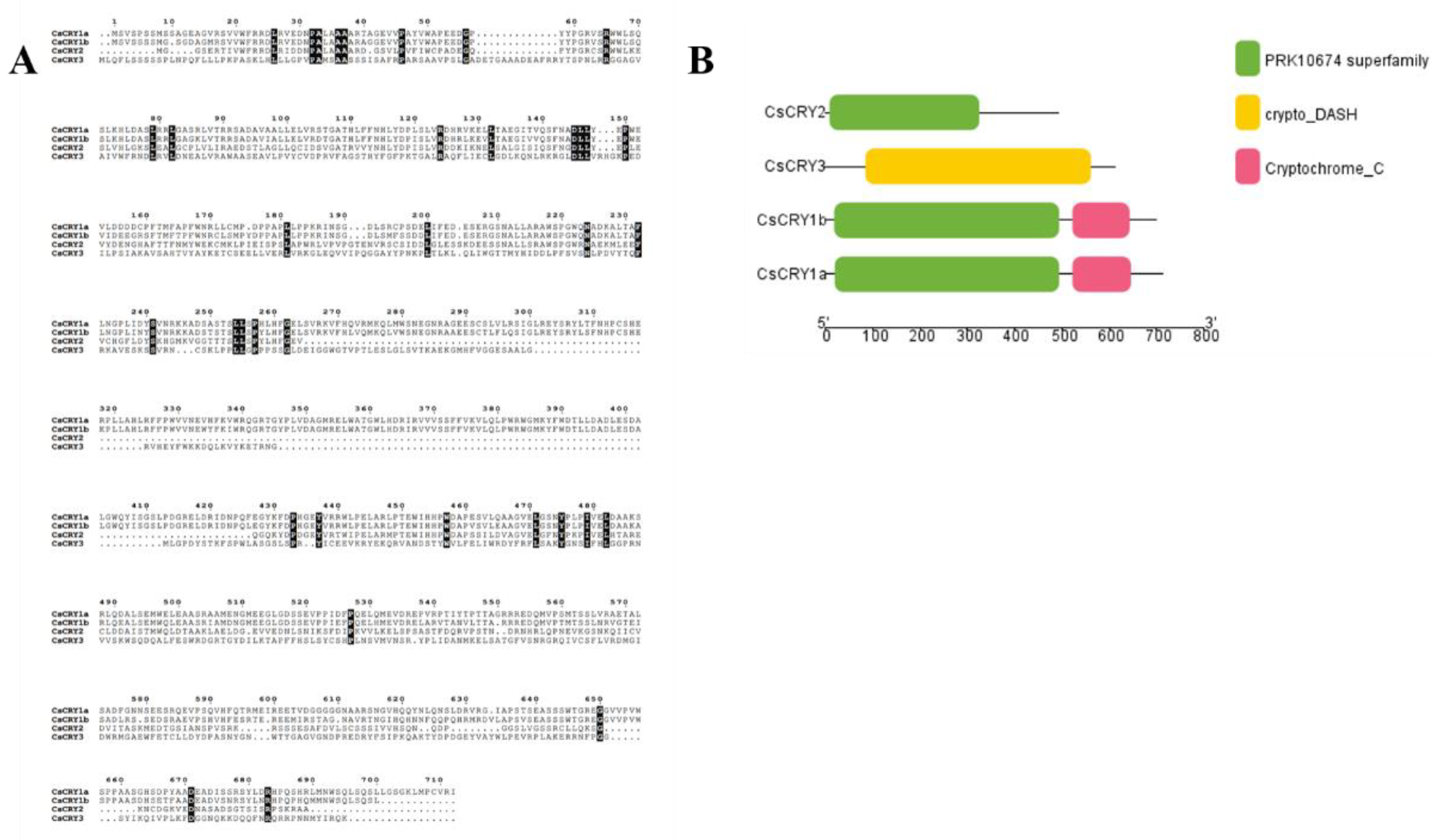
2.2. Structural Characterization of Chimonobambusa sichuanensis CsCRYs Gene Family
2.3. Chimonobambusa sichuanensis CsCRYs Gene Affinities
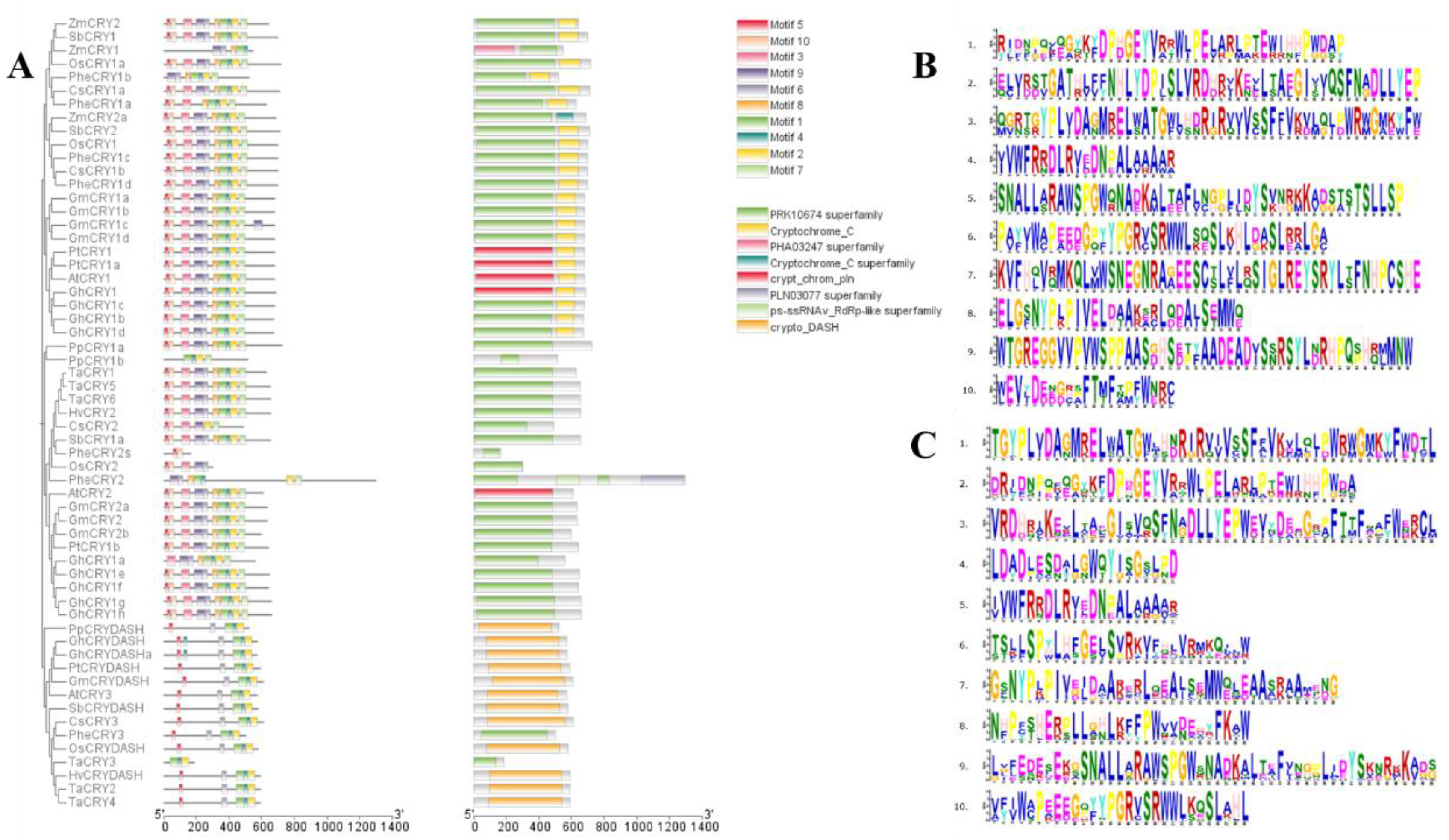
2.5. Protein physicochemistry of Four CsCRYs Families of Chimonobambusa sichuanensis
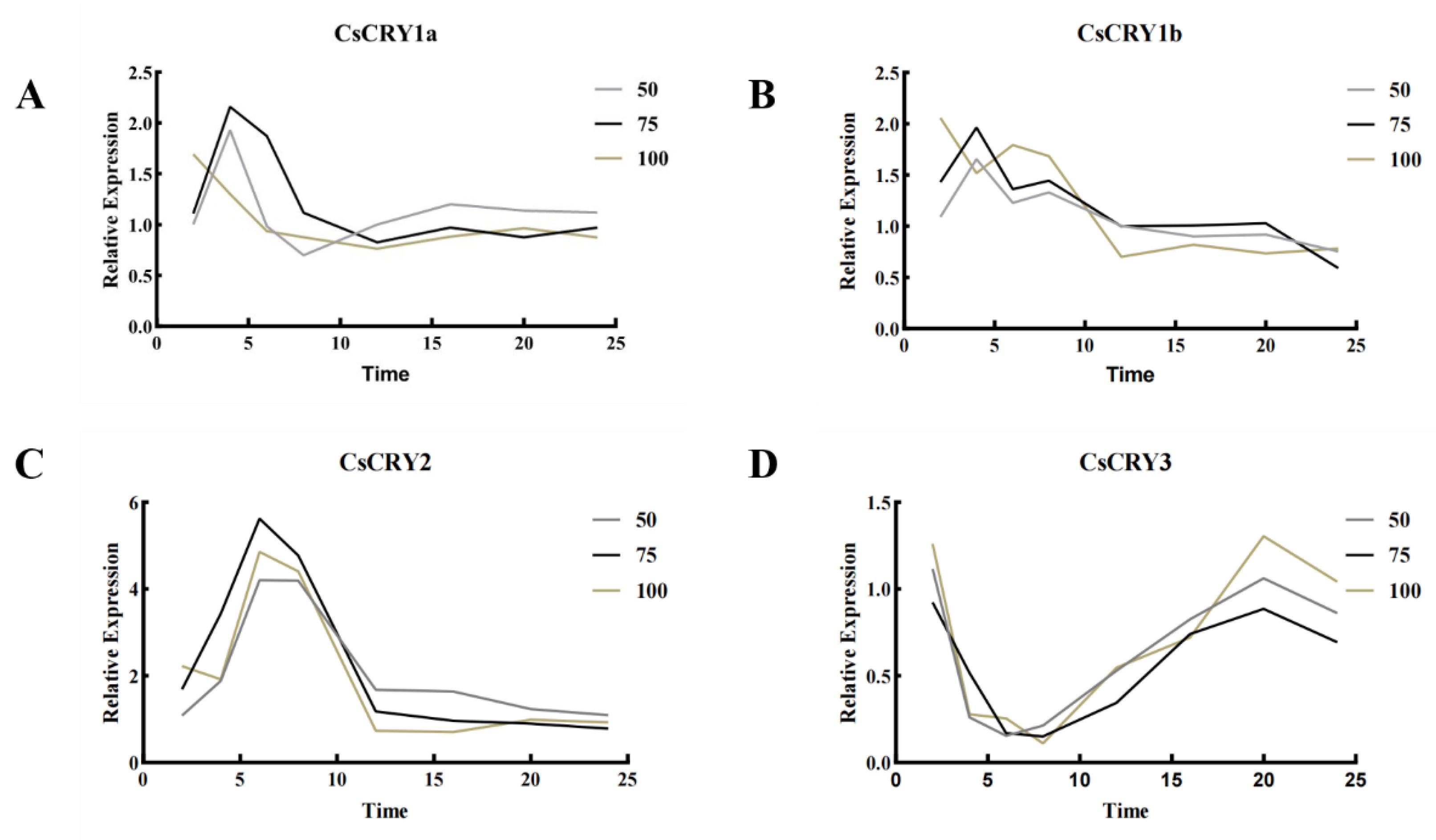
2.6. Expression Patterns of Cryptochrome CsCRYs Genes in Chimonobambusa sichuanensis Under Different Environmental Conditions
3. Discussion
Author Contributions
Funding
Conflicts of Interest
References
- Dlamini, L.C.; Fakudze, S.; Makombe, G. G.; Muse, S.; Zhu, J.G. Bamboo as a Valuable Resource and its Utilization in Historical and Modern-day China. Bioresources 2022, 17, 1926–1938. [Google Scholar]
- Liu, C. L.; Xiong, X.; Li, T. S.; Duan, Y. H.; Yang, F.; Liu, G.H. The discoloration mechanism of Chimonobambusa sichuanensis clumunder colored film covering based on transcriptome analysis. Plant Physiology Journal 2025, 61, 83–96. [Google Scholar]
- Shao, X. Y.; Xiong, X.; Yang, F.; Zhao, Y. F.; Liu, C. L.; Liu, G.H. Full-length transcriptome sequencing analysis of Chimonobambusa sichuanensis after discoloration of bamboo culm. Jiangsu Journal of Agricultural Sciences 2024, 40, 538–531. [Google Scholar]
- Batschauer, A. New insights into the regulation of Arabidopsis cryptochrome 1. New Phytologist. 2022, 234, 1109–1111. [Google Scholar] [PubMed]
- Li, Q. H.; Yang, H.Q. Cryptochrome signaling in plants. Photochemistry and Photobiology 2007, 83, 94–101. [Google Scholar] [PubMed]
- Emery, P.; So, W. V.; Kaneko, M.; Hall, J. C.; Rosbash, M. CRY, a Drosophila clock and light-regulated cryptochrome, is a major contributor to circadian rhythm resetting and photosensitivity. Cell 1998, 95, 669–79. [Google Scholar]
- Lin, C.; Yang, H.; Guo, H.; Mockler, T.; Chen, J.; Cashmore, A.R. Enhancement of blue-light sensitivity of Arabidopsis seedlings by a blue light receptor cryptochrome 2. Proceedings of the National Academy of Sciences of the United States of America 1998, 95, 2686–2690. [Google Scholar]
- Chen, Z.Y. Functional study of PhemiR156-PheSPLand PheCRY in moso. Dissertation, Fujian Agriculture and Forestry Universit 2022.
- Gao, L.; Liu, Q.; Zhong, M.; Zeng, N. N.; Deng, W. X.; Li, Y. X.; Wang, D.; Liu, S. Y.; Wang, Q. Blue light-induced phosphorylation of Arabidopsis cryptochrome 1 is essential for its photosensitivity. Journal of Integrative Plant Biology 2022, 64, 1724–1738. [Google Scholar]
- Hirose, F.; Inagaki, N.; Hanada, A.; Yamaguchi, S.; Kamiya, Y.; Miyao, A.; Hirochika, H.; Takano, M. Cryptochrome and Phytochrome Cooperatively but Independently Reduce Active Gibberellin Content in Rice Seedlings under Light Irradiation. Plant and Cell Physiology 2012, 53, 1570–1582. [Google Scholar] [CrossRef]
- Banerjee, R.; Schleicher, E.; Meier, S.; Viana, R. M.; Pokorny, R.; Ahmad, M.; Bittl, R.; Batschauer, A. The signaling state of Arabidopsis cryptochrome 2 contains flavin semiquinone. Journal of Biological Chemistry 2007, 282, 14916–14922. [Google Scholar]
- Klar, T.; Pokorny, R.; Moldt, J.; Batschauer, A.; Essen, L.O. Cryptochrome 3 from Arabidopsis thaliana: Structural and functional analysis of its complex with a folate light antenna. Journal of Molecular Biology 2007, 366, 954–964. [Google Scholar] [CrossRef]
- Chen, C. J.; Wu, Y.; Xia, R. A painless way to customize Circos plot: From data preparation to visualization using TBtools. Imeta 2022, 3, 11. [Google Scholar] [CrossRef]
- Brown, P.; Baxter, L.; Hickman, R.; Beynon, J.; Moore, J. D.; Ott, S. MEME-LaB: motif analysis in clusters. Bioinformatics 2013, 29, 1696–1697. [Google Scholar] [CrossRef] [PubMed]
- Geourjon, C.; Deleage, G. SOPMA: significant improvements in protein secondary structure prediction by consensus prediction from multiple alignments. Computer applications in the biosciences : CABIOS 1995, 11, 681–684. [Google Scholar] [CrossRef]
- Bienert, S. ; Waterhouse, A; de Beer, T. A. P.; Tauriello, G.; Studer, G.; Bordoli, L.; Schwede, T. The SWISS-MODEL Repository-new features and functionality. Nucleic Acids Research 2017, 45, 313–319. [Google Scholar]
- Buchan, D.W. A.; Moffat, L.; Lau, A.; Kandathil, S. M.; Jones, D.T. Deep learning for the PSIPRED Protein Analysis Workbench. Nucleic Acids Research 2024, 52, 287–293. [Google Scholar] [CrossRef] [PubMed]
- Petersen, T. N. ; Brunak, S; von Heijne, G. ; Nielsen, H. SignalP 4.0: discriminating signal peptides from transmembrane regions. Nature Methods 2011, 8, 785–786. [Google Scholar]
- Krogh, A. ; Larsson, B; von Heijne, G. ; Sonnhammer, E.L.L. Predicting transmembrane protein topology with a hidden Markov model: Application to complete genomes. Journal of Molecular Biology 2011, 305, 567–580. [Google Scholar]
- Banas, A. K.; Leja, K.; Zglobicki, P.; Jedynak, P.; Kowalska, E.; Strzalka, W.; Grzyb, J.; Mysliwa-Kurdziel, B. De-etiolation is Almost Color Blind: The Study of Photosynthesis Awakening under Blue and Red Light. Plant and Cell Physiology 2024, 25. [Google Scholar]
- Pfeifer, A.; Mathes, T.; Lu, Y. H.; Hegemann, P.; Kottke, T. Blue Light Induces Global and Localized Conformational Changes in the Kinase Domain of Full-Length Phototropin. Biochemistry 2010, 49, 1024–1032. [Google Scholar] [CrossRef]
- Emery, P.; So, W. V.; Kaneko, M.; Hall, J. C.; Rosbash, M. CRY, a Drosophila clock and light-regulated cryptochrome, is a major contributor to circadian rhythm resetting and photosensitivity. Cell 1998, 95, 669–679. [Google Scholar] [CrossRef] [PubMed]
- Pokorny, R.; Klar, T.; Hennecke, U.; Carell, T.; Batschauer, A.; Essen, L.O. Recognition and repair of UV lesions in loop structures of duplex DNA by DASH-type cryptochrome. Proceedings of the National Academy of Sciences of the United States of America 2008, 105, 21023–21027. [Google Scholar] [PubMed]
- Zuo, Z. C.; Liu, H. T.; Liu, B.; Liu, X. M.; Lin, C.T. Blue Light-Dependent Interaction of CRY2 with SPA1 Regulates COP1 activity and Floral Initiation in Arabidopsis. Current Biology 2011, 21, 841–847. [Google Scholar] [PubMed]
- Li, Y. P.; Shi, Y. T.; Li, M. Z.; Fu, D. Y.; Wu, S. F.; Li, J. G.; Gong, Z. Z.; Liu, H. T.; Yang, S.H. The CRY2-COP1-HY5-BBX7/8 module regulates blue light-dependent cold acclimation in Arabidopsis. Plant Cell 2021, 33, 3555–3573. [Google Scholar]

| Gene name | Nucleotide length | Protein Length | Isoelectric point | Aliphatic index | Instability index | Hydrophilicity coefficient | Relative molecular mass |
| CsCRY1a | 2139 | 712 | 5.44 | 78.64 | 54.36 | -0.433 | 80.10 |
| CsCRY1b | 2094 | 697 | 5.46 | 80.04 | 51.53 | -0.413 | 79.08 |
| CsCRY2 | 1476 | 491 | 5.08 | 84.58 | 51.19 | -0.317 | 54.15 |
| CsCRY3 | 1833 | 610 | 9.30 | 79.46 | 41.41 | -0.356 | 68.63 |
| Gene | α-helix ratio (%) | β-folding(%) | Proportion of elongated chains (%) | Subcellular localization |
| CsCRY1a | 36.8 | 4.4 | 10.7 | cytoplasm |
| CsCRY1b | 39.2 | 4.2 | 8.8 | cytoplasm |
| CsCRY2 | 34.6 | 8.4 | 10.6 | Cytoplasm、 nucleus |
| CsCRY3 | 37.1 | 6.1 | 12.5 | cytoplasm |
| Gene | C-Score | S-Core | Y-Score | Mean-S | Mean-D | Probability that the N-terminus is on the cytoplasmic side | Number of transmembrane amino acids | Number of amino acids outside the membrane | |
| CsCRY1a | 0.121 | 0.149 | 0.124 | 0.126 | 0.125 | 0.00037 | 0.00053 | 712 | |
| CsCRY1b | 0.111 | 0.163 | 0.121 | 0.129 | 0.125 | 0.00020 | 0.00076 | 697 | |
| CsCRY2 | 0.115 | 0.171 | 0.114 | 0.117 | 0.116 | 0.00370 | 0.01276 | 491 | |
| CsCRY3 | 0.145 | 0.388 | 0.153 | 0.156 | 0.155 | 0.00044 | 0.00499 | 610 | |
Disclaimer/Publisher’s Note: The statements, opinions and data contained in all publications are solely those of the individual author(s) and contributor(s) and not of MDPI and/or the editor(s). MDPI and/or the editor(s) disclaim responsibility for any injury to people or property resulting from any ideas, methods, instructions or products referred to in the content. |
© 2025 by the authors. Licensee MDPI, Basel, Switzerland. This article is an open access article distributed under the terms and conditions of the Creative Commons Attribution (CC BY) license (http://creativecommons.org/licenses/by/4.0/).