1. Introduction
The increasing interest in sustainable and cost-effective asphalt paving options has led to a notable focus on the use of reclaimed asphalt pavement (RAP) in new mixtures. RAP resource minimizes the dependence on raw materials and rising environmental sustainability by reducing construction waste. Nevertheless, finding the ideal ratio of foamed bitumen content (FBC) and RAP percentage in foamed bitumen mixtures is a challenge to ensure that the resulting pavement mixtures show optimal performance, such as tensile strength (ITS) and resistance to rutting (HWTT).
Foamed bitumen has emerged as a popular choice for bound materials in the recycling of asphalt pavements, especially in processes like cold in-place recycling (CIR) and full-depth reclamation (FDR). Its effectiveness appears in the capacity to activate reclaimed asphalt pavement (RAP) by forming a foam structure that significantly improves both workability and adhesion characteristics [
1,
2]. In addition to determining the most effective ratios of RAP and foamed bitumen content to avoid incorrect combinations can result poor performance which leads to issues such as early rutting or cracking [
3].
Various laboratory tests were conducted, Hamburg wheel tracking test (HWTT) and the indirect tensile strength (ITS) test are chosen as particularly dependable measures especially in modeling. The HWTT is commonly utilized to evaluate the resistance of asphalt mixtures to rutting, that means simulating the effects of long traffic loads [
4,
5]. On the contrary, the ITS test offers valuable information regarding the tensile strength and resistance to cracking of the mixture, both of which are major to ensure the durability of pavements, especially in colder regions [
5].
The possibilities for enhancing the integration of RAP and FBC have been significantly raised using recent developments in the fields of artificial intelligence (AI) and machine learning. Models driven by AI, especially those that employ regression techniques and neural networks, have demonstrated significant promise in determining the ideal mixture design by analyzing performance test outcomes such as HWTT and ITS [
6].Through the examination of extensive datasets derived from these evaluations, AI is capable of uncovering intricate connections between material attributes and performance metrics, thereby enabling a more streamlined and focused strategy for mix design [
7].
By analyzing actual test results data (HWTT) and (ITS, in wet and dry condition), it was aimed to uncover the most effective combinations of RAP and FBC that provide a balance between rutting resistance and tensile strength. This research ultimately seeks to enhance the durability and cost-effectiveness of bitumen-bound pavements.
2. Materials and Methods
2.1. Determination of Aggregate Gradation
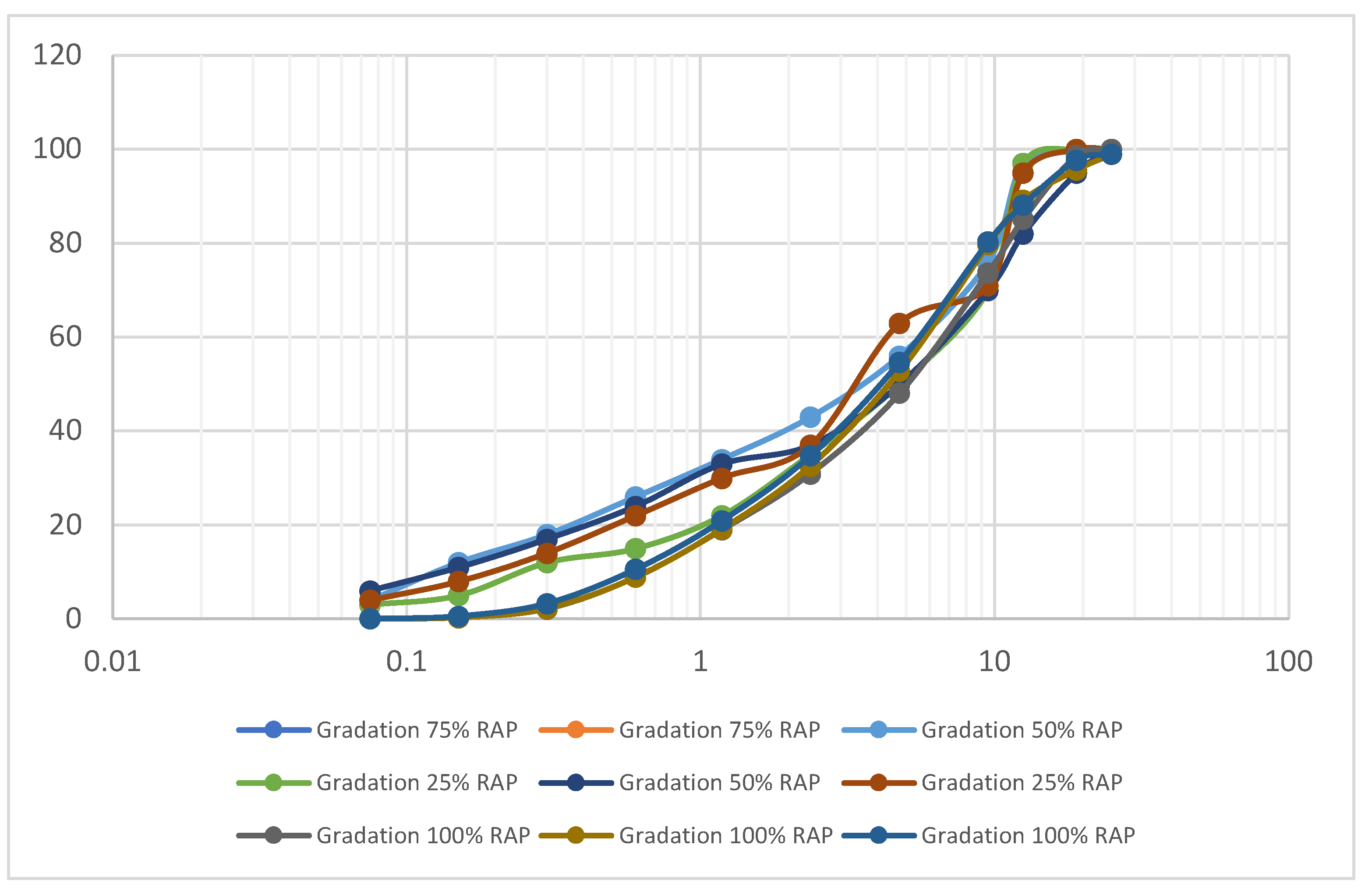
Mixed operations involved the use of gradations containing 3 curves with 100% reclaimed asphalt pavement (RAP), and 2 curves containing 75%, 50% and 25% RAP, respectively, and 1 one with entirely virgin aggregate all according to standard specifications (ASTM D 692 & D1073) as shown in
Figure 1
2.2. Bitumen Type
In our analysis, two types of bitumen (70/100 and 50/70) were chosen; there was shown that both bitumen types complied with the requirements of related specification (EN 12591), proving their effectiveness for road construction. The characteristics of the bitumen types used are summarized in
Table 1.
For the foaming process, bitumen 70/100 demonstrated a half-life of 10.2 s and an expansion ratio of 12.6 times when mixed with 2% water at a temperature of 170°C. Meanwhile, bitumen 50/70 exhibited a half-life of 12.3 s and an expansion ratio of 11.4 times with a 2.5% water content at the same temperature.
2.3. HWTT
The HWTT is a crucial technique for assessing the resilience of asphalt mixtures against rutting, closely modelling real-world pavement performance under heavy traffic conditions. This method is particularly valuable for testing mixtures that incorporate Reclaimed Asphalt Pavement (RAP) and Foamed Bitumen Content (FBC), as both elements can greatly influence the mixture's resistance to rutting. Research works indicate that high RAP content or insufficient FBC can lead to diminished performance; RAP tends to increase stiffness and brittleness, while a lack of foamed bitumen can result in inadequate adhesion and cohesion [
8].
The evaluation of rutting depth and deformation rate under controlled conditions allows for a comprehensive assessment of different mixtures. By analyzing these outcomes, it is a feasible option to identify optimum proportions of RAP and FBC to achieve an asphalt mixture with excellent rutting resistance while maintaining other critical properties, such as tensile strength (assessed through ITS) and cracking resistance [
9] at a favorable level.
Wheel-tracking tests were conducted under the guidelines of AASHTO T324-19.
2.4. Indirect Tensile Strength
Indirect tensile strength (ITS) testing is a widely recognized method for assessing the mechanical properties and durability of asphalt mixtures. ITS is a particularly important test for evaluating foamed bitumen bound asphalt mixtures as it provides insights into the material's tensile strength, cracking resistance, and moisture sensitivity. According to Zieliński [
5], ITS testing is instrumental in determining the structural performance of foamed bitumen bound asphalt mixtures, especially when Reclaimed Asphalt Pavement (RAP) is incorporated in the mixture. This is critical for ensuring that such mixtures meet performance standards in terms of stiffness, strength, and resistance to environmental induced stresses.
Cylindrical Marshall samples with a diameter of 101.6 mm and a height of 63.5 mm (±2.5 mm) were compacted by 2×75 blows in accordance with PN-EN 12697–30 [
10,
11]. The samples were used for testing indirect tensile strength (ITS) in accordance with PN-EN 12697-23.
3. Machine Learning Model
Artificial neural networks (ANNs) have recently become a key method for analyzing and optimizing foamed bitumen bound asphalt mixtures. They can provide a useful approach to predict and to enhance the properties of the mixture materials. Many studies have noted that ANNs can effectively improve complex relationships between various input factors such as temperature, foam content, expansion ratio, and half-life, alongside outputs like Marshall Stability and ITS [
12]. For instance, a back proportion or feedforward neural network with its hidden layers has been successfully employed to predict the characteristics of bitumen mixtures, resulting in reliable and accurate prediction equations [
13]. Furthermore, the integration of ANNs with particle swarm optimization has improved foamed bitumen properties in cold recycling technology by enhancing prediction accuracy through the analysis of multiple variables, including temperature and water content [
14]. Researchers have also advanced the prediction of mechanical properties in foamed bitumen bound asphalt pavements using ANNs, which aids in optimizing pavement design and in thoroughly understanding input-output dynamics [
15,
16].
To obtain precise predictions and determine the optimal percentages of reclaimed asphalt pavement (RAP) and foamed bitumen content (FBC), various AI models have already been developed. The primary focus was on three main models: Random Forest (RF), Support Vector Regression (SVR), and Linear Regression.
Support vector regression (SVR) is an effective machine learning technique for modelling and forecasting material behavior in pavement engineering, especially in the field of foamed bitumen bound asphalt mixtures. Its advantage lies in its ability to capture nonlinear relationships by transforming input data into a higher-dimensional one using nodes and functions. This capability is important to understanding the complex behaviors of asphalt materials. Research has indicated that SVR effectively predicts various performance properties of foamed bitumen bound asphalt mixtures, such as Marshall Stability and Flow, which are affected by many factors like bitumen content, foam expansion ratio, and temperature [
17,
18]. This technique has confirmed prediction accuracy in comparison with traditional regression models, especially in situations of limited sample sizes, so reducing the risk of overfitting [
17]. Notably, SVR has been successfully employed to forecast the performance of foamed bitumen bound asphalt mixtures used in cold recycling technology by providing accurate predictions for long-term pavement durability. Additionally, SVR’s capacity to deliver estimates of foamed bitumen behavior in different conditions and improve the optimization process in pavement material design [
19].
Random forests (RF) have emerged as a machine learning approach for predicting the characteristics and performance of foamed bitumen bound asphalt mixtures. This technique creates numerous decision trees and aggregates their outputs, which leads it to be effective in handling high-dimensional data and showing nonlinear interactions between variables [
20]. In applications related to foamed bitumen bound asphalt mixtures, RF models have efficiently predicted key metrics like Marshall Stability, Flow, and rutting resistance against different factors such as foam content, bitumen temperature, and water content [
21,
22]. The strengths of RF are clear in its ability to manage inclusive and varied datasets, perform reliably across different sample sizes, and provide accurate predictions with minimizing the risk of overfitting, especially that takes a place in traditional machine learning methods [
22]. For example, RF has played an important role in enhancing the mix design of foamed asphalt by clarifying the interaction between mix components and pavement performance [
23]. Moreover, RF models have shown improved predictive accuracy compared to simple regression techniques and established them as tools for engineers working with foamed asphalt applications in cold recycling and other pavement projects [
24].
4. Results and Discussion
4.1. Model Validation and Optimization
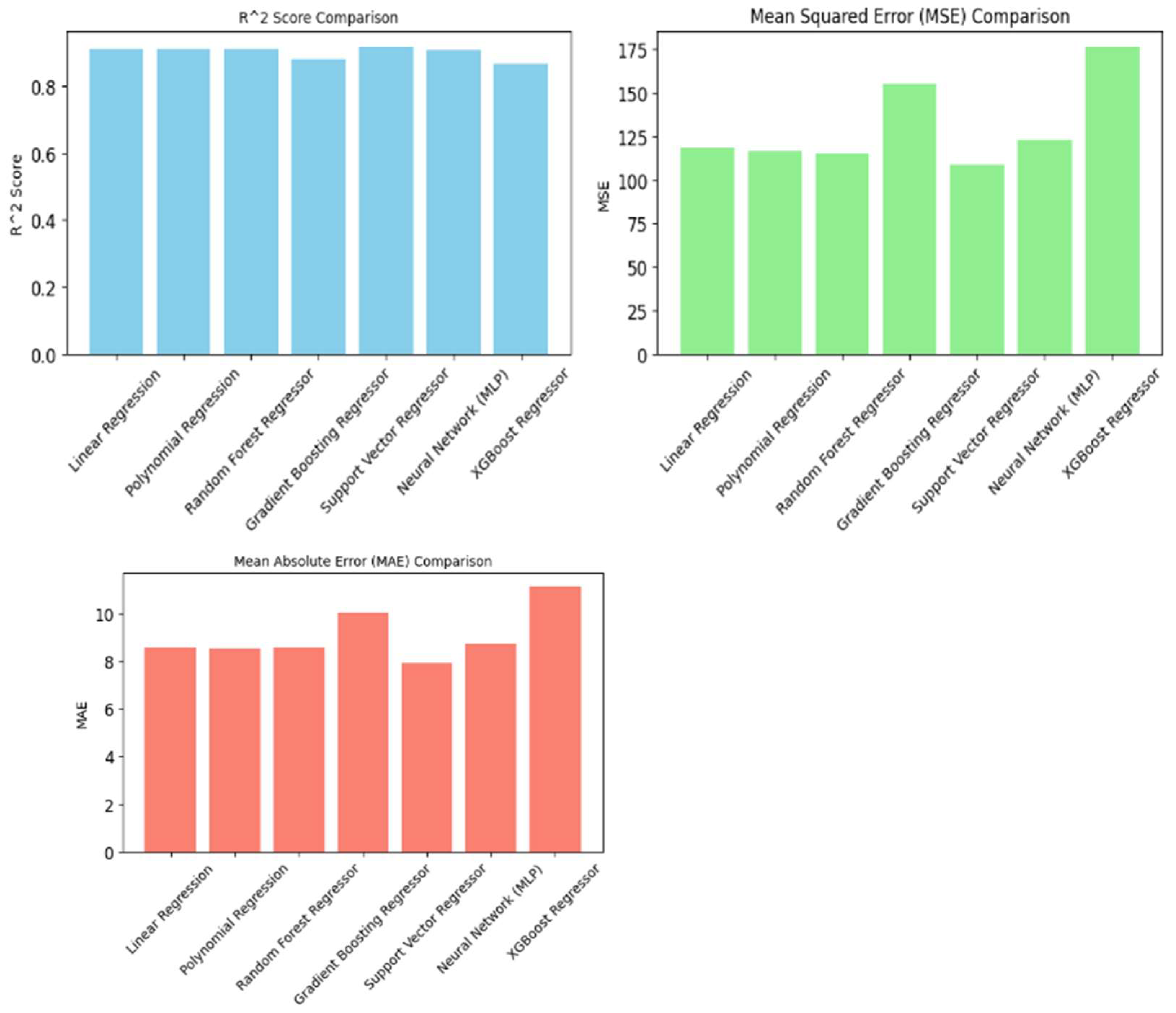
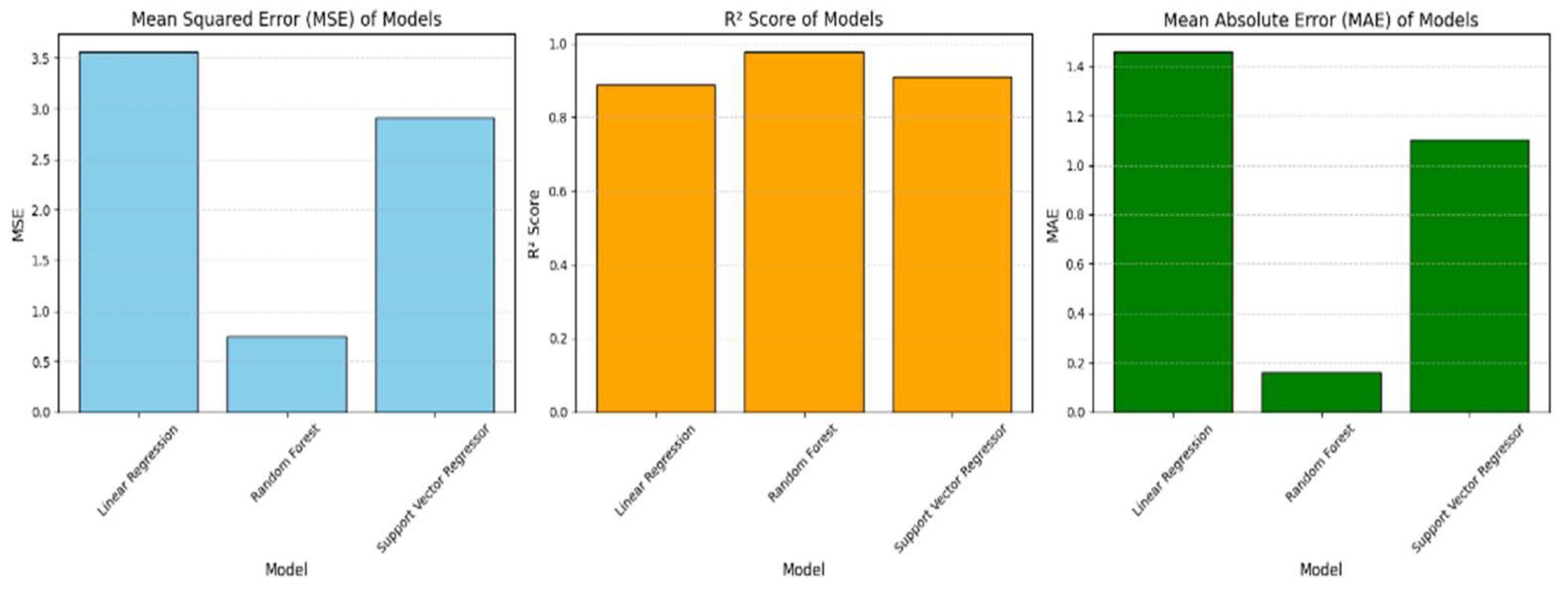
Following the development of the AI model aimed at identifying the best combination of RAP and FBC for foamed bitumen bound asphalt mixtures, the subsequent vital phase involves validating and optimizing the model. This step is essential to confirm the model's predictive accuracy and its capability to suggest mixed designs that fulfill the necessary criteria for rutting resistance (HWTT) and tensile strength (ITS). It is imperative that the recommendations generated by the AI model undergo thorough testing against actual data, allowing for ongoing adjustments and enhancements. All models achieved a high R
2 above 0.83 with a small mean squared error (MSE) and a mean absolute error (MAE) as
Figure 2 presents it. Based on the metrics, the Random Forest Regressor is the best-performing model.
4.2. Model Results
Linear Regression achieved an R² of 0.85, indicating a good linear relationship, but its moderate MSE suggested a balance between simplicity and accuracy. Random Forest performed the best with an R² of 0.91, capturing nonlinear relationships effectively and minimizing errors with the lowest MSE. SVR had an R² of 0.80, providing a reasonable fit, but its higher MSE showed slightly less accuracy than Random Forest.
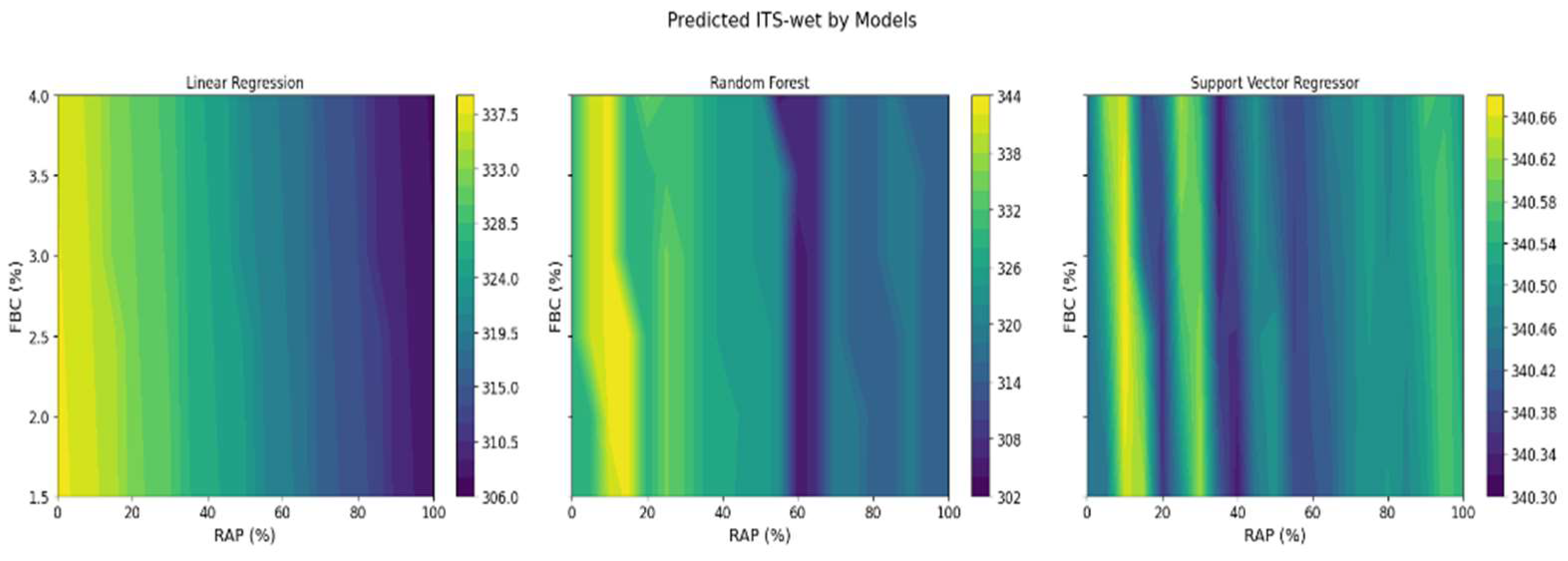
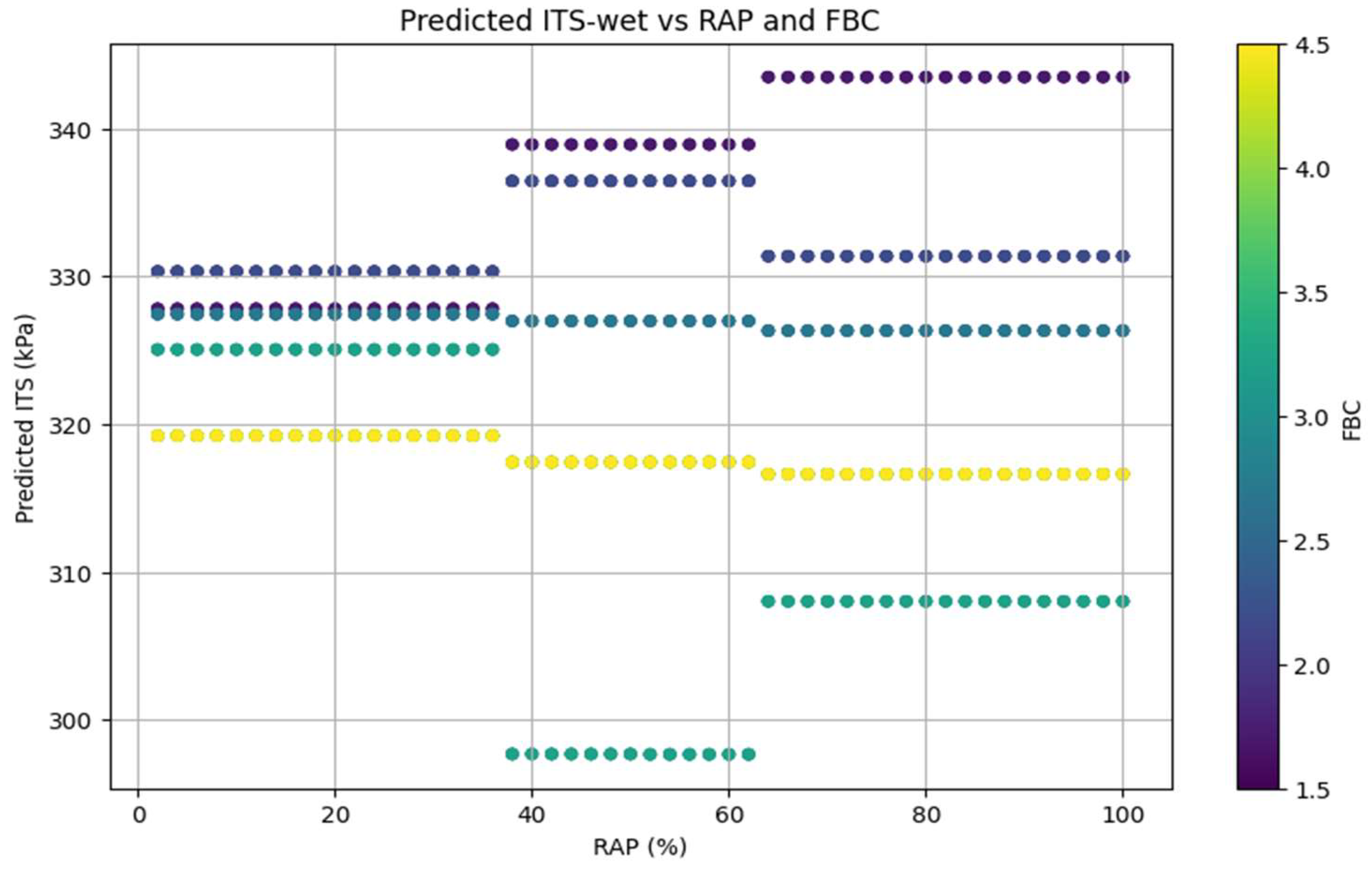
In the analysis of ITS-wet predictions, the optimal configuration for Linear Regression was identified with an FBC ranging from 2.00% to 2.30% and a RAP between 0% and 6%, leading to a predicted ITS of 338.18 MPa. Conversely, Random Forest demonstrated slightly superior performance with an FBC of 1.50% to 1.7% and a RAP of 62% to 68%, resulting in a predicted ITS of 341.67 MPa. Support Vector Regression (SVR) pinpointed its best combination as an FBC of 1.5% to 1.80% and a RAP of 64% to 70%, yielding a predicted ITS of 340.68 MPa, as shown in
Figure 3.
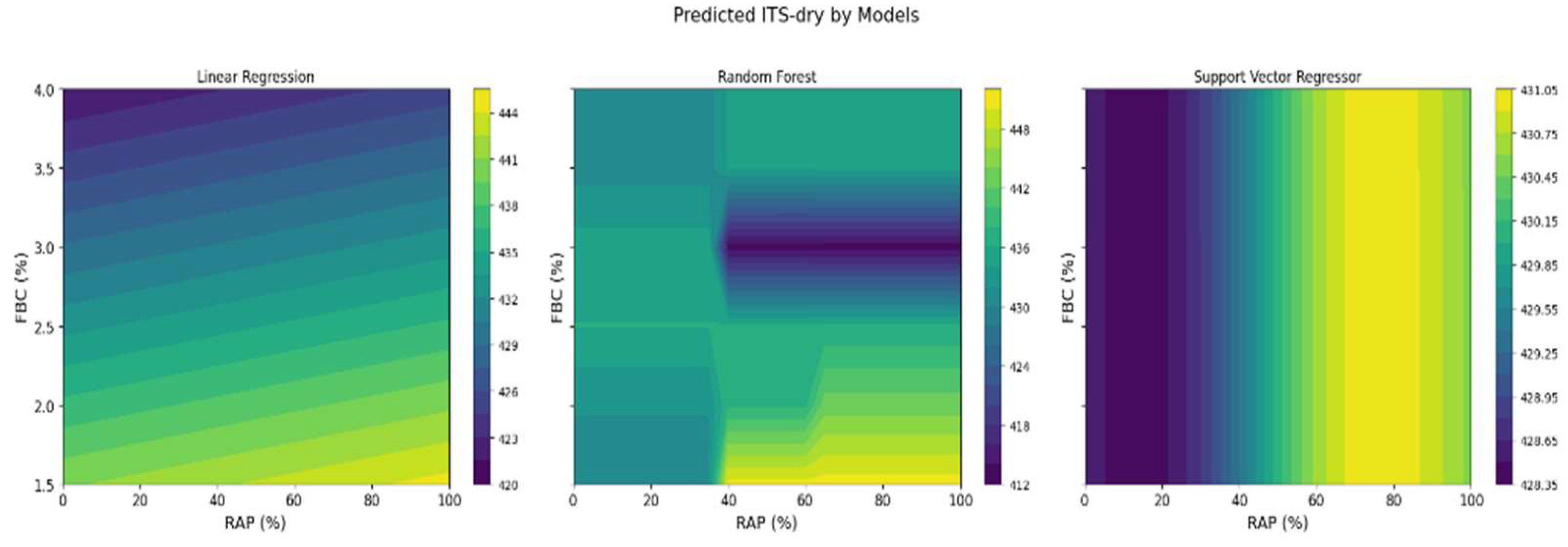
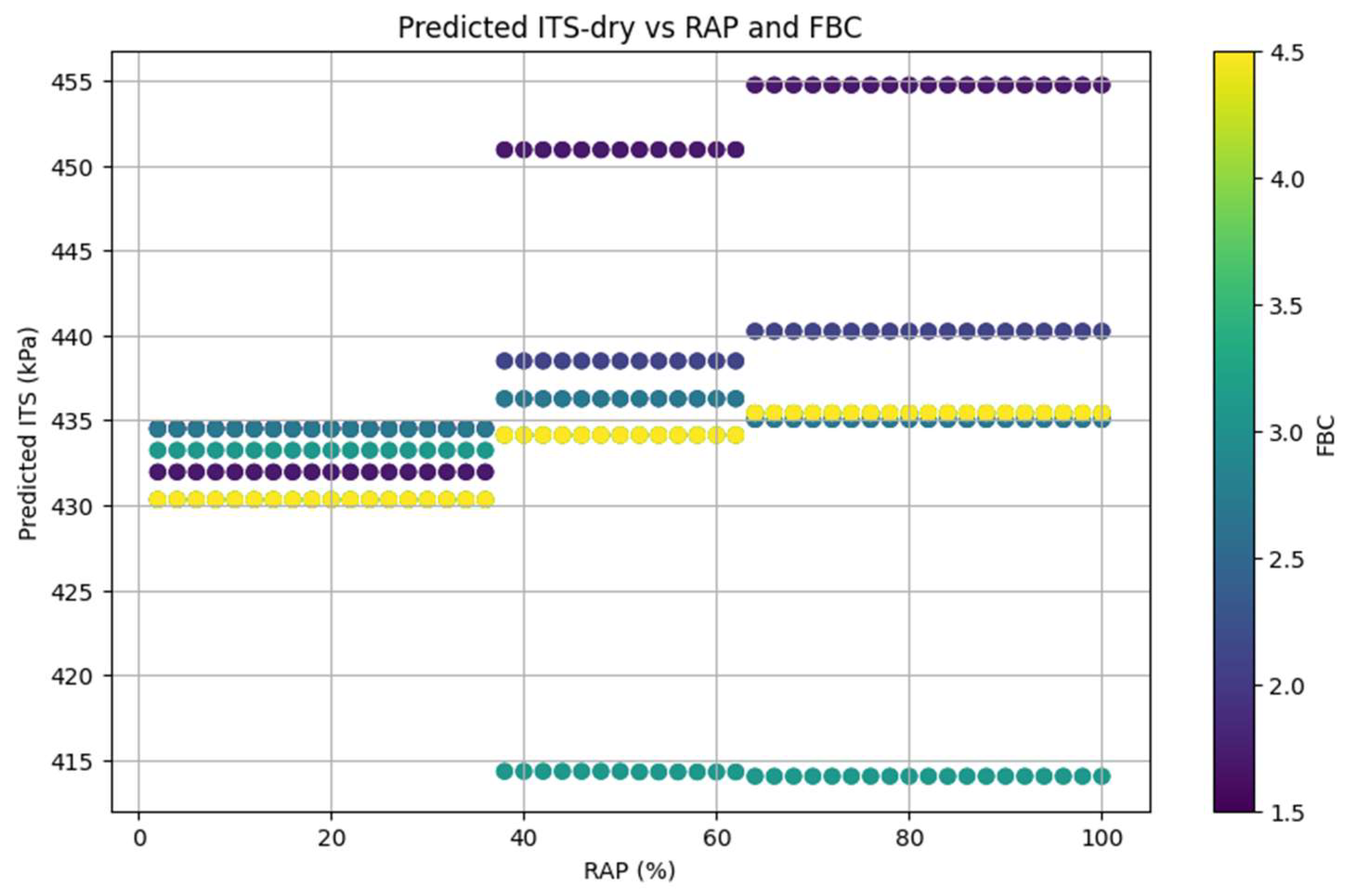
For ITS-dry predictions, the most effective combination for Linear Regression was an FBC of 1.5% to 1.70% with a RAP exceeding 90%, which predicted an ITS of 444.55 MPa. In contrast, Random Forest identified an FBC of 1.50% and a RAP of 64% to 68%, achieving a slightly elevated predicted ITS of 455.46 MPa. SVR also found an optimal combination with an FBC of 1.5% to 1.80% and a RAP of 76% to 80%, resulting in a predicted ITS of 429.80 MPa (
Figure 4).
Across both wet and dry conditions, the percentages of FBC and RAP are crucial in determining the mechanical properties of the asphalt mixture. Generally, an increase in RAP tends to reduce the ITS due to the aging and inferior quality of the binder in RAP materials; however, the interplay with FBC alters this dynamic. FBC serves as a binder that enhances the stiffness and performance of the mixture by strengthening the bond between aggregates, especially under dry conditions. The models, especially Random Forest, adeptly capture the intricate nature of these interactions, as
Figure 5 and
Figure 6 show. The high percentage of RAP with a small one of FBC achieved high ITS results.
Figure 7 illustrates the performance of three models used for HWTT predictions, all achieving a high R² value exceeding 0.85, alongside low MSE and MAE. Among these models, the Random Forest Regressor stands out as the most effective with R
2 of 0.97, as indicated by the metrics.
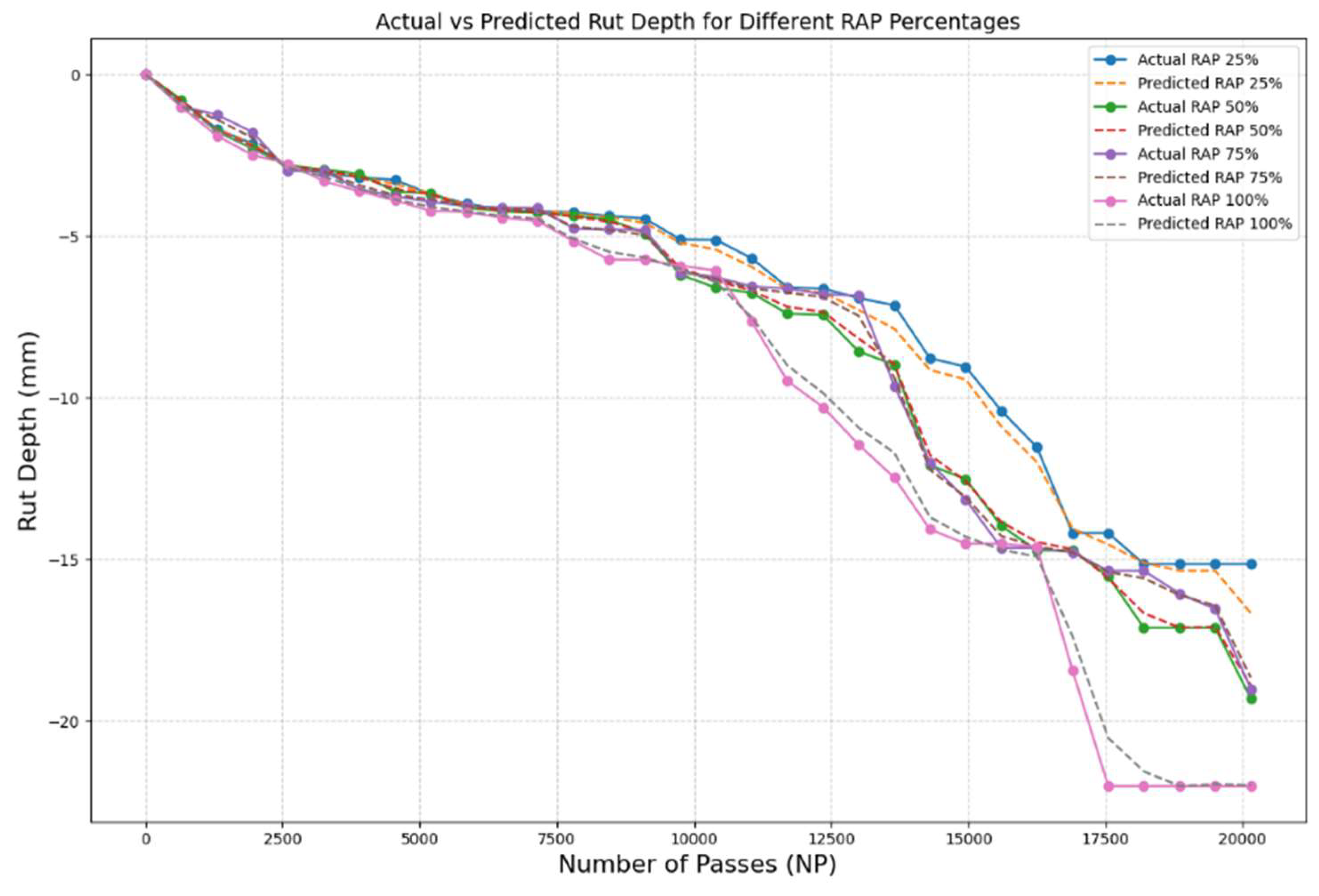
In the initial phase of HWTT prediction, as
Figure 8 shows, the RAP percentages of 25%, 50%, 75%, and 100% reveal a strong correlation between predicted values and actual outcomes. Notably, utilizing 100% of RAP significantly enhances the resistance to cracking, which explains the positive effect of utilizing high percentage of RAP increases, so does the precision of the predictions.
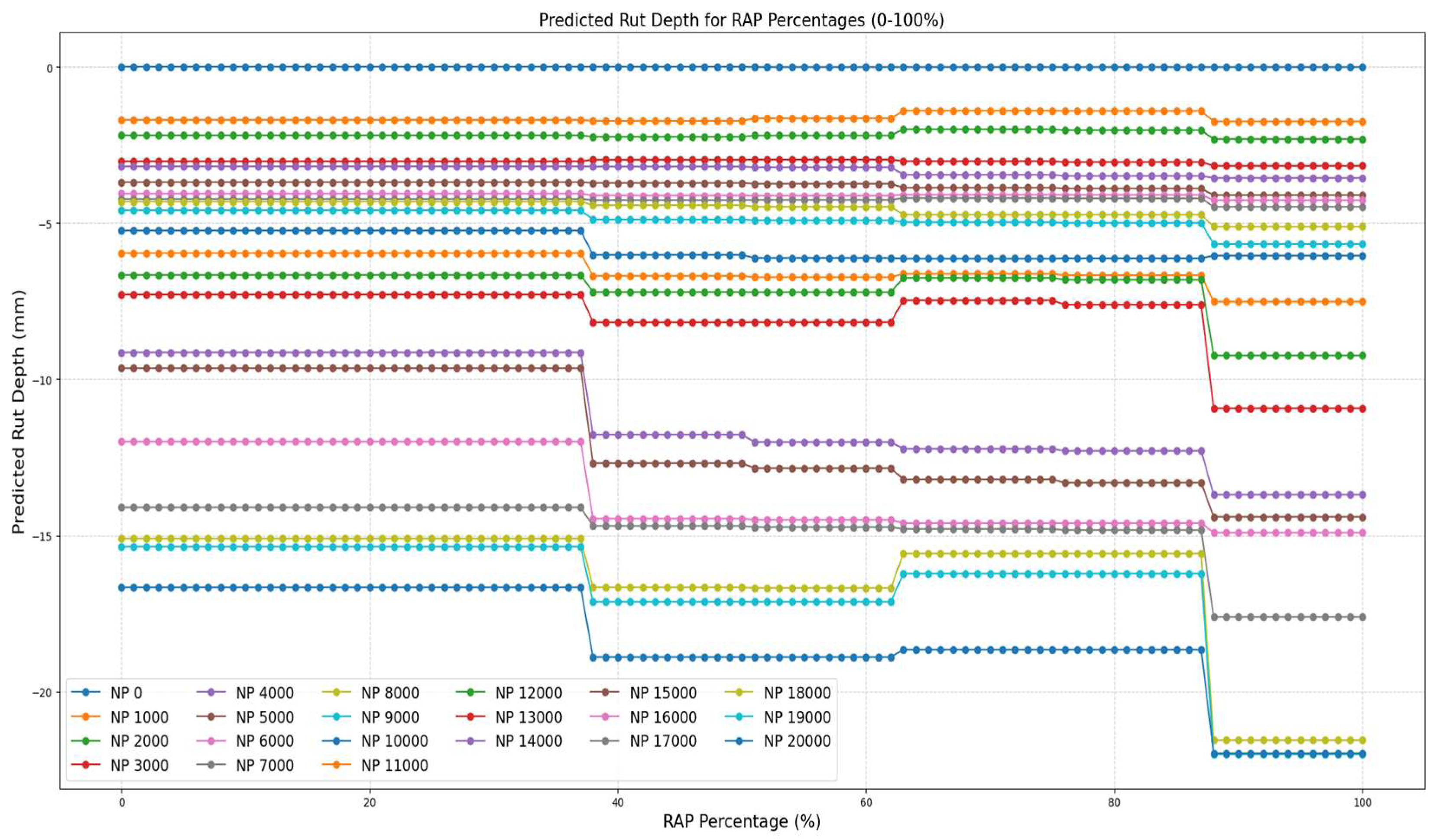
The second stage of prediction, as
Figure 9 present it, involved forecasting rut depth after training the model with a 2% increase in RAP and a total of 1,000 passes. The results indicated that using 0-40% RAP is generally acceptable, as it slightly enhances resistance. In contrast of it, RAP between 60% and 80% demonstrated a significant improvement in rut depth up under 13,000 passes, after which rut depth increased as RAP content exceeded 80%. Notably, resistance improved with the use of up to 100% RAP until reaching number of passes of 11,000 passes, compared to actual rut depth results. This suggests that higher RAP content can enhance rutting resistance under specific conditions, al- though attention should be given to the 80-90% range, which resulted in reduced resistance to cracking.
The findings suggest that optimal RAP usage is crucial for maintaining pavement integrity under varying traffic conditions.
5. Conclusions
This research work clearly identifies the ideal proportions of reclaimed asphalt pavement (RAP) and foamed bitumen content (FBC) that yield optimal performance in asphalt mixtures. Through rigorous laboratory experiments and advanced AI modelling, it has been determined that a RAP content ranging from 60% to 80%, combined with FBC levels between 1.5% and 1.8%, hits an optimal balance between rutting resistance and tensile strength. Higher RAP percentages surpassing 80% lead to increased stiffness, which negatively influences cracking resistance, while insufficient FBC levels adversely affect both adhesion and cohesion properties. Among the AI models tested, the Random Forest algorithm exhibited the highest predictive accuracy (R² = 0.91), effectively capturing the complex relationships among RAP, FBC, and performance metrics. The identified optimized combinations significantly improve the durability and sustainability of asphalt pavements, making them suitable for heavy traffic and varied climatic conditions.
References
- Sánchez, D.B.; Airey, G.; Caro, S.; Grenfell, J. Effect of foaming technique and mixing temperature on the rheological characteristics of fine RAP-foamed bitumen mixtures. Road Materials and Pavement Design. 2020, 21, 2143–2159. [Google Scholar] [CrossRef]
- Mogawer, W.; Bennert, T.; Daniel, J.S.; Bonaquist, R.; Austerman, A.; Booshehrian, A. Performance characteristics of plant produced high RAP mixtures. Road materials and pavement design. 2012, 13, 183–208. [Google Scholar] [CrossRef]
- Dinis-Almeida, M.; Castro-Gomes, J.; Sangiorgi, C.; Zoorob, S.E.; Afonso, M.L. Performance of Warm Mix Recycled Asphalt containing up to 100% RAP. Constr Build Mater [Internet] 2016, 112, 1–6. [Google Scholar] [CrossRef]
- Lv, Q.; Huang, W.; Sadek, H.; Xiao, F.; Yan, C. Investigation of the rutting performance of various modified asphalt mixtures using the Hamburg Wheel-Tracking Device test and Multiple Stress Creep Recovery test. Constr Build Mater. 2019, 206, 62–70. [Google Scholar] [CrossRef]
- Zieliński, P. Indirect tensile test as a simple method for rut resistance evaluation of asphalt concrete. Archives of Civil Engineering. 2019, 65, 31–43. [Google Scholar] [CrossRef]
- Nazemi, M.; Heidaripanah, A. Support vector machine to predict the indirect tensile strength of foamed bitumen-stabilised base course materials. Road Materials and Pavement Design. 2016, 17, 768–778. [Google Scholar] [CrossRef]
- Wang, A.L.; Fu, Z.S.; Liu, F.M. Asphalt foaming quality control model using neural network and parameters optimization. International Journal of Pavement Research and Technology. 2018, 11, 401–407. [Google Scholar] [CrossRef]
- Batioja-Alvarez, D.; Lee, J.; Rahbar-Rastegar, R.; Haddock, J.E. Asphalt Mixture Quality Acceptance using the Hamburg Wheel-Tracking Test. Transp Res Rec. 2020, 2674, 338–349. [Google Scholar] [CrossRef]
- Liu, J.; Cheng, C.; Zheng, C.; Wang, X.; Wang, L. Rutting prediction using deep learning for time series modeling and K-means clustering based on RIOHTrack data. Constr Build Mater. 2023, 385. [Google Scholar] [CrossRef]
- Buczyński, P.; Iwański, M.; Krasowski, J. Assessment of the impact of hydraulic binder on the properties of the cold recycled mixture with foamed bitumen and bitumen emulsion: Field tests. Buildings. 2020, 10, 1–13. [Google Scholar] [CrossRef]
- Zieliński, P. Indirect tensile test as a simple method for rut resistance evaluation of asphalt mixtures–Polish experience. Road Materials and Pavement Design. 2022, 23, 112–128. [Google Scholar] [CrossRef]
- Godenzoni, C.; Graziani, A.; Perraton, D. Complex modulus characterisation of cold-recycled mixtures with foamed bitumen and different contents of reclaimed asphalt. Road Materials and Pavement Design. 2017, 18, 130–150. [Google Scholar] [CrossRef]
- Mazari, M.; Rodriguez, D.D. Prediction of pavement roughness using a hybrid gene expression programming-neural network technique. Journal of Traffic and Transportation Engineering (English Edition) 2016, 3, 448–455. [Google Scholar] [CrossRef]
- Ly, H.B.; Nguyen, M.H.; Pham, B.T. Metaheuristic optimization of Levenberg–Marquardt-based artificial neural network using particle swarm optimization for prediction of foamed concrete compressive strength. Neural Comput Appl. 2021, 33, 17331–17351. [Google Scholar] [CrossRef]
- Ghanizadeh, A.R.; Fakhri, M. Prediction of frequency for simulation of asphalt mix fatigue tests using MARS and ANN. The Scientific World Journal. 2014, 1, 515467. [Google Scholar] [CrossRef]
- Miani M, Dunnhofer M, Rondinella F, Manthos E, Valentin J, Micheloni C, et al. Bituminous mixtures experimental data modeling using a hyperparameters-optimized machine learning approach. Applied Sciences (Switzerland) 2021, 11. [Google Scholar]
- Ziari, H.; Maghrebi, M.; Ayoubinejad, J.; Waller, S.T. Prediction of pavement performance: Application of support vector regression with different kernels. Transp Res Rec. 2016, 2589, 135–145. [Google Scholar] [CrossRef]
- Maalouf, M.; Khoury, N.; Trafalis, T.B. Support vector regression to predict asphalt mix performance. Int J Numer Anal Methods Geomech. 2008, 32, 1989–1996. [Google Scholar] [CrossRef]
- Pham, B.T.; Tien Bui, D.; Dholakia, M.B.; Prakash, I.; Pham, H.V. A Comparative Study of Least Square Support Vector Machines and Multiclass Alternating Decision Trees for Spatial Prediction of Rainfall-Induced Landslides in a Tropical Cyclones Area. Geotechnical and Geological Engineering. 2016, 34, 1807–1824. [Google Scholar] [CrossRef]
- Gong, H.; Sun, Y.; Shu, X.; Huang, B. Use of random forests regression for predicting IRI of asphalt pavements. Constr Build Mater. 2018, 189, 890–897. [Google Scholar] [CrossRef]
- Gong, H.; Sun, Y.; Hu, W.; Polaczyk, P.A.; Huang, B. Investigating impacts of asphalt mixture properties on pavement performance using LTPP data through random forests. Constr Build Mater. 2019, 204, 203–212. [Google Scholar] [CrossRef]
- Cao, S.; Li, P.; Nan, X.; Yi, Z.; Sun, M. Optimization of Aggregate Characteristic Parameters for Asphalt Binder—Aggregate System under Moisture Susceptibility Condition Based on Random Forest Analysis Model. Applied Sciences (Switzerland). 2023, 13. [Google Scholar] [CrossRef]
- Daneshvar, D.; Behnood, A. Estimation of the dynamic modulus of asphalt concretes using random forests algorithm. International Journal of Pavement Engineering. 2022, 23, 250–260. [Google Scholar] [CrossRef]
- Zhan, Y.; Li, J.Q.; Liu, C.; Wang, K.C.P.; Pittenger, D.M.; Musharraf, Z. Effect of aggregate properties on asphalt pavement friction based on random forest analysis. Constr Build Mater. 2021, 292, 123467. [Google Scholar] [CrossRef]
|
Disclaimer/Publisher’s Note: The statements, opinions and data contained in all publications are solely those of the individual author(s) and contributor(s) and not of MDPI and/or the editor(s). MDPI and/or the editor(s) disclaim responsibility for any injury to people or property resulting from any ideas, methods, instructions or products referred to in the content. |
© 2025 by the authors. Licensee MDPI, Basel, Switzerland. This article is an open access article distributed under the terms and conditions of the Creative Commons Attribution (CC BY) license (http://creativecommons.org/licenses/by/4.0/).