
Submitted:
04 March 2025
Posted:
05 March 2025
You are already at the latest version
Abstract
Sustainability in food production is a pressing priority due to environmental and political crises, the need for long-term food security and feeding the populace. Food producers need to increasingly adopt sustainable practices to reduce negative environmental impacts and food waste. The ocean is a source for sustainable food systems; as deforestation, water scarcity, and greenhouse gas emissions burden traditional, terrestrial resources. Our oceans contain the largest unexploited resource in the world in the form of mesopelagic fish species, with an estimated biomass of 10 billion metric tons. This resource, is largely untapped, due in part to the difficulties in harvesting these species. To ensure sustainability of this resource, management of fish stocks and fish processing practices must be optimised. Generation of fish protein hydrolysates from by-catch/underutilised species creates high-value, functional ingredients while also reducing waste. Marine hydrolysates offer a renewable source of nutrition and align with the principles of the circular economy, where waste is minimised and resources are reused efficiently. Ocean-derived solutions demand fewer inputs, generate less pollution, and have a smaller carbon footprint compared to traditional agriculture. This review details technical production, applications and markets for fish hydrolysates in the pet, aquaculture, biostimulants and human wellness product sectors.
Keywords:
Marine hydrolysates
; mesopelagic fish
; bioactive peptides
; health benefit
; inflammation
; pet nutrition
; palatants
1. Introduction
Protein hydrolysates are manufactured using chemical or enzymatic hydrolysis with proteolytic enzymes or by use of high pressure processing (HPP), ultrasound, fermentation or heat-treatment applied to any protein-rich resource. They are reported to possess an array of different bioactivities including antimicrobial, anti-inflammatory, antioxidant, anti-hypertensive, anti-diabetic, satiety inducing and weight loss benefits but their actions are dependent on the release of bioactive peptides from proteins and on the amino acid composition and location of these amino acids within the peptide sequences. Bioactive peptides are by definition, sequences of amino acids, between two and thirty in length that once released from the parent protein source can impact physiology and result in health benefits to the consumer when used in food, nutraceuticals and pharmaceutical compositions and administered by oral, nasal or anal applications or to user where topical applications are required, for example in the case of their use in cosmetics and topical medicines.
Fish protein hydrolysate (FPH) generation has gained popularity as a strategy to add value to fish processing co-products of primary production and to reduce food waste and develop new ingredients and new markets, adding value to the harvested fish resource or fish processed from aquaculture production. The health benefits of FPHs are well documented and several FPH products are sold globally for human health benefits. However, regulations with regards to making health claims in Europe and elsewhere including the USA, Japan and China are strict and require significant financial and scientific investments to enable products to be placed on the market. Development of functional foods/nutraceuticals is similar in terms of the strategy required for development of pharmaceuticals bioactives and requires careful characterisation of bioactives, pre-clinical and clinical trials. Different markets can be developed for FPHs, intended for the human market, during characterisation of the hydrolysates. Herein, we detail the use of FPHs and bioactive peptide products in pet care ingredients and palatants, as ingredients for use in aquaculture and as biostimulants agents in agriculture. Existing details of products in these sectors are collated and studies concerning the use of FPHs in pet feed and aquaculture for animal health benefit are described. Work concerning the regulations of FPHs as human, pet, fish ingredients and as biostimulants are cited within.
2. Fish Protein Hydrolysates (FPH) for Human Functional Foods
Functional foods impart health benefits to the consumer that go beyond basic, human nutrition. They provide effects such as anti-hypertension, anti-inflammatory and anti-microbial actions, bone and skin health benefits, inhibition of enzymes that play roles in diseases associated with metabolic syndrome like type-2 diabetes (T2D), obesity and others. Fish protein hydrolysates (FPH) through the action of bioactive peptides, generated during enzymatic degradation of proteins, can influence enzymes important in the human body for health maintenance. These include enzymes like alpha-amylase and dipeptidyl peptidase IV, that play a role in prevention of T2D and promotion of satiety, as well as inhibition of Angiotensin Converting Enzyme 1 and 2 (ACE-1 and ACE-2) and Renin that results in decreased blood pressure in individuals. Hydrolysates find applications as human functional foods in different food categories including Speciality Foods that encompass different product formats including snack products, frozen refrigerated goods, cheese and plant-based products, breads/baked goods, Entrées, Coffee, chocolate/confectionary ingredients, desserts and water. They are also found within the health and wellness category of food products where they are promoted for their positive effects on inflammation, heart health, mood, anxiety prevention, and promotion of sleep, gut health benefit as well as several other health impacts [1]. Several fish protein hydrolysates including pelagic fish hydrolysates exist, that make claims concerning health benefits as shown in Table 1. These products are sold primarily as ingredients for use in supplements or foods, although few have received European Food Safety Authority (EFSA) approval for novel food or health claims in the European Union (EU), [2]. An exception to this is the thermolysin Bonito fish hydrolysate with active ingredient LKPNM. This hydrolysate has antihypertensive activities and has Foods of Specified Health Use (FOSHU) status since 1997 in Japan [3].This product does not have a cause and effect EFSA health claim for antihypertensive activity. EFSA found that a cause and effect relationship was not possible for maintenance of normal blood pressure claims due to the active ingredient LKPNM, but the Bonito hydrolysate did receive Novel Food Status from EFSA[4]. There is a need to carry out human dietary intervention and clinical trials for fish protein hydrolysates if health claims are sought. This is just one, largely economic barrier towards the use of FPHs on a wide-scale basis in preventative medicine.
2.1. FPH with Anti-Inflammatory Activities
FPH may be rich in anti-inflammatory peptides with potential to inhibit/impact various enzymes involved in the process of inflammation. These peptides are usually positively charged containing amino acids like Lysine, Arginine and Histidine, short peptides (2-10 amino acids in length usually), with low molecular weights and contain hydrophobic amino acid residues including Alanine, Valine, Proline, Isoleucine, Leucine and others. Molecular weight cut off filtration may be used to generate extracts rich in these peptides (usually <3,000 Da in size)[5]. Anti-inflammatory activity may be due to the amino acid composition or the folding of the peptide and sidechain interactions with the targets. Targets include cyclooxygenase (COX-1, COX-2) enzymes IL-6, IL-8 and TNF-α [6]. Examples of fish derived anti-inflammatory hydrolysates containing characterised peptides include a blue mussel hydrolysate >5 kDa in size where the anti-inflammatory activity is likely due to the secondary and tertiary structure of larger peptides found in the hydrolysate [7]. An Alcalase hydrolysate of Green-lipped mussel containing the peptide sequence EGLLGDVG could downregulate COX-2 protein expression and iNOS in RAW 264.7 mice macrophage cells [8]. The peptides SNKGGGRPN, PGVATAPTH, LLGLGLPPA derived using papain applied to salmon bones also was found to inhibit COX-2, NO, IL-6, iNOS, and TNF-α mRNA in RAW 264.7 mice macrophage cells [9]. Other examples of FPH with anti-inflammatory activity are available in the excellent review of Kemp and colleagues [7]. Antihypertensive hydrolysates were also developed from Blue whiting and mackerel co-products of processing recently for use in companion animals [10].
2.2. FPH with Anti-Hypertensive Activities
Examples of FPH with anti-hypertensive activities that are commercially available include Valytron® with the active, bioactive peptide VY derived from Sardine muscle as well as Vasotensin Peptide 90 derived from Katsuwonus pelamis containing the active peptide LPK and LKPNM (Table 1) [11,12]. Bioinformatics tools are used to predict in vitro ACE-1 and Renin inhibitory effects. Indeed, Abdelhedi and colleagues demonstrated that ACE-1 inhibitory peptides are usually derived from actin and collagen (alpha-1 and alpha-2) proteins and enzymes including papain and Alcalase [13]. ACE inhibition is either competitive or non-competitive inhibition of the ACE-1 enzyme. Competitive enzyme involves interaction of the inhibitor with the active enzyme sites to prevent substrate binding and non-competitive inhibition involves binding of the molecule to the free enzyme and the enzyme–substrate complex [14]. Naik, Mora and Hayes identified several ACE-1 inhibitory peptides from hydrolysates generated from Blue mussels [15]. Peptides identified as ACE-1 inhibitory in these hydrolysates include those with sequences FNAEKGFGF, KPEAPKVP and SSDVPGV [15]. Renin inhibitory FPH were developed from cod previously and the most active peptides were assessed for their ability to reduce systolic blood pressure (SBP) in spontaneously hypertensive rats (SHRs) [16]. ACE-1 and Renin inhibition IC50 values of 0.13 mg/mL and 0.16 mg/mL respectively were reported [16].
2.3. FPH with Anti-Diabetes Type 2 (T2D) and Satiety Activities
FPH may contain peptides that can affect the progression or prevent T2D. Peptides from FPH can stimulate glucagon-like peptide-1 (GLP-1) secretions and enhance insulin release from pancreatic cells and may also inhibit enzymes like dipeptidyl peptidase-IV activity (DPP-IV), resulting in an increase in glucose uptake & tolerance, a reduction in blood glucose concentration and up-regulation of GLUT4 [17]. Zhou and colleagues, [18] recently collated a review on fish and milk derived peptides from hydrolysates and their impact on T2D development [18]. A review of the literature concerning FPH and in vivo studies came to the conclusion that even though there is methodological variation between several studies performed to date, there is significant potential for the application of FPH to control hyperglycemia and weight [18]. A study by Cudennec and colleagues demonstrated both in vitro and in vivo evidence for a satiating effect of FPH obtained from blue whiting (Micromesistius poutassou) muscle [19]. Several in vivo studies with FPH looking at the anti-hyperglycaemic effect of FPH have shown a reduction in blood glucose with doses of FPH as low as 50 mg kg−1 bodyweight [20].
Furthermore, all in vivo studies investigating the satiating effect of FPH have shown a decrease in bodyweight or a reduction in weight gain [21]. Antidiabetic peptides mainly inhibit dipeptidyl peptidase-IV (DPP-IV) activity. Inhibitors of DPP-IV can cleave incretins like glucagon-like peptide 1 (GLP-1) and glucose-dependent insulinotropic peptide (GDP). Li-Chan and colleagues generated the peptide GPAE from salmon gelatine previously and this peptide was shown to have considerable inhibitory effects on DPP-IV.[22] DPP-IV inhibitory peptides were also identified from discarded Sardine pilchardus protein previously [22,23].

Table 1.
Fish protein hydrolysate (FPH) products with associated health benefits.
| Commercial product name | Manufacturer | Fish source & active ingredient | Health Benefit claimed | References |
|---|---|---|---|---|
| Jellice (hydrolysate) found in CollametaTM | Jellice Pioneer Europe PV, The Netherlands; supplied into product CollaMeta produced by Glanbia Nutritionals Ltd. | Skin from Tilapia and Pangasius sp./ Collagen tripeptide | Skin health, possible prevention of arthritis in humans | [24] |
| Collagen HM TM | Copalis, France | Different fish sources including white fish species and salmon/ Collagen HMTM polypeptides mean molecular weight is 3600 Da, making it soluble in aqueous phase and fully digestible. | Skin and joint health | [25] |
| Nutripeptin TM | Copalis, France | Bioactive marine peptide | Reduces the glycemic index of foods and thus helps to reduce fat storage in weight-control formulas | [26] |
| Protizen TM | Copalis, France | Pollock and Coalfish digest produced by enzymatic hydrolysis/Anti-stress peptide that promotes wellbeing, found in Serenlider product - possess anxiolytic properties and is considered as beneficial for mental health/ stress | Anti-stress, mood food, promotes restful sleep | [27] |
| Molval® | Dielen Laboratoire, France | A fish protein hydrolysate extracted from cod and mackerel/Gabolysat PC60 | Beneficial effects on dyslipidaemia and cardiovascular risk , contains Omega 3 fatty acids and Gabolysat PC60 /anti-stress effects | [28] |
| Curcumega® | Dielen Laboratoire, France | Fish oil rich in Omega-3 fatty acids combined with Turmeric | Nutritional impact and antioxidative effects | [28] |
| Seagest® | Trimedica, USA | Deep ocean within fish species | none found | |
| PeptACE® | Natural factors, USA | Bonito fish hydrolysate/ nine small peptides derived from Bonito fish | Maintains normal blood pressure | [29] |
| Stabilium ® 200 | Nutricology, Canada | Derived hydrolysate from Molva dypterygia | Improves resilience to stress, may reduce fatigue and supports normal psychological functions, such as memory, concentration, and cognitive abilities |
[30] |
| Amizate® | Zymtech Production AS, Norway | Enzymatic process extracts amino acids, short peptides, and micronutrients from Atlantic salmon (Salmo salar). | Excellent nutritive value; mood improving agent | [31] |
| WhiteCal® | BioMarine Ingredients Ireland (BII), Ltd. | Blue whiting fish/WhiteCal is a Marine Mineral Complex, naturally rich in Collagen Peptides and high in Calcium, Phosphorus and Magnesium. It can be easily used in a wide range of human nutrition applications. | Growth and repair of the body and maintenance of good health, bone and joint health. | [32] |
| ProAtlantic® | BioMarine Ingredients Ireland (BII), Ltd. | Premium grade hydrolysed Fish Protein Isolates (FPI) containing 95% protein and 0.5% fat for human nutrition products. | Glycemic control, diabetes prevention, satiety | [33] |
3. Fish Protein Hydrolysate-as Ingredients for Pet Health
The utilisation of fish protein hydrolysates (FPH) in the pet food industry represents a sophisticated convergence of nutritional science and sustainable practices. The market for fish protein-based pet health food products was valued at approximately USD 1.4 billion in 2023 and is projected to grow to USD 16.7 billion by 2033, showing a 5% annual growth rate over the forecast period (https://www.futuremarketinsights.com/reports/fish-based-pet-food-market). Several key factors are driving the growth of fish-derived ingredients for pet health, including an increase in pet ownership, humanisation of pets, demand for premium pet products and an emphasis on pet health [34]. Pet owners are willing to invest more in food options for enhanced taste, nutritional value, and added health benefits for their pets [35]. These products are thought to impart improved digestibility and better nutrient absorption and to have added health and functional advantages, which contribute positively to pet health [36]. Furthermore, issues that occur in elderly pets, like inflammation, allergies, fur loss, a damaged coat and overall health decline, are significant factors, prompting owners to opt for fish-based foods that alleviate these problems [37]. Environmental considerations also play a critical role, as consumers are increasingly aware of the ecological impact of meat production and are thus gravitating towards more sustainable and environmentally friendly pet food options [38]. Fish proteins, especially hydrolysates, have gained popularity as a preferred ingredient due to their excellent nutritional profile, hypoallergenic nature, and their contribution to sustainable resource use [39].
Fish protein hydrolysates are produced through enzymatic hydrolysis, a process that breaks down fish proteins into smaller peptides and amino acids [40]. This approach not only improves the digestibility and bioavailability (bioaccessibility, availability and transformation) of proteins but also generates several agents like bioactive peptides that can impart a health benefit that goes beyond essential human nutrition [41]. These hydrolysates offer a balanced amino acid profile, often rich in indispensable amino acids like lysine, methionine, and tryptophan, which are critical for various physiological functions, including muscle development, metabolic processes, and neurotransmitter synthesis in pets [42]. The hypoallergenic nature of fish proteins makes them suitable for inclusion in diets designed for pets with food sensitivities or allergies, providing an alternative to traditional diets like beef, chicken, and soy proteins [43,44]. Additionally, the palatability and sensory aspects of fish protein hydrolysates enhance their acceptability as pet food, ensuring consistent intake [45]. Peptides derived from fish proteins may exhibit antimicrobial properties, which can help maintain gut health by inhibiting the growth of pathogenic bacteria [46,47,48,49,50].This is particularly important in the context of the gut-brain axis, where a healthy gut microbiome can influence pet neurological health and behaviour [51]. Additionally, anti-inflammatory peptides may also play a crucial role in managing chronic inflammatory conditions which ageing and elderly pets are often prone to develop [52,53,54,55,56]. FPH contain collagen, which is known to support joint health and mobility, and collagen peptides are often more digestible and bioavailable [57].
In terms of environmental sustainability, the use of fish by-products to produce FPH aligns with circular bio-economy principles, including the valorisation of by-products, co-products and waste generated by fish processing activities to help reduce negative environmental impacts [58]. FPH production utilises parts of the fish that are typically discarded, including skins, bones, and viscera, and can help minimise waste and maximise resource efficiency. FPH generation thereby supports sustainability goals in the pet food industry and addresses consumer demand for sustainable ingredients and foods for their pets [59]. FPH production methods include the use of selective enzymatic hydrolysis and controlled fermentation to tailor the molecular weight distribution of peptides in the hydrolysates and to optimise bioactive properties [60].
In silico methods are also of use in predicting the potential bioactivities of peptides and hydrolysates [61]. The use of precision methods, including in silico combined with in vitro hydrolysis methods, allows for the development of specialised pet food products that can target conditions like obesity, diabetes, and renal diseases. For instance, low molecular weight peptides may exhibit antihypertensive effects, making them potentially suitable ingredients for pets for the prevention of cardiovascular issues like hypertension [62,63].
Cardiovascular issues, inflammation-related conditions like arthritis, digestive problems, oxidative stress, renal diseases, and age-related memory decline are increasingly prevalent in pets, significantly impacting their quality of life [64,65,66]. These conditions often arise due to aging, poor diet, or genetic predispositions, leading to chronic pain, decreased mobility, and overall diminished health. Addressing these concerns, the use of fish protein hydrolysates in pet foods is gaining traction as a novel approach to promote health. Rich in bioactive peptides and fatty acids like EPA and DHA these hydrolysates offer anti-inflammatory, antioxidant, and immune-boosting properties, helping to manage and prevent the conditions above, thereby enhancing pets' well-being and longevity [67].
3.1. Cardiovascular Issues
Cardiovascular diseases (CVD) are a significant health concern in dogs, with over 10% diagnosed with heart disease, and the risk increases by 1.5 times annually [68]. Older dogs, especially large breeds, are prone to dilated cardiomyopathy (DCM), while small to medium breeds often develop degenerative mitral valve disease (DMVD). The financial impact of CVD is substantial, covering diagnostics, treatments, and long-term management [69]. Dietary components such as coenzyme Q10, taurine, arginine, vitamin E, L-carnitine, and omega-3 fatty acids have shown promise in managing heart conditions by reducing cytokine production and mitigating side effects like decreased appetite. These nutrients have been linked to improved lifespan, quality of life, and reduced mortality in dogs with heart disease [70,71]. Research is now focusing on fish proteins and hydrolysates, rich in bioactive peptides and omega-3s, for their potential to manage and treat CVD in pets. These ingredients may reduce inflammation, enhance heart function, and improve overall cardiovascular health [72].
Early studies by Freeman et al. (1998), [73] demonstrated that fish oil could reduce cytokine levels and improve outcomes in dogs with heart failure. Sarrazin et al. [74] found that omega-3 fatty acids from fish oil could prevent atrial fibrillation in dogs by stabilising heart proteins. Similarly, Laurent and colleagues [75] reported that omega-3s reduced the risk of irregular heartbeats in dogs with pacemakers. Pasławski et al. (2021) [76] further explored the benefits of a fish-rich diet in small breed dogs with myxomatous mitral valve disease (MMVD), showing that such a diet led to significant improvements in heart function and metabolic health over six months.
Liu and colleagues [77] explored the impact of collagen hydrolysate from Atlantic salmon skin on atherosclerosis, a disease marked by plaque build-up that narrows arteries. In both in vitro and in vivo models, the hydrolysate showed remarkable anti-inflammatory, antioxidant, endothelial-protective, and anti-platelet effects. Key peptides, FAGPPGGDGQPGAK and IAGPAGPRGPSGPA, were highlighted for their strong anti-inflammatory actions. In mice on high-fat diets, the hydrolysate reduced arterial thickening and plaque formation, performing similarly to aspirin. It also regulated inflammation, platelet activity, and oxidative stress, presenting promise as a preventive supplement for atherosclerosis. Similarly, Maneesai et al. [78] found that tuna protein hydrolysates (TPH) helped restore balance in critical cardiovascular enzymes and proteins in rats with diet-induced heart issues. TPH reduced heart and vessel problems, curbing inflammation and oxidative stress much like metformin, while improving blood sugar, cholesterol, obesity, and hypertension.
3.2. Hypertension
Hypertension in pet animals, particularly in older dogs and cats, is an increasingly recognised health issue, often linked to underlying conditions like kidney disease, obesity, and diabetes. This silent killer can lead to severe complications, including heart failure, vision loss, and kidney damage, significantly diminishing the quality of life for affected animals [79]. The prevalence of hypertension among pets has seen a rise, paralleling trends in human populations, driven by factors such as sedentary lifestyles and poor diets (https://todaysveterinarypractice.com/cardiology/systemic-hypertension-in-dogs-cats/). The economic impact on pet owners is considerable, with long-term medication and veterinary care contributing to the financial burden [80]. However, modern pet owners are increasingly turning to innovative solutions like fish protein hydrolysates-based health foods. These natural alternatives are gaining popularity for their potential to manage hypertension and improve cardiovascular health without the side effects associated with conventional drugs [81]. This shift reflects a growing preference for holistic and preventive approaches to pet care, aligning with broader trends in human wellness and nutrition. The impact of herring and salmon protein hydrolysates on ACE inhibition and renal function in a model of obesity-induced renal insufficiency was assessed previously. This study identified 81 ACE-inhibitory peptides in herring and 49 in salmon [82]. Using an obese Zucker rat model, they administered a diet with 25% fish protein hydrolysates for four weeks. Rats on this diet showed significant reductions in urinary protein, cystatin C, and glucose levels compared to the control group, suggesting that the ACE-inhibitory peptides from fish may protect kidney function. Aissaoui et al. (2015) testified significant antioxidant and antihypertensive activities of fish protein hydrolysates prepared from the muscle and heads of red scorpionfish using various proteases. The generated fish protein hydrolysates exhibited remarkable antioxidant activity and effectively inhibited ACE an enzyme linked to hypertension [83]. Taheri and Bakhshizadeh obtained similar findings for kawakawa fish protein hydrolysates, showing that peptides in the 1-3 kDa range exhibited the highest antioxidant activity and the strongest ACE inhibition. They also confirmed that the presence of hydrophobic amino acids in these hydrolysate fractions contributed significantly to their antihypertensive effects [84].
3.3. Inflammation Related Disorders
Inflammation-related disorders in pets, such as arthritis, hair and coat conditions, digestive issues, and age-related memory loss and stress, can lead to discomfort, pain, and reduced quality of life. These conditions often result from chronic inflammation, which can cause ongoing damage to tissues and organs [85]. Fish protein hydrolysates, rich in anti-inflammatory peptides and omega-3 fatty acids, have shown promise in mitigating inflammation in pets [59]. Fish protein hydrolysates help alleviate symptoms of these disorders, improving mobility, skin health, and overall well-being in pets by reducing inflammatory responses and promoting healing.
3.4. Arthritis
Arthritis is increasingly common in pets, particularly in older animals, significantly affecting their mobility and overall quality of life. This chronic condition leads to pain and decreased activity, which can impact pets' well-being and necessitate ongoing veterinary care, thus driving up the economic burden on pet owners [86]. There is a growing trend among modern pet owners towards incorporating fish protein hydrolysates into pet foods. These hydrolysates, derived from fish and known for their anti-inflammatory and joint-supporting properties, are being embraced for their potential to enhance joint health and alleviate arthritis symptoms in pets, offering a promising and effective approach to managing this prevalent condition [87]. This study tested how omega-3 fish oil affects oxidative stress and osteoarthritis (OA) in dogs. Over 16 weeks, 77 dogs with OA were given either deep sea fish oil or corn oil, and their blood was tested for markers of oxidative stress and overall health. Fish oil significantly reduced MDA levels, an indicator of oxidative stress, and increased free carnitine, a beneficial compound. Corn oil also lowered some oxidative markers but less effectively. Fish oil notably reduced certain white blood cells, while corn oil led to a drop in platelets and a rise in glucose and cholesterol.
Both oils were safe, but fish oil showed clearer benefits for oxidative status. Later on a study conducted by Manfredi et al. revealed that a commercial fish based diet supplemted with fish oil-derived fatty acids significantly lowered down the rates and severity of elbow dysplasia and osteoarthritis growing Labrador retrievers [88]. The chondroprotective effects of collagen-hydrolysates, sulfated glucosamine, and a specially formulated fatty acid-enriched dog food (Hill's JD) were evaluated in dogs with early osteoarthritis previously [89]. The clinical trials, which focused on German shepherds, demonstrated significant improvements in mobility and agility, particularly with collagen-hydrolysates and sulphated glucosamine derived from marine sources. The researchers concluded that the most effective approach would be to combine these nutraceuticals with a lipid- and vitamin-rich diet to maximize their therapeutic potential.
3.5. Hair and Coat Issues
Hair and coat health disorders in pets, such as excessive shedding, dull fur, and skin irritation, are common issues that can affect their overall well-being. These problems are often linked to poor nutrition, allergies, or underlying health conditions [90]. Fish protein hydrolysates, derived from fish proteins, have been shown to support hair and coat health in pets. Rich in essential amino acids and omega-3 fatty acids, these hydrolysates help nourish the skin, promote healthy hair growth, and reduce inflammation [59]. By improving the skin barrier and reducing allergic reactions, fish protein hydrolysates can effectively mitigate hair and coat disorders in pets, leading to shinier coats and healthier skin [91]. Fritsch et al. investigated the effects of Hill's® Prescription Diet® Canine Skin Support Potato & Salmon Formula, enriched with a novel protein (salmon), fish oil, and elevated antioxidants, on 101 dogs with chronic, itchy skin [92]. The study found significant improvements in skin redness, thickness, and sores, with pet owners also reporting reduced itching and enhanced coat condition. Noli and colleagues assessed a hydrolysed fish and rice starch-based hypoallergenic diet (Farmina Ultra Hypo - FUH) in dogs with pruritus over two months. The diet improved gut microbiota by increasing beneficial bacteria such as Bacteroidota, Fusobacteriota, Firmicutes, and Proteobacteria, despite individual variations [93]. The hydrolysed fish content, consisting of small peptides or amino acids, minimises immune reactions to dietary proteins, enhances gut microbiota and reduces skin allergy symptoms. Szczepanik et al. researched the impact of a hypoallergenic diet containing hydrolysed salmon (18%) and peas on treating cutaneous adverse food reactions (CAFR) in dogs and cats [94]. Over ten weeks, the study showed significant reductions in allergic skin symptoms and itching, as measured by various scoring systems (Scoring Feline Allergic Dermatitis index for cats, Canine Atopic Dermatitis
Extent and Severity Index for dogs, and Pruritus Visual Analog Scale (PVAS) for both species). Both dogs and cats experienced over a 50% decrease in skin lesions and pruritus, demonstrating the effectiveness of fish protein hydrolysates in managing food-related skin allergies [94].
3.6. Digestive Issues
Digestive disorders like chronic enteropathy and inflammatory bowel disease (IBD) in pets can lead to persistent symptoms such as vomiting, diarrhoea, weight loss, and malnutrition [95]. These conditions often stem from an abnormal immune response to food or environmental triggers, resulting in intestinal inflammation. Fish protein hydrolysates, which consist of highly digestible, low-allergen peptides, have been shown to help manage these digestive issues [96]. Their easy-to-absorb nature reduces the likelihood of triggering an immune response while also supporting gut health and reducing inflammation, making fish protein hydrolysates an effective dietary solution for pets with chronic enteropathy and IBD [97]. Chronic enteropathy (CE) in dogs is a group of long-lasting gastrointestinal disorders with symptoms like weight loss, appetite changes, diarrhoea, and vomiting, which persist for three weeks or more.
These conditions arise due to genetic factors, environmental triggers like diet, and a disrupted immune response in the gut [98,99]. CE is categorised into food-responsive (FRE), antibiotic-responsive (ARE), and immunosuppressant-responsive enteropathy (IRE), with FRE being the most common. Protein losing enteropathy (PLE), a severe form, leads to protein loss and poor prognosis [99,100]. Research highlights the effectiveness of diets with novel or hydrolysed proteins in managing FRE and PLE, leading to improved long-term outcomes [101]. Hydrolysed protein diets are especially favoured for their superior clinical results [102]. Ontsouka et al. demonstrated that a diet of fish meal and potato protein enriched with omega-3 fatty acids reduced inflammation and improved fatty acid uptake in dogs with FRE and inflammatory bowel disease (IBD), showing significant clinical improvement [103]. Simpson et al. further validated the benefits of hydrolysed fish-based diets in managing CE [104]. In their study, these diets led to clinical recovery in dogs with PLE and maintained remission in non-PLE dogs, showing significant improvements in weight, serum albumin, cobalamin, and folate levels. Zinn et al. evaluated novel fish substrates—pink salmon hydrolysate, milt meal, and white fish meal—as potential dog food ingredients, focusing on nutrient digestibility and immune effects in senior dogs [105].
Compared to a control diet with poultry by-product meal, the fish substrates showed significant differences in nutritional composition and digestibility. The fish protein hydrolysates notably reduced the expression of inflammation-related cytokines, indicating immune benefits. The study concluded that fish protein substrates offer high nutritional value and are effective ingredients for senior dog food [105].
3.7. Oxidative Stress, Renal Diseases, and Weight Issues
Oxidative stress is primarily caused by an imbalance between reactive oxygen species (ROS) and the body's antioxidant defences [106]. It has emerged as a significant contributor to cellular damage, inflammation, and accelerated progression of chronic kidney disease in pets, a condition that is increasingly common in ageing animals [107]. As awareness grows, pet owners are shifting towards health-promoting diets that incorporate fish protein hydrolysates, rich in bioactive peptides with antioxidant properties. These hydrolysates help neutralise oxidative stress, reduce inflammation, and promote renal health, thus offering a natural and functional dietary solution to mitigate kidney-related conditions in pets. Nasri et al. found that goby fish protein hydrolysates reduced elevated blood sugar, liver glycogen, and α-amylase activity in rats on a high-fat, high-fructose diet [108]. The hydrolysates also alleviated oxidative stress, enhanced antioxidant activity in the liver and kidneys, and stabilised uric acid and creatinine levels, indicating potential benefits for blood sugar control and kidney protection.
De Godoy et al. explored how fish oil affects lipid and protein metabolism, oxidative stress, blood sugar levels, and body weight in young, lean Beagles [109]. Their study found that a fish oil diet increased plasma triglycerides and ghrelin, prevented rises in cholesterol and blood sugar, and helped control body weight while reducing oxidative stress. Riyadi and colleagues examined the impact of Tilapia viscera hydrolysate extract on oxidative stress and kidney damage in an in vivo rat model with DOCA-salt-induced hypertension [110]. The generated hydrolysates exhibited strong antioxidant activity. In rats, TVHE significantly lowered malondialdehyde (MDA) levels and improved kidney damage compared to the untreated DOCA-salt group. Ravić et al. looked at the effects of fish-based diets on police dogs undergoing intense training, focusing on the role of fatty acids and phospholipids in plasma and red blood cells. They found that the fish diet was well-tolerated by the dogs and resulted in lower blood glucose, total cholesterol, and LDL cholesterol levels [111]. The diet also reduced oxidative stress markers and improved the composition of bioactive lipids. The study suggests that marine fish in a dog's diet can enhance oxidative health and support the function of cell membrane lipids, especially for dogs under heavy physical strain [111]. In 2020, Theysgeur et al. employed a Canine Gastrointestinal Simulated Digestion model to evaluate the positive impact of a tilapia byproduct hydrolysate on food intake and glucose metabolism in dogs [112]. Their findings revealed bioactive peptides that stimulated the secretion of key intestinal hormones, such as cholecystokinin (CCK) and glucagon-like peptide 1 (GLP-1), while inhibiting dipeptidyl peptidase IV (DPP-IV) activity. The authors endorsed a promising role for tilapia hydrolysates in regulating appetite and metabolism, underscoring their potential for managing obesity in pets.
3.8. Age-Related Memory Issues
Age-related memory decline in pets, particularly in older dogs and cats, has become a growing concern as it can lead to cognitive dysfunction, disorientation, and behavioural changes that affect their quality of life. These memory issues are often tied to oxidative stress and inflammation in the brain, similar to patterns observed in humans [113]. In response, pet owners are increasingly turning to fish protein hydrolysates, which are rich in bioactive peptides known for their neuroprotective and antioxidant properties. These functional foods are believed to help reduce oxidative damage, improve brain health, and potentially slow cognitive decline, offering a natural and proactive approach to supporting memory function in ageing pets. Zicker and colleagues carried out a study with beagle puppies and looked at how fish oil rich in DHA from fish oil affects their development [114]. The puppies were divided into three groups and fed different levels of DHA from weaning to 1 year old. The group provided with DHA incorporated diets performed better in memory tasks, learning, and movement tests. They also had better vision and stronger immunity after rabies vaccination. The results suggest that DHA-rich fish oil helps improve brain function, memory, coordination, and overall health in puppies as they grow [114]. Pan et al. explored the potential of fish oil to prevent brain ageing and dementia in older cats suffering from cognitive dysfunction syndrome, a severe condition characterised by brain cell loss and shrinkage [115]. Their findings indicated that cats on a fish-oil-supplemented diet performed better in learning, memory, and cognitive tasks. The authors concluded that fish oil can enhance brain function in ageing cats and lower the risk of dementia. Building on this, Pan demonstrated that a Brain Protection Blend
(BPB) containing fish oil and L-arginine can also alleviate cognitive decline in older dogs and slow brain ageing [116]. Dogs on the BPB diet showed significant improvements in more complex tasks, particularly those involving external and body-centred cues. Chataigner et al. explored how a diet high in fish hydrolysates enriched with omega-3 fatty acids could combat memory loss and stress in ageing mice. As mice grow older, they often face cognitive decline and heightened stress, primarily due to neuro-inflammation [117]. The fish hydrolysate diet improved memory, reduced anxiety, and balanced stress hormones. These benefits were linked to the hydrolysate's ability to minimise neuroinflammation, increase growth factors like nerve growth factor (NGF) and brain-derived neurotrophic factor (BDNF), and decrease inflammation-related brain activity, ultimately protecting against age related memory and stress issues [117].
3.9. Anxiety
Anxiety and stress-related disorders are frequently observed in dogs, showing up as excessive barking, destructive actions, and nervousness, especially in response to loud noises or separation from their owners. These issues can significantly influence a dog's well-being and quality of life [118]. Fish proteins, when broken down into small peptides, have been found to have calming effects. These peptides work similarly to anti-anxiety medications by affecting the HPA axis and boosting GABA levels in the brain, as shown in rodent studies [119,120]. Consequently fish protein hydrolysates can effectively reduce anxiety, lower stress hormones, and improve behaviour in dogs, making them a valuable option for managing canine anxiety and stress. In a 2000 study by Bernet et al., Wistar rats treated with Gabolysat PC60, a fish protein hydrolysate known for its anxiolytic properties, exhibited a significant decrease in adrenocorticotropic hormone release when subjected to ether inhalation and restraint stress [119,120]. The treatment was also found to reduce γ-aminobutyric acid (GABA) levels in both the hippocampus and hypothalamus while mitigating the stress-induced surges in noradrenaline and adrenaline. Further research by Freret et al. confirmed that Gabolysat® elicited a rapid anti-anxiety effect in Wistar RjHan rats, showing a similar efficacy to diazepam in lowering anxiety [121].
Landsberg et al. studied how fish protein hydrolysates from sustainable white fish could reduce anxiety and fear in beagle dogs triggered by loud noises [118]. In a double-masked experiment, dogs were divided into three groups: one received 1500 mg of hydrolysates, another 750 mg, and the control group was given maltodextrin. The dogs were exposed to simulated thunderstorms, and their behaviour and stress hormone levels were measured. The results showed that fish protein hydrolysates significantly reduced both hyperactivity and cortisol, supporting their effectiveness in managing canine anxiety and fear [118]. Titeux et al. conducted a one-month study to assess a fish hydrolysate-based supplement (GABOLYSAT PTP 55) on alleviating stress and fear in dogs [122]. Dogs initially exhibiting higher fear showed elevated cortisol and stress behaviours, but those receiving the supplement displayed enhanced activity, curiosity, and human engagement, along with a decrease in stress symptoms [122]. The research concluded that the supplement helps dogs better handle mild stressors and improves their interactions with people.
Jeusette et al. studied the effects of a diet containing sardine fish peptides (0.1%), lemon balm (0.1%), oligo fructose (0.5%), and L-tryptophan (0.33%) on stress in cats [123]. Ten cats were exposed to stressors, including an open field test, overnight fasting, and blood sampling. Initially, these stressors increased urinary cortisol. However, after five weeks on the new diet, cats exhibited reduced cortisol levels, indicating lower stress. The combined diet was more effective in reducing anxiety than a diet solely enriched with L-tryptophan [123]. Porcheron et al. tested a supplement containing white fish muscle hydrolysate (Zylkene Plus, Vetoquinol, France) to see if it could help dogs with separation anxiety [124]. Fifty-one dogs with separation-related behavioural issues took the supplement for 30 days, and their behaviours, along with their stress levels, were checked each week. By the end of the study, dogs showed a significant decrease in anxiety and separation-related behaviours, with a 49% improvement by day 30. Additionally, the number of dogs in a normal emotional state increased from 26% to 62%. The study concluded that this supplement could be an effective way to reduce separation anxiety in dogs and improve their overall quality of life [124]. Ephraim et al. explored how fish oil and polyphenols can affect gut bacteria and anxiety-related metabolites in elderly dogs [125]. The results revealed that fish oil was very active in lowering anxiety-linked metabolites like 4-ethylphenyl sulfate (4-EPS). Fish oil-based diets also increase the number of beneficial gut bacteria, such as Blautia and Parabacteroides and can improve gut health and reduce anxiety-related compounds [125]. A study by Dinel focused on Peptidyss®, a hydrolysate derived from sardine byproducts containing bioactive peptides smaller than 3,000 Da, and tested its anxiolytic effects on Balb/c mice [126]. The findings revealed that, mice treated with the fish hydrolysate had reduced corticosterone levels compared to controls. The hydrolysate also influenced gene expression related to stress regulation, circadian rhythms, and aging [126]. Commercialised products marketed as functional ingredients/products for pet health are shown in Table 2.
4. Fish Protein Hydrolysates as Pet Palatants
In 2023, the worldwide pet food industry was valued at $120.87 billion. Forecasts indicate an expansion from $126.66 billion in 2024 to $193.65 billion by 2032, reflecting an annual growth rate of 5.45%. North America led the market in 2023, accounting for 42.55% of the market share (https://www.fortunebusinessinsights.com/industry-reports/pet-food-market-100554) [127]. Palatants also substantiate a crucial vertical of the pet food industry as this class of products play a vital role in influencing pets' acceptance and preference for their food. These additives are incorporated into pet foods to enhance their taste and aroma, making them more appealing to animals [128]. The effectiveness of palatants is crucial in ensuring consistent consumption, especially among precise eaters or pets with specific dietary needs. In today's competitive market, where pet owners increasingly prioritize high-quality, nutritious, and appealing food options for their pets, the inclusion of palatants can determine a product's success [129]. The science behind palatants involves understanding animals' sensory preferences and developing formulations that improve the overall palatability of pet food. This approach supports better nutrition and health outcomes for pets by encouraging them to consume food enriched with essential nutrients [129,130]. Overall, palatants play a pivotal role in the pet food industry, enhancing the quality and attractiveness of pet food products while promoting better dietary habits and overall well-being for pets. The market for pet food palatants was valued at $1,981.2 million in 2023 and is expected to grow at a compound annual growth rate of 6.5% from 2024 to 2030 (https://www.precisionbusinessinsights.com/market-reports/pet-food-palatantsmarket) [131]. The appeal of pet food is influenced by numerous elements, such as the freshness of its components, the texture, size, and shape of the kibble, and particularly the use of palatants. Palatability is not only a critical component of pet nutrition, but also a key driver of brand loyalty. Palatants often consist of volatile and soluble compounds, including amino acids, peptides, and lipids [129]. These substances are typically obtained from animal by-products and fish through processes like acid hydrolysis, enzymatic treatment, or thermal liquefaction. Animal digests or hydrolysates that are partially hydrolysed animal parts in both dry and liquid forms are used as palatability enhancers or palatants in pet feeds. They are defined by the Association of American Feed Control Officials (AAFCO) (AAFCO) as “a material which results from chemical and/or enzymatic hydrolysis of clean and undecomposed animal tissue. The animal tissues shall be exclusive of hair, horns, teeth, hooves, and feathers, except in such trace amounts as might occur unavoidably in good factory practice and shall be suitable for animal feed. If it bears a name descriptive of its kind or flavour(s), it must correspond thereto” (Animal Proteins Prohibited in Ruminant Feed & Cattle Materials Prohibited in All Animal Feed, WSDA). Indeed, salmon protein hydrolysate is a well-known palatant product with documented evidence suggesting that it improves food consumption by dogs and cats [132].
Palatability is the physical and/or chemical attribute(s) of the diet of an animal, involving the promotion or suppression of feeding behaviour during the pre-absorptive period. It relates to pleasure perception or liking during consumption. Palatable foods/feeds are ones that acceptable to the companion animal. Palatants incorporate many different macro- and micro-molecules including proteins, amino acids, carbohydrates, fatty acids, peptides, vitamins, and minerals. The aim of these ingredients is to enhance the sensory experience of the animal, and this relates to the umami T1R1 and T1R3 taste receptors [133].
Cats have affinity for umami compounds. In the pet food industry, animal protein hydrolysates can create palatability enhancers via the Maillard reaction. Digests or palatants are proteins that are enzymatically broken down and applied to dry feeds to provide a sensory impact (usually meat flavoured). The Maillard reaction is the chemical reaction between amino acids and reducing sugars to create melanoidins (high molecular weight polymers or sugars). Melanoidins give food and feeds their distinctive flavour [134]. Additionally animal proteins, as well as specific amino acids, animal fats, and emulsified meats, are important flavours that are highly palatable to cats. Hydrolysis releases compounds directly from raw materials like proteins, which are not volatile and/or sapid. These compounds (like peptides derived from proteins) can react with sugars and other peptides if a thermal treatment is applied. The Maillard reaction requires temperatures > 80°C. This reaction generates flavour compounds. Their nature, origin and chemical formulas determine the specific aroma of the product. Modification of the process and the raw material used to produce the palatability enhancers directly affects the generation of tastes and flavours. Palatants are delivered to the consumer (pet food manufacturers or directly to pet owners) in liquid or powder form.
4.1. Palatant Form
Palatants exist in both dry and liquid forms and their addition to kibbles following extrusion can enhance the flavour of pet feeds. They are used widely, and large markets exist in the USA, Australia, France, Japan, and Chile. Wet pet foods have higher palatability than dry foods due to their higher moisture content and processing techniques. The inclusion level of palatants in wet pet feed are generally lower than those in dry pet feed [135]. They can be poured or dusted on the surface of cat or dog kibbles [130]. The palatability of the final product is evaluated directly by the animal. Pet preferences for one or another product is determined by a trained panel of pets, i.e. cats or dogs, using different methodologies of food presentation as it could be done with humans [129,130]. Adopting palatants in emerging pet food markets are beneficial to pet feed manufacturers and their brands (as well as pets). As consumption of pre-packaged pet food grows, flavour requirements for the food become more important.
4.2. The Difference Between Cats and Dogs
An animal’s sense of taste can help them assess the nutrient content of feed and helps protect them against eating things that might harm them. Moisture or water content of a food plays a key role in palatability for both dogs and cats, both of which generally prefer moist foods (i.e., wet, fresh) rather than dry foods (kibble) as the moisture content of wet foods is more like fresh meat [136]. Cats are obligate carnivores and require protein in their diet to thrive and survive. They prefer foods with high protein, especially animal proteins, which ensures that they are meeting their dietary requirements. Cats have less preference for carbohydrates and fat, and usually prefer higher protein containing foods/low carbohydrate diets when given the option. Most commercial dry pet feeds contain prominent levels of carbohydrates since they are critical for successful extrusion processing, whereas wet feeds and emerging fresh-cooked formats typically contain higher amounts of meat, making them naturally more palatable compared to kibble. Dogs are omnivores and are more opportunistic with their feed selection. Importantly, like humans, dogs require amino acids from protein to survive. Dogs (like humans) often show preference for foods with simple sugars and higher fat content for energy. Where there is a crude fibre increase in the diet there is a decrease in palatability of pet feeds for dogs [136].
Cats have a preference for umami flavours and respond to nucleotides and L-amino acids. L-histidine when metabolized leads to the production of glutamate and it is known that in combination with nucleotides acts as a palatant enhancer. Other L- amino acids are thought to decrease palatability while L-phenylalanine, L-tyrosine, L-tryptophan, L-methionine, L-arginine, L-isoleucine, L-leucine, L-serine, and any combination of these in an effective amount of between 0.001 to 0.8 wt. percent on dry matter enhance palatability of dog food for dogs.
4.3. Marine Hydrolysates as Pet Palatants
Recently, Guilherme-Fernandez and colleagues explored the use of squid meal and shrimp hydrolysate as a protein source for dogs [137]. Chemical composition, antioxidant activity, and palatability was evaluated by comparing a commercial diet with the inclusion of 150 g kg−1 of squid meal or shrimp hydrolysate in diets fed to Beagle dogs (2.2 ± 0.03 years). The Shrimp hydrolysate displayed a greater antioxidant activity than squid meal and the preference in terms of the First approach and taste were not affected by the inclusion of these hydrolysates, but dogs showed a preference for the basal diet. Kemin produce a pet palatant from salmon and the French company Copalis® produce CPSP® soluble fish protein concentrates that claim to provide optimum palatability and contribute to animal well-being. Other palatant products, some derived from fish, are listed in Table 3.
5. Fish Protein Hydrolysates-Based Aquaculture Feeds
Aquaculture feeds are specifically designed to address the nutritional needs of aquatic species, combining various ingredients such as marine by-products, fish oils, plant-based components, live feeds, and vegetable proteins [138]. These feeds offer a balanced diet, supplying essential nutrients like proteins, vitamins, minerals, carbohydrates, and lipids that are vital for the growth, development, and reproductive health of fish and other aquatic organisms, ensuring their overall well-being [139]. The global aquaculture feed market has experienced remarkable growth, driven by the rising demand for seafood and the need for sustainable, high-quality feed solutions across a broad spectrum of species, from finfish to crustaceans [140]. In 2023, the global aquaculture feed market reached 49.70 million tonnes and is expected to rise to 78.93 million tonnes by 2032, with a steady CAGR of 5.3% from 2024 to 2032 [141]. The expanding aquaculture industry, heightened health awareness, increased seafood consumption, and a growing focus on sustainable fish production drive this market growth. As people recognise the health benefits of fish, including its rich protein content, omega-3 fatty acids, vitamins, and minerals, the demand for aquaculture feed has risen sharply [141,142]. Additionally, fish's reputation as a healthier option compared to red meat due to its lower saturated fat levels has further fuelled the market’s expansion [143].
Manufacturers are increasingly turning to fish protein hydrolysates as a key ingredient due to their exceptional bioavailability, digestibility, and ability to enhance growth, immune function, and nutrient absorption in aquatic species [144,145,146]. These hydrolysates, often derived from fish by-products, not only improve the nutritional profile of feeds but also align with sustainability goals by repurposing marine waste into valuable feed components [147,148]. As a result, fish protein hydrolysates are emerging as a preferred choice for both economic and environmental reasons in the aquaculture industry. Table 4 details fish hydrolysates used in aquaculture commercially, their claimed bioactivities and manufacturers.
6. Fish Protein Hydrolysates as Biostimulants
Figure 1 below details the mode of action of biostimulants.
Biostimulants play a crucial role in modern day agricultural practices and can be defined as “any substance or microorganism, when applied to plants, improves nutrition efficiency, abiotic stress tolerance, and crop quality traits, regardless of its nutrient content” [149]. Protein hydrolysates are a primary category of biostimulants and can be made from plant or animal materials. The biostimulants effect of FPHs are due to the amino acids and peptides that can impart “hormone-like” activities to the plant. They can also enhance tolerance to abiotic stress and can stimulate antioxidant and osmoregulation in plant but alot concerning the mode of action of FPH as biostimulants is still unknown. Figure 1 details the different mode of action of biostimulants and FPHs. Madende and colleagues also recently reviewed this topic [150].
Modes of action of FPH as biostimulants
FPH contain a range of amino acids and of these glutamic acid is a primary component. A myriad of studies have reported that supply of isolated or combined amino acids is beneficial in the vegetative phase of different plants like beet, lettuce and tomatoes [149]. Histidine and ornithine are normally absent from FPHs but they can also contain phytohormones, carbohyrates, minerals. FPHs usually do not contain phenolics like seaweed or plant based biostimulants. Peptides may have hormonal activities and can help to modulate biochemical processes in plants via biotic and abiotic stimulus [151]. Examples of peptides used as biostimulants include Polypeptide families like the systemins and the peptide NOD40, that can promote root nodulation in plants including rice and soybean) [152]. The mechanism of action of FPHs is due to amino acids and peptides mimicking the action of natural peptides with hormone activities in the plants. Fat free amino acids like aspartic acid, hydroxyproline, threonine, serine, glutamic acid, proline, glycine, alanine, methionine, isoleucine, Leucine, tyrosine, melatonin, organic matter, short-chain peptides, and proteins are considered the active, biostimulants agents in FPHs. These compounds can improve the utilization of nutrients by the plants and induce morphological changes in root architecture [150]. Other bioactivities include anti-drought effects and stimulation of beneficial microbes as well as increased antioxidant benefits. These benefits improve the biology of the plant and improve root growth and development, flowering and improved fruit setting, and reduced fruit drop [150]. The biostimulant market in the EU I valued at USD 2.91 billion. Table 5 details commercial examples of biostimulants available currently, including those derived from animal protein sources.
7. Conclusions
The generation of FPHs from underutilised fish and by-product of fish processing using enzymatic and chemical hydrolysis, fermentation and other novel processing strategies represents an opportunity for fish processors to expand their commercial market offering while simultaneously reducing waste. FPHs have a number of applications as human functional ingredients, pet and fish ingredients for health and wellness and as taste improvers, but also can be used to sustain agricultural production in their use as biostimulants in a time when pesticide and fertiliser use are in decline due to environmental regulations. The bioactivities of FPHs like most hydrolysates are due to bioactive amino acids and peptides, whose production can be improved through use of novel methodologies including in silico and AI technologies, which may be used to streamline production processes and reduce production costs as well as to improve application of end hydrolysates [153]. Plant phenomics is useful when combined with metabolomics to characterise the mode of action of FPH biostimulants. This method can offer a deeper understanding of biostimulant effects [154]. Hydrolysates containing bioactive peptides, including fish derived hydrolysates are applied to prevent and sometimes treat a wide myriad of diseases, including diabetes mellitus, cardiovascular, gastrointestinal and infectious diseases. Considering their therapeutic potential and economic value, it is likely that investment in hydrolysate and peptide research will continue. More experimental data and adequate clustering of data is needed in order to improve the efficacy of in silico tool use and methods to generate “bioactive” hydrolysates targeted at different market sectors. These tools, until recently were considered as support tools but their use can significantly refine and target the hydrolysate production process and applications, respectively. The use of FPHs as preventative therapeutics in the diet of humans, companion animals and in aquaculture is likely to continue into the future and more research is required to determine further health benefits and applications as well as to overcome regulatory challenges concerning marketing and sale of hydrolysates in the EU, in particular as well as sensory acceptance of the final product by consumers [155,156].
Author Contributions
Conceptualization, M.H. and D.B.; methodology, M.H and D. B. software, M.H. D. B validation, M.H. and D. B. formal analysis, M.H. investigation, D.B resources, M.H data curation, M.H..; writing—original draft preparation, M.H. and D.B..; writing—review and editing, M.H. and D. B. visualization, M. H. supervision, M.H.; project administration, M.H.; funding acquisition, M.H. All authors have read and agreed to the published version of the manuscript.
Funding
This work was supported by The European Maritime Fisheries Fund (EMFF) and Bord Iascaigh Mhara (BIM), under Grant number reference 2023-018, 2023.
Institutional Review Board Statement
“Not applicable” for studies not involving humans or animals.
Informed Consent Statement
Not applicable.
Acknowledgments
We acknowledge financial support from BIM and EMFF.
Conflicts of Interest
The authors declare no conflicts of interest.
References
- Aziz, T.; Hussain, N.; Hameed, Z.; Lin, L. Elucidating the role of diet in maintaining gut health to reduce the risk of obesity, cardiovascular and other age-related inflammatory diseases: recent challenges and future recommendations. Gut Microbes 2024, 16, 2297864. [Google Scholar] [CrossRef] [PubMed]
- Whitaker, R.D.; Altintzoglou, T.; Lian, K.; Fernandez, E.N. Marine Bioactive Peptides in Supplements and Functional Foods - A Commercial Perspective. Curr. Pharm. Des. 2021, 27, 1353–1364. [Google Scholar] [CrossRef] [PubMed]
- Gevaert, B.; Veryser, L.; Verbeke, F.; Wynendaele, E.; Spiegeleer, B. Fish Hydrolysates: A Regulatory Perspective of Bioactive Peptides. Protein Pept. Lett. 2016, 23, 1052–1060. [Google Scholar] [CrossRef]
- Rivero-Pino, F.; Villanueva, Á.; Montserrat-de-la-Paz, S.; Sanchez-Fidalgo, S.; Millán-Linares, M.C. Evidence of Immunomodulatory Food-Protein Derived Peptides in Human Nutritional Interventions: Review on the Ou comes and Potential Limitations. Nutrients 2023, 15, 2681. [Google Scholar] [CrossRef] [PubMed]
- Kemp, D.C.; Kwon, J.Y. Fish and Shellfish-Derived Anti-Inflammatory Protein Products: Properties and Mechanisms. Molecules 2021, 26, 3225. [Google Scholar] [CrossRef]
- La Manna, S.; Di Natale, C.; Florio, D.; Marasco, D. Peptides as Therapeutic Agents for Inflammatory-Related Diseases. Int. J. Mol. Sci. 2018, 19, 2714. [Google Scholar] [CrossRef]
- Kemp, D.C.; Kwon, J.Y. Fish and Shellfish-Derived Anti-Inflammatory Protein Products: Properties and Mechanisms. Molecules 2021, 26, 3225. [Google Scholar] [CrossRef]
- Lessa, R.C.; Ebrahimi, B.; Li, H.; Guan, X.; Li, Y.; Lu, J. Investigation of the In Vitro Immunomodulatory Effects of Extracts from Green-Lipped Mussels (Perna canaliculus). Nutraceuticals 2024, 4, 127–146. [Google Scholar] [CrossRef]
- Phadke, G.G.; Rathod, N.B.; Ozogul, F.; Elavarasan, K.; Karthikeyan, M.; Shin, K.-H.; Kim, S.-K. Exploiting of Secondary Raw Materials from Fish Processing Industry as a Source of Bioactive Peptide-Rich Protein Hydrolysates. Mar. Drugs 2021, 19, 480. [Google Scholar] [CrossRef]
- Hayes, M.; Gargan, C.; Milovanovic, I. Antihypertensive Food Ingredients for Companion Animal Applications. US patent application 18/250,822, 2023. [Google Scholar]
- Kawasaki, T.; Seki, E.; Osajima, K.; Yoshida, M.; Asada, K.; Matsui, T.; Osajima, Y. Antihypertensive effect of Valyl-Tyrosine, a short chain peptide derived from sardine muscle hydrolyzate, on mild hypertensive subjects. J. Hum. Hypertens. 2000, 14, 519–523. [Google Scholar] [CrossRef]
- Zhang, L.; Zhao, G.-X.; Zhao, Y.-Q.; Qiu, Y.-T.; Chi, C.-F.; Wang, B. Identification and Active Evaluation of Antioxidant Peptides from Protein Hydrolysates of Skipjack Tuna (Katsuwonus pelamis) Head. Antioxidants 2019, 8, 318. [Google Scholar] [CrossRef] [PubMed]
- Abdelhedi, O.; Nasri, M. Basic and recent advances in marine antihypertensive peptides: Production, structure-activity relationship and bioavailability. Trends Food Sci. Technol. 2019, 88, 543–557. [Google Scholar] [CrossRef]
- Wang, X.; Wu, S.; Xu, D.; Xie, D.; Guo, H. Inhibitor and Substrate Binding by Angiotensin-Converting Enzyme: Quantum Mechanical/Molecular Mechanical Molecular Dynamics Studies. J. Chem. Inf. Model. 2011, 51, 1074–1082. [Google Scholar] [CrossRef] [PubMed]
- Naik, A.S.; Mora, L.; Hayes, M. Characterisation of Seasonal Mytilus edulis By-Products and Generation of Bioactive Hydrolysates. Appl. Sci. 2020, 10, 6892. [Google Scholar] [CrossRef]
- Girgih, A.T.; Nwachukwu, I.D.; Hasan, F.; Fagbemi, T.N.; Gill, T.; Aluko, R.E. Kinetics of the inhibition of renin and angiotensin I-converting enzyme by cod (Gadus morhua) protein hydrolysates and their antihypertensive effects in spontaneously hypertensive rats. Food Nutr. Res. 2015, 59, 29788. [Google Scholar] [CrossRef]
- Power, O.; Nongonierma, A.B.; Jakeman, P.; FitzGerald, R.J. Food protein hydrolysates as a source of dipeptidyl peptidase IV inhibitory peptides for the management of type 2 diabetes. Proc. Nutr. Soc. 2014, 73, 34–46. [Google Scholar] [CrossRef]
- Zhou, X.; Chai, L.; Wu, Q.; Wang, Y.; Li, S.; Chen, J. Anti-diabetic properties of bioactive components from fish and milk. J. Funct. Foods 2021, 85, 104669. [Google Scholar] [CrossRef]
- Cudennec, B.; Fouchereau-Peron, M.; Ferry, F.; Duclos, E.; Ravallec, R. In vitro and in vivo evidence for a satiating effect of fish protein hydrolysate obtained from blue whiting (Micromesistius poutassou) muscle. J. Funct. Foods 2012, 4, 271–277. [Google Scholar] [CrossRef]
- Lees, M.J.; Carson, B.P. The Potential Role of Fish-Derived Protein Hydrolysates on Metabolic Health, Skeletal Muscle Mass and Function in Ageing. Nutrients 2020, 12, 2434. [Google Scholar] [CrossRef]
- Pilon, G.; Ruzzin, J.; Rioux, L.-E.; Lavigne, C.; White, P.J.; Frøyland, L.; Jacques, H.; Bryl, P.; Beaulieu, L.; Marette, A. Differential effects of various fish proteins in altering body weight, adiposity, inflammatory status, and insulin sensitivity in high-fat–fed rats. Metabolism 2011, 60, 1122–1130. [Google Scholar] [CrossRef]
- Li-Chan, E.C.Y.; Hunag, S.-L.; Jao, C.-L.; Ho, K.-P.; Hsu, K.-C. Peptides Derived from Atlantic Salmon Skin Gelatin as Dipeptidyl-peptidase IV Inhibitors. J. Agric. Food Chem. 2012, 60, 973–978. [Google Scholar] [CrossRef] [PubMed]
- Rivero-Pino, F.; Espejo-Carpio, F.J.; Guadix, E.M. Production and identification of dipeptidyl peptidase IV (DPP-IV) inhibitory peptides from discarded Sardine pilchardus protein. Food Chem. 2020, 328, 127096. [Google Scholar] [CrossRef] [PubMed]
- Chen, M.-F.; Gong, F.; Zhang, Y.Y.; Li, C.; Zhou, C.; Hong, P.; Sun, S.; Qian, Z.-J. Preventive Effect of YGDEY from Tilapia Fish Skin Gelatin Hydrolysates against Alcohol-Induced Damage in HepG2 Cells through ROS-Mediated Signaling Pathways. Nutrients 2019, 11, 392. [Google Scholar] [CrossRef] [PubMed]
- Choi, F.D.; Sung, C.T.; Juhasz, M.L.W.; Mesinkovska, N.A. Oral Collagen Supplementation: A Systematic Review of Dermatological Applications. J Drugs Dermatol. 2019, 18, 9–16. [Google Scholar]
- Jahandideh, F.; Bourque, S.L.; Wu, J. A comprehensive review on the glucoregulatory properties of food-derived bioactive peptides. Food Chem. X 2022, 13, 100222. [Google Scholar] [CrossRef]
- Borges, S.; Odila, J.; Voss, G.; Martins, R.; Rosa, A.; Couto, J.A.; Almeida, A.; Pintado, M. Fish By-Products: A Source of Enzymes to Generate Circular Bioactive Hydrolysates. Molecules 2023, 28, 1155. [Google Scholar] [CrossRef]
- Jensen, C.; Dale, H.F.; Hausken, T.; Hatlebakk, J.G.; Brønstad, I.; Lied, G.A.; Hoff, D.A.L. Supplementation with Low Doses of a Cod Protein Hydrolysate on Glucose Regulation and Lipid Metabolism in Adults with Metabolic Syndrome: A Randomized, Double-Blind Study. Nutrients 2020, 12, 1991. [Google Scholar] [CrossRef]
- Guénard, F.; Jacques, H.; Gagnon, C.; Marette, A.; Vohl, M.-C. Acute Effects of Single Doses of Bonito Fish Peptides and Vitamin D on Whole Blood Gene Expression Levels: A Randomized Controlled Trial. Int. J. Mol. Sci. 2019, 20, 1944. [Google Scholar] [CrossRef]
- Le Poncin, M. Experimental Study: Stress and Memory. The Journal of the European College of Neuropsychopharmacology 1996, 6, 110. [Google Scholar] [CrossRef]
- Nesse, K.O.; Nagalakshmi, A.P.; Marimuthu, P.; Singh, M. Efficacy of a Fish Protein Hydrolysate in Malnourished Children. Indian J. Clin. Biochem. 2011, 26, 360–365. [Google Scholar] [CrossRef]
- Heffernan, S.; Nunn, L.; Harnedy-Rothwell, P.A.; Gite, S.; Whooley, J.; Giblin, L.; FitzGerald, R.J.; O’brien, N.M. Blue Whiting (Micromesistius poutassou) Protein Hydrolysates Increase GLP-1 Secretion and Proglucagon Production in STC-1 Cells Whilst Maintaining Caco-2/HT29-MTX Co-Culture Integrity. Mar. Drugs 2022, 20, 112. [Google Scholar] [CrossRef] [PubMed]
- Harnedy, P.A.; Parthsarathy, V.; McLaughlin, C.M.; O'Keeffe, M.B.; Allsopp, P.J.; McSorley, E.M.; O'Harte, F.P.; FitzGerald, R.J. Blue whiting (Micromesistius poutassou) muscle protein hydrolysate with in vitro and in vivo antidiabetic properties. J. Funct. Foods 2018, 40, 137–145. [Google Scholar] [CrossRef]
- Zhang, W.; Cao, H.; Lin, L. Analysis of the Future Development Trend of the Pet Industry. In Proceedings of the 2022 7th International Conference on Financial Innovation and Economic Development (ICFIED 2022), Online, 14–16 January 2022; pp. 1682–1689. [Google Scholar]
- Di Cerbo, A.; Morales-Medina, J.C.; Palmieri, B.; Pezzuto, F.; Cocco, R.; Flores, G.; Iannitti, T. Functional foods in pet nutrition: Focus on dogs and cats. Res. Veter- Sci. 2017, 112, 161–166. [Google Scholar] [CrossRef]
- Swanson, K.S.; Carter, R.A.; Yount, T.P.; Aretz, J.; Buff, P.R. Nutritional Sustainability of Pet Foods. Adv. Nutr. Int. Rev. J. 2013, 4, 141–150. [Google Scholar] [CrossRef] [PubMed]
- Gasco, L.; Acuti, G.; Bani, P.; Dalle Zotte, A.; Danieli, P.P.; De Angelis, A.; Fortina, R.; Marino, R.; Parisi, G.; Piccolo, G.; et al. Insect and fish by-products as sustainable alternatives to conventional animal proteins in animal nutrition. Ital. J. Anim. Sci. 2020, 19, 360–372. [Google Scholar] [CrossRef]
- Meeker, D.L.; Meisinger, J.L. COMPANION ANIMALS SYMPOSIUM: Rendered ingredients significantly influence sustainability, quality, and safety of pet food. J. Anim. Sci. 2015, 93, 835–847. [Google Scholar] [CrossRef] [PubMed]
- Ashraf, S.A.; Adnan, M.; Patel, M.; Siddiqui, A.J.; Sachidanandan, M.; Snoussi, M.; Hadi, S. Fish-Based Bioactives as Potent Nutraceuticals: Exploring the Therapeutic Perspective of Sustainable Food from the Sea. Mar. Drugs 2020, 18, 265. [Google Scholar] [CrossRef]
- Naik, A.S.; Whitaker, R.D.; Albrektsen, S.; Solstad, R.G.; Thoresen, L.; Hayes, M. Mesopelagic Fish Protein Hydrolysates and Extracts: A Source of Novel Anti-Hypertensive and Anti-Diabetic Peptides. Front. Mar. Sci. 2021, 8. [Google Scholar] [CrossRef]
- Geirsdottir, M.; Sigurgisladottir, S.; Hamaguchi, P.Y.; Thorkelsson, G.; Johannsson, R.; Kristinsson, H.G.; Kristjansson, M.M. Enzymatic Hydrolysis of Blue Whiting (Micromesistius poutassou); Functional and Bioactive Properties. J. Food Sci. 2010, 76, C14–C20. [Google Scholar] [CrossRef]
- Guilherme-Fernandes, J.; Aires, T.; Fonseca, A.J.M.; Yergaliyev, T.; Camarinha-Silva, A.; Lima, S.A.C.; Maia, M.R.G.; Cabrita, A.R.J. Squid meal and shrimp hydrolysate as novel protein sources for dog food. Front. Veter- Sci. 2024, 11, 1360939. [Google Scholar] [CrossRef]
- Szczepanik, M.; Gołyński, M.; Wilkołek, P.; Kalisz, G. Evaluation of a hydrolysed salmon and pea hypoallergenic diet application in dogs and cats with cutaneous adverse food reaction. Pol. J. Veter- Sci. 2022, 25, 67–73. [Google Scholar] [CrossRef] [PubMed]
- Noli, C.; Varina, A.; Barbieri, C.; Pirola, A.; Olivero, D. Analysis of Intestinal Microbiota and Metabolic Pathways before and after a 2-Month-Long Hydrolyzed Fish and Rice Starch Hypoallergenic Diet Trial in Pruritic Dogs. Veter- Sci. 2023, 10, 478. [Google Scholar] [CrossRef]
- Martínez-Alvarez, O.; Chamorro, S.; Brenes, A. Protein hydrolysates from animal processing by-products as a source of bioactive molecules with interest in animal feeding: A review. Food Res. Int. 2015, 73, 204–212. [Google Scholar] [CrossRef]
- Baco, N.; Oslan, S.N.H.; Shapawi, R.; Mohhtar, R.A.M.; Noordin, W.N.M.; Huda, N. Antibacterial activity of functional bioactive peptides derived from fish protein hydrolysate. IOP Conf. Series: Earth Environ. Sci. 2022, 967. [Google Scholar] [CrossRef]
- Da Rocha, M.; Alemán, A.; Baccan, G.C.; López-Caballero, M.E.; Gómez-Guillén, C.; Montero, P.; Prentice, C. Anti-Inflammatory, Antioxidant, and Antimicrobial Effects of Underutilized Fish Protein Hydrolysate. J. Aquat. Food Prod. Technol. 2018, 27, 592–608. [Google Scholar] [CrossRef]
- Hatab, S.; Chen, M.-L.; Miao, W.; Lin, J.; Wu, D.; Wang, C.; Yuan, P.; Deng, S. Protease Hydrolysates of Filefish (Thamnaconus modestus) Byproducts Effectively Inhibit Foodborne Pathogens. Foodborne Pathog. Dis. 2017, 14, 656–666. [Google Scholar] [CrossRef]
- Trang, H.T.H.; Pasuwan, P. Screening antimicrobial activity against pathogens from protein hydrolysate of rice bran and Nile Tilapia by-products. Int. Food Res. J. 2018, 25, 2157–2163. [Google Scholar]
- Lima, K.O.; de Quadros, C.D.C.; da Rocha, M.; de Lacerda, J.T.J.G.; Juliano, M.A.; Dias, M.; Mendes, M.A.; Prentice, C. Bioactivity and bioaccessibility of protein hydrolyzates from industrial byproducts of Stripped weakfish (Cynoscion guatucupa). LWT 2019, 111, 408–413. [Google Scholar] [CrossRef]
- Hou, Y.; Wu, Z.; Dai, Z.; Wang, G.; Wu, G. Protein hydrolysates in animal nutrition: Industrial production, bioactive peptides, and functional significance. J. Anim. Sci. Biotechnol. 2017, 8, 1–13. [Google Scholar] [CrossRef]
- Chen, Y.-P.; Liang, C.-H.; Wu, H.-T.; Pang, H.-Y.; Chen, C.; Wang, G.-H.; Chan, L.-P. Antioxidant and anti-inflammatory capacities of collagen peptides from milkfish (Chanos chanos) scales. J. Food Sci. Technol. 2018, 55, 2310–2317. [Google Scholar] [CrossRef]
- Giannetto, A.; Esposito, E.; Lanza, M.; Oliva, S.; Riolo, K.; Di Pietro, S.; Abbate, J.M.; Briguglio, G.; Cassata, G.; Cicero, L.; et al. Protein Hydrolysates from Anchovy (Engraulis encrasicolus) Waste: In Vitro and In Vivo Biological Activities. Mar. Drugs 2020, 18, 86. [Google Scholar] [CrossRef] [PubMed]
- Narayanasamy, A.; Balde, A.; Raghavender, P.; Shashanth, D.; Abraham, J.; Joshi, I.; Nazeer, R. Isolation of marine crab (Charybdis natator) leg muscle peptide and its anti-inflammatory effects on macrophage cells. Biocatal. Agric. Biotechnol. 2020, 25, 101577. [Google Scholar] [CrossRef]
- Zhu, W.; Ren, L.; Zhang, L.; Qiao, Q.; Farooq, M.Z.; Xu, Q. The Potential of Food Protein-Derived Bioactive Peptides against Chronic Intestinal Inflammation. Mediat. Inflamm. 2020, 2020, 6817156. [Google Scholar] [CrossRef]
- Zamora-Sillero, J.; Gharsallaoui, A.; Prentice, C. Peptides from Fish By-product Protein Hydrolysates and Its Functional Properties: an Overview. Mar. Biotechnol. 2018, 20, 118–130. [Google Scholar] [CrossRef]
- Eckert, T.; Jährling-Butkus, M.; Louton, H.; Burg-Roderfeld, M.; Zhang, R.; Zhang, N.; Hesse, K.; Petridis, A.K.; Kožár, T.; Steinmeyer, J.; et al. Efficacy of Chondroprotective Food Supplements Based on Collagen Hydrolysate and Compounds Isolated from Marine Organisms. Mar. Drugs 2021, 19, 542. [Google Scholar] [CrossRef]
- Gao, R.; Yu, Q.; Shen, Y.; Chu, Q.; Chen, G.; Fen, S.; Yang, M.; Yuan, L.; McClements, D.J.; Sun, Q. Production, bioactive properties, and potential applications of fish protein hydrolysates: Developments and challenges. Trends Food Sci. Technol. 2021, 110, 687–699. [Google Scholar] [CrossRef]
- Cabrita, A.R.J.; Maia, M.R.G.; Alves, A.P.; Aires, T.; Rosa, A.; Almeida, A.; Martins, R.; Fonseca, A.J.M. Protein hydrolysate and oil from fish waste reveal potential as dog food ingredients. Front. Veter- Sci. 2024, 11, 1372023. [Google Scholar] [CrossRef]
- Ortizo, R.G.G.; Sharma, V.; Tsai, M.-L.; Wang, J.-X.; Sun, P.-P.; Nargotra, P.; Kuo, C.-H.; Chen, C.-W.; Dong, C.-D. Extraction of Novel Bioactive Peptides from Fish Protein Hydrolysates by Enzymatic Reactions. Appl. Sci. 2023, 13, 5768. [Google Scholar] [CrossRef]
- Hayes, M.; Naik, A.; Mora, L.; Iñarra, B.; Ibarruri, J.; Bald, C.; Cariou, T.; Reid, D.; Gallagher, M.; Dragøy, R.; et al. Generation, Characterisation and Identification of Bioactive Peptides from Mesopelagic Fish Protein Hydrolysates Using In Silico and In Vitro Approaches. Mar. Drugs 2024, 22, 297. [Google Scholar] [CrossRef]
- U.G.; Y.; Bhat, I.; Karunasagar, I.; B.S.; M. Antihypertensive activity of fish protein hydrolysates and its peptides. Crit. Rev. Food Sci. Nutr. 2018, 59, 2363–2374. [CrossRef]
- Kasran, M.; Mohamed, N.; Ishak, Z. Extraction of protein and antioxidant and antihypertensive properties of protein hydrolysates derived from black tilapia (Oreochromis placidus). J. Trop. Agric. and Fd. Sc 2023, 51, 51–60. [Google Scholar]
- Kubinyi, E.; Rhali, S.B.; Sándor, S.; Szabó, A.; Felföldi, T. Gut Microbiome Composition is Associated with Age and Memory Performance in Pet Dogs. Animals 2020, 10, 1488. [Google Scholar] [CrossRef] [PubMed]
- Sechi, S.; Fiore, F.; Chiavolelli, F.; Dimauro, C.; Nudda, A.; Cocco, R. Oxidative stress and food supplementation with antioxidants in therapy dogs. Can. J. Vet. Res. Rev. Can. De Rech. Vet. 2017, 81, 206–216. [Google Scholar]
- Kubinyi, E.; Rhali, S.B.; Sándor, S.; Szabó, A.; Felföldi, T. Gut Microbiome Composition is Associated with Age and Memory Performance in Pet Dogs. Animals 2020, 10, 1488. [Google Scholar] [CrossRef]
- Nirmal, N.P.; Santivarangkna, C.; Benjakul, S.; Maqsood, S. Fish protein hydrolysates as a health-promoting ingredient—recent update. Nutr. Rev. 2021, 80, 1013–1026. [Google Scholar] [CrossRef] [PubMed]
- Inoue, M.; Hasegawa, A.; Hosoi, Y.; Sugiura, K. Association between breed, gender and age in relation to cardiovascular disorders in insured dogs in Japan. J. Veter- Med Sci. 2016, 78, 347–350. [Google Scholar] [CrossRef]
- Svensson, M.; Selling, J.; Dirven, M. Myxomatous Mitral Valve Disease in Large Breed Dogs: Survival Characteristics and Prognostic Variables. Veter- Sci. 2024, 11, 136. [Google Scholar] [CrossRef]
- Druzhaeva, N.; Nemec Svete, A.; Tavčar-Kalcher, G.; Babič, J.; Ihan, A.; Pohar, K. . & Domanjko Petrič, A. Effects of coenzyme Q10 supplementation on oxidative stress markers, inflammatory markers, lymphocyte subpopulations, and clinical status in dogs with myxomatous mitral valve disease. Antioxidants 2022, 11, 1427. [Google Scholar]
- Larsen, J.A.; Fascetti, A.J. The Role of Taurine in Cardiac Health in Dogs and Cats. Adv. Small Anim. Care 2020, 1, 227–238. [Google Scholar] [CrossRef]
- Maneesai, P.; Wattanathorn, J.; Potue, P.; Khamseekaew, J.; Rattanakanokchai, S.; Thukham-Mee, W.; Muchimapura, S.; Pakdeechote, P. Cardiovascular complications are resolved by tuna protein hydrolysate supplementation in rats fed with a high-fat diet. Sci. Rep. 2023, 13, 12280. [Google Scholar] [CrossRef]
- Freeman, L.M.; Rush, J.E.; Kehayias, J.J.; Ross, J.N.; Meydani, S.N.; Brown, D.J.; Dolnikowski, G.G.; Marmor, B.N.; White, M.E.; Dinarello, C.A.; et al. Nutritional Alterations and the Effect of Fish Oil Supplementation in Dogs with Heart Failure. J. Veter- Intern. Med. 1998, 12, 440–448. [Google Scholar] [CrossRef] [PubMed]
- Sarrazin, J.-F.; Comeau, G.; Daleau, P.; Kingma, J.; Plante, I.; Fournier, D.; Molin, F. Reduced Incidence of Vagally Induced Atrial Fibrillation and Expression Levels of Connexins by n-3 Polyunsaturated Fatty Acids in Dogs. Circ. 2007, 50, 1505–1512. [Google Scholar] [CrossRef]
- Laurent, G.; Moe, G.; Hu, X.; Holub, B.; Leong-Poi, H.; Trogadis, J.; Connelly, K.; Courtman, D.; Strauss, B.H.; Dorian, P. Long chain n-3 polyunsaturated fatty acids reduce atrial vulnerability in a novel canine pacing model. Cardiovasc. Res. 2007, 77, 89–97. [Google Scholar] [CrossRef]
- Pasławski, R.; Kurosad, A.; Ząbek, A.; Pasławska, U.; Noszczyk-Nowak, A.; Michałek, M.; Młynarz, P. Effect of 6-Month Feeding with a Diet Enriched in EPA + DHA from Fish Meat on the Blood Metabolomic Profile of Dogs with Myxomatous Mitral Valve Disease. Animals 2021, 11, 3360. [Google Scholar] [CrossRef] [PubMed]
- Liu, H.; Yang, Y.; Liu, Y.; Cui, L.; Fu, L.; Li, B. Various bioactive peptides in collagen hydrolysate from salmon salar skin and the combined inhibitory effects on atherosclerosis in vitro and in vivo. Food Research International 2022, 157, 111281. [Google Scholar] [CrossRef]
- Maneesai, P.; Wattanathorn, J.; Potue, P.; Khamseekaew, J.; Rattanakanokchai, S.; Thukham-Mee, W.; Muchimapura, S.; Pakdeechote, P. Cardiovascular complications are resolved by tuna protein hydrolysate supplementation in rats fed with a high-fat diet. Sci. Rep. 2023, 13, 12280. [Google Scholar] [CrossRef] [PubMed]
- Brown, S.; Atkins, C.; Bagley, R.; Carr, A.; Cowgill, L.; Davidson, M.; Egner, B.; Elliott, J.; Henik, R.; Labato, M.; et al. Guidelines for the Identification, Evaluation, and Management of Systemic Hypertension in Dogs and Cats. J. Veter- Intern. Med. 2007, 21, 542–558. [Google Scholar] [CrossRef]
- Hall, S.; Dolling, L.; Bristow, K.; Fuller, T.; Mills, D.S. Companion animal economics: the economic impact of companion animals in the UK.; CABI, 2016. [Google Scholar]
- Aspevik, T.; Oterhals, Å.; Rønning, S.B.; Altintzoglou, T.; Wubshet, S.G.; Gildberg, A.; Afseth, N.K.; Whitaker, R.D.; Lindberg, D. Valorization of proteins from co-and by-products from the fish and meat industry. Chemistry and chemical technologies in waste valorization 2018, 123–150. [Google Scholar]
- Drotningsvik, A.; Pampanin, D.M.; Slizyte, R.; Carvajal, A.; Høgøy, I.; Remman, T.; Gudbrandsen, O.A. Hydrolyzed proteins from herring and salmon rest raw material contain peptide motifs with angiotensin-I converting enzyme inhibitors and resulted in lower urine concentrations of protein, cystatin C and glucose when fed to obese Zucker fa/fa rats. Nutr. Res. 2018, 52, 14–21. [Google Scholar] [CrossRef]
- Aissaoui, N.; Abidi, F.; Marzouki, M.N. ACE inhibitory and antioxidant activities of red scorpionfish (Scorpaena notata) protein hydrolysates. J. Food Sci. Technol. 2015, 52, 7092–7102. [Google Scholar] [CrossRef]
- Taheri, A.; Bakhshizadeh G, A. Antioxidant and ace inhibitory activities of kawakawa (Euthynnus affinis) protein hydrolysate produced by skipjack tuna pepsin. Journal of Aquatic Food Product Technology 2020, 29, 148–166. [Google Scholar] [CrossRef]
- Piotti, P.; Pierantoni, L.; Albertini, M.; Pirrone, F. Inflammation and Behavior Changes in Dogs and Cats. Veter- Clin. North Am. Small Anim. Pr. 2023, 54, 1–16. [Google Scholar] [CrossRef] [PubMed]
- Johnson, K.A.; Lee, A.H.; Swanson, K.S. Nutrition and nutraceuticals in the changing management of osteoarthritis for dogs and cats. J. Am. Veter- Med Assoc. 2020, 256, 1335–1341. [Google Scholar] [CrossRef] [PubMed]
- Barrouin-Melo, S.M.; Anturaniemi, J.; Sankari, S.; Griinari, M.; Atroshi, F.; Ounjaijean, S.; Hielm-Björkman, A.K. Evaluating oxidative stress, serological- and haematological status of dogs suffering from osteoarthritis, after supplementing their diet with fish or corn oil. Lipids Heal. Dis. 2016, 15, 139. [Google Scholar] [CrossRef]
- Manfredi, S.; Di Ianni, F.; Di Girolamo, N.; Canello, S.; Gnudi, G.; Guidetti, G.; Miduri, F.; Fabbi, M.; Daga, E.; Parmigiani, E.; et al. Effect of a commercially available fish-based dog food enriched with nutraceuticals on hip and elbow dysplasia in growing Labrador retrievers. Canadian journal of veterinary research = Revue canadienne de recherchéveterinaire 2018, 82, 154–158. [Google Scholar]
- Eckert, T.; Jährling-Butkus, M.; Louton, H.; Burg-Roderfeld, M.; Zhang, N.; Zhang, R.; Hesse, K.; Petridis, A.K.; Kožár, T.; Steinmeyer, J.; Schauer, R.; Engelhard, P.; Kozarova, A.; Hudson, J.W.; Siebert, H.-C. Biophysical, Biochemical and Biomedical Evaluation of Collagen Hydrolysate in Comparison to Sulfated Glucosamine from Marine Organisms and Lipids of Fish Oil Origin Used as Chondroprotective Food Supplements. Preprints 2021, 2021050588. [Google Scholar] [CrossRef]
- Hsu, C.; Marx, F.; Guldenpfennig, R.; Valizadegan, N.; de Godoy, M.R. The effects of hydrolysed protein on macronutrient digestibility, fecal metabolites and microbiota, oxidative stress and inflammatory biomarkers, and skin and coat quality in adult dogs. J. Anim. Sci. 2024, 102, skae057. [Google Scholar] [CrossRef] [PubMed]
- Tresamol, P.V.; Nissar, B.J. Nutritional approaches for management of dermatological disorders in canine. Intas Polivet 2020, 21, 474–477. [Google Scholar]
- Fritsch, D.A.; Roudebush, P.; Allen, T.A.; Leventhal, P.S.; Brejda, J.; Hahn, K.A. Effect of Two Therapeutic Foods in Dogs with Chronic Nonseasonal Pruritic Dermatitis. Int. J. Appl. Res. Vet. Med. 2010, 8. [Google Scholar]
- Noli, C.; Varina, A.; Barbieri, C.; Pirola, A.; Olivero, D. Analysis of Intestinal Microbiota and Metabolic Pathways before and after a 2-Month-Long Hydrolyzed Fish and Rice Starch Hypoallergenic Diet Trial in Pruritic Dogs. Veter- Sci. 2023, 10, 478. [Google Scholar] [CrossRef]
- Szczepanik, M.; Gołyński, M.; Wilkołek, P.; Kalisz, G. Evaluation of a hydrolysed salmon and pea hypoallergenic diet application in dogs and cats with cutaneous adverse food reaction. Pol. J. Veter- Sci. 2022, 25, 67–73. [Google Scholar] [CrossRef]
- Meineri, G.; Martello, E.; Radice, E.; Bruni, N.; Saettone, V.; Atuahene, D.; Armandi, A.; Testa, G.; Ribaldone, D.G. Chronic Intestinal Disorders in Humans and Pets: Current Management and the Potential of Nutraceutical Antioxidants as Alternatives. Animals 2022, 12, 812. [Google Scholar] [CrossRef] [PubMed]
- Heffernan, S.; Nunn, L.; Harnedy-Rothwell, P.A.; Gite, S.; Whooley, J.; Giblin, L.; FitzGerald, R.J.; O’brien, N.M. Blue Whiting (Micromesistius poutassou) Protein Hydrolysates Increase GLP-1 Secretion and Proglucagon Production in STC-1 Cells Whilst Maintaining Caco-2/HT29-MTX Co-Culture Integrity. Mar. Drugs 2022, 20, 112. [Google Scholar] [CrossRef]
- Simpson, K.W.; Miller, M.L.; Loftus, J.P.; Rishniw, M.; Frederick, C.E.; Wakshlag, J.J. Randomized controlled trial of hydrolyzed fish diets in dogs with chronic enteropathy. J. Veter- Intern. Med. 2023, 37, 2334–2343. [Google Scholar] [CrossRef]
- Dandrieux, J.R.S. Inflammatory bowel disease versus chronic enteropathy in dogs: Are they one and the same? J. Small Anim. Pract. 2016, 57, 589–599. [Google Scholar] [CrossRef] [PubMed]
- Allenspach, K. Clinical Immunology and Immunopathology of the Canine and Feline Intestine. Veter- Clin. North Am. Small Anim. Pr. 2011, 41, 345–360. [Google Scholar] [CrossRef]
- Allenspach, K.; Culverwell, C.; Chan, D. Long-term outcome in dogs with chronic enteropathies: 203 cases. Vet.- Rec. 2016, 178, 368. [Google Scholar] [CrossRef] [PubMed]
- Marks, S.L.; Laflamme, D.P.; McAloose, D. Dietary trial using a commercial hypoallergenic diet containing hydrolysed protein for dogs with inflammatory bowel disease. Vet Ther. 2002, 3, 109–118. [Google Scholar]
- Marchesi, M.C.; Timpano, C.C.; Busechian, S.; Pieramati, C.; Rueca, F. The role of diet in managing inflammatory bowel disease affected dogs: a retrospective cohort study on 76 cases. Vet Ital. 2017, 53, 297–302. [Google Scholar] [CrossRef]
- Ontsouka, E.C.; Burgener, I.A.; Luckschander-Zeller, N.; Blum, J.W.; Albrecht, C. Fish-meal diet enriched with omega-3 PUFA and treatment of canine chronic enteropathies. European journal of lipid science and technology 2012, 114, 412–422. [Google Scholar] [CrossRef]
- Simpson, K.W.; Miller, M.L.; Loftus, J.P.; Rishniw, M.; Frederick, C.E.; Wakshlag, J.J. Randomised controlled trial of hydrolysed fish diets in dogs with chronic enteropathy. Journal of Veterinary Internal Medicine 2023, 37, 2334–2343. [Google Scholar] [CrossRef]
- Zinn, K.E.; Hernot, D.C.; Fastinger, N.D.; Karr-Lilienthal, L.K.; Bechtel, P.J.; Swanson, K.S.; Fahey Jr, G.C. Fish protein substrates can substitute effectively for poultry by-product meal when incorporated in high-quality senior dog diets. Journal of animal physiology and animal nutrition 2009, 93, 447–455. [Google Scholar] [CrossRef] [PubMed]
- Sechi, S.; Fiore, F.; Chiavolelli, F.; Dimauro, C.; Nudda, A.; Cocco, R. Oxidative stress and food supplementation with antioxidants in therapy dogs. Canadian journal of veterinary research Revue canadienne de recherche veterinaire 2017, 81, 206–216. [Google Scholar]
- Brown, S.A. Oxidative Stress and Chronic Kidney Disease. Veter- Clin. North Am. Small Anim. Pr. 2008, 38, 157–166. [Google Scholar] [CrossRef]
- Nasri, R.; Abdelhedi, O.; Jemil, I.; Daoued, I.; Hamden, K.; Kallel, C.; Elfeki, A.; Lamri-Senhadji, M.; Boualga, A.; Nasri, M.; et al. Ameliorating effects of goby fish protein hydrolysates on high-fat-high-fructose diet-induced hyperglycemia, oxidative stress and deterioration of kidney function in rats. Chem. Interactions 2015, 242, 71–80. [Google Scholar] [CrossRef]
- de Godoy, M.R.; Conway, C.E.; Mcleod, K.R.; Harmon, D.L. Influence of feeding a fish oil-containing diet to young, lean, adult dogs: effects on lipid metabolites, postprandial glycaemia and body weight. Arch. Anim. Nutr. 2015, 69, 499–514. [Google Scholar] [CrossRef] [PubMed]
- Riyadi, P.H.; Atho'Illah, M.F.; Tanod, W.A.; Rahmawati, I.S. Tilapia viscera hydrolysate extract alleviates oxidative stress and renal damage in deoxycorticosterone acetate-salt-induced hypertension rats. Veter- World 2020, 13, 2477–2483. [Google Scholar] [CrossRef] [PubMed]
- Ravić, B.; Debeljak-Martacić, J.; Pokimica, B.; Vidović, N.; Ranković, S.; Glibetić, M.; Stepanović, P.; Popović, T. The Effect of Fish Oil-Based Foods on Lipid and Oxidative Status Parameters in Police Dogs. Biomolecules 2022, 12, 1092. [Google Scholar] [CrossRef]
- Theysgeur, S.; Cudennec, B.; Deracinois, B.; Perrin, C.; Guiller, I.; Lepoudère, A.; Flahaut, C.; Ravallec, R. New Bioactive Peptides Identified from a Tilapia Byproduct Hydrolysate Exerting Effects on DPP-IV Activity and Intestinal Hormones Regulation after Canine Gastrointestinal Simulated Digestion. Molecules 2020, 26, 136. [Google Scholar] [CrossRef]
- Friedmann, E.; Gee, N.R.; Simonsick, E.M.; Studenski, S.; Resnick, B.; Barr, E.; Kitner-Triolo, M.; Hackney, A. Pet Ownership Patterns and Successful Aging Outcomes in Community Dwelling Older Adults. Front. Veter- Sci. 2020, 7, 293. [Google Scholar] [CrossRef]
- Zicker, S.C.; Jewell, D.E.; Yamka, R.M.; Milgram, N.W. Evaluation of cognitive learning, memory, psychomotor, immunologic, and retinal functions in healthy puppies fed foods fortified with docosahexaenoic acid–rich fish oil from 8 to 52 weeks of age. Journal of the American Veterinary Medical Association 2012, 241, 583–594. [Google Scholar] [CrossRef]
- Pan, Y.; Araujo, J.A.; Burrows, J.; de Rivera, C.; Gore, A.; Bhatnagar, S.; Milgram, N.W. Cognitive enhancement in middle-aged and old cats with dietary supplementation with a nutrient blend containing fish oil, B vitamins, antioxidants and arginine. Br. J. Nutr. 2012, 110, 40–49. [Google Scholar] [CrossRef]
- Pan, Y.; Kennedy, A.D.; Jönsson, T.J.; Milgram, N.W. Cognitive enhancement in old dogs from dietary supplementation with a nutrient blend containing arginine, antioxidants, B vitamins and fish oil. Br. J. Nutr. 2018, 119, 349–358. [Google Scholar] [CrossRef] [PubMed]
- Chataigner, M.; Mortessagne, P.; Lucas, C.; Pallet, V.; Layé, S.; Mehaignerie, A.; Bouvret, E.; Dinel, A.; Joffre, C. Dietary fish hydrolysate supplementation containing n-3 LC-PUFAs and peptides prevents short-term memory and stress response deficits in aged mice. Brain, Behav. Immun. 2021, 91, 716–730. [Google Scholar] [CrossRef]
- Landsberg, G.M.; Mougeot, I.; Kelly, S.; Milgram, N.W. Assessment of noise-induced fear and anxiety in dogs: Modification by a novel fish hydrolysate supplemented diet. J. Veter- Behav. 2015, 10, 391–398. [Google Scholar] [CrossRef]
- Bernet, F.; Montel, V.; Noël, B.; Dupouy, J.P. Diazepam-like effects of a fish protein hydrolysate (Gabolysat PC60) on stress responsiveness of the rat pituitary-adrenal system and sympathoadrenal activity. Psychopharmacology 2000, 149, 34–40. [Google Scholar] [CrossRef] [PubMed]
- Messaoudi, M.; Nejdi, A.; Bisson, J.F.; Rozan, P.; Javelot, H.; Lalonde, R. Anxiolytic and antidepressant-like effects of Garum Armoricum®(GA), a blue ling fish protein autolysate in male wistar rats. Curr. Top. Nutraceutical Res 2008, 6, 115–123. [Google Scholar]
- Freret, T.; Largilliere, S.; Nee, G.; Coolzaet, M.; Corvaisier, S.; Boulouard, M. Fast Anxiolytic-Like Effect Observed in the Rat Conditioned Defensive Burying Test, after a Single Oral Dose of Natural Protein Extract Products. Nutrients 2021, 13, 2445. [Google Scholar] [CrossRef]
- Titeux, E.; Padilla, S.; Paragon, B.; Gilbert, C. Effects of a new dietary supplement on behavioural responses of dogs exposed to mild stressors. Veter- Med. Sci. 2021, 7, 1469–1482. [Google Scholar] [CrossRef]
- Jeusette, I.; Tami, G.; Fernandez, A.; Torre, C.; Tvarijonaviciute, A.; Ceron, J.; Salas-Mani, A.; Fatjò, J. Evaluation of a new prescription diet with lemon balm, fish peptides, oligofructose and L-tryptophan to reduce urinary cortisol, used as a marker of stress, in cats. J. Veter- Behav. 2021, 42, 30–36. [Google Scholar] [CrossRef]
- Porcheron, G.; Bodet, M.; Poiron, K.; Brault, J.; Massal, N.; Roy, O.; Fantini, O. Supplementation Effects of an Alpha-Casozepine and White Fish Muscle Hydrolyzed Complementary Feed on Canine Separation-Related Disorders and Quality of Life of Dogs and Their Pet Caregivers. Open J. Veter- Med. 2023, 13, 68–81. [Google Scholar] [CrossRef]
- Ephraim, E.; Brockman, J.A.; Jewell, D.E. A Diet Supplemented with Polyphenols, Prebiotics and Omega-3 Fatty Acids Modulates the Intestinal Microbiota and Improves the Profile of Metabolites Linked with Anxiety in Dogs. Biology 2022, 11, 976. [Google Scholar] [CrossRef] [PubMed]
- Dinel, A.-L.; Lucas, C.; Le Faouder, J.; Bouvret, E.; Pallet, V.; Layé, S.; Joffre, C. Supplementation with low molecular weight peptides from fish protein hydrolysate reduces acute mild stress-induced corticosterone secretion and modulates stress responsive gene expression in mice. J. Funct. Foods 2020, 76, 104292. [Google Scholar] [CrossRef]
- https://www.fortunebusinessinsights.com/industry-reports/pet-food-market-100554) – accessed on 23/09/2024.
- Nagodawithana, T.W.; Nelles, L.; Trivedi, N.B. Protein hydrolysates as hypoallergenic, flavors and palatants for companion animals. Protein Hydrolysates Biotechnol. 2010, 191–207. [Google Scholar]
- Watson, P.E.; Thomas, D.G.; Bermingham, E.N.; Schreurs, N.M.; Parker, M.E. Drivers of Palatability for Cats and Dogs—What It Means for Pet Food Development. Animals 2023, 13, 1134. [Google Scholar] [CrossRef]
- Samant, S.S.; Crandall, P.G.; Arroyo, S.E.J.; Seo, H.-S. Dry Pet Food Flavor Enhancers and Their Impact on Palatability: A Review. Foods 2021, 10, 2599. [Google Scholar] [CrossRef] [PubMed]
- https://www.precisionbusinessinsights.com/market-reports/pet-food-palatants-market - accessed on 23/09/2024.
- Folador, J.F.; Karr-Lilienthal, L.K.; Parsons, C.M.; Bauer, L.L.; Utterback, P.L.; Schasteen, C.S. . & Fahey Jr, G.C. Fish meals, fish components, and fish protein hydrolysates as potential ingredients in pet foods. Journal of animal science 2006, 84, 2752–2765. [Google Scholar]
- Aldrich, G.C.; Koppel, K. Pet Food Palatability Evaluation: A Review of Standard Assay Techniques and Interpretation of Results with a Primary Focus on Limitations. Animals 2015, 5, 43–55. [Google Scholar] [CrossRef]
- van Rooijen, C.; Bosch, G.; van der Poel, A.F.B.; Wierenga, P.A.; Alexander, L.; Hendriks, W.H. The Maillard reaction and pet food processing: effects on nutritive value and pet health. Nutr. Res. Rev. 2013, 26, 130–148. [Google Scholar] [CrossRef]
- Pekel, A.Y.; Mülazımoğlu, S.B.; Acar, N. Taste preferences and diet palatability in cats. J. Appl. Anim. Res. 2020, 48, 281–292. [Google Scholar] [CrossRef]
- Salaun, F.; Blanchard, G.; Le Paih, L.; Roberti, F.; Niceron, C. Impact of macronutrient composition and palatability in wet diets on food selection in cats. J. Anim. Physiol. Anim. Nutr. 2016, 101, 320–328. [Google Scholar] [CrossRef]
- Guilherme-Fernandes, J.; Aires, T.; Fonseca, A.J.M.; Yergaliyev, T.; Camarinha-Silva, A.; Lima, S.A.C.; Maia, M.R.G.; Cabrita, A.R.J. Squid meal and shrimp hydrolysate as novel protein sources for dog food. Front. Veter- Sci. 2024, 11, 1360939. [Google Scholar] [CrossRef] [PubMed]
- Cottrell, R.S.; Blanchard, J.L.; Halpern, B.S.; Metian, M.; Froehlich, H.E. Global adoption of novel aquaculture feeds could substantially reduce forage fish demand by 2030. Nat. Food 2020, 1, 301–308. [Google Scholar] [CrossRef]
- Sandström, V.; Chrysafi, A.; Lamminen, M.; Troell, M.; Jalava, M.; Piipponen, J.; Siebert, S.; van Hal, O.; Virkki, V.; Kummu, M. Food system by-products upcycled in livestock and aquaculture feeds can increase global food supply. Nat. Food 2022, 3, 729–740. [Google Scholar] [CrossRef] [PubMed]
- Naylor, R.L.; Hardy, R.W.; Buschmann, A.H.; Bush, S.R.; Cao, L.; Klinger, D.H.; Little, D.C.; Lubchenco, J.; Shumway, S.E.; Troell, M. A 20-year retrospective review of global aquaculture. Nature 2021, 591, 551–563. [Google Scholar] [CrossRef]
- Miao, W.E.I.M.I.N.; Wang, W.E.I.W.E.I. Trends of aquaculture production and trade: Carp, tilapia, and shrimp. Asian Fisheries Science 2020, 33(S1), 1–10. [Google Scholar] [CrossRef]
- Boyd, C.E.; D'Abramo, L.R.; Glencross, B.D.; Huyben, D.C.; Juarez, L.M.; Lockwood, G.S.; McNevin, A.A.; Tacon, A.G.J.; Teletchea, F.; Tomasso, J.R., Jr.; et al. Achieving sustainable aquaculture: Historical and current perspectives and future needs and challenges. J. World Aquac. Soc. 2020, 51, 578–633. [Google Scholar] [CrossRef]
- Shahzad, S.M. Fish as a Healthy Source of Human Nutrition: An Exploratory Study. Journal of Nautical Eye and Strategic Studies 2024, 4, 1–22. [Google Scholar]
- Siddik, M.A.; Howieson, J.; Fotedar, R.; Partridge, G.J. Enzymatic fish protein hydrolysates in finfish aquaculture: a review. Rev. Aquac. 2020, 13, 406–430. [Google Scholar] [CrossRef]
- Nirmal, N.P.; Santivarangkna, C.; Benjakul, S.; Maqsood, S. Fish protein hydrolysates as a health-promoting ingredient—recent update. Nutr. Rev. 2021, 80, 1013–1026. [Google Scholar] [CrossRef]
- Nguyen, T.T.; Heimann, K.; Zhang, W. Protein Recovery from Underutilised Marine Bioresources for Product Development with Nutraceutical and Pharmaceutical Bioactivities. Mar. Drugs 2020, 18, 391. [Google Scholar] [CrossRef]
- Sampathkumar, K.; Yu, H.; Loo, S.C.J. Valorisation of industrial food waste into sustainable aquaculture feeds. Futur. Foods 2023, 7. [Google Scholar] [CrossRef]
- Monteiro, J.P.; Domingues, M.R.; Calado, R. Marine Animal Co-Products—How Improving Their Use as Rich Sources of Health-Promoting Lipids Can Foster Sustainability. Mar. Drugs 2024, 22, 73. [Google Scholar] [CrossRef]
- Malécange, M.; Sergheraert, R.; Teulat, B.; Mounier, E.; Lothier, J.; Sakr, S. Biostimulant Properties of Protein Hydrolysates: Recent Advances and Future Challenges. Int. J. Mol. Sci. 2023, 24, 9714. [Google Scholar] [CrossRef] [PubMed]
- Madende, M.; Hayes, M. Fish By-Product Use as Biostimulants: An Overview of the Current State of the Art, Including Relevant Legislation and Regulations within the EU and USA. Molecules 2020, 25, 1122. [Google Scholar] [CrossRef]
- Lindsey, A.J.; Thoms, A.W.; Christians, N.E. Evaluation of Humic Fertilizers on Kentucky Bluegrass Subjected to Simulated Traffic. Agronomy 2021, 11, 611. [Google Scholar] [CrossRef]
- Takayama, S.; Sakagami, Y. Peptide signalling in plants. Curr. Opin. Plant Biol. 2002, 5, 382–387. [Google Scholar] [CrossRef]
- Martini, S.; Cattivelli, A.; Conte, A.; Tagliazucchi, D. Application of a Combined Peptidomics and In Silico Approach for the Identification of Novel Dipeptidyl Peptidase-IV-Inhibitory Peptides in In Vitro Digested Pinto Bean Protein Extract. Curr. Issues Mol. Biol. 2021, 44, 139–151. [Google Scholar] [CrossRef]
- Garg, S.; Nain, P.; Kumar, A.; Joshi, S.; Punetha, H.; Sharma, P.K.; Siddiqui, S.; Alshaharni, M.O.; Algopishi, U.B.; Mittal, A. Next generation plant biostimulants & genome sequencing strategies for sustainable agriculture development. Front. Microbiol. 2024, 15, 1439561. [Google Scholar] [CrossRef]
- Hayes, M. Maximizing Use of Pelagic Capture Fisheries for Global Protein Supply: Potential and Caveats Associated with Fish and Co-Product Conversion into Value-Add Ingredients. Glob. Challenges 2023, 7, 2200098. [Google Scholar] [CrossRef]
- Ding, Y.; Yan, C.; Dai, W.; Wang, Y.; Liu, S.; Zheng, R.; Zhou, X. Flavor improving effects of cysteine in xylose–glycine–fish waste protein hydrolysates (FPHs) Maillard reaction system. Bioresour. Bioprocess. 2023, 10, 95. [Google Scholar] [CrossRef] [PubMed]
Figure 1.
Different modes of action of biostimulants.
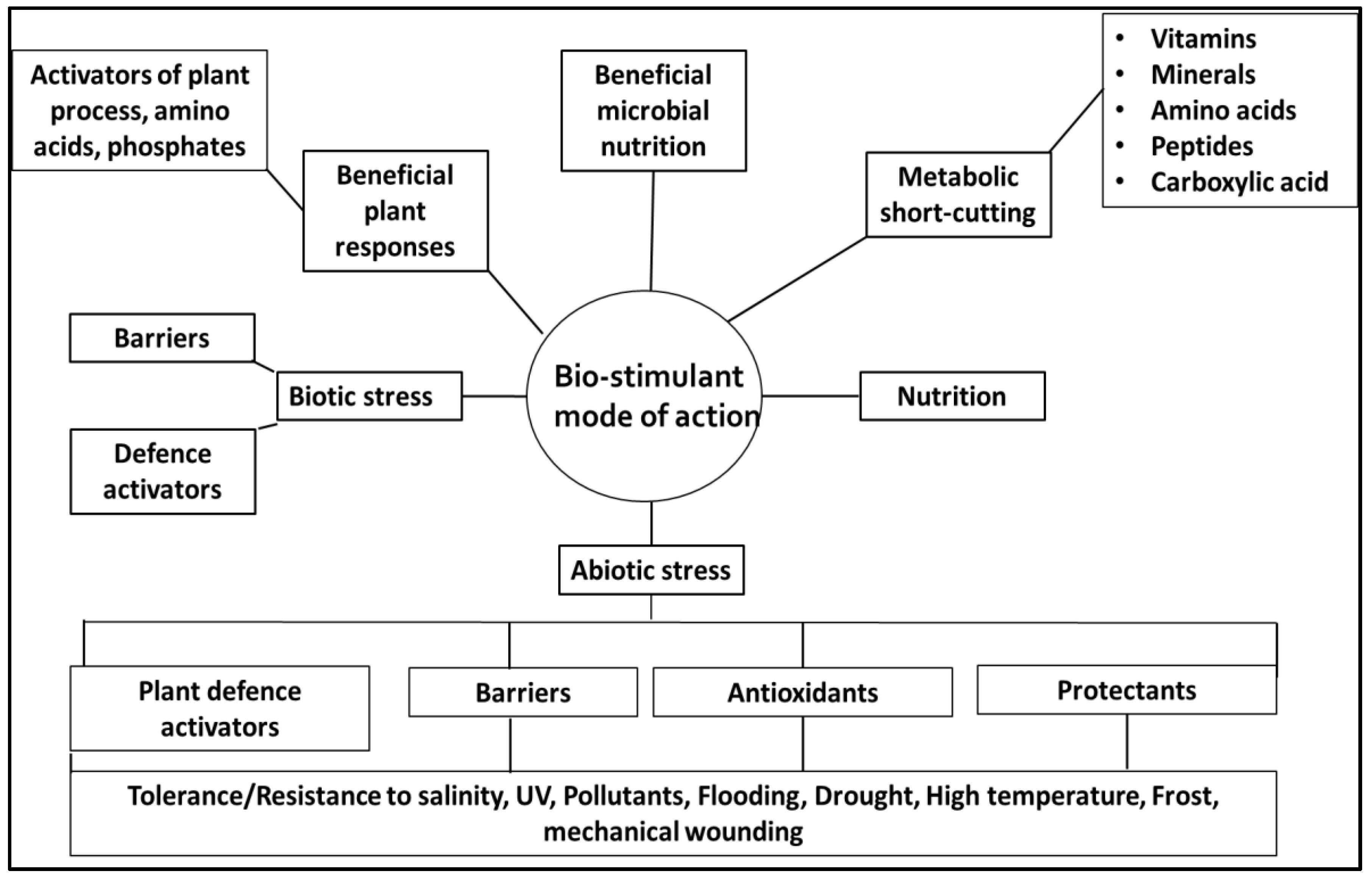
Table 2.
Bioactive ingredients/hydrolysates marketed for pets available commercially.
| Manufacturers | Product | Ingredients / Raw material | Product description | Specific features |
|---|---|---|---|---|
| Biomega (Norway) |
Salmigo® Protect L60 | Fresh, high-quality Atlantic salmon leftovers | A liquid salmon peptide produced by company’s patented non-GMO food grade enzymatic hydrolysis process, contains no added preservatives. | Maximises nutrient delivery to pet body tissues with >90% proteins of high biological value in the form of rapidly absorbing bioactive peptides and amino acids and contains valuable micronutrients well as taurine and niacin; both essential nutrients for cats. |
| Salmigo® Active | Fresh, high-quality Atlantic salmon leftovers | A salmon peptide powder produced by company’s patented non-GMO food grade enzymatic hydrolysis process contains no added preservatives. | Supports the overall pet wellbeing, such as skin, coats, joints and more with a highly digestible and easily absorbable source of high biological value protein. Contains >70% proteins in the form of peptides, free amino acids. |
|
| Trovet + Plus (Netherlands) |
Dog Adult Dermal Hydrolysed Fish |
White fish protein hydrolysates, rice, potato, apple, fish oil, linseed, minerals, borage oil. | Low molecular weight hydrolysed protein (<10000 Da). Protein (8%), Fats (7%), Fibre (0.75%), Ash (2.5%) |
Maintains dermal function in case of dermatosis and excessive hair loss. Significantly reduce the likelihood of allergic reactions with EPA and DHA acting as the precursors to anti-inflammatory eicosanoids thereby stimulating growth and vitality of the skin and fur and strengthen the skin barrier. |
| Cat Intestinal Fresh Hydrolyzed White Fish | Extruded rice, rice protein, hydrolysed white fish, fish oil, sunflower oil, hydrolysed fish, krill Antarctic, apple fibre, vegetable fibres, psyllium, hydrolysed yeast cell wall (MOS), inulin (FOS) | A single source of animal protein, with the exception of intestinal wet food for cats, which instead contains two. Protein (32%), Fat (20%), Fibre (2.75%), Ash (6.50%) |
Reduces intolerances to ingredients and nutrients while compensating for poor digestion. Helps in maintaining dermal function in case of dermatosis and excessive hair loss. Alos contains prebiotics: FOS (nourish the beneficial bacteria in the intestinal flora). MOS (eliminates the pathogenic intestinal flora and cleans it). | |
| Multi-Purpose Treat for cats (Hydrolysed Protein) | MHT | Rice, salmon protein (hydrolysate), sodium chloride, sugar, collagen (hydrolysate), cellulose, poultry fat. | Hypoallergenic treat based on one hydrolysed protein (hydrolysed fish) and one carbohydrate source (rice). Protein (30%), Fat (8%), Ash (5.5%), Fibre (2.5%) |
Prevents immunological (food allergy) and non-immunological (food intolerance) reactions in the form of skin problems. Also prevents digestive problems (diarrhoea, vomiting) and chronic renal insufficiencies. | |
| Optima Nova | Sensitive Soft Chews Salmon | Salmon and salmon by-products, tapioca and potato, and fats. | Grain free functional snacks for dogs Protein (35%), Fat (5%), Fibres (2%), Ash (10.5%) |
Easily digestible functional snacks with hypoallergenic ingredients that are ideal for dogs with sensitive skin or stomachs. |
| Adult Sensitive Salmon & Potato | Fresh, ground, hydrolysed salmon, dehydrated potato, potato protein, oil, sugar beet meal, yeast, FOS, MOS. | Balanced and complete nutrition for dogs, with low allergic proteins in a grain and gluten free food. Protein (27%), Fats (16%), Fibre (2.75%), Ash (7%) |
Aids in food intolerance and allergies, improving sensitive skin and digestion for dogs. Omega-3 and -6 fatty acids promote healthy skin, a shiny coat, and support heart health, immunity, the nervous system, and may have anti-cancer benefits. | |
| Select Gold | Medica Hypoallergenic PLUS Salmon for dogs | Potato flakes, salmon protein, hydrolysates, hydrolysed poultry liver fish oil, potato protein, sunflower oil, poultry fat. | Only one selected, partially hydrolysed, animal protein source as an exclusion diet Protein (23.5%), Fat (16.5%), Ash (6.8%), Fibre (2.6%) |
Hydrolysed protein and carbohydrate blend, assisting dogs with food sensitivities or allergies. Alleviates initial symptoms of intolerance while providing dogs with balanced and complete nutrition. |
| Medica Hypoallergenic PLUS Fish and rice for cats | Rice, potato protein, hydrolysed fish protein, poultry fat, potato starch, dried beet pulp, beef fat, cellulose, sardine oil, hydrolysed poultry liver, salmon oil, and linseed oil. | Contains only one selected source of protein and one selected source of carbohydrate Protein (33%), Fat (18%), Ash (6%), Fibre (3.3%) |
Minimises nutrient intolerances in cats with food intolerances or food allergies. Supports skin function in dermatosis and excessive hair loss and helps reduce inflammation in sensitive cats. | |
| Boxby | Functional Treats - Sensitive Protein | Hydrolysed salmon, potato flakes, rice meal, omega-3 fatty acids, propylene glycol, omega-6 fatty acids. | Functional Treats – with hydrolysed salmon proteins free from wheat and soya. Protein (23%), Fat (5%), Fibre (1%), Ash (2%) |
Functional snacks with hydrolysed protein reducing the risk of unwanted reactions in dogs prone to dietary allergies or intolerances. Omega fatty acids supports skin and coat health. |
| Proper Nutrition | SEACURE® - Daily protein supplement for dogs | Made from Pacific whiting caught in the Pacific Northwest | Patent-pending process gently breaks down the fish protein into amino acids and peptides that acts as daily protein supplement to maintain overall health. Protein (60%), Fibre (5%), Fat (2%) |
Aids digestion and enhances overall health for puppies, adults, and sick or elderly dogs. Boosts immune function, promotes healthy skin and coat, and alleviates vomiting, diarrhea, and nausea, with omega-3 fatty acids, amino acids, and bioactive peptides serving as the key healing ingredients. |
| Specific Cat FDD | HY Food Allergen Management | Rice, rice protein, hydrolysed salmon protein, pork fat, cellulose, protein hydrolysate, fish oil, psyllium husks, rosemary extract. | Specially developed for sensitive cats that cannot tolerate certain ingredients of conventional foods Protein (27.5%), Fat (12.5%), Fibre (3.3%), Ash (7.2 %) |
Support a normal immune system and helps in maintaining normal urinary tract function. Relieve acute intestinal malabsorption. Compensate for inadequate digestion and exocrine pancreatic insufficiency. |
| Virbac | Veterinary HPM® Hypoallergic dog food with hydrolysed fish protein |
Potato starch, hydrolysed fish protein, animal fats, lignocellulose, minerals, hydrolysed pork and poultry proteins, beet pulp, FOS, mono di and triglycerides of fatty acids, Lactobacillus acidophilus. | Elimination diet formula based on hydrolysed fish protein and potato starch suitable for adult and senior dogs. Mean molecular weight of 1.82 kDa and 97% peptides below 10 kDa Protein (24%), Fat (18%), Ash (7%), Fibre (4.5%) |
Reinforce natural skin defences and reduce the risk of other allergies (redness/itching), maintain a healthy coat. Low molecular weight peptides helps with compromised gastrointestinal function (maldigestion /malabsorption, diarrhoea). |
| Farmina Pet Foods | Vet Life Cat Ultra hypo | Rice starch, hydrolysed fish protein, fish oil, potassium chloride, calcium carbonate, mono-di-calcium phosphate, sodium chloride. | Dietary cat food specially developed without vegetable proteins for food allergies or intolerances. Protein (18%), Fat (15%), Fibre (1.2%), Ash (5.3%) |
Imparts hypoallergenicity and high digestibility with efficient contribution to a normal immune system and also support the natural skin barrier. |
| Hill's® Prescription Diet® | Feline c/d Stress Urinary Care - Ocean Fish |
Brewer's rice, ocean fish protein hydrolysates, chicken- and turkey meal, maize gluten meal, animal fats, tuna fish meal, soya bean oil, minerals, fish oil, linseeds. | Dietetic dry food with a special recipe to support normal urinary tract function and promote emotional balance. Protein (33.3%), Fat (15.2%), Fibre (0.6%), Ash (5.2%) |
Mitigates risk factors involved in developing urinary tract problems and helps in reducing the formation of urinary stones. Protein hydrolysates and L-tryptophan, helps to promote emotional balance. |
| Canine Skin Support Potato & Salmon Formula |
Salmon proteins, Potato Protein, Potato Starch, Pork Fat, Soybean Oil, Pork Flavor, Fish Oil, Fish Meal | Especially formulated to support dog's skin and food sensitivities. Protein (18.4%), Fat (15.5%), Fibre (1.86%), Total Omega – 3 FA (1.41%) |
Helps maintain a healthy skin & coat, improve digestion, and supports a healthy immune system. | |
| Blue Buffalo |
Natural Veterinary Diet HF Hydrolysed Intolerance, Salmon, Dry Cat Food | Salmon Hydrolysate, Peas, Potatoes, Pea Starch, Canola Oil, Pea Protein, Flaxseed, Pea Fibre, Fish Oil, Pumpkin, Dried Kelp, Oil of Rosemary. | A veterinarian-prescribed formula for cats with sensitive stomachs. Protein (>30%), Fat (>14%), Fibre (<4%) |
Minimize chances of adverse food reactions, supports skin and coat health, maintains a healthy immune system in cats with food intolerance. |
| iQi - Trusted pet food ingredients Supplier is Fiordo Austral (Chile) & ORIVO (Norway) |
Pure Mackerel hydrolysate | Mackerel processing side streams | Spray-dried Hydrolysate that contains over 71% protein and less than 10% ash. Contains high amounts of EPA and DHA |
Superior digestibility with high protein and lower ash, contribute to healthy joints and overall mobility, support a healthy skin and coat in cats and dogs. |
| Pure Salmon Hydrolysate | Salmon processing side streams | Rich in protein and other essential nutrients and can be applied to pet food directly. Have a minimal protein level of 72%. |
High protein digestibility of 99% and low ash content, meets hypoallergenic food requirements and offer versatile health benefits to cats and dogs. | |
| Pure Sardine Hydrolysate | Sardine processing side streams | Spray - dried Hydrolysate that contains over 71% protein. |
Superior digestibility with high protein and lower ash, contribute to healthy joints and overall mobility. | |
| Pure Tuna Hydrolysate | Tuna processing side streams | The fine spray-dried tuna hydrolysate powder compares well to the rendered meal has advantages in low-temperature treat applications. | Offers hypoallergenicity, with superior protein digestibility. Omega fatty acids makes it suitable for infant animal formulas to assist brain development. |
|
| Brit | Veterinary Diet - Hypoallergenic | Dehydrated salmon, yellow peas, hydrolysed salmon protein, buckwheat, salmon oil, hydrolysed salmon gravy, minerals, dried Ascophyllum nodosum, MOS, FOS. | Hypoallergenic grain-free food. Protein (27%), Fat (14%), Fibre (2%), Ash (7.2%) |
Suitable for dogs with (chronic) diarrhoea, IBD and need skin support, reduces allergic reactions, and supports the gastrointestinal system. |
Table 3.
Palatant product produced from fish and other animal and plant sources.
| Competitor companies/ Manufacturer | Product | Market presence | Ingredients / Raw material | Product description | Specific features | Average price point (per 200 kg) * |
|---|---|---|---|---|---|---|
| Kemin (palatants produced in US, Italy, and Brazil) |
Palasurance TM | Europe, USA, Australia | Salmon, Lamb, Beef | Available in both dry and liquid forms. |
|
US$6.29 (per kg) |
| Palasurance P TM | Europe, USA, Australia | Plant proteins (unknown source) | Use Maillard technology to generate aromas and flavors that appeal to pets. |
|
US$6.29 (per kg) | |
| Palivate TM | Europe, USA, Australia | Duck, Chicken, Salmon, Soy, Lamb | Palatant for wet pet foods meeting flavour, pH, and texture expectations. |
|
> US$6.29 (per kg) | |
| Palteva TM & Palteva P TM | Europe, USA, Australia | Duck, Chicken, Salmon, Turkey, Lamb, Plant proteins | Natural flavour addition to pet diets |
|
> US$6.29 (per kg) | |
| Matchwell Nanjing Pet Products Supply Co., Ltd (China) |
Fish cream (cat food palatant) | Available globally – online network | Ocean fish | Brown liquid, Crude protein (>15%), Ash (<10%), Moisture (<70%) |
|
US$2.00/barrel |
| Dry dog food palatant | Available globally – online network | Chicken liver | Chicken liver hydrolysate, Crude protein (>45%), Crude fat (<20%), Ash (<10%) |
|
US$5.90 - US$6.29 per kg | |
| Chicken flavour cat food palatant | Available globally – online network | Chicken liver | Chicken liver hydrolysate, Crude protein (>45%), Crude fat (<20%), Ash (<10%) |
|
US$1.60 - US$1.92 per kg | |
| Seafood liquid palatant | Available globally – online network | Seafood |
|
US$38.00 per barrel | ||
| Kerry Group (Ireland) |
PurePal TM | Plant protein (soy) | Consumer-friendly label declarations, safe storage, and liquid form for easy use and uniform coverage |
|
Unknown | |
| Copalis Sea Solutions ® (France - linked to Symrise®) | CPSP® 90 and CPSP® G | Europe and Asia | All fish - salmon and whitefish | Fine powder and liquid, soluble fish protein concentrates and hydrolysates, high value ingredient |
|
Unknown |
| AFB International ® | Range of palatants from fish, animal proteins | Global - US based company | Fish, chicken, pork, turkey, duck, lamb, and non-meat protein | Liquid and dry no-GMO, grain free, non-soy, non-wheat, gluten free and clean label palatant products |
|
Depends on the form of the product |
| BioMarine Ingredients Ireland (BII) | ProShore – Fish protein Concentrates (FPC) and Fish Protein Isolate (FPI) | Western Europe; Eastern Europe; Middle East; Asia; Australia; North America; Africa; Central/South America | Unknown | High quality liquid and powdered ingredients for premium pet food formulations |
|
Unknown |
| ProAtlantic – Fish protein hydrolysate (FPH) | Unknown |
Spray dried, free flowing with a neutral odour, and superior solubility |
|
Unknown |
||
| Essentia Protein Solutions (USA) |
PetSavio™ PPP 400 | Global - US based company | Plaice | Paste form with Protein (39%), Fat (0.6 %), Ash (<10 %) |
|
Unknown |
| PetSavio™ PCP 400 | Global - US based company | Cod | Paste form with Protein (40%), Fat (1%), Ash (9.5 %) | Unknown |
||
| Jiangsu Yichong Biotechnology Company Limited (China) |
Seasoning Creame for cats (YCG-MT-915) | Global – China based company | Ocean fish, chicken liver, compound amino acids. | Crude protein (> 10%), ash (< 10%) |
|
Unknown |
| Seasoning powder for cats (YCF-MT-02) | Global – China based company | Ocean fish, chicken liver, Brewer's Yeast, acidity regulator. | Crude protein (> 30%), Crude fat (< 20%), Ash (< 45%) |
|
Unknown |
|
| Fish cream for cat | Global – China based company | Ocean fish, compound amino acids, Brewer's Yeast, Protease. | Deep brown colour product, Crude protein (> 10%), ash (< 10%) |
|
Unknown |
Table 4.
Manufactures of fish protein hydrolysates used in the manufacturer of aquaculture feeds.
| Manufacturers | Product | Ingredients / Raw material | Product Description | Specific features |
|---|---|---|---|---|
| Diana Group S.r.l (Brittany) | Actipal™ (Fish hydrolysate for fish and shrimp) | Locally sourced, 100% fish side-stream | Made in Costa Rica. Enzymatic hydrolysis guarantees a consistent level of free amino acids and bioactive peptides. |
Bioactive peptides enhance resistance to stress and pathogens by influencing immune modulation and growth hormones. Help sustain consistent feed intake during stressful events, feed formula changes, and rearing cycle. Preserve optimal performance and health outcomes. |
| Nutri™ Tuna (Tuna hydrolysates) |
Locally sourced, 100% side-stream tuna. | Made in Indonesia. Contains highly soluble free amino acids and highly bioavailable short peptides. |
Maintain a high level of feed intake throughout the rearing cycle. Helps in stressful events or changes in feed formula. Improves feed palatability, digestibility, efficiency and growth. |
|
| Nutri™ Tuna Soluble extract (TSE) | Locally sourced, 100% side-stream tuna. | Made in Thailand. Delivers highly digestible protein and attractive palatable amino acids for use in fish and shrimp feeds. |
Produced using resources from certified fisheries through a standardised process to guarantee optimal freshness and product consistency. Soluble and highly digestible protein source for fish and shrimp feed. Contains a high level of palatable amino acids that increase attractant properties. |
|
| Nutri™ Tuna Liver powder (TLP) | Locally sourced, 100% side-stream tuna. | Made in Thailand. Offers digestible proteins and high-quality fats. |
Provides a full range of amino acids and high-quality fats. Naturally palatable and attractive to aquatic species. Boost palatability and performance in the early growth stages of fish and shrimp. |
|
| Bio Marine Ingredients Ireland | ProShore | premium fish protein hydrolysates | Optimal for hatchery and fish farming. It has impressive protein peptide and mineral profiles with superior solubility. |
Boost the growth and development rate of cultivated freshwater and saltwater populations. Contains high protein content. Enables growth enhancement and immunity enrichment. |
| Janatha Fish Meal & Oil Products (India) | Fish Protein Hydrolysate Liquid | Fish Protein Hydrolysate liquid is an excellent amino acid product. It contains a minimum of 40% hydrolysed protein. | Enhances growth, survival, and larval development. Reduces the incidence of skeletal deformities. Improves larval quality in both freshwater and marine fish species. Act as feed attractant, thus enhancing the palatability and acceptance of the feed. |
|
| Fish Protein Hydrolysate Powder | Fish Protein Hydrolysate powder is an excellent amino acid product. It contains a minimum of 80% hydrolysed protein. | Protein fractions with weight between 1 to 10 kDa enhance feeding activity in fish larvae. Peptides with lower molecular weight (0.2 to 2.5 kDa) beneficially affect larval growth and survival. Enhances the activity of digestive enzymes in the intestine. |
||
| Fish Soluble Paste (Super attractant) | Fish Protein Hydrolysate liquid contains a minimum of 60% hydrolysed protein. | Helps in growth simulation. Hydrolysed proteins have better palatability, nutrition & bioactivity. Works as a feed attractant & organic fertiliser. |
||
| Scanbio Marine Group AS (Norway) | ScanPro™ | Norwegian salmon, pelagic and white fish | Enzymatically hydrolysed and concentrated fish protein is an excellent economical ingredient for feeds. | Highly digestible and hypoallergenic. Assimilation of peptides offers maximum nutritional value. Helps in growth simulation of fish larvae. |
| Omega Protein Corporation (US) | Natural Nautic® | Menhaden | Fish meal is a high-quality protein made from menhaden and is naturally stabilised with mixed tocopherols. | Complete source of highly digestible, low-allergenic protein. Has a superior amino acid profile. An excellent source of omega-3 fatty acids and natural protein for fish. |
| Special Select® | Menhaden | Premium fish meal is a high-quality protein made from menhaden. | ||
| SeaLac® | Menhaden | |||
| Sociedad Pesquera Landes Sa (Chile) | Hydrolysed Salmon Protein | By-products of the Chilean salmon industry | A perfect ingredient for fish nutrition with 71% protein, 20% lipids, and > 98% digestible. | Ideal for improving palatability. Easy to digest. Excellent ingredient with low molecular weight peptides (size < 5000 Da) for fish nutrition. |
Table 5.
Commercial examples of biostimulants including those made from animal protein.
| Bio-stimulant | Origin | Bioactive | Application method | Plant trials | Bioactivity |
|---|---|---|---|---|---|
| C Fish | White fish/mixed fish composition autolysates and hydrolysates | Peptides, amino acids | Foliar, pre-planting, irrigation | Fruits & vegetables | Increase plant’s resistance to insect pressure, disease and heat or drought stress |
| Radifarm | Commercial formulation | Amino acids, peptides, saponins, betaines, polysaccharides, vitamins, microelements | Irrigation, soil drench, foliar application | Fruits and vegetables | Promotes the formation of an extensive root system by speeding up the elongation of lateral and adventitious roots |
| Megafol | Commercial formulation | Amino acids, betaines, proteins, vitamins, auxin, gibberellin, | Irrigation, soil drench, foliar application | Fruits and vegetables | Promotes balanced vegetative development and productivity, and plant resistance to stress (frost, root asphyxia, weeding, hail) |
| BioRoot | Plant and mineral derived organic humates, soybean meal | Plant derived protein hydrolysate | Irrigation, foliar, soil drench | Irrigation, foliar, soil drench of fruits and vegetables | Increase rooting ability and chlorophyll and protein contents |
| Ergonfill | Animal derived protein hydrolysate | Animal protein hydrolysates, cysteine, folic acid, keratin derivatives | Foliar, pre-planting, irrigation | Fruits and vegetables | Promotes indolacetic acid and chlorophyll synthesis, improves translocation and chelation of macro and trace elements |
Disclaimer/Publisher’s Note: The statements, opinions and data contained in all publications are solely those of the individual author(s) and contributor(s) and not of MDPI and/or the editor(s). MDPI and/or the editor(s) disclaim responsibility for any injury to people or property resulting from any ideas, methods, instructions or products referred to in the content. |
© 2025 by the authors. Licensee MDPI, Basel, Switzerland. This article is an open access article distributed under the terms and conditions of the Creative Commons Attribution (CC BY) license (http://creativecommons.org/licenses/by/4.0/).
Copyright: This open access article is published under a Creative Commons CC BY 4.0 license, which permit the free download, distribution, and reuse, provided that the author and preprint are cited in any reuse.