
Submitted:
01 March 2025
Posted:
03 March 2025
You are already at the latest version
Abstract
Artificial Intelligence (AI) is revolutionizing industries through automation, data-driven insights, and enhanced decision-making. As AI adoption expands, the need for scalable, interpretable, and ethical models grows. This paper explores key AI advancements, including federated learning for privacy-preserving model training, generative AI for content creation, and explainable AI (XAI) for improving transparency. We examine modern AI architectures such as transformers, neural retrieval systems, and enterprise AI solutions that optimize intelligent querying and automation. Additionally, we discuss XAI methodologies like SHAP and LIME for model interpretability and ethical AI governance frameworks for responsible deployment. This study provides insights into emerging AI trends, challenges, and future directions for researchers, practitioners, and policymakers.
Keywords:
Artificial Intelligence (AI)
; Federated Learning
; Generative AI
; Explainable AI (XAI)
; Transformer Models
; Neural Retrieval
; Enterprise AI
; Ethical AI
; AI Transparency
; AI Governance
1. Introduction
Artificial Intelligence (AI) has undergone rapid advancements over the past few decades, becoming an integral part of numerous industries such as healthcare, finance, cybersecurity, and education. The widespread adoption of AI has been driven by breakthroughs in deep learning, neural networks, and transformer-based architectures. AI-driven solutions are now capable of surpassing human-level performance in tasks such as image recognition, natural language process.
Over the years, artificial intelligence (AI) has undergone significant advancements, marked by key milestones that have shaped its evolution. Deep learning emerged as a major breakthrough, leveraging neural networks to achieve superior performance in computer vision and natural language processing tasks. This was followed by the introduction of Generative Adversarial Networks (GANs), which revolutionized AI-generated content by enabling realistic image synthesis and creative applications.
Building upon these innovations, transformers redefined AI language models, introducing attention mechanisms that allowed for more efficient and context-aware text processing. This advancement laid the foundation for state-of-the-art models in machine translation, chatbots, and text summarization. More recently, Explainable AI (XAI) has gained prominence, addressing the need for transparency and interpretability in AI decision-making. By providing insights into model predictions, XAI enhances trust and accountability in AI applications across industries.
These advancements, progressing sequentially from deep learning to XAI, highlight the continuous evolution of AI technologies, each building upon the previous to drive innovation and improve AI’s applicability in real-world scenarios.
Despite the impressive progress in AI, significant challenges remain, particularly in the areas of interpretability, ethics, and bias. The growing complexity of AI models, especially deep learning architectures, has raised concerns regarding transparency and accountability in AI-based decision-making systems. These challenges have given rise to the field of Explainable AI (XAI), which seeks to enhance model interpretability and ensure trustworthiness.
Recent advancements in AI have not only improved traditional natural language processing (NLP) tasks but have also expanded into broader domains such as customer sentiment analysis and multi-modal learning. Studies on advanced machine learning techniques for analyzing customer reviews have demonstrated the power of AI in deriving actionable insights from large-scale unstructured data [1]. Additionally, transformer-based architectures, originally designed for NLP, are now being explored for diverse machine learning applications beyond text processing, showcasing their versatility in fields such as computer vision, biomedical research, and recommendation systems [2].
As AI systems become more complex and widely deployed, ensuring their robustness, interpretability, and scalability remains a critical challenge. Recent advancements in adversarial robustness for transfer learning models have highlighted the vulnerabilities of AI models to adversarial attacks, emphasizing the need for improved security measures [3]. Additionally, research on explainable AI (XAI) frameworks underscores the importance of aligning AI decision-making with human cognitive processes to foster user trust and transparency [4]. In parallel, the evolution of federated reinforcement learning in decentralized multi-agent systems presents new opportunities and challenges for scalable AI applications across distributed environments [5].
Furthermore, AI’s increasing integration into mission-critical applications such as autonomous vehicles, medical diagnostics, and financial forecasting demands rigorous validation and regulatory oversight [6]. This paper explores the emerging trends in AI, the tools and frameworks that power these advancements, and the necessity of explainable AI to foster ethical and responsible AI deployment.
2. AI Trends: Federated Learning, Generative AI, and Enterprise AI
2.1. Federated Learning and Data Privacy
Federated learning (FL) is an innovative machine learning paradigm that enables AI models to be trained across multiple decentralized devices while ensuring that raw data remains localized [7]. This approach addresses key privacy concerns, particularly in domains where sensitive information, such as medical records or financial transactions, must not be transmitted to central servers [8]. The federated learning process is illustrated in Figure 1.
Unlike traditional machine learning models that require centralized data collection, FL allows model updates to be aggregated while keeping the data on local devices. This significantly reduces the risks associated with data breaches, unauthorized access, and compliance violations, making it a preferred approach for privacy-sensitive applications in healthcare, finance, and edge computing environments [9,10].
A typical federated learning framework consists of the following key components:
- Client Devices: Multiple distributed devices (such as smartphones, IoT sensors, or hospital servers) locally train a shared model on their respective datasets.
- Model Updates: Instead of sharing raw data, each client device computes model updates (e.g., weight gradients) based on local training.
- Central Server: A global aggregation mechanism (e.g., Federated Averaging) combines the local model updates from multiple clients to improve the overall model without accessing individual datasets.
- Privacy-Preserving Techniques: Techniques such as differential privacy and secure multiparty computation ensure that federated learning remains robust against inference attacks.
2.1.1. Advantages of Federated Learning
- Privacy Protection: Raw data remains on the local device, reducing the risk of data leaks.
- Reduced Communication Costs: Since only model updates are transmitted, federated learning minimizes bandwidth usage.
- Scalability: It enables large-scale collaboration across distributed networks, improving AI models with diverse datasets.
- Regulatory Compliance: FL supports compliance with data protection regulations such as GDPR and HIPAA.
2.1.2. Challenges and Future Directions
Despite its advantages, federated learning presents several challenges:
- Heterogeneous Data: Variability in data distribution across client devices can lead to biased models.
- Communication Overhead: Frequent model updates require efficient aggregation techniques to reduce latency.
- Security Risks: Federated learning is vulnerable to adversarial attacks such as model poisoning.
To address these challenges, future research is exploring privacy-preserving FL techniques such as homomorphic encryption and blockchain-based federated learning to enhance security and trustworthiness [11].
2.2. Generative AI in Education and Cybersecurity
Generative Artificial Intelligence (AI) has significantly impacted multiple domains, particularly in education and cybersecurity. Leveraging deep learning architectures such as transformers, GANs (Generative Adversarial Networks), and diffusion models, generative AI enables advanced automation, content synthesis, and adaptive security strategies [12].
2.2.1. Generative AI in Education
Education is one of the most promising areas benefiting from generative AI. AI-powered tools enhance the learning experience by enabling:
- Personalized Learning: Generative AI adapts to students’ learning styles, offering customized explanations and study materials.
- Automated Content Generation: AI can create textbooks, quizzes, and lecture summaries, reducing the workload for educators.
- Conversational AI Tutors: AI-driven chatbots and virtual assistants provide instant academic support, making learning more interactive.
- AI-Generated Simulations: Generative models enable immersive educational experiences using augmented reality (AR) and virtual reality (VR).
The generative AI-powered education framework is depicted in Figure 2.
2.2.2. Generative AI in Cybersecurity
Generative AI has also emerged as a game-changer in cybersecurity, aiding in:
- Threat Detection and Prevention: AI models simulate cyber threats, enabling proactive defense mechanisms against malware, phishing, and network intrusions.
- Anomaly Detection: Generative models identify suspicious activities by analyzing deviations from normal patterns, crucial in fraud detection and insider threat monitoring.
- Automated Security Policy Generation: AI assists in dynamically creating security policies based on historical attack patterns.
- Cyber Deception Strategies: AI-generated honeytokens and decoy networks help mislead cybercriminals, reducing attack success rates.
The generative AI-driven cybersecurity workflow is illustrated in Figure 3.
2.2.3. Challenges and Ethical Considerations
While generative AI provides tremendous benefits, it also raises concerns:
- Bias and Fairness Issues: AI-generated content can reflect biases present in training data, impacting educational integrity and cybersecurity fairness.
- Deepfake Threats: Generative AI can be misused to create realistic deepfakes for misinformation, fraud, and identity theft.
- Privacy Concerns: AI models require large datasets, often raising privacy and data security challenges.
2.2.4. Future Directions
Future research in generative AI aims to:
- Develop explainable generative models to enhance transparency.
- Implement zero-trust security architectures in AI-based cyber defense.
- Strengthen AI regulatory frameworks to prevent misuse.
2.3. Enterprise AI and Intelligent Querying
The increasing volume of enterprise data has made efficient search and retrieval a critical challenge. Enterprise AI is revolutionizing how organizations manage and access their data by integrating neural retrieval models, natural language processing (NLP), and machine learning (ML)-based intelligent querying systems [13]. These AI-powered solutions optimize search accuracy, automate document classification, and enhance enterprise content management systems (ECMS).
2.3.1. Neural Retrieval Models for Enterprise Search
Traditional keyword-based search methods lack context awareness and struggle with semantic understanding, often leading to suboptimal query results. Neural retrieval models, such as BERT-based ranking models and vector search, enable intelligent enterprise search by understanding the intent and meaning behind queries rather than just matching keywords [14].
Key Components of AI-driven Enterprise Search:
- Vector-based Search: AI transforms documents and queries into high-dimensional vectors, allowing similarity-based retrieval [15].
- Semantic Understanding: Neural networks analyze word relationships for better query matching.
- Personalized Query Results: AI learns user behavior and adapts search ranking based on relevance.
- Automated Knowledge Graphs: AI connects structured and unstructured data to enhance search context [16].
Table 1 presents the Enterprise AI Search Workflow, where AI-powered techniques such as natural language processing (NLP), vector search, and knowledge graphs work together to enhance search relevance and optimize results.
2.3.2. AI-powered Intelligent Querying: ENRIQ Framework
The ENRIQ (Enterprise Neural Retrieval and Intelligent Querying) framework integrates AI-driven search mechanisms to improve knowledge discovery, automated recommendations, and information extraction [13]. As illustrated in Figure 4, ENRIQ leverages a multi-layered AI-driven approach to process user queries and retrieve relevant enterprise data efficiently.
Core Features of ENRIQ:
- Contextual Search Engine: Utilizes semantic embeddings to enhance search result relevance.
- Multi-Modal Search: Supports diverse query types, including text, images, and documents.
- Automated Document Tagging: Implements AI classifiers to categorize and index enterprise knowledge.
- Natural Language Querying: Enables conversational query processing for improved user experience.
Figure 4 illustrates the ENRIQ architecture, where user queries undergo processing through NLP, machine learning (ML)-based ranking, and clustering techniques. These components interact with enterprise data sources, including databases, documents, and log files, to retrieve and rank the most relevant search results.
2.3.3. Challenges and Future Directions
Despite its advantages, AI-driven enterprise search faces several challenges:
- Data Silos and Integration Issues: Enterprise data is often fragmented across multiple repositories.
- Bias in AI Search Algorithms: AI search models can inherit biases, affecting the fairness of search results.
- Privacy and Compliance: AI-powered enterprise search must adhere to data protection regulations (GDPR, HIPAA).
Future Research Areas:
- Developing explainable AI search models for improved transparency.
- Integrating blockchain-based enterprise data validation.
- Enhancing AI-powered document summarization for real-time insights.
3. AI Tools and Frameworks
Artificial Intelligence (AI) has rapidly evolved with the development of powerful machine learning frameworks and architectures. These tools have enabled breakthroughs in natural language processing (NLP), computer vision, and cybersecurity.
3.1. Transformer Models and Neural Networks
Transformer-based architectures have revolutionized AI applications, particularly in NLP [17]. Traditional recurrent neural networks (RNNs) suffered from vanishing gradients and limited contextual memory, making them inefficient for processing long text sequences. Transformers introduced self-attention mechanisms, allowing models to capture long-range dependencies efficiently.
Key Transformer Models:
- BERT (Bidirectional Encoder Representations from Transformers) – Enables bidirectional language understanding, improving search engines and chatbots [18].
- GPT (Generative Pre-trained Transformer) – Powers AI text generation and conversational AI models such as ChatGPT [19].
- T5 (Text-to-Text Transfer Transformer) – Unifies NLP tasks using a single model trained for multiple text-based applications.
Table 2 presents the key components and functions of the Transformer model architecture, highlighting its processing flow from input tokens to output predictions.
3.2. AI for Cybersecurity
AI-driven cybersecurity solutions analyze vast amounts of data in real-time to detect potential threats and vulnerabilities [20]. AI enhances cybersecurity by identifying anomalies, automating threat detection, and proactively mitigating cyber risks.
AI-Powered Cybersecurity Applications:
- Intrusion Detection Systems (IDS): AI detects unauthorized access patterns in network traffic.
- Threat Intelligence: AI identifies malware patterns using deep learning.
- Behavioral Analysis: AI monitors user behavior to detect insider threats.
- Fraud Detection: AI models analyze transaction anomalies for financial security.
The AI-Powered Cybersecurity Framework is designed to detect and respond to cyber threats in real-time by leveraging advanced artificial intelligence mechanisms. At its core, the AI Security Engine serves as the central processing unit, analyzing multiple input sources to identify potential security risks. These inputs include network logs, which capture system activity and detect anomalies; user activity, which monitors behavioral patterns to identify suspicious actions; and malware patterns, which track known malicious signatures and emerging threats.
Upon processing these inputs, the AI Security Engine applies machine learning models, anomaly detection algorithms, and pattern recognition techniques to assess potential risks. If a threat is detected, the system generates threat alerts, which notify security teams or trigger automated defensive measures. This framework enhances cybersecurity resilience by ensuring continuous monitoring, rapid threat detection, and proactive response mechanisms, significantly reducing the risk of cyberattacks in dynamic enterprise environments.
4. Explainable AI (XAI) and Challenges
As AI models become more complex, their decision-making processes become increasingly opaque, creating a black-box problem. Explainable AI (XAI) focuses on developing methods to improve transparency, interpretability, and trustworthiness.
4.1. Model Interpretability Techniques
Several techniques have been developed to interpret AI decisions:
1. SHAP (Shapley Additive Explanations) SHAP assigns attribution values to each feature in a model, explaining how much each feature contributed to a prediction [21].
2. LIME (Local Interpretable Model-Agnostic Explanations) LIME creates simplified interpretable models to approximate the behavior of complex models [22].
4.1.1. Challenges in Explainable AI
Despite its progress, XAI faces challenges:
- Trade-off Between Accuracy and Interpretability: Simple models are more explainable but less powerful.
- Lack of Standardization: XAI lacks universal evaluation metrics.
- Bias in Interpretability Methods: Some methods introduce biases while approximating explanations.
Figure 5 illustrates the relationship between feature importance and prediction confidence in Explainable AI (XAI) decision-making.
4.2. AI Bias and Fairness
Artificial Intelligence (AI) models are increasingly used in decision-making across domains such as healthcare, finance, hiring, and law enforcement. However, these models often inherit biases from training data, leading to unfair outcomes and ethical concerns [12]. Addressing bias and fairness in AI is crucial to ensure equitable and unbiased AI-driven decision-making.
4.2.1. Sources of AI Bias
Bias in AI models can arise due to several factors:
- Data Bias: Training datasets may contain historical prejudices, leading AI models to replicate discriminatory patterns [23].
- Algorithmic Bias: Model architecture and learning algorithms may amplify pre-existing disparities.
- Representation Bias: Underrepresentation of certain demographics in training data can lead to skewed model predictions.
- Evaluation Bias: AI models trained and evaluated on biased benchmarks may produce systemic errors in real-world deployment.
4.2.2. Fairness-Aware AI Techniques
Several methods have been proposed to reduce bias and enhance fairness in AI systems:
- Preprocessing Techniques: Adjust training data distribution to balance underrepresented groups [24].
- Fairness Constraints in Model Training: Introduce fairness-aware loss functions that minimize disparities across demographic groups.
- Post-hoc Bias Mitigation: Use reweighting techniques to equalize model predictions across different user categories.
- Explainability for Bias Detection: Employ SHAP and LIME methods to detect and interpret model bias [21].
4.2.3. Challenges in AI Fairness
Despite advances in fairness-aware AI, challenges remain:
- Trade-off Between Accuracy and Fairness: Reducing bias may impact model performance.
- Lack of Diverse Datasets: Many AI datasets lack sufficient representation of minority groups.
- Regulatory and Ethical Considerations: Compliance with AI ethics guidelines and legal frameworks remains an ongoing challenge.
4.2.4. Future Directions in Fair AI
To ensure fairness in AI, future research should focus on:
- Developing more inclusive and representative datasets for AI model training.
- Enhancing explainable fairness metrics to assess bias impacts in real-world AI applications.
- Establishing stronger AI governance policies to regulate fairness in high-stakes domains like hiring and healthcare [6].
5. Conclusion and Future Directions
Artificial Intelligence (AI) has emerged as a transformative force across diverse domains, including healthcare, education, cybersecurity, and enterprise applications. This paper has explored key AI advancements, including federated learning, generative AI, and enterprise AI, highlighting their potential to revolutionize industries through decentralized learning, intelligent content generation, and advanced information retrieval.
The rapid evolution of AI tools and frameworks, such as transformer-based models and AI-powered cybersecurity, has driven significant breakthroughs. However, as AI systems become increasingly complex, ensuring explainability, fairness, and ethical governance remains a critical challenge. The opacity of deep learning models raises concerns about trust, bias, and accountability, necessitating advancements in Explainable AI (XAI) methodologies such as SHAP and LIME.
Addressing AI fairness and bias mitigation is essential for equitable AI-driven decision-making. Techniques such as fair representation learning, debiasing algorithms, and privacy-preserving AI are crucial for developing human-centric, transparent, and trustworthy AI systems. Additionally, privacy-preserving techniques, including federated learning and homomorphic encryption, offer promising solutions to balance innovation with data protection.
Looking ahead, responsible AI governance, ethical AI deployment, and regulatory compliance will be key to ensuring sustainable AI advancements. Future research should focus on enhancing privacy-preserving AI, strengthening explainability frameworks, and establishing standardized evaluation metrics for fairness and bias detection. Furthermore, AI accessibility and interpretability must remain priorities to maximize benefits while minimizing risks.
By addressing these technical, ethical, and regulatory challenges, this paper provides a comprehensive resource for researchers, practitioners, and policymakers navigating the evolving AI landscape. As AI continues to advance, a collaborative approach among academia, industry, and regulatory bodies will be crucial in harnessing its full potential for societal and industrial progress.
Acknowledgments
The author would like to acknowledge the contributions of researchers and industry experts whose insights have shaped the discourse on Emerging Trends in AI. This independent research does not refer to any specific institutions, infrastructure, or proprietary data.
References
- Kamatala, S.; Bura, C.; Jonnalagadda, A.K. Unveiling Customer Sentiments: Advanced Machine Learning Techniques for Analyzing Reviews. Iconic Research And Engineering Journals 2025. https://www.irejournals.com/paper-details/1707104.
- Kamatala, S.; Jonnalagadda, A.K.; Naayini, P. Transformers Beyond NLP: Expanding Horizons in Machine Learning. Iconic Research And Engineering Journals 2025, 8. https://www.irejournals.com/paper-details/1706957. [CrossRef]
- Myakala, P.K. Adversarial Robustness in Transfer Learning Models. Iconic Research And Engineering Journals 2022, 6.
- Myakala, P.K.; Jonnalagadda, A.K.; Bura, C. The Human Factor in Explainable AI Frameworks for User Trust and Cognitive Alignment. International Advanced Research Journal in Science, Engineering and Technology 2025, 12 . [CrossRef]
- Myakala, P.K.; Kamatala, S. Scalable Decentralized Multi-Agent Federated Reinforcement Learning: Challenges and Advances. International Journal of Electrical, Electronics and Computers 2023, 8. [CrossRef]
- Jobin, A.; Ienca, M.; Vayena, E. The Global Landscape of AI Ethics Guidelines. Nature Machine Intelligence 2019. [CrossRef]
- et al., B.M. Communication-Efficient Learning of Deep Networks from Decentralized Data. AISTATS, 2017.
- et al., P.K. Advances and Open Problems in Federated Learning. Foundations and Trends in Machine Learning 2021.
- Yang, Q.; Liu, Y.; Chen, T.; Tong, Y. Federated Machine Learning: Concept and Applications. ACM Transactions on Intelligent Systems and Technology 2019, 10, 1–19. [CrossRef]
- Myakala, P.K.; Jonnalagadda, A.K.; Bura, C. Federated Learning and Data Privacy: A Review of Challenges and Opportunities. International Journal of Research Publication and Reviews 2024, 5. [CrossRef]
- Shokri, R.; Shmatikov, V. Privacy-Preserving Deep Learning. Proc. 22nd ACM CCS, 2015.
- Chiranjeevi, B. Generative AI in Learning. REDAY J. AI Comput. Sci. 2025.
- Bura, C. ENRIQ: Enterprise Neural Retrieval and Intelligent Querying. REDAY - Journal of Artificial Intelligence & Computational Science 2025. [CrossRef]
- et al., R.N. Document Ranking with BERT. Information Retrieval Journal 2020.
- et al., V.K. Dense Passage Retrieval for Open-Domain Question Answering. EMNLP, 2020.
- et al., A.G. Knowledge Graph Augmented Neural Search. ACM SIGIR, 2021.
- et al., A.V. Attention Is All You Need. NeurIPS, 2017.
- et al., J.D. BERT: Pre-training of Deep Bidirectional Transformers. NAACL, 2019.
- et al., T.B. Language Models Are Few-Shot Learners. NeurIPS, 2020.
- Naayini, P.; Myakala, P.K.; Bura, C. How AI is Reshaping the Cybersecurity Landscape. Available at SSRN 5138207 2025.
- Lundberg, S.; Lee, S. A Unified Approach to Interpretable Machine Learning. NeurIPS, 2017.
- et al., M.R. Why Should I Trust You? Explaining Predictions of Any Classifier. KDD, 2016.
- et al., N.M. A Survey on Bias and Fairness in Machine Learning. ACM CSUR 2021.
- et al., R.Z. Learning Fair Representations. ICML, 2013.
Figure 1.
Federated Learning Workflow: A hub-and-spoke model where clients communicate with the central server.
Figure 1.
Federated Learning Workflow: A hub-and-spoke model where clients communicate with the central server.
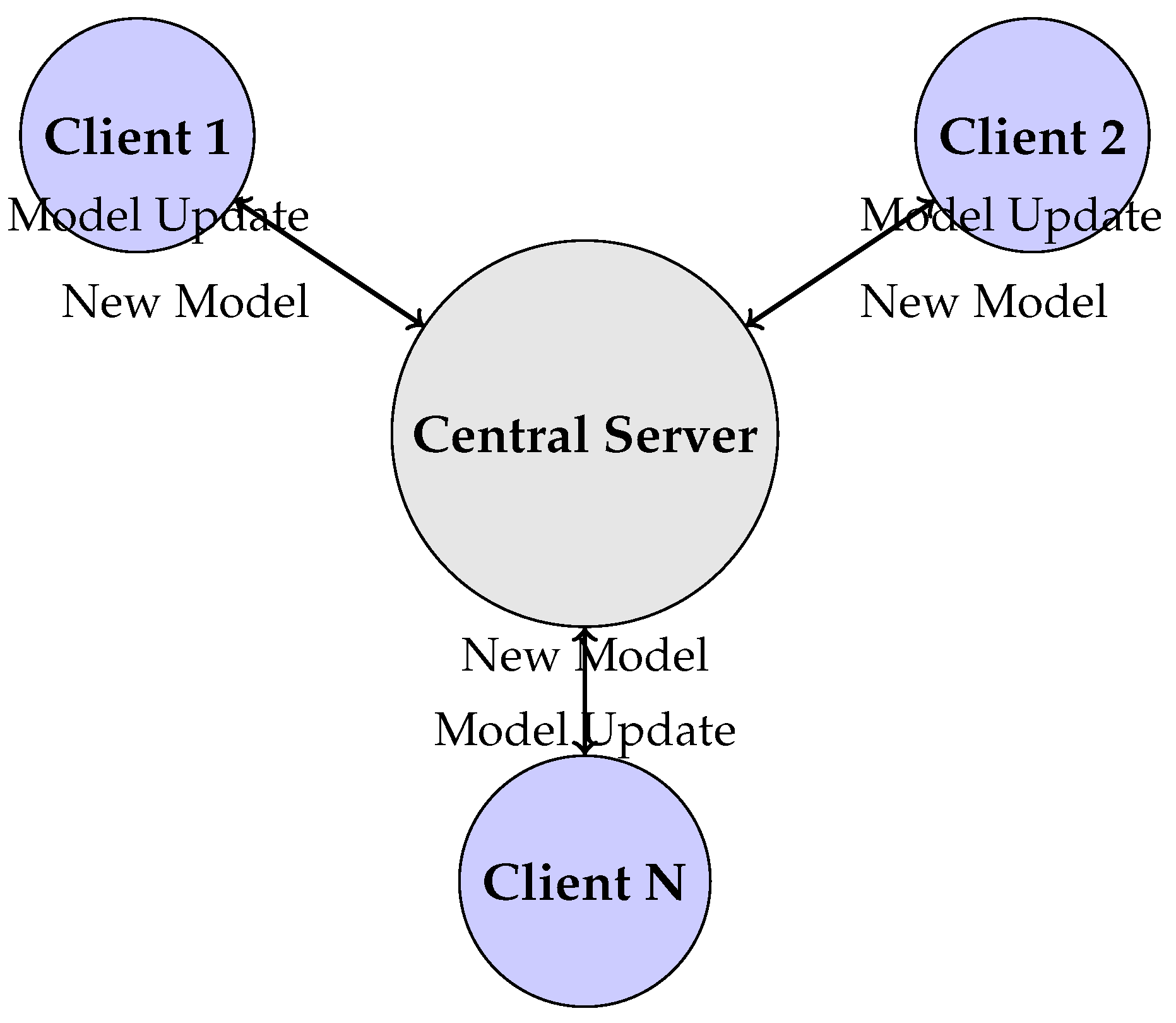
Figure 2.
Generative AI Framework in Education.
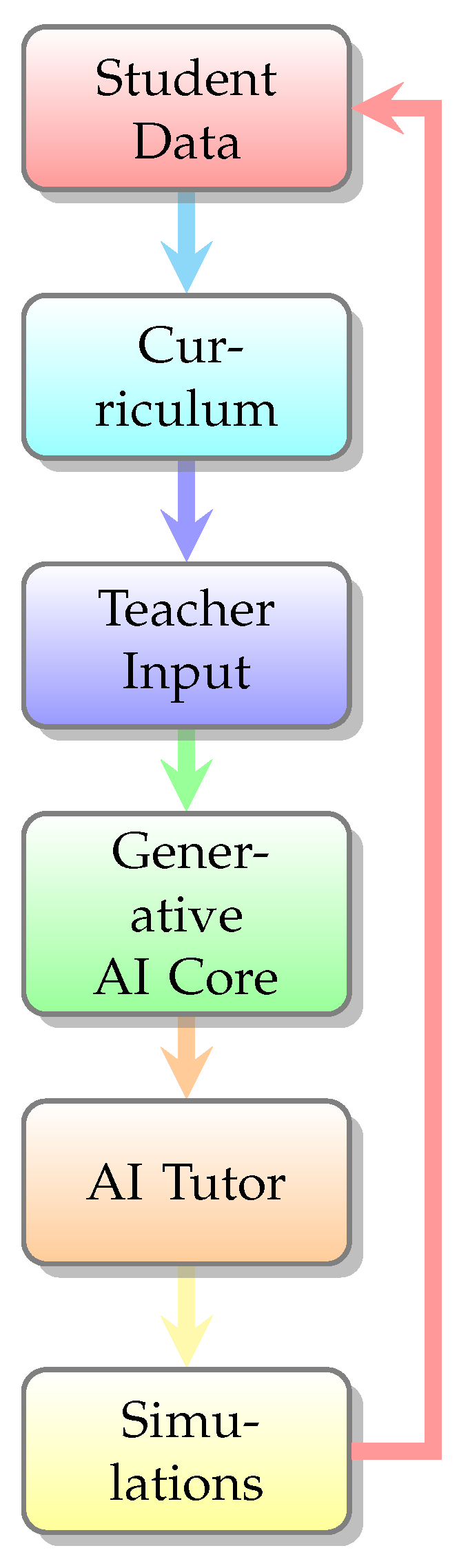
Figure 3.
Generative AI in Cybersecurity: AI-powered threat analysis and deception techniques.
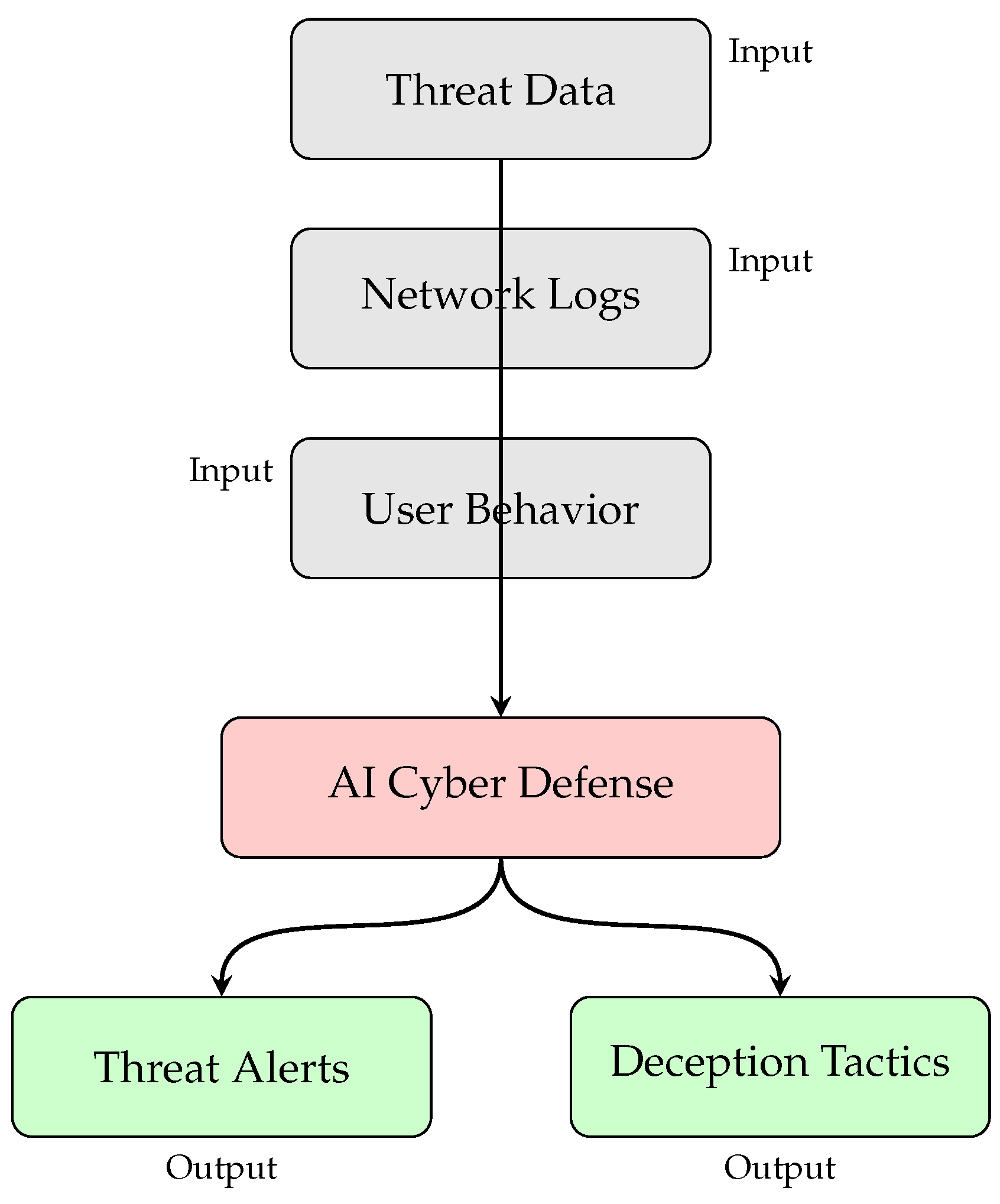
Figure 4.
ENRIQ Framework: AI-powered enterprise querying for enhanced knowledge discovery.
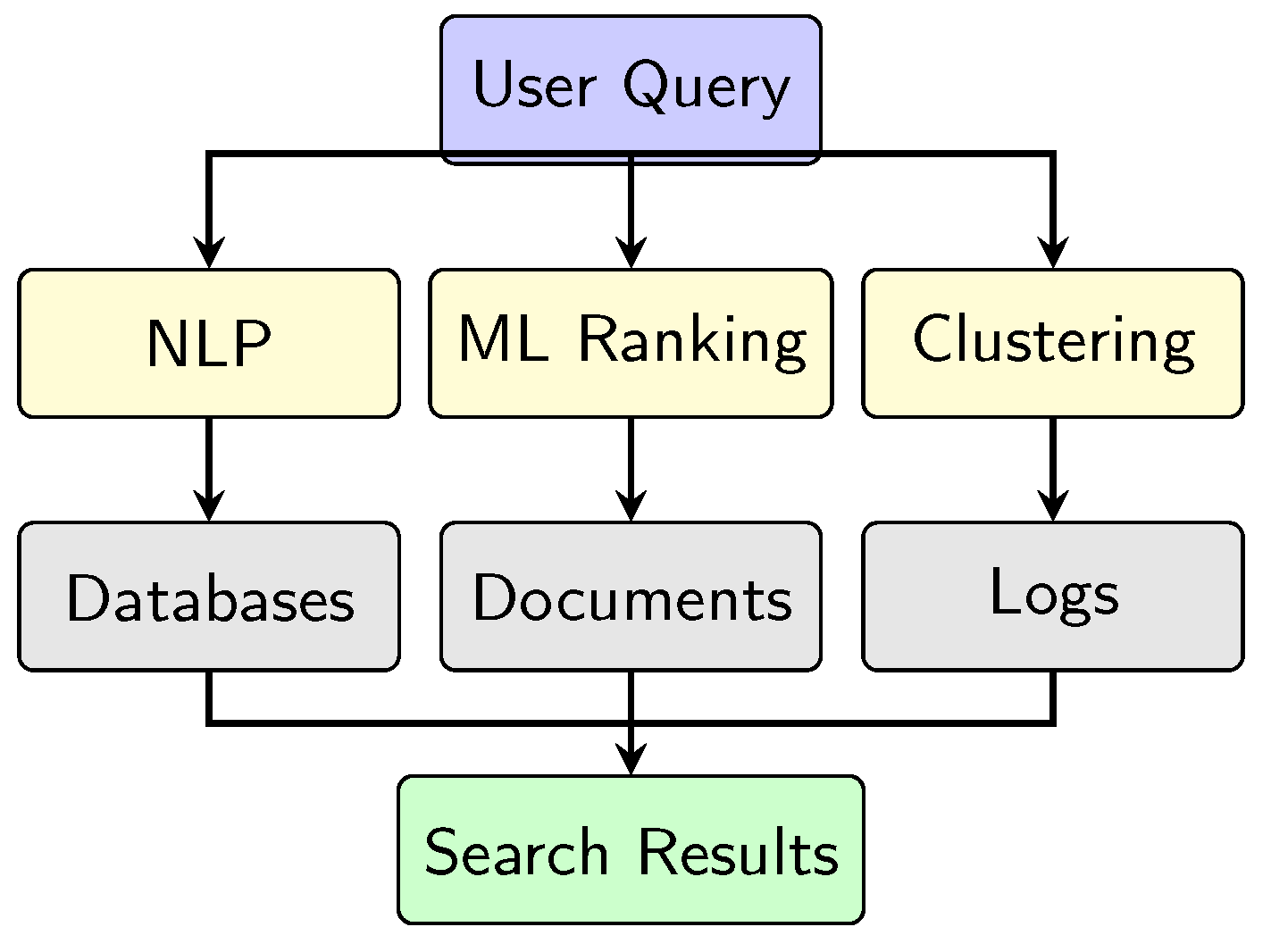
Figure 5.
Visualization of Explainable AI (XAI) Decision Factors
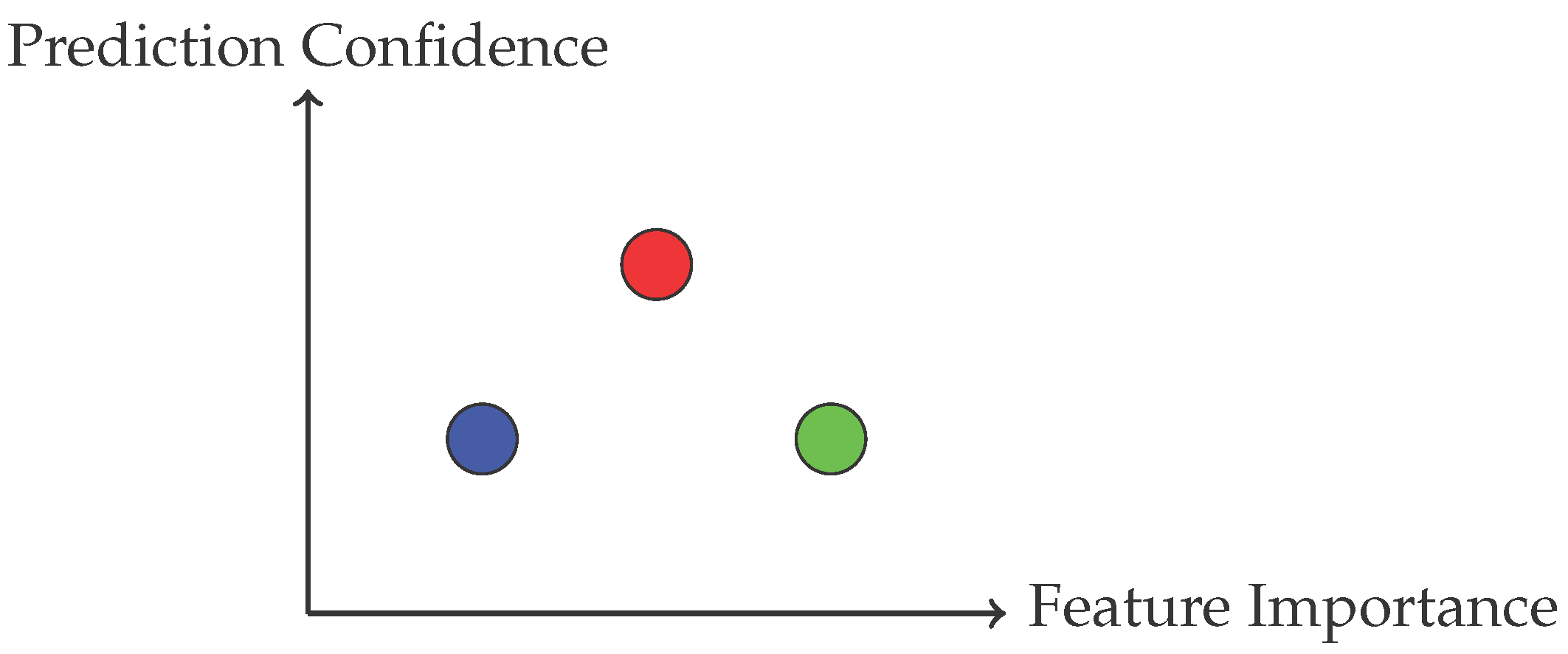

Table 1.
Enterprise AI Search Workflow: Key Components and Functions
| Component | Description |
|---|---|
| User Query | Input query submitted by the user for search processing. |
| Natural Language Processing (NLP) | Interprets and processes the query to understand intent and context. |
| Vector Search | Uses dense embeddings to retrieve semantically relevant results. |
| Knowledge Graph | Incorporates structured relationships to enhance search accuracy. |
| Optimized Results | Ranked and refined search results presented to the user. |
Table 2.
Transformer Model Architecture: Key Components and Functions
| Component | Description |
|---|---|
| Input Tokens | Encoded word representations fed into the model for processing. |
| Self-Attention Layer | Captures contextual relationships by attending to all input tokens simultaneously. |
| Feedforward Layer | Applies non-linearity and transformation to enhance feature representation. |
| Output Predictions | Generates final results based on learned contextual dependencies. |
Disclaimer/Publisher’s Note: The statements, opinions and data contained in all publications are solely those of the individual author(s) and contributor(s) and not of MDPI and/or the editor(s). MDPI and/or the editor(s) disclaim responsibility for any injury to people or property resulting from any ideas, methods, instructions or products referred to in the content. |
© 2025 by the authors. Licensee MDPI, Basel, Switzerland. This article is an open access article distributed under the terms and conditions of the Creative Commons Attribution (CC BY) license (http://creativecommons.org/licenses/by/4.0/).
Copyright: This open access article is published under a Creative Commons CC BY 4.0 license, which permit the free download, distribution, and reuse, provided that the author and preprint are cited in any reuse.


