Preprint
Article

This version is not peer-reviewed.

Euclidean Distance-Based Tree Algorithm for Fault Detection and Diagnosis in Photovoltaic Systems

A peer-reviewed article of this preprint also exists.

Submitted:

19 February 2025

Posted:

03 March 2025

You are already at the latest version

Abstract

In this paper, a new methodology for fault detection and diagnosis in photo- 1 voltaic systems is proposed. This method employs a novel Euclidean distance-based tree algorithm to classify various considered faults. Unlike the decision tree, which requires the use of the Gini index to split the data, this algorithm mainly relies on computing distances between an arbitrary point in the space and the entire dataset. Then, the minimum and the maximum distances of each class are extracted and ordered in ascending order. The proposed methodology requires four attributes: Solar irradiance, temperature, and coordinates of maximum power point (Impp, Vmpp). The developed procedure for fault detection and diagnosis is implemented and applied to classify a dataset comprising seven distinct classes: normal operation, string disconnection, short circuit of three modules, short circuit of ten modules, and three cases of string disconnection with 25%, 50%, and 75% of partial shading. The obtained results demonstrate the high efficiency and effectiveness of the proposed methodology, with a classification accuracy reaching 97.33%. A comparison 13 study between the developed fault detection and diagnosis methodology and Support Vector Machine, Decision Tree, Random Forest, and K-Nearest Neighbors is conducted. The proposed procedure shows high performance against the other algorithms in terms of accuracy, precision, and recall.

Keywords: 
;  ;  ;  ;  ;  ;  

1. Introduction

The worldwide demand for electrical energy continues to increase and the govern- ments of different nations have to face several challenges to effectively respond to this demand. The first challenge is to provide energy for the growing proportion of the world’s population [1,2,3]. While the second challenge lies in the production of this energy with- out causing environmental pollution, as well as causing climatic problems such as global warming [4,5,6].
One of the ways to reduce green house gas emissions is to use renewable energy, such as wind and solar energies. The wind and the sun provide infinite amounts of energy without generating green house gases, unlike burning the fossil fuels electric power stations. Solar energy allows producing electricity from photovoltaic panels or solar thermal power stations, thanks to sunlight captured by solar panels. Solar energy is clean, does not emit any greenhouse gases and its source the sun, is free, inexhaustible and available everywhere in the world. Several countries around the globe are already at the forefront of renewable 33 energy technologies and generate a large part of their electricity from photovoltaic systems (PVS).
Like all other industrial process, a PVS can be subjected, during its operation, to various faults and anomalies leading to a drop in the performance of the system and even to the total unavailability of the system. These faults will deviously reduce the productivity of the installation [7] and generate an additional cost of maintenance to restore the system to normal conditions. Hence, the importance of having a detecting and diagnosing faults in system photovoltaic installation, which contributes to raising production efficiency and reducing maintenance time and cost [8].
There are many research contributions over the past decades in developing methods and algorithms for detecting and diagnosing faults in PV systems [9,10,11]. According to references [12,13], these algorithms can be classified into three distinct categories, whereas in reference [14], they are grouped into six categories.In this quick narration, the first categorization is adopted.
The first category encompasses all algorithms that use mathematical analysis and signal processing. Methods within this category heavily rely on the information extracted solely from the I-V characteristic, whether it pertains to a photovoltaic module (PVM), a PV string, or a photovoltaic array (PVA). Time Domain Reflectometry (TDR) is a technique utilized for identifying faulty photovoltaic modules within a photovoltaic array [15].It has been employed to detect open circuits in grid-connected photovoltaic systems (GCPV) [16]. Earth Capacitance Measurement (ECM) has been added to the TDR to identify the PV module disconnected from the PV string [17]. Reference [18] has demonstrated the applicability of the ECM algorithm in PV strings made of both silicon and amorphous silicon.
The second category comprises several algorithms characterized by two main phases: the detection phase utilizing a PV model and the subsequent diagnosis phase employing various methods, such as artificial intelligence [19,20,21,22]. These algorithms detect faults by comparing the measured values extracted from the considered PV generator with the simulated values from the PV model. The residual signal derived from this comparison can be utilized to detect degradation faults [23] as well as various cases of line-line faults [24].
The third category encompasses artificial intelligence and machine learning algorithms, including support vector machine (SVM) [25,26,27,28,29], decision tree (DT) [7,30], random forest (RF) [31,32,33], K-nearest neighbors (KNN) [34,35,36], and artificial neural network (ANN) [37,38,39]. Reference [25] provides a comparison of efficiency and execution time among various multi-class strategies—such as one vs. all (OVA), adaptive directed acyclic graph (ADAG), and decision directed acyclic graph (DDAG)—utilizing SVM. The goal of SVM classification is to categorize data into four classes: module short circuit, inverse bypass diode module, shunted bypass module, and shadowing effect in a module.The OVA strat- egy has demonstrated significant superiority over others in terms of efficiency, achieving an 88.33% accuracy rate. In reference [26], the SVM algorithm was employed to detect series faults of 10%, 50%, 70%, and 90% under sunny, cloudy, and rainy weather conditions. The recorded accuracies were 88.3%, 91.5%, and 75.3%, respectively.In reference [27], both the CPA and SVM algorithms were utilized to identify four operating states: normal, open circuit, short circuit, and partial shading. The authors concluded that with k = 6 (number of dimension), the algorithm achieved an accuracy rate of 100%. In reference [28], the authors used the SVM algorithm to detect faults such as open circuit, short circuit, and lack of solar radiation. The algorithm requires four inputs:short circuit current Isc, open circuit voltage Voc, and coordinates of maximum power point Impp and Vmpp. The algorithm’s efficiency and accuracy were enhanced by employing k-fold cross-validation. The drawback with the mentioned algorithms is that their authors solely relied on accuracy as the criterion 83 for evaluation, whereas employing different metrics like precision and recall could offer a 84 more comprehensive assessment of the algorithms.
In [7], a novel approach based on DT algorithm is presented. This approach comprises two models: the first model detects faults, while the second model diagnoses four different fault types: short circuit, string, line-line, and free faults. The accuracy rates for the first and second models are 99.86% and 99.80%, respectively. Notably, although a confusion matrix was calculated, precision and recall metrics were not evaluated.The utilization of the random forest algorithm for fault detection and classification in PV systems is highlighted in [31]. The method introduced in this study necessitates the current from each string in the PV array, along with the PV array voltage, as features. Successfully, the algorithm detects and diagnoses four different faults: degradation, partial shading, line-to-line, and short circuit faults. Authors have employed the grid-search method to optimize the random forest parameters. In order to evaluate this method, experimental and simulation samples were used.
The accuracy of this method reached 99%. Another method was developed based on RF to detect and diagnose faults in photovoltaic systems [32]. A set of criteria were used to evaluate the method, which are computation time, accuracy, and F1 score. In [34], a modified KNN algorithm was proposed and applied to photovoltaic systems for fault detection and diagnosis. The main modification made by the researchers in this work is to facilitate the selection of the appropriate K value in addition to the distance function. This modification greatly contributed to the increase in the classification speed. Moreover, in [35], an interesting technique, that uses the KNN algorithm, has been developed to detect multiple faults, including line to line and partial shading faults. Remarkably, this method only relies on data from the datasheet and achieves an accuracy rate of 99%. Another model developed is based on the combination of KNN and Exponential Weighted Moving Average (EWMA) [36]. The KNN aims to detect faults on the DC side of the PV system, while the EMWA works to diagnose those faults. Researchers in [38] built a two-stage classifier: the first stage is a model of the PV system to detect faults, while the second stage devoted for diagnosis purposes where is two artificial neural networks were used to identify eight different faults.In [39], another approach based on artificial neural networks for fault detection and diagnosis in PV systems is introduced. The authors utilized an ANN with radial basis function (RBF) architecture, relying on two features: power generated and solar irradiance. The achieved accuracy in this study was 97.9% for the 2.2 KW PV system and 97% for the 4.16 KW PV system.
In this work, a novel fault detection and diagnosis algorithm is developed and de signed in the DC of PV systems. This methodology is based on an innovative tree algorithm that mainly depends on calculating Euclidean distances to detect faults when they occur, effectively. At first, the algorithm classifies the data into two classes so that all the distances between a random point in space and the entire data set are calculated. Then, in each class, the minimum and maximum distances are extracted. After that, all the distances are arranged in ascending order to show one case out of 5 possible cases. Based on the apparent case, the data are classified. The algorithm needs 4 features to function properly: solar radi ation, temperature, and current and voltage at the maximum power point. This algorithm has been implemented to seven different classes: normal operation, series disconnection, short circuit for 3 and 10 modules and three other classes for series disconnection with partial shading of 25%, 50% and 75%. The efficiency and effectiveness of the methodology is clearly demonstrated by the accuracy rate achieved which exceeds 97%. In order to further evaluate the algorithm, a comparative study was conducted between the proposed algorithm and several well-known algorithms (support vector machine, K nearest neighbor, decision tree and random forest). The comparison results show a clear superiority of the developed algorithm in terms of accuracy, precision and recall.
This paper is organized as follows: Section 2 is dedicated to introducing the developed algorithm, while Section 3 explains the database used and its different categories. Section 4 reveals the classification strategy followed in this work. In Section Five, the results obtained are presented and discussed. The last section of this paper presents a summary of the work done in this research paper

2. Proposed Euclidean-Based Decision Tree Classification Algorithm

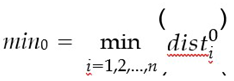
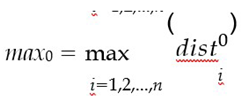
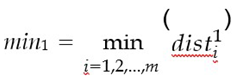
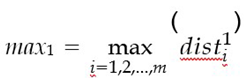
Despite the similarities between the proposed algorithm and the decision trees in their data splitting approach, the key distinction lies in using the Euclidean distance for partitioning data instead of the Gini index. Initially, a training dataset, comprising values for N features for each of the two classes (class 0 and class 1), is created.Then, the following steps are performed:
  • Choose an arbitrary point (x1, x2, ..., xN ) in an N-dimensional space.
  • Using equations 4.1 and 4.2, compute the Euclidean distances between the chosen point and all samples within the training dataset for each respective class:
Preprints 149895 i001
Preprints 149895 i002
where:
(x0 , x0 , ..., x0 ) and (x1 , x1 , ..., x1 ) represent the ith samples of class 0 and class 1, i1 i2 in i1 i2 im respectively. n denotes the number of samples in class 0, while m denotes the number of samples in class 1.
3.
Determine the minimum and maximum distances for each class:
Preprints 149895 i003
Preprints 149895 i004
Preprints 149895 i005
Preprints 149895 i006
4.
Among the following five cases, one may arise:
  • case 1: min0 < min1 < max0 < max1
    -
    Training samples having distances within the interval [min0, min1[ belong to class 0 (pure data in class 0).
    -
    Training samples having distances within the interval ]max0, max1] belong to class 1 (pure data in class 1).
    -
    Training samples having distances within the interval [min1, max0] can not be classified, therefore another random point must be chosen for their classification.
  • case 2: min1 < min0 < max1 < max0
    -
    Training samples having distances within the interval [min1, min0[ belong to class 1 (pure data in class 1).
    -
    Training samples having distances within the interval ]max1, max0] belong to class 0 (pure data in class 0).
    -
    Training samples having distances within the interval [min0, max1] can not be classified, therefore another random point must be chosen for their classification.
  • case 3: min0 < min1 < max1 < max0
    -
    Training samples having distances within the interval [min0, min1[ or ]max1, max0] belong to class 0.
    -
    Training samples having distances within the interval [min1, max1] can not be classified, therefore another random point must be chosen for their classification.
  • case 4: min1 < min0 < max0 < max1
    -
    Training samples having distances within the interval [min1, min0[ or ]max0, max1] belong to class 1.
    -
    Training samples having distances within the interval [min0, max0] can not be classified, therefore another random point must be chosen for their classification.
  • case 5: min0 < max0 < min1 < max1 or min1 < max1 < min0 < max0
    -
    Training samples having distances within the interval [min0, max0] belong to class 0.
    -
    Training samples having distances within the interval [min1, max1] belong to class 1.
5.
If the case that occurred in the previous step is case 1, 2, 3, or 4:
  • Choose another random point (x1, x2, . . . , xN ).
  • Using equations 4.1 and 4.2, compute the Euclidean distances between the chosen point and the unclassified samples within the training dataset for each respective class.
  • Go to step 3.
6.
The algorithm iterates through steps (c) to (e) until all data is classified (case 5) or the stopping criterion is met. It employs early stopping as its stopping criterion to effectively mitigate overfitting without compromising the accuracy of the algorithm [40,41,42].
To address the overfitting issue, the difference between test accuracy and training accuracy is calculated. This difference should be minimal (less than 3% for example). If it exceeds this threshold, the training process is halted.
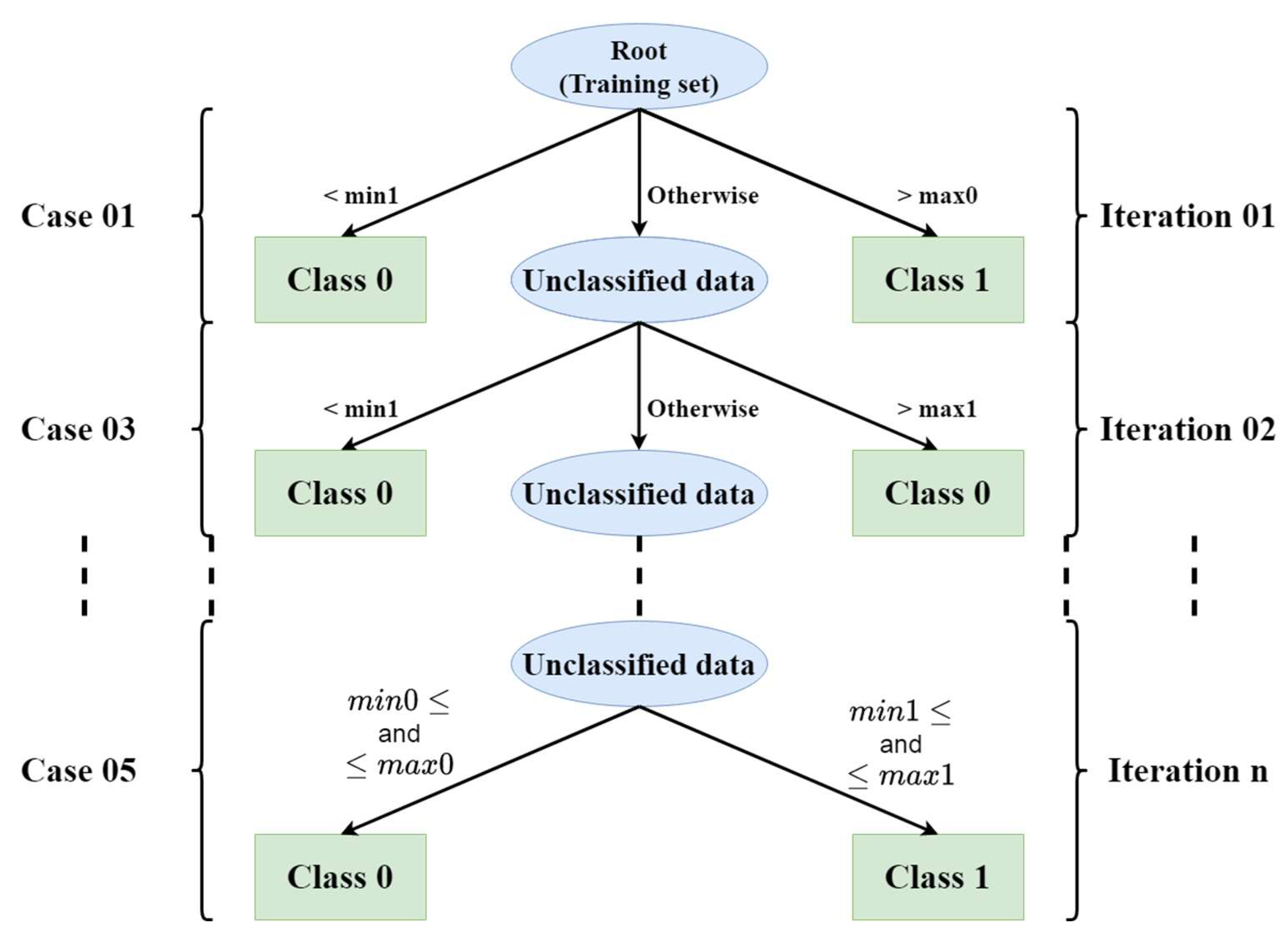
Figure 1 provides a graphical illustration of the proposed algorithm depicting a given possible situation.
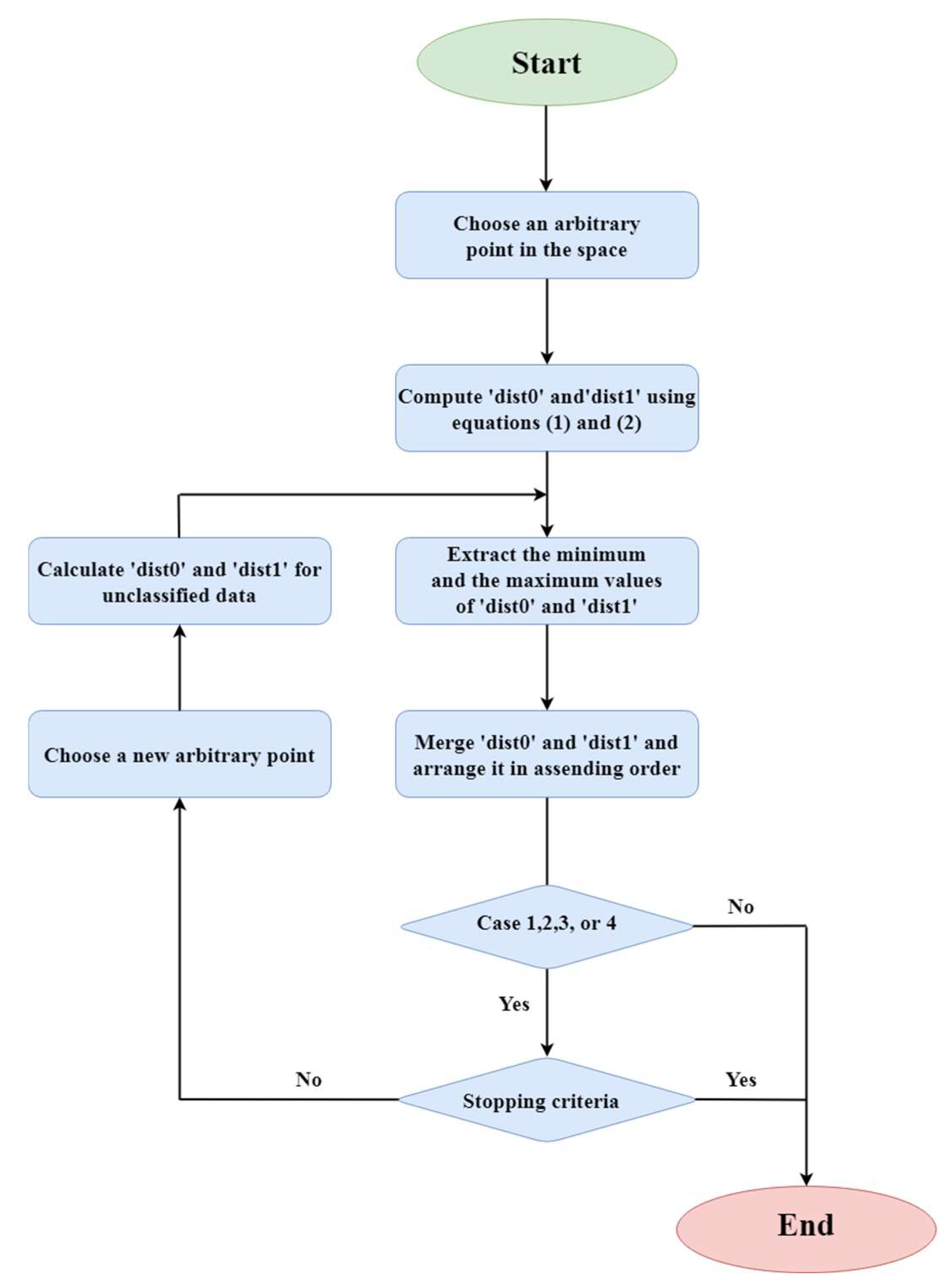
The flowchart of the algorithm is given in Figure 2.
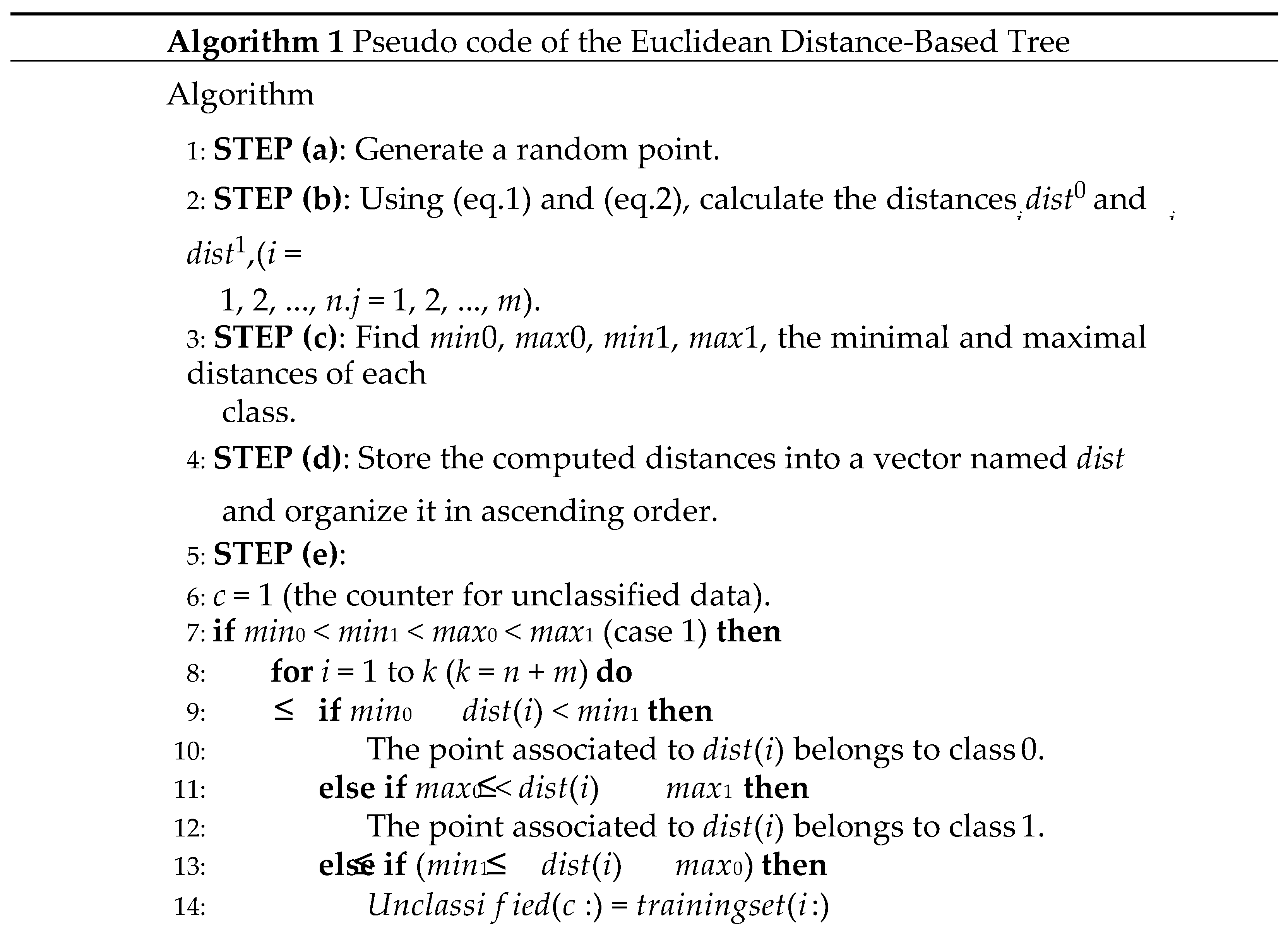
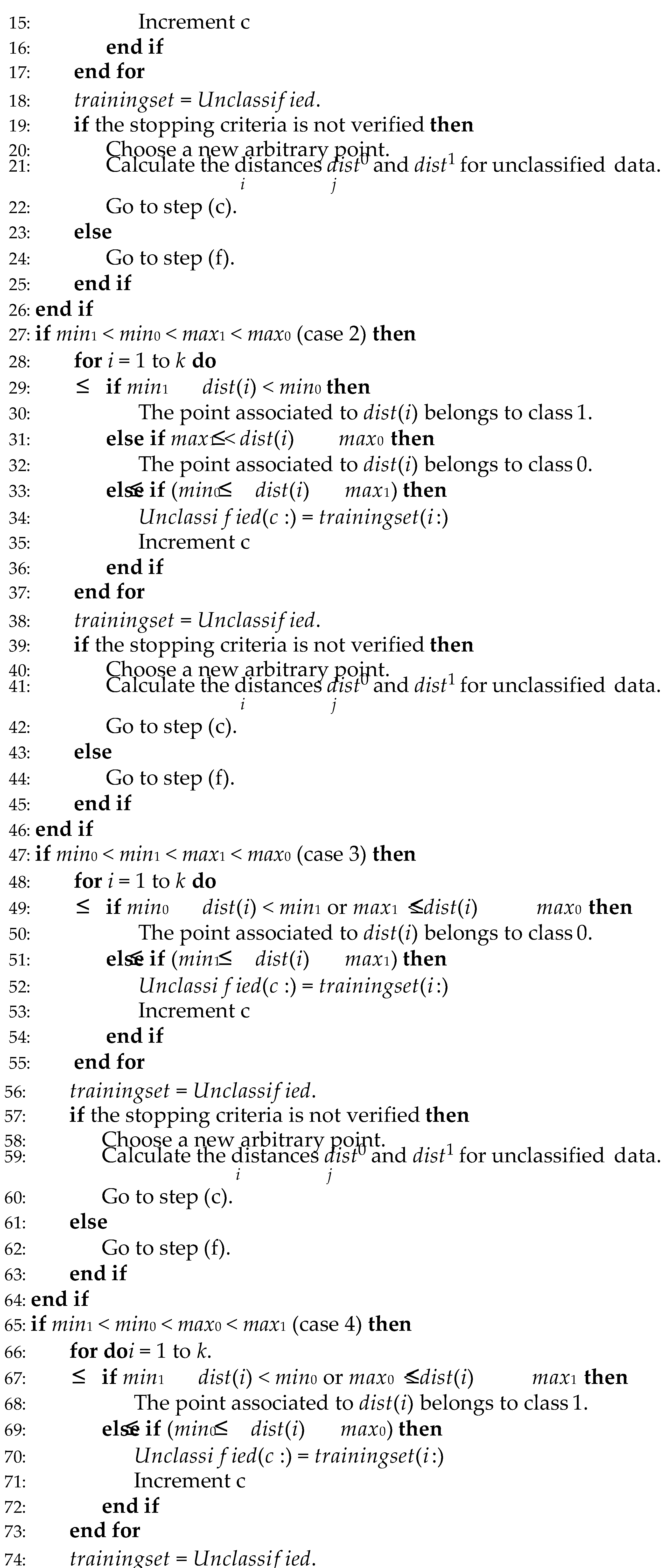
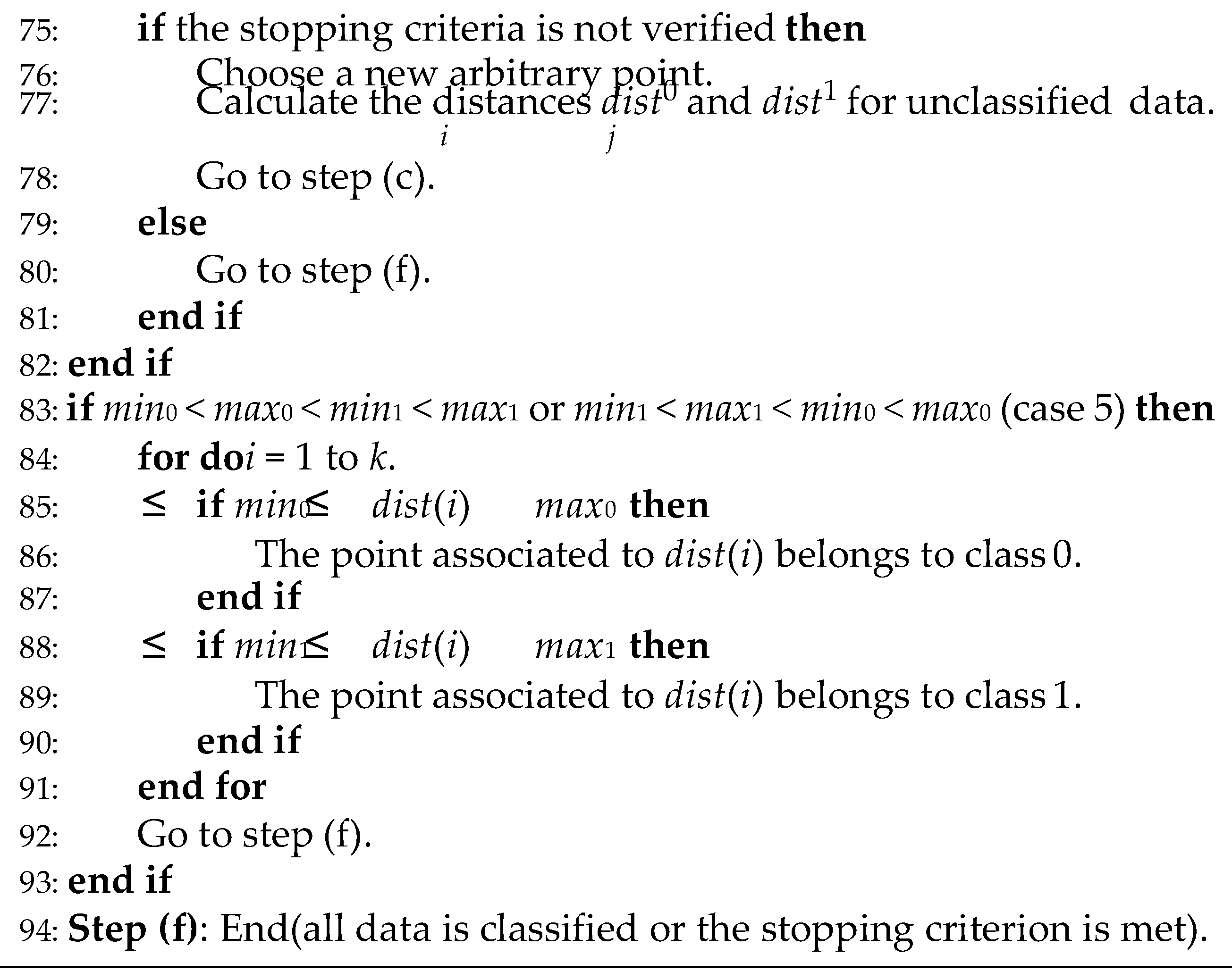
The pseudo code of the proposed algorithm is given below:
Preprints 149895 i044
Preprints 149895 i045
Preprints 149895 i046

3. Dataset Description

The PV array used to generate the dataset, for both healthy and faulty states, consists of two parallel strings. Each string comprises fifteen series-connected Isofoton PVM (106W-12V).The Simulink/MATLAB platform is utilized to simulate the current (Impp) and voltage (Vmpp) at the maximum power point of this PV array under both healthy and faulty states, considering various values of cell temperature (T) and irradiance (G). Through this simulation, 753 samples are generated for each of the considered classes, consisting of the four physical quantities (T, G, Impp, Vmpp). In this study, besides the normal operating state, six faulty states are considered. These states and their corresponding labels are given in Table 1.
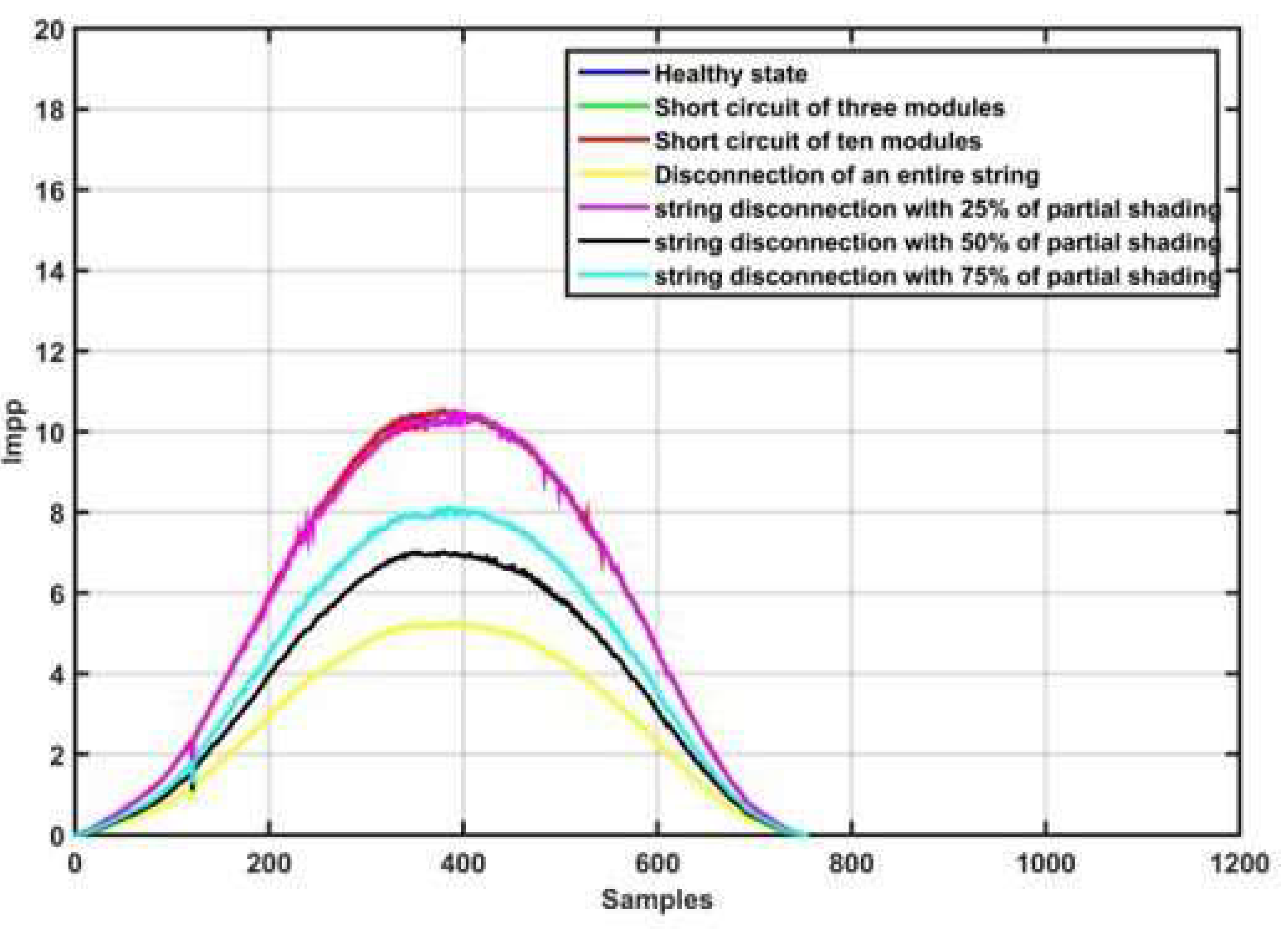
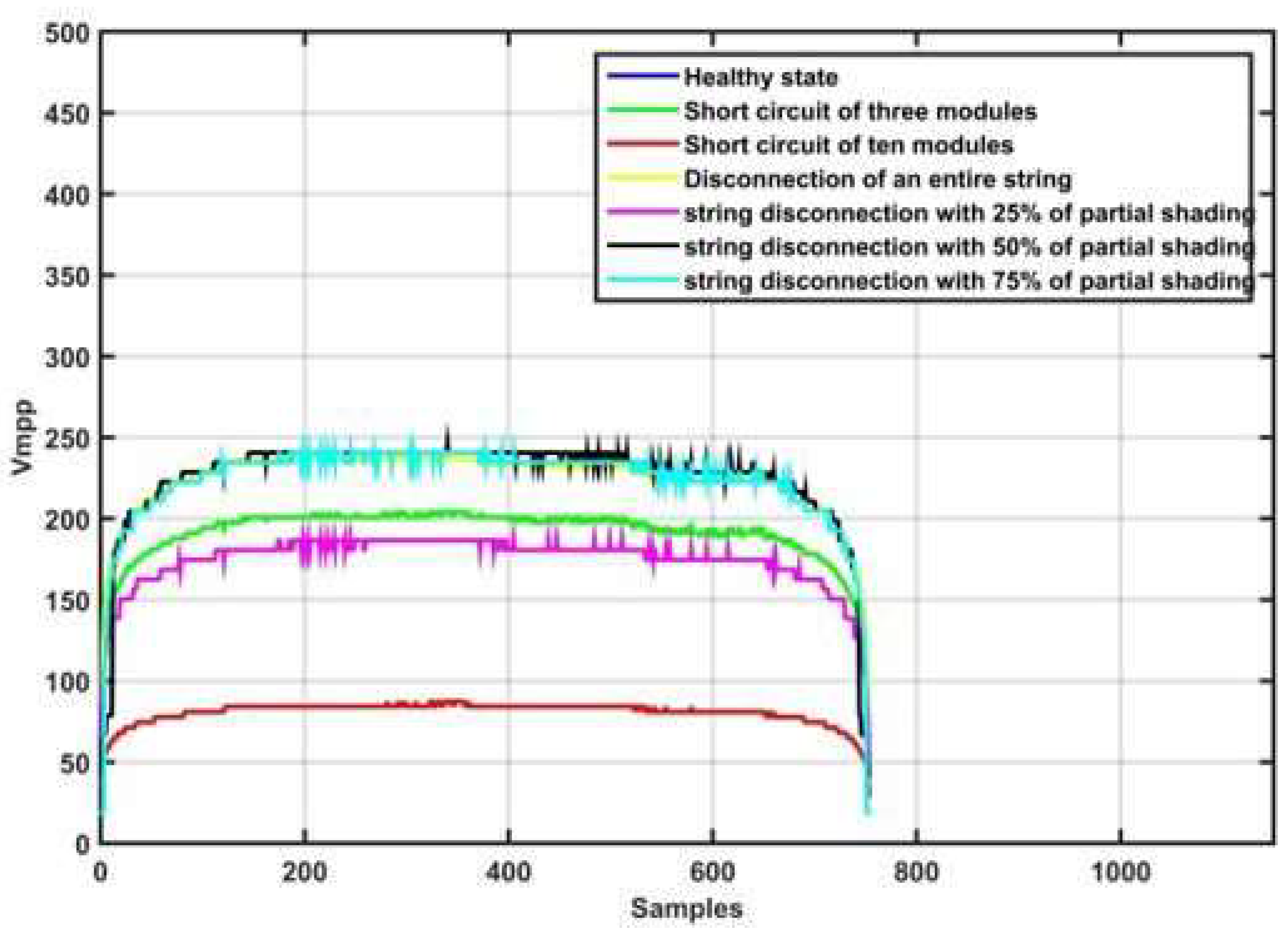
As shown in Figure 3, utilizing the Impp as a feature makes it possible to distinguish 218 between three faults: string disconnection, string disconnection with 50% shading, and 219 string disconnection with 75% shading. Meanwhile, in Figure 4, it appears that the Vmpp 220 feature can be used to classify faults such as string disconnection with 25% shading, short 221 circuits of three modules, and short circuits of ten modules. To detect the healthy state class, 222 both Impp and Vmpp features must be used simultaneously.

4. Fault detection and diagnosis methodology

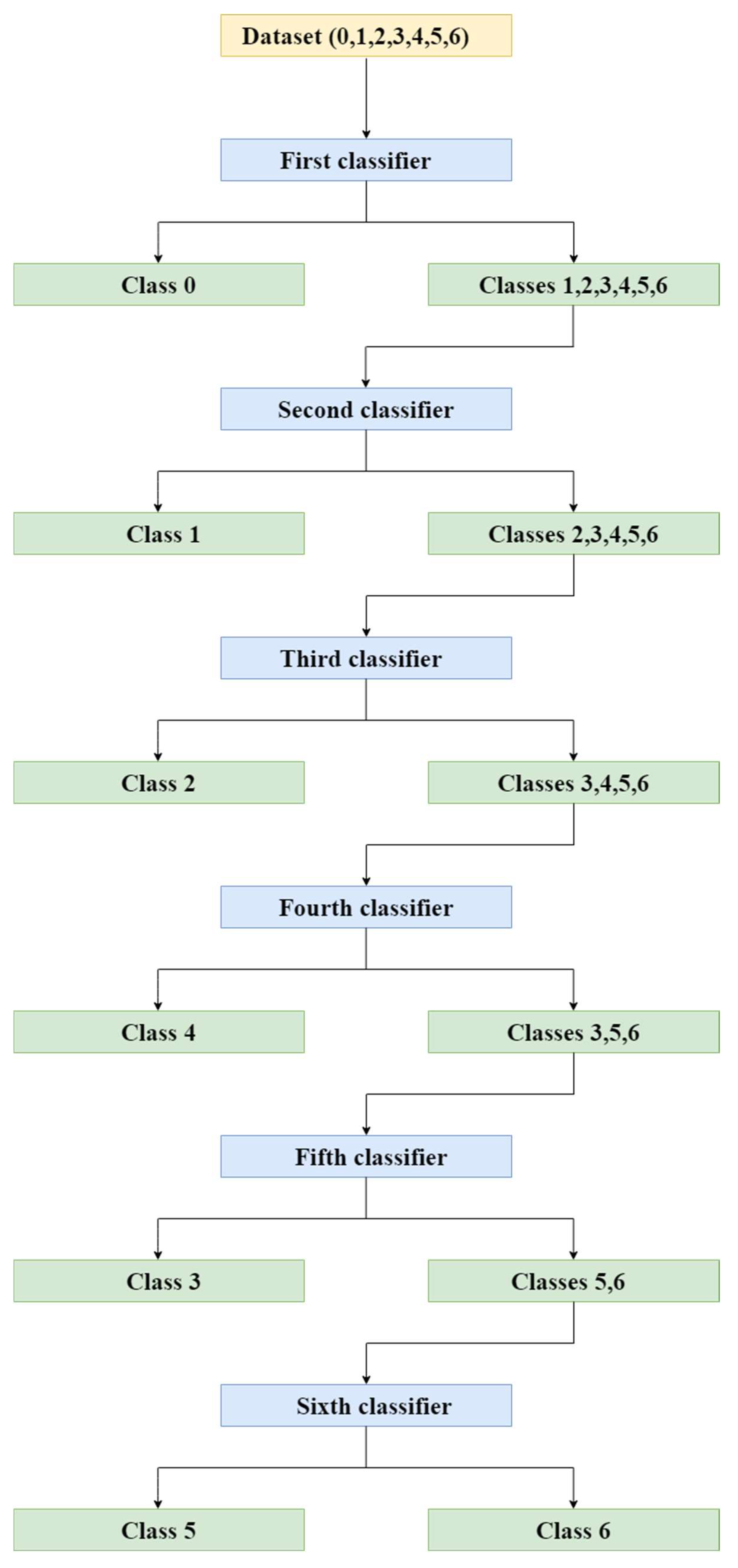
The flowchart of the classification strategy used is shown in Figure 5.In order for the algorithm to function effectively, the multi-class dataset must be adapted to a bi-class dataset by isolating one class at a time, starting from class 0 and going up to class 6. Therefore, six classifiers must be designed for this purpose. The first , the second and the third classifiers isolate classes 0, 1 and 2 from the rest of the classes, respectively. Then, the fourth classifier isolates class 4 from classes 3, 5, and 6. The fifth classifier separates class 3 from classes 5 and 6. Finally, the sixth classifier distinguishes between classes 5 and 6. Each classifier is designed based on the classification algorithm described previously and uses the four specified features (T, G, Impp, and Vmpp).

5. Results and discussion

The confusion matrix is a well-known and important mathematical tool in the field of machine learning for evaluating algorithms. The elements of this matrix play a role in calculating the accuracy, precision and recall metrics. This matrix has two rows and two columns, as illustrated in Table 2.
  • The accuracy: is a metric that shows how many data, the algorithm correctly classifies them and it’s given by equation
    Preprints 149895 i007
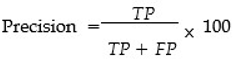
  • The precision: It measures the proportion of correctly predicted positive data to the total data predicted as positive. It is given by:
    Preprints 149895 i008
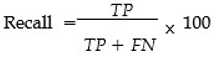
  • The recall: is a metric that shows how many data that are really in class 1 and the classifier correctly predicted them in class 1.It is given by:
    Preprints 149895 i009

5.1. Training the Fault Detection and Diagnosis Model Using the Proposed Algorithm

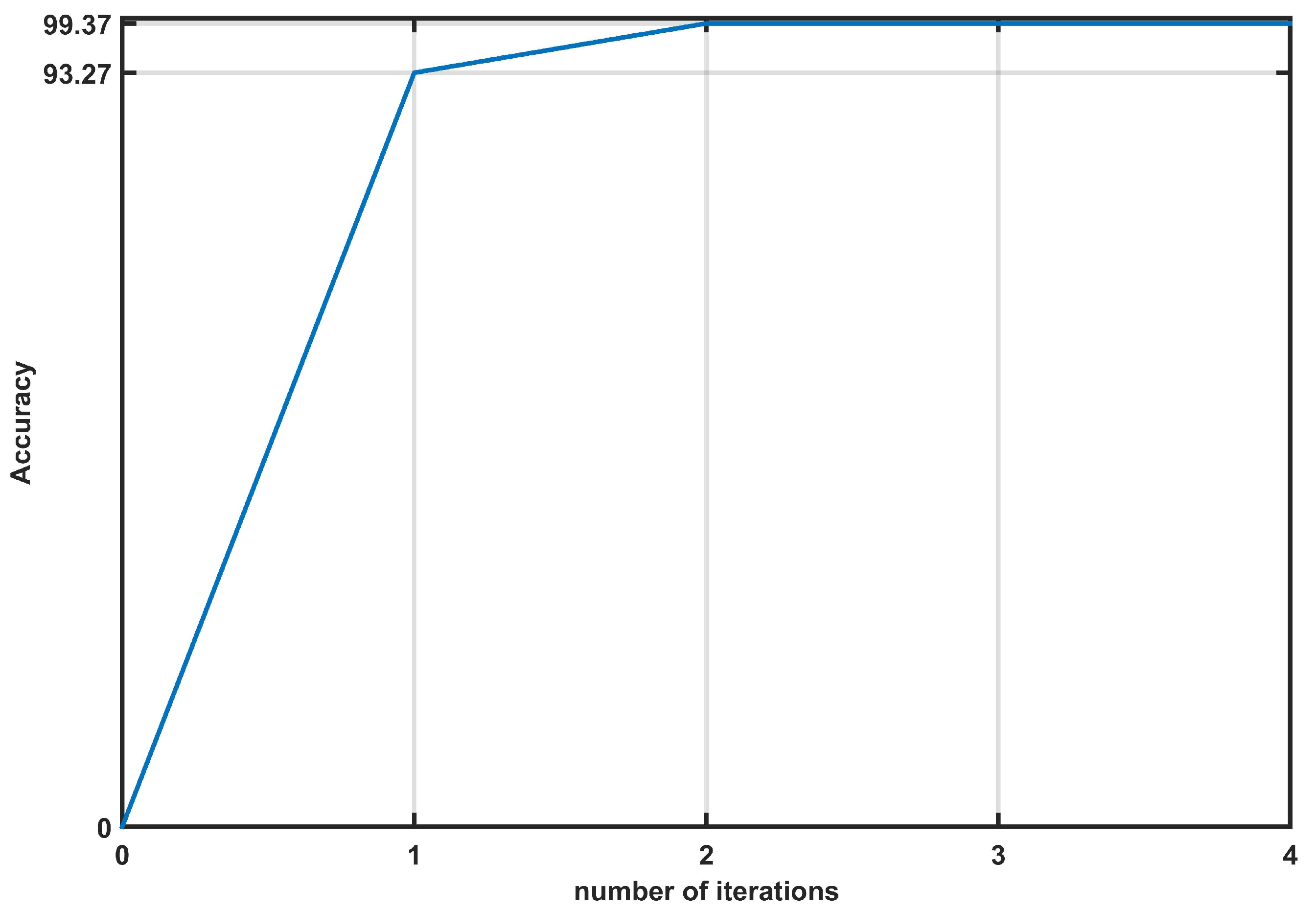
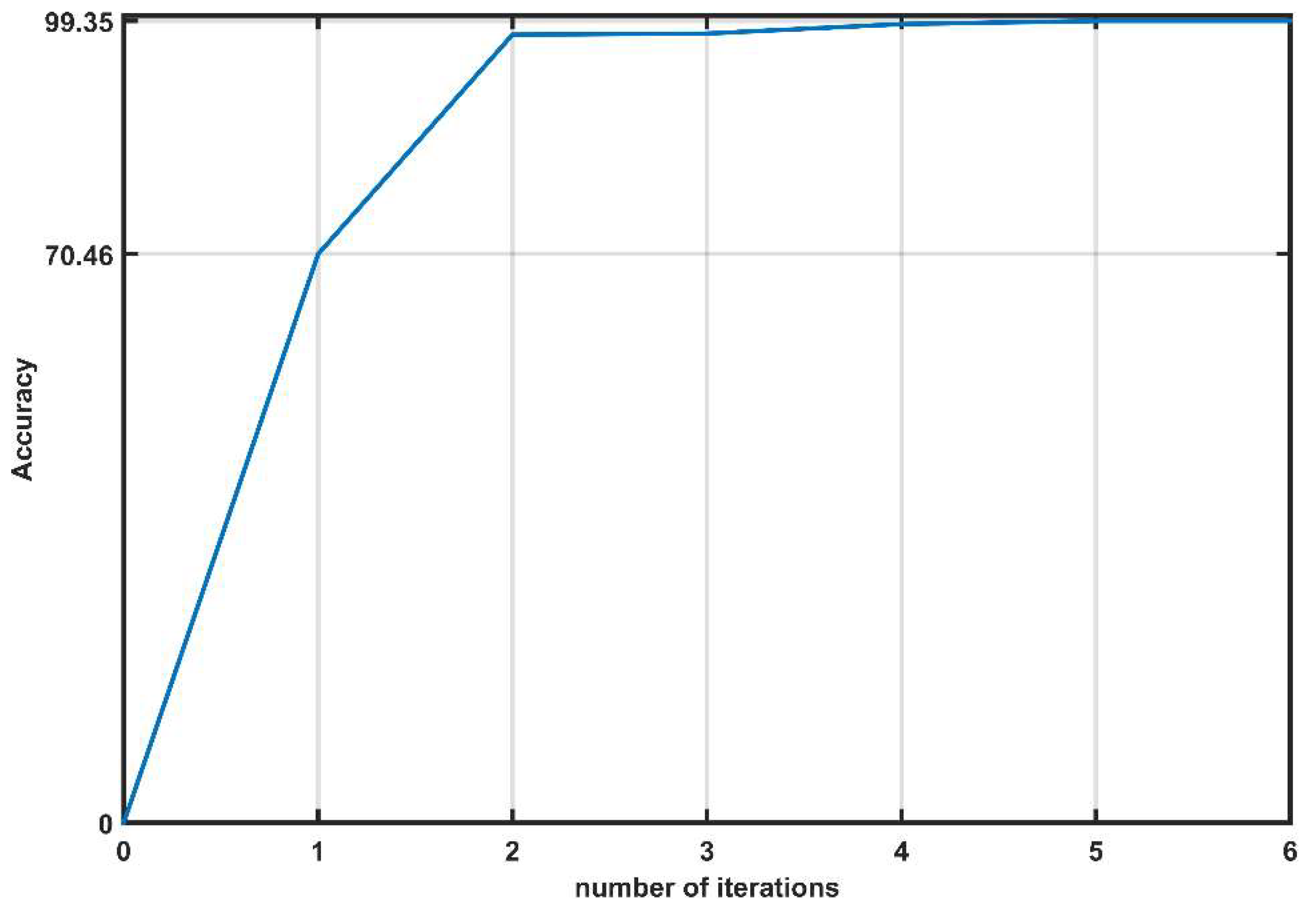
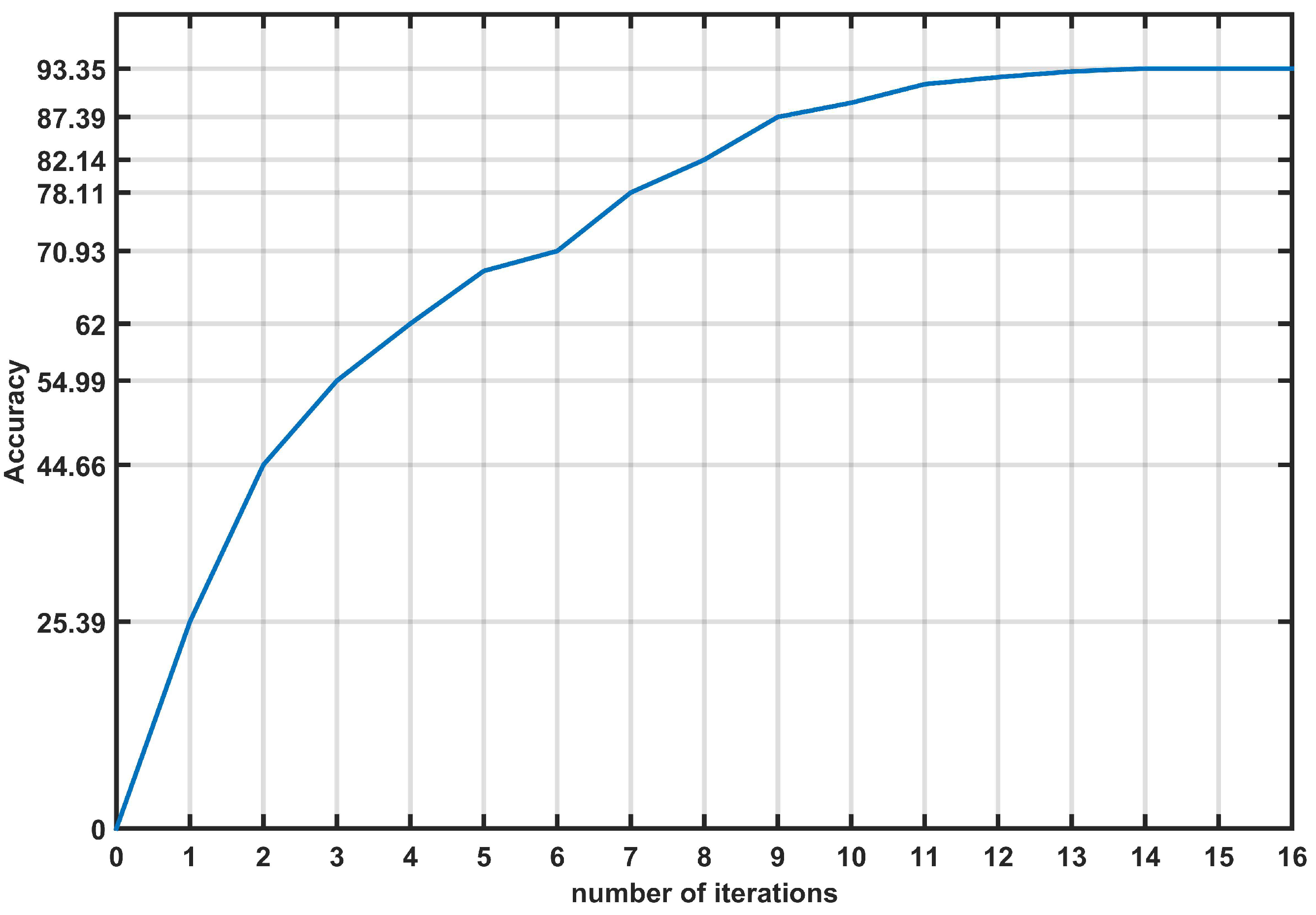
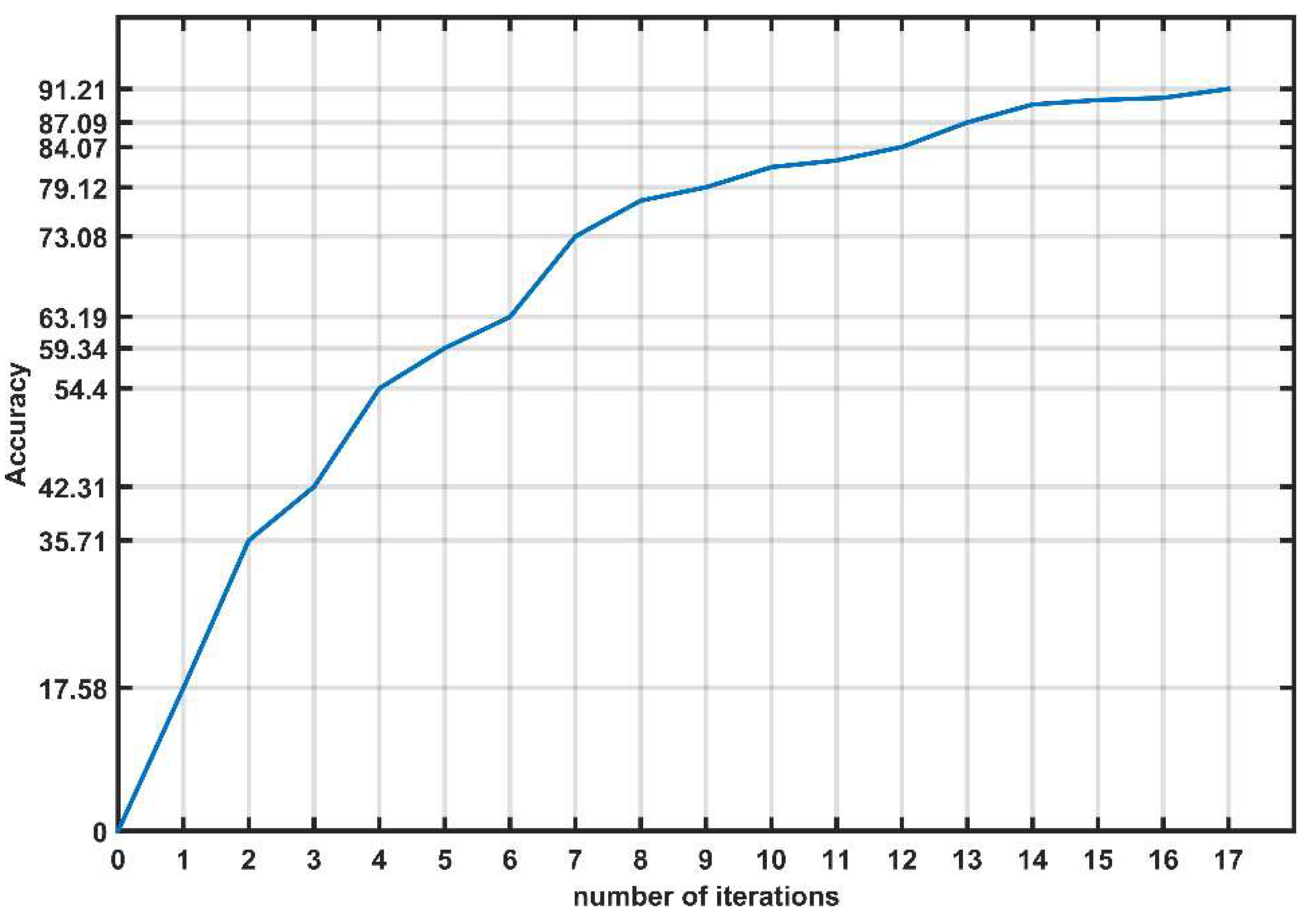
Like any other statistical learning algorithm, the proposed algorithm firstly needs to be trained using a training dataset. Following training, its performance is evaluated using a separate testing set.The dataset is partitioned into two subsets: the training set comprises 87% of the global dataset, while the testing set encompasses 13% of the global dataset. As mentioned earlier, six classifiers are necessary to detect and diagnose the specified faults.To mitigate overfitting effectively without compromising the algorithm’s accuracy, the early stopping criterion is employed to stop the training process of each classifier.
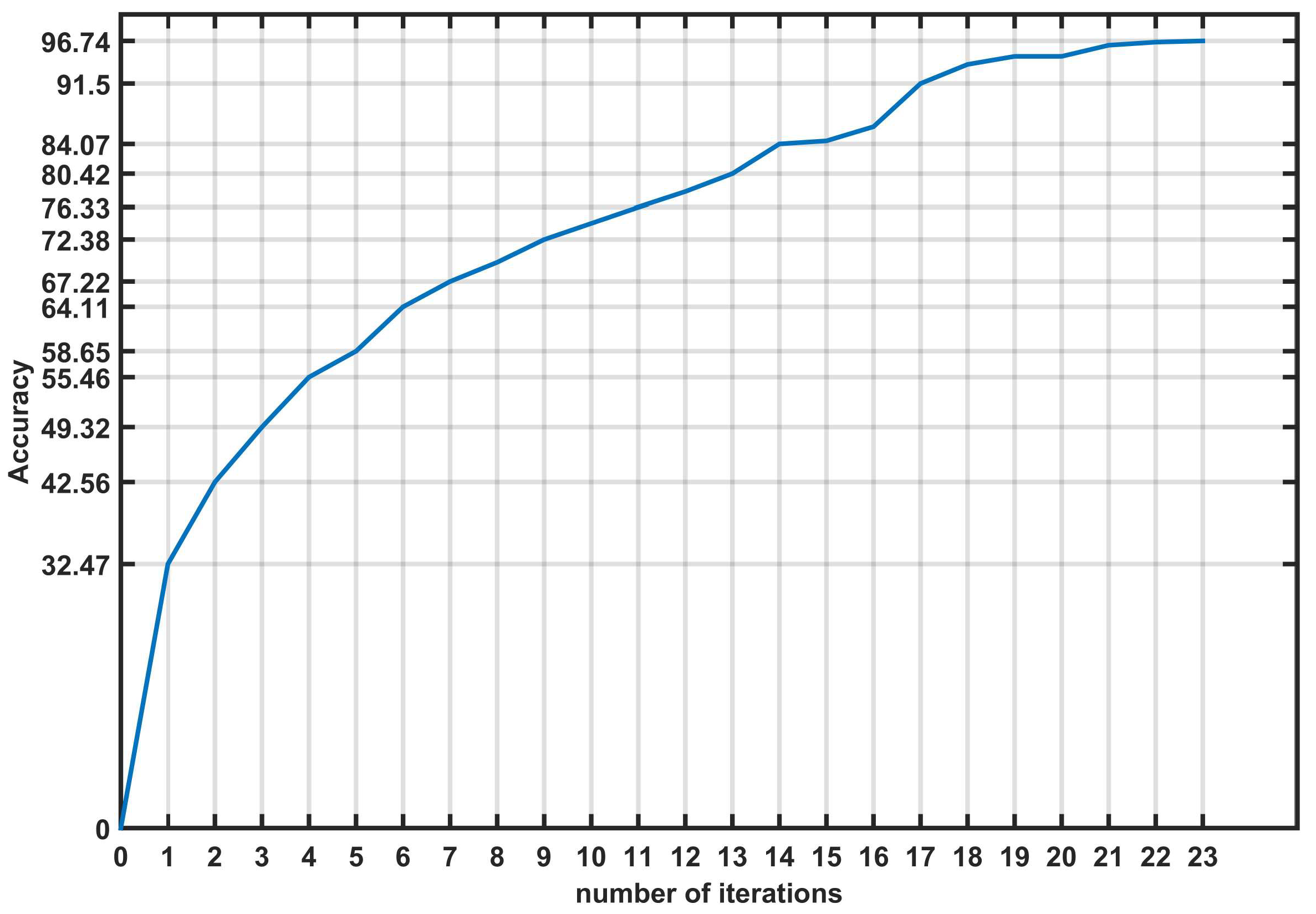
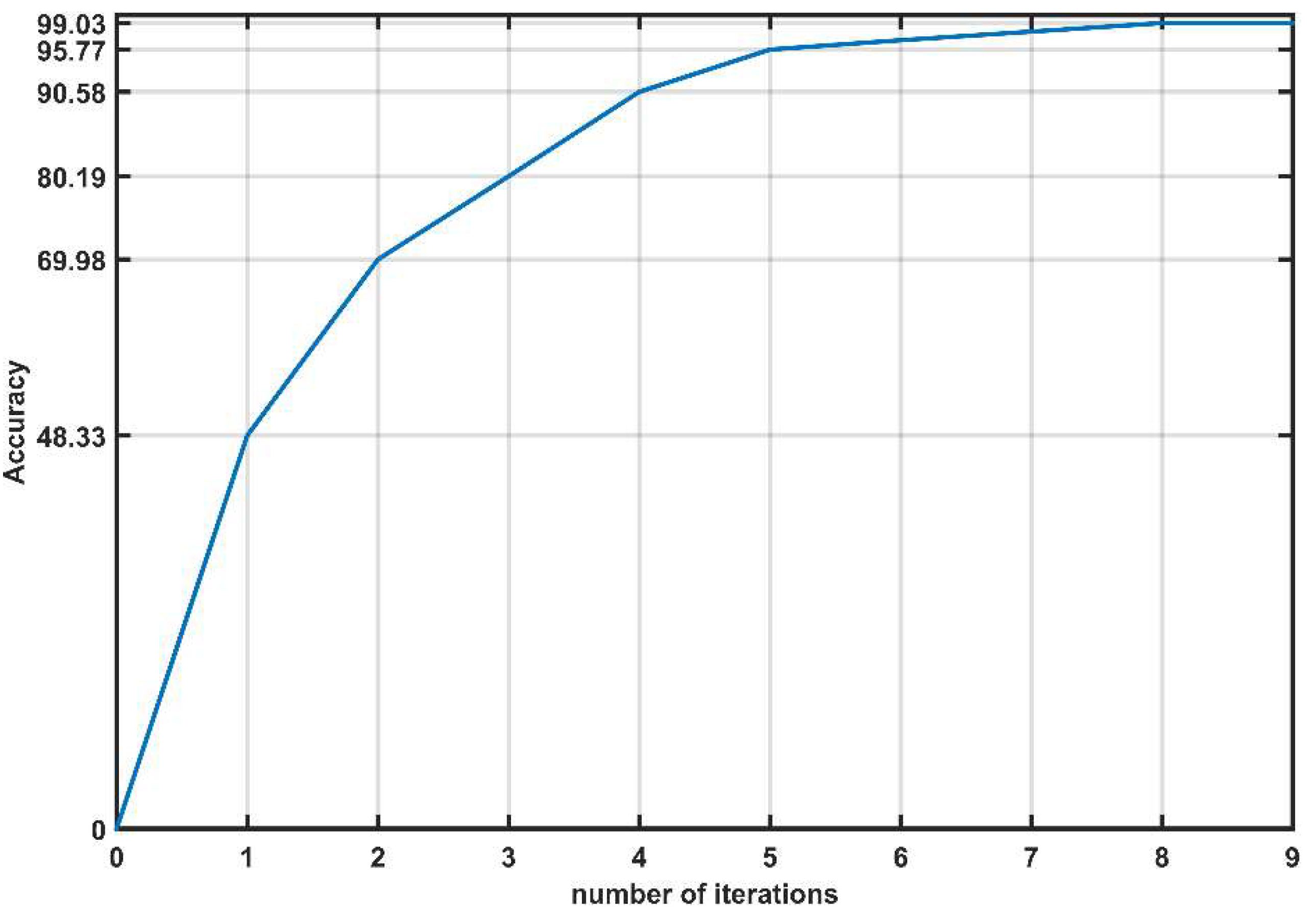
The accuracy metric for each classifier is calculated at every iteration and illustrated in Figure 6, Figure 7, Figure 8, Figure 9, Figure 10 and Figure 11. As can be seen, for all classifiers the accuracy value increases over iterations. Classifiers 1 to 6 of the trained model require 23, 9, 4, 6, 16, and 17 steps, respectively, to separate a class from the other classes.

5.2. Evaluating the Performance of the Obtained Model Using the Proposed Algorithm

The performance of the proposed approach is evaluated using the average values of precision, precision, and recall. The higher these values, the better the performance of the proposed approach is and vice versa. The confusion matrices and values of the three metrics are calculated from the test dataset. The results are presented in Table 3 and Table 4, respectively.
Table 3 presents the confusion matrix values for each classifier within the resulting model. These values were used to calculate the precision, accuracy, and recall measures for all six classifiers and are presented in Table 4. The last row of Table 4 shows the average values of the three measures, which represent the measures of the resulting model.

5.3. Comparative Study using Various Machine Learning Algorithms

In this comparative study, the fault detection and diagnosis model depicted in the flowchart of Figure 5 is constructed using various statistical methods, namely the SVM algorithm [26], the DT algorithm [7,30], the RF algorithm [31,32,33], and the KNN algorithm [34,35,36].
The confusion matrices for the obtained model using the aforementioned algorithms are provided in Table 5, while Table 6 presents the values for accuracy, precision, and recall, along with the average values of these metrics.
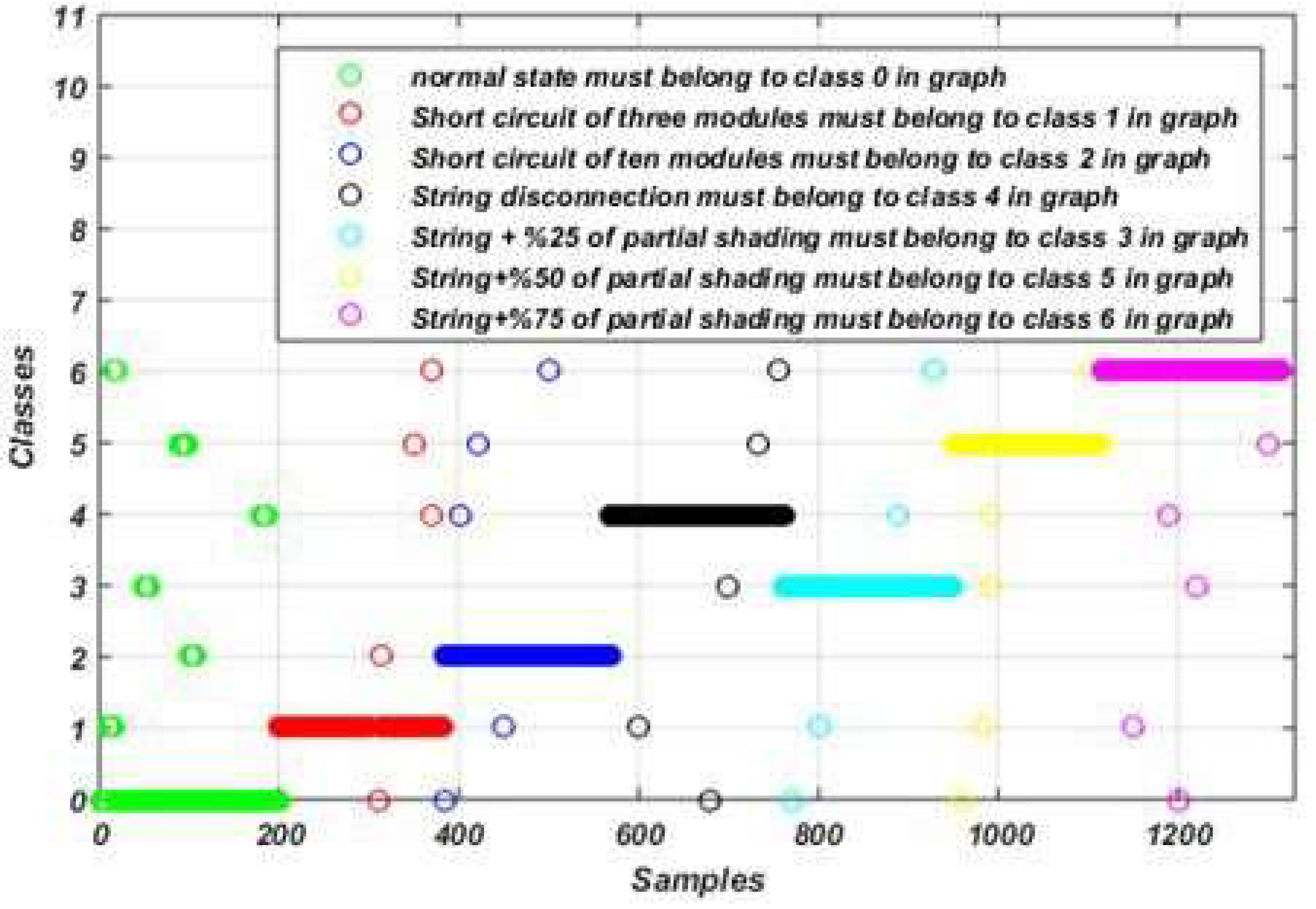
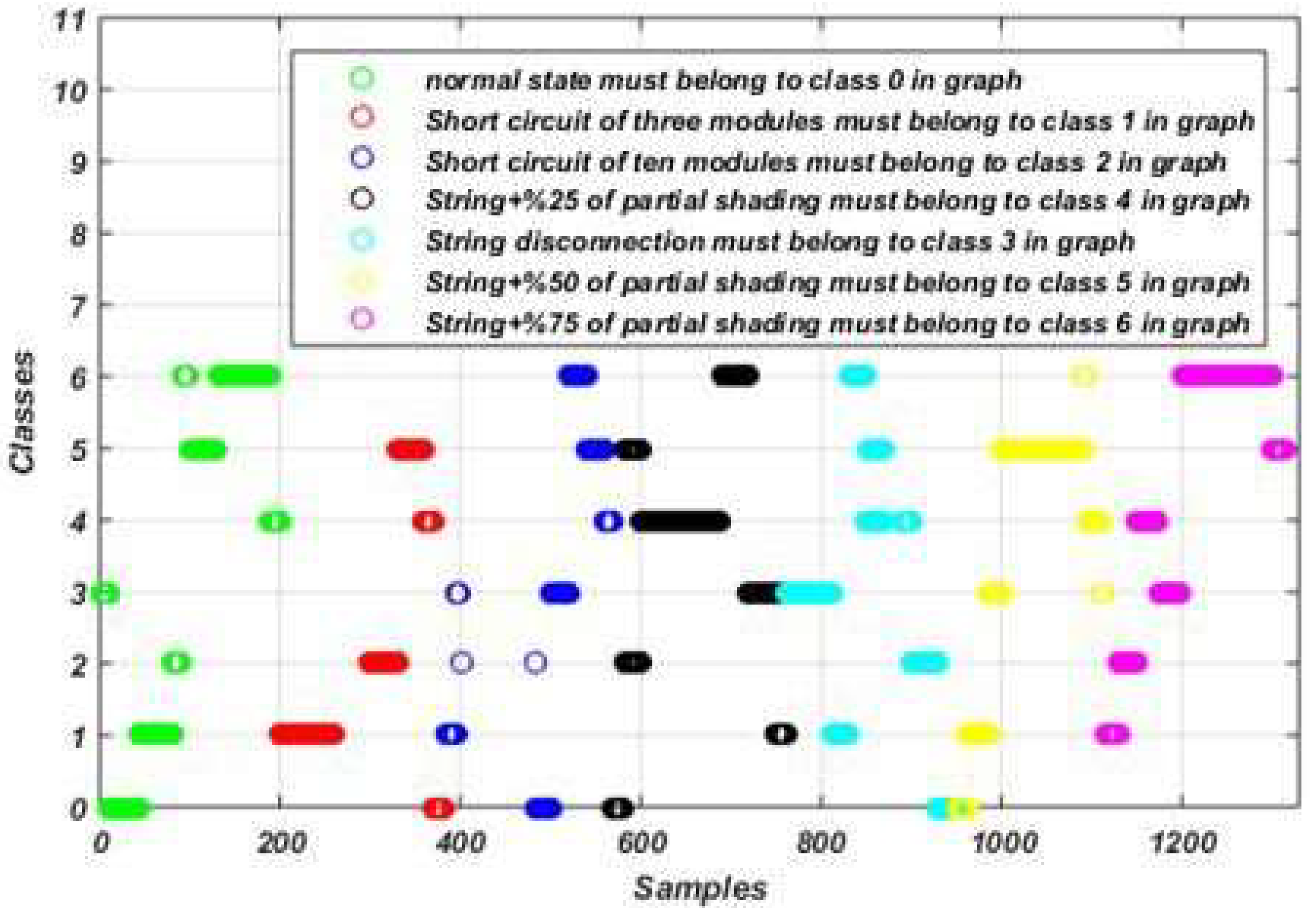
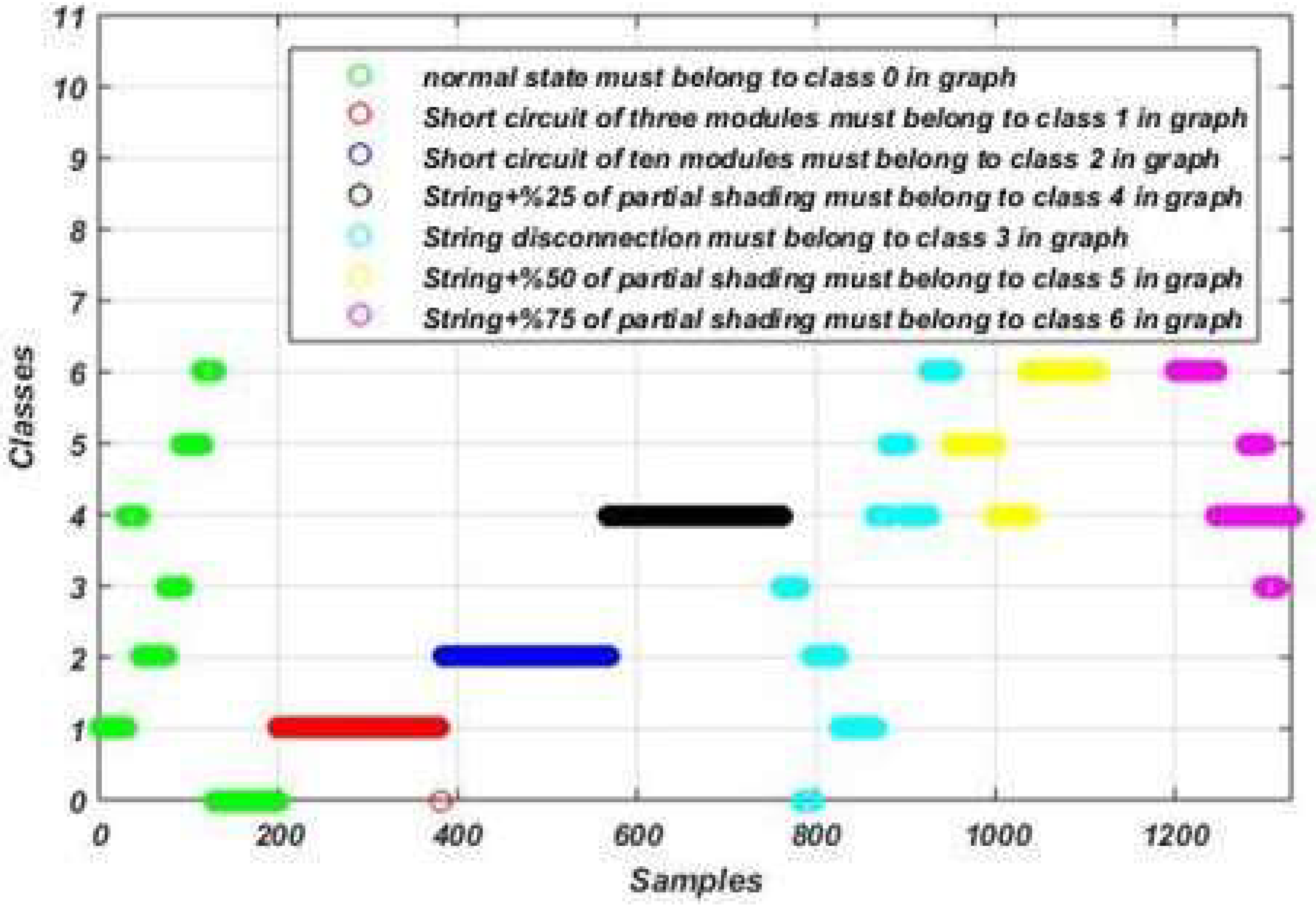
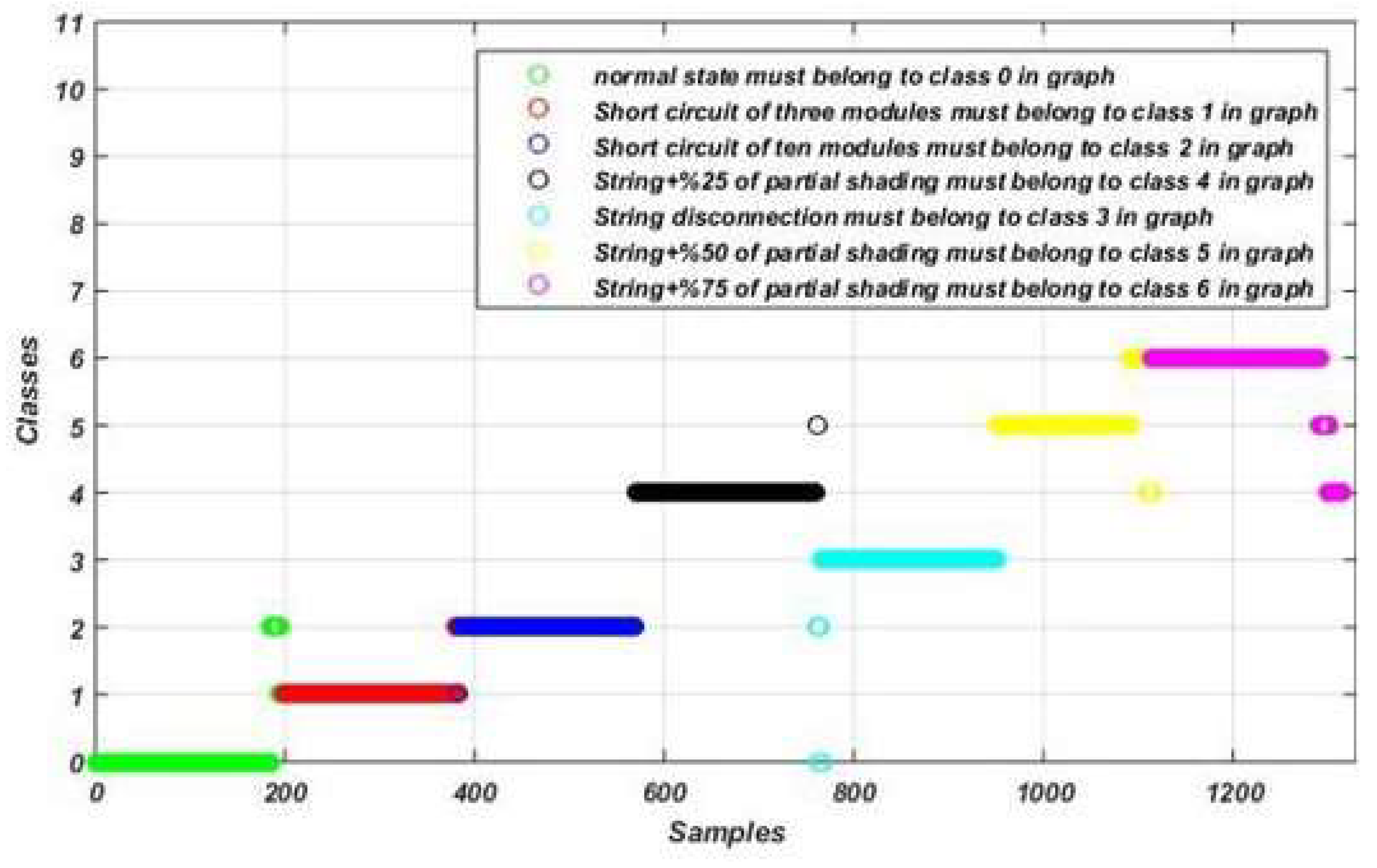
Table 7 collects all the average values of the three metrics for each of the proposed 284 algorithm as well as the SVM, the DT, the RF and the KNN algorithms. From the table, it 285 can be seen that the performance of the proposed algorithm is superior to the rest of the 286 algorithms in term of accuracy, precision and recall.
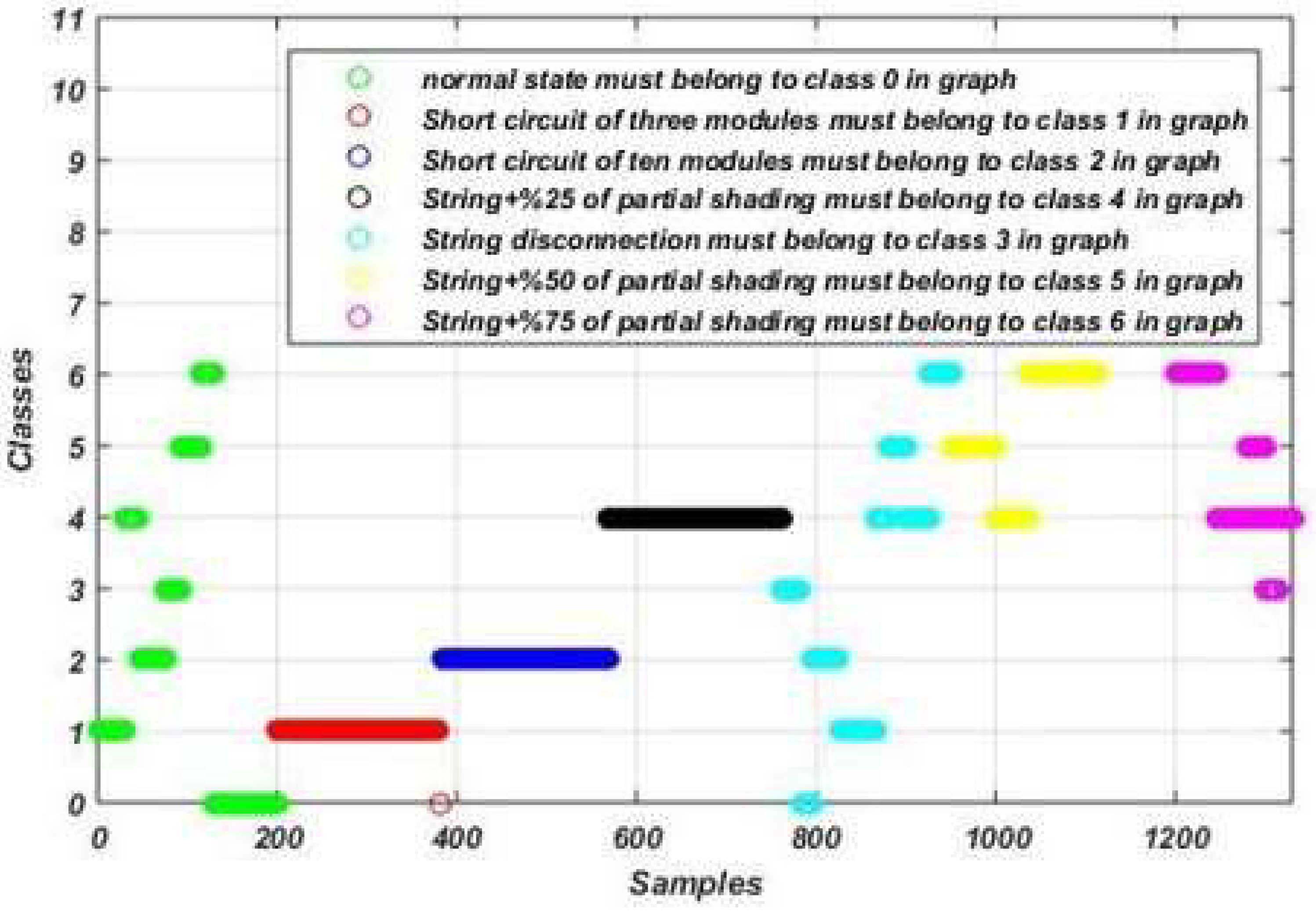
Figure 12, Figure 13, Figure 14, Figure 15 and Figure 16 display the fault detection and diagnosis results using the proposed algorithm-based model and those based on the SVM, DT, RF, and KNN algorithms, respectively.It can be seen from these figures that the smallest number of incorrectly classified data is obtained in the case of both the RF algorithm-based model and the proposed algorithm-based model. The models fail to correctly classify all data due to data overlap and overfitting issues.

6. Conclusion

In this work, an enhanced approach was proposed for identifying and diagnosing PV array faults. A comparative study was conducted between the proposed algorithm based model and models based on four statistical learning algorithms: SVM, DT, RF, and KNN. Unlike the decision tree algorithm, which uses the Gini index to split the data onto two classes, the proposed algorithm calculates Euclidean distances between an arbitrary point and the dataset samples. It then utilizes the minimal and maximal distances to separate the samples belonging to each class.
In this study, four features, namely: cell temperature,irradiance, current and voltage of the maximum power point were utilized. The proposed methodology effectively distinguishes the normal operating condition from other abnormal states, achieving a classification accuracy of 97%. The comparative investigation demonstrated that the proposed approach outperformed the other methods considered in this work in terms of accuracy, precision, and recall. By increasing the number of classifiers, the proposed technique can be easily extended to encompass additional faults.

Author Contributions

Conceptualization, Y.M.; methodology, K.K and A.C.; software, Y.M and A.A.; validation, Y.M., K.K. and A.C.; formal analysis, K.K.; investigation, K.K. and A.A.; resources, Y.M., K.K ans S.S.; data curation, Y.M.; writing—original draft preparation, Y.M.; writing—review and editing, K.K., A.C. and S.S.; visualization, Y.M. and A.A.; supervision, K.K., A.C. and S.S.; project administration, K.K. All authors have read and agreed to the published version of the manuscript.

Funding

This research received no external funding.

Data Availability Statement

The data is not available.

Conflicts of Interest

The authors declare no conflicts of interest.

Abbreviations

The following abbreviations are used in this manuscript:
ADAG Adaptive directed acyclic graph
ANN Artificial neural network
DDAG Decision directed acyclic graph
DT Decision Tree
FDD Fault Detection and Diagnosis
FN False Negative
FP False Positive
G Irradiance
GCPV Grid connected photovoltaic
Impp Current at the maximum power point
Isc Current of short circuit
KNN K Nearest Neighbors
OVA One vs.all
PV Photovoltaic
PVM Photovoltaic module
PVS Photovoltaic system
RF Random Forest
SVM Support Vector Machine
T Temperature
TDR Time domain reflectometry
TN True Negative
TP True Positive
Vmpp Voltage at the maximum power point
Voc Voltage of open circuit
321

References

  1. Sohani, A.; Sayyaadi, H.; Cornaro, C.; Shahverdian, M.; Pierro, M.; Moser, D.; Karimi, N.; Doranehgard, M.; Li, L.K. Using machine learning in photovoltaics to create smarter and cleaner energy generation systems: A comprehensive review. Journal of Cleaner Production 2022, 2022, 132701. [Google Scholar] [CrossRef]
  2. Mughal, S.; Sood, Y.R.; Jarial, R. A review on solar photovoltaic technology and future trends. International Journal of Scientific Research in Computer Science, Engineering and Information Technology 2018, 4, 227–235. [Google Scholar]
  3. Madeti, S.R.; Singh, S. A comprehensive study on different types of faults and detection techniques for solar photovoltaic system. 327 Solar Energy 2017, 158, 161–185. [Google Scholar] [CrossRef]
  4. Hernandez, J.; Velasco, D.; Trujillo, C. Analysis of the effect of the implementation of photovoltaic systems like option of distributed generation in Colombia. Renewable and sustainable energy reviews 2011, 15, 2290–2298. [Google Scholar] [CrossRef]
  5. Qais, M.H.; Hasanien, H.M.; Alghuwainem, S.; Nouh, A.S. Coyote optimization algorithm for parameters extraction of three-diode photovoltaic models of photovoltaic modules. Energy 2019, 187, 116001. [Google Scholar] [CrossRef]
  6. Kumar, B.P.; Ilango, G.S.; Reddy, M.J.B.; Chilakapati, N. Online fault detection and diagnosis in photovoltaic systems using wavelet packets. IEEE Journal of Photovoltaics 2017, 8, 257–265. [Google Scholar] [CrossRef]
  7. Benkercha, R.; Moulahoum, S. Fault detection and diagnosis based on C4. 5 decision tree algorithm for grid connected PV system. 335 Solar Energy 2018, 173, 610–634. [Google Scholar]
  8. Villarini, M.; Cesarotti, V.; Alfonsi, L.; Introna, V. Optimization of photovoltaic maintenance plan by means of a FMEA approach based on real data. Energy Conversion and Management 2017, 152, 1–12. [Google Scholar] [CrossRef]
  9. Pillai, D.S.; Rajasekar, N. A comprehensive review on protection challenges and fault diagnosis in PV systems. Renewable and Sustainable Energy Reviews 2018, 91, 18–40. [Google Scholar] [CrossRef]
  10. Zhao, Q.; Shao, S.; Lu, L.; Liu, X.; Zhu, H. A new PV array fault diagnosis method using fuzzy C-mean clustering and fuzzy membership algorithm. Energies 2018, 11, 238. [Google Scholar] [CrossRef]
  11. Hazra, A.; Das, S.; Basu, M. An efficient fault diagnosis method for PV systems following string current. Journal of Cleaner Production 2017, 154, 220–232. [Google Scholar] [CrossRef]
  12. Khelil, C.K.M.; Amrouche, B.; soufiane Benyoucef, A.; Kara, K.; Chouder, A. New intelligent fault diagnosis (IFD) approach for grid-connected photovoltaic systems. Energy 2020, 211, 118591. [Google Scholar] [CrossRef]
  13. Khelil, C.K.M.; Amrouche, B.; Kara, K.; Chouder, A. The impact of the ANN’s choice on PV systems diagnosis quality. Energy Conversion and Management 2021, 240, 114278. [Google Scholar] [CrossRef]
  14. Mellit, A.; Tina, G.M.; Kalogirou, S.A. Fault detection and diagnosis methods for photovoltaic systems: A review. Renewable and Sustainable Energy Reviews 2018, 91, 1–17. [Google Scholar] [CrossRef]
  15. Takashima, T.; Yamaguchi, J.; Otani, K.; Kato, K.; Ishida, M. Experimental studies of failure detection methods in PV module strings. In Proceedings of the 2006 IEEE 4th World Conference on Photovoltaic Energy Conference. IEEE, 2006, Vol. 2, pp. 2227–2230.
  16. Takashima, T.; Yamaguchi, J.; Ishida, M. Fault detection by signal response in PV module strings. In Proceedings of the 2008 33rd IEEE Photovoltaic Specialists Conference. IEEE; 2008; pp. 1–5. [Google Scholar]
  17. Takashima, T.; Yamaguchi, J.; Otani, K.; Oozeki, T.; Kato, K.; Ishida, M. Experimental studies of fault location in PV module strings. Solar Energy Materials and Solar Cells 2009, 93, 1079–1082. [Google Scholar] [CrossRef]
  18. Takashima, T.; Yamaguchi, J.; Ishida, M. Disconnection detection using earth capacitance measurement in photovoltaic module string. Progress in Photovoltaics: Research and Applications 2008, 16, 669–677. [Google Scholar] [CrossRef]
  19. Chouder, A.; Silvestre, S. Automatic supervision and fault detection of PV systems based on power losses analysis. Energy conversion and Management 2010, 51, 1929–1937. [Google Scholar] [CrossRef]
  20. Silvestre, S.; Chouder, A.; Karatepe, E. Automatic fault detection in grid connected PV systems. Solar energy 2013, 94, 119–127. [Google Scholar] [CrossRef]
  21. Spataru, S.; Sera, D.; Kerekes, T.; Teodorescu, R. Photovoltaic array condition monitoring based on online regression of performance model. In Proceedings of the 2013 IEEE 39th Photovoltaic Specialists Conference (PVSC). IEEE; 2013; pp. 0815–0820. [Google Scholar]
  22. Drews, A.; De Keizer, A.; Beyer, H.G.; Lorenz, E.; Betcke, J.; Van Sark, W.; Heydenreich, W.; Wiemken, E.; Stettler, S.; Toggweiler, P.; et al. Monitoring and remote failure detection of grid-connected PV systems based on satellite observations. Solar energy 2007, 81, 548–564. [Google Scholar] [CrossRef]
  23. Bastidas-Rodriguez, J.D.; Franco, E.; Petrone, G.; Ramos-Paja, C.A.; Spagnuolo, G. Quantification of photovoltaic module degradation using model based indicators. Mathematics and Computers in Simulation 2017, 131, 101–113. [Google Scholar] [CrossRef]
  24. Dhoke, A.; Sharma, R.; Saha, T.K. An approach for fault detection and location in solar PV systems. Solar Energy 2019, 194, 197–208. [Google Scholar] [CrossRef]
  25. Mandal, R.K.; Kale, P.G. Assessment of different multiclass SVM strategies for fault classification in a PV system. In Proceedings of the Proceedings of the 7th International Conference on Advances in Energy Research.
  26. Cho, K.H.; Jo, H.C.; Kim, E.s.; Park, H.A.; Park, J.H. Failure diagnosis method of photovoltaic generator using support vector machine. Journal of Electrical Engineering & Technology 2020, 15, 1669–1680. [Google Scholar]
  27. Chen, L.; Lin, P.; Zhang, J.; Chen, Z.; Lin, Y.; Wu, L.; Cheng, S. Fault diagnosis and classification for photovoltaic arrays based on principal component analysis and support vector machine. In Proceedings of the IOP Conference series: Earth and Environmental science. IOP Publishing, 2018, Vol. 188, p. 012089.
  28. Wang, J.; Gao, D.; Zhu, S.; Wang, S.; Liu, H. Fault diagnosis method of photovoltaic array based on support vector machine. Energy sources, part a: recovery, utilization, and environmental effects 2019, pp. 1–16.
  29. Yi, Z.; Etemadi, A.H. Line-to-line fault detection for photovoltaic arrays based on multiresolution signal decomposition and two-stage support vector machine. IEEE Transactions on Industrial Electronics 2017, 64, 8546–8556. [Google Scholar] [CrossRef]
  30. Dhibi, K.; Mansouri, M.; Bouzrara, K.; Nounou, H.; Nounou, M. An enhanced ensemble learning-based fault detection and diagnosis for grid-connected PV systems. IEEE Access 2021, 9, 155622–155633. [Google Scholar] [CrossRef]
  31. Chen, Z.; Han, F.; Wu, L.; Yu, J.; Cheng, S.; Lin, P.; Chen, H. Random forest based intelligent fault diagnosis for PV arrays using array voltage and string currents. Energy conversion and management 2018, 178, 250–264. [Google Scholar] [CrossRef]
  32. Dhibi, K.; Fezai, R.; Mansouri, M.; Trabelsi, M.; Kouadri, A.; Bouzara, K.; Nounou, H.; Nounou, M. Reduced kernel random forest technique for fault detection and classification in grid-tied PV systems. IEEE Journal of Photovoltaics 2020, 10, 1864–1871. [Google Scholar] [CrossRef]
  33. Dhibi, K.; Fezai, R.; Bouzrara, K.; Mansouri, M.; Nounou, H.; Nounou, M.; Trabelsi, M. Enhanced RF for Fault Detection and Diagnosis of Uncertain PV systems. In Proceedings of the 2021 18th International Multi-Conference on Systems, Signals & Devices (SSD). IEEE, 2021, pp. 103–108.
  34. Wang, L.; Qiu, H.; Yang, P.; Gao, J. Fault Diagnosis Method Based on An Improved KNN Algorithm for PV strings. In Proceedings of the 2021 4th Asia Conference on Energy and Electrical Engineering (ACEEE). IEEE, 2021, pp. 91–98.
  35. Madeti, S.R.; Singh, S. Modeling of PV system based on experimental data for fault detection using kNN method. Solar Energy 2018, 173, 139–151. [Google Scholar] [CrossRef]
  36. Harrou, F.; Taghezouit, B.; Sun, Y. Improved k NN-based monitoring schemes for detecting faults in PV systems. IEEE Journal of Photovoltaics 2019, 9, 811–821. [Google Scholar] [CrossRef]
  37. Karatepe, E.; Hiyama, T.; et al. Controlling of artificial neural network for fault diagnosis of photovoltaic array. In Proceedings of the 2011 16th International Conference on Intelligent System Applications to Power Systems. IEEE, 2011, pp. 1–6.
  38. Chine, W.; Mellit, A.; Lughi, V.; Malek, A.; Sulligoi, G.; Pavan, A.M. A novel fault diagnosis technique for photovoltaic systems based on artificial neural networks. Renewable Energy 2016, 90, 501–512. [Google Scholar] [CrossRef]
  39. Hussain, M.; Dhimish, M.; Titarenko, S.; Mather, P. Artificial neural network based photovoltaic fault detection algorithm integrating two bi-directional input parameters. Renewable Energy 2020, 155, 1272–1292. [Google Scholar] [CrossRef]
  40. Bai, Y.; Yang, E.; Han, B.; Yang, Y.; Li, J.; Mao, Y.; Niu, G.; Liu, T. Understanding and improving early stopping for learning with noisy labels. Advances in Neural Information Processing Systems 2021, 34, 24392–24403. [Google Scholar]
  41. Prechelt, L. Automatic early stopping using cross validation: quantifying the criteria. Neural networks 1998, 11, 761–767. [Google Scholar] [CrossRef] [PubMed]
  42. Zhang, T.; Yu, B. Boosting with early stopping: Convergence and consistency 2005.
Figure 1. Flowchart of the proposed algorithm.
Preprints 149895 g001
Figure 2. Flowchart of the proposed algorithm.
Preprints 149895 g002
Figure 3. Impp for various operating states of the PVA.
Preprints 149895 g003
Figure 4. Vmpp for various operating states of the PVA.
Preprints 149895 g004
Figure 5. Fault detection and diagnosis flowchart.
Preprints 149895 g005
Figure 6. Evolution of accuracy for the first classifier.
Preprints 149895 g006
Figure 7. Evolution of accuracy for the second classifier.
Preprints 149895 g007
Figure 8. Evolution of accuracy for the third classifier.
Preprints 149895 g008
Figure 9. Evolution of accuracy for the forth classifier.
Preprints 149895 g009
Figure 10. Evolution of accuracy for the fifth classifier.
Preprints 149895 g010
Figure 11. Evolution of accuracy for the sixth classifier.
Preprints 149895 g011
Figure 12. Fault detection and diagnosis results using the proposed algorithm-based model.
Preprints 149895 g012
Figure 13. Fault detection and diagnosis results using the SVM algorithm-based model.
Preprints 149895 g013
Figure 14. Fault detection and diagnosis results using the DT algorithm-based model.
Preprints 149895 g014
Figure 15. Fault detection and diagnosis results using the RF algorithm-based model.
Preprints 149895 g015
Figure 16. Fault detection and diagnosis results using the KNN algorithm-based model.
Preprints 149895 g016
Table 1. Operating states and their labels.
Class name Label
Normal operation Class 0
Short circuit of three modules Class 1
Short circuit of ten modules Class 2
String disconnection Class 3
String disconnection with 25% of partial shading Class 4
String disconnection with 50% of partial shading Class 5
String disconnection with 75% of partial shading Class 6
Table 2. Confusion matrix.
Real class labels Predicted label: A Predicted label: B
Class A TP FN
Class B FP TN
TP: stands for True Positive, which means the number of data that are in class 0 in the dataset and the algorithm successfully considered them in class 0. FN: stands for False Negative, which means the number of data that are in class 0 in the dataset and the algorithm considered them in class 1. FP: stands for False Positive, which means the number of data that are in class 1 in the dataset and the algorithm considered them in class 0. TN: stands for True Negative, which means the number of data that are in class 1 in the dataset and the algorithm successfully considered them in class 1. The three metrics are computed as follow:.
Table 3. Confusion matrices for the obtained model.
TP FN FP TN
Classifier 1 1107 19 29 168
Classifier 2 947 3 4 178
Classifier 3 762 1 3 183
Classifier 4 570 3 1 190
Classifier 5 354 13 10 179
Classifier 6 177 20 5 155
Table 4. Metrics values for the obtained model.
Accuracy (%) Precision (%) Recall (%)
Classifier 1 97 97 98
Classifier 2 99 100 100
Classifier 3 100 100 100
Classifier 4 99 100 99
Classifier 5 96 97 99
Classifier 6 93 97 90
Average values 97.33 99 97
Table 5. Confusion matrices for the obtained model using the four algorithms.
SVM DT RF KNN
Classifier 1 TP 1104 113 1119 1107
FN 15 6 8 12
FP 165 23 15 155
TN 34 176 176 44
Classifier 2 TP 1086 950 950 1078
FN 0 3 1 1
FP 122 3 1 1
TN 61 180 180 182
Classifier 3 TP 1021 765 764 892
FN 0 2 0 0
FP 103 0 1 0
TN 84 186 186 187
Classifier 4 TP 927 566 568 696
FN 0 3 1 0
FP 107 0 0 0
TN 90 196 196 196
Classifier 5 TP 796 364 371 508
FN 57 10 4 1
FP 131 7 3 167
TN 50 185 183 157
Classifier 6 TP 631 29 36 105
FN 112 172 175 73
FP 84 202 202 201
TN 90 102
Table 6. Metrics values (in percentage) for the obtained model using the four algorithms.
SVM DT RF KNN
Classifier 1 Accuracy 86 98 99 87(K=7)
Precision 87 98 99 88
Recall 99 99 100 99
Classifier 2 Accuracy 90 99 100 100(K=1)
Precision 90 100 100 100
Recall 100 100 100 100
Classifier 3 Accuracy 91 100 100 100(K=3)
Precision 91 100 100 100
Recall 100 100 100 100
Classifier 4 Accuracy 90 100 100 100(K=2)
Precision 90 100 100 100
Recall 100 99 100 100
Classifier 5 Accuracy 82 97 99 76(K=35)
Precision 86 98 99 75
Recall 93 97 99 100
Classifier 6 Accuracy 78 64 63 59(K=1)
Precision 88 87 85 80
Recall 84 54 53 60
Average values Accuracy 85.33 97.16 93.50 87
Precision 88.65 91.50 97.16 90.50
Recall 96 93.50 92 93.16
Table 7. Metrics average values.
Accuracy (%) Precision (%) Recall (%)
The proposed
algorithm 97.33 98.66 97.5
SVM 85.33 88.65 96
DT 93 97.16 91.50
RF 93.50 97.16 92
KNN 87 90.50 93.16
Disclaimer/Publisher’s Note: The statements, opinions and data contained in all publications are solely those of the individual author(s) and contributor(s) and not of MDPI and/or the editor(s). MDPI and/or the editor(s) disclaim responsibility for any injury to people or property resulting from any ideas, methods, instructions or products referred to in the content.
Copyright: This open access article is published under a Creative Commons CC BY 4.0 license, which permit the free download, distribution, and reuse, provided that the author and preprint are cited in any reuse.
Prerpints.org logo

Preprints.org is a free preprint server supported by MDPI in Basel, Switzerland.

Subscribe

Disclaimer

Terms of Use

Privacy Policy

Privacy Settings

© 2025 MDPI (Basel, Switzerland) unless otherwise stated