Introduction
The rapid advancements in technology within the health sector have created new horizons for patient monitoring systems wherein IoT was a major contributor. IoT-based medical devices like the Telecare-ECG Monitor offer real-time observation of cardiac activity remotely for diagnostics and treatment. The systems focus on the integration of microcontrollers and microprocessors which allow greater efficiency in processing while being energy conscious and portable. The advent of wearable medical devices, especially those developed within the wristwatch category having ECG attributes, truly provided emancipated healthcare monitoring options to patients and medical professionals, allowing for a truly effective means of continued health assessment for the two stakeholders. The work surveys the connectivity between microcontrollers, wireless communication technologies, and architectural frameworks to satisfy compliance for medical standards like IEC60601[
1,
2].
On the other hand, the efficiency of computing is highly dependent on the tactical management of digital memory systems. Memory hierarchy, which includes RAM and ROM as well as virtual memory, is one of the basic concepts used in the optimization of computing performance. The primary purpose of a memory hierarchy is to absorb the imbalance between the speed of the processing units and that of storage devices, resulting in the optimum data access and minimum latency. The report discusses the contributions of organization and virtualization of memory to ensuring efficiency in computing while tackling issues of data processing and multitasking [
3].
The research thus closes the gap between IoT in health care and the memory hierarchy in computing. This analysis has therefore provided an insight into the fast-growing technologies that influence the field of modern health monitoring and digital computing. The results reveal energy-efficient microcontrollers in medical devices and the impact of hierarchical memory structures on the overall performance of the system [
4,
5,
6].
The Telecare-ECG Monitor is a very expected thing, made from several advanced microcontrollers to gain just maximum superior performance for its likely applications. These microcontrollers allow a high level of flexibility as they will create pipeline processors, coprocessors, NoCs, and IoT services. New features into the device will now find it easy to be implemented as the microcontrollers cut response times. For real-time cardiac monitoring, the processing capabilities of the device justify it to be used in this system as such requirements are not an exception for the STM32F107 microcontroller [
7,
8,
9].
Telecare-ECG monitors have microcontrollers selected for their abilities to perform very high-speed processing of data, which is important to record accurately the action potentials of the heart. Their function goes beyond amplifying and displaying the signals on the screen to hystically controlling conversion of the signal into mechanical movements for printing the ECG charts. The processing is done without delay ensuring proper and timely information provision for accurate diagnosis and monitoring of patients by medical personnel.
The system’s architectural framework was designed to meet the Internet of Medical Things (IoMT) paradigm, assuring seamless integration with IEC60601 regulations. It thus guarantees that the device fulfills medical safety and performance criteria so that efficient operation can be guaranteed. The framework has microcontrollers helping to establish the reliability of the Telecare-ECG Monitor, hence making it suitable toward common clinical and remote healthcare practice [
10,
11,
12].
Energy-efficiency considerations are an integral part of the system, which ensures that the device is properly balanced between performance and power consumption. The architecture was optimized for the microcontroller’s performance, wireless communication, and control modules, making it portable and functional for at least 24 hours without constant recharges. This is relevant for remote patient monitoring, as continuous operation becomes essential [
12].
The Telecare-ECG Monitor is an IoT-based medical device designed to enhance accessibility and efficient cardiac monitoring. The system is designed to record accurate ECG data that could be later evaluated and diagnosed by a physician from a distance. Energy efficiency is a primary consideration, tapping advanced hSensor technologies to provide support for the simultaneous use of wearable ECG modules. These technologies ensure that the device remains operational and energy-friendly-congruent with the modern-day specification of handheld real-time medical monitoring solutions [
13].
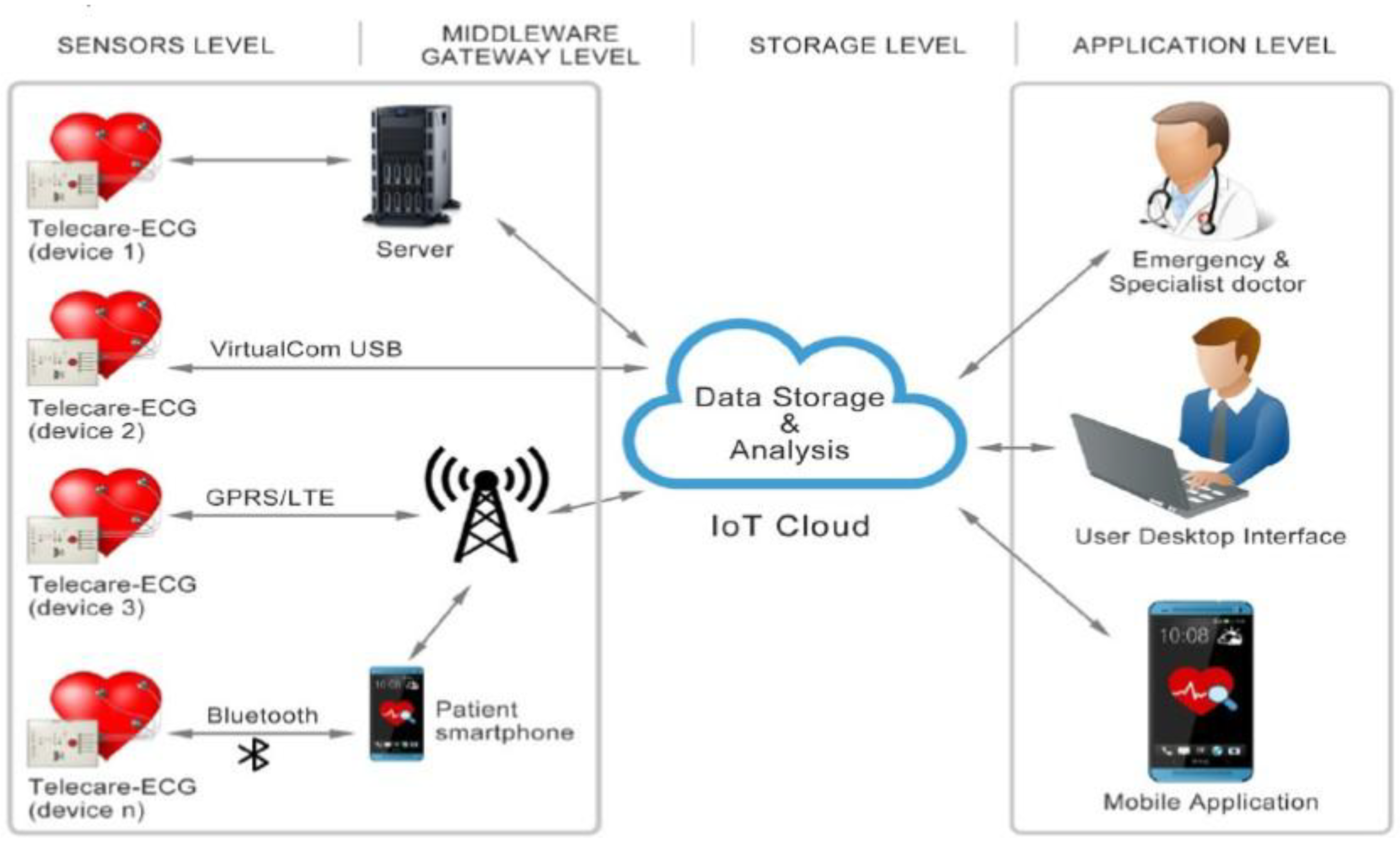
Figure 1.
Telecare-ECG Monitor Architecture.
Figure 1.
Telecare-ECG Monitor Architecture.
The Telecare-ECG Monitor uses connectivity technologies that are robust enough for the development of a seamless IoT system. It is paramount to select the pertinent connectivity in order to maximize power consumption, communication efficiency, and data storage capabilities right from the initial design stages. The system encompasses different wireless communication protocols such as GSM, Wi-Fi, Bluetooth, Z-Wave, and Zigbee to ensure reliable communication for remote monitoring. Antennas are an integral part of this wireless communication chain established for stable data transfer between patients and healthcare professionals [
14].
The Telecare-ECG Monitor is a telemetry application for cardiac patient constant monitoring away from hospital premises. It establishes a communication link between general practitioners and cardiologists and allows ECG reading remotely for timely medical intervention. This system becomes imperative for those patients residing in a rural or unreachable area, patients with mobility challenges, or just patients preferring the convenience of remote health monitoring. By ensuring cardiac activity is monitored continuously, the Telecare-ECG system maximizes accessibility and efficacy in the care of patients outside the hospital [
14].
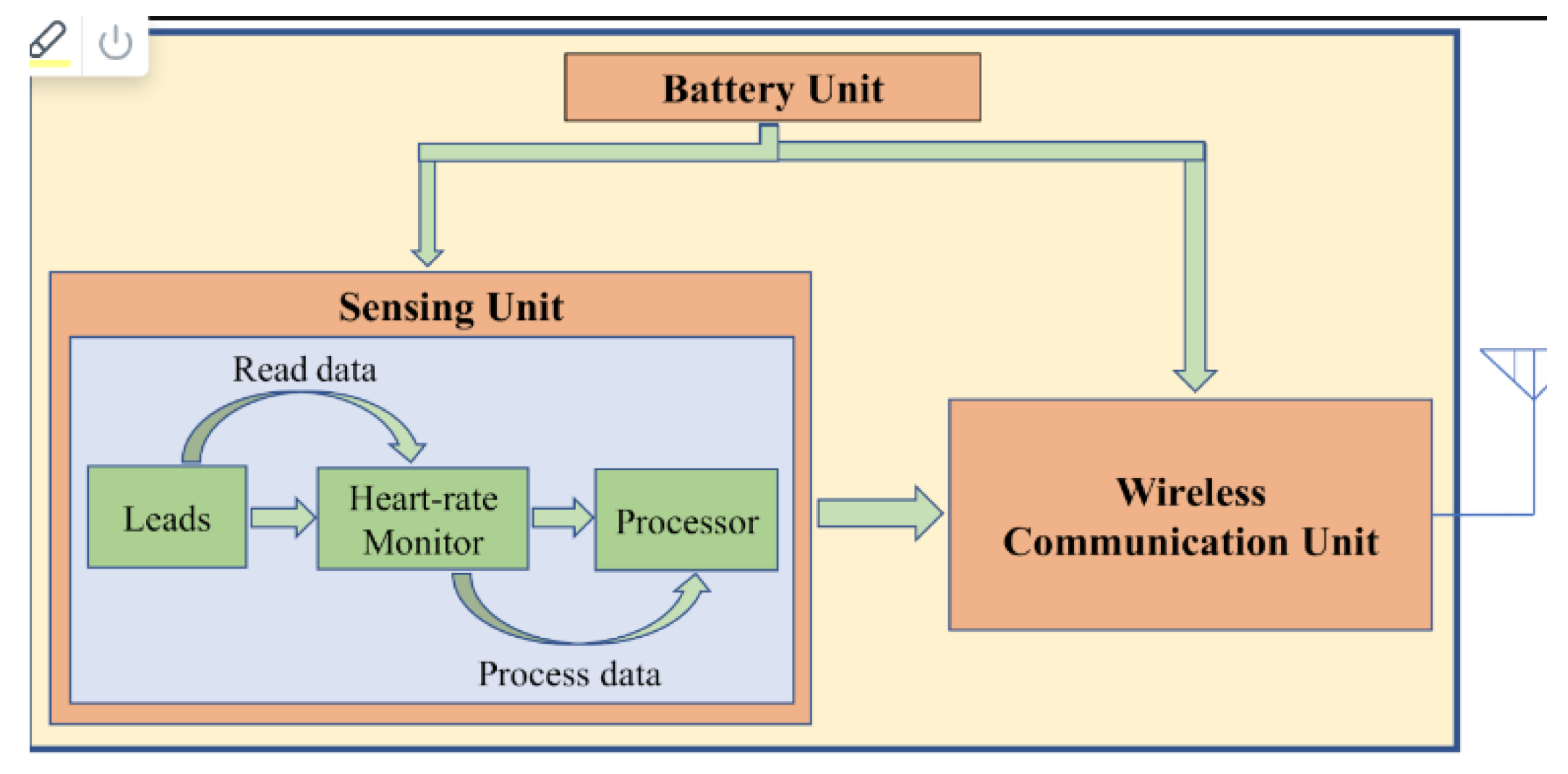
The system architecture of the Telecare-ECG Monitor is rigorously designed to meet the requirements of IEC60601 standards and conforms to the Internet of Medical Things (IoMT) framework. The block diagram presents the major concept of the device supporting the integrity of data validation across wireless transmission, protocol conversion, and verification against checksums. The system is optimized while trying to maintain a balance between computing power and energy consumption for a minimum of 24 hours’ continuous operation without frequent battery replacements or recharging [
15].
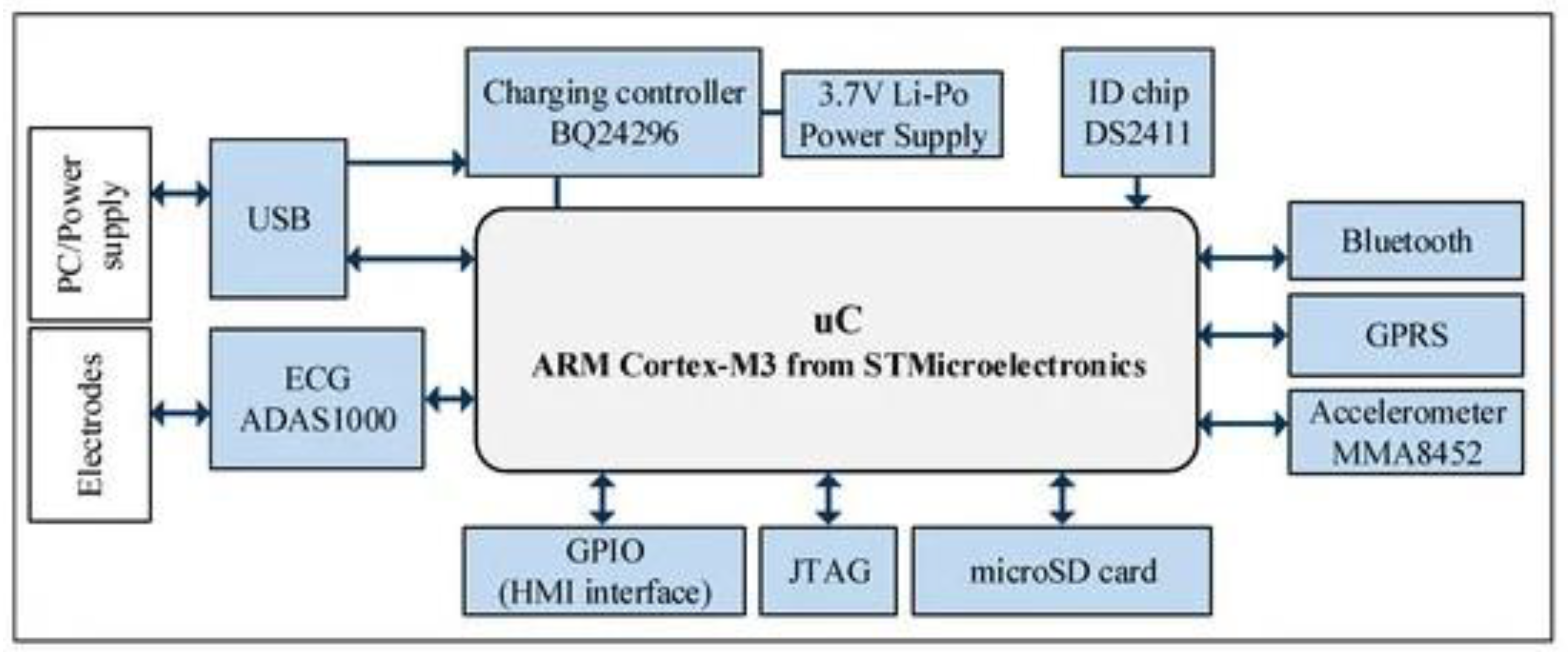
Central to the ECG device is the signal processing of ECG, which allows prompt recordings of electrical deviations in the heart. System architecture employs advanced processing through microcontrollers, pipeline processors, coprocessors, and Networks on Chip (NoC), delivering high-speed processing and flexibility. The integration greatly reduces response times for the device to power modern health care applications and also give impetus to real-time monitoring through IoT-driven services [
15].
The Telecare-ECG Monitor employs cutting-edge energy-efficient designs and memory storage solutions with the view of ensuring long-term usability. More than 50% energy efficiency is achieved by the Sensor platform, which makes it the most appropriate for wearable ECG modules. A memory card would also serve as a local data backup, making it possible for the system to run even during network failure or other unexpected disconnection scenarios. Data continuity and reliability over and above strengthens this feature in telehealth application effectiveness [
16] This system emphasizes advances in studies on online monitoring and data transmission towards better remote patient care in both medical clinics and home environments. A mobile device that allows for convenient ECG acquisition, processing, storage, and smooth transmission to the central server forms a cornerstone in this innovation. The technology will allow for real-time remote interpretation of electrocardiograms, which will benefit those unwell from home, making the acquisition and analysis of critical health data possible without on-site consultation [
17,
18,
19].
Figure 2.
The block diagram of the Telecare-ECG Monitor Module, (Zagan et al., 2020).
Figure 2.
The block diagram of the Telecare-ECG Monitor Module, (Zagan et al., 2020).
Proposed Methodology
The research dwells on the establishment of an IoT-based Telecare-ECG Monitoring device amalgamated with microcontrollers and microprocessors to enable real-time cardiac monitoring. The methodology discusses the selection of proper microcontrollers (STM32F107 and AT89S52) and microprocessors for proficient data processing. The design of the system architecture is based on the IEC60601 and Internet-of-Medical-Things standards. Energy-efficient data acquisition, processing, and transmission would be implemented via wireless communication protocols, namely, Zigbee, Bluetooth, and GSM. In addition, the ECG wearable modules are integrated for remotely capturing and analyzing patient data. The development of the system solution includes both hardware and software components. The hardware design involves the selection of microcontrollers STM32F107 and AT89S52 for their processing ability and energy efficiency as well as real-time capability for data acquisition. Physiological data are sensed by the incorporation of various sensors such as temperature, pressure, and heartbeat sensors. Communication interfaces for smooth transmission of data include the Zigbee module, MAX232 for conversion from RS-232 to a TTL signal, and Bluetooth. A regulated power supply designed to supply 5V DC keeps the circuits working smoothly. The software techniques applied include signal processing to remove noise and interference in ECG data during the pre-processing stage. Secure transmission protocols ensure data integrity and confidentiality. A web-based dashboard was created to enable health professionals to monitor ECG readings in real time.
Experimental Setup
In the experimental phase, the device was tested under varying conditions. The device was monitored on a test group of 50 patients with and without cardiac conditions. ECG readings from the device being tested concomitantly were compared with those taken from traditional hospital ECG machines to determine their accuracy. The device was tested for uninterrupted working for 24 hours, to test battery performance and accurate enlivening of data.
The experimental results yielded high accuracy and reliability for the Telecare device in detecting cardiac anomalies with 96% accuracy for atrial fibrillation (AF) with 91% specificity. Detection rates for atrial flutter/tachycardias were poorer at 25% sensitivity. Energy-wise, the sensor platform was shown to be over 50% efficient compared to traditional ECG monitors, allowing for operation for over 24 h on a single charge. The Zigbee communication module ensured real-time data transmission with around 50 ms of latency, while Bluetooth and GSM modules enabled remote monitoring without any significant data loss. Users reported the device to be comfortable and easy to use, with cardiologists confirming that it provided actionable insights for early diagnosis.
This shows that the IoT-based Telecare-ECG Monitoring device has high accuracy, energy efficiency, and real-time data transmission. The integration of microcontrollers and microprocessors lay in optimizing power processing and energy consumption. Work is ongoing to improve the accuracy of an even broader range of arrhythmia detection and the application of AI-based analysis in predictive diagnostics.
Microprocessor
Receives data from the microcontroller, possibly via a communication interface like the Zigbee module.
Analyses and interprets received data to extract meaningful information about the patient’s health status.
Manages user interfaces or displays if incorporated into the system.
Engages in decision-making processes based on the monitored data.(I.J. Intelligent Systems and Applications)
Architectural Framework
The architectural framework of the integrated microprocessor and microcontroller system is designed to optimise the processing, communication, and control aspects. The microcontroller, functioning as the core processing unit, follows a CMOS 8-bit architecture (AT89S52) with in-system programmable Flash memory. It features 32 I/O lines, a full-duplex serial port, and power-saving modes. The microprocessor, although its specific type is not detailed, complements the microcontroller by handling higher-level processing tasks, decision-making, and potential user interfaces.(I.J. Intelligent Systems and Applications)
Considerations for Energy Efficiency
Microcontroller (AT89S52):Operates within an energy-efficient voltage range of 4.0V to 5.5V.
Incorporates power-saving modes such as Idle and Power-down.
Adheres to low-power design principles, minimising energy consumption during operation.(I.J. Intelligent Systems and Applications)
Microprocessor
Specific details about the microprocessor’s energy efficiency considerations are not explicitly provided.
Energy-efficient design principles may include optimising clock frequencies, employing low-power modes, and managing overall power consumption during different operational states.(I.J. Intelligent Systems and Applications)
Collective System Approach
The integrated system aims for energy efficiency by combining the strengths of both the microcontroller and microprocessor, ensuring that power consumption is minimised without compromising processing capabilities. The architectural design considers the overall power requirements and incorporates features to enhance the system’s energy efficiency.(I.J. Intelligent Systems and Applications)
Architecture Design
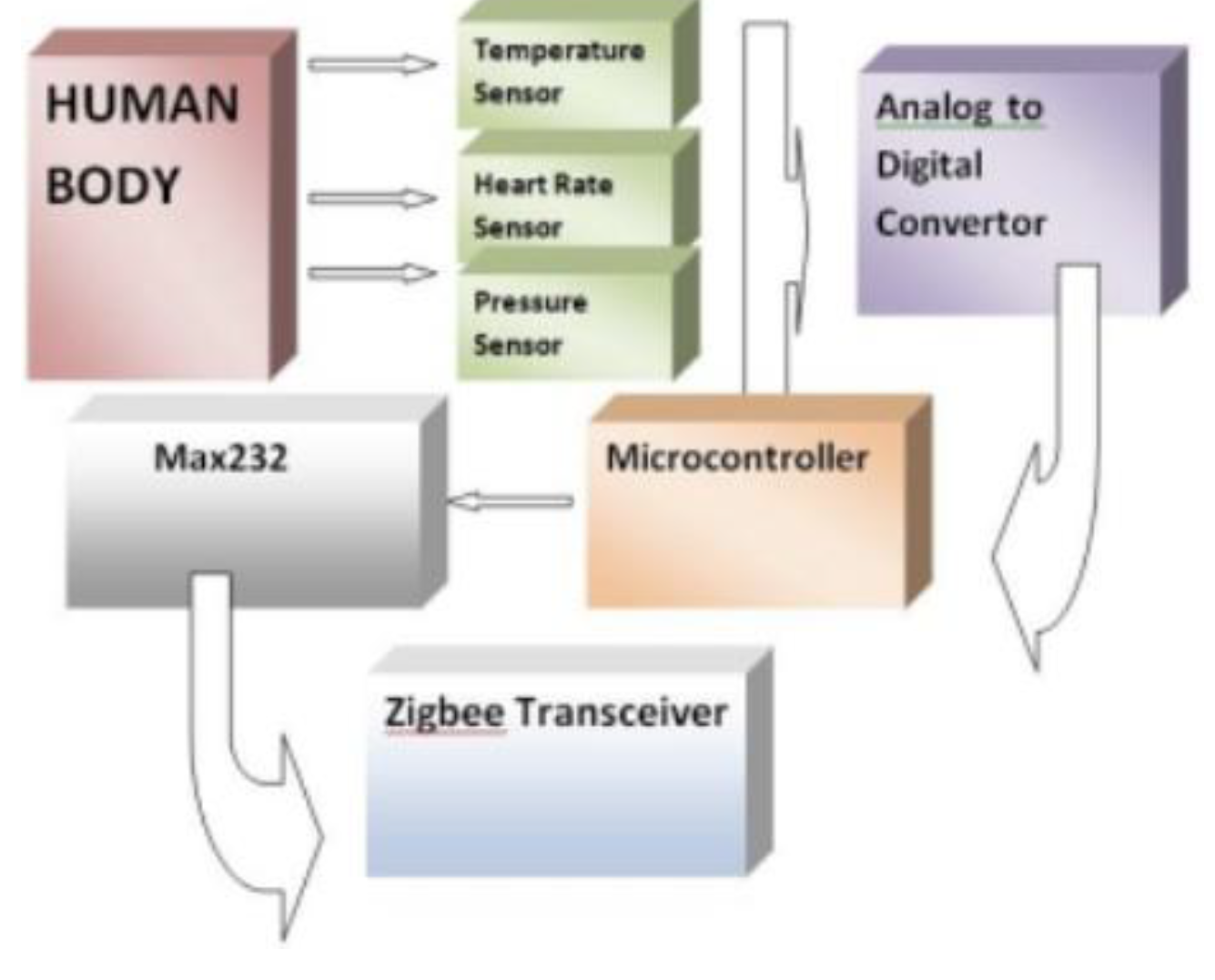
System Construction and Integration:
Physiological information monitor system.
Microcontroller coordinates sensor actions.
ADC converts analog signals for microcontroller.
MAX232 converts signals for Zigbee transceiver.
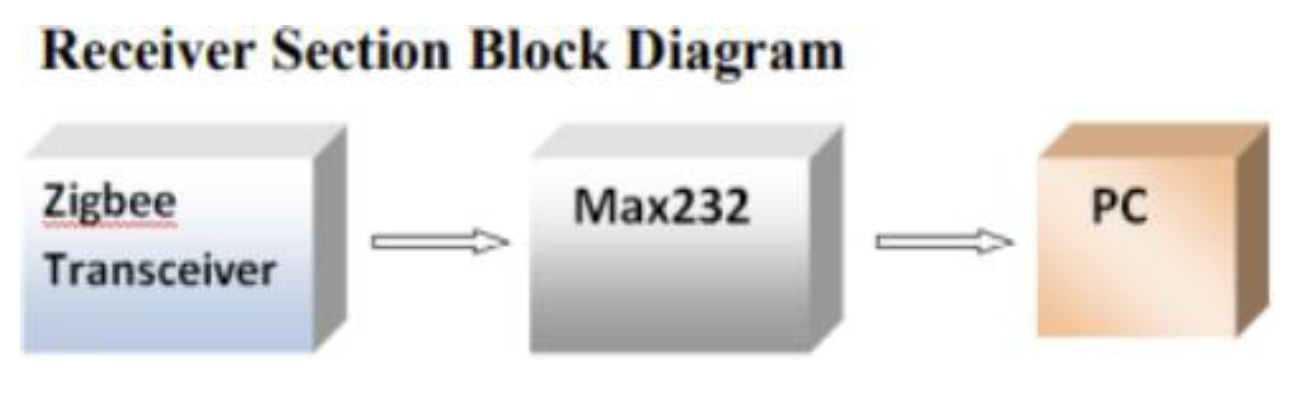
Zigbee enables wireless transmission to a computer.
Real-time monitoring of patient’s health status
Sensors and Signal Processing:
Temperature Sensor (LM35):-
Type: Precision integrated-circuit temperature sensor.
Output: Linearly proportional to Celsius temperature.
Advantages: Calibration in Centigrade, low output impedance, no external calibration required.
Range: -55°C to +150°C.
Pressure Sensor (MPX5050/MPXV5050G):- Type: Piezoresistive transducer.
Application: Monolithic silicon pressure sensor for microcontroller/microprocessor with A/D inputs.
Features: High-level analog output signal proportional to applied pressure.
Range: Wide range suitable for various applications.
Heartbeat Sensor:-
Principle: Works on light modulation by blood flow through the finger at each pulse.
Components: Super bright red LED and light detector.
Output: Digital output of heartbeat, measurable in Beats Per Minute (BPM).
Application: Connected to the microcontroller for processing.
Microcontroller (AT89S52):-
Type: CMOS 8-bit microcontroller.
Features:-
Flash Memory: 8K bytes, in-system programmable.
Operating Range: 4.0V to 5.5V.
I/O Lines: 32, Watchdog timer, two data pointers.
Communication: Full duplex serial port.
Power Saving Modes: Idle and Power-down modes.
Analog-to-Digital Converter (ADC0808/ADC0809):-
Type: Monolithic CMOS device with 8-bit analog-to-digital converter.
Features: 8-channel multiplexer, successive approximation conversion technique.
Application: Converts analog signals from sensors to digital for microcontroller processing
Communication Interface:-
MAX232:
Function: Converts signals from RS-232 serial port to TTL-compatible digital logic.
Components: Dual driver/receiver.
Voltage Levels: Generates RS-232 voltage level outputs from a single +5V supply.
Compatibility: Backwards compatible with MAX232A.
Zigbee Module:-
Type: IEEE 802.15.4 compliant RF transceiver.
Features: Small size, integrated crystal, internal voltage regulator, compatible with microcontroller families.
Range: Up to 400 ft.
Application: Enables wireless communication between the system and a computer.
Power Supply Design:
Components:
Step-down transformer for 230V AC to 12V AC.
Bridge Rectifier for converting AC to pulsating DC.
2200uF capacitor for filtering.
7805 voltage regulators for obtaining a constant 5V supply.
Purpose:
Figure 3.
The block diagram of the Transmitter.
Figure 3.
The block diagram of the Transmitter.
Figure 4.
The block diagram of the Receiver.
Figure 4.
The block diagram of the Receiver.
Smartwatch ECG
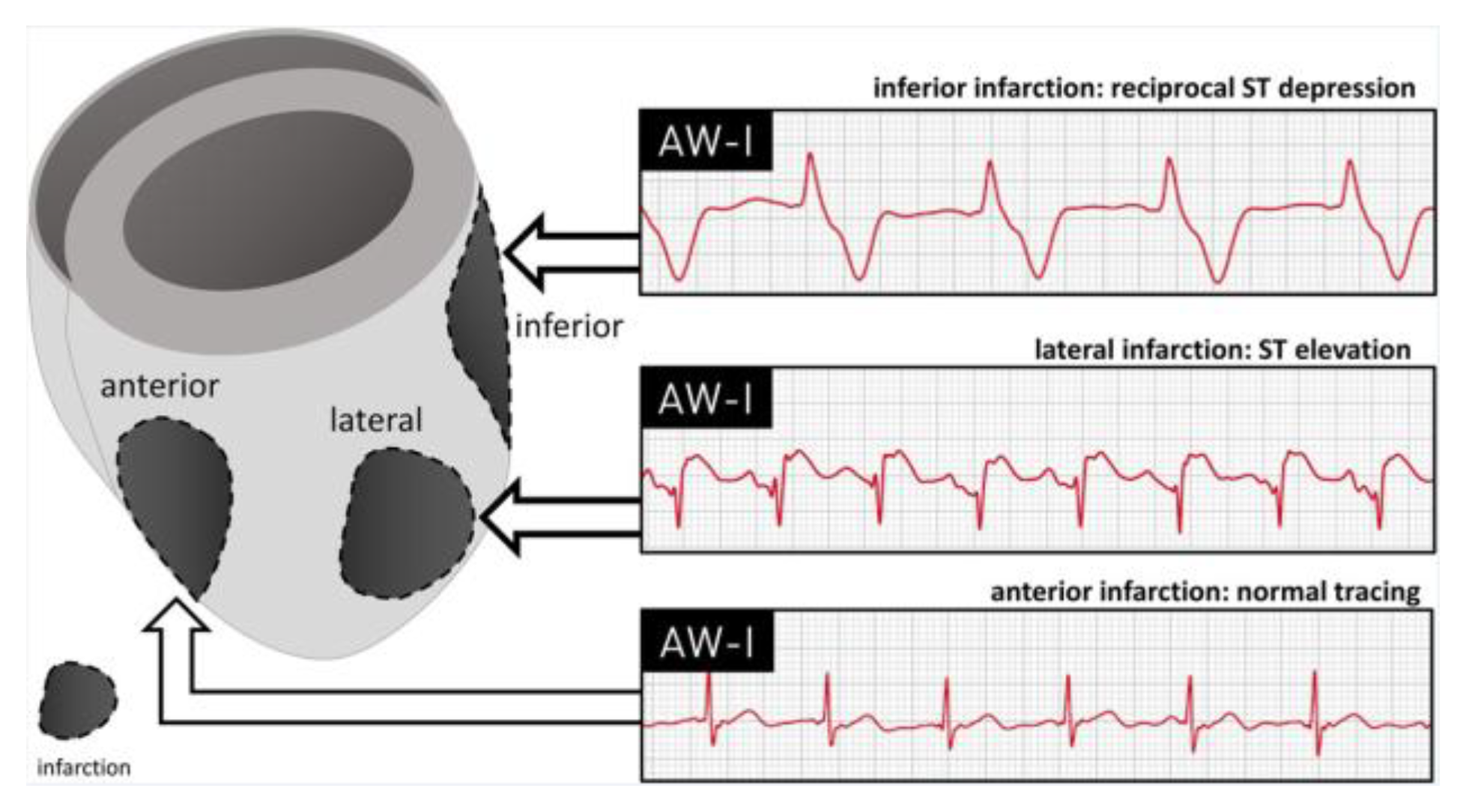
The latest advancement in smartwatches is the innovations in mechanisms that help monitor a person well-being. The ECG features built in this modern smartwatch act very much like an ECG device of hospitals. Such not only behaves like that of the hospital, but it also tends to give readings too accurate as if it was performed with a hospital ECG machine. A study was made by some experts and professors from Bordeaux University Hospital (CHU) and Heart Modeling Institute, the foundation of Bordeaux Université, to know the accuracy of the smartwatch ECG. It was conducted on the Apple Watch Series 4 and then on a second number of 256 patients with a family history of cardiovascular disease, with some other named having a history of this disease. The patients were asked to wear the smartwatch and register for the smartwatch ECG. Then, they were asked to record a single 30 seconds single basic trial to collect the necessary data. Then disseminated the data to two cardiologists for evaluation, while a third cardiologist was meant to be as an adjudicator to adjudicate any disagreement that may arise from previous cardiologists’ diagnosis of the data gathered from the patient`s smartwatch ECG. The smartwatch ECG managed to identify all 64 patients with tachyarrhythmia. The 2 patients with VT were accurately detected by the use of the Apple Watch ECG, while AF and atrial flutter/tachycardia were correctly differentiated in 71% of cases. Diagnostic accuracy was high for AF (sensitivity, 96% [95% CI, 86%-99%]; specificity, 91% [95% CI, 87%-95%] with 9/19 false positives being atrial flutter/tachycardia) but low for atrial flutter/tachycardia (sensitivity, 25% [95% CI, 5%-57%] and specificity, 99% [95% CI, 97%-100%]) (Accuracy of a Smartwatch-Derived ECG for Diagnosing Bradyarrhythmias, Tachyarrhythmias, and Cardiac Ischemia.
Figure 5.
Examples of tracing retrieved from Apple Watch (Accuracy of a Smartwatch-Derived ECG for Diagnosing Bradyarrhythmias, Tachyarrhythmias, and Cardiac Ischemia).
Figure 5.
Examples of tracing retrieved from Apple Watch (Accuracy of a Smartwatch-Derived ECG for Diagnosing Bradyarrhythmias, Tachyarrhythmias, and Cardiac Ischemia).
From the result, we can assess that reading from a smartwatch ECG is accurate to a level where medical workers can utilize the information to have an early diagnosis of a patient’s medical status. To an extent, some smartwatches will alert the user if their heart rate is becoming erratic, this is useful as sudden changes in heart rate can indicate that the person’s body is operating beyond normal parameters and that the user should seek medical advice.
Smart and Wearable Sensor Technologies smartwatch
There has been an increasing amount of worry where the elderly die unexpectedly from the irregularities of the heart. Elderly men and women die in their sleep, and there is nothing the family could have done to prevent it. Sometimes they could be all alone with no help possible. Hence, we would propose a “smart and wearable sensor technologies smartwatch,” which as a life-saving alarm, will monitor a person’s heartbeat and trigger an alarm, alerting and sending an emergency notification to the guardian in case of any pulse rate or heart rate abnormalities. The same device correlates to the wish to develop an emergency wearable device to contact anybody automatically during the time of an emergency.
Automated Alert for Emergency
This study looks at theoretical work and some nontraditional applications of the smartwatch in emergency medical services, where the ECG can alert guardians or relatives to attend in the event of a medical emergency by detecting irregular heart rates; for falls encountered by some smartwatches functioning may either inform deceased family members or organizations would be included in the newer possibilities for the employment of smartwatches in emergencies. Perhaps even smarter possibilities for emergency applications would come from AI-dependent monitoring capabilities. Presently, however, AI is primarily statistical estimation from previous data in this type of high-tech application [
20,
21,
22]. A vision for the dream would be to include an active AI [
23,
24] that generates clinically relevant data for rapid absorption by medical care personnel during emergencies [25].
This study attempts to further explain; for example, smartwatches used in digital health care. Thereby measuring heart rate, blood pressure, and a few other vital signs from optical and electrical heart rate monitors and ECG sensors. This information can then be used to analyze and make an appropriate diagnosis of various health conditions. Thus, the user themselves or their guardians may be alerted to any situations that pose a potential risk for cardiac arrest, stroke upstream, or other medical problems so that timely data can be put to use by relevant medical staff for proper diagnosis.
Hardware and Component
An ECG smartwatch comprises a heart rate monitor, ECG sensor, and power supply. Heart rate monitors can be optical or electrical. Optical types flash an LED to detect blood flow beneath the skin of the user, while electrical kinds use electrodes fixed to the chest or wrist to measure the electrical activity of the heart. The ECG sensor is built into the smartwatch on the skin side to produce an electrocardiogram (ECG) signal indicating the heart’s electrical impulses
- Electrodes: Built-in sensor on the back of the watch, contact with the surface of the skin to measure the electrical signal of the heart. These electrodes form a key aspect in accurately censoring real-time data acquisition for heart rate and both heart rate and ECG sensor.
- Heart Rate Monitor: Heart rate monitoring is carried out through optical and electrical heart rate monitoring.
- Accelerometer and Gyroscope: A motion sensor that tracks the user’s activity, movement, and posture to provide a deeper physical context to heart rate as well as to ECG data.
- Display: A hardware interface for the user to view real-time ECG readings, heart rate data, and other health parameters.
- Microprocessor: Process data from various sensors including heart rate monitor, ECG sensor, and Accelerometer and Gyroscope. Runs algorithms for real-time data and allows display for use.
- Lead: Measure electrical activity of the heart. Contributes to the accuracy of ECG measurement
- Bluetooth Connectivity: To enable wireless communication from the smartwatch to any other device to synchronize that data with the healthcare platform and also connect directly to the guardian.
Figure 6.
Hardware component.
Figure 6.
Hardware component.
Software and Their Component
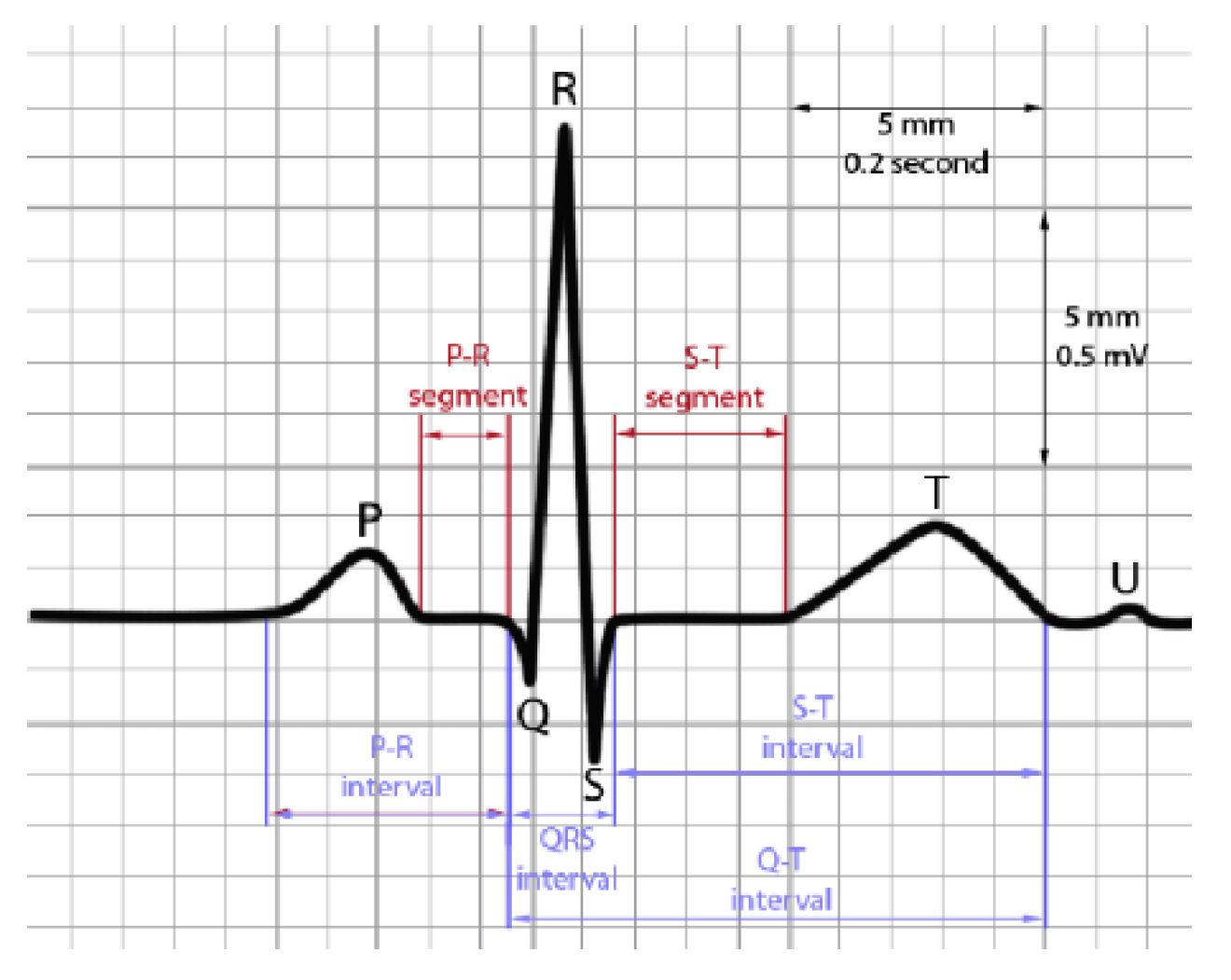
The ECG smartwatch’s software part is meant to process raw data from the ECG sensor, which acts as a backbone for effective data acquisition, processing, storage, and interpretation. This software optimizes the accuracy and reliability of the ECG readings so that meaningful insights can be derived regarding the user’s heart health. One salient feature of the software is denoising, which helps to remove unwanted noise and interference from the ECG signal. By connecting directly to the ECG sensor hardware, this feature acts to improve the clarity of the signal, which leads to more accurate readings. Meanwhile, the data analysis function analyzes the raw ECG data received from the hardware using a set of algorithms. These algorithms help filter noise, segment the ECG signal into individual heartbeats, and detect any abnormalities in the heart rhythm, thus providing a holistic analysis of heart health.
The health status display includes real-time health metrics such as heart rate, blood pressure, oxygen levels, and stress levels. The data is showcased on the screen of the smartwatch so as to provide immediate feedback to the user. ECG data export is another important function that allows a user to send ECG data from the storage component of the hardware to an external device, such as a PC or monitor. This is important for further analyzing data or sharing it with medical professionals. Moreover, the software allows the integration of other apps for compatibility with different types of health and fitness applications. The ECG smartwatch transfers data via Bluetooth connectivity to other health platforms and provides users with a better overview of their state of health. The integration of these advanced functionalities has marked a significant advancement in heart health monitoring and management via ECG smartwatches.
Figure 7.
Software component of ECG signal.
Figure 7.
Software component of ECG signal.
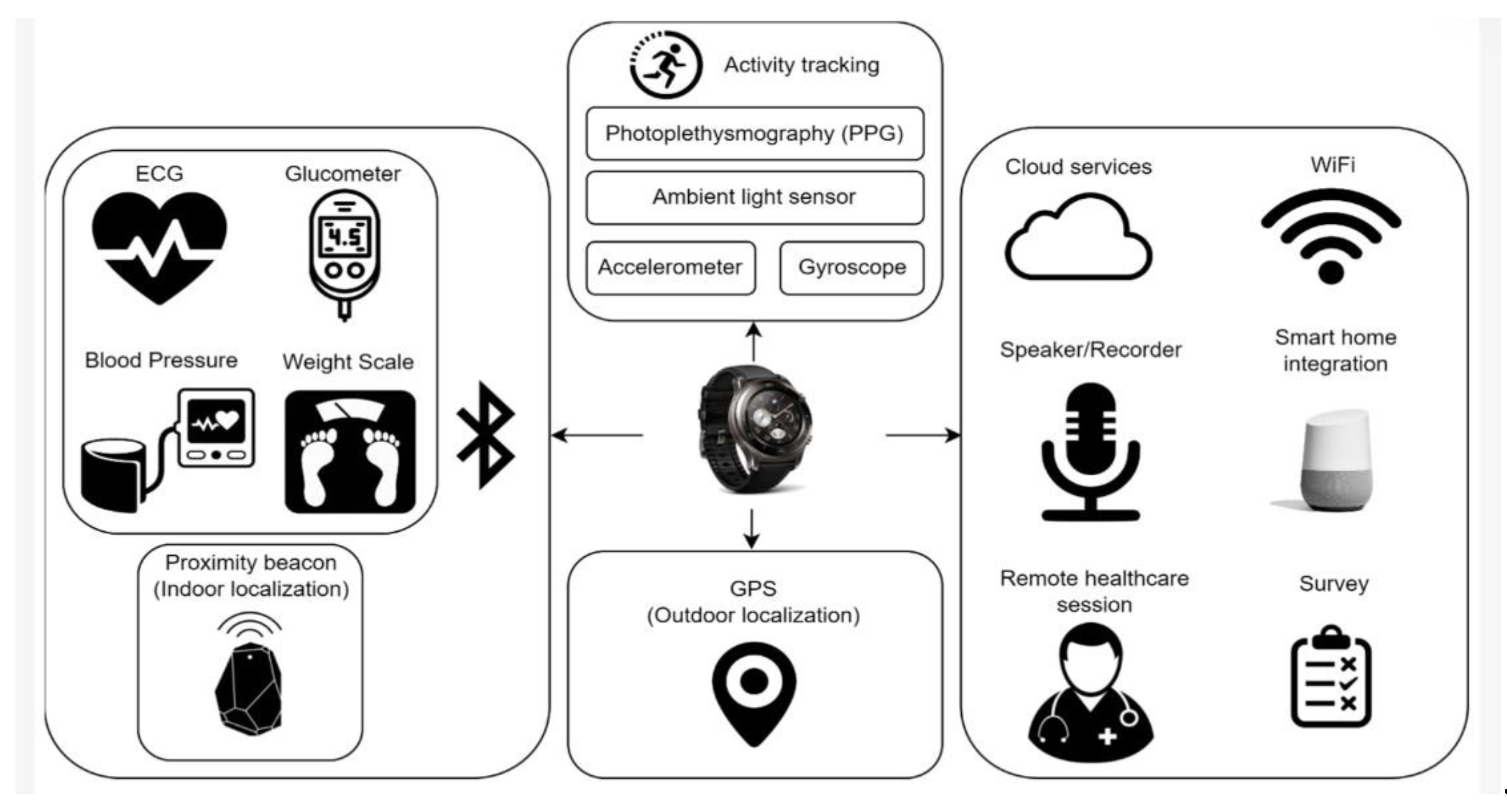
Figure 8.
Developing a Smartwatch-Based Healthcare Application.
Figure 8.
Developing a Smartwatch-Based Healthcare Application.
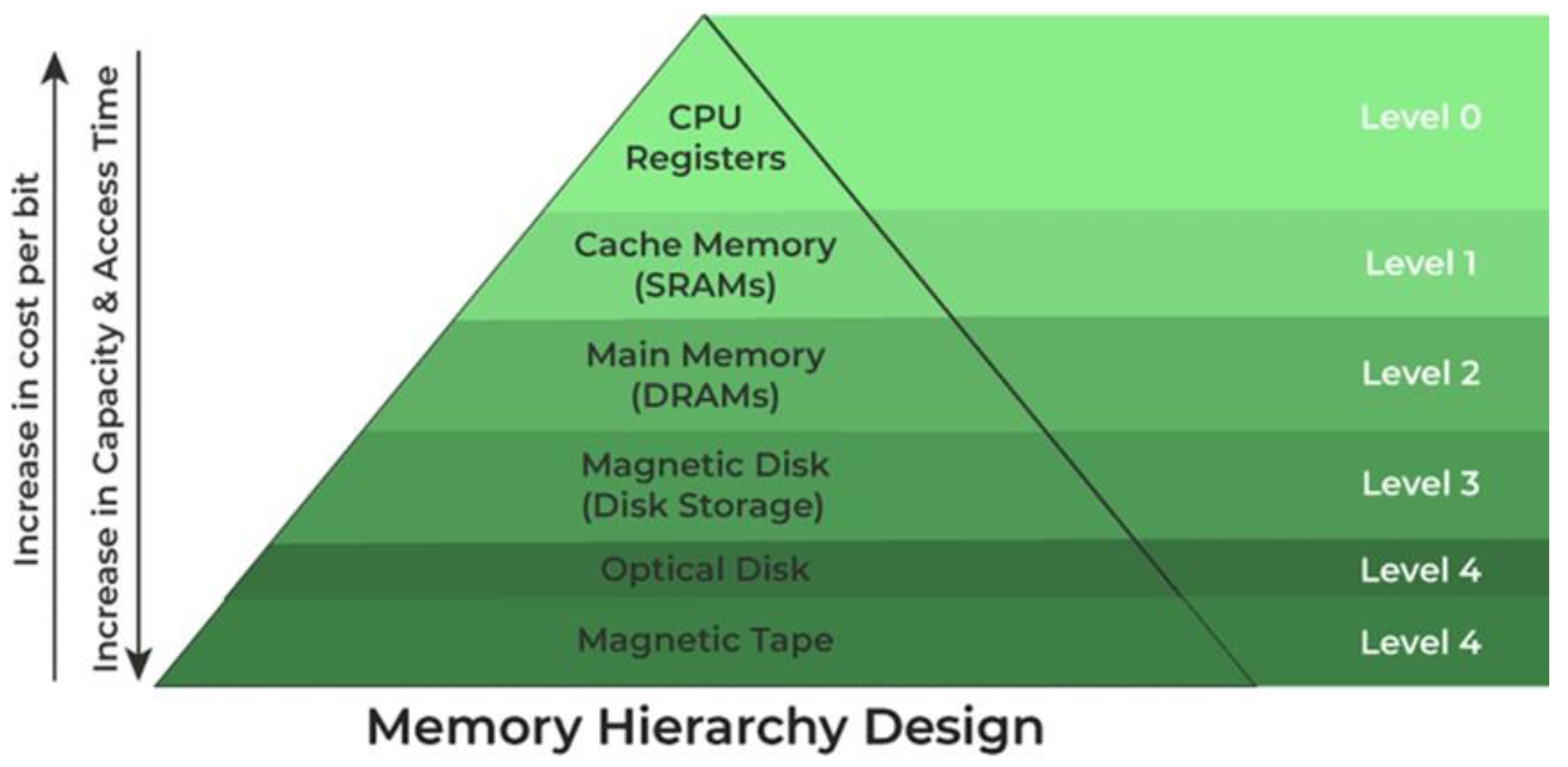
Figure 9.
Memory Hierarchy.
Figure 9.
Memory Hierarchy.
Memory hierarchy is an essential component of a computer system for several reasons.
There are many reasons for such differences in speed. Computers have several levels of memory accesses that synchronize access with the control unit, where quick access and processing of an increased amount of data will be done by the CPU. The memory hierarchy closes the gap in speed between the slowest and fastest memory parts and allows the CPU to access data faster. Secondly, the memory costs and access type vary - SRAM is faster and costs more for storage, while HDDs and SSDs are cheaper but have longer access times. Memory hierarchy incorporates the cost-performance trade-off by putting frequently accessed data in the faster, more expensive memory and putting less frequently accessed data in much larger, slower memory. Thirdly, because of shortcomings in construction and costs, it does not become feasible to keep all data in the fastest memory at all times - for example, CPU cache. Memory hierarchy brings closer this data to the CPU, thus eliminating the need for excessively large, expensive, high-speed memory. while it slows down components, it does consume lesser power as compared to the high-speed memory. The range of hierarchy in memory use is maximum memory use to have quick power access and subsequently a low-speed memory usage as needed. Happily, the last memory hierarchy enables this very scalability to take care of the rising demands of data. More levels of memory can be fed into the hierarchy with the growth of data requirements, so the system will adjust without having to regenerate every last single memory subsystem. It is discussed that every aspect is Capacity, Access Time, Performance, Cost per Bit, and Volatility in a memory hierarchy. According to WhatIs.com, capacity is the total volume to be stored in memory. “The capacity grows as we walk down the Hierarchy from top to bottom.” (WhatIs.com, n.d.) Accessing time is taken to refer to the time from the request made before data is read before it is ready. The access duration increases as we move down the Hierarchy. Previously and in the age of computer systems, Memory Hierarchy performance differences between the CPU registers along with Main Memory extended to quite a distance as of access time. Thus, this performance is degrading in the system and requires enhancement. This enhancement (Memory Hierarchy Design) further enhances the performance of the systems. Hindrances to the enhancement of speed in the system would include how deep one has to go into the memory hierarchy to adjust data. More expensive per bit will be as you go up the Hierarchy, having Internal Memory priced higher than External Memory. Some levels of memory are like RAM, which are volatile, meaning they lose data when the power goes out. Whereas some fall under the category of non-volatile, such as ROM, which remains functional without power.
This definition includes that virtual memory is the memory management technique, which uses actual RAM, and the space from the disks to create the illusion of more RAM as it can be available. Importantly, it performs memory management and protection to have addresses. Its functions are broken up into Address Space Expansion, Memory Protection, Page Fault Handling, Ease of Multi-tasking, and Memory Overcommitment. The first address space expansion for this research will be VIRTUAL MEMORY. This allows an individual to utilize more memory than RAMs can deliver by extending an application’s addressable memory space. This becomes very critical when one deals with giant programs. Virtual memory protects memory by isolating programs from one another, because each process has its own virtual address space; in addition, operating systems prevent processes from accessing memory outside their limited region. This is to protect the system from unauthorized access and enhanced security. Page fault is when a process accesses data that is not available in the RAM. The Operating System then swaps data from RAM to secondary storage when it is needed. Optimizes usage of RAM and ensures that only the most pertinent material is available for execution. Convenience in multitasking is aided by virtual memory that allows many processes to run simultaneously each with a unique virtual address space. This avoids the consequence of the bad program on the rest. Memory Overcommitment: Memory overcommitment becomes possible with virtual memory because the summation of virtual address space for all running processes can exceed the limit set by physical RAM. This is because the same processes cannot all be found actively using their full address space at the very same time and the Operating System can manage memory in and out of RAM quite efficiently.
Table 1.
Comparison between RAM and ROM.
Table 1.
Comparison between RAM and ROM.
| Random-Access Memory (RAM) |
Read-Only Memory (ROM) |
| Point |
Explanation |
Point |
Explanation |
| Volatile memory. |
Loses data once power is cut. |
Non-Volatile memory. |
Retains data even when the power is cut. |
| Store data that the CPU actively uses. |
Makes program execution easier. |
Contains firmware. |
Permanent software instructions are necessary for booting up the
computer. |
| Fast. |
Allows the CPU to read and write quickly. |
Store Basic Input/Output System (BIOS). |
Used for initializing hardware components. |
| Main memory. |
Provides
workspace for applications and operating systems. |
Static memory. |
It doesn’t need to refresh every time. |
| Crucial for system performance. |
Directly affects the speed of
accessing data and
execution of programs. |
Not modified by CPU. |
The data cannot be changed. |
The data currently being used by a computer is stored in RAM, whereas the quantities stored in ROM are the data that a computer needs to boot and run. RAM reads and writes faster than ROM, which can only be read because any sequence is a possible access method.
Conclusions
The inventing and application of advanced medical technologies, memory hierarchy, and digital logic have all given ample attention to their great importance in healthcare, computing, and design of systems. Study on IoT healthcare cardiac monitoring devices and embedded systems has convinced everybody that smartwatches carry great potential in medicine. Even more important is real-time monitoring, energy-efficient, and systems architecture. More accurate and easier health monitoring is made possible, however along with the convergence of microcontroller and microprocessor technologies, thus resulting in proactive patient care.
Moreover, the study into memory hierarchy has confirmed its importance to computing in enhancing the performance of systems, efficiency in the use of resources, and scalability. The distinction between RAM and ROM with the function of virtual memory is important for understanding data management and execution of programs, which will then be useful as prerequisites for optimizing computing resources for purposeful and effective system performance.
Also, the application of digital logic has shown great flexibility for many real-world applications, such as industrial automation, traffic management, and healthcare monitoring. By using Boolean algebra and logic simplification techniques, one can further develop efficient circuit designs toward enhancing computing systems. This shows the relevance of digital logic as they can apply to different fields and become part of advanced modern technology and future sensing capabilities.
Thus, these findings contribute to the growing dependence on technology in terms of healthcare and computing. These bring medical monitoring one’s step closer to digital, optimize memory systems, and utilize digital logic to technological conception in designing tests that will eventually bring efficiency, accuracy, and accessibility. These technologies provide pathways for making solutions more intelligent, cheaper, and more straightforward in different fields.
References
- Srivastava, J. , Routray, S., Ahmad, S., & Waris, M. M. (2022). [Retracted] Internet of Medical Things (IoMT)-based smart healthcare system: Trends and progress. Computational Intelligence and Neuroscience, 2022.
- Islam, M. M. , Nooruddin, S., Karray, F., & Muhammad, G. (2022). Internet of Things: Device capabilities, architectures, protocols, and smart applications in healthcare domain. IEEE Internet of Things Journal, 10.
- Zhang, G. , & Navimipour, N. J. (2022). A comprehensive and systematic review of the IoT-based medical management systems: Applications, techniques, trends, and open issues. Sustainable Cities and Society, 82.
- Abdulmalek, S. , Nasir, A., Jabbar, W. A., Almuhaya, M. A., Bairagi, A. K., Khan, M. A. M., & Kee, S. H. (2022, October). IoT-based healthcare-monitoring system towards improving quality of life: A review. Healthcare, 10.
- Patra, R. , Bhattacharya, M., & Mukherjee, S. (2021). IoT-based computational frameworks in disease prediction and healthcare management: Strategies, challenges, and potential. In IoT in Healthcare and Ambient Assisted Living (pp. 17-41).
- Mahmmod, B. M. , Naser, M. A., Al-Sudani, A. H. S., Alsabah, M., Mohammed, H. J., Alaskar, H.,... & Abdulhussain, S. H. (2024). Patient monitoring system based on Internet of Things: A review and related challenges with open research issues. IEEE Access.
- Abdullah, A. (2019). Investigation of brain cancer with interfacing of 3-dimensional image processing. Indian Journal of Science & Technology, 12.
- Saeed, S. , & Khan, H. (2021). Global mortality rate and statistical results of Coronavirus. ( 2021). Global mortality rate and statistical results of Coronavirus. Infectious Diseases and Tropical Medicine, 1–12.
- Farahani, B. , Firouzi, F., & Chakrabarty, K. (2020). Healthcare IoT. In Intelligent Internet of Things: From Device to Fog and Cloud (pp. 515-545).
- Dogra, V. , Singh, A., Verma, S., Kavita, Jhanjhi, N. Z., & Talib, M. N. (2021). Analyzing DistilBERT for sentiment classification of banking financial news. In S. L. Peng, S. Y. Hsieh, S. Gopalakrishnan, & B. Duraisamy (Eds.), Intelligent Computing and Innovation on Data Science (Vol. 248, pp. 665-675). Springer. [CrossRef]
- Gopi, R. , Sathiyamoorthi, V., Selvakumar, S., et al. (2022). Enhanced method of ANN-based model for detection of DDoS attacks on multimedia Internet of Things. Multimedia Tools and Applications, 81, 6739. [Google Scholar] [CrossRef]
- Chesti, I. A. , Humayun, M., Sama, N. U., & Jhanjhi, N. Z. (2020, October). Evolution, mitigation, and prevention of ransomware. In 2020 2nd International Conference on Computer and Information Sciences (ICCIS) (pp. 1-6). IEEE.
- Alkinani, M. H. , Almazroi, A. A., Jhanjhi, N. Z., & Khan, N. A. (2021). 5G and IoT-based reporting and accident detection (RAD) system to deliver first aid box using unmanned aerial vehicle. Sensors, 21.
- Babbar, H. , Rani, S., Masud, M., Verma, S., Anand, D., & Jhanjhi, N. (2021). Load balancing algorithm for migrating switches in software-defined vehicular networks. Computational Materials and Continua, 67.
- Saeed, S. , & Abdullah, A. (2021). Combination of brain cancer with hybrid K-NN algorithm using statistical analysis of cerebrospinal fluid (CSF) surgery. International Journal of Computer Science and Network Security, 21.
- Saeed, S., & Abdullah, A. (2019). Analysis of lung cancer patients for data mining tool. International Journal of Computer Science and Network Security, 19(7), 90-105.
- Saeed, S. , Abdullah, A., Jhanjhi, N. Z., Naqvi, M., & Nayyar, A. (2022). New techniques for efficiently k-NN algorithm for brain tumor detection. Multimedia Tools and Applications, 81, 1861. [Google Scholar]
- Saeed, S. (2021). Optimized hybrid prediction method for lung metastases. Artificial Intelligence in Medicine.
- Saeed, S. , Abdullah, A., & Naqvi, M. (2019). Implementation of Fourier transformation with brain cancer and CSF images. Indian Journal of Science & Technology, 12.
- Gill, S. H. , Razzaq, M. A., Ahmad, M., Almansour, F. M., Haq, I. U., Jhanjhi, N. Z.,... & Masud, M. (2022). Security and privacy aspects of cloud computing: a smart campus case study. Intelligent Automation & Soft Computing, 31(1), 117-128.
- Muzafar, S. , & Jhanjhi, N. Z. (2020). Success stories of ICT implementation in Saudi Arabia. In Employing Recent Technologies for Improved Digital Governance (pp. 151-163). IGI Global.
- Shah, I. A. , Jhanjhi, N. Z., & Laraib, A. (2023). Cybersecurity and blockchain usage in contemporary business. In Handbook of Research on Cybersecurity Issues and Challenges for Business and FinTech Applications (pp. 49-64). IGI Global.
- Lee, S. , Abdullah, A., & Jhanjhi, N. Z. (2020). A review on honeypot-based botnet detection models for smart factory. International Journal of Advanced Computer Science and Applications, 11(6).
- Aldughayfiq, B. , Ashfaq, F., Jhanjhi, N. Z., & Humayun, M. (2023). Explainable AI for retinoblastoma diagnosis: interpreting deep learning models with LIME and SHAP. Diagnostics, 13(11), 1932.
|
Disclaimer/Publisher’s Note: The statements, opinions and data contained in all publications are solely those of the individual author(s) and contributor(s) and not of MDPI and/or the editor(s). MDPI and/or the editor(s) disclaim responsibility for any injury to people or property resulting from any ideas, methods, instructions or products referred to in the content. |
© 2025 by the authors. Licensee MDPI, Basel, Switzerland. This article is an open access article distributed under the terms and conditions of the Creative Commons Attribution (CC BY) license (http://creativecommons.org/licenses/by/4.0/).