

Submitted:
26 February 2025
Posted:
26 February 2025
You are already at the latest version
Abstract
Recent advances in artificial intelligence have intensified efforts to improve quality management in the steel manufacturing. In this paper we will present the development and results of a system that aims to learn from the decisions made by experts to anticipate the problems that affect the final quality of the product in the steel rolling process. The system integrates a series of modules including event filtering, automatic expert knowledge extraction, and decision-making neural networks developed in a phased approach. Experimental results show that our system anticipates quality issues with an accuracy of approximately 80%, enabling proactive defect prevention and reduction in production losses. This approach demonstrates the potential for industrial AI applications for predictive quality assurance, highlighting its technical foundations and potential for industrial application.
Keywords:
1. Introduction
2. Methodology
2.1. Data Acquisition and Preprocessing
2.2. Event Filtering and Expert Knowledge Extraction Modules: Structure and Operation
2.2.1. Event Filtering Module
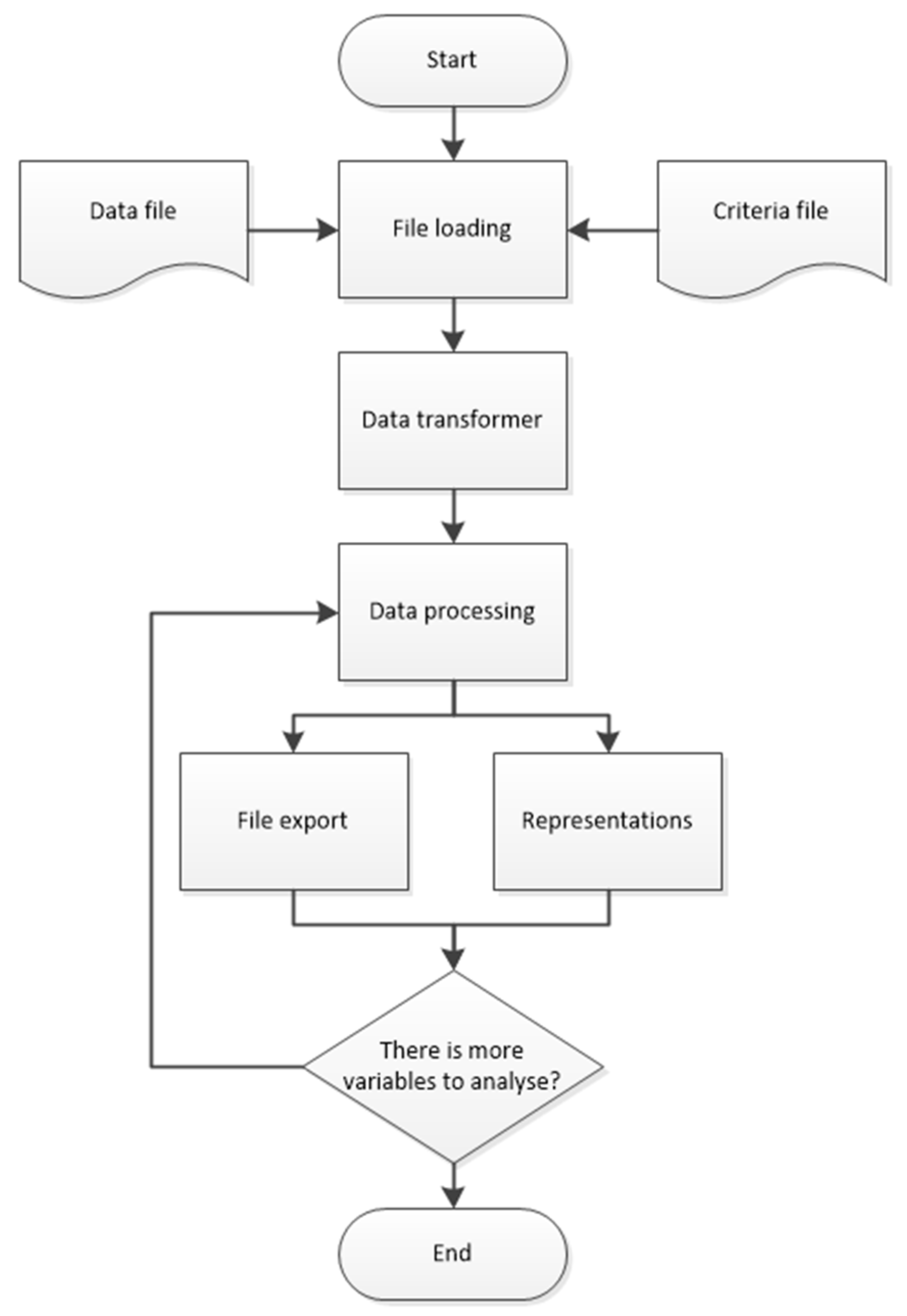
- File Loading Submodule
- Content Transformation Submodule
- Data Grouping and Windowing Submodule
- Statistical Processing and Anomaly Detection Submodule
- Output Generation Submodule
2.2.2. Automatic Expert Knowledge Extraction Module
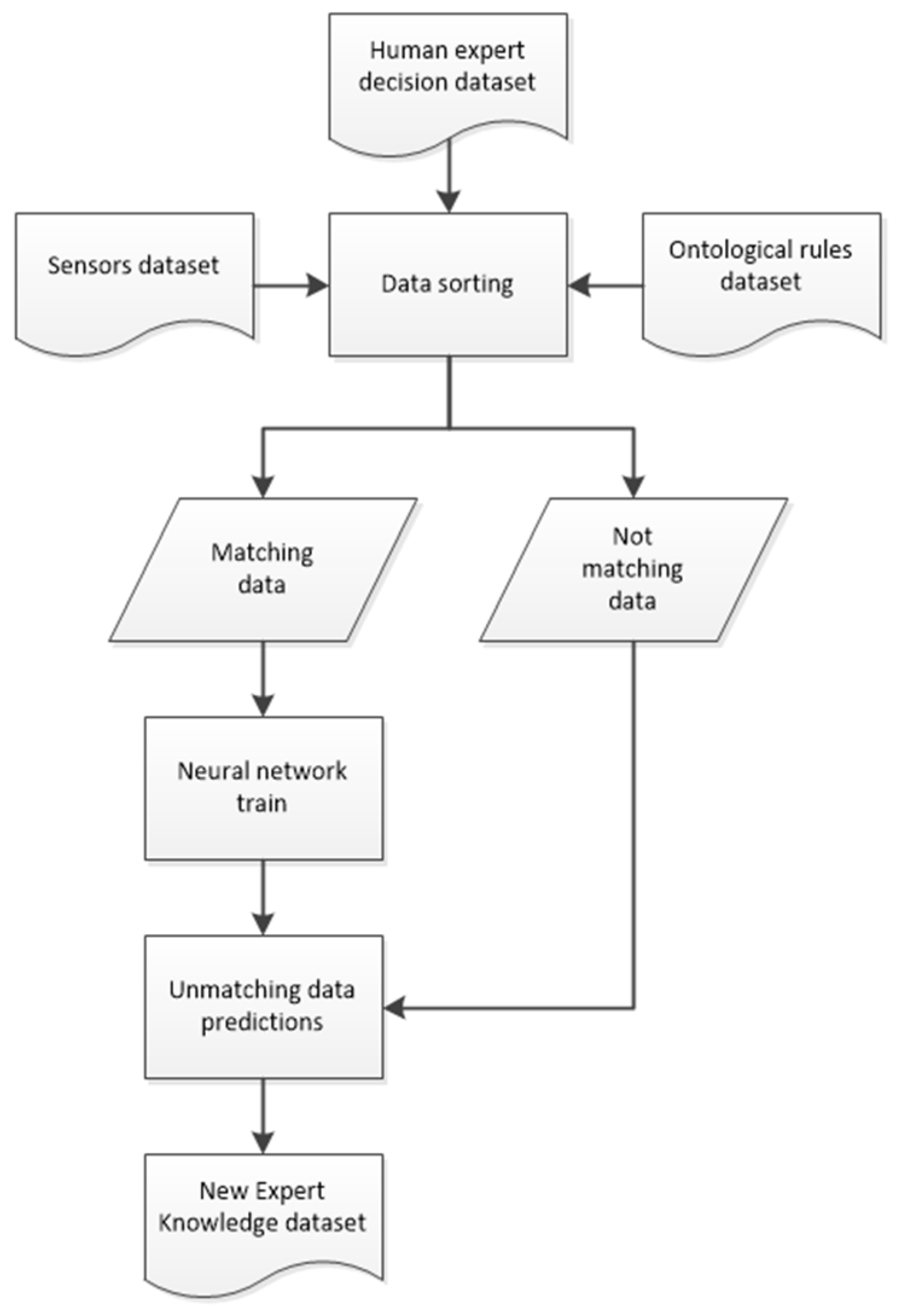
- Data Collection and Integration
- Discrepancy Analysis Submodule
- Rule Evaluation and Refinement Submodule
- Knowledge Database Generation Submodule
2.3. Departmental and Interdepartmental Inference Modules: Architecture, Operation and Justification
2.3.1. Departmental Inference Module
2.3.2. Departmental Inference Module
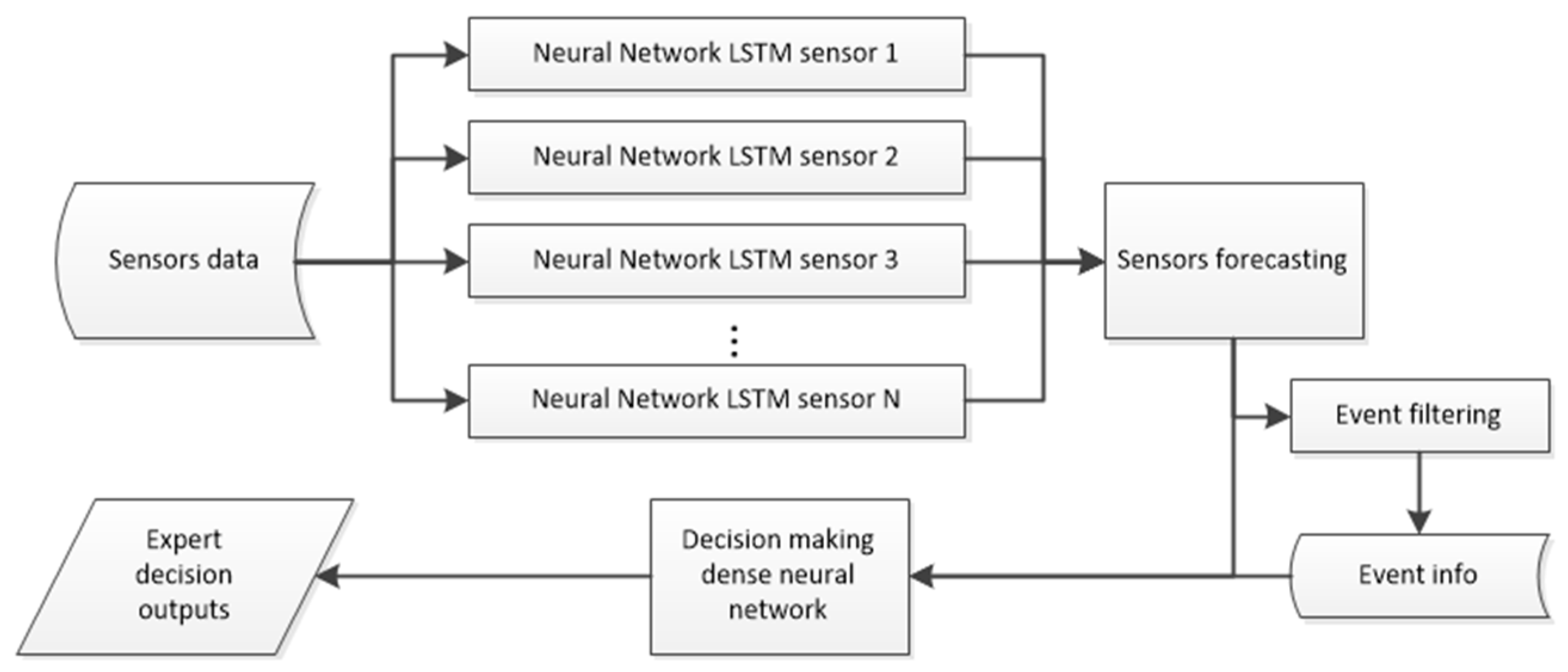
- For departmental inference, the combination of LSTM and MLP networks enables temporal forecasting and complex decision emulation, respectively. The LSTM component isolates and predicts trends in sensor data, while the MLP integrates these predictions with event signals to generate anticipated quality labels.
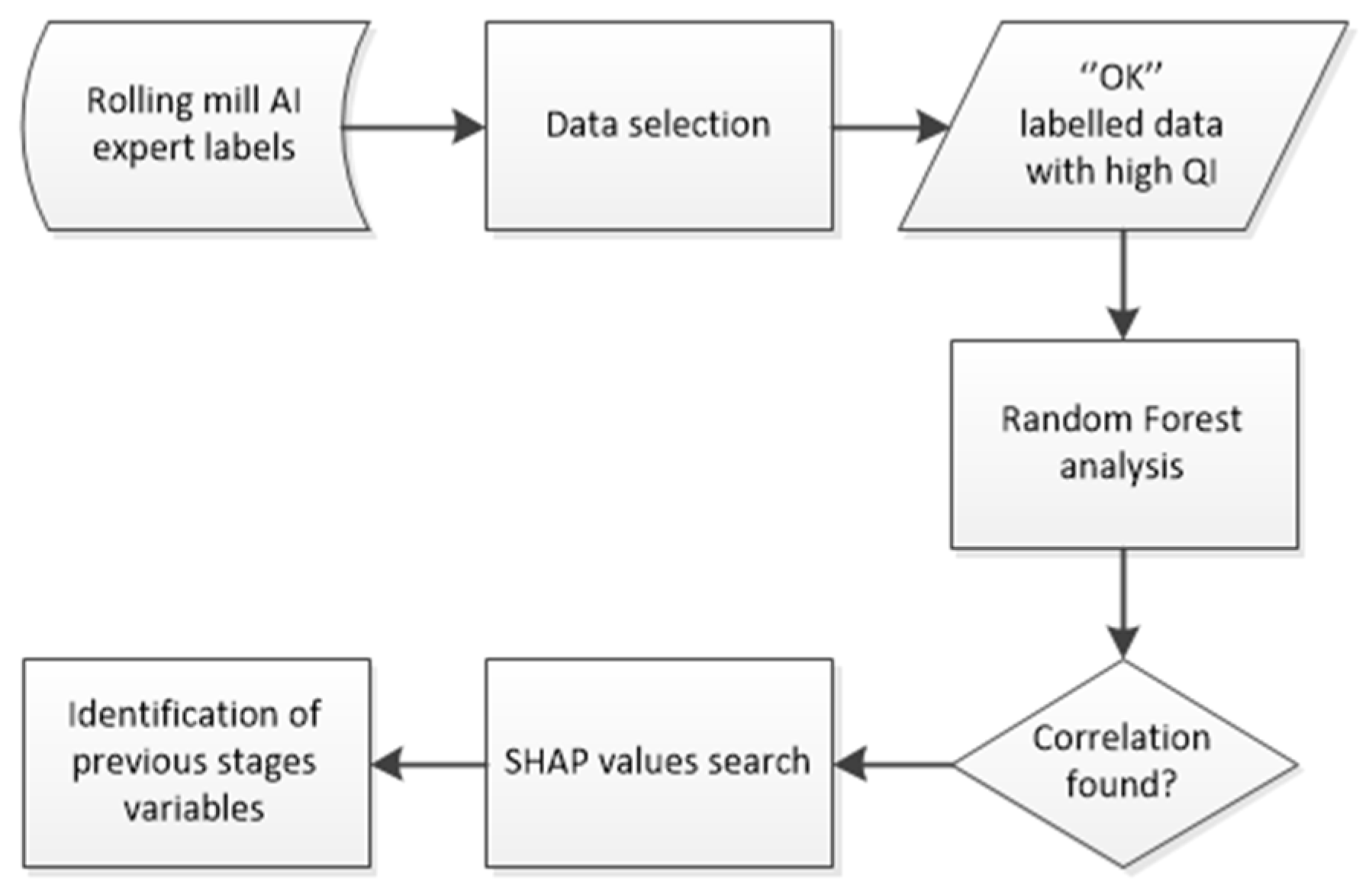
- For interdepartmental inference, the Random Forest-based module synthesizes data across departments to reveal causal relationships between early-stage anomalies and final product quality. Its ensemble structure and interpretability ensure that the system’s diagnostic conclusions are both robust and actionable.
3. Results
3.1. Departmental Decision-Making Module
3.1.1. Steel Mill
3.1.2. Logistic
3.1.3. Rolling Mill
3.1.4. Sales
3.2. Interdepartmental Decision-Making Module
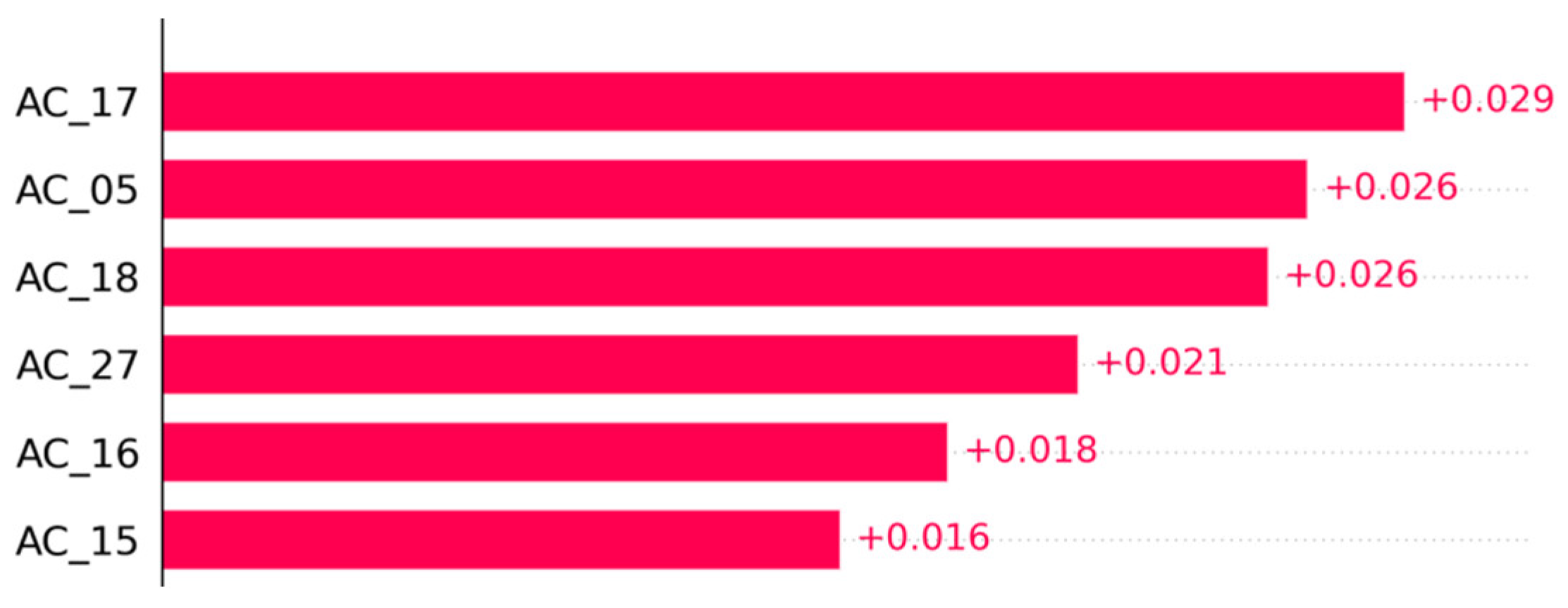
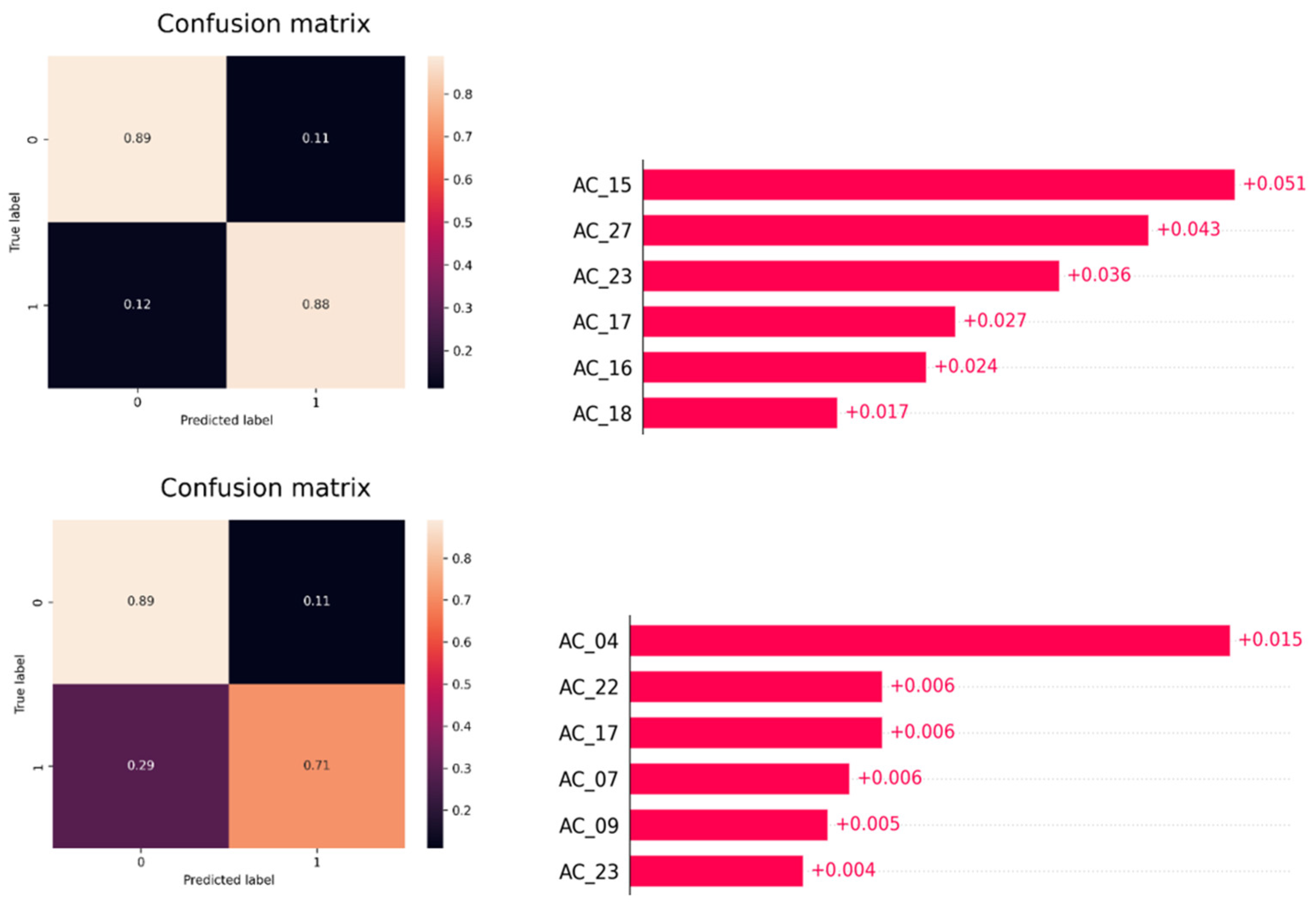
4. Discussion
5. Conclusions
Author Contributions
Funding
Data Availability Statement
Conflicts of Interest
References
- Kano, M., & Nakagawa, Y. (2008). Data-based process monitoring, process control, and quality improvement: Recent developments and applications in steel industry. Comput. Chem. Eng., 32, 12-24. [CrossRef]
- Zhang, L., & Thomas, B. (2003). State of the Art in Evaluation and Control of Steel Cleanliness. Isij International, 43, 271-291. [CrossRef]
- Takalo-Mattila, J., Heiskanen, M., Kyllönen, V., Määttä, L., & Bogdanoff, A. (2022). Explainable Steel Quality Prediction System Based on Gradient Boosting Decision Trees. IEEE Access, 10, 68099-68110. [CrossRef]
- Liu, Z., Wu, L., Liu, Z., & Mo, Y. (2023). Quality control method of steel structure construction based on digital twin technology. Digital Twin. [CrossRef]
- Susto, G. A., Schirru, A., Pampuri, S., McLoone, S., & Beghi, A. (2015). Machine Learning for Predictive Maintenance: A Multiple Classifier Approach. IEEE Transactions on Industrial Informatics, 11(3), 812–820. [CrossRef]
- Lee, J., Bagheri, B., & Kao, H.-A. (2015). A Cyber-Physical Systems Architecture for Industry 4.0-based Manufacturing Systems. Manufacturing Letters, 3, 18–23. [CrossRef]
- Lin, L., & Zeng, J. (2021). Consideration of green intelligent steel processes and narrow window stability control technology on steel quality. International Journal of Minerals, Metallurgy and Materials, 28, 1264 - 1273. [CrossRef]
- Branca, T., Colla, V., Algermissen, D., Granbom, H., Martini, U., Morillon, A., Pietruck, R., & Rosendahl, S. (2020). Reuse and Recycling of By-Products in the Steel Sector: Recent Achievements Paving the Way to Circular Economy and Industrial Symbiosis in Europe. Metals. [CrossRef]
- Colla, V., & Branca, T. (2021). Sustainable Steel Industry: Energy and Resource Efficiency, Low-Emissions and Carbon-Lean Production. Metals. [CrossRef]
- Neogi, N., Mohanta, D., & Dutta, P. (2014). Review of vision-based steel surface inspection systems. EURASIP Journal on Image and Video Processing, 2014. [CrossRef]
- Sun, X., Gu, J., Tang, S., & Li, J. (2018). Research Progress of Visual Inspection Technology of Steel Products—A Review. Applied Sciences. [CrossRef]
- Ibrahim, A., & Tapamo, J. (2024). A Survey of Vision-Based Methods for Surface Defects’ Detection and Classification in Steel Products. Informatics. [CrossRef]
- Amzil, K., Yahia, E., Klement, N., & Roucoules, L. (2022). Automatic neural networks construction and causality ranking for faster and more consistent decision making. International Journal of Computer Integrated Manufacturing, 36, 735 - 755. [CrossRef]
- Ren, L., Wang, T., Laili, Y., & Zhang, L. (2022). A Data-Driven Self-Supervised LSTM-DeepFM Model for Industrial Soft Sensor. IEEE Transactions on Industrial Informatics, 18, 5859-5869. [CrossRef]
- L., Zhao, Y., Wang, B., & Shen, F. (2023). A Multistep Sequence-to-Sequence Model With Attention LSTM Neural Networks for Industrial Soft Sensor Application. IEEE Sensors Journal, 23, 10801-10813. [CrossRef]
- Yuan, X., Li, L., Shardt, Y., Wang, Y., & Yang, C. (2020). Deep Learning With Spatiotemporal Attention-Based LSTM for Industrial Soft Sensor Model Development. IEEE Transactions on Industrial Electronics, 68, 4404-4414. [CrossRef]
- Lundberg, S., Erion, G., Chen, H., DeGrave, A., Prutkin, J., Nair, B., Katz, R., Himmelfarb, J., Bansal, N., & Lee, S. (2020). From local explanations to global understanding with explainable AI for trees. Nature Machine Intelligence, 2, 56 - 67. [CrossRef]
- Amoukou, S., Salaün, T., & Brunel, N. (2021). Accurate Shapley Values for explaining tree-based models. ArXiv, abs/2106.03820. [CrossRef]

| Labels assigned by AI expert | |||||
|---|---|---|---|---|---|
| OK | BLOCK | ALARM | SCRAP | ||
|
True labels |
OK | 42331 | 3133 | 587 | 97 |
| BLOCK | 1923 | 7901 | 137 | 15 | |
| ALARM | 488 | 191 | 2201 | 42 | |
| SCRAP | 96 | 26 | 7 | 403 | |
| Sensitivity | Precision | F1-score | |
| OK | 91,73% | 94,41% | 93,05% |
| BLOCK | 79,20% | 70,22% | 74,44% |
| ALARM | 75,33% | 75,07% | 75,20% |
| SCRAP | 75,75% | 72,35% | 74,01% |
| Mean | 80,50% | 78,01% | 79,18% |
| Labels assigned by AI expert | ||||
|---|---|---|---|---|
| OK | ALARM | SCRAP | ||
|
True labels |
OK | 40124 | 2947 | 641 |
| ALARM | 3268 | 8363 | 640 | |
| SCRAP | 647 | 412 | 2536 | |
| Sensitivity | Precision | F1-score | |
| OK | 91,79% | 91,11% | 91,45% |
| ALARM | 68,15% | 71,34% | 69,71% |
| SCRAP | 70,54% | 66,44% | 68,43% |
| Mean | 76,83% | 76,30% | 76,53% |
| Labels assigned by AI expert | ||||||
|---|---|---|---|---|---|---|
| OK | BLOCK | ALARM | DOWNGRADE | SCRAP | ||
|
True labels |
OK | 48059 | 2654 | 394 | 94 | 56 |
| BLOCK | 1532 | 3809 | 61 | 6 | 6 | |
| ALARM | 384 | 115 | 1359 | 3 | 0 | |
| DOWNGRADE | 52 | 17 | 14 | 129 | 78 | |
| SCRAP | 140 | 14 | 2 | 2 | 598 | |
| Sensitivity | Precision | F1-score | |
| OK | 93,76% | 95,80% | 94,77% |
| BLOCK | 70,35% | 57,63% | 63,36% |
| ALARM | 73,03% | 74,26% | 73,64% |
| DOWNGRADE | 44,48% | 55,13% | 49,24% |
| SCRAP | 79,10% | 81,03% | 80,05% |
| Mean | 72,14% | 72,77% | 72,21% |
| Labels assigned by AI expert | ||||||
|---|---|---|---|---|---|---|
| SOLD | PENDING | CLAIM | ROLLBACK | SCRAP | ||
|
True labels |
SOLD | 51501 | 2447 | 451 | 148 | 34 |
| PENDING | 722 | 1884 | 39 | 6 | 1 | |
| CLAIM | 332 | 68 | 1229 | 9 | 0 | |
| ROLLBACK | 127 | 25 | 11 | 444 | 4 | |
| SCRAP | 20 | 5 | 1 | 0 | 70 | |
| Sensitivity | Precision | F1-score | |
| SOLD | 94,36% | 97,72% | 96,01% |
| PENDING | 71,04% | 42,54% | 53,21% |
| CLAIM | 75,03% | 71,00% | 72,96% |
| ROLLBACK | 72,67% | 73,15% | 72,91% |
| SCRAP | 72,92% | 64,22% | 68,29% |
| Mean | 77,20% | 69,73% | 72,68% |
Disclaimer/Publisher’s Note: The statements, opinions and data contained in all publications are solely those of the individual author(s) and contributor(s) and not of MDPI and/or the editor(s). MDPI and/or the editor(s) disclaim responsibility for any injury to people or property resulting from any ideas, methods, instructions or products referred to in the content. |
© 2025 by the authors. Licensee MDPI, Basel, Switzerland. This article is an open access article distributed under the terms and conditions of the Creative Commons Attribution (CC BY) license (http://creativecommons.org/licenses/by/4.0/).