Preprint
Article

This version is not peer-reviewed.

Benefit of Consolidation Thoracic Radiotherapy in Extensive-Stage Small-Cell Lung Cancer Patients Treated with Immunotherapy: Data from Slovenian Cohort

A peer-reviewed article of this preprint also exists.

Submitted:

21 February 2025

Posted:

25 February 2025

You are already at the latest version

Abstract

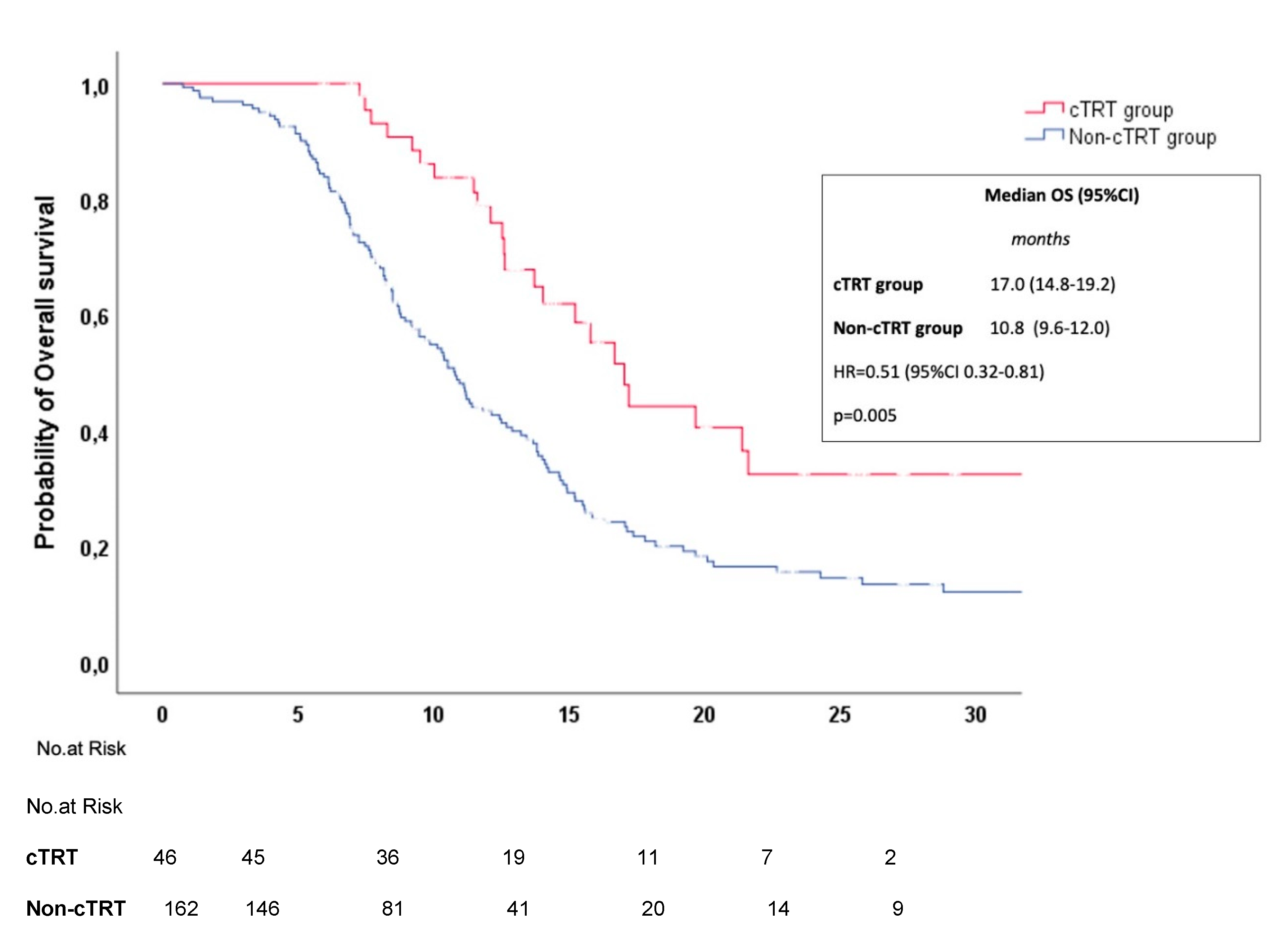
Background: Chemoimmunotherapy (CT/IO) with immune checkpoint inhibitors has recently become the standard of care for extensive-stage small cell lung cancer (ES-SCLC). Given the uncertain role of consolidation thoracic radiotherapy (cTRT) in this setting, we conducted a real-world study to evaluate the efficacy and safety of cTRT in ES-SCLC patients receiving first-line CT/IO. Methods: We performed a retrospective analysis of ES-SCLC patients treated with first-line CT/IO in Slovenia from December 2019 to June 2024. Patient characteristics, treatment patterns, survival outcomes, and adverse events were analyzed, with subgroup comparisons based on cTRT administration. Results: Among 208 patients (median age: 66), median overall survival was 12.1 months (95% CI: 10.6–13.7). cTRT was administered to 46 patients (22.1%), who had fewer metastases and received more maintenance IO cycles. cTRT was associated with improved OS (17.0 vs. 10.8 months; HR = 0.51, p = 0.005) and was an independent OS predictor (HR = 0.55, p = 0.013). Grade ≥3 adverse events were similar (21.7% vs. 21.3%), though pneumonitis occurred more frequently with cTRT (6.5% vs. 0%, p = 0.001). Conclusion: cTRT may improve survival in ES-SCLC patients treated with CT/IO, with no significant increase in toxicity apart from pneumonitis. Further prospective studies are needed.

Keywords: 
;  ;  ;  ;  

1. Introduction

Small-cell lung cancer (SCLC) is a high-grade neuroendocrine carcinoma that occurs predominantly in current or former smokers and has an extremely poor prognosis. It accounts for approximately 15% of lung cancer cases [1,2] and is traditionally divided into extensive (ES) and limited stage (LS) based on the ability of the disease to be confined within a radiation field. Over 70% of SCLC cases are diagnosed at ES [2,3,4].
For over three decades, the standard treatment of ES-SCLC was limited to platinum-based chemotherapy with or without addition of prophylactic cranial irradiation (PCI) [5,6,7]. Despite high initial objective response rates (ORR), median overall survival (mOS) was only about 10 months [8,9]. Previously published meta-analysis and prospective studies have suggested that consolidation thoracic radiotherapy (cTRT) improves local control (LC) and OS in patients who respond well to chemotherapy [10,11,12].
Currently, the addition of immunotherapy (IO) with immune checkpoint inhibitors (ICIs) has become a new therapeutic option for ES-SCLC. The IMpower133 and CASPIAN randomised trials confirmed that chemoimmunotherapy (CT/IO), a combination of IO with anti-programmed death-ligand 1 (anti-PD-L1) antibodies atezolizumab or durvalumab and 4 cycles of platinum-etoposide chemotherapy, significantly improved mOS compared to chemotherapy alone, without significantly increasing the incidence of adverse events (AEs) [13,14]. Both, atezolizumab and durvalumab have received approval worldwide and have been included as part of the standard of care for the first line treatment of ES-SCLC [15,16]. In Slovenia, both atezolizumab and durvalumab were launched for ES-SCLC at the end of 2019.
cTRT after CT/IO could further improve LC and survival outcomes in selected patients and has promising prospects in the era of IO. However, the feasibility and safety of this approach remains uncertain, as it was not included in the two aforementioned prospective clinical trials [13,14], and only limited data from early-phase clinical trials and retrospective studies are available in the literature [32,33,34,35,36,37,38,39].
Here, we present the results of a real-world observational study evaluating the treatment outcomes of patients with ES-SCLC who received first-line CT/IO in Slovenia. Specifically, we aim to evaluate the efficacy and safety of combining cTRT with CT/IO.

2. Patients and Methods

The study included treatment-naïve consecutive patients with pathologically confirmed ES-SCLC treated with first-line CT/IO between December 2019 and June 2024 in routine clinical practice at three academic institutions in Slovenia: the Institute of Oncology Ljubljana, University Clinic Golnik and University Clinical Center Maribor, in which all lung cancer patients in the country are treated. The study was conducted according to the guidelines of the Declaration of Helsinki, and approved by the Institutional Ethics Committee and Institutional Review Board of the Institute of Oncology Ljubljana (No. ERIDNPVO-0076/2024). Individual patient consent was waived for the present study as it was a retrospective study, the research involved no risk to the subjects, and the institutional informed consent forms for treatment also included consent for the use of patient's data, materials, and/or test results for research purposes.
Patients received at least one cycle of CT/IO with the anti-PD-L1 antibody atezolizumab or durvalumab, followed by maintenance therapy of the anti-PD-L1 antibody until disease progression or unacceptable toxicity. Patients treated for LS-SCLC and those not receiving IO were excluded. Consolidation thoracic radiotherapy after CT/IO and PCI were allowed and decided by the multidisciplinary tumor board.
Patients’ clinical characteristics were collected, including age, sex, smoking status, Eastern Cooperative Oncology Group performance status (ECOG PS), metastatic sites, laboratory results at diagnosis and treatment patterns. Response to treatment was evaluated by computer tomography (CT) scan, according to the Response Evaluation Criteria for Solid Tumors (RECIST) version 1.1.
Patients’ data were provided by the treating medical oncologists and retrieved from the medical records. Adverse events were graded according to the Common Terminology Criteria for Adverse Events (CTCAE) v 5.0 [17]. Statistical analysis were performed using SPSS Statistics for Windows (version 26.0; IBM Corp.) Descriptive statistics were used to describe patient characteristics and AEs. Overall survival was assessed from the date of diagnosis until death from any cause or the last follow-up visit using the Kaplan-Meier method. Differences in survival between the cTRT and non-cTRT groups were analyzed using the log-rank test and the Cox proportional hazards regression model. A p-value of <0.05 was considered statistically significant. The chi-square test and non-parametric tests were used to compare variables between the cTRT and non-cTRT groups.

3. Results

3.1. Overall Study Population (Baseline Characteristics & Overall Survival Analysis)

From December 2019 to June 2024 there were 208 patients with ES-SCLC treated with CT/IO in Slovenia. Baseline characteristics are shown in Table 1. The median age was 66 years (range 41-79 years), 55.3% of patients were 65 years or older and 55.8% of patients were male. The majority of patients were smokers (98.6%). Most patients (74%) were in a good PS of 0-1. Brain metastases were present in 19.7%, liver metastases in 43.8% and bone metastases in 34.1% at the time of diagnosis and 34.6% of patients had 3 or more metastatic sites involved.
Durvalumab and atezolizumab were administered to 142 (68.3%) and 66 (31.7%) patients, respectively. In the induction phase, patients received platinum-based chemotherapy concurrently with IO, the median number of induction cycles was 4 (range 1-6). The induction phase was followed by the maintenance phase with IO only; the median number of maintenance cycles was 3 (range 0-38).
Consolidation radiotherapy was performed in 46 (22.1%) patients. In all patients, the primary tumor and the affected regional lymph nodes were included in the treatment field. In 7 patients, metastatic sites were also irradiated (suprarenal gland, kidney and lymph nodes). The median interval between chemoimmunotherapy and cTRT was 42 days (range 14-111), and in more than 90% of patients cTRT was started within 60 days after last CT/IO cycle. Radiotherapy (RT) doses ranged from 20 Gy to 60 Gy, with 80.4% (37/46) of patients receiving a 30 Gy RT dose in 10 once-daily fractions. Other fractionations used were 5 x 4Gy (1 patient), 13 x 3Gy (3 patients), 18 x 2.5Gy (1 patient) and 30 x 2 Gy (4 patients). Prophylactic cranial irradiation (PCI) was delivered at the discretion of the treating physician. Only 3 patients (1.4%) received PCI.
The ORR was 84.9%, with 5.5% and 79.4% of patients achieving a complete response and partial response, respectively. Progressive disease was observed in 6.5% of patients.
With a median follow-up time of 25.9 months, the mOS was 12.1 months (95% CI 10.6-13.7; Figure 1). The estimated 12-month and 24-month OS rate was 51% and 19%, respectively.
In the univariate Cox regression analysis several factors were significantly associated with OS. Female sex, median number of CT/IO cycles and cTRT were associated with better survival. Conversely, poor ECOG PS (≥2 vs. 0–1), liver metastases, bone metastases, involvment of ≥3 metastatic sites and high LDH levels at presentation were associated with worse survival (Table 2). Age (≥65 vs <65) and brain metastases (yes vs. no) had no influence on OS.
In the multivariate Cox regression analysis, female sex, median number of CT/IO cycles and cTRT remained independently associated with improved survival. Poor ECOG PS (≥2 vs. 0–1) and involvment of ≥3 metastatic sites remained significant predictors of worse OS (Table 2). Liver metastases, bone metastases, and high LDH level lost statistical significance after adjustment, suggesting their effects were confounded by other variables.
3.2. cTRT vs. Non-cTRT Subgroup Analysis
At diagnosis, there were significant differences in terms of disease burden and treatment parameters between the cTRT group (n = 46) and the non-cTRT group (n = 162) (Table 3). Patients in the cTRT group were less likely to have liver metastases, bone metastases, and more than three metastatic sites involved. In addition, the median LDH level was lower in the cTRT group.
In terms of treatment exposure, patients in the cTRT group received a higher median number of CT/IO cycles and more cycles of maintenance IO compared to the non-cTRT group.
At first progression, the proportion of patients with intrathoracic progression with or without systemic progression was significantly lower in the cTRT group.
Median OS was 17.0 months in the cTRT group and 10.8 months in the non-cTRT group (HR = 0.51, 95% CI 0.32–0.81, p = 0.005; Figure 2). The estimated 12 and 24-month OS rates were 79% and 32% in the cTRT group compared with 43% and 16% in the non-cTRT group.

3.3. Safety

Out of 208 patients, 47 (22.6%) experienced grade 3 or 4 CTCAE adverse events, the majority of which were related to systemic treatment. Grade 3 or 4 hematological toxicities occurred in 19 patients (9.0%), while 20 patients (9.6%) experienced immune-related adverse events (irAEs) grade 3 or 4. Hepatitis was the most common, occurring in four patients.
There were no significant differences in the incidence of grade 3 or 4 AEs or irAEs between the cTRT and no-cTRT groups (21.7% vs. 21.3% and 8.7% vs. 9%, respectively). Pneumonitis grade 3 or 4 was reported in three (1.4 %) patients, all of whom had received thoracic RT during systemic treatment. The difference in pneumonitis in cTRT vs non-cTRT group was significant (6.5% vs 0%, respectively; p=0.001). No cases of grade 5 pneumonitis were reported.

4. Discussion

The present study provides results from an observational study evaluating the real-world efficacy of first line CT/IO in patients with ES-SCLC. The median OS of patients in our cohort (12.1 months) was comaparable to those observed in the pivotal trials (12.3 months in Impower 133, 13.0 months in CASPIAN) [13,14], despite the fact that our study included more heterogeneous real-world population with a higher proportion of patients with worse PS, more advanced age and involvement of brain metastases, which are known poor prognostic factors in patients with ES-SCLC. Similar conclusions were made in other published real-world prospective and retrospective studies [18,19,20,21,22,23,24].
Our subgroup analysis suggests that the addition of cTRT to CT/IO may improve survival. The role of cTRT in ES-SCLC was established long before the introduction of IO. In 1999, Jeremic et al. first demonstrated that addition of cTRT to platinum-based CT significantly improved OS [11]. The CREST trial in 2015 further validated its efficacy by enrolling 495 patients with ES-SCLC who had responded to CT. In this study, patients in the cTRT group received 30 Gy in 10 fractions of sequential thoracic radiation. The 1-year and 2-year OS rates were higher in the cTRT arm compared to the control arm (33% vs. 28%, p = 0.066; and 13% vs. 3%, p = 0.004, respectively) [12]. The RTOG 0937 study reported delayed progression with cTRT but did not show a significant improvement in 1-year OS. However, no difference in survival was observed between early and late cTRT administration [25]. A meta-analysis later confirmed that the addition of cTRT to first-line platinum-based CT reduced disease progression and improved OS [10]. Findings from this meta-analysis led to cTRT implementation as part of the standard of care for patients with ES-SCLC who respond to the first line CT, though practices globally varied as there was no clear consensus on the application of cTRT [26,27].
With the introduction of CT/IO as the new standard of care, the role of cTRT has been further debated. The IMpower133 and CASPIAN trials did not include consolidative thoracic RT, as there was limited safety data on combining thoracic RT with IO [13,14]. However, the benefit of the addition of IO to CT remains modest, and the most common site of progression after first-line CT/IO is locoregional [28]. In addition, preclinical and clinical studies suggest a potential synergy between radiotherapy and immunotherapy, supporting the rationale for further investigation the putative beneficial role of cTRT in the CT/IO era [29,30,31].
Welsh et al. confirmed the safety and promising efficacy of combining pembrolizumab with TRT after induction CT in a phase 1 trial, providing a rational for this synergistic therapeutic approach [32]. Subsequently, several retrospective studies have demonstrated improved OS in patients receiving both CT/IO and cTRT [33,34,35,36,37,38]. A recent meta-analysis, which included 12 retrospective and 3 prospective studies, suggested that integrating cTRT with CT/IO improves survival outcomes [39]. Ongoing randomised clinical trials are currently evaluating the efficacy and safety of such approach (NCT05223647, NCT04462276 and NCT04402788).
In our analysis, patients who received cTRT had a significantly longer mOS compared to those who did not recieved cTRT (17.0 months vs. 10.8 months, p <0.001). After adjustment for confounders, cTRT remained an independent predictor of improved survival (HR = 0.51, 95% CI 0.32–0.81, p = 0.005). However, the possibility of selection bias should be considered, as the cTRT group had a more favorable prognosis, including fewer liver and bone metastases and a lower overall metastatic burden and additionally, patients in this group also received more cycles of systemic therapy. These imbalances suggest that the observed survival benefit may be partially influenced by baseline differences rather than cTRT alone. However, at least two retrospective studies (Xie et al. and Peng et al. [34,36]) evaluated cTRT in combination with CT/IO with similar number of patients (45 and 57, respectively). In these studies, the cTRT and non-cTRT groups were better balanced, with Peng et al. utilizing propensity score matching to minimize selection bias. Notably, both studies included more patients with liver metastases in the cTRT groups (31% in Xie et al. and 25% in Peng et al.). Nevertheless, both studies reported improved progression-free survival (PFS) and OS with cTRT, suggesting that the survival benefit observed in our study is unlikely to be solely due to group imbalances [34,36].
The optimal dose of cTRT in the context of immunotherapy remains uncertain due to a lack of prospective studies. Additionally, the sequencing of cTRT and IO maintenance therapy has not been well-defined.
In our cohort, 80.4% of patients received radiotherapy at a dose of 30 Gy, delivered in 10 once-daily fractions. cTRT was initiated after the completion of CT/IO, during the IO maintenance phase. The majority of patients began cTRT within 60 days following their last cycle of CT/IO.
A retrospective study found no significant benefit of early cTRT (≤3 cycles of chemotherapy) compared to late cTRT (>3 cycles of chemotherapy) [40]. Han et al. suggested that early cTRT (within 6 cycles of chemotherapy) could improve LC [41]. In a study by Peng et al, patients with ES-SCLC received cTRT primarily during IO maintenance, while 15 patients (26.3%) underwent synchronous cTRT within the first two cycles of systemic therapy [36]. However, safety and efficacy data were not reported. Several prospective trials are currently investigating the role of cTRT, with most studies administering cTRT during maintenance IO. Until these results are available, the American Society of Clinical Oncology (ASCO) guidelines recommend that cTRT should be administered within 6–8 weeks after CT/IO and before the start of IO maintenance, at a dose of 30 Gy delivered in 10 fractions [27]. This regimen was used in the CREST trial and a phase 1/2 study of ipilimumab and nivolumab in ES-SCLC, with no significant toxicity observed [12,42]. Higher doses (45 Gy in 15 fractions) have been tested in RTOG 0937 and a phase 1 trial of pembrolizumab [25,32]. Several retrospective studies have employed different cTRT protocols, but no direct comparisons between them have been made. However, evidence suggests that high-dose cTRT may improve local control and OS in ES-SCLC while potentially increasing pulmonary toxicity [33,43].
In our analysis, the treatment regimen was well tolerated, with a manageable incidence of grade 3 or higher AEs. Overall, there were no significant differences between the cTRT and non-cTRT groups. All cases of pneumonitis occurred in the cTRT group; however, the incidence was low, and all cases were effectively managed.
IO combined with TRT, whether given concurrently or sequentially, may increase pulmonary toxicity. In clinical trials of IO after conventional TRT, the incidence of any grade pneumonia and grade ≥ 3 pneumonia was 13-33% and 1-9%, respectively, compared with 56-62% and 2% observed in the real world [44]. Important safety data have also been published on the combination of IO and thoracic RT in ES-SCLC. A phase 1 study of 38 patients showed that thoracic RT with concurrent pembrolizumab was well tolerated, with no grade 4 or 5 toxicities and only 6% of patients experiencing a grade 3 toxicity [32]. In a real-world studies, the incidence of grade 3 pulmonary toxicity was approximately 0-9 % [33,34,35]. In addition, a meta-analysis confirmed a manageable incidence of grade 3 AEs and radiation pneumonitis [39]. Our safety results are consistent with published data and overall, the toxicity of combining TRT with immunotherapy appears to be manageable.
This study has several limitations. As a retrospective analysis of a real-world population, it is prone to selection bias. The cTRT group was relatively small, and the observed OS benefit may partly reflect a more favorable prognosis of selected patients. In addition, we could only report grade ≥ 3 toxicities due to the retrospective nature of the study. Furthermore, there is a tendency of the underreporting AE in real-world clinical settings [21]. Additionally, the distinction between irAE pneumonitis and radiation pneumonitis is challenging, as their clinical presentations overlap, and their management strategies are similar.

5. Conclusions

This analysis suggests that the addition of cTRT to first-line CT/IO is associated with prolonged OS and a manageable safety profile. However, prospective clinical studies are needed to confirm these findings. Furthermore, determining the optimal type, dose, and timing of TRT in combination with IO is crucial for improving patient outcomes, underscoring the need for further research.

Acknowledgments

The study was supported by Slovenian research programe for comprehensive cancer control SLORApro (P3-0429).

References

  1. Rudin CM, Brambilla E, Faivre-Finn C, Sage J. Small-cell lung cancer. Nat Rev Dis Primers. 2021 Jan 14;7(1):3.
  2. Matera R, Chiang A. What Is New in Small Cell Lung Cancer. Hematol Oncol Clin North Am. 2023 Jun;37(3):595-607.
  3. Micke, P.; Faldum, A.; Metz, T.; Beeh, K.-M.; Bittinger, F.; Hengstler, J.G.; Buhl, R. Staging small cell lung cancer: Veterans Administration Lung Study Group versus International Association for the Study of Lung Cancer—What limits limited disease? Lung Cancer 2002, 37, 271–276, . [CrossRef]
  4. Goldstraw P, Chansky K, Crowley J, Rami-Porta R, Asamura H, Eberhardt WE, Nicholson AG, Groome P, Mitchell A, Bolejack V; International Association for the Study of Lung Cancer Staging and Prognostic Factors Committee, Advisory Boards, and Participating Institutions; International Association for the Study of Lung Cancer Staging and Prognostic Factors Committee Advisory Boards and Participating Institutions. The IASLC Lung Cancer Staging Project: Proposals for Revision of the TNM Stage Groupings in the Forthcoming (Eighth) Edition of the TNM Classification for Lung Cancer. J Thorac Oncol. 2016 Jan;11(1):39-51.
  5. Slotman, B.; Faivre-Finn, C.; Kramer, G.; Rankin, E.; Snee, M.; Hatton, M.; Postmus, P.; Collette, L.; Musat, E.; Senan, S. Prophylactic Cranial Irradiation in Extensive Small-Cell Lung Cancer. New Engl. J. Med. 2007, 357, 664–672, . [CrossRef]
  6. Green RA, Humphrey E, Close H, Patno ME. Alkylating agents in bronchogenic carcinoma. Am J Med. 1969 Apr;46(4):516-25.
  7. Pietanza MC, Byers LA, Minna JD, Rudin CM. Small cell lung cancer: will recent progress lead to improved outcomes? Clin Cancer Res. 2015 May 15;21(10):2244-55.
  8. Socinski, M.A.; Smit, E.F.; Lorigan, P.; Konduri, K.; Reck, M.; Szczesna, A.; Blakely, J.; Serwatowski, P.; Karaseva, N.A.; Ciuleanu, T.; et al. Phase III Study of Pemetrexed Plus Carboplatin Compared With Etoposide Plus Carboplatin in Chemotherapy-Naive Patients With Extensive-Stage Small-Cell Lung Cancer. J. Clin. Oncol. 2009, 27, 4787–4792, . [CrossRef]
  9. Lara PN Jr, Natale R, Crowley J, Lenz HJ, Redman MW, Carleton JE, Jett J, Langer CJ, Kuebler JP, Dakhil SR, Chansky K, Gandara DR. Phase III trial of irinotecan/cisplatin compared with etoposide/cisplatin in extensive-stage small-cell lung cancer: clinical and pharmacogenomic results from SWOG S0124. J Clin Oncol. 2009 May 20;27(15):2530-5.
  10. Palma, D.A.; Warner, A.; Louie, A.V.; Senan, S.; Slotman, B.; Rodrigues, G.B. Thoracic Radiotherapy for Extensive Stage Small-Cell Lung Cancer: A Meta-Analysis. Clin. Lung Cancer 2015, 17, 239–244, . [CrossRef]
  11. Jeremic, B.; Shibamoto, Y.; Nikolic, N.; Milicic, B.; Milisavljevic, S.; Dagovic, A.; Aleksandrovic, J.; Radosavljevic-Asic, G. Role of Radiation Therapy in the Combined-Modality Treatment of Patients With Extensive Disease Small-Cell Lung Cancer: A Randomized Study. J. Clin. Oncol. 1999, 17, 2092–2092, . [CrossRef]
  12. Slotman, B.J.; van Tinteren, H.; O Praag, J.; Knegjens, J.L.; El Sharouni, S.Y.; Hatton, M.; Keijser, A.; Faivre-Finn, C.; Senan, S. Use of thoracic radiotherapy for extensive stage small-cell lung cancer: a phase 3 randomised controlled trial. Lancet 2015, 385, 36–42, . [CrossRef]
  13. Horn, L.; Mansfield, A.S.; Szczęsna, A.; Havel, L.; Krzakowski, M.; Hochmair, M.J.; Huemer, F.; Losonczy, G.; Johnson, M.L.; Nishio, M.; et al. First-Line Atezolizumab plus Chemotherapy in Extensive-Stage Small-Cell Lung Cancer. N. Engl. J. Med. 2018, 379, 2220–2229, . [CrossRef]
  14. Paz-Ares L, Dvorkin M, Chen Y, Reinmuth N, Hotta K, Trukhin D, Statsenko G, Hochmair MJ, Özgüroğlu M, Ji JH, Voitko O, Poltoratskiy A, Ponce S, Verderame F, Havel L, Bondarenko I, Kazarnowicz A, Losonczy G, Conev NV, Armstrong J, Byrne N, Shire N, Jiang H, Goldman JW; CASPIAN investigators. Durvalumab plus platinum-etoposide versus platinum-etoposide in first-line treatment of extensive-stage small-cell lung cancer (CASPIAN): a randomised, controlled, open-label, phase 3 trial. Lancet. 2019 Nov 23;394(10212):1929-1939; 14. Paz-Ares L, Dvorkin M, Chen Y, Reinmuth N, Hotta K, Trukhin D, Statsenko G, Hochmair MJ, Özgüroğlu M, Ji JH, Voitko O, Poltoratskiy A, Ponce S, Verderame F, Havel L, Bondarenko I, Kazarnowicz A, Losonczy G, Conev NV, Armstrong J, Byrne N, Shire N, Jiang H, Goldman JW; CASPIAN investigators. Durvalumab plus platinum-etoposide versus platinum-etoposide in first-line treatment of extensive-stage small-cell lung cancer (CASPIAN): a randomised, controlled, open-label, phase 3 trial. Lancet. 2019 Nov 23;394(10212):1929-1939.
  15. Dingemans, A.-M.; Dingemans, A.-M.; Früh, M.; Früh, M.; Ardizzoni, A.; Ardizzoni, A.; Besse, B.; Besse, B.; Faivre-Finn, C.; Faivre-Finn, C.; et al. Small-cell lung cancer: ESMO Clinical Practice Guidelines for diagnosis, treatment and follow-up☆. Ann. Oncol. 2021, 32, 839–853, . [CrossRef]
  16. Ganti AKP, Loo BW, Bassetti M, Blakely C, Chiang A, D'Amico TA, D'Avella C, Dowlati A, Downey RJ, Edelman M, Florsheim C, Gold KA, Goldman JW, Grecula JC, Hann C, Iams W, Iyengar P, Kelly K, Khalil M, Koczywas M, Merritt RE, Mohindra N, Molina J, Moran C, Pokharel S, Puri S, Qin A, Rusthoven C, Sands J, Santana-Davila R, Shafique M, Waqar SN, Gregory KM, Hughes M. Small Cell Lung Cancer, Version 2.2022, NCCN Clinical Practice Guidelines in Oncology. J Natl Compr Canc Netw. 2021 Dec;19(12):1441-1464.
  17. Common Terminology Criteria for Adverse Events (CTCAE). 2021. Available online: https://ctep.cancer.gov/protocolDevelopment/electronic_applications/ctc.htm (accessed on).
  18. Bria, E.; Morgillo, F.; Garassino, M.C.; Ciardiello, F.; Ardizzoni, A.; Stefani, A.; Verderame, F.; Morabito, A.; Chella, A.; Tonini, G.; et al. Atezolizumab Plus Carboplatin and Etoposide in Patients with Untreated Extensive-Stage Small-Cell Lung Cancer: Interim Results of the MAURIS Phase IIIb Trial. Oncol. 2024, 29, e690–e698, . [CrossRef]
  19. Garcia Campelo MR, Domine Gomez M, De Castro Carpeno J, Moreno Vega AL, Ponce Aix S, Arriola E, Carcereny Costa E, Majem Tarruella M, Huidobro Vence G, Esteban Gonzalez E, Fuentes Pradera J, Ortega Granados ALO, Guillot Morales M, Massuti Sureda B, Vila Martinez L, Blasco Cordellat A, Fajardo CA, Crama L, Lerones Laborda N, Cobo Dols M, 2022. 1531P Primary results from IMfirst, a phase IIIb open label safety study of atezolizumab (ATZ) + carboplatin (CB)/cisplatin (CP) + etoposide (ET) in an interventional real-world (RW) clinical setting of extensive-stage small cell lung cancer (ES-SCLC) in Spain. Ann. Oncol. 33, S1246–S1247.
  20. Reinmuth N, ¨ Ozgüro˘ glu M, Leighl NB, Galetta D, Hacibekiroglu I, Roubec J, Sendur MAN, Bria E, Cicin I, Groh´ e C, Harputluoglu H, Kilickap S, Novello S, Opalka P, Riccardi F, Ruseva RK, Lang S, Hodari M, Donner N, de Marinis F, 2023. LBA2 First-line (1L) durvalumab (D) + platinum-etoposide (EP) for patients (pts) with extensive-stage SCLC (ES-SCLC): primary results from the phase IIIb LUMINANCE study. Immuno-Oncol. Technol. 20.
  21. Elegbede, A.A.; Gibson, A.J.; Fung, A.S.; Cheung, W.Y.; Dean, M.L.; Bebb, D.G.; Pabani, A. A Real-World Evaluation of Atezolizumab Plus Platinum-Etoposide Chemotherapy in Patients With Extensive-Stage SCLC in Canada. JTO Clin. Res. Rep. 2021, 2, 100249, . [CrossRef]
  22. Falchero, L.; Guisier, F.; Darrason, M.; Boyer, A.; Dayen, C.; Cousin, S.; Merle, P.; Lamy, R.; Madroszyk, A.; Otto, J.; et al. Long-term effectiveness and treatment sequences in patients with extensive stage small cell lung cancer receiving atezolizumab plus chemotherapy: Results of the IFCT-1905 CLINATEZO real-world study. Lung Cancer 2023, 185, 107379, . [CrossRef]
  23. Ezzedine, R.; Canellas, A.; Naltet, C.; Wislez, M.; Azarian, R.; Seferian, A.; Leprieur, E.G. Evaluation of Real-Life Chemoimmunotherapy Combination in Patients with Metastatic Small Cell Lung Carcinoma (SCLC): A Multicentric Case–Control Study. Cancers 2023, 15, 4593, . [CrossRef]
  24. Lee, S.; Shim, H.S.; Ahn, B.-C.; Lim, S.M.; Kim, H.R.; Cho, B.C.; Hong, M.H. Efficacy and safety of atezolizumab, in combination with etoposide and carboplatin regimen, in the first-line treatment of extensive-stage small-cell lung cancer: a single-center experience. Cancer Immunol. Immunother. 2021, 71, 1093–1101, . [CrossRef]
  25. Gore, E.M.; Hu, C.; Sun, A.Y.; Grimm, D.F.; Ramalingam, S.S.; Dunlap, N.E.; Higgins, K.A.; Werner-Wasik, M.; Allen, A.M.; Iyengar, P.; et al. Randomized Phase II Study Comparing Prophylactic Cranial Irradiation Alone to Prophylactic Cranial Irradiation and Consolidative Extracranial Irradiation for Extensive-Disease Small Cell Lung Cancer (ED SCLC): NRG Oncology RTOG 0937. J. Thorac. Oncol. 2017, 12, 1561–1570, . [CrossRef]
  26. Simone CB 2nd, Bogart JA, Cabrera AR, Daly ME, DeNunzio NJ, Detterbeck F, Faivre-Finn C, Gatschet N, Gore E, Jabbour SK, Kruser TJ, Schneider BJ, Slotman B, Turrisi A, Wu AJ, Zeng J, Rosenzweig KE. Radiation Therapy for Small Cell Lung Cancer: An ASTRO Clinical Practice Guideline. Pract Radiat Oncol. 2020 May-Jun;10(3):158-173.
  27. Daly, M.E.; Ismaila, N.; Decker, R.H.; Higgins, K.; Owen, D.; Saxena, A.; Franklin, G.E.; Donaldson, D.; Schneider, B.J. Radiation Therapy for Small-Cell Lung Cancer: ASCO Guideline Endorsement of an ASTRO Guideline. J. Clin. Oncol. 2021, 39, 931–939, . [CrossRef]
  28. Liu, L.; Liu, T.; Wang, X.; Wang, J.; Wang, J.; Yuan, M.; Yang, Y.; Zhang, Y.; Wang, H.; Hu, P.; et al. Patterns of treatment failure for PD-(L)1 refractory extensive-stage small cell lung cancer in continued PD-(L)1 treatment. Transl. Oncol. 2023, 33, 101687, . [CrossRef]
  29. Demaria, S.; Ng, B.; Devitt, M.L.; Babb, J.S.; Kawashima, N.; Liebes, L.; Formenti, S.C. Ionizing radiation inhibition of distant untreated tumors (abscopal effect) is immune mediated. Int. J. Radiat. Oncol. 2004, 58, 862–870, . [CrossRef]
  30. Deng, L.; Liang, H.; Burnette, B.; Beckett, M.; Darga, T.; Weichselbaum, R.R.; Fu, Y.-X. Irradiation and anti–PD-L1 treatment synergistically promote antitumor immunity in mice. J. Clin. Investig. 2014, 124, 687–695, . [CrossRef]
  31. Hanna GG, Illidge T. Radiotherapy and Immunotherapy Combinations in Non-small Cell Lung Cancer: A Promising Future? Clin Oncol (R Coll Radiol). 2016 Nov;28(11):726-731.
  32. Welsh, J.W.; Heymach, J.V.; Chen, D.; Verma, V.; Cushman, T.R.; Hess, K.R.; Shroff, G.; Tang, C.; Skoulidis, F.; Jeter, M.; et al. Phase I Trial of Pembrolizumab and Radiation Therapy after Induction Chemotherapy for Extensive-Stage Small Cell Lung Cancer. J. Thorac. Oncol. 2020, 15, 266–273, . [CrossRef]
  33. Li L, Yang D, Min Y, Liao A, Zhao J, Jiang L, Dong X, Deng W, Yu H, Yu R, Zhao J, Shi A. First-line atezolizumab/durvalumab plus platinum-etoposide combined with radiotherapy in extensive-stage small-cell lung cancer. BMC Cancer. 2023 Apr 6;23(1):318.
  34. Xie, Z.; Liu, J.; Wu, M.; Wang, X.; Lu, Y.; Han, C.; Cong, L.; Li, J.; Meng, X. Real-World Efficacy and Safety of Thoracic Radiotherapy after First-Line Chemo-Immunotherapy in Extensive-Stage Small-Cell Lung Cancer. J. Clin. Med. 2023, 12, 3828, . [CrossRef]
  35. Hoffmann, E.; De-Colle, C.; Potkrajcic, V.; Baumann, D.; Spengler, W.; Gani, C.; Utz, D. Is consolidative thoracic radiotherapy of extensive-stage small cell lung cancer still beneficial in the era of immunotherapy? A retrospective analysis. Strahlenther. und Onkol. 2023, 199, 668–675, . [CrossRef]
  36. Peng, J.; Zhang, L.; Wang, L.; Feng, H.; Yao, D.; Meng, R.; Liu, X.; Li, X.; Liu, N.; Tan, B.; et al. Real-world outcomes of PD-L1 inhibitors combined with thoracic radiotherapy in the first-line treatment of extensive stage small cell lung cancer. Radiat. Oncol. 2023, 18, 1–12, . [CrossRef]
  37. Gross, A.J.; Sheikh, S.; Kharouta, M.; Chaung, K.; Choi, S.; Margevicius, S.; Fu, P.; Machtay, M.; Bruno, D.S.; Dowalti, A.; et al. The Impact of Prophylactic Cranial Irradiation and Consolidative Thoracic Radiation Therapy for Extensive Stage Small Cell Lung Cancer in the Transition to the Chemo-immunotherapy Era: A Single Institution Series. Clin. Lung Cancer 2023, 24, 696–705, . [CrossRef]
  38. Longo, V.; Della Corte, C.M.; Russo, A.; Spinnato, F.; Ambrosio, F.; Ronga, R.; Marchese, A.; Del Giudice, T.; Sergi, C.; Casaluce, F.; et al. Consolidative thoracic radiation therapy for extensive-stage small cell lung cancer in the era of first-line chemoimmunotherapy: preclinical data and a retrospective study in Southern Italy. Front. Immunol. 2024, 14, 1289434, . [CrossRef]
  39. Feng, B.; Zheng, Y.; Zhang, J.; Tang, M.; Na, F. Chemoimmunotherapy combined with consolidative thoracic radiotherapy for extensive-stage small cell lung cancer: A systematic review and meta-analysis. Radiother. Oncol. 2023, 190, 110014, . [CrossRef]
  40. Luo, J.; Xu, L.; Zhao, L.; Cao, Y.; Pang, Q.; Wang, J.; Yuan, Z.; Wang, P. Timing of thoracic radiotherapy in the treatment of extensive-stage small-cell lung cancer: important or not?. Radiat. Oncol. 2017, 12, 42, . [CrossRef]
  41. Han, J.; Fu, C.; Li, B. Clinical outcomes of extensive-stage small cell lung cancer patients treated with thoracic radiotherapy at different times and fractionations. Radiat. Oncol. 2021, 16, 1–11, . [CrossRef]
  42. Perez, B.A.; Kim, S.; Wang, M.; Karimi, A.M.; Powell, C.; Li, J.; Dilling, T.J.; Chiappori, A.; Latifi, K.; Rose, T.; et al. Prospective Single-Arm Phase 1 and 2 Study: Ipilimumab and Nivolumab With Thoracic Radiation Therapy After Platinum Chemotherapy in Extensive-Stage Small Cell Lung Cancer. Int. J. Radiat. Oncol. 2020, 109, 425–435, . [CrossRef]
  43. Stanic, K.; Vrankar, M.; But-Hadzic, J. Consolidation radiotherapy for patients with extended disease small cell lung cancer in a single tertiary institution: impact of dose and perspectives in the era of immunotherapy. Radiol. Oncol. 2020, 54, 353–363, . [CrossRef]
  44. Palma, D.A.; Senan, S.; Tsujino, K.; Barriger, R.B.; Rengan, R.; Moreno, M.; Bradley, J.D.; Kim, T.H.; Ramella, S.; Marks, L.B.; et al. Predicting Radiation Pneumonitis After Chemoradiation Therapy for Lung Cancer: An International Individual Patient Data Meta-analysis. Int. J. Radiat. Oncol. 2012, 85, 444–450, . [CrossRef]
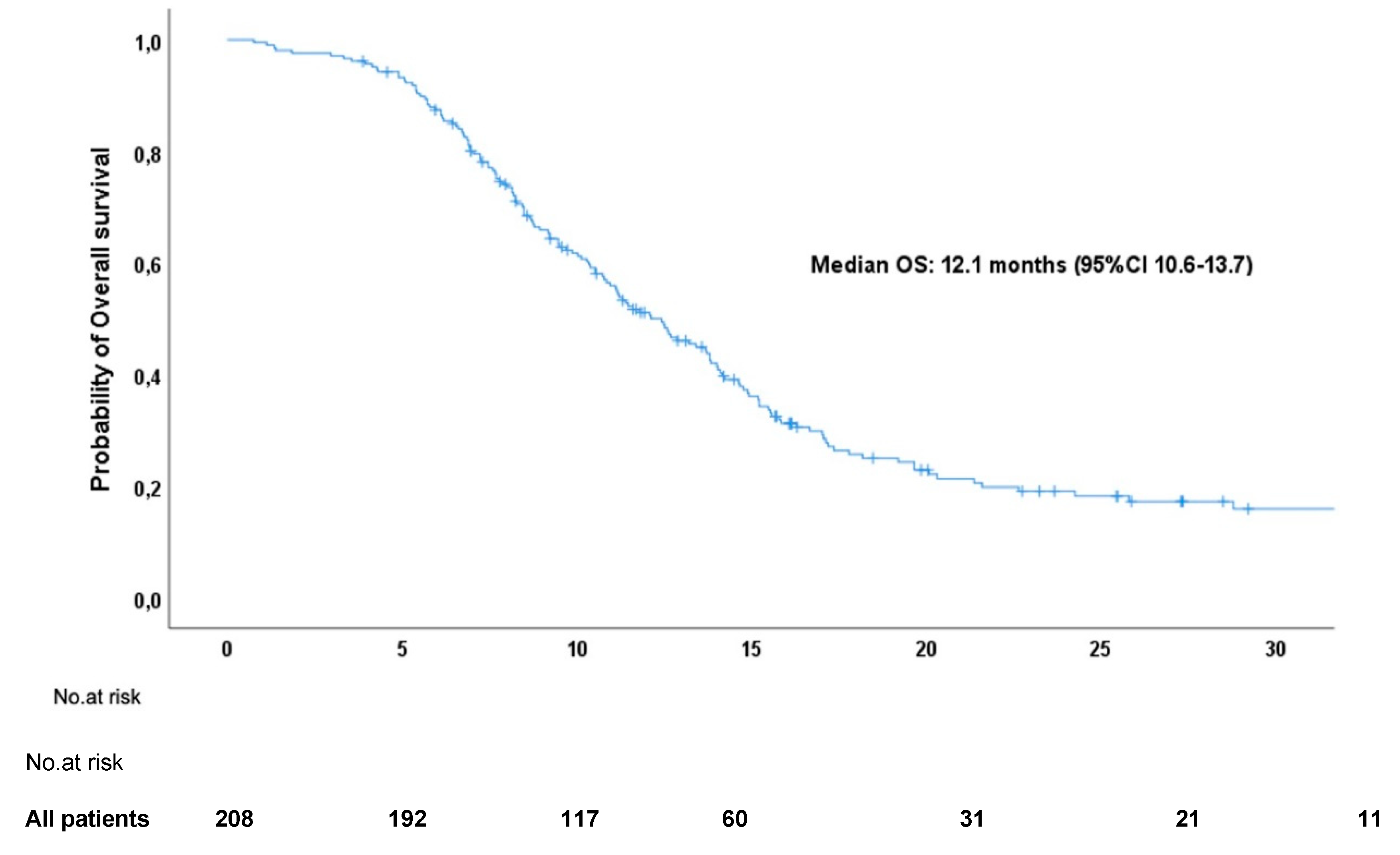
Figure 1. Kaplan-Meier survival curve of overall survival for all 208 enrolled patients with ES-SCLC.
Preprints 150165 g001
Figure 2. Kaplan-Meier survival curves of overall survival of ES-SCLC patients in two treatment groups.
Preprints 150165 g002
Table 1. Patients and disease characteristics of 208 included patients.
Characteristics at diagnosis All included patients (N=208)
Median Age (years) 66 (range 41-79)
Age ≥ 65 y (%) 55.3
Male Patients (%) 55.8
Smokers (former/current) (%) 98.6
ECOG PS 0-1 (%) 74
Brain Metastasis (%) 19.7
Liver Metastasis (%) 43.8
Bone Metastasis (%) 34.1
Patients with ≥ 3 Metastatic Sites (%) 34.6
Median LDH 4.29 (95% CI 3.98; 4.79)
Patients with Elevated LDH (%) 53.4
ECOG = Eastern Cooperative Oncology Group; PS= performance status; LDH=lactate dehydrogenase.
Table 2. Univariate and multivariate Cox regression analyses of overall survival (n = 208).
Variable Univariate HR (95% CI) p-value Multivariate HR (95% CI) p-value
Sex (female vs. male) 0.67 (0.49–0.93) 0.017 0.57 (0.40–0.80) 0.035
ECOG PS (≥2 vs. 0–1) 1.76 (1.23–2.52) 0.002 1.98 (1.34–2.92) 0.001
Liver Metastasis (yes vs. no) 1.68 (1.22–2.32) 0.001 1.34 (0.94–1.91) 0.109
Bone Metastasis (yes vs. no) 1.55 (1.12–2.16) 0.009 1.00 (0.70–1.43) 0.984
Metastatic sites (≥3 vs. 0-2) 2.09 (1.50–2.92) <0.001 1.62 (1.12–2.34) 0.011
cTRT (yes vs. no) 0.44 (0.28–0.68) <0.001 0.55 (0.34–0.88) 0.013
LDH (high vs. normal) 1.76 (1.27–2.44) 0.001 1.23 (0.86–1.77) 0.263
CT/IO Cycles (median) 0.79 (0.64–0.97) 0.026 0.79 (0.64–0.99) 0.035
ECOG = Eastern Cooperative Oncology Group; PS= performance status; LDH=lactate dehydrogenase; CT/IO = chemoimmunotherapy; HR = hazard ratio; CI = confidence interval. Values in bold indicate statistical significance in the multivariate analyses (p < 0.05).
Table 3. Patient and treatment characteristics: Chemoimmunotherapy with or without consolidation radiotherapy.
Characteristics at
Diagnosis
cTRT group
(n=46)
Non-cTRT group
(n=162)
p-value
Median age (years) 66 (range 61-70) 66 (range 61-69) 0.834
Age ≥ 65 years (%) 56.5 54.9 0.849
Male Sex (%) 56.5 55.6 0.907
ECOG PS 0 -1 (%) 80.4 72.8 0.459
Brain Metastasis (%) 19.6 19.8 0.977
Liver Metastasis (%) 13.0 52.5 <0.001
Bone Metastasis (%) 21.7 37.7 0.045
Patients with ≥ 3
Metastatic sites (%)
19.6 38.9 0.015
Median LDH 3.81
(95%CI 3.50;4.29)
4.67
(95%CI4.12;5.37)
0.005
Patients with elevated
LDH (%)
41.3 56.8 0.063
Median No. Of CT/IO
Cycles (n)
5 (range 4-5) 4 (range 4-4) 0.049
Median No. Of
Maintenance IO cycles (n)
5.5 (range 2-9) 2 (range 1-4) <0.001
Intrathoracic +/- systemic
Progression (%)
65.9 35.5 0.002
cTRT= consolidation thoracic radiotherapy; ECOG = Eastern Cooperative Oncology Group; PS= performance status; No. = number, CT/IO = chemoimmunotherapy; IO = immunotherapy.
Disclaimer/Publisher’s Note: The statements, opinions and data contained in all publications are solely those of the individual author(s) and contributor(s) and not of MDPI and/or the editor(s). MDPI and/or the editor(s) disclaim responsibility for any injury to people or property resulting from any ideas, methods, instructions or products referred to in the content.
Copyright: This open access article is published under a Creative Commons CC BY 4.0 license, which permit the free download, distribution, and reuse, provided that the author and preprint are cited in any reuse.
Prerpints.org logo

Preprints.org is a free preprint server supported by MDPI in Basel, Switzerland.

Subscribe

Disclaimer

Terms of Use

Privacy Policy

Privacy Settings

© 2025 MDPI (Basel, Switzerland) unless otherwise stated