
Submitted:
17 February 2025
Posted:
19 February 2025
You are already at the latest version
Abstract
An adequate nutrient intake and a balanced diet form a prerequisite for maintaining a healthy lifestyle and preventing diseases. Local, yet often underutilised, food plants can contribute to ensuring dietary diversity and hence combating food and nutrition insecurity in rural households of low- and middle-income countries. However, the consumption and use of many local food plants is often stigmatised in local culture or threatened by socio-economic and agroecological changes. This paper presents data from the work of Sowing Diversity = Harvesting Security (SD=HS) programme, that used a Farmer Field School (FFS) approach to improve dietary diversity and quality using local agrobiodiversity in six low- or mid-income countries. The baseline study, that preceded the project’s implementation, gathered FFS participants' perceptions of malnutrition, local food plant consumption, and coping strategies to deal with food scarcity periods. The analysis of such perceptions allowed evaluating the actual and potential role of local agrobiodiversity and showed opportunities to promote the use of local food plants as a strategy to efficiently and affordably address food and nutrition insecurity, particularly in times of food scarcity.
Keywords:
agrobiodiversity
; local food plants
; nutrition
; dietary diversity
; food scarcity
; farmer field schools
1. Introduction
An adequate nutrient intake and a well-balanced diet are crucial aspects of proper nutrition, which is essential for a healthy lifestyle and disease prevention [1,2,3,4,5]. When diets are not sufficiently diverse, people may suffer from one or more forms of malnutrition: undernutrition, nutrition deficiencies, obesity and non-communicable diseases [6,7]. An affordable, sustainable and efficient way to ensure adequate dietary diversity and hence combat food insecurity is through the sustainable consumption of local food plants1. More specifically, evidence indicates that traditional food systems which are rich in local plant diversity can provide healthy and balanced diets [8,9]. Many locally available plants, either gathered from the wild or cultivated, are low in carbohydrates, and high in other components important for the human diet, such as fibre, proteins, minerals (e.g. iron and zinc), and critical micro-nutrients (vitamins and provitamins) or secondary metabolites with antioxidant properties [10]. Furthermore, these plants tend to be easily accessible, affordable and well adapted to local environmental conditions or, in the case of domesticated species, to low-input farming systems [11]. Beyond being a nutrition source, many local but underutilised plants yield other useful products such as animal feed, timber, fibres or medicines, that contribute to safeguarding rituals, traditions and biocultural diversity [12,13]. Furthermore, local food plants are often used as a food supply for emergencies, alleviating communities from seasonal food scarcity or income shortages [14,15,16,17]. Nevertheless, changes in society and in dietary habits have led to increasingly associate the dependency on local plants with poverty, social marginality and food scarcity2, hence stigmatising their consumption in many local communities [18,19,20,21]. Climate change, habitat loss and environmental degradation are other drivers resulting in the disappearance of local food plants from local diets [22,23,24]. Finally, local crops are increasingly replaced by major global staples as farming systems become more commercially oriented and breeding efforts fail to address minor species [25,26,27].
The present work builds upon data obtained within the global programme “Sowing Diversity=Harvesting Security” (SD=HS). The data was collected in six low- and mid-income countries (Uganda, Zambia, Zimbabwe, Guatemala, Peru and Nepal). One of the programme’s main foci is to improve the quality and diversity of the diet in the target communities, contribute to their nutrition security, and reduce the food scarcity periods by promoting intake of nutritious food. The Farmer Field School (FFS) approach forms a major instrument in realising these goals. An analysis of the data collected during the diagnostic phase, which prepared the season-long FFS activities, focussed on communities’ perceptions about food and nutrition insecurity and local food plant consumption, thus evaluating the role that local food plants may play in supporting households’ food and nutrition security, including in times of seasonal food scarcity.
2. Materials and Methods
2.1. The FFS Approach and Methodology
The activities regarding local food plants and nutrition security within the global SD=HS programme were implemented over a period of three years (2019-2021) through the establishment and operation of over 300 FFS, which reached more than 20,000 participants across six countries. The implementation of the FFSs was preceded by a diagnostic phase, aimed at obtaining a baseline description of communities’ food and nutrition insecurity, as well as their agroecosystems and their agricultural and household practices concerning local food plants. Since this early stage and throughout the implementation of the FFSs, participants were organized in small subgroups, to encourage all of them to openly express themselves and play an active role [28]. The diagnostic phase encompassed a set of participatory exercises conducted over a number of subsequent meetings, according to the methods outlined in the Facilitators’ Field Guide for Farmer Field Schools on local food plants for nutrition [29]. At the end of this process and based on the outcomes of the exercises, participants defined a list of priority research objectives and related activities, to leverage the role of local food plants in supporting the communities’ dietary quality and nutrition security. The following exercises (Table 1), which were conducted in the diagnostic phase of each FFS, provided the data analysed in the study.
2.2. Data Analysis
The present study is based on data collected during the diagnostic phase of 84 FFS conducted in 2021, and included in eight reports from Guatemala, 15 from Peru, 23 from Uganda, 19 from Zambia, 12 from Zimbabwe, and seven from Nepal. Details on the location and agroecological contexts of the analysed FFS are given in SI Table S1. The raw data from the diagnostic exercises across all countries was checked for quality and completeness. Multiple responses were reorganised into pre-defined categories to enable analysis. In the process, the original responses were maintained alongside the reorganised ones, to facilitate later interpretation of the results. The analyses were performed both on a global scale, aggregating all country results, and on a country-level basis. Frequencies and percentages (rounded to the closest integer) at which specific answers occurred were calculated for all the study variables. The scarcity seasons reported by participants were put into context by using the Köppen-Geiger climate classes [30] of the FFS locations, combined with the description of the national agroecological zones provided by country partners. Duplicate names were removed from the local plant lists, and the two features of seasonality and availability during scarcity were summarised for the plant lists of each country. Qualitative analysis was conducted for the coping strategy module, and coping strategies were categorized in four groups [31,32]. A matrix was constructed in which the frequency of the different severity levels associated with each coping strategy was reported. The most frequently mentioned severity level was taken as the consensus severity scenario associated with each strategy, while the average severity score was also calculated. All data handling and analyses was done with R statistical tools and packages [33].
3. Results
3.1. Malnutrition Problem Tree
A global overview of the factors that FFS communities cited as affecting their capacity to obtain adequate quantity or variety of food is presented in Figure 1. The most frequently identified cause of malnutrition was a poor diet (over 40% of responses). Within this category, dietary imbalances were cited in 47% of the cases, almost a third of which mentioned the lack of dietary diversity explicitly (data not shown). Several other causes identified may be regarded as more specific, in turn explaining the roots of a poor diet. Poverty, resulting in limited access to productive assets and lack of knowledge (on farming, nutrition, food composition and preparation methods) were the next most important causes mentioned. Agronomic problems (e.g., lack of seed, poor yields), environmental challenges (e.g., drought, floods) and negative attitudes towards local foods were also reported, although at lower frequencies.
Data from the single countries involved in the study indicates the prevalence of poor or imbalanced diets as the main malnutrition cause, while poverty ranks second everywhere except in Zambia and Nepal, where it is surpassed by the more specific causes of agronomic problems and lack of knowledge, respectively. The most frequently mentioned malnutrition consequences were underweight (including its most extreme manifestation, stunted growth) and illnesses (26% and 27% each). Among the latter, anaemia, rickets and reduced vision or night blindness were reported. Related consequences as lethargy and poor life expectancy followed in importance (14% each). Responses from African countries and Peru also indicated obesity and other non-communicable diseases as important issues, with the highest frequencies being registered in Peru (13%).
3.2. Changes in Local Food Plant Consumption and Community Nutrition Status over Time
In each FFS, the timeline exercise allowed analysing which major changes in agroecosystems and diets had occurred in the communities over the last thirty years: FFS participants were asked if the consumption of local food plants had increased or decreased and if the nutritional status of their community had improved or worsened. On a global scale, over 93% of the responses reported local plants to be consumed less, and 80% reported that their nutritional status had gotten worse (data not shown). A modest but significantly positive correlation was detected between the consumption of local food plants and nutritional status (cor = 0.3205022, p-value < 0.005). Breaking down the timeline data by country (Table 2), the most negative scenario in terms of local plant consumption emerged from Guatemala and Peru, where all responses reported a decrease, followed by the African countries (over 90%). In contrast, the trend in Nepal was less dramatic: while a decrease in local food plant consumption was still the prevailing response (around 60%), more than 40% of the FFS reported an increase. In terms of nutritional status, although the answers in most countries indicated that it had worsened, participants from Guatemala and Nepal also reported improvements. In Nepal, where more improvements were reported, these were attributed to increases in the use of local crop diversity. Significant positive correlations between declining consumption of local food plants and deteriorating nutritional status were obtained in Uganda and Zimbabwe. The data from the other three countries did not carry sufficient variation to allow for an analysis of the correlation between local food plant consumption and nutritional status.
When asked about what influenced their nutritional status on the one hand and the consumption of local food plants on the other, respondents listed common factors, but their relative influence was different (Figure 2): globalization and changing habits were more often cited among the causes of local food plant neglect than of nutritional deteriorations. On the contrary, poverty was much more important in influencing communities’ nutritional status than in underlying a decrease in local food plant consumption. Lack of knowledge was equally important in both contexts.
Country-level data reflected the main global patterns: both globalization and changing food habits (Zambia, Zimbabwe, Peru) and the lack of suitable seed or starting material (Uganda, Guatemala, Nepal) were the foremost factors that affected the consumption of local food plants. Poverty ranked lowest, if at all, among the factors affecting local food plant consumption in the surveyed countries. Yet, poverty was the most important cause of nutrition status changes reported from Uganda and Peru, while lack of crops/foods was reported to be the top factor in Zambia, Zimbabwe, Guatemala, and Nepal. The differences in the ranking of the common factors which influence local food plant use and nutritional status, as well as the country specificities, point to the complexity of the relationship between local plant consumption and nutrition, and remind us of the important role of many confounding factors such as local cultures, climates and socio-economic conditions.
3.3. The Role of Local Food Plants During Food Scarcity Periods
In the diagnostic phase, FFS participants were asked questions about food scarcity periods, including their prevalence by calendar month and in relation to the cropping season. The scarcity periods by calendar month reported for each country by more than 50% of the responses were considered here to be the peak of the scarcity period (months which were mentioned in fewer responses were excluded) and are shown in Figure 3, next to the main harvest months.
In Africa, the longest scarcity period was reported by FFS participants in Zimbabwe, where most responses reported food scarcity over a period of four months between October and January. Zambian FFS reported a partially overlapping, yet slightly shorter, scarcity period (three months between December and February). The great majority of the FFS in these two countries were located in hot arid steppe or temperate climates, with erratic rainfall distribution, frequent seasonal droughts and severe mid-season dry spells [34,35]. The scarcity months most frequently reported by FFS participants in these countries coincide with the tail end of the rainy season, immediately before the green harvests of February-March which are followed by the main harvest from April to June-July. The Ugandan scarcity period was reported to last three months between April and June, with a peak in May. This period, too, falls within the rainy season of the tropical savanna climates of Ugandan FFSs [36] and, again, corresponds to the time before the harvests which are mostly concentrated between June and August. The Guatemalan FFS are located in humid montane forest areas with subtropical climates and altitudes ranging from 1400 to 2400 masl [37]. The time and duration of the cropping season varies with altitude and among villages and depends on the growth cycle of the main staple, maize: some varieties mature in three months, while others take up to nine months to be ready to harvest. The most frequently reported scarcity months by Guatemalan FFS participants were August and September, towards the end of the rainy season, and just before the main harvest at the end of the year [38]. In Peru, all FFS were located in the Andean highlands, in either the Quechua (2300 - 3500 masl) or the Suni (3500 - 4000 masl) agroecological regions, and are characterised by either subtropical highland or tundra-like climates [39]. The main scarcity period was reported to occur in the early months of the year (January and February), once again overlapping with the second half of the rainy season and the months preceding the March-June harvest period [40]. In Nepal, three months (June to August) which fall within the monsoon growing season and precede the harvests were reported as food scarce, but also the dry winter months of January and February were mentioned with similar frequencies [41]. Both periods are traditionally known as agricultural lean seasons, leading to increased risks of food insecurity [42].
In conclusion, and as to be expected, in all countries the main reported scarcity periods occurred during the rainy (cropping) season and just before fresh crop harvests, when stocks of staple grains from the previous year have likely been depleted.
3.4. Food Scarcity Coping Strategies
The coping strategies adopted by communities during the scarcity period, their frequency and its relation with their severity, are presented in Table 3.
The two most frequently adopted strategy types which emerged from the global analysis were food seeking and financial coping strategies, with the former significantly surpassing the latter. When grouped by type, the frequency of applied coping strategies and the severity of the food scarcity situation were inversely correlated (cor = -0.9844758, p-value < 0.05), with the more frequent strategy types being associated with the less severe food scarcity periods, and the less practised coping strategies linked to the most severe scarcity conditions. Whereas these results show a certain correlation, no absolute divisions of coping strategies and their severity over the scarcity periods are implied. In fact, farming communities in Uganda and Zimbabwe adopted all types of coping strategies over the entire food scarcity period, whereas farmers in Peru and Nepal adopted food seeking strategies only. In those countries where a greater number of coping strategy types was used, the average severity in food scarcity experienced by FFS participants (Figure 4) tended to be higher. Indeed, a positive correlation was found between the number of coping strategy types adopted and the average severity reported (cor = 0.8773828, p-value < 0.05).
Food seeking strategies were most prevalent in all but one of the study countries, the exception being Zambia, where this strategy group was surpassed in frequency by strategies based on financial adjustments. ‘Food rationing’ was mentioned in Guatemala (39%) and Uganda (20%), and to a limited extent in Zambia (6%) but not in the other countries. Changes to household management and relations were a set of coping strategies only applied in Uganda and Zimbabwe, where the reported level of food scarcity was relatively heavy, and all coping strategies were applied.
Within the food seeking strategies, the consumption of local and wild plants was mentioned by FFS in all countries, except Peru. It was also the most frequent food seeking strategy in three out of the five countries that mentioned it (Uganda, Zambia and Guatemala) and the second most frequent in the other two (Zimbabwe and Nepal). Analysing the local food plant lists, the proportion of plants reported to be available during the scarcity period (either directly and/or through preservation) correlated both with the length of the scarcity period (cor = 0.899, p-value < 0.05) as well as with the average severity of the scarcity period (cor = 0.972, p-value < 0.05). The latter relationship suggests that as the severity of food scarcity, hence the distress communities are facing, increases, the perceived importance of scarcity-relevant local food plants also increases.
3.5. Priority Activities for Leveraging the Role of Local Food Plants
In reflecting on the results of preceding exercises, FFS participants selected several priority activities to address their food and nutrition security problems using local food plants (Table 4). The activities prioritised by farmers were categorised as either “field-based” or “food-based”. The former group concerned a diverse set of activities, some with a general focus (such as cultivating more local crops) and some with a specific reference to a given species (such as overcoming germination or seed dormancy limitations). Within the field group, activities relevant to domesticated species were more frequently mentioned than those referring exclusively to wild food plants, reflecting the prominence of cultivated species in the communities’ plant lists. Within the food-based group, the most frequently mentioned activity (and the most preferred overall) was the organization of food preparation and cooking demonstrations, which were deemed useful to improve taste and texture or lessen laborious processing of specific local food plants. The importance of storage/preservation was mentioned both at field and food levels, suggesting the importance of ensuring the availability of sufficient stocks of either planting material or food, or both. Seed and food fairs constituted an integrated, farm-to-fork approach to leveraging the role of local food plants in both agronomic and dietary aspects.
4. Discussion
This study aimed to improve our understanding of the role of local food plants in enhancing communities’ food and nutrition security. Our data is based on the perceptions of FFS participants rather than on systematic measurements of food and nutrition security, dietary diversity and local plant use. Although the FFS methodology was designed to generate a clear and comprehensive picture of reality, in interpreting our results we must keep in mind the qualitative and subjective nature of participants’ answers, as well as the non-independence of and causal relations between some of the factors they consider to be responsible for the observed trends. This limits to some extent the interpretation of our findings. Nevertheless, many of the results we obtained are matched and corroborated by information gathered through other data collection methods in other studies. Furthermore, perceptions influence people’s behaviours and choices, shape their reality and determine how they decide to act upon and create change. Therefore, we believe that farmers’ perceptions and views can give foremost insights into the factors that are most important to farmers themselves and hence contribute to defining local problems and developing adaptive and relevant solutions. With the above in mind, we discuss the most important findings emerging from our global analysis in the light of existing literature on nutrition and local food plants.
In setting the baseline of their nutritional status with the help of the malnutrition problem tree exercise, respondents attributed considerable importance to imbalanced and low-diversity diets in determining the level and nature of malnutrition they experience. Their perception is reflected in a large body of literature that links malnutrition to dietary diversity, more than to energy deficiencies [43,44,45,46,47,48]. The dangers and consequences mentioned by farmers in this study also correspond to those known to derive from increasingly monotonous diets, such as undernutrition, illnesses, poor productivity and, increasingly, obesity [49,50,51,52,53,54,55,56].
Delving deeper into the role of local agrobiodiversity, one of the most important responses from FFS participants concerned the reported coincidence between the decline in local food plant consumption and the deterioration in communities’ nutritional status. This result is in line with literature that reports on the linkages between local agrobiodiversity (wild or cultivated) and nutrition: a number of studies have investigated such linkages through a systematic analysis based on accurate sampling populations, collection of anthropometric measurements, calculation of dietary diversity scores, administration of recall surveys or a combination of these methods [57,58,59,60,61,62,63,64]. Other authors have gone further, showing that the potential of a farm to deliver a wide range of nutrition functions to its owners increases with increasing on-farm agrobiodiversity [65]. Poverty was considered by farmers as an important underlying cause of deteriorations in their nutritional status (both in the malnutrition problem tree and in the nutrition timeline). Indeed, the vital relationship which exists between nutritional status, human capital, and economic standing is well described: malnutrition adversely affects the physiological and mental capacity of individuals, which in turn hampers productivity levels and health (as explicitly mentioned by FFS participants), making them and their respective communities more susceptible to poverty and thus creating a vicious cycle [66]. Financial constraints also lead to the consumption of cheap, high-energy rather than nutritionally dense food; in this sense poverty relates to the previously discussed dietary imbalances, supporting the inextricable relation between the different factors which underlie such a multifactorial phenomenon as malnutrition.
While poverty was the top factor causing malnutrition, it was not perceived as being so impactful on the decline in local food plant consumption; this may suggest that even when income levels are very low, and healthy foods cannot be afforded on the market, households still have the possibility to turn to local or traditional crops and foods, thus ensuring the intake of important micronutrients [31,67,68,69,70,71,72]. Rather than poverty, it was changing habits and lifestyles (use of junk food, negative attitudes towards local foods and recipes, greater engagement in off-farm work) which were perceived as the major determinants of declining local food plant consumption. The ongoing dietary transition affecting high-, mid- and low-income countries [8,25,73,74,75,76] is indeed well described, being ever more accelerated by massive marketing and advocacy, social media influences and greater availability of cheap fats in the global economy [77]. Sustained consumption of local food plants also appeared to be affected by seed system disruptions, which prevent farmers from accessing appropriate planting material hence limiting the diversity they can grow and consume [78]. It is worth recalling that the development and availability of planting material from minor, underutilised species, depends almost entirely on on-farm conservation and on healthy and dynamic local seed systems [79,80]; however, these tend to be highly vulnerable to acute stresses (conflicts, disasters) or chronic problems relating to social inequalities, inefficiencies, lack of coordination, or inappropriate regulatory frameworks [81]. The lack of seed, of course, progressively causes abandonment of traditional food plant cultivation, which in turn may lead to genetic erosion [82] and loss of knowledge on the associated management practices [73,83,84,85,86]. The interaction between social (poverty, globalization) and seed and farming system changes is reflected in the activities farmers prioritised at the end of the FFS diagnostic phase, to revitalise local food plant use. Cooking demonstrations, the top preferred activity among farmers, have been successfully used elsewhere, to spark a renewed interest in local food plant consumption and overcome the stigmatisation of traditional foods [87,88]. At the same time, activities aiming at reintroducing local species into cultivation require efforts to support a consistent supply of quality seeds, addressing some species’ genetic or physiological shortcomings, promoting best agronomic practices and improving post-harvest infrastructure [71,89,90,91].
Despite a declining trend in the use of local food plants, responses on their food scarcity coping strategies highlighted that communities still heavily rely on them during food scarcity periods, a phenomenon that has been observed earlier [92,93,94,95,96]. Across our target countries, the correspondence between the late stages of the main cropping season and the reported food scarcity period confirms the well-known fact that food shortages mostly occur when food stocks from the previous growing season have been depleted and the products of the new harvest are not yet available (crops are still standing), a time in which food prices also tend to be high and compensating employment opportunities scarce [95,96,97,98]. The increasing proportion of scarcity-relevant plants which farmers report as their experience of scarcity and severity increases, further supports the role that local food plants can play in harsh times [99,100,101,102]. In Africa, for example, traditional vegetables like Amaranthus or Solanum spp. come into production within a short time soon after the onset of rains and can be harvested in three to four weeks later, still allowing to plant later crops such as beans that can be harvested some weeks after [103].
The capacity of local food plants to satisfy communities' needs in times of food scarcity varied according to the severity of the scarcity that farmers experienced, again a pattern which has been observed in other studies [31,32,104,105]. At lower levels of food scarcity, food seeking strategies were prevalent; within these, increased consumption of local food plants was a frequently mentioned coping strategy, and one which continued to be applied at moderate food scarcity levels. Only at higher levels of distress, communities diversified their coping strategies: collective forms of support helped villagers to access regular food crops through friends and neighbours [8,106,107], and ultimately communities were forced to shift from food seeking towards food rationing and household re-structuring approaches [32,104]. Interestingly, as the number of coping strategies increased with the severity of experienced food scarcity, the share of scarcity-relevant local food plants over the total plants mentioned in the lists increased as well. These resources seem to play an accompanying and perhaps increasing role, even as farmers turn to higher-impact coping strategies.
Our data provide valuable insights into smallholder farmers’ perceptions and decision-making regarding the role of local food plants in achieving dietary diversity and maintaining food security in times of scarcity. Further leveraging the role of these resources through integrated actions such as those prioritised within the FFS, both at farm/field level and in people’s diets, can be a powerful, yet affordable approach to conserving valuable agricultural biodiversity while protecting local livelihoods and food security [27]. Rather than adding new (or exotic) crops to farmers’ portfolio, national programmes should work towards increasing the potential of crops that farmers are already cultivating [108], especially those which are nutrient-dense and locally adapted [109]. Awareness-raising and capacity-building activities tailored to different target groups, from men and women farmers to school children [110,111,112,113] can offer important cross-cutting measures to deliver appropriate messages about the importance of diversified agroecosystems, rich in local species, in support of healthy diets and lifestyles. Scaling up such efforts from local, FFS-based dimensions and integrating them within multi-faceted approaches to agricultural and dietary diversification, will require more systematic scientific evidence on the value of individual underutilised crops and wild edibles. This evidence should be made available to decision-makers, so that more enabling policies and market environments for their development and increased production, marketing and consumption can be promoted [114,115,116].
Supplementary Materials
The following supporting information can be downloaded at: Preprints.org, Table S1: Details on the location and HLZ and Coppen climatic zones of the FFS described in this paper.
Author Contributions
Conceptualization, G.G,. and G.C.G.; methodology, G.G..; software, G.G.; validation, G.G., K.M.T., H.M., B.V.; formal analysis, G.G.; investigation, G.C.G., H.M.; data curation, G.G.; writing—original draft preparation, G.G.; writing—review and editing, G.G., K.M.T., H.M., B.V. All authors have read and agreed to the published version of the manuscript.
Funding
This work was funded by the Swedish International Development Cooperation Agency Sida (grant number 1001534) and fits in the Funding Strategy of the FAO International Treaty on Plant Genetic Resources for Food and Agriculture.
Informed Consent Statement
Informed consent was verbally obtained from all participants and facilitators of the Farmer Field Schools, who were well informed of the purpose of the data collection and recording. Their participation was voluntary and they could withdraw at any time.
Data Availability Statement
The data analysed for the study are available from the corresponding author upon request.
Acknowledgments
The authors wish to thank the SD=HS implementing partners in the target countries. These partner organizations are: the Participatory Ecological Land Use Management (PELUM) and the Eastern and Southern Africa Small Scale Farmers' Forum (ESAFF) in Uganda; the Zambia Alliance for Agroecology and Biodiversity (ZAAB) in Zambia; the Community Technology Development Trust (CTDT) in Zambia and Zimbabwe; the Asociación de Organizaciones de los Cuchumatanes (ASOCUCH) in Guatemala; the Fomento de la Vida (FOVIDA) in Peru; the Local Initiatives for Biodiversity, Research and Development (Li Bird) in Nepal. They also wish to gratefully acknowledge the generous inputs by the smallholder seed producers who participated in the Farmer Field Schools and provided the responses used in this publication. Any opinions, findings, conclusions, or recommendations expressed here are those of the authors alone.
Conflicts of Interest
The authors declare no conflicts of interest.
Abbreviations
The following abbreviations are used in this manuscript:
| FFS | Farmer Field Schools |
| NUS | Neglected and Underutilized Species |
| 1 | 1 We have adopted the term local food plants as an alternative to the term Neglected and Underutilised Species (NUS), as a term better understood by local communities who participated in the FFS object of this study. Local food plants can be described as all species that occur in local ecosystems, wild and cultivated, that provide or may provide food items in such communities and complement major and often global staple crops in the local diet. Many NUS may and often do function as local food plants. |
| 2 | 2 For the purpose of this report food scarcity is defined as a situation in which locally available food from any source is insufficient to meet the food and nutrition intake needs of a specific community, both in quantitative terms (calories) as in qualitative terms (dietary diversity, nutritional quality). |
References
- Micha, R.; Mannar, V.; Afshin, A.; Allemandi, L.; Baker, P.; Battersby, J.; Dolan, C. Global Nutrition Report: Action on Equity to End Malnutrition; Bristol, UK, 2020.
- Willett, W.; Rockström, J.; Loken, B.; Springmann, M.; Lang, T.; Vermeulen, S.; Garnett, T.; Tilman, D.; DeClerck, F.; Wood, A.; et al. Food in the Anthropocene: The EAT-Lancet Commission on Healthy Diets from Sustainable Food Systems. Lancet 2019, 393, 447–492. [Google Scholar] [CrossRef] [PubMed]
- Dwivedi, S.L.; Lammerts van Bueren, E.T.; Ceccarelli, S.; Grando, S.; Upadhyaya, H.D.; Ortiz, R. Diversifying Food Systems in the Pursuit of Sustainable Food Production and Healthy Diets. Trends Plant Sci. 2017, 22, 842–856. [Google Scholar] [CrossRef]
- Lachat, C.; Raneri, J.E.; Smith, K.W.; Kolsteren, P.; Van Damme, P.; Verzelen, K.; Penafiel, D.; Vanhove, W.; Kennedy, G.; Hunter, D.; et al. Dietary Species Richness as a Measure of Food Biodiversity and Nutritional Quality of Diets. Proc. Natl. Acad. Sci. U. S. A. 2018, 115, 127–132. [Google Scholar] [CrossRef] [PubMed]
- World Health Organization Diet, Nutrition, and the Prevention of Chronic Diseases : Report of a Joint WHO/FAO Expert Consultation; World Health Organization, 2003; ISBN 924120916X.
- WHO The Double Burden of Malnutrition; Geneva, 2017.
- FAO; IFAD; UNICEF; WFP; WHO The State of Food Security and Nutrition in the World. Safeguarding against Economic Slowdowns and Downturns; Rome, Italy, 2019.
- Kuhnlein, H.V.; Erasmus, B.; Spigelski, D. Indigenous Peoples’ Food Systems:The Many Dimensions of Culture, Diversity and Environment for Nutrition and Health; Food and Agriculture Organization of the United Nations: Rome, Italy, 2009. [Google Scholar]
- Roche, M.L.; Creed-Kanashiro, H.M.; Tuesta, I.; Kuhnlein, H.V. Traditional Food System Provides Dietary Quality for the Awajún in the Peruvian Amazon. Ecol. Food Nutr. 2007, 46, 377–399. [Google Scholar] [CrossRef]
- Singh, R.K.; Sreenivasulu, N.; Prasad, M. Potential of Underutilized Crops to Introduce the Nutritional Diversity and Achieve Zero Hunger. Funct. Integr. Genomics 2022, 1459–1465. [Google Scholar] [CrossRef] [PubMed]
- Padulosi, S.; Heywood, V.; Hunter, D.; Jarvis, A. Underutilized Species and Climate Change: Current Status and Outlook. In Crop Adaptation to Climate Change; 2011; pp. 507–521 ISBN 9780470960929.
- Cámara-Leret, R.; Raes, N.; Roehrdanz, P.; De Fretes, Y.; Heatubun, C.D.; Roeble, L.; Schuiteman, A.; van Welzen, P.C.; Hannah, L. Climate Change Threatens New Guinea’s Biocultural Heritage. Sci. Adv. 2023, 5. [Google Scholar] [CrossRef]
- Bélanger, J.; Pilling, D. The State of the World’s Biodiversity for Food and Agriculture.; Food and Agriculture Organization of the United Nations (FAO), 2019; ISBN 9251312702.
- Sõukand, R. Perceived Reasons for Changes in the Use of Wild Food Plants in Saaremaa, Estonia. Appetite 2016, 107, 231–241. [Google Scholar] [CrossRef]
- Quave, C.L.; Pieroni, A. Fermented Foods for Food Security and Food Sovereignty in the Balkans: A Case Study of the Gorani People of Northeastern Albania. J. Ethnobiol. 2014, 34, 28–43. [Google Scholar] [CrossRef]
- Cruz-Garcia, G.S.; Price, L.L. Gathering of Wild Food Plants in Anthropogenic Environments across the Seasons: Implications for Poor and Vulnerable Farm Households. Ecol. Food Nutr. 2014, 53, 363–389. [Google Scholar] [CrossRef]
- Ocho, D.L.; Struik, P.C.; Price, L.L.; Kelbessa, E.; Kolo, K. Assessing the Levels of Food Shortage Using the Traffic Light Metaphor by Analyzing the Gathering and Consumption of Wild Food Plants, Crop Parts and Crop Residues in Konso, Ethiopia. J. Ethnobiol. Ethnomed. 2012, 8, 1–17. [Google Scholar] [CrossRef]
- Cruz García, G.S. The Mother – Child Nexus. Knowledge and Valuation of Wild Food Plants in Wayanad, Western Ghats, India. J. Ethnobiol. Ethnomed. 2006, 2, 39. [Google Scholar] [CrossRef]
- Malaza, M. Modernization and Gender Dynamics in the Loss of Agrobiodiversity in Swaziland’s Food System. In Women and plants. Gender relations in biodiversity management and conservation; 2003; pp. 243–257.
- Somnasang, P.; Moreno-Black, G. Knowing, Gathering and Eating: Knowledge and Attitudes about Wild Food in an Isan Village in Northeastern Thailand. J. Ethnobiol. 2000, 20, 197–216. [Google Scholar]
- Cruz-Garcia, G.S.; Price, L.L. Ethnobotanical Investigation of “wild” Food Plants Used by Rice Farmers in Kalasin, Northeast Thailand. J. Ethnobiol. Ethnomed. 2011, 7. [Google Scholar] [CrossRef]
- Nyakoojo, C.; Tugume, P. Traditional Use of Wild Edible Plants in the Communities Adjacent Mabira Central Forest Reserve, Uganda. Ethnobot. Res. Appl. 2020, 20, 1–14. [Google Scholar]
- Penafiel, D.; Vanhove, W.; Espinel, R.L.; Van Damme, P. Food Biodiversity Includes Both Locally Cultivated and Wild Food Species in Guasaganda, Central Ecuador. J. Ethn. Foods 2019, 6, 1–13. [Google Scholar]
- Schunko, C.; Li, X.; Klappoth, B.; Lesi, F.; Porcher, V.; Porcuna-Ferrer, A.; Reyes-García, V. Local Communities’ Perceptions of Wild Edible Plant and Mushroom Change: A Systematic Review. Glob. Food Sec. 2022, 32, 100601. [Google Scholar] [CrossRef]
- Khoury, C.K.; Bjorkman, A.D.; Dempewolf, H.; Ramirez-Villegas, J.; Guarino, L.; Jarvis, A.; Rieseberg, L.H.; Struik, P.C. Increasing Homogeneity in Global Food Supplies and the Implications for Food Security. Proc. Natl. Acad. Sci. U. S. A. 2014, 111, 4001–4006. [Google Scholar] [CrossRef]
- Chaudhary, P.; Bhatta, S.; Aryal, K.; Joshi, B.K.; Gauchan, D. Threats, Drivers, and Conservation Imperative of Agrobiodiversity. J. Agric. Environ. 2020, 21, 44–61. [Google Scholar] [CrossRef]
- Orphan Crops for Sustainable Food and Nutrition Security: Promoting Neglected and Underutilized Species; Padulosi, S., Oliver King, I.E.D., Hunter, D., Swaminathan, M.S., Eds.; 1st ed.; Routledge: London, UK, 2021.
- Oxfam Novib Starting with Farmer Field Schools; 2021.
- Oxfam Novib Facilitators’ Field Guide for Farmer Field Schools on Local Food Plants for Nutrition. Module: Diagnostic Phase. 2022, 34. Oxfam Novib Facilitators’ Field Guide for Farmer Field Schools on Local Food Plants for Nutrition. Module: Diagnostic Phase. 2022, 34.
- Beck, H.E.; Zimmermann, N.E.; McVicar, T.R.; Vergopolan, N.; Berg, A.; Wood, E.F. Present and Future Köppen-Geiger Climate Classification Maps at 1-Km Resolution. Sci. Data 2018, 5, 180214. [Google Scholar] [CrossRef]
- Dil Farzana, F.; Rahman, A.S.; Sultana, S.; Raihan, M.J.; Haque, M.A.; Waid, J.L.; Choudhury, N.; Ahmed, T. Coping Strategies Related to Food Insecurity at the Household Level in Bangladesh. PLoS One 2017, 12. [Google Scholar] [CrossRef]
- Kruger, R.; Schönfeldt, H.C.; Owen, J.H. Food-Coping Strategy Index Applied to a Community of Farm-Worker Households in South Africa. Food Nutr. Bull. 2008, 29, 3–14. [Google Scholar] [CrossRef]
- R Development Core Team R: A Language and Environment for Statistical Computing. R Foundation for Statistical Computing: Vienna, Austria 2011.
- FAO Natural Regions in Zimbabwe. Fertilizer use by crop in Zimbabwe; Food and Agriculture Organization of the United Nations: Rome, Italy, 2016. [Google Scholar]
- Veldcamp, W.J.; Muchinda, M.; Delmotte, A.P. Agro-Climate Zones in Zambia. Soil Bull. No. 9 1984.
- International Red Cross Federation Seasonal and Critical Events Calendar - Eastern Africa Region. Available online: https://ifrcgo.org/africa/img-foodsecurity/171130_Eastern_Africa_Region_Critical _Events_and_Outlook_Calendar.pdf (accessed on 20 May 2023).
- de la Cruz, J.R. Clasificación de Zonas de Vida de Guatemala a Nivel de Reconocimiento. Sistema Holdridge.; Instituto Nacional Forestal: Ciudad de Guatemala, Guatemala, 1981. [Google Scholar]
- FEWS NET Guatemala Food Security Outlook, October 2021–May 2022: Seasonal Income Gains Fail to Fully Alleviate Food Insecurity. Available online: https://fews.net/central-america-and-caribbean/guatemala/food-security-outlook/october-2021 (accessed on 20 August 2023).
- Pulgar Vidal, J. Geografía Del Perú; 9th editio.; PEISA: Lima, Peru, 1987. [Google Scholar]
- de Haan, S.; Burgos, G.; Liria, R.; Rodriguez, F.; Creed-Kanashiro, H.M.; Bonierbale, M. The Nutritional Contribution of Potato Varietal Diversity in Andean Food Systems: A Case Study. Am. J. Potato Res. 2019, 96, 151–163. [Google Scholar] [CrossRef]
- Paudel, B.; Panday, D.; Dhakal, K. Climate. In The Soils of Nepal; Ojha, R.B., Panday, D., Eds.; Springer International Publishing: Cham, 2021; ISBN 978-3-030-80999-7. [Google Scholar]
- Rohwerder, B. Seasonal Vulnerability and Risk Calendar in Nepal (GSDRC Helpdesk Research Report 1358); Birmingham, UK, 2016.
- Arimond, M.; Ruel, M.T. Dietary Diversity Is Associated with Child Nutritional Status: Evidence from 11 Demographic and Health Surveys. J. Nutr. 2004, 134, 2579–2585. [Google Scholar] [CrossRef]
- Dewey, K.G.; Adu-Afarwuah, S. Systematic Review of the Efficacy and Effectiveness of Complementary Feeding Interventions in Developing Countries. Matern. Child Nutr. 2008, 4, 24–85. [Google Scholar] [CrossRef]
- Dror, D.K.; Allen, L.H. The Importance of Milk and Other Animal-Source Foods for Children in Low-Income Countries. Food Nutr. Bull. 2011, 32, 227–243. [Google Scholar] [CrossRef] [PubMed]
- Marquis, G.S.; Habicht, J.-P.; Lanata, C.F.; Black, R.E.; Rasmussen, K.M. Breast Milk or Animal-Product Foods Improve Linear Growth of Peruvian Toddlers Consuming Marginal Diets. Am. J. Clin. Nutr. 1997, 66, 1102–1109. [Google Scholar] [CrossRef]
- Onyango, A.W.; Borghi, E.; de Onis, M.; del Carmen Casanovas, M.; Garza, C. Complementary Feeding and Attained Linear Growth among 6–23-Month-Old Children. Public Health Nutr. 2014, 17, 1975–1983. [Google Scholar] [CrossRef]
- Steyn, N.P.; Nel, J.H.; Nantel, G.; Kennedy, G.; Labadarios, D. Food Variety and Dietary Diversity Scores in Children: Are They Good Indicators of Dietary Adequacy? Public Health Nutr. 2006, 9, 644–650. [Google Scholar] [CrossRef]
- Moramarco, S.; Amerio, G.; Palombi, L.; Buonomo, E. Nutritional Counseling Improves Dietary Diversity and Feeding Habits of Zambian Malnourished Children Admitted in Rainbow Nutritional Programs. Biomed. Prev. issues 2017, 1, 93. [Google Scholar] [CrossRef]
- Murendo, C.; Aziz, T.; Tirivanhu, D.; Mapfungautsi, R.; Stack, J.; Mutambara, S.; Langworthy, M.; Mafuratidze, C. Dietary Diversity and Food Coping Strategies in Zimbabwe: Do Resilience and Food Insecurity Status Matter? Ecol. Food Nutr. 2021, 60, 116–136. [Google Scholar] [CrossRef] [PubMed]
- FANTA Development of Evidence-Based Dietary Recommendations for Children, Pregnant Women, and Lactating Women Living in the Western Highlands of Guatemala; Washington DC, 2013.
- Singh, D.R.; Ghimire, S.; Upadhayay, S.R.; Singh, S.; Ghimire, U. Food Insecurity and Dietary Diversity among Lactating Mothers in the Urban Municipality in the Mountains of Nepal. PLoS One 2020, 15, e0227873. [Google Scholar]
- Oostendorp, R.; van Wesenbeeck, L.; Sonneveld, B.; Zikhali, P. Who Lacks and Who Benefits from Diet Diversity: Evidence from (Impact) Profiling for Children in Zimbabwe. Int. J. Health Geogr. 2020, 19, 45. [Google Scholar] [CrossRef] [PubMed]
- Alae-Carew, C.; Scheelbeek, P.; Carrillo-Larco, R.M.; Bernabé-Ortiz, A.; Checkley, W.; Miranda, J.J. Analysis of Dietary Patterns and Cross-Sectional and Longitudinal Associations with Hypertension, High BMI and Type 2 Diabetes in Peru. Public Health Nutr. 2020, 23, 1009–1019. [Google Scholar] [PubMed]
- Cordain, L.; Boyd Eaton, S.; Sebastian, A.; Mann, N.; Lindeberg, S.; Watkins, B.A.; O’Keefe, J. .; Brand-Miller, J. Origins and Evolution of the Western Diet: Health Implications for the 21st Century. Am J Clin Nutr 2005, 81, 341–354. [Google Scholar]
- Popkin, B.M.; Adair, L.S.; Ng, S.W. Global Nutrition Transition and the Pandemic of Obesity in Developing Countries. Nutr. Rev. 2012, 70, 3–21. [Google Scholar]
- Sibhatu, K.T.; Krishna, V. V; Qaim, M. Production Diversity and Dietary Diversity in Smallholder Farm Households. Proc. Natl. Acad. Sci. 2015, 112, 10657–10662. [Google Scholar] [CrossRef]
- Kumar, N.; Harris, J.; Rawat, R. If They Grow It, Will They Eat and Grow? Evidence from Zambia on Agricultural Diversity and Child Undernutrition. J. Dev. Stud. 2015, 51, 1060–1077. [Google Scholar] [CrossRef]
- Jones, A.D. On-Farm Crop Species Richness Is Associated with Household Diet Diversity and Quality in Subsistence- and Market-Oriented Farming Households in Malawi. J. Nutr. 2017, 147 1, 86–96. [Google Scholar]
- Ekesa, B.; Walingo, M.K.; Abukutsa-Onyango, M. Influence of Agricultural Biodiversity on Dietary Diversity of Preschool Children in Matungu Division, Western Kenya. African J. Food, Agric. Nutr. Dev. 2009, 8. [Google Scholar] [CrossRef]
- Oduor, F.O.; Boedecker, J.; Kennedy, G.; Termote, C. Exploring Agrobiodiversity for Nutrition: Household on-Farm Agrobiodiversity Is Associated with Improved Quality of Diet of Young Children in Vihiga, Kenya. PLoS One 2019, 14, e0219680. [Google Scholar] [CrossRef] [PubMed]
- Carletto, G.; Ruel, M.; Winters, P.; Zezza, A. Farm-Level Pathways to Improved Nutritional Status: Introduction to the Special Issue. J. Dev. Stud. 2015, 51, 945–957. [Google Scholar] [CrossRef]
- Gillespie, S.; van den Bold, M. Agriculture, Food Systems, and Nutrition: Meeting the Challenge. Glob. Challenges 2017, 1, 1600002. [Google Scholar] [CrossRef] [PubMed]
- Food Systems Failure: The Global Food Crisis and the Future of Agriculture; Rosin, C., Stock, P., Campbell, H., Eds.; 1st ed.; Routledge, 2012.
- DeClerck, F.A.J.; Fanzo, J.; Palm, C.; Remans, R. Ecological Approaches to Human Nutrition. Food Nutr. Bull. 2011, 32, S41–50. [Google Scholar] [CrossRef]
- Siddiqui, F.; Salam, R.A.; Lassi, Z.S.; Das, J.K. The Intertwined Relationship Between Malnutrition and Poverty. Front. Public Heal. 2020, 8. [Google Scholar] [CrossRef]
- Adhikari, L.; Hussain, A.; Rasul, G. Tapping the Potential of Neglected and Underutilized Food Crops for Sustainable Nutrition Security in the Mountains of Pakistan and Nepal. Sustainability 2017, 9. [Google Scholar] [CrossRef]
- Bar-El Dadon, S.; Abbo, S.; Reifen, R. Leveraging Traditional Crops for Better Nutrition and Health - The Case of Chickpea. Trends Food Sci. Technol. 2017, 64, 39–47. [Google Scholar] [CrossRef]
- Jaenicke, H.; Dawson, I.K.; Guarino, L.; Hermann, M. Impacts of Underutilized Plant Species Promotion on Biodiversity. Acta Hortic. 2009, 621–628. [Google Scholar] [CrossRef]
- Li, X.; Yadav, R.; Siddique, K.H.M. Neglected and Underutilized Crop Species: The Key to Improving Dietary Diversity and Fighting Hunger and Malnutrition in Asia and the Pacific. Front. Nutr. 2020, 7, 1–12. [Google Scholar] [CrossRef]
- Talabi, A.O.; Vikram, P.; Thushar, S.; Rahman, H.; Ahmadzai, H.; Nhamo, N.; Shahid, M.; Singh, R.K. Orphan Crops: A Best Fit for Dietary Enrichment and Diversification in Highly Deteriorated Marginal Environments. Front. Plant Sci. 2022, 13. [Google Scholar] [CrossRef]
- Ruel, M.T.; Minot, N.; Smith, L. Patterns and Determinants of Fruit and Vegetable Consumption in Sub-Saharan Africa: A Multicountry Comparison; WHO: Geneva, 2005; ISBN 9241592834. [Google Scholar]
- Reyes-García, V.; Guèze, M.; Luz, A.C.; Paneque-Gálvez, J.; Macía, M.J.; Orta-Martínez, M.; Pino, J.; Rubio-Campillo, X. Evidence of Traditional Knowledge Loss among a Contemporary Indigenous Society. Evol. Hum. Behav. 2013, 34, 249–257. [Google Scholar] [CrossRef] [PubMed]
- Gómez-Baggethun, E.; Corbera, E.; Reyes-García, V. Traditional Ecological Knowledge and Global Environmental Change: Research Findings and Policy Implications. Ecol Soc 2013, 18, 72. [Google Scholar] [CrossRef] [PubMed]
- Meybeck, A.; Gitz, V. Sustainable Diets within Sustainable Food Systems. Proc. Nutr. Soc. 2017, 76, 1–11. [Google Scholar] [CrossRef]
- Springmann, M.; Mason-D’Croz, D.; Robinson, S.; Garnett, T.; Godfray, H.C.J.; Gollin, D.; Rayner, M.; Ballon, P.; Scarborough, P. Global and Regional Health Effects of Future Food Production under Climate Change: A Modelling Study. Lancet 2016, 387, 1937–1946. [Google Scholar] [CrossRef] [PubMed]
- Uusitalo, U.; Pietinen, P.; Puska, P. Dietary Transition in Developing Countries: Challenges for Chronic Disease Prevention. In Globalization, Diets and Noncommunicable Diseases; World Health Organization: Geneva, Switzerland, 2002. [Google Scholar]
- McMullin, S.; Stadlmayr, B.; Mausch, K.; Revoredo-Giha, C.; Burnett, F.; Guarino, L.; Brouwer, I.D.; Jamnadass, R.; Graudal, L.; Powell, W.; et al. Determining Appropriate Interventions to Mainstream Nutritious Orphan Crops into African Food Systems. Glob. Food Sec. 2021, 28, 100465. [Google Scholar] [CrossRef]
- Meldrum, G.; Padulosi, S.; Lochetti, G.; Robitaille, R.; Diulgheroff, S. Issues and Prospects for the Sustainable Use and Conservation of Cultivated Vegetable Diversity for More Nutrition-Sensitive Agriculture. Agriculture 2018, 8, 112. [Google Scholar] [CrossRef]
- Ulian, T.; Diazgranados, M.; Pironon, S.; Padulosi, S.; Liu, U.; Davies, L.; Howes, M.R.; Borrell, J.S.; Ondo, I.; Pérez-Escobar, O.A. Unlocking Plant Resources to Support Food Security and Promote Sustainable Agriculture. Plants, People, Planet 2020, 2, 421–445. [Google Scholar] [CrossRef]
- Westengen, O.T.; Dalle, S.P.; Mulesa, T.H. Navigating toward Resilient and Inclusive Seed Systems. Proc. Natl. Acad. Sci. 2023, 120, e2218777120. [Google Scholar] [CrossRef] [PubMed]
- Clement, C.R. 1492 and the Loss of Amazonian Crop Genetic Resources. II. Crop Biogeography at Contact. Econ. Bot. 1999, 53, 203–216. [Google Scholar] [CrossRef]
- Leal, M.L.; Alves, R.P.; Hanazaki, N. Knowledge, Use, and Disuse of Unconventional Food Plants. J. Ethnobiol. Ethnomed. 2018, 14, 6. [Google Scholar] [CrossRef]
- Benz, B.F.; Cevallos, J.; Santana, F.; Rosales, J.; M., S.G. Losing Knowledge about Plant Use in the Sierra de Manantlan Biosphere Reserve, Mexico. Econ. Bot. 2000, 183–191.
- Nolan, J.; Robbins, M. Cultural Conservation of Medicinal Plant Use in the Ozarks. Hum. Organ. 1999, 58, 67–72. [Google Scholar] [CrossRef]
- Reyes-García, V.; Vadez, V.; Huanca, T.; Leonard, W.; Wilkie, D. Knowledge and Consumption of Wild Plants: A Comparative Study in Two Tsimane’villages in the Bolivian Amazon. Ethnobot. Res. Appl. 2005, 3, 201–208. [Google Scholar] [CrossRef]
- Rathnasinghe, D.; Samarasinghe, G.; Silva, R.; Hunter, D. True Sri Lanka Taste’food Outlets: Promoting Indigenous Foods for Healthier Diets. Nutr. Exch 2019, 12, 14–15. [Google Scholar]
- Padulosi, S.; Mal, B.; King, O.I.; Gotor, E. Minor Millets as a Central Element for Sustainably Enhanced Incomes, Empowerment, and Nutrition in Rural India. Sustainability 2015, 7, 8904–8933. [Google Scholar] [CrossRef]
- Granos Andinos. Rojas, W., Soto, J.L., Pinto, M., Jäger, M., Padulosi, S., Eds.; Avances, Logros y Experiencias Desarrolladas En Quinua, Cañahua y Amaranto En Bolivia; Bioversity International: Rome, Italy, 2010. [Google Scholar]
- Dawson, I.D.; Hendre, P.; Powell, W.; Sila, D.; McMullin, S.; Simons, T.; Revoredo-Giha, C.; Odeny, D.A.; Barnes, A.P.; Graudal, L. Supporting Human Nutrition in Africa through the Integration of New and Orphan Crops into Food Systems: Placing the Work of the African Orphan Crops Consortium in Context; 2018.
- McMullin, S.; Njogu, K.; Wekesa, B.; Gachuiri, A.; Ngethe, E.; Stadlmayr, B.; Jamnadass, R.; Kehlenbeck, K. Developing Fruit Tree Portfolios That Link Agriculture More Effectively with Nutrition and Health: A New Approach for Providing Year-Round Micronutrients to Smallholder Farmers. Food Secur. 2019, 11, 1355–1372. [Google Scholar] [CrossRef]
- Paumgarten, F.; Shackleton, C.M. The Role of Non-Timber Forest Products in Household Coping Strategies in South Africa: The Influence of Household Wealth and Gender. Popul. Environ. 2011, 33, 108–131. [Google Scholar] [CrossRef]
- Harvey, C.A.; Rakotobe, Z.L.; Rao, N.S.; Dave, R.; Razafimahatratra, H.; Rabarijohn, R.H.; Rajaofara, H.; MacKinnon, J.L. Extreme Vulnerability of Smallholder Farmers to Agricultural Risks and Climate Change in Madagascar. Philos. Trans. R. Soc. B Biol. Sci. 2014, 369, 20130089. [Google Scholar] [CrossRef] [PubMed]
- Pascual-Mendoza, S.; Saynes-Vásquez, A.; Pérez-Herrera, A. Traditional Knowledge of Edible Plants in an Indigenous Community in the Sierra Norte of Oaxaca, Mexico. Plant Biosyst. - An Int. J. Deal. with all Asp. Plant Biol. 2022, 156, 515–527. [Google Scholar] [CrossRef]
- Lugo-Morin, D.R. Indigenous Communities and Their Food Systems: A Contribution to the Current Debate. J. Ethn. Foods 2020, 7, 6. [Google Scholar] [CrossRef]
- Jacob, M.C.M.; Araújo de Medeiros, M.F.; Albuquerque, U.P. Biodiverse Food Plants in the Semiarid Region of Brazil Have Unknown Potential: A Systematic Review. PLoS One 2020, 15, e0230936. [Google Scholar] [CrossRef]
- Blackmore, I.; Rivera, C.; Waters, W.F.; Iannotti, L.; Lesorogol, C. The Impact of Seasonality and Climate Variability on Livelihood Security in the Ecuadorian Andes. Clim. Risk Manag. 2021, 32, 100279. [Google Scholar] [CrossRef]
- Seasonality, Rural Livelihoods and Development; Devereux, S., Sabates-Wheeler, R., Longhurst, R., Eds.; 1st ed.; Routledge, 2011.
- Burlingame, B. Wild Nutrition. J. Food Compos. Anal. 2000, 2, 99–100. [Google Scholar] [CrossRef]
- Minnis, P.E. Famine Foods: Plants We Eat to Survive; University of Arizona Press, 2021; ISBN 0816542252.
- Ravaoarisoa, L.; Rakotonirina, J.; Randriamanantsaina, L.; de Dieu Marie Rakotomanga, J.; Dramaix, M.W.; Donnen, P. Food Consumption and Undernutrition Variations among Mothers during the Post-Harvest and Lean Seasons in Amoron’i Mania Region, Madagascar. BMC Public Health 2019, 19, 1005. [Google Scholar] [CrossRef]
- Dukpa, W. Minor Cereals and Food Security in the Marginal Areas of Bhutan. J. Renew. Nat. Resour. Bhutan 2006, 2, 73–92. [Google Scholar]
- Rubaihayo, E.B. Conservation and Use of Traditional Vegetables in Uganda. In Proceedings of the Proceedings on Genetic Resources of Traditional Vegetables in Africa: Options for Conservation and Use; ICRAF: Kenya; 1996. [Google Scholar]
- Torres-Vitolas, C.A.; Harvey, C.A.; Cruz-Garcia, G.S.; Vanegas-Cubillos, M.; Schreckenberg, K. The Socio-Ecological Dynamics of Food Insecurity among Subsistence-Oriented Indigenous Communities in Amazonia: A Qualitative Examination of Coping Strategies among Riverine Communities along the Caquetá River, Colombia. Hum. Ecol. 2019, 47, 355–368. [Google Scholar] [CrossRef]
- Drysdale, R.E.; Moshabela, M.; Bob, U. Adapting the Coping Strategies Index to Measure Food Insecurity in the Rural District of ILembe, South Africa. Food, Cult. Soc. 2019, 22, 95–110. [Google Scholar] [CrossRef]
- FAO Indigenous Peoples’ Food Systems and Well-Being: Interventions and Policies for Healthy Communities; Rome, Italy, 2013.
- Kuhnlein, H.V. Food System Sustainability for Health and Well-Being of Indigenous Peoples. Public Health Nutr. 2014, 1, 1–10. [Google Scholar] [CrossRef]
- Koppmair, S.; Kassie, M.; Qaim, M. Farm Production, Market Access and Dietary Diversity in Malawi. Public Health Nutr. 2017, 20, 325–335. [Google Scholar] [CrossRef] [PubMed]
- Conti, M.V.; De Giuseppe, R.; Monti, M.C.; Mkindi, A.G.; Mshanga, N.H.; Ceppi, S.; Msuya, J.; Cena, H. Indigenous Vegetables: A Sustainable Approach to Improve Micronutrient Adequacy in Tanzanian Women of Childbearing Age. Eur. J. Clin. Nutr. 2021, 75, 1475–1482. [Google Scholar] [CrossRef]
- Grasso, A. School Gardening in Busia County, Kenya. Available online: http://www.b4fn.org/from-the-field/stories/school-gardening-in-busia-county-kenya (accessed on 5 May 2023).
- Tan, A.; Adanacioğlu, N.; Tuğrul Ay, S. Students in Nature, in the Garden and in the Kitchen, Turkey. Available online: http://www.b4fn.org/case-studies/case-studies/students-in-nature-in-the-garden-and-in-the-kitchen (accessed on 20 August 2023).
- Hunter, D.; Moura de Oliveira Beltrame, D. Biodiversity for Food and Nutrition in Brazil; Washington, D.C. 2015.
- Wineman, A.; Ekwueme, M.C.; Bigayimpunzi, L.; Martin-Daihirou, A.; de Gois VN Rodrigues, E.L.; Etuge, P.; Warner, Y.; Kessler, H.; Mitchell, A. School Meal Programs in Africa: Regional Results from the 2019 Global Survey of School Meal Programs. Front. Public Heal. 2022, 10, 871866. [Google Scholar] [CrossRef]
- Borelli, T.; Hunter, D.; Padulosi, S.; Amaya, N.; Meldrum, G.; de Oliveira Beltrame, D.M.; Samarasinghe, G.; Wasike, V.W.; Güner, B.; Tan, A.; et al. Local Solutions for Sustainable Food Systems: The Contribution of Orphan Crops and Wild Edible Species. Agronomy 2020, 10. [Google Scholar] [CrossRef]
- Hunter, D.; Borelli, T.; Beltrame, D.M.O.; Oliveira, C.N.S.; Coradin, L.; Wasike, V.W.; Wasilwa, L.; Mwai, J.; Manjella, A.; Samarasinghe, G.W.L. Potential of Orphan Crops for Improving Diets and Nutrition. Planta 2019, 250, 709–729. [Google Scholar] [CrossRef] [PubMed]
- Gee, E.; Borelli, T.; Beltrame, D.; Oliveira, C.; Coradin, L.; Wasike, V.; Manjella, A.; Güner, B.; Tan, A.; Özbek, K.; et al. The ABC of Mainstreaming Biodiversity for Food and Nutrition. In Biodiversity, Food and Nutrition; Routledge, 2020; pp. 85–186 ISBN 9780429030574.
Figure 1.
The most important causes of malnutrition as cited by the participants to the FFS in the malnutrition problem tree exercise. The left axis shows the percentages of each response over the total answers across countries.
Figure 1.
The most important causes of malnutrition as cited by the participants to the FFS in the malnutrition problem tree exercise. The left axis shows the percentages of each response over the total answers across countries.
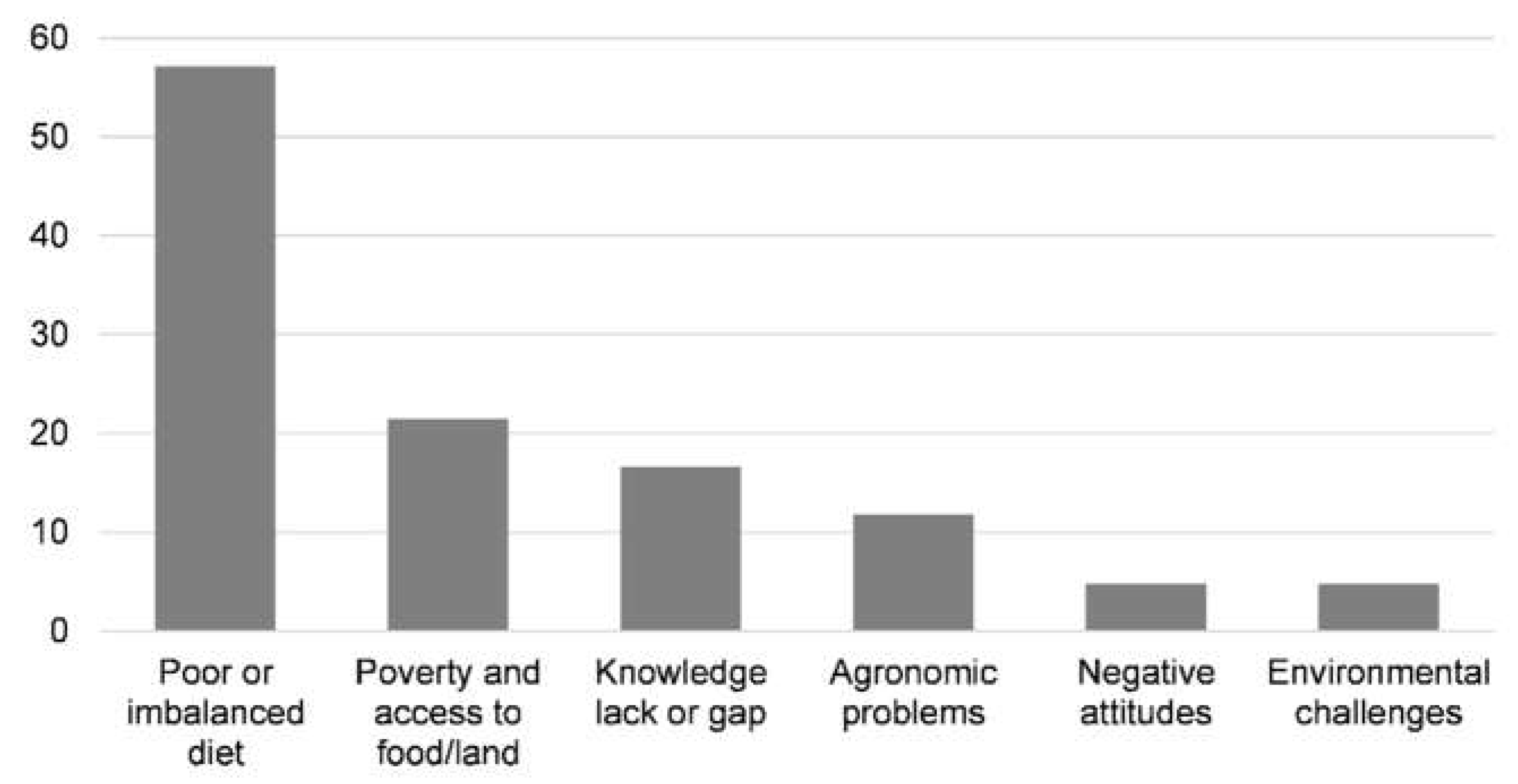
Figure 2.
The relative influence of different factors on consumption of local food plants (green bars) and on nutrition (yellow bars), based on the percentage of answers across study countries.
Figure 2.
The relative influence of different factors on consumption of local food plants (green bars) and on nutrition (yellow bars), based on the percentage of answers across study countries.
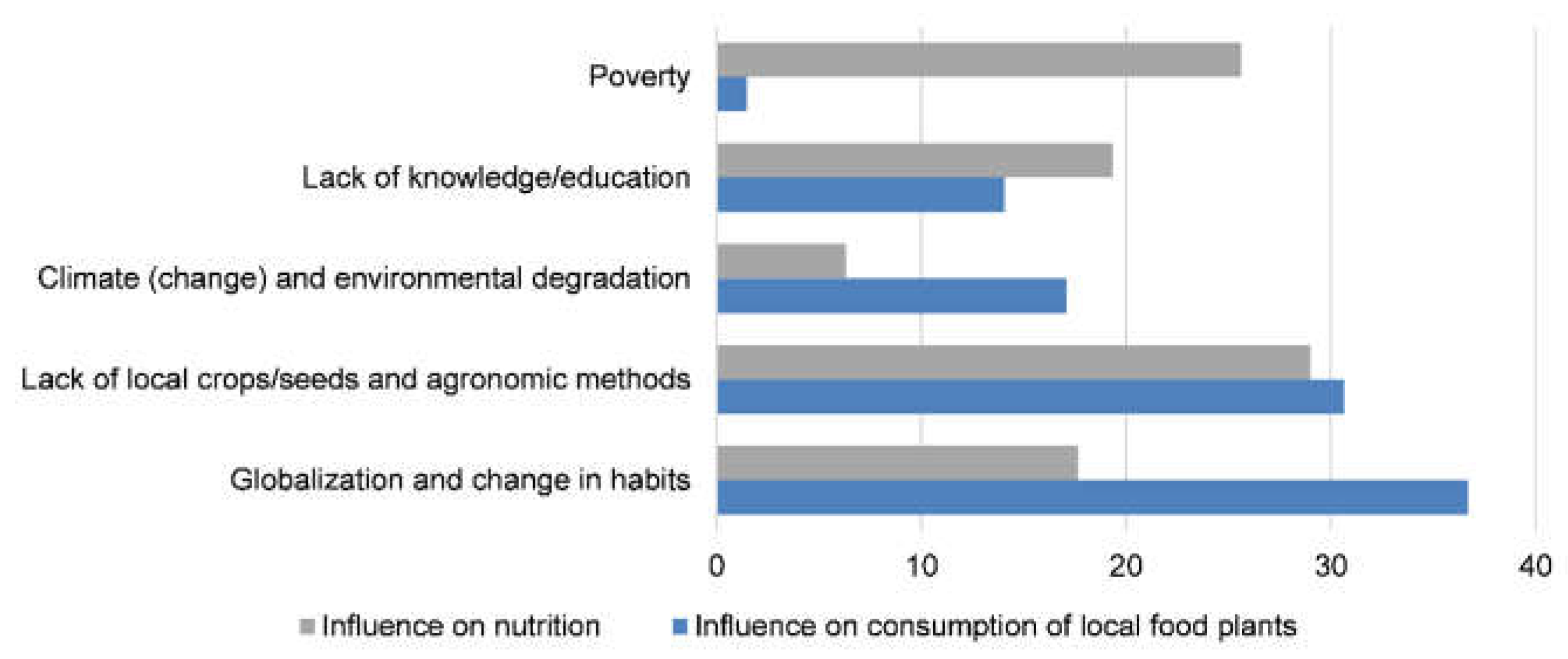
Figure 3.
Seasonal distribution of the scarcity periods most frequently reported by FFS participants in each study country and positioning of the harvest period.
Figure 3.
Seasonal distribution of the scarcity periods most frequently reported by FFS participants in each study country and positioning of the harvest period.
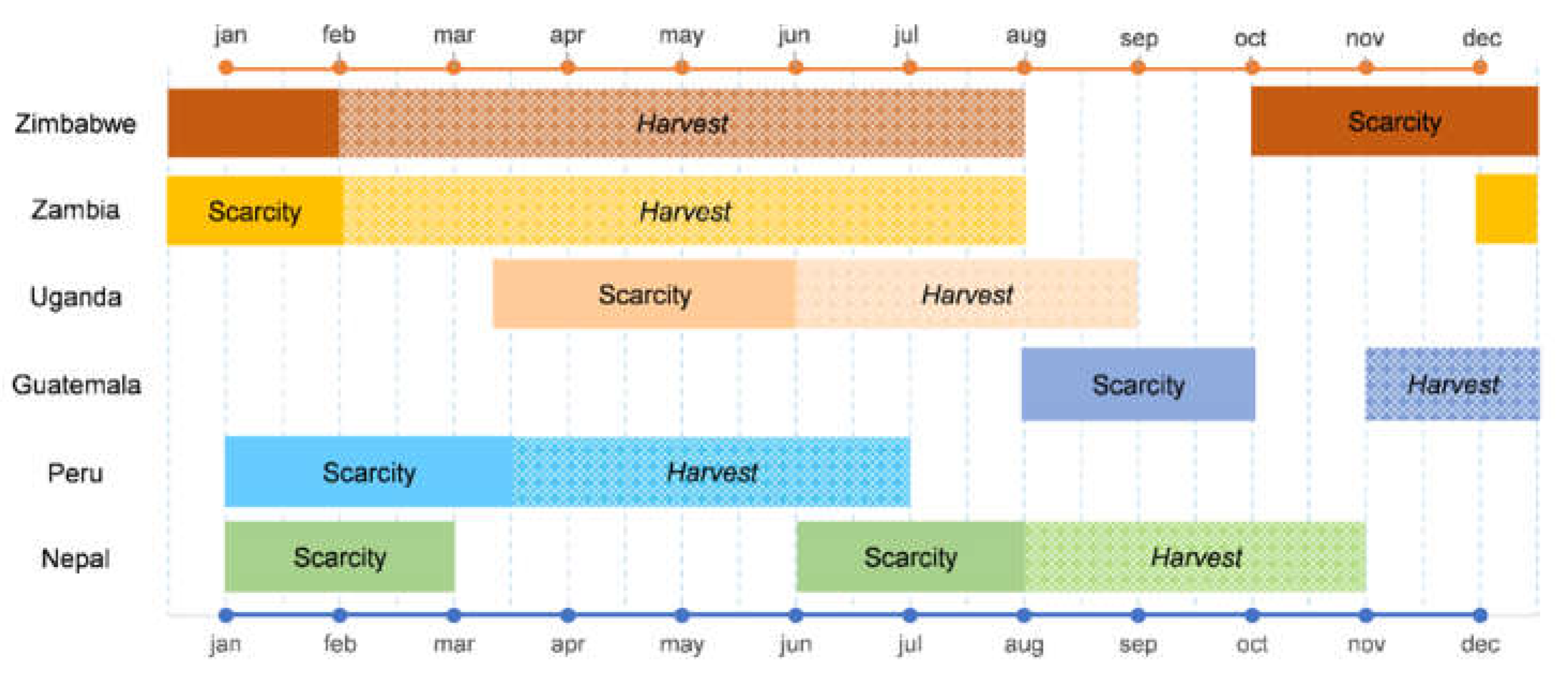
Figure 4.
The relationship between the number of coping strategy types mentioned by countries (full-colour bars on the left) and the average severity scores (corresponding dotted bars on the right) attributed to each strategy type.
Figure 4.
The relationship between the number of coping strategy types mentioned by countries (full-colour bars on the left) and the average severity scores (corresponding dotted bars on the right) attributed to each strategy type.
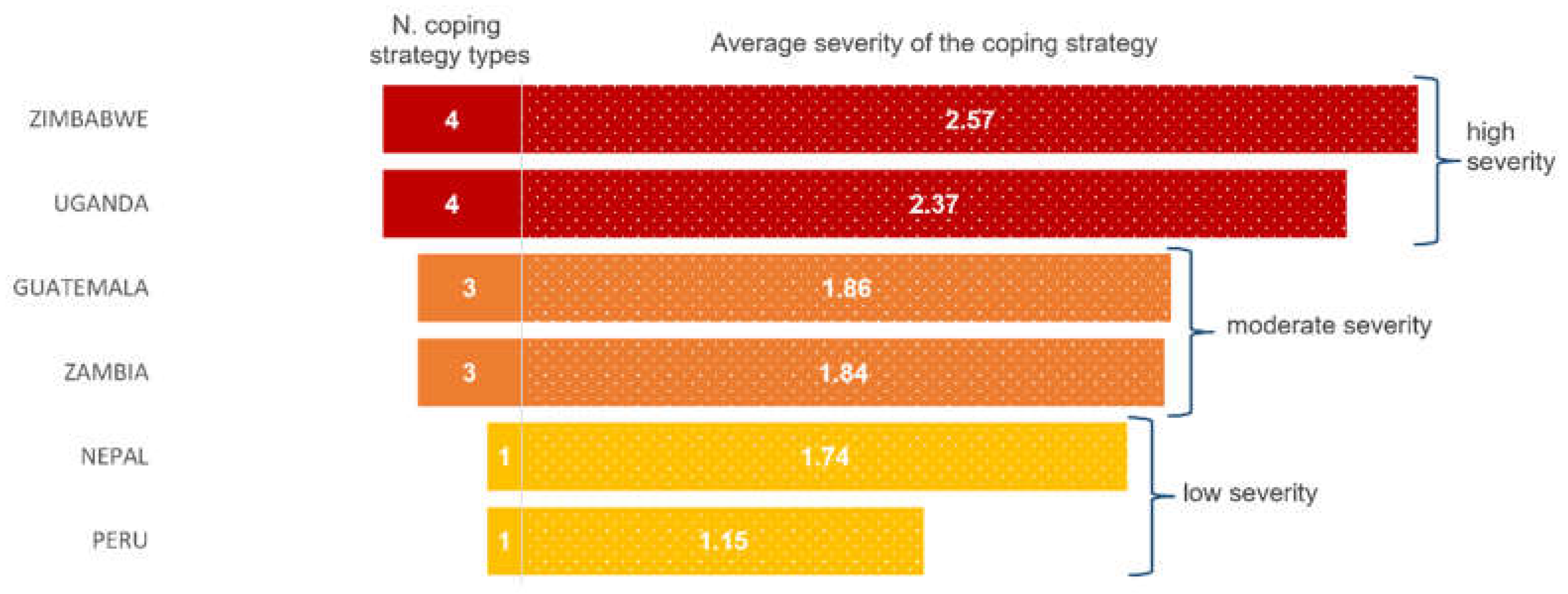

Table 1.
Diagnostic exercises (in chronological order) that provided the data analysed.
| Exercise Name | Content |
| Malnutrition problem tree | Malnutrition is a complex problem with multiple causes and consequences that may vary according to the local context. The exercise provides an in-depth and shared understanding of the root causes and consequences of malnutrition in the community. |
| Preparation of the local food plant list | FFS participants agree on a list of local food plants occurring in the community, whether in the wild, in farmers’ fields or in home gardens. Farmers are asked questions on properties of the listed plants, including in terms of their seasonality and their relevance in the scarcity period. |
| Timeline analysis of local food plants and nutrition | In this exercise, farmers assess how consumption patterns of local food plants and the quality of the nutrition in the communities changed in the past three decades, identifying the factors underlying such trends. |
| Seasonal calendar and coping strategies | FFS participants prepare a seasonal calendar of the community’s agroecosystem, indicating the food scarcity period. They also list the main strategies they adopt for coping with food scarcity, and subsequently sort the strategies according to how severe the scarcity period is (from 1 to 3, corresponding to low, medium or high severity). In the same exercise, participants recall the plants from the local food plant list and describe which of these are either available during the scarcity period or can be preserved to be made available as food during the scarcity period, or both. |
| Setting FFS research objectives and activities | In this exercise, FFS participants define and prioritize the objectives they wish to achieve with the FFS work, and their corresponding activities. |
Table 2.
Responses to the timeline questions about changes in consumption of local food plants and nutritional status over the past thirty years. Correlation coefficients between consumption and nutrition variables, and the relative p-values, are shown on the far right.
Table 2.
Responses to the timeline questions about changes in consumption of local food plants and nutritional status over the past thirty years. Correlation coefficients between consumption and nutrition variables, and the relative p-values, are shown on the far right.
| Country | Changes in consumption of local food plants | Changes in nutrition | Correlation | |||
| Decreased (%) | Same or increased (%) | Worsened (%) | Same or improved (%) | cor | p-value | |
| Uganda | 91 | 9 | 91 | 9 | 1 | < 2.2e-16 *** |
| Zambia | 100 | 0 | 84 | 16 | NA | NA |
| Zimbabwe | 92 | 8 | 83 | 17 | 0.67 | 0.0162 * |
| Guatemala | 100 | 0 | 50 | 50 | NA | NA |
| Peru | 100 | 0 | 87 | 13 | NA | NA |
| Nepal | 57 | 43 | 43 | 57 | -0.42 | 0.35 |
Significant values: p<0.001 ***, p<0.01 **, p<0.05*.
Table 3.
Types of coping strategies, in decreasing order of frequency and increasing level of severity, and their detailed breakdown (in decreasing order of frequency).
Table 3.
Types of coping strategies, in decreasing order of frequency and increasing level of severity, and their detailed breakdown (in decreasing order of frequency).
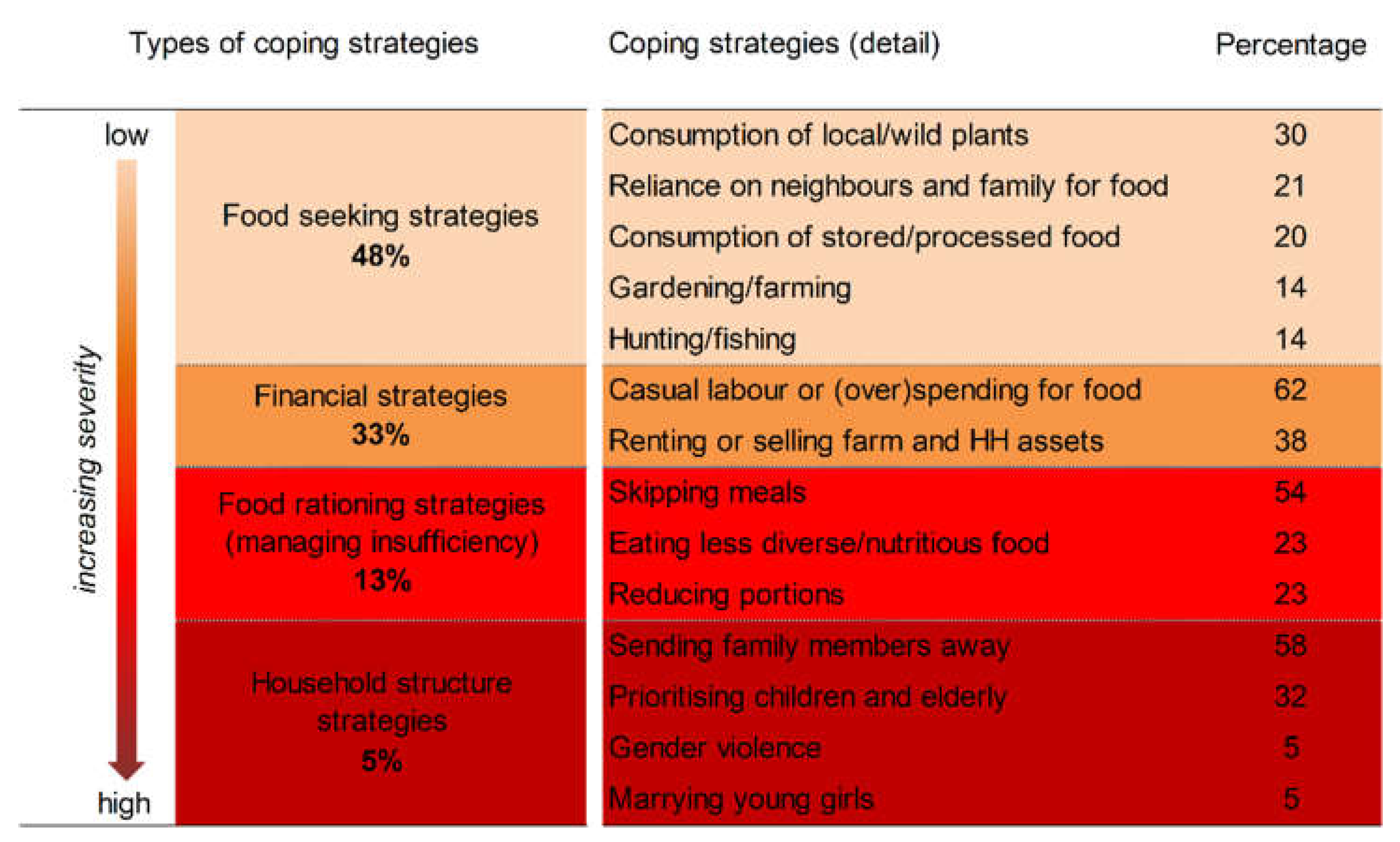 |
Table 4.
Priority activities selected by FFS participants at the end of the diagnostic process.
| Activity type | Percentage | Activities (detail) | Percentage |
| Field based activities | 48 | Sowing local food plants | 19 |
| Seed germination and breaking seed dormancy | 11 | ||
| Seed storage | 9 | ||
| Harvesting wild food plants | 6 | ||
| Creating school gardens | 3 | ||
| Mixed activities | 15 | Seed fairs and food fairs | 15 |
| Food based activities | 31 | Food preparation and cooking demonstrations | 23 |
| Food preservation | 8 | ||
| Other activities | 6 | 6 |
Disclaimer/Publisher’s Note: The statements, opinions and data contained in all publications are solely those of the individual author(s) and contributor(s) and not of MDPI and/or the editor(s). MDPI and/or the editor(s) disclaim responsibility for any injury to people or property resulting from any ideas, methods, instructions or products referred to in the content. |
© 2025 by the authors. Licensee MDPI, Basel, Switzerland. This article is an open access article distributed under the terms and conditions of the Creative Commons Attribution (CC BY) license (http://creativecommons.org/licenses/by/4.0/).
Copyright: This open access article is published under a Creative Commons CC BY 4.0 license, which permit the free download, distribution, and reuse, provided that the author and preprint are cited in any reuse.


