

Submitted:
17 February 2025
Posted:
18 February 2025
You are already at the latest version
Abstract
Rocky desertification is a form of land degradation occurring in tropical and subtropical regions, characterized by the destruction of vegetation and soil erosion caused by natural or anthropogenic factors, resulting in extensive areas of exposed bedrock. Field tests were conducted in three townships—Bolin, Longlai, and Longlei—within Fengshan County, Guangxi Zhuang Autonomous Region, China, to evaluate the effects of various fertilizers (compound fertilizers, slow-release fertilizers, and bio-organic fertilizers) on soil fertility, enzyme activity, bacterial diversity, and the growth performance of Mahonia fortunei (Lindl.) Fedde, aiming for ecological restoration and economic development. The findings indicated that the use of bio-organic fertilizers significantly enhanced soil fertility and enzyme activities, specifically urease, sucrase, and acid phosphatase, followed by slow-release fertilizers, and subsequently compound fertilizers. In comparison to the use of compound fertilizers, bio-organic fertilizers can enhance the organic matter content by 30.4%, 15.73%, and 21.83%, and the total nitrogen content by 19.4, 3.82, and 2.66 g/kg in the Bolin, Longlai, and Longlei regions, respectively. In the Bolin and Longlai regions, the utilization of bio-organic fertilizer yielded the maximum total phosphorus concentration, surpassing compound fertilizer by 85.45% and 53.37%, respectively. In the Longlei region, the total phosphorus concentration in the soil was about equivalent to that of compound fertilizer and bio-organic fertilizer, measuring 1.107 and 1.113 g/kg, respectively. Furthermore, the soil's available nitrogen, phosphorous, and potassium reached their peak levels when bio-organic fertilizers were applied. Urease activity increased by 181.82%, 29.29%, and 25.83%, while sucrase activity rose by 201.52%, 33.13%, and 26.22%, respectively, compared to the administration of compound fertilizer. The activity of acid phosphatase increased by 27.85%, 25.59%, and 40.49%, individually, when compared to the application of compound fertilizer. Unlike compound fertilizer, bio-organic fertilizer improved the diversity and abundance of beneficial soil microorganisms while promoting the growth of Mahonia fortunei (Lindl.) Fedde. In Bolin, Longlai, and Longlei, the concentrations of Boron (B), Copper (Cu), Zinc (Zn), and Iron (Fe) in the soil peaked with the application of slow-release fertilizers. Specifically, the Cu content increased by 151.65%, 69.97%, and 24.51%, respectively, in comparison to the use of compound fertilizers; the levels of these micronutrient elements were more comparable when bio-organic fertilizers and compound fertilizers were utilized. In the Longlei region, the use of slow-release fertilizers resulted in Mahonia fortunei (Lindl.) Fedde achieving a maximum plant height and ground diameter of 3.62 cm and 4.5 cm, respectively, surpassing the measurements obtained with compound fertilizer by 9.04% and 18.42%. This research illustrated the application of bio-organic fertilizer and slow-release formulations. Fertilizer significantly contributed to the amelioration of rocky desertification and the enhancement of vegetation, thereby offering a more effective solution for the restoration of rocky desertification flora, particularly for the cultivation of understorey cash crops.
Keywords:
Rocky desertification
; Compound fertilizers
; Slow-release fertilizers
; Bio-organic fertilizers
; Soil nutrients
; Bacterial diversity
1. Introduction
Rocky desertification refers to the degraded terrain in the Karst area, characterized by soil and vegetation loss due to widespread and imprudent land usage. This results in heightened soil erosion, exposing bedrock, diminishing land productivity, and the emergence of a desert landscape[1,2,3]. Restoring and re-establishing vegetation in Rocky desertification zones is a crucial component of ecological restoration aimed at mitigating soil degradation and improving soil quality in these areas, which result from reverse succession and vegetation extinction[4,5,6]. A significant Karst region exists in southwest China, predominantly in Guizhou, Guangxi, Yunnan, and Chongqing[7,8]. Many of these regions are economically disadvantaged as a result of rocky desertification. Planting Chinese medicinal plants beneath trees, a method referred to as the "non-timber understorey economy" in China, akin to agroforestry, can enhance the local economy while mitigating rocky desertification[9,10]. Presently, an increasing number of researchers are concentrating on cultivating various medicinal herbs beneath forest canopies. For instance, Zhou et al. cultivate Panax notoginseng (Burkill) F.H. Chen in forested areas[11], while Zhou et al. investigate the cultivation model of economic plants in young Cunninghamia lanceolata forests[12]. Additionally, Li et al. assess food cultivation beneath Styphnolobium japonicum forests[13]. The Mahonia fortunei (Lindl.) Fedde, characterized by economic efficiency, thermophilicity, drought tolerance, shade preference, and frost resistance, was selected for understorey planting to enhance the local economy, as many of these regions are economically disadvantaged due to rocky desertification[14].
The application of fertilizer is essential for the district's agricultural practices to enhance crop yield and quality due to degraded, low-fertility soils that hinder plant growth[15,16]. Compound fertilizer is a category of chemical fertilizer comprising two or more nutrients, specifically nitrogen, phosphorus, and potassium. Nonetheless, prolonged and frequent application of this fertilizer type will lead to a reduction in soil organic matter, increased soil erosion, and diminished microbial community diversity, ultimately resulting in decreased soil fertility and exacerbated soil deterioration[17,18,19,20]. Slow-release fertilizers release nutrients more gradually than regular fertilizers, which improves crop fertilizer utilization, lowers fertilizer application frequency, and lessens environmental pollution from chemical fertilizers. Certain crops may provide higher yields when utilizing slow-release fertilizers[21,22,23]. The growth of crops, soil fertility, and soil health are significantly linked to soil microorganisms, a crucial element of the soil microecosystem. Their activities and composition significantly influence the sustainability of agriculture[24,25,26]. A novel fertilizer, termed bio-organic fertilizer, is produced from animal dung and plant and animal leftovers through the incorporation of useful microorganisms that fix nitrogen, available phosphorus, and available potassium, and facilitate various fermentation processes[27,28]. This fertilizer can enhance soil quality and augment nutrient availability[29].In numerous rocky desertification regions of Guangxi, compound fertilizers have been utilized to supply nutrients for vegetation and Chinese herbs. However, the application of bio-organic fertilizers to degraded red soil can enhance soil nutrients and stimulate plant growth[30], similarly, the use of bio-organic fertilizers on saline soil not only ameliorates its physicochemical properties but also boosts fertility[31]. Furthermore, the implementation of slow-release fertilizers in sandy soil improves fertilizer utilization rates while mitigating environmental impacts[32]. Consequently, bio-organic and slow-release fertilizers may exert a more pronounced beneficial effect on rocky desertification soil.
This study aims to evaluate the impact of compound fertilizers on soil characteristics and the growth of Mahonia fortunei (Lindl.) Fedde, cultivated in forested areas across three townships in Fengshan County, Guangxi, located within the Rocky Desertification Zone where vegetation restoration efforts have been implemented. We incorporated slow-release fertilizers and bio-organic fertilizers into the research. We also conducted field trials to investigate the effects of these fertilizers on the soil properties of the rocky desertification areas and the growth of the Mahonia fortunei (Lindl.) Fedde planted in the understory. The aforementioned study identified the most appropriate fertilizers for rocky desertification regions, which can enhance local economic revenue while rehabilitating these areas, and serves as a reference for future fertilizer application in rocky desertification zones.
2. Materials and Methods
2.1. Introduction of the Research Region
The research region encompasses the Longlai, Longlei, and Bolin townships in Fengshan County, Guangxi Zhuang Autonomous Region, China (Figure 1). The region experiences a subtropical monsoon climate characterized by brief, arid winters, prolonged, rainy summers, comparable spring and autumn seasons, and the absence of extreme cold or high heat. The average annual temperature is 19.2°C, the lowest average temperature is 7.7°C, the coldest average temperature is 10.5°C in January, the hottest average temperature is 26°C or so in July, the highest average temperature is 31°C, the annual rainfall is 1,564.0 millimeters, and there is a 362-day frost-free period. The Longlai test site has a slope of 30°, an elevation of 868.6m~879.0m, a longitude of 106°47′50′′~106°47′53′′, and a latitude of 24°32′33′′~24°32′37′′; the Longlei test site has a slope of 0°, an elevation of 874m~875.8m, a longitude of 106°47′14′′, and a latitude of 24°31′13′′; the Bolin test site has a slope of 30°, an elevation of 784.7m~785.5m, a longitude of 106°50′28′′~106°50′43′′, and a latitude of 24°28′24′′~24°28′25′′.
2.2. Materials
Compound fertilizer (NPK compound fertilizer, purchased from Guangxi Huawuot Group Co., total nutrient content≥30%); Slow-Release Fertilizer (Produced by the Guangxi Academy of Forestry, total nutrient content≥30%); Bio-organic Fertilizer (Purchased from Guangxi Huawuot Group Co., total nutrient content≥5%).
Mahonia fortunei (Lindl.) Fedde: it is a kind of warm temperate zone plant, that has strong cold resistance, and is not strict on soil requirements, grows best on loose fertile, well-drained sandy loam, so it can be planted in Guangxi rocky desertification areas.
2.3. Experimental Design
In Longlai, Longlei, and Bolin three test sites were planted in Mahonia fortunei (Lindl.) Fedde, planting density of 0.5 × 0.5m, delineated three areas where different fertilizers, 0.25 kg per plant, fertilization once a year. Fertilizer application method: dig a fertilization trench of length × width × depth: 12.5 ×12.5 ×12.5 cm on average at a position of 20-25 cm from each herb, put in the fertilizer, and cover the soil in time.
After two years, samples were taken from five to six sites within each standard plot using the multi-point mixing method (inter-root and non-inter-root soils were taken separately, and then they were uniformly mixed). Humus and pollutants on the soil surface were removed first. One sample, weighing around 1.0 kg, was placed into a self-sealing bag, air-dried, and then pulverized to measure soil organic matter, total nitrogen, and total phosphorus after the soil samples were mixed using the quadratic approach at each location. Following the aforementioned collection procedure, roughly 15 g of soil samples were placed in a test tube and placed in a bucket of dry ice before being returned to the lab for enzyme activity measurement and microbiological detection.
2.4. Test Methods
Soil organic matter was determined by the external heating method of potassium dichromate; Soil total nitrogen content was determined by an element analyzer (Vario MACRO Cube, Elementar, Germany); the available nitrogen was determined by the alkaline diffusion method; the total nitrogen was determined by the semi-trace Kjeldahl method; the total phosphorus and available phosphorus were determined by UV–visible spectrophotometry and the total potassium and available potassium were determined by flame spectrophotometry[32,33]; Shanghai Lingen Biotechnology Co., Ltd. was tasked with assessing the soil bacterial diversity, enzyme activity, and trace element content; urease, phosphatase, and other enzymes were assessed using the procedures outlined in Methods for Determining Soil Microbial Biomass and Their Applications.
Three plants with the same fertilizer were chosen at random to measure the height of the plants and the length of their roots at the same time as the soil sample.
2.5. Data Processing
Multiple comparisons (p=0.05) using the LSD technique, one-way ANOVA (one-way ANOVA) using SPSS 20.0 software, and Pearson correlation analysis of soil nutrients, microbial counts, enzyme activities, and development of the Mahonia fortunei (Lindl.) Fedde under various fertilizer applications were carried out.
3. Results
3.1. Effect of Different Fertilizer Applications on Soil Organic Matter and Nitrogen, Phosphorus, and Potassium Content of Soil
Figure 2A demonstrates that the use of bio-organic fertilizer yielded the highest soil organic matter content in the same area; in the Bolin region, the organic matter content was 37.03 g/kg, representing a 48.23% increase compared to compound fertilizer, while in the Longlai region, it reached 54.082 g/kg, 35.83% higher than that of compound fertilizer; in the Longlei region, the organic matter content attained 51.78 g/kg, which was 23.45% greater than with compound fertilizer application. The subsequent application of slow-release fertilizer elevated the organic matter content in the Bolin region to 28.397 g/kg, reflecting an increase of 11.65% compared to the application of compound fertilizer; in the Longlai region, it attained 46.733 g/kg, marking a 17.37% increase over compound fertilizer; and in the Longlei region, the organic matter content reached 42.503 g/kg, representing a 1.33% increase relative to compound fertilizer application.
Figure 2B illustrates that the utilization of bio-organic fertilizer succeeded by compound fertilizer in the same area yielded the maximum total nitrogen concentration in the soil. The total nitrogen concentration was 2.67 g/kg in the Bolin region, 3.82 g/kg in the Longlai region, and 2.66 g/kg in the Longlei region during the application of bio-organic fertilizer. These levels were 19.89%, 13.35%, and 11.44% higher, respectively, than those achieved with the application of compound fertilizer. Conversely, the use of slow-release fertilizer yielded the lowest total soil nitrogen content.
The application of bio-organic fertilizer in the Bolin and Longlai locations resulted in the highest soil total phosphorus content (0.803 and 1.227 g/kg, respectively), which was 85.45% and 53.37% higher than that of compound fertilizer (Figure 2C). In the Longlei region, the total phosphorus content of the soil was 1.107 g/kg for bio-organic fertilizer and 1.113 g/kg for compound fertilizer, respectively. The total phosphorus content of the soil was higher for compound fertilizers. Except for Bolin, where the total phosphorus level was higher than when compound fertilizer was applied, Longlai and Longlei had lower total phosphorus contents when slow-release fertilizer was used.
Figure 2D illustrates that the application of compound fertilizer yielded the highest total soil potassium concentrations in Bolin and Longlei, measuring 15.843 g/kg and 16.93 g/kg, respectively. This was 15.84% and 7.25% superior to bio-organic fertilizer and 35.51% and 8.56% superior to slow-release fertilizer. The content increased by 35.51% and 8.56% relative to the use of slow-release fertilizer, and by 15.84% and 7.25% relative to the use of bio-organic fertilizer. The utilization of bio-organic fertilizer yielded the highest total potassium concentration in the soil of the Longlai region (12.723 g/kg), surpassing compound fertilizer and slow-release fertilizer by 12.56% and 16.59%, respectively.
In the same region, the utilization of bio-organic fertilizer yielded the highest soil available nitrogen content (Figure 3A), succeeded by slow-release fertilizer; in Bolin, Longlai, and Longlei, the available nitrogen content measured 201.06, 372.797, and 301.557 mg/kg, respectively, representing increases of 45.12%, 34.96%, and 22.9% compared to the application of compound fertilizer. The nitrogen content in Bolin, Longlai, and Longlei was 179.457, 308.027, and 246.363 mg/kg, respectively, with the application of slow-release fertilizer. This was an increase of 29.53%, 11.51%, and 0.41% compared to the content with the application of compound fertilizer.
Figure 3B shows that the application of bio-organic fertilizer resulted in the highest soil available phosphorus content in the same region. The amounts of available phosphorus in the three regions of Bolin, Longlai, and Longlei were 18.767, 17.75, and 18.46 mg/kg, respectively. These amounts were 102.73%, 58.87%, and 42.47% higher than those obtained when compound fertilizer was applied. The available phosphorus levels of Bolin, Longlai, and Longlei were then 10.567, 11.997, and 14.543 mg/kg, respectively, when slow-release fertilizer was administered. These contents were 14.15%, 7.37%, and 12.24% greater than those obtained when compound fertilizer was applied.
Figure 3C illustrates that in the same area, the application of bio-organic fertilizer resulted in the highest available potassium content in the soil. The available potassium levels for Bolin, Longlai, and Longlei were 83.243, 147.13, and 216.581 mg/kg, reflecting increases of 173.80%, 29.22%, and 20.65%, respectively, compared to the application of compound fertilizer. Secondly, upon the application of slow-release fertilizer, the available potassium concentrations for Bolin, Longlai, and Longlei were 69.74, 114.565, and 198.433 mg/kg, representing increases of 129.39%, 0.62%, and 10.54% above those of compound fertilizer, respectively.
3.2. Effect of Different Fertilizer Applications on Soil Micronutrient Content
Figure 4A illustrates that the incorporation of slow-release fertilizer yielded the maximum elemental boron concentration in the specified area, succeeded by compound fertilizer and bio-organic fertilizer. The B-element concentrations were 0.132, 0.303, and 0.497 mg/kg in the districts of Bolin, Longlai, and Longlei, respectively, with the application of slow-release fertilizer. This represented increases of 15.79%, 102%, and 25.82% compared to the activity during the application of compound fertilizer. Upon the application of bio-organic fertilizers, the boron content in the Bolin, Longlai, and Longlai regions was measured at 0.114, 0.15, and 0.395 mg/kg, representing increases of 56.16%, 1.35%, and 48.50% compared to the application of compound fertilizers, respectively.
Figure 4B illustrates that the maximum elemental Cu concentrations of 0.687, 0.583, and 1.453 mg/kg were recorded in the Bolin, Longlai, and Longlei regions, respectively, upon the application of bio-organic fertilizer, representing increases of 151.65%, 69.97%, and 24.51% compared to the application of compound fertilizers. When slow-release fertilizers were utilized, the Cu content in the Longlai and Longlei regions was comparable; however, in the Bolin region, the Cu content was elevated with the administration of bio-organic fertilizers compared to compound fertilizers.
Figure 4C illustrates that the maximum elemental Zn concentration was seen in the same area with the application of bio-organic fertilizer, and the total Zn content across the three zones was greater with slow-release fertilizer than with compound fertilizer. The elemental Zn concentrations in the Bolin, Longlai, and Longlei locations were 4.287, 4.547, and 5.813 mg/kg, respectively, after the application of bio-organic fertilizer, representing increases of 242.35%, 28.56%, and 25.82% compared to the application of compound fertilizer.
Figure 4D indicates that within the same location, the application of bio-organic fertilizer resulted in the highest elemental Fe level, followed by slow-release fertilizer, while the lowest elemental Fe content was seen with the addition of compound fertilizer. The elemental boron concentration was 4.993, 3.623, and 9.653 mg/kg in the Bolin, Longlai, and Longlei districts, respectively, during the application of bio-organic fertilizer, representing increases of 59.37%, 33.54%, and 36.67% compared to the levels seen during the application of compound fertilizer. The application of bio-organic fertilizer elevated the Fe concentration in the Bolin, Longlai, and Longlei regions by 39.90%, 26.32%, and 32.20%, respectively, resulting in concentrations of 4.383, 3.427, and 9.337 mg/kg.
3.3. Effect of Different Fertilizer Applications on Soil Enzyme Activities
Figure 5A illustrates that soil urease activity peaked following the application of bio-organic fertilizer in the designated area. The soil urease activity recorded in Bolin, Longlai, and Longlei was 0.093, 0.543, and 0.57 mg/(g*24h), respectively, all exceeding the levels observed with compound application. The activity increased by 181.82%, 76.87%, and 30.43% after the use of fertilizer. Secondly, the application of slow-release fertilizer resulted in soil urease activity levels of 0.063, 0.42, and 0.453 mg/(g*24h) in the areas of Bolin, Longlai, and Longlei, respectively, representing increases of 90.91%, 36.81%, and 3.66% compared to the activity observed with compound fertilizer.
Figure 5B clearly demonstrates that the use of bio-organic fertilizer produced the highest soil sucrase activity in that area, succeeded by the use of slow-release fertilizer. In the Bolin, Longlai, and Longlei districts, soil sucrase activity measured 31.69, 39.303, and 36.293 mg/(g*24h) following the application of bio-organic fertilizer. These values were individually 201.52%, 118.46%, and 70.93% more than the activity observed with the application of compound fertilizer. In Bolin, Longlai, and Longlei, the soil sucrase activities were 11.57, 29.522, and 28.753 mg/(g*24h), respectively, following the application of slow-release fertilizer. These values exceeded the activities with compound fertilizer by 10.09%, 64.09%, and 35.42%, respectively.
Figure 5C illustrates that soil acid phosphatase activity peaked with the application of bio-organic fertilizer, followed by slow-release fertilizer in the same region. Soil acid phosphatase activity measured 1.786, 2.223, and 2.37 mg/(g*24h) in the Bolin, Longlai, and Longlei districts, respectively, following the application of bio-organic fertilizer. This represented an increase of 45.56% compared to the activity observed with compound fertilizer, which showed increases of 36.97% and 70.87%. Upon the application of slow-release fertilizer, soil acid phosphatase activity measured 1.397, 1.77, and 1.687 mg/(g*24h) in the regions of Bolin, Longlai, and Longlei, respectively, representing increases of 13.85%, 9.06%, and 21.63% compared to the compound fertilizer.
3.4. Effects of Different Fertilizer Applications on the Growth of Mahonia fortunei (Lindl.) Fedde
Figure 6A illustrates that in the Bolin and Longlai regions, the maximum plant height of Mahonia fortunei (Lindl.) Fedde reached 1.807 cm and 2.23 cm, respectively, with the application of bio-organic fertilizer, representing increases of 20.22% and 22.33% compared to the use of compound fertilizer. In the Longlei region, the maximum plant height of Mahonia fortunei (Lindl.) Fedde reached 3.62 cm with the application of slow-release fertilizer, representing a 9.04% increase compared to compound fertilizer. This was followed by a height of 3.47 cm with bio-organic fertilizer, which was 4.52% higher than that achieved with compound fertilizer.
Figure 6B illustrates that in the Bolin and Longlai regions, the ground diameter of the Mahonia fortunei (Lindl.) Fedde was maximized with the application of bio-organic fertilizer, measuring 3.1 cm and 3.7 cm, respectively, representing increases of 1.08% and 20.64% compared to the application of compound fertilizer. In the Longlai region, the maximum ground diameter of Mahonia fortunei (Lindl.) Fedde reached 4.5 cm with the application of slow-release fertilizer, representing an increase of 18.42% compared to compound fertilizer. The diameter was 4.133 cm with bio-organic fertilizer, which was 11.1% greater than with compound fertilizer.
3.5. Effect of Different Fertilizer Applications on the Soil Bacterial Communities in Different Regions
The diversity indexes of soil bacterial communities comprise the Shannon index, Simpson index, Chao1 index, and ACE index. A higher Shannon index signifies greater community diversity; a higher Simpson index denotes an uneven species distribution and a more significant ecological role of dominant organisms; the Chao1 index reflects the estimated species richness in the sample; and a higher ACE index indicates increased species complexity within the community. From Table 1, it can be seen that in the same area, the chao1 index, ACE index, and shannon index of the soil were highest when bio-organic fertilizer was applied, followed by when slow-release fertilizer was applied.
The species distribution of the top 10 bacteria at the gate level is shown in Figure 7, which shows that when compound fertilizers were applied in the Bolin region, Proteobacteria, Acidobacteria, Firmicutes, and Verrucomicrobia predominated; when bio-organic fertilizers were applied, Proteobacteria, Acidobacteria, Chloroflexi, and Verrucomicrobia predominated; and when slow-release fertilizers were applied, Proteobacteria, Acidobacteria, Actinobacteria, and Bacteroidetes predominated. Compound fertilizers in the Longlai district were dominated by Proteobacteria, Acidobacteria, Actinobacteria, and Planctomycetes; bio-organic fertilizers were dominated by Proteobacteria, Acidobacteria, Actinobacteria, and Gemmatimonadetes; and slow-release fertilizers were dominated by Proteobacteria, Acidobacteria, Chloroflexi, Planctomycetes, Gemmatimonadetes, and Nitrospirae. When compound fertilizers were used in Longlei, Proteobacteria, Acidobacteria, Firmicutes, Bacteroidetes, Chloroflexi, and Planctomycetes were present in greater numbers than when bio-organic fertilizers were used. Similarly, when slow-release fertilizers were used, Proteobacteria, Acidobacteria, Firmicutes, Bacteroidetes, Chloroflexi, and Planctomycetes were the most prevalent.
4. Discussion
4.1. Effect of Application of Different Fertilizers on Soil Fertility in Different Regions
Soil organic matter, a substantial carbon reservoir, plays a crucial role in the formation and stabilization of soil aggregates, affects soil fertility, and serves as a primary nutrition source for crops[33,34,35]. Nitrogen, phosphorus, and potassium are vital components influencing plant growth and development[36], with nitrogen specifically associated with photosynthesis, chlorophyll concentration, and crop output[37,38,39]. Our experimental results indicate that soil organic matter, total nitrogen, total phosphorus, available nitrogen, available phosphorus, and available potassium were maximized in the Bolin, Longlai, and Longlei regions following the application of bio-organic fertilizers (Figure 2A, Figure 2B, Figure 2C, Figure 3). According to the research conducted by Nardi et al. [40] and Liu et al. [41], bio-organic fertilizers demonstrate superior efficacy in enhancing soil organic matter, total nitrogen, total phosphorus, available nitrogen, available phosphorus, and available potassium compared to compound and slow-release fertilizers. The total potassium level of the soil was greater in the Bolin and Longlai regions with the application of compound fertilizer, however it was similar to that of the bio-organic fertilizer. Nonetheless, the Longlai region had the highest total potassium content in soil upon the application of bio-organic fertilizer (Figure 2D), potentially linked to the degree of rocky desertification. Research indicates that the slow-release mechanism maintains elevated nutrient levels in the soil, allowing slow-release fertilizers to gradually disperse over an extended period following their application. This study found that the levels of accessible nitrogen, phosphate, and potassium were greater with the use of slow-release fertilizers in the districts of Bolin, Longlai, and Longlei compared to compound fertilizers, corroborating previous research.
4.2. Effect of Application of Different Fertilizers on Soil Micronutrient Content in Different Regions
B, Cu, Zn, and Fe, as vital micronutrients for plant development[42], are crucial to plant growth. B is essential for the integrity and functionality of the cell wall, and, in contrast to most other micronutrients, the plant root system necessitates a continual external supply of trace levels of boron; otherwise, membrane function deteriorates within minutes[43,44]. Cu can form stable complexes with numerous organic compounds and engage in various redox events within the cell; it also plays a role in photosynthesis, respiration, and cell wall remodeling in plants[45,46]. Zn functions as a catalytic or structural cofactor in numerous enzymes and regulatory proteins[47], and is crucial for chlorophyll production, carbohydrate creation, tryptophan synthesis, and protein synthesis[48,49,50]. Fe significantly contributes to photosynthesis, chlorophyll biosynthesis, and several fundamental metabolic activities in chloroplasts, owing to its redox activity that facilitates the acceptance and donation of electrons[51,52]. Research conducted by Yaganoglu, E et al. [43] and Maqueda, C et al. [44] indicates that the micronutrient content in soil is greater with the use of bio-organic fertilizers compared to chemical fertilizers. The correlation between chemical fertilizers and soil organic matter content with soil micronutrient concentration was substantial (Figure 8). The use of slow-release fertilizer yielded the highest soil micronutrient levels in the regions of Longlai, Longlei, and Bolin, maybe due to the inclusion of micronutrients in the fertilizer formulation. In accordance with previous studies, the soil's micronutrient content was greater with the application of bio-organic fertilizer compared to compound fertilizer (Figure 4).
4.3. Effect of Application of Different Fertilizers on Soil Enzyme Activities in Different Regions
Soil enzymes are essential for soil energy conversion and nutrient cycling, and they serve as important indicators of microbial activity, soil fertility, and land quality changes[53,54]. A positive link between soil organic matter content and soil enzyme activity was identified[55]. The decomposition products of microorganisms, plant roots, and organic matter from plants and animals are the principal sources of soil enzymes. The creation and growth of soil humus are intricately connected to soil enzyme activity[56]. Bio-organic fertilizer, rich in microorganisms and plant and animal wastes, exhibits superior soil enzyme activity compared to chemical fertilizers. The utilization of bioorganic fertilizers in the Longlai, Longlei, and Bolin regions yielded the highest activities of soil urease, sucrase, and acid phosphatase in our research. These activities exhibited a positive correlation with the quantity of soil organic matter (Figure 5 and Figure 8).
4.4. Effects of Applying Different Fertilizers on the Abundance, Diversity, and Structure of Soil Bacteria in Different Regions
Soil microorganisms significantly affect the decomposition of organic matter, nutrient conversions, plant growth, and soil quality, with the type of fertilizer directly associated with differences in soil bacterial diversity[57,58,59]. Prior studies indicate that prolonged application of chemical fertilizers diminishes soil bacterial variety[60,61], whereas the primary organic elements, manure, and crop wastes, enhance soil bacterial diversity upon application[62,63,64]. The use of chemical fertilizers alongside crop residues mitigates the effect of chemical fertilizers on soil bacterial diversity[65]. This study demonstrated that the use of bio-organic fertilizers in Bolin, Longlei, and Longlai yielded the highest indices of soil bacterial diversity (Shannon) and abundance (Chao1, ACE). This indicates that the use of bio-organic fertilizers correlated with greater soil bacterial variety and abundance compared to compound fertilizers and slow-release fertilizers. This pertains to the characterization of agricultural crop leftovers and animal manure as substrates in bio-organic fertilizers.
The abundance of Proteobacteria was greater in Longlai, Longlei, and Bolin compared to compound and slow-release fertilizers, likely attributable to the adaptability of the phylum Ascomycetes to nutrient-rich environments[66]. Conversely, the abundance of Actinobacteria was lowest in bio-organic fertilizers, possibly due to the limited competitiveness of Chloroflexi in such nutrient-rich conditions. Competitiveness exhibited diminished prevalence in nutrient-dense soils[67]. The soil bacterial diversity index (Shannon) and abundance indices (Chao1, ACE) were elevated with the application of slow-release fertilizers compared to compound fertilizers, indicating that slow-release fertilizers can enhance soil microbial abundance and diversity, thereby supporting sustainable agricultural development[68].
5. Conclusions
Three types of fertilizers—compound, slow-release, and bio-organic—can be utilized in rocky desertification areas to achieve ecological restoration and economic development. The application of bio-organic fertilizer results in the highest levels of soil organic matter, total nitrogen, total phosphorus, available nitrogen, available phosphorus, and available potassium in the regions of Bolin, Longlai, and Longlei, in comparison to compound fertilizer and slow-release fertilizer. This significantly enhances soil fertility and fosters a more conducive environment for crop cultivation. These three regions have the highest soil enzyme activity, enhancing both soil microbial activity and soil fertility, which are crucial for the amelioration of rocky desertification. In Bolin, Longlai, and Longlei, the application of slow-release fertilizers resulted in the highest concentrations of B, Cu, Zn, and Fe, surpassing those observed with compound and bio-organic fertilizers. This not only replenished the plants with essential trace elements but also augmented their photosynthetic capacity and stimulated their growth. Moreover, the application of slow-release fertilizers in the Longlei region, as opposed to compound or bio-organic fertilizers, resulted in the optimal height and ground diameter of Mahonia fortunei (Lindl.) Fedde. This may be attributed to the presence of micronutrients in slow-release fertilizers.
Consequently, the synergistic application of bio-organic fertilizer and slow-release fertilizer may enhance ecological restoration and economic development in rocky desertification regions. Based on this study, follow-up experiments will be carried out in the future on the slow-release fertilizer, bio-organic fertilizer, and the combined use of the two in different ratios to explore the effects of a single fertilizer and the combined use of different ratios on the rocky desertification area and the growth of the Mahonia fortunei (Lindl.) Fedde.
Author Contributions
Writing—original draft preparation, XW. F.; validation, Y. S. XX. H and ZS. L.; formal analysis Y. S.; data curation and investigation, B. P.; resources, ZS. L.; writing—review and editing, ZS. L. and HY.G.; All authors have read and agreed to the published version of the manuscript.
Funding
This research was funded by was supported by the National Natural Science Foundation of China (42207394), Guangxi Key Research and Development Program of China (AB21196048); Forestry and Grassland Science and Technology Promotion Demonstration Project of the Central Gov-ernment ([2023] TG17) and Key Laboratory Autonomous Projects (2021-A-02-01).
Data Availability Statement
The data presented in this study are available on request from the corresponding author.
Acknowledgments
The authors are grateful to Guangxi Forest's new fertilizer research and development Center, and School of Civil Engineering, Southeast University, and National and Local Unified Engineering Research Center for Basalt Fiber Production and Application Technology, Southeast University. Special thanks go to the anonymous reviewers for their constrictive comments in improving this manuscript.
Conflicts of Interest
The authors declare that they have no known competing financial interests or personal relationships that could have appeared to influence the work reported in this paper.
References
- Yuan, L.; Liu, W.D.; Su, S.; Chen, Z. The rocky desertification management in Guizhou province under the localized governance system. Frontiers in Environmental Science 2022, 10, 1065663. [Google Scholar] [CrossRef]
- Wang, S.J.; Liu, Q.M.; Zhang, D.F. Karst rocky desertification in southwestern China: Geomorphology, landuse, impact and rehabilitation. Land Degradation & Development 2004, 15, 115–121. [Google Scholar]
- Bai, X.Y.; Wang, S.J.; Xiong, K.N. Assessing spatial-temporal evolution processes of kaest rocky desertification land: indications for restoration strategies. Land Degradation & Development 2013, 24, 47–56. [Google Scholar]
- Fu, W.B.; Yan, Y.J.; Wang, K.; Hu, G.; Ling, Z.H. Effects of control measures on soil quality evolution in the Karst rocky desertification area in southwestern China. Research of Soil and Water 2021, 28, 27–32. [Google Scholar]
- Madsen, L.M. The Danish afforestation programme and spatial planning: new challenges. Landscape and Urban Planning 2002, 58, 241–254. [Google Scholar] [CrossRef]
- Yu, L.F.; Zhu, S.Q.; Ye, J.Z.; Wei, L.M.; Cheng, Z.R. Dynamics of a degraded karst forest in the process of natural restoration. Scientia Silvae Sinicae 2002, 38, 1–7. [Google Scholar]
- Peng, J.; Xu, Y.Q.; Zhang, R.; Xiong, K.N.; Lan, A.J. Soil erosion monitoring and its implication in a limestone land suffering from rocky desertification in the Huajiang Canyon, Guizhou, Southwest China. Environmental Earth Sciences 2013, 69, 831–841. [Google Scholar] [CrossRef]
- Huang, Q.H.; Cai, Y.L.; Xing, X.S. Rocky desertification, antidesertification, and sustainable development in the karst mountain region of Southwest China. Ambio 2008, 37, 390–392. [Google Scholar] [CrossRef]
- Chen, X.L. The origin, development and propspect of non-timber forest-based economics. Journal of Nanjing Forestry University (Natural Science Edition) 2022, 46, 105–114. [Google Scholar]
- Somarriba, E. Revisiting the past-an essay on agroforestry definition. Agroforestry Systems 1992, 19, 233–240. [Google Scholar] [CrossRef]
- Zhou, Y.; Li, J.Q.; Gao, L.; Liu, F.Y.; Liu, Y.J. Effects of different management measures of cultivation Panax notoginseng under forest on runoff and sediment yield and soil characteristics on slope. Journal of Soil and Water Conservation 2024, 38, 20–30. [Google Scholar]
- Zhou, S.Q. The interplanting patterns of economic crops with young Chinese firplantations. Journal of Fujian Agriculture and Forestry University ( Natural Science Edition) 2005, 34, 34–238. [Google Scholar]
- Li, Q.S. Research and demonstration of planting grain crops under forest. Agricultural Engineering 2020, 10, 112–119. [Google Scholar]
- Ma, T.S.; Deng, X.W.; Chen, L.; Xiang, W.H. The soil properties and their effects on plant diversity in different degrees of rocky desertification. Science of the Total Environment 2020, 736, 139667. [Google Scholar] [CrossRef] [PubMed]
- Fu, C.Y.; Ma, W.R.; Qiang, B.B.; Jin, X.J.; Zhang, Y.X.; Wang, M.X. Effect of chemical fertilizer with compound microbial fertilizer on soil physical properties and soybean yield. Agronomy-Basel 2023, 13, 2488. [Google Scholar] [CrossRef]
- Dimkpa, C.; Adzawla, W.; Pandey, R.; Atakora, W.K.; Kouame, A.K.; Jemo, M.; Bindraban, P.S. Fertilizers for food and nutrition security in sub-Saharan Africa: An overview of soil health implications. Frontiers in Soil Science 2023, 3, 1123931. [Google Scholar] [CrossRef]
- Gomiero, T. Soil degradation, land scarcity and food security: reviewing a complex challenge. Sustainability 2016, 8, 281. [Google Scholar] [CrossRef]
- Aziz, M.A.; Khan, K.S.; Khalid, R.; Shabaan, M.; Alghamdi, A.G.; Alasmary, Z.; Majrashi, M.A. Integrated application of biochar and chemical fertilizers improves wheat (Triticum aestivum) productivity by enhancing soil microbial activities. Plant and Soil 2024, 502, 433–448. [Google Scholar] [CrossRef]
- Oldfield, E.E.; Bradford, M.A.; Wood, S.A. Global meta-analysis of the relationship between soil organic matter and crop yields. Soil 2019, 5, 15–32. [Google Scholar] [CrossRef]
- Fang, P.; Abler, D.; Lin, G.; Sher, A.; Quan, Q. Substituting Organic Fertilizer for Chemical Fertilizer: Evidence from Apple Growers in China. Land 2021, 10, 858. [Google Scholar] [CrossRef]
- Ni, B.L.; Liu, M.Z.; Lü, S.Y.; Xie, L.H.; Wang, Y.F. Multifunctional Slow-Release Organic-Inorganic Compound Fertilizer. Journal of Agricultural and Food Chemistry 2010, 58, 12373–12378. [Google Scholar] [CrossRef]
- Sun, Y.; Mi, W.H.; Su, L.J.; Shan, Y.Y.; Wu, L.H. Controlled-release fertilizer enhances rice grain yield and N recovery efficiency in continuous non-flooding plastic film mulching cultivation system. Field Crops Research 2019, 231, 122–129. [Google Scholar] [CrossRef]
- Guo, J.J.; Fan, J.L.; Zhang, F.C.; Yan, S.C.; Zheng, J.; Wu, Y.; Li, J.; Wang, Y.L.; Sun, X.; Liu, X.Q.; et al. Blending urea and slow-release nitrogen fertilizer increases dryland maize yield and nitrogen use efficiency while mitigating ammonia volatilization. Science of the Total Environment 2021, 790, 148058. [Google Scholar] [CrossRef] [PubMed]
- Kahrl, F.; Li, Y.J.; Su, Y.F.; Tennigkeit, T.; Wilkes, A.; Xu, J.C. Greenhouse gas emissions from nitrogen fertilizer use in China. Environmental Science & Policy 2010, 13, 688–694. [Google Scholar]
- Jin, N.; Jin, L.; Wang, S.Y.; Li, J.W.; Liu, F.H.; Liu, Z.C.; Luo, S.L.; Wu, Y.; Lyu, J.; Yu, J.H. Reduced chemical fertilizer combined with bio-organic fertilizer affects the soil microbial community and yield and quality of lettuce. Frontiers in Microbiology 2022, 13, 863325. [Google Scholar] [CrossRef]
- van der Heijen, M.G.A. The unseen majority: Soil microbes as drivers of plant diversity and productivity in terrestrial ecosystems (vol 11, pg 296, 2008). Ecology Letters 2008, 11, 651–651. [Google Scholar]
- Liu, W.; Cui, S.; Wu, L.; Qi, W.; Chen, J.; Ye, Z.; Ma, J.; Liu, D. Effects of bio-organic fertilizer on soil fertility, yield, and quality of tea. Journal of Soil Science and Plant Nutrition 2023, 23, 5109–5121. [Google Scholar] [CrossRef]
- Naher, U.A.; Biswas, J.C.; Maniruzzaman, M.; Khan, F.H.; Sarkar, M.I.U.; Jahan, A.; Hera, M.H.R.; Hossain, M.B.; Islam, A.; Islam, M.R. Bio-organic fertilizer: a green technology to reduce synthetic N and P fertilizer for rice production. Frontiers in Plant Science 2021, 12, 602052. [Google Scholar] [CrossRef]
- Li, H.; Cai, Z.S.; Pei, J.B.; Wang, M.M.; Wang, S.Y.; Zhang, Y.; Liu, Y.W. The Effects of the Long-Term Application of Different Nitrogen Fertilizers on Brown Earth Fertility Indices and Fungal Communities. Soil Systems 2024, 8, 121. [Google Scholar] [CrossRef]
- Wu, Z.X.; Li, H.H.; Liu, Q.L.; Ye, C.Y.; Yu, F.X. Application of bio-organic fertilizer, not biochar, in degraded red soil improves soil nutrients and plant growth. Rhizosphere 2020, 16, 100264. [Google Scholar]
- Gu, Y.Y.; Zhang, H.Y.; Liang, X.Y.; Fu, R.; Li, M.; Chen, C.J. Effect of different biochar particle sizes together with bio-organic fertilizer on rhizosphere soil microecological environment on saline-alkali land. Frontiers in Environmental Science 2022, 10, 949190. [Google Scholar] [CrossRef]
- Das, S.K.; Ghosh, G.K. Developing biochar-based slow-release N-P-K fertilizer for controlled nutrient release and its impact on soil health and yield. Biomass Conversion and Biorefinery 2023, 13, 13051–13063. [Google Scholar] [CrossRef]
- De Clercq, T.; Merckx, R.; Elsen, A.; Vandendriessche, H. Impact of long-term compost amendments on soil fertility, soil organic matter fractions and nitrogen mineralization. In Proceedings of the 3rd International Symposium on Organic Matter Management and Compost Use in Horticulture, Murcia, SPAIN, 20-24 Apr 2015; pp. 79–86. [Google Scholar]
- Johannes, A.; Sauzet, O.; Matter, A.; Boivin, P. Soil organic carbon content and soil structure quality of clayey cropland soils: A large-scale study in the Swiss Jura region. Soil Use and Management 2023, 39, 707–716. [Google Scholar] [CrossRef]
- Reeves, D.W. The role of soil organic matter in maintaining soil quality in continuous cropping systems. Soil & Tillage Research 1997, 43, 131–167. [Google Scholar]
- Duncan, E.G.; O'Sullivan, C.A.; Roper, M.M.; Palta, J.; Whisson, K.; Peoples, M.B. Yield and nitrogen use efficiency of wheat increased with root length and biomass due to nitrogen, phosphorus, and potassium interactions. Journal of Plant Nutrition and Soil Science 2018, 181, 364–373. [Google Scholar] [CrossRef]
- Bassi, D.; Menossi, M.; Mattiello, L. Nitrogen supply influences photosynthesis establishment along the sugarcane leaf. Scientific Reports 2018, 8, 2327. [Google Scholar] [CrossRef]
- Xucheng, Z.; Zhouping, S. Effect of nitrogen fertilization on photosynthetic pigment and fluorescence characteristics in leaves of winter wheat cultivars on dryland. Acta Agriculturae Nucleatae Sinica 2007, 21, 299. [Google Scholar]
- Gu, J.; Zhou, Z.; Li, Z.; Dai, Q.; Kong, X.; Wang, Z.; Yang, J. Effects of the mutant with low chlorophyll content on photosynthesis and yield in rice. Acta Agronomica Sinica 2016, 42, 553–562. [Google Scholar] [CrossRef]
- Nardi, S.; Morari, F.; Berti, A.; Tosoni, M.; Giardini, L. Soil organic matter properties after 40 years of different use of organic and mineral fertilisers. European Journal of Agronomy 2004, 21, 357–367. [Google Scholar] [CrossRef]
- Liu, W.B.; Cui, S.Y.; Wu, L.T.; Qi, W.L.; Chen, J.H.; Ye, Z.Q.; Ma, J.W.; Liu, D. Effects of Bio-organic Fertilizer on Soil Fertility, Yield, and Quality of Tea. Journal of Soil Science and Plant Nutrition 2023, 23, 5109–5121. [Google Scholar] [CrossRef]
- Warman, P.R.; Termeer, W.C. Evaluation of sewage sludge, septic waste and sludge compost applications to corn and forage: Ca, Mg, S, Fe, Mn, Cu, Zn and B content of crops and soils. Bioresource Technology 2005, 96, 1029–1038. [Google Scholar] [CrossRef]
- Kot, F.S.; Farran, R.; Fujiwara, K.; Kharitonova, G.V.; Kochva, M.; Shaviv, A.; Sugo, T. On boron turnover in plant-litter-soil system. Geoderma 2016, 268, 139–146. [Google Scholar] [CrossRef]
- Takano, J.; Miwa, K.; Fujiwara, T. Boron transport mechanisms: collaboration of channels and transporters. Trends in Plant Science 2008, 13, 451–457. [Google Scholar] [CrossRef] [PubMed]
- Burkhead, J.L.; Reynolds, K.A.G.; Abdel-Ghany, S.E.; Cohu, C.M.; Pilon, M. Copper homeostasis. New Phytologist 2009, 182, 799–816. [Google Scholar] [CrossRef]
- Ravet, K.; Pilon, M. Copper and Iron Homeostasis in Plants: The Challenges of Oxidative Stress. Antioxidants & Redox Signaling 2013, 19, 919–932. [Google Scholar]
- Sinclair, S.A.; Krämer, U. The zinc homeostasis network of land plants. Biochimica Et Biophysica Acta-Molecular Cell Research 2012, 1823, 1553–1567. [Google Scholar] [CrossRef]
- Palmgren, M.G.; Clemens, S.; Williams, L.E.; Kraemer, U.; Borg, S.; Schjorring, J.K.; Sanders, D. Zinc biofortification of cereals: problems and solutions. Trends in Plant Science 2008, 13, 464–473. [Google Scholar] [CrossRef] [PubMed]
- Lee, S.; Kim, S.A.; Lee, J.; Guerinot, M.L.; An, G. Zinc deficiency-inducible OsZIP8 encodes a plasma membrane-localized zinc transporter in rice. Molecules and Cells 2010, 29, 551–558. [Google Scholar] [CrossRef]
- Nadeem, F.; Abbas, S.; Waseem, F.; Ali, N.; Mahmood, R.; Bibi, S.; Deng, L.F.; Wang, R.F.; Zhong, Y.T.; Li, X.X. Phosphorus (P) and Zinc (Zn) nutrition constraints: A perspective of linking soil application with plant regulations. Environmental and Experimental Botany 2024, 226, 105875. [Google Scholar] [CrossRef]
- Liang, G. Iron uptake, signaling, and sensing in plants. Plant Communications 2022, 3, 100349. [Google Scholar] [CrossRef]
- Finazzi, G.; Petroutsos, D.; Tomizioli, M.; Flori, S.; Sautron, E.; Villanova, V.; Rolland, N.; Seigneurin-Berny, D. Ions channels/transporters and chloroplast regulation. Cell Calcium 2015, 58, 86–97. [Google Scholar] [CrossRef]
- Zhang, Y.L.; Wang, Y.S. Soil enzyme activities with greenhouse subsurface irrigation. Pedosphere 2006, 16, 512–518. [Google Scholar] [CrossRef]
- Demisie, W.; Liu, Z.Y.; Zhang, M.K. Effect of biochar on carbon fractions and enzyme activity of red soil. Catena 2014, 121, 214–221. [Google Scholar] [CrossRef]
- Wu, L.P.; Ma, H.; Zhao, Q.L.; Zhang, S.R.; Wei, W.L.; Ding, X.D. Changes in soil bacterial community and enzyme activity under five years straw returning in paddy soil. European Journal of Soil Biology 2020, 100, 103215. [Google Scholar] [CrossRef]
- Yang, F.; Tian, J.; Fang, H.J.; Gao, Y.; Xu, M.G.; Lou, Y.L.; Zhou, B.K.; Kuzyakov, Y. Functional soil organic matter fractions, microbial community, and enzyme activities in a Mollisol under 35 years manure and mineral fertilization. Journal of Soil Science and Plant Nutrition 2019, 19, 430–439. [Google Scholar] [CrossRef]
- Bardgett, R.D.; van der Putten, W.H. Belowground biodiversity and ecosystem functioning. Nature 2014, 515, 505–511. [Google Scholar] [CrossRef]
- Rousk, J.; Brookes, P.C.; Bååth, E. Contrasting Soil pH Effects on Fungal and Bacterial Growth Suggest Functional Redundancy in Carbon Mineralization. Applied and Environmental Microbiology 2009, 75, 1589–1596. [Google Scholar] [CrossRef]
- Xu, J.; Si, L.L.; Zhang, X.; Cao, K.; Wang, J.H. Various green manure-fertilizer combinations affect the soil microbial community and function in immature red soil. Frontiers in Microbiology 2023, 14, 1255056. [Google Scholar] [CrossRef]
- Ramirez, K.S.; Lauber, C.L.; Knight, R.; Bradford, M.A.; Fierer, N. Consistent effects of nitrogen fertilization on soil bacterial communities in contrasting systems. Ecology 2010, 91, 3463–3470. [Google Scholar] [CrossRef]
- Coolon, J.D.; Jones, K.L.; Todd, T.C.; Blair, J.M.; Herman, M.A. Long-term nitrogen amendment alters the diversity and assemblage of soil bacterial communities in tallgrass prairie. Plos One 2013, 8, e67884. [Google Scholar] [CrossRef]
- Sun, H.Y.; Deng, S.P.; Raun, W.R. Bacterial community structure and diversity in a century-old manure-treated agroecosystem. Applied and Environmental Microbiology 2004, 70, 5868–5874. [Google Scholar] [CrossRef] [PubMed]
- GuangHua, W.; JunJie, L.I.U.; XiaoNing, Q.I.; Jian, J.I.N.; Yang, W.; XiaoBing, L.I.U. Effects of fertilization on bacterial community structure and function in a black soil of Dehui region estimated by Biolog and PCR-DGGE methods. Acta Ecologica Sinica 2008, 28, 220–226. [Google Scholar] [CrossRef]
- Chaudhry, V.; Rehman, A.; Mishra, A.; Chauhan, P.S.; Nautiyal, C.S. Changes in bacterial community structure of agricultural land due to long-term organic and chemical amendments. Microbial Ecology 2012, 64, 450–460. [Google Scholar] [CrossRef] [PubMed]
- Ahn, J.H.; Song, J.; Kim, B.Y.; Kim, M.S.; Joa, J.H.; Weon, H.Y. Characterization of the Bacterial and Archaeal Communities in Rice Field Soils Subjected to Long-Term Fertilization Practices. Journal of Microbiology 2012, 50, 754–765. [Google Scholar] [CrossRef] [PubMed]
- Spain, A.M.; Krumholz, L.R.; Elshahed, M.S. Abundance, composition, diversity and novelty of soil Proteobacteria. Isme Journal 2009, 3, 992–1000. [Google Scholar] [CrossRef] [PubMed]
- Guo, J.J.; Liu, W.B.; Zhu, C.; Luo, G.W.; Kong, Y.L.; Ling, N.; Wang, M.; Dai, J.Y.; Shen, Q.R.; Guo, S.W. Bacterial rather than fungal community composition is associated with microbial activities and nutrient-use efficiencies in a paddy soil with short-term organic amendments. Plant and Soil 2018, 424, 335–349. [Google Scholar] [CrossRef]
- Niu, T.H.; Xie, J.M.; Li, J.; Zhang, J.; Zhang, X.D.; Ma, H.Y.; Wang, C. Response of rhizosphere microbial community of Chinese chives under different fertilization treatments. Frontiers in Microbiology 2022, 13, 1031624. [Google Scholar] [CrossRef]
Figure 1.
Location of the study region.
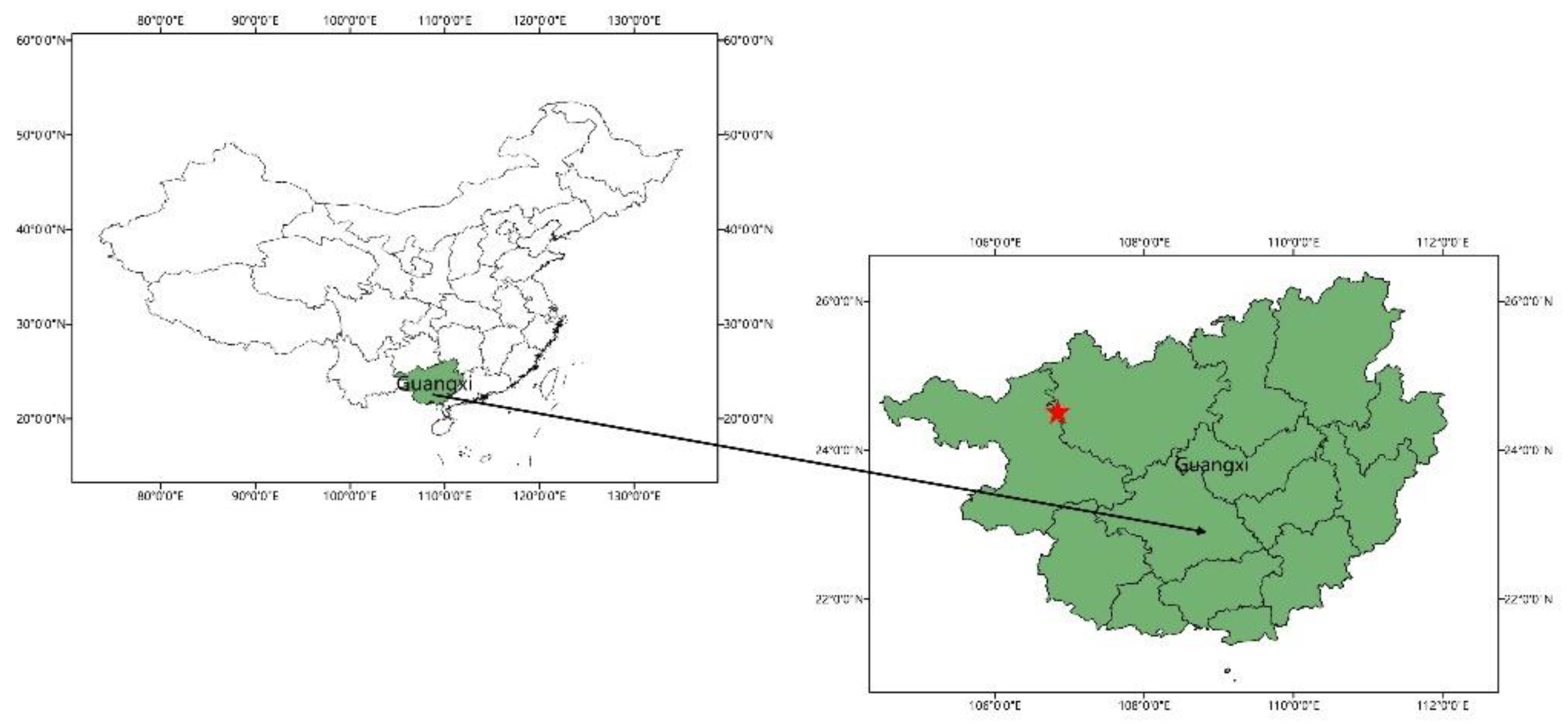
Figure 2.
Effect of application of different fertilizers on the content of soil organic matter (A), total nitrogen (B), total phosphorus (C), and total potassium (D).
Figure 2.
Effect of application of different fertilizers on the content of soil organic matter (A), total nitrogen (B), total phosphorus (C), and total potassium (D).
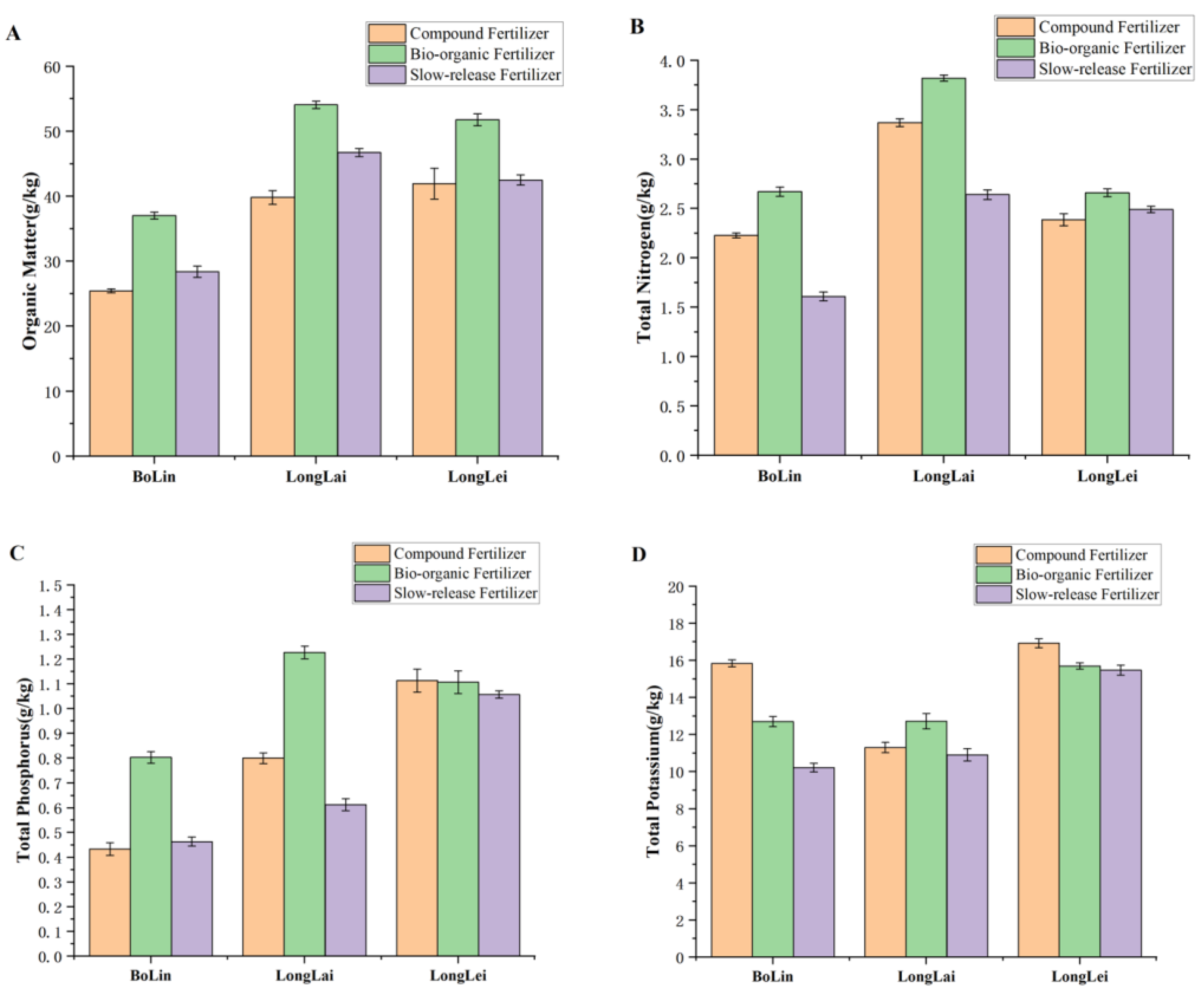
Figure 3.
Effect of application of different fertilizers on the content of soil available nitrogen (A), available phosphorus (B), and available potassium (C).
Figure 3.
Effect of application of different fertilizers on the content of soil available nitrogen (A), available phosphorus (B), and available potassium (C).
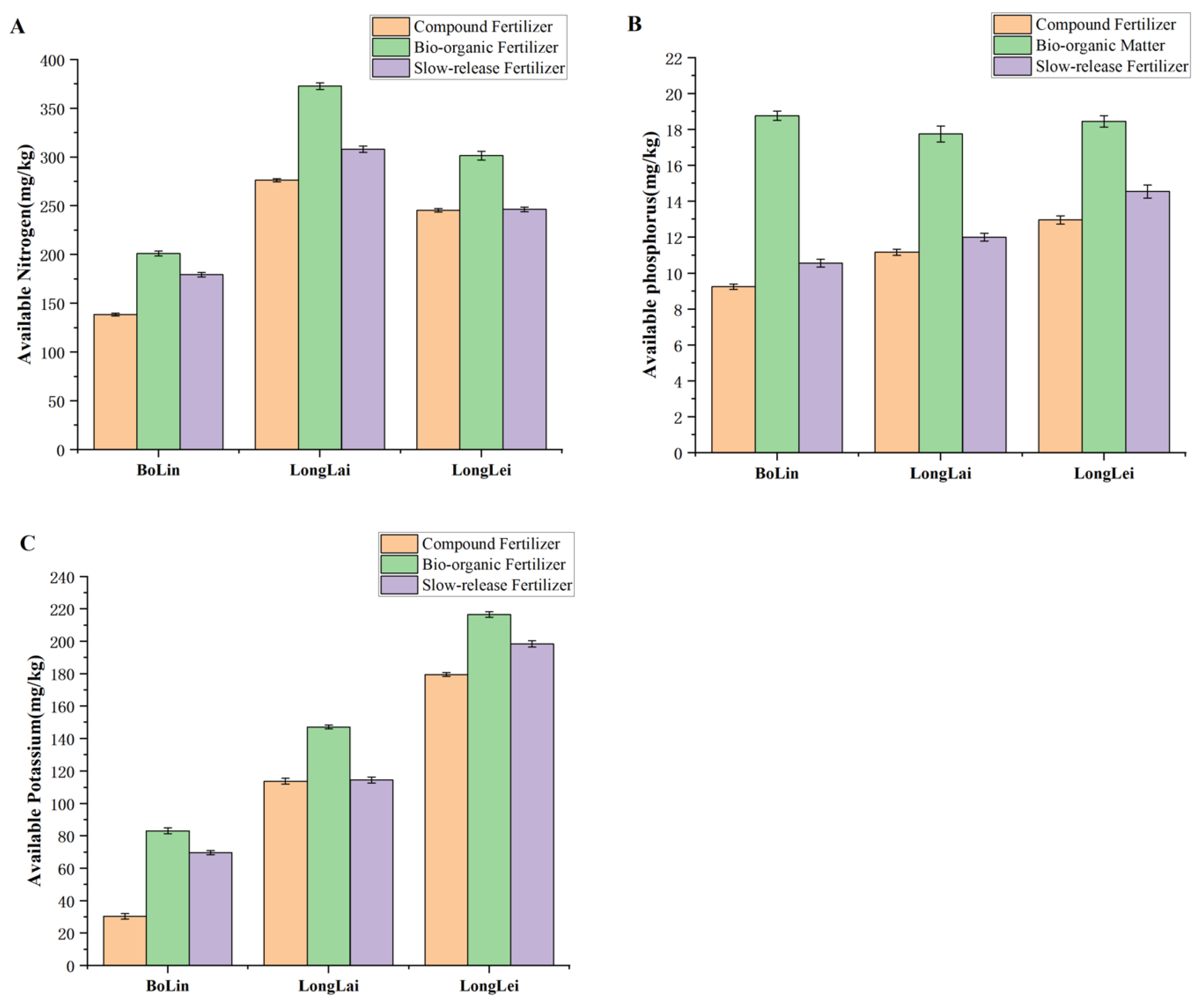
Figure 4.
Effect of application of different fertilizers on the content of B (A), Cu (B), Zn (C), and Fe (D).
Figure 4.
Effect of application of different fertilizers on the content of B (A), Cu (B), Zn (C), and Fe (D).
Figure 5.
Effect of application of different fertilizers on the activities of soil urease (A), sucrase (B), and acid phosphatase (C).
Figure 5.
Effect of application of different fertilizers on the activities of soil urease (A), sucrase (B), and acid phosphatase (C).
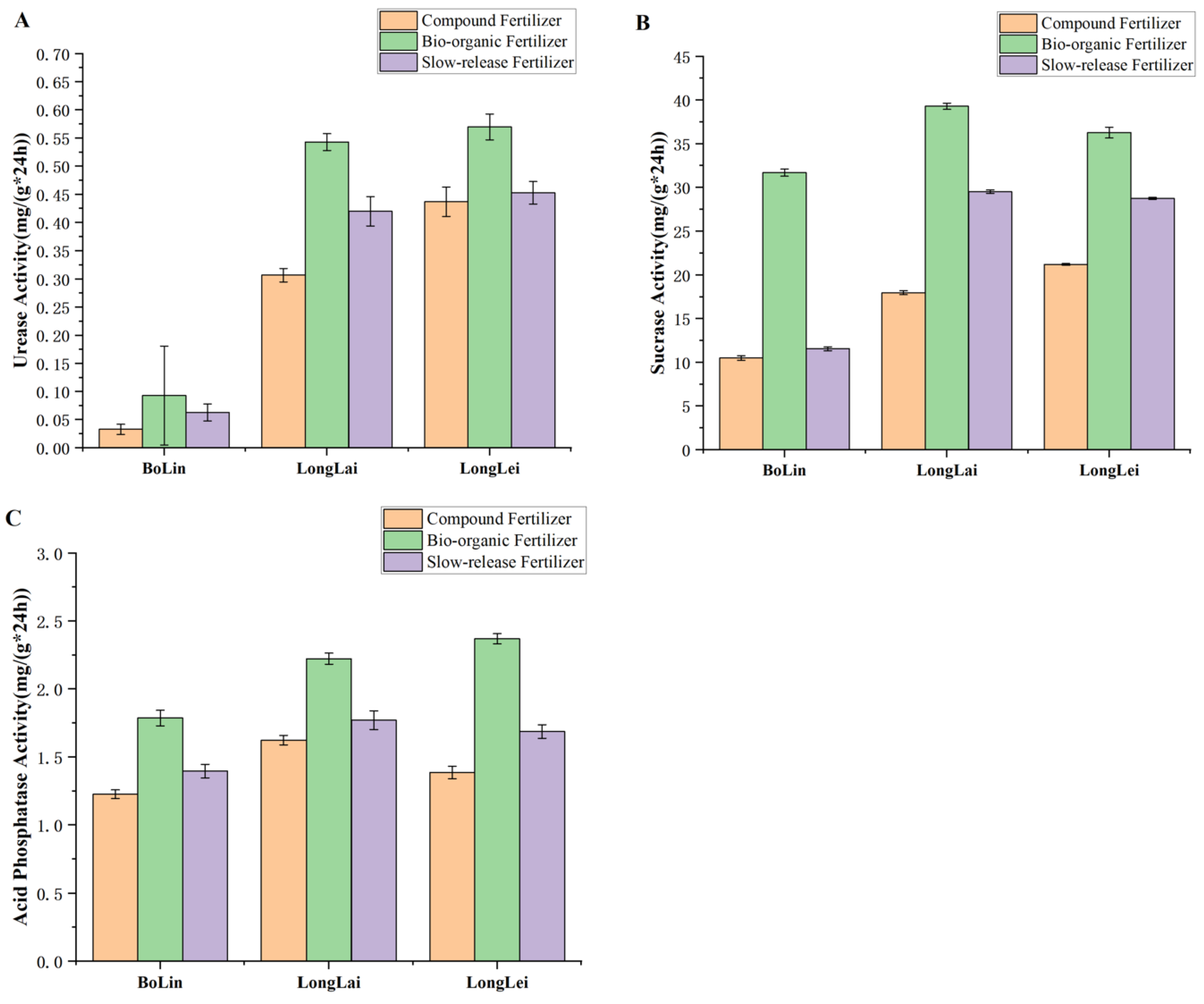
Figure 6.
Effect of application of different fertilizers on the Mahonia fortunei (Lindl.) Fedde of plant height (A) and ground diameter (B).
Figure 6.
Effect of application of different fertilizers on the Mahonia fortunei (Lindl.) Fedde of plant height (A) and ground diameter (B).
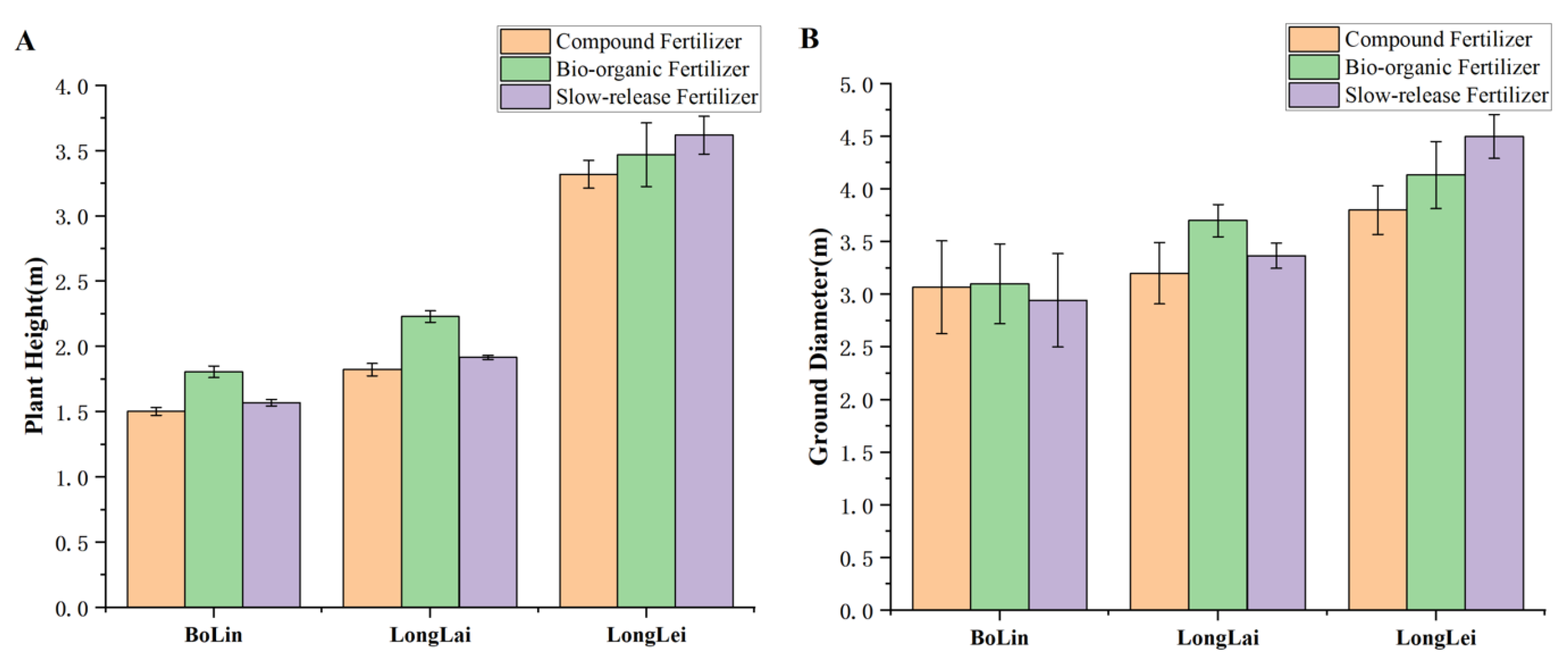
Figure 7.
The abundance of soil-dominant bacterial phyla in different regions with different fertilizers applied.
Figure 7.
The abundance of soil-dominant bacterial phyla in different regions with different fertilizers applied.
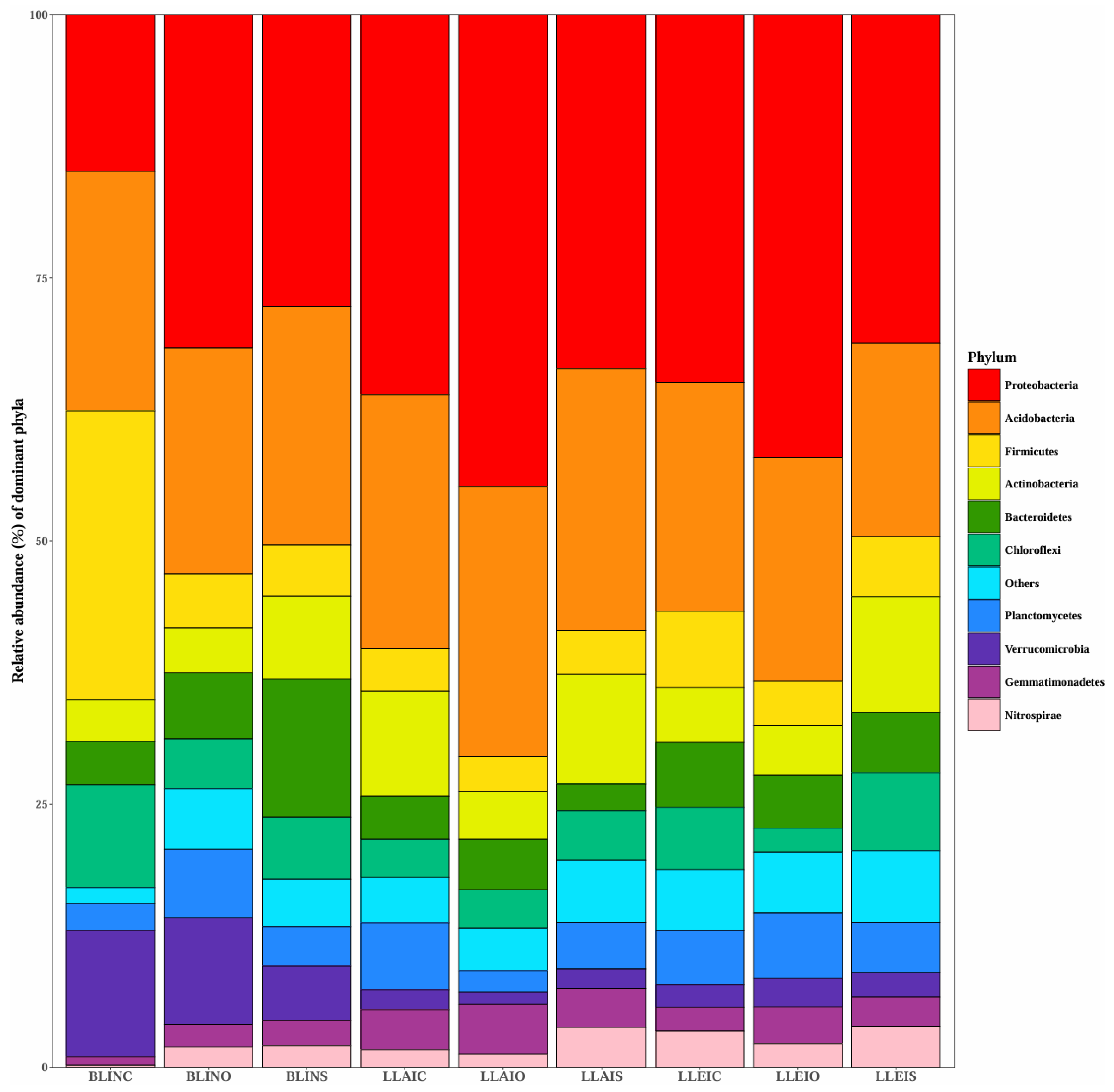
Figure 8.
Correlation between soil organic matter, total nitrogen, total phosphorus, total potassium, available nitrogen, available phosphorus, available potassium, trace elements, enzyme activities, and plant growth.
Figure 8.
Correlation between soil organic matter, total nitrogen, total phosphorus, total potassium, available nitrogen, available phosphorus, available potassium, trace elements, enzyme activities, and plant growth.
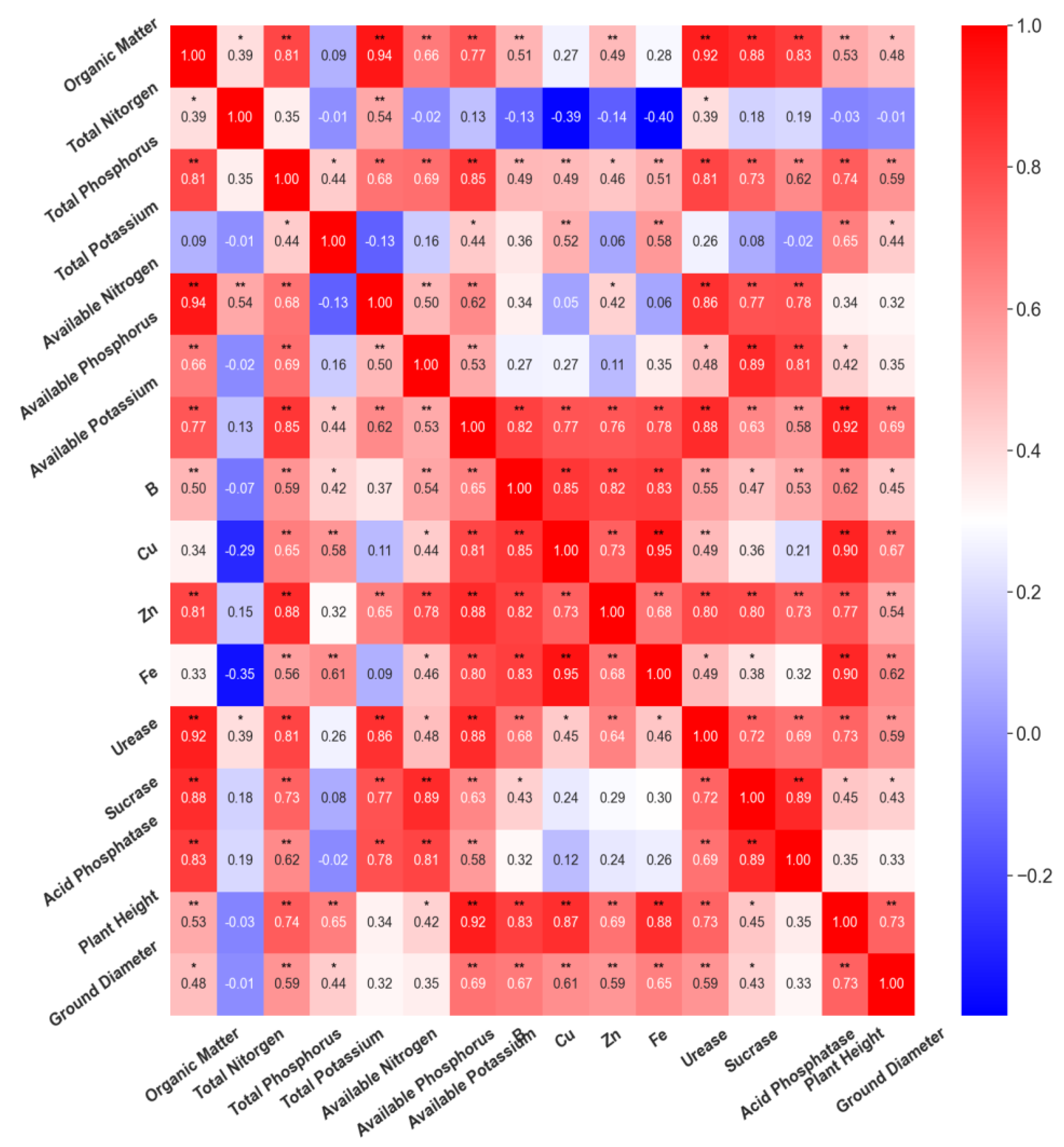

Table 1.
Soil bacterial diversity indices in different regions under different fertilizer applications.
Table 1.
Soil bacterial diversity indices in different regions under different fertilizer applications.
| Treatment | Chao1 | ACE | Shannon | Simpson |
|---|---|---|---|---|
| BLINC | 2479.75±98.46e | 2903.83±184.02e | 6.97±0.19bc | 0.9952±0.0022b |
| BLINO | 6242.78±551.51b | 7681.87±733.17b | 7.32±0.10ab | 0.9982±0.0003ab |
| BLINS | 2714.07±357.17e | 3227.64±348.53de | 7.11±0.16a | 0.9984±0.0005ab |
| LLAIC | 4836.93±220.27c | 5270.23±253.01c | 7.00±6.86bc | 0.9974±0.0002a |
| LLAIO | 12054.50±740.03a | 14476.99±1075.97a | 7.43±0.02a | 0.9987±0.0001a |
| LLAIS | 6276.02±66.94b | 7220.52±25.25b | 7.31±0.01ab | 0.9982±0.0003ab |
| LLEIC | 3363.22±439.94de | 4007.23±597.46cde | 7.21±0.14abc | 0.9977±0.0007ab |
| LLEIO | 6126.36±140.22b | 7054.35±158.76b | 7.26±0.03abc | 0.9968±0.0004ab |
| LLEIS | 4034.46±225.71cd | 4629.97±328.63cd | 6.91±0.13c | 0.9962±0.0013ab |
Where BLINC refers to the application of compound fertilizer in the Bolin region, BLINO refers to the application of bio-organic fertilizer in the Bolin region, BLINS refers to the application of slow-release fertilizer in the Bolin region, LLAIC refers to the application of compound fertilizer in the Longlai region, LLAIO refers to the application of bio-organic fertilizer in the Longlai region, LLAIS refers to the application of slow-release fertilizer in the Longlai region, LLEIC refers to the application of compound fertilizer in the Longlai region, LLEIO refers to the application of slow-release fertilizer in the Longlai region Bio-organic fertilizer, LLEIS slow-release fertilizer applied in Longlei district.
Disclaimer/Publisher’s Note: The statements, opinions and data contained in all publications are solely those of the individual author(s) and contributor(s) and not of MDPI and/or the editor(s). MDPI and/or the editor(s) disclaim responsibility for any injury to people or property resulting from any ideas, methods, instructions or products referred to in the content. |
© 2025 by the authors. Licensee MDPI, Basel, Switzerland. This article is an open access article distributed under the terms and conditions of the Creative Commons Attribution (CC BY) license (http://creativecommons.org/licenses/by/4.0/).
Copyright: This open access article is published under a Creative Commons CC BY 4.0 license, which permit the free download, distribution, and reuse, provided that the author and preprint are cited in any reuse.