

Submitted:
25 May 2025
Posted:
26 May 2025
You are already at the latest version
Abstract
The integration of ChatGPT and human resources management (HRMs) is changing the way organizations manage their workforces. This white paper examines the key benefits and challenges of implementing the ChatGPT in human resource management, providing a comprehensive overview of its effectiveness, integrity, and impact on decision-making. ChatGPT streamline HR processes by automating mundane tasks, reducing biases in hiring and performance appraisal, and supporting individual employee development programs. It also facilitates data-driven decision-making through predictive analytics and provides valuable insights into employee performance and engagement. However, successful adoption of an ChatGPT requires seamless integration with existing systems and ongoing learning and adaptation to address privacy and security concerns. Ethical issues, such as transparency and fairness, are crucial to building trust and ensuring the responsible use of AI. Based on real-world applications and first-time user experiences, this paper provides strategic recommendations for HR professionals and organizations to leverage ChatGPT effectively and create a more efficient, inclusive, and data-driven HR environment.
Keywords:
Large Language Models
; ChatGPT
; human resources management
; automation
; bias reduction
; data-driven decision-making
1. Introduction to Large Language Models in HRM
Human resource management (HRM) is a field that deals with a variety of complicated and dynamic duties, from recruiting and training personnel to performance review and strategic planning. The growth of artificial intelligence (AI), particularly the rise of large language models (LLMs), has the potential to transform labor management by automating traditional jobs, offering insights into vast data, and streamlining decision-making processes. These powerful AI models can understand, generate, and interact with human language in ways that were previously imagined, making them a valuable tool for HR professionals.
OpenAI’s GPT-3 LLM demonstrates excellent NLP capabilities, including as human-like text production, contextual understanding, and performing different language-related tasks with great accuracy. These considerations make LLMs relevant for HR management applications where language and communication play an important role. Incorporating an LLM into your HR management practice helps boost productivity, improve employee experience, and make educated decisions.
In the blooming side of AI, there are new articles coming out that play to the improvements of LLMs on various applications like IoT or overall medication. [1,2,3,4,5,6,7,8,9,10,11,12]
Conversely, LLM emerges in different new sectors. For example, in the medical industry, a protocol called RAIN was employed (invented) that merged LLM and some newly emerging AI technologies for cancer treatment. [13,14,15,16,17,18,19,20,21,22,23,24,25,26]
In this section and the next one, we covered the evolution of LLMs starting with GPT-3 and continuing on into modern advanced ChatGPT. Then, we examined the importance and utilization of ChatGPT in HRMs. We also cover the technological basis of this model and how it may be utilized to meet various HR difficulties and opportunities.
1.1. Overview of LLMs and Their Relevance to HRM
LLMs, such as GPT-3 and its descendants, are significant improvements in natural language processing (NLP) and have many applications in various industries, including human resource management. This model is based on the Transformer architecture and can interpret and generate human text, making it a viable tool for automating and optimizing HR processes.
Fundamentals of LLM Technology
Vaswani et al. (2017) presented an LLM based on transformer architecture. The most essential novelty of this design is the self-attention mechanism, which allows models to judge the meaning of distinct words in phrases, regardless of their placement. This capacity allows LLMs to handle dependencies over the long term and grasp context more effectively than earlier models.[27]
There are two key stages in the LLM educational process: pre-training and development. During early training, the model is exposed to enormous amounts of text data to understand typical speech patterns. There is a small improvement of the mold building process for position-specific datasets to increase the performance of specific activities. This technique has considerably improved numerous NLP tasks, including text generation, question answering, and text classification. [27,28,29]
Relevance of LLMs to HRM
LLMs have the power to alter personnel management by automating typical tasks, offering insights into huge data, and speeding decision-making processes. Figure 1 illustrate the distribution of benefits LLMs bring in HRM such as automation, fairness, individualized training, and decision-making.
Here are some significant areas where an LLM can have a particular impact:
Talent recruitment and recruitment:
Automated LLM CV Screening: LLMs can perform step analysis and repeat situational requirements, drastically lowering the time recruiters spend screening the best applicants. [30]
Chatbots for Candidate Interaction: LLM-based applicant interaction chatbots can process initial candidate applications, provide job analytics, organize interviews, improve candidate experience, and provide human resources. [31,32,33]
Employee training and development:
Personalized Learning Paths: An LLM can give training programs suited to the employee’s function, abilities, and career goals to ensure further professional development. [33,34,35]
Interactive Training Modules: By producing interactive content and simulations, LLMs can build compelling learning experiences that align with student progress and knowledge. [36,37,38]
Performance management:
- Real-time Feedback: LLMs provide real-time, constructive feedback on employee performance, helping you identify strengths and areas for development. [39]
HR analysis and decision support
- LLM Predictive Analytics: Predicts employee turnover, identifies factors that affect job satisfaction, and analyzes historical HR data to support workforce planning. [43]
Administrative Automation
Recent Developments and Case Studies
Recent study and the use of an LLM to human resource management have demonstrated its effectiveness and effectiveness. The study illustrates how GPT-3 can be utilized to construct unique training programs that are matched to each employee’s needs and learning speed. Other research has focused on the usage of custom LLMs to provide adaptive feedback to educational institutions that can be directly applied to corporate training and performance management. [33,34,35,39]
In addition, recent research have proved the efficiency of LLMs in developing interactive quizzes and training materials that can be utilized to improve staff training programs. We also study how LLMs may be used to create assessment questions in data science, illustrating the potential of these models to enhance learning and development programs in the technology sector. [36,37,38,43]
Finally, adding LLMs into your HR procedures has various benefits, from automating regular tasks to expediting the decision-making process. By harnessing the power of an LLM, recruiters may increase performance, tailor the employee experience, and make data-driven decisions that line with corporate goals. With the growth of LLM technology, HR management is likely to broaden its applications, significantly disrupt the business, and provide new chances for innovation.
1.2. LLM Development: From GPT-3 to Advanced Models
The development of the LLM is characterized by significant advances in NLP competencies due to improvements in architecture, training methods, and computing power. This module tracks the evolution of LLMs since the introduction of GPT-3 in modern advanced models, focusing on the growing importance and applications of GPT-3 in human resource management.
GPT-3: A Revolutionary Leap
OpenAI’s introduction of GPT-3 in 2020 was a crucial point in the development of LLMs. With 175 million parameters, GPT-3 gave an unmatched grasp of language and its generating possibilities. (2017) sets a new benchmark for language models by leveraging self-attention mechanisms to edit and generate appropriate content. [27]
GPT-1 can execute a wide range of activities, from translation to creative writing, emphasizing its potential in a variety of applications, including human resource management, without the requirement for specific training. They can also help you write job descriptions, automate responses to employee questions, and generate performance reports. [30]
Beyond GPT-3: Scalability and Specialization
Starting with GPT-3, the model continues to expand on this base, emphasizing growing the scale of the model, boosting efficiency, and reducing specific impediments such as warfare and interpretation.
GPT-4 and scale: GPT-4, which OpenAI will launch in 2024, is likely to outperform GPT-3 in terms of configuration and computational power. GPT-1 intends to improve comprehension of context, decrease bias, and improve the performance of specialized tasks through breakthroughs in hardware and optimization approaches. This model is more likely to be incorporated into HR operations and will provide sophisticated capabilities for recruiting, training, and keeping personnel. [53]
BERT, Roberta and Specialized models: In addition to the GPT series, other models contribute considerably to NLP, such as (representation of a two-way transformer encoder) and its derivative Roberta (powerful adaptive approach). He devised interactive activities that allow the model to investigate the context of a sentence on both sides, answer questions, and increase comprehension and accuracy in tasks like as emotion analysis. [28,54]
Roberta, the developer of Facebook’s artificial intelligence, enhanced her training technique and practiced enormous data for a long period, which resulted to greater performance in many benchmarks. These models have shown beneficial in HR management in terms of employee sentiment analysis, automated resume filtering, and enhanced engagement with chatbots. [54]
T5 and Integrated Approach: Text-to-Text Transformer (T5), announced by Google Research, presents a built-in framework for converting any NLP post from text to text format. This strategy streamlines the training process and increases the flexibility of the model. T5 has been successful in various roles, making it a significant tool for HR management applications, such as developing personalized training materials and creating extensive job advertisements. [55]
Addressing Bias and Enhancing Interpretability
One of the primary problems of employing an LLM in HRM is dealing with the bias that occurs in the training data. This new paradigm seeks to foster objectivity and transparency to mitigate these challenges.
Ethical and Fair AI: The aim of developing ethical AI models has led to the creation of frameworks and ways to identify and mitigate biases. We apply tactics like as extensive training and use more diversified training datasets to avoid bias in the LLM score. The researchers also underlined the necessity of constant monitoring and updated models to assure ethical standards are maintained. [56]
Interpretability and Explainability: LLMs are made to make it easier to grasp, to be clearer and easier to understand. Tools and tactics such as attention visualization and gradient mapping can assist consumers realize how models link to certain outcomes. When it comes to human resource management, it can enhance trust in AI systems engaged in decision-making processes, such as hiring and job appraisal. [57]
Integration with Emerging Technologies
The development of an LLM entails integration with other new technologies, which will improve its usefulness and application.
Multimodal models: More recently, multimodal models have been developed that can process and output data in a variety of media, such as text, images, and audio. These models, such as OpenAI’s DALL-E and Clip, can generate richer and more engaging HR solutions, such as visual job creation and video call analytics.[29]
Real-time AI and AI at the edge: The goal of real-time computing and AI at the edge is to create LLMs in low-latency situations. This is especially critical for HR applications, such as HR virtual assistants and real-time feedback systems, which require real-time engagement during employee training. [58]
2. Fundamentals of LLM Technology
The distinctive characteristics of the LLM are underscored by its superior technological base. This model uses advanced training architectures and approaches to obtain a high level of performance in NLP tasks. Understanding these basic skills is essential to understanding how an LLM may be implemented effectively in numerous domains, including human resource management.
The secret to the LLM’s success is its transformer architecture and self-management mechanisms, which allow these models to process and create speech with exceptional accuracy and consistency. In addition, the undergraduate and continuing education process allows the LLM to be more versatile and adaptive, adjusting to certain jobs and fields.
In this module, we’ll look at the essential engineering ideas that make LLMs powerful. First, let’s take a closer look at the architecture of transformers and self-awareness processes. Below, we’ll explore early learning and moderation and how this process might assist increase LLM performance.
2.1. Transformer Architecture and Self-Attention Mechanism
At the heart of the modern LLM is Transformer Architecture, a groundbreaking invention pioneered by Vaswani et al. This design transformed the discipline of NLP and shattered the boundaries of earlier models in long-term dependency management and computational equations. A fundamental component that allows the CPU to succeed at these activities is the focusing mechanism. This subject analyzes the architecture of transformers, mechanisms, and self-attention applications, as well as their impact on workforce management. [27]
Transformer Architecture
The Transformer architecture separates it from typical recurrent neural networks (RNNs) and long-term memory networks (LSTMs) and eliminates the requirement for sequential computing. Parallelism, on the other hand, can be used to efficiently analyze larger data volumes and more complicated linguistic tasks.
Main components for transformer
Encoder/decoder structure: A transformer model consists of an encoder and a decoder, each of which comprises several layers of the same block. The encoder processes the input stream and changes it into a permanent representation that the decoder utilizes to generate the output stream.
Multi-Head Self-Attention: Each encoder and decoder layer consists of a multi-header self-attention engine and a predictive neural network. The multi-head self-attention mechanism allows the model to focus on multiple parts of the input sequence at the same time and record distinct features of the relationship between words.
Positional encoding: The sensor does not physically understand the sequence and a position code containing input data is added to provide information about the location of each word in the sequence.
Feedforward Neural Networks: Feedforward Neural Networks track each sublevel of steps that process the output of attention processes, increasing nonlinearity and enhancing the model’s ability to capture complicated patterns.
Residual Connections and Layer Normalization: This technology is utilized to stabilize the feeding process and allows the network to flow efficiently through the network, permitting efficient flow on the slope.
Self-Attention Mechanism
Self-attention tools support the translator’s ability to analyze sequences in parallel and capture dependencies between distant words in a phrase.
How Self-Attention Works
Calculating the Attention Score: For each word in the input sequence, the self-attention engine calculates the score for the second word in the sequence. This outcome establishes the importance of each word in the context of the word being developed.
Scaled Dot-Product Attention: Scores are generated based on the values derived from integrating the product, key, and vector inputs scores of the application. The result is then increased and the Softmax function is modified to get the required weight.
Information Aggregation: Attention weights are used to calculate the weighting of vector values, such that each new representation expression comprises information from the complete sequence.
Multi-Head Attention: By exploiting different attention mechanisms in simultaneously (multidose reflections), the model may capture diverse elements of the interactions between words, making expressions richer and more complex.
Applications in HRM
The architectural elements of transformers and self-attention mechanisms can be leveraged to enhance various personnel management activities. The primary areas of use are:
Automated Resume Screening: Transformers can analyze and restart stages, discover relevant abilities and experiences, compare them to a job description, and highlight the best prospects. This technique considerably decreases the time and effort required for the initial selection of candidates. [30]
Enhanced Candidate Interaction: Transformer-based LLMs can control sophisticated chatbots that converse with candidates, answer questions, and lead them through the application process. This can improve the applicant experience and ensure easy communication. [31,32,33]
Personalized Employee Training: Transformation-driven models can assess employee learning patterns and performance data to deliver training programs targeted to individual career needs and goals. Improves staff growth and work satisfaction. [33,34,35]
Sentiment Analysis: Transformers can evaluate text data from employee surveys, feedback forms, and communication channels to gauge overall sentiment and identify potential issues. This helps HR personnel to proactively respond to challenges and improve business culture. [40,41,42]
Performance Evaluation: Transformers help analyze employee performance by analyzing qualitative data from performance evaluations and providing summaries that emphasize strengths and opportunities for growth. This allows supervisors to provide more thorough comments. [39]
HR Analytics: Innovation models evaluate huge volumes of employee data to show trends and patterns in strategic decision-making, such as workforce planning, talent management, and employee retention tactics. [43]
Recent Developments and Future Directions
The newest research has concentrated on increasing the functionality of transformers and reducing their limits. Among the most important advances are:
Improving Efficiency: Technologies such as efficient models of low-altitude transformers, such as long posters and rectifiers, have been developed, and conductive techniques have been utilized to reduce the computing effort of transformers and enhance the availability of real-time applications. [59,60]
Reducing Bias: The Transformer model contains several training datasets, objectivity-oriented algorithms, and post-processing procedures to ensure that the outputs are impartial and do not reinforce existing biases. [56]
Reducing Bias: Researchers are investigating approaches to make variable models easier to comprehend to assist consumers understand how decisions are made and boost their confidence in AI-powered HR processes. To do this, strategies such as visualization and particular attention procedures are examined. [57]
Integration with Other Technologies: Transformers can be integrated with other AI technologies, including as reinforcement learning, computer vision, and speech recognition, to develop more comprehensive and multidisciplinary HR solutions. [58]
2.1. Pre-Training and Fine-Tuning: Enhancing Model Performance
The initial training and development process has a considerable impact on the LLM’s capacity to move to human resource management. This method is vital for enhancing the efficiency of LLMs, as it allows them to recognize complicated speech patterns, generate human text, and do numerous jobs with high accuracy. This module covers the difficulties of early learning and development and how these strategies contribute to the successful implementation of an LLM in Human Resource Management.
Pre-Training: Building the Foundation
Pre-training is the first phase in LLM development, exposing the model to vast volumes of text data to train a common language model. This procedure involves several critical steps:
Data collection: The initial preparatory step begins with a large and diversified collection of textual information. These datasets often include web pages, books, articles, and other textual resources, ensuring that the model reflects a wide range of language uses and situations. [30]
Tokenization: Text data is broken into smaller units called signals. Tokenization can be based on words, words, or letters, and word highlighting (m.sh, batch pair coding) is typically employed to balance vocabulary size with counting power. [61]
Masked Language Modeling: Hidden language modeling is a typical pre-training goal that hides certain signals from the input text and trains models to anticipate hidden signals. This strategy helps the model learn to articulate words in context. [28]
Next Sentence Prediction: The next goal is to forecast the next sentence, and the model learns to predict that that sentence will logically follow the second statement. This job provides a deeper grasp of the relationship between the pattern and the consistency of the poem. [28]
Training the Model: Models trained on high-performance hardware use computational optimization strategies based on reinforcement. This process can take anything from a few weeks to a few months, depending on the size of the model and dataset. [55]
Fine-Tuning: Customizing for Specific Tasks
After the initial training, the LLM is targeted, which is a critical stage in improving the model to make a given task more accurate. The development comprises numerous crucial elements:
Task-Specific Datasets: During debugging, the model is trained on a tiny task-specific dataset. These datasets are meticulously managed to represent the specific needs of the target firm, such as reintroductions, employee sentiment analysis, and automated interview responses. [62]
Supervised Learning: Advanced learning often involves supervised learning, in which the model learns by labeling instances. For example, curriculum review assignments train a model based on a dataset during a course that has been rated as appropriate or unfit for a given function. [31,32,33]
Optimization techniques: Use advanced tune optimization approaches, such as speed and frequency of training programs, to increase model performance and minimize unwarranted benefits. This technique allows you to normalize hidden data. [63]
Transfer Learning: Perfectionism is the process of employing knowledge gained from learning before the intended action, a process known as transfer learning. This strategy considerably minimizes the amount of task-specific data required to attain excellent performance. [64]
Applications in HRM
The combination of initial training and the development process makes the LLM a versatile and strong instrument for a wide range of HR management applications. Here are some concrete examples:
Automated Resume Screening: By tailoring LLM resets with resume information and job descriptions, HR managers may automate the selection process. This strategy allows candidates to align based on their qualifications, experience, and talents, decreasing the time and effort required to review early prospects. [30]
Employee Sentiment Analysis: Employee sentiment research is based on employee surveys themselves, feedback forms and social media posts, as well as sentiment data from HR specialists. You can assess staff morale and identify potential concerns. This information can help you make informed decisions to improve your corporate culture. [40,41,42]
Chatbots for Candidate Interaction: LLMs can assist chatbots communicate with candidates, answer questions, provide insight into the application process, and schedule interviews according to staff-related interaction data. This improves the applicant experience and assures timely and accurate communication. [31,32,33]
Personalized Training Programs: By enhancing the LLM with datasets relating to particular tasks and talents, HR can design tailored training programs. The program may construct courses, tools, and career development pathways that correspond with your employees’ individual needs and aspirations. [33,34,35]
Performance Evaluation and Feedback: Custom LLMs help you measure staff performance by conducting performance reviews and analyzing comments. With templates, you can produce extensive reports that emphasize strengths, identify areas for improvement, and propose actionable recommendations to help managers support employee development more effectively. [39]
Recent Developments and Future Directions
Recent study has concentrated on improving early childhood education and skills development strategies to further raise the efficiency and applicability of human resources management.
Efficient Pre-training Techniques: Innovations such as Elekra (Efficient Learning and Accurate Signal Substitution Encoder) have been created to improve the efficiency of pre-trained calculations while providing high throughput. Alektra uses a novel feature that requires less characteristics than typical speech mask modeling. [65]
Domain-Adaptive Pre-training: Researchers are investigating adaptive pre-training in the field, including pre-research LLMs, at select universities for preparation. This method has generated promising results Increase efficiency in professional duties such as examining legal documents and revising medical records. [62]
Cross-Lingual Fine-tuning: Multilingual software technology has evolved to satisfy the needs of global human resource management techniques. In this approach, LLMs can work successfully in different languages and facilitate interaction and support for multilingual personnel. [66]
Few-Shot and Zero-Shot Learning: Advances in numerical and zero-impact learning allow LLMs to complete tasks with limited data for specialized tasks. This functionality is especially valuable for HR applications that need to react fast to new activities or changes in requirements. [30]
3. Human Resource Management Functions
The integration of ChatGPT and HRM modifies traditional approaches, making them more efficient, data-driven, and employee-centric. ChatGPT leverage advanced natural language processing capabilities to improve the way enterprises interact with various HR services. This includes tailored employee training, enhanced hiring processes, performance management, and tactics for attracting and retaining staff. Figure 2 compare different HR functions and how much ChatGPT increase each one.
In this section, we’ll take a closer look at these unique applications and show you how ChatGPT may solve specific HR difficulties and deliver considerable benefits for both employees and companies.
3.1. Training and Development of Each of the Employees
Training and developing each employee is a vital aspect of efficient workforce management. Using a ChatGPT in this industry helps move a company’s focus towards employee development, ensuring that training is personalized to individual needs, learning styles, and career aspirations. With a ChatGPT, HR departments can give more effective, interesting, and effective training.
The Role of the ChatGPT in Personal Education
ChatGPT like GPT-3, GPT-4, and its successors are wonderful tools for developing individualized learning experiences since they can understand and generate human text. The program can evaluate vast volumes of data to discover learning patterns, estimate training needs, and offer specific development routes. Here are some ways a ChatGPT might increase staff training and development:
Individualized Learning Paths: ChatGPT may assess employee profiles, including responsibilities, talents, prior learning, and career aspirations, and develop tailored learning routes. This guarantees that all employees are trained for their current positions and future career objectives. [33,34,35]
Adaptive Learning Content: Adaptive ChatGPT Course Content: You can build and optimize course content in real-time based on students’ progress and knowledge. For example, if an employee is struggling with a particular subject, the model can provide more resources, explanations, or alternate training materials that are easy to understand. [36,37,38]
Interactive Training Modules: ChatGPT Interactive Training Modules: Create interactive and engaging training modules that incorporate quizzes, simulations, and scenario-based learning. This module optimizes the complexity of employee performance and makes training more difficult, but it makes it useful. [30]
Real-time Feedback and Assessment: Real-time feedback and evaluation of assignments, quizzes, and exercises can provide real-time feedback on the course. This direct feedback allows individuals to understand their strengths and areas for improvement and supports ongoing learning and development. [39]
Applications of ChatGPT in Training and Development
Onboarding Programs: You can utilize a ChatGPT to develop a personalized onboarding program that helps new hires become familiar with their role and corporate culture. These programs may include tailored training modules that cover the skills and knowledge needed for the role. [31,32,33]
Skill Development and Upskilling: ChatGPT can identify skills shortages and give customized training to fill them. For example, if a person needs to strengthen their data analysis skills, the model can propose appropriate courses, tutorials, and manual training to improve their skills. [43]
Leadership Training: For individuals on the leadership path, a ChatGPT can build a lucrative leadership development program that focuses on topics such as strategic thinking, team management, and decision-making. These programs are offered in all areas. It may be adjusted to match your leadership style and career ambitions. [33,34,35]
3.2. Facilitating the Electoral Process: Pre-Selection and Interviews
The recruitment process is one of the most significant functions in human resource management. The objective is to find, attract, and choose the best personnel who can match your company’s needs. ChatGPT like GPT-1 and its successors have showed considerable potential for enhancing the several stages of recruiting, especially screening and interviewing. These advanced AI models can streamline processes, decrease bias, and increase the overall efficiency of your hiring efforts.
Automated Resume Screening
One of the most time-consuming activities in the hiring process is the initial resume evaluation. ChatGPT can automate this process by swiftly analyzing and executing positions based on pre-set parameters. The technique is as follows:
Keyword matching and context understanding: Traditional keyword matching techniques sometimes neglect the context in which abilities and experience are given. However, a ChatGPT can comprehend the context and value of the content in your CV. For example, GPT-4 can assess complicated linguistic structures and provide vital information about a candidate’s suitability for a nomination. [30]
Assess ChatGPT’ skills and experience: ChatGPT can evaluate the qualifications and experience mentioned on their CV using job descriptions to find qualified applicants who best match the position’s needs. It evaluates both soft skills (m.sh., teamwork, leadership) and technical skills (m.sh., programming languages, certificates). [31,32,33]
Bias Reduction: The possibility of unconscious bias is one of the difficulties associated with manual curriculum improvement. In order to support more equitable recruiting procedures, ChatGPT is trained to disregard variables like gender, age, and race that have no bearing on work performance. To ensure that the model doesn’t retain it, it’s crucial to ensure that the training data is free of bias. [56]
Efficiency and Scalability: ChatGPT expedites the selection process by processing thousands of resumes in a fraction of the time required for a human recruiter. HR departments may more effectively handle big applications thanks to this scalability, particularly during peak hours. [67]
Enhancing Interview Processes
By offering resources for both interviewers and candidates, ChatGPT also significantly contributes to the enhancement of the interview process. Additionally, you can use this application to conduct preliminary interviews, review candidate responses, and optimize your interview schedule.
Interview Scheduling and Coordination: Organizing and Scheduling Interviews Scheduling an interview can be difficult and time-consuming. ChatGPT’s AI-powered chatbots can manage the scheduling of interviews, remind people, and even reschedule appointments if needed. The candidate experience is enhanced and HR professionals’ administrative workload is lessened thanks to this automation. [31,32,33]
Initial Screening Interviews: Interview for Basic Selection ChatGPT: AI ChatGPT may do a preliminary interview for selection through the chat. These artificial intelligence interviewers are able to pose common questions, gather responses, and determine a candidate’s suitability for the following round. Recruiters can concentrate on conducting more in-depth interviews with this method, which guarantees uniformity in preliminary evaluations. [68,69,70]
Sentiment and Tone Analysis: ChatGPT can assess candidates’ emotions and responses to their votes during interviews, giving information about their honesty, confidence, and excitement. Researchers can gain a better understanding of a candidate’s personality and communication abilities—two qualities that are frequently essential for particular roles—by using this approach. [40,41,42]
Transcription and Evaluation: Real-time interview transmission via ChatGPT enables precise recording and simple evaluation. Additionally, you can evaluate the candidate’s responses in advance, emphasize important details, and identify possible topics for follow-up inquiries.
Interactive Interview Platform: An interactive interview platform that mimics real-world situations connected to a situation can be integrated with ChatGPT’s sophisticated platform. For instance, recruiters can evaluate candidates’ communication abilities in a controlled problem-solving setting by having them engage with artificial intelligence that simulates consumer requests.
3.3. Performance Management and Feedback System
ChatGPT’s advanced platform can be coupled with an interactive interviewing platform that simulates real-world scenarios related to an issue. For example, by allowing applicants to interact with artificial intelligence that mimics customer requests, recruiters can assess their communication skills in a controlled problem-solving environment.
Real-Time Feedback and Continuous Performance Monitoring
The capacity of performance management ChatGPT to continuously monitor performance and offer real-time feedback is one of its main advantages. The work environment is now more dynamic and responsive as a result of this strategy.
Instant Feedback on Work Output: ChatGPT may evaluate finished items in real time, including emails, announcements, and project updates, and give prompt feedback on the content’s grammar, clarity, and applicability. Employees are able to maintain high levels of quality and make rapid improvements because to this prompt response. [39]
Performance Analytics: Emails, announcements, and project updates are examples of completed materials that ChatGPT may assess in real time and provide timely feedback on for grammar, clarity, and applicability. Because of this quick response, staff members are able to maintain high standards of quality and make quick improvements. [62]
Personalized Performance Insights: Examples of finished documents that ChatGPT may evaluate in real time and promptly offer feedback on for grammar, clarity, and applicability include emails, announcements, and project updates. Employees are able to maintain high standards of quality and make rapid changes as a result of this prompt response. [33,34,35]
Enhancing Objectivity and Reducing Bias
Emails, announcements, and project updates are a few examples of completed documents that ChatGPT may instantly review in real time and provide input on for grammar, clarity, and application. Because of this quick response, staff members are able to maintain high standards of quality and make quick modifications.
Standardized Evaluation Criteria: Examples of finished papers that ChatGPT can instantaneously assess in real time and offer feedback on for grammar, clarity, and application include emails, announcements, and project updates. Staff members may maintain high standards of quality and make quick adjustments as a result of this prompt response. [56]
Bias Detection and Mitigation: Potential biases in performance rating can be detected and lessened by training the ChatGPT trend to recognize and report on them. For instance, the system might tell recruiters to examine and modify their rating if a specific word or response pattern suggests gender or ethnic bias. [57]
Peer and Self-Evaluations: A more comprehensive view of employee performance may be obtained by integrating a ChatGPT into the assessment and self-evaluation procedure. The approach is able to examine responses from several sources, spot recurring issues, and offer a fair evaluation that considers various viewpoints.[67]
Facilitating Developmental Conversations
Evaluation is only one aspect of good performance management. This calls for managers and staff to have ongoing developmental conversations. By giving managers pertinent information and recommendations, ChatGPT can help to facilitate these discussions.
Preparation for Performance Reviews: Effective performance management involves more than just evaluation. This necessitates regular growth discussions between managers and employees. ChatGPT can assist in facilitating these conversations by providing management with relevant information and suggestions. [31,32,33]
Guidance for Development Plans: Evaluation is only one aspect of effective performance management. This calls for managers and staff to have frequent growth conversations. By giving management pertinent information and recommendations, ChatGPT can help to facilitate these discussions.
Feedback on Soft Skills: ChatGPT may evaluate and offer feedback on soft skills like leadership, teamwork, and communication in addition to technical competencies. Employees can get a more comprehensive reaction that promotes their entire development thanks to this all-encompassing strategy. [40,41,42]
3.4. Employee Retention Strategies and Strategies to Retain Employees
In addition to technical competencies, ChatGPT may assess and provide feedback on soft skills including communication, teamwork, and leadership. This comprehensive approach enables workers to receive a more thorough response that supports their overall growth.
Enhancing Employee Engagement
ChatGPT may evaluate and offer feedback on soft skills like leadership, teamwork, and communication in addition to technical competencies. Employees can get a more detailed answer that promotes their entire development thanks to this all-encompassing strategy.
Personalized Communication: In addition to technical competencies, ChatGPT may assess and provide feedback on soft skills including communication, teamwork, and leadership. This comprehensive approach enables workers to receive a more thorough response that supports their overall growth. [31,32,33]
Interactive Platforms: You may provide a responsive and engaging atmosphere where staff members can express problems, offer feedback, and get prompt feedback by combining ChatGPT with an employee engagement platform. AI-powered chatbots, for instance, may manage routine issues and free up HR teams to work on more difficult ones. [68,69,70]
Recognition and Rewards Programs: ChatGPT can identify top performers and suggest tailored rewards and recognition by analyzing employee performance data. A culture of reward and encouragement is fostered by this data-driven approach, which guarantees that reviews are published in a fair and valuable manner. [39]
Learning and Development Opportunities: An employee’s abilities, accomplishments, and career objectives can be examined by a ChatGPT, which can also offer customized learning and development plans. Employee satisfaction, engagement, and professionalism are enhanced by these particular programs. [33,34,35]
Predictive Analytics for Retention
Predictive analytics powered by ChatGPT can assist HR departments in taking proactive measures to find and keep workers who could be acquired.
Turnover Prediction Models: ChatGPT can forecast which employees are likely to depart by analyzing a range of data, including surveys on engagement, performance ratings, and job satisfaction. These guidelines give HR specialists the ability to get involved in employee retention tactics right away. [40,41,42]
Retention Risk Factors: Common causes of employee turnover, such as a lack of opportunities for professional growth, inadequate pay, and an unbalanced work-life schedule, can be identified using ChatGPT. Businesses may solve the root causes and increase client retention by being aware of these variables. [67]
Tailored Retention Strategies: ChatGPT can be used to identify common reasons for employee turnover, such as an imbalanced work-life schedule, a lack of possibilities for professional progress, and inadequate remuneration. By understanding these factors, businesses may address the underlying issues and improve customer retention. [43]
Real-Time Sentiment Analysis
Maintaining high engagement and promptly resolving issues require real-time understanding of employee mood.
Sentiment Analysis Tools: By examining text data from interactions, including emails, chat messages, and survey replies, staff members can determine the general sentiment of the company. HR can take prompt action by using this research to spot patterns and problems. [40,41,42]
Mood Monitoring: Because ChatGPT continuously monitors employee opinion, it can offer insight into the atmosphere of a business. A significant decline in positive attitude, for instance, can point to a major issue that has to be addressed right away.
Actionable Insights: HR may use the practical information that sentiment analysis can produce to boost employee engagement. For instance, if a worker consistently complains about a certain regulation, HR can confront the problem directly and demonstrate that worker input has been considered and taken into consideration. [39]
Implementing ChatGPT-Driven Engagement and Retention Strategies
Communication Platforms: Sentiment research can yield useful information that HR can use to increase employee engagement. For example, if an employee frequently expresses dissatisfaction with a certain rule, HR can address the issue head-on and show that employee opinions have been heard. [31,32,33]
Employee Feedback Systems: Advanced feedback systems that gather, examine, and react to employee input can be created with ChatGPT. These tools can improve participation, foster ongoing feedback, and expedite problem-solving. [68,69,70]
Performance and Development Reviews: Deeper understanding and more individualized feedback are made possible by integrating ChatGPT into performance evaluation and development procedures. Employees are empowered by this strategy, which also helps them recognize areas in which they need to grow and improve and fortifies their social commitment. [33,34,35]
Wellness Programs: Through the analysis of attendance and feedback data, a ChatGPT may assist you in creating and overseeing staff health initiatives. Individual wellness programs can raise employee turnover, lower fires, and enhance general well-being. [67]
4. Applications in Talent Acquisition
Businesses are using the newest technology to expedite the employment process in the cutthroat hiring market of today. ChatGPT has developed into a potent tool for enhancing numerous facets of hiring, from automating repetitive processes to delivering data via predictive analytics. Businesses can increase the effectiveness, precision, and integrity of their hiring decisions by using ChatGPT with HR management procedures. The main advantages of various talent acquisition initiatives are displayed in Figure 3.
Major recruitment issues like handling a large number of applications, guaranteeing smooth communication with candidates, and making data-driven hiring decisions are all addressed by ChatGPT’s creative solutions. These models manage difficult activities that are time-consuming and prone to human mistake by optimizing natural language processing and understanding. You will learn about the various ChatGPT recruiting applications in this module, including automated resume review and review, chatbots for candidate initial contact, and predictive analytics for hiring decisions. These examples all demonstrate how ChatGPT may take the place of conventional hiring procedures and offer firms a number of advantages.
4.1. Automatic Selection of CVs and Finalist Lists
One of ChatGPT’s most creative uses in human resources is automatic restart management. This procedure efficiently reviews a huge number of resumes, selects the top applicants, and compiles a list of candidates for additional assessment using cutting-edge AI technology. The hiring process can be streamlined by using a ChatGPT such as GPT-4 for these tasks, which can offer substantial advantages in terms of speed, accuracy, and fairness.
The Need for Automation in Resume Screening
Traditional resume screening is a difficult undertaking that needs you to personally analyze every applications to assess your qualifications, talents, and experience. This manual procedure might lead to inaccuracies and prejudices, leading to apathy towards competent prospects. The need for more efficient and trustworthy resume validation techniques is growing as the number of applicants and the difficulty of the job both rise.
How ChatGPT Enhance Resume Screening
Keyword Matching and Beyond: Conventional filtering methods frequently depend on straightforward keyword matches, but ChatGPT is able to comprehend the context in which such terms are used. Knowing this background enables ChatGPT to evaluate a candidate’s experience and determine how well it fits the requirements of professional roles. [31,32,33]
Natural Language Understanding: ChatGPT can comprehend the subtleties of natural language because they are trained on big datasets that include text in a range of forms. With the help of this tool, you can accurately evaluate and interpret resumes, discern between comparable experiences and skills, and find the most pertinent information. [30]
Semantic Search and Matching: Semantic search methods are used by Advanced ChatGPT to create resumes that match job descriptions. This implies that you can comprehend the meaning of words and associated terms, which can improve the accuracy of your competence evaluation of a candidate. [28]
Reduction of Bias: ChatGPT can be configured to only focus on abilities and experience, ignoring demographic data like name, gender, age, and ethnicity. This encourages diversity and inclusion in recruiting and lowers the possibility of unconscious biases influencing the selection process. [56]
Implementation of ChatGPT in Resume Screening
Data Preprocessing: The data must be processed before the SWA’s continuation can be confirmed. Remove any unnecessary portions from your resume and edit it in an organized manner, like plain text or JSON. Skills, education, and work experience. [62]
Training and Fine-Tuning: To function effectively in HR operations, ChatGPT’s massive text training and development engine must be tailored to domain-specific datasets. [62]
Screening and Ranking: Following graduation, ChatGPT can create a new curriculum to compare employment benchmarks and collect crucial data. The template generates a list of the best candidates by ranking them based on their suitability. This procedure makes it possible to process many requests in a timely and correct manner. [67]
Feedback Loop and Continuous Improvement: After graduation, ChatGPT can develop a new curriculum to gather important data and compare employment benchmarks. The template ranks the candidates according to their suitability and creates a list of the top applicants. This approach enables the quick and accurate processing of numerous requests. [33,34,35]
4.2. Chatbots for the First Interaction with Candidates
After graduation, ChatGPT can create a new curriculum to compare employment benchmarks and collect crucial data. The template generates a list of the best applicants by ranking the candidates based on their suitability. Many requests can be processed accurately and quickly with this method.
The Role of Chatbots in Recruitment
Following graduation, ChatGPT can develop a new curriculum to gather important data and compare employment benchmarks. The template ranks the candidates according to their suitability, producing a list of the top applications. This approach can process a lot of requests fast and accurately.
Advantages of Using ChatGPT-Powered Chatbots
24/7 Availability: The chatbot responds to candidates’ inquiries instantaneously, regardless of time zone, and is accessible and operational around-the-clock. Candidates’ experience and engagement are improved by this accessibility, which guarantees that they obtain information in a timely manner. [31,32,33]
Consistent and Accurate Information: The chatbot is available and functional 24/7, and it instantly answers candidates’ questions regardless of time zone. This accessibility ensures that candidates receive information promptly, improving their experience and engagement. [30]
Efficient Handling of High Volumes: Chatbots can manage several conversations with candidates at once during times of high workload. This scalability guarantees that applicant inquiries are answered and sustains an unachievable high degree of HR participation. [67]
Personalized Interactions: Individuals can use the Advanced ChatGPT. Adapt the interview to the candidate’s profile, past exchanges, and targeted inquiries. By making the conversation more pertinent and tailored to the candidate’s needs, personalized communication enhances the candidate experience. [33,34,35]
Key Functions of Chatbots in Initial Candidate Interaction
Answering FAQs: The Advanced ChatGPT can be used by individuals. Adjust the interview based on the candidate’s background, previous interactions, and specific questions. Personalized communication improves the candidate experience by making the discussion more relevant and suited to the candidate’s requirements. [31,32,33]
Guiding the Application Process: Chatbots to oversee the application process: Chatbots can help candidates complete the application process, give detailed instructions, and make sure all required paperwork is sent in on time. By following this advice, the hiring process will be more efficient overall and implementation errors will be decreased.[71]
Screening and Pre-Qualification: Chatbots to manage the application process: Chatbots can assist applicants with the application process, provide thorough instructions, and ensure that all necessary documentation is submitted on time. The hiring process will be more effective overall and implementation errors will be reduced if this advise is followed. [39]
Scheduling Interviews: Interview scheduling: Chatbots can handle administrative tasks like sending out calendar invites, arranging interview times, and organizing interviewers’ and candidates’ availability. Interviews go more smoothly and there are fewer schedule conflicts thanks to this automation.
Implementation and Best Practices
Integration with Existing Systems: Chatbots must seamlessly integrate with current applicant tracking systems (ATS) and human resource management systems (HRMS) in order to operate efficiently. Chatbots may now access pertinent data and give candidates correct information thanks to this connectivity. [67]
Natural Language Processing (NLP) Capabilities: The ability of NLP-enabled chatbots to comprehend and react to natural language determines how effective they are. Because chatbots have a strong potential for natural language processing, they can enhance interactions by comprehending a candidate’s questions and responding appropriately.[62]
Continuous Learning and Improvement: Learning and ongoing development establishes a feedback loop that examines and evaluates chatbot interactions on a regular basis to promote ongoing development. Through this learning process, chatbots can develop over time to handle new application types and increase their accuracy. [33,34,35]
4.3. Predictive Analytics for Hiring Decisions
Hiring decisions can be revolutionized by predictive analytics, a potent technology that uses data to forecast future events. Predictive analytics is growing in strength and enabling HR managers to make data-driven, well-informed decisions when paired with a ChatGPT such as GPT-4. This post will examine how ChatGPT-based predictive analytics may revolutionize the hiring procedure, increase the precision and effectiveness of applicant screening, and eventually boost a company’s financial performance.
The Role of Predictive Analytics in Hiring
Predictive analytics forecasts future events by utilizing machine learning algorithms and past data. You can forecast acquisitions, applicant performance, and other important variables when it comes to hiring. This method lowers hiring risk and helps HR departments find the top applicants more efficiently.
How ChatGPT Enhance Predictive Analytics in Hiring
Advanced Data Processing and Analysis: Predictive analytics uses historical data and machine learning algorithms to predict future events. When it comes to hiring, you can predict acquisitions, applicant performance, and other crucial factors. This approach reduces the risk of hiring and makes it easier for HR departments to identify the best candidates. [31,32,33]
Natural Language Understanding: Because ChatGPT can comprehend and interpret real language, they can learn crucial information about your interactions with potential candidates. Soft skills, cultural competency, and other qualitative elements required for decision-making are evaluated with the use of these ratings. [30]
Predictive Modeling: Predictive modeling methods are used with ChatGPT predictive modeling to forecast various job outcomes. For instance, you can forecast which applicants would do well in a specific role, have a high retention rate, or require more training. [62]
Reducing Bias: By emphasizing data-driven insights and objective criteria, ChatGPT-based predictive analytics might assist in reducing prejudice in recruiting decisions. In addition to encouraging diversity and inclusion within the company, this guarantees a fair selection procedure.[56]
Applications of Predictive Analytics in Hiring
Candidate Success Prediction: ChatGPT-based predictive analytics may help lessen bias in hiring decisions by highlighting data-driven insights and objective criteria. This ensures a fair selection process and promotes diversity and inclusion within the organization. [67]
Turnover Risk Assessment: ChatGPT can examine elements like work-life balance, career prospects, and job satisfaction levels that affect employee turnover. HR can take preemptive measures to keep the top employees by assessing the risk of purchasing. [33,34,35]
Cultural Fit Analysis: Success in the long run is crucial since it depends on how well the applicant meshes with the company’s culture. By examining their linguistic patterns and communication styles throughout conversations, ChatGPT graduates can evaluate their cultural fit. Comply with the culture and values of your business. [40,41,42]
Skill Gap Identification: Long-term success is critical because it hinges on how well the candidate fits in with the company’s culture. ChatGPT graduates are able to assess their cultural fit by looking at their discourse patterns and communication styles. Respect your company’s ideals and culture. [43]
5. Employee Development and Training
Success is built on the growth of employees. To guarantee that staff members are productive, driven, and in line with the objectives of the business, this involves continual training, education, and professional development. The way humans evolve is being altered by ChatGPT, GPT-4, and its successors. The main advantages of various talent acquisition initiatives are displayed in Figure 4.
This model offers creative ways to establish an interactive learning environment, give real-time feedback, and customize the learning process. ChatGPT helps HR departments increase employee happiness and productivity by making their development programs more effective. The three primary ChatGPT applications for HRD—skills development, real-time feedback, performance enhancement, interactive training, and simulation modules—are covered in this session along with their respective learning paths. The ability of ChatGPT to promote an organization’s culture of ongoing learning and development is demonstrated by each of these applications.
5.1. Personalized Learning Paths for Skill Development
One of the most promising uses of a ChatGPT in HRM is the creation of personalized learning pathways. Skill development, work happiness, and overall organizational performance can all be greatly enhanced by customized learning paths that are based on the requirements, abilities, and career objectives of each individual. HR departments may design dynamic, responsive, and customized training programs that are suited to the unique requirements of each employee with ChatGPT, including GPT-4 and its successors.
The Importance of Personalized Learning Paths
Personalized learning paths are among the most promising applications of ChatGPT in HRM. Customized learning paths that are focused on each person’s needs, talents, and career goals can significantly improve skill development, job satisfaction, and overall organizational performance. With ChatGPT, including GPT-4 and its successors, HR departments can create dynamic, responsive, and personalized training programs that are tailored to the particular needs of every employee.
How ChatGPT Enable Personalized Learning Paths
Data-Driven Insights: A comprehensive examination of employee data, including as performance evaluations, prior academic records, and career objectives, can result from data-driven insights from a ChatGPT. By analyzing this data, ChatGPT is able to determine the distinct learning requirements and preferences of every employee and provide an extensive profile that guides their personal learning path.[33,34,35]
Adaptive Learning Content: Provide training resources that are suited to the employee’s learning preferences and ability level. For instance, depending on performance and prior comments, staff members can receive a mix of interactive simulations, training films, and reading materials to help them develop their project management abilities.[30]
Continuous Feedback and Adjustment: Constant adaptation and feedback Degree programs based on ChatGPT are dynamic and adaptable. They modify their training strategies in response to their ongoing assessment of their employees’ development. A ChatGPT might offer more resources or different explanations to help an employee grasp a concept if they are having trouble understanding it. [62]
Skill Gap Analysis: A thorough skills gap analysis can be performed by ChatGPT, which contrasts an employee’s present skill set with what they will require for their next project or intended profession. You can make sure that your training program is highly targeted and effective by using this analysis to pinpoint specific areas that need more training. [67]
Implementation of Personalized Learning Paths
Initial Assessment and Profiling: Assessing each employee’s abilities, knowledge, and career objectives is the first stage in developing a tailored learning journey. After analyzing this data, ChatGPT generates thorough employee profiles that form the foundation of customized training. [33,34,35]
Customized Content Delivery: ChatGPT uses employee profiles to compile and provide customized training resources. These resources consist of articles, videos, workshops, online classes, and crafts. The information is adapted to the worker’s preferred method of learning and current degree of expertise.
Interactive Learning Platforms: ChatGPT can be used into interactive learning systems that facilitate a variety of engagement and content delivery methods. Features like discussion boards, simulations, and quizzes are available on the platform to improve learning effectiveness and engagement.[72]
Ongoing Monitoring and Support: You may continuously monitor the learning progress of your staff members with ChatGPT’s continuous tracking and assistance. Turn on tracking. Give staff immediate feedback and encouragement to help them overcome obstacles and maintain their motivation. We make sure that learning is in line with your professional development objectives with this continuous support. [39]
5.2. Real-time response and increased efficiency
Two essential elements of efficient workforce management are performance enhancement and real-time feedback. Make certain that staff members receive prompt, helpful performance reviews so they can keep improving and coordinating their efforts with the goals of the business. GPT-1 and ChatGPT have shown themselves to be effective tools for enhancing this process by providing dynamic, tailored, and useful feedback. This section explains how ChatGPT may enhance workforce management effectiveness and revolutionize real-time feedback.
The Need for Real-time Feedback
Current performance problems or areas for improvement might not be adequately addressed by traditional performance evaluations, which are carried out either annually or every six months. Employees can make quick adjustments and enhancements and gain the most from ongoing feedback. Feedback in real time aids in:
Addressing Issues Promptly: Employees may swiftly improve their messages and steer clear of major issues with prompt feedback. [39]
Continuous Improvement: Frequent feedback encourages learning and ongoing development, which helps staff members advance their knowledge and abilities over time. [33,34,35]
Increased Engagement: Because they feel appreciated and valued for their work, employees who receive feedback stay more motivated and engaged. [30]
How ChatGPT Enhance Real-time Feedback
Automated Feedback Generation: By examining employee performance data, including finished projects, correspondence logs, and tasks, ChatGPT can get instant feedback. Without overburdening their supervisors, this automation guarantees that workers receive information consistently and promptly. [67]
Contextual Understanding: Because of their extensive knowledge of linguistic contexts, ChatGPT is able to offer fresh solutions for contemporary issues. For instance, the project report can contain remarks regarding the tasks’ organization, precision, and clarity. [62]
Personalized Recommendations: ChatGPT’s deep understanding of linguistic situations enables them to provide novel solutions for current problems. For example, comments about the tasks’ clarity, accuracy, and organization may be included in the project report. [31,32,33]
Continuous Monitoring and Reporting: Because of their profound comprehension of linguistic contexts, ChatGPT is able to offer innovative solutions for contemporary issues. For instance, the project report may contain remarks regarding the tasks’ precision, structure, and clarity.
5.1. Interactive Training Modules and Simulations
Future uses of ChatGPT in human resource management are illustrated through interactive practice modules and simulations. By offering dynamic, captivating, and customized learning experiences that are more successful in advancing employees’ abilities and knowledge, these tools enhance conventional training techniques. By producing interesting, interactive content that is suited to each learner’s needs, ChatGPT, like GPT-4, can improve the relevance and efficacy of instruction.
The Evolution of Training Modules and Simulations
Interactive practice modules and simulations demonstrate ChatGPT’s potential applications in human resource management. These tools improve traditional training methods by providing engaging, dynamic, and personalized learning experiences that are more effective in developing workers’ skills and knowledge. Like GPT-4, ChatGPT can increase the relevance and effectiveness of training by creating engaging, interactive content that is tailored to the needs of each learner.
How ChatGPT Enhance Interactive Training and Simulations
Content Generation and Personalization: Construct and enhance Content for ChatGPT: You can make interactive storyboards, simulations, and quizzes, among other educational resources. To increase engagement and preserve each worker’s unique needs and learning preferences, ChatGPT may evaluate individual employee data and offer these resources. [33,34,35]
Adaptive Learning Paths: Interactive learning modules can be instantly modified according to student performance using Pathlam’s adaptive learning technology. For instance, the module can offer further materials, different explanations, or manual tasks to help an employee grasp a subject if they are having trouble with it. [30]
Real-time Feedback and Assessment: Instant feedback on instructional strategies and ChatGPT simulations may be obtained through real-time evaluations and feedback, which enables staff members to recognize their errors and pick up new skills fast. Learning and skill acquisition are accelerated by this ongoing feedback. [39]
Immersive Simulations: Immersion simulations: Construct lifelike simulations that replicate actual events that workers might run into in their own circumstances. These simulations allow staff members to practice and hone their skills in a secure setting while engaging with customer service on challenging problem-solving tasks. [40,41,42]
6. Improving HR Efficiency
By bringing automation, enhancing decision-making, and lowering administrative hassles, integrating a ChatGPT into human resource management can revolutionize conventional HR procedures. ChatGPT offers cutting-edge solutions that improve productivity, simplify HR procedures, and free up HR specialists to concentrate on critical projects that propel company growth. By automating repetitive procedures, offering comprehensive insights, and lowering operating expenses, ChatGPT dramatically increases the overall effectiveness of HR operations. Figure 5 shows how ChatGPT improves productivity for a number of HR tasks, including document creation, interview scheduling, and resume screening.
The way ChatGPT optimizes many facets of human resource management is covered in this subject. After discussing typical HR and process automation duties, we’ll examine how ChatGPT might enhance decision-making and people analysis. Lastly, we’ll examine how ChatGPT can lower administrative costs and overhead while enhancing the effectiveness and efficiency of HR operations.
6.1. Automating Routine HR Tasks and Processes
One of the main ways ChatGPT solutions like GPT-4 may transform HR management is by automating repetitive HR duties and procedures. In order to increase the effectiveness, precision, and scalability of HR services, this lesson explains how ChatGPT automates a number of routine tasks and procedures.
The Importance of Automation in HRM
HR departments manage personnel records, process payroll, schedule interviews, and administer benefits, among other daily recurrent activities. In addition to increasing productivity, automating these operations lowers the possibility of human error, guarantees compliance, and enhances the working environment for all employees.
Key Areas of HR Automation with ChatGPT
Recruitment and Onboarding
- Resume Screening: For optimal results, ChatGPT may automatically evaluate resumes and match applicants’ qualifications with job requirements. As a result, less time is spent screening candidates, and a more impartial assessment is possible. [67]
- Onboarding: Our automated onboarding system, which is built on ChatGPT, helps new hires get started by giving them the information they need, collecting the required paperwork, and responding to often asked questions. This guarantees new hires a seamless transition and frees up HR personnel to concentrate on more individualized interactions. [71]
Employee Records Management
- Data Entry and Update: The import and updating of employee records in the HRMS can be automated with ChatGPT. To guarantee that records are always correct and current, this includes personal information, job title, income information, and performance statistics.
- Document Generation: ChatGPT document generation: ChatGPT can create a range of HR documents, including offer letters, employment contracts, performance reviews, and terminations, using standard templates. Consistency and adherence to legal requirements are guaranteed by this automation. [30]
Payroll and Benefits Management
- Payroll Processing: ChatGPT document generation: Using pre-made templates, ChatGPT can generate a variety of HR documents, such as employment contracts, offer letters, performance reviews, and terminations. This automation ensures consistency and compliance with regulations. [67]
- Benefits Management: Benefits, including filing, processing, and claims processing, can be handled by ChatGPT administration personnel. AI-powered chatbots can be used by staff members to record complaints, make decisions, understand performance, streamline procedures, and boost employee satisfaction. [33,34,35]
Self- Service for Employees
- Self-attention Portal: Employees can access HR papers, request schedules, and change information without direct HR intervention thanks to ChatGPT’s integrated employee self-attention portal.
Compliance and Reporting
- Regulatory Compliance: ChatGPT can guarantee that HR practices adhere to local, state, and federal legislation by automatically updating policies and procedures in response to regulatory changes. This lowers the possibility of non-compliance and the associated fines. [57]
- Reporting and Analytics: Numerous personnel reports, including those on performance analysis, acquisitions, and diversification levels, can be produced by ChatGPT and offer insightful information for strategic decision-making. Your data is accurate and current thanks to automated reports. [67]
6.2. Analyze Staffing Issues and Make the Right Decisions
HR management is becoming more and more data-driven, employing sophisticated analytics to boost an organization’s performance and make strategic decisions. At the vanguard of this revolution are ChatGPT and GPT-1, which offer real-time analytics, predictive capabilities, and profound insights to enhance workforce analytics. As ChatGPT integration grows, Figure 6 illustrates how HR decision-making (predictive analytics, staff retention, etc.) has improved over time.
In order to improve an organization’s performance and make strategic decisions, HR management is becoming data-driven and using advanced analytics. With their real-time analytics, predictive capabilities, and deep insights to improve workforce analytics, ChatGPT and GPT-1 are leading this transformation. Figure 6 shows how HR decision-making (predictive analytics, staff retention, etc.) has improved over time as ChatGPT integration has grown.
The Importance of HR Analytics
People analytics is the collection, analysis, and interpretation of HR data to improve decision-making and optimize HR processes. An effective HR analysis can provide insights into various aspects, including employee performance, engagement, retention, and workforce planning. This allows organizations to make data-driven decisions that align with their strategic goals and improve overall performance.
How ChatGPT Enhance HR Analytics
Advanced ChatGPT Data Processing: ChatGPT can process large amounts of structured and unstructured data from a variety of sources, including employee records, performance reviews, survey responses, social media interactions, and more. With this feature, you can get in-depth analytics and insights. [62]
Advanced Data Processing: ChatGPT can build predictive models that forecast future trends and results using historical data. For instance, it can forecast future staffing requirements, identify factors that impact work satisfaction, and forecast employee attrition. [67]
6.3. Reducing Administrative Burdens and Costs
Reducing the administrative burden and associated costs is the main objective of many human resource management services. ChatGPT like GPT-4 offer promising solutions, automate routine administrative tasks, improve process efficiency, and allow HR professionals to focus on more strategic initiatives. In this module, we will explore how ChatGPT can effectively reduce the administrative burden and costs of human resource management by focusing on real-world applications and benefits.
The Impact of Administrative Burdens in HRM
Administrative duties pertaining to human resources, like processing HR data, handling payroll, overseeing benefits, and responding to inquiries, frequently demand time and resources. Strategic HR initiatives that support business expansion and employee engagement may be hampered by these practices. Reducing this burden enhances the efficacy and efficiency of human resources’ overall operation in addition to saving time and money. The difficulties in implementing ChatGPT, such as data protection, integration problems, and ongoing learning, are depicted in Figure 7.
How ChatGPT Reduce Administrative Burdens
Automating Data Entry and Management: Employee data entry, management, and updating in HR systems can be automated with ChatGPT. To guarantee accuracy and cut down on time spent on manual data entry, it contains personal information, job titles, compensation information, performance indicators, and more.
Streamlining Payroll Processing: To guarantee prompt and precise payments, ChatGPT can handle payroll, including salary, overtime, bonuses, and deductions. Automation saves payroll time and money by lowering the possibility of mistakes and compliance problems. [33,34,35]
Managing Employee Benefits: Benefits like health insurance, retirement planning, and vacation management may all be automated with ChatGPT. AI-powered chatbots can be used by staff members to organize procedures, handle and submit benefit requests, and lessen administrative workloads. [31,32,33]
Responding to HR Inquiries: AI-driven chatbots for HR apps may answer virtual assistants’ questions and help them with the most widely used HR apps, including inquiries concerning procedures, rules, and benefits. Recruiters can concentrate on more complicated problems by giving prompt, pertinent responses. [30]
Document Generation and Management: Using pre-made templates, ChatGPT can produce a range of HR documents, including drafts, employment contracts, performance reviews, and terminations. In addition to cutting down on the time required to prepare these documents, automation guarantees dependability and compliance.
7. Ethical Considerations and Challenges
It is crucial to discuss the moral and secure application of ChatGPT since it is utilized in HR administration. It’s critical to make sure ChatGPT functions in a transparent, equitable, and secure manner in order to preserve the legitimacy, compliance, and integrity of all your HR procedures. With an emphasis on removing bias and unfairness, promoting transparency and clarity, and protecting data privacy and security, this session explores the main concerns and best practices surrounding the use of ChatGPT in HRM.
7.1. Addressing Bias and Fairness in Recruitment and Evaluation
In human resources management, fairness and participation in the hiring and assessment processes have grown in importance. Discriminatory hiring practices that impact diversity and inclusion within an organization might result from unconscious biases. Potential solutions to lessen this prejudice and improve equity through unbiased, data-driven decision-making are provided by ChatGPT and GPT-1. This lesson looks at how ChatGPT addresses equity and bias in hiring and assessment while producing long-lasting HR practice outcomes.
The Importance of Addressing Bias and Fairness
To maintain fairness and lessen bias in admissions and evaluations, it is imperative to establish a diverse and inclusive workplace. If distortion is not addressed, it may result in:
Discrimination: Establishing a diverse and inclusive workplace is essential to preserving equity and reducing bias in admissions and assessments. Failure to address distortion could lead to:
Reduced Diversity: In order to foster a diverse workforce—which is necessary for competition, creativity, and innovation—bias can impede efforts.
Legal and Reputational Risks: Discriminatory behavior might hurt the company’s reputation and lead to lawsuits.
How ChatGPT Enhance Fairness in Recruitment and Evaluation
Objective Screening and Shortlisting: ChatGPT may choose and narrow down candidates based on objective factors including their abilities, experience, and attitude. ChatGPT lessens the effects of subjective bias that might affect human decision-making by just looking at these elements.[56]
Blind Recruitment Processes: Blind persons might hide information about candidates that would show their age, race, or gender to make the admissions process easier. So, the only thing that matters when judging candidates is how well they do their jobs. [33,34,35]
Standardized Interview Questions: ChatGPT may make interview questions that are the same for all applicants. This standardization makes the evaluation process less random and makes sure that all candidates are judged on the same set of criteria. [67]
Bias Detection and Mitigation: You can teach ChatGPT to find and report biased and linguistic patterns in job descriptions, performance reviews, and interview reviews. Businesses can do things to fix this bias and encourage fair behavior. [57]
Data-Driven Decision Making: Use large data to find patterns and trends that people who do evaluations can’t perceive. With this data-driven approach, you can make better informed and sustainable decisions during the implementation and review process. [62]
Applications of ChatGPT in Reducing Bias
Anonymized Resume Screening: You can restart your ChatGPT anonymously by deleting personal information that may lead to biased results. Therefore, candidates are judged on the basis of merit and experience and not external demographic factors. Diverse Talent Sourcing: ChatGPT can analyze work performance and recommend adjustments in language that may accidentally restrict help from particular teams. By adopting a greater choice of languages, companies may attract a wide range of candidates.
Performance Evaluation: ChatGPT may standardize performance metrics and ensure that all employees are correctly evaluated against performance indicators. This decreases the impact of subjective bias on performance evaluation.[39]
Bias Audits: Bias audits can identify biases in the hiring process and in periodic evaluations of audits completed by the ChatGPT. These audits can help firms recognize where prejudice may be occurring and take proactive efforts to eliminate it.[30]
7.2. Ensure Clarity and Comprehensibility
When it comes to human resource management, it is crucial to maintain transparency and clarity in the decision-making process. As ChatGPT like GPT-1 are increasingly incorporated into labor management, it’s crucial that these technologies operate in a transparent and interpretative manner. In this topic, we will study how to develop and execute a ChatGPT to enhance ethical trust and respect by giving openness and clarity in workforce management.
The Importance of Transparency and Interpretability
Transparency and clarity in human resource management are vital for various reasons.
Trust: Employees and candidates must be able to trust that the judgments of the HR system are fair and justifiable.
Accountability: A transparent system helps corporations to be accountable for their HR practices.
Ethical Compliance: By assuring transparency and provability of the decision-making process, companies can comply with ethical standards and legal requirements.
Employee Engagement: Transparent HR policies encourage fairness and openness, enhancing employee engagement and happiness.
How ChatGPT Enhance Transparency and Interpretability
Explainable AI (XAI): ChatGPT can employ explainable AI technologies to promote transparency in decision-making. XAI delivers insights into how the model connects to specific decisions, helping recruiters to understand and articulate the process effectively. [57]
Transparent Algorithms: When creating ChatGPT for transparency, they should employ algorithms that clearly and rationally justify their conclusions. It also provides documentation on the criteria and weights that need to be taken into consideration in the decision-making process. [56]
Audit Trails: The audit trail allows the company’s ChatGPT to monitor and regulate the decisions made by this model. These historical records can assist identify and remedy biases and errors, as well as assure accountability. [33,34,35]
User-Friendly Interfaces: You need to design a user-friendly interface that displays the ChatGPT results in a descriptive manner. These interfaces can contain visualizations, summaries, reports, and more, making comprehensive modeling results available to both HR and employees. [67]
Regular Bias Audits: Separate monthly audits of ChatGPT can ensure that the model remains fair and unbiased. These controls can include test models with different datasets and scenarios to discover and minimize any biases. [62]
Applications of Transparency and Interpretability in HRM
Recruitment and Selection: Separate monthly audits of ChatGPT can ensure that the model remains fair and unbiased. These controls can include test models with diverse datasets and scenarios to find and mitigate any biases. [31,32,33]
Performance Reviews: When evaluating performance, a ChatGPT may explain the criteria by which employees are evaluated and how these criteria are weighted. Clear assessments help employees identify their strengths and opportunities for improvement. [39]
Employee Feedback: ChatGPT applied to assess employee feedback might show factors that influence employee interpretations and recommendations. This transparency allows employees to feel that their thoughts are heard accurately and fairly. [40,41,42]
Diversity and Inclusion Initiatives: ChatGPT can review diversity and inclusion metrics by properly presenting their findings. Transparent diversity reporting can help firms track progress and efficiently address disparities.
7.1. Maintaining Privacy and Data Security
Integrating a ChatGPT with your HR management system provides various advantages, including automation, better decision-making, and increased efficiency. However, the usage of this cutting-edge technology raises severe concerns regarding data privacy and security. It is crucial to protect the confidentiality, integrity, and availability of confidential information about personnel. This session examines how to build and deploy a ChatGPT in Human Resource Management to ensure data privacy and security, with an emphasis on best practices, obstacles, and real-world implementations.
The Importance of Privacy and Data Security in HRM
Data protection and data protection are particularly important in human resource management for numerous reasons.
Protecting Sensitive Information: Human resources departments process vast volumes of sensitive data, including employees’ personal, financial, and health information. Protecting this data is critical to prevent identity theft, financial loss, and other criminal conduct.
Compliance with Regulations: Businesses must comply with numerous privacy rules, including the General Data Protection Regulation (GDPR), the California Consumer Privacy Act (CCPA), and other municipal legislation. Failure to do so might result in serious sanctions and reputational damage.
Maintaining Trust: Employees must trust their privacy. A data leak can damage this confidence and severely impact employee morale and engagement.
How ChatGPT Can Enhance Privacy and Data Security
Data Anonymization and Encryption: ChatGPT can protect the confidentiality of personal data during processing and storage utilizing modern and anonymous technologies and data encryption. This includes anonymous resumes and applications during the recruiting process to eliminate bias and safeguard the candidate’s identity. [33,34,35]
Access Controls and Authentication: Strong access controls and authentication measures must be installed. An ChatGPT can help you manage permissions and guarantee that only authorized personnel have access to critical HR data. Multi-factor authentication (MFA) and role-based access control (RBAC) are crucial components of this technique. [67]
Regular Audits and Monitoring: Ongoing monitoring and auditing of HR systems is important to discover and address possible security issues. ChatGPT help monitor data access patterns in real-time and flag irregularities that may signal a security breach.
Secure Data Storage and Transfer: Secure storage and delivery of data is vital. ChatGPT can provide secure cloud storage systems and encrypted communication channels to protect transferred data and devices. [62]
Compliance with Data Protection Regulations: ChatGPT can assure compliance with privacy legislation. Data through automatic application of data retention regulations, consensus record management, and compliance reporting. This automation helps lessen the administrative strain on HR departments and maintain compliance. [56]
Applications of ChatGPT in Maintaining Privacy and Data Security
Performance Management: At the time of recruitment, SWA may anonymize application data to ensure that no personal information is divulged throughout the selection process. With this integration, you may use a secure digital platform to gather and store employee information secured by encryption and access control. [73]
Employee Self-attention Portals: Performance appraisal and feedback systems sometimes contain sensitive data. ChatGPT can ensure that this information is stored securely and that only authorized persons have access to it, while respecting the confidentiality of mission evaluations. [39]
Employee Self-attention Portal: Self-attention portals allow employees to update their personal information and control their perks. ChatGPT can improve the security of these gateways by providing encryption, access control, and real-time monitoring to prevent illegal access.
8. Future Trends in HRM with ChatGPT
The workforce landscape is continually changing, driven by technological breakthroughs and workforce dynamics. ChatGPT are at the vanguard of this shift, providing new solutions that improve the efficiency, accuracy, and integrity of HR activities. This module investigates future perspectives and innovations in human resource management, focuses on the integration of ChatGPT with other cutting-edge technologies, and continues to adopt these models to meet changing needs.
8.1. Integration with Other Emerging Technologies (e.g., AR, VR)
The integration of ChatGPT, along with other developing technologies like as augmented reality (AR) and virtual reality (VR), is redefining workforce management. Together, these technologies boost numerous HR processes, from hiring and onboarding to employee training and engagement, resulting in engaging, interactive, and effective solutions. In this module, you’ll learn how to integrate a ChatGPT with AR and VR to provide a more dynamic and efficient HR experience.
The Role of AR and VR in HRM
AR and VR technology enable immersive experiences that can replace traditional HR responsibilities. AR introduces digital information into the real world, whereas VR creates a wholly virtual experience. Combining these technologies with ChatGPT capabilities can dramatically improve the employee experience and streamline HR operations.
Applications of ChatGPT Integrated with AR and VR in HRM
Enhanced Recruitment and Onboarding
- Virtual Job Fairs and Interviews: A virtual job fair and integrated reality interview ChatGPT facilitate virtual job fairs and interviews by allowing candidates and employers to communicate in a simulated environment. This strategy is It minimizes travel expenses and time, giving a more immersive and convenient experience for both parties. [73]
- Immersive Onboarding Programs: AR and VR can establish immersive immersion programs that allow new hires to explore virtual entertainment in the office, meet colleagues in a virtual environment, and participate in interactive training sessions. An ChatGPT can walk you through this experience by offering live support and answering questions.
Interactive Training and Development
- Simulated Training Environments: The real world can imitate real-life settings for training reasons, such as resolving customer service problems, executing complex technological jobs, or practicing safety measures. ChatGPT can enhance simulations by offering appropriate feedback, case adjustments, and individualized training. [33,34,35]
- AR-enhanced Learning Modules: AR provides for hands-on instruction, as training materials may be placed on tangible items. For example, AR ChatGPT allow them to provide extensive explanations, help with problems, and lead staff through the process of repairing and installing equipment. [62]
Employee Engagement and Collaboration
- Virtual Collaboration Spaces: Virtual reality can build virtual collaboration spaces where remote teams may come together for projects, think, and interact. ChatGPT can facilitate these interactions by managing task schedules, summarizing discussions, and delivering insights based on real-time data analysis. [67]
- AR for Team Building Activities: AR team building activities can increase team building activities by offering engaging and interactive experiences that promote collaboration and communication. ChatGPT can organize and manage these duties, ensuring that they are efficient and aligned with the team’s goals. [40,41,42]
Performance Evaluation and Feedback
- Virtual Performance Reviews: Virtual reality can host a virtual screen review. Employees and management can discuss performance indicators and onboarding plans in an immersive environment. ChatGPT may assess performance data and provide real-time comments and recommendations during these reviews. [39]
8.2. Continuous Learning and Adaptation of ChatGPT
An ChatGPT is a dynamic tool that is always developing and reacting to new data, trends, and demands. Human resource management involves ongoing learning and deployment of ChatGPT to retain their relevance, accuracy, and effectiveness across the many HR activities.
The Importance of Continuous Learning for ChatGPT in HRM
Adapting to Evolving Workforce Needs: With new talents, tasks, and technology entering the market often, the worker landscape is continuously changing. Through continuous learning, ChatGPT can respond to these changes and guarantee that HR activities, including as recruiting, training, and performance management, stay relevant and effective.[33,34,35]
Improving Model Accuracy: This time, changes in language usage, industry terminology, and organizational procedures may render ChatGPT less accurate. Continuous learning helps maintain and improve the accuracy of these models by incorporating new data and filtering methods. [62]
Enhancing Fairness and Bias Mitigation: Improve Integrity and Reduce Bias Continuing education helps ChatGPT to learn from feedback and audits, helping them to recognize and correct established biases This continual effort is crucial to encouraging equity and inclusion in human resources positions.[56]
Compliance with Regulations: Labor and data protection regulations are subject to change and require changes on how and how data is processed. The ChatGPT employs continuous learning to satisfy the current regulatory requirements and reduce the risk of non-compliance. [57]
Implementing Continuous Learning for ChatGPT
Regular Data Updates: Continuing education is the practice of updating training data that is regularly entered into the ChatGPT. This contains new recruit statistics, updated job descriptions, current industry trends, and updates to business policy. It’s crucial to keep the data up-to-date and make sure the model is correct and useful. [67]
Feedback Loops: By leveraging feedback loops, ChatGPT may learn from interactions and outcomes. Feedback from HR experts, employees, and candidates can be utilized to enhance models, solve problems, and improve performance over time. [33,34,35]
Retraining and Fine-Tuning: By continually training ChatGPT using new data, ChatGPT can adapt to new patterns and trends. Optimization is the process of altering model parameters to improve the performance of certain HR activities, such as sentiment analysis or continuous filtering.
Monitoring and Auditing: There is a need to identify and address ChatGPT performance and constant monitoring for biases, errors, and other concerns. Regular checks guarantee that the model functions as intended and offer insights for future enhancements. [62]
8.3. Potential Impact on HRM Practices and Policies
The merger of ChatGPT and HRM aims to influence HR practices and policy. ChatGPT offer new opportunity to harness advanced NLP features to increase the productivity, accuracy, and integrity of HR operations. This session investigates the possible influence of ChatGPT on HR management practices and policies, concentrating on how these technologies can revolutionize HR operations.
Transforming Recruitment Processes
Automated Screening and Shortlisting: ChatGPT can automate the earliest steps of employment by analyzing resumes and screening individuals based on specified criteria. This saves the time and effort required for manual review and makes the evaluation process more objective. [67]
Bias Reduction: ChatGPT can assist decrease bias in recruiting by anonymizing candidate data and focusing on abilities and experience rather than demographic information. Promote diversity and inclusiveness in our hiring methods. [56]
Enhancing Employee Engagement and Development
Personalized Learning and Development: Create tailored learning paths for employees, identify skills gaps, and give specialized training programs. Member States should be able to By fostering ongoing learning and professional development, you may boost employee satisfaction and retention.[33,34,35]
Real-time Feedback and Performance Improvement: Improve employee performance based on real-time feedback and ChatGPT performance data You can provide real-time feedback. This helps staff to make quick adjustments and build a culture of continual growth.[62]
Revolutionizing Performance Management
Objective Performance Evaluations: ChatGPT can standardize performance metrics and give objective, data-driven evaluations. This decreases the impacts of subjective bias and allows for fair evaluation.
Continuous Monitoring and Reporting: Continuous monitoring and reporting allow you to continuously track staff performance with real-time data analytics. This allows managers to discover performance trends and handle concerns promptly.[39]
Goal Setting and Tracking: Goal setting and the popularity of ChatGPT can help you set realistic and achievable goals for your staff, track progress, and keep them informed. This allows you to link your personal performance with your corporate goals and boost accountability.[74]
Ensuring Compliance and Security
Regulatory Compliance: HR helps departments comply with numerous rules by automating the management of employee data and assuring compliance with privacy regulations, such as GDPR and CCPA. [57]
Data Security: Advanced encryption and ChatGPT-based access control protect critical personnel information from illegal access and intrusion. Improve the overall security of the human resources system.
Ethical AI Practices: Ethical Practices in Artificial Intelligence The adoption of the ChatGPT program with an emphasis on ethical practices in artificial intelligence enables transparent and honest work. Regular audits and initiatives to remove bias are needed to preserve confidence and accountability.[56]
9. Case Studies and Real-World Applications
As ChatGPT continue to interact with HR, it is necessary to examine their impact on different HR processes. Understanding how ChatGPT increase efficiency, equity, and decision-making processes can provide significant insights for future deployment and development. This program investigates the success of the ChatGPT in adopting HRM and the lessons gained from early adopters, providing a detailed understanding of the practical benefits and problems associated with this cutting-edge technology.
9.1. Successful Implementations of ChatGPT in HRM
ChatGPT have been effectively used for a wide range of HR management operations and have revolutionized traditional HR procedures with their sophisticated capabilities. These applications highlight a ChatGPT’s ability to increase productivity, improve decision-making, and create a more inclusive and engaging work environment. This module explores some of the best practices and instances of ChatGPT in human resource management and exhibits their impact on recruiting, employee engagement, performance management, and more.
Recruitment and Onboarding
IBM’s Watson Recruitment
- Implementation: Watson recruitment using IBM ChatGPT to streamline the hiring process. Watson employs natural language processing to assess job descriptions, resumes, and conversations with candidates.
- Impact: The approach enhances hiring by reducing the time it takes for applicants to more properly analyze and match applicants to job requirements. It can also help you discover potential biases in job descriptions and candidate ratings. [67]
Unilever’s AI-Driven Hiring
- Implementation: Unilever uses the ChatGPT in the recruitment process, specifically for pre-selection and assessment. AI algorithms examine candidates’ replies to standard questions and measure aspects such as communication skills and cultural competence.
- Impact: This strategy has greatly decreased the time spent on hiring and boosted diversity among candidates. AI-based techniques ensure a fair and equitable assessment of candidates and contribute to more inclusive recruitment procedures. [73]
Employee Engagement and Development
Microsoft’s Personalized Learning Paths
- Implementation: Microsoft uses the ChatGPT to build customized training and development plans for employees. The model assesses employees’ talents, career aspirations, and performance data, and generates tailored training programs.
- Impact: Microsoft uses the ChatGPT to construct customized training and development plans for employees. The model examines employees’ talents, career objectives, and performance statistics, and develops individualized training programs.
Salesforce’s AI-Powered Employee Support
- Implementation: Salesforce incorporates ChatGPT into its employee assistance system and provides real-time support and answers to HR queries through chatbots.
- Impact: AI-powered attendance systems boost employee happiness by delivering quick responses to questions, decreasing burden on human resources, and providing consistent and accurate information.[75]
Performance Management and Feedback
Deloitte’s AI-Enhanced Performance Reviews
- Implementation: Deloitte uses ChatGPT to streamline the performance appraisal process. The model analyzes performance data and feedback to give managers with insights and recommendations for employee development.
- Impact: The impact approach ensures more objective and data-driven performance evaluations, decreasing biases and balanced ratings. This can assist managers identify areas for improvement and synchronize their team’s development strategies.[72]
Amazon’s Real-Time Feedback System
- Implementation: Amazon uses a ChatGPT to deliver real-time feedback to employees based on performance criteria. The system analyzes data from a range of sources, including project results and peer reviews, and gives actionable feedback.
Compliance and Security
Google’s Data Protection and Compliance Tools
- Implementation: Google employs ChatGPT to comply with data protection laws, such as GDPR and CCPA, that govern data processing activities and indicate potential compliance issues.
Accenture’s Secure HR Management System
- Implementation: Accenture’s ChatGPT is connected with an HR management system to protect sensitive employee information. This model uses extensive encryption and access control mechanisms to protect your data.
9.2. Lessons Learned from Early Adopters
The adoption of a ChatGPT in HRM has brought useful insights and lessons for firms wishing to leverage this cutting-edge technology. Early adopters of ChatGPT have proven successful and have a wealth of experience to guide future implementations. This lesson covers significant learnings from early adopters of a ChatGPT in Human Resource Management, concentrating on best practices, common gaps, and solutions for leveraging the benefits of these technologies.
Key Lessons Learned
Importance of Data Quality and Preparation
- Lesson: High-quality, representative statistics are required for effective ChatGPT education and activities. Early adopters recognized that the success of ChatGPT implementation depended greatly on the quality of inputs.
- Example: IBM prioritizes data locking and preprocessing to ensure AI models work with reliable and relevant data and improve the reliability of HR analytics.
Continuous Monitoring and Updating
- Lesson: Early adopters realize that they often need to retrain their models with new data to react to shifting conditions and trends.
- Example: Microsoft has built a professional development framework for ChatGPT to ensure that the model is regularly updated with the newest employee tasks and organizational changes.
Addressing Bias and Ensuring Fairness
- Lesson: ChatGPT can be biased in unintentional ways that are still present in the training data. Early adopters stressed the need of establishing measures to detect and eliminate bias to promote equality and inclusion.
- Example: Unilever undertakes frequent bias checks and analyzes anonymized candidate data during the hiring process to guarantee that ChatGPT make fair and equitable hiring selections. [73]
Effective Integration with Existing Systems
- Lesson: Seamless integration of ChatGPT into existing HR systems and workflows is crucial to maximize the benefits of ChatGPT.
Transparent Communication and Employee Involvement
- Lesson: Transparent communication regarding the use of ChatGPT and employee involvement in the application process can dramatically enhance buy-in and trust. Early adopters stressed the significance of teaching workers about how this technology works and what benefits it provides.
- Example: Salesforce often offers information sessions and workshops to discuss the responsibilities of a ChatGPT Address employee issues in HR processes and promote a culture of honesty and trust.[75]
Scalability and Flexibility
- Lesson: ChatGPT must be scalable and flexible so that firms do not grow and adapt to changing needs. First-time users discover how crucial it is to find a solution that develops with your organization.
Common Pitfalls and How to Avoid Them
Underestimating the Complexity of Implementation
- Pitfall: Organizations can lessen the complexity of deploying a ChatGPT, which can lead to poor planning and resource allocation.
- Solution: It needs careful planning, team participation between functions, and proper allocation of resources. Working with an experienced vendor can help you manage the complexity of your application. [67]
Ignoring Data Privacy and Security Concerns
- Pitfall: Ignoring privacy and security can lead to violations and violations of the law.
- Solution: Implement rigorous data protection methods, such as encryption, access restriction, and periodic authentication. Ensure compliance with privacy regulations, such as GDPR and CCPA.[57]
Over-Reliance on Automation
- Pitfall: Over-reliance on ChatGPT and automation can lead to a lack of human oversight and decision-making skills that lack context and empathy.
- Solution: Finding a balance between automation and human consideration. Using a ChatGPT is supposed to assist human decision-making, not replace it totally. [56]
Inadequate Training and Support for Users
- Pitfall: Lack of training of HR professionals and employees might lead to misuse of ChatGPT technology.
- Solution: We offer full training and continuous support to help users become accustomed with new assistive technologies. [75]
Strategies for Maximizing the Benefits of ChatGPT
Leveraging Feedback for Continuous Improvement
- Strategy: Use feedback from HR professionals and employees to continuously develop the ChatGPT model. Include regular updates and user input in training.
- Example: The Microsoft feedback mechanism collects user comments to refine and enhance ChatGPT-based HR units to satisfy changing needs.
Fostering a Data-Driven Culture
- Strategy: Foster a data-driven culture in your organization and encourage the use of data and analytics in decision-making.
Prioritizing Ethical AI Practices
- Strategy: Ensure that ethical considerations are at the forefront of MSA implementation. Establish rules and frameworks for the ethical use of AI in human resources.
- Example: Unilever’s AI ethical framework guides the development and implementation of ChatGPT, ensuring that they work fairly and smoothly.
Encouraging Cross-Functional Collaboration
- Strategy: Foster collaboration between staff, IT, and other departments to successfully develop and run the ChatGPT.
- Example: Salesforce supports cross-functional collaboration to easily integrate ChatGPT into HR procedures and connect them with business goals.[75]
10. Conclusions
The integration of a ChatGPT into human resource management provides transformative potential to greatly increase the efficiency, fairness, and efficacy of human resource procedures. ChatGPT simplify repetitive activities, minimize bias, and provide insights into data, allowing recruiters to focus on strategic initiatives that contribute to corporate success. However, to take full use of these benefits, you need to address privacy issues, ethical considerations, and continual learning. Organizations must prioritize robust data governance, maintain transparent and ethical AI activities, and promote a culture of trust and collaboration. As stated by early adopters, the deliberate adoption of a ChatGPT can lead to a more efficient, inclusive, and innovative HR environment that can assist improve employee experience and organizational success.
References
- Aghaei, R.; et al. Harnessing the Potential of Large Language Models in Modern Marketing Management: Applications, Future Directions, and Strategic Recommendations. 2025. [CrossRef]
- Aghaei, R.; et al. The Potential of Large Language Models in Supply Chain Management: Advancing Decision-Making, Efficiency, and Innovation. 2025 . [CrossRef]
- Safaei, D., Sobhani, A. & Kiaei, A. A. DeePLT: personalized lighting facilitates by trajectory prediction of recognized residents in the smart home. Int. J. Inf. Technol. 16, 2987–2999 (2024). [CrossRef]
- Kiaei, A. A.; et al. FPL: False Positive Loss. (2023).
- Kiaei, A. A.; et al. Active Identity Function as Activation Function. (2023).
- Dadashtabar Ahmadi, K., Kiaei, A. A. & Abbaszadeh, M. A. Autonomous Navigation of Wheeled Robot using a Deep Reinforcement Learning Based Approach. C4I J. 6, 31–45 (2022).
- Behrouzi, Y., Basiri, A., Pourgholi, R. & Kiaei, A. A. Fusion of medical images using Nabla operator; Objective evaluations and step-by-step statistical comparisons. Plos One 18, e0284873 (2023). [CrossRef]
- Kiaei, A. A.; et al. Diagnosing Alzheimer’s Disease Levels Using Machine Learning and MRI: A Novel Approach. (2023).
- Salari, N.; et al. The global prevalence of sexual dysfunction in women with multiple sclerosis: a systematic review and meta-analysis. Neurol. Sci. 44, 59–66 (2023). [CrossRef]
- Salari, N.; et al. The effects of smoking on female sexual dysfunction: a systematic review and meta-analysis. Arch. Womens Ment. Health 25, 1021–1027 (2022). [CrossRef]
- Jafari, H.; et al. A full pipeline of diagnosis and prognosis the risk of chronic diseases using deep learning and Shapley values: The Ravansar county anthropometric cohort study. PloS One 17, e0262701 (2022). [CrossRef]
- Global prevalence of osteoporosis among the world older adults: a comprehensive systematic review and meta-analysis. https://scholar.google.com/citations?view_op=view_citation&hl=fa&user=RDdZZwgAAAAJ&cstart=20&pagesize=80&sortby=pubdate&citation_for_view=RDdZZwgAAAAJ:UebtZRa9Y70C.
- Askari, M., Kiaei, A. A., Boush, M. & Aghaei, F. Emerging Drug Combinations for Targeting Tongue Neoplasms Associated Proteins/Genes: Employing Graph Neural Networks within the RAIN Protocol. 2024 . [CrossRef]
- Mohammadi, M., Salari, N., Far, A. H. & Kiaei, A. Executive protocol designed for new review study called: Systematic Review and Artificial Intelligence Network Meta-Analysis (RAIN) with the first application for COVID-19. (2021). [CrossRef]
- Kiaei, A.; et al. Identification of suitable drug combinations for treating COVID-19 using a novel machine learning approach: The RAIN method. Life 12, 1456 (2022). [CrossRef]
- Askari, M., Kiaei, A. A., Boush, M. & Aghaei, F. Emerging Drug Combinations for Targeting Tongue Neoplasms Associated Proteins/Genes: Employing Graph Neural Networks within the RAIN Protocol. bioRxiv 2024–06 (2024).
- Dashti, N., Kiaei, A. A., Boush, M., Gholami-Borujeni, B. & Nazari, A. AI-Enhanced RAIN Protocol: A Systematic Approach to Optimize Drug Combinations for Rectal Neoplasm Treatment. bioRxiv 2024–05 (2024).
- Sadeghi, S.; et al. A graphSAGE discovers synergistic combinations of Gefitinib, paclitaxel, and Icotinib for Lung adenocarcinoma management by targeting human genes and proteins: the RAIN protocol. medRxiv 2024–04 (2024).
- Parichehreh, E.; et al. Graph Attention Networks for Drug Combination Discovery: Targeting Pancreatic Cancer Genes with RAIN Protocol. medRxiv 2024–02 (2024).
- Safaei, D.; et al. Systematic review and network meta-analysis of drug combinations suggested by machine learning on genes and proteins, with the aim of improving the effectiveness of Ipilimumab in treating Melanoma. medRxiv 2023–05 (2023).
- Boush, M.; et al. Drug combinations proposed by machine learning on genes/proteins to improve the efficacy of Tecovirimat in the treatment of Monkeypox: A Systematic Review and Network Meta-analysis. medRxiv 2023–04 (2023).
- Boush, M.; et al. Recommending Drug Combinations using Reinforcement Learning to target Genes/proteins that cause Stroke: A comprehensive Systematic Review and Network Meta-analysis. medRxiv 2023–04 (2023).
- Kiaei, A. A.; et al. Recommending Drug Combinations using Reinforcement Learning to target Genes/proteins that cause Stroke: A comprehensive Systematic Review and Network Meta-analysis. (2023).
- Kiaei, A. A.; et al. Recommending Drug Combinations Using Reinforcement Learning targeting Genes/proteins associated with Heterozygous Familial Hypercholesterolemia: A comprehensive Systematic Review and Net-work Meta-analysis. (2023).
- Boush, M., Kiaei, A. A. & Mahboubi, H. Trending Drugs Combination to Target Leukemia associated Proteins/Genes: using Graph Neural Networks under the RAIN Protocol. medRxiv 2023–08 (2023).
- Salari, N.; et al. Executive protocol designed for new review study called: systematic review and artificial intelligence network meta-analysis (RAIN) with the first application for COVID-19. Biol. Methods Protoc. 8, bpac038 (2023). [CrossRef]
- Vaswani, A.; et al. Attention is all you need. Adv. Neural Inf. Process. Syst. 30, (2017).
- Devlin, J., Chang, M.-W., Lee, K. & Toutanova, K. BERT: Pre-training of Deep Bidirectional Transformers for Language Understanding. 2019. [CrossRef]
- Radford, A.; et al. Language Models are Unsupervised Multitask Learners. in (2019).
- Brown, T.; et al. Language models are few-shot learners. Adv. Neural Inf. Process. Syst. 33, 1877–1901 (2020).
- Mangal, A. An Analytical Review of Contemporary AI-Driven Hiring Strategies in Professional Services. ESP Journal of Engineering & Technology Advancements (ESP JETA) https://www.espjeta.org/jeta-v3i7p108.
- Barghi, B. How chatbots are used in recruitment and selection practices? (Universitat Politècnica de Catalunya, 2022).
- Rane, N. Role and Challenges of ChatGPT and Similar Generative Artificial Intelligence in Human Resource Management. SSRN Scholarly Paper. 2023 . [CrossRef]
- (PDF) Artificial Intelligence, Large Language Models, and its Influence on Human Resources Function: A Scoping Review. https://www.researchgate.net/publication/383491804_Artificial_Intelligence_Large_Language_Models_and_its_Influence_on_Human_Resources_Function_A_Scoping_Review.
- Raman, R., Venugopalan, M. & Kamal, A. Evaluating human resources management literacy: A performance analysis of ChatGPT and bard. Heliyon 10, (2024). [CrossRef]
- Kim, T. W. Application of artificial intelligence chatbots, including ChatGPT, in education, scholarly work, programming, and content generation and its prospects: a narrative review. J. Educ. Eval. Health Prof. 20, (2023). [CrossRef]
- AI-based learning content generation and learning pathway augmentation to increase learner engagement. Comput. Educ. Artif. Intell. 4, 100110 (2023).
- Andreu, J. M. P. & Palmeira, A. L. Quick review of pedagogical experiences using GPT-3 in education. J. Technol. Sci. Educ. 14, 633–647 (2024). [CrossRef]
- Assessing the Quality of Student-Generated Short Answer Questions Using GPT-3 | SpringerLink. https://link.springer.com/chapter/10.1007/978-3-031-16290-9_18. [CrossRef]
- Zhang, W., Deng, Y., Liu, B., Pan, S. & Bing, L. Sentiment Analysis in the Era of Large Language Models: A Reality Check. in Findings of the Association for Computational Linguistics: NAACL 2024 (eds. Duh, K., Gomez, H. & Bethard, S.) 3881–3906 (Association for Computational Linguistics, Mexico City, Mexico, 2024). [CrossRef]
- Nadi, F.; et al. Sentiment Analysis Using Large Language Models: A Case Study of GPT-3.5. in Data Science and Emerging Technologies (eds. Bee Wah, Y., Al-Jumeily OBE, D. & Berry, M. W.) 161–168 (Springer Nature, Singapore, 2024). [CrossRef]
- Sharma, N. A., Ali, A. B. M. S. & Kabir, M. A. A review of sentiment analysis: tasks, applications, and deep learning techniques. Int. J. Data Sci. Anal. (2024). [CrossRef]
- ChatGPT for good? On opportunities and challenges of large language models for education. Learn. Individ. Differ. 103, 102274 (2023).
- (PDF) Line managers & HRM 2013. in ResearchGate.
- Trullen, J., Stirpe, L., Bonache, J. & Valverde, M. The HR department’s contribution to line managers’ effective implementation of HR practices. [CrossRef]
- (PDF) Role of line managers in human resource activities: evidence from a case study. https://www.researchgate.net/publication/377604817_Role_of_line_managers_in_human_resource_activities_evidence_from_a_case_study.
- (PDF) Development of system for generating questions, answers, distractors using transformers. ResearchGate. [CrossRef]
- Dijkstra, R., Genç, Z., Kayal, S. & Kamps, J. Reading Comprehension Quiz Generation using Generative Pre-trained Transformers. in (2022).
- Tsai, D. C. L., Chang, W. J. W. & Yang, S. J. H. Short Answer Questions Generation by Fine-Tuning BERT and GPT-2. in 29th International Conference on Computers in Education Conference, ICCE 2021 - Proceedings 508–514 (Asia-Pacific Society for Computers in Education, 2021).
- Multiple Choice Question Generation Using BERT XL NET. https://easychair.org/publications/preprint/mBzm.
- McNichols, H.; et al. Automated Distractor and Feedback Generation for Math Multiple-choice Questions via In-context Learning. 2024 . [CrossRef]
- English grammar multiple-choice question generation using Text-to-Text Transfer Transformer. Comput. Educ. Artif. Intell. 5, 100158 (2023).
- OpenAI et al. GPT-4 Technical Report. 2024 . [CrossRef]
- RoBERTa: A Robustly Optimized BERT Pretraining Approach. https://www.researchgate.net/publication/334735779_RoBERTa_A_Robustly_Optimized_BERT_Pretraining_Approach.
- Exploring the Limits of Transfer Learning with a Unified Text-to-Text Transformer. https://jmlr.org/papers/v21/20-074.html.
- Bender, E. M., Gebru, T., McMillan-Major, A. & Shmitchell, S. On the dangers of stochastic parrots: Can language models be too big?🦜. in Proceedings of the 2021 ACM conference on fairness, accountability, and transparency 610–623 (2021).
- ‘Why Should I Trust You?’ | Proceedings of the 22nd ACM SIGKDD International Conference on Knowledge Discovery and Data Mining. [CrossRef]
- Véstias, M. P. A Survey of Convolutional Neural Networks on Edge with Reconfigurable Computing. Algorithms 12, 154 (2019). [CrossRef]
- Beltagy, I., Peters, M. E. & Cohan, A. Longformer: The Long-Document Transformer. 2020. [CrossRef]
- Kitaev, N., Kaiser, L. & Levskaya, A. Reformer: The Efficient Transformer. ArXiv (2020).
- Sennrich, R., Haddow, B. & Birch, A. Neural Machine Translation of Rare Words with Subword Units. in Proceedings of the 54th Annual Meeting of the Association for Computational Linguistics (Volume 1: Long Papers) (eds. Erk, K. & Smith, N. A.) 1715–1725 (Association for Computational Linguistics, Berlin, Germany, 2016). [CrossRef]
- Gururangan, S.; et al. Don’t Stop Pretraining: Adapt Language Models to Domains and Tasks. in Proceedings of the 58th Annual Meeting of the Association for Computational Linguistics (eds. Jurafsky, D., Chai, J., Schluter, N. & Tetreault, J.) 8342–8360 (Association for Computational Linguistics, Online, 2020). [CrossRef]
- Loshchilov, I. & Hutter, F. Decoupled Weight Decay Regularization. in (2017).
- Howard, J. & Ruder, S. Universal Language Model Fine-tuning for Text Classification. in Proceedings of the 56th Annual Meeting of the Association for Computational Linguistics (Volume 1: Long Papers) (eds. Gurevych, I. & Miyao, Y.) 328–339 (Association for Computational Linguistics, Melbourne, Australia, 2018). [CrossRef]
- ELECTRA: Pre-training Text Encoders as Discriminators Rather Than Generators | Request PDF. ResearchGate https://www.researchgate.net/publication/340134249_ELECTRA_Pre-training_Text_Encoders_as_Discriminators_Rather_Than_Generators (2024). [CrossRef]
- Conneau, A.; et al. Unsupervised Cross-lingual Representation Learning at Scale. in Proceedings of the 58th Annual Meeting of the Association for Computational Linguistics (eds. Jurafsky, D., Chai, J., Schluter, N. & Tetreault, J.) 8440–8451 (Association for Computational Linguistics, Online, 2020). [CrossRef]
- IBM Impact: 2023 IBM Impact Report. https://www.ibm.com/impact/2023-ibm-impact-report.
- Danner, M., Hadžić, B., Weber, T., Zhu, X. & Rätsch, M. Towards Equitable AI in HR: Designing a Fair, Reliable, and Transparent Human Resource Management Application. in (2023). [CrossRef]
- Tilmes, N. Disability, fairness, and algorithmic bias in AI recruitment. Ethics Inf. Technol. 24, 1–13 (2022). [CrossRef]
- (PDF) Fairness in AI-Driven Recruitment: Challenges, Metrics, Methods, and Future Directions. ResearchGate https://www.researchgate.net/publication/381005673_Fairness_in_AI-Driven_Recruitment_Challenges_Metrics_Methods_and_Future_Directions (2024). [CrossRef]
- (PDF) The Automation Revolution: A transformational change in Recruitment and Selection through Artificial Intelligence. https://www.researchgate.net/publication/377564254_The_Automation_Revolution_A_transformational_change_in_Recruitment_and_Selection_through_Artificial_Intelligence.
- Wijayati, D. T.; et al. A study of artificial intelligence on employee performance and work engagement: the moderating role of change leadership. Int. J. Manpow. 43, 486–512 (2022). [CrossRef]
- Unilever Management Trainee And Summer Internship. https://easypdfs.cloud/downloads/4893231-unilever-management-trainee-and-summer-internship.
- (PDF) Effects of the North Star Metric on Software Project Management. A case study. https://www.researchgate.net/publication/369825604_Effects_of_the_North_Star_Metric_on_Software_Project_Management_A_case_study.
- Salesforce, N. S., Interim Chief People Officer at. How AI Is Transforming the Employee Experience at Salesforce. Salesforce https://www.salesforce.com/news/stories/ai-for-employee-experience/ (2023).
- Safety, S. R., Amazon VP Global Workplace Health &. Amazon’s workplace safety performance continues to improve. https://www.aboutamazon.com/news/workplace/amazon-workplace-safety-post-2023(2024).
- Amazon releases updates on drone delivery, robots, and packaging. https://www.aboutamazon.com/news/operations/amazon-delivering-the-future-2023-announcements.
- (PDF) Encryption Strategies for Protecting Data in SaaS Applications. https://www.researchgate.net/publication/380181096_Encryption_Strategies_for_Protecting_Data_in_SaaS_Applications.
- Data-driven business and data privacy: Challenges and measures for product-based companies - ScienceDirect. https://www.sciencedirect.com/science/article/pii/S0007681322001288.
- Aslam, M.; et al. Getting Smarter about Smart Cities: Improving Data Security and Privacy through Compliance. Sensors 22, 9338 (2022). [CrossRef]
- Bhardwaj, A. & Kumar, V. A framework for enhancing privacy in online collaboration. Int. J. Electron. Secur. Digit. Forensics 14, 413–432 (2022). [CrossRef]
- Defending the Human-side of AI | Cybersecurity. https://www.accenture.com/us-en/blogs/security/defending-human-side-ai.
- Accenture and Google Cloud Expand Partnership to Accelerate Cybersecurity Resilience. https://newsroom.accenture.com/news/2023/accenture-and-google-cloud-expand-partnership-to-accelerate-cybersecurity-resilience.
- Rossi, A. Large Language Models to query your data: retrieving ads industry users data using natural language. (E.T.S. de Ingenieros Informáticos (UPM), 2024).
Figure 1.
Distribution of benefits of LLMs in HfRM.
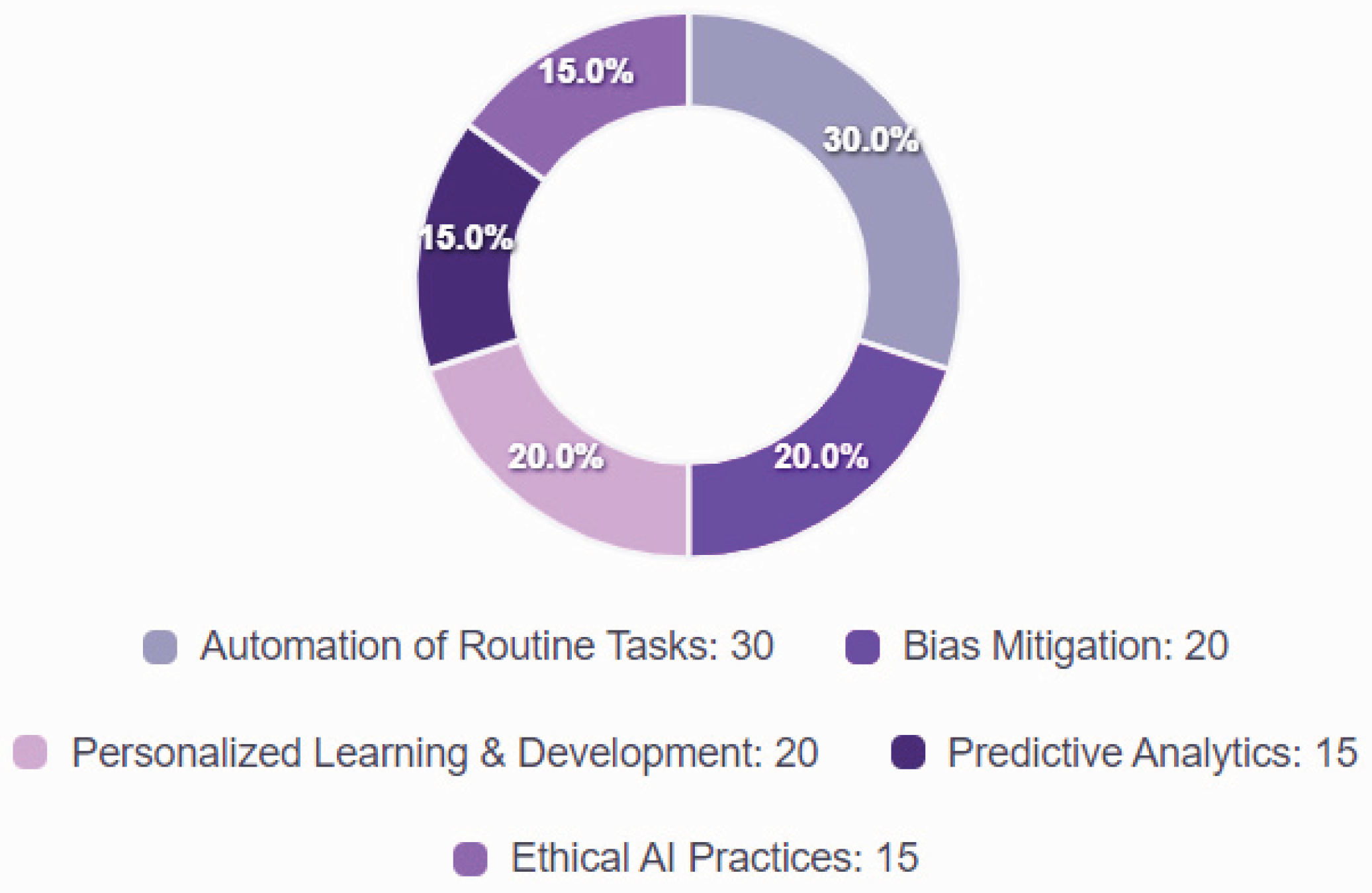
Figure 2.
Comparison of different HR functions and their improvement rate by ChatGPT.
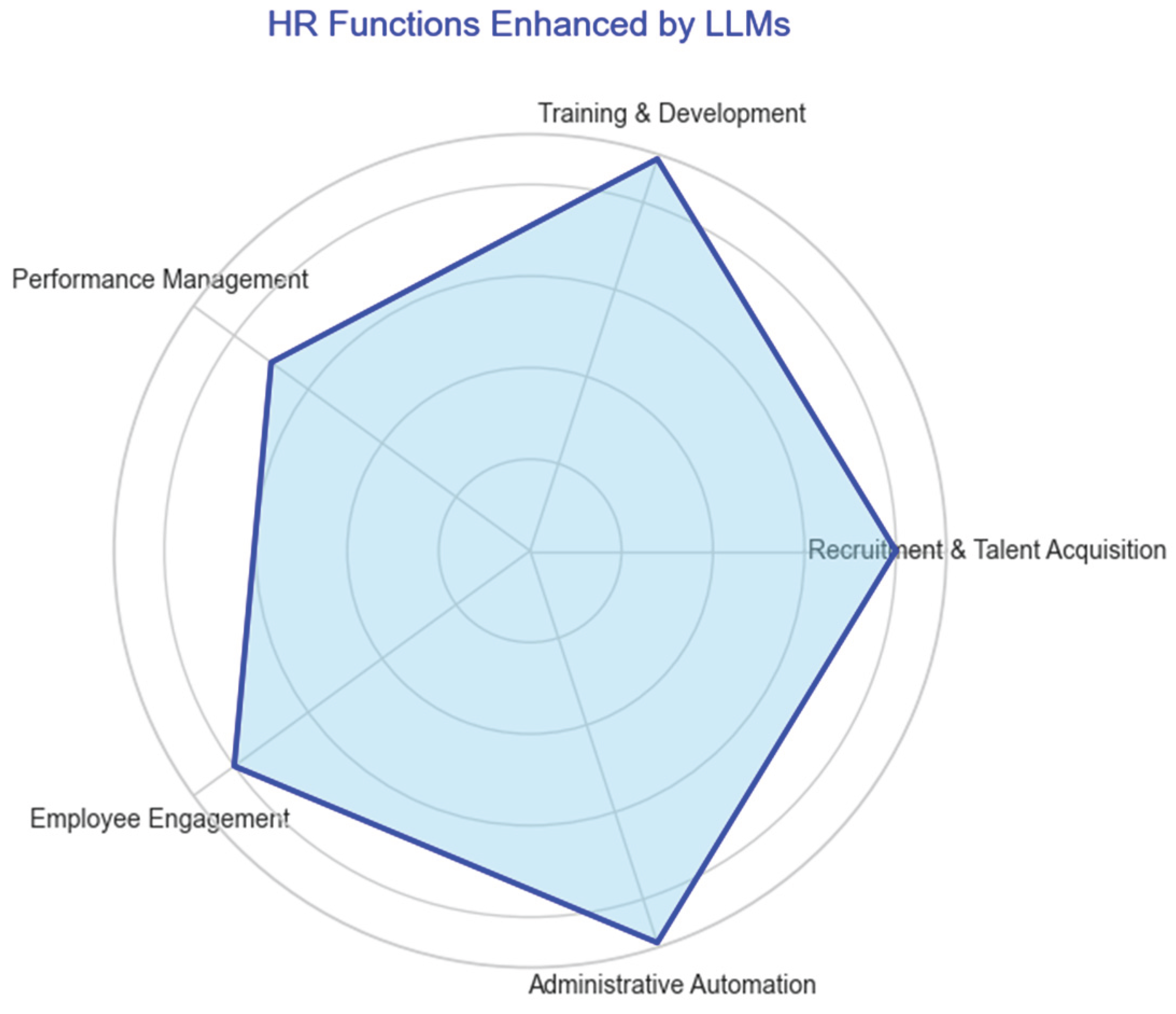
Figure 3.
Detailed Benefits of Talent Acquisition Applications.
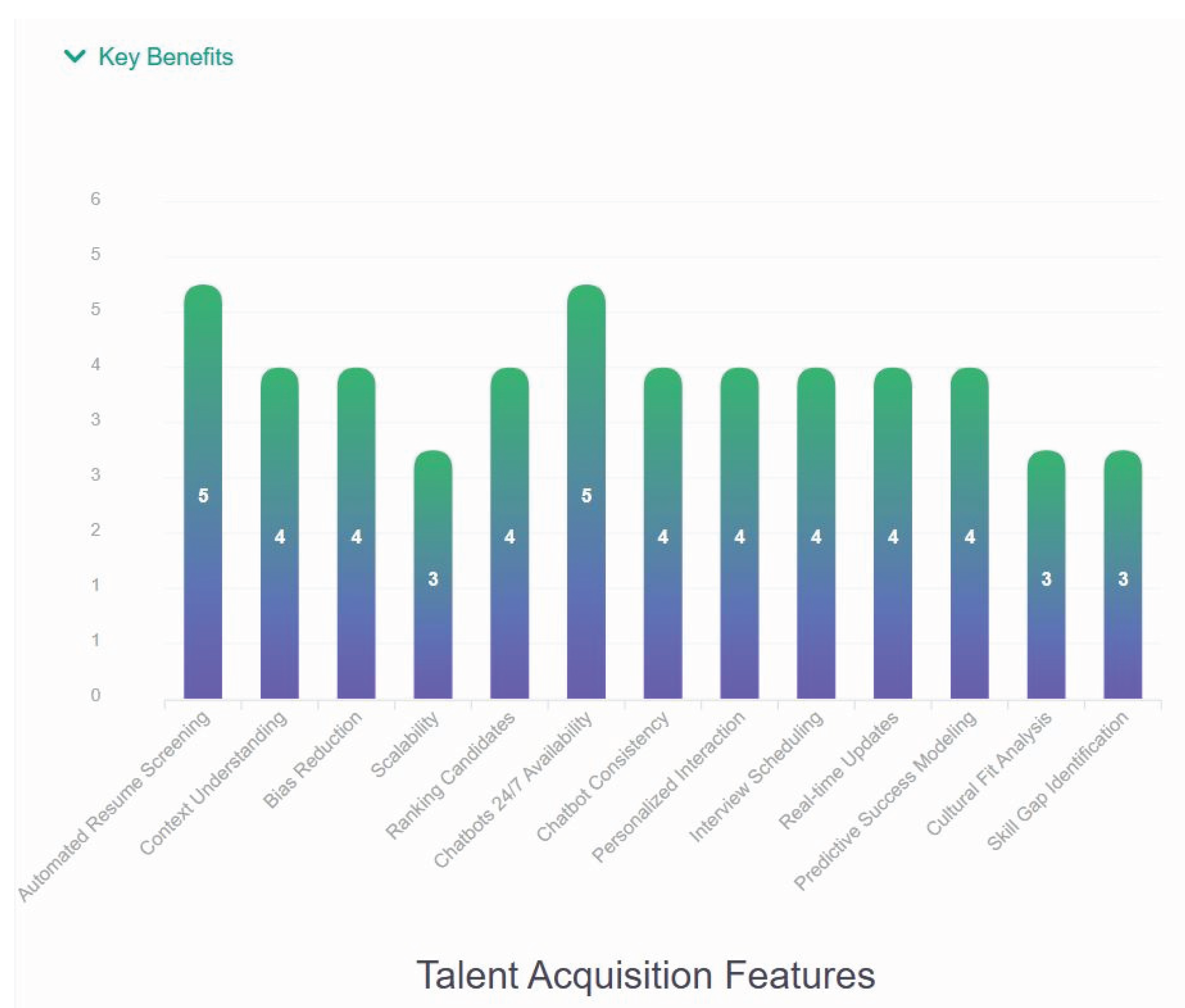
Figure 4.
Key benefits for various talent acquisition programs.
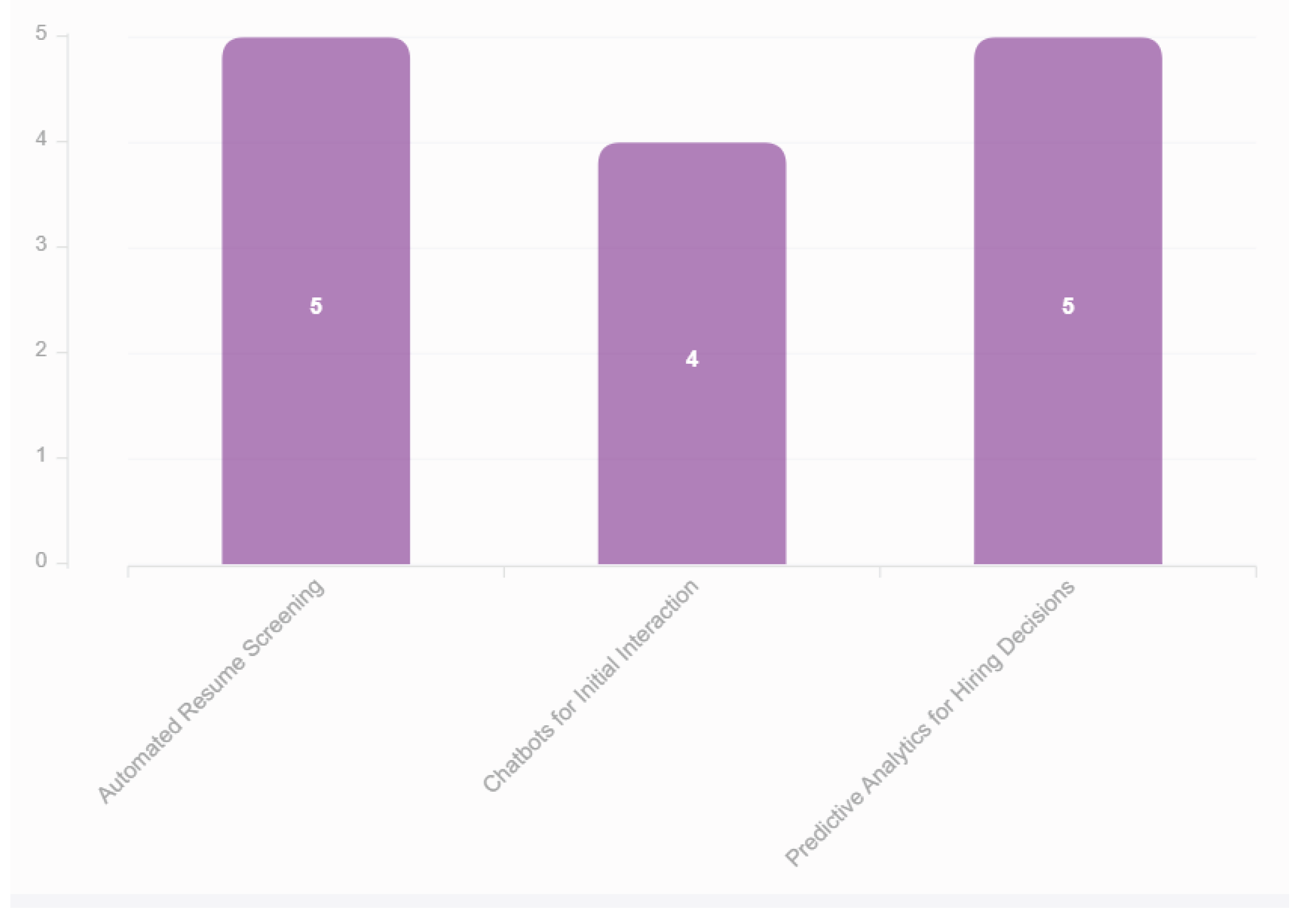
Figure 5.
ChatGPT effectiveness in various HR functions.
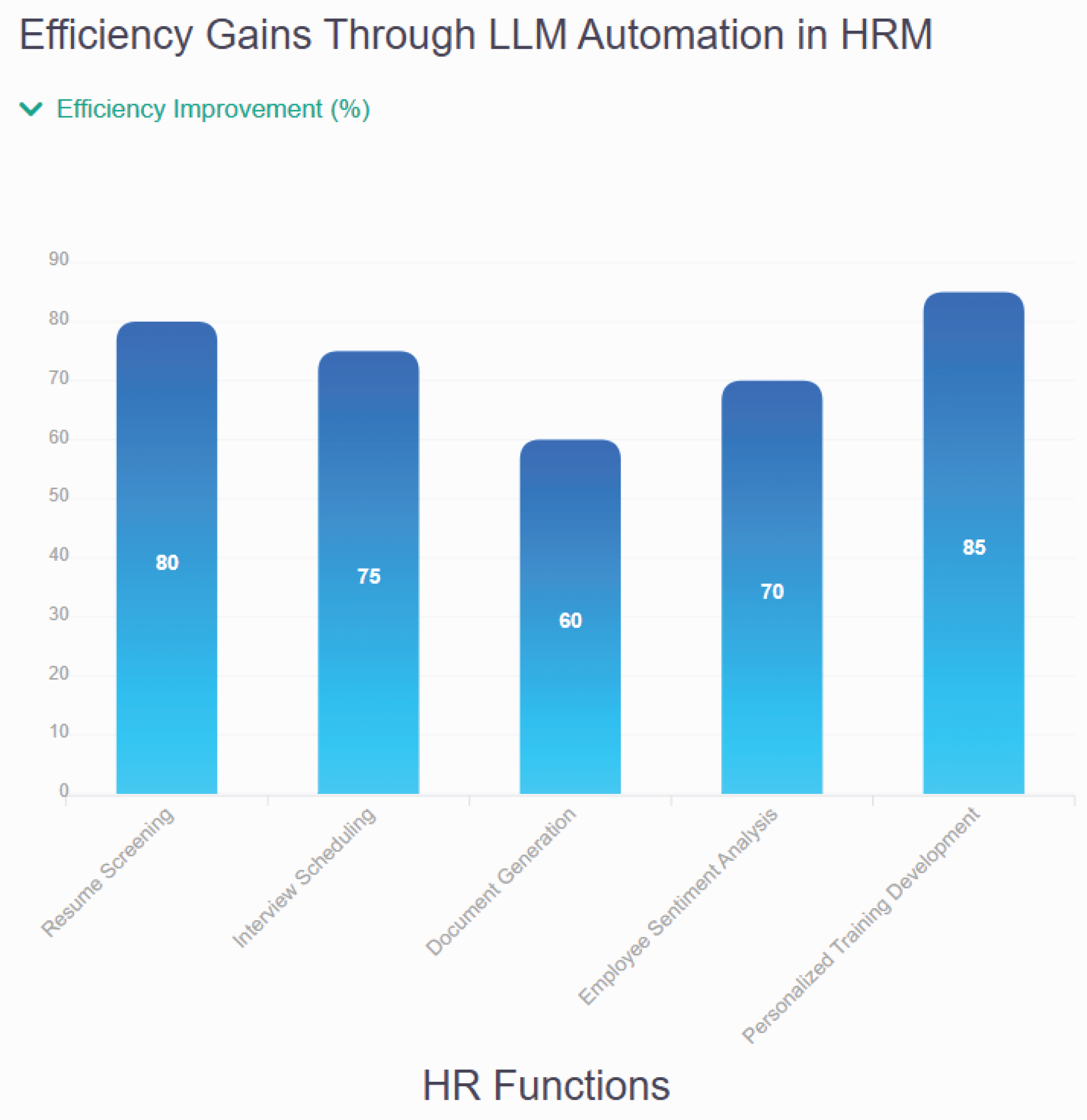
Figure 6.
Chart of developments in HR decision-making with increasing ChatGPT integration over time.
Figure 6.
Chart of developments in HR decision-making with increasing ChatGPT integration over time.
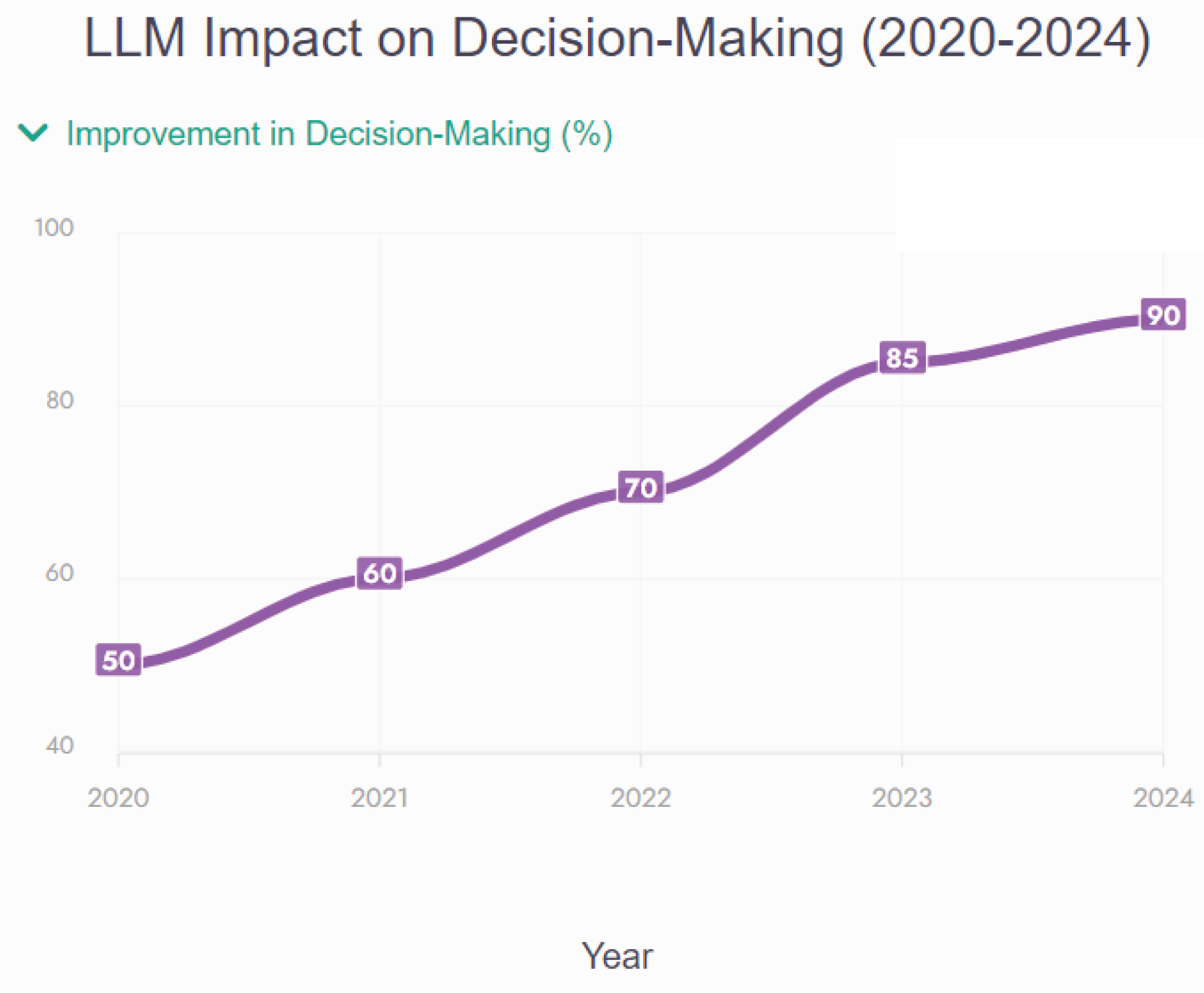
Figure 7.
Challenges of Implementing ChatGPT in HRM.
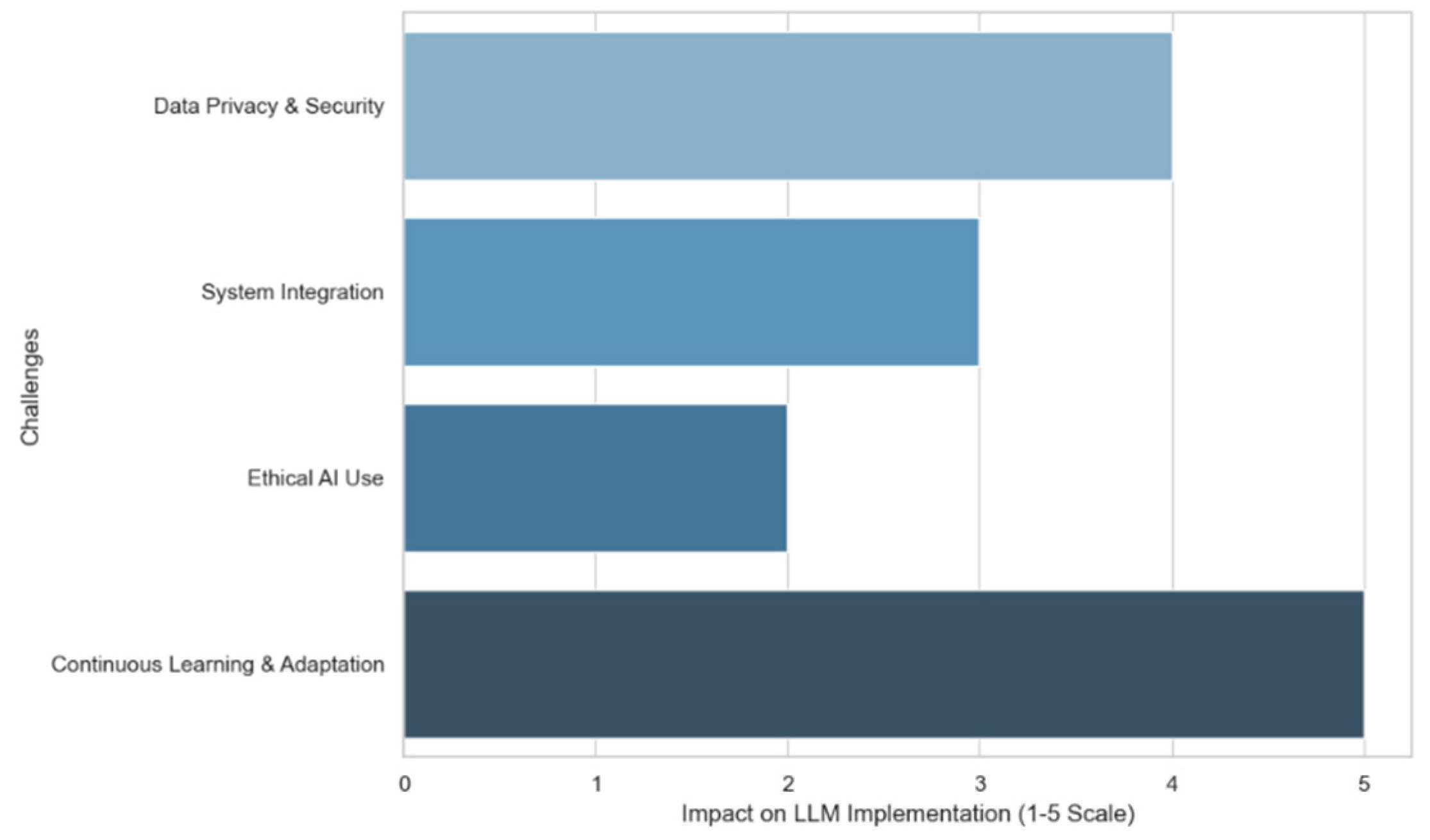
Disclaimer/Publisher’s Note: The statements, opinions and data contained in all publications are solely those of the individual author(s) and contributor(s) and not of MDPI and/or the editor(s). MDPI and/or the editor(s) disclaim responsibility for any injury to people or property resulting from any ideas, methods, instructions or products referred to in the content. |
© 2025 by the authors. Licensee MDPI, Basel, Switzerland. This article is an open access article distributed under the terms and conditions of the Creative Commons Attribution (CC BY) license (http://creativecommons.org/licenses/by/4.0/).
Copyright: This open access article is published under a Creative Commons CC BY 4.0 license, which permit the free download, distribution, and reuse, provided that the author and preprint are cited in any reuse.


