

Submitted:
10 February 2025
Posted:
11 February 2025
You are already at the latest version
Abstract
Light detection and ranging (LiDAR) sensors are critical for autonomous vehicles that require unparalleled depth sensing. However, traditional LiDAR designs face significant challenges, including high costs and bulky configurations, limiting scalability and mass-market adoption. By uniquely combining patent and scientometric analysis, this study screened 188 recent LiDAR patents from a dataset of more than two million patents, uncovering strategies to enhance capability and reduce production costs. Key findings highlight the growing emphasis on solid-state architectures, modular designs, and integrated manufacturing processes as pathways to scalable and efficient LiDAR solutions. These insights bridge the gap between scientific advancements and practical implementation, providing stakeholders with a clear understanding of the technological landscape and emerging trends. By identifying future directions and actionable opportunities, this work supports the development of next-generation LiDAR systems, fostering innovation and enabling broader adoption across autonomous vehicles and other sectors.
Keywords:
autonomous vehicles
; big data analytics
; bibliometric analysis
; scientometric analysis
; compact LiDAR
; patent analysis
; vehicle sensor cost
1. Introduction
Autonomous vehicles and other robotic systems
depend on precise environmental sensing to navigate safely and efficiently,
necessitating a balance between performance and cost. Light detection and
ranging (LiDAR) technology plays the crucial role of measuring distances to
objects through laser pulses and their reflections to create real-time 3D maps
of the environment [1]. In many scenarios, LiDAR sensors offer superior
resolution and depth accuracy compared with cameras [2].
While cameras are more cost-effective, they lack LiDAR’s depth-sensing
capabilities [3], especially in low-light or dynamically changing environments [4]. However, current LiDAR systems face critical challenges. These sensors are expensive,
bulky, and mechanically complex [5]. They require high energy for signal
processing [6] and multiple or rotating sensors to achieve 360-degree coverage [7].
These constraints hinder the scalability of LiDAR for adoption in mass-market
systems such as autonomous vehicles.
The increasing prevalence of autonomous systems has
intensified the demand for compact, affordable, and reliable LiDAR solutions [8]. Traditional designs that rely on moving parts such as mirrors and motors suffer from
low power efficiency, inconsistent signal quality, and high maintenance needs [9].
These challenges exacerbate their cost disadvantage relative to cameras [10]. While recent advancements in solid-state and compact configurations have addressed
some issues [11], the tradeoff between cost and performance persists, limiting
widespread adoption [12].
The goal of this study is to systematically
analyze recent LiDAR patents, tailored to autonomous vehicle applications, to
identify innovations addressing challenges such as cost, size, and capability.
Unlike studies that focus on academic developments or laboratory experiments,
this patent-based analysis emphasizes their commercial potential. By examining
the problem-solution landscape within the patent domain, the analysis uncovers
technical strategies driving industry innovation toward commercialization.
Through a combined patent and scientometric analysis, this study evaluates
recurring themes and mechanisms that offer practical solutions to critical
barriers in traditional LiDAR systems. This approach bridges the gap between
design and implementation while providing a forward-looking perspective on
LiDAR’s potential in autonomous systems.
The contributions of this work are as
follows:
- Problem Analysis: An in-depth exploration of technical barriers in current LiDAR systems, focusing on cost, size, capability, and operational efficiency.
- Solution Landscape: A thematic categorization of innovations in cost/size reduction, field-of-view (FOV) enhancement, signal quality improvement, and beam steering.
- Comparative Evaluation: An assessment of how these solutions address specific challenges, highlighting the most impactful techniques and their implications.
- Future Directions: Suggestions for advancing LiDAR development, identifying gaps, and proposing areas for further research and innovation.
This work provides actionable insights into LiDAR
advancements, paving the way for scalable, cost-effective solutions, tailored
to the evolving demands of autonomous vehicle applications.
The rest of this paper proceeds as follows: Section 2 reviews the literature on LiDAR
technologies with a focus on their utility and challenges. Section 3 presents the methodology developed
for the combined systematic patent and scientometric analysis, including the
research questions they address. Section 4
presents the results of the analysis in terms of the temporal and categorical
themes revealed, plus a detailed comparative evaluation of specific patents
within each category. Section 5 discusses
the key findings, future directions, and limitations of the study. Section 6 concludes the research and reviews
its contributions.
2. Literature Review
LiDAR sensors have evolved significantly in recent
years to address diverse application requirements [13].
The literature categorizes LiDAR systems based on operational platforms,
scanning mechanisms, and light modulation techniques [14]. Airborne systems, including topographic and bathymetric LiDAR, provide elevation
data for applications such as urban planning and marine navigation [15]. These systems utilize near-infrared and green lasers, tailored to specific
environments, to achieve high-precision mapping [16].
Terrestrial systems, on the other hand, support infrastructure management and
autonomous navigation through static and mobile configurations [4].
Scanning mechanisms are crucial to moving the
sensor’s light beam to capture a scene. Traditional mechanical scanning systems
rely on rotating mirrors or oscillating components for 360-degree coverage [17]. However, these devices are often bulky, prone to mechanical failure, and require
calibration [18]. Solid-state systems, including micro-electro-mechanical
systems (MEMS) mirrors and optical phased arrays (OPAs), address these
limitations by eliminating moving parts, enhancing durability, and reducing
size [8]. Flash LiDAR, which captures entire scenes with a single pulse, offers
rapid data acquisition suitable for real-time applications, but range and
resolution constraints limit its performance [19].
Light modulation techniques further distinguish
LiDAR’s capabilities. Time-of-flight (ToF) systems measure distances by
calculating the time laser pulses take to return after reflecting from an
object [20]. On the other hand, frequency-modulated continuous wave (FMCW)
systems analyze frequency shifts to determine both distance and velocity,
offering higher sensitivity and improved dynamic object tracking [21]. These advances have expanded LiDAR’s utility in applications requiring precise depth
measurement and situational awareness, particularly in the motion planning [22]
and parking of autonomous systems [23].
Despite these innovations, existing studies
highlight critical barriers to LiDAR’s scalability [24]. Challenges include high production costs [25],
energy-intensive signal processing [26], limitations in FOV [27],
and environmental adaptability [24].
Recent works emphasize solid-state architectures and compact designs as
promising solutions [28], but gaps remain in achieving cost-efficient,
high-performance systems suitable for mass-market applications [29].
This study builds on prior research by focusing on
the patent landscape rather than conducting a literature search to analyze
innovations with commercial potential while addressing the existing challenges.
That is, unlike traditional reviews that emphasize academic research and
experimental results, this patent analysis applied big data analytical methods
to highlight industry trends, providing actionable insights into the evolution
of LiDAR technology. Furthermore, by thematically categorizing innovations into
distinct technical domains, this study offers a comprehensive understanding of
how LiDAR advancements are shaping the future of autonomous systems.
3. Methodology
Figure 1 illustrates the methodological workflow developed for the multifaceted patent
analysis. The main stages of the workflow include evaluating data sources, data
mining, topic relevance screening by a subject matter expert (SME), thematic
categorization, and scientometric analysis with cross-sectional visualizations
of trends. The subsections that follow provide a detailed description of each
stage in this workflow.
3.1. Data Sources
The workflow utilized four patent data sources: the
Google Patents (GP) search engine [30], the World Intellectual Property
Organization (WIPO) search tool (PATENTSCOPE) [31], the United States Patent
and Trademark Office (USPTO) search tool [32], and the USPTO patent summary
dataset [33]. The GP search engine scans the full text of patents from around
the world. PATENTSCOPE searches databases from participating national and
regional patent offices around the world. The USPTO search tool searches
USPTO-issued patents that includes priority filings by foreign organizations
seeking to protect their intellectual property in U.S. markets. The USPTO patent
summary dataset contains monthly summaries of all issued patents. These
summaries utilize SMEs to capture the core problem and solution of the
invention, providing a complementary alternative to patent descriptions that
rely heavily on legal jargon. Unfortunately, the patent summaries contain only
the patent number and a summary text, lacking other information such as titles,
assignees, and dates.
The Boolean search keywords of the first workflow
stage aimed to retrieve documents that focus on the design of LiDAR sensors.
The search focused on patents tailored to cost-sensitive applications that can
dynamically measure distances to objects around an autonomous vehicle. Hence,
the “AND” Boolean search array contained words in the set [“lidar,” “vehicle,”
“distance,” “cost”] that must coexist in a document. The “OR” Boolean search
array contained words in the set [“autonomous,” “driverless,” “driver-less,”
“self-driving”] where at least one word must also be in the document. The
search was case-insensitive. The author wrote a Python script to search the
summary datasets by first filtering for documents containing all the “AND”
keywords and then filtering the results for documents containing at least one
of the “OR” keywords.
Table 1 lists
the search commands and number of hits for each data source. An initial search
without specifying a date range revealed that 2018 was the pivotal year when
the number of LiDAR-related patents begin to rise sharply. As there was an
insignificant number of LiDAR-related patents published in prior years, the
search specified a time window from 2018 to 2024, with the results reflecting
matches through October 2024 when the author conducted the search.
The USPTO search resulted in 524 patents with 368 of those having the same family identifier (FID), which are groups of related patents. The FID is a unique identifier assigned to a group of patents that share the same basic invention or technology, even if they have different patent numbers. The Python script found 867 patent summaries based on the Boolean keyword search. The larger number of matches relative to the USPTO search engine reflected that the former could not search titles for the keyword “lidar” whereas the latter could, thus effectively narrowing the search.
Figure 2a and Figure 2b plots the results from the GP and WIPO search engines, respectively. The horizontal axis labels the intellectual property office of the country or region. PCT indicates the international patent applications granted under the Patent Cooperation Treaty. EPO indicates the patent applications granted by the European Patent Office. The WIPO results include only countries that shared their national or regional data with the organization. It is apparent that WIPO provides a fair representation of patents issued by the USPTO, PTC, and the EPO. However, the WIPO data significantly underrepresent patents issued by other offices, particularly China. Both GP and WIPO produced a comparable result for USPTO of 931 and 978, respectively.
A further examination of the GP data subset of patents issued by the China patent office revealed that they contained many international filings, particularly from organizations in the United States. Unfortunately, the assignee names were not in English, making that subset incompatible with the workflow. In addition to U.S. assignees, the USPTO grants also included patents filed by organizations headquartered in other countries, including China, South Korea, Japan, and European countries. These patents typically claimed priority dates from filings at non-USPTO patent offices. Figure 3 plots the assignee countries of the USPTO search results, revealing that more than 31% were outside the U.S. This finding reflects that foreign countries tend to file their most valuable patents for protection in the lucrative U.S. markets. Given that the WIPO results showed USPTO patents dominated, and that the USPTO patents included a significant number of important filings from non-U.S. countries, particularly China, it served as a balanced sample of worldwide innovations in LiDAR development.
3.2. Data Mining
Table 2 shows the results of mining the USPTO summary dataset and refining them to discern unique and relevant patents. The Python code processed more than two million patent summaries and found 867 patents matching the search criteria. Of those, removing duplicates and summaries that were more than 90% similar resulted in 736 patents for further scrutiny. Adding statistics for the frequency and position of the “AND” keywords helped to prioritize screening. That is, highly relevant documents tended to be associated with “AND” keywords having a high frequency and early position in the text. The author carefully reviewed each document for relevancy, resulting in the exclusion of 548 patents, with 188 remaining for scientometric analysis.
Unlike the USPTO patent summaries, the document information list from the GP and WIPO searches lacked patent abstracts or descriptions. However, the list contained patent titles, the names of assignees and inventors, filing dates, and publication dates. Hence, the workflow merged the summaries of the relevant patents with their bibliometric information obtained from the GP search engine. As shown in the workflow diagram, this was an iterative process because the GP downloads tended to miss patents when given long lists of patent numbers to retrieve. After the merging in each iteration, the author identified any unmerged patents and repeated the GP search until finding all the patents.
3.3. Scientometric Analysis
Scientometric analysis refers to the analysis of patterns in the scientific literature through quantitative methods [34]. This study leveraged patent data to assess innovation trends, collaborations, and research impact. The scientometric analysis sought to answer the following research questions about LiDAR patent trends, with the figures addressing them forward referenced in parentheses:
- What is the annual patent award trend and how did those distribute among U.S.-based and foreign-based assignee countries? (Figure 4)
- What is the average number of inventors per patent and how is that distributed? (Figure 8a)
- How does the number of unique inventors on U.S.-based assignee patents compare with the aggregate of non-U.S. assignees? (Figure 8b)
- What is the typical timing from filing to patent grant, how is that latency distributed, and were there any annual trends in that latency? (Figure 9)
- Who were the top assignees based on the number of patent awards, and what is their annual trend? (Figure 10)
- Were there significant differences in the filing to grant timing for the top assignees? (Figure 11)
- Which thematic categories had the most patent activity and were there any notable differences in their average award latency? (Figure 12)
- Which thematic categories did the top assignees focus on? (Figure 13)
- What was the annual trend in patents awarded across the distinct thematic categories? (Figure 14)
- How did the number of inventors vary across thematic categories? (Figure 14)
Overall, this methodology aimed to provide insights into the dynamic landscape of technological progress in LiDAR development by identifying patterns of activity, key contributors, and emerging areas of focus.
4. Results
The subsections that follow present the results of the analysis in terms of the temporal trends and assignee countries, thematic categorization, comparative evaluation of selected patents within each category, and the scientometric outcome addressing the research questions posed earlier in the methodological section.
4.1. Temporal Trends
Figure 4 shows the distribution of the final tally of patents by a) year and b) assignee countries. The trend in Figure 4a shows a steady increase in the number of issued patents with a peak in 2023. In answering the first research question (RQ 1), Figure 4b shows that grants to U.S.-based assignees accounted for 62.6% of the patents, with grants to assignees from other countries accounting for the rest. Of those, assignees in South Korea, China, and Germany dominated. An interesting trend is that there was a steady annual increase in the share of patents awarded to non-U.S. assignees. The share was 9% in 2018 and grew at an annual average pace of 10%, peaking at 48% in 2022. This result highlights an increasing balance of the global representation of patent assignees in the USPTO database.
4.2. Thematic Clustering
Figure 5 is a term co-occurrence network produced by the VOSviewer software (version 1.6.20) to visualize document clusters based on common technical themes [35]. The figure reveals key relationships and thematic clusters within the analyzed LiDAR patent corpus. These clusters both informed and validated the technical classification.
The bubble size reflects the term frequency across the entire corpus. The thickness of lines that connect terms reflect their relative co-occurrence frequency in the corpus. The colors represent thematic clusters based on term co-occurrence. These distinct clusters represent core concepts such as “beam” and “signal” (green), “array” and “power” (blue), “field” and “view” (red), and “time” and “pulse” (yellow). These clusters suggest thematic priorities, including beam shaping, signal processing, and optimization of light arrays. Key insights include the centrality of “time” and “pulse,” highlighting their importance in the ToF measurement approach. Additionally, the link between “array” and “power” suggests innovations focusing on photodetector arrays and energy efficiency, vital for autonomous vehicle integration. The interconnectedness of “field” and “view” reflects ongoing improvements in FOV expansion and spatial resolution, essential for autonomous navigation. This network also reveals a convergence of themes aimed at performance optimization, miniaturization, and scalability for future LiDAR applications.
After diligently reviewing all the relevant patents in greater detail, and with insights from the term co-occurrence network, the author grouped the patents into the following five thematic categories: beam generation, beam steering, FOV enhancement, signal quality, and cost/size reduction. As observed, the clusters do have some overlap. Nevertheless, the classification reflects the primary goal of an invention. For example, combining the outgoing and incoming optical pathways to reduce misalignment also led to improving the quality of the return signal while also reducing both size and cost due to the design simplification.
Figure 6 is a word cloud of patent titles within each thematic category, providing further validation of the themes identified. The word clouds highlight characteristic bigrams within each thematic cluster. The font sizes reflect the relative frequency of the bigrams. These visualizations complement the term co-occurrence network in validating the quality of the thematic classification. The “Beam Generation” cluster emphasizes special types of semiconductor-compatible lasers like “gallium nitrogen” to simultaneously provide illumination and sensing functionalities. The “Beam Steering” cluster emphasizes advancements like “dynamic scan” and “phased array,” signifying efforts to improve scanning flexibility and resolution. In “Signal Quality,” terms such as “multiple pulse” and “adaptive receiver” point to improvements in data acquisition and noise reduction. The “Cost/Size Reduction” cluster, with terms like “rotating compact” and “integrated illumination,” highlights miniaturization and integration efforts that are critical for commercial scalability in autonomous vehicles.
The “FOV Enhancement” cluster focuses on “multiple pixel” and “pixel scanning,” reflecting inventions to increase spatial awareness.
Figure 7 illustrates the frequency distribution of the top 10 bigrams across categories, quantifying the word cloud with a complementary view of their distributions. The “Beam Steering” and “FOV Enhancement” categories display step-like distributions, where the top terms like “beam steering” and “multiple pixel” dominate, indicating a concentrated focus on these critical functionalities. In contrast, “Beam Generation” and “Signal Quality” show more uniform distributions, suggesting a broader range of terms and diverse research efforts in improving laser sources and signal processing.
The “Cost/Size Reduction” category features a more balanced distribution with top terms like “detection device,” “rotating compact,” and “integrated illumination,” reflecting efforts in miniaturization and integration. The distribution of the aggregated “All Categories” emphasizes terms such as “integrated illumination” and “detection device,” reinforcing the significance of integration and compact designs for LiDAR’s commercial viability in autonomous vehicles. Collectively, these patterns highlight the evolving priorities in addressing the technological and economic challenges of LiDAR development.
4.3. Comparative Evaluation
4.3.1. Beam Generation
Table 3 summarizes distinct beam generation solutions selected from patents in this category.
These patents reflect diverse, adaptive approaches to controlling laser output characteristics, each aimed at enhancing performance across specific operational contexts. Feedback-driven mechanisms, such as those adjusting pulse duration or repetition rates based on real-time data, improve power efficiency, detection precision, and adaptation to varying environmental conditions. Some systems dynamically optimize pulse patterns and charge profiles to manage energy use and reduce heat, maintaining high point cloud density without unnecessary resolution. Advanced materials, like gallium-nitrogen laser diodes, enable both illumination and high-resolution mapping through wavelength conversion and beam shaping for autonomous sensing and communication functions. Polarization techniques, gate delays, and phase-coded modulations further refine performance by mitigating interference, enhancing resolution, and increasing signal-to-noise ratios across extended ranges.
Other inventions in this category employ non-uniform sampling or orthogonal code sequences to prioritize distant targets and allow high-resolution depth estimation with simpler receiver architectures. Frequency-modulated systems and optical grating arrays enhance road surface analysis by detecting anomalies via power-distance profiles. Collectively, these innovations showcase a trend toward precision-controlled laser outputs that optimize power use, improve target resolution, and enhance the adaptability of LiDAR sensors in complex and dynamic environments.
4.3.2. Beam Steering
Table 4 summarizes distinct beam steering solutions sampled from patents in this category. These patents exhibit a broad array of methods focused on enhancing scanning precision, adaptability, and efficiency. Some systems use dynamically controlled mirrors and selective scan patterns like interline skipping or Lissajous scanning to concentrate on critical regions, offering high-resolution adaptability in complex environments. Innovations employing digital micro-mirror devices and spatial light modulators enable patterned light emission without mechanical parts, which also reduces size, maintenance, and power requirements.
OPAs, integrated with wavelength-tunable controls and diffraction elements, allow precise, electronic beam steering while minimizing physical components. Systems using novel optics, such as variable angle multi-facet polygons, rotating prisms, and ellipsoidal mirrors, provide multi-angle or omni-directional scanning, enhancing spatial coverage with minimal structural complexity. Additionally, planar photonic structures, including Luneburg lenses and scattering waveguides, enable 360-degree coverage with low energy consumption.
Advanced configurations, such as dual MEMS mirrors and closed-loop feedback-controlled arrays, allow real-time adjustments for optimal range and reduced latency. Collectively, these approaches exemplify a move toward versatile, reliable, and high-resolution LiDAR systems optimized for dynamic and application-specific environmental demands.
4.3.3. FOV Enhancement
Table 5 summarizes distinct FOV enhancement solutions sampled from the patents in this category. These patents demonstrate varied approaches aimed at broadening coverage, improving resolution, and enabling adaptability in complex and dynamic environments. Systems leveraging remote mirrors within the FOV allow for indirect reflection-based 3D ranging, effectively expanding coverage in obstructed regions and enhancing blind-spot detection. Modular and distributed LiDAR setups employ strategically positioned or remotely relayed LiDAR units to achieve comprehensive 360-degree coverage. Some have overlap control and real-time recalibration for redundancy and adaptability. Techniques such as planar and pixelated light modulators, combined with phase modulation and non-mechanical components, deliver a wide, adjustable FOV with high frame rates and minimal alignment needs. Some systems deploy multi-channel configurations with co-located light sources and scanning mirrors to increase sampling density and expand FOV.
Additionally, optical innovations like planar Luneburg lenses enable wide-angle beam steering in compact formats, while coherent fiber optic bundles relay reflections from remote FOVs to centralized detectors, enhancing coverage and imaging continuity across varied scenarios. Together, these innovations contribute to adaptive LiDAR performance that enhances environmental awareness and responsiveness.
4.3.4. Signal Quality
Table 6 summarizes distinct signal quality solutions sampled from the patents in this category. These patents aim to improve detection accuracy, reduce noise, and enhance signal robustness across diverse environments. Some systems employ adaptive photodetector arrays that selectively activate pixel subsets to minimize noise, extend dynamic range, and enhance precision. Techniques like multi-pulse encoding with diverse coding schemes, such as time and amplitude diversity, help mitigate crosstalk and external noise, ensuring reliable distance measurements, particularly in noisy settings. Synchronization of pulse generation and acquisition, often through unified pulse triggers and dual timing modules, enables precise ToF estimation with minimal alignment complexity. Additionally, DC coupling, temperature-adjusted biasing, and channel multiplexing streamline analog-to-digital conversion, reducing power requirements while maintaining signal consistency.
Integrated designs place illumination, detection, and signal processing on single boards with shared optical paths, minimizing alignment challenges and optimizing point cloud density. Methods using high-frequency phase-shifted range-gating and single-photon detectors offer fine-tuned timing control, enhancing long-range detection capabilities. Calibration methods that leverage natural surfaces like walls and floors, as well as active/passive measurement combinations, help maintain alignment accuracy over time. These inventions further refine signal integrity with low-pass filtering, adaptive bin widths in histograms, and selective segment prioritization, facilitating real-time processing and decision-making. Together, these innovations reflect advancements in signal processing and quality control, essential for the reliable, high-resolution operation of LiDAR across varied applications.
4.3.5. Cost/Size Reduction
Table 7 summarizes distinct solutions for reducing cost or size, sampled from the patents in this category. These patents introduce innovative methods to simplify design, reduce manufacturing complexity, and streamline integration for scalable production. These solutions also overlap with some beam generation, beam steering, FOV enhancement, and signal quality enhancement techniques that also contribute to cost/size reduction. However, the dominant aim of these patents was to reduce cost and/or size. A common approach integrates illumination sources, detectors, and processing electronics onto a single substrate or circuit board, optimizing optical paths and enhancing alignment to lower costs and reduce form factors.
Many systems in this category employ vertical-cavity surface-emitting laser (VCSEL) emitters that are compatible with complementary metal oxide semiconductor (CMOS), and single photon avalanche diode (SPAD) detectors. These technologies enable compact designs, improve reliability, and lower production costs by consolidating measurement functions. Wireless power transfer, rotating circuit boards, and optical communication components further eliminate traditional mechanical parts like conductive slip rings and rotating assemblies, reducing wear and simplifying assembly. OPAs and frequency modulation techniques provide solid-state, wide-angle scanning without moving parts, achieving high-resolution 360-degree views while maintaining minimal size and power demands.
Methods using multiplexed optical paths, wavelength division multiplexing, and shared optical pathways integrated with vehicle lighting reduce component count and streamline installation. For example, integrating LiDAR functionality within vehicle headlamps or windshields utilizes existing automotive components, allowing concealed, cost-effective sensing without compromising aesthetics or requiring additional mounting space. Additionally, simplified detector arrays, luminescent waveguides, and efficient signal encoding techniques support high-resolution 3D mapping with minimal hardware requirements. These strategies contribute to LiDAR systems that are compact, reliable, and economically viable, enhancing the feasibility of high-performance autonomous sensing in consumer and commercial applications.
4.4. Scientometric Insights
Figure 8 provides insights into the distribution of inventors contributing to LiDAR patents, segmented by collaboration size and assignee countries. In answering RQ 2, Figure 8a highlights the distribution of inventors per patent, where the average collaboration size was three inventors. Most patents involve two to four inventors, indicating moderately sized research teams, while fewer patents have larger teams of up to 10 inventors, suggesting that more extensive collaborations are less common in this domain. Figure 8b shows the distribution of unique inventors across assignee countries, with the United States accounting for the largest share. South Korea, Germany, and China followed with significant inventor contributions. In answering RQ 3, the aggregate of unique inventors for non-U.S. assignee countries was comparable with that of U.S.-based assignees. This demonstrates the USPTO dataset reflects a global thrust in LiDAR innovation.
In answering RQ 4, Figure 9 provides a detailed analysis of patent grant latency, examining the time spans between key stages of the patent process for LiDAR technologies. Figure 9a shows the durations from disclosure to filing, with an average of 17.3 months. The distribution skewed toward shorter periods suggests that companies file most patents within two years of disclosure. Figure 9b displays the time from filing to grant, averaging 32.6 months. The distribution peaks between 20 and 40 months, indicating a typical grant process duration, though some patents take longer.
Figure 9c combines the timelines, illustrating the total time from disclosure to grant, averaging 50 months. The peak occurs around 40 to 60 months, showing a consistent trend of extended timelines in securing patent rights. Figure 9d trends the average months from filing to grant by grant year, showing an upward trajectory from 2018 to 2023, peaking at 40 months. This increase suggests growing complexity, scrutiny, or lack of resources in the patent examination process, reflecting the competitive and evolving nature of LiDAR technology. These metrics highlight the spread of both efficiency and bottlenecks in the innovation pipeline.
In answering RQ 5, Figure 10 illustrates the temporal distribution of patent awards among the top 10 assignees in LiDAR technology from 2018 to 2024. Velodyne leads consistently in patent activity, peaking in 2023 with six patents, highlighting its dominance and commitment to innovation in LiDAR systems. Aeye, Inc. shows notable activity early in the timeline but tapering off later. Other key players, such as Ouster, Inc. and Baidu, exhibit steady activity over time, reflecting sustained research and development efforts. Emerging assignees include Hyundai and Kyocera SLD Laser, which have recently gained prominence. The presence of academic institutions, such as MIT, demonstrates the role of foundational research in advancing LiDAR applications. This temporal pattern highlights both established leaders and growing diversification in LiDAR innovation, pointing to a dynamic and competitive field with significant commercial and academic collaboration.
In answering RQ 6, Figure 11 provides an analysis of the top 15 patent assignees by volume and their average filing-to-grant latency. Figure 11a ranks Velodyne as the top assignee with more than 20 patents, followed by Aeye, Inc., Baidu, and Ouster, Inc. Figure 11b examines the average latency from filing to grant for these top 15 assignees. As the top assignee, Velodyne also exhibits one of the shortest average latencies, suggesting streamlined patent approval processes due to a combination of experience, efficient documentation processes, prior art familiarity, and focused resources. In contrast, Baidu and Microvision, Inc. show the longest latency, exceeding 40 months, which may indicate greater complexity or other challenges. This dual analysis reveals the interplay between innovation intensity and patenting efficiency across global industry leaders in LiDAR technologies.
In answering RQ 7, Figure 12 compares the volume of patents and the average filing-to-grant latency across the thematic categories, providing insights into the focus and efficiency of innovation efforts. Figure 12a reveals “Cost/Size Reduction” as the leading category, reflecting a strong emphasis on reducing the footprint and production costs of LiDAR systems to enable scalability. “Signal Quality” and “Beam Generation” also show substantial patent activity, underlining efforts to enhance performance and reliability.
In contrast, “FOV Enhancement” has the lowest patent volume, indicating less emphasis in expanding the FOV. Figure 12b shows average filing-to-grant latency by category. All categories exhibit comparable latencies around 30 months, with “Cost/Size Reduction” and “Beam Steering” slightly longer. This consistency indicates uniformity in the examination processes across categories.
In answering RQ 8, Figure 13 illustrates the patent activity focus of the top 10 assignees across the thematic categories. Velodyne shows patent awards across multiple categories, with notable emphasis on signal quality and beam generation. Kyocera also focused on beam generation. In contrast, Aeye, Inc. emphasized beam steering developments, highlighting a targeted effort in enhancing LiDAR adaptability for dynamic environments. Other companies, such as Baidu and Ouster, Inc., demonstrated a focus on cost/size reduction. These patterns indicate a diverse landscape of innovation across organizations and categories.
Figure 14 provides a comprehensive scientometric analysis of LiDAR thematic categories. Figure 14a reveals that “Beam Generation,” “Cost/Size Reduction,” and “Signal Quality” involved the highest numbers of unique inventors, suggesting strong collaborative and multidisciplinary efforts. Figure 14b highlights the proportional relationship between patent volume and inventor participation, with “Cost/Size Reduction” suggesting a strong resource emphasis and “FOV Enhancement” having the lowest activity and participation. In answering RQ 9, Figure 14c tracks the temporal evolution of the awarded patents, showing a sharp increase in “Cost/Size Reduction” from 2022 onward, while other categories maintain steady trends. In answering RQ 10, Figure 14d compares the number of inventors across categories, with ANOVA analysis results indicating statistically significant differences (p = 0.04), highlighting varying levels of collaboration intensity. Collectively, these insights emphasize a focus on innovation to address cost efficiency and signal quality, aligning with the practical demands of autonomous vehicle applications.
5. Discussions
5.1. Key Findings
The diverse range of challenges addressed in LiDAR patents over recent years highlights key barriers in optimizing performance, cost, and reliability across varied autonomous vehicle applications. Many traditional systems struggle with adaptive power management, leading to inefficiencies in dynamic environments. High-power requirements and heat generation in systems aiming for high-resolution 3D mapping are common problems, impacting both operational efficiency and longevity. Additionally, latency and interference in distance measurements, particularly in multi-sensor environments, reduce reliability in applications like autonomous navigation. Advanced LiDAR systems face difficulties with eye safety and interference control, especially in automotive settings, due to the regulatory constraints on the output power of commonly used wavelengths. Also, limitations in component integration, such as complex and costly assemblies of multiple sensors, impede scalability and make mass deployment challenging.
Solutions to these issues vary by category, addressing cost, size, signal quality, FOV enhancement, and beam steering. Cost and size reduction innovations focus on integrating illumination sources, detectors, and signal processing on single substrates or circuit boards, reducing the need for separate, bulky components and enabling miniaturization without compromising performance. Methods such as adaptive photodetector arrays, efficient signal encoding techniques using phased arrays, remote mirrors, and strategic sensor placements can expand coverage and improve resolution without increasing the complexity or cost of traditional mechanical scanning systems. These innovations help LiDAR systems overcome limitations in handling blind spots and dynamically changing environments, particularly for autonomous vehicles that require comprehensive 360-degree awareness in real time.
Signal quality improvements address issues of noise, crosstalk, and signal distortion, which are especially problematic in high-speed or high-noise settings. Advanced encoding methods, such as multi-pulse sequences with amplitude and time diversity, reduce interference and enhance noise rejection, while adaptive bias control and channel multiplexing optimize power usage and signal consistency. For long-range applications, innovations in temperature-compensated power supplies and time-to-digital conversion circuits ensure stable signal acquisition, even under varied environmental conditions. Additionally, integrated calibration systems that use natural surfaces as reference points improve accuracy and reduce the need for costly, static calibration setups.
In the area of beam steering, solid-state optical phased arrays and micro-mirror devices have replaced bulky rotating parts, offering precise control with reduced power demands and mechanical wear. This shift addresses the limitations of traditional LiDAR systems, which rely heavily on moving components that are prone to mechanical failure, particularly in harsh or high-vibration environments. Electronically steered beams allow for more versatile scan patterns, enhancing resolution and adaptability in complex terrains or rapidly changing conditions. Similarly, adaptive beam shaping and divergence control enable LiDAR systems to focus on specific objects within the FOV, ensuring efficient energy use and improved accuracy in detecting small or spatially distributed targets, such as bicycles.
Overall, these innovative solutions represent a robust response to the varied challenges faced by LiDAR systems. By addressing specific technical limitations in power efficiency, signal clarity, FOV, size, and cost, these advancements collectively pave the way for more scalable, resilient, and high-performing LiDAR applications. The integration of these diverse solutions enhances the practicality of LiDAR technology, facilitating its adoption in a broader range of consumer and commercial autonomous systems while supporting the pursuit of high-resolution, real-time environmental sensing.
5.2. Future Directions
Future LiDAR developments should focus on integrating advancements across multiple domains to address persistent challenges while expanding their applicability. A key direction involves leveraging material science innovations, such as advanced semiconductors and photonics, to enhance beam generation efficiency and reduce production costs. Modular designs that consolidate beam steering, signal processing, and power management into compact, solid-state architectures can further enable scalable manufacturing and deployment in diverse autonomous systems. Additionally, research into adaptive algorithms for dynamic FOV adjustments and real-time signal optimization can improve performance in unpredictable environments, such as urban navigation or adverse weather conditions. Collaborative efforts between academia and industry could drive breakthroughs in miniaturization, eye-safe operation, and energy efficiency, aligning LiDAR capabilities with the demands of consumer and commercial markets.
5.3. Limitations
This study focuses exclusively on analyzing patents related to LiDAR technologies, providing insights into commercial innovations and their real-world applications. However, it does not incorporate experimental validation or direct performance benchmarking of the technologies discussed. This omission aligns with the study’s objective of evaluating the innovation landscape rather than conducting empirical testing, which would require specialized setups and access to proprietary designs. Additionally, while the patent review captures a broad range of technical advancements, it does not delve into the economic feasibility or market adoption rates of these innovations, as such analyses fall outside the methodological scope. Future work could address these areas by combining patent data with market analyses and experimental evaluations, offering a more comprehensive perspective on LiDAR’s evolution and its readiness for diverse applications. This expanded scope would enrich understanding while building on the foundation established in this study.
6. Conclusions
This study systematically reviewed recent patents to evaluate advancements in LiDAR technology, focusing on critical challenges such as cost, size, range, and capability. By thematically categorizing innovations into the thematic areas of beam generation, beam steering, field-of-view enhancement, signal quality improvement, and cost/size reduction, the analysis provided a comprehensive and comparative overview of emerging solutions. The findings demonstrate that LiDAR development has made significant progress in addressing traditional barriers, with innovations in solid-state designs, adaptive signal processing, and integrated manufacturing paving the way for more scalable and efficient systems.
The results highlight the importance of multidisciplinary efforts in enhancing LiDAR performance and reliability for autonomous vehicle applications. The study also highlighted the growing role of global collaboration, as evident from the increasing geographic diversity of assignees in the patent landscape. These trends reflect an industry-wide shift toward miniaturization, cost efficiency, and broader functionality, which are critical for the mass adoption of LiDAR in consumer and commercial markets.
The contributions of this work extend beyond technological assessment by offering actionable insights into the pathways for future LiDAR innovation. By identifying remaining gaps, such as improving environmental adaptability and reducing detection latency, the study provides a foundation for targeted research and development. Moreover, the methodology employed in this patent-based review presents a replicable framework for analyzing technological advancements in other domains. Overall, this study advances current knowledge by bridging the gap between scientific innovation and practical implementation. The insights provided here will support stakeholders in navigating the evolving LiDAR landscape, fostering the development of next-generation autonomous systems while enabling broader applications across industries.
Funding
This research received funding from the United States Department of Transportation, Center for Transformative Infrastructure Preservation and Sustainability (CTIPS), Funding Number 69A3552348308.
Data Availability Statement
This article includes the data presented in the study.
Conflicts of Interest
The authors declare no conflicts of interest.
References
- Li, Y.; Zhao, X.; Schwertfeger, S. Detection and Utilization of Reflections in LiDAR Scans Through Plane Optimization and Plane SLAM. Sensors 4794, 2024, 24. [Google Scholar] [CrossRef] [PubMed]
- Tan, Z.; Zhang, X.; Teng, S.; Wang, L.; Gao, F. A Review of Deep Learning-Based LiDAR and Camera Extrinsic Calibration. Sensors 2024, 24, 3878. [Google Scholar] [CrossRef] [PubMed]
- Naich, A.Y.; Carrión, J.R. LiDAR-based Intensity-aware Outdoor 3D Object Detection 2024, 24, 2942.
- Peng, H.; Zhao, Z.; Wang, L. A Review of Dynamic Object Filtering in SLAM Based on 3D LiDAR. Sensors 2024, 24, 645. [Google Scholar] [CrossRef]
- Roriz, R.; Silva, H.; Dias, F.; Gomes, T. A Survey on Data Compression Techniques for Automotive LiDAR Point Clouds. Sensors 2024, 24, 3185. [Google Scholar] [CrossRef]
- Qian, X.; Jiang, W.; Deen, M.J. Single Photon Detectors for Automotive LiDAR Applications: State-of-the-Art and Research Challenges. IEEE Journal of Selected Topics in Quantum Electronics 2023, 30. [Google Scholar] [CrossRef]
- Li, Y.; Ibanez-Guzman, J. Lidar for Autonomous Driving: The Principles, Challenges, and Trends for Automotive Lidar and Perception Systems. IEEE Signal Processing Magazine 2020, 37, 50–61. [Google Scholar] [CrossRef]
- Hsu, C.-P.; Li, B.; Solano-Rivas, B.; Gohil, A.R.; Chan, P.H.; Moore, A.D.; Donzella, V. A Review and Perspective on Optical Phased Array for Automotive LiDAR. IEEE Journal of Selected Topics in Quantum Electronics 2020, 27, 1–16. [Google Scholar] [CrossRef]
- Atalar, O.; Laer, R.V.; Safavi-Naeini, A.H.; Arbabian, A. Longitudinal Piezoelectric Resonant Photoelastic Modulator for Efficient Intensity Modulation At Megahertz Frequencies. Nature Communications 2022, 13, 1526. [Google Scholar] [CrossRef]
- Silva, V.D.; Roche, J.; Kondoz, A. Robust Fusion of LiDAR and Wide-angle Camera Data for Autonomous Mobile Robots. Sensors 2018, 18, 2730. [Google Scholar] [CrossRef]
- Bo, L.; Bin, Z.; Yun, J.; Songhua, W.; Guang, W. Special Issue on Innovation and Application of LiDAR. Opto-Electronic Engineering 2024, 51, 240076–1. [Google Scholar]
- Rinchi, O.; Ghazzai, H.; Alsharoa, A.; Massoud, Y. Lidar Technology for Human Activity Recognition: Outlooks and Challenges. IEEE Internet of Things Magazine 2023, 6, 143–150. [Google Scholar] [CrossRef]
- Yin, H.; Xu, X.; Lu, S.; Chen, X.; Xiong, R.; Shen, S.; Stachniss, C.; Wang, Y. A Survey on Global Lidar Localization: Challenges, Advances and Open Problems. International Journal of Computer Vision, 3171. [Google Scholar]
- Li, W.; Shi, T.; Wang, R.; Yang, J.; Ma, Z.; Zhang, W.; Fu, H.; Guo, P. Advances in LiDAR Hardware Technology: Focus on Elastic LiDAR for Solid Target Scanning. Sensors 2024, 24, 7268. [Google Scholar] [CrossRef] [PubMed]
- Xie, Y.; Nanlal, C.; Liu, Y. Reliable LiDAR-based Ship Detection and Tracking for Autonomous Surface Vehicles in Busy Maritime Environments. Ocean Engineering 2024, 312, 119288. [Google Scholar] [CrossRef]
- Zhao, X.; Xia, H.; Zhou, F. NWSP: A Novel Indicator for Ocean–Land Interface Extraction Using Bathymetric LiDAR. IEEE Journal of Oceanic Engineering 2024, 49, 1472–1487. [Google Scholar] [CrossRef]
- Gong, S.; Shi, C.; Zhang, H.; Lu, H.; Zeng, Z.; Chen, X. RSS-LIWOM: Rotating Solid-state LiDAR for Robust LiDAR-Inertial-Wheel Odometry and Mapping. Remote Sensing 2023, 15, 4040. [Google Scholar] [CrossRef]
- Lu, Y.; Zhong, W.; Li, Y. Calibration of Multi-sensor Fusion for Autonomous Vehicle System. International Journal of Vehicle Design 2023, 91, 248–262. [Google Scholar] [CrossRef]
- Li, Z.; Han, Y.; Wu, L.; Zang, Z.; Dai, M.; Set, S.Y.; Yamashita, S.; Li, Q.; Fu, H.Y. Towards An Ultrafast 3D Imaging Scanning LiDAR System: A Review. Photonics Research 2024, 12, 1709–1729. [Google Scholar] [CrossRef]
- Boretti, A. A Perspective on Single-photon LiDAR Systems. Microwave and Optical Technology Letters 2024, 66, e33918. [Google Scholar] [CrossRef]
- Pan, H.; Chen, Z.; Chen, L.; Hong, H. Major Technical Barriers and A High-precision Distance Measurement Method for Frequency Modulated Continuous Wave LiDAR. Optics and Lasers in Engineering 2024, 183, 108494. [Google Scholar] [CrossRef]
- Aung, N.H.H.; Sangwongngam, P.; Jintamethasawat, R.; Shah, S.; Wuttisittikulkij, L. A Review of LiDAR-based 3D Object Detection Via Deep Learning Approaches Towards Robust Connected and Autonomous Vehicles. IEEE Transactions on Intelligent Vehicles, 23.
- Wang, Y.; Luo, Y.; Kong, W.; Bu, D.; Ku, Y.; Jiang, F. A Priori Map-Based Automated Valet Parking with Accurate Adjustment Ability for Automatic Charging. International Journal of Vehicle Design 2021, 87, 120–145. [Google Scholar] [CrossRef]
- Thakur, A.; Mishra, S.K. An In-depth Evaluation of Deep Learning-enabled Adaptive Approaches for Detecting Obstacles using Sensor-fused Data in Autonomous Vehicles. Engineering Applications of Artificial Intelligence 2024, 133, 108550. [Google Scholar] [CrossRef]
- Zhang, C.; Li, H.; Liang, D. Antireflective Vertical-cavity Surface-emitting Laser for LiDAR. Nature Communications 2024, 15, 1105. [Google Scholar] [CrossRef] [PubMed]
- Pipicelli, M.; Gimelli, A.; Sessa, B.; Nola, F.D.; Toscano, G.; Blasio, G.D. Architecture and Potential of Connected and Autonomous Vehicles. Vehicles 2024, 6, 275–304. [Google Scholar] [CrossRef]
- Wang, X.; Zhu, J. Vehicle-mounted Imaging Lidar with Nonuniform Distribution of Instantaneous Field of View. Optics & Laser Technology 2024, 169, 110063. [Google Scholar]
- Xu, H.; Yu, W.; Zhang, Q.; Yan, J.; Yuan, H. Hierarchical Fusion Based High Precision SLAM for Solid-state Lidar. Measurement Science and Technology 2024, 35, 055102. [Google Scholar] [CrossRef]
- Shanmugam, K.; Rana, M.E.; Hong, F.T.Y.; Vehicles, A.I.; Market, C.; Trends, F. ; Challenges; Limitations. In Optimized Computational Intelligence Driven Decision-Making: Theory, Application and Challenges, Tripathy, Mishra, S., Rout, M., Balamurugan, S., Mishra, S., Eds.; Scrivener Publishing LLC: Beverly, MA, USA, 2024; pp. 173–194. [Google Scholar]
- Google, "Google Patents," 22 November 2024. [Online]. Available: http://patents.google.com. (accessed on 22 November 2024).
- WIPO, "PATENTSCOPE," World Intellectual Property Organization (WIPO), 14 November 2024. [Online]. Available: https://patentscope.wipo.int/search/en/search.jsf. (accessed on 20 November 2024).
- USPTO, "Patent Public Search," United. States Patent and Trademark Office (USPTO), 22 November 2024.
- USPTO, "Data Download Tables,". U.S. Patent and Trademark Office (USPTO), 23 October 2024.
- Yigitcanlar, T.; Senadheera, S.; Marasinghe, R.; Bibri, S.E.; Sanchez, T.; Cugurullo, F.; Sieber, R. Artificial Intelligence and the Local Government: A Five-Decade Scientometric Analysis on the Evolution, State-of-the-Art, and Emerging Trends. Cities 2024, 152, 105151. [Google Scholar] [CrossRef]
- N. J. v. Eck and L. Waltman, "VOSviewer," Leiden University, . [Online]. Available: vosviewer.com. (accessed on30 June 2024). 1 July.
Figure 1.
The staged workflow developed for the multifaceted analysis.
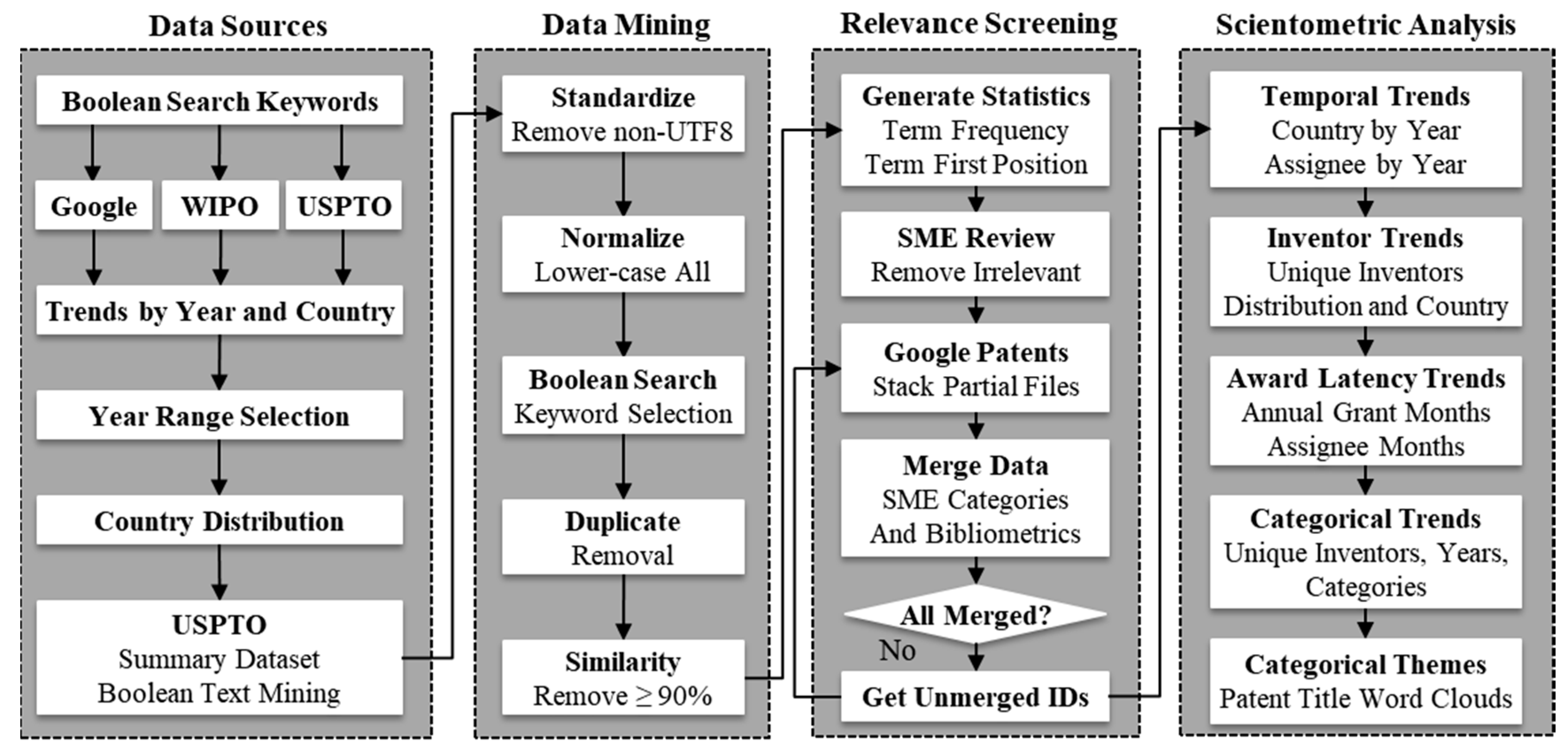
Figure 2.
Results from the a) Google Patents and b) WIPO search engines.
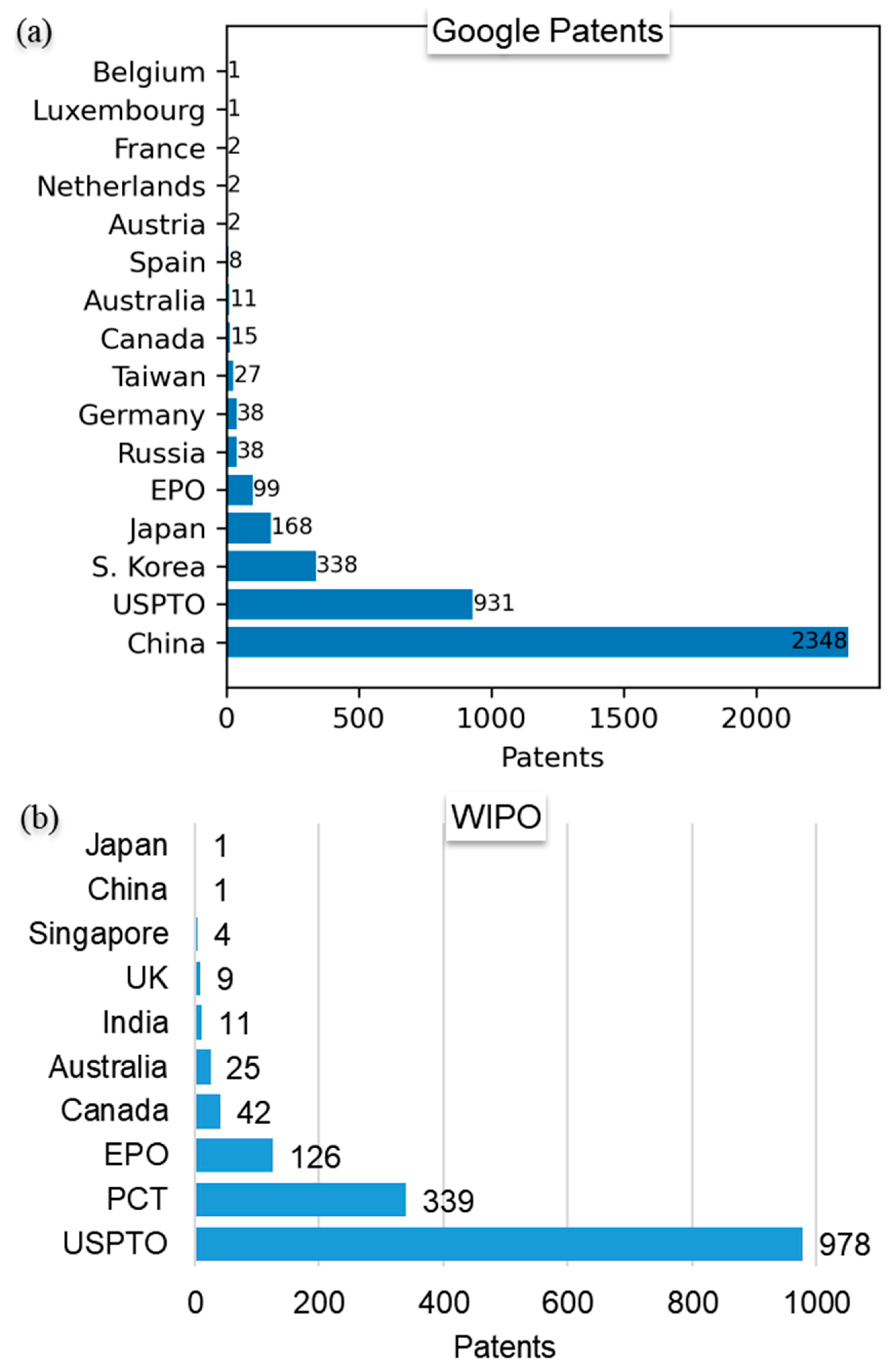
Figure 3.
Assignee country for the USPTO patent search results.
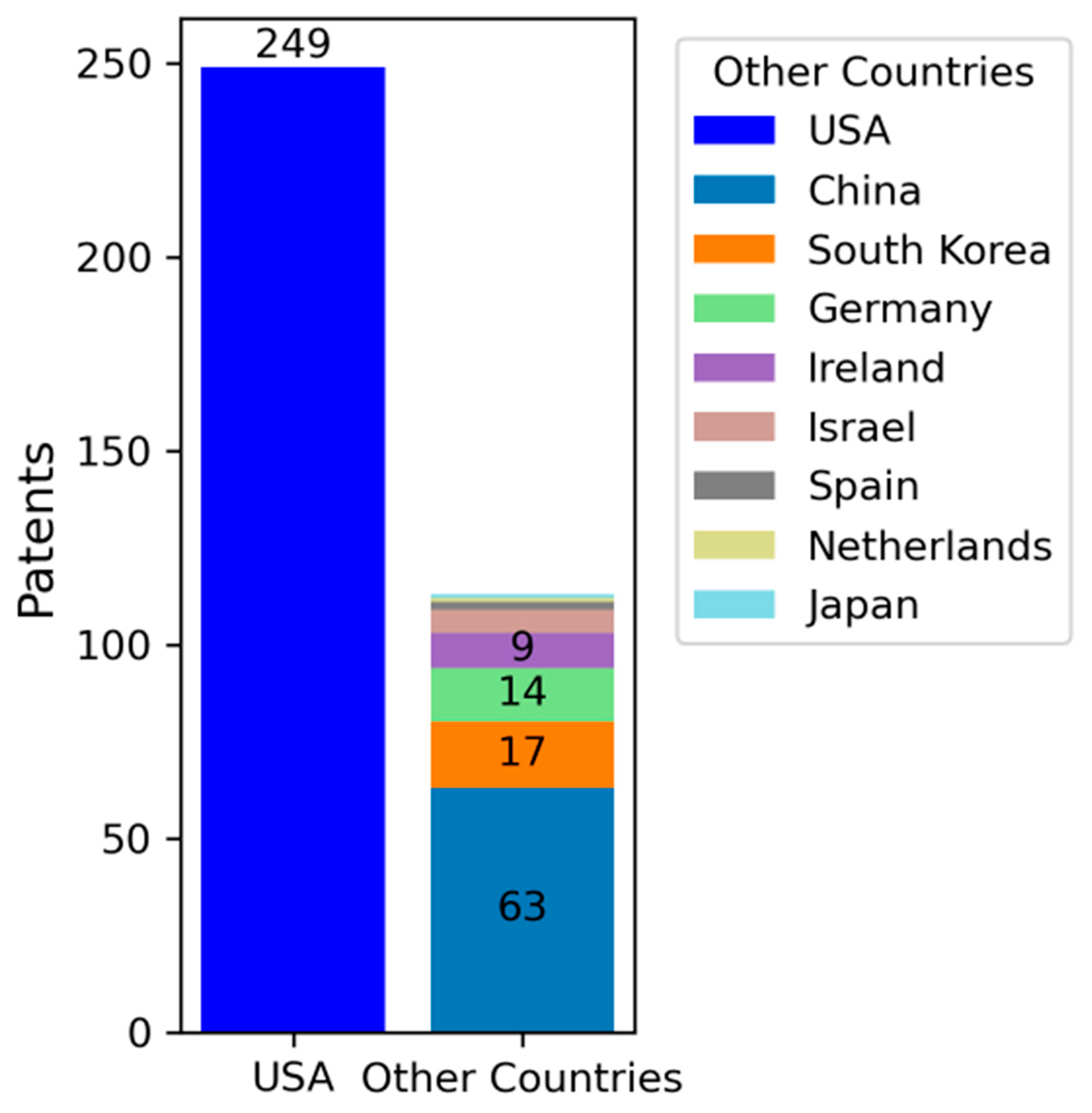
Figure 4.
Number of relevant patents by (a) year and (b) assignee country (see legend).
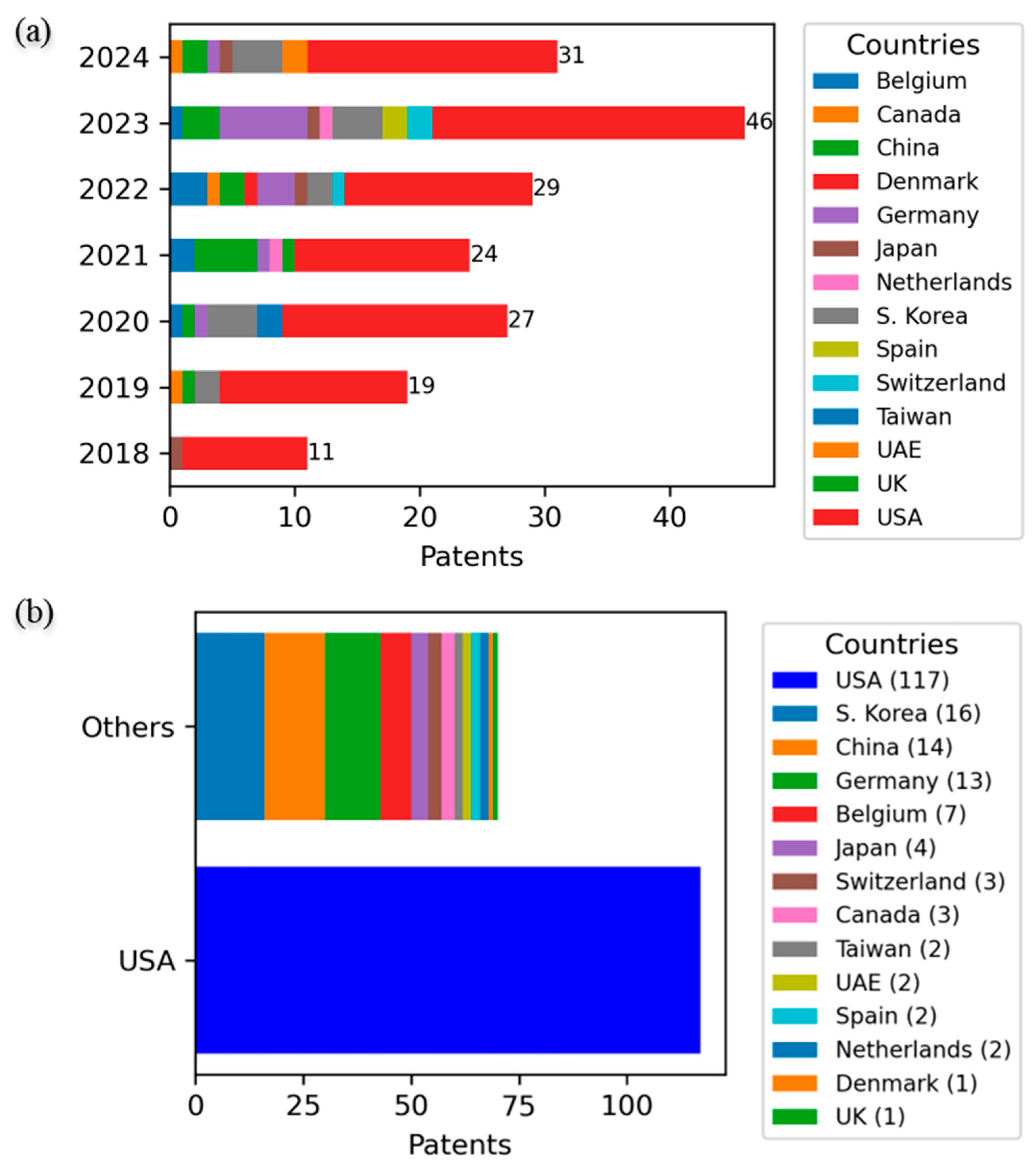
Figure 5.
Co-occurrence network of terms within the corpus.
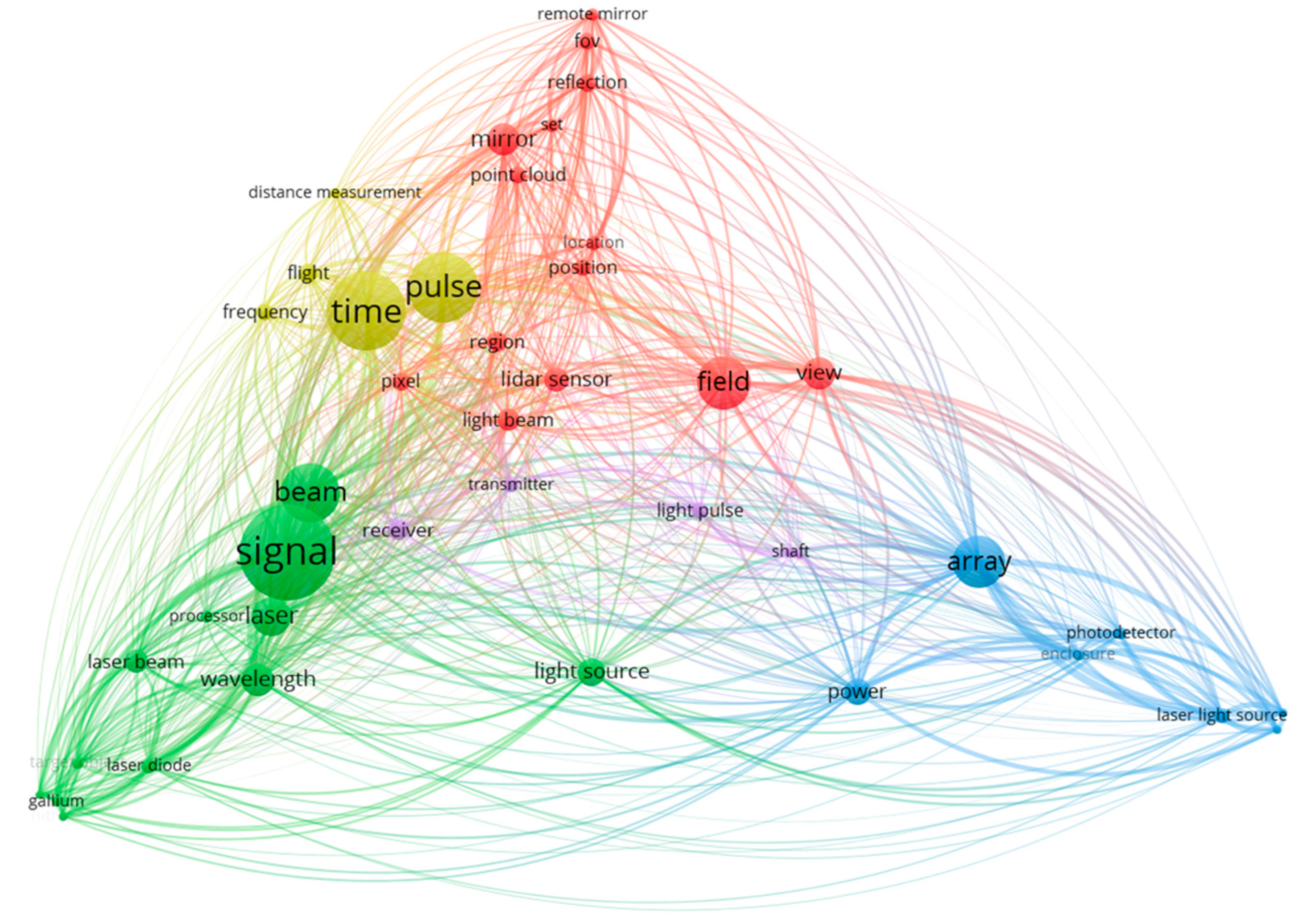
Figure 6.
Word cloud of the most frequent bigrams for documents within each category.
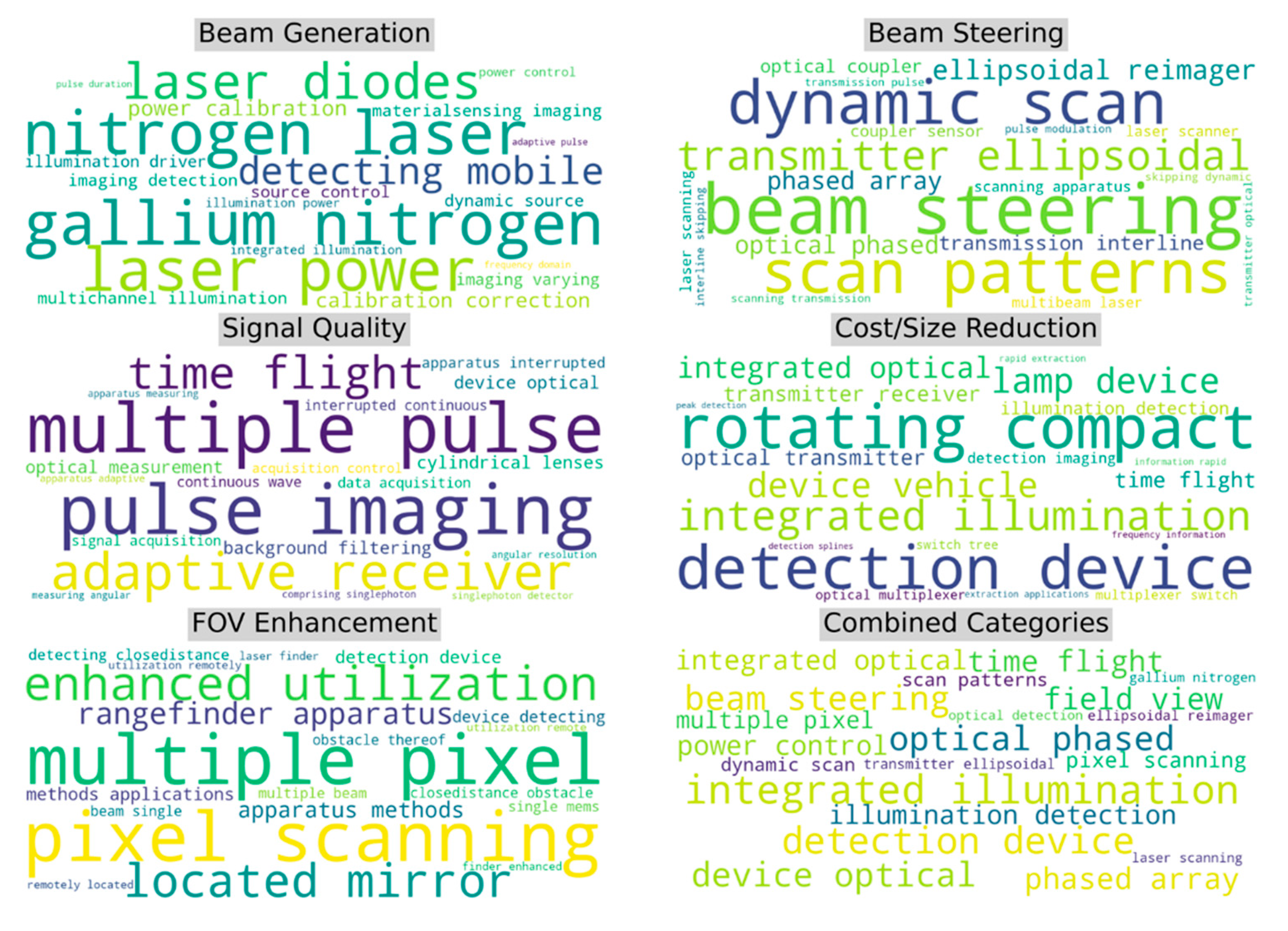
Figure 7.
Distribution of the top 10 bigrams for documents within each category.
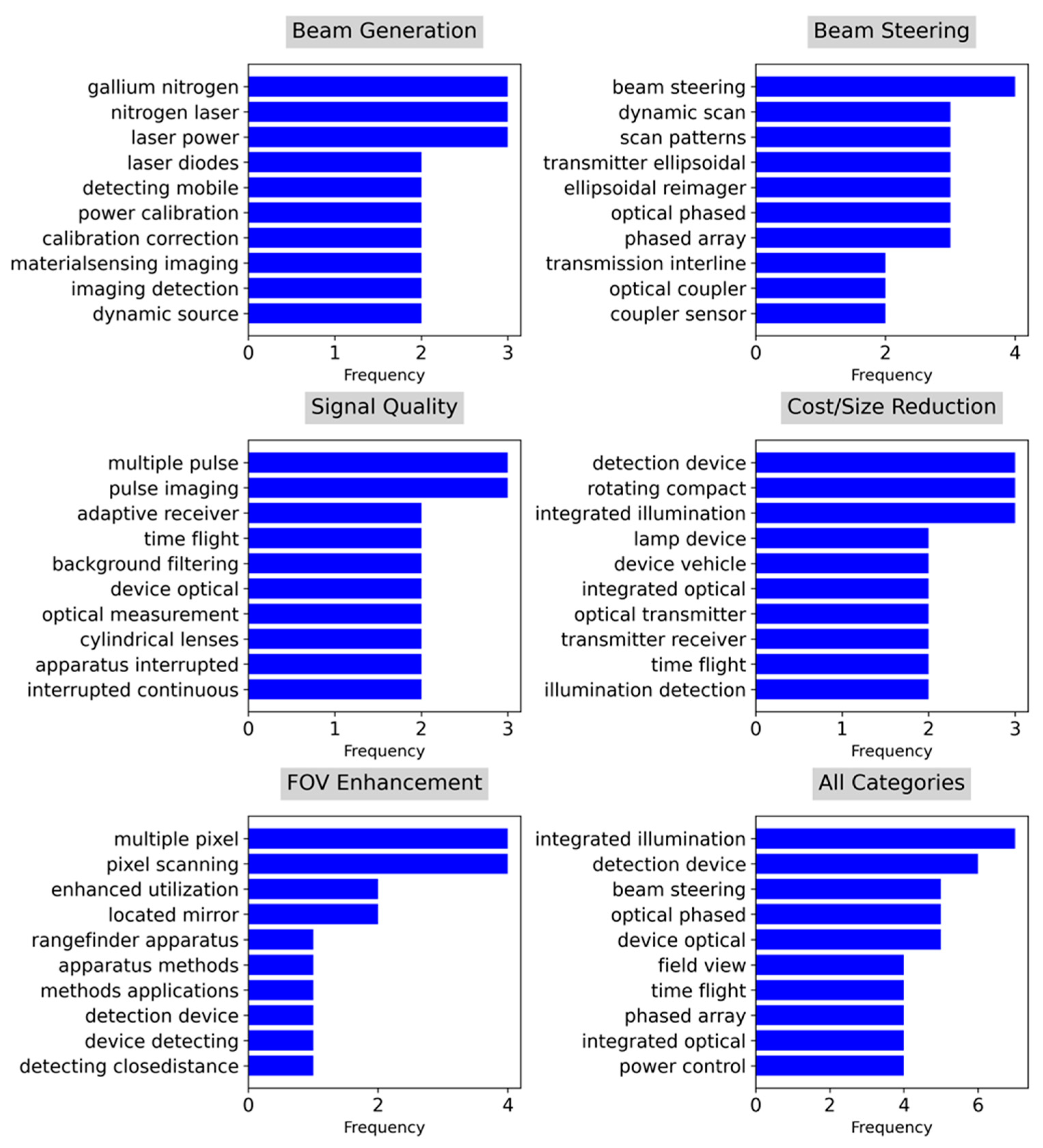
Figure 8.
Bibliometrics insights on a) the number of unique inventors in the domain and b) their distribution among assignee countries.
Figure 8.
Bibliometrics insights on a) the number of unique inventors in the domain and b) their distribution among assignee countries.
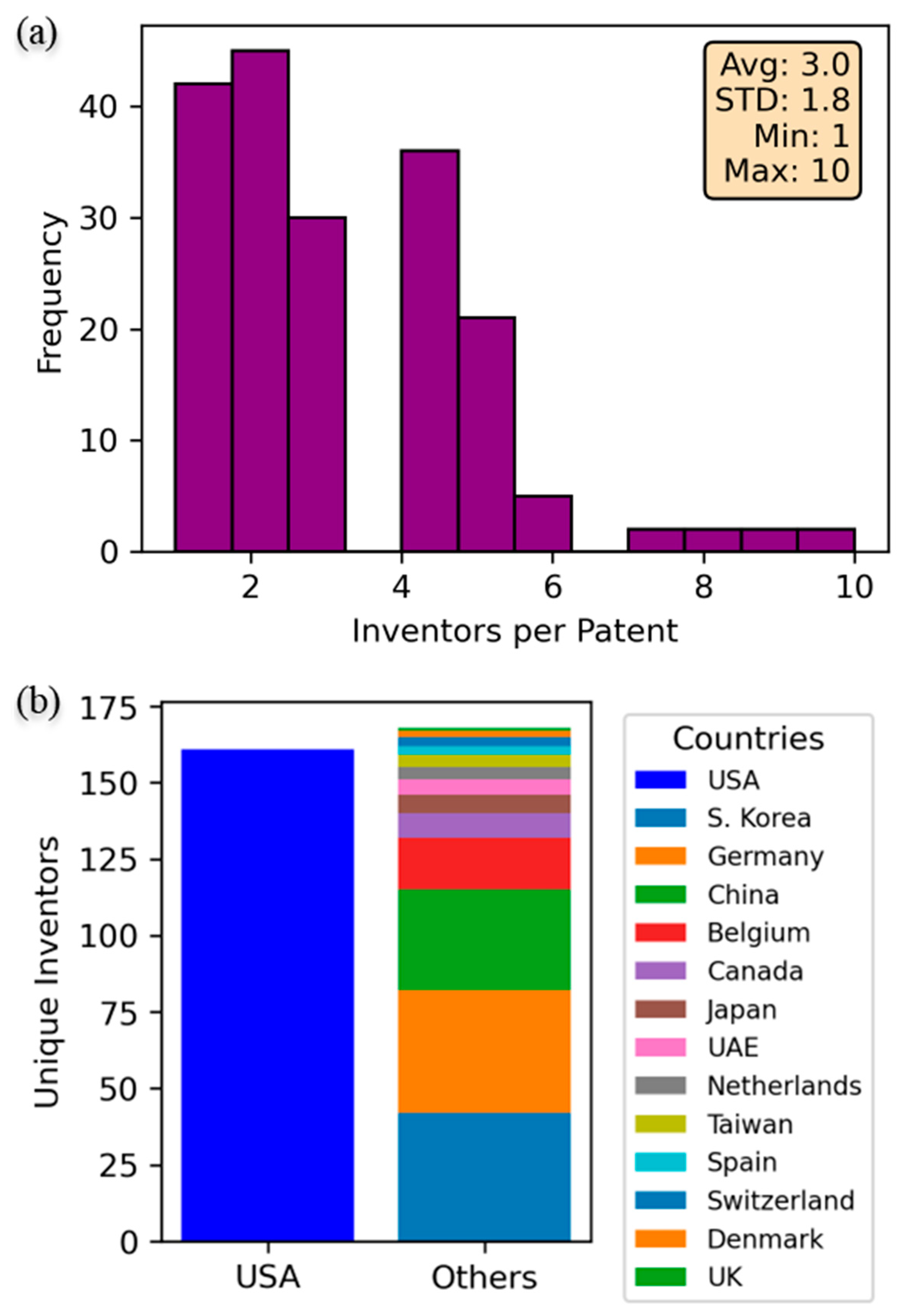
Figure 9.
Bibliometric insights into patent grant latency.
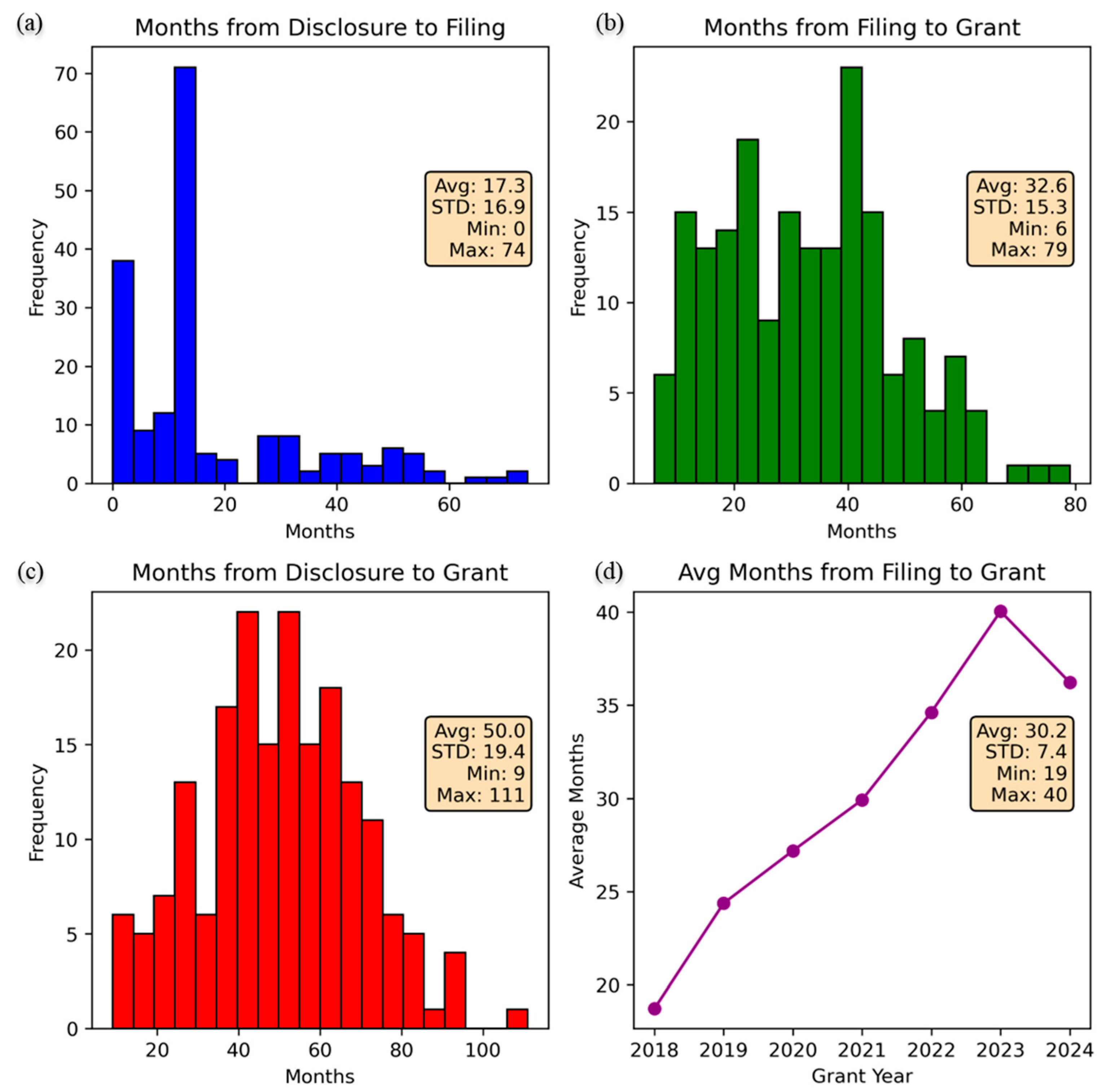
Figure 10.
Top 10 assignees and temporal pattern of awards.
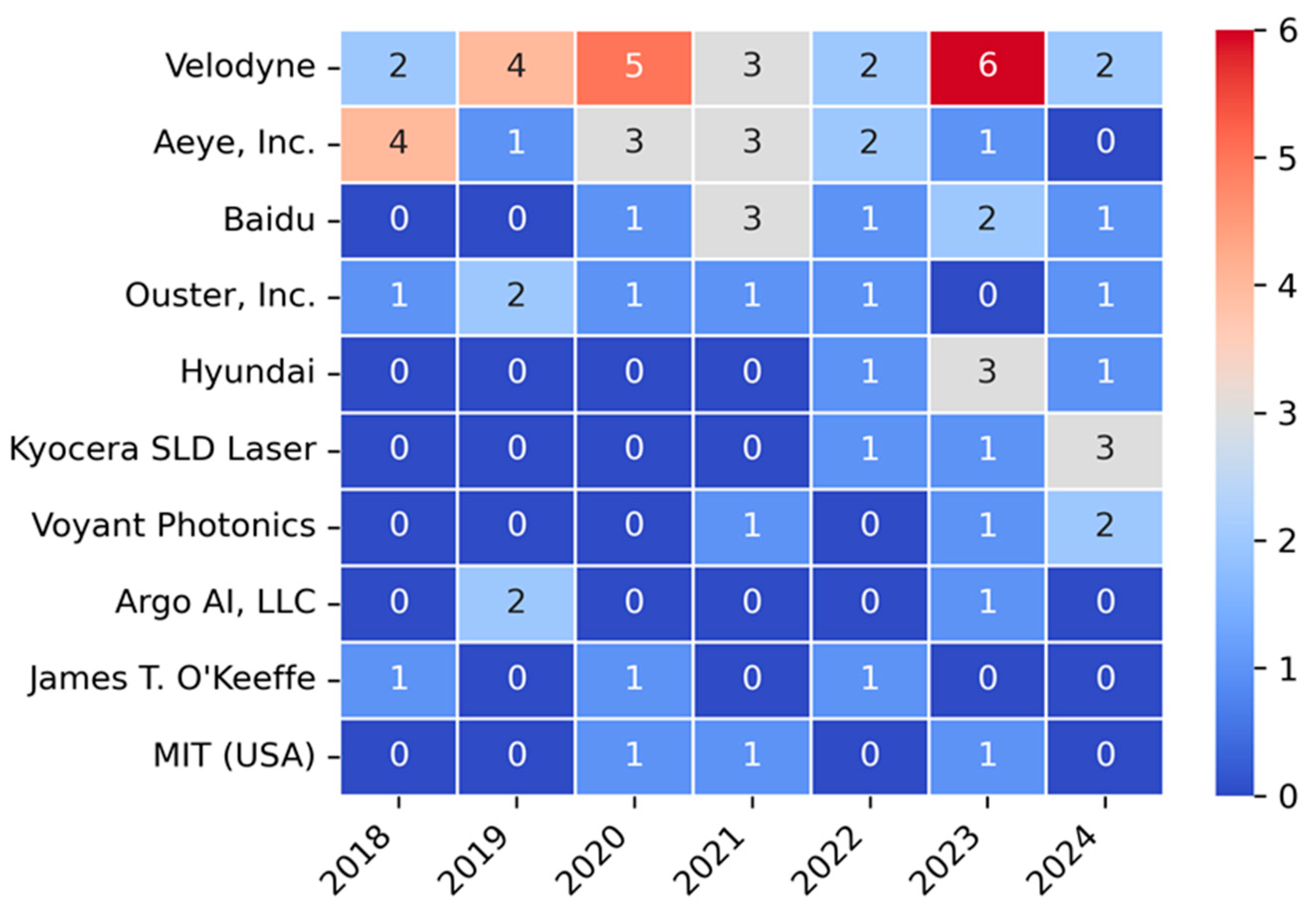
Figure 11.
Top 15 assignees and their average latency to patent awards.
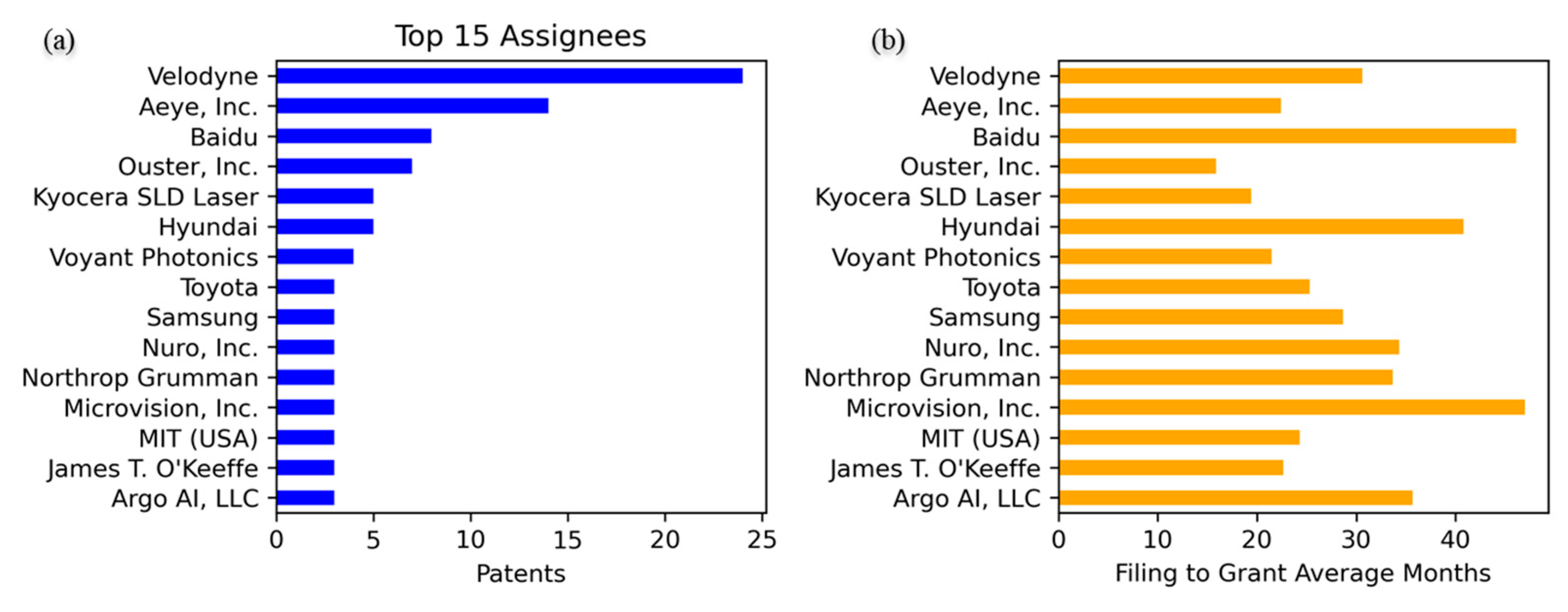
Figure 12.
Patent volume and grant latency by technical categories.
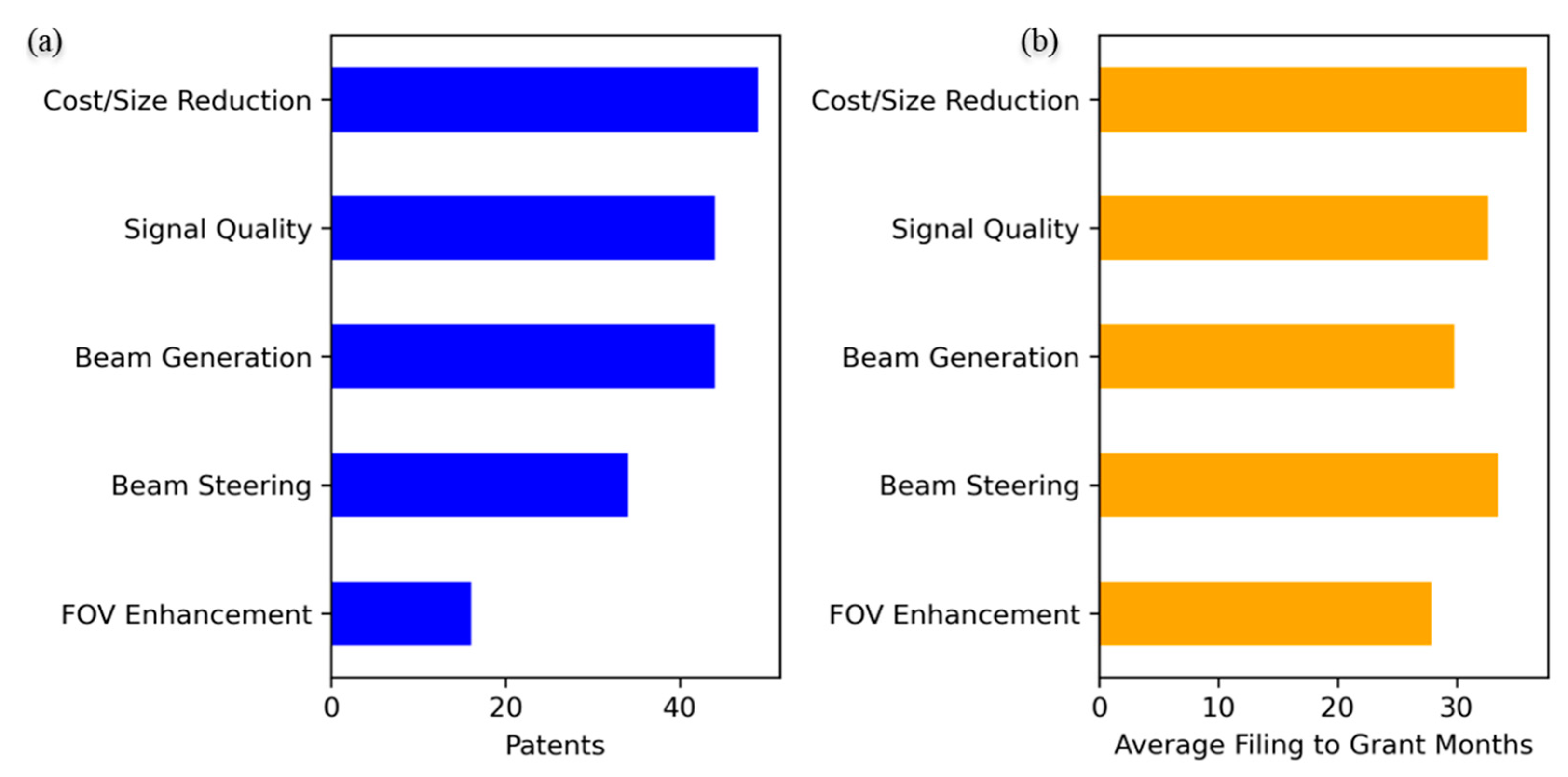
Figure 13.
Assignee activity focus by inventory category.
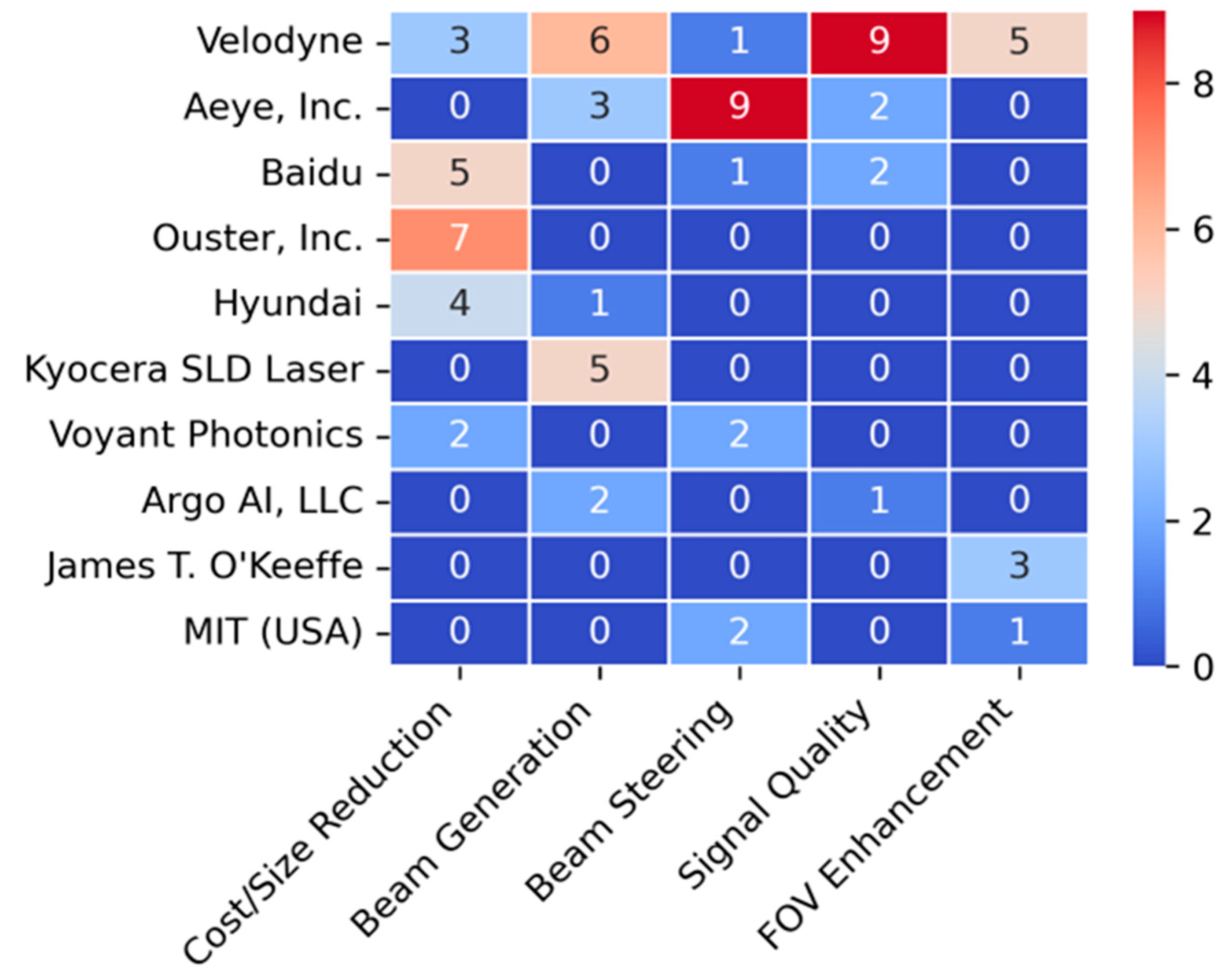
Figure 14.
Scientometric analysis across categories covering a) unique inventors, b) emphasis, c) award trends, and d) collaborations.
Figure 14.
Scientometric analysis across categories covering a) unique inventors, b) emphasis, c) award trends, and d) collaborations.
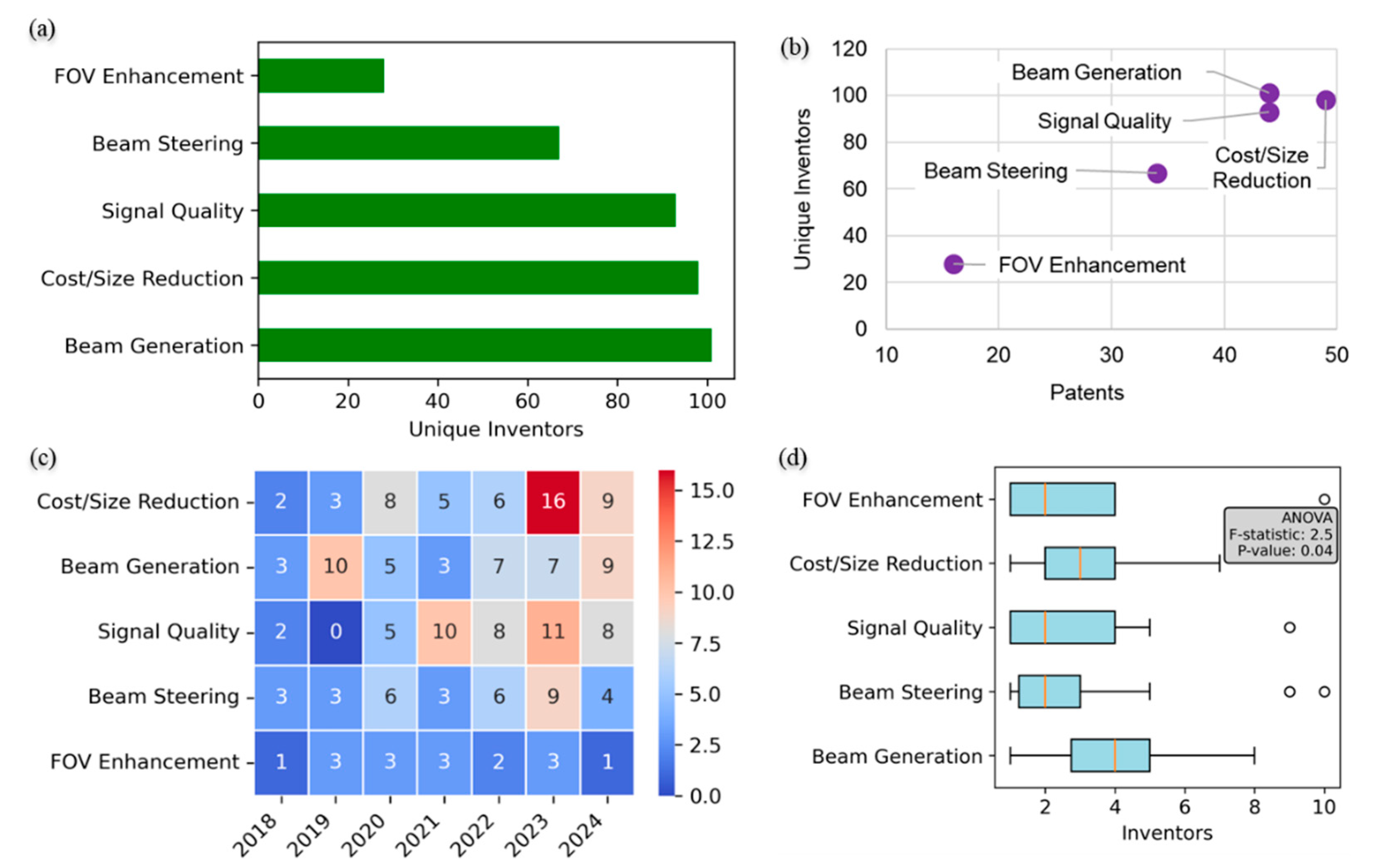

Table 1.
Search engines, their tailored search commands, and the results.
| Engine | Search Command | Hits |
|---|---|---|
| (TI=(lidar) AND vehicle* AND distance AND cost) AND (autonomous OR driverless OR driver-less OR self-driving) after:publication:20180101 status:GRANT language:ENGLISH type:PATENT | 5,414 | |
| WIPO | FP:(FP:(EN_TI:(lidar) EN_ALLTXT:(vehicle* AND distance AND cost) EN_ALLTXT:(autonomous OR driverless OR driver-less OR self-driving))) AND DP:[2018 TO 2024] | 1,538 |
| USPTO | lidar.ti. AND vehicle* AND distance AND cost AND (autonomous OR driverless or driver-less OR self-driving) AND @py>=”2018” | 524 368 FID |
| USPTO Summary |
AND keywords = [‘lidar’, ‘vehicle’, ‘distance’, ‘cost’] OR keywords = [‘autonomous’, ‘driverless’, ‘driver-less’, ‘self-driving’] |
867 |
Table 2.
USPTO patent summary data extraction and refinement.
| Procedure | 2024 | 2023 | 2022 | 2021 | 2020 | 2019 | 2018 | Total |
|---|---|---|---|---|---|---|---|---|
| USPTO Patents | 243,775 | 314,794 | 326,228 | 330,645 | 355,647 | 357,790 | 310,568 | 2,239,447 |
| AND keywords | 232 | 295 | 228 | 173 | 166 | 124 | 80 | 1,298 |
| OR keywords | 162 | 211 | 156 | 124 | 99 | 73 | 42 | 867 |
| Duplicate Removal | 158 | 208 | 150 | 118 | 88 | 68 | 42 | 832 |
| >90% Similar | 145 | 170 | 139 | 106 | 82 | 64 | 30 | 736 |
| SME Irrelevant | 114 | 124 | 110 | 82 | 54 | 45 | 19 | 548 |
| Remaining | 31 | 46 | 29 | 24 | 28 | 19 | 11 | 188 |
Table 3.
Sample of patents in the beam generation category.
| Patent | Year | Solution |
|---|---|---|
| 10048358 | 2018 | Dynamic light pulse intensity to minimize variation of reflected signals. |
| 10131446 | 2018 | Dynamic light pulse repetition rate to improve range and speed. |
| 10048374 | 2018 | Pulse rate reduction when full resolution is unnecessary, optimizing energy use. |
| 10222474 | 2019 | MEMS mirror and gallium-nitrogen laser diodes integration for dynamic lighting control. |
| 10386465 | 2019 | Laser driver and receiver integration for enhanced synchronization and pulse width control. |
| 10509111 | 2019 | Encoded laser pulses to match their reflections, minimizing interference. |
| 10495794 | 2019 | A polarization splitting coupler stabilizes light polarization outputs, mitigating interference. |
| 10345436 | 2019 | Frequency-modulated laser beams detect shape changes like obstacles in real-time. |
| 10718857 | 2020 | Light power adaptation based on reflected signal quality across diverse environments. |
| 10690323 | 2020 | Precise emission angle management with adjustable divergence control. |
| 10641897 | 2020 | Combined polarization diversity, adjustable pulse duration, and cross-receivers. |
| 11175388 | 2021 | Programmable laser waveforms enable arbitrary patterns to reduce spoofing vulnerability. |
| 10921450 | 2021 | Variable pulse duration and polarization diversity reduce reflection noise. |
| 11226413 | 2022 | Adaptively control pulse energy, direction, and timing to focus only on targeted objects. |
| 11346926 | 2022 | Dynamic field-of-view and resolution adjustments based on a vehicle’s environment. |
| 11512181 | 2022 | Infrared light transmission filter that doubles as a scratch-resistant sensor cover. |
| 11236988 | 2022 | Autonomous light power control based on vehicle motion. |
| 11796648 | 2023 | Multiple light channels with independent triggers and power supply for diverse conditions. |
| 11837849 | 2023 | A switched-mode laser power supply with capacitors instead of resistors reduces heat. |
| 11543528 | 2023 | Dynamic beam size and shape to enhance reflections from dispersed targets. |
| 12092743 | 2024 | Dynamic laser transmission frequency adjustment to operate across diverse environments. |
| 11994623 | 2024 | Adjustable beam spread by controlling optical fiber movement to expand a target region. |
| 11879980 | 2024 | An optical grating array to diffract wavelength-specific beams, enhancing target reflections. |
Table 4.
Sample of patents in the beam steering category.
| Patent | Year | Solution |
|---|---|---|
| 9885778 | 2018 | Dynamically controlled mirror positions precisely target range points, enhancing accuracy. |
| 9897689 | 2018 | Dynamic scan pattern using interline skipping and detouring to optimize targeting. |
| 10042159 | 2018 | Lissajous scanning via a field splitter to enhance gaze on critical regions. |
| 10353055 | 2019 | 360-degree scanning using a fixed focal plane array and non-rotational laser and receiver. |
| 10527726 | 2020 | A digital micro-mirror without mechanical components creates patterned light beams. |
| 10878984 | 2020 | A torsion spring and magnetically driven reciprocating mirror reduces power consumption. |
| 10649072 | 2020 | An array of scanning mirrors modulates light angle and frequency, reducing interference. |
| 10678117 | 2020 | An optical phased array with wavelength-tunable control eliminates moving parts. |
| 10641872 | 2020 | Selectable mirrors target specific range points to enhance range measurement accuracy. |
| 10642029 | 2020 | Enhanced targeting using orthogonal axis MEMS mirrors with offset ellipsoidal reimaging. |
| 10928488 | 2021 | A rotating triangular prism-shaped mirror assembly with angled reflective surfaces. |
| 10983273 | 2021 | An optical phased array with a weak diffraction grating layer controls beam angles. |
| 10908265 | 2021 | A dual-axis mirror array precisely targets range points via adaptive scan patterns. |
| 11454709 | 2022 | An integrated waveguide and scattering array direct a light beam without moving parts. |
| 11294056 | 2022 | A spatial light modulator creates patterned light beams without mechanical parts. |
| 11448732 | 2022 | A spiral phase plate resonator and conical mirror scans without moving parts. |
| 11262438 | 2022 | A matrix of sequentially activated transmitters and receivers scans without moving parts. |
| 11397246 | 2022 | Adjustable holographic structures and multi-wavelength beams adapt spatial resolution. |
| 11579363 | 2023 | On-chip planar Luneburg lens with a gradient index provides 360-degree beam steering. |
| 11585899 | 2023 | A photonic integrated circuit with modular linked fibers and solid-state beam steering. |
| 11635614 | 2023 | Digital micromirror array capable of static mirror positions to cover large fields of view. |
| 11747449 | 2023 | Horizontal beam deflector with vertical beam expansion using an optical lens. |
| 11977185 | 2024 | A single rotating polygonal component with multiple angled facets is energy-efficient. |
| 11906667 | 2024 | A compact waveguide uses a scattering array to beam steer without moving parts. |
| 11940712 | 2024 | A planar acousto-optic device uses intersecting light and acoustic waves to steer beams. |
| 11947042 | 2024 | An emitter array with end-fire tapers and integrated reflectors provides 2D beam steering. |
Table 5.
Sample of patents in the FOV enhancement category.
| Patent | Year | Solution |
|---|---|---|
| 10151836 | 2018 | Adjustable remote mirrors enhance blind spot and environmental coverage. |
| 10330780 | 2019 | Optical phase modulation with shared optical paths for multiple sources senses more area. |
| 10393877 | 2019 | Integrated planar light source array with beam shaping optics and scanning mirror. |
| 10281262 | 2019 | Adjustable FOV via pixelated light modulator, controlled reflective surfaces, and lens. |
| 10634793 | 2020 | Close-distance obstacle detection using four 2D scanning units with noise filtering. |
| 10571574 | 2020 | Co-planar integration of detector array with high frequency laser scanner. |
| 10983218 | 2021 | Integrated light source array and oscillating mirror increases sampling density in target area. |
| 11163116 | 2021 | A planar Luneburg lens with subwavelength photonic structures increases scanning field. |
| 11340338 | 2022 | Coherent fiber optic bundles relay light reflections from multiple FOVs to a central detector. |
| 11366230 | 2022 | MEMS mirrors with segment-based illumination enables arbitrary scan sequences. |
| 11726182 | 2023 | A photonic integrated circuit with multiple light sources directed to a 2D MEMS mirror. |
| 11550056 | 2023 | An array of multiple laser sources and a scanning mirror increases sampling density. |
| 11874377 | 2024 | Integrated system of multiple emitters, a beam scanner, and beam-shaping optics. |
Table 6.
Sample of patents in the signal quality category.
| Patent | Year | Solution |
|---|---|---|
| 9933513 | 2018 | Controllable photodetector arrays that selectively activate pixel subsets to reduce noise. |
| 10145945 | 2018 | Continuous sensor alignment calibration using nearby vehicles with known characteristics. |
| 10627490 | 2020 | Encoded pulse sequences help to distinguish return signals from noise and crosstalk. |
| 10545222 | 2020 | Synchronized triggers for light pulse and signal detection eliminate timing delays. |
| 10739444 | 2020 | Combines return signals from multiple channels with temperature-adjusted bias voltages. |
| 11061116 | 2021 | Adjustable position of transmission and reception spherical lens aligns their focal lengths. |
| 11073617 | 2021 | Integrated light source and detector with shared polarization and signal processing. |
| 10969651 | 2021 | Crosstalk estimation and elimination with blinded photodiodes or capacitors. |
| 10890491 | 2021 | Modification of the spectral composition of reflected light to increase detection accuracy. |
| 11175386 | 2021 | A controllable photodetector array selectively targets range points to reduce noise. |
| 11513199 | 2022 | Multi-frame pulse integration and range gating to enhance distance accuracy. |
| 11415681 | 2022 | Signal dynamic range optimization through dynamic pulse intensity adjustments. |
| 11513226 | 2022 | Combining time-of-flight and frequency-modulated continuous wave methods. |
| 11430533 | 2022 | Multi-resolution sampling with dynamic timing and frequency adjustments. |
| 11372090 | 2022 | Dual-detector for separate intensity and time-of-flight measurements to enhance accuracy. |
| 11579295 | 2023 | Period switching to reduced power and sensitivity to increase contrast for object detection. |
| 11592558 | 2023 | Sensitivity enhancement by mixing modulated and unmodulated signals. |
| 11835652 | 2023 | A dual-aperture cylindrical lens ensures consistent optical properties for output and input. |
| 11703569 | 2023 | Dual timing modules with a unified pulse trigger synchronizes pulse output and return. |
| 11815599 | 2023 | Signal mixing with a reference channel reduces Doppler shifts in return signals. |
| 11645759 | 2023 | Filtering based on channel separated scanning space enhances signals from moving objects. |
| 11550036 | 2023 | Code, time, or amplitude diversity pulse encoding enhances noise and crosstalk reduction. |
| 11644550 | 2023 | A low-pass filter reduces high-frequency noise, enabling loss-free compressed signal storage. |
| 11656342 | 2023 | Adaptive bin widths in sub-histograms for different operational regions enhance resolution. |
| 11988781 | 2024 | Uses naturally occurring plane shapes to derive calibration parameters for multiple sensors. |
| 12080994 | 2024 | Chip integrated lasers and current drivers optimize signal integrity. |
| 11984908 | 2024 | A time-to-digital converter and histogram reduces time jitter, hence reducing noise. |
| 11927480 | 2024 | Consistent detection accuracy across temperature by stabilizing emitter operating voltage. |
Table 7.
Sample of patents in the cost/size reduction category.
| Patent | Year | Solution |
|---|---|---|
| 10018726 | 2018 | Integrates light source, detector, and associated electronics, using shared optical paths. |
| 10481269 | 2019 | Integration of rotating circuit boards, wireless power, and optical communication. |
| 10310085 | 2019 | Chip-scale frequency modulated continuous wave distance-measuring pixel. |
| 10809362 | 2020 | Compact detector array and waveguide redirects light into a small detector. |
| 10670724 | 2020 | Integrated wavelength filtering on a compact focal plane array eliminates rotating parts. |
| 10754009 | 2020 | Wireless charging replaces conductive slip rings to eliminate wear of rotating transceiver. |
| 10684358 | 2020 | Solid-state laser emitters steer beams electronically, including multiple optical phased arrays. |
| 11002835 | 2021 | Shared laser emitter and detector across multiple scanning units via distributed optical fibers. |
| 10969490 | 2021 | Stacked circuit boards with wireless power and data transfer, and temperature stable optics. |
| 10921454 | 2021 | Solid-state design with integrated laser array and dual time-window charge storage. |
| 10908286 | 2021 | Silicon-on-insulator waveguide and photodetectors interconnected through common layers. |
| 11500066 | 2022 | Sensor integration into headlamps, utilizing shared optical pathways. |
| 11407676 | 2022 | Windshield integrated sensors using a specially formulated infrared-transmitting glass. |
| 11378688 | 2022 | Homodyne and heterodyne detection, leveraging shared bidirectional components. |
| 11550040 | 2023 | Control signals address individual sensors via a shared optical fiber bus, reducing parts. |
| 11579254 | 2023 | Integration of multiple light-emitting units with a single image sensor. |
| 11650296 | 2023 | Projects multiple wavelengths through a single optical path, enhancing spatial coverage. |
| 11555891 | 2023 | A spiral phase plate resonator device plus a conical mirror, scans without mechanical parts. |
| 11579264 | 2023 | A multichannel analog-digital converter with individual signal encoding reduces noise. |
| 11639997 | 2023 | Integrated 2D optical phased array and 2D photodetector on a single chip. |
| 11860280 | 2024 | Single circuit board integrating the illumination source, detector, and associated electronics. |
| 12038573 | 2024 | Integrated mirror module for simultaneous horizontal and vertical coverage, with fewer parts. |
| 11885914 | 2024 | Eliminates high-speed digital converters and clocks with simpler variable voltage reference. |
| 11940559 | 2024 | Transceiver array with single optimized light path and compact configuration. |
| 11860309 | 2024 | Differential wavelength modulation encoded range in the spectral content, obviating timers. |
Disclaimer/Publisher’s Note: The statements, opinions and data contained in all publications are solely those of the individual author(s) and contributor(s) and not of MDPI and/or the editor(s). MDPI and/or the editor(s) disclaim responsibility for any injury to people or property resulting from any ideas, methods, instructions or products referred to in the content. |
© 2025 by the authors. Licensee MDPI, Basel, Switzerland. This article is an open access article distributed under the terms and conditions of the Creative Commons Attribution (CC BY) license (http://creativecommons.org/licenses/by/4.0/).
Copyright: This open access article is published under a Creative Commons CC BY 4.0 license, which permit the free download, distribution, and reuse, provided that the author and preprint are cited in any reuse.


