
Submitted:
10 February 2025
Posted:
10 February 2025
You are already at the latest version
Abstract
The rise of social media among adolescents raises concerns about addiction and emotional disturbances linked to a shared neurobiological basis. Changes in brain regions involved in emotion regulation and reward processing are observed, and while social media can temporarily boost mood, chronic use may worsen anxiety. The underlying neural pathways remain unclear, limiting treatment effectiveness. Future research should take a multidisciplinary approach to clarify these connections and enhance prevention and intervention strategies for adolescent mental well-being.
Keywords:
adolescents
; social media addiction
; emotion
; neural mechanisms
; personalized treatment
1. Introduction
The ubiquitous integration of social media into adolescents' daily lives, fueled by the digital revolution, underscores its profound impact on this developmental population[1]. Global statistics reveal that as of January 2021, 4.2 billion individuals worldwide actively engaged with social media platforms. Notably, China's internet penetration rate soared to 76.4% by June 2023, encompassing 1.079 billion users, with a substantial proportion (200 million) comprising minors (CNNIC). Data from Common Sense Media shows that 42% of adolescents' smartphone usage is dedicated to social media. This substantial demographic of underage internet users has garnered substantial scholarly and societal attention, necessitating a deeper understanding of the potential consequences, particularly with respect to addiction and emotional dysregulation[2].
Adolescence, a critical development phase, sees swift emotional brain growth, outpacing cognitive control. This makes teens more susceptible to social media's emotional and rewarding aspects, potentially leading to addiction, emphasizing the need for research on its impact on their well-being. Concurrently, the prefrontal cortex, which governs rational decision-making and impulse control, is still maturing, making it difficult for adolescents to resist social media temptations. The positive emotions of adolescents in social interactions intensify with age, particularly during the late adolescence when the sense of reward from receiving positive feedback reaches its peak[3].
Emotions play a crucial role in adolescent social media addiction. On one hand, social media can serve as a tool for emotion regulation, helping adolescents relieve stress, seek support, and distract themselves[4], but this reliance may lead to addiction. On the other hand, excessive use of social media can lead to emotional issues such as anxiety, depression, and loneliness[5]. Negative interactions on social media, such as social exclusion and cyberbullying, can also trigger or exacerbate emotional disorders[6]. Evidence suggests that adolescent social media addiction may be associated with emotional mental disorders[7], such as depression[8] and anxiety[9].
The link between teen social media addiction and emotional issues suggests shared neurobiological and psychosocial roots. Though studies show a correlation, the specific brain mechanisms are still unclear. This study aims to fill this gap by examining how social media addiction affects teen emotional regulation, guiding future, personalized treatments. Using various methods, it offers insights for more effective addiction interventions in adolescents.
2. Definition and Measurement of Adolescent Social Media Addiction
Social media addiction, a complex psychological issue, has been defined and examined by various researchers[10]. From a biopsychological perspective, Muench F et al. proposed that behaviors that satisfy the six characteristics of salience, mood change, tolerance, withdrawal, conflict[11], and relapse can be operationally defined as social media addiction[12]. Sun and Zhang[13] synthesize these perspectives, defining social media addiction as a "maladaptive psychological dependency on social media to the extent that behavioral addiction symptoms occur." This definition encapsulates the essence of social media addiction as a condition where the use of social media becomes compulsive and interferes with everyday life, leading to negative consequences. In essence, social media addiction is characterized by an intense and unhealthy attachment to social media platforms, which disrupts normal life functions and contributes to a range of negative outcomes, from reduced productivity to emotional distress. It represents a behavioral pattern that is difficult to control and can lead to significant personal and social detriment.
Adolescence, which is defined as the transition period between childhood and adulthood (approximately ages 10–22 years, although age bins differ between cultures), is a developmental stage in which parental influence decreases and peers become more important[14]. Forms of electronic communication (such as websites for social networking and microblogging) through which users create online communities to share information, ideas, personal messages, and other content (such as videos).
Several validated screening methods exist for assessing social media addiction, however, among which, the SMDS-SF and BSMAS-SF are considered suitable measures for adolescents[15]. These scales aid in accurately diagnosing social media addiction and highlight its association with emotional states. The SMDS-SF scale consists of 27 items that collectively assess the severity of social media use disorder, categorizing it as normative use, risky use, or problematic use[16]. In contrast, the BSMAS-SF scale is more concise, comprising 6 items that evaluate dependency on social media, with a score of 24 or higher indicating clinical addiction among adolescents. The items in these scales address motivations for using social media, usage behaviors, and outcomes, particularly focus on emotion regulation and withdrawal responses, all of which are closely related to emotional status (Table 1).
Literature shows a strong link between internet addiction and depression in adolescents, with those having depressive symptoms more likely to use social media excessively, worsening their condition. Studies, including by Young[17] and Yen[18], correlate higher depression scores with internet addiction. Problematic Internet Use (PIU) is notably higher among adolescents with mental health issues[19], leading to physical symptoms and a higher rate of internet addiction compared to the general population[20,21]. This highlights the need for comprehensive assessment and treatment strategies that consider emotional well-being and the interplay between social media addiction and emotional disorders.
3. The Developmental Process of Adolescent Social Media Addiction and Emotion Regulation
During adolescence, a critical phase of emotional development, individuals are in a critical phase of psychological and emotional development, social media use intertwines deeply with emotional experiences. The relationship between social media addiction and emotional states is complex and bidirectional, emotions acting as both causes and consequences of addiction across different developmental stages. Figure 1 illustrates the interaction between adolescent social media use and emotions.
2.1. Initial Contact (Novelty Seeking)
In the initial contact phase, adolescents are driven by the novelty of exploring social media platforms to seek positive emotional experiences and establish virtual connections. Social media satisfies the fundamental need for social connection, reducing negative emotions and enhancing positive ones. The act of sharing personal information can itself elicit positive emotions due to its rewarding nature[22].
2.2. Repeated Use (Satisfaction)
Over time, the social approval[23] and emotional satisfaction from social media reinforce habitual use among adolescents[5]. The dynamics of social media interactions have profound implications for the adolescent brain, particularly in the interplay between emotions and behaviors. When adolescents receive positive feedback, such as likes or affirmative comments, the brain's reward system, notably the ventromedial prefrontal cortex (VMPFC) and the ventral striatum (VS), becomes active due to their association with reward and emotional gratification[24,25]. This positive emotional experience not only elevates mood but also activates the mentalizing system, involving regions such as the medial prefrontal cortex (MPFC), posterior superior temporal sulcus (pSTS), temporal parietal junction (TPJ), posterior cingulate cortex (PCC), and precuneus, which aid in understanding others' mental states and engaging in social emotional exchanges[26].
Emotional states can also influence adolescents' behaviors on social media. Negative emotions, such as feelings of loneliness, may prompt individuals to seek immediate rewards on social media platforms as a form of emotional regulation, activating brain regions associated with emotional regulation, including the prefrontal cortex (PFC) and the amygdala[5]. This self-regulatory mechanism may lead adolescents to rely more heavily on social media to establish or maintain social connections as a means to alleviate loneliness[27]. Conversely, positive feedback on social media, such as likes, not only elicits positive emotions but also enhances social status and interpersonal relationships, increasing activation in the brain's reward value regions[28,29]. This positive feedback loop reinforces the connection between social media behavior and emotional satisfaction, revealing how actions and emotions shape and influence each other.
2.3. Addiction (Guilty)
In the addiction phase, adolescents become desensitized to social media reward, requiring more intense stimuli for pleasure, exacerbating their addiction. The neural mechanisms involve reward processing areas like the ventral tegmental area (VTA) and striatum, crucial for reward encoding and devaluation processes[30]. Additionally, the orbitofrontal cortex (OFC) is involved in updating reward values and processing emotional information, with its dysfunction potentially linked to reward devaluation[31]. The anterior cingulate cortex (ACC) plays a role in reward anticipation and decision-making, closely related to emotional regulation during reward devaluation. The amygdala is involved in emotional processing and reward evaluation, associated with emotional responses during reward devaluation[32]. The interaction and regulation of these brain regions constitute the neural basis of reward devaluation.
2.4. Withdrawal (Anxiety)
When attempting to reduce or stop social media use, adolescents may experience withdrawal symptoms such as anxiety and restlessness. Fear of missing out (FOMO)[35] and/or nomophobia (fear of being without a mobile phone) increase their compulsion to stay connected with social groups, potentially intensifying addiction.
FOMO may be associated with reward and motivation systems, particularly the mesocorticolimbic system, including the VTA, striatum, and OFC[30,36]. Additionally, FOMO is related to increased sensitivity to social exclusion, which may be associated with changes in brain structures involved in social cognition and self-referential processing. Nomophobia may be related to the brain's stress response, particularly increased activity in the hypothalamic-pituitary-adrenal (HPA) axis, which may lead to anxiety and fear responses. Furthermore, nomophobia may be associated with default mode network (DMN), active during self-referential and social cognitive processes[37].
2.5. Craving (Losing Control)
In this stage, adolescents social media use becomes uncontrollable. Even when aware of the harmful effects of excessive use, they struggle to resist the allure of social media, exhibiting a strong desire to re-experience pleasure and stimulation, leading them back to the addiction phase. The activity of the cognitive control network, particularly the dorsolateral prefrontal cortex (DLPFC), may weaken, which is associated with difficulties in inhibitory control and decision-making. This weakening can lead to challenges in resisting social media temptations. Prolonged social media use may lead to structural and functional changes in the brain, particularly in areas related to reward and cognitive control, which may be associated with the persistence of addictive behaviors[38].
In summary, the relationship between adolescent social media addiction and emotions is intricate and two-way. Emotional states influence and are influenced by social media use, impacting the development of addiction. Emotional changes throughout stages are tied to brain mechanisms for reward, emotion, and control. Recognizing these connections is key for preventing and treating social media addiction in teens.
4. Neural Mechanisms of Adolescent Social Media Addiction and Emotion Regulation
The neural mechanisms of adolescent social media addiction can be explored from both structural and functional perspectives, corresponding to the neural mechanisms discussed in the various stages described earlier. Structural brain changes related to social media addiction include reduced gray matter in the right OFC and amygdala, and increased density in the TPJ. These alterations may connect to addiction and emotional regulation challenges. Functional brain activity differs between social media addicts and non-addicts. Addicts show ACC deactivation during browsing, indicating poor cognitive control, and mPFC activation, suggesting higher reward seeking. "Liking" increases VS and OFC activity, linked to reward anticipation. OFC-precuneus connectivity changes during posting/reposting relate to sharing personal info. These behaviors activate brain areas for reward, social cognition, and motivation, with varying responses in addicts that may reflect their sensitivity to social media's emotional and social impacts[39]. Non-addictive social media use triggers specific brain activities: the default mode network is active during browsing, the VTA and striatum react to likes, the amygdala processes emotional content, and the PFC is crucial for decision-making. These activities help with emotional regulation and social interaction without addiction(Appendix A).
Non-addicts' brains react to social media rewards and social cues but are balanced by self-control and emotional regulation, preventing addiction. In contrast, addicts might overly chase instant rewards, struggle with self-control, and focus more on immediate than long-term outcomes. Understanding these differences requires further research into the psychological and biological factors driving addictive behaviors. In conclusion, the development of social media addiction is associated with a series of changes in brain structure and function. Understanding these neural mechanisms is crucial for developing effective interventions to reduce addicts' excessive reliance on social media and improve their mental health.
5. Prevention and Treatment of Adolescent Social Media Addiction from an Emotional Perspective
5.1. Existing Interventions
Interventions targeting adolescent social media addiction, especially treatments incorporating emotional regulation, have made some progress. Based on meta-analyses, the following are existing interventions and their efficacy evaluations[61] (ranked by effectiveness).

Table 2.
Comparison of the Efficacy of Existing Interventions.
| No. | Intervention | Description | SUCRA | Pr(Best) | Mean Rank |
| 1 | Combined intervention[62] | Integrated multimodal therapy | 91.0% (IAT) | 35.50% | 2.2 |
| 2 | School-family-social CBI[63] | Holistic behavioral intervention | 98.6% (YDQ) | 93.40% | 1.1 |
| 3 | Sports intervention[64] | Physical activity-based therapy | 57.0% (IAT) | 0.90% | 6.6 |
| 4 | Electrotherapy[65] | tDCS for neural modulation | 71.0% (IAT) | 2.50% | 4.8 |
| 5 | Family intervention[66] | Family-based psychological support | 67.8% (IAT) | 12.90% | 5.2 |
| 6 | Virtual Reality Therapy(VRT)[67] | VR-based exposure therapy | 53.6% (IAT) | 7.80% | 7 |
| 7 | Cognitive Behavioral Therapy (CBT)[68] | Psychological therapy focusing on behavior and cognition | 50.3% (IAT) 51.0% (CIAS) |
0.0% (IAT) 0.6% (CIAS) |
7.5 (IAT) 3.9 (CIAS) |
| 8 | Group counseling | Supportive group discussions | 56.2% (IAT) | 0.50% | 6.7 |
| 9 | Bupropion drug therapy[69] | Pharmacological treatment | 59.9% (IAT) | 10.00% | 6.2 |
| 10 | Sertraline Hydrochloride[70] | Antidepressant medication | 69.0% (IAT) | 20.50% | 5 |
| 11 | No intervention[71] | Control group with no treatment | 18.1% (IAT) | 0.00% | 11.6 |
| 12 | Routine intervention | Standard care without specific IA treatment | 16.0% (IAT) | 0.00% | 11.9 |
| 13 | Sandplay therapy[72] | Creative therapeutic expression | 45.8% (IAT) | 3.60% | 8 |
| 14 | Paroxetine + Buspirone | Dual pharmacotherapy | 8.0% (IAT) | 0.00% | 13 |
* The "SUCRA Value" column shows the Surface Under the Cumulative Ranking curve, indicating the probability of an intervention being the best among all options. "Pr(Best)" is the probability of the intervention being ranked as the most effective. "Mean Rank" is the average rank of the intervention across studies, with lower numbers indicating a more effective intervention. The "No intervention" row represents a control group without specific treatment for internet addiction.
According to the Diagnostic and Treatment Guidelines for Mental Disorders (2020) by the China National Center for Mental Health, the existing treatment methods mentioned above are categorized as follows:
Table 3.
Impact on Emotion of different Interventions.
| No. | Intervention Category | Intervention Type | Effectiveness | Impact on Emotion | |
| 1 | Somatic Therapy | drug therapy | Bupropion drug therapy | 10.00% | Regulates neurotransmitters, improves emotional state, reduces anxiety and depression. |
| Sertraline Hydrochloride | 20.50% | ||||
| Paroxetine + Buspirone | 0.00% | ||||
| Physical Therapy | Electrotherapy | 2.50% | Improves brain function through neural stimulation, enhances emotional stability. | ||
| Sports intervention | 0.90% | Promotes physical health and improves mood through the release of endorphins. | |||
| 2 | Psychological Therapy | Behavioral Therapy | Sandplay therapy | 3.60% | Expresses and processes emotions through creative activities, improves emotional disorders such as PTSD, changes negative thought patterns and behaviors, enhances emotional expression, management, and control abilities. |
| VRT | 7.80% | ||||
| CBT | 0.0% (IAT) 0.6% (CIAS) |
||||
| Interpersonal Therapy | Group counseling | 0.50% | Improves social relationships, enhances social skills and sense of belonging, reduces feelings of loneliness, strengthens emotional support. | ||
| Family intervention | 12.90% | ||||
| 3 | Integrated Therapy | Combined intervention | 35.50% | Comprehensively improves emotions and behaviors, provides multifaceted support, promotes psychological health. | |
| School-family-social CBI | 93.40% | ||||
* "Pr(Best)" is the probability of the intervention being ranked as the most effective.
Comprehensive interventions have proven to be the most effective methods for treating adolescent social media addiction, possibly due to their multi-faceted approaches that have direct or indirect positive impacts on emotions. The least effective treatments are those lacking specificity and intensity, such as pharmacological treatments that may not specifically target the cognitive and behavioral aspects of adolescent social media addiction. This could be due to a lack of focus on emotional issues, as social media addiction is a complex problem intertwined with emotions, influenced by multiple factors, and unlikely to be resolved by a single treatment approach.
5.2. Prospects in Treatment: Potential Emotion-Related Therapeutic Targets
Future treatments for adolescent social media addiction should balance the positive and negative aspects of social media, understanding the connection between addiction and emotions. A combination of physical and cognitive activities[73], like exercise and cognitive training, might enhance brain plasticity. Integrating emotional regulation into Cognitive Behavioral Therapy (CBT)[74], potentially with medication for emotional issues[69], can help manage social media use. Activities like yoga could also teach emotional control and reduce internet overuse[75].
Targeted neurofeedback training programs can be provided for each adolescent to help improve their self-control, balance expectations of social media rewards, and enhance understanding and emotional awareness of social information. Specifically, for deep brain areas like the amygdala, consider using deep transcranial magnetic stimulation (dTMS) technology or stimulating brain areas with strong functional connections to deep brain regions for indirect modulation. For mental disorders, especially depression[76,77,78] and obsessive-compulsive disorder[79,80], this therapy can significantly improve mental symptoms. Given the comorbidity of adolescent social media addiction with mental disorders such as depression and its own compulsive symptoms, it may be possible to refer to the treatment plans for substance use disorders such as alcohol use disorder[81] and nicotine use disorder[82], using dTMS to affect cortical and whole-brain neuroplasticity, reducing cravings and better controlling compulsive desires of adolescents to use social media.
Given teens' reliance on social media, it can be repurposed for cognitive-behavioral therapy and support. Group counseling can enhance emotional intelligence and positive online interactions[83,84]. Virtual Reality Therapy (VRT) offers a controlled setting to practice social skills and regulate emotions, reducing social media dependency[67]. Personalized feedback from AI can help teens recognize and adjust their online behavior patterns.
6. Conclusion and Discussion
This study thoroughly reviews the brain mechanisms behind teen social media addiction, its link with emotions, and current treatment methods. It shows that areas like the prefrontal cortex and amygdala are crucial but current treatments are not enough. More personalized and varied strategies are needed for future care.
Despite the progress made in understanding social media addiction, the neural mechanisms and the impact of emotions on treatment outcomes warrant further investigation. Some studies have not identified a direct link between social media use and depressive symptoms, indicating that this relationship may be more complex than previously thought. Moreover, the negative emotions potentially induced by social media use may be explained by various factors, such as concerns about one's online performance and social comparison[85]. Longitudinal studies conducted among adolescents suggest that higher levels of depressive symptoms may predict a preference for communication through social media, while higher levels of depressive symptoms may also be associated with less online self-disclosure, which could be related to different manifestations such as social withdrawal[86]. In sum, as our understanding of the neurobiological interplay between adolescent social media addiction and emotional dysregulation deepens, it is imperative that we continue to innovate in developing tailored interventions that not only address the immediate symptoms but also foster long-term emotional resilience and a balanced relationship with digital media in this increasingly connected world.
Author Contributions
Fang Ying: Conceptualization, Writing - original draft. Zha Rujing: Conceptualization, Writing - original draft. Li Jin: Supervision, Validation. Lv Xinyou: Conceptualization, Supervision.
Funding: This work was supported by grants from the National Natural Science Foundation of China (82101565 and 82104151), and the Fundamental Research Funds for the Central Universities (WK2110000025).
Data Availability Statement
All data needed to evaluate the conclusions in the paper are present in the paper.
Acknowledgments
We would like to express sincere gratitude to Z.Liu and Y.Zhang for the invaluable guidance and mentorship throughout the research process.
Conflicts of Interest
The authors declare no conflicts of interest.
Appendix A
Appendix A.1
Table A1.
sMRI in adolescents.
| Authors (Year) | SAMPLE(M;F) | Mean Age | Scale | Design | BRAIN AREA | Main Results |
| Lee D. et al. (2019)[40] | Problematic smartphone users: 39 Controls: 49 |
22.6±2.4 | SAPS | Voxel-based morphometry analysis of rOFC GMV | rOFC | Problematic users had smaller GMV in rOFC, correlating with higher SAPS scores. |
| Liu D. et al. (2021)[41] | Students: 244 (113:131) |
20.02 | IAT | VBM analysis correlating lTPJ GMD with IAT scores, moderated by critical thinking | lTPJ | lTPJ GMD positively correlated with IAT scores, with weaker correlation at higher levels of critical thinking. |
| Pehlivanova M. et al. (2018)[42] | Adolescents: 427 (208 :219 ) |
17 | - | Analysis of delay discounting behavior and cortical thickness within structural networks | vmPFC, OFC, TPJ, TP | Thinner cortex in vmPFC, OFC, TPJ, and TP associated with impulsive choice, independently predicting delay discounting behavior. |
Table A2.
Resting- state fMRI in adolescents.
| Authors (Year) | SAMPLE (M;F) | Mean Age | Scale | BRAIN AREA | Main RESULTS |
| Siste et al., 2022[43] | IA: 28 (14;14) GC: 29 (11;18) |
14 | IAT | DMN | Greater FC between the left lateral PFC and the left anterior insula and decreased connectivity between the left lateral PFC and the right mPFC and lateral parietal (DMN) |
| Wang et al., 2017[44] | IA: 31 (21;10) GC: 50 (35;15) |
15 | YDQ | Fronto-parietal DMN | FC reduction in right fronto-parietal circuit, mPFC and anterior DMN, FC reduction between salience and anterior DMN and increase FC left FPN functional connectivity. |
| Wee et al. (2014)[45] | IA: 17 (15;2) CG: 16 (14;2) |
17.5 | YDQ | Whole brain | Stronger FC between the left fusiform gyrus and right angular gyrus, and between left angular gyrus and right middle OFC. Decreased FC between the right caudate and right supramarginal gyrus. |
| Hong et al. (2013)[46] | IA: 12 (12;-) GC: 11(11;-) |
14 | IAS | Whole brain | Low FC between cortico-subcortical circuits and prefrontal, and between cortico-subcortical circuits and parietal. Bilateral putamen most involved. |
| Cheng and Liu (2020)[47] | IA: 24 (18;6) GC: 28 (22;6) |
20.9 | IAT | Amygdala | Negative FC: Decreased amygdala-DLPFC, Increased amygdala-precuneus-. SOG Positive FC: Decreased amygdala-ACC Increased amygdala-thalamus. Significant correlation left amygdala - right DLPFC with IA duration. Decreased connectivity and integrity amygdala – ACC. |
| Wang et al. (2019)[48] | IA: 28 (21;7) CG: 30 (22;8) |
21.5 | IAT | CCN DMN VAN |
Greater FC in right DLPFC, left parahippocampal gyrus, cerebellum, and the bilateral middle cingulate cortex, and superior temporal pole. Decreased FC in the right inferior parietal lobe,bilateral calcarine and lingual gyrus in IA. Significant correlations between IAT score and altered FC values in left parahippocampal gyrus and bilateral superior temporal pole. |
| Li et al. (2015)[49] | IA: 260 (120;140) | 19.9 | IAT | Whole brain | Low anticorrelation between IAT scores and right-mPFC/rostral ACC DLPFC |
| Seok et al., (2014)[50] | IA: 15 (15;-) CG: 15 (15;-) |
22.3 | IAS K Scale |
Whole brain | Decreased FC between the OFC-inferior parietal cortex, OFC-putamen, OFC-ACC, Insula - ACC, and amygdala-insula in IA. Stronger negative correlation between FC OFC-insula in IA. No significant relationship between FC strength and the degree of IA and degree of impulsivity was seen. |
| Note: SAPS:Smartphone Addiction Pronensity Scale;IAT: Internet Addiction Test; YDQ: Young’s Diagnostic Questionnaire; IAS: Internet Addiction Scale. PIU-Q: Problematic Internet Use Questionnaire; BSMAS: Bergen Social Media Addiction Scale; SABAS: Smartphone Application-Based Addiction Scale; CIAS-R: Chen internet addiction scale-revised questionnaire; IAS: Internet Addiction Scale; K-SCale: Korean-version Internet Addiction Self-Diagnosis Scale. CCN:Cognitive Control Network, DMN:Default Mode Network,VAN:Visual Attention Network | |||||
Table A3.
Task-based fMRI in Adolescents.
| Authors (Year) | SAMPLE | Mean Age | Scale | Design (TASK) | BRAIN AREA | Main Results |
| Su et al. (2021)[51] | 30 healthy students from Zhejiang University | 23.73 | Problematic TikTok Use scale | viewing personalized (PV) vs. generalized (GV) videos on TikTok | DMN, VTA, LPFC, ACC | Higher activation in sub-components of DMN, VTA, and other regions for PV; stronger coupling between DMN subregions and sensory processing networks for PV |
| Hu et al. (2022)[52] | 77 college students (HSM-SM, LSM-SM, SF groups) |
20.79-21.13 | Self-report | reading social media posts or science fiction | DMN, FPN, VN, AudN, SMN | Increased brain activity and network efficiency after reading science fiction; abnormal FCs between DMN, VN, and FPN after reading social media posts |
| Sherman et al. (2016)[24] | 32 adolescents (18 female; age range = 13–18 years) |
15.5 | - | simulating Instagram use; viewing photos with varying likes | VS (voxel-based analysis) | Greater activity in neural regions associated with reward processing, social cognition, imitation, and attention for photos with many likes |
| Sherman et al. (2017)[53] | 34 High school students (18 female) 27 college students (17 female) |
High school: 16.8, College: 19.9 |
Self-report | Viewing Instagram photos with varying popularity; decision to Like or not | NAcc, vmPFC, pCC, mPFC | Increased NAcc activation with age in high school students; decreased activation in cognitive control regions for high school students viewing risky images |
| Maza et al. (2023)[54] | 169 sixth- and seventh-grade students from 3 public middle schools in rural North Carolina | 12.89 (at baseline) |
- | 3-year longitudinal cohort Social Incentive Delay task. |
Amy, PI, VS, AI, DLPFC | Habitual social media checkers showed distinct neurodevelopmental trajectories with lower neural sensitivity at age 12, which increased over time in response to social anticipation. |
| Kim et al. (2014)[55] | IA: 15 GC: 15 |
13.87 | K-AIAS | Discrimination task: answer if the symbol was on the right or left. Could receive feedback, money, or no reward. | Whole brain | Greater activation of the DLPFC, and negative correlation between activation of the left superior temporal and time spent on the internet. |
| Li et al. (2014)[56] | IA: 18 GC: 23 |
15.1 | YDQ | Go-No go | Right IFG, striatum, pre-SMA, V2 (visual input) | Ineffective connectivity in frontal-basal ganglia pathway by response inhibition in IA participants |
| Seok et al. (2015)[57] | IA: 15 (15;-) CG: 15 (15;-) |
22.3 | IAS K Scale |
Financial decision-making Task | dACC, left caudate nucleus, VLPFC | More frequent risky decision making; greater activation in the dorsal ACC and the left caudate nucleus and less activation in the ventrolateral PFC in IA. |
| Darnai et al. (2019)[58] | IA: 60 (30;30) | 22 | PIUQ | Verbal and non-verbal Stroop tasks | DMN ICN |
Significant deactivations in areas related to the DMN (precuneus, posterior cingulate gyrus), negatively correlated with PIUQ during incongruent stimuli. Positive correlation with PIUQ in inhibitory control network (left inferior frontal gyrus, left frontal pole, left central opercular, left frontal opercular, left OFC and left insular cortex). |
| Dong et al. (2014)[59] | IA: 15 GC: 15 |
22.15 | IAT | Color–word Stroop task | Superior temporal gyrus, bilateral insula, bilateral precuneus | Greater activation of the superior temporal gyrus in change of activity. In the difficult-easy greater activation of the bilateral insula; in the easy-difficult bilateral precuneus. |
| Darnai et al. (2022)[60] | IA: 60 (30; 30) | 22.25 | PIUQ | Silent word generation task | Broca’s area, occipital areas, DMN | DMN was altered in IA during the task. FC Broca’s area showed altered with other language network and occipital areas in IA. |
| Note: K-AIAS: Korean Adolescent Internet Addiction Scale; YDQ: Young’s Diagnostic Questionnaire. PIU-Q: Problematic Internet Use Questionnaire; SABAS: Smartphone Application-Based Addiction Scale; IAT: Internet Addiction Test; AICA 30: Assessment of Internet and Computer game Addiction; OSVe-S: online addictive behavior; IAS: Internet Addiction Scale; K-SCale: Korean-version Internet Addiction Self-Diagnosis Scale. | ||||||
Table A4.
fMRI studies of different task categories.
| Category | TASK | Result |
| social media use task | Browsing | For recreational users: Increased activation in PCC (part of DMN), Precuneus activation; For addicts: dACC deactivation, increased mPFC activity |
| Liking | For recreational users: Increased VS activity, OFC activity, Amygdala activity; For addicts: Increased ACC activity | |
| Posting | Increased functional connectivity between OFC and Precuneus; Enhanced Precuneus-PFC connection; Enhanced Precuneus-ATP connection | |
| Sharing | Stronger connections between OFC and DMPFC, TPJ for understanding others' perspectives; Precuneus activation for emotional information sharing | |
| PV vs. GV TikTok Viewing | Higher activation in DMN sub-components, VTA, and other regions for PV | |
| Social Media vs. Sci-Fi Reading | Increased brain activity and network efficiency after sci-fi reading | |
| Instagram Use Simulation | Greater neural activity for photos with many likes | |
| Instagram Popularity Viewing | Increased NAcc activation with age in high school students | |
| Facebook Activity ESM Surveys | Immediate positive mood after Facebook posting | |
| Cognitive Tasks | Social Incentive Delay Task (Longitudinal) | Distinct neurodevelopmental trajectories in social media checkers |
| Discrimination Task with Feedback/Rewards | Greater DLPFC activation and negative correlation with internet time | |
| Go-No go Task | Ineffective frontal-basal ganglia connectivity in IA | |
| Financial Decision-Making Task | Frequent risky decision making in IA | |
| Verbal and Non-verbal Stroop Tasks | Deactivations in DMN areas and positive correlation with PIUQ in ICN | |
| Color-Word Stroop Task | Greater superior temporal gyrus activation | |
| Silent Word Generation Task | Altered DMN and language network connectivity in IA | |
| Self-concept task | Higher mPFC activity for self-ratings vs. peer-ratings; Higher mPFC activity for physical self-ratings vs. other domains | |
| N-back | High popularity peer trackers: Positive affect with increased vmPFC activity; Low popularity peer trackers: Negative affect with vmPFC and dmPFC activity |
References
- Meng S-Q, Cheng J-L, Li Y-Y, et al. Global prevalence of digital addiction in general population: A systematic review and meta-analysis [J]. Clinical Psychology Review, 2022, 92.
- Chen, H.-T.; Li, X. The contribution of mobile social media to social capital and psychological well-being: Examining the role of communicative use, friending and self-disclosure [J]. Comput Hum Behav, 2017, 75: 958-965.
- Altikulac S, Lee N C, van der Veen C, et al. The Teenage Brain: Public Perceptions of Neurocognitive Development during Adolescence [J]. Journal of Cognitive Neuroscience, 2019, 31(3): 339-359.
- Osatuyi, B.; Turel, O. Tug of war between social self-regulation and habit: Explaining the experience of momentary social media addiction symptoms [J]. Comput Hum Behav, 2018, 85: 95-105.
- Meshi, D.; Tamir, D.I.; Heekeren, H.R. The Emerging Neuroscience of Social Media [J]. Trends in Cognitive Sciences, 2015, 19(12): 771-782.
- Crone, E.A.; Konijn, E.A. Media use and brain development during adolescence [J]. Nature Communications, 2018, 9.
- Paulus M P, Squeglia L M, Bagot K, et al. Screen media activity and brain structure in youth: Evidence for diverse structural correlation networks from the ABCD study [J]. Neuroimage, 2019, 185: 140-153.
- Gunnell K E, Flament M F, Buchholz A, et al. Examining the bidirectional relationship between physical activity, screen time, and symptoms of anxiety and depression over time during adolescence [J]. Preventive Medicine, 2016, 88: 147-152.
- Holfeld, B.; Sukhawathanakul, P. Associations Between Internet Attachment, Cyber Victimization, and Internalizing Symptoms Among Adolescents [J]. Cyberpsychology Behav Soc Netw, 2017, 20(2): 91-96.
- Caplan, S.E. Theory and measurement of generalized problematic Internet use: A two-step approach [J]. Comput Hum Behav, 2010, 26(5): 1089-1097.
- Kardefelt-Winther, D. A conceptual and methodological critique of internet addiction research: Towards a model of compensatory internet use [J]. Comput Hum Behav, 2014, 31: 351-354.
- Muench, F.; Hayes, M.; Kuerbis, A.; Shao, S.J. The independent relationship between trouble controlling Facebook use, time spent on the site and distress [J]. Journal of Behavioral Addictions, 2015, 4(3): 163-169.
- Sun, Y.L.; Zhang, Y. A review of theories and models applied in studies of social media addiction and implications for future research [J]. Addict Behav, 2021, 114: 10.
- Blakemore, S.J.; Mills, K.L. Is Adolescence a Sensitive Period for Sociocultural Processing? [M]//FISKE S T. Annual Review of Psychology, Vol 65. Palo Alto; Annual Reviews. 2014: 187-207.
- Schlossarek S, Schmidt H, Bischof A, et al. Psychometric Properties of Screening Instruments for Social Network Use Disorder in Children and Adolescents A Systematic Review [J]. JAMA Pediatr, 2023, 177(4): 419-426.
- van den Eijnden R, Lemmens J S, Valkenburg P M. The Social Media Disorder Scale [J]. Comput Hum Behav, 2016, 61: 478-487.
- Young, K.S.; Rogers, R.C. The relationship between depression and Internet addiction [J]. Cyberpsychology & behavior, 1998, 1(1): 25-28.
- Yen J Y, Ko C H, Yen C F, et al. Psychiatric symptoms in adolescents with Internet addiction: Comparison with substance use [J]. Psychiatry and clinical neurosciences, 2008, 62(1): 9-16.
- Jeong H, Yim H W, Lee S Y, et al. Factors associated with severity, incidence or persistence of internet gaming disorder in children and adolescents: a 2-year longitudinal study [J]. Addiction, 2021, 116(7): 1828-1838.
- Park S, Hong K E M, Park E J, et al. The association between problematic internet use and depression, suicidal ideation and bipolar disorder symptoms in Korean adolescents [J]. Aust N Z J Psych, 2013, 47(2): 153-159.
- Boer M, van den Eijnden R, Boniel-Nissim M, et al. Adolescents' Intense and Problematic Social Media Use and Their Well-Being in 29 Countries [J]. J Adolesc Health, 2020, 66(6): S89-S99.
- Tamir, D.I.; Mitchell, J.P. Disclosing information about the self is intrinsically rewarding [J]. Proc Natl Acad Sci U S A, 2012, 109(21): 8038-8043.
- Andrews M E, Pei R, Lauharatanahirun N, et al. Social Media and the Social Brain [J]. Emotions in the Digital World, 2023.
- Sherman L E, Payton A A, Hernandez L M, et al. The Power of the Like in Adolescence: Effects of Peer Influence on Neural and Behavioral Responses to Social Media [J]. Psychological Science, 2016, 27(7): 1027-1035.
- Sherman, L.E.; Hernandez, L.M.; Greenfield, P.M.; Dapretto, M. What the brain 'Likes': neural correlates of providing feedback on social media [J]. Social Cognitive and Affective Neuroscience, 2018, 13(7): 699-707.
- Vijayakumar, N.; Cheng, T.W.; Pfeifer, J.H. Neural correlates of social exclusion across ages: A coordinate-based meta-analysis of functional MRI studies [J]. Neuroimage, 2017, 153: 359-368.
- Nowland, R.; Necka, E.A.; Cacioppo, J.T. Loneliness and Social Internet Use: Pathways to Reconnection in a Digital World? [J]. Perspectives on Psychological Science, 2018, 13(1): 70-87.
- Achterberg M, van Duijvenvoorde A C K, van der Meulen M, et al. The neural and behavioral correlates of social evaluation in childhood [J]. Developmental Cognitive Neuroscience, 2017, 24: 107-117.
- Hayes, R.A.; Carr, C.T.; Wohn, D.Y. It’s the audience: Differences in social support across social media [J]. Social media+ society, 2016, 2(4): 2056305116678894.
- Koob, G.F.; Volkow, N.D. Neurobiology of addiction: a neurocircuitry analysis [J]. Lancet Psychiatry, 2016, 3(8): 760-773.
- Solly J E, Hook R W, Grant J E, et al. Structural gray matter differences in Problematic Usage of the Internet: a systematic review and meta-analysis [J]. Molecular Psychiatry, 2022, 27(2): 1000-1009.
- De Vito, D.; Fenske, M.J. Suppressing memories of words and familiar objects results in their affective devaluation: Evidence from Think/No-think tasks [J]. Cognition, 2017, 162: 1-11.
- Rains, S.A.; Tokunaga, R.S. The role of emotion in maladaptive internet use: Internet addiction, problematic internet use, and deficient self-regulation [J]. 2023.
- Hussain, Z.; Griffiths, M.D. Problematic Social Networking Site Use and Comorbid Psychiatric Disorders: A Systematic Review of Recent Large-Scale Studies [J]. Frontiers in Psychiatry, 2018, 9.
- Wang L, Zhou X, Song X, et al. Fear of missing out (FOMO) associates with reduced cortical thickness in core regions of the posterior default mode network and higher levels of problematic smartphone and social media use [J]. Addict Behav, 2023, 143.
- Clark, L.; Boileau, I.; Zack, M. Neuroimaging of reward mechanisms in Gambling disorder: an integrative review [J]. Molecular Psychiatry, 2019, 24(5): 674-693.
- Andrews-Hanna, J.R.; Smallwood, J.; Spreng, R.N. The default network and self-generated thought: component processes, dynamic control, and clinical relevance [M]. 2014.
- Peters S, Van der Cruijsen R, van der Aar L P E, et al. Social media use and the not-so-imaginary audience: Behavioral and neural mechanisms underlying the influence on self-concept [J]. Developmental Cognitive Neuroscience, 2021, 48.
- Mendez, M.L.; Padron, I.; Fumero, A.; Marrero, R.J. Effects of internet and smartphone addiction on cognitive control in adolescents and young adults: A systematic review of fMRI studies [J]. Neuroscience and Biobehavioral Reviews, 2024, 159.
- Lee D, Namkoong K, Lee J, et al. Lateral orbitofrontal gray matter abnormalities in subjects with problematic smartphone use [J]. Journal of Behavioral Addictions, 2019, 8(3): 404-411.
- Liu D, Ma Y, Zhuang K, et al. Linking temporal-parietal junction to internet addiction tendency: Moderating effect of critical thinking [J]. Journal of Behavioral Addictions, 2021, 10(3): 759-766.
- Pehlivanova M, Wolf D H, Sotiras A, et al. Diminished Cortical Thickness Is Associated with Impulsive Choice in Adolescence [J]. Journal of Neuroscience, 2018, 38(10): 2471-2481.
- Siste K, Pandelaki J, Miyata J, et al. Altered Resting-State Network in Adolescents with Problematic Internet Use [J]. Journal of Clinical Medicine, 2022, 11(19).
- Wang L, Shen H, Lei Y, et al. Altered default mode, fronto-parietal and salience networks in adolescents with Internet addiction [J]. Addict Behav, 2017, 70: 1-6.
- Wee C-Y, Zhao Z, Yap P-T, et al. Disrupted brain functional network in internet addiction disorder: a resting-state functional magnetic resonance imaging study [J]. PloS one, 2014, 9(9): e107306.
- Hong S-B, Zalesky A, Cocchi L, et al. Decreased Functional Brain Connectivity in Adolescents with Internet Addiction [J]. Plos One, 2013, 8(2).
- Cheng, H.; Liu, J. Alterations in Amygdala Connectivity in Internet Addiction Disorder [J]. Scientific Reports, 2020, 10(1).
- Wang Y, Qin Y, Li H, et al. Abnormal Functional Connectivity in Cognitive Control Network, Default Mode Network, and Visual Attention Network in Internet Addiction: A Resting-State fMRI Study [J]. Frontiers in Neurology, 2019, 10.
- Li W, Li Y, Yang W, et al. Brain structures and functional connectivity associated with individual differences in Internet tendency in healthy young adults [J]. Neuropsychologia, 2015, 70: 134-144.
- Ji-Woo, S.; Sohn, J.-H. Altered Functional Disconnectivity in Internet Addicts with Resting-State Functional Magnetic Resonance Imaging [J]. Journal of the ergonomics society of Korea, 2014, 33(5): 377-386.
- Su C, Zhou H, Gong L, et al. Viewing personalized video clips recommended by TikTok activates default mode network and ventral tegmental area [J]. Neuroimage, 2021, 237.
- Hu B, Cui Y-L, Yu Y, et al. Combining Dynamic Network Analysis and Cerebral Carryover Effect to Evaluate the Impacts of Reading Social Media Posts and Science Fiction in the Natural State on the Human Brain [J]. Frontiers in Neuroscience, 2022, 16.
- Sherman, L.E.; Greenfield, P.M.; Hernandez, L.M.; Dapretto, M. Peer Influence Via Instagram: Effects on Brain and Behavior in Adolescence and Young Adulthood [J]. Child Development, 2018, 89(1): 37-47.
- Maza M T, Fox K A, Kwon S-J, et al. Association of Habitual Checking Behaviors on Social Media With Longitudinal Functional Brain Development [J]. JAMA Pediatr, 2023, 177(2): 160-167.
- Kim J-E, Son J-W, Choi W-H, et al. Neural responses to various rewards and feedback in the brains of adolescent Internet addicts detected by functional magnetic resonance imaging [J]. Psychiatry and Clinical Neurosciences, 2014, 68(6): 463-470.
- Li B, Friston K J, Liu J, et al. Impaired Frontal-Basal Ganglia Connectivity in Adolescents with Internet Addiction [J]. Scientific Reports, 2014, 4.
- Seok, J.-W.; Lee, K.H.; Sohn, S.; Sohn, J.-H. Neural substrates of risky decision making in individuals with Internet addiction [J]. Aust N Z J Psych, 2015, 49(10): 923-932.
- Darnai G, Perlaki G, Zsido A N, et al. Internet addiction and functional brain networks: task-related fMRI study [J]. Scientific Reports, 2019, 9.
- Dong, G.; Lin, X.; Zhou, H.; Lu, Q. Cognitive flexibility in internet addicts: fMRI evidence from difficult-to-easy and easy-to-difficult switching situations [J]. Addict Behav, 2014, 39(3): 677-683.
- Darnai G, Perlaki G, Orsi G, et al. Language processing in Internet use disorder: Task-based fMRI study [J]. Plos One, 2022, 17(6).
- Zhang X, Zhang J, Zhang K, et al. Effects of different interventions on internet addiction: A meta-analysis of random controlled trials [J]. Journal of Affective Disorders, 2022, 313: 56-71.
- Bong, S.H.; Won, G.H.; Choi, T.Y. Effects of Cognitive-Behavioral Therapy Based Music Therapy in Korean Adolescents with Smartphone and Internet Addiction [J]. Psychiatry Investigation, 2021, 18(2): 110-117.
- Wang H, Li X, Lok G K I, et al. Family-based therapy for internet addiction among adolescents and young adults: A meta-analysis [J]. Journal of Behavioral Addictions, 2024, 13(2).
- Li, Z.; Xia, X.; Sun, Q.; Li, Y. Exercise intervention to reduce mobile phone addiction in adolescents: a systematic review and meta-analysis of randomized controlled trials [J]. Frontiers in Psychology, 2023, 14.
- Chase, H.W.; Boudewyn, M.A.; Carter, C.S.; Phillips, M.L. Transcranial direct current stimulation: a roadmap for research, from mechanism of action to clinical implementation [J]. Molecular Psychiatry, 2020, 25(2): 397-407.
- Wei, Q.; Yang, Y.; Wang, C.; Lu, Y. An intervention program for both adolescents with Internet addiction disorder and their parents [J]. Journal of Nursing Science, 2014, 29(19): 68-71.
- Park S Y, Kim S M, Roh S, et al. The effects of a virtual reality treatment program for online gaming addiction [J]. Computer Methods and Programs in Biomedicine, 2016, 129: 99-108.
- Zhang X, Shi X, Xu S, et al. The Effect of Solution-Focused Group Counseling Intervention on College Students' Internet Addiction: A Pilot Study [J]. International Journal of Environmental Research and Public Health, 2020, 17(7).
- Nam B, Bae S, Kim S M, et al. Comparing the Effects of Bupropion and Escitalopram on Excessive Internet Game Play in Patients with Major Depressive Disorder [J]. Clinical Psychopharmacology and Neuroscience, 2017, 15(4): 361-368.
- Zhou X, Liu X, Ma J, et al. Double-blind randomized controlled clinical trial of sertraline in adolescents with internet addiction disorder [J]. Chin J Health Psychol, 2016, 24(07): 965-968.
- Fu, Y.; Liu, Y. Analysis on the status of internet addiction of Korean college students and the effect of football training intervention [J]. Chin J School Health, 2016, 37(12): 1890-1892.
- Zhong, Y. Effect of rTMS on decreasing internet addicts' craving for internet [J]. J Gannan Med University, 2020, 40(07): 727-729.
- Gavelin H M, Dong C, Minkov R, et al. Combined physical and cognitive training for older adults with and without cognitive impairment: A systematic review and network meta-analysis of randomized controlled trials [J]. Ageing Research Reviews, 2021, 66.
- Zajac, K.; Ginley, M.K.; Chang, R.; Petry, N.M. Treatments for Internet Gaming Disorder and Internet Addiction: A Systematic Review [J]. Psychology of Addictive Behaviors, 2017, 31(8): 979-994.
- Su, W.; Fang, X.; Miller, J.K.; Wang, Y. Internet-Based Intervention for the Treatment of Online Addiction for College Students in China: A Pilot Study of the Healthy Online Self-Helping Center [J]. Cyberpsychology Behavior and Social Networking, 2011, 14(9): 497-503.
- Gellersen, H.M.; Kedzior, K.K. Antidepressant outcomes of high-frequency repetitive transcranial magnetic stimulation (rTMS) with F8-coil and deep transcranial magnetic stimulation (DTMS) with H1-coil in major depression: a systematic review and meta-analysis [J]. Bmc Psychiatry, 2019, 19.
- Levkovitz Y, Isserles M, Padberg F, et al. Efficacy and safety of deep transcranial magnetic stimulation for major depression: a prospective multicenter randomized controlled trial [J]. World Psychiatry, 2015, 14(1): 64-73.
- Kedzior, K.K.; Gellersen, H.M.; Brachetti, A.K.; Berlim, M.T. Deep transcranial magnetic stimulation (DTMS) in the treatment of major depression: An exploratory systematic review and meta-analysis [J]. Journal of Affective Disorders, 2015, 187: 73-83.
- Carmi L, Alyagon U, Barnea-Ygael N, et al. Clinical and electrophysiological outcomes of deep TMS over the medial prefrontal and anterior cingulate cortices in OCD patients [J]. Brain Stimulation, 2018, 11(1): 158-165.
- Carmi L, Tendler A, Bystritsky A, et al. Efficacy and Safety of Deep Transcranial Magnetic Stimulation for Obsessive-Compulsive Disorder: A Prospective Multicenter Randomized Double-Blind Placebo-Controlled Trial [J]. American Journal of Psychiatry, 2019, 176(11): 931-938.
- Harel M, Barnea-Ygael N, Shalev H, et al. Deep Transcranial Magnetic Stimulation Over the Medial Prefrontal and Anterior Cingulate Cortices Alters Brain Connectivity and Reduces Relapse to Alcohol Use [J]. Biological Psychiatry, 2019, 85(10): S108-S108.
- Dinur-Klein L, Dannon P, Hadar A, et al. Smoking Cessation Induced by Deep Repetitive Transcranial Magnetic Stimulation of the Prefrontal and Insular Cortices: A Prospective, Randomized Controlled Trial [J]. Biological Psychiatry, 2014, 76(9): 742-749.
- Goslarp M, Leibetseder M, Muench H M, et al. Treatments for internet addiction, sex addiction and compulsive buying: A meta-analysis [J]. Journal of Behavioral Addictions, 2020, 9(1): 14-43.
- Zhou X, Teng T, Zhang Y, et al. Comparative efficacy and acceptability of antidepressants, psychotherapies, and their combination for acute treatment of children and adolescents with depressive disorder: a systematic review and network meta-analysis [J]. Lancet Psychiatry, 2020, 7(7): 581-601.
- Coyne S M, Rogers A A, Zurcher J D, et al. Does time spent using social media impact mental health?: An eight year longitudinal study [J]. Comput Hum Behav, 2020, 104: 106160.
- Szwedo, D.E.; Mikami, A.Y.; Allen, J.P. Social Networking Site Use Predicts Changes in Young Adults' Psychological Adjustment [J]. Journal of Research on Adolescence, 2012, 22(3): 453-466.
Figure 1.
Developmental Process of Adolescents' Social Media Addiction and Emotion Regulation.
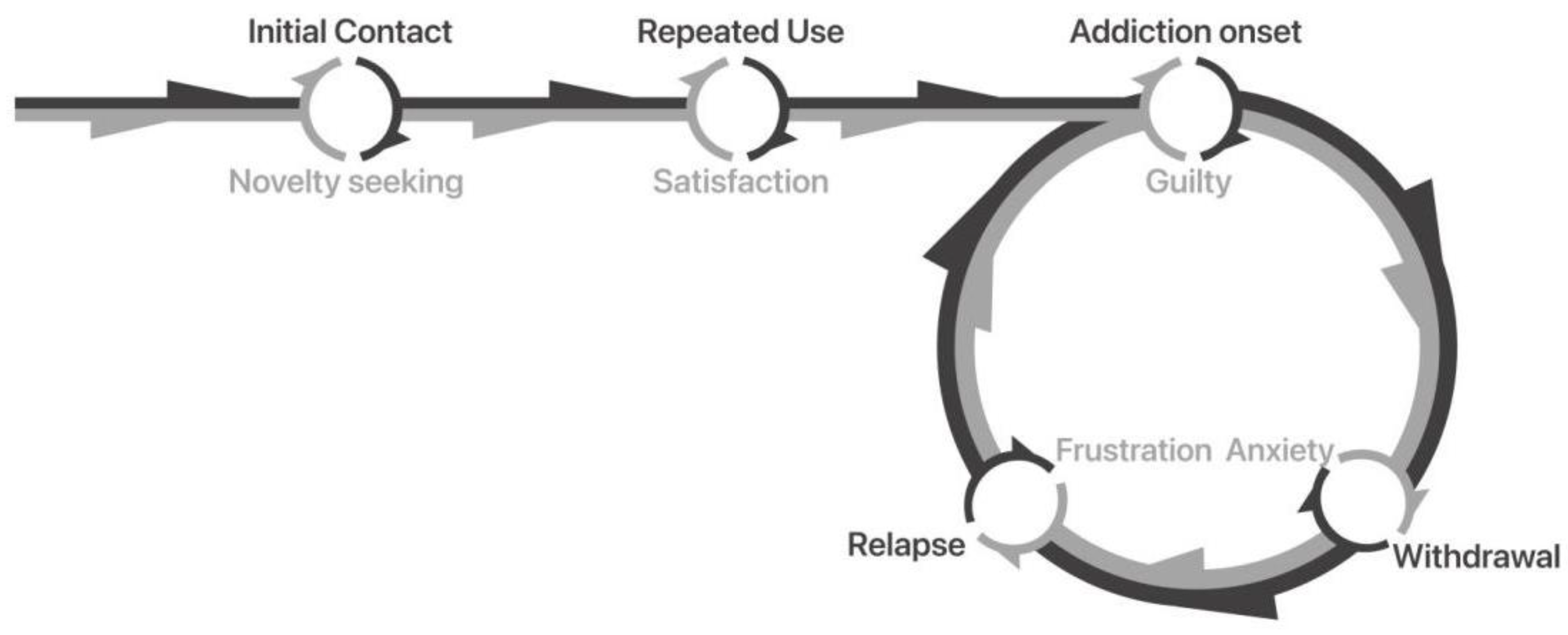
Table 1.
Emotion-Related Items in Adolescent Social Media Addiction Scales.
| Category | Scales | Emotion-Related Items | |
|---|---|---|---|
| Usage Motivation | Escape | SMDS | During the past year, have you regularly used social media to take your mind off your problems? |
| During the past year, have you often used social media so you didn't have to think about unpleasant things? | |||
| During the past year, have you often used social media to escape from negative feelings? | |||
| Mood regulation | BFAS | Used Facebook in order to forget about personal problems? | |
| Used Facebook to reduce feelings of guilt, anxiety, helplessness,and depression? | |||
| Used Facebook in order to reduce restlessness? | |||
| GPIUS2 PFUS |
I have used the Internet to talk with others when I was feeling isolated. | ||
| I have used the Internet to make myself feel better when I was down. | |||
| I have used the Internet to make myself feel better when I’ve felt upset. | |||
| OSNA(FAS) | I log into Facebook to make myself feel better when I am down. | ||
| SEUS-14 | When I feel bad, then I go on SNS to improve my mood. | ||
| SMAS for Adolescents | I use social media more to make myself feel happy. | ||
| SMAS-student form | I want to spend time on social media when I am alone. | ||
| Usage Behavior | Negativeness in Social Relations |
SNAS | I feel happy to share my ideas on social networks. |
| SMAS-student form | Being on social media excites me. | ||
| The mysterious world of social media always captivates me. | |||
| I have physical problems because of social media use. | |||
| Tolerance | SMDS | During the past year, have you regularly felt dissatisfied because you wanted to spend more time on social media? | |
| Usage Outcomes (Withdrawal Responses) | Withdrawal | BFAS | Become restless or troubled if you have been prohibited from using Facebook? |
| Become irritable if you have been prohibited from using Facebook? | |||
| Felt bad if you, for different reasons, could not log on to Facebook for some time? | |||
| BSMAS-SF | You become restless or troubled if you are prohibited from using social media. | ||
| OSNA(FAS) | I feel anxious if I cannot access to Facebook | ||
| SMAS | I get irritated when someone interrupts me when I'm using social media. | ||
| I will be upset if I had to cut down the amount of time I spend using social media. | |||
| SMAS for Adolescents | I feel angry, anxious or sad when I don't use social media. | ||
| SMAS-student form | I feel bad if I am obliged to decrease the time I spend on social media. | ||
| I feel unhappy when I am not on social media. | |||
| SMDS | During the past year, have you often felt tense or restless if you weren't able to look at your messages on social media? | ||
| During the past year, have you regularly felt angry or frustrated if you weren't able to use social media? | |||
| During the past year, have you often felt bad when you could not use social media? |
Disclaimer/Publisher’s Note: The statements, opinions and data contained in all publications are solely those of the individual author(s) and contributor(s) and not of MDPI and/or the editor(s). MDPI and/or the editor(s) disclaim responsibility for any injury to people or property resulting from any ideas, methods, instructions or products referred to in the content. |
© 2025 by the authors. Licensee MDPI, Basel, Switzerland. This article is an open access article distributed under the terms and conditions of the Creative Commons Attribution (CC BY) license (http://creativecommons.org/licenses/by/4.0/).
Copyright: This open access article is published under a Creative Commons CC BY 4.0 license, which permit the free download, distribution, and reuse, provided that the author and preprint are cited in any reuse.


