

Submitted:
07 February 2025
Posted:
10 February 2025
You are already at the latest version
Abstract
Advantages in CMOS MOSFET-based electronics served as a basis for modern ubiquitous computerization. At the same time, theoretical and practical development in material science, analytical chemistry and molecular biology opened the possibility of applying Boolean logic and information theory findings on a molecular basis. Molecular computing, both organic and inorganic, has the advantages of high computational density, scalability, energy efficiency and parallel computing. Carbon-based and carbohydrate molecular machines are potentially biocompatible and well-suited for biomedical tasks. Molecular computing-enabled sensors, medication-delivery molecular machines, and diagnostic and therapeutic nanobots are at the cutting edge of medical research. Highly focused diagnostics, precision medicine, and personalized treatment can be achieved with molecular computing tools and machinery. At the same time, traditional electronics and AI advancements create a highly effective computerized environment for analyzing big data, assist in diagnostics with sophisticated pattern recognition and step in as medical routine aid. The combination of advantages of MOSFET-based electronics and molecular computing creates an opportunity for next-generation healthcare.
Keywords:
molecular computing
; nanobots
; nanotubes
; molecular machines
; DNAFET
; spintronics
; CMOL
; biosensors
; theragnostic
; drug delivery systems
; bioelectronic implants
1. Introduction
Molecular computing is a rapidly progressing field of computer science [1]. Silicon-based solid-state computation started decades ago with the era of Metal-Oxide Semiconductor Field-Effect Transistors (MOSFETs). At the same time, computing principles were theoretically applied to organic and inorganic molecular platforms [2]. Molecular and biomolecular computing were envisaged nearly simultaneously in the early stages of information technology development. They are often considered to have originated in 1994 with Adleman's DNA computing experiment [3]. However, the foundational ideas about utilizing molecular and biological systems for computation were envisaged much earlier, in 1959, when Richard Feynman famously claimed that computers could be sub-microscopic [4]. Mann and Kuhn measured biomolecular conductance in 1971 in well-ordered fatty acid monolayers sandwiched between metal electrodes. In 1974, Aviram and Ratner started developing a theory of electron transport in single-molecular organic rectifiers, proposing biomolecular logic gates systems with interacting pi-orbitals.
Technical and instrumental development radically changed synthetic biology and molecular computing prospects. The invention of the scanning tunnel microscope opened the way to manipulation on the atomic level. In contrast, genetic engineering opened possibilities for DNA and RNA manipulations for biological and non-biological goals. In 1987, Tom Head proposed computational systems based on DNA splicing, and Alderman experimentally demonstrated a DNA computational system [5]. Lipton showed the possibility of DNA computing to solve the SAT class of NP-complete problem [6]. In the early 2000s, Shapiro and Benenson presented a detailed concept of an in-cell Turing machine, DNA-based molecular automaton, or programmable biomolecular systems. At the same time, Seesaw DNA gates were proposed with a higher scalability option [7]. Willner and Katz discussed enzymatic cascades for creating biomolecular analogues of computational logic circuits in 2005 [8].
In 2012, the advent of genome-editing technology, Clustered Regularly Interspaced Short Palindromic Repeats with Cas 9 or 12 proteins (CRISPR-Cas9/12), allowed a new step in molecular computing [9]. Working with proteases opened the possibility for protein-based logic circuits [10]. Figure 1 reflects multiple stages of the development of molecular computing.
Biomolecular computing has its own benefits, with DNA's high stability as information storage and the possibility of parallel DNA-based molecular computing. Combined with DNA enzymes and their cascades, they can provide binary or oscillating systems for logic gates and catalyze chemical reactions to perform computations. There are signs of computational molecular systems in living cells [11].
Membrane and other biomolecular forms of computing give prospects for effective hybrid silicon-biomolecular systems with distinctive combination qualities. The speed of traditional computation can be combined with biocompatibility, miniature size, nano-energy gathering and molecular parallelism [12]. It gives options for precision medicine that is highly focused on spot diagnostics with dedicated sensors, smart drug delivery systems, nanorobotic therapeutics, neuromorphic computing, and other sophisticated methods of diagnosis and treatment. The capabilities of hybrid systems go far beyond biomedicine, with extensions into bioengineering and mass bioproduction, environmental monitoring, and operation. Applications for these systems can raise computation power to a new level of biophysical integration.
Molecular computing differs greatly from the traditional MOSFET-based approach (see Table 1). While MOSFET-based computing is fast, robust, quite insensitive to the environment, and well-developed in production, molecular computing has its advantages and specific points. It can operate at a nanoscale level, be energy efficient, harvest energy from the environment, self-assembled, highly scalable and suitable for significant levels of parallel computing. At the same time, molecular computing is sensitive to the environment, which can be an advantage in the case of modulation and sensor development and a disadvantage in other situations. It is still relatively expensive but can be less so in the case of established mass production.
2. Possibility of Molecular Computing
Boolean algebra enables any system capable of producing basic logic gates to perform computations of various sorts and ranges [13]. Molecular computing, also known as molecular electronics, is an interdisciplinary domain that explores the use of organic and inorganic molecules in computational tasks. It can employ individual atoms, molecules, or whole molecular systems as components in electronic devices with the potential for further miniaturization, energy efficiency, and unique properties. Any molecular binary structure can be organized as a system of logic gates or molecular switches [14].
Molecular wires and specific molecular sensors can be integrated as elements of molecular smart devices and nanobots, able to perform tasks on their own or in combination with silicon-based traditional computational elements and devices. Nano-energy harvesting opens the possibility for autonomous molecular bots, while Single-Molecule Electronics (SME) can create miniature integrated devices compatible with living tissues and cells and capable of self-reproduction [15]. These systems are realized in a number of conceptual molecular-based frameworks. Molecular switches can be based on photochromic molecules [16] that change electronic structure when exposed to light or redox-active molecules with two states of oxidation and reduction [17]. DNA strands can be programmed to perform parallel computing operations by base pairing [18].
Spintronics provides possibilities for the hybrid Metal-Organic Frameworks (MOFs) for memory devices [19], while electron-optic molecular devices range from energy harvesting to computation [20]. In Table 2, all basic forms of inorganic, organic, and hybrid systems are classified according to computational functionality.
2.1. Inorganic Properties of Molecular Computing
Inorganic molecular computing is based on inorganic molecules or inorganic materials, such as redox-active metal complexes, MOSFET semiconductors, quantum dots or metallic nanoparticles, to perform computational tasks. These molecular computation systems utilize properties of inorganic elements and molecules. Information is encoded, stored or processed with the help of electronic charge, magnetic properties, optical qualities or catalytic capabilities. Redox activity, photoluminescence, and spin states of inorganic materials can produce an elementary basis for formal computational logic. Electron transfer in oxidation-reduction reactions produces binary states. This includes the possibility of solid, single-crystalline materials as cellular automata [21].
Inorganic molecules have higher thermal and chemical stability than organic materials, making them the materials of choice in situations with high environmental and exploitation durability requirements. Interactions with ligands, structural configuration changes, or altering metal centers can tune the characteristics of inorganic systems. There is a high potential for inorganic molecular systems` scalability and precision control.
Molecular computing can use inorganic molecules’ properties, such as redox, catalytic reactions, and magnetic and photonic effects.
2.1.1. Redox and Catalytic Reactions
Redox reactions can routinely change molecules' electronic states, resulting in the alteration of their physical or chemical properties. This allows them to act as switches, sensors, memory elements, or logic gates [22].
Electrons between atoms, ions, molecules, molecule parts and molecular complexes can transfer the charge into redox reactions. The transfer switches between different oxidation states, creating different electronic, magnetic, or optical properties of the underlying material. Ruthenium complexes, ferrocenes, and polyoxometalates change colours depending on the electronic state due to metal-to-ligand charge transfer (MLCT) transitions [23]. It can provide the basis for redox-based memristive devices [24], ReRAM neuromorphic devices and energy storage [25].
Catalytic Reaction Networks (CRN) provide an option for the potential solution-based Turing-universal machine [26]. Small molecules redox transformation and nanozymes [27] can provide the molecular and catalytic logic basis for computational devices and biosensors. Photon-coupled, proton-couplet or spin-related redox reactions are applicable in inorganic molecular computing and its hybrid organic-inorganic combinations, such as Metal-Organic Frameworks (MOFs) for molecular capacitors and molecular logic gates [28].
2.1.2. Magnetic Effects
Magnetic molecular properties utilize spins in spintronic computational devices. Inorganic materials exhibit several magnetic phenomena: low-dimensional magnetism, induced magnetization in noble metals, electron interference oscillatory magnetic coupling, and Giant Magnetoresistance (GMR) [29].
Low-dimensional magnetism encompasses 0D of nanoparticles or quantum dots, such as single molecular magnetism (SMM) and superpara magnetism (SPM), caused by thermal fluctuations. In 1D magnetism, quantum fluctuations are more pronounced. It also can produce spin chain phenomena, such as the Haldane energy gap between magnetic and non-magnetic states and magnetoelastic spin-Peiperl’s structural transition, leading to a non-magnetic ground state at low temperatures [30]. Spin accumulation Hall effect is produced in 2D materials by electric current.
Magnetic impurities and indirect spin-dependent electron interference oscillatory coupling play a role in the Rudermann–Kittel–Kasuya–Yoshida (RKKY) interaction [31]. Magnetoresistance is also important in Tunnel Magnetoresistance (TMR) when electronic tunnelling occurs at the Magnetic Tunnel Junction (MTJ), consisting of two ferromagnetic and insulating layers. This property is used for Magnetic Random Access Memory (MRAM), which possesses non-volatility, high speed, and endurance. TMR is also used for magnetic sensors and quantum computing.
There are a number of other effects occurring in magnetic materials that are potentially useful for computing. Anomalous Hall Effect (AHE) is a voltage that appears in ferromagnetic materials without applying a magnetic field. At the same time, the Hall Effect occurs in non-magnetic materials in the external magnetic field. Rashba-Edelstein Effect (REE) and its inverse is spin-orbit interaction in systems lacking inversion symmetry, mostly on surfaces or interfaces. The REE leads to the splitting of electron bands in momentum space while the spin direction is locked. This creates helical spin texture from electrons with direct and opposite spins [32].
2.1.3. Photonic Effects
Photochemical or luminescent properties use photons for I/O processes and can create binary states for photonic computation. Rare earth-doped materials and quantum dots are good examples of photonic transitional state logic applied in optoelectronics and molecular computation [33]. Because of their light-excitation ability with electron production, molecules with optical capabilities can be used as photochemical switches for ZnO and TiO2 nanostructured memory devices [34].
Optical computing is usually based on optical nanostructures, such as photonic crystals, where interaction between photon emitters and photons confined at the nanoscale occurs [35]. Fermi's Golden Rule describes the evolution of quantum states of the system under external influence and is a cornerstone for quantum optical computing as well. SiO2, GaAs optical switches and waveguides are proposed for optically integrated circuits (OICs) [36], as are lanthanide complexes and quantum dots [37].
Complex photonic and energy interactions can also occur in integrated molecular networks. Förster Resonance Energy Transfer (FRET) applies to sensors and quantum dots-based photonic computing [38].
2.2. Carbon-Based Inorganic Molecular Computing
Carbon compounds can be conventionally divided into organic and inorganic. Examples of inorganic carbon compounds are carbon oxides, carbonates, bicarbonates, carbides, sulfides, cyanides, and some others. They also include pure carbon 2D and 3D compounds and carbon-based polymers [39]. The most famous carbon states are shown in Figure 2.
Many principles described above apply to carbon-based molecular computing (see Table 3). There are also specific properties of carbon compounds which make them suitable for certain types of molecular computing implementation. Carbon usually makes bonds with hydrogen, oxygen, nitrogen, sulfur, some metals or other elements. The ability to catenate with the help of covalent bonds or create chains, open or closed in rings, makes carbon a basis for various polymer structures. It opens possibilities for carbon-based semiconductors, molecular circuits, carbon nanowires, carbon-based triboelectric nanogenerators (TENGs), photosensitive and luminescent materials, and nanomachinery.
2.2.1. Rotaxanes and Catenanes
Catenanes and rotaxanes are compounds with mechanically or non-covalently interlocked molecular structures, which cannot be separated without breaking covalent bonds. Catenanes are interlocked macrocycles, while rotaxanes are compounds with at least one component, such as a ring, that moves along the molecular filament or linear axle. The conformational switching between states makes it possible for these compounds to be the basis of logic gates, memory devices or molecular actuators and machines [40].
Pseudorotaxanes and Stoddart's rotaxanes can help make more sophisticated forms of molecular computing systems, such as modulated molecular bots and self-assembling molecular shuttles [41]. Rotaxane-based shuttles can be combined with other molecular computational elements in liquid medium or solid-state Metal-Organic Frameworks (MOFs) [42].
2.2.2. Photochromic Dyes
Light-induced isomerization can be applicable in optical computing and molecular computing. Photochromic dyes are potential sources for binary logic states. Optical molecular switches with on/off transparent and coloured phases can have a high speed of operation. An important point is the ability of some compounds to absorb UV photons in addition to visible spectrum particles. Conversion from one state to another can be modulated by different wavelengths. Dynamic optical memory storages of high density are envisaged for photochromic carbon-based compounds, such as azobenzene and spiropyran. They also can change states from cis to trans due to chemical reactivity. Photochromic dyes can be part of a bigger molecular computational system of a hybrid molecular-classical one [43].
2.2.3. Photochromic Dyes
Carbon structures can exhibit specific types of topology and interactions based on the character of bonding energy [44]. The main fundament for many carbon-based nanostructures for molecular computational elements is pi-to-pi* noncovalent interaction or stacking in aromatic structures when delocalized. pi-electrons of one aromatic ring interact with pi-electrons of other aromatic rings. This is possible for any C=C bond. While delocalization does not create explicit charge or ionization with overall system neutrality, it creates dipoles and charge transfer or redistribution ability (see Figure 3). It makes carbon-based nanowires, semiconductors, circuits, and memory elements possible [45].
They can be classified according to energy transfer dimensionality. 0D Carbon Quantum Dots (CQDs), Graphene Quantum Dots (GQDs), and fullerenes can be used as Single-Electron Transistors (SET), logic gate operators, or nano-charge storage elements. Single-walled or multi-walled carbon nanotubes are 1D nanowires that can function as wires, logic gates, and circuits [46].
2D graphene and graphene oxide structures are suitable for high-speed molecular transistors and flexible on-surface 2D applications. 3D dimensionality is useful for high-capacity memory devices and neuromorphic synaptic structures (see Table 4). They can be created from nanodiamonds, graphite, amorphous carbon, foams, and aerogels. More complex structures, such as CNT-graphene hybrids, Porous Carbon Frameworks, and carbon Nano-Onions (CNOs), are useful for complex computational systems and networks [47]. Carbon-based structures can be doped with other atoms to design specific materials with specific properties. It allows effective CNTFETs and well-performing CNT-based Nonvolatile Random Access Memory (NRAM) [48].
2.2.4. Photosensitive and Luminescent Molecules
Carbon-based inorganic photosensitive and luminescent molecules can absorb and emit photons. The most prominent absorption bands are in the 230-320 nm UV region thanks to the pi-to-pi* electron transition of C=C bonds. Carbon Dots (CDs), Graphene Quantum Dots (GQDs), and single- and multi-walled CNTs are massive representative of photoabsorbing and photoemitting materials used in carbon-based molecular computing [49]. They also have a band extension into the visible light spectrum. This property can vary across CDs and CNTs depending on their size, surface chemistry, and doping. Photonic-electric effects make it possible to use photosensitivity, photo- and luminescence for materials with bandgap adjusted by doping [50].
Photonic carbon-based nanocrystals can function as energy amplifiers. Photoconductivity and photorefraction are helpful in modulating molecular computing elements such as molecular antennae, sensors, effectors, processing parts, and memories [51]. Surface Plasmon Resonance (SPR), when incoming photons are coupled with surface plasmons, is also instrumental in tuning molecular devices [52].
Photothermal effects are also useful for converting the photonic energy of a higher band into thermal energy. They are also applicable to molecular thermoelectric generators and photothermal catalysis. Energy nanoharvesting by photon absorption or piezo-phototronic effect is another promising direction for self-supporting autonomous molecular machines based on CDs, GCDs, and CNTs [53].
2.2.5. Carbon Triboelectric Nanogenerators (TENGs)
Another way to harvest nano-energy is the triboelectric effect. The triboelectric effect generates electric charge through the contact and separation between two materials with opposite tribo properties: one tribo-positive donates electrons, and the tribo-negative accepts them. Carbon-based molecular materials' versatility allows them to function as tribo-positive or tribo-negative fibers, layers, or films [54].
Diamond-like Carbon (DLC) films create highly durable TENG surfaces. Graphite, activated carbon, graphene, CNTs, CDs, and GCDs demonstrate the ability to create stable and durable TENG elements if force is applied in a specific direction. Individual TENG units produce energy in the range from microwatts to milliwatts. It is possible to scale systems up and add integrated carbon-based energy-storing devices [55].
It opens the opportunity to support multiple battery-less devices, such as sensors, actuators, integrative parts of molecular computing machines and bots. Solid-liquid tribo-nanogenerators are applicable for devices and surface-based molecular computing elements in wearables, molecular delivery systems and bio-compatible nanobots.
2.3. Organic Molecular Computing
Organic biological molecular computing is based on the properties of biological molecules such as organic carbohydrates. Nucleic acids, proteins, and lipids possess inherent properties for self-assembling, polymerization, charge transfer or displacement, photo-electric properties, and spins. They inherently can perform computational tasks, sensing, data storage and transfer and molecular energy harvesting. The ability to integrate into complex structures, cyto-, tissue- and biocompatibility, high information density, and capability to perform highly parallel computational tasks are important in biomolecular computing, especially in biomedicine. The enzymatic activity of ribozymes and protein enzymes makes it possible to create catalytic cascade computing and self-adjustable molecular machines. Figure 4 is a schematic representation of a molecular computer. Polymerization of nucleic acids and proteins creates high-density packages of a wide range of structures with unique properties. Lipids are able to form films and layers with electric charge potential, integrative abilities and capacity to encompass whole elements into vesicles. A higher hierarchical level is cell-based biocomputing, where cells serve as elements or computational units.
Examples of biological computers with their mechanism and application reflected in Table 5.
2.3.1. DNA and RNA Molecular Computing
DNA is the basis for genetic information for the most well-known forms of life. It is a natural candidate for data storage, where each base pair, A-T and C-G, can represent a bit of information. DNA data storage is 3D and highly dense, with a single gram theoretically able to store about 215 million GB of data. It is also possible to store 2 bits per base [56]. Other advantages include longevity of DNA storage and energy efficiency. Yet the speed of encoding and decoding operations is relatively slow, making DNA more suitable for cold data storage.
DNA, often in complex with ligases, polymerases, and restriction enzymes, is used to construct logic gates [57]. Harnessing DNA computing and nanopore decoding for practical applications: from informatics to microRNA-targeting diagnostics. Chemical Society Reviews. DNA-based computing allows massive parallelism, with billions of simultaneous computing points allowed on DNA strands. There is more than one way to employ DNA in molecular computing [58]. Parallelism is evident in the so-called Adleman approach. Rothemund and Shapiro proposed self-assembling origami structures for molecular machines and nanorobotics. DNA bot machinery can be used for logic operations. The Seeman–Winfree approach is also focused on the self-assembly of DNA, but it uses synthetic double-crossover molecules to obtain 2D crystalline nanostructures with a specific periodic pattern. Every approach requires participation of specific enzymes, including protein-based Cas9, and can produce DNA-based logic gates, circuits, and molecular actuators.
RNA can participate in catalytic reactions of DNA-based molecular computing or be part of a sensing system by microRNA, but it also provides more possibilities. RNA can be used to create logic gates [59]. Intracellular RNA-based, RNA-protein, and ribosome cascading logic are potentially applicable to molecular computing [60]. There are practical examples of cell-based synthetic RNA logic circuits [61].
Another application of nucleic acids in molecular computing is based on photon absorption and release by hybridization with chromophores, dissipative nucleic acid structures, or resonance in the system with Förster Resonance Energy Transfer (FRET) [62].
Another option is constructing logic gates from self-assembled DNA on the surface of Metal-Organic Frameworks (MOFs) [63]. Peptide Nucleic Acids (PNAs) have been widely used as antisense oligonucleotides (ASO) and are useful as biosensors [64]. Some examples of nucleic acid-based logic gates functionality are provided in Table 6.
2.3.2. Organic Carbon-Based Computing, Proteins and Lipids
Organic carbon-based computing in addition to nucleic acids, uses organic carbon compounds, carbohydrates, lipids and proteins as the basis for Organic Field Effect Transistors (OFETs), switches, logic gates and circuits, energy capacitors, sensors, actuators and molecular machines. Pentacene, a polycyclic aromatic hydrocarbon, poly(3-hexylthiophene) (P3-HT) are used in OFETs. Polythiophenes and polyfluorenes are commonly applied for the production of organic thin-film transistors (OTFTs). Organic semiconductors operate on pi-to-pi-conjugated systems mechanisms, with delocalized electron movement along the molecule's backbone. Charge carriers, electrons and holes move through hopping transport between localized molecular orbitals rather than band-like structures conduction in silicon. In azulene derivates, the gap between Highest Occupied Molecular Orbital (HOMO) and the Lowest Unoccupied Molecular Orbital (LUMO), the HOMO–LUMO gap, can be reduced to the level of (n)acene, giving the option of synthetic modulation in pi-to-pi structures [65].
Supramolecular chemical processes such as association and intercalation of organic molecules are instrumental in the nanoarchitecture of controlling device properties. Covalent Organic Frameworks (COFs), in addition to MOFs, can also provide a self-assembly basis for many organic computing structures. PEDOT PSS (poly(3,4-ethylenedioxythiophene) polystyrene sulfonate) is another conductive polymer. It is used in organic memristors [66] because of the ability of ionic drift and redox switching. Spiropyrans and D-A conjugated polymers are used for dynamic synapse emulation. Spike-timing-dependent plasticity (STDP) can mimic biological learning through the strength of connections between artificial neurons. It changes with the time of electrical pulses [67].
Optical properties or organic structures are instrumental in sensing and photon-based molecular computing. Polythiophenes and polyfluorenes, rhodamine, BODIPY (4,4-difluoro-4-bora-3a,4a-diaza-s-indacene), fluorescein and some other compounds are used in biomolecular optical computing, photonic sensors and OLED construction. Rhodopsin, a G-protein-coupled receptor (GPCR), can function in chemosensor systems [68]. Protein enzymes and cascades can be instrumental in wet biocomputing by constructing logic gates and circuits [69].
Lipid-based biocomputing elements can be used in various ways. Lipid bilayers can enter different phases, such as liquid-disordered, liquid-ordered or gel phase. The change in pH, temperature, or the presence of specific ions or proteins can alter these phases. Changes in phases can potentially encode information as logic gates. Membrane signal transduction for ions can also mimic logic circuits; Liposomes and vesicles are suitable for information processing through the encapsulation/release coupling or platforms for self-assembling complex nanoscale circuits and molecular machines [70]. They are instrumental in theranostics, a combination of diagnostics and therapy.
2.3.3. Cell-Based Biological Computing
A significant part of molecular computing is always called “wet computing” because of the chemical operational environment for molecular elements. Molecular computing can be part of cellular biocomputing [71]. Cellular amorphous computing is another branch that employs multiple cells as parallel processing units. Logic gates can be produced in the intracellular environment by nucleic acids, proteins, proteoglycans, lipids, vesicles and other molecular complexes and structures, such as organelles or synthetic aggregates. The whole cell is also a potential logic gate operator or switch. Circuits in every case are based on logic processing elements. Bacterial-based systems employ quorum sensing. Cellular ensembles intervened with molecular machinery, allowing the creation of complex logic gates and circuits [72].
Advances in synthetic biology made implementing complex molecular-cellular systems as logic circuits possible. The multilayered genetic approach uses cells as computational and synthetic elements for therapeutic protein production [73].
2.4. Hybrids and CMOL Devices
The hybrid of molecular and silicon-based components allows interaction between biological signals and electronic devices. The potential of two systems can exploit the properties of both types of computing to create versatile and biocompatible systems with unique features or a successful combination of strong points. The biomolecular part can provide biocompatibility, molecular sensing capabilities, compactness, self-assembly, energy harvesting and nanomachinery, and a biomorphic and neuromorphic approach. At the same time, electronic silicon-based computing provides robust performance, an established network of devices and protocols, and interaction through well-understood physicochemical mechanisms [74].
Complementary Metal-Oxide Semiconductors (CMOS) can be combined with molecular, nanopore, or nanowire structures in CMOL devices. These devices can be hybrids comprising two types of layers: CMOS and molecular. Another approach uses a nanowire crossbar with possible self-assembly terminals [75]. High density, low energy consumption, and the possibility of using complex 3D architecture provide opportunities for processing, memory, and sensing devices. The CMOS Interface is part of crossbar nanowire devices, with possible crossing molecular switches. CMOS is also compatible with other 2D and 3D molecular computing structures and serves as a decoder, driver, and data read/write interface for molecular components [76]. It applies to sensors, autonomous mini- and nanorobotics, neuromorphic computing and other bio-CMOS hybrid applications, such as bio-Lab-On-a-Chip. There are theoretical possibilities for creating 3D FinFET-based CMOL sensors. A layered approach is used in transistors with dielectric molecular films or sheets. The material can be molecular, inorganic, organic, and biodegradable, such as silk fibroin [77]. CMOS interface can be combined with many types of molecular devices, such as spintronic, photonic, molecular machines, redox-based, molecular memory devices or DNA tags [78]. MWCNTs-based Bio-Silicon Intelligence System (BSIS) is another possible integrative approach [79].
CMOS-compatible CMOL devices can be generally subdivided into inorganic molecular and biomolecular to emphasize the higher level of biocompatibility (see Table 7). Inorganic CMOL devices focus more on effective computing, miniaturization, and autonomous low-energy applications. CMOL systems with a biomolecular component are more suitable for biomedicine.
3. Applications for CMOL Systems in Healthcare
There are a number of applications for CMOL systems in biomedicine (see Table 8). In-vivo and in-vitro biosensing, (in-vitro biosensing, in-vivo biosensing), electrogenetics and optogenetics [80], real-time cellular monitoring and imaging, precision medicine with targeted treatment delivery systems. Bio- and neuromodulating implants [81] are all made possible with CMOL devices and molecular machines. Highly focused theranostics [82] can have an immediate effect on the ability and quality of healthcare. The lab-on-a-chip (LoC) or organ-on-a-chip (OoC) research approach includes the integration of CMOS and numerous sensors and actuators with cells or tissues [83].
This development is extended into 2D and 3D bioprinting, where CMOS compatibility with bio-inks is important. Bioink formulations today include antibodies, enzymes, nucleic acids, graphene, metal nanoparticles, CNTs, and polymers. These structures obtain additional properties, such as mechanical strength, optical sensitivity, photon release, and electrical conductivity [84].
Smart biological tissues with embedded CMOL integration also show prospects for biomedical research and therapeutic applications. Electrospinning fibres are applicable in tissue engineering for cellular scaffolds, light-stimulated nanofiber drug encapsulation in drug delivery systems [85], and nano-scaffolding creation for wound healing [86]. It is also instrumental in biosensors. Fibrin-based artificial Skin (FBAS) can not only be used for healing and monitoring but also incorporate physiological sensors [87].
3.1. Biosensors in Healthcare
Biosensing with the ability for Point-of-Care Testing (POCT) and continuous monitoring uses different types of sensors, with sensing elements ranging from inorganic electro-chemical, electro-optical, piezoelectric, magnetic and thermal to organic, biological or biomimetic types [88].
Biosensors can be classified according to the active biosensing part: nucleic acid-based, protein-based, tissue-based, transcription factor-based, membrane protein-based, tissue-based, cell-based and biomimetic.
3.1.1. Nucleic Acid-Based Biosensors
Biosensors with DNA, RNA, and PNA can be instrumental in rapid and precise diagnostics. Biosensors with oligonucleotides and CMOS interface are extremely sensitive to biomarkers of certain pathological health conditions. Utilizing DNA or RNA probes, these sensors detect complementary nucleic acid sequences, which are useful in genetic testing or pathogen detection. Aptamers, 3D single-stranded DNA or RNA structures, can create unique connections with specific DNA, RNA or proteins produced by certain cells, tissues or microorganisms, such as protozoa, bacteria, fungi or viruses, during pathological processes or infections [89].
Aptamers are selected from large random sequence pools through the Systematic Evolution of Ligands by Exponential Enrichment (SELEX). The detection process can be based on electron photoemission, photon emission by fluorogenic aptamers, FRET (Fluorescence Resonance Energy Transfer), or structure switching in Structure-Switching Aptamers (SSAs) [90]. Peptide-Nulceic Acids (PNAs) are another important group of active oligonucleotide-based biosensors. Technology with simultaneous detection of nucleic acids and proteins is also being developed [91].
3.1.2. Protein-Based Biosensors
Protein-based biosensors are of a wide variety of types, including immunosensors, protein enzyme-based biosensors, transcription-factor biosensors, and protein-membrane biosensors [92]. Due to proteins' versatility and chemical activity, it is possible to design highly specific biosensors with sensitivity to a wide range of pathological biomarkers or biochemical compound signatures of pathological processes, ranging from infections and autoimmune conditions to intoxications by certain toxins or ontological processes in specific tissues or groups of cells.
Immunosensors are a specific type of protein-based sensor that employs antibody-antigen interaction. Antibodies of interest are immobilized on an antigen surface. An opposite composition is also applicable, which can include an aptamer [93]. The binding event is detected directly or indirectly. Direct technologies are Surface Plasma Resonance (SPR) or the piezoelectric effect change from the mass or refractive index. Labelled detection uses fluorophores, magnetospheres, or enzymes with the transmission of photons, electrons, or a change in the magnetic field.
Enzyme-based biosensors use enzymes that catalyze a reaction with the target analyte, producing a detectable signal. Glucose sensors are a classic example, where glucose oxidase reacts with glucose. CRISPR/CAS biosensors can detect specific DNA of cellular tissue or pathogenes [94]. Transcription factor-based biosensors can detect specific oligonucleotide binding sites and modulate intracellular or extracellular transcription [95].
The change in gene expression is detected electrochemically by photon emission or colourimetry. This type of sensing is helpful in detecting pathogenic DNA in body fluids and other media and for environmental public health monitoring.
Membrane protein-based biosensors are usually employed in cellular, liposome or planar bilayer membranes [96].
Membrane-integrated G-Protein Coupled Receptors (GPCRs), transporters, ion channels, and enzymes can selectively interact with the extracellular, extravehicular or extramembrane environment, binding to specific ligands or analytes after the effect of binding changes is detected. It can be ion conductance through channels or pumps, fluorescence, a mechanical signal of membrane tension or movement detected by piezoelectric or cantilever systems. These types of biosensors are useful in drug detection, pathological biomarkers detection, and physiological state diagnostics, such as neuronal state.
3.1.3. Tissue-Based Biosensors
The whole tissue-based biosensors can have some advantages before a single cell or very small cell culture based on the same principles. Tissue-based biosensors can be more complex and closer to the original organ or tissue, which makes biosensing more precise. The concept of CMOS/biologic Lab-on-a-Chip (LoC) can be narrowed to the Tissue-on-a-Chip (ToC) or Organ-on-a-Chip for recognising specific tissue or organ toxicity. Lung-on-a-chip with Transepithelial Electrical Resistance (TEER) sensing recreates the alveolar-capillary interface with the ability to check epithelial integrity and, hence, the toxicity of drug or pathogen [97].
The hepatocyte-based Liver-on-a-Chip system is instrumental in detecting hepatotoxicity levels. It is essential for drug-induced liver injury (DILI) assessment as the liver is an organ involved in drug metabolism. Research on medication metabolism itself is also vital. Another application is infectious or immune pathogens' influence on liver cells [98]. Another important system is the Kidney-on-a-Chip for nephrotoxicity studies, especially for medications and toxins excreted by the renal system. Cardiac or myocardial tissue biosensors are used for cardiotoxicity electrophysiological abnormalities studies and monitoring [99].
Cortical tissue or Brain-on-a-Chip is essential for research on neurodegenerative disorders, neurotoxicity and electrophysiological studies. Intestinal tissue biosensors are helpful for intestinal barrier integrity and nutrient absorption studies. Another critical area is monitoring Inflammatory Bowel Disease (IBD) with biomarkers. Whole dermal tissue biosensors and epidermal sensors help in the research and monitoring of contact dermal toxicity, skin autoimmune conditions and dermal inflammatory reactions. Vascular biosensors can be endothelial tissue-based or whole vascular organoids. They are essential in understanding blood clotting cascade processes, angiogenesis, autoimmune vascular conditions and infectious vascular damage.
The multi-organ chip platform might be an important tool, mimicking the organismic level of reaction to certain medications or pathogens. Engineered Tissue Constructs (ETCs) demonstrate another approach. ETCs can print specific 3D tissue or organoid models, hydrogel-based tissue constructs with embedded sensors, and chimeric tissues with engineered properties [100].
3.1.4. Cell-Based Biosensing Systems
Intracellular logic circuits with specific membrane censoring apparatus are useful for detecting drugs, toxins, and viral particles' presence and their levels [101]. Biochemical detection of secreted proteins or metabolites can be detected chemically. Reporter gene assays engineer cells to produce a photo-detectable protein, such as luciferase or Green fluorescent protein (GFP), in response to specific stimuli. Engineered cells are also able to produce receptors, such as G protein-coupled receptors (GPCRs), which can be labelled. CRISPR/Cas9-based cell biosensors can be used for DNA detection in genetic disorders, infections, or malignant cells [102].
Label-free cell-based systems include not only a CMOS interface but also detecting parts, such as Electrical Cell-Substrate Impedance Sensing (ECIS) or Electrochemical Impedance Sensing (EIS). It can also be an apoptotic event triggered by mitochondrial outer membrane permeabilization (MOMP) and detected with labels in the cytosol [103].
There are specific types and lines of cell-based biosensing systems. Neoplasm cells, such as HeLa line or MCF-7, are used for drug cytotoxicity level testing monitoring. SH-SY5Y neuroblastoma cells are used for Parkinson’s disease medication screening. Primary neuronal cells are used for neurotoxicity assays in research of some neurodegenerative diseases. Mesenchymal stem cells (MSCs) are used to detect inflammation bio-signs through damage, while induced pluripotent stem cells (iPSCs) are useful for the detection of cardiotoxicity. Immune cell biosensors are usually based on T-cells, B-cells or macrophages and can be instrumental in the diagnosis of infections, immune responses or autoimmune inflammatory or other reactions. Human oral epithelial cells (H376) and human patellar tendon fibroblasts (HPTFs) are other types of platforms [104] of 3D cell culture that can have some advantages in biosensing before 2D cell culture [105].
There are many potential call-based sensing systems that use non-human, plant, fungal, or bacterial cells. Many of them are used in public health for environmental monitoring. A bacterial quorum sensing system is one example.
3.1.5. Biomimetic Sensors
Biomimetics use synthetic materials or molecular imprints for analytes` recognition. The mimicking process can be at molecular, complex molecular, cellular, or tissue levels. Molecularly Imprinted Polymers (MIPs), Membrane-Mimicking Sensors (MMSs) or other engineered systems with embedded biomolecules or synthetic replicas can mimic some elements of cells, membranes, tissue reactions or receptors. The detection of chemicals, biological substances, or molecules is important for this type of sensor [106]. It can mimic the glucose oxidase enzymes with nanoparticles. Cu-based MOFs can do it with glucose oxidase-like activity by catalyzing the conversion of glucose to gluconic acid. MIPs are first treated with glucose and then removed from the polymer matrix to be accessible to glucose molecules. Cholesterol sensors mimic cholesterol oxidase activity for cardiovascular risk monitoring.
Protein-based MOFs, MIPs, or membranes, such as Nanodisc Sensors, can employ immunoglobulins, cytochrome450, other proteins, or complementarity-determining regions (CDRs) mimicking molecules [107]. Mimicking molecules are usually constructed from affibodies or nanobodies, and designed ankyrin repeat proteins (DARPins) or anticalins based on human lipocalins [108].
Other sensitive mechanisms use aptamers and enzyme-like compounds. Aptamers are instrumental in Prostate-Specific Antigen (PSA) detection, as well as many other protein and DNA oncologic biomarkers. DNA-based viruses' rapid detection also employs synthetic aptamers. Biomimetic sensors help to monitor biomarkers, medications or substances` levels in blood and other biological fluids. Flexible skin sensors mimicking some properties of the skin are helpful in wound healing or materials-skin biocompatibility. Imitation of other tissues is instrumental in regeneration and implant monitoring. Bio-inspired synaptic sensors in neuromorphic computing are useful for diagnostics and research on neural disorders [109]. Table 9 summarizes some biosensors and their applications in medical diagnostics.
3.2. Targeted Drug Delivery
Targeted drug delivery has a number of preferences before traditional drug delivery. Focused delivery reduces side effects and toxicity increases efficacy and usually has a controlled drug release mechanism. Targeted drug delivery systems are also classified by targeting mechanism, action mechanism, dynamic, carrier system, and site of action [110] (see Table 10). The CMOS part can be employed during the construction phase of nanoparticles or molecular containers for the active substance, during targeting while injecting or directing in the field, and during the release and treatment phases while applying a therapeutic electric or magnetic field, ultrasound, or photonic trigger.
3.2.1. Mechanism of Release
A number of strategies and mechanisms are employed in targeted drug release. Diffusion-controlled release usually exploits the reservoir system and polymer matrix. Matrix hydrogels are used in swelling-eroding-controlled release. Another type is poly (lactic-co-glycolic acid) (PLGA) microparticles. The medication is released by diffusion after matrix swelling and erosion, and both mechanisms control the speed of release. Osmotic pumps can also actively push medication [111].
In a chemically controlled release, polymer matrix degradation or bond cleavage facilitates the release. So-called prodrugs are activated with chemical stimulation or conjugation. Other mechanisms of activation exist. It can happen through photoactivation, temperature, redox, enzyme, ion, or pH. Mixed systems employ several release triggers or mechanisms.
3.2.2. Mechanism of Action
The mechanism of action is basically the same as the main pharmacological mechanism, which can be employed in the classical drug delivery system [112].
The difference is in focused delivery and precision of action itself, which often depends on the targeting system or site of action. Medications delivered by molecular machines or other delivery mechanisms can influence receptors on membranes of the cells, ion permeability, and interact with specific active proteins or nucleic acids. Direct or indirect hormone modulation is another mechanism of action. Pro- and anti-metabolic action is another mechanism. The influence can be enacted on the cell level by suppressing cell proliferation or activating apoptosis. Immune system modulation is essential for infectious diseases, autoimmune pathologies, or transplant control. Chelation therapy, antioxidant action or autophagy modulation are important for removing toxins [113].
3.2.3. Type of Targeting Mechanism
There are a number of targeting mechanisms based on passive, active, physical, biological or combined action. It also depends on the size, charge and other properties of the delivery system or nanoparticles. Passive targeting is based on Enhanced Permeability and Retention (EPR). The EPR effect is related to specific tissue properties, usually tumours. The tumour vascular system is often malformed, with leaky blood vessels due to rapid angiogenesis and Vascular Endothelial Growth Factor (VEGF), which increase permeability. Poor lymphatic drainage is also part of EPR, which leads to passive size-based accumulation of medication carriers [114].
Active targeting usually employs specific ligands in the drug carrier which bind selectively to certain molecules, such as receptors overexpressed on target cells. Active targeting can be based on immunoglobulins, aptamers, peptide receptors, carbohydrates or small molecules. Once bound, the ligand-target complex is internalized by the cell by mediated endocytosis, thus delivering the drug into the cytoplasm or to lysosomes. Inverse targeting employs the opposite strategy by avoiding healthy cells and minimising potential ligand contact with them with coating or lack of possibility. Polyethylene glycol (PEG) coating or PEGylation is a possible negative targeting approach [115].
Physical targeting employs a number of physical ways to target specific organs, cells or tissues. Magnetic nanoparticles, usually iron oxide, are directed in the magnetic field. Another way is ultrasound-mediated, through micro-bubbles or sonoporation. Photodynamic therapy (PDT) and photothermal therapy (PTT) employ direct release of apoptotic chemicals or thermal activation of nanoparticles. Electroporation delivers active medication through cell membrane pores due to the electric field. The mechanical approach uses micro-needles and micro-jets. The combined approach employs more than one method of targeting [116].
3.2.4. Type of Carrier System
Carrier systems can contain encapsulation or ligands and deliver proper elements (shown in Table 11). Standard containers include liposomes, micelles, lipid or colloid nanoparticles (LNPs), and microspheres [117].
Liposomes are bilayer lipid vesicles encapsulating hydrophilic or hydrophobic active agents. They can use EPR, be PEGylated, or include targeting elements. Micelles are self-assembling polymeric amphiphilic spherical nano-containers for hydrophobic lipid-solvable substances. Solid Lipid Nanoparticles (SLNs) and Nanostructured Lipid Carriers (NLCs) are solid or mixed lipid nanoparticles that can encapsulate hydrophilic and hydrophobic medications and have additional properties for loaded delivery, release, and targeting [118].
Dendrimers are highly branched, star-shaped or tree-like molecules for drug encapsulation or conjugation [119]. They can include metallic, polymeric, or lipid-based nanoparticles for different active substance drug delivery approaches. Their precise architecture, high-loading capacity, and potential targeting polyvalence make them important delivery objects.
Polymeric microparticles, biodegradable polymers, and nanotubes all have advantages in drug delivery. Microparticles, due to their size and other properties, are useful in controlled release, which is important for vaccines and implants. Nanotubes, especially CNTs, can penetrate cell membranes due to their high aspect and surface area. CNTs can be doped or altered for additional properties [120].
Inorganic nanoparticles include metals, such as gold and silver, or nonmetals, such as Mesoporous Silica Nanoparticles (MSNs) or graphene oxide nanoparticles. They can be tailored with thermal, magnetic, optical, mechanical, or other properties for specific applications like targeted treatment, imaging, or photothermal therapy [121].
Cell-based delivery systems or cell-mediated carriers include macrophages and stem cells. They possess natural targeting mechanisms or can be engineered to target specific cells or tissues [122]. It is also possible to use the whole cell, not the exosome, for intracellular drug delivery or a viral vector for DNA delivery.
3.3. Gene Expression Physical Control Systems
This section may be divided into subheadings. It should provide a concise and precise description of the experimental results, their interpretation, and the experimental conclusions that can be drawn.
Gene expression is essential for cell and organismic functioning. Several physical methods can influence in-vivo or in vitro-gene expression. These methods can be used in diagnostics and, mainly, therapy. Magnetogenetics, thermogenetics, methanogenesis, sonogenetics, electrokinetics, and optogenetics are established techniques of gene expression modulation [123] (see Figure 5).
Complex hybrid CMOS/molecular systems can be applied in physical gene expression control systems. In this approach, non-organic physical CMOS electronics are an essential part of the control system, while the organic part is integral and critical for biocompatibility. Magnetic, thermal, mechanic, US, electrical, and optical modulation of gene expression can be diagnostic or therapeutic in different tissues and organs [124].
Gene expression is important for cell and organismic functioning. Several physical methods can influence in-vivo or in vitro-gene expression. These methods can be used in diagnostics and, mainly, therapy. Magnetogenetics, thermogenetics, methanogenesis, sonogenetics, electrokinetics, and optogenetics are established techniques of gene expression modulation [123].
Complex hybrid CMOS/molecular systems can be applied in physical gene expression control systems. In this approach, non-organic physical CMOS electronics are an essential part of the control system, while the organic part is integral and critical for biocompatibility. Magnetic, thermal, mechanic, US, electrical, and optical modulation of gene expression can be diagnostic or therapeutic in different tissues and organs [124].
Most methods have significant and even precise spatiotemporal control, the absence of cytotoxicity caused by energy dissipation in surrounding tissues and the possibility of non-invasive application (see Table 12).
Magnetogenetics is applied to magnetic nanoparticles, influencing Transient Receptor Potential Vanilloid 1 (TRPV1). TRPV1 is a protein that acts as a membrane ion channel in detecting heat, protons, and capsaicin and is responsible for pain sensation. It is present in the neural tissue of different organs. The receptor is also expressed in the brain and can be modulated in neuro-psychiatric conditions, such as major depression, Parkinson's disease, and some others [125].
Thermogenetics can work on transient receptor potential channels (TRPs), such as TRPV1 and Transient Receptor Potential Melastatin 8 (TRPM8) receptors. TRPV8 is usually activated by low temperature or chemically by menthol. They are mainly found in dermal layers, teeth, and tongue epithelium. They are also responsible for thermal regulation in the brain. Pain can be regulated through thermogenetics. TRPV8 can also influence neural tissue reactivity in epilepsy and be part of dermal oncologic conditions.
Mechanogenetics employs an influence on mechanical Piezo1 and TREK-1 receptors. TREK-1, also known as potassium channel subfamily K member 2 (KCNK2), can be modulated by Piezo1 even in the absence of ion flow through it. Mechanogenetics is used in chronic conditions with cartilage degeneration and surrounding tissue inflammation, such as osteoarthritis [126]. It is also instrumental in the treatment of cardiac arrhythmia and partially successful in muscular dystrophies.
Sonogenetics uses the sensitivity of Transient Receptor Potential Ankyrin 1 (TRPA1) to ultrasound. TRPA1 is responsible for pain, cold, and other compounds. TRPA1 is distributed in different organs and systems and can be modulated by the US. Another use of sonogenetics is the use of Gas Vesicle Nanoparticles (GVNPs). Naturally, GVNPs are hollow protein nanostructures produced by archaea and batteries for flotation and buoyancy. US-moved GVNPs can be used for direct cell signalling modulation or targeted medication delivery for regulation of brain activity, liver tissue condition and oncologic treatment [123].
Electrogenetics is a well-established method that allows modulation of the expression and activity of voltage-gated ionic membrane channels. Other sensitive channels are TREK-1 and some transient receptor potential (TRP) channels. It can influence a wide range of pathophysiological conditions and be used in treatment. Direct Current-Actuated Regulation Technology (DART) is one of the methods.
Optogenetics is another developed method. MicroLED, OLED, and structural elements, including opsins and other light-sensitive proteins or compounds, are instrumental in gene expression modulation. Optogenetics can be applied in many fields, mainly in regulating brain tissue activity. Neurons can be supplied with optic sensitivity molecules to react to stimuli. The other application is retinal activity improvement [127].
3.4. Implantable Bioelectronic Devices
External physical stimulation can be insufficient in some cases. Implantable bioelectronic devices are necessary long-term diagnostic and treatment tools supporting prosthetic function. Implantable devices can be used for any organ or tissue. Renal, cardiac, neural, and other types of bioelectronic implants are proposed for different conditions [128] (see Figure 6).
A vital element of any implant is biocompatibility. While tissue compatibility is crucial for the long-term effect, functional biocompatibility adds another dimension to the bioimplant construction. The molecular part is often one of the key elements in the system. Specific compatibility with certain complex tissues, structural and functional elements, and cellular and extracellular compatibility are all parts of successful bioelectronic implant integration. Structural bioelectronic implants, such as bone or dermal, often include sensors [129].
It can also include an electric microcurrent source and Bone Morphogenetic Proteins (BMPs). Dermal bioelectronic implants may consist of sensors for skin regeneration, substances, chemical biosensors, and actuators. Conductive polymers are another type of material used in bioelectronic implants for treating trophic ulcers [130].
Functional bioelectronic implants such as implantable cardiac pacemakers or implantable cardioverter-defibrillators (ICDs) with CNTs exist. Pancreatic beta-cell stimulating implant uses Au-covered electrodes. More developed renal implants are provided as an alternative to renal dialysis and biological implants. Renal functional bioelectronic implants or iBAK can use nanopore membranes as haemofilters but also can accommodate renal tissue in a bioreactor [131].
Stimulating or suppressing bioelectronic neural implants are used for various conditions. Vagus Nerve Stimulation is instrumental in PTSD and mood disorders. It comprises an implantable pacemaker, vagal nerve lead with PEDOT coating and an external wand. There are various simulators for the sacral nerve, spinal cord, peripheral nerves, and pelvic nerves. Bioelectronic implantable stimulators can use open loops and closed loop. Closed-loop neuromodulation (CLN) is a widely used method [132].
Specific types of bioelectronic implantable neural implants are cochlear and retinal implants. While the cochlear implant provides conductivity, retinal implants can have a photo-sensing part made of CMOS-based photosensors, integrated opsins, or plasmonic nanoparticles [133]. Table 12 represents the varieties of bioelectronic devices successfully used in healthcare and medicine.

Table 12.
Implantable bioelectronic devices.
| Device Type |
CMOS/Biomolecular/Nanoparticle components |
Activity/ Mechanism of Action |
Target Tissue/ Organ |
Conditions Treated |
| Vagus Nerve Stimulator (VNS) | CMOS pulse generator, conductive polymers (PEDOT), Magnetic nanoparticles |
Electrical stimulation modulating vagus nerve signaling |
Vagus nerve | Epilepsy, Depression, PTSD |
|
Deep Brain Stimulator (DBS) |
CMOS microelectrode arrays, carbon nanotubes (CNTs), conductive hydrogels |
High-frequency pulses modulating deep brain activity |
Basal ganglia, thalamus |
Parkinson’s, Essential Tremor, OCD |
|
Spinal Cord Stimulator (SCS) |
CMOS pulse generator, graphene-coated electrodes, ion-sensitive polymers |
Blocks pain signals by modulating dorsal column activity |
Spinal cord, peripheral nerves | Chronic Pain, Neuropathy |
| Retinal Prosthesis (e.g., Argus II) | CMOS photodiodes, opsins, plasmonic nanoparticles |
Converts light into electrical signals for visual restoration |
Retina | Retinitis Pigmentosa, Macular Degeneration |
| Cochlear Implant | CMOS processor, flexible electrode array, conductive polymers | Converts sound into electrical impulses for auditory nerve stimulation |
Cochlea, Auditory Nerve | Sensorineural Hearing Loss, Deafness |
| Sacral Nerve Stimulator (SNS) | CMOS pulse generator, conductive nanowires, PEDOT-based electrodes |
Modulates sacral nerve activity to control bowel/bladder function | Sacral plexus, spinal cord |
Urinary and Fecal Incontinence |
| Gastric Electrical Stimulator (GES) | CMOS chip, gold nanoparticles, polymer-based electrodes | Electrical Stimulation of stomach muscles for motility control |
Stomach, Digestive Tract | Gastroparesis, Obesity |
|
Cardiac Pacemaker |
CMOS pulse generator, carbon nanotube electrodes, ion-sensitive gels |
Regulates heart rate via electrical impulses | Heart muscle |
Bradycardia, Arrhythmias |
|
Renal Nerve Stimulator; Bioartificial Kidney |
CMOS pulse generator, bioelectronic electrodes, CNT-modified probes; renal tissue |
Electrical stimulation for renal denervation; renal filtration |
Renal artery, Kidney |
Hypertension, Chronic Kidney Disease |
| Bone Regeneration Implant | CMOS microcurrent stimulator, hydroxyapatite-coated electrodes, BMP proteins |
Electrical stimulation promoting osteoblast activity |
Bone (Femur, Tibia, Spine) | Osteoporosis, Bone Fracture Healing |
| Peripheral Nerve Stimulator (PNS) | CMOS electrodes, gold nanoparticle-functionalized microelectrodes |
Electrical stimulation for pain and movement control |
Peripheral nerves | Chronic Pain, Phantom Limb Pain |
|
Bladder Neuromodulator |
CMOS pulse generator, bioelectronic hydrogel electrodes |
Electrical stimulation to modulate bladder activity |
Bladder, Pelvic Nerves | Overactive Bladder, Incontinence |
|
Pancreatic Stimulator |
CMOS electrode array, gold nanoparticle-coated electrodes | Electrical stimulation of pancreatic beta cells for insulin modulation |
Pancreas | Diabetes Mellitus |
|
Dermal Bioelectronic Implant |
CMOS microcurrent device, silver nanoparticles, conductive polymers |
Electrical stimulation for skin regeneration and wound healing |
Skin, Epidermis, Dermis |
Chronic Wounds, Diabetic Ulcers, Burns |
3.5. Real-Time Cellular Imaging
Cellular imaging is a useful way to monitor cell condition and activity. Cellular imaging can provide information about cell conditions, cellular structures and interactions. In-vivo cellular imaging restricts ways used for visualization. It is possible to do with the tagging of molecular reporters. The most accepted way is to use fluorescent reporters with a CMOS bioimager. Usual molecular elements are quantum dots, fluorescent proteins, luciferase and FRET-based systems, but reporting instruments can be more varied. For example, molecular probes, such as dyes, quantum dots or other nanoparticles, can be utilized [134].
Electronic cameras can be used directly, externally, or endoscopically for monitoring, but microimplant techniques and micro-optical sensors are also used for in-vivo organismic cellular imaging (see Table 13).
Table 13.
Cellular Imaging using CMOS/biomolecular methods.
| Method Type | Mechanism of Action | Applications for Pathologies | Tissue/Organ | Cell Types |
| Fluorescence Imaging with CMOS Sensors | Fluorescent protein markers (e.g., GFP) captured using CMOS imaging chips | Cancer imaging, inflammation monitoring | Tumors, lymph nodes | Cancer cells, immune cells |
| Bioluminescence CMOS Imaging | Luminescent proteins (e.g., luciferase) emitting light detected by CMOS sensors | Metastatic cancer tracking, infection studies | Tumours, liver, brain | Cancer cells, hepatocytes |
|
Two-Photon Fluorescence Imaging |
Non-linear light absorption for deep tissue imaging | Brain mapping, neurodevelopment disorders | Brain, heart | Neurons, cardiomyocytes |
| FRET-Based CMOS Imaging | Förster Resonance Energy Transfer (FRET) for protein interaction analysis |
Cancer signalling pathways, protein aggregation diseases | Breast tissue, brain | Cancer cells, neurons |
4. Conclusions
The advantages of molecular computing, such as the potential for miniaturization, nano-energy harvesting, electro-magnetic, and quantum effects, can be used to develop new spintronic and molecular computational devices [135].
The non-organic nanotechnological basis for logic gate creation and data preservation provides the possibility for ubiquitous computerization and info-technological advances in combination with traditional silicon-based computation. Quantum dots can be helpful in some variants of quantum computing.
Hybrid molecular-electronic computing systems are essential for healthcare applications because of the combination of MOSFET-based technologies with molecular computing and biocompatibility. It gives the possibility for real-time diagnostics and treatment or theranostics. Hybrid systems can perform in vivo monitoring, imaging, and therapeutic interventions. There is a wide range of pathologic conditions where CMOL computing, biosensing and teranostics can be effective. Tissue repair and bioelectronic implants open further opportunities for hybrid CMOS/biomolecular computing devices. They also possess the potential for non-invasive, high-resolution diagnostics and treatment.
Bioengineering, cytology, tissue engineering, and 3D printing are important developments that require further research in the area of CMOL and hybrid CMOS/biomolecular computing. Nanotechnologies applied to healthcare benefit the development of biosensors, actuators, molecular machines, and drug delivery nanosystems. Every element is essential in contributing to personalized and precision medicine, which is the ultimate goal of contemporary healthcare development.
Author Contributions
Conceptualization, D.H. and N.H.; writing—original draft preparation, D.H.; writing—review and editing, N.H.; visualization, N.H. All authors have read and agreed to the published version of the manuscript.” Please turn to the CRediT taxonomy for the term explanation. Authorship must be limited to those who have contributed substantially to the work reported.
Funding
This research received no external funding.
Data Availability Statement
No new data was created.
Conflicts of Interest
The authors declare no conflicts of interest.
References
- Muñoz, J. Rational Design of Stimuli-Responsive Inorganic 2D Materials via Molecular Engineering: Toward Molecule-Programmable Nanoelectronics. Adv. Mater. 2024, 36, 2305546. [Google Scholar] [CrossRef]
- Zauner, K.P. Molecular Information Technology. Crit. Rev. Solid State Mater. Sci. 2005, 30, 33–69. [Google Scholar] [CrossRef]
- Adleman, L.M. Molecular Computation of Solutions to Combinatorial Problems. Science 1994, 266, 1021–1024. [Google Scholar] [CrossRef] [PubMed]
- Feynman, R. There’s Plenty of Room at the Bottom. In Feynman and Computation; CRC Press: Boca Raton, FL, USA, 2018; pp. 63–76. [Google Scholar]
- Daley, M.J.; Kari, L. DNA Computing: Models and Implementations. Comments Theor. Biol. 2002, 7, 177–198. [Google Scholar] [CrossRef]
- Lipton, R.J. DNA Solution of Hard Computational Problems. Science 1995, 268, 542–545. [Google Scholar] [CrossRef]
- Shapiro, E.; Benenson, Y. Bringing DNA Computers to Life. Sci. Am. 2006, 294, 44–51. [Google Scholar] [CrossRef]
- Katz, E. Boolean Logic Gates Realized with Enzyme-Catalyzed Reactions—Unusual Look at Usual Chemical Reactions. ChemPhysChem 2019, 20, 9–22. [Google Scholar] [CrossRef]
- Ball, P. CRISPR: Implications for Materials Science. MRS Bull. 2016, 41, 832–835. [Google Scholar] [CrossRef]
- Agrawal, D.K.; Dolan, E.M.; Hernandez, N.E.; Blacklock, K.M.; Khare, S.D.; Sontag, E.D. Mathematical Models of Protease-Based Enzymatic Biosensors. ACS Synth. Biol. 2019, 9. [Google Scholar] [CrossRef]
- Mougkogiannis, P.; Adamatzky, A. Proto–Neural Networks from Thermal Proteins. Biochem. Biophys. Res. Commun. 2024, 149725. [Google Scholar] [CrossRef]
- Garduño-Juárez, R.; Tovar-Anaya, D.O.; Perez-Aguilar, J.M.; Lozano-Aguirre Beltran, L.F.; Zubillaga, R.A.; Alvarez-Perez, M.A.; Villarreal-Ramirez, E. Molecular Dynamic Simulations for Biopolymers with Biomedical Applications. Polymers 2024, 16, 1864. [Google Scholar] [CrossRef]
- Stojanovic, M.N.; Stefanovic, D.; Rudchenko, S. Exercises in Molecular Computing. Acc. Chem. Res. 2014, 47, 1845–1852. [Google Scholar] [CrossRef] [PubMed]
- Erbas-Cakmak, S.; Kolemen, S.; Sedgwick, A.C.; Gunnlaugsson, T.; James, T.D.; Yoon, J.; Akkaya, E.U. Molecular Logic Gates: The Past, Present and Future. Chem. Soc. Rev. 2018, 47, 2228–2248. [Google Scholar] [CrossRef] [PubMed]
- Tsutsui, M.; Taniguchi, M. Single Molecule Electronics and Devices. Sensors 2012, 12, 7259–7298. [Google Scholar] [CrossRef]
- Li, J.; Speyer, G.; Sankey, O.F. Conduction Switching of Photochromic Molecules. Phys. Rev. Lett. 2004, 93, 248302. [Google Scholar] [CrossRef]
- Fioravanti, G.; Haraszkiewicz, N.; Kay, E.R.; Mendoza, S.M.; Bruno, C.; Marcaccio, M.; Wiering, P.G.; Paolucci, F.; Rudolf, P.; Brouwer, A.M.; Leigh, D.A. Three-State Redox-Active Molecular Shuttle That Switches in Solution and on a Surface. J. Am. Chem. Soc. 2008, 130, 2593–2601. [Google Scholar] [CrossRef]
- Reif, J.H. Parallel Molecular Computation. In Proceedings of the Seventh Annual ACM Symposium on Parallel Algorithms and Architectures, Santa Barbara, CA, USA; 1995; pp. 213–223. [Google Scholar]
- Coronado, E. Molecular Magnetism: From Chemical Design to Spin Control in Molecules, Materials and Devices. Nat. Rev. Mater. 2020, 5, 87–104. [Google Scholar] [CrossRef]
- Joachim, C.; Gimzewski, J.K.; Aviram, A. Electronics Using Hybrid-Molecular and Mono-Molecular Devices. Nature 2000, 408, 541–548. [Google Scholar] [CrossRef] [PubMed]
- Symes, M.D.; Cronin, L. The Crystal Computer—Computing with Inorganic Cellular Frameworks and Nets. Int. J. Nanotechnol. Mol. Comput. 2011, 3, 24–34. [Google Scholar] [CrossRef]
- Fuller, E.J.; Li, Y.; Bennet, C.; Keene, S.T.; Melianas, A.; Agarwal, S.; Marinella, M.J.; Salleo, A.; Talin, A.A. Redox Transistors for Neuromorphic Computing. IBM J. Res. Dev. 2019, 63, 9–1. [Google Scholar] [CrossRef]
- Anderson, C.M.; Jain, S.S.; Silber, L.; Chen, K.; Guha, S.; Zhang, W.; McLaughlin, E.C.; Hu, Y.; Tanski, J.M. Synthesis and Characterization of Water-Soluble, Heteronuclear Ruthenium (III)/Ferrocene Complexes and Their Interactions with Biomolecules. J. Inorg. Biochem. 2015, 145, 41–50. [Google Scholar] [CrossRef] [PubMed]
- Dittmann, R.; Strachan, J.P. Redox-Based Memristive Devices for New Computing Paradigm. APL Mater. 2019, 7, 11. [Google Scholar] [CrossRef]
- Wedege, K.; Azevedo, J.; Khataee, A.; Bentien, A.; Mendes, A. Direct Solar Charging of an Organic–Inorganic, Stable, and Aqueous Alkaline Redox Flow Battery with a Hematite Photoanode. Angew. Chem. Int. Ed. 2016, 55, 7142–7147. [Google Scholar] [CrossRef] [PubMed]
- Chen, H.L.; Doty, D.; Soloveichik, D. Deterministic Function Computation with Chemical Reaction Networks. Nat. Comput. 2014, 13, 517–534. [Google Scholar] [CrossRef]
- Matysik, J.; Długosz, O.; Banach, M. Development of Nanozymatic Characteristics in Metal-Doped Oxide Nanomaterials. J. Phys. Chem. B 2024, 128, 8007–8016. [Google Scholar] [CrossRef] [PubMed]
- Roztocki, K.; Bon, V.; Senkovska, I.; Matoga, D.; Kaskel, S. A Logic Gate Based on a Flexible Metal–Organic Framework (JUK-8) for the Concomitant Detection of Hydrogen and Oxygen. Chem.–Eur. J. 2022, 28, e202202255. [Google Scholar] [CrossRef]
- Camarero, J.; Coronado, E. Molecular vs. Inorganic Spintronics: The Role of Molecular Materials and Single Molecules. J. Mater. Chem. 2009, 19, 1678–1684. [Google Scholar] [CrossRef]
- Hirohata, A.; Takanashi, K. Future Perspectives for Spintronic Devices. J. Phys. D Appl. Phys. 2014, 47, 193001. [Google Scholar] [CrossRef]
- Abdullah, R.M.; Vick, A.J.; Murphy, B.A.; Hirohata, A. Spin-Current Signal Amplification by a Geometrical Ratchet. J. Phys. D Appl. Phys. 2014, 47, 482001. [Google Scholar] [CrossRef]
- Suzuki, Y.; Kato, Y. Spin Relaxation, Diffusion, and Edelstein Effect in Chiral Metal Surface. Phys. Rev. B 2023, 107, 115305. [Google Scholar] [CrossRef]
- da Rocha, J.D.G.; Cechinel, M.A.P.; Rocha, L.F.; Riella, H.G.; Padoin, N.; Soares, C. Exploring the Potential of Rare Earth Doped Carbon Dots: Concepts and Applications. Chem. Eng. J. Adv. 2024, 100583. [Google Scholar] [CrossRef]
- Gonçalves, R.A.; Toledo, R.P.; Joshi, N.; Berengue, O.M. Green Synthesis and Applications of ZnO and TiO₂ Nanostructures. Molecules 2021, 26, 2236. [Google Scholar] [CrossRef]
- González-Tudela, A.; Reiserer, A.; García-Ripoll, J.J.; García-Vidal, F.J. Light–Matter Interactions in Quantum Nanophotonic Devices. Nat. Rev. Phys. 2024, 6, 166–179. [Google Scholar] [CrossRef]
- Sharkawy, A.; Shi, S.; Prather, D.W.; Soref, R.A. Electro-Optical Switching Using Coupled Photonic Crystal Waveguides. Opt. Express 2002, 10, 1048–1059. [Google Scholar] [CrossRef] [PubMed]
- Charbonnière, L.J.; Hildebrandt, N. Lanthanide Complexes and Quantum Dots: A Bright Wedding for Resonance Energy Transfer. Eur. J. Inorg. Chem. 2008, 2008, 3241–3251. [Google Scholar] [CrossRef]
- Teunissen, A.J.; Pérez-Medina, C.; Meijerink, A.; Mulder, W.J. Investigating Supramolecular Systems Using Förster Resonance Energy Transfer. Chem. Soc. Rev. 2018, 47, 7027–7044. [Google Scholar] [CrossRef] [PubMed]
- Laurila, T.; Sainio, S.; Caro, M.A. Hybrid Carbon-Based Nanomaterials for Electrochemical Detection of Biomolecules. Prog. Mater. Sci. 2017, 88, 499–594. [Google Scholar] [CrossRef]
- Sauvage, J.P. From Chemical Topology to Molecular Machines (Nobel Lecture). Angew. Chem. Int. Ed. 2017, 56, 11080–11093. [Google Scholar] [CrossRef]
- Ellis, E.; Moorthy, S.; Chio, W.I.K.; Lee, T.C. Artificial Molecular and Nanostructures for Advanced Nanomachinery. Chem. Commun. 2018, 54, 4075–4090. [Google Scholar] [CrossRef]
- Wilson, B.H.; Abdulla, L.M.; Schurko, R.W.; Loeb, S.J. Translational Dynamics of a Non-Degenerate Molecular Shuttle Imbedded in a Zirconium Metal–Organic Framework. Chem. Sci. 2021, 12, 3944–3951. [Google Scholar] [CrossRef]
- Köttner, L.; Dube, H. Path-Independent All-Visible Orthogonal Photoswitching for Applications in Multi-Photochromic Polymers and Molecular Computing. Angew. Chem. Int. Ed. 2024, 63, e202409214. [Google Scholar] [CrossRef] [PubMed]
- Pérez, E.M.; Martín, N. π–π Interactions in Carbon Nanostructures. Chem. Soc. Rev. 2015, 44, 6425–6433. [Google Scholar] [CrossRef]
- Burghard, M.; Klauk, H.; Kern, K. Carbon-Based Field-Effect Transistors for Nanoelectronics. Adv. Mater. 2009, 21, 2586–2600. [Google Scholar] [CrossRef]
- Watanabe, K.; Miura, N.; Taguchi, H.; Komatsu, T.; Aratake, A.; Makita, T.; Tanabe, M.; Wakimoto, T.; Kumagai, S.; Okamoto, T.; Watanabe, S. All-Carbon-Based Complementary Integrated Circuits. Adv. Mater. Technol. 2024, 9, 2301673. [Google Scholar] [CrossRef]
- Hartmann, M.; Hermann, S.; Marsh, P.F.; Rutherglen, C.; Wang, D.; Ding, L.; Peng, L.M.; Claus, M.; Schröter, M. CNTFET Technology for RF Applications: Review and Future Perspective. IEEE J. Microw. 2021, 1, 275–287. [Google Scholar] [CrossRef]
- Gervasi, B. Will Carbon Nanotube Memory Replace DRAM? IEEE Micro 2019, 39, 45–51. [Google Scholar] [CrossRef]
- Blaudeck, T.; Preuß, A.; Scharf, S.; Notz, S.; Kossmann, A.; Hartmann, S.; Kasper, L.; Mendes, R.G.; Gemming, T.; Hermann, S.; Lang, H. Photosensitive Field-Effect Transistors Made from Semiconducting Carbon Nanotubes and Non-Covalently Attached Gold Nanoparticles. Phys. Status Solidi A 2019, 216, 1900030. [Google Scholar] [CrossRef]
- Ogawa, K. Two-Photon Absorbing Molecules as Potential Materials for 3D Optical Memory. Appl. Sci. 2014, 4, 1–18. [Google Scholar] [CrossRef]
- Dias, G.G.; Souto, F.T. Architecture of Molecular Logic Gates: From Design to Application as Optical Detection Devices. Organics 2024, 5, 114–162. [Google Scholar] [CrossRef]
- Chrystie, R.S. A Review on 1-D Nanomaterials: Scaling-Up with Gas-Phase Synthesis. Chem. Rec. 2023, 23, e202300087. [Google Scholar] [CrossRef] [PubMed]
- Prestopino, G.; Orsini, A.; Barettin, D.; Arrabito, G.; Pignataro, B.; Medaglia, P.G. Vertically Aligned Nanowires and Quantum Dots: Promises and Results in Light Energy Harvesting. Materials 2023, 16, 4297. [Google Scholar] [CrossRef]
- Ramaswamy, S.H.; Kondo, R.; Chen, W.; Fukushima, I.; Choi, J. Development of Highly Durable Sliding Triboelectric Nanogenerator Using Diamond-Like Carbon Films. Tribol. Online 2020, 15, 89–97. [Google Scholar] [CrossRef]
- Dos Reis, G.S.; de Oliveira, H.P.; Candido, I.C.M.; Freire, A.L.; Molaiyan, P.; Dotto, G.L.; Grimm, A.; Mikkola, J.P. Supercapacitors and Triboelectric Nanogenerators Based on Electrodes of Greener Iron Nanoparticles/Carbon Nanotubes Composites. Sci. Rep. 2024, 14, 11555. [Google Scholar] [CrossRef] [PubMed]
- Gervasio, J.H.D.B.; da Costa Oliveira, H.; da Costa Martins, A.G.; Pesquero, J.B.; Verona, B.M.; Cerize, N.N.P. How Close Are We to Storing Data in DNA? Trends Biotechnol. 2024, 42, 156–167. [Google Scholar] [CrossRef] [PubMed]
- Takiguchi, S.; Takeuchi, N.; Shenshin, V.; Gines, G.; Genot, A.J.; Nivala, J.; Rondelez, Y.; Kawano, R. [Full reference details needed].
- Stojanovic, M.N.; Stefanovic, D.; LaBean, T.; Yan, H. Computing with Nucleic Acids. In Bioelectronics: From Theory to Applications; Wiley-VCH: Weinheim, Germany, 2005; pp. 427–455. [Google Scholar]
- Faulhammer, D.; Cukras, A.R.; Lipton, R.J.; Landweber, L.F. Molecular Computation: RNA Solutions to Chess Problems. Proc. Natl. Acad. Sci. USA 2000, 97, 1385–1389. [Google Scholar] [CrossRef] [PubMed]
- Benenson, Y. RNA-Based Computation in Live Cells. Curr. Opin. Biotechnol. 2009, 20, 471–478. [Google Scholar] [CrossRef] [PubMed]
- Matsuura, S.; Ono, H.; Kawasaki, S.; Kuang, Y.; Fujita, Y.; Saito, H. Synthetic RNA-Based Logic Computation in Mammalian Cells. Nat. Commun. 2018, 9, 4847. [Google Scholar] [CrossRef]
- Buckhout-White, S.; Spillmann, C.M.; Algar, W.R.; Khachatrian, A.; Melinger, J.S.; Goldman, E.R.; Ancona, M.G.; Medintz, I.L. Assembling Programmable FRET-Based Photonic Networks Using Designer DNA Scaffolds. Nat. Commun. 2014, 5, 5615. [Google Scholar] [CrossRef]
- Tregubov, A.A.; Nikitin, P.I.; Nikitin, M.P. Advanced Smart Nanomaterials with Integrated Logic-Gating and Biocomputing: Dawn of Theranostic Nanorobots. Chem. Rev. 2018, 118, 10294–10348. [Google Scholar] [CrossRef]
- Allard, S.; Forster, M.; Souharce, B.; Thiem, H.; Scherf, U. Organic Semiconductors for Solution-Processable Field-Effect Transistors (OFETs). Angew. Chem. Int. Ed. 2008, 47, 4070–4098. [Google Scholar] [CrossRef]
- Ariga, K. Materials Nanoarchitectonics for Advanced Devices. Materials 2024, 17, 5918. [Google Scholar] [CrossRef]
- Grant, B.; Bandera, Y.; Foulger, S.H.; Vilčáková, J.; Sáha, P.; Pfleger, J. Boolean and Elementary Algebra with a Roll-To-Roll Printed Electrochemical Memristor. Adv. Mater. Technol. 2022, 7, 2101108. [Google Scholar] [CrossRef]
- Giordano, G.; Carlotti, M.; Mazzolai, B. A Perspective on Cephalopods Mimicry and Bioinspired Technologies Toward Proprioceptive Autonomous Soft Robots. Adv. Mater. Technol. 2021, 6, 2100437. [Google Scholar] [CrossRef]
- Picci, G.; Montis, R.; Gilchrist, A.M.; Gale, P.A.; Caltagirone, C. Fluorescent and Colorimetric Sensors for Anions: Highlights from 2020 to 2022. Coord. Chem. Rev. 2024, 501, 215561. [Google Scholar] [CrossRef]
- Katz, E.; Privman, V. Enzyme-Based Logic Systems for Information Processing. Chem. Soc. Rev. 2010, 39, 1835–1857. [Google Scholar] [CrossRef] [PubMed]
- Peng, Z.; Iwabuchi, S.; Izumi, K.; Takiguchi, S.; Yamaji, M.; Fujita, S.; Suzuki, H.; Kambara, F.; Fukasawa, G.; Cooney, A.; Di Michele, L. Lipid Vesicle-Based Molecular Robots. Lab Chip 2024. [CrossRef]
- TerAvest, M.A.; Li, Z.; Angenent, L.T. Bacteria-Based Biocomputing with Cellular Computing Circuits to Sense, Decide, Signal, and Act. Energy Environ. Sci. 2011, 4, 4907–4916. [Google Scholar] [CrossRef]
- Goñi-Moreno, Á. Biocomputation: Moving Beyond Turing with Living Cellular Computers. Commun. ACM 2024, 67, 70–77. [Google Scholar] [CrossRef]
- Sorenson, C.; Adamala, K.P. Laws of Thought in Living Cells. Cell 2024, 187, 4830–4832. [Google Scholar] [CrossRef]
- Krauhausen, I.; Coen, C.T.; Spolaor, S.; Gkoupidenis, P.; van de Burgt, Y. Brain-Inspired Organic Electronics: Merging Neuromorphic Computing and Bioelectronics Using Conductive Polymers. Adv. Funct. Mater. 2024, 34, 2307729. [Google Scholar] [CrossRef]
- Strukov, D.B.; Likharev, K.K. Prospects for the Development of Digital CMOL Circuits. In Proceedings of the 2007 IEEE International Symposium on Nanoscale Architectures, San Diego, CA, USA; 2007; pp. 109–116. [Google Scholar]
- Jabegu, T.; Li, N.; Okmi, A.; Tipton, B.; Vlassiouk, I.; Xiao, K.; Urazhdin, S.; Yao, Y.; Lei, S. Interfacial Momentum Matching for Ohmic Van Der Waals Contact Construction. Adv. Electron. Mater. 2024, 2400397. [Google Scholar] [CrossRef]
- Kim, B.J.; Bonacchini, G.E.; Ostrovsky-Snider, N.A.; Omenetto, F.G. Bimodal Gating Mechanism in Hybrid Thin-Film Transistors Based on Dynamically Reconfigurable Nanoscale Biopolymer Interfaces. Adv. Mater. 2023, 35, 2302062. [Google Scholar] [CrossRef]
- Abbott, J.; Ye, T.; Park, H.; Ham, D. CMOS Interface with Biological Molecules and Cells: Invited Review Paper. In ESSDERC 2019-49th European Solid-State Device Research Conference (ESSDERC), Cracow, Poland, 2019; pp. 13–16.
- Jorgsson, V.; Kumar, R.; Ahmed, M.; Yung, M.; Pattnayak, A.; Sridhar, S.P.; Varma, V.; Ponnambalam, A.R.; Weidlich, G.; Pinotsis, D. AI-Driven Physics-Informed Bio-Silicon Intelligence System: Integrating Hybrid Systems, Biocomputing, Neural Networks, and Machine Learning for Advanced Neurotechnology. arXiv Prepr. 2024, arXiv:2407.11939.
- Pedro, F. Advances and Challenges in Closed Loop Therapeutics: From Signal Selection to Optogenetic Techniques. J. Biomed. Sustain. Healthc. Appl. 2024, 73. [Google Scholar] [CrossRef]
- Hoffmann, C.; Wang, J.; Ali, R.P.; D'Souza, R.S. Neuromodulation Guide for the Non-Neuromodulator Clinician: What It Is and How It Can Benefit Patients? Biomol. Biomed. 2024. [CrossRef] [PubMed]
- Puccetti, M.; Pariano, M.; Schoubben, A.; Giovagnoli, S.; Ricci, M. Biologics, Theranostics, and Personalized Medicine in Drug Delivery Systems. Pharmacol. Res. 2024, 107086. [Google Scholar] [CrossRef]
- Skottvoll, F.S.; Escobedo-Cousin, E.; Mielnik, M.M. The Role of Silicon Technology in Organ-On-Chip: Current Status and Future Perspective. Adv. Mater. Technol. 2024, 2401254. [Google Scholar] [CrossRef]
- Byrne, R.; Carrico, A.; Lettieri, M.; Rajan, A.K.; Forster, R.J.; Cumba, L.R. Bioinks and Biofabrication Techniques for Biosensors Development: A Review. Mater. Today Bio 2024, 101185. [Google Scholar] [CrossRef]
- Agiba, A.M.; Elsayyad, N.; ElShagea, H.N.; Metwalli, M.A.; Mahmoudsalehi, A.O.; Beigi-Boroujeni, S.; Lozano, O.; Aguirre-Soto, A.; Arreola-Ramirez, J.L.; Segura-Medina, P.; Hamed, R.R. Advances in Light-Responsive Smart Multifunctional Nanofibers: Implications for Targeted Drug Delivery and Cancer Therapy. Pharmaceutics 2024, 16, 1017. [Google Scholar] [CrossRef]
- Radulescu, D.M.; Andronescu, E.; Vasile, O.R.; Ficai, A.; Vasile, B.S. Silk Fibroin-Based Scaffolds for Wound Healing Applications with Metal Oxide Nanoparticles. J. Drug Deliv. Sci. Technol. 2024, 105689. [Google Scholar] [CrossRef]
- Kang, K.; Ye, S.; Jeong, C.; Jeong, J.; Ye, Y.S.; Jeong, J.Y.; Kim, Y.J.; Lim, S.; Kim, T.H.; Kim, K.Y.; Kim, J.U. Bionic Artificial Skin with a Fully Implantable Wireless Tactile Sensory System for Wound Healing and Restoring Skin Tactile Function. Nat. Commun. 2024, 15, 10. [Google Scholar] [CrossRef]
- Moeinfard, T.; Ghafar-Zadeh, E.; Magierowski, S. CMOS Point-of-Care Diagnostics Technologies: Recent Advances and Future Prospects. Micromachines 2024, 15, 1320. [Google Scholar] [CrossRef]
- Stuber, A.; Nakatsuka, N. Aptamer Renaissance for Neurochemical Biosensing. ACS Nano 2024, 18, 2552–2563. [Google Scholar] [CrossRef] [PubMed]
- Wolfe, M.; Cramer, A.; Webb, S.; Goorskey, E.; Chushak, Y.; Mirau, P.; Arroyo-Currás, N.; Chávez, J.L. Rational Approach to Optimizing Conformation-Switching Aptamers for Biosensing Applications. ACS Sens. 2024, 9, 717–725. [Google Scholar] [CrossRef] [PubMed]
- Klebes, A.; Ates, H.C.; Verboket, R.D.; Urban, G.A.; von Stetten, F.; Dincer, C.; Früh, S.M. Emerging Multianalyte Biosensors for the Simultaneous Detection of Protein and Nucleic Acid Biomarkers. Biosens. Bioelectron. 2024, 244, 115800. [Google Scholar] [CrossRef] [PubMed]
- Chaisupa, P.; Wright, R.C. State-of-the-Art in Engineering Small Molecule Biosensors and Their Applications in Metabolic Engineering. SLAS Technol. 2024, 29, 100113. [Google Scholar]
- Cristea, C.; Florea, A.; Tertiș, M.; Săndulescu, R. Immunosensors. In Biosensors-Micro and Nanoscale Applications; IntechOpen: London, UK, 2015. [Google Scholar]
- Del Giovane, S.; Bagheri, N.; Di Pede, A.C.; Chamorro, A.; Ranallo, S.; Migliorelli, D.; Burr, L.; Paoletti, S.; Altug, H.; Porchetta, A. Challenges and Perspectives of CRISPR-Based Technology for Diagnostic Applications. TrAC Trends Anal. Chem. 2024, 117594. [Google Scholar] [CrossRef]
- Mahr, R.; Frunzke, J. Transcription Factor-Based Biosensors in Biotechnology: Current State and Future Prospects. Appl. Microbiol. Biotechnol. 2016, 100, 79–90. [Google Scholar] [CrossRef] [PubMed]
- Selivanovitch, E.; Ostwalt, A.; Chao, Z.; Daniel, S. Emerging Designs and Applications for Biomembrane Biosensors. Annu. Rev. Anal. Chem. 2024, 17, 339–366. [Google Scholar] [CrossRef] [PubMed]
- Doryab, A.; Schmid, O. Towards a Gold Standard Functional Readout to Characterize In Vitro Lung Barriers. Eur. J. Pharm. Sci. 2022, 179, 106305. [Google Scholar] [CrossRef]
- Deguchi, S.; Takayama, K. State-of-the-Art Liver Disease Research Using Liver-on-a-Chip. Inflamm. Regen. 2022, 42, 62. [Google Scholar] [CrossRef] [PubMed]
- Danku, A.E.; Dulf, E.H.; Braicu, C.; Jurj, A.; Berindan-Neagoe, I. Organ-on-a-Chip: A Survey of Technical Results and Problems. Front. Bioeng. Biotechnol. 2022, 10, 840674. [Google Scholar] [CrossRef] [PubMed]
- Dobres, S.; Mula, G.; Sauer, J.; Zhu, D. Applications of 3D Printed Chimeric DNA Biomaterials. Eng. Regen. 2022, 3, 13–23. [Google Scholar] [CrossRef]
- Gheorghiu, M. A Short Review on Cell-Based Biosensing: Challenges and Breakthroughs in Biomedical Analysis. J. Biomed. Res. 2020, 35, 255. [Google Scholar] [CrossRef] [PubMed]
- He, Y.; Hu, Q.; San, S.; Kasputis, T.; Splinter, M.G.D.; Yin, K.; Chen, J. CRISPR-Based Biosensors for Human Health: A Novel Strategy to Detect Emerging Infectious Diseases. TrAC Trends Anal. Chem. 2023, 117342. [Google Scholar] [CrossRef] [PubMed]
- Popgeorgiev, N.; Gil, C.; Berthenet, K.; Bertolin, G.; Ichim, G. Shedding Light on Mitochondrial Outer-Membrane Permeabilization and Membrane Potential: State-of-the-Art Methods and Biosensors. Semin. Cell Dev. Biol. 2024, 156, 58–65. [Google Scholar] [CrossRef] [PubMed]
- Liu, Q.; Wang, P. Cell-Based Biosensors: Principles and Applications; Artech House: London, UK, 2009. [Google Scholar]
- Edmondson, R.; Broglie, J.J.; Adcock, A.F.; Yang, L. Three-Dimensional Cell Culture Systems and Their Applications in Drug Discovery and Cell-Based Biosensors. Assay Drug Dev. Technol. 2014, 12, 207–218. [Google Scholar] [CrossRef] [PubMed]
- Bräuer, B.; Unger, C.; Werner, M.; Lieberzeit, P.A. Biomimetic Sensors to Detect Bioanalytes in Real-Life Samples Using Molecularly Imprinted Polymers: A Review. Sensors 2021, 21, 5550. [Google Scholar] [CrossRef]
- Sligar, S.G.; Denisov, I.G. Nanodiscs: A Toolkit for Membrane Protein Science. Protein Sci. 2021, 30, 297–315. [Google Scholar] [CrossRef]
- Gabriele, F.; Palerma, M.; Ippoliti, R.; Angelucci, F.; Pitari, G.; Ardini, M. Recent Advances on Affibody- and DARPin-Conjugated Nanomaterials in Cancer Therapy. Int. J. Mol. Sci. 2023, 24, 8680. [Google Scholar] [CrossRef]
- Kim, K.N.; Sung, M.J.; Park, H.L.; Lee, T.W. Organic Synaptic Transistors for Bio-Hybrid Neuromorphic Electronics. Adv. Electron. Mater. 2022, 8, 2100935. [Google Scholar] [CrossRef]
- Reddy, K.T.K.; Reddy, A.S. Recent Breakthroughs in Drug Delivery Systems for Targeted Cancer Therapy: An Overview. Cell. Mol. Biomed. Rep. 2025, 5, 13–27. [Google Scholar] [CrossRef]
- Park, H.; Otte, A.; Park, K. Evolution of Drug Delivery Systems: From 1950 to 2020 and Beyond. J. Control. Release 2022, 342, 53–65. [Google Scholar] [CrossRef]
- Mayer, A.M.; Mayer, V.A.; Swanson-Mungerson, M.; Pierce, M.L.; Rodríguez, A.D.; Nakamura, F.; Taglialatela-Scafati, O. Marine Pharmacology in 2019–2021: Marine Compounds with Antibacterial, Antidiabetic, Antifungal, Anti-Inflammatory, Antiprotozoal, Antituberculosis and Antiviral Activities; Affecting the Immune and Nervous Systems, and Other Miscellaneous Mechanisms of Action. Mar. Drugs 2024, 22, 309. [Google Scholar] [CrossRef] [PubMed]
- Holland, J.F. Holland-Frei Cancer Medicine 8; PMPH-USA: Shelton, CT, USA, 2010; Volume 8. [Google Scholar]
- Gavas, S.; Quazi, S.; Karpiński, T.M. Nanoparticles for Cancer Therapy: Current Progress and Challenges. Nanoscale Res. Lett. 2021, 16, 173. [Google Scholar] [CrossRef]
- Shi, D.; Beasock, D.; Fessler, A.; Szebeni, J.; Ljubimova, J.Y.; Afonin, K.A.; Dobrovolskaia, M.A. To PEGylate or Not to PEGylate: Immunological Properties of Nanomedicine’s Most Popular Component, Polyethylene Glycol and Its Alternatives. Adv. Drug Deliv. Rev. 2022, 180, 114079. [Google Scholar] [CrossRef]
- Morachis, J.M.; Mahmoud, E.A.; Almutairi, A.; Insel, P.A. Physical and Chemical Strategies for Therapeutic Delivery by Using Polymeric Nanoparticles. Pharmacol. Rev. 2012, 64, 505–519. [Google Scholar] [CrossRef]
- Wakaskar, R.R. General Overview of Lipid–Polymer Hybrid Nanoparticles, Dendrimers, Micelles, Liposomes, Spongosomes and Cubosomes. J. Drug Target. 2018, 26, 311–318. [Google Scholar] [CrossRef]
- Naseri, N.; Valizadeh, H.; Zakeri-Milani, P. Solid Lipid Nanoparticles and Nanostructured Lipid Carriers: Structure, Preparation and Application. Adv. Pharm. Bull. 2015, 5, 305. [Google Scholar] [CrossRef] [PubMed]
- Braatz, D.; Cherri, M.; Tully, M.; Dimde, M.; Ma, G.; Mohammadifar, E.; Reisbeck, F.; Ahmadi, V.; Schirner, M.; Haag, R. Chemical Approaches to Synthetic Drug Delivery Systems for Systemic Applications. Angew. Chem. Int. Ed. 2022, 61, e202203942. [Google Scholar] [CrossRef] [PubMed]
- Kofoed Andersen, C.; Khatri, S.; Hansen, J.; Slott, S.; Pavan Parvathaneni, R.; Mendes, A.C.; Chronakis, I.S.; Hung, S.C.; Rajasekaran, N.; Ma, Z.; Zhu, S. Carbon Nanotubes—Potent Carriers for Targeted Drug Delivery in Rheumatoid Arthritis. Pharmaceutics 2021, 13, 453. [Google Scholar] [CrossRef]
- Paul, W.; Sharma, C.P. Inorganic Nanoparticles for Targeted Drug Delivery. In Biointegration of Medical Implant Materials; Elsevier: Amsterdam, Netherlands, 2020; pp. 333–373. [Google Scholar]
- Pierigè, F.; Serafini, S.; Rossi, L.; Magnani, M. Cell-Based Drug Delivery. Adv. Drug Deliv. Rev. 2008, 60, 286–295. [Google Scholar] [CrossRef] [PubMed]
- Huang, J.; Fussenegger, M. Programming Mammalian Cell Behaviors by Physical Cues. Trends Biotechnol. 2024. [CrossRef] [PubMed]
- Unal, G.; Fussenegger, M. At the Crossroads of Biology and Electronics. Curr. Opin. Biotechnol. 2025, 91, 103249. [Google Scholar] [CrossRef]
- Del Sol-Fernández, S.; Martínez-Vicente, P.; Gomollón-Zueco, P.; Castro-Hinojosa, C.; Gutiérrez, L.; Fratila, R.M.; Moros, M. Magnetogenetics: Remote Activation of Cellular Functions Triggered by Magnetic Switches. Nanoscale 2022, 14, 2091–2118. [Google Scholar] [CrossRef] [PubMed]
- Nims, R.J.; Pferdehirt, L.; Guilak, F. Mechanogenetics: Harnessing Mechanobiology for Cellular Engineering. Curr. Opin. Biotechnol. 2022, 73, 374–379. [Google Scholar] [CrossRef] [PubMed]
- Emiliani, V.; Entcheva, E.; Hedrich, R.; Hegemann, P.; Konrad, K.R.; Lüscher, C.; Mahn, M.; Pan, Z.H.; Sims, R.R.; Vierock, J.; Yizhar, O. Optogenetics for Light Control of Biological Systems. Nat. Rev. Methods Primers 2022, 2, 55. [Google Scholar] [CrossRef] [PubMed]
- Mariello, M.; Kim, K.; Wu, K.; Lacour, S.P.; Leterrier, Y. Recent Advances in Encapsulation of Flexible Bioelectronic Implants: Materials, Technologies, and Characterization Methods. Adv. Mater. 2022, 34, 2201129. [Google Scholar] [CrossRef]
- Soares dos Santos, M.P.; Bernardo, R.M. Bioelectronic Multifunctional Bone Implants: Recent Trends. Bioelectron. Med. 2022, 8, 15. [Google Scholar] [CrossRef] [PubMed]
- Bettucci, O.; Matrone, G.M.; Santoro, F. Conductive Polymer-Based Bioelectronic Platforms Toward Sustainable and Biointegrated Devices: A Journey from Skin to Brain Across Human Body Interfaces. Adv. Mater. Technol. 2022, 7, 2100293. [Google Scholar] [CrossRef]
- Nalesso, F.; Garzotto, F.; Cattarin, L.; Bettin, E.; Cacciapuoti, M.; Silvestre, C.; Stefanelli, L.F.; Furian, L.; Calò, L.A. The Future for End-Stage Kidney Disease Treatment: Implantable Bioartificial Kidney Challenge. Appl. Sci. 2024, 14, 491. [Google Scholar] [CrossRef]
- Oh, S.; Jekal, J.; Liu, J.; Kim, J.; Park, J.U.; Lee, T.; Jang, K.I. Bioelectronic Implantable Devices for Physiological Signal Recording and Closed-Loop Neuromodulation. Adv. Funct. Mater. 2024, 34, 2403562. [Google Scholar] [CrossRef]
- Berggren, M.; Głowacki, E.D.; Simon, D.T.; Stavrinidou, E.; Tybrandt, K. In Vivo Organic Bioelectronics for Neuromodulation. Chem. Rev. 2022, 122, 4826–4846. [Google Scholar] [CrossRef]
- Kishore, A.; Varughese, A.M.; Roth, B.; Zeilinger, C. Fabrication of a Low-Cost Benchtop Optical Imager for Quantum Dot Microarray-Based Stress Biomarker Detection. Biomed. Opt. Express 2024, 15, 4147–4161. [Google Scholar] [CrossRef]
- Dal Din, A.; Amin, O.J.; Wadley, P.; Edmonds, K.W. Antiferromagnetic Spintronics and Beyond. npj Spintronics 2024, 2, 25. [Google Scholar] [CrossRef]
Figure 1.
Historical Timeline in Molecular Computing.
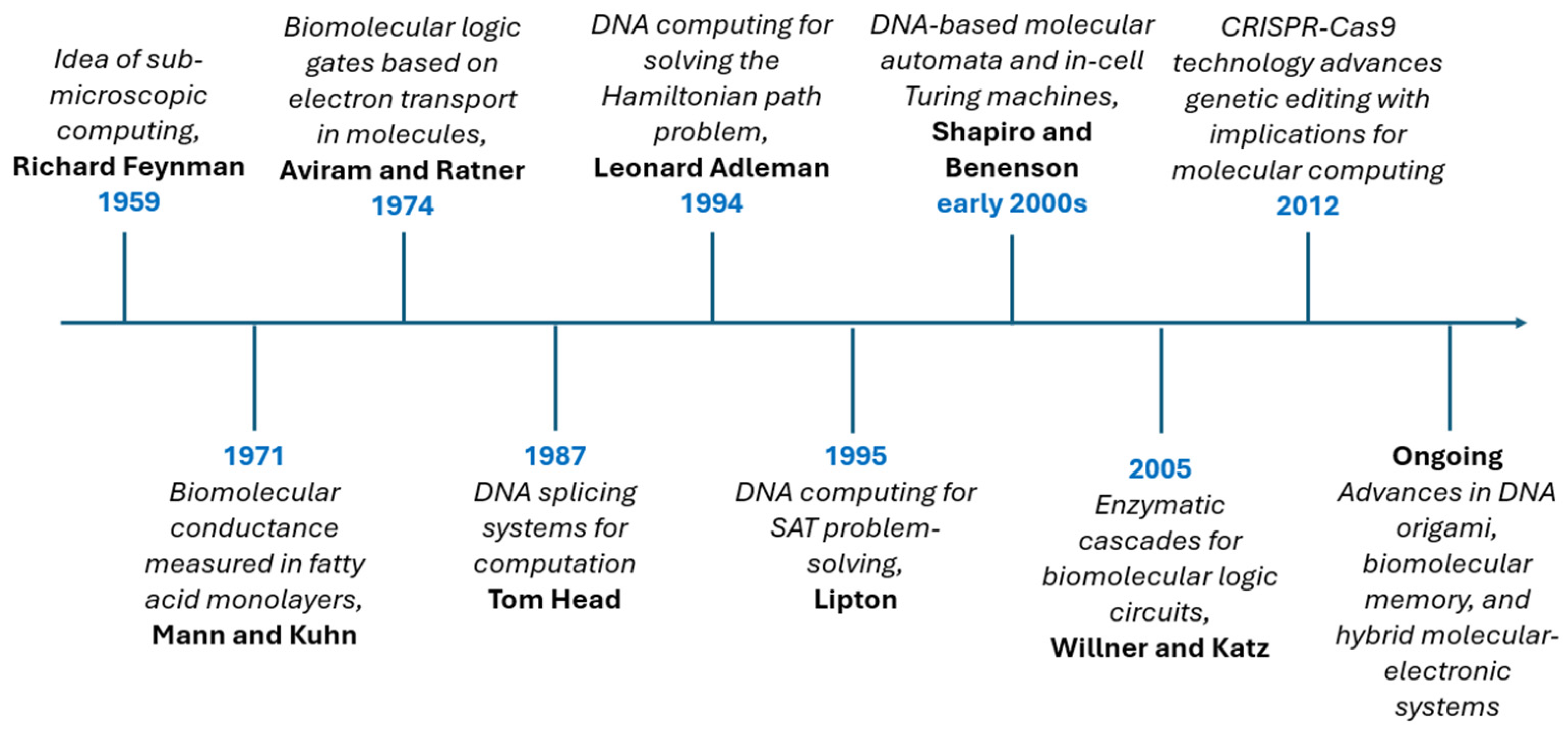
Figure 2.
Carbon derivatives.
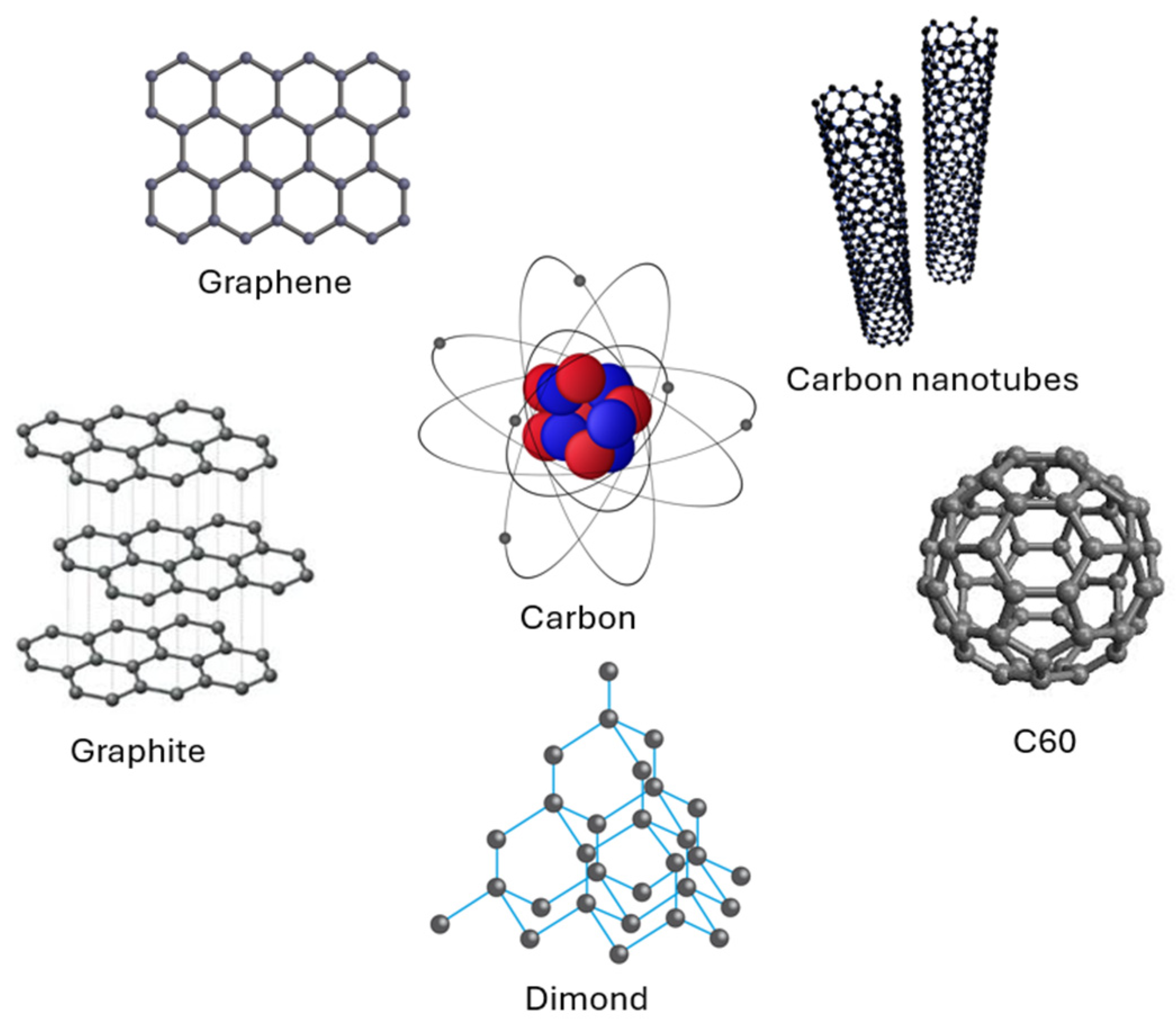
Figure 3.
Delocalized π bonds in benzene.
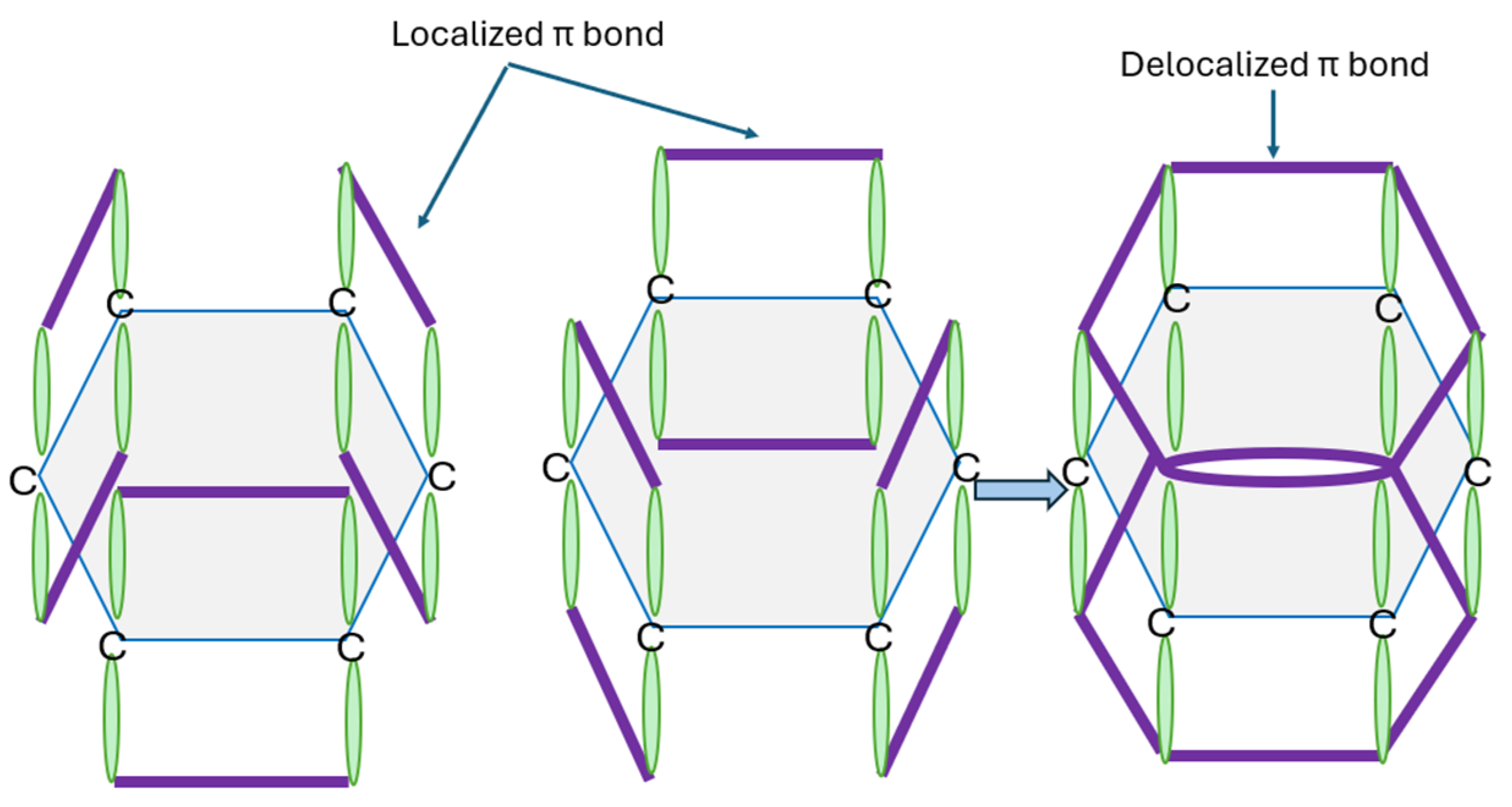
Figure 4.
Schematic biomolecular computer.
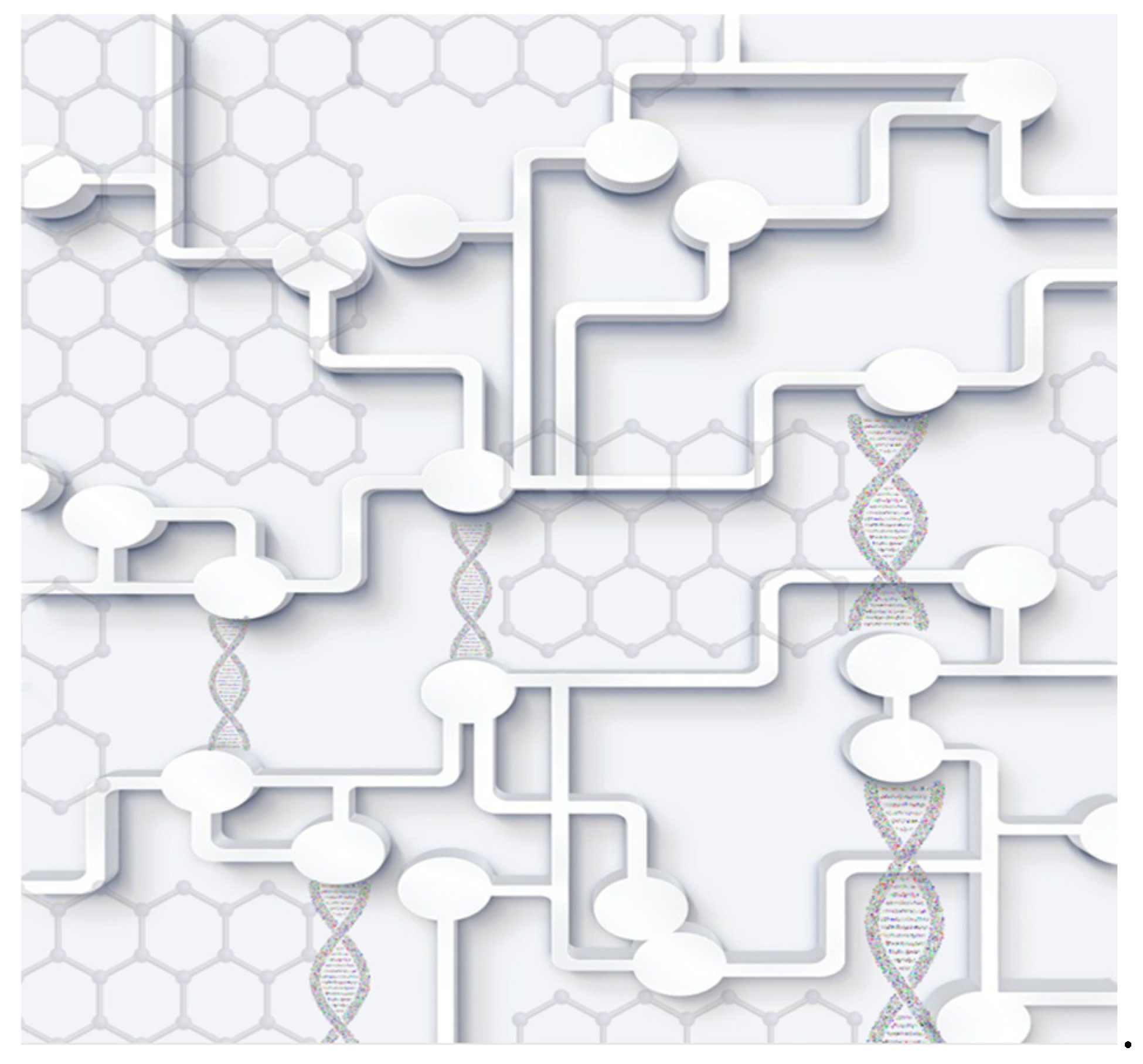
Figure 5.
Gene expression modulators.
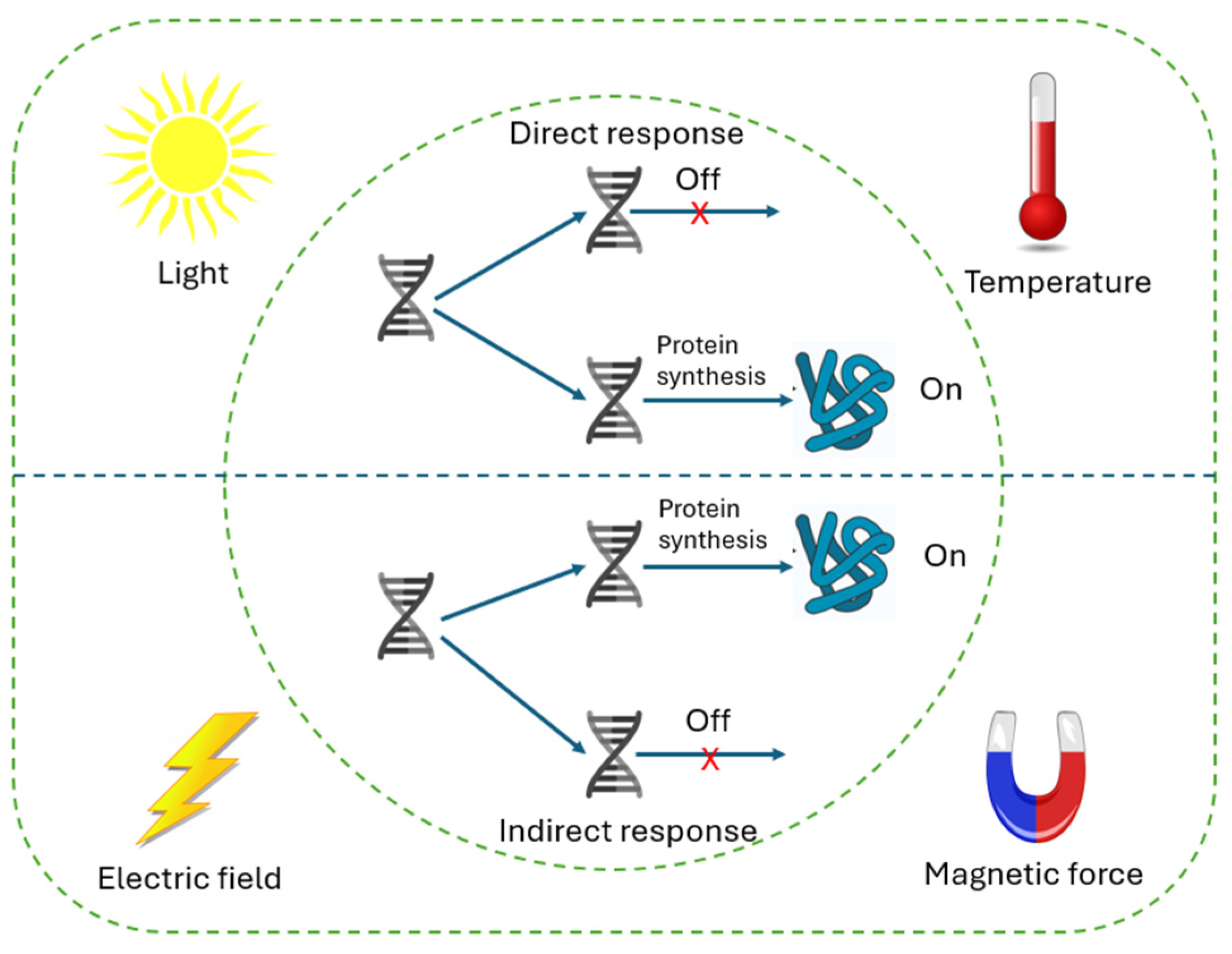
Figure 6.
Examples of existing implantable bioelectronic technologies.
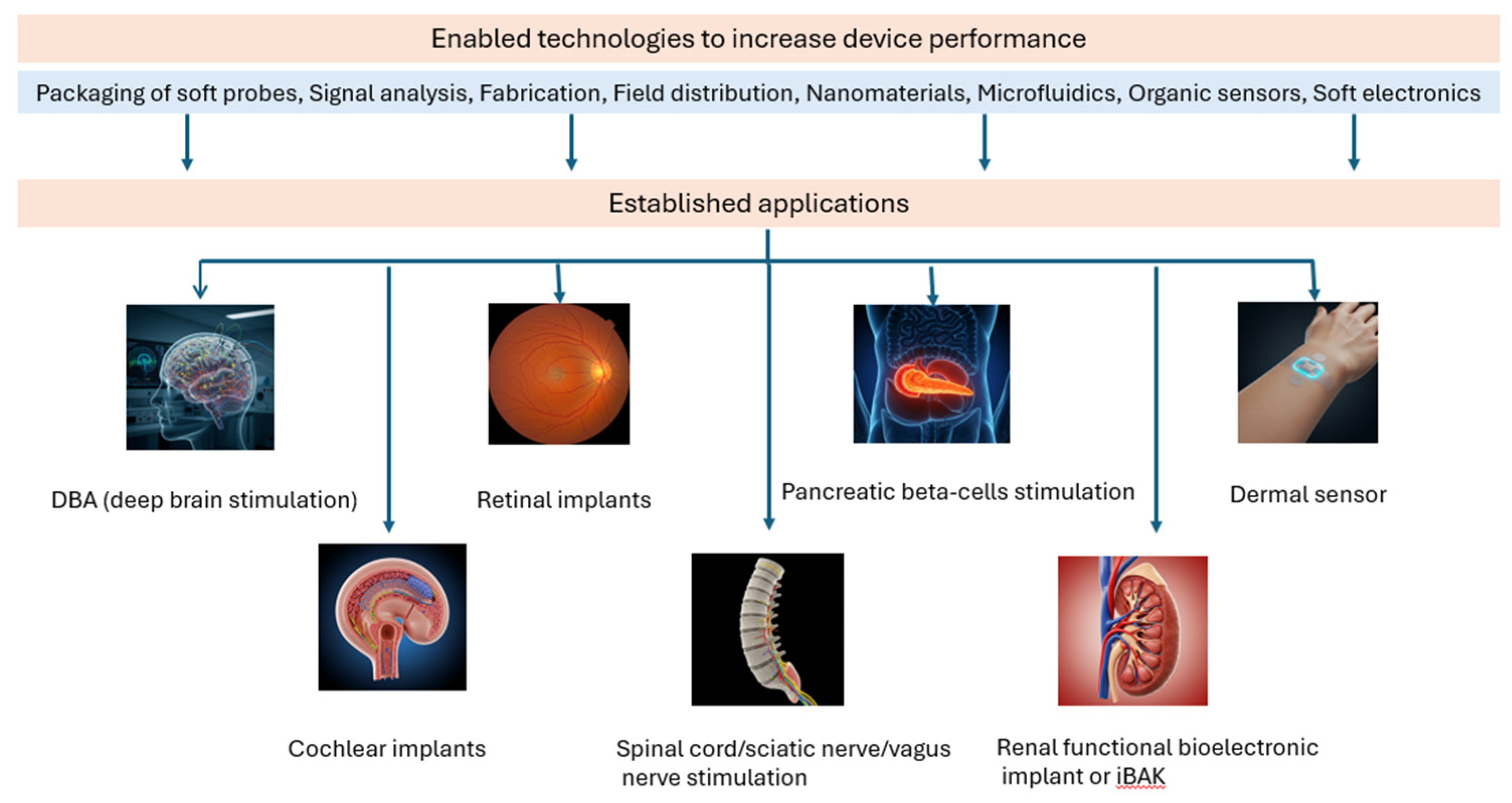
Table 1.
Molecular computing vs MOSFET-based computing.
| Characteristic | Molecular Computing | MOSFET Computing |
| Scale | Operates at molecular (nanometer to sub-nanometer) scale, enabling extremely high density of computation | Operates at micrometer scale; scaling is limited by lithographic processes and quantum tunnelling effects |
| Energy Efficiency | Potentially very low energy consumption due to chemical and biological interactions | Energy-intensive due to resistive losses and constant power requirements in high-speed circuits |
| Processing Speed | Relatively slow, limited by chemical reaction rates and molecular diffusion | Fast, with switching speeds in the gigahertz range |
| Complexity of Fabrication |
Can be self-assembled using chemical processes; fabrication is still experimental and less mature | Mature and standardized fabrication using well-established semiconductor manufacturing processes |
| Logic Operations | Can perform complex parallel operations inherently due to molecular interactions | Sequential logic operations using binary signals (0 and 1) |
| Re-programmability | Reprogramming requires modifying the molecular environment or sequences; less straightforward | Easily reprogrammable through software and hardware updates |
| Robustness | Susceptible to environmental conditions like temperature, pH, and contamination | Highly robust under controlled conditions; less sensitive to minor environmental changes |
| Integration Density | Extremely high, as molecules are orders of magnitude smaller than transistors | High but limited by physical dimensions of MOSFETs and wiring complexity |
| Cost | Currently high due to its experimental nature; expected to decrease with advances in chemical synthesis | Cost-effective due to economies of scale in semiconductor manufacturing |
| Parallelism | Intrinsically parallel due to simultaneous molecular interactions | Parallelism requires hardware design like multicore processors and is less inherently parallel |
| Error Handling | Error-prone due to the stochastic nature of chemical reactions; requires redundancy or error-correction mechanisms | Mature error-handling techniques are built into hardware and software |
| Power Source | Energy is derived from chemical reactions, light, or molecular interactions | Electrical power is supplied by external power sources |
| Scalability | High potential for scalability to molecular levels; still experimental | Limited scalability as transistor sizes approach physical and quantum limits |
Table 2.
Interaction between four types of molecular systems.
| Type |
Inorganic Molecules |
Carbon-based Inorganic Molecules |
Organic Molecules |
Hybrid Systems |
| Logic Gates | Molecules based on transition metals (e.g., ruthenium complexes) | Molecular switches (e.g., rotaxanes) | DNA logic gates | DNA-metal nanoparticle conjugates |
| Memory Devices | Metal-organic frameworks (MOFs) | Organic thin-film transistors | Protein-based memory systems | DNA-templated nanowires |
| Switches | Photochromic inorganic compounds | Fullerene derivatives (e.g., C60) | Light-activated proteins (e.g., rhodopsin) | DNA-linked quantum dots |
| Computing Systems | Quantum dot arrays | Molecular tweezers or cages | DNA strand displacement systems | DNA-organic molecule complexes |
| Energy Systems |
Semiconductor materials for solar cells | Organic photovoltaics | Photosynthetic proteins | Biohybrid solar cells with photosystems |
| Signal Amplification |
Catalytic systems with metal ions | Amplified chemical reactions | Enzyme cascades | Metal-enzyme hybrids |
| Artificial Neural Networks |
Memristors using transition metal oxides | Organic polymers | Neural networks with bio-mimicking peptides | Organic-inorganic hybrid memristors |
Table 3.
Type of the molecular systems, their mechanism and application examples.
| Molecule/System | Mechanism | Application |
Molecular Examples/Names |
| Rotaxanes | Conformational switching between mechanically interlocked molecular components | Logic gates, molecular memories | Rotaxane, Stoddart-type rotaxanes |
| Photochromic Dyes | Light-induced isomerization between distinct molecular states |
Optical computing, data storage | Azobenzene, Spiropyran, Diarylethenes |
| Semiconductors: Carbon Nanotubes (CNTs) and Fullerenes | Electron conduction via π-π stacking in delocalized π-electron systems | Transistors, flexible electronics | Pentacene, P3HT (Poly(3-hexylthiophene)); Multi-walled CNTs |
| Photosensitive and Luminescent Molecules | Light absorption and emission, or photoswitching between states |
Displays, sensors, molecular probes, carbon LED | Carbon Dots (CDs), Graphene Quantum Dots (GQDs), CNTs |
| Carbon Triboelectric Nanogenerators (TENGs) | Harvesting mechanical energy via triboelectric charge generation and transfer |
Wearable electronics, self-powered sensors |
Graphene, Carbon Nanotubes (CNTs), Carbon Dots (CDs), Diamond-like Carbon (DLC) films |
Table 4.
0D, 1D, 2D, and 3D carbon nanostructures in molecular computing.
| Dimensionality | Applications in Molecular Computing | Examples | Mechanisms Utilized |
| 0D (Zero-Dimensional) | - Carbon Quantum Dots for logic operations - Single-electron transistors (SET) |
- Carbon Quantum Dots (CQDs) - Graphene Quantum Dots (GQDs) - Fullerenes |
Quantum confinement, electron tunnelling, charge storage |
| 1D (One-Dimensional) | - Nanowire-based logic gates. - Molecular interconnects in circuits |
- Carbon Nanotubes (SWCNTs, MWCNTs) - Carbon Nanofibers |
Ballistic electron transport, low resistance conduction |
| 2D (Two-Dimensional) | - High-speed transistors for molecular computing - Flexible logic arrays |
- Graphene - Graphene Oxide (GO) - Reduced Graphene Oxide (rGO) |
High carrier mobility, tunable bandgap (GO/rGO) |
| 3D (Three-Dimensional) | - Neuromorphic computing architectures. - Memory devices with large capacity |
- Diamond - Graphite - Amorphous Carbon - Carbon Aerogels - Carbon Foams |
High surface area for data storage, hierarchical connectivity |
| 3D Hierarchical | - Hybrid logic systems. - Multi-functional computational networks |
- CNT-Graphene Hybrids - Porous Carbon Frameworks - Carbon Nano-onions (CNOs) |
Synergistic properties of combined dimensions |
Table 5.
This is a table.
| System | Molecules Used | Mechanism | Application |
| DNA Strand Displacement | DNA | Hybridization and displacement reactions are where an invading strand displaces a pre-bound strand, releasing it for further reactions | Logic gates, parallel computation, molecular circuits, data storage. |
| DNA Origami Circuits | DNA | DNA self-assembly into nanoscale structures capable of logic operations | Nanorobotics, programmable matters, drug delivery. |
| Ribozymes | RNA | RNA molecules that catalyze specific chemical reactions by folding into unique 3D structures |
Biosensing, RNA-based circuits, gene regulation, synthetic biology |
| CRISPR-Cas Systems | CRISPR RNA, Cas proteins | Sequence-specific DNA targeting for gene editing and programmable logic gates | Gene regulation, synthetic circuits, biological memory |
| Enzyme Cascades | Enzymes (e.g., polymerases, kinases) | Sequential catalytic reactions where the product of one enzymatic step acts as the substrate for the next, amplifying signals |
Biochemical computing, diagnostic tools, metabolic pathway analysis |
| Biomolecular Photon Absorption/Emission | Fluorescent proteins, quantum dots | Absorption or emission of photons for signalling and detection | Bio-imaging, molecular sensors, real-time monitoring |
| Biomolecular Wiring | Conductive polymers, protein nanowires | Conductive pathways are formed by biomolecules for signal transmission | Nanoelectronics, biosensors, molecular-scale circuits |
| Peptide Computing | Peptides, Engineered proteins | Sequence-specific interactions and self-assembly for information processing, Protein-protein interactions and allosteric changes to perform logical operations |
Logic gates, Molecular pattern recognition, targeted drug delivery, Peptide Nucleic Acids (PNAs) |
| Lipid Bilayer Systems | Lipids | Formation of lipid bilayers for compartmentalization and regulation of molecular diffusion and signalling pathways |
Signal transduction in biosensors, microfluidics, synthetic cells |
| Cell-based biological computing, Bacterial Quorum Sensing | Signalling molecules, proteins |
Cell-to-cell communication using diffusible molecules for collective behaviour control. |
Synthetic biology, population control in biosensors. |
Table 6.
Some examples of nucleic acid-based logic gates.
| Type of Logic Gate | Type of molecule | Way of Functioning |
| AND | DNA strands with specific sequences | It requires both inputs to be present for the output to form. The DNA strands input have complementary sequences to parts of an output strand. They only form when both inputs bind, creating a new duplex DNA |
| OR | Multiple DNA strands with overlapping sequences | Due to the shared binding regions, each input DNA strand can bind to a segment of the output strand. Thus, the output is produced if either or both inputs are present |
| NOT | DNA with toehold-mediated strand displacement | The output is pre-formed in a complex with another strand. The input strand, when present, displaces the output strand through a 'toehold' (a short single-stranded region that initiates strand displacement), turning off the output by releasing it from the complex |
| NAND | Combination of AND and NOT by DNA strand displacement | AND gate is followed by a NOT gate. DNA strands interact to form an output if both inputs are present (AND), but the other DNA strand displacement reaction then suppresses the output; if both inputs are present (NOT), thus only producing an output if at least one input is missing |
| NOR | Combination of OR and NOT by DNA interactions | Combination of OR gate with NOT gate. Any input produces an output in the OR part, which is negated by a NOT mechanism (strand displacement) if any input is present. Output appears only when no inputs are present |
| XOR | Complex DNA networks or cascades | Complex DNA interactions where outputs vary depending on which inputs are present. It may involve multiple steps where different DNA strands interact in a cascade manner. An output is present only when one but not both inputs are present through the series of strand displacements or catalytic reactions |
Table 7.
CMOL devices and hybrid CMOS-molecular biocomputing.
| Category | CMOS-Molecular Devices | CMOS-Biomolecular Hybrid Computing |
| Core Components | CMOS transistors, molecular crossbar arrays, nanowires, redox-active molecules, non-crystal molecular layers | CMOS transistors, DNA strands, peptides, enzymes, protein-based gates, vesicules, cells |
| Molecular Elements, examples | Fullerenes, CNTs, CQDs, TCNQ, ruthenium complexes, alkylthiols, ferrocene | DNA, RNA, Peptide Nucleic Acids (PNAs), Enzymes |
| Mechanisms | - Charge transfer & tunnelling; - Single-electron effects; - Resistive switching; - Spin-based logic - Photonic |
- DNA strand displacement for logic operations; - DNA origami patterns - Enzymatic reactions for data storage - Protein-based logic gates - Vesicular or cellular circuits - Photonic |
| Possible Device Architecture | Molecular crossbar array with interface CMOS; 2-layered structures; CMOS interface with different molecular or nanoparts | Biochemical layers (DNA, enzymes, lipids) interfaced with CMOS circuits; CMOS interface |
| Data Storage Mechanism | Molecular charge trapping and resistive switching (ReRAM); photoelectric memory; spintronic-electronic memory | Biochemical reactions storing data as nucleotide sequences; photoelectric memory |
| Advantages | - Ultra-high density memory; - Low power consumption; - Fault-tolerant logic; - Scalable beyond silicon limits |
- Biocompatibility for biomedical applications; - High parallelism; - Self-assembly of biomolecules |
| Challenges | - Precise molecular alignment issues; - Molecular degradation; - Complex fabrication |
- Molecular degradation in non-aqueous conditions; - Limited speed due to biochemical reactions |
|
Possible Applications |
- High-density non-volatile memory (NVM); - Neuromorphic computing - Quantum computing; - AI accelerators |
- Biosensors and medical diagnostics; - DNA-based cryptography; - Biocompatible computing devices |
| Energy Efficiency | Ultra-low power due to single-electron effects and resistive switching | Very low power but slower due to biochemical reaction rates |
| Fault Tolerance | High fault tolerance due to reconfigurable crossbar arrays | Error-prone due to biochemical reaction noise and degradation |
| Fabrication Complexity | High: molecular alignment, nanoscale precision required | Moderate: self-assembly properties of biomolecules |
| Scalability | Ultra-high density, nanoscale compatible | High, but limited by biochemical stability and speed |
| Emerging Research Focus Areas | - 3D CMOL stacks for ultra-dense memory; - Hybrid spintronics |
- DNA-based parallel computing; - Bio-neuromorphic architectures |
Table 8.
Applications of CMOL biocomputing in medicine.
| Application | Mechanism of Action | System/Device | Molecular Compound/Method |
|
Biosensing and Diagnostics |
Molecular sensors detect biomarkers and generate electronic signals |
CMOS biochip with molecular sensors | Aptamers, antibodies, DNA probes |
|
Targeted Drug Delivery |
Electronic control triggers drug release via molecular valves or nanocarriers. | Electrostatically controlled nanocarriers | Liposomes, dendrimers, electro-responsive polymers |
| Electrogenetic and optogenetic Control Systems | Electrical signals regulate genes expression through engineered circuits. |
Bioelectronic hybrid with genetic circuits | Electrogenetic switches, CRISPR, redox compounds |
| Implantable Biomodulation | Electrical stimulation modulates nerve activity for therapeutic intervention. | CMOS-integrated nerve stimulator | Conductive polymers, carbon nanotubes |
| Real-Time Cellular Monitoring | Cells tagged with reporters emit signals monitored by CMOS sensors. |
CMOS bioimager with fluorescent reporters | Quantum dots, fluorescent proteins, FRET sensors |
| Targeted Therapy | Molecular compounds respond to electronic stimulation to generate localized heat. |
CMOS-controlled magnetic nanoparticle array | Iron oxide nanoparticles, gold nanoshells, thermoresponsive liposomes |
Table 9.
Biosensors.
| Type of Biosensor | Sensing Mechanism | Applications |
| Nucleic Acid-Based Biosensors | DNA, RNA, and PNA probes to detect complementary nucleic acid sequences |
Genetic testing, pathogen identification |
| Antibody-Based Biosensors | Employ antibodies to specifically bind antigens, producing a detectable signal |
Pathogen detection, biomarker diagnostics |
| Cell-Based Biosensors | Use whole cells to monitor cellular responses to toxins, drugs, or environmental changes | Drug testing, toxin detection, cellular research |
| Tissue-Based Biosensors | Use biological tissue slices for broader metabolic sensing and functional assays |
Metabolic studies, experimental biology |
| Biomimetic Sensors | Use synthetic materials or molecular imprints that mimic biological recognition | Environmental monitoring, chemical sensing |
Table 10.
Types of drug delivery systems.
| Classification Type | Subtype | Mechanism Description | Examples |
| Based on Release Mechanism | Diffusion-controlled release | Drug diffuses out based on the concentration |
Reservoir matrix, hydrogel, polymeric nanoparticles |
|
Swelling and/or erosion-controlled release |
Matrix swells and/or degrades, and the drug is released | Biodegradable hydrogels, PLGA microparticles |
|
|
Chemical- controlled release |
Release by bond cleavage or polymer degradation | Drug-polymer conjugates, prodrugs |
|
| Stimuli-responsive release, molecular valve | Triggered by pH, temperature, light, magnetic field | mesoporous silica nanoparticle (MSN), pH-sensitive micelles, thermoresponsive liposomes |
|
| Osmotic pressure-driven release | Water influx creates pressure to push the drug out | Osmotic pumps (e.g., OROS systems) | |
| Enzyme-activated release | Enzymes trigger the release | Enzyme-responsive hydrogels |
|
| Combination Mechanisms | Multiple mechanisms combined for enhanced control | pH and temperature- sensitive liposomes |
|
| Based on mechanism of action |
Receptor agonism or antagonism | Drugs activate or block receptors to modulate cellular signaling pathways |
β-blockers (propranolol), opioids (morphine) |
| Enzyme inhibition | Inhibits specific enzymes, preventing the conversion of substrates into products |
ACE inhibitors (lisinopril), statins (atorvastatin) |
|
|
Ion channel modulation |
Modulates ion channels to alter ion flow, affecting cellular excitability and signaling |
Calcium channel blockers (amlodipine), lidocaine |
|
| Nucleic acid interaction |
Drugs that bind or modify nucleic acids to inhibit transcription; gene expression modulation |
Cisplatin (DNA cross-linker), doxorubicin; siRNA therapy (patisiran), HDAC inhibitors (vorinostat) |
|
| Cytotoxic or cytostatic action |
Induces cell death or inhibits cell proliferation |
Paclitaxel, methotrexate | |
| Hormone modulation or replacement | Modifies hormone levels either by supplementation or inhibition |
Insulin, tamoxifen | |
| Protein binding or sequestration | Binds proteins to inhibit their function or prevent their interaction with other molecules |
TNF Inhibitors (infliximab), paclitaxel |
|
| Based on Type of Targeting | Passive targeting | Utilizes physiological barriers: EPR effect) | Liposomes, polymeric Mmcelles |
| Active targeting | Receptor or ligand binding for specific cell interaction | Antibody-drug conjugates (ADCs) |
|
| Inverse targeting | Avoiding healthy cells interaction | Polyethylene glycol (PEG) coating or PEGylation |
|
| Physical Targeting | External triggers, such as heat, magnetic field, US, Photodynamic therapy (PDT), Photothermal therapy (PTT), electroporation; mechanical |
Magnetic nanoparticles, US-triggered microbubbles or sonoporation; cell apoptosis through the PDT or PTT; microneedles, micro-jets | |
| Based on Type of Carrier System | Nanoparticles | Nano-sized carriers for drug encapsulation | Polymeric Nanoparticles, Lipid Nanoparticles |
|
Microspheres, Microcapsules |
Microscale carriers for larger payloads. | PLGA Microspheres, Calcium Alginate Beads | |
| Liposomes | Lipid bilayer vesicles for drug delivery | Doxil (Doxorubicin Liposome) |
|
|
Polymeric Conjugates |
Drugs chemically linked to polymers. | PEGylated Proteins (PEG-IFN), HPMA Conjugates |
|
|
Hydrogels, Dendrimers |
Water-swollen networks & branched polymers | PAMAM Dendrimers, Smart Hydrogels | |
| Based on Site of Action |
Intracellular Delivery |
Targets drug release inside cells | Liposomes, Antibody-Drug Conjugates |
|
Extracellular Delivery |
Releases drugs outside the cells |
Collagen-Based Drug Systems, Hydrogels | |
|
Organ-Specific Delivery |
Targets specific organs or tissues | Liver-Targeting Nanoparticles, Brain-Targeting Liposomes |
Table 11.
Biological carrier systems in medical treatment.
| Type of Carrier System | Description | Applications |
| Liposomes | Spherical vesicles composed of lipid bilayers encapsulating drugs |
Cancer therapy, gene delivery |
| Micelles | Amphiphilic molecules form nanosized spherical structures for hydrophobic drugs |
Cancer treatment, antimicrobial delivery |
| LPNs, SLNs, NLCs | Lipid nanoparticles for encapsulation |
mRNA |
| Nanoparticles, nanotubes | Solid colloidal particles used for controlled drug release and targeting | Tumor targeting, vaccine delivery |
| Dendrimers | Branched macromolecules with controlled architecture for drug conjugation | Gene therapy, anticancer drug delivery |
| Polymeric Carriers | Biodegradable polymers used for sustained and targeted drug release | Chronic disease treatment, cancer therapy |
| Microspheres | Small spherical particles used for controlled drug delivery |
Hormonal therapy, vaccine delivery |
| Cell-based delivery and viral vector | Macrophages and stem cells as drug delivery system; DNA-engineered retrovirus | Oncology, immunology |
Table 12.
Physical gene activity modulation methods.
| Technique | CMOS/Molecular Components | Mechanism of Action |
Condition/ Organ |
Pathologies/ Conditions Treated |
| Magnetogenetics | Magnetic nanoparticles, magnetically sensitive ion channels (TRPV1), CMOS magnetic field sensors |
Magnetic field activates ion channels for neural stimulation |
Brain, spinal cord, peripheral nerves |
Parkinson’s, depression, chronic pain |
| Thermogenetics | Thermo-responsive proteins (e.g., TRPV1, TRPM8), CMOS thermal sensors, plasmonic nanoparticles | Heat-activated ion channels modulate cell activity | Brain, skin, muscle |
Epilepsy, neuropathic pain, skin cancer |
| Mechanogenetics | Mechanosensitive ion channels (e.g., Piezo1, TREK-1), stretchable CMOS devices, pressure-sensitive nanoparticles |
Mechanical force activates ion channels for cellular control | Muscle, heart, skin, bone | Muscular dystrophy, cardiac arrhythmias, osteoarthritis |
| Sonogenetics | Ultrasound- sensitive proteins (e.g., prestin, TRPA1), CMOS ultrasound transducers, gas vesicle nanoparticles (GVNPs) |
Focused ultrasound activates ion channels for cellular response |
Brain, liver, muscle |
Epilepsy, liver diseases, oncology |
| Electrogenetics | Electrosensitive ion channels (e.g., K2P, NaV), CMOS microelectrode arrays, conductive polymers (PEDOT) | Electrical stimulation induces ion flow and gene expression; DART | Brain, heart, spinal cord |
Epilepsy, cardiac arrhythmias, paralysis, brain disorders |
| Optogenetics | Opsins (e.g., Channelrhodopsin, Halorhodopsin), CMOS micro-LED arrays, light-sensitive proteins | Light stimulation activates opsins for ion flow modulation |
Brain, retina, spinal cord | Parkinson’s, retinal blindness, epilepsy, mood disorders |
Disclaimer/Publisher’s Note: The statements, opinions and data contained in all publications are solely those of the individual author(s) and contributor(s) and not of MDPI and/or the editor(s). MDPI and/or the editor(s) disclaim responsibility for any injury to people or property resulting from any ideas, methods, instructions or products referred to in the content. |
© 2025 by the authors. Licensee MDPI, Basel, Switzerland. This article is an open access article distributed under the terms and conditions of the Creative Commons Attribution (CC BY) license (http://creativecommons.org/licenses/by/4.0/).
Copyright: This open access article is published under a Creative Commons CC BY 4.0 license, which permit the free download, distribution, and reuse, provided that the author and preprint are cited in any reuse.