Preprint
Article

This version is not peer-reviewed.

Relationship Between 8-iso-Prostaglandin-F2a and Predicted 10-Year Cardiovascular Risk in Hypertensive Patients

A peer-reviewed article of this preprint also exists.

Submitted:

05 February 2025

Posted:

06 February 2025

You are already at the latest version

Abstract

8-iso-prostaglandin-F2α (8-iso-PGF2α) is a recognized marker of oxidative stress. Previous studies suggested that 8-iso-PGF2α plays an important role in the pathogenesis of hypertension and cardiovascular (CV) diseases. However, limited data exist on the prognostic role of 8-iso-PGF2α in hypertensive patients undergoing primary prevention. The aim of this study was to assess the relationship between 8-iso-PGF2α and 10-year CV risk, as predicted by validated equations in hypertension patients without CV diseases. Materials and methods. A total of 432 individuals aged 40-75 years were enrolled. Plasma 8-iso-PGF2α was assessed through ELISA method. CV risk was calculated by using the Framingham Risk Score (Fr-S) and the Atherosclerosis Cardiovascular Disease Risk Score (ASCVD-S). Low, moderate, or high CV risks were defined according to validated cutoffs. Results. Individuals with higher CV risk had significantly greater 8-iso-PGF2α values compared to those with low or moderate CV risk (p<0.001). 8-iso-PGF2α correlated strongly with Fr-S and ASCVD-S in the entire population and in patients with normal renal function (all p<0.001), but not in patients with eGFR<60 mL/min/1.73m2. These associations remained significant after adjustment for traditional factors included in the CV risk equations in the overall population and in patients with normal renal function. The 8-iso-PGF22α cutoffs that best distinguished patients with high CV risk were 310 pg/mL for Fr-S and 264 pg/mL for ASCVD-S in the overall population, with significant differences between the groups divided by eGFR (all p<0.001). Conclusion. 8-iso-PGF2α may have a prognostic role in primary prevention of CV events in hypertensive patients, particularly in those with normal renal function.

Keywords: 
;  ;  ;  ;  ;  ;  ;  

1. Introduction

The 8-iso-prostaglandin-F2α (8-iso-PGF2α) is a bioactive compound mainly formed in humans via the free radical-mediated peroxidation of arachidonic acid in membrane phospholipids[1]. It serves as a valuable biomarker of in vivo lipid oxidation and a surrogate indicator of increased reactive oxygen species production and reduced nitric oxide bioavailability. As such, it is considered a sensitive and specific index of oxidative stress [2,3]. Previous studies have demonstrated that 8-iso-PGF2α induces vasoconstriction, platelet activation, and smooth muscle proliferation in blood vessels [4]. These effects contribute to the impairment of endothelium-mediated vasodilatation and promote pro-thrombotic and pro-inflammatory state [3,4,5,6].
There is considerable evidence that F2-isoprostanes are involved in the pathogenesis of hypertension and atherosclerosis, and their important role in the development of cardiovascular diseases has been also described [7,8,9,10]. Oxidative stress contributes to the adverse effects of cardiovascular risk factor by inducing endothelial dysfunction and morphofunctional changes in microcirculation, both of which are strong predictors of organ damage and cardiovascular outcomes [5,6,11,12].
Over the years, several mathematical models have been developed to estimate global risk of cardiovascular events by integrating partial information of each major risk factor. Among these, the Framingham Risk Score (Fr-S) and the Atherosclerosis Cardiovascular Disease Risk Score (ASCVD-S) have become widely adopted due to their simplicity and validation across diverse populations[13,14,15]. Developed from longitudinal trial data, these scores can estimate the 10-year risk of cardiovascular diseases, and their use is recommended to assess the overall cardiovascular risk, providing a comprehensive approach to managing hypertensive patients[15,16,17].
In this context, the 8-iso-PGF2α, as a marker of in vivo oxidative stress, emerges as a potential link between oxidative stress and cardiovascular risk assessment. It might represent a predictor of cardio-cerebrovascular diseases across various populations [7,8,9], with some studies supporting this notion, though there is also conflicting data[18]. Limited evidence is available regarding the prognostic role of 8-iso-PGF2α in hypertensive patients, especially in primary prevention. Moreover, no studies have investigated the relationship between oxidative stress, as assessed by 8-iso-PGF2α and 10-year cardiovascular risk predicted by validated mathematical equations in hypertension patients, which is the aim of the present study.

2. Materials and Methods

2.1. Study design and population

This cross-sectional observational design was performed on 432 essential hypertensive patients selected from Caucasian patients consecutively attending the Nephrology and Hypertension Section of the University Hospital of Palermo, Italy, for specialist advice. Patients meeting the following criteria were excluded from this research:
  • Age <40 and >75 years old;
  • Renovascular, endocrine, malignant hypertension or hypertension associated with obstructive sleep apnea syndrome, as described in detail in previous studies [19,20];
  • Renal replacement therapy (transplanted or dialysis patients);
  • Pharmacological treatment for cardiac rhythm or conduction abnormalities;
  • Use of nonsteroidal or steroidal anti-inflammatory medications within 4 weeks before the start of the study.
  • History of cerebrovascular disease, coronary heart disease, or symptomatic peripheral arterial disease;
  • Hospitalization for CV cause in the previous 6 months;
  • Major non-cardiovascular diseases (history of liver cirrhosis, chronic obstructive lung disease, or neoplasms).
The study protocol conformed to the ethical guidelines of the Declaration of Helsinki on ethical principles for medical research involving human subjects (REF) and was approved by the Local Review Board. Written informed consent was obtained from each patient.

2.2. Clinical and laboratory evaluation

Careful clinical history and physical examination were performed in all patients. Individuals who reported smoking cigarettes regularly during the past year were considered current smokers. Body weight and height were measured by a nurse, and body mass index (BMI) was calculated as body weight divided by squared height (kg/m2). Patients with a history of diabetes (or on treatment with antidiabetic drugs) or with fasting serum glucose ≥ 126 mg/dL were considered diabetics. For individuals with fasting serum glucose between 100–125 mg/dL, the diagnosis of diabetes was confirmed based on either glycated hemoglobin or 2-hour plasma glucose during an oral glucose tolerance test. Clinic blood pressure (BP) was recorded by a doctor as the mean of three consecutive measurements obtained at 2-minute intervals using a validated electronic oscillometric device (WatchBP Office, Microlife AG, Widnau, Switzerland), after 5 min of rest in a sitting position. According to the 2023 European Society of Hypertension/European Society of Cardiology guidelines, hypertension was defined as a BP ≥ 140/90 mmHg or treatment with antihypertensive drugs [17].
Routine biochemical parameter determination was performed in all patients with standard techniques using an autoanalyzer (Boehringer Mannheim for Hitachi system 911, Mannheim, Germany). Low-density lipoprotein (LDL) cholesterol was calculated using the Friedewald formula. Estimated glomerular filtration rate (eGFR) was determined using the Chronic Kidney Disease Epidemiology Collaboration (CKD-EPI) equation. The 8-iso-PGF2α was measured by a solid-phase, specific enzyme-linked immunosorbent assay (ELISA) using a commercial kit (Assay Design Inc., Ann Arbor, MI), with particular attention to minimizing interference from other serum components. High-sensitivity C-reactive protein (CRP) was also measured using a commercially available ELISA kit (Diagnostic Biochem, London, Ontario, Canada).
Cardiovascular risk score: Past medical history, clinical data, and laboratory tests were collected in all patients to predict the 10-year risk of cardiovascular events using validated equations of Fr-S and ASCVD-S. As described elsewhere, these mathematical models respectively derived by Framingham cohort study and pooled cohorts of participants from several large studies, including the Atherosclerosis Risk in Communities (ARIC) study, the Cardiovascular Health Study, and the Coronary Artery Risk Development in Young Adults (CARDIA) study. Sex- and race-specific equations used to predict 10-year cardiovascular risk have been described in detail elsewhere [15,16,17,18,19,20,21].

2.3. Statistical analysis

Statistical analyses were peformed using the IBM SPSS Statistics software package, version 23 for Macintosh (SPSS, Chicago, Ill, USA). Statistical analysis was initially performed on the entire study population. Given the well-established link between 8-iso-PGF2α and kidney function, as noted in previous studies [22.23], statistical analysis was subsequently conducted on two subgroups based on eGFR: ≥60 mL/min/1.73 m2 (n=279) and <60 mL/min/1.73 m2 (n=153). For further analyses, the population was divided into three groups according to validated 10-year cardiovascular risk cutoff values (10% and 20% for Fr-S; 7.5% and 15% for ASCVD-S) [15,16,17,18,19,20,21].
The normal distribution of continuous variables was assessed using the Kolmogorov-Smirnov test. Continuous variables were reported as mean ± standard deviation (SD). Triglycerides, Fr-S, and ASCVD-S, which had skewed distributions, were log-transformed to satisfy distributional assumptions before applying parametric tests. These variables were presented as median and interquartile range (IQR). Categorical variables were expressed as percentages. Comparisons of continuous variables between groups were conducted using Student’s t-test for unpaired data or analysis of variance (ANOVA) with the Holm-Sidak test for multiple comparisons, as appropriate. For the categorical variables, comparisons were performed using the χ2 test, with the Monte Carlo method employed to compute exact two-tailed α-values.
Univariate regression analyses with Pearson’s correlation coefficients were used to examine the relationships between 8-iso-PGF2α with Fr-S, ASCVD-S, and the other variables. Stepwise multivariate regression analyses were performed with Fr-S (or alternatively ASCVD-S) as outcome variable. Covariates included: age, sex (0=females; 1=males), diabetes (0=no; 1=yes), current smoking habit (0=no; 1=yes), antihypertensive therapy (0=no; 1=yes), BMI, serum total cholesterol, HDL and LDL-cholesterol, clinic systolic BP, eGFR and 8-iso-PGF2α. To further assess the influence of renal function, treated as continuous variable (eGFR), on the relationship between Fr-S (or alternatively ASCVD-S) and 8-iso-PGF2α, additional multivariate models were analyzed in the population divided into two groups based on eGFR values (≥ 60 mL/min/1.73m2 or < 60 mL/min/1.73m2). A backward stepwise procedure was used in all analyses, with α equal to 0.15 as the cutoff for variable entry or removal. Collinearity was assessed by calculating the variance inflation factor (VIF): variables with VIF ≥2 were excluded from the models. The null hypothesis was rejected with a two-tailed p-value ≤ 0.05.
Receiver-operating characteristic (ROC) curves were built for the entire population and for the two groups divided by eGFR to evaluated the accuracy of 8-iso-PGF2α in detecting a 10-year risk of cardiovascular disease ≥ 20% with Fr-S or ≥ 15% with ASCVD-S. The significance of differences between ROC curves was assessed using the Hanley and McNeil method. The null hypothesis was rejected at a p-value ≤ 0.05.

3. Results

A total of 432 hypertensive patients were enrolled. The mean age of the overall study population was 60 ± 10 years; 59.0% were male, and 35.4% had an eGFR < 60 mL/min/1.73m2. Table 1 presents the characteristics of the overall study population and the two groups divided by eGFR.
Most of the individuals had low cardiovascular risk, and none had a history of previous cardiovascular events. Patients with low eGFR had significantly higher values of 8-iso-PGF, Fr-S and ASCVD-S compared to those with normal eGFR (all p<0.001), while no significant differences in antihypertensive therapy were observed between groups.
Subjects with higher cardiovascular risk had significantly greater values of 8-iso-PGF2α compared to those with low or moderate cardiovascular risk (Figure 1).
The main univariate correlations of 8-iso-PGF, Fr-S, and ASCVD-S in the overall population are presented in Table 2.
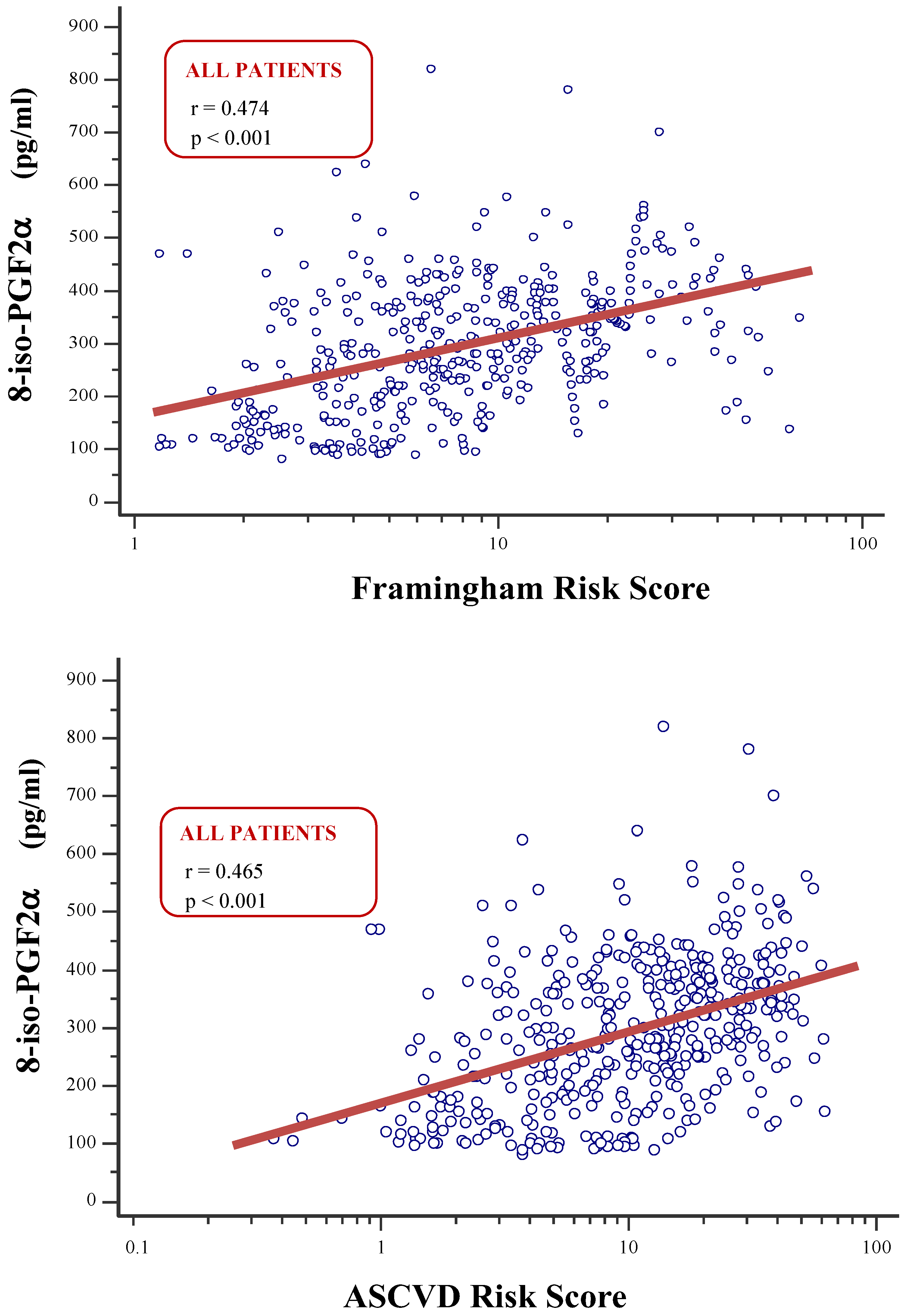
8-iso-PGF2α was significantly associated with the variables included in the equations used to predict 10-year cardiovascular risk. Furthermore, 8-iso-PGF showed a strong correlation with both Fr-S or ASCVD-S (all p<0.001) (Figure 2), and these relationships remained significant after adjustment for eGFR values (r=0.361 and p<0.001 with Fr-S; r=0.306 and p<0.001 with ASCVD-S). When these relationships were assessed separately in the two groups of patients divided by eGFR, 8-iso-PGF2α was significantly associated with Fr-S and ASCVD-S only in subjects with eGFR ≥ 60 mL/min/1.73m2 (respectively r=0.667 and r=0.580; all p<0.001). In contrast, these correlations were not observed in subjects with lower eGFR< 60 mL/min/1.73m2.
At the multivariate analyses in the overall population, 8-iso-PGF2α was significantly associated with Fr-S (or alternatively ASCVD-S) independently of other covariates, including eGFR and variables used to calculate the 10-year cardiovascular risk (Table 3).
Additional multivariate models were constructed for subgroups with eGFR ≥ 60 mL/min/1.73m2 and < 60 mL/min/1.73m2: 8-iso-PGF2α was independently associated with Fr-S and ASCVD-S only in individuals with eGFR ≥ 60 mL/min/1.73m2 (all p<0.001), whereas no significant relationship was observed in individuals with renal impairment.
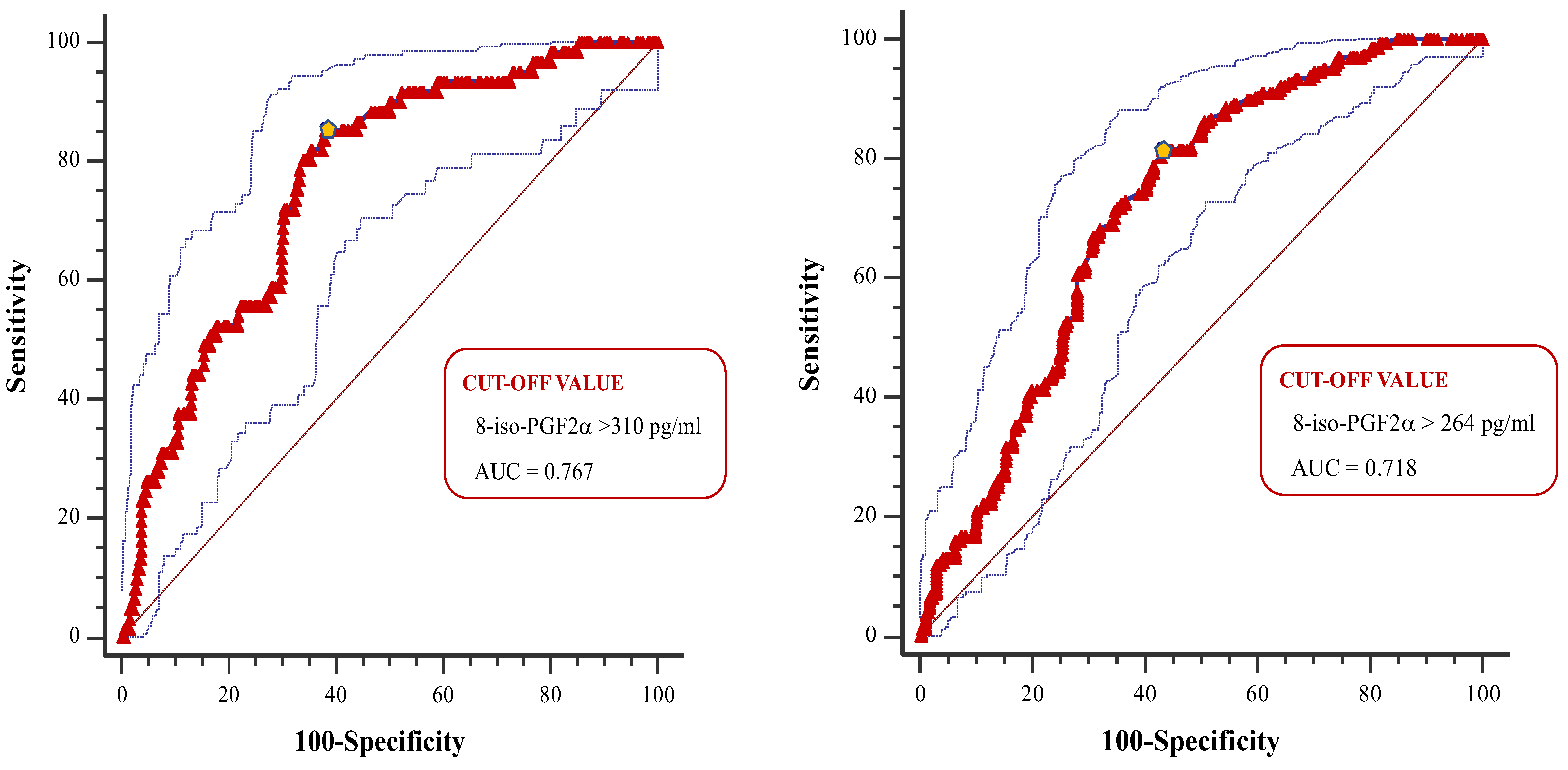
The ROC curves built to assess the global accuracy of 8-iso-PGF2α in detecting patients with high cardiovascular risk (Fr-S ≥ 20%; ASCVD-S ≥ 15%) are shown in Figure 3. The 8-iso-PGF2α cutoffs that best distinguished patients with high cardiovascular risk were 310 pg/mL for Fr-S (AUC: 0.767) and 264 pg/mL for ASCVD-S (AUC: 0.718) (Figure 3A,B). When ROC curves were compared in patients stratified by eGFR, higher AUC values were observed in patients with eGFR ≥ 60 mL/min/1.73m2 compared to those with lower eGFR, with significant differences (all p<0.001).
When ROC curves were compared in patients stratified by eGFR, higher AUC values were observed in patients with eGFR ≥ 60 mL/min/1.73m2 compared to those with lower eGFR, with significant differences (all p<0.001; Figure 3C,D).

4. Discussion

A key finding of our study is that 8-iso-PGF2α, a reliable marker of oxidative stress, is independently associated with 10-year cardiovascular risk as predicted by validated equations in hypertensive patients without overt cardiovascular disease. There is experimental evidence that oxidative stress contributes to the pathogenesis of hypertension [3,11,12], and previous studies have investigated the potential role of 8-iso-PGF2α in the process of atherosclerosis and cardiovascular diseases[7,8,9,10,22]. Minuz et al. demonstrated increased urinary excretion of 8-iso-PGF2α in 75 hypertensive individuals compared to 75 pair-matched healthy controls [24], and other authors similarly found elevated urinary F2-isoprastanes in hypertensive patients and individuals at risk for future cardiovascular events [4,10]. Cottone et al. observed higher serum levels of 8-iso-PGF2α in individuals with essential hypertension compared to healthy controls, confirming that oxidative stress is increased in this population [3]. High levels of F2-isoprostanes have also be proposed as a biomarker of cardiovascular disease, and the role of 8-iso-PGF2α in cardiovascular events has been also investigated by several authors. In a large general population study, Keaney et al. reported that urinary 8-epi-PGF2 levels were associated with previous cardiovascular diseases[25]: in this study, approximately 13% of participants had a history of prior cardiovascular events, and only one-third of patients had hypertension. In contrast, in our study, none of participants had overt cardiovascular diseases, and most had low cardiovascular risk, despite all being hypertensive.
The predictive role of urinary 8-iso-PGF2α in cardiovascular mortality was also demonstrated in a case-cohort study of postmenopausal women [26], with similar findings reported in different populations [7,8,27]. However, most of these studies included patients with acute cardiovascular events, and the association between 8-iso-PGF2α and cardiovascular events was not adjusted for the full set of Fr-S covariates. In our work, by contrast, 8-iso-PGF2α was significantly associated with Fr-S or ASCVD-S even after adjustment for all variables used to predict 10-year cardiovascular risk.
Another relevant finding of our study is that 8-iso-PGF2α was independently associated with cardiovascular risk only in subjects with eGFR ≥ 60 mL/min/1.73m2, whereas this relationship was not observed in patients with lower eGFR. Previous studies consistently demonstrated enhanced oxidative stress in experimental and clinical renal injury [22,23,28]. Roberts and Morrow showed that the increased 8-iso-PGF2α in renal dysfunction was due to a true excess in oxidative stress rather than an impaired metabolism or clearance of 8-iso-PGF2α itself [29]. Cottone et al. observed a strong negative correlation between 8-iso-PGF2α and eGFR in hypertensive individuals [22], and we confirmed these results by showing an inverse correlation between these variables (see Table 2), as well as higher 8-iso-PGF2α values in individuals with normal renal function compared to those with renal impairment (p<0.001, see Table 1). However, we did not find an association between 8-iso-PGF2α and cardiovascular risk in patients with eGFR < 60 mL/min/1.73m2. Oxidative stress is likely to represent an early stage in the development of atherosclerotic damage, serving as a primum movens that triggers endothelial dysfunction and contributes to the formation of atherosclerotic plaques[10,12,28]-Patients with renal impairment are likely to have widespread subclinical vascular damage, with other factors contributing to an elevated cardiovascular risk [19,30,32]. In line with this, several studies have highlighted that CKD exhibit accelerated atherosclerosis[30,33,34] and greater organ damage compared to non-CKD individuals [34,35,36,37]. It is plausible that the vascular modifications in CKD patients are so advanced that they become independent of oxidative stress. Therefore, the lack of association between 8-iso-PGF and cardiovascular risk in patients with eGFR <60 mL/min/1.73 m2 may reflect advanced vascular damage rather than a true absence of oxidative stress contribution, thereby diminishing its prognostic significance. Further research is needed to explore these mechanisms and to better understand the underlying processes in this population.
To the best of our knowledge, this is the first study to report on the association between 8-iso-PGF2α and predicted cardiovascular risk in hypertensive patients without overt cardiovascular disease. Some pathophysiological mechanisms could be hypothesized to explain this relationship. The process of atherosclerosis, which underlies cardiovascular events, recognizes sequential steps, from endothelial dysfunction to plaque formation and rupture. Oxidative stress and reduced nitric oxide contribute to vascular damage by impairing endothelium-mediated vasodilatation and promoting pro-thrombotic and pro-inflammatory state [5,6]. Additionally, 8-iso-PGF2α directly induces vasoconstriction, platelet activation, and smooth muscle proliferation in the vessels [6,24], further exacerbating vascular damage. In hypertensive patients, oxidative stress is closely linked to inflammation and atherogenic activation, as oxidative excess reduces nitric oxide bioavailability and correlates with the degree of endothelium dysfunction and with subsequent cardiovascular events [3,11].
In a nutshell, the association between 8-iso-PGF2α and cardiovascular risk, as demonstrated in our study and supported by previous literature, including research involving metabolic disorders [cit], highlights the potential of oxidative stress markers as indicators of cardiovascular risk across diverse patient populations. Further research, particularly prospective studies, is needed to confirm our findings and expand on their implications.
Our study has several limitations that should be considered when interpreting the results. The cross-sectional nature of the study prevents us from drawing conclusions about a causal relationship between 8-iso-PGF and predicted cardiovascular risk. However, there are plausible mechanistic reasons to expect this, as described earlier. Regarding the measurement methodology, we quantified serum 8-iso-PGF, which likely reflects its levels only over short intervals. Additionally, the measurements were performed using ELISA, which, although widely used, is less sensitive and specific than mass spectrometry for assessing F2-isoprostanes. Measurements of IsoP using LCMS is costly, being limited to highly trained technicians and demanding expensive chromatography analysis and standards and therefore limits its clinical utility.

CONCLUSION

In conclusion, this study demonstrates for the first time that 8-iso-PGF, a reliable marker of oxidative stress, is independently associated with 10-year cardiovascular risk as predicted by validated models (Fr-S and ASCVD-S) in hypertensive patients without overt cardiovascular disease. This relationship was particularly evident in individuals with eGFR ≥ 60 mL/min/1.73 m², highlighting a potential link between oxidative stress and early cardiovascular risk in this subgroup. Conversely, the absence of such an association in patients with impaired renal function suggests that advanced vascular damage in CKD may diminish the prognostic value of oxidative stress.
Our findings underscore the pivotal role of oxidative stress in the early stages of vascular damage and its contribution to endothelial dysfunction and to the progression of atherosclerosis. These results support the potential utility of 8-iso-PGF as a biomarker to refine cardiovascular risk assessment in hypertensive patients. However, further longitudinal studies are needed to confirm the causal role of oxidative stress in cardiovascular outcomes and to explore its therapeutic implications in both general and renal-impaired populations.
Authors should discuss the results and how they can be interpreted from the perspective of previous studies and of the working hypotheses. The findings and their implications should be discussed in the broadest context possible. Future research directions may also be highlighted.

5. Conclusions

This section is not mandatory but can be added to the manuscript if the discussion is unusually long or complex.

Funding

“This research received no external funding”.

Informed Consent Statement

The study was conducted in accordance with the Declaration of Helsinki, and approved by the Ethics Committee of PALERMO CEL 1 (protocol n.28 10/12/2024).

Informed Consent Statement

Informed consent was obtained from all subjects involved in the study.

Data Availability Statement

Data are available on reasonable request.

Conflicts of Interest

The authors declare no conflicts of interest.

References

  1. Morrow JD, Hill KE, Burk RF, Nammour TM, Badr KF, Roberts LJ. A series of prostaglandin F2-like compounds are produced in vivo in humans by a non-cyclooxygenase, free radical-catalyzed mechanism. Proceedings of the National Academy of Sciences of the United States of America. 1990;87(23):9383-9387. [CrossRef]
  2. Basu S. Fatty acid oxidation and isoprostanes: oxidative strain and oxidative stress. Prostaglandins, leukotrienes, and essential fatty acids. 2010;82(4-6):219-225. [CrossRef]
  3. Cottone S, Mulè G, Nardi E, et al. Relation of C-reactive protein to oxidative stress and to endothelial activation in essential hypertension. American journal of hypertension. 2006;19(3):313-318. [CrossRef]
  4. Minuz P, Patrignani P, Gaino S, et al. Increased Oxidative Stress and Platelet Activation in Patients With Hypertension and Renovascular Disease. Circulation. 2002;106(22):2800-2805. [CrossRef]
  5. Basu S. Bioactive eicosanoids: Role of prostaglandin F2α and F2-isoprostanes in inflammation and oxidative stress related pathology. Molecules and Cells. 2010;30(5):383-391. [CrossRef]
  6. Basu S. F 2 -Isoprostanes in Human Health and Diseases: From Molecular Mechanisms to Clinical Implications. Antioxidants & Redox Signaling. 2008;10(8):1405-1434. [CrossRef]
  7. Godreau A, Lee K, Klein B, Shankar A, Tsai M, Klein R. Association of oxidative stress with mortality: the Beaver Dam Eye Study. Oxidants and Antioxidants in Medical Science. 2012;1(3):161. [CrossRef]
  8. Xuan Y, Gào X, Holleczek B, Brenner H, Schöttker B. Prediction of myocardial infarction, stroke and cardiovascular mortality with urinary biomarkers of oxidative stress: Results from a large cohort study. International Journal of Cardiology. 2018;273:223-229. [CrossRef]
  9. Zhang Z-J. Systematic review on the association between F2-isoprostanes and cardiovascular disease. Annals of Clinical Biochemistry. 2013;50(2):108-114. [CrossRef]
  10. Patrono C, FitzGerald GA. Isoprostanes: Potential Markers of Oxidant Stress in Atherothrombotic Disease. Arteriosclerosis, Thrombosis, and Vascular Biology. 1997;17(11):2309-2315. [CrossRef]
  11. Pignatelli P, Menichelli D, Pastori D, Violi F. Oxidative stress and cardiovascular disease: new insights. Kardiologia Polska. 2018;76(4):713-722. [CrossRef]
  12. Shokr H, Dias IHK, Gherghel D. Microvascular function and oxidative stress in adult individuals with early onset of cardiovascular disease. Scientific Reports. 2020;10(1):4881. [CrossRef]
  13. D’Agostino RB, Grundy S, Sullivan LM, Wilson P, CHD Risk Prediction Group. Validation of the Framingham coronary heart disease prediction scores: results of a multiple ethnic groups investigation. JAMA. 2001;286(2):180-187. [CrossRef]
  14. Damen JA, Pajouheshnia R, Heus P, et al. Performance of the Framingham risk models and pooled cohort equations for predicting 10-year risk of cardiovascular disease: a systematic review and meta-analysis. BMC Medicine. 2019;17(1):109. [CrossRef]
  15. Goff DC, Lloyd-Jones DM, Bennett G, et al. 2013 ACC/AHA guideline on the assessment of cardiovascular risk: a report of the American College of Cardiology/American Heart Association Task Force on Practice Guidelines. Journal of the American College of Cardiology. 2014;63(25 Pt B):2935-2959. [CrossRef]
  16. Gaziano TA, Abrahams-Gessel S, Alam S, et al. Comparison of Nonblood-Based and Blood-Based Total CV Risk Scores in Global Populations. Global Heart. 2016;11(1):37. [CrossRef]
  17. Mancia G, Kreutz R, et al. [2023 ESH Guidelines for the management of arterial hypertension. The Task Force for the management of arterial hypertension of the European Society of Hypertension (ESH)]. J Hypertens. 2023. [CrossRef]
  18. Ruef J, März W, Winkelmann BR. Markers for endothelial dysfunction, but not markers for oxidative stress correlate with classical risk factors and the severity of coronary artery disease. Scandinavian Cardiovascular Journal. 2006;40(5):274-279. [CrossRef]
  19. Geraci G, Mulè G, Paladino G, et al. Relationship between kidney findings and systemic vascular damage in elderly hypertensive patients without overt cardiovascular disease. Journal of Clinical Hypertension. 2017;19(12). [CrossRef]
  20. Geraci G, Mule G, Costanza G, Mogavero M, Geraci C, Cottone S. Relationship Between Carotid Atherosclerosis and Pulse Pressure with Renal Hemodynamics in Hypertensive Patients. Am J Hypertens. 2016;29(4):519-527. [CrossRef]
  21. Villines TC, Taylor AJ. Multi-ethnic study of atherosclerosis arterial age versus framingham 10-year or lifetime cardiovascular risk. The American journal of cardiology. 2012;110(11):1627-1630. [CrossRef]
  22. Cottone S, Mule G, Guarneri M, et al. Endothelin-1 and F2-isoprostane relate to and predict renal dysfunction in hypertensive patients. Nephrology Dialysis Transplantation. 2008;24(2):497-503. [CrossRef]
  23. Ravarotto V, Simioni F, Pagnin E, Davis PA, Calò LA. Oxidative stress – chronic kidney disease – cardiovascular disease: A vicious circle. Life Sciences. 2018;210:125-131. [CrossRef]
  24. Minuz P, Patrignani P, Gaino S, et al. Determinants of Platelet Activation in Human Essential Hypertension. Hypertension. 2004;43(1):64-70. [CrossRef]
  25. Keaney JF, Larson MG, Vasan RS, et al. Obesity and Systemic Oxidative Stress. Arteriosclerosis, Thrombosis, and Vascular Biology. 2003;23(3):434-439. [CrossRef]
  26. Roest M, Voorbij HAM, van der Schouw YT, Peeters PHM, Teerlink T, Scheffer PG. High levels of urinary F2-isoprostanes predict cardiovascular mortality in postmenopausal women. Journal of clinical lipidology. 2008;2(4):298-303. [CrossRef]
  27. Schwedhelm E, Bartling A, Lenzen H, et al. Urinary 8-iso-Prostaglandin F as a Risk Marker in Patients With Coronary Heart Disease. Circulation. 2004;109(7):843-848. [CrossRef]
  28. Kaysen GA, Eiserich JP. The role of oxidative stress-altered lipoprotein structure and function and microinflammation on cardiovascular risk in patients with minor renal dysfunction. Journal of the American Society of Nephrology : JASN. 2004;15(3):538-548. [CrossRef]
  29. Morrow JD, Roberts LJ. Mass spectrometric quantification of F2-isoprostanes in biological fluids and tissues as measure of oxidant stress. Methods in enzymology. 1999;300:3-12. [CrossRef]
  30. Geraci G, Mule G, Mogavero M, et al. Renal haemodynamics and severity of carotid atherosclerosis in hypertensive patients with and without impaired renal function. Nutr Metab Cardiovasc Dis. 2015;25(2):160-166. [CrossRef]
  31. Geraci G, Mulè G, Morreale M, et al. Association between uric acid and renal function in hypertensive patients: which role for systemic vascular involvement? Journal of the American Society of Hypertension. 2016;10(7). [CrossRef]
  32. Mulè G, Castiglia A, Cusumano C, et al. Subclinical Kidney Damage in Hypertensive Patients: A Renal Window Opened on the Cardiovascular System. Focus on Microalbuminuria. Vol 956.; 2017. [CrossRef]
  33. Mathur S, Devaraj S, Jialal I. Accelerated atherosclerosis, dyslipidemia, and oxidative stress in end-stage renal disease. Current Opinion in Nephrology and Hypertension. 2002;11(2):141-147. [CrossRef]
  34. Campean V, Neureiter D, Varga I, et al. Atherosclerosis and Vascular Calcification in Chronic Renal Failure. Kidney and Blood Pressure Research. 2005;28(5-6):280-289. [CrossRef]
  35. Ruilope LM, Bakris GL. Renal function and target organ damage in hypertension. European Heart Journal. 2011;32(13):1599-1604. [CrossRef]
  36. Nardi E, Mulè G, Nardi C, et al. Is echocardiography mandatory for patients with chronic kidney disease? Internal and emergency medicine. 2019;14(6):923-929. [CrossRef]
  37. Namikoshi T, Fujimoto S, Yorimitsu D, et al. Relationship between vascular function indexes, renal arteriolosclerosis, and renal clinical outcomes in chronic kidney disease. Nephrology. 2015;20(9):585-590. [CrossRef]
  38. de Mello Barros Pimentel MV, Bertolami A, Fernandes LP, Barroso LP, Castro IA. Could a lipid oxidative biomarker be applied to improve risk stratification in the prevention of cardiovascular disease? Biomed Pharmacother. 2023 Apr;160:114345. Epub 2023 Feb 6. PMID: 36753953. [CrossRef]
  39. Ho E, Karimi Galougahi K, Liu CC, Bhindi R, Figtree GA. Biological markers of oxidative stress: Applications to cardiovascular research and practice. Redox Biol. 2013 Oct 8;1(1):483-91. PMID: 24251116; PMCID: PMC3830063. [CrossRef]
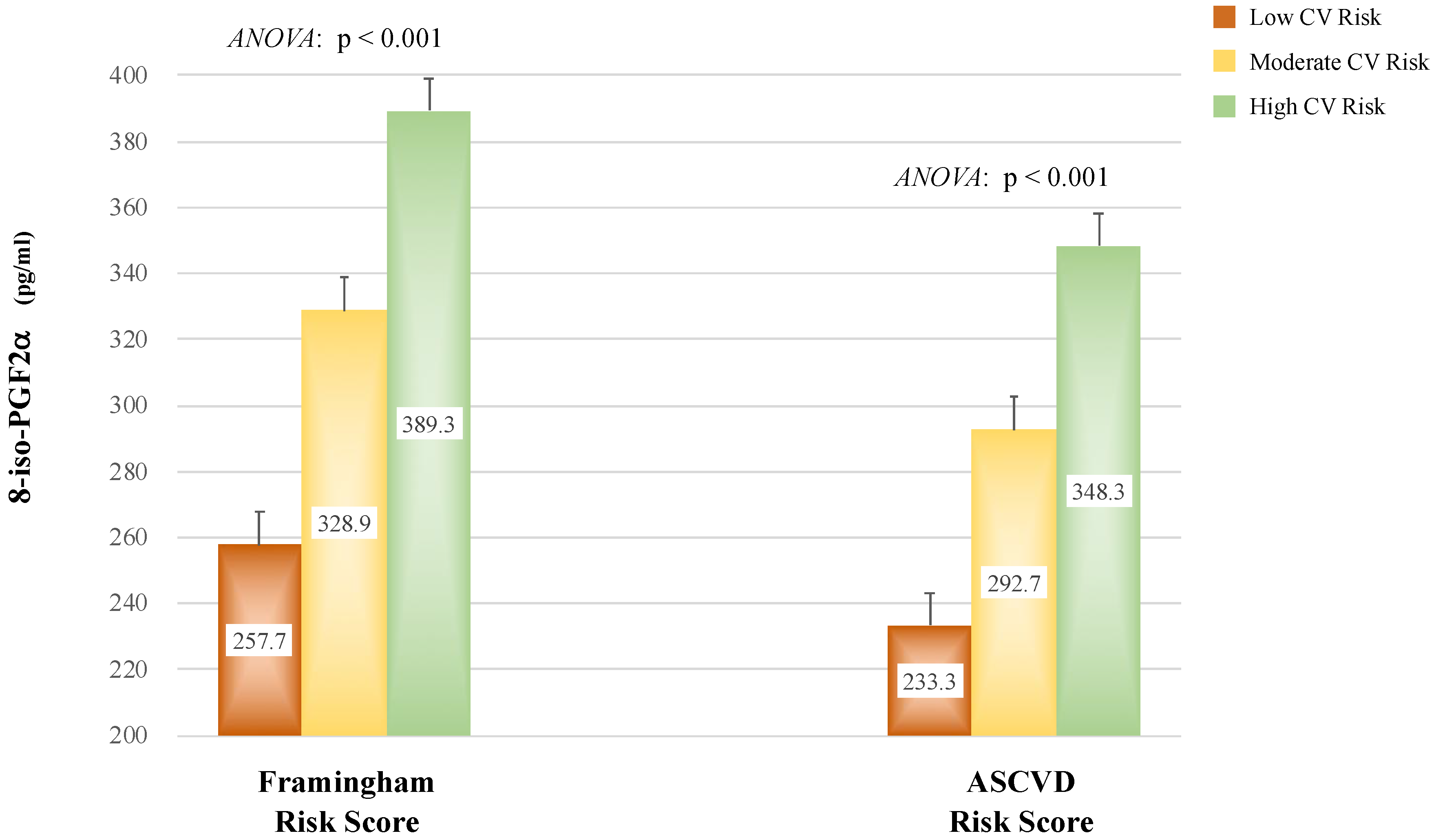
Figure 1. 8-iso-PGF in patients with low, moderate, or high cardiovascular risk calculated by Framingham Risk Score or ASCVD Risk Score.
Preprints 148422 g001
Figure 2. Univariate correlations between 8-iso-PGF and Framingham Risk Score [A] or ASCVD Risk Score [B] in the entire study population.
Preprints 148422 g002
Figure 3. Receiver operating characteristic (ROC) curves of 8-iso-PGF for detection of high cardiovascular risk calculated by Framingham Risk Score or ASCVD Risk Score in the overall study population [A,B] and in the two groups divided by eGFR (≥ 60 mL/min/1.73m2 or < 60 mL/min/1.73m2) [C,D].
Preprints 148422 g003
Table 1. 8-iso-PGF in patients with low, moderate, or high cardiovascular risk calculated by Framingham Risk Score or ASCVD Risk Score.
Variable * Overall population
(n=432)
eGFR ≥60
(n=279)
eGFR <60
(n=153)
p-value ^
Age (years) 60 ± 10 57 ± 10 65 ± 8 <0.001
Male sex, n (%) 255 (59) 173 (64.0) 82 (53,6) NS
Smoking habit, n (%) 109 (25.3) 59 (21.15) 50 (32.8) NS
Diabetes, n (%) 111 (25.7) 63 (22.6) 48 (31.4) NS
Antihypertensive therapy, n (%) 415 (96.1) 270 (96.8) 145 (94.8) NS
Clinic systolic BP (mmHg) 142 ± 21 143 ± 21 140 ± 20 NS
Clinic diastolic BP (mmHg) 84 ± 13 86 ± 14 80 ± 11 <0.001
Clinic mean BP (mmHg) 103 ± 14 105 ± 15 100 ± 12 0.001
Clinic pulse pressure (mmHg) 58 ± 16 57 ± 15 60 ± 18 NS
Clinic heart rate (bpm) 73 ± 10 73 ± 10 72 ± 11 NS
Biochemical parameters
 Serum glucose (mg/dL) 110.1 ± 36.1 108.6 ± 31.7 112.8 ± 42.9 NS
 Serum uric acid (mg/dL) 6.43 ± 1.65 6.39 ± 1.70 6.48 ± 1.59 <0.001
 Serum total cholesterol (mg/dL) 191.5 ± 43.6 193.6 ± 40.3 187.6 ± 48.9 NS
 LDL-c (mg/dL) 119.06 ± 38.80 121.69 ± 37.65 114.27 ± 40.32 NS
 HDL-c (mg/dL) 46.11 ± 12.44 47.22 ± 11.79 44.10 ± 13.35 <0.05
 Serum triglycerides (mg/dL) 118 (86–161) 105 (81–152) 136 (104–177) <0.001
 Serum creatinine (mg/dL) 1.43 ± 1.14 0.92 ± 0.16 2.36 ± 1.53 <0.001
 eGFR (ml/min/1.73m2) 65.9 ± 27.5 83.5 ± 12.8 33.8 ± 16.1 <0.001
 Serum sodium (mEq/L) 139 ± 3 140 ± 3 139 ± 3 NS
 Serum potassium (mEq/L) 4.35 ± 0.40 4.33 ± 0.38 4.37 ± 0.43 NS
Endothelial disfunctions and cardiovascular risk
 8-iso-PGF (pg/mL) 292.6 ± 125.7 247.2 ± 104.7 375.4 ± 118.7 <0.001
 CRP (mg/dL) 2.40 (1.60–3.30) 2.00 (1.39–2.70) 3.17 (2.40–3.80) <0.001
 Framingham Risk Score (%) 7.46 (4.17–14.06) 6.49 (3.60–11.76) 9.44 (6.00–17.83) 0.001
 Framingham Risk Score < 10%, n (%) 272 (63.0) 193 (69.2) 79 (51.6) <0.001
 Framingham Risk Score ≥ 20%, n (%) 61 (14.1) 36 (12.9) 25 (16.3) NS
 ASCVD Risk Score (%) 10.92 (4.92–21.43) 8.25 (4.24–17.28) 15.83 (9.59–28.27) <0.001
 ASCVD Risk Score < 7.5 %, n (%) 157 (36.3) 129 (46.2) 28 (18.3) <0.001
 ASCVD Risk Score ≥ 15%, n (%) 167 (38.7) 87 (31.2) 80 (52.3) <0.001
* Continuous variables are presented as mean ± standard deviation or median and interquartile range, depending on their distribution.
^ Comparison between eGFR-based groups; non-significant (NS): p > 0.05
Abbreviations: eGFR: estimated Glomerular Filtration Rate; BP: Blood Pressure; LDL-c: Low Density Lipoprotein Cholesterol; HDL-c: High Density Lipoprotein Cholesterol; 8-iso-PGF: 8-iso-prostaglandin F2α; CRP: C-Reactive Protein; ASCVD: Atherosclerotic Cardiovascular Disease.
Table 2. Main correlations of 8-isoPGF2α and cardiovascular risk scores with other variables in the entire study population.
8-iso-PGF Framingham Risk Score ASCVD
Risk Score
r r r
Age (years) 0.383*** 0.778 *** 0.859***
Serum glucose (mg/dL) 0.202*** 0.377*** 0.345***
Serum uric acid (mg/dL) -0.051NS 0.234*** 0.273***
Serum total cholesterol (mg/dL) -0.131** -0.301 *** -0.160 ***
LDL-c (mg/dL) -0.165*** -0.090 * -0.156**
HDL-c (mg/dL) -0.027NS -0.288*** -0.256***
Serum tryglicerides (mg/dL) 0.090NS 0.088NS 0.147**
Serum creatinine (mg/dL) 0.466*** 0.127** 0.177 ***
eGFR (mL/min/1.73m2) -0.520*** -0.254 *** -0.338 ***
Serum sodium (mEq/L) -0.024NS -0.085NS -0.009NS
Serum potassium (mEq/L) 0.086NS 0.088NS 0.084NS
Systolic BP (mmHg) 0.188*** 0.236 *** 0.156***
Diastolic BP (mmHg) -0.015NS -0.163*** -0.247***
Mean BP (mmHg) 0.083NS 0.014NS -0.076NS
Pulse Pressure (mmHg) 0.250*** 0.430*** 0.395***
Heart Rate (bpm) -0.046NS -0.074NS -0.094*
CRP (mg/dL) 0.717*** 0.407*** 0.404***
***: p ≤ 0.001; **: p ≤ 0.01; *: p ≤ 0.05; NS: p > 0.05
Abbreviations: ASCVD: Atherosclerotic Cardiovascular Disease; LDL-c: Low Density Lipoprotein Cholesterol; HDL-c: High Density Lipoprotein Cholesterol; eGFR: estimated Glomerular Filtration Rate; BP: Blood Pressure; 8-iso-PGF: 8-iso-prostaglandin F2α; CRP: C-Reactive Protein
Table 3. Independent multivariate correlates of Framingham Risk Score [A] and ASCVD Risk Score [B] in the overall study population.
[A]
Outcome variable:
Framingham Risk Score
Regression coefficients
Standardized
Β β t p-value
Model (R2 = 0.938)
Age 0.024 0.683 45.810 <0.001
Diabetes 0.274 0.326 24.988 < 0.001
Systolic BP 0.005 0.277 21.928 < 0.001
Sex (male) 0.178 0.240 18.354 < 0.001
Smoking habit 0.166 0.165 12.780 < 0.001
HDL cholesterol 0.002 0.079 5.844 < 0.001
Serum total cholesterol 0.001 -0.059 -4.357 0.001
eGFR <0.001 0.066 4.128 0.001
8-iso-PGF <0.001 0.052 3.236 0.001
Constant -1.582 - -27.712 < 0.001
[B]
Outcome variable:
ASCVD risk score
Regression coefficients
Standardized
Β β t p-value
Model (R2 = 0.969)
Age 0.038 0.891 82.357 <0.001
Diabetes 0.245 0.244 26.431 <0.001
Sex (male) 0.207 0.232 25.019 <0.001
Systolic BP 0.005 0.216 24.131 <0.001
Serum total cholesterol 0.002 0.177 18.455 <0.001
HDL cholesterol -0.006 -0.168 -17.513 <0.001
Smoking habit 0.072 0.060 6.562 <0.001
Antihypertensive therapy 0.129 0.057 6.482 <0.001
eGFR <0.001 0.036 3.150 0.002
8-iso-PGF <0.001 0.026 2.285 0.023
Constant -2.384 - -43.679 <0.001
Abbreviations: BP: Blood Pressure; HDL: High Density Lipoprotein Cholesterol; eGFR: estimated Glomerular Filtration Rate; 8-iso-PGF: 8-iso-prostaglandin F2α; ASCVD: Atherosclerotic Cardiovascular Disease
Disclaimer/Publisher’s Note: The statements, opinions and data contained in all publications are solely those of the individual author(s) and contributor(s) and not of MDPI and/or the editor(s). MDPI and/or the editor(s) disclaim responsibility for any injury to people or property resulting from any ideas, methods, instructions or products referred to in the content.
Copyright: This open access article is published under a Creative Commons CC BY 4.0 license, which permit the free download, distribution, and reuse, provided that the author and preprint are cited in any reuse.
Prerpints.org logo

Preprints.org is a free preprint server supported by MDPI in Basel, Switzerland.

Subscribe

Disclaimer

Terms of Use

Privacy Policy

Privacy Settings

© 2025 MDPI (Basel, Switzerland) unless otherwise stated