

Submitted:
05 February 2025
Posted:
06 February 2025
You are already at the latest version
Preprints on COVID-19 and SARS-CoV-2
Abstract
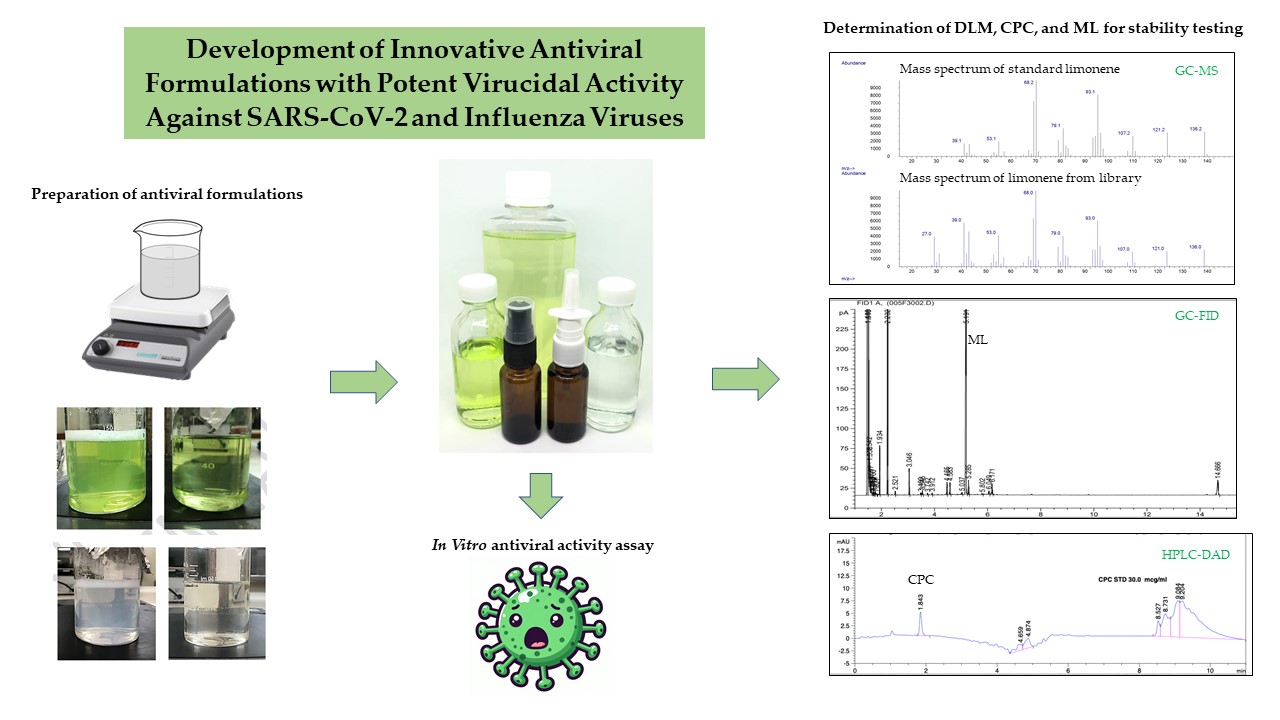
This study explores the potential of D-limonene (DLM), monolaurin (ML), and cetylpyridinium chloride (CPC), and as active ingredients in antiviral formulations targeting SARS-CoV-2 and influenza viruses. Oral (Formulation D) and nasal (Formulation E) products were developed using optimized concentrations of DLM (0.2–0.3% w/w), ML (0.1–0.2% w/w), and CPC (0.05–0.075% w/w) to balance efficacy and safety. Formulation D (0.3% w/w DLM, 0.2% w/w ML, 0.05% w/w CPC, and 1.5% w/w Cremophor RH40) exhibited exceptional virucidal activity, achieving a 3.875 ± 0.1021 log reduction and 99.99 ± 0.0032% efficacy against SARS-CoV-2 within 120 sec, positioning it as a strong candidate for oral spray/mouthwash applications. Formulation E (0.2% w/w DLM, 0.05% w/w CPC, and 0.75% w/w Cremophor RH40) demonstrated a 2.9063 ± 0.1197 log reduction and 99.87 ± 0.0369% efficacy, supporting its suitability as a nasal spray/nasal irrigation solution. Both formulations showed >99.99% efficacy with log reductions exceeding 4.000 against influenza viruses (FluA(H1N1), FluA(H3N2), and FluB) across various concentrations, dilutions, and contact times. Stability testing confirmed optimal performance at 4 °C, with no microbial contamination. These findings underscore the broad-spectrum antiviral potential of the formulations, paving the way for clinical applications in healthcare settings and among at-risk populations. Upcoming clinical trial results will further validate their safety and efficacy, supporting their use in therapeutic and preventive measures against viral infections.
Keywords:
D-limonene
; monolaurin
; cetylpyridinium chloride
; SARS-CoV-2
; influenza virus
; virucidal activity
; prevention
; therapeutic applications
1. Introduction
Coronavirus disease 2019 (COVID-19), caused by SARS-CoV-2, primarily infects lung epithelial cells via angiotensin-converting enzyme 2 in type II alveolar cells [1]. Despite lower expression in the nasopharynx and oral epithelium, active replication occurs in the upper respiratory tract, facilitating transmission through saliva and nasal secretions [2]. Influenza viruses A and B, responsible for seasonal outbreaks, target the respiratory tract and range from mild to severe illnesses, particularly in vulnerable populations [3].
D-limonene (DLM), a citrus-derived monoterpene, has shown antiviral activity by disrupting viral replication and enhancing immune responses, with proven efficacy against H1N1 and other viruses [4,5]. Classified as Generally Recognized as Safe (GRAS), DLM offers a safe antiviral option [6]. Monolaurin (ML), derived from lauric acid, disrupts viral membranes, impairing infection and replication, with broad-spectrum activity against respiratory pathogens [7,8]. GRAS-approved ML is being studied for incorporation into antiviral formulations [9]. Cetylpyridinium chloride (CPC), a quaternary ammonium compound, disrupts viral membranes, reducing SARS-CoV-2 and influenza viral loads [10,11]. It is GRAS-approved and used in oral antiseptics to prevent transmission [12].
Oral antiseptics like CPC, DLM, and ML effectively reduce SARS-CoV-2 and influenza viral loads in the oral and nasal cavities. CPC, alone or combined with chlorhexidine or DLM, shows potent virucidal activity without resistance [11,13,14,15,16]. ML inhibits SARS-CoV-2 and H1N1 with low cytotoxicity, enhancing immune defense [7,8]. Essential oils and CPC offer safe, short-term antiviral potential, but further studies are needed to optimize formulations for maximal efficacy [17,18].
2. Materials and Methods
2.1. Materials
DLM and ML were sourced from TCI AMERICA (Tokyo Chemical Industry Co., Ltd., Kita-ku, Tokyo, Japan) and Shanghai Terppon Chemical Co., Ltd. (Zhao Jia Bang Road, Shanghai, China). CPC, surfactants, and menthol came from MySkin Recipes (Chanjao Longevity Co., Ltd., Bang Khen, Bangkok, Thailand) and Chemecosmetics Co., Ltd. (Prawet, Bangkok, Thailand). Sigma-Aldrich (St. Louis, Missouri, USA) supplied reagents, solvents, and microbial media. Peppermint oil and tartrazine were obtained from Chemipan and Adinop Co., Ltd. (Bang Khae, Bangkok, Thailand). Additional materials included nitric acid (Merck KGaA, Darmstadt, Hessen, Germany), and ICP standards (Agilent Technologies, Santa Clara, California, USA). Antiviral testing utilized MEM, FBS, antibiotics, and GlutaMAX from Thermo Fisher Scientific (Life Technologies, Massachusetts, USA).
2.2. Investigation of Optimal Surfactants for Formulations Containing DLM
Various surfactants (e.g., Tween 20, Tween 60, Tween 80, Cremophor RH40, Cremophor RH60, coco glucoside, decyl glucoside, Poloxamer 184, and Poloxamer 407) were evaluated in 1% w/w DLM formulations. Surfactants and DLM were dissolved in water at 62–65 °C and homogenized at 3800 rpm for 5 min (T25 digital Ultra-Turrax, IKA, Staufen im Breisgau, Baden-Württemberg, Germany). For Poloxamer 407, it was first swollen in cold water before being mixed with limonene. The formulations were then cooled, stored in amber bottles, and analyzed for % transmittance and pH after preparation. A temperature cycling test (alternating between 40 °C and 4 °C, 6 cycles, RH 75%) was conducted to assess physicochemical stability, ensuring the formulations maintained their quality under temperature fluctuations.
2.3. Formulation of Oral Solution Containing DLM, ML, CPC, and Cremophor RH40
The formulation (Table 1) consisted of 0.3% w/w DLM, 0.2% w/w ML, 0.05% w/w CPC, and 1.5% w/w Cremophor RH40. It was prepared in three parts: the aqueous phase (CPC and glycerin), oil phase 1 (ML, Cremophor RH40, DLM), and oil phase 2 (Cremophor RH40, menthol, peppermint oil). The ingredients were mixed at specified temperatures using a hotplate stirrer and homogenizer. After combining, the weight was adjusted to 100 g with distilled water, and a 1% w/w tartrazine solution was added. The mixture was stirred for 5 min until homogeneous."
2.4. Formulation of Nasal Solution Containing DLM, CPC, and Cremophor RH40
The formulation (Table 2) contained 0.2% w/w DLM, 0.05% w/w CPC, and 0.75% w/w Cremophor RH40. The aqueous phase consisted of a CPC solution in sterile sodium chloride solution, while the oil phase contained DLM, menthol, and Cremophor RH40 in sodium chloride solution. Both phases were mixed using a homogenizer. The solution was adjusted to 100 g, diluted 20-fold, filtered, and stored in amber glass ampoules under aseptic conditions.
2.5. Stability Testing
The samples were stored in amber bottles and subjected to a temperature cycling test, alternating between 40 ± 0.5 °C and 4 ± 0.5 °C for six cycles, with RH maintained at 75 ± 5%. Stability tests evaluated the impact of storage conditions (4 ± 1 °C, 25 ± 1 °C, 40 ± 1 °C, RH 75 ± 5%) on parameters such as % transmittance, pH, and active ingredients. Microbial contamination was assessed at 1, 3, and 6 months.
2.6. Analysis of DLM Using Gas Chromatography-Mass Spectrometry (GC-MS)
The quantity of DLM in nasal and oral formulations was determined using a modified GC-MS analysis method [20].
2.6.1. Preparation of Calibration Curve
Six concentrations (0.25, 0.50, 1.00, 1.50, 2.00, and 2.50% w/w) were prepared by dissolving DLM in 10% w/w Tween 20. Five grams of each solution were partitioned with 5 ml of hexane. One milliliter of the hexane solution was placed in a GC vial and then subjected to analysis using a GC-MS instrument. The experiment was performed in triplicate.
2.6.2. Extraction of Samples
Five grams of each sample from the ampoules were partitioned with 5 ml of hexane. One milliliter of the hexane layer was placed in a GC vial and analyzed using a GC-MS instrument. The experiment was performed in triplicate.
2.6.3. GC-MS Analysis
The prepared solution (1.0 μL) was injected into the GC-MS system (Agilent 6890 N, Agilent Technologies, Santa Clara, California, USA), equipped with electron impact ionization and a mass-selective detector (Agilent 5973, Agilent Technologies, Santa Clara, California, USA). A DB5-MS column (30 m × 0.25 mm i.d.) was used, with helium as the carrier gas. The temperature program started at 60 °C and increased to 240 °C. Volatile components were identified by comparing the mass spectra with the NIST17 libraries.
2.7. Analysis of ML Using Gas Chromatography-Flame Ionization Detector (GC-FID)
A modified GC-FID analysis method [21] was used to determine the quantity of ML in nasal and oral formulations.
2.7.1. Preparation of Calibration Curve
The internal standard solution (5 mg/mL) was prepared by dissolving 500 mg of n-tetradecane in 100 mL of pyridine. A 5 mg/mL ML standard solution was made by dissolving 25 mg of ML in 5 mL of the internal standard solution. To construct a standard curve, varying volumes of the stock solution were mixed with BSTFA and TMCS, heated at 70°C for 30 min, and analyzed using GC-FID.
2.7.2. Extraction of Samples
A 20 g sample was extracted by adding 20 mL of dichloromethane in a separating funnel, shaken for 5 min, and the layers were separated. This process was repeated three times, and the dichloromethane layers were evaporated in a fume hood. The resulting extract was weighed, and a 10 mg/mL stock solution was prepared. The solution was mixed with BSTFA and TMCS, heated at 70°C for 30 min, cooled, and analyzed using GC-FID.
2.7.3. GC-FID Analysis
The sample was analyzed using a GC-FID system (Agilent Technologies, California, USA) with a DB-5HT column (30 m x 0.25 mm ID, 0.10 µm film). Injection and detector temperatures were set at 350°C, with helium as the carrier gas at 1.4 mL/min. The column temperature was programmed from 110°C to 350°C. The injection volume was 1 µL, with a split ratio of 1:80.
2.8. Analysis of CPC Using High-Performance Liquid Chromatography with Diode-Array Detection (HPLC-DAD)
The quantity of CPC in nasal and oral formulations was determined using a modified HPLC-DAD analysis method as described in reference [22].
2.8.1. Preparation of Calibration Curve
A 1 mg/mL CPC stock solution was prepared by dissolving 5 mg of CPC in acetonitrile, then diluted to 0.5 mg/mL. Standard solutions (18, 24, 30, 36, 42 µg/mL) were analyzed in duplicate (n=3) using HPLC-DAD.
2.8.2. Extraction of Samples
Nasal and oral formulations (equivalent to 0.05% w/w CPC) were weighed, dissolved in acetonitrile, and diluted to the final volume with the same solvent to achieve a concentration of 30 µg/mL.
2.8.3. HPLC-DAD Analysis
HPLC-DAD analysis was performed using an Agilent 1220 Series system (Santa Clara, California, USA) with an Onyx Monolithic C18 column (250 × 4.6 mm, 5 μm particle size, Phenomenex, Merck KGaA, Darmstadt, Germany). A gradient mobile phase of trifluoroacetic acid (A) and acetonitrile (B) was used. The flow rate was 3.5 mL/min, with a 5 µL injection, 258 nm detection, and a column temperature of 25°C.
2.9. Percentage Transmittance and pH Measurements
Percentage transmittance of the nasal and oral formulations was measured at 660 nm using a UV-Vis spectrophotometer (T60, PG Instrument Limited, Lutterworth, UK), with three replicates per sample. pH was measured at 25°C using a pH meter (Mettler Toledo SevenEasy, Zürich, Switzerland), also in triplicate.
2.10. Contamination
The contamination of heavy metals and microbes in each sample, as obtained in Section 2.6, was determined.
2.10.1. Heavy Metal Contamination
Arsenic (As), cadmium (Cd), lead (Pb), and mercury (Hg) levels were measured to ensure product safety and quality. As reported in our previous study [23], samples were digested using a microwave digester (Model ETHOS ONE, Milestone Corporation, Sorisole, Italy) and analyzed with an inductively coupled plasma mass spectrometer (ICP-MS) (Model 7500ce, Agilent Technologies, Santa Clara, CA, USA). External calibration was performed with an ICP multielement standard solution. All experiments were conducted in triplicate.
2.10.2. Microbial Contamination
A microbial limit test was conducted following USP 43-NF 38 [24] to ensure safety from pathogens. The total aerobic microbial count (TAMC), total combined yeasts/molds count (TYMC), and the presence of Staphylococcus aureus and Pseudomonas aeruginosa were assessed. Samples were inoculated onto TSA and SDA plates for TAMC and TYMC, respectively, and incubated. Specific microorganisms were detected using selective agar media. Results were recorded as colony-forming units or presence/absence to confirm compliance with USP microbial limits.
2.11. In Vitro Antiviral Activity Assay
2.11.1. Anti-SARS-CoV-2 Activity Assays
The anti-SARS-CoV-2 activity of the formulations was evaluated using Vero E6 cells (ATCC CRL-1586™, obtained from the American Type Culture Collection) cultured in MEM supplemented with necessary nutrients. Cytotoxicity was assessed using the MTT assay, and virucidal activity was tested in accordance with ASTM E1053-20 standards [25]. The Delta B.1.617.2 variant of SARS-CoV-2 was isolated from the nasopharyngeal swab of a confirmed COVID-19 patient in Thailand as part of a routine diagnostic procedure at the Tropical Medicine Diagnostic Reference Laboratory, Faculty of Tropical Medicine, Mahidol University. The isolate was authenticated for research use in compliance with institutional and national biosafety regulations. Additionally, permission to use the sample in this study was obtained from the relevant laboratory and institutional authorities (Approval No. MU2023-038, Mahidol University). The isolate had a viral titer of 1 × 10⁵ TCID₅₀/mL. The formulations were tested at undiluted concentrations for various contact times. Sodium hypochlorite (0.21% w/v) was used as the positive control, while MEM served as the negative control. Efficacy was determined based on viral reduction, expressed as percentage efficacy and log reduction values (LRV). All experiments were performed in triplicate.
2.11.2. Anti-Influenza Activity Assays
Virucidal activity was assessed following ASTM E1053-20 standards [26]. Test samples were diluted with MEM medium and evaluated for their ability to inactivate influenza viruses, including FluA(H1N1pdm) (A/Thailand/104/2009), FluA(H3N2) (ATCC VR-1881™), and FluB (ATCC VR-1735™). FluA(H1N1pdm) (A/Thailand/104/2009) was obtained from the National Institute of Health, Thailand, under appropriate institutional agreements. FluA(H3N2) (ATCC VR-1881™) and FluB (ATCC VR-1735™) were sourced from the American Type Culture Collection (ATCC) in compliance with standard biosafety and research protocols. All experiments involving live SARS-CoV-2 and influenza viruses were conducted under strict biosafety conditions at a certified BSL-3 facility at the Faculty of Veterinary Science, Mahidol University. Viral suspensions were mixed with medium containing bovine serum albumin and dried onto a surface. After exposure to the test products for 30–120 sec, the mixtures were neutralized, filtered, and inoculated into cell lines. Cytopathic effects were observed, and viral titers were calculated using the Reed-Muench method [27]. Sodium hypochlorite (0.21% w/v) served as the positive control [4,28]. Results were reported as log reductions and percentage efficacy, with a 3-log reduction required to demonstrate virucidal activity.
2.12. Statistical Analysis
Statistical analysis was performed using one-way analysis of variance (ANOVA) in SPSS software version 16, followed by Duncan's post hoc test at a 95% confidence level (p < 0.05). The analysis was based on triplicate measurements, and results with p-values less than 0.05 were considered statistically significant.
3. Results
3.1. Investigation of Optimal Surfactants for Formulations Containing DLM
The formulations containing 1% w/w DLM and 1–15% w/w surfactant in distilled water were evaluated for physicochemical properties, including % transmittance and pH, one day after preparation and after a temperature cycling test (Table 3, Figure 1). Solutions with DLM and surfactants such as Tween 20, Tween 60, Tween 80, Cremophor RH40, and Cremophor RH60 showed high % transmittance (92.27–98.60%) and suitable pH values (4.64–6.16). High transmittance indicates clear solutions, suggesting effective DLM dissolution. These formulations meet the pH requirements for oral (5.5–7.5) [29] and nasal (4.5–6.5) [30] preparations, making them suitable for antiviral solutions.
Figure 1.
Physical characteristics (turbid or clear) of formulations containing DLM and surfactant at different ratios, measured 1 day after preparation and after a temperature cycling test (6 cycles).
Figure 1.
Physical characteristics (turbid or clear) of formulations containing DLM and surfactant at different ratios, measured 1 day after preparation and after a temperature cycling test (6 cycles).
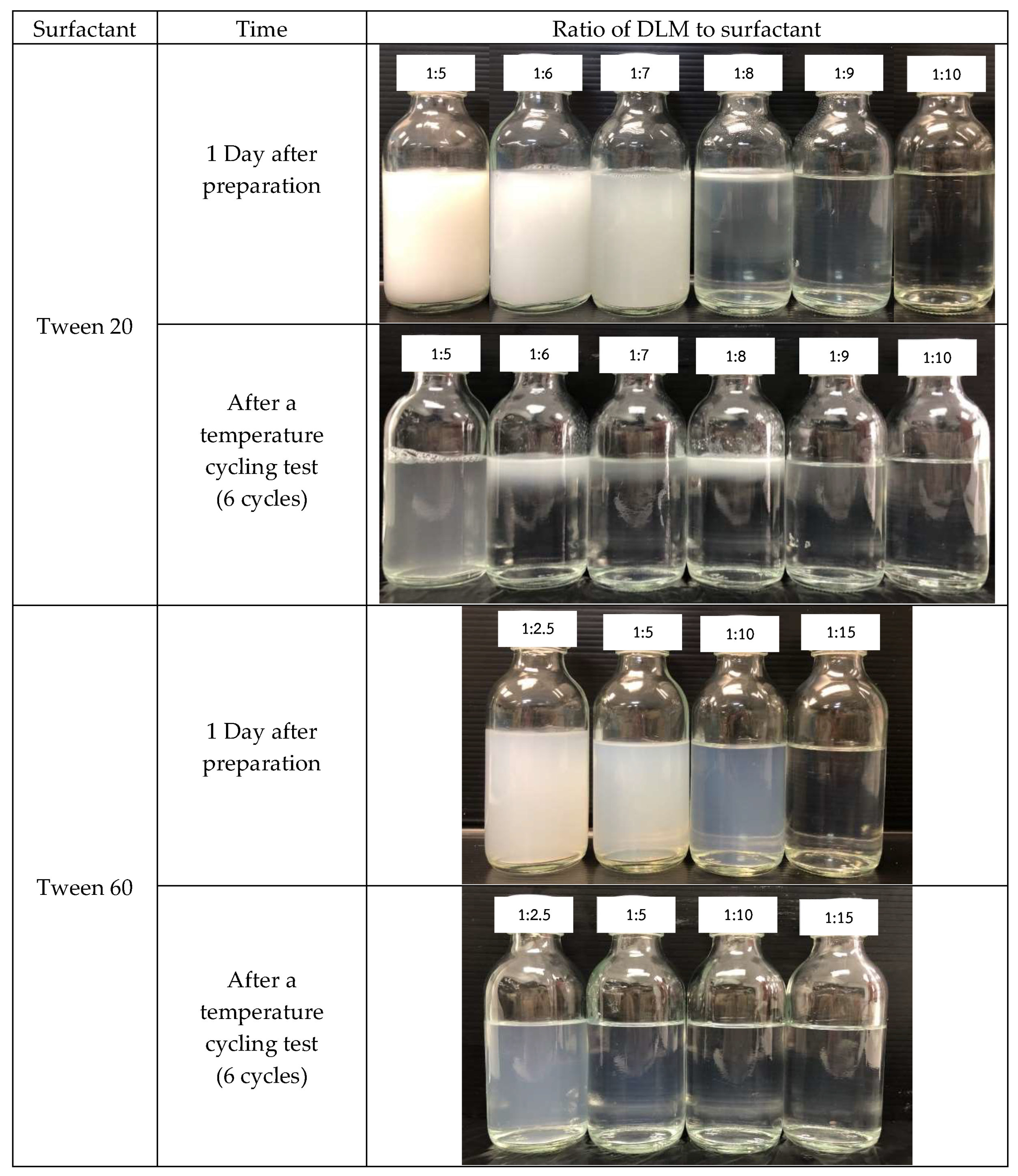
Figure 1.
Cont. Physical characteristics (turbid or clear) of formulations containing DLM and surfactant at different ratios, measured 1 day after preparation and after a temperature cycling test (6 cycles).
Figure 1.
Cont. Physical characteristics (turbid or clear) of formulations containing DLM and surfactant at different ratios, measured 1 day after preparation and after a temperature cycling test (6 cycles).
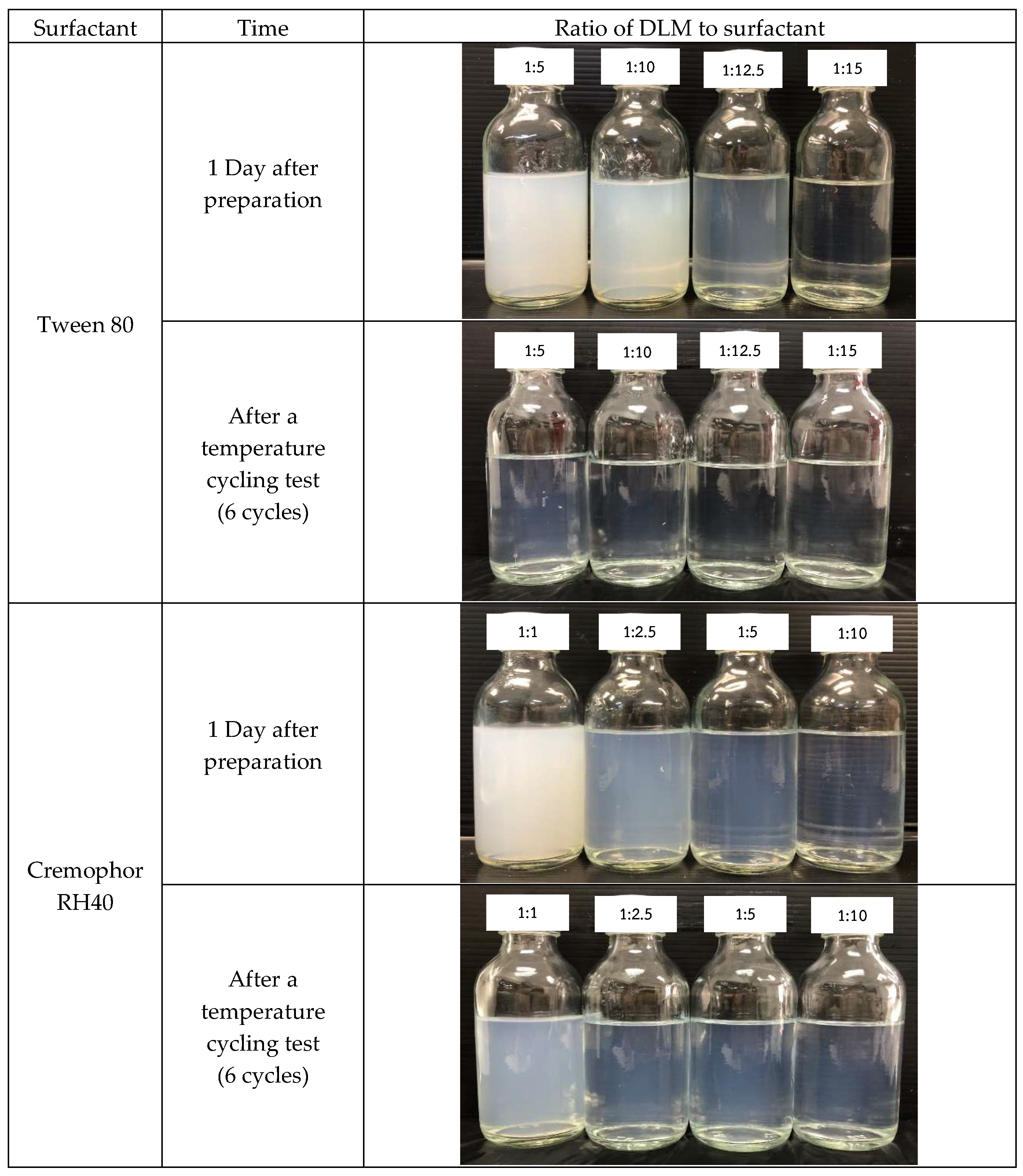
Figure 1.
Cont. Physical characteristics (turbid or clear) of formulations containing DLM and surfactant at different ratios, measured 1 day after preparation and after a temperature cycling test (6 cycles).
Figure 1.
Cont. Physical characteristics (turbid or clear) of formulations containing DLM and surfactant at different ratios, measured 1 day after preparation and after a temperature cycling test (6 cycles).
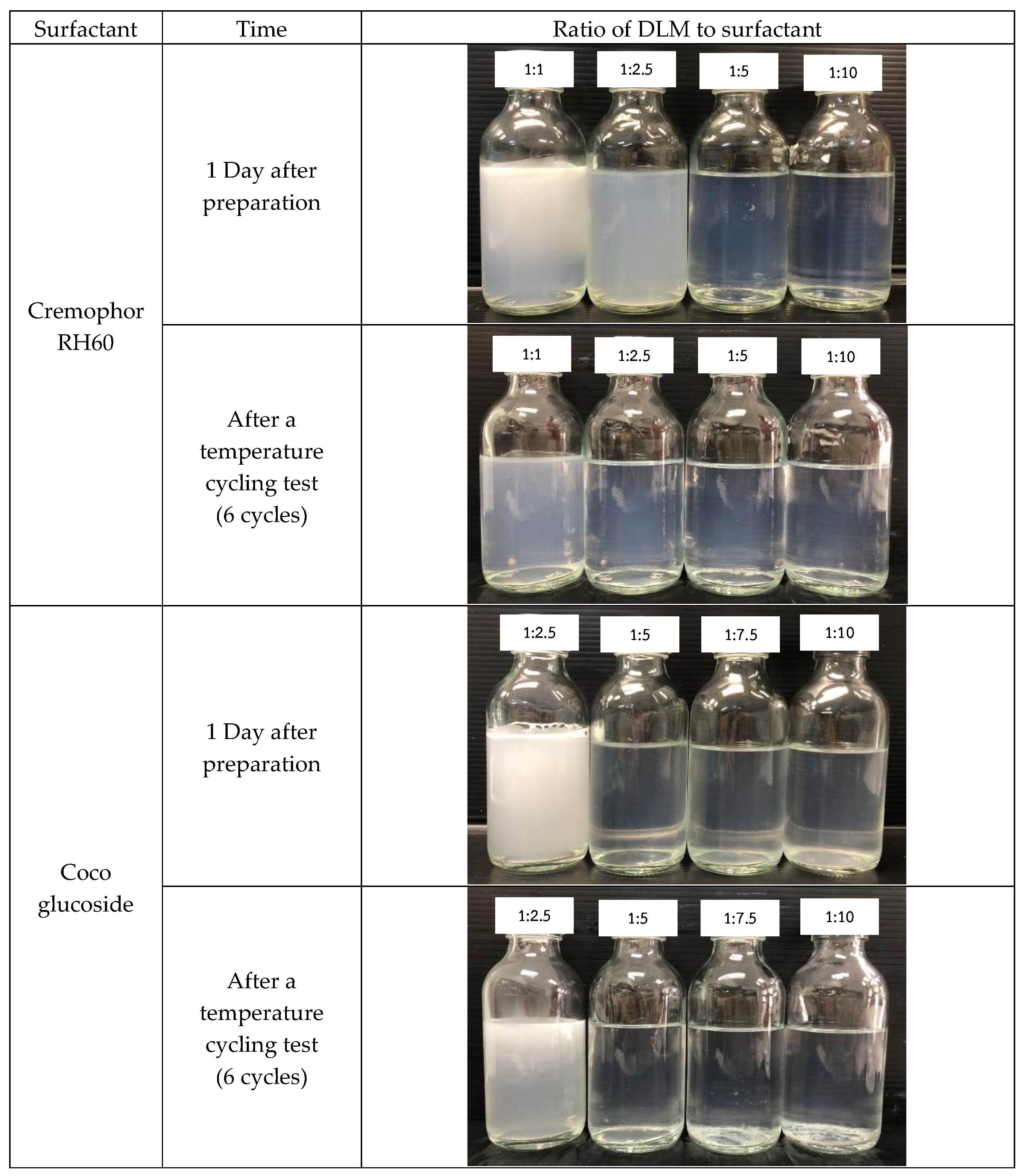
Figure 1.
Cont. Physical characteristics (turbid or clear) of formulations containing DLM and surfactant at different ratios, measured 1 day after preparation and after a temperature cycling test (6 cycles).
Figure 1.
Cont. Physical characteristics (turbid or clear) of formulations containing DLM and surfactant at different ratios, measured 1 day after preparation and after a temperature cycling test (6 cycles).
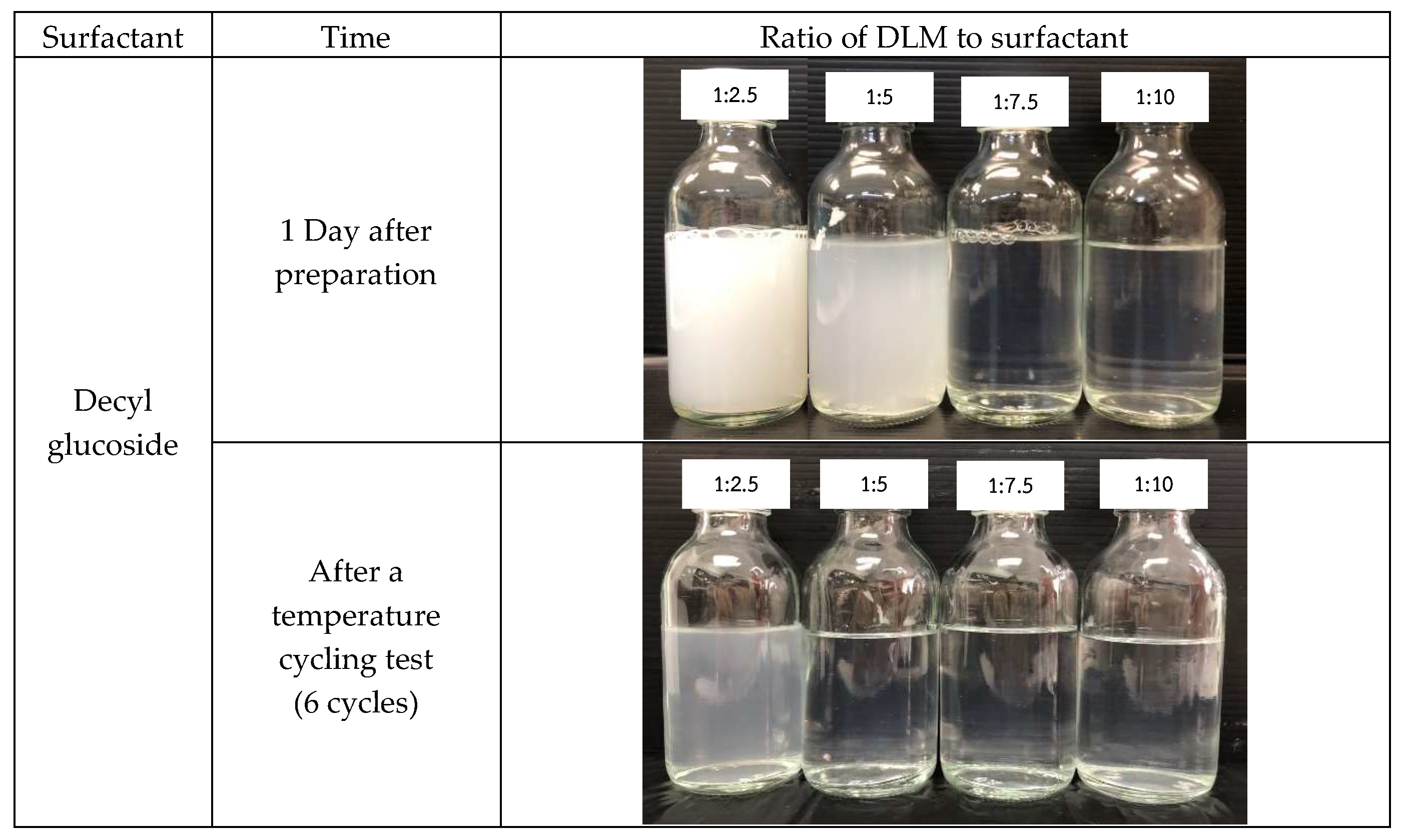
Formulations with DLM concentrations above 1% w/w (2–5% w/w) and 10% w/w Tween 20 were unstable, showing turbidity and phase separation after preparation and stability testing (data not shown). The DLM-to-Tween 20 ratio of 1:10 was more suitable. Formulations with coco glucoside and decyl glucoside exhibited low % transmittance and high pH values (Table 3). Similarly, Poloxamer 184 and Poloxamer 407 at DLM-to-surfactant ratios of 1:5 to 1:10 produced turbid solutions before and after the temperature cycling test. Due to these issues, these surfactants were not selected for developing DLM antiviral solutions.
Tween 20 is suitable for oral solutions due to its low molecular weight, high hydrophilicity, mild taste, and proven safety [31,32]. However, Cremophor RH40 is better for oral and nasal formulations due to its lower hydrophilic-lipophilic balance (HLB), enhancing DLM solubilization and stability in aqueous solutions [33]. The DLM and Cremophor RH40 formulation (1:5 ratio) also has a milder bitter taste than the DLM and Tween 20 formulation (1:10 ratio), improving patient compliance. Based on experimental data (Table 3), Cremophor RH40 was chosen for further development due to its superior solubilization and taste profile.
3.2. Development of Formulations Containing DLM, CPC, ML, and Cremophor RH40
Formulations with Tween 20, Tween 60, or Tween 80 had undesirable bitter and soapy tastes. Cremophor RH40, with a milder taste, emerged as more suitable for oral use. The DLM-Cremophor RH40 formulation (1:5 ratio) showed excellent % transmittance (96.90–94.20%) and appropriate pH (6.05–5.98), making it the preferred choice for oral formulations (Table 3).
The study showed that using Cremophor RH40 at five times the DLM concentration ensured stability. Formulations with reduced DLM (0.3–0.5% w/w) and added ML (0.1–0.5% w/w) or CPC (0.05–0.075% w/w) maintained anti-SARS-CoV-2 efficacy, comparable to 1% w/w DLM alone. Formulation D (Figure 2), containing 0.3% DLM, 0.05% CPC, 0.2% ML, and 1.5% Cremophor RH40, exhibited 99.99% virucidal activity against SARS-CoV-2 (log reduction 3.8750) in 120 sec (Table 4), making it suitable for mouth spray or mouthwash applications.
Cremophor RH40 was chosen for its mildness and low irritation potential in nasal formulations, with safety at 0.75% w/w [34,35]. Formulation E (Figure 2), containing 0.2% DLM, 0.05% CPC, and 0.75% Cremophor RH40, demonstrated 99.87% virucidal activity against SARS-CoV-2 (log reduction 2.9063) within 120 sec (Table 4), making it suitable as a nasal spray or rinse.
3.3. Virucidal Activity and Cytotoxicity of Formulations Containing DLM, CPC, ML, and Cremophor RH40
Cytotoxicity testing of DLM on Vero E6 cells (CRL-1586™) showed 99.79% viability at 0.125% and 81.81% at 0.25%. Formulations for anti-SARS-CoV-2 activity were based on concentrations with > 80% cell viability. As shown in Table 4, formulation A (1% DLM, 1.5% Cremophor RH40) achieved 99.93–99.98% viral reduction (log reductions 3.1875–3.8125) within 30 sec to 10 min. Formulation B (0.5% DLM, 0.5% ML, 1.5% Cremophor RH40) showed 99.97% efficacy (log reduction 3.6042) at 10 min. Formulation C (0.3% DLM, 0.05% CPC, 1.5% Cremophor RH40) achieved 99.92% efficacy (log reduction 3.0833) within 120 sec, demonstrating strong virucidal activity across all tested formulations. Formulation D (0.3% DLM, 0.05% CPC, 0.2% ML, 1.5% Cremophor RH40) achieved the highest virucidal efficacy, with a 3.875 log reduction and 99.99% efficacy at 120 sec, making it ideal for mouth spray or mouthwash applications. Formulation E (0.2% DLM, 0.05% CPC, 0.75% Cremophor RH40) showed a 2.906 log reduction and 99.87% efficacy, suitable for nasal sprays or rinses due to its milder composition. The positive control (0.21% sodium hypochlorite) demonstrated > 4.4 log reduction and 99.99% efficacy. Statistical analysis (p < 0.05) revealed significant differences in log reductions among formulations, with Formulations A and D performing similarly. However, all formulations showed comparable percent efficacy, indicating consistent antiviral effectiveness across different compositions.
As shown in Table 5, formulations D (oral) and E (nasal) exhibited >99.99% anti-influenza efficacy against FluA(H1N1), FluA(H3N2), and FluB, with log reductions >4.000 across all concentrations, dilutions (1:2–1:32), and contact times (30–120 sec). Tested in quadruplicate, both formulations demonstrated consistent, non-dose-dependent antiviral activity, highlighting their potential as robust anti-influenza agents.
3.4. Assessment of Heavy Metals and Microbial Contamination in Oral and Nasal Formulations Containing DLM, CPC, ML, and Cremophor RH40
Formulations D (oral) and E (nasal) met USP 2024 safety standards [36], with undetectable heavy metals (below LOQ: As < 0.041 ppm, Cd < 0.021 ppm, Pb < 0.020 ppm, Hg < 0.054 ppm) and microbial loads (TAMC < 10 cfu/mL, TYMC < 10 cfu/mL). S. aureus and P. aeruginosa were absent, confirming compliance with pharmaceutical safety criteria for oral and nasal use [37].
3.5. Evaluation of the Stability of Oral and Nasal Formulations Containing DLM, CPC, ML, and Cremophor RH40
DLM in oral formulation D and nasal formulation E was quantified using GC-MS, with a linear calibration curve (0.25–2.5% w/w) and an R² of 0.9978. LOD and LOQ were 0.017% w/w and 0.042% w/w, respectively. CPC was measured in both formulations using HPLC-DAD, with a linear range of 18–42 µg/mL and an R² of 0.9992. LOD and LOQ were 1.01 µg/mL and 3.05 µg/mL, respectively. ML in oral formulation D was quantified using GC-FID, with an R² of 0.9998, LOD of 0.072 mg/mL, and LOQ of 0.217 mg/mL. All methods showed high precision and accuracy.
The stability study of oral formulation D and nasal formulation E under various storage conditions showed notable trends in % transmittance, pH, and the levels of DLM, CPC, and ML. Oral formulation D maintained relatively stable transmittance at 4 °C for 3 months, with a decline at higher temperatures. DLM showed significant degradation at 40 °C, while CPC remained stable. ML decreased at higher temperatures. Despite these changes, the formulations met microbiological standards, conforming to USP 2024 acceptance criteria [37].
Nasal formulation E showed stable transmittance at 4 °C, with a slight increase over 6 months, while a decline was observed at 25 °C and a significant drop at 40 °C. DLM retention was high at lower temperatures but decreased at 40 °C. CPC remained stable, and the pH showed minimal changes. All samples met microbiological safety standards, conforming to USP 2024 criteria [37].
4. Discussion
Oral formulation D and nasal formulation E were developed to optimize taste, stability, and safety. Cremophor RH40 was selected for its mild taste and low irritation potential [34]. Formulation D, for oral use, demonstrated strong antiviral activity against SARS-CoV-2 and influenza, with high efficacy (99.99%). Formulation E, for nasal use, showed effective antiviral activity, though slightly lower for SARS-CoV-2, and was highly effective against influenza. Both formulations are safe and effective, pending clinical validation, with formulation D suitable for oral applications and formulation E for nasal use.
The stability of oral formulation D and nasal formulation E, containing DLM, CPC, ML, and Cremophor RH40, was evaluated under various storage conditions. Both formulations remained stable at 4 °C, with DLM and ML showing significant degradation at higher temperatures, especially at 40 °C. CPC demonstrated excellent thermal stability, consistent with its known resistance to degradation across a wide range of temperatures [38]. In contrast, DLM and ML were more sensitive to heat [39,40]. To enhance stability in nasal applications, ML was excluded from formulation E due to its thermal sensitivity and limited evidence supporting its suitability for such formulations. Cremophor RH40 played a crucial role in stabilizing both formulations by maintaining solubility and pH, especially under refrigerated conditions. It contributed significantly to the stability of DLM, CPC, and ML, ensuring the formulations' integrity during storage. Formulation D, with its higher DLM and ML content, is better suited for refrigerated storage to preserve its efficacy. In contrast, formulation E, containing a lower concentration of DLM and no ML, offers improved overall stability, particularly for nasal applications. These findings underscore the importance of temperature control in maintaining the efficacy and bioactivity of these formulations during storage and transport.
5. Conclusions
Formulation D (0.3% w/w DLM, 0.05% w/w CPC, 0.2% w/w ML, 1.5% w/w Cremophor RH40) demonstrated exceptional antiviral performance, achieving 99.99% efficacy against SARS-CoV-2 within 120 sec, making it ideal for oral use. Formulation E (0.2% w/w DLM, 0.05% w/w CPC, 0.75% w/w Cremophor RH40) showed 99.87% efficacy and is suitable for nasal applications. Both formulations also exhibited strong efficacy against influenza viruses, maintaining >99.99% efficacy across various concentrations and contact times. Stability testing confirmed minimal changes in active compounds and no microbial contamination at 4 °C. These formulations hold significant promise for clinical use in preventing and managing viral infections, particularly in healthcare settings. Clinical trials evaluating their safety and efficacy in COVID-19 patients are underway, with the goal of advancing global health.
Funding
This research was supported by Silpakorn University under the Postdoctoral fellowship program (Grant No.: SURDI Postdoctoral/67).
Data Availability Statement
The data supporting the findings of this study are available from the corresponding author, Chutima Limmatvapirat, upon reasonable request.
Acknowledgments
We acknowledge the facilities of the Faculty of Pharmacy, Silpakorn University.
Conflicts of Interest
The authors declare no conflict of interest.
References
- Ni, W.; Yang, X.; Yang, D.; Bao, J.; Li, R.; Xiao, Y. , Hou, C.; Wang, H.; Liu, J.; Yang, D.; Xu, Y.; Cao, Z.; Gao, Z. Role of angiotensin-converting enzyme 2 (ACE2) in COVID-19. Crit. Care 2020, 24, 1–10. [Google Scholar] [CrossRef] [PubMed]
- Zou, L.; Ruan, F.; Huang, M.; Liang, L.; Huang, H.; Hong, Z.; Yu, J.; Kang, M.; Song, Y.; Xia, J.; Guo, Q.; Song, T.; He, J.; Yen, H.; Peiris, M.; Wu, J. SARS-CoV-2 viral load in upper respiratory specimens of infected patients. N. Engl. J. Med. 2020, 382, 1177–1179. [Google Scholar] [CrossRef] [PubMed]
- Moghadami, M. A Narrative review of influenza: a seasonal and pandemic disease. Iran J. Med. Sci. 2017, 42, 2–13. [Google Scholar]
- Fadilah, N.Q.; Jittmittraphap, A.; Leaungwutiwong, P.; Pripdeevech, P.; Dhanushka, D.; Mahidol, C.; Ruchirawat, S.; Kittakoop, P. Virucidal activity of essential oils from Citrus × aurantium L. against influenza A virus H1N1: limonene as a potential household disinfectant against virus. Nat. Prod. Commun. 2022, 17, 1–7. [Google Scholar] [CrossRef]
- Lin, H.; Li, Z.; Sun, Y.; Zhang, Y.; Wang, S.; Zhang, Q.; Cai, T.; Xiang, W.; Zeng, C.; Tang, J. D-limonene: promising and sustainable natural bioactive compound. Appl. Sci. 2024, 14, 4605. [Google Scholar] [CrossRef]
- Gupta, A.; Jeyakumar, E.; Lawrence, R. Journey of limonene as an antimicrobial agent. J. Pure Appl. Microbiol. 2021, 15, 1094–1110. [Google Scholar] [CrossRef]
- Weerapol, Y.; Manmuan, S.; Limmatvapirat, S.; Limmatvapirat, C.; Sirirak, J.; Tamdee, P.; Tubtimsri, S. Enhancing the efficacy of monolaurin against SARS-CoV-2 and influenza A (H1N1) with a nanoemulsion formulation. OpenNano. 2024, 17, 100207. [Google Scholar] [CrossRef]
- Subroto, E.; Indiarto, R. Bioactive monolaurin as an antimicrobial and its potential to improve the immune system and against COVID-19: a review. Food Res. 2020, 4, 2355–2365. [Google Scholar] [CrossRef]
- Subroto, E. Monoacylglycerols and diacylglycerols for fat-based food products: a review. Food Res. 2020, 4, 932–943. [Google Scholar] [CrossRef]
- Tarrago´-Gil, R.; Gil-Mosteo, M.J.; Aza-Pascual-Salcedo, M.; Alvarez, M.J.L.; Ainaga, R.R.; Gimeno, N.L.; Viñuales, R.F.; Fernández, Y.M.; Marco, J.M.; Bolsa, E.A. , et al. Randomized clinical trial to assess the impact of oral intervention with cetylpyridinium chloride to reduce salivary SARS-CoV-2 viral load. J Clin Periodontol. 2023, 50, 288–294. [Google Scholar] [CrossRef] [PubMed]
- Popkin, D.L.; Zilka, S.; Dimaano, M.; Fujioka, H.; Rackley, C.; Salata, R, Griffith, A. ; Mukherjee, P.K.; Ghannoum, M.A.; Esper, F. Cetylpyridinium chloride (CPC) exhibits potent, rapid activity against influenza viruses in vitro and in vivo. Pathog. Immun. 2017, 2, 253–269. [Google Scholar] [CrossRef] [PubMed]
- Bañó-Polo, M.; Martínez-Gil, L.; Sánchez del Pino, M.M.; Massoli, A.; Mingarro, I.; Léon, R.; Garcia-Murria, M.J. Cetylpyridinium chloride promotes disaggregation of SARS-CoV-2 virus-like particles. J. Oral Microbiol. 2022, 14, 2030094. [Google Scholar] [CrossRef] [PubMed]
- Bidra, A.S.; Pelletier, J.S.; Westover, J.B.; Frank, S.; Brown, S.M.; Tessema, B. Comparison of in vitro inactivation of SARS-CoV-2 with hydrogen peroxide and povidone-iodine oral antiseptic rinses. J. Prosthodont. 2020, 29, 599–603. [Google Scholar] [CrossRef] [PubMed]
- Rius-Salvador, M.; Garcı´a-Mu´rria, M.J.; Rusu, L.; Baño´-Polo, M.; Leo´n, R.; Geller, R.; Mingarro, I.; Martinez-Gil, L. Cetylpyridinium chloride and chlorhexidine show antiviral activity against influenza A virus and respiratory syncytial virus in vitro. PLoS ONE 2024, 19, e0297291. [Google Scholar] [CrossRef]
- Koch-Heier, J.; Hoffmann, H.; Schindler, M.; Lussi, A.; Planz, O. Inactivation of SARS-CoV-2 through treatment with the mouth rinsing solutions ViruProX® and BacterX® Pro. Microorganisms 2021, 9, 521. [Google Scholar] [CrossRef]
- Rodríguez-Casanovas, H.J.; la Rosa, M.D.; Bello-Lemus, Y.; Rasperini, G.; Acosta-Hoyos, A.J. Virucidal activity of different mouthwashes using a novel biochemical assay. Healthcare 2021, 10, 63. [Google Scholar] [CrossRef]
- Bernal, C.G.G.; Uribe, E.R.; Flores, J.S.; Hernández, J.J.V.; Gómez-Sandoval, J.R.; Salazar, S.Y.M.; Maldonado, A.F.G.; Aguilar Martínez, J.A.; Martínez, S.M.L. Oral antiseptics against SARS-CoV-2: a literature review. Int. J. Environ. Res. Public Health 2022, 19, 8768. [Google Scholar] [CrossRef]
- Toschi, E.M.; Mercado, L.W.; Henz, S.L. Antiviral effect of oral antiseptic solutions commonly used in dentistry practice: a scoping review. Dent. Rev. 2023, 3, 100064. [Google Scholar] [CrossRef]
- Parikh-Das, A.M.; Sharma, N.C.; Du, Q.; Charles, C.A. Superiority of essential oils versus 0.075% CPC-containing mouthrinse: a two-week randomized clinical trial. J. Clin. Dent. 2013, 24, 94–99. [Google Scholar]
- Camargo, F.P.; Sarti, A.; Alécio, A.C.; Sabatini, C.A.; Adorno, M.A.T.; Duarte, I.C.S.; Varesche, M.B.A. Limonene quantification by gas chromatography with mass spectrometry (GC-MS) and its effects on hydrogen and volatile fatty acids production in anaerobic reactors. Artigo Quím. Nova 2020, 43, 844–850. [Google Scholar] [CrossRef]
- Ponphaiboon, J.; Limmatvapirat, S.; Chaidedgumjorn, A.; Limmatvapirat, C. Optimization and comparison of GC-FID and HPLC-ELSD methods for determination of lauric acid, mono-, di-, and trilaurins in modified coconut oil. J. Chromatogr B 2018, 1099, 110–116. [Google Scholar] [CrossRef] [PubMed]
- Belal, T.S.; Shaalan, R.; Haggag, R.S. Gradient HPLC-diode array detector stability-indicating determination of lidocaine hydrochloride and cetylpyridinium chloride in two combined oral gel dosage forms. J. AOAC Int. 2011, 94, 503–512. [Google Scholar] [CrossRef] [PubMed]
- Ponphaiboon, J.; Limmatvapirat, S.; Limmatvapirat, C. Development and evaluation of a dry emulsion of ostrich oil as a dietary supplement. Foods 2024, 13, 2570. [Google Scholar] [CrossRef]
- The United States Pharmacopeial Convention. Microbiological Examination of Nonsterile Products: Microbial Enumeration Tests, in the United States Pharmacopeia 43 and the National Formulary 38; The United States Pharmacopeial Convention: Rockville, MD, USA, 2020. [Google Scholar]
- Maikhunthod, B.; Chaipayang, S.; Jittmittraphap, A.; Thippornchai, N.; Boonchuen, P.; Tittabutr, P. , Eumkeb, G.; Sabuakham, S.; Rungrotmongkol, T.; Mahalapbutr, P.; Leaungwutiwong, P.; Teaumroong, N.; Tanthanuch, W. Exploring the therapeutic potential of Thai medicinal plants: in vitro screening and in silico docking of phytoconstituents for novel antiSARS-CoV-2 agents. BMC Complement. Altern. Med. 2024, 24, 274. [Google Scholar] [CrossRef]
- American Society for Testing and Materials (ASTM), Standard Practice to Assess Virucidal Activity of Chemicals Intended for Disinfection of Inanimate, Nonporous Environmental Surfaces. ASTM E1053–20, 2020, https://www.astm.org/Standards/E1053.htm.
- Reed, L.J.; Muench, H. A simple method of estimating fifty percent endpoints. Am. J. Epidemiol. 1938, 27, 493–497. [Google Scholar] [CrossRef]
- Lei, C.; Yang, J.; Hu, J.; Sun, X. On the calculation of TCID50 for quantitation of virus infectivity. Virol. Sin. 2021, 36, 141–144. [Google Scholar] [CrossRef]
- Vázquez-Blanco, S.; González-Freire, L.; Dávila-Pousa, M.C. , Crespo-Diz, C. pH determination as a quality standard for the elaboration of oral liquid compounding formula. Farm. Hosp. 2018, 42, 221–227. [Google Scholar] [CrossRef]
- Salade, L.; Wauthoz, N.; Goole, J.; Amighi, K. How to characterize a nasal product. The state of the art of in vitro and ex vivo specific methods. Int. J. Pharm. 2019, 561, 47–46. [Google Scholar] [CrossRef]
- Gorjian, H.; Mihankhah, P.; Khaligh, N.G. Influence of tween nature and type on physicochemical properties and stability of spearmint essential oil (Mentha spicata L. ) stabilized with basil seed mucilage nanoemulsion. J. Mol. Liq. 2022, 359, 119379. [Google Scholar] [CrossRef]
- Coupland, J.N.; Hayes, J.E. Physical approaches to masking bitter taste: lessons from food and pharmaceuticals. Pharm. Res. 2014, 31, 2921–2939. [Google Scholar] [CrossRef]
- Christiansen, A.; Backensfeld, T.; Weitschies, W. Effects of non-ionic surfactants on in vitro triglyceride digestion and their susceptibility to digestion by pancreatic enzymes. Eur. J. Pharm. Sci. 2010, 41, 376–382. [Google Scholar] [CrossRef] [PubMed]
- Kiss, L.; Walter, F.R.; Bocsik, A.; Veszelka, S.; Ózsvári, B.; Puskás, L.G.; Szabó-Révész, P.; Deli, M.A. Kinetic analysis of the toxicity of pharmaceutical excipients Cremophor EL and RH40 on endothelial and epithelial cells. J. Pharm. Sci. 2013, 102, 1173–1181. [Google Scholar] [CrossRef] [PubMed]
- Horvát, S.; Fehér, A.; Wolburg, H.; Sipos, P.; Veszelka, S.; Tóth, A.; Kis, L.; Kurunczi, A.; Balogh, G.; Kürti, L.; Eros, I.; Szabó-Révész, P.; Deli, M.A. Sodium hyaluronate as a mucoadhesive component in nasal formulation enhances delivery of molecules to brain tissue. Eur. J. Pharm. Biopharm. 2009, 72, 252–259. [Google Scholar] [CrossRef]
- The United States Pharmacopeial Convention. 〈232〉 Elemental Impurities—Limits, in the United States Pharmacopeia 43 and the National Formulary 38; The United States Pharmacopeial Convention: Rockville, MD, USA, 2020. [Google Scholar]
- The United States Pharmacopeial Convention. 〈1111〉 Microbiological Examination of Nonsterile Products: Acceptance Criteria for Pharmaceutical Preparations and Substances for Pharmaceutical Use, in the United States Pharmacopeia 43 and the National Formulary 38; The United States Pharmacopeial Convention: Rockville, MD, USA, 2020. [Google Scholar]
- Rhee, C.H.; Lee, H-s. ; Yun, H-j.; Lee, G-H.; Kim, S-J.; Song, S.; Lee, M-H.; Her, M.; Jeong, W. Chemical stability of active ingredients in diluted veterinary disinfectant solutions under simulated storage conditions. Front. Chem. 2023, 11, 1204477. [Google Scholar] [CrossRef] [PubMed]
- Li, P-H. ; Lu, W-C. Effects of storage conditions on the physical stability of d-limonene nanoemulsion. Food Hydrocoll. 2016, 53, 218–224. [Google Scholar] [CrossRef]
- Fujii, T.; Khuwijitjaru, P.; Kimura, Y.; Adachi, S. Decomposition kinetics of monoacyl glycerol and fatty acid in subcritical water under temperature-programmed heating conditions. Food Chem. 2006, 94, 341–347. [Google Scholar] [CrossRef]
Figure 2.
Physical characteristics of oral formulation D (left) and nasal formulation E (right).
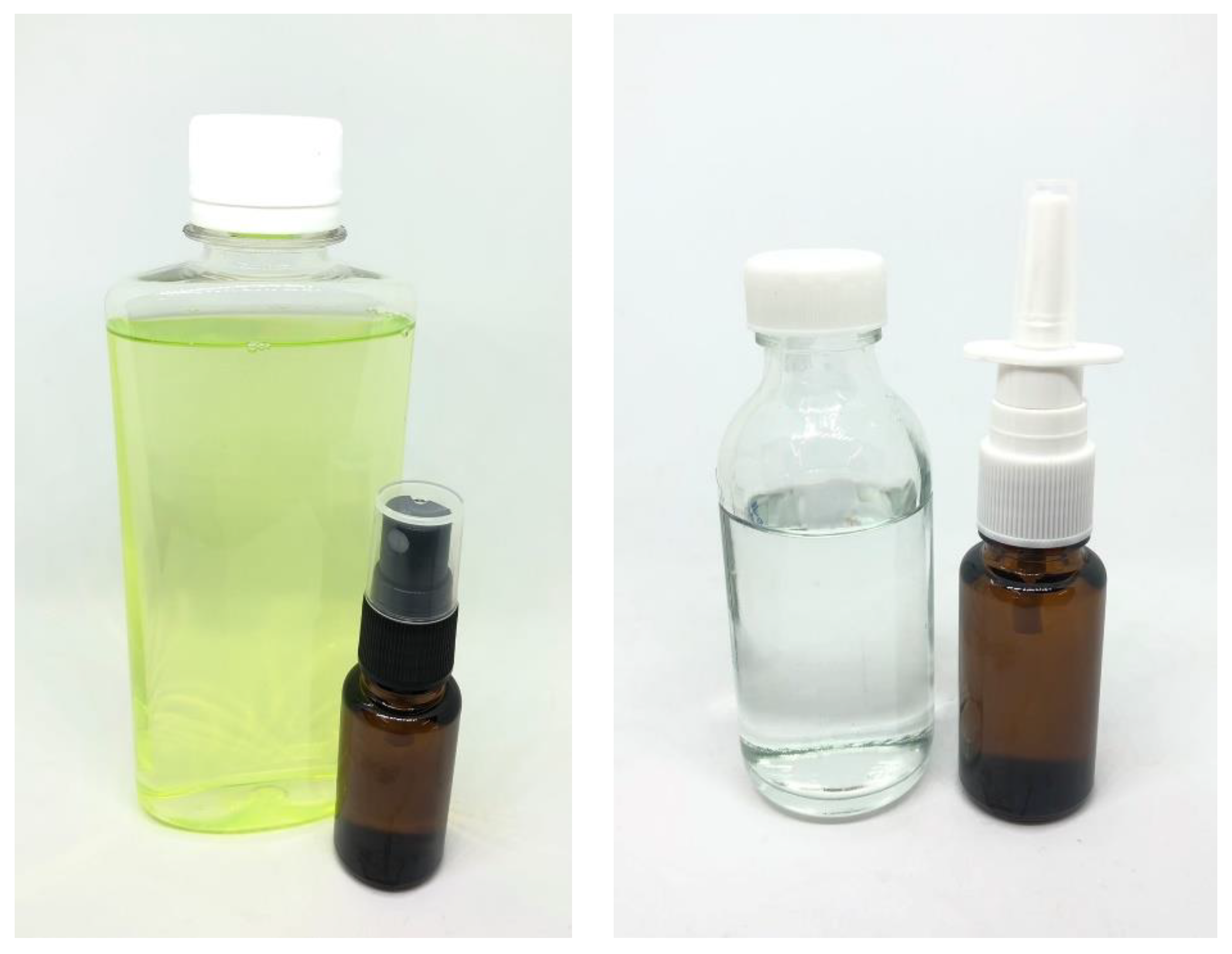

Table 1.
Formulation of oral solution containing DLM, ML, CPC, and Cremophor RH40.
| Ingredient | Concentration (% w/w) | Part |
| DLM | 0.3 | Oil part 1 |
| ML | 0.2 | |
| Cremophor RH40 | 0.5 | |
| Menthol | 0.1 | Oil part 2 |
| Peppermint oil | 0.1 | |
| Cremophor RH40 | 1.0 | |
| CPC | 0.05 | Aqueous part |
| Glycerin | 25 | |
| 1% w/w Tartrazine (INS No. 102) aqueous solution | 1 | |
| Distilled water | q.s. solution to 100 g |
Table 2.
Formulation of nasal solution containing DLM, CPC, and Cremophor RH40.
| Ingredient | Concentration (% w/w) | Part | |
| Before dilution | After a 1:20 dilution | ||
| DLM | 4.20 | 0.20 | Oil part |
| Cremophor RH40 | 15.75 | 0.75 | |
| Menthol | 0.21 | 0.01 | |
| CPC | 1.05 | 0.05 | Aqueous part |
| Sterile 0.9% w/v sodium chloride solution | q.s. solution to 100 g | q.s. solution to 1050 g |
|
Table 3.
% Transmittance and pH values of formulations containing DLM and surfactant at different ratios, measured 1 day after preparation and after a temperature cycling test (6 cycles).
Table 3.
% Transmittance and pH values of formulations containing DLM and surfactant at different ratios, measured 1 day after preparation and after a temperature cycling test (6 cycles).
| Surfactant | Ratio of DLM to surfactant | % Transmittance | pH | ||
| 1 Day | Temperature cycling test | 1 Day | Temperature cycling test | ||
| Tween 20 | 1 : 5 | 0.10 ± 0.00 Z | 0.83 ± 0.01 X,Y | 6.40 ± 0.08 c | 5.98 ± 0.12 d,e |
| 1 : 6 | 0.30 ± 0.00 Y,Z | 0.77 ± 0.00 Y | 5.82 ± 0.12 d,e,f | 5.40 ± 0.09 g | |
| 1 : 7 | 1.63 ± 0.06 X | 1.13 ± 0.12 X | 5.83 ± 0.14 d,e,f | 5.39 ± 0.26 g,h | |
| 1 : 8 | 4.90 ± 0.36 V | 52.40 ± 0.33 P | 6.20 ± 0.02 c,d | 5.47 ± 0.22 g | |
| 1 : 9 | 94.63 ± 0.06 F | 81.10 ± 0.00 L | 5.90 ± 0.09 d,e | 5.41 ± 0.17 g | |
| 1 : 10 | 97.70 ± 0.00 B | 92.27 ± 0.05 G,H | 5.80 ± 0.10 d,e,f | 5.75 ± 0.07 e,f | |
| Tween 60 | 1 : 2.5 | 31.10 ± 0.10 R,S | 25.23 ± 0.29 T | 5.63 ± 0.07 e,f,g | 4.98 ± 0.21 h |
| 1 : 5 | 65.50 ± 0.00 N | 60.90 ± 0.08 O | 5.14 ± 0.21 g,h | 5.02 ± 0.05 h | |
| 1 : 10 | 91.67 ± 0.06 H | 95.77 ± 0.05 D | 4.91 ± 0.11 h | 4.84 ± 0.09 h | |
| 1 : 15 | 98.13 ± 0.06 A | 98.60 ± 0.00 A | 4.92 ± 0.11 h | 4.64 ± 0.12 i | |
| Tween 80 | 1 : 5 | 0.20 ± 0.00 Z | 0.57 ± 0.05 Y,Z | 6.53 ± 0.00 c | 6.08 ± 0.17 d,e |
| 1 : 10 | 20.20 ± 0.00 T,U | 14.90 ± 0.08 U | 6.23 ± 0.05 c,d | 6.18 ± 0.05 c,d | |
| 1 : 12.5 | 94.50 ± 0.00 F | 98.50 ± 0.00 A | 6.41 ± 0.12 c | 5.59 ± 0.21 f,g | |
| 1 : 15 | 98.23 ± 0.12 A | 96.80 ± 0.00 C | 6.04 ± 0.21 d,e | 5.96 ± 0.06 d,e | |
| Cremophor RH40 | 1 : 1 | 10.47 ± 0.46 U | 10.30 ± 0.08 U | 6.46 ± 0.21 c | 6.01 ± 0.07 d,e |
| 1 : 2.5 | 90.30 ± 0.00 I | 90.23 ± 0.21 I | 5.98 ± 0.11 d,e | 5.73 ±0.11 e,f | |
| 1 : 5 | 96.90 ± 0.00 C | 94.20 ± 0.00 F | 6.05 ± 0.11 d,e | 5.98 ± 0.09 d,e | |
| 1 : 10 | 95.10 ± 0.00 E | 93.93 ± 0.12 G | 5.82 ± 0.12 d,e,f | 5.59 ± 0.16 f,g | |
| Cremophor RH60 | 1 : 1 | 0.60 ± 0.00 Y,Z | 0.80 ± 0.08 X,Y | 6.40 ± 0.07 c | 6.17 ± 0.21 c,d |
| 1 : 2.5 | 42.12 ± 0.10 Q | 37.20 ± 0.16 R | 5.78 ± 0.08 e,f | 5.79 ± 0.12 e,f | |
| 1 : 5 | 95.90 ± 0.00 D | 97.57 ± 3.63 B | 6.16 ± 0.17 c,d | 5.95 ± 0.15 d,e | |
| 1 : 10 | 97.00 ± 0.00 C | 91.10 ± 0.00 H | 5.83 ± 0.12 d,e,f | 5.97 ± 0.07 d,e | |
| Coco glucoside | 1 : 2.5 | 24.40 ± 0.00 T | 21.20 ± 0.00 T | 10.94 ± 0.04 b | 10.53 ± 0.17 b |
| 1 : 5 | 80.83 ± 0.06 L | 74.50 ± 0.08 M | 11.26 ± 0.14 a,b | 11.17 ± 0.05 a,b | |
| 1 : 7.5 | 88.10 ± 0.00 J | 81.97 ± 0.09 K,L | 11.40 ± 0.07 a | 11.18 ± 0.09 a,b | |
| 1 : 10 | 82.73 ± 0.06 K | 82.70 ± 0.08 K | 11.57 ± 0.06 a | 11.46 ± 0.05 a | |
| Decyl glucoside | 1 : 2.5 | 6.60 ± 0.00 V | 4.20 ± 0.00 V | 10.85 ± 0.11 b | 10.70 ± 0.12 b |
| 1 : 5 | 30.20 ± 0.00 R,S | 28.83 ± 0.12 T | 11.14 ± 0.05 a,b | 11.01 ±0.06 a,b | |
| 1 : 7.5 | 94.83 ± 0.06 E,F | 95.80 ± 0.00 D | 11.23 ± 0.07 a,b | 11.10 ± 0.17 a,b | |
| 1 : 10 | 92.90 ± 0.00 G | 94.80 ± 0.00 E,F | 11.36 ± 0.03 a | 11.30 ± 0.07 a | |
The analysis results are expressed as mean ± standard deviation (mean ± SD). Differences between A-Z in % transmittance and between a-i in pH values represent significant differences at a 95% confidence interval (p < 0.05).
Table 4.
Anti-SARS-CoV-2 activity of formulations containing DLM, CPC, and ML with Cremophor RH40 as the surfactant.
Table 4.
Anti-SARS-CoV-2 activity of formulations containing DLM, CPC, and ML with Cremophor RH40 as the surfactant.
| Formulations | Ingredients | Contact Time | Log reduction | Statistical results | % Efficacy | Statistical results |
| A | 1% w/w DLM 1.5% w/w Cremophor RH40 |
30 sec | 3.1875 ± 0.0722 | c | 99.93 ± 0.0108 | a |
| 1 min | 3.2708 ± 0.0722 | 99.95 ± 0.0089 | ||||
| 5 min | 3.6875 ± 0.1382 | 99.98 ± 0.0063 | ||||
| 10 min | 3.8125 ± 0.0722 | 99.98 ± 0.0026 | ||||
| B | 0.5% w/w DLM 0.5% w/w ML 1.5% w/w Cremophor RH40 |
30 sec | 2.9063 ± 0.0625 | bc | 99.87 ± 0.0167 | a |
| 1 min | 3.0625 ± 0.0722 | 99.91 ± 0.0144 | ||||
| 5 min | 3.2500 ± 0.1021 | 99.94 ± 0.0138 | ||||
| 10 min | 3.6042 ± 0.0722 | 99.97 ± 0.0041 | ||||
| C | 0.3% w/w DLM 0.05% w/w CPC 1.5% w/w Cremophor RH40 |
30 sec | 2.1875 ± 0.0722 | ab | 99.34 ± 0.1083 | a |
| 60 sec | 2.7604 ± 0.0859 | 99.82 ± 0.0336 | ||||
| 90 sec | 2.9375 ± 0.0722 | 99.88 ± 0.0193 | ||||
| 120 sec | 3.0833 ± 0.1021 | 99.92 ± 0.019 | ||||
| D | 0.3% w/w DLM 0.05% w/w CPC 0.2% w/w ML 1.5% w/w Cremophor RH40 Other excipients as shown in Table 3 |
30 sec | 3.2083 ± 0.0589 | c | 99.94 ± 0.0088 | a |
| 60 sec | 3.2708 ± 0.0722 | 99.95 ± 0.0089 | ||||
| 90 sec | 3.6250 ± 0.1021 | 99.98 ± 0.0055 | ||||
| 120 sec | 3.8750 ± 0.1021 | 99.99 ± 0.0032 | ||||
| E | 0.2% w/w DLM 0.05% w/w CPC 0.75% w/w Cremophor RH40 Other excipients as shown in Table 4 |
30 sec | 2.2708 ± 0.0722 | a | 99.46 ± 0.0894 | a |
| 60 sec | 2.6042 ± 0.0722 | 99.75 ± 0.0415 | ||||
| 90 sec | 2.7917 ± 0.1021 | 99.84 ± 0.0396 | ||||
| 120 sec | 2.9063 ± 0.1197 | 99.87 ± 0.0369 |
Statistical significance was evaluated using ANOVA followed by Duncan post hoc test at a 95% confidence level (p < 0.05). Different letters denote the significant difference.
Table 5.
Anti-influenza activity of formulations containing DLM, CPC, and ML with Cremophor RH40 as the surfactant.
Table 5.
Anti-influenza activity of formulations containing DLM, CPC, and ML with Cremophor RH40 as the surfactant.
| Formulation | Concentration | Contact time (sec) | FluA(H1N1) | FluA(H3N2) | FluB | |||
| Efficacy* | Log reduction* | Efficacy* | Log reduction* | Efficacy* | Log reduction* | |||
| D | Conc | 30 | >99.99% | >4.000 | >99.99% | >4.000 | >99.99% | >4.000 |
| 1:2 | >99.99% | >4.000 | >99.99% | >4.000 | >99.99% | >4.000 | ||
| 1:4 | >99.99% | >4.000 | >99.99% | >4.000 | >99.99% | >4.000 | ||
| 1:8 | >99.99% | >4.000 | >99.99% | >4.000 | >99.99% | >4.000 | ||
| 1:16 | >99.99% | >4.000 | >99.99% | >4.000 | >99.99% | >4.000 | ||
| 1:32 | >99.99% | >4.000 | >99.99% | >4.000 | >99.99% | >4.000 | ||
| Conc | 60 | >99.99% | >4.000 | >99.99% | >4.000 | >99.99% | >4.000 | |
| 1:2 | >99.99% | >4.000 | >99.99% | >4.000 | >99.99% | >4.000 | ||
| 1:4 | >99.99% | >4.000 | >99.99% | >4.000 | >99.99% | >4.000 | ||
| 1:8 | >99.99% | >4.000 | >99.99% | >4.000 | >99.99% | >4.000 | ||
| 1:16 | >99.99% | >4.000 | >99.99% | >4.000 | >99.99% | >4.000 | ||
| 1:32 | >99.99% | >4.000 | >99.99% | >4.000 | >99.99% | >4.000 | ||
| Conc | 90 | >99.99% | >4.000 | >99.99% | >4.000 | >99.99% | >4.000 | |
| 1:2 | >99.99% | >4.000 | >99.99% | >4.000 | >99.99% | >4.000 | ||
| 1:4 | >99.99% | >4.000 | >99.99% | >4.000 | >99.99% | >4.000 | ||
| 1:8 | >99.99% | >4.000 | >99.99% | >4.000 | >99.99% | >4.000 | ||
| 1:16 | >99.99% | >4.000 | >99.99% | >4.000 | >99.99% | >4.000 | ||
| 1:32 | >99.99% | >4.000 | >99.99% | >4.000 | >99.99% | >4.000 | ||
| Conc | 120 | >99.99% | >4.000 | >99.99% | >4.000 | >99.99% | >4.000 | |
| 1:2 | >99.99% | >4.000 | >99.99% | >4.000 | >99.99% | >4.000 | ||
| 1:4 | >99.99% | >4.000 | >99.99% | >4.000 | >99.99% | >4.000 | ||
| 1:8 | >99.99% | >4.000 | >99.99% | >4.000 | >99.99% | >4.000 | ||
| 1:16 | >99.99% | >4.000 | >99.99% | >4.000 | >99.99% | >4.000 | ||
| 1:32 | >99.99% | >4.000 | >99.99% | >4.000 | >99.99% | >4.000 | ||
| E | Conc | 30 | >99.99% | >4.000 | >99.99% | >4.000 | >99.99% | >4.000 |
| 1:2 | >99.99% | >4.000 | >99.99% | >4.000 | >99.99% | >4.000 | ||
| 1:4 | >99.99% | >4.000 | >99.99% | >4.000 | >99.99% | >4.000 | ||
| 1:8 | >99.99% | >4.000 | >99.99% | >4.000 | >99.99% | >4.000 | ||
| 1:16 | >99.99% | >4.000 | >99.99% | >4.000 | >99.99% | >4.000 | ||
| 1:32 | >99.99% | >4.000 | >99.99% | >4.000 | >99.99% | >4.000 | ||
| Conc | 60 | >99.99% | >4.000 | >99.99% | >4.000 | >99.99% | >4.000 | |
| 1:2 | >99.99% | >4.000 | >99.99% | >4.000 | >99.99% | >4.000 | ||
| 1:4 | >99.99% | >4.000 | >99.99% | >4.000 | >99.99% | >4.000 | ||
| 1:8 | >99.99% | >4.000 | >99.99% | >4.000 | >99.99% | >4.000 | ||
| 1:16 | >99.99% | >4.000 | >99.99% | >4.000 | >99.99% | >4.000 | ||
| 1:32 | >99.99% | >4.000 | >99.99% | >4.000 | >99.99% | >4.000 | ||
| Conc | 90 | >99.99% | >4.000 | >99.99% | >4.000 | >99.99% | >4.000 | |
| 1:2 | >99.99% | >4.000 | >99.99% | >4.000 | >99.99% | >4.000 | ||
| 1:4 | >99.99% | >4.000 | >99.99% | >4.000 | >99.99% | >4.000 | ||
| 1:8 | >99.99% | >4.000 | >99.99% | >4.000 | >99.99% | >4.000 | ||
| 1:16 | >99.99% | >4.000 | >99.99% | >4.000 | >99.99% | >4.000 | ||
| 1:32 | >99.99% | >4.000 | >99.99% | >4.000 | >99.99% | >4.000 | ||
| Conc | 120 | >99.99% | >4.000 | >99.99% | >4.000 | >99.99% | >4.000 | |
| 1:2 | >99.99% | >4.000 | >99.99% | >4.000 | >99.99% | >4.000 | ||
| 1:4 | >99.99% | >4.000 | >99.99% | >4.000 | >99.99% | >4.000 | ||
| 1:8 | >99.99% | >4.000 | >99.99% | >4.000 | >99.99% | >4.000 | ||
| 1:16 | >99.99% | >4.000 | >99.99% | >4.000 | >99.99% | >4.000 | ||
| 1:32 | >99.99% | >4.000 | >99.99% | >4.000 | >99.99% | >4.000 | ||
*Results are based on quadruplicate experiments.
Table 6.
% Transmittance, pH values, and % label amounts of DLM, ML, and CPC in oral formulation D and nasal formulation E stored at 4 ± 1 °C, 25 ± 1 °C, and 40 ± 1 °C for 1, 3, and 6 months.
Table 6.
% Transmittance, pH values, and % label amounts of DLM, ML, and CPC in oral formulation D and nasal formulation E stored at 4 ± 1 °C, 25 ± 1 °C, and 40 ± 1 °C for 1, 3, and 6 months.
| Storage temperature | Storage time | % Transmittance | pH | % Label amount | Microbial contamination | ||
| DLM | CPC | ML | |||||
| Oral formulation D | |||||||
| Fresh prepared | 71.37 ± 0.05c | 6.05 ± 0.01g | 96.95 ± 0.01g | 102.06 0.06f | 87.54 0.05i | Conform | |
| 4 ± 1 °C | 1 month | 89.50 ± 0.08h | 6.03 ± 0.01g | 97.05 ± 0.12g | 102.76 ± 0.12g | 76.05 ± 0.04h | Conform |
| 3 months | 89.53 ± 0.05h | 6.01 ± 0.01f | 96.98 ± 0.11g | 102.89 ± 0.10g | 74.91 ± 0.18g | Conform | |
| 6 months | 74.27 ± 0.02d | 5.96 ± 0.00d | 95.32 ± 0.05f | 101.96 ± 0.06f | 68.04 ± 0.30d | Conform | |
| 25 ± 1 °C | 1 month | 81.20 ± 0.05g | 5.98 ± 0.01e | 95.34 ± 0.19f | 101.99 ± 0.29f | 75.21 ± 0.01g | Conform |
| 3 months | 81.20 ± 0.70g | 5.93 ± 0.02c | 94.12 ± 0.05e | 98.89 ± 0.07d | 74.21 ± 0.07f | Conform | |
| 6 months | 76.10 ± 0.00e | 5.91 ± 0.03b | 89.14 ± 0.16d | 95.94 ± 0.18c | 66.40 ± 0.21c | Conform | |
| 40 ± 1 °C | 1 month | 69.07 ± 0.10b | 5.96 ± 0.01d | 87.45 ± 0.25c | 99.29 ± 0.11e | 72.19 ± 0.45e | Conform |
| 3 months | 79.30 ± 0.00f | 5.90 ± 0.02b | 78.95 ± 0.11b | 95.59 ± 0.07b | 60.02 ± 0.15b | Conform | |
| 6 months | 63.87 ± 0.06a | 5.85 ± 0.02a | 66.87 ± 0.20a | 93.06 ± 0.16a | 57.67 ± 0.02a | Conform | |
| Nasal formulation E | |||||||
| Freshly prepared | 88.53 ± 0.07c | 4.78 ± 0.01c | 97.57 0.03i | 102.12 0.10g | NA | Conform | |
| 4 ± 1 °C | 1 month | 90.23 ± 0.13e | 4.76 ± 0.01bc | 97.32 ± 0.11hi | 102.09 ± 0.08g | NA | Conform |
| 3 months | 90.43 ± 0.06e | 4.75 ± 0.02ab | 97.08 ± 0.13gh | 102.10 ± 0.17g | NA | Conform | |
| 6 months | 90.34 ± 0.12e | 4.75 ± 0.01ab | 96.56 ± 0.17ef | 101.56 ± 0.09f | NA | Conform | |
| 25 ± 1 °C | 1 month | 89.45 ± 0.10d | 4.75 ± 0.01ab | 96.77 ± 0.33fg | 102.03 ± 0.14g | NA | Conform |
| 3 months | 87.78 ± 0.10b | 4.75 ± 0.01ab | 96.19 ± 0.04de | 100.04 ± 0.51d | NA | Conform | |
| 6 months | 87.67 ± 0.40b | 4.74 ± 0.02ab | 95.86 ± 0.13d | 98.05 ± 0.32c | NA | Conform | |
| 40 ± 1 °C | 1 month | 80.09 ± 0.04a | 4.75 ± 0.01ab | 92.89 ± 0.13c | 100.59 ± 0.03e | NA | Conform |
| 3 months | 80.10 ± 0.22a | 4.74 ± 0.01ab | 85.99 ± 0.55b | 96.08 ± 0.09b | NA | Conform | |
| 6 months | 79.87 ± 0.52a | 4.73 ± 0.02a | 80.43 ± 0.13a | 94.11 ± 0.22a | NA | Conform | |
NA: Not analyzed. Different letters above the mean ± SD values indicate statistically significant difference at p<0.05.
Disclaimer/Publisher’s Note: The statements, opinions and data contained in all publications are solely those of the individual author(s) and contributor(s) and not of MDPI and/or the editor(s). MDPI and/or the editor(s) disclaim responsibility for any injury to people or property resulting from any ideas, methods, instructions or products referred to in the content. |
© 2025 by the authors. Licensee MDPI, Basel, Switzerland. This article is an open access article distributed under the terms and conditions of the Creative Commons Attribution (CC BY) license (https://creativecommons.org/licenses/by/4.0/).
Copyright: This open access article is published under a Creative Commons CC BY 4.0 license, which permit the free download, distribution, and reuse, provided that the author and preprint are cited in any reuse.


