
Submitted:
05 February 2025
Posted:
05 February 2025
You are already at the latest version
Abstract
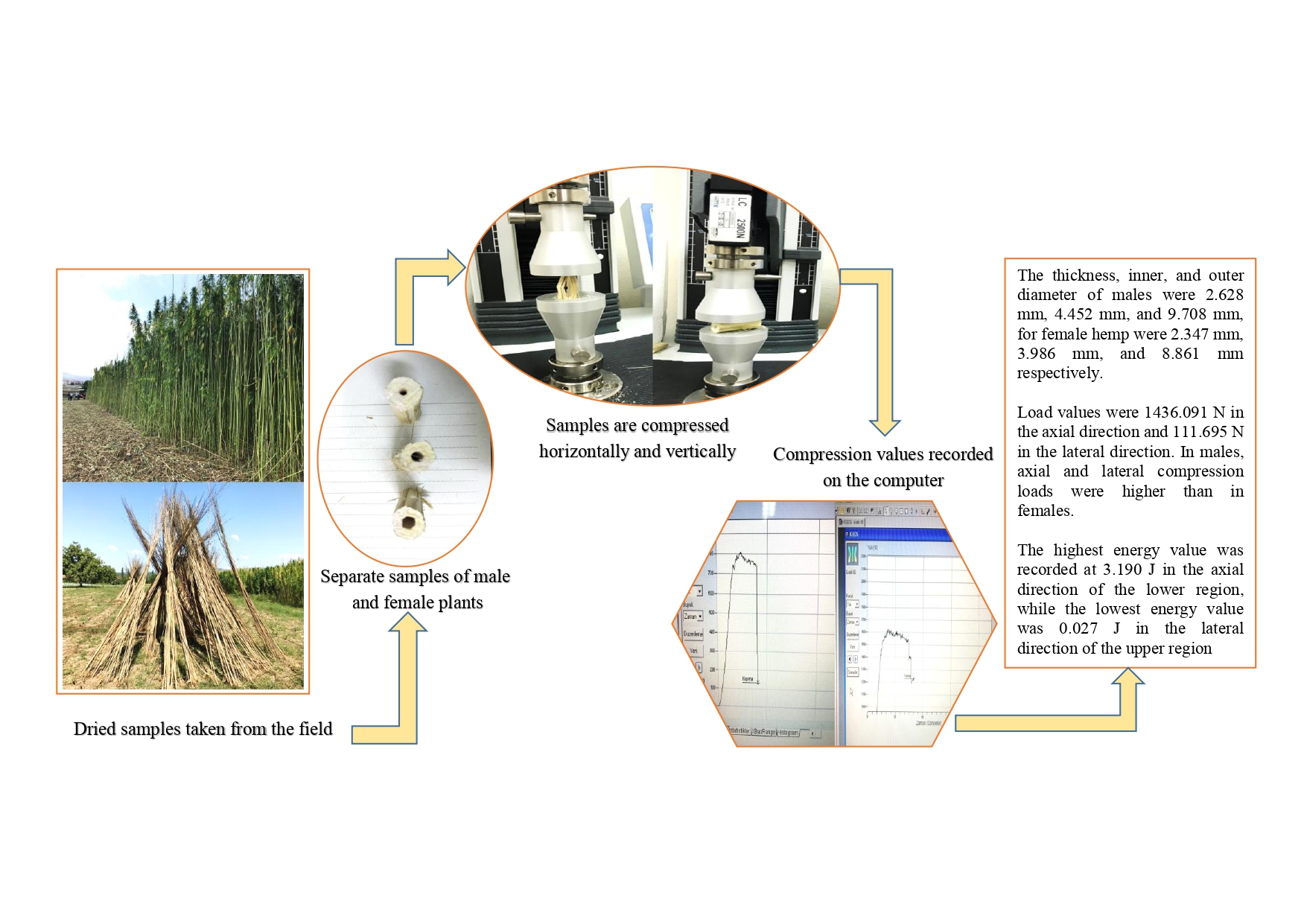
Hemp (Cannabis sativa L) is one of the oldest annual fiber crops cultivated throughout human history. In recent years, the importance of hemp has increased due to its several applications, highlighting its potential for comprehensive utilization across various sectors. Hemp is cultivated primarily for its seeds and fibers. While research on the hemp plant has led to significant advancements, it is seen that the biology of the plant is not sufficiently understood. Moreover, addressing the challenges encountered during the harvesting of hemp for seed and fiber purposes requires further investigation. Studies are also needed to determine plant characteristics in terms of both variety and gender. The study aimed to determine the physical properties of hemp plants. The stems of male and female hemp plants were divided into three sections along their length: lower, middle, and upper regions. Samples measuring 25.4 mm in length were collected from each section, and measurements of thickness, inner diameter, and outer diameter were conducted. The same samples were subjected to axial and lateral compression tests to determine load, elongation, and energy values. According to the results, the thickness of hemp ranged between 2.628-2.347 mm, the inner diameter between 4.452-3.986 mm, and the outer diameter between 9.708-8.861 mm. The results showed that male hemp plants have an increase in thickness, inner diameter, and outer diameter values from the lower to the upper region compared to female hemp plants. The compressive loads in the axial and lateral directions were found to be higher in male hemp plants compared to female hemp plants. Moreover, elongation and energy requirements during axial and lateral compressions showed trends consistent with the load values across the stem samples. The results of this study emphasize the necessity of understanding the physical properties of male and female hemp plants for the effective design of harvesting and processing machinery. Additionally, recognizing the male and female characteristics of hemp was found to play a crucial role in determining appropriate cutting heights and forward speeds during harvesting.
Keywords:
Hemp
; male and female hemp
; harvesting
; physical properties
; compression
; energy
; load
1. Introduction
Hemp (Cannabis sativa L), an annual crop from the Cannabaceae family, is among the oldest fiber plants humans cultivate. Native to Central Asia, hemp has been widely cultivated across the globe over the past 10,000 years [1]. The scientific and industrial importance of hemp as a renewable and sustainable resource continues to grow steadily [2]. Notably, all parts of the hemp plant are utilized in diverse ways across various industries, particularly in the fields of manufacturing and textiles. Furthermore, hemp serves as a vital raw material for a broad spectrum of products, including clothing, ropes, household goods, industrial oils, cosmetics, food items, and medicines [3,4]. All parts of the hemp plant, including stalks, seeds, leaves, and flowers, are utilized across various industries [5,6]. Moreover, in recent years, hemp has gained significance as a renewable raw material for producing strong, lightweight composite materials. Additionally, the cultivation of medical hemp in controlled environments has been on the rise due to advancements in healthcare applications [7]. Hemp fiber is also a valuable product for producing environmentally friendly and biodegradable products [8]. When compared to other natural fibers, such as cotton, and petroleum-derived synthetic fibers, hemp stands out due to its superior ecological characteristics and significant potential for organic production [9].
The labor-intensive nature of hemp cultivation, combined with the presence of naturally occurring tetrahydrocannabinol (THC), has led many producers to shift toward alternative crops. Additionally, hemp has lost its competitive edge against cotton and synthetic fibers, contributing to a decline in cultivation areas. However, recent studies have highlighted the significant nutritional, economic, and social importance of hemp for humans [10,11]. Moreover, further research is necessary to fully unlock the potential of the hemp plant [12].
From an industrial perspective, hemp serves as the raw material for approximately 25,000 different products, with its market value expected to exceed 26.6 billion USD by 2025 [13]. The growing interest in hemp as a source of eco-friendly natural products has led to a significant increase in cultivation areas. Furthermore, since 2000, the use of industrial hemp fiber in the apparel industry has been steadily rising, contributing to the ongoing expansion of hemp cultivation [14]. However, further agricultural research is urgently needed to enhance profitability and productivity in hemp production [15].
Hemp is cultivated to obtain fiber and seeds, and its ultimate use determines the cultivation method. For fiber production, denser planting with higher plant density is employed, while for seed production, sparser planting is preferred [16]. This distinction highlights the necessity of considering these parameters during harvesting. Indeed, the mechanization of seed harvesting in hemp is crucial, as it significantly reduces production costs, including those for energy and seed inputs [17]. After harvest, several methods are used to separate the fibers from the stalks, including mechanical separation, retting, pooling, chemical treatments, and enzymatic processes.
The cultivation of hemp involves several stages, including soil preparation, planting, management of intermediate processes, harvesting, and fiber separation. Among these, the harvesting of hemp stalks represents the most critical phase. Considering the overall hemp production process, labor and time consumption account for approximately 40% of the total process [18]. Given that the harvesting stage constitutes more than 60% of the total labor requirement in field production, research into harvest mechanization has been emphasized as essential [19]. Therefore, the development of harvesting machinery is crucial in hemp cultivation. Advancements in harvest mechanization will facilitate the production of high-quality fibers.
Although there are similarities among hemp genotypes, differences may arise in cultivation methods and the harvesting process [20]. To provide data for the design of combine harvesters in hemp harvesting, parameters such as cutting speed and stalk feeding rate were analyzed for a prototype combine harvester, and the necessity of these parameters for the design was established [21]. In their studies on hemp stalks, Shen et al. [22] examined cutting force and cutting quality, emphasizing that the results obtained should be utilized in subsequent research.
In addition, the lack of advanced machines suitable for the morphological characteristics of hemp is indicated as the main factor for hemp to be profitable. Therefore, some modifications or device connections are necessary for the existing machines used to harvest hemp stalks [23]. The presence of hard fibers in hemp plant harvesting is also known as a major problem in this regard, as well as clogging of unsuitable machines [24].
In hemp harvesting, certain harvesting machines have been adapted for use with tractors [25]. However, it is known that some of the machines used in various countries were designed without sufficiently considering the physical characteristics of hemp stalks. This is primarily because the machines currently in use were originally designed and manufactured for harvesting other crops, such as rice and wheat [26]. As a result, these machines cannot be utilized efficiently or effectively due to the structural characteristics of hemp stalks. Hemp fibers may exhibit diverse mechanical and even electrical properties [27]. Therefore, understanding the physical and mechanical characteristics of hemp is crucial during the development of hemp harvesting machinery. In particular, the design of hemp harvesters takes into account various mechanical parameters, such as tensile tests, compression tests, and bending tests, to ensure optimal performance [28].
During the decortication of hemp stalks, damage often occurs due to compression, leading to deformation that negatively affects the quality of the fibers obtained. Before decortication, the quality of hemp stalks characterized by factors such as stalk color, mass, diameter, and chemical composition plays a critical role in determining retting efficiency [29]. Understanding the compression properties of hemp stalks is critically important for designing and improving baling systems or fiber extraction machines used after hemp harvesting [30,31]. The study of the physical and mechanical properties of agricultural products has been a significant focus of research. This is because these properties serve as essential parameters in agricultural machinery design [32].
Studies have reported that compression forces vary based on plant species, stem diameters [33], stem structures, and maturity stages at different plant heights. For instance, in sorghum plants, compression forces were found to differ across various stem heights [34]. Similarly, to obtain fundamental data for combined harvester design, Bhaholyotin et al. [35] investigated sugarcane plants and highlighted that the required force values varied significantly at different stem heights.
In hemp harvesting, it is crucial not only to minimize seed loss but also to reduce mechanical damage [36]. Limited studies have shown that the force and energy values required to cut hemp stalks are higher than those for other plants. Based on these findings, it is expected that the compression properties of hemp stalks will also differ from those of other crops, highlighting the need for further investigation. Additionally, it has been observed that there are differences in volatile emissions between male and female plants [37], emphasizing the importance of minimizing excessive deformation during harvesting.
Male and female hemp flowers differ in their morphological structures, and the plants themselves exhibit distinct characteristics based on sex [38,39,40,41]. In hemp cultivation, enhancing male plants' ability to feminize is considered crucial for improving yield [42]. Consequently, understanding the characteristics of plant sex is essential. Given the variation in the length and thickness of hemp stalks, research and design efforts for hemp harvesting machines are essential [19]. Furthermore, in their study on six hemp varieties, Bakali et al. [43] found that gender ratio, plant height, and stem diameter vary according to the different cultivars.
The harvest period plays a crucial role in the chemical profile of flower clusters [44]. In their study on gender determination and plant development in hemp, Xavier et al. [45] identified tissue-specific genes in the plants, providing valuable data for further research. Additionally, determining the gender of hemp plants is essential for farmers and growers to improve the crop and enhance its yield [46,47]. Particularly, when examining or utilizing hemp fibers, the gender of the plant must be known and considered [48].
This study aims to provide fundamental data that support the design of a specialized machine for the mechanized harvesting of hemp. Additionally, it seeks to accurately determine the physical properties of both male and female plants, ensuring a comprehensive understanding for enhanced harvesting efficiency.
2. Materials and Methods
2.1. Preparation of Samples and Test Device
This study was carried out in 2022, the plant samples used in the trials were collected from a hemp field in Narlısaray Village, Vezirköprü District, Samsun Province, Türkiye where local populations were cultivated for fiber production. In addition, male and female hemp plants were collected separately and labeled.
The plant samples collected from the field were separated from their root sections and left to dry naturally. Before testing, the samples were dried to achieve a moisture content of approximately 11%, a level sufficient for compression tests on hemp plants. The dried plant stems were divided into three equal regions (lower, middle, and upper) for further analysis. Mazian et al. [49] similarly divided the plant into three regions lower, middle, and upper for sample collection in their study on determining fiber quality in hemp. After dividing the stems into three equal sections, samples measuring 25.4 mm in length were taken from each region as shown in Figure 1. The sample lengths were determined following the ASTM standard method for Compression Testing of Plastic Materials [50].
In the compression experiments, an LD5 Lloyd Instrument testing device (Lloyd Instrument Universal Testing Machines, LRX Plus, Lloyd Instruments Ltd., an AMATEX Company) with a force capacity of 5 kN (1124 lbf) and a crosshead speed range of 0.0001 to 1270 mm/min was utilized as shown in Figure 2. Similarly, Aydın and Arslan [51], employed the Lloyd LRX Plus testing device in their study to determine the physical properties of cotton plants. In the bending tests, fiber samples prepared from hemp plates were subjected to testing until broke. The LR5KPlus device, manufactured by Lloyd Instruments, was used for these tests [52,53].
The testing device consists of a main body, a load cell, a compression apparatus, a data acquisition system, and a computer. The device has a capacity of 2500 N which allows for adjustable loading speeds, a compression rate of approximately 10 mm/min was utilized during the experiments. Cutting speed has been identified as a critical parameter for improving the cutting performance of hemp harvesting machines. To enhance the cutting performance of a two-wheeled walking hemp harvester, response surface tests were conducted at three levels for three key factors influencing operational quality: cutting speed, blade length, and forward speed, using a dedicated hemp cutting test bench [54].
2.2. Compression Experiment Design
The experiments were conducted by separating male and female hemp samples. The hemp plant samples were examined based on two different types (male and female), three distinct height regions (lower, middle, and upper) [55], and two different compression directions (lateral and axial) [31]. Each experiment was performed with 30 replications. The statistical analysis of the experimental data was carried out using the JMP software, and the analysis of variance results was consistent with the findings of Esehaghbeygi et al. [55]. Aydin and Arslan [51] evaluated the results of the mechanical properties of the cotton plant by analyzing the mechanical properties using the ANOVA F-test. Similarly, Tavakoli et al. [56] investigated the shearing characteristics of barley straw, focusing on shear strength and shearing energy, as influenced by internode position and loading rate. The data from their study were analyzed using analysis of variance (ANOVA), and mean comparisons were performed with Duncan’s multiple range test at 5% and 1% significance levels, utilizing the SPSS software (version 15, SPSS Inc., USA).
2.3. Measurements of Properties
2.3.1. Physical Measurement Values
In the experiments, measurements of inner diameter (mm), outer diameter (mm) [47], and thickness (mm) were taken for each sample obtained from the plant stems. The effects of axial and lateral forces on the length of the plant were analyzed to understand how the stem responds to these forces. Determining the diameter values is essential for identifying the harvest parameters of the plant stems. In the hemp plant, the diameter values decreased progressively toward the upper sections of the stem. Similarly, in the canola stem, the stem diameter also decreased as the plant height increased. Since canola is commonly harvested using a combine harvester, plants were cut at a height of 10 cm for measurement purposes [57]. In hemp harvesting, the force requirements for seed or stem collection were evaluated, along with the variations in force according to the diameter values at different stem heights.
2.3.2. Pressure Values
Deformations in the samples obtained from the hemp plant were determined based on the axial and lateral forces applied to them. Before the compression test, the samples were placed in the testing device axially and laterally as shown in Figure 3. Using the testing device, A force was applied to the samples at an average speed of 10 mm/min.
The variations in different regions of the plant stem under axial and lateral force applications were demonstrated. Additionally, the load, elongation, and energy values at the point of fracture for the hemp samples in both lateral and axial directions were determined.
3. Results
3.1. Physical Properties of Hemp Stalks
The measurements conducted on samples taken from the stem of the hemp plant are presented in Table 1. When comparing male and female hemp plant samples, it is evident that male hemp exhibits larger values than female hemp in terms of inner diameter, outer diameter, and thickness. When the variations in plant samples are evaluated in terms of the direction of the applied force, it can be stated that the thickness values in the axial direction are slightly higher than those in the lateral direction, with measurements of 2.562 mm and 2.413 mm, respectively. However, no significant difference is observed in terms of inner and outer diameters.
When the samples taken from the hemp plant are analyzed by region, it is observed that the thickness, inner diameter, and outer diameter decrease from the lower to the upper sections of the stem. The largest outer diameter value, 11.142 mm, is found in the lower section, while the smallest thickness value, 1.978 mm, is recorded in the upper section (Table 1). Similarly, Chen et al. [58] reported that the characteristics of hemp stalks vary within the field and that the mechanical properties, including the cutting energy requirement, depend on the stem diameter.
3.2. Load Values of Hemp Stalk
The variations in male and female hemp plant samples based on the applied load values were analyzed according to sampling regions (Table 2). The applied load values were determined to be 877.396 N and 670.390 N for male and female samples, respectively. When considering the load values applied to hemp samples in the axial and lateral directions, it was observed that the load applied in the axial direction was higher, reaching 1436.091 N.
When examining the male and female hemp samples in terms of the direction of the applied load, it was found that the axial force values were higher than the lateral force values for both male and female samples (Figure 4). In male hemp samples, the highest load value was recorded in the axial direction at 1627.584 N, while the lowest load value was observed in female hemp samples under lateral load application, measuring 96.182 N.
These data indicate that male hemp samples are subjected to greater deformation under higher loads in both axial and lateral directions. Considering the sections along the hemp plant from which the samples were taken, it was observed that the load values increased from the lower to the upper section for all samples in both axial and lateral directions. Overall, the load values in the axial direction were higher than those in the lateral direction. The highest load value, 1911.262 N, was recorded in the axial lower section, while the lowest load value, 96.611 N, was observed in the lateral upper section.
3.3. Deformation and Elongation Characteristics of Hemp Stalk
The elongation values of male and female hemp samples were found to be 1.888 mm and 1.781 mm, respectively, which are relatively close to each other. Although the elongation amounts in male and female hemp samples appear similar, they belong to statistically different groups. This highlights the significance of the extension values. In the samples, the elongation in the axial direction was 2.949 mm, while in the lateral direction, it was 0.719 mm. The smaller elongation in the lateral direction indicates that the plant underwent deformation without experiencing significant elongation. When examining the elongation values based on the regions from which the samples were taken, it was observed that the elongation decreased from the lower to the upper section. The elongation was 2.024 mm in the lower section, while it was 1.627 mm in the upper section. Considering that the stem is thicker in the lower section and becomes thinner towards the upper section, this pattern can be regarded as a natural outcome.
When examining the elongation of male and female plant samples in different directions, it was found that the elongation values in the axial direction were higher than those in the lateral direction for both male and female samples. In male plant samples, the maximum elongation was observed in the axial direction, measuring 3.091 mm, while the minimum elongation was recorded in the lateral direction in female samples, at 0.754 mm.
3.4. Energy Properties of Hemp Stalk
The highest energy consumption in hemp plants was observed in male samples at 1.403 J and in female samples at 1.608 J. Regarding compression direction, the highest values were required in the axial direction. Specifically, deformations occurred with energy values of 2.423 J in the axial direction and 0.048 J in the lateral direction.
When the energy values of the hemp plant were analyzed according to different regions, it was found that the values decreased from the lower to the upper region of the plant. Furthermore, there was an approximately 2 times difference in energy values between the lower and upper regions, highlighting a significant variation along the plant’s vertical axis. On the other hand, when the energy requirements of male and female plant samples were analyzed based on compression direction, it was observed that higher energy was consumed in the axial compression for both male and female samples. Specifically, the axial compression required 2.762 J for male samples and 2.085 J for female samples. In contrast, the lateral energy values were significantly lower, measured at 0.044 J for male samples and 0.052 J for female samples. These findings emphasize the directional variation in energy consumption between the axial and lateral compressions.
When the compression direction and regions of the hemp plant were evaluated together, the energy values in the axial direction were found to be significantly higher than those in the lateral direction. Additionally, the required energy values in both axial and lateral directions decreased from the lower to the upper regions of the plant. The highest energy value was recorded at 3.190 J in the axial direction of the lower region, while the lowest energy value was 0.027 J in the lateral direction of the upper region.
4. Discussion
In their study on fibrous plants, Squires et al. [59] utilized AST 695 to determine the compression properties of composite fiber materials. The forces applied to the samples obtained from the plant were used to measure load, elongation, and energy values. The results aligned with the mechanical test results, indicating that the failure mechanism significantly depends on the quality of specimen preparation. Similarly, Mazian et al. [49] examined samples taken from the lower, middle, and upper sections of the hemp plant, concluding that the position of the samples significantly influences fiber quality. In their study on corn plants, Chen et al. [60] divided the stalk into four sections to determine the cutting forces required at different harvest dates. They observed that cutting force decreased from the lower to the upper section of the stalk. The results of their study were analyzed using the SPSS statistical program. Similarly, İnce et al. [61] investigated the bending stress, modulus of elasticity, shear stress, and specific cutting energy for sunflower (Helianthus annuus L.) stems. Their research divided the sunflower stem into four regions and demonstrated that cutting energy values varied significantly across different stem sections. The data were analyzed using Duncan’s multiple range test to compare the differences between sections. Li et al. [62] found that the fiber dimensions in different sections of the hemp stem varied significantly. In their study, the hemp stem was divided into five distinct regions, and samples from each region were thoroughly analyzed. The collected data were evaluated using analysis of variance (ANOVA) to assess the differences in fiber properties across the sections. Hemmatian et al. [53] conducted a study to determine the mechanical properties of sugarcane stalks by collecting samples from ten different heights along the plant stem. Their findings revealed that both cutting force and cutting energy were significantly influenced by cutting speed and stalk height. The results were analyzed using analysis of variance (ANOVA) and artificial neural networks to evaluate the relationships between the variables.
It can be stated that the required load values increase from the lower to the upper section of the plant stem. This can be explained by the increase in stem thickness from the lower to the upper section. Similarly, in their study on the compressive strength of bamboo, Lo et al. [63] observed that the compressive strength increased with the height of the stem. It was found that male hemp samples underwent more deformation under higher loads compared to female samples. This indicates that male hemp samples have a stronger structure.
In hemp, the energy values in the axial direction were higher than those in the lateral direction across both the direction of load application and the regions where the force was applied. This indicates that, for both directions, the energy values decreased from the lower to the upper section. Similarly, in barley, shear strength and shear energy varied according to moisture content and stem diameter [56]. Moreover, it was evaluated through variance analysis that, in addition to moisture content, the stem level also influenced the results, as determined by Duncan’s multiple range test [64]. Similar results were found by O'Dogherty et al. [65] for wheat straw and by Halyk [66] for alfalfa stems.
Similarly, Boydaş et al. [67] divided the alfalfa stem into three regions to determine properties such as cutting stress and specific cutting energy. They found that both cutting stress and specific energy values decreased towards the upper regions of the stem. Similarly, in the case of hemp, it is necessary to develop methods for mechanical harvesting with minimal energy consumption [47].
5. Conclusions
In this study, the male samples exhibited higher values in thickness, inner diameter, and outer diameter compared to the female samples. Specifically, the thickness, inner diameter, and outer diameter of male hemp were 2.628 mm, 4.452 mm, and 9.708 mm, respectively, while these values for female hemp were 2.347 mm, 3.986 mm, and 8.861 mm. Axial thickness was found to be greater than lateral thickness, although no significant differences were observed in inner and outer diameters between the directions. Additionally, the values of thickness, inner diameter, and outer diameter increased progressively from the lower to the upper regions of the plant. In terms of regional variation, thickness ranged between 3.149 mm and 1.978 mm, inner diameter between 4.915 mm and 2.901 mm, and outer diameter between 11.142 mm and 6.857 mm. Generally, male hemp samples exhibited greater increases in thickness, inner diameter, and outer diameter from the lower to the upper regions compared to female samples, reflecting distinct structural differences.
In male hemp, the values of load, elongation, and energy were higher compared to female hemp. It was observed that axial compression loads were greater than lateral compression loads. Specifically, the load values were 1436.091 N in the axial direction and 111.695 N in the lateral direction. In male hemp, both axial and lateral compression loads were higher than those in female hemp, with values ranging from 1627.584 N to 96.182 N. Furthermore, in hemp, axial compression loads decreased from the lower to the upper regions of the plant. A similar trend was observed in lateral compression, indicating a consistent pattern of load distribution across the plant’s structure. When examining the elongation and energy requirements in both axial and lateral compressions, a similar pattern was observed with the load values.
Based on the results obtained from this study, it is evident that understanding the physical properties of male and female hemp is crucial for the design of harvesters. In particular, when mixed planting of male and female hemp is practiced, it is important to consider the characteristics of male hemp. Moreover, the selection of male or female hemp for harvesting can influence the cutting height and, consequently, the advancement speed of the harvester. This highlights the significance of incorporating gender-specific characteristics in the design process to optimize harvesting efficiency.
Data Availability Statement
The original contributions presented in the study are included in the article, further inquiries can be directed to the corresponding author.
Conflicts of Interest
The authors declare no conflicts of interest.
References
- Trono, D. Elicitation as a tool to improve the accumulation of secondary metabolites in Cannabis sativa. Phytochemistry Reviews. 2024, 17, 1-37. [CrossRef]
- Kaya, S.; Oner, E. Kenevir liflerinin eldesi, karakteristik özellikleri ve tekstil endüstrisindeki uygulamaları. Mehmet Akif Ersoy Üniversitesi Fen Bilimleri Enstitüsü Dergisi. 2020, 11, 108-23.
- Rosso, E.; Armone, R.; Costale, A.; Meineri, G.; Chiofalo, B. Hemp seed (Cannabis sativa L.) varieties: lipids profile and antioxidant capacity for monogastric nutrition. Animals. 2024, 14, 2699. [CrossRef]
- Srisuk, S.; Intarat, T.; Damkham, N.; Pisitsak, P. Comparison of infrared-, ultrasonic-, and microwave-assisted mordanting methods for the natural dyeing properties of hemp fabrics. Fibers and Polymers. 2024, 25, 4349-60. [CrossRef]
- Chaowana, P.; Hnoocham, W.; Chaiprapat, S.; Yimlamai, P.; Chitbanyong, K.; Wanitpinyo, K.; Chaisan, T.; Paopun, Y.; Pisutpiched, S.; Khantayanuwong, S.; Puangsin, B. Utilization of hemp stalk as a potential resource for bioenergy. Materials Science for Energy Technologies. 2024, 7, 19-28. [CrossRef]
- Yimlamai, P.; Chitbanyong, K.; Wanitpinyo, K.; Puangsin, B.; Nanta, K.; Khantayanuwong, S.; Pisutpiched, S.; Chaisan, T.; Fei, B.; Hiziroglu, S. Properties of mixture of hemp bast and softwood pulp for filter paper manufacture. Heliyon. 2024, 10, 3. [CrossRef]
- Ahsan SM, Injamum-Ul-Hoque M, Shaffique S, Ayoobi A, Rahman MA, Rahman MM, Choi HW. Illuminating Cannabis sativa L.: The Power of Light in Enhancing C. sativa Growth and Secondary Metabolite Production. Plants. 2024, 13, 2774.
- Chen, Y.; Sadek, M.A.; Guzman, L.; Lague, C.; Landry, H. Simulation of tensile tests of hemp fibre using discrete element method. Agricultural Engineering International: CIGR Journal. 2014, 16, 126-35.
- Kurtuldu, E.; İşmal, ÖE. SÜRDÜRÜLEBİLİR TEKSTİL ÜRETİM VE TASARIMINDA YENİDEN DEĞER KAZANAN LİF: KENEVİR. Art-E. 2019, 1, 12-24.
- Kaur, G.; Kander, R. The sustainability of industrial hemp: a literature review of its economic, environmental, and social sustainability. Sustainability. 2023, 15, 6457. [CrossRef]
- Yano, H.; Fu, W. Hemp: A sustainable plant with high industrial value in food processing. Foods. 2023, 12, 651. [CrossRef]
- Tănase Apetroaei, V.; Pricop, E.M.; Istrati, D.I.; Vizireanu, C. Hemp Seeds (Cannabis sativa L.) as a Valuable Source of Natural Ingredients for Functional Foods—A Review. Molecules. 2024, 29, 2097.
- Kumar, I.M.; Mazhar, M.S.; Nawaz, S. Potential of Establishing Industrial Hemp Value Chains in Northern Australia. Electronic Journal of Structural Engineering. 2024, 29, 17-22. [CrossRef]
- Hua, K.Q.; Yi, S.Z.; Sheng, Q.C., Fu, W.Y.; Xuan, Z.; Xia, S.X.; Yan, C.X.; Dan, Y.D.; Dong, J.W.; Mei, Y.H.; Li, T.L. The Study Progress on Breeding of Flax and Industrial Hemp in China. Journal of Natural Fibers. 2024, 21, 2389159. [CrossRef]
- Shah, N.; Mwando, E.; Skewes, M. A.; Stanley, S.; Hartley, N. Industrial Hemp Variety Trials: Results from the Northern Territory. Agronomy Australia Conference, 21-24 October 2024, Albany, Australia. https://agronomyconference.com.
- Tsaliki, E.; Kalivas, A. Hemp Crop Opportunities. Ann Agric Crop Sci. 2024, 9, 1154. [CrossRef]
- Di Candilo, M.; Rannalli, P.; Diozzi, M. Investigation of cultivation methods for the mechanization of hemp seed harvest. Advances in horticultural science. 2003, 1, 3-8.
- Jicheng, H.; Cheng, S.; Xianwang, L.; Kunpeng, T.; Qiaomin, C.; Bin, Z. Design and Tests of Hemp Harvester. International Agricultural Engineering Journal. 2017, 26, 117-127.
- Shen, C.; Liang, S.M.; Liang, J.H.; Liu, H.L.; Huang, J.C.; Tian, K.P.; Zhang, B.; Yin, G.D. Status of hemp field production mechanization and research thoughts for China’s hemp production areas. International Agricultural Engineering Journal. 2020, 29, 194-204.
- Mariz, J.; Guise, C.; Silva, T.L.; Rodrigues, L.; Silva, C.J. Hemp: From Field to Fiber—A Review. Textiles. 2024, 4, 165-82.
- Zhou, Y.; Shen, C.; Li, X.W.; Zhang, B.; Huang, J.C.; Tian, K.P. Design and test of 4LMD-160 hemp harvester. Applied Mechanics and Materials. 2016, 15, 389-95. [CrossRef]
- Shen, C.; Bin, Z.; Xianwang, L.; Guodong, Y.; Qiamin, C.; Chunhua, X. Bench cutting tests and analysis for harvesting hemp stalk. Int J Agric & Biol Eng, 2017, 10, 56–67. [CrossRef]
- Assirelli, A.; Dal Re, L.; Esposito, S.; Cocchi, A.; Santangelo, E. The mechanical harvesting of hemp using in-field stand-retting: a simpler approach converted to the production of fibers for industrial use. Sustainability. 2020, 12, 8795. [CrossRef]
- Tilkat, E.; Hoşer, A.; Tilkat, E.A.; Süzerer, V.; Çiftçi, Y.Ö. Production of Industrial Hemp: Breeding Strategies, Limitations, Economic Expectations, and Potential Applications. Türk Bilimsel Derlemeler Dergisi. 2023, 16, 54-74.
- Sîrbu, F.D.; Dumitru, I.; Iuga, D.E.; Voicea, I.; Vlăduţ, N.V.; Oprescu, R.M. Considerations regarding the hemp harvesting. Acta Technica Corviniensis-Bulletin of Engineering. 2019, 12, 97-100.
- Tian, K.; Li, X.; Shen, C.; Zhang, B.; Huang, J.; Wang, J.; Zhou, Y. Design and test of cutting blade of cannabis harvester based on longicorn bionic principle. Transactions of the Chinese Society of Agricultural Engineering. 2017, 33, 56-61.
- Trociński, A.; Wieruszewski, M.; Bartkowiak, M.; Dziurka, D.; Mirski, R. The Influence of Hemp Fibers (Cannabis sativa L.) on the Mechanical Properties of Fiber–Gypsum Boards Reinforcing the Gypsum Matrix. Polymers. 2024, 16, 2644.
- Zhou, Y.; Li, X.; Shen, C.; Tian, K.; Zhang, B.; Huang, J. Experimental analysis on mechanical model of industrial hemp stalk. Transactions of the Chinese Society of Agricultural Engineering. 2016, 32, 22-9.
- Decker, A.; Drean, J.Y.; Sarazin, V.; Harzallah, O. Influence of Different Retting on Hemp Stem and Fiber Characteristics Under the East of France Climate Conditions. Journal of Natural Fibers. 2024, ,21, 2350621. [CrossRef]
- Leblicq, T.; Vanmaercke, S.; Ramon, H.; Saeys, W. Mechanical analysis of the bending behaviour of plant stems. Biosystems Engineering. 2015, 1, 87-99. [CrossRef]
- Khan, M. M,; Chen, Y.; Laguë, C.; Landry, H.; Peng, Q.; Zhong, W. Compressive properties of Hemp (Cannabis sativa L.) stalks. Biosystems Engineering. 2010, 106, 315-23. [CrossRef]
- Ahangarnezhad, N.; Najafi, G.; Jahanbakhshi, A. Determination of the physical and mechanical properties of a potato (the Agria variety) in order to mechanise the harvesting and post-harvesting operations. Research in Agricultural Engineering. 2019, 65.
- Galedar, M.N.; Tabatabaeefar, A.; Jafari, A.; Sharifi, A.; Rafiee, S. Bending and shearing characteristics of alfalfa stems. Agricultural Engineering International: CIGR Journal. 2008.
- Oke, B.O.; Kaul, R.N.; Mittal, J.P. Physical and mechanical properties of sorghum (Sorghum bicolor) stalk harvested at various intervals after grain maturity. Agricultural wastes. 1984, 11, 31-45. [CrossRef]
- Bhaholyotin, B.; Kradangna, P.; Ichito, K.; Goto, Y. Study on some physical properties of sugar cane for whole stalk harvester design. Agriculture and Natural Resources. 1988, ,22, 88-90.
- Assirelli, A,; Santangelo, E.; Stagno, F.; Roccuzzo, G.; Musio, S.; Amaducci, S. Hemp Sowing Seed Production: Assessment of New Approaches in North-Italy. Sustainability. 2022,14, 17020.
- Kumeroa, F.; Komahan, S.; Sofkova-Bobcheva, S.; Clavijo McCormick, A. Characterization of the volatile profiles of six industrial hemp (Cannabis sativa L.) cultivars. Agronomy. 2022, 12, 2651.
- Leme, F.M.; Schönenberger, J.; Staedler, Y.M.; Teixeira, S.P. Comparative floral development reveals novel aspects of structure and diversity of flowers in Cannabaceae. Botanical Journal of the Linnean Society. 2020, ,193, 64-83. [CrossRef]
- Shi, J.; Schilling, S.; Melzer, R. Morphological and genetic analysis of inflorescence and flower development in hemp (Cannabis sativa L.). bioRxiv. 2024, 2024-01.
- Spitzer-Rimon, B.; Duchin, S.; Bernstein, N.; Kamenetsky, R. Architecture and florogenesis in female Cannabis sativa plants. Frontiers in plant science. 2019, 2, 350. [CrossRef]
- Shi, J.; Toscani, M.; Dowling, C.A.; Schilling, S.; Melzer, R. Identification of genes associated with sex expression and sex determination in hemp (Cannabis sativa L.). Journal of Experimental Botany. 2025, 76,175-90. [CrossRef]
- Bafort, F.; Libault, A.; Maron, E.; Kohnen, S.; Ancion, N.; Jijakli, M.H. Operational Costs and Analysis of Agronomic Characteristics on Cannabidiol and Cannabigerol Hemp (Cannabis sativa L.) in Hydroponic Soilless Greenhouse and Field Cultivation. Horticulturae. 2024, 10, 1271.
- El Bakali, I.; Hassoun, M.; Boutahar, A.; El Bakali, S.; Sakar, E.H.; Kadiri, M.; Merzouki, A. A comparative evaluation of biomass and resin by-products attributes of six hemp (Cannabis sativa L.) cultivars grown in Rif Mountains (northern Morocco). Vegetos. 2024, 14, 1-3. [CrossRef]
- Spano, M.; Di Matteo, G.; Ingallina, C.; Sobolev, A.P.; Giusti, A.M.; Vinci, G.; Cammarone, S.; Tortora, C.; Lamelza, L.; Prencipe, S.A.; Gobbi, L. Industrial hemp (Cannabis sativa L.) inflorescences as novel food: The effect of different agronomical practices on chemical profile. Foods. 2022, 11, 3658. [CrossRef]
- Barbosa-Xavier, K.; Pedrosa-Silva, F.; Almeida-Silva, F.; Venancio, T.M. Cannabis Expression Atlas: a comprehensive resource for integrative analysis of Cannabis sativa L. gene expression. Physiologia Plantarum. 2024, 176, 70010.
- Campbell, L.G.; Peach, K.; Wizenberg, S.B. Dioecious hemp (Cannabis sativa L.) plants do not express significant sexually dimorphic morphology in the seedling stage. Scientific Reports. 2021, 11,16825.
- Zhou, Y.; Li, X.; Shen, C.; Tian, K.; Zhang, B.; Huang, J. Experimental analysis on mechanical model of industrial hemp stalk. Transactions of the Chinese Society of Agricultural Engineering. 2016, 32, 22-9.
- Li, X.; Du, G.; Wang, S.; Meng, Y. Influence of Gender on the Mechanical and Physical Properties of Hemp Shiv Fiber Cell Wall in Dioecious Hemp Plant. Bioresources. 2015, 1, 10. [CrossRef]
- Mazian, B.; Bergeret, A.; Benezet, J.C.; Malhautier, L. Influence of field retting duration on the biochemical, microstructural, thermal and mechanical properties of hemp fibres harvested at the beginning of flowering. Industrial crops and products. 2018, ,116,170-81. [CrossRef]
- ASTM Standards. D695-08 : Standard test method for compressive properties of rigid plastics. West Conshohocken, PA, USA : ASTM International. 2008.
- Aydın, İ.; Arslan, S.J. Mechanical properties of cotton shoots for topping. Industrial Crops and Products. 2018, ,112, 396-401. [CrossRef]
- Scutaru, M. L.; Cofaru, C.; Drăghicescu, H. T. Research on Study Hemp Fiber Subjected to Three Point Bend Tests. The 4th International Conference Advanced Composite Materials Engineering. COMAT. 2012.
- Hemmatian, R.; Najafi, G.; Hosseinzadeh, B.; Tavakoli, Hashjin, T.; Khoshtaghaza, M. H. Experimental and Theoretical Investigation of the Effects of Moisture Content and Internodes Position on Shearing Characteristics of Sugar Cane Stems. J. Agr. Sci. Tech. 2012, 14, 963-974.
- Huang, J.; Shen, C.; Ji, A.; Tian, K.; Zhang, B.; Li, X.; Chen, Q. Design and test of two-wheeled walking hemp harvester. International Journal of Agricultural and Biological Engineering. 2020, 13, 127-37.
- Esehaghbeygi, A.; Hoseinzadeh, B.; Khazaei, M.; Masoumi, A. Bending and shearing properties of wheat stem of alvand variety. World Applied Sciences Journal. 2009, 6, 1028-32.
- Tavakoli, H.; Mohtasebi, S. S.; Jafari, A. Effect of Moisture Content and Loading Rate on the Shearing Characteristics of Barley Straw by Internode Position. Agricultural Engineering International: the CIGR Ejournal. Manuscript 2009, 1176.
- Hoseinzadeh, B.; Shirneshan, A. Bending and shearing characteristics of canola stem. American-Eurasian journal of agricultural & environmental sciences. 2012, 12, 275-81.
- Chen, Y.; Gratton, J.L.; Liu, J. Power requirements of hemp cutting and conditioning. Biosystems Engineering. 2004 ,87, 417-24. [CrossRef]
- Squires, C.A.; Netting, K.H.; Chambers, A.R. Understanding the factors affecting the compressive testing of unidirectional carbon fibre composites. Composites Part B: Engineering. 2007, 38, 481-7.
- Chen, Y.; Chen, J.; Zhang, Y.; Zhou, D. Effect of harvest date on shearing force of maize stems. Livestock Science. 2007, 111, 33-44.
- İnce, A.H.; Uğurluay, S.; Güzel, E.; Özcan, M.T. Bending and shearing characteristics of sunflower stalk residue. Biosystems Engineering. 2005, 92, 175-81. [CrossRef]
- Li, X.; Wang, S.; Du, G.; Wu, Z.; Meng, Y. Variation in physical and mechanical properties of hemp stalk fibers along height of stem. Industrial Crops and Products. 2013, 42, 344-8. [CrossRef]
- Lo, T.Y.; Cui, H.Z.; Leung, H.C. The effect of fiber density on strength capacity of bamboo. Materials letters. 2004, 58, 2595-8. [CrossRef]
- Galedar, M.N.; Jafari, A.; Mohtasebi, S.S.; Tabatabaeefar, A.; Sharifi, A.; O'dogherty, M.J.; Rafiee, S.; Richard, G. Effects of moisture content and level in the crop on the engineering properties of alfalfa stems. Biosystems engineering. 2008, 101, 199-208. [CrossRef]
- O'dogherty, M.J.; Huber, J.A.; Dyson, J.; Marshall, C.J. A study of the physical and mechanical properties of wheat straw. Journal of agricultural engineering research. 1995, 62,133-42. [CrossRef]
- Halyk, R. M. Tensile and Shear Strength Characteristics of Alfalfa Stems. Unpublished Master of Science thesis, University of Nebraska, Lincoln.1962.
- Boydaş, M.G.; Comakli, M.; Sayinci, B.; Kara, M. Effects of moisture content, internode region, and oblique angle on the mechanicalproperties of sainfoin stem. Turkish Journal of Agriculture and Forestry. 2019, 43, 254-63.
Figure 1.
Segmentation of hemp plant stems and representation of collected samples.
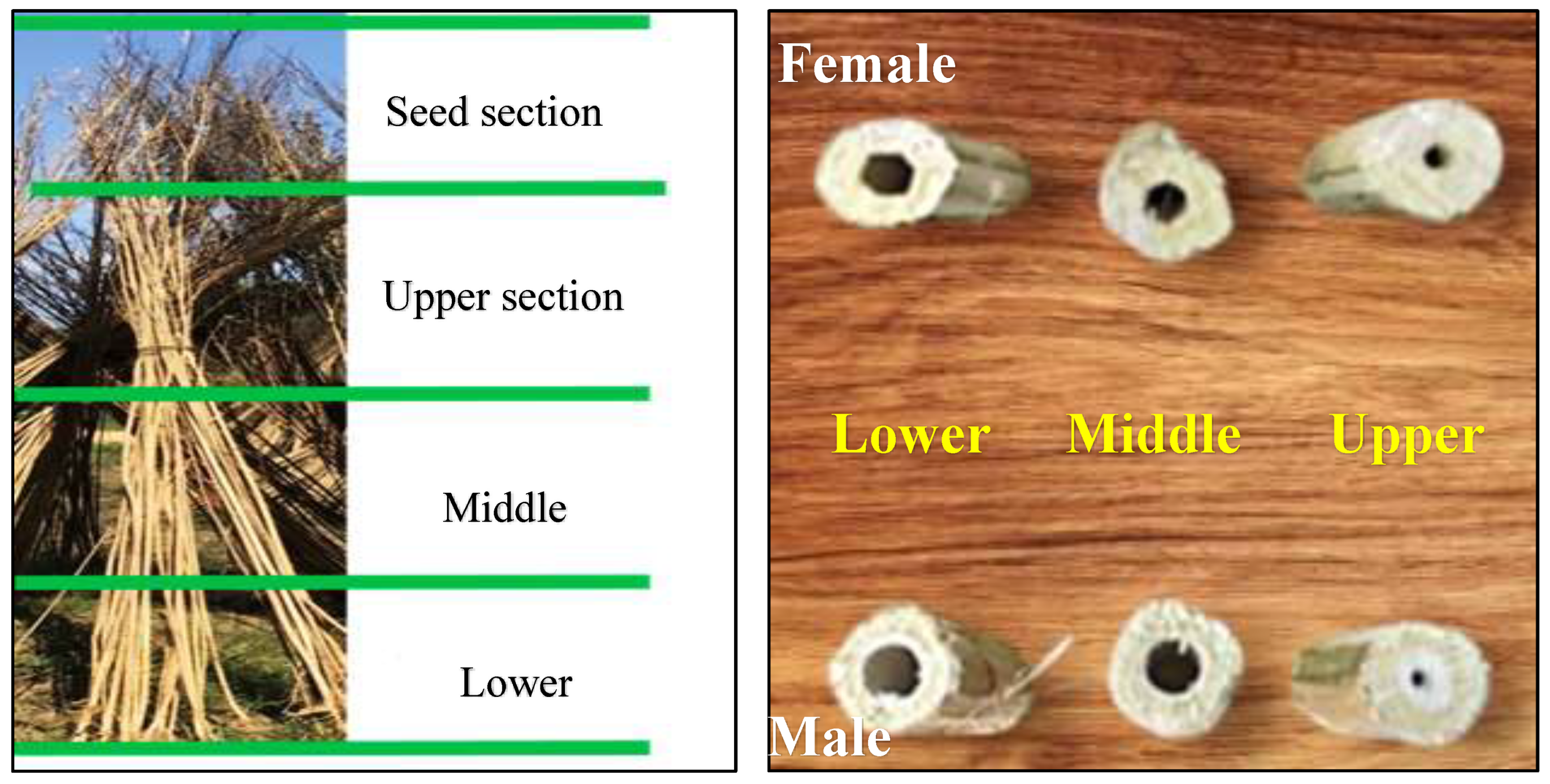
Figure 2.
The testing device used in the experiments.
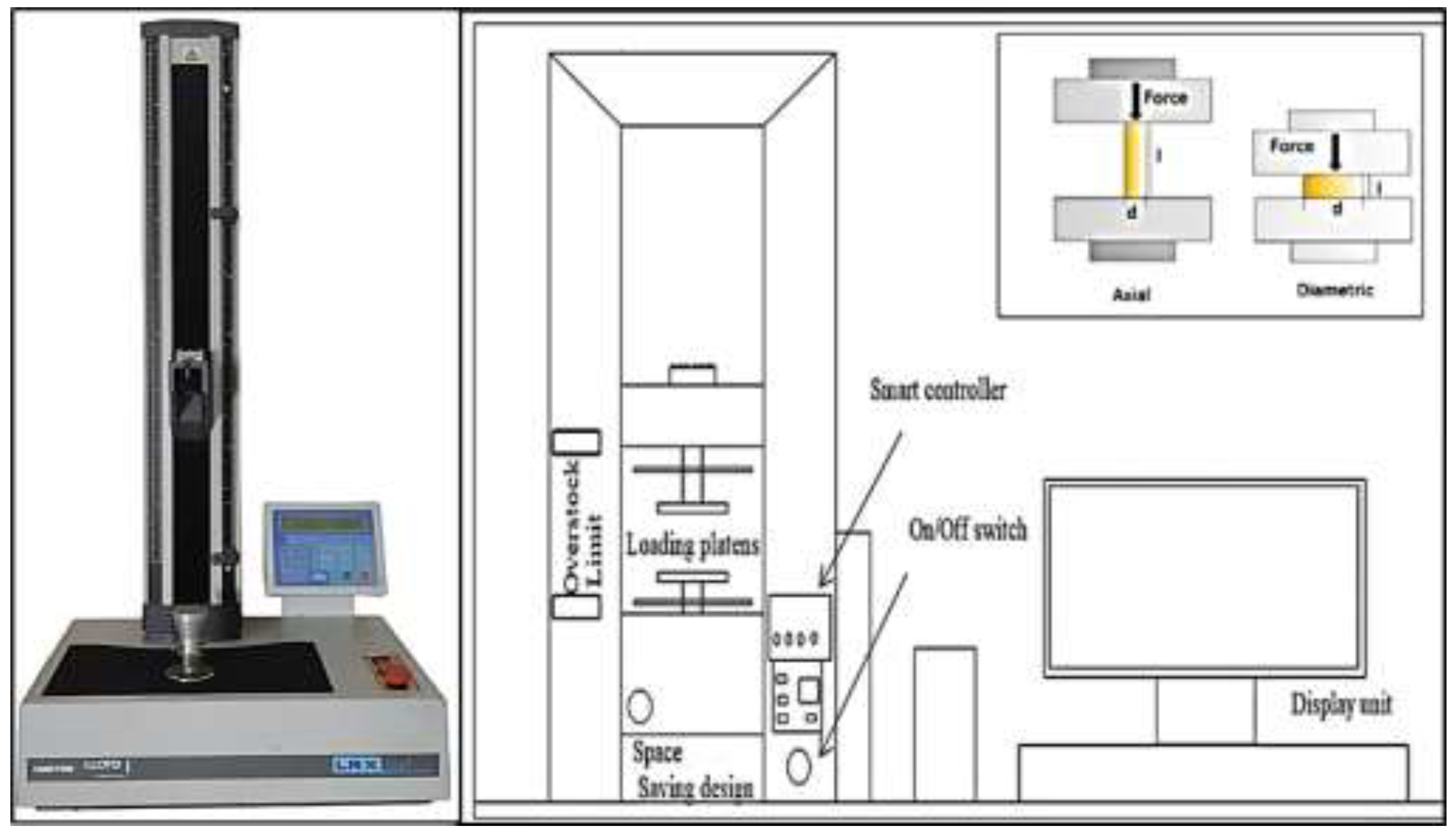
Figure 3.
Lateral (a) and axial (b) force applications in the experiments.
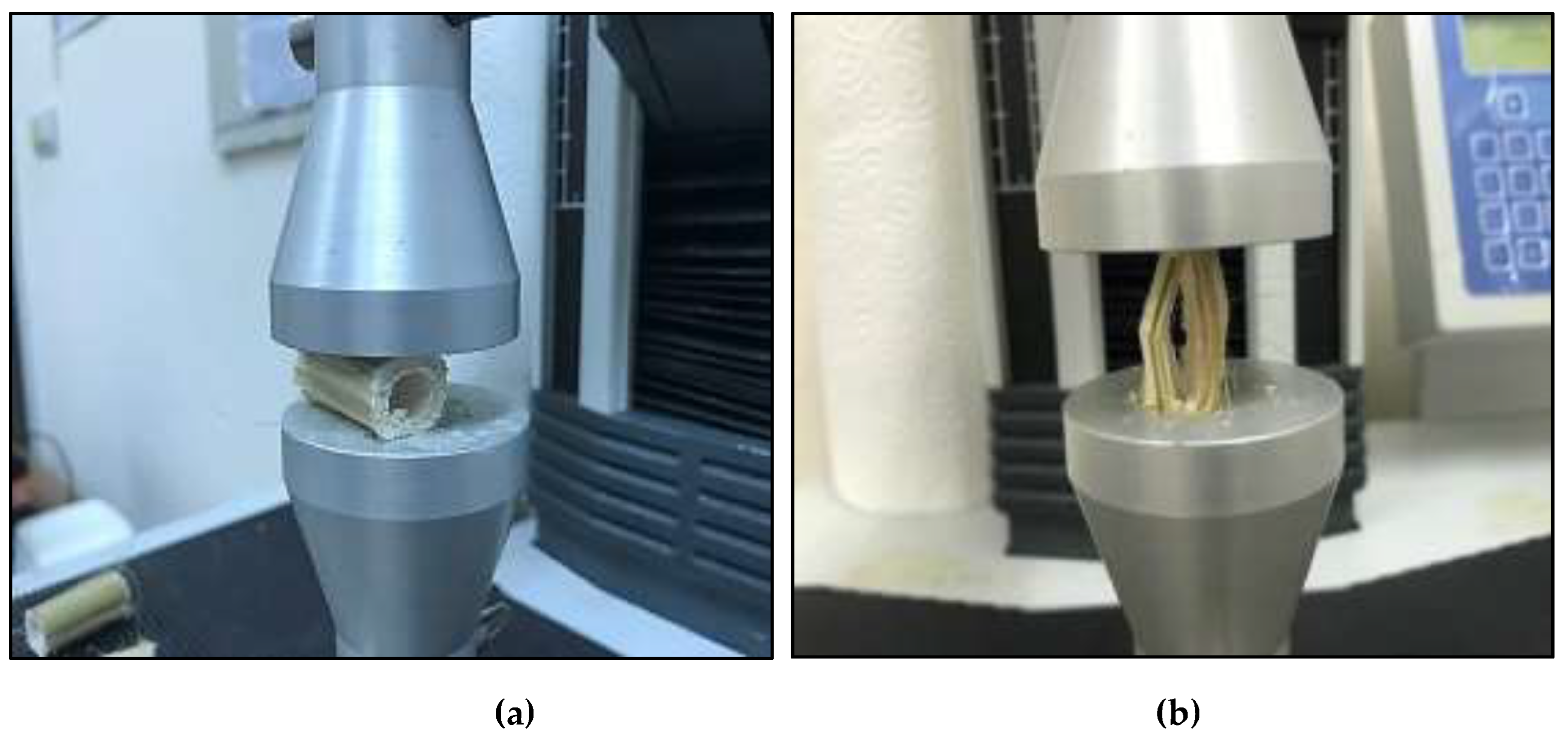
Figure 4.
Fracture values of samples under Axial (a) and Lateral (b) force applications.
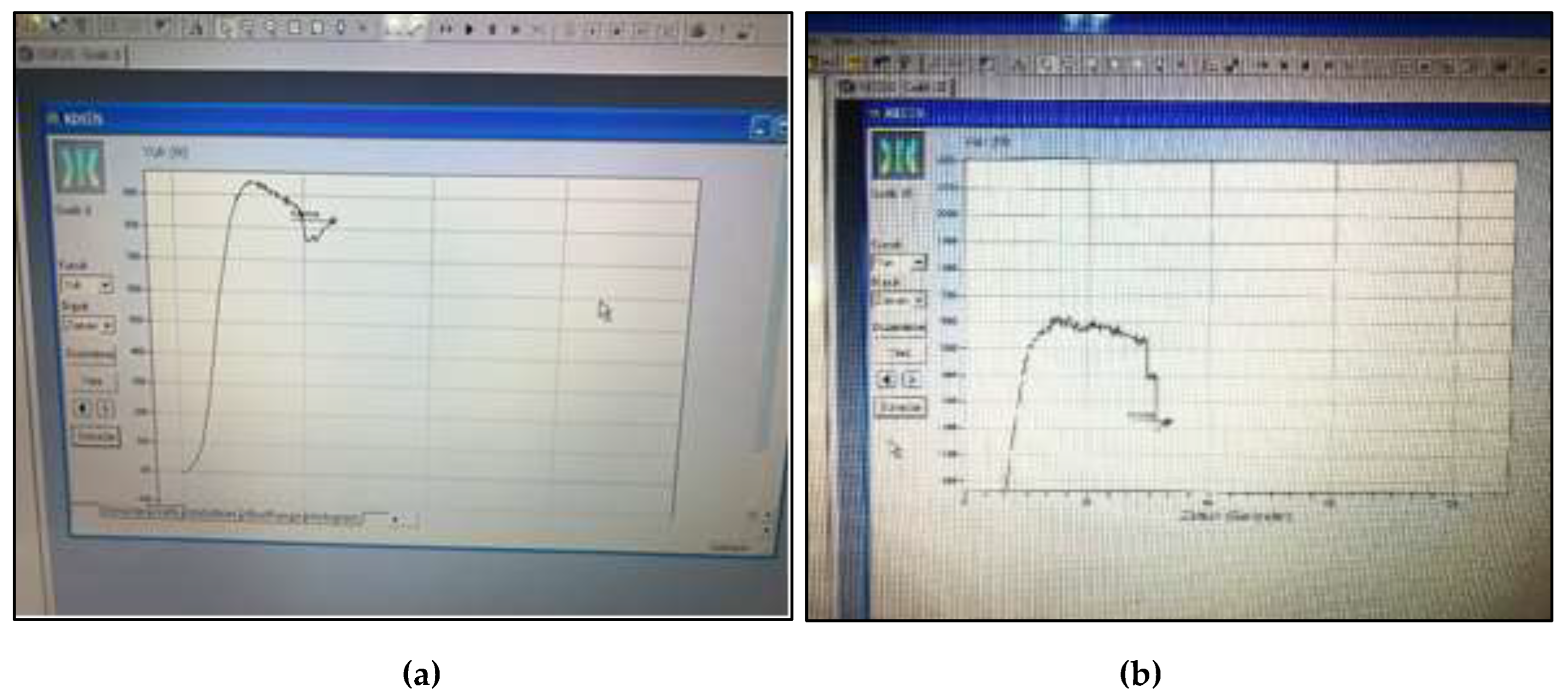

Table 1.
Physical Measurements of the Hemp Plant.
| Sources of Variation |
Parameters | ||
|---|---|---|---|
| Thickness (mm) |
Inner Diameter (mm) |
Outer Diameter (mm) |
|
| Sex | |||
| Male | 2.628 a | 4.452 a | 9.708 a |
| Female | 2.347 b | 3.986 b | 8.681 b |
|
Direction Axial Lateral |
2.562 a 2.413 b |
||
|
Section Lower Middle Upper |
3.149 a 2.335 b 1.978 c |
4.915 a 4.843 a 2.901 b |
11.142 a 9.585 b 6.857 c |
|
LSD Sex Direction Section |
0.0334* 0.0334* 0.0409* |
0.0648* n.s 0.0794* |
0.0829* n.s 0.1016* |
| CV | 0.1779 | 0.2035 | 0.1195 |
ns: Not significant; *: P (≤ 0.05).
Table 2.
Load, deformation, and energy characteristics of hemp samples.
| Sources of Variation |
Parameters | ||
|---|---|---|---|
| Load (N) |
Distance (mm) |
Energy (J) |
|
| sex | |||
| Male | 877.396 a | 1.888 a | 1.403 a |
| Female | 670.390 b | 1.781 b | 1.068 b |
|
Direction Axial Lateral |
1436.091 a 111.695 b |
2.949 a 0.719 b |
2.423 a 0.048 b |
|
Section Lower Middle Upper |
1025.566 a 765.345 b 530.768 c |
2.024 a 1.853 a 1.627 b |
1.634 a 1.261 b 0.812 c |
|
Sex × Direction Male-Axial Female-Axial Male-Lateral Female-Lateral |
1627.584 a 1244.598 b 127.208 c 96.182 c |
3.091 a 2.808 b 0.685 c 0.754 c |
2.762 a 2.085 b 0.044 c 0.052 c |
|
Direction × Section Axial-Lower Axial-Middle Axial-Upper Lateral-Lower Lateral-Middle Lateral-Upper |
1911.262 a 1434.081 b 962.932 c 139.870 d 98.605 d 96.611 d |
3.190 a 2.482 b 1.597 c 0.078 c 0.039 c 0.027 c |
|
|
LSD Sex Direction Section Sex-Direction Direction-Section |
21.9215* 21.9215* 26.8482* 31.0016* 37.9691* |
0.0270* 0.0270* 0.0331* 0.0382* n.s |
0.0444* 0.0444* 0.0543* 0.0627* 0.0769* |
| CV | 0.3754 | 0.1951 | 0.4759 |
ns: not significant; *: P (≤ 0.05).
Disclaimer/Publisher’s Note: The statements, opinions and data contained in all publications are solely those of the individual author(s) and contributor(s) and not of MDPI and/or the editor(s). MDPI and/or the editor(s) disclaim responsibility for any injury to people or property resulting from any ideas, methods, instructions or products referred to in the content. |
© 2025 by the authors. Licensee MDPI, Basel, Switzerland. This article is an open access article distributed under the terms and conditions of the Creative Commons Attribution (CC BY) license (http://creativecommons.org/licenses/by/4.0/).
Copyright: This open access article is published under a Creative Commons CC BY 4.0 license, which permit the free download, distribution, and reuse, provided that the author and preprint are cited in any reuse.