
Submitted:
05 February 2025
Posted:
05 February 2025
Read the latest preprint version here
Abstract
BACKGROUND: Malignant tumors are diseases that seriously threaten the human health. However, the etiologies of most human tumors, including many solid malignant tumors and hematological malignancies, are currently unclear. METHODS: In this study, a conceptual model of the physiological human body, based on the view of life and the environment, was established using physical modeling. RESULTS: This model was used to provide reasonable explanations for tumor-related questions, predict framework for cancer treatment, and suggest intervention techniques for before and after the diagnosis. The inferences made using this model were also consistent with the biopsychosocial model used in modern medicine and with the requirement of holism in traditional medicine. CONCLUSIONS: The model proposed in this study will provide novel ideas for the treatment of cancer.
Keywords:
1. Introduction
2. Results
2.1. Model Assumptions and Related Concepts
2.2. Model Establishment
3. Discussion
3.1. Pathogenic Pathways of Exogenous Factors
3.2. Uncovering the Mysteries of the Tumor
3.3. Difference Between Benign and Malignant Tumors
3.4. Limitations in Biomedicine
3.5. Convergence with Traditional Medicine
3.6. Cancer Treatment Framework
3.6.1. Intervention for Physiological Disorders
3.6.2. Identification of, and Intervention for, Etiologies
3.6.3. Psychosocial Interventions Before and After Diagnosis
4. Conclusions
Acknowledgments
Conflicts of Interest
References
- [1] F. Bray, M. Laversanne, H. Sung, et al., Global cancer statistics 2022: GLOBOCAN estimates of incidence and mortality worldwide for 36 cancers in 185 countries, CA Cancer J Clin, 2024, 74(3): 229-263. [CrossRef]
- [2] C.N. Duncan, J.R. Bledsoe, B. Grzywacz, et al., Hematologic Cancer after Gene Therapy for Cerebral Adrenoleukodystrophy, N Engl J Med, 2024, 391(14): 1287-1301. [CrossRef]
- [3] K. Rejeski, M. Subklewe, F.L. Locke, Recognizing, defining, and managing CAR-T hematologic toxicities, Hematology Am Soc Hematol Educ Program, 2023, 2023(1): 198-208. [CrossRef]
- [4] G.L. Engel, The need for a new medical model: a challenge for biomedicine, Science, 1977, 196(4286): 129-136. [CrossRef]
- [5] W. Ahmad, G. Sofi, M.A. Alam, et al., Understanding Holism in the light of principle underlying practice of Unani Medicine, Rev Environ Health, 2022, 37(2): 189-199. [CrossRef]
- [6] J.J. Mao, G.G. Pillai, C.J. Andrade, et al., Integrative oncology: Addressing the global challenges of cancer prevention and treatment, CA Cancer J Clin, 2022, 72(2): 144-164. [CrossRef]
- [7] D. Fan, Holistic Integrative Medicine Declaration, Front Med, 2024, 18(5): 938-940. [CrossRef]
- [8] M. Oz, J. Tallent, Longevity and optimal health: working toward an integrative methodology, Ann N Y Acad Sci, 2009, 1172: 338-343. [CrossRef]
- [9] N. Savage, Why artificial intelligence needs to understand consequences, Nature, 2023. [CrossRef]
- [10] G.S. LaBerge, E. Duvall, Z. Grasmick, et al., Recent Advances in Studies of Skin Color and Skin Cancer, Yale J Biol Med, 2020, 93(1): 69-80.
- [11] T. Meyer, E. Stockfleth, Light and Skin, Curr Probl Dermatol, 2021, 55: 53-61. [CrossRef]
- [12] D. Conley, J. Fletcher, The Genome Factor: What the Social Genomics Revolution Reveals about Ourselves, Our History, and the Future, Princeton University Press, 2017.
- [13] B. Maher, Personal genomes: The case of the missing heritability, Nature, 2008, 456(7218): 18-21. [CrossRef]
- [14] F. Islami, E.C. Marlow, B. Thomson, et al., Proportion and number of cancer cases and deaths attributable to potentially modifiable risk factors in the United States, 2019, CA Cancer J Clin, 2024, 74(5): 405-432. [CrossRef]
- [15] J. Lipsick, A History of Cancer Research: Carcinogens and Mutagens, Cold Spring Harb Perspect Med, 2021, 11(3). [CrossRef]
- [16] W. Liu, Y. Deng, Z. Li, et al., Cancer Evo-Dev: A Theory of Inflammation-Induced Oncogenesis, Front Immunol, 2021, 12: 768098. [CrossRef]
- [17] K. Lumniczky, N. Impens, G. Armengol, et al., Low dose ionizing radiation effects on the immune system, Environ Int, 2021, 149: 106212. [CrossRef]
- [18] R. Zefferino, S. Di Gioia, M. Conese, Molecular links between endocrine, nervous and immune system during chronic stress, Brain Behav, 2021, 11(2): e01960. [CrossRef]
- [19] D. Dragoş, M.D. Tănăsescu, The effect of stress on the defense systems, J Med Life, 2010, 3(1): 10-18.
- [20] J. Liao, M. Hu, K. Imm, et al., Association of daily sitting time and leisure-time physical activity with body fat among U.S. adults, J Sport Health Sci, 2024, 13(2): 195-203. [CrossRef]
- [21] J. Henson, M. De Craemer, T. Yates, Sedentary behaviour and disease risk, BMC Public Health, 2023, 23(1): 2048. [CrossRef]
- [22] F. Morales, S. Montserrat-de la Paz, M.J. Leon, et al., Effects of Malnutrition on the Immune System and Infection and the Role of Nutritional Strategies Regarding Improvements in Children’s Health Status: A Literature Review, Nutrients, 2023, 16(1). [CrossRef]
- [23] X. Fang, J. Henao-Mejia, S.E. Henrickson, Obesity and immune status in children, Curr Opin Pediatr, 2020, 32(6): 805-815. [CrossRef]
- [24] E.E. Saad, R. Michel, M.A. Borahay, Cholesterol and Immune Microenvironment: Path Towards Tumorigenesis, Curr Nutr Rep, 2024, 13(3): 557-565. [CrossRef]
- [25] T. Fulop, J.M. Witkowski, G. Pawelec, et al., On the immunological theory of aging, Interdiscip Top Gerontol, 2014, 39: 163-176. [CrossRef]
- [26] E. Schrödinger, What is Life? the Physical Aspect of the Living Cell, Cambridge University Press, 1944.
- [27] N.S. Mohamad Kamal, S. Safuan, S. Shamsuddin, et al., Aging of the cells: Insight into cellular senescence and detection Methods, Eur J Cell Biol, 2020, 99(6): 151108. [CrossRef]
- [28] R. Fu, J. Li, H. Yu, et al., The Yin and Yang of traditional Chinese and Western medicine, Med Res Rev, 2021, 41(6): 3182-3200. [CrossRef]
- [29] Z. Li, Z. Feiyue, L. Gaofeng, Traditional Chinese medicine and lung cancer--From theory to practice, Biomed Pharmacother, 2021, 137: 111381. [CrossRef]
- [30] P. Comoli, C. Chabannon, U. Koehl, et al., Development of adaptive immune effector therapies in solid tumors, Ann Oncol, 2019, 30(11): 1740-1750. [CrossRef]
- [31] J.T. Arnold, Integrating ayurvedic medicine into cancer research programs part 1: Ayurveda background and applications, J Ayurveda Integr Med, 2023, 14(2): 100676. [CrossRef]
- [32] J.J. Orme, E.A.L. Enninga, F. Lucien-Matteoni, et al., Therapeutic plasma exchange clears circulating soluble PD-L1 and PD-L1-positive extracellular vesicles, J Immunother Cancer, 2020, 8(2). [CrossRef]
- [33] T. Wu, D. Liu, S. Liu, et al., Chemotherapy plus therapeutic plasmapheresis with 4% human albumin solution in multiple myeloma patients with acute kidney injury: a prospective, open-label, proof-of-concept study, Ren Fail, 2024, 46(1): 2356708. [CrossRef]
- [34] E. Almuradova, I. Cicin, Cancer-related hypercalcemia and potential treatments, Front Endocrinol (Lausanne), 2023, 14: 1039490. [CrossRef]
- [35] J.A. Snowden, I. Sánchez-Ortega, S. Corbacioglu, et al., Indications for haematopoietic cell transplantation for haematological diseases, solid tumours and immune disorders: current practice in Europe, 2022, Bone Marrow Transplant, 2022, 57(8): 1217-1239. [CrossRef]
- [36] U. Şahin, T. Demirer, Graft-versus-cancereffect and innovative approaches in thetreatment of refractory solid tumors, Turk J Med Sci, 2020, 50(Si-2): 1697-1706. [CrossRef]
- [37] T.J. Tao, T.K. Lim, E.T.F. Yeung, et al., Internet-based and mobile-based cognitive behavioral therapy for chronic diseases: a systematic review and meta-analysis, NPJ Digit Med, 2023, 6(1): 80. [CrossRef]
- [38] E. Hutten, E.M.M. Jongen, A. Vos, et al., Loneliness and Mental Health: The Mediating Effect of Perceived Social Support, Int J Environ Res Public Health, 2021, 18(22). [CrossRef]
- [39] J.K. Penberthy, A.L. Stewart, C.F. Centeno, et al., Psychological Aspects of Breast Cancer, Psychiatr Clin North Am, 2023, 46(3): 551-570. [CrossRef]
- [40] A. Büttner-Teleagă, Y.T. Kim, T. Osel, et al., Sleep Disorders in Cancer-A Systematic Review, Int J Environ Res Public Health, 2021, 18(21). [CrossRef]
- [41] M.R. Egberts, D. Verkaik, A.L. van Baar, et al., Child Posttraumatic Stress after Parental Cancer: Associations with Individual and Family Factors, J Pediatr Psychol, 2022, 47(9): 1031-1043. [CrossRef]
- [42] L. Grassi, R. Caruso, M.B. Riba, et al., Anxiety and depression in adult cancer patients: ESMO Clinical Practice Guideline, ESMO Open, 2023, 8(2): 101155. [CrossRef]
- [43] S. Kadambi, Y. Wang, A. Job, et al., Financial Toxicity in Older Adults With Cancer and Their Caregivers, JCO Oncol Pract, 2025, 21(1): 92-99. [CrossRef]
- [44] C.D. Berg, J.H. Schiller, P. Boffetta, et al., Air Pollution and Lung Cancer: A Review by International Association for the Study of Lung Cancer Early Detection and Screening Committee, J Thorac Oncol, 2023, 18(10): 1277-1289. [CrossRef]
- [45] P. Marino, M. Mininni, G. Deiana, et al., Healthy Lifestyle and Cancer Risk: Modifiable Risk Factors to Prevent Cancer, Nutrients, 2024, 16(6). [CrossRef]
- [46] A. Faraji, M. Dehghani, A. Khatibi, Familial aspects of fear of cancer recurrence: current insights and knowledge gaps, Front Psychol, 2023, 14: 1279098. [CrossRef]
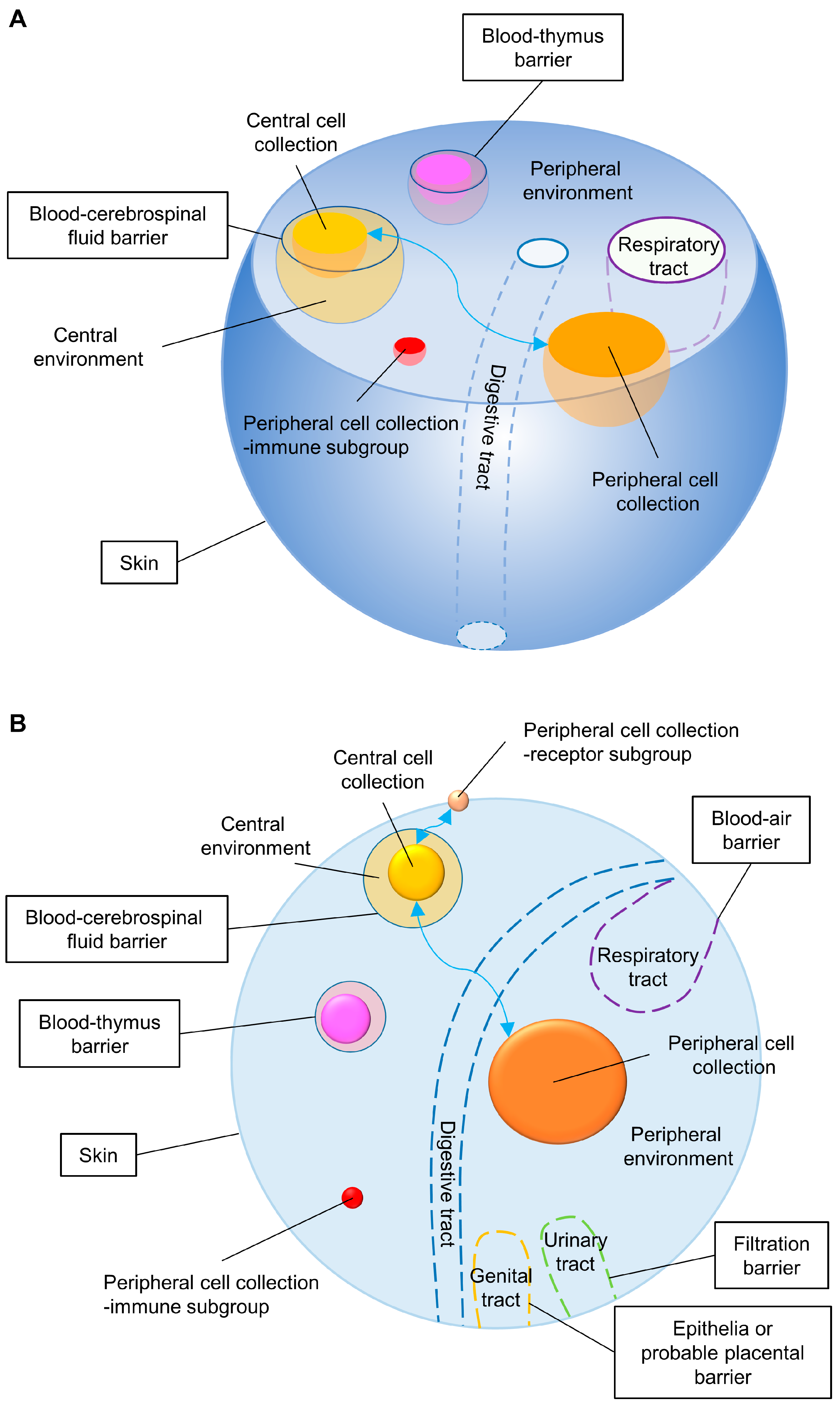

| Concept | Definition |
|---|---|
| Protective barrier | Abbreviated as Category 1 barrier, refers to all the barriers located mainly at the surface of the body, isolating the human body from the outside world or the zygote/gamete; these include skin, blood-air, mucous-HCO3−, filtration, placental, and blood-testis barriers. |
| Internal barrier | Abbreviated as Category 2 barrier, refers to all the barriers located within the human body, protecting important organs from changes in the internal environment. These include a total of three layers of the blood-brain and blood-thymus barriers. |
| Collection of peripheral cells | A collection of living cells existing between Category 1 and Category 2 barriers, and containing cells that form the Category 2 barriers. |
| Peripheral environment | Commonly known as the internal environment. It is composed of all the intercellular substances between Category 1 and Category 2 barriers including fluid (such as plasma, tissue fluid, and lymphatic fluid) and solid (such as fibrous tissues and extracellular matrix) components. |
| Collection of central cells | A collection of living cells within the blood-cerebrospinal fluid barrier, excluding the cells that form the wall of the blood-cerebrospinal fluid barrier. |
| Central environment | The central environment is composed of all the intercellular substances within the blood-cerebrospinal fluid barrier. |
| Collection of immune cells | Vague concept. A collection of living cells in the corresponding environment, the main functions of which are immune defense, surveillance, and self-stabilization. These cell types include but are not limited to blood cells such as granulocytes, lymphocytes, and monocytes/macrophages. |
| Collection of immune molecules | Vague concept. A collection of all the immune molecules present in a corresponding environment including immunoglobulins, complement, and cytokines. |
| Collection of receptor cells | Vague concept. A collection of living cells existing in a corresponding environment. The main functions of these cell types are receiving external or internal stimuli. |
Disclaimer/Publisher’s Note: The statements, opinions and data contained in all publications are solely those of the individual author(s) and contributor(s) and not of MDPI and/or the editor(s). MDPI and/or the editor(s) disclaim responsibility for any injury to people or property resulting from any ideas, methods, instructions or products referred to in the content. |
© 2025 by the authors. Licensee MDPI, Basel, Switzerland. This article is an open access article distributed under the terms and conditions of the Creative Commons Attribution (CC BY) license (http://creativecommons.org/licenses/by/4.0/).


