
Submitted:
04 February 2025
Posted:
04 February 2025
Read the latest preprint version here
Abstract
Traditional pattern-making depends on the master, time-consuming, waste, limited-flexibility. This study aims to develop innovative solutions,Take Chinese traditional clothing “Hanfu”as an example. By analyzing the data between human body, clothing and sewing patterns, we can find the change rules of the key points and the key lines, forming the design line and the loose rules between sewing pattern and human body. Explore computer-aided design software and artificial intelligence to automatically generate garment sewing patterns that can be used for virtual simulation and production. The results show that input a single two-dimensional image or design manuscript in the Style3D software can quickly get the sewing patterns what designer needed in a few seconds. The experimental results were compared with the quality and speed of traditional pattern-making to optimize the accuracy of auto-generation. This study shows that the automated generation of pattern-making can be greatly improve the work efficiency of clothing production,helped the fashion industry maintain strong competitiveness in the fast-paced and demanding market.
Keywords:
Hanfu
; automatic generate
; pattern-making
; Style3D
1. Introduction
Traditional pattern-making methods have been used in the fashion industry for centuries, it is time-consuming, labor-intensive, prone to errors, wasteful, limited in flexibility, and inefficient. These challenges have hindered the ability of designers and manufacturers to quickly respond to changing market demands, reduce production costs, and minimize environmental impact.To address these challenges, researchers began exploring the potential of computer-aided design (CAD) software and algorithms to automate the process of generating accurate and efficient digital patterns for clothing. This research aimed to develop innovative solutions that could help the fashion industry stay competitive in an increasingly fast-paced and demanding market.
By developing innovative solutions that leverage computer-aided design software and algorithms, researchers aim to transform the fashion industry by improving efficiency, cost-effectiveness, accuracy, sustainability, innovation, and collaboration in pattern-making.Based on the introduction of the background of this research work, the research questions of this PhD work can be summarised as follows:1.How to enhance the design value of contemporary Hanfu through investigation, research and analysis of information such as design, style, structure and color?2.How to generate a garment sewing patterns that can be used for software simulation from a single (or four standard perspectives) 2D image or design manuscript.3.How to evaluate the quality and speed of automatic generation garment sewing patterns.
The objectives of this work are to:1.Enhance the design value of contemporary Hanfu through investigation, research and analysis of information such as design, style, structure and color .2.Automatic Generate garment sewing patterns from a single 2D image or design manuscript that can be used for software simulation.3.Analyze and compare the experimental results with the quality and speed of artificially made garment patterns to form an algorithm generated pattern quality evaluation system.
While automatic generation of digital garment sewing patterns holds great promise for transforming the fashion industry by improving efficiency, cost-effectiveness, and sustainability in pattern-making, there are still several challenges that need to be addressed through further research and development. By addressing these challenges and exploring new approaches to data collection, algorithm development, pattern validation, optimization, implementation, and ethical considerations, This research create more efficient, accurate, sustainable, and user-friendly systems for designing and manufacturing clothing in the future.
2. Literature Review
2.1. Computer-Aided Design (CAD) Software
Garment pattern-making is also known as garment construction design, pattern cutting, etc. Traditionally garment pattern involves pattern makers drawing garment construction lines on a brown paper according a garment production drawing. After this, they cut the paper along these construction lines to acquire paper pieces that are used for cloth cutting. The work of patternmaking links fashion design and clothing making. It is considered as the highest technical work in the process of clothing design and production. Currently, pattern-making still relies heavily on pattern-makers’ experience. There are two methods to make a garment pattern: the traditional hands-on approach and the computer-aided process, both require sophisticated skills and It takes about a decade for a novice to master pattern-making.
Therefore, it is necessary for the clothing industry to develop a method that makes garment patterns efficiently without profes sional pattern-making knowledge input from the user.
In order to solve garment fitting issues and reduce the complexity of the problem to an acceptable level, various three dimensional (3D) to two dimensional (2D) flattening technologies have been proposed and developed to obtain garment patterns. Liu et al.proposed a mixed human body modeling method to model 3D body model for 3D pattern-making [1]. Hinds et al. proposed a 3D mathematical model based on the gaussian curvature to unfold 3D surface into 2D plane for garment pattern development in their research [2]. While, Kang and Kim constructed a fitting 3D garment for a special mannequin then unfolded the 3D garment model to acquire its 2D patterns [3]. Cho et al. developed a 3D-to-2D pattern-making system based on a traditional draping system. They fitted fabric lattice to the contour surface and then cut panels according to curved lines. Garment patterns were then created by translating the three-dimensionally contoured panels into two dimensions [4]. Jeong et al. used triangular meshes to construct a 3D garment surface and pieced these triangular meshes together in a 2D plane to obtain tight-fitting clothing pattern [5,6]. Au et al. divided the surface of a 3D virtual dummy into many areas according to the human body’s characteristic line and transformed the 3D surface of the prototype garment to a 2D cutting pattern [7,8]. Daanen and Hong used 3D a body scanner to construct a 3D body model constituted by many triangular meshes. They sewed these triangles between the waist and hip line together to form a “patchwork”-skirt. Finally, they designed other lower clothing based on the sewed skirt [9]. Choi and Nam studied the pattern-unfolding issues of different upper lateral body types [10]. Jin et al. modeled a 3D garment with constrained contour curves and style curves. They then flattened the 3D garment’s surface based on these curves [11]. Bruniaux et al. constructed a garment 3D construction curves around a 3D mannequin and generated 3D surfaces based on these curves. Next, they obtained garment patterns by flattening the obtained 3D surfaces [1][15]. Zhang et al. proposed a method to model the 3D upper garment with ease allowance for pattern-making [16]. Yan et al. [17] drew 3D garment construction curves on a 3D model of a disable female, and then using these construction curves to simulate a 3D garment. Finally,the garment patterns were obtained by flattening the 3D garment. Brouet et al. proposed a fully automatic method to develop fit garments’ patterns for characters with different body shapes [18].Meng et al. proposed series of new techniques from cross parameterization, geometrical and physical integrated deformation to develop garment pattern [19]. Mok et al. proposed a customized fashion design system for non-professional users to create their preferred fashion designs in a user-friendly way [20].
However, there are four shortcomings existing in the aforemen tioned researches: the proposed methods are either too complex to be realistically implemented in production processes, limited to simple styles and can hardly be applied to complicated styles, restricted to tight garments and involve little ease allowance, or did not consider all factors affecting the appearance of a garment such as gravity in a virtual environment.
Several studies have investigated the use of specific CAD software programs in garment sewing pattern-making. For example, a study by Lee et al. (2017) compared the performance of three different CAD software programs in creating patterns for women’s wear. The researchers found that all three programs were effective in reducing the time required to create patterns, but one program was superior in terms of accuracy and ease of use.
Another study by Kim et al. (2018) examined the use of 3D modeling software in generating patterns for men’s wear. The researchers found that 3D modeling software could provide more accurate and detailed patterns, as well as facilitate the visualization of the finished garment. However, they also noted that the learning curve for this type of software can be steep, and that additional training may be required to use it effectively.
In addition to CAD software, some studies have investigated the use of other technologies in garment sewing pattern-making. For example, a study by Al-Tamimi et al. (2019) explored the use of artificial intelligence (AI) algorithms in personalized pattern-making based on individual body measurements and historical fashion trends analysis. The authors identified several potential applications of AI in this field, including personalized pattern-making based on individual body measurements and historical fashion trends analysis.
Overall, the literature review suggests that the automation of garment sewing pattern-making using CAD software has significant benefits for the fashion industry. However, further research is needed to fully explore the capabilities and limitations of these technologies and to develop best practices for their implementation. Additionally, more studies are needed to investigate the impact of CAD software on other aspects of garment production, such as sample making and fitting.
2.2. 3D Virtual Fitting Technology
The 3D virtual fitting system relies on computer image processing technology and graphics theory, and through 3D human modeling technology, virtual stitching technology, and fabric simulation technology, it realizes the construction of the user’s virtual human model and the stitching and display of virtual clothing. [21] Regarding the effect of virtual fitting, Ye Hailian [22] used different fabrics to evaluate the similarity between virtual samples designed with 3D Runway and CLO3D and samples made with real fabrics, and verified the ideal fitting effect from the perspective of clothing size and silhouette. At present, the more mature 3D fitting software on the market include Style 3D from Hangzhou Lingdi Technology, CLO 3D from CLO Company in South Korea, and Modis from Lectra Company in France.
Although the application of 3D fitting technology in the clothing industry is still in its early stages, scholars have conducted a series of studies in the fields of traditional clothing restoration, design, and terminal display. Liu Dongsheng, Shi Hui, and others [23] used CLO 3D software to restore the traditional Mongolian robe of the Ujimqin tribe and proposed systematic solutions to the problems encountered during the 3D virtual fitting process. Hong Wenjin, Miao Yu, and others [24] used 3D technology to restore and virtually simulate the design of plackets in the collection of the China Silk Museum, laying a solid foundation for the digital design of traditional clothing. In terms of virtual display of traditional costumes, Liang Hui’e, Zhang Shou, and others conducted an investigation of ethnic costume museums in the Jiangsu, Zhejiang, and Shanghai regions, analyzed and studied digital display schemes, and believed that the use of digital and virtual technologies in ethnic costume museums is the trend. Huang Zhenzhen and Chen Dongsheng [25] used 3D modeling technology to study the structure and craftsmanship of She ethnic women’s clothing collected in the She Ethnic Museum, in order to achieve the goal of digital display of She ethnic clothing and make new explorations into the digital display of traditional ethnic clothing. In 2015, the Palace Museum launched an app called Qing Dynasty Emperor Costume, which uses 3D technology to visually display the Qing Dynasty palace costume system and its craft characteristics. It is refreshing in promoting traditional Chinese costume culture. [26] The display methods are becoming increasingly virtualized, de spatialized, and de materialized. Lei Kaibin and Xiong Hua proposed using virtual fitting technology and projection wall technology to achieve immersive and interactive clothing display. Chen Xi, Zhu Yubo, and others proposed the construction of a VR Hanfu experience hall, which is a new exploration and attempt at the dissemination of Chinese clothing culture. It can be seen that 3D fitting technology can play an important role in protecting and inheriting traditional clothing, and the digital construction of cultural clothing heritage is a topic worthy of in-depth research.
Lingdi Style3D is a company founded in 2015, which provides the underlying technical services of independent simulation engine and industrial software of industrial chain level, and is committed to building an integrated collaborative platform for 3D design. Lingdi Style3D founder and CEO Liu Qi has 20 years of experience in the garment industry, with his mastery of computer technology and in-depth understanding of the digital needs of the garment industry, he found the opportunity to start a business, and quickly cut into the digital sample clothing link. Lingdi Style3D’s main products are garment simulation design software and multi-role collaboration platform, which aims to solve the collaboration efficiency problems of designers, pattern makers and fabric and accessories procurement in the garment industry. In addition, Lingdi Style3D also provides special software for designers and fabric and accessories personnel. These tools and services have helped apparel enterprises to digitalize their R & D, collaboration, exhibition and production links. Lingdi Style3D, as the infrastructure of digital fashion, provides 3D digital solutions for the whole process from design to production for the garment industry. Recently, Style3D has also rapidly developed and launched a series of AIGC functions, including AI style analysis, AI pattern generation, AI version generation, AI material generation and rapid generation of new pictures on e-commerce. In terms of capital, Lingdi Style3D has also been recognized by many well-known investment institutions, and has completed nearly $100 million in Pre B + round financing. In addition, Lingdi Style3D also actively participates in industry exchange activities, such as co-sponsoring „Creating a Digital Future Together”-Lingdi Style3D 2021 China Garment Forum, to further promote the digitization process of the garment industry.
2.3. The Hanfu Style System in This Study
The style features of Hanfu are not only a legacy of traditional culture but also a display of ancient Chinese costume art. Whether in formal ceremonial occasions or daily life, Hanfu can exhibit its unique charm and cultural value.
Furthermore, the design of Hanfu not only reflects the aesthetic concepts of ancient Han people but also mirrors the social structure and etiquette culture of the time. For example, it is mentioned in the „Commentary on the Appended Judgments” of the I Ching that the clothing during the period of the Yellow Emperor and Emperors Yao and Shun already had symbolic significance, reflecting the cultural tradition of being a „country of ceremonial dress” and „state of etiquette.”
Hanfu has a variety of forms, including the robe system, deep robe system, robe and skirt system, and ruqun system. Among them, the deep robe system means that the upper and lower garments are cut separately and connected at the waist to form a whole; the robe system uses a single piece of cloth to cut both the upper and lower garments without a seam in the middle, creating a natural one-piece design; the ruqun system refers to the combination of an upper ru (short jacket) and a lower qun (skirt).
One of the typical characteristics of Hanfu is the cross-collar with a right lapel, where the front edges of the garment cross over each other, with the right side covering the left. Hanfu usually does not use buttons but instead employs knotted cords for fastening, which is convenient and adds to the flowing elegance of the clothing.
According to the survey results from „Investigation and Research on the Value Situation of Contemporary Hanfu Design,” based on 209 questionnaire responses, indicate that 77.51% of participants have a fondness for Hanfu. Among these, 35.89% are from the fashion design industry, and 30.14% hail from the cultural and educational sectors. Furthermore, 52.15% believe that a moderate level of innovation combined with modern aesthetics can enhance the contemporary value of Hanfu. In terms of various styles of Hanfu, a significant 37.8% of respondents expressed the most interest in the Ming Dynasty style. Consequently, this study will focus extensively on Ming Dynasty Hanfu.
This dataset is structured around the Ming-style Hanfu framework, organizing patterns and drafts for Hanfu styles including the Zhongyi (undergarment), Shenyi (deep robe), Xie Qun (pleated skirt), Mamian Qun (horse-face skirt), Duan’ao (short jacket), Da’ao (long jacket), Xie Duijin Beizi (diagonal front-fastening vest), Zhi Duijin Beizi (straight front-fastening vest), Jiaoling Ruqun (cross-collar tunic and skirt), Jiaoling Banbi (cross-collar half-sleeve), Duijin Ruqun (front-fastening tunic and skirt), Zhi Duijin Banbi (straight front-fastening half-sleeve), Qixiong Ruqun (chest-level tunic and skirt), and Xie Duijin Banbi (diagonal front-fastening half-sleeve). Each style is further detailed into standard models, resulting in a precise and comprehensive set of parametric data.

Table 1.
Hanfu Style Diagram .
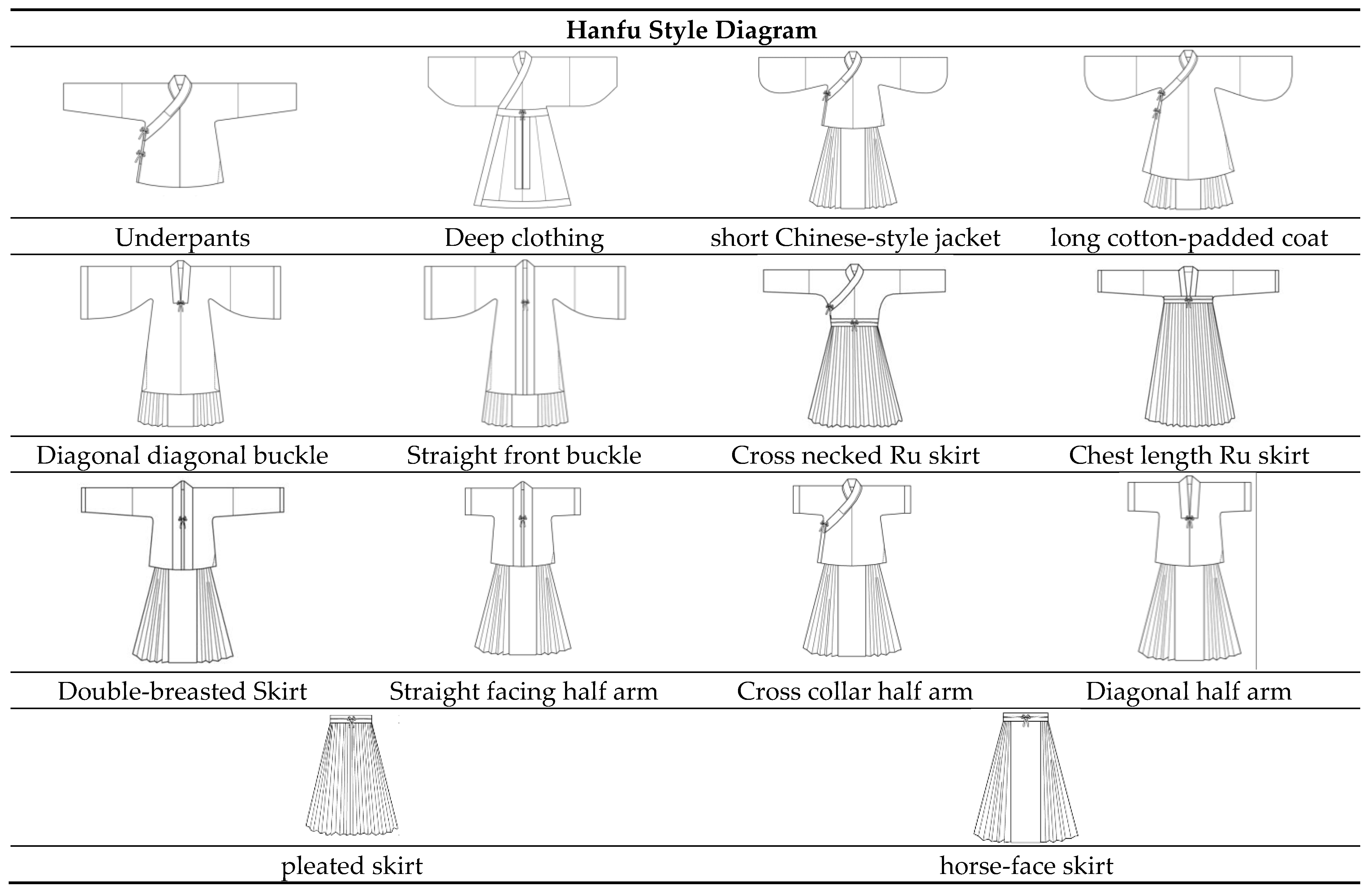
Source: RenJuan (2024).
Due to the advantages of Style 3D’s comprehensive functionality, simple and easy to operate interface, good fabric simulation effect, and strong compatibility with clothing template files, this research will use Style 3D for digital innovative design of Hanfu.
3. Methods
The study adopts research design, data collection, and data analysis who the research subjects and sample groups are. Conducting online surveys, expert interviews, and user feedback. It combines quantitative and qualitative methods to comprehensively understand the role of AI in generating Hanfu structural diagrams. Quantitative methods are used to evaluate the added value of the structural diagrams produced by AI, such as through a user rating system; while qualitative methods like expert interviews or user feedback are employed to gain deeper insights into the AI design process and outcomes.
3.1. Data Collection
This study utilized the Telmat body scanner from Germany for data collection on the human body, which can capture 80,000 body digital points in 20 seconds, obtaining dimensional values for 85 body parts with an accuracy controlled within the range of ±0.2mm, significantly reducing measurement errors in this research.Choose the advanced CAD software Style3D in the world for the design, production and data collection of Hanfu. Ensure the consistency of data collection and analysis processes through repeated testing or cross-validation.
3.1.1. Characteristics of the Population, Sampling Procedures
In this experiment, the subjects of body data collection were female college students aged 18 to 25 years old from the China’s Wuhan Textile University, employing a random sampling method, and a total of 1000 female college students underwent body scanner.Stratified random sampling or convenience sampling is adopted to ensure the representativeness of the sample and cover different stakeholders.
To create a human body database in garment, research typically collect data from a group of participants who represent a diverse range of body types and sizes. The participants are measured using specialized equipment, such as body scanners or mannequins, and their measurements are recorded in a standardized format.
To Analysis the data and identify patterns and trends in body measurements and how they relate to clothing fit and movement. This information can be used to develop new model to automatic generation sewing patterns.
3.1.2. Sewing Pattern Database
A sewing pattern database is a collection of digital or physical files that contain instructions and measurements for creating clothing items. These patterns are typically created by designers, manufacturers, or independent pattern makers and can be used by sewers of all skill levels to create custom garments.
Based on the research foundation of the above literature, the structural design data of the waist length skirt, diagonal collar skirt, straight collar skirt, cross necked short jacket, and side pleated horse face skirt were sorted out, and then the prototype was drawn using ET software.(Table 2).
3.1.3. Hanfu Style
This study will selected the most typical forms of Hanfu in the Tang, Song, and Ming dynasties - Ru skirt, Bei Zi, and Ao skirt - as examples, established their style database and use Style3D design software to achieve digital design and display of Hanfu.(Table 3).
3.2. Quality of the Data
The data quality of this study was maintained through credibility and realizability. Through expert semi-structured interviews as a research data collection tool, Index of Project Objective Congruence (IOC) , Improve the credibility of the data. Long-term practice is techniques to ensure achievability as well as continuous observation.
The survey results from the „Current Situation of Han Design Value Research,” which was based on 209 questionnaires, indicate that 63.64% of consumers are most concerned about comfort and structural design when it comes to enhancing the value of Hanfu. 62.2% of respondents showed a preference for the structure of the Ruqun style, while 26.79% liked the garment style. 89% of consumers prefer the waist-tie Ruqun style of Hanfu, while 11% prefer the chest-tie Ruqun style. 69.38% of respondents favor the cross-collar, 56.46% like the straight collar, and 49.76% prefer the standing collar.
These findings suggest a strong preference among consumers for the waist-tie Ruqun style, which might be appreciated for its traditional look and fit. The high percentage of consumers who favor the cross-collar indicates a clear trend toward this type of closure and design feature, likely because it offers a blend of traditional aesthetics and practicality. Straight collars and standing collars also show significant popularity, suggesting that these designs are considered elegant and perhaps more formal or modern. This data can guide Hanfu designers in understanding current consumer preferences and can influence their design choices to align with market demands.
3.3. Data Analysis Methods
After collecting this data, SPSS software was used to perform statistical analysis on the quantitative datasets pertaining to the relationships between the human body, clothing, and patterns, or to conduct thematic analysis on qualitative data. This effectively interpreted the data to draw conclusions and identify the key points and rules of variation in the critical line segments regarding clothing patterns. This provides theoretical support for the automatic generation of Hanfu structural panels.
Based on the survey results, this study will focus on analyzing the structural design of Hanfu in relation to comfort, and finding variation pattern of 12 main parameters of the body pattern of Hanfu under the aesthetic guidance of the golden ratio.
For ease of record-keeping, the study uses English abbreviations to label measurement areas and identifies the measurement methods for each area.
Use the Pearson correlation coefficient to measure the relationship between each of these 12 sets of data and chest circumference relaxation, SPSS software was used to perform statistical correlation analysis on the elements of these 12 sets of variables.
Using equations to express the relationship between structural parameters .The regression equation between Eahw Ebg can be obtained as follows:
Eahw/2=0.6 Ebg/2-0.5 Equation 3.2 (1)
The linear regression equation between the dependent variable Ebw and the independent variable Ebg is:
Ebw/2=0.3 Ebg/2-1.2 Equation 3.2 (2)
The linear regression equation between the dependent variable Sahb and the independent variable Ebw is:
Sahb=-2.7 Ebw/2-20.3 Equation 3.2 (3)
The linear regression equation between the dependent variable Lah and the independent variable Dah is:
Lah=2.1 Dah+6.2 Equation 3.2 (4)
The linear regression equation between the dependent variable Wah and the independent variable Lah is:
Wah=0.3 Lah+0.8 Equation 3.2 (5)
The regression equation between Ebg-D (agl Us) can be obtained as follows:
D (agl Us)=0.2 Ebg/2+15.8 Equation 3.4 (6)
The constant term of the regression model for the second group of Ebg-H (spf mf) is 0.2, and the regression coefficient of the independent variable Ebg is 0.3. Therefore, the regression equation between Ebg-H (spf mf) can be obtained as follows:
H (spf mf)=0.3Ebg/2+0.2Equation 3.4 (7)
The constant term of the regression model for the third group Eag H (spb mb) is -0.5, and the regression coefficient of the independent variable Eag is 0.4. Therefore, the regression equation between Eag H (spb mb) can be obtained as follows:
H (spb mb)=0.4 Eag -0.5 Equation 3.4 (8)
The constant term of the regression model for the fourth group D (agl Us) - W (spb mb) is -12.2, and the regression coefficient of the independent variable Eag is 1.4. Therefore, the regression equation between D (agl Us) - W (spb mb) can be obtained as follows:
W (spb mb)=1.4 D (agl Us) -12.2 Equation 3.4 (9)
4. Results
By analyzing the data set between human body, garment and sewing pattern, study variables and hypotheses,to find the change rule of key points and key lines of garment sewing pattern, and to form the design line rules and body-garment loose rules of sewing patterns.
From this study, five sets of actual garments were created to verify that the experimental results are practically applicable.Comparison of experimental results to create Evaluation System.
Ensure that the results of this study are beneficial to researchers in related fields for their future research.
4.1. Digital Hanfu Production Experiments
We first describe the implementation details of the Digital Hanfu production. We then provide qualitative and quantitative evaluation of our algorithm in synthetic and realistic garment images.The Style3D virtual system can import universal transfer files for paper patter ns, and virtually sew the gridded 2D templates. With the help of the simulation function of the fabric, real clothing fitting effects can be obtained,as Figure 1. Import the net sample sewing pattern of DXF universal template format into the software, The 12 Human Body-Hanfu Pattern and related parameters obtained in this study were implanted in the software program with a computer algorithm.Based on the correct sewing relationship of the plate, the real wearing state is presented through the real-time collision between the flexible cloth and the 3D human body.
4.2. Contribution of This Study
Using the formula and algorithm, in our system, input hanfu design manuscript figure and body height chest key size, system can identify features in just 1 minute, and gives the corresponding style of sewing paper pattern, under the set fabrics, quickly get specific human hanfu style wearing rendering, realize the Internet design of a full set of electronic information, for automatic cutting and sewing provides efficient and accurate data sets.As shown in Figure 7, we can enter simple design map manuscripts to get more design information data in the system.
In this work, we address the challenging task of the existing hanfu sewing mode. Our contributions include the introduction of the Hanfu sewing factory dataset, which provides a large number of images and sewing pairs to train deep learning models that require data. Furthermore, we present a simple and powerful transformer model that achieves high quality resulting sewing pattern reconstruction from single hanfu style images. This work paves the way for an accessible, low-cost, and efficient 3D hanfu design and operation.
Figure 9.
More information on the case.
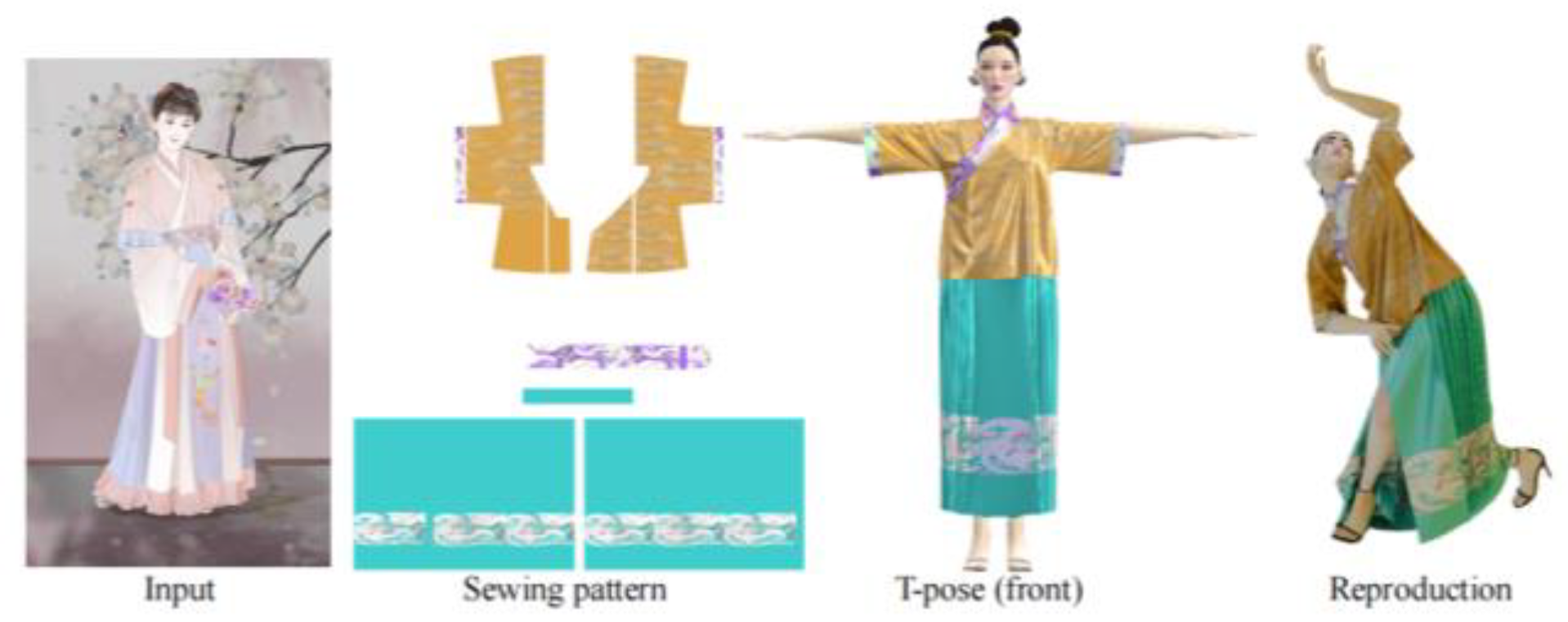
Figure 10.
Overview of the proposed data synthesis pipeline.

4.3. Comparison with the State of the Art
According to the evaluation metrics of Hanfu, we measure the effect and quality of automatic production in this study from the following aspects:1.The overall similarity with the shape and system of Hanfu;2.Local detail similarity;3.Size accuracy;4.The number of Patternts, in the case of ensuring local and overall quality, the less the number of Patternts used, the better, that is, to ensure the integrity of the Patternts as far as possible. We use Hanfu styles,sewing patterns, and garment data sets to train and evaluate our proposed pattern-making method. We obtained 12 part panel classes according to different types of patternts, such as up, back and left front sleeves. To predict all sewing mode parameters simultaneously, we processed all parameters together during the training period and ensured that they had the same size by zero filling.
In the quantitative evaluation, the automatic generator demonstrated exceptional performance. As shown in Table 4, it exhibited remarkable capabilities across multiple assessment indicators. Specifically, there was an 18% relative reduction in board piece F1 error, a 32% relative decrease in Rot F1 error, and a 34% relative decline in transposed F1 error. Additionally, the accuracy of board piece size saw an absolute improvement of 6.6%, and the accuracy of the B1 score increased by 10.3%, effectively proving the efficacy of the algorithm. However, our method was slightly inferior to neural customization in terms of edge precision. This is because our method better restores more panels, including those with challenging edges, which increases the complexity of the model. Moreover, the sequencer and neuron adapter were trained using different loss functions. To further verify the effectiveness of the automatic generator architecture, we retrained the automatic generator using the proposed loss function (denoted as Handmade pattern-making in Table 4). Although Handmade pattern-making showed improvements in most indicators compared to the baseline, its performance was still below that of the automatic generator.
In the qualitative evaluation, we conducted a visual analysis. The results clearly showed that our proposed model outperformed the Handmade pattern-making in terms of fidelity and accuracy. The results obtained from the Handmade pattern-making company had significant deficiencies in fidelity and accuracy. For example, the skirt shape was distorted, and the waistband presented an irregular polygon, which deviated greatly from the actual rectangular shape. In contrast, the automatic generator was able to provide more accurate details, such as the length of the upper and lower garments, which was more in line with the actual situation.
5. Conclusions
This study aimed to generate garment sewing patterns from a single (or four standard perspectives) 2D image or design manuscript for simulation in Style 3D software. We introduce a simple yet potent transformer model capable of high-quality sewing pattern automatic generator from single Hanfu style images. By leveraging templates and automation tools, designers can easily modify and optimize their design schemes, thereby increasing the speed of design iteration. This not only propels the development of the Hanfu industry but also aids in the inheritance and global dissemination of traditional culture.
However, several avenues for future exploration and improvement remain. Firstly, while the current AI demonstrates superior performance, it is designed in a minimalist style, leaving room for capability enhancement. Future research could focus on integrating more advanced attention mechanisms to capture finer details in the sewing pattern and/or utilizing temporal information in image sequences to enhance reconstruction. Secondly, expanding the dataset with more diverse Hanfu styles, body shapes, postures, and rendering conditions will contribute to the model’s generalization and robustness. Additionally, considering the interaction between clothing and the human body presents an intriguing direction for future work. Lastly, applying the proposed models and datasets to virtual reality and augmented reality applications, such as personalized virtual try-on systems, virtual fashion design platforms, or online shopping, can extend the impact of this work to various fields.
Author Contributions
Conceptualization, J.R. and K.D.; methodology, J.R.; software, J.R.; validation, K.D.; formal analysis, K.D.; investigation, J.R.; resources, K.D.; data curation, J.R.; writing—original draft preparation, J.R.; writing—review and editing, J.R. and C.A.; visualization, J.R. ; supervision, C.A.; project administration, C.A.; funding acquisition, C.A. All authors have read and agreed to the published version of the manuscript.
Funding
This research was funded by “2022 University-level fund project of Dongguan Vocational and Technical College 《Innovative Design and Application Research of Men’s Sweatwear》,grant number (GC23070204029)”
Data Availability Statement
The datasets used and/or analyzed during the current study are available from the first author upon reasonable request.
Conflicts of Interest
The authors declare no conflicts of interest.
Abbreviations
The following abbreviations are used in this manuscript:
| Ebg | Chest circumference looseness | Lah | Sleeve cage arc |
| Efw | Loose chest area | Sahf | Front sleeve cage angle |
| Earth | Loose sleeve cage | Sahb | Rear sleeve cage angle |
| Ebw | Loose fit on the back | Efw% | Front chest width ratio |
| Dah | Sleeve cage depth | Eahw% | Sleeve cage width ratio |
| Wah | Sleeve cage width | Ebw% | Rear chest width ratio |
| Eag | Arm circumference looseness (sleeve fat looseness) | ||
| Ewg | wrist circumference looseness | ||
| D (agl Us) | Distance from sleeve fat to sleeve hilltop | ||
| D (el Us) | Distance from sleeve centerline to sleeve hilltop | ||
| D (el Ds) | Distance from sleeve centerline to sleeve base | ||
| D (wl Us) | The distance from the wrist circumference line to the top of the sleeve | ||
| D (wl Ds) | The distance from the wrist circumference line to the bottom of the sleeve mountain | ||
| E (Dagl Us) | High pine yield of the sleeve mountain | ||
| Cahd | The width of the overlap between the sleeve mountain bottom and the sleeve cage arc bottom | ||
| W (spf mf) | Width from front sleeve seam to front alignment point | ||
| H (spf mf) | Depth from the front sleeve seam point to the front alignment point | ||
| W (spb mb) | Width from the back sleeve seam point to the back alignment point | ||
| H (spb mb) | Depth from the back sleeve seam point to the back alignment point | ||
| W (ups upa) | Width from the top of the sleeve to the top of the sleeve cage | ||
| H (ups upa) | Depth from the vertex of the sleeve mountain to the vertex of the sleeve cage | ||
| Ss | Sleeves slope | ||
References
- Liu K, Wang J, Zeng X, Tao X, Bruniaux P. A mixed human body modeling method based on 3d body scanning for clothing industry. Int J Cloth Sci Technol 2017;29(5):673–85.
- Hinds B, McCartney J, Woods G. Pattern development for 3D surfaces. Comput Aided Des 1991;23(8):583–92.
- Kang TJ, Kim SM. Optimized garment pattern generation based on threedimensional anthropometric measurement. Int J Cloth Sci Technol 2000;12(4):240–254.
- Cho Y, Komatsu T, Inui S, Takatera M, Shimizu Y, Park H. Individual pattern making using computerized draping method for clothing. Text Res J 2006;76(8):646–54.
- Jeong Y, Hong K, Kim S-J. 3D pattern construction and its application to tight-fitting garments for comfortable pressure sensation. Fiber Polym 2006;7(2):195–202.
- Kim S, Jeong Y, Lee Y, Hong K. 3D pattern development of tight-fitting dress for an asymmetrical female manikin. Fiber Polym 2010;11(1):142–6.
- Yunchu Y, Weiyuan Z. Prototype garment pattern flattening based on individual 3D virtual dummy. Int J Cloth Sci Technol 2007;19(5):334–48.
- Au CK, Ma YS. Garment pattern definition, development and application with associative feature approach. Comput Ind 2010;61(6):524–31.
- Daanen H, Hong S-A. Made-to-measure pattern development based on 3D whole body scans. Int J Cloth Sci Technol 2008;20(1):15–25.
- Choi Y, Nam Y. Surface pattern comparison among lateral body types flattening 3D figure data. Fiber Polym 2009;10(6):837–46.
- Jin W, Guodong L, Weilong L, Long C, Sakaguti Y. Interactive 3D garment design with constrained contour curves and style curves. Comput Aided Des 2009;41(9):614–25.
- Huang HQ, Mok PY, Kwok YL, Au JS. Block pattern generation: From parameterizing human bodies to fit feature-aligned and flattenable 3D garments. Comput Ind 2012;63(7):680–91.
- Ei Chaw H, Krzywinski S, Roedel H. Garment prototyping based on scalable virtual female bodies. Int J Cloth Sci Technol 2013;25(3):184–97.
- Tao X, Bruniaux P. Toward advanced three-dimensional modeling of garment prototype from draping technique. Int J Cloth Sci Technol 2013;25(4):266–83.
- Thomassey S, Bruniaux P. A template of ease allowance for garments based on a 3D reverse methodology. Int J Ind Ergonom 2013;43(5):406–16.
- Zhang J, Innami N, Kim K, Takatera M. Upper garment 3D modeling for pattern making. Int J Cloth Sci Technol 2015;27(6):852–69.
- Hong Y, Zeng X, Bruniaux P, Liu K. Interactive virtual try-on based threedimensional garment block design for disabled people of scoliosis type. Text Res J 2017;87(10):1261–74.
- Brouet R, Sheffer A, Boissieux L, Cani M-P. Design preserving garment transfer. ACM Trans Graph 2012;31(4):1–11.
- Meng Y, Mok PY, Jin X. Computer aided clothing pattern design with 3D editing and pattern alteration. Comput Aided Des 2012;44(8):721–34.
- Mok PY, Xu J, Wang XX, Fan JT, Kwok YL, Xin JH. An IGA-based design support system for realistic and practical fashion designs. Comput Aided Des 2013;45(11):1442–58.
- Yao Yi, Tang Jiefang. Research and Application of 3D Clothing Technology [J]. Silk, 2014, 51 (07): 36-41.
- Ye Hailian, Chen Yilei. Application research on three-dimensional virtual fitting design [J]. Design, 2018 (11): 32-35.
- Liu Dongsheng, Shi Hui, Liu Yunjuan et al. Research on the Shape and Structure of Mongolian Robes in the Ujimqin Tribe and Virtual Fitting [J]. Silk, 2020, 57 (08): 50-56.
- Hong Wenjin, Miao Yu, Shen Lei. Virtual simulation design of traditional folk cardigans based on 3D technology [J]. Journal of Beijing Institute of Fashion Technology (Natural Science Edition),2018, 38 (04): 52-58.
- Huang Zhenzhen, Chen Dongsheng. Virtual simulation design of Shexiang women’s clothing based on 3D modeling technology [J]. Journal of Clothing Science, 2017, 2 (05): 31-34.
- Chen Ziheng, Wang Chenqi, Liu Jiali, Liu Qian. Analysis of Digital Transformation of Museums in the New Media Environment: Taking the App Produced by the Forbidden City as an Example [J]. New Media Research,2019, 5 (10): 78-80+90.
Figure 1.
Automatic generate.
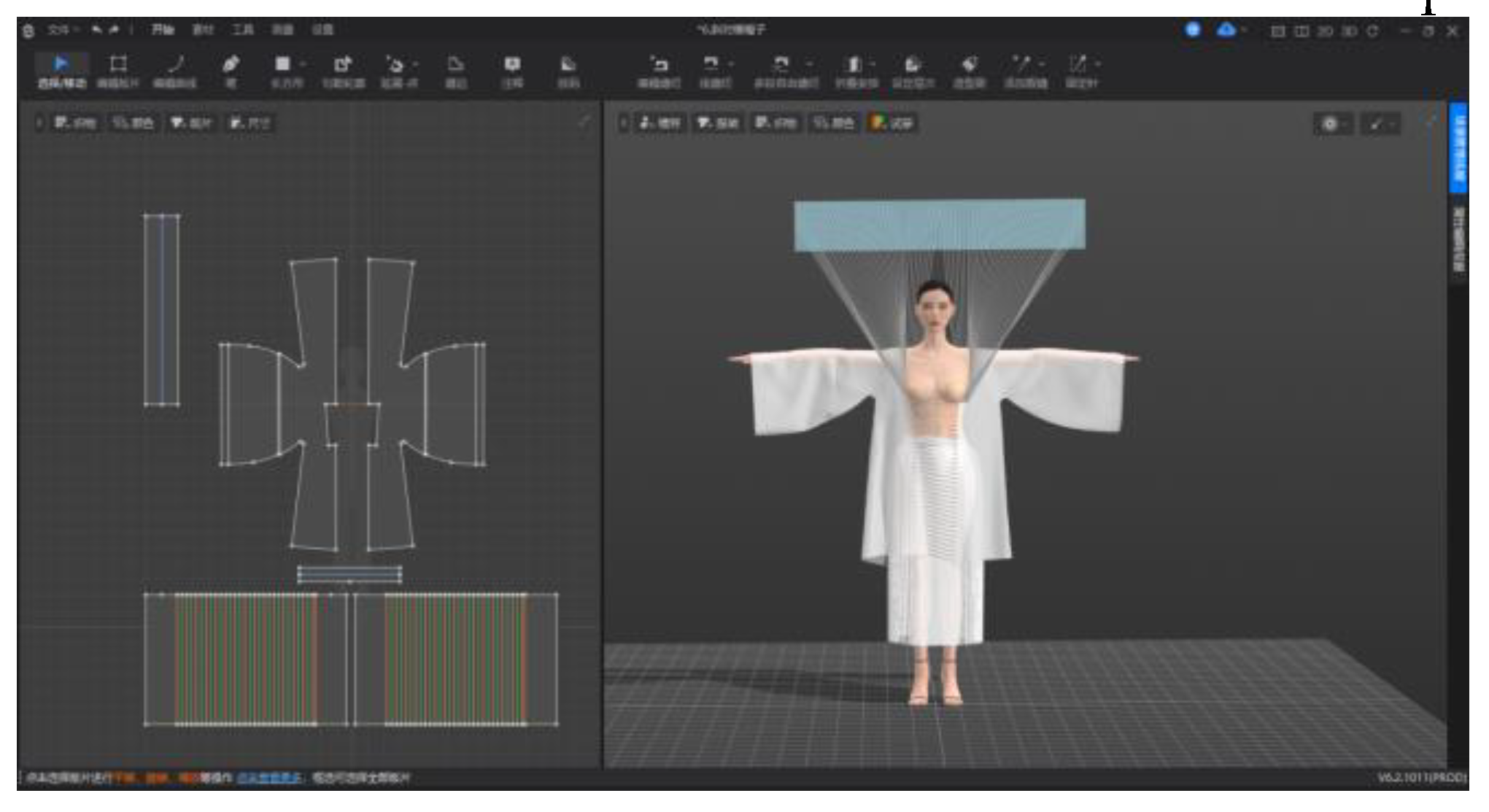
Figure 2.
Chest length Ru skirt.
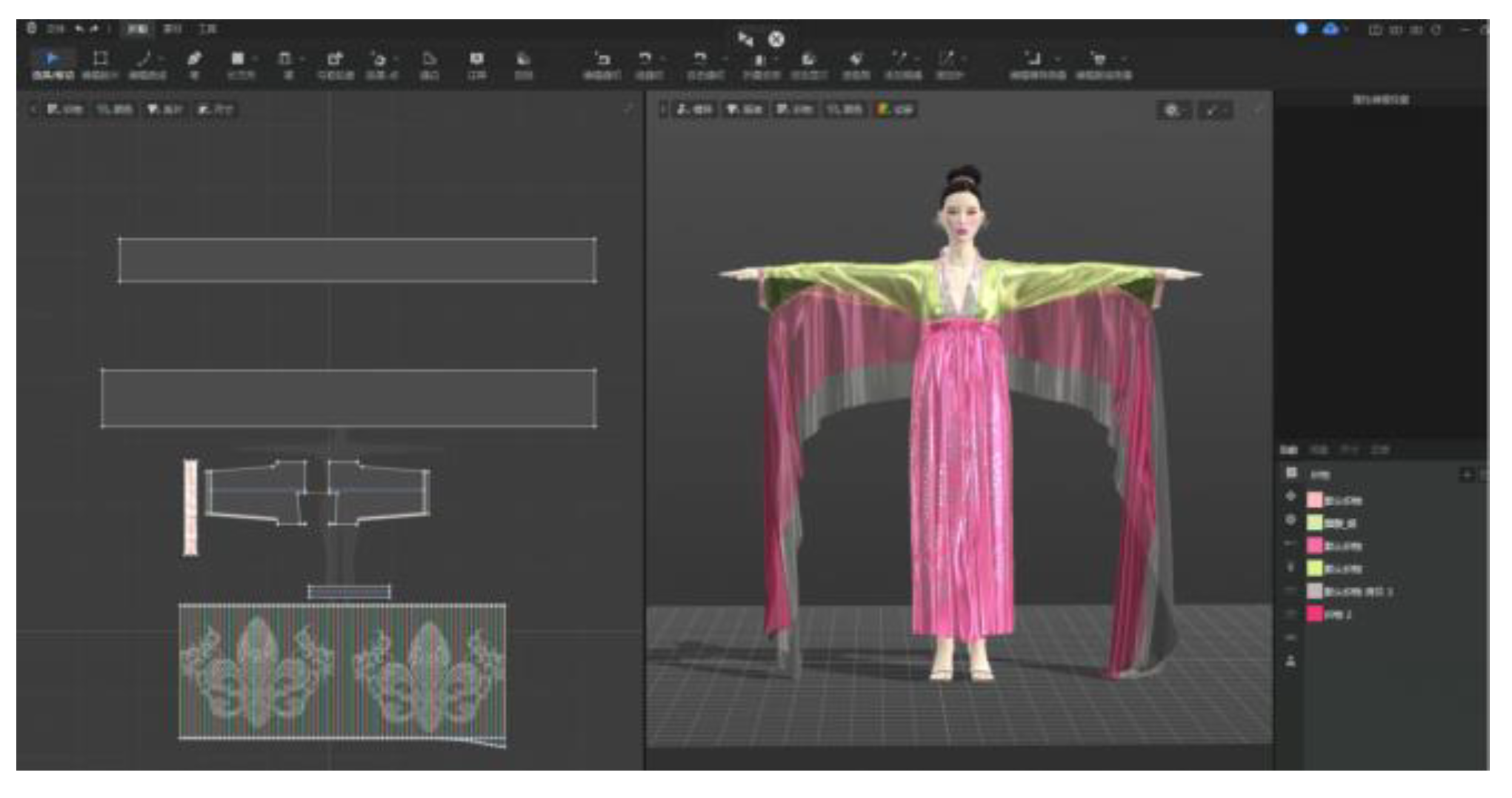
Figure 3.
Straight front buckle .
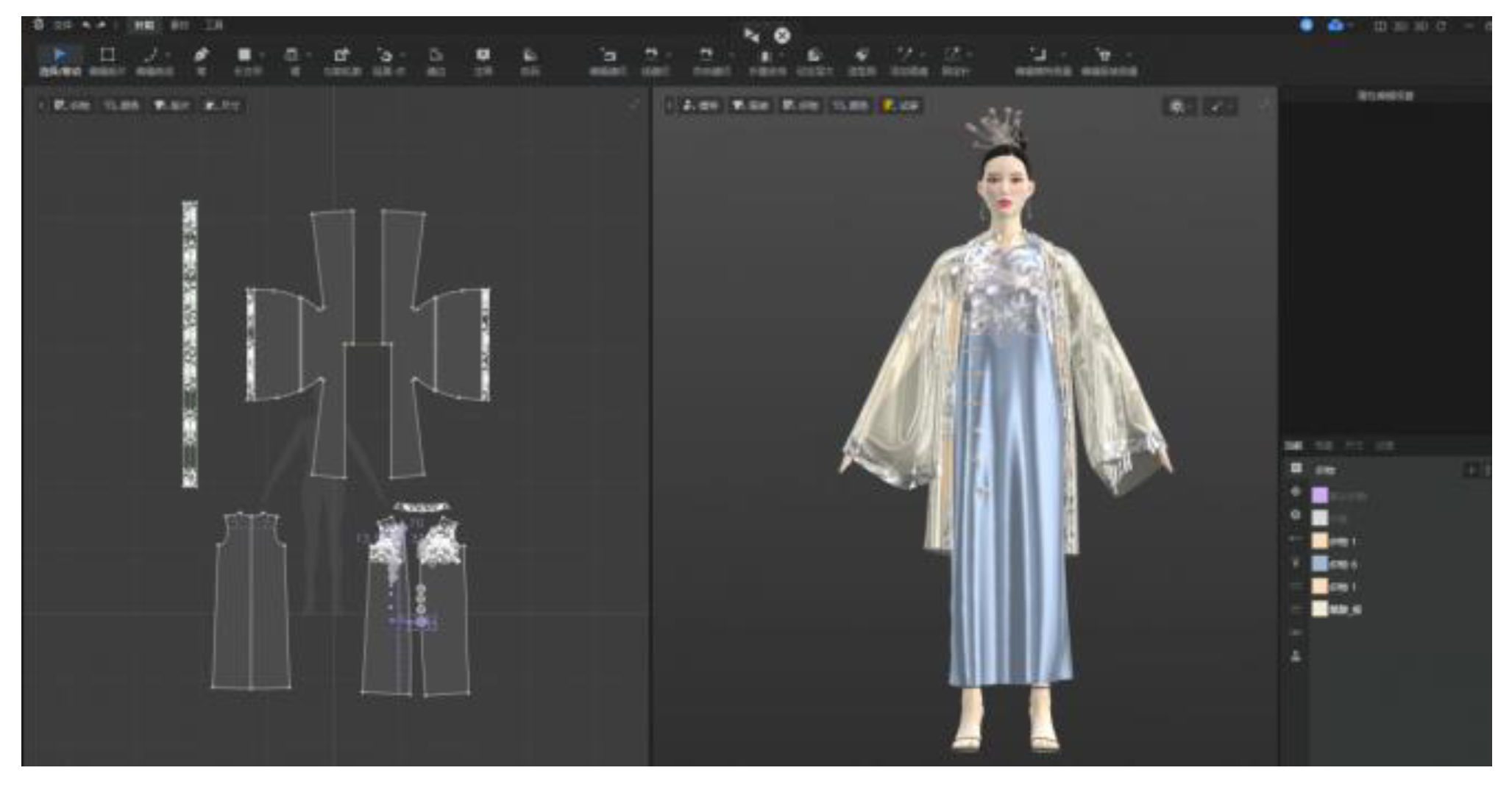
Figure 4.
Straight front buckle.
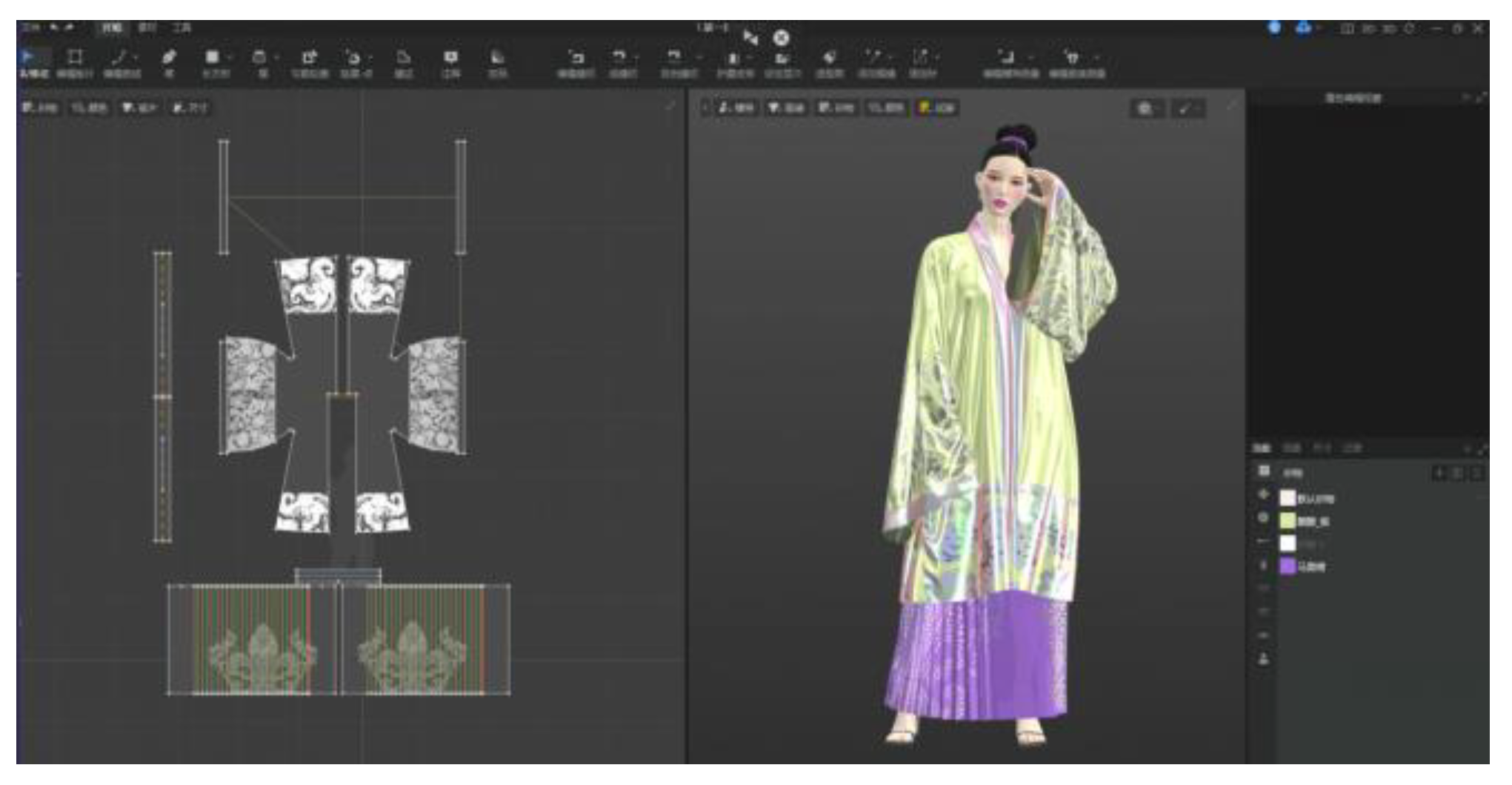
Figure 5.
long cotton-padded coat.
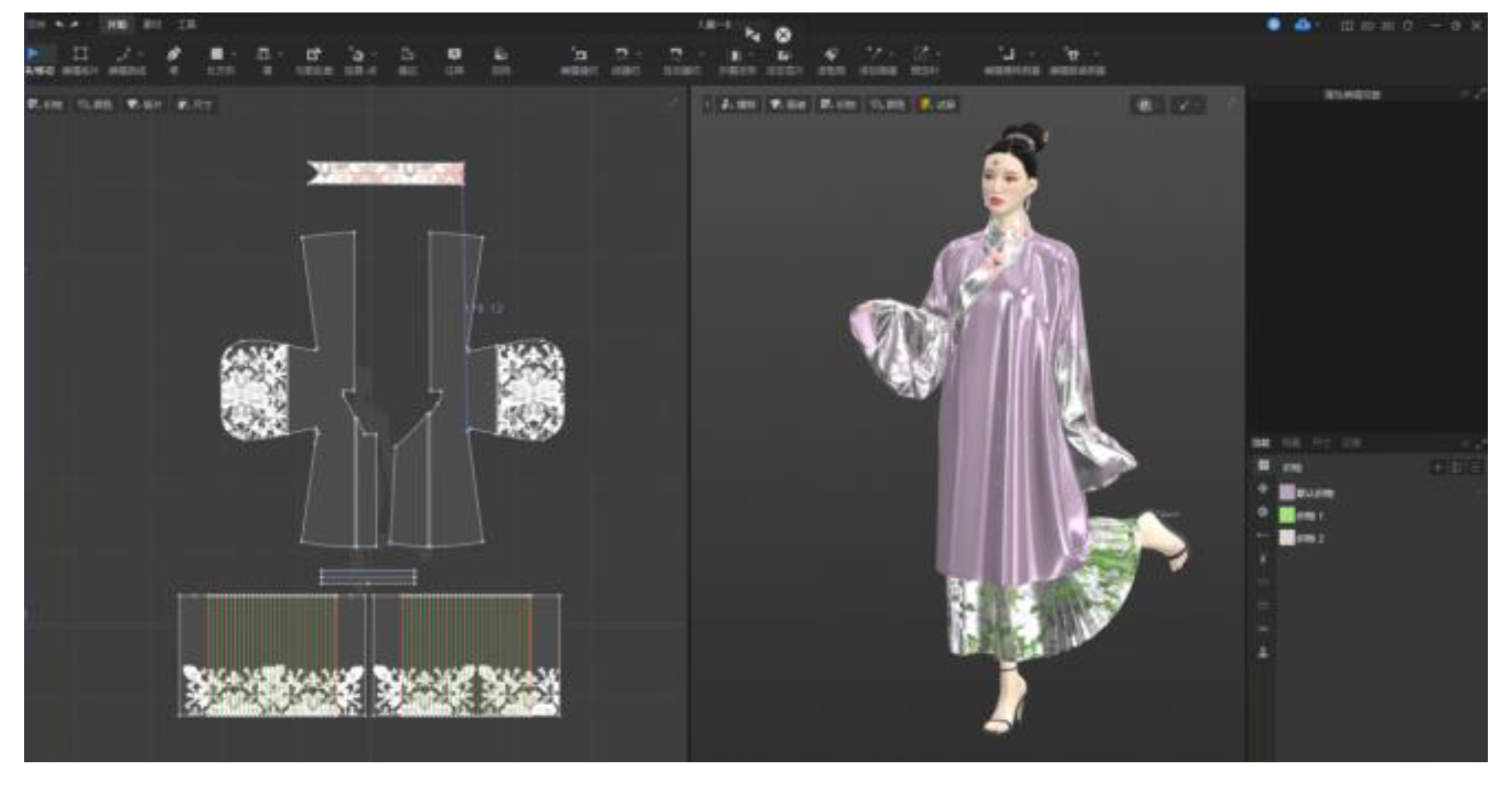
Figure 6.
Straight front buckle.
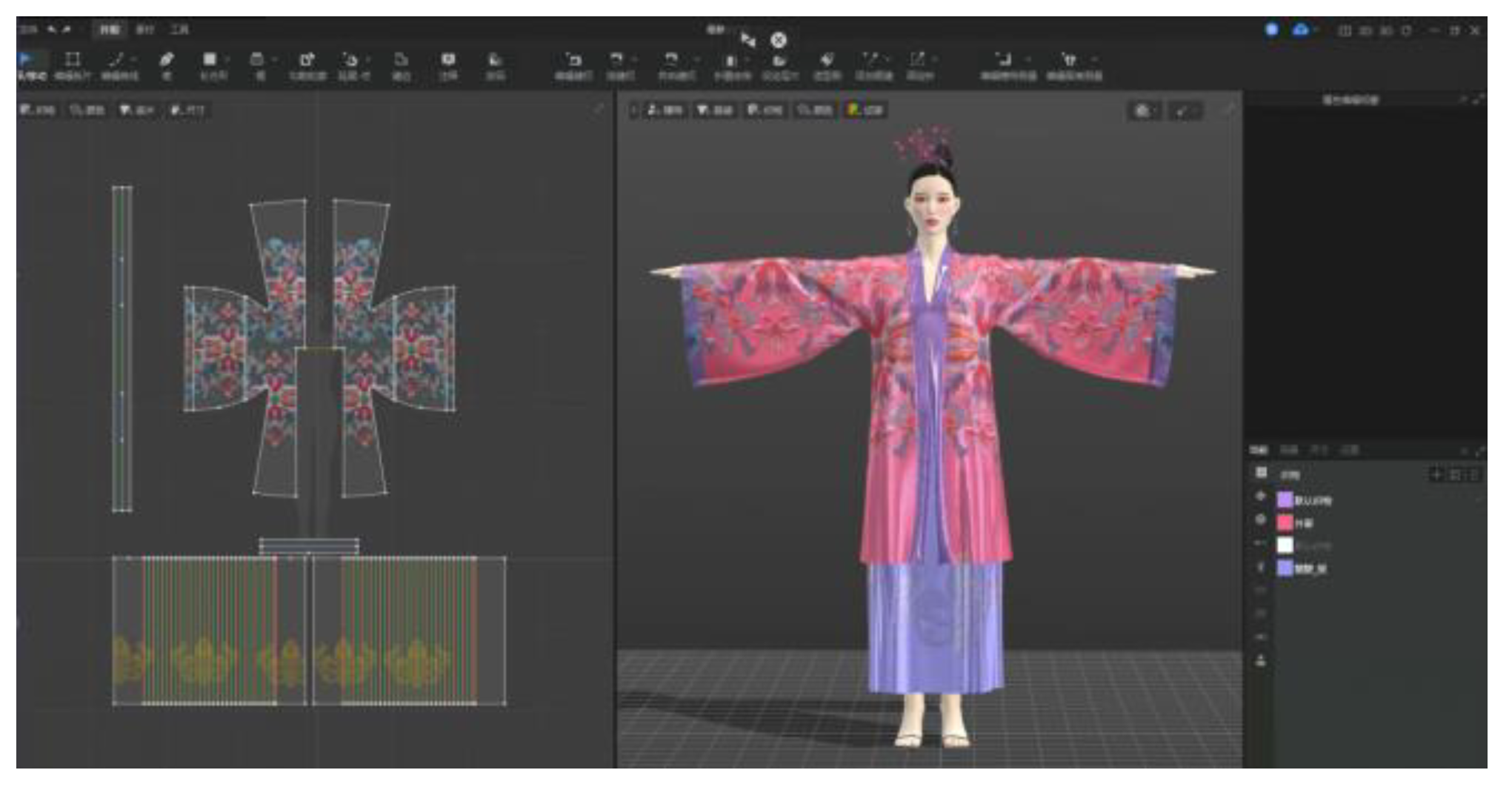
Figure 7.
Generalization to novel patterns.
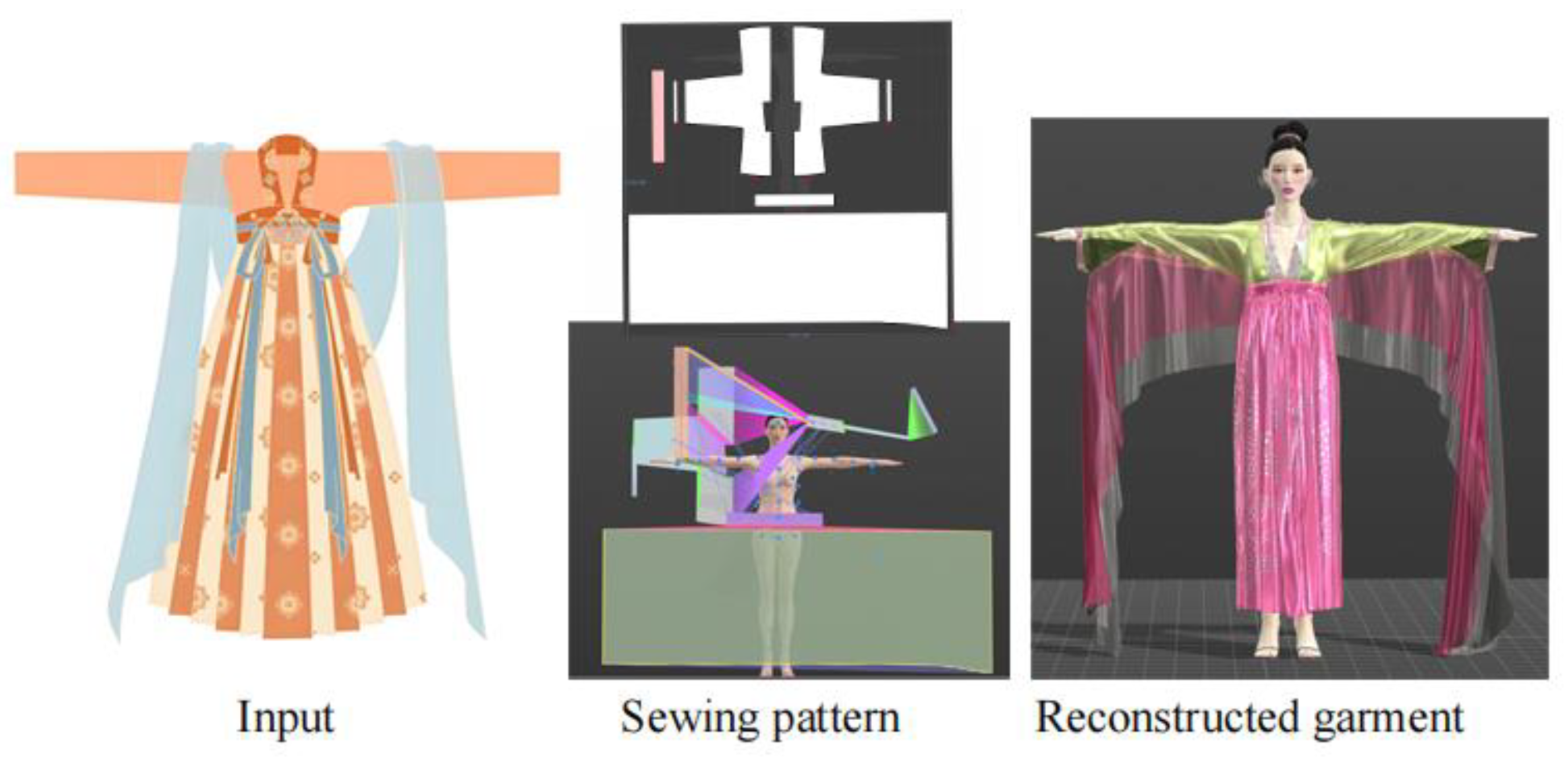
Figure 8.
More information on the case.
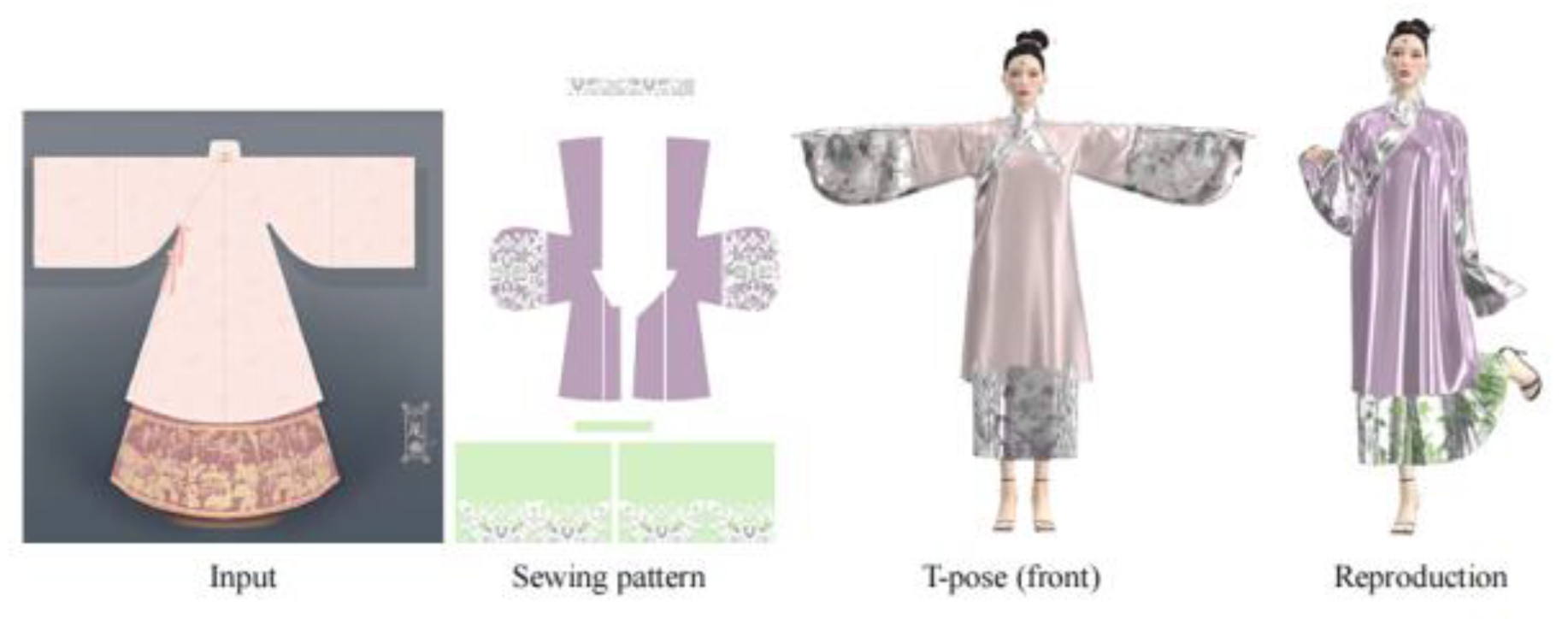
Table 2.
Hanfu patterns Diagram.
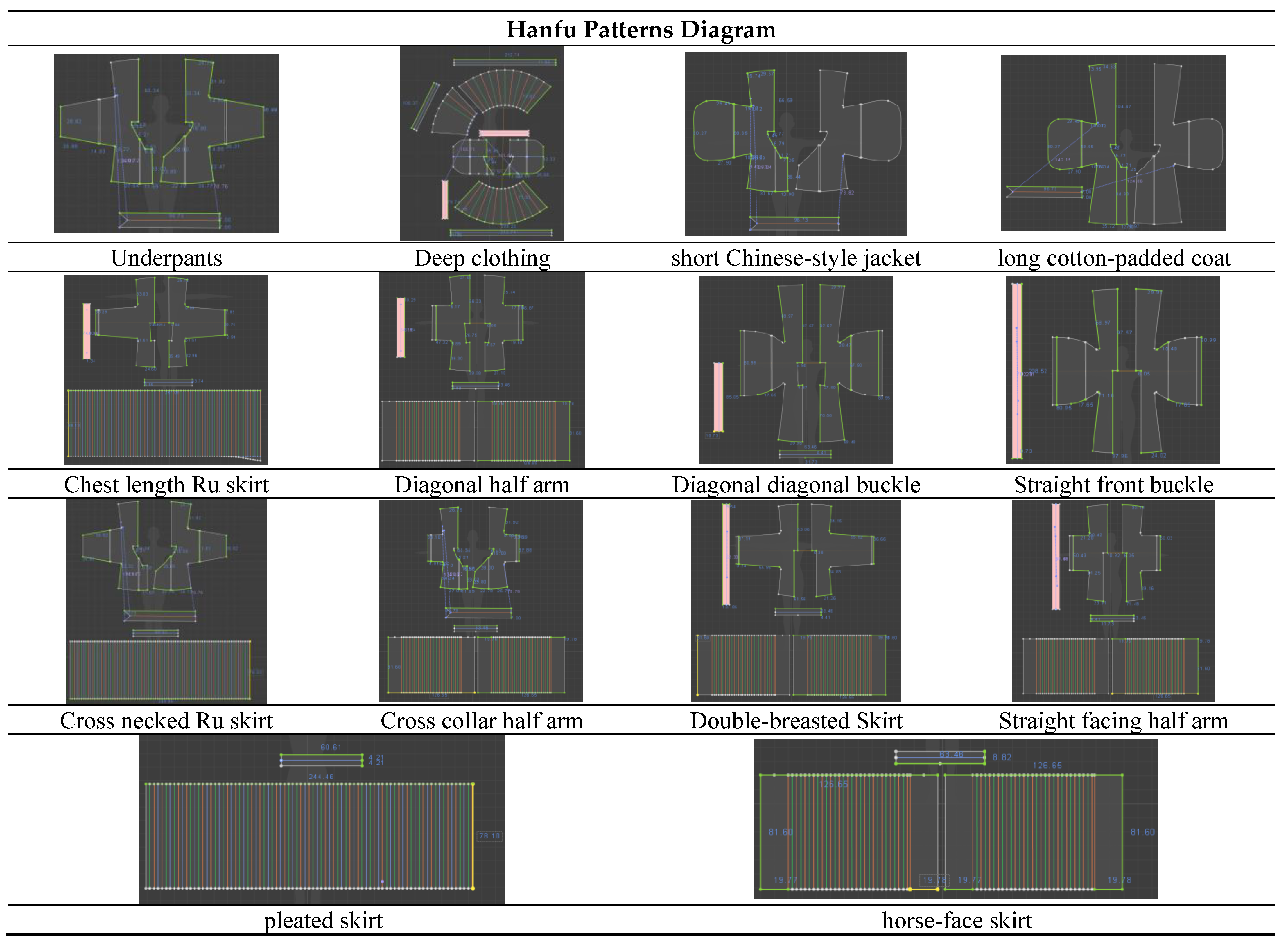
Source: RenJuan (2024).
Table 3.
Hanfu Style Diagram.
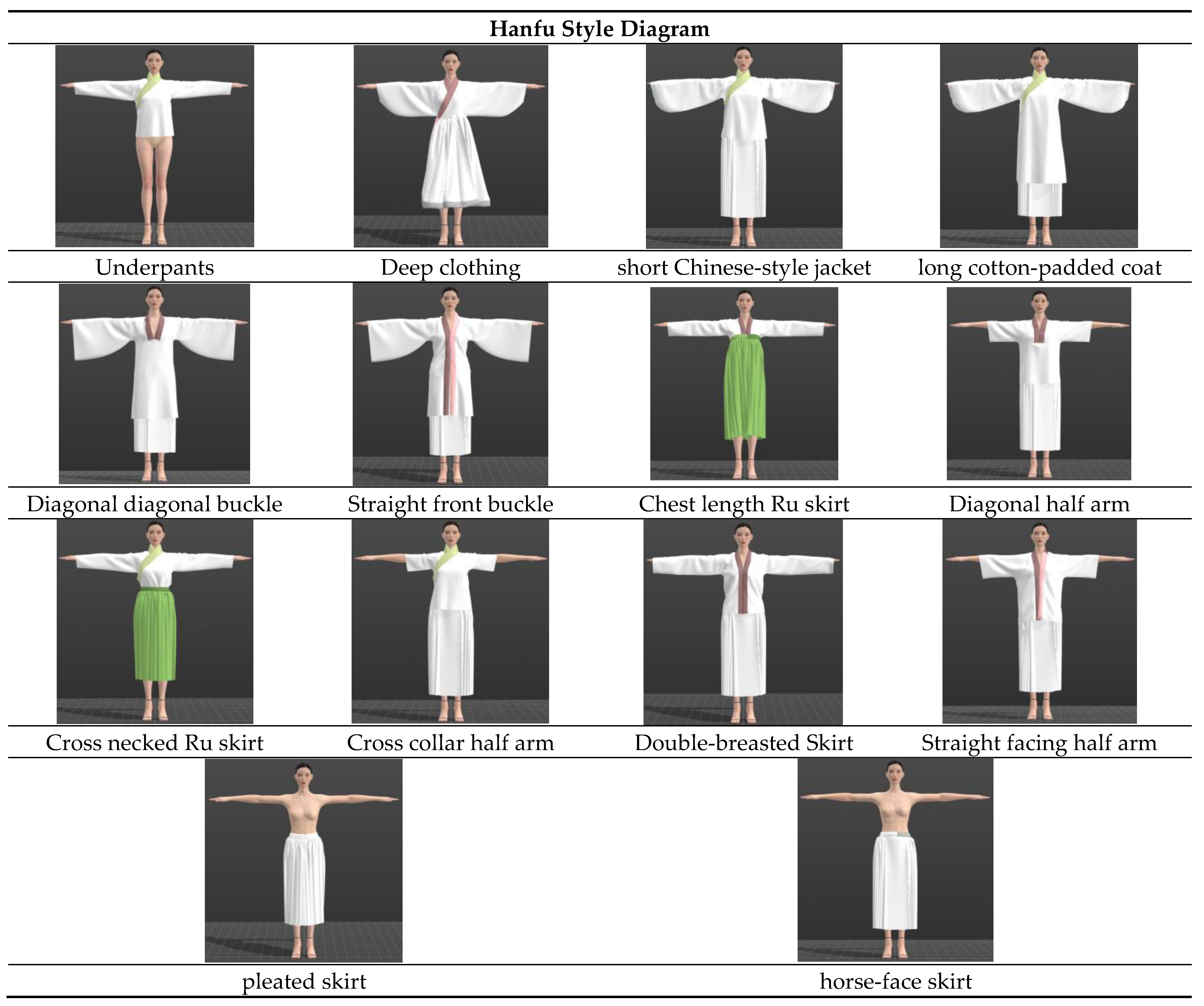
Source: RenJuan (2024).
Table 4.
Quantitative evaluation on the automatic generator(AG) dataset. Handmade pattern-making(HPM) trained with our proposed loss functions. ↑: the higher the better; ↓: the lower the better.
Table 4.
Quantitative evaluation on the automatic generator(AG) dataset. Handmade pattern-making(HPM) trained with our proposed loss functions. ↑: the higher the better; ↓: the lower the better.
| Model | Panel F1 ↓ | Rot F1 ↓ | Trans F1↓ | #Panel ↑ | #Edges ↑ | Precision ↑ | Recall ↑ | B1 score ↑ |
| AG | 3.57 | 0.0205 | 0.693 | 89.4% | 97.5% | 96.1% | 95.4% | 94.8% |
| AG | 3.91 | 0.0322 | 0.979 | 87.5% | 95.6% | 82.8% | 98.9% | 90. 1% |
| HPM | 4.15 | 0.0347 | 0.995 | 83.8% | 97.5% | 76.8% | 99.6% | 86.7% |
| HPM | 4.41 | 0.0300 | 1.050 | 82.8% | 97.8% | 81.5% | 87.8% | 84.5% |
Disclaimer/Publisher’s Note: The statements, opinions and data contained in all publications are solely those of the individual author(s) and contributor(s) and not of MDPI and/or the editor(s). MDPI and/or the editor(s) disclaim responsibility for any injury to people or property resulting from any ideas, methods, instructions or products referred to in the content. |
© 2025 by the authors. Licensee MDPI, Basel, Switzerland. This article is an open access article distributed under the terms and conditions of the Creative Commons Attribution (CC BY) license (http://creativecommons.org/licenses/by/4.0/).
Copyright: This open access article is published under a Creative Commons CC BY 4.0 license, which permit the free download, distribution, and reuse, provided that the author and preprint are cited in any reuse.


