

Submitted:
03 February 2025
Posted:
04 February 2025
You are already at the latest version
Abstract
Research on the safety and impact of lithium-ion battery failure has focused on individual cells as lithium-ion batteries began to be used in small devices. However, large and complex battery packs need to be considered and how the failure of a single cell can affect the system needs to be analyzed. As this initial failure at the level of a single cell can lead to thermal runaway of other cells within the pack, resulting in increased risk. This article focuses on tests of mechanical abuse (perforation of cylindrical cells), overcharge (pouch cells), and heating (cylindrical cells with different arrangements and types of connection) to analyse how various parameters influence the mechanism of thermal runaway (TR) propagation. Parameters such as SoC (State of Charge), environment, arrangement, and type of connection are thoroughly evaluated. The tests also analyse the final state of the post-mortem cells and measure the internal resistance of the cells before and after testing. It is concluded that temperature is a crucial parameter, as overheating of the battery can cause an exothermic reaction and destroy the battery completely. Also, overcharging the cell can compromise its internal structure, which underlines the importance of a well-functioning battery management system (BMS).
Keywords:
1. Introduction
2. Materials and Methods

| Cell type | Parameters | Image |
|---|---|---|
| 32700 Cylindrical cell | 6.0 Ah, LiFePO4 3.2 V 19.2 Wh 32700 Format Manufacturer: HAIDI |
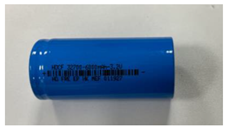 |
| Pouch AESC Nissan Leaf (2018) Battery structure: 24 modules 8 cells for each module |
56.3 Ah, NMC 523 3.65 V 205.49 Wh Manufacturer: Envision AESC |
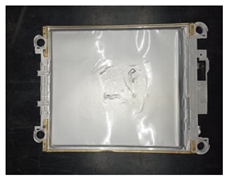 |
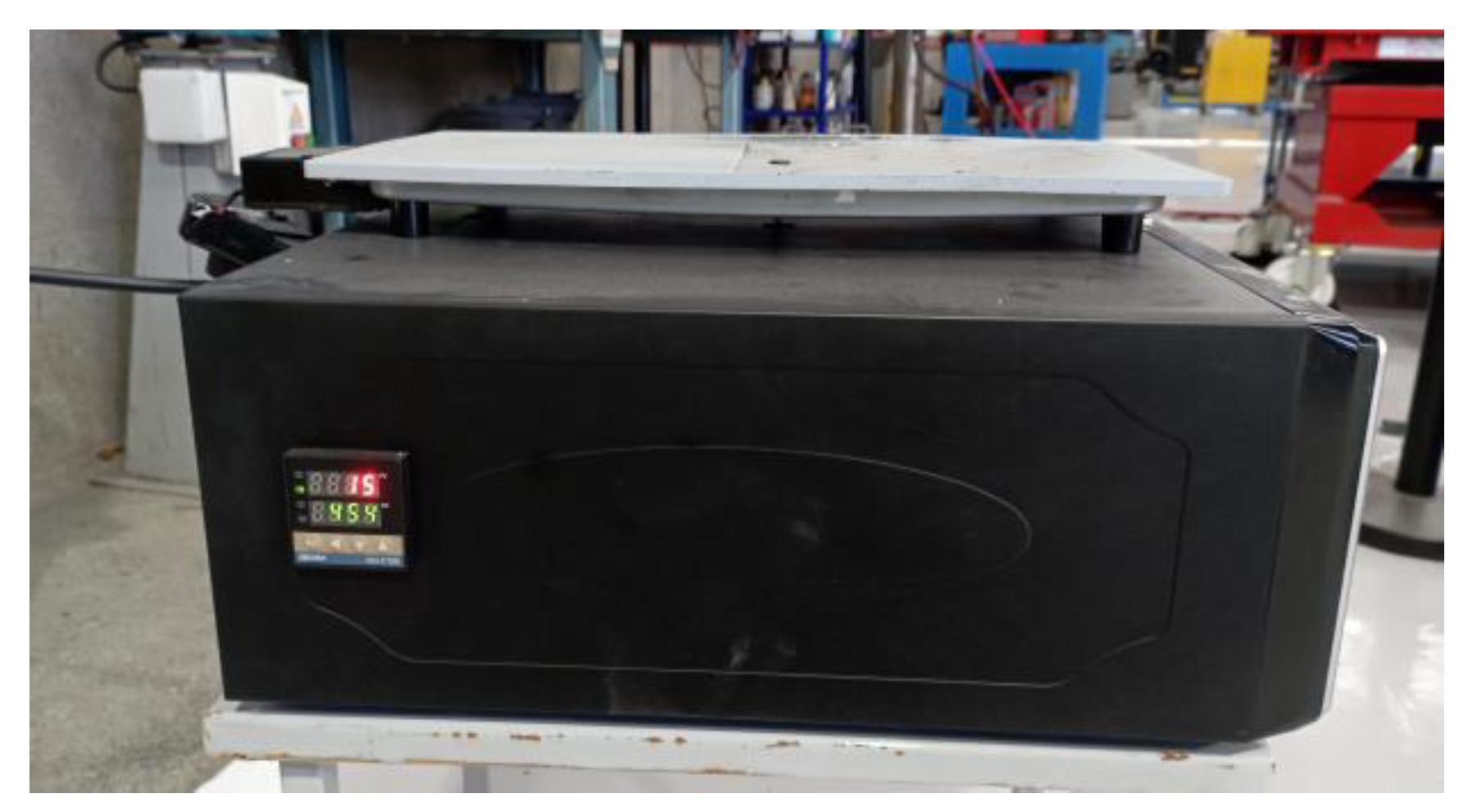
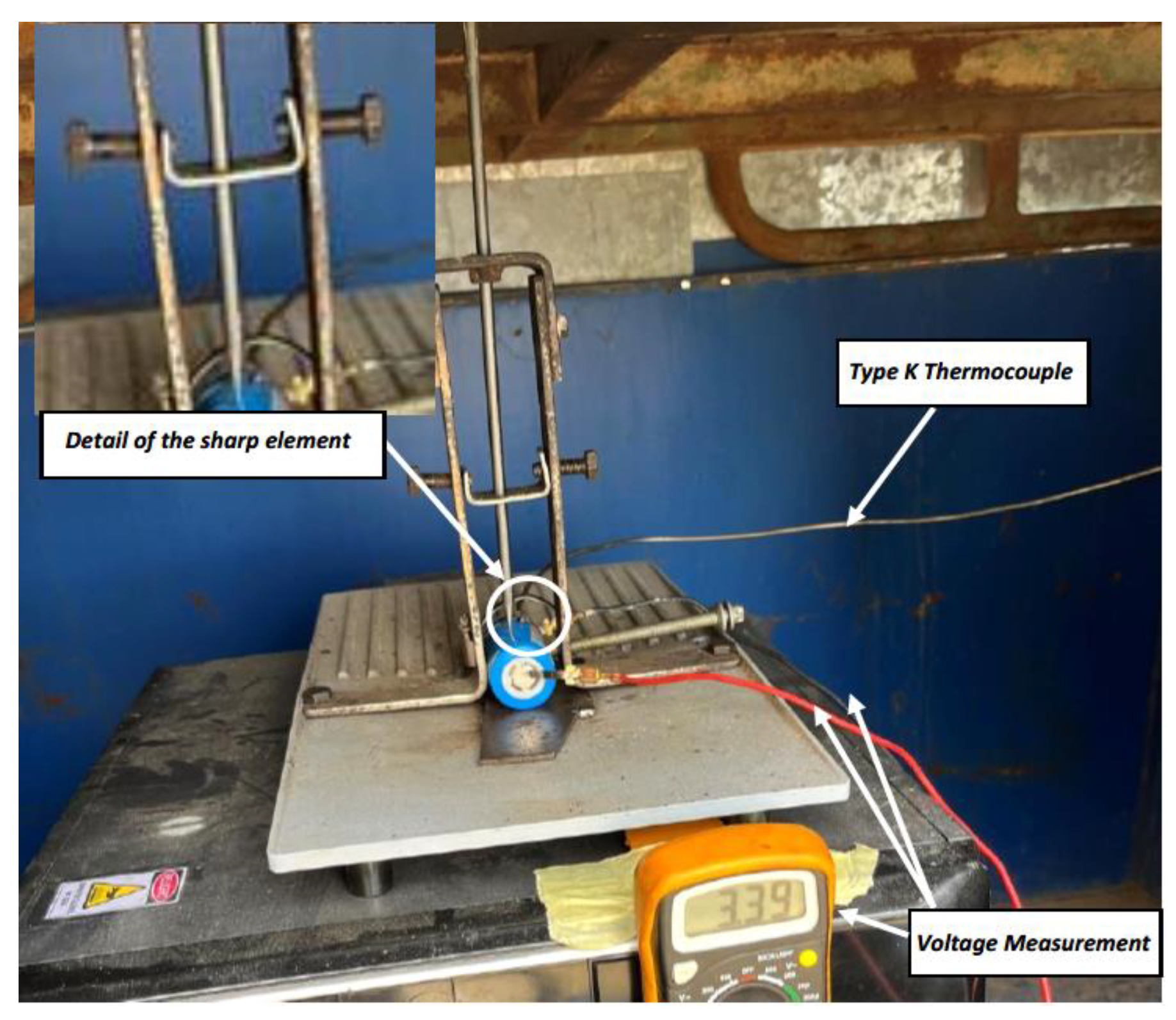
2.1. Mechanical Abuse Test
2.2. Electrical Abuse Test: Overcharge
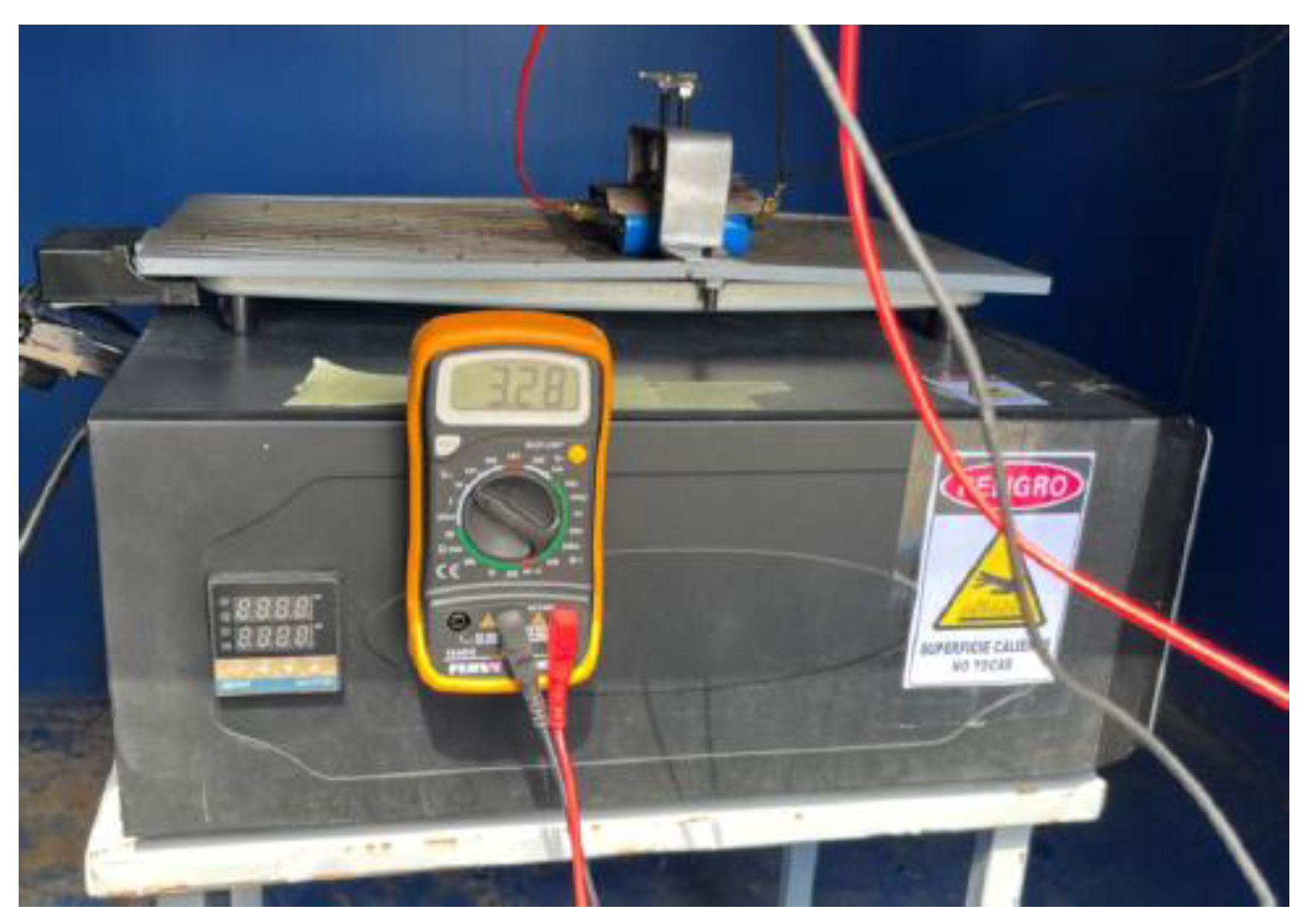
2.3. Thermal Abuse Test: Heating
3. Results
3.1. Mechanical Abuse Test Results
3.1.1. Test 1: Horizontal SoC 100% (cell A)
3.1.2. Test 2: Horizontal SoC 50% (cell D)
3.1.3. Test 2: Vertical SoC 100% (cell C)
3.1.4. Test 4: Vertical SoC 50% (cell B)
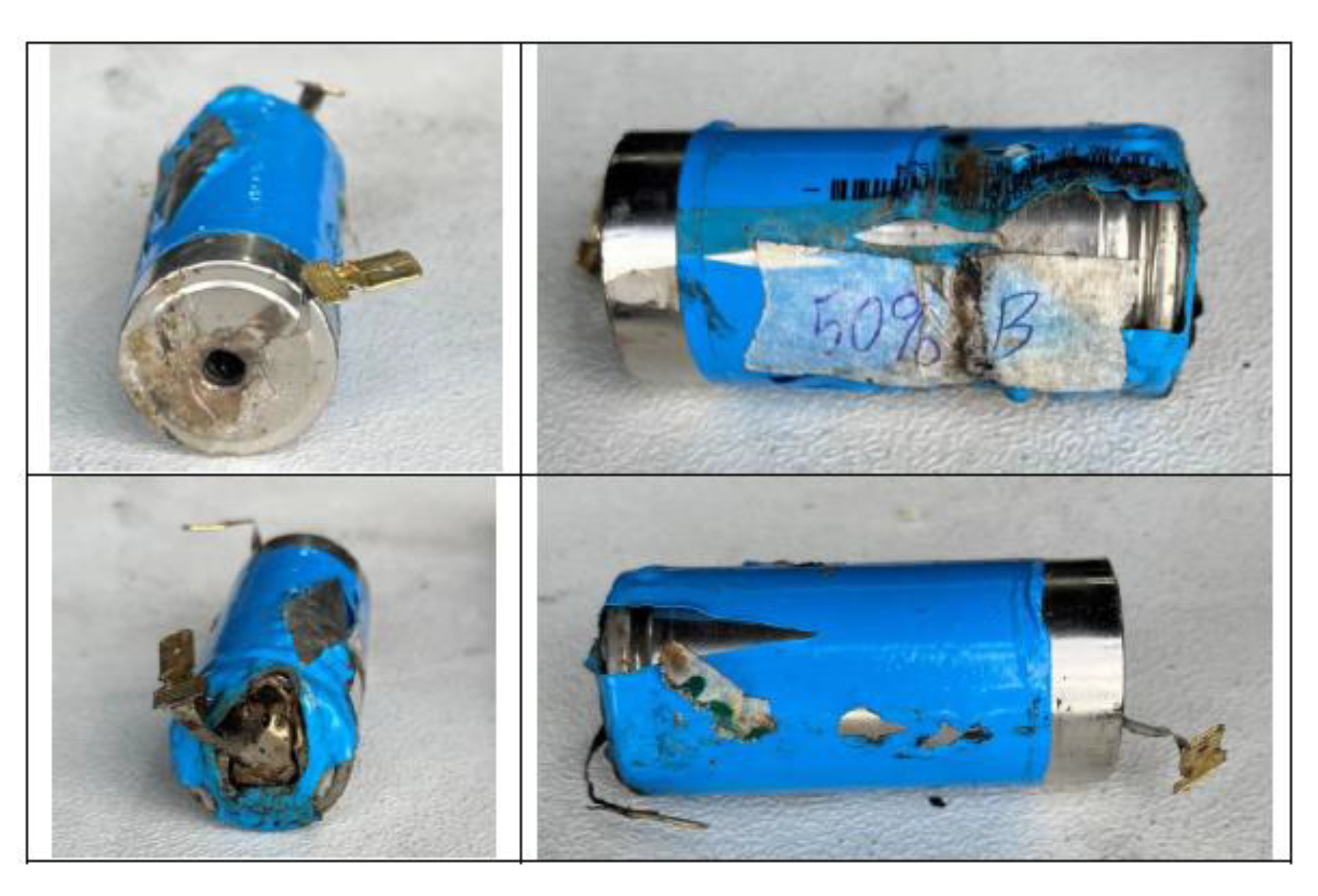
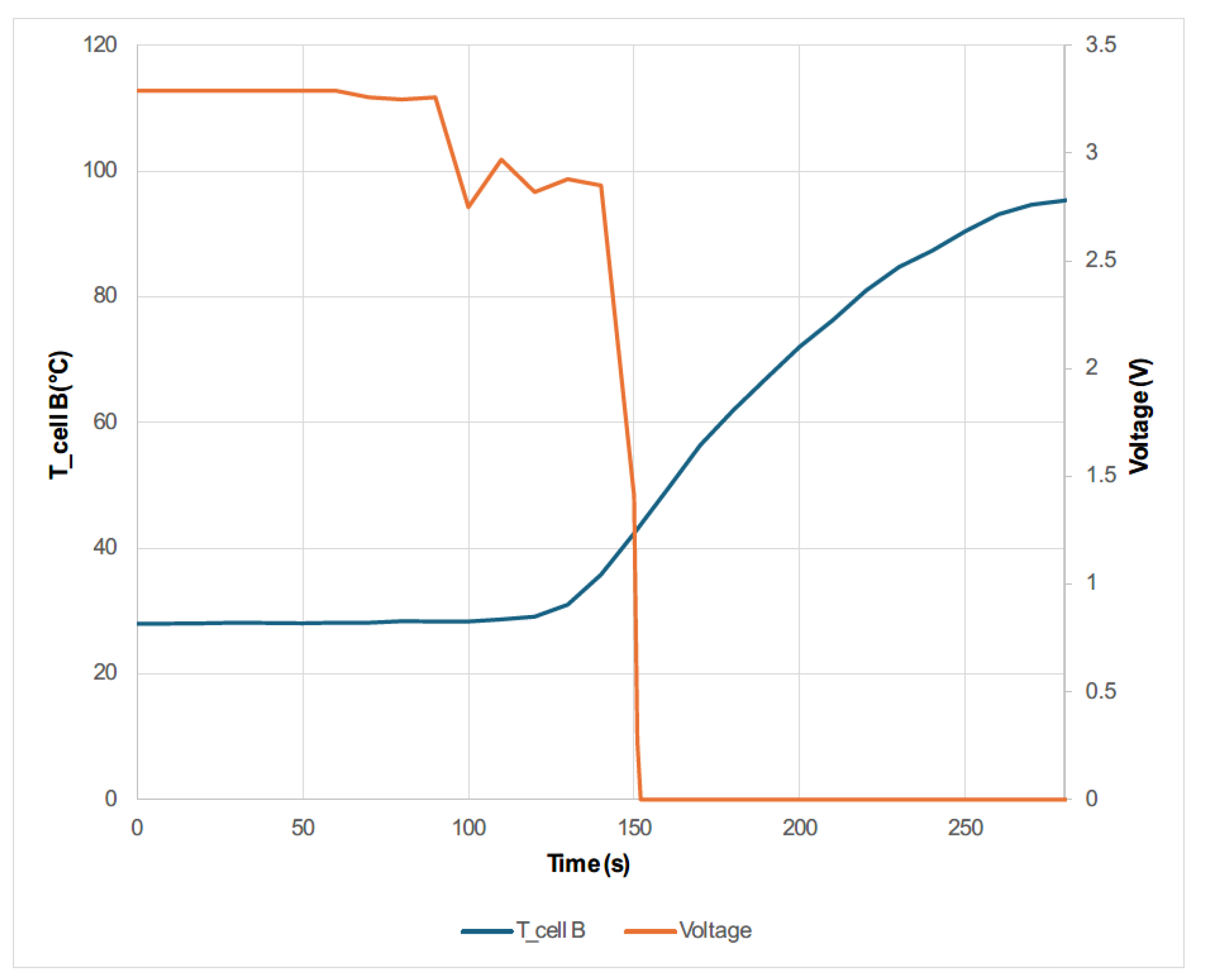
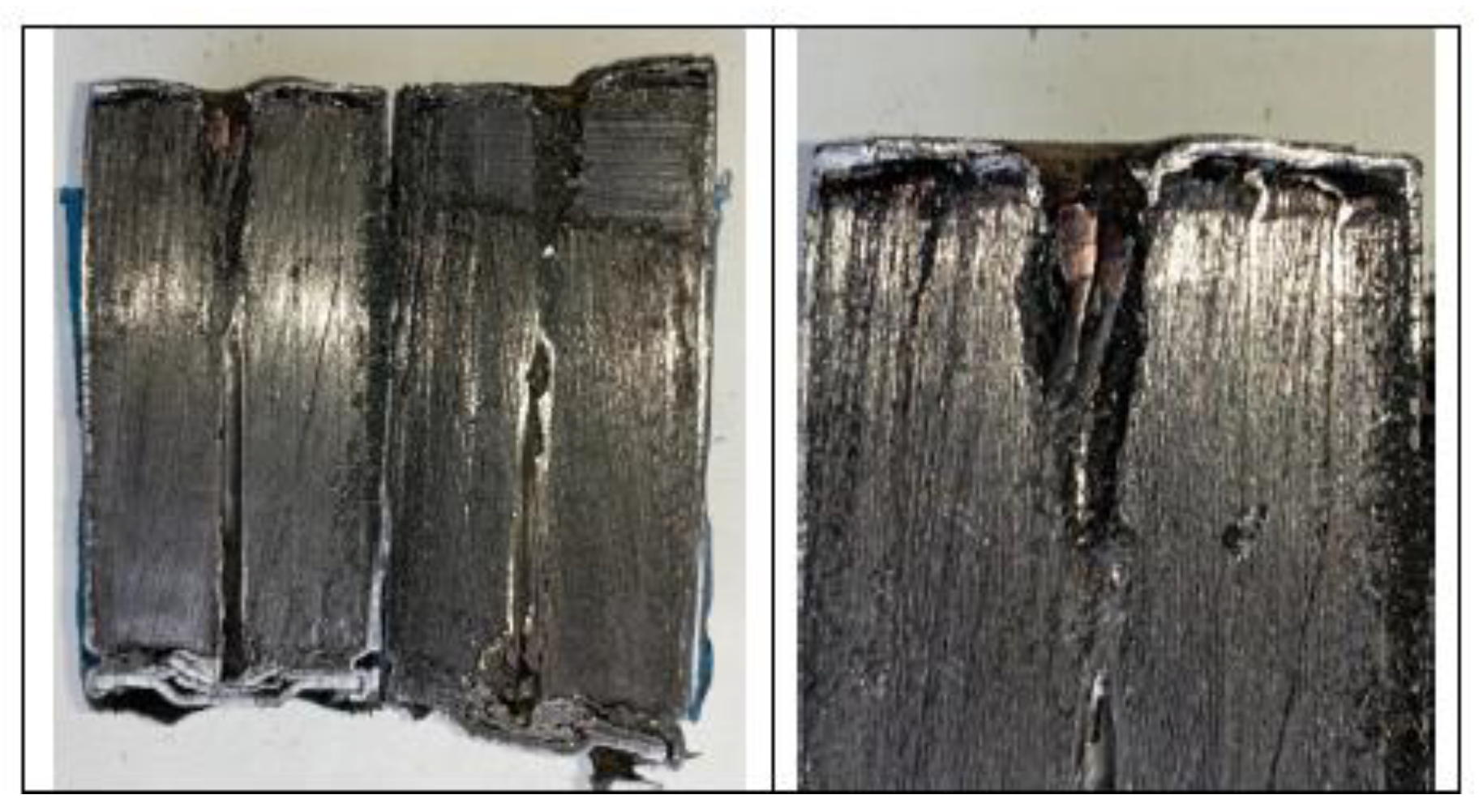
3.1.5. Test 5: Vertical SoC 50% (lithium-ion cell NMC)
3.2. Electrical Abuse Test Results: Overcharge
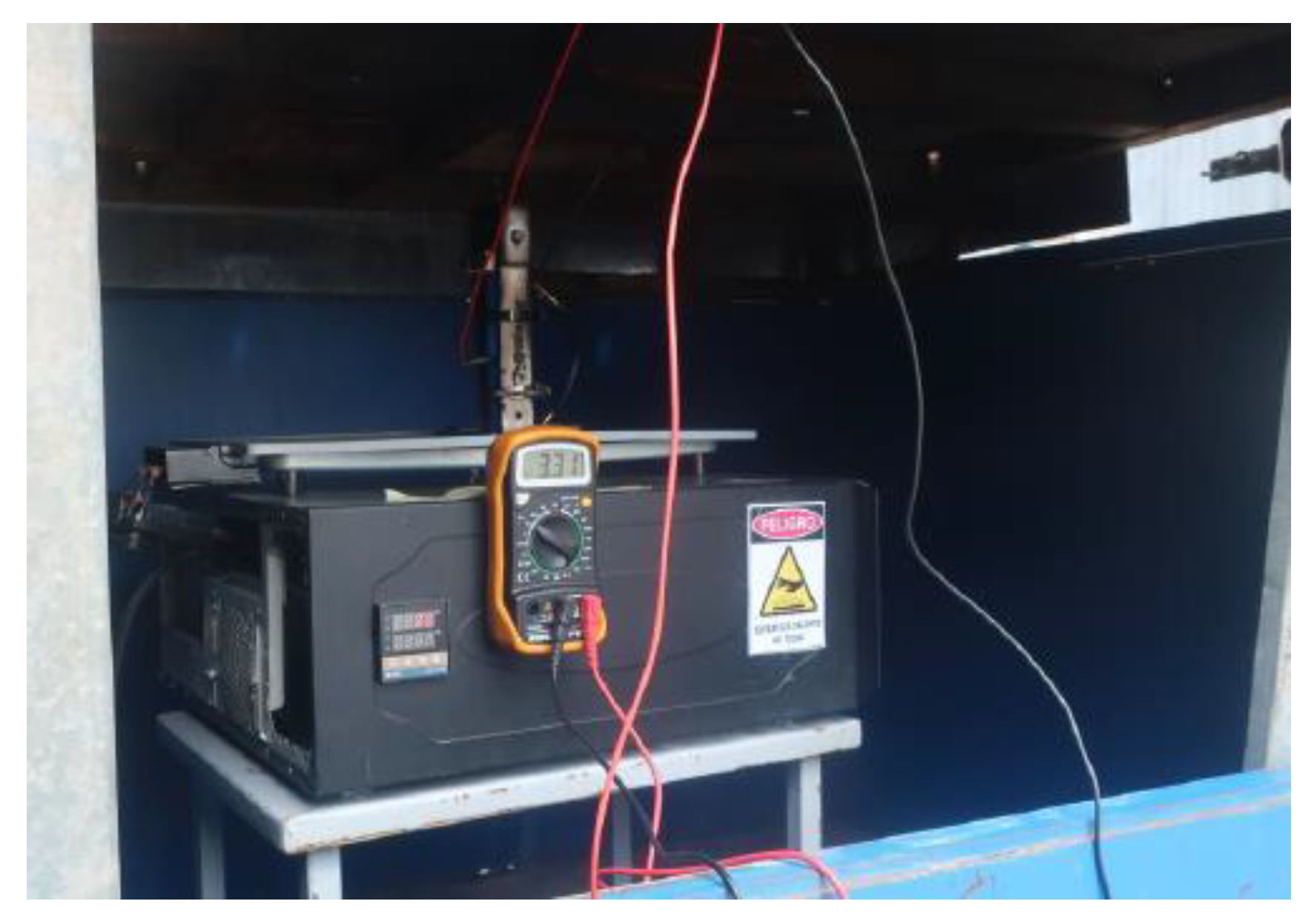
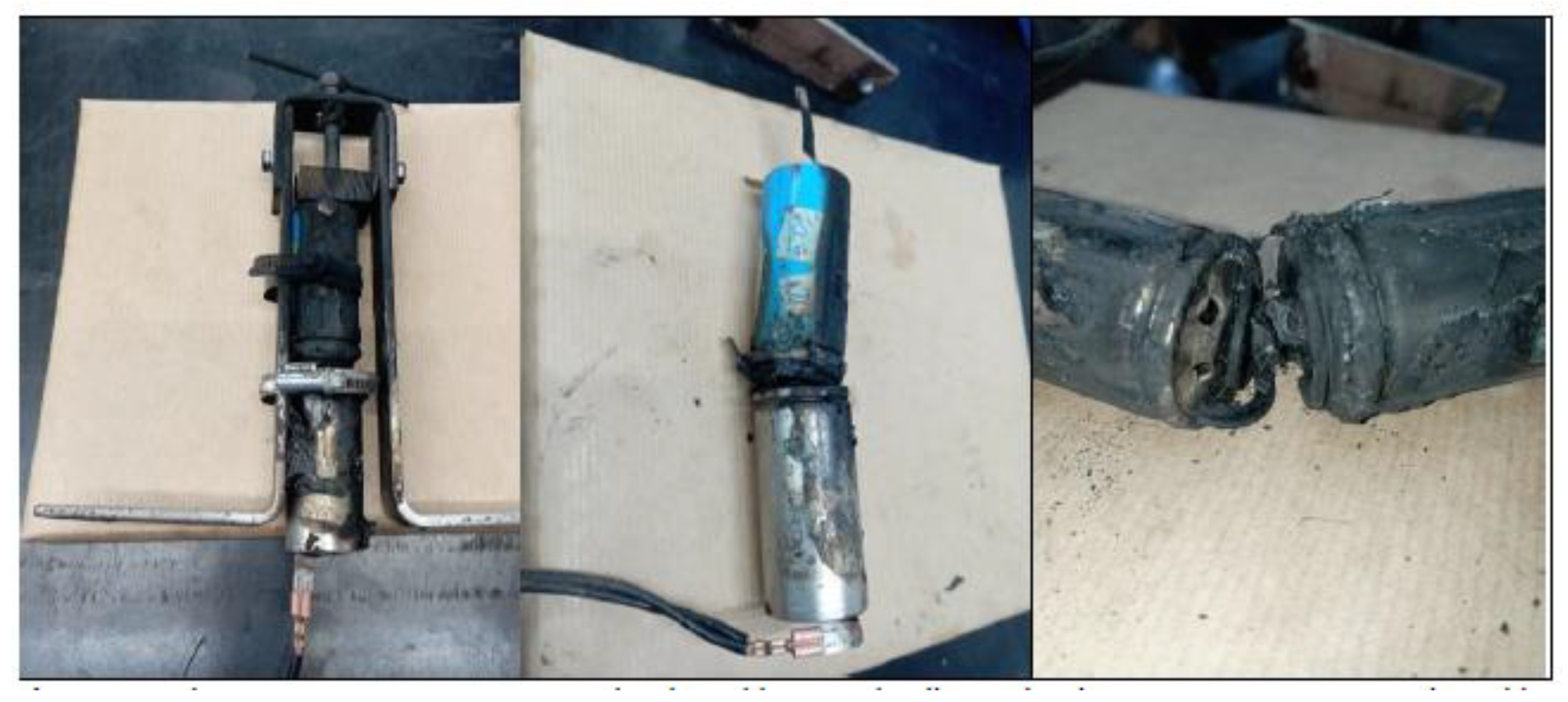
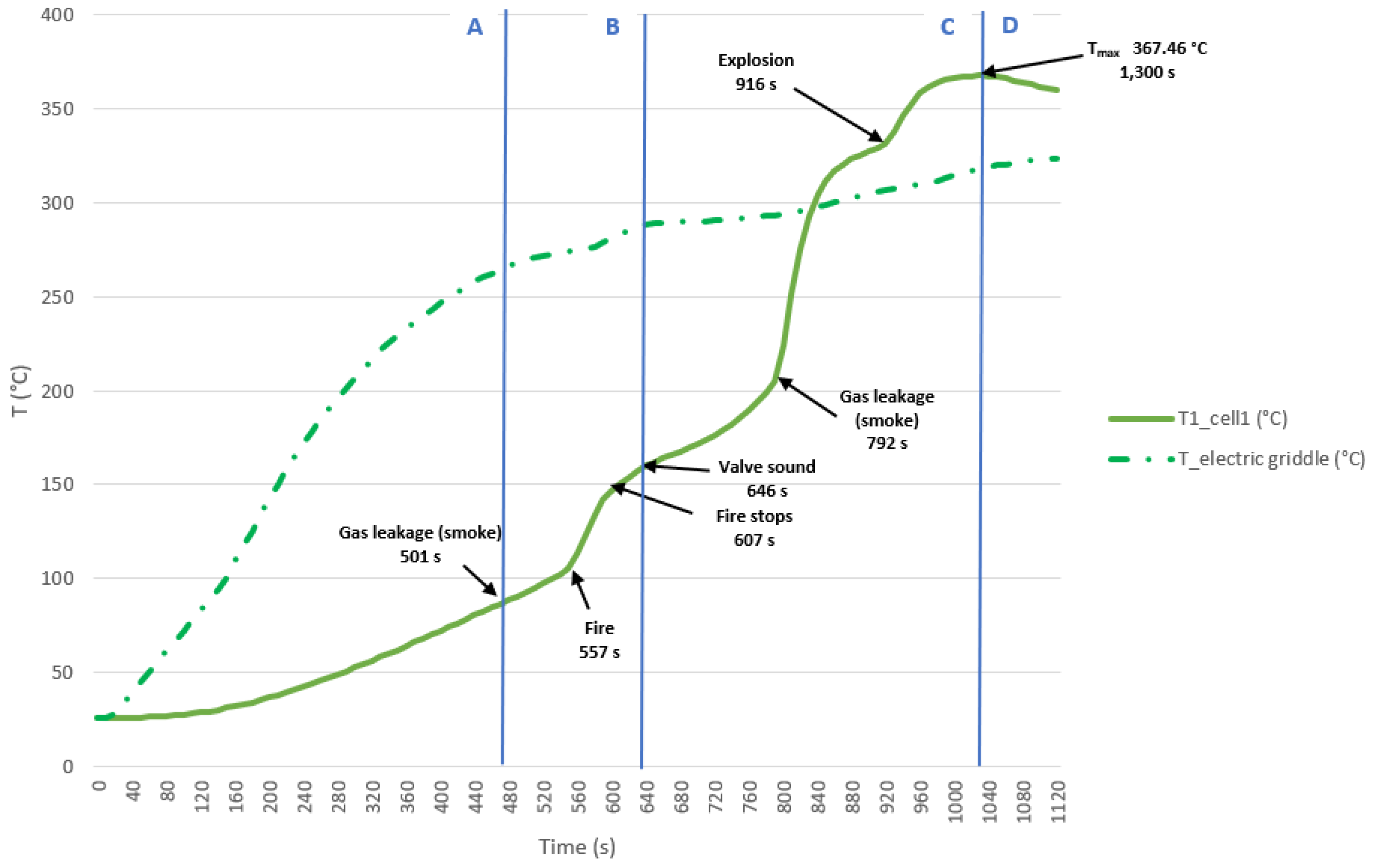
3.3. Thermal Abuse Test Result: Heating
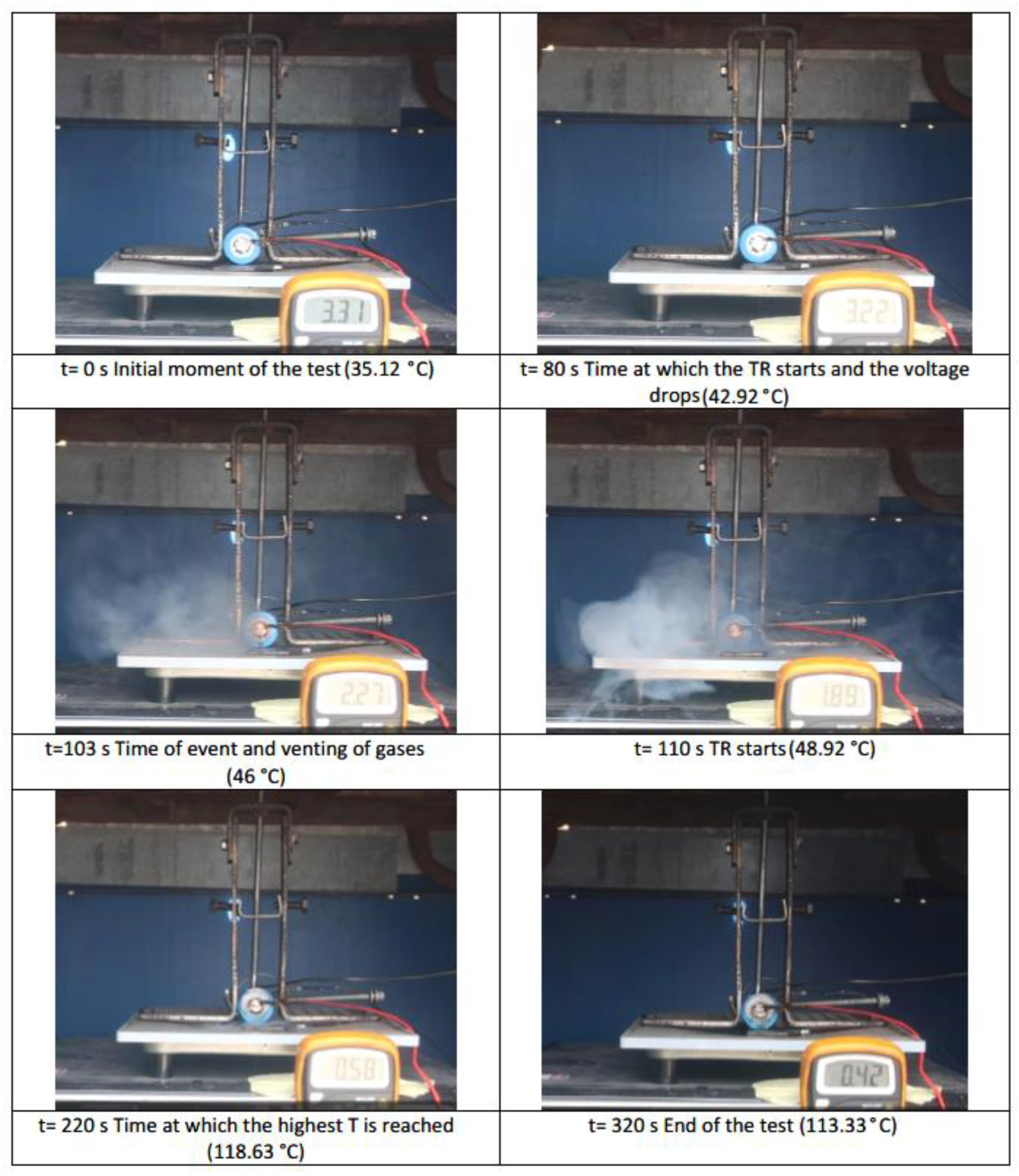
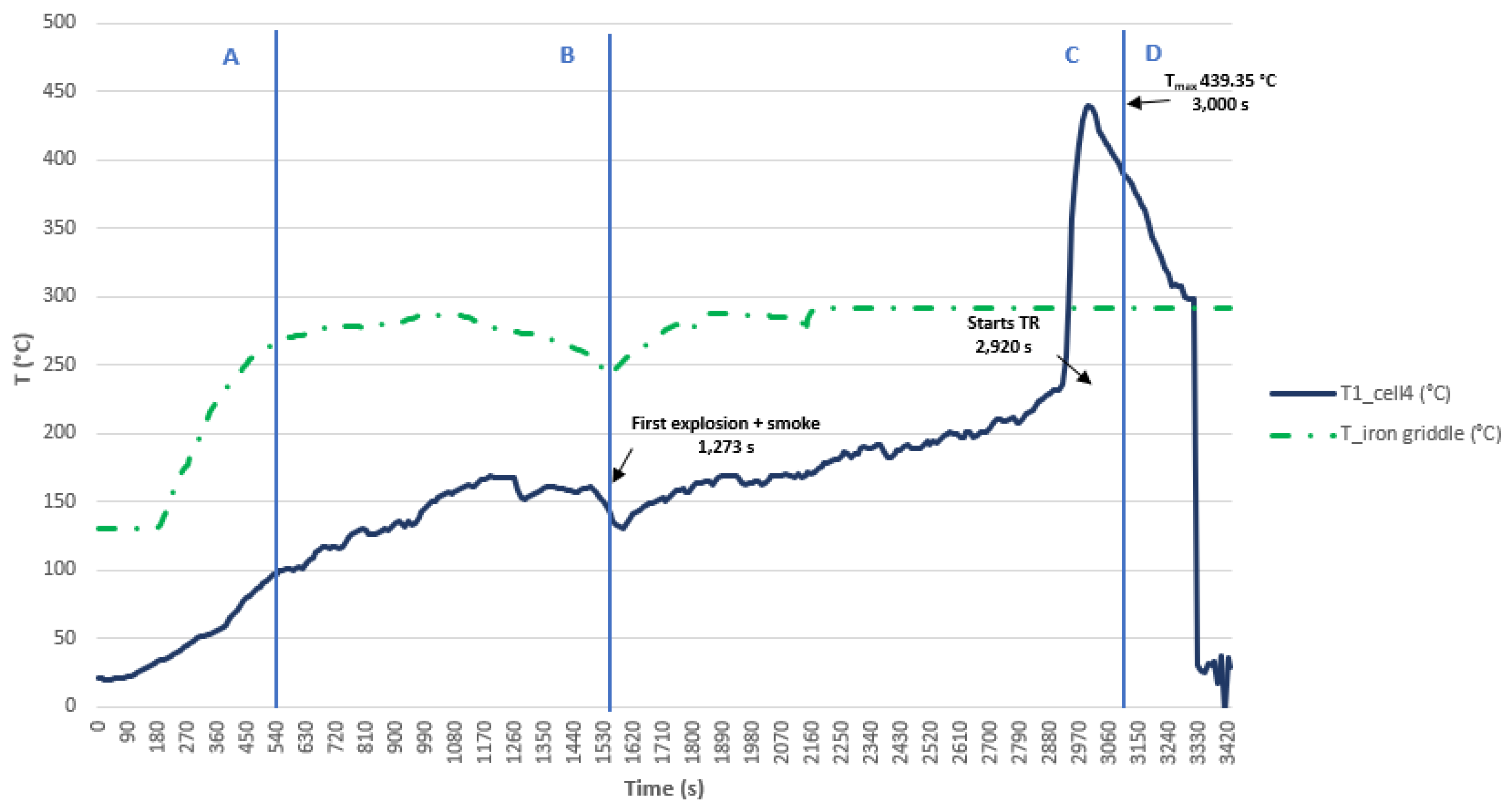
- Initiation of TR with smoke production without flame.
- Venting and ignition of the released gases, a flame is visible during this phase.
- Catastrophic failure of the cell with the presence of flame.
3.3.1. Test 1: Vertical, Series Connection and SoC 100% (Cell 4 Bellow and Cell 3 Above)
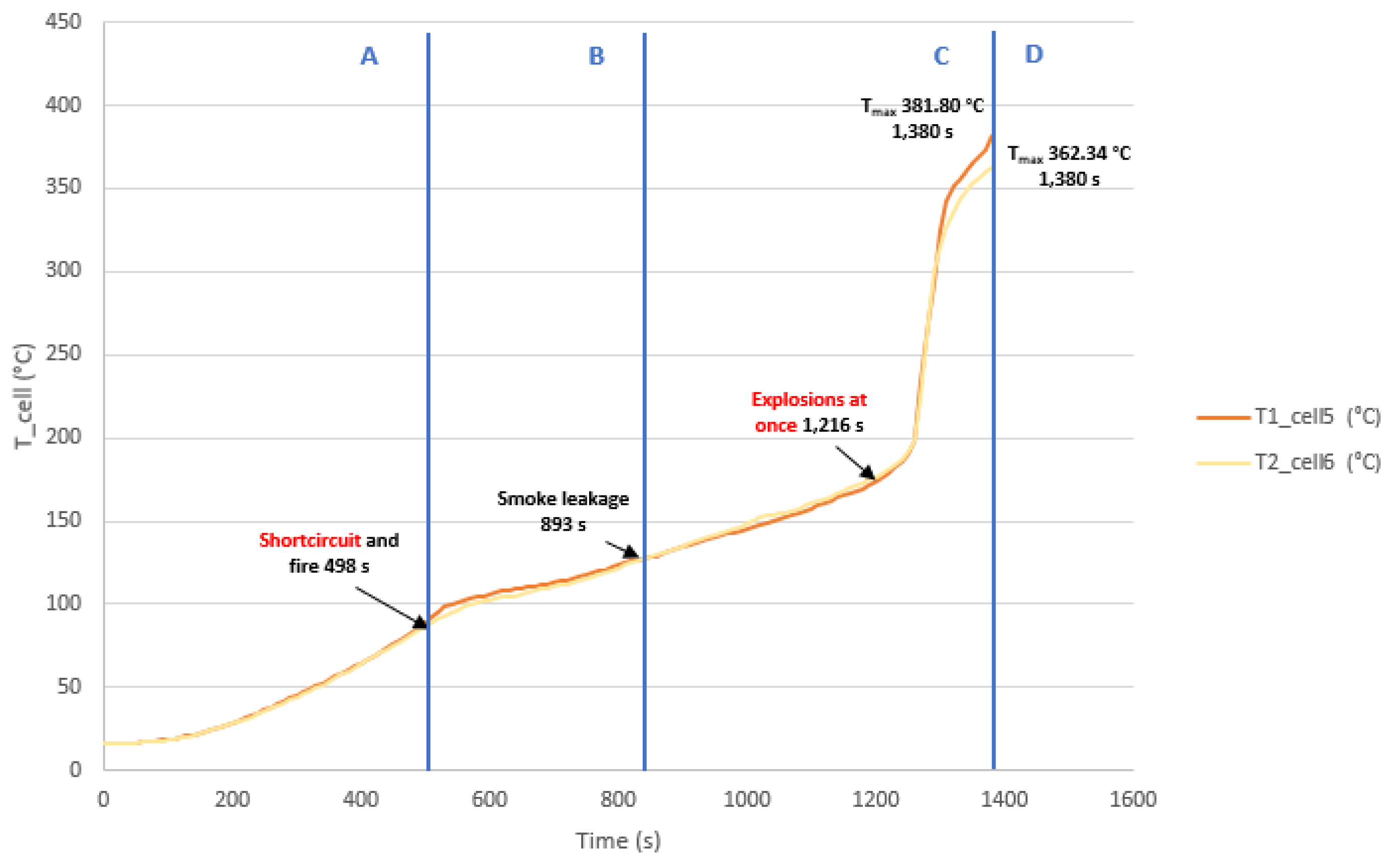
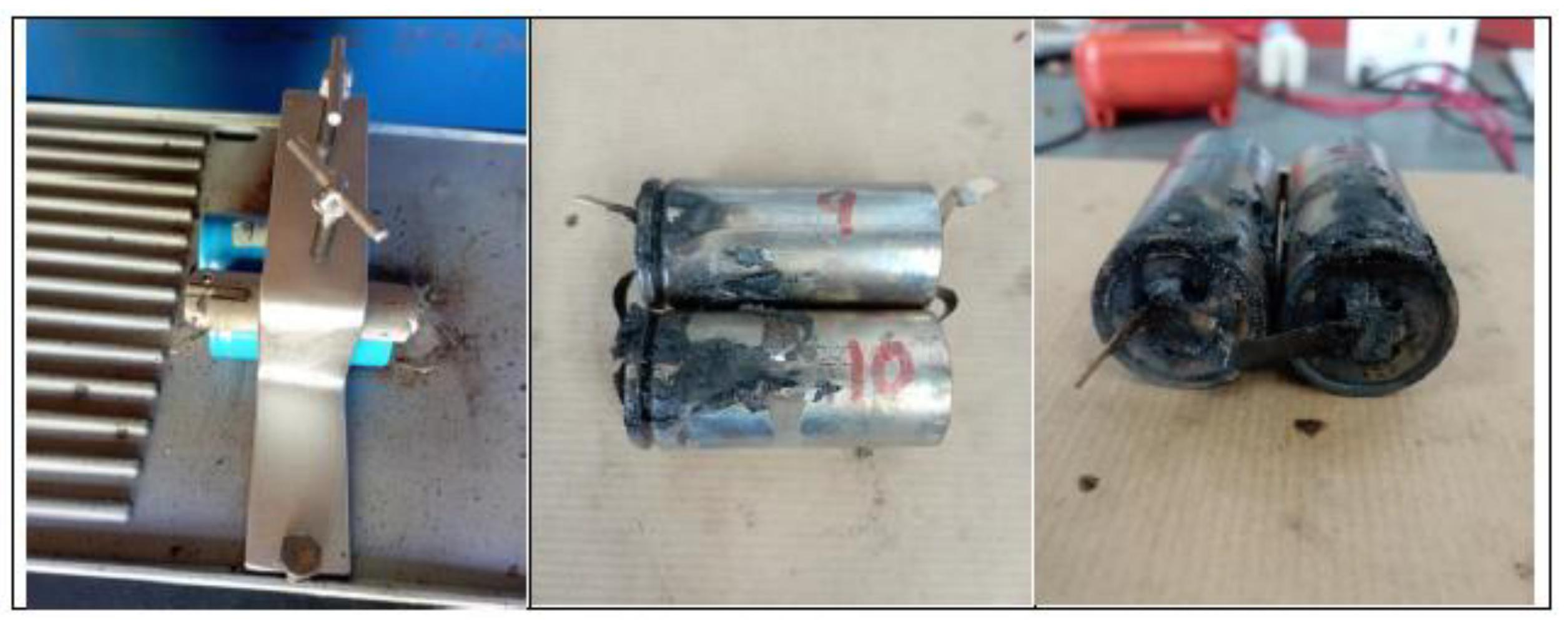
3.3.2. Test 2: Horizontal, Series Connection and SoC 100% (Cell 5 and Cell 6)
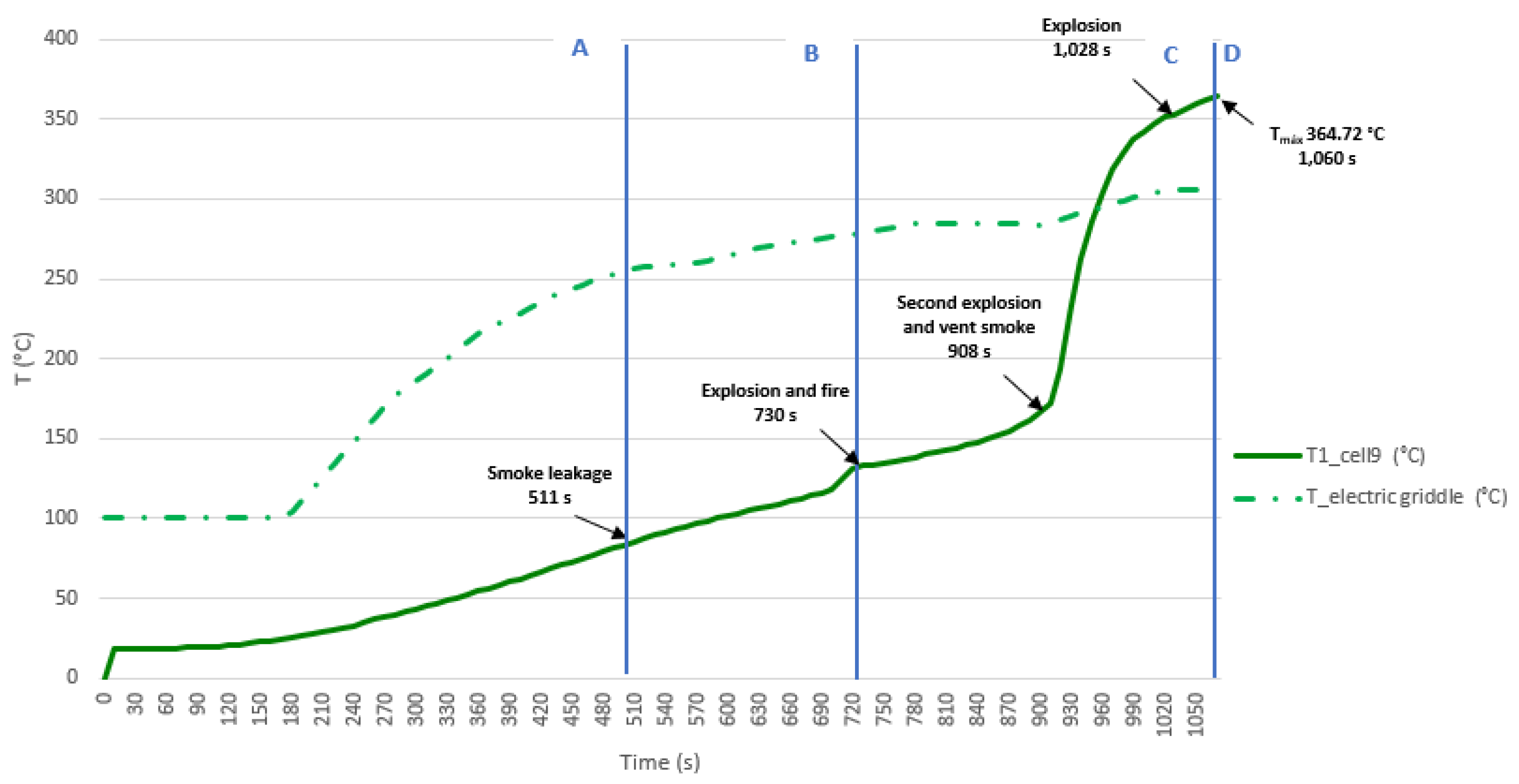
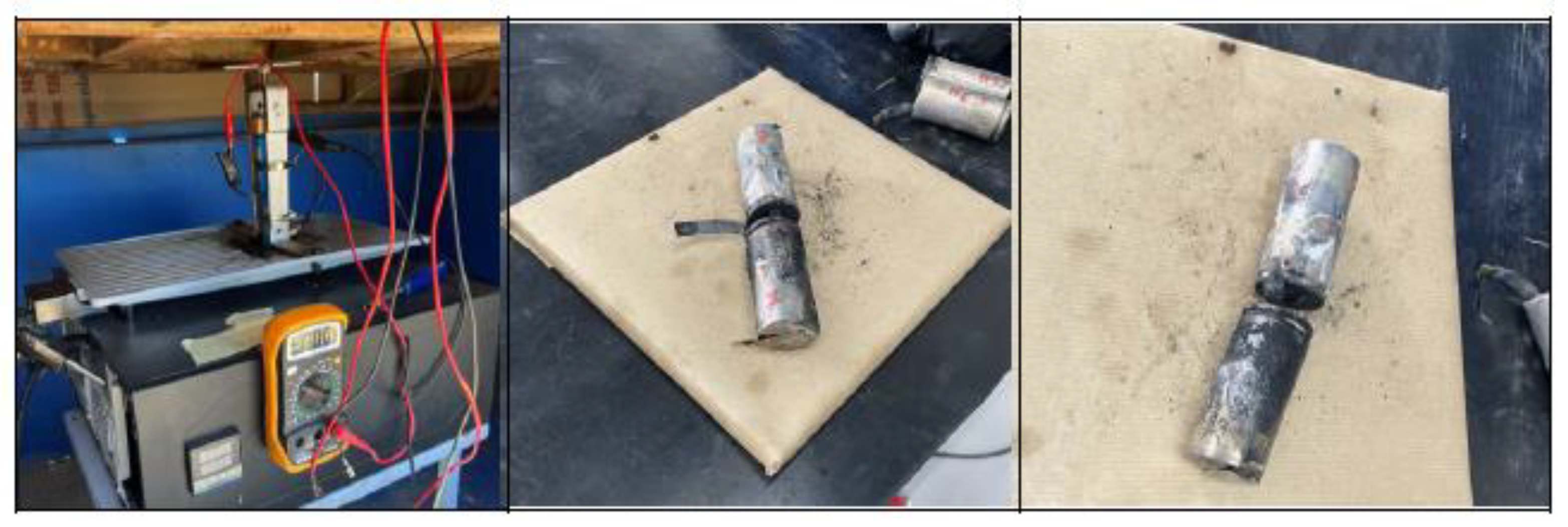
3.3.3. Test 3: Horizontal, Parallel Connection and SoC 100% (Cell 9 and Cell 10)
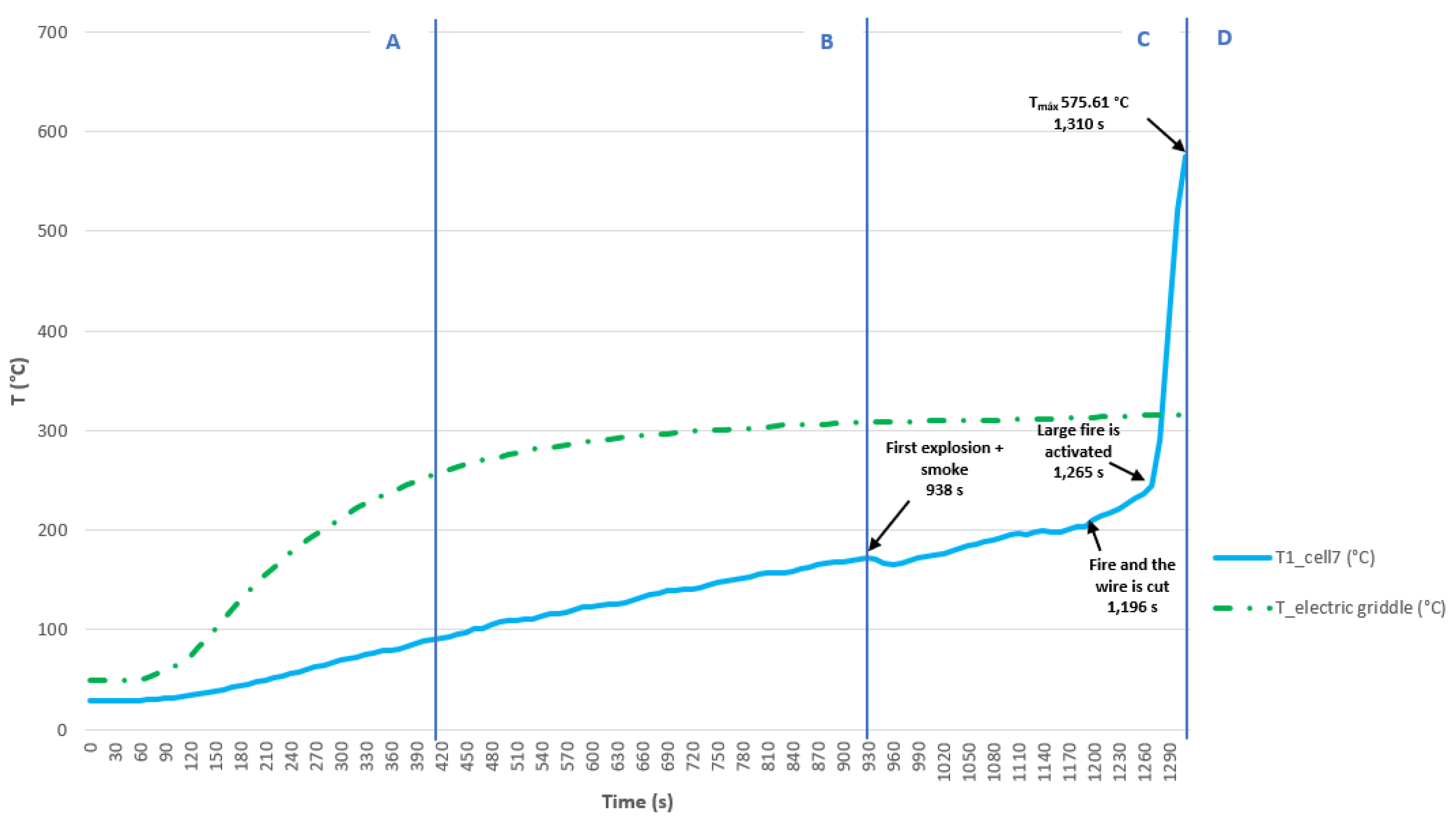
3.3.4. Test 4: Vertical, Parallel Connection and SoC 100% (Cell 7 (Bellow) and Cell 8)
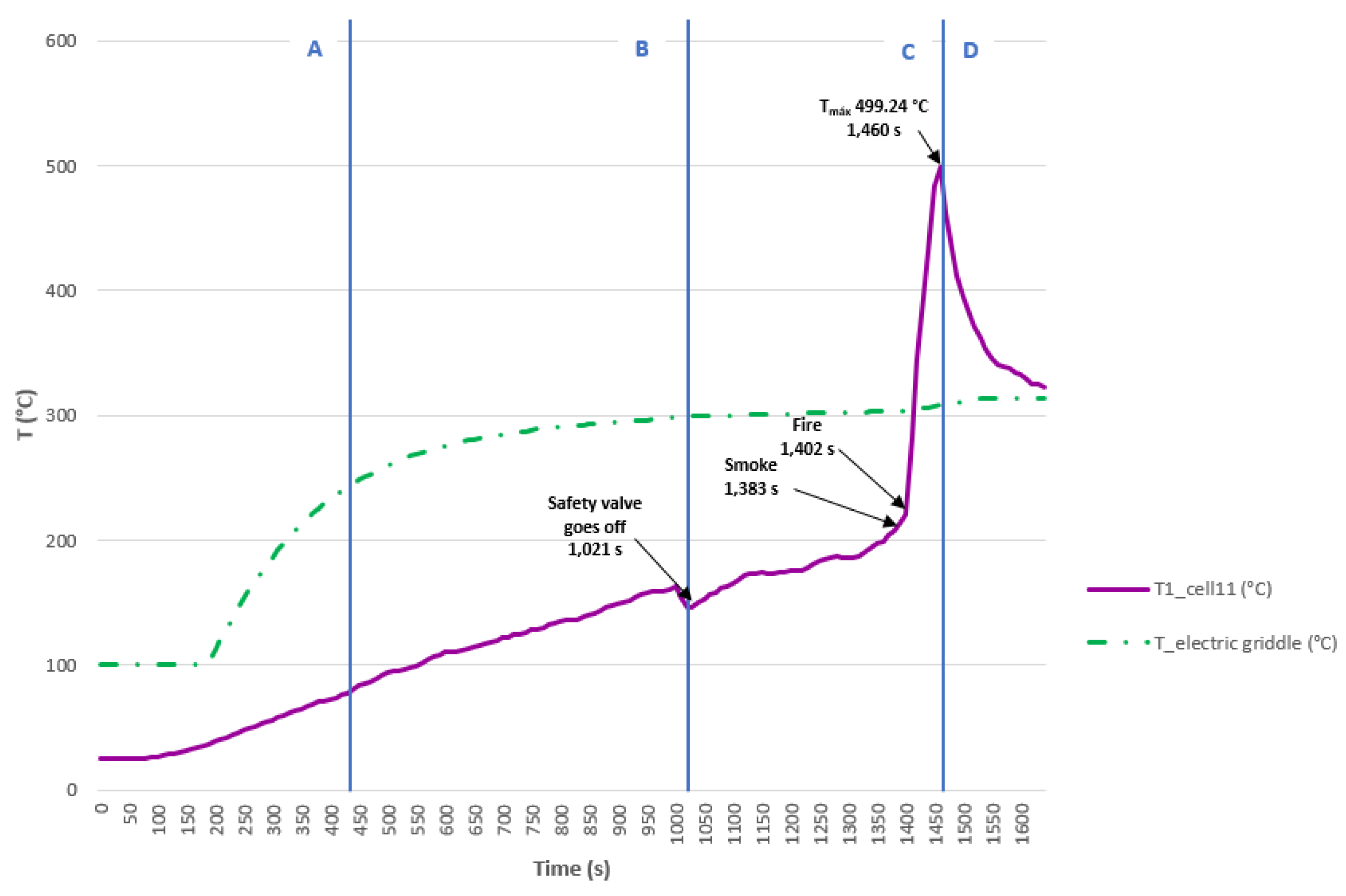
3.3.5. Test 5: Vertical, Parallel Connection and SoC 50% (Cell 11 (Bellow) and Cell 12)
3.3.6. Test 6: Horizontal, Parallel Connection and SoC 50% (Cell 1 and Cell 2)
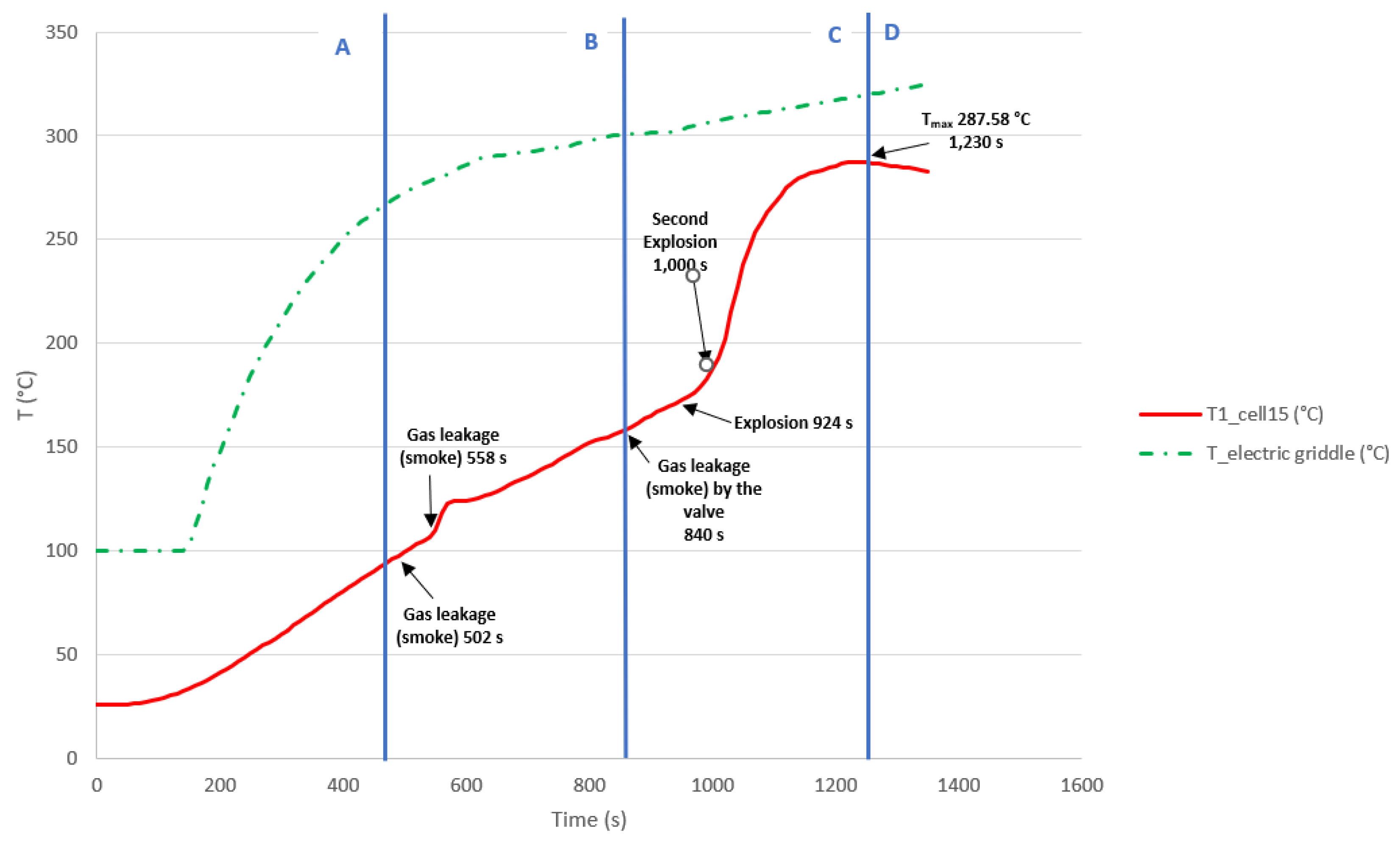
3.3.7. Test 7: Horizontal, Series Connection and SoC 50% (Cell 15 and Cell 14)
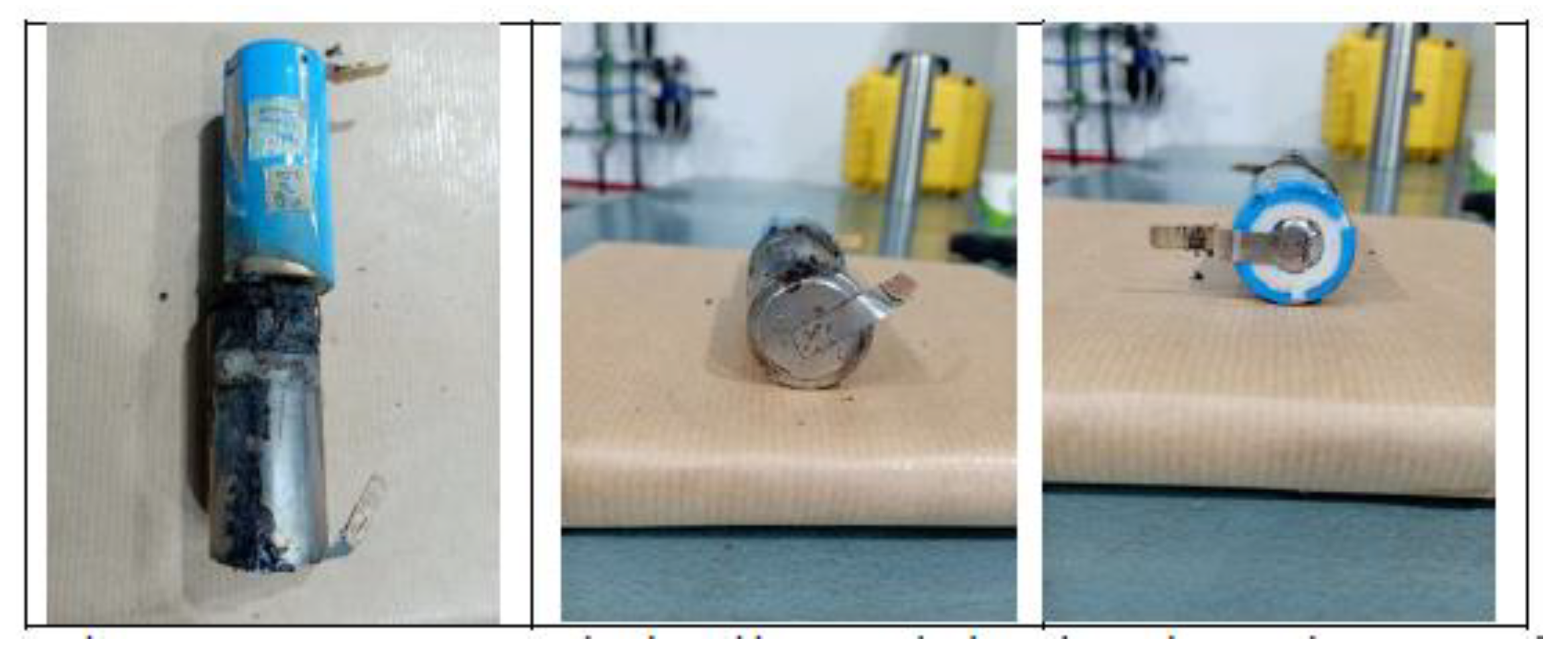
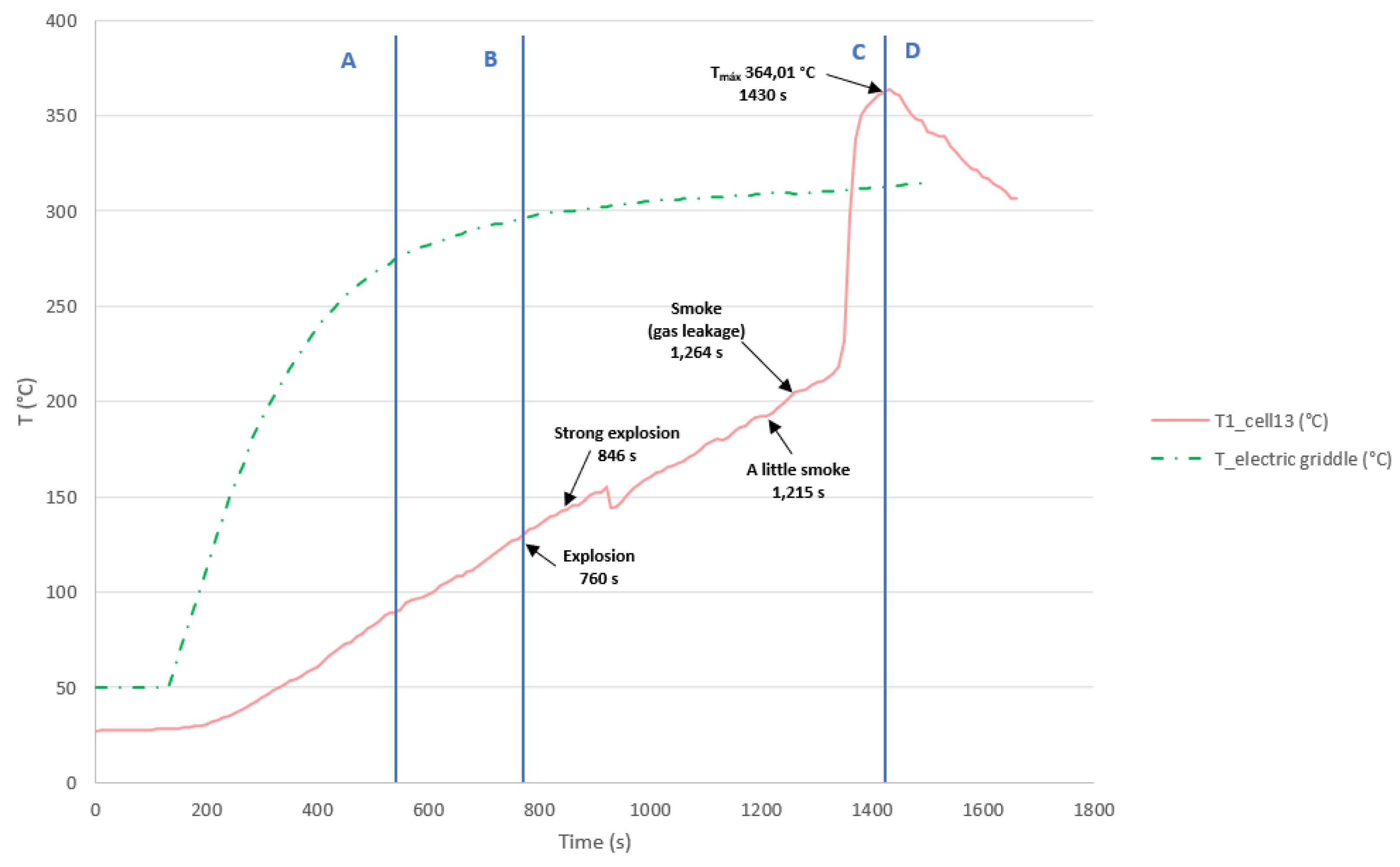
3.3.8. Test 8: Vertical, Series Connection and SoC 50% (Cell 13 (Below) and Cell 17)
4. Conclusions
- -
- The tests for mechanical evaluation of a cell do not faithfully reproduce the conditions of failure but show the behavior of the cell under abusive conditions. It should be noted that cells are manufactured to be resistant or safe to some mechanical abuse, but it should be noted that a battery installed in a vehicle can suffer significant mechanical deformation during a traffic accident. The increasing number of electric vehicles on our roads may give more weight to the consideration of different modes of abusive mechanical failure.
- -
- Therefore, it is important to understand the behavior of cells subjected to various mechanical abuse tests. Mechanical abuse techniques remain a widely accepted method for safety and evaluation of the response of lithium-ion cells to abuse. However, it should be noted that changes in test conditions and even changes in cell construction can result in significantly different responses. It is proposed as future lines of research to analyze the interdependence between test conditions and cell construction. Controlled and programmed mechanical abuse tests will be proposed to be able to control certain test parameters.
- -
- The aim is to analyze how the cell structure influences the mechanical test and how the loading state of the cell influences the mechanical test.
- -
- In the case of mechanical abuse by perforation tests, it is concluded that a certain level of damage to the internal components of the cell (electrodes) is necessary for the short-circuit to occur.
- -
- It can be stated that, under the same mechanical abuse by perforation in a direction perpendicular to the longitudinal axis of the cell, the behavior of cells with higher SoC is more dangerous.
- -
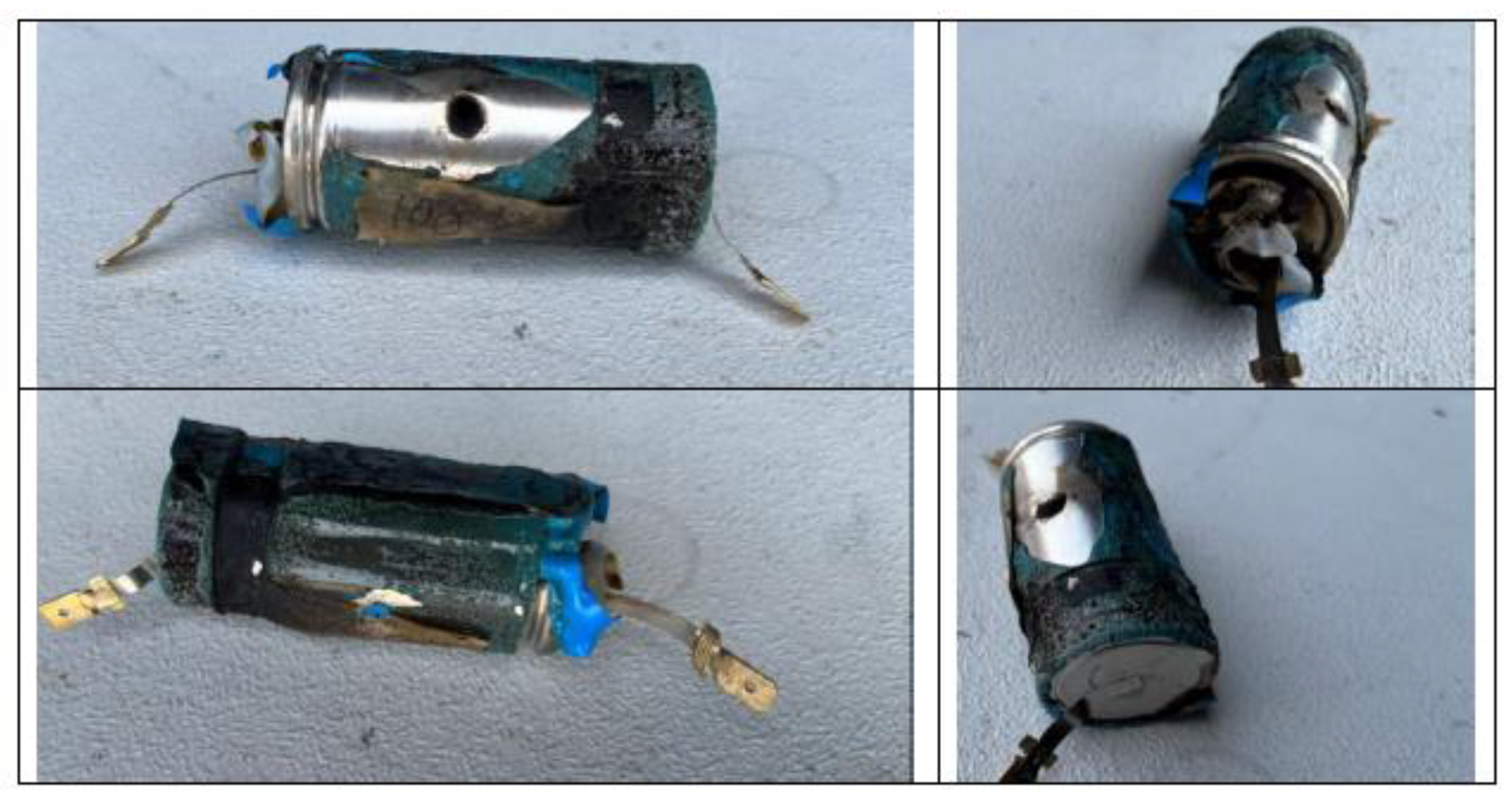
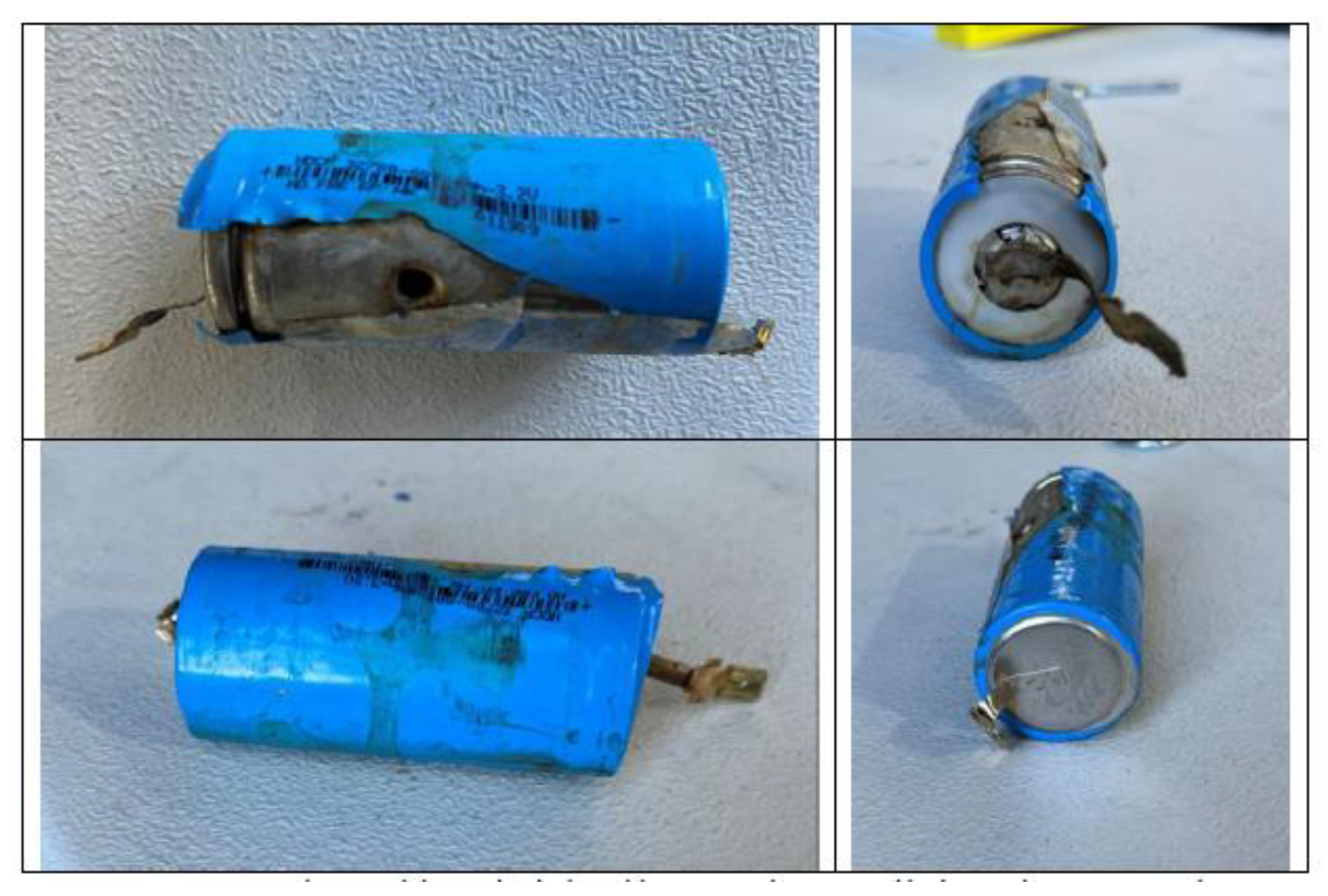
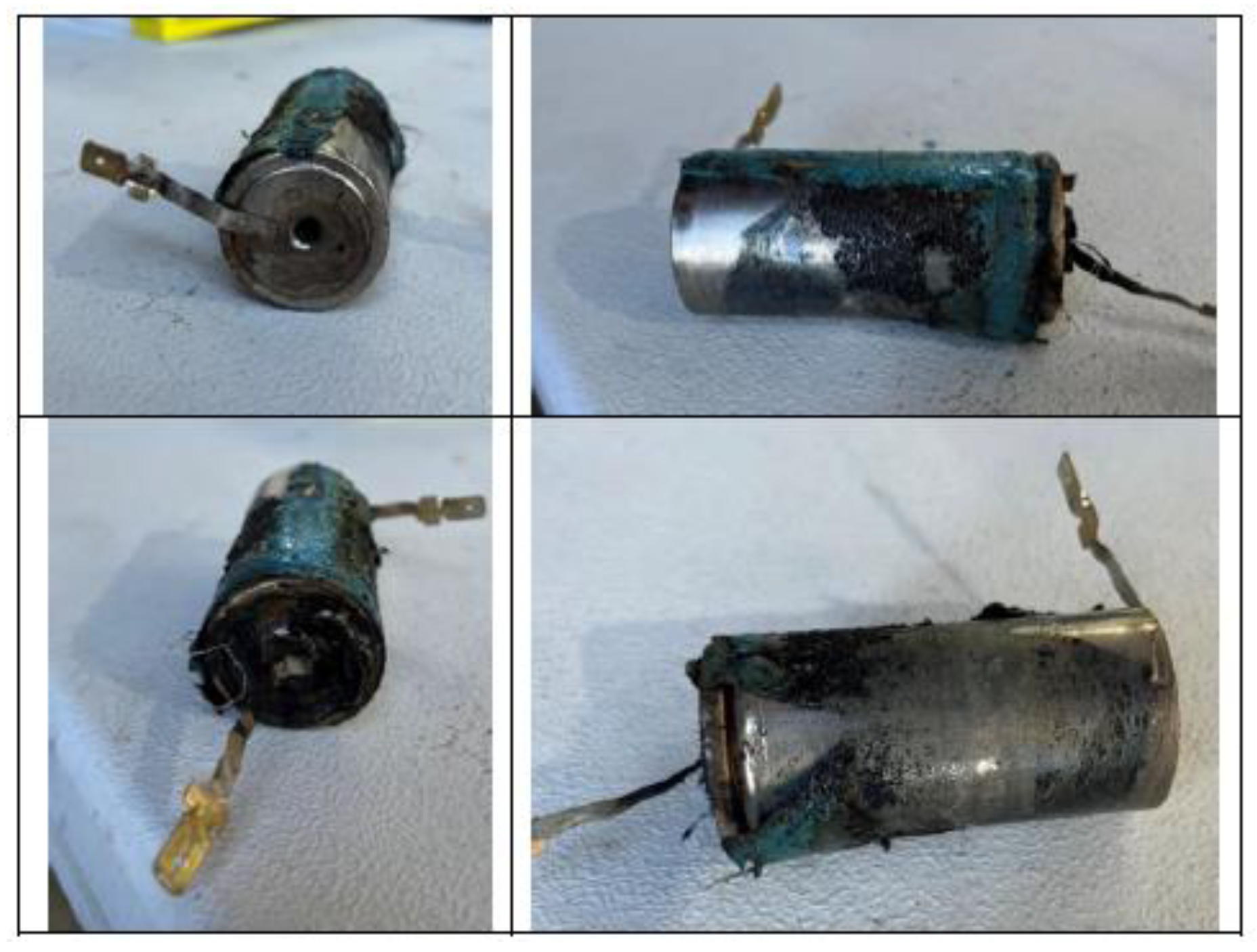
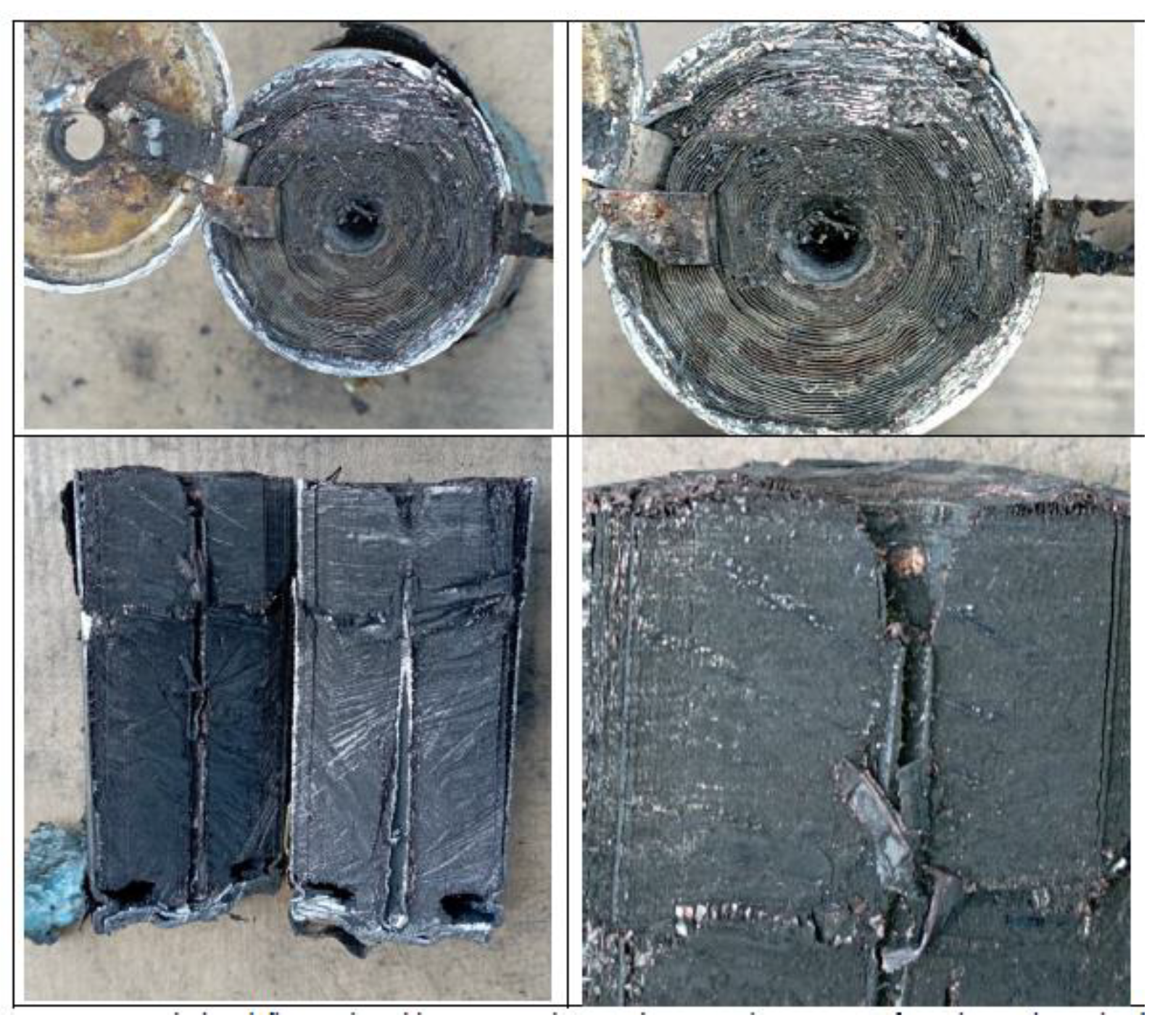
- Both from the final state of the cell and from the analysis of the ΔDCIR (mΩ), it can be stated that the cell that suffers greater damage and is more degraded and deteriorated is the cell with a SoC of 100% subjected to a perforation test in the direction of the longitudinal axis of the cell, in the negative pole. And the cell that suffers less damage and is less degraded is the cell subjected to a perforation test in the direction perpendicular to the longitudinal axis of the cell, with a SoC of 50%.
- -
- It is concluded that the loading condition is one of the most influential factors in the occurrence of Thermal Runaway after mechanical abuse by perforation.
- -
- It is therefore concluded that the worst case scenario for a failure due to mechanical abuse by perforation is that the cell/battery is 100% charged and that the perforation occurs in the direction of the longitudinal axis.
- -
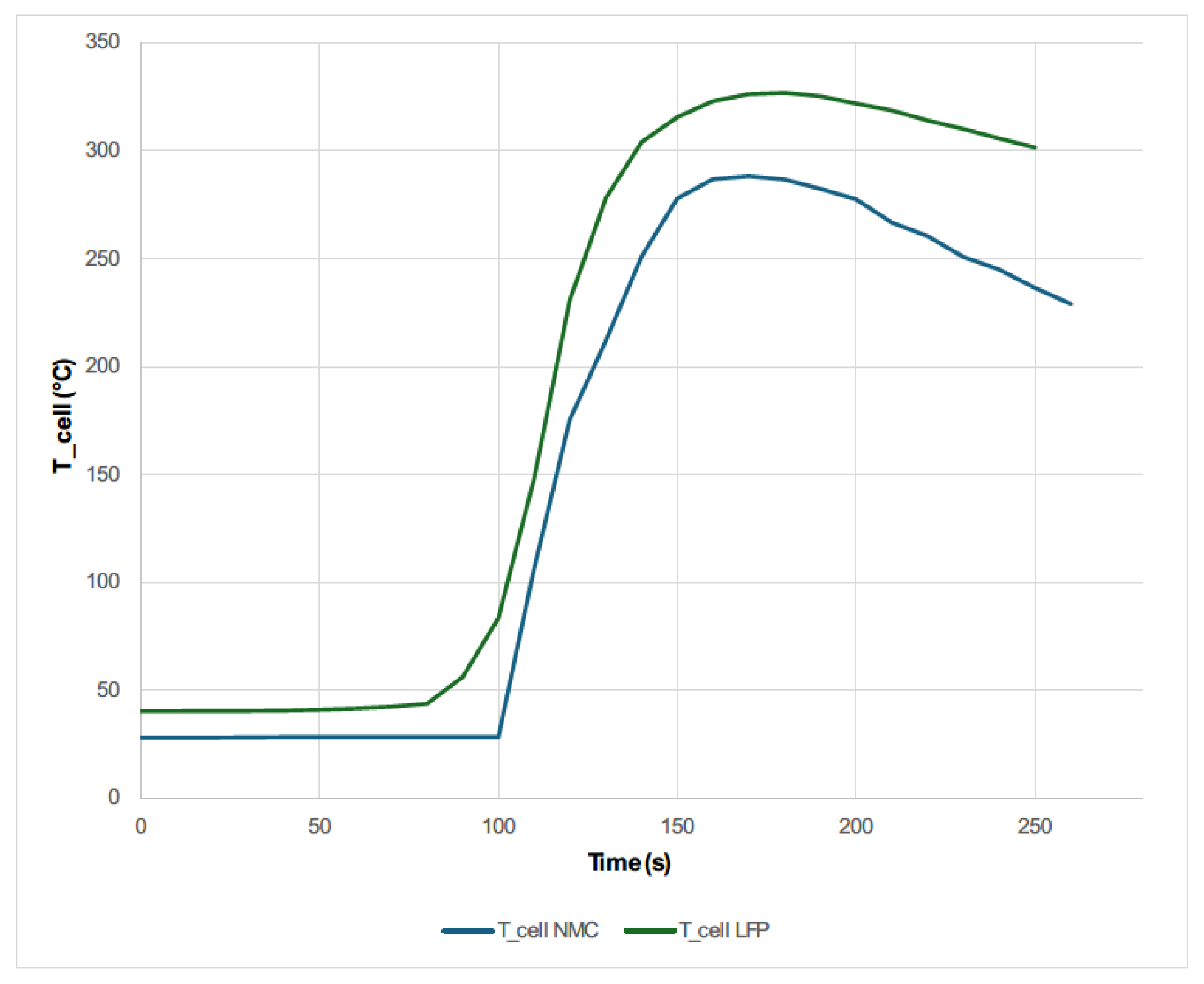
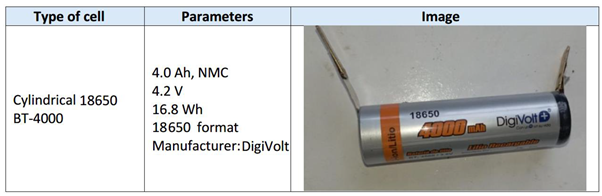
- After comparing the NMC cell and the LFP cell subjected to the same mechanical abuse by perforation, it is concluded that the NMC cell catches fire while the LFP cell does not, however the maximum temperature reached by the LFP cell is higher than that reached by the NMC cell, this may be due on the one hand to the fact that the tests were carried out at room temperature and on the day the LFP cell was tested, the ambient temperature was higher than that of the NMC cell. On the other hand, the fact that the maximum temperature reached is lower in the case of the LFP cell than in the case of the NMC cell could be since the cells tested by mechanical abuse by perforation have different diameters and there are studies that indicate that the size of the cells influences their behavior in the event of a thermal release. Therefore, a comparison should be made between NMC and LFP cells of the same diameter, subjected to the same perforation mechanical abuse test to analyze the temperature profile reached.
- -
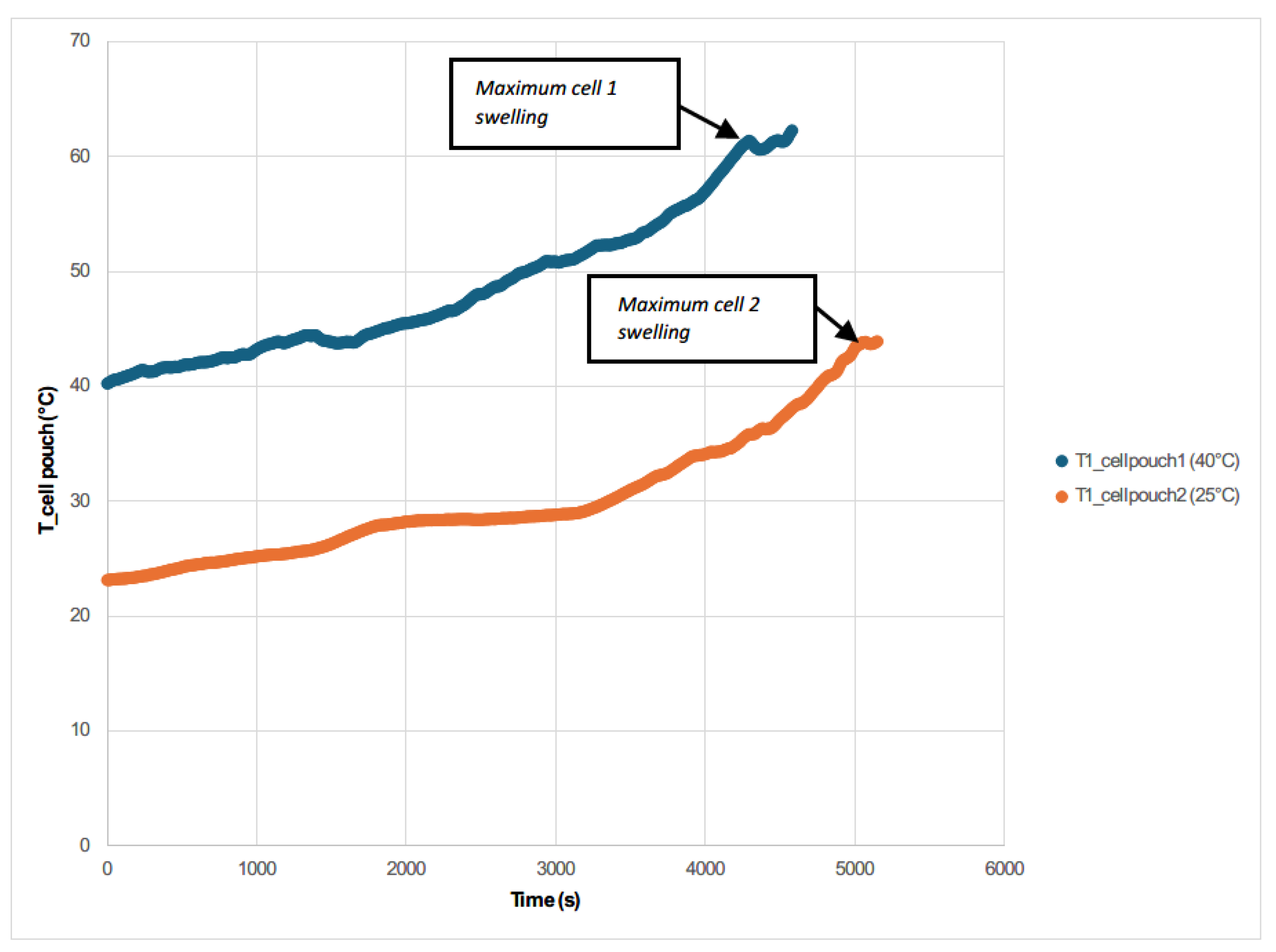
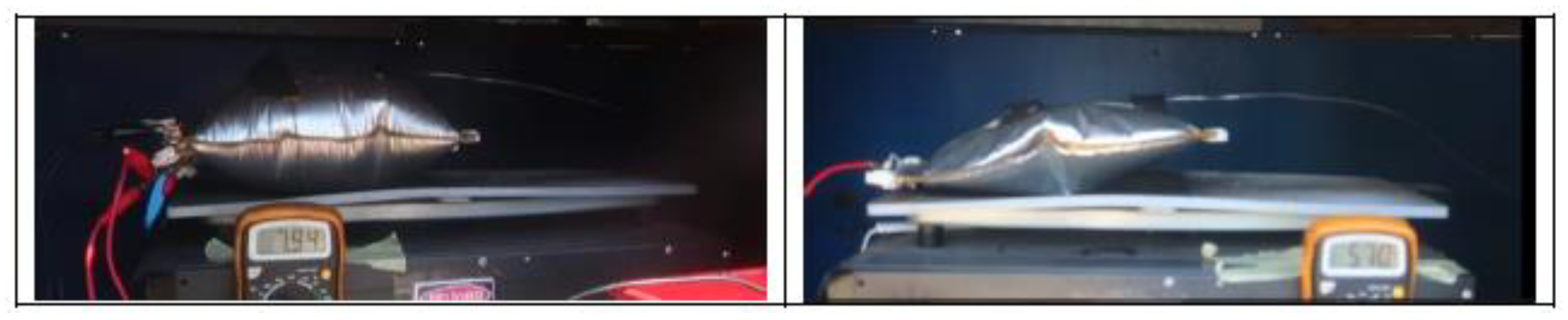
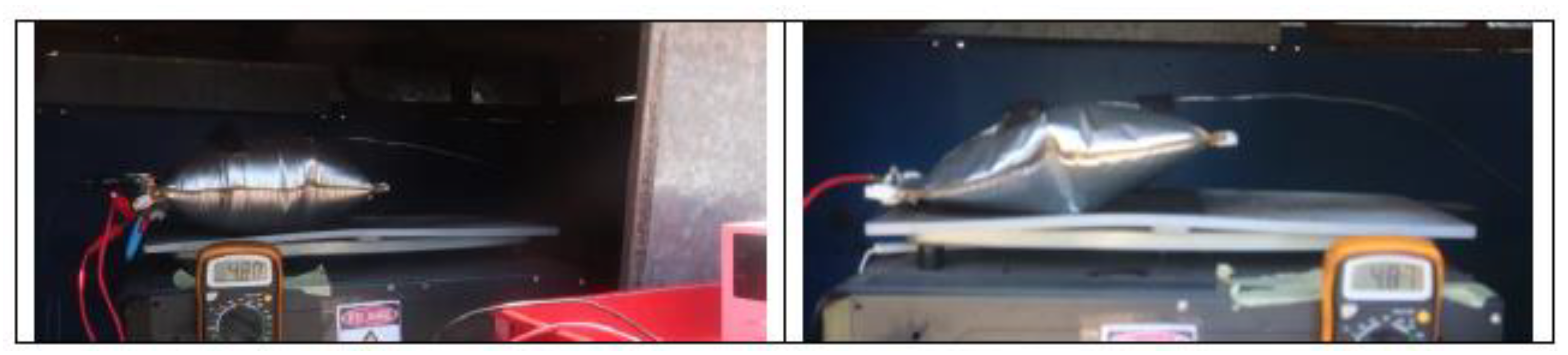
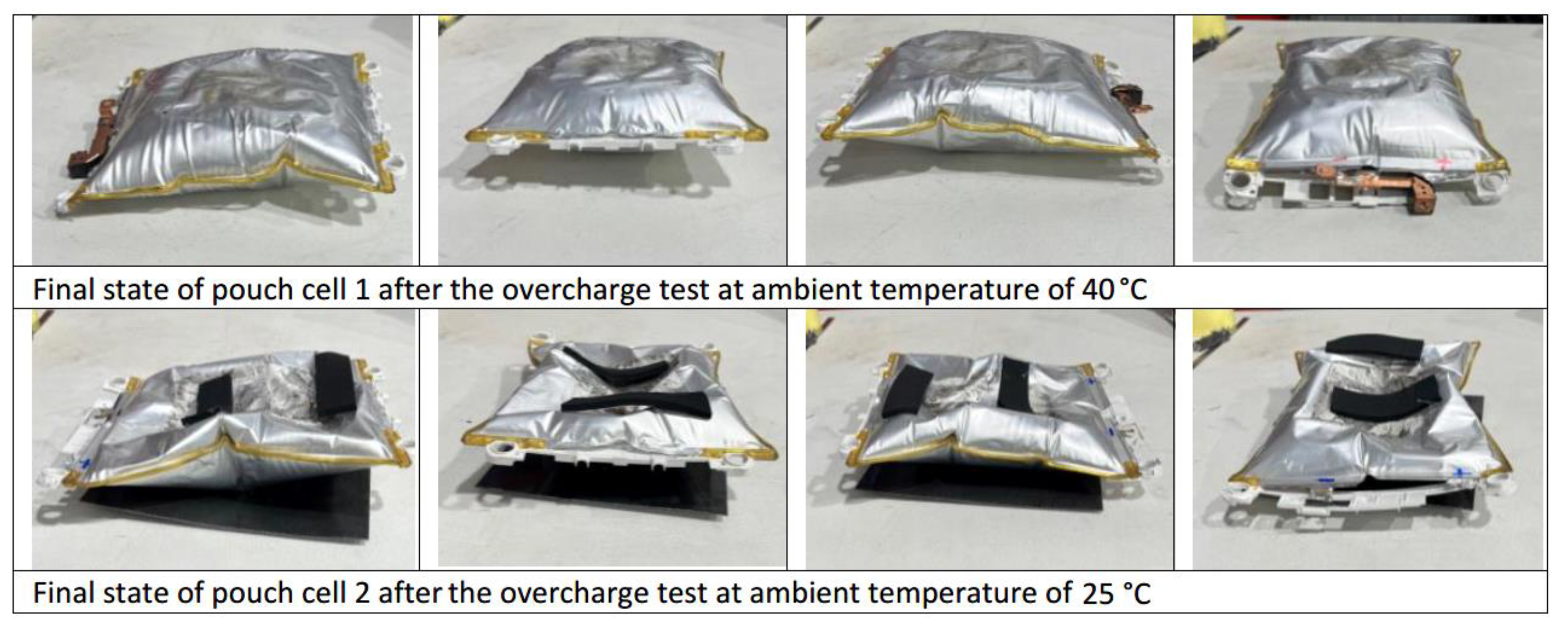
- It is deduced and verified that overcharging a battery results in an increase of its battery temperature. On the other hand, it is concluded that the higher the ambient temperature, the more dangerous the effects on the overcharged cell as the cell temperature is higher. Therefore, the environmental conditions in which a cell operates can affect the severity of a failure. From these tests it is concluded that overcharging an electric vehicle with a pouch cell battery pack (tested cells) at high temperatures, for example on a summer day at midday, is critical and dangerous. The same overcharge tests should be repeated at different ambient temperatures and with different cell types.
- -
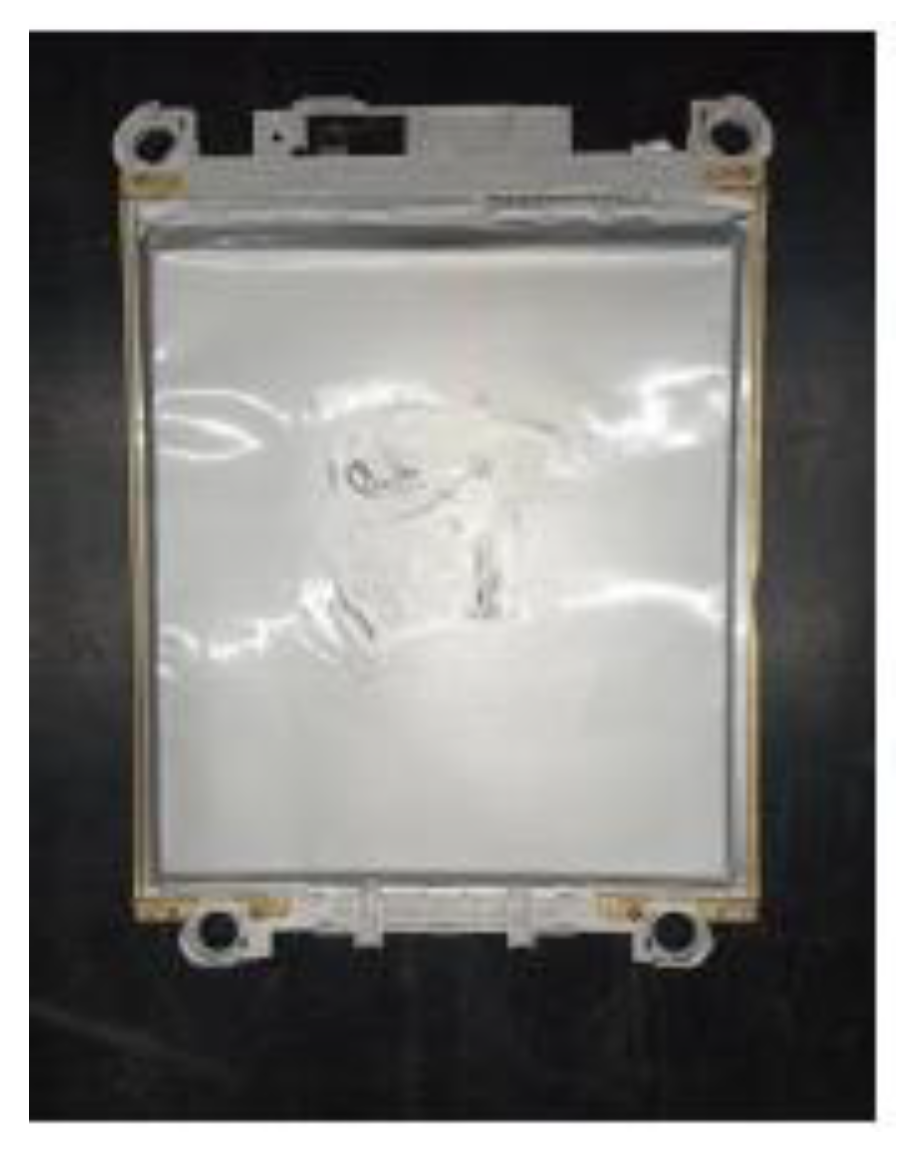
- After analyzing the two tests it is concluded that when the maximum voltage is reached due to the overcharge is when the maximum temperature is reached and when the maximum swelling of the two cells is reached.
- -
- The results of the analysis of the overcharge tests with pouch cells give very important information from a safety point of view and can be useful to generate safe charging procedures for electric vehicle batteries to prevent possible dangerous misuse conditions.
- -
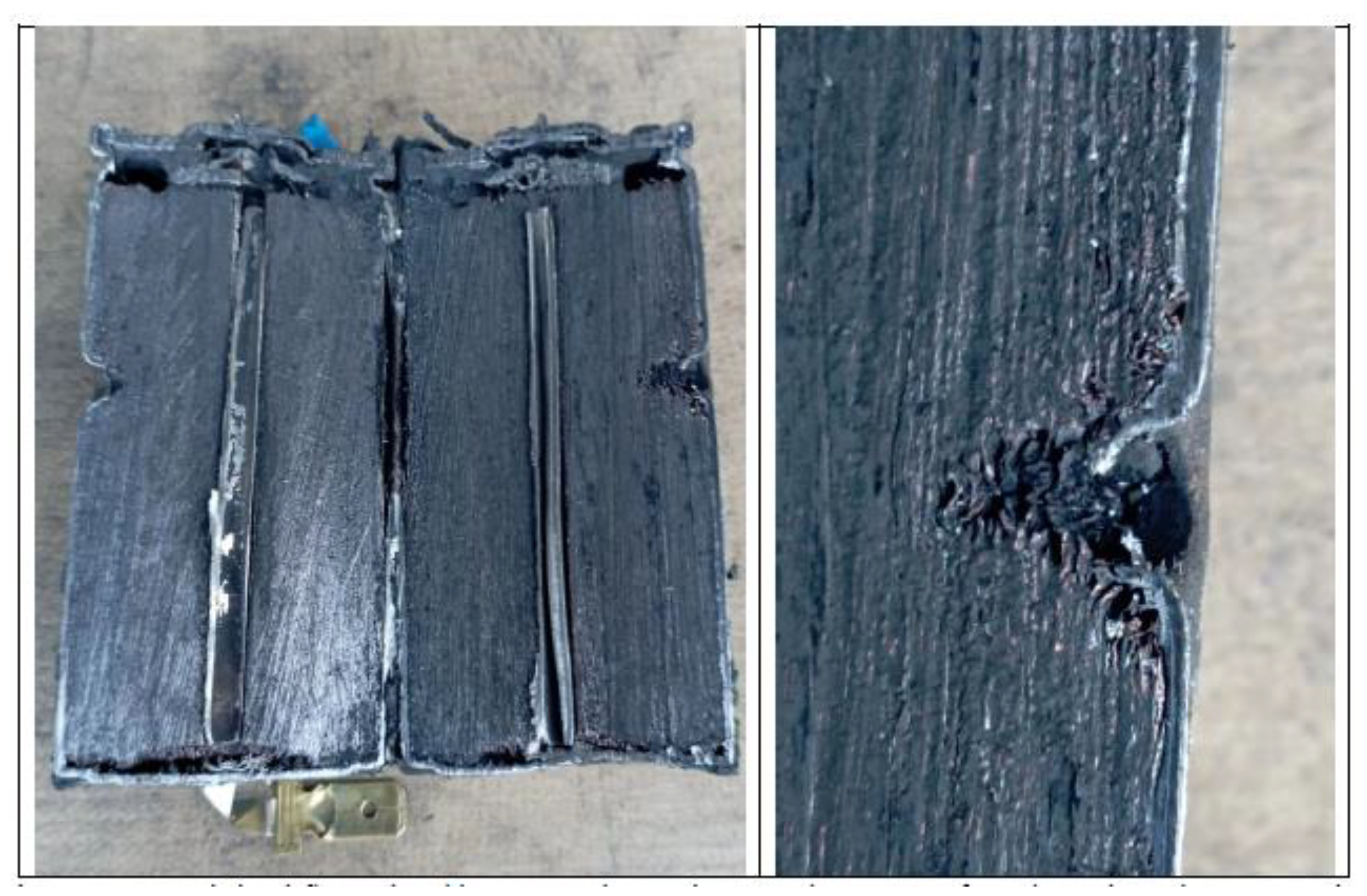
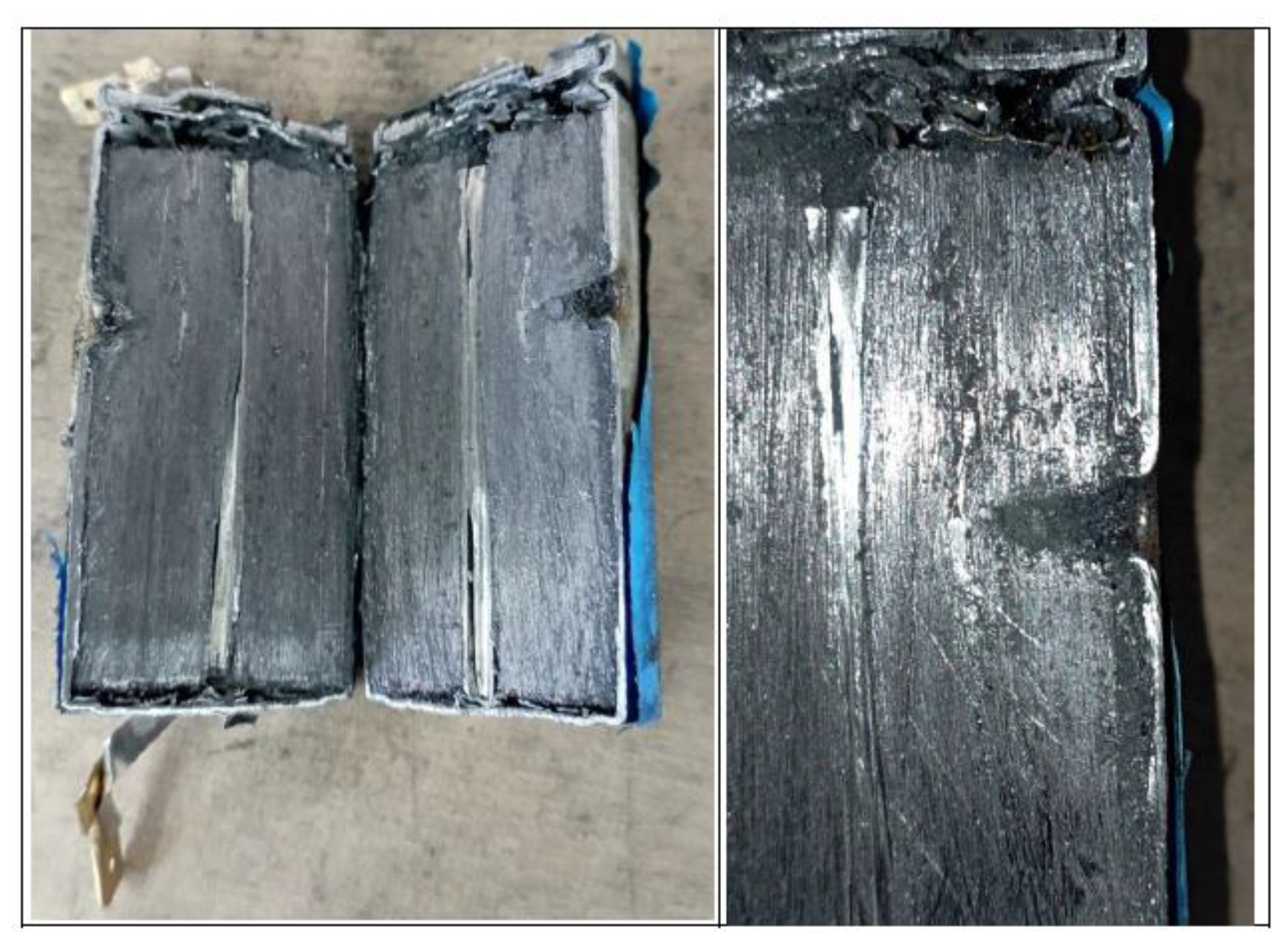
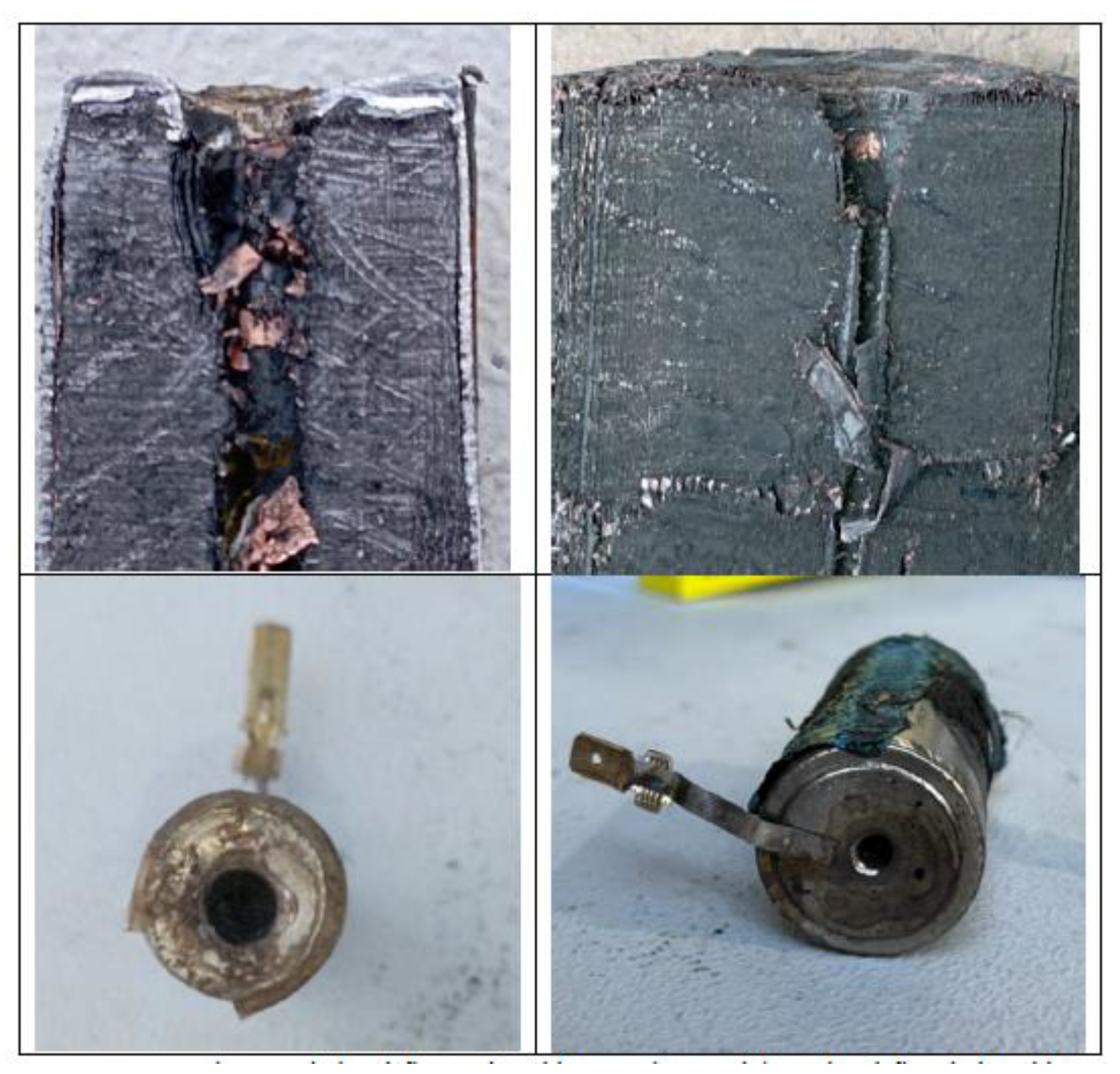
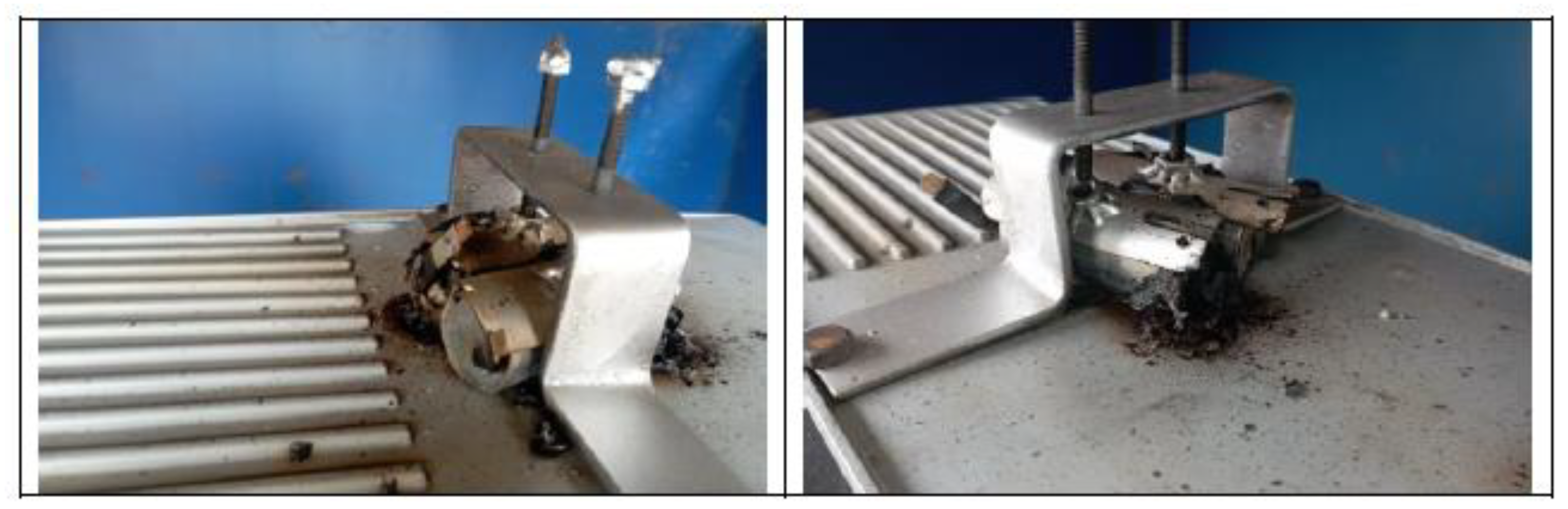
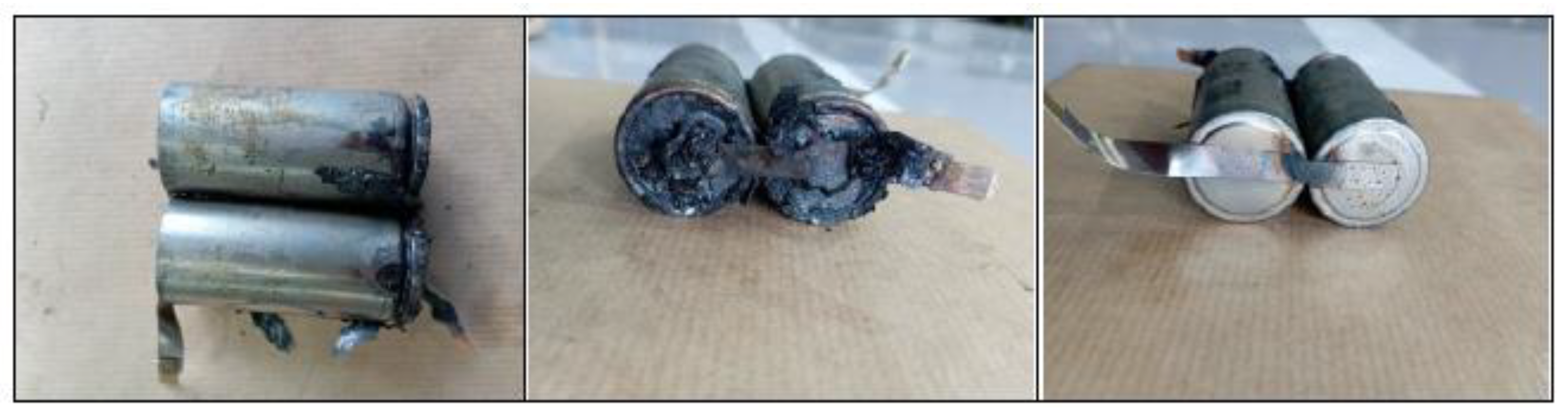
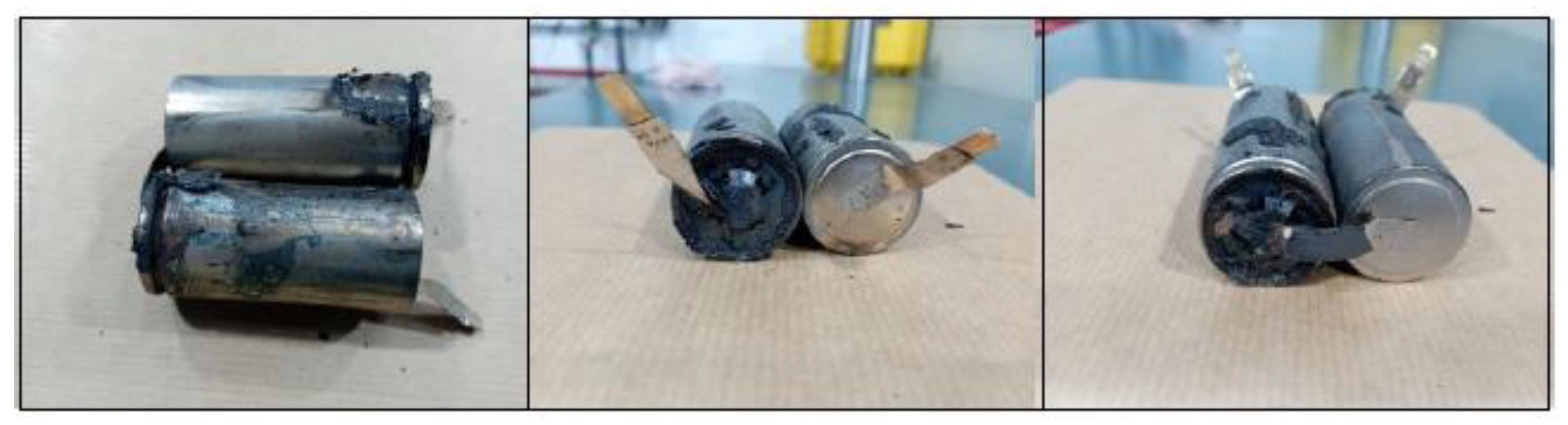
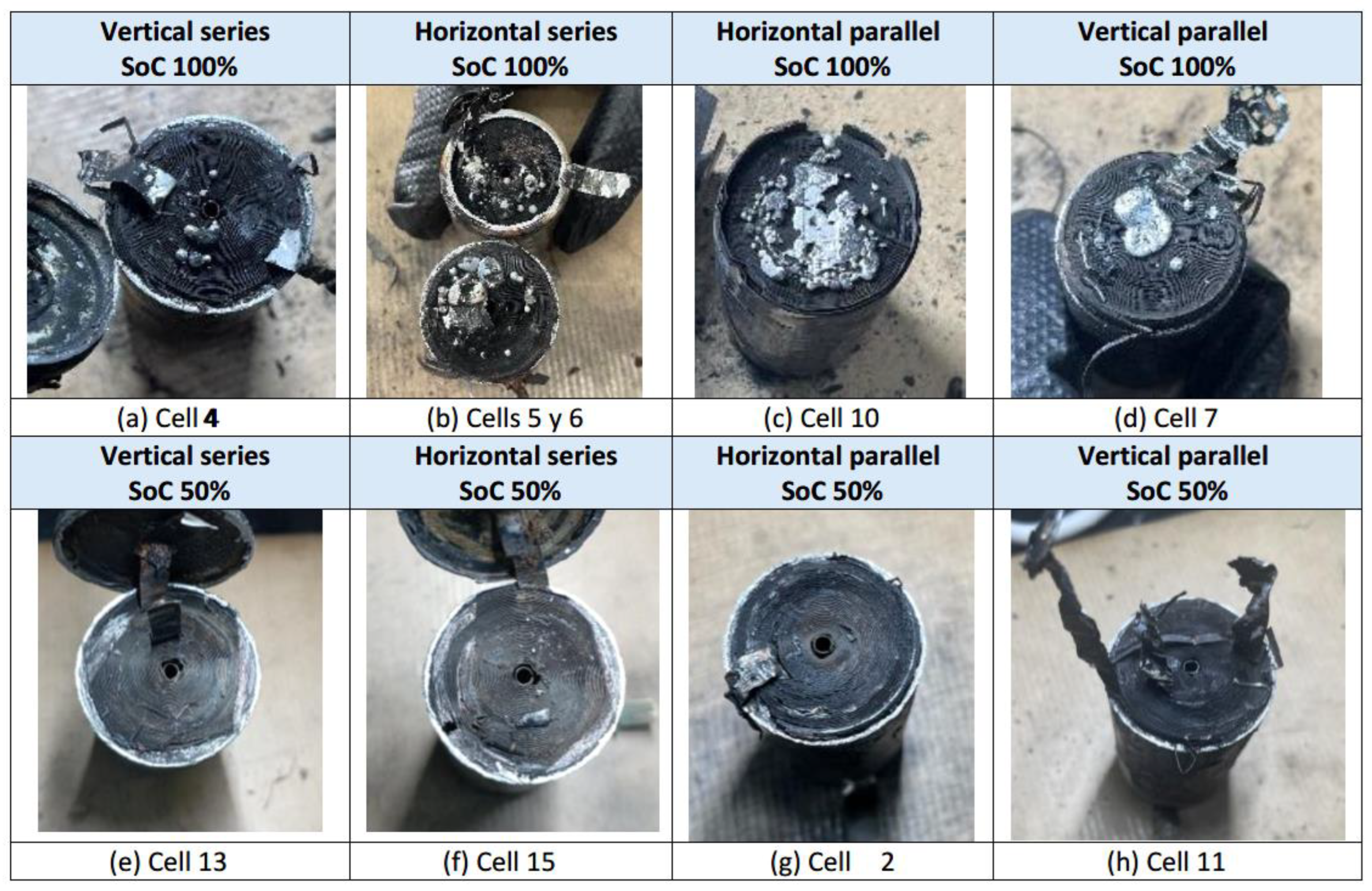
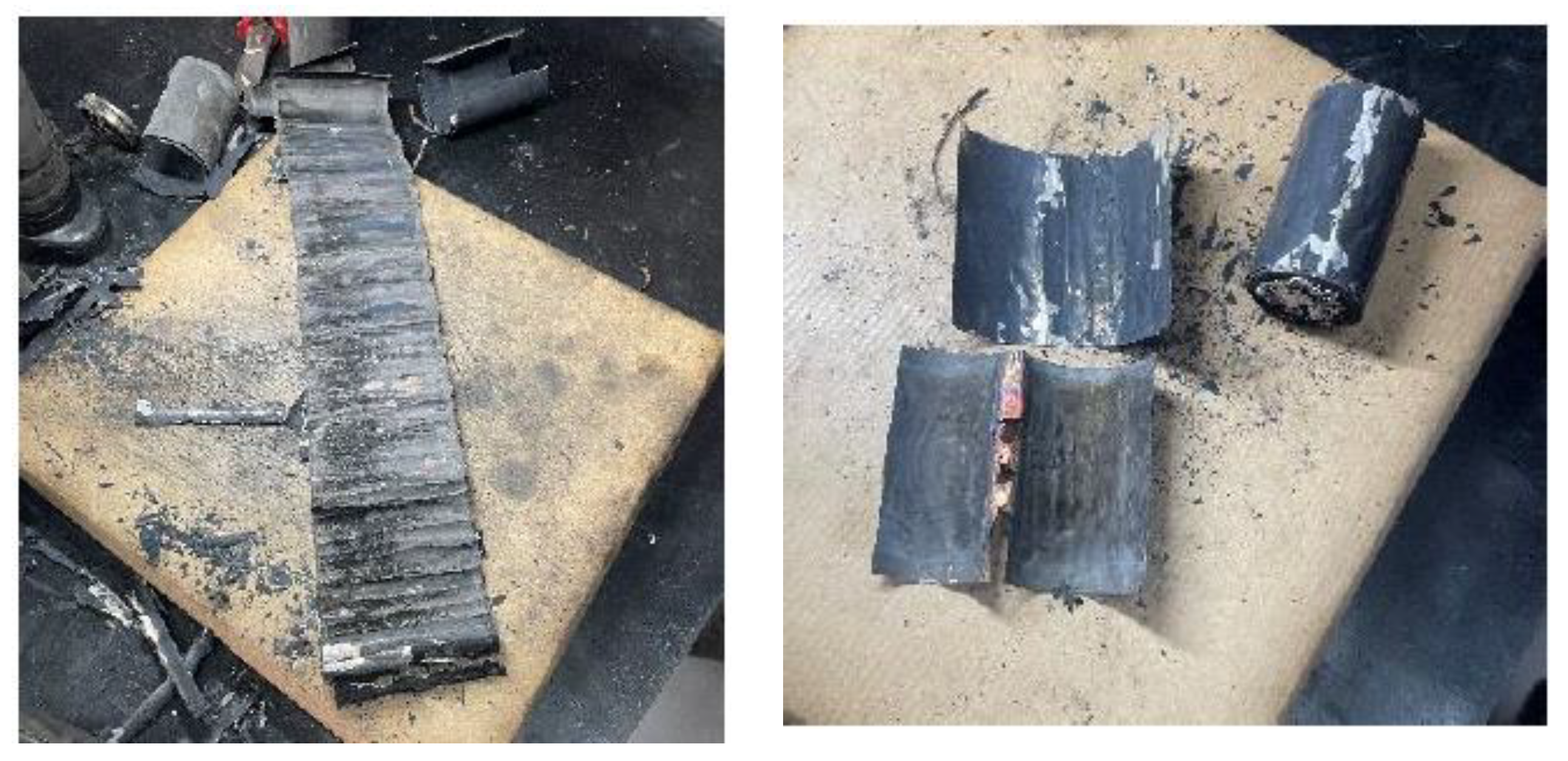
- It is concluded that the loss of internal material of the cells due to thermal tests by heating is variable according to different experimental conditions. It is observed that more internal material is melted in the case of cells with 100% SoC than in the case of cells with 50% SoC. In the case of 100% SoC, material ejection occurs with complete detachment of solid internal material, whereas in the case of 50% SoC, the amount of molten aluminum is very small.
- -
- The most dangerous situation for TR propagation due to thermal failure by heating is the vertical arrangement with the cells connected in parallel and with a 100% SoC. The safest situation is the horizontal arrangement with the cells connected in series and with a SoC of 50%.
- -
- With the tests carried out, conclusions can be drawn regarding the maximum temperature reached in the TR but not regarding the time in which it is reached, as the tests are carried out at room temperature, which will influence the time in which the TR is reached. It is concluded that the ambient temperature will influence the propagation of the TR due to thermal failure by heating.
- -
- LFP cells react more slowly and at significantly higher temperatures to thermal abuse than other chemistries, making this cell chemistry considerably safer.
Data Availability Statements
Author Contributions
Funding
Acknowledgments
Conflicts of Interest
Abbreviations
| MDPI | Multidisciplinary Digital Publishing Institute |
| TR | Thermal Runaway |
| SoC | State of Charge |
| BMS | Battery Management System |
| SEI | Solid Electrolyte Interface |
| PE | Polyethylene |
| LPB | Lithium ion Prismatic Batteries |
| DC | Direct Current |
| CV | Constant Voltage |
| PID | Proportional Integral Derivative Control |
| DCIR | Direct Current Internal Resistance |
References
- Musk, E.; Fire, M.S.; Blog, T. 2013.
- Voelcker, J. Chrysler Yanks Plug-In Hybrid Test Fleet Off Roads, Will Replace Batteries, Green Car Reports 2012 (cited 2014 8-7-2014), available from: http://www.greencarreports.com/news/1079368_chrysler-yanks-plug-inhybrid-test-fleet-off-roads-will-replace-batteries.
- Lowy, J. Overcharging Batteries Eyed in Boeing 787 Mishaps, 2013. Phys.org [cited 2014 8-7-2014].
- Wang; Q. ; Jiang; L.; Yu; Y.; Sun, J. Progress of enhancing the safety of lithium ion battery from the electrolyte aspect. Nano Energy 2019, 55, 93–114. [Google Scholar] [CrossRef]
- Kriston, A.; Kersys, A.; Antonelli, A.; Ripplinger, S.; Holmstrom, S.; Trischler, S.; Döring, H. A. Pfrang. Initiation of thermal runaway in lithium-ion cells by inductive heating. J. Power Sources 2020, 454, 227914. [Google Scholar] [CrossRef]
- Arbizzani, C.; Gabrielli, G.; Mastragostino, M. Thermal stability and flammability of electrolytes for lithium-ion batteries. J. Power Sources 2011, 196, 4801–4805. [Google Scholar] [CrossRef]
- Bandhauer, T.M.; Garimella, S.; Fuller, T.F. J. Electrochem. Soc. 2011, 158, R1–R25. [CrossRef]
- Campion, C.L.; Li, W.T.; Lucht, B.L. J. Electrochem. Soc. 2005, 152, A2327–A2334. [CrossRef]
- Dahn, J.R.; Ehrlich, G.M.; Reddy, T.B. Linden’s Handbook of Batteries, McGraw Hill, New York, 2011, pp. 26.1–79.
- Doughty, D.H. , et al. J. Power Sources 2002, 110, 357–363. [Google Scholar] [CrossRef]
- Doughty, D.H. , et al. J. Power Sources 2005, 146, 116–120. [Google Scholar] [CrossRef]
- Fei, R.; Cox, T.; Hsin, W. J. Power Sources 2014, 249, 156–162.
- Jeevarajan, J.A. , et al. In S. Surampudi, et al. (Eds.), Lithium Batteries, Proceedings, vol. 99, Electrochemical Society Inc., Pennington, 2000, pp. 694–705.
- Jhu, C.Y. , et al. J. Therm. Anal. Calorim. 2011, 106, 159–163. [Google Scholar] [CrossRef]
- Kim, G.-H.; Pesaran, A.; Spotnitz, R. J. Power Sources 2007, 170, 476–489. [CrossRef]
- Roth, E.P. Battery Safety and Abuse Tolerance at the 212th ECS Meeting, 2008, pp. 19–41.
- Roth, E.P.; et al. Advanced Technology Development Program for Lithium-ion Batteries: Thermal Abuse Performance of 18650 Li-ion Cells, SAND2004-0584, Sandia National Laboratories, Albuquerque, NM, 2004.
- Spotnitz, R.M.; et al. J. Power Sources 2007, 163, 1080–1086. [CrossRef]
- Lamb, J.; Orendorff, C.J.; Steele, L.A.M., S. W. Spangler. Failure propagation in multi-cell lithium-ion batteries. J. Power Sources 2015, 283, 517–523. [Google Scholar] [CrossRef]
- Wang, Z.; Mao, N.; Jiang, F. Study of the effect on spacing on thermal runaway propagation for lithium-ion batteries. J. Therm. Anal. Calorim. 2020, 140, 2849–2863. [Google Scholar] [CrossRef]
- Huang, P.; Wang, Q.; Li, K.; Ping, P.; Sun, J. Sci. Rep. 2015, 5, 12. [CrossRef]
- Fu, Y.; Lu, S.; Li, K.; Liu, C.; Cheng, X.; Zhang, H. An experimental study on burning behaviors of 18650 lithium ion batteries using a cone calorimeter. Power Sources 2015, 273, 216–222. [Google Scholar] [CrossRef]
- Chen, M.; Zhou, D.; Chen, X.; Zhang, W.; Liu, J.; Yuen, R.; Wang, J. J. Therm. Anal. Calorim. 2015, 122, 755–763. [CrossRef]
- Feng, X.; Fang, M.; He, X.; Ouyang, M.; Lu, L.; Wang, H.; Zhang, M. J. Power Sources 2014, 255, 294–301. [CrossRef]
- Roth, E.P.; Doughty, D.H. J. Power Sources2004, 128, 308–318. https://doi. Org/10.1016/j.jpowsour.2003.09.068. Wang, Q.; Sun, J.; Yao, X.; Chen, C. J. Electrochem. Soc. 2006, 153, A329–A333. [Google Scholar] [CrossRef]
- Wang, Q.; Sun, J.; Yao, X.; Chen, J. Electrochem. Soc. 2006, 153, A329–A333. [CrossRef]
- Ma, S.; Jiang, M.; Tao, P.; Song, C.; Wu, J.; Wang, J.; Deng, T.; Shang, W. Prog. Nat. Sci. 2018, 28, 653–666. [CrossRef]
- S. Zhang, Energy Storage Mater. 2020, 24, 247–254. [CrossRef]
- Peng, Y.; Yang, L.; Ju, X.; Liao, B.; Ye, K.; Li, L.; Cao, B.; Ni, Y. J. J. Hazard. Mater. 2020, 381, 11. [CrossRef]
- Wang, Q.; Ping, P.; Zhao, X.; Chu, G.; Sun, J.; Chen, C. J. J. Power Sources 2012, 208, 210–224. [CrossRef]
- Bai, F.; Chen, M.; Song, W.; Feng, Z.; Li, Y.; Ding, Y. Appl. Therm. Eng. 2017, 126, 17–27. [CrossRef]
- Garg, M.; Tanim, T.R.; Rahn, C.D.; Bryngelsson, H. Legnedahl. Energy 2018, 159, 716–723. [CrossRef]
- Galushkin, N.E.; Yazvinskaya, N.N.; Galushkin, D.N. J. J. Electrochem. Soc. 2019, 166, A897–A908. [CrossRef]
- Wang, G.; Kong, D.; Ping, P.; He, X.; Lv, H.; Zhao, H.; Hong, W. Appl. Energy 2023, 334. [CrossRef]
- Fang, J.; Cai, J.; He, X. Experimental study on the vertical thermal runaway propagation in cylindrical Lithium-ion batteries: Effects of spacing and state of charge. Applied Thermal Engineering 2021, 197, 11739. [Google Scholar] [CrossRef]
- Feng, X.; Sun, J.; Ouyang, M.; Wang, F.; He, X.; Lu, L.; Peng, H. , Characterization of penetration induced thermal runaway propagation process within a large format lithium ion battery module. J. Power Sour. 2015, 275, 261–273. [Google Scholar] [CrossRef]
- Feng, X.; Lu, L.; Ouyang, M.; Li, J.; He, X. , A 3D thermal runaway propagation model for a large format lithium ion battery module. Energy 2016, 115, 194–208. [Google Scholar] [CrossRef]
- Lopez, C.F.; Jeevarajan, J.A.; Mukherjee, P.P. , Experimental analysis of thermal runaway and propagation in lithium-ion battery modules. J. Electrochem. Soc. 2015, 162, A1905–A1915. [Google Scholar] [CrossRef]
- Wilke, S.; Schweitzer, B.; Khateeb, S.; Al-Hallaj, S. , Preventing thermal runaway propagation in lithium ion battery packs using a phase change composite material: An experimental study. J. Power Sour. 2017, 340, 51–59. [Google Scholar] [CrossRef]
- Lamb, J.; Orendorff, C.J.; Steele, L.A.M.; Spangler, S.W. , Failure propagation in multi-cell lithium ion batteries. J. Power Sour. 2015, 283, 517–523. [Google Scholar] [CrossRef]
- Gao, S.; Feng, X.; Lu, L.; Kamyab, N.; Du, J.; Comsn, P.; White, R.E., M. Ouyang. An experimental and analytical study of thermal runaway propagation in a large format lithium ion battery module with NMC pouch-cells in parallel. International Journal of Heat and Mass Transfer 2019, 135, 93–103. [Google Scholar] [CrossRef]
- Yu, D.; Ren, D.; Dai, K.; Zhang, H.; Zhang, J.; Yang, B.; Ma, S.; Wang, X.; You, Z. , Failure mechanism and predictive model of lithium-ion batteries under extremely high transient impact. Journal of Energy Storage 2021, 43, 103191. [Google Scholar] [CrossRef]
- Lamb, J.; Orendorff, C.J. Evaluation of mechanical abuse techniques in lithium ion batteries. Journal of Power Sources 2014, 247, 189–196. [Google Scholar] [CrossRef]
- Available online:. Available online: https://www.agu.ch/1.0/crashtest-datenbank/ (accessed on 2024).
- Available online:. Available online: https://euroncap.newsmarket.com/images-and-videos/all/nio-el6---euro-ncap-2024-results---5-stars/s/71368fe6-5ad6-49d2-bc72-ca95a589c4c9 (accessed on 15 April 2024).
- Zou, Z.; Xu, F.; Tian, H., X. Niu. Testing and impact modeling of lithium-ion prismatic battery under quasi-static and dynamic mechanical abuse. Journal of Energy Storage 2023, 68, 107639. [Google Scholar] [CrossRef]
- Wang, L.; Li, J.; Chen, J.; Duan, X.; Li, B., J. Li. Revealing the internal short circuit mechanisms in lithium-ion batteries upon dynamic loading based on Multiphysics simulation. Applied Energy 2023, 351, 121790. [Google Scholar] [CrossRef]
- Xi, S.; Zhao, Q.; Chang, L.; Huang, X., Z. Cai. The dynamic failure mechanism of a lithium-ion battery at different impact velocity. Engineering Failure Analysis 2020, 116, 104747. [Google Scholar] [CrossRef]
- Zhao, C.; Sun, J., Q. Wang. Thermal runaway hazards investigation on 18650 lithium-ion battery using extended volume accelerating rate calorimeter. Journal of Energy Storage 2020, 28, 101232. [Google Scholar] [CrossRef]
- Williams, F.W.; Back, G.G. , 2014. Lithium Battery Fire Tests and Mitigation. Naval Research Laboratory, NRL/fr/6104—14-10,262.
- Ouyang, D.; Chen y J, M. , 2018. Fire behaviours study on 18650 batteries pack using cone-calorimeter. Journal of Thermal Analysis and Calorimetry, 2018.
- Kemeny M; Ondrejka P, Mikolasek M. Comprehensive Degradation Analysis of NCA Li-Ion Batteries via Methods of Electrochemical Characterisation for Various Stress-Inducing Scenarios. Batteries. 2023, 9, 33. [Google Scholar] [CrossRef]
- Lamb, J.; Orendorff, C.J. , 2014. Evaluation of mechanical abuse techniques in lithium ion batteries. Journal of Power Sources 2014, 247, 189–196. [Google Scholar] [CrossRef]
- Duh, Y.-S.; Theng, J.-H.; Chen, C.-C. , Chen-Sahn Kao. Comparative study on thermal runaway of commercial 14500, 18650 and 26650 LiFePO4 batteries used in electric vehicles. Journal of Energy Storage 2020, 31, 101580. [Google Scholar] [CrossRef]
- Roth, E.P. , Abuse response of 18650 Li-ion cells with different cathodes using EC:EMC/LiPF6 and EC:PC:DMC/LiPF6 Electrolytes. ECS Trans. 2008, 11, 19–41. [Google Scholar] [CrossRef]
- Lei, B.; Zhao, W.; Ziebert, C.; Uhlmann, N.; Rohde, M.; Seifert, H.J. , Experimental analysis of thermal runaway in 18650 cylindrical Li-ion cells using an accelerating rate calorimeter. Batteries 2017, 3, 1–14. [Google Scholar] [CrossRef]
- Peter, J.B.; Jonathan, N.D.; Denis, J.C.; Solomon, F.B. , Pursuing safer batteries: thermal abuse of LiFePO4 cells. J. Power Sources 2019, 414, 557–568. [Google Scholar]
- Temperature, L.A. , Overcharge and Short-Circuit Studies of Batteries used in Electric Vehicles. Gdynia Maritime University, Department of Ship Automation, 2017. [CrossRef]
- Larsson, F.; Mellander, B.E. , Abuse by External Heating, Overcharge and Short Circuiting of Commercial Lithium-Ion Battery Cells. Journal of The Electrochemical Society 2014, 161, 1611–1617. [Google Scholar] [CrossRef]
- Feng, X.; Weng, C.; Ouyang, M.; Sun, J. , Online internal short circuit detection for a large format lithium ion battery. Applied Energy 2016, 161, 168–180. [Google Scholar] [CrossRef]
- Nedjalkov, A.; Meyer, J.; Kohring, M.; Doering, A.; Angelmahr, M.; Dahle, S.; Sander, A.; Fischer, A.; Schade, W. , Toxic gas emissions from damaged lithium ion batteries, analysis and safety enhancement solution. Batteries 2016, 2, 5–14. [Google Scholar] [CrossRef]
- Koch, S.; Fill, A.; Birke, K.P. , Comprehensive gas analysis on large scale automotive lithium-ion cells in thermal runaway. J. Power Sources 2018, 398, 106–112. [Google Scholar] [CrossRef]
- Perea, A.; Paolella, A.; Dubé, J.; Champagne, D.; Mauger, A.; Zaghib, K. , State of charge influence on thermal reactions and abuse tests in commercial lithium-ion cells. J. Power Sources 2018, 399, 392–397. [Google Scholar] [CrossRef]
- Leising, R.A.; Palazzo, M.J.; Takeuchi, E.S.; Takeuchi, K.J. , Abuse testing of lithium-ion batteries: characterization of the overcharge reaction of LiCoO2/graphite cells. J. Electrochem. Soc. 2001, 148, A838–A844. [Google Scholar] [CrossRef]
- Nedjalkov, A.; Meyer, J.; Kohring, M.; Doering, A.; Angelmahr, M.; Dahle, S.; Sander, A.; Fischer, A.; Schade, W. , Toxic gas emissions from damaged lithium ion batteries, analysis and safety enhancement solution. Batteries 2016, 2, 5–14. [Google Scholar] [CrossRef]
- Fernandes, Y.; Bry, A.; De Persis, S. , Identification and quantification of gases emitted during abuse tests by overcharge of a commercial Li-ion battery. J. Power Sources 2018, 389, 106–119. [Google Scholar] [CrossRef]
- Golubkov, A.W.; Scheikl, S.; Planteu, R.; Voitic, G.; Wiltsche, H.; Stangl, C.; Fauler, G.; Voitic, G.; Thaler, A.; Hacker, V. , Thermal runaway of commercial 18650 Li-ion batteries with LFP and NCA cathodes – impact of state charge and overcharge. RSC Adv. 2015, 5, 57171–57186. [Google Scholar] [CrossRef]
- Yuan, Q.F.; Zhao, F.; Wang, W.; Zhao, Y.; Linag, Z.; Yan, D. , Overcharge failure investigation of lithium-ion batteries. Electrochim. Acta 2015, 178, 682–688. [Google Scholar] [CrossRef]
- Ohsaki, T.; Kishi, T.; Kuboki, T.; Takami, N.; Shimura, N.; Sato, Y.; Sekino, M.; Satoh, A. , Overcharge reaction of lithium ion batteries. J. Power Sources 2005, 146, 97–100. [Google Scholar] [CrossRef]
- Fu, Y.; Lu, S.; Li, K.; Liu, C.; Cheng, X.; Zhang, H. An Experimental Study on Burning Behaviors of 18650 Lithium Ion Batteries Using a Cone Calorimeter. J. Power Sources 2015, 273, 216–222. [Google Scholar] [CrossRef]
- Tomaszewska, A.; Chu, Z. Feng, S. O’ane, X. Liu, J. Chen, E. Endler, R. Li, L. Liu, Y. Li, S. Zheng, S. Vetterlein, M. Gao, J. Du, M. Parkes, M. Ouyang, M. Marinescu, G. Offer, B. Wu. Lithium-ion battery fast charging: A review. eTransportation August 2019. 2019. [CrossRef]
- Thermal Abuse Tests on 18650 Li-Ion Cells Using a Cone Calorimeter and Cell Residues Analysis Maria Luisa Mele 1 , Maria Paola Bracciale 1 , Sofia Ubaldi 1 , Maria Laura Santarelli 1 , Michele Mazzaro 2 , Cinzia Di Bari 3 and Paola Russo 1,.
- Fu, Y.; Lu, S.; Li, K.; Liu, C.; Cheng, X.; Zhang, H. An Experimental Study on Burning Behaviors of 18650 Lithium Ion Batteries Using a Cone Calorimeter. J. Power Sources 2015, 273, 216–222. [Google Scholar] [CrossRef]
- Lithium-Ion Batteries Hazard and Use Assessment Final Report Prepared by: Celina Mikolajczak, PE Michael Kahn, PhD Kevin White, PhD Richard Thomas Long, PE Exponent Failure Analysis Associates, Inc. (accessible online: https://content.nfpa.org/-/media/Project/Storefront/Catalog/Files/Research/Research-Foundation/Reports/Hazardous-materials/RFLithiumIonBatteriesPhaseIII.pdf?rev=a511861eecaa43b88a9cbc80d8395387. 5118.
- Ohneseit; S. ; Finster; P.; Floras; C.; Lubenau; N.; Uhlmann; N.; Seifert; H.J.; Ziebert, C. Thermal and Mechanical Safety Assessment of Type 21700 Lithium-Ion Batteries with NMC, NCA and LFP Cathodes–Investigation of Cell Abuse by Means of Accelerating Rate Calorimetry (ARC). Batteries 2023, 9, 237. [Google Scholar] [CrossRef]
- Brand; M. ; Gläser; S.; Geder; J.; Menacher; S.; Obpacher; S.; Jossen; A.; Quinger, D. Electrical safety of commercial Li-ion cells based on NMC and NCA technology compared to LFP technology. World Electr. Veh. J. 2013, 6, 572–580. [Google Scholar] [CrossRef]
- Pursuing safer batteries: Thermal abuse of LiFePO4 cells Peter J. Bugrynieca, Jonathan N. Davidsonb, Denis J. Cumminga, Solomon F. Browna. Journal of Power Sources 2019, 414, 557–568.
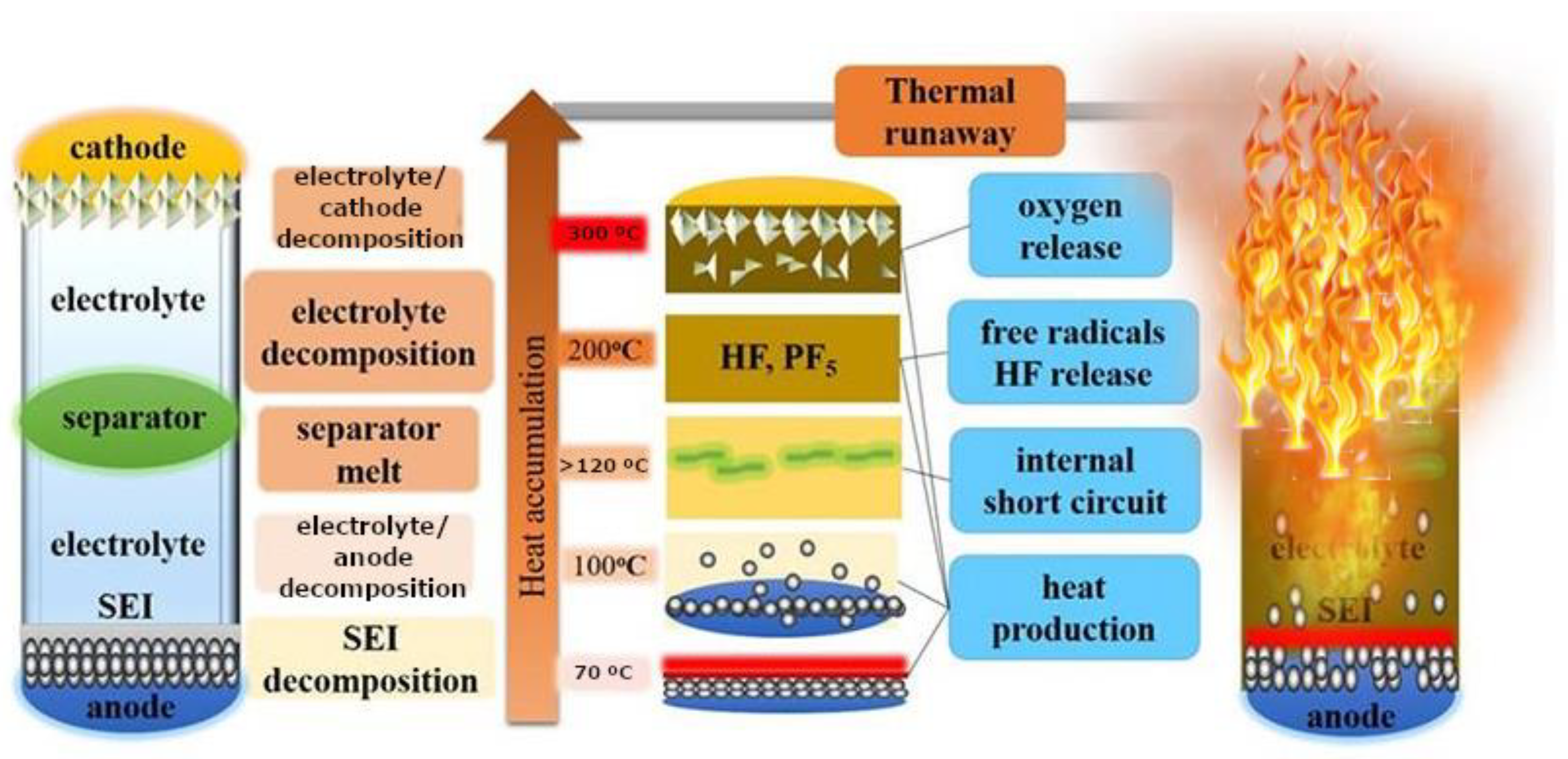
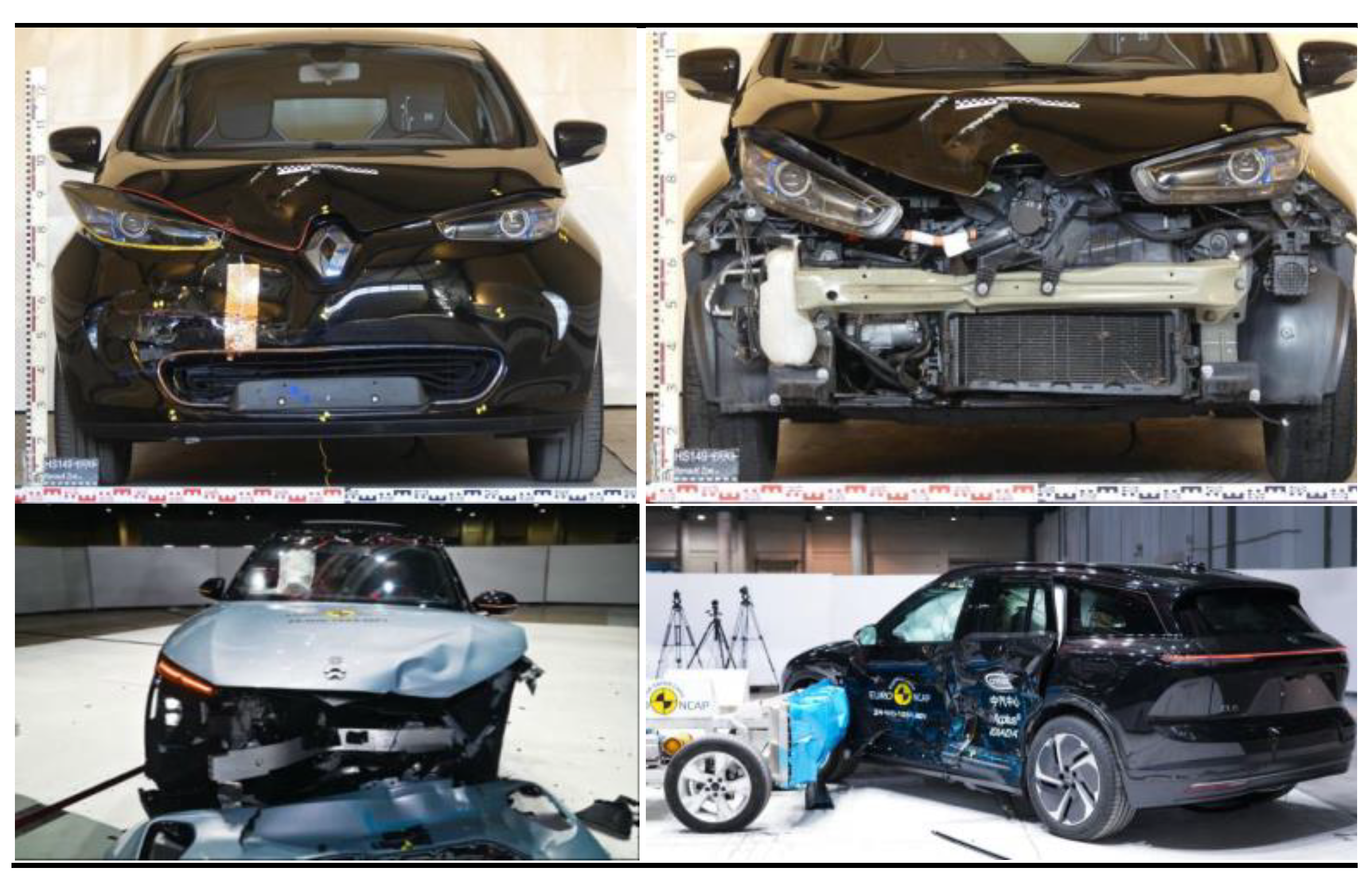
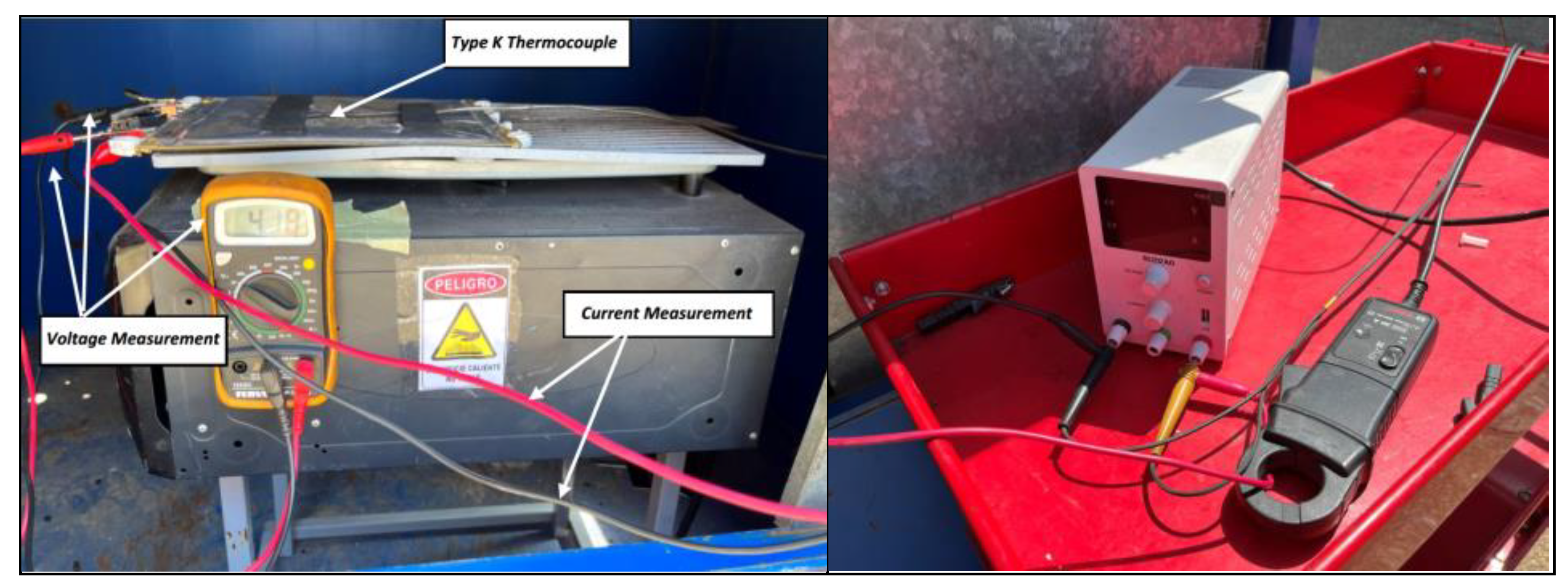
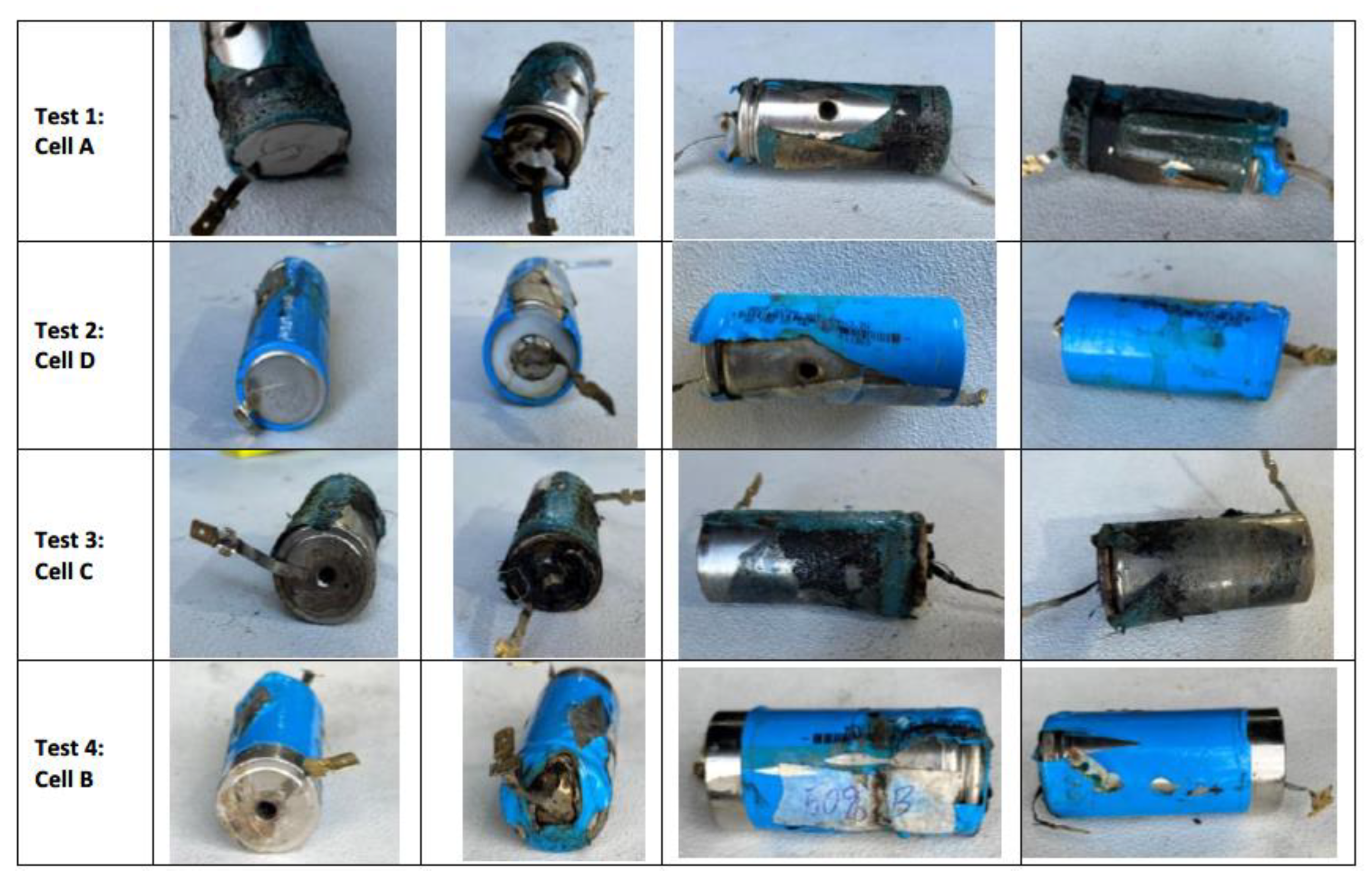
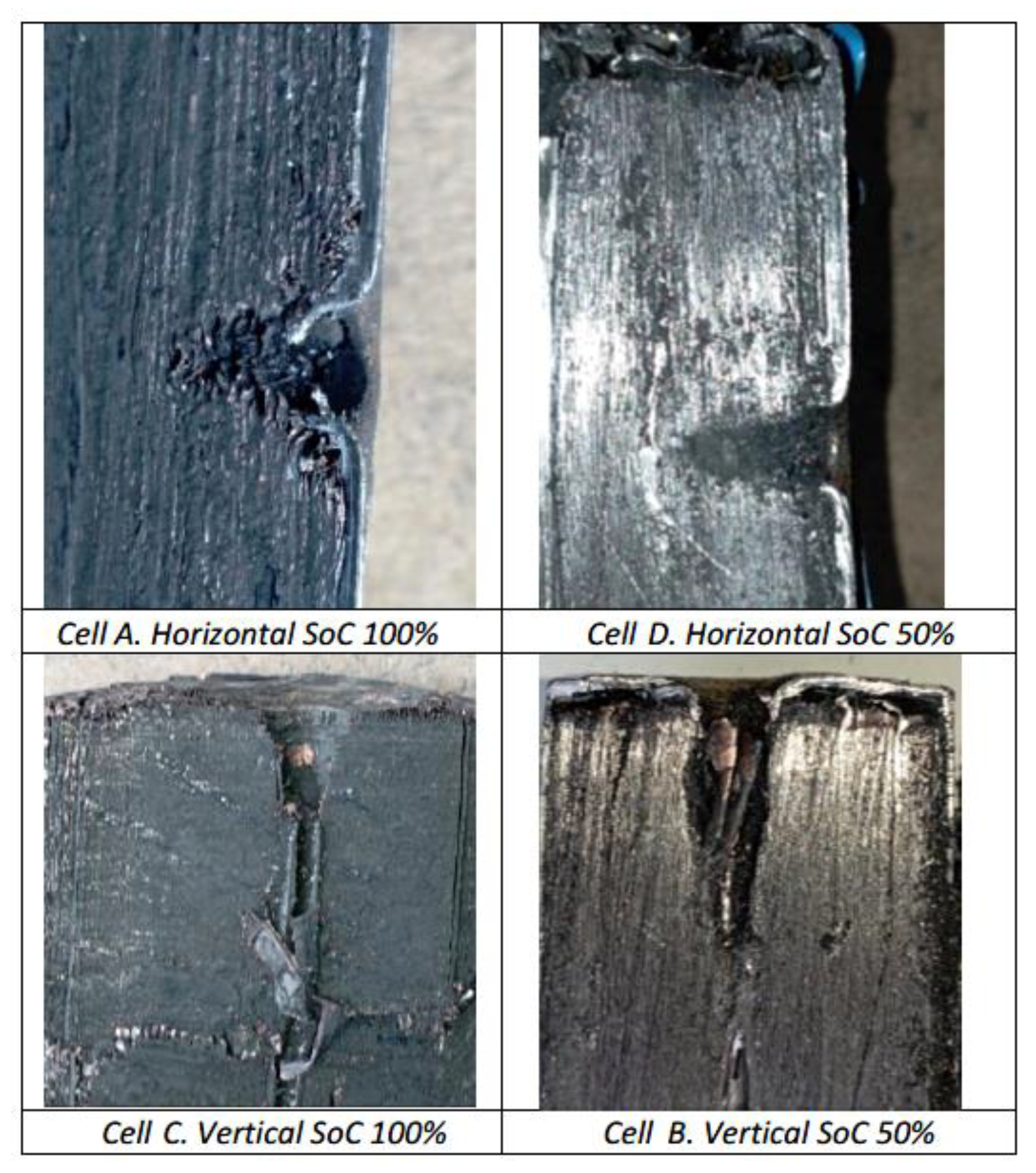
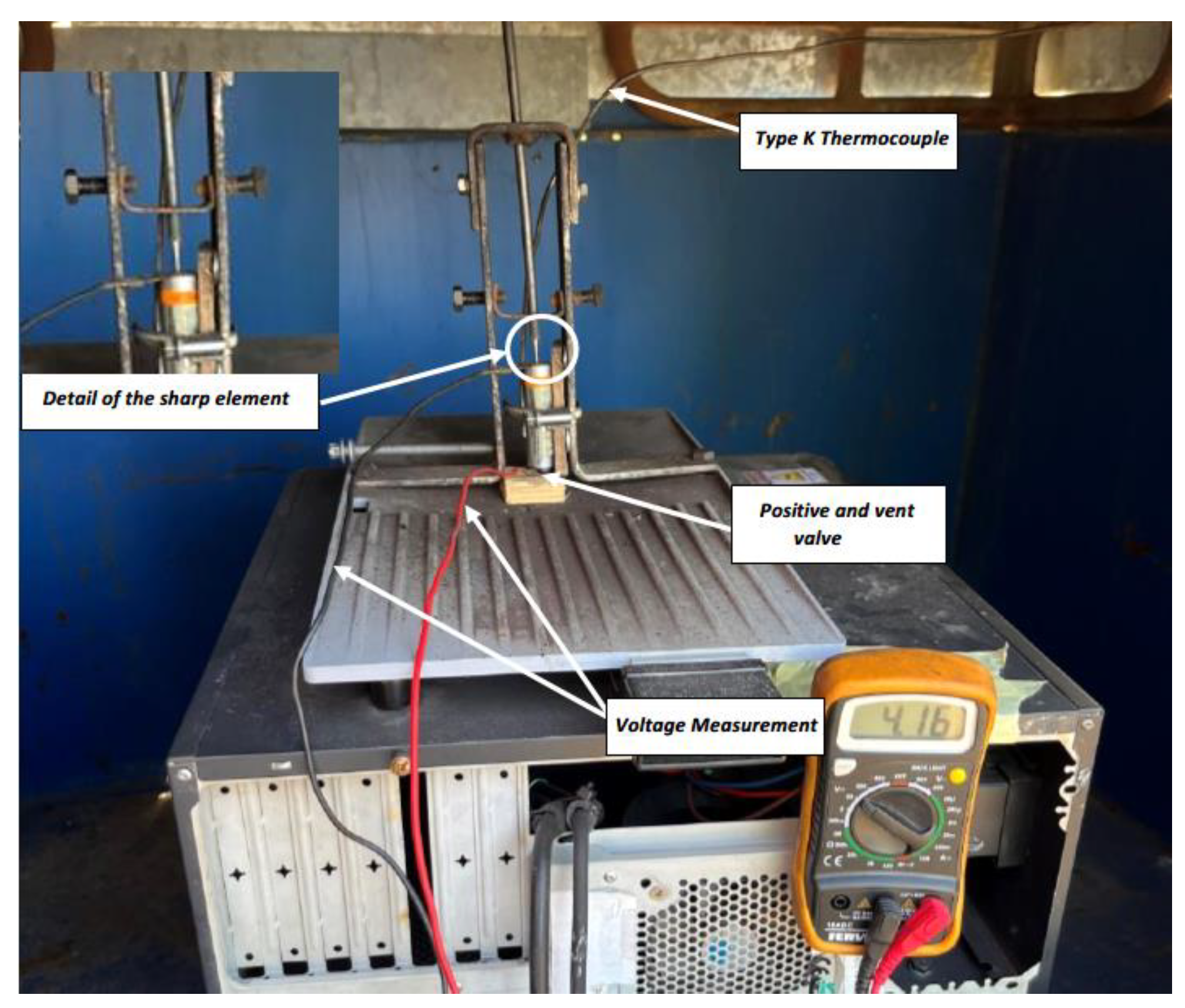
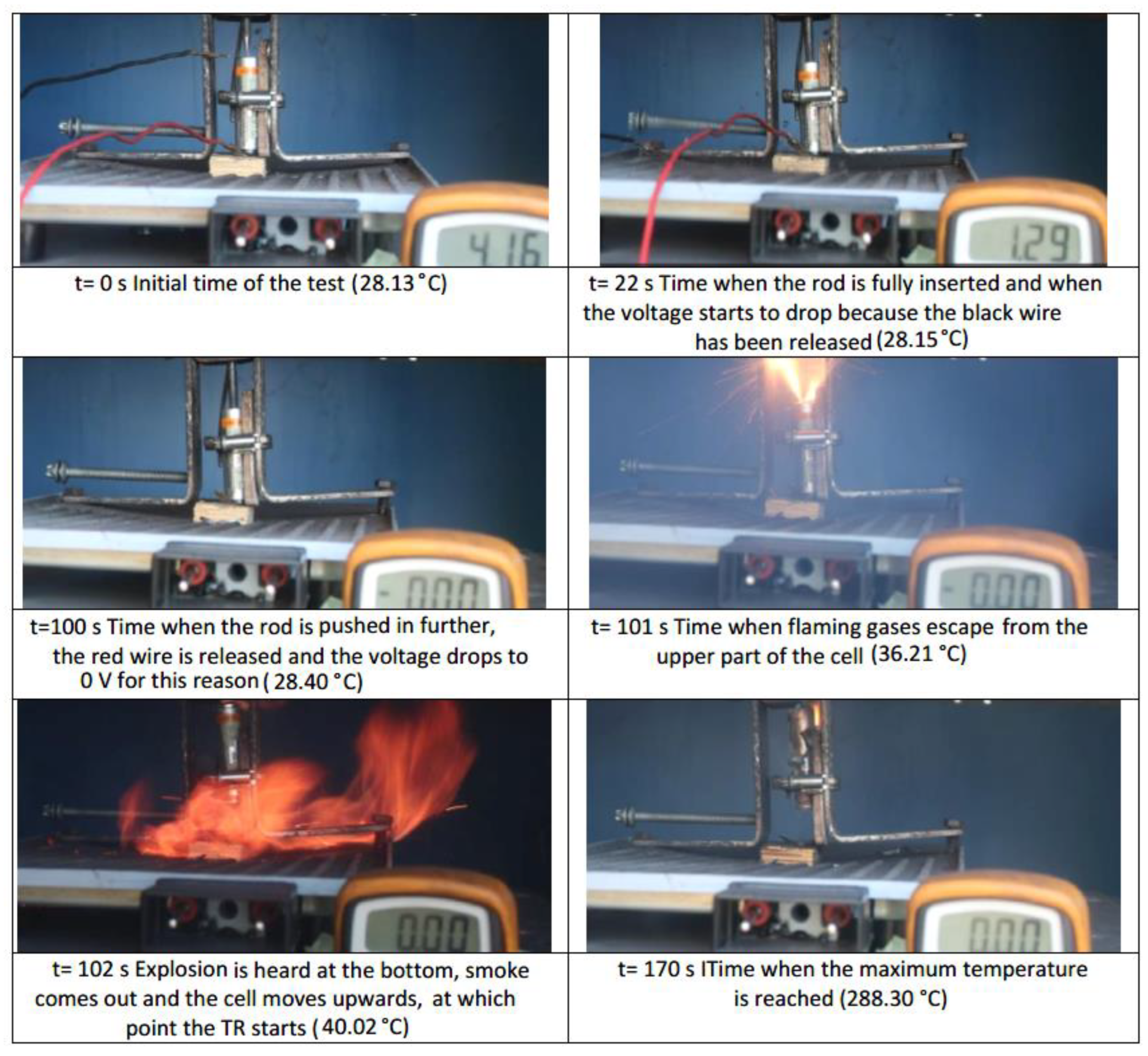
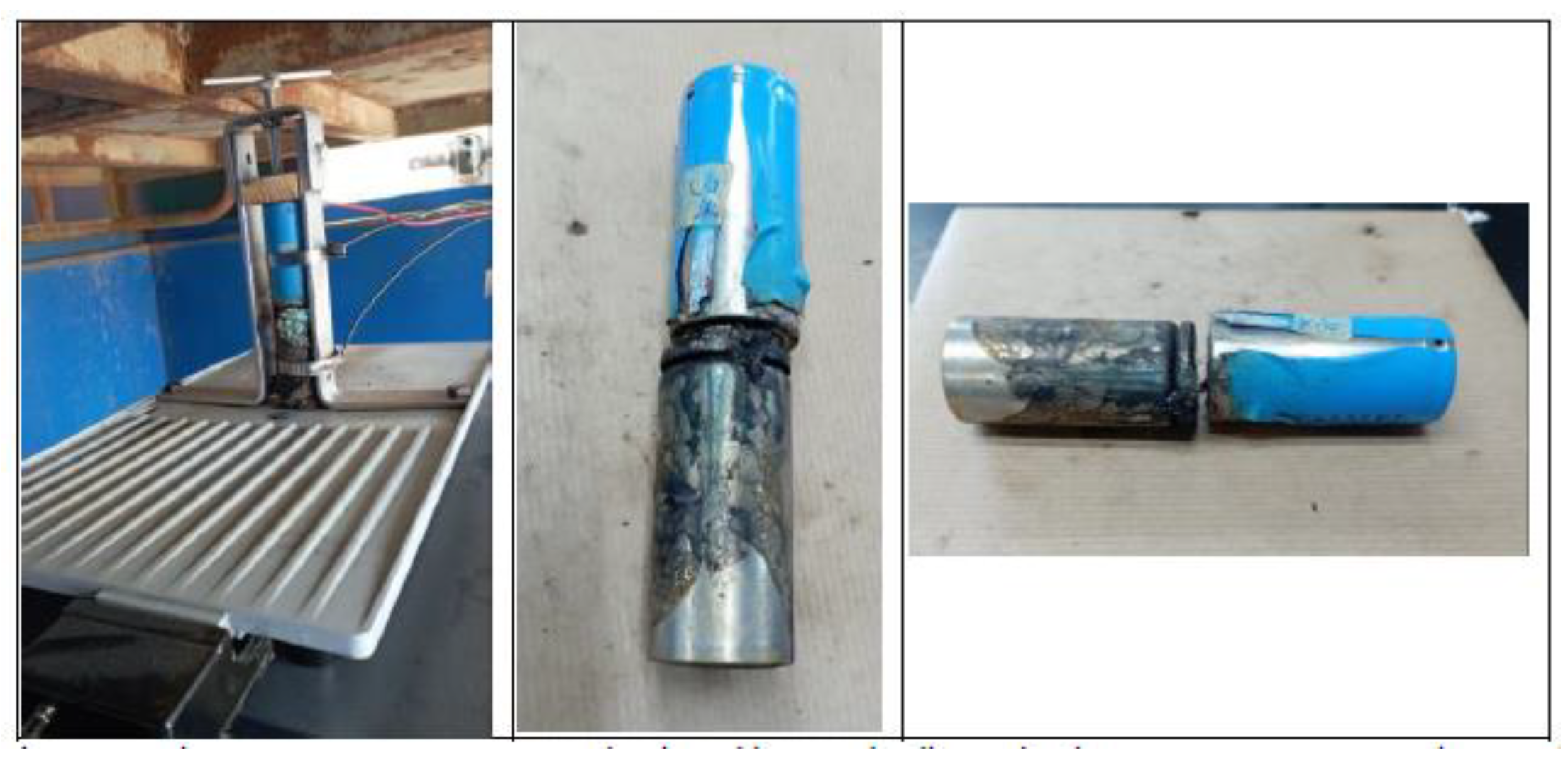
| Cell tested | Location of perforation | State of Charge, SoC (%) |
|---|---|---|
| 32700 Cylindrical | Lateral zone | 100 |
| 32700 Cylindrical | Lateral zone | 50 |
| 32700 Cylindrical | Upper zone | 100 |
| 32700 Cylindrical | Upper zone | 50 |
| Cell tested | Crate | SoC (%) | Tamb (°C) |
|---|---|---|---|
| Pouch cell | 1/5.6 C | 100 | Aprox 40 °C |
| Pouch cell | 1/5.6 C | 100 | Aprox 25 °C |
| Cell tested | Layout | Type of connection | State of Charge (SoC %) |
|---|---|---|---|
| 32700 Cylindrical | Horizontal | 2 connected in parallel | 100 % |
| 32700 Cylindrical | Horizontal | 2 connected in parallel | 50 % |
| 32700 Cylindrical | Horizontal | 2 connected in series | 100 % |
| 32700 Cylindrical | Horizontal | 2 connected in series | 50 % |
| 32700 Cylindrical | Vertical | 2 connected in parallel | 100 % |
| 32700 Cylindrical | Vertical | 2 connected in parallel | 50 % |
| 32700 Cylindrical | Vertical | 2 connected in series | 100 % |
| 32700 Cylindrical | Vertical | 2 connected in series | 50 % |
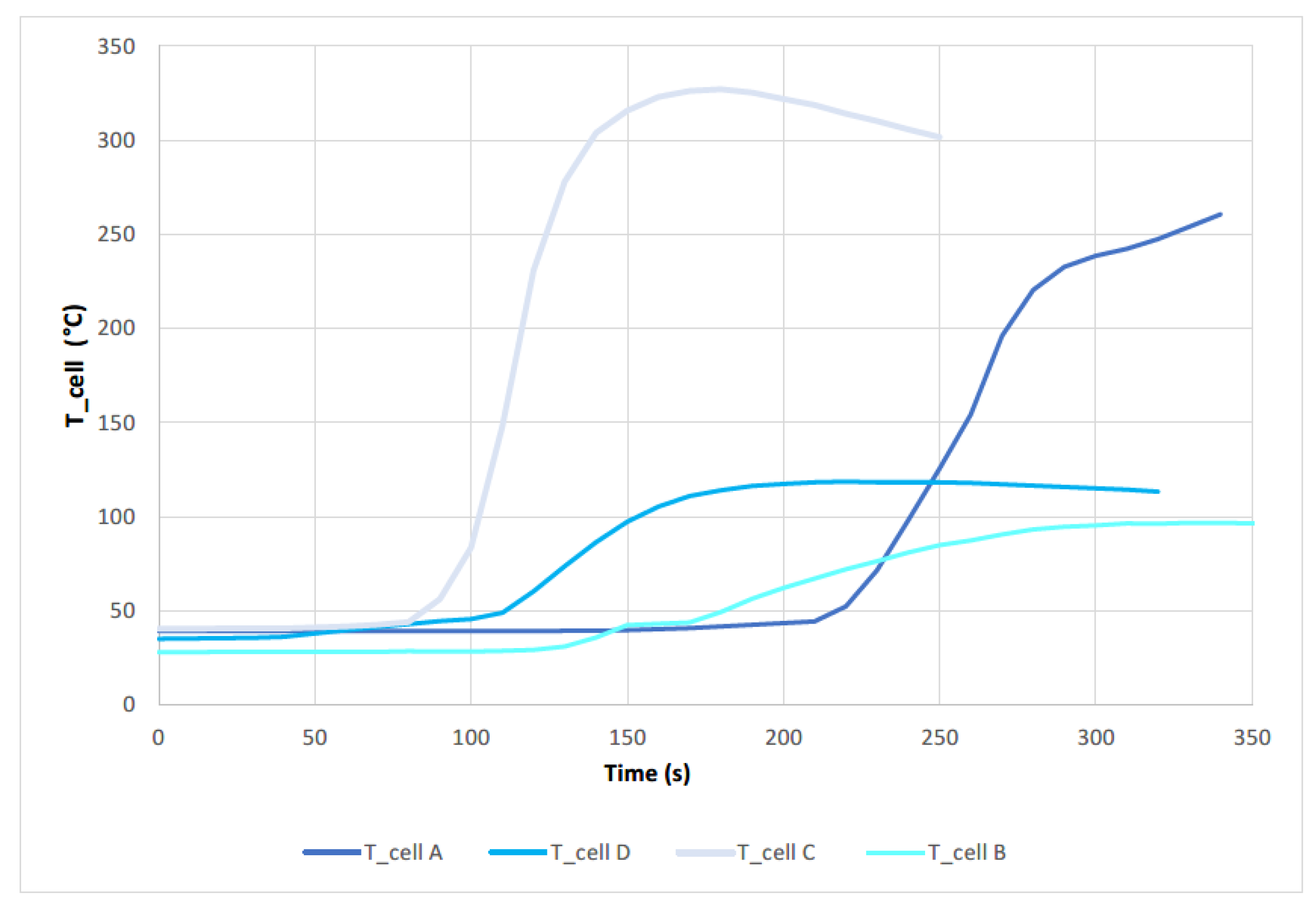
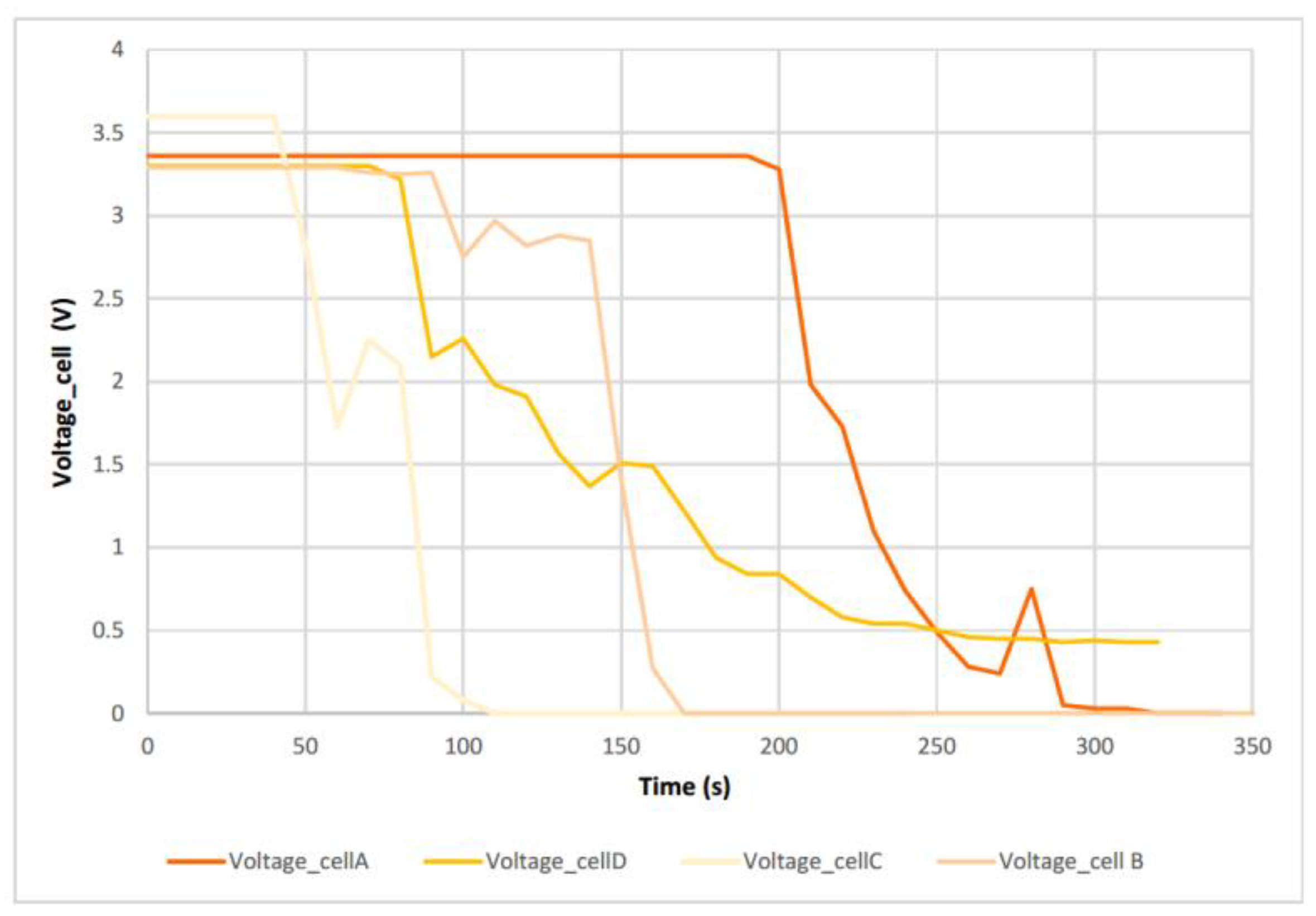
| Cell tested | Place where the perforation takes place | State of Charge (SoC %) | Time in which the TR takes place | Temperature at which the test is carried out (Tamb) |
|---|---|---|---|---|
| 32700 Cylindrical Cell A |
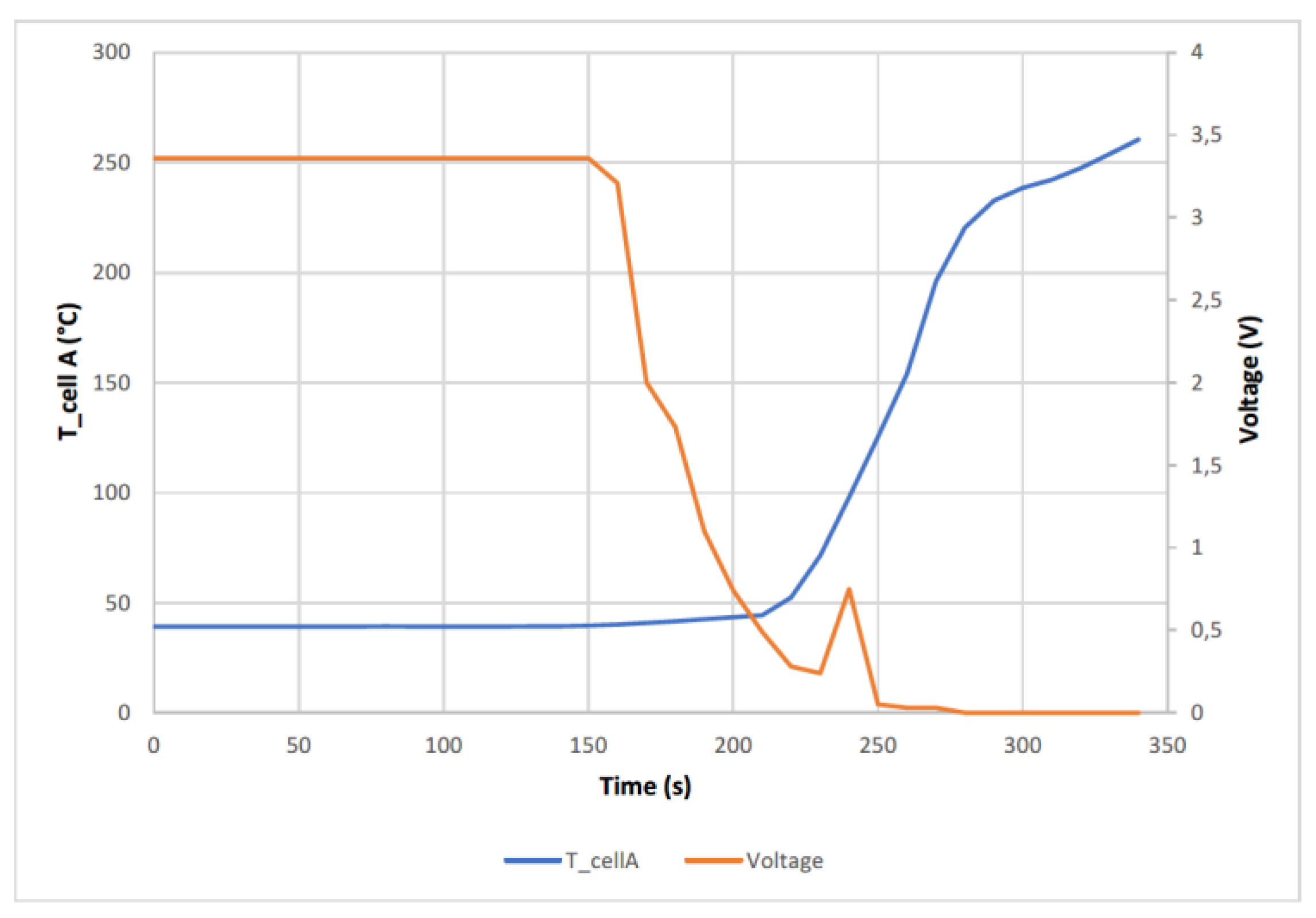
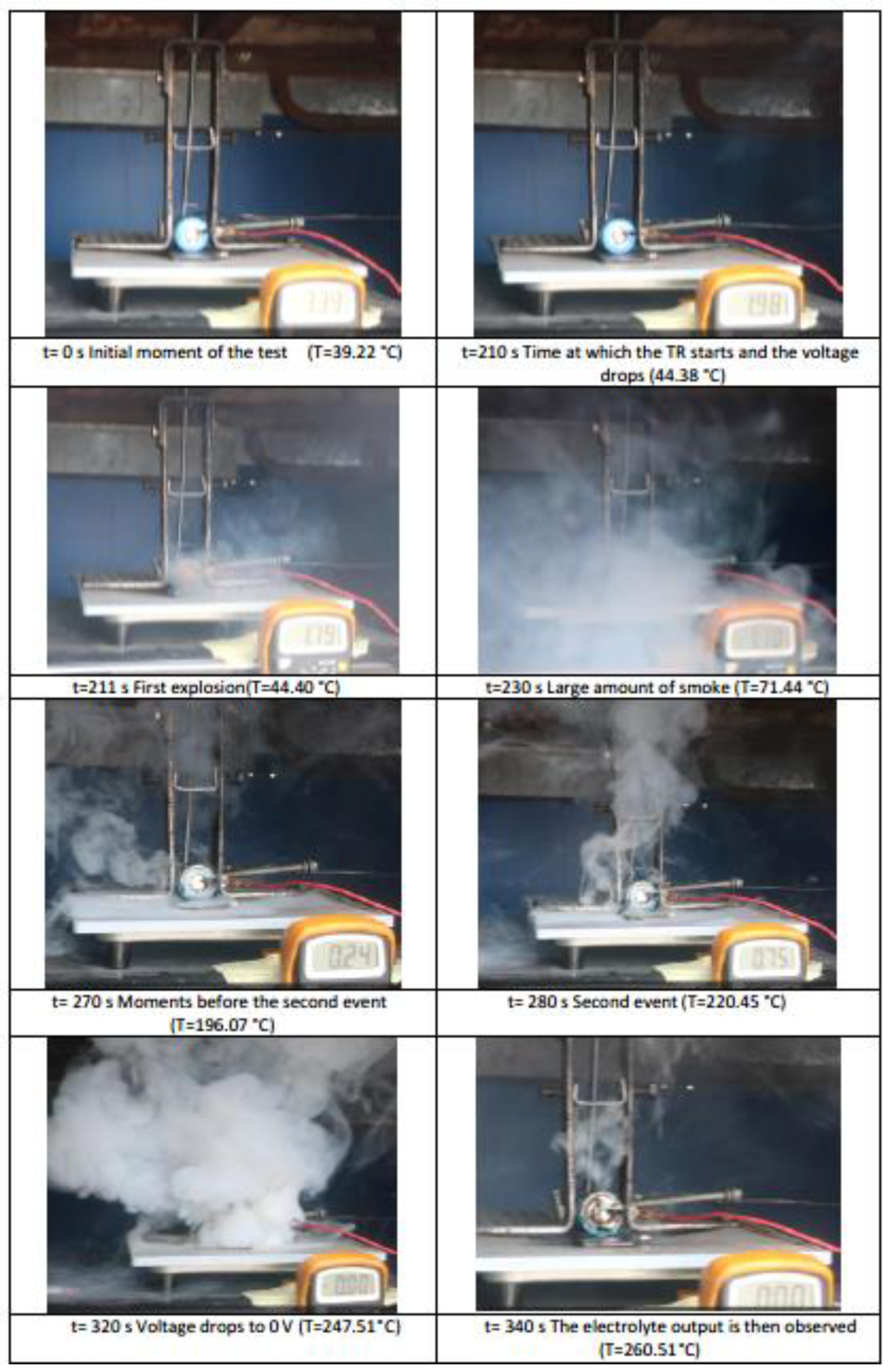
Side area | 100 | 210 s | 39 °C |
| 32700 Cylindrical Cell A |
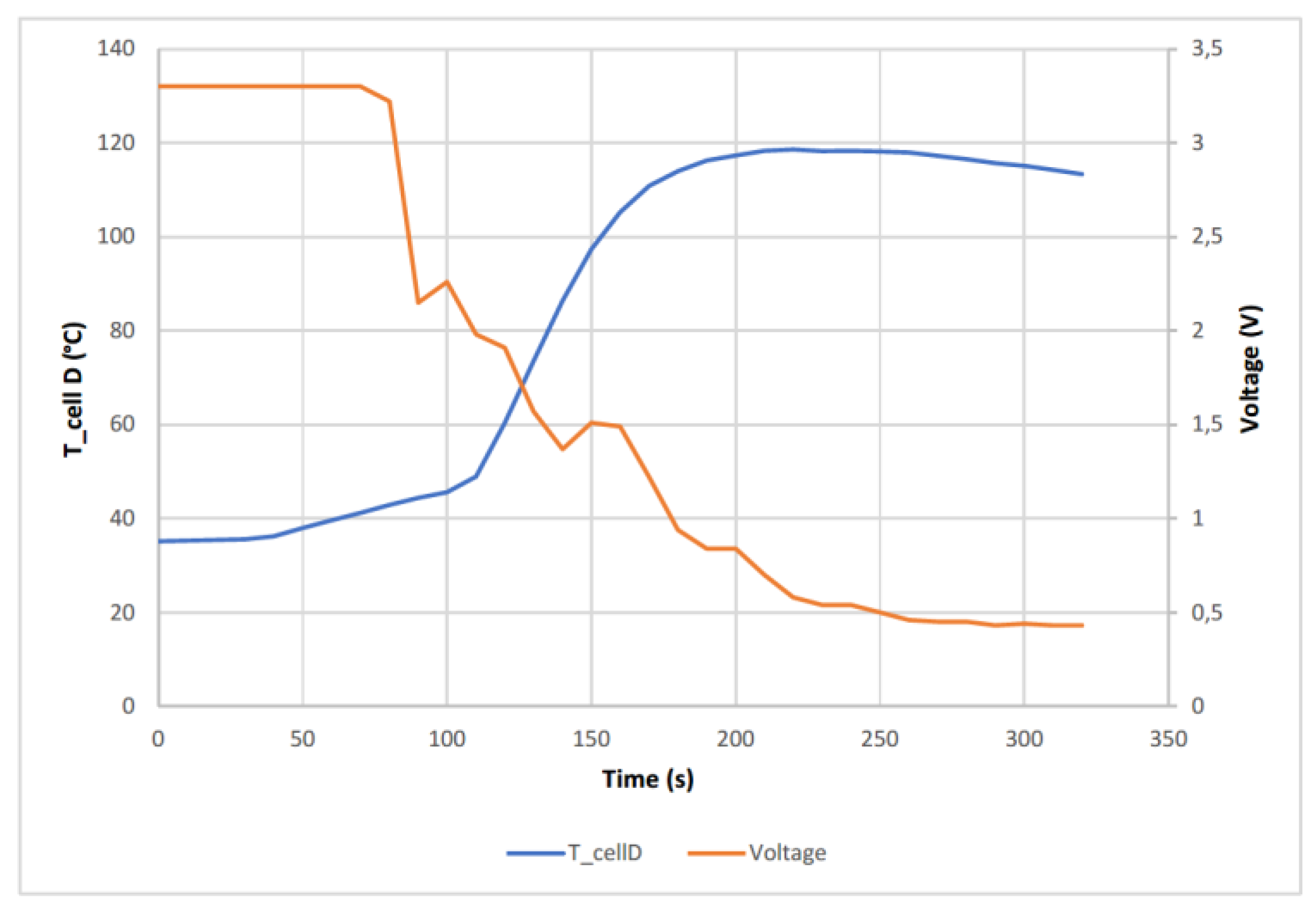
Side area | 50 | 80 s | 45 °C |
| 32700 Cylindrical Cell C |
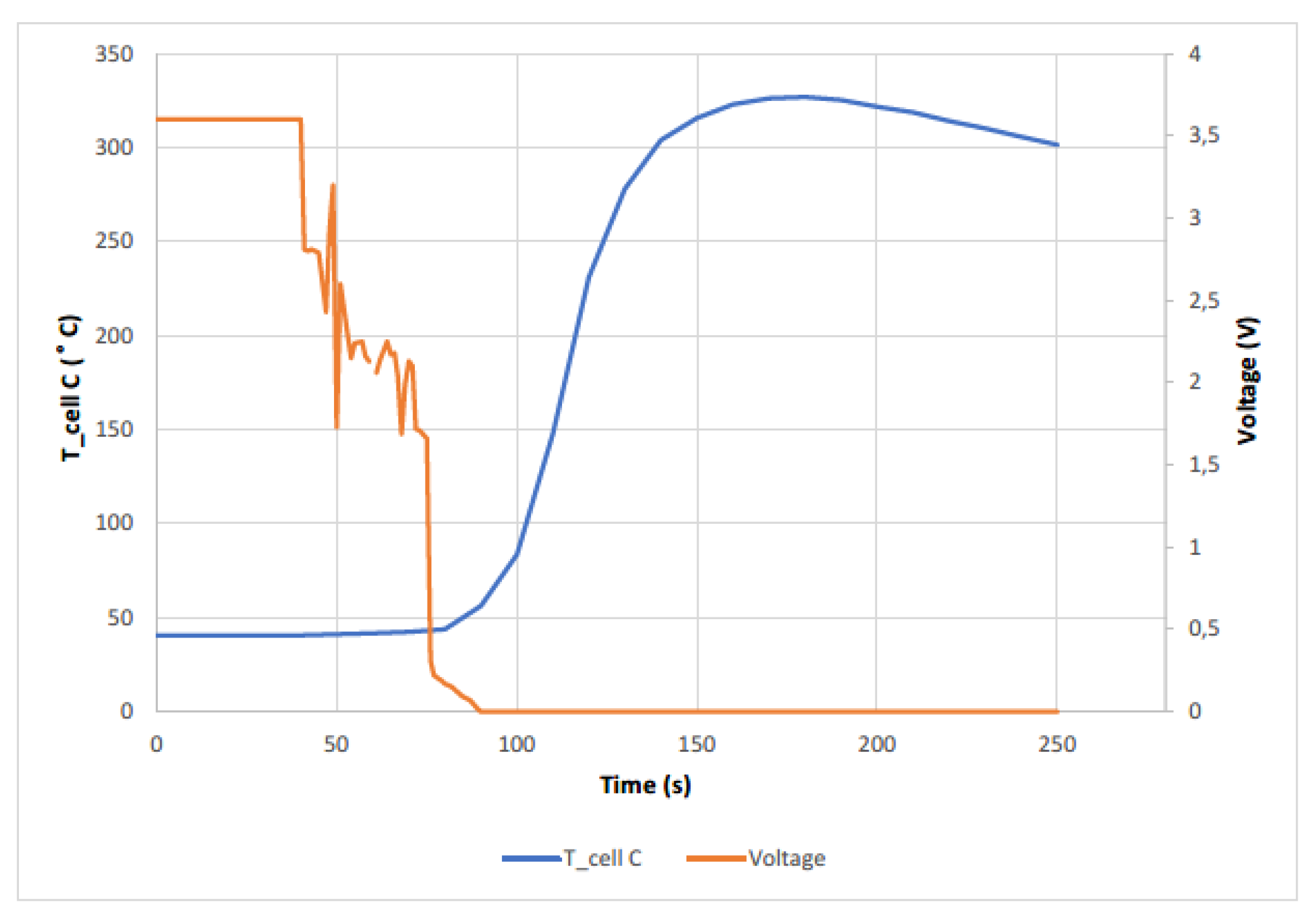
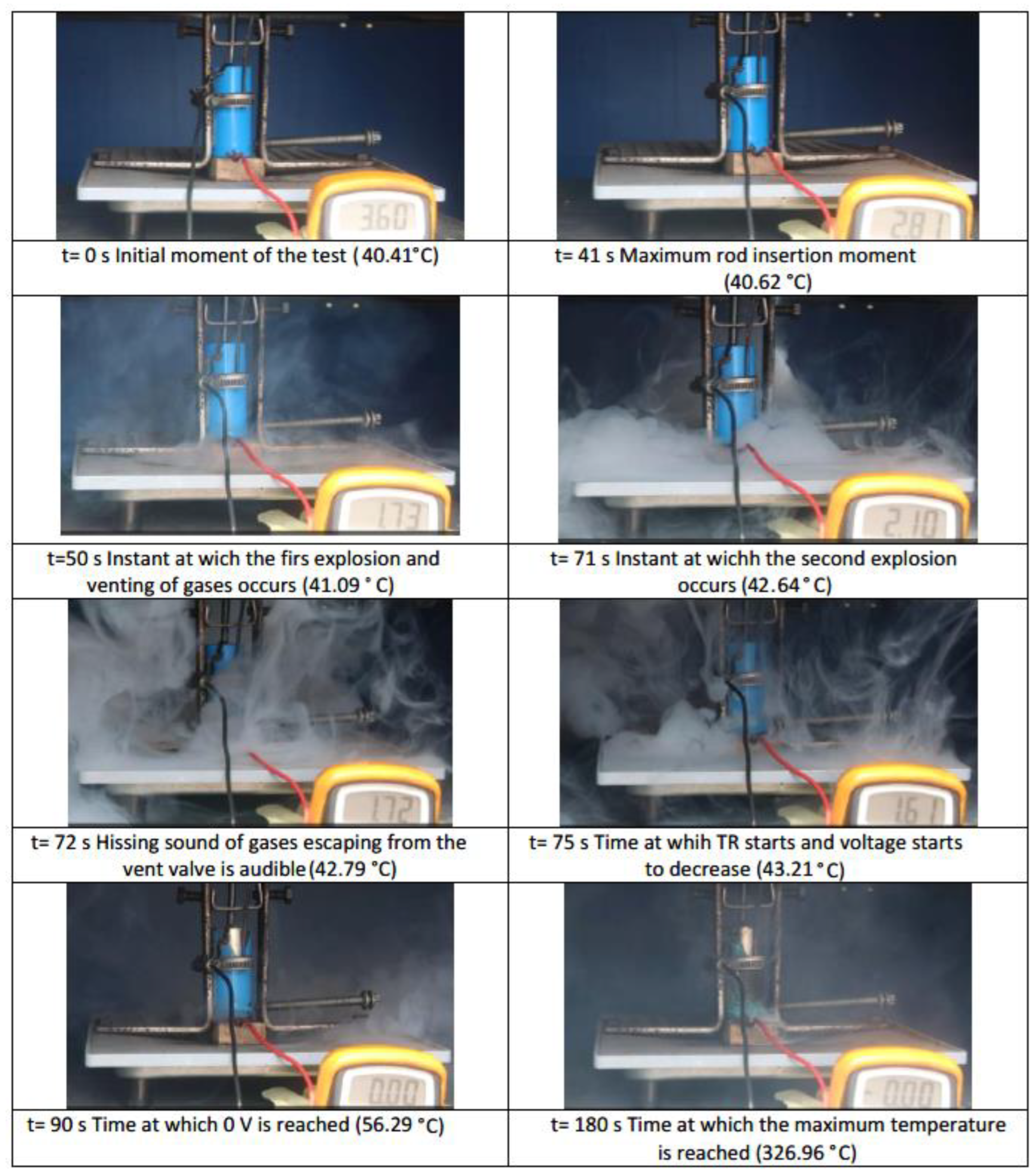
Upper area | 100 | 75 s | 44 °C |
| 32700 Cylindrical Cell B |
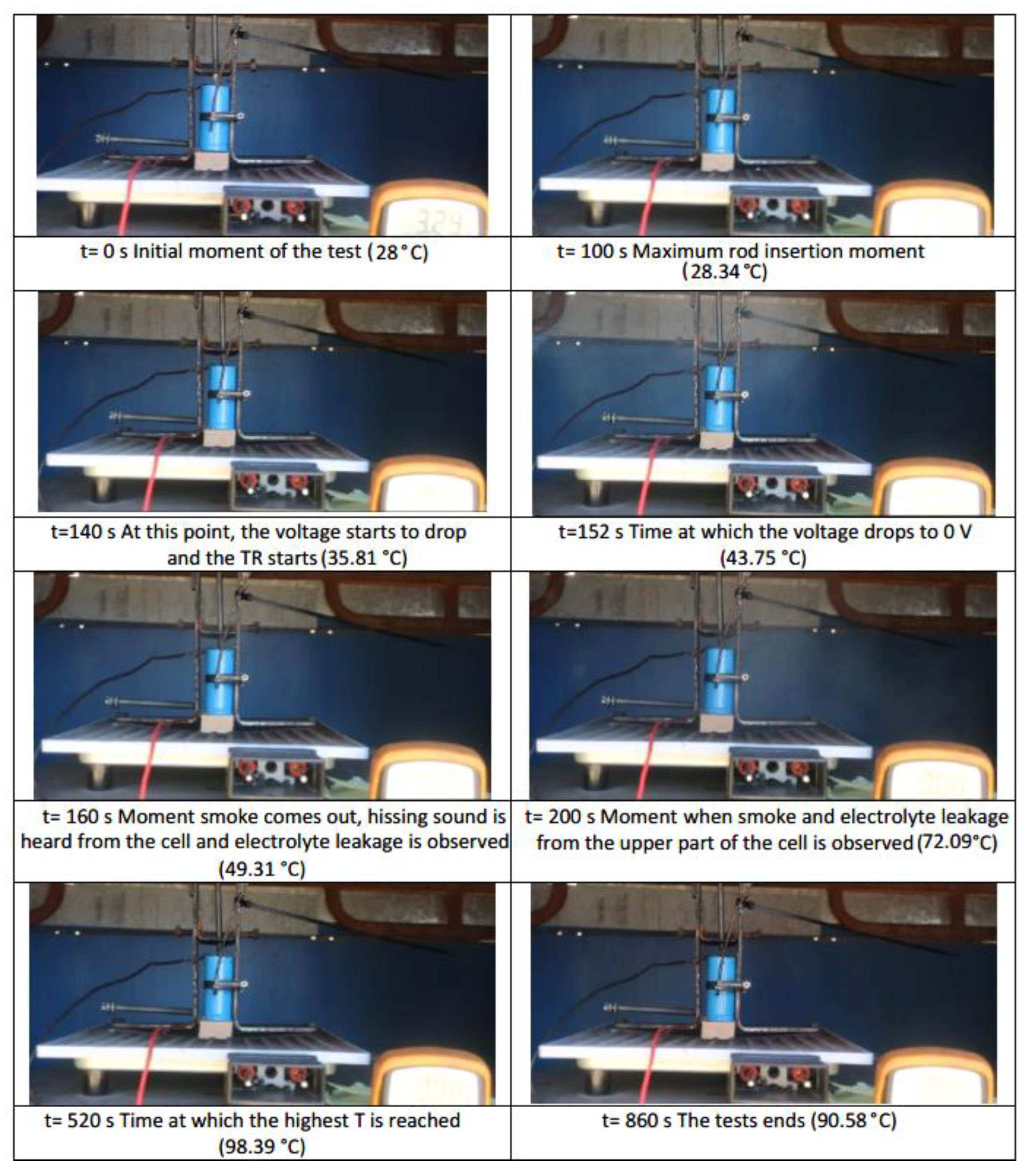
Upper area | 50 | 140 s | 28 °C |
| Test | Start of the test (mΩ) | End of the test (mΩ) | ∆DCIR (mΩ) |
|---|---|---|---|
| Test 1_cell A Horizontal SoC 100% | 7.199 | 1,145 | 1,137.80 |
| Test 2_cell D Horizontal SoC 50% | 7.280 | 953.3 | 946.02 |
| Test 3_cell C Vertical SoC 100% | 6.986 | 2,320 | 2,313.014 |
| Test 4_cell B Vertical SoC 50% | 7.500 | 1,505 | 1,497.500 |
 |
| Cell tested | Crate | State of Charge (SoC %) | Tamb | Maximum cell temperature Tmax |
|---|---|---|---|---|
| Pouch Cell | 1/5.6 C | 100 | 40 °C | 62.30 °C |
| Pouch Cell | 1/5.6 C | 100 | 25 °C | 43.92 °C |
| Test | Start of the test (mΩ) | End of the test (mΩ) | ∆DCIR (mΩ) |
|---|---|---|---|
| Test 1_pouch cell 1 Tamb= 40 °C | 1.61 | 191.4 | 189.79 |
| Test 2_pouch cell 2 Tamb= 25 °C | 1.52 | 50.62 | 49.10 |
Disclaimer/Publisher’s Note: The statements, opinions and data contained in all publications are solely those of the individual author(s) and contributor(s) and not of MDPI and/or the editor(s). MDPI and/or the editor(s) disclaim responsibility for any injury to people or property resulting from any ideas, methods, instructions or products referred to in the content. |
© 2025 by the authors. Licensee MDPI, Basel, Switzerland. This article is an open access article distributed under the terms and conditions of the Creative Commons Attribution (CC BY) license (http://creativecommons.org/licenses/by/4.0/).